
All Topics  
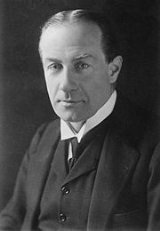
Stanley Baldwin

 
Stanley Baldwin

   Email Print
   Bookmark   Link


Stanley Baldwin


Stanley Baldwin, 1st Earl Baldwin of Bewdley, KG
Order of the Garter

The Most Noble Order of the Garter is an order of chivalry, or knighthood, originating in medieval England, and presently bestowed on recipients in the United Kingdom and other Commonwealth realms; it is the pinnacle of the Orders, decorations, and medals of the United Kingdom....
, PC
Privy Council of the United Kingdom

Her Majesty's Most Honourable Privy Council is a body of advisors to the British monarchy. Its members are largely senior politicians, who were or are members of either the House of Commons of the United Kingdom or House of Lords....
 (3 August 1867 – 14 December 1947) was a British Conservative
Conservative Party (UK)

The Conservative and Unionist Party, more commonly known as the Conservative Party, is a conservative political party in the United Kingdom....
 politician, statesman, and major figure on the political scene in the interwar years. He served three terms as Prime Minister of the United Kingdom
Prime Minister of the United Kingdom

The Prime Minister of the United Kingdom of Great Britain and Northern Ireland is the political leader of the United Kingdom and the head of government Her Majesty's Government....
; first from 1923-24 then 1924-29 and again from 1935-37.

as born at Lower Park House, Lower Park, Bewdley
Bewdley

Bewdley is a small town and civil parish in the Wyre Forest of Worcestershire, England, along the Severn Valley a few miles to the west of Kidderminster....
 in Worcestershire
Worcestershire

Worcestershire is a county located in the West Midlands of central England. From 1974 to 1998 it was administered as part of Hereford and Worcester....
, England to Alfred Baldwin and Louisa Baldwin (née MacDonald) and through his mother was a first cousin of the writer and poet Rudyard Kipling
Rudyard Kipling

Joseph Rudyard Kipling was an English author and poet. Born in Mumbai, British India , he is best known for his works of fiction The Jungle Book , Kim , many short stories, including The Man Who Would Be King ; and his poems, including Mandalay , Gunga Din , and If? ....
.


Discussion
Ask a question about 'Stanley Baldwin'
Start a new discussion about 'Stanley Baldwin'
Answer questions from other users
Full Discussion Forum


Quotations


Tom Mosley is a cad and a wrong 'un and they will find it out.

On Oswald Mosley, 21 June 1929. "They" were the Labour Party which had recently won a general election., Thomas Jones, Whitehall Diary: Volume II (1969), p. 195.

What the proprietorship of these papers is aiming at is power, and power without responsibility—the prerogative of the harlot through the ages.

Baldwin quoting his cousin Rudyard Kipling (17 March, 1931).

This country to-day is the last stronghold of freedom, standing like a rock in a tide that is threatened to submerge the world.

Broadcast on 6 March 1934 (Stanley Baldwin, This Torch of Freedom, p. 23.)

Do not fear or misunderstand when the Government say they are looking to our defences. I give you my word that there will be no great armaments.

Letter to the Peace Society, 31 October 1935, during the general election.

I knew that I had been chosen as God's instrument for the work of the healing of the nation.

A Baldwin letter from 1938 (A. W. Baldwin, My Father: The True Story (Allen & Unwin, 1955), pp. 327-8.)


Encyclopedia


Stanley Baldwin, 1st Earl Baldwin of Bewdley, KG
Order of the Garter

The Most Noble Order of the Garter is an order of chivalry, or knighthood, originating in medieval England, and presently bestowed on recipients in the United Kingdom and other Commonwealth realms; it is the pinnacle of the Orders, decorations, and medals of the United Kingdom....
, PC
Privy Council of the United Kingdom

Her Majesty's Most Honourable Privy Council is a body of advisors to the British monarchy. Its members are largely senior politicians, who were or are members of either the House of Commons of the United Kingdom or House of Lords....
 (3 August 1867 – 14 December 1947) was a British Conservative
Conservative Party (UK)

The Conservative and Unionist Party, more commonly known as the Conservative Party, is a conservative political party in the United Kingdom....
 politician, statesman, and major figure on the political scene in the interwar years. He served three terms as Prime Minister of the United Kingdom
Prime Minister of the United Kingdom

The Prime Minister of the United Kingdom of Great Britain and Northern Ireland is the political leader of the United Kingdom and the head of government Her Majesty's Government....
; first from 1923-24 then 1924-29 and again from 1935-37.

Early life

He was born at Lower Park House, Lower Park, Bewdley
Bewdley

Bewdley is a small town and civil parish in the Wyre Forest of Worcestershire, England, along the Severn Valley a few miles to the west of Kidderminster....
 in Worcestershire
Worcestershire

Worcestershire is a county located in the West Midlands of central England. From 1974 to 1998 it was administered as part of Hereford and Worcester....
, England to Alfred Baldwin and Louisa Baldwin (née MacDonald) and through his mother was a first cousin of the writer and poet Rudyard Kipling
Rudyard Kipling

Joseph Rudyard Kipling was an English author and poet. Born in Mumbai, British India , he is best known for his works of fiction The Jungle Book , Kim , many short stories, including The Man Who Would Be King ; and his poems, including Mandalay , Gunga Din , and If? ....
. Baldwin was educated at St Michael's School
Hawtreys

Hawtreys Preparatory School was an Independent school boys' Preparatory school school, first established in Slough, later moved to Westgate-on-Sea, then to Oswestry, and finally to a country house near Great Bedwyn, Wiltshire....
, Harrow
Harrow School

Harrow School, commonly known as "Harrow", is a world-famous boys' independent school in United Kingdom. Harrow has educated boys since 1243 but was officially founded by John Lyon under a Royal Charter of Elizabeth I in 1572....
 and Trinity College, Cambridge
Trinity College, Cambridge

Trinity College is one of the 31 Colleges of the University of Cambridge of the University of Cambridge. Trinity has more members than any other college in Cambridge or University of Oxford, with around 700 undergraduates, 430 graduate students, and over 160 Fellows; however, counting only the student body it has somewhat fewer than Homert...
. He later wrote that "all the king's horses
Humpty Dumpty

Humpty Dumpty is a character in a Nursery rhyme typically portrayed as an egg . Most English language-speaking children are familiar with the rhyme:...
 and all the king's men would have failed to have drawn me into the company of school masters, and in relation to them I once had every qualification as a passive resister." His university career was blighted by the presence, as Master of Trinity, of a former schoolmaster who had punished him at Harrow for writing a piece of schoolboy smut. He was asked to resign from the Magpie & Stump (the Trinity College Debating Society) for never speaking, and after receiving a third-class degree in history went into the family business. As a young man he served very briefly as a Second Lieutenant
Second Lieutenant

Second Lieutenant is the lowest Officer military rank in many armed forces.In British English the rank is pronounced second /l?f't?n?nt/ , while in American English it is pronounced second /lu't?n?nt/ ....
 in the Artillery Volunteers at Malvern
Malvern

Malvern may mean:...
. He married Lucy Ridsdale on 12 September 1892.

Baldwin proved to be very adept at the family business of iron manufacturing, and acquired a reputation as a modernising industrialist. Later he inherited £200,000 and a directorship of the Great Western Railway
Great Western Railway

The Great Western Railway was a History of rail transport in Great Britain that linked London with the south west and west of England and most of Wales....
 upon the death of his father Alfred Baldwin in 1908.

Early political career

In the 1906 general election
United Kingdom general election, 1906

The United Kingdom general election of 1906 was held from 12 January to 8 February 1906.The Liberal Party , led by sitting minority Prime Minister of the United Kingdom Henry Campbell-Bannerman, won a large majority in the election....
 he contested Kidderminster
Kidderminster (UK Parliament constituency)

Kidderminster was a county constituency in Worcestershire, represented in the British House of Commons of the Parliament of the United Kingdom. It elected one Member of Parliament by the first past the post voting system....
 but lost amidst the Conservative
Conservative Party (UK)

The Conservative and Unionist Party, more commonly known as the Conservative Party, is a conservative political party in the United Kingdom....
 landslide defeat after the party split on the issue of free trade. In 1908 he succeeded his father as Member of Parliament
Member of Parliament

A Member of Parliament, or MP, is a representative of the voters to a parliament. In many countries the term applies specifically to members of the lower house, as upper houses often have a unique title, such as senate, and thus also have unique titles for its members, such as senators....
 (MP) for Bewdley
Bewdley (UK Parliament constituency)

Bewdley was the name of a United Kingdom constituencies of the British House of Commons of the Parliament of the United Kingdom from 1605 until 1950....
. During the First World War
World War I

World War I, or the First World War , was a global military conflict which involved the Great powers, organized into two opposing military alliances: the Allies of World War I and the Central Powers....
 he became Parliamentary Private Secretary
Parliamentary Private Secretary

A Parliamentary Private Secretary is a role given to a United Kingdom Member of Parliament by a senior Minister in government or shadow minister to act as their contact for the House of Commons; in the Lords, the department's Parliamentary Under Secretary there takes on this duty....
 to Conservative leader Andrew Bonar Law
Andrew Bonar Law

Andrew Bonar Law was a Canada-born United Kingdom Conservative Party statesman and Prime Minister of the United Kingdom. He is the only British Prime Minister to have been born outside the British Isles....
 and in 1917 he was appointed to the junior ministerial post of Financial Secretary to the Treasury
Secretary to the Treasury

In the United Kingdom, there are five Secretaries to the Treasury, officials officially acting as secretaries to the HM Treasury board. The origins of the office are unclear, although it probably originated during William Cecil tenure as Lord Treasurer in the 16th century....
 where he sought to encourage voluntary donations by the rich in order to repay the United Kingdom's war debt, notably writing to The Times
The Times

The Times is a daily national newspaper published in the United Kingdom since 1785 when it was known as The Daily Universal Register.The Times and its sister paper The Sunday Times are published by Times Newspapers Limited, a subsidiary of News International....
 under the pseudonym 'FST'. He personally donated one fifth of his quite small fortune. He served jointly with Sir Hardman Lever
Hardman Lever

Sir Samuel Hardman Lever, 1st Baronet, Order of the Bath , generally known as Sir Hardman Lever, and as "Sammie" to his friends, was an England accountant and civil servant....
, who had been appointed in 1916, but after 1919 Baldwin carried out the duties largely alone. He was appointed to the Privy Council
Privy Council of the United Kingdom

Her Majesty's Most Honourable Privy Council is a body of advisors to the British monarchy. Its members are largely senior politicians, who were or are members of either the House of Commons of the United Kingdom or House of Lords....
 in the 1920 Birthday Honours. In 1921 he was promoted to the Cabinet as President of the Board of Trade.

In late 1922 dissatisfaction was steadily growing within the Conservative Party over its coalition with the Liberal
Liberal Party (UK)

The Liberal Party was one of the two major British political parties from the early 19th century until the rise of the Labour Party in the 1920s, and a third party of varying strength and importance up to 1988, when it merged with the Social Democratic Party to form a new party which would become known as the Liberal Democrats....
 David Lloyd George
David Lloyd George

David Lloyd George, 1st Earl Lloyd-George of Dwyfor Order of Merit , Privy Council of the United Kingdom was a United Kingdom statesman and the only Wales Prime Minister of the United Kingdom - he is also the only one to have spoken English language as a second language, Welsh language having been his first....
. At a meeting of Conservative MPs at the Carlton Club
Carlton Club

The Carlton Club is a gentlemen's club in London....
 in October Baldwin announced that he would no longer support the coalition and famously condemned Lloyd George for being a "dynamic force" that was bringing destruction across politics. The meeting chose to leave the coalition, against the wishes of most of the party leadership. As a result Bonar Law
Andrew Bonar Law

Andrew Bonar Law was a Canada-born United Kingdom Conservative Party statesman and Prime Minister of the United Kingdom. He is the only British Prime Minister to have been born outside the British Isles....
, the new Conservative leader, was forced to search for new ministers for his Cabinet and so promoted Baldwin to the position of Chancellor of the Exchequer
Chancellor of the Exchequer

The Chancellor of the Exchequer is the title held by the British Cabinet of the United Kingdom Minister who is responsible for all economic and financial matters....
. In the November 1922 general election
United Kingdom general election, 1922

The UK general election of 1922 was held on 15 November 1922. It was the first election held after most of the Irish counties left the United Kingdom to form the Irish Free State, and was won by Andrew Bonar Law's Conservative Party , who gained an overall majority over Labour Party , led by John Robert Clynes and a divided Liberal Party ....
 the Conservatives were returned with a majority in their own right.

Prime Minister (1923–1924)

In May 1923 Bonar Law was diagnosed with terminal cancer and retired immediately. With many of the party's senior leading figures standing aloof and outside of the government, there were only two candidates to succeed him: Lord Curzon, the Foreign Secretary, and Baldwin. The choice formally fell to King George V
George V of the United Kingdom

George V was the first British monarch belonging to the House of Windsor, which he created from the British branch of the German House of Saxe-Coburg and Gotha....
 acting on the advice of senior ministers and officials. It is not entirely clear what factors proved most crucial, but some Conservative politicians felt that Curzon was unsuitable for the role of Prime Minister because he was a member of the House of Lords
House of Lords

The House of Lords is the second house of the Parliament of the United Kingdom and is also commonly referred to as "the Lords". The Parliament comprises the British monarchy, the British House of Commons , and the Lords....
 (though this did not stop other lords being seriously considered for the premiership on subsequent occasions). Curzon's lack of experience in domestic affairs, his personal character (found objectionable), and his aristocratic background at a time when the Conservative Party was seeking to shed its patrician image were all deemed impediments. Much weight at the time was given to the intervention of Arthur Balfour
Arthur Balfour

Arthur James Balfour, 1st Earl of Balfour, Order of the Garter, Order of Merit , Privy Council of the United Kingdom was a United Kingdom Conservative Party politician and statesman....
.

The King turned to Baldwin to become Prime Minister. Initially Baldwin was also Chancellor of the Exchequer
Chancellor of the Exchequer

The Chancellor of the Exchequer is the title held by the British Cabinet of the United Kingdom Minister who is responsible for all economic and financial matters....
 whilst he sought to recruit the former Liberal Chancellor Reginald McKenna
Reginald McKenna

Reginald McKenna was a Liberal Party British statesman. He was educated at King's College School and Trinity Hall, Cambridge.Elected at the United Kingdom general election, 1895 as Member of Parliament for North Monmouthshire , he served in the Liberal governments of Henry Campbell-Bannerman and Herbert Henry Asquith as President of th...
 to join the government. When this failed he appointed Neville Chamberlain
Neville Chamberlain

Arthur Neville Chamberlain was a British Conservative Party politician and Prime Minister of the United Kingdom from 1937 to 1940. Chamberlain is best known for appeasement foreign policy, in particular regarding his signing of the Munich Agreement in 1938, conceding the Sudetenland region of Czechoslovakia to Germany, and for his "containm...
.

The Conservatives now had a clear majority in the House of Commons
British House of Commons

The House of Commons is the lower house of the Parliament of the United Kingdom, which also comprises the British monarchy and the House of Lords ....
 and could govern for five years before holding a general election, but Baldwin felt bound by Bonar Law's pledge at the previous election that there would be no introduction of tariff
Tariff

A tariff is a tax imposed on goods when they are moved across a political boundary. They are usually associated with protectionism, the economic policy of restraining trade between nations....
s without a further election. With the country facing growing unemployment in the wake of free-trade imports driving down prices and profits, Baldwin decided to call an early general election in December 1923 to seek a mandate to introduce protectionist tariffs
Protectionism

Protectionism is the economic policy of restraining trade between nations, through methods such as tariffs on imported goods, restrictive import quota, and a variety of other restrictive government regulations designed to discourage imports, and prevent foreign take-over of local markets and companies....
 and thus drive down unemployment. Protection was not universally popular in the Conservative Party: "one must speak of the election being fought by a divided party." The election outcome was inconclusive: the Conservatives had 258 MPs, Labour 191 and the reunited Liberals 159. Whilst the Conservatives retained a plurality in the House of Commons, they had been clearly defeated on the central election issue of tariffs. Baldwin remained Prime Minister until the opening session of the new Parliament in January 1924, at which time the government was defeated in a motion of confidence
Motion of Confidence

A Motion of Confidence is a motion of support proposed by a government in a parliament or other assembly of elected representatives to give members of parliament a chance to register their confidence in the government....
 vote. He resigned immediately.

Leader of the Opposition

Baldwin successfully held onto the party leadership despite calls for his resignation by some in the party. For the next ten months, an unstable minority Labour government under Prime Minister Ramsay MacDonald
Ramsay MacDonald

James Ramsay MacDonald was a British politician and twice Prime Minister of the United Kingdom. He rose from humble origins to become the first Labour Party Prime Minister in 1924....
 held office. On 13 March the Labour government was defeated for the first time in the Commons, although the Conservatives decided to vote with Labour later that day against the Liberals. During a debate on the naval estimates the Conservatives opposed Labour but supported them on 18 March in a vote on cutting expenditure on the Singapore military base. Baldwin also cooperated with MacDonald over Irish policy in order to stop it becoming a party political issue.

The Labour government were negotiating with the Soviet government over what was called the Russian Treaties: a commercial treaty with most favoured nation
Most favoured nation

Most favoured nation , also called Permanent Normal Trade Relations in the United States, is a status awarded by one nation to another in international trade....
 privileges and diplomatic status for their trade delegation; and a treaty that would settle the claims of pre-revolutionary British bondholders and holders of confiscated property, after which the British government would guarantee a loan to the Soviet Union. Baldwin decided to vote against the government over the Russian Treaties, which brought the government down on 8 October.

The general election
United Kingdom general election, 1924

The 1924 UK general election was held on 29 October 1924. The Conservative Party , led by Stanley Baldwin performed dramatically better, in electoral terms, than in the United Kingdom general election, 1923 and obtained a large parliamentary majority....
 held in October 1924 brought a landslide majority of 223 for the Conservative party, primarily at the expense of the now terminally declining Liberals. Baldwin campaigned on the "impracticability" of socialism, the Campbell Case
Campbell Case

The Campbell Case of 1924 was instrumental in bringing down the first United Kingdom Labour Party government, led by Ramsay MacDonald.The case revolved around John Ross Campbell, who, as acting editor of the Communist Workers Weekly, published an article on 25 July 1924 calling on soldiers to "let it be known that, neither in the class...
, the Zinoviev Letter
Zinoviev Letter

The "Zinoviev Letter" is a 1924 letter that was allegedly sent from Grigori Zinoviev, president of the presidium of the Executive Committee of the Communist International , and Arthur MacManus, the British representative on the presidium, to the Central Committee of the Communist Party of Great Britain....
 (which Baldwin thought was genuine) and the Russian Treaties. In a speech during the campaign Baldwin said:

It makes my blood boil to read of the way which Mr. Zinoviev is speaking of the Prime Minister today. Though one time there went up a cry, "Hands off Russia", I think it's time somebody said to Russia, "Hands off England".


Prime Minister (1924–1929)

Baldwin's new Cabinet now included many former political associates of Lloyd George: former Coalition Conservatives Austen Chamberlain (as Foreign Secretary), Lord Birkenhead (Secretary for India) and Arthur Balfour (Lord President after 1925), and the former Liberal Winston Churchill as Chancellor of the Exchequer. This period included the General Strike of 1926, a crisis that the government managed to weather, despite the havoc it caused throughout the UK. Baldwin created the Organisation for the Maintenance of Supplies
Organisation for the Maintenance of Supplies

Organisation for the Maintenance of Supplies was a government based scheme that was created in order to aid the people of Britain during the UK General Strike of 1926....
, a volunteer body of those opposed to the strike which was intended to complete essential work. At Baldwin's instigation Lord Weir
William Douglas Weir

William Douglas Weir, 1st Viscount Weir Order of the Bath was a Scotland industrialist born in Glasgow.During World War I he converted his factories to produce shell s, and in 1919 he became Minister of Munitions....
 headed a committee
Committee

A committee is a type of small deliberative assembly that is usually intended to remain subordinate to another, larger deliberative assembly—which when organized so that action on committee requires a vote by all its entitled members, is called the "Committee of the Whole"....
 to "review the national problem of electrical energy". It published its report on 14 May 1925 and in it Weir recommended the setting up of a Central Electricity Board
Central Electricity Board

The United Kingdom Central Electricity Board was set up under The Electricity Act 1926 to standardise the nation's electrical power. At that time, the industry consisted of more than 600 electricity supply companies and local authority undertakings, and different areas operated at different voltages and frequency ....
, a state monopoly half-financed by the Government and half by local undertakings. Baldwin accepted Weir's recommendations and they became law by the end of 1926. The Board was a success. By 1939 electrical output was up fourfold and generating costs had fallen. Consumers of electricity rose from three-quarters of a million in 1920 to nine million in 1938, with annual growth of 7–800,000 a year (the fastest rate of growth in the world).

In 1925, the man J M Keynes described as Queen Bladwin in "The Economic Consequences of Mr Churchill", pushed Churchill, then Chancellor of the Exchequer, into going onto the Gold Standard. The damage had already been done by the Geddes' Axe of 1922, and unemployment was essentially stable at 10% until 1929 when the combination of the Wall Street crash and Labour's sticking to the Gold Standard pushed up unemployment to 20%. Ref Bank of England Panel Paper No. xxiii, 1984.

Leader of the Opposition

In 1929
United Kingdom general election, 1929

The 1929 UK general election was held on 30 May 1929, and resulted in a hung parliament. It was the first of only three elections under universal suffrage in which a party lost the popular vote but gained a plurality of seats ....
 Labour returned to office, the largest party in the House of Commons (although without an overall majority) despite obtaining fewer votes than the Conservatives. In opposition, Baldwin was almost ousted as party leader by the press barons Lords Rothermere and Beaverbrook, whom he accused of enjoying "power without responsibility, the prerogative of the harlot throughout the ages".

Lord President of the Council

By 1931 Baldwin and the Conservatives entered into a coalition with Labour Prime Minister Ramsay MacDonald. This decision led to MacDonald's expulsion from his own party, and Baldwin, as Lord President of the Council
Lord President of the Council

The Lord President of the Council is the fourth of the Great Officers of State of the United Kingdom, ranking beneath the Lord High Treasurer and above the Lord Privy Seal....
 became de facto
De facto

De facto is a Latin expression that means "concerning the fact" or in practice but not necessarily ordained by law. It is commonly used in contrast to de jure when referring to matters of law, governance, or technique that are found in the common experience as created or developed without or contrary to a regulation....
 Prime Minister deputising for the increasingly senile
Dementia

Dementia is the progressive decline in cognition due to damage or disease in the body beyond what might be expected from normal aging. Although dementia is far more common in the geriatric population, it may occur in any stage of adulthood....
 MacDonald, until he once again officially became Prime Minister in 1935. His government then secured with great difficulty the passage of the landmark Government of India Act 1935
Government of India Act 1935

The Government of India Act 1935 was passes during the Interwar period and was the last pre-independence constitution of British Raj. The significant aspects of the act were:...
, in the teeth of opposition from Winston Churchill, whose views enjoyed much support among rank-and-file Conservatives.

Disarmament

Baldwin did not advocate total disarmament but believed that "great armaments lead inevitably to war". However he came to believe that, as he put it on 9 November, 1932: "the time has now come to an end when Great Britain can proceed with unilateral disarmament". On 10 November 1932 Baldwin said:

I think it is well also for the man in the street to realise that there is no power on earth that can protect him from being bombed. Whatever people may tell him, the bomber will always get through
The bomber will always get through

The bomber will always get through was a phrase used by Stanley Baldwin in a speech to the Parliament of the United Kingdom in 1932:The argument was that, regardless of air defences, sufficient raiders will survive to rain destruction on cities....
, The only defence is in offence, which means that you have to kill more women and children more quickly than the enemy if you want to save yourselves...If the conscience of the young men should ever come to feel, with regard to this one instrument [bombing] that it is evil and should go, the thing will be done; but if they do not feel like that – well, as I say, the future is in their hands. But when the next war comes, and European civilisation is wiped out, as it will be, and by no force more than that force, then do not let them lay blame on the old men. Let them remember that they, principally, or they alone, are responsible for the terrors that have fallen upon the earth.


This speech was often used against Baldwin as allegedly demonstrating the futility of rearmament or disarmament, depending on the critic.

With the second part of the Disarmament Conference starting in January 1933, Baldwin attempted to see through his hope of air disarmament. However he became alarmed at Britain's lack of defence against air raids and German rearmament, saying it "would be a terrible thing, in fact, the beginning of the end". In April 1933 the Cabinet agreed to follow through with the construction of the Singapore
Singapore

Singapore , officially the Republic of Singapore, is an island country microstate located at the southern tip of the Malay Peninsula. It lies 137 kilometres north of the equator, south of the Malaysian state of Johor and north of Indonesia's Riau Islands....
 military base. On 15 September 1933 the German delegate at the Disarmament Conference refused to return to the Conference and Germany left altogether in October. On 6 October Baldwin, in a speech to the Conservative Party Conference in Birmingham, pleaded for a Disarmament Convention and then said:

...when I speak of a Disarmament Convention I do not mean disarmament on the part of this country and not on the part of any other. I mean the limitation of armaments as a real limitation...and if we find ourselves on some lower rating and that some other country has higher figures, that country has to come down and we have to go up until we meet.


On 14 October Germany left the League of Nations. The Cabinet decided on 23 October that Britain should still attempt to cooperate with other states, including Germany, in international disarmament. However between mid-September 1933 and the beginning of 1934 Baldwin's mind changed from hoping for disarmament to favouring rearmament, including parity in aircraft. In late 1933 and early 1934 he rejected an invitation from Hitler to meet him, believing that visits to foreign capitals were the job of Foreign Secretaries. On 8 March 1934 Baldwin defended the creation of four new squadrons for the Royal Air Force
Royal Air Force

The Royal Air Force is the United Kingdom's air force, the oldest independent air force in the world. Formed on 1 April 1918, the RAF has taken a significant role in British military history ever since, playing a large part in World War II and in more recent conflicts....
 against Labour criticisms and said of international disarmament:

If all our efforts for an agreement fail, and if it is not possible to obtain this equality in such matters as I have indicated, then any Government of this country—a National Government more than any, and this Government—will see to it that in air strength and air power this country shall no longer be in a position inferior to any country within striking distance of our shores.


On 29 March 1934 Germany published its defence estimates' which showed a total increase of one-third and an increase of 250% in its air force.

A series of by-elections with massive swings against government candidates—most famous was Fulham East
Fulham East by-election, 1933

The Fulham East by-election, in Fulham, on 25 October 1933 was held after Conservative Party Member of Parliament Kenyon Vaughan-Morgan died....
 with a 26.5% swing—in late 1933 and early 1934 convinced Baldwin that the British public was profoundly pacifist. Baldwin also rejected the "belligerent" views of those like Churchill and Robert Vansittart
Robert Vansittart, 1st Baron Vansittart

Robert Gilbert Vansittart, 1st Baron Vansittart, Order of the Bath, Order of St Michael and St George was a senior United Kingdom diplomat in the period before and during World War II....
 because he believed that the Nazis were rational men who would appreciate the logic of mutual and equal deterrence. He also believed war to be "the most fearful terror and prostitution of man's knowledge that ever was known".

Prime Minister (1935–1937)

With MacDonald's physical powers failing him, he and Baldwin changed places in June 1935; Baldwin was now Prime Minister, MacDonald Lord President of the Council. In October that year Baldwin called a general election
United Kingdom general election, 1935

The UK general election held on 14 November 1935 resulted in a large, though reduced, majority for the UK National Government now led by Conservative Stanley Baldwin....
. Neville Chamberlain advised Baldwin to appeal to the country on a defence programme against Labour, and to make it the leading issue in the election because to announce a rearmament programme after the election would be more damaging due to it being perceived as deceiving the people. However Baldwin did not make rearmament the central issue in the election. He said he would support the League of Nations, modernise Britain's defences and remedy deficiencies but also said: "I give you my word that there will be no great armaments". The main issues in the election were housing, unemployment and the special areas of economic depression. The election gave 430 seats to National government supporters (386 of these Conservative) and 154 seats to Labour.

Rearmament


On 31 July 1934, the Cabinet approved a report that called for expansion of the Royal Air Force
Royal Air Force

The Royal Air Force is the United Kingdom's air force, the oldest independent air force in the world. Formed on 1 April 1918, the RAF has taken a significant role in British military history ever since, playing a large part in World War II and in more recent conflicts....
 to the 1923 standard by creating 40 new squadrons over the following five years. On 26 November 1934, six days after receiving the news that the German air force would be as large as the RAF within one year, the Cabinet decided to speed up air rearmament from four years to two. On 28 November 1934 Churchill moved an amendment to the vote of thanks for the King's Speech, which read: "...the strength of our national defences, and especially our air defences, is no longer adequate". His motion was known eight days before it was moved and a special Cabinet meeting decided how to deal with this motion and it dominated two other Cabinet meetings. Churchill said Germany was rearming; requested that the money spent on air armaments be doubled or trebled in order to deter an attack; and that the Luftwaffe was nearing equality with the RAF. Baldwin responded by denying that the Luftwaffe was approaching equality and that it was "not 50 per cent" of the RAF. He added that by the end of 1935 the RAF would still have "a margin of nearly 50 per cent" in Europe. After Baldwin said the government would ensure the RAF had parity with the future German air force Churchill withdrew his amendment. In April 1935 the Air Secretary reported that although Britain's strength in the air would be ahead of Germany for at least three years, air rearmament needed to be increased so the Cabinet agreed to the creation of an extra 39 squadrons for home defence by 1937. However, on 8 May 1935 the Cabinet heard that it was estimated that the RAF was inferior to the Luftwaffe
Luftwaffe

is a generic German term for an air force. It is also the official name for two of the four historic German air forces, the Wehrmacht air arm founded in 1933 and disbanded in 1946; and the current Bundeswehr air arm founded in 1956....
 by 370 aircraft and that in order to reach parity the RAF must have 3,800 aircraft by April 1937—an extra 1,400 on the existing air programme. It was learnt that Germany was easily able to outbuild this revised programme as well. On 21 May 1935, the Cabinet agreed to expanding the home defence force of the RAF to 1,512 aircraft (840 bombers and 420 fighters). On 22 May 1935 Baldwin confessed in the Commons: "I was wrong in my estimate of the future. There I was completely wrong."

On 25 February 1936, the Cabinet approved a report calling for expansion of the Royal Navy
Royal Navy

The Royal Navy of the United Kingdom is the oldest of the British Armed Forces . From the mid-18th century until well into the 20th century, it was the most powerful navy in the world, playing a key part in establishing the British Empire as the dominant world power from 1815 until the early 1940s....
 and the re-equipment of the British Army
British Army

The British Army is the Army branch of the British Armed Forces. It came into being with the unification of the Kingdoms of Kingdom of England and Kingdom of Scotland into the Kingdom of Great Britain in 1707....
 (though not its expansion), along with the creation of "shadow factories" built by public money and managed by industrial companies. These factories came into operation in 1937. In February 1937 the Chiefs of Staff reported that by May 1937 the Luftwaffe would have 800 bombers compared to the RAF's 48.

In the debate in the Commons on 12 November 1936, Churchill attacked the government on rearmament as being "decided only to be undecided, resolved to be irresolute, adamant for drift, solid for fluidity, all-powerful to be impotent. So we go on, preparing more months and years – precious, perhaps vital, to the greatness of Britain – for the locusts to eat". Baldwin replied:

I put before the whole House my own views with an appalling frankness. From 1933, I and my friends were all very worried about what was happening in Europe. You will remember at that time the Disarmament Conference was sitting in Geneva. You will remember at that time there was probably a stronger pacifist feeling running through the country than at any time since the War. I am speaking of 1933 and 1934. You will remember the election at Fulham in the autumn of 1933...That was the feeling of the country in 1933. My position as a leader of a great party was not altogether a comfortable one. I asked myself what chance was there...within the next year or two of that feeling being so changed that the country would give a mandate for rearmament? Supposing I had gone to the country and said that Germany was rearming and we must rearm, does anybody think that this pacific democracy would have rallied to that cry at that moment! I cannot think of anything that would have made the loss of the election from my point of view more certain...We got from the country – with a large majority – a mandate for doing a thing that no one, twelve months before, would have believed possible.


Churchill wrote to a friend: "I have never heard such a squalid confession from a public man as Baldwin offered us yesterday". In 1935 Baldwin wrote to J. C. C. Davidson
J. C. C. Davidson, 1st Viscount Davidson

John Colin Campbell Davidson, 1st Viscount Davidson Royal Victorian Order Order of the Companions of Honour Order of the Bath Privy Council of the United Kingdom was a British Conservative Party politician best known for his close alliance with Stanley Baldwin....
 (now lost) saying of Churchill: "If there is going to be a war – and no one can say that there is not – we must keep him fresh to be our war Prime Minister". Thomas Dugdale also claimed Baldwin said to him: "If we do have a war, Winston must be Prime Minister. If he is in [the Cabinet] now we shan't be able to engage in that war as a united nation". The General Secretary of the Trades Union Congress
Trades Union Congress

The Trades Union Congress is a national trade union center, a federation of trade unions in the United Kingdom, representing the majority of trade unions....
, Walter Citrine
Walter Citrine, 1st Baron Citrine

Walter McLennan Citrine, 1st Baron Citrine, Order of the British Empire, Privy Council of the United Kingdom was a British trade unionist and politician....
, recalled on 5 April 1943 a conversation he had had with Baldwin: "Baldwin thought his [Churchill's] political recovery was marvellous. He, personally, had always thought that if war came Winston would be the right man for the job".

The Labour Party
Labour Party (UK)

The Labour Party is a political party in the United Kingdom. Founded at the start of the 20th century, it has been since the 1920s the principal party of the Left-wing politics in England, Scotland and Wales, but not Northern Ireland, where it has only recently organised again....
 strongly opposed the rearmament programme. Clement Attlee
Clement Attlee

Clement Richard Attlee, 1st Earl Attlee, Order of the Garter, Order of Merit, Order of the Companions of Honour, Her Majesty's Most Honourable Privy Council, Fellow of the Royal Society was a British people politician, who served as Prime Minister of the United Kingdom from 1945 to 1951, and leader of the Labour Party from 1935 to 1955....
 said on 21 December 1933: "For our part, we are unalterably opposed to anything in the nature of rearmament". On 8 March 1934 Attlee said, after Baldwin defended the Air Estimates, "we on our side are out for total disarmament". On 30 July 1934 Labour moved a motion of censure against the government because of its planned expansion of the RAF. Attlee spoke for it: "We deny the need for increased air arms...and we reject altogether the claim of parity". Sir Stafford Cripps
Stafford Cripps

Sir Richard Stafford Cripps was a British Labour Party politician and Chancellor of the Exchequer from November 1947 to October 1950....
 also said on this occasion that it was fallacy that Britain could achieve security through increasing air armaments. On 22 May 1935, the day after Hitler had made a speech claiming that German rearmament offered no threat to peace, Attlee asserted that Hitler's speech gave "a chance to call a halt in the armaments race". Attlee also denounced the Defence White Paper of 1937: "I do not believe the Government are going to get any safety through these armaments".

Abdication of Edward VIII


The accession of King Edward VIII
Edward VIII of the United Kingdom

Edward VIII was Monarch of the United Kingdom of Great Britain and Northern Ireland and the dominion, and Emperor of India from 20 January 1936, following the death of his father, George V of the United Kingdom, until his abdication on 11 December 1936....
 meant that Baldwin's position as Prime Minister was now uncertain. However, the abdication crisis
Edward VIII abdication crisis

The Edward VIII abdication crisis occurred in the British Empire in 1936, when the desire of King-Emperor Edward VIII of the United Kingdom to marry Wallis, The Duchess of Windsor, a twice-divorced United States socialite, caused a constitutional crisis....
 would be the means by which Baldwin would force Edward VIII from the throne.

Baldwin “never wanted Edward as King” and “used the Wallis issue to get rid of him” . He could have challenged the Wallis divorce on the grounds of illegality, thus making it impossible for Edward VIII to have married, but chose not to.. Baldwin was reluctant to consider morganatic marriage and made sure that the “government rejected the idea of putting through the required legislation to allow [Edward VIII] to marry morganatically.”. He refused to formally advise the King not to marry Mrs Simpson as that would have meant that Edward VIII would have had the choice of rejecting that advice, thus giving the impression that Baldwin put his own political position before his loyalty to his Sovereign and that he was acting unconstitutionally.

When Baldwin first put the matter to Parliament “he largely misled them…Baldwin never mentioned that the alternative [to the marriage] was abdication” . Winston Churchill asked that Parliament be given time to debate the matter. “Baldwin refused the reasonable request for time to reflect, preferring to keep the pressure on the King – once again suggesting that his own agenda was to force the crisis to a head”

That the public displayed placards stating “God Save the King - from Baldwin”, and "Downing Street echoed to such cries as "God save the King—from Bald- win! FLOG BALDWIN! FLOG HIM!! WE—WANT—EDWARD!!!" ", is indicative of who the public considered to be the guilty party in the abdication crisis.

Later life


Baldwin retired after the coronation of King George VI
George VI of the United Kingdom

George VI was British monarchy and the United Kingdom Dominions from 11 December 1936 until his death. He was the last Emperor of India and the last King of Ireland , and the first Head of the Commonwealth....
 and was created Earl Baldwin of Bewdley.

Baldwin supported the Munich Agreement
Munich Agreement

The Munich Agreement was an agreement regarding the Sudetenland, which were areas along borders of Czechoslovakia, mainly inhabited by Czech Germans....
 and said to Chamberlain on 26 September 1938: "If you can secure peace, you may be cursed by a lot of hotheads but my word you will be blessed in Europe and by future generations". Baldwin made a rare speech in the House of Lords on 4 October where he said he could not have gone to Munich but praised Chamberlain's courage and said the responsibility of a Prime Minister was not to commit the country to war until he was sure that it was ready to fight. If there was a 95% chance of war in the future, he would still choose peace. He also said he would put industry on a war footing tomorrow as the opposition to such a move had disappeared. Churchill said in a speech: "He says he would mobilise tomorrow. I think it would have been much better if Earl Baldwin had said that two and a half years ago when everyone demanded a Ministry of Supply".

Two weeks after Munich, Baldwin said in a conversation with Lord Hinchingbrooke: "Can't we turn Hitler East? Napoleon broke himself against the Russians. Hitler might do the same".

Baldwin's years in retirement were quiet. With Chamberlain dead, Baldwin's perceived part in pre-war appeasement
Appeasement

Appeasement is "the policy of settling international quarrels by admitting and satisfying grievances through rational negotiation and compromise, thereby avoiding the resort to an armed conflict which would be expensive, bloody, and possibly dangerous." The term is most often applied to the foreign policy of United Kingdom Prime Minister of t...
 made him an unpopular figure during and after World War II
World War II

World War II, or the Second World War , was a global military conflict which involved a Participants in World War II, including all of the great powers, organised into two opposing military alliances: the Allies of World War II and the Axis powers....
. With a succession of British military failures in 1940, Baldwin started to receive critical letters: "insidious to begin with, then increasingly violent and abusive; then the newspapers; finally the polemicists who, with time and wit at their disposal, could debate at leisure how to wound the deepest." He did not have a secretary and so was not shielded from the often unpleasant letters sent to him. After a bitterly critical letter was sent to him by a member of the public Baldwin wrote: "I can understand his bitterness. He wants a scapegoat and the men provided him with one". His biographers Middlemas and Barnes claim that "the men" almost certainly meant the authors of Guilty Men
Guilty Men

Guilty Men was a polemic book published in the summer of 1940 in the United Kingdom, which attacked the leading politicians of the 1930s for failing to confront Nazi Germany....
.

In September 1941, Baldwin's old enemy Lord Beaverbrook asked all local authorities to survey their area's iron and steel railings and gates that could be used for the war effort. Owners of such materials could appeal for an exemption on grounds of artistic or historic merit, which would be decided by a panel set up by local authorities. Baldwin applied for exemption for the iron gates of his country home on artistic grounds and his local council sent an architect to assess them. In December, the architect advised that they be exempt, but, in February 1942, the Ministry of Supply overruled this and said all his gates must go, except the ones at the main entrance. A newspaper campaign hounded him for not donating the gates to war production. The Daily Mirror columnist Cassandra
William Connor

Sir William Neil Connor , was a left-wing journalist for The Daily Mirror who wrote under the pseudonym of Cassandra.He wrote a regular column for over 30 years between 27 July, 1935 - 1 February, 1967 with a short intermission for World War II, his column restarting after the war with the words "As I was saying before I was interru...
 denounced Baldwin:

Here was the country in deadly peril with half the Empire swinging in the wind like a busted barn door hanging on one hinge. Here was Old England half smothered in a shroud crying for steel to cut her way out, and right in the heart of beautiful Worcestershire was a one-time Prime Minister, refusing to give up the gates of his estate to make guns for our defence – and his. Here was an old stupid politician who had tricked the nation into complacency about rearmament for fear of losing an election. ...Here is the very shrine of stupidity...This National Park of Failure...


There were fears that if the gates were not taken by the proper authorities, "others without authority might". So months before any other collections were made, Baldwin's gates were removed except for those at the main entrance. Two of Beaverbrook's friends after the war claimed that this was Beaverbrook's decision, despite Churchill saying "Lay off Baldwin's gates". At Question Time
Question Time

Question Time in a parliament occurs when backbenchers ask questions of the Prime Minister which he or she is obliged to answer. It usually occurs daily while parliament is sitting, though it can be cancelled in exceptional circumstances....
 in the House of Commons the Conservative MP Captain Alan Graham
Alan Crosland Graham

Captain Alan Crosland Graham was a United Kingdom Conservative Party politician.He was the son of Sir Crosland Graham of Clwyd Hall, Ruthin, Denbighshire , a Liverpool businessman....
 said: "Is the honourable Member aware that it is very necessary to leave Lord Baldwin his gates in order to protect him from the just indignation of the mob?"

During the war, Winston Churchill consulted him only once, in February 1943, on the advisability of his speaking out strongly against the continued neutrality of Éamon de Valera
Éamon de Valera

?amon de Valera was one of the dominant political figures in 20th century Ireland. His political career spanned over half a century, from 1917 to 1973; he served multiple terms as head of government and head of state, and is credited with a leading role in the authorship of the present-day Constitution of Ireland....
's Ireland
Republic of Ireland

Ireland is an Island country in north-western Europe. The modern Sovereignty state occupies about five-sixths of the island of Ireland, which was partitioned by the British on 3 May 1921....
. Baldwin saw the draft of Churchill's speech and advised against it, which advice Churchill followed.

In private, Baldwin defended his conduct in the 1930s:

...the critics have no historical sense. I have no Cabinet papers by me and do not want to trust my memory. But recall the Fulham election, the peace ballot, Singapore, sanctions, Malta. The English will only learn by example. When I first heard of Hitler, when Ribbentrop came to see me, I thought they were all crazy. I think I brought Ramsay and Simon to meet Ribbentrop. Remember that Ramsay's health was breaking up in the last two years. He had lost his nerve in the House in the last year. I had to take all the important speeches. The moment he went, I prepared for a general election and got a bigger majority for rearmament. No power on earth could have got rearmament without a general election except by a big split. Simon was inefficient. I had to lead the House, keep the machine together with those Labour fellows.


In December 1944, strongly advised by friends, Baldwin decided to respond to criticisms of him through a biographer. He asked G. M. Young, who accepted, and asked Churchill to grant permission to Young to see Cabinet papers. Baldwin wrote:

I am the last person to complain of fair criticism, but when one book after another appears and I am compared, for example, to Laval, my gorge rises; but I am crippled and cannot go and examine the files of the Cabinet Office. Could G. M. Young go on my behalf?


In June 1945, Baldwin's wife Lucy died. Baldwin himself by now suffered from arthritis
Arthritis

Arthritis is a group of conditions involving damage to the joints of the body. Arthritis is the leading cause of disability in people older than fifty-five years....
 and needed a stick to walk. When he made his final public appearance in London in October 1947 at the unveiling of a statue of King George V
George V of the United Kingdom

George V was the first British monarch belonging to the House of Windsor, which he created from the British branch of the German House of Saxe-Coburg and Gotha....
, a crowd of people recognized and cheered him, but by this time he was deaf and asked: "Are they booing me?" Having been made Chancellor of Cambridge University
List of Chancellors of the University of Cambridge

The Chancellor s of the University of Cambridge, from about 1246 to the present day are and were::Hugh de Hotton, c. 1246:Reginald Gerninghall, 1256:Stephen Hepworth, 1257:William de Ludham, 1259:Richard de Gedney, 1260:Richard Dryfield, 1261:John de Asgarby, 1267:John Hooke , 1270–1275:Roger de Fulbourn, 1276:Andrew de Gisleham, 1283:Thomas...
 in 1930, he continued in this capacity until his death in his sleep at Astley Hall, near Stourport-on-Severn
Stourport-on-Severn

Stourport-on-Severn, often shortened to Stourport, is a town and civil parish in the Wyre Forest of north Worcestershire, England, a few miles to the south of Kidderminster....
, Worcestershire
Worcestershire

Worcestershire is a county located in the West Midlands of central England. From 1974 to 1998 it was administered as part of Hereford and Worcester....
, on 14 December 1947. He was cremated at Golders Green Crematorium
Golders Green Crematorium

Golders Green Crematorium and Mausoleum was the first crematorium to be opened in London, and one of the oldest Cremation in United Kingdom. It is owned by the London Cremation Co plc, and opened in 1902, designed by the architect Sir Ernest George....
 and his ashes buried in Worcester Cathedral
Worcester Cathedral

Worcester Cathedral is an Anglican cathedral in Worcester, England; situated on a bank overlooking the River Severn. Its official name is The Cathedral Church of Christ and the Blessed Mary the Virgin of Worcester....
.

His estate was probated at £280,971.

Legacy


Baldwin was essentially a One Nation
One Nation Conservatism

One Nation, One Nation Conservatism, or Tory Democracy is a term used in political debate in the United Kingdom to refer to the left wing of the Conservative Party ....
 Conservative. Upon his retirement in 1937 he had indeed received a great deal of praise; the onset of the Second World War would change his public image for the worse. Rightly or wrongly, Baldwin, along with Chamberlain and MacDonald, was held responsible for the United Kingdom's military unpreparedness on the eve of war in 1939.

Peter Howard
Peter Howard (journalist)

Peter Dunsmore Howard was a British journalist, playwright, captain of the England national rugby union team and the head of the spiritual movement Moral Re-Armament from 1961 to 1965....
, writing in the Sunday Express (3 September 1939), accused Baldwin of deceiving the country of the dangers that faced it in order not to re-arm and so win the 1935 general election. Howard would late have a reconciliation with Baldwin and tried to get Baldwin to support Moral Re-Armament
Moral Re-Armament

Moral Re-Armament was an international moral and spiritual movement that, in 1938, grew out of the Reverend Frank N. D. Buchman's Oxford Group....
. During the ill-fated Battle of France
Battle of France

In World War II, the Battle of France, also known as the Fall of France, was the Germany invasion of France and the Low Countries, executed from 10 May 1940, which ended the Phoney War....
, in May 1940, Lloyd George in conversation with Winston Churchill
Winston Churchill

Sir Winston Leonard Spencer-Churchill, Order of the Garter, Order of Merit, Order of the Companions of Honour, Territorial Decoration, Fellow of the Royal Society, Her Majesty's Most Honourable Privy Council, Queen's Privy Council for Canada was a Politics of the United Kingdom known chiefly for his leadership of the United King...
 and General Ironside railed against Baldwin and said "he ought to be hanged". In July 1940 the famous book Guilty Men
Guilty Men

Guilty Men was a polemic book published in the summer of 1940 in the United Kingdom, which attacked the leading politicians of the 1930s for failing to confront Nazi Germany....
 appeared, which blamed Baldwin for failing to re-arm enough. In May 1941 Hamilton Fyfe wrote an article ("Leadership and Democracy") for Nineteenth Century and After which also laid these charges against Baldwin. In 1941 A. L. Rowse
A. L. Rowse

Alfred Leslie Rowse, Companion of Honour FBA , known professionally as A. L. Rowse and to his friends and family as Leslie, was a prolific Cornish people historian....
 criticised Baldwin for lulling the people into a false sense of security; as a practitioner in "the art of taking the people in":

...what can this man think in the still watches of the night, when he contemplates the ordeal his country is going through as the result of the years, the locust years, in which he held power?


Churchill firmly believed that Baldwin's conciliatory stance toward Hitler gave the German dictator the impression that Britain would not fight if attacked. Though known for his magnanimity toward political opponents such as Chamberlain
Neville Chamberlain

Arthur Neville Chamberlain was a British Conservative Party politician and Prime Minister of the United Kingdom from 1937 to 1940. Chamberlain is best known for appeasement foreign policy, in particular regarding his signing of the Munich Agreement in 1938, conceding the Sudetenland region of Czechoslovakia to Germany, and for his "containm...
, Churchill had none to spare for Baldwin. "I wish Stanley Baldwin no ill," Churchill said when declining to send him 80th birthday greetings in 1947, "but it would have been much better had he never lived." Churchill also believed that Baldwin, rather than Chamberlain, would be most blamed by subsequent generations for the policies that led to "the most unnecessary war in history". An index entry in the first volume of Churchill's "History of the Second World War" (The Gathering Storm) records Baldwin "admitting to putting party before country" for his alleged admission that he would not have won the 1935 election if he had pursued a more aggressive policy of rearmament. Churchill selectively quoted a speech in the Commons by Baldwin that gave the false impression that Baldwin was speaking of the general election when he was speaking of the Fulham by-election in 1933, and omits Baldwin's actual comments about the 1935 election: "We got from the country, a mandate for doing a thing [a substantial rearmament programme] that no one, twelve months before, would have believed possible". In his speech on Baldwin's death, Churchill paid him a double-edged yet respectful tribute: "He was the most formidable politician I ever encountered".

In 1948 Reginald Bassett published an essay disputing the claim that Baldwin "confessed" to putting party before country, and claimed that Baldwin was referring to 1933/34 when a general election on rearmament would have been lost.

In 1952 G. M. Young published a biography of Baldwin, which Baldwin had asked him to write. He asserted that Baldwin united the nation and helped moderate the policies of the Labour Party. However he accepted the criticism of Baldwin; that he failed to re-arm early enough and that he put party before country. Young contends that Baldwin should have retired in 1935. In response to this biography, D. C. Somervell published Stanley Baldwin: An examination of some features of Mr. G. M. Young's biography in 1953 with a foreword by Ernest Brown
Ernest Brown

Alfred Ernest Brown Order of the Companions of Honour was a British politician who served as leader of the National Liberal Party from 1940 until 1945....
. This attempted to defend Baldwin against the charges made by Young. Both Young and Somervell were criticised by C. L. Mowat
C. L. Mowat

Charles Loch Mowat was a United Kingdom-born United States historian.Mowat was educated at Marlborough College and St John's, Oxford. In 1934 he went to live in the United States, where he became an American citizen....
 in 1955, who claimed they both failed to rehabilitate Baldwin's reputation.

In 1956 Baldwin's son A. W. Baldwin
Arthur Baldwin, 3rd Earl Baldwin of Bewdley

Arthur Windham Baldwin, 3rd Earl Baldwin of Bewdley was a United Kingdom insurance company management and World War II Royal Air Force commissioned officer....
 published a biography entitled My Father: The True Story. It has been written that his son "evidently could not decide whether he was answering the charge of inanition and deceit which grew out of the war, or the radical "dissenters" of the early 1930s who thought the Conservatives were warmongers and denounced them for rearming at all".

In an article written to commemorate the centenary of Baldwin's birth, in The Spectator
The Spectator

The Spectator is a weekly United Kingdommagazine first published on 6 July 1828. It is currently owned by the Barclay brothers, who also own The Daily Telegraph....
 ("Don't Let's Be Beastly to Baldwin", 14 July 1967) Rab Butler
Rab Butler

Richard Austen Butler, Baron Butler of Saffron Walden, Order of the Garter Order of the Companions of Honour Deputy Lieutenant Her Majesty's Most Honourable Privy Council , who invariably signed his name R....
 defended Baldwin's moderate policies which, he claimed, helped heal social divisions. In 1969 the first major biography of Baldwin appeared, of over 1,000 pages, written by Keith Middlemas and John Barnes, both Conservatives who wished to defend Baldwin.

In 1999 Philip Williamson published a collection of essays on Baldwin which attempted to explain his beliefs and defended his policies as Prime Minister. Williamson asserted that Baldwin had helped create "a moral basis for rearmament in the mid 1930s" that contributed greatly to "the national spirit of defiance after Munich".

His defenders counter that the moderate Baldwin felt he could not start a programme of aggressive re-armament without a national consensus on the matter. Certainly, pacifist appeasement was the dominant mainstream political view of the time in Britain, France, and the United States.

First Government, May 1923 – January 1924

  • Stanley Baldwin - Prime Minister
    Prime minister

    A prime minister is the most senior minister of Cabinet in the Executive branch of government in a parliamentary system. The position is usually held by, but need not always be held by, a politician....
    , Chancellor of the Exchequer
    Chancellor of the Exchequer

    The Chancellor of the Exchequer is the title held by the British Cabinet of the United Kingdom Minister who is responsible for all economic and financial matters....
     and Leader of the House of Commons
    Leader of the House of Commons

    The Leader of the House of Commons is a member of the Cabinet of the United Kingdom who is responsible for arranging government business in the United Kingdom House of Commons....
  • Lord Cave
    George Cave, 1st Viscount Cave

    George Cave, 1st Viscount Cave, Order of St Michael and St George , King's Counsel , Privy Council of the United Kingdom was a United Kingdom lawyer and Conservative Party politician who became Lord Chancellor....
     - Lord Chancellor
    Lord Chancellor

    The Lord High Chancellor of Great Britain, or Lord Chancellor, is a senior and important functionary in the government of the United Kingdom....
  • Lord Salisbury
    James Gascoyne-Cecil, 4th Marquess of Salisbury

    James Edward Hubert Gascoyne-Cecil, 4th Marquess of Salisbury, Order of the Garter, Royal Victorian Order, Order of the Bath, Privy Council of the United Kingdom was a British statesman....
     - Lord President of the Council
    Lord President of the Council

    The Lord President of the Council is the fourth of the Great Officers of State of the United Kingdom, ranking beneath the Lord High Treasurer and above the Lord Privy Seal....
  • Lord Robert Cecil
    Robert Cecil, 1st Viscount Cecil of Chelwood

    Edgar Algernon Robert Gascoyne-Cecil, 1st Viscount Cecil of Chelwood Order of the Companions of Honour, Privy Council of the United Kingdom, Queen's Counsel , known as Lord Robert Cecil from 1868 to 1923, was a lawyer, politician and diplomat in the United Kingdom....
     - Lord Privy Seal
    Lord Privy Seal

    The Lord Privy Seal or Lord Keeper of the Privy Seal is the fifth of the Great Officers of State in the United Kingdom, ranking beneath the Lord President of the Council and above the Lord Great Chamberlain....
     (Viscount Cecil of Chelwood from 28 December 1923)
  • William Clive Bridgeman - Home Secretary
  • Lord Curzon of Kedleston - Secretary of State for Foreign Affairs and Leader of the House of Lords
    Leader of the House of Lords

    Leader of the House of Lords is a function in the Her Majesty's Government that is always held in combination with a formal Cabinet of the United Kingdom position, most often Lord President of the Council, Lord Privy Seal or Chancellor of the Duchy of Lancaster....
  • The Duke of Devonshire
    Victor Cavendish, 9th Duke of Devonshire

    Victor Christian William Cavendish, 9th Duke of Devonshire, Order of the Garter, GCMG, Royal Victorian Order , was a Liberal Unionist Member of Parliament for West Derbyshire , Governor General of Canada , and Secretary of State for the Colonies ....
     - Secretary of State for the Colonies
    Secretary of State for the Colonies

    The Secretary of State for the Colonies or Colonial Secretary was the Cabinet of the United Kingdom official in charge of managing the various British colonies....
  • Lord Derby - Secretary of State for War
    Secretary of State for War

    The position of Secretary of State for War, commonly called War Secretary, was a United Kingdom Cabinet -level position, first applied to Henry Dundas ....
  • Lord Peel
    William Wellesley Peel, 1st Earl Peel

    William Robert Wellesley Peel, 1st Earl Peel Order of the Star of India Order of the British Empire Territorial Decoration Privy Council of the United Kingdom was a United Kingdom politician....
     - Secretary of State for India
    Secretary of State for India

    File:John Morley, 1st Viscount Morley of Blackburn - Project Gutenberg eText 17976.jpgThe office of Secretary of State for India, or India Secretary, was created in 1858 when Company rule in India ended and British India was brought under direct British administration ....
  • Sir Samuel Hoare - Secretary of State for Air
    Secretary of State for Air

    File:Archibaldsinclair.jpgThe Secretary of State for Air was a cabinet level British position, in charge of the Air Ministry. It was created on 10 January 1919 to manage the Royal Air Force....
  • Lord Novar
    Ronald Munro-Ferguson, 1st Viscount Novar

    Ronald Craufurd Munro Ferguson, 1st Viscount Novar Order of the Thistle Order of St Michael and St George Privy Council of the United Kingdom , sixth Governor-General of Australia, was probably the most politically influential holder of this post....
     - Secretary for Scotland
    Secretary for Scotland

    The Secretary for Scotland was chief Political minister in charge of the Scottish Office in the United Kingdom government. The post of Secretary of State for Scotland existed briefly after the Acts of Union 1707 of the Parliament of Scotland and the Parliament of England in 1707 till the Jacobite rising of 1745....
  • Leo Amery
    Leopold Stennett Amery

    Leopold Charles Maurice Stennett Amery Companion of Honour, Privy Council of the United Kingdom , usually known as Leo Amery or L. S. Amery, was a British Conservative Party politician and journalist, noted for his interest in military preparedness, British Raj, and the British Empire....
     - First Lord of the Admiralty
  • Sir Philip Lloyd-Greame
    Philip Cunliffe-Lister, 1st Earl of Swinton

    Philip Cunliffe-Lister, 1st Earl of Swinton, Order of the British Empire, Order of the Companions of Honour, Military Cross, Privy Council of the United Kingdom , known as Philip Lloyd-Greame until 1924 and as The Viscount Swinton from 1935 until 1955, was a prominent British Conservative Party politician from the 1920s until th...
     - President of the Board of Trade
  • Sir Robert Sanders - Minister of Agriculture
    Minister of Agriculture, Fisheries and Food

    The Minister of Agriculture, Fisheries and Food was a UK cabinet position, responsible for the Ministry of Agriculture, Fisheries and Food. Successive Ministers were asked to upgrade the Ministry to a Department of State and take the title 'Secretary of State', but all refused....
  • Edward Frederick Lindley Wood - President of the Board of Education
  • Sir Anderson Montague-Barlow
    Anderson Montague-Barlow

    Sir Anderson Montague-Barlow, 1st Baronet Order of the British Empire was an England barrister and Conservative Party politician.Montague-Barlow was born at St Bartholomew's Vicarage, Clifton, Bristol....
     - Minister of Labour
    Secretary of State for Employment

    The Secretary of State for Employment was a position in the Cabinet of the United Kingdom. In 1995 it was merged with Secretary of State for Education to make the Secretary of State for Education and Employment....
  • Neville Chamberlain
    Neville Chamberlain

    Arthur Neville Chamberlain was a British Conservative Party politician and Prime Minister of the United Kingdom from 1937 to 1940. Chamberlain is best known for appeasement foreign policy, in particular regarding his signing of the Munich Agreement in 1938, conceding the Sudetenland region of Czechoslovakia to Germany, and for his "containm...
     - Minister of Health
    Secretary of State for Health

    Secretary of State for Health is a UK cabinet position responsible for the British Department of Health. The current Secretary of State for Health is Alan Johnson, appointed on 28 June 2007 as part of Gordon Brown's first cabinet....
  • Sir William Joynson-Hicks
    William Joynson-Hicks, 1st Viscount Brentford

    William Joynson-Hicks, 1st Viscount Brentford, His Majesty's Most Honourable Privy Council , popularly known as Jix, was a United Kingdom solicitor and Conservative Party politician, most known for his tenure as Secretary of State for the Home Department, during which he gained a reputation for strict authoritarianism....
     - Financial Secretary to the Treasury
    Secretary to the Treasury

    In the United Kingdom, there are five Secretaries to the Treasury, officials officially acting as secretaries to the HM Treasury board. The origins of the office are unclear, although it probably originated during William Cecil tenure as Lord Treasurer in the 16th century....
  • Sir Laming Worthington-Evans
    Laming Worthington-Evans

    Sir Worthington Laming Worthington-Evans, 1st Baronet Knight Grand Cross of the Order of the British Empire was a UK Conservative Party politician....
     - Postmaster-General
    United Kingdom Postmaster General

    The Postmaster General in the United Kingdom is a defunct Minister of the Crown position in HM Government. Aside from maintaining the postal system, the Telegraph Act of 1868 established the Postmaster General's right to exclusively maintain electric Telegraphys....


Changes

  • August 1923 - Neville Chamberlain took over from Baldwin as Chancellor of the Exchequer. Sir William Joynson-Hicks succeeded Chamberlain as Minister of Health. Joynson-Hicks' successor as Financial Secretary to the Treasury was not in the Cabinet.


Second Cabinet, November 1924 – June 1929

  • Stanley Baldwin - Prime Minister and Leader of the House of Commons
    Leader of the House of Commons

    The Leader of the House of Commons is a member of the Cabinet of the United Kingdom who is responsible for arranging government business in the United Kingdom House of Commons....
  • Lord Cave
    George Cave, 1st Viscount Cave

    George Cave, 1st Viscount Cave, Order of St Michael and St George , King's Counsel , Privy Council of the United Kingdom was a United Kingdom lawyer and Conservative Party politician who became Lord Chancellor....
     - Lord Chancellor
    Lord Chancellor

    The Lord High Chancellor of Great Britain, or Lord Chancellor, is a senior and important functionary in the government of the United Kingdom....
  • Lord Curzon of Kedleston - Lord President of the Council
    Lord President of the Council

    The Lord President of the Council is the fourth of the Great Officers of State of the United Kingdom, ranking beneath the Lord High Treasurer and above the Lord Privy Seal....
     and Leader of the House of Lords
    Leader of the House of Lords

    Leader of the House of Lords is a function in the Her Majesty's Government that is always held in combination with a formal Cabinet of the United Kingdom position, most often Lord President of the Council, Lord Privy Seal or Chancellor of the Duchy of Lancaster....
  • Lord Salisbury
    James Gascoyne-Cecil, 4th Marquess of Salisbury

    James Edward Hubert Gascoyne-Cecil, 4th Marquess of Salisbury, Order of the Garter, Royal Victorian Order, Order of the Bath, Privy Council of the United Kingdom was a British statesman....
     - Lord Privy Seal
    Lord Privy Seal

    The Lord Privy Seal or Lord Keeper of the Privy Seal is the fifth of the Great Officers of State in the United Kingdom, ranking beneath the Lord President of the Council and above the Lord Great Chamberlain....
  • Winston Churchill
    Winston Churchill

    Sir Winston Leonard Spencer-Churchill, Order of the Garter, Order of Merit, Order of the Companions of Honour, Territorial Decoration, Fellow of the Royal Society, Her Majesty's Most Honourable Privy Council, Queen's Privy Council for Canada was a Politics of the United Kingdom known chiefly for his leadership of the United King...
     - Chancellor of the Exchequer
    Chancellor of the Exchequer

    The Chancellor of the Exchequer is the title held by the British Cabinet of the United Kingdom Minister who is responsible for all economic and financial matters....
  • Sir William Joynson-Hicks
    William Joynson-Hicks, 1st Viscount Brentford

    William Joynson-Hicks, 1st Viscount Brentford, His Majesty's Most Honourable Privy Council , popularly known as Jix, was a United Kingdom solicitor and Conservative Party politician, most known for his tenure as Secretary of State for the Home Department, during which he gained a reputation for strict authoritarianism....
     - Home Secretary
    Home Secretary

    The Secretary of State for the Home Department, commonly known as the Home Secretary, is the minister in charge of the United Kingdom Home Office and is one of the Great Offices of State....
  • Sir Austen Chamberlain
    Austen Chamberlain

    Sir Joseph Austen Chamberlain, Order of the Garter was a British statesman, Politics, and recipient of the Nobel Peace Prize....
     - Foreign Secretary and Deputy Leader of the House of Commons
    Leader of the House of Commons

    The Leader of the House of Commons is a member of the Cabinet of the United Kingdom who is responsible for arranging government business in the United Kingdom House of Commons....
  • Leo Amery
    Leopold Stennett Amery

    Leopold Charles Maurice Stennett Amery Companion of Honour, Privy Council of the United Kingdom , usually known as Leo Amery or L. S. Amery, was a British Conservative Party politician and journalist, noted for his interest in military preparedness, British Raj, and the British Empire....
     - Colonial Secretary
    Colonial Secretary

    In Government of the United Kingdom usage, Colonial Secretary had two different meanings:* The Secretary of State for the Colonies, the Cabinet minister who headed the Colonial Office, was commonly referred to as the Colonial Secretary....
  • Sir Laming Worthington-Evans
    Laming Worthington-Evans

    Sir Worthington Laming Worthington-Evans, 1st Baronet Knight Grand Cross of the Order of the British Empire was a UK Conservative Party politician....
     - Secretary of State for War
    Secretary of State for War

    The position of Secretary of State for War, commonly called War Secretary, was a United Kingdom Cabinet -level position, first applied to Henry Dundas ....
  • Lord Birkenhead - Secretary of State for India
    Secretary of State for India

    File:John Morley, 1st Viscount Morley of Blackburn - Project Gutenberg eText 17976.jpgThe office of Secretary of State for India, or India Secretary, was created in 1858 when Company rule in India ended and British India was brought under direct British administration ....
  • Sir Samuel Hoare - Secretary for Air
    Secretary of State for Air

    File:Archibaldsinclair.jpgThe Secretary of State for Air was a cabinet level British position, in charge of the Air Ministry. It was created on 10 January 1919 to manage the Royal Air Force....
  • Sir John Gilmour - Secretary for Scotland
    Secretary for Scotland

    The Secretary for Scotland was chief Political minister in charge of the Scottish Office in the United Kingdom government. The post of Secretary of State for Scotland existed briefly after the Acts of Union 1707 of the Parliament of Scotland and the Parliament of England in 1707 till the Jacobite rising of 1745....
  • William Clive Bridgeman - First Lord of the Admiralty
  • Lord Cecil of Chelwood
    Robert Cecil, 1st Viscount Cecil of Chelwood

    Edgar Algernon Robert Gascoyne-Cecil, 1st Viscount Cecil of Chelwood Order of the Companions of Honour, Privy Council of the United Kingdom, Queen's Counsel , known as Lord Robert Cecil from 1868 to 1923, was a lawyer, politician and diplomat in the United Kingdom....
     - Chancellor of the Duchy of Lancaster
    Chancellor of the Duchy of Lancaster

    The Chancellor of the Duchy of Lancaster is, in modern times, a sinecure office in the government of the United Kingdom....
  • Sir Philip Cunliffe-Lister
    Philip Cunliffe-Lister, 1st Earl of Swinton

    Philip Cunliffe-Lister, 1st Earl of Swinton, Order of the British Empire, Order of the Companions of Honour, Military Cross, Privy Council of the United Kingdom , known as Philip Lloyd-Greame until 1924 and as The Viscount Swinton from 1935 until 1955, was a prominent British Conservative Party politician from the 1920s until th...
     - President of the Board of Trade
  • Edward Frederick Lindley Wood - Minister of Agriculture
    Minister of Agriculture, Fisheries and Food

    The Minister of Agriculture, Fisheries and Food was a UK cabinet position, responsible for the Ministry of Agriculture, Fisheries and Food. Successive Ministers were asked to upgrade the Ministry to a Department of State and take the title 'Secretary of State', but all refused....
  • Lord Eustace Percy
    Eustace Percy, 1st Baron Percy of Newcastle

    Eustace Sutherland Campbell Percy, 1st Baron Percy of Newcastle, Privy Council of the United Kingdom was a British Conservative Party politician....
     - President of the Board of Education
    Secretary of State for Education and Skills

    The Secretary of State for Education and Skills was the chief Political minister of the Department for Education and Skills in the United Kingdom government....
  • Lord Peel
    William Wellesley Peel, 1st Earl Peel

    William Robert Wellesley Peel, 1st Earl Peel Order of the Star of India Order of the British Empire Territorial Decoration Privy Council of the United Kingdom was a United Kingdom politician....
     - First Commissioner of Works
    First Commissioner of Works

    The First Commissioner of Works and Public Buildings was a position within the government of the United Kingdom of Great Britain and Ireland. It took over some of the functions of the First Commissioner of Woods and Forests in 1851 when the portfolio of Crown holdings was divided into the public and the commercial....
  • Sir Arthur Steel-Maitland
    Arthur Steel-Maitland

    Sir Arthur Herbert Drummond Ramsay Steel-Maitland, 1st Baronet was a British Conservative Party politician.The second son of Colonel E. H. Steel and Emmeline, daughter of General Henry Drummond, he was educated at Rugby School and at Balliol College, Oxford, where he was a classical Scholar and Eldon Scholar in 1899....
     - Minister of Labour
    Secretary of State for Employment

    The Secretary of State for Employment was a position in the Cabinet of the United Kingdom. In 1995 it was merged with Secretary of State for Education to make the Secretary of State for Education and Employment....
  • Neville Chamberlain
    Neville Chamberlain

    Arthur Neville Chamberlain was a British Conservative Party politician and Prime Minister of the United Kingdom from 1937 to 1940. Chamberlain is best known for appeasement foreign policy, in particular regarding his signing of the Munich Agreement in 1938, conceding the Sudetenland region of Czechoslovakia to Germany, and for his "containm...
     - Minister of Health
    Secretary of State for Health

    Secretary of State for Health is a UK cabinet position responsible for the British Department of Health. The current Secretary of State for Health is Alan Johnson, appointed on 28 June 2007 as part of Gordon Brown's first cabinet....
  • Sir Douglas Hogg
    Douglas Hogg, 1st Viscount Hailsham

    File:Hailsham1.JPGDouglas McGarel Hogg, 1st Viscount Hailsham, Privy Council of the United Kingdom was a British Conservative lawyer and politician....
     - Attorney-General


Changes

  • April 1925 - On Curzon's death, Lord Balfour succeeded him as Lord President. Lord Salisbury became the new Leader of the House of Lords, remaining also Lord Privy Seal.
  • June 1925 - The post of Secretary of State for Dominion Affairs
    Secretary of State for Dominion Affairs

    File:Sidney Webb.jpgThe position of Secretary of State for Dominion Affairs was a British cabinet level position created in 1925 to deal with British relations with the Dominions — Canada, Australia, New Zealand, Union of South Africa, Dominion of Newfoundland, and the Irish Free State, as well as the self-governing colony of Southern...
     was created, held by Leo Amery
    Leopold Stennett Amery

    Leopold Charles Maurice Stennett Amery Companion of Honour, Privy Council of the United Kingdom , usually known as Leo Amery or L. S. Amery, was a British Conservative Party politician and journalist, noted for his interest in military preparedness, British Raj, and the British Empire....
     in tandem with Secretary of State for the Colonies
    Secretary of State for the Colonies

    The Secretary of State for the Colonies or Colonial Secretary was the Cabinet of the United Kingdom official in charge of managing the various British colonies....
    .
  • November 1925 - Walter Guinness succeeded E.F.L. Wood as Minister of Agriculture.
  • July 1926 - The post of Secretary of Scotland was upgraded to Secretary of State for Scotland
    Secretary of State for Scotland

    The Secretary of State for Scotland is the principal Political minister of Her Majesty's Government in the United Kingdom with responsibilities for Scotland....
    .
  • October 1927 - Lord Cushendun
    Ronald McNeill, 1st Baron Cushendun

    Ronald John McNeill, 1st Baron Cushendun, Privy Counsellor was a United Kingdom statesman and Conservative Party politician....
     succeeded Lord Cecil of Chelwood as Chancellor of the Duchy of Lancaster
  • March 1928 - Lord Hailsham (former Sir D. Hogg) succeeded Lord Cave as Lord Chancellor. Hailsham's successor as Attorney-General was not in the Cabinet.
  • October 1928 - Lord Peel succeeded Lord Birkenhead as Secretary of State for India. Lord Londonderry
    Charles Vane-Tempest-Stewart, 7th Marquess of Londonderry

    Charles Stewart Henry Vane-Tempest-Stewart, 7th Marquess of Londonderry KG MVO Her Majesty's Most Honourable Privy Council was an Anglo-Irish peer and had careers in both Ireland and British politics....
     succeeded Peel as First Commissioner of Public Works


Third Cabinet, June 1935 – May 1937

  • Stanley Baldwin - Prime Minister and Leader of the House of Commons
    Leader of the House of Commons

    The Leader of the House of Commons is a member of the Cabinet of the United Kingdom who is responsible for arranging government business in the United Kingdom House of Commons....
  • Lord Hailsham
    Douglas Hogg, 1st Viscount Hailsham

    File:Hailsham1.JPGDouglas McGarel Hogg, 1st Viscount Hailsham, Privy Council of the United Kingdom was a British Conservative lawyer and politician....
     - Lord Chancellor
    Lord Chancellor

    The Lord High Chancellor of Great Britain, or Lord Chancellor, is a senior and important functionary in the government of the United Kingdom....
  • Ramsay MacDonald
    Ramsay MacDonald

    James Ramsay MacDonald was a British politician and twice Prime Minister of the United Kingdom. He rose from humble origins to become the first Labour Party Prime Minister in 1924....
     - Lord President of the Council
    Lord President of the Council

    The Lord President of the Council is the fourth of the Great Officers of State of the United Kingdom, ranking beneath the Lord High Treasurer and above the Lord Privy Seal....
  • Lord Londonderry - Lord Privy Seal
    Lord Privy Seal

    The Lord Privy Seal or Lord Keeper of the Privy Seal is the fifth of the Great Officers of State in the United Kingdom, ranking beneath the Lord President of the Council and above the Lord Great Chamberlain....
     and Leader of the House of Lords
    Leader of the House of Lords

    Leader of the House of Lords is a function in the Her Majesty's Government that is always held in combination with a formal Cabinet of the United Kingdom position, most often Lord President of the Council, Lord Privy Seal or Chancellor of the Duchy of Lancaster....
  • Neville Chamberlain
    Neville Chamberlain

    Arthur Neville Chamberlain was a British Conservative Party politician and Prime Minister of the United Kingdom from 1937 to 1940. Chamberlain is best known for appeasement foreign policy, in particular regarding his signing of the Munich Agreement in 1938, conceding the Sudetenland region of Czechoslovakia to Germany, and for his "containm...
     - Chancellor of the Exchequer
    Chancellor of the Exchequer

    The Chancellor of the Exchequer is the title held by the British Cabinet of the United Kingdom Minister who is responsible for all economic and financial matters....
  • Sir John Simon
    John Simon, 1st Viscount Simon

    John Allsebrook Simon, 1st Viscount Simon Order of the Star of India Royal Victorian Order Order of the British Empire Privy Council of the United Kingdom was a British politician and statesman....
     - Home Secretary
    Home Secretary

    The Secretary of State for the Home Department, commonly known as the Home Secretary, is the minister in charge of the United Kingdom Home Office and is one of the Great Offices of State....
     and Deputy Leader of the House of Commons
  • Sir Samuel Hoare - Foreign Secretary
  • Malcolm MacDonald
    Malcolm Macdonald

    Malcolm Ian Macdonald is a former England football er nicknamed "Supermac", famed for scoring goals for Luton Town F.C., Newcastle United F.C. and Arsenal F.C.....
     - Colonial Secretary
    Colonial Secretary

    In Government of the United Kingdom usage, Colonial Secretary had two different meanings:* The Secretary of State for the Colonies, the Cabinet minister who headed the Colonial Office, was commonly referred to as the Colonial Secretary....
  • J.H. Thomas
    James Henry Thomas

    James Henry Thomas, was a United Kingdom Labor union and Labour Party politician. He was involved in a British political scandals involving budget leaks....
     - Dominions Secretary
    Secretary of State for Dominion Affairs

    File:Sidney Webb.jpgThe position of Secretary of State for Dominion Affairs was a British cabinet level position created in 1925 to deal with British relations with the Dominions — Canada, Australia, New Zealand, Union of South Africa, Dominion of Newfoundland, and the Irish Free State, as well as the self-governing colony of Southern...
  • Lord Halifax - Secretary for War
    Secretary of State for War

    The position of Secretary of State for War, commonly called War Secretary, was a United Kingdom Cabinet -level position, first applied to Henry Dundas ....
  • Lord Zetland
    Lawrence Dundas, 2nd Marquess of Zetland

    Laurence John Lumley Dundas, 2nd Marquess of Zetland Knight of the Garter Order of the Star of India Order of the Indian Empire Privy Council of the United Kingdom , known as Lord Dundas from 1873 to 1892 and as the Earl of Ronaldshay from 1892 to 1929, was a United Kingdom politician who served as Secretary of State for India in...
     - Secretary of State for India
    Secretary of State for India

    File:John Morley, 1st Viscount Morley of Blackburn - Project Gutenberg eText 17976.jpgThe office of Secretary of State for India, or India Secretary, was created in 1858 when Company rule in India ended and British India was brought under direct British administration ....
  • Lord Swinton
    Philip Cunliffe-Lister, 1st Earl of Swinton

    Philip Cunliffe-Lister, 1st Earl of Swinton, Order of the British Empire, Order of the Companions of Honour, Military Cross, Privy Council of the United Kingdom , known as Philip Lloyd-Greame until 1924 and as The Viscount Swinton from 1935 until 1955, was a prominent British Conservative Party politician from the 1920s until th...
     - Secretary of State for Air
    Secretary of State for Air

    File:Archibaldsinclair.jpgThe Secretary of State for Air was a cabinet level British position, in charge of the Air Ministry. It was created on 10 January 1919 to manage the Royal Air Force....
  • Sir Godfrey Collins
    Godfrey Collins

    Sir Godfrey Pattison Collins was a Scotland Liberal Party politician.He entered the Royal Navy in 1888 and was a Midshipman, East Indian Station from 1890-1893....
     - Secretary of State for Scotland
    Secretary of State for Scotland

    The Secretary of State for Scotland is the principal Political minister of Her Majesty's Government in the United Kingdom with responsibilities for Scotland....
  • Bolton Eyres-Monsell
    Bolton Eyres-Monsell, 1st Viscount Monsell

    Bolton Meredith Eyres-Monsell, 1st Viscount Monsell, Order of the British Empire, Privy Council of the United Kingdom was a British Conservative Party politician who served as Chief Whip until 1931 and then as First Lord of the Admiralty....
     - First Lord of the Admiralty
  • Walter Runciman
    Walter Runciman, 1st Viscount Runciman of Doxford

    Walter Runciman, 1st Viscount Runciman of Doxford was a prominent Liberal Party , later National Liberal Party politician in the United Kingdom from the 1900s until the 1930s....
     - President of the Board of Trade
  • Walter Elliot - Minister of Agriculture
    Minister of Agriculture, Fisheries and Food

    The Minister of Agriculture, Fisheries and Food was a UK cabinet position, responsible for the Ministry of Agriculture, Fisheries and Food. Successive Ministers were asked to upgrade the Ministry to a Department of State and take the title 'Secretary of State', but all refused....
  • Oliver Stanley
    Oliver Stanley

    Oliver Frederick George Stanley Military Cross was a prominent British Conservative Party politician who held many ministerial posts before his early death when it was expected he would soon assume higher office....
     - President of the Board of Education
  • Ernest Brown
    Ernest Brown

    Alfred Ernest Brown Order of the Companions of Honour was a British politician who served as leader of the National Liberal Party from 1940 until 1945....
     - Minister of Labour
    Minister of Labour

    The Minister of Labour, Minister for Labour, Labour Minister, etc. is, in most countries, a Cabinet -level position with portfolio responsibility for employment policy....
  • Sir Kingsley Wood
    Kingsley Wood

    Sir Howard Kingsley Wood was a Conservative Party politician in the United Kingdom.He was first elected to office as member of the London County Council in 1911, and was elected to parliament in 1918....
     - Minister of Health
    Secretary of State for Health

    Secretary of State for Health is a UK cabinet position responsible for the British Department of Health. The current Secretary of State for Health is Alan Johnson, appointed on 28 June 2007 as part of Gordon Brown's first cabinet....
  • William Ormsby-Gore - First Commissioner of Works
    First Commissioner of Works

    The First Commissioner of Works and Public Buildings was a position within the government of the United Kingdom of Great Britain and Ireland. It took over some of the functions of the First Commissioner of Woods and Forests in 1851 when the portfolio of Crown holdings was divided into the public and the commercial....
  • Anthony Eden
    Anthony Eden

    Robert Anthony Eden, 1st Earl of Avon, Order of the Garter, Military Cross, Privy Council of the United Kingdom was a British people Conservative Party politician, who was Secretary of State for Foreign and Commonwealth Affairs for three periods between 1935 and 1955, including during World War II....
     - Minister without Portfolio
    Minister without Portfolio

    A Minister without Portfolio is either a government minister with no specific responsibilities or a minister that does not head a particular ministry ....
     with responsibility for League of Nations Affairs
  • Lord Eustace Percy
    Eustace Percy, 1st Baron Percy of Newcastle

    Eustace Sutherland Campbell Percy, 1st Baron Percy of Newcastle, Privy Council of the United Kingdom was a British Conservative Party politician....
     - Minister without Portfolio
    Minister without Portfolio

    A Minister without Portfolio is either a government minister with no specific responsibilities or a minister that does not head a particular ministry ....
     with responsibility for government policy


Changes

  • November 1935 - Malcolm MacDonald succeeded J.H. Thomas
    James Henry Thomas

    James Henry Thomas, was a United Kingdom Labor union and Labour Party politician. He was involved in a British political scandals involving budget leaks....
     as Dominions Secretary. Thomas succeeded MacDonald as Colonial Secretary. Lord Halifax succeeded Lord Londonderry as Lord Privy Seal and Leader of the House of Lords. Duff Cooper succeeded Halifax as Secretary for War. Sir Philip Cunliffe-Lister became Viscount Swinton and Bolton Eyres-Monsell became Viscount Monsell
    Viscount Monsell

    The title Viscount Monsell, of Leicester in the County of Leicestershire, was created in the Peerage of the United Kingdom in 1939 for First Lord of the Admiralty Paul Cooper Eyres-Monsell....
    , both remaining in the Cabinet.
  • December 1935 Anthony Eden succeeded Sir Samuel Hoare as Foreign Secretary and was not replaced as Minister without Portfolio.
  • March 1936 - Sir Thomas Inskip
    Thomas Inskip, 1st Viscount Caldecote

    Thomas Walker Hobart Inskip, 1st Viscount Caldecote Order of the British Empire , Privy Council of the United Kingdom , King's Counsel was a United Kingdom politician who served in many legal posts, culminating in serving as Lord Chancellor from 1939 until 1940....
     entered the Cabinet as Minister for the Coordination of Defence. Lord Eustace Percy left the Cabinet.
  • May 1936 - William Ormsby-Gore succeeded J.H. Thomas as Colonial Secretary. Lord Stanhope
    James Stanhope, 7th Earl Stanhope

    James Richard Stanhope, 13th Earl of Chesterfield and 7th Earl Stanhope, Order of the Garter, Privy Council of the United Kingdom was a United Kingdom politician in the late 1930s as The Earl Stanhope....
     succeeded Ormsby-Gore as First Commissioner of Works.
  • June 1936 - Sir Samuel Hoare succeeded Lord Monsell as First Lord of the Admiralty.
  • October 1936 - Walter Elliot succeeded Collins as Secretary for Scotland. William Shepherd Morrison succeeded Elliot as Minister of Agriculture. Leslie Hore-Belisha entered the Cabinet as Minister of Transport
    Secretary of State for Transport

    The Secretary of State for Transport is the member of the cabinet responsible for the United Kingdom Department for Transport. The role has had a high turnover as new appointments are blamed for the failures of decades of their predecessors....
    .


In film and television


Baldwin has been portrayed in the following film and television productions:

  • The Forsyte Saga
    The Forsyte Saga

    The Forsyte Saga is a series of three novels and two interludes published between 1906 and 1921 by John Galsworthy. They chronicle the vicissitudes of the leading members of an upper-middle-class Great Britain family....
     (1967 adaptation), played by Ralph Michael
    Ralph Michael

    Ralph Michael was an England actor. He was born in London.His film appearances include: A Night to Remember , Children of the Damned, Khartoum , Grand Prix , The Assassination Bureau, and Empire of the Sun ....
  • The Woman I Love
    The Woman I Love

    The Woman I Love is a 1937 in film film about a romantic triangle involving two World War I fighter pilots and the wife of one of them. It stars Paul Muni, Miriam Hopkins, and Louis Jordan....
     (1972), played by Robert Douglas
    Robert Douglas (actor)

    Robert Douglas was born as Robert Douglas Finlayson in Fenny Stratford, Buckinghamshire on 9 November 1909. He was a successful stage and film actor, a television director and Television producer....
  • Days of Hope
    Days of Hope

    Days of Hope is a BBC television drama serial produced in 1975.The series dealt with the lives of a working-class family from the turmoils of the First World War in 1916 to the General Strike in 1926....
     (1975), played by Brian Hayes
  • Edward and Mrs Simpson
    Edward and Mrs Simpson

    Edward & Mrs. Simpson is a seven-part United Kingdom television series that dramatises the events leading to the 1936 Edward VIII abdication crisis of King Edward VIII of the United Kingdom, who gave up his throne to marry the twice-divorced United States Wallis Simpson....
     (1978), played by David Waller
    David Waller

    David Waller was an England actor best known for his role as Inspector Jowett in the United Kingdom television series Cribb. He also appeared as Stanley Baldwin in ITV's Edward and Mrs Simpson...
  • The Life and Times of David Lloyd George
    The Life and Times of David Lloyd George

    The Life and Times of David Lloyd George was a 1981 BBC Wales drama Serial starring Philip Madoc, Kika Markham and David Markham. It featured music by Ennio Morricone, including the theme music ....
     (1981), played by Paul Curran
  • Winston Churchill: The Wilderness Years
    Winston Churchill: The Wilderness Years

    Winston Churchill: The Wilderness Years is an 8-part 1981 drama serial based on the life of Winston Churchill, and particularly his years in Winston Churchill in politics: 1900-1939#Political isolation during the 1920s and 30s....
     (1981), played by Peter Barkworth
    Peter Barkworth

    Peter Wynn Barkworth was an England actor.Peter Barkworth was born at Margate, Kent. Soon after, the family moved to Bramhall in Cheshire and Barkworth was educated at Stockport School....
  • The Woman He Loved (1988), played by David Waller
    David Waller

    David Waller was an England actor best known for his role as Inspector Jowett in the United Kingdom television series Cribb. He also appeared as Stanley Baldwin in ITV's Edward and Mrs Simpson...
  • You Rang, M'Lord?
    You Rang, M'Lord?

    You Rang M'Lord? is a British television television series written by Jimmy Perry and David Croft, the creators of Dad's Army, It Ain't Half Hot Mum and Hi-de-Hi! It was broadcast between 1990 and 1993 on the BBC ....
     (1991), played by Patrick Blackwell
  • The Gathering Storm
    The Gathering Storm (2002 film)

    The Gathering Storm is a BBC-HBO co-produced television biographical Film about Winston Churchill in the years just prior to World War II....
     (2002), played by Derek Jacobi
    Derek Jacobi

    Sir Derek George Jacobi Order of the British Empire is an England actor and film director. Like Laurence Olivier, he bears the distinction of holding two knighthoods, Danish and British....
  • Wallis & Edward (2005), played by Richard Johnson
    Richard Johnson (actor)

    Richard Johnson is an England actor, writer and producer, who starred in several British films of the 1960s and has also had a distinguished stage career....


Miscellaneous

  • His son Oliver Baldwin
    Oliver Baldwin, 2nd Earl Baldwin of Bewdley

    Oliver Ridsdale Baldwin, 2nd Earl Baldwin of Bewdley , known as Viscount Corvedale from 1937 to 1947, was a United Kingdom politician who had a quixotic career at political odds to his father, three-time Prime Minister Stanley Baldwin....
     was a Labour
    Labour Party (UK)

    The Labour Party is a political party in the United Kingdom. Founded at the start of the 20th century, it has been since the 1920s the principal party of the Left-wing politics in England, Scotland and Wales, but not Northern Ireland, where it has only recently organised again....
     MP.
  • He is the last prime minister to have been educated at the University of Cambridge
    University of Cambridge

    The University of Cambridge , located in Cambridge, England, is the List of oldest universities in continuous operation university in the Anglosphere....
    .
  • He (along with Arthur Balfour
    Arthur Balfour

    Arthur James Balfour, 1st Earl of Balfour, Order of the Garter, Order of Merit , Privy Council of the United Kingdom was a United Kingdom Conservative Party politician and statesman....
    ) is one of six Prime Ministers to have been educated at Trinity College, Cambridge
    Trinity College, Cambridge

    Trinity College is one of the 31 Colleges of the University of Cambridge of the University of Cambridge. Trinity has more members than any other college in Cambridge or University of Oxford, with around 700 undergraduates, 430 graduate students, and over 160 Fellows; however, counting only the student body it has somewhat fewer than Homert...
    .
  • He was a low church
    Low church

    Low church is a term of distinction in the Church of England or other Anglican churches initially designed to be pejorative. During the series of doctrinal and ecclesiastic challenges to the established church in the 16th and 17th centuries, commentators and others began to refer to those groups favouring the theology, worship and authoritar...
     Anglican.
  • He once claimed that if he were stranded on a desert island
    Desert Island Discs

    Desert Island Discs is a long-running BBC Radio 4 programme. It was first broadcast on 29 January 1942 and is said by the Guinness Book of Records to be the longest-running music programme in the history of radio....
     with only one book for company, he would choose the Oxford English Dictionary
    Oxford English Dictionary

    The Oxford English Dictionary , published by the Oxford University Press , is a comprehensive dictionary of the English language. Two fully-bound print editions of the OED have been published under its current name, in 1928 and 1989; as of December 2008 the dictionary's current editors have completed a quarter of the third edition....
    .
  • His niece Monica Baldwin
    Monica Baldwin

    Monica Baldwin lived as a nun for 28 years and, once she had left her enclosed order, wrote of her experiences. She was a niece of prime minister Stanley Baldwin....
     wrote a best-selling memoir I Leap Over the Wall recounting the 28 years she spent as a nun in complete ignorance and isolation of the outside world from before World War I
    World War I

    World War I, or the First World War , was a global military conflict which involved the Great powers, organized into two opposing military alliances: the Allies of World War I and the Central Powers....
     until halfway through World War II
    World War II

    World War II, or the Second World War , was a global military conflict which involved a Participants in World War II, including all of the great powers, organised into two opposing military alliances: the Allies of World War II and the Axis powers....
    , and her subsequent shocking Rip van Winkle
    Rip Van Winkle

    "Rip Van Winkle" is a short story by the American author Washington Irving published in 1819 in literature, as well as the name of the story's fictional protagonist....
    -like re-immersion into modern society. Winston Churchill made, upon her reemergence, the sarcastic remark that she had been hardly less aware of events than her uncle.


External links

  • on the Downing Street website.
|- |- |- |- |- |-