
All Topics  
Crown Court

 
Crown Court

   Email Print
   Bookmark   Link


Crown Court


For the TV programme see Crown Court (TV series)
Crown Court (TV series)

Crown Court was an ITV afternoon television courtroom drama that started in 1972, which was the same year the Crown Court system replaced Assize courts and Quarter sessions in England and Wales....
.
The Crown Court of England and Wales is, together with the High Court of Justice and the Court of Appeal
Court of Appeal of England and Wales

The Court of Appeal of England and Wales is the second most senior court in the Courts of England and Wales, with only the Judicial functions of the House of Lords above it....
, one of the constituent parts of the Supreme Court of Judicature in England and Wales
England and Wales

England and Wales is a legal unit within the United Kingdom. It consists of England and Wales, two of the four countries of the United Kingdom....
.


Discussion
Ask a question about 'Crown Court'
Start a new discussion about 'Crown Court'
Answer questions from other users
Full Discussion Forum


Recent Posts


Encyclopedia


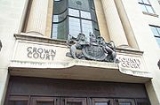
Courtsoxford20060325 Kaihsutai
For the TV programme see Crown Court (TV series)
Crown Court (TV series)

Crown Court was an ITV afternoon television courtroom drama that started in 1972, which was the same year the Crown Court system replaced Assize courts and Quarter sessions in England and Wales....
.
The Crown Court of England and Wales is, together with the High Court of Justice and the Court of Appeal
Court of Appeal of England and Wales

The Court of Appeal of England and Wales is the second most senior court in the Courts of England and Wales, with only the Judicial functions of the House of Lords above it....
, one of the constituent parts of the Supreme Court of Judicature in England and Wales
England and Wales

England and Wales is a legal unit within the United Kingdom. It consists of England and Wales, two of the four countries of the United Kingdom....
. It is the higher court of first instance
Court of First Instance

The European Court of First Instance, created in 1989, is a court of the European Union....
 in criminal cases
Criminal law

The term criminal law, sometimes called penal law, refers to any of various bodies of rules in different jurisdictions whose common characteristic is the potential for unique and often severe impositions as punishment for failure to comply....
; however, for some purposes the Crown Court is hierarchically subordinate to the High Court and its Divisional Courts. It sits in around 90 locations in England and Wales
England and Wales

England and Wales is a legal unit within the United Kingdom. It consists of England and Wales, two of the four countries of the United Kingdom....
. Previously divided into six circuits - Midland, Northern
Northern Circuit

The Northern Circuit dates from 1176 when Henry II of England sent his judges on circuit to do justice in his name. The Circuit encompassed the whole of the North of England but in 1876 it was divided....
, North Eastern, South Eastern, Wales
Wales

native_name = Cymru|conventional_long_name = Wales|common_name = Wales|image_flag = Flag of Wales 2.svg|national_motto = ...
 & Chester
Chester

Chester is the county town of Cheshire, England. Lying on the River Dee, Wales, close to the border with Wales, it is home to 77,040 inhabitants, and is the largest and most populous settlement of the wider local government district of the Chester , which had a population of 118,210 according to the United Kingdom Census 2001....
 and Western - it is now divided into seven regions - Midlands, North East, North West, South East, South West, London and Wales. The Wales region was added to enforce the new law creating powers formed by use of the Welsh Assembly Government . The Central Criminal Court (the Old Bailey
Old Bailey

The Central Criminal Court in England, commonly known as the Old Bailey, is a court building in central London, one of a number housing the Crown Court....
), which was originally established by its own Act of Parliament
Act of Parliament

An act of Parliament is a statute wikt:enacted as primary legislation by a national or sub-national parliament. It is broadly equivalent to an act of Congress in the United States....
, is now part of the Crown Court, and is one of the main criminal courts in London.

The Crown Court carries out four principal types of activity: appeals from decisions of magistrates; sentencing of defendants committed from magistrates’ courts, jury trials, and the sentencing of those who are convicted in the Crown Court, either after trial or on pleading guilty. On average defendants in custody face an average waiting time of 13 weeks and 3 days. Those on bail experience greater delay having to wait 15 weeks and 4 days.

Appeals from magistrates' courts

In 2003-4 the Crown Court heard 11,707 appeals against conviction and/or sentence from those convicted in the magistrates' courts. At the conclusion of the hearing the Crown Court has the power to confirm, reverse or vary any part of the decision under appeal . If the appeal is decided against the accused, the Crown Court has the power to impose any sentence which the magistrates could have imposed, including one which is harsher than the one originally imposed. There was a waiting time of just over 8 weeks for appeals; 90% of appellants waited 14 weeks or less.

Defendants committed from magistrates for sentencing

In 2003-4 the Crown Court dealt with 31,018 cases for sentencing from the magistrates. Magistrates have the power to commit to the Crown Court for sentencing when they are of the opinion that either the offence or the combination of the offence and one or more offences associated with it was so serious that greater punishment should be inflicted than the court has power to impose or, in the case of a violent or sexual offence, that a custodial sentence longer than the court has power to impose is necessary to protect the public from serious harm. Committals may also arise from breaches of the terms of a Community Rehabilitation Order or a suspended sentence of imprisonment. The court performance target is that cases committed for sentence should be heard within 10 weeks.

Trials

The Crown Court disposed of 83,247 committals for trial in 2003-4. Taking into account 29,752 cases still outstanding, the implied waiting time for trials was 18.5 weeks. This is the time between committal or lodging an appeal and the start of the Crown Court hearing. This level of delay has been gradually worsening over the last 6 years. The average time to try a case on a plea of not guilty is about 7 hours. Since the average length of a sitting day is 4.33 hours, this implies that a not guilty case takes just over the equivalent of one and a half court days.

Appeals from Crown Courts

When the Crown Court is dealing with a matter connected with a trial on indictment
Indictment

In the common law legal system, an indictment is a formal accusation that a person has committed a criminal offense. In those jurisdictions which retain the concept of a felony, the serious criminal offense would be a felony; those jurisdictions which have abolished the concept of a felony often substitute the concept of an indictable offenc...
 (i.e. a jury trial), appeal lies to the criminal division of the Court of Appeal and thence to the House of Lords
Judicial functions of the House of Lords

The House of Lords, in addition to having a legislative function, has a judicial function as a court of last resort within the United Kingdom....
. In all other cases, appeal from the Crown Court lies by way of case stated
Case Stated

Case Stated is legal function available in England and Wales to review a magistrates' court decision on a point of law.?Case stated? is a statement of facts prepared by one court for the opinion of another on a point of law....
 to a Divisional Court of the High Court.

Judges

The Judges who normally sit in the Crown Court are High Court
High Court of Justice

The High Court of Justice is, together with the Crown Court and the Court of Appeal of England and Wales, part of the Courts of England and Wales ....
 Judges, Circuit Judges and Recorder
Recorder (judge)

In the Courts of England and Wales, a Recorder is a barrister or solicitor of at least 10 years standing who is appointed by the Queen on the advice of the Lord Chancellor to hold part-time judicial office....
s. Circuit Judges also sit in the County Court
County Court

A county court is a court based in or with a jurisdiction covering one or more county, which are administrative divisions within a country....
. Recorders are Barristers or Solicitors in private practice, who sit part time as Judges. The most serious cases (treason, murder, rape etc.) are allocated to High Court Judges and Senior Circuit Judges. The remainder are dealt with by Circuit Judges and Recorders, although Recorders will normally handle less serious work than Circuit Judges. The allocation is conducted according to directions given by the Lord Chief Justice of England and Wales
Lord Chief Justice of England and Wales

IntroductionThe Lord Chief Justice of England and Wales was, historically, the second-highest judge of the Courts of England and Wales, after the Lord Chancellor....
.

History of the Crown Court

The Crown Court was established in 1972 by the Courts Act 1971
Courts Act 1971

The Courts Act 1971 is an Act of Parliament of the Parliament of the United Kingdom the purpose of which was to reform and modernise the courts system of England and Wales....
 to replace the courts of Assize
Assizes

The term Assizes or Court of Assize may refer to:* Assize Court, general term of courts in several countries* Court of Assize , legal court in Belgium...
 and Quarter Sessions
Quarter Sessions

The Courts of Quarter Sessions or Quarter Sessions were periodic courts held in each county and county borough in England and Wales until 1972, when together with the Assize courts they were abolished by the Courts Act 1971 and replaced by a single permanent Crown Court of England and Wales for England and Wales....
. The Crown Court is a permanent unitary court across England and Wales, whereas the Assizes were periodic local courts heard before judges of the Queen's Bench Division of the High Court, who travelled across the seven circuits into which England and Wales were divided, assembling juries in the Assize Towns and hearing cases. The Quarter Sessions were local courts assembled four times a year to dispose of criminal cases which were not serious enough to go before a High Court judge.

A Crown Court and a County Court
County Court

A county court is a court based in or with a jurisdiction covering one or more county, which are administrative divisions within a country....
 may be located in the same building and use the same jurors. Since the establishment of Her Majesty's Courts Service
Her Majesty's Courts Service

Her Majesty's Courts Service is an executive agency of the Ministry of Justice and is responsible for the administration of the civil, family and criminal courts in England and Wales....
 in April 2005 there is an increased sharing of facilities between the Crown Court, county courts and magistrates court.

Physical layout

At the front of the court, on a raised platform, is a large bench. This is where the judge sits. His or her rank can be distinguished by the colour of gown worn, and different forms of address are appropriate for different ranks of judge, with "your honour" being the most common. The judge enters from a door at the side of the platform, preceded by a cry of "court rise" from the usher or clerk of the court who sits below and in front of the judge's bench. Everyone in the court is expected to show their respect for the judge by standing as he enters and until he sits down.

The clerk of the court, who sits facing the court (that is, the same way as the judge) has a smaller desk on which sits a telephone, used when communication is necessary with other parts of the court building (for example the jury assembly area or the cell complex).

Also in the area just in front of the judge's bench is the sound recordist. Proceedings will be recorded on a double deck cassette recorder with one tape or the other being changed at intervals. This record may be used if the case later goes to appeal.

Additionally there may be a court reporter
Court reporter

A court reporter, stenotype reporter , voice writer or stenomask writer is a person whose Profession is to transcribe spoken or recorded Interpersonal communication into written form, typically using machine shorthand or a voice silencer and digital recorder to produce official Transcript of court hearings, deposition s and other...
 who also records proceedings on a stenograph
Stenotype

File:Estenotipia.jpgA stenotype or shorthand machine is a specialized chorded keyboard or typewriter used by stenographers for shorthand use....
, by typing keys as the witnesses speak, using special shorthand. Alternatively, if there is no stenographer, a tapelogger or shorthand writer will be there to operate the tapes and ensure that a log of the proceedings is kept.

Facing the clerk will be the usher. If papers or other objects need to be passed around the court, for example notes from members of the jury, or evidence being shown to the jury, normally the usher will do this and will be the only person in the court to walk around while the court is in session.

Behind the usher, wearing black gowns and large white wigs and facing the judge, will be the prosecuting and defending barrister
Barrister

A barrister is a lawyer found in many common law jurisdictions that employ a split profession in relation to legal representation. In split professions, the other type of lawyer is the solicitor....
s. The defending barrister will usually be nearest the jury. These days they will also be likely to have laptop computers in addition to files of papers relating to the case which will be on the desk in front of them. Unlike the judge who speaks sitting down, the barristers always stand to address the court.

Behind or alongside the barristers will sit the instructing solicitors, which in the case of the prosecution will either be a representative of the Crown Prosecution Service
Crown Prosecution Service

The Crown Prosecution Service, or CPS, is a non-ministerial government department of the Government of the United Kingdom responsible for public prosecutions of people charged with criminal offences in England and Wales....
 or police officers concerned with the case. The latter is more common with trials, whilst the former is more apparent in sentences, plea and case management hearings and other such cases.

At the back of the courtroom, behind the barristers, is a semi-partitioned area known as the "dock". This is where the defendant or defendants sit (now and then being asked to stand). A custody officer will be sitting in the dock near them.

Also at the back of the court, often adjacent to the dock, is a small area where the public can observe the proceedings. In some courts, notably the Old Bailey
Old Bailey

The Central Criminal Court in England, commonly known as the Old Bailey, is a court building in central London, one of a number housing the Crown Court....
, this area is positioned above the defendant.

Taking of notes is usually forbidden in the public gallery. Members of the press must sit in the press bench, which is usually positioned alongside the prosecuting barrister. Ettiquette usually requires reporters to identify themselves to the usher before taking position here and starting to write.

Alongside the defending barrister is the jury box. This is where the jury watch the case from. They will be called to it from the jury waiting area (benches next to it) to be sworn in. Once sworn they always sit in the same seat throughout the trial. If proceedings (such as legal argument about the admissibility of evidence) take place which they are not supposed to see occur, the usher will escort them into a room just outside the courtroom (probably behind the dock). Only jurors and ushers ever enter this room.

Opposite the jury box is the witness box
Witness box

A witness box is part of a court room. It is the section of the room set aside for witnesses to stand or sit in while giving their testimony or presenting evidence....
. Witnesses stand facing the jury and give their evidence so the jury can watch their demeanor while giving it, which might help them decide if the witness is being truthful.

When the judge sends the jury to consider their verdict
Verdict

In law, a verdict is the formal finding of fact made by a jury on matters or questions submitted to the jury by a judge....
, the usher escorts them to a small suite consisting of a large table, 12 chairs, WCs, paper and pencils, a button to call the usher with and prominent notices about not revealing deliberations to anyone else. The usher withdraws, and when the jury have arrived at a verdict, they push the button.

During deliberations only limited contact is permitted with the outside world, always via the usher. The jury will be permitted only (a) to call for refreshments, (b) to pass a note to the judge, perhaps asking for further guidance, or (c) to announce that they have reached a verdict. The judge may decide to recall them to the court to address them again at any time.

Circuits

Originally, the court was divided into six circuits as follows:

CircuitArea
North EasternNorthumberland
Northumberland

Northumberland is a Counties of England in the North East England of England. The non-metropolitan counties of England of Northumberland borders Cumbria to the west, County Durham to the south and Tyne and Wear to the south east, as well as having a border with the Scottish Borders council area to the north, and nearly eighty miles of Nort...
, Durham
County Durham

County Durham is a Metropolitan and non-metropolitan counties of England of Historic counties of England in North East England England. The county town is Durham.The largest settlement in the county is the town of Darlington....
, Yorkshire
Yorkshire

Yorkshire is a Historic counties of England of northern England and the largest in Great Britain. Because of its great size, over time functions were increasingly undertaken by its subdivisions, which have been subject to History of local government in Yorkshire....
NorthernCumberland
Cumberland

Cumberland is one of the 39 historic counties of England. It formed an Administrative counties of England from 1889 to 1974 and now forms part of Cumbria....
, Westmorland
Westmorland

Westmorland is an area of north-west England and one of the 39 historic counties of England. It formed an administrative county from 1889 to 1974 and now forms part of Cumbria....
, Lancashire
Lancashire

Lancashire is a Metropolitan and non-metropolitan counties of England of Historic counties of England in the North West England of England, bounded to the west by the Irish Sea....
 and Cheshire
Cheshire

Cheshire is a Counties of England in North West England. The county town, and the location of the county council, is the City status in the United Kingdom of Chester, although Cheshire's largest town in terms of area and population is Warrington....
MidlandStaffordshire
Staffordshire

Staffordshire is a landlocked Counties of England in the West Midlands region of England. The county town is Stafford. Part of the National Forest, England lies within its borders....
, Shropshire
Shropshire

Shropshire , alternatively known as Salop or abbreviated, in print only, Shrops, is a Counties of England in the West Midlands of England....
, Herefordshire
Herefordshire

Herefordshire is a Historic counties of England and Ceremonial counties of England Counties of England in the West Midlands Regions of England of England....
, Worcestershire
Worcestershire

Worcestershire is a county located in the West Midlands of central England. From 1974 to 1998 it was administered as part of Hereford and Worcester....
, Warwickshire
Warwickshire

Warwickshire is a landlocked non-metropolitan county in the West Midlands of England. The county town is Warwick, although the largest town is Nuneaton in the far north of the county....
, Leicestershire
Leicestershire

Leicestershire County Hall, situated in Glenfield, Leicestershire, about 3 miles northwest of Leicester city centre, is the seat of Leicestershire County Council and the headquarters of the county authority....
, Rutland
Rutland

Rutland is a Counties of England of mainland England, bounded on the west and north by Leicestershire, northeast by Lincolnshire, and southeast by Peterborough and Northamptonshire....
, Northamptonshire
Northamptonshire

Northamptonshire is a landlocked Counties of England in the England East Midlands, with a population of 629,676 as at the United Kingdom Census 2001....
, Derbyshire
Derbyshire

Derbyshire is a county in the East Midlands of England. A substantial portion of the Peak District National Park lies within Derbyshire. The northern part of Derbyshire overlaps with the Pennines, a famous chain of hills and mountains....
, part of Buckinghamshire
Buckinghamshire

Buckinghamshire is a Ceremonial counties of England and Metropolitan and non-metropolitan counties of England home counties Counties of England in South East England England....
, most of Oxfordshire
Oxfordshire

Oxfordshire is a county in the South East England region, bordering on Northamptonshire, Buckinghamshire, Berkshire, Wiltshire, Gloucestershire, and Warwickshire....
, part of Berkshire
Berkshire

Berkshire is a Home Counties in the South East England of England. It is also often referred to as the Royal County of Berkshire because of the presence of the royal residence of Windsor Castle in the county; this usage, which dates to the 19th century at least, was recognised by the Queen in 1958, and Letters patent issued confirming...
South EasternNorfolk
Norfolk

Norfolk is a low-lying Counties of England in the East of England. It has borders with Lincolnshire to the west, Cambridgeshire to the west and southwest and with Suffolk to the south....
, Suffolk
Suffolk

Suffolk is a Non-metropolitan counties of England of Historic counties of England in East Anglia, England. It has borders with Norfolk to the north, Cambridgeshire to the west and Essex to the south....
, Cambridgeshire and Isle of Ely
Cambridgeshire and Isle of Ely

Cambridgeshire and Isle of Ely was, from 1965 to 1974, an administrative county of England. In 1974 it became part of an enlarged Cambridgeshire....
, Bedfordshire
Bedfordshire

Bedfordshire is a county in England that forms part of the East of England Regions of England.Its county town is Bedford, Bedfordshire. It borders Cambridgeshire, Northamptonshire, Buckinghamshire and Hertfordshire....
, Hertfordshire
Hertfordshire

Hertfordshire is a Ceremonial counties of England and Metropolitan and non-metropolitan counties of England Counties of England in the East of England region of England....
, Essex
Essex

Essex is a counties of England in the East of England England. The county town is Chelmsford, and the highest point of the county is Chrishall Common near the village of Langley, Essex, close to the Hertfordshire border, which reaches ....
, most of Buckinghamshire
Buckinghamshire

Buckinghamshire is a Ceremonial counties of England and Metropolitan and non-metropolitan counties of England home counties Counties of England in South East England England....
, part of Oxfordshire
Oxfordshire

Oxfordshire is a county in the South East England region, bordering on Northamptonshire, Buckinghamshire, Berkshire, Wiltshire, Gloucestershire, and Warwickshire....
, most of Berkshire
Berkshire

Berkshire is a Home Counties in the South East England of England. It is also often referred to as the Royal County of Berkshire because of the presence of the royal residence of Windsor Castle in the county; this usage, which dates to the 19th century at least, was recognised by the Queen in 1958, and Letters patent issued confirming...
, Greater London
Greater London

Greater London is the top-level administrative subdivision covering London, England. The administrative area was officially created in 1965 and covers the City of London , the City of Westminster and the other 31 London boroughs....
, Surrey
Surrey

Surrey is a counties of England in the South East England of England and is one of the Home Counties. The county borders Greater London, Kent, East Sussex, West Sussex, Hampshire, and Berkshire....
, Sussex
Sussex

Sussex , from the Old English Su?seaxe , is a Historic counties of England in South East England England corresponding roughly in area to the ancient Kingdom of Sussex....
, Kent
Kent

Kent is a Counties of England in southeast England, and is one of the home counties. It borders East Sussex, Surrey and Greater London and has a defined boundary with Essex in the middle of the River Thames estuary....
Wales and ChesterWales
Wales

native_name = Cymru|conventional_long_name = Wales|common_name = Wales|image_flag = Flag of Wales 2.svg|national_motto = ...
, and most of Cheshire
Cheshire

Cheshire is a Counties of England in North West England. The county town, and the location of the county council, is the City status in the United Kingdom of Chester, although Cheshire's largest town in terms of area and population is Warrington....
WesternGloucestershire
Gloucestershire

Gloucestershire is a Counties of England in South West England England. The county comprises part of the Cotswold Hills, part of the flat fertile valley of the River Severn, and the entire Forest of Dean....
, part of Berkshire
Berkshire

Berkshire is a Home Counties in the South East England of England. It is also often referred to as the Royal County of Berkshire because of the presence of the royal residence of Windsor Castle in the county; this usage, which dates to the 19th century at least, was recognised by the Queen in 1958, and Letters patent issued confirming...
, Bristol
Bristol

Bristol is a City status in the United Kingdom, unitary authority area and Ceremonial counties of England in South West England, west of London, and east of Cardiff....
, Wiltshire
Wiltshire

Wiltshire is a Ceremonial counties of England in the South West England of England. It is landlocked and borders the counties of Dorset, Somerset, Hampshire, Gloucestershire, Oxfordshire and Berkshire....
, Hampshire
Hampshire

Hampshire , sometimes historically Southamptonshire, Hamptonshire, , or the County of Southampton, is a Counties of England on the south coast of England....
, Dorset
Dorset

Dorset , is a Counties of England in South West England on the English Channel coast. The county town is Dorchester, Dorset, situated in the south of the county at ....
, Somerset
Somerset

Somerset is a Counties of England in South West England. The county town is Taunton, which is in the south of the county. The Ceremonial counties of England of Somerset borders the counties of Bristol and Gloucestershire to the north, Wiltshire to the east, Dorset to the south-east, and Devon to the south-west....
, Devon
Devon

Devon is a large Counties of England in South West England. The county is also referred to as Devonshire, but that is an entirely unofficial name, rarely used inside of the county but often indicating a shire....
 and Cornwall
Cornwall

Cornwall , constitutional Duchy and palatine, is a metropolitan and non-metropolitan counties of England of England, United Kingdom, located at the tip of the south-western peninsula of Great Britain....


See also

  • List of Courts in England and Wales
    List of Courts in England and Wales

    This is a list of Courts in England and Wales. For information about the different types of Courts see Courts of England and Wales....
  • List of Crown Court venues in England and Wales
    List of Crown Court venues in England and Wales

    In the Courts of England and Wales of England and Wales, the Crown Court deals with serious criminal charges and with less serious charges where the accused has elected trial at the Crown Court instead of trial at a magistrates' court....