

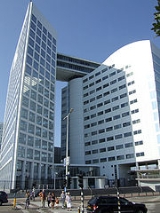
International Criminal Court

Encyclopedia
The International Criminal Court is a permanent tribunal
to prosecute individuals for genocide
, crimes against humanity
, war crime
s, and the crime of aggression (although it cannot currently and will in no way before 2017 be able to exercise jurisdiction over the crime of aggression).
It came into being on 1 July 2002—the date its founding treaty
, the Rome Statute of the International Criminal Court
, entered into force—and it can only prosecute crimes committed on or after that date. The Court's official seat is in The Hague
, Netherlands
, but its proceedings may take place anywhere.
The Court can generally exercise jurisdiction
only in cases where the accused is a national of a state party, the alleged crime took place on the territory of a state party, or a situation is referred to the Court by the United Nations Security Council
. It is designed to complement existing national judicial systems: it can exercise its jurisdiction only when national courts are unwilling or unable to investigate or prosecute such crimes. Primary responsibility to investigate and punish crimes is therefore left to individual states.
To date, the Court
It
As of December 2011, the Lubanga
trial regarding the Democratic Republic of the Congo has been concluded with the judgment pending. Two trials against three people are ongoing: the Katanga
-Chui trial regarding the DR Congo and the Bemba
trial regarding the Central African Republic. A fourth trial, the Banda
-Jerbo
trial in the situation of Darfur, Sudan, is anticipated to begin in 2012. Three confirmation of charges hearings, two against the so called "Ocampo Six" in the situation of Kenya (Ruto
et al. and Muthaura
et al.) and one in the Mbarushimana
case in the situation of the DR Congo, have concluded with the confirmation of charges pending. The suspect in the Gbagbo
case in the Côte d'Ivoire situation is due to have his initial appearance before the Court on 5 December 2011.
to judge political leaders accused of war crimes was first made during the Paris Peace Conference in 1919
by the Commission of Responsibilities
. The issue was addressed again at conference held in Geneva
under the auspices of the League of Nations
on 1–16 November 1937, but no practical results followed. The United Nations
states that the General Assembly
first recognised the need for a permanent international court to deal with atrocities of the kind committed during World War II
in 1948, following the Nuremberg
and Tokyo Tribunals
. At the request of the General Assembly, the International Law Commission
drafted two statutes by the early 1950s but these were shelved as the Cold War
made the establishment of an international criminal court politically unrealistic.
Benjamin B. Ferencz
, an investigator of Nazi war crime
s after World War II and the Chief Prosecutor for the United States
Army at the Einsatzgruppen Trial
, one of the twelve military trials
held by the U.S. authorities at Nuremberg
, later became a vocal advocate of the establishment of an international rule of law
and of an International Criminal Court. In his first book published in 1975, entitled Defining International Aggression-The Search for World Peace, he argued for the establishment of such an international court.
The idea was revived in 1989 when A. N. R. Robinson
, then Prime Minister of Trinidad and Tobago, proposed the creation of a permanent international court to deal with the illegal drug trade
. While work began on a draft statute, the international community established ad hoc
tribunals to try war crimes in the former Yugoslavia
and Rwanda
, established in 1994, further highlighting the need for a permanent international criminal court.
Following years of negotiations, the General Assembly convened a conference in Rome
in June 1998, with the aim of finalizing a treaty. On 17 July 1998, the Rome Statute of the International Criminal Court
was adopted by a vote of 120 to 7, with 21 countries abstaining. The seven countries that voted against the treaty were China
, Iraq
, Israel
, Libya
, Qatar
, United States
, and Yemen
.
The Rome Statute became a binding treaty on 11 April 2002, when the number of countries that had ratified it reached sixty. The Statute legally came into force on 1 July 2002, and the ICC can only prosecute crimes committed after that date. The first bench of 18 judge
s was elected by an Assembly of States Parties in February 2003. They were sworn in at the inaugural session of the Court on 11 March 2003. The Court issued its first arrest warrant
s on 8 July 2005, and the first pre-trial hearings were held in 2006.
During a Review Conference of the International Criminal Court Statute
in Kampala, Uganda
, two amendments to the Rome Statute of the International Criminal Court
were adopted on June 10 and June 11, 2010. The second amendment concerns the definition of the crime of aggression.
over four groups of crimes, which it refers to as the "most serious crimes of concern to the international community as a whole": the crime of genocide
, crimes against humanity, war crimes, and the crime of aggression. The Statute defines each of these crimes except for aggression.
The crime of genocide is unique because the crime must be committed with 'intent to destroy'. Crimes against humanity are specifically listed prohibited acts when committed as part of a widespread or systematic attack directed against any civilian population.
The Statute provides that the Court will not exercise its jurisdiction over the crime of aggression until such time as the states parties agree on a definition of the crime and set out the conditions under which it may be prosecuted.
In June 2010, the ICC's first review conference in Kampala, Uganda adopted amendments
defining "crimes of aggression" and expanding the ICC's jurisdiction over them. The ICC will not be allowed to prosecute for this crime until at least 2017. Furthermore, it expanded the term of war crimes for the use of certain weapons in an armed conflict not of an international character.
Many states wanted to add terrorism
and drug trafficking
to the list of crimes covered by the Rome Statute; however, the states were unable to agree on a definition for terrorism and it was decided not to include drug trafficking as this might overwhelm the Court's limited resources. India lobbied to have the use of nuclear weapons and other weapons of mass destruction
included as war crimes but this move was also defeated. India has expressed concern that "the Statute of the ICC lays down, by clear implication, that the use of weapons of mass destruction is not a war crime. This is an extraordinary message to send to the international community."
Some commentators have argued that the Rome Statute defines crimes too broadly or too vaguely. For example, China has argued that the definition of 'war crimes' goes beyond that accepted under customary international law
.
. However, this proposal was defeated due in large part to opposition from the United States. A compromise was reached, allowing the Court to exercise jurisdiction only under the following limited circumstances:
Article 20, paragraph 3, specifies that, if a person has already been tried by another court, the ICC cannot try them again for the same conduct unless the proceedings in the other court:
. If consensus cannot be reached, decisions are made by vote. The Assembly is presided over by a president and two vice-presidents, who are elected by the members to three-year terms.
The Assembly meets in full session once a year in New York
or The Hague
, and may also hold special sessions where circumstances require. Sessions are open to observer states and non-governmental organisations.
The Assembly elects the judges and prosecutor
s, decides the Court's budget, adopts important texts (such as the Rules of Procedure and Evidence), and provides management oversight to the other organs of the Court. Article 46 of the Rome Statute allows the Assembly to remove from office a judge or prosecutor who "is found to have committed serious misconduct or a serious breach of his or her duties" or "is unable to exercise the functions required by this Statute".
The states parties cannot interfere with the judicial functions of the Court. Disputes concerning individual cases are settled by the Judicial Divisions.
At the seventh session of the Assembly of States Parties in November 2008, the Assembly decided that the Review Conference of the Rome Statute shall be held in Kampala, Uganda, during the first semester of 2010.
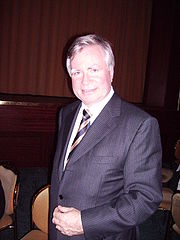 The Presidency is responsible for the proper administration of the Court (apart from the Office of the Prosecutor). It comprises the President and the First and Second Vice-Presidents—three judges of the Court who are elected to the Presidency by their fellow judges for a maximum of two three-year terms. The current President is Sang-Hyun Song, who was elected on 11 March 2009.
The Prosecutor or any person being investigated or prosecuted may request the disqualification of a judge from "any case in which his or her impartiality might reasonably be doubted on any ground". Any request for the disqualification of a judge from a particular case is decided by an absolute majority of the other judges. A judge may be removed from office if he or she "is found to have committed serious misconduct or a serious breach of his or her duties" or is unable to exercise his or her functions. The removal of a judge requires both a two-thirds majority of the other judges and a two-thirds majority of the states parties.
The Prosecutor may open an investigation under three circumstances:
Any person being investigated or prosecuted may request the disqualification of a prosecutor from any case "in which their impartiality might reasonably be doubted on any ground". Requests for the disqualification of prosecutors are decided by the Appeals Chamber. A prosecutor may be removed from office by an absolute majority of the states parties if he or she "is found to have committed serious misconduct or a serious breach of his or her duties" or is unable to exercise his or her functions. However, critics of the Court argue that there are “insufficient checks and balances on the authority of the ICC prosecutor and judges” and “insufficient protection against politicized prosecutions or other abuses”. Henry Kissinger
says the checks and balances are so weak that the prosecutor “has virtually unlimited discretion in practice”.
As of 16 June 2003, the Prosecutor has been Luis Moreno Ocampo
of Argentina
, who was elected by the Assembly of States Parties on 21 April 2003 for a term of nine years.
The election of the next prosecutor is scheduled for the session of the Assembly of States Parties to be held from 12 to 21 December 2011. A search committee for the position has been established, and is accepting nominations during the period from 13 June to 2 September 2011. Although the names of nominees are confidential for the time being, updates on the work of the search committee have been published on the web.
, who was elected on 28 February 2009.
, Netherlands, but its proceedings may take place anywhere. The Court is currently housed in interim premises on the eastern edge of The Hague. The Court intends to construct permanent premises in the Alexanderkazerne, to the north of The Hague.
The ICC also maintains a liaison office in New York and field offices in places where it conducts its activities. As of 18 October 2007, the Court had field offices in Kampala
, Kinshasa
, Bunia
, Abéché
and Bangui
.
The ICC's detention centre comprises twelve cells on the premises of the Scheveningen branch of the Haaglanden Penal Institution, The Hague. Suspects held by the International Criminal Tribunal for the former Yugoslavia
are held in the same prison and share some facilities, like the fitness room, but have no contact with suspects held by the ICC. The detention unit is close to the ICC's future headquarters in the Alexanderkazerne.
As of November 2011, the detention centre houses seven suspects: Thomas Lubanga
, Germain Katanga
, Mathieu Ngudjolo Chui, Jean-Pierre Bemba
, Callixte Mbarushimana
, Laurent Gbagbo
and also former Liberian President Charles Taylor. Taylor is being tried under the mandate and auspices of the Special Court for Sierra Leone
, but his trial is being held at the ICC's facilities in The Hague because of political and security concerns about holding the trial in Freetown
.
The ICC does not have its own witness protection program, but rather must rely on national programs to keep witnesses safe.
beyond reasonable doubt, and establishes certain rights of the accused and persons during investigations. These include the right to be fully informed of the charges against him or her; the right to have a lawyer
appointed, free of charge; the right to a speedy trial
; and the right to examine the witnesses against him or her and to obtain the attendance and examination of witnesses on his or her behalf.
Some argue that the protections offered by the ICC are insufficient. According to one conservative think-tank, the Heritage Foundation
, "Americans who appear before the court would be denied such basic constitutional rights as trial by a jury
of one's peers, protection from double jeopardy
, and the right to confront one's accusers
." The Human Rights Watch
argues that the ICC standards are sufficient, saying, “the ICC has one of the most extensive lists of due process guarantees ever written”, including "presumption of innocence; right to counsel; right to present evidence and to confront witnesses; right to remain silent; right to be present at trial; right to have charges proved beyond a reasonable doubt; and protection against double jeopardy". According to David Scheffer
, who led the US delegation to the Rome Conference (and who voted against adoption of the treaty), "when we were negotiating the Rome treaty, we always kept very close tabs on, 'Does this meet U.S. constitutional tests, the formation of this court and the due process rights that are accorded defendants?' And we were very confident at the end of Rome that those due process rights, in fact, are protected, and that this treaty does meet a constitutional test."
To ensure "equality of arms" between defence and prosecution teams, the ICC has established an independent Office of Public Counsel for the Defence (OPCD) to provide logistical support, advice and information to defendants and their counsel. The OPCD also helps to safeguard the rights of the accused during the initial stages of an investigation. However, Thomas Lubanga's defence team say they have been given a smaller budget than the Prosecutor and that evidence and witness statements have been slow to arrive.
Participation before the Court may occur at various stages of proceedings and may take different forms, although it will be up to the judges to give directions as to the timing and manner of participation.
Participation in the Court's proceedings will in most cases take place through a legal representative and will be conducted "in a manner which is not prejudicial or inconsistent with the rights of the accused and a fair and impartial trial".
The victim-based provisions within the Rome Statute provide victims with the opportunity to have their voices heard and to obtain, where appropriate, some form of reparation for their suffering. It is this balance between retributive
and restorative justice
that will enable the ICC, not only to bring criminals to justice but also to help the victims themselves obtain justice.
Article 43(6) establishes a Victims and Witnesses Unit to provide "protective measures and security arrangements, counseling and other appropriate assistance for witnesses, victims who appear before the Court, and others who are at risk on account of testimony given by such witnesses." Article 68 sets out procedures for the "Protection of the victims and witnesses and their participation in the proceedings." The Court has also established an Office of Public Counsel for Victims, to provide support and assistance to victims and their legal representatives. Article 79 of the Rome Statute establishes a Trust Fund to make financial reparations
to victims and their families.
Hence victims may file submissions before the Pre-Trial Chamber when the Prosecutor requests its authorisation to investigate. They may also file submissions on all matters relating to the competence of the Court or the admissibility of cases.
More generally, victims are entitled to file submissions before the Court chambers at the pre-trial stage, during the proceedings or at the appeal stage.
The rules of procedure and evidence stipulate the time for victim participation in proceedings before the Court. They must send a written application to the Court Registrar and more precisely to the Victims' Participation and Reparation Section, which must submit the application to the competent Chamber which decides on the arrangements for the victims' participation in the proceedings. The Chamber may reject the application if it considers that the person is not a victim. Individuals who wish to make applications to participate in proceedings before the Court must therefore provide evidence proving they are victims of crimes which come under the competence of the Court in the proceedings commenced before it. The Section prepared standard forms and a booklet to make it easier for victims to file their petition to participate in the proceedings.
It should be stipulated that a petition may be made by a person acting with the consent of the victim, or in their name when the victim is a child or if any disability makes this necessary.
Victims are free to choose their legal representative who must be equally as qualified as the counsel for the defence (this may be a lawyer or person with experience as a judge or prosecutor) and be fluent in one of the Court's two working languages (English or French).
To ensure efficient proceedings, particularly in cases with many victims, the competent Chamber may ask victims to choose a shared legal representative. If the victims are unable to appoint one, the Chamber may ask the Registrar to appoint one or more shared legal representatives. The Victims' Participation and Reparation Section is responsible for assisting victims with the organisation of their legal representation before the Court. When a victim or a group of victims does not have the means to pay for a shared legal representative appointed by the Court, they may request financial aid from the Court to pay counsel. Counsel may participate in the proceedings before the Court by filing submissions and attending the hearings.
The Registry, and within it the Victims' Participation and Reparation Section, has many obligations with regard to notification of the proceedings to the victims to keep them fully informed of progress. Thus, it is stipulated that the Section must notify victims, who have communicated with the Court in a given case or situation, of any decisions by the Prosecutor not to open an investigation or not to commence a prosecution, so that these victims can file submissions before the Pre-Trial Chamber responsible for checking the decisions taken by the Prosecutor under the conditions laid down in the Statute. The same notification is required before the confirmation hearing in the Pre-Trial Chamber to allow the victims to file all the submissions they require. All decisions taken by the Court are then notified to the victims who participated in the proceedings or to their counsel. The Victims' Participation and Reparation Section has wide discretion to use all possible means to give adequate publicity to the proceedings before the Court (local media, requests for co-operation sent to Governments, aid requested from NGOs or other means).
Pursuant to article 75, the Court may lay down the principles for reparation for victims, which may include restitution, indemnification and rehabilitation. On this point, the Rome Statute of the International Criminal Court has benefited from all the work carried out with regard to victims, in particular within the United Nations.
The Court must also enter an order against a convicted person stating the appropriate reparation for the victims or their beneficiaries. This reparation may also take the form of restitution, indemnification or rehabilitation. The Court may order this reparation to be paid through the Trust Fund for Victims, which was set up by the Assembly of States Parties in September 2002.
To be able to apply for reparation, victims have to file a written application with the Registry, which must contain the evidence laid down in Rule 94 of the Rules of Procedure and Evidence. The Victims' Participation and Reparation Section prepared standard forms to make this easier for victims. They may also apply for protective measures for the purposes of confiscating property from the persons prosecuted.
The Victims' Participation and Reparation Section is responsible for giving all appropriate publicity to these reparation proceedings to enable victims to make their applications. These proceedings take place after the person prosecuted has been declared guilty of the alleged facts.
The Court has the option of granting individual or collective reparation, concerning a whole group of victims or a community, or both. If the Court decides to order collective reparation, it may order that reparation to be made through the Victims' Fund and the reparation may then also be paid to an inter-governmental, international or national organisation.
. The co-operation of the non-party states with the ICC is envisioned by the Rome Statute of the International Criminal Court to be of voluntary nature. However, even states that have not acceded to the Rome Statute might still be subjects to an obligation to co-operate with ICC in certain cases. When a case is referred to the ICC by the UN Security Council all UN member states are obliged to co-operate, since its decisions are binding for all of them. Also, there is an obligation to respect and ensure respect for international humanitarian law, which stems from the Geneva Conventions
and Additional Protocol I, which reflects the absolute nature of IHL
. Although the wording of the Conventions might not be precise as to what steps have to be taken, it has been argued that it at least requires non-party states to make an effort not to block actions of ICC in response to serious violations of those Conventions. In relation to co-operation in investigation and evidence gathering, it is implied from the Rome Statute that the consent of a non-party state is a prerequisite for ICC Prosecutor to conduct an investigation within its territory, and it seems that it is even more necessary for him to observe any reasonable conditions raised by that state, since such restrictions exist for states party to the Statute. Taking into account the experience of the ICTY
(which worked with the principle of the primacy, instead of complementarity) in relation to co-operation, some scholars have expressed their pessimism as to the possibility of ICC to obtain co-operation of non-party states. As for the actions that ICC can take towards non-party states that do not co-operate, the Rome Statute stipulates that the Court may inform the Assembly of States Parties or Security Council, when the matter was referred by it, when non-party state refuses to co-operate after it has entered into an ad hoc arrangement or an agreement with the Court.
to human rights abusers as part of agreements to end conflict. Article 16 of the Rome Statute allows the Security Council to prevent the Court from investigating or prosecuting a case, and Article 53 allows the Prosecutor the discretion not to initiate an investigation if he or she believes that “an investigation would not serve the interests of justice”. Former ICC President Philippe Kirsch
has said that "some limited amnesties may be compatible" with a country's obligations genuinely to investigate or prosecute under the Statute.
It is sometimes argued that amnesties are necessary to allow the peaceful transfer of power from abusive regimes. By denying states the right to offer amnesty to human rights abusers, the International Criminal Court may make it more difficult to negotiate an end to conflict and a transition to democracy. For example, the outstanding arrest warrants for four leaders of the Lord's Resistance Army
are regarded by some as an obstacle to ending the insurgency in Uganda. Czech politician Marek Benda argues that "the ICC as a deterrent will in our view only mean the worst dictators will try to retain power at all costs". However, the United Nations and the International Committee of the Red Cross
maintain that granting amnesty to those accused of war crimes and other serious crimes is a violation of international law.
 Unlike the International Court of Justice
, the ICC is legally and functionally independent from the United Nations. However, the Rome Statute grants certain powers to the United Nations Security Council
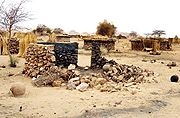
. Article 13 allows the Security Council to refer to the Court situations that would not otherwise fall under the Court's jurisdiction (as it did in relation to the situations in Darfur and Libya, which the Court could not otherwise have prosecuted as neither Sudan nor Libya are state parties). Article 16 allows the Security Council to require the Court to defer from investigating a case for a period of 12 months. Such a deferral may be renewed indefinitely by the Security Council. This sort of an arrangement gives the ICC some of the advantages inhering in the organs of the United Nations
such as using the enforcement powers of the Security Council but it also creates a risk of being tainted with the political controversies of the Security Council.
The Court cooperates with the UN in many different areas, including the exchange of information and logistical support. The Court reports to the UN each year on its activities, and some meetings of the Assembly of States Parties are held at UN facilities. The relationship between the Court and the UN is governed by a “Relationship Agreement between the International Criminal Court and the United Nations”.
NGOs helped birth the ICC through advocacy and championing for the prosecution of perpetrators of crimes against humanity. NGOs closely monitor the organization's declarations and actions, ensuring that the work that is being executed on behalf of the ICC is fulfilling its objectives and responsibilities to civil society. According to Benjamin Schiff, "From the Statute Conference onward, the relationship between the ICC and the NGOs has probably been closer, more consistent, and more vital to the Court than have analogous relations between NGOs and any other international organization."
There are a number of NGOs working on a variety of issues related to the ICC. The NGO Coalition for the International Criminal Court
has served as a sort of umbrella for NGOs to coordinate with each other on similar objectives related to the ICC. The CICC has 2,500 member organizations in 150 different countries. The original steering committee included representatives from the World Federalist Movement
, the International Commission of Jurists
, Amnesty International
, the Lawyers Committee for Human Rights, Human Rights Watch
, Parliamentarians for Global Action
, and No Peace Without Justice
. Today, many of the NGOs with which the ICC cooperates are members of the CICC. These organizations come from a range of backgrounds, spanning from major international NGOs such as Human Rights Watch
and Amnesty International
, to smaller, more local organizations focused on peace and justice missions. Many work closely with states, such as the International Criminal Law Network, founded and predominantly funded by The Hague
municipality and the Dutch Ministries of Defense and Foreign Affairs. The CICC also claims organizations that are themselves federations, such as the International Federation of Human Rights Leagues (FIDH).
CICC members ascribe to three principles that permit them to work under the umbrella of the CICC, so long as their objectives match them:
The NGOs that work under the CICC do not normally pursue agendas exclusive to the work of the Court, rather they may work for broader causes, such as general human rights issues, victims' rights, gender rights, rule of law, conflict mediation, and peace. The CICC coordinates their efforts to improve the efficiency of NGOs' contributions to the Court and to pool their influence on major common issues. From the ICC side, it has been useful to have the CICC channel NGO contacts with the Court so that its officials do not have to interact individually with thousands of separate organizations.
NGOs have been crucial to the evolution of the ICC, as they assisted in the creation of the normative climate that urged states to seriously consider the Court's formation. Their legal experts helped shape the Statute, while their lobbying efforts built support for it. They advocate Statute ratification globally and work at expert and political levels within member states for passage of necessary domestic legislation. NGOs are greatly represented at meetings for the Assembly of States Parties and they use the ASP meetings to press for decisions promoting their priorities. Many of these NGOs have reasonable access to important officials at the ICC because of their involvement during the Statute process. They are engaged in monitoring, commenting upon, and assisting in the ICC's activities.
The ICC many time depends on NGOs to interact with local populations. The Registry Public Information Office personnel and Victims Participation and Reparations Section officials hold seminars for local leaders, professionals and the media to spread the word about the Court. These are the kinds of events that are often hosted or organized by local NGOs. Because there can be challenges with determining which of these NGOs are legitimate, CICC regional representatives oftentimes have the ability to help screen and identify trustworthy organizations.
However, NGOs are also "sources of criticism, exhortation and pressure upon" the ICC. The ICC heavily depends on NGOs for its operations. Although NGOs and states cannot directly impact the judicial nucleus of the organization, they can impart information on crimes, can help locate victims and witnesses, and can promote and organize victim participation. NGOs outwardly comment on the Court's operations, "push for expansion of its activities especially in the new justice areas of outreach in conflict areas, in victims' participation and reparations, an in upholding due-process standards and defense 'equality of arms' and so implicitly set an agenda for the future evolution of the ICC." The relatively uninterrupted progression of NGO involvement with the ICC may mean that NGOs have become repositories of more institutional historical knowledge about the ICC than have national representatives to it and have greater expertise than some of the organization's employees themselves. While NGOs look to mold the ICC to satisfy the interests and priorities that they have worked for since the early 1990s, they unavoidably press against the limits imposed upon the ICC by the states that are members of the organization. NGOs can pursue their own mandates, irrespective of whether they are compatible with those of other NGOs, while the ICC must respond to the complexities of its own mandate as well as those of the states and NGOs.
Another issue has been that NGOs possess ""exaggerated senses of their ownership over the organization and, having been vital to and successful in promoting the Court, were not managing to redefine their roles to permit the Court its necessary independence." Additionally, because there does exist such a gap between the large human rights organizations and the smaller peace-oriented organizations, it is difficult for ICC officials to manage and gratify all of their NGOs. "ICC officials recognize that the NGOs pursue their own agendas, and that they will seek to pressure the ICC in the direction of their own priorities rather than necessarily understanding or being fully sympathetic to the myriad constraints and pressures under which the Court operates." Both the ICC and the NGO community avoid criticizing each other publicly or vehemently, although NGOs have released advisory and cautionary messages regarding the ICC. They avoid taking stances that could potentially give the Court's adversaries, particularly the US, more motive to berate the organization.
The Court spent €
80.5 million in 2007, and the Assembly of States Parties has approved a budget of €90,382,100 for 2008 and €101,229,900 for 2009. As of September 2008, the ICC’s staff consisted of 571 persons from 83 states.
Notes
The PA's declaration purported to invoke Article 12 (3) of the Rome Statute, which specifically enables "a state which is not a party to this Statute" to request that the ICC exercise its jurisdiction on an ad hoc basis with respect to an alleged crime on that state’s territory or involving its nationals.
In other words, the PA's declaration to the Office of the Prosecutor amounted to an official request to confirm that the PA can be considered a state for purposes of ICC jurisdiction.
Tribunal
A tribunal in the general sense is any person or institution with the authority to judge, adjudicate on, or determine claims or disputes—whether or not it is called a tribunal in its title....
to prosecute individuals for genocide
Genocide
Genocide is defined as "the deliberate and systematic destruction, in whole or in part, of an ethnic, racial, religious, or national group", though what constitutes enough of a "part" to qualify as genocide has been subject to much debate by legal scholars...
, crimes against humanity
Crime against humanity
Crimes against humanity, as defined by the Rome Statute of the International Criminal Court Explanatory Memorandum, "are particularly odious offenses in that they constitute a serious attack on human dignity or grave humiliation or a degradation of one or more human beings...
, war crime
War crime
War crimes are serious violations of the laws applicable in armed conflict giving rise to individual criminal responsibility...
s, and the crime of aggression (although it cannot currently and will in no way before 2017 be able to exercise jurisdiction over the crime of aggression).
It came into being on 1 July 2002—the date its founding treaty
Treaty
A treaty is an express agreement under international law entered into by actors in international law, namely sovereign states and international organizations. A treaty may also be known as an agreement, protocol, covenant, convention or exchange of letters, among other terms...
, the Rome Statute of the International Criminal Court
Rome Statute of the International Criminal Court
The Rome Statute of the International Criminal Court is the treaty that established the International Criminal Court . It was adopted at a diplomatic conference in Rome on 17 July 1998 and it entered into force on 1 July 2002. As of 13 October 2011, 119 states are party to the statute...
, entered into force—and it can only prosecute crimes committed on or after that date. The Court's official seat is in The Hague
The Hague
The Hague is the capital city of the province of South Holland in the Netherlands. With a population of 500,000 inhabitants , it is the third largest city of the Netherlands, after Amsterdam and Rotterdam...
, Netherlands
Netherlands
The Netherlands is a constituent country of the Kingdom of the Netherlands, located mainly in North-West Europe and with several islands in the Caribbean. Mainland Netherlands borders the North Sea to the north and west, Belgium to the south, and Germany to the east, and shares maritime borders...
, but its proceedings may take place anywhere.
The Court can generally exercise jurisdiction
Jurisdiction
Jurisdiction is the practical authority granted to a formally constituted legal body or to a political leader to deal with and make pronouncements on legal matters and, by implication, to administer justice within a defined area of responsibility...
only in cases where the accused is a national of a state party, the alleged crime took place on the territory of a state party, or a situation is referred to the Court by the United Nations Security Council
United Nations Security Council
The United Nations Security Council is one of the principal organs of the United Nations and is charged with the maintenance of international peace and security. Its powers, outlined in the United Nations Charter, include the establishment of peacekeeping operations, the establishment of...
. It is designed to complement existing national judicial systems: it can exercise its jurisdiction only when national courts are unwilling or unable to investigate or prosecute such crimes. Primary responsibility to investigate and punish crimes is therefore left to individual states.
To date, the Court
It
As of December 2011, the Lubanga
Thomas Lubanga
Thomas Lubanga Dyilo is a former rebel leader from the Democratic Republic of the Congo . He founded and led the Union of Congolese Patriots and was a key player in the Ituri conflict...
trial regarding the Democratic Republic of the Congo has been concluded with the judgment pending. Two trials against three people are ongoing: the Katanga
Germain Katanga
Germain Katanga , also known as Simba, is a former leader of the Patriotic Resistance Force in Ituri . On 17 October 2007, the Congolese authorities surrendered him to the International Criminal Court to stand trial on six counts of war crimes and three counts of crimes against humanity...
-Chui trial regarding the DR Congo and the Bemba
Jean-Pierre Bemba
Jean-Pierre Bemba Gombo is a politician in the Democratic Republic of the Congo. He was one of four vice-presidents in the transitional government of the Democratic Republic of the Congo from 17 July 2003 to December 2006. Bemba also leads the Movement for the Liberation of Congo , a rebel group...
trial regarding the Central African Republic. A fourth trial, the Banda
Abdallah Banda
Abdallah Banda Abakaer Nourain, commonly referred to as Abdallah Banda, was the Commander-in-Chief of the Justice and Equality Movement Collective-Leadership, one of the components of the United Resistance Front...
-Jerbo
Saleh Jerbo
Saleh Mohammed Jerbo Jamus, commonly referred to as Saleh Jerbo, was the Chief-of-Staff of the SLA-Unity. He is waiting for his trial before the International Criminal Court where he will be tried, together with Abdallah Banda, for three counts of war crimes allegedly committed during the Haskanita...
trial in the situation of Darfur, Sudan, is anticipated to begin in 2012. Three confirmation of charges hearings, two against the so called "Ocampo Six" in the situation of Kenya (Ruto
William Ruto
William Kipchirchir Samoei arap Ruto is a Kenyan politician who was Minister for Higher Education until 19 October 2010 after being suspended for corruption. He is also one of the two deputy party leaders of the Orange Democratic Movement. He had previously served in the Ministry of Agriculture...
et al. and Muthaura
Francis Muthaura
Francis Kirimi Muthaura is a prominent Kenyan civil servant. Muthaura is a close ally of President Mwai Kibaki. He is the Head of Civil Service and Secretary to the Cabinet....
et al.) and one in the Mbarushimana
Callixte Mbarushimana
****Callixte Mbarushimana is a Hutu Rwandan and former United Nations employee who is alleged to have participated in the Rwandan Genocide of 1994, and who later on was indicted by the International Criminal Court in The Hague for crimes against humanity and war crimes allegedly committed in the...
case in the situation of the DR Congo, have concluded with the confirmation of charges pending. The suspect in the Gbagbo
Laurent Gbagbo
Laurent Koudou Gbagbo served as the fourth President of Côte d'Ivoire from 2000 until his arrest in April 2011. A historian by profession, he is also an amateur chemist and physicist....
case in the Côte d'Ivoire situation is due to have his initial appearance before the Court on 5 December 2011.
History
The establishment of an international tribunalTribunal
A tribunal in the general sense is any person or institution with the authority to judge, adjudicate on, or determine claims or disputes—whether or not it is called a tribunal in its title....
to judge political leaders accused of war crimes was first made during the Paris Peace Conference in 1919
Paris Peace Conference, 1919
The Paris Peace Conference was the meeting of the Allied victors following the end of World War I to set the peace terms for the defeated Central Powers following the armistices of 1918. It took place in Paris in 1919 and involved diplomats from more than 32 countries and nationalities...
by the Commission of Responsibilities
Commission of Responsibilities
A commission of experts at the Paris Peace Conference in 1919 that dealt with the issue of prosecution for war crimes committed during the First World War.-Background:...
. The issue was addressed again at conference held in Geneva
Geneva
Geneva In the national languages of Switzerland the city is known as Genf , Ginevra and Genevra is the second-most-populous city in Switzerland and is the most populous city of Romandie, the French-speaking part of Switzerland...
under the auspices of the League of Nations
League of Nations
The League of Nations was an intergovernmental organization founded as a result of the Paris Peace Conference that ended the First World War. It was the first permanent international organization whose principal mission was to maintain world peace...
on 1–16 November 1937, but no practical results followed. The United Nations
United Nations
The United Nations is an international organization whose stated aims are facilitating cooperation in international law, international security, economic development, social progress, human rights, and achievement of world peace...
states that the General Assembly
United Nations General Assembly
For two articles dealing with membership in the General Assembly, see:* General Assembly members* General Assembly observersThe United Nations General Assembly is one of the five principal organs of the United Nations and the only one in which all member nations have equal representation...
first recognised the need for a permanent international court to deal with atrocities of the kind committed during World War II
World War II
World War II, or the Second World War , was a global conflict lasting from 1939 to 1945, involving most of the world's nations—including all of the great powers—eventually forming two opposing military alliances: the Allies and the Axis...
in 1948, following the Nuremberg
Nuremberg Trials
The Nuremberg Trials were a series of military tribunals, held by the victorious Allied forces of World War II, most notable for the prosecution of prominent members of the political, military, and economic leadership of the defeated Nazi Germany....
and Tokyo Tribunals
International Military Tribunal for the Far East
The International Military Tribunal for the Far East , also known as the Tokyo Trials, the Tokyo War Crimes Tribunal, or simply the Tribunal, was convened on April 29, 1946, to try the leaders of the Empire of Japan for three types of crimes: "Class A" crimes were reserved for those who...
. At the request of the General Assembly, the International Law Commission
International Law Commission
The International Law Commission was established by the United Nations General Assembly in 1948 for the "promotion of the progressive development of international law and its codification."It holds an annual session at the United Nations Office at Geneva....
drafted two statutes by the early 1950s but these were shelved as the Cold War
Cold War
The Cold War was the continuing state from roughly 1946 to 1991 of political conflict, military tension, proxy wars, and economic competition between the Communist World—primarily the Soviet Union and its satellite states and allies—and the powers of the Western world, primarily the United States...
made the establishment of an international criminal court politically unrealistic.
Benjamin B. Ferencz
Benjamin B. Ferencz
Benjamin Berell' Ferencz is a Romanian-born American lawyer. He was an investigator of Nazi war crimes after World War II and the Chief Prosecutor for the United States Army at the Einsatzgruppen Trial, one of the twelve military trials held by the U.S. authorities at Nuremberg, Germany...
, an investigator of Nazi war crime
War crime
War crimes are serious violations of the laws applicable in armed conflict giving rise to individual criminal responsibility...
s after World War II and the Chief Prosecutor for the United States
United States
The United States of America is a federal constitutional republic comprising fifty states and a federal district...
Army at the Einsatzgruppen Trial
Einsatzgruppen Trial
The Einsatzgruppen Trial was the ninth of the twelve trials for war crimes the U.S. authorities held in their occupation zone in Germany in Nuremberg after the end of World War II. These twelve trials were all held before U.S...
, one of the twelve military trials
Subsequent Nuremberg Trials
The Subsequent Nuremberg Trials were a series of twelve U.S...
held by the U.S. authorities at Nuremberg
Nuremberg
Nuremberg[p] is a city in the German state of Bavaria, in the administrative region of Middle Franconia. Situated on the Pegnitz river and the Rhine–Main–Danube Canal, it is located about north of Munich and is Franconia's largest city. The population is 505,664...
, later became a vocal advocate of the establishment of an international rule of law
Rule of law
The rule of law, sometimes called supremacy of law, is a legal maxim that says that governmental decisions should be made by applying known principles or laws with minimal discretion in their application...
and of an International Criminal Court. In his first book published in 1975, entitled Defining International Aggression-The Search for World Peace, he argued for the establishment of such an international court.
The idea was revived in 1989 when A. N. R. Robinson
A. N. R. Robinson
Arthur Napoleon Raymond Robinson, OCC, TC was the third President of Trinidad and Tobago, serving from 19 March 1997 to 17 March 2003. He was also Trinidad and Tobago's third Prime Minister, serving in that capacity from 18 December 1986 to 17 December 1991...
, then Prime Minister of Trinidad and Tobago, proposed the creation of a permanent international court to deal with the illegal drug trade
Illegal drug trade
The illegal drug trade is a global black market, dedicated to cultivation, manufacture, distribution and sale of those substances which are subject to drug prohibition laws. Most jurisdictions prohibit trade, except under license, of many types of drugs by drug prohibition laws.A UN report said the...
. While work began on a draft statute, the international community established ad hoc
Ad hoc
Ad hoc is a Latin phrase meaning "for this". It generally signifies a solution designed for a specific problem or task, non-generalizable, and not intended to be able to be adapted to other purposes. Compare A priori....
tribunals to try war crimes in the former Yugoslavia
International Criminal Tribunal for the former Yugoslavia
The International Tribunal for the Prosecution of Persons Responsible for Serious Violations of International Humanitarian Law Committed in the Territory of the Former Yugoslavia since 1991, more commonly referred to as the International Criminal Tribunal for the former Yugoslavia or ICTY, is a...
and Rwanda
International Criminal Tribunal for Rwanda
The International Criminal Tribunal for Rwanda is an international court established in November 1994 by the United Nations Security Council in Resolution 955 in order to judge people responsible for the Rwandan Genocide and other serious violations of international law in Rwanda, or by Rwandan...
, established in 1994, further highlighting the need for a permanent international criminal court.
Following years of negotiations, the General Assembly convened a conference in Rome
Rome
Rome is the capital of Italy and the country's largest and most populated city and comune, with over 2.7 million residents in . The city is located in the central-western portion of the Italian Peninsula, on the Tiber River within the Lazio region of Italy.Rome's history spans two and a half...
in June 1998, with the aim of finalizing a treaty. On 17 July 1998, the Rome Statute of the International Criminal Court
Rome Statute of the International Criminal Court
The Rome Statute of the International Criminal Court is the treaty that established the International Criminal Court . It was adopted at a diplomatic conference in Rome on 17 July 1998 and it entered into force on 1 July 2002. As of 13 October 2011, 119 states are party to the statute...
was adopted by a vote of 120 to 7, with 21 countries abstaining. The seven countries that voted against the treaty were China
China
Chinese civilization may refer to:* China for more general discussion of the country.* Chinese culture* Greater China, the transnational community of ethnic Chinese.* History of China* Sinosphere, the area historically affected by Chinese culture...
, Iraq
Iraq
Iraq ; officially the Republic of Iraq is a country in Western Asia spanning most of the northwestern end of the Zagros mountain range, the eastern part of the Syrian Desert and the northern part of the Arabian Desert....
, Israel
Israel
The State of Israel is a parliamentary republic located in the Middle East, along the eastern shore of the Mediterranean Sea...
, Libya
Libya
Libya is an African country in the Maghreb region of North Africa bordered by the Mediterranean Sea to the north, Egypt to the east, Sudan to the southeast, Chad and Niger to the south, and Algeria and Tunisia to the west....
, Qatar
Qatar
Qatar , also known as the State of Qatar or locally Dawlat Qaṭar, is a sovereign Arab state, located in the Middle East, occupying the small Qatar Peninsula on the northeasterly coast of the much larger Arabian Peninsula. Its sole land border is with Saudi Arabia to the south, with the rest of its...
, United States
United States
The United States of America is a federal constitutional republic comprising fifty states and a federal district...
, and Yemen
Yemen
The Republic of Yemen , commonly known as Yemen , is a country located in the Middle East, occupying the southwestern to southern end of the Arabian Peninsula. It is bordered by Saudi Arabia to the north, the Red Sea to the west, and Oman to the east....
.
The Rome Statute became a binding treaty on 11 April 2002, when the number of countries that had ratified it reached sixty. The Statute legally came into force on 1 July 2002, and the ICC can only prosecute crimes committed after that date. The first bench of 18 judge
Judge
A judge is a person who presides over court proceedings, either alone or as part of a panel of judges. The powers, functions, method of appointment, discipline, and training of judges vary widely across different jurisdictions. The judge is supposed to conduct the trial impartially and in an open...
s was elected by an Assembly of States Parties in February 2003. They were sworn in at the inaugural session of the Court on 11 March 2003. The Court issued its first arrest warrant
Arrest warrant
An arrest warrant is a warrant issued by and on behalf of the state, which authorizes the arrest and detention of an individual.-Canada:Arrest warrants are issued by a judge or justice of the peace under the Criminal Code of Canada....
s on 8 July 2005, and the first pre-trial hearings were held in 2006.
During a Review Conference of the International Criminal Court Statute
Review Conference of the International Criminal Court Statute
A Review Conference of the Rome Statute took place from 31 May to 11 June 2010, in Kampala, Uganda to consider amendments to the treaty that founded the International Criminal Court....
in Kampala, Uganda
Uganda
Uganda , officially the Republic of Uganda, is a landlocked country in East Africa. Uganda is also known as the "Pearl of Africa". It is bordered on the east by Kenya, on the north by South Sudan, on the west by the Democratic Republic of the Congo, on the southwest by Rwanda, and on the south by...
, two amendments to the Rome Statute of the International Criminal Court
Amendments to the Rome Statute of the International Criminal Court
Amendments to the Rome Statute of the International Criminal Court must be proposed, adopted, and ratified in accordance with articles 121 and 122 of the Statute....
were adopted on June 10 and June 11, 2010. The second amendment concerns the definition of the crime of aggression.
Membership
Crimes within the jurisdiction of the Court
Article 5 of the Rome Statute grants the Court jurisdictionJurisdiction
Jurisdiction is the practical authority granted to a formally constituted legal body or to a political leader to deal with and make pronouncements on legal matters and, by implication, to administer justice within a defined area of responsibility...
over four groups of crimes, which it refers to as the "most serious crimes of concern to the international community as a whole": the crime of genocide
Genocide
Genocide is defined as "the deliberate and systematic destruction, in whole or in part, of an ethnic, racial, religious, or national group", though what constitutes enough of a "part" to qualify as genocide has been subject to much debate by legal scholars...
, crimes against humanity, war crimes, and the crime of aggression. The Statute defines each of these crimes except for aggression.
The crime of genocide is unique because the crime must be committed with 'intent to destroy'. Crimes against humanity are specifically listed prohibited acts when committed as part of a widespread or systematic attack directed against any civilian population.
The Statute provides that the Court will not exercise its jurisdiction over the crime of aggression until such time as the states parties agree on a definition of the crime and set out the conditions under which it may be prosecuted.
In June 2010, the ICC's first review conference in Kampala, Uganda adopted amendments
Amendments to the Rome Statute of the International Criminal Court
Amendments to the Rome Statute of the International Criminal Court must be proposed, adopted, and ratified in accordance with articles 121 and 122 of the Statute....
defining "crimes of aggression" and expanding the ICC's jurisdiction over them. The ICC will not be allowed to prosecute for this crime until at least 2017. Furthermore, it expanded the term of war crimes for the use of certain weapons in an armed conflict not of an international character.
Many states wanted to add terrorism
Terrorism
Terrorism is the systematic use of terror, especially as a means of coercion. In the international community, however, terrorism has no universally agreed, legally binding, criminal law definition...
and drug trafficking
Illegal drug trade
The illegal drug trade is a global black market, dedicated to cultivation, manufacture, distribution and sale of those substances which are subject to drug prohibition laws. Most jurisdictions prohibit trade, except under license, of many types of drugs by drug prohibition laws.A UN report said the...
to the list of crimes covered by the Rome Statute; however, the states were unable to agree on a definition for terrorism and it was decided not to include drug trafficking as this might overwhelm the Court's limited resources. India lobbied to have the use of nuclear weapons and other weapons of mass destruction
Weapons of mass destruction
A weapon of mass destruction is a weapon that can kill and bring significant harm to a large number of humans and/or cause great damage to man-made structures , natural structures , or the biosphere in general...
included as war crimes but this move was also defeated. India has expressed concern that "the Statute of the ICC lays down, by clear implication, that the use of weapons of mass destruction is not a war crime. This is an extraordinary message to send to the international community."
Some commentators have argued that the Rome Statute defines crimes too broadly or too vaguely. For example, China has argued that the definition of 'war crimes' goes beyond that accepted under customary international law
Customary international law
Customary international law are those aspects of international law that derive from custom. Along with general principles of law and treaties, custom is considered by the International Court of Justice, jurists, the United Nations, and its member states to be among the primary sources of...
.
Territorial jurisdiction
During the negotiations that led to the Rome Statute, a large number of states argued that the Court should be allowed to exercise universal jurisdictionUniversal jurisdiction
Universal jurisdiction or universality principle is a principle in public international law whereby states claim criminal jurisdiction over persons whose alleged crimes were committed outside the boundaries of the prosecuting state, regardless of nationality, country of residence, or any other...
. However, this proposal was defeated due in large part to opposition from the United States. A compromise was reached, allowing the Court to exercise jurisdiction only under the following limited circumstances:
- where the person accused of committing a crime is a national of a state party (or where the person's state has accepted the jurisdiction of the Court);
- where the alleged crime was committed on the territory of a state party (or where the state on whose territory the crime was committed has accepted the jurisdiction of the Court); or
- where a situation is referred to the Court by the UN Security Council.
Temporal jurisdiction
The Court's jurisdiction does not apply retroactively: it can only prosecute crimes committed on or after 1 July 2002 (the date on which the Rome Statute entered into force). Where a state becomes party to the Rome Statute after that date, the Court can exercise jurisdiction automatically with respect to crimes committed after the Statute enters into force for that state.Complementarity
The ICC is intended as a court of last resort, investigating and prosecuting only where national courts have failed. Article 17 of the Statute provides that a case is inadmissible if:Article 20, paragraph 3, specifies that, if a person has already been tried by another court, the ICC cannot try them again for the same conduct unless the proceedings in the other court:
Structure
The ICC is governed by an Assembly of States Parties. The Court consists of four organs: the Presidency, the Judicial Divisions, the Office of the Prosecutor, and the Registry.Assembly of States Parties
The Court's management oversight and legislative body, the Assembly of States Parties, consists of one representative from each state party. Each state party has one vote and "every effort" has to be made to reach decisions by consensusConsensus decision-making
Consensus decision-making is a group decision making process that seeks the consent, not necessarily the agreement, of participants and the resolution of objections. Consensus is defined by Merriam-Webster as, first, general agreement, and second, group solidarity of belief or sentiment. It has its...
. If consensus cannot be reached, decisions are made by vote. The Assembly is presided over by a president and two vice-presidents, who are elected by the members to three-year terms.
The Assembly meets in full session once a year in New York
New York City
New York is the most populous city in the United States and the center of the New York Metropolitan Area, one of the most populous metropolitan areas in the world. New York exerts a significant impact upon global commerce, finance, media, art, fashion, research, technology, education, and...
or The Hague
The Hague
The Hague is the capital city of the province of South Holland in the Netherlands. With a population of 500,000 inhabitants , it is the third largest city of the Netherlands, after Amsterdam and Rotterdam...
, and may also hold special sessions where circumstances require. Sessions are open to observer states and non-governmental organisations.
The Assembly elects the judges and prosecutor
Prosecutor
The prosecutor is the chief legal representative of the prosecution in countries with either the common law adversarial system, or the civil law inquisitorial system...
s, decides the Court's budget, adopts important texts (such as the Rules of Procedure and Evidence), and provides management oversight to the other organs of the Court. Article 46 of the Rome Statute allows the Assembly to remove from office a judge or prosecutor who "is found to have committed serious misconduct or a serious breach of his or her duties" or "is unable to exercise the functions required by this Statute".
The states parties cannot interfere with the judicial functions of the Court. Disputes concerning individual cases are settled by the Judicial Divisions.
At the seventh session of the Assembly of States Parties in November 2008, the Assembly decided that the Review Conference of the Rome Statute shall be held in Kampala, Uganda, during the first semester of 2010.
Presidency
Judicial Divisions
The Judicial Divisions consist of the 18 judges of the Court, organized into three chambers—the Pre-Trial Chamber, Trial Chamber and Appeals Chamber—which carry out the judicial functions of the Court. Judges are elected to the Court by the Assembly of States Parties. They serve nine-year terms and are not generally eligible for re-election. All judges must be nationals of states parties to the Rome Statute, and no two judges may be nationals of the same state. They must be “persons of high moral character, impartiality and integrity who possess the qualifications required in their respective States for appointment to the highest judicial offices”.The Prosecutor or any person being investigated or prosecuted may request the disqualification of a judge from "any case in which his or her impartiality might reasonably be doubted on any ground". Any request for the disqualification of a judge from a particular case is decided by an absolute majority of the other judges. A judge may be removed from office if he or she "is found to have committed serious misconduct or a serious breach of his or her duties" or is unable to exercise his or her functions. The removal of a judge requires both a two-thirds majority of the other judges and a two-thirds majority of the states parties.
Office of the Prosecutor
The Office of the Prosecutor is responsible for conducting investigations and prosecutions. It is headed by the Chief Prosecutor, who is assisted by one or more Deputy Prosecutors. The Rome Statute provides that the Office of the Prosecutor shall act independently; as such, no member of the Office may seek or act on instructions from any external source, such as states, international organisations, non-governmental organisations or individuals.The Prosecutor may open an investigation under three circumstances:
- when a situation is referred to him by a state party;
- when a situation is referred to him by the United Nations Security CouncilUnited Nations Security CouncilThe United Nations Security Council is one of the principal organs of the United Nations and is charged with the maintenance of international peace and security. Its powers, outlined in the United Nations Charter, include the establishment of peacekeeping operations, the establishment of...
, acting to address a threat to international peace and security; or - when the Pre-Trial Chamber authorises him to open an investigation on the basis of information received from other sources, such as individuals or non-governmental organisations.
Any person being investigated or prosecuted may request the disqualification of a prosecutor from any case "in which their impartiality might reasonably be doubted on any ground". Requests for the disqualification of prosecutors are decided by the Appeals Chamber. A prosecutor may be removed from office by an absolute majority of the states parties if he or she "is found to have committed serious misconduct or a serious breach of his or her duties" or is unable to exercise his or her functions. However, critics of the Court argue that there are “insufficient checks and balances on the authority of the ICC prosecutor and judges” and “insufficient protection against politicized prosecutions or other abuses”. Henry Kissinger
Henry Kissinger
Heinz Alfred "Henry" Kissinger is a German-born American academic, political scientist, diplomat, and businessman. He is a recipient of the Nobel Peace Prize. He served as National Security Advisor and later concurrently as Secretary of State in the administrations of Presidents Richard Nixon and...
says the checks and balances are so weak that the prosecutor “has virtually unlimited discretion in practice”.
As of 16 June 2003, the Prosecutor has been Luis Moreno Ocampo
Luis Moreno Ocampo
José Luis Moreno OcampoMoreno Ocampo's surnames are often hyphenated in English-language media to distinguish Moreno as a surname, rather than a given name. is an Argentine lawyer who has been the Prosecutor of the International Criminal Court since June 16, 2003...
of Argentina
Argentina
Argentina , officially the Argentine Republic , is the second largest country in South America by land area, after Brazil. It is constituted as a federation of 23 provinces and an autonomous city, Buenos Aires...
, who was elected by the Assembly of States Parties on 21 April 2003 for a term of nine years.
The election of the next prosecutor is scheduled for the session of the Assembly of States Parties to be held from 12 to 21 December 2011. A search committee for the position has been established, and is accepting nominations during the period from 13 June to 2 September 2011. Although the names of nominees are confidential for the time being, updates on the work of the search committee have been published on the web.
Registry
The Registry is responsible for the non-judicial aspects of the administration and servicing of the Court. This includes, among other things, “the administration of legal aid matters, court management, victims and witnesses matters, defence counsel, detention unit, and the traditional services provided by administrations in international organisations, such as finance, translation, building management, procurement and personnel”. The Registry is headed by the Registrar, who is elected by the judges to a five-year term. The current Registrar is Silvana ArbiaSilvana Arbia
Silvana Arbia is the current Registrar of the International Criminal Court. As such, she is the principal administrative officer of the Court...
, who was elected on 28 February 2009.
Headquarters, offices and detention unit
The official seat of the Court is in The HagueThe Hague
The Hague is the capital city of the province of South Holland in the Netherlands. With a population of 500,000 inhabitants , it is the third largest city of the Netherlands, after Amsterdam and Rotterdam...
, Netherlands, but its proceedings may take place anywhere. The Court is currently housed in interim premises on the eastern edge of The Hague. The Court intends to construct permanent premises in the Alexanderkazerne, to the north of The Hague.
The ICC also maintains a liaison office in New York and field offices in places where it conducts its activities. As of 18 October 2007, the Court had field offices in Kampala
Kampala
Kampala is the largest city and capital of Uganda. The city is divided into five boroughs that oversee local planning: Kampala Central Division, Kawempe Division, Makindye Division, Nakawa Division and Lubaga Division. The city is coterminous with Kampala District.-History: of Buganda, had chosen...
, Kinshasa
Kinshasa
Kinshasa is the capital and largest city of the Democratic Republic of the Congo. The city is located on the Congo River....
, Bunia
Bunia
Bunia is a city in Democratic Republic of the Congo and is the headquarters of Ituri Interim Administration in the Ituri region of Orientale Province....
, Abéché
Abéché
-Demographics:Demographic evolution:-References:...
and Bangui
Bangui
-Law and government:Bangui is an autonomous commune of the Central African Republic. With an area of 67 km², it is by far the smallest high-level administrative division of the CAR in area but the highest in population...
.
The ICC's detention centre comprises twelve cells on the premises of the Scheveningen branch of the Haaglanden Penal Institution, The Hague. Suspects held by the International Criminal Tribunal for the former Yugoslavia
International Criminal Tribunal for the former Yugoslavia
The International Tribunal for the Prosecution of Persons Responsible for Serious Violations of International Humanitarian Law Committed in the Territory of the Former Yugoslavia since 1991, more commonly referred to as the International Criminal Tribunal for the former Yugoslavia or ICTY, is a...
are held in the same prison and share some facilities, like the fitness room, but have no contact with suspects held by the ICC. The detention unit is close to the ICC's future headquarters in the Alexanderkazerne.
As of November 2011, the detention centre houses seven suspects: Thomas Lubanga
Thomas Lubanga
Thomas Lubanga Dyilo is a former rebel leader from the Democratic Republic of the Congo . He founded and led the Union of Congolese Patriots and was a key player in the Ituri conflict...
, Germain Katanga
Germain Katanga
Germain Katanga , also known as Simba, is a former leader of the Patriotic Resistance Force in Ituri . On 17 October 2007, the Congolese authorities surrendered him to the International Criminal Court to stand trial on six counts of war crimes and three counts of crimes against humanity...
, Mathieu Ngudjolo Chui, Jean-Pierre Bemba
Jean-Pierre Bemba
Jean-Pierre Bemba Gombo is a politician in the Democratic Republic of the Congo. He was one of four vice-presidents in the transitional government of the Democratic Republic of the Congo from 17 July 2003 to December 2006. Bemba also leads the Movement for the Liberation of Congo , a rebel group...
, Callixte Mbarushimana
Callixte Mbarushimana
****Callixte Mbarushimana is a Hutu Rwandan and former United Nations employee who is alleged to have participated in the Rwandan Genocide of 1994, and who later on was indicted by the International Criminal Court in The Hague for crimes against humanity and war crimes allegedly committed in the...
, Laurent Gbagbo
Laurent Gbagbo
Laurent Koudou Gbagbo served as the fourth President of Côte d'Ivoire from 2000 until his arrest in April 2011. A historian by profession, he is also an amateur chemist and physicist....
and also former Liberian President Charles Taylor. Taylor is being tried under the mandate and auspices of the Special Court for Sierra Leone
Special Court for Sierra Leone
The Special Court for Sierra Leone is an independent judicial body set up to "try those who bear greatest responsibility" for the war crimes and crimes against humanity committed in Sierra Leone after 30 November 1996 during the Sierra Leone Civil War...
, but his trial is being held at the ICC's facilities in The Hague because of political and security concerns about holding the trial in Freetown
Freetown
Freetown is the capital and largest city of Sierra Leone, a country in West Africa. It is a major port city on the Atlantic Ocean located in the Western Area of the country, and had a city proper population of 772,873 at the 2004 census. The city is the economic, financial, and cultural center of...
.
The ICC does not have its own witness protection program, but rather must rely on national programs to keep witnesses safe.
Rights of the accused
The Rome Statute provides that all persons are presumed innocent until proven guiltyPresumption of innocence
The presumption of innocence, sometimes referred to by the Latin expression Ei incumbit probatio qui dicit, non qui negat, is the principle that one is considered innocent until proven guilty. Application of this principle is a legal right of the accused in a criminal trial, recognised in many...
beyond reasonable doubt, and establishes certain rights of the accused and persons during investigations. These include the right to be fully informed of the charges against him or her; the right to have a lawyer
Lawyer
A lawyer, according to Black's Law Dictionary, is "a person learned in the law; as an attorney, counsel or solicitor; a person who is practicing law." Law is the system of rules of conduct established by the sovereign government of a society to correct wrongs, maintain the stability of political...
appointed, free of charge; the right to a speedy trial
Speedy trial
Speedy trial refers to one of the rights guaranteed by the United States Constitution to defendants in criminal proceedings. The right to a speedy trial, guaranteed by the Sixth Amendment, is intended to ensure that defendants are not subjected to unreasonably lengthy incarceration prior to a fair...
; and the right to examine the witnesses against him or her and to obtain the attendance and examination of witnesses on his or her behalf.
Some argue that the protections offered by the ICC are insufficient. According to one conservative think-tank, the Heritage Foundation
Heritage Foundation
The Heritage Foundation is a conservative American think tank based in Washington, D.C. Heritage's stated mission is to "formulate and promote conservative public policies based on the principles of free enterprise, limited government, individual freedom, traditional American values, and a strong...
, "Americans who appear before the court would be denied such basic constitutional rights as trial by a jury
Jury trial
A jury trial is a legal proceeding in which a jury either makes a decision or makes findings of fact which are then applied by a judge...
of one's peers, protection from double jeopardy
Double jeopardy
Double jeopardy is a procedural defense that forbids a defendant from being tried again on the same, or similar charges following a legitimate acquittal or conviction...
, and the right to confront one's accusers
Confrontation Clause
The Confrontation Clause of the Sixth Amendment to the United States Constitution provides that "in all criminal prosecutions, the accused shall enjoy the right…to be confronted with the witnesses against him." Generally, the right is to have a face-to-face confrontation with witnesses who are...
." The Human Rights Watch
Human Rights Watch
Human Rights Watch is an international non-governmental organization that conducts research and advocacy on human rights. Its headquarters are in New York City and it has offices in Berlin, Beirut, Brussels, Chicago, Geneva, Johannesburg, London, Los Angeles, Moscow, Paris, San Francisco, Tokyo,...
argues that the ICC standards are sufficient, saying, “the ICC has one of the most extensive lists of due process guarantees ever written”, including "presumption of innocence; right to counsel; right to present evidence and to confront witnesses; right to remain silent; right to be present at trial; right to have charges proved beyond a reasonable doubt; and protection against double jeopardy". According to David Scheffer
David Scheffer
David John Scheffer is an American lawyer and diplomat who served as the first United States Ambassador-at-Large for War Crimes Issues, during President Bill Clinton's second term in office. He currently teaches at the Northwestern University School of Law, where he directs the Center for...
, who led the US delegation to the Rome Conference (and who voted against adoption of the treaty), "when we were negotiating the Rome treaty, we always kept very close tabs on, 'Does this meet U.S. constitutional tests, the formation of this court and the due process rights that are accorded defendants?' And we were very confident at the end of Rome that those due process rights, in fact, are protected, and that this treaty does meet a constitutional test."
To ensure "equality of arms" between defence and prosecution teams, the ICC has established an independent Office of Public Counsel for the Defence (OPCD) to provide logistical support, advice and information to defendants and their counsel. The OPCD also helps to safeguard the rights of the accused during the initial stages of an investigation. However, Thomas Lubanga's defence team say they have been given a smaller budget than the Prosecutor and that evidence and witness statements have been slow to arrive.
Victim participation and reparations
One of the great innovations of the Statute of the International Criminal Court and its Rules of Procedure and Evidence is the series of rights granted to victims. For the first time in the history of international criminal justice, victims have the possibility under the Statute to present their views and observations before the Court.Participation before the Court may occur at various stages of proceedings and may take different forms, although it will be up to the judges to give directions as to the timing and manner of participation.
Participation in the Court's proceedings will in most cases take place through a legal representative and will be conducted "in a manner which is not prejudicial or inconsistent with the rights of the accused and a fair and impartial trial".
The victim-based provisions within the Rome Statute provide victims with the opportunity to have their voices heard and to obtain, where appropriate, some form of reparation for their suffering. It is this balance between retributive
Retributive justice
Retributive justice is a theory of justice that considers that punishment, if proportionate, is a morally acceptable response to crime, with an eye to the satisfaction and psychological benefits it can bestow to the aggrieved party, its intimates and society....
and restorative justice
Restorative justice
Restorative justice is an approach to justice that focuses on the needs of victims, offenders, as well as the involved community, instead of satisfying abstract legal principles or punishing the offender...
that will enable the ICC, not only to bring criminals to justice but also to help the victims themselves obtain justice.
Article 43(6) establishes a Victims and Witnesses Unit to provide "protective measures and security arrangements, counseling and other appropriate assistance for witnesses, victims who appear before the Court, and others who are at risk on account of testimony given by such witnesses." Article 68 sets out procedures for the "Protection of the victims and witnesses and their participation in the proceedings." The Court has also established an Office of Public Counsel for Victims, to provide support and assistance to victims and their legal representatives. Article 79 of the Rome Statute establishes a Trust Fund to make financial reparations
Reparation (legal)
In jurisprudence, reparation is replenishment of a previously inflicted loss by the criminal to the victim. Monetary restitution is a common form of reparation...
to victims and their families.
Participation of victims in proceedings
The Rome Statute contains provisions which enable victims to participate in all stages of the proceedings before the Court.Hence victims may file submissions before the Pre-Trial Chamber when the Prosecutor requests its authorisation to investigate. They may also file submissions on all matters relating to the competence of the Court or the admissibility of cases.
More generally, victims are entitled to file submissions before the Court chambers at the pre-trial stage, during the proceedings or at the appeal stage.
The rules of procedure and evidence stipulate the time for victim participation in proceedings before the Court. They must send a written application to the Court Registrar and more precisely to the Victims' Participation and Reparation Section, which must submit the application to the competent Chamber which decides on the arrangements for the victims' participation in the proceedings. The Chamber may reject the application if it considers that the person is not a victim. Individuals who wish to make applications to participate in proceedings before the Court must therefore provide evidence proving they are victims of crimes which come under the competence of the Court in the proceedings commenced before it. The Section prepared standard forms and a booklet to make it easier for victims to file their petition to participate in the proceedings.
It should be stipulated that a petition may be made by a person acting with the consent of the victim, or in their name when the victim is a child or if any disability makes this necessary.
Victims are free to choose their legal representative who must be equally as qualified as the counsel for the defence (this may be a lawyer or person with experience as a judge or prosecutor) and be fluent in one of the Court's two working languages (English or French).
To ensure efficient proceedings, particularly in cases with many victims, the competent Chamber may ask victims to choose a shared legal representative. If the victims are unable to appoint one, the Chamber may ask the Registrar to appoint one or more shared legal representatives. The Victims' Participation and Reparation Section is responsible for assisting victims with the organisation of their legal representation before the Court. When a victim or a group of victims does not have the means to pay for a shared legal representative appointed by the Court, they may request financial aid from the Court to pay counsel. Counsel may participate in the proceedings before the Court by filing submissions and attending the hearings.
The Registry, and within it the Victims' Participation and Reparation Section, has many obligations with regard to notification of the proceedings to the victims to keep them fully informed of progress. Thus, it is stipulated that the Section must notify victims, who have communicated with the Court in a given case or situation, of any decisions by the Prosecutor not to open an investigation or not to commence a prosecution, so that these victims can file submissions before the Pre-Trial Chamber responsible for checking the decisions taken by the Prosecutor under the conditions laid down in the Statute. The same notification is required before the confirmation hearing in the Pre-Trial Chamber to allow the victims to file all the submissions they require. All decisions taken by the Court are then notified to the victims who participated in the proceedings or to their counsel. The Victims' Participation and Reparation Section has wide discretion to use all possible means to give adequate publicity to the proceedings before the Court (local media, requests for co-operation sent to Governments, aid requested from NGOs or other means).
Reparation for victims
For the first time in the history of humanity, an international court has the power to order an individual to pay reparation to another individual; it is also the first time that an international criminal court has had such power.Pursuant to article 75, the Court may lay down the principles for reparation for victims, which may include restitution, indemnification and rehabilitation. On this point, the Rome Statute of the International Criminal Court has benefited from all the work carried out with regard to victims, in particular within the United Nations.
The Court must also enter an order against a convicted person stating the appropriate reparation for the victims or their beneficiaries. This reparation may also take the form of restitution, indemnification or rehabilitation. The Court may order this reparation to be paid through the Trust Fund for Victims, which was set up by the Assembly of States Parties in September 2002.
To be able to apply for reparation, victims have to file a written application with the Registry, which must contain the evidence laid down in Rule 94 of the Rules of Procedure and Evidence. The Victims' Participation and Reparation Section prepared standard forms to make this easier for victims. They may also apply for protective measures for the purposes of confiscating property from the persons prosecuted.
The Victims' Participation and Reparation Section is responsible for giving all appropriate publicity to these reparation proceedings to enable victims to make their applications. These proceedings take place after the person prosecuted has been declared guilty of the alleged facts.
The Court has the option of granting individual or collective reparation, concerning a whole group of victims or a community, or both. If the Court decides to order collective reparation, it may order that reparation to be made through the Victims' Fund and the reparation may then also be paid to an inter-governmental, international or national organisation.
Co-operation by states not party to Rome Statute
One of the principles of international law is that a treaty does not create either obligations or rights for third states (pacta tertiis nec nocent nec prosunt) without their consent, and this is also enshrined in the 1969 Vienna Convention on the Law of TreatiesVienna Convention on the Law of Treaties
The Vienna Convention on the Law of Treaties is a treaty concerning the international law on treaties between states. It was adopted on 22 May 1969 and opened for signature on 23 May 1969. The Convention entered into force on 27 January 1980. The VCLT has been ratified by 111 states as of November...
. The co-operation of the non-party states with the ICC is envisioned by the Rome Statute of the International Criminal Court to be of voluntary nature. However, even states that have not acceded to the Rome Statute might still be subjects to an obligation to co-operate with ICC in certain cases. When a case is referred to the ICC by the UN Security Council all UN member states are obliged to co-operate, since its decisions are binding for all of them. Also, there is an obligation to respect and ensure respect for international humanitarian law, which stems from the Geneva Conventions
Geneva Conventions
The Geneva Conventions comprise four treaties, and three additional protocols, that establish the standards of international law for the humanitarian treatment of the victims of war...
and Additional Protocol I, which reflects the absolute nature of IHL
International humanitarian law
International humanitarian law , often referred to as the laws of war, the laws and customs of war or the law of armed conflict, is the legal corpus that comprises "the Geneva Conventions and the Hague Conventions, as well as subsequent treaties, case law, and customary international law." It...
. Although the wording of the Conventions might not be precise as to what steps have to be taken, it has been argued that it at least requires non-party states to make an effort not to block actions of ICC in response to serious violations of those Conventions. In relation to co-operation in investigation and evidence gathering, it is implied from the Rome Statute that the consent of a non-party state is a prerequisite for ICC Prosecutor to conduct an investigation within its territory, and it seems that it is even more necessary for him to observe any reasonable conditions raised by that state, since such restrictions exist for states party to the Statute. Taking into account the experience of the ICTY
International Criminal Tribunal for the former Yugoslavia
The International Tribunal for the Prosecution of Persons Responsible for Serious Violations of International Humanitarian Law Committed in the Territory of the Former Yugoslavia since 1991, more commonly referred to as the International Criminal Tribunal for the former Yugoslavia or ICTY, is a...
(which worked with the principle of the primacy, instead of complementarity) in relation to co-operation, some scholars have expressed their pessimism as to the possibility of ICC to obtain co-operation of non-party states. As for the actions that ICC can take towards non-party states that do not co-operate, the Rome Statute stipulates that the Court may inform the Assembly of States Parties or Security Council, when the matter was referred by it, when non-party state refuses to co-operate after it has entered into an ad hoc arrangement or an agreement with the Court.
Amnesties and national reconciliation processes
It is unclear to what extent the ICC is compatible with reconciliation processes that grant amnestyAmnesty
Amnesty is a legislative or executive act by which a state restores those who may have been guilty of an offense against it to the positions of innocent people, without changing the laws defining the offense. It includes more than pardon, in as much as it obliterates all legal remembrance of the...
to human rights abusers as part of agreements to end conflict. Article 16 of the Rome Statute allows the Security Council to prevent the Court from investigating or prosecuting a case, and Article 53 allows the Prosecutor the discretion not to initiate an investigation if he or she believes that “an investigation would not serve the interests of justice”. Former ICC President Philippe Kirsch
Philippe Kirsch
Philippe Kirsch, OC, QC is a Canadian lawyer who served as a judge of the International Criminal Court from 2003 to 2009 and was the court's first president....
has said that "some limited amnesties may be compatible" with a country's obligations genuinely to investigate or prosecute under the Statute.
It is sometimes argued that amnesties are necessary to allow the peaceful transfer of power from abusive regimes. By denying states the right to offer amnesty to human rights abusers, the International Criminal Court may make it more difficult to negotiate an end to conflict and a transition to democracy. For example, the outstanding arrest warrants for four leaders of the Lord's Resistance Army
Lord's Resistance Army
The Lord's Resistance Army insurgency is an ongoing guerrilla campaign waged since 1987 by the Lord's Resistance Army rebel group, operating mainly in northern Uganda, but also in South Sudan and eastern Democratic Republic of the Congo...
are regarded by some as an obstacle to ending the insurgency in Uganda. Czech politician Marek Benda argues that "the ICC as a deterrent will in our view only mean the worst dictators will try to retain power at all costs". However, the United Nations and the International Committee of the Red Cross
International Committee of the Red Cross
The International Committee of the Red Cross is a private humanitarian institution based in Geneva, Switzerland. States parties to the four Geneva Conventions of 1949 and their Additional Protocols of 1977 and 2005, have given the ICRC a mandate to protect the victims of international and...
maintain that granting amnesty to those accused of war crimes and other serious crimes is a violation of international law.
Relationship with the United Nations
International Court of Justice
The International Court of Justice is the primary judicial organ of the United Nations. It is based in the Peace Palace in The Hague, Netherlands...
, the ICC is legally and functionally independent from the United Nations. However, the Rome Statute grants certain powers to the United Nations Security Council
United Nations Security Council
The United Nations Security Council is one of the principal organs of the United Nations and is charged with the maintenance of international peace and security. Its powers, outlined in the United Nations Charter, include the establishment of peacekeeping operations, the establishment of...
. Article 13 allows the Security Council to refer to the Court situations that would not otherwise fall under the Court's jurisdiction (as it did in relation to the situations in Darfur and Libya, which the Court could not otherwise have prosecuted as neither Sudan nor Libya are state parties). Article 16 allows the Security Council to require the Court to defer from investigating a case for a period of 12 months. Such a deferral may be renewed indefinitely by the Security Council. This sort of an arrangement gives the ICC some of the advantages inhering in the organs of the United Nations
United Nations
The United Nations is an international organization whose stated aims are facilitating cooperation in international law, international security, economic development, social progress, human rights, and achievement of world peace...
such as using the enforcement powers of the Security Council but it also creates a risk of being tainted with the political controversies of the Security Council.
The Court cooperates with the UN in many different areas, including the exchange of information and logistical support. The Court reports to the UN each year on its activities, and some meetings of the Assembly of States Parties are held at UN facilities. The relationship between the Court and the UN is governed by a “Relationship Agreement between the International Criminal Court and the United Nations”.
Relationship with Nongovernmental Organizations
During the 1970s and 1980s, international human rights and humanitarian Nongovernmental Organizations (or NGOs) began to proliferate at exponential rates. Concurrently, the quest to find a way to punish international crimes shifted from being the exclusive responsibility of legal experts to being shared with international human rights activism.NGOs helped birth the ICC through advocacy and championing for the prosecution of perpetrators of crimes against humanity. NGOs closely monitor the organization's declarations and actions, ensuring that the work that is being executed on behalf of the ICC is fulfilling its objectives and responsibilities to civil society. According to Benjamin Schiff, "From the Statute Conference onward, the relationship between the ICC and the NGOs has probably been closer, more consistent, and more vital to the Court than have analogous relations between NGOs and any other international organization."
There are a number of NGOs working on a variety of issues related to the ICC. The NGO Coalition for the International Criminal Court
Coalition for the International Criminal Court
The Coalition for the International Criminal Court is an international non-governmental organisation with a membership of over 2,500 organizations worldwide advocating for a fair, effective and independent International Criminal Court The Coalition for the International Criminal Court (commonly...
has served as a sort of umbrella for NGOs to coordinate with each other on similar objectives related to the ICC. The CICC has 2,500 member organizations in 150 different countries. The original steering committee included representatives from the World Federalist Movement
World Federalist Movement
The World Federalist Movement is a global citizens movement with member and associate organizations around the world. The WFM International Secretariat is based in New York City across from the United Nations headquarters...
, the International Commission of Jurists
International Commission of Jurists
The International Commission of Jurists is an international human rights non-governmental organization. The Commission itself is a standing group of 60 eminent jurists , including members of the senior judiciary in Australia, Canada, and South Africa and the former UN High Commissioner for Human...
, Amnesty International
Amnesty International
Amnesty International is an international non-governmental organisation whose stated mission is "to conduct research and generate action to prevent and end grave abuses of human rights, and to demand justice for those whose rights have been violated."Following a publication of Peter Benenson's...
, the Lawyers Committee for Human Rights, Human Rights Watch
Human Rights Watch
Human Rights Watch is an international non-governmental organization that conducts research and advocacy on human rights. Its headquarters are in New York City and it has offices in Berlin, Beirut, Brussels, Chicago, Geneva, Johannesburg, London, Los Angeles, Moscow, Paris, San Francisco, Tokyo,...
, Parliamentarians for Global Action
Parliamentarians for Global Action
Parliamentarians for Global Action is a non-profit and non-partisan international organization of more than 1,300 free elected legislators from 130 democratic countries . It was established circa 1978 as Parliamentarians for World Order engaged in a range of action-oriented initiatives that promote...
, and No Peace Without Justice
No Peace Without Justice
No Peace Without Justice or Non C'è Pace Senza Giustizia is an Italian non-profit organization, founded in 1993 by Emma Bonino, an Italian politician, former Member of the European Parliament and current Member of the Italian Senate...
. Today, many of the NGOs with which the ICC cooperates are members of the CICC. These organizations come from a range of backgrounds, spanning from major international NGOs such as Human Rights Watch
Human Rights Watch
Human Rights Watch is an international non-governmental organization that conducts research and advocacy on human rights. Its headquarters are in New York City and it has offices in Berlin, Beirut, Brussels, Chicago, Geneva, Johannesburg, London, Los Angeles, Moscow, Paris, San Francisco, Tokyo,...
and Amnesty International
Amnesty International
Amnesty International is an international non-governmental organisation whose stated mission is "to conduct research and generate action to prevent and end grave abuses of human rights, and to demand justice for those whose rights have been violated."Following a publication of Peter Benenson's...
, to smaller, more local organizations focused on peace and justice missions. Many work closely with states, such as the International Criminal Law Network, founded and predominantly funded by The Hague
The Hague
The Hague is the capital city of the province of South Holland in the Netherlands. With a population of 500,000 inhabitants , it is the third largest city of the Netherlands, after Amsterdam and Rotterdam...
municipality and the Dutch Ministries of Defense and Foreign Affairs. The CICC also claims organizations that are themselves federations, such as the International Federation of Human Rights Leagues (FIDH).
CICC members ascribe to three principles that permit them to work under the umbrella of the CICC, so long as their objectives match them:
- Promoting worldwide ratification and implementation of the Rome Statute of the ICC
- Maintaining the integrity of the Rome Statute of the ICC, and
- Ensuring the ICC will be as fair, effective and independent as possible
The NGOs that work under the CICC do not normally pursue agendas exclusive to the work of the Court, rather they may work for broader causes, such as general human rights issues, victims' rights, gender rights, rule of law, conflict mediation, and peace. The CICC coordinates their efforts to improve the efficiency of NGOs' contributions to the Court and to pool their influence on major common issues. From the ICC side, it has been useful to have the CICC channel NGO contacts with the Court so that its officials do not have to interact individually with thousands of separate organizations.
NGOs have been crucial to the evolution of the ICC, as they assisted in the creation of the normative climate that urged states to seriously consider the Court's formation. Their legal experts helped shape the Statute, while their lobbying efforts built support for it. They advocate Statute ratification globally and work at expert and political levels within member states for passage of necessary domestic legislation. NGOs are greatly represented at meetings for the Assembly of States Parties and they use the ASP meetings to press for decisions promoting their priorities. Many of these NGOs have reasonable access to important officials at the ICC because of their involvement during the Statute process. They are engaged in monitoring, commenting upon, and assisting in the ICC's activities.
The ICC many time depends on NGOs to interact with local populations. The Registry Public Information Office personnel and Victims Participation and Reparations Section officials hold seminars for local leaders, professionals and the media to spread the word about the Court. These are the kinds of events that are often hosted or organized by local NGOs. Because there can be challenges with determining which of these NGOs are legitimate, CICC regional representatives oftentimes have the ability to help screen and identify trustworthy organizations.
However, NGOs are also "sources of criticism, exhortation and pressure upon" the ICC. The ICC heavily depends on NGOs for its operations. Although NGOs and states cannot directly impact the judicial nucleus of the organization, they can impart information on crimes, can help locate victims and witnesses, and can promote and organize victim participation. NGOs outwardly comment on the Court's operations, "push for expansion of its activities especially in the new justice areas of outreach in conflict areas, in victims' participation and reparations, an in upholding due-process standards and defense 'equality of arms' and so implicitly set an agenda for the future evolution of the ICC." The relatively uninterrupted progression of NGO involvement with the ICC may mean that NGOs have become repositories of more institutional historical knowledge about the ICC than have national representatives to it and have greater expertise than some of the organization's employees themselves. While NGOs look to mold the ICC to satisfy the interests and priorities that they have worked for since the early 1990s, they unavoidably press against the limits imposed upon the ICC by the states that are members of the organization. NGOs can pursue their own mandates, irrespective of whether they are compatible with those of other NGOs, while the ICC must respond to the complexities of its own mandate as well as those of the states and NGOs.
Another issue has been that NGOs possess ""exaggerated senses of their ownership over the organization and, having been vital to and successful in promoting the Court, were not managing to redefine their roles to permit the Court its necessary independence." Additionally, because there does exist such a gap between the large human rights organizations and the smaller peace-oriented organizations, it is difficult for ICC officials to manage and gratify all of their NGOs. "ICC officials recognize that the NGOs pursue their own agendas, and that they will seek to pressure the ICC in the direction of their own priorities rather than necessarily understanding or being fully sympathetic to the myriad constraints and pressures under which the Court operates." Both the ICC and the NGO community avoid criticizing each other publicly or vehemently, although NGOs have released advisory and cautionary messages regarding the ICC. They avoid taking stances that could potentially give the Court's adversaries, particularly the US, more motive to berate the organization.
Finance
The ICC is financed by contributions from the states parties. The amount payable by each state party is determined using the same method as the United Nations: each state's contribution is based on the country’s capacity to pay, which reflects factors such as a national income and population. The maximum amount a single country can pay in any year is limited to 22% of the Court's budget; Japan paid this amount in 2008.The Court spent €
Euro
The euro is the official currency of the eurozone: 17 of the 27 member states of the European Union. It is also the currency used by the Institutions of the European Union. The eurozone consists of Austria, Belgium, Cyprus, Estonia, Finland, France, Germany, Greece, Ireland, Italy, Luxembourg,...
80.5 million in 2007, and the Assembly of States Parties has approved a budget of €90,382,100 for 2008 and €101,229,900 for 2009. As of September 2008, the ICC’s staff consisted of 571 persons from 83 states.
Investigations
The Court has received complaints about alleged crimes in at least 139 countries, but, currently, the Prosecutor of the Court| Situation | Publicly indicted | Ongoing procedures | Procedures finished, due to ... | PTC | TCs | |||||
| Not before court | Pre-Trial | Trial | Appeal | Death | Acquittal | Conviction | ||||
| Indicted but has not yet appeared before the Court. | Indicted and has had at least first appearance; trial has not yet begun. | Trial has begun but has not yet been completed. | Trial has been completed and verdict delivered but appeal is pending. | Indicted but has died before the trial and/or appeal (where applicable) was concluded. | Indicted but either charges declined or acquitted in trial or on appeal. | Found guilty without further possibility of appeal. | Pre-Trial Chamber currently responsible | Trial Chambers currently responsible | ||
| Democratic Republic of the Congo International Criminal Court investigation in the Democratic Republic of the Congo The International Criminal Court investigation in the Democratic Republic of the Congo or the situation in the Democratic Republic of the Congo is an ongoing investigation by the International Criminal Court into crimes committed in the Democratic Republic of the Congo during the Second Congo War... |
5 | 1 | 1 | 3 | 0 | 0 | 0 | 0 | I | I, II |
| Uganda International Criminal Court investigation in Uganda The International Criminal Court investigation in Uganda or the situation in Uganda is an ongoing investigation by the International Criminal Court into the Lord's Resistance Army insurgency which has been taking place in northern Uganda and neighbouring regions since 1987... |
5 | 4 | 0 | 0 | 0 | 1 | 0 | 0 | II | |
| Central African Republic | 1 | 0 | 0 | 1 | 0 | 0 | 0 | 0 | II | III |
| Darfur, Sudan International Criminal Court investigation in Darfur, Sudan The International Criminal Court investigation in Darfur, Sudan or the situation in Darfur, Sudan is an ongoing investigation by the International Criminal Court into criminal acts committed during the War in Darfur... |
6 | 3 | 2 | 0 | 0 | 0 | 1 | 0 | I | IV |
| Kenya International Criminal Court investigation in Kenya The International Criminal Court investigation in Kenya or the situation in the Republic of Kenya is an ongoing investigation by the International Criminal Court into the events surrounding the 2007–2008 post-election violence in Kenya... |
6 | 0 | 6 | 0 | 0 | 0 | 0 | 0 | II | |
| Libya | 3 | 2 | 0 | 0 | 0 | 1 | 0 | 0 | I | |
| Côte d'Ivoire | 1 | 1 | 0 | 0 | 0 | 0 | 0 | 0 | III | |
| Total | 27 | 11 | 9 | 4 | 0 | 2 | 1 | 0 | ||
|---|---|---|---|---|---|---|---|---|---|---|
Notes
Palestinian Authority
On 22 January 2009, the Office of the Prosecutor of the International Criminal Court received an official communication from the Minister of Justice of the Palestinian Authority (PA), Ali Kashan, which expressed the PA's readiness to recognize the jurisdiction of the ICC over “the territory of Palestine.”The PA's declaration purported to invoke Article 12 (3) of the Rome Statute, which specifically enables "a state which is not a party to this Statute" to request that the ICC exercise its jurisdiction on an ad hoc basis with respect to an alleged crime on that state’s territory or involving its nationals.
In other words, the PA's declaration to the Office of the Prosecutor amounted to an official request to confirm that the PA can be considered a state for purposes of ICC jurisdiction.
Further reading
- Bruce Broomhall, International Justice and the International Criminal Court: Between Sovereignty and the Rule of Law. Oxford: Oxford University PressOxford University PressOxford University Press is the largest university press in the world. It is a department of the University of Oxford and is governed by a group of 15 academics appointed by the Vice-Chancellor known as the Delegates of the Press. They are headed by the Secretary to the Delegates, who serves as...
(2003). ISBN 019927424X. - Anne-Marie de Brouwer, Supranational Criminal Prosecution of Sexual Violence: The ICC and the Practice of the ICTY and the ICTR. Antwerp – Oxford: Intersentia (2005). ISBN 90-5095-533-9.
- Antonio CasseseAntonio CasseseAntonio Cassese was an Italian jurist who specialized in public international law. He was formerly associated with the Special Tribunal for Lebanon which he presided over until his resignation on health grounds in 1 October 2011...
, Paola Gaeta & John R.W.D. Jones (eds.), The Rome Statute of the International Criminal Court: A Commentary. Oxford: Oxford University PressOxford University PressOxford University Press is the largest university press in the world. It is a department of the University of Oxford and is governed by a group of 15 academics appointed by the Vice-Chancellor known as the Delegates of the Press. They are headed by the Secretary to the Delegates, who serves as...
(2002). ISBN 978-0-19-829862-5. - Hans KöchlerHans KöchlerHans Köchler is a professor of philosophy at the University of Innsbruck, Austria, and president of the International Progress Organization, a non-governmental organization in consultative status with the United Nations...
, Global Justice or Global Revenge? International Criminal Justice at the CrossroadsGlobal Justice or Global RevengeGlobal Justice or Global Revenge? International Criminal Justice at the Crossroads is a book by Austrian philosopher Hans Köchler, who was appointed by the United Nations as observer of the Lockerbie bombing trial in the Netherlands...
. Vienna/New York: Springer, 2003, ISBN 3-211-00795-4. - Helmut Kreicker: Immunität und IStGH: Zur Bedeutung völkerrechtlicher Exemtionen für den Internationalen Strafgerichtshof; Zeitschrift für internationale Strafrechtsdogmatik (ZIS) 7/2009, available at.
- Helmut Kreicker: Völkerrechtliche Exemtionen: Grundlagen und Grenzen völkerrechtlicher Immunitäten und ihre Wirkungen im Strafrecht. 2 vol., Berlin 2007, ISBN 978-3-86113-868-6. See also.
- Steven C. Roach (ed.) Governance, Order, and the International Criminal Court: Between Realpolitik and a Cosmopolitan Court. Oxford: Oxford University PressOxford University PressOxford University Press is the largest university press in the world. It is a department of the University of Oxford and is governed by a group of 15 academics appointed by the Vice-Chancellor known as the Delegates of the Press. They are headed by the Secretary to the Delegates, who serves as...
(2009). ISBN 978-0-199-54673-2. - Roy S Lee (ed.), The International Criminal Court: The Making of the Rome Statute. The Hague: Kluwer Law InternationalWolters KluwerWolters Kluwer N.V. is a global information services and publishing company. The company provides products and services for professionals in the health, tax, accounting, corporate, financial services, legal and regulatory sectors...
(1999). ISBN 90-411-1212-X. - Roy S Lee & Hakan Friman (eds.), The International Criminal Court: Elements of Crimes and Rules of Procedure and Evidence. Ardsley, NY: Transnational Publishers (2001). ISBN 1-57105-209-7.
- Madeline Morris (ed.), "The United States and the International Criminal Court", Law and Contemporary Problems, Winter 2001, vol. 64, no. 1. Retrieved 2007-07-24.
- William A Schabas, An Introduction to the International Criminal Court (2nd ed.). Cambridge: Cambridge University PressCambridge University PressCambridge University Press is the publishing business of the University of Cambridge. Granted letters patent by Henry VIII in 1534, it is the world's oldest publishing house, and the second largest university press in the world...
(2004). ISBN 0-521-01149-3. - Benjamin N. Schiff. Building the International Criminal Court. Cambridge: Cambridge University PressCambridge University PressCambridge University Press is the publishing business of the University of Cambridge. Granted letters patent by Henry VIII in 1534, it is the world's oldest publishing house, and the second largest university press in the world...
(2008) ISBN 978-0-521-694472-8. - Nicolaos Strapatsas, "Universal Jurisdiction and the International Criminal Court", Manitoba Law Journal, 2002, vol. 29, p. 2.
- Lyal S. SungaLyal S. SungaProfessor Lyal S. Sunga is an internationally renowned specialist on international human rights law, international humanitarian law and international criminal law.-Career:...
, "The Crimes within the Jurisdiction of the International Criminal Court (Part II, Articles 5–10)", European Journal of Crime, Criminal Law and Criminal Justice vol. 6, no. 4, pp. 377–399 (April 1998). - Lyal S. SungaLyal S. SungaProfessor Lyal S. Sunga is an internationally renowned specialist on international human rights law, international humanitarian law and international criminal law.-Career:...
, "The Emerging System of International Criminal Law: Developments in Codification and Implementation" (Brill) (1997). - Averting Palestinian Unilateralism: The International Criminal Court and the Recognition of the Palestinian Authority as a Palestinian State, Ambassador Dore Gold with Diane Morrison, October 2010
External links
- Official website of the ICC
- United Nations website on the Rome Statute
- International Criminal Court, International Committee of the Red Cross.
- The Coalition for the International Criminal Court
- The International Criminal Court by Amnesty InternationalAmnesty InternationalAmnesty International is an international non-governmental organisation whose stated mission is "to conduct research and generate action to prevent and end grave abuses of human rights, and to demand justice for those whose rights have been violated."Following a publication of Peter Benenson's...
USA - Victims' Rights Working Group
- "Transnational Crime." Oxford Bibliographies Online: Criminology.