


South Slavs

Encyclopedia
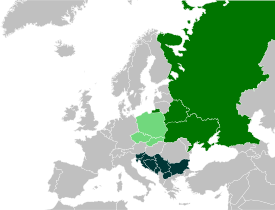
Slavic peoples
The Slavic people are an Indo-European panethnicity living in Eastern Europe, Southeast Europe, North Asia and Central Asia. The term Slavic represents a broad ethno-linguistic group of people, who speak languages belonging to the Slavic language family and share, to varying degrees, certain...
and speak South Slavic languages
South Slavic languages
The South Slavic languages comprise one of three branches of the Slavic languages. There are approximately 30 million speakers, mainly in the Balkans. These are separated geographically from speakers of the other two Slavic branches by a belt of German, Hungarian and Romanian speakers...
. Geographically, the South Slavs are native to the Balkan peninsula
Balkans
The Balkans is a geopolitical and cultural region of southeastern Europe...
, the southern Pannonian Plain and the eastern Alps
Alps
The Alps is one of the great mountain range systems of Europe, stretching from Austria and Slovenia in the east through Italy, Switzerland, Liechtenstein and Germany to France in the west....
. Numbering close to 40 million, the South Slavs include the following ethnic groups: Bulgarians
Bulgarians
The Bulgarians are a South Slavic nation and ethnic group native to Bulgaria and neighbouring regions. Emigration has resulted in immigrant communities in a number of other countries.-History and ethnogenesis:...
, Serbs
Serbs
The Serbs are a South Slavic ethnic group of the Balkans and southern Central Europe. Serbs are located mainly in Serbia, Montenegro and Bosnia and Herzegovina, and form a sizable minority in Croatia, the Republic of Macedonia and Slovenia. Likewise, Serbs are an officially recognized minority in...
, Croats
Croats
Croats are a South Slavic ethnic group mostly living in Croatia, Bosnia and Herzegovina and nearby countries. There are around 4 million Croats living inside Croatia and up to 4.5 million throughout the rest of the world. Responding to political, social and economic pressure, many Croats have...
, Macedonians
Macedonians (ethnic group)
The Macedonians also referred to as Macedonian Slavs: "... the term Slavomacedonian was introduced and was accepted by the community itself, which at the time had a much more widespread non-Greek Macedonian ethnic consciousness...
, Slovenes, Bosniaks
Bosniaks
The Bosniaks or Bosniacs are a South Slavic ethnic group, living mainly in Bosnia and Herzegovina, with a smaller minority also present in other lands of the Balkan Peninsula especially in Serbia, Montenegro and Croatia...
, Montenegrins and some miniature ethnic groups. They are the main population of the European countries: Bulgaria
Bulgaria
Bulgaria , officially the Republic of Bulgaria , is a parliamentary democracy within a unitary constitutional republic in Southeast Europe. The country borders Romania to the north, Serbia and Macedonia to the west, Greece and Turkey to the south, as well as the Black Sea to the east...
, Bosnia and Hercegovina, Croatia
Croatia
Croatia , officially the Republic of Croatia , is a unitary democratic parliamentary republic in Europe at the crossroads of the Mitteleuropa, the Balkans, and the Mediterranean. Its capital and largest city is Zagreb. The country is divided into 20 counties and the city of Zagreb. Croatia covers ...
, Macedonia
Republic of Macedonia
Macedonia , officially the Republic of Macedonia , is a country located in the central Balkan peninsula in Southeast Europe. It is one of the successor states of the former Yugoslavia, from which it declared independence in 1991...
, Montenegro
Montenegro
Montenegro Montenegrin: Crna Gora Црна Гора , meaning "Black Mountain") is a country located in Southeastern Europe. It has a coast on the Adriatic Sea to the south-west and is bordered by Croatia to the west, Bosnia and Herzegovina to the northwest, Serbia to the northeast and Albania to the...
, Serbia
Serbia
Serbia , officially the Republic of Serbia , is a landlocked country located at the crossroads of Central and Southeast Europe, covering the southern part of the Carpathian basin and the central part of the Balkans...
, Slovenia
Slovenia
Slovenia , officially the Republic of Slovenia , is a country in Central and Southeastern Europe touching the Alps and bordering the Mediterranean. Slovenia borders Italy to the west, Croatia to the south and east, Hungary to the northeast, and Austria to the north, and also has a small portion of...
and one of two constituent nations of Kosovo. Their territories are separated from the rest of the Slavic world by the non-Slavic states of Austria
Austria
Austria , officially the Republic of Austria , is a landlocked country of roughly 8.4 million people in Central Europe. It is bordered by the Czech Republic and Germany to the north, Slovakia and Hungary to the east, Slovenia and Italy to the south, and Switzerland and Liechtenstein to the...
, Hungary
Hungary
Hungary , officially the Republic of Hungary , is a landlocked country in Central Europe. It is situated in the Carpathian Basin and is bordered by Slovakia to the north, Ukraine and Romania to the east, Serbia and Croatia to the south, Slovenia to the southwest and Austria to the west. The...
and Romania
Romania
Romania is a country located at the crossroads of Central and Southeastern Europe, on the Lower Danube, within and outside the Carpathian arch, bordering on the Black Sea...
, leading to a significantly different historical progression for the South Slav nations.
Early accounts
Little is known about the Slavs before the 5th century. Their history prior to this can only be tentatively hypothesized via archeological and linguistic studies. Much of what we know about their history after the 6th century is from the works of ByzantineByzantine
Byzantine usually refers to the Roman Empire during the Middle Ages.Byzantine may also refer to:* A citizen of the Byzantine Empire, or native Greek during the Middle Ages...
historians.
In his work De Bellis, Procopius
Procopius
Procopius of Caesarea was a prominent Byzantine scholar from Palestine. Accompanying the general Belisarius in the wars of the Emperor Justinian I, he became the principal historian of the 6th century, writing the Wars of Justinian, the Buildings of Justinian and the celebrated Secret History...
portrays the Slavs as unusually tall and strong, with a tan complexion and reddish-blonde hair, living a rugged and primitive life. They lived in huts, often distant from one another and often changed their place of abode. They were not ruled by a single leader, but for a long time lived in a "democracy" (i.e. anarchy). John of Ephesus
John of Ephesus
John of Ephesus was a leader of the non-Chalcedonian Syriac-speaking Church in the sixth century, and one of the earliest and most important of historians who wrote in Syriac.-Life:...
, in his Ecclesiastical History portrays the Slavs as extremely violent people. They probably believed in many Gods, but Procopius suggests they believed in one, perhaps supreme
Henotheism
Henotheism is the belief and worship of a single god while accepting the existence or possible existence of other deities...
god. He has often been identified as Perun
Perun
In Slavic mythology, Perun is the highest god of the pantheon and the god of thunder and lightning. His other attributes were the fire, mountains, the oak, iris, eagle, firmament , horses and carts, weapons and war...
, the creator of lightning. The Slavs went into battle on foot, charging straight at their enemy, armed with spears and small shields, but they did not wear armour.
This information is supplanted by Pseudo-Maurice's work Strategikon, describing the Slavs as a numerous but disorganised and leaderless people, resistant to hardship and not allowing themselves to be enslaved or conquered. They made their homes in forests, by rivers and wetlands. Jordanes
Jordanes
Jordanes, also written Jordanis or Jornandes, was a 6th century Roman bureaucrat, who turned his hand to history later in life....
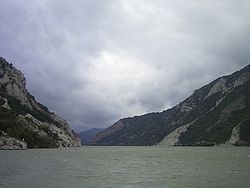
states that the Slavs "have their homelands on the Danube
Danube
The Danube is a river in the Central Europe and the Europe's second longest river after the Volga. It is classified as an international waterway....
, not far from the northern bank." Subsequent information about early Slavic states and the Slavs' interaction with the Greeks comes from De Administrando Imperio
De Administrando Imperio
De Administrando Imperio is the Latin title of a Greek work written by the 10th-century Eastern Roman Emperor Constantine VII. The Greek title of the work is...
by Emperor Constantine VII Porphyrogenitus, the compilations of Miracles of St. Demetrius, History by Theophylact Simocatta
Theophylact Simocatta
Theophylact Simocatta was an early seventh-century Byzantine historiographer, arguably ranking as the last historian of Late Antiquity, writing in the time of Heraclius about the late Emperor Maurice .-Life:His history of the reign of emperor Maurice is in eight books...
and the Royal Frankish Annals
Royal Frankish Annals
The Royal Frankish Annals or Annals of the Kingdom of the Franks ,are annals covering the history of early Carolingian monarchs from 741 to 829. Their composition seems to have soon been taken up at court, providing them with markedly official character...
.
Migrations and postulated homeland
Before haplogroups were identified by genetic tests scholars tended to place the Slavic UrheimatUrheimat
Urheimat is a linguistic term denoting the original homeland of the speakers of a proto-language...
in the Pripet marshes of Ukraine
Ukraine
Ukraine is a country in Eastern Europe. It has an area of 603,628 km², making it the second largest contiguous country on the European continent, after Russia...
, or alternatively between the Bug (river)
Bug
A bug is an insect of the order Hemiptera, known as the "true bugs".Bug or BUG may also refer to:-Biology:* Informally, most arthropods, except marine crustaceans, including individuals or species of** centipede** insect** millipede** mite...
and the Dniepr. In the 5th century Slavs are mentioned as living north of the Danube in the written sources from that era. From the 5th century, they supposedly spread outward in all directions. The Balkans was one of the regions which lay in the path of the expanding Slavs.
Nowadays we know that Slavic haplogroups expanded Eastward rather the Westward, but question of Slavic homeland remains still open.
Regarding the Slavs mentioned by 6th century Byzantine chroniclers, Florin Curta states that their 'homeland' was north of the Danube and not in the Belorussian-Ukrainian borderlands. He clarifies that their itinerant form of agriculture (they lacked the knowledge of crop rotation) "may have encouraged mobility on a micro regional scale". Material culture from the Danube suggests that there was an evolution of Slavic society between the early 7th century and the 8th century. As the Byzantines re-asserted the Danubian defences in the mid 6th century, the Slavs' yield of pillaged goods dropped. As a reaction to this economic isolation, and external threats (e.g. from Avars and Byzantines), political and military mobilisation occurred. Archeological sites from the late 7th century show that the earlier settlements which were merely a non-specific collection of hamlets began to evolve into larger communities with differentiated areas (e.g. designated areas for public feasts as well as an 'industrial' area for craftsmanship). As community elites rose to prominence, they came to "embody a collective interest and responsibility" for the group. "If that group identity can be called ethnicity, and if that ethnicity can be called Slavic, then it certainly formed in the shadow of Justinian's forts, not in the Pripet marshes."
The Byzantines broadly grouped the numerous Slav tribes into two groups: the Sklavenoi and Antes
Antes (people)
The Antes or Antae were an ancient Slavic-Iranian tribal union in Eastern Europe who lived north of the lower Danube and the Black Sea in the 6th and 7th century AD and who are associated with the archaeological Penkovka culture.- Historiography :Procopius and Jordanes mention the Antes as one of...
. Apparently, the Sklavenoi group were based along the middle Danube, whereas the Antes were at the lower Danube, in Scythia Minor
Scythia Minor
Scythia Minor, "Lesser Scythia" was in ancient times the region surrounded by the Danube at the north and west and the Black Sea at the east, corresponding to today's Dobruja, with a part in Romania and a part in Bulgaria....
. Some, such as Bulgarian scholar Zlatarsky, suggest that the first group settled the western Balkans, becoming one of the forerunners of the linguistic group that became the Serbian(Slavic), whilst offshoots of the Antes settled the eastern regions (roughly speaking), becoming one of the ancestors of the Bulgarians
Bulgarians
The Bulgarians are a South Slavic nation and ethnic group native to Bulgaria and neighbouring regions. Emigration has resulted in immigrant communities in a number of other countries.-History and ethnogenesis:...
. From the Danube, they commenced raiding the Byzantine Empire from the 520s, on an annual basis. They spread about destruction, taking loot and herds of cattle, seizing prisoners and taking fortresses. Often, the Byzantine Empire was stretched defending its rich Asian provinces from Arabs, Persians and Turks. This meant that even numerically small, disorganised early Slavic raids were capable of causing much disruption, but could not capture the larger, fortified cities.
Large scale Slavic settlement in the Balkans begins in the late 570s and early 580s. Menander, a late 6th century historian speaks of 100,000 Slavs pouring into Thrace
Thrace
Thrace is a historical and geographic area in southeast Europe. As a geographical concept, Thrace designates a region bounded by the Balkan Mountains on the north, Rhodope Mountains and the Aegean Sea on the south, and by the Black Sea and the Sea of Marmara on the east...
(though likely with some exaggeration) and Illyricum
Illyricum (Roman province)
The Roman province of Illyricum or Illyris Romana or Illyris Barbara or Illyria Barbara replaced most of the region of Illyria. It stretched from the Drilon river in modern north Albania to Istria in the west and to the Sava river in the north. Salona functioned as its capital...
, taking cities and settling down. These large scale population movements are associated with the arrival to the area of the Avars
Avars
Avar or Avars may refer to:* Eurasian Avars, a nomadic people that conquered the Hungarian Steppe in the early Middle Ages* Uar * Caucasian Avars, a modern people of the Caucasus** Avar language, the language of the Caucasian Avars...
, a nomadic Turkic group that had lost a war against other nomads further east, and settled in the Carpathian basin, subjugating the many small Slavic tribes. They were also facilitated by the fact that the Byzantine Empire was embroiled in a series of wars with Persia at the time and was unable to send troops to the Balkans.
By the 580s, as the Slav communities on the Danube became larger and more organized, and as the Avars exerted their influence, raids became larger and resulted in permanent settlement. Most scholars consider the period of 581-584 as the beginning of large scale Slavic settlement in the Balkans. Around this time, the chronicle known as the Miracles of Saint Demetrius speaks of large-scale Slavic settlement in the area around Thessaloniki, although the Slavs never managed to take the city itself. In 591, the Byzantines ended their war with the Persians and a serious attempt to restore the northern border was made by the emperor Maurice
Maurice's Balkan campaigns
Maurice's Illyricum campaigns were a series of military expeditions conducted by emperor of Constantinopolis Maurice in an attempt to defend the Illyrian provinces of the East Roman Empire from Avars and Slavs...
, a skilled strategist. Although largely successful, Maurice did not manage to completely eliminate the Avars, and was eventually deposed and murdered in 602 (in part due to his refusal to ransom a large number of captives who were then slaughtered by the Avars. War with the Persians soon broke out again, and the northern border collapsed once more.
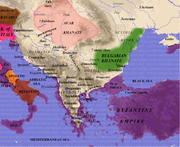
Eurasian Avars
The Eurasian Avars or Ancient Avars were a highly organized nomadic confederacy of mixed origins. They were ruled by a khagan, who was surrounded by a tight-knit entourage of nomad warriors, an organization characteristic of Turko-Mongol groups...
arrived in Europe in the late 550s. Although their identity would not last, the Avars greatly impacted the events of the Balkans. They settled the Carpathian plain, west of the main Slavic settlements. They crushed the Gepid Kingdom (a Germanic tribe) and pushed the Lombards
Lombards
The Lombards , also referred to as Longobards, were a Germanic tribe of Scandinavian origin, who from 568 to 774 ruled a Kingdom in Italy...
into Italy, essentially opening up the western Balkans. They asserted their authority over many Slavs, who were divided into numerous petty tribes. Many Slavs were relocated to the Avar base in the Carpathian basin and were galvanized into an effective infantry force. Other Slavic tribes continued to raid independently, sometime coordinating attacks as allies of the Avars. Others still spilled into Imperial lands as they fled from the Avars. The Avars and their Slavic allies tended to focus on the western Balkans, whilst independent Slavic tribes predominated in the east. Following the unsuccessful siege of Constantinople in 626, the Avars' reputation diminished, and the confederacy was troubled by civil wars between the Avars and their Bulgar and Slav clients. Their rule contracted to the region of the Carpathian basin. Archeological evidence show that there was intermixing of Slavic, Avar and even Gepid cultures, suggesting that the later Avars were an amalgamation of different peoples. The Avar Khanate finally collapsed after ongoing defeats at the hands of Franks
Franks
The Franks were a confederation of Germanic tribes first attested in the third century AD as living north and east of the Lower Rhine River. From the third to fifth centuries some Franks raided Roman territory while other Franks joined the Roman troops in Gaul. Only the Salian Franks formed a...
, Bulgars
Bulgars
The Bulgars were a semi-nomadic who flourished in the Pontic Steppe and the Volga basin in the 7th century.The Bulgars emerge after the collapse of the Hunnic Empire in the 5th century....
and Slavs (c. 810), and the Avars ceased to exist. What remained of the Avars was absorbed by the Slavs and Bulgars.
The Serbs
Serbs
The Serbs are a South Slavic ethnic group of the Balkans and southern Central Europe. Serbs are located mainly in Serbia, Montenegro and Bosnia and Herzegovina, and form a sizable minority in Croatia, the Republic of Macedonia and Slovenia. Likewise, Serbs are an officially recognized minority in...
are one of the tribes mentioned amongst the many Slavic tribes already in the Balkans. We know little about their origins. According to De Administrando Imperio, Emperor Heraclius
Heraclius
Heraclius was Byzantine Emperor from 610 to 641.He was responsible for introducing Greek as the empire's official language. His rise to power began in 608, when he and his father, Heraclius the Elder, the exarch of Africa, successfully led a revolt against the unpopular usurper Phocas.Heraclius'...
invited them as foederati
Foederati
Foederatus is a Latin term whose definition and usage drifted in the time between the early Roman Republic and the end of the Western Roman Empire...
to defeat the Avars. They migrated from their homeland in southern Poland between 615 and 640 AD. However, apart from this (often disputed) document, we have no evidence of their migration specifically. Some suggest that they arrived to the Balkans with the rest of the Slavic migrations, only to rise to prominence as some sort of ruling clan amongst neighbouring Slavic tribes.
By 700 AD, Slavs had settled in most of the Balkans, from Austria to the Peloponnese, and from the Adriatic to the Black seas, with the exception of the coastal areas and certain mountainous regions of the Greek peninsula. The settlement pattern was far from uniform however, with major routes (such as the Morava valley) experiencing greater settlement. Far fewer numbers of Slavs appear to have settled in those parts of Greece where Slavs did settle, and in remote mountainous regions such as Bosnia and Monetenegro. However, archaeological traces of Slavic penetration into the Balkans is scant, especially in the period prior to the 8th century. This has led scholars to cast doubt on the accuracy of the historical sources, often describing large scale settlements by the Slavs throughout the Balkans, including southern Greece.
Interaction with the Balkan population
Prior to the advent of Roman rule, a number of native or autochthonous populations had lived in the Balkans since ancient times. South of the Jireček lineJirecek Line
The Jireček Line is an imaginary line through the ancient Balkans that divided the influences of the Latin and Greek languages until the 4th century...
were the Greeks
Greeks
The Greeks, also known as the Hellenes , are a nation and ethnic group native to Greece, Cyprus and neighboring regions. They also form a significant diaspora, with Greek communities established around the world....
. To the north, there were Illyrians
Illyrians
The Illyrians were a group of tribes who inhabited part of the western Balkans in antiquity and the south-eastern coasts of the Italian peninsula...
in the western portion (Illyricum
Praetorian prefecture of Illyricum
The praetorian prefecture of Illyricum was one of four praetorian prefectures into which the Late Roman Empire was divided.The administrative centre of the prefecture was Sirmium , and, after 379, Thessalonica...
), Thracians
Thracians
The ancient Thracians were a group of Indo-European tribes inhabiting areas including Thrace in Southeastern Europe. They spoke the Thracian language – a scarcely attested branch of the Indo-European language family...
in Thrace (modern Bulgaria and eastern Macedonia), and Dacians
Dacians
The Dacians were an Indo-European people, very close or part of the Thracians. Dacians were the ancient inhabitants of Dacia...
in Moesia
Moesia
Moesia was an ancient region and later Roman province situated in the Balkans, along the south bank of the Danube River. It included territories of modern-day Southern Serbia , Northern Republic of Macedonia, Northern Bulgaria, Romanian Dobrudja, Southern Moldova, and Budjak .-History:In ancient...
(northern Bulgaria and northeastern Serbia) and Dacia
Dacia
In ancient geography, especially in Roman sources, Dacia was the land inhabited by the Dacians or Getae as they were known by the Greeks—the branch of the Thracians north of the Haemus range...
(modern Romania). They were mainly tribalistic and generally lacked awareness of any greater ethno-political affiliations. Over the classical ages, they were at times invaded, conquered and influenced by Celts, Greeks
Greeks
The Greeks, also known as the Hellenes , are a nation and ethnic group native to Greece, Cyprus and neighboring regions. They also form a significant diaspora, with Greek communities established around the world....
and Romans
Ancient Rome
Ancient Rome was a thriving civilization that grew on the Italian Peninsula as early as the 8th century BC. Located along the Mediterranean Sea and centered on the city of Rome, it expanded to one of the largest empires in the ancient world....
. Roman influence, however, was initially limited to cities later concentrated along the Dalmatian coast, later spreading to a few scattered cities inside the Balkan interior particularly along the river Danube (Sirmium
Sirmium
Sirmium was a city in ancient Roman Pannonia. Firstly mentioned in the 4th century BC and originally inhabited by the Illyrians and Celts, it was conquered by the Romans in the 1st century BC and subsequently became the capital of the Roman province of Lower Pannonia. In 294 AD, Sirmium was...
, Belgrade
Belgrade
Belgrade is the capital and largest city of Serbia. It is located at the confluence of the Sava and Danube rivers, where the Pannonian Plain meets the Balkans. According to official results of Census 2011, the city has a population of 1,639,121. It is one of the 15 largest cities in Europe...
, Niš
Niš
Niš is the largest city of southern Serbia and third-largest city in Serbia . According to the data from 2011, the city of Niš has a population of 177,972 inhabitants, while the city municipality has a population of 257,867. The city covers an area of about 597 km2, including the urban area,...
). Roman citizens from throughout the empire settled in these cities and in the adjacent countryside. The vast hinterland was still populated by indigenous peoples who likely retained their own tribalistic character.
In addition to the autochthons, there were remnants of previous invaders such as "Huns
Huns
The Huns were a group of nomadic people who, appearing from east of the Volga River, migrated into Europe c. AD 370 and established the vast Hunnic Empire there. Since de Guignes linked them with the Xiongnu, who had been northern neighbours of China 300 years prior to the emergence of the Huns,...
" and various Germanic peoples
Germanic peoples
The Germanic peoples are an Indo-European ethno-linguistic group of Northern European origin, identified by their use of the Indo-European Germanic languages which diversified out of Proto-Germanic during the Pre-Roman Iron Age.Originating about 1800 BCE from the Corded Ware Culture on the North...
when the Slavs arrived. Sarmatian tribes
Sarmatians
The Iron Age Sarmatians were an Iranian people in Classical Antiquity, flourishing from about the 5th century BC to the 4th century AD....
(such as the Iazyges
Iazyges
The Iazyges were an ancient nomadic tribe. Known also as Jaxamatae, Ixibatai, Iazygite, Jászok, Ászi, they were a branch of the Sarmatian people who, c. 200 BC, swept westward from central Asia onto the steppes of what is now Ukraine...
) are recorded to have still lived in the Banat
Banat
The Banat is a geographical and historical region in Central Europe currently divided between three countries: the eastern part lies in western Romania , the western part in northeastern Serbia , and a small...
region of the Danube.
As the Slavs spread south into the Balkans, they interacted with the numerous peoples and cultures already there. Since their lifestyle revolved around agriculture, they preferentially settled rural lands along the major highway networks which they moved along. Whilst they could not take the larger fortified towns, they looted the countryside and captured many prisoners. In his Strategikon, Pseudo-Maurice noted that it was commonplace for Slavs to accept newly acquired prisoners into their ranks. Despite Byzantine accounts of "pillaging" and "looting", it is possible that many indigenous peoples voluntarily assimilated with the Slavs. The Slavs lacked an organised, centrally ruled organisation which actually hastened the process of willful Slavicisation. The strongest evidence for such a co-existence is from archaeological remains along the Danube and Dacia known as the Ipoteşti-Cândeşti culture. Here, the villages dating back to the 6th century represent a continuity with the earlier Slavic Pen'kovka culture
Antes (people)
The Antes or Antae were an ancient Slavic-Iranian tribal union in Eastern Europe who lived north of the lower Danube and the Black Sea in the 6th and 7th century AD and who are associated with the archaeological Penkovka culture.- Historiography :Procopius and Jordanes mention the Antes as one of...
; modified by admixture with Daco-Getic, Daco-Roman and/or Byzantine
Byzantine
Byzantine usually refers to the Roman Empire during the Middle Ages.Byzantine may also refer to:* A citizen of the Byzantine Empire, or native Greek during the Middle Ages...
elements within the same village. Such interactions awarded the pre-Slavic populace protection within the ranks of a dominant, new tribe. In return, they contributed to the genetic and cultural development the South Slavs. This phenomenon ultimately led to an exchange of various loan-words. For example, the Slavic name for "Greeks", Grci, is derived from the Latin Graecus presumably encountered through the local Romanised populace. Conversely, the Vlachs borrowed many Slavic words, especially pertaining to agricultural terms. Whether any of the original Thracian or Illyrian culture and language remained by the time Slavs arrived is a matter of debate. It is a difficult issue to analyse because of the overriding Greek and Roman influence in the region. However, what is certain is that the Thracian and Illyrian identities disappear from history during this period.
Over time, due to the larger number of Slavs, the descendants most of the indigenous populations of the Balkans were Slavicized, an exception being Greece, where the smaller number Slavs scattered there came to be Hellenized over succeeding centuries (aided in time by more Greeks returning to Greece in the 9th century and the role of the church and administration). The Romance speakers within the fortified Dalmatian cities managed to retain their culture and language for a long time, as Dalmatian Romance was spoken until the high Middle Ages. However, they too were eventually assimilated into the body of Slavs. In contrast, the Romano-Dacians in Wallachia managed to maintain their Latin-based language, despite much Slavic influence. After centuries of peaceful co-existence, the groups fused to form the Romanians.
Relationship with Byzantium
Byzantine literary accounts (i.e. John of EphesusJohn of Ephesus
John of Ephesus was a leader of the non-Chalcedonian Syriac-speaking Church in the sixth century, and one of the earliest and most important of historians who wrote in Syriac.-Life:...
, etc.) mention the Slavs raiding areas of Greece during the 580s. According to later sources such as The Miracles of Saint Demetrius, the Drougoubitai
Drougoubitai
The Drougoubitai, also Drogobitai or Dragobitai , variously anglicized as Drugubites, Drogubites, Druguvites, Draguvites etc, were a South Slavic group who settled in the Balkans in the 7th century...
, Sagoudatai
Sagudates
The Sagudates were a South Slavic tribe that lived in Macedonia, in the area between Thessaloniki and Veria.- History :The Sagudates were first attested in a Byzantine document of 686 as allies of the Avars and besiegers of Thessaloniki in alliance with other South Slavic tribes...
, Belegezitai
Belegezites
The Belegezites were a South Slavic tribe that lived in the area of Thessaly in the Middle Ages.- History :Their name is rendered as Belegezites, Velegesites, Belegizites and Velzite Slavs. After settling in the region of Thessaly, the economic activities of the tribe included trade with the...
, Baiounetai, and Berzetai laid siege to Thessaloniki
Thessaloniki
Thessaloniki , historically also known as Thessalonica, Salonika or Salonica, is the second-largest city in Greece and the capital of the region of Central Macedonia as well as the capital of the Decentralized Administration of Macedonia and Thrace...
in 614-616. However, this particular event was in actuality of local significance. In 626, a combined Avar
Eurasian Avars
The Eurasian Avars or Ancient Avars were a highly organized nomadic confederacy of mixed origins. They were ruled by a khagan, who was surrounded by a tight-knit entourage of nomad warriors, an organization characteristic of Turko-Mongol groups...
, Bulgar
Bulgars
The Bulgars were a semi-nomadic who flourished in the Pontic Steppe and the Volga basin in the 7th century.The Bulgars emerge after the collapse of the Hunnic Empire in the 5th century....
and Slav army besieged Constantinople
Siege of Constantinople (626)
The Siege of Constantinople in 626 by the Avars, aided by large numbers of allied Slavs and the Sassanid Persians, ended in a strategic victory for the Byzantines...
. The siege was broken, which had repercussions upon the power and prestige of the Avar khanate. Slavic sieges on Thessaloniki continued and in 677, a coalition of Rynchitai, Sagoudatai, Drougoubitai and Stroumanoi attacked. This time, the Belgezites did not participate and in fact supplied the besieged citizens of Thessaloniki with grain.
A number of medieval sources attest to the presence of Slavs in Greece. While en route to the Holy Land
Holy Land
The Holy Land is a term which in Judaism refers to the Kingdom of Israel as defined in the Tanakh. For Jews, the Land's identifiction of being Holy is defined in Judaism by its differentiation from other lands by virtue of the practice of Judaism often possible only in the Land of Israel...
in 732, Willibald
Willibald
Saint Willibald was an 8th century bishop of Eichstätt in Bavaria.Information about his life is largely drawn from the Hodoeporicon of Saint Willibald, a text written in the 8th century by Huneberc, an Anglo-Saxon nun from Heidenheim am Hahnenkamm who knew Willibald and his brother personally...
"reached the city of Monemvasia
Monemvasia
Monemvasia is a town and a municipality in Laconia, Greece. The town is located on a small peninsula off the east coast of the Peloponnese. The peninsula is linked to the mainland by a short causeway 200m in length. Its area consists mostly of a large plateau some 100 metres above sea level, up to...
, in the land of Slavinia". This particular passage from the Vita Willibaldi is interpreted as an indication of a Slavic presence in the hinterland of the Peloponnese
Peloponnese
The Peloponnese, Peloponnesos or Peloponnesus , is a large peninsula , located in a region of southern Greece, forming the part of the country south of the Gulf of Corinth...
. In reference to the plague of 744-747, Constantine VII
Constantine VII
Constantine VII Porphyrogennetos or Porphyrogenitus, "the Purple-born" was the fourth Emperor of the Macedonian dynasty of the Byzantine Empire, reigning from 913 to 959...
wrote during the 10th century that "the entire country [of the Peloponnese] was Slavonized". Another source for the period, the Chronicle of Monemvasia
Chronicle of Monemvasia
The Chronicle of Monemvasia is a medieval text of which four versions, all written in medieval Greek, are extant. The author of the account is currently unknown...
speaks of Slavs overrunning the western Peloponnese, but of the eastern Peloponnese, together with Athens, remaining in Byzantine hands throughout this period. However, such sources are far from ideal, and their reliability is debated. For example, while the Byzantinist Peter Charanis
Peter Charanis
Peter Charanis was a Greece born American scholar of Byzantium and the Voorhees Professor of History at Rutgers University. Dr. Charanis was long associated with the Dumbarton Oaks research library.Dr. Charanis was born in Lemnos, Greece...
believes the Chronicle of Monemvasia to be a reliable account, other scholars point out that it greatly overstates the impact of the Slavic and Avar raids of Greece during this time.
Max Vasmer
Max Vasmer
Max Vasmer was a Russian-born German linguist who studied problems of etymology of Indo-European, Finno-Ugric and Turkic languages and worked on history of Slavic, Baltic, Iranian, and Finno-Ugric peoples....
, a prominent linguist and Indo-Europeanist, complements late medieval historical accounts by listing 429 Slavic toponyms from the Peloponnese alone. To what extent the presence of these toponyms reflects compact Slavic settlement is a matter of some debate,and might represent an accumulative strata of toponyms rather than beingattributed to the earliest settlement phase
Though medieval chroniclers attest to Slavic "hordes" occupying Byzantine territories, archaeological evidence of actual Slavic presence and its dating is today debated. Florin Curta
Florin Curta
Florin Curta is a Romanian-born American historian, expert medievalist and archaeologist on Eastern Europe. He is one of the top authorities in the field, especially regarding Balkan history, in the Western historiography; among others like John Fine and Dennis Hupchik...
points out that evidence of substantial Slavic presence does not appear before the 7th century and remains qualitatively different from the "Slavic culture" found north of the Danube
Danube
The Danube is a river in the Central Europe and the Europe's second longest river after the Volga. It is classified as an international waterway....
. Some authors point to the rapid adoption of local Balkanic cultures by early Slav-speaking groups in specific areas such as Dalmatia
Dalmatia
Dalmatia is a historical region on the eastern coast of the Adriatic Sea. It stretches from the island of Rab in the northwest to the Bay of Kotor in the southeast. The hinterland, the Dalmatian Zagora, ranges from fifty kilometers in width in the north to just a few kilometers in the south....
. There, investigations of burial graves and cemetery types indicate an uninterrupted continuity of traditions from late antiquity
Late Antiquity
Late Antiquity is a periodization used by historians to describe the time of transition from Classical Antiquity to the Middle Ages, in both mainland Europe and the Mediterranean world. Precise boundaries for the period are a matter of debate, but noted historian of the period Peter Brown proposed...
, reflecting a contiguous demographic spread that chronologically matches with the arrival of Slavic-speaking groups. Furthermore, when medieval sources speak of places "going to the Slavs", this could primarily mean that Byzantine authority disappeared, not that these regions had witnessed large-scalemigration; doubtless many local people simply governed themselves. Indeed, in the wake of Roman collapse, communities in the Balkan interior and hinterland essentially "became Slavs" by creating new identities and adopting a new language, oriented toward east-central Europe rather than the Graeco-Mediterranean world. As Timothy Gregory surmises:
Relations between the Slavs and Greeks were probably peaceful apart from the (supposed) initial settlement and intermittent uprisings. Being agriculturalists, the Slavs probably traded with the Greeks inside towns. Furthermore, the Slavs surely did not occupy the whole interior or eliminate the Greek population; some Greek villages continued to exist in the interior, probably governing themselves, possibly paying tribute to the Slavs. Some villages were probably mixed, and quite possibly some degree of Hellenization of the Slavs by the Greeks of the Peloponnese had already begun during this period, before re-Hellenization
Hellenization
Hellenization is a term used to describe the spread of ancient Greek culture, and, to a lesser extent, language. It is mainly used to describe the spread of Hellenistic civilization during the Hellenistic period following the campaigns of Alexander the Great of Macedon...
was completed by the Byzantine emperors.
When the Byzantines were not fighting in their eastern territories, they were able to slowly regain imperial control. This was achieved through its theme system, referring to an administrative province on which an army corps was centered, under the control of a strategos
Strategos
Strategos, plural strategoi, is used in Greek to mean "general". In the Hellenistic and Byzantine Empires the term was also used to describe a military governor...
("general"). The theme system first appeared in the early 7th century, during the reign of the Emperor Heraclius, and as the Byzantine Empire recovered, it was imposed on all areas that came under Byzantine control. The first Balkan theme created was that in Thrace
Thrace (theme)
The Theme of Thrace was a province of the Byzantine Empire located in the south-eastern Balkans, comprising varying parts of the eponymous geographic region during its history.-History:...
, in 680 AD. By 695, a second theme, that of "Hellas
Hellas (theme)
The Theme of Hellas was a Byzantine military-civilian province located in southern Greece. The theme encompassed parts of Central Greece, Thessaly and, until circa 800, the Peloponnese...
" (or "Helladikoi"), was established, probably in eastern central Greece
Central Greece
Continental Greece or Central Greece , colloquially known as Roúmeli , is a geographical region of Greece. Its territory is divided into the administrative regions of Central Greece, Attica, and part of West Greece...
. Subduing the Slavs in these themes was simply a matter of accommodating the needs of the Slavic elites and providing them with incentives for their inclusion into the imperial administration.
It was not until 100 years later that a third theme would be established. In 782-784, the eunuch general Staurakios
Staurakios (eunuch)
Staurakios was a Byzantine eunuch official, who rose to be one of the most important and influential associates of Byzantine empress Irene of Athens . He effectively acted as chief minister during her regency for her young son, Emperor Constantine VI Staurakios (or Stauracius) (died on June 3,...
campaigned from Thessaloniki, south to Thessaly and into the Peloponnese. He captured many Slavs and transferred them elsewhere, mostly Anatolia
Anatolia
Anatolia is a geographic and historical term denoting the westernmost protrusion of Asia, comprising the majority of the Republic of Turkey...
(these Slavs were dubbed Slavesians
Asia Minor Slavs
Asia Minor Slavs refers to the historical South Slav communities relocated to Anatolia by the Byzantine Empire, from the Balkans.After Maurice's Balkan campaigns , and subsequent subduing of Slavs in Balkans, large communities were forcefully relocated to Asia Minor as military, fighting the...
). However it is not known whether any territory was restored to imperial authority as result of this campaign, though it is likely some was. Sometime between 790 and 802, the theme of Macedonia was created, centered on Adrianople (i.e. east of the actual geographic entity
Macedonia (region)
Macedonia is a geographical and historical region of the Balkan peninsula in southeastern Europe. Its boundaries have changed considerably over time, but nowadays the region is considered to include parts of five Balkan countries: Greece, the Republic of Macedonia, Bulgaria, Albania, Serbia, as...
). A serious and successful recovery began under Nicephorus I (802-811). In 805, the theme of the Peloponnese was created. According to the Chronicle of Monemvasia in 805 the Byzantine governor of Corinth went to war with the Slavs, obliterated them, and allowed the original inhabitants to claim their own; the city of Patras was recovered and the region re-settled with Greeks. In the 9th century, new themes continued to arise, although many were small and were carved out of original, larger themes. New themes in the 9th century included those of Thessalonica
Thessalonica (theme)
The Theme of Thessalonica was a military-civilian province of the Byzantine Empire located in the southern Balkans, comprising varying parts of Central and Western Macedonia and centred around Thessalonica, the Empire's second-most important city.-History:In Late Antiquity, Thessalonica was the...
, Dyrrhachium
Dyrrhachium (theme)
The Theme of Dyrrhachium was a Byzantine military-civilian province located in modern Albania, covering the Adriatic coast of the country...
, Strymon
Strymon (theme)
The Theme of Strymon was a Byzantine military-civilian province located in modern Greek Macedonia, with the city of Serres as its capital...
, and Nicopolis
Nicopolis (theme)
The Theme of Nicopolis or Nikopolis was the name of a Byzantine theme located in western Greece, encompassing Aetolia-Acarnania and southern Epirus...
. From these themes, Byzantine laws and culture flowed into the interior. By the end of the 9th century most of Greece was culturally and administratively Greek again, with the exception of a few small Slavic tribes in the mountains such as the Melingoi
Melingoi
The Melingoi or Milingoi were a Slavic tribe that settled in the Peloponnese in southern Greece during the Middle Ages. Proto-Slavic tribes settled throughout the Balkans following the collapse of the Byzantine Empire's defense of the Danube frontier in the early decades of the 7th century, with...
and Ezeritai
Ezeritai
The Ezeritai were a Slavic tribe settled in the Peloponnese in southern Greece during the Middle Ages.Southern Slavs settled throughout the Balkans following the collapse of the East Roman defenses of the Danube frontier in the early 7th century, with some groups reaching as far south as the...
. Although they were to remain relatively autonomous until Ottoman
Ottoman Empire
The Ottoman EmpireIt was usually referred to as the "Ottoman Empire", the "Turkish Empire", the "Ottoman Caliphate" or more commonly "Turkey" by its contemporaries...
times, such tribes were the exception rather than the rule.
Armenians
Armenian people or Armenians are a nation and ethnic group native to the Armenian Highland.The largest concentration is in Armenia having a nearly-homogeneous population with 97.9% or 3,145,354 being ethnic Armenian....
. As more of the peripheral territories of the Byzantine Empire were lost in the following centuries, e.g. Sicily, southern Italy and Asia Minor, their Greek-speakers made their own way back to Greece. That the re-Hellenization of Greece through population transfers and cultural activities of the Church was successful suggests Slavs found themselves in the midst of many Greeks. It is doubtful that such large number could have been transplanted into Greece in the 9th century; thus there surely had been many Greeks remaining in Greece and continuing to speak Greek throughout the period of Slavic occupation. The success of re-Hellenization also suggests the number of Slavs in Greece was far smaller than the numbers found in the former Yugoslavia and Bulgaria. For example, Bulgaria could not be Hellenized when Byzantine administration was established over the Bulgarians in 1018 to last for well over a century, until 1186.
Eventually, the Byzantines recovered the imperial border north all the way to today's region of Macedonia
Macedonia (region)
Macedonia is a geographical and historical region of the Balkan peninsula in southeastern Europe. Its boundaries have changed considerably over time, but nowadays the region is considered to include parts of five Balkan countries: Greece, the Republic of Macedonia, Bulgaria, Albania, Serbia, as...
(which would serve as the northern border of the Byzantine Empire until 1018), although independent Slavic villages remained. As the Slavs supposedly occupied the entire Balkan interior, Constantinople was effectively cut off from the Dalmatian cities under its (nominal) control. Thus Dalmatia came to have closer ties with the Italian Peninsula
Italian Peninsula
The Italian Peninsula or Apennine Peninsula is one of the three large peninsulas of Southern Europe , spanning from the Po Valley in the north to the central Mediterranean Sea in the south. The peninsula's shape gives it the nickname Lo Stivale...
, because of ability to maintain contact by sea (however, this too, was troubled by Slavic pirates). Additionally, Constantinople was cut off from Rome
Rome
Rome is the capital of Italy and the country's largest and most populated city and comune, with over 2.7 million residents in . The city is located in the central-western portion of the Italian Peninsula, on the Tiber River within the Lazio region of Italy.Rome's history spans two and a half...
, which contributed to the growing cultural and political separation between the two centers of European Christendom
Christendom
Christendom, or the Christian world, has several meanings. In a cultural sense it refers to the worldwide community of Christians, adherents of Christianity...
.
Control of the Slavic tribes was nominal, as they retained their own culture and language. However, the Slavic tribes of Macedonia never formed their own empire or state, and the area often switched between Greek (Byzantine), Bulgarian
Bulgarian Empire
Bulgarian Empire is a term used to describe two periods in the medieval history of Bulgaria, during which it acted as a key regional power in Europe in general and in Southeastern Europe in particular, rivalling Byzantium...
, Serbian
Raška (state)
Principality of Serbia or Serbian Principality was an early medieval state of the Serbs ruled by the Vlastimirović dynasty, that existed from ca 768 to 969 in Southeastern Europe. It was established through an unification of several provincial chiefs under the supreme rule of a certain Višeslav,...
and temporarily even Norman
Normans
The Normans were the people who gave their name to Normandy, a region in northern France. They were descended from Norse Viking conquerors of the territory and the native population of Frankish and Gallo-Roman stock...
control. The Byzantines were unable to completely Hellenize Macedonia because their progress north was blocked by the Bulgarian Empire, and later by the Serbian Kingdom, which were both Slavic states. However, Byzantine culture nonetheless flowed further north, seen to this day as Bulgaria
Bulgaria
Bulgaria , officially the Republic of Bulgaria , is a parliamentary democracy within a unitary constitutional republic in Southeast Europe. The country borders Romania to the north, Serbia and Macedonia to the west, Greece and Turkey to the south, as well as the Black Sea to the east...
, the Republic of Macedonia
Republic of Macedonia
Macedonia , officially the Republic of Macedonia , is a country located in the central Balkan peninsula in Southeast Europe. It is one of the successor states of the former Yugoslavia, from which it declared independence in 1991...
, and Serbia
Serbia
Serbia , officially the Republic of Serbia , is a landlocked country located at the crossroads of Central and Southeast Europe, covering the southern part of the Carpathian basin and the central part of the Balkans...
are part of the Orthodox world. Even in Dalmatia, where Byzantine influence was supplanted by Venice
Republic of Venice
The Republic of Venice or Venetian Republic was a state originating from the city of Venice in Northeastern Italy. It existed for over a millennium, from the late 7th century until 1797. It was formally known as the Most Serene Republic of Venice and is often referred to as La Serenissima, in...
and Rome
Papal States
The Papal State, State of the Church, or Pontifical States were among the major historical states of Italy from roughly the 6th century until the Italian peninsula was unified in 1861 by the Kingdom of Piedmont-Sardinia .The Papal States comprised territories under...
, the influence of Byzantine culture persists.
Carantania
By the end of 7th century, the Slavs occupied most parts of the Balkans. When they had been defeated by the Langobards at Lauriana, in 720, their attempts to penetrate westward into what is now Italian FriuliFriuli
Friuli is an area of northeastern Italy with its own particular cultural and historical identity. It comprises the major part of the autonomous region Friuli-Venezia Giulia, i.e. the province of Udine, Pordenone, Gorizia, excluding Trieste...
ended. Led by Frankish merchant Samo, Slavs in 623 rebelled against Avars who were weakened by defeat at Constantinople, making Samo the ruler of the first historically known Slavic polity - Samo
Samo
Samo was a Frankish merchant from the "Senonian country" , probably modern Soignies, Belgium or Sens, France. He was the first ruler of the Slavs whose name is known, and established one of the earliest Slav states, a supra-tribal union usually called Samo's empire, realm, kingdom, or tribal...
's Tribal Union. After Samo's death the smaller principality Carantania with Slavs and other inhabitants lost its independence and became part of the semifeudal Frankish Empire
Frankish Empire
Francia or Frankia, later also called the Frankish Empire , Frankish Kingdom , Frankish Realm or occasionally Frankland, was the territory inhabited and ruled by the Franks from the 3rd to the 10th century...
due to the pressing danger posed by Avar tribes from the east.
Bosnia
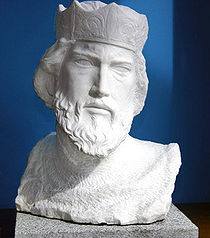
The High Middle Ages political circumstance led to the area of Bosnia being contested between the Kingdom of Hungary and the Byzantine Empire. Following another shift of power between the two in the early 12th century, Bosnia found itself outside the control of both and emerged as an independent state under the rule of local bans.[16]
The first Bosnian monarch was Ban Borić. The second was Ban Kulin
Ban Kulin
Ban Kulin was a notable Ban of Bosnia who ruled from 1180 to 1204 first as a vassal of the Byzantine Empire and then of the Kingdom of Hungary. He was brought to the power by Byzantine Emperor Manuel I Comnenus. He had a son, Stjepan Kulinić who succeeded him as Bosnian Ban...
whose rule marked the start of a controversy with the Bosnian Church
Bosnian Church
The Bosnian Church is historically thought to be an indigenous branch of the Bogomils that existed in Bosnia during the Middle Ages. Adherents of the church called themselves simply Krstjani...
, an indigenous Bogomilism
Bogomilism
Bogomilism was a Gnostic religiopolitical sect founded in the First Bulgarian Empire by the priest Bogomil during the reign of Tsar Petar I in the 10th century...
sect considered heretical by the Roman Catholic Church, which he allowed access in the country. In response to Hungarian attempts to use church politics regarding the issue as a way to reclaim sovereignty over Bosnia, Kulin held a council of local church leaders to renounce the heresy and embraced Catholicism in 1203. Despite this, Hungarian ambitions remained unchanged long after Kulin's death in 1204, waning only after an unsuccessful invasion in 1254.
Bosnian history from then until the early 14th century was marked by the power struggle between the Šubić
Šubic
The Šubić were one of the twelve tribes which constituted Croatian statehood in the Middle Ages; they held the county of Bribir in inland Dalmatia.-Origins:...
and Kotromanić families. This conflict came to an end in 1322, when Stephen II Kotromanić became Ban. By the time of his death in 1353, he was successful in annexing territories to the north and west, as well as Zahumlje and parts of Dalmatia. He was succeeded by his nephew Tvrtko who, following a prolonged struggle with nobility and inter-family strife, gained full control of the country in 1367. Tvrtko I of Bosnia
Tvrtko I of Bosnia
Stjepan Tvrtko I was a ruler of medieval Bosnia. He ruled in 1353–1366 and again in 1367–1377 as Ban and in 1377–1391 as the first Bosnian King....
crowned himself on 26 October 1377 as Stephen Tvrtko I the King of Rascia
Raška (state)
Principality of Serbia or Serbian Principality was an early medieval state of the Serbs ruled by the Vlastimirović dynasty, that existed from ca 768 to 969 in Southeastern Europe. It was established through an unification of several provincial chiefs under the supreme rule of a certain Višeslav,...
, Bosnia
Bosnia (region)
Bosnia is a eponomous region of Bosnia and Herzegovina. It lies mainly in the Dinaric Alps, ranging to the southern borders of the Pannonian plain, with the rivers Sava and Drina marking its northern and eastern borders. The other eponomous region, the southern, other half of the country is...
, Dalmatia, Croatia, the Seaside
Adriatic Sea
The Adriatic Sea is a body of water separating the Italian Peninsula from the Balkan peninsula, and the system of the Apennine Mountains from that of the Dinaric Alps and adjacent ranges...
.
Based on archaeological evidence, he was crowned in the in Mile near Visoko in the church which was built in the time of Stephen II Kotromanić's reign, where he was also buried alongside his uncle Stjepan II. Following his death in 1391 however, Bosnia fell into a long period of decline. The Ottoman Empire had already started its conquest of Europe and posed a major threat to the Balkans throughout the first half of the 15th century. Finally, after decades of political and social instability, the Kingdom of Bosnia ceased to exist in 1463.
Bulgaria
Following the collapse of Old Great BulgariaOld Great Bulgaria
Old Great Bulgaria or Great Bulgaria was а term used by Byzantine historians to refer to Onoguria during the reign of the Bulgar ruler Kubrat in the 7th century north of the Caucasus mountains in the steppe between the Dniester and Lower...
, Asparukh's Bulgars
Bulgars
The Bulgars were a semi-nomadic who flourished in the Pontic Steppe and the Volga basin in the 7th century.The Bulgars emerge after the collapse of the Hunnic Empire in the 5th century....
arrived in Scythia Minor
Scythia Minor
Scythia Minor, "Lesser Scythia" was in ancient times the region surrounded by the Danube at the north and west and the Black Sea at the east, corresponding to today's Dobruja, with a part in Romania and a part in Bulgaria....
in 680 and allied with the local Slavic population to form Bulgaria. The Slavs accepted as their rulers the Bulgar Khans but retained significant autonomy. Both peoples had to protect the country from the Byzantines to the south and the Avar Khanate to the north-west. The Byzantines were aware of this new threat but were completely defeated in the Battle of Ongal
Battle of Ongal
The Battle of Ongal took place in the summer of 680 in the Ongal area, an unspecified location in around the Danube delta near the Peuce Island...
and in 681 officially recognized Bulgaria as a sovereign country, known nowadays as the First Bulgarian Empire
First Bulgarian Empire
The First Bulgarian Empire was a medieval Bulgarian state founded in the north-eastern Balkans in c. 680 by the Bulgars, uniting with seven South Slavic tribes...
. By the mid 9th century Bulgaria expanded into much of the Slavic-populated areas of the Balkan peninsula in Thrace, Moesia, Macedonia and Dacia. Khan Omurtag (814-831) made an administrative reform which aimed the centralization of the country and deprived the Slavs of their autonomy. As a result some Slavic tribes to the north-west rebelled but they were quickly subjugated.
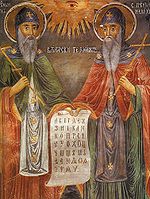
Following the Christianization of Bulgaria
Christianization of Bulgaria
The Christianization of Bulgaria was the process by which 9th-century medieval Bulgaria converted to Christianity. It was influenced by the khan's shifting political alliances with the kingdom of the East Franks and the Byzantine Empire, as well as his reception by the Pope of the Roman Catholic...
and the creation of the Glagolitic
Glagolitic alphabet
The Glagolitic alphabet , also known as Glagolitsa, is the oldest known Slavic alphabet. The name was not coined until many centuries after its creation, and comes from the Old Slavic glagolъ "utterance" . The verb glagoliti means "to speak"...
and Cyrillic alphabet
Cyrillic alphabet
The Cyrillic script or azbuka is an alphabetic writing system developed in the First Bulgarian Empire during the 10th century AD at the Preslav Literary School...
s and the formation of a literary Bulgarian language
Old Church Slavonic
Old Church Slavonic or Old Church Slavic was the first literary Slavic language, first developed by the 9th century Byzantine Greek missionaries Saints Cyril and Methodius who were credited with standardizing the language and using it for translating the Bible and other Ancient Greek...
, the Bulgars and Slavs finally merged into the Bulgarian people. In 927 the Byzantines also had to recognize the Imperial title of the Bulgarian rulers (in Bulgarian цар - Tsar
Tsar
Tsar is a title used to designate certain European Slavic monarchs or supreme rulers. As a system of government in the Tsardom of Russia and Russian Empire, it is known as Tsarist autocracy, or Tsarism...
) and the Bulgarian Patriarchate
Bulgarian Orthodox Church
The Bulgarian Orthodox Church - Bulgarian Patriarchate is an autocephalous Eastern Orthodox Church with some 6.5 million members in the Republic of Bulgaria and between 1.5 and 2.0 million members in a number of European countries, the Americas and Australia...
. Bulgaria became the cultural center of the Slavic Orthodox world in the 9th and 10th centuries. Following the destruction of the First Bulgarian Empire
First Bulgarian Empire
The First Bulgarian Empire was a medieval Bulgarian state founded in the north-eastern Balkans in c. 680 by the Bulgars, uniting with seven South Slavic tribes...
by the Byzantine Emperor Basil II
Basil II
Basil II , known in his time as Basil the Porphyrogenitus and Basil the Young to distinguish him from his ancestor Basil I the Macedonian, was a Byzantine emperor from the Macedonian dynasty who reigned from 10 January 976 to 15 December 1025.The first part of his long reign was dominated...
in 1018, Bulgaria came under Byzantine rule in 1018. The Second Bulgarian Empire
Second Bulgarian Empire
The Second Bulgarian Empire was a medieval Bulgarian state which existed between 1185 and 1396 . A successor of the First Bulgarian Empire, it reached the peak of its power under Kaloyan and Ivan Asen II before gradually being conquered by the Ottomans in the late 14th-early 15th century...
secured its independence from Byzantium in 1185, lasting until 1396 when it was conquered by the Ottomans.
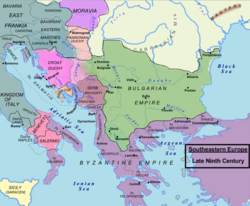
Croatia
In the western Balkans, the tribal configurations of the 7th century eventually formed a basis for early statelets, no doubt influenced by Feudalism from the west. The Slavs in northern PannoniaPannonia
Pannonia was an ancient province of the Roman Empire bounded north and east by the Danube, coterminous westward with Noricum and upper Italy, and southward with Dalmatia and upper Moesia....
(north of the Drava) were included in the Balaton Principality
Balaton Principality
The Principality of Lower Pannonia was a Slavic principality located in the western part of the Pannonian plain, between the rivers Danube to its east The Principality of Lower Pannonia (also called Pannonia, Lower Pannonia, Pannonian Principality, Transdanubian Principality, Slavic Pannonian...
, given by the Franks to an exiled Prince from Nitra, whereas those south of the Drava were part of 'Savia', a territory we know little about. The Franks and Bulgars fought for control over it initially, later becoming an area of conflict between Hungary
Hungary
Hungary , officially the Republic of Hungary , is a landlocked country in Central Europe. It is situated in the Carpathian Basin and is bordered by Slovakia to the north, Ukraine and Romania to the east, Serbia and Croatia to the south, Slovenia to the southwest and Austria to the west. The...
and Croatia
Croatia
Croatia , officially the Republic of Croatia , is a unitary democratic parliamentary republic in Europe at the crossroads of the Mitteleuropa, the Balkans, and the Mediterranean. Its capital and largest city is Zagreb. The country is divided into 20 counties and the city of Zagreb. Croatia covers ...
. The Croats
Croats
Croats are a South Slavic ethnic group mostly living in Croatia, Bosnia and Herzegovina and nearby countries. There are around 4 million Croats living inside Croatia and up to 4.5 million throughout the rest of the world. Responding to political, social and economic pressure, many Croats have...
were Frankish vassals until they successfully rebelled during the 850s, forming the Principality of the Croats
Medieval Croatian state
Medieval Croatia can refer to:* Principality of Pannonian Croatia - medieval duchy in existence between the 7th and 10th centuries A.D.* Principality of Littoral Croatia - medieval principality in existence between the 8th century and 925 A.D....
in northern Dalmatia.
Serbia
Archaeological evidence suggests that Serbs were part of the 6th-century wave of Slavs. According to Byzantine sources, Serbs settled lands of present-day SerbiaSerbia
Serbia , officially the Republic of Serbia , is a landlocked country located at the crossroads of Central and Southeast Europe, covering the southern part of the Carpathian basin and the central part of the Balkans...
, Montenegro
Montenegro
Montenegro Montenegrin: Crna Gora Црна Гора , meaning "Black Mountain") is a country located in Southeastern Europe. It has a coast on the Adriatic Sea to the south-west and is bordered by Croatia to the west, Bosnia and Herzegovina to the northwest, Serbia to the northeast and Albania to the...
, Croatia
Croatia
Croatia , officially the Republic of Croatia , is a unitary democratic parliamentary republic in Europe at the crossroads of the Mitteleuropa, the Balkans, and the Mediterranean. Its capital and largest city is Zagreb. The country is divided into 20 counties and the city of Zagreb. Croatia covers ...
and Bosnia and Herzegovina
Bosnia and Herzegovina
Bosnia and Herzegovina , sometimes called Bosnia-Herzegovina or simply Bosnia, is a country in Southern Europe, on the Balkan Peninsula. Bordered by Croatia to the north, west and south, Serbia to the east, and Montenegro to the southeast, Bosnia and Herzegovina is almost landlocked, except for the...
during the rule of Emperor Heraclius
Heraclius
Heraclius was Byzantine Emperor from 610 to 641.He was responsible for introducing Greek as the empire's official language. His rise to power began in 608, when he and his father, Heraclius the Elder, the exarch of Africa, successfully led a revolt against the unpopular usurper Phocas.Heraclius'...
(610-641). The Serbs became foederati to the Byzantines and held the frontiers as vassalage (initially Sclaviniae, later Župas), subsequently receiving greater autonomy with Višeslav I (fl. 768-814) and full independence with Vlastimir (836-850). Serbia was a Byzantine ally throughout most of the Middle Ages and secured its independence with great diplomacy with Byzantium. In the 14th century, the Serbian state under Stefan Dušan rose to prominence in the southern Balkans, becoming the Serbian Empire
Serbian Empire
The Serbian Empire was a short-lived medieval empire in the Balkans that emerged from the Serbian Kingdom. Stephen Uroš IV Dušan was crowned Emperor of Serbs and Greeks on 16 April, 1346, a title signifying a successorship to the Eastern Roman Empire...
. It declined following the Battle of Kosovo Field in 1389 against the Ottomans
Ottoman Empire
The Ottoman EmpireIt was usually referred to as the "Ottoman Empire", the "Turkish Empire", the "Ottoman Caliphate" or more commonly "Turkey" by its contemporaries...
.
South Slavic peoples
South Slavs are divided along linguistic lines into two groups — eastern and western.List of the South Slavic peoples and ethnic groups, including population figures:
Eastern group: (up to 12,500,000 all together)
- BulgariansBulgariansThe Bulgarians are a South Slavic nation and ethnic group native to Bulgaria and neighbouring regions. Emigration has resulted in immigrant communities in a number of other countries.-History and ethnogenesis:...
= 10,000,000 - MacedoniansMacedonians (ethnic group)The Macedonians also referred to as Macedonian Slavs: "... the term Slavomacedonian was introduced and was accepted by the community itself, which at the time had a much more widespread non-Greek Macedonian ethnic consciousness...
= 2,500,000
Western group: (up to 26,000,000 all together)
- SerbsSerbsThe Serbs are a South Slavic ethnic group of the Balkans and southern Central Europe. Serbs are located mainly in Serbia, Montenegro and Bosnia and Herzegovina, and form a sizable minority in Croatia, the Republic of Macedonia and Slovenia. Likewise, Serbs are an officially recognized minority in...
= 10,500,000 - CroatsCroatsCroats are a South Slavic ethnic group mostly living in Croatia, Bosnia and Herzegovina and nearby countries. There are around 4 million Croats living inside Croatia and up to 4.5 million throughout the rest of the world. Responding to political, social and economic pressure, many Croats have...
= 8,500,000 - Slovenes = 2,500,000
- BosniaksBosniaksThe Bosniaks or Bosniacs are a South Slavic ethnic group, living mainly in Bosnia and Herzegovina, with a smaller minority also present in other lands of the Balkan Peninsula especially in Serbia, Montenegro and Croatia...
= 2,100,000 - Montenegrins = 700,000
- YugoslavsYugoslavsYugoslavs is a national designation used by a minority of South Slavs across the countries of the former Yugoslavia and in the diaspora...
, BunjevciBunjevciBunjevci are a South Slavic community and ethnic group living mostly in the Bačka region of Serbia and southern Hungary...
, Muslims by nationalityMuslims by nationalityMuslims by nationality was a term used in Socialist Federal Republic of Yugoslavia as an official designation of nationality of Slavic Muslims. They were one of the constitutive groups of Bosnia and Herzegovina...
and other minor ethnic groups
Countries
There are seven countries in which South Slavs are the main population:(85% Bulgarians
Bulgarians
The Bulgarians are a South Slavic nation and ethnic group native to Bulgaria and neighbouring regions. Emigration has resulted in immigrant communities in a number of other countries.-History and ethnogenesis:...
)
(83% Serbs
Serbs
The Serbs are a South Slavic ethnic group of the Balkans and southern Central Europe. Serbs are located mainly in Serbia, Montenegro and Bosnia and Herzegovina, and form a sizable minority in Croatia, the Republic of Macedonia and Slovenia. Likewise, Serbs are an officially recognized minority in...
, 2% Bosniaks, 1% Yugoslavs 1% Croats, 1% Montengrins)
(90% Croats
Croats
Croats are a South Slavic ethnic group mostly living in Croatia, Bosnia and Herzegovina and nearby countries. There are around 4 million Croats living inside Croatia and up to 4.5 million throughout the rest of the world. Responding to political, social and economic pressure, many Croats have...
, 4% Serbs)
(46% Bosniaks
Bosniaks
The Bosniaks or Bosniacs are a South Slavic ethnic group, living mainly in Bosnia and Herzegovina, with a smaller minority also present in other lands of the Balkan Peninsula especially in Serbia, Montenegro and Croatia...
, 37% Serbs, 15% Croats)
(65% ethnic Macedonians
Macedonians (ethnic group)
The Macedonians also referred to as Macedonian Slavs: "... the term Slavomacedonian was introduced and was accepted by the community itself, which at the time had a much more widespread non-Greek Macedonian ethnic consciousness...
, 2% Serbs, 1% Bosniaks)
(83% Slovenes, 2% Serbs, 2% Croats, 1% Bosniaks)
(45% Montenegrins, 29% Serbs, 13% Bosniaks and Muslims by nationality, 1% Croats)
In addition, there are local South Slavic minorities in non-Slavic neighbouring countries such as:
- ItalyItalyItaly , officially the Italian Republic languages]] under the European Charter for Regional or Minority Languages. In each of these, Italy's official name is as follows:;;;;;;;;), is a unitary parliamentary republic in South-Central Europe. To the north it borders France, Switzerland, Austria and...
: (Slovenes, CroatsMolise CroatsMolise Croats live in the Molise region of Italy in the villages Acquaviva Collecroce , San Felice del Molise , Montemitro and elsewhere. In these three villages they are a majority. There are about 5,000 speakers of the Molise Croatian dialect...
) - AustriaAustriaAustria , officially the Republic of Austria , is a landlocked country of roughly 8.4 million people in Central Europe. It is bordered by the Czech Republic and Germany to the north, Slovakia and Hungary to the east, Slovenia and Italy to the south, and Switzerland and Liechtenstein to the...
: (CroatsBurgenland CroatsBurgenland Croats are ethnic Croats in the Austrian state of Burgenland. Although an enclave hundreds of kilometres away from their original homeland, they have managed to preserve culture and language for centuries...
, SlovenesCarinthian SlovenesCarinthian Slovenes are the Slovene-speaking population group in the Austrian State of Carinthia. The Carinthian Slovenes send representatives to the National Ethnic Groups Advisory Council...
) - HungaryHungaryHungary , officially the Republic of Hungary , is a landlocked country in Central Europe. It is situated in the Carpathian Basin and is bordered by Slovakia to the north, Ukraine and Romania to the east, Serbia and Croatia to the south, Slovenia to the southwest and Austria to the west. The...
: (CroatsBosniaks (Croats in Hungary)Bosniaks are a Croat population, living in various settlements in the historic region Baranja, in its Hungarian part. Bosniaks Croats should not be confused with Bosnian Muslims that mostly live in Bosnia and Herzegovina also called Bosniaks....
, Serbs, SlovenesHungarian SlovenesHungarian Slovenes are an autochthonous ethnic and linguistic Slovene minority living in Hungary. The largest groups are the Rába Slovenes in the Rába Valley in western Hungary between the town of Szentgotthárd and the borders with Slovenia and Austria. They speak the Prekmurje dialect of Slovene...
) - RomaniaRomaniaRomania is a country located at the crossroads of Central and Southeastern Europe, on the Lower Danube, within and outside the Carpathian arch, bordering on the Black Sea...
: (CroatsKrashovaniThe Krashovani are a South Slavic people indigenous to Caraşova and other nearby locations in...
, BulgariansBanat BulgariansThe Banat Bulgarians are a distinct Bulgarian minority group which settled in the 18th century in the region of the Banat, which was then ruled by the Habsburgs and after World War I was divided between Romania, Serbia, and Hungary...
, Serbs), - TurkeyTurkeyTurkey , known officially as the Republic of Turkey , is a Eurasian country located in Western Asia and in East Thrace in Southeastern Europe...
: (Bulgarians) - GreeceGreeceGreece , officially the Hellenic Republic , and historically Hellas or the Republic of Greece in English, is a country in southeastern Europe....
: (Slavic-speakers of Greek Macedonia, PomaksPomaksPomaks is a term used for a Slavic Muslim population native to some parts of Bulgaria, Turkey, Greece, the Republic of Macedonia, Albania and Kosovo. The Pomaks speak Bulgarian as their native language, also referred to in Greece and Turkey as Pomak language, and some are fluent in Turkish,...
) - AlbaniaAlbaniaAlbania , officially known as the Republic of Albania , is a country in Southeastern Europe, in the Balkans region. It is bordered by Montenegro to the northwest, Kosovo to the northeast, the Republic of Macedonia to the east and Greece to the south and southeast. It has a coast on the Adriatic Sea...
: (BulgariansBulgarians in AlbaniaEthnic Bulgarians in present-day Albania live mostly in the areas of Mala Prespa and Golo Bardo. In the 1989 census a total of 782 people claimed either Romanian, Bulgarian or Czechoslovakian nationality. The US Department of State background note for Albania, dated 4 January 2011 further reported...
, Macedonians, SerbsSerbs in AlbaniaAlbanian Serbs constitute an ethnic minority in Albania, officially as the Serbo-Montenegrin minority. According to the latest national minority census in Albania , there were around 2,000 Serbs and Montenegrins in the country...
, MontenegrinsMontenegrins of AlbaniaMontenegrins form an ethnic minority in Albania. There is an estimated 1,000 - 2,000 Montenegrins living in Albania. Montenegrins are mainly located in the northern districts of Malësi e Madhe and Shkodër...
)
Cities
| Cities with South Slavic majority (+100,000 residents) | ||
|---|---|---|
| City | Demographics | Source |
 Belgrade BelgradeBelgrade Belgrade is the capital and largest city of Serbia. It is located at the confluence of the Sava and Danube rivers, where the Pannonian Plain meets the Balkans. According to official results of Census 2011, the city has a population of 1,639,121. It is one of the 15 largest cities in Europe... |
1,639,121 | (Census Bureau of Serbia; 2011) |
 Sofia SofiaSofia Sofia is the capital and largest city of Bulgaria and the 12th largest city in the European Union with a population of 1.27 million people. It is located in western Bulgaria, at the foot of Mount Vitosha and approximately at the centre of the Balkan Peninsula.Prehistoric settlements were excavated... |
1,270,284 | (Census Bureau of Bulgaria; 2011) |
 Zagreb ZagrebZagreb Zagreb is the capital and the largest city of the Republic of Croatia. It is in the northwest of the country, along the Sava river, at the southern slopes of the Medvednica mountain. Zagreb lies at an elevation of approximately above sea level. According to the last official census, Zagreb's city... |
686,568 | (Census Bureau of Croatia; 2011) |
 Skopje SkopjeSkopje Skopje is the capital and largest city of the Republic of Macedonia with about a third of the total population. It is the country's political, cultural, economic, and academic centre... |
668,518 | (Census Bureau of the Republic of Macedonia; 2006) |
| Plovdiv Plovdiv Plovdiv is the second-largest city in Bulgaria after Sofia with a population of 338,153 inhabitants according to Census 2011. Plovdiv's history spans some 6,000 years, with traces of a Neolithic settlement dating to roughly 4000 BC; it is one of the oldest cities in Europe... |
338,153 | (Census Bureau of Bulgaria; 2011) |
| Varna Varna Varna is the largest city and seaside resort on the Bulgarian Black Sea Coast and third-largest in Bulgaria after Sofia and Plovdiv, with a population of 334,870 inhabitants according to Census 2011... |
334,870 | (Census Bureau of Bulgaria; 2011) |
 Sarajevo SarajevoSarajevo Sarajevo |Bosnia]], surrounded by the Dinaric Alps and situated along the Miljacka River in the heart of Southeastern Europe and the Balkans.... |
310,605 | (Census Bureau of Bosnia and Herzegovina; 2010) |
 Ljubljana LjubljanaLjubljana Ljubljana is the capital of Slovenia and its largest city. It is the centre of the City Municipality of Ljubljana. It is located in the centre of the country in the Ljubljana Basin, and is a mid-sized city of some 270,000 inhabitants... |
272,220 | (Census Bureau of Slovenia; 2011) |
| Novi Sad Novi Sad Novi Sad is the capital of the northern Serbian province of Vojvodina, and the administrative centre of the South Bačka District. The city is located in the southern part of Pannonian Plain on the Danube river.... |
221,854 | (Census Bureau of Serbia; 2011) |
| Burgas Burgas -History:During the rule of the Ancient Romans, near Burgas, Debeltum was established as a military colony for veterans by Vespasian. In the Middle Ages, a small fortress called Pyrgos was erected where Burgas is today and was most probably used as a watchtower... |
200,271 | (Census Bureau of Bulgaria; 2011) |
| Banja Luka Banja Luka -History:The name "Banja Luka" was first mentioned in a document dated February 6, 1494, but Banja Luka's history dates back to ancient times. There is a substantial evidence of the Roman presence in the region during the first few centuries A.D., including an old fort "Kastel" in the centre of... |
195,000 | (Census Bureau of Bosnia and Herzegovina; 2008) |
| Niš Niš Niš is the largest city of southern Serbia and third-largest city in Serbia . According to the data from 2011, the city of Niš has a population of 177,972 inhabitants, while the city municipality has a population of 257,867. The city covers an area of about 597 km2, including the urban area,... |
177,972 | (Census Bureau of Serbia; 2011) |
| Split Split (city) Split is a Mediterranean city on the eastern shores of the Adriatic Sea, centered around the ancient Roman Palace of the Emperor Diocletian and its wide port bay. With a population of 178,192 citizens, and a metropolitan area numbering up to 467,899, Split is by far the largest Dalmatian city and... |
165,883 | (Census Bureau of Croatia; 2011) |
| Maribor Maribor Maribor is the second largest city in Slovenia with 157,947 inhabitants . Maribor is also the largest and the capital city of Slovenian region Lower Styria and the seat of the Municipality of Maribor.... |
157,947 | (Census Bureau of Slovenia; 2010) |
 Podgorica PodgoricaPodgorica Podgorica , is the capital and largest city of Montenegro.Podgorica's favourable position at the confluence of the Ribnica and Morača rivers and the meeting point of the fertile Zeta Plain and Bjelopavlići Valley has encouraged settlement... |
151,312 | (Census Bureau of Montenegro; 2011) |
| Ruse |
149,642 | (Census Bureau of Bulgaria; 2011) |
| Kragujevac Kragujevac Kragujevac is the fourth largest city in Serbia, the main city of the Šumadija region and the administrative centre of Šumadija District. It is situated on the banks of the Lepenica River... |
147,281 | (Census Bureau of Serbia; 2011) |
| Stara Zagora Stara Zagora Stara Zagora is the sixth largest city in Bulgaria, and a nationally important economic center. Located in Southern Bulgaria, it is the administrative capital of the homonymous Stara Zagora Province... |
138,272 | (Census Bureau of Bulgaria; 2011) |
| Rijeka Rijeka Rijeka is the principal seaport and the third largest city in Croatia . It is located on Kvarner Bay, an inlet of the Adriatic Sea and has a population of 128,735 inhabitants... |
127,498 | (Census Bureau of Croatia; 2011) |
| Pleven Pleven Pleven is the seventh most populous city in Bulgaria. Located in the northern part of the country, it is the administrative centre of Pleven Province, as well as of the subordinate Pleven municipality... |
106,954 | (Census Bureau of Bulgaria; 2011) |
Regional groups and other subdivisions
Please note that some of the subdivisions remain debatable, particularly for smaller groups and national minorities in former Yugoslavia.Besides ethnic groups, South Slavs often identify themselves with the geographical region in which they live. Some of the major regional South Slavic groups include: Zagorci
Zagorje
Hrvatsko Zagorje is a region in northern Croatia.Zagorje may also refer to:*Zagorje ob Savi, a town and a municipality in Slovenia*NK Zagorje, a Slovenian football club-See also:...
, Istrani
Istria
Istria , formerly Histria , is the largest peninsula in the Adriatic Sea. The peninsula is located at the head of the Adriatic between the Gulf of Trieste and the Bay of Kvarner...
, Dalmatinci
Dalmatia
Dalmatia is a historical region on the eastern coast of the Adriatic Sea. It stretches from the island of Rab in the northwest to the Bay of Kotor in the southeast. The hinterland, the Dalmatian Zagora, ranges from fifty kilometers in width in the north to just a few kilometers in the south....
, Slavonci
Slavonia
Slavonia is a geographical and historical region in eastern Croatia...
, Bosanci
Bosnians
Bosnians are people who reside in, or come from, Bosnia and Herzegovina. By the modern state definition a Bosnian can be anyone who holds citizenship of the state. This includes, but is not limited to, members of the constituent ethnic groups of Bosnia and Herzegovina: Bosniaks, Bosnian Serbs and...
, Hercegovci
Herzegovinians
The Herzegovinans are the people who hail from the Herzegovina region of Bosnia and Herzegovina.The region which is Herzegovina forms a part of the Dinaric Alps...
, Posavljaci, Krajišnici
Bosanska Krajina
Bosanska Krajina or Bosnian Frontier is a geographical region, a subregion of Bosnia, in western Bosnia and Herzegovina enclosed by three rivers - Sava, Una and Vrbas. It is also a historic, economic and cultural entity of Bosnia and Herzegovina....
, Semberci
Semberija
Semberija is a geographical region in north-eastern Bosnia and Herzegovina. The main city in the region is Bijeljina. Semberija is located between Drina and Sava rivers and Majevica mountain...
, Srbijanci, Šumadinci
Šumadija
Šumadija is a geographical region in Serbia. The area is heavily covered with forests, hence the name...
, Mačva
Macva
Mačva is a geographical region in Serbia, mostly situated in the northwest of Central Serbia. It is located in a fertile plain between the Sava and Drina rivers. The chief town of this region is Šabac. The modern Mačva District of Serbia is named after the region, although the region of Mačva...
ni, Moravci
Pomoravlje
Pomoravlje may refer to:* Pomoravlje , a geographical area around the Morava river, Serbia* Pomoravlje District, a district in Serbia...
, Vojvođani
Vojvodina
Vojvodina, officially called Autonomous Province of Vojvodina is an autonomous province of Serbia. Its capital and largest city is Novi Sad...
, Sremci
Syrmia
Syrmia is a fertile region of the Pannonian Plain in Europe, between the Danube and Sava rivers. It is divided between Serbia in the east and Croatia in the west....
, Bačvani
Backa
Bačka is a geographical area within the Pannonian plain bordered by the river Danube to the west and south, and by the river Tisza to the east of which confluence is located near Titel...
, Banaćani
Banat
The Banat is a geographical and historical region in Central Europe currently divided between three countries: the eastern part lies in western Romania , the western part in northeastern Serbia , and a small...
, Sandžak
Sandžak
Sandžak also known as Raška is a historical region lying along the border between Serbia and Montenegro...
lije, Kosovci
Kosovo
Kosovo is a region in southeastern Europe. Part of the Ottoman Empire for more than five centuries, later the Autonomous Province of Kosovo and Metohija within Serbia...
, Brđani
Brda
Brda, meaning Hill, may refer to:* Brda region, Montenegro* Brda, Slovenj Gradec Slovenia* Brda, Slovenia, a municipality* Brda, a municipality in Croatia* Brda , a river in Poland*Brda, Pomeranian Voivodeship...
, Bokelji, Zećani
Zeta plain
Zeta Plain is a fertile lowland in Montenegro. It stretches from Podgorica in the north to the Skadar Lake in the south. It is the biggest plains area in Montenegro, with an average elevation around above sea level....
, Torlatsi, Shopi
Shopi
Shopi is a regional term referring to people that speak a transitional dialect group of South Slavic, self-identifying as Bulgarians, Macedonians and Serbs. The areas traditionally inhabited by the Shopi is called Shopluk Shopi (scientific transliteration of Bulgarian, Macedonian, ; Serbian latin...
, Pelagonci, Tikveš
Tikveš
Tikveš is a plain situated in central Republic of Macedonia which is known for an artificial lake. It is home to the towns of Kavadarci and Negotino. Famous for its wine, Tikveš is the center of the Macedonian wine production which has been cultivated for more than 120 years...
jani, Trakiytsi, Dobrudzhantsi
Southern Dobruja
Southern Dobruja is an area of north-eastern Bulgaria comprising the administrative districts named for its two principal cities of Dobrich and Silistra...
, Balkandzhii
Balkan Mountains
The Balkan mountain range is a mountain range in the eastern part of the Balkan Peninsula. The Balkan range runs 560 km from the Vrashka Chuka Peak on the border between Bulgaria and eastern Serbia eastward through central Bulgaria to Cape Emine on the Black Sea...
, Aegean Macedonians
Aegean Macedonians
Slavic speakers are a linguistic minority population in the northern Greek region of Macedonia who are mostly concentrated in certain parts of the peripheries of West and Central Macedonia, adjacent to the territory of the Republic of Macedonia. A smaller group exists in East Macedonia adjacent to...
, Mijaks
Mijaks
Mijaks are an ethnographic group of ethnic Macedonians who live in the so-called Mijačija area , along the Radika river, in western Macedonia, numbering 30,000-60,000 people...
, Mariovans
Mariovo
Mariovo is a region in the southern part of Macedonia , situated between the mountains Selechka on the west, Nidze and Kozhuf on the south, Kozjak on the east and Dren...
, Miziytsi
Moesia
Moesia was an ancient region and later Roman province situated in the Balkans, along the south bank of the Danube River. It included territories of modern-day Southern Serbia , Northern Republic of Macedonia, Northern Bulgaria, Romanian Dobrudja, Southern Moldova, and Budjak .-History:In ancient...
, Pirintsi
Blagoevgrad Province
Blagoevgrad Province , also known as Pirin Macedonia , is a province of southwestern Bulgaria. It borders four other Bulgarian provinces to the north and east, Greece to the south, and the Republic of Macedonia to the west. The province has 14 municipalities with 12 towns...
, Rodoptsi, Bessarabians
Bessarabian Bulgarians
The Bessarabian Bulgarians are a Bulgarian minority group of the historical region of Bessarabia, inhabiting parts of present-day Ukraine and Moldova.- Location and number :-Modern Ukraine:...
, Carinthians
Carinthian Slovenes
Carinthian Slovenes are the Slovene-speaking population group in the Austrian State of Carinthia. The Carinthian Slovenes send representatives to the National Ethnic Groups Advisory Council...
, Styrians
Lower Styria
Lower Styria or Slovenian Styria is a traditional region in northeastern Slovenia, comprising the southern third of the former Duchy of Styria. The population of Lower Styria in its historical boundaries amounts to around 705,000 inhabitants, or 34.5% of the population of Slovenia...
, Carniola
Carniola
Carniola was a historical region that comprised parts of what is now Slovenia. As part of Austria-Hungary, the region was a crown land officially known as the Duchy of Carniola until 1918. In 1849, the region was subdivided into Upper Carniola, Lower Carniola, and Inner Carniola...
ns, Prekmurians
Prekmurians
The Prekmurje Slovenes are Slovenes from Prekmurje in Slovenia and Vendvidék and Somogy in Hungary. The Prekmurje Slovenes speak the Prekmurje dialect and have a common culture...
, Venetians
Venetian Slovenia
Venetian Slovenia is a small mountainous region in northeastern Italy . Most of the region is located in the Italian region of Friuli Venezia Giulia, in the area between the towns of Cividale del Friuli, Tarcento and Gemona ....
, Palćene
Banat Bulgarians
The Banat Bulgarians are a distinct Bulgarian minority group which settled in the 18th century in the region of the Banat, which was then ruled by the Habsburgs and after World War I was divided between Romania, Serbia, and Hungary...
, Burgenlanders
Burgenland Croats
Burgenland Croats are ethnic Croats in the Austrian state of Burgenland. Although an enclave hundreds of kilometres away from their original homeland, they have managed to preserve culture and language for centuries...
, Janjevci
Janjevci
Janjevci are Croatian inhabitants of the Kosovo town of Janjevo and surrounding villages, located near Pristina as well as villages centered on Letnica near Vitina ....
, Molisans
Molise Croats
Molise Croats live in the Molise region of Italy in the villages Acquaviva Collecroce , San Felice del Molise , Montemitro and elsewhere. In these three villages they are a majority. There are about 5,000 speakers of the Molise Croatian dialect...
, Krashovans
Krashovani
The Krashovani are a South Slavic people indigenous to Caraşova and other nearby locations in...
, Šokci, Resians, and many others.
Religion
The religious and cultural diversity of the region the South Slavs inhabit has had a considerable influence on their religion. Originally a polytheistic pagan people, the South Slavs have also preserved many of their ancient rituals and traditional folklore, often intermixing and combining it with the religion they later converted to.Today, the majority of South Slavs are Orthodox Christians- the most Bulgarians
Bulgarians
The Bulgarians are a South Slavic nation and ethnic group native to Bulgaria and neighbouring regions. Emigration has resulted in immigrant communities in a number of other countries.-History and ethnogenesis:...
, Macedonians
Macedonians (ethnic group)
The Macedonians also referred to as Macedonian Slavs: "... the term Slavomacedonian was introduced and was accepted by the community itself, which at the time had a much more widespread non-Greek Macedonian ethnic consciousness...
, Serbs
Serbs
The Serbs are a South Slavic ethnic group of the Balkans and southern Central Europe. Serbs are located mainly in Serbia, Montenegro and Bosnia and Herzegovina, and form a sizable minority in Croatia, the Republic of Macedonia and Slovenia. Likewise, Serbs are an officially recognized minority in...
and Montenegrins, whilst most Slovenes and Croats
Croats
Croats are a South Slavic ethnic group mostly living in Croatia, Bosnia and Herzegovina and nearby countries. There are around 4 million Croats living inside Croatia and up to 4.5 million throughout the rest of the world. Responding to political, social and economic pressure, many Croats have...
are Roman Catholics. Bosniaks
Bosniaks
The Bosniaks or Bosniacs are a South Slavic ethnic group, living mainly in Bosnia and Herzegovina, with a smaller minority also present in other lands of the Balkan Peninsula especially in Serbia, Montenegro and Croatia...
, other minor ethnic groups (Gorani
Gorani (Kosovo)
The Gorani or Goranci are a South Slavic ethnic group inhabiting the Gora region of the Balkans, located at the triangle between Albania, Kosovo and Macedonia. Another autonym of this people is "Našinci" with literally meaning "our people"...
, Muslims by nationality
Muslims by nationality
Muslims by nationality was a term used in Socialist Federal Republic of Yugoslavia as an official designation of nationality of Slavic Muslims. They were one of the constitutive groups of Bosnia and Herzegovina...
) and sub-groups (Torbesh and Pomaks
Pomaks
Pomaks is a term used for a Slavic Muslim population native to some parts of Bulgaria, Turkey, Greece, the Republic of Macedonia, Albania and Kosovo. The Pomaks speak Bulgarian as their native language, also referred to in Greece and Turkey as Pomak language, and some are fluent in Turkish,...
) are Muslims
Islam
Islam . The most common are and . : Arabic pronunciation varies regionally. The first vowel ranges from ~~. The second vowel ranges from ~~~...
.
South Slavic ethnic groups by religion:
- Mainly Orthodox Christians
- BulgariansBulgariansThe Bulgarians are a South Slavic nation and ethnic group native to Bulgaria and neighbouring regions. Emigration has resulted in immigrant communities in a number of other countries.-History and ethnogenesis:...
- SerbsSerbsThe Serbs are a South Slavic ethnic group of the Balkans and southern Central Europe. Serbs are located mainly in Serbia, Montenegro and Bosnia and Herzegovina, and form a sizable minority in Croatia, the Republic of Macedonia and Slovenia. Likewise, Serbs are an officially recognized minority in...
- MacedoniansMacedonians (ethnic group)The Macedonians also referred to as Macedonian Slavs: "... the term Slavomacedonian was introduced and was accepted by the community itself, which at the time had a much more widespread non-Greek Macedonian ethnic consciousness...
- Montenegrins
- Bulgarians
- Mainly Roman Catholics
- CroatsCroatsCroats are a South Slavic ethnic group mostly living in Croatia, Bosnia and Herzegovina and nearby countries. There are around 4 million Croats living inside Croatia and up to 4.5 million throughout the rest of the world. Responding to political, social and economic pressure, many Croats have...
- Slovenes
- Croats
- Mainly Muslims
- BosniaksBosniaksThe Bosniaks or Bosniacs are a South Slavic ethnic group, living mainly in Bosnia and Herzegovina, with a smaller minority also present in other lands of the Balkan Peninsula especially in Serbia, Montenegro and Croatia...
- Bosniaks
Language
South Slavic standard languageStandard language
A standard language is a language variety used by a group of people in their public discourse. Alternatively, varieties become standard by undergoing a process of standardization, during which it is organized for description in grammars and dictionaries and encoded in such reference works...
s are:
- BosnianBosnian languageBosnian is a South Slavic language, spoken by Bosniaks. As a standardized form of the Shtokavian dialect, it is one of the three official languages of Bosnia and Herzegovina....
- BulgarianBulgarian languageBulgarian is an Indo-European language, a member of the Slavic linguistic group.Bulgarian, along with the closely related Macedonian language, demonstrates several linguistic characteristics that set it apart from all other Slavic languages such as the elimination of case declension, the...
- CroatianCroatian languageCroatian is the collective name for the standard language and dialects spoken by Croats, principally in Croatia, Bosnia and Herzegovina, the Serbian province of Vojvodina and other neighbouring countries...
- MacedonianMacedonian languageMacedonian is a South Slavic language spoken as a first language by approximately 2–3 million people principally in the region of Macedonia but also in the Macedonian diaspora...
- MontenegrinMontenegrin languageMontenegrin is a name used for the Serbo-Croatian language as spoken by Montenegrins; it also refers to an incipient standardized form of the Shtokavian dialect of Serbo-Croatian used as the official language of Montenegro...
- SerbianSerbian languageSerbian is a form of Serbo-Croatian, a South Slavic language, spoken by Serbs in Serbia, Bosnia and Herzegovina, Montenegro, Croatia and neighbouring countries....
- Slovene
In addition, there are also other South Slavic languages which do not constitute official status in any republic, but have recognised standard formats and are widely used by their speakers. The most common of these is Bunjevac
Bunjevac language
The Bunjevac dialect or Bunjevac language is a Štokavian dialect used by members of the Bunjevci community. The speakers live in parts of the autonomous province of Vojvodina in Serbia as well as in southern parts of Croatia. The speech has an exclusive Serbo-Croatian Ikavian reflex of the Common...
. In addition, the Šokac language
Šokac language
The Šokac language was a language listed in Austro-Hungarian censuses. Population censuses performed in Austria-Hungary recorded the native language of the citizens, whereby the Šokac language was declared as native language to one part of the population, presumably members of the Šokci ethnic...
was formerly listed in the census conducted during the Austro-Hungarian
Austria-Hungary
Austria-Hungary , more formally known as the Kingdoms and Lands Represented in the Imperial Council and the Lands of the Holy Hungarian Crown of Saint Stephen, was a constitutional monarchic union between the crowns of the Austrian Empire and the Kingdom of Hungary in...
administration. Today, Montenegrin
Montenegrin language
Montenegrin is a name used for the Serbo-Croatian language as spoken by Montenegrins; it also refers to an incipient standardized form of the Shtokavian dialect of Serbo-Croatian used as the official language of Montenegro...
is also in the accelerated process of being codified in Montenegro
Montenegro
Montenegro Montenegrin: Crna Gora Црна Гора , meaning "Black Mountain") is a country located in Southeastern Europe. It has a coast on the Adriatic Sea to the south-west and is bordered by Croatia to the west, Bosnia and Herzegovina to the northwest, Serbia to the northeast and Albania to the...
. It is slowly being revised, embracing local speech, following the lines taken for Bosnian
Bosnian language
Bosnian is a South Slavic language, spoken by Bosniaks. As a standardized form of the Shtokavian dialect, it is one of the three official languages of Bosnia and Herzegovina....
following the independence of Bosnia and Herzegovina
Bosnia and Herzegovina
Bosnia and Herzegovina , sometimes called Bosnia-Herzegovina or simply Bosnia, is a country in Southern Europe, on the Balkan Peninsula. Bordered by Croatia to the north, west and south, Serbia to the east, and Montenegro to the southeast, Bosnia and Herzegovina is almost landlocked, except for the...
from Socialist Federal Republic of Yugoslavia
Socialist Federal Republic of Yugoslavia
The Socialist Federal Republic of Yugoslavia was the Yugoslav state that existed from the abolition of the Yugoslav monarchy until it was dissolved in 1992 amid the Yugoslav Wars. It was a socialist state and a federation made up of six socialist republics: Bosnia and Herzegovina, Croatia,...
.
The division of standard languages is orthogonal to the division based on genetic
Genetic relationship (linguistics)
In linguistics, genetic relationship is the usual term for the relationship which exists between languages that are members of the same language family. The term genealogical relationship is sometimes used to avoid confusion with the unrelated use of the term in biological genetics...
-dialectological
Dialectology
Dialectology is the scientific study of linguistic dialect, a sub-field of sociolinguistics. It studies variations in language based primarily on geographic distribution and their associated features...
criteria. Naming local dialects is made difficult by the fact that Slovenes from Austria and Italy are linked with their most remote South Slavic peoples - the Pomaks and Bulgarians of European Turkey
European Turkey
European Turkey may refer to:*Eastern Thrace, the European portion of Turkey*Rumelia, the historical Ottoman territories in Europe*the suggested Accession of Turkey to the European Union...
- by a historical dialect continuum. In the 9th century all Slavic dialects formed one dialect continuum, which was subsequently broken after the arrival of Magyars in the area of middle Danube; the subsequent spread of the Germanic, Greek and Romance speakers separated the South Slavic group from West and East Slavic groups leaving it roughly its present-day areal distribution.
Furthermore, as a result of migrations caused by the invasion of Ottoman Turks, dialect continuum was broken in numerous places especially in the so-called "Central South Slavic" area, where some Slavic dialects like Čakavian and Kajkavian were suppressed at the expense of Štokavian, and some "transitional" dialects like Torlakian
Torlakian
Torlakian or Torlak is a name given to the group of South Slavic dialects of southeastern Serbia , northeastern Macedonia , western Bulgaria , which is intermediate between Serbian, Bulgarian and Macedonian.Some linguists classify it as an Old-Shtokavian dialect of Serbian or a fourth dialect of...
, originally belonging to West South Slavic group, but having experienced numerous shared innovations with Bularo-Macedonian dialects belonging to East South Slavic.
Major Slavic dialectal groupings are
- Kajkavian - named after the interrogative "kaj", the local word for "what", this dialect is spoken in Croatia and is closely related to the Slovene language (also a "kaj" language).
- Čakavian - named after the interrogative ča, the local word for "what", also an exclusively Croatian dialect
- Štokavian - the largest and most complex dialect chain, named after "što" - the local word for "what" - itself varies with increased distance. Its subdialect, Neoštokavian, is used as the base for standard SerbianSerbian languageSerbian is a form of Serbo-Croatian, a South Slavic language, spoken by Serbs in Serbia, Bosnia and Herzegovina, Montenegro, Croatia and neighbouring countries....
, CroatianCroatian languageCroatian is the collective name for the standard language and dialects spoken by Croats, principally in Croatia, Bosnia and Herzegovina, the Serbian province of Vojvodina and other neighbouring countries...
, BosnianBosnian languageBosnian is a South Slavic language, spoken by Bosniaks. As a standardized form of the Shtokavian dialect, it is one of the three official languages of Bosnia and Herzegovina....
, MontenegrinMontenegrin languageMontenegrin is a name used for the Serbo-Croatian language as spoken by Montenegrins; it also refers to an incipient standardized form of the Shtokavian dialect of Serbo-Croatian used as the official language of Montenegro...
and BunjevacBunjevac languageThe Bunjevac dialect or Bunjevac language is a Štokavian dialect used by members of the Bunjevci community. The speakers live in parts of the autonomous province of Vojvodina in Serbia as well as in southern parts of Croatia. The speech has an exclusive Serbo-Croatian Ikavian reflex of the Common...
, though in a bit different form (in yat reflex, cf. below) - Torlakian - a non-standard dialect chain separating Western South Slavic and Eastern South Slavic language groups with radical differences, spoken in southern Serbia (including Kosovo), northern Macedonia and north-western Bulgaria, and by all Slavic ethnic groups local to the region, its features include a mixture of the western and eastern linguistic trends. It is also spoken by the Krashovan community in Romania, reflecting their previous geographical settlement.
- Macedonian - spoken across most of Macedonia. The standard Macedonian is based on the West-central subdialect. Several regional dialects exist.
- Shop dialectShopiShopi is a regional term referring to people that speak a transitional dialect group of South Slavic, self-identifying as Bulgarians, Macedonians and Serbs. The areas traditionally inhabited by the Shopi is called Shopluk Shopi (scientific transliteration of Bulgarian, Macedonian, ; Serbian latin...
- an western Bulgarian dialect group bordering with Torlakian areas to its northwest, with Macedonian to its southwest and East Bulgarian to its east. - East BulgarianBulgarian dialectsBulgarian dialects are the regional spoken varieties of the Bulgarian language, a South Slavic language. Bulgarian dialectology dates to the 1830s and the pioneering work of Neofit Rilski, Bolgarska gramatika...
- the standard language of Bulgaria based on the central regions. Several regional dialects exist. - Slavic (Greece) - spoken by the Slavic population of Greece, most notably by the Pomaks of Thrace. Often disputed as to whether belonging to Macedonian or Bulgarian, this non-standard language has its dialects sparse but varied according to geographical distribution; with the dialects of Thrace (Trakiya) being closer to Bulgarian, and the dialects of FlorinaFlorinaFlorina is a town and municipality in mountainous northwestern Macedonia, Greece. Its motto is, 'Where Greece begins'. It is also the Metropolitan seat for the region. It lies in the central part of Florina peripheral unit, of which it is the capital. Florina belongs to the periphery of West...
(Lerin) and EdessaEdessa, GreeceEdessa , is a city in northern Greece and the capital of the Pella regional unit, in the Central Macedonia region of Greece. It was also the capital of the defunct province of the same name.-Name:...
(Voden) being closer to Macedonian.
The dialects are often further subclassified on arbitrary isoglosses, such as the reflex of Common Slavic yat
Yat
Yat or Jat is the thirty-second letter of the old Cyrillic alphabet. Its name in Old Church Slavonic is jěd’ or iad’ . In the common scientific Latin transliteration for old Slavic languages, the letter is represented by e with caron: .The yat represented a Common Slavic long vowel...
phoneme which had various reflexes in various Slavic dialects. Yat reflex is noted as a major distinction between Serbian and Croatian - while the former has two distinct variants, based on so-called Ekavian /e/ and Ijekavian /ie̯/ reflexes, the standard Croatian is based exclusively on the Ijekavian reflex /ie̯/.
Genetics
Modern South Slavic peoples' genetic roots actually stem from a wide variety of geneticGenetics
Genetics , a discipline of biology, is the science of genes, heredity, and variation in living organisms....
backgrounds, attesting the complexity of the ethno-genetic processes in Eastern Europe
Eastern Europe
Eastern Europe is the eastern part of Europe. The term has widely disparate geopolitical, geographical, cultural and socioeconomic readings, which makes it highly context-dependent and even volatile, and there are "almost as many definitions of Eastern Europe as there are scholars of the region"...
. In 2007 genetic study researched several Slavic populations with the aim of localizing the Proto-Slavic homeland. A significant finding of this study is that two genetically distinct groups of Slavic populations exist. The first group encompassed most Slavic populations except most Southern Slavs. According to the authors, most Slavs share a high frequency of R1a1a. Its origin is purported to trace to the middle Dnieper
Dnieper River
The Dnieper River is one of the major rivers of Europe that flows from Russia, through Belarus and Ukraine, to the Black Sea.The total length is and has a drainage basin of .The river is noted for its dams and hydroelectric stations...
basin of Ukraine
Ukraine
Ukraine is a country in Eastern Europe. It has an area of 603,628 km², making it the second largest contiguous country on the European continent, after Russia...
and spread via migrating males during the Late Glacial Maximum 15 kya. The second group comprises most southern Slavic populations: Bulgarians
Bulgarians
The Bulgarians are a South Slavic nation and ethnic group native to Bulgaria and neighbouring regions. Emigration has resulted in immigrant communities in a number of other countries.-History and ethnogenesis:...
, Croats
Croats
Croats are a South Slavic ethnic group mostly living in Croatia, Bosnia and Herzegovina and nearby countries. There are around 4 million Croats living inside Croatia and up to 4.5 million throughout the rest of the world. Responding to political, social and economic pressure, many Croats have...
in Dalmatia
Dalmatia
Dalmatia is a historical region on the eastern coast of the Adriatic Sea. It stretches from the island of Rab in the northwest to the Bay of Kotor in the southeast. The hinterland, the Dalmatian Zagora, ranges from fifty kilometers in width in the north to just a few kilometers in the south....
and Herzegovina
Herzegovina
Herzegovina is the southern region of Bosnia and Herzegovina. While there is no official border distinguishing it from the Bosnian region, it is generally accepted that the borders of the region are Croatia to the west, Montenegro to the south, the canton boundaries of the Herzegovina-Neretva...
, Bosniaks
Bosniaks
The Bosniaks or Bosniacs are a South Slavic ethnic group, living mainly in Bosnia and Herzegovina, with a smaller minority also present in other lands of the Balkan Peninsula especially in Serbia, Montenegro and Croatia...
, Macedonians
Macedonians (ethnic group)
The Macedonians also referred to as Macedonian Slavs: "... the term Slavomacedonian was introduced and was accepted by the community itself, which at the time had a much more widespread non-Greek Macedonian ethnic consciousness...
and Serbs
Serbs
The Serbs are a South Slavic ethnic group of the Balkans and southern Central Europe. Serbs are located mainly in Serbia, Montenegro and Bosnia and Herzegovina, and form a sizable minority in Croatia, the Republic of Macedonia and Slovenia. Likewise, Serbs are an officially recognized minority in...
, who have a significantly lower frequency of R1a (~15%). According to the authors, this phenomenon is explained by "...contribution to the Y chromosome
Y chromosome
The Y chromosome is one of the two sex-determining chromosomes in most mammals, including humans. In mammals, it contains the gene SRY, which triggers testis development if present. The human Y chromosome is composed of about 60 million base pairs...
s of peoples who settled in the Balkan region before the Slavic expansion to the genetic heritage of Southern Slavs..." On the other hand the Subclade
Subclade
In genetics, subclade is a term used to describe a subgroup of a subgenus or haplogroup. It is commonly used today in describing genealogical DNA tests of human mitochondrial DNA haplogroups and human Y-chromosome DNA haplogroups....
I2a1b1 of Haplogroup I2 (Y-DNA)
Haplogroup I2 (Y-DNA)
In human genetics, Haplogroup I2 is a Y-chromosome haplogroup. Until 2008, it was known as Haplogroup I1b. Haplogroup I2 might have originated in Southeastern Europe some 15,000 - 17,000 years ago and developed into three main subgroups : I2*, I2a, and I2b.-Subclades:Note: The systematic subclade...
is typical for western South Slavs, especially Dalmatian Croats and Herzegovinians
Herzegovinians
The Herzegovinans are the people who hail from the Herzegovina region of Bosnia and Herzegovina.The region which is Herzegovina forms a part of the Dinaric Alps...
(45-50%), with high frequency in all South Slavs (>20%). According to Ken Nordtvedt
Ken Nordtvedt
Kenneth Leon Nordtvedt is a professor emeritus in the Physics Department at Montana State University and a senior researcher specializing in relativistic theories of gravity. He was born on April 16, 1939, in Chicago, Illinois. Nordtvedt graduated from the Massachusetts Institute of Technology and...
I2a2a, called by him Dinaric, arose 2500 years ago in Eastern Europe. Around 300 CE it has split into two varieties - N (northern) - older and S (southern) - younger. In 2010 Nordtvedt suppoused that I2a2a-Dinaric is just too young to not have been a result of a sudden expansion on the Balkans
Balkans
The Balkans is a geopolitical and cultural region of southeastern Europe...
. He has presumed it was the Slavic
Slavic peoples
The Slavic people are an Indo-European panethnicity living in Eastern Europe, Southeast Europe, North Asia and Central Asia. The term Slavic represents a broad ethno-linguistic group of people, who speak languages belonging to the Slavic language family and share, to varying degrees, certain...
expansion from the area north-east of the Carpathians since 500 CE. The Y haplogroup E1b1b1a and especially the E-V13 clade is common on the Balkans
Balkans
The Balkans is a geopolitical and cultural region of southeastern Europe...
and some parts of Italy. High frequencies of it (>20%) have been found amongst Bulgarians
Bulgarians
The Bulgarians are a South Slavic nation and ethnic group native to Bulgaria and neighbouring regions. Emigration has resulted in immigrant communities in a number of other countries.-History and ethnogenesis:...
, Montenegrins, Macedonians
Macedonians (ethnic group)
The Macedonians also referred to as Macedonian Slavs: "... the term Slavomacedonian was introduced and was accepted by the community itself, which at the time had a much more widespread non-Greek Macedonian ethnic consciousness...
, and Serbs
Serbs
The Serbs are a South Slavic ethnic group of the Balkans and southern Central Europe. Serbs are located mainly in Serbia, Montenegro and Bosnia and Herzegovina, and form a sizable minority in Croatia, the Republic of Macedonia and Slovenia. Likewise, Serbs are an officially recognized minority in...
. Phylogenetic analysis strongly suggests that these lineages have spread through Europe, from the Balkans in a "rapid demographic expansion". E-V13 is in any case generally described in population genetics
Population genetics
Population genetics is the study of allele frequency distribution and change under the influence of the four main evolutionary processes: natural selection, genetic drift, mutation and gene flow. It also takes into account the factors of recombination, population subdivision and population...
as one of the components, which shows the contribution made by the populations who dispersed the Neolithic technology from the Middle East trough Europe. Also the mitochondrial gene pools of the Slavonic ethnic groups proved to preserve features suggesting a common ancestor for these and South European populations (especially those of the Balkan Peninsula). Finally, the testing results suggest a common ancestry of all Balkan populations, with a lack of correlation between genetic differentiation and language or ethnicity, stressing that no major migration barriers have existed in the making of the complex Balkan human puzzle. The genetic homogeneity among Balkan populations suggests either a most recent common ancestor
Most recent common ancestor
In genetics, the most recent common ancestor of any set of organisms is the most recent individual from which all organisms in the group are directly descended...
of all southeastern European populations or strong gene flow
Gene flow
In population genetics, gene flow is the transfer of alleles of genes from one population to another.Migration into or out of a population may be responsible for a marked change in allele frequencies...
between them, which eliminated any initial differences. Taking into account that the region has had a relatively high population density since the Neolithic
Neolithic
The Neolithic Age, Era, or Period, or New Stone Age, was a period in the development of human technology, beginning about 9500 BC in some parts of the Middle East, and later in other parts of the world. It is traditionally considered as the last part of the Stone Age...
period and that this region represents a crossroads of routes connecting the cultural centers of Middle East
Middle East
The Middle East is a region that encompasses Western Asia and Northern Africa. It is often used as a synonym for Near East, in opposition to Far East...
with different European areas.
See also
- Slavic peoplesSlavic peoplesThe Slavic people are an Indo-European panethnicity living in Eastern Europe, Southeast Europe, North Asia and Central Asia. The term Slavic represents a broad ethno-linguistic group of people, who speak languages belonging to the Slavic language family and share, to varying degrees, certain...
- East SlavsEast SlavsThe East Slavs are Slavic peoples speaking East Slavic languages. Formerly the main population of the medieval state of Kievan Rus, by the seventeenth century they evolved into the Russian, Ukrainian, and Belarusian peoples.-Sources:...
- West SlavsWest SlavsThe West Slavs are Slavic peoples speaking West Slavic languages. They include Poles , Czechs, Slovaks, Lusatian Sorbs and the historical Polabians. The northern or Lechitic group includes, along with Polish, the extinct Polabian and Pomeranian languages...
- List of Medieval Slavic tribes
Further reading
- Danijel Dzino. Becoming Slav, Becoming Croat. 2010.
- Trajan Stojanović. Balkanska civilizacija. Beograd, 1995.
- Nikola Jeremić. Srpska Zemlja Bojka. Zemun, 1993.
- Aleksandar M. Petrović. Kratka arheografija Srba. Novi Sad, 1994.
- Sava S. Vujić and Bogdan M. Basarić. Severni Srbi (ne)zaboravljeni narod. Beograd, 1998.
- Jovan Dragašević. Makedonski Sloveni. Novi Sad, 1995.
- Kosta V. Kostić. Prilog etnoistoriji Torlaka, 2. izdanje, Novi Sad, 1995.
- Alexander F. Tsvirkun The history of western and southern Slavs. Kharkov., 2008