

Sirmium

Encyclopedia
Sirmium was a city in ancient Roman Pannonia
. Firstly mentioned in the 4th century BC and originally inhabited by the Illyrians
and Celts, it was conquered by the Romans in the 1st century BC and subsequently became the capital of the Roman
province
of Lower Pannonia
. In 294 AD, Sirmium was pronounced one of the four capitals of the Roman Empire. It was also the capital of the Praetorian prefecture of Illyricum
and of Pannonia Secunda
Province. Sirmium was located on the Sava river, on the site of modern Sremska Mitrovica
in Vojvodina
province, northern Serbia
. The Republic of Serbia declared its site an Archaeological Sites of Exceptional Importance
in 1990. The modern region of Syrmia
(Srem) is named after it.
Sirmium had 100,000 habitants and was one of the biggest cities of its time. Ammianus Marcellinus
called it "the glorious mother of cities".
, 55 km west of Belgrade
(Roman Singidunum
) and 145 km away from Kostolac (Roman Viminacium
). Archaeologists have found traces of organized human
life on the site of Sirmium dating from 5,000 BC. The city was firstly mentioned in the 4th century BC and was originally inhabited by the Illyrians
and Celts (i.e. by the Pannonian-Illyrian Amantini and the Celtic Scordisci
). The Triballian King Syrmus
was later considered the eponym
ous founder of Sirmium, but the roots are different, and the two words only became conflated later. The name Sirmium by itself means "flow", "flowing water", "wetland" referring to its close river position on nearby Sava, latin Savus.
With the Scordisci as allies, the Roman
proconsul
Marcus Vinicius
took Sirmium in around 14 BC. In the 1st century AD, Sirmium gained a status of a colony of the citizens of Rome
, and became an important military and strategic center of Pannonia
province. The war expeditions of Roman emperors Trajan
, Marcus Aurelius, and Claudius II
were prepared in Sirmium.
In 103, Pannonia was split into two provinces: Upper Pannonia
and Lower Pannonia
, and Sirmium became the capital city of Lower Pannonia.
In 296, Diocletian
reorganized Pannonia into four provinces: Pannonia Prima
, Pannonia Valeria
, Pannonia Savia
and Pannonia Secunda
, and Sirmium became the capital of Pannonia Secunda.
 In 293, with the establishment of tetrarchy
, the Roman Empire was split into four parts; Sirmium emerged as one of the four capital cities of Roman Empire, the other three being Trier
, Mediolanum
, and Nicomedia
. During the tetrarchy, Sirmium was the capital of emperor Galerius
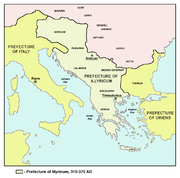
. With the establishment of praetorian prefecture
s in 318, the capital of the prefecture of Illyricum
was Sirmium. Sirmium was capital of this prefecture until 379, when the western part of the Praetorian prefecture of Illyricum (including Sirmium) was attached to the Praetorian prefecture of Italia
. The eastern part of Illyricum remained a separate prefecture with the capital in Thessalonica under the East Roman Empire.
From the 4th century, the city was an important Christian
centre, and the seat of the Episcopate of Sirmium. Five church Ecumenical Council
s, the Councils of Sirmium
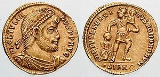
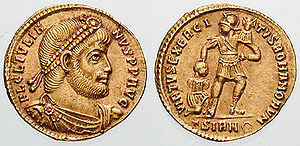
, were held in Sirmium. The city also had an emperor's palace, horse racing arena, mint
, arena theatre, theatre, as well as many workshops, public baths, temples, public palaces and luxury villas. Ancient historian Ammianus Marcellinus
called it "the glorious mother of cities".
At the end of the 4th century, Sirmium was brought under the sway of the Goths
, and later, was again annexed to the Eastern Roman Empire. In 441, Sirmium was conquered by the Huns
, and after this conquest, it remained for more than a century in the hands of various other tribes, such were Eastern Goths
and Gepids. For a short time, Sirmium was the center of the Gepid State and King Cunimund
minted golden coins there. After 567, Sirmium reverted to the Eastern Roman Empire. The city was finally conquered and destroyed by the Avars
in 582.
The last emperor of the united Roman Empire, Theodosius I
(378–95), became emperor in Sirmium. The usurpers
Ingenuus
and Regalianus
also declared themselves emperors in this city (in 260) and many other Roman emperors spent some time in Sirmium including Marcus Aurelius who might have written parts of his famous work Meditations
in the city.
.jpg)
Pannonia
Pannonia was an ancient province of the Roman Empire bounded north and east by the Danube, coterminous westward with Noricum and upper Italy, and southward with Dalmatia and upper Moesia....
. Firstly mentioned in the 4th century BC and originally inhabited by the Illyrians
Illyrians
The Illyrians were a group of tribes who inhabited part of the western Balkans in antiquity and the south-eastern coasts of the Italian peninsula...
and Celts, it was conquered by the Romans in the 1st century BC and subsequently became the capital of the Roman
Roman Empire
The Roman Empire was the post-Republican period of the ancient Roman civilization, characterised by an autocratic form of government and large territorial holdings in Europe and around the Mediterranean....
province
Roman province
In Ancient Rome, a province was the basic, and, until the Tetrarchy , largest territorial and administrative unit of the empire's territorial possessions outside of Italy...
of Lower Pannonia
Lower Pannonia
The Lower Pannonia or Pannonia Inferior was an ancient Roman province. It was formed in the year 103 AD. The Lower Pannonia included parts of present-day Hungary, Serbia, Croatia, and Bosnia and Herzegovina.-Cities:...
. In 294 AD, Sirmium was pronounced one of the four capitals of the Roman Empire. It was also the capital of the Praetorian prefecture of Illyricum
Praetorian prefecture of Illyricum
The praetorian prefecture of Illyricum was one of four praetorian prefectures into which the Late Roman Empire was divided.The administrative centre of the prefecture was Sirmium , and, after 379, Thessalonica...
and of Pannonia Secunda
Pannonia Secunda
The Pannonia Secunda was one of the provinces of the Roman Empire. It was formed in the year 296, during the reign of emperor Diocletian. The capital of the province was Sirmium...
Province. Sirmium was located on the Sava river, on the site of modern Sremska Mitrovica
Sremska Mitrovica
Sremska Mitrovica is a city and municipality located in the Vojvodina province of Serbia, on the left bank of the Sava river. As of 2002 the town had a total population of 39,041, while Sremska Mitrovica municipality had a population of 85,605...
in Vojvodina
Vojvodina
Vojvodina, officially called Autonomous Province of Vojvodina is an autonomous province of Serbia. Its capital and largest city is Novi Sad...
province, northern Serbia
Serbia
Serbia , officially the Republic of Serbia , is a landlocked country located at the crossroads of Central and Southeast Europe, covering the southern part of the Carpathian basin and the central part of the Balkans...
. The Republic of Serbia declared its site an Archaeological Sites of Exceptional Importance
Archaeological Sites of Exceptional Importance (Serbia)
Archaeological Sites of Exceptional Importance are the archaeological sites in the Republic of Serbia that have the highest level of the State protection, and some of them are part of the UNESCO World Heritage Sites....
in 1990. The modern region of Syrmia
Syrmia
Syrmia is a fertile region of the Pannonian Plain in Europe, between the Danube and Sava rivers. It is divided between Serbia in the east and Croatia in the west....
(Srem) is named after it.
Sirmium had 100,000 habitants and was one of the biggest cities of its time. Ammianus Marcellinus
Ammianus Marcellinus
Ammianus Marcellinus was a fourth-century Roman historian. He wrote the penultimate major historical account surviving from Antiquity...
called it "the glorious mother of cities".
History
Remains of Sirmium are situated on the locality of the modern day Sremska MitrovicaSremska Mitrovica
Sremska Mitrovica is a city and municipality located in the Vojvodina province of Serbia, on the left bank of the Sava river. As of 2002 the town had a total population of 39,041, while Sremska Mitrovica municipality had a population of 85,605...
, 55 km west of Belgrade
Belgrade
Belgrade is the capital and largest city of Serbia. It is located at the confluence of the Sava and Danube rivers, where the Pannonian Plain meets the Balkans. According to official results of Census 2011, the city has a population of 1,639,121. It is one of the 15 largest cities in Europe...
(Roman Singidunum
Singidunum
Singidunum is the name for the ancient city in Serbia which became Belgrade, the capital of Serbia. It was recorded that a Celtic tribe Scordisci settled the area in the 3rd century BC following the Gallic invasion of the Balkans. The Roman Empire conquered the area in 75 BC and later garrisoned...
) and 145 km away from Kostolac (Roman Viminacium
Viminacium
Viminacium was a major city and military camp of the Roman province of Moesia , and the capital of Moesia Superior. The archeological site occupies a total of 450 hectares. Viminacium is located 12 km from Kostolac, was devastated by Huns in the 5th century, but rebuilt by Justinian...
). Archaeologists have found traces of organized human
Human
Humans are the only living species in the Homo genus...
life on the site of Sirmium dating from 5,000 BC. The city was firstly mentioned in the 4th century BC and was originally inhabited by the Illyrians
Illyrians
The Illyrians were a group of tribes who inhabited part of the western Balkans in antiquity and the south-eastern coasts of the Italian peninsula...
and Celts (i.e. by the Pannonian-Illyrian Amantini and the Celtic Scordisci
Scordisci
The Scordisci were an Iron Age tribe centered in the territory of present-day Serbia, at the confluence of the Savus , Dravus and Danube rivers. They were historically notable from the beginning of the third century BC until the turn of the common era...
). The Triballian King Syrmus
Syrmus
Syrmus or Syrmos was a king of the West Thracian Triballi tribe during the 330s BC.He is mentioned by Arrian, Strabo and Plutarch....
was later considered the eponym
Eponym
An eponym is the name of a person or thing, whether real or fictitious, after which a particular place, tribe, era, discovery, or other item is named or thought to be named...
ous founder of Sirmium, but the roots are different, and the two words only became conflated later. The name Sirmium by itself means "flow", "flowing water", "wetland" referring to its close river position on nearby Sava, latin Savus.
With the Scordisci as allies, the Roman
Roman Empire
The Roman Empire was the post-Republican period of the ancient Roman civilization, characterised by an autocratic form of government and large territorial holdings in Europe and around the Mediterranean....
proconsul
Proconsul
A proconsul was a governor of a province in the Roman Republic appointed for one year by the senate. In modern usage, the title has been used for a person from one country ruling another country or bluntly interfering in another country's internal affairs.-Ancient Rome:In the Roman Republic, a...
Marcus Vinicius
Marcus Vinicius (consul 19 BC)
Marcus Vinicius was a Roman consul and a prominent general at the service of the first Roman emperor, Augustus ....
took Sirmium in around 14 BC. In the 1st century AD, Sirmium gained a status of a colony of the citizens of Rome
Rome
Rome is the capital of Italy and the country's largest and most populated city and comune, with over 2.7 million residents in . The city is located in the central-western portion of the Italian Peninsula, on the Tiber River within the Lazio region of Italy.Rome's history spans two and a half...
, and became an important military and strategic center of Pannonia
Pannonia
Pannonia was an ancient province of the Roman Empire bounded north and east by the Danube, coterminous westward with Noricum and upper Italy, and southward with Dalmatia and upper Moesia....
province. The war expeditions of Roman emperors Trajan
Trajan
Trajan , was Roman Emperor from 98 to 117 AD. Born into a non-patrician family in the province of Hispania Baetica, in Spain Trajan rose to prominence during the reign of emperor Domitian. Serving as a legatus legionis in Hispania Tarraconensis, in Spain, in 89 Trajan supported the emperor against...
, Marcus Aurelius, and Claudius II
Claudius II
Claudius II , commonly known as Claudius Gothicus, was Roman Emperor from 268 to 270. During his reign he fought successfully against the Alamanni and scored a crushing victory against the Goths at the Battle of Naissus. He died after succumbing to a smallpox plague that ravaged the provinces of...
were prepared in Sirmium.
In 103, Pannonia was split into two provinces: Upper Pannonia
Upper Pannonia
The Upper Pannonia or Pannonia Superior was ancient Roman province with the capital Carnuntum. It was formed in the year 103 AD. Upper Pannonia included parts of present-day Hungary, Austria, Croatia, Slovenia, Bosnia and Herzegovina, and Slovakia....
and Lower Pannonia
Lower Pannonia
The Lower Pannonia or Pannonia Inferior was an ancient Roman province. It was formed in the year 103 AD. The Lower Pannonia included parts of present-day Hungary, Serbia, Croatia, and Bosnia and Herzegovina.-Cities:...
, and Sirmium became the capital city of Lower Pannonia.
In 296, Diocletian
Diocletian
Diocletian |latinized]] upon his accession to Diocletian . c. 22 December 244 – 3 December 311), was a Roman Emperor from 284 to 305....
reorganized Pannonia into four provinces: Pannonia Prima
Pannonia Prima
Pannonia Prima was an ancient Roman province. It was formed in the year 296, during the reign of Emperor Diocletian. Previously, it was a part of the province of Pannonia, which was gradually divided into four administrative units: Pannonia Prima, Pannonia Secunda, Valeria, and Savia. This...
, Pannonia Valeria
Pannonia Valeria
The Pannonia Valeria or simply Valeria was one of the provinces of the Roman Empire. It was formed in the year 296, during the reign of emperor Diocletian. The capital of the province was Sopianae . Pannonia Valeria included parts of present-day Hungary and Croatia.-External links:*...
, Pannonia Savia
Pannonia Savia
The Pannonia Savia, also known as Savia and Pannonia Ripariensis, was an ancient Roman province. It was formed in the year 296, during the reign of emperor Diocletian. The capital of the province was Siscia . Pannonia Savia included parts of present-day Croatia, Slovenia, and Bosnia and...
and Pannonia Secunda
Pannonia Secunda
The Pannonia Secunda was one of the provinces of the Roman Empire. It was formed in the year 296, during the reign of emperor Diocletian. The capital of the province was Sirmium...
, and Sirmium became the capital of Pannonia Secunda.
Tetrarchy
The term Tetrarchy describes any system of government where power is divided among four individuals, but usually refers to the tetrarchy instituted by Roman Emperor Diocletian in 293, marking the end of the Crisis of the Third Century and the recovery of the Roman Empire...
, the Roman Empire was split into four parts; Sirmium emerged as one of the four capital cities of Roman Empire, the other three being Trier
Trier
Trier, historically called in English Treves is a city in Germany on the banks of the Moselle. It is the oldest city in Germany, founded in or before 16 BC....
, Mediolanum
Mediolanum
Mediolanum, the ancient Milan, was an important Celtic and then Roman centre of northern Italy. This article charts the history of the city from its settlement by the Insubres around 600 BC, through its conquest by the Romans and its development into a key centre of Western Christianity and capital...
, and Nicomedia
Nicomedia
Nicomedia was an ancient city in what is now Turkey, founded in 712/11 BC as a Megarian colony and was originally known as Astacus . After being destroyed by Lysimachus, it was rebuilt by Nicomedes I of Bithynia in 264 BC under the name of Nicomedia, and has ever since been one of the most...
. During the tetrarchy, Sirmium was the capital of emperor Galerius
Galerius
Galerius , was Roman Emperor from 305 to 311. During his reign he campaigned, aided by Diocletian, against the Sassanid Empire, sacking their capital Ctesiphon in 299. He also campaigned across the Danube against the Carpi, defeating them in 297 and 300...
. With the establishment of praetorian prefecture
Praetorian prefecture
The praetorian prefecture was the largest administrative division of the late Roman Empire, above the mid-level dioceses and the low-level provinces. Praetorian prefectures originated in the reign of Constantine I The praetorian prefecture was the largest administrative division of the late Roman...
s in 318, the capital of the prefecture of Illyricum
Praetorian prefecture of Illyricum
The praetorian prefecture of Illyricum was one of four praetorian prefectures into which the Late Roman Empire was divided.The administrative centre of the prefecture was Sirmium , and, after 379, Thessalonica...
was Sirmium. Sirmium was capital of this prefecture until 379, when the western part of the Praetorian prefecture of Illyricum (including Sirmium) was attached to the Praetorian prefecture of Italia
Italia (Roman province)
Italia was the name of the Italian peninsula of the Roman Empire.-Under the Republic and Augustan organization:During the Republic and the first centuries of the empire, Italia was not a province, but rather the territory of the city of Rome, thus having a special status: for example, military...
. The eastern part of Illyricum remained a separate prefecture with the capital in Thessalonica under the East Roman Empire.
From the 4th century, the city was an important Christian
Christianity
Christianity is a monotheistic religion based on the life and teachings of Jesus as presented in canonical gospels and other New Testament writings...
centre, and the seat of the Episcopate of Sirmium. Five church Ecumenical Council
Ecumenical council
An ecumenical council is a conference of ecclesiastical dignitaries and theological experts convened to discuss and settle matters of Church doctrine and practice....
s, the Councils of Sirmium
Council of Sirmium
The Council of Sirmium generally refers to the third of the four episcopal councils held in Sirmium between 357 AD and 359 AD. Specifically one was held in 357, one in 358 and one in 359. The third council marked a temporary compromise between Arianism and the Western bishops of the Christian...
, were held in Sirmium. The city also had an emperor's palace, horse racing arena, mint
Mint (coin)
A mint is an industrial facility which manufactures coins for currency.The history of mints correlates closely with the history of coins. One difference is that the history of the mint is usually closely tied to the political situation of an era...
, arena theatre, theatre, as well as many workshops, public baths, temples, public palaces and luxury villas. Ancient historian Ammianus Marcellinus
Ammianus Marcellinus
Ammianus Marcellinus was a fourth-century Roman historian. He wrote the penultimate major historical account surviving from Antiquity...
called it "the glorious mother of cities".
At the end of the 4th century, Sirmium was brought under the sway of the Goths
Goths
The Goths were an East Germanic tribe of Scandinavian origin whose two branches, the Visigoths and the Ostrogoths, played an important role in the fall of the Roman Empire and the emergence of Medieval Europe....
, and later, was again annexed to the Eastern Roman Empire. In 441, Sirmium was conquered by the Huns
Huns
The Huns were a group of nomadic people who, appearing from east of the Volga River, migrated into Europe c. AD 370 and established the vast Hunnic Empire there. Since de Guignes linked them with the Xiongnu, who had been northern neighbours of China 300 years prior to the emergence of the Huns,...
, and after this conquest, it remained for more than a century in the hands of various other tribes, such were Eastern Goths
Goths
The Goths were an East Germanic tribe of Scandinavian origin whose two branches, the Visigoths and the Ostrogoths, played an important role in the fall of the Roman Empire and the emergence of Medieval Europe....
and Gepids. For a short time, Sirmium was the center of the Gepid State and King Cunimund
Cunimund
Cunimund was a king of the Gepids in the 6th century. Cunimund was the last of the Gepid kings and led them in their defeat by the Lombards in 567.-Background:...
minted golden coins there. After 567, Sirmium reverted to the Eastern Roman Empire. The city was finally conquered and destroyed by the Avars
Eurasian Avars
The Eurasian Avars or Ancient Avars were a highly organized nomadic confederacy of mixed origins. They were ruled by a khagan, who was surrounded by a tight-knit entourage of nomad warriors, an organization characteristic of Turko-Mongol groups...
in 582.
Roman emperors
Ten Roman emperors were born in this city or in its surroundings:- Herennius EtruscusHerennius EtruscusHerennius Etruscus , was Roman emperor in 251, in a joint rule with his father Decius. Emperor Hostilian was his younger brother.Herennius was born in near Sirmium in Pannonia , during one of his father's military postings. His mother was Herennia Cupressenia Etruscilla, a Roman lady of an...
(251) - HostilianHostilianHostilian was Roman emperor in 251. Hostilian was born in Sirmium in Illyricum sometime after 230, as the son of the future emperor Decius by his wife Herennia Cupressenia Etruscilla...
(251) - Traianus DeciusDeciusTrajan Decius , was Roman Emperor from 249 to 251. In the last year of his reign, he co-ruled with his son Herennius Etruscus until they were both killed in the Battle of Abrittus.-Early life and rise to power:...
(249–51) - Claudius IIClaudius IIClaudius II , commonly known as Claudius Gothicus, was Roman Emperor from 268 to 270. During his reign he fought successfully against the Alamanni and scored a crushing victory against the Goths at the Battle of Naissus. He died after succumbing to a smallpox plague that ravaged the provinces of...
(268-270) - QuintillusQuintillusQuintillus , commonly known as Quintillus, was Roman Emperor for less than a year in 270.-Early Life and Election as Emperor:Quintillus was born at Sirmium in Illyricum. Originally coming from a low born family, Quintillus came to prominence with the accession of his brother Claudius II Gothicus to...
(270) - AurelianAurelianAurelian , was Roman Emperor from 270 to 275. During his reign, he defeated the Alamanni after a devastating war. He also defeated the Goths, Vandals, Juthungi, Sarmatians, and Carpi. Aurelian restored the Empire's eastern provinces after his conquest of the Palmyrene Empire in 273. The following...
(270–75) - Probus (276–82)
- Maximianus HerculiusMaximianMaximian was Roman Emperor from 286 to 305. He was Caesar from 285 to 286, then Augustus from 286 to 305. He shared the latter title with his co-emperor and superior, Diocletian, whose political brain complemented Maximian's military brawn. Maximian established his residence at Trier but spent...
(285–310) - Constantius IIConstantius IIConstantius II , was Roman Emperor from 337 to 361. The second son of Constantine I and Fausta, he ascended to the throne with his brothers Constantine II and Constans upon their father's death....
(337–61) - GratianGratianGratian was Roman Emperor from 375 to 383.The eldest son of Valentinian I, during his youth Gratian accompanied his father on several campaigns along the Rhine and Danube frontiers. Upon the death of Valentinian in 375, Gratian's brother Valentinian II was declared emperor by his father's soldiers...
(367–83)
The last emperor of the united Roman Empire, Theodosius I
Theodosius I
Theodosius I , also known as Theodosius the Great, was Roman Emperor from 379 to 395. Theodosius was the last emperor to rule over both the eastern and the western halves of the Roman Empire. During his reign, the Goths secured control of Illyricum after the Gothic War, establishing their homeland...
(378–95), became emperor in Sirmium. The usurpers
Roman usurper
Usurpers are individuals or groups of individuals who obtain and maintain the power or rights of another by force and without legal authority. Usurpation was endemic during roman imperial era, especially from the crisis of the third century onwards, when political instability became the rule.The...
Ingenuus
Ingenuus
Ingenuus was a Roman military commander, the imperial legate in Pannonia, who became a usurper to the throne of the emperor Gallienus when he led a brief and unsuccessful revolt in the year 260. Appointed by Gallienus himself, Ingenuus served him well by repulsing a Sarmatian invasion and securing...
and Regalianus
Regalianus
P. C Regalianus was a Dacian general who turned against the Roman Empire and became himself emperor for a brief period, being murdered by the hands who raised him to power.-Career:...
also declared themselves emperors in this city (in 260) and many other Roman emperors spent some time in Sirmium including Marcus Aurelius who might have written parts of his famous work Meditations
Meditations
Meditations is a series of personal writings by Marcus Aurelius, Roman Emperor 161–180 CE, setting forth his ideas on Stoic philosophy....
in the city.
Archeological findings
- On the location Glac near Sirmium is found unexcavated the palace of Emperor Maximianus Herculius built on the place where his parents worked as laborers on the estate of a Roman column. During the construction of the hospital in 1971, was found in monumental Jupiter's sanctuary with more than eighty of the altar, which is the second largest in Europe. Sirmium had two bridges with which she was bridged river Sava, of which indicate the historical sources, bridge Ad Basanti and Artemida's bridge. After the 313th the Sirmium became an important Christian center. So far, it was revealed eight early Christian churches, of which they are dedicated to St. Irenaeus, St. Demetrius. and Sv. Sinenot.
- During work on the new Sremska Mitrovica trade center in 1972, a worker accidentally broke into an old RomanAncient RomeAncient Rome was a thriving civilization that grew on the Italian Peninsula as early as the 8th century BC. Located along the Mediterranean Sea and centered on the city of Rome, it expanded to one of the largest empires in the ancient world....
pot, about 2m deep, over the site of an old Sirmium settlement. 33 gold Roman coins enclosed in a leather pouch were found inside a Roman house wall, probably the hidden savings of a wealthy Roman family stashed centuries ago. Of this extraordinary rare find of Sirmium minted coins were 4 Constantius IIConstantius IIConstantius II , was Roman Emperor from 337 to 361. The second son of Constantine I and Fausta, he ascended to the throne with his brothers Constantine II and Constans upon their father's death....
era coins, considered the most valuable examples from the late Roman empire of the fourth century AD. Ironically, the worker's name was Zlatenko (meaning Golden, or Golden Man in SerbianSerbian languageSerbian is a form of Serbo-Croatian, a South Slavic language, spoken by Serbs in Serbia, Bosnia and Herzegovina, Montenegro, Croatia and neighbouring countries....
, Aurelius in Latin).
- The only known unexcavated Roman HippodromeHippodromeA hippodrome was a Greek stadium for horse racing and chariot racing. The name is derived from the Greek words "hippos and "dromos"...
in the world is in Sirmium. A colossal building about 150m wide and 450m long lies directly under the Sremska Mitrovica town center and just beside the old Sirmium Emperor's Palace (one of just a few Sirmium publicly accessible archeological sites). The presence of the arena has clearly affected the layout of the present town (Sremska Mitrovica is today about 2–4m above ground line of former Sirmium settlement). Recently announced cultural and archeological projects for preserving and popularising Sirmium sites haven't included any activity dealing with the arena, probably due to the extent of the large arena — the entire present town center might have to be excavated.
Famous residents
- Marcus Aurelius, Roman emperor (161-180), used Sirmium as a residence in between Pannonian military campaigns 170-180
- MaximinusMaximinus ThraxMaximinus Thrax , also known as Maximinus I, was Roman Emperor from 235 to 238.Maximinus is described by several ancient sources, though none are contemporary except Herodian's Roman History. Maximinus was the first emperor never to set foot in Rome...
, Roman emperor (235-238), ruled from residence in Sirmium. - Herennius EtruscusHerennius EtruscusHerennius Etruscus , was Roman emperor in 251, in a joint rule with his father Decius. Emperor Hostilian was his younger brother.Herennius was born in near Sirmium in Pannonia , during one of his father's military postings. His mother was Herennia Cupressenia Etruscilla, a Roman lady of an...
, Roman emperor (251), born in Sirmium. - HostilianHostilianHostilian was Roman emperor in 251. Hostilian was born in Sirmium in Illyricum sometime after 230, as the son of the future emperor Decius by his wife Herennia Cupressenia Etruscilla...
, Roman emperor (251), born in Sirmium - Decius TraianDeciusTrajan Decius , was Roman Emperor from 249 to 251. In the last year of his reign, he co-ruled with his son Herennius Etruscus until they were both killed in the Battle of Abrittus.-Early life and rise to power:...
, Roman emperor (249-251), born in village Budalia near Sirmium. - IngenuusIngenuusIngenuus was a Roman military commander, the imperial legate in Pannonia, who became a usurper to the throne of the emperor Gallienus when he led a brief and unsuccessful revolt in the year 260. Appointed by Gallienus himself, Ingenuus served him well by repulsing a Sarmatian invasion and securing...
, Roman emperor (260), proclaimed himself emperor in Sirmium. - RegalianusRegalianusP. C Regalianus was a Dacian general who turned against the Roman Empire and became himself emperor for a brief period, being murdered by the hands who raised him to power.-Career:...
, Roman emperor (260), proclaimed himself emperor in Sirmium. - Claudius IIClaudius IIClaudius II , commonly known as Claudius Gothicus, was Roman Emperor from 268 to 270. During his reign he fought successfully against the Alamanni and scored a crushing victory against the Goths at the Battle of Naissus. He died after succumbing to a smallpox plague that ravaged the provinces of...
, Roman emperor (268-270), born in Sirmium and spent most of his life there. - QuintillusQuintillusQuintillus , commonly known as Quintillus, was Roman Emperor for less than a year in 270.-Early Life and Election as Emperor:Quintillus was born at Sirmium in Illyricum. Originally coming from a low born family, Quintillus came to prominence with the accession of his brother Claudius II Gothicus to...
, Roman emperor (270), born in Sirmium - AurelianAurelianAurelian , was Roman Emperor from 270 to 275. During his reign, he defeated the Alamanni after a devastating war. He also defeated the Goths, Vandals, Juthungi, Sarmatians, and Carpi. Aurelian restored the Empire's eastern provinces after his conquest of the Palmyrene Empire in 273. The following...
, Roman emperor (270-275), born in Sirmium and also proclaimed emperor there. - Probus, Roman emperor (276-282), born in Sirmium.
- Maximianus HerculiusMaximianMaximian was Roman Emperor from 286 to 305. He was Caesar from 285 to 286, then Augustus from 286 to 305. He shared the latter title with his co-emperor and superior, Diocletian, whose political brain complemented Maximian's military brawn. Maximian established his residence at Trier but spent...
, Roman emperor (285-310), born near Sirmium. - GaleriusGaleriusGalerius , was Roman Emperor from 305 to 311. During his reign he campaigned, aided by Diocletian, against the Sassanid Empire, sacking their capital Ctesiphon in 299. He also campaigned across the Danube against the Carpi, defeating them in 297 and 300...
, Roman emperor (305-311), ruled as Caesar during the TetrarchyTetrarchyThe term Tetrarchy describes any system of government where power is divided among four individuals, but usually refers to the tetrarchy instituted by Roman Emperor Diocletian in 293, marking the end of the Crisis of the Third Century and the recovery of the Roman Empire...
from residence in Sirmium (293-296). - CrispusCrispusFlavius Julius Crispus , also known as Flavius Claudius Crispus and Flavius Valerius Crispus, was a Caesar of the Roman Empire. He was the first-born son of Constantine I and Minervina.-Birth:...
, a Caesar of the Roman Empire. He was proclaimed Caesar in Sirmium in 317. - Constantine IIConstantine II (emperor)Constantine II , was Roman Emperor from 337 to 340. Co-emperor alongside his brothers, his short reign saw the beginnings of conflict emerge between the sons of Constantine the Great, and his attempt to exert his perceived rights of primogeniture ended up causing his death in a failed invasion of...
, a Caesar of the Roman Empire. He was proclaimed Caesar in Sirmium in 317. - VetranioVetranioVetranio , born in the province of Moesia in a part of the region located in modern Serbia, is sometimes but incorrectly referred to as Vetriano. He was an experienced soldier and officer when he was asked by Constantina, the sister of Roman Emperor Constantius II, to proclaim himself Caesar...
n, Roman emperor. Proclaimed himself emperor in Sirmium (in 350). - Constantius IIConstantius IIConstantius II , was Roman Emperor from 337 to 361. The second son of Constantine I and Fausta, he ascended to the throne with his brothers Constantine II and Constans upon their father's death....
, Roman emperor (337-361), born in Sirmium. - GratianGratianGratian was Roman Emperor from 375 to 383.The eldest son of Valentinian I, during his youth Gratian accompanied his father on several campaigns along the Rhine and Danube frontiers. Upon the death of Valentinian in 375, Gratian's brother Valentinian II was declared emperor by his father's soldiers...
, Roman emperor (367-383), born in Sirmium. - Theodosius I the Great, Roman emperor (378-395). He became emperor in Sirmium.
- Valerius Licinius, prefect of the Diocese of PannoniaDiocese of PannoniaThe Diocese of Pannonia , from 379 known as the Diocese of Illyricum, was a diocese of the Late Roman Empire. The seat of the vicarius was Sirmium.-History:...
with residence in Sirmium (308-314). - Apricanus, prefect of the Pannonia SecundaPannonia SecundaThe Pannonia Secunda was one of the provinces of the Roman Empire. It was formed in the year 296, during the reign of emperor Diocletian. The capital of the province was Sirmium...
province with residence in Sirmium (355). - Mesala, prefect of the Pannonia Secunda province (373).
- Petronius Probus, prefect in Sirmium (374).
- Aurelius VictorAurelius VictorSextus Aurelius Victor was a historian and politician of the Roman Empire.Aurelius Victor was the author of a History of Rome from Augustus to Julian , published ca. 361. Julian honoured him and appointed him prefect of Pannonia Secunda...
, prefect of the Pannonia Secunda province (369), and author of a History of Rome until the reign of JulianJulianJulian is a common male given name in Britain, United States, Ireland, Germany, Poland, the Netherlands, France , Spain, Latin America and elsewhere....
. - Leontius, prefect in Sirmium (426).
See also
- Archaeological Sites of Exceptional ImportanceArchaeological Sites of Exceptional Importance (Serbia)Archaeological Sites of Exceptional Importance are the archaeological sites in the Republic of Serbia that have the highest level of the State protection, and some of them are part of the UNESCO World Heritage Sites....
- Council of SirmiumCouncil of SirmiumThe Council of Sirmium generally refers to the third of the four episcopal councils held in Sirmium between 357 AD and 359 AD. Specifically one was held in 357, one in 358 and one in 359. The third council marked a temporary compromise between Arianism and the Western bishops of the Christian...
- Praetorian prefecturePraetorian prefectureThe praetorian prefecture was the largest administrative division of the late Roman Empire, above the mid-level dioceses and the low-level provinces. Praetorian prefectures originated in the reign of Constantine I The praetorian prefecture was the largest administrative division of the late Roman...
- Praetorian prefecture of IllyricumPraetorian prefecture of IllyricumThe praetorian prefecture of Illyricum was one of four praetorian prefectures into which the Late Roman Empire was divided.The administrative centre of the prefecture was Sirmium , and, after 379, Thessalonica...
- Roman EmpireRoman EmpireThe Roman Empire was the post-Republican period of the ancient Roman civilization, characterised by an autocratic form of government and large territorial holdings in Europe and around the Mediterranean....
- Roman provinces
- Sremska MitrovicaSremska MitrovicaSremska Mitrovica is a city and municipality located in the Vojvodina province of Serbia, on the left bank of the Sava river. As of 2002 the town had a total population of 39,041, while Sremska Mitrovica municipality had a population of 85,605...
- SyrmiaSyrmiaSyrmia is a fertile region of the Pannonian Plain in Europe, between the Danube and Sava rivers. It is divided between Serbia in the east and Croatia in the west....
- TetrarchyTetrarchyThe term Tetrarchy describes any system of government where power is divided among four individuals, but usually refers to the tetrarchy instituted by Roman Emperor Diocletian in 293, marking the end of the Crisis of the Third Century and the recovery of the Roman Empire...
Further reading
- Petar Milošević, Arheologija i istorija Sirmijuma, Novi Sad, 2001.
- Radomir Popović, Rano hrišćanstvo u Panoniji, Vojvođanski godišnjak, sveska I, Novi Sad, 1995.