
Encyclopedia
The
Cyrillic alphabet is an
alphabet used for several East and South
Slavic languages; and
many other languages of the former
Soviet Union,
Asia and
Eastern Europe. It has also been used for other languages in the past. Not all letters in the Cyrillic alphabet are used in every language which is written with it.
History
The layout of the alphabet is derived from the
early Cyrillic alphabet, itself a derivative of the
Glagolitic alphabet, a
ninth century uncial cursive usually credited to two Byzantine monk brothers from
Thessaloniki,
Saint Cyril and
Saint Methodius.
It is widely accepted that the Glagolitic alphabet was invented by Saints Cyril and Methodius, the origins of the early Cyrillic alphabet are still a source of much controversy. Though it is usually attributed to Saint
Clement of Ohrid, disciple of Saint Cyril and Saint Methodius from Bulgarian Macedonia, the alphabet is more likely to have developed at the
Preslav Literary School in northeastern
Bulgaria, where the oldest Cyrillic inscriptions have been found, dating back to the 940s. The theory is supported by the fact that the Cyrillic alphabet almost completely replaced the Glagolitic in northeastern Bulgaria as early as the end of the
tenth century, whereas the Ohrid Literary School—where Saint Clement worked—continued to use the Glagolitic until the
twelfth century. Of course, as the disciples of St. Cyril and Methodius spread throughout the
First Bulgarian Empire, it is likely that these two main scholarly centres were a part of a single tradition.
Among the reasons for the replacement of the Glagolithic with the Cyrillic alphabet is the greater simplicity and ease of use of the latter and its closeness with the Greek alphabet, which had been well known in the First Bulgarian Empire.
There are also other theories regarding the origins of the Cyrillic alphabet, namely that the alphabet was created by Saint Cyril and Saint Methodius themselves, or that it preceded the Glagolitic alphabet, representing a "transitional" stage between Greek and Glagolitic cursive, but these have been widely disproved. Although Cyril is almost certainly not the author of the Cyrillic alphabet, his contributions to the Glagolitic and hence to the Cyrillic alphabet are still recognised, as the latter is named after him.
The alphabet was disseminated along with the Old Church Slavonic liturgical language, and the alphabet used for modern
Church Slavonic language in
Eastern Orthodox and
Eastern Catholic rites still resembles early Cyrillic. However, over the following ten centuries, the Cyrillic alphabet adapted to changes in spoken language, developed regional variations to suit the features of national languages, and was subjected to academic reforms and political decrees. Today,
dozens of languages in Eastern Europe and Asia are written in the Cyrillic alphabet.
As the Cyrillic alphabet spread throughout the Slavic world, it was adopted for writing local languages, such as
Old Ruthenian. Its adaptation to the characteristics of local languages led to the development of its many modern variants, below.
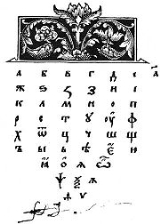
style="font-size:smaller;" | The Early Cyrillic alphabet
| ? | ? | ? | ? | ? | ? | ? | ? | ? | ? | ? |
| 1 | | 2 | 3 | 4 | 5 | | 6 | 7 | 8 | 10 |
| ? | ? | ? | ? | ? | ? | ? | ? | ? | ? | ? |
| 20 | 30 | 40 | 50 | 70 | 80 | | 100 | 200 | 300 | 400 |
| ? | ? | ? | ? | ? | ? | ? | ? | ?? | ? | ? |
| 500 | 600 | 800 | 900 | 90 | | | | | | |
| ? | ?? | ? | ? | ? | ? | ? | ? | ? | ? | ? |
| | | | | | | 60 | 700 | 9 | | |
Capital and lowercase letters were not distinguished in old manuscripts.
Yeri was originally a ligature of Yer and I. Iotation was indicated by ligatures formed with the letter I: ?? , ?, ? , ?, ?. Many letters had variant forms and commonly-used ligatures, for example ?=?=?, ?=?, ??=?, ??=?.
The early Cyrillic alphabet is difficult to represent on computers. Many of the letterforms differed from modern Cyrillic, varied a great deal in manuscripts, and changed over time. Few fonts include adequate
glyphs to reproduce the alphabet. The current
Unicode standard does not represent some significant letterform variations, and omits some characters, such as Cyrillic dotless I, iotified
Yat, abbreviated
Yer , and many ligatures.
See also:
Glagolitic alphabet.
Letter-forms and typography
The development of Cyrillic
typography passed directly from the
medieval stage to the late
Baroque, without a
Renaissance phase as in
Western Europe. Late Medieval Cyrillic letters show a marked tendency to be very tall and narrow; strokes are often shared between adjacent letters.
Peter the Great, tsar of Russia, mandated the use of westernized letter forms in the early eighteenth century; over time, these were largely adopted in the other languages that use the alphabet. Thus, unlike modern Greek fonts that retained their own set of design principles , modern Cyrillic fonts are much the same as modern Latin fonts of the same font family. The development of some Cyrillic computer typefaces from Latin ones has also contributed to the visual Latinization of Cyrillic type.
Cyrillic uppercase and lowercase letter-forms are not as differentiated as in Latin typography. Upright Cyrillic lowercase letters are essentially
small capitals , although a good-quality Cyrillic typeface will still include separate small caps glyphs.
In the absence of Roman and
Italic traditions, Cyrillic type fonts are properly classified as
upright and
cursive . Cursive or hand-written shapes of many letters, especially the lowercase letters, are entirely different from the upright shapes. As in Latin typography, a sans-serif face may have a mechanically-sloped oblique font .
In Bulgarian, Macedonian, and Serbian, some cursive letters are different from those used in other languages. These cursive letter shapes are often used in upright fonts as well, especially for road signs, inscriptions, posters and the like, less so in newspapers or books.
External link: .
The following table shows the differences between the upright and cursive Cyrillic letters as used in Russian. Cursive glyphs that are bound to confuse beginners are highlighted.
align=bottom style="text-align:left; font-size:smaller; " | In case your browser does not correctly support cursive Cyrillic forms, you can view .
| ? | ? | ? | ? | ? | ? | ? | ? | ? | ? | ? | ? | ? | ? | ? | ? | ? | ? | ? | ? | ? | ? | ? | ? | ? | ? | ? | ? | ? | ? | ? | ? | ? |
| ? | ? | ? | ? | ? | ? | ? | ? | ? | ? | ? | ? | ? | ? | ? | ? | ? | ? | ? | ? | ? | ? | ? | ? | ? | ? | ? | ? | ? | ? | ? | ? | ? |
Reference: Bringhurst, Robert .
The Elements of Typographic Style , pp. 262–264. Vancouver, Hartley & Marks. ISBN 0-88179-133-4.
As used in various languages
Sounds are indicated using
IPA.
These are only approximate indicators.
While these languages by and large have phonemic orthographies, there are occasional exceptions—for example, Russian
??? , which is pronounced instead of .
Note that spellings of names may vary, especially Y/J/I, but also GH/G/H and ZH/J.
See also a more complete list of
languages using Cyrillic.
Common letters
The following table lists Cyrillic letters which are used in most national versions of the Cyrillic alphabet. Exceptions and additions for particular languages are noted below.
Common Cyrillic letters
| Upright | Cursive | Name | Sound |
|---|
| ? ? | ? ? | A | |
| ? ? | ? ? | Be | |
| ? ? | ? ? | Ve | |
| ? ? | ? ? | Ge | |
| ? ? | ? ? | De | |
| ? ? | ? ? | Ye | |
| ? ? | ? ? | Zhe | |
| ? ? | ? ? | Ze | |
| ? ? | ? ? | I | |
| ? ? | ? ? | Short I | |
| ? ? | ? ? | Ka | |
| ? ? | ? ? | El | |
| ? ? | ? ? | Em | |
| ? ? | ? ? | En | |
| ? ? | ? ? | O | |
| ? ? | ? ? | Pe | |
| ? ? | ? ? | Er | |
| ? ? | ? ? | Es | |
| ? ? | ? ? | Te | |
| ? ? | ? ? | U | |
| ? ? | ? ? | Ef | |
| ? ? | ? ? | Kha | |
| ? ? | ? ? | Tse | |
| ? ? | ? ? | Che | |
| ? ? | ? ? | Sha | |
| ? ? | ? ? | Shcha | |
| ? ? | ? ? | Soft Sign | |
| ? ? | ? ? | Yu | |
| ? ? | ? ? | Ya | |
The
soft sign ? is not a letter representing a sound, but modifies the sound of the preceding letter, indicating palatalisation . In some languages, a
hard sign ? or apostrophe
’ negates palatalisation.
Slavic languages
Bulgarian
style="font-size:smaller;" | The Bulgarian alphabet
| ? ? | ? ? | ? ? | ? ? | ? ? | ? ? | ? ? | ? ? | ? ? | ? ? | ? ? |
| ? ? | ? ? | ? ? | ? ? | ? ? | ? ? | ? ? | ? ? | ? ? | ? ? | ? ? |
| ? ? | ? ? | ? ? | ? ? | ? ? | ? ? | ? ? | ? ? | |
The
Bulgarian alphabet features:
- represents and is called "?" .
- represents and is called "??" .
- represents the schwa , and is called "?? ?????" .
?he Bulgarian names for the consonants are , , etc. with stressed schwa instead of , , etc.
Russian
style="font-size:smaller;" | The Russian alphabet
| ? ? | ? ? | ? ? | ? ? | ? ? | ? ? | ? ? | ? ? | ? ? | ? ? | ? ? |
| ? ? | ? ? | ? ? | ? ? | ? ? | ? ? | ? ? | ? ? | ? ? | ? ? | ? ? |
| ? ? | ? ? | ? ? | ? ? | ? ? | ? ? | ? ? | ? ? | ? ? | ? ? | ? ? |
- Yo
- The Hard Signą indicates no palatalisation˛
- Yery
- E
Notes:
- In the pre-reform Russian orthography, in Old Russian and in Old Church Slavonic the letter is called yer. Historically, the "hard sign" takes the place of a now-absent vowel, still preserved in Bulgarian. See the notes for Bulgarian.
- When an iotated vowel follows a consonant, the consonant will become palatalised , and the vowel’s initial sound will not be heard independently. The Hard Sign will indicate that this does not happen, and the sound will appear only in front of the vowel. The Soft Sign will indicate that the consonant should be palatised, but the vowel’s sound will not mix with the palatalization of the consonant. The Soft Sign will also indicate that a consonant before another consonant or at the end of a word is palatised. Examples: ?? ; ?? ; ??? ; ??? ; ? ; ?? .
Historical letters: before 1918, there were four extra letters in use: , , , and ; these were eliminated by reforms of Russian orthography.
Belarusian
style="font-size:smaller;" | The Belarusian alphabet
| ? ? | ? ? | ? ? | ? ? | ? ? | ? ? | ? ? | ? ? | ? ? | ? ? | ? ? |
| ? ? | ? ? | ? ? | ? ? | ? ? | ? ? | ? ? | ? ? | ? ? | ? ? | ? ? |
| ? ? | ? ? | ? ? | ? ? | ? ? | ? ? | ? ? | ? ? | ? ? | ? ? |
The Belarusian alphabet displays the following features:
- ? represents a voiced glottal fricative .
- Yo
- I resembles the Latin letter I .
- U short falls between U and Ef. It looks like U with a breve and represents , or like the u part of the diphthong in loud.
- A combination of sh and ch is used where those familiar only with Russian and or Ukrainian would expect Shcha .
- Yery
- E
- An apostrophe is used to indicate de-palatalization of the preceding consonant.
- The letter combinations ?? ?? and ?? ?? appear after ? ? in the Belarusian alphabet in some publications. These digraphs each represent a single sound: ?? , ?? .
Ukrainian
The
Ukrainian alphabet displays the following features:
- He represents a voiced glottal fricative, .
- Ge
...
appears after He, represents . It looks like He with an "upturn" pointing up from the right side of the top bar.
- E represents .
- Ye appears after E, represents .
- Y represents .
- I appears after Y, represents .
- Yi appears after I, represents .
- Yot represents .
- Shcha represents .
- An apostrophe is used to mark de-palatalization of the preceding consonant.
Rusyn
The Rusyn language is spoken by the Lemko Rusyns in
Transcarpathian Ukraine, Slovakia, Poland, and the
Pannonian Rusyns in Serbia.
style="font-size:smaller;" | The Rusyn alphabet
| ? ? | ? ? | ? ? | ? ? | ? ? | ? ? | ? ? | ? ? | ? ? | ? ? | ? ? |
| ? ? | I ?* | ? ?* | ? ? | ? ? | ? ? | ? ? | ? ? | ? ? | ? ? | ? ? |
| ? ? | ? ? | ? ? | ? ? | ? ? | ? ? | ? ? | ? ? | ? ? | ? ? | ? ? |
| ? ? | ? ? | ? ? | ? ?* |
*Letters not present in Vojvodinian Rusyn alphabet.
Serbian
style="font-size:smaller;" | The Serbian alphabet
| ? ? | ? ? | ? ? | ? ? | ? ? | ? ? | ? ? | ? ? | ? ? | ? ? | ? ? |
| ? ? | ? ? | ? ? | ? ? | ? ? | ? ? | ? ? | ? ? | ? ? | ? ? | ? ? |
| ? ? | ? ? | ? ? | ? ? | ? ? | ? ? | ? ? | ? ? |
The Serbian alphabet shows the following features:
- E represents .
- Between ? and E is the letter Dje , which represents , and looks like Tshe, except that the loop of the h curls farther and dips downwards.
- Between ? and ? is the letter Je , represents , which looks like the Latin letter J.
- Between ? and ? is the letter Lje , representing , which looks like a ligature of ? and the Soft Sign .
- Between ? and ? is the letter Nje , representing , which looks like a ligature of ? and the Soft Sign.
- Between ? and ? is the letter Tshe , representing and looks like a lowercase Latin letter h with a bar. On the uppercase letter, the bar appears at the top; on the lowercase letter, the bar crosses the top at half of the vertical line.
- Between ? and ? is the letter Dzhe , representing , which looks like Ts but with the downturn moved from the right side of the bottom bar to the middle of the bottom bar.
- ? is the last letter.
Macedonian
style="font-size:smaller;" | The Macedonian alphabet
| ? ? | ? ? | ? ? | ? ? | ? ? | ? ? | ? ? | ? ? | ? ? | ? ? | ? ? |
| ? ? | ? ? | ? ? | ? ? | ? ? | ? ? | ? ? | ? ? | ? ? | ? ? | ? ? |
| ? ? | ? ? | ? ? | ? ? | ? ? | ? ? | ? ? | ? ? | ? ? |
Macedonian alphabet differs from
Serbian in the following ways:
- Between Ze and I is the letter Dze , which looks like the Latin letter S and represents .
- Djerv is replaced by Gje , which looks like Ghe with an acute accent and represents ,
- Tjerv is replaced by Kja , which looks like Ka with an acute accent , represents ,
Non-Slavic languages
These alphabets are generally modelled after Russian, but often bear striking differences, particularly when adapted for
Caucasian languages. The first few of them were generated by Orthodox missionaries for the Finnic and Turkic peoples of Idel-Ural in 1870s. Later such alphabets were created for some of the
Siberian and
Caucasus peoples who had recently converted to Christianity. In the
1930s, some of those alphabets were switched to the
Uniform Turkic Alphabet. All of the peoples of the former Soviet Union who had been using an Arabic or other Asian script also adopted Cyrillic alphabets, and during the Great Purge in late 1930s, all of the Roman-based alphabets of the peoples of the Soviet Union were switched over to Cyrillic as well. The Abkhazian alphabet was switched to
Georgian script, but after the death of
Stalin, Abkhaz also adopted Cyrillic. The last language to adopt Cyrillic was the Gagauz language, which had used
Greek script before.
In
Uzbekistan,
Azerbaijan and
Turkmenistan, the use of Cyrillic to represent local languages has often been a politically controversial issue since the collapse of the
Soviet Union, as it evokes the era of Soviet rule . Some of Russia's languages have also tried to drop Cyrillic, but the move was halted under Russian law . A number of languages have switched from Cyrillic to other orthographies—either Roman-based or returning to a former script.
Unlike the Roman alphabet, which is usually adapted to different languages by using additions to existing letters such as accents, umlauts, tildes and cedillas, the Cyrillic alphabet is usually adapted by the creation of entirely new letter shapes. In some alphabets invented in the nineteenth century, such as Mari, Udmurt and Chuvash, umlauts and breves also were used.
Iranian languages
Ossetian
The
Ossetic language has officially used the Cyrillic alphabet since 1937.
style="font-size:smaller;" | Ossetian Cyrillic alphabet
| ? ? | ? ? | ? ? | ? ? | ? ? | ?? ?? | ? ? | ?? ?? | ?? ?? | ? ? | ? ? |
| ? ? | ? ? | ? ? | ? ? | ? ? | ?? ?? | ? ? | ? ? | ? ? | ? ? | ? ? |
| ?? ?? | ? ? | ? ? | ? ? | ?? ?? | ? ? | ? ? | ? ? | ?? ?? | ? ? | ?? ?? |
| ? ? | ?? ?? | ? ? | ? ? | ? ? | ? ? | ? ? | ? ? | ? ? | ? ? |
Tajik alphabet
The
Tajik language is written using a Cyrillic-based alphabet.
style="font-size:smaller;" | Tajik Cyrillic alphabet
| ? ? | ? ? | ? ? | ? ? | ? ? | ? ? | ? ? | ? ? | ? ? | ? ? | ? ? |
| ? ? | ? ? | ? ? | ? ? | ? ? | ? ? | ? ? | ? ? | ? ? | ? ? | ? ? |
| ? ? | ? ? | ? ? | ? ? | ? ? | ? ? | ? ? | | ? ? | ? ? | ? ? |
|
Moldovan
The
Moldovan language used the Cyrillic alphabet between 1946 and 1989. Nowadays, this alphabet is still official in the unrecognized republic of
Transnistria.
Mongolian
The
Mongolic languages include Khalkha , Buryat and
Kalmyk . Khalkha Mongolian is also written with the
Mongol vertical alphabet, which is being slowly reintroduced in Mongolia.
Overview
This table contains all the characters used.
Please note that ?h is shown twice as it appears at two different location in Buryat and Kalmyk| Khalkha | ?? | | ?? | ?? | ?? | | ?? | ?? | ?? | ?? | | ?? | ?? | ?? | ?? | ?? | ?? | ?? | | ?? |
|---|
| Buryat | ?? | | ?? | ?? | ?? | | ?? | ?? | ?? | ?? | | ?? | ?? | ?? | | ?? | ?? | ?? | | ?? |
|---|
| Kalmyk | ?? | ?? | ?? | ?? | ?? | ?h | ?? | ?? | | ?? | ?? | ?? | ?? | ?? | ?? | ?? | ?? | ?? | ?? | ?? |
|---|
| |
| Khalkha | ?? | ?? | ?? | ?? | ?? | ?? | ?? | ?? | ?? | | ?? | ?? | ?? | ?? | ?? | ?? | ?? | ?? | ?? | ?? |
|---|
| Buryat | ?? | ?? | ?? | ?? | ?? | ?? | ?? | | ?? | ?h | ?? | ?? | ?? | | | ?? | ?? | ?? | ?? | ?? |
|---|
| Kalmyk | ?? | ?? | ?? | ?? | ?? | ?? | ?? | | ?? | | ?? | ?? | ?? | | | | ?? | ?? | ?? | ?? |
|---|
Khalkha
style="font-size:smaller;" | The Khalkha Mongolian alphabet
| ? ? | ? ? | ? ? | ? ? | ? ? | ? ? | ? ? | ? ? | ? ? | ? ? | ? ? |
| ? ? | ? ? | ? ? | ? ? | ? ? | ? ? | ? ? | ? ? | ? ? | ? ? | ? ? |
| ? ? | ? ? | ? ? | ? ? | ? ? | ? ? | ? ? | ? ? | ? ? | ? ? | ? ? |
| ? ? | ? ? |
- ? ? =
- ? ? = ,
- ? ? =
- ? ? =
- ? ? =
- ? ? = ,
- ? ? =
- ? ? =
- ? ? =
- ? ? =
- ? ? = ,
The Cyrillic letters ??, ?? and ?? are not used in native Mongolian words, but only for Russian loans.
Buryat
The Buryat Cyrillic alphabet is similar to the Khalkha above, but ?? indicates palatalization as in Russian. Buryat does not use ??, ??, ??, ??, ??, ?? or ?? in its native words.
style="font-size:smaller;" | The Buryat Mongolian alphabet
| ? ? | ? ? | ? ? | ? ? | ? ? | ? ? | ? ? | ? ? | ? ? | ? ? | ? ? |
| ? ? | ? ? | ? ? | ? ? | ? ? | ? ? | ? ? | ? ? | ? ? | ? ? | ? ? |
| ? ? | ? h | ? ? | ? ? | ? ? | ? ? | ? ? | ? ? | ? ? | ? ? |
- ? ? = ,
- ? ? =
- ? ? =
- ? ? = ,
- ? ? =
- ? ? =
- ? h =
- ? ? = ,
- ? ? = ,
Kalmyk
The Kalmyk Cyrillic alphabet is similar to the Khalkha, but the letters ??, ?? and ?? appear only word-initially. In Kalmyk, long vowels are written double in the first syllable , but single in syllables after the first. Short vowels are omitted altogether in syllables after the first syllable .
style="font-size:smaller;" | The Kalmyk Mongolian alphabet
| ? ? | ? ? | ? ? | ? ? | ? ? | ? h | ? ? | ? ? | ? ? | ? ? | ? ? |
| ? ? | ? ? | ? ? | ? ? | ? ? | ? ? | ? ? | ? ? | ? ? | ? ? | ? ? |
| ? ? | ? ? | ? ? | ? ? | ? ? | ? ? | ? ? | ? ? | ? ? | ? ? | ? ? |
| ? ? |
- ? ? =
- ? ? =
- ? h =
- ? ? = ,
- ? ? =
- ? ? =
- ? ? =
- ? ? =
Northwest Caucasian languages
Living
Northwest Caucasian languages are generally written using adaptations of the Cyrillic alphabet.
Abkhaz
Abkhaz is a
Caucasian language, spoken in the Autonomous Republic of
Abkhazia,
Georgia.
style="font-size:smaller;" | The Abkhaz alphabet
| ? ? | ? ? | ? ? | ? ? | ?? ?? | ? ? | ?? ?? | ? ? | ?? ?? | ? ? | ?? ?? |
| ? ? | ? ? | ? ? | ? ? | ?? ?? | ?? ?? | ? ? | ? ? | ?? ?? | ? ? | ? ? |
| ? ? | ?? ?? | ? ? | ?? ?? | ? ? | ?? ?? | ? ? | ? ? | ? ? | ? ? | ? ? |
| ? ? | ? ? | ? ? | ? ? | ? ? | ?? ?? | ? ? | ?? ?? | ? ? | ? ? | ? ? |
| ?? ?? | ? ? | ?? ?? | ? ? | ?? ?? | ? ? | ?? ?? | ? ? | ? ? | ? ? | ?? ?? |
| ?? ?? | ? ? | ? ? |
Turkic languages
Azerbaijani
The Cyrillic alphabet was used for the
Azerbaijani language from 1939 to 1991.
Bashkir
The Cyrillic alphabet was used for the Bashkir language after the winter of 1938.
style="font-size:smaller;" | The Bashkir alphabet
| ? ? | ? ? | ? ? | ? ? | ? ? | ? ? | | ? ? | ? ? | ? ? | ? ? |
| ? ? | ? ? | ? ? | | ? ? | ? ? | ? ? | ? ? | ? ? | ? ? | ? ? |
| ? ? | ? ? | | ? ? | ? ? | ? ? | ? ? | ? ? | ? h | ? ? | ? ? | |
| ? ? | ? ? | ? ? | ? ? | ? ? | ? ? | ? ? | ? ? | ? ? |
Chuvash
The Cyrillic alphabet is used for the Chuvash language since the late 19th century, with some changes in 1938.
style="font-size:smaller;" | The Chuvash alphabet
| ? ? | | ? ? | ? ? | ? ? | ? ? | ? ? | ? ? | | ? ? | ? ? |
| ? ? | ? ? | ? ? | ? ? | ? ? | ? ? | ? ? | ? ? | ? ? | ? ? | |
| ? ? | ? ? | | ? ? | ? ? | ? ? | ? ? | ? ? | ? ? | ? ? | ? ? |
| ? ? | ? ? | ? ? | ? ? |
Kazakh
Kazakh is also written with the Latin alphabet , and modified
Arabic alphabet .
style="font-size:smaller;" | The Kazakh alphabet
| ? ? | ? ? | ? ? | ? ? | ? ? | ? ? | ? ? | ? ? | ? ? | ? ? | ? ? |
| ? ? | ? ? | ? ? | ? ? | ? ? | ? ? | ? ? | ? ? | ? ? | ? ? | ? ? |
| ? ? | ? ? | ? ? | ? ? | ? ? | ? ? | ? ? | ? ? | ? h | ? ? | ? ? |
| ? ? | ? ? | ? ? | ? ? | I ? | ? ? | ? ? | ? ? | ? ? |
- ? ? =
- ? ? =
- ? ? =
- ? ? =
- ? ? =
- ? ? = , ,
- ? ? =
- ? ? =
- ? h =
- I ? =
The Cyrillic letters ??, ??, ??, ??, ??, ??, ?? and ?? are not used in native Kazakh words, but only for Russian loans.
Kyrgyz
Kyrgyz has also been written in Latin and in Arabic.
style="font-size:smaller;" | The Kyrgyz alphabet
| ? ? | ? ? | ? ? | ? ? | ? ? | ? ? | ? ? | ? ? | ? ? | ? ? | ? ? |
| ? ? | ? ? | ? ? | ? ? | ? ? | ? ? | ? ? | ? ? | ? ? | ? ? | ? ? |
| ? ? | ? ? | ? ? | ? ? | ? ? | ? ? | ? ? | ? ? |
- ? ? =
- ? ? = .
- GOST 16876, a now defunct Soviet transliteration standard. Replaced by GOST 7.79, which is ISO 9 equivalent.
Serbian is written in both Cyrillic and Latin alphabets. There is also a Latin alphabet for Belarusian, and some non-Slavic languages, such as
Azerbaijani, Uzbek or
Moldavian have confronted permanent romanization after the disintegration of the Soviet Union. In Serbian there is a one-to-one correspondence between
Vuk Karadžic's Serbian Cyrillic and
Ljudevit Gaj's Croatian Gajica The Belarusian Latin alphabet is traditionally based on Polish and is called Lacinka, but, because of the political realities in the former USSR, Belarusian is usually romanized by analogy to Russian.
See also:
- Romanization
- Romanization of Bulgarian
- Romanization of Kyrgyz
- Romanization of Russian
- Romanization of Ukrainian
External links:
- , a collection of writing systems and transliteration tables, by Thomas T. Pederson. Includes PDF reference charts for many languages' transliteration systems.
Computer encoding
Cyrillic characters in Unicode
| | | 0 | 1 | 2 | 3 | 4 | 5 | 6 | 7 | 8 | 9 | A | B | C | D | E | F |
400 | | | ? | ? | ? | ? | ? | ? | ? | ? | ? | ? | ? | ? | ? | ? | ? |
410 | | ? | ? | ? | ? | ? | ? | ? | ? | ? | ? | ? | ? | ? | ? | ? | ? |
420 | | ? | ? | ? | ? | ? | ? | ? | ? | ? | ? | ? | ? | ? | ? | ? | ? |
430 | | ? | ? | ? | ? | ? | ? | ? | ? | ? | ? | ? | ? | ? | ? | ? | ? |
440 | | ? | ? | ? | ? | ? | ? | ? | ? | ? | ? | ? | ? | ? | ? | ? | ? |
450 | | ? | ? | ? | ? | ? | ? | ? | ? | ? | ? | ? | ? | ? | ? | ? | ? |
460 | | ? | ? | ? | ? | ? | ? | ? | ? | ? | ? | ? | ? | ? | ? | ? | ? |
470 | | ? | ? | ? | ? | ? | ? | ? | ? | ? | ? | ? | ? | ? | ? | ? | ? |
480 | | ? | ? | ? | ? | ? | ? | ? | ? | ? | ? | ? | ? | ? | ? | ? |
490 | | ? | ? | ? | ? | ? | ? | ? | ? | ? | ? | ? | ? | ? | ? | ? | ? |
4A0 | | ? | ? | ? | ? | ? | ? | ? | ? | ? | ? | ? | ? | ? | ? | ? | ? |
4B0 | | ? | ? | ? | ? | ? | ? | ? | ? | ? | ? | ? | h | ? | ? | ? | ? |
4C0 | | ? | ? | ? | ? | ? | ? | ? | ? | ? | ? | ? | ? | ? | ? | ? | |
4D0 | | ? | ? | ? | ? | ? | ? | ? | ? | ? | ? | ? | ? | ? | ? | ? | ? |
4E0 | | ? | ? | ? | ? | ? | ? | ? | ? | ? | ? | ? | ? | ? | ? | ? | ? |
4F0 | | ? | ? | ? | ? | ? | ? | ? | ? | ? | ? | ? | ? | ? | ? | ? | ? | | | | | |
500 | | ? | ? | ? | ? | ? | ? | ? | ? | ? | ? | ? | ? | ? | ? | ? | ? |
510 | | ? | ? | ? | ? | ? | ? | ? | ? | ? | ? | ? | ? | ? | ? | ? | ? |
520 | | ? | ? | ? | ? | ? | ? | ? | ? | ? | ? | ? | ? | ? | ? | ? | ? |
In
Unicode, the Cyrillic block extends from U+0400 to U+052F. The characters in the range U+0400 to U+045F are basically the characters from ISO 8859-5 moved upward by 864 positions. The characters in the range U+0460 to U+0489 are historic letters, not used now. The characters in the range U+048A to U+052F are additional letters for various languages that are written with Cyrillic script.
Unicode does not include accented Cyrillic letters, but they can be combined by adding U+0301 after the accented vowel . Some languages, including modern
Church Slavonic, are still not fully supported.
Punctuation for Cyrillic text is similar to that used in European Latin-alphabet languages.
Other character encoding systems for Cyrillic:
- CP866 – 8-bit Cyrillic character encoding established by Microsoft
...
for use in
MS-DOS- ISO/IEC 8859-5 – 8-bit Cyrillic character encoding established by International Organization for Standardization
- KOI8-R – 8-bit native Russian character encoding
- KOI8-U – KOI8-R with addition of Ukrainian letters
- MIK – 8-bit native Bulgarian character encoding
- Windows-1251 – 8-bit Cyrillic character encoding established by Microsoft for use in Microsoft Windows
See also
External links
Belarusian Alphabet
General
- Free offline tool for transliterating one natural language script to another. Eg. Latin<->Cyrillic text.
- Free online Latin<->Cyrillic text conversion service for Office Research pane
-
-
-
- , including the complete required repertoire of graphic characters, by J. W. van Wingen.
- , a list of resources.
-
- and the handwritten script form of Cyrillic.
-
-
- , Roman Czyborra’s overview and history of Cyrillic charsets.
- [https://addons.mozilla.org/extensions/moreinfo.php?id=561 The Russ Key Mozilla Firefox extension], this extension allows typing in Russian and other languages and transliterating HTML text into Cyrillic.
- , also allows viewing of Kazakh Cyrillic web pages in Latin characters.
- , an online program that may help recovering unreadable Cyrillic texts with wrong character encodings.
- , 650 + Freeware Serbian True Type Fonts, in a single -Zip archive.