
Encyclopedia
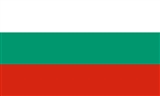
Bulgaria , officially the
Republic of Bulgaria , is a country in
Southeastern Europe. It borders the
Black Sea to the east,
Greece and
Turkey to the south,
Serbia and the
Republic of Macedonia to the west, and
Romania to the north, mostly along the
Danube.
Bulgaria is an active member of
NATO, and will join the
European Union on January 1, 2007. The country is a member of the
UN since 1955, and a founding member of the
OSCE. Bulgaria has a
base in
Antarctica, and as a Consultative Party to the
Antarctic Treaty takes part in the governing of the territories situated south of 60° south latitude.
History
In the late 7th century a branch of the
Bulgars led by
Khan Asparuh migrated into the northern
Balkans, where they merged with the local
Slavic population and possibly remnants of the
Thracian population to form the first Bulgarian state in AD 681. In 717 Khan Tervel defeated an Arab army of 70,000 who had assaulted the city of Constantinopol. In 864 Bulgaria accepted Orthodox faith and became — The Bulgarian Tzardom. The Bulgarian Tzardom was a significant European power in the 9th and the 10th century, while fighting with the
Byzantine Empire for the control of the Balkans. Following a decline in the middle of the 10th century the Bulgarian state was crushed by an assault by the
Rus' in 969 and by 1018 it was completely conquered by the Byzantines led by
Basil II.
It was re-established in 1185 under the Asenevtsi Dynasty and continued to be an important power in the European south-east for two more centuries, while fighting for dominance in the region with the
Byzantine Empire, the
Crusader states and
Hungary. By the end of the 14th century the country had disintegrated into several feudal principalities and was eventually conquered by the
Ottoman Empire. A liberation attempt by the
Polish-
Hungarian forces under the rule of
Wladyslaw III of Poland was crushed in 1444 in the
battle of Varna.
The five-century period of Ottoman rule was characterized by great violence and oppression. The Bulgarian population was decimated and most of its cultural relics were lost. Large towns and the areas where Ottoman power was strong were severely depopulated until the 19th century.
Following the
Russo-Turkish War, 1877-78 and the
Treaty of San Stefano of March 3, 1878, an autonomous Bulgarian principality was proclaimed. The treaty was immediately rejected by the
Great Powers for fear that a large Slavic country on the
Balkans would serve Russian interests. This led to the
Treaty of Berlin which provided for an autonomous Bulgarian principality comprising
Moesia and the region of
Sofia. The first Bulgarian prince was
Alexander Batenberg. Most of
Thrace was included in the autonomous region of
Eastern Rumelia, whereas the rest of Thrace along with the whole of Macedonia was returned under the sovereignty of the
Ottomans. After
uniting with
Eastern Rumelia in 1885 , the principality was proclaimed a fully independent kingdom in 1908. This happened during the reign of
Ferdinand I of Bulgaria. He became Bulgarian prince after
Alexander Battenberg abdicated in 1886 following a coup d'etat staged by pro-Russian army officers. The struggle for liberation of the
Bulgarians in the
Adrianople Vilayet and Macedonia continued throughout the end of the 19th and the beginning of the 20th century culminating with the
Ilinden-Preobrazhenie Uprising organised by the
IMARO in 1903.
In 1912 and 1913 Bulgaria became involved in the
Balkan Wars, entering into conflict with Greece and Serbia against the Ottoman Empire and then against its former Balkan allies in desperate effort to achieve its national unity. After being defeated in the Second Balkan War, Bulgaria lost most of the territory conquered in the first war, as well as
Southern Dobruja. During
World War I, Bulgaria found itself fighting on the losing side after its alliance with the
Central Powers. The defeat led to new territorial losses
Bulgaria fell within the
Soviet sphere of influence after World War II and became a People's Republic in 1946 and one of the USSR's staunchest allies. From the late 1970s it began normalizing its relations with Greece and from the 1990s with Turkey. The People's Republic ended in 1989 with many Soviet nations as the Soviet Union itself began to collapse , and Bulgaria again held multiparty elections and privatized its economy, but economic difficulties and a tide of corruption led over 600,000 Bulgarians, most of them qualified professionals, to emigrate.
Bulgaria joined
NATO on 29 March 2004 and is set to join the
European Union on 1 January 2007 after signing the
Treaty of Accession on 25 April 2005.
Politics
The
president of Bulgaria is directly elected for a 5-year term with the right to one re-election. The president serves as the
head of state and commander in chief of the armed forces. The president is the head of the Consultative Council for National Security and while unable to initiate legislation, the President can return a bill for further debate, though parliament can overturn the president's veto with a simple majority vote.
The
Council of Ministers is chaired by the Prime Minister , and is the principal body of the Executive Branch and presently consists of 20 ministers. The Prime Minister is nominated by the largest parliamentary group and is given a mandate by the President to form a cabinet.
The current governmental coalition is made of the Bulgarian Socialist Party ,
National Movement Simeon II and the Movement for Rights and Freedoms .
The Bulgarian
unicameral parliament, the National Assembly or
Narodno Sabranie, consists of 240 deputies who are elected for 4-year-terms by popular vote. The votes are for party or coalition lists of candidates for each of the twenty-eight administrative divisions. A party or coalition must garner a minimum of 4% of the vote in order to enter parliament. Parliament is responsible for enactment of laws, approval of the budget, scheduling of presidential elections, selection and dismissal of the prime minister and other ministers, declaration of war, deployment of troops outside of Bulgaria, and ratification of international treaties and agreements.
The last elections took place on June 2005. The next elections are planned for summer 2009.
The Bulgarian judicial system consists of regional, district and appeal courts, as well as a Supreme Court of Cassation. In addition, there is a Supreme Administrative Court and a system of military courts. The Presidents of the Supreme Court of Cassation, Supreme Administrative Court and the Prosecutor General are elected by a qualified majority of two-thirds from all the members of the Supreme Judicial Council and are appointed by the President of the Republic. The Supreme Judicial Council is in charge of the self-administration and organisation of the Judiciary.
The Constitutional Court is in charge of reviewing the constitutionality of laws and statutes brought before it, as well as the compliance of these laws with international treaties that the Government has signed. Parliament elects the 12 members of the Constitutional Court by a two-thirds majority, the members serve a nine-year term.
The territory of the Republic of Bulgaria is divided into provinces and municipalities. In all Bulgaria has 28 provinces, each headed by a provincial governor appointed by the government. In addition, there are 263 municipalities.
Administrative divisions
Since 1999 Bulgaria consists of 28 provinces , after having been subdivided into 9 provinces since 1987. All are named after the provincial capital, with the national capital itself forming a separate province:
Map=Oblast Burgas.png| ...
| Lovech Montana Pazardzhik Pernik Pleven Map=Oblast Pleven.png| ...
| Ruse Shumen Silistra Sliven Smolyan Sofia Sofia is the capital [i] and largest city of the Republic of Bulgaria [i], with a population of 1,20 ...
| Stara Zagora Targovishte Varna Veliko Tarnovo Vidin Vratsa Yambol |
Geography
Bulgaria comprises portions of the classical regions of
Thrace,
Moesia, and Macedonia. The southwest of the country is mountainous with two alpine ranges -
Rila and
Pirin and further east are the lower but more extensive
Rhodope Mountains.
Rila mountain includes the highest peak of the Balkan Peninsula, peak Musala at 2925 meters ; the long range of the
Balkan mountains runs west-east through the middle of the country, north of the famous Rose Valley. Hilly country and plains are found in the southeast, along the
Black Sea coast in the east, and along Bulgaria's main river, the
Danube in the north. Other major rivers include the
Struma and the
Maritsa river in the south.
The Bulgarian
climate is temperate, with cold, damp winters and hot, dry summers.
The
Balkan peninsula derives its name from the
Balkan or
Stara Planina mountain range which runs through the center of Bulgaria into eastern
Serbia.
The largest cities in the country are
Sofia ,
Plovdiv ,
Varna ,
Burgas ,
Rousse ,
Stara Zagora ,
Pleven ,
Dobrich ,
Sliven .
See also:Economy
Bulgaria's economy contracted dramatically after 1989 with the loss of the market of the
Council for Mutual Economic Assistance member states, to which the Bulgarian economy had been closely tied. The standard of living fell by about 40%, but it regained pre-1990 levels in June 2004. In addition,
UN sanctions against
Yugoslavia and
Iraq took a heavy toll on the Bulgarian economy. The first signs of recovery emerged in 1994 when the
GDP grew and inflation fell. During 1996, however, the economy collapsed due to lack of international economic support and an unstable banking system. Since 1997 the country has been on the path to recovery, with GDP growing at a 4 – 5% rate, increasing FDI, macroeconomic stability and
EU membership set for 2007.
The former government, elected in 2001, pledged to maintain the fundamental economic policy objectives adopted by its predecessor in 1997, i.e., retaining the Currency Board, practicing sound financial policies, accelerating privatisation, and pursuing structural reforms. Economic forecasts for 2005 and 2006 predict continued growth in the Bulgarian economy. The annual year-on-year GDP growth for 2005 and 2006 is expected to total 5.3% and 6.0%, respectively. Industrial output for 2005 is forecast to rise by 11.9% year-on-year, and for 2006 — by 15.2% year-on-year. Unemployment for 2005 is projected at 11.5% and for 2006 — at under 10%.
On April 25, 2005 Bulgaria signed the
Treaty of Accession with the
European Union and is set to join the bloc in 2007.
Demographics
According to the 2001
census, Bulgaria's population is mainly
ethnic Bulgarian , with two sizable minorities,
Turks and
Roma . Of the remaining 2.0%, 0.9% are distributed among some forty smaller minorities, the most numerous of which are the
Russians, Armenians,
Vlachs, Jews, Crimean Tatars and Karakachans. The people who have not declared their ethnicity are 1.1% of the total population.
Bulgarian is the mother-tongue of 84.8% of the population; it is a member of the
Slavic languages. Bulgarian is the only official language, but other languages such as
Turkish and Romany, are spoken corresponding closely to ethnic breakdown.
Most Bulgarians are, at least nominally, members of the
Bulgarian Orthodox Church, the national
Eastern Orthodox church.
Other religious denominations include
Islam , various Protestant denominations ,
Roman Catholicism , with other denominations, atheists and undeclared numbering ca. 4.1%.
Bulgaria has had the slowest population growth of any country in the world since 1950, with the exception of St. Kitts & Nevis . In fact, population growth has been negative since the late 1980s due to emigration . Nearly half of Bulgaria's Turkish minority population emigrated to Turkey during the Bulgarization process initiated by Todor Zhivkov's government. This was followed by a mass exodus of Bulgarian professionals and further exacerbated by a drastic drop in the country's birthrate.
Culture
A country often described to lie at the crossroads linking the
East and
West, Bulgaria was the centre of
Slavic Europe during much of the Middle Ages, exerting considerable literary and cultural influence over the Eastern Orthodox Slavic world by means of the
Preslav and Ohrid Literary Schools. Bulgaria is also the birthplace of the
Cyrillic alphabet, the second most widely used
alphabet in the world, which was developed in these two schools in the 10th century.
Bulgaria is well-known for its rich folklore, distinctive traditional music, rituals and tales, but the country's contribution to humanity also continued in the 19th and 20th century, when individuals such as
John Atanasoff - born in USA with Bulgarian origin, regarded as the father of the
digital computer, a number of noted opera singers and successful artists popularized the culture of Bulgaria abroad.
A number of ancient civilizations, most notably the
Thracians,
Greeks,
Romans and
Bulgars have left their mark on the culture, history and heritage of Bulgaria. The country has nine
UNESCO World Heritage Sites. Of these, two are Thracian tombs * List of famous Bulgarians
...
Tourism
- See also Tourism in Bulgaria
In winter,
Borovetz,
Bansko and
Pamporovo are ski resorts. There are summer resorts on the Black Sea at
Sozopol,
Nessebur,
Golden Sands,
Sunny Beach,
Albena, St. St. Constantine & Helena and many others. Bulgaria is becoming an attractive destination because of the quality of the resorts and prices below those found in Western Europe.
Bulgaria has enjoyed a substantial growth in income from international tourism over the past decade. Beach resorts are popular with tourists from
Germany,
Russia,
Scandinavia and the
United Kingdom. The ski resorts are a favorite destination for
English tourists.
Religion
Most citizens of Bulgaria are associated — at least nominally — to the
Bulgarian Orthodox Church. It was founded in 870 AD under the Patriarchate of Constantinople from which it obtained its first
primate, its clergy and theological texts. It has been autocephalous since 927. The Bulgarian Patriarchate was established in Sofia after the creation of the Bulgarian Exarchate, in 1870. The Bulgarian Orthodox Church is the independent national church of Bulgaria like the other national branches of
Eastern Orthodoxy and is considered an inseparable element of Bulgarian national consciousness. The church became subordinate within the
Greek Orthodox Church, twice during the periods of Byzantine and Ottoman domination but has been revived every time as a symbol of Bulgarian statehood without breaking away from the Orthodox dogma. In 2001, the Bulgarian Orthodox Church had 6,552,000 members in Bulgaria . However, many people raised during the 45 years of
communist rule are not religious, even though they may formally be members of the church.
Despite the dominant position of the Bulgarian Orthodox Church in Bulgarian cultural life, a number of Bulgarian citizens belong to other religious denominations, most notably
Islam,
Roman Catholicism and
Protestantism.
Islam came to Bulgaria at the end of the 14th century after the conquest of the country by the
Ottomans. It gradually gained ground throughout the 15th and 16th centuries by the introduction of
Turkish colonists and the conversion of native Bulgarians. At the time of Liberation no less than 40% of the population was
Muslim, but emigration was a key factor in reducing this percentage. In 2001, there were 967,000
Muslims in Bulgaria, accounting for 12.2% of the total population.
In the 16th and the 17th century missionaries from Rome converted the Bulgarian
Paulicians in the districts of
Plovdiv and Svishtov to
Roman Catholicism. Today, their descendants form the bulk of Bulgarian Catholics whose number stands at 44,000 in 2001.
Protestantism was introduced in Bulgaria by missionaries from the United States in 1857. Missionary work continued throughout the second half of the 19th and the first half of the 20th century. In 2001, there were some 42,000 Protestants in Bulgaria.
According to the most recent Eurostat "Eurobarometer" poll, in 2005 , only 40% of Bulgarian citizens responded that "they believe there is a God", whereas 40% answered that "they believe there is some sort of spirit or life force", 13% that "they do not believe there is a God, spirit, nor life force", and 6% did not answer.
National parks
Bulgaria has more than ten major national parks and many reservation areas. The best known and most popular of these are listed below.
Notes
Gallery
See also
Further reading
- A Concise History of Bulgaria RJ Crampton
- Beyond Hitler's Grasp: The Heroic Rescue of Bulgaria's Jews Michael Bar-Zohar
- Blue Guide: Bulgaria James Pettifer
- Crown of Thorns : The Reign of King Boris III of Bulgaria, 1918-1943 Stephane Groueff
- The Fragility of Goodness: Why Bulgaria's Jews Survived the Holocaust Tzvetan Todorov
- Lonely Planet World Guide: Bulgaria Paul Greenway
- Music of Bulgaria Timothy Rice
- The Rough Guide To Bulgaria Jonathan Bousfield
- Voices from the Gulag: Life and Death in Communist Bulgaria Tzvetan Todorov
- The Iron Fist-inside the Bulgarian secret archives Alexenia Dimitrov
External links
Official
- - Official Governmental Site
- - Diplomatic missions of Republic of Bulgaria abroad
-
- - Official Presidential Site
- - Official Parliamentary Site
-
-
-
-
-
-
-
-
-
-
- - Official Radio Site
-
English-language Bulgarian media
Other
- - A virtual tour of Bulgaria
-
-
-
-
-
-
-
-