
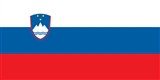
Slovenia officially the
Republic of Slovenia , is a
countryA country is a region legally identified as a distinct entity in political geography. A country may be an independent sovereign state or one that is occupied by another state, as a non-sovereign or formerly sovereign political division, or a geographic region associated with a previously...
in
CentralCentral Europe or alternatively Middle Europe is a region of the European continent lying between the variously defined areas of Eastern and Western Europe...
and Southeastern Europe touching the
AlpsThe Alps is one of the great mountain range systems of Europe, stretching from Austria and Slovenia in the east through Italy, Switzerland, Liechtenstein and Germany to France in the west....
and bordering the Mediterranean. Slovenia borders
ItalyItaly , officially the Italian Republic languages]] under the European Charter for Regional or Minority Languages. In each of these, Italy's official name is as follows:;;;;;;;;), is a unitary parliamentary republic in South-Central Europe. To the north it borders France, Switzerland, Austria and...
to the west,
CroatiaCroatia , officially the Republic of Croatia , is a unitary democratic parliamentary republic in Europe at the crossroads of the Mitteleuropa, the Balkans, and the Mediterranean. Its capital and largest city is Zagreb. The country is divided into 20 counties and the city of Zagreb. Croatia covers ...
to the south and east,
HungaryHungary , officially the Republic of Hungary , is a landlocked country in Central Europe. It is situated in the Carpathian Basin and is bordered by Slovakia to the north, Ukraine and Romania to the east, Serbia and Croatia to the south, Slovenia to the southwest and Austria to the west. The...
to the northeast, and
AustriaAustria , officially the Republic of Austria , is a landlocked country of roughly 8.4 million people in Central Europe. It is bordered by the Czech Republic and Germany to the north, Slovakia and Hungary to the east, Slovenia and Italy to the south, and Switzerland and Liechtenstein to the...
to the north, and also has a small portion of coastline along the
Adriatic SeaThe Adriatic Sea is a body of water separating the Italian Peninsula from the Balkan peninsula, and the system of the Apennine Mountains from that of the Dinaric Alps and adjacent ranges...
. It covers an area of 20273 square kilometres (7,827.4 sq mi) and has a population of 2.05 million. The capital and largest city is
LjubljanaLjubljana is the capital of Slovenia and its largest city. It is the centre of the City Municipality of Ljubljana. It is located in the centre of the country in the Ljubljana Basin, and is a mid-sized city of some 270,000 inhabitants...
.
Historically, the current territory of Slovenia was part of many different state formations, including the
Roman EmpireThe Roman Empire was the post-Republican period of the ancient Roman civilization, characterised by an autocratic form of government and large territorial holdings in Europe and around the Mediterranean....
and the
Holy Roman EmpireThe Holy Roman Empire was a realm that existed from 962 to 1806 in Central Europe.It was ruled by the Holy Roman Emperor. Its character changed during the Middle Ages and the Early Modern period, when the power of the emperor gradually weakened in favour of the princes...
, followed by the
Habsburg MonarchyThe Habsburg Monarchy covered the territories ruled by the junior Austrian branch of the House of Habsburg , and then by the successor House of Habsburg-Lorraine , between 1526 and 1867/1918. The Imperial capital was Vienna, except from 1583 to 1611, when it was moved to Prague...
. In 1918, the Slovenes exercised self-determination for the first time by co-founding the internationally unrecognized State of Slovenes, Croats, and Serbs. During
World War IIWorld War II, or the Second World War , was a global conflict lasting from 1939 to 1945, involving most of the world's nations—including all of the great powers—eventually forming two opposing military alliances: the Allies and the Axis...
, Slovenia was occupied and annexed by Germany, Italy, Hungary and Croatia only to emerge afterwards reunified with its western part as a founding member of the
Socialist Federal Republic of YugoslaviaThe Socialist Federal Republic of Yugoslavia was the Yugoslav state that existed from the abolition of the Yugoslav monarchy until it was dissolved in 1992 amid the Yugoslav Wars. It was a socialist state and a federation made up of six socialist republics: Bosnia and Herzegovina, Croatia,...
. In 1991, Slovenia declared full sovereignty. Today, Slovenia is a member of the
European UnionThe European Union is an economic and political union of 27 independent member states which are located primarily in Europe. The EU traces its origins from the European Coal and Steel Community and the European Economic Community , formed by six countries in 1958...
, the
EurozoneThe eurozone , officially called the euro area, is an economic and monetary union of seventeen European Union member states that have adopted the euro as their common currency and sole legal tender...
, the
Schengen areaThe Schengen Area comprises the territories of twenty-five European countries that have implemented the Schengen Agreement signed in the town of Schengen, Luxembourg, in 1985...
,
NATO and OECD.
Per capitaPer capita income or income per person is a measure of mean income within an economic aggregate, such as a country or city. It is calculated by taking a measure of all sources of income in the aggregate and dividing it by the total population...
, it is the richest
Slavic nation-stateThe Slavic people are an Indo-European panethnicity living in Eastern Europe, Southeast Europe, North Asia and Central Asia. The term Slavic represents a broad ethno-linguistic group of people, who speak languages belonging to the Slavic language family and share, to varying degrees, certain...
, at 85.5% of the EU27 average GDP (PPP) per capita.
Culturally and demographically, Slovenia has been a border area throughout its history. Here, four linguistic and cultural groups of the continent have been meeting:
SlavicThe Slavic languages , a group of closely related languages of the Slavic peoples and a subgroup of Indo-European languages, have speakers in most of Eastern Europe, in much of the Balkans, in parts of Central Europe, and in the northern part of Asia.-Branches:Scholars traditionally divide Slavic...
,
GermanicThe Germanic languages constitute a sub-branch of the Indo-European language family. The common ancestor of all of the languages in this branch is called Proto-Germanic , which was spoken in approximately the mid-1st millennium BC in Iron Age northern Europe...
,
RomanceThe Romance languages are a branch of the Indo-European language family, more precisely of the Italic languages subfamily, comprising all the languages that descend from Vulgar Latin, the language of ancient Rome...
and
UralicThe Uralic languages constitute a language family of some three dozen languages spoken by approximately 25 million people. The healthiest Uralic languages in terms of the number of native speakers are Hungarian, Finnish, Estonian, Mari and Udmurt...
. The population of Slovenia has become more diverse in regard to its language and ethnic composition through recent decades but is still relatively homogeneous. Approximately 83% of inhabitants considered themselves Slovenes in the 2002 census. Another major group are immigrants from the countries of
Former YugoslaviaThe former Yugoslavia is a term used to describe the present day states which succeeded the collapse of the Socialist Federal Republic of Yugoslavia....
.
Slovenia is a largely secularised country; however, major religions are politically and legally privileged. Roman Catholicism is the most prevalent religion. The development of the Slovenian identity was also markedly influenced by
ProtestantismProtestantism is one of the three major groupings within Christianity. It is a movement that began in Germany in the early 16th century as a reaction against medieval Roman Catholic doctrines and practices, especially in regards to salvation, justification, and ecclesiology.The doctrines of the...
in the centuries past.
Prehistory to Slavic settlement
Slovene territory was inhabited in prehistoric times and there is evidence of human habitation around 250,000 years ago. Perhaps the most important find is a flute, allegedly the oldest known musical instrument in the world, discovered in Divje Babe cave near
CerknoCerkno is a small town and a municipality in the Littoral region of Slovenia.It has around 2,000 inhabitants and is the administrative centre of the Cerkno hills...
, dating from the Würm glacial age when the area was inhabited by
NeanderthalThe Neanderthal is an extinct member of the Homo genus known from Pleistocene specimens found in Europe and parts of western and central Asia...
s. In the transition period between the
Bronze ageThe Bronze Age is a period characterized by the use of copper and its alloy bronze as the chief hard materials in the manufacture of some implements and weapons. Chronologically, it stands between the Stone Age and Iron Age...
to the
Iron ageThe Iron Age is the archaeological period generally occurring after the Bronze Age, marked by the prevalent use of iron. The early period of the age is characterized by the widespread use of iron or steel. The adoption of such material coincided with other changes in society, including differing...
, the Urnfield culture flourished. Numerous archeological remains dating from the Hallstatt period have been found in Slovenia.
Novo MestoNovo Mesto is a city and municipality in southeastern Slovenia, close to the border with Croatia. The town is traditionally considered the economic and cultural centre of the historic Lower Carniola region.-Geography:...
, one of the most important archeological sites of the Hallstatt culture, has been nicknamed the "City of Situlas" after numerous
situlaSitula, from the Latin for bucket or pail, is a term for a variety of elaborate bucket-shaped vessels from the Iron Age to the Middle Ages, usually with a handle at the top...
s found in the area.
In the
Iron AgeThe Iron Age is the archaeological period generally occurring after the Bronze Age, marked by the prevalent use of iron. The early period of the age is characterized by the widespread use of iron or steel. The adoption of such material coincided with other changes in society, including differing...
, present-day Slovenia was inhabited by
IllyrianThe Illyrians were a group of tribes who inhabited part of the western Balkans in antiquity and the south-eastern coasts of the Italian peninsula...
and Celtic tribes until the 1st century BC, when the
RomansAncient Rome was a thriving civilization that grew on the Italian Peninsula as early as the 8th century BC. Located along the Mediterranean Sea and centered on the city of Rome, it expanded to one of the largest empires in the ancient world....
conquered the region establishing the provinces of
PannoniaPannonia was an ancient province of the Roman Empire bounded north and east by the Danube, coterminous westward with Noricum and upper Italy, and southward with Dalmatia and upper Moesia....
and
NoricumNoricum, in ancient geography, was a Celtic kingdom stretching over the area of today's Austria and a part of Slovenia. It became a province of the Roman Empire...
. What is now western Slovenia was included directly under Roman Italia as part of the X region
Venetia et Histria. The Romans established posts at
EmonaEmona or Aemona, short for Colonia Iulia emona, was a Roman castrum founded in 14-15 AD, possibly by the Legio XV Apollinaris , on a territory already populated by ancient settlers of uncertain origin...
(Ljubljana), Poetovio (Ptuj) and Celeia (Celje) and constructed trade and military roads that ran across Slovene territory from Italy to Pannonia. In the 5th and 6th centuries, the area was exposed to invasions by the
HunsThe Huns were a group of nomadic people who, appearing from east of the Volga River, migrated into Europe c. AD 370 and established the vast Hunnic Empire there. Since de Guignes linked them with the Xiongnu, who had been northern neighbours of China 300 years prior to the emergence of the Huns,...
and Germanic tribes during their incursions into
ItalyItaly , officially the Italian Republic languages]] under the European Charter for Regional or Minority Languages. In each of these, Italy's official name is as follows:;;;;;;;;), is a unitary parliamentary republic in South-Central Europe. To the north it borders France, Switzerland, Austria and...
. After the departure of the last Germanic tribe – the
LombardsThe Lombards , also referred to as Longobards, were a Germanic tribe of Scandinavian origin, who from 568 to 774 ruled a Kingdom in Italy...
– to Italy in 568 CE, the Slavs from the East
began to dominate the areaSlavic settlement of the Eastern Alps region was a historic process that took place between the 6th and 9th century AD, having culminated in the final quarter of the 6th century...
. After the successful resistance against the nomadic Asian
AvarsThe Eurasian Avars or Ancient Avars were a highly organized nomadic confederacy of mixed origins. They were ruled by a khagan, who was surrounded by a tight-knit entourage of nomad warriors, an organization characteristic of Turko-Mongol groups...
(from 623 to 626 CE), the Slavic people united with
King SamoSamo was a Frankish merchant from the "Senonian country" , probably modern Soignies, Belgium or Sens, France. He was the first ruler of the Slavs whose name is known, and established one of the earliest Slav states, a supra-tribal union usually called Samo's empire, realm, kingdom, or tribal...
’s tribal confederation. The confederation fell apart in 658 and the Slavic people, located in present-day
CarinthiaCarinthia is the southernmost Austrian state or Land. Situated within the Eastern Alps it is chiefly noted for its mountains and lakes.The main language is German. Its regional dialects belong to the Southern Austro-Bavarian group...
, formed the independent duchy of Carantania.
The Middle Ages to Early Modern Period
In the mid 8th century Carantania became a vassal duchy under the rule of the
BavariaBavaria, formally the Free State of Bavaria is a state of Germany, located in the southeast of Germany. With an area of , it is the largest state by area, forming almost 20% of the total land area of Germany...
ns, who began
spreading ChristianityThe historical phenomenon of Christianization is the conversion of individuals to Christianity or the conversion of entire peoples at once...
. Three decades later, the Carantanians were incorporated, together with the Bavarians, into the
Carolingian EmpireCarolingian Empire is a historiographical term which has been used to refer to the realm of the Franks under the Carolingian dynasty in the Early Middle Ages. This dynasty is seen as the founders of France and Germany, and its beginning date is based on the crowning of Charlemagne, or Charles the...
. During the same period
CarniolaCarniola was a historical region that comprised parts of what is now Slovenia. As part of Austria-Hungary, the region was a crown land officially known as the Duchy of Carniola until 1918. In 1849, the region was subdivided into Upper Carniola, Lower Carniola, and Inner Carniola...
, too, came under the Franks, and was Christianized from
AquileiaAquileia is an ancient Roman city in what is now Italy, at the head of the Adriatic at the edge of the lagoons, about 10 km from the sea, on the river Natiso , the course of which has changed somewhat since Roman times...
. Following the anti-Frankish rebellion of
Ljudevit PosavskiLjudevit Posavski was a Croatian Duke of Pannonian Croatia from 810 to 823. The capital of his realm was in Sisak. As the ruler of the Pannonian Slavs, he led an unsuccessful resistance to Frankish domination. He held close ties with the Carantanian and Carniolan tribes and with the Serbian tribe...
at the beginning of the 9th century, the
FranksThe Franks were a confederation of Germanic tribes first attested in the third century AD as living north and east of the Lower Rhine River. From the third to fifth centuries some Franks raided Roman territory while other Franks joined the Roman troops in Gaul. Only the Salian Franks formed a...
removed the Carantanian princes, replacing them with their own border dukes. Consequently, the Frankish feudal system reached the Slovene territory.
The
Magyar invasion of the Pannonian Plain in the late 9th century effectively isolated the Slovene-inhabited territory from western Slavs. Thus, the Slavs of Carantania and of
CarniolaCarniola was a historical region that comprised parts of what is now Slovenia. As part of Austria-Hungary, the region was a crown land officially known as the Duchy of Carniola until 1918. In 1849, the region was subdivided into Upper Carniola, Lower Carniola, and Inner Carniola...
began developing into an independent Slovene ethnic group. After the victory of Emperor Otto I over the Magyars in 955 CE, Slovene territory was divided into a number of border regions of the
Holy Roman EmpireThe Holy Roman Empire was a realm that existed from 962 to 1806 in Central Europe.It was ruled by the Holy Roman Emperor. Its character changed during the Middle Ages and the Early Modern period, when the power of the emperor gradually weakened in favour of the princes...
. Carantania, being the most important, was elevated into the
Duchy of CarinthiaThe Duchy of Carinthia was a duchy located in southern Austria and parts of northern Slovenia. It was separated from the Duchy of Bavaria in 976, then the first newly created Imperial State beside the original German stem duchies....
in 976 CE. In the late Middle Ages the historic provinces of
CarniolaCarniola was a historical region that comprised parts of what is now Slovenia. As part of Austria-Hungary, the region was a crown land officially known as the Duchy of Carniola until 1918. In 1849, the region was subdivided into Upper Carniola, Lower Carniola, and Inner Carniola...
, Styria, Carinthia,
GoriziaThe County of Görz was a county based around the town of Gorizia in the present-day Friuli-Venezia Giulia region of north-eastern Italy.Count Meinhard, descendant of the Bavarian Meinhardiner noble family with possessions around Lienz in Tyrol, is mentioned as early as 1107...
,
TriesteTrieste is a city and seaport in northeastern Italy. It is situated towards the end of a narrow strip of land lying between the Adriatic Sea and Italy's border with Slovenia, which lies almost immediately south and east of the city...
and
IstriaIstria , formerly Histria , is the largest peninsula in the Adriatic Sea. The peninsula is located at the head of the Adriatic between the Gulf of Trieste and the Bay of Kvarner...
developed from the border regions and incorporated into the medieval German state. The consolidation and formation of these historical lands took place in a long period between the 11th and 14th century being led by a number of important feudal families such as the
Dukes of SpannheimBernhard von Spanheim was Duke of Carinthia for 54 years from 1202 until his death.-Family:...
, the Counts of Gorizia, the
Counts of CeljeThe Counts of Cilli or Celje represent the most important medieval aristocratic and ruling house with roots and territory in present-day Slovenia....
and finally the House of Habsburg. In a parallel process, an intensive German colonization significantly diminished the extent of Slovene-speaking areas; by the 15th century, the
Slovene ethnic territorySlovene Lands or Slovenian Lands is the historical denomination for the whole of the Slovene-inhabited territories in Central Europe. It more or less corresponds to modern Slovenia and the adjacent territories in Italy, Austria and Hungary in which autochthonous Slovene minorities live.-...
was reduced to its present size.
In the 14th century most of the territory of Slovenia was taken over by the Habsburgs. The
counts of CeljeThe Counts of Cilli or Celje represent the most important medieval aristocratic and ruling house with roots and territory in present-day Slovenia....
, a feudal family from this area who in 1436 acquired the title of state counts, were their powerful competitors for some time. This large dynasty, important at a European political level, had its seat in Slovene territory but died out in 1456. Its numerous large estates subsequently became the property of the Habsburgs, who retained control of the area right up until the beginning of the 20th century.
At the end of the Middle Ages, the Slovene Lands suffered a serious economic and demographic setback because of the Turkish raids. In 1515 a peasant revolt spread across nearly the whole Slovene territory and in 1572-3 the Croatian-Slovenian peasant revolt wrought havoc throughout the wider region. Uprisings, which often met with bloody defeats, continued throughout the 17th century.
Reformation and development of national identity
The first mentions of a common Slovene ethnic identity, transcending regional boundaries, date from the 16th century, when the
Protestant ReformationThe Protestant Reformation was a 16th-century split within Western Christianity initiated by Martin Luther, John Calvin and other early Protestants. The efforts of the self-described "reformers", who objected to the doctrines, rituals and ecclesiastical structure of the Roman Catholic Church, led...
spread throughout the Slovene Lands. During this period, the first books in the Slovene language were written by the
ProtestantProtestantism is one of the three major groupings within Christianity. It is a movement that began in Germany in the early 16th century as a reaction against medieval Roman Catholic doctrines and practices, especially in regards to salvation, justification, and ecclesiology.The doctrines of the...
preacher
Primož TrubarPrimož Trubar or Primož Truber was a Slovene Protestant reformer, the founder and the first superintendent of the Protestant Church of the Slovene Lands, a consolidator of the Slovene language and the author of the first Slovene-language printed book...
and his followers, establishing the base for the development of the standard Slovene language. In the second half of the 16th century, numerous books were printed in Slovene, including an integral translation of the Bible by
Jurij DalmatinJurij Dalmatin was a Slovene Lutheran minister, writer and translator.Born in Krško in around 1546, Dalmatin became a preacher in Ljubljana in 1572. He was the author of several religious books, such as Karšanske lepe molitve , Ta kratki würtemberški katekizmus , and Agenda...
.
At the beginning of the 17th century, Protestantism was suppressed by the Habsburg-sponsored Counter Reformation, which introduced the new aesthetics of
BaroqueThe Baroque is a period and the style that used exaggerated motion and clear, easily interpreted detail to produce drama, tension, exuberance, and grandeur in sculpture, painting, literature, dance, and music...
culture. The
EnlightenmentThe Age of Enlightenment was an elite cultural movement of intellectuals in 18th century Europe that sought to mobilize the power of reason in order to reform society and advance knowledge. It promoted intellectual interchange and opposed intolerance and abuses in church and state...
in the Habsburg monarchy brought significant social and cultural progress to the Slovene people. It hastened economic development and facilitated the appearance of a middle class. Under the reign of
Maria TheresaMaria Theresa Walburga Amalia Christina was the only female ruler of the Habsburg dominions and the last of the House of Habsburg. She was the sovereign of Austria, Hungary, Croatia, Bohemia, Mantua, Milan, Lodomeria and Galicia, the Austrian Netherlands and Parma...
and Emperor
Joseph IIJoseph II was Holy Roman Emperor from 1765 to 1790 and ruler of the Habsburg lands from 1780 to 1790. He was the eldest son of Empress Maria Theresa and her husband, Francis I...
(1765–1790) many reforms were undertaken in the administration and society, including land reforms, the modernization of the Church and a compulsory primary education in the Slovene language (1774). The start of cultural-linguistic activities by Slovene intellectuals of the time brought about a national revival and the birth of the Slovene nation in the modern sense of the word. Before the
Napoleonic WarsThe Napoleonic Wars were a series of wars declared against Napoleon's French Empire by opposing coalitions that ran from 1803 to 1815. As a continuation of the wars sparked by the French Revolution of 1789, they revolutionised European armies and played out on an unprecedented scale, mainly due to...
, some secular literature in Slovene language emerged. During the same period, the first history of the
Slovene LandsSlovene Lands or Slovenian Lands is the historical denomination for the whole of the Slovene-inhabited territories in Central Europe. It more or less corresponds to modern Slovenia and the adjacent territories in Italy, Austria and Hungary in which autochthonous Slovene minorities live.-...
as an ethnic unity was written by
Anton Tomaž LinhartAnton Tomaž Linhart was a Slovene playwright and historian, best known as the author of the first comedy in Slovene, Županova Micka...
, while
Jernej KopitarJernej Bartol Kopitar was a Slovene linguist and philologist working in Vienna. He also worked as the Imperial censor for Slovene literature in Vienna...
compiled the first comprehensive grammar of Slovene.
Between 1809 and 1813, Slovenia was part of the
Illyrian ProvincesThe Illyrian Provinces was an autonomous province of the Napoleonic French Empire on the north and east coasts of the Adriatic Sea between 1809 and 1816. Its capital was established at Laybach...
, an autonomous province of the Napoleonic
French EmpireThe First French Empire , also known as the Greater French Empire or Napoleonic Empire, was the empire of Napoleon I of France...
, with
LjubljanaLjubljana is the capital of Slovenia and its largest city. It is the centre of the City Municipality of Ljubljana. It is located in the centre of the country in the Ljubljana Basin, and is a mid-sized city of some 270,000 inhabitants...
as the capital. Although the French rule was short-lived, it significantly contributed to the raise of national consciousness and political awareness of the Slovenes. After the fall of Napoleon, all Slovene Lands were once again included in the
Austrian EmpireThe Austrian Empire was a modern era successor empire, which was centered on what is today's Austria and which officially lasted from 1804 to 1867. It was followed by the Empire of Austria-Hungary, whose proclamation was a diplomatic move that elevated Hungary's status within the Austrian Empire...
. Gradually, a distinct Slovene national consciousness developed, and the quest for a political unification of all Slovenes became widespread. In the 1820s and 1840s, the interest in Slovene language and folklore grew enormously, with numerous philologists advancing the first steps towards a standardization of the language.
Illyrian movementThe Illyrian movement , also Croatian national revival , was a cultural and political campaign with roots in the early modern period, and revived by a group of young Croatian intellectuals during the first half of 19th century, around the years of 1835–1849...
, Pan-Slavic and Austro-Slavic ideas gained importance. However, the intellectual circle around the philologist
Matija ČopMatija Čop , also known in German as Matthias Tschop, was a Slovene linguist, literary historian and critic.- Biography :...
and the Romantic poet
France PrešerenFrance Prešeren was a Slovene Romantic poet. He is considered the Slovene national poet. Although he was not a particularly prolific author, he inspired virtually all Slovene literature thereafter....
was influential in affirming the idea of Slovene linguistic and cultural individuality, refusing the idea of merging the Slovenes into a wider Slavic nation.
In 1848, a mass political and popular movement for the
United SloveniaUnited Slovenia is the name of an unrealized political programme of the Slovene national movement, formulated during the Spring of Nations in 1848...
emerged as part of the Spring of Nations movement within the Austrian Empire. Slovene activists demanded a unification of all Slovene-speaking territories in a unified and autonomous Slovene kingdom within the Austrian Empire. Although the project failed, it served as an almost undisputed platform of Slovene political activity in the following decades. In 1867, Slovene nationalist representatives gained a majority of votes in the
CarniolaCarniola was a historical region that comprised parts of what is now Slovenia. As part of Austria-Hungary, the region was a crown land officially known as the Duchy of Carniola until 1918. In 1849, the region was subdivided into Upper Carniola, Lower Carniola, and Inner Carniola...
n provincial elections. In the same year, the Austro-Hungarian monarchy was established by splitting the Austrian Empire into two parts. Most of the territory of present-day Slovenia remained in the Austrian part of the monarchy, while
PrekmurjePrekmurje is a geographically, linguistically, culturally and ethnically defined region settled by Slovenes and lying between the Mur River in Slovenia and the Rába Valley in the most western part of Hungary...
was included in the
HungarianThe Kingdom of Hungary comprised present-day Hungary, Slovakia and Croatia , Transylvania , Carpatho Ruthenia , Vojvodina , Burgenland , and other smaller territories surrounding present-day Hungary's borders...
part. By the end of the 19th century industry had developed considerably in Slovenia and the population had become as socially differentiated as in other European nations.
At the turn of the 20th century, hundreds of thousands of Slovenes emigrated to other countries, mostly to the
United StatesThe United States of America is a federal constitutional republic comprising fifty states and a federal district...
, but also to
South AmericaSouth America is a continent situated in the Western Hemisphere, mostly in the Southern Hemisphere, with a relatively small portion in the Northern Hemisphere. The continent is also considered a subcontinent of the Americas. It is bordered on the west by the Pacific Ocean and on the north and east...
,
GermanyGermany , officially the Federal Republic of Germany , is a federal parliamentary republic in Europe. The country consists of 16 states while the capital and largest city is Berlin. Germany covers an area of 357,021 km2 and has a largely temperate seasonal climate...
,
EgyptEgypt , officially the Arab Republic of Egypt, Arabic: , is a country mainly in North Africa, with the Sinai Peninsula forming a land bridge in Southwest Asia. Egypt is thus a transcontinental country, and a major power in Africa, the Mediterranean Basin, the Middle East and the Muslim world...
, and to larger cities in the Austro-Hungarian Empire, especially
ZagrebZagreb is the capital and the largest city of the Republic of Croatia. It is in the northwest of the country, along the Sava river, at the southern slopes of the Medvednica mountain. Zagreb lies at an elevation of approximately above sea level. According to the last official census, Zagreb's city...
and
ViennaVienna is the capital and largest city of the Republic of Austria and one of the nine states of Austria. Vienna is Austria's primary city, with a population of about 1.723 million , and is by far the largest city in Austria, as well as its cultural, economic, and political centre...
. It has been calculated that around 300,000 Slovenes emigrated between 1880 and 1910, which means that one in six Slovenes left their homeland.
World War I and the Creation of Yugoslavia
World War IWorld War I , which was predominantly called the World War or the Great War from its occurrence until 1939, and the First World War or World War I thereafter, was a major war centred in Europe that began on 28 July 1914 and lasted until 11 November 1918...
resulted in heavy casualties for Slovenia, particularly on the bloody
Soča frontThe Battles of the Isonzo were a series of 12 battles between the Austro-Hungarian and Italian armies in World War I. They were fought along the Soča River on the eastern sector of the Italian Front between June 1915 and November 1917...
in Slovenia's western border area. In 1917, after the
Battle of CaporettoThe Battle of Caporetto , took place from 24 October to 19 November 1917, near the town of Kobarid , on the Austro-Italian front of World War I...
ended the fighting on Austro-Hungarian (Slovenian) soil, the political life in Austria-Hungary resumed. The
Slovene People's PartyThe Slovene People's Party was a Slovenian political party in the 19th and 20th centuries, active in the Austro-Hungarian Monarchy and in the Kingdom of Yugoslavia. Between 1907 and 1941, it was the largest and arguably the most influential political party in the Slovene Lands...
launched a movement for self-determination, demanding the creation of a semi-independent South Slavic state under Habsburg rule. The proposal was picked up by most Slovene parties, and a mass mobilization of Slovene civil society, known as the Declaration Movement, followed. This proposal was rejected by the Austrian political elites, but following the dissolution of Austro-Hungarian Empire in the aftermath of the war, a National Council of Slovenes, Croats and Serbs took power in Zagreb on 6 October 1918. On 29 October independence was declared by the Croatian parliament and by a national gathering in Ljubljana, declaring the establishment of the new
State of Slovenes, Croats and SerbsThe State of Slovenes, Croats and Serbs was a short-lived state formed from the southernmost parts of the Austro-Hungarian monarchy after its dissolution at the end of the World War I by the resident population of Slovenes, Croats, and Serbs...
. The new state merged with
SerbiaSerbia , officially the Republic of Serbia , is a landlocked country located at the crossroads of Central and Southeast Europe, covering the southern part of the Carpathian basin and the central part of the Balkans...
to form the Kingdom of Serbs, Croats and Slovenes on 1 December 1918, renamed to
Kingdom of YugoslaviaThe Kingdom of Yugoslavia was a state stretching from the Western Balkans to Central Europe which existed during the often-tumultuous interwar era of 1918–1941...
in 1929.
Following a
plebisciteThe Carinthian Plebiscite on 10 October 1920 determined the final southern border between the Republic of Austria and the newly formed Kingdom of Serbs, Croats and Slovenes after World War I.- History :...
in October 1920, Slovene-speaking southern
CarinthiaCarinthia is the southernmost Austrian state or Land. Situated within the Eastern Alps it is chiefly noted for its mountains and lakes.The main language is German. Its regional dialects belong to the Southern Austro-Bavarian group...
was ceded to
AustriaAustria , officially the Republic of Austria , is a landlocked country of roughly 8.4 million people in Central Europe. It is bordered by the Czech Republic and Germany to the north, Slovakia and Hungary to the east, Slovenia and Italy to the south, and Switzerland and Liechtenstein to the...
. The western parts of the Slovene Lands (the
Slovenian LittoralThe Slovenian Littoral is a historical region of Slovenia. Its name recalls the historical Habsburg crown land of the Austrian Littoral, of which the Slovenian Littoral was a part....
and western districts of
Inner Carniola) were occupied by the Italian Army, and officially annexed to the Kingdom of Italy with the
Treaty of RapalloThe Treaty of Rapallo was a treaty between the Kingdom of Italy and the Kingdom of Serbs, Croats and Slovenes , signed to solve the dispute over some territories in the upper Adriatic, in Dalmatia and in the region which became known as the Julian March.The treaty was signed on 12 November 1920 in...
in 1920. With the
Treaty of TrianonThe Treaty of Trianon was the peace agreement signed in 1920, at the end of World War I, between the Allies of World War I and Hungary . The treaty greatly redefined and reduced Hungary's borders. From its borders before World War I, it lost 72% of its territory, which was reduced from to...
, on the other hand, Yugoslavia was awarded the Slovene-inhabited
PrekmurjePrekmurje is a geographically, linguistically, culturally and ethnically defined region settled by Slovenes and lying between the Mur River in Slovenia and the Rába Valley in the most western part of Hungary...
region, which had belonged to Hungary since the 10th century. Slovenes in Italy, Austria, and Hungary, became victims of policies of State policies of
forced assimilationForced assimilation is a process of forced cultural assimilation of religious or ethnic minority groups, into an established and generally larger community...
and sometimes violent persecution. In the Italian
Julian MarchThe Julian March is a former political region of southeastern Europe on what are now the borders between Croatia, Slovenia, and Italy...
administrative region, several violent actions were directed against the Slovene communities between 1918 and 1922, both by the mob and by ultra-nationalist militias. After 1922, a policy of violent Fascist Italianization was implemented, triggering the reaction of local Slovenes and
IstriaIstria , formerly Histria , is the largest peninsula in the Adriatic Sea. The peninsula is located at the head of the Adriatic between the Gulf of Trieste and the Bay of Kvarner...
n
CroatsCroats are a South Slavic ethnic group mostly living in Croatia, Bosnia and Herzegovina and nearby countries. There are around 4 million Croats living inside Croatia and up to 4.5 million throughout the rest of the world. Responding to political, social and economic pressure, many Croats have...
. In 1927, the militant anti-Fascist organization
TIGRTIGR, abbreviation for Trst , Istra , Gorica and Reka , with the full name Revolutionary Organization of the Julian March T.I.G.R. was a militant anti-Fascist and insurgent organization active in the 1920s and the 1930s in the eastern Italian border region known as the Julian March.The...
was founded, which co-ordinated the Slovene resistance against Italian rule until its dismantlement by the
Fascist secret policeThe Organizzazione per la Vigilanza e la Repressione dell'Antifascismo was the secret police of the Kingdom of Italy, founded in 1927 under the regime of Fascist dictator Benito Mussolini and during the reign of King Victor Emmanuel III. The German Gestapo were the equivalent of the OVRA...
in 1941.
After 1918, Slovenia became one of the main industrial centers of Yugoslavia. Already in 1919, the industrial production in Slovenia was four times greater than in
SerbiaSerbia , officially the Republic of Serbia , is a landlocked country located at the crossroads of Central and Southeast Europe, covering the southern part of the Carpathian basin and the central part of the Balkans...
, and twenty-two times greater than in
Yugoslav MacedoniaMacedonia , officially the Republic of Macedonia , is a country located in the central Balkan peninsula in Southeast Europe. It is one of the successor states of the former Yugoslavia, from which it declared independence in 1991...
. The interwar period brought a further industrialization in Slovenia, with a rapid economic growth in the 1920s followed by a relatively successful economic adjustment to the 1929 economic crisis.
World War II
On 6 April 1941,
Yugoslavia was invadedThe Invasion of Yugoslavia , also known as the April War , was the Axis Powers' attack on the Kingdom of Yugoslavia which began on 6 April 1941 during World War II...
by the
Axis PowersThe Axis powers , also known as the Axis alliance, Axis nations, Axis countries, or just the Axis, was an alignment of great powers during the mid-20th century that fought World War II against the Allies. It began in 1936 with treaties of friendship between Germany and Italy and between Germany and...
. Slovenia was divided among the occupying powers: Fascist Italy occupied southern Slovenia and Ljubljana,
Nazi GermanyNazi Germany , also known as the Third Reich , but officially called German Reich from 1933 to 1943 and Greater German Reich from 26 June 1943 onward, is the name commonly used to refer to the state of Germany from 1933 to 1945, when it was a totalitarian dictatorship ruled by...
got northern and eastern Slovenia, while Horthy's Hungary was awarded the Prekmurje region. Some villages in south-eastern Slovenia were annexed by the
Independent State of CroatiaThe Independent State of Croatia was a World War II puppet state of Nazi Germany, established on a part of Axis-occupied Yugoslavia. The NDH was founded on 10 April 1941, after the invasion of Yugoslavia by the Axis powers. All of Bosnia and Herzegovina was annexed to NDH, together with some parts...
. While the Italians gave Slovenes a cultural autonomy within their occupation zone (the
Province of LjubljanaThe Province of Ljubljana was a province of the Kingdom of Italy and of the Nazi German Adriatic Littoral during World War II. It was created on May 3, 1941 from territory occupied and annexed to Italy after the Axis invasion and dissolution of Yugoslavia, and it was abolished on May 9, 1945, when...
), the Nazis started a policy of violent
GermanisationGermanisation is both the spread of the German language, people and culture either by force or assimilation, and the adaptation of a foreign word to the German language in linguistics, much like the Romanisation of many languages which do not use the Latin alphabet...
. More than 63,000 Slovenes were interned to
Nazi concentration campsNazi Germany maintained concentration camps throughout the territories it controlled. The first Nazi concentration camps set up in Germany were greatly expanded after the Reichstag fire of 1933, and were intended to hold political prisoners and opponents of the regime...
.
In the summer of 1941, a liberation movement under the leadership of the Communist emerged both in the Italian and in the German occupation zones. In the summer of 1942, a civil war between Slovenes broke out. The two fighting factions were the
Liberation Front of the Slovenian PeopleOn 26 April 1941 in Ljubljana the Anti-Imperialist Front was established. It was to promote "an international massive movement" to "liberate the Slovenian nation" whose "hope and example was the Soviet Union"...
and the
Italian-sponsored anti-communist militiaThe White Guard was a name given colloquially and collectively by the Partisans to an ensemble of Slovene anti-communist political and paramilitary groups during World War II...
, known as the White Guard, later re-organized under Nazi command as the Slovene Home Guard. The Slovene partisan guerrillas managed to liberate large portions of the Slovene lands, contributing to the defeat of
NazismNazism, the common short form name of National Socialism was the ideology and practice of the Nazi Party and of Nazi Germany...
. As a result of the war, the vast majority of the native ethnic German population were either forcefully expelled or fled to neighboring Austria. Immediately after the war, some 12,000 members of the Slovene Home Guard were killed in the area of the
Kočevski RogThe Kočevski Rog or Kočevje Rog or simply Rog is a karstified plateau in the Kočevje Highlands above the Črmošnjice Valley. The plateau is part of the traditional Lower Carniola region of Slovenia and of the Dinaric Alps. The highest area is the central part, with the 1099 meter high peak Veliki...
, while thousands of anti-communist civilians were killed in the first year after the war. In addition, hundreds of
ethnic ItaliansIstrian Italians are the ethnic group in the northern Adriatic region of Istria, related to the Italian people of Italy. Historically they are descendants from the original Latinized population of Roman Istria, from the Venetian-speaking settlers who came to Istria during the Republic of Venice,...
from
IstriaIstria , formerly Histria , is the largest peninsula in the Adriatic Sea. The peninsula is located at the head of the Adriatic between the Gulf of Trieste and the Bay of Kvarner...
and
TriesteTrieste is a city and seaport in northeastern Italy. It is situated towards the end of a narrow strip of land lying between the Adriatic Sea and Italy's border with Slovenia, which lies almost immediately south and east of the city...
were killed by the Yugoslav Army and partisan forces in the Foibe massacres, while some 27,000 of them fled Slovenia from Communist persecution in the so-called
Istrian exodusThe expression Istrian exodus or Istrian-Dalmatian exodus is used to indicate the departure of ethnic Italians from Istria, Rijeka, and Dalmatia , after World War II. At the time of the exodus, these territories were part of the SR Croatia and SR Slovenia , today they are parts of the Republics of...
. The overall number of World War II casualties in Slovenia is estimated to 89,000, while 14,000 people were killed immediately after the end of the war.
The Communist period
Following the re-establishment of Yugoslavia during World War II, Slovenia became part of
Federal YugoslaviaThe Socialist Federal Republic of Yugoslavia was the Yugoslav state that existed from the abolition of the Yugoslav monarchy until it was dissolved in 1992 amid the Yugoslav Wars. It was a socialist state and a federation made up of six socialist republics: Bosnia and Herzegovina, Croatia,...
. A
socialist stateA socialist state generally refers to any state constitutionally dedicated to the construction of a socialist society. It is closely related to the political strategy of "state socialism", a set of ideologies and policies that believe a socialist economy can be established through government...
was established, but because of the
Tito-Stalin splitThe Tito–Stalin Split was a conflict between the leaders of Socialist Federal Republic of Yugoslavia and the Union of Soviet Socialist Republics, which resulted in Yugoslavia's expulsion from the Communist Information Bureau in 1948...
in 1948, economic and personal freedoms were broader than in the
Eastern BlocThe term Eastern Bloc or Communist Bloc refers to the former communist states of Eastern and Central Europe, generally the Soviet Union and the countries of the Warsaw Pact...
. In 1947, Italy ceded most of the
Julian MarchThe Julian March is a former political region of southeastern Europe on what are now the borders between Croatia, Slovenia, and Italy...
to Yugoslavia, and Slovenia thus regained the
Slovenian LittoralThe Slovenian Littoral is a historical region of Slovenia. Its name recalls the historical Habsburg crown land of the Austrian Littoral, of which the Slovenian Littoral was a part....
. From the 1950s,
SloveniaThe Socialist Republic of Slovenia was a socialist state that was a constituent country of the Socialist Federal Republic of Yugoslavia from 1943 until 1990...
enjoyed a relatively wide autonomy.
Between 1945 and 1948, a wave of political repressions took place in Slovenia and in Yugoslavia. By 1947, all private property had been nationalised. Between 1949 and 1953, a
forced collectivisationCollective farming and communal farming are types of agricultural production in which the holdings of several farmers are run as a joint enterprise...
was attempted. After its failure, a policy of gradual liberalisation followed. A new economic policy, known as
workers self-managementWorker self-management is a form of workplace decision-making in which the workers themselves agree on choices instead of an owner or traditional supervisor telling workers what to do, how to do it and where to do it...
started to be implemented under the advice and supervision of the main theorist of the Yugoslav Communist Party, the Slovene
Edvard KardeljEdvard Kardelj also known under the pseudonyms Sperans and Krištof was a Yugoslav communist political leader, economist, partisan, publicist, and full member of the Serbian Academy of Sciences and Arts...
. In 1956,
Josip Broz TitoMarshal Josip Broz Tito – 4 May 1980) was a Yugoslav revolutionary and statesman. While his presidency has been criticized as authoritarian, Tito was a popular public figure both in Yugoslavia and abroad, viewed as a unifying symbol for the nations of the Yugoslav federation...
, together with other leaders, founded the
Non-Aligned MovementThe Non-Aligned Movement is a group of states considering themselves not aligned formally with or against any major power bloc. As of 2011, the movement had 120 members and 17 observer countries...
.
Slovenia's economy developed rapidly, particularly in the 1950s when the country was strongly industrialised. Despite restrictive economic and social legislation within Yugoslavia, Slovenia managed to preserve a high level of economic development with a skilled workforce, working discipline and organisation. After the economic reform and further economic decentralisation of Yugoslavia in 1965 and 1966 Slovenia was approaching a
market economyA market economy is an economy in which the prices of goods and services are determined in a free price system. This is often contrasted with a state-directed or planned economy. Market economies can range from hypothetically pure laissez-faire variants to an assortment of real-world mixed...
. Its domestic product was 2.5 times the average, which strengthened national confidence among the Slovenes. After the death of Tito in 1980, the economic and political situation in Yugoslavia became very strained. Political disputes around economic measures were echoed in the public sentiment, as many Slovenians felt they were being economically exploited, having to sustain an expensive and inefficient federal administration.
Democracy and independence
The first clear demand for Slovene independence was made in 1987 by a group of intellectuals in the 57th edition of the magazine
Nova revijaNova revija is a Slovenian publishing house and cultural institute that developed from the literary journal with the same name.- The magazine :...
. Demands for democratisation and increase of Slovenian independence were sparked off. A mass democratic movement, coordinated by the Committee for the Defense of Human Rights, pushed the Communists in the direction of democratic reforms. These revolutionary events in Slovenia pre-dated by almost one year the
Revolutions of 1989The Revolutions of 1989 were the revolutions which overthrew the communist regimes in various Central and Eastern European countries.The events began in Poland in 1989, and continued in Hungary, East Germany, Bulgaria, Czechoslovakia and...
in Eastern Europe, but went largely unnoticed by international observers. In April 1990, the first democratic elections in Slovenia took place and the united opposition movement
DEMOSDemocratic Opposition of Slovenia, also known as the DEMOS coalition was a coalition of democratic political parties, created by an agreement between the Slovenian Democratic Union, the Social Democrat Alliance of Slovenia, the Slovene Christian Democrats, the Farmers' Alliance and the Greens of...
led by
Jože PučnikJože Pučnik was a Slovenian public intellectual, sociologist and politician. During the Communist regime of Josip Broz Tito, Pučnik was one of the most outspoken Slovenian critics of dictatorship and lack of civil liberties in former Yugoslavia. He was imprisoned for a total of 7 years, and later...
emerged victorious. In the same year more than 88% of the electorate voted for a sovereign and independent Slovenia. This was followed on 25 June 1991 by a declaration of independence. The very next day, the newly-formed state was attacked by the Yugoslav Army. After a
Ten-Day WarThe Ten-Day War or the Slovenian Independence War was a military conflict between the Slovenian Territorial Defence and the Yugoslav People's Army in 1991 following Slovenia's declaration of independence.-Background:...
a truce was called and in October 1991 the last soldiers of the
Yugoslav ArmyAside from the Yugoslav People's Army, the terms Yugoslav Army, Army of Yugoslavia, or Military of Yugoslavia may refer to:* Yugoslav Partisans , the Yugoslav resistance army during World War II...
left. In November a law on de-nationalisation was adopted, followed in December by a new
constitutionThe Constitution of the Republic of Slovenia was adopted by the Slovenian National Assembly on December 23, 1991. The document is divided into ten chapters:# General Provisions# Human Rights and Fundamental Freedoms# Economic and Social Relations...
.
The
European UnionThe European Union is an economic and political union of 27 independent member states which are located primarily in Europe. The EU traces its origins from the European Coal and Steel Community and the European Economic Community , formed by six countries in 1958...
recognised Slovenia in January 1992, and the
UNThe United Nations is an international organization whose stated aims are facilitating cooperation in international law, international security, economic development, social progress, human rights, and achievement of world peace...
accepted it as a member in May 1992. Slovenia joined the European Union on 1 May 2004. Slovenia has one Commissioner in the
European CommissionThe European Commission is the executive body of the European Union. The body is responsible for proposing legislation, implementing decisions, upholding the Union's treaties and the general day-to-day running of the Union....
, and seven Slovene parliamentarians were elected to the
European ParliamentThe European Parliament is the directly elected parliamentary institution of the European Union . Together with the Council of the European Union and the Commission, it exercises the legislative function of the EU and it has been described as one of the most powerful legislatures in the world...
at elections on 13 June 2004. In 2004 Slovenia also joined
NATO. Slovenia subsequently succeeded in meeting the Maastricht criteria and joined the
EurozoneThe eurozone , officially called the euro area, is an economic and monetary union of seventeen European Union member states that have adopted the euro as their common currency and sole legal tender...
(the first transition country to do so) on 1 January 2007. Slovenia was the first post-Communist country to hold the
Presidency of the Council of the European UnionThe Presidency of the Council of the European Union is the responsibility for the functioning of the Council of the European Union that rotates between the member states of the European Union every six months. The presidency is not a single president but rather the task is undertaken by a national...
, for the first six months of 2008.
Politics
Since 1991, Slovenia is a
parliamentary democracyA parliamentary system is a system of government in which the ministers of the executive branch get their democratic legitimacy from the legislature and are accountable to that body, such that the executive and legislative branches are intertwined....
republic with a
multi-party systemA multi-party system is a system in which multiple political parties have the capacity to gain control of government separately or in coalition, e.g.The Conservative-Liberal Democrat coalition in the United Kingdom formed in 2010. The effective number of parties in a multi-party system is normally...
. The
head of stateA head of state is the individual that serves as the chief public representative of a monarchy, republic, federation, commonwealth or other kind of state. His or her role generally includes legitimizing the state and exercising the political powers, functions, and duties granted to the head of...
is the
presidentThe function of President of the Republic of Slovenia was established on 23 December 1991, when the National Assembly of Slovenia passed a new constitution as a result of independence from Socialist Federal Republic of Yugoslavia....
, who is elected by popular vote every five years to maximum two consecutive terms, and has mainly advisory and ceremonial duties. The
executiveExecutive branch of Government is the part of government that has sole authority and responsibility for the daily administration of the state bureaucracy. The division of power into separate branches of government is central to the idea of the separation of powers.In many countries, the term...
and administrative authority in Slovenia is held by the
Government of SloveniaThe Government of the Republic of Slovenia is the cabinet that excersises executive authority in Slovenia pursuant to the Constitution and the laws of Slovenia. It is also the highest administrative authority in Slovenia. It comprises the Prime Minister and 15 ministers, three of them without...
(
), headed by the
Prime MinisterThere have been six Prime Ministers of Slovenia since that country gained its independence in the breakup of Yugoslavia. Unlike the President of Slovenia, who is directly elected, the Prime Minister is appointed by the National Assembly, and must control a majority there in order to...
and the council of
ministerA minister is a politician who holds significant public office in a national or regional government. Senior ministers are members of the cabinet....
s or cabinet, who are elected by the
National AssemblyThe National Assembly is the general representative body of the Slovenian nation. According to the Constitution of Slovenia and the Constitutional Court of Slovenia, it is the major part of the distinctively incompletely bicameral legislative branch of the Republic of Slovenia. It is unicameral...
(
). The bicameral Parliament of Slovenia is characterised by an asymmetric duality. The bulk of power is concentrated in the National Assembly, which consists of ninety members. Of those, 88 are elected by all the citizens in a system of
proportional representationProportional representation is a concept in voting systems used to elect an assembly or council. PR means that the number of seats won by a party or group of candidates is proportionate to the number of votes received. For example, under a PR voting system if 30% of voters support a particular...
, while two are elected by the registered members of the
autochthonousIndigenism, Native nationalism, or Indigenous nationalism is a kind of ethnic nationalism emphasizing the group's indigeneity to their homeland...
Hungarian and Italian minorities. Election take place every four years. The
National CouncilThe National Council is according to the Constitution of Slovenia the representative of social, economic, professional and local interest groups in Slovenia and has a legislative function working as a corrective mechanism of the National Assembly, although it does not itself pass acts. It may be...
(
), consisting of forty members, appointed to represent social, economic, professional and local interest groups, has a limited advisory and control power.
Between 1992 and 2004, the Slovenian political scene was characterized by the rule of the
Liberal Democracy of SloveniaLiberal Democracy of Slovenia is a liberal political party in Slovenia. It is led by Katarina Kresal and is a member of the Liberal International and the European Liberal Democrat and Reform Party...
, which carried out much of the economic and political transformation of the country. The party's president
Janez DrnovšekJanez Drnovšek was a Slovenian liberal politician, President of the Presidency of Yugoslavia , Prime Minister of Slovenia and President of Slovenia . He was born in Celje, Slovenia, then the Socialist Republic of Slovenia...
, who served as Prime Minister between 1992 and 2002, was the one of the most influential Slovenian politician of the 1990s, together with the Slovenian President
Milan KučanMilan Kučan is a Slovenian politician and statesman. He was the first President of Slovenia.-Early life and political beginnings:...
(served between 1990 and 2002), who was credited for the peaceful transition from Communism to democracy. The 2004 election brought to power the right wing coalition, led by
Janez JanšaJanez Janša is a Slovenian politician who was Prime Minister of Slovenia from November 2004 to November 2008. He has also been President of the Slovenian Democratic Party since 1993...
of the
Slovenian Democratic PartyThe Slovenian Democratic Party , known until 2003 as the Social Democratic Party of Slovenia is a Slovenian centre-right liberal conservative and Christian democratic party...
. The Liberal Democracy quickly lost much of its influence and in 2008, the left wing coalition headed by the
Social DemocratThe Social Democrats is a centre-left political party in Slovenia, currently led by Borut Pahor. From 1993 until 2005, the party was known as the United List of Social Democrats .-Origins:...
Borut PahorBorut Pahor is a Slovenian politician who has been Prime Minister of Slovenia since 2008. A longtime president of the Social Democrats party, Pahor served several terms as a member of the National Assembly and was its chairman from 2000 to 2004. In 2004, Pahor was elected as member of the European...
won the election by a narrow margin. The priorities of the current government are efforts to address stable economic growth and public finance, employment, social welfare, science, education and culture. In September 2011, the government of Slovenia was ousted in the National Assembly confidence vote. New elections will be held on 4 December 2011.
Judiciary
Judicial powers in Slovenia are executed by
judgeA judge is a person who presides over court proceedings, either alone or as part of a panel of judges. The powers, functions, method of appointment, discipline, and training of judges vary widely across different jurisdictions. The judge is supposed to conduct the trial impartially and in an open...
s, who are elected by the National Assembly. Judicial power in Slovenia is implemented by courts with general responsibilities and specialised courts that deal with matters relating to specific legal areas. The
State ProsecutorState prosecutor may refer to a prosecutor who works for a state government; see:*District attorney*State's AttorneyState Prosecutor may also be the name of a specific office, such as...
is an independent state authority responsible for prosecuting cases brought against those suspected of committing criminal offences. The
Constitutional CourtThe Constitutional Court of Slovenia is a special court established by the Slovenian Constitution. Since its inception, the Court has been located in the city of Ljubljana.-Jurisdiction:...
, composed of nine judges elected for nine year terms, decides on the conformity of laws with the Constitution; all laws and regulations must conform with the general principles of international law and with ratified international agreements.
Military
The Slovenian Armed Forces provide military defence independently or within an alliance, in accordance with international agreements. Since conscription was abolished in 2003, it is organized as a fully professional
standing armyA standing army is a professional permanent army. It is composed of full-time career soldiers and is not disbanded during times of peace. It differs from army reserves, who are activated only during wars or natural disasters...
. The
Commander-in-ChiefA commander-in-chief is the commander of a nation's military forces or significant element of those forces. In the latter case, the force element may be defined as those forces within a particular region or those forces which are associated by function. As a practical term it refers to the military...
is the
President of the Republic of SloveniaThe function of President of the Republic of Slovenia was established on 23 December 1991, when the National Assembly of Slovenia passed a new constitution as a result of independence from Socialist Federal Republic of Yugoslavia....
, while operational command is in the domain of the
Chief of the General StaffThe Chief of the General Staff is a post in many armed forces , the head of the military staff.See also:*Chief of the General Staff *Chief of General Staff of Azerbaijani Armed Forces...
of the Slovenian Armed Forces. In 2008, military spending was an estimated 1.5% of the country's GDP. Since joining
NATO, the Slovenian Armed Forces have taken an even more active part in supporting international peace. Their activities comprise the participation of Slovenian Armed Forces members in peace support operations and humanitarian activities. Among others, Slovenian soldiers are a part of international forces serving in
Bosnia and HerzegovinaBosnia and Herzegovina , sometimes called Bosnia-Herzegovina or simply Bosnia, is a country in Southern Europe, on the Balkan Peninsula. Bordered by Croatia to the north, west and south, Serbia to the east, and Montenegro to the southeast, Bosnia and Herzegovina is almost landlocked, except for the...
,
KosovoKosovo is a region in southeastern Europe. Part of the Ottoman Empire for more than five centuries, later the Autonomous Province of Kosovo and Metohija within Serbia...
, and
AfghanistanAfghanistan , officially the Islamic Republic of Afghanistan, is a landlocked country located in the centre of Asia, forming South Asia, Central Asia and the Middle East. With a population of about 29 million, it has an area of , making it the 42nd most populous and 41st largest nation in the world...
.
Administrative divisions
Officially, Slovenia is subdivided into 211 municipalities (eleven of which have the status of urban municipalities). The municipalities are the only body of local autonomy in Slovenia. Besides, there also exist 62 administrative districts, officially called "Administrative Units" (
upravne enote), which are not a body of local self-government, but territorial sub-units of government administration. The Administrative Units are named after their capital, and are headed by a Head of the Unit (
načelnik upravne enote), appointed by the Minister of Public Administration. Each municipality is headed by a Mayor (
župan), elected every 4 years by popular vote, and a Municipal Council (
občinski svet). In the majority of the municipalities, the municipal council is elected through the system of
proportional representationProportional representation is a concept in voting systems used to elect an assembly or council. PR means that the number of seats won by a party or group of candidates is proportionate to the number of votes received. For example, under a PR voting system if 30% of voters support a particular...
; only few smaller municipalities use the
plurality voting systemThe plurality voting system is a single-winner voting system often used to elect executive officers or to elect members of a legislative assembly which is based on single-member constituencies...
. In the urban municipalities, the municipal councils are called City Councils. Every municipality also has a Head of the Municipal Administration (
načelnik občinske uprave), appointed by the Mayor, who is responsible for the functioning of the local administration.
However, regional identity is strong in Slovenia. The traditional regions of Slovenia, based on the former four Habsburg
crown landIn Commonwealth realms, Crown land is an area belonging to the monarch , the equivalent of an entailed estate that passed with the monarchy and could not be alienated from it....
s (
CarniolaCarniola was a historical region that comprised parts of what is now Slovenia. As part of Austria-Hungary, the region was a crown land officially known as the Duchy of Carniola until 1918. In 1849, the region was subdivided into Upper Carniola, Lower Carniola, and Inner Carniola...
,
CarinthiaThe Duchy of Carinthia was a duchy located in southern Austria and parts of northern Slovenia. It was separated from the Duchy of Bavaria in 976, then the first newly created Imperial State beside the original German stem duchies....
, Styria, and the
LittoralThe Slovenian Littoral is a historical region of Slovenia. Its name recalls the historical Habsburg crown land of the Austrian Littoral, of which the Slovenian Littoral was a part....
) are the following:
| English name |
Native name |
Largest city |
Slovenian LittoralThe Slovenian Littoral is a historical region of Slovenia. Its name recalls the historical Habsburg crown land of the Austrian Littoral, of which the Slovenian Littoral was a part.... |
Primorska |
Koper |
|
Upper CarniolaUpper Carniola is a traditional region of Slovenia, the northern mountainous part of the larger Carniola region. The centre of the region is Kranj, while other urban centers include Jesenice, Tržič, Škofja Loka, Kamnik, and Domžale.- Historical background :... |
Gorenjska |
Kranj' is the third largest municipality and fourth largest city in Slovenia, with a population of 54,500 . It is located approximately 20 km north-west of Ljubljana... |
|
Inner Carniola |
Notranjska |
PostojnaPostojna is a town and a municipality in the traditional region of Inner Carniola, from Trieste, in southwestern Slovenia. Population 14,581 .-History:... |
|
Lower CarniolaLower Carniola was a kreis of the historical Habsburg crown land of Carniola from 1849 till 1919 and is nowadays a traditional region of Slovenia. Its center is Novo Mesto, while other urban centers include Kočevje, Grosuplje, Krško, Trebnje, Mirna, Črnomelj, Semič, and Metlika.-See also:* Upper... |
Dolenjska |
Novo MestoNovo Mesto is a city and municipality in southeastern Slovenia, close to the border with Croatia. The town is traditionally considered the economic and cultural centre of the historic Lower Carniola region.-Geography:... |
|
Carinthia |
Koroška |
Ravne na Koroškem Ravne na Koroškem is a town and a municipality in northern Slovenia. Until 1918, the town was part of the Duchy of Carinthia. It is the largest town in the traditional Slovenian province of Carinthia and its capital. Its Slovene name means 'Ravne in Carinthia', in order to distinguish it from... |
|
Lower StyriaLower Styria or Slovenian Styria is a traditional region in northeastern Slovenia, comprising the southern third of the former Duchy of Styria. The population of Lower Styria in its historical boundaries amounts to around 705,000 inhabitants, or 34.5% of the population of Slovenia... |
Štajerska |
MariborMaribor is the second largest city in Slovenia with 157,947 inhabitants . Maribor is also the largest and the capital city of Slovenian region Lower Styria and the seat of the Municipality of Maribor.... |
|
PrekmurjePrekmurje is a geographically, linguistically, culturally and ethnically defined region settled by Slovenes and lying between the Mur River in Slovenia and the Rába Valley in the most western part of Hungary... |
Prekmurje |
Murska SobotaMurska Sobota is a city in northeastern Slovenia. It is located in the eponymous municipality near the Mura River in the region of Prekmurje and is the regional capital.-Name:... |
|
The city of
LjubljanaLjubljana is the capital of Slovenia and its largest city. It is the centre of the City Municipality of Ljubljana. It is located in the centre of the country in the Ljubljana Basin, and is a mid-sized city of some 270,000 inhabitants...
was historically the administrative center of Upper Carniola. However, from the mid 19th century onward, it has not been considered part of any of the three subdivisions of
CarniolaCarniola was a historical region that comprised parts of what is now Slovenia. As part of Austria-Hungary, the region was a crown land officially known as the Duchy of Carniola until 1918. In 1849, the region was subdivided into Upper Carniola, Lower Carniola, and Inner Carniola...
(Upper, Lower and Inner Carniola). Nowadays, it is not considered part of any of the traditional historical regions of Slovenia.
For statistical reasons, Slovenia is also subdivided into 12 statistical regions, which have no administrative function. These are further subdivided into two macroregions for the purpose of the Regional policy of the European Union.
These two macroregions are:
- East Slovenia (Vzhodna Slovenija – SI01), which groups the regions of Pomurska, Podravska, Koroška, Savinjska, Zasavska, Spodnjeposavska, Jugovzhodna Slovenija and Notranjsko-kraška.
- West Slovenia (Zahodna Slovenija – SI02), which groups the regions of Osrednjeslovenska, Gorenjska, Goriška and Obalno-kraška.
Geography
Slovenia is situated in Central and Southeastern Europe touching the Alps and bordering the Mediterranean. It lies between latutudes 45° and
47° NThe 47th parallel north is a circle of latitude that is 47 degrees north of the Earth's equatorial plane. It crosses Europe, Asia, the Pacific Ocean, North America, and the Atlantic Ocean....
, and longitudes
13°The meridian 13° east of Greenwich is a line of longitude that extends from the North Pole across the Arctic Ocean, Europe, Africa, the Atlantic Ocean, the Southern Ocean, and Antarctica to the South Pole....
and
17° EThe meridian 17° east of Greenwich is a line of longitude that extends from the North Pole across the Arctic Ocean, Europe, Africa, the Atlantic Ocean, the Southern Ocean, and Antarctica to the South Pole....
. The
15th meridian eastThe meridian 15° east of Greenwich is a line of longitude that extends from the North Pole across the Arctic Ocean, Europe, Africa, the Atlantic Ocean, the Southern Ocean, and Antarctica to the South Pole....
almost corresponds to the middle line of the country in the direction west-east. The
geographical centre of SloveniaGeometric Centre of the Republic of Slovenia is the geometric centre of Slovenia. Its geographic coordinates are . It lies in Spodnja Slivna near Vače in the municipality of Litija and is marked by a memorial stone since 4 July 1982. In 2003, Slovenia adopted an act about the GEOSS.- External...
is at the
coordinatesA geographic coordinate system is a coordinate system that enables every location on the Earth to be specified by a set of numbers. The coordinates are often chosen such that one of the numbers represent vertical position, and two or three of the numbers represent horizontal position...
46°07'11.8" N and 14°48'55.2" E. It lies in Spodnja Slivna near
VačeVače is a settlement in the Municipality of Litija in central Slovenia. Traditionally the area was part of Lower Styria and is now included with the rest of the municipality into the Central Slovenia statistical region....
. Slovenia's highest peak is
TriglavTriglav is the highest mountain in Slovenia and the highest peak of the Julian Alps. While its name, meaning "three-headed", can describe its shape as seen from the Bohinj area, the mountain was most probably named after the Slavic god Triglav. The mountain is the preeminent symbol of the Slovene...
(2864 m (9,396 ft)); the country's average height
above sea levelThe term above mean sea level refers to the elevation or altitude of any object, relative to the average sea level datum. AMSL is used extensively in radio by engineers to determine the coverage area a station will be able to reach...
is 557 m (1,827 ft).
Four major European geographic regions meet in Slovenia: the
AlpsThe Alps is one of the great mountain range systems of Europe, stretching from Austria and Slovenia in the east through Italy, Switzerland, Liechtenstein and Germany to France in the west....
, the
DinaridesThe Dinaric Alps or Dinarides form a mountain chain in Southern Europe, spanning areas of Slovenia, Croatia, Bosnia and Herzegovina, Serbia, Kosovo, Albania and Montenegro....
, the Pannonian Plain, and the Mediterranean. Although on the shore of the
Adriatic SeaThe Adriatic Sea is a body of water separating the Italian Peninsula from the Balkan peninsula, and the system of the Apennine Mountains from that of the Dinaric Alps and adjacent ranges...
, near the
MediterraneanThe Mediterranean Sea is a sea connected to the Atlantic Ocean surrounded by the Mediterranean region and almost completely enclosed by land: on the north by Anatolia and Europe, on the south by North Africa, and on the east by the Levant...
, most of Slovenia is in the
Black SeaThe Black Sea is bounded by Europe, Anatolia and the Caucasus and is ultimately connected to the Atlantic Ocean via the Mediterranean and the Aegean seas and various straits. The Bosphorus strait connects it to the Sea of Marmara, and the strait of the Dardanelles connects that sea to the Aegean...
drainage basinA drainage basin is an extent or an area of land where surface water from rain and melting snow or ice converges to a single point, usually the exit of the basin, where the waters join another waterbody, such as a river, lake, reservoir, estuary, wetland, sea, or ocean...
. The Alps—including the Julian Alps, the Kamnik-Savinja Alps and the Karavanke chain, as well as the Pohorje massif—dominate Northern Slovenia along its long border with Austria. Slovenia's Adriatic coastline stretches approximately 47 km (29 mi) from Italy to Croatia. The term "
Karst topographyKarst topography is a geologic formation shaped by the dissolution of a layer or layers of soluble bedrock, usually carbonate rock such as limestone or dolomite, but has also been documented for weathering resistant rocks like quartzite given the right conditions.Due to subterranean drainage, there...
" refers to that of southwestern Slovenia's
Kras PlateauKarst ; also known as the Karst Plateau, is a limestone borderline plateau region extending in southwestern Slovenia and northeastern Italy. It lies between the Vipava Valley, the low hills surrounding the valley, the westernmost part of the Brkini Hills, northern Istria, and the Gulf of Trieste...
, a limestone region of underground rivers, gorges, and caves, between Ljubljana and the Mediterranean. On the Pannonian plain to the East and Northeast, toward the Croatian and Hungarian borders, the landscape is essentially flat. However, the majority of Slovenian terrain is hilly or mountainous, with around 90% of the surface 200 m (656 ft) or more
above sea levelThe term above mean sea level refers to the elevation or altitude of any object, relative to the average sea level datum. AMSL is used extensively in radio by engineers to determine the coverage area a station will be able to reach...
.
Over half of the country (10124 km² (3,909 sq mi)) is covered by forests. This makes Slovenia the third most forested country in Europe, after
FinlandFinland , officially the Republic of Finland, is a Nordic country situated in the Fennoscandian region of Northern Europe. It is bordered by Sweden in the west, Norway in the north and Russia in the east, while Estonia lies to its south across the Gulf of Finland.Around 5.4 million people reside...
and
SwedenSweden , officially the Kingdom of Sweden , is a Nordic country on the Scandinavian Peninsula in Northern Europe. Sweden borders with Norway and Finland and is connected to Denmark by a bridge-tunnel across the Öresund....
. The areas are covered mostly by
beechBeech is a genus of ten species of deciduous trees in the family Fagaceae, native to temperate Europe, Asia and North America.-Habit:...
,
firFirs are a genus of 48–55 species of evergreen conifers in the family Pinaceae. They are found through much of North and Central America, Europe, Asia, and North Africa, occurring in mountains over most of the range...
-beech and beech-
oakAn oak is a tree or shrub in the genus Quercus , of which about 600 species exist. "Oak" may also appear in the names of species in related genera, notably Lithocarpus...
forests and have a relatively high production capacity. Remnants of primeval forests are still to be found, the largest in the
KočevjeKočevje is a city and a municipality in southern Slovenia. In terms of area it is the largest municipality in Slovenia. It is located between the rivers Krka and Kolpa and is part of the traditional region of Lower Carniola. It is now included in the Jugovzhodna Slovenija statistical region...
area. Grassland covers 5593 km² (2,159 sq mi) and fields and gardens (954 km² (368 sq mi)). There are 363 km² (140 sq mi) of orchards and 216 km² (83 sq mi) of vineyards.
Climate
Various geography and location between different regions also reflect the country's climate. In the Northeast, the
continental climateContinental climate is a climate characterized by important annual variation in temperature due to the lack of significant bodies of water nearby...
type with greatest difference between winter and summer temperatures prevails. In the coastal region, there is sub-
Mediterranean climateA Mediterranean climate is the climate typical of most of the lands in the Mediterranean Basin, and is a particular variety of subtropical climate...
. The effect of the sea on the temperature rates is visible also up the
SočaThe Soča or Isonzo is a 140 km long river that flows through western Slovenia and northeastern Italy. An Alpine river in character, its source lies in the Trenta Valley in the Julian Alps in Slovenia, at an elevation of around 1,100 metres...
valley, while a severe
Alpine climateAlpine climate is the average weather for a region above the tree line. This climate is also referred to as mountain climate or highland climate....
is present in the high mountain regions. There is a strong interaction between these three climatic systems across most of the country.
PrecipitationIn meteorology, precipitation In meteorology, precipitation In meteorology, precipitation (also known as one of the classes of hydrometeors, which are atmospheric water phenomena is any product of the condensation of atmospheric water vapor that falls under gravity. The main forms of precipitation...
varies across the country as well, with over 3500 mm in some Western regions and dropping down to 800 mm in
PrekmurjePrekmurje is a geographically, linguistically, culturally and ethnically defined region settled by Slovenes and lying between the Mur River in Slovenia and the Rába Valley in the most western part of Hungary...
. Snow is quite frequent in winter and the record snow cover in Ljubljana was recorded in 1952 at 146 cm. Strong winds are not very frequent in Slovenia with exception of the Littoral region where the wind burja (
boraBora or Bura is a northern to north-eastern katabatic wind in the Adriatic, Bosnia and Herzegovina, Croatia, Montenegro, Italy, Greece, Slovenia, and Turkey....
) can reach velocity up to 45 m/s in gusts.
Natural regions
The first regionalisations of Slovenia were made by geographers
Anton MelikAnton Melik was a Slovene geographer.- Biography :Melik was born in the village of Črna Vas, now part of Ljubljana, Slovenia, at that time part of Austria-Hungary. Before and during World War I, he studied at the University of Vienna, graduating in 1916 in history and geography. Later he was...
(1935–1936) and Svetozar Ilešič (1968). The newer regionalisation by Ivan Gams divides Slovenia in the following macroregions:
- the Alps
The Alps is one of the great mountain range systems of Europe, stretching from Austria and Slovenia in the east through Italy, Switzerland, Liechtenstein and Germany to France in the west....
(visokogorske Alpe)
- the Prealpine Hills (predalpsko hribovje)
- the Ljubljana Basin
The Ljubljana Basin is a basin in the upper river basin of Sava. It is the most populated area in Slovenia and it is metropolitan area of Ljubljana.- Cities and towns :* Ljubljana** Brezovica** Škofljica** Ig** Vodice** Dobrova-Polhov Gradec...
(Ljubljanska kotlina)
- Submediterranean (Littoral
The littoral zone is that part of a sea, lake or river that is close to the shore. In coastal environments the littoral zone extends from the high water mark, which is rarely inundated, to shoreline areas that are permanently submerged. It always includes this intertidal zone and is often used to...
) Slovenia (submediteranska – primorska Slovenija)
- the Dinaric
The Dinaric Alps or Dinarides form a mountain chain in Southern Europe, spanning areas of Slovenia, Croatia, Bosnia and Herzegovina, Serbia, Kosovo, Albania and Montenegro....
KarstKilometer-square Area Radio Synthesis Telescope is a Chinese telescope project to which FAST is a forerunner. KARST is a set of large spherical reflectors on karst landforms, which are bowlshaped limestone sinkholes named after the Kras region in Slovenia and Northern Italy. It will consist of...
of inner Slovenia (dinarski kras notranje Slovenije)
- Subpannonian Slovenia (subpanonska Slovenija)
According to a newer natural geographic regionalisation, the country consists of four
macroregionA macroregion is a geopolitical subdivision that encompasses several traditionally or politically defined regions. The meaning may vary, with the common denominator being cultural, economical, historical or social similarity within a macroregion...
s. These are the Alpine, the Mediterranean, the Dinaric, and the
PannoniaPannonia was an ancient province of the Roman Empire bounded north and east by the Danube, coterminous westward with Noricum and upper Italy, and southward with Dalmatia and upper Moesia....
n landscapes. Macroregions are defined according to major relief units (the Alps, the Pannonian plain, the Dinaric mountains) and climate types (submediterranean, temperate continental, mountain climate). These are often quite interwoven.
Protected areas of Slovenia include national parks, regional parks, and nature parks, the largest of which being
Triglav National ParkTriglav National Park is a national park located in Slovenia and the only one in the country. It was named after Mount Triglav, the highest peak of the Julian Alps and a symbol of Slovenia and Slovenian character....
. There are 286
Natura 2000Natura 2000 is an ecological network of protected areas in the territory of the European Union.-Origins:In May 1992, the governments of the European Communities adopted legislation designed to protect the most seriously threatened habitats and species across Europe. This legislation is called the...
designated protected areas, which comprise 36% of the country's land area, the largest percentage among European Union states.
Biodiversity
Although Slovenia is a small country, there is an exceptionally wide variety of habitats. In the north of Slovenia are the
AlpsThe Alps is one of the great mountain range systems of Europe, stretching from Austria and Slovenia in the east through Italy, Switzerland, Liechtenstein and Germany to France in the west....
(namely,
Julian AlpsThe Julian Alps are a mountain range of the Southern Limestone Alps that stretches from northeastern Italy to Slovenia, where they rise to 2,864 m at Mount Triglav. They are named after Julius Caesar, who founded the municipium of Cividale del Friuli at the foot of the mountains...
, Karavanke,
Kamnik AlpsThe Kamnik–Savinja Alps are a mountain range, part of the Southern Limestone Alps in north Slovenia and at the border with Austria. Its western part, the Kamnik Alps, is in the basin of the Kamniška Bistrica and is named after the town Kamnik. Its eastern part is in the basin of Savinja and is...
), and in the south stand the
Dinaric AlpsThe Dinaric Alps or Dinarides form a mountain chain in Southern Europe, spanning areas of Slovenia, Croatia, Bosnia and Herzegovina, Serbia, Kosovo, Albania and Montenegro....
. There is also a small area of the Pannonian plain and a
Littoral RegionThe Slovenian Littoral is a historical region of Slovenia. Its name recalls the historical Habsburg crown land of the Austrian Littoral, of which the Slovenian Littoral was a part....
. Much of southwestern Slovenia is characterised by
Classical KarstKarst ; also known as the Karst Plateau, is a limestone borderline plateau region extending in southwestern Slovenia and northeastern Italy. It lies between the Vipava Valley, the low hills surrounding the valley, the westernmost part of the Brkini Hills, northern Istria, and the Gulf of Trieste...
, a very rich, often unexplored underground habitat containing diverse
floraFlora is the plant life occurring in a particular region or time, generally the naturally occurring or indigenous—native plant life. The corresponding term for animals is fauna.-Etymology:...
and
faunaFauna or faunæ is all of the animal life of any particular region or time. The corresponding term for plants is flora.Zoologists and paleontologists use fauna to refer to a typical collection of animals found in a specific time or place, e.g. the "Sonoran Desert fauna" or the "Burgess shale fauna"...
.
58.5% of the country is covered by forests making it the third most forested country in Europe. The forests are an important natural resource, but logging is kept to a minimum, as Slovenians also value their forests for the preservation of natural diversity, for enriching the soil and cleansing the water and air, for the social and economic benefits of recreation and tourism, and for the natural beauty they give to the Slovenian landscape. In the interior of the country are typical
Central EuropeCentral Europe or alternatively Middle Europe is a region of the European continent lying between the variously defined areas of Eastern and Western Europe...
an forests, predominantly
oakAn oak is a tree or shrub in the genus Quercus , of which about 600 species exist. "Oak" may also appear in the names of species in related genera, notably Lithocarpus...
and
beechBeech is a genus of ten species of deciduous trees in the family Fagaceae, native to temperate Europe, Asia and North America.-Habit:...
. In the mountains,
spruceA spruce is a tree of the genus Picea , a genus of about 35 species of coniferous evergreen trees in the Family Pinaceae, found in the northern temperate and boreal regions of the earth. Spruces are large trees, from tall when mature, and can be distinguished by their whorled branches and conical...
,
firFirs are a genus of 48–55 species of evergreen conifers in the family Pinaceae. They are found through much of North and Central America, Europe, Asia, and North Africa, occurring in mountains over most of the range...
, and
pinePines are trees in the genus Pinus ,in the family Pinaceae. They make up the monotypic subfamily Pinoideae. There are about 115 species of pine, although different authorities accept between 105 and 125 species.-Etymology:...
are more common. The tree line is at 1,700 to 1,800 metres (or 5,575 to 5,900 ft).
Pine trees also grow on the Kras plateau, although only one third of the region is now covered by pine forest. The Kras and
White CarniolaWhite Carniola is a traditional region in southeastern Slovenia on the border with Croatia and is the most southern part of the historical and traditional region of Lower Carniola. Its major towns are Metlika, Črnomelj, and Semič, and the principal river is the Kolpa, which also forms part of the...
are known for the
proteusThe olm, or proteus , is a blind amphibian endemic to the subterranean waters of caves of the Dinaric karst of southern Europe. It lives in the waters that flow underground through this extensive limestone region including waters of the Soča river basin near Trieste in Italy, through to southern...
. The
lime/lindenTilia is a genus of about 30 species of trees native throughout most of the temperate Northern Hemisphere. The greatest species diversity is found in Asia, and the genus also occurs in Europe and eastern North America, but not western North America...
tree, also common in Slovenian forests, is a national symbol.
In the Alps, flowers such as
Daphne blagayana, various
gentianGentiana is a genus of flowering plants belonging to the Gentian family , tribe Gentianeae and monophyletic subtribe Gentianinae. With about 400 species, it is considered a large genus.-Habitat:...
s (
Gentiana clusiiGentiana clusii is a large-flowered, short-stemmed gentian, which is very similar to G. acaulis. The two species differ in the presence or absence of green stripes inside the corolla, by the shape of the corners between the petals Gentiana clusii (sometimes called "Clusius' gentian") is a...
,
Gentiana froelichi),
Primula auriculaPrimula auricula, often known as Auricula, mountain cowslip or bear's ear , is a species of primrose that grows on basic rocks in the mountain ranges of central Europe, including the western Alps, Jura, the Vosges, the Black Forest and the Tatra mountains...
, edelweiss (the symbol of Slovene mountaineering),
Cypripedium calceolusCypripedium calceolus is a lady's-slipper orchid, and the type species of the genus Cypripedium.It is a widespread plant worldwide, found from Europe east through Asia to the Pacific Ocean. It is found in open woodland on moist calcareous soils. It is found in continental Europe growing in the...
,
Fritillaria meleagrisFritillaria meleagris is a fritillary in the family Liliaceae. Its common names include Snake's Head Fritillary, Snake's Head , Checkered Daffodil, Chess Flower, Frog-cup, Guinea-hen Flower, Leper Lily , Frog-cup, Lazarus bell or, in northern...
(snake's head fritillary), and
Pulsatilla grandis are found.
The country's fauna includes
marmotThe marmots are a genus, Marmota, of squirrels. There are 14 species in this genus.Marmots are generally large ground squirrels. Those most often referred to as marmots tend to live in mountainous areas such as the Alps, northern Apennines, Eurasian steppes, Carpathians, Tatras, and Pyrenees in...
s,
Alpine ibexThe Alpine ibex, , is a species of wild goat that lives in the mountains of the European Alps. In its habitat region, the species is known as bouquetin , steinbock , and stambecco ....
, and
chamoisThe chamois, Rupicapra rupicapra, is a goat-antelope species native to mountains in Europe, including the Carpathian Mountains of Romania, the European Alps, the Tatra Mountains, the Balkans, parts of Turkey, and the Caucasus. The chamois has also been introduced to the South Island of New Zealand...
. There are numerous
deerDeer are the ruminant mammals forming the family Cervidae. Species in the Cervidae family include white-tailed deer, elk, moose, red deer, reindeer, fallow deer, roe deer and chital. Male deer of all species and female reindeer grow and shed new antlers each year...
,
roe deerThe European Roe Deer , also known as the Western Roe Deer, chevreuil or just Roe Deer, is a Eurasian species of deer. It is relatively small, reddish and grey-brown, and well-adapted to cold environments. Roe Deer are widespread in Western Europe, from the Mediterranean to Scandinavia, and from...
,
boarWild boar, also wild pig, is a species of the pig genus Sus, part of the biological family Suidae. The species includes many subspecies. It is the wild ancestor of the domestic pig, an animal with which it freely hybridises...
, and
hareHares and jackrabbits are leporids belonging to the genus Lepus. Hares less than one year old are called leverets. Four species commonly known as types of hare are classified outside of Lepus: the hispid hare , and three species known as red rock hares .Hares are very fast-moving...
s. The
edible dormouseThe edible dormouse or fat dormouse is a large dormouse and the only living species in the genus Glis.-Description:...
is often found in the Slovenian beech forests. Trapping these animals is a long tradition and is a part of the Slovenian national identity. Some important carnivores include the
Eurasian lynxThe Eurasian lynx is a medium-sized cat native to European and Siberian forests, South Asia and East Asia. It is also known as the European lynx, common lynx, the northern lynx, and the Siberian or Russian lynx...
(reintroduced to the
KočevjeKočevje is a city and a municipality in southern Slovenia. In terms of area it is the largest municipality in Slovenia. It is located between the rivers Krka and Kolpa and is part of the traditional region of Lower Carniola. It is now included in the Jugovzhodna Slovenija statistical region...
area in 1973), European
wild catThe wildcat is a small cat with several subspecies and a very broad distribution, found throughout most of Africa, Europe, and southwest and central Asia into India, China, and Mongolia. It is a hunter of small mammals, birds, and other creatures of a similar or smaller size. Sometimes included is...
s,
foxFox is a common name for many species of omnivorous mammals belonging to the Canidae family. Foxes are small to medium-sized canids , characterized by possessing a long narrow snout, and a bushy tail .Members of about 37 species are referred to as foxes, of which only 12 species actually belong to...
es (especially the
red foxThe red fox is the largest of the true foxes, as well as being the most geographically spread member of the Carnivora, being distributed across the entire northern hemisphere from the Arctic Circle to North Africa, Central America, and the steppes of Asia...
), and
European jackalThe European Jackal , also known as the Caucasian Jackal or Reed Wolf is a subspecies of golden jackal native to Southeast Europe, Asia Minor and the Caucasus. Its Latin name, moreoticus, means "of Morea"...
. There are also
hedgehogA hedgehog is any of the spiny mammals of the subfamily Erinaceinae and the order Erinaceomorpha. There are 17 species of hedgehog in five genera, found through parts of Europe, Asia, Africa, and New Zealand . There are no hedgehogs native to Australia, and no living species native to the Americas...
s,
martenThe martens constitute the genus Martes within the subfamily Mustelinae, in family Mustelidae.-Description:Martens are slender, agile animals, adapted to living in taigas, and are found in coniferous and northern deciduous forests across the northern hemisphere. They have bushy tails, and large...
s, and snakes such as
vipersThe Viperinae, or viperines, are a subfamily of venomous vipers found in Europe, Asia and Africa. They are distinguished by their lack of the heat-sensing pit organs that characterize their sister group, the Crotalinae. Currently, 12 genera and 66 species are recognized...
and
grass snakeThe grass snake , sometimes called the ringed snake or water snake is a European non-venomous snake. It is often found near water and feeds almost exclusively on amphibians.-Etymology:...
s. As of March 2005, Slovenia also has a limited population of wolves and around four hundred
brown bearThe brown bear is a large bear distributed across much of northern Eurasia and North America. It can weigh from and its largest subspecies, the Kodiak Bear, rivals the polar bear as the largest member of the bear family and as the largest land-based predator.There are several recognized...
s.
There is a wide variety of birds, such as the
Tawny OwlThe Tawny Owl or Brown Owl is a stocky, medium-sized owl commonly found in woodlands across much of Eurasia. Its underparts are pale with dark streaks, and the upperparts are either brown or grey. Several of the eleven recognised subspecies have both variants...
, the
Long-eared OwlThe Long-eared Owl - Asio otus is a species of owl which breeds in Europe, Asia, and North America. This species is a part of the larger grouping of owls known as typical owls, family Strigidae, which contains most species of owl...
, the Eagle Owl,
hawkThe term hawk can be used in several ways:* In strict usage in Australia and Africa, to mean any of the species in the subfamily Accipitrinae, which comprises the genera Accipiter, Micronisus, Melierax, Urotriorchis and Megatriorchis. The large and widespread Accipiter genus includes goshawks,...
s, and
Short-toed EagleThe Short-toed Snake Eagle also known as Short-toed Eagle, is a medium-sized bird of prey in the family Accipitridae which also includes many other diurnal raptors such as kites, buzzards and harriers.-Range and habitat:...
s. Various other birds of prey have been recorded, as well as a growing number of
ravenRaven is the common name given to several larger-bodied members of the genus Corvus—but in Europe and North America the Common Raven is normally implied...
s,
crowCrows form the genus Corvus in the family Corvidae. Ranging in size from the relatively small pigeon-size jackdaws to the Common Raven of the Holarctic region and Thick-billed Raven of the highlands of Ethiopia, the 40 or so members of this genus occur on all temperate continents and several...
s and
magpieMagpies are passerine birds of the crow family, Corvidae.In Europe, "magpie" is often used by English speakers as a synonym for the European Magpie, as there are no other magpies in Europe outside Iberia...
s migrating into
LjubljanaLjubljana is the capital of Slovenia and its largest city. It is the centre of the City Municipality of Ljubljana. It is located in the centre of the country in the Ljubljana Basin, and is a mid-sized city of some 270,000 inhabitants...
and
MariborMaribor is the second largest city in Slovenia with 157,947 inhabitants . Maribor is also the largest and the capital city of Slovenian region Lower Styria and the seat of the Municipality of Maribor....
where they thrive.
Other birds include (both Black and Green)
WoodpeckerWoodpeckers are near passerine birds of the order Piciformes. They are one subfamily in the family Picidae, which also includes the piculets and wrynecks. They are found worldwide and include about 180 species....
s and the
White StorkThe White Stork is a large bird in the stork family Ciconiidae. Its plumage is mainly white, with black on its wings. Adults have long red legs and long pointed red beaks, and measure on average from beak tip to end of tail, with a wingspan...
, which nests mainly in
PrekmurjePrekmurje is a geographically, linguistically, culturally and ethnically defined region settled by Slovenes and lying between the Mur River in Slovenia and the Rába Valley in the most western part of Hungary...
.
The marble trout or marmorata (
Salmo marmoratus) is an indigenous Slovenian fish.
Extensive breeding programmes have been introduced to repopulate the marble trout into lakes and streams invaded by non-indigenous species of
troutTrout is the name for a number of species of freshwater and saltwater fish belonging to the Salmoninae subfamily of the family Salmonidae. Salmon belong to the same family as trout. Most salmon species spend almost all their lives in salt water...
.
The only regular species of
cetaceaThe order Cetacea includes the marine mammals commonly known as whales, dolphins, and porpoises. Cetus is Latin and is used in biological names to mean "whale"; its original meaning, "large sea animal", was more general. It comes from Ancient Greek , meaning "whale" or "any huge fish or sea...
ns found in the northern Adriatic sea is the
bottlenose dolphinBottlenose dolphins, the genus Tursiops, are the most common and well-known members of the family Delphinidae, the family of oceanic dolphins. Recent molecular studies show the genus contains two species, the common bottlenose dolphin and the Indo-Pacific bottlenose dolphin , instead of one...
(
Tursiops truncatus).
Domestic animals originating in Slovenia include the indigenous Karst Shepherd, the
Carniolan honeybeeThe Carniolan honey bee is a subspecies of the western honey bee. The Carniolan honey bee is native to Slovenia and to some regions of the former Yugoslavia, southern Austria, and parts of Hungary, Romania, and Bulgaria....
and the
LipizzanThe Lipizzan or Lipizzaner , is a breed of horse closely associated with the Spanish Riding School of Vienna, Austria, where the finest representatives demonstrate the haute école or "high school" movements of classical dressage, including the highly controlled, stylized jumps and other movements...
horse.
Economy
Slovenia has a high-income
developed economyA developed country is a country that has a high level of development according to some criteria. Which criteria, and which countries are classified as being developed, is a contentious issue...
and enjoys the highest GDP per capita of the new member states in the European Union, at $ 27,654 in 2009, or 88% of the EU average. Slovenia today is a developed country that enjoys prosperity and stability, as well as a GDP per capita substantially higher than that of the other transitioning economies of Central Europe, which is approximately at the same level as New Zealand. Slovenia benefits from a well-educated and productive work force, and its political and economic institutions are vigorous and effective.
There is however a big difference in prosperity between
Western SloveniaWestern Slovenia is one of the two NUTS-2 Regions of Slovenia. The region forms the western part of the country and includes the cities of Ljubljana, Koper, Kranj and Nova Gorica. It is the richer of the two regions of Slovenia and its GDP per capita is 105.4% of the European Union average ....
(Ljubljana, the
Slovenian LittoralThe Slovenian Littoral is a historical region of Slovenia. Its name recalls the historical Habsburg crown land of the Austrian Littoral, of which the Slovenian Littoral was a part....
and
Upper CarniolaUpper Carniola is a traditional region of Slovenia, the northern mountainous part of the larger Carniola region. The centre of the region is Kranj, while other urban centers include Jesenice, Tržič, Škofja Loka, Kamnik, and Domžale.- Historical background :...
) with a GDP per capita at 106.7% of the EU average, which is at the level of certain prosperous European areas such as
East FlandersEast Flanders is a province of Flanders, one of the three regions of Belgium. It borders on the Netherlands and in Belgium on the provinces of Antwerp, Flemish Brabant , of Hainaut and of West Flanders...
,
Outer LondonOuter London is the name for the group of London Boroughs that form a ring around Inner London.These were areas that were not part of the County of London and became formally part of Greater London in 1965...
or
AlsaceAlsace is the fifth-smallest of the 27 regions of France in land area , and the smallest in metropolitan France. It is also the seventh-most densely populated region in France and third most densely populated region in metropolitan France, with ca. 220 inhabitants per km²...
, and
South Eastern SloveniaEastern Slovenia is one of the two NUTS-2 Regions of Slovenia. The region forms the eastern part of the country and includes the cities of Maribor, Celje and Velenje. It is the poorer of the two regions of Slovenia and its GDP per capita is 72.5% of the European Union average ....
(
Inner Carniola,
Lower CarniolaLower Carniola was a kreis of the historical Habsburg crown land of Carniola from 1849 till 1919 and is nowadays a traditional region of Slovenia. Its center is Novo Mesto, while other urban centers include Kočevje, Grosuplje, Krško, Trebnje, Mirna, Črnomelj, Semič, and Metlika.-See also:* Upper...
, Slovenian Styria, Slovenian Carinthia and
PrekmurjePrekmurje is a geographically, linguistically, culturally and ethnically defined region settled by Slovenes and lying between the Mur River in Slovenia and the Rába Valley in the most western part of Hungary...
), which has a GDP per capita at 72.5% of the EU average, comparable to the poorest regions of Spain or Italy, such as
ExtremaduraExtremadura is an autonomous community of western Spain whose capital city is Mérida. Its component provinces are Cáceres and Badajoz. It is bordered by Portugal to the west...
or
BasilicataBasilicata , also known as Lucania, is a region in the south of Italy, bordering on Campania to the west, Apulia to the north and east, and Calabria to the south, having one short southwestern coastline on the Tyrrhenian Sea between Campania in the northwest and Calabria in the southwest, and a...
. The economically most prosperous regions of Slovenia are
Central SloveniaThe Central Slovenia statistical region is a statistical region in central Slovenia. It includes the Slovene capital Ljubljana and is the most densely populated area of Slovenia. In terms of size it is the second largest region. It has good traffic connections in all directions and is economically...
and the Slovenian Littoral, while the poorest are Prekmurje, the Central Sava Valley and Slovenian Carinthia.
Although Slovenia has taken a cautious, deliberate approach to economic management and reform, with heavy emphasis on achieving consensus before proceeding, its overall record is one of success. Slovenia's trade is oriented towards other EU countries, mainly Germany, Austria, Italy, and France. This is the result of a wholesale reorientation of trade toward the West and the growing markets of central and eastern Europe in the face of the collapse of its Yugoslav markets. Slovenia's economy is highly dependent on foreign trade.
Trade equals about 120% of GDP (exports and imports combined). About two-thirds of Slovenia's trade is with EU members.This high level of openness makes it extremely sensitive to economic conditions in its main trading partners and changes in its international price competitiveness. However, despite the economic slowdown in Europe in 2001–03, Slovenia maintained 3% GDP growth. Keeping labour costs in line with productivity is thus a key challenge for Slovenia's economic well-being, and Slovenian firms have responded by specialising in mid- to high-tech manufacturing. Industry and construction comprise over one-third of GDP.
A big portion of the economy remains in state hands and
foreign direct investmentForeign direct investment or foreign investment refers to the net inflows of investment to acquire a lasting management interest in an enterprise operating in an economy other than that of the investor.. It is the sum of equity capital,other long-term capital, and short-term capital as shown in...
(FDI) in Slovenia is one of the lowest in the EU per capita. Taxes are relatively high, the labor market is seen by business interests as being inflexible, and industries are losing sales to China, India, and elsewhere.
During the first decade of the 21st century,
privatisationPrivatization is the incidence or process of transferring ownership of a business, enterprise, agency or public service from the public sector to the private sector or to private non-profit organizations...
was seen in the banking, telecommunications, and public utility sectors. Also, restrictions on foreign investment are being dismantled, and
foreign direct investmentForeign direct investment or foreign investment refers to the net inflows of investment to acquire a lasting management interest in an enterprise operating in an economy other than that of the investor.. It is the sum of equity capital,other long-term capital, and short-term capital as shown in...
(FDI) is expected to increase. Slovenia is the economic front-runner of the countries that joined the European Union in 2004. It was the first new member to adopt the euro on 1 January 2007, and it was the first new member to hold the presidency of the European Union in the first half of 2008.
In the financial crisis of the late 2000s, the Slovenian economy suffered a major setback. In 2009, the Slovenian GDP per capita shrank by 7.33%, which was the biggest fall in the European Union after the
Baltic countriesThe term Baltic states refers to the Baltic territories which gained independence from the Russian Empire in the wake of World War I: primarily the contiguous trio of Estonia, Latvia, Lithuania ; Finland also fell within the scope of the term after initially gaining independence in the 1920s.The...
and Finland. Unemployment rose from 5.1% in 2008 to 11.1% in November 2010, which was above the average in the European Union, and was still rising. , the total
national debtGovernment debt is money owed by a central government. In the US, "government debt" may also refer to the debt of a municipal or local government...
of Slovenia was unknown. According to CIA factbook it amounts to 33 % of GDP, according to media estimate, however, it amounts to 22,43 billion euros or 63% of GDP, surpassing the European Union limit of 60% of GDP.
Tourism
Slovenia offers tourists a wide variety of landscapes in a small space: Alpine in the northwest, Mediterranean in the southwest, Pannonian in the northeast and Dinaric in the southeast.
The nation's capital, Ljubljana, has many important
BaroqueThe Baroque is a period and the style that used exaggerated motion and clear, easily interpreted detail to produce drama, tension, exuberance, and grandeur in sculpture, painting, literature, dance, and music...
and
Vienna SecessionThe Vienna Secession was formed in 1897 by a group of Austrian artists who had resigned from the Association of Austrian Artists, housed in the Vienna Künstlerhaus. This movement included painters, sculptors, and architects...
buildings, with several important works of the native born architect
Jože PlečnikJože Plečnik , was a Slovene architect who practised in Vienna, Belgrade, Prague and Ljubljana.-Biography:...
.
At the North-Western corner of the country lie the
Julian AlpsThe Julian Alps are a mountain range of the Southern Limestone Alps that stretches from northeastern Italy to Slovenia, where they rise to 2,864 m at Mount Triglav. They are named after Julius Caesar, who founded the municipium of Cividale del Friuli at the foot of the mountains...
with the picturesque
Lake BledLake Bled is a glacial lake in the Julian Alps in northwestern Slovenia, where it adjoins the town of Bled. The area is a popular tourist destination.-Geography and history:...
and the
SočaThe Soča or Isonzo is a 140 km long river that flows through western Slovenia and northeastern Italy. An Alpine river in character, its source lies in the Trenta Valley in the Julian Alps in Slovenia, at an elevation of around 1,100 metres...
Valley, as well as the nation's highest peak, Mount Triglav in the middle of
Triglav National ParkTriglav National Park is a national park located in Slovenia and the only one in the country. It was named after Mount Triglav, the highest peak of the Julian Alps and a symbol of Slovenia and Slovenian character....
. Other mountain ranges include Kamnik–Savinja Alps, Karavanke and
PohorjePohorje is a mountain range in northern Slovenia, near the towns of Dravograd and Maribor. Made of metamorphic rock, it is geologically part of the Central Eastern Alps, though due to its location south of the Drava River it is commonly regarded as a Southern Limestone Alps range.-Peaks:The most...
, popular with skiers and hikers.
Karst PlateauKarst ; also known as the Karst Plateau, is a limestone borderline plateau region extending in southwestern Slovenia and northeastern Italy. It lies between the Vipava Valley, the low hills surrounding the valley, the westernmost part of the Brkini Hills, northern Istria, and the Gulf of Trieste...
in the
Slovenian LittoralThe Slovenian Littoral is a historical region of Slovenia. Its name recalls the historical Habsburg crown land of the Austrian Littoral, of which the Slovenian Littoral was a part....
gave the name to
karstKilometer-square Area Radio Synthesis Telescope is a Chinese telescope project to which FAST is a forerunner. KARST is a set of large spherical reflectors on karst landforms, which are bowlshaped limestone sinkholes named after the Kras region in Slovenia and Northern Italy. It will consist of...
, a landscape shaped by water dissolving the carbonate bedrock, forming caves. The most famous caves are the
Postojna CavePostojna Cave is a 20,570 m long Karst cave system near Postojna, Slovenia. It is the longest cave system in the country as well as one of its top tourism sites.-History:The caves were created by the Pivka River....
with more than 28 million visitors, and the UNESCO-listed
Škocjan CavesSkocjan Caves is a cave system in Slovenia. Due to its exceptional significance, Škocjan Caves was entered on UNESCO’s list of natural and cultural world heritage sites in 1986. International scientific circles have thus acknowledged the importance of the caves as one of the natural treasures of...
. The region
Slovenian IstriaSlovenian Istria often called Obala in Slovene is a region in southwest of Slovenia. It comprises the northern part of the Istrian peninsula, and it is part of the wider geographical-historical region known as the Slovenian Littoral . Its largest urban center is Koper. Other larger settlements...
meets the
Adriatic seaThe Adriatic Sea is a body of water separating the Italian Peninsula from the Balkan peninsula, and the system of the Apennine Mountains from that of the Dinaric Alps and adjacent ranges...
, where the most important historical monument is the
Venetian GothicVenetian Gothic is a term given to an architectural style combining use of the Gothic lancet arch with Byzantine and Moorish architecture influences. The style originated in 14th century Venice with the confluence of Byzantine styles from Constantinople, Arab influences from Moorish Spain and early...
Mediterranean city of
PiranPiran is a city and municipality in southwestern Slovenia on the Gulf of Piran on the Adriatic Sea. It is one of the three major towns of Slovenian Istria. The city resembles a large open-air museum, with medieval architecture and a rich cultural heritage. Narrow streets and compact houses give...
while the town
Portorož
attracts crowds in summer.
The hills around Slovenia's second-largest city,
MariborMaribor is the second largest city in Slovenia with 157,947 inhabitants . Maribor is also the largest and the capital city of Slovenian region Lower Styria and the seat of the Municipality of Maribor....
, are renowned for their wine-making. The northeastern part of the country is rich with spas, with
Rogaška SlatinaRogaška Slatina is a settlement and a municipality in Slovenia. It is famous for its curative mineral water, spa and crystal glass.Rogaška Slatina is a synonym for health resort tourism in Slovenia. For centuries the curative mineral water rich in magnesium , the picturesque countryside and other...
,
Radenci Radenci is a town and a municipality on the right bank of the Mura River in the Mura statistical region of northeastern Slovenia. It is a well-known spa town and was first mentioned in written documents dating to 1436. After 1833, when a new source of mineral water was discovered, it developed...
,
Čatež ob SaviČatež ob Savi is a village on the right bank of the Sava River at its confluence with the Krka River in the Municipality of Brežice in eastern Slovenia. The area was traditionally part of Lower Carniola...
,
DobrnaDobrna is a settlement and municipality in Slovenia. It is best known for its spa. It lies to the north of Celje and to the east of Velenje in an area that was part of the traditional region of Lower Styria...
, and
Moravske Toplice Moravske Toplice is a town and a municipality in Slovenia, part of the Prekmurje region. It is best known as a spa town.The municipality is an important center of Lutheranism in Slovenia. Large Lutheran churches are found both in the settlement, as in other surrounding villages...
growing in importance in the last two decades.
Other popular tourist destinations include the historic cities of
PtujPtuj is a city and one of 11 urban municipalities in Slovenia. Traditionally the area was part of the Lower Styria region. The municipality is now included in the Podravje statistical region...
and
Škofja Loka-Art colony:Before the civil war in the former Yugoslavia the Serbian town of Smederevska Palanka and the town of Škofja Loka held art colonies Groharijeva kolonija run by an art teacher from elementary school Olga Milošević in Smederevska Palanka. Now, after the split of SFR Yugoslavia, the two...
, and several castles, such as the
Predjama Castlethumb|right|250px|Predjama CastlePredjama Castle is a Renaissance castle built within a cave mouth in southwestern Slovenia. It is located approximately 11 kilometres from Postojna.-History of the castle:...
.
Important parts of tourism in Slovenia include congress and gambling tourism. Slovenia is the country with the highest percentage of
casinoIn modern English, a casino is a facility which houses and accommodates certain types of gambling activities. Casinos are most commonly built near or combined with hotels, restaurants, retail shopping, cruise ships or other tourist attractions...
s per 1,000 inhabitants in the European Union. Perla in
Nova GoricaNova Gorica ; 21,082 ; 31,000 ) is a town and a municipality in western Slovenia, on the border with Italy...
is the largest casino in the region.
Transport
The Slovenian Railways company operates 1,229 km of
standard gaugeThe standard gauge is a widely-used track gauge . Approximately 60% of the world's existing railway lines are built to this gauge...
tracks, 331 km as
double trackA double track railway usually involves running one track in each direction, compared to a single track railway where trains in both directions share the same track.- Overview :...
, and reaches all regions of the country. Electrification is provided by a 3 kV DC
systemA railway electrification system supplies electrical energy to railway locomotives and multiple units as well as trams so that they can operate without having an on-board prime mover. There are several different electrification systems in use throughout the world...
and covers about 503 km.
HighwaysThe highways in Slovenia are the central state roads in Slovenia and are divided into motorways and expressways . Motorways are dual carriageways with a speed limit of . They have white-on-green road signs as in Italy, Croatia and other countries nearby. Expressways are secondary roads, also dual...
are the central state roads in Slovenia and are divided into motorways and
expresswayA limited-access road known by various terms worldwide, including limited-access highway, dual-carriageway and expressway, is a highway or arterial road for high-speed traffic which has many or most characteristics of a controlled-access highway , including limited or no access to adjacent...
s . Motorways are dual carriageways with a speed limit of 130 kilometres per hour (80.8 mph). They have white-on-green road signs. Expressways are secondary roads, also dual carriageways, but without a hard shoulder. They have a speed limit of 110 kilometres per hour (68.4 mph) and have white-on-blue road signs. Highway users in Slovenia are required to buy a
vignetteA road tax vignette is a form of tax on vehicles, used in several non-English speaking European countries. The term is of French origin, and is now used throughout Central Europe....
.
Since the first highway in Slovenia, the
A1 motorwayThe A1 motorway is 236,1 km long, connecting Šentilj and Koper/Capodistria . It passes several important Slovenian cities, including Maribor, Celje and Ljubljana all the way to the Slovenian Littoral and Koper, with its important port.Construction began in 1970 and the first section was...
connecting
VrhnikaVrhnika is a town and a municipality in Slovenia. It is situated on the Ljubljanica River, 21 km from Ljubljana along the A1 motorway.-History:...
and
PostojnaPostojna is a town and a municipality in the traditional region of Inner Carniola, from Trieste, in southwestern Slovenia. Population 14,581 .-History:...
, was opened in 1972, a network consisting of 528 km of motorways, expressways and similar roads, has been completed, connecting Slovenia to the neighbour countries. The Slovene motorway route heading from East to West is in line with the V. European Transportation Corridor, the motorway heading in the direction North – South is also in line with the Pan-European Corridor X.
Until the end of World War I, the main Austrian imperial
port of TriesteThe Free Port of Trieste, is an Italian port on North Adriatic Sea in Trieste, Italy.It is subdivided into 5 different Free Areas, 3 of which have been allotted to commercial activities:*the Old Free Area...
(Slovene: Trst, German: Triest) was the main port in the Slovene Lands, and it was of crucial importance for Slovenian economy. With Trieste coming under Italy after the London Memorandum of Understanding, the
Port of KoperPort of Koper is a public limited company, which provides port and logistics services in the only Slovenian port, in Koper. It is situated in the northern part of the Adriatic Sea, connecting mainly markets of Central and Southeast Europe with the Mediterranean Sea...
was established in 1957. The port has since been much expanded, and in 2007 more than 15 million tonnes of cargo passed through it. In 2010, the Port of Koper surpassed the port of Trieste for the first time in its history, becoming the largest port in the region. Further development and expansion of the port in Koper is planned, together with the opening of a second rail track between Koper and the Slovene rail network.
Ljubljana Jože Pučnik Airport is by far the busiest airport in the country with connections to many major European destinations. Around 1.5 million passengers and 15,000 tonnes of cargo pass through the airport each year. Slovenia has two more international airports, Maribor Edvard Rusjan Airport and
Portorož Airport-Airport Services:Although relatively small, a wide-variety of services are offered at Portorož Airport:modern airport facilities including technical and fuel service, services under contract , panoramic flights, business charter flights, a flight school, parachute jumping, minibus transfer, a...
and several sport airports. There is also an active Air Force Base in
Cerklje ob KrkiCerklje ob Krki is a settlement on the left bank of the Krka River in the Municipality of Brežice in eastern Slovenia. It is best known for the Cerklje ob Krki Airbase to the north of the settlement. The area was traditionally part of Lower Carniola...
.
Demographics
According to the 2002 census, Slovenia's main ethnic group are the Slovenes (83%). At least 13% of the population were immigrants from other parts of
Former YugoslaviaThe former Yugoslavia is a term used to describe the present day states which succeeded the collapse of the Socialist Federal Republic of Yugoslavia....
and their descendants. They have settled mainly in cities and suburbanised areas. Relatively small but protected by the
Constitution of SloveniaThe Constitution of the Republic of Slovenia was adopted by the Slovenian National Assembly on December 23, 1991. The document is divided into ten chapters:# General Provisions# Human Rights and Fundamental Freedoms# Economic and Social Relations...
are the Hungarian and the Italian national community. A special position is held by the autochthonous and geographically dispersed Roma ethnic community.
Life expectancy in 2007 was 74.6 years for men and 81.8 years for women. In 2009, the
suicide rate was 22 per 100,000 persons per year, which places Slovenia among the highest ranked European countries in this regard.
With 101 inhabitants per square kilometre (262/sq mi), Slovenia ranks low among the European countries in population density (compared to 402/km² (1042/sq mi) for the
NetherlandsThe Netherlands is a constituent country of the Kingdom of the Netherlands, located mainly in North-West Europe and with several islands in the Caribbean. Mainland Netherlands borders the North Sea to the north and west, Belgium to the south, and Germany to the east, and shares maritime borders...
or 195/km² (505/sq mi) for
ItalyItaly , officially the Italian Republic languages]] under the European Charter for Regional or Minority Languages. In each of these, Italy's official name is as follows:;;;;;;;;), is a unitary parliamentary republic in South-Central Europe. To the north it borders France, Switzerland, Austria and...
). The Notranjska-Kras statistical region has the lowest population density while the Central Slovenian statistical region has the highest.
Urbanization
Depending on definition, the between 65% and 79% of people live in urban areas. The biggest city is the capital, Ljubljana. Other bigger cities include Maribor, Celje, and Kranj. Overall, there are eleven urban municipalities in Slovenia.
Languages
The official language in Slovenia is Slovene, which is a member of the
South Slavic language groupThe South Slavic languages comprise one of three branches of the Slavic languages. There are approximately 30 million speakers, mainly in the Balkans. These are separated geographically from speakers of the other two Slavic branches by a belt of German, Hungarian and Romanian speakers...
. In 2002, Slovene was the native language of around 88% of Slovenia's population according to the census, with more than 92% of the Slovenian population speaking it in their home environment. This places Slovenia among the most homogeneous countries in the EU in terms of the share of speakers of predominant mother tongue. Slovene is the most diverse Slavic language in terms of dialects, with different grades of mutual intelligibility. There are 46 distinct dialects, grouped in seven dialect groups.
HungarianHungarian is a Uralic language, part of the Ugric group. With some 14 million speakers, it is one of the most widely spoken non-Indo-European languages in Europe....
and
ItalianItalian is a Romance language spoken mainly in Europe: Italy, Switzerland, San Marino, Vatican City, by minorities in Malta, Monaco, Croatia, Slovenia, France, Libya, Eritrea, and Somalia, and by immigrant communities in the Americas and Australia...
enjoy the status of official languages in the ethnically mixed regions along the Hungarian and Italian borders. In 2002, around 0.2% of the Slovenian population spoke Italian and around 0.4% spoke Hungarian as their native language. A legally protected language in Slovenia is also
RomaniRomani or Romany, Gypsy or Gipsy is any of several languages of the Romani people. They are Indic, sometimes classified in the "Central" or "Northwestern" zone, and sometimes treated as a branch of their own....
, spoken in 2002 as the native language by 0.2% of people. They mainly belong to the geographically dispersed and marginalized Roma community.
GermanGerman is a West Germanic language, related to and classified alongside English and Dutch. With an estimated 90 – 98 million native speakers, German is one of the world's major languages and is the most widely-spoken first language in the European Union....
, which used to be the largest minority language in Slovenia prior to World War II (around 4% of the population in 1921), is now the native language of only around 0.08% of the population, the majority of whom are more than 60 years old.
GottscheerishGottscheerish, also called Granish is a German dialect which was the main language of communication in Gottschee County in Slovenia before 1941. Today there are only a few speakers left in Slovenia and around the world.- Language history :Gottscheerish belongs to Southern Bavarian within the...
or
Granish, the traditional German dialect of
Gottschee CountyGottschee County refers to the former German speaking region in the Duchy of Carniola , a crownland of the Habsburg Empire, located in modern day Slovenia...
, is now facing extinction.
A significant number of Slovenian population speak a variant of
Serbo-CroatianSerbo-Croatian or Serbo-Croat, less commonly Bosnian/Croatian/Serbian , is a South Slavic language with multiple standards and the primary language of Serbia, Croatia, Bosnia and Herzegovina, and Montenegro...
(
SerbianSerbian is a form of Serbo-Croatian, a South Slavic language, spoken by Serbs in Serbia, Bosnia and Herzegovina, Montenegro, Croatia and neighbouring countries....
,
CroatianCroatian is the collective name for the standard language and dialects spoken by Croats, principally in Croatia, Bosnia and Herzegovina, the Serbian province of Vojvodina and other neighbouring countries...
,
BosnianBosnian is a South Slavic language, spoken by Bosniaks. As a standardized form of the Shtokavian dialect, it is one of the three official languages of Bosnia and Herzegovina....
or
MontenegrinMontenegrin is a name used for the Serbo-Croatian language as spoken by Montenegrins; it also refers to an incipient standardized form of the Shtokavian dialect of Serbo-Croatian used as the official language of Montenegro...
) as their native language. These are mostly immigrants who moved to Slovenia from other former Yugoslav republics from the 1960s to the late 1980s, and their descendants. 0,4% of the Slovenian population declared themselves as native speakers of
AlbanianAlbanian is an Indo-European language spoken by approximately 7.6 million people, primarily in Albania and Kosovo but also in other areas of the Balkans in which there is an Albanian population, including western Macedonia, southern Montenegro, southern Serbia and northwestern Greece...
and 0,2% as native speakers of
MacedonianMacedonian is a South Slavic language spoken as a first language by approximately 2–3 million people principally in the region of Macedonia but also in the Macedonian diaspora...
in 2002.
CzechCzech is a West Slavic language with about 12 million native speakers; it is the majority language in the Czech Republic and spoken by Czechs worldwide. The language was known as Bohemian in English until the late 19th century...
, which used to be the fourth largest minority language in Slovenia prior to World War II (after German, Hungarian and Serbo-Croatian), is now the native language of a few hundred Slovenian residents.
Slovenia is ranked among the top European countries regarding the knowledge of foreign languages. The most often taught foreign languages are English, German, Italian,
FrenchFrench is a Romance language spoken as a first language in France, the Romandy region in Switzerland, Wallonia and Brussels in Belgium, Monaco, the regions of Quebec and Acadia in Canada, and by various communities elsewhere. Second-language speakers of French are distributed throughout many parts...
and
SpanishSpanish , also known as Castilian , is a Romance language in the Ibero-Romance group that evolved from several languages and dialects in central-northern Iberia around the 9th century and gradually spread with the expansion of the Kingdom of Castile into central and southern Iberia during the...
. , 92% of the population between the age of 25 and 64 spoke at least one foreign language and around 71.8% of them spoke at least two foreign languages, which was the highest percentage in the European Union. According to the
EurobarometerEurobarometer is a series of surveys regularly performed on behalf of the European Commission since 1973. It produces reports of public opinion of certain issues relating to the European Union across the member states...
survey, the majority of Slovenes could speak
CroatianCroatian is the collective name for the standard language and dialects spoken by Croats, principally in Croatia, Bosnia and Herzegovina, the Serbian province of Vojvodina and other neighbouring countries...
(61%) and
EnglishEnglish is a West Germanic language that arose in the Anglo-Saxon kingdoms of England and spread into what was to become south-east Scotland under the influence of the Anglian medieval kingdom of Northumbria...
(56%). A reported 45% of Slovenes could speak
GermanGerman is a West Germanic language, related to and classified alongside English and Dutch. With an estimated 90 – 98 million native speakers, German is one of the world's major languages and is the most widely-spoken first language in the European Union....
, which was one of the highest percentages outside German-speaking countries. Italian is widely spoken on the
Slovenian CoastSlovenian Istria often called Obala in Slovene is a region in southwest of Slovenia. It comprises the northern part of the Istrian peninsula, and it is part of the wider geographical-historical region known as the Slovenian Littoral . Its largest urban center is Koper. Other larger settlements...
and in some other areas of the
Slovenian LittoralThe Slovenian Littoral is a historical region of Slovenia. Its name recalls the historical Habsburg crown land of the Austrian Littoral, of which the Slovenian Littoral was a part....
. Around 15% of Slovenians can speak Italian, which is (according to the Eurobarometer pool) the third highest percentage in the European Union, after Italy and
MaltaMalta , officially known as the Republic of Malta , is a Southern European country consisting of an archipelago situated in the centre of the Mediterranean, south of Sicily, east of Tunisia and north of Libya, with Gibraltar to the west and Alexandria to the east.Malta covers just over in...
.
Religion
Traditionally, Slovenes are predominantly
Roman CatholicThe Roman Catholic Church in Slovenia is part of the worldwide Roman Catholic Church, under the spiritual leadership of the Pope and curia in Rome....
. Before World War II, 97% of Slovenes declared as Roman Catholics, around 2.5% were Lutheran, and only around 0.5% belonged to other denominations. Catholicism was an important feature of both social and political life in pre-Communist Slovenia. After 1945, the country underwent a process of gradual but steady
secularizationSecularization is the transformation of a society from close identification with religious values and institutions toward non-religious values and secular institutions...
. After a decade of severe persecution of religions, the Communist regime adopted a policy of relative tolerance towards the churches, but limited their social functioning. After 1990, the Roman Catholic Church regained some of its former influence, but Slovenia remains a largely secularized society. According to the 2002 census, 57.8% of the population is Roman Catholic. As elsewhere in Europe, affiliation with Roman Catholicism is dropping: in 1991, 71.6% were self-declared Catholics, which means a drop of more than 1% annually.
Despite a relatively small number of
ProtestantsProtestantism is one of the three major groupings within Christianity. It is a movement that began in Germany in the early 16th century as a reaction against medieval Roman Catholic doctrines and practices, especially in regards to salvation, justification, and ecclesiology.The doctrines of the...
(less than 1% in 2002), the Protestant legacy is important because of its historical significance, since the bases of Slovene standard language and Slovene literature were established by the
Protestant ReformationThe Protestant Reformation was a 16th-century split within Western Christianity initiated by Martin Luther, John Calvin and other early Protestants. The efforts of the self-described "reformers", who objected to the doctrines, rituals and ecclesiastical structure of the Roman Catholic Church, led...
in the 16th century. Nowadays, a significant
LutheranLutheranism is a major branch of Western Christianity that identifies with the theology of Martin Luther, a German reformer. Luther's efforts to reform the theology and practice of the church launched the Protestant Reformation...
minority lives in the easternmost region of
PrekmurjePrekmurje is a geographically, linguistically, culturally and ethnically defined region settled by Slovenes and lying between the Mur River in Slovenia and the Rába Valley in the most western part of Hungary...
, where they represent around a fifth of the population and are headed by a bishop with the seat in
Murska SobotaMurska Sobota is a city in northeastern Slovenia. It is located in the eponymous municipality near the Mura River in the region of Prekmurje and is the regional capital.-Name:...
.
Besides these two Christian denominations, a small
Jewish communityThe small Jewish community of Slovenia is estimated at 400 to 600 members , with most living in the capital, Ljubljana. The Jewish community was devastated by the Shoah, and has never fully recovered...
has also been historically present. Despite the losses suffered during the Holocaust, Judaism still numbers few hundred adherents, mostly living in Ljubljana, site of the sole remaining active
synagogueA synagogue is a Jewish house of prayer. This use of the Greek term synagogue originates in the Septuagint where it sometimes translates the Hebrew word for assembly, kahal...
in the country.
According to the 2002 census,
IslamIslam . The most common are and . : Arabic pronunciation varies regionally. The first vowel ranges from ~~. The second vowel ranges from ~~~...
is the second largest religious denomination with around 2.4% of the population. Most Slovenian Muslims came from Bosnia,
KosovoKosovo is a region in southeastern Europe. Part of the Ottoman Empire for more than five centuries, later the Autonomous Province of Kosovo and Metohija within Serbia...
, and
MacedoniaMacedonia , officially the Republic of Macedonia , is a country located in the central Balkan peninsula in Southeast Europe. It is one of the successor states of the former Yugoslavia, from which it declared independence in 1991...
. The third largest denomination, with around 2.2% of the population, is Orthodox Christianity, with most adherents belonging to the
Serbian Orthodox ChurchThe Serbian Orthodox Church is one of the autocephalous Orthodox Christian churches, ranking sixth in order of seniority after Constantinople, Alexandria, Antioch, Jerusalem, and Russia...
while a minority belongs to the
MacedonianThe Macedonian Orthodox Church – Ohrid Archbishopric or just Macedonian Orthodox Church is the body of Christians who are united under the Archbishop of Ohrid and Macedonia, exercising jurisdiction over Macedonian Orthodox Christians in the Republic of Macedonia and in exarchates in the Macedonian...
and other Orthodox churches. A small number of Greek Catholics live in the
White CarniolaWhite Carniola is a traditional region in southeastern Slovenia on the border with Croatia and is the most southern part of the historical and traditional region of Lower Carniola. Its major towns are Metlika, Črnomelj, and Semič, and the principal river is the Kolpa, which also forms part of the...
region.
In the 2002, around 10% of Slovenes declared themselves as atheists, another 10% professed no specific denomination, and around 16% decided not answer the question about their religious affiliation. According to the
Eurobarometer PollEurobarometer is a series of surveys regularly performed on behalf of the European Commission since 1973. It produces reports of public opinion of certain issues relating to the European Union across the member states...
2005, 37% of Slovenian citizens responded that "they believe there is a god", whereas 46% answered that "they believe there is some sort of spirit or life force" and 16% that "they do not believe there is any sort of spirit, god, or life force".
Education
Responsibility for educational oversight at primary and secondary level in Slovenia lies with the Ministry of Education and Sports. After non-compulsory pre-school education, children enter the nine-year primary school at the age of six. Primary school is divided into three periods, each of three years. In the academic year 2006–2007 there were 166,000 pupils enrolled in elementary education and more than 13,225 teachers, giving a ratio of one teacher per 12 pupils and 20 pupils per class.
After completing elementary school, nearly all children (more than 98 per cent) go on to secondary education, either vocational, technical or general secondary programmes (
gimnazijaA gymnasium is a type of school providing secondary education in some parts of Europe, comparable to English grammar schools or sixth form colleges and U.S. college preparatory high schools. The word γυμνάσιον was used in Ancient Greece, meaning a locality for both physical and intellectual...
). The latter concludes with matura, the final exam that allows the graduates to enter a university. 84 per cent of secondary school graduates go on to tertiary education. Currently there are three public universities in Slovenia, in
LjubljanaThe University of Ljubljana is the oldest and largest university in Slovenia. With 64,000 enrolled graduate and postgraduate students, it is among the largest universities in Europe.-Beginnings:...
,
MariborThe University of Maribor is the second university in Slovenia, established in 1975. It currently has 17 faculties.-History:The university's roots reach back to 1859, when a theological seminary was established with the encouragement of Maribor bishop and patriot Anton Martin Slomšek...
and in
PrimorskaUniversity of Primorska is the third university in Slovenia. It is located in Koper, Izola, and Portorož and is named for the Slovenian Littoral region , where it is located.-History:The very first efforts to found a university in the Littoral were made almost one hundred years ago,...
(Littoral) region. In addition, there is a private
University of Nova GoricaUniversity of Nova Gorica - UNG , is the fourth university in Slovenia. It is located in the towns of Nova Gorica, Gorizia , and Ajdovščina.-History:...
and an international EMUNI University. According to the
ARWUThe Academic Ranking of World Universities , commonly known as the Shanghai ranking, is a publication that was founded and compiled by the Shanghai Jiaotong University to rank universities globally. The rankings have been conducted since 2003 and updated annually...
rating, the University of Ljubljana ranks among 500 best universities in the world.
The
Programme for International Student AssessmentThe Programme for International Student Assessment is a worldwide evaluation in OECD member countries of 15-year-old school pupils' scholastic performance, performed first in 2000 and repeated every three years...
, coordinated by the OECD, currently ranks Slovenia's education as the 12th best in the world and 4th best in the
European UnionThe European Union is an economic and political union of 27 independent member states which are located primarily in Europe. The EU traces its origins from the European Coal and Steel Community and the European Economic Community , formed by six countries in 1958...
, being significantly higher than the OECD average. According to the 1991 census there is 99.6 per cent
literacyLiteracy has traditionally been described as the ability to read for knowledge, write coherently and think critically about printed material.Literacy represents the lifelong, intellectual process of gaining meaning from print...
in Slovenia. Among people aged 25 to 64, 12 per cent have attended higher education, whilst on average Slovenes have 9.6 years of formal education.
Lifelong learningLifelong learning is the continuous building of skills and knowledge throughout the life of an individual. It occurs through experiences encountered in the course of a lifetime...
is also increasing.
Immigration
Around 12.4% of the inhabitants of Slovenia were born abroad.
According to data from 2008, there were around 100,000 non-EU citizens living in Slovenia, or around 5% of the overall population of the country. The highest number came from Bosnia-Hercegovina, followed by immigrants from
SerbiaSerbia , officially the Republic of Serbia , is a landlocked country located at the crossroads of Central and Southeast Europe, covering the southern part of the Carpathian basin and the central part of the Balkans...
,
MacedoniaMacedonia , officially the Republic of Macedonia , is a country located in the central Balkan peninsula in Southeast Europe. It is one of the successor states of the former Yugoslavia, from which it declared independence in 1991...
,
CroatiaCroatia , officially the Republic of Croatia , is a unitary democratic parliamentary republic in Europe at the crossroads of the Mitteleuropa, the Balkans, and the Mediterranean. Its capital and largest city is Zagreb. The country is divided into 20 counties and the city of Zagreb. Croatia covers ...
and
KosovoKosovo is a region in southeastern Europe. Part of the Ottoman Empire for more than five centuries, later the Autonomous Province of Kosovo and Metohija within Serbia...
. The number of people migrating to Slovenia has been steadily rising from 1995; and has been increasing rapidly in recent years. Since Slovenia joined the EU in 2004, the yearly inflow of immigrants has doubled by 2006 and tripled by 2009. In 2007, Slovenia was one of the countries with the fastest growth of
net migration rateNet migration rate is the difference of immigrants and emigrants of an area in a period of time, divided per 1,000 inhabitants...
in the European Union.
Culture
Some of Slovenia's greatest authors were the poets
France PrešerenFrance Prešeren was a Slovene Romantic poet. He is considered the Slovene national poet. Although he was not a particularly prolific author, he inspired virtually all Slovene literature thereafter....
(1800–1849),
Oton ŽupančičOton Župančič was a Slovene poet, translator and playwright.Župančič is regarded, alongside Ivan Cankar, Dragotin Kette and Josip Murn, as the beginner of modernism in Slovenian literature...
,
Srečko KosovelSrečko Kosovel was a Slovene expressionist poet who evolved towards avant-garde forms. Since the 1960s, Kosovel has become a poetic icon, in the league of the most prestigious Slovene literates like France Prešeren and Ivan Cankar. Together with Edvard Kocbek, he is considered as the most...
,
Edvard KocbekEdvard Kocbek was a Slovenian poet, writer, essayist, translator, political activist, and resistance fighter. He is considered as one of the best authors who have written in Slovene, and one of the best Slovene poets after Prešeren...
and
Dane ZajcDane Zajc was a Slovenian poet and playwright. He served as president of the Slovene Writers' Association , and was awarded the prestigious Prešeren Award for lifetime achievement...
, as well as the writer and playwright
Ivan CankarIvan Cankar was a Slovene writer, playwright, essayist, poet and political activist. Together with Oton Župančič, Dragotin Kette, and Josip Murn, he is considered as the beginner of modernism in Slovene literature...
(1876–1918).
Boris PahorBoris Pahor is a Slovene writer from Italy. He is considered to be one of the most influential living authors in the Slovene language and has been nominated for the Nobel prize for literature by the Slovenian Academy of Sciences and Arts...
,
Drago JančarDrago Jančar is a Slovenian writer, playwright and essayist. Jančar is one of the most known contemporary Slovene writers. In Slovenia, he is also famous for his political commentaries and civic engagement.-Life:...
,
Alojz RebulaAlojz Rebula is a Slovene writer, playwright, essayist and translator, who lives and works in the Province of Trieste, Italy. He is a member of the Slovenian Academy of Sciences and Arts.-Life:...
,
Tomaž ŠalamunTomaž Šalamun is a Slovenian poet. He was born in 1941 in Zagreb, Croatia, and raised in Koper, Slovenia. He has published 39 collections of poetry in his native Slovenian language. Šalamun spent two years at the University of Iowa Writer's Workshop in the 1970s and has lived for periods of time in...
and
Aleš DebeljakAleš Debeljak , is a Slovenian cultural critic, poet, and essayist.- Biography :Debeljak was born in the Slovenian capital Ljubljana, then part of the Socialist Federal Republic of Yugoslavia. He graduated from comparative literature at the University of Ljubljana in 1985...
are some of the leading names of contemporary Slovene literature.
The most important Slovene painters include
Anton AžbeAnton Ažbe was a Slovene realist painter and teacher of painting.Ažbe, crippled since birth and orphaned at the age of 8, learned painting as an apprentice to Janez Wolf and at the Academies in Vienna and Munich. At the age of 30 Ažbe founded his own school of painting in Munich that became a...
in late 19th century.
Ivana KobilcaIvana Kobilca was a Slovene realist painter who lived, worked and studied in various European cities including Vienna, Sarajevo, Berlin, Paris and Munich. She was a member of Société Nationale des Beaux Arts in Paris. Many of her paintings are still lifes, portraits or country settings...
,
Rihard JakopičRihard Jakopič was a Slovenian painter. He was the leading Slovenian Impressionist painter and theoretician. Together with Matej Sternen, Matija Jama and Ivan Grohar, he is considered the pioneer of Slovenian impressionist painting.- Life :Jakopič was born in Ljubljana, then part of the...
,
Ivan GroharIvan Grohar was a Slovene Impressionist painter. Together with Rihard Jakopič, Matej Sternen and Matija Jama, he is considered one of the leading figures of Slovene impressionism in the fin de siecle period.- Life :...
worked in the beginning of 20th century. Prominent artists of the 20th century include
Avgust ČernigojAvgust Černigoj, also known in Italian as Augusto Cernigoi was a Italian painter, known for his avant-garde experiments in Constructivism....
, Anton Gojmir Kos, group IRWIN, and
Zoran MušičZoran Mušič was a Slovenian painter. He spent half of his life living and working in Italy.-Life:Zoran Mušič was born in a Slovene-speaking family in Bukovica, a village in the Vipava Valley near Gorizia, in what was then the Austrian County of Gorizia and Gradisca...
. The most famed Slovene architects of the 20th century were
Jože PlečnikJože Plečnik , was a Slovene architect who practised in Vienna, Belgrade, Prague and Ljubljana.-Biography:...
,
Edvard RavnikarEdvard Ravnikar was a Slovenian architect.He was a professor at the Ljubljana School of Architecture, who made the most decisive contribution to the promotion of Scandinavian architectural style in Slovenia, particularly Finnish achievements in architecture accomplished by those such as Alvar...
and
Marko MušičMarko Marijan Mušič is a Slovenian architect. He has designed buildings in cities such as Zagreb, Skopje and Ljubljana. Since May 2008 he has been a vice-president of the Slovenian Academy of Sciences and Arts .-Works:* Dom 7...
.
Slovenia is a homeland of numerous musicians and composers, including
RenaissanceThe Renaissance was a cultural movement that spanned roughly the 14th to the 17th century, beginning in Italy in the Late Middle Ages and later spreading to the rest of Europe. The term is also used more loosely to refer to the historical era, but since the changes of the Renaissance were not...
composer
Jacobus GallusJacobus Gallus Carniolus was a late Renaissance composer of Slovenian ethnicity...
(1550–1591), who greatly influenced Central European classical music, the Baroque composer Janez Krstnik Dolar (ca. 1620–1673), and the violin virtuoso
Giuseppe TartiniGiuseppe Tartini was an Italian baroque composer and violinist.-Biography:Tartini was born in Piran, a town on the peninsula of Istria, in the Republic of Venice to Gianantonio – native of Florence – and Caterina Zangrando, a descendant of one of the oldest aristocratic Piranian families.It...
. In the 20th century,
Bojan AdamičBojan Adamič was a well-known Slovenian composer of film scores, born in Ribnica.-Biography:Adamič earned a degree in piano from the Ljubljana Music Academy. His teacher was Janko Ravnik. Although he had an early preference for jazz, he later concentrated on film, pop, and stage music...
was a renowned film music composer and
Ivo PetrićIvo Petrić is a Slovenian composer of European classical music.Petrić was educated at the Academy of Music in Ljubljana from 1952 to 1958. After completing his studies at the Academy, he conducted and toured with the Slavko Osterc chamber music ensemble until 1982...
(born 16 June 1931) is a composer of European classical music.
Contemporary popular musicians have been
Slavko AvsenikSlavko Avsenik is a Slovenian composer and musician. His career accomplishments place him at the worldwide pinnacle of success among ethnic popular musicians...
,
LaibachLaibach is a Slovenian avant-garde music group associated with industrial, martial, and neo-classical musical styles. Laibach formed June 1, 1980 in Trbovlje, Slovenia . Laibach represents the music wing of the Neue Slowenische Kunst art collective, of which it was a founding member in 1984...
,
Vlado KreslinVlado Kreslin in Beltinci, SR Slovenia, Yugoslavia is a Slovenian folk rock musician.Kreslin was born in the village of Beltinci in the Prekmurje region of Slovenia, then part of Yugoslavia. He began his musical career in his student years, first coming to acclaim as the lead singer with the rock...
,
Pero LovšinPeter Lovšin, known also as Pero Lovšin , is a Slovenian musician, songwriter and singer, best known as a frontman of the Slovene punk rock group Pankrti...
,
PankrtiPankrti were a punk rock band from Ljubljana, Slovenia, active in the late 1970s and during the 1980s. They were known for provocative and politically engaged songs and billed themselves "The First Punk Band Behind The Iron Curtain"...
,
Zoran PredinZoran Predin is a Slovenian singer-songwriter from Maribor. In the 1980s, he was the front man of the folk-rock band Lačni Franz. He also writes music for film, television and theatre....
,
Oto PestnerOto Pestner is one of the most prominent singers and composers of popular music from Slovenia, born in 1956 in Ljubljana. Until 2008 he was the leader of the Slovene vocal group New Swing Quartet....
,
Lačni FranzLačni Franz was a rock band from Slovenia. The band was formed in Maribor in June 1979. Their name, meaning hungry Franz, is a pun on the name of a character from the novel Catch-22, Hungry Joe, and describes hunger for rock music....
,
Helena BlagneHelena Blagne Zaman is a Slovenian vocalist. Having sold over two millions records at home and abroad, Helena Blagne is among the most successful Slovene singers of all times.-External links:* *...
,
DJ UmekUroš Umek is an internationally acclaimed DJ and music producer from Slovenia, author of more than 500 releases for world renown record labels such as Renaissance, Armada, Cocoon Records, Audiomatique, Hell Yeah, Tronic, Datapunk amidst many others...
,
Valentino KanzyaniTine Kocjančič, better known as Valentino Kanzyani is a Slovenian techno deejay and music producer. He has also released records under the name Recycled Loops, which is also the name of one of the record labels that he co-runs , the other being Earresistable.He became famous in Slovenia, when he...
,
SiddhartaSiddharta is a five-piece Slovenian rock band founded in 1995. They are named after the popular novel by German writer Hermann Hesse, Siddhartha.- History :...
,
Big Foot MamaBig Foot Mama is a rock band from Ljubljana, Slovenia. It is one of the most popular Slovenian pop rock bands of the 1990s.The group started their career in 1990...
,
Terrafolkthumb|220px|Terrafolk in concert Terrafolk is a Slovenian folk band which formed in 1999 at Festival Lent in Slovenia. They quickly rose to fame, performing at numerous fesivals throughout Europe, including the Edinburgh Fringe and Glastonbury, before winning the BBC World Music Audience Award in...
, Magnifico and others.
Slovene cinema has more than a century-long tradition with Karol Grossmann,
France ŠtiglicFrance Štiglic was a Slovenian film director and screenwriter. His 1948 film On Our Own Land was entered into the 1949 Cannes Film Festival...
,
Igor PretnarIgor Pretnar was a Slovenian film director.Pretnar won the Golden Arena for Best Director for his film Wild Growth at the 1963 Pula Film Festival.-Selected filmography:...
,
Jože PogačnikJože Pogačnik is a retired Slovenian film director and screenwriter.After studying film directing, Pogačnik first worked as a film critic, before becoming a prominent author of docmentary films in the 1960s, manly dealing with social issues...
,
Matjaž KlopčičMatjaž Klopčič was a Slovenian film director and screenwriter. He directed 28 films between 1959 and 2005...
,
Boštjan HladnikBoštjan Hladnik was a Yugoslavian/Slovene filmmaker.Hladnik was born in Kranj. He started with amateur short films after acquiring a projector and a 8mm camera in 1947. From 1949 he studied at the Academy for Theatre, Radio, Film and Television in Ljubljana and made a name for himself with several...
and
Karpo GodinaKarpo Ačimović Godina is a Slovenian cinematographer and film director. His film Artificial Paradise was screened out of competition at the 1990 Cannes Film Festival.-Selected filmography:* Occupation in 26 Pictures...
as its most established filmmakers. Contemporary film directors
Jan CvitkovičJan Cvitkovič is a critically acclaimed Slovenian film director, screenwriter and actor. As of April 2007 he has already won a total of 12 awards and 3 nominations at various film festivals for his work, including the San Sebastian Film Festival and the Venice Film Festival.-Biography:After one...
,
Damjan KozoleDamjan Kozole is one of the most recognized Slovenian filmmakers. In his films, "some of the most raffish, funky and even sordid characters discover their own humanity" . Sight & Sound ranked his Spare Parts among ten most important films of the New Europe...
, and
Janez LapajneJanez Lapajne [yannez la-pie-nay] is a Slovenian film director,and former president of Directors Guild of Slovenia.The son of geophysicist and seismologist Janez K...
are among the most notable representatives of the so-called "Renaissance of Slovenian cinema".
Famous Slovene scholars include the chemist and
Nobel prizeThe Nobel Prizes are annual international awards bestowed by Scandinavian committees in recognition of cultural and scientific advances. The will of the Swedish chemist Alfred Nobel, the inventor of dynamite, established the prizes in 1895...
laureate Friderik - Fritz Pregl, physicist
Joseph StefanJoseph Stefan was a physicist, mathematician, and poet of Slovene mother tongue and Austrian citizenship.- Life and work :...
, psychologist and anthropologist Anton Trstenjak, philosophers
Slavoj ŽižekSlavoj Žižek is a Slovenian philosopher, critical theorist working in the traditions of Hegelianism, Marxism and Lacanian psychoanalysis. He has made contributions to political theory, film theory, and theoretical psychoanalysis....
and
Milan KomarMilan Komar, also known as Emilio Komar was a Slovene Argentine Catholic philosopher and essayist.-Life:...
, linguist
Franc MiklošičFran Miklošič , was a Slovene philologist.-Biography:Miklošič was born in the small village of Radomerščak near the Lower Styrian town of Ljutomer, then part of the Austrian Empire....
, mathematician
Jurij VegaBaron Jurij Bartolomej Vega was a Slovene mathematician, physicist and artillery officer.-Early life:...
, sociologist
Thomas LuckmannThomas Luckmann is a German sociologist of Slovene origin. His main areas of research are the sociology of communication, Sociology of knowledge, sociology of religion, and the philosophy of science.- Biography :...
, theologian
Anton StrleAnton Strle was a Slovenian professor of dogmatic theology and a catholic priest. He was born in the village Osredek in the parish Sveti Vid nad Cerknico. He was ordained priest in 1941 and was promoted D.D...
and rocket engineer
Herman PotočnikHerman Potočnik was an Austro-Hungarian rocket engineer and pioneer of cosmonautics . He is chiefly remembered for his work addressing the long-term human habitation of space.- Early life :Potočnik was born in Pola, southern Istria, Austria-Hungary...
.
Cuisine
There is no such thing as a single, uniform, distinct Slovenian cuisine. Due to the variety of Slovenia cultural and natural landscapes, there are more than 40 distinct regional cuisines.
Slovenian cuisine is a mixture of three great regional cuisines, Central European cuisine (especially Austrian and Hungarian), Mediterranean cuisine and
Balkan cuisineThe Balkan cuisine is heterogeneous and is therefore known as the cuisine of states and regions, since every region has its own distinct culinary traditions...
.
Historically, Slovenian cuisine was divided into town, farmhouse, cottage, castle, parsonage and monastic cuisine. Soups are a relatively recent invention in Slovenian cuisine, but there are over 100. Earlier there were various kinds of porridge, stew and one-pot meals. The most common meat soups are beef and chicken soup. Meat-based soups were served only on Sundays and feast days; more frequently in more prosperous country or city households.
There is a variety of sausages in Slovenian cuisine, the best known of which is
Kranjska klobasaKranjska klobasa is a Slovenian sausage most similar to what is known as kielbasa or Polish sausage in North America....
.
One of the most popular fast-food dishes in Slovenia is
burekBörek is a family of baked or fried filled pastries made of a thin flaky dough known as yufka . It can be filled with cheese, often feta, sirene or kaşar; minced meat, or vegetables...
.
Slovenian national dishes include
Bujta repaBujta repa is a Slovene national dish. It was mostly made in Prekmurje, the northeastern part of Slovenia. The expression bujta comes from the verb form bujti . The dish was originally relished in winter at pig slaughter or koline.It was prepared from fatty parts of the pig's head, neck and skin,...
,
RičetRičet is a traditional Slovene dish. It is a thick soup. It contains pot barley, beans, potatoes, carrots, parsley, celery, leeks, tomatoes, onions, and garlic...
,
Prekmurska gibanicaPrekmurska gibanica or Međimurska gibanica is a layered cake, originating in the region of Prekmurje, Slovenia and neighbouring Međimurje . It contains poppy seeds, walnuts, apples, raisins, and cottage cheese fillings. Although native to Prekmurje, it has achieved the status of a national...
, Potica,
Ajdovi žganciAjdovi žganci is a sort of žganci. It is a national Slovene dish. Balthasar Hacquet mentions that žganci was served with sauerkraut in Upper Carniola. The oldest preparation method explains the word žganci. The word žganci is derived from the Slovenian verb žgati 'to burn, to toast'...
,
JotaIstrian stew or yota is very popular in Istria as well as other regions in Croatia. It is also typical of Trieste, Gorizia, Friuli and the Slovenian Littoral. Its main ingredients are beans, sauerkraut, potatoes, bacon, spare ribs, and the main seasoning is garlic.-External links:**: a recipe...
, Mineštra, Pršut,
Kranjska klobasaKranjska klobasa is a Slovenian sausage most similar to what is known as kielbasa or Polish sausage in North America....
and Žlikrofi.
Sport
A variety of sports are played in Slovenia on professional level, with top international successes in
handballHandball is a team sport in which two teams of seven players each pass a ball to throw it into the goal of the other team...
,
basketballBasketball is a team sport in which two teams of five players try to score points by throwing or "shooting" a ball through the top of a basketball hoop while following a set of rules...
,
volleyballVolleyball is a team sport in which two teams of six players are separated by a net. Each team tries to score points by grounding a ball on the other team's court under organized rules.The complete rules are extensive...
, association football,
ice hockeyIce hockey, often referred to as hockey, is a team sport played on ice, in which skaters use wooden or composite sticks to shoot a hard rubber puck into their opponent's net. The game is played between two teams of six players each. Five members of each team skate up and down the ice trying to take...
,
rowingRowing is a sport in which athletes race against each other on rivers, on lakes or on the ocean, depending upon the type of race and the discipline. The boats are propelled by the reaction forces on the oar blades as they are pushed against the water...
,
SwimmingSwimming is a sport governed by the Fédération Internationale de Natation .-History: Competitive swimming in Europe began around 1800 BCE, mostly in the form of the freestyle. In 1873 Steve Bowyer introduced the trudgen to Western swimming competitions, after copying the front crawl used by Native...
,
tennisTennis is a sport usually played between two players or between two teams of two players each . Each player uses a racket that is strung to strike a hollow rubber ball covered with felt over a net into the opponent's court. Tennis is an Olympic sport and is played at all levels of society at all...
,
boxingBoxing, also called pugilism, is a combat sport in which two people fight each other using their fists. Boxing is supervised by a referee over a series of between one to three minute intervals called rounds...
and athletics. Prior to World War II,
gymnasticsGymnastics is a sport involving performance of exercises requiring physical strength, flexibility, agility, coordination, and balance. Internationally, all of the gymnastic sports are governed by the Fédération Internationale de Gymnastique with each country having its own national governing body...
and
fencingFencing, which is also known as modern fencing to distinguish it from historical fencing, is a family of combat sports using bladed weapons.Fencing is one of four sports which have been featured at every one of the modern Olympic Games...
used to be the most popular sports in Slovenia, with champions like
Leon ŠtukeljLeon Štukelj was a Yugoslav gymnast of Slovene nationality, Olympic gold medalist and athlete.Štukelj was born in Novo Mesto, Austria-Hungary . He is a noted figure in Slovenian sporting history...
,
Miroslav CerarMiroslav Cerar is a Slovenian gymnast who competed in the 1964 and 1968 Summer Olympics.In 1999 Cerar was inducted into the International Gymnastics Hall of Fame.-References:...
and
Rudolf CvetkoRudolf Cvetko was a Slovene fencer who competed in the 1912 Summer Olympics in Stockholm, Sweden. He was the first Slovene to qualify for the Olympics and the first Slovene winner of the Olympic medal. He was part of the Austrian sabre team, which won the silver medal...
gaining Olympic medals for
Austria-HungaryAustria-Hungary , more formally known as the Kingdoms and Lands Represented in the Imperial Council and the Lands of the Holy Hungarian Crown of Saint Stephen, was a constitutional monarchic union between the crowns of the Austrian Empire and the Kingdom of Hungary in...
and
YugoslaviaYugoslavia refers to three political entities that existed successively on the western part of the Balkans during most of the 20th century....
. Association football gained popularity in the interwar period. After 1945, basketball, handball and volleyball have become popular among Slovenians, and from the mid 1970s onward, winter sports. Since 1992,
Slovenian OlympiansSlovenia first participated as an independent nation at the Olympic Games in 1992, and has sent athletes to compete in every Games since then...
have won 22 medals, including three gold medals.
Individual sports are also very popular in Slovenia, including tennis, with
Grand SlamThe four Major tennis tournaments, also called the Slams, are the most important tennis events of the year in terms of world tour ranking points, tradition, prize-money awarded, strength and size of player field, and public attention. They are the Australian Open, the French Open, Wimbledon, and...
winners
Mima JaušovecMima Jaušovec is a Slovenian female former tennis player. She was born on July 20, 1956, in Maribor, PR Slovenia, FPR Yugoslavia). In singles she reached a career high of No. 6 in 1982, in doubles she reached a career high of No. 211 in 1986....
and
Katarina SrebotnikKatarina Srebotnik is a Slovenian professional tennis player. Srebotnik is right-handed, 1.80 m, weighs 65 kg and lives in Dubai. She reached a career-high ranking of No. 20 on the Sony Ericsson WTA Tour on August 7, 2006.Srebotnik won 4 singles titles on the WTA-tour and was a steady top 30...
, and
mountaineeringMountaineering or mountain climbing is the sport, hobby or profession of hiking, skiing, and climbing mountains. While mountaineering began as attempts to reach the highest point of unclimbed mountains it has branched into specialisations that address different aspects of the mountain and consists...
, which are two of the most widespread sporting activities in Slovenia. Several Slovenian
extremeAn extreme sport is a popular term for certain activities perceived as having a high level of inherent danger...
and endurance sportsmen have gained an international reputation, including the mountaineer
Tomaž HumarTomaž Humar , nicknamed Gozdni Joža , was a Slovenian mountaineer. A father of two, Humar lived in Kamnik, Slovenia...
, the mountain skier
Davo KarničarDavorin "Davo" Karničar is a Slovenian climber and an extreme skier.As an active Alpine skier, he was a member of the National Alpine Ski Team between 1975 and 1982. An Alpine climber since 1980, he has so far recorded over 1.400 Alpine climbs and ski descents...
, the ultramaraton swimmer
Martin StrelMartin Strel in Mokronog, SFR Yugoslavia, is a legendary Slovenian long-distance swimmer, best known for swimming the entire length of various rivers. Strel holds successive Guinness World Records for swimming the Danube river, the Mississippi River, the Yangtze River, and the Amazon River....
and the ultracyclist
Jure RobičJure Robič was a Slovenian cyclist and a soldier in the Slovenian Army. He died on in a traffic accident when he was hit by a car on a forest road in Plavški Rovt near Jesenice....
. Past and current winter sports Slovenian champions include
Alpine skiersAlpine skiing is the sport of sliding down snow-covered hills on skis with fixed-heel bindings. Alpine skiing can be contrasted with skiing using free-heel bindings: Ski mountaineering and nordic skiing – such as cross-country; ski jumping; and Telemark. In competitive alpine skiing races four...
Mateja SvetMateja Svet is a former Slovenian alpine skier. Debuting in the 1983/1984 season, she won the first Slovenian female skiing victory in 1986...
,
Bojan KrižajBojan Križaj is a Slovenian former alpine skier.-Career:Križaj, born in Kranj, was a member of a well known Tržič ski family so he started skiing at the age of 3. In the season 1976/77 he received the first World Cup point, qualified among the 15 best slalom runners and later during that season...
,
Jure FrankoJure Franko is a Slovenian former alpine skier, best known for winning a giant slalom silver medal at the 1984 Winter Olympics in Sarajevo....
,
Rok PetrovičRok Petrovič was a Slovenian alpine skier.Petrovič was born in Ljubljana, Slovenia, the son of Krešimir Petrović, a well known sports psychologist of Croatian origin. His first success in alpine ski racing was the 1983 Junior World Championship slalom title in Sestriere, Italy.After this he...
,
Jure KoširJure Košir is a Slovenian former alpine skier.-Career:Košir's first international success was the title of the world junior champion in super G, won in Hemsedal in 1991. Later he focused in technical disciplines, esp. slalom and made quick progress, noticed also by his good friend, Italian...
and
Tina MazeTina Maze is a renowned Slovenian alpine ski racer. She is the current world champion in giant slalom.Maze first competed in the 2001 World Championships at age 17 and in the 2002 Winter Olympics the following year. She started her career as a giant slalom specialist but later expanded and...
, and
ski jumpersSki jumping is a sport in which skiers go down a take-off ramp, jump and attempt to land as far as possible down the hill below. In addition to the length of the jump, judges give points for style. The skis used for ski jumping are wide and long...
Franci PetekFranci Petek is a Slovenian geographer and former ski jumper. Petek competed from 1990 to 1995. At the 1991 FIS Nordic World Ski Championships in Val di Fiemme, Petek won a gold medal for Yugoslavia in the individual large hill....
,
Primož UlagaPrimož Ulaga is a Slovene ski jumper who competed for the former Yugoslavia from 1980 to 1992. Competing in two Winter Olympics, he won a silver medal in the team large hill competition at Calgary in 1988....
,
Primož PeterkaPrimož Peterka is a former Slovenian ski jumper. He has won 15 World Cup events, making him the second most successful Slovenian winter sports athlete and one of the most successful Slovenian sports personalities.-Career:...
,
Rok BenkovičRok Benkovič is a former Slovenian ski jumper.Benkovič started with his sport career at the relatively advanced age of eleven, when he first participated in ski jumping in 1997. In Sollefteå, Sweden, he won the silver medal at the Junior World Championship on February 6, 2003...
and
Peter ŽontaPeter Žonta is a Slovenian ski jumper who competed from 1996 to 2005. He won a bronze medal at the 2002 Winter Olympics in Salt Lake City in the team large hill event....
. Boxing has gained popularity since
Dejan ZavecDejan Zavec is a Slovenian professional boxer who held the IBF Welterweight Champion title from December 2009 until September 3, 2011, when he lost it to Andre Berto. He boxes under the name Jan Zaveck. His professional record includes 33 fights: 31 wins , 2 losses, and 1 no-contest...
won the
IBFThe International Boxing Federation or IBF is one of four major organizations recognized by IBHOF which sanction world championship boxing bouts, alongside the WBA, WBC and WBO.- History :...
Welterweight World Champion title in 2009.
Since the major international success of the
national football teamThe Slovenia national football team is the national football team of Slovenia and is controlled by the Football Association of Slovenia. The team played their first match in 1992 after the split of Yugoslavia in 1991....
, qualifying for two
FIFA World CupThe FIFA World Cup, often simply the World Cup, is an international association football competition contested by the senior men's national teams of the members of Fédération Internationale de Football Association , the sport's global governing body...
s and one
UEFA European Football ChampionshipThe UEFA European Football Championship is the main football competition of the men's national football teams governed by UEFA . Held every four years since 1960, in the even-numbered year between World Cup tournaments, it was originally called the UEFA European Nations Cup, changing to the current...
, football has become increasingly popular, as well. Slovenian past and current football stars include
Branko OblakBranko Oblak is a Slovenian football coach and former international player. He usually played as an offensive midfielder or deep-lying playmaker, notable for his excellent dribbling, stamina, great vision and precision passing...
,
Srečko KatanecSrečko Katanec is a Slovenian football manager and a former player capped for Yugoslavia and Slovenia. His last position was as the manager of the United Arab Emirates national football team.-Career:...
and
Zlatko ZahovičZlatko Zahovič is a retired Slovenian footballer who played as an attacking midfielder.After making a name for himself in Europe in Portugal, most notably with Porto and Benfica, he went on to have unassuming spells in Spain and Greece...
. The national basketball team has qualified for eight
EurobasketThe EuroBasket, also referred to as the FIBA European Basketball Championship, is the main basketball competition contested biennially by the men's national teams governed by FIBA Europe, the European zone within the International Basketball Federation. The championship was first held in 1935 and...
s, including a 4th place finish in 2009, and two
FIBA World ChampionshipThe FIBA World Championship is an international basketball competition contested by the men's national teams of the members of the International Basketball Federation , the sport's global governing body...
appearances. Notable Slovenian basketball players include
Marko MiličMarko Milič is a Slovenian professional basketball player. Milič's father, Vladimir, was a shot putting champion in the former Yugoslavia. His mother, Metka Papler, is a former successful sportswoman of the same origin...
,
Jure ZdovcJurij "Jure" Zdovc is a retired Slovenian basketball player and the coach of BC Spartak Saint Petersburg.As junior he start to play for Comet Slovenske Konjice...
,
Peter VilfanPeter Vilfan is a Slovenian basketball player.Vilfan played for KK Union Olimpija and the Yugoslavia national team, with which he won a gold medal in the 1978 FIBA World Championship in Manila.-Club career:...
,
Radoslav NesterovićRadoslav "Rašo" Nesterović , usually referred to in English as Rasho Nesterovic , is a retired Slovenian professional basketball player. He holds citizenship in both Slovenia and Greece. In the NBA he played for the Minnesota Timberwolves, San Antonio Spurs, Indiana Pacers, and Toronto Raptors...
and
Ivo DaneuIvo Daneu is a retired Slovenian basketball player and coach.He played for Branik Maribor and Olimpija Ljubljana , won Yugoslav league in 1957, 1959, 1961, 1962, 1966 and 1970)....
. Slovenia will be the host of
European basketball championship in 2013The European Basketball Championship of 2013, commonly known as Eurobasket 2013, will be the 38th edition of the championship organised by FIBA Europe. It will take place from 4 September till 22 September 2013 in Slovenia...
, having previously hosted the final round of
1970 FIBA World ChampionshipThe 1970 FIBA World Championship was an international basketball competition hosted by Yugoslavia at Sarajevo, Split, Karlovac, Skopje and Ljubljana, from May 10 to 24 , 1970...
. The national ice hockey team has qualified for five
Ice Hockey World ChampionshipsThe Ice Hockey World Championships are an annual ice hockey tournament organized by the International Ice Hockey Federation . First officially held at the 1920 Summer Olympics, it is the sport's highest profile annual international tournament. The IIHF was created in 1908 while the European...
. One of Slovenia's best-known athletes is
Anže KopitarAnže Kopitar is a Slovene professional ice hockey player and alternate captain of the Los Angeles Kings of the National Hockey League . The first Slovenian to play in the NHL, Kopitar played junior hockey for his hometown team HK Acroni Jesenice and led his native country before he moved to Sweden...
, other notable Slovenian hockey players include
Jan MuršakJan Muršak is a professional Slovenian ice hockey forward currently playing for the Detroit Red Wings of the National Hockey League . Muršak first played hockey in Slovenia as a member of HDK Maribor before he left to spend one season in the Czech junior league...
, Ernest Aljančič senior and
Rudi HitiRudi Hiti is a retired Slovenian ice hockey player and coach. In Slovenia he played for HK Kranjska Gora, HK Acroni Jesenice and HDD Olimpija Ljubljana, winning yugoslav league four times. Later he played in Italy, winning Italian league three times with HC Bolzano, where his #13 jersey was retired...
.
See also
- Central Europe
Central Europe or alternatively Middle Europe is a region of the European continent lying between the variously defined areas of Eastern and Western Europe...
External links
Government
Travel