


Venetian Slovenia

Encyclopedia

Italy
Italy , officially the Italian Republic languages]] under the European Charter for Regional or Minority Languages. In each of these, Italy's official name is as follows:;;;;;;;;), is a unitary parliamentary republic in South-Central Europe. To the north it borders France, Switzerland, Austria and...
. Most of the region is located in the Italian region of Friuli Venezia Giulia, in the area between the towns of Cividale del Friuli
Cividale del Friuli
-External links:*...
, Tarcento
Tarcento
Tarcento is a town and comune in the province of Udine, in the Friuli-Venezia Giulia region of north-eastern Italy.-History:...
and Gemona .
It is part of the Province of Udine
Province of Udine
The Province of Udine is a province in the autonomous Friuli-Venezia Giulia region of Italy, bordering Austria and Slovenia. Its capital is the city of Udine....
in the region of Friuli-Venezia Giulia
Friuli-Venezia Giulia
Friuli–Venezia Giulia is one of the twenty regions of Italy, and one of five autonomous regions with special statute. The capital is Trieste. It has an area of 7,858 km² and about 1.2 million inhabitants. A natural opening to the sea for many Central European countries, the region is...
.
A small part of the region is located in the municipality of Kobarid
Kobarid
Kobarid is a town and a municipality in the upper Soča valley, western Slovenia, near the Italian border.Kobarid is known for the famous Battle of Caporetto, where the Italian retreat was documented by Ernest Hemingway in his novel A Farewell to Arms. The battle is well documented in the museum in...
in Slovenia, in the mountainous area around the villages of Breginj
Breginj
Breginj is a village in the Kobarid municipality in the Littoral region of Slovenia.Until the 18th century, Breginj was part of the Republic of Venice, and it is still considered as part of the historical region known as the Venetian Slovenia...
and Livek
Livek
Livek is a village in the municipality of Kobarid in the Littoral region of Slovenia. It is located on the border with Italy, under Mount Matajur and the Kolovrat mountain range, which separates the Italian region of Friuli from the upper Soča valley....
.
Extension
It comprises the municipalitiesComune
In Italy, the comune is the basic administrative division, and may be properly approximated in casual speech by the English word township or municipality.-Importance and function:...
of San Pietro al Natisone
San Pietro al Natisone
San Pietro al Natisone is a comune in the Province of Udine in the Italian region Friuli-Venezia Giulia, located about 60 km northwest of Trieste and about 20 km northeast of Udine. it had a population of 2,212 and an area of 24.1 km²...
, San Leonardo, Italy
San Leonardo, Italy
San Leonardo is a comune in the Province of Udine in the Italian region Friuli-Venezia Giulia, located about 60 km northwest of Trieste and about 25 km east of Udine. As of 31 December 2004, it had a population of 1,215 and an area of 27.0 km²...
, Pulfero
Pulfero
Pulfero is a comune in the Province of Udine in the Italian region Friuli-Venezia Giulia, located about 60 km northwest of Trieste and about 20 km northeast of Udine, on the border with Slovenia...
, Drenchia
Drenchia
Drenchia is a comune in the Province of Udine in the Italian region Friuli-Venezia Giulia, located about 60 km north of Trieste and about 35 km northeast of Udine, on the border with Slovenia....
, Grimacco
Grimacco
Grimacco is a comune in the Province of Udine in the Italian region Friuli-Venezia Giulia, located about 60 km northwest of Trieste and about 25 km northeast of Udine, on the border with Slovenia. , it had a population of 450 and an area of 16.4 km²...
, Stregna
Stregna
Stregna is a comune in the Province of Udine in the Italian region Friuli-Venezia Giulia, located about 60 km northwest of Trieste and about 30 km northeast of Udine, on the border with Slovenia. As of 31 December 2004, it had a population of 434 and an area of 19.7 km²...
, Savogna di Cividale
Savogna di Cividale
Savogna is a comune in the Province of Udine in the Italian region Friuli-Venezia Giulia, located about 60 km northwest of Trieste and about 25 km northeast of Udine, on the border with Slovenia. As of 31 December 2004, it had a population of 608 and an area of 22.1 km²...
, Lusevera
Lusevera
Lusevera is a comune in the Province of Udine in the Italian region Friuli-Venezia Giulia, located about 80 km northwest of Trieste and about 20 km north of Udine, on the border with Slovenia. , it had a population of 767 and an area of 52.9 km²...
, Taipana
Taipana
Taipana is a comune in the Province of Udine in the Italian region Friuli-Venezia Giulia, located about 80 km northwest of Trieste and about 20 km northeast of Udine, on the border with Slovenia. As of 31 December 2004, it had a population of 737 and an area of 65.6 km²...
, Torreano
Torreano
Torreano is a comune in the Province of Udine in the Italian region Friuli-Venezia Giulia, located about 60 km northwest of Trieste and about 15 km northeast of Udine, on the border with Slovenia. As of 31 December 2004, it had a population of 2,301 and an area of 34.9 km²...
, Resia
Resia
Resia is a comune in the Province of Udine in the Italian region of Friuli-Venezia Giulia. It is located in the Alpine valley with the same name, about 90 km northwest of Trieste and about 35 km north of Udine, on the border with Slovenia and around 20 km from the border with Austria...
and the mountainous areas of the municipalities of Tarcento
Tarcento
Tarcento is a town and comune in the province of Udine, in the Friuli-Venezia Giulia region of north-eastern Italy.-History:...
, Nimis, Attimis
Attimis
Attimis is a comune in the Province of Udine in the Italian region Friuli-Venezia Giulia, located about 70 km northwest of Trieste and about 14 km northeast of Udine. As of 31 December 2004, it had a population of 1,909 and an area of 33.3 km²...
, Faedis
Faedis
Faedis is a comune in the Province of Udine in the Italian region Friuli-Venezia Giulia, located about 70 km northwest of Trieste and about 13 km northeast of Udine, on the border with Slovenia. , it had a population of 3,101 and an area of 46.6 km²...
, Prepotto
Prepotto
Prepotto is a comune in the Province of Udine in the Italian region Friuli-Venezia Giulia, located about 50 km northwest of Trieste and about 20 km east of Udine, on the border with Slovenia...
and Montenars
Montenars
Montenars is a comune in the Province of Udine in the Italian region Friuli-Venezia Giulia, located about 80 km northwest of Trieste and about 20 km north of Udine. , it had a population of 554 and an area of 20.6 km²...
.
Parts of the municipality of Cividale del Friuli
Cividale del Friuli
-External links:*...
are also included.
The villages of Breginj
Breginj
Breginj is a village in the Kobarid municipality in the Littoral region of Slovenia.Until the 18th century, Breginj was part of the Republic of Venice, and it is still considered as part of the historical region known as the Venetian Slovenia...
, Logje
Logje
Logje is a small settlement in the Kobarid Municipality in the Littoral region of Slovenia.The church in the settlement is dedicated to Saints Primus and Felicianus.-External links:*...
, Sedlo, Kobarid
Sedlo, Kobarid
Sedlo is a village in the Kobarid Municipality in the Littoral region of Slovenia.The Parish Church in the settlement is dedicated to The Holy Cross.-External links:*...
, Borjana
Borjana
Borjana is a village in the Kobarid municipality in the Littoral region of Slovenia.The Parish Church in the settlement is dedicated to Saint Catherine of Alexandria.- External links :*...
, Robidišče
Robidišce
Robidišče is a small settlement in the municipality of Kobarid in the Littoral region of Slovenia on the border with Italy. It is the westernmost settlement in Slovenia.-External links:*...
, Homec, Stanovišče
Stanovišce
Stanovišče is a small settlement in the Kobarid Municipality in the Littoral region of Slovenia.-External links:*...
, Podbela
Podbela
Podbela is a small village on the left bank of the River Nadiža in the Kobarid Municipality in the Littoral region of Slovenia.-External links:*...
, Livek
Livek
Livek is a village in the municipality of Kobarid in the Littoral region of Slovenia. It is located on the border with Italy, under Mount Matajur and the Kolovrat mountain range, which separates the Italian region of Friuli from the upper Soča valley....
and Livške Ravne
Livške Ravne
Livške Ravne is a small settlement above Livek in the Kobarid Municipality in the Littoral region of Slovenia.-External links:*...
in the municipality of Kobarid
Kobarid
Kobarid is a town and a municipality in the upper Soča valley, western Slovenia, near the Italian border.Kobarid is known for the famous Battle of Caporetto, where the Italian retreat was documented by Ernest Hemingway in his novel A Farewell to Arms. The battle is well documented in the museum in...
are also part of the historical region of Venetian Slovenia; they were however not annexed to the Kingdom of Italy in 1866, and are now part of the Republic of Slovenia.
Name
The English denomination "Venetian Slovenia" is a translation of the traditional Slovene name for the region. The adjective "Venetian" refers to the Republic of Venice
Republic of Venice
The Republic of Venice or Venetian Republic was a state originating from the city of Venice in Northeastern Italy. It existed for over a millennium, from the late 7th century until 1797. It was formally known as the Most Serene Republic of Venice and is often referred to as La Serenissima, in...
, which held the area when the name was coined. In the 15th century, the Venetian authorities dubbed this border region of their Republic as Schiavonia Veneta, meaning "Venetian Slav-land". The Venetian
Venetian language
Venetian or Venetan is a Romance language spoken as a native language by over two million people, mostly in the Veneto region of Italy, where of five million inhabitants almost all can understand it. It is sometimes spoken and often well understood outside Veneto, in Trentino, Friuli, Venezia...
words Schiavoni and Schiavonia were general terms used for all South Slavic peoples with which they came in direct contact, Slovenes as well as for Croats
Croats
Croats are a South Slavic ethnic group mostly living in Croatia, Bosnia and Herzegovina and nearby countries. There are around 4 million Croats living inside Croatia and up to 4.5 million throughout the rest of the world. Responding to political, social and economic pressure, many Croats have...
and Serbs
Serbs
The Serbs are a South Slavic ethnic group of the Balkans and southern Central Europe. Serbs are located mainly in Serbia, Montenegro and Bosnia and Herzegovina, and form a sizable minority in Croatia, the Republic of Macedonia and Slovenia. Likewise, Serbs are an officially recognized minority in...
from Dalmatia
Dalmatia
Dalmatia is a historical region on the eastern coast of the Adriatic Sea. It stretches from the island of Rab in the northwest to the Bay of Kotor in the southeast. The hinterland, the Dalmatian Zagora, ranges from fifty kilometers in width in the north to just a few kilometers in the south....
. In the local Slovene dialects, the term has been literally translated asBeneška Slovenija 'Venetian Slovenia'. This name has been in use for almost six centuries, but it has no connection to the modern concept of Slovenia as a polity
Polity
Polity is a form of government Aristotle developed in his search for a government that could be most easily incorporated and used by the largest amount of people groups, or states...
of the Slovenes, which emerged only with Romantic nationalism
Romantic nationalism
Romantic nationalism is the form of nationalism in which the state derives its political legitimacy as an organic consequence of the unity of those it governs...
in the 1840s.
In modern Italian
Italian language
Italian is a Romance language spoken mainly in Europe: Italy, Switzerland, San Marino, Vatican City, by minorities in Malta, Monaco, Croatia, Slovenia, France, Libya, Eritrea, and Somalia, and by immigrant communities in the Americas and Australia...
, the region is most commonly known as Slavia Veneta. In the late 19th and early 20th century the term Slavia Italiana was also used. In recent decades, there is a tendency to replace the name Slavia Veneta with Slavia Friuliana, emphasizing its belonging to the traditional Friuli
Friuli
Friuli is an area of northeastern Italy with its own particular cultural and historical identity. It comprises the major part of the autonomous region Friuli-Venezia Giulia, i.e. the province of Udine, Pordenone, Gorizia, excluding Trieste...
region. Many locals prefer to simply call it Benecìa, which is also used by most of the local media. The latter denomination comes from the Slovene word Benečija, a very common alternative name for Venetian Slovenia, but avoided in written and official use in order to avoid confusion because it is also the Slovene name for the Italian Veneto
Veneto
Veneto is one of the 20 regions of Italy. Its population is about 5 million, ranking 5th in Italy.Veneto had been for more than a millennium an independent state, the Republic of Venice, until it was eventually annexed by Italy in 1866 after brief Austrian and French rule...
region.
History
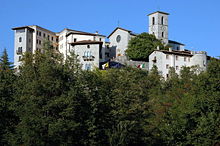
Early periods of local self-government
Slavic tribes settled the area in the late 6th century A.D. They settled on the border of the Lombard Kingdom, which comprised most of Northern ItalyNorthern Italy
Northern Italy is a wide cultural, historical and geographical definition, without any administrative usage, used to indicate the northern part of the Italian state, also referred as Settentrione or Alta Italia...
. Paulus Diaconus, a Lombard historian at the court of Charlemagne
Charlemagne
Charlemagne was King of the Franks from 768 and Emperor of the Romans from 800 to his death in 814. He expanded the Frankish kingdom into an empire that incorporated much of Western and Central Europe. During his reign, he conquered Italy and was crowned by Pope Leo III on 25 December 800...
, mentioned the local Slavs from the region in his magnum opus Historia Langobardorum. In the first two centuries, the Slavs were organized in independent communities. In the 9th century they were incorporated into the Frankish Empire
Frankish Empire
Francia or Frankia, later also called the Frankish Empire , Frankish Kingdom , Frankish Realm or occasionally Frankland, was the territory inhabited and ruled by the Franks from the 3rd to the 10th century...
, and they were Christianized by missionaries from Aquileia
Aquileia
Aquileia is an ancient Roman city in what is now Italy, at the head of the Adriatic at the edge of the lagoons, about 10 km from the sea, on the river Natiso , the course of which has changed somewhat since Roman times...
, then one of the most important centers of the Roman Catholic Church
Roman Catholic Church
The Catholic Church, also known as the Roman Catholic Church, is the world's largest Christian church, with over a billion members. Led by the Pope, it defines its mission as spreading the gospel of Jesus Christ, administering the sacraments and exercising charity...
in Northern Italy.
From the 9th century onward, the region belonged first to the Duchy of Friuli
Duchy of Friuli
The Duchy of Friuli was one of the great territorial Lombard duchies, the first to be established. It was an important buffer between the Lombard kingdom of Italy and the Slavs...
and later to the Patriarchate of Aquileia. After the dissolution of the Patriatchal State in 1420, the whole region was included in the Republic of Venice
Republic of Venice
The Republic of Venice or Venetian Republic was a state originating from the city of Venice in Northeastern Italy. It existed for over a millennium, from the late 7th century until 1797. It was formally known as the Most Serene Republic of Venice and is often referred to as La Serenissima, in...
. The Venetian authorities gave the local Slovenes full internal autonomy, on the condition that they would serve as border guards against the neighbouring Habsburg Empire. The local autonomy was practiced in small rural boroughs (called sosednje), which were in their turn organized into two large communities (banke), one in San Pietro degli Slavi
San Pietro al Natisone
San Pietro al Natisone is a comune in the Province of Udine in the Italian region Friuli-Venezia Giulia, located about 60 km northwest of Trieste and about 20 km northeast of Udine. it had a population of 2,212 and an area of 24.1 km²...
and the other in San Leonardo
San Leonardo, Italy
San Leonardo is a comune in the Province of Udine in the Italian region Friuli-Venezia Giulia, located about 60 km northwest of Trieste and about 25 km east of Udine. As of 31 December 2004, it had a population of 1,215 and an area of 27.0 km²...
. These self-governing boroughs had full authority over fiscal, legislative and judicial matters in their respective areas.
The Napoleonic and Austrian rule
In 1797, most of the Venetian Republic was annexed to the Habsburg Empire, including Slavia Veneta. The Habsburg authorities abolished the ancient privileges of the local Slovene populations, as they had already done with a similar system of autonomy in neighboring Tolmin CountyTolmin
Tolmin is a small town and municipality in the Littoral region of Slovenia.-Geography:Tolmin, the old town that gave the name to the entire area , is the largest settlement in the Upper Soča Valley , as well as its economic, cultural and administrative centre. It is located on a terrace above the...
in 1717. In 1805, the region was submitted to the Napoleonic rule, which did not restore the privileges, but replaced the old boroughs with French-style townships, led by government-appointed mayors. The old legal system based on common law
Common law
Common law is law developed by judges through decisions of courts and similar tribunals rather than through legislative statutes or executive branch action...
was replaced by the Code Napoleon. In 1813, the region fell again under Habsburg domain and in 1815 it was included in the Austrian
Austrian Empire
The Austrian Empire was a modern era successor empire, which was centered on what is today's Austria and which officially lasted from 1804 to 1867. It was followed by the Empire of Austria-Hungary, whose proclamation was a diplomatic move that elevated Hungary's status within the Austrian Empire...
administrative unit of Lombardy-Venetia. Most of the reforms introduced by the French authorities were kept. In 1866, the region became part of Italy by a referendum
Referendum
A referendum is a direct vote in which an entire electorate is asked to either accept or reject a particular proposal. This may result in the adoption of a new constitution, a constitutional amendment, a law, the recall of an elected official or simply a specific government policy. It is a form of...
, with the exception of the villages of Breginj and Livek which were included in the Austrian
Austria-Hungary
Austria-Hungary , more formally known as the Kingdoms and Lands Represented in the Imperial Council and the Lands of the Holy Hungarian Crown of Saint Stephen, was a constitutional monarchic union between the crowns of the Austrian Empire and the Kingdom of Hungary in...
County of Gorizia and Gradisca
Gorizia and Gradisca
The County of Gorizia and Gradisca was a Habsburg county in Central Europe, in what is now a multilingual border area of Italy and Slovenia. It was named for its two major urban centers, Gorizia and Gradisca d'Isonzo.-Province of the Habsburg Empire:...
.
Under the Kingdom of Italy

Italianization
Italianization or Italianisation is a term used to describe a process of cultural assimilation in which ethnically non or partially Italian people or territory become Italian. The process can be voluntary or forced...
and the local Slovene language was systematically pushed out of the public life. During this period, the region became a major focus of historians, linguists and ethnologists, interested in its archaic customs, language and common law. Scholars who wrote about Slavia Veneta included Jan Niecisław Baudouin de Courtenay, Simon Rutar
Simon Rutar
Simon Rutar , was a Slovene historian and geographer. He wrote primarily on the history and geography of the areas that are now part of the Slovenian Littoral, the Italian region of Friuli-Venezia Giulia and the Croatian counties of Istria and Primorsko-Goranska.- Biography :Rutar was born in a...
, Carlo Podrecca and Henrik Tuma.
In the last decades before World War I
World War I
World War I , which was predominantly called the World War or the Great War from its occurrence until 1939, and the First World War or World War I thereafter, was a major war centred in Europe that began on 28 July 1914 and lasted until 11 November 1918...
, several cultural and social activists, mostly Roman Catholic priests, started setting up Slovene cultural institutions and associations. The most prominent of them was bishop
Bishop
A bishop is an ordained or consecrated member of the Christian clergy who is generally entrusted with a position of authority and oversight. Within the Catholic Church, Eastern Orthodox, Oriental Orthodox Churches, in the Assyrian Church of the East, in the Independent Catholic Churches, and in the...
and author Ivan Trinko. This trend became even more pronounced after the annexation of the Julian March
Julian March
The Julian March is a former political region of southeastern Europe on what are now the borders between Croatia, Slovenia, and Italy...
to the Kingdom of Italy in 1920, when a large Slovene-speaking minority was included within the borders of the Italian state.
The development was stopped by the Fascist Italianization which started in the 1920s and persecuted all public and private use of Slovene language. However, Italian scholars in those years pinpointed that the Slovene dialects of the "Slavia Italiana", as the region was referred, and were mutually unintelligible with standard Slovene, due to a divergent historical development and a significant number of Italian and Friulian influences on the local vocabulary. They considered these dialects as archaic Slavic dialects, not related to the Slovene language. This claim was especially emphasized in the case of the Resian dialect
Resian dialect
The Resian dialect is a distinct dialect of Slovene spoken in the Resia Valley, Province of Udine, Italy, close to the border with Slovenia...
, which is both phonetically and syntactically very different from standard Slovene, and maintains archaisms lost in all other Slovene dialects. Despite this emphasis on the differences between standard Slovene and the dialects of the Slavia Italiana, the very same policies of Italianization that were first applied to the neighboring Julian March
Julian March
The Julian March is a former political region of southeastern Europe on what are now the borders between Croatia, Slovenia, and Italy...
were extended to the Slavia, thus paradoxically bringing the local populations, which diverged in their historical experiences, closer together.
This feature was further emphasized by the Slovene anti-fascist and nationalist propaganda (both left-wing and conservative-Catholic), which frequently portrayed the Venetian Slovenia as the symbol of Slovene resistance to Fascist Italianization, often simplifying the complex linguistic and social realities of the region. The most famous literary portrayal was written in 1938 by the Slovene writer France Bevk
France Bevk
France Bevk was a Slovene writer, poet and translator. He also wrote under the pseudonym Pavle Sedmak.-Biography:...
from Gorizia
Gorizia
Gorizia is a town and comune in northeastern Italy, in the autonomous region of Friuli Venezia Giulia. It is located at the foot of the Julian Alps, bordering Slovenia. It is the capital of the Province of Gorizia, and it is a local center of tourism, industry, and commerce. Since 1947, a twin...
in his novel "The Vicar Martin Čedermac" (Kaplan Martin Čedermac). Set in Venetian Slovenia, the novel, published under a pseudonym in the Yugoslav
Kingdom of Yugoslavia
The Kingdom of Yugoslavia was a state stretching from the Western Balkans to Central Europe which existed during the often-tumultuous interwar era of 1918–1941...
town of Ljubljana
Ljubljana
Ljubljana is the capital of Slovenia and its largest city. It is the centre of the City Municipality of Ljubljana. It is located in the centre of the country in the Ljubljana Basin, and is a mid-sized city of some 270,000 inhabitants...
, described the efforts of a local Roman Catholic priest to preserve the use of Slovene language in church against the policies of the Italian Fascist
Italian Fascism
Italian Fascism also known as Fascism with a capital "F" refers to the original fascist ideology in Italy. This ideology is associated with the National Fascist Party which under Benito Mussolini ruled the Kingdom of Italy from 1922 until 1943, the Republican Fascist Party which ruled the Italian...
regime. The novel became a best seller in Slovenia and the term Čedermac has been since used as a synonym for the clergy persecuted by the Fascists in the Italian-administered Julian March
Julian March
The Julian March is a former political region of southeastern Europe on what are now the borders between Croatia, Slovenia, and Italy...
and in the Slavia Veneta.
During World War II
World War II
World War II, or the Second World War , was a global conflict lasting from 1939 to 1945, involving most of the world's nations—including all of the great powers—eventually forming two opposing military alliances: the Allies and the Axis...
the Slovene partisan resistance penetrated in the region. After the Italian armistice, in early September 1943, most of the region was liberated by Yugoslav partisan insurgency, led by the Liberation Front of the Slovenian People
Liberation Front of the Slovenian People
On 26 April 1941 in Ljubljana the Anti-Imperialist Front was established. It was to promote "an international massive movement" to "liberate the Slovenian nation" whose "hope and example was the Soviet Union"...
, which established its own temporary administration, known as the Kobarid Republic. In early November 1943, the Nazi German forces crushed the insurgency, and incorporated the whole area into the Operational Zone Adriatic Coast. In 1944, the Italian resistance movement
Italian resistance movement
The Italian resistance is the umbrella term for the various partisan forces formed by pro-Allied Italians during World War II...
also became active in the mountains of Slavia Veneta. Tensions between the Yugoslav (Slovene) and Italian resistance movements rose. The Liberation Front of the Slovenian People wanted to annex the region to a Yugoslav Communist federation
Socialist Federal Republic of Yugoslavia
The Socialist Federal Republic of Yugoslavia was the Yugoslav state that existed from the abolition of the Yugoslav monarchy until it was dissolved in 1992 amid the Yugoslav Wars. It was a socialist state and a federation made up of six socialist republics: Bosnia and Herzegovina, Croatia,...
, while the Italian resistance was split between the Communists
Communist Party of Italy
The Communist Party of Italy was a communist political party in Italy which existed from 1921 to 1926. That year it was outlawed by Benito Mussolini's fascist regime. In 1943, the name was changed to the Italian Communist Party.-Foundation:The forerunner of the party was the Communist Faction...
who partially supported the Yugoslav claims, and the Democratic Nationalists who wanted Slavia Veneta to remain part of Italy. In February 1945, the so-called Porzus massacre
Porzûs massacre
The Porzûs massacre was an episode of the Italian resistance during late World War II, occurring on 7 February 1945. It saw the process and the execution of several partisans belonging to the Brigata Osoppo, a formation of Catholic inspiration, by Communist partisans of the Gruppi di Azione...
occurred, in which the Yugoslav partisans and the Italian Communists killed several members of the Italian non-Communist resistance members. In May 1945 the whole area was liberated by the Yugoslav People's Army
Yugoslav People's Army
The Yugoslav People's Army , also referred to as the Yugoslav National Army , was the military of the Socialist Federal Republic of Yugoslavia.-Origins:The origins of the JNA can...
, which however withdrew few weeks later.
1945-1977

Regions of Italy
The regions of Italy are the first-level administrative divisions of the state, constituting its first NUTS administrative level. There are twenty regions, of which five are constitutionally given a broader amount of autonomy granted by special statutes....
of Friuli-Venezia Giulia
Friuli-Venezia Giulia
Friuli–Venezia Giulia is one of the twenty regions of Italy, and one of five autonomous regions with special statute. The capital is Trieste. It has an area of 7,858 km² and about 1.2 million inhabitants. A natural opening to the sea for many Central European countries, the region is...
. The policies of Italianization
Italianization
Italianization or Italianisation is a term used to describe a process of cultural assimilation in which ethnically non or partially Italian people or territory become Italian. The process can be voluntary or forced...
continued. The existence of a Slovene minority was not recognized and all use of Slovene language was discouraged by the authorities and persecuted by militant nationalist associations. Between 1945 and 1947, Slavia Veneta was a border region with the Communist Bloc, and several para-military organizations were established in the area, which also acted against Slovene culture and minority organizations. The region was listed as a special operational zone of the Operation Gladio
Operation Gladio
Operation Gladio is the codename for a clandestine NATO "stay-behind" operation in Italy after World War II. Its purpose was to continue anti-communist actions in the event of a shift to a Communist party led government...
, a clandestine NATO "stay-behind
Stay-behind
In a stay-behind operation, a country places secret operatives or organisations in its own territory, for use in the event that the territory is overrun by an enemy. If this occurs, the operatives would then form the basis of a resistance movement, or would act as spies from behind enemy lines...
" operation in Italy after World War II, intended to counter an eventual Warsaw Pact
Warsaw Pact
The Warsaw Treaty Organization of Friendship, Cooperation, and Mutual Assistance , or more commonly referred to as the Warsaw Pact, was a mutual defense treaty subscribed to by eight communist states in Eastern Europe...
invasion of Western Europe
Western Europe
Western Europe is a loose term for the collection of countries in the western most region of the European continents, though this definition is context-dependent and carries cultural and political connotations. One definition describes Western Europe as a geographic entity—the region lying in the...
. The activists of the Gladio operation were frequently also radical Italian nationalists who were given free hands to terrorize the local Slovene communities.
A wide phenomenon of emigration
Emigration
Emigration is the act of leaving one's country or region to settle in another. It is the same as immigration but from the perspective of the country of origin. Human movement before the establishment of political boundaries or within one state is termed migration. There are many reasons why people...
also happened during the same period. Many of the villages lost more than two thirds of their populations, as Slovenes from Slavia Veneta moved to larger urban areas in Northern Italy
Northern Italy
Northern Italy is a wide cultural, historical and geographical definition, without any administrative usage, used to indicate the northern part of the Italian state, also referred as Settentrione or Alta Italia...
, Switzerland
Switzerland
Switzerland name of one of the Swiss cantons. ; ; ; or ), in its full name the Swiss Confederation , is a federal republic consisting of 26 cantons, with Bern as the seat of the federal authorities. The country is situated in Western Europe,Or Central Europe depending on the definition....
and Germany
Germany
Germany , officially the Federal Republic of Germany , is a federal parliamentary republic in Europe. The country consists of 16 states while the capital and largest city is Berlin. Germany covers an area of 357,021 km2 and has a largely temperate seasonal climate...
. In May and September 1976, two earthquakes hit the region, provoking a large scale destruction and hundreds of deaths. Political persecution, emigration and natural catastrophes are the reason why the period between 1945 and 1977 has been frequently called by Slovenian authors "The Dark Years of the Slavia Veneta" .
After 1977
Although the area was largely depopulated after 1977, several positive developments took place. The political pressure was lifted after the Treaty of OsimoTreaty of Osimo
The Treaty of Osimo was signed on 10 November 1975 by the Socialist Federal Republic of Yugoslavia and the Italian Republic in Osimo, Italy, to definitely divide the Free Territory of Trieste between the two states...
between Italy and Yugoslavia, and a Slovene cultural revival started to take place in the early 1980s. In the early 1990s, the first elementary and high school in Slovene language was established in San Pietro al Natisone
San Pietro al Natisone
San Pietro al Natisone is a comune in the Province of Udine in the Italian region Friuli-Venezia Giulia, located about 60 km northwest of Trieste and about 20 km northeast of Udine. it had a population of 2,212 and an area of 24.1 km²...
, and in 2001, the Italian state recognized the Slovene minority living in the area, guaranteeing it full rights. After Slovenia's entry into the European Union
European Union
The European Union is an economic and political union of 27 independent member states which are located primarily in Europe. The EU traces its origins from the European Coal and Steel Community and the European Economic Community , formed by six countries in 1958...
in 2004, the relations between the Slavia Veneta and the bordering Goriška
Goriška
Goriška is a traditional region in western Slovenia on the border with Italy. The name means "the Gorizia region" because it is named after Gorizia, Italy. It is part of the wider traditional region of the Slovenian Littoral . Its principal urban center is Nova Gorica...
region have intensified.
Language, culture and religion

Natisone
The Natisone is a river that flows for some time as a border river between Slovenia and Italy, continues in Slovenia and then crosses the border and continues in Eastern Friuli, in north-eastern Italy...
dialect, the Torre
Torre River
The Torre is a river of the Province of Udine in Friuli-Venezia Giulia, north-east Italy. It is the main right tributary of the Isonzo; the Torre together with its own tributary the Natisone drain a large part of the Isonzo basin....
dialect and the Resian dialect
Resian dialect
The Resian dialect is a distinct dialect of Slovene spoken in the Resia Valley, Province of Udine, Italy, close to the border with Slovenia...
(resiano). Almost all of the inhabitants are fluent in the Italian language
Italian language
Italian is a Romance language spoken mainly in Europe: Italy, Switzerland, San Marino, Vatican City, by minorities in Malta, Monaco, Croatia, Slovenia, France, Libya, Eritrea, and Somalia, and by immigrant communities in the Americas and Australia...
, which is taught in schools and present in the media and in the administration. The Friulian language
Friulian language
Friulan , is a Romance language belonging to the Rhaeto-Romance family, spoken in the Friuli region of northeastern Italy. Friulan has around 800,000 speakers, the vast majority of whom also speak Italian...
is also widespread, especially in the municipalities of Montenars
Montenars
Montenars is a comune in the Province of Udine in the Italian region Friuli-Venezia Giulia, located about 80 km northwest of Trieste and about 20 km north of Udine. , it had a population of 554 and an area of 20.6 km²...
, Tarcento
Tarcento
Tarcento is a town and comune in the province of Udine, in the Friuli-Venezia Giulia region of north-eastern Italy.-History:...
, Nimis, Attimis
Attimis
Attimis is a comune in the Province of Udine in the Italian region Friuli-Venezia Giulia, located about 70 km northwest of Trieste and about 14 km northeast of Udine. As of 31 December 2004, it had a population of 1,909 and an area of 33.3 km²...
, Torreano
Torreano
Torreano is a comune in the Province of Udine in the Italian region Friuli-Venezia Giulia, located about 60 km northwest of Trieste and about 15 km northeast of Udine, on the border with Slovenia. As of 31 December 2004, it had a population of 2,301 and an area of 34.9 km²...
, and Prepotto
Prepotto
Prepotto is a comune in the Province of Udine in the Italian region Friuli-Venezia Giulia, located about 50 km northwest of Trieste and about 20 km east of Udine, on the border with Slovenia...
; in many villages in these municipalities, the Friulian language has already replaced Slovene as the first language
First language
A first language is the language a person has learned from birth or within the critical period, or that a person speaks the best and so is often the basis for sociolinguistic identity...
of communication. Because of the lack of education in Slovene, most of the Slovenes do not master the standard Slovene language. Many don't understand it either, especially in the areas where the Slovenian TV and radio are not accessible, since standard Slovene is not entirely intelligible with the dialects spoken in the region. They are however completely intelligible with the neighbouring Slovene dialects in the Slovenian Littoral
Slovenian Littoral
The Slovenian Littoral is a historical region of Slovenia. Its name recalls the historical Habsburg crown land of the Austrian Littoral, of which the Slovenian Littoral was a part....
, especially the ones spoken in the upper Isonzo valley and in the Brda sub-region of Goriška
Goriška
Goriška is a traditional region in western Slovenia on the border with Italy. The name means "the Gorizia region" because it is named after Gorizia, Italy. It is part of the wider traditional region of the Slovenian Littoral . Its principal urban center is Nova Gorica...
.
The vast majority of the people belong to the Roman Catholic Church
Roman Catholic Church
The Catholic Church, also known as the Roman Catholic Church, is the world's largest Christian church, with over a billion members. Led by the Pope, it defines its mission as spreading the gospel of Jesus Christ, administering the sacraments and exercising charity...
and the religion plays an important role in the local culture. The Roman Catholic priests have traditionally been the most important promoters of the local Slovene language and culture in Slavia Veneta.
Slavia Veneta is famous for its rich folk traditions. Numerous folk
Folk music
Folk music is an English term encompassing both traditional folk music and contemporary folk music. The term originated in the 19th century. Traditional folk music has been defined in several ways: as music transmitted by mouth, as music of the lower classes, and as music with unknown composers....
and ethno music
World music
World music is a term with widely varying definitions, often encompassing music which is primarily identified as another genre. This is evidenced by world music definitions such as "all of the music in the world" or "somebody else's local music"...
bands come from the region, and many of them are extremely popular throughout Slovenia
Slovenia
Slovenia , officially the Republic of Slovenia , is a country in Central and Southeastern Europe touching the Alps and bordering the Mediterranean. Slovenia borders Italy to the west, Croatia to the south and east, Hungary to the northeast, and Austria to the north, and also has a small portion of...
and the Friuli Venezia Giulia. The most famous of these bands are probably the Beneški fantje
Beneški Fantje
Beneški fantje is a Slovene folk music band from the region of Venetian Slovenia, in Italy. It is the oldest Slovene popular musical ensemble. Founded by Edi Bucovaz from San Leonardo, Italy in 1952, the band has remained active for more than fifty years....
("Venetian Lads"), which are considered to be oldest still existing Slovene band. Besides its archaic traditional music and dances, the Resia
Resia
Resia is a comune in the Province of Udine in the Italian region of Friuli-Venezia Giulia. It is located in the Alpine valley with the same name, about 90 km northwest of Trieste and about 35 km north of Udine, on the border with Slovenia and around 20 km from the border with Austria...
valley is also famous for its folk tales, which were edited and translated into standard Slovene language by the Slovene scholar Milko Matičetov and published by the largest publishing house in Slovenia, Mladinska knjiga, in 1976. They have been re-published in eight editions since, and have had a huge impact in popularizing the Venetian Slovene folk culture in Slovenia.
Since the late 1980s, Slavia Veneta has also emerged as one of the major centres of high quality Slovene dialect poetry. The most famous poets from the region are Silvana Paletti, Francesco Bergnach and Marina Cernetig.
Since 1994, the artistic project Stazione di Topolò - Postaia Topolove or "Topolò Station" takes place every summer in the small village of Topolò . The project, which is the most important cultural and artistic event in the region, is an attempt to bring together contemporary visual art with and the local folk traditions.
Notable people from the region
- Francesco Bergnach, Slovene dialect poet;
- Edi Bucovaz, musician;
- Marina Cernetig, Slovene dialect poet;
- Luigi Faidutti, FriulianFriuliansFriulians or Furlans are a linguistic minority living in Italy and elsewhere. About 530,000 of them live in the provinces of Udine and Pordenone and in parts of Gorizia and Venice. Their language, the Friulian language, is the second largest minority language in Italy. About 170,000 Friulians live...
politician in Austria-Hungary; - Anton Klodič Sabladoski, philologian, linguist and poet;
- Gianni Osgnach, sculptor;
- Silvana Paletti, poet in the Resian dialectResian dialectThe Resian dialect is a distinct dialect of Slovene spoken in the Resia Valley, Province of Udine, Italy, close to the border with Slovenia...
; - Carlo Podrecca, historian;
- Graziano Podrecca, fotographer;
- Stefano Podrecca, physician;
- Peter Podreka, author;
- Rudi Šimac, politician and author (from BreginjBreginjBreginj is a village in the Kobarid municipality in the Littoral region of Slovenia.Until the 18th century, Breginj was part of the Republic of Venice, and it is still considered as part of the historical region known as the Venetian Slovenia...
); - Jožef ŠkolčJožef ŠkolcJožef Školč is a Slovenian left liberal politician. He is currently serving as State Secretary for the Relations with NGOs in the Cabinet of the Prime Minister of Slovenia....
, politician (from Breginj), founder and first president of the Liberal Democratic PartyLiberal Democracy of SloveniaLiberal Democracy of Slovenia is a liberal political party in Slovenia. It is led by Katarina Kresal and is a member of the Liberal International and the European Liberal Democrat and Reform Party...
; - Ivan Trinko, Roman Catholic prelate, translator and author;
- Natalino Božo Zuanella, priest, historian and activist;
- Pietro Fanna, professional soccer player.
Sources
- Tadej Koren, Beneška Slovenija po drugi svetovni vojni: fenomen paravojaških enot (Ljubljana: Univerza v Ljubljani, 2005).
- Branko MarušičBranko MarušičBranko Marušič is a Slovenian historian.Born to an upper middle class Slovene family in Gorizia, Italy, he moved with the family to the Yugoslav side of the Yugoslav-Italian border in 1947, and has been living in Solkan since...
, Primorski čas pretekli (Koper, Trieste, Nova Gorica: Lipa - Založništvo tržaškega tiska - Goriški muzej, 1985). - Venezia, una republica ai confini (Mariano del Friuli: Edizioni della Laguna, 2004).
- Faustino Nazzi, Alle origini della "Gladio": la questione della lingua slovena nella vita religiosa della Slavia Friulana nel secondo dopoguerra (Udine: La Patrie dal Friûl, 1997).
- Natalino Zuanella, Gli anni bui della Slavia: attività delle organizzazioni segrete nel Friuli orientale (Cividale del Friuli: Società Cooperativa Editrice Dom, 1996).
Further reading
- Lavo ČermeljLavo CermeljLavo Čermelj, Italianized in Lavo Cermeli was a Slovene physicist, political activist, publicist and author...
, Venetian Slovenia (Belgrade: Yugoslav institute for international affairs, 1946). - Bogo GrafenauerBogo GrafenauerBogo Grafenauer was a Slovenian historian, who mostly wrote about medieval history in the Slovene Lands. Together with Milko Kos, Fran Zwitter, and Vasilij Melik, he was one of the founders of the so-called Ljubljana school of historiography.- Early life :He was born in Ljubljana in a well...
, "The Autonomy of Venetian Slovenia" in Slovenci v Italiji po drugi svetovni vojni (Ljubljana, Koper, Trieste: Cankarjeva založba, Primorski tisk, Založništvo tržaškega tiska, 1975), 105-109. - Svetozar Ilešič, "Beneška Slovenija" in Encyclopedia of YugoslaviaEncyclopedia of YugoslaviaThe Encyclopedia of Yugoslavia was the national encyclopedia of the Socialist Federal Republic of Yugoslavia. It was published by the Yugoslav Lexicographical Institute under the direction of Miroslav Krleža...
, ed. by Miroslav KrležaMiroslav KrležaMiroslav Krleža was a leading Croatian and Yugoslav writer and the dominant figure in cultural life of both Yugoslav states, the Kingdom and the Republic . He has often been proclaimed the greatest Croatian writer of the 20th century.-Biography:Miroslav Krleža was born in Zagreb, modern-day...
(Zagreb: Leksikografski zavod FNRJ, 1955-1971). - Carlo Podrecca, Slavia italiana (Cividale del Friuli: Fulvio Giovanni, 1884).
- Simon RutarSimon RutarSimon Rutar , was a Slovene historian and geographer. He wrote primarily on the history and geography of the areas that are now part of the Slovenian Littoral, the Italian region of Friuli-Venezia Giulia and the Croatian counties of Istria and Primorsko-Goranska.- Biography :Rutar was born in a...
, Beneška Slovenija (Ljubljana: Slovenska maticaSlovenska maticaSlovenska matica , also known as Matica slovenska, is the second-oldest publishing house in Slovenia, founded in the 19th century as an institution for the scholarly and cultural progress of Slovenes...
, 1899). - Gaetano SalveminiGaetano SalveminiGaetano Salvemini was an Italian anti-fascist politician, historian and writer.- Biography :Salvemini was born in Molfetta, Apulia....
, Racial minorities under fascism in Italy (Chicago : The Women's International League for Peace and Freedom, 1934). - Henrik Tuma, Avtonomna uprava Beneška Slovenije (Ljubljana: Slovenski pravnik, 1933).
- Sergij VilfanSergij VilfanSergij Vilfan , was a Slovenian jurist and historian, part of the so-called Ljubljana school of historiography, and member of the Slovenian Academy of Sciences and Arts....
, L'autonomia della Slavia Italiana nel periodo patriarcale e veneto (Trieste-San Pietro: Quaderni Nadiža, 1987). - Fran ZwitterFran ZwitterFran Zwitter was a Slovenian historian. He is considered, together with Milko Kos, Bogo Grafenauer and Vasilij Melik, the co-founder of the so-called Ljubljana school of historiography.- Life and work :...
, The Venetian Slovenes (Ljubljana: Institute for Ethnic Studies, 1946).