
All Topics  
Republic of Macedonia


   Email Print
   Bookmark   Link


Republic of Macedonia


The Republic of Macedonia , (transliterated: Republika Makedonija ), often referred to simply as Macedonia, is a landlocked
Landlocked

A landlocked country is commonly defined as one enclosed or nearly enclosed by land. As of 2008, there are 44 landlocked countries in the world....
 country on the Balkan peninsula
Balkans

The Balkans is the historical name of a geographic subregion of southeastern Europe. The region takes its name from the Balkan Mountains, which run through the centre of Bulgaria into eastern Serbia....
 in southeastern Europe
Europe

Europe is, conventionally, one of the world's seven continents. Comprising the westernmost peninsula of Eurasia, Europe is generally divided from Asia to its east by the water divide of the Ural Mountains, the Ural , the Caspian Sea, and by the Caucasus Mountains to the southeast....
. It is bordered by Serbia
Serbia

Serbia , officially the Republic of Serbia , is a country in Central Europe and Balkans Europe, covering the southern part of the Pannonian Plain and the central part of the Balkans....
 to the north, Bulgaria
Bulgaria

The state of Bulgaria , Scientific transliteration Balgarija, officially the Republic of Bulgaria has played a significant role in the Balkans in south-eastern Europe for over fourteen centuries....
 to the east, Greece
Greece

Greece , officially the Hellenic Republic , is a country in southeastern Europe, situated on the southern end of the Balkans. It has borders with Albania, Bulgaria and the former Yugoslav Republic of Macedonia to the north, and Turkey to the east....
 to the south and Albania
Albania

Albania , officially the Republic of Albania , is a country in Balkans. It is bordered by Greece to the south-east, Montenegro to the north, Kosovo to the northeast, and the Republic of Macedonia to the east....
 to the west. However the foreign relations between Kosovo
Kosovo

Kosovo is a disputed region in the Balkans. Its majority is governed by the partially-recognised Republic of Kosovo . Serbia does not recognise the secession of Kosovo and considers it a United Nations-governed entity within its sovereign territory, the Autonomous Province of Kosovo and Metohija that was re-created by Slobodan M...
 and Republic of Macedonia were officialised on 9 October 2008 when the latter recognized Kosovo after its declaration of independence
2008 Kosovo declaration of independence

The 2008 Kosovo declaration of independence was an act of the Provisional Institutions of Self-Government Assembly of Kosovo, adopted on 17 February 2008 by quorum , which declared Kosovo to be independent from Serbia....
 from Serbia
Serbia

Serbia , officially the Republic of Serbia , is a country in Central Europe and Balkans Europe, covering the southern part of the Pannonian Plain and the central part of the Balkans....
 on 17 February of the same year.

It was admitted to the United Nations
United Nations

The United Nations is an international organization whose stated aims are to facilitate cooperation in international law, international security, economic development, Social change, human rights and achieving world peace....
 in 1993 under the provisional reference the former Yugoslav Republic of Macedonia, commonly abbreviated to FYROM, pending resolution of a naming dispute with Greece
Macedonia naming dispute

The Macedonia naming dispute between Greece and the Republic of Macedonia stems from the disagreement over the use of the name Macedonia . Greece opposes the post-1991 constitutional name of its northern neighbour, citing the lack of disambiguation between it and the adjacent Greek region of Macedonia ....
.


Discussion
Ask a question about 'Republic of Macedonia'
Start a new discussion about 'Republic of Macedonia'
Answer questions from other users
Full Discussion Forum


Encyclopedia


The Republic of Macedonia , (transliterated: Republika Makedonija ), often referred to simply as Macedonia, is a landlocked
Landlocked

A landlocked country is commonly defined as one enclosed or nearly enclosed by land. As of 2008, there are 44 landlocked countries in the world....
 country on the Balkan peninsula
Balkans

The Balkans is the historical name of a geographic subregion of southeastern Europe. The region takes its name from the Balkan Mountains, which run through the centre of Bulgaria into eastern Serbia....
 in southeastern Europe
Europe

Europe is, conventionally, one of the world's seven continents. Comprising the westernmost peninsula of Eurasia, Europe is generally divided from Asia to its east by the water divide of the Ural Mountains, the Ural , the Caspian Sea, and by the Caucasus Mountains to the southeast....
. It is bordered by Serbia
Serbia

Serbia , officially the Republic of Serbia , is a country in Central Europe and Balkans Europe, covering the southern part of the Pannonian Plain and the central part of the Balkans....
 to the north, Bulgaria
Bulgaria

The state of Bulgaria , Scientific transliteration Balgarija, officially the Republic of Bulgaria has played a significant role in the Balkans in south-eastern Europe for over fourteen centuries....
 to the east, Greece
Greece

Greece , officially the Hellenic Republic , is a country in southeastern Europe, situated on the southern end of the Balkans. It has borders with Albania, Bulgaria and the former Yugoslav Republic of Macedonia to the north, and Turkey to the east....
 to the south and Albania
Albania

Albania , officially the Republic of Albania , is a country in Balkans. It is bordered by Greece to the south-east, Montenegro to the north, Kosovo to the northeast, and the Republic of Macedonia to the east....
 to the west. However the foreign relations between Kosovo
Kosovo

Kosovo is a disputed region in the Balkans. Its majority is governed by the partially-recognised Republic of Kosovo . Serbia does not recognise the secession of Kosovo and considers it a United Nations-governed entity within its sovereign territory, the Autonomous Province of Kosovo and Metohija that was re-created by Slobodan M...
 and Republic of Macedonia were officialised on 9 October 2008 when the latter recognized Kosovo after its declaration of independence
2008 Kosovo declaration of independence

The 2008 Kosovo declaration of independence was an act of the Provisional Institutions of Self-Government Assembly of Kosovo, adopted on 17 February 2008 by quorum , which declared Kosovo to be independent from Serbia....
 from Serbia
Serbia

Serbia , officially the Republic of Serbia , is a country in Central Europe and Balkans Europe, covering the southern part of the Pannonian Plain and the central part of the Balkans....
 on 17 February of the same year.

It was admitted to the United Nations
United Nations

The United Nations is an international organization whose stated aims are to facilitate cooperation in international law, international security, economic development, Social change, human rights and achieving world peace....
 in 1993 under the provisional reference the former Yugoslav Republic of Macedonia, commonly abbreviated to FYROM, pending resolution of a naming dispute with Greece
Macedonia naming dispute

The Macedonia naming dispute between Greece and the Republic of Macedonia stems from the disagreement over the use of the name Macedonia . Greece opposes the post-1991 constitutional name of its northern neighbour, citing the lack of disambiguation between it and the adjacent Greek region of Macedonia ....
. Many other international institutions and countries have recognised the country under the same reference, although an overall majority of countries recognise it under its constitutional name.

The Republic of Macedonia lies in the northwestern third of the wider geographical region of Macedonia
Macedonia (region)

Macedonia is a geographical and Historical regions of the Balkan Peninsula in southeastern Europe whose area was re-defined in the early 20th century....
, with about 40% of the region's population. The capital is Skopje
Skopje

Skopje is the Capital of and List of cities in the Republic of Macedonia by population in the Republic of Macedonia, with more than a quarter of the population of the country, as well as its political, cultural, economic, and academic centre....
, with 506,926 inhabitants according to a 2004 census, and there are a number of smaller cities, notably Bitola
Bitola

Bitola is a city in the southwestern part of the Republic of Macedonia. The city is an administrative, cultural, industrial, commercial, and educational centre....
, Kumanovo
Kumanovo

Kumanovo is th? List of cities in the Republic of Macedonia by population in the Republic of Macedonia and is the seat of Kumanovo Municipality which is the List of municipalities in the Republic of Macedonia by population in the country....
, Prilep
Prilep

Prilep is a city of 66,246 citizens in the Republic of Macedonia and the List of cities in the Republic of Macedonia by population in the country....
, Tetovo
Tetovo

Tetovo is a city in the northwestern part of Republic of Macedonia, built on the foothills of ?ar Mountain and divided by the Pena River.The city covers an area of at above sea level, with a population of 86,580 citizens in the municipality.....
, Ohrid
Ohrid

Ohrid is a city on the eastern shore of Lake Ohrid in the Republic of Macedonia. It has about 42,000 inhabitants, making it the List of cities in the Republic of Macedonia by population in the country....
, Veles
Veles (city)

Veles is a city in the center of the Republic of Macedonia on the Vardar river. The city of Veles is the seat of Veles Municipality.Name...
, Štip
Štip

?tip is the largest city in the eastern part of the Republic of Macedonia. Located at the intersection of the Lakavica, Ovce Pole, and Kocani valleys, it has existed at least 2000 years, and as of 2002, it had a population of about 47,000....
, Kocani
Kocani

Kocani is a town away from Skopje, situated in the Eastern part of the Republic of Macedonia, with population of 28 330. The town of Kocani is the seat of Kocani Municipality....
, Gostivar
Gostivar

Gostivar , is a city in the Republic of Macedonia, located in the upper Polog valley region. It is one of the largest municipalities in the country with a population of 81,042, and the town also covers ....
 and Strumica
Strumica

Strumica is a town situated in the south-east of the Republic of Macedonia . The population is close to 55,000 with an absolute Macedonian majority ....
. It has more than 50 lakes and sixteen mountains higher than 2,000 meters (6,550 ft).

The country is a member of the UN
United Nations

The United Nations is an international organization whose stated aims are to facilitate cooperation in international law, international security, economic development, Social change, human rights and achieving world peace....
 and the Council of Europe
Council of Europe

The Council of Europe is the oldest international organisation working towards European integration, having been founded in 1949. It has a particular emphasis on legal standards, human rights, democracy development, the rule of law and cultural co-operation....
 and a member of La Francophonie
La Francophonie

La Francophonie, or the Francophonie, is an international organization of polities and governments with French language as the mother or customary language, wherein a significant proportion of people are francophone or where there is a notable affiliation with the French language or Culture of France....
, the World Trade Organization
World Trade Organization

The World Trade Organization is an international organization designed to supervise and Free trade international trade. The WTO came into being on 1 January 1995, and is the successor to the General Agreement on Tariffs and Trade , which was created in 1947, and continued to operate for almost five decades as a de facto international org...
 (WTO), and the Organization for Security and Cooperation in Europe. Since December 2005 it is also a candidate for joining the European Union
Accession of the former Yugoslav Republic of Macedonia to the European Union

The accession of the former Yugoslav Republic of Macedonia to the European Union is the highest strategic priority for the country's government....
 and has applied for NATO
NATO

The North Atlantic Treaty Organization , also called the Atlantic Alliance, is a military alliance established by the signing of the North Atlantic Treaty on 4 April 1949....
 membership.

History


The lands governed by the Republic of Macedonia were previously the southernmost part of the Socialist Federative Republic of Yugoslavia
Yugoslavia

File:LocationYugoslavia2.pngYugoslavia is a term that describes three political entities that existed successively on the Balkan Peninsula in Europe, during most of the 20th century....
. Its today international borders were fixed roughly as it was part of the SFR Yugoslavia shortly after the World War II
World War II

World War II, or the Second World War , was a global military conflict which involved a Participants in World War II, including all of the great powers, organised into two opposing military alliances: the Allies of World War II and the Axis powers....
. In 1944, the Anti-Fascist Assembly for the National Liberation of Macedonia declared the "People's Republic of Macedonia" as a separate nation within federal Yugoslavia.

Ancient history of the region

The first recorded states on the territory of today's Republic of Macedonia was the kingdom of Paionia
Paionia

Paionia or Paeonia was in ancient geography, the land of the Paeonians , the exact boundaries of which, like the early history of its inhabitants, are very obscure but they were in the region of Thrace....
, which covered the northern and eastern regions of the Axius
Vardar

The Vardar or Axios is the longest and major river in the Republic of Macedonia and also a major river of Greece. It is 388 kilometres long, and drains an area of around 25 000 km?....
 River valley and the kingdom of Macedon
Macedon

Macedon or Macedonia was the name of a monarchy centred in the northernmost part of ancient Greece. The homeland of the ancient Macedonians, it was bordered by the kingdom of Epirus to the west and the region of Thrace to the east....
 which occupied the Lyncestis and Pelagonia
Pelagonia

Pelagonia was an ancient region of Europe later incorporated into Macedon. It was roughly bounded by Dardania to the far north, Illyria to the west and north, Paionia to the east, and Lynkestis to the south and west....
 regions. Philip II of Macedon
Philip II of Macedon

Philip II of Macedon,...
 took over the southernmost regions of Paeonia in 336 BC and founded the city of Heraclea Lyncestis
Heraclea Lyncestis

Heraclea Lyncestis also spelled Herakleia Lynkestis, was an Ancient Greece city in the north-western region of the ancient kingdom of Macedon....
, in what is now Bitola. Philip's son Alexander the Great
Alexander the Great

Alexander the Great , also known as Alexander III of Macedon was an ancient Greeks King of Macedon . He was one of the most successful military commanders of all time and is presumed undefeated in battle....
 conquered the remainder of Paeonia and incorporated it in his empire. Subsequently the territory was conquered by Rome, and the region became part of two Roman provinces. The greater part was within Macedonia Salutaris
Macedonia (Roman province)

The Roman province of Macedonia was officially established in 146 BC, after the Roman general Quintus Caecilius Metellus Macedonicus defeated Andriscus of Macedon in 148 BC, and after the four client republics established by Rome in the region were dissolved....
, but the northern border regions, inhabited by the Dardani
Dardani

The Dardani were an ancient Balkan tribe, of mixed Thraco-Illyrian origin. In the 1st century BC, they invaded the Roman Empire province of Macedonia together with the Scordisci and the Maedi....
, became a part of Moesia Superior. By 400 AD the Paeonians had lost their identity, and Paeonia
Paionia

Paionia or Paeonia was in ancient geography, the land of the Paeonians , the exact boundaries of which, like the early history of its inhabitants, are very obscure but they were in the region of Thrace....
 was merely a geographic term within the Macedonian region.

Medieval period

During the 580s, Byzantine
Byzantine Empire

Byzantine Empire and Eastern Roman Empire are conventional names used to describe the Roman Empire during the Middle Ages, centered on its capital of Constantinople....
 literature attests to the Slavs raiding Byzantine territories in the region of Macedonia. The Slavic peoples that settled in the region of Macedonia accepted Christianity as their own religion around the 9th century, during the reign of prince Boris I of Bulgaria
Boris I of Bulgaria

Boris I or sometimes Boris-Mihail , also known as Bogoris was the ruler of Bulgaria 852–889. At the time of his baptism in 864, Boris was named Michael after his godfather, Emperor Michael III....
, and these lands became part of the Bulgarian Empire
Bulgarian Empire

Bulgarian Empire is a term used to describe two periods in the medieval history of Bulgaria, during which it acted as a key regional power in Europe in general and in Southeastern Europe in particular, often rivalling Byzantine Empire....
.

In 1014, Emperor Basil II
Basil II

Basil II, surnamed the Bulgar-slayer , also known as Basil the Porphyrogenitus and Basil the Young to distinguish him from Basil I the Macedonian, was a Byzantine emperor from the Macedonian dynasty who reigned from January 10 976 to December 15, 1025....
 finally defeated the armies of Tsar Samuil and by 1018 the Byzantines restored control over Macedonia (and all of the Balkans) for the first time since the 600s. However, by the late 12th century, inevitable Byzantine decline saw the region become contested by various political entities, including a brief Norman
Normans

The Normans were the people who gave their names to Normandy, a region in northern France. They descended from Viking conquerors of the territory and the native population of mostly Frankish and Gallo-Roman stock....
 occupation in the 1080s. In the early 13th century, a revived Bulgarian Empire
Second Bulgarian Empire

The Second Bulgarian Empire was a medieval Bulgarian state which existed between 1185 and 1396 . A successor of the First Bulgarian Empire, it reached the peak of its power under Kaloyan of Bulgaria and Ivan Asen II of Bulgaria before gradually declining to be conquered by the Ottomans in the late 14th-early 15th century....
 gained control of the region. Plagued by political difficulties the empire did not last and the wider geographical Macedonia
Macedonia (region)

Macedonia is a geographical and Historical regions of the Balkan Peninsula in southeastern Europe whose area was re-defined in the early 20th century....
 region fell once again under Byzantine control. In the 14th century, it became part of the Serbian Empire
Serbian Empire

The Serbian Empire was a medieval empire in the Balkans that emerged from the medieval Serbian kingdom in the 14th century. The Serbian Empire existed from 1346 to 1371....
, who saw themselves as liberators of their Slavic kin from Byzantine despotism. Skopje
Skopje

Skopje is the Capital of and List of cities in the Republic of Macedonia by population in the Republic of Macedonia, with more than a quarter of the population of the country, as well as its political, cultural, economic, and academic centre....
 became the capital of Tsar Stefan Dusan's empire.

With Dusan's death, a weak successor and power struggles between nobles divided the Balkans once again. This coincided with the entry of the Ottoman Turks
Ottoman Empire

The Ottoman Empire , also known by its contemporaries as the Turkish Empire or Turkey , was an empire that lasted from 1299?1923. It was Treaty of Lausanne by the Republic of Turkey, which was officially proclaimed on October 29, 1923....
 into Europe. With no major Balkan power left to defend Christianity, the entire Balkans fell to Turkish rule — which would remain so for five centuries.

The National Awakening


Ottoman rule over the region was considered harsh. Several movements whose goals were the establishment of autonomous Macedonia, encompassing the entire region of Macedonia
Macedonia (region)

Macedonia is a geographical and Historical regions of the Balkan Peninsula in southeastern Europe whose area was re-defined in the early 20th century....
, began to arise in the late 1800s; the earliest of these was the Bulgarian Macedonian-Adrianople Revolutionary Committees, later transformed to SMORO. In 1905 it was renamed as Internal Macedonian-Adrianople Revolutionary Organization (IMARO) and after World War I
World War I

World War I, or the First World War , was a global military conflict which involved the Great powers, organized into two opposing military alliances: the Allies of World War I and the Central Powers....
 the organization separated into the Internal Macedonian Revolutionary Organization
Internal Macedonian Revolutionary Organization

The Internal Macedonian Revolutionary Organization , commonly known in English as IMRO, was the name of a revolutionary political organization in the Macedonia and Thrace regions of the Ottoman Empire, as well as in Bulgaria, and after 1913 in the Macedonian regions of Greece and Serbia ....
 (IMRO) and the Internal Thracian Revolutionary Organisation
Internal Thracian Revolutionary Organisation

The Internal Thracian Revolutionary Organisation , ITRO, was a Bulgarian revolutionary organisation active in Western Thrace and southern Bulgaria between 1922 and 1934....
 (ITRO). The early organization did not proclaim any ethnic identities; it was officially open to "...uniting all the disgruntled elements in Macedonia and the Adrianople region, regardless of their nationality..." The majority of its members were however Slavic/Bulgarian-speakers. In 1903, IMRO organised the Ilinden-Preobrazhenie Uprising
Ilinden-Preobrazhenie Uprising

The Ilinden-Preobrazhenie Uprising or simply the Ilinden Uprising of August 1903 was an organized revolt against the Ottoman Empire, which was prepared and carried out by the Internal Macedonian Revolutionary Organization....
 against the Ottomans
Ottoman Turks

The Ottoman Turks were the subdivision of the Ottoman Muslim Millet that dominated the ruling class of the Ottoman Empire. Reliable information about the early history of the Ottomans is scarce....
, which after some initial successes, including the forming of the Krushevo Republic, was crushed with much loss of life. The uprising and the forming of the Krushevo Republic are considered the cornerstone and precursors to the eventual establishment of the Republic of Macedonia.

Kingdoms of Serbia and Yugoslavia

Following the two Balkan wars
Balkan Wars

The Balkan Wars were two wars in South-eastern Europe in 1912?1913 in the course of which the Balkan League first conquered Ottoman Empire-held Macedonia , Albania and most of Thrace and then fell out over the division of the spoils....
 of 1912 and 1913 and the dissolution of the Ottoman Empire, most of its European held territories were divided between Greece
Greece

Greece , officially the Hellenic Republic , is a country in southeastern Europe, situated on the southern end of the Balkans. It has borders with Albania, Bulgaria and the former Yugoslav Republic of Macedonia to the north, and Turkey to the east....
, Bulgaria
Bulgaria

The state of Bulgaria , Scientific transliteration Balgarija, officially the Republic of Bulgaria has played a significant role in the Balkans in south-eastern Europe for over fourteen centuries....
 and Serbia
Serbia

Serbia , officially the Republic of Serbia , is a country in Central Europe and Balkans Europe, covering the southern part of the Pannonian Plain and the central part of the Balkans....
. The territory of the present-day Republic of Macedonia (Vardar Macedonia
Vardar Macedonia

Vardar Macedonia is the north-western area of the Macedonia . The borders of the area approximately coincide with modern day Republic of Macedonia....
) was then named , "Southern Serbia". After the First World War, Serbia became part of the Kingdom of Serbs, Croats and Slovenes. In 1929, the Kingdom was officially renamed the Kingdom of Yugoslavia
Kingdom of Yugoslavia

The Kingdom of Yugoslavia was a monarchy stretching from the Western Balkans to Central Europe which existed during the often-tumultuous interwar era of 1918?1941....
 and divided into provinces called banovina
Banovina

Banovina may refer to:...
s. Southern Serbia, including all of what is now the Republic of Macedonia, became known as the Vardar Banovina
Vardar Banovina

The Vardar Banovina or Vardar Banate or in Serbo-Croat: ????????? ???????? in Cyrillic; Vardarska banovina in Roman alphabet) was a province of the Kingdom of Yugoslavia between 1929 and 1941....
 of the Kingdom of Yugoslavia
Kingdom of Yugoslavia

The Kingdom of Yugoslavia was a monarchy stretching from the Western Balkans to Central Europe which existed during the often-tumultuous interwar era of 1918?1941....
.

Yugoslav Macedonia in World War II

In 1941, Yugoslavia was occupied by the Axis Powers
Axis Powers

The Axis powers were those countries that were opposed to the Allies of World War II during World War II. The three major Axis powers - Nazi Germany, Kingdom of Italy , and Empire of Japan - were part of a military alliance on the signing of the Tripartite Pact in September 1940, which officially founded the Axis powers....
 and the Vardar Banovina was divided between Bulgaria
Bulgaria

The state of Bulgaria , Scientific transliteration Balgarija, officially the Republic of Bulgaria has played a significant role in the Balkans in south-eastern Europe for over fourteen centuries....
 and Italian
Italy

Italy , officially the Italian Republic , is a country located on the Italian Peninsula in Southern Europe and on the two largest islands in the Mediterranean Sea, Sicily and Sardinia....
-occupied Albania
Albania

Albania , officially the Republic of Albania , is a country in Balkans. It is bordered by Greece to the south-east, Montenegro to the north, Kosovo to the northeast, and the Republic of Macedonia to the east....
. The Bulgarian 5th Army, based in Skopje, was responsible for the round-up and deportation of over 7,000 Jews in Skopje and Bitola. Harsh rule by the occupying forces encouraged many Macedonians to support the Communist Partisan
Partisans (Yugoslavia)

The Yugoslav Partisans, or simply the Partisans, were a communist-led World War II resistance movement engaged in the fight against Axis forces and their Collaboration during World War II in Socialist Federal Republic of Yugoslavia during the Yugoslav People's Liberation War from 1941 to 1945....
 resistance movement of Josip Broz Tito
Josip Broz Tito

Josip Broz Tito, original name Josip Broz was the leader of the Socialist Federal Republic of Yugoslavia from 1945 until his death in 1980. During World War II, Tito organized the anti-fascist resistance movement known as the People's Liberation Movement led by Yugoslav Partisans....
, and the National Liberation War
National Liberation War of Macedonia

The National Liberation War of Macedonia , also referred to as the People's Liberation War, was a political and military operation carried out mainly by Macedonians partisans of the People's Liberation Army of Macedonia from 11 October, 1941, until late 1944, when the Socialist Federal Republic of Yugoslavia was established....
 ensued. In 1944 Anti-Fascist Assembly for the National Liberation of Macedonia (ASNOM) proclaimed the Macedonian state - People's Republic of Macedonia as part of the Federal People's Yugoslavia. ASNOM remained an acting government until the end of the war.

Macedonia in Socialist Yugoslavia

After the end of the Second World War the People's Federal Republic of Yugoslavia was established. The People's Republic of Macedonia became one of the six republics of the Yugoslav federation. Following the federation's renaming as the Socialist Federal Republic of Yugoslavia
Socialist Federal Republic of Yugoslavia

The Socialist Federal Republic of Yugoslavia and in Slovene language: Socialisticna Federativna Republika Jugoslavija The Slovene language name also uses this Gaj?s Latin alphabet version with a slight difference in spelling....
 in 1963, the People's Republic of Macedonia was likewise renamed, becoming the Socialist Republic of Macedonia
Socialist Republic of Macedonia

The Socialist Republic of Macedonia was a socialist state that was a constituent country of the former Socialist Federal Republic of Yugoslavia....
. It dropped the "Socialist" from its name in 1991 when it peacefully seceded from Yugoslavia.

Declaration of independence

The country officially celebrates September 8, 1991 as Independence day
Den na nezavisnosta

Den na nezavisnosta for the Republic of Macedonia is celebrated on September 8. It has been a Public holiday since 1991 when the referendum for independence took place....
 (Den na nezavisnosta), with regard to the referendum endorsing independence from Yugoslavia, albeit legalising participation in future union of the former states of Yugoslavia. The anniversary of the start of the Ilinden Uprising (St. Elijah's Day) on August 2 is also widely celebrated on an official level.

Robert Badinter
Robert Badinter

Robert Badinter is a high-profile France Criminal law lawyer, university professor and politician mainly known for his struggle against the death penalty and life without parole....
 as a head of Arbitration Commission of the Peace Conference on the former Yugoslavia
Arbitration Commission of the Peace Conference on the former Yugoslavia

The Arbitration Commission of the Conference on Yugoslavia was a commission set up by the Council of Ministers of the European Economic Community on 27 August 1991 to provide the Conference on Yugoslavia with legal advice....
 recommended EC recognition in January 1992.

The Republic of Macedonia remained at peace through the Yugoslav wars
Yugoslav wars

The Yugoslav Wars were a series of violent conflicts in the territory of the former Socialist Federal Republic of Yugoslavia that took place between 1991 and 2001....
 of the early 1990s. A few very minor changes to its border with Yugoslavia were agreed upon to resolve problems with the demarcation line between the two countries. However, it was seriously destabilised by the Kosovo War
Kosovo War

Kosovo War occurred after the Rambouillet Agreement failed in February 1999. The term Kosovo War or Kosovo Conflict is used to describe two sequential and at times parallel armed conflicts in Kosovo:...
 in 1999, when an estimated 360,000 ethnic Albanian
Albanians

The Albanian people , from southeast Europe, live in Albania and neighbouring countries and speak the Albanian language. About half of Albanians live in Albania, with other large groups residing in Kosovo, the Republic of Macedonia, Serbia, and Montenegro....
 refugees from Kosovo took refuge in the country. Although they departed shortly after the war, soon after, Albanian radicals
Macedonian NLA

Macedonian NLA may refer to:* Macedonian National Liberation Army, a World War II-era Communist resistance army* National Liberation Army , a guerilla organization operating in 2001...
 on both sides of the border took up arms in pursuit of autonomy or independence for the Albanian-populated areas of the Republic.

Albanian Insurgency
The civil war
2001 Macedonia conflict

The insurgency in the Republic of Macedonia was an armed conflict which began when the ethnic Albanians in the Republic of Macedonia National Liberation Army ]] militant group attacked the Military of the Republic of Macedonia of the Republic of Macedonia at the beginning of January 2001....
 was fought between government and ethnic Albanian insurgents, mostly in the north and west of the country, between March and June 2001. This war ended with the intervention of a North Atlantic Treaty Organization (NATO) ceasefire monitoring force. In the Ohrid Agreement
Ohrid Agreement

The Ohrid Framework Agreement was the peace deal signed by the government of the Republic of Macedonia and ethnic Albanians in the Republic of Macedonia representatives on August 13, 2001....
, the government agreed to devolve greater political power and cultural recognition to the Albanian minority. The Albanian side agreed to surrender separatist demands and to fully recognise all Macedonian institutions. In addition, according to this accord, the NLA were to disarm and hand over their weapons to a NATO force.

Geography

With a total area of 25,333 km˛
Square kilometre

Square kilometre , symbol km2, is a decimal multiple of the SI Units of measurement of surface area, the square metre, one of the SI derived units....
, the Republic of Macedonia is a country in Southeastern
Balkans

The Balkans is the historical name of a geographic subregion of southeastern Europe. The region takes its name from the Balkan Mountains, which run through the centre of Bulgaria into eastern Serbia....
 Europe
Europe

Europe is, conventionally, one of the world's seven continents. Comprising the westernmost peninsula of Eurasia, Europe is generally divided from Asia to its east by the water divide of the Ural Mountains, the Ural , the Caspian Sea, and by the Caucasus Mountains to the southeast....
. The Republic has some 748 km
Kilometre

The kilometre , symbol km is a Units of measurement of length in the metric system, equal to one thousand metres.Slang terms for kilometre include click and kay ....
 of boundaries, shared with Serbia
Serbia

Serbia , officially the Republic of Serbia , is a country in Central Europe and Balkans Europe, covering the southern part of the Pannonian Plain and the central part of the Balkans....
 (62 km) to the North, Bulgaria
Bulgaria

The state of Bulgaria , Scientific transliteration Balgarija, officially the Republic of Bulgaria has played a significant role in the Balkans in south-eastern Europe for over fourteen centuries....
 (148 km) to the east, Greece
Greece

Greece , officially the Hellenic Republic , is a country in southeastern Europe, situated on the southern end of the Balkans. It has borders with Albania, Bulgaria and the former Yugoslav Republic of Macedonia to the north, and Turkey to the east....
 (228 km) to the south, and Albania
Albania

Albania , officially the Republic of Albania , is a country in Balkans. It is bordered by Greece to the south-east, Montenegro to the north, Kosovo to the northeast, and the Republic of Macedonia to the east....
 (151 km) to the west. The country represents a major transportation corridor from Western
Western Europe

Western Europe refers to the countries in the western most half of Europe. This concept has had different meanings, political and cultural as well as geographical issues have influenced the area....
 and Central Europe
Central Europe

Central Europe is the region lying between the variously and vaguely defined areas of Eastern Europe and Western Europe Europe. In addition, Northern Europe, Southern Europe and Southeastern Europe may variously delimit or overlap into Central Europe....
 to Aegean Sea
Aegean Sea

The Aegean Sea is an elongated embayment of the Mediterranean Sea located between the southern Balkans and Anatolian peninsulas, i.e., between the mainlands of Greece and Turkey respectively....
 and Southern Europe
Southern Europe

The term Southern Europe, at its most general definition, is used to mean 'all countries in the south of Europe'. However, the concept, at different times, has had different meanings, providing additional Policy, Linguistics and Culture context to the definition in addition to the typical Geography, Phytogeography or Clime approach....
 to Western Europe.

Topography

Macedonia is a landlocked
Landlocked

A landlocked country is commonly defined as one enclosed or nearly enclosed by land. As of 2008, there are 44 landlocked countries in the world....
 country that is geographically clearly defined by a central valley formed by the Vardar river and framed along its borders by mountain ranges. The terrain is mostly rugged, located between the Šar Mountains and Osogovo
Osogovo

Osogovo or Osogovska Planina is a mountain and ski resort between southwestern Bulgaria and northeastern Republic of Macedonia, . It is about 110 km long and 50 km wide, the highest peak being Ruen at 2251 m, which constitutes the main orthographic knot on the very border between Bulgaria and the Republic of Macedonia....
, which frame the valley of the Vardar
Vardar

The Vardar or Axios is the longest and major river in the Republic of Macedonia and also a major river of Greece. It is 388 kilometres long, and drains an area of around 25 000 km?....
 river. Three large lakes — Lake Ohrid
Lake Ohrid

Lake Ohrid straddles the mountainous border between the southwestern region of the Republic of Macedonia and eastern Albania. It is one of Europe?s deepest and according to most experts the oldest lake in Europe, preserving a unique aquatic ecosystem with more than 200 endemic species that is of worldwide importance....
, Lake Prespa
Lake Prespa

Prespa is the name of two freshwater lakes in southeast Europe, shared by Greece, Albania, and the Republic of Macedonia. Of the total surface area, 190 km? belongs to the Republic of Macedonia, 84.8 km? to Greece and 38.8 km? to Albania....
 and Dojran Lake
Dojran Lake

Dojran Lake is a lake with an area of 43.1 km? shared between the Republic of Macedonia and the province of Macedonia , Greece . To the west is the city of Dojran, to the east the village of Mouries and to the north the mountain Belasica....
 — lie on the southern borders of the Republic, bisected by the frontiers with Albania and Greece. Ohrid is considered to be one of the oldest lakes and biotopes in the world. The region is seismically active and has been the site of destructive earthquakes in the past, most recently in 1963 when Skopje
Skopje

Skopje is the Capital of and List of cities in the Republic of Macedonia by population in the Republic of Macedonia, with more than a quarter of the population of the country, as well as its political, cultural, economic, and academic centre....
 was heavily damaged by a major earthquake, killing over 1,000.

Macedonia also has scenic mountains. They belong to two different ranges: the Dinaric Alps
Dinaric Alps

The Dinaric Alps or Dinarides form a mountain chain in southern Europe, spanning areas of Slovenia, Croatia, Kosovo, Bosnia and Herzegovina, Serbia, Montenegro and the Republic of Macedonia....
 and Belasica
Belasica

Belasica is a mountain range in the region of Macedonia in Southeastern Europe, shared by northwestern Greece , southeastern Republic of Macedonia and southwestern Bulgaria ....
. The Dinaric range is the oldest with subsequent erosion while the Belasica range is younger offering rugged, alpine scenery. The ten highest mountains in Macedonia are:
Height (m) Height (ft) |- |Mount Korab
Mount Korab

Mount Korab is the highest mountain of the Republic of Macedonia and Albania, its peak forming a frontier between the two countries. The Korab mountain is adjacent to the ?ar Mountains....
 
2,764 9,396 |- |Šar Mountains 2,747 9,012
Baba Mountain
Baba Mountain

Baba Mountain overlooks the city of Bitola in the Republic of Macedonia. Its highest peak is Pelister . Baba mountain is the third highest mountain in the Republic of Macedonia after Mount Korab and ?ar Mountain....
 
2,601 8,533
Jakupica
Jakupica

Jakupica is a mountain range in the central part of the Republic of Macedonia. Its highest peak is Solunska Glava . Other significant peaks are: Karadzica , Popovo Brdo , Ostar Breg , Ubava , Ostar Vrv , and Dautica ....
 
2,540 8,333
Nidže 2,521 8,271
Dešat 2,373 7,785
Galicica 2,288 7,507
Stogovo
Stogovo

Stogovo is a mountain in the western part of the Republic of Macedonia. It has impressive mountain: Golem Rid , Babin Srt , Kanesh and many more higher that 2000 meters above the sea level....
 
2,273 7,457
Jablanica
Jablanica

Jablanica or Yablanitsa may refer to:Population concentrations:* Jablanica, Bosnia and Herzegovina, a town in Bosnia* Yablanitsa, a town in Lovech Province, Bulgaria...
 
2,257 7,405
Osogovo
Osogovo

Osogovo or Osogovska Planina is a mountain and ski resort between southwestern Bulgaria and northeastern Republic of Macedonia, . It is about 110 km long and 50 km wide, the highest peak being Ruen at 2251 m, which constitutes the main orthographic knot on the very border between Bulgaria and the Republic of Macedonia....
 
2,251 7,383
Mount Bistra
Mount Bistra

Bistra is one of the most interesting mountains in the Republic of Macedonia . The mountain has many peaks higher than 2,000 meters and the highest one is Medenica Peak, 2,163 meters above sea level....
 
2,163 7,096
Plackovica
Plackovica

Plackovica is a mountain in the eastern part of Republic of Macedonia spanning the proximity of the cities Radovi?, ?tip, and Vinica .The highest peak is Lisec at 1754 m....
 
1,754 5,754


Climate

Macedonia has transitional climate from Mediterranean to continental. The summers are hot and dry and the winters are moderately cold. Average annual precipitation varies from 1,700 mm (67 inches) in the western mountainous area to 500 mm (20 inches) in the eastern area. There are three main climatic zones in the country: temperate Mediterranean, mountainous and mildly Continental. Along the valleys of the Vardar
Vardar

The Vardar or Axios is the longest and major river in the Republic of Macedonia and also a major river of Greece. It is 388 kilometres long, and drains an area of around 25 000 km?....
 and Strumica
Strumica

Strumica is a town situated in the south-east of the Republic of Macedonia . The population is close to 55,000 with an absolute Macedonian majority ....
 rivers, in the regions of Gevgelija
Gevgelija

Gevgelija is a town with a population of 15,685 located in the very southeast of the Republic of Macedonia along the banks of the Vardar River, situated at the country's main border with Greece , the point which links the motorway from Skopje and three other former Yugoslav capitals with Thessaloniki....
, Valandovo
Valandovo

Valandovo is a town in southeastern Republic of Macedonia. It is located at around . The town of Valandovo is the seat of Valandovo Municipality....
, Dojran
Dojran

Dojran is a city located on the western shore of Dojran Lake in the south-eastern part of the Republic of Macedonia. Dojran is made up of two fisherman's towns; Nov Dojran and Star Dojran, which contains both old ruins and recent construction, especially hotels, resorts and restaurants....
, Strumica
Strumica

Strumica is a town situated in the south-east of the Republic of Macedonia . The population is close to 55,000 with an absolute Macedonian majority ....
 and Radovish the climate is temperate Mediterranean. The warmest regions are Demir Kapija
Demir Kapija

Demir Kapija is a town in the Republic of Macedonia, located near the ominous limestone gates of the same name. It has 3,725 inhabitants. The town is the seat of Demir Kapija Municipality....
 and Gevgelija
Gevgelija

Gevgelija is a town with a population of 15,685 located in the very southeast of the Republic of Macedonia along the banks of the Vardar River, situated at the country's main border with Greece , the point which links the motorway from Skopje and three other former Yugoslav capitals with Thessaloniki....
, where the temperature in July and August frequently exceeds 40 C. The mountainous climate is present in the mountainous regions of the country and it is characterised by long and snowy winters and short and cold summers. The spring is colder than the fall. The majority of Macedonia has a moderate continental climate with warm and dry summers and relatively cold and wet winters. There are 30 main and regular weather stations in the country.

Wildlife

Phytogeographically
Phytogeography

Phytogeography, also called geobotany, is the branch of biogeography that is concerned with the geographic distribution of plant species, or more generally, plants....
, Macedonia belongs to the Illyrian province of the Circumboreal Region
Circumboreal Region

The Circumboreal Region is a floristic region within the Holarctic Kingdom in Eurasia and North America, as delineated by such geobotanists as Josias Braun-Blanquet and Armen Takhtajan....
 within the Boreal Kingdom
Boreal Kingdom

The Boreal Kingdom or Holarctic Kingdom is a floristic kingdom identified by botanist Ronald Good , which includes the temperate-to-arctic portions of North America and Eurasia....
. According to the WWF
World Wide Fund for Nature

The World Wide Fund for Nature is an Internationalism non-governmental organization for the Conservation biology, Environmental science and Restoration ecology of the environment , formerly named the World Wildlife Fund, which remains its official name in the United States and Canada....
 and Digital Map of European Ecological Regions by the European Environment Agency
European Environment Agency

European Environment Agency , agency of the European Union devoted to establishing a monitoring network for the monitoring of the European environment....
, the territory of the Republic can be subdivided into four ecoregion
Ecoregion

An ecoregion , sometimes called a bioregion, is an ecology and geographically defined area smaller than a "realm" or "ecozone". Ecoregions cover relatively large areas of land or water, and contain characteristic, geographically distinct assemblages of natural community and species....
s: the Pindus Mountains mixed forests, Balkan mixed forests, Rhodopes mixed forests and Aegean
Aegean

Aegean may refer to*Aegean Sea*Aegean Islands*Aegean Region, Turkey*Aegean civilization*Tyrsenian languages*Aegean Airlines*Aegean Macedonia, another term for the Macedonia ...
 sclerophyllous and mixed forests.

Administrative regions


Regions


Macedonia's statistical regions exist solely for legal and statistical purposes. The regions are:
  • Skopje
    Skopje statistical region

    The Republic of Macedonia is divided in eight arbitrary statistical regions. The Skopje statistical region, located in northern Macedonia, borders Serbia to the north....
  • Pelagonia
    Pelagonia statistical region

    The Republic of Macedonia is divided in eight arbitrary statistical regions. Pelagonia statistical region is located in southwestern part of the Republic of Macedonia....
  • Polog
    Polog statistical region

    The Republic of Macedonia is divided in eight arbitrary statistical regions. Polog, located in the northwestern part of the country, borders Albania and Kosovo....
  • Eastern
    Eastern statistical region

    The Republic of Macedonia is divided in eight arbitrary statistical regions. Eastern, located in the eastern part of the country, borders Bulgaria. Internally, it borders Vardar statistical region, Skopje statistical region, Northeastern statistical region, and Southeastern statistical region statistical regions....
  • Southeastern
    Southeastern statistical region

    The Republic of Macedonia is divided in eight arbitrary statistical regions. Southeastern, located in the southeastern part of the country, borders Greece and Bulgaria....
  • Northeastern
    Northeastern statistical region

    The Republic of Macedonia is divided in eight arbitrary statistical regions. Northeastern, located in the northeastern part of the country, borders Serbia and Bulgaria....
  • Southwestern
    Southwestern statistical region

    The Republic of Macedonia is divided in eight arbitrary statistical regions. Southwestern, located in the west and southwestern part of the country, borders Albania to the west....
  • Vardar
    Vardar statistical region

    The Republic of Macedonia is divided in eight arbitrary statistical regions. Vardar, located in the central part of Macedonia, borders Greece to the south....

Municipalities and cities

In August 2004, the Republic of Macedonia was reorganised into 85 municipalities (; sing. ), 10 of which comprise Greater Skopje
Greater Skopje

Greater Skopje ), is an administrative division within the Republic of Macedonia constituted of 10 municipalities. As a such administrative unit Skopje is the capital of the Republic of Macedonia....
. This is reduced from the previous 123 municipalities established in September, 1996. Prior to this, local government was organised into 34 administrative districts.

Politics

The Republic of Macedonia is a parliamentary democracy with an executive government composed of a coalition of parties from the unicameral legislature and an independent judicial branch with a constitutional court. The Assembly is made up of 120 seats and the members are elected every four years. The role of the President of the Republic is mostly ceremonial, with the real power resting in the hands of the President of the Government. The President is the commander-in-chief of the state armed forces and a president of the state Security Council. The President of the Republic is elected every five years and he or she can be elected twice at most. The current President is Branko Crvenkovski
Branko Crvenkovski

Branko Crvenkovski is the President of the Republic of Macedonia.Crvenkovski was born in Sarajevo, Bosnia and Herzegovina, then part of SFR Yugoslavia ....
. ]] With the passage of a new law and elections held in 2005, local government functions are divided between 78 municipalities (; singular
Grammatical number

In linguistics, grammatical number is a grammatical category of nouns, pronouns, and adjective and verb agreement that expresses count distinctions ....
: ). The capital, Skopje
Skopje

Skopje is the Capital of and List of cities in the Republic of Macedonia by population in the Republic of Macedonia, with more than a quarter of the population of the country, as well as its political, cultural, economic, and academic centre....
, is governed as a group of ten municipalities collectively referred to as the "City of Skopje". Municipalities in the Republic of Macedonia are units of local self-government. Neighbouring municipalities may establish co-operative arrangements. The country's main political divergence is between the largely ethnically-based political parties representing the country's ethnic Macedonian majority and Albanian minority. The issue of the power balance between the two communities led to a brief war in 2001, following which a power-sharing agreement was reached. In August 2004, the Republic's parliament passed legislation redrawing local boundaries and giving greater local autonomy to ethnic Albanians in areas where they predominate.

After a troublesome pre-election campaign, the country saw a relatively calm and democratic change of government
Macedonian parliamentary election, 2006

Parliamentary elections were in the Republic of Macedonia on 5 July 2006. The winner was the coalition led by the centre-right VMRO-DPMNE....
 in the elections held on 5 July 2006. The elections were marked by a decisive victory of the centre-right party VMRO-DPMNE led by Nikola Gruevski
Nikola Gruevski

Nikola Gruevski is the prime minister of the Republic of Macedonia since 27th August, 2006. He is also the leader of VMRO-DPMNE since May 2003....
. Gruevski's decision to include the Democratic Party of Albanians
Democratic Party of Albanians

The Democratic Party of Albanians or DPA is a political party of the ethnic Albanians in the Republic of Macedonia. The DPA is a merger of the Party for Democratic Prosperity of Albanians and the People's Democratic Party which took place in June 1997....
 in the new government, instead of the Democratic Union for Integration
Democratic Union for Integration

The Democratic Union for Integration is the largest Albanian political party in the Republic of Macedonia, and the third largest political party in all of Macedonia....
 - Party for Democratic Prosperity
Party for Democratic Prosperity

File:Pdp-logo.gifThe Party for Democratic Prosperity or PDP is an ethnic Albanians political party in the Republic of Macedonia. The party was formed in April 1990 and is currently led by Abdyladi Vejseli....
 coalition which won the majority of the Albanian votes, triggered protests throughout the parts of the country with a respective number of Albanian population. However, recently a dialogue was established between the Democratic Union for Integration and the ruling VMRO-DMPNE party as an effort to talk about the disputes between the two parties and to support European and NATO aspirations of the country.

Parliament

The parliament of the of the Republic of Macedonia is the legislative body in the country. It makes, proposes and adopts laws. The parliament is called ???????? (Sobranie) and it has 120 members or ????????? (pratenici). The members are elected for a mandate of four years through a general elections. Each Macedonian citizen that is above 18 years can vote for one of the Macedonian political parties. The president of the Macedonian Parliament is Mr. Trajko Veljanovski.

Government

The Government of the Republic of Macedonia is a parliamentary democracy. The Government, known as ????? (Vlada) implements the laws and the president of the Government is the most politicly powerful person in the country. The members of Government are chosen by the Prime Minister and there are ministers for each branch of the society. There are ministers for economy, finance, IT Society, Internal affairs, foreign affairs and many others. The members of the Government are elected for a mandate of four years. The current president of the Government is Nikola Gruevski
Nikola Gruevski

Nikola Gruevski is the prime minister of the Republic of Macedonia since 27th August, 2006. He is also the leader of VMRO-DPMNE since May 2003....
.

Law and courts

Judiciary power is exercised by courts, with the court system being headed by the Judicial Supreme Court, Constitutional Court and the Republican Judicial Council. The assembly appoints the judges.

Foreign relations


The Republic of Macedonia became a member state of the United Nations
United Nations

The United Nations is an international organization whose stated aims are to facilitate cooperation in international law, international security, economic development, Social change, human rights and achieving world peace....
 on April 8, 1993, eighteen months after its independence from the former Socialist Federal Republic of Yugoslavia
Socialist Federal Republic of Yugoslavia

The Socialist Federal Republic of Yugoslavia and in Slovene language: Socialisticna Federativna Republika Jugoslavija The Slovene language name also uses this Gaj?s Latin alphabet version with a slight difference in spelling....
. It is referred to within the UN as the "former Yugoslav Republic of Macedonia", pending a resolution to the long-running dispute with Greece about the country's name. UN has set up a negotiating process with a mediator, Mr. Matthew Nimetz
Matthew Nimetz

Matthew Nimetz is the United Nations Special Representative for the Macedonia naming dispute between Greece and the Republic of Macedonia.Nimetz was educated at Williams College in Williamstown, Massachusetts, Massachusetts, from which he received a Bachelor of Arts in 1960....
, and the two disputed parties, Macedonia and Greece, to try to mediate the dispute. Other international bodies, such as the European Union
European Union

The European Union is an economic and political union of 27 European Union member state, located primarily in Europe. It was established by the Treaty of Maastricht on 1 November 1993 upon the foundations of the pre-existing European Economic Community....
, European Broadcasting Union
European Broadcasting Union

The European Broadcasting Union is a confederation of 75 broadcasting organisations from 56 countries, and 43 associate broadcasters from a further 25....
, and the International Olympic Committee
International Olympic Committee

The International Olympic Committee is an organization based in Lausanne, Switzerland, created by Pierre de Coubertin and Demetrios Vikelas on June 23, 1894....
 have adopted similar conventions. NATO
NATO

The North Atlantic Treaty Organization , also called the Atlantic Alliance, is a military alliance established by the signing of the North Atlantic Treaty on 4 April 1949....
 also uses the reference in official documents but adds an explanation on which member countries recognize the constitutional name.

The UN's member states
United Nations member states

This article lists the member states of the United Nations . There are currently 192 UN member states, and each of them is a member of the United Nations General Assembly....
 all recognise the country but are divided over what to call it
Macedonia naming dispute

The Macedonia naming dispute between Greece and the Republic of Macedonia stems from the disagreement over the use of the name Macedonia . Greece opposes the post-1991 constitutional name of its northern neighbour, citing the lack of disambiguation between it and the adjacent Greek region of Macedonia ....
. A number of countries recognise it by its constitutional name – the Republic of Macedonia – rather than the UN reference, notably three of the five permanent UN Security Council members (the United States
United States

The United States of America is a Federal government constitutional republic comprising U.S. state and a federal district. The country is situated mostly in central North America, where its Contiguous United States and Washington, D.C., the Capital districts and territories, lie between the Pacific Ocean and Atlantic Oceans, Borders of the U...
, Russia
Russia

Russia , or the Russian Federation , is a list of countries spanning more than one continent country extending over much of northern Eurasia....
, and the People's Republic of China
People's Republic of China

The People's Republic of China , commonly known as China, is the largest country in East Asia and the List of countries by population in the world with over 1.3 billion people, approximately a fifth of the world's population....
) and over 100 other UN members; but the constitutional name is never used in relations where a country not recognizing the constitutional name is a party.

In 2005, the country was officially recognised as a European Union
European Union

The European Union is an economic and political union of 27 European Union member state, located primarily in Europe. It was established by the Treaty of Maastricht on 1 November 1993 upon the foundations of the pre-existing European Economic Community....
 candidate state, under the reference "The former Yugoslav Republic of Macedonia".

Macedonia naming dispute
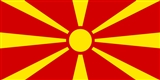
After the breakup of Yugoslavia in 1991, Macedonia's name and history became the object of a dispute between Greece and the Republic of Macedonia. From 1992 to 1995, the two countries also engaged in a dispute over the Republic's first flag, which incorporated the Vergina Sun
Vergina Sun

The Vergina Sun, Star of Vergina or Argead Star is the name given to a symbol of a stylised star or sun with sixteen rays. It was unearthed in 1977 during archaeology excavations in Vergina, in the northern Greece province of Macedonia , by Professor Manolis Andronikos....
 symbol, a symbol associated with the ancient Kingdom of Macedon
Macedon

Macedon or Macedonia was the name of a monarchy centred in the northernmost part of ancient Greece. The homeland of the ancient Macedonians, it was bordered by the kingdom of Epirus to the west and the region of Thrace to the east....
. Its adoption by the Republic, on 3 July 1992, was seen as a reaction by Skopje to Athens' pressure to change the name. This aspect of the dispute was resolved when the flag was changed under the terms of an interim accord agreed between the two states in October 1995.

Despite the European Community-nominated Arbitration Commission's opinion that "that the use of the name Macedonia cannot therefore imply any territorial claim against another State", Greece continued to object to the establishment of relations between the Community and the Republic under its constitutional name.

The United Nations
United Nations

The United Nations is an international organization whose stated aims are to facilitate cooperation in international law, international security, economic development, Social change, human rights and achieving world peace....
 adopted the provisional reference "the former Yugoslav Republic of Macedonia" when the country was admitted to the organization in 1993. Most international organisations adopted the same convention, including the European Union
European Union

The European Union is an economic and political union of 27 European Union member state, located primarily in Europe. It was established by the Treaty of Maastricht on 1 November 1993 upon the foundations of the pre-existing European Economic Community....
, NATO
NATO

The North Atlantic Treaty Organization , also called the Atlantic Alliance, is a military alliance established by the signing of the North Atlantic Treaty on 4 April 1949....
, the International Monetary Fund
International Monetary Fund

The International Monetary Fund is an international organization that oversees the global financial system by following the macroeconomic policies of its member countries, in particular those with an impact on exchange rates and the balance of payments....
, the European Broadcasting Union
European Broadcasting Union

The European Broadcasting Union is a confederation of 75 broadcasting organisations from 56 countries, and 43 associate broadcasters from a further 25....
, and the International Olympic Committee
International Olympic Committee

The International Olympic Committee is an organization based in Lausanne, Switzerland, created by Pierre de Coubertin and Demetrios Vikelas on June 23, 1894....
, among others. The EU
European Union

The European Union is an economic and political union of 27 European Union member state, located primarily in Europe. It was established by the Treaty of Maastricht on 1 November 1993 upon the foundations of the pre-existing European Economic Community....
 recognises the country as the former Yugoslav Republic of Macedonia and the negotiations with the EU are held using this reference. The same reference is also used in any discussion to which Greece is a party but is inconsistently used by other countries. Bulgaria uses the name ‘Republic of Macedonia’ even if it is seen as interfering with the traditional use of the name ‘Pirin Macedonia’, insisting however that any solution to the naming dispute with Greece
Greece

Greece , officially the Hellenic Republic , is a country in southeastern Europe, situated on the southern end of the Balkans. It has borders with Albania, Bulgaria and the former Yugoslav Republic of Macedonia to the north, and Turkey to the east....
 should "take account of the historical, cultural, and other realities related to the geographic region of Macedonia
Macedonia (region)

Macedonia is a geographical and Historical regions of the Balkan Peninsula in southeastern Europe whose area was re-defined in the early 20th century....
".

On the other hand, even though the government of the Republic of Macedonia has accepted on many occasions to appear under the 'FYROM' tag during some international events, it never signs any documents with a name different than the constitutional name. However, a majority number of United Nations
United Nations

The United Nations is an international organization whose stated aims are to facilitate cooperation in international law, international security, economic development, Social change, human rights and achieving world peace....
 member countries have abandoned the provisional reference and have recognised the country as the Republic of Macedonia instead. These include four of the five permanent UN Security Council members, the United States
United States

The United States of America is a Federal government constitutional republic comprising U.S. state and a federal district. The country is situated mostly in central North America, where its Contiguous United States and Washington, D.C., the Capital districts and territories, lie between the Pacific Ocean and Atlantic Oceans, Borders of the U...
, Russia
Russia

Russia , or the Russian Federation , is a list of countries spanning more than one continent country extending over much of northern Eurasia....
, United Kingdom
United Kingdom

The United Kingdom of Great Britain and Northern Ireland, commonly known as the United Kingdom , the UK or Britain,is a sovereign state located off the northwestern coast of continental Europe....
 and the People's Republic of China
People's Republic of China

The People's Republic of China , commonly known as China, is the largest country in East Asia and the List of countries by population in the world with over 1.3 billion people, approximately a fifth of the world's population....
, as well as several members of the European Union
European Union

The European Union is an economic and political union of 27 European Union member state, located primarily in Europe. It was established by the Treaty of Maastricht on 1 November 1993 upon the foundations of the pre-existing European Economic Community....
 such as Bulgaria
Bulgaria

The state of Bulgaria , Scientific transliteration Balgarija, officially the Republic of Bulgaria has played a significant role in the Balkans in south-eastern Europe for over fourteen centuries....
, Poland
Poland

Poland , officially the Republic of Poland , is a country in Central Europe. Poland is bordered by Germany to the west; the Czech Republic and Slovakia to the south; Ukraine, Belarus and Lithuania to the east; and the Baltic Sea and Kaliningrad Oblast, a Russian Enclave and exclave, to the north....
 and Slovenia
Slovenia

Slovenia , officially the Republic of Slovenia , is a country in southern Central Europe bordering Italy to the west, the Adriatic Sea to the southwest, Croatia to the south and east, Hungary to the northeast, and Austria to the north....
. Negotiations continue between Greece and the Republic of Macedonia but have yet to reach any settlement of the dispute.

Military

Mi 24 Macedonian
Macedonian military — the Macedonian Armed Forces — is the name of the unified armed forces of the Republic of Macedonia, composed by Macedonian Army, Macedonian Air Force
Macedonian Air Force

The Macedonian Air Force is the Air Force of the Military of the Republic of Macedonia....
 and Macedonian Special Forces. The national defence policy aims to guarantee the preservation
Preservation

Preservation may mean:* Cultural Heritage Preservation, which includes:**Preservation , maintenance of artifacts and the intellectual record...
 of the independence
Independence

Independence is the self-government of a nation, country, or state by its residents and population, or some portion thereof, generally exercising sovereignty....
 and sovereignty
Sovereignty

File:Leviathan gr.jpgSovereignty is the exclusive right to control a government, a State, a people, or oneself. A sovereign is a supreme lawmaking authority....
 of the state, the integrity
Integrity

Integrity comprises perceived consistency of actions, values, methods, measures and principles. As a holism concept, it judges the quality of a system in terms of its ability to achieve its own goals....
 of its land area and airspace and its constitutional order. Its main goals remain the development and maintenance of a credible capability
Capability

Capability is the ability to perform actions.As it applies to human capital, capability is the sum of expertise and capacity.It is a component within the theories of:...
 to defend the nation's vital interests and development of the Armed Forces in a way that ensures their interoperability
Interoperability

Interoperability is a property referring to the ability of diverse systems and organizations to work together . The term is often used in a technical systems engineering sense, or alternatively in a broad sense, taking into account social, political, and organizational factors that impact system to system performance....
 with the armed forces of NATO
NATO

The North Atlantic Treaty Organization , also called the Atlantic Alliance, is a military alliance established by the signing of the North Atlantic Treaty on 4 April 1949....
 and European Union
European Union

The European Union is an economic and political union of 27 European Union member state, located primarily in Europe. It was established by the Treaty of Maastricht on 1 November 1993 upon the foundations of the pre-existing European Economic Community....
 member states and their capability to participate in the full range of Alliance missions
NATO

The North Atlantic Treaty Organization , also called the Atlantic Alliance, is a military alliance established by the signing of the North Atlantic Treaty on 4 April 1949....
.

The Ministry of Defence develops the defence strategy and works out the assessment of the possible threats and risks. The MOD is also responsible for the defence system, training, readiness of the Armed Forces, the equipment and the development and it proposes the defence budget.

Economy


Recently ranked as the fourth 'best reformatory state' out of 178 countries ranked by the World Bank
World Bank

The World Bank is a bank that provides financial and technical assistance to developing countries for development programs with the stated goal of reducing poverty....
, Macedonia has undergone considerable economic reform since independence. The country has developed an open economy with trade accounting for more than 90% of GDP in recent years. Since 1996, Macedonia has witnessed steady, though slow, economic growth with GDP growing by 3.1% in 2005. This figure is projected to rise to an average of 5.2% in the 2006-2010 period. The government has proven successful in its efforts to combat inflation, with an inflation rate of only 3% in 2006 and 2% in 2007 and has implemented policies focused on attracting foreign investment and promoting the development of Small and Medium-sized Enterprises (SMEs). The current government introduced a flat tax
Flat tax

A flat tax is a tax system with a constant tax rate. Usually the term flat tax would refer to household income being taxed at one marginal rate, in contrast with progressive taxes that may vary according to such parameters as income or usage levels....
 system with the intention of making the country more attractive to foreign investment. The flat tax rate was 12% in 2007 and will be further lowered to 10% in 2008.

Despite these reforms, as of 2005 Macedonia's unemployment rate was 37.2% and as of 2006 its poverty rate was 22%. Corruption and a relatively ineffective legal system also act as significant restraints on successful economic development. The Republic still has one of the lowest per capita GDPs
List of countries by GDP (PPP) per capita

This article includes three lists of countries of the world sorted by their gross domestic product at purchasing power parity per capita, the value of all final goods and services produced within a nation in a given year divided by the average population for the same year....
 in Europe. Furthermore, the country's grey market
Grey market

A grey market or gray market is the trade of a commodity through distribution channels which, while legal, are unofficial, unauthorized, or unintended by the original manufacturer....
 is estimated at close to 20% of GDP.

In terms of structure, as of 2005 the service sector constituted by far the largest part of GDP at 57.1%, up from 54.2% in 2000. The industrial sector represents 29.3% of GDP, down from 33.7% in 2000 while agriculture represents only 12.9%, up from 12%. Textiles represent the most significant sector for trade, accounting for more than half of total exports. Other important exports include iron, steel, wine and vegetables.

Resources


Infrastructure and e-Infrastructure


Macedonia, together with Montenegro
Montenegro

Montenegro , Montenegrin language/Serbian language: ???? ????, Crna Gora , ) is a country located in Balkans. It has a coast on the Adriatic Sea to the south and is bordered by Croatia to the west, Bosnia and Herzegovina to the northwest, Serbia to the north, Kosovo to the east and Albania to the south....
, Bosnia and Herzegovina
Bosnia and Herzegovina

Bosnia and Herzegovina is a country on the Balkans peninsula of South Eastern Europe with an area of 51,129 square kilometres . Bordered by Croatia to the north, west and south, Serbia to the east, and Montenegro to the south, Bosnia and Herzegovina is Landlocked#Nearly landlocked, except for 26 kilometres of the Adriatic Sea coas...
 and Kosovo
Kosovo

Kosovo is a disputed region in the Balkans. Its majority is governed by the partially-recognised Republic of Kosovo . Serbia does not recognise the secession of Kosovo and considers it a United Nations-governed entity within its sovereign territory, the Autonomous Province of Kosovo and Metohija that was re-created by Slobodan M...
, belonged to the less developed region of the former Yugoslavia. It suffered severe economic difficulties after independence, when the Yugoslav internal market collapsed and subsidies from Belgrade ended. In addition, it faced many of the same problems faced by other former socialist East European countries during the transition to a market economy. Its main land and rail exports route, through Serbia
Serbia

Serbia , officially the Republic of Serbia , is a country in Central Europe and Balkans Europe, covering the southern part of the Pannonian Plain and the central part of the Balkans....
, remains unreliable with high transit costs, thereby affecting the export of its formerly highly profitable, early vegetables market to Germany. R. Macedonia's IT market increased 63.8% year on year in 2007, which is the Fastest Growing in the Adriatic Region.

Trade and investment


The outbreak of the Yugoslav wars
Yugoslav wars

The Yugoslav Wars were a series of violent conflicts in the territory of the former Socialist Federal Republic of Yugoslavia that took place between 1991 and 2001....
 and the imposition of sanctions on Serbia
Serbia

Serbia , officially the Republic of Serbia , is a country in Central Europe and Balkans Europe, covering the southern part of the Pannonian Plain and the central part of the Balkans....
 and Montenegro
Montenegro

Montenegro , Montenegrin language/Serbian language: ???? ????, Crna Gora , ) is a country located in Balkans. It has a coast on the Adriatic Sea to the south and is bordered by Croatia to the west, Bosnia and Herzegovina to the northwest, Serbia to the north, Kosovo to the east and Albania to the south....
 caused great damage to the Republic's economy, with Serbia constituting 60% of its markets prior to the disintegration of Yugoslavia. When Greece imposed a trade embargo on the Republic in 1994–95, the economy was also affected. Some relief was afforded by the end of the Bosnian war in November 1995 and the lifting of the Greek embargo, but the Kosovo War
Kosovo War

Kosovo War occurred after the Rambouillet Agreement failed in February 1999. The term Kosovo War or Kosovo Conflict is used to describe two sequential and at times parallel armed conflicts in Kosovo:...
 of 1999 and the 2001 Albanian crisis caused further destabilisation. Since the end of the Greek embargo, Greece
Greece

Greece , officially the Hellenic Republic , is a country in southeastern Europe, situated on the southern end of the Balkans. It has borders with Albania, Bulgaria and the former Yugoslav Republic of Macedonia to the north, and Turkey to the east....
 has become the most important business partner of the Republic of Macedonia. See also: Greek investments in the Republic of Macedonia
Greek investments in the Republic of Macedonia

The Republic of Macedonia generally has good relations with Greece and enjoys substantial inward investment from Greece. However, the Macedonia naming dispute has inhibited the establishment of full diplomatic relations so far but has not prevented Greece and the Republic of Macedonia from engaging in military and security co-operation, cross-borde...
. Many Greek companies have bought former state companies in the country, such as the oil refinery Okta, the baking company Zhito Luks, a marble mine in Prilep
Prilep

Prilep is a city of 66,246 citizens in the Republic of Macedonia and the List of cities in the Republic of Macedonia by population in the country....
, textile facilities in Bitola
Bitola

Bitola is a city in the southwestern part of the Republic of Macedonia. The city is an administrative, cultural, industrial, commercial, and educational centre....
 etc. Other key partners are the United States
United States

The United States of America is a Federal government constitutional republic comprising U.S. state and a federal district. The country is situated mostly in central North America, where its Contiguous United States and Washington, D.C., the Capital districts and territories, lie between the Pacific Ocean and Atlantic Oceans, Borders of the U...
, Slovenia
Slovenia

Slovenia , officially the Republic of Slovenia , is a country in southern Central Europe bordering Italy to the west, the Adriatic Sea to the southwest, Croatia to the south and east, Hungary to the northeast, and Austria to the north....
, Austria
Austria

Austria , officially the Republic of Austria , is a landlocked country in Central Europe. It borders both Germany and the Czech Republic to the north, Slovakia and Hungary to the east, Slovenia and Italy to the south, and Switzerland and Liechtenstein to the west....
, Germany
Germany

Germany , officially the Federal Republic of Germany , is a country in Central Europe. It is bordered to the north by the North Sea, Denmark, and the Baltic Sea; to the east by Poland and the Czech Republic; to the south by Austria and Switzerland; and to the west by France, Luxembourg, Belgium, and the Netherlands....
, Turkey
Turkey

Turkey , known officially as the Republic of Turkey , is a Eurasian country that stretches across the Anatolian peninsula in southwest Asia and Thrace in the Balkans region of Southern Europe....
, etc.

Tourism

The tourism in the Republic of Macedonia
Republic of Macedonia

The Republic of Macedonia , , often referred to simply as Macedonia, is a landlocked country on the Balkans in southeastern Europe. It is bordered by Serbia to the north, Bulgaria to the east, Greece to the south and Albania to the west....
 is a large part of the economy of the Republic of Macedonia
Economy of the Republic of Macedonia

The breakup of Socialist Federal Republic of Yugoslavia in 1991 deprived the Economy of the Republic of Macedonia, then its poorest republic , of its key protected markets and large transfer payments from the center....
. The country's large abundance of natural and cultural attractions make the Republic of Macedonia suitable for tourism
Tourism

Tourism is travel for recreational or leisure purposes. The World Tourism Organization defines tourists as people who "travel to and stay in places outside their usual environment for not more than one consecutive year for leisure, business and other purposes not related to the exercise of an activity remunerated from...
.

The Republic of Macedonia receives about 700,000 tourists annually.

Demographics


Macedonia has an estimated population of 2,061,315 citizens. The largest ethnic group in the country are the Macedonians
Macedonians (ethnic group)

The Macedonians also referred to as Macedonian Slavs are a South Slavs people who are primarily associated with the Republic of Macedonia....
. Following is a list of the largest Macedonian cities according to the 1994 census data (as the 2002 census data does not list both city populations and municipality populations):

Largest Macedonian cities and municipalities
City City
Population
Coat
of arms
Administrative
division
Division
Population
Skopje
Skopje

Skopje is the Capital of and List of cities in the Republic of Macedonia by population in the Republic of Macedonia, with more than a quarter of the population of the country, as well as its political, cultural, economic, and academic centre....
 
444,000 Greater Skopje
Greater Skopje

Greater Skopje ), is an administrative division within the Republic of Macedonia constituted of 10 municipalities. As a such administrative unit Skopje is the capital of the Republic of Macedonia....
506,926
Bitola
Bitola

Bitola is a city in the southwestern part of the Republic of Macedonia. The city is an administrative, cultural, industrial, commercial, and educational centre....
 
80,000 Bitola municipality
Bitola municipality

Bitola is a Municipalities of the Republic of Macedonia in southern Republic of Macedonia. Bitola is also the name of the city where the municipal seat is found....
95,385
Kumanovo
Kumanovo

Kumanovo is th? List of cities in the Republic of Macedonia by population in the Republic of Macedonia and is the seat of Kumanovo Municipality which is the List of municipalities in the Republic of Macedonia by population in the country....
 
71,000
Mmca(kumanovo)
Kumanovo municipality

Kumanovo is a municipality in northern Republic of Macedonia. Kumanovo is also the name of the city where the municipal seat is found. Kumanovo municipality is part of Northeastern statistical region....
 
105,484
Prilep
Prilep

Prilep is a city of 66,246 citizens in the Republic of Macedonia and the List of cities in the Republic of Macedonia by population in the country....
 
68,000 Prilep municipality
Prilep municipality

Prilep is a municipality in southern Republic of Macedonia. Prilep is also the name of the city where the municipal seat is found. It is located in the Pelagonia statistical region....
 
76,768
Tetovo
Tetovo

Tetovo is a city in the northwestern part of Republic of Macedonia, built on the foothills of ?ar Mountain and divided by the Pena River.The city covers an area of at above sea level, with a population of 86,580 citizens in the municipality.....
 
60,000
Mmca(tetovo)
Tetovo municipality
Tetovo municipality

Tetovo is a municipality in northwestern Republic of Macedonia. Tetovo is also the name of the town where the municipal seat is found. Tetovo municipality is part of Polog statistical region....
 
86,580
Ohrid
Ohrid

Ohrid is a city on the eastern shore of Lake Ohrid in the Republic of Macedonia. It has about 42,000 inhabitants, making it the List of cities in the Republic of Macedonia by population in the country....
 
51,000 Ohrid municipality
Ohrid municipality

Municipality of Ohrid is a municipality in the south-western part of the Republic of Macedonia. Ohrid is also the name of the city where the municipal seat is found....
 
55,749
Veles
Veles (city)

Veles is a city in the center of the Republic of Macedonia on the Vardar river. The city of Veles is the seat of Veles Municipality.Name...
 
48,000 Veles municipality
Veles municipality

Veles is a municipality in central Republic of Macedonia. Veles is also the name of the town where the municipal seat is found. Veles municipality is part of Vardar statistical region....
 
55,108
Gostivar
Gostivar

Gostivar , is a city in the Republic of Macedonia, located in the upper Polog valley region. It is one of the largest municipalities in the country with a population of 81,042, and the town also covers ....
 
46,000 Gostivar municipality
Gostivar municipality

Gostivar is a municipality in western Republic of Macedonia. Gostivar is also the name of the town where the municipal seat is found. Gostivar municipality is part of Polog statistical region....
 
81,042
Štip
Štip

?tip is the largest city in the eastern part of the Republic of Macedonia. Located at the intersection of the Lakavica, Ovce Pole, and Kocani valleys, it has existed at least 2000 years, and as of 2002, it had a population of about 47,000....
 
42,000
Mmca(shtip)
Štip municipality
Štip municipality

?tip is a municipality in eastern Republic of Macedonia. ?tip is also the name of the town where the municipal seat is found. This municipality is part of Eastern statistical region....
 
47,796
Strumica
Strumica

Strumica is a town situated in the south-east of the Republic of Macedonia . The population is close to 55,000 with an absolute Macedonian majority ....
 
40,000 Strumica municipality
Strumica municipality

Strumica is a municipality in eastern Republic of Macedonia. Strumica is also the name of the town where the municipal seat is found. Strumica municipality is part of Southeastern statistical region....
 
54,676
Kocani
Kocani

Kocani is a town away from Skopje, situated in the Eastern part of the Republic of Macedonia, with population of 28 330. The town of Kocani is the seat of Kocani Municipality....
 
27,000 Kocani municipality
Kocani municipality

Kocani is a municipality in eastern Republic of Macedonia. Kocani is also the name of the town where the municipal seat is found. This municipality is part of Eastern statistical region....
 
38,092
Radoviš
Radoviš

Radovi? is a city positioned in the southeastern part of the Republic of Macedonia. The city is the seat of Radovi? Municipality, which is spread on the bottom of mountain Plackovica and the northern part of the Strumica valley....
 
16,223 Radoviš municipality
Radoviš

Radovi? is a city positioned in the southeastern part of the Republic of Macedonia. The city is the seat of Radovi? Municipality, which is spread on the bottom of mountain Plackovica and the northern part of the Strumica valley....
 
28,244


The above table shows ethnic affiliation of the population according to the 2002 census:

Religion

The majority (64.7%) of the population belongs to the Macedonian Orthodox Church
Macedonian Orthodox Church

The Macedonian Orthodox Church is the body of Christianity who are united under the Archbishop of Ohrid and Macedonia, exercising jurisdiction over Macedonian Orthodox Christians in the Republic of Macedonia and in exarchates in the Macedonians diaspora....
 (which declared autocephaly
Autocephaly

Autocephaly, in hierarchical Christian churches and especially Eastern Orthodox Church and Oriental Orthodoxy churches, is the status of a hierarchical church whose head bishop does not report to any higher-ranking bishop....
 in 1968, that is still not recognised by the Serbian and other Eastern Orthodox Church
Eastern Orthodox Church

The Eastern Orthodox Church is the second largest single Christian communion in the world with an estimated 225 million members worldwide. It is considered by its adherents to be the Four Marks of the Church established by Jesus Christ and his Apostles nearly 2000 years ago....
es, although the Archbishop's Council of the Serbian Orthodox Church, with Decision No. 06/1959, has recognised the autonomy of the Macedonian Orthodox Church Muslim
Muslim

:A Muslim , , is an adherent of the religion of Islam. The feminine form is Muslimah . Literally, the word means "one who submits "....
s comprise 33.3% of the population and other Christian denominations comprise 0.37%. The remainder (1.63%) is recorded as "unspecified" in the 2002 national census. Most of the native Albanians, Turks and Bosniaks are Muslims, as are a minority of the country's ethnic Macedonian population, known as Macedonian Muslims
Macedonian Muslims

The Macedonian Muslims , also known as Muslim Macedonians or Torbe? , are a minority religious group within the community of Macedonians who are Muslims , although not all espouse a Macedonian national identity....
. Altogether, there are more than 1200 churches and 400 mosques in the country. The Orthodox and Islamic religious communities have secondary religion schools in Skopje. There is an Orthodox theological college in the capital. Macedonia has the largest proportion of Muslims of any country in Europe after Turkey
Turkey

Turkey , known officially as the Republic of Turkey , is a Eurasian country that stretches across the Anatolian peninsula in southwest Asia and Thrace in the Balkans region of Southern Europe....
, Albania
Albania

Albania , officially the Republic of Albania , is a country in Balkans. It is bordered by Greece to the south-east, Montenegro to the north, Kosovo to the northeast, and the Republic of Macedonia to the east....
 and Bosnia and Herzegovina
Bosnia and Herzegovina

Bosnia and Herzegovina is a country on the Balkans peninsula of South Eastern Europe with an area of 51,129 square kilometres . Bordered by Croatia to the north, west and south, Serbia to the east, and Montenegro to the south, Bosnia and Herzegovina is Landlocked#Nearly landlocked, except for 26 kilometres of the Adriatic Sea coas...
.

Orthodox

The Macedonian Orthodox Church
Macedonian Orthodox Church

The Macedonian Orthodox Church is the body of Christianity who are united under the Archbishop of Ohrid and Macedonia, exercising jurisdiction over Macedonian Orthodox Christians in the Republic of Macedonia and in exarchates in the Macedonians diaspora....
 is the dominant church in the country. It has 10 provinces (seven in the country and three abroad), 10 bishops, and about 350 priests. Macedonians, who are the majority of the population, are generally Orthodox Christians. A total of 30,000 people are baptised in all the provinces every year. The church has issues with the Serbian Orthodox Church
Serbian Orthodox Church

The Serbian Orthodox Church or the Church of Serbia is one of the autocephalyEastern Orthodox Church organization, ranking sixth in order of seniority after Orthodox Church of Constantinople, Greek Church of Alexandria, Church of Antioch, Orthodox Church of Jerusalem, and Russian Orthodox Church....
 after the separation and self-declaration of autocephaly (not recognised by any other Orthodox church) in 1967. However, the Archbishop's Council of the Serbian Orthodox Church, with Decision No. 06/1959, has recognised the autonomy (self-dependence) of the Macedonian Orthodox Church). After the negotiations between the two churches were suspended, the Serbian Orthodox Church recognised a group led by Zoran Vraniškovski (also known as Archbishop Jovan of Ohrid, a former Macedonian church bishop, as the Archbishop of Ohrid
Orthodox Ohrid Archbishopric

The Orthodox Ohrid Archbishopric is an Autonomy Eastern Orthodox archdiocese in the Republic of Macedonia under the jurisdiction of the Serbian Orthodox Church....
. The reaction of the Macedonian Orthodox Church was to cut off all relations with the clergy of the Ohrid Archbishopric and to prevent bishops of the Serbian Orthodox Church from entering the Republic of Macedonia. Bishop Jovan was jailed for 18 months for "defaming the Macedonian Orthodox church and harming the religious feelings of local citizens" by distributing Serbian Orthodox church calendars and pamphlets.

Islam

Approximately 33% of the Republic of Macedonia's total population are adherents of Islam
Islam

Islam is a Monotheism, Abrahamic religion originating with the teachings of the Prophets of Islam Muhammad, a 7th century Arab religious and political figure....
. It has the fourth largest Muslim population in Europe by percentage after Kosovo
Kosovo

Kosovo is a disputed region in the Balkans. Its majority is governed by the partially-recognised Republic of Kosovo . Serbia does not recognise the secession of Kosovo and considers it a United Nations-governed entity within its sovereign territory, the Autonomous Province of Kosovo and Metohija that was re-created by Slobodan M...
 (90%), Albania
Albania

Albania , officially the Republic of Albania , is a country in Balkans. It is bordered by Greece to the south-east, Montenegro to the north, Kosovo to the northeast, and the Republic of Macedonia to the east....
 (70%), and Bosnia-Herzegovina (48%). Some northwestern and western regions have Muslim majorities. Most Muslims are Albanian, Turkish
Turkish people

The Turkish people , also known as "Turks" are defined mainly as citizens of the Republic of Turkey. An early history text provided the definition of being a Turk as "any individual within the Republic of Turkey, whatever his faith who speaks Turkish, grows up with Turkish culture and adopts the Turkish ideal is a Turk." This ideal...
, or Roma
Roma people

The Romani are an ethnic group of Europe tracing their Origins of the Romani people to middle kingdoms of India.The Romani are Romani diaspora with their largest concentrated populations in Europe, especially the Roma of Central and Eastern Europe, with more recent diaspora populations in the Americas and, to a lesser extent, in other par...
, although some are Macedonian Muslims
Macedonian Muslims

The Macedonian Muslims , also known as Muslim Macedonians or Torbe? , are a minority religious group within the community of Macedonians who are Muslims , although not all espouse a Macedonian national identity....
. According to the 2002 census, there are about 600,000 Muslim
Muslim

:A Muslim , , is an adherent of the religion of Islam. The feminine form is Muslimah . Literally, the word means "one who submits "....
s in Macedonia. The Albanian Muslims live mostly in the Polog
Polog statistical region

The Republic of Macedonia is divided in eight arbitrary statistical regions. Polog, located in the northwestern part of the country, borders Albania and Kosovo....
 and western regions of the country. The Turkish population is scattered throughout the country, but mostly in the west.

Catholicism
The Macedonian Byzantine Catholic Church
Macedonian Greek Catholic Church

The Macedonian Catholic Church, called the Macedonian Byzantine Catholic Church, is a Byzantine Rite sui juris Eastern Catholic Church in full union with the Roman Catholic Church which uses the Macedonian language in the liturgy....
 has approximately 11,000 adherents in the Republic. The Church was established in 1918, and is made up mostly of converts to Catholicism
Roman Catholic Church

The Roman Catholic Church, officially known as the Catholic Church is the world's largest Christianity Ecclesia , representing over half of all Christians and one-sixth of the world population....
 and their descendants. The Church is of the Byzantine Rite
Byzantine Rite

The Byzantine Rite, sometimes called the Rite of Constantinople or Constantinopolitan Rite, is the liturgy used currently by all the Eastern Orthodox Churches and by the Greek-Catholic Churches ....
 and is in communion with the Roman and Eastern Catholic Churches. Its liturgical worship is performed in Macedonian
Macedonian language

Macedonian is the official language of the Republic of Macedonia and is a part of the Eastern group of South Slavic languages. Macedonian is closely related to and shares a high degree of mutual intelligibility with the Bulgarian language, Serbian language, Bosnian language, and Croatian language languages....
.
Protestant Christianity
There is a small Protestant community. The most famous Protestant in the country is the former president Boris Trajkovski
Boris Trajkovski

Boris Trajkovski was the President of the Republic of Macedonia of the Republic of Macedonia from 1999 to 2004.Boris was born in the village of Monospitovo, in the municipality of Murtino, near the Macedonian town of Strumica, into a Methodist family....
. He was from the Methodist Community, which is the largest and oldest Protestant Church in the Republic, dating back to the late nineteenth century. Since the 1980s the small Protestant community has grown, partly through new confidence and partly with outside missionary help.

Judaism

The Jewish community of the Republic of Macedonia, which numbered some 7,200 people on the eve of World War II
World War II

World War II, or the Second World War , was a global military conflict which involved a Participants in World War II, including all of the great powers, organised into two opposing military alliances: the Allies of World War II and the Axis powers....
, was almost entirely destroyed during the War, with only 2% of Macedonian Jews surviving the Holocaust. After their liberation and the end of the War, most opted to emigrate to Israel
Israel

Israel officially the State of Israel , is a country in the Middle East located on the eastern shore of the Mediterranean Sea. It borders Lebanon in the north, Syria in the northeast, Jordan in the east, and Egypt on the southwest, and contains geographically diverse features within its relatively small area....
. Today, the country's Jewish community numbers approximately 200 persons, almost all of whom live in Skopje
Skopje

Skopje is the Capital of and List of cities in the Republic of Macedonia by population in the Republic of Macedonia, with more than a quarter of the population of the country, as well as its political, cultural, economic, and academic centre....
. Most Macedonian Jews are Sephardic - the descendants of 15th century refugees who had fled the Spanish
Spanish Inquisition

The Spanish Inquisition was an ecclesiastical tribunal established in 1478 by Catholic Monarchs Ferdinand II of Aragon and Isabella I of Castile....
 and Portuguese Inquisition
Portuguese Inquisition

The Portuguese Inquisition was formally established in Portugal in 1536 at the request of the King of Portugal, Jo?o III. Manuel I of Portugal had asked for the installation of the Inquisition in 1515, but was only after his death that the pope acquiesced....
s.

Languages


The official and most widely spoken language is Macedonian
Macedonian language

Macedonian is the official language of the Republic of Macedonia and is a part of the Eastern group of South Slavic languages. Macedonian is closely related to and shares a high degree of mutual intelligibility with the Bulgarian language, Serbian language, Bosnian language, and Croatian language languages....
, which belongs to the Eastern branch of the South Slavic
South Slavic languages

South Slavic languages comprise one of the three geographical groups of Slavic languages . There are around 30 million speakers of these languages, mainly in the Balkans....
 language group. Macedonian is closely related to and mutually intelligible
Mutual intelligibility

In linguistics, mutual intelligibility is recognized as a relationship between languages in which speakers of different but related languages can readily understand each other without intentional study or extraordinary effort....
 with Standard Bulgarian
Bulgarian language

Bulgarian is an Indo-European languages, a member of the Slavic languages linguistic group.Bulgarian demonstrates several linguistic innovations that set it apart from all other Slavic languages except Macedonian language, such as the elimination of grammatical case, the development of a suffixed definite article , the lack of a verb infin...
. It also has some similarities with standard Serbian
Serbian language

name=Serbian|nativename=|pronunciation=['sr?pski?]|familycolor=Indo-European|map=|states=See below under "Official status", besides that in Croatia and as an immigrant's language spread over Central Europe and Western Europe, as well as Northern America...
 and the intermediate Torlakian and Shop
Shopi

Shopi is a regional term referring to the inhabitants of the region of Shopluk located in central western Bulgaria , but also to similar groups in central eastern Serbia and the Republic of Macedonia ....
 dialects spoken mostly in southern Serbia and western Bulgaria (and by speakers in the north and east of Macedonia). The standard language
Standard language

A standard language is a particular variety of a language that has been given either legal or quasi-legal status. As it is usually the form promoted in schools and the media, it is usually considered by speakers of the language to be more "correct" in some sense than other dialects....
 was codified
Codification (linguistics)

Codification is the process of standardizing and developing a norm for a language.Codifying a language can vary from case to case and depends on the stage of standardization that already exists....
 in the period following World War II
World War II

World War II, or the Second World War , was a global military conflict which involved a Participants in World War II, including all of the great powers, organised into two opposing military alliances: the Allies of World War II and the Axis powers....
 and has accumulated a thriving literary tradition. Although it is the only language explicitly designated as an official national language in the constitution, in municipalities where at least 20% of the population is part of another ethnic minority, those individual languages are used for official purposes in local government, alongside Macedonian.

A wide variety of languages are spoken in Macedonia, reflecting its ethnic diversity. Besides the official national language Macedonian
Macedonian language

Macedonian is the official language of the Republic of Macedonia and is a part of the Eastern group of South Slavic languages. Macedonian is closely related to and shares a high degree of mutual intelligibility with the Bulgarian language, Serbian language, Bosnian language, and Croatian language languages....
, minority languages with substantial numbers of speakers are: Albanian
Albanian language

Albanian is an Indo-European languages spoken by nearly 6 million people, primarily in Albania and Kosovo but also in other areas of the Balkans in which there is an Albanian population, including the west of the Republic of Macedonia, Montenegro, and southern Serbia....
, Romani
Romani language

Romani or Romany, Gypsy or Gipsy is the language of the Romani people. It is an Indo-Aryan language, sometimes included in either the "Central Indo-Aryan" or the "Northwest Indo-Aryan languages" group, sometimes treated as a branch of its own....
, Turkish
Turkish language

Turkish is a language spoken by over 63 million people worldwide, making it the most commonly spoken of the Turkic languages. Its speakers are located predominantly in Turkey and Cyprus, with smaller groups in Iraq, Greece, Bulgaria, the Republic of Macedonia, Kosovo, Albania and other parts of Eastern Europe....
 (including Balkan Gagauz
Balkan Gagauz Turkish language

Balkan Gagauz Turkish is a Turkic languages language spoken in European Turkey, Greece, and in the Kumanovo and Bitola areas of the Republic of Macedonia....
), Serbian
Serbian language

name=Serbian|nativename=|pronunciation=['sr?pski?]|familycolor=Indo-European|map=|states=See below under "Official status", besides that in Croatia and as an immigrant's language spread over Central Europe and Western Europe, as well as Northern America...
/Bosnian
Bosnian language

Bosnian , sometimes referred as Bosniak/Bosniac language , is a South Slavic languages native to the Bosniaks and all other citizens of Bosnia and Herzegovina who consider it to be their mother tongue....
 and Aromanian
Aromanian language

Aromanian , also known as Macedo-Romanian, Arumanian or Vlach in most other countries, is an Eastern Romance language spoken in Southeastern Europe....
 (including Megleno-Romanian
Megleno-Romanian language

Megleno-Romanian is a Romance languages, similar to Aromanian language and Romanian language, or a dialect of the Romanian language. It is spoken in a few villages in the Moglena region of Macedonia , in Romania and by a very small Muslim group in Turkey....
). There are also smaller minorities of Adyghe
Adyghe language

Adyghe language is one of the two official languages of the Adygea in the Russia, the other being Russian language. It is spoken by various tribes of the Adyghe people: Abzekh, Adamey, Bzhedugh; Hatukuay, Kemirgoy, Makhosh; Natekuay, Shapsigh; Zhane , Yegerikuay, each with its own dialect....
 and Greek
Greek language

Greek is an Indo-European languages native to the southern Balkan peninsula, the language of the Greek people. It forms an independent branch within Indo-European....
 speakers.

Science


Education


The Macedonian education system consists of:
  • pre-school education
    Kindergarten

    is a form of education for young children which serves as a transition from home to the commencement of more formal schooling. Children are taught to develop basic skills through creative play and social interaction....
  • primary education
    Primary education

    A primary school is an institution where children receive the first stage of compulsory education known as Primary education. Primary school is the preferred term in the United Kingdom and many Commonwealth of Nations, and in most publications of the United Nations Educational, Scientific, and Cultural Organization ....
  • secondary education
    Secondary education

    Secondary education is the stage of education following primary education. Secondary education is generally the final stage of compulsory education....
  • higher education
    Higher education

    Higher education refers to a level of education that is provided by university, vocational university, community colleges, liberal arts colleges, Institute of technology and other collegiate level institutions, such as Vocational school, trade schools and career colleges, that award academic degrees or professional certifications....
The higher levels of education can be obtained at one of the four state universities: Ss. Cyril and Methodius University of Skopje
Skopje University

The Ss. Saints Cyril and Methodius and Saint Methodius University of Skopje , is a state university located in Skopje, Republic of Macedonia. Founded in 1949, the university is organized in 23 Faculties....
, St. Clement of Ohrid University of Bitola
Bitola University

The St. Clement of Ohrid University of Bitola is the second Macedonian state university located mainly in Bitola and neighboring towns of Prilep and Ohrid....
, State University of Tetovo
Tetovo University

The State University of Tetovo , located in Tetovo, is one of four List of universities in the Republic of Macedonia. The university was established on 17 December 1994, however, it was not officially recognized as a state university by the Macedonian government until January, 2004....
 and Goce Delchev University of Shtip. There are a number of private university institutions, such as the European University, Slavic University in Sveti Nikole, the South East European University
South East European University

South East European University , is a university in Tetovo, Republic of Macedonia. It was founded in October 2001 and is a member of the European University Association....
 and others.

The United States Agency for International Development
United States Agency for International Development

The United States Agency for International Development is the Federal government of the United States organization responsible for most non-military aid foreign aid....
 has underwritten a project called "Macedonia Connects" which has made the Republic of Macedonia the first all-broadband wireless country in the world. The Ministry of Education and Sciences reports that 461 schools (primary and secondary) are now connected to the internet. In addition, an Internet Service Provider (On.net), has created a MESH Network to provide WIFI services in the 11 largest cities/towns in the country.

Society


Cinema and media


Culture


The Republic of Macedonia has a rich cultural heritage in art
Art

Art is the process or product of deliberately arranging elements in a way that appeals to the senses or emotions. It encompasses a diverse range of human activities, creations, and modes of expression, including music and literature....
, architecture
Architecture

The term architecture can refer to a process, a profession or documentation.As a process, architecture is the activity of designing and construction buildings and other physical structures by a person or a computer, primarily to provide shelter....
, poetry
Poetry

Poetry is a form of literature art in which language is used for its aesthetics and evocative qualities in addition to, or in lieu of, its apparent meaning ....
, and music
Music

Music is an art form whose media is sound organized in time. Common elements of music are pitch , rhythm , dynamics , and the sonic qualities of timbre and texture ....
. It has many ancient, protected religious sites. Poetry, cinema, and music festivals are held annually. Macedonian music styles developed under the strong influence of Byzantine church music. Macedonia is amongst one of the countries with the most beautiful preserved Byzantine fresco paintings, mainly from the period between the 11th and 16th centuries. There are several thousands square metres of fresco painting preserved, the major part of which is in very good condition and represent masterworks of the Macedonian School of ecclesiastical painting.

In Macedonia the past meets the present. Its age-old architecture and monasteries and churches of exquisite beauty make an interesting contrast to the super modern new architecture. Most of the Macedonian monasteries, built in various periods, and particularly those built between the 11th and 15th–16th centuries, have been completely preserved until today. The Macedonian collection of icons, and in particular the Ohrid ones, are among the most valuable collections in the world today. After the Sinai and the Moscow collection of icons, it is third in importance in Orthodoxy. From a Byzantological aspect, it is unique.

The most important cultural events in the country are the Ohrid
Ohrid

Ohrid is a city on the eastern shore of Lake Ohrid in the Republic of Macedonia. It has about 42,000 inhabitants, making it the List of cities in the Republic of Macedonia by population in the country....
 Summer festival of classical music and drama, the Struga Poetry Evenings
Struga Poetry Evenings

Struga Poetry Evenings is an internationally acclaimed poetry festival held annually in Struga, Republic of Macedonia. During the several decades of its existence, the Festival has awarded its most prestigious award, the Laurel wreath, to some of the most notable international poets, including: W....
 which gather poets from more than 50 countries in the world, Skopje May Opera Evenings, International Camera Festival in Bitola
Bitola

Bitola is a city in the southwestern part of the Republic of Macedonia. The city is an administrative, cultural, industrial, commercial, and educational centre....
, Open Youth Theatre and Skopje Jazz Festival
Skopje Jazz Festival

The Skopje Jazz Festival is an institution which had consistent growth in the 1980s, 1990s and continues to grow every year. Even though it promoted a genre which at first glance looks distant from the local culture and tradition, it managed to attract a very large audience and to build a reputation as a prestigious festival not only in the R...
 in Skopje etc.

Gallery


See also

  • Macedonia (terminology)
    Macedonia (terminology)

    The definition of Macedonia is a major source of confusion and debate due to the overlapping use of the term to describe geographical, political and historical areas, languages and peoples....
  • ethnic Macedonians
    Macedonians (ethnic group)

    The Macedonians also referred to as Macedonian Slavs are a South Slavs people who are primarily associated with the Republic of Macedonia....
  • Communications in the Republic of Macedonia
    Communications in the Republic of Macedonia

    Telephones - main lines in use:550,000 Telephones - mobile cellular:2,079,000 Telephone system:domestic:NAinternational:...
  • Foreign relations of the Republic of Macedonia
    Foreign relations of the Republic of Macedonia

    Key prioritiesKey priorities in the foreign relations are:* Promotion of the Republic of Macedonia as a NATO candidate country, active participation within the established institutional framework ? Partnership for Peace, EAPC, implementation of the NATO Membership Action Plan ? aiming at creating conditions for receiving membership invitati...
  • Military of the Republic of Macedonia
    Military of the Republic of Macedonia

    The Military of the Republic of Macedonia...
  • Transportation in the Republic of Macedonia
  • Socialist Republic of Macedonia
    Socialist Republic of Macedonia

    The Socialist Republic of Macedonia was a socialist state that was a constituent country of the former Socialist Federal Republic of Yugoslavia....
  • Public holidays in the Republic of Macedonia
    Public holidays in the Republic of Macedonia

    Public holidays are observed in the Republic of Macedonia for a number of reasons, including for religious religious and national significance. They are generally accompanied by celebrations....


External links


Government
  • [https://www.cia.gov/library/publications/world-leaders-1/world-leaders-m/macedonia.html Chief of State and Cabinet Members]


General information* from UCB Libraries GovPubs

Travel
Pictures