
All Topics  
Montenegro


   Email Print
   Bookmark   Link


Montenegro


Montenegro ( or ), Montenegrin
Montenegrin language

Montenegrin language is the name given to the Ijekavian-Shtokavian dialect spoken in Montenegro. Generally, it is recognized as a variant of the Serbian language, but some Montenegrins refer to their specific dialect as a language on its own....
/Serbian
Serbian language

name=Serbian|nativename=|pronunciation=['sr?pski?]|familycolor=Indo-European|map=|states=See below under "Official status", besides that in Croatia and as an immigrant's language spread over Central Europe and Western Europe, as well as Northern America...
: ???? ????, Crna Gora (), ) (meaning "Black Mountain" in English) is a country
Country

Country may refer to the territory of a state, or to a smaller, or former, political division of a geographical region. In another meaning of the word, the country is also a term used to refer to rural areas....
 located in Southeastern Europe
Balkans

The Balkans is the historical name of a geographic subregion of southeastern Europe. The region takes its name from the Balkan Mountains, which run through the centre of Bulgaria into eastern Serbia....
. It has a coast on the Adriatic Sea
Adriatic Sea

The Adriatic Sea is a body of water separating the Italian Peninsula from the Balkan peninsula, and the system of the Apennine Mountains from that of the Dinaric Alps and adjacent ranges....
 to the south and is bordered by Croatia
Croatia

Croatia , officially the Republic of Croatia , is a Central European country at the crossroads of Pannonian Plain, Balkans, and the Mediterranean Sea....
 to the west, Bosnia and Herzegovina
Bosnia and Herzegovina

Bosnia and Herzegovina is a country on the Balkans peninsula of South Eastern Europe with an area of 51,129 square kilometres . Bordered by Croatia to the north, west and south, Serbia to the east, and Montenegro to the south, Bosnia and Herzegovina is Landlocked#Nearly landlocked, except for 26 kilometres of the Adriatic Sea coas...
 to the northwest, Serbia
Serbia

Serbia , officially the Republic of Serbia , is a country in Central Europe and Balkans Europe, covering the southern part of the Pannonian Plain and the central part of the Balkans....
 to the north, Kosovo
Kosovo

Kosovo is a disputed region in the Balkans. Its majority is governed by the partially-recognised Republic of Kosovo . Serbia does not recognise the secession of Kosovo and considers it a United Nations-governed entity within its sovereign territory, the Autonomous Province of Kosovo and Metohija that was re-created by Slobodan M...
 to the east and Albania
Albania

Albania , officially the Republic of Albania , is a country in Balkans. It is bordered by Greece to the south-east, Montenegro to the north, Kosovo to the northeast, and the Republic of Macedonia to the east....
 to the south. Its capital and largest city is Podgorica
Podgorica

Podgorica is the Capital and largest city of Montenegro. It is at , above sea level.A census in 2003 put the city's population at 136,473. Its favourable position, at the confluence of the Ribnica River and Moraca River rivers and the meeting point of the fertile Zeta Plain and Bjelopavlici Valley has encouraged settlement....
, while Cetinje
Cetinje

Cetinje is a town in Montenegro, located at . It is also a historical and the secondary capital of Montenegro , with the official residence of the President of Montenegro....
 is designated as the
Prijestonica(????????????), meaning the former Royal Capital City..

Montenegro is a member of the United Nations
United Nations

The United Nations is an international organization whose stated aims are to facilitate cooperation in international law, international security, economic development, Social change, human rights and achieving world peace....
, the Organization for Security and Co-operation in Europe
Organization for Security and Co-operation in Europe

The Organization for Security and Co-operation in Europe is the world's largest security-oriented intergovernmental organization. Its mandate includes issues such as arms control, human rights, freedom of the press, and fair elections....
, CEFTA, Council of Europe
Council of Europe

The Council of Europe is the oldest international organisation working towards European integration, having been founded in 1949. It has a particular emphasis on legal standards, human rights, democracy development, the rule of law and cultural co-operation....
 and Montenegro is also a founding member of the Union for the Mediterranean
Union for the Mediterranean

The Union for the Mediterranean , previously known as the "Mediterranean Union" , is a community initiated on 13 July 2008 by French President Nicolas Sarkozy, as a development of the Euromediterranean Partnership....
.


Discussion
Ask a question about 'Montenegro'
Start a new discussion about 'Montenegro'
Answer questions from other users
Full Discussion Forum


Timeline

1427   Balsics rule of Montenegro comes to an end.

1528   Montenegro gains autonomy under Turk power.

1876   Montenegro declares war on Turkey.

1878   The Treaty of Berlin makes Serbia, Montenegro and Romania completely independent

1910   Montenegro is proclaimed an independent kingdom under Nicholas I.

1911   Dedë Gjon Luli Dedvukaj, Leader of the Malësori Albanians raises the Albanian flag in the town of Tuzi, Montenegro for the first time after Gjergj Kastrioti (Skenderbeg).

1912   First Balkan War begins: Montenegro declares war against Turkey.

1912   First Balkan War ends temporarily - Bulgaria, Greece, Montenegro, and Serbia (the Balkan League) sign an armistice with Turkey, ending the two-month long war.

1941   World War II - Montenegro starts the second popular uprising in Europe against the Axis Powers.

1946   Yugoslavia's new constitution, modeling the Soviet Union, establishes six constituent republics (Bosnia-Herzegovina, Croatia, Macedonia, Montenegro, Serbia and Slovenia). , elected President of Argentina in February 1946]]


Encyclopedia


Montenegro ( or ), Montenegrin
Montenegrin language

Montenegrin language is the name given to the Ijekavian-Shtokavian dialect spoken in Montenegro. Generally, it is recognized as a variant of the Serbian language, but some Montenegrins refer to their specific dialect as a language on its own....
/Serbian
Serbian language

name=Serbian|nativename=|pronunciation=['sr?pski?]|familycolor=Indo-European|map=|states=See below under "Official status", besides that in Croatia and as an immigrant's language spread over Central Europe and Western Europe, as well as Northern America...
: ???? ????,
Crna Gora (), ) (meaning "Black Mountain" in English) is a country
Country

Country may refer to the territory of a state, or to a smaller, or former, political division of a geographical region. In another meaning of the word, the country is also a term used to refer to rural areas....
 located in Southeastern Europe
Balkans

The Balkans is the historical name of a geographic subregion of southeastern Europe. The region takes its name from the Balkan Mountains, which run through the centre of Bulgaria into eastern Serbia....
. It has a coast on the Adriatic Sea
Adriatic Sea

The Adriatic Sea is a body of water separating the Italian Peninsula from the Balkan peninsula, and the system of the Apennine Mountains from that of the Dinaric Alps and adjacent ranges....
 to the south and is bordered by Croatia
Croatia

Croatia , officially the Republic of Croatia , is a Central European country at the crossroads of Pannonian Plain, Balkans, and the Mediterranean Sea....
 to the west, Bosnia and Herzegovina
Bosnia and Herzegovina

Bosnia and Herzegovina is a country on the Balkans peninsula of South Eastern Europe with an area of 51,129 square kilometres . Bordered by Croatia to the north, west and south, Serbia to the east, and Montenegro to the south, Bosnia and Herzegovina is Landlocked#Nearly landlocked, except for 26 kilometres of the Adriatic Sea coas...
 to the northwest, Serbia
Serbia

Serbia , officially the Republic of Serbia , is a country in Central Europe and Balkans Europe, covering the southern part of the Pannonian Plain and the central part of the Balkans....
 to the north, Kosovo
Kosovo

Kosovo is a disputed region in the Balkans. Its majority is governed by the partially-recognised Republic of Kosovo . Serbia does not recognise the secession of Kosovo and considers it a United Nations-governed entity within its sovereign territory, the Autonomous Province of Kosovo and Metohija that was re-created by Slobodan M...
 to the east and Albania
Albania

Albania , officially the Republic of Albania , is a country in Balkans. It is bordered by Greece to the south-east, Montenegro to the north, Kosovo to the northeast, and the Republic of Macedonia to the east....
 to the south. Its capital and largest city is Podgorica
Podgorica

Podgorica is the Capital and largest city of Montenegro. It is at , above sea level.A census in 2003 put the city's population at 136,473. Its favourable position, at the confluence of the Ribnica River and Moraca River rivers and the meeting point of the fertile Zeta Plain and Bjelopavlici Valley has encouraged settlement....
, while Cetinje
Cetinje

Cetinje is a town in Montenegro, located at . It is also a historical and the secondary capital of Montenegro , with the official residence of the President of Montenegro....
 is designated as the
Prijestonica(????????????), meaning the former Royal Capital City..

Montenegro is a member of the United Nations
United Nations

The United Nations is an international organization whose stated aims are to facilitate cooperation in international law, international security, economic development, Social change, human rights and achieving world peace....
, the Organization for Security and Co-operation in Europe
Organization for Security and Co-operation in Europe

The Organization for Security and Co-operation in Europe is the world's largest security-oriented intergovernmental organization. Its mandate includes issues such as arms control, human rights, freedom of the press, and fair elections....
, CEFTA, Council of Europe
Council of Europe

The Council of Europe is the oldest international organisation working towards European integration, having been founded in 1949. It has a particular emphasis on legal standards, human rights, democracy development, the rule of law and cultural co-operation....
 and Montenegro is also a founding member of the Union for the Mediterranean
Union for the Mediterranean

The Union for the Mediterranean , previously known as the "Mediterranean Union" , is a community initiated on 13 July 2008 by French President Nicolas Sarkozy, as a development of the Euromediterranean Partnership....
. It is also a potential candidate
Accession of Montenegro to the European Union

The Serbia and Montenegro started the process of Accession to the European Union in November 2005, when negotiations over a Stabilisation and Association Agreement began....
 for membership in the European Union
European Union

The European Union is an economic and political union of 27 European Union member state, located primarily in Europe. It was established by the Treaty of Maastricht on 1 November 1993 upon the foundations of the pre-existing European Economic Community....
 and NATO.

A sovereign Serbian principality
Zeta

Zeta or ZETA can refer to:...
 since the Late Middle Ages
Late Middle Ages

The Late Middle Ages is a term used by historians to describe history of Europe in the periodization of the 14th and 15th centuries . The Late Middle Ages were preceded by the High Middle Ages, and followed by the Early modern Europe ....
, Montenegro saw its independence from the Ottoman Empire
Ottoman Empire

The Ottoman Empire , also known by its contemporaries as the Turkish Empire or Turkey , was an empire that lasted from 1299?1923. It was Treaty of Lausanne by the Republic of Turkey, which was officially proclaimed on October 29, 1923....
 formally recognized in 1878. From 1918, it was a part of various incarnations of Yugoslavia
Yugoslavia

File:LocationYugoslavia2.pngYugoslavia is a term that describes three political entities that existed successively on the Balkan Peninsula in Europe, during most of the 20th century....
. On the basis of a referendum
Montenegrin independence referendum, 2006

The Montenegrin independence referendum was a referendum on the independence of the Montenegro from the State Union of Serbia and Montenegro that was held on 21 May, 2006....
 held on 21 May 2006, Montenegro declared independence on 3 June. On 28 June 2006, it became the 192nd member state of the United Nations
United Nations

The United Nations is an international organization whose stated aims are to facilitate cooperation in international law, international security, economic development, Social change, human rights and achieving world peace....
, and on 11 May 2007 the 47th member state of the Council of Europe
Council of Europe

The Council of Europe is the oldest international organisation working towards European integration, having been founded in 1949. It has a particular emphasis on legal standards, human rights, democracy development, the rule of law and cultural co-operation....
. On 15 December 2008, Montenegro presented its official application to the European Union, with the hopes of gaining EU candidate status by 2009.

Name

Montenegro's native name, Crna Gora, sometimes transliterated as Tsrna Gora ("Black Mountain"), is mentioned for the first time in 1296 by Serbian King Stefan Uroš II Milutin
Stefan Uroš II Milutin of Serbia

Stefan Uro? II Milutin , was a king of History of Medieval Serbia , and member of the House of Nemanjic.He was the youngest son of King Stefan Uro? I of Serbia and his wife, Queen Helena from House of Anjou....
 in his edict to the Serbian Orthodox
Serbian Orthodox Church

The Serbian Orthodox Church or the Church of Serbia is one of the autocephalyEastern Orthodox Church organization, ranking sixth in order of seniority after Orthodox Church of Constantinople, Greek Church of Alexandria, Church of Antioch, Orthodox Church of Jerusalem, and Russian Orthodox Church....
 Zeta Episcopate
Metropolitanate of Montenegro and the Littoral

The Metropolitanate of Montenegro is the largest diocese of the Serbian Orthodox Church in Montenegro. Founded in 1219 by Saint Sava, it is now one of the most prominent dioceses in the Serbian Orthodox Church....
 seat at the Vranjina
Vranjina

Vranjina is an island on Skadar Lake in the Montenegro municipality of Podgorica....
 island in Lake Skadar from 1296. The origin of the term lies in the Slavic reference to excessively mountainous regions, often emerging in the medieval Serbian realm
History of Medieval Serbia

?he medieval history of Serbia begins in the 5th century AD with the arrival of the Slavs in the Balkans, and ends with the occupation of Serbia by the Ottoman Empire in 1459 with the fall of the Serbian capital Smederevo....
. Mentioned afterwards in most House of Nemanjic
House of Nemanjic

The House of Nemanjic was a medieval Serbian ruling dynasty.The "Stefan" dynasty - House of Nemanjic was named after Stefan Nemanja. It was descended from the cadet branch of the House of Vojislavljevic....
's edicts and in subsequent Venetian
Republic of Venice

The Most Serene Republic of Venice or Venetian Republic was a state originating from the city of Venice . It existed for over a millennium, from the late 7th century AD until the year 1797....
 sources in the 13th and 14th centuries, signifying the area of the Upper Zeta, the name stabilized itself for a Principality in the second half of the 15th century under Lord Ivan Crnojevic, mostly confounding erroneously the term with the dynasty's name, which both have similar roots. The region itself became remembered as Old Montenegro
Old Montenegro

Old Montenegro is a geo-historical part of Montenegro, considering the area of the first Montenegrin state. It includes four areas: Katun, Rijeka , Lje? and Crmnica....
 (????? ???? ????/Stara Crna Gora) as by the 19th century the The Highlands
Brda

Brda may refer to:* Seven Serb clans in Montenegro* Brda , a municipality* Brda, a municipality in Croatia* Brda River, a river in Poland*Brda, Pomeranian Voivodeship ...
 were added to the state, and Montenegro further increased its size several times by the 20th century during wars against the Ottomans, expanding its name to and annexing Old Herzegovina
Old Herzegovina

Old Herzegovina is a historical region in Montenegro. The largest city in this region in Nik?ic, and the second-largest is Herceg Novi....
 and parts of Old Serbia
Old Serbia

Old Serbia is a modern name for the territory which was the core of medieval Serbia. At first, it included Ra?ka , and was later expanded to Kosovo,around the south of today's Serbia and northwest of today's Republic of Macedonia....
, most notably Metohija
Metohija

Metohija , is a large drainage basin and the name of the region covering the southwestern part of Kosovo. It encompasses three of the seven Subdivisions of Kosovo of Kosovo, namely:...
 and southern Rashka
Sandžak

Sand?ak is a region lying along the border between Serbia and Montenegro. It derives its name from the Sanjak of Novi Pazar, a former Ottoman Empire administrative district that existed until the Balkan Wars of 1912....
. The state changed little to modern day reference, losing Metohija and gaining the Bay of Kotor
Bay of Kotor

The Bay of Kotor in south-western Montenegro and south-eastern Croatia, is a winding Headlands and bays on the Adriatic Sea. The bay, sometimes called Europe's southernmost fjord, is in fact a submerged river canyon of the disintegrated Bokelj River which used to run from the high mountain plateaus of Mount Orjen....
. The name of the region gave the name to its people, the Montenegrins
Montenegrins

group=Montenegrins|pop=800,000|region1=|pop1=267,669 198,414 |ref1=|region2=|pop2=69,049 ca. 200,000 |ref2=|region3=|pop3=30,000:...
 (?????????/Crnogorci).

The country's name in most Western European languages, including English, reflects an adoption of the Venetian
Venetian language

Venetian or Venetan is a Romance languages spoken by over two million people, mostly in the Veneto region of Italy. The language is called v?neto in Venetian, veneto in Italian; the variant spoken in Venice is called venexi?n/venesi?n or veneziano, respectively....
 term
, meaning "black mount", which probably dates back to the era of Venetian
Republic of Venice

The Most Serene Republic of Venice or Venetian Republic was a state originating from the city of Venice . It existed for over a millennium, from the late 7th century AD until the year 1797....
 hegemony
Hegemony

Hegemony first denoted the dominance of a Greek city-state over other city-states, then denoted the dominance of one nation over others. The political scientist Antonio Gramsci developed the former conceptions to identify the dominance of one social class over the other social classes in a society by means of cultural hegemony....
 over the area in the Middle Ages
Middle Ages

File:Karl 1 mit papst gelasius gregor1 sacramentar v karl d kahlen.jpgThe Middle Ages of European history are a period in history which lasted for roughly a millennium, commonly dated from the fall of the Roman Empire in the 5th century to the beginning of the Early Modern Period in the 16th century, marked by the division of Western Christi...
. Other languages, particularly nearby ones, use their own direct translation of the term "black mountain" (e.g. Albanian
Albanian language

Albanian is an Indo-European languages spoken by nearly 6 million people, primarily in Albania and Kosovo but also in other areas of the Balkans in which there is an Albanian population, including the west of the Republic of Macedonia, Montenegro, and southern Serbia....
:
, Bulgarian
Bulgarian language

Bulgarian is an Indo-European languages, a member of the Slavic languages linguistic group.Bulgarian demonstrates several linguistic innovations that set it apart from all other Slavic languages except Macedonian language, such as the elimination of grammatical case, the development of a suffixed definite article , the lack of a verb infin...
: ????? ????, Cherna gora, Czech
Czech language

Czech is a West Slavic language with about 12 million native speakers; it is the majority language in the Czech Republic and spoken by Czech people worldwide....
:
, Greek
Greek language

Greek is an Indo-European languages native to the southern Balkan peninsula, the language of the Greek people. It forms an independent branch within Indo-European....
: , Mavrovoúnio, , Romanian
Romanian language

Romanian or Daco-Romanian ; self-designation: limba rom?na, ) is a Romance languages spoken by around 24 to 28 million people, primarily in Romania and Moldova....
:
, Slovenian
Slovenian language

Slovene or Slovenian is a South Slavic languages spoken by approximately 2.4 million speakers worldwide, the majority of whom live in Slovenia....
:
, , and Turkish
Turkish language

Turkish is a language spoken by over 63 million people worldwide, making it the most commonly spoken of the Turkic languages. Its speakers are located predominantly in Turkey and Cyprus, with smaller groups in Iraq, Greece, Bulgaria, the Republic of Macedonia, Kosovo, Albania and other parts of Eastern Europe....
:
). Names from further afield include , and (pinyin
Pinyin

Pinyin, more formally Hanyu pinyin, is the most commonly used Romanization system for Standard Mandarin. Hanyu is the Chinese Language, and pinyin means "phonetics", or more literally, "spelling sound" or "spelled sound"....
: "heishan".).

The ISO Alpha-2
ISO 3166-1 alpha-2

ISO 3166-1 alpha-2 codes are two-letter country codes defined in ISO 3166-1, part of the ISO 3166 standardization published by the International Organization for Standardization , to represent country, dependent territory, and special areas of geographical interest....
 code for Montenegro is ME and the Alpha-3 Code
ISO 3166-1 alpha-3

ISO 3166-1 alpha-3 codes are three-letter country codes defined in ISO 3166-1, part of the ISO 3166 standardization published by the International Organization for Standardization , to represent country, dependent territory, and special areas of geographical interest....
 is MNE.

History


The first recorded settlers of present-day Montenegro were Illyrians
Illyrians

Illyrians has come to refer to a broad, ill-defined "Indo-European languages" group of peoples who inhabited the western Balkans and even possibly Messapia in Southern Italy ....
, the Docleata. In 9 AD the Romans
Roman Empire

The Roman Empire was the Roman Republic phase of the Ancient Rome, characterised by an autocracy form of government and large territorial holdings in Europe and around the Mediterranean....
 conquered the region of present-day Montenegro. Slavs massively colonized the area in the 5th and 6th centuries, forming a semi-independent principality, Doclea
Doclea

Doclea can refer to:* Doclea , ancient Illyrian and Roman city* Duklja, medieval Slavic principality...
, that was involved in Balkan medieval politics with ties to Rascia and Byzantium
Byzantium

Byzantium was an Ancient Greece city, which was founded by Greeks colonists from Megara in 667 BC and named after their king Byzas or Byzantas ....
 and to a lesser extent Bulgaria
Bulgaria

The state of Bulgaria , Scientific transliteration Balgarija, officially the Republic of Bulgaria has played a significant role in the Balkans in south-eastern Europe for over fourteen centuries....
, becoming a monarchy
Monarchy

A monarchy is a form of government in which supreme power is absolutely or nominally lodged in an individual, who is the head of state, often for Life tenure or until abdication, and "is wholly set apart from all other members of the state." The person who heads a monarchy is called a monarch....
 in the late 11th century.Montenegro in 9th century was a part of Kingdom of Croatia. By 1183, fully incorporated into a Serbian realm
History of Serbia

One of the first Serbian states, Ra?ka , was founded in the first half of the 7th century on Byzantine territory by the Unknown Archont, the founder of the House of Vlastimirovic; it evolved into the Serbian Empire under the House of Nemanjic....
, the newly acquired land, then called Zeta, was governed by the Serbian Nemanjic dynasty. After the Serbian Empire
Serbian Empire

The Serbian Empire was a medieval empire in the Balkans that emerged from the medieval Serbian kingdom in the 14th century. The Serbian Empire existed from 1346 to 1371....
 collapsed in the second half of the 14th century, another family came to prominence by expanding their power in the region, the Balšics. In 1421 it was annexed to the Serbian Despotate
Serbian Despotate

The Serbian Despotate was among the last Serbs states to be conquered by the Ottoman Empire. As the Battle of Kosovo in 1389 is generally considered as the end of the medieval Serbian state, Despotovina, the successor of the Serbian Empire and the state of prince Lazar of Serbia survived for 70 more years, experiencing a cultural and politic...
, but after 1455 another noble family from Zeta, the Crnojevics, ruled Montenegro. They were to rule Montenegro until 1499, making it the last free monarchy of the Balkans before it fell to the Ottomans, who annexed it to the
sanjak
Sanjak

Sanjaks were administrative divisions of the Ottoman Empire. Sanjak, and the variant spellings sandjak, sanjaq, and sinjaq, are English transliterations of the Turkish language word sancak, meaning district, banner or flag....
of Skadar. For a short time Montenegro existed as a separate autonomous sanjak in 1514–1528, another version of which existed again some time between 1597 and 1614.

In the 16th century Montenegro developed a form of special and unique autonomy within the Ottoman Empire
Ottoman Empire

The Ottoman Empire , also known by its contemporaries as the Turkish Empire or Turkey , was an empire that lasted from 1299?1923. It was Treaty of Lausanne by the Republic of Turkey, which was officially proclaimed on October 29, 1923....
: the local Serb clans
Serb clans

The following is an overview of the Montenegrin and Serbian clans in Montenegro, a general term referring to what are known as plemena and bratstva in Serbian language....
 were also free of many bonds due to Montenegro's autonomy. Nevertheless the Montenegrins refused to accept Ottoman reign and in the 17th century raised numerous rebellions, culminating with the Ottoman defeat in the Great Turkish War
Great Turkish War

The Great Turkish War refers to a series of conflicts between the Ottoman Empire and contemporary European powers, then joined into a Holy League, during the second half of the 17th century....
 at the end of that century. Montenegro became a theocracy
Theocracy

Theocracy is a form of government in which a god or deity is recognized as the state's supreme civil ruler, or in a broader sense, a form of government in which a state is governed by immediate divine guidance or by officials who are regarded as divinely guided....
 led by the Serbian Orthodox Metropolitans
Metropolitanate of Montenegro and the Littoral

The Metropolitanate of Montenegro is the largest diocese of the Serbian Orthodox Church in Montenegro. Founded in 1219 by Saint Sava, it is now one of the most prominent dioceses in the Serbian Orthodox Church....
, flourishing since the Petrovic-Njegoš became the traditional Prince-Bishops. The Venetian Republic introduced governors that meddled in Montenegrin politics; when the republic was succeeded by the Austrian Empire
Austrian Empire

The Austrian Empire was a periodization successor state empire founded on a remnant of the Holy Roman Empire centered on what is today's Austria that officially lasted from 1804 to 1867....
 in 1797, the governors were abolished by Prince-Bishop Petar II
Petar II Petrovic-Njegoš

Petar II Petrovic-Njego? was a Metropolitanate of Montenegro and the Littoral#Orthodox Metropolitanate of Montenegro List of rulers of Montenegro of Montenegro and a ruler who transformed Montenegro from a theocracy into a secular state....
 in 1832. His predecessor Petar I
Petar I Petrovic-Njegoš

Petar I Petrovic Njego? was the ruler of Montenegro, the Cetinje Episcop of the Serbian Orthodox Church and Exarch of the Serbian Orthodox Church throne....
 contributed to the unification of Montenegro with the Highlands
Serb clans

The following is an overview of the Montenegrin and Serbian clans in Montenegro, a general term referring to what are known as plemena and bratstva in Serbian language....
.

Montenegro1913
King Nikola of Montenegro
Under Nicholas I
Nicholas I of Montenegro

Nikola I Mirkov Petrovic-Njego? was the only monarch of Kingdom of Montenegro, reigning as king from 1910 to 1918 and as prince from 1860 to 1910....
, the Principality of Montenegro
Principality of Montenegro

The Principality or Princedom of Montenegro was a principality in Southeastern Europe. It existed from 13 March 1852 to 28 August 1910. It was then proclaimed a Kingdom of Montenegro by Nicholas I of Montenegro, who then became king....
 vastly advanced and enlarged several times in the Montenegro-Turkish Wars and achieved recognition of independence in 1878. Modernization of the state followed, culminating with the draft of a Constitution in 1905. Political rifts for the first time emerged between the reigning People's Party that supported democratization of the ruler's autocratic regime and unconditional union with Serbia and the minor pro-monarch True People's Party
True People's Party

The True People's Party was a political party in Montenegro. Its members were supporters of the absolute rule of Nicholas I of Montenegro. Members included: Jovan S....
. In 1910 Montenegro became a Kingdom
Kingdom of Montenegro

The Kingdom of Montenegro was a kingdom in southeastern Europe.The capital of the kingdom was Cetinje. The currency of the Kingdom was the Montenegrin perper....
. It initiated the Balkan wars
Balkan Wars

The Balkan Wars were two wars in South-eastern Europe in 1912?1913 in the course of which the Balkan League first conquered Ottoman Empire-held Macedonia , Albania and most of Thrace and then fell out over the division of the spoils....
 in 1912 and 1913 in which the Ottomans lost all lands in the Balkans, achieving a common border with Serbia, but the Skadar was awarded to a newly created Albania
Albania

Albania , officially the Republic of Albania , is a country in Balkans. It is bordered by Greece to the south-east, Montenegro to the north, Kosovo to the northeast, and the Republic of Macedonia to the east....
. In World War I
World War I

World War I, or the First World War , was a global military conflict which involved the Great powers, organized into two opposing military alliances: the Allies of World War I and the Central Powers....
 in 1914 Montenegro sided with Serbia against the Central Powers
Central Powers

The Central Powers was one of the two sides that participated in World War I, the other being the Allies of World War I....
, suffering a full scale defeat to Austria-Hungary
Austria-Hungary

Austria-Hungary, also known as the Austro-Hungarian Empire, the Dual Monarchy or the Kaiserlich und k?niglich Monarchy was a state in Central Europe ruled by the House of Habsburg, constitutionally a personal union between the crowns of the Austrian Empire and the Kingdom of Hungary....
 in early 1916. In 1918 the Allies liberated Montenegro, which was subsequently merged with Serbia. In 1904 Montenegro declared war on Japan
Japan

Japan is an island country in East Asia. Located in the Pacific Ocean, it lies to the east of the Sea of Japan, People's Republic of China, North Korea, South Korea and Russia, stretching from the Sea of Okhotsk in the north to the East China Sea and Taiwan in the south....
 in support of Russia
Russia

Russia , or the Russian Federation , is a list of countries spanning more than one continent country extending over much of northern Eurasia....
. However, Montenegro inexplicably failed to adhere to the Treaty of Portsmouth
Treaty of Portsmouth

The Treaty of Portsmouth formally ended the 1904-1905 Russo-Japanese War.It was signed on September 5, 1905 after negotiations at the Portsmouth Naval Shipyard near Portsmouth, New Hampshire in the United States....
 in 1905 and so remained at war with Japan until 1918, although no hostilities occurred.

In 1922 Montenegro formally became the Zeta Area of the Kingdom of Serbs, Croats and Slovenes, and in 1929 it became a part of a larger Zeta Banate
Zeta Banovina

The Zeta Banovina or Zeta Banate was a province of the Kingdom of Yugoslavia between 1929 and 1941. This province consisted of all of the present-day Montenegro as well as adjacent parts of Central Serbia, Kosovo, Croatia, and Bosnia and Herzegovina....
 of the Kingdom of Yugoslavia
Kingdom of Yugoslavia

The Kingdom of Yugoslavia was a monarchy stretching from the Western Balkans to Central Europe which existed during the often-tumultuous interwar era of 1918?1941....
. In World War II
World War II

World War II, or the Second World War , was a global military conflict which involved a Participants in World War II, including all of the great powers, organised into two opposing military alliances: the Allies of World War II and the Axis powers....
 Yugoslavia was invaded by the Axis forces in 1941, who established a puppet Independent State of Montenegro, liberated by the Yugoslav Partisans in 1944. Montenegro became a constituent republic of the communist Socialist Federal Republic of Yugoslavia
Socialist Federal Republic of Yugoslavia

The Socialist Federal Republic of Yugoslavia and in Slovene language: Socialisticna Federativna Republika Jugoslavija The Slovene language name also uses this Gaj?s Latin alphabet version with a slight difference in spelling....
 (SFRY), its capital renamed to Titograd in honor of Partisan leader and SFRY president Josip "Tito" Broz. More and more autonomy was established, until the Socialist Republic of Montenegro
Socialist Republic of Montenegro

Socialist Republic of Montenegro or SR Montenegro in shortened form, was a socialist state that was a constituent country in the former Socialist Federal Republic of Yugoslavia....
 ratified a new constitution 1974 (however, this RFM remained a constituent republic of the SFRY).

After the dissolution of the SFRY in 1992, Montenegro remained part of a smaller Federal Republic of Yugoslavia
Federal Republic of Yugoslavia

The Federal Republic of Yugoslavia or FRY was a federal state consisting of the republics of Republic of Serbia and Republic of Montenegro from the former Socialist Federal Republic of Yugoslavia , created after the other four republics broke away from Yugoslavia amid rising ethnic tensions....
 along with Serbia.

In the referendum on remaining in Yugoslavia in 1992
Montenegrin independence referendum, 1992

The Montenegrin independence referendum of 1992 was the first independence referendum for Montenegro independence. 421,549 citizens were registered voters....
, 95.96% of the votes were cast for remaining in the federation with Serbia, although the turnout was at 66% because of a boycott
Boycott

A boycott is a form of consumer activism involving the act of voluntarily abstaining from using, buying, or dealing with someone or some other organization as an expression of protest, usually of politics reasons....
 by the Muslim, Albanian and Catholic minorities as well as the pro-independence Montenegrins. The opposition claimed that the poll was organized under anti-democratic conditions
Democracy

Democracy is a form of government in which power is held directly or indirectly by citizens under a free electoral system. It is derived from the Greek language d?????at?a , "popular government" which was coined from d???? , "people" and ???t?? , "rule, strength" in the middle of the 5th-4th century BC to denote the political syst...
, during wartime in the former Yugoslavia, with widespread propaganda from the state-controlled media in favor of a pro-federation vote. There is no impartial report on the fairness of the referendum, as the 1992 referendum was totally unmonitored, unlike the 2006 vote, which has been closely monitored by the European Union
European Union

The European Union is an economic and political union of 27 European Union member state, located primarily in Europe. It was established by the Treaty of Maastricht on 1 November 1993 upon the foundations of the pre-existing European Economic Community....
.

During the 1991–1995 Bosnian War
Bosnian War

The War in Bosnia and Herzegovina, commonly known as the Bosnian War, was an international armed conflict that took place between March 1992 and November 1995....
 and Croatian War, Montenegro participated with its police
Police

Police are agents or agencies, usually of the executive , empowered to enforce the law and to ensure public and social order through the legitimized use of force....
 and military
Military

A military is an organization authorized by its nation to use force, usually including use of weapons, in defending its country by combating actual or Threat of force ....
 forces in the attacks on Dubrovnik
Dubrovnik

||-|File:Main street-Dubrovnik-2.jpg|-|File:Old City, Dubrovnik.jpg|-|File:Dubrovnik-F.Tudjman-Bridge.jpg|-|File:Onofrio's Fountain, Dubrovnik, Croatia.JPG...
, Croatia
Croatia

Croatia , officially the Republic of Croatia , is a Central European country at the crossroads of Pannonian Plain, Balkans, and the Mediterranean Sea....
 and Bosnian towns along with Serbian troops. It conducted persecutions against Bosnian refugees who were arrested by Montenegrin police and transported to Serb camps in Foca, where they were executed.

In 1996, Milo Đukanovic
Milo Đukanovic

Milo ?ukanovic is the Prime Minister of Montenegro of Montenegro, currently in his 5th term.He previously served three consecutive terms as PM from 1991 to 1998 , and one again from 2003 to 2006....
's government severed ties between Montenegro and the Serbian regime, which was then under Miloševic
Slobodan Miloševic

Slobodan Milo?evic, whose last/family name sometimes is transliteration as Miloshevich was President of Serbia and of President of Yugoslavia....
. Montenegro formed its own economic policy
Economic policy

Economic policy refers to the actions that governments take in the economics. It covers the systems for setting interest rates and government deficit as well as the labour market, nationalization, and many other areas of government....
 and adopted the German
Germany

Germany , officially the Federal Republic of Germany , is a country in Central Europe. It is bordered to the north by the North Sea, Denmark, and the Baltic Sea; to the east by Poland and the Czech Republic; to the south by Austria and Switzerland; and to the west by France, Luxembourg, Belgium, and the Netherlands....
 Deutsche Mark as its currency. It has since adopted the Euro
Euro

The euro is the official currency of 16 out of 27 European Union member state of the European Union . The states, known collectively as the Eurozone are: Austria, Belgium, Cyprus, Finland, France, Germany, Greece, Republic of Ireland, Italy, Luxembourg, Malta, the Netherlands, Portugal, Slovakia, Slovenia, and Spain....
, though it is not formally part of the Eurozone
Eurozone

The Eurozone is a currency union of 16 Member State of the European Union which have adopted the euro as their sole legal tender. It currently consists of Austria, Belgium, Cyprus, Finland, France, Germany, Greece, Republic of Ireland, Italy, Luxembourg, Malta, the Netherlands, Portugal, Slovakia, Slovenia and Spain....
 currency union. Subsequent governments of Montenegro carried out pro-independence policies, originally restored by the Liberal Alliance of Montenegro
Liberal Alliance of Montenegro

The Liberal Alliance of Montenegro was a liberal parties political party in Montenegro. The party used to be a member of Liberal International....
, and political tensions with Serbia simmered despite the political changes in Belgrade
Belgrade

Belgrade is the capital and largest city of Serbia. The city lies on international waterway, at the confluence of the Sava River and Danube rivers, where the Pannonian Plain meets the Balkan Peninsula....
. Despite its pro-independence leanings, targets in Montenegro were bombed by NATO forces during Operation Allied Force
Operation Allied Force

The NATO bombing of Yugoslavia was NATO's military operation against the Federal Republic of Yugoslavia. The strikes lasted from March 24, 1999 to June 11, 1999....
 in 1999, although the extent of these attacks was very limited in both time and the area affected.

In 2002, Serbia and Montenegro came to a new agreement regarding continued cooperation and entered into negotiations regarding the future status of the Federal Republic of Yugoslavia
Federal Republic of Yugoslavia

The Federal Republic of Yugoslavia or FRY was a federal state consisting of the republics of Republic of Serbia and Republic of Montenegro from the former Socialist Federal Republic of Yugoslavia , created after the other four republics broke away from Yugoslavia amid rising ethnic tensions....
. In 2003, the Yugoslav federation was replaced in favor of a looser state union named Serbia and Montenegro
Serbia and Montenegro

The State Union of Serbia and Montenegro , was a Political union of Serbia and Montenegro, which existed between 2003 and 2006. The two republics, both of which are former republics of the Socialist Federal Republic of Yugoslavia, initially formed the Federal Republic of Yugoslavia in 1992....
 and a possible referendum on Montenegrin independence was postponed for a minimum of three years.

21st century independence


Cg Pobjeda
The status of the union between Montenegro and Serbia was decided by the referendum on Montenegrin independence
Montenegrin independence referendum, 2006

The Montenegrin independence referendum was a referendum on the independence of the Montenegro from the State Union of Serbia and Montenegro that was held on 21 May, 2006....
 on May 21, 2006. A total of 419,240 votes were cast, representing 86.5% of the total electorate. 230,661 votes or 55.5% were for independence and 185,002 votes or 44.5% were against. The 45,659 difference narrowly surpassed the 55% threshold needed to validate the referendum under the rules set by the European Union. According to the electoral commission, the 55% threshold was passed by only 2,300 votes. Serbia, the member-states of the European Union, and the permanent members of the United Nations Security Council
United Nations Security Council

The United Nations Security Council is one of the principal organs charged with the maintenance of international security. Its powers, outlined in the United Nations Charter, include the establishment of peacekeeping operations, the establishment of international sanctions, and the authorization of war....
 have all recognised Montenegro's independence.

The 2006 referendum was monitored by five international observer missions, headed by an OSCE/ODIHR monitoring team, and around 3,000 observers in total (including domestic observers from CEMI, CEDEM and other organizations). The OSCE/ODIHR ROM joined efforts with the observers of the OSCE Parliamentary Assembly (OSCE PA), the Parliamentary Assembly of the Council of Europe (PACE), the Congress of Local and Regional Authorities of the Council of Europe (CLRAE) and the European Parliament (EP) to form an International Referendum Observation Mission (IROM). The IROM—in its preliminary report—"assessed compliance of the referendum process with OSCE commitments, Council of Europe commitments, other international standards for democratic electoral processes, and domestic legislation." Furthermore, the report assessed that the competitive pre-referendum environment was marked by an active and generally peaceful campaign and that "there were no reports of restrictions on fundamental civil and political rights."

On June 3, 2006, the Parliament of Montenegro declared the independence of Montenegro, formally confirming the result of the referendum on independence. Serbia did not obstruct the ruling, confirming its own independence and declaring the union of Serbia and Montenegro ended shortly thereafter.

On September 6, 2007 an adviser of the Prime Minister of Serbia called Montenegro a 'quasi-state'. Montenegro gave a protest list to the Serbian Ministry for Foreign Affairs. The Deputy Prime Minister of Serbia, Božidar Đelic
Božidar Đelic

Bo?idar ?elic , is a Serbian economist and politician. He was the Serbian Minister of finance in the first post-Milo?evic Government of Serbia of Zoran ?indic in 2001-2003, and vice-president of the government since May 2007, from the list of Democratic Party ....
, has apologized for this.

Geography


National Park]]

Internationally, Montenegro borders Croatia
Croatia

Croatia , officially the Republic of Croatia , is a Central European country at the crossroads of Pannonian Plain, Balkans, and the Mediterranean Sea....
, Kosovo
Kosovo

Kosovo is a disputed region in the Balkans. Its majority is governed by the partially-recognised Republic of Kosovo . Serbia does not recognise the secession of Kosovo and considers it a United Nations-governed entity within its sovereign territory, the Autonomous Province of Kosovo and Metohija that was re-created by Slobodan M...
, Bosnia and Herzegovina
Bosnia and Herzegovina

Bosnia and Herzegovina is a country on the Balkans peninsula of South Eastern Europe with an area of 51,129 square kilometres . Bordered by Croatia to the north, west and south, Serbia to the east, and Montenegro to the south, Bosnia and Herzegovina is Landlocked#Nearly landlocked, except for 26 kilometres of the Adriatic Sea coas...
, Serbia
Serbia

Serbia , officially the Republic of Serbia , is a country in Central Europe and Balkans Europe, covering the southern part of the Pannonian Plain and the central part of the Balkans....
, and Albania
Albania

Albania , officially the Republic of Albania , is a country in Balkans. It is bordered by Greece to the south-east, Montenegro to the north, Kosovo to the northeast, and the Republic of Macedonia to the east....
. Historically, its territory was divided into "nahije".

Some of the biggest cities and towns in Montenegro are:
  • Podgorica
    Podgorica

    Podgorica is the Capital and largest city of Montenegro. It is at , above sea level.A census in 2003 put the city's population at 136,473. Its favourable position, at the confluence of the Ribnica River and Moraca River rivers and the meeting point of the fertile Zeta Plain and Bjelopavlici Valley has encouraged settlement....
     (capital; 136,473 inhabitants)
  • Nikšic
    Nikšic

    Nik?ic is a city in Montenegro . In 2003 the city had a total population of 58,212.Nik?ic is located in Nik?ic plain, at the foot of Mount Trebjesa....
     (58,212)
  • Pljevlja
    Pljevlja

    Pljevlja is a city and municipality located in the northern part of Montenegro, in the geographical area . The municipality borders those of ?abljak, Bijelo Polje and Mojkovac in Montenegro, as well as the republics of Serbia and Bosnia and Herzegovina....
     (21,377)
  • Bijelo Polje
    Bijelo Polje

    Bijelo Polje is a town in northern Montenegro. It has a population of 15,883 .Bijelo Polje is the center of the municipality of the same name , which is part of geographical region of Sand?ak....
     (15,883)
  • Cetinje
    Cetinje

    Cetinje is a town in Montenegro, located at . It is also a historical and the secondary capital of Montenegro , with the official residence of the President of Montenegro....
     (The former royal capital and the seat of the throne; 15,137)
  • Bar
    Bar, Montenegro

    Bar is a coastal town in Montenegro. It has a population of 13,719 . Bar is the centre of Bar municipality and a major seaport of Montenegro....
     (13,719)
  • Herceg Novi
    Herceg Novi

    Herceg Novi is a coastal town in Montenegro located at the entrance to the Bay of Kotor and at the foot of Mount Orjen. It is the administrative center of the Herceg-Novi municipality with around 40,000 inhabitants....
     (12,739)
  • Berane
    Berane

    Berane is a town in north-eastern Montenegro. It has a population of 11,776 .Berane is the centre of the municipality of the same name and one of the centres of Polimlje area, named after Lim River, on which Berane is situated....
     (11,776)


Montenegro ranges from high peaks along its borders with Serbia
Serbia

Serbia , officially the Republic of Serbia , is a country in Central Europe and Balkans Europe, covering the southern part of the Pannonian Plain and the central part of the Balkans....
, Kosovo
Kosovo

Kosovo is a disputed region in the Balkans. Its majority is governed by the partially-recognised Republic of Kosovo . Serbia does not recognise the secession of Kosovo and considers it a United Nations-governed entity within its sovereign territory, the Autonomous Province of Kosovo and Metohija that was re-created by Slobodan M...
 and Albania
Albania

Albania , officially the Republic of Albania , is a country in Balkans. It is bordered by Greece to the south-east, Montenegro to the north, Kosovo to the northeast, and the Republic of Macedonia to the east....
, a segment of the Karst
Kras

Kras , also known as the Classical Karst or the Kras Plateau, is a limestone borderline plateau region in southwestern Slovenia extending into northeastern Italy....
 of the western Balkan Peninsula, to a narrow coastal plain
Plain

In geography, a plain is an area of landscape with relatively high relief, as well as flat. Prairies and steppes are types of plains, and the archetype for a plain is often thought of as a grassland, but plains in their natural state may also be covered in shrublands, woodland and forest, or vegetation may be absent in the case of sandy or...
 that is only one to four miles (6 km) wide. The plain stops abruptly in the north, where Mount Lovcen
Mount Lovcen

Lovcen is a mountain and national park in southwestern Montenegro.The Mount Lovcen rises from the borders of the Adriatic sea closing the long ang twisting bays of Boka Kotorska and making the hinterland to the coastal town of Kotor....
 and Mount Orjen plunge abruptly into the inlet of the Bay of Kotor
Bay of Kotor

The Bay of Kotor in south-western Montenegro and south-eastern Croatia, is a winding Headlands and bays on the Adriatic Sea. The bay, sometimes called Europe's southernmost fjord, is in fact a submerged river canyon of the disintegrated Bokelj River which used to run from the high mountain plateaus of Mount Orjen....
.

Montenegro's large Karst region lies generally at elevations of 1,000 metres (3,281 ft) above sea level; some parts, however, rise to 2,000 metres (6,560 ft), such as Mount Orjen (1,894 m/6,214 ft), the highest massif among the coastal limestone ranges. The Zeta River
Zeta River

Zeta is a river in Montenegro. It starts near Nik?ic, under the Planinica hill flows eastwards for 86 km until it confluxes intoMoraca River just north of Podgorica....
 valley, at an elevation of 500 meters (1,640 ft), is the lowest segment.

The mountains of Montenegro include some of the most rugged terrain in Europe. They average more than 2,000 metres (6,560 ft) in elevation. One of the country's notable peaks is Bobotov Kuk
Bobotov Kuk

Bobotov Kuk is a peak in northern Montenegro. At , it is the highest peak on Durmitor mountain, and had been thought to be the highest point in Montenegro, but new surveys have revealed there are three higher peaks on the border with Albania....
 in the Durmitor
Durmitor

Durmitor is a mountain and the name of a national park in Montenegro. It reaches a height of 2,522 meters ....
 mountains, which reaches a height of 2,522 metres (8,274 ft). The Montenegrin mountain ranges were among the most ice-eroded parts of the Balkan Peninsula during the last glacial period.

  • Longest beach: Velika Plaža
    Velika Plaža

    Velika Pla?a is a beach in Ulcinj Municipalityin Montenegro. It stretches from Port Milena in Ulcinj to Bojana River, which separates it from Ada Bojana....
    , Ulcinj
    Ulcinj

    Ulcinj is a coastal town and municipality in Montenegro. The town of Ulcinj has a population of 10,828 and is the centre of Ulcinj municipality....
     — 13,000 m (8 miles)
  • Highest peak: Zla Kolata
    Zla Kolata

    Zla Kolata is a mountain of the Prokletije in the two countries of Albania and Montenegro. It is 2,534m high, making it the highest mountain in Montenegro, and 16th highest in Albania....
    , Prokletije
    Prokletije

    Prokletije or North Albanian Alps Both the highest peak in Montenegro and Kosovo are located here. The highest peak in Albania though is Mount Korab which is high and is located in the east of the country....
     at 2,534 m
  • Largest lake: Skadar Lake — 391 km˛ (151 sq mi
    Square mile

    The square mile is an Imperial system and US customary system of measure for an area equal to the area of a square of one mile. It should not be confused with miles square, which refers to the number of miles on each side squared....
    ) of surface area
  • Deepest canyon: Tara River
    Tara River (Montenegro)

    The Tara River emerges from the confluence of the Opasnica and Veru?a Rivers in the Dinaric Alps of Montenegro, flows 144 kilometers northward and converges with the Piva River near the Bosnia and Herzegovinan border to form the Drina....
     Canyon
    Tara River Canyon

    The Tara River Canyon , also known as the Tara River Gorge, is the longest canyon in Montenegro and Europe and the second-longest in the world....
     — 1,300 m (4,265 ft)
  • Biggest bay
    Headlands and bays

    Headlands and bays are two related features of the coastal environment....
    : Bay of Kotor
    Bay of Kotor

    The Bay of Kotor in south-western Montenegro and south-eastern Croatia, is a winding Headlands and bays on the Adriatic Sea. The bay, sometimes called Europe's southernmost fjord, is in fact a submerged river canyon of the disintegrated Bokelj River which used to run from the high mountain plateaus of Mount Orjen....
  • National parks: Durmitor
    Durmitor

    Durmitor is a mountain and the name of a national park in Montenegro. It reaches a height of 2,522 meters ....
     — 390 km˛ (150 sq mi), Lovcen — 64 km˛ (25 sq mi), Biogradska Gora
    Biogradska Gora

    Biogradska Gora is a forest and a national park in Montenegro within Kola?in municipality....
     — 54 km˛ (21 sq mi), Skadar Lake — 400 km˛ (154 sq mi)
  • UNESCO World Heritage sites
    World Heritage Site

    A UNESCO World Heritage Site is a site that is on the list maintained by the international World Heritage Programme administered by the UNESCO World Heritage Committee, composed of 21 Sovereign state which are elected by their General Assembly for a four-year term....
    : Durmitor
    Durmitor

    Durmitor is a mountain and the name of a national park in Montenegro. It reaches a height of 2,522 meters ....
     and Tara River Canyon
    Tara River Canyon

    The Tara River Canyon , also known as the Tara River Gorge, is the longest canyon in Montenegro and Europe and the second-longest in the world....
    , old city of Kotor
    Kotor

    Kotor is a coastal town in Montenegro. It is located in a most secluded part of Gulf of Kotor. The town has a population of 13,510, and is the administrative center of the Kotor municipality....
    .


Government and politics


See also: Foreign relations of Montenegro
Foreign relations of Montenegro

In a Montenegrin independence referendum, 2006 on 21 May, 2006, the people of Montenegro opted to leave the State Union of Serbia and Montenegro. This was confirmed with a declaration of independence by the parliament of Montenegro on 3 June 2006....
, Military of Montenegro
Military of Montenegro

The Military of Montenegro is still in the process of being organized following Montenegrin independence referendum, 2006 in mid-2006.Montenegro inherited a 6,500-strong military force from the Military of Serbia and Montenegro of Serbia and Montenegro....
Montenegro is defined as a "Civic
Civic

Civic can refer to multiple things:*Civics, the science of comparative government*Civic engagement, the connection one feels with their larger community...
, democratic
Democracy

Democracy is a form of government in which power is held directly or indirectly by citizens under a free electoral system. It is derived from the Greek language d?????at?a , "popular government" which was coined from d???? , "people" and ???t?? , "rule, strength" in the middle of the 5th-4th century BC to denote the political syst...
, ecological
Environmentalism

Environmentalism is a broad philosophy and social movement centered on a concern for the Conservation movement and improvement of the environment ....
 and state of social justice
Social justice

Social justice, sometimes called civil justice, refers to the concept of a society in which justice is achieved in every aspect of society, rather than merely the administration of law....
, based on the reign of Law". It is an independent and sovereign Republic
Republic

A republic is a state or country that is not led by a hereditary monarch but in which the people have an impact on its government. The word originates from the Latin term res publica....
. It proclaimed its new Constitution
Constitution of Montenegro

The current Constitution of Montenegro was ratified and adopted by the Constitutional Parliament of Montenegro of Montenegro on 19 October 2007 on an extraordinary session by achieving the required two-thirds supermajority of votes....
 on 22 October 2007.

Government


The current Government of Montenegro
Government of Montenegro

The Government of Montenegro is the executive branch of state authority in Montenegro. It is headed by the Prime Minister of Montenegro. It comprises the prime minister, the deputy prime ministers as well as ministers....
 (
Vlada Crne Gore) is composed of the prime minister, the deputy prime ministers as well as ministers. Milo Đukanovic
Milo Đukanovic

Milo ?ukanovic is the Prime Minister of Montenegro of Montenegro, currently in his 5th term.He previously served three consecutive terms as PM from 1991 to 1998 , and one again from 2003 to 2006....
 is the Prime Minister of Montenegro
Prime Minister of Montenegro

Prime Minister of Montenegro, full title: Premijer Republike Crne Gore is the leader of the Government of Montenegro. The prime minister directs the work of the Government, and submits to the Parliament of Montenegro the Government's Program including a list of proposed ministers....
 and head of the Government. The ruling party in Montenegro ever since multi-party system was introduced is the controversial Democratic Party of Socialists of Montenegro
Democratic Party of Socialists of Montenegro

The Democratic Party of Socialists of Montenegro is the ruling political party in Montenegro.It is the successor of the League of Communists of Yugoslavia's League of Communists of Montenegro....
 (DPS) (
Demokratska Partija Socijalista Crna Gore), in coalition with the much smaller Social Democratic Party of Montenegro
Social Democratic Party of Montenegro

The Social Democratic Party of Montenegro is a political party in Montenegro.A minor party, according to all polls, with minuscule popular support in Montenegro, SDP has nevertheless managed to play a notable part on the republic's political scene during the last decade....
 (SDP) (
Socijaldemokratska Partija Crne Gore).

President


Filipvujanovic
The President of Montenegro
President of Montenegro

The President of Montenegro is the head of state of the Montenegro. The current president is Filip Vujanovic, who was reelected in the first round of the Montenegrin presidential election, 2008 with 51.9% of the vote....
 is elected for a period of five years through direct elections. According to the constitution, the President will represent the republic in the country and abroad, promulgate laws by ordinance, call elections for the Parliament
Parliament of Montenegro

The Parliament of Montenegro is the legislature of Montenegro. The Parliament currently has 81 members, each elected for a four-year term. The current Speaker is Ranko Krivokapic, while the deputy speakers are Rifat Rastoder and Slavoljub Stijepovic....
, propose candidates for the Prime Minister
Prime Minister of Montenegro

Prime Minister of Montenegro, full title: Premijer Republike Crne Gore is the leader of the Government of Montenegro. The prime minister directs the work of the Government, and submits to the Parliament of Montenegro the Government's Program including a list of proposed ministers....
, president and justices of the Constitutional Court to the Parliament, propose to the Parliament calling of a referendum
Referendum

A referendum , ballot question, or plebiscite is a direct vote in which an entire Constituency is asked to either accept or reject a particular proposal....
, grant amnesty for criminal offences prescribed by the national law, confer decoration and awards, and perform all other duties in accordance with the Constitution. The President shall also be a member of the Supreme Defence Council.

Parliament


The Montenegrin Parliament
Parliament of Montenegro

The Parliament of Montenegro is the legislature of Montenegro. The Parliament currently has 81 members, each elected for a four-year term. The current Speaker is Ranko Krivokapic, while the deputy speakers are Rifat Rastoder and Slavoljub Stijepovic....
 (
Skupština Crne Gore) passes all laws in Montenegro, ratifies international treaties, appoints the Prime Minister
Prime minister

A prime minister is the most senior minister of Cabinet in the Executive branch of government in a parliamentary system. The position is usually held by, but need not always be held by, a politician....
, ministers, and justices of all courts, adopts the budget and performs other duties as established by the Constitution. The Parliament can pass a vote of no-confidence on the Government by a majority of the members. One representative is elected per 6,000 voters, which in turn results in a reduction of total number of representatives in the Parliament of Montenegro. The current president of the Parliament is Ranko Krivokapic
Ranko Krivokapic

Ranko Krivokapic is the current Speaker of the Parliament of Montenegro and the President of the Social Democratic Party of Montenegro ....
.

The present parliament contains 81 seats instead of 75 in the previous parliament. Parliamentary elections were held on 10 September 2006 and were the first since the proclamation of independence. The constituent parliamentary session took place on 2 October 2006.

Symbols


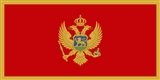
A new official flag of Montenegro
Flag of Montenegro

The Flag of Montenegro was officially adopted with the Law on the state symbols and the statehood day of Montenegro on 13 July 2004 at the proposal of the Government of Montenegro....
 was adopted on July 13 2004, by the Montenegrin legislature. The new flag is based on the royal standard of King Nikola I of Montenegro. This flag was all red with a silver border, a silver coat of arms, and the initials ?? in Cyrillic script (corresponding to NI in Latin script) representing King Nikola I. The border and arms were changed from silver to gold in the modern flag and the royal cypher in the centre of the arms are omitted from the modern arms and replaced with a golden lion.

The national day of 13 July marks the date in 1878 when the Congress of Berlin
Congress of Berlin

The Congress of Berlin was a meeting of the European Great Powers' and the Ottoman Empire's leading statesmen in Berlin in 1878. In the wake of the Russo-Turkish War, 1877?78, the meeting's aim was to reorganize the countries of the Balkans....
 recognised Montenegro as the 27th independent state in the world and the start of one of the first popular uprisings in Europe against the Axis Powers
Axis Powers

The Axis powers were those countries that were opposed to the Allies of World War II during World War II. The three major Axis powers - Nazi Germany, Kingdom of Italy , and Empire of Japan - were part of a military alliance on the signing of the Tripartite Pact in September 1940, which officially founded the Axis powers....
 on 13 July 1941 in Montenegro.

In 2004, the Montenegrin legislature selected a popular Montenegrin traditional song,
Oh, Bright Dawn of May, as the national anthem
National anthem

A national anthem is a generally patriotism musical composition that evokes and eulogizes the history, traditions and struggles of its people, recognized either by a nation's government as the official national song, or by convention through use by the people....
. Montenegro's official anthem during the reign of King Nikola was
(To our beautiful Montenegro). The Montenegrin popular anthem has unofficially been Onamo, 'namo!
Onamo, 'namo!

Onamo, 'namo! also known as the Serbian Marseillaise was a popular anthem in Montenegro in the late 19th to early 20th century. The state anthem of Montenegro at the time was Ubavoj nam Crnoj Gori, while the education anthem was the Hymn to Saint Sava....
 since King Nikola I wrote it in the 1860s.

Municipalities


Montenegro is divided into twenty-one municipalities
Municipality

A municipality is an administrative entity composed of a clearly defined territory and its population and commonly denotes a city, town, or village, or a small grouping of them....
 (
opština
Opština

Op?tina, Obshtina or opcina, Cyrillic ??????? or ??????, may refer to;...
), and two urban municipalities, subdivisions of Podgorica municipality:

  • Andrijevica
    Andrijevica

    Andrijevica is a town in north-eastern Montenegro. It has a population of 1,073 . Its territory is outspread on 340 km2 and it is surrounded by massives of mountains Komovi, Bjelasica and Prokletije....
  • Bar
    Bar, Montenegro

    Bar is a coastal town in Montenegro. It has a population of 13,719 . Bar is the centre of Bar municipality and a major seaport of Montenegro....
  • Berane
    Berane

    Berane is a town in north-eastern Montenegro. It has a population of 11,776 .Berane is the centre of the municipality of the same name and one of the centres of Polimlje area, named after Lim River, on which Berane is situated....
  • Bijelo Polje
    Bijelo Polje

    Bijelo Polje is a town in northern Montenegro. It has a population of 15,883 .Bijelo Polje is the center of the municipality of the same name , which is part of geographical region of Sand?ak....
  • Budva
    Budva

    Budva is a coastal town in Montenegro. It has around 15,000 inhabitants, and is a centre of Budva municipality. The coastal area around Budva, called the Budva Riviera , is the centre of Montenegro's tourism, and is well known for its sandy beaches, diverse nightlife, and beautiful examples of Mediterranean architecture....
  • Cetinje
    Cetinje

    Cetinje is a town in Montenegro, located at . It is also a historical and the secondary capital of Montenegro , with the official residence of the President of Montenegro....
  • Danilovgrad
    Danilovgrad

    Danilovgrad is a town in central Montenegro. It has a population of 5,208 . It is situated in a municipality by the same name.The town of Danilovgrad is located in the fertile valley of the Zeta River, sometimes called also the Bjelopavlici plain, after the name of the local clan....
  • Herceg Novi
    Herceg Novi

    Herceg Novi is a coastal town in Montenegro located at the entrance to the Bay of Kotor and at the foot of Mount Orjen. It is the administrative center of the Herceg-Novi municipality with around 40,000 inhabitants....
  • Kolašin
    Kolašin

    Kola?in , is a town in northern Montenegro. It has a population of 2,989 .Kola?in is the centre of Kola?in municipality and unofficial centre of Moraca region, named after Moraca River....
  • Kotor
    Kotor

    Kotor is a coastal town in Montenegro. It is located in a most secluded part of Gulf of Kotor. The town has a population of 13,510, and is the administrative center of the Kotor municipality....
  • Mojkovac
    Mojkovac

    Mojkovac is a town in northern Montenegro. It has a population of 4,120 . Mojkovac is also the centre of Mojkovac municipality, which has a population of 10,066....
  • Nikšic
    Nikšic

    Nik?ic is a city in Montenegro . In 2003 the city had a total population of 58,212.Nik?ic is located in Nik?ic plain, at the foot of Mount Trebjesa....
  • Plav
    Plav

    Plav is a town in north-eastern Montenegro. It has a population of 3,615 .Plav is the centre of the municipality of the same name ,...
  • Plužine
    Plužine

    Plu?ine is a town in northwesten Montenegro. It has a population of 1,494 .Plu?ine is the centre of Plu?ine municipality and unofficial centre of Piva region, named after Piva River....
  • Pljevlja
    Pljevlja

    Pljevlja is a city and municipality located in the northern part of Montenegro, in the geographical area . The municipality borders those of ?abljak, Bijelo Polje and Mojkovac in Montenegro, as well as the republics of Serbia and Bosnia and Herzegovina....
  • Podgorica
    Podgorica

    Podgorica is the Capital and largest city of Montenegro. It is at , above sea level.A census in 2003 put the city's population at 136,473. Its favourable position, at the confluence of the Ribnica River and Moraca River rivers and the meeting point of the fertile Zeta Plain and Bjelopavlici Valley has encouraged settlement....
  • * Golubovci
    Golubovci

    Golubovci is a small town in the Podgorica municipality of Montenegro. It is the seat of the Golubovci urban municipality, a subdivision of the Podgorica municipality....
  • * Tuzi
    Tuzi

    Tuzi is a town in the Podgorica municipality, Montenegro, located along a main road between the city of Podgorica and the Albanian border crossing, just a few kilometers north of Lake Skadar....
  • Rožaje
    Rožaje

    Ro?aje , is a town in northeastern Montenegro. It has a population of 9,121 Ro?aje is the centre of Ro?aje municipality, which has a population of 22,693....
  • Šavnik
    Šavnik

    ?avnik is a small town in northern Montenegro. It has a population of 570 .?avnik is the centre of ?avnik municipality and unofficial centre of Drobnjaci region, home of the Serb tribes#Plemena of Herzegovina....
  • Tivat
    Tivat

    Tivat is a coastal town in southwest Montenegro, located in the Bay of Kotor. It has a population of 9,467 .Tivat is the centre of Tivat municipality , which is the smallest municipality by area in Montenegro....
  • Ulcinj
    Ulcinj

    Ulcinj is a coastal town and municipality in Montenegro. The town of Ulcinj has a population of 10,828 and is the centre of Ulcinj municipality....
  • Žabljak
    Žabljak

    See ?abljak Crnojevica for historical capital of Montenegro.?abljak is a town in northern Montenegro. The town of ?abljak has a population of 1,937....
Montenegro Municipalities

Economy


As a relatively small principality and kingdom, Montenegro made its first steps towards an industrial economy only at the turn of the 20th century. However, the extensive urbanization and industrialization did not take place until the SFRY-era. An industrial sector based on electricity generation, steel
Steel mill

A steel mill is an industrial plant for the manufacture of steel.Steel is an alloy of iron and carbon. It is produced in a two-stage process....
, aluminium
Aluminium

Aluminium or aluminum is a silvery white and ductile member of the boron group of chemical elements. It has the symbol Al; its atomic number is 13....
, coal mining
Coal mining

Coal mining is the extraction or removal of coal from the earth by mining. When coal is used for fuel in power generation it is referred to as steaming or thermal coal....
, forestry
Forestry

Forestry is the art and science of managing forests, tree plantations, and related natural resources. Silviculture, a related science, involves the growing and tending of trees and forests....
 and wood processing, textiles and tobacco manufacture were built up, with trade, overseas shipping, and particularly tourism, increasingly important by the late 1980s.

While the deficiencies of a centrally planned economy
Planned economy

A planned economy or directed economy is an economic system in which the government or workers' councils manages the economy. It is an economic system in which the central government makes all decisions on the production and consumption of goods and services....
 were beginning to show in the late 1980s, it was the Yugoslav wars
Yugoslav wars

The Yugoslav Wars were a series of violent conflicts in the territory of the former Socialist Federal Republic of Yugoslavia that took place between 1991 and 2001....
 that caused the rapid and complete deterioration of the Montenegrin economy. The loss of previously guaranteed markets and suppliers after the breakup of Yugoslavia left the Montenegrin industrial sector reeling as production was suspended and the privatization program, begun in 1989, was interrupted.

The disintegration of the Yugoslav market, and the imposition of the UN sanctions in May 1992 were the causes of the greatest economic and financial crisis since World War II. During 1993, two thirds of the Montenegrin population lived below the poverty line, while frequent interruptions in relief supplies caused the health and environmental protection to drop below the minimum of international standards. The financial losses under the adverse effects of the UN sanctions on the overall economy of Montenegro are estimated to be approximately $6.39 billion. This period also experienced the second highest hyperinflation
Hyperinflation

File:Bundesarchiv Bild 102-00104, Inflation, Tapezieren mit Geldscheinen.jpgIn economics, hyperinflation is inflation that is very high or "out of control", a condition in which prices increase rapidly as a currency loses its value....
 in history (3 million percent in January 1994). During this time, the economy of Montenegro mostly depended on smuggling of user goods - especially those in short supply like petrol and cigarettes.

In 1997, Milo Đukanovic
Milo Đukanovic

Milo ?ukanovic is the Prime Minister of Montenegro of Montenegro, currently in his 5th term.He previously served three consecutive terms as PM from 1991 to 1998 , and one again from 2003 to 2006....
 took control over the ruling Democratic Party of Socialists of Montenegro
Democratic Party of Socialists of Montenegro

The Democratic Party of Socialists of Montenegro is the ruling political party in Montenegro.It is the successor of the League of Communists of Yugoslavia's League of Communists of Montenegro....
 (DPS) and began severing ties with Miloševic's Serbia
Serbia

Serbia , officially the Republic of Serbia , is a country in Central Europe and Balkans Europe, covering the southern part of the Pannonian Plain and the central part of the Balkans....
. He blamed the policies of Slobodan Miloševic
Slobodan Miloševic

Slobodan Milo?evic, whose last/family name sometimes is transliteration as Miloshevich was President of Serbia and of President of Yugoslavia....
 for the overall decline of the Montenegrin economy. Montenegro introduced the German mark
German mark

The Deutsche Mark or German mark was the official currency of West Germany and, from 1990 until the adoption of the euro, all of unified Germany....
 as response to again-growing inflation, and insisted on taking more control over its economic fate. This eventually resulted in creation of Serbia and Montenegro
Serbia and Montenegro

The State Union of Serbia and Montenegro , was a Political union of Serbia and Montenegro, which existed between 2003 and 2006. The two republics, both of which are former republics of the Socialist Federal Republic of Yugoslavia, initially formed the Federal Republic of Yugoslavia in 1992....
, a loose union in which Montenegro mostly took responsibility for its economic policies.

Despite implementation of reform laws and privatization of most publicly-owned companies, the living standard of Montenegrins did not improve significantly during this period. The government, with Milo Đukanovic still as the Prime minister, blamed the slow progress on Serbia, and pushed the country towards full independence, which was finally achieved in 2006.

Following the independence referendum, Montenegro's economy has continued to transform into a more service-based one, with the proclaimed goal of becoming an elite tourist destination and joining the European Union
European Union

The European Union is an economic and political union of 27 European Union member state, located primarily in Europe. It was established by the Treaty of Maastricht on 1 November 1993 upon the foundations of the pre-existing European Economic Community....
.

Tourism

Montenegro is well suited for development of all kinds of tourism, as it has both a picturesque coast and a mountainous northern region. The country was a well-known tourist spot in the 1980s, yet, the Yugoslav wars
Yugoslav wars

The Yugoslav Wars were a series of violent conflicts in the territory of the former Socialist Federal Republic of Yugoslavia that took place between 1991 and 2001....
 that were fought in neighboring countries during the 1990s crippled the tourist industry and destroyed the image of Montenegro as a tourist destination.

It was not until 2000s that the tourism industry began to recover, and the country has since experienced a high rate of growth in the number of tourist visits and overnight stays.

The Government of Montenegro
Government of Montenegro

The Government of Montenegro is the executive branch of state authority in Montenegro. It is headed by the Prime Minister of Montenegro. It comprises the prime minister, the deputy prime ministers as well as ministers....
 has set the development of Montenegro as an elite tourist destination a top priority. It is a national strategy to make tourism a major, if not the single largest, contributor to the Montenegrin economy. A number of steps were taken to attract foreign investors into Montenegro's tourism industry.

Some large projects are already under way, such as Porto Montenegro
Porto Montenegro

Porto Montenegro is a Luxury yacht marina and adjecent waterfront development currently under construction in Tivat, Montenegro.The construction site was a naval shipyard named Arsenal, which fell into disuse after the Yugoslav Wars and the decline of the SFR Yugoslav Navy....
, while other locations, like Jaz Beach
Jaz Beach

Jaz is a beach in the Budva in Montenegro. It is located 2.5 km west of Budva city. It consists of two parts, one 500 m long and the other, formerly a nudist beach, 300 m long....
, Buljarica
Buljarica

Buljarica is a beach in the Budva in Montenegro. It is about 1 km from Petrovac in the direction of Bar, Montenegro, The beach is 2,250 m long....
, Velika Plaža
Velika Plaža

Velika Pla?a is a beach in Ulcinj Municipalityin Montenegro. It stretches from Port Milena in Ulcinj to Bojana River, which separates it from Ada Bojana....
 and Ada Bojana
Ada Bojana

Ada Bojana is an island in the Ulcinj in Montenegro....
, have perhaps the greatest potential to attract future investments and become premium tourist spots on the Adriatic.

Some of the problems that currently hamper the development of Montenegrin tourism are inadequate infrastructure, notably the road infrastructure in the north, and electricity and water supply in the south of the country. The informal construction is also a problem.

Demographics


Ethnicity


According to 2003 census, Montenegro has 620,145 citizens. If the methodology used up to 1991 was used in the 2003 census, Montenegro would officially have 673,094 citizens. Most recent estimates stake somewhere below 700,000 inhabitants.

When the census was taken Montenegro was a non-national civic state. In the meantime, the Constitution was changed, hence it now recognizes the major ethnic groups living in it: Montenegrins
Montenegrins

group=Montenegrins|pop=800,000|region1=|pop1=267,669 198,414 |ref1=|region2=|pop2=69,049 ca. 200,000 |ref2=|region3=|pop3=30,000:...
, Serbs
Serbs

Serbs are a South Slavs people living in the Balkans and Central Europe, mainly in Serbia, Montenegro, Bosnia-Herzegovina, and, to a lesser extent, in Croatia....
, Bosniaks
Bosniaks

group = BosniaksBo?njaci|image = ...
, Albanians
Albanians

The Albanian people , from southeast Europe, live in Albania and neighbouring countries and speak the Albanian language. About half of Albanians live in Albania, with other large groups residing in Kosovo, the Republic of Macedonia, Serbia, and Montenegro....
, Muslims
Muslims by nationality

Muslims by nationality was a term used in Socialist Federal Republic of Yugoslavia as an official designation of nationality of Slavic Muslims....
 and Croats
Croats

Croats are a South Slavs nation mostly living in Croatia, Bosnia and Herzegovina and nearby countries. There are around 5 million Croats living in the southern Central Europe region, along the east bank of the Adriatic Sea and an estimated 9 million throughout the world....
. Ethnic composition according to the 2004 official data:

Note that Montenegrins were historically considered to be Serbs. People who identified as Serbs and Montenegrins are part of the same ethnic group, for more information see the controversy about Montenegrin ethnic identity
Montenegrins

group=Montenegrins|pop=800,000|region1=|pop1=267,669 198,414 |ref1=|region2=|pop2=69,049 ca. 200,000 |ref2=|region3=|pop3=30,000:...
.

Language


Most citizens speak the Serbian language
Serbian language

name=Serbian|nativename=|pronunciation=['sr?pski?]|familycolor=Indo-European|map=|states=See below under "Official status", besides that in Croatia and as an immigrant's language spread over Central Europe and Western Europe, as well as Northern America...
 of the Iyekavian dialect. However, as of 2004 the moves for an independent Montenegrin language
Montenegrin language

Montenegrin language is the name given to the Ijekavian-Shtokavian dialect spoken in Montenegro. Generally, it is recognized as a variant of the Serbian language, but some Montenegrins refer to their specific dialect as a language on its own....
 were promoted and with the new 2007 Constitution it became Montenegro's prime official language. Next to it, Serbian
Serbian language

name=Serbian|nativename=|pronunciation=['sr?pski?]|familycolor=Indo-European|map=|states=See below under "Official status", besides that in Croatia and as an immigrant's language spread over Central Europe and Western Europe, as well as Northern America...
, Bosnian
Bosnian language

Bosnian , sometimes referred as Bosniak/Bosniac language , is a South Slavic languages native to the Bosniaks and all other citizens of Bosnia and Herzegovina who consider it to be their mother tongue....
, Albanian
Albanian language

Albanian is an Indo-European languages spoken by nearly 6 million people, primarily in Albania and Kosovo but also in other areas of the Balkans in which there is an Albanian population, including the west of the Republic of Macedonia, Montenegro, and southern Serbia....
 and Croatian
Croatian language

Croatian language is a South Slavic languages which is used primarily in Croatia, by Croats in Bosnia and Herzegovina, in neighbouring countries where Croats are Indigenous peoples, in Italian region of Molise, and parts of the Croats diaspora....
 are recognized in usage. All of these languages except for Albanian are virtually identical in common usage.

Religion


Most Montenegrin inhabitants are Orthodox Christians, followers of the Serbian Orthodox Church
Serbian Orthodox Church

The Serbian Orthodox Church or the Church of Serbia is one of the autocephalyEastern Orthodox Church organization, ranking sixth in order of seniority after Orthodox Church of Constantinople, Greek Church of Alexandria, Church of Antioch, Orthodox Church of Jerusalem, and Russian Orthodox Church....
's Metropolitanate of Montenegro and the Littoral
Metropolitanate of Montenegro and the Littoral

The Metropolitanate of Montenegro is the largest diocese of the Serbian Orthodox Church in Montenegro. Founded in 1219 by Saint Sava, it is now one of the most prominent dioceses in the Serbian Orthodox Church....
. The religious institutions all have guaranteed rights and are separate from the state. There is a sizeable number of Sunni Muslims in Montenegro that maintain their own Islamic Community of Montenegro
Islam in Montenegro

Muslims in Montenegro form the largest minority religion in the country. Montenegro's 110,000 Muslims make up 17.74% of the total population. They are divided into these main groups: Slavic Muslims split among Bosnian language-speaking Bosniaks, Muslims by nationality, Montenegrin language-speaking Montenegrins, and ethnic Albanians....
. There is also a small Roman Catholic
Roman Catholic Church

The Roman Catholic Church, officially known as the Catholic Church is the world's largest Christianity Ecclesia , representing over half of all Christians and one-sixth of the world population....
 population, divided onto the Achdiocese of Antivari
Roman Catholic Archdiocese of Bar

The Roman Catholic Archdiocese of Bar is an ecclesiastical territory or diocese of the Roman Catholic Church in Montenegro. It is centred in the city of Bar, Montenegro ....
 headed by Primate of Serbia and the Diocese of Kotor
Roman Catholic Diocese of Kotor

The Roman Catholic Diocese of Kotor is a diocese of the Roman Catholic Church in Boka Kotorska, Montenegro. It is centred in the city of Kotor ....
 that is a part of the Church of Croatia. Religious determination according to the census:

According the newest report, there are 24,610 total refugees from the Yugoslav wars
Yugoslav wars

The Yugoslav Wars were a series of violent conflicts in the territory of the former Socialist Federal Republic of Yugoslavia that took place between 1991 and 2001....
 in Montenegro, forming 4.2% of the total population. 16,136 are refugees from Kosovo
Kosovo

Kosovo is a disputed region in the Balkans. Its majority is governed by the partially-recognised Republic of Kosovo . Serbia does not recognise the secession of Kosovo and considers it a United Nations-governed entity within its sovereign territory, the Autonomous Province of Kosovo and Metohija that was re-created by Slobodan M...
 after 1999 and 8,474 expelled from Croatia
Croatia

Croatia , officially the Republic of Croatia , is a Central European country at the crossroads of Pannonian Plain, Balkans, and the Mediterranean Sea....
 and Bosnia
Bosnia and Herzegovina

Bosnia and Herzegovina is a country on the Balkans peninsula of South Eastern Europe with an area of 51,129 square kilometres . Bordered by Croatia to the north, west and south, Serbia to the east, and Montenegro to the south, Bosnia and Herzegovina is Landlocked#Nearly landlocked, except for 26 kilometres of the Adriatic Sea coas...
.

Culture

Cetinje Palace
The culture of Montenegro has been shaped by a variety of influences throughout history. The influence of Orthodox, Slavonic, Central European, Islamic, and seafaring Adriatic cultures (notably parts of Italy
Italy

Italy , officially the Italian Republic , is a country located on the Italian Peninsula in Southern Europe and on the two largest islands in the Mediterranean Sea, Sicily and Sardinia....
, like the Republic of Venice
Republic of Venice

The Most Serene Republic of Venice or Venetian Republic was a state originating from the city of Venice . It existed for over a millennium, from the late 7th century AD until the year 1797....
) have been the most important in recent centuries.

Montenegro has many significant cultural and historical sites, including heritage sites from the pre-Romanesque
Romanesque architecture

Romanesque architecture is the term that is used to describe the architecture of Middle Ages Europe which evolved into the Gothic architecture style beginning in the 12th century....
, Gothic
Gothic art

Gothic art was a Medieval art art movement that lasted about 200 years. It began in France out of the Romanesque art period in the mid-12th century, concurrent with Gothic architecture found in Cathedrals....
 and Baroque
Baroque

In the the arts, the Baroque was a Western cultural Epoch , starting roughly at the beginning of the 17th century in Rome, Italy. It was exemplified by drama and grandeur in Baroque sculpture, Baroque painting, literature, Baroque dance, and Baroque music....
 periods. The Montenegrin coastal region is especially well known for its religious monuments, including the Cathedral of Saint Tryphon
Cathedral of Saint Tryphon

The Cathedral of Saint Tryphon in Kotor is one of two Catholic cathedrals in Montenegro. It is the seat of the Roman Catholic Diocese of Kotor currently led by Bishop Ilija Janjic....
 in Kotor
Kotor

Kotor is a coastal town in Montenegro. It is located in a most secluded part of Gulf of Kotor. The town has a population of 13,510, and is the administrative center of the Kotor municipality....
 (Cattaro under the Venetians), the basilica of St. Luke (over 800 years), Our Lady of the Rocks
Our Lady of the Rocks

Our Lady of the Rocks is one of the two islets off the coast of Perast in Bay of Kotor, Montenegro . It is an artificial island created by bulwark of rocks and by sinking old and seized ships loaded with rocks....
 (Škrpjela), the Savina Monastery
Savina monastery

Savina is a Serb Orthodox monastery near the city Herceg Novi in Boka Kotorska, Montenegro. It was built by the Duke of Saint Sava, Stefan Vukcic of Herzegovina....
 and others. Montenegro's medieval monasteries contain thousands of square metres of frescos on their walls.

The traditional folk dance of the Montenegrins is the Oro, a circle dance that involves dancers standing on each other's shoulders in a circle while one or two dancers are dancing in the middle.

The first literary works written in the region are ten centuries old, and the first Montenegrin book was printed five hundred years ago. The first state-owned printing press was located in Cetinje in 1494, where the first South Slavic
South Slavs

The South Slavs are a southern branch of the Slavic peoples that live in the Balkans mainly throughout the former Yugoslavia and Bulgaria. Geographically, the South Slavs are native to the southern Pannonian Plain, the eastern Alps and the Balkans and they speak South Slavic languages....
 book, Oktoih
Oktoih

Oktoih , in English the Book of Psalms or Psalter, is an incunabula printed in Cetinje, Montenegro in 1494. Oktoih is a book of liturgical hymns for singing in eight parts....
, was printed the same year. Ancient manuscripts, dating from the thirteenth century, are kept in the Montenegrin monasteries.

Montenegro's capital Podgorica and the former royal capital of Cetinje are the two most important centers of culture and the arts in the country.

Education


Education in Montenegro is regulated by the Montenegrin Ministry of Education and Science
Government of Montenegro

The Government of Montenegro is the executive branch of state authority in Montenegro. It is headed by the Prime Minister of Montenegro. It comprises the prime minister, the deputy prime ministers as well as ministers....
.

Education starts in either pre-schools or elementary schools. Children enroll in elementary schools at the age of 6; it lasts 9 years. The students may continue their secondary education
Secondary education

Secondary education is the stage of education following primary education. Secondary education is generally the final stage of compulsory education....
, which lasts 4 years (3 years for trade schools) and ends with graduation (Matura
Matura

Matura is the word commonly used in Austria, Albania, Bosnia and Herzegovina, Bulgaria, Croatia, Czech Republic, Italy, Liechtenstein, the Republic of Macedonia, Montenegro, Poland, Serbia, Slovakia, Slovenia, Switzerland and Ukraine for the final exams young adults take at the end of their secondary education....
). Higher education
Higher education

Higher education refers to a level of education that is provided by university, vocational university, community colleges, liberal arts colleges, Institute of technology and other collegiate level institutions, such as Vocational school, trade schools and career colleges, that award academic degrees or professional certifications....
 lasts with a certain first degree after 3 to 6 years.

Sport

Serbia and Montenegro were represented by a single football team in the 2006 FIFA World Cup
2006 FIFA World Cup

The 2006 FIFA World Cup was the 18th instance of the FIFA World Cup, the Anniversary#Latin-derived numerical names international football world championship tournament....
 tournament, despite having formally split just weeks prior to its start. Following this event, this team has been inherited by Serbia, while a new one was organized to represent Montenegro in international competitions. On March 24, 2007, the Montenegrin national team
Montenegro national football team

The Montenegro national football team represents Montenegro in international Football and is controlled by the Football Association of Montenegro, the governing body for football in Montenegro....
 came from behind to win its first ever fixture, 2-1, in a friendly game
Exhibition game

An exhibition game is a sports in which there is no competitive value of any significant kind to any competitor regardless of the outcome of the competition....
 against Hungary
Hungary national football team

The Hungary national football team represents Hungary in international Football and is controlled by the Hungarian Football Federation. It has a rich and proud pedigree in the game and a rightful place in football annals as one of the first original footballing nations in continental Europe and an innovator in the sport in the 1950s....
 at the Podgorica Stadium
Podgorica city stadium

Podgorica Stadium is a multi-use stadium in Podgorica, Montenegro. Its name literally means Under the Gorica stadium, Gorica being a hill near the city....
. On their 119th Session in Guatemala City
Guatemala City

Guatemala City is the Capital and largest city of the nation of Guatemala. It is also the capital city of the local Guatemala and the largest city in Central America....
 in July 2007, the International Olympic Committee
International Olympic Committee

The International Olympic Committee is an organization based in Lausanne, Switzerland, created by Pierre de Coubertin and Demetrios Vikelas on June 23, 1894....
 granted recognition and membership to the newly formed Montenegrin National Olympic Committee. Montenegro made its debut at the 2008 Summer Olympics
2008 Summer Olympics

The 2008 Summer Olympic Games, officially known as the Games of the XXIX Olympiad, was a major international multi-sport event that took place in Beijing, People's Republic of China, from August 8 to August 24, 2008....
 in Beijing
Beijing

is a metropolis in northern China and the Capital of the People's Republic of China. It is one of the four municipality of China, which are equivalent to province in China's Political divisions of China....
.

Water polo is one of the most popular sports in the country. Montenegro won the European Championships in Malaga, Spain on July 13, 2008 over Serbia 6-5 in a game that was tied 5-5 after four quarters. This was Montenegro's first major international competition for which they had to qualify through two LEN tournaments. Montenegro’s first division in water polo consists of five clubs, all with an annual budget of one million Euros and more - VK Primorac Kotor (2007 and 2008 Montenegro champions), VK Jadran Herceg Novi (2006 champions of Serbia-Montenegro), VK Budvanska Rivijera Budva, VK Prcanj and VK Bijela. From the coming season 2008-09 they will be joined by a sixth club, VK Cattaro. Additionally, they qualified for the 2008 Olympic Games
Water polo at the 2008 Summer Olympics

Water polo at the 2008 Summer Olympics was held from August 10 to August 24 2008, at the Ying Tung Natatorium in Beijing, People's Republic of China....
 in Beijing but did not win.

In popular culture


The first official international representation of Montenegro as an independent state was in the Miss World 2006
Miss World 2006

Miss World 2006, the 56th Miss World pageant was held at Sala Kongresowa, the main 2,897-seat auditorium at the Palace of Culture and Science, Warsaw, Warsaw, Poland on the September 30, 2006....
 celebrated on September 30, 2006 in Warsaw
Warsaw

Warsaw is the Capital and World's largest cities of Poland. It is located on the Vistula River roughly from both the Baltic Sea coast and the Carpathian Mountains....
, Poland
Poland

Poland , officially the Republic of Poland , is a country in Central Europe. Poland is bordered by Germany to the west; the Czech Republic and Slovakia to the south; Ukraine, Belarus and Lithuania to the east; and the Baltic Sea and Kaliningrad Oblast, a Russian Enclave and exclave, to the north....
. Ivana Kneževic
Ivana Kneževic

Ivana Kne?evic is a beauty queen from the city of Bar, Montenegro, Montenegro who was Miss Crna Gora 2006. Her ambition is to work in a humanitarian organization in addition of becoming a supermodel....
 from the city of Bar
Bar, Montenegro

Bar is a coastal town in Montenegro. It has a population of 13,719 . Bar is the centre of Bar municipality and a major seaport of Montenegro....
 was the first Miss Montenegro at any international beauty pageant. Both Montenegro and Serbia competed separately in this pageant for the first time after the state union came to an end.

Part of the 2006 James Bond
James Bond

James Bond 007 is a fictional character created in 1953 by writer Ian Fleming, who featured him in twelve novels and two short story collections....
 film
Casino Royale
Casino Royale (2006 film)

Casino Royale is the twenty-first film in the James Bond James Bond ; it is directed by Martin Campbell and the first to star Daniel Craig as Secret Intelligence Service agent James Bond ....
is set in Montenegro, although the filming was done in Czech Republic
Czech Republic

The Czech Republic , is a landlocked country in Central Europe. The country borders Poland to the northeast, Germany to the west, Austria to the south and Slovakia to the east....
.

Nero Wolfe
Nero Wolfe

Nero Wolfe is a fictional detective, created by the United States mystery writer Rex Stout, who made his debut in 1934. Wolfe's confidential assistant Archie Goodwin recorded the cases of the detective genius in 33 novels and 39 short stories from the 1930s to the 1970s, with most of them set in New York City....
, the eccentric fictional detective created by American
United States

The United States of America is a Federal government constitutional republic comprising U.S. state and a federal district. The country is situated mostly in central North America, where its Contiguous United States and Washington, D.C., the Capital districts and territories, lie between the Pacific Ocean and Atlantic Oceans, Borders of the U...
 writer Rex Stout
Rex Stout

Rex Todhunter Stout was an United States crime writer, best known as the creator of the larger-than-life fictional detective Nero Wolfe, described by reviewer Will Cuppy as "that Falstaff of detectives." Wolfe's assistant Archie Goodwin recorded the cases of the detective genius from 1934 to 1975 ....
, is Montenegrin by birth. One Nero Wolfe novel,
The Black Mountain
The Black Mountain

The Black Mountain is a Nero Wolfe detective novel by Rex Stout, first published by the Viking Press in 1954. The story was also collected in the omnibus volume Three Trumps ....
, takes place in Tito
Josip Broz Tito

Josip Broz Tito, original name Josip Broz was the leader of the Socialist Federal Republic of Yugoslavia from 1945 until his death in 1980. During World War II, Tito organized the anti-fascist resistance movement known as the People's Liberation Movement led by Yugoslav Partisans....
-era Montenegro.

Jay Gatsby, the main character of the F. Scott Fitzgerald
F. Scott Fitzgerald

Francis Scott Key Fitzgerald was an United States writer of novels and short stories, whose works are evocative of the Jazz Age, a term he coined himself....
 novel
The Great Gatsby
The Great Gatsby

The Great Gatsby is a novel by the United States author F. Scott Fitzgerald. First published on April 10, 1925, it is set in Long Island's North Shore and New York City during the summer of 1922....
, had been given a medal of honour by the Montenegrin King Nicholas I.

The setting for Franz Lehár
Franz Lehár

Franz Leh?r , known in Hungarian as Leh?r Ferenc, was an Austrian composer of Hungarian people descent, mainly known for his operettas....
 1905 operetta
Operetta

Operetta is a genre of light opera, light in terms both of music and subject matter. It is also closely related, in English-language works, to forms of musical theatre....
 
The Merry Widow
The Merry Widow

The Merry Widow is an operetta by the Austria-Hungary composer Franz Leh?r. The Librettos, Viktor L?on and Leo Stein , based the story — concerning a rich widow, Hanna Glawari, and her attempt to find a husband ? on an 1861 comedy play, L'attach? d'ambassade by Henri Meilhac....
is the Paris embassy of the Grand Duchy of Pontevedro. Pontevedro is a fictionalized version of Montenegro and several of the characters were loosely based on actual Montenegrin nobility.

Montenegrin holidays


Holidays
Date Name Notes
1 January New Year's Day
New Year's Day

New Year's Day is the first day of the new year. On the modern Gregorian calendar, it is celebrated on January 1, as it was also in ancient Rome ....
(non-working holiday)
7 January Orthodox Christmas
Christmas

Christmas , also referred to as Christmas Day, is an annual holiday celebrated on December 25 that commemorates the birth of Jesus. The day marks the beginning of the larger season of Christmastide, which lasts Twelve Days of Christmas....
(non-working)
14 January Julian
Julian calendar

The Julian calendar, a reform of the Roman calendar, was introduced by Julius Caesar in 46 BC, and came into force in 45 BC . It was chosen after consultation with the astronomer Sosigenes of Alexandria and was probably designed to approximate the tropical year, known at least since Hipparchus....
 New Year's Day
New Year's Day

New Year's Day is the first day of the new year. On the modern Gregorian calendar, it is celebrated on January 1, as it was also in ancient Rome ....
25 April Orthodox Good Friday
Good Friday

Good Friday, also called Holy Friday, Great Friday or Black Friday, is the Friday preceding Easter Sunday . It commemorates the Crucifixion of Jesus Christ and his death at Golgotha....
Date for 2008 only
27 April Orthodox Easter
Easter

Easter is the most important religious feast in the Christianity liturgical year.Christians believe that Jesus was Resurrection of Jesus from the dead three days after his Crucifixion of Jesus, and celebrate this resurrection on Easter Day or Easter Sunday , two days after Good Friday....
Date for 2008 only
28 April Orthodox Easter Monday
Easter Monday

Easter Monday is the day after Easter and is celebrated as a holiday in some largely Christianity cultures, especially Roman Catholic Church cultures....
Date for 2008 only
1 May Labour Day
Labour Day

Labour Day or Labor Day is an Year holiday celebrated all over the world that resulted from the trade union movement, to celebrate the economic and social achievements of workers....
(non-working)
9 May Victory Day
Victory Day

Victory Day is a common name of many different public holidays in various countries to commemorate victories in important battles or wars in the countries' history....
 
21 May Independence Day
Independence Day

An Independence Day is an annual celebration commemorating the anniversary of a nation's assumption of independent statehood, usually after ceasing to be a colony or part of another state, more rarely after the end of a military occupation....
(non-working)
13 July Statehood Day (non-working)


See also


Further reading


  • Realm of the Black Mountain: A History of Montenegro by Elizabeth Roberts (Hurst & Co, 2007) ISBN 978-1-85065-868-9
  • Montenegro: The Divided Land by Thomas Fleming (2002) ISBN 0-9619364-9-5


External links

Government
  • [https://www.cia.gov/library/publications/world-leaders-1/world-leaders-m/montenegro.html Chief of State and Cabinet Members]
General information
  • from UCB Libraries GovPubs
Other