

List of rulers of Bosnia

Encyclopedia
Dukes under foreign rule
| Picture | TitleName | House | Reign | Overlordship | Notes |
|---|---|---|---|---|---|
| Duke Duke A duke or duchess is a member of the nobility, historically of highest rank below the monarch, and historically controlling a duchy... Stephen Stephen, Duke of Bosnia Stephen , Duke of Bosnia, was the first known office-holder of Bosnia , he was appointed governor by Constantine Bodin Stephen (Bosnian: Stjepan/Стјепан; Serbian: Stefan/Стефан), Duke of Bosnia, was the first known office-holder of Bosnia (lower course of Bosna, the Vrbas and the Neretva), he was... |
House of Vojislavljević House of Vojislavljevic The Vojislavljević was the second Serb medieval dynasty, named after archon Stefan Vojislav, who wrestled the region from Byzantine hands in the 1040s... |
fl. Floruit Floruit , abbreviated fl. , is a Latin verb meaning "flourished", denoting the period of time during which something was active... 1082-1101 |
Duklja Duklja Doclea or Duklja was a medieval state with hereditary lands roughly encompassing the territories of present-day southeastern Montenegro, from Kotor on the west to the river Bojana on the east and to the sources of Zeta and Morača rivers on the north.... |
He was appointed governor of Bosnia by King Constantine Bodin (r. 1081–1101), his kinsman, sometime between 1082-5. | |
| Annexed by the House of Vukanović House of Vukanovic The House of Vukanović was a medieval Serbian dynasty that reigned over Rascia and Zachlumia between late-11th century and mid-13th century. The house itself directly descended from the House of Vojislavljević, which ruled over medieval Serb lands. The dynasty was succeeded by its direct... (1101-1137) Conquered by Hungary; Ladislaus II of Hungary Ladislaus II of Hungary Ladislaus II , King of Hungary. As a younger son, he was able to ascend to the throne only with the assistance of the Byzantine Empire against his nephew, King Stephen III after his brother's death... held the title Ban of Bosnia 1137-1154 |
|||||
| Ban Ban Ban may refer to:* Ban , a decree that prohibits something, sometimes a form of censorship* The imperial ban, a form of outlawry in the medieval Holy Roman Empire* Cherem, usually translated as the Ban, a form of excommunication in Judaism... Borić |
House of Boričević | 1154-1163 | Beloš Vukanović Beloš , a member of the Vukanović dynasty of Serbia, was the Regent of Hungary 1141-1146 alongside his sister Helen, who was married to Béla II with whom she had a son, Géza II, still an infant. He held the title of dux, and was the viceregal of Croatia 1142-1158 and 1163. Beloš, as a member of... (1154-1158) < Géza II Géza II of Hungary Géza II , , King of Hungary, King of Croatia, Dalmatia and Rama . He ascended the throne as a child and during his minority the kingdom was governed by his mother and uncle... (1158-1162) Stephen III Stephen III of Hungary Stephen III , King of Hungary King of Croatia and Dalmatia . He ascended the throne as a child and he had to stand up against his uncles who usurped the crown supported by the Byzantine Empire... (1162-1163) Hungary Kingdom of Hungary The Kingdom of Hungary comprised present-day Hungary, Slovakia and Croatia , Transylvania , Carpatho Ruthenia , Vojvodina , Burgenland , and other smaller territories surrounding present-day Hungary's borders... |
a local Slavonia Slavonia Slavonia is a geographical and historical region in eastern Croatia... n landlord that had possessions on both sides of the river Sava. As Hungarian Kingdom of Hungary The Kingdom of Hungary comprised present-day Hungary, Slovakia and Croatia , Transylvania , Carpatho Ruthenia , Vojvodina , Burgenland , and other smaller territories surrounding present-day Hungary's borders... domination over Bosnia grew, Borić became its supporter and gained the title of Ban Ban (title) Ban was a title used in several states in central and south-eastern Europe between the 7th century and the 20th century.-Etymology:The word ban has entered the English language probably as a borrowing from South Slavic ban, meaning "lord, master; ruler". The Slavic word is probably borrowed from... of the newly created Banate of Bosnia History of Bosnia and Herzegovina -Pre-Slavic Period :Bosnia has been inhabited at least since Neolithic times. In the late Bronze Age, the Neolithic population was replaced by more warlike Indo-European tribes known as the Illyrians. Celtic migrations in the 4th and 3rd century BCE displaced many Illyrian tribes from their former... . In 1162-1163 a succession war erupted between the anti-Byzantine candidate (backed by Beloš, his former superior) and the pro-Byzantine Stephen IV Stephen IV of Hungary Stephen IV , King of Hungary . In his youth, he rebelled against his brother, King Géza II of Hungary and had to flee to the Court of the Byzantine Emperor, Manuel I Komnenos... , son of King Geza. Borić supported Beloš out of loyalty. Stephen IV succeeded the throne and sent Gottfried, who defeated Borić in 1163. |
|
| Bosnia annexed by Hungary | |||||
| Ban Kulin Ban Kulin Ban Kulin was a notable Ban of Bosnia who ruled from 1180 to 1204 first as a vassal of the Byzantine Empire and then of the Kingdom of Hungary. He was brought to the power by Byzantine Emperor Manuel I Comnenus. He had a son, Stjepan Kulinić who succeeded him as Bosnian Ban... |
House of Kulinić House of Kulinic The Kulinić dynasty was a medieval Bosnian ruling family from the second half of the 12th century to the first half of the 13th century. Its founder, Kulin, was made Bosnia's Ban by the Eastern Roman Emperor Manuel I Comnenus in 1180, but he was present in Bosnia political and social life since... |
1180–1204 | Byzantine Byzantine Empire The Byzantine Empire was the Eastern Roman Empire during the periods of Late Antiquity and the Middle Ages, centred on the capital of Constantinople. Known simply as the Roman Empire or Romania to its inhabitants and neighbours, the Empire was the direct continuation of the Ancient Roman State... Emeric I (1183-1204) Hungary Kingdom of Hungary The Kingdom of Hungary comprised present-day Hungary, Slovakia and Croatia , Transylvania , Carpatho Ruthenia , Vojvodina , Burgenland , and other smaller territories surrounding present-day Hungary's borders... |
||
| Ban Stephen |
House of Kulinić House of Kulinic The Kulinić dynasty was a medieval Bosnian ruling family from the second half of the 12th century to the first half of the 13th century. Its founder, Kulin, was made Bosnia's Ban by the Eastern Roman Emperor Manuel I Comnenus in 1180, but he was present in Bosnia political and social life since... |
1204–1232 | |||
| Ban Matthew Ninoslaus Matej Ninoslav Matej Ninoslav , son of Radivoj, was a Bosnian Ban . Most of Bosnia was under the Kingdom of Hungary from 1235 to 1241. Ninoslav was also a Prince of Split in 1242–1244 during the local civil war. Ninoslav established control of most of Bosnia after the Hungarian withdrawal... |
House of Kulinić House of Kulinic The Kulinić dynasty was a medieval Bosnian ruling family from the second half of the 12th century to the first half of the 13th century. Its founder, Kulin, was made Bosnia's Ban by the Eastern Roman Emperor Manuel I Comnenus in 1180, but he was present in Bosnia political and social life since... |
1232–1253 | |||
| Ban Prijezda I |
House of Kotromanić House of Kotromanic The Kotromanić dynasty was a ruling house that ruled in the medieval Bosnia and the surrounding lands, from the 13th century as Bans until the crowning with the Bosnian crowns in 1377 and then as kings until the Ottoman conquest conquest in 1463.... |
1254–1287 | |||
| Ban Prijezda II |
House of Kotromanić House of Kotromanic The Kotromanić dynasty was a ruling house that ruled in the medieval Bosnia and the surrounding lands, from the 13th century as Bans until the crowning with the Bosnian crowns in 1377 and then as kings until the Ottoman conquest conquest in 1463.... |
1287–1290 | |||
| In 1299, Paul I Šubić of Bribir took the title Ban of Bosnia (Bosniae dominus) and named his brother Mladen I Šubić of Bribir Mladen I Šubić of Bribir Mladen I Šubić of Bribir was a member of the Croatian noble family Šubić, at the end of 13th and beginning of the 14th century.He was a brother of a famous ban of Croatia Paul I Šubić of Bribir, who appointed Mladen as a commissar of dalmatinan city of Split, along with Klis Fortress.After Paul I... as the Bosnian Ban. Mladen was Bosnian Ban from 1299–1304. From 1299 Mladen I was in war with Stephen I. |
|||||
| Ban Stephen I |
House of Kotromanić House of Kotromanic The Kotromanić dynasty was a ruling house that ruled in the medieval Bosnia and the surrounding lands, from the 13th century as Bans until the crowning with the Bosnian crowns in 1377 and then as kings until the Ottoman conquest conquest in 1463.... |
1287–1314 | |||
| In 1305, Paul Šubić took the title Lord of all of Bosnia (totius Bosniae dominus). Paul was from 1305–1312 Lord of all of Bosnia. | |||||
| Ban Paul |
House of Šubić | 1305–1313 | |||
| Ban Mladen II Mladen II Šubić of Bribir Mladen II Šubić of Bribir , a Croatian leader and member of the Šubić noble family, was a Ban of Croatia and Lord of all of Bosnia.-Biography:... |
House of Šubić | 1312–1322 | |||
| Paul's eldest son Mladen II Šubić of Bribir Mladen II Šubić of Bribir Mladen II Šubić of Bribir , a Croatian leader and member of the Šubić noble family, was a Ban of Croatia and Lord of all of Bosnia.-Biography:... was Lord of all of Bosnia from 1312–1322. In 1314, Mladen II appoints Stephen II Kotromanić, his former enemy, as vassal in Bosnia |
|||||
| Ban Stephen II |
House of Kotromanić House of Kotromanic The Kotromanić dynasty was a ruling house that ruled in the medieval Bosnia and the surrounding lands, from the 13th century as Bans until the crowning with the Bosnian crowns in 1377 and then as kings until the Ottoman conquest conquest in 1463.... |
1322–1353 | |||
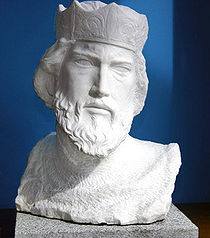 |
Ban Tvrtko I |
House of Kotromanić House of Kotromanic The Kotromanić dynasty was a ruling house that ruled in the medieval Bosnia and the surrounding lands, from the 13th century as Bans until the crowning with the Bosnian crowns in 1377 and then as kings until the Ottoman conquest conquest in 1463.... |
1353–1366 | ||
| Ban Vuk |
House of Kotromanić House of Kotromanic The Kotromanić dynasty was a ruling house that ruled in the medieval Bosnia and the surrounding lands, from the 13th century as Bans until the crowning with the Bosnian crowns in 1377 and then as kings until the Ottoman conquest conquest in 1463.... |
1366–1367 | |||
| |
Ban Tvrtko I |
House of Kotromanić House of Kotromanic The Kotromanić dynasty was a ruling house that ruled in the medieval Bosnia and the surrounding lands, from the 13th century as Bans until the crowning with the Bosnian crowns in 1377 and then as kings until the Ottoman conquest conquest in 1463.... |
1367–1377 | ||
Kings
- Note: All Bosnian kings had two names and the first of those two names was StephenStephenStephen or Steven is a masculine first name, derived from the Greek name Στέφανος meaning "crown, garland", in turn from the Greek word "στέφανος", meaning "wreath, crown, honour, reward", literally "that which surrounds or encompasses". In ancient Greece a wreath was given to the winner of a...
. They are traditionally and most commonly numbered after the second of their two names; thus, the fourth and sixth King of Bosnia was not Stephen IV Tvrtko, but Stephen Tvrtko II.
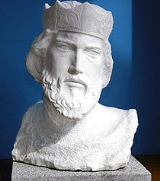
| Stephen Tvrtko I
Tvrtko I of Bosnia
Stjepan Tvrtko I was a ruler of medieval Bosnia. He ruled in 1353–1366 and again in 1367–1377 as Ban and in 1377–1391 as the first Bosnian King....
26 October 1377 - 10 March 1391||
|| 1338son of Vladislav Kotromanić
Vladislav Kotromanic
Vladislav Kotromanić was a 14th-century acting regent of medieval Bosnia, from September 1353 to his death in 1354. He was co-regent with his brother, Stephen II, Ban of Bosnia, 1326-1353....
and Jelena Šubić
Jelena Šubic
Jelena Šubić was a Croatian kneginja from the noble Šubić family, and mother of Bosnian King Tvrtko.Jelena Šubić was daughter of Juraj II Šubić. She was born early in the 14th century , and was married to Regent of Bosnia Vladislav Kotromanić by his brother Mladen III Šubić at Klis Fortress in...
|| Dorothea of Bulgaria
Dorothea of Bulgaria
Dorothea of Bulgaria was the first Queen of Bosnia.-Early life:She was the daughter of Emperor Ivan Sratsimir of Bulgaria and his wife Anna of Wallachia....
Ilinci
Ilinci
Ilinci is a village in Serbia. It is situated in the Šid municipality, in the Srem District, Vojvodina province. The village has a Serb ethnic majority and its population numbering 827 people .-See also:*List of places in Serbia...
8 December 1374
no children || 10 March 1391
aged 53
|-
| Stephen Dabiša
10 March 1391 - 8 September 1395 || || after 1339
illegitimate son of Vladislav Kotromanić
Vladislav Kotromanic
Vladislav Kotromanić was a 14th-century acting regent of medieval Bosnia, from September 1353 to his death in 1354. He was co-regent with his brother, Stephen II, Ban of Bosnia, 1326-1353....
|| Jelena Gruba
Jelena Gruba
Helen Gruba was the Queen regnant of Bosnia from 1395 to 1398. She was the only female ruler of Bosnia.Helen came from the noble House of Nikolić, which ruled a part of Zachlumia.-Queen consort:...
one daughter || 8 September 1395
Kraljeva Sutjeska
Kraljeva Sutjeska
Kraljeva Sutjeska is a Bosnian Franciscan monastery in Bosnia and Herzegovina. It is located near Kakanj, in the village of Kraljevska Sutjeska....
|-
| Jelena Gruba
Jelena Gruba
Helen Gruba was the Queen regnant of Bosnia from 1395 to 1398. She was the only female ruler of Bosnia.Helen came from the noble House of Nikolić, which ruled a part of Zachlumia.-Queen consort:...
8 September 1395 - 1398|| || born to the House of Nikolić
House of Nikolic
The House of Nikolić was a Serbian medieval noble family from Hum . The family's main estate was Popovo Polje.-Lords of Popovo Polje:Župan Nikola, the great-grandson of Knez Miroslav , had two sons: Vladimir and Bogiša...
|| Stephen Dabiša
one daughter || after 1399
|-
| Stephen Ostoja
1398–1404
1409–1418 || || illegitimate son of Tvrtko I
Tvrtko I of Bosnia
Stjepan Tvrtko I was a ruler of medieval Bosnia. He ruled in 1353–1366 and again in 1367–1377 as Ban and in 1377–1391 as the first Bosnian King....
|| (1) Vitača
Vitača
Vitača was Queen consort of Bosnia as the first wife of King Stephen Ostoja of Bosnia.Vitača married Ostoja, the illegitimate son of King Tvrtko I of Bosnia, before his accession to the throne of Bosnia. Ostoja was a member of the Bosnian Church and Vitača was most likely a member of that church as...
no children
(2) Kujava
one son
(3) Jelena Nelipčić
Jelena Nelipčić
Jelena Nelipčić was Duchess of Split by her first marriage and Queen of Bosnia by her second marriage. By birth, she was a member of the Croatian Nelipić noble family, having estates in Dalmatian Zagora....
no children || after 23 March 1418
|-
| Stephen Ostojić
Stephen Ostojić of Bosnia
Stephen Ostojić was King of Bosnia from 1418 until 1421.A member of the House of Kotromanić, Ostojić was the only legitimate son of King Stephen Ostoja of Bosnia, born by his second wife, Kujava Radinović...
1418–1421 || || son of Stephen Ostoja and Kujava || never married || 1421
|-
| Tvrtko II
Tvrtko II of Bosnia
Stephen Tvrtko II reigned as King of Bosnia from 1404 to 1409 and again from 1421 to his death. His reigns took place during a very turbulent part of Bosnian history.-Family connections:...
1404 - 1409
1421 - November 1443|| || illegitimate son of Tvrtko I || Dorothy Garai
Dorothy Garai
Dorothy Garai was Queen consort of Bosnia as spouse of King Tvrtko II of Bosnia.-Family and engagement:She was the daughter of powerful Hungarian nobleman, John Garai, who governed Croatia as ban, and a descendant of a notable Hungarian noble family of Garai. Dorothea's grandfather was Palatine...
no children|| November 1443
|-
| Radivoj
Radivoj of Bosnia
Radivoj Ostojić was anti-king of Bosnia from 1432 until 1435. He was the older of the two illegitimate sons of King Stephen Ostoja of Bosnia, most likely born during his marriage to Kujava Radinović....
anti-king 1432 - 1435|| || illegitimate son of Stephen Ostoja || Catherine of Velika
three sons|| June 1463
|-
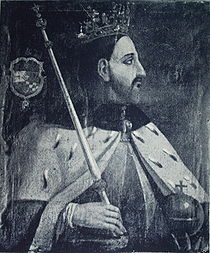
| Stephen Thomas
1443 - 10 July 1461 ||
 || illegitimate son of Stephen Ostoja || (1) Vojača
Vojača
Vojača was queen consort of Bosnia as the first wife of King Stephen Thomas of Bosnia.Vojača was a commoner and Patarene by religion. She married Stephen Thomas before his accession and gave birth to his eldest son and heir, Stephen Tomašević. When her husband was elected King of Bosnia, she became...
one son
(2) Katarina Kosača
two children || 10 July 1461
|-
| Stephen Tomašević
10 July 1461 - 5 June 1463|| || son of Stephen Thomas and Vojača || Jelena Branković
Mary of Serbia, Queen of Bosnia
Helena of Serbia, later known as Maria was the last Queen of Bosnia and Despoina of Serbia.-Background:...
Smederevo
Smederevo
Smederevo is a city and municipality in Serbia, on the right bank of the Danube, about 40 km downstream of the capital Belgrade. According to official results of the 2011 census, the city has a population of 107,528...
1 April 1459
no children || 5 June 1463
beheaded
|-
|}
Pretenders
| Nominal | ||
| Nicholas of Ilok Nicholas of Ilok Nicholas of Ilok was Ban of Croatia, Slavonia, Dalmatia and Mačva, Voivode of Transylvania and nominal King of Bosnia from 1471 until his death.... |
"King of Bosnia" (1471–1477) | appointed by the King of Hungary |
| Matthias of Bosnia Matthias of Bosnia Matthias of Bosnia was the first of two kings of Ottoman Bosnia and one of the last known members of the House of Kotromanić.... (House of Kotromanić House of Kotromanic The Kotromanić dynasty was a ruling house that ruled in the medieval Bosnia and the surrounding lands, from the 13th century as Bans until the crowning with the Bosnian crowns in 1377 and then as kings until the Ottoman conquest conquest in 1463.... ) |
"King of Bosnia" (1465–1471) | son of Radivoj of Bosnia Radivoj of Bosnia Radivoj Ostojić was anti-king of Bosnia from 1432 until 1435. He was the older of the two illegitimate sons of King Stephen Ostoja of Bosnia, most likely born during his marriage to Kujava Radinović.... , appointed by the Sultan |
| Matija Vojsalić Matija Vojsalić Matija Vojsalić was the last member of the Bosnian/Croatian noble House of Hrvatinić.He was last mentioned in the archives of Republic of Ragusa in 1476. He was installed as King of Bosnia by the Ottoman Sultan as an answer to Nicholas of Ilok who was also named King of Bosnia by King Matthias... (House of Hrvatinić House of Hrvatinic Hrvatinić dynasty was a medieval Bosnian/Croatian noble house which ruled over various parts of Bosnia, Croatia and Dalmatia between the 13th century and the 15th century.... ) |
"King of Ottoman Bosnia" (1472-1476) | appointed by the Sultan, removed for conspiring against the Ottomans |