

Bosniaks

Encyclopedia
The Bosniaks or Bosniacs are a South Slavic ethnic group
, living mainly in Bosnia and Herzegovina
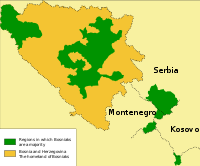
, with a smaller minority also present in other lands of the Balkan Peninsula especially in Serbia
, Montenegro
and Croatia
. Bosniaks are typically characterized by their tie to the Bosnian historical region
, traditional adherence to Islam
since the 15th and 16th centuries, and common culture and language. In the English-speaking world
, Bosniaks are also referred to as Bosnian Muslims or simply Bosnians. Bosniak has replaced Muslim as an official ethnic term in part to avoid confusion with the religious term Muslim - an adherent of Islam. The term Bosnian
is used to denote all inhabitants of Bosnia regardless of ethnic
origin.
today. Several instances of ethnic cleansing
and genocide
have had a tremendous effect on the territorial distribution of the population. Partially due to this, a notable Bosniak diaspora exists in a number of countries, including Austria, Germany, Australia, Sweden, Turkey, Canada and the United States. Both within the region and throughout the world, Bosniaks are often noted for their unique culture, which has been influenced by both eastern and western civilizations and schools of thought over the course of their history.
, the first known use of bosniak in English was in "1836 Penny Cyclopaedia
V. 231/1 The inhabitants of Bosnia are composed of Bosniaks, and it arrived in English either via the French "Bosniaque", or the German "Bosniake", or the Russian "Bosnyak".
The earliest Bosnian "name" was the historical term "Bošnjani
n" (Latin: Bosniensis), which signified the inhabitants of the medieval Bosnian kingdom. By the early days of Ottoman
rule, the word had been replaced by "Bosniak" (Bošnjak). The Bosniaks derive their ethnic name from Bosnia and the Bosna river, which has been proposed to have an Illyrian origin - Bosona.
For the duration of Ottoman rule, the word Bosniak came to refer to all inhabitants of Bosnia; Turkish terms such as "Boşnak milleti", "Boşnak kavmi", and "Boşnak taifesi" (all meaning, roughly, "the Bosnian people"), were used in the Empire to describe Bosnians in an ethnic or "tribal" sense. However, the concept of nation
hood was foreign to the Ottomans at that time - not to mention the idea that Muslims and Christians of some military province could foster any common sur-confessional sense of identity. The inhabitants of Bosnia called themselves various names: from Bosniak, in the full spectrum of the word's meaning with a foundation as a territorial designation, through a series of regional and confessional names, all the way to modern-day national ones.
on the territory of the former Yugoslavia
who identify themselves with Bosnia and Herzegovina as their ethnic state and are part of such a common nation. However, individuals may hold their own personal interpretations as well. Some people, such as Montenegrin Abdul Kurpejović, recognize an Islamic component in the Bosniak identity but see it as referring exclusively to Slavic Muslims in Bosnia. Still others consider all Slavic Muslims in the former Yugoslavia (i.e. including the Gorani
) to be Bosniaks.
 In Yugoslavia, unlike the preceding Austro-Hungarian Empire, Bosniaks were not allowed to declare themselves as Bosniaks. As a compromise, the Constitution of Yugoslavia was amended in 1968 to list Muslims by nationality
recognizing a nation, but not the Bosniak name. The Yugoslav "Muslim by nationality" policy was considered by Bosniaks to be neglecting and opposing their Bosnian identity because the term tried to describe Bosniaks as a religious group, not an ethnic one. When Bosnia declared independence from Yugoslavia, most people who used to declare themselves as Muslims by nationality began to declare themselves as Bosniaks. In September 1993, the Second Bosniak Congress (Bosnian:
Drugi bošnjački sabor) officially re-introduced the historical ethnic name Bosniaks instead of the previously used Muslim in former Yugoslavia. Today, the election law of Bosnia and Herzegovina as well as the Constitution of Bosnia and Herzegovina, recognizes the results from 1991 population census as results referring to Bosniaks.
In other countries with significant Bosniak populations that constituted former Yugoslavia it is not the case. The effects of this phenomenon can best be seen in the censuses. For instance, the 2003 Montenegrin census recorded 48,184 people who registered as Bosniaks and 28,714 who registered as Muslim by nationality. Although Montenegro's Slavic Muslims form one ethnic community with a shared culture and history, this community is divided on whether to register as Bosniaks (i.e. adopt Bosniak national identity) or as Muslims by nationality. Similarly, the 2002 Slovenian census recorded 8,062 people who registered as Bosnians, presumably highlighting (in large part) the decision of many secular Bosniaks to primarily identify themselves in that way (a situation somewhat comparable to the Yugoslav
option during the socialist period
). However, such people represent a minority (even in countries such as Montenegro where it is a significant issue) and that the great majority of Slavic Muslims in the former Yugoslavia have adopted the Bosniak national name.
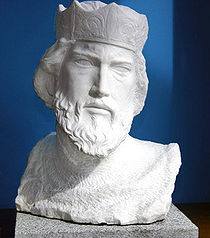 The first auspices of a Bosnian identity begun in the thirteenth century, when a Bosnian kingdom centred on the river Bosna emerged. However, it was not until the Ottoman occupation of Europe that Bosniaks became distinct from surrounding Slavs, as Islam's self-identifying role for the Bosniaks was similar to that played by Catholicism for the Croats and Orthodoxy for the Serbs.
Many features of Bosniaks' biological, cultural and linguistic origins can be traced back to the Migration Period
of the Early Middle Ages
. It was then that the Slavs
, a people from northeastern Europe, colonized the Eastern Roman Empire
with their Avar
allies and settled in the regions which now comprise modern-day Bosnia and Herzegovina. Here, they assimilated scattered remnants of the tribes generically referred to as Illyrians
, who were the earliest attestable inhabitants of the region.
Like all modern European nations, a large degree of 'biological continuity' exists between modern Bosniaks with ancient predecessors. Genetic studies show that the earliest (genetic) roots of the Bosniak people (as well as those of other ethnic groups in Bosnia) can be traced back to the ancient populations that expanded from the Balkans
following the Last Glacial Maximum
21 thousand years ago. These studies have indicated that the dominant Y-chromosome haplogroup
I
, and specifically its sub-haplogroup I-P37 found in Bosniaks, are associated with the paleolithic
settlers. The name Bosnia - derived from the Bosna river - is itself probably of Illyrian origin: Bosona (Bosnian: Bosna) and a testament to the Illyrian heritage of the region.
The period from the 6th to 10th centuries saw both external migrations and raids by Slavs and Avars, and internal political and cultural re-organization of the formerly Roman province of Dalmatia. It is only from the ninth century that Frankish and Byzantine sources begin to mention early Slavic polities in western Illyricum. The first reference to Bosnia itself only comes in the tenth century De Administrando Imperio
. The Byzantine emperor Constantine Porphyrogenitus
described Bosnia as a territory of Serbia
.
After frequent change of rule over the area between medieval Serb, Croatian, Bulgarian and Byzantine rule, a semi-independent banovina arose in the 12th century, although still nominally ruled by foreign powers. These foreign rulers tried to gain the loyalty and cooperation of the local people by attempting to establish religious jurisdiction over Bosnia. After the Hungarian conquest of Croatia, Bosnia became nominally a Hungarian vassal, under the ecclesiastic jurisdiction of the Catholic diocese of Split. In reality, however, Bosnia was characterized by religious plurality and tolerance, even when later leaders undertook oaths to quell heretical movements. In addition to the influences of Catholicism and Orthodoxy, a Bosnian Church
was established, that existed as a small organization in parts of the area.
Eventually, an independent Kingdom of Bosnia
flourished in present central Bosnia between the 14th and the 15th- centuries, and even expanded into neighbouring Serb and Croat territory. However, even with the emergence of a kingdom, no concrete Bosnian identity emerged, even in a medieval sense. Religious plurality, independent-minded nobility, and a rugged, mountainous terrain precluded cultural and political unity. As Noel Malcolm stated: "All that one can sensibly say about the ethnic identity of the Bosnians is this: they were the Slavs who lived in Bosnia."
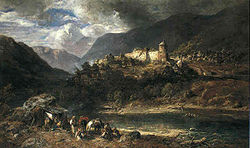 The Ottoman occupation of the Balkans further modified the 'ethnic' picture. Throughout the entire Balkans, people converted in small numbers to Islam in order to escape the burden of taxation and resulting social discrimination. However, in Bosnia, large-scale conversions to Islam were prevalent. This left the landscape as a checkerboard of Muslim, Catholic, and Orthodox villages existing side by side.
By 1870 the Bosnian Muslims were the largest population in Bosnia (694,00), slightly less than 50 percent of the total.
After the rebellion that began in 1875 the population of the Muslims and Serbs in Bosnia decreased. The Serbian population (534,000 in 1870) decreased by 7 percent but the Muslims decreased far worse a loss of more than one third.
Many Muslims migrated to the Ottoman Empire after the Austrian occupation and many died in the 1875 revolt. The Austrian census in 1879 recorded 449,000 Muslims and 496,485 Serbians in Bosnia. The losses were 245,000 Muslims and 37,500 Serbians.
With the decay of the Ottoman Empire, Serbia became independent from Ottoman control in 1870, whilst Bosnia was occupied by Austria-Hungary in 1878. It was the time of a concomitant "re-awakening" of Serbian and Croatian nationalism. Both Serbs and Croats claimed 'historical rights' to Bosnia. However, members of the 19th century Illyrian movement
, most notably Ivan Frano Jukić
, emphasized Bosniaks alongside Serbs and Croats as one of the "tribes" that constitute the "Illyrian nation". A huge number of Bosniaks left Bosnia and Herzegovina after Austrian occupation. Official Austro-Hungarian records show that 56,000 people, mostly Bosniaks, emigrated between 1883 and 1920, but the number of Bosniak emigrants is probably much larger, as the official record does not reflect emigration before 1883, nor include those who left without permits. Those who stayed were concentrated in towns. They were particularly proud of their urban culture, especially in the Bosnian capital, Sarajevo, which soon became one of the most ethnically mixed cities in the former Yugoslavia
. Ideas proposing a pan-South-Slavic state had already been present prior to World War I, although several models were proposed as to the exact composition for a future South Slav state. In order to confront constant influence from Serbia and Croatia on Orthodox and Catholic population of Bosnia and Herzegovina, the administration of Benjamin Kallay, the Austria-Hungarian governor of Bosnia and Herzegovina, promoted the idea of one united Bosniak nation that would include Christians, not just Muslims. The idea was fiercely opposed by Croatian and Serbian nationalists.
Being a newly independent sovereign state, Serbia acted as a center of stimulus for South Slavic nationalism, a policy that would lead to conflict with Austria-Hungary. Bosnia and Herzegovina had always been a multi-ethnic region, but under the influence of Serbia and Croatia, Orthodox and Catholic inhabitants living in Bosnia wished for unification with their respective kin. With the dawn of Illyrian movement, Muslim intelligentsia gathered around magazine Bosnia in the 1860s promoted the idea of a Bosniak nation. A member of this group was father of Safvet-beg Bašagić, a poet. This Bosniak group would remain active for several decades, with the continuity of ideas and the use of the archaic Bosniak name. From 1891 until 1910, they published a magazine titled Bosniak. The Austrian policy further clouded the Bosnian ethnic issue and made the Bosniak group seem as pro-regime. After Kallays death in 1903, the official policy slowly drifted towards accepting the three-ethnic reality of Bosnia and Herzegovina.
At the outbreak of World War I, Bosniaks were drafted into the K.u.k.
(the Slavic contingent of the Austro-Hungarian army in World War I), some chose to desert rather than fight against fellow Slavs, whilst some Bosniaks attacked Bosnian Serbs in apparent anger after the assassination of Archduke Ferdinand. "One can only guess what kind of feeling was dominant in Bosnia at the time. Both animosity and tolerance existed at the same time".
After World War I, the Kingdom of Serbs, Croats and Slovenes (later known as the Kingdom of Yugoslavia
) was formed. In it, Bosniaks along with Macedonians and Montenegrins were not acknowledged as a distinct ethnic groups. However; the first provisional cabinet included a Muslim. Politically, Bosnia and Herzegovina was split into four banovinas
with Muslims being the minority in each. After the Cvetković-Maček Agreement
13 counties of Bosnia and Herzegovina were incorporated into the Banovina of Croatia
and 38 counties into the projected Serbian portion of Yugoslavia. In calculating the division the Muslims were discounted altogether. After this Bosniaks created the Movement for the Autonomy of Bosnia-Herzegovina. Land reform was proclaimed in February 1919 and affected 66.9% of land in Bosnia and Herzegovina. Given that the old landowning was predominantly Bosniaks owned, they resisted land reforms. Violence against Muslims and the seizure of their land shortly ensued. Bosniaks were offered compensation but it was never fully materialized. The regime sought to pay 255,000,000 dinars in compensation per a period of 40 years with an interest rate of 6%. Payments began in 1936 and were expected to be completed in 1975; however in 1941 World War Two erupted and only 10% of the projected remittances were made.
During World War II, Bosniak elite and notables issued resolutions or memorandums in various cities that publicly denounced Croat-Nazi collaborationist measures, laws and violence against Serbs: Prijedor
(23 September), Sarajevo (12 October), Mostar
(21 October), Banja Luka
(12 November), Bijeljina
(2 December) and Tuzla
(11 December). The resolutions condemned the Ustaše
in Bosnia and Herzegovina, both for their mistreatment of Muslims and for their attempts at turning Muslims and Serbs against one another. One memorandum declared that since the beginning of the Ustaše regime, that Muslims dreaded the lawless activities that some Ustaše, some Croatian government authorities, and various illegal groups perpetrated against the Serbs. At this time several massacres against Bosniaks were carried out by Serb and Montenegrin Chetniks
. In total the Muslims lost 86,000 people or 6.8 percent of their population in the war. A number of Muslims joined the Yugoslav Partisan forces, "making it a truly multi-ethnic force". In the entirety of the war the Yugoslav Partisans of Bosnia and Herzegovina were 23 percent Muslim. In February 1943 the Germans approved the 13th Waffen Mountain Division of the SS Handschar (1st Croatian)
and began recruitment. Muslims composed approximately 12 percent of the civil service and armed forces of the Independent State of Croatia
.
During the Yugoslav period, the Muslims continued to be treated as a religious group instead of an ethnic group. In the 1948 census Bosnia and Herzegovina's Muslims had three options in the census: "Serb-Muslim", "Croat-Muslim", and "ethnically undeclared Muslim". In the 1953 census the category "Yugoslav, ethnically undeclared" was introduced and the overwhelming majority of those who declared themselves as such were Muslims. The Bosniaks were recognized as a ethnic group in 1961 but not as a nationality and in 1964 the Fourth Congress of the Bosnian Party assured the Bosniaks the right to self-determination
. In 1971 the Muslims were fully recognized as a nationality and in the census the option "Muslims by nationality
" was added.
During the Bosnian war
, the Muslims officially appropriated the name Bosniaks. During the war, the Bosniaks were subject to genocide
carried out by both Bosnian Croats
and Bosnian Serbs
, especially the latter. The war caused tens of thousands of Bosniaks to flee the nation. The war also caused many demographic changes in Bosnia. Bosniaks were prevalent throughout almost all of Bosnia in 1991, a year before the war began. Now, as a result of the war, Bosniaks are concentrated mostly in areas that were held by the Bosnian government (most of northwestern Bosnia around Bihać
, as well as central Bosnia).
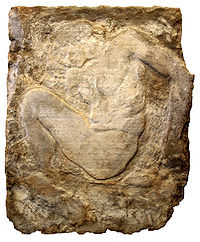 Bosniak folklore has a long tradition dating back to the 15th century. Like many other elements of Bosniak culture, their folklore is derived from European
and Ottoman
influences, typically taking place prior to the 19th century. Generally, folklore also varies from region to region and city to city. Cities like Sarajevo
and Mostar
have a rich tradition all by themselves. Many man-made structures such as bridges and fountains, as well as natural sites, also play a significant role. At the very roots of the Bosniak folk soul are the national music genres called Sevdalinke and Ilahije. Slavic traditions such as fairies, Vila
, are also present. Pre-Slavic influences are far less common but nonetheless present. Certain elements of Illyrian
, and Celtic belief have been found.
National heroes are typically historical figures, whose life and skill in battle are emphasised. These include figures such as Gazi Husrev-beg
, the second Ottoman governor of Bosnia who conquered many territories in Dalmatia
, Northern Bosnia, and Croatia
, Đerzelez Alija
, an almost mythical character who even the Ottoman Sultan was said to have called "A Hero", and Husein Gradaščević
, who led an uprising against the Turks in the 18th century. Old Slavic influences can also be seen, such as Ban Kulin
who has acquired legendary status. The historian William Miller wrote in 1921 that "even today, the people regard him as a favorite of the fairies, and his reign as a golden age."
. This language differs only slightly from the Serbian or Croatian language in writing
and grammar
, but its speakers are, on the level of colloquial idiom
, more linguistically homogeneous than either Serbs or Croats. The Bosnian language has a number of orientalisms as well as Germanisms not often used in the neighboring languages. The language forms in many ways a middle ground between the Serbian and Croatian languages, not least because Bosnia itself is geographically situated in the middle of the region where the "Serbo-Croatian"-dialects are spoken.
Bosniaks have also had two of their own unique scripts. The first was the Begovica (also called Bosančica), a descendant of local Cyrillic script that remained in use among the region's nobility. The second was the Arebica
, a version of the Arabic alphabet modified for Bosnian that was in use among nearly all literate Bosniaks until the 20th century (compare with Morisco Aljamiado
). Both alphabets have practically died out, as the number of people literate in them today is undoubtedly minuscule.
has also played a significant role in the country. Bosniaks in Sandžak are overwhelmingly Sunni Muslim, though there is also a small community of Slavicized
Bektashis with Azeri roots identifying their language as Bosnian. In a 1998 public opinion poll, 78.3% of Bosniaks in the Federation of Bosnia and Herzegovina
declared themselves to be religious.
which basically translates to "son of" in English and plays the same role as "son" in English surnames such as Johnson
or Wilson
. What comes prior to this can often tell a lot about the history of a certain family.
Most Bosniak surnames follow a familiar pattern dating from the period of time that surnames in Bosnia and Herzegovina were standardized. Some Bosniak Muslim names have the name of the founder of the family first, followed by an Islamic profession or title, and ending with ić. Examples of this include Izetbegović (Son of Izet bey
), and Hadžiosmanović ("son of Osman Hajji
"). Other variations of this pattern can include surnames that only mention the name, such as Osmanović ("son of Osman"), and surnames that only mention profession, such as Imamović ("son of the Imam
"). Some even mention religion as well such as "Muslimović" ("meaning son of a Muslim").
Quite a few Bosniak names have nothing Islamic about them, but end in ić. These names have probably stayed the same since medieval times, and typically come from old Bosnian nobility, or come from the last wave of converts to Islam. Examples of such names include Tvrtković and Kulenović.
There are also other surnames that do not end in ić at all. These surnames are typically derived from place of origin, occupations, or various others such factors in the family's history. Examples of such surnames include Zlatar ("goldsmith") Kovač ("blacksmith") or Kolar ("wheelwright")
There are some Bosniak names of foreign origin, indicating that the founder of the family came from a place outside of Bosnia and Herzegovina. Many such Bosniak surnames have Hungarian, Vlach
or Turkish
origins. Examples of such surnames include Vlasić and Arapović.
Many Bosniak surnames are also common as Croatian and Serbian surnames: Puškar, Jašić, Sučić, Subašić, Begić, Hadžić.
First names among Bosniaks have mostly Arabic, Turkish
, or Persian
roots such as Osman, Mehmed, Ismet, Kemal, Hasan, Ibrahim, Mustafa. South Slavic names such as "Zlatan" are also present primarily among non-religious Bosniaks. What is notable however is that due to the structure of the Bosnian language, many of the Muslim names have been altered to create uniquely Bosniak names. Some of the Oriental names have been shortened. For example: Huso short for Husein, Ahmo short for Ahmed, Meho short for Mehmed. One example of this is that of the Bosniak humorous characters Mujo and Suljo, whose names are actually Bosniak short forms of Mustafa and Sulejman. More present still is the transformation of names that in Arabic or Turkish are confined to one gender to apply to the other sex. In Bosnian, simply taking away the letter "a" changes the traditionally feminine "Jasmina" into the popular male name "Jasmin". Similarly, adding an "a" to the typically male "Mahir" results in the feminine "Mahira".
.svg.png) The best known Bosniak national symbol is the Fleur-de-lis
The best known Bosniak national symbol is the Fleur-de-lis
(Lilium Bosniacum) and crescent moon. The most popular Bosniak symbols are derived from medieval times, from the old flag of the Republic of Bosnia and Herzegovina, and from the flag of the Army of the Republic of Bosnia and Herzegovina
. They were used by King Tvrtko Kotromanić and the intention was that they represent Bosnia and Herzegovina as a whole, but the flag was not commonly accepted by the Serb and Croat leadership, which led to the flag being associated with Bosniaks, although some Bosnian Croats and Bosnian Serbs still venerate the flag.
The earliest Bosniak flags date from the Ottoman era, and are typically a white crescent moon and star on a green background. The flag was also the symbol of the short lived independent Bosnia in the 19th century and of the resistance against the Turks led by Husein Gradaščević
.
, the precious medieval filigree
manufactured by old Sarajevo
craftsmen, and a wide array of tradition
al wisdom
transmitted to newer generations by word of mouth, but in recent years written down in numerous books. Another prevalent tradition is "Muštuluk", whereby a gift is owed to any bringer of good news.
. Currently, they are estimated to make up 48% of the total population.
National consciousness has also spread to most Bosniaks in the neighboring countries. The largest number of Bosniaks outside of Bosnia and Herzegovina are found in Serbia and Montenegro (specifically in the Sandžak region). The city of Novi Pazar
is home to the largest Bosniak population outside of Bosnia. Another 40,000 Bosniaks are found in Croatia
and 38,000 in Slovenia
. However, some of them still identify themselves as "Muslims" or "Bosnians", according to latest estimates. In Macedonia there are estimated to be about 17,000 Bosniaks.
Due to warfare and ethnic cleansing during the war in Bosnia and Herzegovina, a large part of the world's 3.4 million (est.) Bosniaks are found in countries outside of the Balkans. The highest Bosniak populations outside of the ex-Yugoslavian states are found in the United States, Sweden, Austria, Germany, Switzerland, Australia, Canada, and Turkey
. Prior generations of Bosniak immigrants to some of these countries have by now been mostly integrated.
Regarding the Western countries most of the Bosniaks are war refugees that only arrived in these countries during the past 15 years or so. They still speak Bosnian, and maintain a cultural and religious community and visit their mother country regularly.
, Chicago
, and Grand Rapids, Michigan
. The following major American cities, ordered randomly, have notable Bosniak communities: Richmond, Virginia
; Charlotte
; Indianapolis
; Houston; Jacksonville
; Phoenix
; Portland, Oregon
; San Jose
; Salt Lake City; Tampa, Florida
; and New York City
.
, Vancouver
and Hamilton
.
, Bosniaks mostly live in the Marmara Region
which is in other words the north-west Turkey. The biggest Bosniak community in Turkey is in Istanbul
and also there are notable Bosniak communities in İzmir
, Karamürsel
, Yalova
, Bursa and Edirne
.
Ethnic group
An ethnic group is a group of people whose members identify with each other, through a common heritage, often consisting of a common language, a common culture and/or an ideology that stresses common ancestry or endogamy...
, living mainly in Bosnia and Herzegovina
Bosnia and Herzegovina
Bosnia and Herzegovina , sometimes called Bosnia-Herzegovina or simply Bosnia, is a country in Southern Europe, on the Balkan Peninsula. Bordered by Croatia to the north, west and south, Serbia to the east, and Montenegro to the southeast, Bosnia and Herzegovina is almost landlocked, except for the...
, with a smaller minority also present in other lands of the Balkan Peninsula especially in Serbia
Serbia
Serbia , officially the Republic of Serbia , is a landlocked country located at the crossroads of Central and Southeast Europe, covering the southern part of the Carpathian basin and the central part of the Balkans...
, Montenegro
Montenegro
Montenegro Montenegrin: Crna Gora Црна Гора , meaning "Black Mountain") is a country located in Southeastern Europe. It has a coast on the Adriatic Sea to the south-west and is bordered by Croatia to the west, Bosnia and Herzegovina to the northwest, Serbia to the northeast and Albania to the...
and Croatia
Croatia
Croatia , officially the Republic of Croatia , is a unitary democratic parliamentary republic in Europe at the crossroads of the Mitteleuropa, the Balkans, and the Mediterranean. Its capital and largest city is Zagreb. The country is divided into 20 counties and the city of Zagreb. Croatia covers ...
. Bosniaks are typically characterized by their tie to the Bosnian historical region
Bosnia (region)
Bosnia is a eponomous region of Bosnia and Herzegovina. It lies mainly in the Dinaric Alps, ranging to the southern borders of the Pannonian plain, with the rivers Sava and Drina marking its northern and eastern borders. The other eponomous region, the southern, other half of the country is...
, traditional adherence to Islam
Islam
Islam . The most common are and . : Arabic pronunciation varies regionally. The first vowel ranges from ~~. The second vowel ranges from ~~~...
since the 15th and 16th centuries, and common culture and language. In the English-speaking world
Anglosphere
Anglosphere is a neologism which refers to those nations with English as the most common language. The term can be used more specifically to refer to those nations which share certain characteristics within their cultures based on a linguistic heritage, through being former British colonies...
, Bosniaks are also referred to as Bosnian Muslims or simply Bosnians. Bosniak has replaced Muslim as an official ethnic term in part to avoid confusion with the religious term Muslim - an adherent of Islam. The term Bosnian
Bosnians
Bosnians are people who reside in, or come from, Bosnia and Herzegovina. By the modern state definition a Bosnian can be anyone who holds citizenship of the state. This includes, but is not limited to, members of the constituent ethnic groups of Bosnia and Herzegovina: Bosniaks, Bosnian Serbs and...
is used to denote all inhabitants of Bosnia regardless of ethnic
Ethnic group
An ethnic group is a group of people whose members identify with each other, through a common heritage, often consisting of a common language, a common culture and/or an ideology that stresses common ancestry or endogamy...
origin.
Overview
Bosniaks are a South Slavic people. Nonetheless, it has been proposed, based on genetic signatures, that their roots also go back to pre-Slavic inhabitants of the Dinaric region. There are around three million Bosniaks living in the BalkansBalkans
The Balkans is a geopolitical and cultural region of southeastern Europe...
today. Several instances of ethnic cleansing
Ethnic cleansing
Ethnic cleansing is a purposeful policy designed by one ethnic or religious group to remove by violent and terror-inspiring means the civilian population of another ethnic orreligious group from certain geographic areas....
and genocide
Bosnian Genocide
The term Bosnian Genocide refers to either the genocide committed by Bosnian Serb forces in Srebrenica in 1995 or the ethnic cleansing campaign that took place throughout areas controlled by the Bosnian Serb Army during the 1992–1995 Bosnian War....
have had a tremendous effect on the territorial distribution of the population. Partially due to this, a notable Bosniak diaspora exists in a number of countries, including Austria, Germany, Australia, Sweden, Turkey, Canada and the United States. Both within the region and throughout the world, Bosniaks are often noted for their unique culture, which has been influenced by both eastern and western civilizations and schools of thought over the course of their history.
Etymology and definition
According to the bosniac entry in the Oxford English DictionaryOxford English Dictionary
The Oxford English Dictionary , published by the Oxford University Press, is the self-styled premier dictionary of the English language. Two fully bound print editions of the OED have been published under its current name, in 1928 and 1989. The first edition was published in twelve volumes , and...
, the first known use of bosniak in English was in "1836 Penny Cyclopaedia
Penny Cyclopaedia
The Penny Cyclopædia of the Society for the Diffusion of Useful Knowledge was a multi-volume encyclopedia edited by George Long and published by Charles Knight alongside the Penny Magazine. The volumes were published from 1833 to 1843.-External links:...
V. 231/1 The inhabitants of Bosnia are composed of Bosniaks, and it arrived in English either via the French "Bosniaque", or the German "Bosniake", or the Russian "Bosnyak".
The earliest Bosnian "name" was the historical term "Bošnjani
Bošnjani
Bošnjani was the local Slavic name for inhabitants of Bosnia during the Middle Ages.It appeared in a number of documents from the period, in most cases coupled with the word Good . Debate on the exact nature of the term is inconclusive...
n" (Latin: Bosniensis), which signified the inhabitants of the medieval Bosnian kingdom. By the early days of Ottoman
Ottoman Empire
The Ottoman EmpireIt was usually referred to as the "Ottoman Empire", the "Turkish Empire", the "Ottoman Caliphate" or more commonly "Turkey" by its contemporaries...
rule, the word had been replaced by "Bosniak" (Bošnjak). The Bosniaks derive their ethnic name from Bosnia and the Bosna river, which has been proposed to have an Illyrian origin - Bosona.
For the duration of Ottoman rule, the word Bosniak came to refer to all inhabitants of Bosnia; Turkish terms such as "Boşnak milleti", "Boşnak kavmi", and "Boşnak taifesi" (all meaning, roughly, "the Bosnian people"), were used in the Empire to describe Bosnians in an ethnic or "tribal" sense. However, the concept of nation
Nation
A nation may refer to a community of people who share a common language, culture, ethnicity, descent, and/or history. In this definition, a nation has no physical borders. However, it can also refer to people who share a common territory and government irrespective of their ethnic make-up...
hood was foreign to the Ottomans at that time - not to mention the idea that Muslims and Christians of some military province could foster any common sur-confessional sense of identity. The inhabitants of Bosnia called themselves various names: from Bosniak, in the full spectrum of the word's meaning with a foundation as a territorial designation, through a series of regional and confessional names, all the way to modern-day national ones.
Rebirth
The generally accepted definition (and the one used in this article) holds that Bosniaks are the Slavic MuslimsSlavic Muslims
Slavic Muslims are ethnic groups or sub-ethnic groups of Slavs who observe the Islamic faith, such as:* Bosniaks * Gorani * Pomaks * Torbeš See also: Muslims by nationality...
on the territory of the former Yugoslavia
Yugoslavia
Yugoslavia refers to three political entities that existed successively on the western part of the Balkans during most of the 20th century....
who identify themselves with Bosnia and Herzegovina as their ethnic state and are part of such a common nation. However, individuals may hold their own personal interpretations as well. Some people, such as Montenegrin Abdul Kurpejović, recognize an Islamic component in the Bosniak identity but see it as referring exclusively to Slavic Muslims in Bosnia. Still others consider all Slavic Muslims in the former Yugoslavia (i.e. including the Gorani
Gorani (Kosovo)
The Gorani or Goranci are a South Slavic ethnic group inhabiting the Gora region of the Balkans, located at the triangle between Albania, Kosovo and Macedonia. Another autonym of this people is "Našinci" with literally meaning "our people"...
) to be Bosniaks.
Muslims by nationality
Muslims by nationality was a term used in Socialist Federal Republic of Yugoslavia as an official designation of nationality of Slavic Muslims. They were one of the constitutive groups of Bosnia and Herzegovina...
recognizing a nation, but not the Bosniak name. The Yugoslav "Muslim by nationality" policy was considered by Bosniaks to be neglecting and opposing their Bosnian identity because the term tried to describe Bosniaks as a religious group, not an ethnic one. When Bosnia declared independence from Yugoslavia, most people who used to declare themselves as Muslims by nationality began to declare themselves as Bosniaks. In September 1993, the Second Bosniak Congress (Bosnian:
Bosnian language
Bosnian is a South Slavic language, spoken by Bosniaks. As a standardized form of the Shtokavian dialect, it is one of the three official languages of Bosnia and Herzegovina....
Drugi bošnjački sabor) officially re-introduced the historical ethnic name Bosniaks instead of the previously used Muslim in former Yugoslavia. Today, the election law of Bosnia and Herzegovina as well as the Constitution of Bosnia and Herzegovina, recognizes the results from 1991 population census as results referring to Bosniaks.
In other countries with significant Bosniak populations that constituted former Yugoslavia it is not the case. The effects of this phenomenon can best be seen in the censuses. For instance, the 2003 Montenegrin census recorded 48,184 people who registered as Bosniaks and 28,714 who registered as Muslim by nationality. Although Montenegro's Slavic Muslims form one ethnic community with a shared culture and history, this community is divided on whether to register as Bosniaks (i.e. adopt Bosniak national identity) or as Muslims by nationality. Similarly, the 2002 Slovenian census recorded 8,062 people who registered as Bosnians, presumably highlighting (in large part) the decision of many secular Bosniaks to primarily identify themselves in that way (a situation somewhat comparable to the Yugoslav
Yugoslavs
Yugoslavs is a national designation used by a minority of South Slavs across the countries of the former Yugoslavia and in the diaspora...
option during the socialist period
History of Bosnia and Herzegovina (1945–1992)
Because of its central geographic position within the Yugoslavian federation, post-war Bosnia was strategically selected as a base for the development of the military defense industry. This contributed to a large concentration of arms and military personnel in Bosnia; a significant factor in the...
). However, such people represent a minority (even in countries such as Montenegro where it is a significant issue) and that the great majority of Slavic Muslims in the former Yugoslavia have adopted the Bosniak national name.
| Republic | 1948 | 1953 | 1961 | 1971 | 1981 | 1991 |
|---|---|---|---|---|---|---|
| Bosnia and Herzegovina Bosnia and Herzegovina Bosnia and Herzegovina , sometimes called Bosnia-Herzegovina or simply Bosnia, is a country in Southern Europe, on the Balkan Peninsula. Bordered by Croatia to the north, west and south, Serbia to the east, and Montenegro to the southeast, Bosnia and Herzegovina is almost landlocked, except for the... |
788,403 (30.7 %) | 891,800 (31.3 %) | 842,248 (25.7 %) | 1,482,430 (39.6 %) | 1,630,033 (39.5 %) | 1,905,829 (43.7 %) |
| Montenegro Montenegro Montenegro Montenegrin: Crna Gora Црна Гора , meaning "Black Mountain") is a country located in Southeastern Europe. It has a coast on the Adriatic Sea to the south-west and is bordered by Croatia to the west, Bosnia and Herzegovina to the northwest, Serbia to the northeast and Albania to the... |
387 (0.0%) | 8,396 (2%) | 30,655 (6.5%) | 70,236 (13.3%) | 78,080 (13.4%) | 89,614 (14.6%) |
| Croatia Croatia Croatia , officially the Republic of Croatia , is a unitary democratic parliamentary republic in Europe at the crossroads of the Mitteleuropa, the Balkans, and the Mediterranean. Its capital and largest city is Zagreb. The country is divided into 20 counties and the city of Zagreb. Croatia covers ... |
1,077 (0.1%) | 16,185 (0.4%) | 3,113 (0.1%) | 18,457 (0.4%) | 23,740 (0.5%) | 43,469 (0.9%) |
| Macedonia Republic of Macedonia Macedonia , officially the Republic of Macedonia , is a country located in the central Balkan peninsula in Southeast Europe. It is one of the successor states of the former Yugoslavia, from which it declared independence in 1991... |
1,560 (0.1%) | 1,591 (0.1%) | 3,002 (0.3%) | 1,248 (0.1%) | 39,512 (2.1%) | 35,256 (1.7%) |
| Slovenia Slovenia Slovenia , officially the Republic of Slovenia , is a country in Central and Southeastern Europe touching the Alps and bordering the Mediterranean. Slovenia borders Italy to the west, Croatia to the south and east, Hungary to the northeast, and Austria to the north, and also has a small portion of... |
179 (0.0%) | 1,617 (0.1%) | 465 (0.0%) | 3,197 (0.2%) | 13,425 (0.7%) | 26,867 (1.4%) |
| Serbia Serbia Serbia , officially the Republic of Serbia , is a landlocked country located at the crossroads of Central and Southeast Europe, covering the southern part of the Carpathian basin and the central part of the Balkans... |
17,315 (0.3%) | 79,109 (1.1%) | 93,457 (1.2%) | 154,364 (1.8%) | 215,166 (2.3%) | 246,411 (2.5%) |
| Yugoslavia | 808,921 (5.1%) | 998,698 (5.9%) | 972,940 (5.2%) | 1,729,932 (8.4%) | 1,999,957 (8.9%) | 2,347,446 (10.0%) |
History
Many features of Bosniaks' biological, cultural and linguistic origins can be traced back to the Migration Period
Migration Period
The Migration Period, also called the Barbarian Invasions , was a period of intensified human migration in Europe that occurred from c. 400 to 800 CE. This period marked the transition from Late Antiquity to the Early Middle Ages...
of the Early Middle Ages
Early Middle Ages
The Early Middle Ages was the period of European history lasting from the 5th century to approximately 1000. The Early Middle Ages followed the decline of the Western Roman Empire and preceded the High Middle Ages...
. It was then that the Slavs
Slavic peoples
The Slavic people are an Indo-European panethnicity living in Eastern Europe, Southeast Europe, North Asia and Central Asia. The term Slavic represents a broad ethno-linguistic group of people, who speak languages belonging to the Slavic language family and share, to varying degrees, certain...
, a people from northeastern Europe, colonized the Eastern Roman Empire
Byzantine Empire
The Byzantine Empire was the Eastern Roman Empire during the periods of Late Antiquity and the Middle Ages, centred on the capital of Constantinople. Known simply as the Roman Empire or Romania to its inhabitants and neighbours, the Empire was the direct continuation of the Ancient Roman State...
with their Avar
Eurasian Avars
The Eurasian Avars or Ancient Avars were a highly organized nomadic confederacy of mixed origins. They were ruled by a khagan, who was surrounded by a tight-knit entourage of nomad warriors, an organization characteristic of Turko-Mongol groups...
allies and settled in the regions which now comprise modern-day Bosnia and Herzegovina. Here, they assimilated scattered remnants of the tribes generically referred to as Illyrians
Illyrians
The Illyrians were a group of tribes who inhabited part of the western Balkans in antiquity and the south-eastern coasts of the Italian peninsula...
, who were the earliest attestable inhabitants of the region.
Like all modern European nations, a large degree of 'biological continuity' exists between modern Bosniaks with ancient predecessors. Genetic studies show that the earliest (genetic) roots of the Bosniak people (as well as those of other ethnic groups in Bosnia) can be traced back to the ancient populations that expanded from the Balkans
Balkans
The Balkans is a geopolitical and cultural region of southeastern Europe...
following the Last Glacial Maximum
Last Glacial Maximum
The Last Glacial Maximum refers to a period in the Earth's climate history when ice sheets were at their maximum extension, between 26,500 and 19,000–20,000 years ago, marking the peak of the last glacial period. During this time, vast ice sheets covered much of North America, northern Europe and...
21 thousand years ago. These studies have indicated that the dominant Y-chromosome haplogroup
Haplogroup
In the study of molecular evolution, a haplogroup is a group of similar haplotypes that share a common ancestor having the same single nucleotide polymorphism mutation in both haplotypes. Because a haplogroup consists of similar haplotypes, this is what makes it possible to predict a haplogroup...
I
Haplogroup I (Y-DNA)
In human genetics, Haplogroup I is a Y-chromosome DNA haplogroup, a subgroup of haplogroup IJ, itself a derivative of Haplogroup IJK....
, and specifically its sub-haplogroup I-P37 found in Bosniaks, are associated with the paleolithic
Paleolithic
The Paleolithic Age, Era or Period, is a prehistoric period of human history distinguished by the development of the most primitive stone tools discovered , and covers roughly 99% of human technological prehistory...
settlers. The name Bosnia - derived from the Bosna river - is itself probably of Illyrian origin: Bosona (Bosnian: Bosna) and a testament to the Illyrian heritage of the region.
The period from the 6th to 10th centuries saw both external migrations and raids by Slavs and Avars, and internal political and cultural re-organization of the formerly Roman province of Dalmatia. It is only from the ninth century that Frankish and Byzantine sources begin to mention early Slavic polities in western Illyricum. The first reference to Bosnia itself only comes in the tenth century De Administrando Imperio
De Administrando Imperio
De Administrando Imperio is the Latin title of a Greek work written by the 10th-century Eastern Roman Emperor Constantine VII. The Greek title of the work is...
. The Byzantine emperor Constantine Porphyrogenitus
Constantine VII
Constantine VII Porphyrogennetos or Porphyrogenitus, "the Purple-born" was the fourth Emperor of the Macedonian dynasty of the Byzantine Empire, reigning from 913 to 959...
described Bosnia as a territory of Serbia
Serbia
Serbia , officially the Republic of Serbia , is a landlocked country located at the crossroads of Central and Southeast Europe, covering the southern part of the Carpathian basin and the central part of the Balkans...
.
After frequent change of rule over the area between medieval Serb, Croatian, Bulgarian and Byzantine rule, a semi-independent banovina arose in the 12th century, although still nominally ruled by foreign powers. These foreign rulers tried to gain the loyalty and cooperation of the local people by attempting to establish religious jurisdiction over Bosnia. After the Hungarian conquest of Croatia, Bosnia became nominally a Hungarian vassal, under the ecclesiastic jurisdiction of the Catholic diocese of Split. In reality, however, Bosnia was characterized by religious plurality and tolerance, even when later leaders undertook oaths to quell heretical movements. In addition to the influences of Catholicism and Orthodoxy, a Bosnian Church
Bosnian Church
The Bosnian Church is historically thought to be an indigenous branch of the Bogomils that existed in Bosnia during the Middle Ages. Adherents of the church called themselves simply Krstjani...
was established, that existed as a small organization in parts of the area.
Eventually, an independent Kingdom of Bosnia
Kingdom of Bosnia
The Kingdom of Bosnia or the Bosnian Kingdom was one of the medieval kingdoms of the Balkans, existing between 1377 and 1463.- Establishment :...
flourished in present central Bosnia between the 14th and the 15th- centuries, and even expanded into neighbouring Serb and Croat territory. However, even with the emergence of a kingdom, no concrete Bosnian identity emerged, even in a medieval sense. Religious plurality, independent-minded nobility, and a rugged, mountainous terrain precluded cultural and political unity. As Noel Malcolm stated: "All that one can sensibly say about the ethnic identity of the Bosnians is this: they were the Slavs who lived in Bosnia."
By 1870 the Bosnian Muslims were the largest population in Bosnia (694,00), slightly less than 50 percent of the total.
After the rebellion that began in 1875 the population of the Muslims and Serbs in Bosnia decreased. The Serbian population (534,000 in 1870) decreased by 7 percent but the Muslims decreased far worse a loss of more than one third.
Many Muslims migrated to the Ottoman Empire after the Austrian occupation and many died in the 1875 revolt. The Austrian census in 1879 recorded 449,000 Muslims and 496,485 Serbians in Bosnia. The losses were 245,000 Muslims and 37,500 Serbians.
With the decay of the Ottoman Empire, Serbia became independent from Ottoman control in 1870, whilst Bosnia was occupied by Austria-Hungary in 1878. It was the time of a concomitant "re-awakening" of Serbian and Croatian nationalism. Both Serbs and Croats claimed 'historical rights' to Bosnia. However, members of the 19th century Illyrian movement
Illyrian movement
The Illyrian movement , also Croatian national revival , was a cultural and political campaign with roots in the early modern period, and revived by a group of young Croatian intellectuals during the first half of 19th century, around the years of 1835–1849...
, most notably Ivan Frano Jukić
Ivan Frano Jukic
Ivan Franjo Jukić was a writer from Bosnia and Herzegovina whose life and cultural and political legacy have left an indelible mark on the cultural history of the country, where he is remembered as one of the founders of Bosnian modernism.-Biography:Ivan Jukić was born in Banja Luka to the family...
, emphasized Bosniaks alongside Serbs and Croats as one of the "tribes" that constitute the "Illyrian nation". A huge number of Bosniaks left Bosnia and Herzegovina after Austrian occupation. Official Austro-Hungarian records show that 56,000 people, mostly Bosniaks, emigrated between 1883 and 1920, but the number of Bosniak emigrants is probably much larger, as the official record does not reflect emigration before 1883, nor include those who left without permits. Those who stayed were concentrated in towns. They were particularly proud of their urban culture, especially in the Bosnian capital, Sarajevo, which soon became one of the most ethnically mixed cities in the former Yugoslavia
Yugoslavia
Yugoslavia refers to three political entities that existed successively on the western part of the Balkans during most of the 20th century....
. Ideas proposing a pan-South-Slavic state had already been present prior to World War I, although several models were proposed as to the exact composition for a future South Slav state. In order to confront constant influence from Serbia and Croatia on Orthodox and Catholic population of Bosnia and Herzegovina, the administration of Benjamin Kallay, the Austria-Hungarian governor of Bosnia and Herzegovina, promoted the idea of one united Bosniak nation that would include Christians, not just Muslims. The idea was fiercely opposed by Croatian and Serbian nationalists.
Being a newly independent sovereign state, Serbia acted as a center of stimulus for South Slavic nationalism, a policy that would lead to conflict with Austria-Hungary. Bosnia and Herzegovina had always been a multi-ethnic region, but under the influence of Serbia and Croatia, Orthodox and Catholic inhabitants living in Bosnia wished for unification with their respective kin. With the dawn of Illyrian movement, Muslim intelligentsia gathered around magazine Bosnia in the 1860s promoted the idea of a Bosniak nation. A member of this group was father of Safvet-beg Bašagić, a poet. This Bosniak group would remain active for several decades, with the continuity of ideas and the use of the archaic Bosniak name. From 1891 until 1910, they published a magazine titled Bosniak. The Austrian policy further clouded the Bosnian ethnic issue and made the Bosniak group seem as pro-regime. After Kallays death in 1903, the official policy slowly drifted towards accepting the three-ethnic reality of Bosnia and Herzegovina.
At the outbreak of World War I, Bosniaks were drafted into the K.u.k.
Austro-Hungarian Army
The Austro-Hungarian Army was the ground force of the Austro-Hungarian Dual Monarchy from 1867 to 1918. It was composed of three parts: the joint army , the Austrian Landwehr , and the Hungarian Honvédség .In the wake of fighting between the...
(the Slavic contingent of the Austro-Hungarian army in World War I), some chose to desert rather than fight against fellow Slavs, whilst some Bosniaks attacked Bosnian Serbs in apparent anger after the assassination of Archduke Ferdinand. "One can only guess what kind of feeling was dominant in Bosnia at the time. Both animosity and tolerance existed at the same time".
After World War I, the Kingdom of Serbs, Croats and Slovenes (later known as the Kingdom of Yugoslavia
Kingdom of Yugoslavia
The Kingdom of Yugoslavia was a state stretching from the Western Balkans to Central Europe which existed during the often-tumultuous interwar era of 1918–1941...
) was formed. In it, Bosniaks along with Macedonians and Montenegrins were not acknowledged as a distinct ethnic groups. However; the first provisional cabinet included a Muslim. Politically, Bosnia and Herzegovina was split into four banovinas
Subdivisions of the Kingdom of Yugoslavia
The subdivisions of the Kingdom of Yugoslavia existed successively in three different forms. From 1918 to 1922, the kingdom maintained the pre-World War I subdivisions of Yugoslavia's predecessor states...
with Muslims being the minority in each. After the Cvetković-Maček Agreement
Cvetkovic-Macek Agreement
The Cvetković-Maček Agreement was a political agreement on the internal divisions in the Kingdom of Yugoslavia which was settled on August 23, 1939 by Yugoslav prime minister Dragiša Cvetković and Vladko Maček, a Croat politician...
13 counties of Bosnia and Herzegovina were incorporated into the Banovina of Croatia
Banovina of Croatia
The Banovina of Croatia or Banate of Croatia was a province of the Kingdom of Yugoslavia between 1939 and 1943 . Its capital was at Zagreb and it included most of present-day Croatia along with portions of Bosnia and Herzegovina and Serbia...
and 38 counties into the projected Serbian portion of Yugoslavia. In calculating the division the Muslims were discounted altogether. After this Bosniaks created the Movement for the Autonomy of Bosnia-Herzegovina. Land reform was proclaimed in February 1919 and affected 66.9% of land in Bosnia and Herzegovina. Given that the old landowning was predominantly Bosniaks owned, they resisted land reforms. Violence against Muslims and the seizure of their land shortly ensued. Bosniaks were offered compensation but it was never fully materialized. The regime sought to pay 255,000,000 dinars in compensation per a period of 40 years with an interest rate of 6%. Payments began in 1936 and were expected to be completed in 1975; however in 1941 World War Two erupted and only 10% of the projected remittances were made.
During World War II, Bosniak elite and notables issued resolutions or memorandums in various cities that publicly denounced Croat-Nazi collaborationist measures, laws and violence against Serbs: Prijedor
Prijedor
Prijedor is a city and municipality in the north-western part of Bosnia and Herzegovina. It is situated in the Bosanska Krajina region....
(23 September), Sarajevo (12 October), Mostar
Mostar
Mostar is a city and municipality in Bosnia and Herzegovina, the largest and one of the most important cities in the Herzegovina region and the center of the Herzegovina-Neretva Canton of the Federation. Mostar is situated on the Neretva river and is the fifth-largest city in the country...
(21 October), Banja Luka
Banja Luka
-History:The name "Banja Luka" was first mentioned in a document dated February 6, 1494, but Banja Luka's history dates back to ancient times. There is a substantial evidence of the Roman presence in the region during the first few centuries A.D., including an old fort "Kastel" in the centre of...
(12 November), Bijeljina
Bijeljina
Bijeljina is a city and municipality in northeastern Bosnia and Herzegovina. The city is the second largest in the Republika Srpska entity after Banja Luka and fifth largest city in Bosnia and Herzegovina, and is situated on the flat rich plains of Semberija...
(2 December) and Tuzla
Tuzla
Tuzla is a city and municipality in Bosnia and Herzegovina. At the time of the 1991 census, it had 83,770 inhabitants, while the municipality 131,318. Taking the influx of refugees into account, the city is currently estimated to have 174,558 inhabitants...
(11 December). The resolutions condemned the Ustaše
Ustaše
The Ustaša - Croatian Revolutionary Movement was a Croatian fascist anti-Yugoslav separatist movement. The ideology of the movement was a blend of fascism, Nazism, and Croatian nationalism. The Ustaše supported the creation of a Greater Croatia that would span to the River Drina and to the border...
in Bosnia and Herzegovina, both for their mistreatment of Muslims and for their attempts at turning Muslims and Serbs against one another. One memorandum declared that since the beginning of the Ustaše regime, that Muslims dreaded the lawless activities that some Ustaše, some Croatian government authorities, and various illegal groups perpetrated against the Serbs. At this time several massacres against Bosniaks were carried out by Serb and Montenegrin Chetniks
Chetniks
Chetniks, or the Chetnik movement , were Serbian nationalist and royalist paramilitary organizations from the first half of the 20th century. The Chetniks were formed as a Serbian resistance against the Ottoman Empire in 1904, and participated in the Balkan Wars, World War I, and World War II...
. In total the Muslims lost 86,000 people or 6.8 percent of their population in the war. A number of Muslims joined the Yugoslav Partisan forces, "making it a truly multi-ethnic force". In the entirety of the war the Yugoslav Partisans of Bosnia and Herzegovina were 23 percent Muslim. In February 1943 the Germans approved the 13th Waffen Mountain Division of the SS Handschar (1st Croatian)
13th Waffen Mountain Division of the SS Handschar (1st Croatian)
The 13th Waffen Mountain Division of the SS Handschar was one of the thirty-eight divisions fielded as part of the Waffen-SS during World War II. Its recruits were composed of Muslim Bosniaks. The Handschar division was a mountain infantry formation, the equivalent of the German "Gebirgsjäger" ...
and began recruitment. Muslims composed approximately 12 percent of the civil service and armed forces of the Independent State of Croatia
Independent State of Croatia
The Independent State of Croatia was a World War II puppet state of Nazi Germany, established on a part of Axis-occupied Yugoslavia. The NDH was founded on 10 April 1941, after the invasion of Yugoslavia by the Axis powers. All of Bosnia and Herzegovina was annexed to NDH, together with some parts...
.
During the Yugoslav period, the Muslims continued to be treated as a religious group instead of an ethnic group. In the 1948 census Bosnia and Herzegovina's Muslims had three options in the census: "Serb-Muslim", "Croat-Muslim", and "ethnically undeclared Muslim". In the 1953 census the category "Yugoslav, ethnically undeclared" was introduced and the overwhelming majority of those who declared themselves as such were Muslims. The Bosniaks were recognized as a ethnic group in 1961 but not as a nationality and in 1964 the Fourth Congress of the Bosnian Party assured the Bosniaks the right to self-determination
Self-determination
Self-determination is the principle in international law that nations have the right to freely choose their sovereignty and international political status with no external compulsion or external interference...
. In 1971 the Muslims were fully recognized as a nationality and in the census the option "Muslims by nationality
Muslims by nationality
Muslims by nationality was a term used in Socialist Federal Republic of Yugoslavia as an official designation of nationality of Slavic Muslims. They were one of the constitutive groups of Bosnia and Herzegovina...
" was added.
During the Bosnian war
Bosnian War
The Bosnian War or the War in Bosnia and Herzegovina was an international armed conflict that took place in Bosnia and Herzegovina between April 1992 and December 1995. The war involved several sides...
, the Muslims officially appropriated the name Bosniaks. During the war, the Bosniaks were subject to genocide
Bosnian Genocide
The term Bosnian Genocide refers to either the genocide committed by Bosnian Serb forces in Srebrenica in 1995 or the ethnic cleansing campaign that took place throughout areas controlled by the Bosnian Serb Army during the 1992–1995 Bosnian War....
carried out by both Bosnian Croats
Croats of Bosnia and Herzegovina
Croats of Bosnia and Herzegovina form one of the three constitutive nations in Bosnia and Herzegovina.There is no precise data regarding Bosnia and Herzegovina's population since the last war. Ethnic cleansing within Bosnia and Herzegovina in the 1990s saw the vast majority of Croats move and take...
and Bosnian Serbs
Serbs of Bosnia and Herzegovina
The Serbs of Bosnia and Herzegovina are people of Serb ethnicity inhabiting the Balkan regions of Bosnia and Herzegovina, or, since the establishment of Bosnia and Herzegovina as a state in the 1990s, the Serbs who have its citizenship. The Serbs are one of the three constitutive nations of this...
, especially the latter. The war caused tens of thousands of Bosniaks to flee the nation. The war also caused many demographic changes in Bosnia. Bosniaks were prevalent throughout almost all of Bosnia in 1991, a year before the war began. Now, as a result of the war, Bosniaks are concentrated mostly in areas that were held by the Bosnian government (most of northwestern Bosnia around Bihać
Bihac
Bihać is a city and municipality on the river Una in the north-western part of Bosnia and Herzegovina, in the Bosanska Krajina region. Bihać is located in the Una-Sana Canton in the Federation of Bosnia and Herzegovina.-History:...
, as well as central Bosnia).
Folklore
Culture of Europe
The culture of Europe might better be described as a series of overlapping cultures. Whether it is a question of North as opposed to South; West as opposed to East; Orthodoxism as opposed to Protestantism as opposed to Catholicism as opposed to Secularism; many have claimed to identify cultural...
and Ottoman
Ottoman Empire
The Ottoman EmpireIt was usually referred to as the "Ottoman Empire", the "Turkish Empire", the "Ottoman Caliphate" or more commonly "Turkey" by its contemporaries...
influences, typically taking place prior to the 19th century. Generally, folklore also varies from region to region and city to city. Cities like Sarajevo
Sarajevo
Sarajevo |Bosnia]], surrounded by the Dinaric Alps and situated along the Miljacka River in the heart of Southeastern Europe and the Balkans....
and Mostar
Mostar
Mostar is a city and municipality in Bosnia and Herzegovina, the largest and one of the most important cities in the Herzegovina region and the center of the Herzegovina-Neretva Canton of the Federation. Mostar is situated on the Neretva river and is the fifth-largest city in the country...
have a rich tradition all by themselves. Many man-made structures such as bridges and fountains, as well as natural sites, also play a significant role. At the very roots of the Bosniak folk soul are the national music genres called Sevdalinke and Ilahije. Slavic traditions such as fairies, Vila
Slavic fairies
Fairies in Slavic mythology come in several forms and their names are spelled differently based on the specific language. Among the ones listed below there were also khovanets , dolia , polyovyk or polevoi , perelesnyk , lesovyk or leshyi , blud , mara Fairies in Slavic mythology come in several...
, are also present. Pre-Slavic influences are far less common but nonetheless present. Certain elements of Illyrian
Illyrians
The Illyrians were a group of tribes who inhabited part of the western Balkans in antiquity and the south-eastern coasts of the Italian peninsula...
, and Celtic belief have been found.
National heroes are typically historical figures, whose life and skill in battle are emphasised. These include figures such as Gazi Husrev-beg
Gazi Husrev-beg
Gazi Husrev-beg was a Bosniak bey in the Ottoman Empire during the first half of the 16th century...
, the second Ottoman governor of Bosnia who conquered many territories in Dalmatia
Dalmatia
Dalmatia is a historical region on the eastern coast of the Adriatic Sea. It stretches from the island of Rab in the northwest to the Bay of Kotor in the southeast. The hinterland, the Dalmatian Zagora, ranges from fifty kilometers in width in the north to just a few kilometers in the south....
, Northern Bosnia, and Croatia
Croatia
Croatia , officially the Republic of Croatia , is a unitary democratic parliamentary republic in Europe at the crossroads of the Mitteleuropa, the Balkans, and the Mediterranean. Its capital and largest city is Zagreb. The country is divided into 20 counties and the city of Zagreb. Croatia covers ...
, Đerzelez Alija
Gjergj Elez Alia
Gjergj Elez Alia is popular legendary hero of poetry and literature in Bosnia and Albania. Muslims from Bosnian Krajina modeled the poetic image of Djerzelez Alija after the image of Christian Prince Marko, based on the historic person Ali Bey Mihaloğlu...
, an almost mythical character who even the Ottoman Sultan was said to have called "A Hero", and Husein Gradaščević
Husein Gradašcevic
Husein-kapetan Gradaščević was a Bosnian Muslim general who fought for Bosnian autonomy in the Ottoman Empire. He is often referred to as "Zmaj od Bosne", meaning "Dragon of Bosnia"...
, who led an uprising against the Turks in the 18th century. Old Slavic influences can also be seen, such as Ban Kulin
Ban Kulin
Ban Kulin was a notable Ban of Bosnia who ruled from 1180 to 1204 first as a vassal of the Byzantine Empire and then of the Kingdom of Hungary. He was brought to the power by Byzantine Emperor Manuel I Comnenus. He had a son, Stjepan Kulinić who succeeded him as Bosnian Ban...
who has acquired legendary status. The historian William Miller wrote in 1921 that "even today, the people regard him as a favorite of the fairies, and his reign as a golden age."
Language
Bosniaks speak the Bosnian languageBosnian language
Bosnian is a South Slavic language, spoken by Bosniaks. As a standardized form of the Shtokavian dialect, it is one of the three official languages of Bosnia and Herzegovina....
. This language differs only slightly from the Serbian or Croatian language in writing
Writing
Writing is the representation of language in a textual medium through the use of a set of signs or symbols . It is distinguished from illustration, such as cave drawing and painting, and non-symbolic preservation of language via non-textual media, such as magnetic tape audio.Writing most likely...
and grammar
Grammar
In linguistics, grammar is the set of structural rules that govern the composition of clauses, phrases, and words in any given natural language. The term refers also to the study of such rules, and this field includes morphology, syntax, and phonology, often complemented by phonetics, semantics,...
, but its speakers are, on the level of colloquial idiom
Idiom
Idiom is an expression, word, or phrase that has a figurative meaning that is comprehended in regard to a common use of that expression that is separate from the literal meaning or definition of the words of which it is made...
, more linguistically homogeneous than either Serbs or Croats. The Bosnian language has a number of orientalisms as well as Germanisms not often used in the neighboring languages. The language forms in many ways a middle ground between the Serbian and Croatian languages, not least because Bosnia itself is geographically situated in the middle of the region where the "Serbo-Croatian"-dialects are spoken.
Bosniaks have also had two of their own unique scripts. The first was the Begovica (also called Bosančica), a descendant of local Cyrillic script that remained in use among the region's nobility. The second was the Arebica
Arebica
Arebica or arabica was a variant of the Perso-Arabic script used to write the Bosnian language. It was used mainly between the 15th and 19th centuries. Before WWI there were unsuccessful efforts by Muslims to officially adopt Arebica as the third alphabet for Bosnian alongside Latin and Cyrillic...
, a version of the Arabic alphabet modified for Bosnian that was in use among nearly all literate Bosniaks until the 20th century (compare with Morisco Aljamiado
Aljamiado
Aljamiado or Aljamía texts are manuscripts which use the Arabic script for transcribing Romance languages such as Mozarabic, Berber Spanish or Ladino.According to Anwar G...
). Both alphabets have practically died out, as the number of people literate in them today is undoubtedly minuscule.
Religion
Most Bosniaks are Sunni Muslim, though historically SufismSufism
Sufism or ' is defined by its adherents as the inner, mystical dimension of Islam. A practitioner of this tradition is generally known as a '...
has also played a significant role in the country. Bosniaks in Sandžak are overwhelmingly Sunni Muslim, though there is also a small community of Slavicized
Slavicisation
Slavicisation is a term used to describe a cultural change in which something non-Slavic becomes Slavic. The process can either be voluntary, or applied with varying degrees of force.* Bulgarisation* Croatisation* Czechification* Polonization...
Bektashis with Azeri roots identifying their language as Bosnian. In a 1998 public opinion poll, 78.3% of Bosniaks in the Federation of Bosnia and Herzegovina
Federation of Bosnia and Herzegovina
The Federation of Bosnia and Herzegovina is one of the two political entities that compose the sovereign country of Bosnia and Herzegovina . The two entities are delineated by the Inter-Entity Boundary Line...
declared themselves to be religious.
Surnames and names
Bosniak surnames, as is typical among the South Slavs, often end with "ić" or "ović". This is a patronymicPatronymic
A patronym, or patronymic, is a component of a personal name based on the name of one's father, grandfather or an even earlier male ancestor. A component of a name based on the name of one's mother or a female ancestor is a matronymic. Each is a means of conveying lineage.In many areas patronyms...
which basically translates to "son of" in English and plays the same role as "son" in English surnames such as Johnson
Johnson
Johnson is an English, Scottish, and Irish name of Norman origin. The name itself is a patronym of the given name John, literally meaning "son of John." The name John derives from Latin Johannes, which is derived through Greek Ἰωάννης Iōannēs, from Hebrew יוחנן Yohanan meaning "Yahweh has favoured"...
or Wilson
Wilson (surname)
Wilson is a common surname of English origin. It literally means "son of Wil" . It is the seventh most common surname in the United Kingdom, and eighth most common in the United States. In Ireland it is often Gaelicised as "McLiam"...which translated means "Son of William"...
. What comes prior to this can often tell a lot about the history of a certain family.
Most Bosniak surnames follow a familiar pattern dating from the period of time that surnames in Bosnia and Herzegovina were standardized. Some Bosniak Muslim names have the name of the founder of the family first, followed by an Islamic profession or title, and ending with ić. Examples of this include Izetbegović (Son of Izet bey
Bey
Bey is a title for chieftain, traditionally applied to the leaders of small tribal groups. Accoding to some sources, the word "Bey" is of Turkish language In historical accounts, many Turkish, other Turkic and Persian leaders are titled Bey, Beg, Bek, Bay, Baig or Beigh. They are all the same word...
), and Hadžiosmanović ("son of Osman Hajji
Hajji
Hajji or El-Hajj, is an honorific title given to a Muslim person who has successfully completed the Hajj to Mecca, and is often used to refer to an elder, since it can take time to accumulate the wealth to fund the travel. The title is placed before a person's name...
"). Other variations of this pattern can include surnames that only mention the name, such as Osmanović ("son of Osman"), and surnames that only mention profession, such as Imamović ("son of the Imam
Imam
An imam is an Islamic leadership position, often the worship leader of a mosque and the Muslim community. Similar to spiritual leaders, the imam is the one who leads Islamic worship services. More often, the community turns to the mosque imam if they have a religious question...
"). Some even mention religion as well such as "Muslimović" ("meaning son of a Muslim").
Quite a few Bosniak names have nothing Islamic about them, but end in ić. These names have probably stayed the same since medieval times, and typically come from old Bosnian nobility, or come from the last wave of converts to Islam. Examples of such names include Tvrtković and Kulenović.
There are also other surnames that do not end in ić at all. These surnames are typically derived from place of origin, occupations, or various others such factors in the family's history. Examples of such surnames include Zlatar ("goldsmith") Kovač ("blacksmith") or Kolar ("wheelwright")
There are some Bosniak names of foreign origin, indicating that the founder of the family came from a place outside of Bosnia and Herzegovina. Many such Bosniak surnames have Hungarian, Vlach
Vlachs
Vlach is a blanket term covering several modern Latin peoples descending from the Latinised population in Central, Eastern and Southeastern Europe. English variations on the name include: Walla, Wlachs, Wallachs, Vlahs, Olahs or Ulahs...
or Turkish
Turkish language
Turkish is a language spoken as a native language by over 83 million people worldwide, making it the most commonly spoken of the Turkic languages. Its speakers are located predominantly in Turkey and Northern Cyprus with smaller groups in Iraq, Greece, Bulgaria, the Republic of Macedonia, Kosovo,...
origins. Examples of such surnames include Vlasić and Arapović.
Many Bosniak surnames are also common as Croatian and Serbian surnames: Puškar, Jašić, Sučić, Subašić, Begić, Hadžić.
First names among Bosniaks have mostly Arabic, Turkish
Turkish language
Turkish is a language spoken as a native language by over 83 million people worldwide, making it the most commonly spoken of the Turkic languages. Its speakers are located predominantly in Turkey and Northern Cyprus with smaller groups in Iraq, Greece, Bulgaria, the Republic of Macedonia, Kosovo,...
, or Persian
Persian language
Persian is an Iranian language within the Indo-Iranian branch of the Indo-European languages. It is primarily spoken in Iran, Afghanistan, Tajikistan and countries which historically came under Persian influence...
roots such as Osman, Mehmed, Ismet, Kemal, Hasan, Ibrahim, Mustafa. South Slavic names such as "Zlatan" are also present primarily among non-religious Bosniaks. What is notable however is that due to the structure of the Bosnian language, many of the Muslim names have been altered to create uniquely Bosniak names. Some of the Oriental names have been shortened. For example: Huso short for Husein, Ahmo short for Ahmed, Meho short for Mehmed. One example of this is that of the Bosniak humorous characters Mujo and Suljo, whose names are actually Bosniak short forms of Mustafa and Sulejman. More present still is the transformation of names that in Arabic or Turkish are confined to one gender to apply to the other sex. In Bosnian, simply taking away the letter "a" changes the traditionally feminine "Jasmina" into the popular male name "Jasmin". Similarly, adding an "a" to the typically male "Mahir" results in the feminine "Mahira".
Symbols
Fleur-de-lis
The fleur-de-lis or fleur-de-lys is a stylized lily or iris that is used as a decorative design or symbol. It may be "at one and the same time, political, dynastic, artistic, emblematic, and symbolic", especially in heraldry...
(Lilium Bosniacum) and crescent moon. The most popular Bosniak symbols are derived from medieval times, from the old flag of the Republic of Bosnia and Herzegovina, and from the flag of the Army of the Republic of Bosnia and Herzegovina
Army of the Republic of Bosnia and Herzegovina
The Army of the Republic of Bosnia and Herzegovina was the military force of the Republic of Bosnia and Herzegovina established by the government of Bosnia and Herzegovina in 1992 following the outbreak of the Bosnian War...
. They were used by King Tvrtko Kotromanić and the intention was that they represent Bosnia and Herzegovina as a whole, but the flag was not commonly accepted by the Serb and Croat leadership, which led to the flag being associated with Bosniaks, although some Bosnian Croats and Bosnian Serbs still venerate the flag.
The earliest Bosniak flags date from the Ottoman era, and are typically a white crescent moon and star on a green background. The flag was also the symbol of the short lived independent Bosnia in the 19th century and of the resistance against the Turks led by Husein Gradaščević
Husein Gradašcevic
Husein-kapetan Gradaščević was a Bosnian Muslim general who fought for Bosnian autonomy in the Ottoman Empire. He is often referred to as "Zmaj od Bosne", meaning "Dragon of Bosnia"...
.
Traditions and customs
The nation takes pride in the melancholic folk songs sevdalinkaSevdalinka
Sevdalinka is a traditional genre of folk music from Bosnia and Herzegovina.Sevdalinka is popular across the ex-Yugoslavia region, especially in Croatia, Serbia, Montenegro and Macedonia. The actual composers of many sevdalinkas are unknown....
, the precious medieval filigree
Filigree
Filigree is a delicate kind of jewellery metalwork made with twisted threads usually of gold and silver or stitching of the same curving motifs. It often suggests lace, and in recent centuries remains popular in Indian and other Asian metalwork, and French from 1660 to the late 19th century...
manufactured by old Sarajevo
Sarajevo
Sarajevo |Bosnia]], surrounded by the Dinaric Alps and situated along the Miljacka River in the heart of Southeastern Europe and the Balkans....
craftsmen, and a wide array of tradition
Tradition
A tradition is a ritual, belief or object passed down within a society, still maintained in the present, with origins in the past. Common examples include holidays or impractical but socially meaningful clothes , but the idea has also been applied to social norms such as greetings...
al wisdom
Wisdom
Wisdom is a deep understanding and realization of people, things, events or situations, resulting in the ability to apply perceptions, judgements and actions in keeping with this understanding. It often requires control of one's emotional reactions so that universal principles, reason and...
transmitted to newer generations by word of mouth, but in recent years written down in numerous books. Another prevalent tradition is "Muštuluk", whereby a gift is owed to any bringer of good news.
Diaspora
Today, a national consciousness is found in the vast majority of Bosniaks in Bosnia and Herzegovina. In the country, Bosniaks make up a large majority in the Bosna river valley and western Bosnian Krajina, with significant populations found in HerzegovinaHerzegovina
Herzegovina is the southern region of Bosnia and Herzegovina. While there is no official border distinguishing it from the Bosnian region, it is generally accepted that the borders of the region are Croatia to the west, Montenegro to the south, the canton boundaries of the Herzegovina-Neretva...
. Currently, they are estimated to make up 48% of the total population.
National consciousness has also spread to most Bosniaks in the neighboring countries. The largest number of Bosniaks outside of Bosnia and Herzegovina are found in Serbia and Montenegro (specifically in the Sandžak region). The city of Novi Pazar
Novi Pazar
Novi Pazar is a city and municipality located in southwest Serbia, in the Raška District. According to the official census in 2011, number of inhabitants of municipality is 92,776, while the city itself has a population of 60,638...
is home to the largest Bosniak population outside of Bosnia. Another 40,000 Bosniaks are found in Croatia
Croatia
Croatia , officially the Republic of Croatia , is a unitary democratic parliamentary republic in Europe at the crossroads of the Mitteleuropa, the Balkans, and the Mediterranean. Its capital and largest city is Zagreb. The country is divided into 20 counties and the city of Zagreb. Croatia covers ...
and 38,000 in Slovenia
Slovenia
Slovenia , officially the Republic of Slovenia , is a country in Central and Southeastern Europe touching the Alps and bordering the Mediterranean. Slovenia borders Italy to the west, Croatia to the south and east, Hungary to the northeast, and Austria to the north, and also has a small portion of...
. However, some of them still identify themselves as "Muslims" or "Bosnians", according to latest estimates. In Macedonia there are estimated to be about 17,000 Bosniaks.
Due to warfare and ethnic cleansing during the war in Bosnia and Herzegovina, a large part of the world's 3.4 million (est.) Bosniaks are found in countries outside of the Balkans. The highest Bosniak populations outside of the ex-Yugoslavian states are found in the United States, Sweden, Austria, Germany, Switzerland, Australia, Canada, and Turkey
Turkey
Turkey , known officially as the Republic of Turkey , is a Eurasian country located in Western Asia and in East Thrace in Southeastern Europe...
. Prior generations of Bosniak immigrants to some of these countries have by now been mostly integrated.
Regarding the Western countries most of the Bosniaks are war refugees that only arrived in these countries during the past 15 years or so. They still speak Bosnian, and maintain a cultural and religious community and visit their mother country regularly.
United States
The United States is home to about 300,000 (est.) Bosniaks, the cities with the highest Bosniak populations are St. LouisSt. Louis, Missouri
St. Louis is an independent city on the eastern border of Missouri, United States. With a population of 319,294, it was the 58th-largest U.S. city at the 2010 U.S. Census. The Greater St...
, Chicago
Chicago
Chicago is the largest city in the US state of Illinois. With nearly 2.7 million residents, it is the most populous city in the Midwestern United States and the third most populous in the US, after New York City and Los Angeles...
, and Grand Rapids, Michigan
Grand Rapids, Michigan
Grand Rapids is a city in the U.S. state of Michigan. The city is located on the Grand River about 40 miles east of Lake Michigan. As of the 2010 census, the city population was 188,040. In 2010, the Grand Rapids metropolitan area had a population of 774,160 and a combined statistical area, Grand...
. The following major American cities, ordered randomly, have notable Bosniak communities: Richmond, Virginia
Richmond, Virginia
Richmond is the capital of the Commonwealth of Virginia, in the United States. It is an independent city and not part of any county. Richmond is the center of the Richmond Metropolitan Statistical Area and the Greater Richmond area...
; Charlotte
Charlotte, North Carolina
Charlotte is the largest city in the U.S. state of North Carolina and the seat of Mecklenburg County. In 2010, Charlotte's population according to the US Census Bureau was 731,424, making it the 17th largest city in the United States based on population. The Charlotte metropolitan area had a 2009...
; Indianapolis
Indianapolis
Indianapolis is the capital of the U.S. state of Indiana, and the county seat of Marion County, Indiana. As of the 2010 United States Census, the city's population is 839,489. It is by far Indiana's largest city and, as of the 2010 U.S...
; Houston; Jacksonville
Jacksonville, Florida
Jacksonville is the largest city in the U.S. state of Florida in terms of both population and land area, and the largest city by area in the contiguous United States. It is the county seat of Duval County, with which the city government consolidated in 1968...
; Phoenix
Phoenix, Arizona
Phoenix is the capital, and largest city, of the U.S. state of Arizona, as well as the sixth most populated city in the United States. Phoenix is home to 1,445,632 people according to the official 2010 U.S. Census Bureau data...
; Portland, Oregon
Portland, Oregon
Portland is a city located in the Pacific Northwest, near the confluence of the Willamette and Columbia rivers in the U.S. state of Oregon. As of the 2010 Census, it had a population of 583,776, making it the 29th most populous city in the United States...
; San Jose
San Jose, California
San Jose is the third-largest city in California, the tenth-largest in the U.S., and the county seat of Santa Clara County which is located at the southern end of San Francisco Bay...
; Salt Lake City; Tampa, Florida
Tampa, Florida
Tampa is a city in the U.S. state of Florida. It serves as the county seat for Hillsborough County. Tampa is located on the west coast of Florida. The population of Tampa in 2010 was 335,709....
; and New York City
New York City
New York is the most populous city in the United States and the center of the New York Metropolitan Area, one of the most populous metropolitan areas in the world. New York exerts a significant impact upon global commerce, finance, media, art, fashion, research, technology, education, and...
.
Canada
In Canada, the largest Bosniak communities are in TorontoToronto
Toronto is the provincial capital of Ontario and the largest city in Canada. It is located in Southern Ontario on the northwestern shore of Lake Ontario. A relatively modern city, Toronto's history dates back to the late-18th century, when its land was first purchased by the British monarchy from...
, Vancouver
Vancouver
Vancouver is a coastal seaport city on the mainland of British Columbia, Canada. It is the hub of Greater Vancouver, which, with over 2.3 million residents, is the third most populous metropolitan area in the country,...
and Hamilton
Hamilton, Ontario
Hamilton is a port city in the Canadian province of Ontario. Conceived by George Hamilton when he purchased the Durand farm shortly after the War of 1812, Hamilton has become the centre of a densely populated and industrialized region at the west end of Lake Ontario known as the Golden Horseshoe...
.
Turkey
In TurkeyTurkey
Turkey , known officially as the Republic of Turkey , is a Eurasian country located in Western Asia and in East Thrace in Southeastern Europe...
, Bosniaks mostly live in the Marmara Region
Marmara Region
The Marmara Region , with a surface area of 67.000 km², is the smallest but most densely populated of the seven geographical regions of Turkey...
which is in other words the north-west Turkey. The biggest Bosniak community in Turkey is in Istanbul
Istanbul
Istanbul , historically known as Byzantium and Constantinople , is the largest city of Turkey. Istanbul metropolitan province had 13.26 million people living in it as of December, 2010, which is 18% of Turkey's population and the 3rd largest metropolitan area in Europe after London and...
and also there are notable Bosniak communities in İzmir
Izmir
Izmir is a large metropolis in the western extremity of Anatolia. The metropolitan area in the entire Izmir Province had a population of 3.35 million as of 2010, making the city third most populous in Turkey...
, Karamürsel
Karamürsel
Karamürsel is a town and district located in northwestern Turkey, in the province of Kocaeli. The mayor is İsmail Yıldırım .Karamürsel is on the coast of Izmit Bay and has beautiful shores. It has a famous basket known as Karamürsel basket, which is mainly used in collecting fruit like cherries, etc....
, Yalova
Yalova
Yalova is a city located in northwestern Turkey, on the eastern coast of the Sea of Marmara, and is the capital of the Yalova Province. Yalova has a city population of 92,166, while the population of the Yalova Province is 202,531. as of 2009...
, Bursa and Edirne
Edirne
Edirne is a city in Eastern Thrace, the northwestern part of Turkey, close to the borders with Greece and Bulgaria. Edirne served as the capital city of the Ottoman Empire from 1365 to 1453, before Constantinople became the empire's new capital. At present, Edirne is the capital of the Edirne...
.
See also
External links
- Bosniaks in United States
- IGBD - Bosniaks in Germany
- Congress of North American Bosniaks
- BAACBH.org - Bosniak American Advisory Council for Bosnia-Herzegovina
- Bosniaks - Wiktionary entry for Bosniaks
- BOSNJACI.net