

Genetics

Encyclopedia
Genetics a discipline of biology
, is the science
of gene
s, heredity
, and variation
in living organism
s.
Genetics deals with the molecular structure and function
of genes, with gene behavior in the context of a cell
or organism
(e.g. dominance and epigenetics
), with patterns of inheritance from parent to offspring, and with gene distribution, variation and change in populations
. Given that genes are universal to living organisms, genetics can be applied to the study of all living systems, from virus
es and bacteria
, through plant
s (especially crop
s) and domestic animals, to human
s (as in medical genetics
).
The fact that living things inherit traits from their parents has been used since prehistoric times to improve crop plants and animals through selective breeding
. However, the modern science of genetics, which seeks to understand the process of inheritance, only began with the work of Gregor Mendel
in the mid-19th century. Although he did not know the physical basis for heredity, Mendel observed that organisms inherit traits via discrete
units of inheritance, which are now called gene
s.
Genes correspond to regions within DNA
, a molecule composed of a chain of four different types of nucleotides—the sequence of these nucleotides is the genetic information organisms inherit. DNA naturally occurs in a double stranded form, with nucleotides on each strand complementary to each other. Each strand can act as a template for creating
a new partner strand. This is the physical method for making copies of genes that can be inherited.
The sequence of nucleotides in a gene is translated
by cells to produce a chain of amino acid
s, creating protein
s—the order of amino acids in a protein corresponds to the order of nucleotides in the gene. This relationship between nucleotide sequence and amino acid sequence is known as the genetic code
. The amino acids in a protein determine how it folds into a three-dimensional shape; this structure is, in turn, responsible for the protein's function. Proteins carry out almost all the functions needed for cells to live. A change to the DNA in a gene can change a protein's amino acids, changing its shape and function: this can have a dramatic effect in the cell and on the organism as a whole.
Although genetics plays a large role in the appearance and behavior of organisms, it is the combination of genetics with what an organism experiences that determines the ultimate outcome. For example, while genes play a role in determining an organism's size
, the nutrition
and health
it experiences after inception also have a large effect.
 Although the science of genetics began with the applied and theoretical work of Gregor Mendel
in the mid-19th century, other theories of inheritance preceded Mendel. A popular theory during Mendel's time was the concept of blending inheritance
: the idea that individuals inherit a smooth blend of traits from their parents. Mendel's work disproved this, showing that traits are composed of combinations of distinct genes rather than a continuous blend. Another theory that had some support at that time was the inheritance of acquired characteristics: the belief that individuals inherit traits strengthened by their parents. This theory (commonly associated with Jean-Baptiste Lamarck
) is now known to be wrong—the experiences of individuals do not affect the genes they pass to their children. Other theories included the pangenesis
of Charles Darwin
(which had both acquired and inherited aspects) and Francis Galton
's reformulation of pangenesis as both particulate and inherited.
and scientist who studied the nature of inheritance in plants. In his paper "Versuche über Pflanzenhybriden" ("Experiments on Plant Hybridization
"), presented in 1865 to the Naturforschender Verein (Society for Research in Nature) in Brünn
, Mendel traced the inheritance patterns of certain traits in pea plants and described them mathematically. Although this pattern of inheritance could only be observed for a few traits, Mendel's work suggested that heredity was particulate, not acquired, and that the inheritance patterns of many traits could be explained through simple rules and ratios.
The importance of Mendel's work did not gain wide understanding until the 1890s, after his death, when other scientists
working on similar problems re-discovered his research. William Bateson
, a proponent of Mendel's work, coined the word genetics in 1905. (The adjective genetic, derived from the Greek word genesis—γένεσις, "origin", predates the noun and was first used in a biological sense in 1860.) Bateson popularized the usage of the word genetics to describe the study of inheritance in his inaugural address to the Third International Conference on Plant Hybridization in London, England
, in 1906.
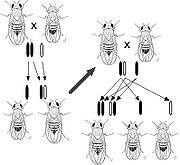
After the rediscovery of Mendel's work, scientists tried to determine which molecules in the cell were responsible for inheritance. In 1910, Thomas Hunt Morgan
argued that genes are on chromosome
s, based on observations of a sex-linked white eye
mutation in fruit flies
. In 1913, his student Alfred Sturtevant
used the phenomenon of genetic linkage
to show that genes are arranged linearly on the chromosome.
discovered the phenomenon of transformation
(see Griffith's experiment
): dead bacteria could transfer genetic material to "transform" other still-living bacteria. Sixteen years later, in 1944, Oswald Theodore Avery, Colin McLeod and Maclyn McCarty
identified the molecule responsible for transformation as DNA
. The Hershey-Chase experiment
in 1952 also showed that DNA (rather than protein) is the genetic material of the viruses that infect bacteria, providing further evidence that DNA is the molecule responsible for inheritance.
James D. Watson
and Francis Crick
determined the structure of DNA in 1953, using the X-ray crystallography
work of Rosalind Franklin
and Maurice Wilkins
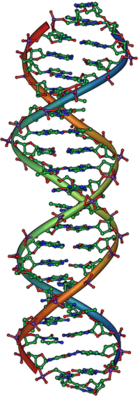
that indicated DNA had a helical structure (i.e., shaped like a corkscrew). Their double-helix model had two strands of DNA with the nucleotides pointing inward, each matching a complementary nucleotide on the other strand to form what looks like rungs on a twisted ladder. This structure showed that genetic information exists in the sequence of nucleotides on each strand of DNA. The structure also suggested a simple method for duplication: if the strands are separated, new partner strands can be reconstructed for each based on the sequence of the old strand.
Although the structure of DNA showed how inheritance works, it was still not known how DNA influences the behavior of cells. In the following years, scientists tried to understand how DNA controls the process of protein
production. It was discovered that the cell uses DNA as a template to create matching messenger RNA
(a molecule with nucleotides, very similar to DNA). The nucleotide sequence of a messenger RNA is used to create an amino acid
sequence in protein; this translation between nucleotide and amino acid sequences is known as the genetic code
.
With this molecular understanding of inheritance, an explosion of research became possible. One important development was chain-termination DNA sequencing
in 1977 by Frederick Sanger
. This technology allows scientists to read the nucleotide sequence of a DNA molecule. In 1983, Kary Banks Mullis developed the polymerase chain reaction
, providing a quick way to isolate and amplify a specific section of a DNA from a mixture. Through the pooled efforts of the Human Genome Project
and the parallel private effort by Celera Genomics
, these and other methods culminated in the sequencing of the human genome
in 2003.
 At its most fundamental level, inheritance in organisms occurs by means of discrete traits, called gene
s. This property was first observed by Gregor Mendel
, who studied the segregation of heritable traits in pea
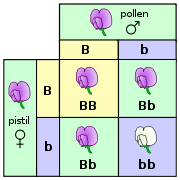
plants. In his experiments studying the trait for flower color, Mendel observed that the flowers of each pea plant were either purple or white—but never an intermediate between the two colors. These different, discrete versions of the same gene are called allele
s.
In the case of pea, which is a diploid species, each individual plant has two copies of each gene, one copy inherited from each parent. Many species, including humans, have this pattern of inheritance. Diploid organisms with two copies of the same allele of a given gene are called homozygous at that gene locus
, while organisms with two different alleles of a given gene are called heterozygous.
The set of alleles for a given organism is called its genotype
, while the observable traits of the organism are called its phenotype
. When organisms are heterozygous at a gene, often one allele is called dominant as its qualities dominate the phenotype of the organism, while the other allele is called recessive as its qualities recede and are not observed. Some alleles do not have complete dominance and instead have incomplete dominance by expressing an intermediate phenotype, or codominance by expressing both alleles at once.
When a pair of organisms reproduce sexually
, their offspring randomly inherit one of the two alleles from each parent. These observations of discrete inheritance and the segregation of alleles are collectively known as Mendel's first law or the Law of Segregation.
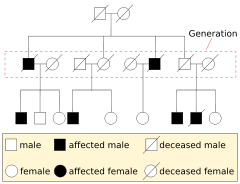 Geneticists use diagrams and symbols to describe inheritance. A gene is represented by one or a few letters. Often a "+" symbol is used to mark the usual, non-mutant allele
for a gene.
In fertilization and breeding experiments (and especially when discussing Mendel's laws) the parents are referred to as the "P" generation and the offspring as the "F1" (first filial) generation. When the F1 offspring mate with each other, the offspring are called the "F2" (second filial) generation. One of the common diagrams used to predict the result of cross-breeding is the Punnett square
.
When studying human genetic diseases, geneticists often use pedigree chart
s to represent the inheritance of traits. These charts map the inheritance of a trait in a family tree.
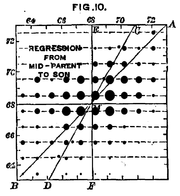 Organisms have thousands of genes, and in sexually reproducing organisms these genes generally assort independently of each other. This means that the inheritance of an allele for yellow or green pea color is unrelated to the inheritance of alleles for white or purple flowers. This phenomenon, known as "Mendel's second law" or the "Law of independent assortment", means that the alleles of different genes get shuffled between parents to form offspring with many different combinations. (Some genes do not assort independently, demonstrating genetic linkage
, a topic discussed later in this article.)
Often different genes can interact in a way that influences the same trait. In the Blue-eyed Mary
(Omphalodes verna), for example, there exists a gene with alleles that determine the color of flowers: blue or magenta. Another gene, however, controls whether the flowers have color at all or are white. When a plant has two copies of this white allele, its flowers are white—regardless of whether the first gene has blue or magenta alleles. This interaction between genes is called epistasis
, with the second gene epistatic to the first.
Many traits are not discrete features (e.g. purple or white flowers) but are instead continuous features (e.g. human height and skin color
). These complex traits
are products of many genes. The influence of these genes is mediated, to varying degrees, by the environment an organism has experienced. The degree to which an organism's genes contribute to a complex trait is called heritability
. Measurement of the heritability of a trait is relative—in a more variable environment, the environment has a bigger influence on the total variation of the trait. For example, human height is a trait with complex causes. It has a heritability of 89% in the United States. In Nigeria, however, where people experience a more variable access to good nutrition and health care
, height has a heritability of only 62%.
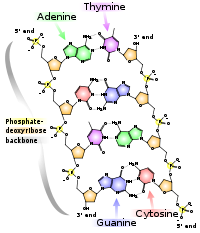 The molecular basis for genes is deoxyribonucleic acid (DNA). DNA is composed of a chain of nucleotide
s, of which there are four types: adenine
(A), cytosine
(C), guanine
(G), and thymine
(T). Genetic information exists in the sequence of these nucleotides, and genes exist as stretches of sequence along the DNA chain. Virus
es are the only exception to this rule—sometimes viruses use the very similar molecule RNA
instead of DNA as their genetic material.
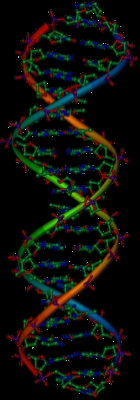
DNA normally exists as a double-stranded molecule, coiled into the shape of a double-helix. Each nucleotide in DNA preferentially pairs with its partner nucleotide on the opposite strand: A pairs with T, and C pairs with G. Thus, in its two-stranded form, each strand effectively contains all necessary information, redundant with its partner strand. This structure of DNA is the physical basis for inheritance: DNA replication
duplicates the genetic information by splitting the strands and using each strand as a template for synthesis of a new partner strand.
Genes are arranged linearly along long chains of DNA base-pair sequences. In bacteria
, each cell usually contains a single circular genophore, while eukaryotic
organisms (including plants and animals) have their DNA arranged in multiple linear chromosomes. These DNA strands are often extremely long; the largest human chromosome, for example, is about 247 million base pair
s in length. The DNA of a chromosome is associated with structural proteins that organize, compact, and control access to the DNA, forming a material called chromatin
; in eukaryotes, chromatin is usually composed of nucleosome
s, segments of DNA wound around cores of histone
proteins. The full set of hereditary material in an organism (usually the combined DNA sequences of all chromosomes) is called the genome
.
While haploid organisms have only one copy of each chromosome, most animals and many plants are diploid, containing two of each chromosome and thus two copies of every gene. The two alleles for a gene are located on identical loci
of sister chromatid
s, each allele inherited from a different parent.
Many species have so called sex chromosomes. They are special in that they determine the sex of the organism. In humans and many other animals, the Y-chromosome
contains the gene that triggers the development of the specifically male characteristics. In evolution, this chromosome has lost most of its content and also most of its genes, while the X chromosome
is similar to the other chromosomes and contains many genes. The X and Y chromosomes form a very heterogeneous pair before cell division
.
inherits one copy. This process, called mitosis
, is the simplest form of reproduction and is the basis for asexual reproduction
. Asexual reproduction can also occur in multicellular organisms, producing offspring that inherit their genome from a single parent. Offspring that are genetically identical to their parents are called clones
.
Eukaryotic organisms often use sexual reproduction
to generate offspring that contain a mixture of genetic material inherited from two different parents. The process of sexual reproduction alternates between forms that contain single copies of the genome (haploid) and double copies (diploid). Haploid cells fuse and combine genetic material to create a diploid cell with paired chromosomes. Diploid organisms form haploids by dividing, without replicating their DNA, to create daughter cells that randomly inherit one of each pair of chromosomes. Most animals and many plants are diploid for most of their lifespan, with the haploid form reduced to single cell gamete
s such as sperm
or eggs
.
Although they do not use the haploid/diploid method of sexual reproduction, bacteria
have many methods of acquiring new genetic information. Some bacteria can undergo conjugation
, transferring a small circular piece of DNA to another bacterium. Bacteria can also take up raw DNA fragments found in the environment and integrate them into their genomes, a phenomenon known as transformation
. These processes result in horizontal gene transfer
, transmitting fragments of genetic information between organisms that would be otherwise unrelated.
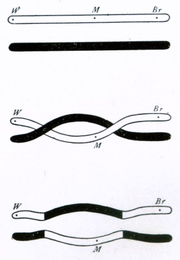 The diploid nature of chromosomes allows for genes on different chromosomes to assort independently during sexual reproduction, recombining to form new combinations of genes. Genes on the same chromosome would theoretically never recombine, however, were it not for the process of chromosomal crossover
. During crossover, chromosomes exchange stretches of DNA, effectively shuffling the gene alleles between the chromosomes. This process of chromosomal crossover generally occurs during meiosis
, a series of cell divisions that creates haploid cells.
The probability of chromosomal crossover occurring between two given points on the chromosome is related to the distance between the points. For an arbitrarily long distance, the probability of crossover is high enough that the inheritance of the genes is effectively uncorrelated. For genes that are closer together, however, the lower probability of crossover means that the genes demonstrate genetic linkage
—alleles for the two genes tend to be inherited together. The amounts of linkage between a series of genes can be combined to form a linear linkage map that roughly describes the arrangement of the genes along the chromosome.
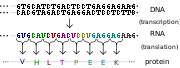 Genes generally express
their functional effect through the production of protein
s, which are complex molecules responsible for most functions in the cell. Proteins are made up of one or more polypeptide chains, each of which is composed of a sequence of amino acid
s, and the DNA sequence of a gene (through an RNA intermediate) is used to produce a specific amino acid sequence
. This process begins with the production of an RNA
molecule with a sequence matching the gene's DNA sequence, a process called transcription
.
This messenger RNA
molecule is then used to produce a corresponding amino acid sequence through a process called translation. Each group of three nucleotides in the sequence, called a codon, corresponds either to one of the twenty possible amino acids in a protein or an instruction to end the amino acic sequence
; this correspondence is called the genetic code
. The flow of information is unidirectional: information is transferred from nucleotide sequences into the amino acid sequence of proteins, but it never transfers from protein back into the sequence of DNA—a phenomenon Francis Crick
called the central dogma of molecular biology
.
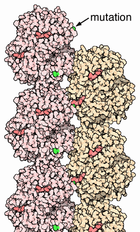 The specific sequence of amino acids results
in a unique three-dimensional structure for that protein, and the three-dimensional structures of proteins are related to their functions. Some are simple structural molecules, like the fibers formed by the protein collagen
. Proteins can bind to other proteins and simple molecules, sometimes acting as enzyme
s by facilitating chemical reaction
s within the bound molecules (without changing the structure of the protein itself). Protein structure is dynamic; the protein hemoglobin
bends into slightly different forms as it facilitates the capture, transport, and release of oxygen molecules within mammalian blood.
A single nucleotide difference within DNA can cause a change in the amino acid sequence of a protein. Because protein structures are the result of their amino acid sequences, some changes can dramatically change the properties of a protein by destabilizing the structure or changing the surface of the protein in a way that changes its interaction with other proteins and molecules. For example, sickle-cell anemia is a human genetic disease
that results from a single base difference within the coding region
for the β-globin section of hemoglobin, causing a single amino acid change that changes hemoglobin's physical properties. Sickle-cell versions of hemoglobin stick to themselves, stacking to form fibers that distort the shape of red blood cell
s carrying the protein. These sickle-shaped cells no longer flow smoothly through blood vessel
s, having a tendency to clog or degrade, causing the medical problems associated with this disease.
Some genes are transcribed into RNA but are not translated into protein products—such RNA molecules are called non-coding RNA
. In some cases, these products fold into structures which are involved in critical cell functions (e.g. ribosomal RNA
and transfer RNA
). RNA can also have regulatory effect through hybridization interactions with other RNA molecules (e.g. microRNA).
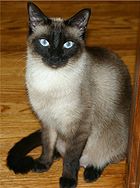 Although genes contain all the information an organism uses to function, the environment plays an important role in determining the ultimate phenotype—a phenomenon often referred to as "nature vs. nurture". The phenotype of an organism depends on the interaction of genetics with the environment. One example of this is the case of temperature-sensitive mutations. Often, a single amino acid change within the sequence of a protein does not change its behavior and interactions with other molecules, but it does destabilize the structure. In a high temperature
environment, where molecules are moving more quickly and hitting each other, this results in the protein losing its structure
and failing to function. In a low temperature environment, however, the protein's structure is stable and it functions normally. This type of mutation is visible in the coat coloration of Siamese cat
s, where a mutation in an enzyme responsible for pigment production causes it to destabilize and lose function at high temperatures. The protein remains functional in areas of skin that are colder—legs, ears, tail, and face—and so the cat has dark fur at its extremities.
Environment also plays a dramatic role in effects of the human genetic disease phenylketonuria
. The mutation that causes phenylketonuria disrupts the ability of the body to break down the amino acid phenylalanine
, causing a toxic build-up of an intermediate molecule that, in turn, causes severe symptoms of progressive mental retardation and seizures. If someone with the phenylketonuria mutation follows a strict diet that avoids this amino acid, however, they remain normal and healthy.
A popular method to determine how much role nature and nurture play is to study identical and fraternal twins or siblings of multiple birth
. Because identical siblings come from the same zygote they are genetically the same. Fraternal siblings however are as different genetically from one another as normal siblings. By comparing how often the twin of a set has the same disorder between fraternal and identical twins, scientists can see whether there is more of a nature or nurture effect. One famous example of a multiple birth study includes the Genain quadruplets
, who were identical quadruplets
all diagnosed with schizophrenia
.
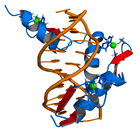
when it is being transcribed into mRNA (and translated into protein), and there exist many cellular methods of controlling the expression of genes such that proteins are produced only when needed by the cell. Transcription factor
s are regulatory proteins that bind to the start of genes, either promoting or inhibiting the transcription of the gene. Within the genome of Escherichia coli
bacteria, for example, there exists a series of genes necessary for the synthesis of the amino acid tryptophan
. However, when tryptophan is already available to the cell, these genes for tryptophan synthesis are no longer needed. The presence of tryptophan directly affects the activity of the genes—tryptophan molecules bind to the tryptophan repressor (a transcription factor), changing the repressor's structure such that the repressor binds to the genes. The tryptophan repressor blocks the transcription and expression of the genes, thereby creating negative feedback
regulation of the tryptophan synthesis process.
 Differences in gene expression are especially clear within multicellular organism
s, where cells all contain the same genome but have very different structures and behaviors due to the expression of different sets of genes. All the cells in a multicellular organism derive from a single cell, differentiating into variant cell types in response to external and intercellular signals
and gradually establishing different patterns of gene expression to create different behaviors. As no single gene is responsible for the development of structures within multicellular organisms, these patterns arise from the complex interactions between many cells.
Within eukaryote
s there exist structural features of chromatin
that influence the transcription of genes, often in the form of modifications to DNA and chromatin that are stably inherited by daughter cells. These features are called "epigenetic" because they exist "on top" of the DNA sequence and retain inheritance from one cell generation to the next. Because of epigenetic features, different cell types grown
within the same medium can retain very different properties. Although epigenetic features are generally dynamic over the course of development, some, like the phenomenon of paramutation
, have multigenerational inheritance and exist as rare exceptions to the general rule of DNA as the basis for inheritance.
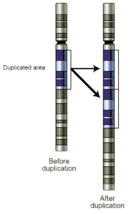 During the process of DNA replication
, errors occasionally occur in the polymerization of the second strand. These errors, called mutation
s, can have an impact on the phenotype of an organism, especially if they occur within the protein coding sequence of a gene. Error rates are usually very low—1 error in every 10–100 million bases—due to the "proofreading" ability of DNA polymerase
s. (Without proofreading error rates are a thousandfold higher; because many viruses rely on DNA and RNA polymerases that lack proofreading ability, they experience higher mutation rates.) Processes that increase the rate of changes in DNA are called mutagenic: mutagenic chemicals promote errors in DNA replication, often by interfering with the structure of base-pairing, while UV radiation induces mutations by causing damage to the DNA structure. Chemical damage to DNA occurs naturally as well, and cells use DNA repair
mechanisms to repair mismatches and breaks in DNA—nevertheless, the repair sometimes fails to return the DNA to its original sequence.
In organisms that use chromosomal crossover
to exchange DNA and recombine genes, errors in alignment during meiosis
can also cause mutations. Errors in crossover are especially likely when similar sequences cause partner chromosomes to adopt a mistaken alignment; this makes some regions in genomes more prone to mutating in this way. These errors create large structural changes in DNA sequence—duplications
, inversions
or deletions of entire regions, or the accidental exchanging of whole parts between different chromosomes (called translocation
).
. Mutations that do have an effect are usually deleterious, but occasionally some can be beneficial. Studies in the fly Drosophila melanogaster
suggest that if a mutation changes a protein produced by a gene, about 70 percent of these mutations will be harmful with the remainder being either neutral or weakly beneficial.
 Population genetics
studies the distribution of genetic differences within populations and how these distributions change over time. Changes in the frequency of an allele
in a population are mainly influenced by natural selection
, where a given allele provides a selective or reproductive advantage to the organism, as well as other factors such as mutation
, genetic drift
, genetic draft
, artificial selection
and migration
.
Over many generations, the genomes of organisms can change significantly, resulting in the phenomenon of evolution
. Selection for beneficial mutations can cause a species to evolve
into forms better able to survive in their environment, a process called adaptation
. New species are formed through the process of speciation
, often caused by geographical separations that prevent populations from exchanging genes with each other. The application of genetic principles to the study of population biology and evolution is referred to as the modern synthesis.
By comparing the homology
between different species' genomes it is possible to calculate the evolutionary distance between them and when they may have diverged (called a molecular clock
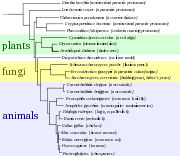
). Genetic comparisons are generally considered a more accurate method of characterizing the relatedness between species than the comparison of phenotypic characteristics. The evolutionary distances between species can be used to form evolutionary trees; these trees represent the common descent
and divergence of species over time, although they do not show the transfer of genetic material between unrelated species (known as horizontal gene transfer
and most common in bacteria).
.jpg) Although geneticists originally studied inheritance in a wide range of organisms, researchers began to specialize in studying the genetics of a particular subset of organisms. The fact that significant research already existed for a given organism would encourage new researchers to choose it for further study, and so eventually a few model organism
Although geneticists originally studied inheritance in a wide range of organisms, researchers began to specialize in studying the genetics of a particular subset of organisms. The fact that significant research already existed for a given organism would encourage new researchers to choose it for further study, and so eventually a few model organism
s became the basis for most genetics research. Common research topics in model organism genetics include the study of gene regulation and the involvement of genes in development
and cancer
.
Organisms were chosen, in part, for convenience—short generation times and easy genetic manipulation
made some organisms popular genetics research tools. Widely used model organisms include the gut bacterium Escherichia coli
, the plant Arabidopsis thaliana
, baker's yeast (Saccharomyces cerevisiae
), the nematode Caenorhabditis elegans
, the common fruit fly (Drosophila melanogaster
), and the common house mouse (Mus musculus).
seeks to understand how genetic variation relates to human health and disease. When searching for an unknown gene that may be involved in a disease, researchers commonly use genetic linkage
and genetic pedigree chart
s to find the location on the genome associated with the disease. At the population level, researchers take advantage of Mendelian randomization
to look for locations in the genome that are associated with diseases, a method especially useful for multigenic traits
not clearly defined by a single gene. Once a candidate gene is found, further research is often done on the corresponding gene (called an orthologous gene) in model organisms. In addition to studying genetic diseases, the increased availability of genotyping methods has led to the field of pharmacogenetics
—studying how genotype can affect drug responses.
Individuals differ in their inherited tendency to develop cancer
, and cancer is a genetic disease. The process of cancer development in the body is a combination of events. Mutation
s occasionally occur within cells in the body as they divide. Although these mutations will not be inherited by any offspring, they can affect the behavior of cells, sometimes causing them to grow and divide more frequently. There are biological mechanisms that attempt to stop this process; signals are given to inappropriately dividing cells that should trigger cell death
, but sometimes additional mutations occur that cause cells to ignore these messages. An internal process of natural selection
occurs within the body and eventually mutations accumulate within cells to promote their own growth, creating a cancerous tumor that grows and invades various tissues of the body.
Normally, a cell divides only in response to signals: "growth factors", it stops growing when making contact with surrounding cells (contact inhibition
), and in response to growth inhibitory signals, it divides a limited number of times and dies (apoptosis
), it stays inside the epithelium and is not able to migrate to invade other organs. To become a cancer cell, a cell has to accumulate mutations in a number of genes (3-7) that allow it to bypass all these regulations: it no longer needs growth factors to divide, it continues growing when making contact to neighbor cells, and ignores inhibitory signals, it will keep growing indefinitely and is immortal, it will escape from the epithelium and ultimately may be able to escape from the primary tumor
, cross the endothelium of a blood vessel, be transported by the bloodstream and will colonize a new organ, forming deadly metastasis
. Although there are some genetic predispositions in a small fraction of cancers, the major fraction is due to a set of new genetic mutations that originally appear and accumulate in one or a small number of cells that will divide to form the tumor and are not transmitted to the progeny (somatic mutations). The most frequent mutations are a loss of function of p53 protein, a tumor suppressor, or in the p53 pathway, and gain of function mutations in the ras proteins, or in other oncogene
s.
For human genetic diseases see Genetic Disorders.
s that cut DNA at specific sequences, producing predictable fragments of DNA. DNA fragments can be visualized through use of gel electrophoresis
, which separates fragments according to their length.
The use of ligation enzymes
allows DNA fragments to be connected, and by ligating fragments of DNA together from different sources, researchers can create recombinant DNA
. Often associated with genetically modified organism
s, recombinant DNA is commonly used in the context of plasmids—short circular DNA
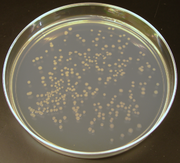
fragments with a few genes on them. By inserting plasmids into bacteria and growing those bacteria on plates of agar (to isolate clones of bacteria cells), researchers can clonally amplify the inserted fragment of DNA (a process known as molecular cloning
). (Cloning can also refer to creating clonal organisms
, by various means.)
 DNA can also be amplified using a procedure called the polymerase chain reaction
(PCR). By using specific short sequences of DNA, PCR can isolate and exponentially amplify a targeted region of DNA. Because it can amplify from extremely small amounts of DNA, PCR is also often used to detect the presence of specific DNA sequences.
allows researchers to determine the sequence of nucleotides in DNA fragments. Developed in 1977 by Frederick Sanger
and coworkers, chain-termination sequencing is now routinely used to sequence DNA fragments. With this technology, researchers have been able to study the molecular sequences associated with many human diseases.
As sequencing has become less expensive, researchers have sequenced the genomes
of many organisms, using computational tools to stitch together the sequences of many different fragments (a process called genome assembly). These technologies were used to sequence the human genome
, leading to the completion of the Human Genome Project
in 2003. New high-throughput sequencing technologies are dramatically lowering the cost of DNA sequencing, with many researchers hoping to bring the cost of resequencing a human genome down to a thousand dollars.
The large amount of sequence data available has created the field of genomics
, research that uses computational tools to search for and analyze patterns in the full genomes of organisms. Genomics can also be considered a subfield of bioinformatics
, which uses computational approaches to analyze large sets of biological data
.
Biology
Biology is a natural science concerned with the study of life and living organisms, including their structure, function, growth, origin, evolution, distribution, and taxonomy. Biology is a vast subject containing many subdivisions, topics, and disciplines...
, is the science
Science
Science is a systematic enterprise that builds and organizes knowledge in the form of testable explanations and predictions about the universe...
of gene
Gene
A gene is a molecular unit of heredity of a living organism. It is a name given to some stretches of DNA and RNA that code for a type of protein or for an RNA chain that has a function in the organism. Living beings depend on genes, as they specify all proteins and functional RNA chains...
s, heredity
Heredity
Heredity is the passing of traits to offspring . This is the process by which an offspring cell or organism acquires or becomes predisposed to the characteristics of its parent cell or organism. Through heredity, variations exhibited by individuals can accumulate and cause some species to evolve...
, and variation
Genetic variation
Genetic variation, variation in alleles of genes, occurs both within and among populations. Genetic variation is important because it provides the “raw material” for natural selection. Genetic variation is brought about by mutation, a change in a chemical structure of a gene. Polyploidy is an...
in living organism
Organism
In biology, an organism is any contiguous living system . In at least some form, all organisms are capable of response to stimuli, reproduction, growth and development, and maintenance of homoeostasis as a stable whole.An organism may either be unicellular or, as in the case of humans, comprise...
s.
Genetics deals with the molecular structure and function
Molecular genetics
Molecular genetics is the field of biology and genetics that studies the structure and function of genes at a molecular level. The field studies how the genes are transferred from generation to generation. Molecular genetics employs the methods of genetics and molecular biology...
of genes, with gene behavior in the context of a cell
Cell (biology)
The cell is the basic structural and functional unit of all known living organisms. It is the smallest unit of life that is classified as a living thing, and is often called the building block of life. The Alberts text discusses how the "cellular building blocks" move to shape developing embryos....
or organism
Organism
In biology, an organism is any contiguous living system . In at least some form, all organisms are capable of response to stimuli, reproduction, growth and development, and maintenance of homoeostasis as a stable whole.An organism may either be unicellular or, as in the case of humans, comprise...
(e.g. dominance and epigenetics
Epigenetics
In biology, and specifically genetics, epigenetics is the study of heritable changes in gene expression or cellular phenotype caused by mechanisms other than changes in the underlying DNA sequence – hence the name epi- -genetics...
), with patterns of inheritance from parent to offspring, and with gene distribution, variation and change in populations
Population genetics
Population genetics is the study of allele frequency distribution and change under the influence of the four main evolutionary processes: natural selection, genetic drift, mutation and gene flow. It also takes into account the factors of recombination, population subdivision and population...
. Given that genes are universal to living organisms, genetics can be applied to the study of all living systems, from virus
Virus
A virus is a small infectious agent that can replicate only inside the living cells of organisms. Viruses infect all types of organisms, from animals and plants to bacteria and archaea...
es and bacteria
Bacteria
Bacteria are a large domain of prokaryotic microorganisms. Typically a few micrometres in length, bacteria have a wide range of shapes, ranging from spheres to rods and spirals...
, through plant
Plant
Plants are living organisms belonging to the kingdom Plantae. Precise definitions of the kingdom vary, but as the term is used here, plants include familiar organisms such as trees, flowers, herbs, bushes, grasses, vines, ferns, mosses, and green algae. The group is also called green plants or...
s (especially crop
Crop
Crop may refer to:* Crop, a plant grown and harvested for agricultural use* Crop , part of the alimentary tract of some animals* Crop , a modified whip used in horseback riding or disciplining humans...
s) and domestic animals, to human
Human
Humans are the only living species in the Homo genus...
s (as in medical genetics
Medical genetics
Medical genetics is the specialty of medicine that involves the diagnosis and management of hereditary disorders. Medical genetics differs from Human genetics in that human genetics is a field of scientific research that may or may not apply to medicine, but medical genetics refers to the...
).
The fact that living things inherit traits from their parents has been used since prehistoric times to improve crop plants and animals through selective breeding
Selective breeding
Selective breeding is the process of breeding plants and animals for particular genetic traits. Typically, strains that are selectively bred are domesticated, and the breeding is sometimes done by a professional breeder. Bred animals are known as breeds, while bred plants are known as varieties,...
. However, the modern science of genetics, which seeks to understand the process of inheritance, only began with the work of Gregor Mendel
Gregor Mendel
Gregor Johann Mendel was an Austrian scientist and Augustinian friar who gained posthumous fame as the founder of the new science of genetics. Mendel demonstrated that the inheritance of certain traits in pea plants follows particular patterns, now referred to as the laws of Mendelian inheritance...
in the mid-19th century. Although he did not know the physical basis for heredity, Mendel observed that organisms inherit traits via discrete
Countable set
In mathematics, a countable set is a set with the same cardinality as some subset of the set of natural numbers. A set that is not countable is called uncountable. The term was originated by Georg Cantor...
units of inheritance, which are now called gene
Gene
A gene is a molecular unit of heredity of a living organism. It is a name given to some stretches of DNA and RNA that code for a type of protein or for an RNA chain that has a function in the organism. Living beings depend on genes, as they specify all proteins and functional RNA chains...
s.
Genes correspond to regions within DNA
DNA
Deoxyribonucleic acid is a nucleic acid that contains the genetic instructions used in the development and functioning of all known living organisms . The DNA segments that carry this genetic information are called genes, but other DNA sequences have structural purposes, or are involved in...
, a molecule composed of a chain of four different types of nucleotides—the sequence of these nucleotides is the genetic information organisms inherit. DNA naturally occurs in a double stranded form, with nucleotides on each strand complementary to each other. Each strand can act as a template for creating
DNA replication
DNA replication is a biological process that occurs in all living organisms and copies their DNA; it is the basis for biological inheritance. The process starts with one double-stranded DNA molecule and produces two identical copies of the molecule...
a new partner strand. This is the physical method for making copies of genes that can be inherited.
The sequence of nucleotides in a gene is translated
Translation (genetics)
In molecular biology and genetics, translation is the third stage of protein biosynthesis . In translation, messenger RNA produced by transcription is decoded by the ribosome to produce a specific amino acid chain, or polypeptide, that will later fold into an active protein...
by cells to produce a chain of amino acid
Amino acid
Amino acids are molecules containing an amine group, a carboxylic acid group and a side-chain that varies between different amino acids. The key elements of an amino acid are carbon, hydrogen, oxygen, and nitrogen...
s, creating protein
Protein
Proteins are biochemical compounds consisting of one or more polypeptides typically folded into a globular or fibrous form, facilitating a biological function. A polypeptide is a single linear polymer chain of amino acids bonded together by peptide bonds between the carboxyl and amino groups of...
s—the order of amino acids in a protein corresponds to the order of nucleotides in the gene. This relationship between nucleotide sequence and amino acid sequence is known as the genetic code
Genetic code
The genetic code is the set of rules by which information encoded in genetic material is translated into proteins by living cells....
. The amino acids in a protein determine how it folds into a three-dimensional shape; this structure is, in turn, responsible for the protein's function. Proteins carry out almost all the functions needed for cells to live. A change to the DNA in a gene can change a protein's amino acids, changing its shape and function: this can have a dramatic effect in the cell and on the organism as a whole.
Although genetics plays a large role in the appearance and behavior of organisms, it is the combination of genetics with what an organism experiences that determines the ultimate outcome. For example, while genes play a role in determining an organism's size
Human height
Human height is the distance from the bottom of the feet to the top of the head in a human body standing erect.When populations share genetic background and environmental factors, average height is frequently characteristic within the group...
, the nutrition
Nutrition
Nutrition is the provision, to cells and organisms, of the materials necessary to support life. Many common health problems can be prevented or alleviated with a healthy diet....
and health
Health
Health is the level of functional or metabolic efficiency of a living being. In humans, it is the general condition of a person's mind, body and spirit, usually meaning to be free from illness, injury or pain...
it experiences after inception also have a large effect.
History
Gregor Mendel
Gregor Johann Mendel was an Austrian scientist and Augustinian friar who gained posthumous fame as the founder of the new science of genetics. Mendel demonstrated that the inheritance of certain traits in pea plants follows particular patterns, now referred to as the laws of Mendelian inheritance...
in the mid-19th century, other theories of inheritance preceded Mendel. A popular theory during Mendel's time was the concept of blending inheritance
Blending inheritance
Many biologists and other academics held to the idea of blending inheritance during the 19th century, prior to the discovery of genetics. Blending inheritance was merely a widespread hypothetical model, rather than a formalized scientific theory , in...
: the idea that individuals inherit a smooth blend of traits from their parents. Mendel's work disproved this, showing that traits are composed of combinations of distinct genes rather than a continuous blend. Another theory that had some support at that time was the inheritance of acquired characteristics: the belief that individuals inherit traits strengthened by their parents. This theory (commonly associated with Jean-Baptiste Lamarck
Jean-Baptiste Lamarck
Jean-Baptiste Pierre Antoine de Monet, Chevalier de la Marck , often known simply as Lamarck, was a French naturalist...
) is now known to be wrong—the experiences of individuals do not affect the genes they pass to their children. Other theories included the pangenesis
Pangenesis
Pangenesis was Charles Darwin's hypothetical mechanism for heredity. He presented this 'provisional hypothesis' in his 1868 work The Variation of Animals and Plants under Domestication and felt that it brought 'together a multitude of facts which are at present left disconnected by any efficient...
of Charles Darwin
Charles Darwin
Charles Robert Darwin FRS was an English naturalist. He established that all species of life have descended over time from common ancestry, and proposed the scientific theory that this branching pattern of evolution resulted from a process that he called natural selection.He published his theory...
(which had both acquired and inherited aspects) and Francis Galton
Francis Galton
Sir Francis Galton /ˈfrɑːnsɪs ˈgɔːltn̩/ FRS , cousin of Douglas Strutt Galton, half-cousin of Charles Darwin, was an English Victorian polymath: anthropologist, eugenicist, tropical explorer, geographer, inventor, meteorologist, proto-geneticist, psychometrician, and statistician...
's reformulation of pangenesis as both particulate and inherited.
Mendelian and classical genetics
Modern genetics started with Gregor Johann Mendel, a German-Czech Augustinian monkMonk
A monk is a person who practices religious asceticism, living either alone or with any number of monks, while always maintaining some degree of physical separation from those not sharing the same purpose...
and scientist who studied the nature of inheritance in plants. In his paper "Versuche über Pflanzenhybriden" ("Experiments on Plant Hybridization
Experiments on Plant Hybridization
Written in 1865 by Gregor Mendel, Experiments on Plant Hybridization was the result after years spent studying genetic traits in pea plants. Mendel read his paper to the Natural History Society of Brünn on February 8 and March 8, 1865...
"), presented in 1865 to the Naturforschender Verein (Society for Research in Nature) in Brünn
Brunn
Brunn or Brünn may refer to:Places* Brünn, the German form of the Czech city Brno* Brunn, Upper Palatinate, a town in Bavaria, Germany* Brunn, Mecklenburg-Vorpommern, a municipality in Mecklenburg-Vorpommern, Germany...
, Mendel traced the inheritance patterns of certain traits in pea plants and described them mathematically. Although this pattern of inheritance could only be observed for a few traits, Mendel's work suggested that heredity was particulate, not acquired, and that the inheritance patterns of many traits could be explained through simple rules and ratios.
The importance of Mendel's work did not gain wide understanding until the 1890s, after his death, when other scientists
Hugo de Vries
Hugo Marie de Vries ForMemRS was a Dutch botanist and one of the first geneticists. He is known chiefly for suggesting the concept of genes, rediscovering the laws of heredity in the 1890s while unaware of Gregor Mendel's work, for introducing the term "mutation", and for developing a mutation...
working on similar problems re-discovered his research. William Bateson
William Bateson
William Bateson was an English geneticist and a Fellow of St. John's College, Cambridge...
, a proponent of Mendel's work, coined the word genetics in 1905. (The adjective genetic, derived from the Greek word genesis—γένεσις, "origin", predates the noun and was first used in a biological sense in 1860.) Bateson popularized the usage of the word genetics to describe the study of inheritance in his inaugural address to the Third International Conference on Plant Hybridization in London, England
London
London is the capital city of :England and the :United Kingdom, the largest metropolitan area in the United Kingdom, and the largest urban zone in the European Union by most measures. Located on the River Thames, London has been a major settlement for two millennia, its history going back to its...
, in 1906.
After the rediscovery of Mendel's work, scientists tried to determine which molecules in the cell were responsible for inheritance. In 1910, Thomas Hunt Morgan
Thomas Hunt Morgan
Thomas Hunt Morgan was an American evolutionary biologist, geneticist and embryologist and science author who won the Nobel Prize in Physiology or Medicine in 1933 for discoveries relating the role the chromosome plays in heredity.Morgan received his PhD from Johns Hopkins University in zoology...
argued that genes are on chromosome
Chromosome
A chromosome is an organized structure of DNA and protein found in cells. It is a single piece of coiled DNA containing many genes, regulatory elements and other nucleotide sequences. Chromosomes also contain DNA-bound proteins, which serve to package the DNA and control its functions.Chromosomes...
s, based on observations of a sex-linked white eye
White (mutation)
White, abbreviated w, was the first sex-linked mutation ever discovered in the fruit fly Drosophila melanogaster. In 1910 Thomas Hunt Morgan, collected a single male white-eyed mutant from a population of Drosophila melanogaster fruit flies, which usually have bright red eyes...
mutation in fruit flies
Drosophila melanogaster
Drosophila melanogaster is a species of Diptera, or the order of flies, in the family Drosophilidae. The species is known generally as the common fruit fly or vinegar fly. Starting from Charles W...
. In 1913, his student Alfred Sturtevant
Alfred Sturtevant
Alfred Henry Sturtevant was an American geneticist. Sturtevant constructed the first genetic map of a chromosome in 1913. Throughout his career he worked on the organism Drosophila melanogaster with Thomas Hunt Morgan...
used the phenomenon of genetic linkage
Genetic linkage
Genetic linkage is the tendency of certain loci or alleles to be inherited together. Genetic loci that are physically close to one another on the same chromosome tend to stay together during meiosis, and are thus genetically linked.-Background:...
to show that genes are arranged linearly on the chromosome.
Molecular genetics
Although genes were known to exist on chromosomes, chromosomes are composed of both protein and DNA—scientists did not know which of these is responsible for inheritance. In 1928, Frederick GriffithFrederick Griffith
Frederick Griffith was a British bacteriologist whose focus was the epidemiology and pathology of bacterial pneumonia. In January 1928 he reported what is now known as Griffith's Experiment, the first widely accepted demonstrations of bacterial transformation, whereby a bacterium distinctly...
discovered the phenomenon of transformation
Transformation (genetics)
In molecular biology transformation is the genetic alteration of a cell resulting from the direct uptake, incorporation and expression of exogenous genetic material from its surroundings and taken up through the cell membrane. Transformation occurs naturally in some species of bacteria, but it can...
(see Griffith's experiment
Griffith's experiment
Griffith's experiment, reported in 1928 by Frederick Griffith, was one of the first experiments suggesting that bacteria are capable of transferring genetic information through a process known as transformation....
): dead bacteria could transfer genetic material to "transform" other still-living bacteria. Sixteen years later, in 1944, Oswald Theodore Avery, Colin McLeod and Maclyn McCarty
Maclyn McCarty
Maclyn McCarty was an American geneticist.Maclyn McCarty, who devoted his life as a physician-scientist to studying infectious disease organisms, was best known for his part in the monumental discovery that DNA, rather than protein, constituted the chemical nature of a gene...
identified the molecule responsible for transformation as DNA
DNA
Deoxyribonucleic acid is a nucleic acid that contains the genetic instructions used in the development and functioning of all known living organisms . The DNA segments that carry this genetic information are called genes, but other DNA sequences have structural purposes, or are involved in...
. The Hershey-Chase experiment
Hershey-Chase experiment
The Hershey–Chase experiments were a series of experiments conducted in 1952 by Alfred Hershey and Martha Chase, which helped to confirm that DNA was the genetic material. While DNA had been known to biologists since 1869, a few scientists still assumed at the time that proteins carried the...
in 1952 also showed that DNA (rather than protein) is the genetic material of the viruses that infect bacteria, providing further evidence that DNA is the molecule responsible for inheritance.
James D. Watson
James D. Watson
James Dewey Watson is an American molecular biologist, geneticist, and zoologist, best known as one of the co-discoverers of the structure of DNA in 1953 with Francis Crick...
and Francis Crick
Francis Crick
Francis Harry Compton Crick OM FRS was an English molecular biologist, biophysicist, and neuroscientist, and most noted for being one of two co-discoverers of the structure of the DNA molecule in 1953, together with James D. Watson...
determined the structure of DNA in 1953, using the X-ray crystallography
X-ray crystallography
X-ray crystallography is a method of determining the arrangement of atoms within a crystal, in which a beam of X-rays strikes a crystal and causes the beam of light to spread into many specific directions. From the angles and intensities of these diffracted beams, a crystallographer can produce a...
work of Rosalind Franklin
Rosalind Franklin
Rosalind Elsie Franklin was a British biophysicist and X-ray crystallographer who made critical contributions to the understanding of the fine molecular structures of DNA, RNA, viruses, coal and graphite...
and Maurice Wilkins
Maurice Wilkins
Maurice Hugh Frederick Wilkins CBE FRS was a New Zealand-born English physicist and molecular biologist, and Nobel Laureate whose research contributed to the scientific understanding of phosphorescence, isotope separation, optical microscopy and X-ray diffraction, and to the development of radar...
that indicated DNA had a helical structure (i.e., shaped like a corkscrew). Their double-helix model had two strands of DNA with the nucleotides pointing inward, each matching a complementary nucleotide on the other strand to form what looks like rungs on a twisted ladder. This structure showed that genetic information exists in the sequence of nucleotides on each strand of DNA. The structure also suggested a simple method for duplication: if the strands are separated, new partner strands can be reconstructed for each based on the sequence of the old strand.
Although the structure of DNA showed how inheritance works, it was still not known how DNA influences the behavior of cells. In the following years, scientists tried to understand how DNA controls the process of protein
Protein
Proteins are biochemical compounds consisting of one or more polypeptides typically folded into a globular or fibrous form, facilitating a biological function. A polypeptide is a single linear polymer chain of amino acids bonded together by peptide bonds between the carboxyl and amino groups of...
production. It was discovered that the cell uses DNA as a template to create matching messenger RNA
Messenger RNA
Messenger RNA is a molecule of RNA encoding a chemical "blueprint" for a protein product. mRNA is transcribed from a DNA template, and carries coding information to the sites of protein synthesis: the ribosomes. Here, the nucleic acid polymer is translated into a polymer of amino acids: a protein...
(a molecule with nucleotides, very similar to DNA). The nucleotide sequence of a messenger RNA is used to create an amino acid
Amino acid
Amino acids are molecules containing an amine group, a carboxylic acid group and a side-chain that varies between different amino acids. The key elements of an amino acid are carbon, hydrogen, oxygen, and nitrogen...
sequence in protein; this translation between nucleotide and amino acid sequences is known as the genetic code
Genetic code
The genetic code is the set of rules by which information encoded in genetic material is translated into proteins by living cells....
.
With this molecular understanding of inheritance, an explosion of research became possible. One important development was chain-termination DNA sequencing
DNA sequencing
DNA sequencing includes several methods and technologies that are used for determining the order of the nucleotide bases—adenine, guanine, cytosine, and thymine—in a molecule of DNA....
in 1977 by Frederick Sanger
Frederick Sanger
Frederick Sanger, OM, CH, CBE, FRS is an English biochemist and a two-time Nobel laureate in chemistry, the only person to have been so. In 1958 he was awarded a Nobel prize in chemistry "for his work on the structure of proteins, especially that of insulin"...
. This technology allows scientists to read the nucleotide sequence of a DNA molecule. In 1983, Kary Banks Mullis developed the polymerase chain reaction
Polymerase chain reaction
The polymerase chain reaction is a scientific technique in molecular biology to amplify a single or a few copies of a piece of DNA across several orders of magnitude, generating thousands to millions of copies of a particular DNA sequence....
, providing a quick way to isolate and amplify a specific section of a DNA from a mixture. Through the pooled efforts of the Human Genome Project
Human Genome Project
The Human Genome Project is an international scientific research project with a primary goal of determining the sequence of chemical base pairs which make up DNA, and of identifying and mapping the approximately 20,000–25,000 genes of the human genome from both a physical and functional...
and the parallel private effort by Celera Genomics
Celera Genomics
Celera Corporation was a business unit of the Applera Corporation, but was spun off in July 2008 to become an independent publicly traded company. In May 2011 Quest Diagnostics Incorporated completed the acquisition of Celera, which thus became a wholly owned subsidiary...
, these and other methods culminated in the sequencing of the human genome
Human genome
The human genome is the genome of Homo sapiens, which is stored on 23 chromosome pairs plus the small mitochondrial DNA. 22 of the 23 chromosomes are autosomal chromosome pairs, while the remaining pair is sex-determining...
in 2003.
Discrete inheritance and Mendel's laws
Gene
A gene is a molecular unit of heredity of a living organism. It is a name given to some stretches of DNA and RNA that code for a type of protein or for an RNA chain that has a function in the organism. Living beings depend on genes, as they specify all proteins and functional RNA chains...
s. This property was first observed by Gregor Mendel
Gregor Mendel
Gregor Johann Mendel was an Austrian scientist and Augustinian friar who gained posthumous fame as the founder of the new science of genetics. Mendel demonstrated that the inheritance of certain traits in pea plants follows particular patterns, now referred to as the laws of Mendelian inheritance...
, who studied the segregation of heritable traits in pea
Pea
A pea is most commonly the small spherical seed or the seed-pod of the pod fruit Pisum sativum. Each pod contains several peas. Peapods are botanically a fruit, since they contain seeds developed from the ovary of a flower. However, peas are considered to be a vegetable in cooking...
plants. In his experiments studying the trait for flower color, Mendel observed that the flowers of each pea plant were either purple or white—but never an intermediate between the two colors. These different, discrete versions of the same gene are called allele
Allele
An allele is one of two or more forms of a gene or a genetic locus . "Allel" is an abbreviation of allelomorph. Sometimes, different alleles can result in different observable phenotypic traits, such as different pigmentation...
s.
In the case of pea, which is a diploid species, each individual plant has two copies of each gene, one copy inherited from each parent. Many species, including humans, have this pattern of inheritance. Diploid organisms with two copies of the same allele of a given gene are called homozygous at that gene locus
Locus (genetics)
In the fields of genetics and genetic computation, a locus is the specific location of a gene or DNA sequence on a chromosome. A variant of the DNA sequence at a given locus is called an allele. The ordered list of loci known for a particular genome is called a genetic map...
, while organisms with two different alleles of a given gene are called heterozygous.
The set of alleles for a given organism is called its genotype
Genotype
The genotype is the genetic makeup of a cell, an organism, or an individual usually with reference to a specific character under consideration...
, while the observable traits of the organism are called its phenotype
Phenotype
A phenotype is an organism's observable characteristics or traits: such as its morphology, development, biochemical or physiological properties, behavior, and products of behavior...
. When organisms are heterozygous at a gene, often one allele is called dominant as its qualities dominate the phenotype of the organism, while the other allele is called recessive as its qualities recede and are not observed. Some alleles do not have complete dominance and instead have incomplete dominance by expressing an intermediate phenotype, or codominance by expressing both alleles at once.
When a pair of organisms reproduce sexually
Sexual reproduction
Sexual reproduction is the creation of a new organism by combining the genetic material of two organisms. There are two main processes during sexual reproduction; they are: meiosis, involving the halving of the number of chromosomes; and fertilization, involving the fusion of two gametes and the...
, their offspring randomly inherit one of the two alleles from each parent. These observations of discrete inheritance and the segregation of alleles are collectively known as Mendel's first law or the Law of Segregation.
Notation and diagrams
Wild type
Wild type refers to the phenotype of the typical form of a species as it occurs in nature. Originally, the wild type was conceptualized as a product of the standard, "normal" allele at a locus, in contrast to that produced by a non-standard, "mutant" allele...
for a gene.
In fertilization and breeding experiments (and especially when discussing Mendel's laws) the parents are referred to as the "P" generation and the offspring as the "F1" (first filial) generation. When the F1 offspring mate with each other, the offspring are called the "F2" (second filial) generation. One of the common diagrams used to predict the result of cross-breeding is the Punnett square
Punnett square
The Punnett square is a diagram that is used to predict an outcome of a particular cross or breeding experiment. It is named after Reginald C. Punnett, who devised the approach, and is used by biologists to determine the probability of an offspring's having a particular genotype...
.
When studying human genetic diseases, geneticists often use pedigree chart
Pedigree chart
A pedigree chart is a diagram that shows the occurrence and appearance or phenotypes of a particular gene or organism and its ancestors from one generation to the next, most commonly humans, show dogs, and race horses....
s to represent the inheritance of traits. These charts map the inheritance of a trait in a family tree.
Interactions of multiple genes
Genetic linkage
Genetic linkage is the tendency of certain loci or alleles to be inherited together. Genetic loci that are physically close to one another on the same chromosome tend to stay together during meiosis, and are thus genetically linked.-Background:...
, a topic discussed later in this article.)
Often different genes can interact in a way that influences the same trait. In the Blue-eyed Mary
Blue-eyed Mary
Omphalodes verna is a herbaceous perennial rhizomatous plant of the genus Omphalodes belonging to the family Boraginaceae.-Etymology:...
(Omphalodes verna), for example, there exists a gene with alleles that determine the color of flowers: blue or magenta. Another gene, however, controls whether the flowers have color at all or are white. When a plant has two copies of this white allele, its flowers are white—regardless of whether the first gene has blue or magenta alleles. This interaction between genes is called epistasis
Epistasis
In genetics, epistasis is the phenomenon where the effects of one gene are modified by one or several other genes, which are sometimes called modifier genes. The gene whose phenotype is expressed is called epistatic, while the phenotype altered or suppressed is called hypostatic...
, with the second gene epistatic to the first.
Many traits are not discrete features (e.g. purple or white flowers) but are instead continuous features (e.g. human height and skin color
Human skin color
Human skin color is primarily due to the presence of melanin in the skin. Skin color ranges from almost black to white with a pinkish tinge due to blood vessels underneath. Variation in natural skin color is mainly due to genetics, although the evolutionary causes are not completely certain...
). These complex traits
Quantitative trait locus
Quantitative traits refer to phenotypes that vary in degree and can be attributed to polygenic effects, i.e., product of two or more genes, and their environment. Quantitative trait loci are stretches of DNA containing or linked to the genes that underlie a quantitative trait...
are products of many genes. The influence of these genes is mediated, to varying degrees, by the environment an organism has experienced. The degree to which an organism's genes contribute to a complex trait is called heritability
Heritability
The Heritability of a population is the proportion of observable differences between individuals that is due to genetic differences. Factors including genetics, environment and random chance can all contribute to the variation between individuals in their observable characteristics...
. Measurement of the heritability of a trait is relative—in a more variable environment, the environment has a bigger influence on the total variation of the trait. For example, human height is a trait with complex causes. It has a heritability of 89% in the United States. In Nigeria, however, where people experience a more variable access to good nutrition and health care
Health care
Health care is the diagnosis, treatment, and prevention of disease, illness, injury, and other physical and mental impairments in humans. Health care is delivered by practitioners in medicine, chiropractic, dentistry, nursing, pharmacy, allied health, and other care providers...
, height has a heritability of only 62%.
DNA and chromosomes
Nucleotide
Nucleotides are molecules that, when joined together, make up the structural units of RNA and DNA. In addition, nucleotides participate in cellular signaling , and are incorporated into important cofactors of enzymatic reactions...
s, of which there are four types: adenine
Adenine
Adenine is a nucleobase with a variety of roles in biochemistry including cellular respiration, in the form of both the energy-rich adenosine triphosphate and the cofactors nicotinamide adenine dinucleotide and flavin adenine dinucleotide , and protein synthesis, as a chemical component of DNA...
(A), cytosine
Cytosine
Cytosine is one of the four main bases found in DNA and RNA, along with adenine, guanine, and thymine . It is a pyrimidine derivative, with a heterocyclic aromatic ring and two substituents attached . The nucleoside of cytosine is cytidine...
(C), guanine
Guanine
Guanine is one of the four main nucleobases found in the nucleic acids DNA and RNA, the others being adenine, cytosine, and thymine . In DNA, guanine is paired with cytosine. With the formula C5H5N5O, guanine is a derivative of purine, consisting of a fused pyrimidine-imidazole ring system with...
(G), and thymine
Thymine
Thymine is one of the four nucleobases in the nucleic acid of DNA that are represented by the letters G–C–A–T. The others are adenine, guanine, and cytosine. Thymine is also known as 5-methyluracil, a pyrimidine nucleobase. As the name suggests, thymine may be derived by methylation of uracil at...
(T). Genetic information exists in the sequence of these nucleotides, and genes exist as stretches of sequence along the DNA chain. Virus
Virus
A virus is a small infectious agent that can replicate only inside the living cells of organisms. Viruses infect all types of organisms, from animals and plants to bacteria and archaea...
es are the only exception to this rule—sometimes viruses use the very similar molecule RNA
RNA
Ribonucleic acid , or RNA, is one of the three major macromolecules that are essential for all known forms of life....
instead of DNA as their genetic material.
DNA normally exists as a double-stranded molecule, coiled into the shape of a double-helix. Each nucleotide in DNA preferentially pairs with its partner nucleotide on the opposite strand: A pairs with T, and C pairs with G. Thus, in its two-stranded form, each strand effectively contains all necessary information, redundant with its partner strand. This structure of DNA is the physical basis for inheritance: DNA replication
DNA replication
DNA replication is a biological process that occurs in all living organisms and copies their DNA; it is the basis for biological inheritance. The process starts with one double-stranded DNA molecule and produces two identical copies of the molecule...
duplicates the genetic information by splitting the strands and using each strand as a template for synthesis of a new partner strand.
Genes are arranged linearly along long chains of DNA base-pair sequences. In bacteria
Bacteria
Bacteria are a large domain of prokaryotic microorganisms. Typically a few micrometres in length, bacteria have a wide range of shapes, ranging from spheres to rods and spirals...
, each cell usually contains a single circular genophore, while eukaryotic
Eukaryote
A eukaryote is an organism whose cells contain complex structures enclosed within membranes. Eukaryotes may more formally be referred to as the taxon Eukarya or Eukaryota. The defining membrane-bound structure that sets eukaryotic cells apart from prokaryotic cells is the nucleus, or nuclear...
organisms (including plants and animals) have their DNA arranged in multiple linear chromosomes. These DNA strands are often extremely long; the largest human chromosome, for example, is about 247 million base pair
Base pair
In molecular biology and genetics, the linking between two nitrogenous bases on opposite complementary DNA or certain types of RNA strands that are connected via hydrogen bonds is called a base pair...
s in length. The DNA of a chromosome is associated with structural proteins that organize, compact, and control access to the DNA, forming a material called chromatin
Chromatin
Chromatin is the combination of DNA and proteins that make up the contents of the nucleus of a cell. The primary functions of chromatin are; to package DNA into a smaller volume to fit in the cell, to strengthen the DNA to allow mitosis and meiosis and prevent DNA damage, and to control gene...
; in eukaryotes, chromatin is usually composed of nucleosome
Nucleosome
Nucleosomes are the basic unit of DNA packaging in eukaryotes, consisting of a segment of DNA wound around a histone protein core. This structure is often compared to thread wrapped around a spool....
s, segments of DNA wound around cores of histone
Histone
In biology, histones are highly alkaline proteins found in eukaryotic cell nuclei that package and order the DNA into structural units called nucleosomes. They are the chief protein components of chromatin, acting as spools around which DNA winds, and play a role in gene regulation...
proteins. The full set of hereditary material in an organism (usually the combined DNA sequences of all chromosomes) is called the genome
Genome
In modern molecular biology and genetics, the genome is the entirety of an organism's hereditary information. It is encoded either in DNA or, for many types of virus, in RNA. The genome includes both the genes and the non-coding sequences of the DNA/RNA....
.
While haploid organisms have only one copy of each chromosome, most animals and many plants are diploid, containing two of each chromosome and thus two copies of every gene. The two alleles for a gene are located on identical loci
Locus (genetics)
In the fields of genetics and genetic computation, a locus is the specific location of a gene or DNA sequence on a chromosome. A variant of the DNA sequence at a given locus is called an allele. The ordered list of loci known for a particular genome is called a genetic map...
of sister chromatid
Chromatid
A chromatid is one of the two identical copies of DNA making up a duplicated chromosome, which are joined at their centromeres, for the process of cell division . They are called sister chromatids so long as they are joined by the centromeres...
s, each allele inherited from a different parent.
Many species have so called sex chromosomes. They are special in that they determine the sex of the organism. In humans and many other animals, the Y-chromosome
Y chromosome
The Y chromosome is one of the two sex-determining chromosomes in most mammals, including humans. In mammals, it contains the gene SRY, which triggers testis development if present. The human Y chromosome is composed of about 60 million base pairs...
contains the gene that triggers the development of the specifically male characteristics. In evolution, this chromosome has lost most of its content and also most of its genes, while the X chromosome
X chromosome
The X chromosome is one of the two sex-determining chromosomes in many animal species, including mammals and is common in both males and females. It is a part of the XY sex-determination system and X0 sex-determination system...
is similar to the other chromosomes and contains many genes. The X and Y chromosomes form a very heterogeneous pair before cell division
Cell division
Cell division is the process by which a parent cell divides into two or more daughter cells . Cell division is usually a small segment of a larger cell cycle. This type of cell division in eukaryotes is known as mitosis, and leaves the daughter cell capable of dividing again. The corresponding sort...
.
Reproduction
When cells divide, their full genome is copied and each daughter cellCell division
Cell division is the process by which a parent cell divides into two or more daughter cells . Cell division is usually a small segment of a larger cell cycle. This type of cell division in eukaryotes is known as mitosis, and leaves the daughter cell capable of dividing again. The corresponding sort...
inherits one copy. This process, called mitosis
Mitosis
Mitosis is the process by which a eukaryotic cell separates the chromosomes in its cell nucleus into two identical sets, in two separate nuclei. It is generally followed immediately by cytokinesis, which divides the nuclei, cytoplasm, organelles and cell membrane into two cells containing roughly...
, is the simplest form of reproduction and is the basis for asexual reproduction
Asexual reproduction
Asexual reproduction is a mode of reproduction by which offspring arise from a single parent, and inherit the genes of that parent only, it is reproduction which does not involve meiosis, ploidy reduction, or fertilization. A more stringent definition is agamogenesis which is reproduction without...
. Asexual reproduction can also occur in multicellular organisms, producing offspring that inherit their genome from a single parent. Offspring that are genetically identical to their parents are called clones
Cloning
Cloning in biology is the process of producing similar populations of genetically identical individuals that occurs in nature when organisms such as bacteria, insects or plants reproduce asexually. Cloning in biotechnology refers to processes used to create copies of DNA fragments , cells , or...
.
Eukaryotic organisms often use sexual reproduction
Sexual reproduction
Sexual reproduction is the creation of a new organism by combining the genetic material of two organisms. There are two main processes during sexual reproduction; they are: meiosis, involving the halving of the number of chromosomes; and fertilization, involving the fusion of two gametes and the...
to generate offspring that contain a mixture of genetic material inherited from two different parents. The process of sexual reproduction alternates between forms that contain single copies of the genome (haploid) and double copies (diploid). Haploid cells fuse and combine genetic material to create a diploid cell with paired chromosomes. Diploid organisms form haploids by dividing, without replicating their DNA, to create daughter cells that randomly inherit one of each pair of chromosomes. Most animals and many plants are diploid for most of their lifespan, with the haploid form reduced to single cell gamete
Gamete
A gamete is a cell that fuses with another cell during fertilization in organisms that reproduce sexually...
s such as sperm
Sperm
The term sperm is derived from the Greek word sperma and refers to the male reproductive cells. In the types of sexual reproduction known as anisogamy and oogamy, there is a marked difference in the size of the gametes with the smaller one being termed the "male" or sperm cell...
or eggs
Ovum
An ovum is a haploid female reproductive cell or gamete. Both animals and embryophytes have ova. The term ovule is used for the young ovum of an animal, as well as the plant structure that carries the female gametophyte and egg cell and develops into a seed after fertilization...
.
Although they do not use the haploid/diploid method of sexual reproduction, bacteria
Bacteria
Bacteria are a large domain of prokaryotic microorganisms. Typically a few micrometres in length, bacteria have a wide range of shapes, ranging from spheres to rods and spirals...
have many methods of acquiring new genetic information. Some bacteria can undergo conjugation
Bacterial conjugation
Bacterial conjugation is the transfer of genetic material between bacterial cells by direct cell-to-cell contact or by a bridge-like connection between two cells...
, transferring a small circular piece of DNA to another bacterium. Bacteria can also take up raw DNA fragments found in the environment and integrate them into their genomes, a phenomenon known as transformation
Transformation (genetics)
In molecular biology transformation is the genetic alteration of a cell resulting from the direct uptake, incorporation and expression of exogenous genetic material from its surroundings and taken up through the cell membrane. Transformation occurs naturally in some species of bacteria, but it can...
. These processes result in horizontal gene transfer
Horizontal gene transfer
Horizontal gene transfer , also lateral gene transfer , is any process in which an organism incorporates genetic material from another organism without being the offspring of that organism...
, transmitting fragments of genetic information between organisms that would be otherwise unrelated.
Recombination and linkage
Chromosomal crossover
Chromosomal crossover is an exchange of genetic material between homologous chromosomes. It is one of the final phases of genetic recombination, which occurs during prophase I of meiosis in a process called synapsis. Synapsis begins before the synaptonemal complex develops, and is not completed...
. During crossover, chromosomes exchange stretches of DNA, effectively shuffling the gene alleles between the chromosomes. This process of chromosomal crossover generally occurs during meiosis
Meiosis
Meiosis is a special type of cell division necessary for sexual reproduction. The cells produced by meiosis are gametes or spores. The animals' gametes are called sperm and egg cells....
, a series of cell divisions that creates haploid cells.
The probability of chromosomal crossover occurring between two given points on the chromosome is related to the distance between the points. For an arbitrarily long distance, the probability of crossover is high enough that the inheritance of the genes is effectively uncorrelated. For genes that are closer together, however, the lower probability of crossover means that the genes demonstrate genetic linkage
Genetic linkage
Genetic linkage is the tendency of certain loci or alleles to be inherited together. Genetic loci that are physically close to one another on the same chromosome tend to stay together during meiosis, and are thus genetically linked.-Background:...
—alleles for the two genes tend to be inherited together. The amounts of linkage between a series of genes can be combined to form a linear linkage map that roughly describes the arrangement of the genes along the chromosome.
Genetic code
Gene expression
Gene expression is the process by which information from a gene is used in the synthesis of a functional gene product. These products are often proteins, but in non-protein coding genes such as ribosomal RNA , transfer RNA or small nuclear RNA genes, the product is a functional RNA...
their functional effect through the production of protein
Protein
Proteins are biochemical compounds consisting of one or more polypeptides typically folded into a globular or fibrous form, facilitating a biological function. A polypeptide is a single linear polymer chain of amino acids bonded together by peptide bonds between the carboxyl and amino groups of...
s, which are complex molecules responsible for most functions in the cell. Proteins are made up of one or more polypeptide chains, each of which is composed of a sequence of amino acid
Amino acid
Amino acids are molecules containing an amine group, a carboxylic acid group and a side-chain that varies between different amino acids. The key elements of an amino acid are carbon, hydrogen, oxygen, and nitrogen...
s, and the DNA sequence of a gene (through an RNA intermediate) is used to produce a specific amino acid sequence
Peptide sequence
Peptide sequence or amino acid sequence is the order in which amino acid residues, connected by peptide bonds, lie in the chain in peptides and proteins. The sequence is generally reported from the N-terminal end containing free amino group to the C-terminal end containing free carboxyl group...
. This process begins with the production of an RNA
RNA
Ribonucleic acid , or RNA, is one of the three major macromolecules that are essential for all known forms of life....
molecule with a sequence matching the gene's DNA sequence, a process called transcription
Transcription (genetics)
Transcription is the process of creating a complementary RNA copy of a sequence of DNA. Both RNA and DNA are nucleic acids, which use base pairs of nucleotides as a complementary language that can be converted back and forth from DNA to RNA by the action of the correct enzymes...
.
This messenger RNA
Messenger RNA
Messenger RNA is a molecule of RNA encoding a chemical "blueprint" for a protein product. mRNA is transcribed from a DNA template, and carries coding information to the sites of protein synthesis: the ribosomes. Here, the nucleic acid polymer is translated into a polymer of amino acids: a protein...
molecule is then used to produce a corresponding amino acid sequence through a process called translation. Each group of three nucleotides in the sequence, called a codon, corresponds either to one of the twenty possible amino acids in a protein or an instruction to end the amino acic sequence
Stop codon
In the genetic code, a stop codon is a nucleotide triplet within messenger RNA that signals a termination of translation. Proteins are based on polypeptides, which are unique sequences of amino acids. Most codons in messenger RNA correspond to the addition of an amino acid to a growing polypeptide...
; this correspondence is called the genetic code
Genetic code
The genetic code is the set of rules by which information encoded in genetic material is translated into proteins by living cells....
. The flow of information is unidirectional: information is transferred from nucleotide sequences into the amino acid sequence of proteins, but it never transfers from protein back into the sequence of DNA—a phenomenon Francis Crick
Francis Crick
Francis Harry Compton Crick OM FRS was an English molecular biologist, biophysicist, and neuroscientist, and most noted for being one of two co-discoverers of the structure of the DNA molecule in 1953, together with James D. Watson...
called the central dogma of molecular biology
Central dogma of molecular biology
The central dogma of molecular biology was first articulated by Francis Crick in 1958 and re-stated in a Nature paper published in 1970:In other words, the process of producing proteins is irreversible: a protein cannot be used to create DNA....
.
Protein folding
Protein folding is the process by which a protein structure assumes its functional shape or conformation. It is the physical process by which a polypeptide folds into its characteristic and functional three-dimensional structure from random coil....
in a unique three-dimensional structure for that protein, and the three-dimensional structures of proteins are related to their functions. Some are simple structural molecules, like the fibers formed by the protein collagen
Collagen
Collagen is a group of naturally occurring proteins found in animals, especially in the flesh and connective tissues of mammals. It is the main component of connective tissue, and is the most abundant protein in mammals, making up about 25% to 35% of the whole-body protein content...
. Proteins can bind to other proteins and simple molecules, sometimes acting as enzyme
Enzyme
Enzymes are proteins that catalyze chemical reactions. In enzymatic reactions, the molecules at the beginning of the process, called substrates, are converted into different molecules, called products. Almost all chemical reactions in a biological cell need enzymes in order to occur at rates...
s by facilitating chemical reaction
Chemical reaction
A chemical reaction is a process that leads to the transformation of one set of chemical substances to another. Chemical reactions can be either spontaneous, requiring no input of energy, or non-spontaneous, typically following the input of some type of energy, such as heat, light or electricity...
s within the bound molecules (without changing the structure of the protein itself). Protein structure is dynamic; the protein hemoglobin
Hemoglobin
Hemoglobin is the iron-containing oxygen-transport metalloprotein in the red blood cells of all vertebrates, with the exception of the fish family Channichthyidae, as well as the tissues of some invertebrates...
bends into slightly different forms as it facilitates the capture, transport, and release of oxygen molecules within mammalian blood.
A single nucleotide difference within DNA can cause a change in the amino acid sequence of a protein. Because protein structures are the result of their amino acid sequences, some changes can dramatically change the properties of a protein by destabilizing the structure or changing the surface of the protein in a way that changes its interaction with other proteins and molecules. For example, sickle-cell anemia is a human genetic disease
Genetic disorder
A genetic disorder is an illness caused by abnormalities in genes or chromosomes, especially a condition that is present from before birth. Most genetic disorders are quite rare and affect one person in every several thousands or millions....
that results from a single base difference within the coding region
Coding region
The coding region of a gene, also known as the coding sequence or CDS, is that portion of a gene's DNA or RNA, composed of exons, that codes for protein. The region is bounded nearer the 5' end by a start codon and nearer the 3' end with a stop codon...
for the β-globin section of hemoglobin, causing a single amino acid change that changes hemoglobin's physical properties. Sickle-cell versions of hemoglobin stick to themselves, stacking to form fibers that distort the shape of red blood cell
Red blood cell
Red blood cells are the most common type of blood cell and the vertebrate organism's principal means of delivering oxygen to the body tissues via the blood flow through the circulatory system...
s carrying the protein. These sickle-shaped cells no longer flow smoothly through blood vessel
Blood vessel
The blood vessels are the part of the circulatory system that transports blood throughout the body. There are three major types of blood vessels: the arteries, which carry the blood away from the heart; the capillaries, which enable the actual exchange of water and chemicals between the blood and...
s, having a tendency to clog or degrade, causing the medical problems associated with this disease.
Some genes are transcribed into RNA but are not translated into protein products—such RNA molecules are called non-coding RNA
Non-coding RNA
A non-coding RNA is a functional RNA molecule that is not translated into a protein. Less-frequently used synonyms are non-protein-coding RNA , non-messenger RNA and functional RNA . The term small RNA is often used for short bacterial ncRNAs...
. In some cases, these products fold into structures which are involved in critical cell functions (e.g. ribosomal RNA
Ribosomal RNA
Ribosomal ribonucleic acid is the RNA component of the ribosome, the enzyme that is the site of protein synthesis in all living cells. Ribosomal RNA provides a mechanism for decoding mRNA into amino acids and interacts with tRNAs during translation by providing peptidyl transferase activity...
and transfer RNA
Transfer RNA
Transfer RNA is an adaptor molecule composed of RNA, typically 73 to 93 nucleotides in length, that is used in biology to bridge the three-letter genetic code in messenger RNA with the twenty-letter code of amino acids in proteins. The role of tRNA as an adaptor is best understood by...
). RNA can also have regulatory effect through hybridization interactions with other RNA molecules (e.g. microRNA).
Nature versus nurture
Temperature
Temperature is a physical property of matter that quantitatively expresses the common notions of hot and cold. Objects of low temperature are cold, while various degrees of higher temperatures are referred to as warm or hot...
environment, where molecules are moving more quickly and hitting each other, this results in the protein losing its structure
Denaturation (biochemistry)
Denaturation is a process in which proteins or nucleic acids lose their tertiary structure and secondary structure by application of some external stress or compound, such as a strong acid or base, a concentrated inorganic salt, an organic solvent , or heat...
and failing to function. In a low temperature environment, however, the protein's structure is stable and it functions normally. This type of mutation is visible in the coat coloration of Siamese cat
Siamese (cat)
The Siamese is one of the first distinctly recognized breeds of Oriental cat. The origins of the breed are unknown, but it is believed to be from Thailand. In Thailand, where they are one of several native breeds, they are called Wichian Mat...
s, where a mutation in an enzyme responsible for pigment production causes it to destabilize and lose function at high temperatures. The protein remains functional in areas of skin that are colder—legs, ears, tail, and face—and so the cat has dark fur at its extremities.
Environment also plays a dramatic role in effects of the human genetic disease phenylketonuria
Phenylketonuria
Phenylketonuria is an autosomal recessive metabolic genetic disorder characterized by a mutation in the gene for the hepatic enzyme phenylalanine hydroxylase , rendering it nonfunctional. This enzyme is necessary to metabolize the amino acid phenylalanine to the amino acid tyrosine...
. The mutation that causes phenylketonuria disrupts the ability of the body to break down the amino acid phenylalanine
Phenylalanine
Phenylalanine is an α-amino acid with the formula C6H5CH2CHCOOH. This essential amino acid is classified as nonpolar because of the hydrophobic nature of the benzyl side chain. L-Phenylalanine is an electrically neutral amino acid, one of the twenty common amino acids used to biochemically form...
, causing a toxic build-up of an intermediate molecule that, in turn, causes severe symptoms of progressive mental retardation and seizures. If someone with the phenylketonuria mutation follows a strict diet that avoids this amino acid, however, they remain normal and healthy.
A popular method to determine how much role nature and nurture play is to study identical and fraternal twins or siblings of multiple birth
Multiple birth
A multiple birth occurs when more than one fetus is carried to term in a single pregnancy. Different names for multiple births are used, depending on the number of offspring. Common multiples are two and three, known as twins and triplets...
. Because identical siblings come from the same zygote they are genetically the same. Fraternal siblings however are as different genetically from one another as normal siblings. By comparing how often the twin of a set has the same disorder between fraternal and identical twins, scientists can see whether there is more of a nature or nurture effect. One famous example of a multiple birth study includes the Genain quadruplets
Genain quadruplets
The Genain quadruplets are a set of identical quadruplet sisters notable for all having schizophrenia, suggesting a large genetic component to the cause of the disease. The fictitious name Genain, used to protect the identity of the family, comes from the Greek, meaning dire birth ...
, who were identical quadruplets
Multiple birth
A multiple birth occurs when more than one fetus is carried to term in a single pregnancy. Different names for multiple births are used, depending on the number of offspring. Common multiples are two and three, known as twins and triplets...
all diagnosed with schizophrenia
Schizophrenia
Schizophrenia is a mental disorder characterized by a disintegration of thought processes and of emotional responsiveness. It most commonly manifests itself as auditory hallucinations, paranoid or bizarre delusions, or disorganized speech and thinking, and it is accompanied by significant social...
.
Gene regulation
The genome of a given organism contains thousands of genes, but not all these genes need to be active at any given moment. A gene is expressedGene expression
Gene expression is the process by which information from a gene is used in the synthesis of a functional gene product. These products are often proteins, but in non-protein coding genes such as ribosomal RNA , transfer RNA or small nuclear RNA genes, the product is a functional RNA...
when it is being transcribed into mRNA (and translated into protein), and there exist many cellular methods of controlling the expression of genes such that proteins are produced only when needed by the cell. Transcription factor
Transcription factor
In molecular biology and genetics, a transcription factor is a protein that binds to specific DNA sequences, thereby controlling the flow of genetic information from DNA to mRNA...
s are regulatory proteins that bind to the start of genes, either promoting or inhibiting the transcription of the gene. Within the genome of Escherichia coli
Escherichia coli
Escherichia coli is a Gram-negative, rod-shaped bacterium that is commonly found in the lower intestine of warm-blooded organisms . Most E. coli strains are harmless, but some serotypes can cause serious food poisoning in humans, and are occasionally responsible for product recalls...
bacteria, for example, there exists a series of genes necessary for the synthesis of the amino acid tryptophan
Tryptophan
Tryptophan is one of the 20 standard amino acids, as well as an essential amino acid in the human diet. It is encoded in the standard genetic code as the codon UGG...
. However, when tryptophan is already available to the cell, these genes for tryptophan synthesis are no longer needed. The presence of tryptophan directly affects the activity of the genes—tryptophan molecules bind to the tryptophan repressor (a transcription factor), changing the repressor's structure such that the repressor binds to the genes. The tryptophan repressor blocks the transcription and expression of the genes, thereby creating negative feedback
Negative feedback
Negative feedback occurs when the output of a system acts to oppose changes to the input of the system, with the result that the changes are attenuated. If the overall feedback of the system is negative, then the system will tend to be stable.- Overview :...
regulation of the tryptophan synthesis process.
Multicellular organism
Multicellular organisms are organisms that consist of more than one cell, in contrast to single-celled organisms. Most life that can be seen with the the naked eye is multicellular, as are all animals and land plants.-Evolutionary history:Multicellularity has evolved independently dozens of times...
s, where cells all contain the same genome but have very different structures and behaviors due to the expression of different sets of genes. All the cells in a multicellular organism derive from a single cell, differentiating into variant cell types in response to external and intercellular signals
Cell signaling
Cell signaling is part of a complex system of communication that governs basic cellular activities and coordinates cell actions. The ability of cells to perceive and correctly respond to their microenvironment is the basis of development, tissue repair, and immunity as well as normal tissue...
and gradually establishing different patterns of gene expression to create different behaviors. As no single gene is responsible for the development of structures within multicellular organisms, these patterns arise from the complex interactions between many cells.
Within eukaryote
Eukaryote
A eukaryote is an organism whose cells contain complex structures enclosed within membranes. Eukaryotes may more formally be referred to as the taxon Eukarya or Eukaryota. The defining membrane-bound structure that sets eukaryotic cells apart from prokaryotic cells is the nucleus, or nuclear...
s there exist structural features of chromatin
Chromatin
Chromatin is the combination of DNA and proteins that make up the contents of the nucleus of a cell. The primary functions of chromatin are; to package DNA into a smaller volume to fit in the cell, to strengthen the DNA to allow mitosis and meiosis and prevent DNA damage, and to control gene...
that influence the transcription of genes, often in the form of modifications to DNA and chromatin that are stably inherited by daughter cells. These features are called "epigenetic" because they exist "on top" of the DNA sequence and retain inheritance from one cell generation to the next. Because of epigenetic features, different cell types grown
Cell culture
Cell culture is the complex process by which cells are grown under controlled conditions. In practice, the term "cell culture" has come to refer to the culturing of cells derived from singlecellular eukaryotes, especially animal cells. However, there are also cultures of plants, fungi and microbes,...
within the same medium can retain very different properties. Although epigenetic features are generally dynamic over the course of development, some, like the phenomenon of paramutation
Paramutation
In epigenetics, paramutation is an interaction between two alleles of a single locus, resulting in a heritable change of one allele that is induced by the other allele...
, have multigenerational inheritance and exist as rare exceptions to the general rule of DNA as the basis for inheritance.
Mutations
DNA replication
DNA replication is a biological process that occurs in all living organisms and copies their DNA; it is the basis for biological inheritance. The process starts with one double-stranded DNA molecule and produces two identical copies of the molecule...
, errors occasionally occur in the polymerization of the second strand. These errors, called mutation
Mutation
In molecular biology and genetics, mutations are changes in a genomic sequence: the DNA sequence of a cell's genome or the DNA or RNA sequence of a virus. They can be defined as sudden and spontaneous changes in the cell. Mutations are caused by radiation, viruses, transposons and mutagenic...
s, can have an impact on the phenotype of an organism, especially if they occur within the protein coding sequence of a gene. Error rates are usually very low—1 error in every 10–100 million bases—due to the "proofreading" ability of DNA polymerase
DNA polymerase
A DNA polymerase is an enzyme that helps catalyze in the polymerization of deoxyribonucleotides into a DNA strand. DNA polymerases are best known for their feedback role in DNA replication, in which the polymerase "reads" an intact DNA strand as a template and uses it to synthesize the new strand....
s. (Without proofreading error rates are a thousandfold higher; because many viruses rely on DNA and RNA polymerases that lack proofreading ability, they experience higher mutation rates.) Processes that increase the rate of changes in DNA are called mutagenic: mutagenic chemicals promote errors in DNA replication, often by interfering with the structure of base-pairing, while UV radiation induces mutations by causing damage to the DNA structure. Chemical damage to DNA occurs naturally as well, and cells use DNA repair
DNA repair
DNA repair refers to a collection of processes by which a cell identifies and corrects damage to the DNA molecules that encode its genome. In human cells, both normal metabolic activities and environmental factors such as UV light and radiation can cause DNA damage, resulting in as many as 1...
mechanisms to repair mismatches and breaks in DNA—nevertheless, the repair sometimes fails to return the DNA to its original sequence.
In organisms that use chromosomal crossover
Chromosomal crossover
Chromosomal crossover is an exchange of genetic material between homologous chromosomes. It is one of the final phases of genetic recombination, which occurs during prophase I of meiosis in a process called synapsis. Synapsis begins before the synaptonemal complex develops, and is not completed...
to exchange DNA and recombine genes, errors in alignment during meiosis
Meiosis
Meiosis is a special type of cell division necessary for sexual reproduction. The cells produced by meiosis are gametes or spores. The animals' gametes are called sperm and egg cells....
can also cause mutations. Errors in crossover are especially likely when similar sequences cause partner chromosomes to adopt a mistaken alignment; this makes some regions in genomes more prone to mutating in this way. These errors create large structural changes in DNA sequence—duplications
Gene duplication
Gene duplication is any duplication of a region of DNA that contains a gene; it may occur as an error in homologous recombination, a retrotransposition event, or duplication of an entire chromosome.The second copy of the gene is often free from selective pressure — that is, mutations of it have no...
, inversions
Chromosomal inversion
An inversion is a chromosome rearrangement in which a segment of a chromosome is reversed end to end. An inversion occurs when a single chromosome undergoes breakage and rearrangement within itself. Inversions are of two types: paracentric and pericentric.Paracentric inversions do not include the...
or deletions of entire regions, or the accidental exchanging of whole parts between different chromosomes (called translocation
Chromosomal translocation
In genetics, a chromosome translocation is a chromosome abnormality caused by rearrangement of parts between nonhomologous chromosomes. A gene fusion may be created when the translocation joins two otherwise separated genes, the occurrence of which is common in cancer. It is detected on...
).
Natural selection and evolution
Mutations alter an organisms genotype and occasionally this causes different phenotypes to appear. Most mutations have little effect on an organism's phenotype, health, or reproductive fitnessFitness (biology)
Fitness is a central idea in evolutionary theory. It can be defined either with respect to a genotype or to a phenotype in a given environment...
. Mutations that do have an effect are usually deleterious, but occasionally some can be beneficial. Studies in the fly Drosophila melanogaster
Drosophila melanogaster
Drosophila melanogaster is a species of Diptera, or the order of flies, in the family Drosophilidae. The species is known generally as the common fruit fly or vinegar fly. Starting from Charles W...
suggest that if a mutation changes a protein produced by a gene, about 70 percent of these mutations will be harmful with the remainder being either neutral or weakly beneficial.
Population genetics
Population genetics is the study of allele frequency distribution and change under the influence of the four main evolutionary processes: natural selection, genetic drift, mutation and gene flow. It also takes into account the factors of recombination, population subdivision and population...
studies the distribution of genetic differences within populations and how these distributions change over time. Changes in the frequency of an allele
Allele frequency
Allele frequency or Gene frequency is the proportion of all copies of a gene that is made up of a particular gene variant . In other words, it is the number of copies of a particular allele divided by the number of copies of all alleles at the genetic place in a population. It can be expressed for...
in a population are mainly influenced by natural selection
Natural selection
Natural selection is the nonrandom process by which biologic traits become either more or less common in a population as a function of differential reproduction of their bearers. It is a key mechanism of evolution....
, where a given allele provides a selective or reproductive advantage to the organism, as well as other factors such as mutation
Mutation
In molecular biology and genetics, mutations are changes in a genomic sequence: the DNA sequence of a cell's genome or the DNA or RNA sequence of a virus. They can be defined as sudden and spontaneous changes in the cell. Mutations are caused by radiation, viruses, transposons and mutagenic...
, genetic drift
Genetic drift
Genetic drift or allelic drift is the change in the frequency of a gene variant in a population due to random sampling.The alleles in the offspring are a sample of those in the parents, and chance has a role in determining whether a given individual survives and reproduces...
, genetic draft
Genetic hitchhiking
Genetic hitchhiking is the process by which an allele may increase in frequency by virtue of being linked to a gene that is positively selected. Proximity on a chromosome may allow genes to be dragged along with a selective sweep experienced by an advantageous gene nearby...
, artificial selection
Artificial selection
Artificial selection describes intentional breeding for certain traits, or combination of traits. The term was utilized by Charles Darwin in contrast to natural selection, in which the differential reproduction of organisms with certain traits is attributed to improved survival or reproductive...
and migration
Gene flow
In population genetics, gene flow is the transfer of alleles of genes from one population to another.Migration into or out of a population may be responsible for a marked change in allele frequencies...
.
Over many generations, the genomes of organisms can change significantly, resulting in the phenomenon of evolution
Evolution
Evolution is any change across successive generations in the heritable characteristics of biological populations. Evolutionary processes give rise to diversity at every level of biological organisation, including species, individual organisms and molecules such as DNA and proteins.Life on Earth...
. Selection for beneficial mutations can cause a species to evolve
Evolution
Evolution is any change across successive generations in the heritable characteristics of biological populations. Evolutionary processes give rise to diversity at every level of biological organisation, including species, individual organisms and molecules such as DNA and proteins.Life on Earth...
into forms better able to survive in their environment, a process called adaptation
Adaptation
An adaptation in biology is a trait with a current functional role in the life history of an organism that is maintained and evolved by means of natural selection. An adaptation refers to both the current state of being adapted and to the dynamic evolutionary process that leads to the adaptation....
. New species are formed through the process of speciation
Speciation
Speciation is the evolutionary process by which new biological species arise. The biologist Orator F. Cook seems to have been the first to coin the term 'speciation' for the splitting of lineages or 'cladogenesis,' as opposed to 'anagenesis' or 'phyletic evolution' occurring within lineages...
, often caused by geographical separations that prevent populations from exchanging genes with each other. The application of genetic principles to the study of population biology and evolution is referred to as the modern synthesis.
By comparing the homology
Homology (biology)
Homology forms the basis of organization for comparative biology. In 1843, Richard Owen defined homology as "the same organ in different animals under every variety of form and function". Organs as different as a bat's wing, a seal's flipper, a cat's paw and a human hand have a common underlying...
between different species' genomes it is possible to calculate the evolutionary distance between them and when they may have diverged (called a molecular clock
Molecular clock
The molecular clock is a technique in molecular evolution that uses fossil constraints and rates of molecular change to deduce the time in geologic history when two species or other taxa diverged. It is used to estimate the time of occurrence of events called speciation or radiation...
). Genetic comparisons are generally considered a more accurate method of characterizing the relatedness between species than the comparison of phenotypic characteristics. The evolutionary distances between species can be used to form evolutionary trees; these trees represent the common descent
Common descent
In evolutionary biology, a group of organisms share common descent if they have a common ancestor. There is strong quantitative support for the theory that all living organisms on Earth are descended from a common ancestor....
and divergence of species over time, although they do not show the transfer of genetic material between unrelated species (known as horizontal gene transfer
Horizontal gene transfer
Horizontal gene transfer , also lateral gene transfer , is any process in which an organism incorporates genetic material from another organism without being the offspring of that organism...
and most common in bacteria).
Model organisms
Model organism
A model organism is a non-human species that is extensively studied to understand particular biological phenomena, with the expectation that discoveries made in the organism model will provide insight into the workings of other organisms. Model organisms are in vivo models and are widely used to...
s became the basis for most genetics research. Common research topics in model organism genetics include the study of gene regulation and the involvement of genes in development
Morphogenesis
Morphogenesis , is the biological process that causes an organism to develop its shape...
and cancer
Cancer
Cancer , known medically as a malignant neoplasm, is a large group of different diseases, all involving unregulated cell growth. In cancer, cells divide and grow uncontrollably, forming malignant tumors, and invade nearby parts of the body. The cancer may also spread to more distant parts of the...
.
Organisms were chosen, in part, for convenience—short generation times and easy genetic manipulation
Genetic engineering
Genetic engineering, also called genetic modification, is the direct human manipulation of an organism's genome using modern DNA technology. It involves the introduction of foreign DNA or synthetic genes into the organism of interest...
made some organisms popular genetics research tools. Widely used model organisms include the gut bacterium Escherichia coli
Escherichia coli
Escherichia coli is a Gram-negative, rod-shaped bacterium that is commonly found in the lower intestine of warm-blooded organisms . Most E. coli strains are harmless, but some serotypes can cause serious food poisoning in humans, and are occasionally responsible for product recalls...
, the plant Arabidopsis thaliana
Arabidopsis thaliana
Arabidopsis thaliana is a small flowering plant native to Europe, Asia, and northwestern Africa. A spring annual with a relatively short life cycle, arabidopsis is popular as a model organism in plant biology and genetics...
, baker's yeast (Saccharomyces cerevisiae
Saccharomyces cerevisiae
Saccharomyces cerevisiae is a species of yeast. It is perhaps the most useful yeast, having been instrumental to baking and brewing since ancient times. It is believed that it was originally isolated from the skin of grapes...
), the nematode Caenorhabditis elegans
Caenorhabditis elegans
Caenorhabditis elegans is a free-living, transparent nematode , about 1 mm in length, which lives in temperate soil environments. Research into the molecular and developmental biology of C. elegans was begun in 1974 by Sydney Brenner and it has since been used extensively as a model...
, the common fruit fly (Drosophila melanogaster
Drosophila melanogaster
Drosophila melanogaster is a species of Diptera, or the order of flies, in the family Drosophilidae. The species is known generally as the common fruit fly or vinegar fly. Starting from Charles W...
), and the common house mouse (Mus musculus).
Medicine
Medical geneticsMedical genetics
Medical genetics is the specialty of medicine that involves the diagnosis and management of hereditary disorders. Medical genetics differs from Human genetics in that human genetics is a field of scientific research that may or may not apply to medicine, but medical genetics refers to the...
seeks to understand how genetic variation relates to human health and disease. When searching for an unknown gene that may be involved in a disease, researchers commonly use genetic linkage
Genetic linkage
Genetic linkage is the tendency of certain loci or alleles to be inherited together. Genetic loci that are physically close to one another on the same chromosome tend to stay together during meiosis, and are thus genetically linked.-Background:...
and genetic pedigree chart
Pedigree chart
A pedigree chart is a diagram that shows the occurrence and appearance or phenotypes of a particular gene or organism and its ancestors from one generation to the next, most commonly humans, show dogs, and race horses....
s to find the location on the genome associated with the disease. At the population level, researchers take advantage of Mendelian randomization
Mendelian randomization
In epidemiology, Mendelian randomization is a method of using measured variation in genes of known function to examine the causal effect of a modifiable exposure on disease in non-experimental studies...
to look for locations in the genome that are associated with diseases, a method especially useful for multigenic traits
Quantitative trait locus
Quantitative traits refer to phenotypes that vary in degree and can be attributed to polygenic effects, i.e., product of two or more genes, and their environment. Quantitative trait loci are stretches of DNA containing or linked to the genes that underlie a quantitative trait...
not clearly defined by a single gene. Once a candidate gene is found, further research is often done on the corresponding gene (called an orthologous gene) in model organisms. In addition to studying genetic diseases, the increased availability of genotyping methods has led to the field of pharmacogenetics
Pharmacogenetics
The terms pharmacogenomics and pharmacogenetics tend to be used interchangeably, and a precise, consensus definition of either remains elusive...
—studying how genotype can affect drug responses.
Individuals differ in their inherited tendency to develop cancer
Cancer
Cancer , known medically as a malignant neoplasm, is a large group of different diseases, all involving unregulated cell growth. In cancer, cells divide and grow uncontrollably, forming malignant tumors, and invade nearby parts of the body. The cancer may also spread to more distant parts of the...
, and cancer is a genetic disease. The process of cancer development in the body is a combination of events. Mutation
Mutation
In molecular biology and genetics, mutations are changes in a genomic sequence: the DNA sequence of a cell's genome or the DNA or RNA sequence of a virus. They can be defined as sudden and spontaneous changes in the cell. Mutations are caused by radiation, viruses, transposons and mutagenic...
s occasionally occur within cells in the body as they divide. Although these mutations will not be inherited by any offspring, they can affect the behavior of cells, sometimes causing them to grow and divide more frequently. There are biological mechanisms that attempt to stop this process; signals are given to inappropriately dividing cells that should trigger cell death
Apoptosis
Apoptosis is the process of programmed cell death that may occur in multicellular organisms. Biochemical events lead to characteristic cell changes and death. These changes include blebbing, cell shrinkage, nuclear fragmentation, chromatin condensation, and chromosomal DNA fragmentation...
, but sometimes additional mutations occur that cause cells to ignore these messages. An internal process of natural selection
Natural selection
Natural selection is the nonrandom process by which biologic traits become either more or less common in a population as a function of differential reproduction of their bearers. It is a key mechanism of evolution....
occurs within the body and eventually mutations accumulate within cells to promote their own growth, creating a cancerous tumor that grows and invades various tissues of the body.
Normally, a cell divides only in response to signals: "growth factors", it stops growing when making contact with surrounding cells (contact inhibition
Contact inhibition
Contact inhibition is the natural process of arresting cell growth when two or more cells come into contact with each other. Oncologists use this property to distinguish between normal and cancerous cells....
), and in response to growth inhibitory signals, it divides a limited number of times and dies (apoptosis
Apoptosis
Apoptosis is the process of programmed cell death that may occur in multicellular organisms. Biochemical events lead to characteristic cell changes and death. These changes include blebbing, cell shrinkage, nuclear fragmentation, chromatin condensation, and chromosomal DNA fragmentation...
), it stays inside the epithelium and is not able to migrate to invade other organs. To become a cancer cell, a cell has to accumulate mutations in a number of genes (3-7) that allow it to bypass all these regulations: it no longer needs growth factors to divide, it continues growing when making contact to neighbor cells, and ignores inhibitory signals, it will keep growing indefinitely and is immortal, it will escape from the epithelium and ultimately may be able to escape from the primary tumor
Primary tumor
A primary tumor is a tumor growing at the anatomical site where tumor progression began and proceeded to yield a cancerous mass....
, cross the endothelium of a blood vessel, be transported by the bloodstream and will colonize a new organ, forming deadly metastasis
Metastasis
Metastasis, or metastatic disease , is the spread of a disease from one organ or part to another non-adjacent organ or part. It was previously thought that only malignant tumor cells and infections have the capacity to metastasize; however, this is being reconsidered due to new research...
. Although there are some genetic predispositions in a small fraction of cancers, the major fraction is due to a set of new genetic mutations that originally appear and accumulate in one or a small number of cells that will divide to form the tumor and are not transmitted to the progeny (somatic mutations). The most frequent mutations are a loss of function of p53 protein, a tumor suppressor, or in the p53 pathway, and gain of function mutations in the ras proteins, or in other oncogene
Oncogene
An oncogene is a gene that has the potential to cause cancer. In tumor cells, they are often mutated or expressed at high levels.An oncogene is a gene found in the chromosomes of tumor cells whose activation is associated with the initial and continuing conversion of normal cells into cancer...
s.
For human genetic diseases see Genetic Disorders.
Research methods
DNA can be manipulated in the laboratory. Restriction enzymes are commonly used enzymeEnzyme
Enzymes are proteins that catalyze chemical reactions. In enzymatic reactions, the molecules at the beginning of the process, called substrates, are converted into different molecules, called products. Almost all chemical reactions in a biological cell need enzymes in order to occur at rates...
s that cut DNA at specific sequences, producing predictable fragments of DNA. DNA fragments can be visualized through use of gel electrophoresis
Gel electrophoresis
Gel electrophoresis is a method used in clinical chemistry to separate proteins by charge and or size and in biochemistry and molecular biology to separate a mixed population of DNA and RNA fragments by length, to estimate the size of DNA and RNA fragments or to separate proteins by charge...
, which separates fragments according to their length.
The use of ligation enzymes
DNA ligase
In molecular biology, DNA ligase is a specific type of enzyme, a ligase, that repairs single-stranded discontinuities in double stranded DNA molecules, in simple words strands that have double-strand break . Purified DNA ligase is used in gene cloning to join DNA molecules together...
allows DNA fragments to be connected, and by ligating fragments of DNA together from different sources, researchers can create recombinant DNA
Recombinant DNA
Recombinant DNA molecules are DNA sequences that result from the use of laboratory methods to bring together genetic material from multiple sources, creating sequences that would not otherwise be found in biological organisms...
. Often associated with genetically modified organism
Genetically modified organism
A genetically modified organism or genetically engineered organism is an organism whose genetic material has been altered using genetic engineering techniques. These techniques, generally known as recombinant DNA technology, use DNA molecules from different sources, which are combined into one...
s, recombinant DNA is commonly used in the context of plasmids—short circular DNA
Circular DNA
Circular DNA is a form of DNA that is found in viruses, bacteria and archaea as well as in eukaryotic cells in the form of either mitochondrial DNA or plastid DNA....
fragments with a few genes on them. By inserting plasmids into bacteria and growing those bacteria on plates of agar (to isolate clones of bacteria cells), researchers can clonally amplify the inserted fragment of DNA (a process known as molecular cloning
Molecular cloning
Molecular cloning refers to a set of experimental methods in molecular biology that are used to assemble recombinant DNA molecules and to direct their replication within host organisms...
). (Cloning can also refer to creating clonal organisms
Cloning
Cloning in biology is the process of producing similar populations of genetically identical individuals that occurs in nature when organisms such as bacteria, insects or plants reproduce asexually. Cloning in biotechnology refers to processes used to create copies of DNA fragments , cells , or...
, by various means.)
Polymerase chain reaction
The polymerase chain reaction is a scientific technique in molecular biology to amplify a single or a few copies of a piece of DNA across several orders of magnitude, generating thousands to millions of copies of a particular DNA sequence....
(PCR). By using specific short sequences of DNA, PCR can isolate and exponentially amplify a targeted region of DNA. Because it can amplify from extremely small amounts of DNA, PCR is also often used to detect the presence of specific DNA sequences.
DNA sequencing and genomics
One of the most fundamental technologies developed to study genetics, DNA sequencingDNA sequencing
DNA sequencing includes several methods and technologies that are used for determining the order of the nucleotide bases—adenine, guanine, cytosine, and thymine—in a molecule of DNA....
allows researchers to determine the sequence of nucleotides in DNA fragments. Developed in 1977 by Frederick Sanger
Frederick Sanger
Frederick Sanger, OM, CH, CBE, FRS is an English biochemist and a two-time Nobel laureate in chemistry, the only person to have been so. In 1958 he was awarded a Nobel prize in chemistry "for his work on the structure of proteins, especially that of insulin"...
and coworkers, chain-termination sequencing is now routinely used to sequence DNA fragments. With this technology, researchers have been able to study the molecular sequences associated with many human diseases.
As sequencing has become less expensive, researchers have sequenced the genomes
Genome project
Genome projects are scientific endeavours that ultimately aim to determine the complete genome sequence of an organism and to annotate protein-coding genes and other important genome-encoded features...
of many organisms, using computational tools to stitch together the sequences of many different fragments (a process called genome assembly). These technologies were used to sequence the human genome
Human genome
The human genome is the genome of Homo sapiens, which is stored on 23 chromosome pairs plus the small mitochondrial DNA. 22 of the 23 chromosomes are autosomal chromosome pairs, while the remaining pair is sex-determining...
, leading to the completion of the Human Genome Project
Human Genome Project
The Human Genome Project is an international scientific research project with a primary goal of determining the sequence of chemical base pairs which make up DNA, and of identifying and mapping the approximately 20,000–25,000 genes of the human genome from both a physical and functional...
in 2003. New high-throughput sequencing technologies are dramatically lowering the cost of DNA sequencing, with many researchers hoping to bring the cost of resequencing a human genome down to a thousand dollars.
The large amount of sequence data available has created the field of genomics
Genomics
Genomics is a discipline in genetics concerning the study of the genomes of organisms. The field includes intensive efforts to determine the entire DNA sequence of organisms and fine-scale genetic mapping efforts. The field also includes studies of intragenomic phenomena such as heterosis,...
, research that uses computational tools to search for and analyze patterns in the full genomes of organisms. Genomics can also be considered a subfield of bioinformatics
Bioinformatics
Bioinformatics is the application of computer science and information technology to the field of biology and medicine. Bioinformatics deals with algorithms, databases and information systems, web technologies, artificial intelligence and soft computing, information and computation theory, software...
, which uses computational approaches to analyze large sets of biological data
Biological data
Biological data are data or measurements collected from biological sources, which are often stored or exchanged in a digital form. Biological data are commonly stored in files or databases...
.
See also
- Genetic diseases
- Index of genetics articles
- Modern Evolution of Genetics TimelineModern Evolution of Genetics TimelineThis is a timeline of events concerning the Modern Evolution of Genetics, from Gregor Mendel to present day.-1800s:* 1868 - Austrian monk Gregor Mendel studied the inheritance of traits between generations based on experiments involving garden pea plants. He deduced that there is a certain essence...
- Outline of genetics