


Translation

Encyclopedia
Translation is the communication of the meaning of a source-language text by means of an equivalent
target-language
text. Whereas interpreting
undoubtedly antedates writing
, translation began only after the appearance of written literature
; there exist partial translations of the Sumerian Epic of Gilgamesh
(ca. 2000 BCE) into Southwest Asia
n languages of the second millennium BCE.
Translators always risk inappropriate spill-over
of source-language idiom
and usage
into the target-language translation. On the other hand, spill-overs have imported useful source-language calque
s and loanword
s that have enriched the target languages. Indeed, translators have helped substantially to shape the languages into which they have translated.
Due to the demands of business
documentation consequent to the Industrial Revolution
that began in the mid-18th century, some translation specialties have become formalized, with dedicated schools and professional associations.
Because of the laboriousness of translation, since the 1940s engineers have sought to automate translation (machine translation
) or to mechanically aid the human translator (computer-assisted translation
). The rise of the Internet
has fostered a world-wide market for translation services and has facilitated language localization.
 The word translation derives from the Latin , together meaning "to carry across" or "to bring across"). The modern Romance languages
use words for translation derived from that source and from the alternative Latin ("to lead across"). The Germanic
(except Dutch
) and Slavic languages likewise use calques of these Latin sources.
The Ancient Greek term for translation, (metaphrasis, "a speaking across"), has supplied English
with metaphrase
(a "literal
," or "word-for-word," translation) — as contrasted with paraphrase
("a saying in other words", from , paraphrasis). Metaphrase corresponds, in one of the more recent terminologies, to "formal equivalence"; and paraphrase, to "dynamic equivalence."
Strictly speaking, the concept of metaphrase — of "word-for-word translation" — is an imperfect
concept, because a given word in a given language often carries more than one meaning; and because a similar given meaning may often be represented in a given language by more than one word. Nevertheless, "metaphrase" and "paraphrase" may be useful as ideal concepts that mark the extremes in the spectrum of possible approaches to translation.
A secular icon
for the art of translation is the Rosetta Stone
. This trilingual (hieroglyphic-Egyptian
, demotic-Egyptian, ancient-Greek
) stele
became the translator's key to decryption of Egyptian hieroglyphs
by Thomas Young
, Jean-François Champollion
and others.
In the United States of America, the Rosetta Stone is incorporated into the crest
of the Defense Language Institute
.
 Discussions of the theory and practice of translation reach back into antiquity
and show remarkable continuities. The ancient Greeks
distinguished between metaphrase
(literal translation
) and paraphrase
. This distinction was adopted by English poet
and translator John Dryden
(1631–1700), who described translation as the judicious blending of these two modes of phrasing when selecting, in the target language, "counterparts," or equivalents
, for the expressions used in the source language:
Dryden cautioned, however, against the license of "imitation", i.e., of adapted translation: “When a painter copies from the life... he has no privilege to alter features and lineaments..."
This general formulation of the central concept of translation — equivalence
— is as adequate as any that has been proposed since Cicero
and Horace
, who, in 1st-century-BCE Rome
, famously and literally cautioned against translating "word for word" .
Despite occasional theoretical diversity, the actual practice of translation has hardly changed since antiquity
. Except for some extreme metaphrase
rs in the early Christian
period and the Middle Ages
, and adapters in various periods (especially pre-Classical Rome, and the 18th century), translators have generally shown prudent flexibility in seeking equivalents
— "literal
" where possible, paraphrastic
where necessary — for the original meaning
and other crucial "values" (e.g., style
, verse form, concordance with music
al accompaniment or, in film
s, with speech articulatory
movements) as determined from context.
 In general, translators have sought to preserve the context
itself by reproducing the original order of sememe
s, and hence word order
— when necessary, reinterpreting the actual grammatical
structure, for example, by shifting from active
to passive voice
, or vice versa. The grammatical differences between "fixed-word-order" language
s (e.g. English
, French
, German
) and "free-word-order" languages (e.g., Greek
, Latin
, Polish
, Russian
) have been no impediment in this regard. The particular syntax
(sentence-structure) characteristics of a text's source language are adjusted to the syntactic requirements of the target language
.
 When a target language has lacked terms
that are found in a source language, translators have borrowed those terms, thereby enriching the target language. Thanks in great measure to the exchange of calque
s and loanword
s between languages, and to their importation from other languages, there are few concept
s that are "untranslatable
" among the modern European languages.
Generally, the greater the contact and exchange that have existed between two languages, or between those languages and a third one, the greater is the ratio of metaphrase
to paraphrase
that may be used in translating among them. However, due to shifts in ecological niche
s of words, a common etymology
is sometimes misleading as a guide to current meaning in one or the other language. For example, the English actual should not be confused with the cognate
French ("present", "current"), the Polish ("present", "current," "topical," "timely," "feasible"), the Swedish aktuell ("topical", "presently of importance") or the Russian ("urgent", "topical").
The translator's role as a bridge for "carrying across" values between cultures has been discussed at least since Terence
, the 2nd-century-BCE Roman adapter of Greek comedies. The translator's role is, however, by no means a passive, mechanical one, and so has also been compared to that of an artist
. The main ground seems to be the concept of parallel creation found in critics such as Cicero
. Dryden
observed that "Translation is a type of drawing after life..." Comparison of the translator with a musician
or actor
goes back at least to Samuel Johnson
’s remark about Alexander Pope
playing Homer
on a flageolet
, while Homer himself used a bassoon
.
If translation be an art, it is no easy one. In the 13th century, Roger Bacon
wrote that if a translation is to be true, the translator must know both language
s, as well as the science
that he is to translate; and finding that few translators did, he wanted to do away with translation and translators altogether.
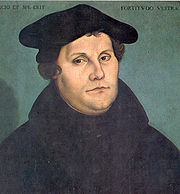
 The translator of the Bible into German, Martin Luther
, is credited with being the first European to posit that one translates satisfactorily only toward his own language. L.G. Kelly states that since Johann Gottfried Herder
in the 18th century, "it has been axiomatic" that one translates only toward his own language.
Compounding the demands on the translator is the fact that no dictionary
or thesaurus
can ever be a fully adequate guide in translating. The British historian Alexander Tytler, in his Essay on the Principles of Translation (1790), emphasized that assiduous reading is a more comprehensive guide to a language than are dictionaries. The same point, but also including listening to the spoken language
, had earlier, in 1783, been made by the Polish poet and grammar
ian Onufry Andrzej Kopczyński.
The translator’s special role in society is described in a posthumous 1803 essay by "Poland's La Fontaine", the Roman Catholic Primate of Poland, poet
, encyclopedist
, author of the first Polish novel, and translator from French and Greek, Ignacy Krasicki
:

 An important role in history has been played by translation of religious texts. Buddhist monk
s who translated the India
n sutra
s into Chinese
often skewed their translations to better reflect China
's distinct culture
, emphasizing notions such as filial piety
.
One of the first recorded instances of translation in the West was the rendering of the Old Testament
into Greek
in the 3rd century BCE. The translation is known as the "Septuagint", a name that refers to the seventy translators (seventy-two, in some versions) who were commissioned to translate the Bible
at Alexandria
, Egypt
. Each translator worked in solitary confinement in his own cell, and according to legend all seventy versions proved identical. The Septuagint became the source text
for later translations into many languages, including Latin
, Coptic
, Armenian
and Georgian
.
Still considered one of the greatest translators in history, for having rendered the Bible
into Latin
, is Saint Jerome
, the patron saint
of translation. For centuries the Roman Catholic Church
used his translation (known as the Vulgate
), though even this translation at first stirred controversy.
The period preceding, and contemporary with, the Protestant Reformation
saw the translation of the Bible
into local European languages — a development that contributed to Western Christianity
's split into Roman Catholicism
and Protestantism
due to disparities between Catholic and Protestant versions of crucial words and passages. Lasting effects on the religions, cultures and languages of their respective countries have been exerted by such Bible
translations as Martin Luther
's into German
, Jakub Wujek
's into Polish
, and the King James Bible's translators' into English
.
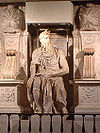
A famous mistranslation of the Bible
is the rendering of the Hebrew
word (keren), which has several meanings, as "horn" in a context where it actually means "beam of light". As a result, for centuries artists have depicted Moses the Lawgiver
with horns growing out of his forehead; an example is Michelangelo
's famous sculpture. Some Christians with anti-Semitic feelings have used such depictions to spread hatred of the Jews
, claiming that they were devil
s with horns.
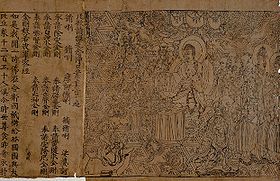 There is a separate tradition of translation in South Asia and East Asia (primarily modern India and China), especially connected with the rendering of religious texts — particularly Buddhist texts — and with the governance of the Chinese empire. Classical Indian translation is characterized by loose adaptation, rather than the closer translation more commonly found in Europe, and Chinese translation theory
identifies various criteria and limitations in translation.
In the East Asia Sinosphere
(sphere of Chinese cultural influence), more important than translation per se has been the use and reading of Chinese texts, which also had substantial influence on the Japanese, Korean and Vietnamese languages, with substantial borrowings of vocabulary and writing system. Notable is Japanese Kanbun
, which is a system of glossing Chinese texts for Japanese speakers.
(or faithfulness) and transparency
, dual ideals in translation, are often at odds. A 17th-century French critic coined the phrase "" to suggest that translations, like women, can be either faithful or beautiful, but not both.
Faithfulness is the extent to which a translation accurately renders the meaning of the source text
, without distortion.
Transparency
is the extent to which a translation appears to a native speaker of the target language to have originally been written in that language, and conforms to its grammar, syntax and idiom.
A translation that meets the first criterion is said to be "faithful"; a translation that meets the second, "idiomatic". The two qualities are not necessarily mutually exclusive.
The criteria for judging the fidelity
of a translation vary according to the subject, type and use of the text, its literary qualities, its social or historical context, etc.
The criteria for judging the transparency
of a translation appear more straightforward: an unidiomatic translation "sounds wrong"; and, in the extreme case of word-for-word translations
generated by many machine-translation
systems, often results in patent nonsense.
 Nevertheless, in certain contexts a translator may consciously seek to produce a literal translation
. Translators of literary, religious or historic texts often adhere as closely as possible to the source text, stretching the limits of the target language to produce an unidiomatic text. A translator may adopt expressions from the source language in order to provide "local color".
In recent decades, prominent advocates of such "non-transparent" translation have included the French scholar Antoine Berman
, who identified twelve deforming tendencies inherent in most prose translations, and the American theorist Lawrence Venuti
, who has called upon translators to apply "foreignizing" translation strategies instead of domesticating ones.
Many non-transparent-translation theories draw on concepts from German Romanticism
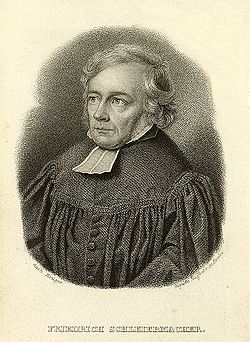
, the most obvious influence being the German theologian and philosopher Friedrich Schleiermacher. In his seminal lecture "On the Different Methods of Translation" (1813) he distinguished between translation methods that move "the writer toward [the reader]", i.e., transparency
, and those that move the "reader toward [the author]", i.e., an extreme fidelity
to the foreignness of the source text
. Schleiermacher favored the latter approach; he was motivated, however, not so much by a desire to embrace the foreign, as by a nationalist desire to oppose France's cultural domination and to promote German literature
.
Current Western translation practice is dominated by the dual concepts of "fidelity" and "transparency". This has not always been the case, however; there have been periods, especially in pre-Classical Rome and in the 18th century, when many translators stepped beyond the bounds of translation proper into the realm of adaptation
.
Adapted translation retains currency in some non-Western traditions. The India
n epic, the Ramayana
, appears in many versions in the various Indian languages
, and the stories are different in each. Similar examples are to be found in medieval Christian literature, which adjusted the text to local customs and mores.
vs. transparency
has also been formulated in terms of, respectively, "formal equivalence" and "dynamic [or functional] equivalence". The latter expressions are associated with the translator Eugene Nida
and were originally coined to describe ways of translating the Bible
, but the two approaches are applicable to any translation.
"Formal equivalence" corresponds to "metaphrase
", and "dynamic equivalence" to "paraphrase
".
"Dynamic equivalence" (or "functional equivalence") conveys the essential thought
expressed in a source text — if necessary, at the expense of literality
, original sememe
and word order
, the source text's active vs. passive voice
, etc.
By contrast, "formal equivalence" (sought via "literal" translation
) attempts to render the text literally, or "word for word" (the latter expression being itself a word-for-word rendering of the classical Latin
) — if necessary, at the expense of features natural to the target language.
There is, however, no sharp boundary between functional and formal equivalence. On the contrary, they represent a spectrum of translation approaches. Each is used at various times and in various contexts by the same translator, and at various points within the same text — sometimes simultaneously. Competent translation entails the judicious blending of functional and formal equivalents
.
Common pitfalls in translation, especially when practiced by inexperienced translators, involve false equivalents such as "false friend
s" and false cognate
s.
Comparison of a back-translation with the original text is sometimes used as a check on the accuracy of the original translation, much as the accuracy of a mathematical operation is sometimes checked by reversing the operation. But while useful as approximate checks, the results of such reverse operations are not always precisely reliable. Back-translation must in general be less accurate than back-calculation because linguistic symbols (word
s) are often ambiguous, whereas mathematical symbols are intentionally unequivocal.
In the context of machine translation
, a back-translation is also called a "round-trip translation."
When translations are produced of material used in medical clinical trial
s, such as informed-consent forms
, a back-translation is often required by the ethics committee
or institutional review board
.
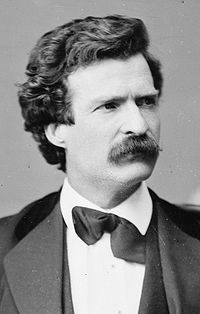 Mark Twain
provided humorously telling evidence for the frequent unreliability of back-translation when he issued his own back-translation of a French translation of his short story
, “The Celebrated Jumping Frog of Calaveras County
". He published his back-translation in a single 1903 volume together with his English-language original, the French translation, and a “Private History of the 'Jumping Frog’ Story”. The latter included a synopsized adaptation of his story that Twain stated had appeared, unattributed to Twain, in a Professor Sidgwick’s Greek Prose Composition (p. 116) under the title, “The Athenian and the Frog”; the adaptation had for a time been taken for an independent ancient Greek
precursor to Twain's "Jumping Frog" story.
When a historic document survives only in translation, the original having been lost, researchers sometimes undertake back-translation in an effort to reconstruct the original text. An example involves the novel The Saragossa Manuscript
by the Polish aristocrat Jan Potocki
(1761–1815), who wrote the novel in French and anonymously published fragments in 1804 and 1813–14. Portions of the original French-language manuscript were subsequently lost; however, the missing fragments survived in a Polish translation that was made by Edmund Chojecki
in 1847 from a complete French copy, now lost. French-language versions of the complete Saragossa Manuscript have since been produced, based on extant French-language fragments and on French-language versions that have been back-translated from Chojecki’s Polish version.
Similarly, when historians suspect that a document is actually a translation from another language, back-translation into that hypothetical original language can provide supporting evidence by showing that such characteristics as idiom
s, pun
s, peculiar grammatical
structures, etc., are in fact derived from the original language.
For example, the known text of the Till Eulenspiegel
folk tales is in High German but contains puns that work only when back-translated to Low German
. This seems clear evidence that these tales (or at least large portions of them) were originally written in Low German and translated into High German by an over-metaphrastic translator.
Similarly, supporters of Aramaic primacy
— of the view that the Christian
New Testament
or its sources were originally written in the Aramaic language
— seek to prove their case by showing that difficult passages in the existing Greek
text of the New Testament make much better sense when back-translated to Aramaic: that, for example, some incomprehensible references are in fact Aramaic puns that do not work in Greek.
Due to similar indications, it is assumed that the 2nd Century Gnostic Gospel of Judas
, which survives only in Coptic
, was originally written in Greek
.
(novel
s, short stories
, plays
, poems
, etc.) is considered a literary pursuit in its own right. For example, notable in Canadian literature
specifically as translators are figures such as Sheila Fischman
, Robert Dickson
and Linda Gaboriau
, and the Governor General's Awards annually present prizes for the best English-to-French and French-to-English literary translations.
Other writers, among many who have made a name for themselves as literary translators, include Vasily Zhukovsky
, Tadeusz Boy-Żeleński
, Vladimir Nabokov
, Jorge Luis Borges
, Robert Stiller
and Haruki Murakami
.
in Alexandria
between the 3rd and 1st centuries BCE. The dispersed Jews had forgotten their ancestral language and needed Greek versions (translations) of their Scriptures.
Throughout the Middle Ages
, Latin
was the lingua franca
of the western learned world. The 9th-century Alfred the Great
, king of Wessex
in England
, was far ahead of his time in commissioning vernacular
Anglo-Saxon translations of Bede
's Ecclesiastical History
and Boethius' Consolation of Philosophy
. Meanwhile the Christian Church
frowned on even partial adaptations of St. Jerome's Vulgate of ca. 384 CE, the standard Latin
Bible
.
In Asia
, the spread of Buddhism
led to large-scale ongoing translation efforts spanning well over a thousand years. The Tangut Empire was especially efficient in such efforts; exploiting the then newly invented block printing, and with the full support of the government (contemporary sources describe the Emperor and his mother personally contributing to the translation effort, alongside sages of various nationalities), the Tanguts took mere decades to translate volumes that had taken the Chinese
centuries to render.
Large-scale efforts at translation were undertaken by the Arabs. Having conquered the Greek world, they made Arabic versions of its philosophical and scientific works. During the Middle Ages
, some translations of these Arabic versions were made into Latin, chiefly at Córdoba
in Spain
. Such Latin translations of Greek and original Arab works of scholarship and science helped advance the development of European Scholasticism
.
 The broad historic trends in Western translation practice may be illustrated on the example of translation into the English language
.
The first fine translations into English were made in the 14th century by Geoffrey Chaucer
, who adapted from the Italian
of Giovanni Boccaccio
in his own Knight's Tale and Troilus and Criseyde
; began a translation of the French-language Roman de la Rose
; and completed a translation of Boethius from the Latin
. Chaucer founded an English poetic
tradition on adaptations
and translations from those earlier-established literary language
s.
The first great English translation was the Wycliffe Bible (ca. 1382), which showed the weaknesses of an underdeveloped English prose
. Only at the end of the 15th century did the great age of English prose translation begin with Thomas Malory
's Le Morte Darthur—an adaptation of Arthurian romances so free that it can, in fact, hardly be called a true translation. The first great Tudor
translations are, accordingly, the Tyndale New Testament
(1525), which influenced the Authorized Version (1611), and Lord Berners' version of Jean Froissart
's Chronicles (1523–25).
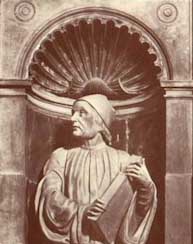 Meanwhile, in Renaissance
Italy
, a new period in the history of translation had opened in Florence
with the arrival, at the court of Cosimo de' Medici
, of the Byzantine
scholar Georgius Gemistus Pletho shortly before the fall of Constantinople
to the Turks (1453). A Latin translation of Plato
's works was undertaken by Marsilio Ficino
. This and Erasmus' Latin edition of the New Testament
led to a new attitude to translation. For the first time, readers demanded rigor of rendering, as philosophical and religious beliefs depended on the exact words of Plato
, Aristotle
and Jesus
.
Non-scholarly literature, however, continued to rely on adaptation. France
's Pléiade, England
's Tudor
poets, and the Elizabethan translators adapted themes by Horace
, Ovid
, Petrarch
and modern Latin writers, forming a new poetic style on those models. The English poets and translators sought to supply a new public, created by the rise of a middle class
and the development of printing
, with works such as the original authors would have written, had they been writing in England in that day.
 The Elizabethan period of translation saw considerable progress beyond mere paraphrase
toward an ideal of stylistic
equivalence, but even to the end of this period, which actually reached to the middle of the 17th century, there was no concern for verbal accuracy.
In the second half of the 17th century, the poet John Dryden
sought to make Virgil
speak "in words such as he would probably have written if he were living and an Englishman". Dryden, however, discerned no need to emulate the Roman poet's subtlety and concision. Similarly, Homer
suffered from Alexander Pope
's endeavor to reduce the Greek poet's "wild paradise" to order.
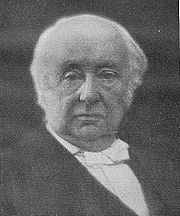 Throughout the 18th century, the watchword of translators was ease of reading. Whatever they did not understand in a text, or thought might bore readers, they omitted. They cheerfully assumed that their own style of expression was the best, and that texts should be made to conform to it in translation. For scholarship they cared no more than had their predecessors, and they did not shrink from making translations from translations in third languages, or from languages that they hardly knew, or—as in the case of James Macpherson
's "translations" of Ossian
—from texts that were actually of the "translator's" own composition.
The 19th century brought new standards of accuracy and style. In regard to accuracy, observes J.M. Cohen, the policy became "the text, the whole text, and nothing but the text", except for any bawdy passages and the addition of copious explanatory footnote
s. In regard to style, the Victorians' aim, achieved through far-reaching metaphrase
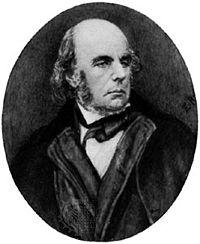
(literality) or pseudo-metaphrase, was to constantly remind readers that they were reading a foreign classic. An exception was the outstanding translation in this period, Edward FitzGerald
's Rubaiyat
of Omar Khayyam
(1859), which achieved its Oriental flavor largely by using Persian names and discreet Biblical echoes and actually drew little of its material from the Persian original.
In advance of the 20th century, a new pattern was set in 1871 by Benjamin Jowett
, who translated Plato
into simple, straightforward language. Jowett's example was not followed, however, until well into the new century, when accuracy rather than style became the principal criterion.
This is particularly done either for literature from classical languages (such as Latin
or Greek
), most prominently the Bible (see Modern English Bible translations
), or for literature from an earlier stage of the same language, such as the works of William Shakespeare
(which is largely understandable to a modern audience, but presents some difficulties), or The Canterbury Tales
of Geoffrey Chaucer
(which is not generally understandable to modern readers). Modern translation is applicable to any language with a long literary history; for example in Japanese, The Tale of Genji
(11th century) is generally read in modern translation – see Genji: modern readership.
Modern translation often involves literary scholarship and textual revisions, as there is frequently not a single canonical text. This is particularly noteworthy in the case of the Bible and Shakespeare, where modern scholarship can result in significant changes to the text.
Modern translation meets with opposition from some traditionalists; in English this is most significant in some people preferring the Authorized King James Version of the Bible to modern translations, and to reading Shakespeare in the original (circa 1600) text, rather than in modern translation.
An opposite process is found in translating modern literature into classical language, particularly for the goal of extensive reading
– see List of Latin translations of modern literature for examples.
presents special challenges to translators, given the importance of a text's formal aspects, in addition to its content. In his influential 1959 paper "On Linguistic Aspects of Translation
", the Russia
n-born linguist and semiotician Roman Jakobson
went so far as to declare that "poetry by definition [is] untranslatable".
In 1974 the American poet James Merrill
wrote a poem, "Lost in Translation
", which in part explores this idea. The question was also discussed in Douglas Hofstadter
's 1997 book, Le Ton beau de Marot
; he argues that a good translation of a poem must convey as much as possible of not only its literal meaning but also its form and structure (meter, rhyme or alliteration scheme, etc.).
In 2008, Taiwanese linguist Grace Hui Chin Lin http://www.eric.ed.gov/PDFS/ED514039.pdfsuggests communication strategies can be applied by oral translators to translate poetry. Translators with cultural backgrounds can oral translate poetry of their nations. For example, poetry of Tung dynasty can be introduced to people outside of Chinese communities by oral translation strategies. Also, several communication strategies for facilitating communicative limitations are applicable as oral translation strategies for interpreting poetries. Grace Hui Chin Lin translated and interpretated a number of English poetries into Chinese, using communication strategies. The book contains sufficient examples of literature translation through communication strategies. http://ebooks.lib.ntu.edu.tw/1_file/author_provided/201108/0830.pdf
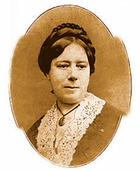 Translation of a text that is sung in vocal music for the purpose of singing in another language — sometimes called "singing translation" — is closely linked to translation of poetry because most vocal music
, at least in the Western tradition, is set to verse, especially verse in regular patterns with rhyme
. (Since the late 19th century, musical setting of prose
and free verse
has also been practiced in some art music
, though popular music
tends to remain conservative in its retention of stanza
ic forms with or without refrain
s.) A rudimentary example of translating poetry for singing is church hymn
s, such as the German chorale
s translated into English by Catherine Winkworth
.
Translation of sung texts is generally much more restrictive than translation of poetry, because in the former there is little or no freedom to choose between a versified translation and a translation that dispenses with verse structure. One might modify or omit rhyme in a singing translation, but the assignment of syllables to specific notes in the original musical setting places great challenges on the translator. There is the option in prose sung texts, less so in verse, of adding or deleting a syllable here and there by subdividing or combining notes, respectively, but even with prose the process is almost like strict verse translation because of the need to stick as closely as possible to the original prosody of the sung melodic line.
Other considerations in writing a singing translation include repetition of words and phrases, the placement of rests and/or punctuation, the quality of vowels sung on high notes, and rhythmic features of the vocal line that may be more natural to the original language than to the target language. A sung translation may be considerably or completely different from the original, thus resulting in a contrafactum
.
Translations of sung texts — whether of the above type meant to be sung or of a more or less literal type meant to be read — are also used as aids to audiences, singers and conductors, when a work is being sung in a language not known to them. The most familiar types are translations presented as subtitles or surtitles
projected during opera
performances, those inserted into concert programs, and those that accompany commercial audio CDs of vocal music. In addition, professional and amateur singers often sing works in languages they do not know (or do not know well), and translations are then used to enable them to understand the meaning of the words they are singing.
"In the translation industry, it is considered 'standard procedure' to translate only from an individual's second language, into their native language; never the other way around. For example, a native Spanish speaker should always translate English documents into Spanish; however, this fundamental rule is often ignored by amateur translators, and surprisingly, is often accepted without question by translation buyers.". In China, Japan and elsewhere, native translators will regularly work into and out of their native tongue.
Moreover, a fully competent translator is not only bilingual but bicultural.
Translation has served as a writing school for many prominent writers. Translators, including monks who spread Buddhist texts in East Asia and the early modern European translators of the Bible, in the course of their work have shaped the very language
s into which they have translated. They have acted as bridges for conveying knowledge between culture
s. Along with ideas, they have imported from the source languages, into their own languages, loanword
s and calque
s of grammatical structures
, idiom
s and vocabulary
.
Such accreditation often has no legal effect, its marketing value lying in the esteem that the translation organization enjoys as an independent authority on competent translation. However, in many countries, courts of law will not admit into evidence a translation by other than a translator they have certified.
For more information, see Translating for legal equivalence
Interpreting
, or "interpretation," is the facilitation of oral or sign-language
communication
, either simultaneously or consecutively, between two, or among more, speakers who are not speaking, or signing, the same language.
The term "interpreting," rather than "interpretation," is preferentially used for this activity by Anglophone
translators, to avoid confusion with other meanings of the word "interpretation."
Unlike English, many languages do not employ two separate words to denote the activities of written
and live-communication (oral or sign-language
) translators. Even English does not always make the distinction, frequently using "translation" as a synonym for "interpreting."
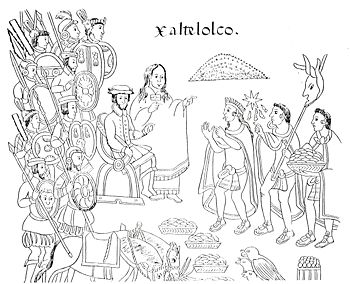
Interpreters have sometimes played crucial roles in history
. A prime example is La Malinche
, also known as Malintzin, Malinalli and Doña Marina, an early-16th-century Nahua woman from the Mexican Gulf Coast
. As a child she had been sold or given to Maya
slave-traders from Xicalango, and thus had become bilingual. Subsequently given along with other women to the invading Spaniards, she became instrumental in the Spanish
conquest of Mexico
, acting as interpreter, adviser, intermediary and lover to Hernán Cortés
.
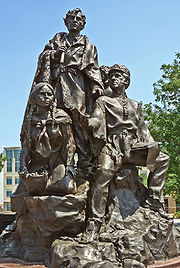
Nearly three centuries later, in the United States
, a comparable role as interpreter was played for the Lewis and Clark Expedition
of 1804–6 by Sacagawea
. As a child, the Lemhi Shoshone
woman had been kidnapped by Hidatsa
Indians and thus had become bilingual. Sacagawea facilitated the expedition's traverse of the North American continent to the Pacific Ocean
. Four decades later, in 1846, the Pacific Ocean would become the western border of the United States.
 Machine translation (MT) is a process whereby a computer program analyzes a source text
and, in principle, produces a target text without human intervention. In reality, however, machine translation typically does involve human intervention, in the form of pre-editing and post-editing.
With proper terminology work
, with preparation of the source text
for machine translation (pre-editing), and with reworking of the machine translation by a human translator (post-editing), commercial machine-translation tools can produce useful results, especially if the machine-translation system is integrated with a translation-memory
or globalization-management system
.
Unedited machine translation is available to a large public through tools on the Internet
such as Babel Fish
, Babylon, and StarDict
. These produce a rough translation that, under favorable circumstances, "gives the gist" of the source text. There are also companies like Ectaco
which produce pocket translation devices that utilize MT.
Relying exclusively on unedited machine translation, however, ignores the fact that communication in human language
is context-embedded and that it takes a person to comprehend the context of the original text with a reasonable degree of probability. It is certainly true that even purely human-generated translations are prone to error; therefore, to ensure that a machine-generated translation will be useful to a human being and that publishable-quality translation is achieved, such translations must be reviewed and edited by a human.
Claude Piron
writes that machine translation, at its best, automates the easier part of a translator's job; the harder and more time-consuming part usually involves doing extensive research to resolve ambiguities
in the source text
, which the grammatical and lexical exigencies of the target language require to be resolved. Such research is a necessary prelude to the pre-editing necessary in order to provide input for machine-translation software, such that the output will not be meaningless.
Recently, Taiwanese translation scholar, Grace Hui Chin Lin suggests application of Machine Translation has been accepted by academic fields, efficiently producing academic theses or dissertations. Countless theses in Chinese have been machine translated into English for updated publications. How the on-line translators and ready-made software can be utilized have been explained in her articles. For example, Machine Translation for Academic Purposes http://www.eric.ed.gov/PDFS/ED513879.pdf and Machine Translation in Post-contemporary Era http://www.eric.ed.gov/PDFS/ED514031.pdf have contributed to fieldworkers with basic concepts how Machine Translation have been being applied in Taiwan.
text with the assistance of a computer program. The machine supports a human translator.
Computer-assisted translation can include standard dictionary
and grammar software. The term, however, normally refers to a range of specialized programs available to the translator, including translation-memory
, terminology-management
, concordance
, and alignment programs.
With the Internet, translation software can help non-native-speaking individuals understand web pages published in other languages. Whole-page-translation tools are of limited utility, however, since they offer only a limited potential understanding of the original author's intent and context; translated pages tend to be more humorous and confusing than enlightening.
Interactive translations with pop-up windows
are becoming more popular. These tools show one or more possible equivalents for each word or phrase. Human operators merely need to select the likeliest equivalent as the mouse glides over the foreign-language text. Possible equivalents can be grouped by pronunciation.
, translation-memory
techniques, and internet
applications, translation companies and agencies have been able to provide on-demand human-translation services to SMBs, individuals, and enterprises. Examples of companies and agencies include TransPerfect
, Lingo24
, U.S. Translation Company
and FoxTranslate.
While not instantaneous like its machine counterparts such as Google Translate
and Yahoo! Babel Fish, web-based human translation is becoming increasingly popular as a solution for relatively fast, accurate translation for business communications, legal documents, medical records, and software localization. This solution also appeals to private users for websites and blogs through the "string" system that enables websites to localize easily.
Translation associations
Dynamic and formal equivalence
In Bible translation dynamic equivalence and formal equivalence are two approaches to translation. The terms are not found in general linguistics or translation theory but were coined by Eugene Nida...
target-language
Target language
Target language may refer to:*Target language, in applied linguistics and language education, the language which a person is learning, also called second language*Target language, in translation, the language to which a source text is translated...
text. Whereas interpreting
Interpreting
Language interpretation is the facilitating of oral or sign-language communication, either simultaneously or consecutively, between users of different languages...
undoubtedly antedates writing
Writing
Writing is the representation of language in a textual medium through the use of a set of signs or symbols . It is distinguished from illustration, such as cave drawing and painting, and non-symbolic preservation of language via non-textual media, such as magnetic tape audio.Writing most likely...
, translation began only after the appearance of written literature
Literature
Literature is the art of written works, and is not bound to published sources...
; there exist partial translations of the Sumerian Epic of Gilgamesh
Epic of Gilgamesh
Epic of Gilgamesh is an epic poem from Mesopotamia and is among the earliest known works of literature. Scholars believe that it originated as a series of Sumerian legends and poems about the protagonist of the story, Gilgamesh king of Uruk, which were fashioned into a longer Akkadian epic much...
(ca. 2000 BCE) into Southwest Asia
Southwest Asia
Western Asia, West Asia, Southwest Asia or Southwestern Asia are terms that describe the westernmost portion of Asia. The terms are partly coterminous with the Middle East, which describes a geographical position in relation to Western Europe rather than its location within Asia...
n languages of the second millennium BCE.
Translators always risk inappropriate spill-over
Language contact
Language contact occurs when two or more languages or varieties interact. The study of language contact is called contact linguistics.Multilingualism has likely been common throughout much of human history, and today most people in the world are multilingual...
of source-language idiom
Idiom
Idiom is an expression, word, or phrase that has a figurative meaning that is comprehended in regard to a common use of that expression that is separate from the literal meaning or definition of the words of which it is made...
and usage
Style guide
A style guide or style manual is a set of standards for the writing and design of documents, either for general use or for a specific publication, organization or field...
into the target-language translation. On the other hand, spill-overs have imported useful source-language calque
Calque
In linguistics, a calque or loan translation is a word or phrase borrowed from another language by literal, word-for-word or root-for-root translation.-Calque:...
s and loanword
Loanword
A loanword is a word borrowed from a donor language and incorporated into a recipient language. By contrast, a calque or loan translation is a related concept where the meaning or idiom is borrowed rather than the lexical item itself. The word loanword is itself a calque of the German Lehnwort,...
s that have enriched the target languages. Indeed, translators have helped substantially to shape the languages into which they have translated.
Due to the demands of business
Business
A business is an organization engaged in the trade of goods, services, or both to consumers. Businesses are predominant in capitalist economies, where most of them are privately owned and administered to earn profit to increase the wealth of their owners. Businesses may also be not-for-profit...
documentation consequent to the Industrial Revolution
Industrial Revolution
The Industrial Revolution was a period from the 18th to the 19th century where major changes in agriculture, manufacturing, mining, transportation, and technology had a profound effect on the social, economic and cultural conditions of the times...
that began in the mid-18th century, some translation specialties have become formalized, with dedicated schools and professional associations.
Because of the laboriousness of translation, since the 1940s engineers have sought to automate translation (machine translation
Machine translation
Machine translation, sometimes referred to by the abbreviation MT is a sub-field of computational linguistics that investigates the use of computer software to translate text or speech from one natural language to another.On a basic...
) or to mechanically aid the human translator (computer-assisted translation
Computer-assisted translation
Computer-assisted translation, computer-aided translation, or CAT is a form of translation wherein a human translator translates texts using computer software designed to support and facilitate the translation process....
). The rise of the Internet
Internet
The Internet is a global system of interconnected computer networks that use the standard Internet protocol suite to serve billions of users worldwide...
has fostered a world-wide market for translation services and has facilitated language localization.
Etymology
Romance languages
The Romance languages are a branch of the Indo-European language family, more precisely of the Italic languages subfamily, comprising all the languages that descend from Vulgar Latin, the language of ancient Rome...
use words for translation derived from that source and from the alternative Latin ("to lead across"). The Germanic
Germanic languages
The Germanic languages constitute a sub-branch of the Indo-European language family. The common ancestor of all of the languages in this branch is called Proto-Germanic , which was spoken in approximately the mid-1st millennium BC in Iron Age northern Europe...
(except Dutch
Dutch language
Dutch is a West Germanic language and the native language of the majority of the population of the Netherlands, Belgium, and Suriname, the three member states of the Dutch Language Union. Most speakers live in the European Union, where it is a first language for about 23 million and a second...
) and Slavic languages likewise use calques of these Latin sources.
The Ancient Greek term for translation, (metaphrasis, "a speaking across"), has supplied English
English language
English is a West Germanic language that arose in the Anglo-Saxon kingdoms of England and spread into what was to become south-east Scotland under the influence of the Anglian medieval kingdom of Northumbria...
with metaphrase
Metaphrase
Metaphrase is a translation term referring to literal translation, i.e., "word by word and line by line" translation. In everyday usage, metaphrase means literalism; however, metaphrase is also the translation of poetry into prose...
(a "literal
Literal translation
Literal translation, or direct translation, is the rendering of text from one language to another "word-for-word" rather than conveying the sense of the original...
," or "word-for-word," translation) — as contrasted with paraphrase
Paraphrase
Paraphrase is restatement of a text or passages, using other words. The term "paraphrase" derives via the Latin "paraphrasis" from the Greek , meaning "additional manner of expression". The act of paraphrasing is also called "paraphrasis."...
("a saying in other words", from , paraphrasis). Metaphrase corresponds, in one of the more recent terminologies, to "formal equivalence"; and paraphrase, to "dynamic equivalence."
Strictly speaking, the concept of metaphrase — of "word-for-word translation" — is an imperfect
Perfection
Perfection is, broadly, a state of completeness and flawlessness.The term "perfection" is actually used to designate a range of diverse, if often kindred, concepts...
concept, because a given word in a given language often carries more than one meaning; and because a similar given meaning may often be represented in a given language by more than one word. Nevertheless, "metaphrase" and "paraphrase" may be useful as ideal concepts that mark the extremes in the spectrum of possible approaches to translation.
A secular icon
Secular icon
A secular icon is an image or pictograph of a person or thing used for other than religious purpose. -Icons versus symbols:...
for the art of translation is the Rosetta Stone
Rosetta Stone
The Rosetta Stone is an ancient Egyptian granodiorite stele inscribed with a decree issued at Memphis in 196 BC on behalf of King Ptolemy V. The decree appears in three scripts: the upper text is Ancient Egyptian hieroglyphs, the middle portion Demotic script, and the lowest Ancient Greek...
. This trilingual (hieroglyphic-Egyptian
Egyptian hieroglyphs
Egyptian hieroglyphs were a formal writing system used by the ancient Egyptians that combined logographic and alphabetic elements. Egyptians used cursive hieroglyphs for religious literature on papyrus and wood...
, demotic-Egyptian, ancient-Greek
Ancient Greek
Ancient Greek is the stage of the Greek language in the periods spanning the times c. 9th–6th centuries BC, , c. 5th–4th centuries BC , and the c. 3rd century BC – 6th century AD of ancient Greece and the ancient world; being predated in the 2nd millennium BC by Mycenaean Greek...
) stele
Stele
A stele , also stela , is a stone or wooden slab, generally taller than it is wide, erected for funerals or commemorative purposes, most usually decorated with the names and titles of the deceased or living — inscribed, carved in relief , or painted onto the slab...
became the translator's key to decryption of Egyptian hieroglyphs
Egyptian hieroglyphs
Egyptian hieroglyphs were a formal writing system used by the ancient Egyptians that combined logographic and alphabetic elements. Egyptians used cursive hieroglyphs for religious literature on papyrus and wood...
by Thomas Young
Thomas Young (scientist)
Thomas Young was an English polymath. He is famous for having partly deciphered Egyptian hieroglyphics before Jean-François Champollion eventually expanded on his work...
, Jean-François Champollion
Jean-François Champollion
Jean-François Champollion was a French classical scholar, philologist and orientalist, decipherer of the Egyptian hieroglyphs....
and others.
In the United States of America, the Rosetta Stone is incorporated into the crest
Crest (heraldry)
A crest is a component of an heraldic display, so called because it stands on top of a helmet, as the crest of a jay stands on the bird's head....
of the Defense Language Institute
Defense Language Institute
The Defense Language Institute is a United States Department of Defense educational and research institution, which provides linguistic and cultural instruction to the Department of Defense, other Federal Agencies and numerous and varied other customers...
.
Western theory
Ancient history
Ancient history is the study of the written past from the beginning of recorded human history to the Early Middle Ages. The span of recorded history is roughly 5,000 years, with Cuneiform script, the oldest discovered form of coherent writing, from the protoliterate period around the 30th century BC...
and show remarkable continuities. The ancient Greeks
Ancient Greece
Ancient Greece is a civilization belonging to a period of Greek history that lasted from the Archaic period of the 8th to 6th centuries BC to the end of antiquity. Immediately following this period was the beginning of the Early Middle Ages and the Byzantine era. Included in Ancient Greece is the...
distinguished between metaphrase
Metaphrase
Metaphrase is a translation term referring to literal translation, i.e., "word by word and line by line" translation. In everyday usage, metaphrase means literalism; however, metaphrase is also the translation of poetry into prose...
(literal translation
Literal translation
Literal translation, or direct translation, is the rendering of text from one language to another "word-for-word" rather than conveying the sense of the original...
) and paraphrase
Paraphrase
Paraphrase is restatement of a text or passages, using other words. The term "paraphrase" derives via the Latin "paraphrasis" from the Greek , meaning "additional manner of expression". The act of paraphrasing is also called "paraphrasis."...
. This distinction was adopted by English poet
Poet
A poet is a person who writes poetry. A poet's work can be literal, meaning that his work is derived from a specific event, or metaphorical, meaning that his work can take on many meanings and forms. Poets have existed since antiquity, in nearly all languages, and have produced works that vary...
and translator John Dryden
John Dryden
John Dryden was an influential English poet, literary critic, translator, and playwright who dominated the literary life of Restoration England to such a point that the period came to be known in literary circles as the Age of Dryden.Walter Scott called him "Glorious John." He was made Poet...
(1631–1700), who described translation as the judicious blending of these two modes of phrasing when selecting, in the target language, "counterparts," or equivalents
Dynamic and formal equivalence
In Bible translation dynamic equivalence and formal equivalence are two approaches to translation. The terms are not found in general linguistics or translation theory but were coined by Eugene Nida...
, for the expressions used in the source language:
Dryden cautioned, however, against the license of "imitation", i.e., of adapted translation: “When a painter copies from the life... he has no privilege to alter features and lineaments..."
This general formulation of the central concept of translation — equivalence
Dynamic and formal equivalence
In Bible translation dynamic equivalence and formal equivalence are two approaches to translation. The terms are not found in general linguistics or translation theory but were coined by Eugene Nida...
— is as adequate as any that has been proposed since Cicero
Cicero
Marcus Tullius Cicero , was a Roman philosopher, statesman, lawyer, political theorist, and Roman constitutionalist. He came from a wealthy municipal family of the equestrian order, and is widely considered one of Rome's greatest orators and prose stylists.He introduced the Romans to the chief...
and Horace
Horace
Quintus Horatius Flaccus , known in the English-speaking world as Horace, was the leading Roman lyric poet during the time of Augustus.-Life:...
, who, in 1st-century-BCE Rome
Ancient Rome
Ancient Rome was a thriving civilization that grew on the Italian Peninsula as early as the 8th century BC. Located along the Mediterranean Sea and centered on the city of Rome, it expanded to one of the largest empires in the ancient world....
, famously and literally cautioned against translating "word for word" .
Despite occasional theoretical diversity, the actual practice of translation has hardly changed since antiquity
Ancient history
Ancient history is the study of the written past from the beginning of recorded human history to the Early Middle Ages. The span of recorded history is roughly 5,000 years, with Cuneiform script, the oldest discovered form of coherent writing, from the protoliterate period around the 30th century BC...
. Except for some extreme metaphrase
Metaphrase
Metaphrase is a translation term referring to literal translation, i.e., "word by word and line by line" translation. In everyday usage, metaphrase means literalism; however, metaphrase is also the translation of poetry into prose...
rs in the early Christian
Christian
A Christian is a person who adheres to Christianity, an Abrahamic, monotheistic religion based on the life and teachings of Jesus of Nazareth as recorded in the Canonical gospels and the letters of the New Testament...
period and the Middle Ages
Middle Ages
The Middle Ages is a periodization of European history from the 5th century to the 15th century. The Middle Ages follows the fall of the Western Roman Empire in 476 and precedes the Early Modern Era. It is the middle period of a three-period division of Western history: Classic, Medieval and Modern...
, and adapters in various periods (especially pre-Classical Rome, and the 18th century), translators have generally shown prudent flexibility in seeking equivalents
Dynamic and formal equivalence
In Bible translation dynamic equivalence and formal equivalence are two approaches to translation. The terms are not found in general linguistics or translation theory but were coined by Eugene Nida...
— "literal
Literal translation
Literal translation, or direct translation, is the rendering of text from one language to another "word-for-word" rather than conveying the sense of the original...
" where possible, paraphrastic
Paraphrase
Paraphrase is restatement of a text or passages, using other words. The term "paraphrase" derives via the Latin "paraphrasis" from the Greek , meaning "additional manner of expression". The act of paraphrasing is also called "paraphrasis."...
where necessary — for the original meaning
Meaning (linguistics)
In linguistics, meaning is what is expressed by the writer or speaker, and what is conveyed to the reader or listener, provided that they talk about the same thing . In other words if the object and the name of the object and the concepts in their head are the same...
and other crucial "values" (e.g., style
Style (fiction)
In fiction, style is the manner in which the author tells the story. Along with plot, character, theme, and setting, style is considered one of the fundamental components of fiction.-Fiction-writing modes:...
, verse form, concordance with music
Music
Music is an art form whose medium is sound and silence. Its common elements are pitch , rhythm , dynamics, and the sonic qualities of timbre and texture...
al accompaniment or, in film
Film
A film, also called a movie or motion picture, is a series of still or moving images. It is produced by recording photographic images with cameras, or by creating images using animation techniques or visual effects...
s, with speech articulatory
Manner of articulation
In linguistics, manner of articulation describes how the tongue, lips, jaw, and other speech organs are involved in making a sound. Often the concept is only used for the production of consonants, even though the movement of the articulars will also greatly alter the resonant properties of the...
movements) as determined from context.
Context (language use)
Context is a notion used in the language sciences in two different ways, namely as* verbal context* social context- Verbal context :...
itself by reproducing the original order of sememe
Sememe
A sememe is a semantic language unit of meaning, correlative to a morpheme.A sememe is a proposed unit of transmitted or intended meaning; it is atomic or indivisible. A sememe can be the meaning expressed by a morpheme, such as the English pluralizing morpheme -s, which carries the sememic...
s, and hence word order
Word order
In linguistics, word order typology refers to the study of the order of the syntactic constituents of a language, and how different languages can employ different orders. Correlations between orders found in different syntactic subdomains are also of interest...
— when necessary, reinterpreting the actual grammatical
Grammar
In linguistics, grammar is the set of structural rules that govern the composition of clauses, phrases, and words in any given natural language. The term refers also to the study of such rules, and this field includes morphology, syntax, and phonology, often complemented by phonetics, semantics,...
structure, for example, by shifting from active
Active voice
Active voice is a grammatical voice common in many of the world's languages. It is the unmarked voice for clauses featuring a transitive verb in nominative–accusative languages, including English and most other Indo-European languages....
to passive voice
Passive voice
Passive voice is a grammatical voice common in many of the world's languages. Passive is used in a clause whose subject expresses the theme or patient of the main verb. That is, the subject undergoes an action or has its state changed. A sentence whose theme is marked as grammatical subject is...
, or vice versa. The grammatical differences between "fixed-word-order" language
Language
Language may refer either to the specifically human capacity for acquiring and using complex systems of communication, or to a specific instance of such a system of complex communication...
s (e.g. English
English language
English is a West Germanic language that arose in the Anglo-Saxon kingdoms of England and spread into what was to become south-east Scotland under the influence of the Anglian medieval kingdom of Northumbria...
, French
French language
French is a Romance language spoken as a first language in France, the Romandy region in Switzerland, Wallonia and Brussels in Belgium, Monaco, the regions of Quebec and Acadia in Canada, and by various communities elsewhere. Second-language speakers of French are distributed throughout many parts...
, German
German language
German is a West Germanic language, related to and classified alongside English and Dutch. With an estimated 90 – 98 million native speakers, German is one of the world's major languages and is the most widely-spoken first language in the European Union....
) and "free-word-order" languages (e.g., Greek
Greek language
Greek is an independent branch of the Indo-European family of languages. Native to the southern Balkans, it has the longest documented history of any Indo-European language, spanning 34 centuries of written records. Its writing system has been the Greek alphabet for the majority of its history;...
, Latin
Latin
Latin is an Italic language originally spoken in Latium and Ancient Rome. It, along with most European languages, is a descendant of the ancient Proto-Indo-European language. Although it is considered a dead language, a number of scholars and members of the Christian clergy speak it fluently, and...
, Polish
Polish language
Polish is a language of the Lechitic subgroup of West Slavic languages, used throughout Poland and by Polish minorities in other countries...
, Russian
Russian language
Russian is a Slavic language used primarily in Russia, Belarus, Uzbekistan, Kazakhstan, Tajikistan and Kyrgyzstan. It is an unofficial but widely spoken language in Ukraine, Moldova, Latvia, Turkmenistan and Estonia and, to a lesser extent, the other countries that were once constituent republics...
) have been no impediment in this regard. The particular syntax
Syntax
In linguistics, syntax is the study of the principles and rules for constructing phrases and sentences in natural languages....
(sentence-structure) characteristics of a text's source language are adjusted to the syntactic requirements of the target language
Target language
Target language may refer to:*Target language, in applied linguistics and language education, the language which a person is learning, also called second language*Target language, in translation, the language to which a source text is translated...
.
Terminology
Terminology is the study of terms and their use. Terms are words and compound words that in specific contexts are given specific meanings, meanings that may deviate from the meaning the same words have in other contexts and in everyday language. The discipline Terminology studies among other...
that are found in a source language, translators have borrowed those terms, thereby enriching the target language. Thanks in great measure to the exchange of calque
Calque
In linguistics, a calque or loan translation is a word or phrase borrowed from another language by literal, word-for-word or root-for-root translation.-Calque:...
s and loanword
Loanword
A loanword is a word borrowed from a donor language and incorporated into a recipient language. By contrast, a calque or loan translation is a related concept where the meaning or idiom is borrowed rather than the lexical item itself. The word loanword is itself a calque of the German Lehnwort,...
s between languages, and to their importation from other languages, there are few concept
Concept
The word concept is used in ordinary language as well as in almost all academic disciplines. Particularly in philosophy, psychology and cognitive sciences the term is much used and much discussed. WordNet defines concept: "conception, construct ". However, the meaning of the term concept is much...
s that are "untranslatable
Untranslatability
Untranslatability is a property of a text, or of any utterance, in one language, for which no equivalent text or utterance can be found in another language when translated....
" among the modern European languages.
Generally, the greater the contact and exchange that have existed between two languages, or between those languages and a third one, the greater is the ratio of metaphrase
Metaphrase
Metaphrase is a translation term referring to literal translation, i.e., "word by word and line by line" translation. In everyday usage, metaphrase means literalism; however, metaphrase is also the translation of poetry into prose...
to paraphrase
Paraphrase
Paraphrase is restatement of a text or passages, using other words. The term "paraphrase" derives via the Latin "paraphrasis" from the Greek , meaning "additional manner of expression". The act of paraphrasing is also called "paraphrasis."...
that may be used in translating among them. However, due to shifts in ecological niche
Ecological niche
In ecology, a niche is a term describing the relational position of a species or population in its ecosystem to each other; e.g. a dolphin could potentially be in another ecological niche from one that travels in a different pod if the members of these pods utilize significantly different food...
s of words, a common etymology
Etymology
Etymology is the study of the history of words, their origins, and how their form and meaning have changed over time.For languages with a long written history, etymologists make use of texts in these languages and texts about the languages to gather knowledge about how words were used during...
is sometimes misleading as a guide to current meaning in one or the other language. For example, the English actual should not be confused with the cognate
Cognate
In linguistics, cognates are words that have a common etymological origin. This learned term derives from the Latin cognatus . Cognates within the same language are called doublets. Strictly speaking, loanwords from another language are usually not meant by the term, e.g...
French ("present", "current"), the Polish ("present", "current," "topical," "timely," "feasible"), the Swedish aktuell ("topical", "presently of importance") or the Russian ("urgent", "topical").
The translator's role as a bridge for "carrying across" values between cultures has been discussed at least since Terence
Terence
Publius Terentius Afer , better known in English as Terence, was a playwright of the Roman Republic, of North African descent. His comedies were performed for the first time around 170–160 BC. Terentius Lucanus, a Roman senator, brought Terence to Rome as a slave, educated him and later on,...
, the 2nd-century-BCE Roman adapter of Greek comedies. The translator's role is, however, by no means a passive, mechanical one, and so has also been compared to that of an artist
Artist
An artist is a person engaged in one or more of any of a broad spectrum of activities related to creating art, practicing the arts and/or demonstrating an art. The common usage in both everyday speech and academic discourse is a practitioner in the visual arts only...
. The main ground seems to be the concept of parallel creation found in critics such as Cicero
Cicero
Marcus Tullius Cicero , was a Roman philosopher, statesman, lawyer, political theorist, and Roman constitutionalist. He came from a wealthy municipal family of the equestrian order, and is widely considered one of Rome's greatest orators and prose stylists.He introduced the Romans to the chief...
. Dryden
John Dryden
John Dryden was an influential English poet, literary critic, translator, and playwright who dominated the literary life of Restoration England to such a point that the period came to be known in literary circles as the Age of Dryden.Walter Scott called him "Glorious John." He was made Poet...
observed that "Translation is a type of drawing after life..." Comparison of the translator with a musician
Musician
A musician is an artist who plays a musical instrument. It may or may not be the person's profession. Musicians can be classified by their roles in performing music and writing music.Also....* A person who makes music a profession....
or actor
Actor
An actor is a person who acts in a dramatic production and who works in film, television, theatre, or radio in that capacity...
goes back at least to Samuel Johnson
Samuel Johnson
Samuel Johnson , often referred to as Dr. Johnson, was an English author who made lasting contributions to English literature as a poet, essayist, moralist, literary critic, biographer, editor and lexicographer...
’s remark about Alexander Pope
Alexander Pope
Alexander Pope was an 18th-century English poet, best known for his satirical verse and for his translation of Homer. He is the third-most frequently quoted writer in The Oxford Dictionary of Quotations, after Shakespeare and Tennyson...
playing Homer
Homer
In the Western classical tradition Homer , is the author of the Iliad and the Odyssey, and is revered as the greatest ancient Greek epic poet. These epics lie at the beginning of the Western canon of literature, and have had an enormous influence on the history of literature.When he lived is...
on a flageolet
Flageolet
The flageolet is a woodwind musical instrument and a member of the fipple flute family. Its invention is ascribed to the 16th century Sieur Juvigny in 1581. There are two basic forms of the instrument: the French, having four finger holes on the front and two thumb holes on the back; and the...
, while Homer himself used a bassoon
Bassoon
The bassoon is a woodwind instrument in the double reed family that typically plays music written in the bass and tenor registers, and occasionally higher. Appearing in its modern form in the 19th century, the bassoon figures prominently in orchestral, concert band and chamber music literature...
.
If translation be an art, it is no easy one. In the 13th century, Roger Bacon
Roger Bacon
Roger Bacon, O.F.M. , also known as Doctor Mirabilis , was an English philosopher and Franciscan friar who placed considerable emphasis on the study of nature through empirical methods...
wrote that if a translation is to be true, the translator must know both language
Language
Language may refer either to the specifically human capacity for acquiring and using complex systems of communication, or to a specific instance of such a system of complex communication...
s, as well as the science
Science
Science is a systematic enterprise that builds and organizes knowledge in the form of testable explanations and predictions about the universe...
that he is to translate; and finding that few translators did, he wanted to do away with translation and translators altogether.
Martin Luther
Martin Luther was a German priest, professor of theology and iconic figure of the Protestant Reformation. He strongly disputed the claim that freedom from God's punishment for sin could be purchased with money. He confronted indulgence salesman Johann Tetzel with his Ninety-Five Theses in 1517...
, is credited with being the first European to posit that one translates satisfactorily only toward his own language. L.G. Kelly states that since Johann Gottfried Herder
Johann Gottfried Herder
Johann Gottfried von Herder was a German philosopher, theologian, poet, and literary critic. He is associated with the periods of Enlightenment, Sturm und Drang, and Weimar Classicism.-Biography:...
in the 18th century, "it has been axiomatic" that one translates only toward his own language.
Compounding the demands on the translator is the fact that no dictionary
Dictionary
A dictionary is a collection of words in one or more specific languages, often listed alphabetically, with usage information, definitions, etymologies, phonetics, pronunciations, and other information; or a book of words in one language with their equivalents in another, also known as a lexicon...
or thesaurus
Thesaurus
A thesaurus is a reference work that lists words grouped together according to similarity of meaning , in contrast to a dictionary, which contains definitions and pronunciations...
can ever be a fully adequate guide in translating. The British historian Alexander Tytler, in his Essay on the Principles of Translation (1790), emphasized that assiduous reading is a more comprehensive guide to a language than are dictionaries. The same point, but also including listening to the spoken language
Spoken language
Spoken language is a form of human communication in which words derived from a large vocabulary together with a diverse variety of names are uttered through or with the mouth. All words are made up from a limited set of vowels and consonants. The spoken words they make are stringed into...
, had earlier, in 1783, been made by the Polish poet and grammar
Grammar
In linguistics, grammar is the set of structural rules that govern the composition of clauses, phrases, and words in any given natural language. The term refers also to the study of such rules, and this field includes morphology, syntax, and phonology, often complemented by phonetics, semantics,...
ian Onufry Andrzej Kopczyński.
The translator’s special role in society is described in a posthumous 1803 essay by "Poland's La Fontaine", the Roman Catholic Primate of Poland, poet
Poetry
Poetry is a form of literary art in which language is used for its aesthetic and evocative qualities in addition to, or in lieu of, its apparent meaning...
, encyclopedist
Encyclopedia
An encyclopedia is a type of reference work, a compendium holding a summary of information from either all branches of knowledge or a particular branch of knowledge....
, author of the first Polish novel, and translator from French and Greek, Ignacy Krasicki
Ignacy Krasicki
Ignacy Krasicki , from 1766 Prince-Bishop of Warmia and from 1795 Archbishop of Gniezno , was Poland's leading Enlightenment poet , a critic of the clergy, Poland's La Fontaine, author of the first Polish novel, playwright, journalist, encyclopedist, and translator from French and...
:
Religious texts
Monk
A monk is a person who practices religious asceticism, living either alone or with any number of monks, while always maintaining some degree of physical separation from those not sharing the same purpose...
s who translated the India
India
India , officially the Republic of India , is a country in South Asia. It is the seventh-largest country by geographical area, the second-most populous country with over 1.2 billion people, and the most populous democracy in the world...
n sutra
Sutra
Sūtra is an aphorism or a collection of such aphorisms in the form of a manual. Literally it means a thread or line that holds things together and is derived from the verbal root siv-, meaning to sew , as does the medical term...
s into Chinese
Chinese language
The Chinese language is a language or language family consisting of varieties which are mutually intelligible to varying degrees. Originally the indigenous languages spoken by the Han Chinese in China, it forms one of the branches of Sino-Tibetan family of languages...
often skewed their translations to better reflect China
China
Chinese civilization may refer to:* China for more general discussion of the country.* Chinese culture* Greater China, the transnational community of ethnic Chinese.* History of China* Sinosphere, the area historically affected by Chinese culture...
's distinct culture
Culture
Culture is a term that has many different inter-related meanings. For example, in 1952, Alfred Kroeber and Clyde Kluckhohn compiled a list of 164 definitions of "culture" in Culture: A Critical Review of Concepts and Definitions...
, emphasizing notions such as filial piety
Filial piety
In Confucian ideals, filial piety is one of the virtues to be held above all else: a respect for the parents and ancestors. The Confucian classic Xiao Jing or Classic of Xiào, thought to be written around 470 BCE, has historically been the authoritative source on the Confucian tenet of xiào /...
.
One of the first recorded instances of translation in the West was the rendering of the Old Testament
Old Testament
The Old Testament, of which Christians hold different views, is a Christian term for the religious writings of ancient Israel held sacred and inspired by Christians which overlaps with the 24-book canon of the Masoretic Text of Judaism...
into Greek
Greek language
Greek is an independent branch of the Indo-European family of languages. Native to the southern Balkans, it has the longest documented history of any Indo-European language, spanning 34 centuries of written records. Its writing system has been the Greek alphabet for the majority of its history;...
in the 3rd century BCE. The translation is known as the "Septuagint", a name that refers to the seventy translators (seventy-two, in some versions) who were commissioned to translate the Bible
Bible
The Bible refers to any one of the collections of the primary religious texts of Judaism and Christianity. There is no common version of the Bible, as the individual books , their contents and their order vary among denominations...
at Alexandria
Alexandria
Alexandria is the second-largest city of Egypt, with a population of 4.1 million, extending about along the coast of the Mediterranean Sea in the north central part of the country; it is also the largest city lying directly on the Mediterranean coast. It is Egypt's largest seaport, serving...
, Egypt
Egypt
Egypt , officially the Arab Republic of Egypt, Arabic: , is a country mainly in North Africa, with the Sinai Peninsula forming a land bridge in Southwest Asia. Egypt is thus a transcontinental country, and a major power in Africa, the Mediterranean Basin, the Middle East and the Muslim world...
. Each translator worked in solitary confinement in his own cell, and according to legend all seventy versions proved identical. The Septuagint became the source text
Source text
A source text is a text from which information or ideas are derived. In translation, a source text is the original text that is to be translated into another language.-Description:...
for later translations into many languages, including Latin
Latin
Latin is an Italic language originally spoken in Latium and Ancient Rome. It, along with most European languages, is a descendant of the ancient Proto-Indo-European language. Although it is considered a dead language, a number of scholars and members of the Christian clergy speak it fluently, and...
, Coptic
Coptic language
Coptic or Coptic Egyptian is the current stage of the Egyptian language, a northern Afro-Asiatic language spoken in Egypt until at least the 17th century. Egyptian began to be written using the Greek alphabet in the 1st century...
, Armenian
Armenian language
The Armenian language is an Indo-European language spoken by the Armenian people. It is the official language of the Republic of Armenia as well as in the region of Nagorno-Karabakh. The language is also widely spoken by Armenian communities in the Armenian diaspora...
and Georgian
Georgian language
Georgian is the native language of the Georgians and the official language of Georgia, a country in the Caucasus.Georgian is the primary language of about 4 million people in Georgia itself, and of another 500,000 abroad...
.
Still considered one of the greatest translators in history, for having rendered the Bible
Bible
The Bible refers to any one of the collections of the primary religious texts of Judaism and Christianity. There is no common version of the Bible, as the individual books , their contents and their order vary among denominations...
into Latin
Latin
Latin is an Italic language originally spoken in Latium and Ancient Rome. It, along with most European languages, is a descendant of the ancient Proto-Indo-European language. Although it is considered a dead language, a number of scholars and members of the Christian clergy speak it fluently, and...
, is Saint Jerome
Jerome
Saint Jerome was a Roman Christian priest, confessor, theologian and historian, and who became a Doctor of the Church. He was the son of Eusebius, of the city of Stridon, which was on the border of Dalmatia and Pannonia...
, the patron saint
Patron saint
A patron saint is a saint who is regarded as the intercessor and advocate in heaven of a nation, place, craft, activity, class, clan, family, or person...
of translation. For centuries the Roman Catholic Church
Roman Catholic Church
The Catholic Church, also known as the Roman Catholic Church, is the world's largest Christian church, with over a billion members. Led by the Pope, it defines its mission as spreading the gospel of Jesus Christ, administering the sacraments and exercising charity...
used his translation (known as the Vulgate
Vulgate
The Vulgate is a late 4th-century Latin translation of the Bible. It was largely the work of St. Jerome, who was commissioned by Pope Damasus I in 382 to make a revision of the old Latin translations...
), though even this translation at first stirred controversy.
The period preceding, and contemporary with, the Protestant Reformation
Protestant Reformation
The Protestant Reformation was a 16th-century split within Western Christianity initiated by Martin Luther, John Calvin and other early Protestants. The efforts of the self-described "reformers", who objected to the doctrines, rituals and ecclesiastical structure of the Roman Catholic Church, led...
saw the translation of the Bible
Bible
The Bible refers to any one of the collections of the primary religious texts of Judaism and Christianity. There is no common version of the Bible, as the individual books , their contents and their order vary among denominations...
into local European languages — a development that contributed to Western Christianity
Western Christianity
Western Christianity is a term used to include the Latin Rite of the Catholic Church and groups historically derivative thereof, including the churches of the Anglican and Protestant traditions, which share common attributes that can be traced back to their medieval heritage...
's split into Roman Catholicism
Roman Catholic Church
The Catholic Church, also known as the Roman Catholic Church, is the world's largest Christian church, with over a billion members. Led by the Pope, it defines its mission as spreading the gospel of Jesus Christ, administering the sacraments and exercising charity...
and Protestantism
Protestantism
Protestantism is one of the three major groupings within Christianity. It is a movement that began in Germany in the early 16th century as a reaction against medieval Roman Catholic doctrines and practices, especially in regards to salvation, justification, and ecclesiology.The doctrines of the...
due to disparities between Catholic and Protestant versions of crucial words and passages. Lasting effects on the religions, cultures and languages of their respective countries have been exerted by such Bible
Bible
The Bible refers to any one of the collections of the primary religious texts of Judaism and Christianity. There is no common version of the Bible, as the individual books , their contents and their order vary among denominations...
translations as Martin Luther
Martin Luther
Martin Luther was a German priest, professor of theology and iconic figure of the Protestant Reformation. He strongly disputed the claim that freedom from God's punishment for sin could be purchased with money. He confronted indulgence salesman Johann Tetzel with his Ninety-Five Theses in 1517...
's into German
German language
German is a West Germanic language, related to and classified alongside English and Dutch. With an estimated 90 – 98 million native speakers, German is one of the world's major languages and is the most widely-spoken first language in the European Union....
, Jakub Wujek
Jakub Wujek
Jakub Wujek son of Maciej Wujek; a Polish Jesuit, religious writer, Doctor of Theology, Vice-Chancellor of the Vilnius Academy and translator of the Bible into Polish.-Life:...
's into Polish
Polish language
Polish is a language of the Lechitic subgroup of West Slavic languages, used throughout Poland and by Polish minorities in other countries...
, and the King James Bible's translators' into English
English language
English is a West Germanic language that arose in the Anglo-Saxon kingdoms of England and spread into what was to become south-east Scotland under the influence of the Anglian medieval kingdom of Northumbria...
.
A famous mistranslation of the Bible
Bible
The Bible refers to any one of the collections of the primary religious texts of Judaism and Christianity. There is no common version of the Bible, as the individual books , their contents and their order vary among denominations...
is the rendering of the Hebrew
Hebrew language
Hebrew is a Semitic language of the Afroasiatic language family. Culturally, is it considered by Jews and other religious groups as the language of the Jewish people, though other Jewish languages had originated among diaspora Jews, and the Hebrew language is also used by non-Jewish groups, such...
word (keren), which has several meanings, as "horn" in a context where it actually means "beam of light". As a result, for centuries artists have depicted Moses the Lawgiver
Moses the Lawgiver
Moses the Lawgiver was a 1974, 6-part TV mini-series directed by Gianfranco De Bosio and James H. Hill, starring Burt Lancaster, Anthony Quayle, Ingrid Thulin and Irene Papas, with screenplay by Vittorio Bonicelli and Anthony Burgess, and music by Ennio Morricone.An ITC/RAI co-production, shooting...
with horns growing out of his forehead; an example is Michelangelo
Michelangelo
Michelangelo di Lodovico Buonarroti Simoni , commonly known as Michelangelo, was an Italian Renaissance painter, sculptor, architect, poet, and engineer who exerted an unparalleled influence on the development of Western art...
's famous sculpture. Some Christians with anti-Semitic feelings have used such depictions to spread hatred of the Jews
Jews
The Jews , also known as the Jewish people, are a nation and ethnoreligious group originating in the Israelites or Hebrews of the Ancient Near East. The Jewish ethnicity, nationality, and religion are strongly interrelated, as Judaism is the traditional faith of the Jewish nation...
, claiming that they were devil
Devil
The Devil is believed in many religions and cultures to be a powerful, supernatural entity that is the personification of evil and the enemy of God and humankind. The nature of the role varies greatly...
s with horns.
Asian theory
Chinese Translation Theory
Chinese translation theory was born out of contact with vassal states during the Zhou Dynasty. It developed through translations of Buddhist scripture into Chinese. It is a response to the universals of the experience of translation and to the specifics of the experience of translating from...
identifies various criteria and limitations in translation.
In the East Asia Sinosphere
Sinosphere
In areal linguistics, Sinosphere refers to a grouping of countries and regions that are currently inhabited with a majority of Chinese population or were historically under Chinese cultural influence...
(sphere of Chinese cultural influence), more important than translation per se has been the use and reading of Chinese texts, which also had substantial influence on the Japanese, Korean and Vietnamese languages, with substantial borrowings of vocabulary and writing system. Notable is Japanese Kanbun
Kanbun
The Japanese word originally meant "Classical Chinese writings, Chinese classic texts, Classical Chinese literature". This evolved into a Japanese method of reading annotated Classical Chinese in translation . Much Japanese literature was written in literary Chinese using this annotated style...
, which is a system of glossing Chinese texts for Japanese speakers.
Fidelity vs. transparency
FidelityFidelity
"Fidelity" is the quality of being faithful or loyal. Its original meaning regarded duty to a lord or a king, in a broader sense than the related concept of fealty. Both derive from the Latin word fidēlis, meaning "faithful or loyal"....
(or faithfulness) and transparency
Transparency (linguistic)
Linguistic transparency is a phrase which is used in multiple, overlapping subjects in the fields of linguistics and the philosophy of language...
, dual ideals in translation, are often at odds. A 17th-century French critic coined the phrase "" to suggest that translations, like women, can be either faithful or beautiful, but not both.
Faithfulness is the extent to which a translation accurately renders the meaning of the source text
Source text
A source text is a text from which information or ideas are derived. In translation, a source text is the original text that is to be translated into another language.-Description:...
, without distortion.
Transparency
Transparency (linguistic)
Linguistic transparency is a phrase which is used in multiple, overlapping subjects in the fields of linguistics and the philosophy of language...
is the extent to which a translation appears to a native speaker of the target language to have originally been written in that language, and conforms to its grammar, syntax and idiom.
A translation that meets the first criterion is said to be "faithful"; a translation that meets the second, "idiomatic". The two qualities are not necessarily mutually exclusive.
The criteria for judging the fidelity
Fidelity
"Fidelity" is the quality of being faithful or loyal. Its original meaning regarded duty to a lord or a king, in a broader sense than the related concept of fealty. Both derive from the Latin word fidēlis, meaning "faithful or loyal"....
of a translation vary according to the subject, type and use of the text, its literary qualities, its social or historical context, etc.
The criteria for judging the transparency
Transparency (linguistic)
Linguistic transparency is a phrase which is used in multiple, overlapping subjects in the fields of linguistics and the philosophy of language...
of a translation appear more straightforward: an unidiomatic translation "sounds wrong"; and, in the extreme case of word-for-word translations
Literal translation
Literal translation, or direct translation, is the rendering of text from one language to another "word-for-word" rather than conveying the sense of the original...
generated by many machine-translation
Machine translation
Machine translation, sometimes referred to by the abbreviation MT is a sub-field of computational linguistics that investigates the use of computer software to translate text or speech from one natural language to another.On a basic...
systems, often results in patent nonsense.
Literal translation
Literal translation, or direct translation, is the rendering of text from one language to another "word-for-word" rather than conveying the sense of the original...
. Translators of literary, religious or historic texts often adhere as closely as possible to the source text, stretching the limits of the target language to produce an unidiomatic text. A translator may adopt expressions from the source language in order to provide "local color".
In recent decades, prominent advocates of such "non-transparent" translation have included the French scholar Antoine Berman
Antoine Berman
Antoine Berman was a French translator, historian and theorist of translation.- Works :* L'épreuve de l'étranger: Culture et traduction dans l’Allemagne romantique: Herder, Goethe, Schlegel, Novalis, Humboldt, Schleiermacher, Hölderlin. Paris: Gallimard, 1984* Lettres à Fouad El-Etr sur le...
, who identified twelve deforming tendencies inherent in most prose translations, and the American theorist Lawrence Venuti
Lawrence Venuti
Lawrence Venuti , American translation theorist, translation historian and translator from Italian, French, and Catalan.-Career:...
, who has called upon translators to apply "foreignizing" translation strategies instead of domesticating ones.
Many non-transparent-translation theories draw on concepts from German Romanticism
German Romanticism
For the general context, see Romanticism.In the philosophy, art, and culture of German-speaking countries, German Romanticism was the dominant movement of the late 18th and early 19th centuries. German Romanticism developed relatively late compared to its English counterpart, coinciding in its...
, the most obvious influence being the German theologian and philosopher Friedrich Schleiermacher. In his seminal lecture "On the Different Methods of Translation" (1813) he distinguished between translation methods that move "the writer toward [the reader]", i.e., transparency
Transparency (linguistic)
Linguistic transparency is a phrase which is used in multiple, overlapping subjects in the fields of linguistics and the philosophy of language...
, and those that move the "reader toward [the author]", i.e., an extreme fidelity
Fidelity
"Fidelity" is the quality of being faithful or loyal. Its original meaning regarded duty to a lord or a king, in a broader sense than the related concept of fealty. Both derive from the Latin word fidēlis, meaning "faithful or loyal"....
to the foreignness of the source text
Source text
A source text is a text from which information or ideas are derived. In translation, a source text is the original text that is to be translated into another language.-Description:...
. Schleiermacher favored the latter approach; he was motivated, however, not so much by a desire to embrace the foreign, as by a nationalist desire to oppose France's cultural domination and to promote German literature
German literature
German literature comprises those literary texts written in the German language. This includes literature written in Germany, Austria, the German part of Switzerland, and to a lesser extent works of the German diaspora. German literature of the modern period is mostly in Standard German, but there...
.
Current Western translation practice is dominated by the dual concepts of "fidelity" and "transparency". This has not always been the case, however; there have been periods, especially in pre-Classical Rome and in the 18th century, when many translators stepped beyond the bounds of translation proper into the realm of adaptation
Adaptation
An adaptation in biology is a trait with a current functional role in the life history of an organism that is maintained and evolved by means of natural selection. An adaptation refers to both the current state of being adapted and to the dynamic evolutionary process that leads to the adaptation....
.
Adapted translation retains currency in some non-Western traditions. The India
India
India , officially the Republic of India , is a country in South Asia. It is the seventh-largest country by geographical area, the second-most populous country with over 1.2 billion people, and the most populous democracy in the world...
n epic, the Ramayana
Ramayana
The Ramayana is an ancient Sanskrit epic. It is ascribed to the Hindu sage Valmiki and forms an important part of the Hindu canon , considered to be itihāsa. The Ramayana is one of the two great epics of India and Nepal, the other being the Mahabharata...
, appears in many versions in the various Indian languages
Languages of India
The languages of India belong to several language families, the major ones being the Indo-European languages—Indo-Aryan and the Dravidian languages...
, and the stories are different in each. Similar examples are to be found in medieval Christian literature, which adjusted the text to local customs and mores.
Equivalence
The question of fidelityFidelity
"Fidelity" is the quality of being faithful or loyal. Its original meaning regarded duty to a lord or a king, in a broader sense than the related concept of fealty. Both derive from the Latin word fidēlis, meaning "faithful or loyal"....
vs. transparency
Transparency (linguistic)
Linguistic transparency is a phrase which is used in multiple, overlapping subjects in the fields of linguistics and the philosophy of language...
has also been formulated in terms of, respectively, "formal equivalence" and "dynamic [or functional] equivalence". The latter expressions are associated with the translator Eugene Nida
Eugene Nida
Eugene A. Nida was the developer of the dynamic-equivalence Bible-translation theory.- Life :Nida was born in Oklahoma City, Oklahoma on November 11, 1914...
and were originally coined to describe ways of translating the Bible
Bible
The Bible refers to any one of the collections of the primary religious texts of Judaism and Christianity. There is no common version of the Bible, as the individual books , their contents and their order vary among denominations...
, but the two approaches are applicable to any translation.
"Formal equivalence" corresponds to "metaphrase
Metaphrase
Metaphrase is a translation term referring to literal translation, i.e., "word by word and line by line" translation. In everyday usage, metaphrase means literalism; however, metaphrase is also the translation of poetry into prose...
", and "dynamic equivalence" to "paraphrase
Paraphrase
Paraphrase is restatement of a text or passages, using other words. The term "paraphrase" derives via the Latin "paraphrasis" from the Greek , meaning "additional manner of expression". The act of paraphrasing is also called "paraphrasis."...
".
"Dynamic equivalence" (or "functional equivalence") conveys the essential thought
Thought
"Thought" generally refers to any mental or intellectual activity involving an individual's subjective consciousness. It can refer either to the act of thinking or the resulting ideas or arrangements of ideas. Similar concepts include cognition, sentience, consciousness, and imagination...
expressed in a source text — if necessary, at the expense of literality
Literalism
*Scriptural literalism in religious fundamentalism*Qur'anic literalism*in translation, the principle of aiming at a literal translation*Literalism , a late-20th century method of composing music using physical representations of elements of musical composition to create everything from classical...
, original sememe
Sememe
A sememe is a semantic language unit of meaning, correlative to a morpheme.A sememe is a proposed unit of transmitted or intended meaning; it is atomic or indivisible. A sememe can be the meaning expressed by a morpheme, such as the English pluralizing morpheme -s, which carries the sememic...
and word order
Word order
In linguistics, word order typology refers to the study of the order of the syntactic constituents of a language, and how different languages can employ different orders. Correlations between orders found in different syntactic subdomains are also of interest...
, the source text's active vs. passive voice
Voice (grammar)
In grammar, the voice of a verb describes the relationship between the action that the verb expresses and the participants identified by its arguments . When the subject is the agent or doer of the action, the verb is in the active voice...
, etc.
By contrast, "formal equivalence" (sought via "literal" translation
Literal translation
Literal translation, or direct translation, is the rendering of text from one language to another "word-for-word" rather than conveying the sense of the original...
) attempts to render the text literally, or "word for word" (the latter expression being itself a word-for-word rendering of the classical Latin
Classical Latin
Classical Latin in simplest terms is the socio-linguistic register of the Latin language regarded by the enfranchised and empowered populations of the late Roman republic and the Roman empire as good Latin. Most writers during this time made use of it...
) — if necessary, at the expense of features natural to the target language.
There is, however, no sharp boundary between functional and formal equivalence. On the contrary, they represent a spectrum of translation approaches. Each is used at various times and in various contexts by the same translator, and at various points within the same text — sometimes simultaneously. Competent translation entails the judicious blending of functional and formal equivalents
Dynamic and formal equivalence
In Bible translation dynamic equivalence and formal equivalence are two approaches to translation. The terms are not found in general linguistics or translation theory but were coined by Eugene Nida...
.
Common pitfalls in translation, especially when practiced by inexperienced translators, involve false equivalents such as "false friend
False friend
False friends are pairs of words or phrases in two languages or dialects that look or sound similar, but differ in meaning....
s" and false cognate
False cognate
False cognates are pairs of words in the same or different languages that are similar in form and meaning but have different roots. That is, they appear to be, or are sometimes considered, cognates, when in fact they are not....
s.
Back-translation
A "back-translation" is a translation of a translated text back into the language of the original text, made without reference to the original text.Comparison of a back-translation with the original text is sometimes used as a check on the accuracy of the original translation, much as the accuracy of a mathematical operation is sometimes checked by reversing the operation. But while useful as approximate checks, the results of such reverse operations are not always precisely reliable. Back-translation must in general be less accurate than back-calculation because linguistic symbols (word
Word
In language, a word is the smallest free form that may be uttered in isolation with semantic or pragmatic content . This contrasts with a morpheme, which is the smallest unit of meaning but will not necessarily stand on its own...
s) are often ambiguous, whereas mathematical symbols are intentionally unequivocal.
In the context of machine translation
Machine translation
Machine translation, sometimes referred to by the abbreviation MT is a sub-field of computational linguistics that investigates the use of computer software to translate text or speech from one natural language to another.On a basic...
, a back-translation is also called a "round-trip translation."
When translations are produced of material used in medical clinical trial
Clinical trial
Clinical trials are a set of procedures in medical research and drug development that are conducted to allow safety and efficacy data to be collected for health interventions...
s, such as informed-consent forms
Informed consent
Informed consent is a phrase often used in law to indicate that the consent a person gives meets certain minimum standards. As a literal matter, in the absence of fraud, it is redundant. An informed consent can be said to have been given based upon a clear appreciation and understanding of the...
, a back-translation is often required by the ethics committee
Ethics Committee (European Union)
The Ethics Committee, according to Directive 2001/20/EC, is an independent body in a Member State of the European Union, consisting of healthcare professionals and non-medical members, whose responsibility it is to protect the rights, safety and well being of human subjects involved in a clinical...
or institutional review board
Institutional review board
An institutional review board , also known as an independent ethics committee or ethical review board , is a committee that has been formally designated to approve, monitor, and review biomedical and behavioral research involving humans with the aim to protect the rights and welfare of the...
.
Mark Twain
Samuel Langhorne Clemens , better known by his pen name Mark Twain, was an American author and humorist...
provided humorously telling evidence for the frequent unreliability of back-translation when he issued his own back-translation of a French translation of his short story
Short story
A short story is a work of fiction that is usually written in prose, often in narrative format. This format tends to be more pointed than longer works of fiction, such as novellas and novels. Short story definitions based on length differ somewhat, even among professional writers, in part because...
, “The Celebrated Jumping Frog of Calaveras County
The Celebrated Jumping Frog of Calaveras County
"The Celebrated Jumping Frog of Calaveras County" is an 1865 short story by Mark Twain, his first great success as a writer, bringing him national attention. The story has also been published as "Jim Smiley and His Jumping Frog" and "The Notorious Jumping Frog of Calaveras County"...
". He published his back-translation in a single 1903 volume together with his English-language original, the French translation, and a “Private History of the 'Jumping Frog’ Story”. The latter included a synopsized adaptation of his story that Twain stated had appeared, unattributed to Twain, in a Professor Sidgwick’s Greek Prose Composition (p. 116) under the title, “The Athenian and the Frog”; the adaptation had for a time been taken for an independent ancient Greek
Ancient Greece
Ancient Greece is a civilization belonging to a period of Greek history that lasted from the Archaic period of the 8th to 6th centuries BC to the end of antiquity. Immediately following this period was the beginning of the Early Middle Ages and the Byzantine era. Included in Ancient Greece is the...
precursor to Twain's "Jumping Frog" story.
When a historic document survives only in translation, the original having been lost, researchers sometimes undertake back-translation in an effort to reconstruct the original text. An example involves the novel The Saragossa Manuscript
The Manuscript Found in Saragossa
The Manuscript Found in Saragossa , is a frame-tale novel by the Polish Enlightenment author, Count Jan Potocki...
by the Polish aristocrat Jan Potocki
Jan Potocki
Count Jan Nepomucen Potocki was a Polish nobleman, Polish Army Captain of Engineers, ethnologist, Egyptologist, linguist, traveler, adventurer and popular author of the Enlightenment period, whose life and exploits made him a legendary figure in his homeland...
(1761–1815), who wrote the novel in French and anonymously published fragments in 1804 and 1813–14. Portions of the original French-language manuscript were subsequently lost; however, the missing fragments survived in a Polish translation that was made by Edmund Chojecki
Edmund Chojecki
Edmund Franciszek Maurycy Chojecki was a Polish journalist, playwright, novelist, poet and translator. Originally hailing from Warsaw, from 1844 he resided in France, where he wrote under the pen name Charles Edmond....
in 1847 from a complete French copy, now lost. French-language versions of the complete Saragossa Manuscript have since been produced, based on extant French-language fragments and on French-language versions that have been back-translated from Chojecki’s Polish version.
Similarly, when historians suspect that a document is actually a translation from another language, back-translation into that hypothetical original language can provide supporting evidence by showing that such characteristics as idiom
Idiom
Idiom is an expression, word, or phrase that has a figurative meaning that is comprehended in regard to a common use of that expression that is separate from the literal meaning or definition of the words of which it is made...
s, pun
Pun
The pun, also called paronomasia, is a form of word play which suggests two or more meanings, by exploiting multiple meanings of words, or of similar-sounding words, for an intended humorous or rhetorical effect. These ambiguities can arise from the intentional use and abuse of homophonic,...
s, peculiar grammatical
Grammar
In linguistics, grammar is the set of structural rules that govern the composition of clauses, phrases, and words in any given natural language. The term refers also to the study of such rules, and this field includes morphology, syntax, and phonology, often complemented by phonetics, semantics,...
structures, etc., are in fact derived from the original language.
For example, the known text of the Till Eulenspiegel
Till Eulenspiegel
Till Eulenspiegel was an impudent trickster figure originating in Middle Low German folklore. His tales were disseminated in popular printed editions narrating a string of lightly connected episodes that outlined his picaresque career, primarily in Germany, the Low Countries and France...
folk tales is in High German but contains puns that work only when back-translated to Low German
Low German
Low German or Low Saxon is an Ingvaeonic West Germanic language spoken mainly in northern Germany and the eastern part of the Netherlands...
. This seems clear evidence that these tales (or at least large portions of them) were originally written in Low German and translated into High German by an over-metaphrastic translator.
Similarly, supporters of Aramaic primacy
Aramaic primacy
The hypothesis of Aramaic primacy holds that the original text of the New Testament was not written in Greek, as held by the majority of scholars, but in the Aramaic language, which was the primary language of Jesus and his Twelve Apostles....
— of the view that the Christian
Christianity
Christianity is a monotheistic religion based on the life and teachings of Jesus as presented in canonical gospels and other New Testament writings...
New Testament
New Testament
The New Testament is the second major division of the Christian biblical canon, the first such division being the much longer Old Testament....
or its sources were originally written in the Aramaic language
Aramaic language
Aramaic is a group of languages belonging to the Afroasiatic language phylum. The name of the language is based on the name of Aram, an ancient region in central Syria. Within this family, Aramaic belongs to the Semitic family, and more specifically, is a part of the Northwest Semitic subfamily,...
— seek to prove their case by showing that difficult passages in the existing Greek
Ancient Greek
Ancient Greek is the stage of the Greek language in the periods spanning the times c. 9th–6th centuries BC, , c. 5th–4th centuries BC , and the c. 3rd century BC – 6th century AD of ancient Greece and the ancient world; being predated in the 2nd millennium BC by Mycenaean Greek...
text of the New Testament make much better sense when back-translated to Aramaic: that, for example, some incomprehensible references are in fact Aramaic puns that do not work in Greek.
Due to similar indications, it is assumed that the 2nd Century Gnostic Gospel of Judas
Gospel of Judas
The Gospel of Judas is a Gnostic gospel that purportedly documents conversations between the Disciple Judas Iscariot and Jesus Christ.It is believed to have been written by Gnostic followers of Jesus, rather than by Judas himself, and probably dates from no earlier than the 2nd century, since it...
, which survives only in Coptic
Coptic
Coptic may refer to:*The Copts: were a major ethnic group in Egypt. This term described all the people living in Egypt under Roman rule during the 4th to 6th centuries A.D., and until the Muslims took over....
, was originally written in Greek
Greek
Greek may refer to anything related to:*Greece, a country in south-eastern Europe*Greeks, an ethnic group*Greek language, or more specifically:**Mycenaean Greek, **Ancient Greek,...
.
Literary translation
Translation of literary worksLiterature
Literature is the art of written works, and is not bound to published sources...
(novel
Novel
A novel is a book of long narrative in literary prose. The genre has historical roots both in the fields of the medieval and early modern romance and in the tradition of the novella. The latter supplied the present generic term in the late 18th century....
s, short stories
Short story
A short story is a work of fiction that is usually written in prose, often in narrative format. This format tends to be more pointed than longer works of fiction, such as novellas and novels. Short story definitions based on length differ somewhat, even among professional writers, in part because...
, plays
Theatre
Theatre is a collaborative form of fine art that uses live performers to present the experience of a real or imagined event before a live audience in a specific place. The performers may communicate this experience to the audience through combinations of gesture, speech, song, music or dance...
, poems
Poetry
Poetry is a form of literary art in which language is used for its aesthetic and evocative qualities in addition to, or in lieu of, its apparent meaning...
, etc.) is considered a literary pursuit in its own right. For example, notable in Canadian literature
Canadian literature
Canadian literature is literature originating from Canada. Collectively it is often called CanLit. Some criticism of Canadian literature has focused on nationalistic and regional themes, although this is only a small portion of Canadian Literary criticism...
specifically as translators are figures such as Sheila Fischman
Sheila Fischman
Sheila Leah Fischman, CM is a Canadian translator who specializes in the translation of works of contemporary Quebec literature....
, Robert Dickson
Robert Dickson (writer)
Robert Dickson was a Canadian poet, translator and academic.Dickson formerly worked as a professor for le Département d'études françaises et de traduction at Laurentian University in Sudbury, Ontario...
and Linda Gaboriau
Linda Gaboriau
Linda Gaboriau is a Canadian dramaturg and literary translator who has translated some 100 plays and novels by Quebec writers, including many of the Quebec plays best known to English-speaking Canadian audiences....
, and the Governor General's Awards annually present prizes for the best English-to-French and French-to-English literary translations.
Other writers, among many who have made a name for themselves as literary translators, include Vasily Zhukovsky
Vasily Zhukovsky
Vasily Andreyevich Zhukovsky was the foremost Russian poet of the 1810s and a leading figure in Russian literature in the first half of the 19th century...
, Tadeusz Boy-Żeleński
Tadeusz Boy-Zelenski
Tadeusz Kamil Marcjan Żeleński was a Polish stage writer, poet, critic above all, and translator of over 100 French literary classics into Polish...
, Vladimir Nabokov
Vladimir Nabokov
Vladimir Vladimirovich Nabokov was a multilingual Russian novelist and short story writer. Nabokov wrote his first nine novels in Russian, then rose to international prominence as a master English prose stylist...
, Jorge Luis Borges
Jorge Luis Borges
Jorge Francisco Isidoro Luis Borges Acevedo , known as Jorge Luis Borges , was an Argentine writer, essayist, poet and translator born in Buenos Aires. In 1914 his family moved to Switzerland where he attended school, receiving his baccalauréat from the Collège de Genève in 1918. The family...
, Robert Stiller
Robert Stiller
Robert Reuven Stiller is a Polish polyglot, writer, poet, translator and editor.-Life :Stiller was born in Warsaw, Poland, to Polish parents and spent his early childhood in what is now Belarus...
and Haruki Murakami
Haruki Murakami
is a Japanese writer and translator. His works of fiction and non-fiction have garnered him critical acclaim and numerous awards, including the Franz Kafka Prize and Jerusalem Prize among others.He is considered an important figure in postmodern literature...
.
History
The first important translation in the West was that of the Septuagint, a collection of Jewish Scriptures translated into Koine GreekKoine Greek
Koine Greek is the universal dialect of the Greek language spoken throughout post-Classical antiquity , developing from the Attic dialect, with admixture of elements especially from Ionic....
in Alexandria
Alexandria
Alexandria is the second-largest city of Egypt, with a population of 4.1 million, extending about along the coast of the Mediterranean Sea in the north central part of the country; it is also the largest city lying directly on the Mediterranean coast. It is Egypt's largest seaport, serving...
between the 3rd and 1st centuries BCE. The dispersed Jews had forgotten their ancestral language and needed Greek versions (translations) of their Scriptures.
Throughout the Middle Ages
Middle Ages
The Middle Ages is a periodization of European history from the 5th century to the 15th century. The Middle Ages follows the fall of the Western Roman Empire in 476 and precedes the Early Modern Era. It is the middle period of a three-period division of Western history: Classic, Medieval and Modern...
, Latin
Latin
Latin is an Italic language originally spoken in Latium and Ancient Rome. It, along with most European languages, is a descendant of the ancient Proto-Indo-European language. Although it is considered a dead language, a number of scholars and members of the Christian clergy speak it fluently, and...
was the lingua franca
Lingua franca
A lingua franca is a language systematically used to make communication possible between people not sharing a mother tongue, in particular when it is a third language, distinct from both mother tongues.-Characteristics:"Lingua franca" is a functionally defined term, independent of the linguistic...
of the western learned world. The 9th-century Alfred the Great
Alfred the Great
Alfred the Great was King of Wessex from 871 to 899.Alfred is noted for his defence of the Anglo-Saxon kingdoms of southern England against the Vikings, becoming the only English monarch still to be accorded the epithet "the Great". Alfred was the first King of the West Saxons to style himself...
, king of Wessex
Wessex
The Kingdom of Wessex or Kingdom of the West Saxons was an Anglo-Saxon kingdom of the West Saxons, in South West England, from the 6th century, until the emergence of a united English state in the 10th century, under the Wessex dynasty. It was to be an earldom after Canute the Great's conquest...
in England
England
England is a country that is part of the United Kingdom. It shares land borders with Scotland to the north and Wales to the west; the Irish Sea is to the north west, the Celtic Sea to the south west, with the North Sea to the east and the English Channel to the south separating it from continental...
, was far ahead of his time in commissioning vernacular
Vernacular
A vernacular is the native language or native dialect of a specific population, as opposed to a language of wider communication that is not native to the population, such as a national language or lingua franca.- Etymology :The term is not a recent one...
Anglo-Saxon translations of Bede
Bede
Bede , also referred to as Saint Bede or the Venerable Bede , was a monk at the Northumbrian monastery of Saint Peter at Monkwearmouth, today part of Sunderland, England, and of its companion monastery, Saint Paul's, in modern Jarrow , both in the Kingdom of Northumbria...
's Ecclesiastical History
Historia ecclesiastica gentis Anglorum
The Historia ecclesiastica gentis Anglorum is a work in Latin by Bede on the history of the Christian Churches in England, and of England generally; its main focus is on the conflict between Roman and Celtic Christianity.It is considered to be one of the most important original references on...
and Boethius' Consolation of Philosophy
Consolation of Philosophy
Consolation of Philosophy is a philosophical work by Boethius, written around the year 524. It has been described as the single most important and influential work in the West on Medieval and early Renaissance Christianity, and is also the last great Western work that can be called Classical.-...
. Meanwhile the Christian Church
Christian Church
The Christian Church is the assembly or association of followers of Jesus Christ. The Greek term ἐκκλησία that in its appearances in the New Testament is usually translated as "church" basically means "assembly"...
frowned on even partial adaptations of St. Jerome's Vulgate of ca. 384 CE, the standard Latin
Latin
Latin is an Italic language originally spoken in Latium and Ancient Rome. It, along with most European languages, is a descendant of the ancient Proto-Indo-European language. Although it is considered a dead language, a number of scholars and members of the Christian clergy speak it fluently, and...
Bible
Bible
The Bible refers to any one of the collections of the primary religious texts of Judaism and Christianity. There is no common version of the Bible, as the individual books , their contents and their order vary among denominations...
.
In Asia
Asia
Asia is the world's largest and most populous continent, located primarily in the eastern and northern hemispheres. It covers 8.7% of the Earth's total surface area and with approximately 3.879 billion people, it hosts 60% of the world's current human population...
, the spread of Buddhism
Buddhism
Buddhism is a religion and philosophy encompassing a variety of traditions, beliefs and practices, largely based on teachings attributed to Siddhartha Gautama, commonly known as the Buddha . The Buddha lived and taught in the northeastern Indian subcontinent some time between the 6th and 4th...
led to large-scale ongoing translation efforts spanning well over a thousand years. The Tangut Empire was especially efficient in such efforts; exploiting the then newly invented block printing, and with the full support of the government (contemporary sources describe the Emperor and his mother personally contributing to the translation effort, alongside sages of various nationalities), the Tanguts took mere decades to translate volumes that had taken the Chinese
China
Chinese civilization may refer to:* China for more general discussion of the country.* Chinese culture* Greater China, the transnational community of ethnic Chinese.* History of China* Sinosphere, the area historically affected by Chinese culture...
centuries to render.
Large-scale efforts at translation were undertaken by the Arabs. Having conquered the Greek world, they made Arabic versions of its philosophical and scientific works. During the Middle Ages
Middle Ages
The Middle Ages is a periodization of European history from the 5th century to the 15th century. The Middle Ages follows the fall of the Western Roman Empire in 476 and precedes the Early Modern Era. It is the middle period of a three-period division of Western history: Classic, Medieval and Modern...
, some translations of these Arabic versions were made into Latin, chiefly at Córdoba
Córdoba, Spain
-History:The first trace of human presence in the area are remains of a Neanderthal Man, dating to c. 32,000 BC. In the 8th century BC, during the ancient Tartessos period, a pre-urban settlement existed. The population gradually learned copper and silver metallurgy...
in Spain
Spain
Spain , officially the Kingdom of Spain languages]] under the European Charter for Regional or Minority Languages. In each of these, Spain's official name is as follows:;;;;;;), is a country and member state of the European Union located in southwestern Europe on the Iberian Peninsula...
. Such Latin translations of Greek and original Arab works of scholarship and science helped advance the development of European Scholasticism
Scholasticism
Scholasticism is a method of critical thought which dominated teaching by the academics of medieval universities in Europe from about 1100–1500, and a program of employing that method in articulating and defending orthodoxy in an increasingly pluralistic context...
.
English language
English is a West Germanic language that arose in the Anglo-Saxon kingdoms of England and spread into what was to become south-east Scotland under the influence of the Anglian medieval kingdom of Northumbria...
.
The first fine translations into English were made in the 14th century by Geoffrey Chaucer
Geoffrey Chaucer
Geoffrey Chaucer , known as the Father of English literature, is widely considered the greatest English poet of the Middle Ages and was the first poet to have been buried in Poet's Corner of Westminster Abbey...
, who adapted from the Italian
Italian language
Italian is a Romance language spoken mainly in Europe: Italy, Switzerland, San Marino, Vatican City, by minorities in Malta, Monaco, Croatia, Slovenia, France, Libya, Eritrea, and Somalia, and by immigrant communities in the Americas and Australia...
of Giovanni Boccaccio
Giovanni Boccaccio
Giovanni Boccaccio was an Italian author and poet, a friend, student, and correspondent of Petrarch, an important Renaissance humanist and the author of a number of notable works including the Decameron, On Famous Women, and his poetry in the Italian vernacular...
in his own Knight's Tale and Troilus and Criseyde
Troilus and Criseyde
Troilus and Criseyde is a poem by Geoffrey Chaucer which re-tells in Middle English the tragic story of the lovers Troilus and Criseyde set against a backdrop of war in the Siege of Troy. It was composed using rime royale and probably completed during the mid 1380s. Many Chaucer scholars regard it...
; began a translation of the French-language Roman de la Rose
Roman de la Rose
The Roman de la rose, , is a medieval French poem styled as an allegorical dream vision. It is a notable instance of courtly literature. The work's stated purpose is to both entertain and to teach others about the Art of Love. At various times in the poem, the "Rose" of the title is seen as the...
; and completed a translation of Boethius from the Latin
Latin
Latin is an Italic language originally spoken in Latium and Ancient Rome. It, along with most European languages, is a descendant of the ancient Proto-Indo-European language. Although it is considered a dead language, a number of scholars and members of the Christian clergy speak it fluently, and...
. Chaucer founded an English poetic
Poetry
Poetry is a form of literary art in which language is used for its aesthetic and evocative qualities in addition to, or in lieu of, its apparent meaning...
tradition on adaptations
Literary adaptation
Literary adaptation is the adapting of a literary source to another genre or medium, such as a film, a stage play, or even ace video game...
and translations from those earlier-established literary language
Literary language
A literary language is a register of a language that is used in literary writing. This may also include liturgical writing. The difference between literary and non-literary forms is more marked in some languages than in others...
s.
The first great English translation was the Wycliffe Bible (ca. 1382), which showed the weaknesses of an underdeveloped English prose
Prose
Prose is the most typical form of written language, applying ordinary grammatical structure and natural flow of speech rather than rhythmic structure...
. Only at the end of the 15th century did the great age of English prose translation begin with Thomas Malory
Thomas Malory
Sir Thomas Malory was an English writer, the author or compiler of Le Morte d'Arthur. The antiquary John Leland as well as John Bale believed him to be Welsh, but most modern scholars, beginning with G. L...
's Le Morte Darthur—an adaptation of Arthurian romances so free that it can, in fact, hardly be called a true translation. The first great Tudor
Tudor period
The Tudor period usually refers to the period between 1485 and 1603, specifically in relation to the history of England. This coincides with the rule of the Tudor dynasty in England whose first monarch was Henry VII...
translations are, accordingly, the Tyndale New Testament
Tyndale Bible
The Tyndale Bible generally refers to the body of biblical translations by William Tyndale. Tyndale’s Bible is credited with being the first English translation to work directly from Hebrew and Greek texts. Furthermore it was the first English biblical translation that was mass produced as a result...
(1525), which influenced the Authorized Version (1611), and Lord Berners' version of Jean Froissart
Jean Froissart
Jean Froissart , often referred to in English as John Froissart, was one of the most important chroniclers of medieval France. For centuries, Froissart's Chronicles have been recognized as the chief expression of the chivalric revival of the 14th century Kingdom of England and France...
's Chronicles (1523–25).
Renaissance
The Renaissance was a cultural movement that spanned roughly the 14th to the 17th century, beginning in Italy in the Late Middle Ages and later spreading to the rest of Europe. The term is also used more loosely to refer to the historical era, but since the changes of the Renaissance were not...
Italy
Italy
Italy , officially the Italian Republic languages]] under the European Charter for Regional or Minority Languages. In each of these, Italy's official name is as follows:;;;;;;;;), is a unitary parliamentary republic in South-Central Europe. To the north it borders France, Switzerland, Austria and...
, a new period in the history of translation had opened in Florence
Florence
Florence is the capital city of the Italian region of Tuscany and of the province of Florence. It is the most populous city in Tuscany, with approximately 370,000 inhabitants, expanding to over 1.5 million in the metropolitan area....
with the arrival, at the court of Cosimo de' Medici
Cosimo de' Medici
Còsimo di Giovanni degli Mèdici was the first of the Medici political dynasty, de facto rulers of Florence during much of the Italian Renaissance; also known as "Cosimo 'the Elder'" and "Cosimo Pater Patriae" .-Biography:Born in Florence, Cosimo inherited both his wealth and his expertise in...
, of the Byzantine
Byzantine
Byzantine usually refers to the Roman Empire during the Middle Ages.Byzantine may also refer to:* A citizen of the Byzantine Empire, or native Greek during the Middle Ages...
scholar Georgius Gemistus Pletho shortly before the fall of Constantinople
Constantinople
Constantinople was the capital of the Roman, Eastern Roman, Byzantine, Latin, and Ottoman Empires. Throughout most of the Middle Ages, Constantinople was Europe's largest and wealthiest city.-Names:...
to the Turks (1453). A Latin translation of Plato
Plato
Plato , was a Classical Greek philosopher, mathematician, student of Socrates, writer of philosophical dialogues, and founder of the Academy in Athens, the first institution of higher learning in the Western world. Along with his mentor, Socrates, and his student, Aristotle, Plato helped to lay the...
's works was undertaken by Marsilio Ficino
Marsilio Ficino
Marsilio Ficino was one of the most influential humanist philosophers of the early Italian Renaissance, an astrologer, a reviver of Neoplatonism who was in touch with every major academic thinker and writer of his day, and the first translator of Plato's complete extant works into Latin...
. This and Erasmus' Latin edition of the New Testament
New Testament
The New Testament is the second major division of the Christian biblical canon, the first such division being the much longer Old Testament....
led to a new attitude to translation. For the first time, readers demanded rigor of rendering, as philosophical and religious beliefs depended on the exact words of Plato
Plato
Plato , was a Classical Greek philosopher, mathematician, student of Socrates, writer of philosophical dialogues, and founder of the Academy in Athens, the first institution of higher learning in the Western world. Along with his mentor, Socrates, and his student, Aristotle, Plato helped to lay the...
, Aristotle
Aristotle
Aristotle was a Greek philosopher and polymath, a student of Plato and teacher of Alexander the Great. His writings cover many subjects, including physics, metaphysics, poetry, theater, music, logic, rhetoric, linguistics, politics, government, ethics, biology, and zoology...
and Jesus
Jesus
Jesus of Nazareth , commonly referred to as Jesus Christ or simply as Jesus or Christ, is the central figure of Christianity...
.
Non-scholarly literature, however, continued to rely on adaptation. France
France
The French Republic , The French Republic , The French Republic , (commonly known as France , is a unitary semi-presidential republic in Western Europe with several overseas territories and islands located on other continents and in the Indian, Pacific, and Atlantic oceans. Metropolitan France...
's Pléiade, England
England
England is a country that is part of the United Kingdom. It shares land borders with Scotland to the north and Wales to the west; the Irish Sea is to the north west, the Celtic Sea to the south west, with the North Sea to the east and the English Channel to the south separating it from continental...
's Tudor
Tudor period
The Tudor period usually refers to the period between 1485 and 1603, specifically in relation to the history of England. This coincides with the rule of the Tudor dynasty in England whose first monarch was Henry VII...
poets, and the Elizabethan translators adapted themes by Horace
Horace
Quintus Horatius Flaccus , known in the English-speaking world as Horace, was the leading Roman lyric poet during the time of Augustus.-Life:...
, Ovid
Ovid
Publius Ovidius Naso , known as Ovid in the English-speaking world, was a Roman poet who is best known as the author of the three major collections of erotic poetry: Heroides, Amores, and Ars Amatoria...
, Petrarch
Petrarch
Francesco Petrarca , known in English as Petrarch, was an Italian scholar, poet and one of the earliest humanists. Petrarch is often called the "Father of Humanism"...
and modern Latin writers, forming a new poetic style on those models. The English poets and translators sought to supply a new public, created by the rise of a middle class
Middle class
The middle class is any class of people in the middle of a societal hierarchy. In Weberian socio-economic terms, the middle class is the broad group of people in contemporary society who fall socio-economically between the working class and upper class....
and the development of printing
Printing
Printing is a process for reproducing text and image, typically with ink on paper using a printing press. It is often carried out as a large-scale industrial process, and is an essential part of publishing and transaction printing....
, with works such as the original authors would have written, had they been writing in England in that day.
Paraphrase
Paraphrase is restatement of a text or passages, using other words. The term "paraphrase" derives via the Latin "paraphrasis" from the Greek , meaning "additional manner of expression". The act of paraphrasing is also called "paraphrasis."...
toward an ideal of stylistic
Stylistics (linguistics)
Stylistics is the study and interpretation of texts from a linguistic perspective. As a discipline it links literary criticism and linguistics, but has no autonomous domain of its own...
equivalence, but even to the end of this period, which actually reached to the middle of the 17th century, there was no concern for verbal accuracy.
In the second half of the 17th century, the poet John Dryden
John Dryden
John Dryden was an influential English poet, literary critic, translator, and playwright who dominated the literary life of Restoration England to such a point that the period came to be known in literary circles as the Age of Dryden.Walter Scott called him "Glorious John." He was made Poet...
sought to make Virgil
Virgil
Publius Vergilius Maro, usually called Virgil or Vergil in English , was an ancient Roman poet of the Augustan period. He is known for three major works of Latin literature, the Eclogues , the Georgics, and the epic Aeneid...
speak "in words such as he would probably have written if he were living and an Englishman". Dryden, however, discerned no need to emulate the Roman poet's subtlety and concision. Similarly, Homer
Homer
In the Western classical tradition Homer , is the author of the Iliad and the Odyssey, and is revered as the greatest ancient Greek epic poet. These epics lie at the beginning of the Western canon of literature, and have had an enormous influence on the history of literature.When he lived is...
suffered from Alexander Pope
Alexander Pope
Alexander Pope was an 18th-century English poet, best known for his satirical verse and for his translation of Homer. He is the third-most frequently quoted writer in The Oxford Dictionary of Quotations, after Shakespeare and Tennyson...
's endeavor to reduce the Greek poet's "wild paradise" to order.
James Macpherson
James Macpherson was a Scottish writer, poet, literary collector and politician, known as the "translator" of the Ossian cycle of poems.-Early life:...
's "translations" of Ossian
Ossian
Ossian is the narrator and supposed author of a cycle of poems which the Scottish poet James Macpherson claimed to have translated from ancient sources in the Scots Gaelic. He is based on Oisín, son of Finn or Fionn mac Cumhaill, anglicised to Finn McCool, a character from Irish mythology...
—from texts that were actually of the "translator's" own composition.
The 19th century brought new standards of accuracy and style. In regard to accuracy, observes J.M. Cohen, the policy became "the text, the whole text, and nothing but the text", except for any bawdy passages and the addition of copious explanatory footnote
Footnote
A note is a string of text placed at the bottom of a page in a book or document or at the end of a text. The note can provide an author's comments on the main text or citations of a reference work in support of the text, or both...
s. In regard to style, the Victorians' aim, achieved through far-reaching metaphrase
Metaphrase
Metaphrase is a translation term referring to literal translation, i.e., "word by word and line by line" translation. In everyday usage, metaphrase means literalism; however, metaphrase is also the translation of poetry into prose...
(literality) or pseudo-metaphrase, was to constantly remind readers that they were reading a foreign classic. An exception was the outstanding translation in this period, Edward FitzGerald
Edward FitzGerald (poet)
Edward FitzGerald was an English writer, best known as the poet of the first and most famous English translation of The Rubaiyat of Omar Khayyam. The spelling of his name as both FitzGerald and Fitzgerald is seen...
's Rubaiyat
Rubaiyat of Omar Khayyam
The Rubáiyát of Omar Khayyám is the title that Edward FitzGerald gave to his translation of a selection of poems, originally written in Persian and of which there are about a thousand, attributed to Omar Khayyám , a Persian poet, mathematician and astronomer...
of Omar Khayyam
Omar Khayyám
Omar Khayyám was aPersian polymath: philosopher, mathematician, astronomer and poet. He also wrote treatises on mechanics, geography, mineralogy, music, climatology and theology....
(1859), which achieved its Oriental flavor largely by using Persian names and discreet Biblical echoes and actually drew little of its material from the Persian original.
In advance of the 20th century, a new pattern was set in 1871 by Benjamin Jowett
Benjamin Jowett
Benjamin Jowett was renowned as an influential tutor and administrative reformer in the University of Oxford, a theologian and translator of Plato. He was Master of Balliol College, Oxford.-Early career:...
, who translated Plato
Plato
Plato , was a Classical Greek philosopher, mathematician, student of Socrates, writer of philosophical dialogues, and founder of the Academy in Athens, the first institution of higher learning in the Western world. Along with his mentor, Socrates, and his student, Aristotle, Plato helped to lay the...
into simple, straightforward language. Jowett's example was not followed, however, until well into the new century, when accuracy rather than style became the principal criterion.
Modern translation
As languages change, texts in an earlier version of a language – either original texts or old translations – may be difficult for more modern readers to understand. Texts may thus be translated into more modern language, called a modern translation (sometimes modern English translation or modernized translation).This is particularly done either for literature from classical languages (such as Latin
Latin
Latin is an Italic language originally spoken in Latium and Ancient Rome. It, along with most European languages, is a descendant of the ancient Proto-Indo-European language. Although it is considered a dead language, a number of scholars and members of the Christian clergy speak it fluently, and...
or Greek
Greek language
Greek is an independent branch of the Indo-European family of languages. Native to the southern Balkans, it has the longest documented history of any Indo-European language, spanning 34 centuries of written records. Its writing system has been the Greek alphabet for the majority of its history;...
), most prominently the Bible (see Modern English Bible translations
Modern English Bible translations
Many attempts have been made to translate the Bible into modern English, which is defined as the form of English in use after 1800 . Since the early nineteenth century, there have been several translational responses to the rapid spread of Christianity throughout the world...
), or for literature from an earlier stage of the same language, such as the works of William Shakespeare
William Shakespeare
William Shakespeare was an English poet and playwright, widely regarded as the greatest writer in the English language and the world's pre-eminent dramatist. He is often called England's national poet and the "Bard of Avon"...
(which is largely understandable to a modern audience, but presents some difficulties), or The Canterbury Tales
The Canterbury Tales
The Canterbury Tales is a collection of stories written in Middle English by Geoffrey Chaucer at the end of the 14th century. The tales are told as part of a story-telling contest by a group of pilgrims as they travel together on a journey from Southwark to the shrine of Saint Thomas Becket at...
of Geoffrey Chaucer
Geoffrey Chaucer
Geoffrey Chaucer , known as the Father of English literature, is widely considered the greatest English poet of the Middle Ages and was the first poet to have been buried in Poet's Corner of Westminster Abbey...
(which is not generally understandable to modern readers). Modern translation is applicable to any language with a long literary history; for example in Japanese, The Tale of Genji
The Tale of Genji
is a classic work of Japanese literature attributed to the Japanese noblewoman Murasaki Shikibu in the early 11th century, around the peak of the Heian period. It is sometimes called the world's first novel, the first modern novel, the first psychological novel or the first novel still to be...
(11th century) is generally read in modern translation – see Genji: modern readership.
Modern translation often involves literary scholarship and textual revisions, as there is frequently not a single canonical text. This is particularly noteworthy in the case of the Bible and Shakespeare, where modern scholarship can result in significant changes to the text.
Modern translation meets with opposition from some traditionalists; in English this is most significant in some people preferring the Authorized King James Version of the Bible to modern translations, and to reading Shakespeare in the original (circa 1600) text, rather than in modern translation.
An opposite process is found in translating modern literature into classical language, particularly for the goal of extensive reading
Extensive reading
Extensive reading is an approach to language learning, including foreign language learning, by the means of a large amount of reading. The learners view and review of unknown words in specific context will allow the learner to infer the word's meaning, and thus to learn unknown words...
– see List of Latin translations of modern literature for examples.
Poetry
PoetryPoetry
Poetry is a form of literary art in which language is used for its aesthetic and evocative qualities in addition to, or in lieu of, its apparent meaning...
presents special challenges to translators, given the importance of a text's formal aspects, in addition to its content. In his influential 1959 paper "On Linguistic Aspects of Translation
On Linguistic Aspects of Translation
On Linguistic Aspects of Translation is an essay written by Russian linguist Roman Jakobson in 1959.Jakobson has been closely associated not only with formalism but also linguistics, anthropology and psychoanalysis. He is known as being the founder of the Prague Linguistic Circle...
", the Russia
Russia
Russia or , officially known as both Russia and the Russian Federation , is a country in northern Eurasia. It is a federal semi-presidential republic, comprising 83 federal subjects...
n-born linguist and semiotician Roman Jakobson
Roman Jakobson
Roman Osipovich Jakobson was a Russian linguist and literary theorist.As a pioneer of the structural analysis of language, which became the dominant trend of twentieth-century linguistics, Jakobson was among the most influential linguists of the century...
went so far as to declare that "poetry by definition [is] untranslatable".
In 1974 the American poet James Merrill
James Merrill
James Ingram Merrill was an American poet whose awards include the Pulitzer Prize for Poetry for Divine Comedies...
wrote a poem, "Lost in Translation
Lost in Translation (poem)
"Lost in Translation" is a narrative poem by James Merrill , one of the most studied and celebrated of his shorter works. It was originally published in The New Yorker magazine on April 8, 1974, and published in book form in 1976 in Divine Comedies.The poem opens with a description of a summer...
", which in part explores this idea. The question was also discussed in Douglas Hofstadter
Douglas Hofstadter
Douglas Richard Hofstadter is an American academic whose research focuses on consciousness, analogy-making, artistic creation, literary translation, and discovery in mathematics and physics...
's 1997 book, Le Ton beau de Marot
Le Ton beau de Marot
Le Ton beau de Marot: In Praise of the Music of Language , published by Basic Books in 1997, is a book by Douglas Hofstadter in which he explores the meaning, strengths, failings, and beauty of translation....
; he argues that a good translation of a poem must convey as much as possible of not only its literal meaning but also its form and structure (meter, rhyme or alliteration scheme, etc.).
In 2008, Taiwanese linguist Grace Hui Chin Lin http://www.eric.ed.gov/PDFS/ED514039.pdfsuggests communication strategies can be applied by oral translators to translate poetry. Translators with cultural backgrounds can oral translate poetry of their nations. For example, poetry of Tung dynasty can be introduced to people outside of Chinese communities by oral translation strategies. Also, several communication strategies for facilitating communicative limitations are applicable as oral translation strategies for interpreting poetries. Grace Hui Chin Lin translated and interpretated a number of English poetries into Chinese, using communication strategies. The book contains sufficient examples of literature translation through communication strategies. http://ebooks.lib.ntu.edu.tw/1_file/author_provided/201108/0830.pdf
Sung texts
Vocal music
Vocal music is a genre of music performed by one or more singers, with or without instrumental accompaniment, in which singing provides the main focus of the piece. Music which employs singing but does not feature it prominently is generally considered instrumental music Vocal music is a genre of...
, at least in the Western tradition, is set to verse, especially verse in regular patterns with rhyme
Rhyme
A rhyme is a repetition of similar sounds in two or more words and is most often used in poetry and songs. The word "rhyme" may also refer to a short poem, such as a rhyming couplet or other brief rhyming poem such as nursery rhymes.-Etymology:...
. (Since the late 19th century, musical setting of prose
Prose
Prose is the most typical form of written language, applying ordinary grammatical structure and natural flow of speech rather than rhythmic structure...
and free verse
Free verse
Free verse is a form of poetry that refrains from consistent meter patterns, rhyme, or any other musical pattern.Poets have explained that free verse, despite its freedom, is not free. Free Verse displays some elements of form...
has also been practiced in some art music
Art music
Art music is an umbrella term used to refer to musical traditions implying advanced structural and theoretical considerations and a written musical tradition...
, though popular music
Popular music
Popular music belongs to any of a number of musical genres "having wide appeal" and is typically distributed to large audiences through the music industry. It stands in contrast to both art music and traditional music, which are typically disseminated academically or orally to smaller, local...
tends to remain conservative in its retention of stanza
Stanza
In poetry, a stanza is a unit within a larger poem. In modern poetry, the term is often equivalent with strophe; in popular vocal music, a stanza is typically referred to as a "verse"...
ic forms with or without refrain
Refrain
A refrain is the line or lines that are repeated in music or in verse; the "chorus" of a song...
s.) A rudimentary example of translating poetry for singing is church hymn
Hymn
A hymn is a type of song, usually religious, specifically written for the purpose of praise, adoration or prayer, and typically addressed to a deity or deities, or to a prominent figure or personification...
s, such as the German chorale
Chorale
A chorale was originally a hymn sung by a Christian congregation. In certain modern usage, this term may also include classical settings of such hymns and works of a similar character....
s translated into English by Catherine Winkworth
Catherine Winkworth
Catherine Winkworth was an English translator. She is best known for bringing the German chorale tradition to English speakers with her numerous translations of hymns.-Biography:...
.
Translation of sung texts is generally much more restrictive than translation of poetry, because in the former there is little or no freedom to choose between a versified translation and a translation that dispenses with verse structure. One might modify or omit rhyme in a singing translation, but the assignment of syllables to specific notes in the original musical setting places great challenges on the translator. There is the option in prose sung texts, less so in verse, of adding or deleting a syllable here and there by subdividing or combining notes, respectively, but even with prose the process is almost like strict verse translation because of the need to stick as closely as possible to the original prosody of the sung melodic line.
Other considerations in writing a singing translation include repetition of words and phrases, the placement of rests and/or punctuation, the quality of vowels sung on high notes, and rhythmic features of the vocal line that may be more natural to the original language than to the target language. A sung translation may be considerably or completely different from the original, thus resulting in a contrafactum
Contrafactum
In vocal music, contrafactum refers to "the substitution of one text for another without substantial change to the music"....
.
Translations of sung texts — whether of the above type meant to be sung or of a more or less literal type meant to be read — are also used as aids to audiences, singers and conductors, when a work is being sung in a language not known to them. The most familiar types are translations presented as subtitles or surtitles
Surtitles
Surtitles, also known as supertitles, are translated or transcribed lyrics/dialogue projected above a stage or displayed on a screen, commonly used in opera or other musical performances. The word "surtitle" comes from the French language "sur", meaning "over" or "on", and the English language word...
projected during opera
Opera
Opera is an art form in which singers and musicians perform a dramatic work combining text and musical score, usually in a theatrical setting. Opera incorporates many of the elements of spoken theatre, such as acting, scenery, and costumes and sometimes includes dance...
performances, those inserted into concert programs, and those that accompany commercial audio CDs of vocal music. In addition, professional and amateur singers often sing works in languages they do not know (or do not know well), and translations are then used to enable them to understand the meaning of the words they are singing.
Attributes
A competent translator has the following qualities:- a very good knowledge of the language, written and spoken, from which he is translating (the source language);
- an excellent command of the language into which he is translating (the target languageTarget languageTarget language may refer to:*Target language, in applied linguistics and language education, the language which a person is learning, also called second language*Target language, in translation, the language to which a source text is translated...
); - familiarity with the subject matter of the text being translated;
- a profound understanding of the etymological and idiomatic correlates between the two languages; and
- a finely tuned sense of when to metaphraseMetaphraseMetaphrase is a translation term referring to literal translation, i.e., "word by word and line by line" translation. In everyday usage, metaphrase means literalism; however, metaphrase is also the translation of poetry into prose...
("translate literallyLiteral translationLiteral translation, or direct translation, is the rendering of text from one language to another "word-for-word" rather than conveying the sense of the original...
") and when to paraphraseParaphraseParaphrase is restatement of a text or passages, using other words. The term "paraphrase" derives via the Latin "paraphrasis" from the Greek , meaning "additional manner of expression". The act of paraphrasing is also called "paraphrasis."...
, so as to assure true rather than spurious equivalents between the source- and target-language texts.
Misconception
Among translators, it is generally accepted that the best translations are produced by persons who are translating from their second language into their native language, as it is rare for someone who has learned a second language to have total fluency in that language."In the translation industry, it is considered 'standard procedure' to translate only from an individual's second language, into their native language; never the other way around. For example, a native Spanish speaker should always translate English documents into Spanish; however, this fundamental rule is often ignored by amateur translators, and surprisingly, is often accepted without question by translation buyers.". In China, Japan and elsewhere, native translators will regularly work into and out of their native tongue.
Moreover, a fully competent translator is not only bilingual but bicultural.
Translation has served as a writing school for many prominent writers. Translators, including monks who spread Buddhist texts in East Asia and the early modern European translators of the Bible, in the course of their work have shaped the very language
Language
Language may refer either to the specifically human capacity for acquiring and using complex systems of communication, or to a specific instance of such a system of complex communication...
s into which they have translated. They have acted as bridges for conveying knowledge between culture
Culture
Culture is a term that has many different inter-related meanings. For example, in 1952, Alfred Kroeber and Clyde Kluckhohn compiled a list of 164 definitions of "culture" in Culture: A Critical Review of Concepts and Definitions...
s. Along with ideas, they have imported from the source languages, into their own languages, loanword
Loanword
A loanword is a word borrowed from a donor language and incorporated into a recipient language. By contrast, a calque or loan translation is a related concept where the meaning or idiom is borrowed rather than the lexical item itself. The word loanword is itself a calque of the German Lehnwort,...
s and calque
Calque
In linguistics, a calque or loan translation is a word or phrase borrowed from another language by literal, word-for-word or root-for-root translation.-Calque:...
s of grammatical structures
Grammar
In linguistics, grammar is the set of structural rules that govern the composition of clauses, phrases, and words in any given natural language. The term refers also to the study of such rules, and this field includes morphology, syntax, and phonology, often complemented by phonetics, semantics,...
, idiom
Idiom
Idiom is an expression, word, or phrase that has a figurative meaning that is comprehended in regard to a common use of that expression that is separate from the literal meaning or definition of the words of which it is made...
s and vocabulary
Vocabulary
A person's vocabulary is the set of words within a language that are familiar to that person. A vocabulary usually develops with age, and serves as a useful and fundamental tool for communication and acquiring knowledge...
.
Accreditation
Unlike medicine or architecture, no law prevents absolutely anyone from practicing translation, however there are private or parastatal translation organizations which offer accreditation. The accreditation process often includes a written examination. However, the examination does not cover every field of human endeavor and does not guarantee the translator is competent in any particular specialization.Such accreditation often has no legal effect, its marketing value lying in the esteem that the translation organization enjoys as an independent authority on competent translation. However, in many countries, courts of law will not admit into evidence a translation by other than a translator they have certified.
For more information, see Translating for legal equivalence
Translating for legal equivalence
Translating for legal equivalence is the production of translations that are acceptable by a legal jurisdiction.-Legal requirements:For legal and official purposes, evidentiary documents and other official documentation are usually required in the official language of a jurisdiction.In some...
Interpreting
Interpreting
Interpreting
Language interpretation is the facilitating of oral or sign-language communication, either simultaneously or consecutively, between users of different languages...
, or "interpretation," is the facilitation of oral or sign-language
Sign language
A sign language is a language which, instead of acoustically conveyed sound patterns, uses visually transmitted sign patterns to convey meaning—simultaneously combining hand shapes, orientation and movement of the hands, arms or body, and facial expressions to fluidly express a speaker's...
communication
Communication
Communication is the activity of conveying meaningful information. Communication requires a sender, a message, and an intended recipient, although the receiver need not be present or aware of the sender's intent to communicate at the time of communication; thus communication can occur across vast...
, either simultaneously or consecutively, between two, or among more, speakers who are not speaking, or signing, the same language.
The term "interpreting," rather than "interpretation," is preferentially used for this activity by Anglophone
English language
English is a West Germanic language that arose in the Anglo-Saxon kingdoms of England and spread into what was to become south-east Scotland under the influence of the Anglian medieval kingdom of Northumbria...
translators, to avoid confusion with other meanings of the word "interpretation."
Unlike English, many languages do not employ two separate words to denote the activities of written
Writing
Writing is the representation of language in a textual medium through the use of a set of signs or symbols . It is distinguished from illustration, such as cave drawing and painting, and non-symbolic preservation of language via non-textual media, such as magnetic tape audio.Writing most likely...
and live-communication (oral or sign-language
Sign language
A sign language is a language which, instead of acoustically conveyed sound patterns, uses visually transmitted sign patterns to convey meaning—simultaneously combining hand shapes, orientation and movement of the hands, arms or body, and facial expressions to fluidly express a speaker's...
) translators. Even English does not always make the distinction, frequently using "translation" as a synonym for "interpreting."
Interpreters have sometimes played crucial roles in history
History of the world
The history of the world or human history is the history of humanity from the earliest times to the present, in all places on Earth, beginning with the Paleolithic Era. It excludes non-human natural history and geological history, except insofar as the natural world substantially affects human lives...
. A prime example is La Malinche
La Malinche
La Malinche , known also as Malintzin, Malinalli or Doña Marina, was a Nahua woman from the Mexican Gulf Coast, who played a role in the Spanish conquest of Mexico, acting as interpreter, advisor, lover and intermediary for Hernán Cortés...
, also known as Malintzin, Malinalli and Doña Marina, an early-16th-century Nahua woman from the Mexican Gulf Coast
Gulf of Mexico
The Gulf of Mexico is a partially landlocked ocean basin largely surrounded by the North American continent and the island of Cuba. It is bounded on the northeast, north and northwest by the Gulf Coast of the United States, on the southwest and south by Mexico, and on the southeast by Cuba. In...
. As a child she had been sold or given to Maya
Maya peoples
The Maya people constitute a diverse range of the Native American people of southern Mexico and northern Central America. The overarching term "Maya" is a collective designation to include the peoples of the region who share some degree of cultural and linguistic heritage; however, the term...
slave-traders from Xicalango, and thus had become bilingual. Subsequently given along with other women to the invading Spaniards, she became instrumental in the Spanish
Spain
Spain , officially the Kingdom of Spain languages]] under the European Charter for Regional or Minority Languages. In each of these, Spain's official name is as follows:;;;;;;), is a country and member state of the European Union located in southwestern Europe on the Iberian Peninsula...
conquest of Mexico
Mexico
The United Mexican States , commonly known as Mexico , is a federal constitutional republic in North America. It is bordered on the north by the United States; on the south and west by the Pacific Ocean; on the southeast by Guatemala, Belize, and the Caribbean Sea; and on the east by the Gulf of...
, acting as interpreter, adviser, intermediary and lover to Hernán Cortés
Hernán Cortés
Hernán Cortés de Monroy y Pizarro, 1st Marquis of the Valley of Oaxaca was a Spanish Conquistador who led an expedition that caused the fall of the Aztec Empire and brought large portions of mainland Mexico under the rule of the King of Castile in the early 16th century...
.
Nearly three centuries later, in the United States
United States
The United States of America is a federal constitutional republic comprising fifty states and a federal district...
, a comparable role as interpreter was played for the Lewis and Clark Expedition
Lewis and Clark Expedition
The Lewis and Clark Expedition, or ″Corps of Discovery Expedition" was the first transcontinental expedition to the Pacific Coast by the United States. Commissioned by President Thomas Jefferson and led by two Virginia-born veterans of Indian wars in the Ohio Valley, Meriwether Lewis and William...
of 1804–6 by Sacagawea
Sacagawea
Sacagawea ; was a Lemhi Shoshone woman, who accompanied the Lewis and Clark Expedition, acting as an interpreter and guide, in their exploration of the Western United States...
. As a child, the Lemhi Shoshone
Lemhi Shoshone
The Lemhi Shoshone are a band of Northern Shoshone, called the Akaitikka, Agaideka, or "Eaters of Salmon." The name "Lemhi" comes from Fort Lemhi, a Mormon mission to this group. They traditionally lived in the Lemhi River Valley and along the upper Salmon River in Idaho...
woman had been kidnapped by Hidatsa
Hidatsa
The Hidatsa are a Siouan people, a part of the Three Affiliated Tribes. The Hidatsa's autonym is Hiraacá. According to the tribal tradition, the word hiraacá derives from the word "willow"; however, the etymology is not transparent and the similarity to mirahací ‘willows’ inconclusive...
Indians and thus had become bilingual. Sacagawea facilitated the expedition's traverse of the North American continent to the Pacific Ocean
Pacific Ocean
The Pacific Ocean is the largest of the Earth's oceanic divisions. It extends from the Arctic in the north to the Southern Ocean in the south, bounded by Asia and Australia in the west, and the Americas in the east.At 165.2 million square kilometres in area, this largest division of the World...
. Four decades later, in 1846, the Pacific Ocean would become the western border of the United States.
Machine translation
Source text
A source text is a text from which information or ideas are derived. In translation, a source text is the original text that is to be translated into another language.-Description:...
and, in principle, produces a target text without human intervention. In reality, however, machine translation typically does involve human intervention, in the form of pre-editing and post-editing.
With proper terminology work
Terminology
Terminology is the study of terms and their use. Terms are words and compound words that in specific contexts are given specific meanings, meanings that may deviate from the meaning the same words have in other contexts and in everyday language. The discipline Terminology studies among other...
, with preparation of the source text
Source text
A source text is a text from which information or ideas are derived. In translation, a source text is the original text that is to be translated into another language.-Description:...
for machine translation (pre-editing), and with reworking of the machine translation by a human translator (post-editing), commercial machine-translation tools can produce useful results, especially if the machine-translation system is integrated with a translation-memory
Translation memory
A translation memory, or TM, is a database that stores so-called "segments", which can be sentences or sentence-like units that have previously been translated. A translation memory system stores the words, phrases and paragraphs that have already been translated, in order to aid human translators...
or globalization-management system
Globalization Management System
A Globalization Management System or GMS automates transactions to reduce the time and money employed by manpower performing repetitive, non-productive labour. Thus, human resources can be redeployed to more productive and strategic tasks...
.
Unedited machine translation is available to a large public through tools on the Internet
Internet
The Internet is a global system of interconnected computer networks that use the standard Internet protocol suite to serve billions of users worldwide...
such as Babel Fish
Babel Fish (website)
Yahoo! Babel Fish is a web-based machine translation application on Yahoo! that translates text or web pages from one of several languages into another....
, Babylon, and StarDict
StarDict
StarDict, developed by Hu Zheng , is a free GUI released under the GPL for accessing StarDict dictionary files . It is the successor of the program StarDic, developed by Ma Su'an...
. These produce a rough translation that, under favorable circumstances, "gives the gist" of the source text. There are also companies like Ectaco
Ectaco
ECTACO Inc. is a US-based developer and manufacturer of hardware and software products for speech recognition and electronic translation. They also make JetBook eBook readers....
which produce pocket translation devices that utilize MT.
Relying exclusively on unedited machine translation, however, ignores the fact that communication in human language
Natural language
In the philosophy of language, a natural language is any language which arises in an unpremeditated fashion as the result of the innate facility for language possessed by the human intellect. A natural language is typically used for communication, and may be spoken, signed, or written...
is context-embedded and that it takes a person to comprehend the context of the original text with a reasonable degree of probability. It is certainly true that even purely human-generated translations are prone to error; therefore, to ensure that a machine-generated translation will be useful to a human being and that publishable-quality translation is achieved, such translations must be reviewed and edited by a human.
Claude Piron
Claude Piron
Claude Piron was a psychologist and a translator for the United Nations from 1956 to 1961....
writes that machine translation, at its best, automates the easier part of a translator's job; the harder and more time-consuming part usually involves doing extensive research to resolve ambiguities
Ambiguity
Ambiguity of words or phrases is the ability to express more than one interpretation. It is distinct from vagueness, which is a statement about the lack of precision contained or available in the information.Context may play a role in resolving ambiguity...
in the source text
Source text
A source text is a text from which information or ideas are derived. In translation, a source text is the original text that is to be translated into another language.-Description:...
, which the grammatical and lexical exigencies of the target language require to be resolved. Such research is a necessary prelude to the pre-editing necessary in order to provide input for machine-translation software, such that the output will not be meaningless.
Recently, Taiwanese translation scholar, Grace Hui Chin Lin suggests application of Machine Translation has been accepted by academic fields, efficiently producing academic theses or dissertations. Countless theses in Chinese have been machine translated into English for updated publications. How the on-line translators and ready-made software can be utilized have been explained in her articles. For example, Machine Translation for Academic Purposes http://www.eric.ed.gov/PDFS/ED513879.pdf and Machine Translation in Post-contemporary Era http://www.eric.ed.gov/PDFS/ED514031.pdf have contributed to fieldworkers with basic concepts how Machine Translation have been being applied in Taiwan.
CAT
Computer-assisted translation (CAT), also called "computer-aided translation," "machine-aided human translation" (MAHT) and "interactive translation," is a form of translation wherein a human translator creates a targetTarget language
Target language may refer to:*Target language, in applied linguistics and language education, the language which a person is learning, also called second language*Target language, in translation, the language to which a source text is translated...
text with the assistance of a computer program. The machine supports a human translator.
Computer-assisted translation can include standard dictionary
Dictionary
A dictionary is a collection of words in one or more specific languages, often listed alphabetically, with usage information, definitions, etymologies, phonetics, pronunciations, and other information; or a book of words in one language with their equivalents in another, also known as a lexicon...
and grammar software. The term, however, normally refers to a range of specialized programs available to the translator, including translation-memory
Translation memory
A translation memory, or TM, is a database that stores so-called "segments", which can be sentences or sentence-like units that have previously been translated. A translation memory system stores the words, phrases and paragraphs that have already been translated, in order to aid human translators...
, terminology-management
Terminology
Terminology is the study of terms and their use. Terms are words and compound words that in specific contexts are given specific meanings, meanings that may deviate from the meaning the same words have in other contexts and in everyday language. The discipline Terminology studies among other...
, concordance
Concordancer
A concordancer is a computer program that automatically constructs a concordance. The output of a concordancer may serve as input to a translation memory system for computer-assisted translation, or as an early step in machine translation....
, and alignment programs.
With the Internet, translation software can help non-native-speaking individuals understand web pages published in other languages. Whole-page-translation tools are of limited utility, however, since they offer only a limited potential understanding of the original author's intent and context; translated pages tend to be more humorous and confusing than enlightening.
Interactive translations with pop-up windows
Pop-up ad
Pop-up ads or pop-ups are a form of online advertising on the World Wide Web intended to attract web traffic or capture email addresses. Pop-ups are generally new web browser windows to display advertisements...
are becoming more popular. These tools show one or more possible equivalents for each word or phrase. Human operators merely need to select the likeliest equivalent as the mouse glides over the foreign-language text. Possible equivalents can be grouped by pronunciation.
Internet
Web-based human translation is generally favored by companies and individuals that seek more accurate translators. In view of the frequent inaccuracy of machine translators, human translation remains the most reliable, most accurate form of translation available. With the recent emergence of translation crowdsourcingCrowdsourcing
Crowdsourcing is the act of sourcing tasks traditionally performed by specific individuals to a group of people or community through an open call....
, translation-memory
Translation memory
A translation memory, or TM, is a database that stores so-called "segments", which can be sentences or sentence-like units that have previously been translated. A translation memory system stores the words, phrases and paragraphs that have already been translated, in order to aid human translators...
techniques, and internet
Internet
The Internet is a global system of interconnected computer networks that use the standard Internet protocol suite to serve billions of users worldwide...
applications, translation companies and agencies have been able to provide on-demand human-translation services to SMBs, individuals, and enterprises. Examples of companies and agencies include TransPerfect
TransPerfect
TransPerfect Translations, commonly known as TransPerfect, is a privately held translation services company. The TransPerfect family of companies provides a full range of language and global business services in over 100 languages...
, Lingo24
Lingo24
-History & Overview:Lingo24 was founded as an online translation company by Oxford University languages graduate Christian Arno, from his parents' Aberdeen home in September 2001...
, U.S. Translation Company
U.S. Translation Company
U.S. Translation Company is a language services company located in South Ogden, Utah. The Company was the first SBA 8 language firm in the United States to be ISO 2001:2000 certified ....
and FoxTranslate.
While not instantaneous like its machine counterparts such as Google Translate
Google Translate
Google Translate is a free statistical machine translation service provided by Google Inc. to translate a section of text, document or webpage, into another language.The service was introduced in April 28, 2006 for the Arabic language...
and Yahoo! Babel Fish, web-based human translation is becoming increasingly popular as a solution for relatively fast, accurate translation for business communications, legal documents, medical records, and software localization. This solution also appeals to private users for websites and blogs through the "string" system that enables websites to localize easily.
See also
- American Literary Translators AssociationAmerican Literary Translators AssociationThe American Literary Translators Association is an association of literary translators in the United States.ALTA is affiliated with the International Federation of Translators .-History:ALTA was founded in 1978....
- Applied linguisticsApplied linguisticsApplied linguistics is an interdisciplinary field of study that identifies, investigates, and offers solutions to language-related real-life problems...
- Bilingual dictionaryBilingual dictionaryA bilingual dictionary or translation dictionary is a specialized dictionary used to translate words or phrases from one language to another. Bilingual dictionaries can be unidirectional, meaning that they list the meanings of words of one language in another, or can be bidirectional, allowing...
- CalqueCalqueIn linguistics, a calque or loan translation is a word or phrase borrowed from another language by literal, word-for-word or root-for-root translation.-Calque:...
- Chinese translation theoryChinese Translation TheoryChinese translation theory was born out of contact with vassal states during the Zhou Dynasty. It developed through translations of Buddhist scripture into Chinese. It is a response to the universals of the experience of translation and to the specifics of the experience of translating from...
- Code mixingCode mixingCode-mixing refers to the mixing of two or more languages or language varieties in speech.Some scholars use the terms "code-mixing" and "code-switching" interchangeably, especially in studies of syntax, morphology, and other formal aspects of language...
- Contrastive linguisticsContrastive linguisticsContrastive linguistics is a practice-oriented linguistic approach that seeks to describe the differences and similarities between a pair of languages .-History:...
- False cognateFalse cognateFalse cognates are pairs of words in the same or different languages that are similar in form and meaning but have different roots. That is, they appear to be, or are sometimes considered, cognates, when in fact they are not....
- "False friendFalse friendFalse friends are pairs of words or phrases in two languages or dialects that look or sound similar, but differ in meaning....
" - Hindi to Punjabi Machine Translation SystemHindi to Punjabi Machine Translation SystemHindi to Punjabi machine translation system, developed at Punjabi University, Patiala by Gurpreet Singh Lehal and Dr. Vishal Goyal, is aimed to translate Hindi text into Punjabi text. It is based on the direct approach...
- Homophonic translationHomophonic translationHomophonic translation renders a text in one language into a near-homophonic text in another language, usually with no attempt to preserve the original meaning of the text. In one homophonic translation, for example, English "sat on a wall" is rendered as French "s'étonne aux Halles" 'is...
- International Federation of TranslatorsInternational Federation of TranslatorsThe International Federation of Translators is a worldwide organization, composed of the national translation organizations from over 60 countries...
- InttranetInttranetThe Inttranet is a multilingual portal for and global network of professional interpreters and translators, fully compatible with ISO 9001 quality assurance requirements, and was officially inaugurated in October 2002....
- Language industryLanguage industryThe language industry is the sector of activity dedicated to designing, producing, and marketing tools, products, or services related to computerized language processing...
- Language interpretation
- Language transfer
- LexicographyLexicographyLexicography is divided into two related disciplines:*Practical lexicography is the art or craft of compiling, writing and editing dictionaries....
- Literal translationLiteral translationLiteral translation, or direct translation, is the rendering of text from one language to another "word-for-word" rather than conveying the sense of the original...
- Machine translationMachine translationMachine translation, sometimes referred to by the abbreviation MT is a sub-field of computational linguistics that investigates the use of computer software to translate text or speech from one natural language to another.On a basic...
- Medical translationMedical translationMedical translation is the translation of technical, regulatory, clinical or marketing documentation, software or training curriculum for the pharmaceutical, medical device or healthcare fields. Most countries around the world require that literature and labeling associated with medical devices or...
- Mobile translationMobile translationMobile translation is a machine translation service for hand-held devices, including mobile telephones, Pocket PCs, and PDAs. It relies on computer programming in the sphere of computational linguistics and the device's communication means to work...
- National Translation MissionNational Translation MissionNational Translation Mission is a Government of India initiative to make knowledge texts accessible, in all Indian languages listed in the VIII schedule of the Constitution, through translation. NTM was set up as per National Knowledge Commission's recommendation...
(NTM) - Phono-semantic matchingPhono-semantic matchingPhono-semantic matching is a linguistic term referring to camouflaged borrowing in which a foreign word is matched with a phonetically and semantically similar pre-existent native word/root....
- PosteditingPosteditingPostediting “is the process of improving a machine-generated translation with a minimum of manual labour”. A person who postedits is called a posteditor. The concept of postediting is linked to that of pre-editing...
- Tahash
- Technical translationTechnical translationTechnical translation is a type of specialized translation involving the translation of documents produced by technical writers , or more specifically, texts which relate to technological subject areas or texts which deal with the practical application of scientific and technological information...
- Transcription (linguistics)Transcription (linguistics)Transcription in the linguistic sense is the systematic representation of language in written form. The source can either be utterances or preexisting text in another writing system, although some linguists only consider the former as transcription.Transcription should not be confused with...
- Translating for legal equivalenceTranslating for legal equivalenceTranslating for legal equivalence is the production of translations that are acceptable by a legal jurisdiction.-Legal requirements:For legal and official purposes, evidentiary documents and other official documentation are usually required in the official language of a jurisdiction.In some...
Translation associations
- Translation-quality standardsTranslation-quality standardsLike any supplier of goods or services, a translator potentially bears ethical and legal obligations toward his patron or employer. Lately, this has turned out to be of enormous importance with the development of language industry at global scale...
- TransliterationTransliterationTransliteration is a subset of the science of hermeneutics. It is a form of translation, and is the practice of converting a text from one script into another...
- UntranslatabilityUntranslatabilityUntranslatability is a property of a text, or of any utterance, in one language, for which no equivalent text or utterance can be found in another language when translated....