

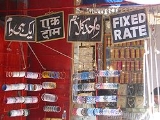
Languages of India

Encyclopedia
The languages of India belong to several language families
, the major ones being the Indo-European languages
—Indo-Aryan
(spoken by 72% of Indians) and the Dravidian languages
(spoken by 25% of Indians). Other languages spoken in India belong to the Austro-Asiatic
, Tibeto-Burman
, and a few minor language families and isolates
.
The principal official language
of the Republic of India
is Standard Hindi, while English
is the secondary official language. The constitution of India states that "The official language of the Union shall be Hindi in Devanagari
script." Neither the Constitution of India nor Indian law specifies a national language, a position supported by a High Court ruling. However, languages listed in the Eighth Schedule of the Indian constitution are sometimes referred to, without legal standing, as the national languages of India.
Individual mother tongues
in India number several hundred; the 1961 census recognized 1,652 (SIL Ethnologue
lists 415). According to Census of India of 2001, 30 languages are spoken by more than a million native speakers, 122 by more than 10,000.
Three millennia of language contact has led to significant mutual influence among the four language families in India and South Asia. Two contact languages
have played an important role in the history of India
: Persian
and English
.
 The northern Indian languages from the Indo-European family
evolved from Old Indo-Aryan
such as Sanskrit
, by way of the Middle Indo-Aryan
Prakrit
languages and Apabhraṃśa of the Middle Ages
. There is no consensus for a specific time where the modern north Indian languages such as Hindi-Urdu, Assamese
, Bengali
, Gujarati
, Marathi
, Punjabi
, Rajasthani
, Sindhi
and Oriya
emerged, but AD 1000 is commonly accepted. Each language had different influences, with Hindi-Urdu (Hindustani) being strongly influenced by Persian
.
The Dravidian languages
of South India
had a history independent of Sanskrit. The major Dravidian languages are Telugu
,Tamil
, Kannada
and Malayalam
. Though Dravidian in origin, over eighty percent of words in Malayalam and Telugu
are pure Sanskrit words. Telugu script can reproduce the full range of Sanskrit phonetics without losing any of the text's originality, where as Malayalam script includes letters capable of representing all the sounds of Sanskrit and all Dravidian languages. The Austro-Asiatic
and Tibeto-Burman languages
of North-East India
also have long independent histories.
. The Indian census uses two specific classifications in its own unique way: (1) 'language' and (2) 'mother tongue'. The 'mother tongues' are grouped within each 'language'. Many 'mother tongues' so defined would be considered a language rather than a dialect by linguistic standards. This is especially so for many 'mother tongues' with tens of millions of speakers that is officially grouped under the 'language' Hindi
.
The Indian census of 1961 recognised 1,652 different languages in India (including languages not native to the subcontinent). The 1991 census recognizes 1,576 classified "mother tongues" The People of India (POI) project of Anthropological Survey of India
reported 325 languages which are used for in-group communication by the Indian communities. SIL Ethnologue
lists 415 living "Languages of India" (out of 6,912 worldwide).
According to the 1991 census, 22 'languages' had more than a million native speakers, 50 had more than 100,000 and 114 had more than 10,000 native speakers. The remaining accounted for a total of 566,000 native speakers (out of a total of 838 million Indians in 1991).
According to the most recent census of 2001, 29 'languages' have more than a million native speakers, 60 have more than 100,000 and 122 have more than 10,000 native speakers.
The government of India has given 22 "languages of the 8th Schedule" the status of official language. The number of languages given this status has increased through the political process. Some languages with a large number of speakers still do not have this status, the largest of these being Bhili/Bhiladi
with some 9.6 million native speakers (ranked 14th), followed by Gondi
with 2.7 million speakers (ranked 18th) and Khandeshi with 2.1 million speakers (ranked 22nd). On the other hand, 2 languages with fewer than 2 million native speakers have recently been included in the 8th Schedule for mostly political reasons: Manipuri/Maithei with 1.5 million speakers (ranked 25th) and Bodo
with 1.4 million speakers (ranked 26th).
. The largest of these in terms of speakers is the Indo-European
family, predominantly represented in its Indo-Aryan
branch (accounting for some 700 million speakers, or 69% of the population), but also including minority languages such as Persian, Portuguese or French, and English as a lingua franca
. Kashmiri
and other Dardic languages
, which form part of the Indo-Iranian, and arguably Indo-Aryan family, have some 4.6 million speakers in India.
The second largest language family is the Dravidian
family, accounting for some 200 million speakers, or 26%. Families with smaller numbers of speakers are Austro-Asiatic
and numerous small Tibeto-Burman languages
, with some 10 and 6 million speakers, respectively, together 5% of the population.
The Ongan languages
of the southern Andaman Islands
form a fifth family; the Great Andamanese languages
are extinct apart from one highly endangered language with a dwindling number of speakers. There is also a known language isolate
, the Nihali language
. The Shompen
language or languages is/are poorly attested and unclassified. Sentinelese
is entirely unknown.
Most languages in the Indian republic are written in Brahmi-derived scripts, such as Devangari, Kannada, Eastern Nagari - Assamese/Bengali, Telugu, Oriya, Tamil, etc., though Urdu is written in an Arabic script
, and a few minor languages such as Santali
use independent scripts.
are Standard Hindi and English
. According to the article 343 (1), "The Official Language of the Union shall be Hindi in Devanagari script." The individual states
can legislate their own official languages, depending on their linguistic demographics. For example,the state of Maharashtra
has Marathi
as its sole official language, the state of Punjab has Punjabi
as its sole official language, the state of Andhra Pradesh
has Telugu
as its sole official language, the state of Orissa
has Oriya
as its sole official language, the state of Tamil Nadu
has Tamil
as its sole official language, the state of Karnataka
has Kannada
as its sole official language and the state of Kerala
has Malayalam
as its sole official language, while the state of Jammu and Kashmir
has Kashmiri
, Urdu
, and Dogri
as its official languages.
Article 345 of the Indian constitution
provides recognition to "official languages" of the union to include Standard Hindi or any one or more of the languages adopted by a state legislature as the official language. Until the Twenty-First Amendment of the Constitution in 1967, the country recognised 14 official regional languages. The Eighth Schedule and the Seventy-First Amendment provided for the inclusion of Sindhi
, Konkani
, Meiteilon and Nepali
, thereby increasing the number of official regional languages of India to 18. Individual states, whose borders are mostly drawn on socio-linguistic lines, are free to decide their own language for internal administration and education.
The following table lists the official languages, aside from English, set out in the eighth schedule as of May 2008:
declared that languages that met certain requirements could be accorded the status of a "Classical Language
in India". Languages thus far declared to be Classical are Tamil
(in 2004), Sanskrit
(in 2005), Kannada
and Telugu
(in 2008).
In 2005, Sanskrit, which already had special status in Article 351 of the Constitution of India as the primary source language for the development of the official standard of Hindi, was also declared to be a classical language; this was followed by similar declarations for Kannada and Telugu in 2008, based on the recommendation of a committee of linguistic experts constituted by the Ministry of Culture, Government of India.
In a 2006 press release, Minister of Tourism & Culture Ambika Soni told the Rajya Sabha the following criteria were laid down to determine the eligibility of languages to be considered for classification as a "classical Language",
purposes as well as for higher education
purposes. When India became independent in 1947, the Indian legislators had the challenge of choosing a language for official communication as well as for communication between different linguistic regions across India. The choices available were:
The Indian constitution
, in 1950, declared Hindi
in Devanagari
script to be the official language
of the union. Unless Parliament decided otherwise, the use of English
for official purposes was to cease 15 years after the constitution came into effect, i.e., on 26 January 1965. The prospect of the changeover, however, led to much alarm in the non Hindi-speaking areas of India, especially Dravidian
-speaking states whose languages were not related to Hindi at all. As a result, Parliament
enacted the Official Languages Act, 1963, which provided for the continued use of English for official purposes along with Hindi, even after 1965.
across India, recognize the 'need' for training people to one common language . This results in many complaints: There are many complaints that in North India
, non-Hindi speakers undergo considerable difficulties on account of language. Similarly, there are numerous complaints that all North Indians have language trouble when traveling to South India
. It's common to hear of incidents that result due friction between those who strongly believe in the chosen official language
, and those who follow the thought that the chosen language(s) do not take into account everyone's preferences.
Local official language commissions have been established and various steps are being taken in a direction to reduce tensions and friction.
in India.
The first major linguistic conflict, known as the Anti-Hindi agitations of Tamil Nadu took place in Tamil Nadu against the implementation of Hindi as the sole official language of India. Political analysts consider this as a major factor in bringing DMK
to power and leading to the ousting and nearly total elimination of the Congress party in Tamil Nadu. Strong cultural pride based on language is also found in other Indian states such as Kerala, Bengal, Maharashtra and in Karnataka. To express disapproval of the imposition of an alien language Hindi on its people as a result of the central government overstepping its constitutional authority, Maharashtra and Karnataka Governments made the state languages compulsory in educational institutions.
In 2011, V S Achuthananthan Ministry in Kerala
made state language, Malayalam compulsory in all schools.
Recently anti-Hindi feelings have been expressed in Mumbai
by Shiv Sena
and Maharashtra Navnirman Sena
The Government of India
attempts to assuage these conflicts with various campaigns, coordinated by the Central Institute of Indian Languages (CIIL), Mysore, a branch of the Department of Higher Education, Language Bureau, Ministry of Human Resource Development
.
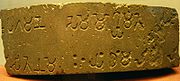 Various Indian languages have corresponding scripts for them. Hindi, Sanskrit, Marathi
,and Angika
languages are written with Devanagari. Most other languages are written using a script specific to them, such as Bengali with Bengali
, Punjabi with Gurmukhi
, Oriya with Utkal Lipi
, Gujarati with Gujarati
, etc. Urdu and sometimes Kashmiri
, Saraiki
and Sindhi
are written in modified versions of the Perso-Arabic script
. With this one exception, the scripts of Indian languages are native to India. (See ISO 15919
regarding Romanization of Indian languages)
Language family
A language family is a group of languages related through descent from a common ancestor, called the proto-language of that family. The term 'family' comes from the tree model of language origination in historical linguistics, which makes use of a metaphor comparing languages to people in a...
, the major ones being the Indo-European languages
Indo-European languages
The Indo-European languages are a family of several hundred related languages and dialects, including most major current languages of Europe, the Iranian plateau, and South Asia and also historically predominant in Anatolia...
—Indo-Aryan
Indo-Aryan languages
The Indo-Aryan languages constitutes a branch of the Indo-Iranian languages, itself a branch of the Indo-European language family...
(spoken by 72% of Indians) and the Dravidian languages
Dravidian languages
The Dravidian language family includes approximately 85 genetically related languages, spoken by about 217 million people. They are mainly spoken in southern India and parts of eastern and central India as well as in northeastern Sri Lanka, Pakistan, Nepal, Bangladesh, Afghanistan, Iran, and...
(spoken by 25% of Indians). Other languages spoken in India belong to the Austro-Asiatic
Austro-Asiatic languages
The Austro-Asiatic languages, in recent classifications synonymous with Mon–Khmer, are a large language family of Southeast Asia, also scattered throughout India and Bangladesh. The name Austro-Asiatic comes from the Latin words for "south" and "Asia", hence "South Asia"...
, Tibeto-Burman
Tibeto-Burman languages
The Tibeto-Burman languages are the non-Chinese members of the Sino-Tibetan language family, over 400 of which are spoken thoughout the highlands of southeast Asia, as well as lowland areas in Burma ....
, and a few minor language families and isolates
Language isolate
A language isolate, in the absolute sense, is a natural language with no demonstrable genealogical relationship with other languages; that is, one that has not been demonstrated to descend from an ancestor common with any other language. They are in effect language families consisting of a single...
.
The principal official language
Official language
An official language is a language that is given a special legal status in a particular country, state, or other jurisdiction. Typically a nation's official language will be the one used in that nation's courts, parliament and administration. However, official status can also be used to give a...
of the Republic of India
India
India , officially the Republic of India , is a country in South Asia. It is the seventh-largest country by geographical area, the second-most populous country with over 1.2 billion people, and the most populous democracy in the world...
is Standard Hindi, while English
English language
English is a West Germanic language that arose in the Anglo-Saxon kingdoms of England and spread into what was to become south-east Scotland under the influence of the Anglian medieval kingdom of Northumbria...
is the secondary official language. The constitution of India states that "The official language of the Union shall be Hindi in Devanagari
Devanagari
Devanagari |deva]]" and "nāgarī" ), also called Nagari , is an abugida alphabet of India and Nepal...
script." Neither the Constitution of India nor Indian law specifies a national language, a position supported by a High Court ruling. However, languages listed in the Eighth Schedule of the Indian constitution are sometimes referred to, without legal standing, as the national languages of India.
Individual mother tongues
First language
A first language is the language a person has learned from birth or within the critical period, or that a person speaks the best and so is often the basis for sociolinguistic identity...
in India number several hundred; the 1961 census recognized 1,652 (SIL Ethnologue
Ethnologue
Ethnologue: Languages of the World is a web and print publication of SIL International , a Christian linguistic service organization, which studies lesser-known languages, to provide the speakers with Bibles in their native language and support their efforts in language development.The Ethnologue...
lists 415). According to Census of India of 2001, 30 languages are spoken by more than a million native speakers, 122 by more than 10,000.
Three millennia of language contact has led to significant mutual influence among the four language families in India and South Asia. Two contact languages
Lingua franca
A lingua franca is a language systematically used to make communication possible between people not sharing a mother tongue, in particular when it is a third language, distinct from both mother tongues.-Characteristics:"Lingua franca" is a functionally defined term, independent of the linguistic...
have played an important role in the history of India
History of India
The history of India begins with evidence of human activity of Homo sapiens as long as 75,000 years ago, or with earlier hominids including Homo erectus from about 500,000 years ago. The Indus Valley Civilization, which spread and flourished in the northwestern part of the Indian subcontinent from...
: Persian
Persian language
Persian is an Iranian language within the Indo-Iranian branch of the Indo-European languages. It is primarily spoken in Iran, Afghanistan, Tajikistan and countries which historically came under Persian influence...
and English
English language
English is a West Germanic language that arose in the Anglo-Saxon kingdoms of England and spread into what was to become south-east Scotland under the influence of the Anglian medieval kingdom of Northumbria...
.
History
Indo-European languages
The Indo-European languages are a family of several hundred related languages and dialects, including most major current languages of Europe, the Iranian plateau, and South Asia and also historically predominant in Anatolia...
evolved from Old Indo-Aryan
Indo-Aryan languages
The Indo-Aryan languages constitutes a branch of the Indo-Iranian languages, itself a branch of the Indo-European language family...
such as Sanskrit
Sanskrit
Sanskrit , is a historical Indo-Aryan language and the primary liturgical language of Hinduism, Jainism and Buddhism.Buddhism: besides Pali, see Buddhist Hybrid Sanskrit Today, it is listed as one of the 22 scheduled languages of India and is an official language of the state of Uttarakhand...
, by way of the Middle Indo-Aryan
Middle Indo-Aryan languages
The Middle Indo-Aryan languages are the early medieval dialects of the Indo-Aryan languages, the descendants of the Old Indo-Aryan dialects such as Vedic & Classical Sanskrit, and the predecessors of the late medieval languages such as Apabhramsha or Abahatta, which eventually evolved into the...
Prakrit
Prakrit
Prakrit is the name for a group of Middle Indic, Indo-Aryan languages, derived from Old Indic dialects. The word itself has a flexible definition, being defined sometimes as, "original, natural, artless, normal, ordinary, usual", or "vernacular", in contrast to the literary and religious...
languages and Apabhraṃśa of the Middle Ages
Middle Ages
The Middle Ages is a periodization of European history from the 5th century to the 15th century. The Middle Ages follows the fall of the Western Roman Empire in 476 and precedes the Early Modern Era. It is the middle period of a three-period division of Western history: Classic, Medieval and Modern...
. There is no consensus for a specific time where the modern north Indian languages such as Hindi-Urdu, Assamese
Assamese language
Assamese is the easternmost Indo-Aryan language. It is used mainly in the state of Assam in North-East India. It is also the official language of Assam. It is also spoken in parts of Arunachal Pradesh and other northeast Indian states. Nagamese, an Assamese-based Creole language is widely used in...
, Bengali
Bengali language
Bengali or Bangla is an eastern Indo-Aryan language. It is native to the region of eastern South Asia known as Bengal, which comprises present day Bangladesh, the Indian state of West Bengal, and parts of the Indian states of Tripura and Assam. It is written with the Bengali script...
, Gujarati
Gujarati language
Gujarati is an Indo-Aryan language, and part of the greater Indo-European language family. It is derived from a language called Old Gujarati which is the ancestor language of the modern Gujarati and Rajasthani languages...
, Marathi
Marathi language
Marathi is an Indo-Aryan language spoken by the Marathi people of western and central India. It is the official language of the state of Maharashtra. There are over 68 million fluent speakers worldwide. Marathi has the fourth largest number of native speakers in India and is the fifteenth most...
, Punjabi
Punjabi language
Punjabi is an Indo-Aryan language spoken by inhabitants of the historical Punjab region . For Sikhs, the Punjabi language stands as the official language in which all ceremonies take place. In Pakistan, Punjabi is the most widely spoken language...
, Rajasthani
Rajasthani language
Rajasthani Rajasthani Rajasthani (Devanagari: , Perso-Arabic: is a language of the Indo-Aryan languages family. It is spoken by 50 million people in Rajasthan and other states of India and in some areas of Pakistan. The number of speakers may be up to 80 million worldwide...
, Sindhi
Sindhi language
Sindhi is the language of the Sindh region of Pakistan that is spoken by the Sindhi people. In India, it is among 22 constitutionally recognized languages, where Sindhis are a sizeable minority. It is spoken by 53,410,910 people in Pakistan, according to the national government's Statistics Division...
and Oriya
Oriya language
Oriya , officially Odia from November, 2011, is an Indian language, belonging to the Indo-Aryan branch of the Indo-European language family. It is mainly spoken in the Indian states of Orissa and West Bengal...
emerged, but AD 1000 is commonly accepted. Each language had different influences, with Hindi-Urdu (Hindustani) being strongly influenced by Persian
Persian language
Persian is an Iranian language within the Indo-Iranian branch of the Indo-European languages. It is primarily spoken in Iran, Afghanistan, Tajikistan and countries which historically came under Persian influence...
.
The Dravidian languages
Dravidian languages
The Dravidian language family includes approximately 85 genetically related languages, spoken by about 217 million people. They are mainly spoken in southern India and parts of eastern and central India as well as in northeastern Sri Lanka, Pakistan, Nepal, Bangladesh, Afghanistan, Iran, and...
of South India
South India
South India is the area encompassing India's states of Andhra Pradesh, Karnataka, Kerala and Tamil Nadu as well as the union territories of Lakshadweep and Pondicherry, occupying 19.31% of India's area...
had a history independent of Sanskrit. The major Dravidian languages are Telugu
Telugu language
Telugu is a Central Dravidian language primarily spoken in the state of Andhra Pradesh, India, where it is an official language. It is also spoken in the neighbouring states of Chattisgarh, Karnataka, Maharashtra, Orissa and Tamil Nadu...
,Tamil
Tamil language
Tamil is a Dravidian language spoken predominantly by Tamil people of the Indian subcontinent. It has official status in the Indian state of Tamil Nadu and in the Indian union territory of Pondicherry. Tamil is also an official language of Sri Lanka and Singapore...
, Kannada
Kannada language
Kannada or , is a language spoken in India predominantly in the state of Karnataka. Kannada, whose native speakers are called Kannadigas and number roughly 50 million, is one of the 30 most spoken languages in the world...
and Malayalam
Malayalam language
Malayalam , is one of the four major Dravidian languages of southern India. It is one of the 22 scheduled languages of India with official language status in the state of Kerala and the union territories of Lakshadweep and Pondicherry. It is spoken by 35.9 million people...
. Though Dravidian in origin, over eighty percent of words in Malayalam and Telugu
Telugu language
Telugu is a Central Dravidian language primarily spoken in the state of Andhra Pradesh, India, where it is an official language. It is also spoken in the neighbouring states of Chattisgarh, Karnataka, Maharashtra, Orissa and Tamil Nadu...
are pure Sanskrit words. Telugu script can reproduce the full range of Sanskrit phonetics without losing any of the text's originality, where as Malayalam script includes letters capable of representing all the sounds of Sanskrit and all Dravidian languages. The Austro-Asiatic
Austro-Asiatic languages
The Austro-Asiatic languages, in recent classifications synonymous with Mon–Khmer, are a large language family of Southeast Asia, also scattered throughout India and Bangladesh. The name Austro-Asiatic comes from the Latin words for "south" and "Asia", hence "South Asia"...
and Tibeto-Burman languages
Tibeto-Burman languages
The Tibeto-Burman languages are the non-Chinese members of the Sino-Tibetan language family, over 400 of which are spoken thoughout the highlands of southeast Asia, as well as lowland areas in Burma ....
of North-East India
North-East India
Northeast India refers to the easternmost region of India consisting of the contiguous Seven Sister States, Sikkim, and parts of North Bengal...
also have long independent histories.
Inventories
Dialectologists distinguish the terms "language" and "dialect" on the basis of mutual intelligibilityMutual intelligibility
In linguistics, mutual intelligibility is recognized as a relationship between languages or dialects in which speakers of different but related languages can readily understand each other without intentional study or extraordinary effort...
. The Indian census uses two specific classifications in its own unique way: (1) 'language' and (2) 'mother tongue'. The 'mother tongues' are grouped within each 'language'. Many 'mother tongues' so defined would be considered a language rather than a dialect by linguistic standards. This is especially so for many 'mother tongues' with tens of millions of speakers that is officially grouped under the 'language' Hindi
Hindi
Standard Hindi, or more precisely Modern Standard Hindi, also known as Manak Hindi , High Hindi, Nagari Hindi, and Literary Hindi, is a standardized and sanskritized register of the Hindustani language derived from the Khariboli dialect of Delhi...
.
The Indian census of 1961 recognised 1,652 different languages in India (including languages not native to the subcontinent). The 1991 census recognizes 1,576 classified "mother tongues" The People of India (POI) project of Anthropological Survey of India
Anthropological Survey of India
Anthropological Survey of India is the apex Indian organisation involved in anthropological studies and field data research for human and cultural aspects, working primarily in the fields of physical anthropology and cultural anthropology...
reported 325 languages which are used for in-group communication by the Indian communities. SIL Ethnologue
Ethnologue
Ethnologue: Languages of the World is a web and print publication of SIL International , a Christian linguistic service organization, which studies lesser-known languages, to provide the speakers with Bibles in their native language and support their efforts in language development.The Ethnologue...
lists 415 living "Languages of India" (out of 6,912 worldwide).
According to the 1991 census, 22 'languages' had more than a million native speakers, 50 had more than 100,000 and 114 had more than 10,000 native speakers. The remaining accounted for a total of 566,000 native speakers (out of a total of 838 million Indians in 1991).
According to the most recent census of 2001, 29 'languages' have more than a million native speakers, 60 have more than 100,000 and 122 have more than 10,000 native speakers.
The government of India has given 22 "languages of the 8th Schedule" the status of official language. The number of languages given this status has increased through the political process. Some languages with a large number of speakers still do not have this status, the largest of these being Bhili/Bhiladi
Bhili language
Bhili is a Western Indo-Aryan language spoken in west-central India, in the region east of Ahmedabad. Other names for the language include Bhagoria and Bhilboli; varieties are Wagdi and Garasia. Bhili is a member of the Bhil language family, which is related to Gujarati and the Rajasthani language...
with some 9.6 million native speakers (ranked 14th), followed by Gondi
Gondi language
Gondi is spoken by the Gondi people. It is a Central-Dravidian language, spoken by about two million people chiefly in the states of Madhya Pradesh, Gujarat, Andhra Pradesh, Maharashtra, Chhattishgarh and in various adjoining areas of neighbouring states...
with 2.7 million speakers (ranked 18th) and Khandeshi with 2.1 million speakers (ranked 22nd). On the other hand, 2 languages with fewer than 2 million native speakers have recently been included in the 8th Schedule for mostly political reasons: Manipuri/Maithei with 1.5 million speakers (ranked 25th) and Bodo
Bodo language
Bodo is a language that belongs to the branch of Barish section under Baric division of the Tibeto-Burman languages and spoken by the Bodo people of north-eastern India and Nepal...
with 1.4 million speakers (ranked 26th).
Language families
The languages of India belong to several language familiesLanguage family
A language family is a group of languages related through descent from a common ancestor, called the proto-language of that family. The term 'family' comes from the tree model of language origination in historical linguistics, which makes use of a metaphor comparing languages to people in a...
. The largest of these in terms of speakers is the Indo-European
Indo-European languages
The Indo-European languages are a family of several hundred related languages and dialects, including most major current languages of Europe, the Iranian plateau, and South Asia and also historically predominant in Anatolia...
family, predominantly represented in its Indo-Aryan
Indo-Aryan languages
The Indo-Aryan languages constitutes a branch of the Indo-Iranian languages, itself a branch of the Indo-European language family...
branch (accounting for some 700 million speakers, or 69% of the population), but also including minority languages such as Persian, Portuguese or French, and English as a lingua franca
Lingua franca
A lingua franca is a language systematically used to make communication possible between people not sharing a mother tongue, in particular when it is a third language, distinct from both mother tongues.-Characteristics:"Lingua franca" is a functionally defined term, independent of the linguistic...
. Kashmiri
Kashmiri language
Kashmiri is a language from the Dardic sub-group and it is spoken primarily in the Kashmir Valley, in Jammu and Kashmir. There are approximately 5,554,496 speakers in Jammu and Kashmir, according to the Census of 2001. Most of the 105,000 speakers or so in Pakistan are émigrés from the Kashmir...
and other Dardic languages
Dardic languages
The Dardic languages are a sub-group of the Indo-Aryan languages spoken in northern Pakistan, eastern Afghanistan, and the Indian region of Jammu and Kashmir...
, which form part of the Indo-Iranian, and arguably Indo-Aryan family, have some 4.6 million speakers in India.
The second largest language family is the Dravidian
Dravidian languages
The Dravidian language family includes approximately 85 genetically related languages, spoken by about 217 million people. They are mainly spoken in southern India and parts of eastern and central India as well as in northeastern Sri Lanka, Pakistan, Nepal, Bangladesh, Afghanistan, Iran, and...
family, accounting for some 200 million speakers, or 26%. Families with smaller numbers of speakers are Austro-Asiatic
Austro-Asiatic languages
The Austro-Asiatic languages, in recent classifications synonymous with Mon–Khmer, are a large language family of Southeast Asia, also scattered throughout India and Bangladesh. The name Austro-Asiatic comes from the Latin words for "south" and "Asia", hence "South Asia"...
and numerous small Tibeto-Burman languages
Tibeto-Burman languages
The Tibeto-Burman languages are the non-Chinese members of the Sino-Tibetan language family, over 400 of which are spoken thoughout the highlands of southeast Asia, as well as lowland areas in Burma ....
, with some 10 and 6 million speakers, respectively, together 5% of the population.
The Ongan languages
Ongan languages
Ongan, or South Andamanese, is a small family of two languages, Önge and Jarawa, spoken in the southern Andaman Islands:*Ongan**Önge or Onge; 96 speakers in 1997, mostly monolingual...
of the southern Andaman Islands
Andaman Islands
The Andaman Islands are a group of Indian Ocean archipelagic islands in the Bay of Bengal between India to the west, and Burma , to the north and east...
form a fifth family; the Great Andamanese languages
Great Andamanese languages
The Great Andamanese languages are a nearly extinct language family spoken by the Great Andamanese peoples of the Andaman Islands, a union territory of India.- History :...
are extinct apart from one highly endangered language with a dwindling number of speakers. There is also a known language isolate
Language isolate
A language isolate, in the absolute sense, is a natural language with no demonstrable genealogical relationship with other languages; that is, one that has not been demonstrated to descend from an ancestor common with any other language. They are in effect language families consisting of a single...
, the Nihali language
Nihali language
Nihali, also known as Nahali or erroneously as Kalto, is a language isolate spoken in west-central India by around 2,000 people out of an ethnic population of 5,000...
. The Shompen
Shompen languages
The Shompen languages are spoken on Great Nicobar Island in the Indian union territory of the Andaman and Nicobar Islands in the Indian Ocean south of Burma....
language or languages is/are poorly attested and unclassified. Sentinelese
Sentinelese language
Sentinelese is the unknown language of the Sentinelese people of North Sentinel Island in the Andaman Islands, India. It is presumably a distinct Andamanese language, but how closely it may be related to other languages of those families is unknown...
is entirely unknown.
Most languages in the Indian republic are written in Brahmi-derived scripts, such as Devangari, Kannada, Eastern Nagari - Assamese/Bengali, Telugu, Oriya, Tamil, etc., though Urdu is written in an Arabic script
Urdu alphabet
The Urdu alphabet is the right-to-left alphabet used for the Urdu language. It is a modification of the Persian alphabet, which is itself a derivative of the Arabic alphabet...
, and a few minor languages such as Santali
Santali language
Santhali is a language in the Santhali subfamily of Austro-Asiatic, related to Ho and Mundari. It is spoken by about six million people in India, Bangladesh, Nepal, and Bhutan . Most of its speakers live in India, in the states of Jharkhand, Assam, Bihar, Orissa, Tripura, and West Bengal. It has...
use independent scripts.
Official languages
The official languages of the Republic of IndiaIndia
India , officially the Republic of India , is a country in South Asia. It is the seventh-largest country by geographical area, the second-most populous country with over 1.2 billion people, and the most populous democracy in the world...
are Standard Hindi and English
English language
English is a West Germanic language that arose in the Anglo-Saxon kingdoms of England and spread into what was to become south-east Scotland under the influence of the Anglian medieval kingdom of Northumbria...
. According to the article 343 (1), "The Official Language of the Union shall be Hindi in Devanagari script." The individual states
States and territories of India
India is a federal union of states comprising twenty-eight states and seven union territories. The states and territories are further subdivided into districts and so on.-List of states and territories:...
can legislate their own official languages, depending on their linguistic demographics. For example,the state of Maharashtra
Maharashtra
Maharashtra is a state located in India. It is the second most populous after Uttar Pradesh and third largest state by area in India...
has Marathi
Marathi language
Marathi is an Indo-Aryan language spoken by the Marathi people of western and central India. It is the official language of the state of Maharashtra. There are over 68 million fluent speakers worldwide. Marathi has the fourth largest number of native speakers in India and is the fifteenth most...
as its sole official language, the state of Punjab has Punjabi
Punjabi language
Punjabi is an Indo-Aryan language spoken by inhabitants of the historical Punjab region . For Sikhs, the Punjabi language stands as the official language in which all ceremonies take place. In Pakistan, Punjabi is the most widely spoken language...
as its sole official language, the state of Andhra Pradesh
Andhra Pradesh
Andhra Pradesh , is one of the 28 states of India, situated on the southeastern coast of India. It is India's fourth largest state by area and fifth largest by population. Its capital and largest city by population is Hyderabad.The total GDP of Andhra Pradesh is $100 billion and is ranked third...
has Telugu
Telugu language
Telugu is a Central Dravidian language primarily spoken in the state of Andhra Pradesh, India, where it is an official language. It is also spoken in the neighbouring states of Chattisgarh, Karnataka, Maharashtra, Orissa and Tamil Nadu...
as its sole official language, the state of Orissa
Orissa
Orissa , officially Odisha since Nov 2011, is a state of India, located on the east coast of India, by the Bay of Bengal. It is the modern name of the ancient nation of Kalinga, which was invaded by the Maurya Emperor Ashoka in 261 BC. The modern state of Orissa was established on 1 April...
has Oriya
Oriya language
Oriya , officially Odia from November, 2011, is an Indian language, belonging to the Indo-Aryan branch of the Indo-European language family. It is mainly spoken in the Indian states of Orissa and West Bengal...
as its sole official language, the state of Tamil Nadu
Tamil Nadu
Tamil Nadu is one of the 28 states of India. Its capital and largest city is Chennai. Tamil Nadu lies in the southernmost part of the Indian Peninsula and is bordered by the union territory of Pondicherry, and the states of Kerala, Karnataka, and Andhra Pradesh...
has Tamil
Tamil language
Tamil is a Dravidian language spoken predominantly by Tamil people of the Indian subcontinent. It has official status in the Indian state of Tamil Nadu and in the Indian union territory of Pondicherry. Tamil is also an official language of Sri Lanka and Singapore...
as its sole official language, the state of Karnataka
Karnataka
Karnataka , the land of the Kannadigas, is a state in South West India. It was created on 1 November 1956, with the passing of the States Reorganisation Act and this day is annually celebrated as Karnataka Rajyotsava...
has Kannada
Kannada language
Kannada or , is a language spoken in India predominantly in the state of Karnataka. Kannada, whose native speakers are called Kannadigas and number roughly 50 million, is one of the 30 most spoken languages in the world...
as its sole official language and the state of Kerala
Kerala
or Keralam is an Indian state located on the Malabar coast of south-west India. It was created on 1 November 1956 by the States Reorganisation Act by combining various Malayalam speaking regions....
has Malayalam
Malayalam language
Malayalam , is one of the four major Dravidian languages of southern India. It is one of the 22 scheduled languages of India with official language status in the state of Kerala and the union territories of Lakshadweep and Pondicherry. It is spoken by 35.9 million people...
as its sole official language, while the state of Jammu and Kashmir
Jammu and Kashmir
Jammu and Kashmir is the northernmost state of India. It is situated mostly in the Himalayan mountains. Jammu and Kashmir shares a border with the states of Himachal Pradesh and Punjab to the south and internationally with the People's Republic of China to the north and east and the...
has Kashmiri
Kashmiri language
Kashmiri is a language from the Dardic sub-group and it is spoken primarily in the Kashmir Valley, in Jammu and Kashmir. There are approximately 5,554,496 speakers in Jammu and Kashmir, according to the Census of 2001. Most of the 105,000 speakers or so in Pakistan are émigrés from the Kashmir...
, Urdu
Urdu
Urdu is a register of the Hindustani language that is identified with Muslims in South Asia. It belongs to the Indo-European family. Urdu is the national language and lingua franca of Pakistan. It is also widely spoken in some regions of India, where it is one of the 22 scheduled languages and an...
, and Dogri
Dogri language
Dogri is an Indo-Aryan language spoken by about five million people in Pakistan and India, chiefly in the Jammu region of Jammu and Kashmir, but also in northern Punjab, Himachal Pradesh, other parts of Jammu and Kashmir, and elsewhere. Dogri speakers are called Dogras, and the Dogri-speaking...
as its official languages.
Article 345 of the Indian constitution
Constitution of India
The Constitution of India is the supreme law of India. It lays down the framework defining fundamental political principles, establishes the structure, procedures, powers, and duties of government institutions, and sets out fundamental rights, directive principles, and the duties of citizens...
provides recognition to "official languages" of the union to include Standard Hindi or any one or more of the languages adopted by a state legislature as the official language. Until the Twenty-First Amendment of the Constitution in 1967, the country recognised 14 official regional languages. The Eighth Schedule and the Seventy-First Amendment provided for the inclusion of Sindhi
Sindhi language
Sindhi is the language of the Sindh region of Pakistan that is spoken by the Sindhi people. In India, it is among 22 constitutionally recognized languages, where Sindhis are a sizeable minority. It is spoken by 53,410,910 people in Pakistan, according to the national government's Statistics Division...
, Konkani
Konkani language
KonkaniKonkani is a name given to a group of several cognate dialects spoken along the narrow strip of land called Konkan, on the west coast of India. This is, however, somewhat an over-generalisation. Geographically, Konkan is defined roughly as the area between the river Damanganga to the north...
, Meiteilon and Nepali
Nepali language
Nepali or Nepalese is a language in the Indo-Aryan branch of the Indo-European language family.It is the official language and de facto lingua franca of Nepal and is also spoken in Bhutan, parts of India and parts of Myanmar...
, thereby increasing the number of official regional languages of India to 18. Individual states, whose borders are mostly drawn on socio-linguistic lines, are free to decide their own language for internal administration and education.
The following table lists the official languages, aside from English, set out in the eighth schedule as of May 2008:
Official classical languages
In 2004, the Government of IndiaGovernment of India
The Government of India, officially known as the Union Government, and also known as the Central Government, was established by the Constitution of India, and is the governing authority of the union of 28 states and seven union territories, collectively called the Republic of India...
declared that languages that met certain requirements could be accorded the status of a "Classical Language
Classical language
A classical language is a language with a literature that is classical. According to UC Berkeley linguist George L. Hart, it should be ancient, it should be an independent tradition that arose mostly on its own, not as an offshoot of another tradition, and it must have a large and extremely rich...
in India". Languages thus far declared to be Classical are Tamil
Tamil language
Tamil is a Dravidian language spoken predominantly by Tamil people of the Indian subcontinent. It has official status in the Indian state of Tamil Nadu and in the Indian union territory of Pondicherry. Tamil is also an official language of Sri Lanka and Singapore...
(in 2004), Sanskrit
Sanskrit
Sanskrit , is a historical Indo-Aryan language and the primary liturgical language of Hinduism, Jainism and Buddhism.Buddhism: besides Pali, see Buddhist Hybrid Sanskrit Today, it is listed as one of the 22 scheduled languages of India and is an official language of the state of Uttarakhand...
(in 2005), Kannada
Kannada language
Kannada or , is a language spoken in India predominantly in the state of Karnataka. Kannada, whose native speakers are called Kannadigas and number roughly 50 million, is one of the 30 most spoken languages in the world...
and Telugu
Telugu language
Telugu is a Central Dravidian language primarily spoken in the state of Andhra Pradesh, India, where it is an official language. It is also spoken in the neighbouring states of Chattisgarh, Karnataka, Maharashtra, Orissa and Tamil Nadu...
(in 2008).
In 2005, Sanskrit, which already had special status in Article 351 of the Constitution of India as the primary source language for the development of the official standard of Hindi, was also declared to be a classical language; this was followed by similar declarations for Kannada and Telugu in 2008, based on the recommendation of a committee of linguistic experts constituted by the Ministry of Culture, Government of India.
In a 2006 press release, Minister of Tourism & Culture Ambika Soni told the Rajya Sabha the following criteria were laid down to determine the eligibility of languages to be considered for classification as a "classical Language",
Regional languages
In British India, English was the sole language used for administrativePublic administration
Public Administration houses the implementation of government policy and an academic discipline that studies this implementation and that prepares civil servants for this work. As a "field of inquiry with a diverse scope" its "fundamental goal.....
purposes as well as for higher education
Higher education
Higher, post-secondary, tertiary, or third level education refers to the stage of learning that occurs at universities, academies, colleges, seminaries, and institutes of technology...
purposes. When India became independent in 1947, the Indian legislators had the challenge of choosing a language for official communication as well as for communication between different linguistic regions across India. The choices available were:
- Making "Hindi", which a plurality of the people (40%) identified as their mother tongue, the official language, though only a minority of these "Hindi" speakers spoke Hindi proper.
- Making English, as preferred by non-Hindi speakers, particularly Tamils, and those from MizoramMizoramMizoram is one of the Seven Sister States in North Eastern India, sharing borders with the states of Tripura, Assam, Manipur and with the neighbouring countries of Bangladesh and Burma. Mizoram became the 23rd state of India on 20 February 1987. Its capital is Aizawl. Mizoram is located in the...
and NagalandNagalandNagaland is a state in the far north-eastern part of India. It borders the state of Assam to the west, Arunachal Pradesh and part of Assam to the north, Burma to the east and Manipur to the south. The state capital is Kohima, and the largest city is Dimapur...
, the official language. See also Anti-Hindi agitationsAnti-Hindi agitationsThe Anti-Hindi agitations of Tamil Nadu are a series of agitations that happened in the Indian state of Tamil Nadu during both pre- and post-Independence periods...
. - Declare both Hindi and English as official languages and each state is given freedom to choose the official language of the state.
The Indian constitution
Constitution of India
The Constitution of India is the supreme law of India. It lays down the framework defining fundamental political principles, establishes the structure, procedures, powers, and duties of government institutions, and sets out fundamental rights, directive principles, and the duties of citizens...
, in 1950, declared Hindi
Hindi
Standard Hindi, or more precisely Modern Standard Hindi, also known as Manak Hindi , High Hindi, Nagari Hindi, and Literary Hindi, is a standardized and sanskritized register of the Hindustani language derived from the Khariboli dialect of Delhi...
in Devanagari
Devanagari
Devanagari |deva]]" and "nāgarī" ), also called Nagari , is an abugida alphabet of India and Nepal...
script to be the official language
Official language
An official language is a language that is given a special legal status in a particular country, state, or other jurisdiction. Typically a nation's official language will be the one used in that nation's courts, parliament and administration. However, official status can also be used to give a...
of the union. Unless Parliament decided otherwise, the use of English
English language
English is a West Germanic language that arose in the Anglo-Saxon kingdoms of England and spread into what was to become south-east Scotland under the influence of the Anglian medieval kingdom of Northumbria...
for official purposes was to cease 15 years after the constitution came into effect, i.e., on 26 January 1965. The prospect of the changeover, however, led to much alarm in the non Hindi-speaking areas of India, especially Dravidian
Dravidian languages
The Dravidian language family includes approximately 85 genetically related languages, spoken by about 217 million people. They are mainly spoken in southern India and parts of eastern and central India as well as in northeastern Sri Lanka, Pakistan, Nepal, Bangladesh, Afghanistan, Iran, and...
-speaking states whose languages were not related to Hindi at all. As a result, Parliament
Parliament of India
The Parliament of India is the supreme legislative body in India. Founded in 1919, the Parliament alone possesses legislative supremacy and thereby ultimate power over all political bodies in India. The Parliament of India comprises the President and the two Houses, Lok Sabha and Rajya Sabha...
enacted the Official Languages Act, 1963, which provided for the continued use of English for official purposes along with Hindi, even after 1965.
Practical problems
India has hundreds of active dialects in use. Therefore, choosing any single language as an official language presents serious problems to all those whose "mother tongue" is different. However, all the boards of educationBoards of Education in India
The following boards of education have been recognized by Government of India#Andhra Pradesh Board of Secondary Education#Andhra Pradesh Board of Intermediate Education#Assam Higher Secondary Education Council#Assam Board of Secondary Education...
across India, recognize the 'need' for training people to one common language . This results in many complaints: There are many complaints that in North India
North India
North India, known natively as Uttar Bhārat or Shumālī Hindustān , is a loosely defined region in the northern part of India. The exact meaning of the term varies by usage...
, non-Hindi speakers undergo considerable difficulties on account of language. Similarly, there are numerous complaints that all North Indians have language trouble when traveling to South India
South India
South India is the area encompassing India's states of Andhra Pradesh, Karnataka, Kerala and Tamil Nadu as well as the union territories of Lakshadweep and Pondicherry, occupying 19.31% of India's area...
. It's common to hear of incidents that result due friction between those who strongly believe in the chosen official language
Official language
An official language is a language that is given a special legal status in a particular country, state, or other jurisdiction. Typically a nation's official language will be the one used in that nation's courts, parliament and administration. However, official status can also be used to give a...
, and those who follow the thought that the chosen language(s) do not take into account everyone's preferences.
Local official language commissions have been established and various steps are being taken in a direction to reduce tensions and friction.
Language conflicts
There are some significant conflicts over linguistic rightsLinguistic rights
Linguistic rights are the human and civil rights concerning the individual and collective right to choose the language or languages for communication in a private or public atmosphere...
in India.
The first major linguistic conflict, known as the Anti-Hindi agitations of Tamil Nadu took place in Tamil Nadu against the implementation of Hindi as the sole official language of India. Political analysts consider this as a major factor in bringing DMK
Dravida Munnetra Kazhagam
Dravida Munnetra Kazhagam is a state political party in the states of Tamil Nadu and Pondicherry, India. It is a Dravidian party founded by C. N. Annadurai as a breakaway faction from the Dravidar Kazhagam headed by Periyar...
to power and leading to the ousting and nearly total elimination of the Congress party in Tamil Nadu. Strong cultural pride based on language is also found in other Indian states such as Kerala, Bengal, Maharashtra and in Karnataka. To express disapproval of the imposition of an alien language Hindi on its people as a result of the central government overstepping its constitutional authority, Maharashtra and Karnataka Governments made the state languages compulsory in educational institutions.
In 2011, V S Achuthananthan Ministry in Kerala
Kerala
or Keralam is an Indian state located on the Malabar coast of south-west India. It was created on 1 November 1956 by the States Reorganisation Act by combining various Malayalam speaking regions....
made state language, Malayalam compulsory in all schools.
Recently anti-Hindi feelings have been expressed in Mumbai
Mumbai
Mumbai , formerly known as Bombay in English, is the capital of the Indian state of Maharashtra. It is the most populous city in India, and the fourth most populous city in the world, with a total metropolitan area population of approximately 20.5 million...
by Shiv Sena
Shiv Sena
Shiv Sena , is a political party in India founded on 19 June 1966 by Balasaheb Thackeray. It is currently headed by Thackeray's son, Uddhav Thackeray...
and Maharashtra Navnirman Sena
Maharashtra Navnirman Sena
The Maharashtra Navnirman Sena is a political party based in Maharashtra operating on the motto of "Sons of the Soil". It was founded on the March 9, 2006 in Mumbai by Raj Thackeray after he left the Shiv Sena due to differences with Uddhav Thackeray and sidelining in major decisions like...
The Government of India
Government of India
The Government of India, officially known as the Union Government, and also known as the Central Government, was established by the Constitution of India, and is the governing authority of the union of 28 states and seven union territories, collectively called the Republic of India...
attempts to assuage these conflicts with various campaigns, coordinated by the Central Institute of Indian Languages (CIIL), Mysore, a branch of the Department of Higher Education, Language Bureau, Ministry of Human Resource Development
Ministry of Human Resource Development (India)
The Ministry of Human Resource Development is an Indian government ministry, responsible for the development of human resources...
.
Writing systems
Marathi language
Marathi is an Indo-Aryan language spoken by the Marathi people of western and central India. It is the official language of the state of Maharashtra. There are over 68 million fluent speakers worldwide. Marathi has the fourth largest number of native speakers in India and is the fifteenth most...
,and Angika
Angika language
Angika is an Indo-Iranian language of the Anga region of India, a 58,000 km² area approx. that falls within the states of Bihar, Jharkhand and West Bengal....
languages are written with Devanagari. Most other languages are written using a script specific to them, such as Bengali with Bengali
Bengali script
The Bengali alphabet is the writing system for the Bengali language. The script with variations is used for Assamese and is basis for Meitei, Bishnupriya Manipuri, Kokborok, Garo and Mundari alphabets. All these languages are spoken in the eastern region of South Asia. Historically, the script has...
, Punjabi with Gurmukhi
Gurmukhi script
Gurmukhi is the most common script used for writing the Punjabi language. An abugida derived from the Laṇḍā script and ultimately descended from Brahmi, Gurmukhi was standardized by the second Sikh guru, Guru Angad Dev Ji, in the 16th century. The whole of the Sri Guru Granth Sahib Ji's 1430...
, Oriya with Utkal Lipi
Oriya script
The Oriya script or Utkala Lipi or Utkalakshara is used to write the Oriya language, and can be used for several other Indian languages, for example, Sanskrit.- History :...
, Gujarati with Gujarati
Gujarati script
The Gujarati script , which like all Nāgarī writing systems is strictly speaking an abugida rather than an alphabet, is used to write the Gujarati and Kutchi languages...
, etc. Urdu and sometimes Kashmiri
Kashmiri language
Kashmiri is a language from the Dardic sub-group and it is spoken primarily in the Kashmir Valley, in Jammu and Kashmir. There are approximately 5,554,496 speakers in Jammu and Kashmir, according to the Census of 2001. Most of the 105,000 speakers or so in Pakistan are émigrés from the Kashmir...
, Saraiki
Saraiki language
Saraiki , transliterated as Sirāikī and sometimes spelled Seraiki and Saraiki, is a standardized written language of Pakistan belonging to the Indo-Aryan languages. It is a language spoken in the heart of Pakistan...
and Sindhi
Sindhi language
Sindhi is the language of the Sindh region of Pakistan that is spoken by the Sindhi people. In India, it is among 22 constitutionally recognized languages, where Sindhis are a sizeable minority. It is spoken by 53,410,910 people in Pakistan, according to the national government's Statistics Division...
are written in modified versions of the Perso-Arabic script
Urdu alphabet
The Urdu alphabet is the right-to-left alphabet used for the Urdu language. It is a modification of the Persian alphabet, which is itself a derivative of the Arabic alphabet...
. With this one exception, the scripts of Indian languages are native to India. (See ISO 15919
ISO 15919
ISO 15919 Transliteration of Devanagari and related Indic scripts into Latin characters is an international standard for the transliteration of Indic scripts to the Latin alphabet formed in 2001...
regarding Romanization of Indian languages)
See also
- English in India
- List of languages by number of native speakers in India
- List of states and union territories of India by population
- Multilingual list of Indian family relation names
- National Translation MissionNational Translation MissionNational Translation Mission is a Government of India initiative to make knowledge texts accessible, in all Indian languages listed in the VIII schedule of the Constitution, through translation. NTM was set up as per National Knowledge Commission's recommendation...
External links
- Distribution of languages in India
- http://www.languageinindia.com/
- Languages of India (SIL EthnologueEthnologueEthnologue: Languages of the World is a web and print publication of SIL International , a Christian linguistic service organization, which studies lesser-known languages, to provide the speakers with Bibles in their native language and support their efforts in language development.The Ethnologue...
list) - Languages and Scripts of India
- Reconciling Linguistic Diversity: The History and the Future of Language Policy in India by Jason Baldridge
- Titus - Languages of India
- Diversity of Languages in India
- Official webpage explains the chronological events related to Official Languages Act and amendments
- A comprehensive federal government site that offers complete info on Indian Languages
- Ethnologue Ethnologue report on the languages of India
- Technology Development for Indian Languages, Government of India
- The Official Portal of the Indian Government