


Business

Encyclopedia
A business is an organization
engaged in the trade
of goods, services, or both to consumer
s. Businesses are predominant in capitalist
economies
, where most of them are privately owned
and administered to earn profit
to increase the wealth
of their owners. Businesses may also be not-for-profit
or state-owned
. A business owned by multiple individuals may be referred to as a company
, although that term also has a more precise meaning.
The etymology
of "business" relates to the state of being busy either as an individual or society as a whole, doing commercially viable and profitable work. The term "business" has at least three usages, depending on the scope — the singular usage to mean a particular organization; the generalized usage to refer to a particular market sector
, "the music business" and compound forms such as agribusiness
; and the broadest meaning, which encompasses all activity by the community of suppliers of goods and services. However, the exact definition of business, like much else in the philosophy of business
, is a matter of debate and complexity of meanings.
, there are several common forms:

There are many other divisions and subdivisions of businesses. The authoritative list of business types for North America is generally considered to be the North American Industry Classification System, or NAICS. The equivalent European Union list is the Statistical Classification of Economic Activities in the European Community
(NACE).Mill,
, and study of this subject, is called management
. The major branches of management are financial management
, marketing management
, human resource management
, strategic management
, production management
, operations management
, service management and information technology management
.
Owners engage in business administration either directly or indirectly through the employment of managers. Owner managers, or hired managers administer to three component resources that constitute the business' value or worth: financial resources, capital or tangible resources, and human resources. These resources are administered to in at least five functional areas: legal contracting, manufacturing or service production, marketing, accounting, financing, and human resourcing.
reformed 80% of its state-owned enterprises and modeled them on a company-type management system. Many state institutions and enterprises in China and Russia have been transformed into joint-stock companies, with part of their shares being listed on public stock markets.
Business process management (BPM) is a holistic management approach[1] focused on aligning all aspects of an organization with the wants and needs of clients. It promotes business effectiveness and efficiency while striving for innovation, flexibility, and integration with technology. BPM attempts to improve processes continuously. It can therefore be described as a "process optimization process." It is argued that BPM enables organizations to be more efficient, more effective and more capable of change than a functionally focused, traditional hierarchical management approach.
s specify the forms of ownership that a business can take, creating a body of commercial law
for each type.
The major factors affecting how a business is organized are usually:
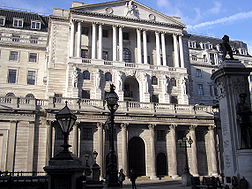
Many businesses are operated through a separate entity such as a corporation or a partnership (either formed with or without limited liability). Most legal jurisdictions allow people to organize such an entity by filing certain charter documents with the relevant Secretary of State or equivalent and complying with certain other ongoing obligations. The relationships and legal rights of shareholder
s, limited partners, or members are governed partly by the charter documents and partly by the law of the jurisdiction where the entity is organized. Generally speaking, shareholders in a corporation, limited partners in a limited partnership, and members in a limited liability company are shielded from personal liability for the debts and obligations of the entity, which is legally treated as a separate "person". This means that unless there is misconduct, the owner's own possessions are strongly protected in law if the business does not succeed.
Where two or more individuals own a business together but have failed to organize a more specialized form of vehicle, they will be treated as a general partnership. The terms of a partnership are partly governed by a partnership agreement if one is created, and partly by the law of the jurisdiction where the partnership is located. No paperwork or filing is necessary to create a partnership, and without an agreement, the relationships and legal rights of the partners will be entirely governed by the law of the jurisdiction where the partnership is located.
A single person who owns and runs a business is commonly known as a sole proprietor, whether that person owns it directly or through a formally organized entity.
A few relevant factors to consider in deciding how to operate a business include:
 Most commercial transactions are governed by a very detailed and well-established body of rules that have evolved over a very long period of time, it being the case that governing trade and commerce was a strong driving force in the creation of law and courts in Western civilization.
As for other laws that regulate or impact businesses, in many countries it is all but impossible to chronicle them all in a single reference source. There are laws governing treatment of labor and generally relations with employees, safety and protection issues (Health and Safety), anti-discrimination laws (age, gender, disabilities, race, and in some jurisdictions, sexual orientation), minimum wage laws, union
laws, workers compensation laws, and annual vacation or working hours time.
In some specialized businesses, there may also be licenses required, either due to special laws that govern entry into certain trades, occupations or professions, which may require special education, or by local governments. Professions that require special licenses range from law and medicine to flying airplanes to selling liquor to radio broadcasting to selling investment securities to selling used cars to roofing. Local jurisdictions may also require special licenses and taxes just to operate a business without regard to the type of business involved.
Some businesses are subject to ongoing special regulation. These industries include, for example, public utilities, investment securities, banking, insurance, broadcasting
, aviation
, and health care providers. Environmental regulations are also very complex and can impact many kinds of businesses in unexpected ways.
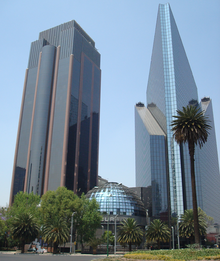 When businesses need to raise money (called 'capital
'), more laws come into play. A highly complex set of laws and regulations govern the offer and sale of investment securities (the means of raising money) in most Western countries. These regulations can require disclosure of a lot of specific financial and other information about the business and give buyers certain remedies. Because "securities" is a very broad term, most investment transactions will be potentially subject to these laws, unless a special exemption is available.
Capital may be raised through private means, by public offer (IPO) on a stock exchange
, or in many other ways. Major stock exchanges include the Shanghai Stock Exchange, Singapore Exchange, Hong Kong Stock Exchange, New York Stock Exchange
and Nasdaq
(USA), the London Stock Exchange
(UK), the Tokyo Stock Exchange
(Japan), Bombay Stock Exchange
(India) and so on. Most countries with capital markets have at least one.
Businesses that have gone "public" are subject to extremely detailed and complicated regulation about their internal governance (such as how executive officers' compensation is determined) and when and how information is disclosed to the public and their shareholders. In the United States, these regulations are primarily implemented and enforced by the United States Securities and Exchange Commission (SEC). Other Western nations have comparable regulatory bodies. The regulations are implemented and enforced by the China Securities Regulation Commission (CSRC), in China. In Singapore, the regulation authority is Monetary Authority of Singapore (MAS), and in Hong Kong, it is Securities and Futures Commission (SFC).
As noted at the beginning, it is impossible to enumerate all of the types of laws and regulations that impact on business today. In fact, these laws have become so numerous and complex, that no business lawyer can learn them all, forcing increasing specialization among corporate attorneys. It is not unheard of for teams of 5 to 10 attorneys to be required to handle certain kinds of corporate transactions, due to the sprawling nature of modern regulation. Commercial law spans general corporate law, employment and labor law, health-care law, securities law, M&A law (who specialize in acquisitions), tax law, ERISA law (ERISA in the United States governs employee benefit plans), food and drug regulatory law, intellectual property law (specializing in copyrights, patents, trademarks and such), telecommunications law, and more.
" that needs protection from competitors for the company to stay profitable. This could require patents, copyrights, trademarks or preservation of trade secrets. Most businesses have names, logos and similar branding techniques that could benefit from trademarking. Patents and copyrights in the United States are largely governed by federal law, while trade secrets and trademarking are mostly a matter of state law. Because of the nature of intellectual property, a business needs protection in every jurisdiction in which they are concerned about competitors. Many countries are signatories to international treaties
concerning intellectual property, and thus companies registered in these countries are subject to national laws bound by these treaties. In order to protect trade secrets, companies may require employees to sign non-compete clauses which will impose limitations on an employees interactions with stakeholders, and competitors.
Organization
An organization is a social group which distributes tasks for a collective goal. The word itself is derived from the Greek word organon, itself derived from the better-known word ergon - as we know `organ` - and it means a compartment for a particular job.There are a variety of legal types of...
engaged in the trade
Trade
Trade is the transfer of ownership of goods and services from one person or entity to another. Trade is sometimes loosely called commerce or financial transaction or barter. A network that allows trade is called a market. The original form of trade was barter, the direct exchange of goods and...
of goods, services, or both to consumer
Consumer
Consumer is a broad label for any individuals or households that use goods generated within the economy. The concept of a consumer occurs in different contexts, so that the usage and significance of the term may vary.-Economics and marketing:...
s. Businesses are predominant in capitalist
Capitalism
Capitalism is an economic system that became dominant in the Western world following the demise of feudalism. There is no consensus on the precise definition nor on how the term should be used as a historical category...
economies
Economy
An economy consists of the economic system of a country or other area; the labor, capital and land resources; and the manufacturing, trade, distribution, and consumption of goods and services of that area...
, where most of them are privately owned
Private property
Private property is the right of persons and firms to obtain, own, control, employ, dispose of, and bequeath land, capital, and other forms of property. Private property is distinguishable from public property, which refers to assets owned by a state, community or government rather than by...
and administered to earn profit
Profit (economics)
In economics, the term profit has two related but distinct meanings. Normal profit represents the total opportunity costs of a venture to an entrepreneur or investor, whilst economic profit In economics, the term profit has two related but distinct meanings. Normal profit represents the total...
to increase the wealth
Wealth
Wealth is the abundance of valuable resources or material possessions. The word wealth is derived from the old English wela, which is from an Indo-European word stem...
of their owners. Businesses may also be not-for-profit
Non-profit organization
Nonprofit organization is neither a legal nor technical definition but generally refers to an organization that uses surplus revenues to achieve its goals, rather than distributing them as profit or dividends...
or state-owned
Government-owned corporation
A government-owned corporation, state-owned company, state-owned entity, state enterprise, publicly owned corporation, government business enterprise, or parastatal is a legal entity created by a government to undertake commercial activities on behalf of an owner government...
. A business owned by multiple individuals may be referred to as a company
Company
A company is a form of business organization. It is an association or collection of individual real persons and/or other companies, who each provide some form of capital. This group has a common purpose or focus and an aim of gaining profits. This collection, group or association of persons can be...
, although that term also has a more precise meaning.
The etymology
Etymology
Etymology is the study of the history of words, their origins, and how their form and meaning have changed over time.For languages with a long written history, etymologists make use of texts in these languages and texts about the languages to gather knowledge about how words were used during...
of "business" relates to the state of being busy either as an individual or society as a whole, doing commercially viable and profitable work. The term "business" has at least three usages, depending on the scope — the singular usage to mean a particular organization; the generalized usage to refer to a particular market sector
Market sector
The term market sector is used in economics and finance to describe a set of businesses that are buying and selling such similar goods and services that they are in direct competition with each other...
, "the music business" and compound forms such as agribusiness
Agribusiness
In agriculture, agribusiness is a generic term for the various businesses involved in food production, including farming and contract farming, seed supply, agrichemicals, farm machinery, wholesale and distribution, processing, marketing, and retail sales....
; and the broadest meaning, which encompasses all activity by the community of suppliers of goods and services. However, the exact definition of business, like much else in the philosophy of business
Philosophy of business
The Development of management theory and philosophy considers the fundamental principles that underlie the formation and operation of a business enterprise; the nature and purpose of a business, for example, is it primarily property or a social institution; its role in society; and the moral...
, is a matter of debate and complexity of meanings.
Basic forms of ownership
Although forms of business ownership vary by jurisdictionJurisdiction
Jurisdiction is the practical authority granted to a formally constituted legal body or to a political leader to deal with and make pronouncements on legal matters and, by implication, to administer justice within a defined area of responsibility...
, there are several common forms:
- Sole proprietorship: A sole proprietorshipSole proprietorshipA sole proprietorship, also known as the sole trader or simply a proprietorship, is a type of business entity that is owned and run by one individual and in which there is no legal distinction between the owner and the business. The owner receives all profits and has unlimited responsibility for...
is a for-profit business owned by one person. The owner may operate on his or her own or may employ others. The owner of the business has unlimited liabilityLegal liabilityLegal liability is the legal bound obligation to pay debts.* In law a person is said to be legally liable when they are financially and legally responsible for something. Legal liability concerns both civil law and criminal law. See Strict liability. Under English law, with the passing of the Theft...
for the debts incurred by the business. - Partnership: A partnershipPartnershipA partnership is an arrangement where parties agree to cooperate to advance their mutual interests.Since humans are social beings, partnerships between individuals, businesses, interest-based organizations, schools, governments, and varied combinations thereof, have always been and remain commonplace...
is a for-profit business owned by two or more people. In most forms of partnerships, each partner has unlimited liability for the debts incurred by the business. The three typical classifications of partnerships are general partnershipGeneral partnershipIn the commercial and legal parlance of most countries, a general partnership or simply a partnership, refers to an association of persons or an unincorporated company with the following major features:...
s, limited partnershipLimited partnershipA limited partnership is a form of partnership similar to a general partnership, except that in addition to one or more general partners , there are one or more limited partners . It is a partnership in which only one partner is required to be a general partner.The GPs are, in all major respects,...
s, and limited liability partnershipLimited liability partnershipA limited liability partnership is a partnership in which some or all partners have limited liability. It therefore exhibits elements of partnerships and corporations. In an LLP one partner is not responsible or liable for another partner's misconduct or negligence. This is an important...
s. - Corporation: A corporationCorporationA corporation is created under the laws of a state as a separate legal entity that has privileges and liabilities that are distinct from those of its members. There are many different forms of corporations, most of which are used to conduct business. Early corporations were established by charter...
is a limited liabilityLimited liabilityLimited liability is a concept where by a person's financial liability is limited to a fixed sum, most commonly the value of a person's investment in a company or partnership with limited liability. If a company with limited liability is sued, then the plaintiffs are suing the company, not its...
business that has a separate legal personalityLegal personalityLegal personality is the characteristic of a non-human entity regarded by law to have the status of a person....
from its members. Corporations can be either government-ownedGovernment-owned corporationA government-owned corporation, state-owned company, state-owned entity, state enterprise, publicly owned corporation, government business enterprise, or parastatal is a legal entity created by a government to undertake commercial activities on behalf of an owner government...
or privately-owned, and corporations can organize either for-profit or not-for-profitNon-profit organizationNonprofit organization is neither a legal nor technical definition but generally refers to an organization that uses surplus revenues to achieve its goals, rather than distributing them as profit or dividends...
. A privately-owned, for-profit corporation is owned by shareholderShareholderA shareholder or stockholder is an individual or institution that legally owns one or more shares of stock in a public or private corporation. Shareholders own the stock, but not the corporation itself ....
s who elect a board of directorsBoard of directorsA board of directors is a body of elected or appointed members who jointly oversee the activities of a company or organization. Other names include board of governors, board of managers, board of regents, board of trustees, and board of visitors...
to direct the corporation and hire its managerial staff. A privately-owned, for-profit corporation can be either privately heldPrivately held companyA privately held company or close corporation is a business company owned either by non-governmental organizations or by a relatively small number of shareholders or company members which does not offer or trade its company stock to the general public on the stock market exchanges, but rather the...
or publicly heldPublic companyThis is not the same as a Government-owned corporation.A public company or publicly traded company is a limited liability company that offers its securities for sale to the general public, typically through a stock exchange, or through market makers operating in over the counter markets...
. - Cooperative: Often referred to as a "co-op", a cooperativeCooperativeA cooperative is a business organization owned and operated by a group of individuals for their mutual benefit...
is a limited liability business that can organize for-profit or not-for-profit. A cooperative differs from a for-profit corporation in that it has members, as opposed to shareholders, who share decision-making authority. Cooperatives are typically classified as either consumer cooperatives or worker cooperativeWorker cooperativeA worker cooperative is a cooperative owned and democratically managed by its worker-owners. This control may be exercised in a number of ways. A cooperative enterprise may mean a firm where every worker-owner participates in decision making in a democratic fashion, or it may refer to one in which...
s. Cooperatives are fundamental to the ideology of economic democracyEconomic democracyEconomic democracy is a socioeconomic philosophy that suggests a shift in decision-making power from a small minority of corporate shareholders to a larger majority of public stakeholders...
.
Classifications
- AgricultureAgricultureAgriculture is the cultivation of animals, plants, fungi and other life forms for food, fiber, and other products used to sustain life. Agriculture was the key implement in the rise of sedentary human civilization, whereby farming of domesticated species created food surpluses that nurtured the...
and miningMiningMining is the extraction of valuable minerals or other geological materials from the earth, from an ore body, vein or seam. The term also includes the removal of soil. Materials recovered by mining include base metals, precious metals, iron, uranium, coal, diamonds, limestone, oil shale, rock...
businesses are concerned with the production of raw material, such as plants or minerals. - FinancialFINANCIALFINANCIAL is the weekly English-language newspaper with offices in Tbilisi, Georgia and Kiev, Ukraine. Published by Intelligence Group LLC, FINANCIAL is focused on opinion leaders and top business decision-makers; It's about world’s largest companies, investing, careers, and small business. It is...
businesses include bankBankA bank is a financial institution that serves as a financial intermediary. The term "bank" may refer to one of several related types of entities:...
s and other companies that generate profit through investment and management of capitalCapital (economics)In economics, capital, capital goods, or real capital refers to already-produced durable goods used in production of goods or services. The capital goods are not significantly consumed, though they may depreciate in the production process...
. - Information businesses generate profits primarily from the resale of intellectual propertyIntellectual propertyIntellectual property is a term referring to a number of distinct types of creations of the mind for which a set of exclusive rights are recognized—and the corresponding fields of law...
and include movie studioMovie studioA movie studio is a term used to describe a major entertainment company or production company that has its own privately owned studio facility or facilities that are used to film movies...
s, publishers and packaged software companies. - Manufacturers produce productsProduct (business)In general, the product is defined as a "thing produced by labor or effort" or the "result of an act or a process", and stems from the verb produce, from the Latin prōdūce ' lead or bring forth'. Since 1575, the word "product" has referred to anything produced...
, from raw materialRaw materialA raw material or feedstock is the basic material from which a product is manufactured or made, frequently used with an extended meaning. For example, the term is used to denote material that came from nature and is in an unprocessed or minimally processed state. Latex, iron ore, logs, and crude...
s or component parts, which they then sell at a profit. Companies that make physical goods, such as carsCARSCars, or automobiles, motor cars, are wheeled motor vehicles used for transporting passengers.Cars or CARS may also refer to:-Entertainment:* Cars , a Disney/Pixar film series...
or pipes, are considered manufacturers. - Real estateReal estateIn general use, esp. North American, 'real estate' is taken to mean "Property consisting of land and the buildings on it, along with its natural resources such as crops, minerals, or water; immovable property of this nature; an interest vested in this; an item of real property; buildings or...
businesses generate profit from the selling, renting, and development of properties comprising landLandLand may refer to:*The part of the Earth that is not covered by water**Ecoregion*Landscape*Landform, physical feature comprises a geomorphological unit*Land , a factor of production comprising all naturally occurring resources*Land law...
, residential homeHomeA home is a place of residence or refuge. When it refers to a building, it is usually a place in which an individual or a family can rest and store personal property. Most modern-day households contain sanitary facilities and a means of preparing food. Animals have their own homes as well, either...
s, and other kinds of buildings. - RetailRetailRetail consists of the sale of physical goods or merchandise from a fixed location, such as a department store, boutique or kiosk, or by mail, in small or individual lots for direct consumption by the purchaser. Retailing may include subordinated services, such as delivery. Purchasers may be...
ers and distributorsDistribution (business)Product distribution is one of the four elements of the marketing mix. An organization or set of organizations involved in the process of making a product or service available for use or consumption by a consumer or business user.The other three parts of the marketing mix are product, pricing,...
act as middle-men in getting goods produced by manufacturers to the intended consumer, generating a profit as a result of providing sales or distribution services. Most consumer-oriented stores and catalog companies are distributors or retailers. - Service businesses offer intangible goods or services and typically generate a profit by charging for labor or other services provided to governmentGovernmentGovernment refers to the legislators, administrators, and arbitrators in the administrative bureaucracy who control a state at a given time, and to the system of government by which they are organized...
, other businesses, or consumerConsumerConsumer is a broad label for any individuals or households that use goods generated within the economy. The concept of a consumer occurs in different contexts, so that the usage and significance of the term may vary.-Economics and marketing:...
s. Organizations ranging from house decorators to consulting firms, restaurantRestaurantA restaurant is an establishment which prepares and serves food and drink to customers in return for money. Meals are generally served and eaten on premises, but many restaurants also offer take-out and food delivery services...
s, and even entertainers are types of service businesses. - TransportTransportTransport or transportation is the movement of people, cattle, animals and goods from one location to another. Modes of transport include air, rail, road, water, cable, pipeline, and space. The field can be divided into infrastructure, vehicles, and operations...
ation businesses deliver goods and individuals from location to location, generating a profit on the transportation costs. - Utilities produce public services such as electricity or sewage treatment, usually under a government charterCharterA charter is the grant of authority or rights, stating that the granter formally recognizes the prerogative of the recipient to exercise the rights specified...
.
There are many other divisions and subdivisions of businesses. The authoritative list of business types for North America is generally considered to be the North American Industry Classification System, or NAICS. The equivalent European Union list is the Statistical Classification of Economic Activities in the European Community
Statistical classification of economic activities in the European Community
The Statistical Classification of Economic Activities in the European Community , commonly referred to as NACE, is a European industry standard classification system consisting of a 6 digit code.NACE is similar in function to the SIC and NAICS systems:*Standard Industrial...
(NACE).Mill,
Management
The efficient and effective operation of a businessBusiness operations
Business operations are those ongoing recurring activities involved in the running of a business for the purpose of producing value for the stakeholders...
, and study of this subject, is called management
Management
Management in all business and organizational activities is the act of getting people together to accomplish desired goals and objectives using available resources efficiently and effectively...
. The major branches of management are financial management
Finance
"Finance" is often defined simply as the management of money or “funds” management Modern finance, however, is a family of business activity that includes the origination, marketing, and management of cash and money surrogates through a variety of capital accounts, instruments, and markets created...
, marketing management
Marketing
Marketing is the process used to determine what products or services may be of interest to customers, and the strategy to use in sales, communications and business development. It generates the strategy that underlies sales techniques, business communication, and business developments...
, human resource management
Organizational studies
Organizational studies, sometimes known as organizational science, encompass the systematic study and careful application of knowledge about how people act within organizations...
, strategic management
Strategic management
Strategic management is a field that deals with the major intended and emergent initiatives taken by general managers on behalf of owners, involving utilization of resources, to enhance the performance of firms in their external environments...
, production management
Manufacturing
Manufacturing is the use of machines, tools and labor to produce goods for use or sale. The term may refer to a range of human activity, from handicraft to high tech, but is most commonly applied to industrial production, in which raw materials are transformed into finished goods on a large scale...
, operations management
Operations management
Operations management is an area of management concerned with overseeing, designing, and redesigning business operations in the production of goods and/or services. It involves the responsibility of ensuring that business operations are efficient in terms of using as little resources as needed, and...
, service management and information technology management
Information technology management
IT management is the discipline whereby all of the technology resources of a firm are managed in accordance with its needs and priorities. These resources may include tangible investments like computer hardware, software, data, networks and data centre facilities, as well as the staffs who are...
.
Owners engage in business administration either directly or indirectly through the employment of managers. Owner managers, or hired managers administer to three component resources that constitute the business' value or worth: financial resources, capital or tangible resources, and human resources. These resources are administered to in at least five functional areas: legal contracting, manufacturing or service production, marketing, accounting, financing, and human resourcing.
Reforming State Enterprises
In recent decades, assets and enterprises that were run by various states have been modeled after business enterprises. In 2003, the People's Republic of ChinaPeople's Republic of China
China , officially the People's Republic of China , is the most populous country in the world, with over 1.3 billion citizens. Located in East Asia, the country covers approximately 9.6 million square kilometres...
reformed 80% of its state-owned enterprises and modeled them on a company-type management system. Many state institutions and enterprises in China and Russia have been transformed into joint-stock companies, with part of their shares being listed on public stock markets.
Business process management (BPM) is a holistic management approach[1] focused on aligning all aspects of an organization with the wants and needs of clients. It promotes business effectiveness and efficiency while striving for innovation, flexibility, and integration with technology. BPM attempts to improve processes continuously. It can therefore be described as a "process optimization process." It is argued that BPM enables organizations to be more efficient, more effective and more capable of change than a functionally focused, traditional hierarchical management approach.
Organization and government regulation
Most legal jurisdictionJurisdiction
Jurisdiction is the practical authority granted to a formally constituted legal body or to a political leader to deal with and make pronouncements on legal matters and, by implication, to administer justice within a defined area of responsibility...
s specify the forms of ownership that a business can take, creating a body of commercial law
Commercial law
Commercial law is the body of law that governs business and commercial transactions...
for each type.
The major factors affecting how a business is organized are usually:
- The size and scope of the business firm and its structure, management, and ownership, broadly analyzed in the theory of the firmTheory of the firmThe theory of the firm consists of a number of economic theories that describe the nature of the firm, company, or corporation, including its existence, behavior, structure, and relationship to the market.-Overview:...
. Generally a smaller business is more flexible, while larger businesses, or those with wider ownership or more formal structures, will usually tend to be organized as corporations or (less often) partnerships. In addition, a business that wishes to raise money on a stock marketStock marketA stock market or equity market is a public entity for the trading of company stock and derivatives at an agreed price; these are securities listed on a stock exchange as well as those only traded privately.The size of the world stock market was estimated at about $36.6 trillion...
or to be owned by a wide range of people will often be required to adopt a specific legal form to do so. - The sector and country. Private profit-making businesses are different from government-owned bodies. In some countries, certain businesses are legally obliged to be organized in certain ways.
- Limited Liability Companies (LLC)Limited liability companyA limited liability company is a flexible form of enterprise that blends elements of partnership and corporate structures. It is a legal form of company that provides limited liability to its owners in the vast majority of United States jurisdictions...
, limited liability partnerships, and other specific types of business organization protect their owners or shareholders from business failureBusiness failureBusiness failure refers to a company ceasing operations following its inability to make a profit or to bring in enough revenue to cover its expenses...
by doing business under a separate legal entity with certain legal protections. In contrast, unincorporated businesses or persons working on their own are usually not so protected. - Tax advantageTax advantageTax advantage refers to the economic bonus which applies to certain accounts or investments that are, by statute, tax-reduced, tax-deferred, or tax-free...
s. Different structures are treated differently in tax law, and may have advantages for this reason. - Disclosure and compliance requirements. Different business structures may be required to make less or more information public (or report it to relevant authorities), and may be bound to comply with different rules and regulations.
Many businesses are operated through a separate entity such as a corporation or a partnership (either formed with or without limited liability). Most legal jurisdictions allow people to organize such an entity by filing certain charter documents with the relevant Secretary of State or equivalent and complying with certain other ongoing obligations. The relationships and legal rights of shareholder
Shareholder
A shareholder or stockholder is an individual or institution that legally owns one or more shares of stock in a public or private corporation. Shareholders own the stock, but not the corporation itself ....
s, limited partners, or members are governed partly by the charter documents and partly by the law of the jurisdiction where the entity is organized. Generally speaking, shareholders in a corporation, limited partners in a limited partnership, and members in a limited liability company are shielded from personal liability for the debts and obligations of the entity, which is legally treated as a separate "person". This means that unless there is misconduct, the owner's own possessions are strongly protected in law if the business does not succeed.
Where two or more individuals own a business together but have failed to organize a more specialized form of vehicle, they will be treated as a general partnership. The terms of a partnership are partly governed by a partnership agreement if one is created, and partly by the law of the jurisdiction where the partnership is located. No paperwork or filing is necessary to create a partnership, and without an agreement, the relationships and legal rights of the partners will be entirely governed by the law of the jurisdiction where the partnership is located.
A single person who owns and runs a business is commonly known as a sole proprietor, whether that person owns it directly or through a formally organized entity.
A few relevant factors to consider in deciding how to operate a business include:
- General partners in a partnership (other than a limited liability partnership), plus anyone who personally owns and operates a business without creating a separate legal entity, are personally liable for the debts and obligations of the business.
- Generally, corporations are required to pay tax just like "real" people. In some tax systems, this can give rise to so-called double taxationDouble taxationDouble taxation is the systematic imposition of two or more taxes on the same income , asset , or financial transaction . It refers to taxation by two or more countries of the same income, asset or transaction, for example income paid by an entity of one country to a resident of a different country...
, because first the corporation pays tax on the profit, and then when the corporation distributes its profits to its owners, individuals have to include dividends in their income when they complete their personal tax returns, at which point a second layer of income tax is imposed. - In most countries, there are laws which treat small corporations differently than large ones. They may be exempt from certain legal filing requirements or labor laws, have simplified procedures in specialized areas, and have simplified, advantageous, or slightly different tax treatment.
- To "go public" (sometimes called IPOInitial public offeringAn initial public offering or stock market launch, is the first sale of stock by a private company to the public. It can be used by either small or large companies to raise expansion capital and become publicly traded enterprises...
) -- which basically means to allow a part of the business to be owned by a wider range of investors or the public in general—you must organize a separate entity, which is usually required to comply with a tighter set of laws and procedures. Most public entities are corporations that have sold shares, but increasingly there are also public LLCs that sell units (sometimes also called shares), and other more exotic entities as well (for example, REITs in the USA, Unit TrustUnit trustA unit trust is a form of collective investment constituted under a trust deed.Found in Australia, Ireland, the Isle of Man, Jersey, New Zealand, South Africa, Singapore, Malaysia and the UK, unit trusts offer access to a wide range of securities....
s in the UK). However, you cannot take a general partnership "public."
Commercial law
As for other laws that regulate or impact businesses, in many countries it is all but impossible to chronicle them all in a single reference source. There are laws governing treatment of labor and generally relations with employees, safety and protection issues (Health and Safety), anti-discrimination laws (age, gender, disabilities, race, and in some jurisdictions, sexual orientation), minimum wage laws, union
Trade union
A trade union, trades union or labor union is an organization of workers that have banded together to achieve common goals such as better working conditions. The trade union, through its leadership, bargains with the employer on behalf of union members and negotiates labour contracts with...
laws, workers compensation laws, and annual vacation or working hours time.
In some specialized businesses, there may also be licenses required, either due to special laws that govern entry into certain trades, occupations or professions, which may require special education, or by local governments. Professions that require special licenses range from law and medicine to flying airplanes to selling liquor to radio broadcasting to selling investment securities to selling used cars to roofing. Local jurisdictions may also require special licenses and taxes just to operate a business without regard to the type of business involved.
Some businesses are subject to ongoing special regulation. These industries include, for example, public utilities, investment securities, banking, insurance, broadcasting
Broadcasting
Broadcasting is the distribution of audio and video content to a dispersed audience via any audio visual medium. Receiving parties may include the general public or a relatively large subset of thereof...
, aviation
Aviation
Aviation is the design, development, production, operation, and use of aircraft, especially heavier-than-air aircraft. Aviation is derived from avis, the Latin word for bird.-History:...
, and health care providers. Environmental regulations are also very complex and can impact many kinds of businesses in unexpected ways.
Capital
Capital (economics)
In economics, capital, capital goods, or real capital refers to already-produced durable goods used in production of goods or services. The capital goods are not significantly consumed, though they may depreciate in the production process...
'), more laws come into play. A highly complex set of laws and regulations govern the offer and sale of investment securities (the means of raising money) in most Western countries. These regulations can require disclosure of a lot of specific financial and other information about the business and give buyers certain remedies. Because "securities" is a very broad term, most investment transactions will be potentially subject to these laws, unless a special exemption is available.
Capital may be raised through private means, by public offer (IPO) on a stock exchange
Stock exchange
A stock exchange is an entity that provides services for stock brokers and traders to trade stocks, bonds, and other securities. Stock exchanges also provide facilities for issue and redemption of securities and other financial instruments, and capital events including the payment of income and...
, or in many other ways. Major stock exchanges include the Shanghai Stock Exchange, Singapore Exchange, Hong Kong Stock Exchange, New York Stock Exchange
New York Stock Exchange
The New York Stock Exchange is a stock exchange located at 11 Wall Street in Lower Manhattan, New York City, USA. It is by far the world's largest stock exchange by market capitalization of its listed companies at 13.39 trillion as of Dec 2010...
and Nasdaq
NASDAQ
The NASDAQ Stock Market, also known as the NASDAQ, is an American stock exchange. "NASDAQ" originally stood for "National Association of Securities Dealers Automated Quotations". It is the second-largest stock exchange by market capitalization in the world, after the New York Stock Exchange. As of...
(USA), the London Stock Exchange
London Stock Exchange
The London Stock Exchange is a stock exchange located in the City of London within the United Kingdom. , the Exchange had a market capitalisation of US$3.7495 trillion, making it the fourth-largest stock exchange in the world by this measurement...
(UK), the Tokyo Stock Exchange
Tokyo Stock Exchange
The , called or TSE for short, is located in Tokyo, Japan and is the third largest stock exchange in the world by aggregate market capitalization of its listed companies...
(Japan), Bombay Stock Exchange
Bombay Stock Exchange
The Bombay Stock Exchange is a stock exchange located on Dalal Street, Mumbai and is the oldest stock exchange in Asia. The equity market capitalization of the companies listed on the BSE was 1.63 trillion as of December 2010, making it the 4th largest stock exchange in Asia and the 8th largest...
(India) and so on. Most countries with capital markets have at least one.
Businesses that have gone "public" are subject to extremely detailed and complicated regulation about their internal governance (such as how executive officers' compensation is determined) and when and how information is disclosed to the public and their shareholders. In the United States, these regulations are primarily implemented and enforced by the United States Securities and Exchange Commission (SEC). Other Western nations have comparable regulatory bodies. The regulations are implemented and enforced by the China Securities Regulation Commission (CSRC), in China. In Singapore, the regulation authority is Monetary Authority of Singapore (MAS), and in Hong Kong, it is Securities and Futures Commission (SFC).
As noted at the beginning, it is impossible to enumerate all of the types of laws and regulations that impact on business today. In fact, these laws have become so numerous and complex, that no business lawyer can learn them all, forcing increasing specialization among corporate attorneys. It is not unheard of for teams of 5 to 10 attorneys to be required to handle certain kinds of corporate transactions, due to the sprawling nature of modern regulation. Commercial law spans general corporate law, employment and labor law, health-care law, securities law, M&A law (who specialize in acquisitions), tax law, ERISA law (ERISA in the United States governs employee benefit plans), food and drug regulatory law, intellectual property law (specializing in copyrights, patents, trademarks and such), telecommunications law, and more.
Intellectual property
Businesses often have important "intellectual propertyIntellectual property
Intellectual property is a term referring to a number of distinct types of creations of the mind for which a set of exclusive rights are recognized—and the corresponding fields of law...
" that needs protection from competitors for the company to stay profitable. This could require patents, copyrights, trademarks or preservation of trade secrets. Most businesses have names, logos and similar branding techniques that could benefit from trademarking. Patents and copyrights in the United States are largely governed by federal law, while trade secrets and trademarking are mostly a matter of state law. Because of the nature of intellectual property, a business needs protection in every jurisdiction in which they are concerned about competitors. Many countries are signatories to international treaties
Treaty
A treaty is an express agreement under international law entered into by actors in international law, namely sovereign states and international organizations. A treaty may also be known as an agreement, protocol, covenant, convention or exchange of letters, among other terms...
concerning intellectual property, and thus companies registered in these countries are subject to national laws bound by these treaties. In order to protect trade secrets, companies may require employees to sign non-compete clauses which will impose limitations on an employees interactions with stakeholders, and competitors.
See also
|
Company A company is a form of business organization. It is an association or collection of individual real persons and/or other companies, who each provide some form of capital. This group has a common purpose or focus and an aim of gaining profits. This collection, group or association of persons can be... Corporate law Corporate law is the study of how shareholders, directors, employees, creditors, and other stakeholders such as consumers, the community and the environment interact with one another. Corporate law is a part of a broader companies law... Corporation A corporation is created under the laws of a state as a separate legal entity that has privileges and liabilities that are distinct from those of its members. There are many different forms of corporations, most of which are used to conduct business. Early corporations were established by charter... Cooperative A cooperative is a business organization owned and operated by a group of individuals for their mutual benefit... Cost overrun A cost overrun, also known as a cost increase or budget overrun, is an unexpected cost incurred in excess of a budgeted amount due to an under-estimation of the actual cost during budgeting... Economics Economics is the social science that analyzes the production, distribution, and consumption of goods and services. The term economics comes from the Ancient Greek from + , hence "rules of the house"...
Electronic commerce Electronic commerce, commonly known as e-commerce, eCommerce or e-comm, refers to the buying and selling of products or services over electronic systems such as the Internet and other computer networks. However, the term may refer to more than just buying and selling products online...
Entrepreneurship Entrepreneurship is the act of being an entrepreneur, which can be defined as "one who undertakes innovations, finance and business acumen in an effort to transform innovations into economic goods". This may result in new organizations or may be part of revitalizing mature organizations in response... Finance "Finance" is often defined simply as the management of money or “funds” management Modern finance, however, is a family of business activity that includes the origination, marketing, and management of cash and money surrogates through a variety of capital accounts, instruments, and markets created...
Franchising Franchising is the practice of using another firm's successful business model. The word 'franchise' is of anglo-French derivation - from franc- meaning free, and is used both as a noun and as a verb.... |
Human resources Human resources is a term used to describe the individuals who make up the workforce of an organization, although it is also applied in labor economics to, for example, business sectors or even whole nations... Industry Industry refers to the production of an economic good or service within an economy.-Industrial sectors:There are four key industrial economic sectors: the primary sector, largely raw material extraction industries such as mining and farming; the secondary sector, involving refining, construction,... Insurance In law and economics, insurance is a form of risk management primarily used to hedge against the risk of a contingent, uncertain loss. Insurance is defined as the equitable transfer of the risk of a loss, from one entity to another, in exchange for payment. An insurer is a company selling the... Intellectual property Intellectual property is a term referring to a number of distinct types of creations of the mind for which a set of exclusive rights are recognized—and the corresponding fields of law... Interim management Interim Management is the temporary provision of management resources and skills. Interim management can be seen as the short-term assignment of a proven heavyweight interim executive manager to manage a period of transition, crisis or change within an organization. In this situation, a permanent... International trade International trade is the exchange of capital, goods, and services across international borders or territories. In most countries, such trade represents a significant share of gross domestic product... Investment Investment has different meanings in finance and economics. Finance investment is putting money into something with the expectation of gain, that upon thorough analysis, has a high degree of security for the principal amount, as well as security of return, within an expected period of time... Job creation program Job Creation Programs are programs or projects undertaken by a government of a nation to assist unemployed members of the population in securing employment. A cornerstone of Keynesian economics, they are especially common during time of high unemployment... Labour economics Labor economics seeks to understand the functioning and dynamics of the market for labor. Labor markets function through the interaction of workers and employers... Limited liability Limited liability is a concept where by a person's financial liability is limited to a fixed sum, most commonly the value of a person's investment in a company or partnership with limited liability. If a company with limited liability is sued, then the plaintiffs are suing the company, not its... Management Management in all business and organizational activities is the act of getting people together to accomplish desired goals and objectives using available resources efficiently and effectively... Manufacturing Manufacturing is the use of machines, tools and labor to produce goods for use or sale. The term may refer to a range of human activity, from handicraft to high tech, but is most commonly applied to industrial production, in which raw materials are transformed into finished goods on a large scale... |
Marketing Marketing is the process used to determine what products or services may be of interest to customers, and the strategy to use in sales, communications and business development. It generates the strategy that underlies sales techniques, business communication, and business developments...
Money Money is any object or record that is generally accepted as payment for goods and services and repayment of debts in a given country or socio-economic context. The main functions of money are distinguished as: a medium of exchange; a unit of account; a store of value; and, occasionally in the past,... Organizational studies Organizational studies, sometimes known as organizational science, encompass the systematic study and careful application of knowledge about how people act within organizations... Profit (disambiguation) Profit may refer to:* Profit , the difference between the purchase price and the costs of bringing to market* Profit , has two related but distinct meanings: Normal profit and Economic profit... Partnership A partnership is an arrangement where parties agree to cooperate to advance their mutual interests.Since humans are social beings, partnerships between individuals, businesses, interest-based organizations, schools, governments, and varied combinations thereof, have always been and remain commonplace... Real estate In general use, esp. North American, 'real estate' is taken to mean "Property consisting of land and the buildings on it, along with its natural resources such as crops, minerals, or water; immovable property of this nature; an interest vested in this; an item of real property; buildings or... Renewable energy Renewable energy is energy which comes from natural resources such as sunlight, wind, rain, tides, and geothermal heat, which are renewable . About 16% of global final energy consumption comes from renewables, with 10% coming from traditional biomass, which is mainly used for heating, and 3.4% from... Small business A small business is a business that is privately owned and operated, with a small number of employees and relatively low volume of sales. Small businesses are normally privately owned corporations, partnerships, or sole proprietorships... Sole proprietorship A sole proprietorship, also known as the sole trader or simply a proprietorship, is a type of business entity that is owned and run by one individual and in which there is no legal distinction between the owner and the business. The owner receives all profits and has unlimited responsibility for... Strategic management Strategic management is a field that deals with the major intended and emergent initiatives taken by general managers on behalf of owners, involving utilization of resources, to enhance the performance of firms in their external environments... Strategic planning Strategic planning is an organization's process of defining its strategy, or direction, and making decisions on allocating its resources to pursue this strategy. In order to determine the direction of the organization, it is necessary to understand its current position and the possible avenues... Trade name A trade name, also known as a trading name or a business name, is the name which a business trades under for commercial purposes, although its registered, legal name, used for contracts and other formal situations, may be another.... |