

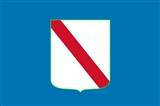
Campania

Encyclopedia
Campania is a region
in southern Italy. The region has a population of around 5.8 million people, making it the second-most-populous region of Italy; its total area of 13,590 km² makes it the most densely populated region in the country. Located on the Italian Peninsula
, with the Tyrrhenian Sea
to the west, it includes the small Flegrean Islands
and Capri
for administration as part of the region.
Throughout much of its history Campania has been at the centre of Western civilisation
's most significant entities. The area was colonised by Ancient Greeks and was within Magna Græcia, until the Roman Republic
began to dominate. During the Roman era the area was highly respected as a place of culture by the emperors, where it balanced Greco-Roman culture. The area had many duchies
and principalities during the Middle Ages
, in the hands of the Byzantine Empire
and some Lombards
.
It was under the Normans
that the smaller independent states were brought together as part of a sizable European kingdom, known as the Kingdom of Sicily
, before the mainland broke away to form the Kingdom of Naples
. It was during this period that especially elements of Spanish
, French
and Aragon
ese culture touched Campania. Later the area became the central part of the Two Sicilies under the Bourbons
, until the Italian unification
of 1860 when it became part of the new state Italy
.
The capital city of Campania is Naples
. Campania is rich in culture, especially in regards to gastronomy
, music
, architecture
, archeological and ancient sites such as Pompeii
, Herculaneum
and Paestum
. The name of Campania itself is derived from Latin
, as the Romans
knew the region as Campania felix, which translates into English as "fertile countryside
". The rich natural sights of Campania make it highly important in the tourism
industry, especially along the Amalfi Coast
, Mount Vesuvius
and the island of Capri
.
. Campania is famous for its gulfs (Naples, Salerno and Policastro) as well as for three islands (Capri
, Ischia
and Procida
).
Four other regions border Campania; Lazio to the northwest, Molise
to the north, Apulia
(Puglia) to the northeast and Basilicata
to the east.
The mountainous interior is fragmented into several massif
s, rarely reaching 2,000 metres (Miltetto of 2,050 m), whereas close to the coast there are volcanic massifs: Vesuvio (1,277 m) and Campi Flegrei
.
The climate is typically Mediterranean
along the coast, whereas in the inner zones it is more continental, with low temperatures in winter. 51% of the total area is hilly, 34% mountainous and the remaining 15% is made up of plains. There is a high 'seismic' risk in the area of the region.
.jpg) The original inhabitants of Campania were three defined groups of the Ancient peoples of Italy, who all spoke the Oscan language
The original inhabitants of Campania were three defined groups of the Ancient peoples of Italy, who all spoke the Oscan language
which is part of the Italic family
; their names were the Osci
, the Aurunci
and the Ausones
. During the 8th century BC, people from Euboea
in Greece
known as Cumae
ans began to establish colonies
in the area roughly around the modern day province of Naples
. Another Oscan tribe, the Samnites
, had moved from central Italy
down into Campania. Since the Samnites were more warlike than the civilised Campanians, they easily took over the cities of Capua
and Cumae, in the area which was one of the most prosperous and fertile in the Italian Peninsula
at the time. During the 340s BC, the Samnites were engaging in warfare with the Roman Republic
in a dispute known as the Samnite Wars
, with the Romans securing rich pastures of northern Campania during the First Samnite War
.
The major remaining independent Greek settlement was Neapolis
, and when the town was eventually captured by the Samnites
, the Neapolitans were in need of help. However, Philip II of Macedon
(father of Alexander the Great), the major Greek leader of the time, was busy fighting further east, so the Neapolitans could not look to the Greeks for assistance. This left them with no other option than to call on the Romans
, with whom they established an alliance, setting off the Second Samnite War. The Roman consul
Quintus Publilius Filo recaptured Neapolis by 326 BC
and allowed it to remain a Greek city with some autonomy as a civitas
foederata while strongly aligned with Rome. The Second Samnite War ended with the Romans controlling southern Campania and additional regions further to the south.
by the end of the 4th century BC. It was highly valued for its useful pastures and rich countryside. Its Greek language
and customs made it a centre of Hellenistic civilization
, creating the first traces of Greco-Roman culture. The Romans
had established power on the entire Italian Peninsula. However, the Pyrrhic War
and the rebellion of the major Magna Græcia cities under Pyrrhus of Epirus
in the south brought unrest. A battle took place in Campania at Maleventum
in which the Romans, led by consul Curius Dentatus
, were victorious. They renamed the city Beneventum (modern day Benevento
), which grew in stature until it was second only to Capua in southern Italy. During the Second Punic War
in 216 BC
, Capua saw an opportunity to levy for more power. The city demanded complete equality of power with the Romans. When that demand was rejected, Capua allied with Carthage
against Rome. The rebellious Capuans were isolated from the rest of Campania, which remained loyal allies of Rome. Naples
, for example, forced Hannibal to flee without ever having set foot in the city due to the imposing walls. Capua was eventually starved into submission in the Roman retaking of 211 BC
, and the Romans were victorious in the overall wars.
The rest of Campania, with the exception of Naples, adopted the Latin language as official and was Romanised. As part of the Roman Empire
, it was a comfortable period for Campania who, with Latium
, formed the most important region of the Augustan
divisions of Italia; Campania was one of the main areas for grainery. The powerful Roman Emperor
s chose Campania as an ideal holiday destination, amongst them Claudius
and Tiberius
, the latter of whom is infamously linked to the island of Capri
. It was also during this period that Christianity
came to Campania. Two of the apostles
, St. Peter
and St. Paul, are said to have preached in the city of Naples, and there were also several martyr
s during this time. Unfortunately, the period of relative calm was violently interrupted by the epic eruption of Mount Vesuvius
in 79 which buried the cities of Pompeii
and Herculaneum
. With the Decline of the Roman Empire
, its last emperor, Romulus Augustus
, was put in a manor house
prison near Castel dell'Ovo
, Naples, in 467, ushering in the beginning of the Dark Ages and a period of uncertainty in regards to the future of the area.
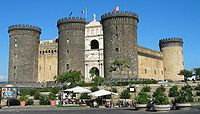 After a period as a Norman kingdom, the Kingdom of Sicily
was passed on to the Hohenstaufens who were a highly powerful Germanic royal house
of Swabia
n origins. The University of Naples Federico II
was founded by Frederick II
in the city, the oldest state university in the world, making Naples the intellectual centre of the kingdom. Conflict between the Hohenstaufen house and the Papacy, led in 1266 to Pope Innocent IV
crowning Angevin Dynasty
duke Charles I as the king of the kingdom: Charles officially moved the capital from Palermo to Naples where he resided at the Castel Nuovo
. During this period much Gothic architecture
sprang up around Naples, including the Naples Cathedral, which is the main church of the city.
In 1281, with the advent of the Sicilian Vespers
, the kingdom split in half. The Angevin Kingdom of Naples
included the southern part of the Italian peninsula, while the island of Sicily
became the Aragonese
Kingdom of Sicily
. The wars continued until the peace of Caltabellotta
in 1302, which saw Frederick III
recognised as king of the Isle of Sicily, while Charles II
was recognised as the king of Naples by Pope Boniface VIII
. Despite the split, Naples grew in importance, attracting Pisan
and Genoese
merchants, Tuscan
bankers, and with them some of the most championed Renaissance
artists of the time, such as Boccaccio
, Petrarch
and Giotto
. Alfonso I
conquered Naples after his victory against the last Angevin
king, René
, Naples was unified for a brief period with Sicily again.
 Sicily and Naples were separated in 1458 but remained as dependencies of Aragon
under Ferrante
. The new dynasty enhanced Naples' commerce by establishing relations with the Iberian peninsula
. Naples also became a centre of the Renaissance, with artists such as Laurana
, da Messina
, Sannazzaro and Poliziano
arriving in the city. During 1501 Naples became under direct rule from France
at the time of Louis XII
, as Neapolitan king Frederick
was taken as a prisoner to France; this lasted only four years. Spain
won Naples at the Battle of Garigliano
and, as a result, Naples became under direct rule as part of the Spanish Empire
throughout the entire Habsburg Spain
period. The Spanish sent viceroy
s to Naples to directly deal with local issues: the most important of which was Pedro Álvarez de Toledo
, who was responsible for considerable social, economic and urban progress in the city; he also supported the Inquisition
.
During this period Naples became Europe's second largest city after only Paris
. It was a cultural powerhouse during the Baroque
era as home to artists including Caravaggio
, Rosa
and Bernini
, philosophers such as Telesio
, Bruno
, Campanella
and Vico
, and writers such as Battista Marino. A revolution led by local fisherman
Masaniello
saw the creation of a brief independent Neapolitan Republic
, though this last only a few months before Spanish rule was regained. Finally, by 1714, the Spanish ceased to rule Naples as a result of the War of the Spanish Succession
; it was the Austria
n Charles VI
who ruled from Vienna
, similarly with viceroys. However, the
War of the Polish Succession
saw the Spanish regain Sicily and Naples as part of a personal union
, which in the Treaty of Vienna
were recognised as independent under a cadet branch
of the Spanish Bourbons
in 1738 under Charles VII
.
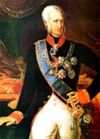 During the time of Ferdinand IV
, the French Revolution
made its way to Naples: Horatio Nelson, an ally of the Bourbons, even arrived in the city in 1798 to warn against it. However, Ferdinand was forced to retreat and fled to Palermo
, where he was protected by a British fleet
. Naples' lower classes
(the lazzaroni
) were pious and Royalist
, favouring the Bourbons; in the mêlée that followed, they fought the Neapolitan pro-Republican
aristocracy, causing a civil war
. The Republicans conquered Castel Sant'Elmo and proclaimed a Parthenopaean Republic
, secured by the French Army
. A counter-revolutionary religious army of lazzaroni under Fabrizio Ruffo
was raised; they had great success and the French surrendered the Neapolitan castles and were allowed to sail back to Toulon
.
Ferdinand IV was restored as king; however, after only seven years Napoleon
conquered the kingdom and instated Bonapartist kings including his brother Joseph Bonaparte
. With the help of the Austrian Empire
and allies, the Bonapartists were defeated in the Neapolitan War
and Bourbon Ferdinand IV once again regained the throne and the kingdom. The Congress of Vienna
in 1815 saw the kingdoms of Naples and Sicily combined to form the Two Sicilies, with Naples as the capital city. Naples became the first city on the Italian peninsula to have a railway in 1839, there were many factories throughout the kingdom making it a highly important trade centre.
of this sector represents around 6.5% of the total value added of the region, equalling €213.7 million. Campania produces, furthermore, over 50% of Italy's nuts and is also the leader in the production of tomatoes, which reaches 1.5 million tonnes a year. A weak point however for the region's agriculture is the very reduced size of farms, equal to 3.53 hectares. Animal breeding
is widespread (it was done in 70,278 farms in 2000) and the milk produced is used to process typical products such as mozzarella
. Olive trees
cover over 74,604 hectares of the agricultural land and contribute by €620.6 million to the value added of agriculture, together with the production of fruit. Wine production has increased, together with the quality of the wine.
The region has a dense network of road and motorways, a system of maritime connections and an airport (Naples Airport
), which connect it rapidly to the rest of the Country. Campania has a series of historical problems and internal contrasts, although they are improving. The regional capital, Naples, one of the most populated and interesting cities in Italy, rich in history and natural beauty, both artistic and archaeological, still represents the centre of regional life. The port connects the region with the whole Mediterranean basin
, and brings tourists, as well as to the archaeological site
s, to the cities of art (Naples and Caserta), to the beautiful coastal areas and to the islands. The services sector makes up for 78% of the region's gross domestic product.
Unlike central and northern Italy
, in the last decade the region of Campania has not attracted large numbers of immigrants. The Italian national institute of statistics ISTAT
estimated in January 2007 that 98,052 foreign-born immigrants live in Campania, equal to only 1.7% of the total regional population. Part of the reason for this is in recent times, there have been more employment opportunities in northern regions than in the Southern Italian regions.
, takes place in a framework of a presidential
representative democracy
, whereby the President of Regional Government is the head of government
, and of a pluriform multi-party system
. Executive power
is exercised by the Regional Government. Legislative power is vested in both the government and the Regional Council.
The Regional Council of Campania (Consiglio Regionale della Campania) is composed of 60 members, of which 47 are elected in provincial constituencies with proportional representation
, 12 from the so-called "regional list" of the elected President and the last one is for the candidate for President who comes second, who usually becomes the leader of the opposition in the Council. If a coalition wins more than 55% of the vote, only 6 candidates from the "regional list" will be elected and the number of those elected in provincial constituencies will be 53.
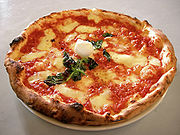
in its modern aspect and taste was conceived in Naples. Historical and original pizzas from Naples are pizza fritta (fried pizza); Calzone
(literally "trouser leg"), which is pizza fritta stuffed with ricotta
cheese; pizza Marinara (pizza seamans' style), with just olive oil
, tomato sauce
and garlic; and pizza Margherita, with olive oil, tomato sauce, mozzarella cheese and basil
leaves. Spaghetti
is also a well-known dish from southern Italy and Campania. Neapolitans were among the first Europeans to use tomatoes not only as ornamental plant
, but also as food and garnish.
 Campania produces wines and is likewise known for its cheeses, including Lacryma Christi
, Fiano, Aglianico
, Greco di Tufo, Pere 'e palomma, Ischitano, Taburno, Solopaca
, and Taurasi
. The cheeses of Campania consist of Mozzarella di Bufala (buffalo mozzarella) (mozzarella made from buffalo milk), fiordilatte ("flower of milk") a mozzarella made from cow's milk
, ricotta
from sheep or buffalo milk, provolone
from cow milk, and caciotta
made from goat milk. Buffalo are bred in Salerno
and Caserta
.
Several different cakes and pies are made in Campania. Pastiera
pie is made during Easter
. Casatiello and tortano are Easter bread-cakes made by adding lard or oil and various types of cheese to bread dough and garnishing it with slices of salami
. Babà
cake is a well known Neapolitan delicacy, best served with Rum
or limoncello
(a liqueur invented in the Sorrento peninsula
). It is an old Austria
n cake which arrived in Campania during Austrian domination of the Kingdom of Naples
and was modified there to became a "walking cake" for citizens always in a hurry for work and other pursuits. Sfogliatella is another cake from the Amalfi Coast
, which is beginning to be known worldwide, as is Zeppole
, which is traditionally eaten on Saint Joseph
's day. Struffoli
, little balls fried dough
dipped in honey
, are enjoyed during the Christmas holidays.
Another well-known Campanian dish is the so-called Russian salad
(which is based on similar dishes from France
), made of potatoes in mayonnaise
garnished with shrimp
and vegetables in vinegar. Russians call this same dish Olivier Salad, and Germans call it Italian salad. Another French-derived dish is "gattò" or "gateau di patate" (oven-baked pie made of boiled potatoes). As with the Russian salad
, Campania is home to other seafood-based dishes, such as "insalata di mare" (seafood salad), "zuppa di polpo" (octopus soup), and "zuppa di cozze" (mussel soup), are popular. Other regional seafood dishes include "frittelle di mare" (fritters with seaweed), made with edible poseidonia
algae, "triglie al cartoccio" (red mullet in the bag), and "alici marinate" (fresh anchovies in olive oil). The island of Ischia is famous for its fish dishes, as well as for cooked rabbit. Campania is home to the beautiful and tasty lemons of Sorrento
, which were much loved by German writer Johann Wolfgang von Goethe: "Kennst du das Land, wo die Zitronen blühn?" ("Do you know the land where the lemon-trees bloom?), Goethe, Mignon. Rapini
(or Broccoli rabe), known locally as friarielli, is often used in Campanian cooking. Campania also produces many nuts, especially in the area of Salerno and Benevento. Campanian cuisine varies within the region. While Neapolitan dishes center around seafood, Casertan and Aversana rely more on fresh vegetables and cheeses. The cuisine from Sorrento combines the culinary traditions from both Naples and Salerno.
of Elea, now Velia
, in Campania came the philosophers of the Pre-Socratic philosophy
school, Parmenides
and Zeno of Elea
, who came to prominence around 490-480 BC. Zeno was famous for his paradoxes
and called by Aristotle
the inventor of the dialectic
. The Latin
poet Virgilius (70 BC–19 BC) loved Campania so much that he decided to settle in Naples. Many parts of his epic poem
and immortal masterpiece Aeneid
are located in Campania. Ancient scientist Plinius Pliny the elder
who wrote a "Naturalis Historia" ("Pliny's History of the Nature") studied the Mount Vesuvius and was poisoned and killed by gas emitted from the volcano during the famous eruption in 79 AD. His nephew Pliny the younger
described the eruption and the death of his uncle in a famous letter to one of his friends.
In Naples in 476 AD, Romulus Augustus
, the last emperor of the Western Roman Empire
, died as a prisoner of the German general Odoacer
. In the Middle Ages
, the artist Giotto made some frescoes in Castel Nuovo
. These works of art were subsequently destroyed by an earthquake.
By the end of the Middle Ages, the medical school
of Salerno
, which combined ancient Roman and Greek medicine
with Arab medicine, was known throughout Europe and its methods were adopted across the continent. Some have suggested that this may have been one of the first universities in Europe. Boccaccio
, the Tuscan poet, visited Naples on various occasions, and in the Decameron
described it as a dissolute city. He also wrote a love story involving a noble woman close to the King of Naples.
 In 1570, the famous writer Cervantes
, who wrote the romance novel
"Don Quixote", served as a Spanish soldier for a period in Naples and said that it was the most beautiful city he had ever visited. Poet Torquato Tasso
author of the epic poem la "Gerusalemme Liberata
" was born in Sorrento in 1575. Years earlier in 1558, The first modern description and studies of the "camera obscura" ("dark chamber"), are firmly established in Italy with the availability of Giovanni Battista della Porta in its masterpiece Magiae Naturalis, ("Natural Magic
"). These studies then led to the first photo cameras in 1850 circa by French scientists Niepce and Daguerre.
Philosopher Giordano Bruno
was born in Nola
. He was the first to theorize infinite suns and infinite worlds in the universe. He was burnt in Rome
by Spanish Inquisition
in 1600. Later, in 1606 ca. the famous painter Caravaggio
established his studio in Naples. Famous Italian architect Cosimo Fanzago
from Bergamo
decided to live his life in Naples.
In the 18th century Naples was the last city to be visited by philosophers who created the "Grand Tour" which was the big touring voyage to visit all the important cultural sites of the European continent. Italian architect Luigi Vanvitelli
son of Dutch
architect Kaspar van Wittel build the Kingdom Palace in Caserta
in 1750 circa. He contributed to the construction of many neoclassic-style
palaces in which the nobles of Naples spent their holidays. These palaces are now known worldwide as "Ville Vesuviane".
Raimondo di Sangro
, prince of Sansevero, was a scientist and one of the last alchemists. Around this time, German writer Goethe visited Campania and Naples in 1786 and was amazed by the beauty of it. German archaeologist Johann Joachim Winckelmann
also visited Naples, Paestum, Herculaneum and Pompeii in 1748 and later, studying how where conducted acheological surveys in kingdom of Naples. He was one of the first to study drawings, statues, stones, and ancient burned scrolls made of papyrus found in the excavations of city of Herculaneum. His masterpiece, the "Geschichte der Kunst des Alterthums" ("History of Ancient Art"), published in 1764, was soon recognized as a significant contribution to European literature
. Archaeological excavations in Pompeii were initiated by King Charles III of Naples in 1748. He issued the first modern laws in Europe to protect, defend and preserve archaeological sites. There were famous Neapolitan musicians of that period including Niccolò Antonio Zingarelli
and Giovanni Paisiello
.
The musician Rossini lived many years in Naples, where he wrote numerous compositions. Italian poet and writer Giacomo Leopardi
established his home in Naples and Torre del Greco
lived there at the end of his young brief life. It was there that he wrote the Ode to the Ginestra
flower. He died in Naples in 1837. The first volcano observatory
, the Vesuvius Observatory
, was founded in Naples in 1841. Geologist Giuseppe Mercalli
, born in Milan
in 1850, was one of the most famous directors of Vesuvius Observatory.
British statesman William Ewart Gladstone
(1809–98), exposed in newspaper articles the horrors of the prison system
of the Kingdom of Naples in the mid-19th century. His pamphlets gave enormous help to the cause of re-unification of Italy
in 1861 and increase notheworthy his reputation in homeland, as representative of the British Parliament
to be then elected as Prime Minister. It was later discovered that he never visited any Neapolitan prison, neither investigated upon that jail system. He simply reported voices and wannabe testimoniances. These articles, containing a long list of absurd lies and propagandistic inventions, and probably were made to support invasion and annexion of the Kingdom of the Two Sicilies by the Kingdom of Sardinia
(Piedmont), with the following foundation of modern Italy. French writer Alexandre Dumas, père
was directly involved in the process of re-unification of Italy, and sojourned two or three years in Naples, where he wrote many historical novel
s regarding that city. He was also a known newspaper correspondent. Francesco de Sanctis, writer, literate, politician and two times Minister of Instructions after re-unification of Italy in 1861, was born in Morra De Sanctis
near Benevento.
German scientist Anton Dohrn
founded in Naples the first public aquarium in the world and laboratory of study of the sea known as Maritime Zoological Station. Also famous is Astronomic Observatory of Capodimonte founded by King Gioacchino Murat general of French emperor Napoleon
in 1816. The observatory it is now the site hosts the Italian Laboratory of Astrophisics. Doctors and surgeons Antonio Cardarelli
, and Giuseppe Moscati
were ensign representatives of the medicine studies in Naples. Their lives was an example for all city and the entire nation.
, Federico Cortese
, Domenico Morelli
, Saverio Altamura, Giuseppe De Nittis
, Vincenzo Gemito
, Antonio Mancini
, Raffaello Pagliaccetti.
Amongst the painters who inspired directly these schools, we remember Salvator Rosa
, Pierre Jacques-Antoine Volaire who became famous for his gouaches, Anton Sminck van Pitloo
who preferred to live his remaining life in Naples.
The world renowned opera singer Enrico Caruso was also a native of Naples.
In Capri
lived for a certain time the Russian revolutionary leader Vladimir I. Lenin.
From Naples came the mathematician Renato Caccioppoli
, nephew of Russian anarchic revolutionary Michael Bakunin. Born in 1904 he committed suicide
in 1959. His life was represented in a movie "Morte di un matematico napoletano
" ("Death of a neapolitan mathematician") by Mario Martone
in 1992.
The first President of the Italian Republic
in 1946 (with a pro-tempore mandate of six months) was lawyer Enrico De Nicola
from the city of Torre del Greco
. He was famous for his studies regarding the Constitutions. Campania is also home to former Prime Minister
and 6th President of the Republic Giovanni Leone
, as well as the current (11th) President, Giorgio Napolitano
.
The 20th century's best known philosopher and literate in Naples was Benedetto Croce
, famous for his studies in aesthetics
, ethics
, logic
, economy
, history
, politics
.
Famous Neapolitan artists, actors, playwrights, and showmen were Eduardo De Filippo
worldwide known for its theatre works such as "Filumena Marturano
" (filumena), and "Questi fantasmi" (a.k.a. "Souls of Naples)", Peppino De Filippo
and their sister Titina De Filippo
.
The prince Antonio de Curtis
was one of the most important comedians in Naples in the 20th century. Known around the world by his art nickname of Totò
he worked with Pier Paolo Pasolini
in the movie "Uccellacci e uccellini". He is also known for the song "Malafemmena".
Pop artist Andy Warhol
created two famous paintings of Irpinia
Earthquake of 1980: Fate presto and Vesuvius. Both originals are hosted in the exhibit Terrae Motus in King's Palace of Caserta
.
Oscar–winning actress Sophia Loren
grew up in Pozzuoli
.
Oscar and David
-winning film producer Dino De Laurentiis
was born in Torre Annunziata
. One of his grandchildren is Food Network
personality Giada De Laurentiis
.
Recent Campanian writers are Curzio Malaparte
and Domenico Rea.
Recent Campanian actors and directors are Francesco Rosi
, Iaia Forte, Pappi Corsicato, Teresa De Sio
, Lello Arena, Award winning actor Massimo Troisi
, Award winning director Gabriele Salvatores
.
Recent and modern Italian singers and musicians from Campania are Peppino di Capri
, Renato Carosone
, Edoardo Bennato
, Eugenio Bennato Mario Merola
, Sergio Bruni, Aurelio Fierro
, Roberto Murolo, E.A. Mario, Eugenio Bennato Tony Tammaro
, Teresa De Sio
, Eduardo De Crescenzo, Alan Sorrenti
, Jenni Sorrenti, Toni Esposito, Tullio De Piscopo
, Gigi Finizio, Massimo Ranieri
, Pino Daniele
, James Senese and his group Napoli Centrale
, Enzo Avitabile
, Enzo Gragnaniello, Maria Nazionale, Nino D'Angelo
, Gigi D'Alessio
, the music groups of 99 Posse
, Almamegretta
, Bisca, 24 Grana la "Nuova Compagnia di Canto Popolare".
Well known and deservers its place in the history of music
it is the music genre called neapolitan song. Famous worldwide are O sole mio (a.k.a. "It's Now or Never
"), Funiculì, Funiculà
, O Surdato nnamurato, Torna a Surriento
, Guapparia, Santa Lucia
Reginella, Marechiaro, Spingule Francese.
Even singers and music directors who do not have Campanian origins wrote Neapolitan songs Paolo Conte
, Lucio Dalla
, or adapted it to English, like Elvis Presley
or Bryan Adams
. There are some who perhaps just played neapolitan songs, such as for example Mia Martini
or Domenico Modugno
. Lyric artists Luciano Pavarotti
, Plácido Domingo
and Andrea Bocelli
performed it various times.
There are also famous film artists who directed movies about Naples or actors who played famous movies in Campania, or even interpreted famous Neapolitans on-screen, including directors and actors Vittorio De Sica
, Nanni Loi, Domenico Modugno
, Renzo Arbore
, Lina Wertmüller
, Mario Lanza
as "Caruso", Clark Gable
in "It Started in Naples
", Jack Lemmon
in the movies "Avanti!
" and "Maccheroni" (a.k.a."Macaroni
") played together with Marcello Mastroianni
.
, volleyball, and more recently for basketball and tennis.
The school of swords in Naples is the oldest in the country and the only in Italy in which a swordsman could acquire the title of "master of swords" and then teach the art of fence.
The sail clubs in Naples "Circolo Savoia" and "Canottieri Napoli" are both very ancient in Italy and famous for their regattas, and are also home for the main water polo teams.
Many sailors from Naples and Campania participate as crew to "America's Cup
" sailing competition.
In Castellammare di Stabia
were born the Giuseppe Abbagnale
and Carmine Abbagnale
brothers four times rowing
world champions and Olympic
gold medal
ists.
>
Regions of Italy
The regions of Italy are the first-level administrative divisions of the state, constituting its first NUTS administrative level. There are twenty regions, of which five are constitutionally given a broader amount of autonomy granted by special statutes....
in southern Italy. The region has a population of around 5.8 million people, making it the second-most-populous region of Italy; its total area of 13,590 km² makes it the most densely populated region in the country. Located on the Italian Peninsula
Italian Peninsula
The Italian Peninsula or Apennine Peninsula is one of the three large peninsulas of Southern Europe , spanning from the Po Valley in the north to the central Mediterranean Sea in the south. The peninsula's shape gives it the nickname Lo Stivale...
, with the Tyrrhenian Sea
Tyrrhenian Sea
The Tyrrhenian Sea is part of the Mediterranean Sea off the western coast of Italy.-Geography:The sea is bounded by Corsica and Sardinia , Tuscany, Lazio, Campania, Basilicata and Calabria and Sicily ....
to the west, it includes the small Flegrean Islands
Flegrean Islands
thumb|250px|Procida and, in the background, Ischia, seen from [[Cape Miseno]].The Flegrean Islands are an archipelago in southern Italy, comprising the islands of Ischia, Procida, Vivara, Capri and Nisida....
and Capri
Capri
Capri is an Italian island in the Tyrrhenian Sea off the Sorrentine Peninsula, on the south side of the Gulf of Naples, in the Campania region of Southern Italy...
for administration as part of the region.
Throughout much of its history Campania has been at the centre of Western civilisation
Western culture
Western culture, sometimes equated with Western civilization or European civilization, refers to cultures of European origin and is used very broadly to refer to a heritage of social norms, ethical values, traditional customs, religious beliefs, political systems, and specific artifacts and...
's most significant entities. The area was colonised by Ancient Greeks and was within Magna Græcia, until the Roman Republic
Roman Republic
The Roman Republic was the period of the ancient Roman civilization where the government operated as a republic. It began with the overthrow of the Roman monarchy, traditionally dated around 508 BC, and its replacement by a government headed by two consuls, elected annually by the citizens and...
began to dominate. During the Roman era the area was highly respected as a place of culture by the emperors, where it balanced Greco-Roman culture. The area had many duchies
Duchy
A duchy is a territory, fief, or domain ruled by a duke or duchess.Some duchies were sovereign in areas that would become unified realms only during the Modern era . In contrast, others were subordinate districts of those kingdoms that unified either partially or completely during the Medieval era...
and principalities during the Middle Ages
Middle Ages
The Middle Ages is a periodization of European history from the 5th century to the 15th century. The Middle Ages follows the fall of the Western Roman Empire in 476 and precedes the Early Modern Era. It is the middle period of a three-period division of Western history: Classic, Medieval and Modern...
, in the hands of the Byzantine Empire
Byzantine Empire
The Byzantine Empire was the Eastern Roman Empire during the periods of Late Antiquity and the Middle Ages, centred on the capital of Constantinople. Known simply as the Roman Empire or Romania to its inhabitants and neighbours, the Empire was the direct continuation of the Ancient Roman State...
and some Lombards
Lombards
The Lombards , also referred to as Longobards, were a Germanic tribe of Scandinavian origin, who from 568 to 774 ruled a Kingdom in Italy...
.
It was under the Normans
Normans
The Normans were the people who gave their name to Normandy, a region in northern France. They were descended from Norse Viking conquerors of the territory and the native population of Frankish and Gallo-Roman stock...
that the smaller independent states were brought together as part of a sizable European kingdom, known as the Kingdom of Sicily
Kingdom of Sicily
The Kingdom of Sicily was a state that existed in the south of Italy from its founding by Roger II in 1130 until 1816. It was a successor state of the County of Sicily, which had been founded in 1071 during the Norman conquest of southern Italy...
, before the mainland broke away to form the Kingdom of Naples
Kingdom of Naples
The Kingdom of Naples, comprising the southern part of the Italian peninsula, was the remainder of the old Kingdom of Sicily after secession of the island of Sicily as a result of the Sicilian Vespers rebellion of 1282. Known to contemporaries as the Kingdom of Sicily, it is dubbed Kingdom of...
. It was during this period that especially elements of Spanish
Spain
Spain , officially the Kingdom of Spain languages]] under the European Charter for Regional or Minority Languages. In each of these, Spain's official name is as follows:;;;;;;), is a country and member state of the European Union located in southwestern Europe on the Iberian Peninsula...
, French
France
The French Republic , The French Republic , The French Republic , (commonly known as France , is a unitary semi-presidential republic in Western Europe with several overseas territories and islands located on other continents and in the Indian, Pacific, and Atlantic oceans. Metropolitan France...
and Aragon
Aragon
Aragon is a modern autonomous community in Spain, coextensive with the medieval Kingdom of Aragon. Located in northeastern Spain, the Aragonese autonomous community comprises three provinces : Huesca, Zaragoza, and Teruel. Its capital is Zaragoza...
ese culture touched Campania. Later the area became the central part of the Two Sicilies under the Bourbons
House of Bourbon
The House of Bourbon is a European royal house, a branch of the Capetian dynasty . Bourbon kings first ruled Navarre and France in the 16th century. By the 18th century, members of the Bourbon dynasty also held thrones in Spain, Naples, Sicily, and Parma...
, until the Italian unification
Italian unification
Italian unification was the political and social movement that agglomerated different states of the Italian peninsula into the single state of Italy in the 19th century...
of 1860 when it became part of the new state Italy
Italy
Italy , officially the Italian Republic languages]] under the European Charter for Regional or Minority Languages. In each of these, Italy's official name is as follows:;;;;;;;;), is a unitary parliamentary republic in South-Central Europe. To the north it borders France, Switzerland, Austria and...
.
The capital city of Campania is Naples
Naples
Naples is a city in Southern Italy, situated on the country's west coast by the Gulf of Naples. Lying between two notable volcanic regions, Mount Vesuvius and the Phlegraean Fields, it is the capital of the region of Campania and of the province of Naples...
. Campania is rich in culture, especially in regards to gastronomy
Gastronomy
Gastronomy is the art or science of food eating. Also, it can be defined as the study of food and culture, with a particular focus on gourmet cuisine...
, music
Music
Music is an art form whose medium is sound and silence. Its common elements are pitch , rhythm , dynamics, and the sonic qualities of timbre and texture...
, architecture
Architecture
Architecture is both the process and product of planning, designing and construction. Architectural works, in the material form of buildings, are often perceived as cultural and political symbols and as works of art...
, archeological and ancient sites such as Pompeii
Pompeii
The city of Pompeii is a partially buried Roman town-city near modern Naples in the Italian region of Campania, in the territory of the comune of Pompei. Along with Herculaneum, Pompeii was destroyed and completely buried during a long catastrophic eruption of the volcano Mount Vesuvius spanning...
, Herculaneum
Herculaneum
Herculaneum was an ancient Roman town destroyed by volcanic pyroclastic flows in AD 79, located in the territory of the current commune of Ercolano, in the Italian region of Campania in the shadow of Mt...
and Paestum
Paestum
Paestum is the classical Roman name of a major Graeco-Roman city in the Campania region of Italy. It is located in the north of Cilento, near the coast about 85 km SE of Naples in the province of Salerno, and belongs to the commune of Capaccio, officially also named...
. The name of Campania itself is derived from Latin
Latin
Latin is an Italic language originally spoken in Latium and Ancient Rome. It, along with most European languages, is a descendant of the ancient Proto-Indo-European language. Although it is considered a dead language, a number of scholars and members of the Christian clergy speak it fluently, and...
, as the Romans
Ancient Rome
Ancient Rome was a thriving civilization that grew on the Italian Peninsula as early as the 8th century BC. Located along the Mediterranean Sea and centered on the city of Rome, it expanded to one of the largest empires in the ancient world....
knew the region as Campania felix, which translates into English as "fertile countryside
Rural
Rural areas or the country or countryside are areas that are not urbanized, though when large areas are described, country towns and smaller cities will be included. They have a low population density, and typically much of the land is devoted to agriculture...
". The rich natural sights of Campania make it highly important in the tourism
Tourism
Tourism is travel for recreational, leisure or business purposes. The World Tourism Organization defines tourists as people "traveling to and staying in places outside their usual environment for not more than one consecutive year for leisure, business and other purposes".Tourism has become a...
industry, especially along the Amalfi Coast
Amalfi Coast
-In popular culture:The Amalfi Coast is a popular destination among tourists. It was featured in "Positano," a short story written by American author John Steinbeck in 1953...
, Mount Vesuvius
Mount Vesuvius
Mount Vesuvius is a stratovolcano in the Gulf of Naples, Italy, about east of Naples and a short distance from the shore. It is the only volcano on the European mainland to have erupted within the last hundred years, although it is not currently erupting...
and the island of Capri
Capri
Capri is an Italian island in the Tyrrhenian Sea off the Sorrentine Peninsula, on the south side of the Gulf of Naples, in the Campania region of Southern Italy...
.
Geography
Campania has an area of 13,595 sq km and a coastline of 350 km on the Tyrrhenian SeaTyrrhenian Sea
The Tyrrhenian Sea is part of the Mediterranean Sea off the western coast of Italy.-Geography:The sea is bounded by Corsica and Sardinia , Tuscany, Lazio, Campania, Basilicata and Calabria and Sicily ....
. Campania is famous for its gulfs (Naples, Salerno and Policastro) as well as for three islands (Capri
Capri
Capri is an Italian island in the Tyrrhenian Sea off the Sorrentine Peninsula, on the south side of the Gulf of Naples, in the Campania region of Southern Italy...
, Ischia
Ischia
Ischia is a volcanic island in the Tyrrhenian Sea. It lies at the northern end of the Gulf of Naples, about 30 km from the city of Naples. It is the largest of the Phlegrean Islands. Roughly trapezoidal in shape, it measures around 10 km east to west and 7 km north to south and has...
and Procida
Procida
Procida is one of the Flegrean Islands off the coast of Naples in southern Italy. The island is between Cape Miseno and the island of Ischia. With its tiny satellite island of Vivara, it is a comune of the province of Naples, in the region of Campania. The population is about ten...
).
Four other regions border Campania; Lazio to the northwest, Molise
Molise
Molise is a region of Southern Italy, the second smallest of the regions. It was formerly part of the region of Abruzzi e Molise and now a separate entity...
to the north, Apulia
Apulia
Apulia is a region in Southern Italy bordering the Adriatic Sea in the east, the Ionian Sea to the southeast, and the Strait of Òtranto and Gulf of Taranto in the south. Its most southern portion, known as Salento peninsula, forms a high heel on the "boot" of Italy. The region comprises , and...
(Puglia) to the northeast and Basilicata
Basilicata
Basilicata , also known as Lucania, is a region in the south of Italy, bordering on Campania to the west, Apulia to the north and east, and Calabria to the south, having one short southwestern coastline on the Tyrrhenian Sea between Campania in the northwest and Calabria in the southwest, and a...
to the east.
The mountainous interior is fragmented into several massif
Massif
In geology, a massif is a section of a planet's crust that is demarcated by faults or flexures. In the movement of the crust, a massif tends to retain its internal structure while being displaced as a whole...
s, rarely reaching 2,000 metres (Miltetto of 2,050 m), whereas close to the coast there are volcanic massifs: Vesuvio (1,277 m) and Campi Flegrei
Campi Flegrei
The Phlegraean Fields, also known as Campi Flegrei, , is a large wide caldera situated to the west of Naples, Italy. It was declared a regional park in 2003. Lying mostly underwater, the area comprises 24 craters and volcanic edifices. Hydrothermal activity can be observed at Lucrino, Agnano and...
.
The climate is typically Mediterranean
Mediterranean climate
A Mediterranean climate is the climate typical of most of the lands in the Mediterranean Basin, and is a particular variety of subtropical climate...
along the coast, whereas in the inner zones it is more continental, with low temperatures in winter. 51% of the total area is hilly, 34% mountainous and the remaining 15% is made up of plains. There is a high 'seismic' risk in the area of the region.
Ancient tribes and Samnite Wars
Oscan language
Oscan is a term used to describe both an extinct language of southern Italy and the language group to which it belonged.The Oscan language was spoken by a number of tribes, including the Samnites, the Aurunci, the Sidicini, and the Ausones. The latter three tribes were often grouped under the name...
which is part of the Italic family
Italic languages
The Italic subfamily is a member of the Indo-European language family. It includes the Romance languages derived from Latin , and a number of extinct languages of the Italian Peninsula, including Umbrian, Oscan, Faliscan, and Latin.In the past various definitions of "Italic" have prevailed...
; their names were the Osci
Osci
The Osci , were an Italic people of Campania and Latium adiectum during Roman times. They spoke the Oscan language, also spoken by the Samnites of Southern Italy. Although the language of the Samnites was called Oscan, the Samnites were never called Osci, or the Osci Samnites...
, the Aurunci
Aurunci
The Aurunci were an Italic population which lived in southern Italy from around the 1st millennium BC. Of Indo-European origin, their language belonged to the Oscan group...
and the Ausones
Ausones
The Ausones were an ancient Italic tribe settled in the southern part of Italy. Often confused with the Aurunci, they share with them only a probably common origin.-History:...
. During the 8th century BC, people from Euboea
Euboea
Euboea is the second largest Greek island in area and population, after Crete. The narrow Euripus Strait separates it from Boeotia in mainland Greece. In general outline it is a long and narrow, seahorse-shaped island; it is about long, and varies in breadth from to...
in Greece
Greece
Greece , officially the Hellenic Republic , and historically Hellas or the Republic of Greece in English, is a country in southeastern Europe....
known as Cumae
Cumae
Cumae is an ancient Greek settlement lying to the northwest of Naples in the Italian region of Campania. Cumae was the first Greek colony on the mainland of Italy , and the seat of the Cumaean Sibyl...
ans began to establish colonies
Colony
In politics and history, a colony is a territory under the immediate political control of a state. For colonies in antiquity, city-states would often found their own colonies. Some colonies were historically countries, while others were territories without definite statehood from their inception....
in the area roughly around the modern day province of Naples
Province of Naples
The Province of Naples is a province in the Campania region of Italy. Its capital city is Naples, within the province there are 92 Comuni of the Province of Naples.-Demographics:...
. Another Oscan tribe, the Samnites
Samnium
Samnium is a Latin exonym for a region of south or south and central Italy in Roman times. The name survives in Italian today, but today's territory comprising it is only a small portion of what it once was. The populations of Samnium were called Samnites by the Romans...
, had moved from central Italy
Central Italy
Central Italy is one of the five official statistical regions of Italy used by the National Institute of Statistics , a first level NUTS region and a European Parliament constituency...
down into Campania. Since the Samnites were more warlike than the civilised Campanians, they easily took over the cities of Capua
Capua
Capua is a city and comune in the province of Caserta, Campania, southern Italy, situated 25 km north of Naples, on the northeastern edge of the Campanian plain. Ancient Capua was situated where Santa Maria Capua Vetere is now...
and Cumae, in the area which was one of the most prosperous and fertile in the Italian Peninsula
Italian Peninsula
The Italian Peninsula or Apennine Peninsula is one of the three large peninsulas of Southern Europe , spanning from the Po Valley in the north to the central Mediterranean Sea in the south. The peninsula's shape gives it the nickname Lo Stivale...
at the time. During the 340s BC, the Samnites were engaging in warfare with the Roman Republic
Roman Republic
The Roman Republic was the period of the ancient Roman civilization where the government operated as a republic. It began with the overthrow of the Roman monarchy, traditionally dated around 508 BC, and its replacement by a government headed by two consuls, elected annually by the citizens and...
in a dispute known as the Samnite Wars
Samnite Wars
The First, Second, and Third Samnite Wars, between the early Roman Republic and the tribes of Samnium, extended over half a century, involving almost all the states of Italy, and ended in Roman domination of the Samnites...
, with the Romans securing rich pastures of northern Campania during the First Samnite War
Samnite Wars
The First, Second, and Third Samnite Wars, between the early Roman Republic and the tribes of Samnium, extended over half a century, involving almost all the states of Italy, and ended in Roman domination of the Samnites...
.
The major remaining independent Greek settlement was Neapolis
Naples
Naples is a city in Southern Italy, situated on the country's west coast by the Gulf of Naples. Lying between two notable volcanic regions, Mount Vesuvius and the Phlegraean Fields, it is the capital of the region of Campania and of the province of Naples...
, and when the town was eventually captured by the Samnites
Capture of Neapolis
-The Spark to the Second Samnite War:The Romans confronted the Samnites in the middle of the Liris river valley, sparking the Second, or Great Samnite War , which lasted twenty years....
, the Neapolitans were in need of help. However, Philip II of Macedon
Philip II of Macedon
Philip II of Macedon "friend" + ἵππος "horse" — transliterated ; 382 – 336 BC), was a king of Macedon from 359 BC until his assassination in 336 BC. He was the father of Alexander the Great and Philip III.-Biography:...
(father of Alexander the Great), the major Greek leader of the time, was busy fighting further east, so the Neapolitans could not look to the Greeks for assistance. This left them with no other option than to call on the Romans
Roman Republic
The Roman Republic was the period of the ancient Roman civilization where the government operated as a republic. It began with the overthrow of the Roman monarchy, traditionally dated around 508 BC, and its replacement by a government headed by two consuls, elected annually by the citizens and...
, with whom they established an alliance, setting off the Second Samnite War. The Roman consul
Consul
Consul was the highest elected office of the Roman Republic and an appointive office under the Empire. The title was also used in other city states and also revived in modern states, notably in the First French Republic...
Quintus Publilius Filo recaptured Neapolis by 326 BC
326 BC
Year 326 BC was a year of the pre-Julian Roman calendar. At the time, it was known as the Year of the Consulship of Visolus and Cursor...
and allowed it to remain a Greek city with some autonomy as a civitas
Civitas
In the history of Rome, the Latin term civitas , according to Cicero in the time of the late Roman Republic, was the social body of the cives, or citizens, united by law . It is the law that binds them together, giving them responsibilities on the one hand and rights of citizenship on the other...
foederata while strongly aligned with Rome. The Second Samnite War ended with the Romans controlling southern Campania and additional regions further to the south.
Roman period
Campania was a full-fledged part of the Roman RepublicRoman Republic
The Roman Republic was the period of the ancient Roman civilization where the government operated as a republic. It began with the overthrow of the Roman monarchy, traditionally dated around 508 BC, and its replacement by a government headed by two consuls, elected annually by the citizens and...
by the end of the 4th century BC. It was highly valued for its useful pastures and rich countryside. Its Greek language
Greek language
Greek is an independent branch of the Indo-European family of languages. Native to the southern Balkans, it has the longest documented history of any Indo-European language, spanning 34 centuries of written records. Its writing system has been the Greek alphabet for the majority of its history;...
and customs made it a centre of Hellenistic civilization
Hellenistic civilization
Hellenistic civilization represents the zenith of Greek influence in the ancient world from 323 BCE to about 146 BCE...
, creating the first traces of Greco-Roman culture. The Romans
Roman Empire
The Roman Empire was the post-Republican period of the ancient Roman civilization, characterised by an autocratic form of government and large territorial holdings in Europe and around the Mediterranean....
had established power on the entire Italian Peninsula. However, the Pyrrhic War
Pyrrhic War
The Pyrrhic War was a complex series of battles and shifting political alliances among the Greeks , Romans, the Italian peoples , and the CarthaginiansThe Pyrrhic War initially started as a minor conflict between Rome and the city of Tarentum over a naval...
and the rebellion of the major Magna Græcia cities under Pyrrhus of Epirus
Pyrrhus of Epirus
Pyrrhus or Pyrrhos was a Greek general and statesman of the Hellenistic era. He was king of the Greek tribe of Molossians, of the royal Aeacid house , and later he became king of Epirus and Macedon . He was one of the strongest opponents of early Rome...
in the south brought unrest. A battle took place in Campania at Maleventum
Maleventum
:For the italian city, originally named "Maleventum", see: Benevento....
in which the Romans, led by consul Curius Dentatus
Curius Dentatus
Manius Curius Dentatus , son of Manius, was a three-time consul and a plebeian hero of the Roman Republic, noted for ending the Samnite War. According to Pliny, he was born with teeth, thus earning the cognomen Dentatus, "Toothy."...
, were victorious. They renamed the city Beneventum (modern day Benevento
Benevento
Benevento is a town and comune of Campania, Italy, capital of the province of Benevento, 50 km northeast of Naples. It is situated on a hill 130 m above sea-level at the confluence of the Calore Irpino and Sabato...
), which grew in stature until it was second only to Capua in southern Italy. During the Second Punic War
Second Punic War
The Second Punic War, also referred to as The Hannibalic War and The War Against Hannibal, lasted from 218 to 201 BC and involved combatants in the western and eastern Mediterranean. This was the second major war between Carthage and the Roman Republic, with the participation of the Berbers on...
in 216 BC
216 BC
Year 216 BC was a year of the pre-Julian Roman calendar. At the time it was known as the Year of the Consulship of Varro and Paullus...
, Capua saw an opportunity to levy for more power. The city demanded complete equality of power with the Romans. When that demand was rejected, Capua allied with Carthage
Carthage
Carthage , implying it was a 'new Tyre') is a major urban centre that has existed for nearly 3,000 years on the Gulf of Tunis, developing from a Phoenician colony of the 1st millennium BC...
against Rome. The rebellious Capuans were isolated from the rest of Campania, which remained loyal allies of Rome. Naples
Naples
Naples is a city in Southern Italy, situated on the country's west coast by the Gulf of Naples. Lying between two notable volcanic regions, Mount Vesuvius and the Phlegraean Fields, it is the capital of the region of Campania and of the province of Naples...
, for example, forced Hannibal to flee without ever having set foot in the city due to the imposing walls. Capua was eventually starved into submission in the Roman retaking of 211 BC
Battle of Capua (211 BC)
The Second Battle of Capua was fought in 211 BC when the Romans besieged Capua. It is described by Polybius at 9.4-7, and by Livy at 26.4-6.Hannibal tried to break the siege of Capua by marching on Rome. He had hoped that this threat would force the Romans to break off the siege and march back to...
, and the Romans were victorious in the overall wars.
The rest of Campania, with the exception of Naples, adopted the Latin language as official and was Romanised. As part of the Roman Empire
Roman Empire
The Roman Empire was the post-Republican period of the ancient Roman civilization, characterised by an autocratic form of government and large territorial holdings in Europe and around the Mediterranean....
, it was a comfortable period for Campania who, with Latium
Latium
Lazio is one of the 20 administrative regions of Italy, situated in the central peninsular section of the country. With about 5.7 million residents and a GDP of more than 170 billion euros, Lazio is the third most populated and the second richest region of Italy...
, formed the most important region of the Augustan
Augustus
Augustus ;23 September 63 BC – 19 August AD 14) is considered the first emperor of the Roman Empire, which he ruled alone from 27 BC until his death in 14 AD.The dates of his rule are contemporary dates; Augustus lived under two calendars, the Roman Republican until 45 BC, and the Julian...
divisions of Italia; Campania was one of the main areas for grainery. The powerful Roman Emperor
Roman Emperor
The Roman emperor was the ruler of the Roman State during the imperial period . The Romans had no single term for the office although at any given time, a given title was associated with the emperor...
s chose Campania as an ideal holiday destination, amongst them Claudius
Claudius
Claudius , was Roman Emperor from 41 to 54. A member of the Julio-Claudian dynasty, he was the son of Drusus and Antonia Minor. He was born at Lugdunum in Gaul and was the first Roman Emperor to be born outside Italy...
and Tiberius
Tiberius
Tiberius , was Roman Emperor from 14 AD to 37 AD. Tiberius was by birth a Claudian, son of Tiberius Claudius Nero and Livia Drusilla. His mother divorced Nero and married Augustus in 39 BC, making him a step-son of Octavian...
, the latter of whom is infamously linked to the island of Capri
Capri
Capri is an Italian island in the Tyrrhenian Sea off the Sorrentine Peninsula, on the south side of the Gulf of Naples, in the Campania region of Southern Italy...
. It was also during this period that Christianity
Christianity
Christianity is a monotheistic religion based on the life and teachings of Jesus as presented in canonical gospels and other New Testament writings...
came to Campania. Two of the apostles
Apostle (Christian)
The term apostle is derived from Classical Greek ἀπόστολος , meaning one who is sent away, from στέλλω + από . The literal meaning in English is therefore an "emissary", from the Latin mitto + ex...
, St. Peter
Saint Peter
Saint Peter or Simon Peter was an early Christian leader, who is featured prominently in the New Testament Gospels and the Acts of the Apostles. The son of John or of Jonah and from the village of Bethsaida in the province of Galilee, his brother Andrew was also an apostle...
and St. Paul, are said to have preached in the city of Naples, and there were also several martyr
Martyr
A martyr is somebody who suffers persecution and death for refusing to renounce, or accept, a belief or cause, usually religious.-Meaning:...
s during this time. Unfortunately, the period of relative calm was violently interrupted by the epic eruption of Mount Vesuvius
Mount Vesuvius
Mount Vesuvius is a stratovolcano in the Gulf of Naples, Italy, about east of Naples and a short distance from the shore. It is the only volcano on the European mainland to have erupted within the last hundred years, although it is not currently erupting...
in 79 which buried the cities of Pompeii
Pompeii
The city of Pompeii is a partially buried Roman town-city near modern Naples in the Italian region of Campania, in the territory of the comune of Pompei. Along with Herculaneum, Pompeii was destroyed and completely buried during a long catastrophic eruption of the volcano Mount Vesuvius spanning...
and Herculaneum
Herculaneum
Herculaneum was an ancient Roman town destroyed by volcanic pyroclastic flows in AD 79, located in the territory of the current commune of Ercolano, in the Italian region of Campania in the shadow of Mt...
. With the Decline of the Roman Empire
Decline of the Roman Empire
The decline of the Roman Empire refers to the gradual societal collapse of the Western Roman Empire. Many theories of causality prevail, but most concern the disintegration of political, economic, military, and other social institutions, in tandem with foreign invasions and usurpers from within the...
, its last emperor, Romulus Augustus
Romulus Augustus
Romulus Augustus , was the last Western Roman Emperor, reigning from 31 October 475 until 4 September 476...
, was put in a manor house
Manor house
A manor house is a country house that historically formed the administrative centre of a manor, the lowest unit of territorial organisation in the feudal system in Europe. The term is applied to country houses that belonged to the gentry and other grand stately homes...
prison near Castel dell'Ovo
Castel dell'Ovo
Castel dell'Ovo is a castle located on the former island of Megaride, now a peninsula, on the gulf of Naples...
, Naples, in 467, ushering in the beginning of the Dark Ages and a period of uncertainty in regards to the future of the area.
Feudalism in the Middle Ages
Norman to Angevin
Kingdom of Sicily
The Kingdom of Sicily was a state that existed in the south of Italy from its founding by Roger II in 1130 until 1816. It was a successor state of the County of Sicily, which had been founded in 1071 during the Norman conquest of southern Italy...
was passed on to the Hohenstaufens who were a highly powerful Germanic royal house
Royal House
A royal house or royal dynasty consists of at least one, but usually more monarchs who are related to one another, as well as their non-reigning descendants and spouses. Monarchs of the same realm who are not related to one another are usually deemed to belong to different houses, and each house is...
of Swabia
Swabia
Swabia is a cultural, historic and linguistic region in southwestern Germany.-Geography:Like many cultural regions of Europe, Swabia's borders are not clearly defined...
n origins. The University of Naples Federico II
University of Naples Federico II
The University of Naples Federico II is a university located in Naples, Italy. It was founded in 1224 and is organized into 13 faculties. It is the world's oldest state university and one of the oldest academic institutions in continuous operation...
was founded by Frederick II
Frederick II, Holy Roman Emperor
Frederick II , was one of the most powerful Holy Roman Emperors of the Middle Ages and head of the House of Hohenstaufen. His political and cultural ambitions, based in Sicily and stretching through Italy to Germany, and even to Jerusalem, were enormous...
in the city, the oldest state university in the world, making Naples the intellectual centre of the kingdom. Conflict between the Hohenstaufen house and the Papacy, led in 1266 to Pope Innocent IV
Pope Innocent IV
Pope Innocent IV , born Sinibaldo Fieschi, was pope from June 25, 1243 until his death in 1254.-Early life:...
crowning Angevin Dynasty
Capetian House of Anjou
The Capetian House of Anjou, also known as the House of Anjou-Sicily and House of Anjou-Naples, was a royal house and cadet branch of the direct House of Capet. Founded by Charles I of Sicily, a son of Louis VIII of France, the Capetian king first ruled the Kingdom of Sicily during the 13th century...
duke Charles I as the king of the kingdom: Charles officially moved the capital from Palermo to Naples where he resided at the Castel Nuovo
Castel Nuovo
Castel Nuovo , often called Maschio Angioino, is a medieval castle in the city of Naples, southern Italy. It is the main symbol of the architecture of the city...
. During this period much Gothic architecture
Gothic architecture
Gothic architecture is a style of architecture that flourished during the high and late medieval period. It evolved from Romanesque architecture and was succeeded by Renaissance architecture....
sprang up around Naples, including the Naples Cathedral, which is the main church of the city.
In 1281, with the advent of the Sicilian Vespers
Sicilian Vespers
The Sicilian Vespers is the name given to the successful rebellion on the island of Sicily that broke out on the Easter of 1282 against the rule of the French/Angevin king Charles I, who had ruled the Kingdom of Sicily since 1266. Within six weeks three thousand French men and women were slain by...
, the kingdom split in half. The Angevin Kingdom of Naples
Kingdom of Naples
The Kingdom of Naples, comprising the southern part of the Italian peninsula, was the remainder of the old Kingdom of Sicily after secession of the island of Sicily as a result of the Sicilian Vespers rebellion of 1282. Known to contemporaries as the Kingdom of Sicily, it is dubbed Kingdom of...
included the southern part of the Italian peninsula, while the island of Sicily
Sicily
Sicily is a region of Italy, and is the largest island in the Mediterranean Sea. Along with the surrounding minor islands, it constitutes an autonomous region of Italy, the Regione Autonoma Siciliana Sicily has a rich and unique culture, especially with regard to the arts, music, literature,...
became the Aragonese
Crown of Aragon
The Crown of Aragon Corona d'Aragón Corona d'Aragó Corona Aragonum controlling a large portion of the present-day eastern Spain and southeastern France, as well as some of the major islands and mainland possessions stretching across the Mediterranean as far as Greece...
Kingdom of Sicily
Kingdom of Sicily
The Kingdom of Sicily was a state that existed in the south of Italy from its founding by Roger II in 1130 until 1816. It was a successor state of the County of Sicily, which had been founded in 1071 during the Norman conquest of southern Italy...
. The wars continued until the peace of Caltabellotta
Peace of Caltabellotta
The Peace of Caltabellotta, signed on 31 August, 1302, was the last of a series of treaties, including those of Tarascon and Anagni, designed to end the conflict between the Houses of Anjou and Barcelona for ascendancy in the Mediterranean and especially Sicily and the Mezzogiorno.The peace divided...
in 1302, which saw Frederick III
Frederick III of Sicily
Frederick II was the regent and subsequently King of Sicily from 1295 until his death. He was the third son of Peter III of Aragon and served in the War of the Sicilian Vespers on behalf of his father and brothers, Alfonso and James...
recognised as king of the Isle of Sicily, while Charles II
Charles II of Naples
Charles II, known as "the Lame" was King of Naples, King of Albania, Prince of Salerno, Prince of Achaea and Count of Anjou.-Biography:...
was recognised as the king of Naples by Pope Boniface VIII
Pope Boniface VIII
Pope Boniface VIII , born Benedetto Gaetani, was Pope of the Catholic Church from 1294 to 1303. Today, Boniface VIII is probably best remembered for his feuds with Dante, who placed him in the Eighth circle of Hell in his Divina Commedia, among the Simonists.- Biography :Gaetani was born in 1235 in...
. Despite the split, Naples grew in importance, attracting Pisan
Republic of Pisa
The Republic of Pisa was a de facto independent state centered on the Tuscan city of Pisa during the late tenth and eleventh centuries. It rose to become an economic powerhouse, a commercial center whose merchants dominated Mediterranean and Italian trade for a century before being surpassed and...
and Genoese
Republic of Genoa
The Most Serene Republic of Genoa |Ligurian]]: Repúbrica de Zêna) was an independent state from 1005 to 1797 in Liguria on the northwestern Italian coast, as well as Corsica from 1347 to 1768, and numerous other territories throughout the Mediterranean....
merchants, Tuscan
Tuscany
Tuscany is a region in Italy. It has an area of about 23,000 square kilometres and a population of about 3.75 million inhabitants. The regional capital is Florence ....
bankers, and with them some of the most championed Renaissance
Italian Renaissance
The Italian Renaissance began the opening phase of the Renaissance, a period of great cultural change and achievement in Europe that spanned the period from the end of the 13th century to about 1600, marking the transition between Medieval and Early Modern Europe...
artists of the time, such as Boccaccio
Giovanni Boccaccio
Giovanni Boccaccio was an Italian author and poet, a friend, student, and correspondent of Petrarch, an important Renaissance humanist and the author of a number of notable works including the Decameron, On Famous Women, and his poetry in the Italian vernacular...
, Petrarch
Petrarch
Francesco Petrarca , known in English as Petrarch, was an Italian scholar, poet and one of the earliest humanists. Petrarch is often called the "Father of Humanism"...
and Giotto
Giotto di Bondone
Giotto di Bondone , better known simply as Giotto, was an Italian painter and architect from Florence in the late Middle Ages...
. Alfonso I
Alfonso V of Aragon
Alfonso the Magnanimous KG was the King of Aragon , Valencia , Majorca, Sardinia and Corsica , and Sicily and Count of Barcelona from 1416 and King of Naples from 1442 until his death...
conquered Naples after his victory against the last Angevin
Capetian House of Anjou
The Capetian House of Anjou, also known as the House of Anjou-Sicily and House of Anjou-Naples, was a royal house and cadet branch of the direct House of Capet. Founded by Charles I of Sicily, a son of Louis VIII of France, the Capetian king first ruled the Kingdom of Sicily during the 13th century...
king, René
René I of Naples
René of Anjou , also known as René I of Naples and Good King René , was Duke of Anjou, Count of Provence , Count of Piedmont, Duke of Bar , Duke of Lorraine , King of Naples , titular King of Jerusalem...
, Naples was unified for a brief period with Sicily again.
Aragonese to Bourbon
Crown of Aragon
The Crown of Aragon Corona d'Aragón Corona d'Aragó Corona Aragonum controlling a large portion of the present-day eastern Spain and southeastern France, as well as some of the major islands and mainland possessions stretching across the Mediterranean as far as Greece...
under Ferrante
Ferdinand I of Naples
Ferdinand I , also called Don Ferrante, was the King of Naples from 1458 to 1494. He was the natural son of Alfonso V of Aragon by Giraldona Carlino.-Biography:...
. The new dynasty enhanced Naples' commerce by establishing relations with the Iberian peninsula
Iberian Peninsula
The Iberian Peninsula , sometimes called Iberia, is located in the extreme southwest of Europe and includes the modern-day sovereign states of Spain, Portugal and Andorra, as well as the British Overseas Territory of Gibraltar...
. Naples also became a centre of the Renaissance, with artists such as Laurana
Francesco Laurana
Francesco Laurana, also known as Francesco de la Vrana was a Dalmatian-born sculptor and medallist. He is considered as both Croatian and Italian sculptor.-Life and works:...
, da Messina
Antonello da Messina
Antonello da Messina, properly Antonello di Giovanni di Antonio was an Italian painter from Messina, Sicily, active during the Italian Renaissance...
, Sannazzaro and Poliziano
Poliziano
Angelo Ambrogini, commonly known by his nickname, anglicized as Politian, Italian Poliziano, Latin Politianus was an Italian Renaissance classical scholar and poet, one of the revivers of Humanist Latin...
arriving in the city. During 1501 Naples became under direct rule from France
Ancien Régime in France
The Ancien Régime refers primarily to the aristocratic, social and political system established in France from the 15th century to the 18th century under the late Valois and Bourbon dynasties...
at the time of Louis XII
Louis XII of France
Louis proved to be a popular king. At the end of his reign the crown deficit was no greater than it had been when he succeeded Charles VIII in 1498, despite several expensive military campaigns in Italy. His fiscal reforms of 1504 and 1508 tightened and improved procedures for the collection of taxes...
, as Neapolitan king Frederick
Frederick IV of Naples
Frederick IV , sometimes known as Frederick I or Federico d'Aragona, was the last King of Naples of the House of Trastámara, ruling from 1496 to 1501...
was taken as a prisoner to France; this lasted only four years. Spain
Spain
Spain , officially the Kingdom of Spain languages]] under the European Charter for Regional or Minority Languages. In each of these, Spain's official name is as follows:;;;;;;), is a country and member state of the European Union located in southwestern Europe on the Iberian Peninsula...
won Naples at the Battle of Garigliano
Battle of Garigliano (1503)
The Battle of Garigliano was fought on December 29, 1503 between a Spanish army under Gonzalo Fernández de Córdoba and a French army commanded by Ludovico II, Marquis of Saluzzo.-Preliminary phase:...
and, as a result, Naples became under direct rule as part of the Spanish Empire
Spanish Empire
The Spanish Empire comprised territories and colonies administered directly by Spain in Europe, in America, Africa, Asia and Oceania. It originated during the Age of Exploration and was therefore one of the first global empires. At the time of Habsburgs, Spain reached the peak of its world power....
throughout the entire Habsburg Spain
Habsburg Spain
Habsburg Spain refers to the history of Spain over the 16th and 17th centuries , when Spain was ruled by the major branch of the Habsburg dynasty...
period. The Spanish sent viceroy
Viceroy
A viceroy is a royal official who runs a country, colony, or province in the name of and as representative of the monarch. The term derives from the Latin prefix vice-, meaning "in the place of" and the French word roi, meaning king. A viceroy's province or larger territory is called a viceroyalty...
s to Naples to directly deal with local issues: the most important of which was Pedro Álvarez de Toledo
Pedro Álvarez de Toledo
Don Pedro Álvarez de Toledo y Zúñiga, jure uxoris Marquis of Villafranca del Bierzo was the first effective Spanish viceroy of Naples, 1532 - 1552, responsible for considerable social, economic and urban change in the city and southern Italian kingdom, in general.-Early life:He was born in 1484...
, who was responsible for considerable social, economic and urban progress in the city; he also supported the Inquisition
Spanish Inquisition
The Tribunal of the Holy Office of the Inquisition , commonly known as the Spanish Inquisition , was a tribunal established in 1480 by Catholic Monarchs Ferdinand II of Aragon and Isabella I of Castile. It was intended to maintain Catholic orthodoxy in their kingdoms, and to replace the Medieval...
.
During this period Naples became Europe's second largest city after only Paris
Paris
Paris is the capital and largest city in France, situated on the river Seine, in northern France, at the heart of the Île-de-France region...
. It was a cultural powerhouse during the Baroque
Baroque
The Baroque is a period and the style that used exaggerated motion and clear, easily interpreted detail to produce drama, tension, exuberance, and grandeur in sculpture, painting, literature, dance, and music...
era as home to artists including Caravaggio
Caravaggio
Michelangelo Merisi da Caravaggio was an Italian artist active in Rome, Naples, Malta, and Sicily between 1593 and 1610. His paintings, which combine a realistic observation of the human state, both physical and emotional, with a dramatic use of lighting, had a formative influence on the Baroque...
, Rosa
Salvator Rosa
Salvator Rosa was an Italian Baroque painter, poet and printmaker, active in Naples, Rome and Florence. As a painter, he is best known as an "unorthodox and extravagant" and a "perpetual rebel" proto-Romantic.-Early life:...
and Bernini
Gian Lorenzo Bernini
Gian Lorenzo Bernini was an Italian artist who worked principally in Rome. He was the leading sculptor of his age and also a prominent architect...
, philosophers such as Telesio
Bernardino Telesio
Bernardino Telesio was an Italian philosopher and natural scientist.While his natural theories were later disproven, his emphasis on observation made him the "first of the moderns" who eventually developed thescientific method.-Biography:...
, Bruno
Giordano Bruno
Giordano Bruno , born Filippo Bruno, was an Italian Dominican friar, philosopher, mathematician and astronomer. His cosmological theories went beyond the Copernican model in proposing that the Sun was essentially a star, and moreover, that the universe contained an infinite number of inhabited...
, Campanella
Tommaso Campanella
Tommaso Campanella OP , baptized Giovanni Domenico Campanella, was an Italian philosopher, theologian, astrologer, and poet.-Biography:...
and Vico
Giambattista Vico
Giovanni Battista ' Vico or Vigo was an Italian political philosopher, rhetorician, historian, and jurist....
, and writers such as Battista Marino. A revolution led by local fisherman
Fisherman
A fisherman or fisher is someone who captures fish and other animals from a body of water, or gathers shellfish. Worldwide, there are about 38 million commercial and subsistence fishermen and fish farmers. The term can also be applied to recreational fishermen and may be used to describe both men...
Masaniello
Masaniello
Masaniello was a Neapolitan fisherman, who became leader of the revolt against Spanish Habsburg rule in Naples in 1647.-Name and place of birth:...
saw the creation of a brief independent Neapolitan Republic
Neapolitan Republic (1647)
The Neapolitan Republic was a Republic created in Naples, which lasted from 22 October 1647 to 5 April 1648. It began after the revolt led by Masaniello and Giulio Genoino against the Spanish viceroys....
, though this last only a few months before Spanish rule was regained. Finally, by 1714, the Spanish ceased to rule Naples as a result of the War of the Spanish Succession
War of the Spanish Succession
The War of the Spanish Succession was fought among several European powers, including a divided Spain, over the possible unification of the Kingdoms of Spain and France under one Bourbon monarch. As France and Spain were among the most powerful states of Europe, such a unification would have...
; it was the Austria
Austria
Austria , officially the Republic of Austria , is a landlocked country of roughly 8.4 million people in Central Europe. It is bordered by the Czech Republic and Germany to the north, Slovakia and Hungary to the east, Slovenia and Italy to the south, and Switzerland and Liechtenstein to the...
n Charles VI
Charles VI, Holy Roman Emperor
Charles VI was the penultimate Habsburg sovereign of the Habsburg Empire. He succeeded his elder brother, Joseph I, as Holy Roman Emperor, King of Bohemia , Hungary and Croatia , Archduke of Austria, etc., in 1711...
who ruled from Vienna
Vienna
Vienna is the capital and largest city of the Republic of Austria and one of the nine states of Austria. Vienna is Austria's primary city, with a population of about 1.723 million , and is by far the largest city in Austria, as well as its cultural, economic, and political centre...
, similarly with viceroys. However, the
War of the Polish Succession
War of the Polish Succession
The War of the Polish Succession was a major European war for princes' possessions sparked by a Polish civil war over the succession to Augustus II, King of Poland that other European powers widened in pursuit of their own national interests...
saw the Spanish regain Sicily and Naples as part of a personal union
Personal union
A personal union is the combination by which two or more different states have the same monarch while their boundaries, their laws and their interests remain distinct. It should not be confused with a federation which is internationally considered a single state...
, which in the Treaty of Vienna
Treaty of Vienna (1738)
The Treaty of Vienna or Peace of Vienna was signed on November 18, 1738. It ended the War of the Polish Succession. By the terms of the treaty, Stanisław Leszczyński renounced his claim on the Polish throne and recognized Augustus III, Duke of Saxony. As compensation he received instead the...
were recognised as independent under a cadet branch
Cadet branch
Cadet branch is a term in genealogy to describe the lineage of the descendants of the younger sons of a monarch or patriarch. In the ruling dynasties and noble families of much of Europe and Asia, the family's major assets – titles, realms, fiefs, property and income – have...
of the Spanish Bourbons
House of Bourbon
The House of Bourbon is a European royal house, a branch of the Capetian dynasty . Bourbon kings first ruled Navarre and France in the 16th century. By the 18th century, members of the Bourbon dynasty also held thrones in Spain, Naples, Sicily, and Parma...
in 1738 under Charles VII
Charles III of Spain
Charles III was the King of Spain and the Spanish Indies from 1759 to 1788. He was the eldest son of Philip V of Spain and his second wife, the Princess Elisabeth Farnese...
.
Ferdinand I of the Two Sicilies
Ferdinand I reigned variously over Naples, Sicily, and the Two Sicilies from 1759 until his death. He was the third son of King Charles III of Spain by his wife Maria Amalia of Saxony. On 10 August 1759, Charles succeeded his elder brother, Ferdinand VI, as King Charles III of Spain...
, the French Revolution
French Revolution
The French Revolution , sometimes distinguished as the 'Great French Revolution' , was a period of radical social and political upheaval in France and Europe. The absolute monarchy that had ruled France for centuries collapsed in three years...
made its way to Naples: Horatio Nelson, an ally of the Bourbons, even arrived in the city in 1798 to warn against it. However, Ferdinand was forced to retreat and fled to Palermo
Palermo
Palermo is a city in Southern Italy, the capital of both the autonomous region of Sicily and the Province of Palermo. The city is noted for its history, culture, architecture and gastronomy, playing an important role throughout much of its existence; it is over 2,700 years old...
, where he was protected by a British fleet
Royal Navy
The Royal Navy is the naval warfare service branch of the British Armed Forces. Founded in the 16th century, it is the oldest service branch and is known as the Senior Service...
. Naples' lower classes
Social class
Social classes are economic or cultural arrangements of groups in society. Class is an essential object of analysis for sociologists, political scientists, economists, anthropologists and social historians. In the social sciences, social class is often discussed in terms of 'social stratification'...
(the lazzaroni
Naples Lazzaroni
The Naples Lazzaroni is used as a generic term to include various kinds of the lower class people in Naples, Italy. Described as "street people under a chief", they were often depicted as "beggars"—which some actually were, while others subsisted partly by service as messengers, porters, etc.No...
) were pious and Royalist
Monarchism
Monarchism is the advocacy of the establishment, preservation, or restoration of a monarchy as a form of government in a nation. A monarchist is an individual who supports this form of government out of principle, independent from the person, the Monarch.In this system, the Monarch may be the...
, favouring the Bourbons; in the mêlée that followed, they fought the Neapolitan pro-Republican
French First Republic
The French First Republic was founded on 22 September 1792, by the newly established National Convention. The First Republic lasted until the declaration of the First French Empire in 1804 under Napoleon I...
aristocracy, causing a civil war
Civil war
A civil war is a war between organized groups within the same nation state or republic, or, less commonly, between two countries created from a formerly-united nation state....
. The Republicans conquered Castel Sant'Elmo and proclaimed a Parthenopaean Republic
Parthenopaean Republic
The Parthenopean Republic was a French-supported republic in the territory of the Kingdom of Naples, formed during the French Revolutionary Wars after King Ferdinand IV fled before advancing French troops...
, secured by the French Army
French Army
The French Army, officially the Armée de Terre , is the land-based and largest component of the French Armed Forces.As of 2010, the army employs 123,100 regulars, 18,350 part-time reservists and 7,700 Legionnaires. All soldiers are professionals, following the suspension of conscription, voted in...
. A counter-revolutionary religious army of lazzaroni under Fabrizio Ruffo
Fabrizio Ruffo
Fabrizio Ruffo was an Italian cardinal and politician, who led the popular anti-republican Sanfedismo movement .-Biography:...
was raised; they had great success and the French surrendered the Neapolitan castles and were allowed to sail back to Toulon
Toulon
Toulon is a town in southern France and a large military harbor on the Mediterranean coast, with a major French naval base. Located in the Provence-Alpes-Côte-d'Azur region, Toulon is the capital of the Var department in the former province of Provence....
.
Ferdinand IV was restored as king; however, after only seven years Napoleon
Napoleon I of France
Napoleon Bonaparte was a French military and political leader during the latter stages of the French Revolution.As Napoleon I, he was Emperor of the French from 1804 to 1815...
conquered the kingdom and instated Bonapartist kings including his brother Joseph Bonaparte
Joseph Bonaparte
Joseph-Napoléon Bonaparte was the elder brother of Napoleon Bonaparte, who made him King of Naples and Sicily , and later King of Spain...
. With the help of the Austrian Empire
Austrian Empire
The Austrian Empire was a modern era successor empire, which was centered on what is today's Austria and which officially lasted from 1804 to 1867. It was followed by the Empire of Austria-Hungary, whose proclamation was a diplomatic move that elevated Hungary's status within the Austrian Empire...
and allies, the Bonapartists were defeated in the Neapolitan War
Neapolitan War
The Neapolitan War was a conflict between the Napoleonic Kingdom of Naples and the Austrian Empire. It started on 15 March 1815 when Joachim Murat declared war on Austria and ended on 20 May 1815 with the signing of the Treaty of Casalanza...
and Bourbon Ferdinand IV once again regained the throne and the kingdom. The Congress of Vienna
Congress of Vienna
The Congress of Vienna was a conference of ambassadors of European states chaired by Klemens Wenzel von Metternich, and held in Vienna from September, 1814 to June, 1815. The objective of the Congress was to settle the many issues arising from the French Revolutionary Wars, the Napoleonic Wars,...
in 1815 saw the kingdoms of Naples and Sicily combined to form the Two Sicilies, with Naples as the capital city. Naples became the first city on the Italian peninsula to have a railway in 1839, there were many factories throughout the kingdom making it a highly important trade centre.
Economy
The agro-food industry is one of the main pillars of industry of Campania. The organisation of the sector is improving and leading to higher levels of quality and salaries. Campania mainly produces fruit and vegetables, but has also expanded its production of flowers grown in greenhouses, becoming one of the leading regions of the sector in Italy. The value addedValue added
In economics, the difference between the sale price and the production cost of a product is the value added per unit. Summing value added per unit over all units sold is total value added. Total value added is equivalent to Revenue less Outside Purchases...
of this sector represents around 6.5% of the total value added of the region, equalling €213.7 million. Campania produces, furthermore, over 50% of Italy's nuts and is also the leader in the production of tomatoes, which reaches 1.5 million tonnes a year. A weak point however for the region's agriculture is the very reduced size of farms, equal to 3.53 hectares. Animal breeding
Selective breeding
Selective breeding is the process of breeding plants and animals for particular genetic traits. Typically, strains that are selectively bred are domesticated, and the breeding is sometimes done by a professional breeder. Bred animals are known as breeds, while bred plants are known as varieties,...
is widespread (it was done in 70,278 farms in 2000) and the milk produced is used to process typical products such as mozzarella
Mozzarella
Mozzarella is an Italian Traditional Speciality Guaranteed food product. The term is used for several kinds of Italian cheeses that are made using spinning and then cutting :...
. Olive trees
Olive
The olive , Olea europaea), is a species of a small tree in the family Oleaceae, native to the coastal areas of the eastern Mediterranean Basin as well as northern Iran at the south end of the Caspian Sea.Its fruit, also called the olive, is of major agricultural importance in the...
cover over 74,604 hectares of the agricultural land and contribute by €620.6 million to the value added of agriculture, together with the production of fruit. Wine production has increased, together with the quality of the wine.
The region has a dense network of road and motorways, a system of maritime connections and an airport (Naples Airport
Naples Airport
Naples Airport can refer to:*Naples International Airport in Naples, Italy*Naples Municipal Airport in Naples, Florida...
), which connect it rapidly to the rest of the Country. Campania has a series of historical problems and internal contrasts, although they are improving. The regional capital, Naples, one of the most populated and interesting cities in Italy, rich in history and natural beauty, both artistic and archaeological, still represents the centre of regional life. The port connects the region with the whole Mediterranean basin
Mediterranean Basin
In biogeography, the Mediterranean Basin refers to the lands around the Mediterranean Sea that have a Mediterranean climate, with mild, rainy winters and hot, dry summers, which supports characteristic Mediterranean forests, woodlands, and scrub vegetation...
, and brings tourists, as well as to the archaeological site
Archaeological site
An archaeological site is a place in which evidence of past activity is preserved , and which has been, or may be, investigated using the discipline of archaeology and represents a part of the archaeological record.Beyond this, the definition and geographical extent of a 'site' can vary widely,...
s, to the cities of art (Naples and Caserta), to the beautiful coastal areas and to the islands. The services sector makes up for 78% of the region's gross domestic product.
Demographics
The region, with a population of over 5.9 million inhabitants, is divided in five provinces: Naples, Benevento, Avellino, Caserta and Salerno. Over half of the population is resident in the province of Naples, where there is a population density of 2,626 inhabitants per km2. Within the province, the highest density can be found along the coast, where it reaches 13,000 inhabitants per km2 in the city of Portici, one of the most densely populated cities on the planet. The region, which was characterised until recently by an acute contrast between internal and coastal areas also under the economic aspect, in the last decade has shown an improvement thanks to the development of the provinces of Benevento and Avellino. At the same time, the provinces of Naples, Caserta and in part Salerno, have developed a variety of activities connected to advanced types of services.Unlike central and northern Italy
Northern Italy
Northern Italy is a wide cultural, historical and geographical definition, without any administrative usage, used to indicate the northern part of the Italian state, also referred as Settentrione or Alta Italia...
, in the last decade the region of Campania has not attracted large numbers of immigrants. The Italian national institute of statistics ISTAT
Istituto Nazionale di Statistica
Istituto Nazionale di Statistica is the Italian national statistical institute.-History:Istat was created in 1926 to collect and organize essential data about the nation. Administering the census is one of its activities...
estimated in January 2007 that 98,052 foreign-born immigrants live in Campania, equal to only 1.7% of the total regional population. Part of the reason for this is in recent times, there have been more employment opportunities in northern regions than in the Southern Italian regions.
Government and politics
The Politics of CampaniaPolitics of Campania
The Politics of Campania, Italy takes place in a framework of a presidential representative democracy, whereby the President of Regional Government is the head of government, and of a pluriform multi-party system. Executive power is exercised by the Regional Government...
, takes place in a framework of a presidential
Presidential system
A presidential system is a system of government where an executive branch exists and presides separately from the legislature, to which it is not responsible and which cannot, in normal circumstances, dismiss it....
representative democracy
Representative democracy
Representative democracy is a form of government founded on the principle of elected individuals representing the people, as opposed to autocracy and direct democracy...
, whereby the President of Regional Government is the head of government
Head of government
Head of government is the chief officer of the executive branch of a government, often presiding over a cabinet. In a parliamentary system, the head of government is often styled prime minister, chief minister, premier, etc...
, and of a pluriform multi-party system
Multi-party system
A multi-party system is a system in which multiple political parties have the capacity to gain control of government separately or in coalition, e.g.The Conservative-Liberal Democrat coalition in the United Kingdom formed in 2010. The effective number of parties in a multi-party system is normally...
. Executive power
Executive Power
Executive Power is Vince Flynn's fifth novel, and the fourth to feature Mitch Rapp, an American agent that works for the CIA as an operative for a covert counter terrorism unit called the "Orion Team."-Plot summary:...
is exercised by the Regional Government. Legislative power is vested in both the government and the Regional Council.
The Regional Council of Campania (Consiglio Regionale della Campania) is composed of 60 members, of which 47 are elected in provincial constituencies with proportional representation
Proportional representation
Proportional representation is a concept in voting systems used to elect an assembly or council. PR means that the number of seats won by a party or group of candidates is proportionate to the number of votes received. For example, under a PR voting system if 30% of voters support a particular...
, 12 from the so-called "regional list" of the elected President and the last one is for the candidate for President who comes second, who usually becomes the leader of the opposition in the Council. If a coalition wins more than 55% of the vote, only 6 candidates from the "regional list" will be elected and the number of those elected in provincial constituencies will be 53.
Administrative divisions
Campania is divided into five provinces:| Province | Area (km²) | Population | Density (inh./km²) |
|---|---|---|---|
| Province of Avellino Province of Avellino The Province of Avellino is a province in the Campania region of Italy. The area is typified by many small towns and villages scattered across the province; in fact only two towns have a population over 20,000; its capital city Avellino and Ariano Irpino.... |
2,792 | 439,662 | 157.5 |
| Province of Benevento Province of Benevento The Province of Benevento is a province in the Campania region of Italy. Its capital is the city of Benevento.It has an area of 2,071 km², and a total population of 289,455... |
2,071 | 289,091 | 139.6 |
| Province of Caserta Province of Caserta The Province of Caserta is a province in the Campania region of Italy. Its capital is the city of Caserta. The former royal palace of Caserta is located near to the city.It has an area of 2,639 km², and a total population of 879,342... |
2,639 | 903,285 | 342.3 |
| Province of Naples Province of Naples The Province of Naples is a province in the Campania region of Italy. Its capital city is Naples, within the province there are 92 Comuni of the Province of Naples.-Demographics:... |
1,171 | 3,075,010 | 2,625.9 |
| Province of Salerno Province of Salerno The Province of Salerno is a province in the Campania region of Italy.-Geography:The largest towns in the province are: Salerno, the capital, which has a population of 139,579; Cava de' Tirreni with a population of 53,488; Battipaglia with a population of 51,115; and Nocera Inferiore which has a... |
4,923 | 1,105,601 | 224.5 |
Cuisine
The cuisine of Campania is reflective of the many regional cuisines of Italy. Campania's dishes have evolved and matured much like the people that live there. The pizzaPizza
Pizza is an oven-baked, flat, disc-shaped bread typically topped with a tomato sauce, cheese and various toppings.Originating in Italy, from the Neapolitan cuisine, the dish has become popular in many parts of the world. An establishment that makes and sells pizzas is called a "pizzeria"...
in its modern aspect and taste was conceived in Naples. Historical and original pizzas from Naples are pizza fritta (fried pizza); Calzone
Calzone
A calzone Italian: , "stocking" or "trouser") is a turnover that originates from Italy. It is shaped like a semicircle, made of dough folded over and filled with ingredients common to pizza....
(literally "trouser leg"), which is pizza fritta stuffed with ricotta
Ricotta
Ricotta is an Italian dairy product made from sheep milk whey left over from the production of cheese. Although typically referred to as ricotta cheese, ricotta is not properly a cheese because it is not produced by coagulation of casein...
cheese; pizza Marinara (pizza seamans' style), with just olive oil
Olive oil
Olive oil is an oil obtained from the olive , a traditional tree crop of the Mediterranean Basin. It is commonly used in cooking, cosmetics, pharmaceuticals, and soaps and as a fuel for traditional oil lamps...
, tomato sauce
Tomato sauce
A tomato sauce is any of a very large number of sauces made primarily from tomatoes, usually to be served as part of a dish...
and garlic; and pizza Margherita, with olive oil, tomato sauce, mozzarella cheese and basil
Basil
Basil, or Sweet Basil, is a common name for the culinary herb Ocimum basilicum , of the family Lamiaceae , sometimes known as Saint Joseph's Wort in some English-speaking countries....
leaves. Spaghetti
Spaghetti
Spaghetti is a long, thin, cylindrical pasta of Italian origin. Spaghetti is made of semolina or flour and water. Italian dried spaghetti is made from durum wheat semolina, but outside of Italy it may be made with other kinds of flour...
is also a well-known dish from southern Italy and Campania. Neapolitans were among the first Europeans to use tomatoes not only as ornamental plant
Ornamental plant
Ornamental plants are plants that are grown for decorative purposes in gardens and landscape design projects, as house plants, for cut flowers and specimen display...
, but also as food and garnish.
Lacryma Christi
Lacryma Christi, , is the name of a celebrated Neapolitan type of wine produced on the slopes of Mount Vesuvius in Campania, Italy.-Origins of name:...
, Fiano, Aglianico
Aglianico
Aglianico is a black grape grown in the Basilicata and Campania regions of Italy. The vine originated in Greece and was brought to the south of Italy by Greek settlers. The name may be a corruption of Vitis hellenica, Latin for "Greek vine"...
, Greco di Tufo, Pere 'e palomma, Ischitano, Taburno, Solopaca
Solopaca
Solopaca is a comune in the Province of Benevento in the Italian region Campania, located about 45 km northeast of Naples and about 20 km northwest of Benevento...
, and Taurasi
Taurasi
Taurasi is a town and comune in the province of Avellino, Campania, Italy. Taurasi is a historic town which is located in the region of Sannio. The town's name probably derives from the Latin Taurus. With in time it changed to Taurasos and then to Taurasia before changing to the format we see...
. The cheeses of Campania consist of Mozzarella di Bufala (buffalo mozzarella) (mozzarella made from buffalo milk), fiordilatte ("flower of milk") a mozzarella made from cow's milk
Milk
Milk is a white liquid produced by the mammary glands of mammals. It is the primary source of nutrition for young mammals before they are able to digest other types of food. Early-lactation milk contains colostrum, which carries the mother's antibodies to the baby and can reduce the risk of many...
, ricotta
Ricotta
Ricotta is an Italian dairy product made from sheep milk whey left over from the production of cheese. Although typically referred to as ricotta cheese, ricotta is not properly a cheese because it is not produced by coagulation of casein...
from sheep or buffalo milk, provolone
Provolone
Provolone is an Italian cheese that originated in Southern Italy, where it is still produced in various shapes as in 10 to 15 cm long pear, sausage, or cone shapes. A variant of Provolone is also produced in North America and Japan...
from cow milk, and caciotta
Caciotta
Caciotta from the Tuscan "caciola" indicated a range of types of cheese produced especially in the central regions of Italy from the milk of cows, sheep, goats or water buffalo....
made from goat milk. Buffalo are bred in Salerno
Salerno
Salerno is a city and comune in Campania and is the capital of the province of the same name. It is located on the Gulf of Salerno on the Tyrrhenian Sea....
and Caserta
Caserta
Caserta is the capital of the province of Caserta in the Campania region of Italy. It is an important agricultural, commercial and industrial comune and city. Caserta is located on the edge of the Campanian plain at the foot of the Campanian Subapennine mountain range...
.
Several different cakes and pies are made in Campania. Pastiera
Pastiera
Pastiera is a type of Italian cake made with ricotta cheese. It originates from the area of Naples. It is a typical cake during Easter time.-Mythical origins:...
pie is made during Easter
Easter
Easter is the central feast in the Christian liturgical year. According to the Canonical gospels, Jesus rose from the dead on the third day after his crucifixion. His resurrection is celebrated on Easter Day or Easter Sunday...
. Casatiello and tortano are Easter bread-cakes made by adding lard or oil and various types of cheese to bread dough and garnishing it with slices of salami
Salami
Salami is cured sausage, fermented and air-dried meat, originating from one of a variety of animals. Historically, salami has been popular among Southern European peasants because it can be stored at room temperature for periods of up to 10 years, supplementing a possibly meager or inconsistent...
. Babà
Rum baba
A rum baba or baba au rhum is a small yeast cake saturated in liquor, usually rum, and sometimes filled with whipped cream or pastry cream...
cake is a well known Neapolitan delicacy, best served with Rum
Rum
Rum is a distilled alcoholic beverage made from sugarcane by-products such as molasses, or directly from sugarcane juice, by a process of fermentation and distillation. The distillate, a clear liquid, is then usually aged in oak barrels...
or limoncello
Limoncello
Limoncello is an Italian lemon liqueur mainly produced in Southern Italy, especially in the region around the Gulf of Naples, the Sorrentine Peninsula and the coast of Amalfi and islands of Procida, Ischia and Capri, but also in Sicily, Sardinia, Menton in France, and the Maltese island of Gozo...
(a liqueur invented in the Sorrento peninsula
Sorrentine Peninsula
The Sorrentine Peninsula or Sorrento Peninsula is a peninsula located in southern Italy that separates the Gulf of Naples to the north from the Gulf of Salerno to the south.-Overview:...
). It is an old Austria
Austria
Austria , officially the Republic of Austria , is a landlocked country of roughly 8.4 million people in Central Europe. It is bordered by the Czech Republic and Germany to the north, Slovakia and Hungary to the east, Slovenia and Italy to the south, and Switzerland and Liechtenstein to the...
n cake which arrived in Campania during Austrian domination of the Kingdom of Naples
Kingdom of Naples
The Kingdom of Naples, comprising the southern part of the Italian peninsula, was the remainder of the old Kingdom of Sicily after secession of the island of Sicily as a result of the Sicilian Vespers rebellion of 1282. Known to contemporaries as the Kingdom of Sicily, it is dubbed Kingdom of...
and was modified there to became a "walking cake" for citizens always in a hurry for work and other pursuits. Sfogliatella is another cake from the Amalfi Coast
Amalfi Coast
-In popular culture:The Amalfi Coast is a popular destination among tourists. It was featured in "Positano," a short story written by American author John Steinbeck in 1953...
, which is beginning to be known worldwide, as is Zeppole
Zeppole
A zeppola or St. Joseph's Day cake, also called sfinge, and in Rome Bignè di S. Giuseppe, is a pastry typical of Roman, Neapolitan and generally peninsular Italian cuisine...
, which is traditionally eaten on Saint Joseph
Saint Joseph
Saint Joseph is a figure in the Gospels, the husband of the Virgin Mary and the earthly father of Jesus Christ ....
's day. Struffoli
Struffoli
Struffoli is a Neapolitan dish made of deep fried balls of dough about the size of marbles. Struffoli are crunchy on the outside and light inside. They are mixed with honey and other sweet things...
, little balls fried dough
Fried dough
.Fried dough is a North American food associated with outdoor food stands in carnivals, amusement parks, fairs, rodeos, and seaside resorts . Fried dough is the specific name for a particular variety of fried bread made of a yeast dough; see the accompanying images for an example of use on...
dipped in honey
Honey
Honey is a sweet food made by bees using nectar from flowers. The variety produced by honey bees is the one most commonly referred to and is the type of honey collected by beekeepers and consumed by humans...
, are enjoyed during the Christmas holidays.
Another well-known Campanian dish is the so-called Russian salad
Russian salad
Salade Olivier is a salad composed of diced potatoes, vegetables and meats bound in mayonnaise. The salad is usually called Russian salad in Western European and Latin American countries, and Salad Olivieh in Iranian cooking.-History:...
(which is based on similar dishes from France
France
The French Republic , The French Republic , The French Republic , (commonly known as France , is a unitary semi-presidential republic in Western Europe with several overseas territories and islands located on other continents and in the Indian, Pacific, and Atlantic oceans. Metropolitan France...
), made of potatoes in mayonnaise
Mayonnaise
Mayonnaise, , often abbreviated as mayo, is a sauce. It is a stable emulsion of oil, egg yolk and either vinegar or lemon juice, with many options for embellishment with other herbs and spices. Lecithin in the egg yolk is the emulsifier. Mayonnaise varies in color but is often white, cream, or pale...
garnished with shrimp
Shrimp
Shrimp are swimming, decapod crustaceans classified in the infraorder Caridea, found widely around the world in both fresh and salt water. Adult shrimp are filter feeding benthic animals living close to the bottom. They can live in schools and can swim rapidly backwards. Shrimp are an important...
and vegetables in vinegar. Russians call this same dish Olivier Salad, and Germans call it Italian salad. Another French-derived dish is "gattò" or "gateau di patate" (oven-baked pie made of boiled potatoes). As with the Russian salad
Russian salad
Salade Olivier is a salad composed of diced potatoes, vegetables and meats bound in mayonnaise. The salad is usually called Russian salad in Western European and Latin American countries, and Salad Olivieh in Iranian cooking.-History:...
, Campania is home to other seafood-based dishes, such as "insalata di mare" (seafood salad), "zuppa di polpo" (octopus soup), and "zuppa di cozze" (mussel soup), are popular. Other regional seafood dishes include "frittelle di mare" (fritters with seaweed), made with edible poseidonia
Poseidonia
Poseidonia is a village and a former municipality on the island of Syros, in the Cyclades, Greece. Since the 2011 local government reform it is part of the municipality Syros-Ermoupoli, of which it is a municipal unit. The population was 3,006 inhabitants at the 2001 census, and the land area is...
algae, "triglie al cartoccio" (red mullet in the bag), and "alici marinate" (fresh anchovies in olive oil). The island of Ischia is famous for its fish dishes, as well as for cooked rabbit. Campania is home to the beautiful and tasty lemons of Sorrento
Sorrento
Sorrento is the name of many cities and towns:*Sorrento, Italy*Sorrento, Florida, United States*Sorrento, Louisiana, United States*Sorrento, Maine, United States*Sorrento, Victoria, a township on the Mornington Peninsula, Victoria, Australia...
, which were much loved by German writer Johann Wolfgang von Goethe: "Kennst du das Land, wo die Zitronen blühn?" ("Do you know the land where the lemon-trees bloom?), Goethe, Mignon. Rapini
Rapini
Rapini Rapini Rapini (also known as Broccoli Rabe (or Raap or Raab), Broccoletti, Broccoli di Rape, Cime di Rapa, Rape, Rappi, Friarielli (in Naples) is a common vegetable in the cuisines of southern Italy (in particular Basilicata , Puglia, and Sicily), Galicia (northwestern Spain), and China...
(or Broccoli rabe), known locally as friarielli, is often used in Campanian cooking. Campania also produces many nuts, especially in the area of Salerno and Benevento. Campanian cuisine varies within the region. While Neapolitan dishes center around seafood, Casertan and Aversana rely more on fresh vegetables and cheeses. The cuisine from Sorrento combines the culinary traditions from both Naples and Salerno.
Ancient, Medieval, and Early Arts
The region of Campania is rich with a vast array of culture and history. From the Greek colonyColonies in antiquity
Colonies in antiquity were city-states founded from a mother-city—its "metropolis"—, not from a territory-at-large. Bonds between a colony and its metropolis remained often close, and took specific forms...
of Elea, now Velia
Velia
Velia is the Italian name of the ancient town of Elea located on the territory of the comune of Ascea, Salerno, Campania, Italy in a geographical sub-area named Cilento...
, in Campania came the philosophers of the Pre-Socratic philosophy
Pre-Socratic philosophy
Pre-Socratic philosophy is Greek philosophy before Socrates . In Classical antiquity, the Presocratic philosophers were called physiologoi...
school, Parmenides
Parmenides
Parmenides of Elea was an ancient Greek philosopher born in Elea, a Greek city on the southern coast of Italy. He was the founder of the Eleatic school of philosophy. The single known work of Parmenides is a poem, On Nature, which has survived only in fragmentary form. In this poem, Parmenides...
and Zeno of Elea
Zeno of Elea
Zeno of Elea was a pre-Socratic Greek philosopher of southern Italy and a member of the Eleatic School founded by Parmenides. Aristotle called him the inventor of the dialectic. He is best known for his paradoxes, which Bertrand Russell has described as "immeasurably subtle and profound".- Life...
, who came to prominence around 490-480 BC. Zeno was famous for his paradoxes
Zeno's paradoxes
Zeno's paradoxes are a set of problems generally thought to have been devised by Greek philosopher Zeno of Elea to support Parmenides's doctrine that "all is one" and that, contrary to the evidence of our senses, the belief in plurality and change is mistaken, and in particular that motion is...
and called by Aristotle
Aristotle
Aristotle was a Greek philosopher and polymath, a student of Plato and teacher of Alexander the Great. His writings cover many subjects, including physics, metaphysics, poetry, theater, music, logic, rhetoric, linguistics, politics, government, ethics, biology, and zoology...
the inventor of the dialectic
Dialectic
Dialectic is a method of argument for resolving disagreement that has been central to Indic and European philosophy since antiquity. The word dialectic originated in Ancient Greece, and was made popular by Plato in the Socratic dialogues...
. The Latin
Latin
Latin is an Italic language originally spoken in Latium and Ancient Rome. It, along with most European languages, is a descendant of the ancient Proto-Indo-European language. Although it is considered a dead language, a number of scholars and members of the Christian clergy speak it fluently, and...
poet Virgilius (70 BC–19 BC) loved Campania so much that he decided to settle in Naples. Many parts of his epic poem
Epic poetry
An epic is a lengthy narrative poem, ordinarily concerning a serious subject containing details of heroic deeds and events significant to a culture or nation. Oral poetry may qualify as an epic, and Albert Lord and Milman Parry have argued that classical epics were fundamentally an oral poetic form...
and immortal masterpiece Aeneid
Aeneid
The Aeneid is a Latin epic poem, written by Virgil between 29 and 19 BC, that tells the legendary story of Aeneas, a Trojan who travelled to Italy, where he became the ancestor of the Romans. It is composed of roughly 10,000 lines in dactylic hexameter...
are located in Campania. Ancient scientist Plinius Pliny the elder
Pliny the Elder
Gaius Plinius Secundus , better known as Pliny the Elder, was a Roman author, naturalist, and natural philosopher, as well as naval and army commander of the early Roman Empire, and personal friend of the emperor Vespasian...
who wrote a "Naturalis Historia" ("Pliny's History of the Nature") studied the Mount Vesuvius and was poisoned and killed by gas emitted from the volcano during the famous eruption in 79 AD. His nephew Pliny the younger
Pliny the Younger
Gaius Plinius Caecilius Secundus, born Gaius Caecilius or Gaius Caecilius Cilo , better known as Pliny the Younger, was a lawyer, author, and magistrate of Ancient Rome. Pliny's uncle, Pliny the Elder, helped raise and educate him...
described the eruption and the death of his uncle in a famous letter to one of his friends.
In Naples in 476 AD, Romulus Augustus
Romulus Augustus
Romulus Augustus , was the last Western Roman Emperor, reigning from 31 October 475 until 4 September 476...
, the last emperor of the Western Roman Empire
Western Roman Empire
The Western Roman Empire was the western half of the Roman Empire after its division by Diocletian in 285; the other half of the Roman Empire was the Eastern Roman Empire, commonly referred to today as the Byzantine Empire....
, died as a prisoner of the German general Odoacer
Odoacer
Flavius Odoacer , also known as Flavius Odovacer, was the first King of Italy. His reign is commonly seen as marking the end of the Western Roman Empire. Though the real power in Italy was in his hands, he represented himself as the client of Julius Nepos and, after Nepos' death in 480, of the...
. In the Middle Ages
Middle Ages
The Middle Ages is a periodization of European history from the 5th century to the 15th century. The Middle Ages follows the fall of the Western Roman Empire in 476 and precedes the Early Modern Era. It is the middle period of a three-period division of Western history: Classic, Medieval and Modern...
, the artist Giotto made some frescoes in Castel Nuovo
Castel Nuovo
Castel Nuovo , often called Maschio Angioino, is a medieval castle in the city of Naples, southern Italy. It is the main symbol of the architecture of the city...
. These works of art were subsequently destroyed by an earthquake.
By the end of the Middle Ages, the medical school
Medical school
A medical school is a tertiary educational institution—or part of such an institution—that teaches medicine. Degree programs offered at medical schools often include Doctor of Osteopathic Medicine, Bachelor/Doctor of Medicine, Doctor of Philosophy, master's degree, or other post-secondary...
of Salerno
Salerno
Salerno is a city and comune in Campania and is the capital of the province of the same name. It is located on the Gulf of Salerno on the Tyrrhenian Sea....
, which combined ancient Roman and Greek medicine
Medicine in Ancient Greece
The first known Greek medical school opened in Cnidus in 700 BC. Alcmaeon, author of the first anatomical work, worked at this school, and it was here that the practice of observing patients was established. Ancient Greek medicine revolved around the theory of humours...
with Arab medicine, was known throughout Europe and its methods were adopted across the continent. Some have suggested that this may have been one of the first universities in Europe. Boccaccio
Giovanni Boccaccio
Giovanni Boccaccio was an Italian author and poet, a friend, student, and correspondent of Petrarch, an important Renaissance humanist and the author of a number of notable works including the Decameron, On Famous Women, and his poetry in the Italian vernacular...
, the Tuscan poet, visited Naples on various occasions, and in the Decameron
The Decameron
The Decameron, also called Prince Galehaut is a 14th-century medieval allegory by Giovanni Boccaccio, told as a frame story encompassing 100 tales by ten young people....
described it as a dissolute city. He also wrote a love story involving a noble woman close to the King of Naples.
Cervantes
-People:*Alfonso J. Cervantes , mayor of St. Louis, Missouri*Francisco Cervantes de Salazar, 16th-century man of letters*Ignacio Cervantes, Cuban composer*Jorge Cervantes, a world-renowned expert on indoor, outdoor, and greenhouse cannabis cultivation...
, who wrote the romance novel
Romance novel
The romance novel is a literary genre developed in Western culture, mainly in English-speaking countries. Novels in this genre place their primary focus on the relationship and romantic love between two people, and must have an "emotionally satisfying and optimistic ending." Through the late...
"Don Quixote", served as a Spanish soldier for a period in Naples and said that it was the most beautiful city he had ever visited. Poet Torquato Tasso
Torquato Tasso
Torquato Tasso was an Italian poet of the 16th century, best known for his poem La Gerusalemme liberata , in which he depicts a highly imaginative version of the combats between Christians and Muslims at the end of the First Crusade, during the siege of Jerusalem...
author of the epic poem la "Gerusalemme Liberata
Jerusalem Delivered
Jerusalem Delivered is an epic poem by the Italian poet Torquato Tasso first published in 1581, which tells a largely mythified version of the First Crusade in which Catholic knights, led by Godfrey of Bouillon, battle Muslims in order to take Jerusalem...
" was born in Sorrento in 1575. Years earlier in 1558, The first modern description and studies of the "camera obscura" ("dark chamber"), are firmly established in Italy with the availability of Giovanni Battista della Porta in its masterpiece Magiae Naturalis, ("Natural Magic
Natural Magic
is a work of popular science by Giambattista della Porta first published in Naples in 1558. Its popularity ensured it was republished in five Latin editions within ten years, with translations into Italian , French, and Dutch printed.Natural Magic was revised and considerably expanded...
"). These studies then led to the first photo cameras in 1850 circa by French scientists Niepce and Daguerre.
Philosopher Giordano Bruno
Giordano Bruno
Giordano Bruno , born Filippo Bruno, was an Italian Dominican friar, philosopher, mathematician and astronomer. His cosmological theories went beyond the Copernican model in proposing that the Sun was essentially a star, and moreover, that the universe contained an infinite number of inhabited...
was born in Nola
Nola
Nola is a city and comune of Campania, southern Italy, in the province of Naples, situated in the plain between Mount Vesuvius and the Apennines...
. He was the first to theorize infinite suns and infinite worlds in the universe. He was burnt in Rome
Rome
Rome is the capital of Italy and the country's largest and most populated city and comune, with over 2.7 million residents in . The city is located in the central-western portion of the Italian Peninsula, on the Tiber River within the Lazio region of Italy.Rome's history spans two and a half...
by Spanish Inquisition
Spanish Inquisition
The Tribunal of the Holy Office of the Inquisition , commonly known as the Spanish Inquisition , was a tribunal established in 1480 by Catholic Monarchs Ferdinand II of Aragon and Isabella I of Castile. It was intended to maintain Catholic orthodoxy in their kingdoms, and to replace the Medieval...
in 1600. Later, in 1606 ca. the famous painter Caravaggio
Caravaggio
Michelangelo Merisi da Caravaggio was an Italian artist active in Rome, Naples, Malta, and Sicily between 1593 and 1610. His paintings, which combine a realistic observation of the human state, both physical and emotional, with a dramatic use of lighting, had a formative influence on the Baroque...
established his studio in Naples. Famous Italian architect Cosimo Fanzago
Cosimo Fanzago
Cosimo Fanzago was an Italian architect and sculptor, generally considered the greatest such artist of the Baroque period in Naples, Italy.-Biography:...
from Bergamo
Bergamo
Bergamo is a town and comune in Lombardy, Italy, about 40 km northeast of Milan. The comune is home to over 120,000 inhabitants. It is served by the Orio al Serio Airport, which also serves the Province of Bergamo, and to a lesser extent the metropolitan area of Milan...
decided to live his life in Naples.
In the 18th century Naples was the last city to be visited by philosophers who created the "Grand Tour" which was the big touring voyage to visit all the important cultural sites of the European continent. Italian architect Luigi Vanvitelli
Luigi Vanvitelli
Luigi Vanvitelli was an Italian engineer and architect. The most prominent 18th-century architect of Italy, he practiced a sober classicizing academic Late Baroque style that made an easy transition to Neoclassicism.-Biography:Vanvitelli was born at Naples, the son of a Dutch painter of land and...
son of Dutch
Netherlands
The Netherlands is a constituent country of the Kingdom of the Netherlands, located mainly in North-West Europe and with several islands in the Caribbean. Mainland Netherlands borders the North Sea to the north and west, Belgium to the south, and Germany to the east, and shares maritime borders...
architect Kaspar van Wittel build the Kingdom Palace in Caserta
Caserta
Caserta is the capital of the province of Caserta in the Campania region of Italy. It is an important agricultural, commercial and industrial comune and city. Caserta is located on the edge of the Campanian plain at the foot of the Campanian Subapennine mountain range...
in 1750 circa. He contributed to the construction of many neoclassic-style
Neoclassical architecture
Neoclassical architecture was an architectural style produced by the neoclassical movement that began in the mid-18th century, manifested both in its details as a reaction against the Rococo style of naturalistic ornament, and in its architectural formulas as an outgrowth of some classicizing...
palaces in which the nobles of Naples spent their holidays. These palaces are now known worldwide as "Ville Vesuviane".
Raimondo di Sangro
Raimondo di Sangro
Raimondo di Sangro, Prince of Sansevero was an Italian nobleman, inventor, soldier, writer and scientist, best remembered for his reconstruction of the Chapel of Sansevero in Naples.-Early life:...
, prince of Sansevero, was a scientist and one of the last alchemists. Around this time, German writer Goethe visited Campania and Naples in 1786 and was amazed by the beauty of it. German archaeologist Johann Joachim Winckelmann
Johann Joachim Winckelmann
Johann Joachim Winckelmann was a German art historian and archaeologist. He was a pioneering Hellenist who first articulated the difference between Greek, Greco-Roman and Roman art...
also visited Naples, Paestum, Herculaneum and Pompeii in 1748 and later, studying how where conducted acheological surveys in kingdom of Naples. He was one of the first to study drawings, statues, stones, and ancient burned scrolls made of papyrus found in the excavations of city of Herculaneum. His masterpiece, the "Geschichte der Kunst des Alterthums" ("History of Ancient Art"), published in 1764, was soon recognized as a significant contribution to European literature
European literature
European literature refers to the literature of Europe.European literature includes literature in many languages; among the most important of the modern written works are those in English, Spanish, French, Dutch, Polish, German, Italian, Modern Greek, Czech and Russian and works by the...
. Archaeological excavations in Pompeii were initiated by King Charles III of Naples in 1748. He issued the first modern laws in Europe to protect, defend and preserve archaeological sites. There were famous Neapolitan musicians of that period including Niccolò Antonio Zingarelli
Niccolò Antonio Zingarelli
Niccolò Antonio Zingarelli was an Italian composer, chiefly of opera.-Early career:Zingarelli was born in Naples, where he studied at the Santa Maria di Loreto Conservatory under Fenaroli and Speranza....
and Giovanni Paisiello
Giovanni Paisiello
Giovanni Paisiello was an Italian composer of the Classical era.-Life:Paisiello was born at Taranto and educated by the Jesuits there. He became known for his beautiful singing voice and in 1754 was sent to the Conservatorio di S. Onofrio at Naples, where he studied under Francesco Durante, and...
.
The musician Rossini lived many years in Naples, where he wrote numerous compositions. Italian poet and writer Giacomo Leopardi
Giacomo Leopardi
Giacomo Taldegardo Francesco di Sales Saverio Pietro Leopardi was an Italian poet, essayist, philosopher, and philologist...
established his home in Naples and Torre del Greco
Torre del Greco
-Main sights:*Roman archaeological remains, including the so-called "Villa Sora" , probably a property of the Flavians.*Monastery of the Zoccolanti, with a cloister housing 28 frescoed panels depicting the life of St...
lived there at the end of his young brief life. It was there that he wrote the Ode to the Ginestra
Ginestra
Ginestra / Zhura is a town and comune in the province of Potenza, in the Southern Italian region of Basilicata. It is bounded by the comuni , of Barile, Forenza, Maschito, Ripacandida, Venosa....
flower. He died in Naples in 1837. The first volcano observatory
Volcano observatory
A volcano observatory is an institution that conducts research and monitoring of a volcano.Each observatory provides continuous and periodic monitoring of the seismicity, other geophysical changes, ground movements, volcanic gas chemistry, and hydrologic conditions and activity between and during...
, the Vesuvius Observatory
Vesuvius Observatory
The Vesuvius Observatory is the surveillance centre for monitoring the three volcanoes which threaten the Campanian region of Italy: Mount Vesuvius, Campi Flegrei and Ischia. Founded in 1841 on the slopes of Mount Vesuvius , it is the oldest volcanology institute in the world....
, was founded in Naples in 1841. Geologist Giuseppe Mercalli
Giuseppe Mercalli
Giuseppe Mercalli was an Italian volcanologist. He is best remembered today for his Mercalli scale for measuring earthquakes which is still used today.-Biography:...
, born in Milan
Milan
Milan is the second-largest city in Italy and the capital city of the region of Lombardy and of the province of Milan. The city proper has a population of about 1.3 million, while its urban area, roughly coinciding with its administrative province and the bordering Province of Monza and Brianza ,...
in 1850, was one of the most famous directors of Vesuvius Observatory.
British statesman William Ewart Gladstone
William Ewart Gladstone
William Ewart Gladstone FRS FSS was a British Liberal statesman. In a career lasting over sixty years, he served as Prime Minister four separate times , more than any other person. Gladstone was also Britain's oldest Prime Minister, 84 years old when he resigned for the last time...
(1809–98), exposed in newspaper articles the horrors of the prison system
Prison
A prison is a place in which people are physically confined and, usually, deprived of a range of personal freedoms. Imprisonment or incarceration is a legal penalty that may be imposed by the state for the commission of a crime...
of the Kingdom of Naples in the mid-19th century. His pamphlets gave enormous help to the cause of re-unification of Italy
Italy
Italy , officially the Italian Republic languages]] under the European Charter for Regional or Minority Languages. In each of these, Italy's official name is as follows:;;;;;;;;), is a unitary parliamentary republic in South-Central Europe. To the north it borders France, Switzerland, Austria and...
in 1861 and increase notheworthy his reputation in homeland, as representative of the British Parliament
Parliament
A parliament is a legislature, especially in those countries whose system of government is based on the Westminster system modeled after that of the United Kingdom. The name is derived from the French , the action of parler : a parlement is a discussion. The term came to mean a meeting at which...
to be then elected as Prime Minister. It was later discovered that he never visited any Neapolitan prison, neither investigated upon that jail system. He simply reported voices and wannabe testimoniances. These articles, containing a long list of absurd lies and propagandistic inventions, and probably were made to support invasion and annexion of the Kingdom of the Two Sicilies by the Kingdom of Sardinia
Kingdom of Sardinia
The Kingdom of Sardinia consisted of the island of Sardinia first as a part of the Crown of Aragon and subsequently the Spanish Empire , and second as a part of the composite state of the House of Savoy . Its capital was originally Cagliari, in the south of the island, and later Turin, on the...
(Piedmont), with the following foundation of modern Italy. French writer Alexandre Dumas, père
Alexandre Dumas, père
Alexandre Dumas, , born Dumas Davy de la Pailleterie was a French writer, best known for his historical novels of high adventure which have made him one of the most widely read French authors in the world...
was directly involved in the process of re-unification of Italy, and sojourned two or three years in Naples, where he wrote many historical novel
Historical novel
According to Encyclopædia Britannica, a historical novel is-Development:An early example of historical prose fiction is Luó Guànzhōng's 14th century Romance of the Three Kingdoms, which covers one of the most important periods of Chinese history and left a lasting impact on Chinese culture.The...
s regarding that city. He was also a known newspaper correspondent. Francesco de Sanctis, writer, literate, politician and two times Minister of Instructions after re-unification of Italy in 1861, was born in Morra De Sanctis
Morra De Sanctis
Morra De Sanctis is a town and comune in the province of Avellino, Campania, Italy....
near Benevento.
German scientist Anton Dohrn
Anton Dohrn
Felix Anton Dohrn was a prominent German Darwinist and the founder and first director of the Stazione Zoologica, Naples, Italy.-Family history:...
founded in Naples the first public aquarium in the world and laboratory of study of the sea known as Maritime Zoological Station. Also famous is Astronomic Observatory of Capodimonte founded by King Gioacchino Murat general of French emperor Napoleon
Napoleon I of France
Napoleon Bonaparte was a French military and political leader during the latter stages of the French Revolution.As Napoleon I, he was Emperor of the French from 1804 to 1815...
in 1816. The observatory it is now the site hosts the Italian Laboratory of Astrophisics. Doctors and surgeons Antonio Cardarelli
Antonio Cardarelli
Antonio Cardarelli was an Italian physician remembered for describing Cardarelli's sign.- Biography :...
, and Giuseppe Moscati
Giuseppe Moscati
Saint Giuseppe Moscati was an Italian doctor, scientific researcher, and university professor noted both for his pioneering work in biochemistry and for his piety...
were ensign representatives of the medicine studies in Naples. Their lives was an example for all city and the entire nation.
Contemporary and Modern Arts
Famous worldwide are the schools of sightseeing pictures known as "School of Posillipo" and "School of Resina" out of period from 1800–1900 circa. There were famous painters like Giacinto GiganteGiacinto Gigante
Giacinto Gigante was an Italian painter. Gigante was introduced to painting by his father Gaetano Gigante. His brothers Achille Gigante and Ercole Gigante also became landscape artists...
, Federico Cortese
Federico Cortese
Federico Cortese has served as Music Director of the Boston Youth Symphony Orchestras since 1999. He is currently also the Music Director of the New England String Ensemble and the newly-appointed Conductor of the Harvard-Radcliffe Orchestra at Harvard University. In summer 2009, he was appointed...
, Domenico Morelli
Domenico Morelli
Domenico Morelli was an Italian painter, one of the most important Neapolitan artists of the 19th century. He enrolled at the Royal Academy of Fine Arts in Naples in 1836. His early works are Romantic and contain imagery drawn from the Middle Ages and Byron...
, Saverio Altamura, Giuseppe De Nittis
Giuseppe De Nittis
Giuseppe De Nittis was an Italian painter whose work merges the styles of Salon art and Impressionism.De Nittis was born in Barletta, where he first studied under Giovanni Battista Calò...
, Vincenzo Gemito
Vincenzo Gemito
Vincenzo Gemito was an Italian sculptor and artist.Although he worked in various studios of well known artists in his native Naples, Rome and Paris, he is considered to have largely been self-taught, the reason he produced such distinctive works for that time, replacing sentiment with outstanding...
, Antonio Mancini
Antonio Mancini
Antonio Mancini was an Italian painter.-Biography:Mancini was born in Rome and showed precocious ability as an artist...
, Raffaello Pagliaccetti.
Amongst the painters who inspired directly these schools, we remember Salvator Rosa
Salvator Rosa
Salvator Rosa was an Italian Baroque painter, poet and printmaker, active in Naples, Rome and Florence. As a painter, he is best known as an "unorthodox and extravagant" and a "perpetual rebel" proto-Romantic.-Early life:...
, Pierre Jacques-Antoine Volaire who became famous for his gouaches, Anton Sminck van Pitloo
Antonie Sminck Pitloo
Antonie or Anton Sminck Pitloo was a Dutch painter. His surname was originally Pitlo, but he added the extra "o" because he was often mistaken for an Italian while resident in Italy...
who preferred to live his remaining life in Naples.
The world renowned opera singer Enrico Caruso was also a native of Naples.
In Capri
Capri
Capri is an Italian island in the Tyrrhenian Sea off the Sorrentine Peninsula, on the south side of the Gulf of Naples, in the Campania region of Southern Italy...
lived for a certain time the Russian revolutionary leader Vladimir I. Lenin.
From Naples came the mathematician Renato Caccioppoli
Renato Caccioppoli
Renato Caccioppoli was an Italian mathematician.- Biography :Born in Naples, Campania, he was the son of Giuseppe Caccioppoli , a surgeon, and his second wife Sofia Bakunin , daughter of the Russian revolutionary Mikhail Bakunin. After earning his diploma in 1921, he enrolled in the department of...
, nephew of Russian anarchic revolutionary Michael Bakunin. Born in 1904 he committed suicide
Suicide
Suicide is the act of intentionally causing one's own death. Suicide is often committed out of despair or attributed to some underlying mental disorder, such as depression, bipolar disorder, schizophrenia, alcoholism, or drug abuse...
in 1959. His life was represented in a movie "Morte di un matematico napoletano
Morte di un matematico napoletano
Death of a Neapolitan Mathematician is a 1992 Italian drama film, written and directed by Mario Martone....
" ("Death of a neapolitan mathematician") by Mario Martone
Mario Martone
Mario Martone is an Italian film director and screenwriter. He has directed 15 films since 1985. His film L'amore molesto was entered into the 1995 Cannes Film Festival...
in 1992.
The first President of the Italian Republic
President of the Italian Republic
The President of the Italian Republic is the head of state of Italy and, as such, is intended to represent national unity and guarantee that Italian politics comply with the Constitution. The president's term of office lasts for seven years....
in 1946 (with a pro-tempore mandate of six months) was lawyer Enrico De Nicola
Enrico De Nicola
Enrico Roberto De Nicola was an Italian jurist, journalist, politician, and the first provisional Head of State of the newborn republic of Italy from 1946 to 1948.-Biography:...
from the city of Torre del Greco
Torre del Greco
-Main sights:*Roman archaeological remains, including the so-called "Villa Sora" , probably a property of the Flavians.*Monastery of the Zoccolanti, with a cloister housing 28 frescoed panels depicting the life of St...
. He was famous for his studies regarding the Constitutions. Campania is also home to former Prime Minister
Prime minister of Italy
The Prime Minister of Italy is the head of government of the Italian Republic...
and 6th President of the Republic Giovanni Leone
Giovanni Leone
Giovanni Leone was an Italian politician. He was the 38th Prime Minister of Italy from 21 June 1963 to 4 December 1963 and again from 24 June 1968 to 12 December 1968. He also served as the sixth President of the Republic from 1971 to 1978.-Biography:...
, as well as the current (11th) President, Giorgio Napolitano
Giorgio Napolitano
Giorgio Napolitano is an Italian politician who has been the 11th President of Italy since 2006. A long-time member of the Italian Communist Party and later the Democrats of the Left, he served as President of the Chamber of Deputies from 1992 to 1994 and as Minister of the Interior from 1996 to...
.
The 20th century's best known philosopher and literate in Naples was Benedetto Croce
Benedetto Croce
Benedetto Croce was an Italian idealist philosopher, and occasionally also politician. He wrote on numerous topics, including philosophy, history, methodology of history writing and aesthetics, and was a prominent liberal, although he opposed laissez-faire free trade...
, famous for his studies in aesthetics
Aesthetics
Aesthetics is a branch of philosophy dealing with the nature of beauty, art, and taste, and with the creation and appreciation of beauty. It is more scientifically defined as the study of sensory or sensori-emotional values, sometimes called judgments of sentiment and taste...
, ethics
Ethics
Ethics, also known as moral philosophy, is a branch of philosophy that addresses questions about morality—that is, concepts such as good and evil, right and wrong, virtue and vice, justice and crime, etc.Major branches of ethics include:...
, logic
Logic
In philosophy, Logic is the formal systematic study of the principles of valid inference and correct reasoning. Logic is used in most intellectual activities, but is studied primarily in the disciplines of philosophy, mathematics, semantics, and computer science...
, economy
Economy
An economy consists of the economic system of a country or other area; the labor, capital and land resources; and the manufacturing, trade, distribution, and consumption of goods and services of that area...
, history
History
History is the discovery, collection, organization, and presentation of information about past events. History can also mean the period of time after writing was invented. Scholars who write about history are called historians...
, politics
Politics
Politics is a process by which groups of people make collective decisions. The term is generally applied to the art or science of running governmental or state affairs, including behavior within civil governments, but also applies to institutions, fields, and special interest groups such as the...
.
Famous Neapolitan artists, actors, playwrights, and showmen were Eduardo De Filippo
Eduardo De Filippo
Eduardo De Filippo was an Italian actor, playwright, screenwriter, author and poet, best known for his Neapolitan works Filumena Marturano and Napoli Milionaria.-Biography:...
worldwide known for its theatre works such as "Filumena Marturano
Filumena Marturano
Filumena Marturano is a play written in 1946 by Italian playwright and philosopher Eduardo De Filippo.-Plot:The curtain opens on Domenico Soriano, 50, a wealthy Neapolitan shop-keeper who is raging against Filumena, 48, a former prostitute...
" (filumena), and "Questi fantasmi" (a.k.a. "Souls of Naples)", Peppino De Filippo
Peppino De Filippo
Peppino De Filippo was an Italian actor.De Filippo was born in Naples, brother of actor and playwright Eduardo De Filippo and of Titina. He made his stage debut at the age of six. He played in several movies such as Rome-Paris-Rome, Variety Lights, A Day in Court, Ferdinand I, King of Naples and...
and their sister Titina De Filippo
Titina De Filippo
Titina De Filippo, born Annunziata De Filippo was an Italian actress and playwrightShe was born in via Dell'Ascensione a Chiaia, Naples, the oldest of three children born from the extramarital relationship between Luisa De Filippo and Eduardo Scarpetta, a well-respected playwright in Naples...
.
The prince Antonio de Curtis
Totò
Prince Antonio Focas Flavio Angelo Ducas Comneno De Curtis di Bisanzio Gagliardi, best known by his stage name Totò and nicknamed il principe della risata was an Italian comedian, film and theatre actor, writer, singer and songwriter...
was one of the most important comedians in Naples in the 20th century. Known around the world by his art nickname of Totò
Totò
Prince Antonio Focas Flavio Angelo Ducas Comneno De Curtis di Bisanzio Gagliardi, best known by his stage name Totò and nicknamed il principe della risata was an Italian comedian, film and theatre actor, writer, singer and songwriter...
he worked with Pier Paolo Pasolini
Pier Paolo Pasolini
Pier Paolo Pasolini was an Italian film director, poet, writer, and intellectual. Pasolini distinguished himself as a poet, journalist, philosopher, linguist, novelist, playwright, filmmaker, newspaper and magazine columnist, actor, painter and political figure...
in the movie "Uccellacci e uccellini". He is also known for the song "Malafemmena".
Pop artist Andy Warhol
Andy Warhol
Andrew Warhola , known as Andy Warhol, was an American painter, printmaker, and filmmaker who was a leading figure in the visual art movement known as pop art...
created two famous paintings of Irpinia
Irpinia
Irpinia is a region of the Apennine Mountains around Avellino, a town in Campania, South Italy about 40 km east of Naples...
Earthquake of 1980: Fate presto and Vesuvius. Both originals are hosted in the exhibit Terrae Motus in King's Palace of Caserta
Caserta
Caserta is the capital of the province of Caserta in the Campania region of Italy. It is an important agricultural, commercial and industrial comune and city. Caserta is located on the edge of the Campanian plain at the foot of the Campanian Subapennine mountain range...
.
Oscar–winning actress Sophia Loren
Sophia Loren
Sophia Loren, OMRI is an Italian actress.In 1962, Loren won the Academy Award for Best Actress for her role in Two Women, along with 21 awards, becoming the first actress to win an Academy Award for a non-English-speaking performance...
grew up in Pozzuoli
Pozzuoli
Pozzuoli is a city and comune of the province of Naples, in the Italian region of Campania. It is the main city of the Phlegrean peninsula.-History:Pozzuoli began as the Greek colony of Dicaearchia...
.
Oscar and David
David di Donatello
David di Donatello, named after Donatello's David, is a movie award assigned each year for cinematic performances and production by Ente David di Donatello, part of Accademia del Cinema Italiano. It is the Italian equivalent to the Academy Award. There are 24 categories as of 2006.- History :The...
-winning film producer Dino De Laurentiis
Dino De Laurentiis
Agostino "Dino" De Laurentiis was an Italian film producer.-Early life:He was born at Torre Annunziata in the province of Naples, and grew up selling spaghetti produced by his father...
was born in Torre Annunziata
Torre Annunziata
Torre Annunziata is a city and comune in the province of Naples, region of Campania in Italy. It is located at the Gulf of Naples at the foot of Mt. Vesuvius.-History:...
. One of his grandchildren is Food Network
Food Network
Food Network is a television specialty channel that airs both one-time and recurring programs about food and cooking. Scripps Networks Interactive owns 70 percent of the network, with Tribune Company controlling the remaining 30 percent....
personality Giada De Laurentiis
Giada De Laurentiis
Giada Pamela De Laurentiis is an Italian American chef, writer, television personality, and the host of the current Food Network program Giada at Home. She also appears regularly as a contributor and guest co-host on NBC's Today...
.
Recent Campanian writers are Curzio Malaparte
Curzio Malaparte
Curzio Malaparte , born Kurt Erich Suckert, was an Italian journalist, dramatist, short-story writer, novelist and diplomat...
and Domenico Rea.
Recent Campanian actors and directors are Francesco Rosi
Francesco Rosi
Francesco Rosi is an Italian film director. He is the father of actress Carolina Rosi.-Biography:After studying Law, but hoping to study film, Rosi entered the industry as an assistant to Luchino Visconti on La Terra trema...
, Iaia Forte, Pappi Corsicato, Teresa De Sio
Teresa De Sio
Teresa De Sio is an Italian folk singer-songwriter and the sister of the actress Giuliana De Sio.-Biography and career:She was born in Naples and lived in Cava de' Tirreni, the originary town of her family...
, Lello Arena, Award winning actor Massimo Troisi
Massimo Troisi
Massimo Troisi was an Italian actor, film director, and poet. He is best known for his role as Mario Ruoppolo in the 1994 film Il Postino.- Early years and TV star :...
, Award winning director Gabriele Salvatores
Gabriele Salvatores
Gabriele Salvatores , is an Italian Academy Award-winning film director and screenwriter.-Biography:Born in Naples, Salvatores debuted as a theatre director in 1972, founding in Milan the Teatro dell'Elfo, for which he directed several avant-garde pieces until 1989.In that year, he directed his...
.
Recent and modern Italian singers and musicians from Campania are Peppino di Capri
Peppino di Capri
Peppino di Capri is an Italian popular music singer, songwriter and pianist. His international hits are: "St...
, Renato Carosone
Renato Carosone
Renato Carosone , born Renato Carusone, was among the greatest figures of Italian music scene in the second half of the 20th century. He was also a modern performer of the so-called canzone napoletana, Naples' song tradition.-Beginnings:Carosone was born in Naples...
, Edoardo Bennato
Edoardo Bennato
Edoardo Bennato is an Italian singer-songwriter. He is the brother of the singer-songwriter Eugenio Bennato.-Biography:...
, Eugenio Bennato Mario Merola
Mario Merola
Mario Merola was an Italian singer and actor, most prominently known for having rejuvenated the traditional popular Neapolitan melodrama known as the sceneggiata....
, Sergio Bruni, Aurelio Fierro
Aurelio Fierro
Aurelio Fierro was a successful Italian actor and singer who specialized in songs in the Neapolitan dialect.-Career:...
, Roberto Murolo, E.A. Mario, Eugenio Bennato Tony Tammaro
Tony Tammaro
Tony Tammaro, stage name of Vincenzo Sarnelli, is an Italian parody singer/songwriter. The main theme of Tammaro's lyrics are "tamarri", a term taken form Neapolitan dialect, which indicates someone who's vulgar, miseducated, and often boasting a flourishing behaviour...
, Teresa De Sio
Teresa De Sio
Teresa De Sio is an Italian folk singer-songwriter and the sister of the actress Giuliana De Sio.-Biography and career:She was born in Naples and lived in Cava de' Tirreni, the originary town of her family...
, Eduardo De Crescenzo, Alan Sorrenti
Alan Sorrenti
- Biography :Sorrenti was born in Naples, but his mother was Welsh, and he spent much of his childhood in Aberystwyth, WalesSorrenti's career began in the early 1970s...
, Jenni Sorrenti, Toni Esposito, Tullio De Piscopo
Tullio De Piscopo
Tullio De Piscopo is an Italian drummer and singer.De Piscopo was born the son of a drummer in an orchestra. In 1969 he moved to Turin, where he began a successful career as drummer for several popular artists, including Gerry Mulligan, Ástor Piazzolla, Aldemaro Romero, Gato Barbieri, Mina, Lucio...
, Gigi Finizio, Massimo Ranieri
Massimo Ranieri
Massimo Ranieri , is an Italian pop singer, film and stage actor.He was born in Naples , the fifth of eight children in the family. When he was 10, young Giovanni would sing at restaurants, wedding receptions, etc...
, Pino Daniele
Pino Daniele
Pino Daniele is an Italian vocalist, composer, and musician, whose influences cover a wide number of genres, fusing pop, blues, jazz, Italian and Middle eastern music into his own unique brand of world music.-Studio albums:...
, James Senese and his group Napoli Centrale
Napoli Centrale railway station
Napoli Centrale is the main railway station in the city of Naples and southern Italy and the sixth largest station in Italy in terms of passenger flow. It is located next to Piazza Garibaldi to the east of the old city...
, Enzo Avitabile
Enzo Avitabile
thumb|280px|Enzo Avitabile.Enzo Avitabile is an Italian saxophonist and singer-songwriter. He plays a fusion of World music and jazz fusion music....
, Enzo Gragnaniello, Maria Nazionale, Nino D'Angelo
Nino D'Angelo
Gaetano "Nino" d'Angelo is an Italian singer. He was born in San Pietro a Patierno, a suburb of Naples. Nino had a very difficult childhood, and to help his family's poor financial condition he left the school and started working at a very young age.Thanks to Alberto Lupo he was able to enter the...
, Gigi D'Alessio
Gigi d'Alessio
Luigi "Gigi" D'Alessio is an Italian popular singer and Neapolitan singer-songwriter.-Career:D'Alessio was born in Naples. Well-known in Naples beginning in the early 1990s and throughout Italy due to participation in the Sanremo Festival in 2000 and 2001. He has also made overseas appearances,...
, the music groups of 99 Posse
99 Posse
99 Posse is an Italian hip hop/reggae group from Naples. It raps both in Italian and in the local Naples dialect. Most of 99 Posse's songs deal with political or social issues, and the group members are considered left-wing hardliners...
, Almamegretta
Almamegretta
Almamegretta are a SKA /rap/dub/world/reggae group from Naples, Italy. Their lyrics are in Napoletano. Their music became quite successful, leading to remix work for Massive Attack. Adrian Sherwood also remixed their album "Sanacore".-History:...
, Bisca, 24 Grana la "Nuova Compagnia di Canto Popolare".
Well known and deservers its place in the history of music
History of music
Music is found in every known culture, past and present, varying wildly between times and places. Around 50,000 years ago, early modern humans began to disperse from Africa, reaching all the habitable continents...
it is the music genre called neapolitan song. Famous worldwide are O sole mio (a.k.a. "It's Now or Never
It's Now or Never (song)
"It's Now or Never" is a popular song recorded by Elvis Presley and published by Gladys Music, Elvis Presley's publishing company, in 1960. The melody of the song is adapted from the Italian standard, "'O Sole Mio", but the inspiration for it came from the song, "There's No Tomorrow", recorded by...
"), Funiculì, Funiculà
Funiculì, Funiculà
"Funiculì, Funiculà" is a famous Neapolitan song written by Italian journalist Peppino Turco and set to music by Italian composer Luigi Denza in 1880. It was composed to commemorate the opening of the first funicular cable car on Mount Vesuvius. The 1880 cable car was later destroyed by the...
, O Surdato nnamurato, Torna a Surriento
Torna a Surriento
“Torna a Surriento” is a Neapolitan song said to have been composed in 1902 by Ernesto De Curtis to words by his brother, Giambattista. The song was copyrighted officially in 1905; it has since become wildly popular, and has been sung by performers as diverse as Beniamino Gigli, Elvis Presley,...
, Guapparia, Santa Lucia
Santa Lucia
Santa Lucia is a traditional Neapolitan song. It was transcribed by Teodoro Cottrau and published by the Cottrau firm, as a "barcarolla", at Naples in 1849. Cottrau translated it from Napuletano into Italian during the first stage of the Risorgimento, the first Neapolitan song to be given Italian...
Reginella, Marechiaro, Spingule Francese.
Even singers and music directors who do not have Campanian origins wrote Neapolitan songs Paolo Conte
Paolo Conte
Paolo Conte is an Italian singer, pianist, composer, and lawyer notable for his grainy, resonant voice, his colourful and dreamy compositions and his wistful, sometimes melancholic...
, Lucio Dalla
Lucio Dalla
Lucio Dalla is a popular Italian singer-songwriter and musician. He also plays clarinet and keyboards.He is the composer of Caruso , which has been covered by numerous international artists...
, or adapted it to English, like Elvis Presley
Elvis Presley
Elvis Aaron Presley was one of the most popular American singers of the 20th century. A cultural icon, he is widely known by the single name Elvis. He is often referred to as the "King of Rock and Roll" or simply "the King"....
or Bryan Adams
Bryan Adams
Bryan Adams, is a Canadian rock singer-songwriter, guitarist, bassist, producer, actor and photographer. Adams has won dozens of awards and nominations, including 20 Juno Awards among 56 nominations. He has also received 15 Grammy Award nominations including a win for Best Song Written...
. There are some who perhaps just played neapolitan songs, such as for example Mia Martini
Mia Martini
Mia Martini was an Italian singer.-Early life:Born Domenica Bertè in 1947 in Bagnara Calabra , she moved to Rome with her sister and her friend Renato Zero.-Career:She recorded her first records as Mimì Berté, but she soon decided to change her name to Mia...
or Domenico Modugno
Domenico Modugno
Domenico Modugno was an Italian singer, songwriter, actor, and later in life, a member of the Italian Parliament. He is known for his 1958 international hit song "Nel Blu Dipinto Di Blu "...
. Lyric artists Luciano Pavarotti
Luciano Pavarotti
right|thumb|Luciano Pavarotti performing at the opening of the Constantine Palace in [[Strelna]], 31 May 2003. The concert was part of the celebrations for the 300th anniversary of [[St...
, Plácido Domingo
Plácido Domingo
Plácido Domingo KBE , born José Plácido Domingo Embil, is a Spanish tenor and conductor known for his versatile and strong voice, possessing a ringing and dramatic tone throughout its range...
and Andrea Bocelli
Andrea Bocelli
Andrea Bocelli, is an Italian tenor, multi-instrumentalist and classical crossover artist. Born with poor eyesight, he became blind at the age of twelve following a soccer accident....
performed it various times.
There are also famous film artists who directed movies about Naples or actors who played famous movies in Campania, or even interpreted famous Neapolitans on-screen, including directors and actors Vittorio De Sica
Vittorio de Sica
Vittorio De Sica was an Italian director and actor, a leading figure in the neorealist movement....
, Nanni Loi, Domenico Modugno
Domenico Modugno
Domenico Modugno was an Italian singer, songwriter, actor, and later in life, a member of the Italian Parliament. He is known for his 1958 international hit song "Nel Blu Dipinto Di Blu "...
, Renzo Arbore
Renzo Arbore
Lorenzo Giovanni Arbore is an Italian TV host, showman, singer, musician, film actor and film director.-Career:...
, Lina Wertmüller
Lina Wertmüller
Lina Wertmüller is an Italian film writer and director of aristocratic Swiss descent. In 1976, she became the first woman ever to be nominated for an Academy Award for Directing with the film Seven Beauties.-Biography:...
, Mario Lanza
Mario Lanza
right|thumb|[[MGM]] still, circa 1949Mario Lanza was an American tenor and Hollywood movie star of the late 1940s and the 1950s. The son of Italian emigrants, he began studying to be a professional singer at the age of 16....
as "Caruso", Clark Gable
Clark Gable
William Clark Gable , known as Clark Gable, was an American film actor most famous for his role as Rhett Butler in the 1939 Civil War epic film Gone with the Wind, in which he starred with Vivien Leigh...
in "It Started in Naples
It Started in Naples
It Started in Naples is an American romantic comedy film made by Paramount Pictures and released in August 1960. It was directed by Melville Shavelson and produced by Jack Rose from a screenplay by Suso Cecchi d'Amico based on the story by Michael Pertwee and Jack Davies...
", Jack Lemmon
Jack Lemmon
John Uhler "Jack" Lemmon III was an American actor and musician. He starred in more than 60 films including Some Like It Hot, The Apartment, Mister Roberts , Days of Wine and Roses, The Great Race, Irma la Douce, The Odd Couple, Save the Tiger John Uhler "Jack" Lemmon III (February 8, 1925June...
in the movies "Avanti!
Avanti!
Avanti! is a 1972 American/Italian comedy film produced and directed by Billy Wilder. The film starred Jack Lemmon and Juliet Mills. The screenplay by Wilder and I.A.L...
" and "Maccheroni" (a.k.a."Macaroni
Macaroni
Macaroni is a variety of moderately extended, machine-made, dry pasta made with durum wheat. Macaroni noodles do not contain eggs, and are normally cut in short, hollow shapes; however, the term refers not to the shape of the pasta, but to the kind of dough from which the noodle is made...
") played together with Marcello Mastroianni
Marcello Mastroianni
Marcello Vincenzo Domenico Mastroianni, Knight Grand Cross was an Italian film actor. His honours included British Film Academy Awards, Best Actor awards at the Cannes Film Festival and two Golden Globe Awards.- Personal life :...
.
Sports
Campania is very famous in Italy for its football teams, water poloWater polo
Water polo is a team water sport. The playing team consists of six field players and one goalkeeper. The winner of the game is the team that scores more goals. Game play involves swimming, treading water , players passing the ball while being defended by opponents, and scoring by throwing into a...
, volleyball, and more recently for basketball and tennis.
The school of swords in Naples is the oldest in the country and the only in Italy in which a swordsman could acquire the title of "master of swords" and then teach the art of fence.
The sail clubs in Naples "Circolo Savoia" and "Canottieri Napoli" are both very ancient in Italy and famous for their regattas, and are also home for the main water polo teams.
Many sailors from Naples and Campania participate as crew to "America's Cup
America's Cup
The America’s Cup is a trophy awarded to the winner of the America's Cup match races between two yachts. One yacht, known as the defender, represents the yacht club that currently holds the America's Cup and the second yacht, known as the challenger, represents the yacht club that is challenging...
" sailing competition.
In Castellammare di Stabia
Castellammare di Stabia
Castellammare di Stabia is a comune in the province of Naples, Campania region, southern Italy. It is situated on the Bay of Naples about 30 kilometers southeast of Naples, on the route to Sorrento.-History:...
were born the Giuseppe Abbagnale
Giuseppe Abbagnale
Giuseppe Abbagnale is an Italian competition rower and Olympic champion.He received a gold medal in coxed pairs, with Giuseppe di Capua and his younger brother Carmine, at the 1984 Summer Olympics in Los Angeles, and again at the 1988 Summer Olympics in Seoul...
and Carmine Abbagnale
Carmine Abbagnale
Carmine Abbagnale is an Italian competition rower and Olympic champion.-Career:Abbagnale received a gold medal in coxed pairs, with Giuseppe di Capua and his older brother Giuseppe, at the 1984 Summer Olympics in Los Angeles, and again at the 1988 Summer Olympics in Seoul...
brothers four times rowing
Rowing (sport)
Rowing is a sport in which athletes race against each other on rivers, on lakes or on the ocean, depending upon the type of race and the discipline. The boats are propelled by the reaction forces on the oar blades as they are pushed against the water...
world champions and Olympic
Olympic Games
The Olympic Games is a major international event featuring summer and winter sports, in which thousands of athletes participate in a variety of competitions. The Olympic Games have come to be regarded as the world’s foremost sports competition where more than 200 nations participate...
gold medal
Gold medal
A gold medal is typically the medal awarded for highest achievement in a non-military field. Its name derives from the use of at least a fraction of gold in form of plating or alloying in its manufacture...
ists.
- S.S.C. NapoliS.S.C. NapoliSocietà Sportiva Calcio Napoli, commonly referred to as Napoli, is a professional Italian football club based in Naples and founded in 1926. The club has spent most of its history in Serie A, where it currently plays its 2011–12 season....
playing in Serie ASerie ASerie A , now called Serie A TIM due to sponsorship by Telecom Italia, is a professional league competition for football clubs located at the top of the Italian football league system and has been operating for over eighty years since 1929. It had been organized by Lega Calcio until 2010, but a new... - A.G. Nocerina 1910A.G. Nocerina 1910Associazione Sportiva Giovanile Nocerina is an Italian association football club, based in Nocera Inferiore, Campania.Nocerina in the season 2011-12 plays in Serie B.- Games with Juventus :...
from Nocera InferioreNocera InferioreNocera Inferiore, formerly Nocera dei Pagani, is a town and comune in Campania, Italy, in the province of Salerno, at the foot of Monte Albino, 20 km east-south-east of Naples by rail.-History:...
playing in Serie BSerie BSerie B, currently named Serie bwin due to sponsorship reasons, is the second-highest division in the Italian football league system after the Serie A. It is contested by 22 teams and organized by the Lega Serie B since July 2010, after the split of Lega Calcio that previously took care of both the... - S.S. Juve StabiaS.S. Juve StabiaSocietà Sportiva Juve Stabia is an Italian football club, based in Castellammare di Stabia, Campania. The club was first founded in 1907 and has been refounded at various points during its history, the most recent being in 2002....
from Castellammare di StabiaCastellammare di StabiaCastellammare di Stabia is a comune in the province of Naples, Campania region, southern Italy. It is situated on the Bay of Naples about 30 kilometers southeast of Naples, on the route to Sorrento.-History:...
playing in Serie BSerie BSerie B, currently named Serie bwin due to sponsorship reasons, is the second-highest division in the Italian football league system after the Serie A. It is contested by 22 teams and organized by the Lega Serie B since July 2010, after the split of Lega Calcio that previously took care of both the... - U.S. AvellinoU.S. AvellinoAssociazione Sportiva Avellino 1912 , since summer 2010, is the new name of the Italian football club, based in Avellino, Campania. The club was founded in 1912 and its traditional colours are green and white...
playing in Lega Pro Prima Divisione - Benevento CalcioBenevento CalcioBenevento Calcio is an Italian association football club, based in Benevento, Campania. The club was founded in 1929 and refounded in 2005. Currently it plays in Lega Pro Prima Divisione/A.-History:...
playing in Lega Pro Prima Divisione - Salerno Calcio playing in Serie DSerie DSerie D is the top level of the Italian non-professional football association called Lega Nazionale Dilettanti. The association represents over a million football players and thousands of football teams across Italy. Serie D ranks just below Lega Pro Seconda Divisione , and is thus considered the...
- F.C. Sant'Antonio Abate playing in Serie DSerie DSerie D is the top level of the Italian non-professional football association called Lega Nazionale Dilettanti. The association represents over a million football players and thousands of football teams across Italy. Serie D ranks just below Lega Pro Seconda Divisione , and is thus considered the...
- F.C. Savoia 1908F.C. Savoia 1908Associazione Sportiva Dilettantistica Calcio Savoia is an Italian association football club located in Torre Annunziata, Campania. It currently plays in Serie D. Its colors are all-white....
playing in EccellenzaEccellenzaEccellenza is the sixth level of Italian football. It is a regional league, composed of 28 divisions divided geographically. All 20 regions are represented by at least one division except for Piedmont and Aosta Valley which share 2 divisions...
Surnames
Twenty most common surnames in the Campania region.- 1. EspositoEspositoEsposito is an Italian-language family surname originating from southern Italy, and is especially popular in the Campania region.-Etymology and history:...
- 2. RussoRussoRusso is an Italian surname, a variant of Rossi, and may refer to southern Italian variation of the ROSSI surname which means "red-haired or ruddy-complexioned individual." It is derived from the nickname "rosso," meaning red, whereas "russo" would mean "Russian".* Aaron Russo, libertarian...
- 3. Romano
- 4. CoppolaCoppola (surname)Coppola is a surname, and may refer to:* Alicia Coppola , an American television actress* Anton Coppola, an American composer and conductor* Carmine Coppola , American composer* Carmine Coppola , Italian footballer...
- 5. De Rosa
- 6. GiordanoGiordano (surname)Giordano is a surname. Notable persons with that surname include:*Bruno Giordano, Italian footballer*Charles Giordano, United States keyboards and accordion player*Christian Giordano, Swiss anthropologist...
- 7. SorrentinoSorrentinoSorrentino is a surname of Italian origin. The name refers to:*Beth Sorrentino , American pianist and pop singer*Christopher Sorrentino , American novelist and short story writer; son of Gilbert Sorrentino...
- 8. De Luca
- 9. FerraraFerraraFerrara is a city and comune in Emilia-Romagna, northern Italy, capital city of the Province of Ferrara. It is situated 50 km north-northeast of Bologna, on the Po di Volano, a branch channel of the main stream of the Po River, located 5 km north...
- 10. MarinoMarino (name)-People surnamed Marino:* Dan Marino, an American football player* Eugene Antonio Marino, an African American archbishop* Giambattista Marino, an Italian 17th century poet* Giuliana Marino, a German model* Frank Marino, a Canadian Rock guitarist...
- 11. RuggieroRuggieroRuggiero refers to a musical scheme which is at times harmonic and at times melodic. It is seen in 16th and 17th century music, for both vocal and instrumental pieces and improvisations. It most likely comes from reciting formulas used to perform Orlando Furioso, an epic poem by Ludovico Ariosto....
- 12. FuscoFusco (surname)Fusco is an Italian surname, and may refer to:* Alfonso Maria Fusco, Italian Roman Catholic priest* Angelo Fusco, Provisional Irish Republican Army member* C.J...
- 13. Gallo
- 14. NapolitanoNapolitanoNapolitano is translated in English as Neapolitan. The word can refer to people from Napoli , their language, culture in addition to being an Italian surname.People with the surname:...
- 15. Gargiulo
- 16. VitaleVitaleVitale is a surname of Italian origin. The name refers to:*Ami Vitale , American photojournalist*Anthony Vitale , American mobster with the Bonanno crime family of New York...
- 17. De Simone
- 18. Izzo
- 19. PalumboPalumboPalumbo is a surname of Italian origin. It refers to:*Angy Palumbo , Italian-British musician and composer*Chuck Palumbo , American professional wrestler*Daryl Palumbo , American rock musician...
- 20. Sgrillo
>
