
All Topics  
Archaeological site

 
Archaeological Site

   Email Print
   Bookmark   Link


Archaeological site


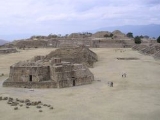
An archaeological site is a place (or group of physical sites) in which evidence of past activity is preserved (either prehistoric or historic
Recorded history

Recorded history can be defined as human history that has been written down or recorded by the use of language, whereas history is a more general term referring to any information about the past....
 or contemporary), and which has been, or may be, investigated using the discipline of archaeology
Archaeology

Archaeology, archeology, or arch?ology is the science that studies Homo cultures through the recovery, documentation, analysis, and interpretation of material remains and environmental data, including architecture, Artifact , features, Biofact s, and cultural landscape....
 and represents a part of the archaeological record
Archaeological record

The archaeological record is a term used in archaeology to denote all archaeological evidence, including the physical remains of past human activities which archaeologists seek out and record in an attempt to analyze and reconstruct the past....


Beyond this, the definition and geographical extent of a 'site' can vary widely, depending on the period studied and the theoretical approach of the archaeologist.

It is almost invariably difficult to delimit a site.


Discussion
Ask a question about 'Archaeological site'
Start a new discussion about 'Archaeological site'
Answer questions from other users
Full Discussion Forum


Encyclopedia


An archaeological site is a place (or group of physical sites) in which evidence of past activity is preserved (either prehistoric or historic
Recorded history

Recorded history can be defined as human history that has been written down or recorded by the use of language, whereas history is a more general term referring to any information about the past....
 or contemporary), and which has been, or may be, investigated using the discipline of archaeology
Archaeology

Archaeology, archeology, or arch?ology is the science that studies Homo cultures through the recovery, documentation, analysis, and interpretation of material remains and environmental data, including architecture, Artifact , features, Biofact s, and cultural landscape....
 and represents a part of the archaeological record
Archaeological record

The archaeological record is a term used in archaeology to denote all archaeological evidence, including the physical remains of past human activities which archaeologists seek out and record in an attempt to analyze and reconstruct the past....


Beyond this, the definition and geographical extent of a 'site' can vary widely, depending on the period studied and the theoretical approach of the archaeologist.

It is almost invariably difficult to delimit a site. It is sometimes taken to indicate a settlement of some sort although the archaeologist must also define the limits of human activity around the settlement. Any episode of deposition such as a hoard
Hoard

In archaeology, a hoard is a collection of valuable objects or artifact , sometimes purposely buried in the ground. This would usually be with the intention of later recovery by the hoarder; hoarders sometimes died before retrieving the hoard, and these surviving hoards may be uncovered by metal-detectorists, members of the public and arch...
 or burial
Burial

Burial, also called interment and inhumation, is the act of placing a person or object into the ground. This is accomplished by excavating a pit or trench, placing an object in it, and covering it over....
 can form a site as well. Development-led archaeology undertaken as cultural resources management
Cultural resources management

In the broadest sense, Cultural Resources Management is the vocation and practice of managing cultural resources, such as the arts and cultural heritage....
 has the disadvantage (or the benefit) of having its sites defined by the limits of the intended development. Even in this case however, in describing and interpreting the site, the archaeologist will have to look outside the boundaries of the building site.

Traditionally, sites are distinguished by the presence of both artifact
Artifact (archaeology)

In archaeology, an artifact or artefact is any object made or modified by a human archaeological culture, and often one later recovered by some archaeological endeavor....
s and feature
Feature (archaeology)

Feature in archaeology and especially excavation has several different but allied meanings. A feature is a collection of one or more archaeological context representing some human non-portable activity that generally has a vertical direction characteristic to it in relation to site stratification ....
s. Common features include the remains of hearths and houses. Ecofacts, biological materials (such as bones, scales, and even feces) that are the result of human activity but are not deliberately modified, are also common at many archaeological sites. In the cases of the Palaeolithic and Mesolithic
Mesolithic

The Mesolithic or Middle Stone Age was a period in the development of human technology in between the Paleolithic or Old Stone Age and the Neolithic or New Stone Age....
 eras, a mere scatter of flint flake
Lithic flake

In archaeology, a lithic flake is a "portion of rock removed from an objective piece by percussion or pressure," and may also be referred to as a chip or spall, or collectively as debitage....
s will also constitute a site worthy of study. Different archaeologists may see an ancient town, and its nearby cemetery as being two different sites, or as being part of the same wider site. The precepts of landscape archaeology
Landscape archaeology

Landscape archaeology is a body of method and theory for the study of the material traces of past peoples within the context of their interactions in the wider social and natural environment they inhabited....
 attempt to see each discrete unit of human activity in the context of the wider environment, further distorting the concept of the site as a demarcated area. Furthermore, geoarchaeologists
Geoarchaeology

Geoarchaeology is a sub-field of archaeology which uses the techniques and subject matter of Geography, geology and other earth sciences to examine topics which inform archaeological knowledge and thought....
 or environmental archaeologists
Environmental archaeology

Environmental archaeology is the study of the long-term relationship between humans and their environments. Various sub-disciplines are involved to document and interpret this relationship, including paleoethnobotany, geomorphology, palynology, geophysics, landscape archaeology, human biology and human ecology....
 would also consider a sequence of natural geological or organic deposition, in the absence of human activity, to constitute a site worthy of study.

Archaeological sites usually form through human-related processes but can be subject to natural, post-depositional factors. Cultural remnants which have been buried by sediments are in many environments more likely to be preserved than exposed cultural remnants. Natural actions resulting in sediment being deposited include alluvial (water-related) or aeolian (wind-related) natural processes. In jungles and other areas of lush plant growth, decomposed vegetative sediment can result in layers of soil deposited over remains. Colluviation, the burial of a site by sediments moved by gravity (called hillwash) can also happen at sites on slopes. Human activities (both deliberate and incidental) also often bury sites. It is common in many cultures for newer structures to be built atop the remains of older ones. Urban archaeology
Urban archaeology

Urban archaeology is a sub discipline of archaeology specialising in the material past of towns and cities where long-term human habitation has often left a rich record of the past....
 has developed especially to deal with these sorts of site.

Many sites are the subject of ongoing excavation or investigation. Note the difference between archaeological sites and archaeological discoveries.

See also

  • Archaeological ethics
    Archaeological ethics

    Archaeological ethics refers to a number of moral issues raised through the study of the material past.In common with other academic disciplines, archaeologists are bound to conduct their investigations to a high standard and observe intellectual property laws, Health and Safety regulations and other legal obligations....


Lists of sites


Lists of archeological sites around the world can be found at:

  • List of archaeological sites sorted by country
    List of archaeological sites sorted by country

    This is a list of notable archaeological sites sorted by country. For one sorted by continent and time period, see the list of archaeological sites sorted by continent and age....
  • List of archaeological sites sorted by continent and age
    List of archaeological sites sorted by continent and age

    This list of archaeological sites is sorted by continent and then by the age of the site. For one sorted by country, see the list of archaeological sites sorted by country....


External links


Further reading


Dunnell, Robert C., and William S. Dancey, 1983 The Siteless Survey: A Regional Scale Data Collection Strategy, in Advances in Archaeological Method and Theory 6:267-287. M.B. Schiffer, ed.