

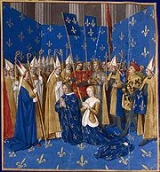
List of French monarchs

Encyclopedia
The Monarchs of France ruled from the establishment of the Frankish Kingdom in 486 to 1870. During most of its history, France was ruled by kings. However, four Carolingian monarchs were also Holy Roman Emperors and the Bonapartes were Emperors of the French.
This article lists all rulers to have held the title "King of Franks", "King of France", "King of the French" or "Emperor of the French". For other Frankish monarchs, see List of Frankish Kings.
In addition to the monarchs listed below, the Kings of England and Great Britain from 1340–1360 and 1369–1801 also claimed the title of King of France
. For a short time, this had some basis in fact — under the terms of the 1420 Treaty of Troyes
, Charles VI
had recognized his son-in-law Henry V of England
as regent and heir. Henry V predeceased Charles VI and so Henry V's son, Henry VI
, succeeded his grandfather Charles VI as King of France. Most of Northern France was under English control until 1435, but by 1453, the English had been expelled from all of France save Calais
(and the Channel Islands
), and Calais itself fell in 1558. Nevertheless, English and then British monarchs continued to claim the title for themselves until the creation of the United Kingdom
in 1801. Various English kings between 1337 and 1422 had also claimed the title of King of France, but only intermittently.
The title "King of the Franks" remained in use until the reign of Philip II. During the brief period when the French Constitution of 1791
was in effect (1791–1792) and after the July Revolution
in 1830, the style
"King of the French" was used instead of "King of France (and Navarre)". It was a constitutional innovation known as popular monarchy
which linked the monarch's title to the will of the French people rather than to the possession of the territory of France.
Merovingian Dynasty
The name of France comes from the Germanic
tribe known as the Franks
. The Merovingian kings began as mere chieftains, the oldest known being Chlodio. Clovis I
was the first of these to rise to true kingship. After his death, his kingdom was split between his sons into Soissons (Neustria
), Paris, Orléans (Burgundy), and Metz (Austrasia
). Several Merovingian monarchs reunited the Frankish kingdoms and assumed the title of "King of the Franks". But upon their deaths, according to Frankish custom, the kingdom would often be split once again between their sons.
Carolingian Interregnum
The last Merovingian kings, known as the lazy kings (rois fainéants), did not hold any real political power, while the Mayor of the Palace
governed instead. When Theuderic IV died in 737, Mayor of the Palace Charles Martel
left the throne vacant and continued to rule until his own death in 741. His son Pepin the Short briefly restored the Merovingian dynasty by raising Childeric III to the throne in 743, only to depose him in 751.
Merovingian Dynasty, Restored
Carolingian Dynasty
Three of the twelve kings during the 147-year Carolingian Dynasty – Odo
, his brother Robert I
and Robert's son in law Raoul/Rudolph
– were not from the Carolingian Dynasty but from the rival Robertian Dynasty, named for Robert the Strong
(father of Odo and Robert I). The Robertian Dynasty became the Capetian Dynasty
with the ascent to the throne of Hugh Capet (son of Hugh the Great
, son of Robert I) in 987. The rise and fall of Carolingian Charles III
played out during the ascent of these Robertian kings.
|align="center"|King of the Franks
(Roi des Francs)
|-
|align="center"|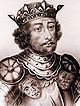
|align="center"|Robert I
(Robert Ier)
|align="center"|30 June 922
|align="center"|15 June 923
|Son of Robert the Strong
(Robertians)
Younger brother of Odo
|align="center"|King of the Franks
(Roi des Francs)
|-
|align="center"|
|align="center"|Rudolph
(Raoul de France)
|align="center"|13 July 923
|align="center"|14 January 936
|Son of Richard, Duke of Burgundy (Bosonids)
Son-in-law of Robert I
|align="center"|King of the Franks
(Roi des Francs)
|-
|align="center"|
|align="center"|Louis IV
from overseas
(Louis IV d'Outremer)
|align="center"|19 June 936
|align="center"|10 September 954
|Son of Charles III
|align="center"|King of the Franks
(Roi des Francs)
|-
|align="center"|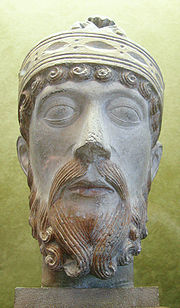
|align="center"|Lothair
(Lothaire de France)
|align="center"|12 November 954
|align="center"|2 March 986
|Son of Louis IV
|align="center"|King of the Franks
(Roi des Francs)
|-
|align="center"|
|align="center"|Louis V
the Lazy
(Louis V le Fainéant)
|align="center"|8 June 986
|align="center"|22 May 987
|Son of Lothair
|align="center"|King of the Franks
(Roi des Francs)
|}
Capetian Dynasty
The Capetian Dynasty
, the male-line descendants of Hugh Capet, ruled France continuously from 987 to 1792 and again from 1814 to 1848. The branches of the dynasty which ruled after 1328, however, are generally given the specific branch names of Valois and Bourbon.
Direct Capetians
Not listed above are Hugh Magnus
, eldest son of Robert II, and Philip of France
, eldest son of Louis VI; both were co-Kings with their fathers (in accordance with the early Capetian practice whereby Kings would crown their heirs in their own lifetimes and share power with the co-king), but predeceased them. Because neither Hugh nor Philip were sole or senior king in their own lifetimes, they are not traditionally listed as Kings of France, and are not given ordinals.
Valois–Angoulême Branch
House of Bourbon
From 21 January 1793 to 8 June 1795, Louis XVI's son Louis-Charles was the titular King of France as Louis XVII
; in reality, however, he was imprisoned in the Temple throughout this duration, and power was held by the leaders of the Republic. Upon Louis XVII's death, his uncle (Louis XVI's brother) Louis-Stanislas claimed the throne, as Louis XVIII
, but only became de facto King of France in 1814.
First Republic
The First French Republic lasted from 1792 to 1804, when its First Consul, Napoléon Bonaparte, declared himself Emperor of the French
.
Bonaparte Dynasty
Capetian Dynasty
Bonaparte Dynasty
From 22 June to 7 July 1815, Bonapartists considered Napoleon I's son Napoleon II as the legitimate heir to the throne, his father having abdicated in his favor. However, the young child's reign was entirely fictional, as he was residing in Austria with his mother. Louis XVIII was reinstalled as king on 7 July.
Capetian Dynasty
The elder son and heir of Charles X, the Dauphin Louis-Antoine, is occasionally considered to have legally been the King of France as Louis XIX in the 20 minutes that passed between Charles X's formal signature of abdication and the Dauphin's own signature.
Henri d'Artois, Charles X's grandson, was considered by monarchists to be the titular King of France, as Henry V
from 2 August 1830 to 9 August 1830, but his reign remained largely fictional, as he acceded in a revolutionary context and hence was never recognized by the French State. He is generally not accounted for in lists of official French monarchs.
Capetian Dynasty
.
Bonaparte Dynasty
Government of National Defence (Paris Commune
The transition period between the fall of the Second Empire after the capture of Napoleon III by the Prussians and the assumption of the Third Republic by General Louis Jules Trochu
.
of France continues with the Presidents of France and short term interim periods by the Chief of State of the French State
(1940–1944), the Chairman of the Provisional Government of the French Republic
(1944–1946) and the President of the French Senate (1969 and 1974) during the Fifth Republic
.
s descended from the preceding monarchs have claimed to be the legitimate monarch of France, rejecting the claims of the President of France, and of each other. These groups are:
This article lists all rulers to have held the title "King of Franks", "King of France", "King of the French" or "Emperor of the French". For other Frankish monarchs, see List of Frankish Kings.
In addition to the monarchs listed below, the Kings of England and Great Britain from 1340–1360 and 1369–1801 also claimed the title of King of France
English claims to the French throne
The English claims to the French throne have a long and complex history between the 1340s and the 19th century.From 1340 to 1801, with only brief intervals in 1360-1369 and 1420–1422, the kings and queens of England, and after the Acts of Union in 1707 the kings and queens of Great Britain, also...
. For a short time, this had some basis in fact — under the terms of the 1420 Treaty of Troyes
Treaty of Troyes
The Treaty of Troyes was an agreement that Henry V of England and his heirs would inherit the throne of France upon the death of King Charles VI of France. It was signed in the French city of Troyes on 21 May 1420 in the aftermath of the Battle of Agincourt...
, Charles VI
Charles VI of France
Charles VI , called the Beloved and the Mad , was the King of France from 1380 to 1422, as a member of the House of Valois. His bouts with madness, which seem to have begun in 1392, led to quarrels among the French royal family, which were exploited by the neighbouring powers of England and Burgundy...
had recognized his son-in-law Henry V of England
Henry V of England
Henry V was King of England from 1413 until his death at the age of 35 in 1422. He was the second monarch belonging to the House of Lancaster....
as regent and heir. Henry V predeceased Charles VI and so Henry V's son, Henry VI
Henry VI of England
Henry VI was King of England from 1422 to 1461 and again from 1470 to 1471, and disputed King of France from 1422 to 1453. Until 1437, his realm was governed by regents. Contemporaneous accounts described him as peaceful and pious, not suited for the violent dynastic civil wars, known as the Wars...
, succeeded his grandfather Charles VI as King of France. Most of Northern France was under English control until 1435, but by 1453, the English had been expelled from all of France save Calais
Calais
Calais is a town in Northern France in the department of Pas-de-Calais, of which it is a sub-prefecture. Although Calais is by far the largest city in Pas-de-Calais, the department's capital is its third-largest city of Arras....
(and the Channel Islands
Channel Islands
The Channel Islands are an archipelago of British Crown Dependencies in the English Channel, off the French coast of Normandy. They include two separate bailiwicks: the Bailiwick of Guernsey and the Bailiwick of Jersey...
), and Calais itself fell in 1558. Nevertheless, English and then British monarchs continued to claim the title for themselves until the creation of the United Kingdom
United Kingdom of Great Britain and Ireland
The United Kingdom of Great Britain and Ireland was the formal name of the United Kingdom during the period when what is now the Republic of Ireland formed a part of it....
in 1801. Various English kings between 1337 and 1422 had also claimed the title of King of France, but only intermittently.
The title "King of the Franks" remained in use until the reign of Philip II. During the brief period when the French Constitution of 1791
French Constitution of 1791
The short-lived French Constitution of 1791 was the first written constitution of France. One of the basic precepts of the revolution was adopting constitutionality and establishing popular sovereignty, following the steps of the United States of America...
was in effect (1791–1792) and after the July Revolution
July Revolution
The French Revolution of 1830, also known as the July Revolution or in French, saw the overthrow of King Charles X of France, the French Bourbon monarch, and the ascent of his cousin Louis-Philippe, Duke of Orléans, who himself, after 18 precarious years on the throne, would in turn be overthrown...
in 1830, the style
Style (manner of address)
A style of office, or honorific, is a legal, official, or recognized title. A style, by tradition or law, precedes a reference to a person who holds a post or political office, and is sometimes used to refer to the office itself. An honorific can also be awarded to an individual in a personal...
"King of the French" was used instead of "King of France (and Navarre)". It was a constitutional innovation known as popular monarchy
Popular monarchy
Popular monarchy is a system of monarchical governance in which the monarch's title is linked with a popular mandate rather than a constitutional state. It was the norm in some places from the Middle Ages, and was occasionally used in 19th- and 20th-century Europe, often reflecting the results of...
which linked the monarch's title to the will of the French people rather than to the possession of the territory of France.
Merovingian DynastyMerovingian dynastyThe Merovingians were a Salian Frankish dynasty that came to rule the Franks in a region largely corresponding to ancient Gaul from the middle of the 5th century. Their politics involved frequent civil warfare among branches of the family...
(428–737)
The name of France comes from the GermanicGermanic peoples
The Germanic peoples are an Indo-European ethno-linguistic group of Northern European origin, identified by their use of the Indo-European Germanic languages which diversified out of Proto-Germanic during the Pre-Roman Iron Age.Originating about 1800 BCE from the Corded Ware Culture on the North...
tribe known as the Franks
Franks
The Franks were a confederation of Germanic tribes first attested in the third century AD as living north and east of the Lower Rhine River. From the third to fifth centuries some Franks raided Roman territory while other Franks joined the Roman troops in Gaul. Only the Salian Franks formed a...
. The Merovingian kings began as mere chieftains, the oldest known being Chlodio. Clovis I
Clovis I
Clovis Leuthwig was the first King of the Franks to unite all the Frankish tribes under one ruler, changing the leadership from a group of royal chieftains, to rule by kings, ensuring that the kingship was held by his heirs. He was also the first Catholic King to rule over Gaul . He was the son...
was the first of these to rise to true kingship. After his death, his kingdom was split between his sons into Soissons (Neustria
Neustria
The territory of Neustria or Neustrasia, meaning "new [western] land", originated in 511, made up of the regions from Aquitaine to the English Channel, approximating most of the north of present-day France, with Paris and Soissons as its main cities...
), Paris, Orléans (Burgundy), and Metz (Austrasia
Austrasia
Austrasia formed the northeastern portion of the Kingdom of the Merovingian Franks, comprising parts of the territory of present-day eastern France, western Germany, Belgium, Luxembourg and the Netherlands. Metz served as its capital, although some Austrasian kings ruled from Rheims, Trier, and...
). Several Merovingian monarchs reunited the Frankish kingdoms and assumed the title of "King of the Franks". But upon their deaths, according to Frankish custom, the kingdom would often be split once again between their sons.
| Portrait | Name | King From | King Until | Relationship with Predecessor(s) | Title |
|---|---|---|---|---|---|
| Chlodio the Longhair (Clodion le Chevelu) |
428 | 448 | Son of Theudemeres Theudemeres Theudemeres was a Frankish king. He was the son of the Roman commander Richomeres and his wife Ascyla.Not much is known of Theudemeres. According to Gregory of Tours a war broke out between the Franks and the Romans some unknown time after the fall of the usurping Emperor Jovinus who had been... |
King of the Salian Franks (Roi des Francs saliens) |
|
| Merovech Merovech Merovech is the semi-legendary founder of the Merovingian dynasty of the Salian Franks , which later became the dominant Frankish tribe. He allegedly lived in the first half of the fifth century. His name is a Latinization of a form close to the Old High German given name Marwig, lit. "famed... (Mérovée) |
448 | 457 | Son of Chlodio | King of the Salian Franks (Roi des Francs saliens) |
|
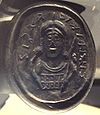 |
Childeric I Childeric I Childeric I was a Merovingian king of the Salian Franks and the father of Clovis.He succeeded his father Merovech as king, traditionally in 457 or 458... (Childéric Ier) |
457 | 481 | Son of Merovech | King of the Salian Franks (Roi des Francs saliens) |
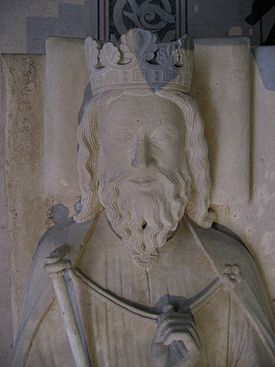 |
Clovis I Clovis I Clovis Leuthwig was the first King of the Franks to unite all the Frankish tribes under one ruler, changing the leadership from a group of royal chieftains, to rule by kings, ensuring that the kingship was held by his heirs. He was also the first Catholic King to rule over Gaul . He was the son... (Clovis Ier) |
481 | 511 | Son of Childeric I | King of the Franks (Roi des Francs) |
| Childebert I Childebert I Childebert I was the Frankish king of Paris, a Merovingian dynast, one of the four sons of Clovis I who shared the kingdom of the Franks upon their father's death in 511... (Childebert Ier) |
511 | 23 December 558 | Son of Clovis I | King of Paris (Roi de Paris) |
|
| Chlothar I the Old (Clotaire Ier le Vieux) |
23 December 558 | 29 November 561 | Son of Clovis I Younger brother of Childebert I |
King of the Franks (Roi des Francs) |
|
| Charibert I Charibert I Charibert I was the Merovingian King of Paris, the second-eldest son of Chlothar I and Ingund. His elder brother was Gunthar, who died sometime before their father's death.... (Caribert Ier) |
29 November 561 | 567 | Son of Chlothar I | King of Paris (Roi de Paris) |
|
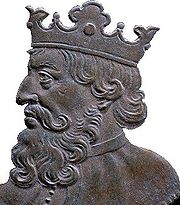 |
Chilperic I Chilperic I Chilperic I was the king of Neustria from 561 to his death. He was one of the sons of the Frankish king Clotaire I and Queen Aregund.... (Chilpéric Ier) |
567 | 584 | Son of Chlothar I Younger brother of Charibert I |
King of Paris (Roi de Paris) King of Neustria (Roi de Neustrie) |
 |
Chlothar II the Great, the Young (Clotaire II le Grand, le Jeune) |
584 | 18 October 629 | Son of Chilperic I | King of Neustria (Roi de Neustrie) King of Paris (Roi de Paris) (595–629) King of the Franks (Roi des Francs) (613–629) |
| Dagobert I Dagobert I Dagobert I was the king of Austrasia , king of all the Franks , and king of Neustria and Burgundy . He was the last Merovingian dynast to wield any real royal power... (Dagobert Ier) |
18 October 629 | 19 January 639 | Son of Chlothar II | King of the Franks (Roi des Francs) |
|
| Clovis II Clovis II Clovis II succeeded his father Dagobert I in 639 as King of Neustria and Burgundy. His brother Sigebert III had been King of Austrasia since 634. He was initially under the regency of his mother Nanthild until her death in her early thirties in 642... the Lazy (Clovis II le Fainéant) |
19 January 639 | 31 October 657 | Son of Dagobert I | King of Neustria and Burgundy (Roi de Neustrie et de Bourgogne) |
|
| Chlothar III (Clotaire III) |
31 October 657 | 673 | Son of Clovis II | King of Neustria and Burgundy (Roi de Neustrie et de Bourgogne) King of the Franks (Roi des Francs) (657–663) |
|
| Childeric II Childeric II Childeric II was the king of Austrasia from 662 and of Neustria and Burgundy from 673 until his death, making him sole King of the Franks for the final two years of his life. He was the second eldest son of Clovis II. His elder brother Chlothar III was briefly sole king from 661, but gave... (Childéric II) |
673 | 675 | Son of Clovis II Younger brother of Chlothar III |
King of the Franks (Roi des Francs) |
|
| Theuderic III Theuderic III Theuderic III was the king of Neustria on two occasions and king of Austrasia from 679 to his death in 691. Thus, he was the king of all the Franks from 679... (Thierry III) |
675 | 691 | Son of Clovis II Younger brother of Childeric II |
King of Neustria (Roi de Neustrie) King of the Franks (Roi des Francs) (687–691) |
|
| Clovis IV Clovis IV Clovis IV , son of Theuderic III, was the sole king of the Franks from 691 until his death. Although Clovis IV is called "King of the Franks", he was really a puppet—a roi fainéant—of his uncle Pepin II, mayor of the palace of Austrasia... (Clovis IV) |
691 | 695 | Son of Theuderic III | King of the Franks (Roi des Francs) |
|
| Childebert III Childebert III Childebert III, called the Just , son of Theuderic III and Clotilda and sole king of the Franks , he was seemingly but a puppet of the mayor of the palace, Pepin of Heristal, though his placita show him making judicial decisions of his own will, even against the Arnulfing clan... the Just (Childebert III le Juste) |
695 | 23 April 711 | Son of Theuderic III Younger brother of Clovis IV |
King of the Franks (Roi des Francs) |
|
| Dagobert III Dagobert III Dagobert III was Merovingian king of the Franks .He was a son of Childebert III. He succeeded his father as the head of the three Frankish kingdoms—Neustria and Austrasia, unified since Pippin's victory at Tertry in 687, and the Kingdom of Burgundy—in 711, at the age of twelve... |
23 April 711 | 715 | Son of Childebert III | King of the Franks (Roi des Francs) |
|
| Chilperic II Chilperic II Chilperic II , born Daniel, the youngest son of Childeric II, was king of Neustria from 715 and sole king of the Franks from 718 until his death. He was the last Merovingian dynast to exercise any authority on his own.... (Chilpéric II) |
715 | 13 February 721 | Probably son of Childeric II | King of Neustria and Burgundy (Roi de Neustrie et de Bourgogne) King of the Franks (Roi des Francs) (719–721) |
|
| Theuderic IV Theuderic IV Theuderic IV or Theuderich, Theoderic, or Theodoric; in French, Thierry was the Merovingian King of the Franks from 721 until his death in 737... (Thierry IV) |
13 February 721 | 737 | Son of Dagobert III | King of the Franks (Roi des Francs) |
Carolingian InterregnumCarolingianThe Carolingian dynasty was a Frankish noble family with origins in the Arnulfing and Pippinid clans of the 7th century AD. The name "Carolingian", Medieval Latin karolingi, an altered form of an unattested Old High German *karling, kerling The Carolingian dynasty (known variously as the...
(737–743)
The last Merovingian kings, known as the lazy kings (rois fainéants), did not hold any real political power, while the Mayor of the PalaceMayor of the Palace
Mayor of the Palace was an early medieval title and office, also called majordomo, from the Latin title maior domus , used most notably in the Frankish kingdoms in the 7th and 8th centuries....
governed instead. When Theuderic IV died in 737, Mayor of the Palace Charles Martel
Charles Martel
Charles Martel , also known as Charles the Hammer, was a Frankish military and political leader, who served as Mayor of the Palace under the Merovingian kings and ruled de facto during an interregnum at the end of his life, using the title Duke and Prince of the Franks. In 739 he was offered the...
left the throne vacant and continued to rule until his own death in 741. His son Pepin the Short briefly restored the Merovingian dynasty by raising Childeric III to the throne in 743, only to depose him in 751.
Merovingian Dynasty, RestoredMerovingian dynastyThe Merovingians were a Salian Frankish dynasty that came to rule the Franks in a region largely corresponding to ancient Gaul from the middle of the 5th century. Their politics involved frequent civil warfare among branches of the family...
(743–752)
| Portrait | Name | King From | King Until | Relationship with Predecessor(s) | Title |
|---|---|---|---|---|---|
| Childeric III Childeric III Childeric III was the last King of the Franks in the Merovingian dynasty from 743 to his deposition by Pope Zachary in March 752... (Childéric III) |
743 | November 751 | Son of Chilperic II or of Theuderic IV | King of the Franks (Roi des Francs) |
Carolingian DynastyCarolingianThe Carolingian dynasty was a Frankish noble family with origins in the Arnulfing and Pippinid clans of the 7th century AD. The name "Carolingian", Medieval Latin karolingi, an altered form of an unattested Old High German *karling, kerling The Carolingian dynasty (known variously as the...
(752–987)
Three of the twelve kings during the 147-year Carolingian Dynasty – OdoOdo, Count of Paris
Odo was a King of Western Francia, reigning from 888 to 898. He was a son of Robert the Strong, count of Anjou, whose branch of the family is known as the Robertians....
, his brother Robert I
Robert I of France
Robert I , King of Western Francia , was the younger son of Robert the Strong, count of Anjou, and the brother of Odo, who became king of the Western Franks in 888. West Francia evolved over time into France; under Odo, the capital was fixed on Paris, a large step in that direction...
and Robert's son in law Raoul/Rudolph
Rudolph of France
Rudolph was the Duke of Burgundy between 921 and 923 and King of Western Francia from thereafter to his death. Rudolph inherited the duchy of Burgundy from his father, Richard the Justiciar...
– were not from the Carolingian Dynasty but from the rival Robertian Dynasty, named for Robert the Strong
Robert the Strong
Robert IV the Strong , also known as Rutpert, was Margrave in Neustria. His family is named after him and called Robertians. He was first nominated by Charles the Bald missus dominicus in 853. Robert was the father of the kings Odo and Robert I of France. Robert was the great-grandfather of Hugh...
(father of Odo and Robert I). The Robertian Dynasty became the Capetian Dynasty
Capetian dynasty
The Capetian dynasty , also known as the House of France, is the largest and oldest European royal house, consisting of the descendants of King Hugh Capet of France in the male line. Hugh Capet himself was a cognatic descendant of the Carolingians and the Merovingians, earlier rulers of France...
with the ascent to the throne of Hugh Capet (son of Hugh the Great
Hugh the Great
Hugh the Great or Hugues le Grand was duke of the Franks and count of Paris, son of King Robert I of France and nephew of King Odo. He was born in Paris, Île-de-France, France. His eldest son was Hugh Capet who became King of France in 987...
, son of Robert I) in 987. The rise and fall of Carolingian Charles III
Charles the Simple
Charles III , called the Simple or the Straightforward , was the undisputed King of France from 898 until 922 and the King of Lotharingia from 911 until 919/23...
played out during the ascent of these Robertian kings.
| Portrait | Name | King From | King Until | Relationship with Predecessor(s) | Title |
|---|---|---|---|---|---|
| Pepin the Short (Pépin le Bref) |
752 | 24 September 768 | Son of Charles Martel Charles Martel Charles Martel , also known as Charles the Hammer, was a Frankish military and political leader, who served as Mayor of the Palace under the Merovingian kings and ruled de facto during an interregnum at the end of his life, using the title Duke and Prince of the Franks. In 739 he was offered the... |
King of the Franks (Roi des Francs) |
|
| Carloman I | 24 September 768 | 4 December 771 | Son of Pepin the Short | King of the Franks (Roi des Francs) |
|
| Charlemagne Charlemagne Charlemagne was King of the Franks from 768 and Emperor of the Romans from 800 to his death in 814. He expanded the Frankish kingdom into an empire that incorporated much of Western and Central Europe. During his reign, he conquered Italy and was crowned by Pope Leo III on 25 December 800... |
24 September 768 | 28 January 814 | Son of Pepin the Short | King of the Franks (Roi des Francs) Emperor of the Holy Roman Empire (Imperator Romanorum) (800–814) |
|
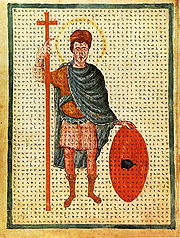 |
Louis I Louis the Pious Louis the Pious , also called the Fair, and the Debonaire, was the King of Aquitaine from 781. He was also King of the Franks and co-Emperor with his father, Charlemagne, from 813... the Pious, the Debonaire (Louis Ier le Pieux, le Débonnaire) |
28 January 814 | 20 June 840 | Son of Charlemagne | King of the Franks (Roi des Francs) Emperor of the Romans (Imperator Romanorum) |
 |
Charles II Charles the Bald Charles the Bald , Holy Roman Emperor and King of West Francia , was the youngest son of the Emperor Louis the Pious by his second wife Judith.-Struggle against his brothers:He was born on 13 June 823 in Frankfurt, when his elder... the Bald (Charles II le Chauve) |
20 June 840 | 6 October 877 | Son of Louis I | King of the Franks (Roi des Francs) Emperor of the Romans (Imperator Romanorum) (875–877) |
 |
Louis II Louis the Stammerer Louis the Stammerer was the King of Aquitaine and later King of West Francia. He was the eldest son of Charles the Bald and Ermentrude of Orléans. He succeeded his younger brother in Aquitaine in 866 and his father in West Francia in 877, though he was never crowned Emperor... the Stammerer (Louis II le Bègue) |
6 October 877 | 10 April 879 | Son of Charles II | King of the Franks (Roi des Francs) |
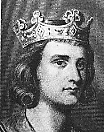 |
Louis III Louis III of France Louis III was the King of France, still then called West Francia, from 879 until his death. The second son of Louis the Stammerer and his first wife, Ansgarde, he succeeded his father to reign jointly with his younger brother Carloman II, who became sole ruler on Louis's death... |
10 April 879 | 5 August 882 | Son of Louis II | King of the Franks (Roi des Francs) |
 |
Carloman II | 5 August 882 | 6 December 884 | Son of Louis II | King of the Franks (Roi des Francs) |
| Charles the Fat Charles the Fat Charles the Fat was the King of Alemannia from 876, King of Italy from 879, western Emperor from 881, King of East Francia from 882, and King of West Francia from 884. In 887, he was deposed in East Francia, Lotharingia, and possibly Italy, where the records are not clear... (Charles le Gros) |
20 May 885 | 13 January 888 | Son of Louis the German Louis the German Louis the German , also known as Louis II or Louis the Bavarian, was a grandson of Charlemagne and the third son of the succeeding Frankish Emperor Louis the Pious and his first wife, Ermengarde of Hesbaye.He received the appellation 'Germanicus' shortly after his death in recognition of the fact... Cousin of Louis II and Carloman II Grandson of Louis I the Pious |
King of the Franks (Roi des Francs) Emperor of the Romans (Imperator Romanorum) (881–887) |
|
 |
Odo of Paris Odo, Count of Paris Odo was a King of Western Francia, reigning from 888 to 898. He was a son of Robert the Strong, count of Anjou, whose branch of the family is known as the Robertians.... (Eudes de Paris) |
29 February 888 | 1 January 898 | Son of Robert the Strong Robert the Strong Robert IV the Strong , also known as Rutpert, was Margrave in Neustria. His family is named after him and called Robertians. He was first nominated by Charles the Bald missus dominicus in 853. Robert was the father of the kings Odo and Robert I of France. Robert was the great-grandfather of Hugh... (Robertians) Elected king against young Charles III. |
King of the Franks (Roi des Francs) |
_-_charles_iii,_dit_le_simple,_roi_de_france_en_896_(879-929).jpg) |
Charles III Charles the Simple Charles III , called the Simple or the Straightforward , was the undisputed King of France from 898 until 922 and the King of Lotharingia from 911 until 919/23... the Simple (Charles III le Simple) |
28 January 893 | 30 June 922 | Posthumous son of Louis II Younger half-brother of Louis III and Carloman II |
|align="center"|King of the Franks
(Roi des Francs)
|-
|align="center"|
|align="center"|Robert I
Robert I of France
Robert I , King of Western Francia , was the younger son of Robert the Strong, count of Anjou, and the brother of Odo, who became king of the Western Franks in 888. West Francia evolved over time into France; under Odo, the capital was fixed on Paris, a large step in that direction...
(Robert Ier)
|align="center"|30 June 922
|align="center"|15 June 923
|Son of Robert the Strong
Robert the Strong
Robert IV the Strong , also known as Rutpert, was Margrave in Neustria. His family is named after him and called Robertians. He was first nominated by Charles the Bald missus dominicus in 853. Robert was the father of the kings Odo and Robert I of France. Robert was the great-grandfather of Hugh...
(Robertians)
Younger brother of Odo
|align="center"|King of the Franks
(Roi des Francs)
|-
|align="center"|
|align="center"|Rudolph
Rudolph of France
Rudolph was the Duke of Burgundy between 921 and 923 and King of Western Francia from thereafter to his death. Rudolph inherited the duchy of Burgundy from his father, Richard the Justiciar...
(Raoul de France)
|align="center"|13 July 923
|align="center"|14 January 936
|Son of Richard, Duke of Burgundy (Bosonids)
Son-in-law of Robert I
|align="center"|King of the Franks
(Roi des Francs)
|-
|align="center"|
|align="center"|Louis IV
Louis IV of France
Louis IV , called d'Outremer or Transmarinus , reigned as King of Western Francia from 936 to 954...
from overseas
(Louis IV d'Outremer)
|align="center"|19 June 936
|align="center"|10 September 954
|Son of Charles III
|align="center"|King of the Franks
(Roi des Francs)
|-
|align="center"|
|align="center"|Lothair
Lothair of France
Lothair , sometimes called Lothair IV, was the Carolingian king of West Francia , son of Louis IV and Gerberga of Saxony.-Regency:...
(Lothaire de France)
|align="center"|12 November 954
|align="center"|2 March 986
|Son of Louis IV
|align="center"|King of the Franks
(Roi des Francs)
|-
|align="center"|
|align="center"|Louis V
Louis V of France
Louis V , called the Indolent or the Sluggard , was the King of Western Francia from 986 until his early death...
the Lazy
(Louis V le Fainéant)
|align="center"|8 June 986
|align="center"|22 May 987
|Son of Lothair
|align="center"|King of the Franks
(Roi des Francs)
|}
Capetian DynastyCapetian dynastyThe Capetian dynasty , also known as the House of France, is the largest and oldest European royal house, consisting of the descendants of King Hugh Capet of France in the male line. Hugh Capet himself was a cognatic descendant of the Carolingians and the Merovingians, earlier rulers of France...
(987–1792)
The Capetian DynastyCapetian dynasty
The Capetian dynasty , also known as the House of France, is the largest and oldest European royal house, consisting of the descendants of King Hugh Capet of France in the male line. Hugh Capet himself was a cognatic descendant of the Carolingians and the Merovingians, earlier rulers of France...
, the male-line descendants of Hugh Capet, ruled France continuously from 987 to 1792 and again from 1814 to 1848. The branches of the dynasty which ruled after 1328, however, are generally given the specific branch names of Valois and Bourbon.
Direct CapetiansHouse of CapetThe House of Capet, or The Direct Capetian Dynasty, , also called The House of France , or simply the Capets, which ruled the Kingdom of France from 987 to 1328, was the most senior line of the Capetian dynasty – itself a derivative dynasty from the Robertians. As rulers of France, the dynasty...
(987 to 1328)
| Portrait | Coat of Arms | Name | King From | King Until | Relationship with Predecessor(s) | Title |
|---|---|---|---|---|---|---|
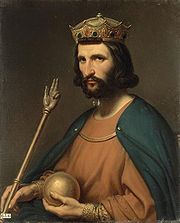 |
Hugh Capet (Hugues Capet) |
3 July 987 | 24 October 996 | Grandson of Robert I | King of the Franks (Roi des Francs) |
|
 |
Robert II Robert II of France Robert II , called the Pious or the Wise , was King of France from 996 until his death. The second reigning member of the House of Capet, he was born in Orléans to Hugh Capet and Adelaide of Aquitaine.... the Pious, the Wise (Robert II le Pieux, le Sage) |
24 October 996 | 20 July 1031 | Son of Hugh Capet | King of the Franks (Roi des Francs) |
|
 |
Henry I Henry I of France Henry I was King of France from 1031 to his death. The royal demesne of France reached its smallest size during his reign, and for this reason he is often seen as emblematic of the weakness of the early Capetians... (Henri Ier) |
20 July 1031 | 4 August 1060 | Son of Robert II | King of the Franks (Roi des Francs) |
|
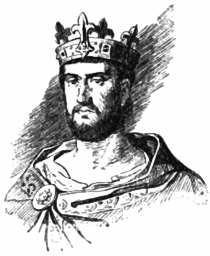 |
Philip I Philip I of France Philip I , called the Amorous, was King of France from 1060 to his death. His reign, like that of most of the early Direct Capetians, was extraordinarily long for the time... (Philippe Ier l' Amoureux) |
4 August 1060 | 29 July 1108 | Son of Henry I | King of the Franks (Roi des Francs) |
|
| Louis VI Louis VI of France Louis VI , called the Fat , was King of France from 1108 until his death . Chronicles called him "roi de Saint-Denis".-Reign:... the Fat (Louis VI le Gros) |
29 July 1108 | 1 August 1137 | Son of Philip I | King of the Franks (Roi des Francs) |
||
| Louis VII Louis VII of France Louis VII was King of France, the son and successor of Louis VI . He ruled from 1137 until his death. He was a member of the House of Capet. His reign was dominated by feudal struggles , and saw the beginning of the long rivalry between France and England... the Young (Louis VII le Jeune) |
1 August 1137 | 18 September 1180 | Son of Louis VI | King of the Franks (Roi des Francs) |
||
.jpg) |
Philip II Philip II of France Philip II Augustus was the King of France from 1180 until his death. A member of the House of Capet, Philip Augustus was born at Gonesse in the Val-d'Oise, the son of Louis VII and his third wife, Adela of Champagne... Augustus (Philippe II Auguste) |
18 September 1180 | 14 July 1223 | Son of Louis VII | King of the Franks (Roi des Francs) King of France (Roi de France) |
|
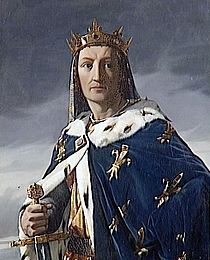 |
Louis VIII Louis VIII of France Louis VIII the Lion reigned as King of France from 1223 to 1226. He was a member of the House of Capet. Louis VIII was born in Paris, France, the son of Philip II Augustus and Isabelle of Hainaut. He was also Count of Artois, inheriting the county from his mother, from 1190–1226... the Lion (Louis VIII le Lion) |
14 July 1223 | 8 November 1226 | Son of Philip II Augustus | King of France (Roi de France) |
|
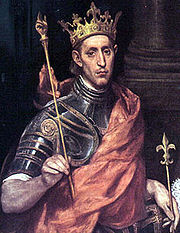 |
Louis IX Louis IX of France Louis IX , commonly Saint Louis, was King of France from 1226 until his death. He was also styled Louis II, Count of Artois from 1226 to 1237. Born at Poissy, near Paris, he was an eighth-generation descendant of Hugh Capet, and thus a member of the House of Capet, and the son of Louis VIII and... the Saint (Saint Louis) |
8 November 1226 | 25 August 1270 | Son of Louis VIII | King of France (Roi de France) |
|
 |
Philip III Philip III of France Philip III , called the Bold , was the King of France, succeeding his father, Louis IX, and reigning from 1270 to 1285. He was a member of the House of Capet.-Biography:... the Bold (Philippe III le Hardi) |
25 August 1270 | 5 October 1285 | Son of Louis IX | King of France (Roi de France) |
|
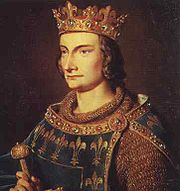 |
Philip IV Philip IV of France Philip the Fair was, as Philip IV, King of France from 1285 until his death. He was the husband of Joan I of Navarre, by virtue of which he was, as Philip I, King of Navarre and Count of Champagne from 1284 to 1305.-Youth:A member of the House of Capet, Philip was born at the Palace of... the Fair (Philippe IV le Bel) |
5 October 1285 | 29 November 1314 | Son of Philip III | King of France and of Navarre (Roi de France et de Navarre) |
|
 |
Louis X Louis X of France Louis X of France, , called the Quarreler, the Headstrong, or the Stubborn was the King of Navarre from 1305 and King of France from 1314 until his death... the Quarreller (Louis X le Hutin) |
29 November 1314 | 5 June 1316 | Son of Philip IV | King of France and of Navarre (Roi de France et de Navarre) |
|
 |
John I John I of France John I , called the Posthumous, was King of France and Navarre, and Count of Champagne, as the son and successor of Louis the Headstrong, for the five days he lived... the Posthumous (Jean Ier le Posthume) |
15 November 1316 | 20 November 1316 | Son of Louis X | King of France and of Navarre (Roi de France et de Navarre) |
|
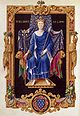 |
Philip V Philip V of France Philip the Tall was King of France as Philip V and, as Philip II, King of Navarre and Count of Champagne. He reigned from 1316 to his death and was the penultimate monarch of the House of Capet. Considered a wise and politically astute ruler, Philip took the throne under questionable... the Tall (Philippe V le Long) |
20 November 1316 | 3 January 1322 | Son of Philip IV Younger brother of Louis X |
King of France and of Navarre (Roi de France et de Navarre) |
|
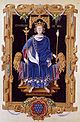 |
Charles IV Charles IV of France Charles IV, known as the Fair , was the King of France and of Navarre and Count of Champagne from 1322 to his death: he was the last French king of the senior Capetian lineage.... the Fair (Charles IV le Bel) |
3 January 1322 | 1 February 1328 | Son of Philip IV Younger brother of Philip V |
King of France and of Navarre (Roi de France et de Navarre) |
Not listed above are Hugh Magnus
Hugh Magnus of France
Hugh Magnus of France was co-King of France under his father, Robert II, from 1017 until his death in 1025...
, eldest son of Robert II, and Philip of France
Philip of France (1116-1131)
Philip of France was the first son of Louis VI of France and his second wife Adélaide de Maurienne.The favourite son of his father as a child, Philip was enthroned alongside Louis VI as joint king in 1129...
, eldest son of Louis VI; both were co-Kings with their fathers (in accordance with the early Capetian practice whereby Kings would crown their heirs in their own lifetimes and share power with the co-king), but predeceased them. Because neither Hugh nor Philip were sole or senior king in their own lifetimes, they are not traditionally listed as Kings of France, and are not given ordinals.
House of Valois (1328–1589)
| Portrait | Coat of Arms | Name | King From | King Until | Relationship with Predecessor(s) | Title |
|---|---|---|---|---|---|---|
 |
Philip VI Philip VI of France Philip VI , known as the Fortunate and of Valois, was the King of France from 1328 to his death. He was also Count of Anjou, Maine, and Valois from 1325 to 1328... of Valois, the Fortunate (Philippe VI de Valois, le Fortuné) |
1 April 1328 | 22 August 1350 | Son of Charles of Valois Charles of Valois Charles of Valois was the fourth son of Philip III of France and Isabella of Aragon. His mother was a daughter of James I of Aragon and Yolande of Hungary. He was a member of the House of Capet and founded the House of Valois... , who was son of Philip III |
King of France (Roi de France) |
|
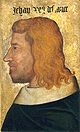 |
John II John II of France John II , called John the Good , was the King of France from 1350 until his death. He was the second sovereign of the House of Valois and is perhaps best remembered as the king who was vanquished at the Battle of Poitiers and taken as a captive to England.The son of Philip VI and Joan the Lame,... the Good (Jean II le Bon) |
22 August 1350 | 8 April 1364 | Son of Philip VI | King of France (Roi de France) |
|
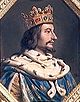 |
Charles V Charles V of France Charles V , called the Wise, was King of France from 1364 to his death in 1380 and a member of the House of Valois... the Wise (Charles V le Sage) |
8 April 1364 | 16 September 1380 | Son of John II | King of France (Roi de France) |
|
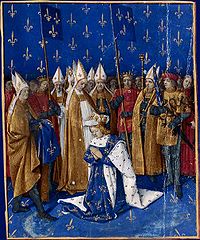 |
Charles VI Charles VI of France Charles VI , called the Beloved and the Mad , was the King of France from 1380 to 1422, as a member of the House of Valois. His bouts with madness, which seem to have begun in 1392, led to quarrels among the French royal family, which were exploited by the neighbouring powers of England and Burgundy... the Beloved, the Mad (Charles VI le Bienaimé, le Fol) |
16 September 1380 | 21 October 1422 | Son of Charles V | King of France (Roi de France) |
|
 |
Charles VII Charles VII of France Charles VII , called the Victorious or the Well-Served , was King of France from 1422 to his death, though he was initially opposed by Henry VI of England, whose Regent, the Duke of Bedford, ruled much of France including the capital, Paris... the Victorious, the Well-Served (Charles VII le Victorieux, le Bien-Servi) |
21 October 1422 | 22 July 1461 | Son of Charles VI | King of France (Roi de France) |
|
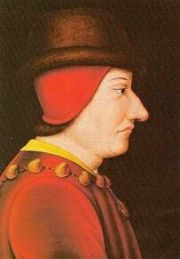 |
Louis XI Louis XI of France Louis XI , called the Prudent , was the King of France from 1461 to 1483. He was the son of Charles VII of France and Mary of Anjou, a member of the House of Valois.... the Prudent, the Universal Spider (Louis XI le Prudent, l'Universelle Aragne) |
22 July 1461 | 30 August 1483 | Son of Charles VII | King of France (Roi de France) |
|
 |
Charles VIII Charles VIII of France Charles VIII, called the Affable, , was King of France from 1483 to his death in 1498. Charles was a member of the House of Valois... the Affable (Charles VIII l'Affable) |
30 August 1483 | 7 April 1498 | Son of Louis XI | King of France (Roi de France) |
Valois–Orléans Branch (1498–1515)
| Portrait | Coat of Arms | Name | King From | King Until | Relationship with Predecessor(s) | Title |
|---|---|---|---|---|---|---|
 |
Louis XII Louis XII of France Louis proved to be a popular king. At the end of his reign the crown deficit was no greater than it had been when he succeeded Charles VIII in 1498, despite several expensive military campaigns in Italy. His fiscal reforms of 1504 and 1508 tightened and improved procedures for the collection of taxes... Father of the People (Louis XII le Père du Peuple) |
7 April 1498 | 1 January 1515 | Great-grandson of Charles V Second cousin, and by first marriage son-in-law of Louis XI By second marriage husband of Anne of Brittany Anne of Brittany Anne, Duchess of Brittany , also known as Anna of Brittany , was a Breton ruler, who was to become queen to two successive French kings. She was born in Nantes, Brittany, and was the daughter of Francis II, Duke of Brittany and Margaret of Foix. Her maternal grandparents were Queen Eleanor of... , widow of Charles VIII |
King of France (Roi de France) |
Valois–Angoulême BranchCounts and dukes of AngoulêmeAngoulême in western France was part of the Carolingian Empire as the kingdom of Aquitaine. Under Charlemagne's successors, the local Count of Angoulême was independent and was not united with the French crown until 1307. By the terms of the Treaty of Brétigny the Angoumois, then ruled by the...
(1515–1589)
| Portrait | Coat of Arms | Name | King From | King Until | Relationship with Predecessor(s) | Title |
|---|---|---|---|---|---|---|
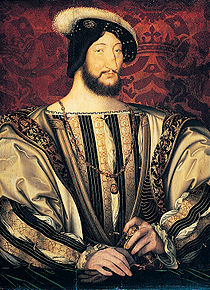 |
Francis I Francis I of France Francis I was King of France from 1515 until his death. During his reign, huge cultural changes took place in France and he has been called France's original Renaissance monarch... the Father and Restorer of Letters (François Ier le Père et Restaurateur des Lettres) |
1 January 1515 | 31 March 1547 | Great-great-grandson of Charles V First cousin once removed, and by first marriage son-in-law of Louis XII |
King of France (Roi de France) |
|
 |
Henry II Henry II of France Henry II was King of France from 31 March 1547 until his death in 1559.-Early years:Henry was born in the royal Château de Saint-Germain-en-Laye, near Paris, the son of Francis I and Claude, Duchess of Brittany .His father was captured at the Battle of Pavia in 1525 by his sworn enemy,... (Henri II) |
31 March 1547 | 10 July 1559 | Son of Francis I | King of France (Roi de France) |
|
| Francis II Francis II of France Francis II was aged 15 when he succeeded to the throne of France after the accidental death of his father, King Henry II, in 1559. He reigned for 18 months before he died in December 1560... (François II) |
10 July 1559 | 5 December 1560 | Son of Henry II | King of France and Scotland (Roi de France et d'Écosse) |
||
 |
Charles IX Charles IX of France Charles IX was King of France, ruling from 1560 until his death. His reign was dominated by the Wars of Religion. He is best known as king at the time of the St. Bartholomew's Day Massacre.-Childhood:... |
5 December 1560 | 30 May 1574 | Son of Henry II Younger brother of Francis II |
King of France (Roi de France) |
|
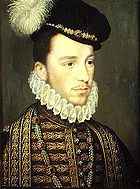 |
Henry III Henry III of France Henry III was King of France from 1574 to 1589. As Henry of Valois, he was the first elected monarch of the Polish-Lithuanian Commonwealth with the dual titles of King of Poland and Grand Duke of Lithuania from 1573 to 1575.-Childhood:Henry was born at the Royal Château de Fontainebleau,... (Henri III) |
30 May 1574 | 2 August 1589 | Son of Henry II Younger brother of Charles IX |
King of France and Poland (Roi de France et de Pologne) |
House of BourbonHouse of BourbonThe House of Bourbon is a European royal house, a branch of the Capetian dynasty . Bourbon kings first ruled Navarre and France in the 16th century. By the 18th century, members of the Bourbon dynasty also held thrones in Spain, Naples, Sicily, and Parma...
(1589–1792)
| Portrait | Coat of Arms | Name | King From | King Until | Relationship with Predecessor(s) | Title |
|---|---|---|---|---|---|---|
 |
Henry IV Henry IV of France Henry IV , Henri-Quatre, was King of France from 1589 to 1610 and King of Navarre from 1572 to 1610. He was the first monarch of the Bourbon branch of the Capetian dynasty in France.... , Good King Henry, the Green Gallant (Henri IV, le Bon Roi Henri, le Vert-Galant) |
2 August 1589 | 14 May 1610 | Tenth generation descendant of Louis IX in the male line Grandnephew of Francis I Second cousin, and by first marriage brother-in-law of Francis II, Charles IX and Henry III |
King of France and of Navarre (Roi de France et de Navarre) |
|
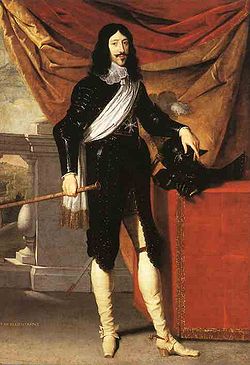 |
Louis XIII Louis XIII of France Louis XIII was a Bourbon monarch who ruled as King of France and of Navarre from 1610 to 1643.Louis was only eight years old when he succeeded his father. His mother, Marie de Medici, acted as regent during Louis' minority... the Just (Louis XIII le Juste) |
14 May 1610 | 14 May 1643 | Son of Henry IV | King of France and of Navarre (Roi de France et de Navarre) |
|
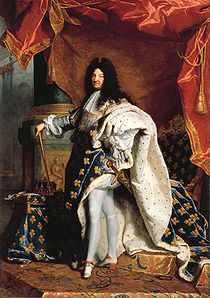 |
Louis XIV Louis XIV of France Louis XIV , known as Louis the Great or the Sun King , was a Bourbon monarch who ruled as King of France and Navarre. His reign, from 1643 to his death in 1715, began at the age of four and lasted seventy-two years, three months, and eighteen days... the Great, the Sun King (Louis XIV le Grand, le Roi Soleil) |
14 May 1643 | 1 September 1715 | Son of Louis XIII | King of France and of Navarre (Roi de France et de Navarre) |
|
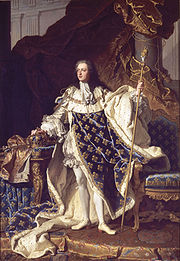 |
Louis XV Louis XV of France Louis XV was a Bourbon monarch who ruled as King of France and of Navarre from 1 September 1715 until his death. He succeeded his great-grandfather at the age of five, his first cousin Philippe II, Duke of Orléans, served as Regent of the kingdom until Louis's majority in 1723... the Beloved (Louis XV le Bien-Aimé) |
1 September 1715 | 10 May 1774 | Great-grandson of Louis XIV | King of France and of Navarre (Roi de France et de Navarre) |
|
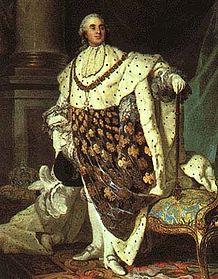 |
Louis XVI Louis XVI of France Louis XVI was a Bourbon monarch who ruled as King of France and Navarre until 1791, and then as King of the French from 1791 to 1792, before being executed in 1793.... the Last (Louis XVI le Dernier) |
10 May 1774 | 21 September 1792 | Grandson of Louis XV | King of France and of Navarre (Roi de France et de Navarre) (1774–1789) King of the French (Roi des Français) (1789–1792) |
From 21 January 1793 to 8 June 1795, Louis XVI's son Louis-Charles was the titular King of France as Louis XVII
Louis XVII of France
Louis XVII , from birth to 1789 known as Louis-Charles, Duke of Normandy; then from 1789 to 1791 as Louis-Charles, Dauphin of France; and from 1791 to 1793 as Louis-Charles, Prince Royal of France, was the son of King Louis XVI of France and Queen Marie Antoinette...
; in reality, however, he was imprisoned in the Temple throughout this duration, and power was held by the leaders of the Republic. Upon Louis XVII's death, his uncle (Louis XVI's brother) Louis-Stanislas claimed the throne, as Louis XVIII
Louis XVIII of France
Louis XVIII , known as "the Unavoidable", was King of France and of Navarre from 1814 to 1824, omitting the Hundred Days in 1815...
, but only became de facto King of France in 1814.
First RepublicFrench First RepublicThe French First Republic was founded on 22 September 1792, by the newly established National Convention. The First Republic lasted until the declaration of the First French Empire in 1804 under Napoleon I...
(1792–1804)
The First French Republic lasted from 1792 to 1804, when its First Consul, Napoléon Bonaparte, declared himself Emperor of the FrenchEmperor of the French
The Emperor of the French was the title used by the Bonaparte Dynasty starting when Napoleon Bonaparte was given the title Emperor on 18 May 1804 by the French Senate and was crowned emperor of the French on 02 December 1804 at the cathedral of Notre Dame de Paris, in Paris with the Crown of...
.
Bonaparte DynastyBonaparteThe House of Bonaparte is an imperial and royal European dynasty founded by Napoleon I of France in 1804, a French military leader who rose to notability out of the French Revolution and transformed the French Republic into the First French Empire within five years of his coup d'état...
, First EmpireFirst French EmpireThe First French Empire , also known as the Greater French Empire or Napoleonic Empire, was the empire of Napoleon I of France...
(1804–1814)
| Portrait | Coat of Arms | Name | Emperor From | Emperor Until | Relationship with Predecessor(s) | Title |
|---|---|---|---|---|---|---|
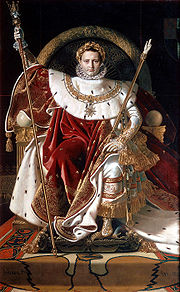 |
.svg.png) |
Napoleon I Napoleon I of France Napoleon Bonaparte was a French military and political leader during the latter stages of the French Revolution.As Napoleon I, he was Emperor of the French from 1804 to 1815... , the Great (Napoléon Ier, le Grand) |
18 May 1804 | 11 April 1814 | - | Emperor of the French (Empereur des Français) |
Capetian DynastyCapetian dynastyThe Capetian dynasty , also known as the House of France, is the largest and oldest European royal house, consisting of the descendants of King Hugh Capet of France in the male line. Hugh Capet himself was a cognatic descendant of the Carolingians and the Merovingians, earlier rulers of France...
, House of Bourbon, Restored (1814–1815)
| Portrait | Coat of Arms | Name | King From | King Until | Relationship with Predecessor(s) | Title |
|---|---|---|---|---|---|---|
 |
Louis XVIII Louis XVIII of France Louis XVIII , known as "the Unavoidable", was King of France and of Navarre from 1814 to 1824, omitting the Hundred Days in 1815... |
11 April 1814 | 20 March 1815 | Younger brother of Louis XVI/ uncle of Louis XVII | King of France and of Navarre (Roi de France et de Navarre) |
Bonaparte DynastyBonaparteThe House of Bonaparte is an imperial and royal European dynasty founded by Napoleon I of France in 1804, a French military leader who rose to notability out of the French Revolution and transformed the French Republic into the First French Empire within five years of his coup d'état...
, First Empire, RestoredFirst French EmpireThe First French Empire , also known as the Greater French Empire or Napoleonic Empire, was the empire of Napoleon I of France...
(The Hundred DaysHundred DaysThe Hundred Days, sometimes known as the Hundred Days of Napoleon or Napoleon's Hundred Days for specificity, marked the period between Emperor Napoleon I of France's return from exile on Elba to Paris on 20 March 1815 and the second restoration of King Louis XVIII on 8 July 1815...
, 1815)
| Portrait | Coat of Arms | Name | Emperor From | Emperor Until | Relationship with Predecessor(s) | Title |
|---|---|---|---|---|---|---|
|
|
Napoleon I Napoleon I of France Napoleon Bonaparte was a French military and political leader during the latter stages of the French Revolution.As Napoleon I, he was Emperor of the French from 1804 to 1815... (Napoléon Ier) |
20 March 1815 | 22 June 1815 | - | Emperor of the French (Empereur des Français) |
From 22 June to 7 July 1815, Bonapartists considered Napoleon I's son Napoleon II as the legitimate heir to the throne, his father having abdicated in his favor. However, the young child's reign was entirely fictional, as he was residing in Austria with his mother. Louis XVIII was reinstalled as king on 7 July.
Capetian DynastyCapetian dynastyThe Capetian dynasty , also known as the House of France, is the largest and oldest European royal house, consisting of the descendants of King Hugh Capet of France in the male line. Hugh Capet himself was a cognatic descendant of the Carolingians and the Merovingians, earlier rulers of France...
, House of Bourbon, Restored (1815–1830)
| Portrait | Coat of Arms | Name | King From | King Until | Relationship with Predecessor(s) | Title |
|---|---|---|---|---|---|---|
|
Louis XVIII Louis XVIII of France Louis XVIII , known as "the Unavoidable", was King of France and of Navarre from 1814 to 1824, omitting the Hundred Days in 1815... |
7 July 1815 | 16 September 1824 | Younger brother of Louis XVI/ uncle of Louis XVII | King of France and of Navarre (Roi de France et de Navarre) |
|
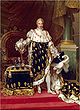 |
Charles X Charles X of France Charles X was known for most of his life as the Comte d'Artois before he reigned as King of France and of Navarre from 16 September 1824 until 2 August 1830. A younger brother to Kings Louis XVI and Louis XVIII, he supported the latter in exile and eventually succeeded him... |
16 September 1824 | 2 August 1830 | Younger brother of Louis XVIII | King of France and of Navarre (Roi de France et de Navarre) |
The elder son and heir of Charles X, the Dauphin Louis-Antoine, is occasionally considered to have legally been the King of France as Louis XIX in the 20 minutes that passed between Charles X's formal signature of abdication and the Dauphin's own signature.
Henri d'Artois, Charles X's grandson, was considered by monarchists to be the titular King of France, as Henry V
Henri, comte de Chambord
Henri, comte de Chambord was disputedly King of France from 2 to 9 August 1830 as Henry V, although he was never officially proclaimed as such...
from 2 August 1830 to 9 August 1830, but his reign remained largely fictional, as he acceded in a revolutionary context and hence was never recognized by the French State. He is generally not accounted for in lists of official French monarchs.
Capetian DynastyCapetian dynastyThe Capetian dynasty , also known as the House of France, is the largest and oldest European royal house, consisting of the descendants of King Hugh Capet of France in the male line. Hugh Capet himself was a cognatic descendant of the Carolingians and the Merovingians, earlier rulers of France...
, House of OrléansHouse of OrleansOrléans is the name used by several branches of the Royal House of France, all descended in the legitimate male line from the dynasty's founder, Hugh Capet. It became a tradition during France's ancien régime for the duchy of Orléans to be granted as an appanage to a younger son of the king...
(The Monarchy of July 1830–1848)
| Portrait | Coat of Arms | Name | King From | King Until | Relationship with Predecessor(s) | Title |
|---|---|---|---|---|---|---|
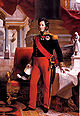 |
Louis-Philippe I the Citizen King (Louis Philippe, le Roi Citoyen) |
9 August 1830 | 24 February 1848 | Sixth generation descendant of Louis XIII in the male line Fifth cousin of Louis XVI, Louis XVIII and Charles X |
King of the French (Roi des Français) |
Second Republic (1848–1852)
The Second French Republic lasted from 1848 to 1852, when its president, Louis-Napoléon Bonaparte, was declared Emperor of the FrenchEmperor of the French
The Emperor of the French was the title used by the Bonaparte Dynasty starting when Napoleon Bonaparte was given the title Emperor on 18 May 1804 by the French Senate and was crowned emperor of the French on 02 December 1804 at the cathedral of Notre Dame de Paris, in Paris with the Crown of...
.
Bonaparte DynastyBonaparteThe House of Bonaparte is an imperial and royal European dynasty founded by Napoleon I of France in 1804, a French military leader who rose to notability out of the French Revolution and transformed the French Republic into the First French Empire within five years of his coup d'état...
, Second Empire, RestoredSecond French EmpireThe Second French Empire or French Empire was the Imperial Bonapartist regime of Napoleon III from 1852 to 1870, between the Second Republic and the Third Republic, in France.-Rule of Napoleon III:...
(1852–1870)
| Portrait | Coat of Arms | Name | Emperor From | Emperor Until | Relationship with Predecessor(s) | Title |
|---|---|---|---|---|---|---|
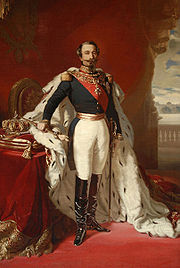 |
Napoleon III Napoleon III of France Louis-Napoléon Bonaparte was the President of the French Second Republic and as Napoleon III, the ruler of the Second French Empire. He was the nephew and heir of Napoleon I, christened as Charles Louis Napoléon Bonaparte... (Napoléon III) |
2 December 1852 | 4 September 1870 | Nephew of Napoleon I | Emperor of the French (Empereur des Français) |
Government of National Defence (Paris CommuneParis CommuneThe Paris Commune was a government that briefly ruled Paris from March 18 to May 28, 1871. It existed before the split between anarchists and Marxists had taken place, and it is hailed by both groups as the first assumption of power by the working class during the Industrial Revolution...
1870–1871)
The transition period between the fall of the Second Empire after the capture of Napoleon III by the Prussians and the assumption of the Third Republic by General Louis Jules TrochuLouis Jules Trochu
Louis Jules Trochu was a French military leader and politician. He served as President of the Government of National Defense—France's de facto head of state—from 4 September 1870 until his resignation on 22 January 1871 .- Military career :He was born at Palais...
.
Heads of State following 1871
The chronology of Head of StateHead of State
A head of state is the individual that serves as the chief public representative of a monarchy, republic, federation, commonwealth or other kind of state. His or her role generally includes legitimizing the state and exercising the political powers, functions, and duties granted to the head of...
of France continues with the Presidents of France and short term interim periods by the Chief of State of the French State
Vichy France
Vichy France, Vichy Regime, or Vichy Government, are common terms used to describe the government of France that collaborated with the Axis powers from July 1940 to August 1944. This government succeeded the Third Republic and preceded the Provisional Government of the French Republic...
(1940–1944), the Chairman of the Provisional Government of the French Republic
Provisional Government of the French Republic
The Provisional Government of the French Republic was an interim government which governed France from 1944 to 1946, following the fall of Vichy France and prior to the Fourth French Republic....
(1944–1946) and the President of the French Senate (1969 and 1974) during the Fifth Republic
French Fifth Republic
The Fifth Republic is the fifth and current republican constitution of France, introduced on 4 October 1958. The Fifth Republic emerged from the collapse of the French Fourth Republic, replacing the prior parliamentary government with a semi-presidential system...
.
Later pretenders
Various pretenderPretender
A pretender is one who claims entitlement to an unavailable position of honour or rank. Most often it refers to a former monarch, or descendant thereof, whose throne is occupied or claimed by a rival, or has been abolished....
s descended from the preceding monarchs have claimed to be the legitimate monarch of France, rejecting the claims of the President of France, and of each other. These groups are:
- Legitimist claimants to the throne of France—descendants of the Bourbons, rejecting all heads of state since 1830. Unionists recognized the Orléanist claimant after 1883.
- Orléanist claimants to the throne of France—descendants of Louis-Phillippe, a cadet Bourbon, rejecting all heads of state since 1848.
- Bonapartist claimants to the throne of France—descendants of Napoleon I and his brothers, rejecting all heads of state 1815–52, and since 1870.
- Jacobite claimants to the throne of France—descendants of King Edward III of England and thus his claim to the French throne (renounced by HanoverianHouse of HanoverThe House of Hanover is a deposed German royal dynasty which has ruled the Duchy of Brunswick-Lüneburg , the Kingdom of Hanover, the Kingdom of Great Britain, the Kingdom of Ireland and the United Kingdom of Great Britain and Ireland...
King George IIIGeorge III of the United KingdomGeorge III was King of Great Britain and King of Ireland from 25 October 1760 until the union of these two countries on 1 January 1801, after which he was King of the United Kingdom of Great Britain and Ireland until his death...
upon union with IrelandAct of Union 1800The Acts of Union 1800 describe two complementary Acts, namely:* the Union with Ireland Act 1800 , an Act of the Parliament of Great Britain, and...
), also claiming Scotland, and Ireland.
See also
- Coronation of the French monarchCoronation of the French monarchThe accession of the King of France was legitimated by coronation ceremony performed with the Crown of Charlemagne at Notre-Dame de Reims. However, the person did not need to be crowned in order to be recognized as French monarch; the new king ascended the throne when the coffin of the previous...
- Bourbon family treeBourbon family treeThis is a simplified Family tree of the House of Bourbon, from the first duke of Bourbon, to present day, where family representatives are the kings of Spain and heirs to the throne of France.-From Robert, Count of Clermont to Henry IV:...
- English and French monarchs overlap chartEnglish and French monarchs overlap chartThis chart shows which monarchs of England and France reigned at the same time. This chart was created to help understand the progression of relations between these kingdoms because of the long rivalry between them over the centuries. France has had no monarchs since 1870...
- English Kings of France
- Kings of France family tree
- Members of the French Royal FamiliesMembers of the French Royal FamiliesThis is a list of non-ruling members of the French royal family. It includes royal consorts, children, and some grandchildren, as well as more recent members of the French Royal House....
- Style of the French sovereignStyle of the French sovereignThe precise style of French Sovereigns varied over the years. Currently, there is no French sovereign; three distinct traditions exist, each claiming different forms of title....