


Prison

Encyclopedia
A prison is a place in which people are physically confined and, usually, deprived of a range of personal freedoms
. Imprisonment
or incarceration
is a legal penalty
that may be imposed by the state
for the commission of a crime
. Other terms used are penitentiary, penalty school, correctional facility, remand centre, detention centre, and jail or gaol. In some legal systems some of these terms have distinct meanings, for example "jail" and "prison" in the United States.
A criminal suspect
who has been charged with or is likely to be charged with criminal offense
may be held on remand
in prison if he is denied or unable to meet conditions of bail
, or is unable or unwilling to post bail. A criminal defendant
may also be held in prison while awaiting trial
or a trial verdict
. If found guilty, a defendant will be convicted and may receive a custodial sentence
requiring imprisonment.
As well as convicted or suspected criminals, prisons may be used for internment
of those not charged with a crime. Prisons may also be used as a tool of political repression
to detain political prisoner
s, prisoners of conscience
, and "enemies of the state
", particularly by authoritarian
regimes. In times of war
or conflict, prisoners of war
may also be detained in prisons. A prison system is the organizational arrangement of the provision and operation of prisons.
or capital punishment
was administered. There were prisons used for detention in Jerusalem in Old Testament
times, and the Bible details the imprisonment of Joseph in Egypt. Dungeon
s were used to hold prisoners; those who were not killed or left to die there often became galley slave
s or faced penal transportation
s. In other cases debtor
s were often thrown into debtor's prison
s, until they paid their jailers enough money in exchange for a limited degree of freedom.
Only in the 19th century, beginning in Britain, did prisons as known today become commonplace. The modern prisons system was born in London
, influenced by the utilitarianism
of Jeremy Bentham
. Bentham's panopticon
introduced the principle of observation and control that underpins the design of the modern prison. The notion of prisoners being incarcerated as part of their punishment and not simply as a holding state until trial or hanging, was at the time revolutionary. This is when prisons had begun to be used as criminal rehabilitation centers.
Britain
practiced penal transportation
of convict
ed criminals to penal colonies in the British Empire, in the Americas from the 1610s through the American Revolution
in the 1770s and in Australia
between 1788 and 1868. France
sent criminals to tropical penal colonies including Louisiana
in the early 18th century. Penal colonies in French Guiana
operated until 1951 (in particular, infamous Île du Diable (Devil's Island
)). Katorga
prisons were established in the 17th century in Tsardom of Russia
in underpopulated areas of Siberia
and the Russian Far East
that had few towns or food sources. Since these times, Siberia gained its fearful connotation of punishment.
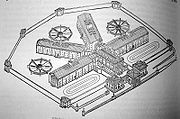 Prisons are normally surrounded by fencing, walls, earthworks, geographical features, or other barriers to prevent escape. Multiple barriers, concertina wire
, electrified fencing
, secured and defensible main gates, armed guard towers, lighting, motion sensors, dogs
and roving patrols may all also be present depending on the level of security. Remotely controlled doors, CCTV
monitoring, alarms, cages, restraints, nonlethal and lethal weapons, riot-control gear and physical segregation of units and prisoners may all also be present within a prison to monitor and control the movement and activity of prisoners within the facility.
Modern prison designs have sought to increasingly restrict and control the movement of prisoners throughout the facility while permitting a maximal degree of direct monitoring by a smaller prison staff. As compared to traditional large landing-cellblock designs which were inherited from the 19th century and which permitted only intermittent observation of prisoners, many newer prisons are designed in a decentralized "podular" layout.
Smaller, separate and self-contained housing units known as "pods" or "modules" are designed to hold between sixteen and fifty prisoners each and are arranged around exercise yards or support facilities in a decentralized "campus" pattern. A small number of prison officers, sometimes a single officer, is assigned to supervise each pod. The pods contain tiers of cells arranged around a central control station or desk from which a single officer can monitor all of the cells and the entire pod, control cell doors and communicate with the rest of the prison. Pods may be designed for high-security "indirect-supervision", in which officers in segregated and sealed control booths monitor smaller numbers of prisoners confined to their cells.
An alternative is "direct-supervision", in which officers work within the pod and directly interact with and supervise prisoners, who may spend the day outside their cells in a central "dayroom" on the floor of the pod. Movement in or out of the pod to and from exercise yards, work assignments or medical appointments can be restricted to individual pods at designated times and is generally centrally controlled. Goods and services, such as meals, laundry, commissary, educational materials, religious services and medical care can increasingly be brought to individual pods or cells as well.
Despite these design innovations, overcrowding at many prisons, particularly in the U.S., has resulted in a contrary trend, as many prisons are forced to house large numbers of prisoners, often hundreds at a time, in gymnasiums or other large buildings that have been converted into massive open dormitories.
Lower-security prisons are often designed with less restrictive features, confining prisoners at night in smaller locked dormitories or even cottage or cabin-like housing while permitting them freer movement around the grounds to work or activities during the day.
and Wales
, prisoners are assigned security classes when they are sentenced. Thus prisons are given security classifications depending on the prisoners they are designed to hold. Therefore, prisons classified as "A" would typically house prisoners assigned the "A" category during sentencing, and be designed with the level of security necessary for that class. The categories of prisoners in descending order are:
The British prison system is also divided into "Open" and "Closed" prisons. Categories A-C are considered "Closed" prisons as prisoners cannot be trusted to interact with society, while category D prisons are generally "Open", meaning that prisoners with a good record and who are approved can be allowed limited function in society such as home-leave or a nominal employment.
, "jail" and "prison" refer to separate levels of incarceration; generally speaking, jails are county
or city administrated institutions which house both inmates awaiting trial on the local level and convicted misdemeanant
s serving a term of one year or less, while prisons are state
or federal facilities housing convicted felons
serving a term of more than one year. On the federal level, this terminology has been largely superseded by a more complex five-tier system implemented by the Federal Bureau of Prisons
that ranges from low security "Prison Camps" to medium security "Correctional Institutions" and finally maximum security "Penitentiaries". Federal prisons can also house pre-trial inmates.
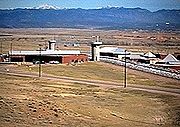 The exact classification systems differ between county, state, and federal systems. Some common types of prisons include:
(people under 17 or 18, depending on the jurisdiction) are known as young offender facilities or similar designation and hold minors who have been remanded into custody or serving sentence. Many countries have their own age of criminal responsibility in which children are deemed legally responsible for their actions for a crime. Countries such as Canada may try to sentence a juvenile as an adult, but have them serve their sentence in a juvenile facility until they reach the age of majority, at which time they would be transferred to an adult facility.

Prisons form part of military systems, and are used variously to house prisoners of war, unlawful combatant
s, those whose freedom is deemed a national security risk by military or civilian authorities, and members of the military
found guilty of a serious crime.
s associated with Stalinism
are best known.
facilities have characteristics of prisons, particularly when confining patients who have committed a crime and are considered dangerous. In addition, many prisons have psychiatric units dedicated to housing offenders diagnosed with a wide variety of mental disorders.
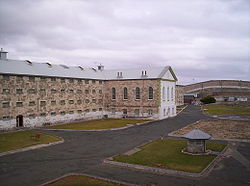
were built by convict
labour in the 19th century. During the 1990s, various state governments in Australia engaged private sector correctional corporations to build and operate prisons whilst several older government run institutions were decommissioned. Operation of Federal detention centres was also privatised at a time when asylum seekers began to be mandatorily detained in Australia
.
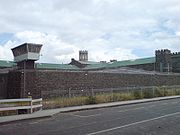
New Zealand currently maintains 19 prisons around the country. The Department of Corrections has an annual budget of NZD$748 million and assets worth over NZD$1.7 billion. Official statistics show (as of June 30, 2007) that there are currently 7,605 prisoners within the New Zealand
correctional system. (5,490 Sentenced Prisoners and 1,552 Remanded Prisoners) + 5,795 staff. Breakouts are only at 0.15 per 100 prisoners and there is a rate of only 15% positive drug results during random drug testing in NZ prisons.
currently maintains five prisons around the country: Harku Prison, Murru Prison, Tallinn Prison, Tartu Prison and Viru Prison
.
In March 2011, there were 3,405 persons incarcerated in Estonia
, and the number of prisoners per 100,000 residents were 254, which is the third highest rate in the EU. These figures include pre-trial detainees and remand prisoners. It is, however, a much lower rate than in the late 1990s and early 2000s, when the Estonian prison population reached almost 5,000 persons.
has 26 prisons (of which about half are open institutions). Official statistics showed on average 3500 places (2003).
Ministry of Justice's French Prison Service division has 194 prisons in mainland and the overseas territories. As of 1 January 2009, statistics showed approximately 52,000 available places, with around 58,000 "hosted" prisoners. France is home to Fleury-Mérogis Prison
, Europe's largest correctional facility.
has 194 prisons (of which 19 are open institutions). Official statistics showed 80,214 places on March 31, 2007. On the same day, there were 75,719 prisoners (of which 13,168 pre-trial; 60,619 serving sentences; 1,932 others, i.e. mainly civil prisoners; 4,068 were female). This is less than the highest value of 81,176 prisoners on March 31, 2003.
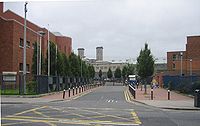 There are currently 14 prisons operating in the Republic of Ireland
with a total bed capacity of 4,106 as of the 31 December 2009. The daily average number of prisoners in custody in 2009 was 3,881. However, most of these prisons currently operate at or above capacity.
s of various categories: Cells used by prisoners in police custody most often belong to category glattcelle ("smooth"+"cell"). The police force of Oslo was fined Norwegian kroner 50 000 in 2011 for holding a prisoner for 8 days in a glattcelle (And for a similar incident later in 2011, the police district was not fined because it had already been fined for the first incident).
Ombudsman for Children in Norway claims that a United Nations' committee has criticized practices in regard to the imprisonment of children in Norway.
officially declared 90,199 prisoners (13,374 pre-trial; 76,434 serving sentences; 391 others; 2,743 prisoners were female), giving an imprisonment rate per 100,000 inhabitants of about 234. The overpopulation rate (number of prisoners held compared to number of places for prisoners) was estimated by the official prison service as 119%.
The growth rate of imprisonment in Poland during 2006–2007 was approximately 4% annually, based on the August 2007 estimate of 90,199 prisoners and the June 2005 estimate of 82,572 prisoners.
are classified as closed, semi-open and open prisons. Closed prisons are separated into different kinds according to its structure and the number of prisoners held. Examples are A type, B type, E type and F type
. F types are high security prisons, known in the United States
as Supermax
.
In section 38B of the Criminal Law Act 1977
, the word "prison" means, in the case of a person who is under the age of 21 years arrested in England and Wales, any place in which he could be detained under section 12(10) of the Criminal Justice Act 1982, and, in the case of a person under that age arrested in Northern Ireland, a young offenders centre.
In section 1 of the Prison Security Act 1992
, the word "prison" means any prison, young offender institution or remand centre which is under the general superintendence of, or is provided by, the Secretary of State under the Prison Act 1952, including a contracted out prison within the meaning of Part IV of the Criminal Justice Act 1991
In section 4 of the Regulation of Investigatory Powers Act 2000
, the word "prison" means any prison, young offender institution, young offenders centre or remand centre which is under the general superintendence of, or is provided by, the Secretary of State under the Prison Act 1952 or the Prison Act (Northern Ireland) 1953, or, any prison, young offenders institution or remand centre which is under the general superintendence of the Scottish Ministers under the Prisons (Scotland) Act 1989, and includes any contracted out prison, within the meaning of Part IV of the Criminal Justice Act 1991 or section 106(4) of the Criminal Justice and Public Order Act 1994
, and any legalised police cells within the meaning of section 14 of the Prisons (Scotland) Act 1989.
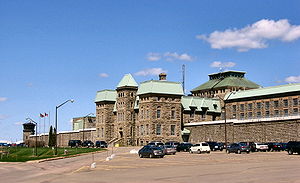
are operated by the federal government, and are for those who have been sentenced to serve more than 2 years of custody. The boundary of two years separating provincial and federal custody underlies the sentencing of some offenders to "two years less a day", so they can serve their sentences in provincial correctional institutions.
 In the United States penal system, a jail is a facility used to detain persons who are in the lawful custody of the state, including accused persons awaiting trial and those who have been convicted of a crime
and are serving a sentence of less than one year. Jails are generally small prisons run by individual counties
and cities
, though some jails in larger communities may be as large and hold as many inmates as regular prisons. As with prisons, some jails have different wings for certain types of offenders, and have work programs for inmates who demonstrate good behavior.
Approximately half of the U.S. jail population consists of pretrial detainees who have not been convicted or sentenced. Prisoners serving terms longer than one year are typically housed in prison facilities operated by state governments. Unlike most state prisons, a jail usually houses both men and women in separate portions of the same facility. Some jails lease space to house inmates from the federal government, state prisons or other counties as a revenue-raising method.
In 2005, a report by the Bureau of Justice Statistics
found that 62 percent of people in jails have not been convicted, and are awaiting trial. , local jails held or supervised 819,434 individuals. Nine percent of these individuals were in programs such as community service
, work release
, weekend reporting, electronic monitoring, and other alternative programs.
regimes.
Freedom (political)
Political freedom is a central philosophy in Western history and political thought, and one of the most important features of democratic societies...
. Imprisonment
Imprisonment
Imprisonment is a legal term.The book Termes de la Ley contains the following definition:This passage was approved by Atkin and Duke LJJ in Meering v Grahame White Aviation Co....
or incarceration
Incarceration
Incarceration is the detention of a person in prison, typically as punishment for a crime .People are most commonly incarcerated upon suspicion or conviction of committing a crime, and different jurisdictions have differing laws governing the function of incarceration within a larger system of...
is a legal penalty
Punishment
Punishment is the authoritative imposition of something negative or unpleasant on a person or animal in response to behavior deemed wrong by an individual or group....
that may be imposed by the state
State (polity)
A state is an organized political community, living under a government. States may be sovereign and may enjoy a monopoly on the legal initiation of force and are not dependent on, or subject to any other power or state. Many states are federated states which participate in a federal union...
for the commission of a crime
Crime
Crime is the breach of rules or laws for which some governing authority can ultimately prescribe a conviction...
. Other terms used are penitentiary, penalty school, correctional facility, remand centre, detention centre, and jail or gaol. In some legal systems some of these terms have distinct meanings, for example "jail" and "prison" in the United States.
A criminal suspect
Suspect
In the parlance of criminal justice, a suspect is a known person suspected of committing a crime.Police and reporters often incorrectly use the word suspect when referring to the...
who has been charged with or is likely to be charged with criminal offense
Offense (law)
In law, an offence is a violation of the criminal law .In England and Wales, as well as in Hong Kong the term "offence" means the same thing as, and is interchangeable with, the term "crime"....
may be held on remand
Detention of suspects
The detention of suspects is the process of keeping a person who has been arrested in a police-cell, remand prison or other detention centre before trial or sentencing. One criticism of pretrial detention is that eventual acquittal can be a somewhat hollow victory, in that there is no way to...
in prison if he is denied or unable to meet conditions of bail
Bail
Traditionally, bail is some form of property deposited or pledged to a court to persuade it to release a suspect from jail, on the understanding that the suspect will return for trial or forfeit the bail...
, or is unable or unwilling to post bail. A criminal defendant
Defendant
A defendant or defender is any party who is required to answer the complaint of a plaintiff or pursuer in a civil lawsuit before a court, or any party who has been formally charged or accused of violating a criminal statute...
may also be held in prison while awaiting trial
Trial (law)
In law, a trial is when parties to a dispute come together to present information in a tribunal, a formal setting with the authority to adjudicate claims or disputes. One form of tribunal is a court...
or a trial verdict
Verdict
In law, a verdict is the formal finding of fact made by a jury on matters or questions submitted to the jury by a judge. The term, from the Latin veredictum, literally means "to say the truth" and is derived from Middle English verdit, from Anglo-Norman: a compound of ver and dit In law, a verdict...
. If found guilty, a defendant will be convicted and may receive a custodial sentence
Sentence (law)
In law, a sentence forms the final explicit act of a judge-ruled process, and also the symbolic principal act connected to his function. The sentence can generally involve a decree of imprisonment, a fine and/or other punishments against a defendant convicted of a crime...
requiring imprisonment.
As well as convicted or suspected criminals, prisons may be used for internment
Internment
Internment is the imprisonment or confinement of people, commonly in large groups, without trial. The Oxford English Dictionary gives the meaning as: "The action of 'interning'; confinement within the limits of a country or place." Most modern usage is about individuals, and there is a distinction...
of those not charged with a crime. Prisons may also be used as a tool of political repression
Political repression
Political repression is the persecution of an individual or group for political reasons, particularly for the purpose of restricting or preventing their ability to take political life of society....
to detain political prisoner
Political prisoner
According to the Longman Dictionary of Contemporary English, a political prisoner is ‘someone who is in prison because they have opposed or criticized the government of their own country’....
s, prisoners of conscience
Prisoner of conscience
Prisoner of conscience is a term defined in Peter Benenson's 1961 article "The Forgotten Prisoners" often used by the human rights group Amnesty International. It can refer to anyone imprisoned because of their race, religion, or political views...
, and "enemies of the state
Enemy of the state
An enemy of the state is a person accused of certain crimes against the state, such as treason. Describing individuals in this way is sometimes a manifestation of political repression. For example, an authoritarian regime may purport to maintain national security by describing social or political...
", particularly by authoritarian
Authoritarianism
Authoritarianism is a form of social organization characterized by submission to authority. It is usually opposed to individualism and democracy...
regimes. In times of war
War
War is a state of organized, armed, and often prolonged conflict carried on between states, nations, or other parties typified by extreme aggression, social disruption, and usually high mortality. War should be understood as an actual, intentional and widespread armed conflict between political...
or conflict, prisoners of war
Prisoner of war
A prisoner of war or enemy prisoner of war is a person, whether civilian or combatant, who is held in custody by an enemy power during or immediately after an armed conflict...
may also be detained in prisons. A prison system is the organizational arrangement of the provision and operation of prisons.
History
For most of history, imprisoning has not been a punishment in itself, but rather a way to confine criminals until corporalCorporal punishment
Corporal punishment is a form of physical punishment that involves the deliberate infliction of pain as retribution for an offence, or for the purpose of disciplining or reforming a wrongdoer, or to deter attitudes or behaviour deemed unacceptable...
or capital punishment
Capital punishment
Capital punishment, the death penalty, or execution is the sentence of death upon a person by the state as a punishment for an offence. Crimes that can result in a death penalty are known as capital crimes or capital offences. The term capital originates from the Latin capitalis, literally...
was administered. There were prisons used for detention in Jerusalem in Old Testament
Old Testament
The Old Testament, of which Christians hold different views, is a Christian term for the religious writings of ancient Israel held sacred and inspired by Christians which overlaps with the 24-book canon of the Masoretic Text of Judaism...
times, and the Bible details the imprisonment of Joseph in Egypt. Dungeon
Dungeon
A dungeon is a room or cell in which prisoners are held, especially underground. Dungeons are generally associated with medieval castles, though their association with torture probably belongs more to the Renaissance period...
s were used to hold prisoners; those who were not killed or left to die there often became galley slave
Galley slave
A galley slave was a slave rowing in a galley. The expression has two distinct meanings: it can refer either to a convicted criminal sentenced to work at the oar , or to a kind of human chattel, often a prisoner of war, assigned to his duty of rowing.-Antiquity:Contrary to the popular image of the...
s or faced penal transportation
Penal transportation
Transportation or penal transportation is the deporting of convicted criminals to a penal colony. Examples include transportation by France to Devil's Island and by the UK to its colonies in the Americas, from the 1610s through the American Revolution in the 1770s, and then to Australia between...
s. In other cases debtor
Debtor
A debtor is an entity that owes a debt to someone else. The entity may be an individual, a firm, a government, a company or other legal person. The counterparty is called a creditor...
s were often thrown into debtor's prison
Debtor's prison
A debtors' prison is a prison for those who are unable to pay a debt.Prior to the mid 19th century debtors' prisons were a common way to deal with unpaid debt.-Debt bondage in ancient Greece and Rome:...
s, until they paid their jailers enough money in exchange for a limited degree of freedom.
Only in the 19th century, beginning in Britain, did prisons as known today become commonplace. The modern prisons system was born in London
London
London is the capital city of :England and the :United Kingdom, the largest metropolitan area in the United Kingdom, and the largest urban zone in the European Union by most measures. Located on the River Thames, London has been a major settlement for two millennia, its history going back to its...
, influenced by the utilitarianism
Utilitarianism
Utilitarianism is an ethical theory holding that the proper course of action is the one that maximizes the overall "happiness", by whatever means necessary. It is thus a form of consequentialism, meaning that the moral worth of an action is determined only by its resulting outcome, and that one can...
of Jeremy Bentham
Jeremy Bentham
Jeremy Bentham was an English jurist, philosopher, and legal and social reformer. He became a leading theorist in Anglo-American philosophy of law, and a political radical whose ideas influenced the development of welfarism...
. Bentham's panopticon
Panopticon
The Panopticon is a type of building designed by English philosopher and social theorist Jeremy Bentham in the late eighteenth century. The concept of the design is to allow an observer to observe all inmates of an institution without them being able to tell whether or not they are being watched...
introduced the principle of observation and control that underpins the design of the modern prison. The notion of prisoners being incarcerated as part of their punishment and not simply as a holding state until trial or hanging, was at the time revolutionary. This is when prisons had begun to be used as criminal rehabilitation centers.
Britain
United Kingdom of Great Britain and Ireland
The United Kingdom of Great Britain and Ireland was the formal name of the United Kingdom during the period when what is now the Republic of Ireland formed a part of it....
practiced penal transportation
Penal transportation
Transportation or penal transportation is the deporting of convicted criminals to a penal colony. Examples include transportation by France to Devil's Island and by the UK to its colonies in the Americas, from the 1610s through the American Revolution in the 1770s, and then to Australia between...
of convict
Convict
A convict is "a person found guilty of a crime and sentenced by a court" or "a person serving a sentence in prison", sometimes referred to in slang as simply a "con". Convicts are often called prisoners or inmates. Persons convicted and sentenced to non-custodial sentences often are not termed...
ed criminals to penal colonies in the British Empire, in the Americas from the 1610s through the American Revolution
American Revolution
The American Revolution was the political upheaval during the last half of the 18th century in which thirteen colonies in North America joined together to break free from the British Empire, combining to become the United States of America...
in the 1770s and in Australia
Australia
Australia , officially the Commonwealth of Australia, is a country in the Southern Hemisphere comprising the mainland of the Australian continent, the island of Tasmania, and numerous smaller islands in the Indian and Pacific Oceans. It is the world's sixth-largest country by total area...
between 1788 and 1868. France
France
The French Republic , The French Republic , The French Republic , (commonly known as France , is a unitary semi-presidential republic in Western Europe with several overseas territories and islands located on other continents and in the Indian, Pacific, and Atlantic oceans. Metropolitan France...
sent criminals to tropical penal colonies including Louisiana
Louisiana
Louisiana is a state located in the southern region of the United States of America. Its capital is Baton Rouge and largest city is New Orleans. Louisiana is the only state in the U.S. with political subdivisions termed parishes, which are local governments equivalent to counties...
in the early 18th century. Penal colonies in French Guiana
French Guiana
French Guiana is an overseas region of France, consisting of a single overseas department located on the northern Atlantic coast of South America. It has borders with two nations, Brazil to the east and south, and Suriname to the west...
operated until 1951 (in particular, infamous Île du Diable (Devil's Island
Devil's Island
Devil's Island is the smallest and northernmost island of the three Îles du Salut located about 6 nautical miles off the coast of French Guiana . It has an area of 14 ha . It was a small part of the notorious French penal colony in French Guiana until 1952...
)). Katorga
Katorga
Katorga was a system of penal servitude of the prison farm type in Tsarist Russia...
prisons were established in the 17th century in Tsardom of Russia
Tsardom of Russia
The Tsardom of Russia was the name of the centralized Russian state from Ivan IV's assumption of the title of Tsar in 1547 till Peter the Great's foundation of the Russian Empire in 1721.From 1550 to 1700, Russia grew 35,000 km2 a year...
in underpopulated areas of Siberia
Siberia
Siberia is an extensive region constituting almost all of Northern Asia. Comprising the central and eastern portion of the Russian Federation, it was part of the Soviet Union from its beginning, as its predecessor states, the Tsardom of Russia and the Russian Empire, conquered it during the 16th...
and the Russian Far East
Russian Far East
Russian Far East is a term that refers to the Russian part of the Far East, i.e., extreme east parts of Russia, between Lake Baikal in Eastern Siberia and the Pacific Ocean...
that had few towns or food sources. Since these times, Siberia gained its fearful connotation of punishment.
Design and facilities
Male and female prisoners are typically kept in separate locations or separate prisons altogether. Prison accommodation, especially modern prisons in the developed world, are often divided into wings. A building holding more than one wing is known as a "hall". Many prisons are divided into two sections, one containing prisoners before trial and the other containing convicted prisoners.Facilities
Amongst the facilities that prisons may have are:- A main entrance, which may be known as the 'sally portSally portThe primary modern meaning for sally port is a secure, controlled entryway, as at a fortification or a prison. The entrance is usually protected in some way, such as with a fixed wall blocking the door which must be circumvented before entering, but which prevents direct enemy fire from a distance...
' or 'gatelodge' (stemming from old castleCastleA castle is a type of fortified structure built in Europe and the Middle East during the Middle Ages by European nobility. Scholars debate the scope of the word castle, but usually consider it to be the private fortified residence of a lord or noble...
nomenclature) - A religious facility, which will often house chaplainChaplainTraditionally, a chaplain is a minister in a specialized setting such as a priest, pastor, rabbi, or imam or lay representative of a religion attached to a secular institution such as a hospital, prison, military unit, police department, university, or private chapel...
cy offices and facilities for counsellingPsychotherapyPsychotherapy is a general term referring to any form of therapeutic interaction or treatment contracted between a trained professional and a client or patient; family, couple or group...
of individuals or groups - An 'education facility', often including a libraryLibraryIn a traditional sense, a library is a large collection of books, and can refer to the place in which the collection is housed. Today, the term can refer to any collection, including digital sources, resources, and services...
, providing adult educationAdult educationAdult education is the practice of teaching and educating adults. Adult education takes place in the workplace, through 'extension' school or 'school of continuing education' . Other learning places include folk high schools, community colleges, and lifelong learning centers...
or continuing educationContinuing educationContinuing education is an all-encompassing term within a broad spectrum of post-secondary learning activities and programs. The term is used mainly in the United States and Canada...
opportunities - A gymGymThe word γυμνάσιον was used in Ancient Greece, that mean a locality for both physical and intellectual education of young men...
or an exercise yardYard (land)A yard is an enclosed area of land, usually tied to a building. The word comes from the same linguistic root as the word garden and has many of the same meanings....
, a fenced, usually open-air-area which prisoners may use for recreational and exercise purposes - A healthcare facility or hospitalHospitalA hospital is a health care institution providing patient treatment by specialized staff and equipment. Hospitals often, but not always, provide for inpatient care or longer-term patient stays....
- A segregation unit (also called a 'block' or 'isolation cell'), used to separate unruly, dangerous, or vulnerable prisoners from the general population, also sometimes used as punishment (see solitary confinementSolitary confinementSolitary confinement is a special form of imprisonment in which a prisoner is isolated from any human contact, though often with the exception of members of prison staff. It is sometimes employed as a form of punishment beyond incarceration for a prisoner, and has been cited as an additional...
) - A section of vulnerable prisoners (VPs), or protective custody (PC) units, used to accommodate prisoners classified as vulnerable, such as sex offenders, former police officerPolice officerA police officer is a warranted employee of a police force...
s, informants and those that have gotten into debt or trouble with other prisoners - A section of safe cells, used to keep prisoners under constant visual observationConstant visual observationConstant visual observation, often abbreviated to "constant visual", is a term used in various Mental Health Services, Prisons and Special Schools to describe the status of a prisoner or patient who poses a threat to himself or a third party, and must therefore be kept under constant...
, for example when considered at risk of suicideSuicideSuicide is the act of intentionally causing one's own death. Suicide is often committed out of despair or attributed to some underlying mental disorder, such as depression, bipolar disorder, schizophrenia, alcoholism, or drug abuse... - A visiting area, where prisoners may be allowed restricted contact with relatives, friends, lawyers, or other people
- A death row in some prisons, a section for criminals awaiting execution
- A staff accommodation area, where staff and prison officers live in the prison, typical of historical prisons
- A service/facilities area housing support facilities like kitchenKitchenA kitchen is a room or part of a room used for cooking and food preparation.In the West, a modern residential kitchen is typically equipped with a stove, a sink with hot and cold running water, a refrigerator and kitchen cabinets arranged according to a modular design. Many households have a...
s - Industrial or agricultural plants operated with convict labour
- A recreational area containing items such as a TV and pool table
Prison design
Concertina wire
Concertina wire or Dannert Wire is a type of barbed wire or razor wire that is formed in large coils which can be expanded like a concertina. In conjunction with plain barbed wire and steel pickets, it is used to form military wire obstacles....
, electrified fencing
Electric fence
An electric fence is a barrier that uses electric shocks to deter animals or people from crossing a boundary. The voltage of the shock may have effects ranging from uncomfortable, to painful or even lethal...
, secured and defensible main gates, armed guard towers, lighting, motion sensors, dogs
Police dog
A police dog, often referred to as a "K-9 dog" in some areas , is a dog that is trained specifically to assist police and other law-enforcement personnel in their work...
and roving patrols may all also be present depending on the level of security. Remotely controlled doors, CCTV
Closed-circuit television
Closed-circuit television is the use of video cameras to transmit a signal to a specific place, on a limited set of monitors....
monitoring, alarms, cages, restraints, nonlethal and lethal weapons, riot-control gear and physical segregation of units and prisoners may all also be present within a prison to monitor and control the movement and activity of prisoners within the facility.
Modern prison designs have sought to increasingly restrict and control the movement of prisoners throughout the facility while permitting a maximal degree of direct monitoring by a smaller prison staff. As compared to traditional large landing-cellblock designs which were inherited from the 19th century and which permitted only intermittent observation of prisoners, many newer prisons are designed in a decentralized "podular" layout.
Smaller, separate and self-contained housing units known as "pods" or "modules" are designed to hold between sixteen and fifty prisoners each and are arranged around exercise yards or support facilities in a decentralized "campus" pattern. A small number of prison officers, sometimes a single officer, is assigned to supervise each pod. The pods contain tiers of cells arranged around a central control station or desk from which a single officer can monitor all of the cells and the entire pod, control cell doors and communicate with the rest of the prison. Pods may be designed for high-security "indirect-supervision", in which officers in segregated and sealed control booths monitor smaller numbers of prisoners confined to their cells.
An alternative is "direct-supervision", in which officers work within the pod and directly interact with and supervise prisoners, who may spend the day outside their cells in a central "dayroom" on the floor of the pod. Movement in or out of the pod to and from exercise yards, work assignments or medical appointments can be restricted to individual pods at designated times and is generally centrally controlled. Goods and services, such as meals, laundry, commissary, educational materials, religious services and medical care can increasingly be brought to individual pods or cells as well.
Despite these design innovations, overcrowding at many prisons, particularly in the U.S., has resulted in a contrary trend, as many prisons are forced to house large numbers of prisoners, often hundreds at a time, in gymnasiums or other large buildings that have been converted into massive open dormitories.
Lower-security prisons are often designed with less restrictive features, confining prisoners at night in smaller locked dormitories or even cottage or cabin-like housing while permitting them freer movement around the grounds to work or activities during the day.
Security levels
The levels of security within a prison system are categorized differently around the world, but tend to follow a distinct pattern. Most developed countries divide prisons into separate security classes depending on the inmate population and the security needed to keep them under control. Accordingly, most developed countries have classes ranging from the most secure, which typically hold violent prisoners and those judged most likely to escape, to the least, which are most often used to house non-violent offenders or those for whom more stringent security is deemed unnecessary. Below are some different examples of prison classifications from around the world.England and Wales
In EnglandEngland
England is a country that is part of the United Kingdom. It shares land borders with Scotland to the north and Wales to the west; the Irish Sea is to the north west, the Celtic Sea to the south west, with the North Sea to the east and the English Channel to the south separating it from continental...
and Wales
Wales
Wales is a country that is part of the United Kingdom and the island of Great Britain, bordered by England to its east and the Atlantic Ocean and Irish Sea to its west. It has a population of three million, and a total area of 20,779 km²...
, prisoners are assigned security classes when they are sentenced. Thus prisons are given security classifications depending on the prisoners they are designed to hold. Therefore, prisons classified as "A" would typically house prisoners assigned the "A" category during sentencing, and be designed with the level of security necessary for that class. The categories of prisoners in descending order are:
- Category A: prisoners are those whose escape would be highly dangerous to the public or national security.
- Category B: prisoners are those who do not require maximum security, but for whom escape needs to be made very difficult.
- Category C: prisoners are those who cannot be trusted in open conditions but who are unlikely to try to escape.
- Category D: prisoners are those who can be reasonably trusted not to try to escape, and are given the privilege of an open prison. Prisoners at 'D Cat' (as it is commonly known) prisons, are, subject to approval, given ROTL (Release On Temporary Licence) to work in the community or to go on 'home leave' once they have passed their FLED (Full Licence Eligibility Dates), which is usually a quarter of the way through the sentence.
The British prison system is also divided into "Open" and "Closed" prisons. Categories A-C are considered "Closed" prisons as prisoners cannot be trusted to interact with society, while category D prisons are generally "Open", meaning that prisoners with a good record and who are approved can be allowed limited function in society such as home-leave or a nominal employment.
United States
In the United StatesUnited States
The United States of America is a federal constitutional republic comprising fifty states and a federal district...
, "jail" and "prison" refer to separate levels of incarceration; generally speaking, jails are county
County (United States)
In the United States, a county is a geographic subdivision of a state , usually assigned some governmental authority. The term "county" is used in 48 of the 50 states; Louisiana is divided into parishes and Alaska into boroughs. Parishes and boroughs are called "county-equivalents" by the U.S...
or city administrated institutions which house both inmates awaiting trial on the local level and convicted misdemeanant
Misdemeanor
A misdemeanor is a "lesser" criminal act in many common law legal systems. Misdemeanors are generally punished much less severely than felonies, but theoretically more so than administrative infractions and regulatory offences...
s serving a term of one year or less, while prisons are state
State government
A state government is the government of a subnational entity in a federal form of government, which shares political power with the federal or national government. A state government may have some level of political autonomy, or be subject to the direct control of the federal government...
or federal facilities housing convicted felons
Felony
A felony is a serious crime in the common law countries. The term originates from English common law where felonies were originally crimes which involved the confiscation of a convicted person's land and goods; other crimes were called misdemeanors...
serving a term of more than one year. On the federal level, this terminology has been largely superseded by a more complex five-tier system implemented by the Federal Bureau of Prisons
Federal Bureau of Prisons
The Federal Bureau of Prisons is a federal law enforcement agency subdivision of the United States Department of Justice and is responsible for the administration of the federal prison system. The system also handles prisoners who committed acts considered felonies under the District of Columbia's...
that ranges from low security "Prison Camps" to medium security "Correctional Institutions" and finally maximum security "Penitentiaries". Federal prisons can also house pre-trial inmates.
- SupermaxSupermaxSupermax is the name used to describe "control-unit" prisons, or units within prisons, which represent the most secure levels of custody in the prison systems of certain countries...
: As the name implies, the custody level goes beyond Maximum by segregating "the worst of the worst" in a prison system, such as terrorists deemed a threat to national security and inmates from other prisons who have a history of violent behavior. This level is also used for non-terrorists who have been deemed too dangerous or too high-profile to ever be in a normal prison. These inmates have individual cells and are kept in lockdownSolitary confinementSolitary confinement is a special form of imprisonment in which a prisoner is isolated from any human contact, though often with the exception of members of prison staff. It is sometimes employed as a form of punishment beyond incarceration for a prisoner, and has been cited as an additional...
for 23 hours per day. Meals are served through "chuck holes" in the cell door, and each inmate is permitted out of their cell for one hour of exercise per day, alone. They are permitted no contact with other inmates and are under constant surveillance via closed-circuit televisionClosed-circuit televisionClosed-circuit television is the use of video cameras to transmit a signal to a specific place, on a limited set of monitors....
cameras. - AdministrativeAdministrative detentionAdministrative detention is arrest and detention of individuals by the state without trial, usually for security reasons. A large number of countries, both democratic and undemocratic, resort to administrative detention as a means to combat terrorism, control illegal immigration, or to protect the...
: Administrative security is a classification of prisons or detention centers that are for a specific purpose, such as housing mentally ill offenders. These range in levels of security from Minimum to Administrative Maximum Security (ADMAX), as in the case of ADX FlorenceADX FlorenceThe United States Penitentiary Administrative Maximum Facility is a supermax prison for men that is located in unincorporated Fremont County, Colorado, United States, south of Florence. It is unofficially known as ADX Florence, Florence ADMAX, Supermax, or The Alcatraz of the Rockies...
in Colorado. - MaximumMaximum security prisonMaximum security prison and Supermax are grades of high security level used by prison systems in various countries.*For the United States see Incarceration in the United States#Security levels...
: A custody level in which both design and construction as well as inmate classification reflect the need to provide maximum external and internal control and supervision of inmates primarily through the use of high security perimeters and extensive use of internal physical barriers and check points. Inmates accorded this status present serious escape risks or pose serious threats to themselves, to other inmates, to staff, or the orderly running of the institution. Supervision of inmates is direct and constant. - High: The "Middle Ground" for violent crimes, High security institutions have highly-secured perimeters (featuring walls or reinforced fences), multiple- and single-occupant cell housing, the highest staff-to-inmate ratio, and close control of inmate movement.
- Medium: A custody level in which design and construction as well as inmate classification reflect the need to provide secure external and internal control and supervision of inmates. Inmates accorded to this status may present a moderate escape risk or may pose a threat to other inmates, staff, or the orderly running of the institution. Supervision remains constant and direct. Through an inmate's willingness to comply with institutional rules and regulations, increased job and program opportunities exist.
- Close Security: Close Security prisons are institutions which house inmates too dangerous for Low Security, but who did not commit a crime worthy of incarceration in a Medium Security Facility. These prisons are rare, as most inmates fall into either "Medium" or "Low" Security Classifications. These facilities are often located in separate areas of a Low or Medium security Prison.
- Low: A custody level in which both the design and construction as well as inmate classification reflect the goal of returning to the inmate a greater sense of personal responsibility and autonomy while still providing for supervision and monitoring of behavior and activity. Inmates within this security level are not considered a serious risk to the safety of staff, inmates or to the public. Program participation is mandated and geared toward their potential reintegration into the community. Additional access to the community is limited and under constant direct staff supervision
- Minimum: The lowest level of security to which an inmate can be assigned directly. This type of prison is typically a "prison farm", or other work-oriented facility, and most often houses petty or "white collar" criminals.
- Pre-release. A custody level in which both design and construction as well as inmate classification reflect the goal of restoring to the inmate maximum responsibility and control of their own behavior and actions prior to their release. Direct supervision of these inmates is not required, but intermittent observation may be appropriate under certain conditions. Inmates within this level may be permitted to access the community unescorted to participate in programming, including but not limited to work release or educational release.
Juvenile
Prisons for juvenilesMinor (law)
In law, a minor is a person under a certain age — the age of majority — which legally demarcates childhood from adulthood; the age depends upon jurisdiction and application, but is typically 18...
(people under 17 or 18, depending on the jurisdiction) are known as young offender facilities or similar designation and hold minors who have been remanded into custody or serving sentence. Many countries have their own age of criminal responsibility in which children are deemed legally responsible for their actions for a crime. Countries such as Canada may try to sentence a juvenile as an adult, but have them serve their sentence in a juvenile facility until they reach the age of majority, at which time they would be transferred to an adult facility.
Military
Prisons form part of military systems, and are used variously to house prisoners of war, unlawful combatant
Unlawful combatant
An unlawful combatant or unprivileged combatant/belligerent is a civilian who directly engages in armed conflict in violation of the laws of war. An unlawful combatant may be detained or prosecuted under the domestic law of the detaining state for such action.The Geneva Conventions apply in wars...
s, those whose freedom is deemed a national security risk by military or civilian authorities, and members of the military
Military
A military is an organization authorized by its greater society to use lethal force, usually including use of weapons, in defending its country by combating actual or perceived threats. The military may have additional functions of use to its greater society, such as advancing a political agenda e.g...
found guilty of a serious crime.
Political
Certain countries maintain or have in the past had a system of political prisons; arguably the gulagGulag
The Gulag was the government agency that administered the main Soviet forced labor camp systems. While the camps housed a wide range of convicts, from petty criminals to political prisoners, large numbers were convicted by simplified procedures, such as NKVD troikas and other instruments of...
s associated with Stalinism
Stalinism
Stalinism refers to the ideology that Joseph Stalin conceived and implemented in the Soviet Union, and is generally considered a branch of Marxist–Leninist ideology but considered by some historians to be a significant deviation from this philosophy...
are best known.
Psychiatric
Some psychiatricPsychiatry
Psychiatry is the medical specialty devoted to the study and treatment of mental disorders. These mental disorders include various affective, behavioural, cognitive and perceptual abnormalities...
facilities have characteristics of prisons, particularly when confining patients who have committed a crime and are considered dangerous. In addition, many prisons have psychiatric units dedicated to housing offenders diagnosed with a wide variety of mental disorders.
Countries
Australia
Many prisons in AustraliaAustralia
Australia , officially the Commonwealth of Australia, is a country in the Southern Hemisphere comprising the mainland of the Australian continent, the island of Tasmania, and numerous smaller islands in the Indian and Pacific Oceans. It is the world's sixth-largest country by total area...
were built by convict
Convict
A convict is "a person found guilty of a crime and sentenced by a court" or "a person serving a sentence in prison", sometimes referred to in slang as simply a "con". Convicts are often called prisoners or inmates. Persons convicted and sentenced to non-custodial sentences often are not termed...
labour in the 19th century. During the 1990s, various state governments in Australia engaged private sector correctional corporations to build and operate prisons whilst several older government run institutions were decommissioned. Operation of Federal detention centres was also privatised at a time when asylum seekers began to be mandatorily detained in Australia
Mandatory detention in Australia
Mandatory detention in Australia concerns the Australian federal government's policy and system of mandatory immigration detention active from 1992 to date, pursuant to which all persons entering the country without a valid visa are compulsorily detained and sometimes subject to deportation.In the...
.
New Zealand
New Zealand currently maintains 19 prisons around the country. The Department of Corrections has an annual budget of NZD$748 million and assets worth over NZD$1.7 billion. Official statistics show (as of June 30, 2007) that there are currently 7,605 prisoners within the New Zealand
New Zealand
New Zealand is an island country in the south-western Pacific Ocean comprising two main landmasses and numerous smaller islands. The country is situated some east of Australia across the Tasman Sea, and roughly south of the Pacific island nations of New Caledonia, Fiji, and Tonga...
correctional system. (5,490 Sentenced Prisoners and 1,552 Remanded Prisoners) + 5,795 staff. Breakouts are only at 0.15 per 100 prisoners and there is a rate of only 15% positive drug results during random drug testing in NZ prisons.
Estonia
EstoniaEstonia
Estonia , officially the Republic of Estonia , is a state in the Baltic region of Northern Europe. It is bordered to the north by the Gulf of Finland, to the west by the Baltic Sea, to the south by Latvia , and to the east by Lake Peipsi and the Russian Federation . Across the Baltic Sea lies...
currently maintains five prisons around the country: Harku Prison, Murru Prison, Tallinn Prison, Tartu Prison and Viru Prison
Viru Prison
Viru Prison is a regional prison in Jõhvi, Estonia.Estonian Ministry of Justice started preparations for establishment of Viru Prison in 2001, and the prison was officially established on July 13, 2006....
.
In March 2011, there were 3,405 persons incarcerated in Estonia
Estonia
Estonia , officially the Republic of Estonia , is a state in the Baltic region of Northern Europe. It is bordered to the north by the Gulf of Finland, to the west by the Baltic Sea, to the south by Latvia , and to the east by Lake Peipsi and the Russian Federation . Across the Baltic Sea lies...
, and the number of prisoners per 100,000 residents were 254, which is the third highest rate in the EU. These figures include pre-trial detainees and remand prisoners. It is, however, a much lower rate than in the late 1990s and early 2000s, when the Estonian prison population reached almost 5,000 persons.
Finland
FinlandFinland
Finland , officially the Republic of Finland, is a Nordic country situated in the Fennoscandian region of Northern Europe. It is bordered by Sweden in the west, Norway in the north and Russia in the east, while Estonia lies to its south across the Gulf of Finland.Around 5.4 million people reside...
has 26 prisons (of which about half are open institutions). Official statistics showed on average 3500 places (2003).
France
The FrenchFrance
The French Republic , The French Republic , The French Republic , (commonly known as France , is a unitary semi-presidential republic in Western Europe with several overseas territories and islands located on other continents and in the Indian, Pacific, and Atlantic oceans. Metropolitan France...
Ministry of Justice's French Prison Service division has 194 prisons in mainland and the overseas territories. As of 1 January 2009, statistics showed approximately 52,000 available places, with around 58,000 "hosted" prisoners. France is home to Fleury-Mérogis Prison
Fleury-Mérogis Prison
Fleury-Mérogis Prison is a prison in France, located in the town of Fleury-Mérogis, in the southern suburbs of Paris. With 3,800 prisoners, it is the largest prison in Europe ...
, Europe's largest correctional facility.
Germany
GermanyGermany
Germany , officially the Federal Republic of Germany , is a federal parliamentary republic in Europe. The country consists of 16 states while the capital and largest city is Berlin. Germany covers an area of 357,021 km2 and has a largely temperate seasonal climate...
has 194 prisons (of which 19 are open institutions). Official statistics showed 80,214 places on March 31, 2007. On the same day, there were 75,719 prisoners (of which 13,168 pre-trial; 60,619 serving sentences; 1,932 others, i.e. mainly civil prisoners; 4,068 were female). This is less than the highest value of 81,176 prisoners on March 31, 2003.
Ireland
Republic of Ireland
Ireland , described as the Republic of Ireland , is a sovereign state in Europe occupying approximately five-sixths of the island of the same name. Its capital is Dublin. Ireland, which had a population of 4.58 million in 2011, is a constitutional republic governed as a parliamentary democracy,...
with a total bed capacity of 4,106 as of the 31 December 2009. The daily average number of prisoners in custody in 2009 was 3,881. However, most of these prisons currently operate at or above capacity.
Norway
Prisoners in Norway are assigned to prison cellPrison cell
A prison cell or holding cell or lock-up is a small room in a prison, or police station where a prisoner is held.Prison cells are usually about 6 by 8 feet in size with steel or brick walls and one solid or barred door that locks from the outside. Many modern prison cells are pre-cast. Solid doors...
s of various categories: Cells used by prisoners in police custody most often belong to category glattcelle ("smooth"+"cell"). The police force of Oslo was fined Norwegian kroner 50 000 in 2011 for holding a prisoner for 8 days in a glattcelle (And for a similar incident later in 2011, the police district was not fined because it had already been fined for the first incident).
Ombudsman for Children in Norway claims that a United Nations' committee has criticized practices in regard to the imprisonment of children in Norway.
Poland
As of the end of August 2007, PolandPoland
Poland , officially the Republic of Poland , is a country in Central Europe bordered by Germany to the west; the Czech Republic and Slovakia to the south; Ukraine, Belarus and Lithuania to the east; and the Baltic Sea and Kaliningrad Oblast, a Russian exclave, to the north...
officially declared 90,199 prisoners (13,374 pre-trial; 76,434 serving sentences; 391 others; 2,743 prisoners were female), giving an imprisonment rate per 100,000 inhabitants of about 234. The overpopulation rate (number of prisoners held compared to number of places for prisoners) was estimated by the official prison service as 119%.
The growth rate of imprisonment in Poland during 2006–2007 was approximately 4% annually, based on the August 2007 estimate of 90,199 prisoners and the June 2005 estimate of 82,572 prisoners.
Turkey
Prisons in TurkeyTurkey
Turkey , known officially as the Republic of Turkey , is a Eurasian country located in Western Asia and in East Thrace in Southeastern Europe...
are classified as closed, semi-open and open prisons. Closed prisons are separated into different kinds according to its structure and the number of prisoners held. Examples are A type, B type, E type and F type
F-type Prisons (Turkey)
F-Type-Prisons or in its official title F-type High Security Closed Institutions for the Execution of Sentences are called high-security prisons according to the Turkish Law 5275 on the Execution of Sentences.The F-type prisons were erected to accommodate imprisoned members of armed organizations...
. F types are high security prisons, known in the United States
United States
The United States of America is a federal constitutional republic comprising fifty states and a federal district...
as Supermax
Supermax
Supermax is the name used to describe "control-unit" prisons, or units within prisons, which represent the most secure levels of custody in the prison systems of certain countries...
.
United Kingdom
In the Prison Act 1952, the word "prison" does not include a naval, military or air force prison.In section 38B of the Criminal Law Act 1977
Criminal Law Act 1977
The Criminal Law Act 1977 is an Act of the Parliament of the United Kingdom. Most of it only applies to England and Wales. It is mainly significant because it defines the offence of conspiracy in English law...
, the word "prison" means, in the case of a person who is under the age of 21 years arrested in England and Wales, any place in which he could be detained under section 12(10) of the Criminal Justice Act 1982, and, in the case of a person under that age arrested in Northern Ireland, a young offenders centre.
In section 1 of the Prison Security Act 1992
Prison Security Act 1992
The Prison Security Act 1992 is an Act of the Parliament of the United Kingdom.-Section 1 - Offence of prison mutiny:This section reads:...
, the word "prison" means any prison, young offender institution or remand centre which is under the general superintendence of, or is provided by, the Secretary of State under the Prison Act 1952, including a contracted out prison within the meaning of Part IV of the Criminal Justice Act 1991
In section 4 of the Regulation of Investigatory Powers Act 2000
Regulation of Investigatory Powers Act 2000
The Regulation of Investigatory Powers Act 2000 is an Act of the Parliament of the United Kingdom, regulating the powers of public bodies to carry out surveillance and investigation, and covering the interception of communications...
, the word "prison" means any prison, young offender institution, young offenders centre or remand centre which is under the general superintendence of, or is provided by, the Secretary of State under the Prison Act 1952 or the Prison Act (Northern Ireland) 1953, or, any prison, young offenders institution or remand centre which is under the general superintendence of the Scottish Ministers under the Prisons (Scotland) Act 1989, and includes any contracted out prison, within the meaning of Part IV of the Criminal Justice Act 1991 or section 106(4) of the Criminal Justice and Public Order Act 1994
Criminal Justice and Public Order Act 1994
The Criminal Justice and Public Order Act 1994 is an Act of the Parliament of the United Kingdom. It introduced a number of changes to the existing law, most notably in the restriction and reduction of existing rights and in greater penalties for certain "anti-social" behaviours...
, and any legalised police cells within the meaning of section 14 of the Prisons (Scotland) Act 1989.
North America
Canada
The 52 penitentiaries in CanadaCanada
Canada is a North American country consisting of ten provinces and three territories. Located in the northern part of the continent, it extends from the Atlantic Ocean in the east to the Pacific Ocean in the west, and northward into the Arctic Ocean...
are operated by the federal government, and are for those who have been sentenced to serve more than 2 years of custody. The boundary of two years separating provincial and federal custody underlies the sentencing of some offenders to "two years less a day", so they can serve their sentences in provincial correctional institutions.
United States
Crime
Crime is the breach of rules or laws for which some governing authority can ultimately prescribe a conviction...
and are serving a sentence of less than one year. Jails are generally small prisons run by individual counties
County (United States)
In the United States, a county is a geographic subdivision of a state , usually assigned some governmental authority. The term "county" is used in 48 of the 50 states; Louisiana is divided into parishes and Alaska into boroughs. Parishes and boroughs are called "county-equivalents" by the U.S...
and cities
City
A city is a relatively large and permanent settlement. Although there is no agreement on how a city is distinguished from a town within general English language meanings, many cities have a particular administrative, legal, or historical status based on local law.For example, in the U.S...
, though some jails in larger communities may be as large and hold as many inmates as regular prisons. As with prisons, some jails have different wings for certain types of offenders, and have work programs for inmates who demonstrate good behavior.
Approximately half of the U.S. jail population consists of pretrial detainees who have not been convicted or sentenced. Prisoners serving terms longer than one year are typically housed in prison facilities operated by state governments. Unlike most state prisons, a jail usually houses both men and women in separate portions of the same facility. Some jails lease space to house inmates from the federal government, state prisons or other counties as a revenue-raising method.
In 2005, a report by the Bureau of Justice Statistics
United States Bureau of Justice Statistics
The United States Bureau of Justice Statistics is a federal government agency belonging to the U.S. Department of Justice. Established on December 27, 1979, the bureau collects, analyzes and publishes data relating to crime in the United States. The agency publishes data regarding statistics...
found that 62 percent of people in jails have not been convicted, and are awaiting trial. , local jails held or supervised 819,434 individuals. Nine percent of these individuals were in programs such as community service
Community service
Community service is donated service or activity that is performed by someone or a group of people for the benefit of the public or its institutions....
, work release
Work release
In prison systems, work release programs allow a prisoner who is sufficiently trusted or can be sufficiently monitored to leave confinement to continue working at his or her current place of employment, returning to prison when his/her shift is complete...
, weekend reporting, electronic monitoring, and other alternative programs.
Brazil
In 2010, 473,600 people were incarcerated in Brazilian prisons and jails.Population statistics
As of 2006, it is estimated that at least 9.25 million people are currently imprisoned worldwide. It is probable that this number is much higher, in view of general under-reporting and a lack of data from various countries, especially authoritarianAuthoritarianism
Authoritarianism is a form of social organization characterized by submission to authority. It is usually opposed to individualism and democracy...
regimes.
See also
- Anton PraetoriusAnton PraetoriusAnton Praetorius was a German Calvinist pastor who spoke out against the persecution of witches and against torture.-Life and writings :...
(early prison reformer) - Community serviceCommunity serviceCommunity service is donated service or activity that is performed by someone or a group of people for the benefit of the public or its institutions....
- correctionsCorrectionsIn criminal justice, particularly in North America, correction, corrections, and correctional, are umbrella terms describing a variety of functions typically carried out by government agencies and involving the punishment, treatment, and supervision of persons who have been convicted of crimes....
- Department of CorrectionsDepartment of CorrectionsA Department of Corrections is a governmental agency responsible for overseeing the incarceration of persons convicted of crimes within a particular jurisdiction. Entities serving that purpose include:* Department of Corrections...
- Gaol Fever (An illness commonly found in pre-industrial age prisons)
- Howard League for Penal ReformHoward League for Penal ReformThe Howard League for Penal Reform is a London-based registered charity in the United Kingdom. It is the oldest penal reform organisation in the world, named after John Howard. Founded in 1866 as the Howard Association, a merger with the Penal Reform League in 1921 created the Howard League for...
(oldest prison reform organisation in the world) - Incarceration of womenIncarceration of womenThis article discusses the incarceration of women in correctional facilities.-History:In the United States, authorities began housing women in correctional facilities separate from men in the 1870s...
- Inmate telephone systemInmate telephone systemInmate Telephone Systems have been designed to provide a monitored method for inmate and detainees to safely maintain contact with their family and friends, while at the same time providing tools to the jail management staff that permit recording, monitoring and alerts of inmate telephone...
- Jailhouse lawyerJailhouse lawyerJailhouse lawyer is a colloquial term in North American English to refer to an inmate in a jail or other prison who, though usually never having practiced law nor having any formal legal training, informally assists other inmates in legal matters relating to their sentence or to their conditions...
- John Howard (prison reformer)John Howard (prison reformer)John Howard was a philanthropist and the first English prison reformer.-Birth and early life:Howard was born in Lower Clapton, London. His father, also John, was a wealthy upholsterer at Smithfield Market in the city...
- Juvenile delinquencyJuvenile delinquencyJuvenile delinquency is participation in illegal behavior by minors who fall under a statutory age limit. Most legal systems prescribe specific procedures for dealing with juveniles, such as juvenile detention centers. There are a multitude of different theories on the causes of crime, most if not...
- Kishka (prison cell)Kishka (prison cell)A kishka is a type of prison cell used in Soviet prisons. The cell was named after the gut , in that it was tall and narrow, like an intestine, but more like a chimney. The prisoner had room to stand, but could not sit or kneel, let alone lie down. In some Soviet prisons there was no drainage...
- List of countries by incarceration rate
- Penal labourPenal labourPenal labour is a form of unfree labour in which prisoners perform work, typically manual labour. The work may be light or hard, depending on the context. Forms of sentence which involve penal labour include penal servitude and imprisonment with hard labour...
- PenologyPenologyPenology is a section of criminology that deals with the philosophy and practice of various societies in their attempts to repress criminal activities, and satisfy public opinion via an appropriate treatment regime for persons convicted of criminal offenses.The Oxford English Dictionary defines...
- Prison abolition movementPrison abolition movementThe prison abolition movement seeks to abolish prisons and the prison system. The movement advocates for the abolition of prisons and the prison system on the basis of it being ineffective. Prison abolitionists present a broad critique of the modern criminal justice system, which they believe to...
- Prison educationPrison educationPrison education, by Daryl Kuissi also known as Inmate Education and Correctional Education, is a very broad term that encompasses any number of educational activities occurring inside a prison. These educational activities include both vocational training and academic education...
- Prison escapePrison escapeA prison escape or prison break is the act of an inmate leaving prison through unofficial or illegal ways. Normally, when this occurs, an effort is made on the part of authorities to recapture them and return them to their original detainers...
- Prison foodPrison foodPrison food refers to the meals served to prisoners while incarcerated in correctional institutions. While some prisons prepare their own food, many use staff from on-site catering companies.-United States:...
- Prison gangPrison gangPrison gang is a term used to denote any type of gang activity in prisons and correctional facilities. Prison officials and others in law enforcement use the term security threat group or STG...
- Prison officerPrison officerA prison officer , also referred to as a corrections officer , correctional officer , or detention officer , is a person charged with the responsibility of the supervision, safety and security of prisoners in a prison, jail, or similar form of secure...
- Prison rapePrison rapePrison rape commonly refers to the rape of inmates in prison by other inmates or prison staff.In 2001, Human Rights Watch estimated that at least 140,000 inmates had been raped while incarcerated. and there is a significant variation in the rates of prison rape by race...
- Prison reformPrison reformPrison reform is the attempt to improve conditions inside prisons, aiming at a more effective penal system.-History:Prisons have only been used as the primary punishment for criminal acts in the last couple of centuries...
- Prison religionPrison religionPrison religion includes the religious beliefs and practices of prison inmates, usually stemming from or including concepts surrounding their imprisonment and accompanying lifestyle...
- Prison sexualityPrison sexualityPrison sexuality deals with sexual relationships between confined individuals or those between a prisoner and a prison employee . Since prisons are separated by gender, most sexual activity is conducted with a same-sex partner, often in contradiction to a person's normal social sexual orientation...
(homosexuality and abuse in prisons) - Prison uniformPrison uniformA prison uniform is any uniform worn by individuals incarcerated in a prison, jail or similar facility of detention.-Nazi Germany:During the Nazi period of Germany, interned people in the concentration camp system were often made to wear prisoner's uniforms.-Convict era:In the United Kingdom,...
- PrisonerPrisonerA prisoner is someone incarcerated in a prison, jail or similar facility.Prisoner or The Prisoner may also refer to:* Prisoner of war, a soldier in wartime, held as by an enemy* Political prisoner, someone held in prison for their ideology...
- Prisoner's dilemmaPrisoner's dilemmaThe prisoner’s dilemma is a canonical example of a game, analyzed in game theory that shows why two individuals might not cooperate, even if it appears that it is in their best interest to do so. It was originally framed by Merrill Flood and Melvin Dresher working at RAND in 1950. Albert W...
- Prisoners' rightsPrisoners' rightsThe rights of civil and military prisoners are governed by both national and international law. International conventions include: the International Covenant on Civil and Political Rights; the United Nations' Minimum Rules for the Treatment of Prisoners and the European Committee for the...
- PunishmentPunishmentPunishment is the authoritative imposition of something negative or unpleasant on a person or animal in response to behavior deemed wrong by an individual or group....
- Rehabilitation (penology)Rehabilitation (penology)Rehabilitation means; To restore to useful life, as through therapy and education or To restore to good condition, operation, or capacity....
- Stanford prison experimentStanford prison experimentThe Stanford prison experiment was a study of the psychological effects of becoming a prisoner or prison guard. The experiment was conducted from August 14th-20th, 1971, by a team of researchers led by psychology professor Philip Zimbardo at Stanford University...
- YardbirdYardbirdA yardbird is post-Second World War African American slang for "prisoner", from the notion of prison yards. During the Second World War, in the armed forces it meant "basic trainee", as they spent most of their time in the yards....
- Types of imprisonment
- False imprisonmentFalse imprisonmentFalse imprisonment is a restraint of a person in a bounded area without justification or consent. False imprisonment is a common-law felony and a tort. It applies to private as well as governmental detention...
- House arrestHouse arrestIn justice and law, house arrest is a measure by which a person is confined by the authorities to his or her residence. Travel is usually restricted, if allowed at all...
- Life imprisonmentLife imprisonmentLife imprisonment is a sentence of imprisonment for a serious crime under which the convicted person is to remain in jail for the rest of his or her life...
- Protective custodyProtective custodyProtective custody is a type of imprisonment to protect a prisoner from harm, either from outside sources or other prisoners. Many administrators believe the level of violence, or the underlying threat of violence within prisoners, is a chief factor causing the need for PC units...
- RemandDetention of suspectsThe detention of suspects is the process of keeping a person who has been arrested in a police-cell, remand prison or other detention centre before trial or sentencing. One criticism of pretrial detention is that eventual acquittal can be a somewhat hollow victory, in that there is no way to...
- Separate systemSeparate systemThe Separate system is a form of prison management based on the principle of keeping prisoners in solitary confinement. When first introduced in the early 19th century, the objective of such a prison or "penitentiary" was that of penance by the prisoners through silent reflection, as much as that...
- Solitary confinementSolitary confinementSolitary confinement is a special form of imprisonment in which a prisoner is isolated from any human contact, though often with the exception of members of prison staff. It is sometimes employed as a form of punishment beyond incarceration for a prisoner, and has been cited as an additional...
- False imprisonment
- Types of prisons
- Boot camp
- BorstalBorstalA borstal was a type of youth prison in the United Kingdom, run by the Prison Service and intended to reform seriously delinquent young people. The word is sometimes used loosely to apply to other kinds of youth institution or reformatory, such as Approved Schools and Detention Centres. The court...
- Death RowDeath rowDeath row signifies the place, often a section of a prison, that houses individuals awaiting execution. The term is also used figuratively to describe the state of awaiting execution , even in places where no special facility or separate unit for condemned inmates exists.After individuals are found...
- Federal prisonFederal prisonFederal prisons are run by national governments in countries where subdivisions of the country also operate prisons.In the United States federal prisons are operated by the Federal Bureau of Prisons. In Canada the Correctional Service of Canada operates federal prisons. Prison sentences in these...
- Immigration detentionImmigration detentionImmigration detention is the policy of holding individuals suspected of visa violations, illegal entry or unauthorised arrival, and those subject to deportation and removal in detention until a decision is made by immigration authorities to grant a visa and release them into the community, or to...
- Mental hospitalMental HospitalMental hospital may refer to:*Psychiatric hospital*hospital in Nepal named Mental Hospital...
- Military prisonMilitary prisonA military prison is a prison operated by the military. Military prisons are used variously to house prisoners of war, enemy combatants, those whose freedom is deemed a national security risk by the military or national authorities, and members of the military found guilty of a serious crime...
- PanopticonPanopticonThe Panopticon is a type of building designed by English philosopher and social theorist Jeremy Bentham in the late eighteenth century. The concept of the design is to allow an observer to observe all inmates of an institution without them being able to tell whether or not they are being watched...
- Penal colonyPenal colonyA penal colony is a settlement used to exile prisoners and separate them from the general populace by placing them in a remote location, often an island or distant colonial territory...
- Political prison
- Private prisons
- Roundhouse
- SupermaxSupermaxSupermax is the name used to describe "control-unit" prisons, or units within prisons, which represent the most secure levels of custody in the prison systems of certain countries...
- Village lock-upVillage lock-upVillage lock-ups are historic buildings that were used for the temporary detention of people in rural parts of England and Wales. They were often used for the confinement of drunks who were usually released the next day or to hold people being brought before the local magistrate. A typical village...
- Youth detention centerYouth detention centerA youth detention center, also known as a juvenile detention center , juvenile hall or, more colloquially as juvie, is a secure residential facility for young people, often termed juvenile delinquents, awaiting court hearings and/or placement in long-term care facilities and programs...
- Specific prisons
- Camp 22, North KoreaNorth KoreaThe Democratic People’s Republic of Korea , , is a country in East Asia, occupying the northern half of the Korean Peninsula. Its capital and largest city is Pyongyang. The Korean Demilitarized Zone serves as the buffer zone between North Korea and South Korea...
- Drakenstein Correctional Centre, South AfricaSouth AfricaThe Republic of South Africa is a country in southern Africa. Located at the southern tip of Africa, it is divided into nine provinces, with of coastline on the Atlantic and Indian oceans...
- List of prisons
- List of correctional facilities in Ontario
- List of prisons in Qinghai, People's Republic of ChinaPeople's Republic of ChinaChina , officially the People's Republic of China , is the most populous country in the world, with over 1.3 billion citizens. Located in East Asia, the country covers approximately 9.6 million square kilometres...
- Xi'ning PrisonXi'ning PrisonXi'ning Prison is a prison in Qinghai province. It is assigned one of the 12 largest Laogai mines in Northwestern China. It is connected to a prison firm, Qinghaihu Hand Tools Limited Liability Company.-References:...
, QinghaiQinghaiQinghai ; Oirat Mongolian: ; ; Salar:) is a province of the People's Republic of China, named after Qinghai Lake...
, People's Republic of China - List of United States state prisons
- Camp 22, North Korea
- Prison-related crime
- GassingGassing (prison slang)Gassing is prison slang for the act of throwing feces or some other bodily fluid such as urine, blood or saliva at a jail or prison staff member.Gassing is an act of rebellion by inmates against custodial staff and is a felony in most U.S. states....
- Gassing
- Game
- Prison TycoonPrison TycoonPrison Tycoon is a business simulation computer game developed by Virtual Playground and published by ValuSoft in July 2005 that puts the user in charge of a prison. Objectives are to keep the prison running, keep the staff happy, keep the prisoners in line, all while trying to make money.Users are...
- Prison Tycoon 2: Maximum SecurityPrison Tycoon 2: Maximum SecurityPrison Tycoon 2: Maximum Security is a business simulation computer game developed by Virtual Playground and published by Valusoft in 2006 as a sequel to Prison Tycoon...
(also known as Prison Tycoon II)
- Prison Tycoon
- Song
- "Black Steel in the Hour of ChaosBlack Steel in the Hour of Chaos"Black Steel in the Hour of Chaos" is a song by the American hip hop group Public Enemy from their second album, It Takes a Nation of Millions to Hold Us Back...
", Public Enemy song - "Folsom Prison BluesFolsom Prison Blues"Folsom Prison Blues" is the title of a song written and recorded by American country music artist Johnny Cash. The song combines elements from two popular folk genres, the train song and the prison song, both of which Cash would continue to use for the rest of his career...
", Johhny Cash song - "JailbreakJailbreak (AC/DC song)"Jailbreak" is a song by Australian hard rock band AC/DC. It is the ninth and final track of their third Australian album Dirty Deeds Done Dirt Cheap, released in September 1976...
", AC/DC song - "JailbreakJailbreak (Thin Lizzy song)"Jailbreak" is a song by Thin Lizzy that originally appeared as the title track on their 1976 album Jailbreak. Along with "The Boys Are Back in Town", it is one of their most popular songs, and is a classic rock radio staple, receiving steady airplay....
", Thin Lizzy song - "Jailhouse Rock" (song))Jailhouse Rock (song)"Jailhouse Rock" is a song written by Jerry Leiber and Mike Stoller that first became a hit for Elvis Presley. The song was released as a 45rpm single on September 24, 1957, to coincide with the release of Presley's motion picture, Jailhouse Rock...
, Elvis Presley song
- "Black Steel in the Hour of Chaos
Further reading
- Carlson, Peter M.; Garrett, Judith Simon, Prison and Jail Administration: Practice and Theory, Jones and Bartlett PublishersJones and Bartlett PublishersJones & Bartlett Learning publishes text, professional, and reference books for college use. The company was founded in 1983 by Donald W. Jones, the former president of Addison-Wesley Publishers. As of 2003, they are the 7th largest college publisher in the United States.-Name:The name comes from...
, 1999. - Diiulio, John J., Governing Prisons: A Comparative Study of Correctional Management, Simon and Schuster, 1990. ISBN 0029078830.
- James (Jim) Bruton, Big House: Life Inside a Supermax Security Prison, Voyageur Press (July 2004), hardcover, 192 pages, ISBN 0-89658-039-3.
- Michel FoucaultMichel FoucaultMichel Foucault , born Paul-Michel Foucault , was a French philosopher, social theorist and historian of ideas...
, Discipline and Punish: The Birth of the Prison, New York: Random HouseRandom HouseRandom House, Inc. is the largest general-interest trade book publisher in the world. It has been owned since 1998 by the German private media corporation Bertelsmann and has become the umbrella brand for Bertelsmann book publishing. Random House also has a movie production arm, Random House Films,...
1975. - Ted Conover. Newjack: Guarding Sing Sing. Knopf, 2001. Trade paperback, 352 pages, ISBN 0-375-72662-4.
External links
- Interactive world map showing number of prisoners per 100,000 citizens
- Australian Prisons
- Historic Prisons
- Victorian Prisoners' Photograph Albums from Wandsworth prison on The National Archives' website.
- World Prison Population List (fourth edition) UK Home OfficeHome OfficeThe Home Office is the United Kingdom government department responsible for immigration control, security, and order. As such it is responsible for the police, UK Border Agency, and the Security Service . It is also in charge of government policy on security-related issues such as drugs,...
, 2003. . - User Views of Punishment: The comparative experience of short term prison sentences and community-based punishments Research Report by The Scottish Centre for Crime and Justice Research