

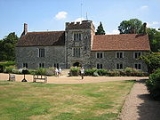
Manor house

Encyclopedia
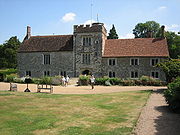
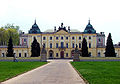
Manor
-Land tenure:*Manor, an estate in land of the mediaeval era in England*Manorialism, a system of land tenure and organization of the rural economy and society in parts of medieval Europe based on the manor*Manor house, the principal house of a manor...
, the lowest unit of territorial organisation in the feudal system in Europe. The term is applied to country houses that belonged to the gentry
Gentry
Gentry denotes "well-born and well-bred people" of high social class, especially in the past....
and other grand stately home
Stately home
A stately home is a "great country house". It is thus a palatial great house or in some cases an updated castle, located in the British Isles, mostly built between the mid-16th century and the early part of the 20th century, as well as converted abbeys and other church property...
s. There were manor houses in most European countries, where they were sometimes referred to as castles, palaces, and so on.
"Manor house" is also technical term in the UK for a minor late-medieval country house. They were often fortified but this was intended more for show than for defence.
History and architecture
The manor house was the dwelling house, or "capital messuage", of a feudal lord of a manorLord of the Manor
The Lordship of a Manor is recognised today in England and Wales as a form of property and one of three elements of a manor that may exist separately or be combined and may be held in moieties...
, which he occupied only on occasional visits if he held many manors. As such it was the place in which sessions of his "court baron
Court baron
A Court baron is an English or Scottish manorial court dating from the Middle Ages.It was laid down by Sir Edward Coke that a manor had two courts, "the first by the common law, and is called a court baron," the freeholders being its suitors; the other a customary court for the copyholders...
", or manor court
Manor court
The manor court was the lowest court of law in England . It dealt with matters over which the Lord of the Manor had jurisdiction. Its powers extended only to those living in the manor or who held land at the manor-Basic functions:Each Manor has its own laws listed in a document called the Custamal...
, were held. Sometimes a steward
Steward (office)
A steward is an official who is appointed by the legal ruling monarch to represent him or her in a country, and may have a mandate to govern it in his or her name; in the latter case, it roughly corresponds with the position of governor or deputy...
or seneschal
Seneschal
A seneschal was an officer in the houses of important nobles in the Middle Ages. In the French administrative system of the Middle Ages, the sénéchal was also a royal officer in charge of justice and control of the administration in southern provinces, equivalent to the northern French bailli...
was appointed by the seigneurial lord to oversee and manage his different manorial properties. The day-to-day administration was delegated to an official, who in England was called a bailiff
Bailiff
A bailiff is a governor or custodian ; a legal officer to whom some degree of authority, care or jurisdiction is committed...
, or reeve
Reeve (England)
Originally in Anglo-Saxon England the reeve was a senior official with local responsibilities under the Crown e.g. as the chief magistrate of a town or district...
.
Although not typically built with strong fortifications as castle
Castle
A castle is a type of fortified structure built in Europe and the Middle East during the Middle Ages by European nobility. Scholars debate the scope of the word castle, but usually consider it to be the private fortified residence of a lord or noble...
s were, many manor-houses were partly fortified: they were enclosed within wall
Wall
A wall is a usually solid structure that defines and sometimes protects an area. Most commonly, a wall delineates a building and supports its superstructure, separates space in buildings into rooms, or protects or delineates a space in the open air...
s or ditches
Ditch (fortification)
A ditch in military engineering is an obstacle, designed to slow down or break up an attacking force, while a trench is intended to provide cover to the defenders...
that often included the farm buildings as well. Arranged for defence against robbers and thieves, it was often surrounded by a moat
Moat
A moat is a deep, broad ditch, either dry or filled with water, that surrounds a castle, other building or town, historically to provide it with a preliminary line of defence. In some places moats evolved into more extensive water defences, including natural or artificial lakes, dams and sluices...
with a drawbridge
Drawbridge
A drawbridge is a type of movable bridge typically associated with the entrance of a castle surrounded by a moat. The term is often used to describe all different types of movable bridges, like bascule bridges and lift bridges.-Castle drawbridges:...
, and equipped with small gatehouse
Gatehouse
A gatehouse, in architectural terminology, is a building enclosing or accompanying a gateway for a castle, manor house, fort, town or similar buildings of importance.-History:...
s and watchtowers; but was not provided with a keep or with large towers or lofty curtain walls so as to withstand a siege. The primary feature of the manor-house was its great hall
Great hall
A great hall is the main room of a royal palace, nobleman's castle or a large manor house in the Middle Ages, and in the country houses of the 16th and early 17th centuries. At that time the word great simply meant big, and had not acquired its modern connotations of excellence...
, to which subsidiary apartments were added as the lessening of feudal warfare permitted more peaceful domestic life.
By the beginning of the 16th century, manor-houses as well as small castles began to acquire the character and amenities of the residences of country gentlemen. This late 16th century transformation produced many of the smaller Renaissance
Renaissance
The Renaissance was a cultural movement that spanned roughly the 14th to the 17th century, beginning in Italy in the Late Middle Ages and later spreading to the rest of Europe. The term is also used more loosely to refer to the historical era, but since the changes of the Renaissance were not...
châteaux of France and the numerous country mansions of the Elizabethan and Jacobean styles in England.
Channel Islands
- Sausmarez ManorSausmarez ManorSausmarez Manor is a historic house in Saint Martin's, Guernsey.- The Original Manor House :The first mention of the de Sausmarez family in Guernsey is at the consecration of the Vale church in 1115 followed by a letter dated 1254 in which Prince Edward, Lord of the Isles, afterwards King Edward I,...
in GuernseyGuernseyGuernsey, officially the Bailiwick of Guernsey is a British Crown dependency in the English Channel off the coast of Normandy.The Bailiwick, as a governing entity, embraces not only all 10 parishes on the Island of Guernsey, but also the islands of Herm, Jethou, Burhou, and Lihou and their islet... - Flamborough Manor
- Longueville Manor, JerseyJerseyJersey, officially the Bailiwick of Jersey is a British Crown Dependency off the coast of Normandy, France. As well as the island of Jersey itself, the bailiwick includes two groups of small islands that are no longer permanently inhabited, the Minquiers and Écréhous, and the Pierres de Lecq and...
- SarkSarkSark is a small island in the Channel Islands in southwestern English Channel, off the French coast of Normandy. It is a royal fief, geographically located in the Channel Islands in the Bailiwick of Guernsey, with its own set of laws based on Norman law and its own parliament. It has a population...
Manor, Sark
England

Feudalism
Feudalism was a set of legal and military customs in medieval Europe that flourished between the 9th and 15th centuries, which, broadly defined, was a system for ordering society around relationships derived from the holding of land in exchange for service or labour.Although derived from the...
, de facto overlords of their manors
Manorialism
Manorialism, an essential element of feudal society, was the organizing principle of rural economy that originated in the villa system of the Late Roman Empire, was widely practiced in medieval western and parts of central Europe, and was slowly replaced by the advent of a money-based market...
. The Tudor period
Tudor period
The Tudor period usually refers to the period between 1485 and 1603, specifically in relation to the history of England. This coincides with the rule of the Tudor dynasty in England whose first monarch was Henry VII...
of stability in England saw the building of the first of the unfortified great houses. Henry VIII
Henry VIII of England
Henry VIII was King of England from 21 April 1509 until his death. He was Lord, and later King, of Ireland, as well as continuing the nominal claim by the English monarchs to the Kingdom of France...
's Dissolution of the Monasteries
Dissolution of the Monasteries
The Dissolution of the Monasteries, sometimes referred to as the Suppression of the Monasteries, was the set of administrative and legal processes between 1536 and 1541 by which Henry VIII disbanded monasteries, priories, convents and friaries in England, Wales and Ireland; appropriated their...
saw many former ecclesiastical properties granted to the King's favourites, who then converted them into private country houses. Woburn Abbey
Woburn Abbey
Woburn Abbey , near Woburn, Bedfordshire, England, is a country house, the seat of the Duke of Bedford and the location of the Woburn Safari Park.- Pre-20th century :...
, Forde Abbey
Forde Abbey
Forde Abbey is a privately owned former Cistercian monastery in Dorset, England. The house and gardens are run as a tourist attraction while the estate is farmed to provide additional revenue...
and many other mansions with Abbey
Abbey
An abbey is a Catholic monastery or convent, under the authority of an Abbot or an Abbess, who serves as the spiritual father or mother of the community.The term can also refer to an establishment which has long ceased to function as an abbey,...
or Priory
Priory
A priory is a house of men or women under religious vows that is headed by a prior or prioress. Priories may be houses of mendicant friars or religious sisters , or monasteries of monks or nuns .The Benedictines and their offshoots , the Premonstratensians, and the...
in their name often date from this period as private houses.
It was during the second half of the reign of Elizabeth I
Elizabeth I of England
Elizabeth I was queen regnant of England and Ireland from 17 November 1558 until her death. Sometimes called The Virgin Queen, Gloriana, or Good Queen Bess, Elizabeth was the fifth and last monarch of the Tudor dynasty...
and under her successor James I
James I of England
James VI and I was King of Scots as James VI from 24 July 1567 and King of England and Ireland as James I from the union of the English and Scottish crowns on 24 March 1603...
that the first architect-designed mansions, thought of today as epitomising the English country house, began to make their appearance. Burghley House
Burghley House
Burghley House is a grand 16th-century country house near the town of Stamford, Lincolnshire, England...
, Longleat House
Longleat
Longleat is an English stately home, currently the seat of the Marquesses of Bath, adjacent to the village of Horningsham and near the towns of Warminster in Wiltshire and Frome in Somerset. It is noted for its Elizabethan country house, maze, landscaped parkland and safari park. The house is set...
, and Hatfield House
Hatfield House
Hatfield House is a country house set in a large park, the Great Park, on the eastern side of the town of Hatfield, Hertfordshire, England. The present Jacobean house was built in 1611 by Robert Cecil, First Earl of Salisbury and Chief Minister to King James I and has been the home of the Cecil...
are among the best known.
These houses were not all referred to as "manor houses" or called "Manor
Manor house
A manor house is a country house that historically formed the administrative centre of a manor, the lowest unit of territorial organisation in the feudal system in Europe. The term is applied to country houses that belonged to the gentry and other grand stately homes...
". Other terms used include "Palace
Palace
A palace is a grand residence, especially a royal residence or the home of a head of state or some other high-ranking dignitary, such as a bishop or archbishop. The word itself is derived from the Latin name Palātium, for Palatine Hill, one of the seven hills in Rome. In many parts of Europe, the...
", "Castle
Castle
A castle is a type of fortified structure built in Europe and the Middle East during the Middle Ages by European nobility. Scholars debate the scope of the word castle, but usually consider it to be the private fortified residence of a lord or noble...
", "Court
Court (disambiguation)
Court is an English word known since 1175, from Old French curt, from Latin cohors Court is an English word known since 1175, from Old French curt, from Latin cohors Court is an English word known since 1175, from Old French curt, from Latin cohors ("enclosed yard," and by extension, perhaps...
", "Hall
Hall
In architecture, a hall is fundamentally a relatively large space enclosed by a roof and walls. In the Iron Age, a mead hall was such a simple building and was the residence of a lord and his retainers...
", "Mansion
Mansion
A mansion is a very large dwelling house. U.S. real estate brokers define a mansion as a dwelling of over . A traditional European mansion was defined as a house which contained a ballroom and tens of bedrooms...
", "Park
Park
A park is a protected area, in its natural or semi-natural state, or planted, and set aside for human recreation and enjoyment, or for the protection of wildlife or natural habitats. It may consist of rocks, soil, water, flora and fauna and grass areas. Many parks are legally protected by...
", "House
House
A house is a building or structure that has the ability to be occupied for dwelling by human beings or other creatures. The term house includes many kinds of different dwellings ranging from rudimentary huts of nomadic tribes to free standing individual structures...
, "Place
Location (geography)
The terms location and place in geography are used to identify a point or an area on the Earth's surface or elsewhere. The term 'location' generally implies a higher degree of can certainty than "place" which often has an ambiguous boundary relying more on human/social attributes of place identity...
" and "Tower
Tower house
A tower house is a particular type of stone structure, built for defensive purposes as well as habitation.-History:Tower houses began to appear in the Middle Ages, especially in mountain or limited access areas, in order to command and defend strategic points with reduced forces...
".
|
Cothay Manor Cothay Manor is a grade one listed medieval house and gardens, located in Stawley, near Wellington, Somerset.In early 14th century the local lords of the manor were the Bluett and Cothay families who owned both the nearby Greenham Barton and Cothay Manor.... Cothelstone Manor Cothelstone Manor in Cothelstone, Somerset, England was built in the mid 16th century, largely demolished by the parliamentary troops in 1646 and rebuilt by E.J... Cranborne Cranborne is a village in East Dorset, England. In 2001 the village had a population of 779 people. The town is situated on chalk downland called Cranborne Chase, part of a large expanse of chalk in southern England which includes the nearby Salisbury Plain and Dorset Downs.-History:The village... Desning Hall Desning Hall is a manor house in the Risbridge Hundred, in Suffolk, England, dating from Anglo-Saxon times.... Duns Tew Duns Tew is a village and civil parish about south of Banbury in Oxfordshire. With nearby Great Tew and Little Tew, Duns Tew is one of the three villages known locally as "The Tews".-Origin of the name:... Manor East Riddlesden Hall East Riddlesden Hall is a 17th century manor house in Keighley, West Yorkshire, now owned by the National Trust. The hall was built in 1642 by a wealthy Halifax clothier, James Murgatroyd. There is a medieval tithebarn in the grounds.... Edlingham Castle Edlingham Castle is a small castle ruin, having Scheduled Ancient Monument and Grade I listed building status, in the care of English Heritage, in a valley to the west of Alnwick, Northumberland, England... Ford Castle Forde Castle is a Grade 1 listed building and a Scheduled Ancient Monument situated at a shallow crossing point on the River Till, Ford, Northumberland, England.... and Etal Castle Etal Castle Etal Castle is a medieval English castle situated at Etal, Cornhill on Tweed, Northumberland, England. It is a Scheduled Ancient Monument and a Grade I listed building.... estate Farleigh House Farleigh House is a large country house in the English county of Somerset that was formerly the centre of the Farleigh Hungerford estate, and much of the stone came from Farleigh Hungerford Castle.The house is a Grade II listed building.... Finchcocks Finchcocks is an early Georgian manor house in Goudhurst, Kent, which houses a large collection of historical keyboard instruments: harpsichords, clavichords, fortepianos, square pianos, organs and other musical instruments... Gainsborough Old Hall Gainsborough Old Hall in Gainsborough, Lincolnshire is over five hundred years old and one of the best preserved medieval manor houses in England.... Garsington Manor Garsington Manor, in the village of Garsington, near Oxford, England, is a Tudor building, best known as the former home of Lady Ottoline Morrell, the Bloomsbury Group socialite... Gidea Hall Gidea Hall was a manor house, located in Gidea Park, the historic parish and Royal liberty of Havering-atte-Bower, whose former area today forms the north eastern extremity of Greater London, England.... Great Chalfield Manor Great Chalfield Manor is an English country house at Great Chalfield, near Bradford-on-Avon, Wiltshire.The house is a moated manor house built around 1465–1480 for Thomas Tropenell, a modest member of the landed gentry who made a fortune as a clothier... Great Snoring Great Snoring is a rural village in North Norfolk by the River Stiffkey, in the east of England. Its population in the 2001 census was 168, a dramatic decrease since 1841 when it was 556 .At the centre of the village is the 13th century St. Mary's Church and the Old Rectory... /Snoring Magna Manor Great Tew Great Tew is a village and civil parish in the Cotswold Hills in Oxfordshire, England, about northeast of Chipping Norton and southwest of Banbury.-Archaeology:... Manor Grimshaw Hall Built in c.1560, Grimshaw Hall is a half-timbered Tudor manor house located in the village of Knowle, approximately 15 miles from the city of Birmingham, England. The Hall takes its name from the Grimshaw family who occupied it from 1620 to around 1765.... Groby Old Hall thumb|Groby Old HallGroby Old Hall is partly a 15th century brick built manor house and grade II* listed building located very near the site of Groby Castle in the village of Groby in Leicestershire.... Garsington Manor Garsington Manor, in the village of Garsington, near Oxford, England, is a Tudor building, best known as the former home of Lady Ottoline Morrell, the Bloomsbury Group socialite... Halsway Manor Halsway Manor is a manor house in Halsway, Somerset, now used as England's National Centre for Traditional Music, Dance and Song. It is the only residential folk centre in the UK. It is situated off the A358 road between Taunton and Williton on the edge of the Quantock Hills.-Buildings:Halsway... Halswell House Halswell House is a country house in Goathurst, Somerset, England.The Tudor house was originally purchased by the Tynte family, which was united with the Kemeys family of Cefn Mably when Jane Kemeys married the Rev. John Tynte , 2nd baronet of Halswell, and rector of Goathurst... Hampton Gay Hampton Gay is a village in the Cherwell valley about north of Kidlington, Oxfordshire.-Manor:After the Norman Conquest of England Robert D'Oyly gave an estate of three hides at Hampton Gay to his brother in arms Roger d'Ivry, while a second estate of two hides at Hampton Gay belonged to the... Manor — burnt out Harlaxton Manor Harlaxton Manor, built in 1837, is a manor house in Harlaxton, Lincolnshire, England. Its architecture, which combines elements of Jacobean and Elizabethan styles with symmetrical Baroque massing, renders the mansion unique among surviving Jacobethan manors.... Hartham Park Hartham Park is a Georgian manor house, located in Hartham near Corsham, Wiltshire. Originally designed by James Wyatt, set today in it contains one of three remaining stické tennis courts in the world... , Corsham Hatfield House Hatfield House is a country house set in a large park, the Great Park, on the eastern side of the town of Hatfield, Hertfordshire, England. The present Jacobean house was built in 1611 by Robert Cecil, First Earl of Salisbury and Chief Minister to King James I and has been the home of the Cecil... Hinxworth Place Hinxworth Place is a medieval manor house near Hinxworth, Hertfordshire England.Formerly the Manor of Pulters, building was started circa 1390. The construction is of clunch with loose flint filling cavities in the lower part of the walls... Hestercombe House Hestercombe House is a historic country house in the parish of West Monkton in the Quantock Hills, near Taunton in Somerset, England. Its restoration to Gertrude Jekyll's original plans have made it "one of the best Jekyll-Lutyens gardens open to the public on a regular basis", visited by... Hever Castle Hever Castle is located in the village of Hever near Edenbridge, Kent, south-east of London, England. It began as a country house, built in the 13th century... , Kent Hughenden Manor Hughenden Manor is a red brick Victorian mansion, located in High Wycombe, Buckinghamshire, England. In the 19th century, it was the country house of the Prime Minister, Benjamin Disraeli... Ightham Mote Ightham Mote is a medieval moated manor house close to the village of Ightham, near Sevenoaks in Kent .The name "mote" derives from "moot", "meeting [place]", rather than referring to the body of water.... |
Icomb Place Icomb Place is a medieval manor house on the edge of the village of Icomb, near Stow on the Wold in Gloucestershire.The word "Place" in this context is thought to be a precursor of the word "Palace".-Description:... Kelmscott Manor Kelmscott Manor is a handsome limestone manor house in the Cotswold village of Kelmscott, Oxfordshire, England. It is situated close to the River Thames, and it is frequently flooded. It dates from around 1570, with a late 17th-century wing... Kemerton Court Kemerton Court is the principal manor house of the village of Kemerton, near Tewkesbury in Gloucestershire.The manor was granted by King Henry III to Sir Robert de Musgrove in 1240... Kirby Muxloe Castle Kirby Muxloe Castle, known also as Kirby Castle is an unfinished 15th century fortified manor house in Kirby Muxloe, Leicestershire, England .It was begun in 1480 by William Hastings, 1st Baron Hastings, during the period of the Wars of the Roses... Knole House Knole is an English country house in the town of Sevenoaks in west Kent, surrounded by a deer park. One of England's largest houses, it is reputed to be a calendar house, having 365 rooms, 52 staircases, 12 entrances and 7 courtyards... Lambton Castle Lambton Castle, located in County Durham, England, between the towns of Washington and Chester-le-Street, is a stately home, the ancestral seat of the Lambton family, the Earls of Durham... Langdon, Devon Langdon Court is a former English Manor House, in Wembury, South Devon, United Kingdom. It consists of a single courtyard mansion from 1693 and a walled formal garden... Les Augrès Manor Les Augrès Manor is a 16th century manor house in the parish of Trinity in Jersey, on the road La Profonde Rue.The grounds of the manor has been home to the Jersey Zoo since 1958, and the manor house itself home to the Durrell Wildlife Conservation Trust since 1963... Lesingham House Lesingham House is in Surlingham, Norfolk, England.-History:The earliest records of Lesingham House go back to a Thomas Wode who died in 1588 . The inventory of his goods at the time of his death indicates that his house had at least nine rooms and a stable in Surlingham... Levens Hall Levens Hall is a manor house in the county of Cumbria in northern England. The first house on the site was a pele tower built by the Redman family in around 1350. Much of the present building dates from the Elizabethan era, when the Bellingham family extended the house... Linford Manor Linford Manor is an old mansion or manor house converted into a recording studio complex in Great Linford, Milton Keynes, England. It is now owned by Pete Winkelman who is chairman of football club.... Little Barford Little Barford is a village and civil parish located in Bedfordshire, England. It lies on the county boundary with Cambridgeshire, adjacent to the town of St Neots... Little Snoring Little Snoring is a village and a civil parish in the English county of Norfolk. The village is east-north-east of the town of Fakenham, west-south-west of Cromer and north-north-east of London. The nearest railway station is at Sheringham for the Bittern Line which runs between Sheringham,... Manor Little Tew Little Tew is a village and civil parish about northeast of Chipping Norton and southwest of Banbury in Oxfordshire. The parish is bounded to the northwest by the River Swere and a road between Little Tew and Hook Norton, to the north by a tributary of the River Cherwell and to the south by an... Manor Montacute House Montacute House is a late Elizabethan country house situated in the South Somerset village of Montacute. This house is a textbook example of English architecture during a period that was moving from the medieval Gothic to the Renaissance Classical; this has resulted in Montacute being regarded as... Manor House Hotel Manor House Hotel is a 14th century country house hotel in Castle Combe, Wiltshire in the south of England.-History:The Manor House is noteworthy for several reasons throughout history... , Castle Combe Castle Combe Castle Combe is a small village in Wiltshire, England, with a population of about 350. It is renowned for its attractiveness and tranquillity, and for fine buildings including the medieval church. The 14th century market cross, erected when the privilege to hold a weekly market in Castle Combe was... Newton Surmaville Newton Surmaville is a small park and house south of Yeovil, Somerset in the district of South Somerset, in England. It lies just outside the town in the parish of Barwick.- House :... Northborough, Cambridgeshire Northborough is a small village near the city of Peterborough in the East of England.It has a pub, a shop, a school and a small castle.Northborough is around seven or eight miles practically due north of Peterborough.... Nunnington Hall Nunnington Hall is a country house situated in the English county of North Yorkshire. The river Rye, which gives its name to the local area, Ryedale, runs past the house, flowing away from the village of Nunnington... Orchardleigh Estate Orchardleigh is a country estate in Somerset, approximately two miles north of Frome, and on the southern edge of the village of Lullington. It comprises a Victorian stately home, an island church, and an 18-hole golf course... Oxon Hoath Oxon Hoath is a Grade II* listed Châteauesque-style former manor house with 73 acres of grounds at West Peckham, Kent. The spellings Oxenhoath, Oxen Hoath and Oxonhoath are common alternatives. The spelling Oxenholt was also used it the past. The manor is a former royal deer park... Owlpen Manor Owlpen Manor is a Tudor Grade I listed manor house of the Mander family, situated in the village of Owlpen in the Stroud district in Gloucestershire, England. There is an associated estate set in a picturesque valley within the Cotswold Area of Outstanding Natural Beauty... Pixton Park Pixton Park is a country house in the parish of Dulverton, Somerset, England. It is associated with at least three historically significant families or dynasties: the Acland Baronets, the politicians and diplomats the Herberts, and the Waughs, a series of writers... Portledge Manor Portledge Manor is an English manor house in Devon, England, southwest of Bideford. It and the land surrounding it belonged to the Coffin family, a noble family of Norman origin, for almost 1000 years.-History:... Poundisford Park Poundisford Park north of Pitminster, Somerset, England is an English country house that typifies progressive house-building on the part of the West Country gentry in the mid-16th century... Rivington Hall Rivington Hall is a Grade II* Listed building located in Rivington, Lancashire, England. It was the manor house for the Lords of the Manor of Rivington. The hall is of various builds as successor to a fifteenth-century timber-framed courtyard house that was built near to the present building of... Roos Hall thumb|right|Roos Hall, near BecclesRoos Hall is a manor house and former manor ½ a mile west of Beccles in Suffolk. It is a Grade I listed building.... Rufford Old Hall Rufford Old Hall, a National Trust property and Grade I listed building, was built in the 15th century for Sir Thomas Hesketh in Rufford, Lancashire, England... Sandhill Park Sandhill Park in Bishops Lydeard, Somerset, England was built as a country house around 1720. It was later used as a prisoner of war camp, home for handicapped children and later as a military and civilian hospital.... Sawston Sawston is a large village in Cambridgeshire in England, situated on the River Cam seven miles south of Cambridge. It has a population of 7,150... Hall Scotney Castle Scotney Castle is an English country house with formal gardens south-east of Lamberhurst in the valley of the River Bewl in Kent, England. It belongs to the National Trust.... Shutford Shutford is a village and civil parish about west of Banbury in Oxfordshire. The village is about above sea level.-History:The manor house was built in the last quarter of the 16th century. In 1928 the architect Walter Tapper added a western extension and northwest wing... Manor Simpson's Place Simpson's Manor, or Simpson's Place, was a moated medieval manor house in Bromley, Kent, England, with evidence of habitation going back to the reign of Edward I... |
Snowshill Manor Snowshill Manor is a National Trust property located in the village of Snowshill, Gloucestershire, England.-History:Snowshill Manor was the property of Winchcombe Abbey from 821 until 1539 when the Abbey was confiscated by King Henry VIII during the Dissolution of the Monasteries.Between 1539 and... Somerton Castle Somerton Castle is located approximately one mile west of the hamlet of Boothby Graffoe in Lincolnshire, England.Inherited from his mother, the castle was rebuilt in the latter part of the 13th century by Antony Bek, then Bishop of Durham, who was granted a licence to crenellate in 1281... Speke Hall Speke Hall is a wood-framed wattle-and-daub Tudor manor house in Speke, Liverpool, England. It is one of the finest surviving examples of its kind.-History:... Stanford Hall Stanford Hall is a stately home in Leicestershire, England, near the village of Stanford on Avon and the town of Lutterworth, Leicestershire.- History :... Stokesay Castle Stokesay Castle is a fortified manor house in Stokesay, a mile south of the town of Craven Arms, in southern Shropshire. It was built in the late 13th century... Ston Easton Park Ston Easton Park in Somerset was built in the 18th century for John Hippisley Coxe. The Hippisley family had been Lords of the Manor of Ston Easton since 1544, and in the 17th century had moved from the old manor house by the parish church to a new Jacobean house... Stourhead Stourhead is a 2,650 acre estate at the source of the River Stour near Mere, Wiltshire, England. The estate includes a Palladian mansion, the village of Stourton, gardens, farmland, and woodland... Sturminster Newton Sturminster Newton, known to locals as Stur, is a town in the Blackmore Vale area of Dorset, England. It is situated on a low limestone ridge in a meander of the River Stour. The town is at the centre of a large dairy agriculture region, around which the town's economy is built... Sulgrave Sulgrave is a village and civil parish in South Northamptonshire, England, about north of Brackley.-Parish church:The Church of England parish Church of St James the Less is part of the benefice of Culworth with Sulgrave and Thorpe Mandeville and Chipping Warden with Edgcote and Moreton Pinkney.By... Sutton Court Sutton Court, Stowey, also known as Stowey Court, is a large English house built on the site of a fourteenth century castle, with sections built in the fifteenth and sixteenth century.... The Manor House Bishop Bridge The Manor House, Bishop Bridge is located in Lincolnshire, England. The house was built circa 1849, named "Kingerby Vale Cottage" on the Deeds, originally being two farm cottages which were later converted into one main dwelling and extended upon... Thorndon Hall Thorndon Hall is a Georgian Palladian country house within Thorndon Park, Ingrave, Essex, England, approximately two miles south of Brentwood and from central London.... Tyntesfield Tyntesfield is a Victorian Gothic Revival estate near Wraxall, North Somerset, England, near Nailsea, seven miles from Bristol.The house was acquired by the National Trust in June 2002 after a fund raising campaign to prevent it being sold to private interests and ensure it be opened to the public... Ufton Court Ufton Court is an Elizabethan manor house at Ufton Nervet in the English county of Berkshire. Today is it used by an educational charity, The Ufton Court Educational Trust. Other than historical education, the site hosts creative projects too including theatre and music courses.Parts of the house... Waddesdon Manor Waddesdon Manor is a country house in the village of Waddesdon, in Buckinghamshire, England. The house was built in the Neo-Renaissance style of a French château between 1874 and 1889 for Baron Ferdinand de Rothschild . Since this was the preferred style of the Rothschilds it became also known as... Walton, Milton Keynes Walton was a hamlet that is now a district and civil parish in Milton Keynes, ceremonial Buckinghamshire, England.The historic hamlet is located about four miles south of Central Milton Keynes and just east of Simpson, mostly along Walton Road in the modern Walnut Tree district... , Milton Keynes Washington Old Hall Washington Old Hall is a manor house located in the Washington area of Tyne and Wear. It lies in the centre of Washington, being surrounded by other villages.... (ancestral home of George Washington George Washington George Washington was the dominant military and political leader of the new United States of America from 1775 to 1799. He led the American victory over Great Britain in the American Revolutionary War as commander-in-chief of the Continental Army from 1775 to 1783, and presided over the writing of... ) Water Eaton Water Eaton may refer to:*Water Eaton, Milton Keynes in Buckinghamshire, England*Water Eaton, Oxfordshire, England* Water Eaton , South Staffordshire, England... Manor Whalton Manor Whalton Manor is a house located in the village of Whalton, Northumberland, England. It dates from the 17th Century but was substantially altered by the architect Sir Edwin Lutyens in 1908, at the same time as he was working on the castle on Holy Island... Wightwick Manor Wightwick Manor is a Victorian manor house located on Wightwick Bank, Wolverhampton, West Midlands, England, and one of only a few surviving examples of a house built and furnished under the influence of the Arts and Crafts movement... Wilderhope Manor Wilderhope Manor is a country manor house in the care of the National Trust in the county of Shropshire, England, United Kingdom.- Location :Wilderhope Manor is located on Wenlock Edge some 7 miles south west of Much Wenlock.- History & Amenities :... on Wenlock Edge Wenlock Edge Wenlock Edge is a limestone escarpment near Much Wenlock, Shropshire, England. It is long and runs from South West to North East between Craven Arms and Much Wenlock. It is roughly 330 metres high... Wingfield Manor Wingfield Manor is a deserted and ruined manor house some 4 miles from the town of Alfreton in the English county of Derbyshire... — deserted Woodeaton Woodeaton or Wood Eaton is a village and civil parish about northeast of Oxford.-Archaeology:There was a Romano-Celtic temple north of where the parish church now stands, and probably a Romano-British settlement and shrine as well. The shrine was used successively by Roman pagans and Christians... Manor Woodstock Palace Woodstock Palace was a royal residence in the English town of Woodstock, Oxfordshire.Henry I of England built a hunting lodge here and in 1129 he built seven miles of walls to create the first enclosed park, where lions and leopards were kept. The lodge became a palace under Henry's grandson, Henry... Woolsthorpe Manor Woolsthorpe Manor in Woolsthorpe-by-Colsterworth, near Grantham, Lincolnshire, England, was the birthplace of Sir Isaac Newton on 25 December 1642... Yalding Yalding is a village and part of Yalding civil parish in the Maidstone District of Kent, England.The village is situated six miles south-west of Maidstone at a point where the Rivers Teise and Beult join the River Medway.... Manor Yarnton Yarnton is a village and civil parish in Oxfordshire about southwest of Kidlington and northwest of Oxford and southeast of Woodstock.-Archaeology:Early Bronze Age decorated beakers have been found in the parish... Manor |
Ireland
- Dunboy CastleDunboy CastleDunboy Castle was a stronghold of the O'Sullivan Bere, a Gaelic clan leader and 'Chief of Dunboy'. The castle is located on the Beara Peninsula in south-west Ireland near the town of Castletownbere and was built to guard and defend the harbour of Berehaven...
, is located on the Beara PeninsulaBeara PeninsulaThe Beara Peninsula is a peninsula on the south-west coast of Ireland, bounded between the Kenmare "river" to the north side and Bantry Bay to the south. It has two mountain ranges running down its centre: the Caha Mountains and the Slieve Miskish Mountains...
in south-west Ireland - BallylickeyBallylickeyBallylickey or Ballylicky is a village on the N71 national secondary road near Bantry, County Cork, Ireland. The River Ovane flows into Bantry Bay at Ballylickey.-Tourism:* The area is notable for the Seaview Hotel....
Manor House on Bantry BayBantry BayBantry Bay is a bay located in County Cork, southwest Ireland. The bay runs approximately from northeast to southwest into the Atlantic Ocean. It is approximately 3-to-4 km wide at the head and wide at the entrance.... - Temple HouseTemple House Manor and CastleTemple House Castle was a rectangular keepless castle, built in 1181. It is located near the townland of Ballinacarrow on the outskirts of Ballymote in south County Sligo, Ireland. The Perceval family has lived on the lands since 1665. The Manor home currently operates as a guest lodge filled with...
, Ballymote, County Sligo - Mount Juliet Estate Manor House, Country Kilkenny
- Temple House ManorTemple House Manor and CastleTemple House Castle was a rectangular keepless castle, built in 1181. It is located near the townland of Ballinacarrow on the outskirts of Ballymote in south County Sligo, Ireland. The Perceval family has lived on the lands since 1665. The Manor home currently operates as a guest lodge filled with...
, County WestmeathCounty Westmeath-Economy:Westmeath has a strong agricultural economy. Initially, development occurred around the major market centres of Mullingar, Moate, and Kinnegad. Athlone developed due to its military significance, and its strategic location on the main Dublin–Galway route across the River Shannon. Mullingar... - Bunratty HouseBunratty CastleBunratty Castle is a large tower house in County Clare, Ireland. It lies in the centre of Bunratty village , by the N18 road between Limerick and Ennis, near Shannon Town and its airport. The name Bunratty, Bun Raite in Irish, means the 'bottom' or end of the 'Ratty' river. This river, alongside...
, County ClareCounty Clare-History:There was a Neolithic civilisation in the Clare area — the name of the peoples is unknown, but the Prehistoric peoples left evidence behind in the form of ancient dolmen; single-chamber megalithic tombs, usually consisting of three or more upright stones...
Northern Ireland
- KilladeasKilladeasKilladeas is a small village in County Fermanagh, Northern Ireland. It is about 7 miles north of Enniskillen near the shores of Lower Lough Erne. In the 2001 Census it had a population of 90 people.-History:...
, 'Manor House Hotel', County FermanaghCounty FermanaghFermanagh District Council is the only one of the 26 district councils in Northern Ireland that contains all of the county it is named after. The district council also contains a small section of County Tyrone in the Dromore and Kilskeery road areas.... - Richhill CastleRichhillRichhill is the name of a number of places:* Richhill, County Armagh, Northern Ireland* Richhill Township, Pennsylvania, United States* Rich Hill...
, County ArmaghCounty Armagh-History:Ancient Armagh was the territory of the Ulaid before the fourth century AD. It was ruled by the Red Branch, whose capital was Emain Macha near Armagh. The site, and subsequently the city, were named after the goddess Macha...
Scotland
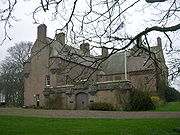
- Brodie CastleBrodie CastleBrodie Castle is a castle near Forres in the Moray region of Scotland.- The Brodie Family :The original Z-plan castle was built in 1567 by Clan Brodie but destroyed by fire in 1645 by Lewis Gordon of Clan Gordon, the 3rd Marquess of Huntly...
- Drum CastleDrum CastleDrum Castle is a castle near Drumoak in Aberdeenshire, Scotland. For centuries it was the seat of the chief of Clan Irvine. The place-name Drum is derived from Gaelic druim, 'ridge'....
, started as a 13th century tower house. - Haddo HouseHaddo HouseHaddo House is a Scottish stately home located near Tarves in Aberdeenshire, approximately 20 miles north of Aberdeen . It has been owned by the National Trust for Scotland since 1979....
- House of DunHouse of DunHouse of Dun, together with the adjacent Montrose Basin nature reserve, is a National Trust for Scotland property in Angus, Scotland.The Dun Estate was home to the Erskine family from 1375 until 1980. John Erskine of Dun was a key figure in the Scottish Reformation. The current house was designed...
- Lingo HouseLingo (surname)The Scottish surname Lingo is derived from the lands of Lingoch in the parish of Carnbee, County Fife, Scotland. The earliest known recorded use of the surname in Scotland is by Ulf de Lingoch, who witnessed a charter granted in the early 13th century....
- Monboddo HouseMonboddo HouseMonboddo House is a historically famous mansion in The Mearns, Scotland. The structure was generally associated with the Burnett of Leys family. The property itself was owned by the Barclay family from the 13th century, at which time a tower house structure was erected...
- Muchalls CastleMuchalls CastleMuchalls Castle stands overlooking the North Sea in the countryside of Kincardine and Mearns, Aberdeenshire, Scotland. The lower course is a well preserved double groined 13th century towerhouse structure, built by the Frasers of Muchalls. Upon this structure, the 17th century castle was begun by...
- RaasayRaasayRaasay is an island between the Isle of Skye and the mainland of Scotland. It is separated from Skye by the Sound of Raasay and from Applecross by the Inner Sound. It is most famous for being the birthplace of the poet Sorley MacLean, an important figure in the Scottish literary renaissance...
Wales
- Bodysgallen HallBodysgallen HallBodysgallen Hall is a manor house in Conwy county borough, north Wales, near the village of Llanrhos. Since 2008 the house has been owned by The National Trust. It is a grade I listed building, and is currently used as a hotel. This listed historical building derives primarily from the 17th...
near Conwy CastleConwy CastleConwy Castle is a castle in Conwy, on the north coast of Wales.It was built between 1283 and 1289 during King Edward I's second campaign in North Wales.... - Gwydir CastleGwydir CastleGwydir Castle is situated in the Conwy valley, North Wales, a mile to the west of the ancient market town of Llanrwst and to the south of the large village of Trefriw...
, Conwy valley, North WalesNorth WalesNorth Wales is the northernmost unofficial region of Wales. It is bordered to the south by the counties of Ceredigion and Powys in Mid Wales and to the east by the counties of Shropshire in the West Midlands and Cheshire in North West England... - Weobley CastleWeobley CastleWeobley Castle is a fortified manor house on the Gower Peninsula, Wales in the care of Cadw.It is near the village of Leason overlooking Llanrhidian Marsh and the Loughor estuary. The castle dates from the 13th Century. It was attacked and damaged by the forces of Owain Glyndŵr in 1403.- External...
, GowerGower PeninsulaGower or the Gower Peninsula is a peninsula in south Wales, jutting from the coast into the Bristol Channel, and administratively part of the City and County of Swansea. Locally it is known as "Gower"... - Tretower CourtTretower CourtTretower Court is a medieval fortified manor house situated in the village of Tretower, near Crickhowell in modern day Powys, previously within the historical county of Breconshire or Brecknockshire.- Local & national importance :...
near CrickhowellCrickhowellCrickhowell is a small town in Powys, Mid Wales.-Location:The name Crickhowell is taken from that of the nearby Iron Age hill fort of Crug Hywel above the town, the Welsh language name being anglicised by map-makers and local English-speaking people... - Llancaiach fawrLlancaiach FawrLlancaiach Fawr is a Tudor manor house near the village of Nelson in South Wales, which is now a museum of living history, some say it is haunted...
near Abercynon and Ystrad Mynach
France

Drawbridge
A drawbridge is a type of movable bridge typically associated with the entrance of a castle surrounded by a moat. The term is often used to describe all different types of movable bridges, like bascule bridges and lift bridges.-Castle drawbridges:...
s, and a ground-floor hall or salle basse that was used to receive peasants and commoners. The salle basse was also the location of the manor court, with the steward or seigneur's seating location often marked by the presence of a crédence de justice or wall-cupboard (shelves built into the stone walls to hold documents and books associated with administration of the demesne or droit de justice). The salle haute or upper-hall, reserved for the seigneur and where he received his high-ranking guests, was often accessible by an external spiral staircase. It was commonly "open" up to the roof trusses, as in similar English homes. This larger and more finely decorated hall was usually located above the ground-floor hall. The seigneur and his family's private chambres were often located off of the upper first-floor hall, and invariably had their own fireplace (with finely decorated chimney-piece) and frequently a latrine.
In addition to having both lower and upper-halls, many French manor-houses also had partly fortified gateways, watchtowers, and enclosing walls that were fitted with arrow or gun loops for added protection. Some larger 16th-century manors, such as the Château de Kerjean in Finistère
Finistère
Finistère is a département of France, in the extreme west of Brittany.-History:The name Finistère derives from the Latin Finis Terræ, meaning end of the earth, and may be compared with Land's End on the opposite side of the English Channel...
, Brittany, were even outfitted with ditches and fore-works that included gun platforms for cannons. These defensive arrangements allowed maisons-fortes, and rural manors to be safe from a coup de main
Coup de main
A coup de main is a swift attack that relies on speed and surprise to accomplish its objectives in a single blow. The United States Department of Defense defines it as:The literal translation from French means a stroke or blow of the hand...
perpetrated by an armed band as there was so many during the troubled times of the Hundred Years War and the wars of the Holy League
French Wars of Religion
The French Wars of Religion is the name given to a period of civil infighting and military operations, primarily fought between French Catholics and Protestants . The conflict involved the factional disputes between the aristocratic houses of France, such as the House of Bourbon and House of Guise...
; but it was difficult for them to resist a siege
Siege
A siege is a military blockade of a city or fortress with the intent of conquering by attrition or assault. The term derives from sedere, Latin for "to sit". Generally speaking, siege warfare is a form of constant, low intensity conflict characterized by one party holding a strong, static...
undertaken by a regular army equipped with (siege) engines.
|
Château de Pirou The château de Pirou is a castle in the commune of Pirou, in the département of Manche , France.The castle of Pirou was initially built of wood, then of stone in the 12th century and belonged to the lords of Pirou; it was constructed near the shore of the English Channel, and used to watch upon the... in Manche, Normandy. Château du Plessis-Josso The Château du Plessis-Josso is a fortified 14th century manor house in the Morbihan département of France. The manor is located in the town of Theix, near Vannes... in Morbihan, Brittany. Château de Rustéphan The Château de Rustéphan is a small, ruined 15th-16th century manor-house in the Finistère département of France. It is located in the small rural town of Nizon, near Pont-Aven. It was erected by Jean Du Faou, chamberlain of France and grand seneschal of Brittany, who built the domaine in 1420.... in Finistère, Brittany. Ruins of large 15th–16th century manor house. Château de Trécesson The Château de Trécesson which has preserved its medieval aspect, is one of the most impressive castles of Brittany. It is located in the commune of Campénéac in the Morbihan département of France, near the Paimpont forest and on the edge of the military camp of Coëtquidan... in Morbihan, Brittany. Urville-Nacqueville Urville-Nacqueville is a commune in the Manche department in Normandy in north-western France.-Heraldry:... , Normandy. Manoir de Mathan The Manoir de Mathan is a manor house located in the town of Crépon in the Calvados region of France.The original structure was built in 1605, when it included a coach entry, which has since been removed. At that time, the manor belonged to the Hue de Mathan family after whom it was named... , 16th century manor in Crépon Crépon Crépon is a commune in the Calvados department in the Basse-Normandie region in northwestern France.-Population:-Architecture:Historic architecture :* Parish church, Saint-Médard-et-Saint-Gildard, 12th-14th century... , Normandy. Manoir de Mézarnou The Manoir de Mézarnou is a fortified 16th century manor-house located in the Finistère département of Brittany in northwestern France. It is located in the small rural town of Plounéventer, near Landivisiau... , 16th century manor in Finistère, Brittany. (under extensive restoration) Château de la Motte, Joué du Plain The Château de la Motte is a château located in the commune of Joué-du-Plain in Lower Normandy, France. The Chateau began as a Viking motte and bailey fortress, and evolved into the 18th and 19th century Chateau seen today... |
Netherlands

Netherlands
The Netherlands is a constituent country of the Kingdom of the Netherlands, located mainly in North-West Europe and with several islands in the Caribbean. Mainland Netherlands borders the North Sea to the north and west, Belgium to the south, and Germany to the east, and shares maritime borders...
. Some have been converted into museums, hotels, conference centres, etc. Some are located on estates and in parks.
Many of the earlier houses are the legacy of the feudal heerlijkheid
Heerlijkheid
A heerlijkheid was the basic administrative and judicial unit in rural areas in Dutch-speaking lands before 1800. It originated in the feudal subdivision of government authority in the Middle Ages. The closest English equivalents of the word are "seigniory" and "manor"...
system. The Dutch had a manorial system centred on the local lord's demesne
Demesne
In the feudal system the demesne was all the land, not necessarily all contiguous to the manor house, which was retained by a lord of the manor for his own use and support, under his own management, as distinguished from land sub-enfeoffed by him to others as sub-tenants...
. In Middle Dutch this was called the vroonhof or vroenhoeve, a word derived from the Proto-Germanic word fraujaz, meaning "lord". This was also called a hof and the lord's house a hofstede. Other terms were used, including landhuis (or just huis), a ridderhofstad (Utrecht
Utrecht (province)
Utrecht is the smallest province of the Netherlands in terms of area, and is located in the centre of the country. It is bordered by the Eemmeer in the north, Gelderland in the east, the river Rhine in the south, South Holland in the west, and North Holland in the northwest...
), a stins
Stins
A stins is a former stronghold or villa in the province of Friesland, the Netherlands. Many stinsen carry the name "state."...
or state (Friesland
Friesland
Friesland is a province in the north of the Netherlands and part of the ancient region of Frisia.Until the end of 1996, the province bore Friesland as its official name. In 1997 this Dutch name lost its official status to the Frisian Fryslân...
), or a havezate
Havezate
A havezate is the Dutch word for a fortified house, manor or castle. Havezates were built in the provinces of Drenthe, Overijssel and Gelderland....
(Drente, Overijssel
Overijssel
Overijssel is a province of the Netherlands in the central eastern part of the country. The region has a NUTS classification of NL21. The province's name means "Lands across river IJssel". The capital city of Overijssel is Zwolle and the largest city is Enschede...
and Gelderland
Gelderland
Gelderland is the largest province of the Netherlands, located in the central eastern part of the country. The capital city is Arnhem. The two other major cities, Nijmegen and Apeldoorn have more inhabitants. Other major regional centers in Gelderland are Ede, Doetinchem, Zutphen, Tiel, Wijchen,...
). Some of these buildings were fortified. A number of castles associated with the nobility
Nobility
Nobility is a social class which possesses more acknowledged privileges or eminence than members of most other classes in a society, membership therein typically being hereditary. The privileges associated with nobility may constitute substantial advantages over or relative to non-nobles, or may be...
are found in the country. In Dutch, a building like this was called a kasteel, a slot, a burcht or (in Groningen
Groningen (province)
Groningen [] is the northeasternmost province of the Netherlands. In the east it borders the German state of Niedersachsen , in the south Drenthe, in the west Friesland and in the north the Wadden Sea...
) a borg.
During the Dutch Golden Age
Dutch Golden Age
The Golden Age was a period in Dutch history, roughly spanning the 17th century, in which Dutch trade, science, military and art were among the most acclaimed in the world. The first half is characterised by the Eighty Years' War till 1648...
in the 17th century, merchants and regents
Regenten
In the 16th, 17th and 18th centuries, the regenten were the rulers of the Dutch Republic, the leaders of the Dutch cities or the heads of organisations . Though not formally a hereditary "class", they were de facto "patricians", comparable to that ancient Roman class...
looking for ways to spend their wealth bought country estates and built grand new homes, often just for summer use. Some purchased existing manor houses and castles from the nobility. Some country houses were built on top of the ruins of earlier castles that had been destroyed during the Dutch Revolt
Dutch Revolt
The Dutch Revolt or the Revolt of the Netherlands This article adopts 1568 as the starting date of the war, as this was the year of the first battles between armies. However, since there is a long period of Protestant vs...
. The owners, aspiring to noble status, adopted the name of the earlier castle.
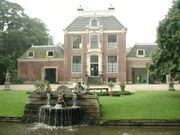
Buitenplaats
A buitenplaats was a summer residence for rich townspeople in the Netherlands. During the Dutch Golden Age of the 17th century, many traders and city administrators in Dutch towns became very wealthy...
or buitenhuis in Dutch) were located close to the city in picturesque areas with a clean water source. Wealthy families sent their children to the country in the summer because of the putrid canals and diseases in the city. A few still exist, especially along the river Vecht
Vecht (Utrecht)
thumb|right|[[Satellite]] [[image]] of the surroundings of [[Utrecht |Utrecht]] showing river Vecht and the [[Amsterdam-Rhine Canal]] .220px|thumb|right|Location of river Vecht ....
, the river Amstel
Amstel
The Amstel is a river in the Netherlands which runs through the city of Amsterdam. The river's name is derived from Aeme stelle, old Dutch for "area abounding with water"....
, the Spaarne
Spaarne
The Spaarne is a river, in North Holland, Netherlands. This partially canalized river connects the Ringvaart to a side branch of the North Sea Canal. It runs through Haarlem, Heemstede, and Spaarndam....
in Kennemerland
Kennemerland
Kennemerland is a region in the Netherlands, near the coast in the province of North Holland. In includes the sand dunes north of the North Sea Canal, as well as the dunes of Zuid-Kennemerland National Park.-History:...
, the river Vliet and in Wassenaar
Wassenaar
Wassenaar is a town in the western Netherlands, in the province of South Holland. A fairly affluent suburb of The Hague, Wassenaar lies 10 km north of that city on the N44 highway near the North Sea coast. It is part of the Haaglanden region...
. Some are located near former lakes (now polder
Polder
A polder is a low-lying tract of land enclosed by embankments known as dikes, that forms an artificial hydrological entity, meaning it has no connection with outside water other than through manually-operated devices...
s) like the Wijkermeer, Watergraafsmeer
Watergraafsmeer
The Watergraafsmeer is a polder in The Netherlands. It was reclaimed in 1629. In the 17th and 18th centuries, there were many buitenplaatsen in the Watergraafsmeer, though nowadays only one, Frankendael, remains....
and the Beemster
Beemster
Beemster is a municipality in the Netherlands, in the province of North Holland. Also, the Beemster is the first so-called polder in the Netherlands that was reclaimed from a lake, the water being extracted out of the lake by windmills. The Beemster Polder was dried during the period 1609 through...
. In the 19th century, with improvements in water management, new regions came into fashion, such as the Utrecht Hill Ridge
Utrecht Hill Ridge
Utrecht Hill Ridge is a ridge of low sandhills that stretches in a direction from southeast to northwest over the Dutch province of Utrecht and over a part of North Holland. The total length of the region is about 50 km. It covers an area of approximately 23.000 ha...
(Utrechtse Heuvelrug) and the area around Arnhem
Arnhem
Arnhem is a city and municipality, situated in the eastern part of the Netherlands. It is the capital of the province of Gelderland and located near the river Nederrijn as well as near the St. Jansbeek, which was the source of the city's development. Arnhem has 146,095 residents as one of the...
.
Today there is a tendency to group these grand buildings together in the category of "castles". There are many castles and buitenplatsen
Buitenplaats
A buitenplaats was a summer residence for rich townspeople in the Netherlands. During the Dutch Golden Age of the 17th century, many traders and city administrators in Dutch towns became very wealthy...
in all twelve provinces. A larger-than-average home is today called a villa or a herenhuis, but despite the grand name this is not the same as a manor house.
A few of the more prominent Dutch manor houses are:
- Huis DoornHuis DoornHuis Doorn is a small manor house that lies outside of Doorn, a small town near Utrecht, in the Netherlands. The 15th-century house was rebuilt in the late 18th century in a conservative manner and, in the mid-19th century, a surrounding park was laid out as an English landscape garden...
(Doorn, near Utrecht) - Slot HeemstedeSlot HeemstedeSlot Heemstede is the site of the old castle of Heemstede. The property is situated at the site of the former castle 'Heerlijkheid Heemstede', or 'Huis te Heemstede', at a strategic position on mouth of the Spaarne river on the Haarlem lake .-History:The castle was first built in 1280 by Dirk van...
(Heemstede, near Haarlem)
Germany

German language
German is a West Germanic language, related to and classified alongside English and Dutch. With an estimated 90 – 98 million native speakers, German is one of the world's major languages and is the most widely-spoken first language in the European Union....
word for a building similar to manor house, stately home
Stately home
A stately home is a "great country house". It is thus a palatial great house or in some cases an updated castle, located in the British Isles, mostly built between the mid-16th century and the early part of the 20th century, as well as converted abbeys and other church property...
, château
Château
A château is a manor house or residence of the lord of the manor or a country house of nobility or gentry, with or without fortifications, originally—and still most frequently—in French-speaking regions...
or palace
Palace
A palace is a grand residence, especially a royal residence or the home of a head of state or some other high-ranking dignitary, such as a bishop or archbishop. The word itself is derived from the Latin name Palātium, for Palatine Hill, one of the seven hills in Rome. In many parts of Europe, the...
. Other terms used in German are Burg
Burg
Burg is the word for castle in various Germanic languages.Burg or Bürg or Buerg may refer to:*Burg bei Magdeburg, a city in Germany*Den Burg, a town in the Netherlands* Burg, former name of Melber, Kentucky...
(castle
Castle
A castle is a type of fortified structure built in Europe and the Middle East during the Middle Ages by European nobility. Scholars debate the scope of the word castle, but usually consider it to be the private fortified residence of a lord or noble...
), Festung
Festung
Festung is a generic German word for a fortress. Whilst it is not in common usage in English it is used in a number of historical contexts involving German speakers:* For historical fortresses in Austria, Germany or Switzerland...
(fort/fortress) and and Palais/Palast (palace
Palace
A palace is a grand residence, especially a royal residence or the home of a head of state or some other high-ranking dignitary, such as a bishop or archbishop. The word itself is derived from the Latin name Palātium, for Palatine Hill, one of the seven hills in Rome. In many parts of Europe, the...
).
Denmark
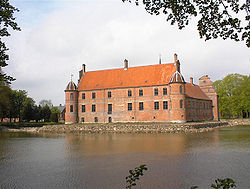
- Berritzgaard ManorBerritzgaardThe Berritzgaard estate and manor house is one of the largest and best preserved manor houses on the island of Lolland in Denmark. The estate can be traced back to 1382, to its first owner, Markvard Pøiske. The estate developed from a village called "Berith", situated where the Berritzgaard manor...
- Børglum AbbeyBørglum AbbeyBørglum Abbey was an important Premonstratensian abbey of medieval Denmark, located in Børglum parish, in the commune of Hjørring, approximately five kilometers east of Løkken in north central Jutland .- Origin :...
- Clausholm CastleClausholm CastleClausholm Castle is a large Danish country house located some 12 km southeast of Randers in eastern Jutland. It is one of Denmark's finest Baroque buildings.-History:...
- Dragsholm CastleDragsholm CastleDragsholm Castle is a historic building in Hørve, Denmark.For about 800 years there has been a building on the islet by the “drag”. From the original palace over the medieval castle to the current baroque style, Dragsholm Castle has had an influence on and been influenced by changing times and...
- Egeskov CastleEgeskov CastleEgeskov Castle is located in the south of the island of Funen, Denmark. The castle is Europe's best preserved Renaissance water castle.-History:Egeskov's history dates to the 14th century...
- Fuglsang Manor
- Gavnø Castle
- Glorup ManorGlorup ManorGlorup is a manor house located between Nyborg and Svendborg in the south-east of the Danish island Funen. Rebuilt to the design of Nicolas-Henri Jardin and his pupil Christian Josef Zuber in 1763-65, it is considered one of the finest Baroque complexes in Denmark.-Early history:Glorup is first...
- Krogerup Manor
- Nysø ManorNysø ManorNysø Manor, located near Præstø in the southeast of the Danish island of Sealand, was built in 1673 for Jens Lauridsen, a local functionary.-Architecture:...
- Rosenholm CastleRosenholm CastleRosenholm Castle is Denmark's oldest family-owned castle, and is one of the best-preserved complexes from the golden age of the manor house – from 1550 to 1630. Rosenholm Castle is founded in 1559 by the Danish nobleman Jørgen "George" Rosenkrantz. His family are among the oldest and most famous...
- Svanholm ManorSvanholmSvanholm is a country estate and former manor west of Copenhagen, Denmark. In 1978 an association of over 100 persons bought the estate to create Denmark's largest intentional community. The Svanholm Collective grows its own food and was one of the pioneers of organic farming in Denmark...
- Vemmetofte ConventVemmetofte ConventVemmetofte Convent is a former manor house in Faxe Municipality south of Copenhagen, Denmark. It was turned into a convent by Princess Sophia Hedwig of Denmark in 1735...
Norway
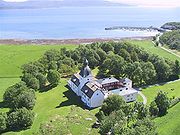
- Austrått ManorAustråttthumb|The manor’s entry portal with the coat of arms carved in [[soapstone]].Austrått or Austrått Manor is a manor in Ørland municipality, Sør-Trøndelag, Norway. Since the 10th century Austrått has been the residence for many noblemen, noblewomen and officials who played a significant role in...
- Damsgård Manor
- EidsvollsbygningenEidsvoll VerkEidsvoll Verk is a village in Eidsvoll, in Akershus County, Norway. It is served by Eidsvoll Verk Station on the Gardermoen Line. It was the site of the former Eidsvold Iron Works...
- Fossum hovedgård
- Frogner HovedgårdFrogner ManorFrogner Manor is located on a former estate in an area that became part of today's borough of Frogner in Oslo, Norway. The estate is now the site of Frognerparken...
- Frogner Hovedgård (Skien)
- Linderud gårdLinderudLinderud is a neighborhood in Bjerke borough, Oslo, Norway. The area originally formed part of the estate of Linderud Manor.-Linderud Manor:...
- Jarlsberg HovedgårdWedel-JarlsbergWedel-Jarlsberg is a Danish and Norwegian noble family. It is also a branch of the family von Wedel, which comes from Pomerania, Germany...
- Store Milde HovedgårdMildeMilde is a peninsula and neighbourhood in the city of Bergen, Norway.Located in Ytrebygda borough, Milde is situated about 16 km from the city centre of Bergen. As a basic statistical unit Milde had a population of 516 as of January 1, 2008....
Sweden
- AugerumAugerum HouseAugerum House is a manor house in Blekinge, Sweden. It is located north of Karlskrona and was built in 1720....
- CharlottenborgCharlottenborg CastleCharlottenborg slott, is a country house or manor house rather than a castle, on the shores of Motala ström, Östergötland, Sweden. The house was built in the mid 17th century by Ludvig Wierich Lewenhaupt and named in honour of his wife, Charlotte von Hohenlohe-Neuenstein...
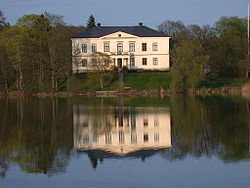
- DjupadalsDjupadals HouseDjupadals House is a manor house in Blekinge, Sweden. It is located in Ronneby Municipality and was built around 1600....
- ElleholmsElleholms HouseElleholms House is a manor house in Blekinge, Sweden. It is located in Karlshamn Municipality....
- GöholmsGöholms HouseGöholms House is a manor house in Blekinge, Sweden. It is located in Ronneby Municipality and was first mentioned in 1241....
- HalltorpHalltorpHalltorp is one of the earliest manor houses on the island of Öland, Sweden, dating from the 11th century AD. In early documents it is known as Hauldtorp, and it is cited as one of the early Viking settlements of Öland. In earlier times it has functioned as a royal farm associated with the...
- HarpsundHarpsundHarpsund is a manor house located in Flen Municipality, Södermanland County, Sweden. Since May 22, 1953 Harpsund has been used as a country residence for the Prime Minister of Sweden.-History:...
- MarielundMarielund House, KarlskronaMarielund House is an estate with a manor house located in Nättraby, Karlskrona Municipality in Blekinge County, Sweden. The estate dates back to the 1600s. It was purchased in 1746 by nobleman Adam Johan Raab who was the Governor of Kronoberg....
- ÖvralidÖvralidÖvralid is a manor house north of Motala in Östergötland County, Sweden.-The building:Övralid was home to poet, writer, and Nobel Prize laureate Verner von Heidenstam. Övralid was built in 1925 on the east hillside of lake Vättern. Originally it had no electricity. Övralid houses a library, a...
- SkärvaSkärva HouseSkärva House is a manor house in Blekinge, Sweden. It is located in Karlskrona Municipality....
- StrömStröm HouseStröm House is a mansion in Bohuslän, Sweden. It is located in Lilla Edet Municipality....
- TromtöTromtö HouseTromtö House is a manor house in Blekinge, Sweden. It is located in Ronneby Municipality....
Spain
A pazoPazo
The Pazo is a type of Galician traditional housing. Similar to a manor house, pazos are usually located in the countryside, as former residences of important people in the community...
is a type of grand old house found in Galician. Similar to a manor house, a pazo
Pazo
The Pazo is a type of Galician traditional housing. Similar to a manor house, pazos are usually located in the countryside, as former residences of important people in the community...
is usually located in the countryside and the former residence of an important nobleman or other important individual. They were of crucial importance to the rural and monastic communities around them. The pazo
Pazo
The Pazo is a type of Galician traditional housing. Similar to a manor house, pazos are usually located in the countryside, as former residences of important people in the community...
was a traditional architectural structure associated with a community and social network. It usually consisted of a main building surrounded by gardens, a dovecote and outbuildings such as a small chapel
Chapel
A chapel is a building used by Christians as a place of fellowship and worship. It may be part of a larger structure or complex, such as a church, college, hospital, palace, prison or funeral home, located on board a military or commercial ship, or it may be an entirely free-standing building,...
s for religious celebrations. The word pazo
Pazo
The Pazo is a type of Galician traditional housing. Similar to a manor house, pazos are usually located in the countryside, as former residences of important people in the community...
is derived from the Latin
Latin
Latin is an Italic language originally spoken in Latium and Ancient Rome. It, along with most European languages, is a descendant of the ancient Proto-Indo-European language. Although it is considered a dead language, a number of scholars and members of the Christian clergy speak it fluently, and...
palatiu(m) ("palace").
In Spain a good many old manor houses, palaces, castles and grand homes have been converted into a type of hotel called parador
Parador
A parador , in Spain and other Spanish-speaking countries, is a kind of luxury hotel, usually located in a historic building such as a monastery or castle. Parar means to stop, halt or stay.- Paradores de Turismo de España :...
.
Portugal
In Portugal, a manor house is often called a paço, which means "palace" in PortuguesePortuguese language
Portuguese is a Romance language that arose in the medieval Kingdom of Galicia, nowadays Galicia and Northern Portugal. The southern part of the Kingdom of Galicia became independent as the County of Portugal in 1095...
. Many have been converted into a type of hotel called pousada
Pousadas de Portugal
Pousadas de Portugal is a chain of luxury, traditional or historical hotels in Portugal. Formerly run by the state, they are now run by the Pestana group, which in September 2003 won a public bid for the sale of 37.6% of mother company Enatur and for a 40-year running concession...
.
- Paço de LanhesesPaço de LanhesesPaço de Lanheses is a manor house, with a private chapel, in Viana do Castelo, Minho Province, Norte Region, Portugal.T he house construction began in the sixteenth century but was totally refurbished in the eighteenth century and now was reformed to adapt to rural tourism.The property belonged to...
Estonia

- AlatskiviAlatskiviAlatskivi is a small borough in Tartu County, Estonia. It's the administrative centre of Alatskivi Parish.-External links:*...
Manor, Alatskivi Parish, Tartu County - AaspereAaspereAaspere is a village in Haljala Parish, Lääne-Viru County, in northeastern Estonia....
Manor, Haljala Parish, Lääne-Viru County - Luke ManorLuke ManorLuke Manor is a manor near Tartu, Estonia. It's located in Luke village, Nõo Parish.-History:The earliest mentionings of Luke Manor originate from 1557, but it's even believed to have been established back in 1299 by Johann von Löwenwolde. The main building has been destroyed twice, first during...
, Nõo Parish, Tartu County - Mooste Manor, Mooste Parish, Põlva County
- PalmsePalmsePalmse is a village in Vihula Parish, Lääne-Viru County, in northeastern Estonia....
Manor, Vihula Parish, Lääne-Viru County - PädastePädastePädaste is a village in Muhu Parish, Saare County in western Estonia....
Manor, Muhu Parish, Saare County - RiisipereRiisipereRiisipere is a small borough in the county of Harju, Estonia, and is the Nissi Parish administrative center. Located on the Ääsmäe-Haapsalu road, its distance from Tallinn is 45 km, from Haapsalu 50 km, Märjamaa 30 km, Rapla 40 km....
Manor, Nissi Parish, Harju County - Roosna-AllikuRoosna-AllikuRoosna-Alliku is a small borough in Roosna-Alliku Parish, Järva County in northern-central Estonia....
Manor, Roosna-Alliku Parish, Järva County - SagadiSagadiSagadi is a village in Vihula Parish, Lääne-Viru County, in northeastern Estonia....
Manor, Vihula Parish, Lääne-Viru County - TaageperaTaageperaTaagepera is a village in Helme Parish, Valga County, in southern Estonia. It has a population of 109 .Taagepera is famous for its Jugendstil castle.-External links:** at Estonian Manors Portal*...
Manor, Helme Parish, Valga County - VaimõisaVaimõisaVaimõisa is a village in Märjamaa Parish, Rapla County in western Estonia....
Manor, Märjamaa Parish, Rapla County
Poland
- Bachorza manorBachorza manorBachorza is a manor house located in the village of Bachorza in Mazovian Voivodship . It was originally built in the late 17th century, but was subsequently redesigned in the mid-19th century...
- Branicki Palace, Białystok
- Castle in PszczynaCastle in PszczynaCastle in Pszczyna is a classical-style palace in Pszczyna. Constructed as a castle in 13th century or earlier, in a gothic style, it was rebuilt in renaissance style in 17th century, in baroque in 18th century and classicist in 19th century; the classicist modernization transformed the castle...
- Dzików CastleDzików CastleDzików Castle in Tarnobrzeg, or Tarnowski Family Castle in Dzików is a 15th century castle with the park complex and gardens, located in Tarnobrzeg, Poland.-Dzików Confederation:...
- Jabłonna PalaceJabłonna PalaceJabłonna Palace is a palace, hotel and publicly accessible park-complex in Jabłonna, Poland whose uses include conferences and weddings.-History:...
- Kozłówka Palace
- Krasiczyn Palace
- KsiążKsiazKsiąż is a castle in Silesia, Poland near the town of Wałbrzych. It was built in 1288-1292 under Bolko I the Strict. It lies within a protected area called Książ Landscape Park.- History :...
- PrzyszowicePrzyszowicePrzyszowice is a village in the administrative district of Gmina Gierałtowice, within Gliwice County, Silesian Voivodeship, in southern Poland. The village has a population of 3,199...
- TurewTurewTurew is a village in the administrative district of Gmina Kościan, within Kościan County, Greater Poland Voivodeship, in west-central Poland. It lies approximately east of Kościan and south of the regional capital Poznań....
- Wilanów PalaceWilanów PalaceWilanów Palace is a royal palace located in the Wilanów district, Warsaw. Wilanów Palace survived the time of Poland's partitions and both World Wars and has preserved its authentic historical qualities, also is one of the most important monuments of Polish culture.The palace and park in Wilanów...
- For more information, see Dwór (manor house)Dwór (manor house)Dwór or dworek refers to a manor house used or owned by Polish nobility.The architectural form of the dwór evolved around the late Polish Renaissance period and continued until the Second World War, which, together with the communist takeover of Poland, spelled the end of the nobility in Poland...
and Nowy DwórNowy DwórNowy Dwór means new manor in Polish. It appears in several Polish toponyms.There are two towns in Poland known as Nowy Dwór:* Nowy Dwór Gdański, in Pomeranian Voivodeship * Nowy Dwór Mazowiecki, in Masovian Voivodeship...
(nameplaces derived from "New Manor").
Manor Houses Outside of Europe
The term "manor house" can be used to refer to any grand, stately home, including those that do not have a history rooted in European feudalism.New Zealand
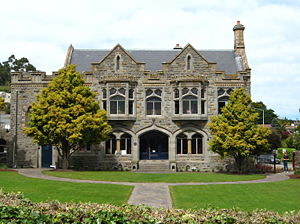
- Sign of the TakaheSign of the TakaheThe Sign of the Takahe is today a restaurant and function centre built in the style of an English Manor House. Designed by J. G. Collins, construction was carried out between 1918 and 1948...
(New Zealand)
See also
- Country house and MansionMansionA mansion is a very large dwelling house. U.S. real estate brokers define a mansion as a dwelling of over . A traditional European mansion was defined as a house which contained a ballroom and tens of bedrooms...
- Court baronCourt baronA Court baron is an English or Scottish manorial court dating from the Middle Ages.It was laid down by Sir Edward Coke that a manor had two courts, "the first by the common law, and is called a court baron," the freeholders being its suitors; the other a customary court for the copyholders...
and Court leetCourt leetThe court leet was a historical court baron of England and Wales and Ireland that exercised the "view of frankpledge" and its attendant police jurisdiction, which was normally restricted to the hundred courts.-History:... - DovecoteDovecoteA dovecote or dovecot is a structure intended to house pigeons or doves. Dovecotes may be square or circular free-standing structures or built into the end of a house or barn. They generally contain pigeonholes for the birds to nest. Pigeons and doves were an important food source historically in...
- Lord of the manorLord of the ManorThe Lordship of a Manor is recognised today in England and Wales as a form of property and one of three elements of a manor that may exist separately or be combined and may be held in moieties...
- Manor courtManor courtThe manor court was the lowest court of law in England . It dealt with matters over which the Lord of the Manor had jurisdiction. Its powers extended only to those living in the manor or who held land at the manor-Basic functions:Each Manor has its own laws listed in a document called the Custamal...
- ManorialismManorialismManorialism, an essential element of feudal society, was the organizing principle of rural economy that originated in the villa system of the Late Roman Empire, was widely practiced in medieval western and parts of central Europe, and was slowly replaced by the advent of a money-based market...
- Pele tower and Bastle houseBastle houseBastle houses are a type of construction found along the Anglo-Scottish border, in the areas formerly plagued by border Reivers. They are farmhouses, characterised by elaborate security measures against raids...
- Quadrangular castleQuadrangular castleA quadrangular castle or courtyard castle is a type of castle characterised by ranges of buildings which are integral with the curtain walls, enclosing a central ward or quadrangle, and typically with angle towers. There is no keep and frequently no distinct gatehouse...
- Tower houseTower houseA tower house is a particular type of stone structure, built for defensive purposes as well as habitation.-History:Tower houses began to appear in the Middle Ages, especially in mountain or limited access areas, in order to command and defend strategic points with reduced forces...
- VillaVillaA villa was originally an ancient Roman upper-class country house. Since its origins in the Roman villa, the idea and function of a villa have evolved considerably. After the fall of the Roman Republic, villas became small farming compounds, which were increasingly fortified in Late Antiquity,...
- Eesti mõisate loend (List of Estonian manors in Estonian Wikipedia)
- Liste des châteaux de Bretagne (List of Breton manor houses in the French Wikipedia)
- Luettelo Suomen kartanoista (List of Finnish manor houses in the Finnish Wikipedia)
- There is a short list of NormanNormandyNormandy is a geographical region corresponding to the former Duchy of Normandy. It is in France.The continental territory covers 30,627 km² and forms the preponderant part of Normandy and roughly 5% of the territory of France. It is divided for administrative purposes into two régions:...
manoirs in Pays de CauxPays de CauxThe Pays de Caux is an area in Normandy occupying the greater part of the French département of Seine Maritime in Haute-Normandie. It is a chalk plateau to the north of the Seine Estuary and extending to the cliffs on the English Channel coast - its coastline is known as the Côte d'Albâtre...
. - Lijst van kastelen in Nederland (From the Dutch Wikipedia, a comprehensive list of castles and manor houses in the Netherlands)
- Lijst van kastelen in België (From the Dutch Wikipedia, a comprehensive list of castles and manor houses in Belgium)
External links
- Reality TV show recreating life in an Edwardian manor house.
- Timelines TV Interactive video timeline of British history with section on medieval manors.
- UK Manor House news blog
- Estonian Manors Portal – the English version gives the brief overview of 438 best preserved manor houses in Estonia.
- Portal of Association of Latvia's castles, palaces and manors – the English version gives the information about all manors and castles in Latvia, routes and photos.