


Dutch literature

Encyclopedia
Dutch literature comprises all writings of literary merit
written through the ages
in the Dutch language
, a language which currently has around 23 million native speakers. Dutch literature is not restricted to the Netherlands
, Flanders
(Belgium), Suriname
and the Netherlands Antilles
, as it has also been produced in other (formerly) Dutch-speaking regions, such as French Flanders
, South Africa
and the former Dutch East Indies
(present-day Indonesia
). A sub-section is 'Dutch Indies literature
', colonial and post-colonial Insulinde inspired literature, covering the Golden Age up to the present day. Alternatively, Dutch literature was and is produced by people originally from abroad who came to live in Dutch-speaking regions, such as Anne Frank
and Kader Abdolah
.
In its earliest stages, Dutch literature is defined as those pieces of literary merit written in one of the Dutch dialects of the Low Countries
. Before the 17th century, there was no unified standard language; the dialects that are considered Dutch evolved from Old Frankish
. Afrikaans
can claim the same literary roots as contemporary Dutch, as both languages stem from 17th century Dutch.
evolved to Old Dutch
, a West Germanic language
that was spoken by the Franks
and to a lesser extent by people living in the regions conquered by the Franks
. Until the end of the 11th century, Dutch literature - like literature elsewhere in Europe - was almost entirely oral
and in the form of poetry
, as this helped troubadour
s remembering and reciting their texts. Scientific and religious texts were written in Latin
and as a consequence most texts written in the Netherlands were written in Latin rather than Old Dutch. Extant Dutch texts from this period are rare.
In the earliest stages of the Dutch language, a considerable degree of mutual intelligibility with most other West Germanic dialects was present, and some fragments and authors can be claimed by both Dutch and German
literature. Examples include the 9th-century Wachtendonk Psalms (Dutch: "Wachtendonkse Psalmen"), a West Low Franconian translation of some of the Psalms
on the threshold of what is considered Dutch, and the 12th-century County of Loon
poet Henric van Veldeke (1150 – after 1184).
or a variety of Rhine Franconian
. Very little remains of them. The psalms were named after a manuscript which has not come down to us, but out of which scholars believe the surviving fragments must have been copied. This manuscript was once owned by Canon
Arnold Wachtendonck. The surviving fragments are handwritten copies made by the Renaissance scholar Justus Lipsius
in the sixteenth century. Lipsius made a number of separate copies of apparently the same material and these versions do not always agree. In addition, scholars conclude that the numerous errors and inconsistencies in the fragments point not only to some carelessness or inattentiveness by the Renaissance scholars but also to errors in the now lost manuscript out of which the material was copied. The language of the Psalms suggests that they were originally written in the 10th century. A number of editions exist, among others by the 19th-century Dutch philologist Willem Lodewijk van Helten and, more recently, the diplomatic edition by the American historical linguist Robert L. Kyes (1969) and the critical edition by the Dutch philologist Arend Quak (1981). As might be expected from an interlinear translation, the word order of the Old Franconian text follows that of the Latin original very closely.
by the German abbot Williram
(ultimately by Isidore of Seville
). Until recently, based on its orthography and phonology the text of this manuscript was believed by most scholars to be Middle Franconian, that is Old High German, with some Limburgic or otherwise Franconian admixtures. But in 1974, the German philologist Willy Sanders proved in his study Der Leidener Willeram that the text actually represents an imperfect attempt by a scribe from the northwestern coastal area of the Low Countries to translate the East Franconian original into his local vernacular. The text contains many Old Dutch words not known in Old High German, as well as mistranslated words caused by the scribe's unfamiliarity with some Old High German words in the original he translated, and a confused orthography heavily influenced by the Old High German original. For instance, the grapheme is used after the High German tradition where it represents Germanic t shifted to /ts/. Sanders also proved that the manuscript, now in the University Library of Leiden University
, was written at the end of the 11th century in the Abbey of Egmond
in modern North Holland, whence the manuscript's other name Egmond Willeram.
in a convent
in Rochester, England
around 1100: hebban olla vogala nestas bagunnan hinase hic enda thu wat unbidan we nu
("All birds have started making nests, except me and you, what are we waiting for"). According to professor Luc de Grauwe the text could equally well be Old English, more specifically Old Kentish, though there is no consensus on this hypothesis. At that time, that Old (West) Dutch and Old English were very similar.
, Old Dutch and High German (Rhine-Franconian) elements. It was likely composed in north-west Germany in the early 12th century, possibly in Werden Abbey
, near Essen
.
s and hagiographies
(i.e. stories about the lives of saints) for paying noblemen. From the 13th century, literature became more didactic and developed a proto-national character. The primary audience was no longer the nobility, but the bourgeoisie. The growing importance of the Southern Low Countries resulted in most works being written in Brabant
, Flanders
and Limburg
.
In the first stages of Dutch literature, poetry was the predominant form of literary expression. It was both in the Low Countries
and the rest of Europe
that courtly romance and poetry
were popular literary genre
s during the Middle Ages
. One Minnesang
er was the aforementioned Van Veldeke. The chivalric
romance
was a popular genre as well, often featuring King Arthur
or Charlemagne
as protagonist
.
As the political and cultural emphasis at the time lay in the southern provinces, most of the works handed down from the early Middle Ages were written in southern Low Franconian dialects such as Limburgish
, Flemish
and Brabantic. The first Dutch language writer known by name is van Veldeke who wrote courtly love poetry, hagiographies
and epics.
Beatrice of Nazareth
(1200–1268) was the first known prose writer in the Dutch language, the author of the notable dissertation known as the Seven Ways of Holy Love.
A number of the surviving Dutch language epic works, especially the courtly romances
, were copies from or expansions of earlier German or French
efforts, but there are examples of truly original works (such as the anonymous Karel ende Elegast
) and even Dutch-language works that formed the basis for version in other languages (such as the morality play Elckerlijc
that formed the basis for Everyman
). Another genre popular in the Middle Ages was the fable
, and the most elaborate fable produced by Dutch literature was an expanded adaptation of the Reynard the Fox tale, Vanden vos Reynaerde ("Of Reynard the Fox"), written around 1250 by a person only known to us as Willem.
Up until the 13th century, the Middle Dutch language output mainly serviced the aristocratic and monastic orders, recording the traditions of chivalry
and of religion, but scarcely addressed the bulk of the population. With the close of the 13th century a change appeared in Dutch literature. The Flemish and Hollandic towns began to prosper and to assert their commercial
supremacy over the North Sea
, and these cities won privileges amounting almost to political independence. With this liberty there arose a new sort of literary expression.
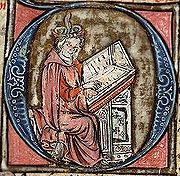 The most important exponent of this new development was Jacob van Maerlant
(~1235–~1300), a Flemish
scholar who worked in Holland for part of his career. His key works are Der Naturen Bloeme ("The Flower of Nature", c. 1263), a collection of moral
and satirical
addresses to all classes
of society
, and De Spieghel Historiael ("The Mirror of History", c. 1284). Van Maerlant straddles the cultural divide between the northern and southern provinces. Up until now, the northern provinces had produced little of worth, and this would largely remain the case until the fall of Antwerp during the Eighty Years' War shifted focus to Amsterdam
. He is sometimes been referred to as the "father of Dutch poetry", "a title he merits for productivity if for no other reason."
The Brussels
friar
Jan van Ruusbroec (better known in English as the Blessed
John of Ruysbroeck, 1293/4–1381), is considered the father of Dutch prose, who following Beatrice took prose out of the economic and political realms and used it for literary purposes. He wrote sermons filled with mystic
thought.
Around 1440, literary guild
s called rederijkerskamers ("Chambers of Rhetoric
") arose. These guilds, whose members called themselves Rederijkers or "Rhetoricians", were in almost all cases middle-class in tone, and opposed to aristocratic
ideas and tendencies in thought. Of these chambers, the earliest were almost entirely engaged in preparing mysteries
and miracle plays for the people. Soon their influence grew until no festival
or procession
could take place in a town unless the Chamber patron
ized it. The Chambers' plays very rarely dealt with historical
or even Biblical
personages, but entirely with allegorical and moral abstractions and were didactic in nature. The most notable examples of Rederijker theatre include Mariken van Nieumeghen ("Mary of Nijmegen") and Elckerlijc
(which was translated into English
as Everyman
).
At the close of the early period, Anna Bijns
(c. 1494–1575) stands as a transitional figure. Bijns was an Antwerp schoolmistress
and lay nun whose main targets were the faith
and character of Luther
. In her first volume of poetry (1528) the Lutherans are scarcely mentioned and focus lies on her personal experience of faith, but in that of 1538 every page is occupied with invective
s against them. With the writings of Bijns, the period of Middle Dutch closes and the modern Dutch
begins (see also History of the Dutch language).
appeared in Dutch literature in a collection of Psalm translations printed at Antwerp in 1540 under the title of Souter-Liedekens ("Psalter
Songs"). For the Protestant congregations, Jan Utenhove
printed a volume of Psalms in 1566 and made the first attempt at a New Testament translation in Dutch. Very different in tone were the battle songs sung by the Reformers, the Gueux songs. The famous songbook of 1588, Een Geusen Lied Boecxken ("A Gueux Songbook"), was full of heroic sentiment.
Philips van Marnix, lord of Sint-Aldegonde
(1538–1598) was one of the leading spirits in the war of Dutch independence and an intimate friend of William I, Prince of Orange. The lyrics to Wilhelmus, the current Dutch national anthem and an apology
of the Prince's actions composed around 1568, are ascribed to Marnix. His chief work was 1569's Biëncorf der Heilige Roomsche Kercke (Beehive of the Holy Roman Church), a satire
of the Roman Catholic church
. Marnix occupied the last years of his life in preparing a Dutch version of the Bible
, translated directly from the original; at his death only Genesis was completed. In 1619 the Synod of Dort
placed the unfinished work in the hands of four theologians, who completed it. This translation formed the starting point for the Statenvertaling
or "States' Translation", a full Bible translation into Dutch ordered by the Synod. In order to be intelleglible to all Dutchmen, the Statenvertaling included elements of all main Dutch dialects and so became the cornerstone of modern standard Dutch.
Dirck Volckertszoon Coornhert
(1522–1590) was the Low Countries' first truly humanist writer. In 1586 he produced his original masterpiece, the Zedekunst ("Art of Ethics
", 1586), a philosophical treatise
in prose. Coornhert's humanism
unites the Bible
, Plutarch
and Marcus Aurelius in one grand system of ethics.
By this time, the religious and political upheaval in the Low Countries had resulted in 1581's Act of Abjuration, deposing their king, Philip II of Spain
and the subsequent eighty years' struggle to confirm that declaration. As a result, the southern provinces, some of which had supported the declaration, were separated from the northern provinces
as they remained under Spanish rule. Ultimately, this would result in the present-day states of Belgium
(south) and the Netherlands
(north). After Antwerp fell into Spanish hands in 1585, Amsterdam became the centre of all literary enterprise as all intelligentsia
fled towards the north. This meant both a cultural renaissance in the north and a sharp decline in the south at the same time, regarding the level of Dutch literature practised. The north received a cultural and intellectual boost whereas in the south, Dutch was largely replaced by French
as the language of culture and administration.
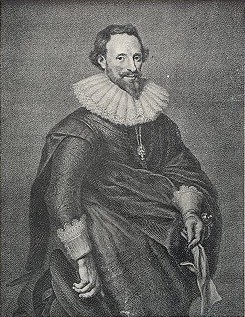 In Amsterdam, a circle of poets and playwrights formed around Maecenas-like figure Roemer Visscher
(1547–1620), which would eventually be known as the Muiderkring
("Circle of Muiden
") after the residence of its most prominent member, Pieter Corneliszoon Hooft
(1581–1647), writer of pastoral and lyric poetry and history. From 1628 to 1642 he wrote his masterpiece, the Nederduytsche Historiën ("History of the Netherlands"). Hooft was a purist in style, modelling himself (in prose) after Tacitus. He is considered one of the greatest historians, not merely of the Low Countries, but of Europe. His influence in standardising the language of his country is considered enormous, as many writers conformed themselves to the stylistic and grammatical model Hooft devised. Other members of his Circle included Visscher's daughter Tesselschade
(1594–1649, lyric poetry) and Gerbrand Adriaensz Bredero
(1585–1618, romantic plays and comedies), whose best-known piece is De Spaansche Brabanber Jerolimo ("Jerolimo, the Spanish Brabanter"), a satire upon the refugee
s from the south. A versatile poet loosely associated with the Circle of Muiden was the diplomat
Constantijn Huygens
(1596–1687), perhaps best known for his witty epigram
s. Huygens' style was bright and vivacious and he was a consummate artist in metrical form.
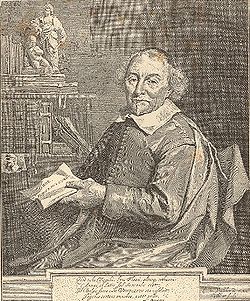 The best-known of all Dutch writers is playwright and poet Joost van den Vondel
(1587–1679), who mainly wrote historical and biblical tragedies. In 1625 he published what seemed an innocent study from the antique, his tragedy of Palamedes, or Murdered Innocence, but which was a thinly-veiled tribute to Johan van Oldebarnevelt, the Republic's Grand Pensionary
, who had been executed in 1618 by order of stadtholder
Maurice of Nassau
. Vondel became in a week the most famous writer in the Netherlands and for the next twelve years, until the accession of stadtholder Frederick Henry
, had to maintain a hand-to-hand combat with the Calvinists of Dordrecht. In 1637 Vondel wrote of his most popular works on the occasion of the opening of a new Amsterdam theatre: Gijsbreght van Aemstel, a play on a local historical figure loosely modeled on material from the Aeneid
that is still staged to this day. In 1654 Vondel brought out what most consider the best of all his works, the tragedy of Lucifer, from which it is said Milton
drew inspiration. Vondel is considered the typical example of Dutch intelligence and imagination at their highest development.
A similar school to that in Amsterdam arose in Middelburg
, the capital of Zeeland
, led by Jacob Cats
(1577–1660). In Cats the genuine Dutch habit of thought, the utilitarian and didactic spirit reached its zenith
of fluency and popularity. During early middle life he produced the most important of his writings, his didactic poems, the Maechdenplicht ("Duty of Maidens") and the Sinne- en Minnebeelden ("Images of Allegory and Love"). In 1624 he moved from Middelburg to Dordrecht, where he soon after published his ethical work called Houwelick ("Marriage"); and this was followed by an entire series of moral pieces. Cats is considered somewhat dull and prosaic by some, yet his popularity with the middle classes in the Netherlands has always been immense.
As with contemporary English literature
, the predominant forms of literature produced in this era were poetry
and drama
, Coornhert (philosophy
) and Hooft (history
) being the main exceptions. In another prose genre, Johan van Heemskerk
(1597–1656) was the leading man of a new vogue blown over from France
: the romance
. In 1637 he produced his Batavische Arcadia ("Batavian Arcadia"), the first original Dutch romance, in its day extremely popular and widely imitated. Another exponent of this genre was Nikolaes Heinsius the Younger
, whose Mirandor (1675) resembles but precedes Lesage
's Gil Blas.
The period from 1600 to 1650 was the blossoming time in Dutch literature. During this period the names of greatest genius were first made known to the public and the vigour and grace of literary expression reached their highest development. It happened, however, that three men of particularly commanding talent survived to an extreme old age, and under the shadow of Vondel, Cats and Huygens sprang up a new generation which sustained the great tradition until around 1670, when decline set in sharply.
into the Dutch Republic
and the Spanish Netherlands formalised in the Peace of Westphalia
(1648), "Dutch literature" almost exclusively meant "Republican
literature", as the Dutch language
fell into disfavour with the southern rulers. A notable exception was the Dunkirk writer Michiel de Swaen
(1654–1707), who wrote comedies, moralities and biblical poetry. During his lifetime (1678) the Spanish
lost Dunkirk to the French and so De Swaen is also the first French-Flemish
writer of importance.
 The playwright
s of the time followed the French model of Corneille
and others, led by Andries Pels (d. 1681). A well known poet of this period was Jan Luyken
(1649–1712). A writer who revived especially an interest in literature was Justus van Effen
(1684–1735). He was born at Utrecht
and was influenced by Huguenot
émigrés who had fled for the Republic after the revocation of the Edict of Nantes in 1685. Van Effen wrote in French for a great part of his literary career but, influenced by a visit to London
where the Tatler
and Spectator
were on the rise, from 1731 began to publish his Hollandsche Spectator
("Dutch Spectator") magazine
, which his death in 1735 soon brought to a close. Still, what he composed during the last four years of his life is considered by many to constitute the most valuable legacy to Dutch literature that the middle of the 18th century left behind.
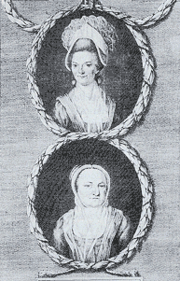
The year 1777 is considered a turning point in the history of letters in the Netherlands. It was in that year that Elizabeth “Betje” Wolff
(1738–1804), a widow
lady in Amsterdam
, persuaded her friend Agatha “Aagje” Deken
(1741–1804), a poor but intelligent governess
, to throw up her situation and live with her. For nearly thirty years these women continued together, writing in combination. In 1782 the ladies, inspired partly by Goethe
, published their first novel, Sara Burgerhart, which was enthusiastically received. Two further, less successful novels appeared before Wolff and Deken had to flee France, their country of residence due to persecution by the Directory
.
The last years of the 18th century were marked by a general revival of intellectual force. The romantic movement
in Germany
made itself deeply felt in all branches of Dutch literature and German lyricism took the place hitherto held by French classicism
, in spite of the country falling to French expansionism (see also History of the Netherlands).
by France in 1795. The Republic
saw a revolution inspired and backed by France that led to the Batavian Republic
and Kingdom of Holland
vassal state
s before actual French annexation in 1810. After Napoleon
's downfall
in the Southern Netherlands
village of Waterloo
, the northern and southern provinces were briefly united as the United Kingdom of the Netherlands
. This period lasted until 1830 only, when the southern provinces seceded
to form Belgium
. It had little influence in literature, and in the new state of Belgium, the status of the Dutch language remained largely unchanged as all governmental and educational affairs were conducted in French.
Against this backdrop, the most prominent writer was Willem Bilderdijk
(1756–1831), a highly intellectual and intelligent but also eccentric man who lived a busy, eventful life, writing great quantities of verse. Bilderdijk had no time for the emerging new romantic style of poetry, but its fervour found its way into the Netherlands nevertheless, first of all in the person of Hiëronymus van Alphen (1746–1803), who today is best remembered for the verses he wrote for children. Van Alphen was an exponent of the more sentimental school along with Rhijnvis Feith
(1753–1824), whose romances are steeped in Weltschmerz
.
In Hendrik Tollens
(1780–1856) some the power of Bilderdijk and the sweetness of Feith were combined. Tollens wrote nationalistic romances and lyrics celebrating the great deeds of Dutch history
and today is best known for his poem "Wien Neêrlands Bloed" ("To Those in Whom Dutch Blood Flows"), which was the Dutch national anthem until it was superseded in 1932 by Marnix'
"Wilhelmus". A poet of considerable talent, whose powers were awakened by personal intercourse with Tollens and his followers, was A.C.W. Staring (1767–1840). His poems are a blend of romanticism and rationalism
.
The Dutch language of the north resisted the pressure of German from the outside and from within broke through its long stagnation and enriched itself, as a medium for literary expression, with a multitude of fresh and colloquial forms. At the same time, no very great genius arose in the Netherlands in any branch of literature. For the thirty or forty years preceding 1880 the course of literature in the Netherlands was smooth and even sluggish. The Dutch writers had slipped into a conventionality of treatment and a strict limitation of form from which even the most striking talents among them could scarcely escape.
Poetry and a large part of prose was dominated by the so-called school of ministers, as the leading writers all were or had been Calvinist ministers. As a result, many of their products emphasized Biblical and bourgeois domestic values. A prime example is Nicolaas Beets
(1814–1903), who wrote large quantities of sermons and poetry under his own name but is chiefly remembered today for the humorous prose sketches of Dutch life in Camera Obscura (1839), which he wrote during his student days under the pseudonym
of Hildebrand
.
A poet of power and promise was lost in the early death of P.A. de Genestet
(1829–1861). His narrative poem "De Sint-Nicolaasavond" ("Eve of Sinterklaas") appeared in 1849. Although he left no large contemporary impression, Piet Paaltjens
(ps.
of François Haverschmidt, 1835–1894) is considered one of the very few readable nineteenth-century poets, representing in Dutch the pure Romantic vein exemplified by Heine
.
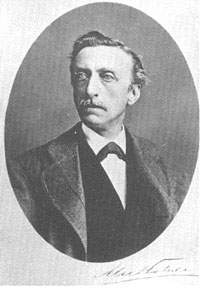 Under the influence of romantic nationalism, writers in Belgium
began to reconsider their Flemish heritage and move for a recognition of the Dutch language. Charles De Coster
laid the foundations for a native Belgian literature by recounting the Flemish past in historic romances but wrote his works in French
. Hendrik Conscience
(1812–1883) was the first to write about Flemish
subjects in the Dutch language and so is considered the father of modern Flemish literature. In Flemish poetry, Guido Gezelle
(1830–1899) is an important figure. An ordained journalist
-cum-ethnologist
, Gezelle celebrated his faith and his Flemish roots using an archaic vocabulary based on Medieval Flemish, somewhat to the detriment of readability. See also the article on Flemish literature
.
After the restoration in 1815 to the Dutch state of the Dutch East Indies
, works of literature continued to be produced there. With the rise of social consciousness regarding the administration of the colonies and the treatment of their inhabitants, an influential voice rose from the Indies in the form of Multatuli
(ps. of Eduard Douwes Dekker, 1820–1887), whose Max Havelaar
(1860) is a scathing indictment of colonial mismanagement and one of the few nineteenth-century prose works still widely considered readable today.
The principles of the 1830–1880 period were summed up in Conrad Busken-Huet
(1826–1886), leading critic of the day; he had been during all those years the fearless and trusty watch-dog of Dutch letters as he understood them. He lived just long enough to become aware that a revolution was approaching, not to comprehend its character; but his accomplished fidelity to literary principle and his wide knowledge have been honoured even by the most bitter of the younger school.
In November 1881 Jacques Perk (born 1860) died. He was no sooner dead, however, than his posthumous poems, and in particular a cycle of sonnets called Mathilde, were published (1882) and awakened extraordinary emotion. Perk had rejected all the formulas of rhetorical poetry, and had broken up the conventional rhythms. There had been heard no music like his in the Netherlands for two hundred years. A group of young men collected around his name and were joined by the poet-novelist-dramatist Marcellus Emants
(1848–1923). Emants had written a symbolical poem called "Lilith" in 1879 that had been stigmatised as audacious and meaningless; encouraged by the admiration of his juniors, Emants published in 1881 a treatise in which the first open attack was made on the old school.
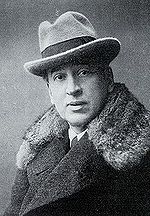 The next appearance was that of Willem Kloos
(1857–1938), who had been the editor and intimate friend of Perk, and who now led the new movement. His violent attacks on recognized authority in aesthetics created a considerable scandal. For some time the new poets and critics found a great difficulty in being heard, but in 1884 they founded a review, De Nieuwe Gids ("The New Guide"), which was able to offer a direct challenge to the old guard's periodicals. The new movement was called Tachtigers or "Movement of (Eighteen-)Eighty", after the decade in which it arose. The Tachtigers insisted that style must match content, and that intimate and visceral emotions can only be expressed using an intimate and visceral writing style. Prime influences of the Tachtigers were U.K.
poets such as Shelley
and the French naturalists
.
Around the same time, Louis Couperus
(1863–1923) made his appearance. His boyhood years were spent in Java, and he had preserved in all his nature a certain tropical
magnificence. His first literary efforts were lyrics in the Tachtigers style, but Couperus proved far more important and durable as a novelist. In 1891 he published Noodlot, which was translated into English
as Footsteps of Fate and which was greatly admired by Oscar Wilde
. Couperus continued to pour out one important novel after another until his death in 1923. Another talent for prose was revealed by Frederik van Eeden
(1860–1932) in De kleine Johannes ("Little Johnny", 1887) and in Van de koele meren des doods ("From the Cold Pools of Death", 1901), a melancholy novel.
After 1887 the condition of modern Dutch literature remained comparatively stationary, and within the last decade of the 19th century was definitely declining. In 1889 a new poet, Herman Gorter
(1864–1927) made his appearance with an epic poem called Mei ("May"), eccentric both in prosody and in treatment. He held his own without any marked advance towards lucidity or variety. Since the recognition of Gorter, however, no really remarkable talent made itself prominent in Dutch poetry except P.C. Boutens (1870–1943), whose Verzen ("Verses") in 1898 were received with great respect.
Kloos collected his poems in 1894. The others, with the exception of Couperus, showed symptoms of sinking into silence. The entire school, now that the struggle for recognition was over, rested on its triumphs and soon limited itself to a repetition of its old experiments.
The leading drama
tist at the close of the century was Herman Heijermans
(1864–1924), a writer of strong realistic and socialistic
tendencies who single-handedly brought Dutch theatre into the modern time. His fishermen's
tragedy
Op Hoop van Zegen
("Trusting Our Fate in the Hands of God"), which is still staged, remains his most popular play.
, the Netherlands
of the nineteenth century effectively continued unchanged until World War I
(1914–1918). Belgium was invaded by the German Empire
and the Netherlands faced severe economic difficulties
due to its policy of neutrality
and consequent political isolation, wedged as it was between the two warring sides.
Both the Belgian and Dutch societies emerged from the war pillarised
, meaning that each of the main religious and ideological movements (Protestant, Catholic, Socialist and Liberal) stood independent of the rest, each operating its own newspapers, magazines, schools, broadcasting organizations and so on in a form of self-imposed, non-racial segregation. This in turn affected literary movements, as writers gathered around the literary magazines of each of the four "pillars" (limited to three in Belgium, as Protestantism never took root there).
One of the most important historical writers of the 20th century was Johan Huizinga
, who is known abroad and translated in different languages and included in several great books
lists. His written works where influenced by the literairy figures of the early 20th century.
(J.H.F. Grönloh, 1882–1961), who published his few short stories in the 1910s. A prime example of New Objectivity is F. Bordewijk
(1884–1965), whose short story Bint (1931) and terse writing epitomise the style.
An offshoot of the New Objectivity movement centered around the Forum magazine, which appeared in the years 1932–1935 and was edited by leading Dutch literary critic
Menno ter Braak
(1902–1940) and novelist Edgar du Perron
(1899–1940). Writers associated at one point or other with this modernist magazine include Belgian writers Willem Elsschot
and Marnix Gijsen
and Dutch writers J. Slauerhoff
, Simon Vestdijk
and Jan Greshoff
.
); many other writers were forced into hiding or rounded up in internment camps, such as Vestdijk. Many writers ceased publishing as a consequence of refusing to join the German-installed Kultuurkamer (Chamber of Culture), which intended to regulate cultural life in the Netherlands. Jewish-born writer Josef Cohen escaped prosecution by converting to Christianity
; aspiring writer Anne Frank
(whose diary
was published posthumously) died in a German concentration camp, as did crime fiction
writer, journalist
and poet
Jan Campert
, who was arrested for aiding Jews and died in 1943 in Neuengamme
.
During the German occupation some resistance poetry was written in Dutch, of which De achttien dooden ("The eighteen dead") by Jan Campert
has become most famous.
Literature
Literature is the art of written works, and is not bound to published sources...
written through the ages
History of Dutch
Dutch is a West Germanic language, that originated from the Old Frankish dialects.Among the words with which Dutch has enriched the English vocabulary are: brandy, cole slaw, cookie, cruiser, dock, easel, freight, landscape, spook, stoop, and yacht...
in the Dutch language
Dutch language
Dutch is a West Germanic language and the native language of the majority of the population of the Netherlands, Belgium, and Suriname, the three member states of the Dutch Language Union. Most speakers live in the European Union, where it is a first language for about 23 million and a second...
, a language which currently has around 23 million native speakers. Dutch literature is not restricted to the Netherlands
Netherlands
The Netherlands is a constituent country of the Kingdom of the Netherlands, located mainly in North-West Europe and with several islands in the Caribbean. Mainland Netherlands borders the North Sea to the north and west, Belgium to the south, and Germany to the east, and shares maritime borders...
, Flanders
Flanders
Flanders is the community of the Flemings but also one of the institutions in Belgium, and a geographical region located in parts of present-day Belgium, France and the Netherlands. "Flanders" can also refer to the northern part of Belgium that contains Brussels, Bruges, Ghent and Antwerp...
(Belgium), Suriname
Suriname
Suriname , officially the Republic of Suriname , is a country in northern South America. It borders French Guiana to the east, Guyana to the west, Brazil to the south, and on the north by the Atlantic Ocean. Suriname was a former colony of the British and of the Dutch, and was previously known as...
and the Netherlands Antilles
Netherlands Antilles
The Netherlands Antilles , also referred to informally as the Dutch Antilles, was an autonomous Caribbean country within the Kingdom of the Netherlands, consisting of two groups of islands in the Lesser Antilles: Aruba, Bonaire and Curaçao , in Leeward Antilles just off the Venezuelan coast; and Sint...
, as it has also been produced in other (formerly) Dutch-speaking regions, such as French Flanders
French Flanders
French Flanders is a part of the historical County of Flanders in present-day France. The region today lies in the modern-day region of Nord-Pas de Calais, the department of Nord, and roughly corresponds to the arrondissements of Lille, Douai and Dunkirk on the Belgian border.-Geography:French...
, South Africa
South Africa
The Republic of South Africa is a country in southern Africa. Located at the southern tip of Africa, it is divided into nine provinces, with of coastline on the Atlantic and Indian oceans...
and the former Dutch East Indies
Dutch East Indies
The Dutch East Indies was a Dutch colony that became modern Indonesia following World War II. It was formed from the nationalised colonies of the Dutch East India Company, which came under the administration of the Netherlands government in 1800....
(present-day Indonesia
Indonesia
Indonesia , officially the Republic of Indonesia , is a country in Southeast Asia and Oceania. Indonesia is an archipelago comprising approximately 13,000 islands. It has 33 provinces with over 238 million people, and is the world's fourth most populous country. Indonesia is a republic, with an...
). A sub-section is 'Dutch Indies literature
Dutch Indies literature
Dutch Indies literature or Dutch East Indies literature is a section of Dutch literature encompassing Dutch language literature inspired by colonial and post-colonial Insulinde from the Dutch Golden Age to the present day. It includes Dutch, Indo-European and Indonesian authors...
', colonial and post-colonial Insulinde inspired literature, covering the Golden Age up to the present day. Alternatively, Dutch literature was and is produced by people originally from abroad who came to live in Dutch-speaking regions, such as Anne Frank
Anne Frank
Annelies Marie "Anne" Frank is one of the most renowned and most discussed Jewish victims of the Holocaust. Acknowledged for the quality of her writing, her diary has become one of the world's most widely read books, and has been the basis for several plays and films.Born in the city of Frankfurt...
and Kader Abdolah
Kader Abdolah
Kader Abdolah is a Persian–Dutch writer, poet and columnist. He has written books and many articles in Dutch and is known for using Persian literary items in his Dutch works...
.
In its earliest stages, Dutch literature is defined as those pieces of literary merit written in one of the Dutch dialects of the Low Countries
Low Countries
The Low Countries are the historical lands around the low-lying delta of the Rhine, Scheldt, and Meuse rivers, including the modern countries of Belgium, the Netherlands, Luxembourg and parts of northern France and western Germany....
. Before the 17th century, there was no unified standard language; the dialects that are considered Dutch evolved from Old Frankish
Old Frankish
Old Frankish is an extinct West Germanic language, once spoken by the Franks. It is the parent language of the Franconian languages, of which Dutch and Afrikaans are the most known descendants...
. Afrikaans
Afrikaans
Afrikaans is a West Germanic language, spoken natively in South Africa and Namibia. It is a daughter language of Dutch, originating in its 17th century dialects, collectively referred to as Cape Dutch .Afrikaans is a daughter language of Dutch; see , , , , , .Afrikaans was historically called Cape...
can claim the same literary roots as contemporary Dutch, as both languages stem from 17th century Dutch.
Old Dutch texts (500-1150)
Around 500 AD, Old FrankishOld Frankish
Old Frankish is an extinct West Germanic language, once spoken by the Franks. It is the parent language of the Franconian languages, of which Dutch and Afrikaans are the most known descendants...
evolved to Old Dutch
Old Dutch
In linguistics, Old Dutch denotes the forms of West Franconian spoken and written in the Netherlands and present-day northern Belgium during the Early Middle Ages. It is regarded as the primary stage in the development of a separate Dutch language...
, a West Germanic language
West Germanic languages
The West Germanic languages constitute the largest of the three traditional branches of the Germanic family of languages and include languages such as German, English, Dutch, Afrikaans, the Frisian languages, and Yiddish...
that was spoken by the Franks
Franks
The Franks were a confederation of Germanic tribes first attested in the third century AD as living north and east of the Lower Rhine River. From the third to fifth centuries some Franks raided Roman territory while other Franks joined the Roman troops in Gaul. Only the Salian Franks formed a...
and to a lesser extent by people living in the regions conquered by the Franks
Frankish Empire
Francia or Frankia, later also called the Frankish Empire , Frankish Kingdom , Frankish Realm or occasionally Frankland, was the territory inhabited and ruled by the Franks from the 3rd to the 10th century...
. Until the end of the 11th century, Dutch literature - like literature elsewhere in Europe - was almost entirely oral
Oral
The word oral may refer to:As an adjective:* the mouth, the first portion of the alimentary canal that receives food and saliva* speech communication as opposed to writing* oral administration of medicines...
and in the form of poetry
Poetry
Poetry is a form of literary art in which language is used for its aesthetic and evocative qualities in addition to, or in lieu of, its apparent meaning...
, as this helped troubadour
Troubadour
A troubadour was a composer and performer of Old Occitan lyric poetry during the High Middle Ages . Since the word "troubadour" is etymologically masculine, a female troubadour is usually called a trobairitz....
s remembering and reciting their texts. Scientific and religious texts were written in Latin
Latin
Latin is an Italic language originally spoken in Latium and Ancient Rome. It, along with most European languages, is a descendant of the ancient Proto-Indo-European language. Although it is considered a dead language, a number of scholars and members of the Christian clergy speak it fluently, and...
and as a consequence most texts written in the Netherlands were written in Latin rather than Old Dutch. Extant Dutch texts from this period are rare.
In the earliest stages of the Dutch language, a considerable degree of mutual intelligibility with most other West Germanic dialects was present, and some fragments and authors can be claimed by both Dutch and German
Germans
The Germans are a Germanic ethnic group native to Central Europe. The English term Germans has referred to the German-speaking population of the Holy Roman Empire since the Late Middle Ages....
literature. Examples include the 9th-century Wachtendonk Psalms (Dutch: "Wachtendonkse Psalmen"), a West Low Franconian translation of some of the Psalms
Psalms
The Book of Psalms , commonly referred to simply as Psalms, is a book of the Hebrew Bible and the Christian Bible...
on the threshold of what is considered Dutch, and the 12th-century County of Loon
County of Loon
The County of Loon was a state of the Holy Roman Empire, lying west of the Meuse river in present-day Flemish-speaking Belgium, and east of the old Duchy of Brabant. The most important cities of the county were Beringen, Bilzen, Borgloon, Bree, Hamont, Hasselt, Herk-de-Stad, Maaseik, Peer and...
poet Henric van Veldeke (1150 – after 1184).
Oldest findings
- In 1996 a sentence was discovered on the sword sheath of Bergakker from around 425-450, though this sentence could very well be Old Frankish and not yet Old Dutch. Given the paucity of the remains of either, the demarcation between the two is hard to make.
- Another sentence can be found in the early 6th-century Salic LawSalic lawSalic law was a body of traditional law codified for governing the Salian Franks in the early Middle Ages during the reign of King Clovis I in the 6th century...
, which was drawn up during the reign of King Clovis IClovis IClovis Leuthwig was the first King of the Franks to unite all the Frankish tribes under one ruler, changing the leadership from a group of royal chieftains, to rule by kings, ensuring that the kingship was held by his heirs. He was also the first Catholic King to rule over Gaul . He was the son...
, a Salian Frank himself. The sentence reads: "Maltho thi afrio lito" ('I say, I free you, half-free'). This phrase was used to free a serfSERFA spin exchange relaxation-free magnetometer is a type of magnetometer developed at Princeton University in the early 2000s. SERF magnetometers measure magnetic fields by using lasers to detect the interaction between alkali metal atoms in a vapor and the magnetic field.The name for the technique...
. Apart from this the Lex Salica also contains a number of loose words. - A baptising text from the 8th-century Utrecht reads: "Gelobistu in got alamehtigan fadaer" (Modern Dutch: Geloof je in God, de almachtige vader?, English: Do you believe in God, the almighty father?).
The Wachtendonck Psalms
The Wachtendonck Psalms are a number of psalms written in Latin and an eastern variety of Old Franconian. It is unclear whether the dialect is Old LimburgishLimburgish language
Limburgish, also called Limburgian or Limburgic is a group of East Low Franconian language varieties spoken in the Limburg and Rhineland regions, near the common Dutch / Belgian / German border...
or a variety of Rhine Franconian
Rhine Franconian
Rhine Franconian , or Rhenish Franconian, is a dialect family of West Central German. It comprises the German dialects spoken across the western regions of the states of Saarland, Rhineland-Palatinate, and Hesse in Germany...
. Very little remains of them. The psalms were named after a manuscript which has not come down to us, but out of which scholars believe the surviving fragments must have been copied. This manuscript was once owned by Canon
Canon (priest)
A canon is a priest or minister who is a member of certain bodies of the Christian clergy subject to an ecclesiastical rule ....
Arnold Wachtendonck. The surviving fragments are handwritten copies made by the Renaissance scholar Justus Lipsius
Justus Lipsius
Justus Lipsius was a Southern-Netherlandish philologist and humanist. Lipsius wrote a series of works designed to revive ancient Stoicism in a form that would be compatible with Christianity. The most famous of these is De Constantia...
in the sixteenth century. Lipsius made a number of separate copies of apparently the same material and these versions do not always agree. In addition, scholars conclude that the numerous errors and inconsistencies in the fragments point not only to some carelessness or inattentiveness by the Renaissance scholars but also to errors in the now lost manuscript out of which the material was copied. The language of the Psalms suggests that they were originally written in the 10th century. A number of editions exist, among others by the 19th-century Dutch philologist Willem Lodewijk van Helten and, more recently, the diplomatic edition by the American historical linguist Robert L. Kyes (1969) and the critical edition by the Dutch philologist Arend Quak (1981). As might be expected from an interlinear translation, the word order of the Old Franconian text follows that of the Latin original very closely.
The Leiden Willeram
The Leiden Willeram is the name given to a manuscript containing a Low Franconian version of the Old High German commentary on Song of SolomonSong of Solomon
The Song of Songs of Solomon, commonly referred to as Song of Songs or Song of Solomon, is a book of the Hebrew Bible—one of the megillot —found in the last section of the Tanakh, known as the Ketuvim...
by the German abbot Williram
Williram
Williram was a German scholar of Christian scripture from near Worms. He is best known for having translated and paraphrased the Song of Songs....
(ultimately by Isidore of Seville
Isidore of Seville
Saint Isidore of Seville served as Archbishop of Seville for more than three decades and is considered, as the historian Montalembert put it in an oft-quoted phrase, "le dernier savant du monde ancien"...
). Until recently, based on its orthography and phonology the text of this manuscript was believed by most scholars to be Middle Franconian, that is Old High German, with some Limburgic or otherwise Franconian admixtures. But in 1974, the German philologist Willy Sanders proved in his study Der Leidener Willeram that the text actually represents an imperfect attempt by a scribe from the northwestern coastal area of the Low Countries to translate the East Franconian original into his local vernacular. The text contains many Old Dutch words not known in Old High German, as well as mistranslated words caused by the scribe's unfamiliarity with some Old High German words in the original he translated, and a confused orthography heavily influenced by the Old High German original. For instance, the grapheme
Leiden University
Leiden University , located in the city of Leiden, is the oldest university in the Netherlands. The university was founded in 1575 by William, Prince of Orange, leader of the Dutch Revolt in the Eighty Years' War. The royal Dutch House of Orange-Nassau and Leiden University still have a close...
, was written at the end of the 11th century in the Abbey of Egmond
Egmond
Egmond is a former municipality in the north-western Netherlands, in the province of North Holland. In 2001, it was merged with the municipalities of Schoorl and Bergen to form the municipality of Bergen. The three main villages in the former municipality are Egmond aan den Hoef, Egmond aan Zee...
in modern North Holland, whence the manuscript's other name Egmond Willeram.
Hebban olla vogala
The oldest known poetry was written by a West-Flemish monkMonk
A monk is a person who practices religious asceticism, living either alone or with any number of monks, while always maintaining some degree of physical separation from those not sharing the same purpose...
in a convent
Convent
A convent is either a community of priests, religious brothers, religious sisters, or nuns, or the building used by the community, particularly in the Roman Catholic Church and in the Anglican Communion...
in Rochester, England
England
England is a country that is part of the United Kingdom. It shares land borders with Scotland to the north and Wales to the west; the Irish Sea is to the north west, the Celtic Sea to the south west, with the North Sea to the east and the English Channel to the south separating it from continental...
around 1100: hebban olla vogala nestas bagunnan hinase hic enda thu wat unbidan we nu
Hebban olla vogala
Hebban olla vogala, sometimes spelt hebban olla uogala, are the first three words of a 12th century fragment of Old Dutch.The fragment was discovered in 1932 in the margin of a Latin manuscript that was made in the abbey of Rochester, Kent and that is kept in Oxford...
("All birds have started making nests, except me and you, what are we waiting for"). According to professor Luc de Grauwe the text could equally well be Old English, more specifically Old Kentish, though there is no consensus on this hypothesis. At that time, that Old (West) Dutch and Old English were very similar.
The Rhinelandic Rhyming Bible
Another important source for Old Dutch is the so-called Rhinelandic Rhyming Bible (Dutch: Rijnlandse Rijmbijbel and German: Rheinische Reimbibel). This is a verse translation of biblical histories, attested only in a series of fragments, which was composed in a mixed dialect containing Low GermanLow German
Low German or Low Saxon is an Ingvaeonic West Germanic language spoken mainly in northern Germany and the eastern part of the Netherlands...
, Old Dutch and High German (Rhine-Franconian) elements. It was likely composed in north-west Germany in the early 12th century, possibly in Werden Abbey
Werden Abbey
Werden Abbey was a Benedictine monastery in Essen-Werden , situated on the Ruhr.- The foundation of the abbey :Near Essen Saint Ludger founded a monastery in 799 and became its first abbot. The little church which Saint Ludger built here in honor of Saint Stephen was completed in 804 and dedicated...
, near Essen
Essen
- Origin of the name :In German-speaking countries, the name of the city Essen often causes confusion as to its origins, because it is commonly known as the German infinitive of the verb for the act of eating, and/or the German noun for food. Although scholars still dispute the interpretation of...
.
Middle Dutch literature (1150-1500)
In the 12th and 13th century, writers starting writing chivalric romanceRomance (genre)
As a literary genre of high culture, romance or chivalric romance is a style of heroic prose and verse narrative that was popular in the aristocratic circles of High Medieval and Early Modern Europe. They were fantastic stories about marvel-filled adventures, often of a knight errant portrayed as...
s and hagiographies
Hagiography
Hagiography is the study of saints.From the Greek and , it refers literally to writings on the subject of such holy people, and specifically to the biographies of saints and ecclesiastical leaders. The term hagiology, the study of hagiography, is also current in English, though less common...
(i.e. stories about the lives of saints) for paying noblemen. From the 13th century, literature became more didactic and developed a proto-national character. The primary audience was no longer the nobility, but the bourgeoisie. The growing importance of the Southern Low Countries resulted in most works being written in Brabant
Brabantian
Brabantian or Brabantish, also Brabantic , is a dialect group of the Dutch language. It is named after the historical Duchy of Brabant which corresponded mainly to the Dutch province of North Brabant, the Belgian provinces of Antwerp and Flemish Brabant, as well as the institutional Region of...
, Flanders
Flanders
Flanders is the community of the Flemings but also one of the institutions in Belgium, and a geographical region located in parts of present-day Belgium, France and the Netherlands. "Flanders" can also refer to the northern part of Belgium that contains Brussels, Bruges, Ghent and Antwerp...
and Limburg
Limburg
Limburg may refer to:A province divided between Belgium and the Netherlands as consequence of the Treaty of London* Province of Limburg , a former province of the United Kingdom of the Netherlands...
.
In the first stages of Dutch literature, poetry was the predominant form of literary expression. It was both in the Low Countries
Low Countries
The Low Countries are the historical lands around the low-lying delta of the Rhine, Scheldt, and Meuse rivers, including the modern countries of Belgium, the Netherlands, Luxembourg and parts of northern France and western Germany....
and the rest of Europe
Europe
Europe is, by convention, one of the world's seven continents. Comprising the westernmost peninsula of Eurasia, Europe is generally 'divided' from Asia to its east by the watershed divides of the Ural and Caucasus Mountains, the Ural River, the Caspian and Black Seas, and the waterways connecting...
that courtly romance and poetry
Courtly love
Courtly love was a medieval European conception of nobly and chivalrously expressing love and admiration. Generally, courtly love was secret and between members of the nobility. It was also generally not practiced between husband and wife....
were popular literary genre
Literary genre
A literary genre is a category of literary composition. Genres may be determined by literary technique, tone, content, or even length. Genre should not be confused with age category, by which literature may be classified as either adult, young-adult, or children's. They also must not be confused...
s during the Middle Ages
Middle Ages
The Middle Ages is a periodization of European history from the 5th century to the 15th century. The Middle Ages follows the fall of the Western Roman Empire in 476 and precedes the Early Modern Era. It is the middle period of a three-period division of Western history: Classic, Medieval and Modern...
. One Minnesang
Minnesang
Minnesang was the tradition of lyric and song writing in Germany which flourished in the 12th century and continued into the 14th century. People who wrote and performed Minnesang are known as Minnesingers . The name derives from the word minne, Middle High German for love which was their main...
er was the aforementioned Van Veldeke. The chivalric
Chivalry
Chivalry is a term related to the medieval institution of knighthood which has an aristocratic military origin of individual training and service to others. Chivalry was also the term used to refer to a group of mounted men-at-arms as well as to martial valour...
romance
Romance (genre)
As a literary genre of high culture, romance or chivalric romance is a style of heroic prose and verse narrative that was popular in the aristocratic circles of High Medieval and Early Modern Europe. They were fantastic stories about marvel-filled adventures, often of a knight errant portrayed as...
was a popular genre as well, often featuring King Arthur
King Arthur
King Arthur is a legendary British leader of the late 5th and early 6th centuries, who, according to Medieval histories and romances, led the defence of Britain against Saxon invaders in the early 6th century. The details of Arthur's story are mainly composed of folklore and literary invention, and...
or Charlemagne
Charlemagne
Charlemagne was King of the Franks from 768 and Emperor of the Romans from 800 to his death in 814. He expanded the Frankish kingdom into an empire that incorporated much of Western and Central Europe. During his reign, he conquered Italy and was crowned by Pope Leo III on 25 December 800...
as protagonist
Protagonist
A protagonist is the main character of a literary, theatrical, cinematic, or musical narrative, around whom the events of the narrative's plot revolve and with whom the audience is intended to most identify...
.
As the political and cultural emphasis at the time lay in the southern provinces, most of the works handed down from the early Middle Ages were written in southern Low Franconian dialects such as Limburgish
Limburgish language
Limburgish, also called Limburgian or Limburgic is a group of East Low Franconian language varieties spoken in the Limburg and Rhineland regions, near the common Dutch / Belgian / German border...
, Flemish
Flemish
Flemish can refer to anything related to Flanders, and may refer directly to the following articles:*Flemish, an informal, though linguistically incorrect, name of any kind of the Dutch language as spoken in Belgium....
and Brabantic. The first Dutch language writer known by name is van Veldeke who wrote courtly love poetry, hagiographies
Hagiography
Hagiography is the study of saints.From the Greek and , it refers literally to writings on the subject of such holy people, and specifically to the biographies of saints and ecclesiastical leaders. The term hagiology, the study of hagiography, is also current in English, though less common...
and epics.
Beatrice of Nazareth
Beatrice of Nazareth
Blessed Beatrice of Nazareth or in Dutch Beatrijs van Nazareth was a Flemish Cistercian nun. She was the very first prose writer using the Dutch language, a mystic, and the author of the notable Dutch prose dissertation known as the Seven Ways of Holy Love...
(1200–1268) was the first known prose writer in the Dutch language, the author of the notable dissertation known as the Seven Ways of Holy Love.
A number of the surviving Dutch language epic works, especially the courtly romances
Romance (genre)
As a literary genre of high culture, romance or chivalric romance is a style of heroic prose and verse narrative that was popular in the aristocratic circles of High Medieval and Early Modern Europe. They were fantastic stories about marvel-filled adventures, often of a knight errant portrayed as...
, were copies from or expansions of earlier German or French
French language
French is a Romance language spoken as a first language in France, the Romandy region in Switzerland, Wallonia and Brussels in Belgium, Monaco, the regions of Quebec and Acadia in Canada, and by various communities elsewhere. Second-language speakers of French are distributed throughout many parts...
efforts, but there are examples of truly original works (such as the anonymous Karel ende Elegast
Elegast
Elegast is the hero and noble robber in the poem Karel ende Elegast, a Medieval Dutch epic poem that has been translated into English as Charlemagne and Elbegast. In the poem, he possibly represents the King of the Elves. He appears as a knight on a black horse, an outcast vassal of Charlemagne...
) and even Dutch-language works that formed the basis for version in other languages (such as the morality play Elckerlijc
Elckerlijc
Elckerlijc is a Dutch morality play which was written somewhere around the year 1470 and was originally printed in 1495. It was extremely successful and may have been the original source for the English play Everyman, as well as many other translations for other countries...
that formed the basis for Everyman
Everyman
In literature and drama, the term everyman has come to mean an ordinary individual, with whom the audience or reader is supposed to be able to identify easily, and who is often placed in extraordinary circumstances...
). Another genre popular in the Middle Ages was the fable
Fable
A fable is a succinct fictional story, in prose or verse, that features animals, mythical creatures, plants, inanimate objects or forces of nature which are anthropomorphized , and that illustrates a moral lesson , which may at the end be expressed explicitly in a pithy maxim.A fable differs from...
, and the most elaborate fable produced by Dutch literature was an expanded adaptation of the Reynard the Fox tale, Vanden vos Reynaerde ("Of Reynard the Fox"), written around 1250 by a person only known to us as Willem.
Up until the 13th century, the Middle Dutch language output mainly serviced the aristocratic and monastic orders, recording the traditions of chivalry
Chivalry
Chivalry is a term related to the medieval institution of knighthood which has an aristocratic military origin of individual training and service to others. Chivalry was also the term used to refer to a group of mounted men-at-arms as well as to martial valour...
and of religion, but scarcely addressed the bulk of the population. With the close of the 13th century a change appeared in Dutch literature. The Flemish and Hollandic towns began to prosper and to assert their commercial
Commerce
While business refers to the value-creating activities of an organization for profit, commerce means the whole system of an economy that constitutes an environment for business. The system includes legal, economic, political, social, cultural, and technological systems that are in operation in any...
supremacy over the North Sea
North Sea
In the southwest, beyond the Straits of Dover, the North Sea becomes the English Channel connecting to the Atlantic Ocean. In the east, it connects to the Baltic Sea via the Skagerrak and Kattegat, narrow straits that separate Denmark from Norway and Sweden respectively...
, and these cities won privileges amounting almost to political independence. With this liberty there arose a new sort of literary expression.
Jacob van Maerlant
Jacob van Maerlant was the greatest Flemish poet of the thirteenth century and one of the most important Middle Dutch authors during the Middle Ages.-Biography:...
(~1235–~1300), a Flemish
County of Flanders
The County of Flanders was one of the territories constituting the Low Countries. The county existed from 862 to 1795. It was one of the original secular fiefs of France and for centuries was one of the most affluent regions in Europe....
scholar who worked in Holland for part of his career. His key works are Der Naturen Bloeme ("The Flower of Nature", c. 1263), a collection of moral
Morality
Morality is the differentiation among intentions, decisions, and actions between those that are good and bad . A moral code is a system of morality and a moral is any one practice or teaching within a moral code...
and satirical
Satire
Satire is primarily a literary genre or form, although in practice it can also be found in the graphic and performing arts. In satire, vices, follies, abuses, and shortcomings are held up to ridicule, ideally with the intent of shaming individuals, and society itself, into improvement...
addresses to all classes
Social class
Social classes are economic or cultural arrangements of groups in society. Class is an essential object of analysis for sociologists, political scientists, economists, anthropologists and social historians. In the social sciences, social class is often discussed in terms of 'social stratification'...
of society
Society
A society, or a human society, is a group of people related to each other through persistent relations, or a large social grouping sharing the same geographical or virtual territory, subject to the same political authority and dominant cultural expectations...
, and De Spieghel Historiael ("The Mirror of History", c. 1284). Van Maerlant straddles the cultural divide between the northern and southern provinces. Up until now, the northern provinces had produced little of worth, and this would largely remain the case until the fall of Antwerp during the Eighty Years' War shifted focus to Amsterdam
Amsterdam
Amsterdam is the largest city and the capital of the Netherlands. The current position of Amsterdam as capital city of the Kingdom of the Netherlands is governed by the constitution of August 24, 1815 and its successors. Amsterdam has a population of 783,364 within city limits, an urban population...
. He is sometimes been referred to as the "father of Dutch poetry", "a title he merits for productivity if for no other reason."
The Brussels
Brussels
Brussels , officially the Brussels Region or Brussels-Capital Region , is the capital of Belgium and the de facto capital of the European Union...
friar
Friar
A friar is a member of one of the mendicant orders.-Friars and monks:...
Jan van Ruusbroec (better known in English as the Blessed
Beatification
Beatification is a recognition accorded by the Catholic Church of a dead person's entrance into Heaven and capacity to intercede on behalf of individuals who pray in his or her name . Beatification is the third of the four steps in the canonization process...
John of Ruysbroeck, 1293/4–1381), is considered the father of Dutch prose, who following Beatrice took prose out of the economic and political realms and used it for literary purposes. He wrote sermons filled with mystic
Mysticism
Mysticism is the knowledge of, and especially the personal experience of, states of consciousness, i.e. levels of being, beyond normal human perception, including experience and even communion with a supreme being.-Classical origins:...
thought.
Around 1440, literary guild
Guild
A guild is an association of craftsmen in a particular trade. The earliest types of guild were formed as confraternities of workers. They were organized in a manner something between a trade union, a cartel, and a secret society...
s called rederijkerskamers ("Chambers of Rhetoric
Chamber of rhetoric
Chambers of rhetoric were dramatic societies in the Low Countries. Their members are called Rederijkers , from the french word 'rhétoricien', and during the 15th and 16th centuries were mainly interested in dramas and lyrics...
") arose. These guilds, whose members called themselves Rederijkers or "Rhetoricians", were in almost all cases middle-class in tone, and opposed to aristocratic
Aristocracy
Aristocracy , is a form of government in which a few elite citizens rule. The term derives from the Greek aristokratia, meaning "rule of the best". In origin in Ancient Greece, it was conceived of as rule by the best qualified citizens, and contrasted with monarchy...
ideas and tendencies in thought. Of these chambers, the earliest were almost entirely engaged in preparing mysteries
Mystery play
Mystery plays and miracle plays are among the earliest formally developed plays in medieval Europe. Medieval mystery plays focused on the representation of Bible stories in churches as tableaux with accompanying antiphonal song...
and miracle plays for the people. Soon their influence grew until no festival
Festival
A festival or gala is an event, usually and ordinarily staged by a local community, which centers on and celebrates some unique aspect of that community and the Festival....
or procession
Procession
A procession is an organized body of people advancing in a formal or ceremonial manner.-Procession elements:...
could take place in a town unless the Chamber patron
Patrón
Patrón is a luxury brand of tequila produced in Mexico and sold in hand-blown, individually numbered bottles.Made entirely from Blue Agave "piñas" , Patrón comes in five varieties: Silver, Añejo, Reposado, Gran Patrón Platinum and Gran Patrón Burdeos. Patrón also sells a tequila-coffee blend known...
ized it. The Chambers' plays very rarely dealt with historical
History
History is the discovery, collection, organization, and presentation of information about past events. History can also mean the period of time after writing was invented. Scholars who write about history are called historians...
or even Biblical
Bible
The Bible refers to any one of the collections of the primary religious texts of Judaism and Christianity. There is no common version of the Bible, as the individual books , their contents and their order vary among denominations...
personages, but entirely with allegorical and moral abstractions and were didactic in nature. The most notable examples of Rederijker theatre include Mariken van Nieumeghen ("Mary of Nijmegen") and Elckerlijc
Elckerlijc
Elckerlijc is a Dutch morality play which was written somewhere around the year 1470 and was originally printed in 1495. It was extremely successful and may have been the original source for the English play Everyman, as well as many other translations for other countries...
(which was translated into English
English language
English is a West Germanic language that arose in the Anglo-Saxon kingdoms of England and spread into what was to become south-east Scotland under the influence of the Anglian medieval kingdom of Northumbria...
as Everyman
Everyman
In literature and drama, the term everyman has come to mean an ordinary individual, with whom the audience or reader is supposed to be able to identify easily, and who is often placed in extraordinary circumstances...
).
At the close of the early period, Anna Bijns
Anna Bijns
Anna Bijns was a writer, schoolteacher and nun who taught until she was 80 years old.-Biography:The elder daughter of a tailor and rederijker, she opened a school in Antwerp with her brother Martin, following the death of her father and marriage of her sister. Anna Bijns was one of the rare women...
(c. 1494–1575) stands as a transitional figure. Bijns was an Antwerp schoolmistress
Schoolmaster
A schoolmaster, or simply master, once referred to a male school teacher. This usage survives in British public schools, but is generally obsolete elsewhere.The teacher in charge of a school is the headmaster...
and lay nun whose main targets were the faith
Faith
Faith is confidence or trust in a person or thing, or a belief that is not based on proof. In religion, faith is a belief in a transcendent reality, a religious teacher, a set of teachings or a Supreme Being. Generally speaking, it is offered as a means by which the truth of the proposition,...
and character of Luther
Martin Luther
Martin Luther was a German priest, professor of theology and iconic figure of the Protestant Reformation. He strongly disputed the claim that freedom from God's punishment for sin could be purchased with money. He confronted indulgence salesman Johann Tetzel with his Ninety-Five Theses in 1517...
. In her first volume of poetry (1528) the Lutherans are scarcely mentioned and focus lies on her personal experience of faith, but in that of 1538 every page is occupied with invective
Invective
Invective , from Middle English "invectif", or Old French and Late Latin "invectus", is an abusive, reproachful or venomous language used to express blame or censure; also, a rude expression or discourse intended to offend or hurt. Vituperation, or deeply-seated ill will, vitriol...
s against them. With the writings of Bijns, the period of Middle Dutch closes and the modern Dutch
Dutch language
Dutch is a West Germanic language and the native language of the majority of the population of the Netherlands, Belgium, and Suriname, the three member states of the Dutch Language Union. Most speakers live in the European Union, where it is a first language for about 23 million and a second...
begins (see also History of the Dutch language).
Renaissance and the Golden Age (1550–1670)
The first ripples of the ReformationProtestant Reformation
The Protestant Reformation was a 16th-century split within Western Christianity initiated by Martin Luther, John Calvin and other early Protestants. The efforts of the self-described "reformers", who objected to the doctrines, rituals and ecclesiastical structure of the Roman Catholic Church, led...
appeared in Dutch literature in a collection of Psalm translations printed at Antwerp in 1540 under the title of Souter-Liedekens ("Psalter
Psalter
A psalter is a volume containing the Book of Psalms, often with other devotional material bound in as well, such as a liturgical calendar and litany of the Saints. Until the later medieval emergence of the book of hours, psalters were the books most widely owned by wealthy lay persons and were...
Songs"). For the Protestant congregations, Jan Utenhove
Jan Utenhove
Jan Utenhove was a writer from the Low Countries best known for his translations into the Dutch language of the Psalms and the New Testament.-Life:...
printed a volume of Psalms in 1566 and made the first attempt at a New Testament translation in Dutch. Very different in tone were the battle songs sung by the Reformers, the Gueux songs. The famous songbook of 1588, Een Geusen Lied Boecxken ("A Gueux Songbook"), was full of heroic sentiment.
Philips van Marnix, lord of Sint-Aldegonde
Philips van Marnix, lord of Sint-Aldegonde
Philips of Marnix, Lord of Saint-Aldegonde, Lord of West-Souburg was a Flemish and Dutch writer and statesman, and the probable author of the text of the Dutch national anthem, the Wilhelmus.He was...
(1538–1598) was one of the leading spirits in the war of Dutch independence and an intimate friend of William I, Prince of Orange. The lyrics to Wilhelmus, the current Dutch national anthem and an apology
Apologetics
Apologetics is the discipline of defending a position through the systematic use of reason. Early Christian writers Apologetics (from Greek ἀπολογία, "speaking in defense") is the discipline of defending a position (often religious) through the systematic use of reason. Early Christian writers...
of the Prince's actions composed around 1568, are ascribed to Marnix. His chief work was 1569's Biëncorf der Heilige Roomsche Kercke (Beehive of the Holy Roman Church), a satire
Satire
Satire is primarily a literary genre or form, although in practice it can also be found in the graphic and performing arts. In satire, vices, follies, abuses, and shortcomings are held up to ridicule, ideally with the intent of shaming individuals, and society itself, into improvement...
of the Roman Catholic church
Roman Catholic Church
The Catholic Church, also known as the Roman Catholic Church, is the world's largest Christian church, with over a billion members. Led by the Pope, it defines its mission as spreading the gospel of Jesus Christ, administering the sacraments and exercising charity...
. Marnix occupied the last years of his life in preparing a Dutch version of the Bible
Bible
The Bible refers to any one of the collections of the primary religious texts of Judaism and Christianity. There is no common version of the Bible, as the individual books , their contents and their order vary among denominations...
, translated directly from the original; at his death only Genesis was completed. In 1619 the Synod of Dort
Synod of Dort
The Synod of Dort was a National Synod held in Dordrecht in 1618-1619, by the Dutch Reformed Church, to settle a divisive controversy initiated by the rise of Arminianism. The first meeting was on November 13, 1618, and the final meeting, the 154th, was on May 9, 1619...
placed the unfinished work in the hands of four theologians, who completed it. This translation formed the starting point for the Statenvertaling
Statenvertaling
The Statenvertaling or Statenbijbel is the first Bible translation from the original Hebrew, Aramaic and Greek languages to the Dutch language, ordered by the government of the Protestant Dutch Republic first published in 1637.The first complete Dutch Bible was printed in Antwerp in 1526 by Jacob...
or "States' Translation", a full Bible translation into Dutch ordered by the Synod. In order to be intelleglible to all Dutchmen, the Statenvertaling included elements of all main Dutch dialects and so became the cornerstone of modern standard Dutch.
Dirck Volckertszoon Coornhert
Dirck Volckertszoon Coornhert
Dirck Volckertszoon Coornhert was a Dutch writer, philosopher, translator, politician and theologian. Coornhert is often considered the Father of Dutch Renaissance scholarship.-Biography:...
(1522–1590) was the Low Countries' first truly humanist writer. In 1586 he produced his original masterpiece, the Zedekunst ("Art of Ethics
Ethics
Ethics, also known as moral philosophy, is a branch of philosophy that addresses questions about morality—that is, concepts such as good and evil, right and wrong, virtue and vice, justice and crime, etc.Major branches of ethics include:...
", 1586), a philosophical treatise
Treatise
A treatise is a formal and systematic written discourse on some subject, generally longer and treating it in greater depth than an essay, and more concerned with investigating or exposing the principles of the subject.-Noteworthy treatises:...
in prose. Coornhert's humanism
Humanism
Humanism is an approach in study, philosophy, world view or practice that focuses on human values and concerns. In philosophy and social science, humanism is a perspective which affirms some notion of human nature, and is contrasted with anti-humanism....
unites the Bible
Bible
The Bible refers to any one of the collections of the primary religious texts of Judaism and Christianity. There is no common version of the Bible, as the individual books , their contents and their order vary among denominations...
, Plutarch
Plutarch
Plutarch then named, on his becoming a Roman citizen, Lucius Mestrius Plutarchus , c. 46 – 120 AD, was a Greek historian, biographer, essayist, and Middle Platonist known primarily for his Parallel Lives and Moralia...
and Marcus Aurelius in one grand system of ethics.
By this time, the religious and political upheaval in the Low Countries had resulted in 1581's Act of Abjuration, deposing their king, Philip II of Spain
Philip II of Spain
Philip II was King of Spain, Portugal, Naples, Sicily, and, while married to Mary I, King of England and Ireland. He was lord of the Seventeen Provinces from 1556 until 1581, holding various titles for the individual territories such as duke or count....
and the subsequent eighty years' struggle to confirm that declaration. As a result, the southern provinces, some of which had supported the declaration, were separated from the northern provinces
Dutch Republic
The Dutch Republic — officially known as the Republic of the Seven United Netherlands , the Republic of the United Netherlands, or the Republic of the Seven United Provinces — was a republic in Europe existing from 1581 to 1795, preceding the Batavian Republic and ultimately...
as they remained under Spanish rule. Ultimately, this would result in the present-day states of Belgium
Belgium
Belgium , officially the Kingdom of Belgium, is a federal state in Western Europe. It is a founding member of the European Union and hosts the EU's headquarters, and those of several other major international organisations such as NATO.Belgium is also a member of, or affiliated to, many...
(south) and the Netherlands
Netherlands
The Netherlands is a constituent country of the Kingdom of the Netherlands, located mainly in North-West Europe and with several islands in the Caribbean. Mainland Netherlands borders the North Sea to the north and west, Belgium to the south, and Germany to the east, and shares maritime borders...
(north). After Antwerp fell into Spanish hands in 1585, Amsterdam became the centre of all literary enterprise as all intelligentsia
Intelligentsia
The intelligentsia is a social class of people engaged in complex, mental and creative labor directed to the development and dissemination of culture, encompassing intellectuals and social groups close to them...
fled towards the north. This meant both a cultural renaissance in the north and a sharp decline in the south at the same time, regarding the level of Dutch literature practised. The north received a cultural and intellectual boost whereas in the south, Dutch was largely replaced by French
French language
French is a Romance language spoken as a first language in France, the Romandy region in Switzerland, Wallonia and Brussels in Belgium, Monaco, the regions of Quebec and Acadia in Canada, and by various communities elsewhere. Second-language speakers of French are distributed throughout many parts...
as the language of culture and administration.
Roemer Visscher
Roemer Pieterszoon Visscher was a successful Dutch merchant and writer in the period often called the Dutch Golden Age.-Life:...
(1547–1620), which would eventually be known as the Muiderkring
Muiderkring
In the Golden Age of the Dutch Republic, roughly equivalent to the later half of the 17th century, the Muiderkring was the name given to a group of figures in the arts and sciences who regularly met at the castle of Muiden near Amsterdam...
("Circle of Muiden
Muiden
Muiden is a municipality and a town in the Netherlands, in the province of North Holland. It lies at the mouth of the Vecht and is in an area called the Vechtstreek.-Population centres :...
") after the residence of its most prominent member, Pieter Corneliszoon Hooft
Pieter Corneliszoon Hooft
Pieter Corneliszoon Hooft - Knight in the Order of Saint Michael - was a Dutch historian, poet and playwright from the period known as the Dutch Golden Age.-Life:...
(1581–1647), writer of pastoral and lyric poetry and history. From 1628 to 1642 he wrote his masterpiece, the Nederduytsche Historiën ("History of the Netherlands"). Hooft was a purist in style, modelling himself (in prose) after Tacitus. He is considered one of the greatest historians, not merely of the Low Countries, but of Europe. His influence in standardising the language of his country is considered enormous, as many writers conformed themselves to the stylistic and grammatical model Hooft devised. Other members of his Circle included Visscher's daughter Tesselschade
Maria Tesselschade Visscher
Maria Tesselschade Roemers Visscher, also called Maria Tesselschade Roemersdochter Visscher or Tesselschade was a Dutch poet and engraver.-Life:...
(1594–1649, lyric poetry) and Gerbrand Adriaensz Bredero
Gerbrand Adriaensz Bredero
Gerbrand Adriaensz Bredero was a Dutch poet and playwright in the period known as the Dutch Golden Age.-Life:...
(1585–1618, romantic plays and comedies), whose best-known piece is De Spaansche Brabanber Jerolimo ("Jerolimo, the Spanish Brabanter"), a satire upon the refugee
Refugee
A refugee is a person who outside her country of origin or habitual residence because she has suffered persecution on account of race, religion, nationality, political opinion, or because she is a member of a persecuted 'social group'. Such a person may be referred to as an 'asylum seeker' until...
s from the south. A versatile poet loosely associated with the Circle of Muiden was the diplomat
Diplomat
A diplomat is a person appointed by a state to conduct diplomacy with another state or international organization. The main functions of diplomats revolve around the representation and protection of the interests and nationals of the sending state, as well as the promotion of information and...
Constantijn Huygens
Constantijn Huygens
Constantijn Huygens , was a Dutch Golden Age poet and composer. He was secretary to two Princes of Orange: Frederick Henry and William II, and the father of the scientist Christiaan Huygens.-Biography:...
(1596–1687), perhaps best known for his witty epigram
Epigram
An epigram is a brief, interesting, usually memorable and sometimes surprising statement. Derived from the epigramma "inscription" from ἐπιγράφειν epigraphein "to write on inscribe", this literary device has been employed for over two millennia....
s. Huygens' style was bright and vivacious and he was a consummate artist in metrical form.
Joost van den Vondel
Joost van den Vondel was a Dutch writer and playwright. He is considered the most prominent Dutch poet and playwright of the 17th century. His plays are the ones from that period that are still most frequently performed, and his epic Joannes de Boetgezant , on the life of John the Baptist, has...
(1587–1679), who mainly wrote historical and biblical tragedies. In 1625 he published what seemed an innocent study from the antique, his tragedy of Palamedes, or Murdered Innocence, but which was a thinly-veiled tribute to Johan van Oldebarnevelt, the Republic's Grand Pensionary
Grand Pensionary
The Grand Pensionary was the most important Dutch official during the time of the United Provinces. In theory he was only a civil servant of the Estates of the dominant province among the Seven United Provinces: the county of Holland...
, who had been executed in 1618 by order of stadtholder
Stadtholder
A Stadtholder A Stadtholder A Stadtholder (Dutch: stadhouder [], "steward" or "lieutenant", literally place holder, holding someones place, possibly a calque of German Statthalter, French lieutenant, or Middle Latin locum tenens...
Maurice of Nassau
Maurice of Nassau, Prince of Orange
Maurice of Nassau, Prince of Orange was sovereign Prince of Orange from 1618, on the death of his eldest half brother, Philip William, Prince of Orange,...
. Vondel became in a week the most famous writer in the Netherlands and for the next twelve years, until the accession of stadtholder Frederick Henry
Frederick Henry, Prince of Orange
Frederick Henry, or Frederik Hendrik in Dutch , was the sovereign Prince of Orange and stadtholder of Holland, Zeeland, Utrecht, Guelders, and Overijssel from 1625 to 1647.-Early life:...
, had to maintain a hand-to-hand combat with the Calvinists of Dordrecht. In 1637 Vondel wrote of his most popular works on the occasion of the opening of a new Amsterdam theatre: Gijsbreght van Aemstel, a play on a local historical figure loosely modeled on material from the Aeneid
Aeneid
The Aeneid is a Latin epic poem, written by Virgil between 29 and 19 BC, that tells the legendary story of Aeneas, a Trojan who travelled to Italy, where he became the ancestor of the Romans. It is composed of roughly 10,000 lines in dactylic hexameter...
that is still staged to this day. In 1654 Vondel brought out what most consider the best of all his works, the tragedy of Lucifer, from which it is said Milton
John Milton
John Milton was an English poet, polemicist, a scholarly man of letters, and a civil servant for the Commonwealth of England under Oliver Cromwell...
drew inspiration. Vondel is considered the typical example of Dutch intelligence and imagination at their highest development.
A similar school to that in Amsterdam arose in Middelburg
Middelburg
Middelburg is a municipality and a city in the south-western Netherlands and the capital of the province of Zeeland. It is situated in the Midden-Zeeland region. It has a population of about 48,000.- History of Middelburg :...
, the capital of Zeeland
Zeeland
Zeeland , also called Zealand in English, is the westernmost province of the Netherlands. The province, located in the south-west of the country, consists of a number of islands and a strip bordering Belgium. Its capital is Middelburg. With a population of about 380,000, its area is about...
, led by Jacob Cats
Jacob Cats
Jacob Cats was a Dutch poet, humorist, jurist and politician. He is most famous for his emblem books.-Early years:...
(1577–1660). In Cats the genuine Dutch habit of thought, the utilitarian and didactic spirit reached its zenith
Zenith
The zenith is an imaginary point directly "above" a particular location, on the imaginary celestial sphere. "Above" means in the vertical direction opposite to the apparent gravitational force at that location. The opposite direction, i.e...
of fluency and popularity. During early middle life he produced the most important of his writings, his didactic poems, the Maechdenplicht ("Duty of Maidens") and the Sinne- en Minnebeelden ("Images of Allegory and Love"). In 1624 he moved from Middelburg to Dordrecht, where he soon after published his ethical work called Houwelick ("Marriage"); and this was followed by an entire series of moral pieces. Cats is considered somewhat dull and prosaic by some, yet his popularity with the middle classes in the Netherlands has always been immense.
As with contemporary English literature
English literature
English literature is the literature written in the English language, including literature composed in English by writers not necessarily from England; for example, Robert Burns was Scottish, James Joyce was Irish, Joseph Conrad was Polish, Dylan Thomas was Welsh, Edgar Allan Poe was American, J....
, the predominant forms of literature produced in this era were poetry
Poetry
Poetry is a form of literary art in which language is used for its aesthetic and evocative qualities in addition to, or in lieu of, its apparent meaning...
and drama
Drama
Drama is the specific mode of fiction represented in performance. The term comes from a Greek word meaning "action" , which is derived from "to do","to act" . The enactment of drama in theatre, performed by actors on a stage before an audience, presupposes collaborative modes of production and a...
, Coornhert (philosophy
Philosophy
Philosophy is the study of general and fundamental problems, such as those connected with existence, knowledge, values, reason, mind, and language. Philosophy is distinguished from other ways of addressing such problems by its critical, generally systematic approach and its reliance on rational...
) and Hooft (history
History
History is the discovery, collection, organization, and presentation of information about past events. History can also mean the period of time after writing was invented. Scholars who write about history are called historians...
) being the main exceptions. In another prose genre, Johan van Heemskerk
Johan van Heemskerk
Johan van Heemskerk , Dutch poet, was born at Amsterdam.He was educated as a child at Bayonne, and entered the university of Leiden in 1617. In 1621 he went abroad on the grand tour, leaving behind him his first volume of poems, Minnekunst , which appeared in 1622. He was absent from Holland four...
(1597–1656) was the leading man of a new vogue blown over from France
France
The French Republic , The French Republic , The French Republic , (commonly known as France , is a unitary semi-presidential republic in Western Europe with several overseas territories and islands located on other continents and in the Indian, Pacific, and Atlantic oceans. Metropolitan France...
: the romance
Romance novel
The romance novel is a literary genre developed in Western culture, mainly in English-speaking countries. Novels in this genre place their primary focus on the relationship and romantic love between two people, and must have an "emotionally satisfying and optimistic ending." Through the late...
. In 1637 he produced his Batavische Arcadia ("Batavian Arcadia"), the first original Dutch romance, in its day extremely popular and widely imitated. Another exponent of this genre was Nikolaes Heinsius the Younger
Nikolaes Heinsius the Younger
Nikolaes Heinsius the Younger was a Dutch physician and writer.Heinsius was an illegitimate son of Nikolaes Heinsius the Elder and his long term Swedish-born partner, Margaretha Wullen...
, whose Mirandor (1675) resembles but precedes Lesage
Alain-René Lesage
Alain-René Lesage was a French novelist and playwright. Lesage is best known for his comic novel The Devil upon Two Sticks , his comedy Turcaret , and his picaresque novel Gil Blas .-Youth and education:Claude Lesage, the father of the novelist, held the united...
's Gil Blas.
The period from 1600 to 1650 was the blossoming time in Dutch literature. During this period the names of greatest genius were first made known to the public and the vigour and grace of literary expression reached their highest development. It happened, however, that three men of particularly commanding talent survived to an extreme old age, and under the shadow of Vondel, Cats and Huygens sprang up a new generation which sustained the great tradition until around 1670, when decline set in sharply.
1670–1795
After the great division of the Low CountriesLow Countries
The Low Countries are the historical lands around the low-lying delta of the Rhine, Scheldt, and Meuse rivers, including the modern countries of Belgium, the Netherlands, Luxembourg and parts of northern France and western Germany....
into the Dutch Republic
Dutch Republic
The Dutch Republic — officially known as the Republic of the Seven United Netherlands , the Republic of the United Netherlands, or the Republic of the Seven United Provinces — was a republic in Europe existing from 1581 to 1795, preceding the Batavian Republic and ultimately...
and the Spanish Netherlands formalised in the Peace of Westphalia
Peace of Westphalia
The Peace of Westphalia was a series of peace treaties signed between May and October of 1648 in Osnabrück and Münster. These treaties ended the Thirty Years' War in the Holy Roman Empire, and the Eighty Years' War between Spain and the Dutch Republic, with Spain formally recognizing the...
(1648), "Dutch literature" almost exclusively meant "Republican
Dutch Republic
The Dutch Republic — officially known as the Republic of the Seven United Netherlands , the Republic of the United Netherlands, or the Republic of the Seven United Provinces — was a republic in Europe existing from 1581 to 1795, preceding the Batavian Republic and ultimately...
literature", as the Dutch language
Dutch language
Dutch is a West Germanic language and the native language of the majority of the population of the Netherlands, Belgium, and Suriname, the three member states of the Dutch Language Union. Most speakers live in the European Union, where it is a first language for about 23 million and a second...
fell into disfavour with the southern rulers. A notable exception was the Dunkirk writer Michiel de Swaen
Michiel de Swaen
Michiel de Swaen was a surgeon and a rederijker from the Southern Netherlands.-Childhood, schooling and professional life:Michiel de Swaen studied at the college of the Jesuits in his native town, where he probably got a humanist education, acquired chiefly through theatre, as in those days...
(1654–1707), who wrote comedies, moralities and biblical poetry. During his lifetime (1678) the Spanish
Spain
Spain , officially the Kingdom of Spain languages]] under the European Charter for Regional or Minority Languages. In each of these, Spain's official name is as follows:;;;;;;), is a country and member state of the European Union located in southwestern Europe on the Iberian Peninsula...
lost Dunkirk to the French and so De Swaen is also the first French-Flemish
French Flanders
French Flanders is a part of the historical County of Flanders in present-day France. The region today lies in the modern-day region of Nord-Pas de Calais, the department of Nord, and roughly corresponds to the arrondissements of Lille, Douai and Dunkirk on the Belgian border.-Geography:French...
writer of importance.
Playwright
A playwright, also called a dramatist, is a person who writes plays.The term is not a variant spelling of "playwrite", but something quite distinct: the word wright is an archaic English term for a craftsman or builder...
s of the time followed the French model of Corneille
Pierre Corneille
Pierre Corneille was a French tragedian who was one of the three great seventeenth-century French dramatists, along with Molière and Racine...
and others, led by Andries Pels (d. 1681). A well known poet of this period was Jan Luyken
Jan Luyken
Johannes or Jan Luyken was a Dutch poet, illustrator and engraver.-Biography:...
(1649–1712). A writer who revived especially an interest in literature was Justus van Effen
Justus van Effen
Justus van Effen was a Dutch author, who wrote chiefly in French but also made crucial contributions to Dutch literature. A journalist, he imitated The Spectator with the publication of Dutch language Hollandsche Spectator...
(1684–1735). He was born at Utrecht
Utrecht (city)
Utrecht city and municipality is the capital and most populous city of the Dutch province of Utrecht. It is located in the eastern corner of the Randstad conurbation, and is the fourth largest city of the Netherlands with a population of 312,634 on 1 Jan 2011.Utrecht's ancient city centre features...
and was influenced by Huguenot
Huguenot
The Huguenots were members of the Protestant Reformed Church of France during the 16th and 17th centuries. Since the 17th century, people who formerly would have been called Huguenots have instead simply been called French Protestants, a title suggested by their German co-religionists, the...
émigrés who had fled for the Republic after the revocation of the Edict of Nantes in 1685. Van Effen wrote in French for a great part of his literary career but, influenced by a visit to London
London
London is the capital city of :England and the :United Kingdom, the largest metropolitan area in the United Kingdom, and the largest urban zone in the European Union by most measures. Located on the River Thames, London has been a major settlement for two millennia, its history going back to its...
where the Tatler
Tatler
Tatler has been the name of several British journals and magazines, each of which has viewed itself as the successor of the original literary and society journal founded by Richard Steele in 1709. The current incarnation, founded in 1901, is a glossy magazine published by Condé Nast Publications...
and Spectator
The Spectator (1711)
The Spectator was a daily publication of 1711–12, founded by Joseph Addison and Richard Steele in England after they met at Charterhouse School. Eustace Budgell, a cousin of Addison's, also contributed to the publication. Each 'paper', or 'number', was approximately 2,500 words long, and the...
were on the rise, from 1731 began to publish his Hollandsche Spectator
Hollandsche Spectator
The Hollandsche Spectator was an important Dutch language newspaper of the Enlightenment period....
("Dutch Spectator") magazine
Magazine
Magazines, periodicals, glossies or serials are publications, generally published on a regular schedule, containing a variety of articles. They are generally financed by advertising, by a purchase price, by pre-paid magazine subscriptions, or all three...
, which his death in 1735 soon brought to a close. Still, what he composed during the last four years of his life is considered by many to constitute the most valuable legacy to Dutch literature that the middle of the 18th century left behind.
The year 1777 is considered a turning point in the history of letters in the Netherlands. It was in that year that Elizabeth “Betje” Wolff
Betje Wolff
Elizabeth Wolff-Bekker was a Dutch writer.On 18 November 1759 she married the 52-year-old clergyman Adriaan Wolff. In 1763 she published her first collection Bespiegelingen over het genoegen...
(1738–1804), a widow
Widow
A widow is a woman whose spouse has died, while a widower is a man whose spouse has died. The state of having lost one's spouse to death is termed widowhood or occasionally viduity. The adjective form is widowed...
lady in Amsterdam
Amsterdam
Amsterdam is the largest city and the capital of the Netherlands. The current position of Amsterdam as capital city of the Kingdom of the Netherlands is governed by the constitution of August 24, 1815 and its successors. Amsterdam has a population of 783,364 within city limits, an urban population...
, persuaded her friend Agatha “Aagje” Deken
Aagje Deken
Aagje Deken was a Dutch writer.Agatha Deken was born in 1741. In 1745 her parents died and she went to live in the 'De Oranje Appel' orphanage in Amsterdam, where she remained until 1767. After leaving the orphanage she served in several families and later started a business in coffee and tea...
(1741–1804), a poor but intelligent governess
Governess
A governess is a girl or woman employed to teach and train children in a private household. In contrast to a nanny or a babysitter, she concentrates on teaching children, not on meeting their physical needs...
, to throw up her situation and live with her. For nearly thirty years these women continued together, writing in combination. In 1782 the ladies, inspired partly by Goethe
Johann Wolfgang von Goethe
Johann Wolfgang von Goethe was a German writer, pictorial artist, biologist, theoretical physicist, and polymath. He is considered the supreme genius of modern German literature. His works span the fields of poetry, drama, prose, philosophy, and science. His Faust has been called the greatest long...
, published their first novel, Sara Burgerhart, which was enthusiastically received. Two further, less successful novels appeared before Wolff and Deken had to flee France, their country of residence due to persecution by the Directory
French Directory
The Directory was a body of five Directors that held executive power in France following the Convention and preceding the Consulate...
.
The last years of the 18th century were marked by a general revival of intellectual force. The romantic movement
Romanticism
Romanticism was an artistic, literary and intellectual movement that originated in the second half of the 18th century in Europe, and gained strength in reaction to the Industrial Revolution...
in Germany
Germany
Germany , officially the Federal Republic of Germany , is a federal parliamentary republic in Europe. The country consists of 16 states while the capital and largest city is Berlin. Germany covers an area of 357,021 km2 and has a largely temperate seasonal climate...
made itself deeply felt in all branches of Dutch literature and German lyricism took the place hitherto held by French classicism
Classicism
Classicism, in the arts, refers generally to a high regard for classical antiquity, as setting standards for taste which the classicists seek to emulate. The art of classicism typically seeks to be formal and restrained: of the Discobolus Sir Kenneth Clark observed, "if we object to his restraint...
, in spite of the country falling to French expansionism (see also History of the Netherlands).
The 19th Century
During the late eighteenth and early nineteenth century, the Low Countries had gone through major political upheaval. The Spanish Netherlands had first become the Austrian Netherlands before being annexedAnnexation
Annexation is the de jure incorporation of some territory into another geo-political entity . Usually, it is implied that the territory and population being annexed is the smaller, more peripheral, and weaker of the two merging entities, barring physical size...
by France in 1795. The Republic
Dutch Republic
The Dutch Republic — officially known as the Republic of the Seven United Netherlands , the Republic of the United Netherlands, or the Republic of the Seven United Provinces — was a republic in Europe existing from 1581 to 1795, preceding the Batavian Republic and ultimately...
saw a revolution inspired and backed by France that led to the Batavian Republic
Batavian Republic
The Batavian Republic was the successor of the Republic of the United Netherlands. It was proclaimed on January 19, 1795, and ended on June 5, 1806, with the accession of Louis Bonaparte to the throne of the Kingdom of Holland....
and Kingdom of Holland
Kingdom of Holland
The Kingdom of Holland 1806–1810 was set up by Napoleon Bonaparte as a puppet kingdom for his third brother, Louis Bonaparte, in order to better control the Netherlands. The name of the leading province, Holland, was now taken for the whole country...
vassal state
Vassal state
A vassal state is any state that is subordinate to another. The vassal in these cases is the ruler, rather than the state itself. Being a vassal most commonly implies providing military assistance to the dominant state when requested to do so; it sometimes implies paying tribute, but a state which...
s before actual French annexation in 1810. After Napoleon
Napoleon I of France
Napoleon Bonaparte was a French military and political leader during the latter stages of the French Revolution.As Napoleon I, he was Emperor of the French from 1804 to 1815...
's downfall
Battle of Waterloo
The Battle of Waterloo was fought on Sunday 18 June 1815 near Waterloo in present-day Belgium, then part of the United Kingdom of the Netherlands...
in the Southern Netherlands
Southern Netherlands
Southern Netherlands were a part of the Low Countries controlled by Spain , Austria and annexed by France...
village of Waterloo
Waterloo, Belgium
Waterloo is a Walloon municipality located in the province of Walloon Brabant, Belgium. On December 31, 2009, Waterloo had a total population of 29,573. The total area is 21.03 km² which gives a population density of 1,407 inhabitants per km²...
, the northern and southern provinces were briefly united as the United Kingdom of the Netherlands
United Kingdom of the Netherlands
United Kingdom of the Netherlands is the unofficial name used to refer to Kingdom of the Netherlands during the period after it was first created from part of the First French Empire and before the new kingdom of Belgium split out in 1830...
. This period lasted until 1830 only, when the southern provinces seceded
Secession
Secession is the act of withdrawing from an organization, union, or especially a political entity. Threats of secession also can be a strategy for achieving more limited goals.-Secession theory:...
to form Belgium
Belgium
Belgium , officially the Kingdom of Belgium, is a federal state in Western Europe. It is a founding member of the European Union and hosts the EU's headquarters, and those of several other major international organisations such as NATO.Belgium is also a member of, or affiliated to, many...
. It had little influence in literature, and in the new state of Belgium, the status of the Dutch language remained largely unchanged as all governmental and educational affairs were conducted in French.
Against this backdrop, the most prominent writer was Willem Bilderdijk
Willem Bilderdijk
Willem Bilderdijk , Dutch poet, the son of an Amsterdam physician. When he was six years old an accident to his foot incapacitated him for ten years, and he developed habits of continuous and concentrated study...
(1756–1831), a highly intellectual and intelligent but also eccentric man who lived a busy, eventful life, writing great quantities of verse. Bilderdijk had no time for the emerging new romantic style of poetry, but its fervour found its way into the Netherlands nevertheless, first of all in the person of Hiëronymus van Alphen (1746–1803), who today is best remembered for the verses he wrote for children. Van Alphen was an exponent of the more sentimental school along with Rhijnvis Feith
Rhijnvis Feith
Jhr. Rhijnvis Feith was a Dutch poet.He was born of an aristocratic family at Zwolle, the capital of the province Overijssel. He was educated at Harderwijk and at the university of Leiden, where he took his degree in 1770. In 1772 he settled at his birthplace, and married...
(1753–1824), whose romances are steeped in Weltschmerz
Weltschmerz
Weltschmerz is a term coined by the German author Jean Paul and denotes the kind of feeling experienced by someone who understands that physical reality can never satisfy the demands of the mind...
.
In Hendrik Tollens
Hendrik Tollens
Henricus Franciscus Caroluszoon Tollens was a Dutch poet best known for Wien Neêrlands Bloed, the national anthem of the Netherlands between 1815 and 1932....
(1780–1856) some the power of Bilderdijk and the sweetness of Feith were combined. Tollens wrote nationalistic romances and lyrics celebrating the great deeds of Dutch history
History of the Netherlands
The history of the Netherlands is the history of a maritime people thriving on a watery lowland river delta at the edge of northwestern Europe. When the Romans and written history arrived in 57 BC, the country was sparsely populated by various tribal groups at the periphery of the empire...
and today is best known for his poem "Wien Neêrlands Bloed" ("To Those in Whom Dutch Blood Flows"), which was the Dutch national anthem until it was superseded in 1932 by Marnix'
Philips van Marnix, lord of Sint-Aldegonde
Philips of Marnix, Lord of Saint-Aldegonde, Lord of West-Souburg was a Flemish and Dutch writer and statesman, and the probable author of the text of the Dutch national anthem, the Wilhelmus.He was...
"Wilhelmus". A poet of considerable talent, whose powers were awakened by personal intercourse with Tollens and his followers, was A.C.W. Staring (1767–1840). His poems are a blend of romanticism and rationalism
Rationalism
In epistemology and in its modern sense, rationalism is "any view appealing to reason as a source of knowledge or justification" . In more technical terms, it is a method or a theory "in which the criterion of the truth is not sensory but intellectual and deductive"...
.
The Dutch language of the north resisted the pressure of German from the outside and from within broke through its long stagnation and enriched itself, as a medium for literary expression, with a multitude of fresh and colloquial forms. At the same time, no very great genius arose in the Netherlands in any branch of literature. For the thirty or forty years preceding 1880 the course of literature in the Netherlands was smooth and even sluggish. The Dutch writers had slipped into a conventionality of treatment and a strict limitation of form from which even the most striking talents among them could scarcely escape.
Poetry and a large part of prose was dominated by the so-called school of ministers, as the leading writers all were or had been Calvinist ministers. As a result, many of their products emphasized Biblical and bourgeois domestic values. A prime example is Nicolaas Beets
Nicolaas Beets
Nicolaas Beets was a Dutch theologian, writer and poet. He published under the pseudonym, Hildebrand....
(1814–1903), who wrote large quantities of sermons and poetry under his own name but is chiefly remembered today for the humorous prose sketches of Dutch life in Camera Obscura (1839), which he wrote during his student days under the pseudonym
Pseudonym
A pseudonym is a name that a person assumes for a particular purpose and that differs from his or her original orthonym...
of Hildebrand
Nicolaas Beets
Nicolaas Beets was a Dutch theologian, writer and poet. He published under the pseudonym, Hildebrand....
.
A poet of power and promise was lost in the early death of P.A. de Genestet
Petrus Augustus de Genestet
Petrus Augustus de Génestet was a Dutch poet and a theologian.Petrus Augustus de Génestet lost both of his parents at a very young age; after that he lived with his uncle, the Dutch painter Jan Adam Kruseman...
(1829–1861). His narrative poem "De Sint-Nicolaasavond" ("Eve of Sinterklaas") appeared in 1849. Although he left no large contemporary impression, Piet Paaltjens
Piet Paaltjens
thumb|right|François Haverschmidt.François Haverschmidt was a Dutch minister and writer, who wrote prose under his own name but remains best known for the poetry published under the pen name of Piet Paaltjens.- Life and career :Haverschmidt read Calvinist theology at Leiden University, graduating...
(ps.
Pseudonym
A pseudonym is a name that a person assumes for a particular purpose and that differs from his or her original orthonym...
of François Haverschmidt, 1835–1894) is considered one of the very few readable nineteenth-century poets, representing in Dutch the pure Romantic vein exemplified by Heine
Heinrich Heine
Christian Johann Heinrich Heine was one of the most significant German poets of the 19th century. He was also a journalist, essayist, and literary critic. He is best known outside Germany for his early lyric poetry, which was set to music in the form of Lieder by composers such as Robert Schumann...
.
Belgium
Belgium , officially the Kingdom of Belgium, is a federal state in Western Europe. It is a founding member of the European Union and hosts the EU's headquarters, and those of several other major international organisations such as NATO.Belgium is also a member of, or affiliated to, many...
began to reconsider their Flemish heritage and move for a recognition of the Dutch language. Charles De Coster
Charles De Coster
Charles-Theodore-Henri De Coster was a Belgian novelist whose efforts laid the basis for a native Belgian literature....
laid the foundations for a native Belgian literature by recounting the Flemish past in historic romances but wrote his works in French
French language
French is a Romance language spoken as a first language in France, the Romandy region in Switzerland, Wallonia and Brussels in Belgium, Monaco, the regions of Quebec and Acadia in Canada, and by various communities elsewhere. Second-language speakers of French are distributed throughout many parts...
. Hendrik Conscience
Hendrik Conscience
Henri "Hendrik" Conscience was a Belgian writer. He was a pioneer in writing in Dutch after the secession from the Netherlands in 1830 left Belgium a mostly French speaking country....
(1812–1883) was the first to write about Flemish
Flanders
Flanders is the community of the Flemings but also one of the institutions in Belgium, and a geographical region located in parts of present-day Belgium, France and the Netherlands. "Flanders" can also refer to the northern part of Belgium that contains Brussels, Bruges, Ghent and Antwerp...
subjects in the Dutch language and so is considered the father of modern Flemish literature. In Flemish poetry, Guido Gezelle
Guido Gezelle
Guido Pieter Theodorus Josephus Gezelle was an influential Flemish language writer and poet and a Roman Catholic priest from Belgium.- Life :...
(1830–1899) is an important figure. An ordained journalist
Journalist
A journalist collects and distributes news and other information. A journalist's work is referred to as journalism.A reporter is a type of journalist who researchs, writes, and reports on information to be presented in mass media, including print media , electronic media , and digital media A...
-cum-ethnologist
Ethnology
Ethnology is the branch of anthropology that compares and analyzes the origins, distribution, technology, religion, language, and social structure of the ethnic, racial, and/or national divisions of humanity.-Scientific discipline:Compared to ethnography, the study of single groups through direct...
, Gezelle celebrated his faith and his Flemish roots using an archaic vocabulary based on Medieval Flemish, somewhat to the detriment of readability. See also the article on Flemish literature
Flemish literature
Flemish literature is literature from Flanders, historically a region comprising parts of present-day Belgium, France and the Netherlands. Until the early 19th century, this literature was regarded as an integral part of Dutch literature...
.
After the restoration in 1815 to the Dutch state of the Dutch East Indies
Dutch East Indies
The Dutch East Indies was a Dutch colony that became modern Indonesia following World War II. It was formed from the nationalised colonies of the Dutch East India Company, which came under the administration of the Netherlands government in 1800....
, works of literature continued to be produced there. With the rise of social consciousness regarding the administration of the colonies and the treatment of their inhabitants, an influential voice rose from the Indies in the form of Multatuli
Multatuli
Eduard Douwes Dekker , better known by his pen name Multatuli , was a Dutch writer famous for his satirical novel, Max Havelaar , which denounced the abuses of colonialism in the Dutch East Indies .-Biography:Dekker was born in Amsterdam...
(ps. of Eduard Douwes Dekker, 1820–1887), whose Max Havelaar
Max Havelaar
Max Havelaar: Or the Coffee Auctions of the Dutch Trading Company is a culturally and socially significant 1860 novel by Multatuli which was to play a key role in shaping and modifying Dutch colonial policy in the Dutch East Indies in the nineteenth and early twentieth century...
(1860) is a scathing indictment of colonial mismanagement and one of the few nineteenth-century prose works still widely considered readable today.
The principles of the 1830–1880 period were summed up in Conrad Busken-Huet
Conrad Busken-Huet
Conrad Busken Huet , was a Dutch literary critic.-Biography:Busken Huet attended Gymnasium Haganum. He was trained for the Church, and, after studying at Geneva and Lausanne, was appointed pastor of the Walloon chapel in Haarlem in 1851...
(1826–1886), leading critic of the day; he had been during all those years the fearless and trusty watch-dog of Dutch letters as he understood them. He lived just long enough to become aware that a revolution was approaching, not to comprehend its character; but his accomplished fidelity to literary principle and his wide knowledge have been honoured even by the most bitter of the younger school.
In November 1881 Jacques Perk (born 1860) died. He was no sooner dead, however, than his posthumous poems, and in particular a cycle of sonnets called Mathilde, were published (1882) and awakened extraordinary emotion. Perk had rejected all the formulas of rhetorical poetry, and had broken up the conventional rhythms. There had been heard no music like his in the Netherlands for two hundred years. A group of young men collected around his name and were joined by the poet-novelist-dramatist Marcellus Emants
Marcellus Emants
Marcellus Emants , 14 October 1923) was a Dutch novelist who was one of the few examples of Dutch Naturalism. He is seen as a first step towards the renewing force of the Tachtigers towards modern Dutch literature, a movement which started around the 1880s...
(1848–1923). Emants had written a symbolical poem called "Lilith" in 1879 that had been stigmatised as audacious and meaningless; encouraged by the admiration of his juniors, Emants published in 1881 a treatise in which the first open attack was made on the old school.
Willem Kloos
Willem Johannes Theodorus Kloos was a Dutch poet and literary critic, and is widely considered one of the great writers of the Dutch language....
(1857–1938), who had been the editor and intimate friend of Perk, and who now led the new movement. His violent attacks on recognized authority in aesthetics created a considerable scandal. For some time the new poets and critics found a great difficulty in being heard, but in 1884 they founded a review, De Nieuwe Gids ("The New Guide"), which was able to offer a direct challenge to the old guard's periodicals. The new movement was called Tachtigers or "Movement of (Eighteen-)Eighty", after the decade in which it arose. The Tachtigers insisted that style must match content, and that intimate and visceral emotions can only be expressed using an intimate and visceral writing style. Prime influences of the Tachtigers were U.K.
United Kingdom
The United Kingdom of Great Britain and Northern IrelandIn the United Kingdom and Dependencies, other languages have been officially recognised as legitimate autochthonous languages under the European Charter for Regional or Minority Languages...
poets such as Shelley
Percy Bysshe Shelley
Percy Bysshe Shelley was one of the major English Romantic poets and is critically regarded as among the finest lyric poets in the English language. Shelley was famous for his association with John Keats and Lord Byron...
and the French naturalists
Naturalism (literature)
Naturalism was a literary movement taking place from the 1880s to 1940s that used detailed realism to suggest that social conditions, heredity, and environment had inescapable force in shaping human character...
.
Around the same time, Louis Couperus
Louis Couperus
Louis Marie-Anne Couperus was a Dutch novelist and poet during the Belle Époque. There is a wide variety of genres in his oeuvre, which contains poetry, fairy tales, psychological novels, and historical novels...
(1863–1923) made his appearance. His boyhood years were spent in Java, and he had preserved in all his nature a certain tropical
Tropics
The tropics is a region of the Earth surrounding the Equator. It is limited in latitude by the Tropic of Cancer in the northern hemisphere at approximately N and the Tropic of Capricorn in the southern hemisphere at S; these latitudes correspond to the axial tilt of the Earth...
magnificence. His first literary efforts were lyrics in the Tachtigers style, but Couperus proved far more important and durable as a novelist. In 1891 he published Noodlot, which was translated into English
English language
English is a West Germanic language that arose in the Anglo-Saxon kingdoms of England and spread into what was to become south-east Scotland under the influence of the Anglian medieval kingdom of Northumbria...
as Footsteps of Fate and which was greatly admired by Oscar Wilde
Oscar Wilde
Oscar Fingal O'Flahertie Wills Wilde was an Irish writer and poet. After writing in different forms throughout the 1880s, he became one of London's most popular playwrights in the early 1890s...
. Couperus continued to pour out one important novel after another until his death in 1923. Another talent for prose was revealed by Frederik van Eeden
Frederik van Eeden
Frederik Willem van Eeden was a late 19th century and early 20th century Dutch writer and psychiatrist...
(1860–1932) in De kleine Johannes ("Little Johnny", 1887) and in Van de koele meren des doods ("From the Cold Pools of Death", 1901), a melancholy novel.
After 1887 the condition of modern Dutch literature remained comparatively stationary, and within the last decade of the 19th century was definitely declining. In 1889 a new poet, Herman Gorter
Herman Gorter
Herman Gorter was a Dutch poet and socialist. He was a leading member of the Tachtigers, a highly influential group of Dutch writers who worked together in Amsterdam in the 1880s, centered around De Nieuwe Gids .Gorter's first book, a 4,000 verse epic poem called "Mei" , sealed his reputation...
(1864–1927) made his appearance with an epic poem called Mei ("May"), eccentric both in prosody and in treatment. He held his own without any marked advance towards lucidity or variety. Since the recognition of Gorter, however, no really remarkable talent made itself prominent in Dutch poetry except P.C. Boutens (1870–1943), whose Verzen ("Verses") in 1898 were received with great respect.
Kloos collected his poems in 1894. The others, with the exception of Couperus, showed symptoms of sinking into silence. The entire school, now that the struggle for recognition was over, rested on its triumphs and soon limited itself to a repetition of its old experiments.
The leading drama
Drama
Drama is the specific mode of fiction represented in performance. The term comes from a Greek word meaning "action" , which is derived from "to do","to act" . The enactment of drama in theatre, performed by actors on a stage before an audience, presupposes collaborative modes of production and a...
tist at the close of the century was Herman Heijermans
Herman Heijermans
Herman Heijermans , was a Dutch writer.Heijermans grew up in a liberal Jewish family as the fifth of 11 children of Herman Heijermans Sr. and Matilda Moses Spiers...
(1864–1924), a writer of strong realistic and socialistic
Socialism
Socialism is an economic system characterized by social ownership of the means of production and cooperative management of the economy; or a political philosophy advocating such a system. "Social ownership" may refer to any one of, or a combination of, the following: cooperative enterprises,...
tendencies who single-handedly brought Dutch theatre into the modern time. His fishermen's
Fisherman
A fisherman or fisher is someone who captures fish and other animals from a body of water, or gathers shellfish. Worldwide, there are about 38 million commercial and subsistence fishermen and fish farmers. The term can also be applied to recreational fishermen and may be used to describe both men...
tragedy
Tragedy
Tragedy is a form of art based on human suffering that offers its audience pleasure. While most cultures have developed forms that provoke this paradoxical response, tragedy refers to a specific tradition of drama that has played a unique and important role historically in the self-definition of...
Op Hoop van Zegen
Op Hoop van Zegen
Op Hoop van Zegen , is a 1900 Dutch play, taking place in a fishing village, with the conflict between the fishermen and their employer ending in tragedy with the unsound boat setting out to sea and sinking with all hands and the owner pocketing the insurance money...
("Trusting Our Fate in the Hands of God"), which is still staged, remains his most popular play.
The Twentieth Century
As in the rest of EuropeEurope
Europe is, by convention, one of the world's seven continents. Comprising the westernmost peninsula of Eurasia, Europe is generally 'divided' from Asia to its east by the watershed divides of the Ural and Caucasus Mountains, the Ural River, the Caspian and Black Seas, and the waterways connecting...
, the Netherlands
Netherlands
The Netherlands is a constituent country of the Kingdom of the Netherlands, located mainly in North-West Europe and with several islands in the Caribbean. Mainland Netherlands borders the North Sea to the north and west, Belgium to the south, and Germany to the east, and shares maritime borders...
of the nineteenth century effectively continued unchanged until World War I
World War I
World War I , which was predominantly called the World War or the Great War from its occurrence until 1939, and the First World War or World War I thereafter, was a major war centred in Europe that began on 28 July 1914 and lasted until 11 November 1918...
(1914–1918). Belgium was invaded by the German Empire
German Empire
The German Empire refers to Germany during the "Second Reich" period from the unification of Germany and proclamation of Wilhelm I as German Emperor on 18 January 1871, to 1918, when it became a federal republic after defeat in World War I and the abdication of the Emperor, Wilhelm II.The German...
and the Netherlands faced severe economic difficulties
Recession
In economics, a recession is a business cycle contraction, a general slowdown in economic activity. During recessions, many macroeconomic indicators vary in a similar way...
due to its policy of neutrality
Neutral country
A neutral power in a particular war is a sovereign state which declares itself to be neutral towards the belligerents. A non-belligerent state does not need to be neutral. The rights and duties of a neutral power are defined in Sections 5 and 13 of the Hague Convention of 1907...
and consequent political isolation, wedged as it was between the two warring sides.
Both the Belgian and Dutch societies emerged from the war pillarised
Pillarisation
Pillarisation is a term used to describe the politico-denominational segregation of Dutch and Belgian society. These societies were "vertically" divided into several segments or "pillars" according to different religions or ideologies.These pillars all had their own social institutions: their own...
, meaning that each of the main religious and ideological movements (Protestant, Catholic, Socialist and Liberal) stood independent of the rest, each operating its own newspapers, magazines, schools, broadcasting organizations and so on in a form of self-imposed, non-racial segregation. This in turn affected literary movements, as writers gathered around the literary magazines of each of the four "pillars" (limited to three in Belgium, as Protestantism never took root there).
One of the most important historical writers of the 20th century was Johan Huizinga
Johan Huizinga
Johan Huizinga , was a Dutch historian and one of the founders of modern cultural history.-Life:Born in Groningen as the son of Dirk Huizinga, a professor of physiology, and Jacoba Tonkens, who died two years after his birth, he started out as a student of Indo-Germanic languages, earning his...
, who is known abroad and translated in different languages and included in several great books
Great Books
Great Books refers primarily to a group of books that tradition, and various institutions and authorities, have regarded as constituting or best expressing the foundations of Western culture ; derivatively the term also refers to a curriculum or method of education based around a list of such books...
lists. His written works where influenced by the literairy figures of the early 20th century.
- Hendrik MarsmanHendrik MarsmanHendrik Marsman was a Dutch poet and writer. He drowned while escaping to Great Britain, when the ship he was on was torpedoed by a German submarine....
- Adriaan Roland HolstAdriaan Roland HolstAdriaan Roland Holst was a Dutch writer, nicknamed the "Prince of Dutch Poets". He was the second winner, in 1948, of the Constantijn Huygens Prize...
- J. van Oudshoorn
- Arthur van SchendelArthur van SchendelArthur van Schendel was a Dutch writer of novels and short stories. One of his best known works is Het fregatschip Johanna Maria.- Prizes :...
- Hendrik de VriesHendrik de VriesHendrik de Vries was a significant Dutch poet and painter. He was an early surrealist, was liberal-minded, and preached vitality. The subconscious mind plays a crucial role in his poetry.Much his inspiration came from his interest in Spain and Spanish culture...
- Jacobus van LooyJacobus van LooyJacobus van Looy was a Dutch painter and writer.-Biography:Van Looy was the son of a carpenter, but his father lost his job when his eyesight began to fail. His mother died when he was five years old and when his father died soon afterwards, he ended up in the Haarlem municipal orphanage...
New Objectivity and the Forum Group (1925–1940)
During the 1920s, a new group of writers rose who distanced themselves from the ornate style of the Movement of 1880, claiming it to be too self-centered and distanced from real life. Their movement was called "Nieuwe Zakelijkheid", or New Objectivity. An isolated forerunner is the figure of NescioNescio
"Nescio", Latin for "I don't know", was the pseudonym of the Dutch writer Jan Hendrik Frederik Grönloh, born June 22, 1882 in Amsterdam and died July 25, 1961 in Hilversum, both in the Netherlands. Grönloh was a businessman by profession; as Nescio he is mainly remembered for the three novellas De...
(J.H.F. Grönloh, 1882–1961), who published his few short stories in the 1910s. A prime example of New Objectivity is F. Bordewijk
Ferdinand Bordewijk
Ferdinand Bordewijk was a Dutch author. His style, which is terse and symbolic, is considered New Objectivity and magic realism. He was awarded the prestigious P.C. Hooftprijs in 1953 and the Constantijn Huygensprijs in 1957...
(1884–1965), whose short story Bint (1931) and terse writing epitomise the style.
An offshoot of the New Objectivity movement centered around the Forum magazine, which appeared in the years 1932–1935 and was edited by leading Dutch literary critic
Literary criticism
Literary criticism is the study, evaluation, and interpretation of literature. Modern literary criticism is often informed by literary theory, which is the philosophical discussion of its methods and goals...
Menno ter Braak
Menno ter Braak
Menno ter Braak was a Dutch modernist author.-Early career:Ter Braak was born in Eibergen and grew up in the town of Tiel where he proved to be an exemplary student of great intelligence. He went on to the University of Amsterdam where he majored in Dutch and History...
(1902–1940) and novelist Edgar du Perron
Edgar du Perron
Charles Edgar du Perron, more commonly known as E. du Perron, was a famous and influential Dutch poet and author of Indo-European descent. Best known for his literary acclaimed master piece ‘Land van herkomst’ of 1935...
(1899–1940). Writers associated at one point or other with this modernist magazine include Belgian writers Willem Elsschot
Willem Elsschot
Willem Elsschot , was a Flemish writer and poet . A few of his works have been translated into English.-Life:...
and Marnix Gijsen
Marnix Gijsen
Marnix Gijsen 20 October 1899 - 29 September 1984) was a Flemish writer. His real name was Joannes Alphonsius Albertus Goris, his pseudonym relates to Marnix van Sint Aldegonde and the surname of his mother .-Early years:...
and Dutch writers J. Slauerhoff
J. Slauerhoff
Jan Jacob Slauerhoff, who published as J. Slauerhoff, was a Dutch poet and novelist. He is considered one of the most important Dutch language writers.-Youth:...
, Simon Vestdijk
Simon Vestdijk
Simon Vestdijk was a Dutch writer.Born in the small town of Harlingen, Vestdijk studied medicine in Amsterdam, but turned to literature after a few years as a doctor. He became one of the most important 20th-century writers in the Netherlands. His prolificness as a novelist was legendary, but he...
and Jan Greshoff
Jan Greshoff
Jan Greshoff was a Dutch journalist, poet, and literary critic. He was the 1967 recipient of the Constantijn Huygens Prize.-Partial list of works:...
.
Second World War and Occupation (1940–1945)
The Second World War marked an abrupt change in the Dutch literary landscape. Casualties of the start of the German occupation included Du Perron (heart attack), Ter Braak (suicide) and Marsman (drowned while trying to escape to the United KingdomUnited Kingdom
The United Kingdom of Great Britain and Northern IrelandIn the United Kingdom and Dependencies, other languages have been officially recognised as legitimate autochthonous languages under the European Charter for Regional or Minority Languages...
); many other writers were forced into hiding or rounded up in internment camps, such as Vestdijk. Many writers ceased publishing as a consequence of refusing to join the German-installed Kultuurkamer (Chamber of Culture), which intended to regulate cultural life in the Netherlands. Jewish-born writer Josef Cohen escaped prosecution by converting to Christianity
Christianity
Christianity is a monotheistic religion based on the life and teachings of Jesus as presented in canonical gospels and other New Testament writings...
; aspiring writer Anne Frank
Anne Frank
Annelies Marie "Anne" Frank is one of the most renowned and most discussed Jewish victims of the Holocaust. Acknowledged for the quality of her writing, her diary has become one of the world's most widely read books, and has been the basis for several plays and films.Born in the city of Frankfurt...
(whose diary
The Diary of a Young Girl
The Diary of a Young Girl is a book of the writings from the Dutch language diary kept by Anne Frank while she was in hiding for two years with her family during the Nazi occupation of the Netherlands. The family was apprehended in 1944 and Anne Frank ultimately died of typhus in the Bergen-Belsen...
was published posthumously) died in a German concentration camp, as did crime fiction
Crime fiction
Crime fiction is the literary genre that fictionalizes crimes, their detection, criminals and their motives. It is usually distinguished from mainstream fiction and other genres such as science fiction or historical fiction, but boundaries can be, and indeed are, blurred...
writer, journalist
Journalist
A journalist collects and distributes news and other information. A journalist's work is referred to as journalism.A reporter is a type of journalist who researchs, writes, and reports on information to be presented in mass media, including print media , electronic media , and digital media A...
and poet
Poet
A poet is a person who writes poetry. A poet's work can be literal, meaning that his work is derived from a specific event, or metaphorical, meaning that his work can take on many meanings and forms. Poets have existed since antiquity, in nearly all languages, and have produced works that vary...
Jan Campert
Jan Campert
Jan Remco Theodoor Campert was a journalist, theater critic and writer who lived in Amsterdam, the Netherlands. During the German occupation of the Netherlands in World War II Campert was arrested for aiding the Jews...
, who was arrested for aiding Jews and died in 1943 in Neuengamme
Neuengamme
The Neuengamme concentration camp, a Nazi concentration camp, was established in 1938 by the SS near the village of Neuengamme in Bergedorf district within the City of Hamburg, Germany. It was in operation from 1938 to 1945. By the end of the war, more than half of its estimated 106,000 prisoners...
.
During the German occupation some resistance poetry was written in Dutch, of which De achttien dooden ("The eighteen dead") by Jan Campert
Jan Campert
Jan Remco Theodoor Campert was a journalist, theater critic and writer who lived in Amsterdam, the Netherlands. During the German occupation of the Netherlands in World War II Campert was arrested for aiding the Jews...
has become most famous.
Modern Times (1945–present)
- Netherlands: Vijftigers, LucebertLucebertLucebert was a Dutch artist who first became known as the poet of the COBRA movement.He was born in Amsterdam in 1924...
, Hans Lodeizen, Jules Deelder, J. BernlefJ. BernlefJ. Bernlef is a Dutch writer, lyricist, novelist and translator. He made his literary debut with Kokkels in 1960. He became known to a larger public with his novel Hersenschimmen from 1984, which treated the theme of dementia. The book is basis for a film from 1987, and a theatre play from 2006...
, Remco CampertRemco CampertRemco Campert is a Dutch author, poet and columnist.-Early years:Remco Wouter Campert was born in The Hague, son of writer and poet Jan Campert, author of the poem De achttien dooden, and actress Joekie Broedelet...
, Hella S. Haasse, Eric de KuyperEric de KuyperEric de Kuyper is a Flemish-Belgian and Dutch writer, semiotician, art critic, and experimental film director. Fictionalized autobiographical novels, written in the 3rd-person, account for most of his creative work. His academic writing encompasses reviews, essays, articles, and books on...
, M. VasalisM. VasalisMaria Vasalis was a Dutch poet and psychiatrist. M. Vasalis is the pseudonym of Margaretha Droogleever Fortuyn-Leenmans. Vasalis is her Latinized maiden name....
, Leo VromanLeo VromanLeo Vroman is a Dutch-American hematologist, a prolific poet mainly in Dutch and an illustrator. Vroman was born in Gouda and he studied biology in Utrecht. When the Nazis occupied the Netherlands on May 10, 1940, he fled to London. From there he traveled to the Dutch East Indies. He finished his...
, Harry MulischHarry MulischHarry Kurt Victor Mulisch was a Dutch author. He wrote more than 80 novels, plays, essays, poems and philosophical reflections. These have been translated into more than 20 languages....
, Willem Frederik HermansWillem Frederik HermansWillem Frederik Hermans was a Dutch author. He is considered one of the three most important authors in the Netherlands in the postwar period, along with Harry Mulisch and Gerard Reve...
, Gerard ReveGerard ReveGerard Kornelis van het Reve was a Dutch writer. He adopted a shortened version of his name, Gerard Reve in 1973, and that is how he is known today. Together with Willem Frederik Hermans and Harry Mulisch, he is considered one of the "Great Three" of Dutch post-war literature...
, Jan WolkersJan WolkersJan Hendrik Wolkers was a Dutch author, sculptor and painter.Wolkers is considered one of the "Great Four" writers of post-World War II Dutch literature, along with Willem Frederik Hermans, Harry Mulisch and Gerard Reve...
, Rudy KousbroekRudy KousbroekHerman Rudolf Kousbroek was a Dutch poet, translator, writer and first of all essayist. He was a prominent figure in Dutch cultural life between 1950 and 2010 and one of the most outspoken atheists in the Netherlands. In 1975 he was awarded the P.C...
, Cees NooteboomCees NooteboomCees Nooteboom is a Dutch author. He has won numerous literary awards and has been mentioned as a candidate for the Nobel Prize in literature.-Life:...
, Maarten 't HartMaarten 't HartMaarten 't Hart is a Dutch biologist who studied zoology and ethology at the University of Leiden and taught that subject before becoming a full-time writer in the 1980s. He is the author of many novels, including Het Woeden der Gehele Wereld and De kroongetuige...
, A.F.Th. van der Heijden, Rutger Kopland, H.H. ter BalktH.H. ter BalktH.H. ter Balkt is a Dutch poet. He has won numerous awards throughout his career, among them the 1998 Constantijn Huygens Prize.-Reference:* at the Digital library for Dutch literature...
, Gerrit KrolGerrit KrolGerrit Krol is a Dutch author, essayist and writer.Krol studied mathematics and worked with Royal Dutch Shell and some of its operating units as computer programmer and system designer. Krol's debut consisted of poems published in 1961 in various Dutch literary magazins. In 1962 his first book De...
, Gerrit KomrijGerrit KomrijGerrit Jan Komrij is a Dutch poet, novelist, translator, critic, polemic journalist and playwright. From 2000 to 2004 he was the Dutch Dichter des Vaderlands .-Biography:...
, Connie PalmenConnie PalmenAldegonda Petronella Huberta Maria "Connie" Palmen is a Dutch author.Palmen debuted with the novel De wetten , published in the USA as The Laws , translated by Richard Huijing...
, Geert MakGeert MakGeert Mak is a Dutch journalist and a non-fiction writer in the field of history. His ten books about Amsterdam, Netherlands and Europe have earned him great popularity. His best-known work, In Europe, a combination of a travelogue through the continent of Europe and a history of the 20th century,...
, J.J. VoskuilJ.J. VoskuilJ.J. Voskuil was a Dutch novelist. In 1997 he won the Ferdinand Bordewijk Prijs for his novels Meneer Beerta and Vuile handen.-See also:*NRCs Best Dutch novels...
, Arnon GrunbergArnon GrünbergArnon Yasha Yves Grunberg is a Dutch writer. Some of his books were written using the heteronym Marek van der Jagt....
, Tjalie RobinsonTjalie RobinsonTjalie Robinson is the main alias of the Indo intellectual and writer Jan Boon also known as Vincent Mahieu. His father Cornelis Boon, a KNIL sergeant, was Dutch and his Indo-European mother Fela Robinson was part English and Javanese...
, Marion BloemMarion BloemMarion Bloem is a Dutch writer and film maker of Indo descent, best known as author of the literary acclaimed book Geen gewoon Indisch meisje and director of the 2008 feature film Ver van familie .Bloem is a second generation Indo immigrant born into a family of four...
, Ernst JanszErnst JanszErnst Gideon Jansz is one of the founding members and frontmen of Doe Maar. Doe Maar is a Dutch 1980s ska/reggae band, and is considered one of the most successful bands in Dutch pop history....
, Beb VuykBeb VuykElizabeth Vuyk was a Dutch writer of Indo descent. Her Indo father was born in the Dutch East Indies and had a mother from Madura, but was ‘repatriated’ to the Netherlands on a very young age. He married into a typically Calvinist Dutch family and lived in the port city of Rotterdam...
, Maria DermoutMaria DermoûtMaria Dermoût , was an Indo novelist, considered one of the greats of Dutch literature and as such an important proponent of Dutch Indies literature...
, Adriaan van DisAdriaan van DisAdriaan van Dis is a Dutch author, with Indo roots, who debuted in 1983 with the novella Nathan Sid. He is also known as the host of his own television show.-Youth:...
. - Flanders: Gerard WalschapGerard WalschapJacob Lodewijk Gerard, Baron Walschap , was a Belgian writer.-Early life:He went to highschool at the Klein seminarie in Hoogstraten, and later in Asse. His Flemish awareness was in these days encouraged by the priest and poet Jan Hammenecker...
, Louis Paul BoonLouis Paul BoonLouis Paul Boon was a Flemish journalist and novelist who is considered one of the major 20th century writers in the Dutch language...
, Hugo ClausHugo ClausHugo Maurice Julien Claus was a leading Belgian author who published under his own name as well as various pseudonyms. Claus' literary contributions spanned the genres of drama, the novel, and poetry; he also left a legacy as a painter and film director...
, Jef GeeraertsJef GeeraertsJef Geeraerts is a Flemish writer. He was a colonial administrator in Belgian Congo. On the independence of the Congo he sent his wife and children back to Belgium and in August 1960 he himself returned to Belgium. During the next six years he was paid by the government . After that time he needed...
, Tom LanoyeTom LanoyeTom Lanoye [lan-WA] is a Belgian novelist and poet who works in Antwerp and Cape Town . He gained widespread popularity in the early 1980s as part of the new generation of young Flemish novelists that included Herman Brusselmans and Kristien Hemmerechts...
, Erwin MortierErwin MortierErwin Mortier is a Belgian author, originally writing in Dutch. He lived his youth in a village near Ghent, later moving to the city itself....
, Dimitri VerhulstDimitri VerhulstDimitri Verhulst is a Belgian writer and poet. He currently lives and works in Huccorgne.-Biography:Dimitri Verhulst comes from a broken home and spent his childhood in foster homes and institutes. As a writer, he made his debut in 1999 with a collection of stories, De kamer hiernaast about his...
, Jotie T'HooftJotie T'HooftJohan Geeraard Adriaan T'Hooft was a Flemish Belgian neo-romantic poet.His life and death by overdose were made into a movie, the English title Junkie's Sorrow.-Life:Jotie T'Hooft was born in Oudenaarde, Belgium...
, Herman BrusselmansHerman BrusselmansHerman Frans Martha Brusselmans is a Flemish novelist, poet, playwright and columnist. He lives in Ghent.Herman Brusselmans studied Dutch and English at the University of Ghent. In his early twenties he was a successful football player. He played for Vigor Hamme and SK Lokeren. He now has his own...
, Tom NaegelsTom NaegelsTom Naegels is a Belgian author and journalist.Naegels' first significant publication was a collection of short stories titled Into the Universe. His book Los was published in 2005 and won the Gerard Walschap prize, and is being adapted for a film...
, Kristien HemmerechtsKristien HemmerechtsKristien Hemmerechts is a Belgian writer.-Life:Kristien Hemmerechts studied Germanic philology at the Katholieke Universiteit Brussel and the Katholieke Universiteit Leuven . Afterwards, she studied literary science in Amsterdam for a year. In Amsterdam she met her first husband—who was...
, Herman de ConinckHerman de ConinckHerman de Coninck was a Flemish poet, essayist, journalist and publisher.-Life:Herman de Coninck was born in Mechelen, Belgium, where his parents ran a Catholic bookshop. He attended the Sint-Rombouts College in Mechelen where he contributed to the school newspaper...
, Marnix GijsenMarnix GijsenMarnix Gijsen 20 October 1899 - 29 September 1984) was a Flemish writer. His real name was Joannes Alphonsius Albertus Goris, his pseudonym relates to Marnix van Sint Aldegonde and the surname of his mother .-Early years:...
, Jos VandelooJos VandelooJosephus Albertus "Jos" Vandeloo is a Belgian writer and poet. He grew up in a mining family and graduated as a chemist for the mining industry.... - Suriname: Wim Bos Verschuur, Hugo Pos, Corly Verlooghen, Ellen Ombre
See also
- Dutch folklore
- Canon of Dutch LiteratureCanon of Dutch LiteratureThe Canon of Dutch Literature comprises a list of 1000 works of Dutch Literature culturally important to Dutch Heritage, and is published on the DBNL. Several of these works are lists themselves; such as early dictionaries, lists of songs, recipes, biographies or encyclopedic compilations of...
- Dutch Indies literatureDutch Indies literatureDutch Indies literature or Dutch East Indies literature is a section of Dutch literature encompassing Dutch language literature inspired by colonial and post-colonial Insulinde from the Dutch Golden Age to the present day. It includes Dutch, Indo-European and Indonesian authors...
- Flemish literatureFlemish literatureFlemish literature is literature from Flanders, historically a region comprising parts of present-day Belgium, France and the Netherlands. Until the early 19th century, this literature was regarded as an integral part of Dutch literature...
- Belgian literatureBelgian literatureBecause Belgium is a multilingual country,French, Dutch and German are legally the three official languages in Belgium see: EU-Belgium Belgian literature is divided into two main linguistic branches following the two most prominently spoken languages in the country - Dutch and French...
- Afrikaans literatureAfrikaans literatureAfrikaans literature is literature written in Afrikaans – especially since the standardization of the Afrikaans language from 14 August 1875 to the beginning of the twentieth century. Afrikaans is a daughter language of Dutch and is spoken by the majority of people in the Western Cape of South Africa...
- List of Dutch language writers
External links
The digital library of Dutch literature study, contains the full text of many books and reference works- Project Laurens Janszoon Coster a collection of Dutch high literature on the web