


Pierre Corneille

Encyclopedia
Pierre Corneille (6 June 1606 – 1 October 1684) was a French tragedian
who was one of the three great seventeenth-century French dramatists, along with Molière
and Racine
. He has been called “the founder of French tragedy” and produced plays for nearly forty years.
, France, to Marthe le Pesant de Boisguilbert and Pierre Corneille, a distinguished lawyer. He was given a rigorous Jesuit education at the then named Collège de Bourbon which has been known as the Lycée Pierre Corneille
since 1873. At 18 he began to study law but his practical legal endeavors were largely unsuccessful. Corneille’s father secured two magisterial posts for him with the Rouen department of Forests and Rivers. During his time with the department he wrote his first play. It is unknown exactly when he wrote it, but the play, the comedy
Mélite
, surfaced when Corneille brought it to a group of traveling actors in 1629. The actors approved of the work and made it part of their repertoire. The play was a success in Paris and Corneille began writing plays on a regular basis. He moved to Paris in the same year and soon became one of the leading playwrights of the French stage. His early comedies, starting with Mélite, depart from the French farce tradition by reflecting the elevated language and manners of fashionable Parisian
society. Corneille describes his variety of comedy as "une peinture de la conversation des honnêtes gens" ("a painting of the conversation of the gentry"). His first true tragedy
is Médée, produced in 1635.
, Boisrobert, Jean Rotrou
, and Claude de L'Estoile
.
The five were selected to realize Richelieu's vision of a new kind of drama that emphasized virtue. Richelieu would present ideas, which the writers would express in dramatic form. However, the Cardinal's demands were too restrictive for Corneille, who attempted to innovate outside the boundaries defined by Richelieu. This led to contention between playwright and employer. After his initial contract ended, Corneille left Les Cinq Auteurs and returned to Rouen.
(al sayyid in Arabic; roughly translated as 'The Lord'), is based on the play Mocedades del Cid (1621) by Guillem de Castro
. Both plays were based on the legend of Rodrigo Díaz de Vivar (nicknamed 'El Cid Campeador'), a military figure in Medieval Spain.
The original 1637 edition of the play was subtitled a tragicomedy
, acknowledging that it intentionally defies the classical tragedy
/comedy
distinction. Even though Le Cid was an enormous popular success, it was the subject of a heated argument over the norms of dramatic practice, known as the Querelle du Cid or The Quarrel of Le Cid. Cardinal Richelieu's Académie Française
acknowledged the play's success, but determined that it was defective, in part because it did not respect the classical unities
of time, place, and action (Unity of Time stipulated that all the action in a play must take place within a twenty-four hour time-frame; Unity of Place, that there must be only one setting for the action; and Unity of Action, that the plot must be centred around a single conflict or problem). The newly-formed Académie was a body that asserted state control over cultural activity. Although it usually dealt with efforts to standardize the French language
, Richelieu himself ordered an analysis of Le Cid.
Accusations of immorality were leveled at the play in the form of a famous pamphlet campaign. These attacks were founded on the classical theory that the theatre was a site of moral instruction. The Académie's recommendations concerning the play are articulated in Jean Chapelain
's Sentiments de l'Académie française sur la tragi-comédie du Cid (1638). Even the prominent writer Georges de Scudéry
harshly criticized the play in his Observations sur le Cid (1637). The intensity of this "war of pamphlets" was heightened severely by Corneille's boastful poem Excuse À Ariste, in which he rambled and boasted about his talents, while Corneille claimed no other author could be a rival. These poems and pamphlets were made public, one after the other, as once 'esteemed' playwrights traded slanderous blows. At one point, Corneille took several shots at criticizing author Jean Mairet's family and lineage. Scudéry, a close friend of Mariet at the time, did not stoop to Corneille's level of 'distastefulness', but instead continued to rail Le Cid and its violations. Scudéry even stated of Le Cid that, "almost all of the beauty which the play contains is plagiarized."
This "war of pamphlets" eventually influenced Richelieu to call up the French Academy (Académie Française) and analyze the play. In their final conclusions, the Academy ruled that even though Corneille had attempted to remain loyal to the unity of time, Le Cid broke too many of the unities to be a valued piece of work.
The controversy, coupled with the Academy's ruling proved too much for Corneille, who decided to return to Rouen. When one of his plays was reviewed unfavorably, Corneille was known to withdraw from public life. He remained publicly silent for sometime; privately however, he was said to be "troubled and obsessed by the issues, making numerous revisions to the play."
tragedies: Horace
(1640, dedicated to Richelieu), Cinna
(1643), and Polyeucte
(1643). These three plays and Le Cid are collectively known as Corneille's 'Classical Tetralogy'. Corneille also responded to the criticisms of the Académie by making multiple revisions to Le Cid to make it closer to the conventions of classical tragedy. The 1648, 1660, and 1682 editions were no longer subtitled ‘tragicomedy
’, but ‘tragedy’.
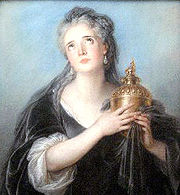 Corneille’s popularity grew and by the mid 1640s, the first collection of his plays was published. Corneille married Marie de Lampérière in 1641. They had seven children together. In the mid to late 1640s, Corneille produced mostly tragedies: La Mort de Pompée (The Death of Pompey
, performed 1644), Rodogune (performed 1645), Théodore (performed 1646), and Héraclius
(performed 1647). He also wrote one comedy in this period: Le Menteur
(The Liar, 1644).
In 1652, the play Pertharite met with poor critical reviews and a disheartened Corneille decided to quit the theatre. He began to focus on an influential verse translation of the Imitation of Christ
by Thomas à Kempis
, which he completed in 1656. After an absence of nearly eight years, Corneille was persuaded to return to the stage in 1659. He wrote the play Oedipe, which was favored by Louis XIV
. In the next year, Corneille published Trois discours sur le poème dramatique (Three Discourses on Dramatic Poetry), which were, in part, defenses of his style. These writings can be seen as Corneille’s response to the Querelle du Cid. He simultaneously maintained the importance of classical dramatic rules and justified his own transgressions of those rules in Le Cid. Corneille argued the Aristotelian
dramatic guidelines were not meant to be subject to a strict literal reading. Instead, he suggested that they were open to interpretation. Although the relevance of classical rules was maintained, Corneille suggested that the rules should not be so tyrannical that they stifle innovation.
, one of his dramatic rivals, were challenged to write plays on the same incident. Each playwright was unaware that the challenge had also been issued to the other. When both plays were completed, it was generally acknowledged that Corneille’s Tite et Bérénice
(1671) was inferior to Racine’s play (Bérénice
). Molière
was also prominent at the time and Corneille even composed the comedy
Psyché
(1671) in collaboration with him (and Philippe Quinault
). Most of the plays that Corneille wrote after his return to the stage were tragedies. They included La Toison d'or (The Golden Fleece, 1660), Sertorius
(1662), Othon (1664), Agésilas
(1666), and Attila
(1667).
Corneille’s final play was the tragedy Suréna
(1674). After this, he retired from the stage for the final time and died at his home in Paris
in 1684. His grave in the Église Saint-Roch
went without a monument until 1821.
Tragedy
Tragedy is a form of art based on human suffering that offers its audience pleasure. While most cultures have developed forms that provoke this paradoxical response, tragedy refers to a specific tradition of drama that has played a unique and important role historically in the self-definition of...
who was one of the three great seventeenth-century French dramatists, along with Molière
Molière
Jean-Baptiste Poquelin, known by his stage name Molière, was a French playwright and actor who is considered to be one of the greatest masters of comedy in Western literature...
and Racine
Jean Racine
Jean Racine , baptismal name Jean-Baptiste Racine , was a French dramatist, one of the "Big Three" of 17th-century France , and one of the most important literary figures in the Western tradition...
. He has been called “the founder of French tragedy” and produced plays for nearly forty years.
Early life and plays
Corneille was born at RouenRouen
Rouen , in northern France on the River Seine, is the capital of the Haute-Normandie region and the historic capital city of Normandy. Once one of the largest and most prosperous cities of medieval Europe , it was the seat of the Exchequer of Normandy in the Middle Ages...
, France, to Marthe le Pesant de Boisguilbert and Pierre Corneille, a distinguished lawyer. He was given a rigorous Jesuit education at the then named Collège de Bourbon which has been known as the Lycée Pierre Corneille
Lycée Pierre Corneille (Rouen)
The Lycée Pierre-Corneille is a school in Rouen, France. It was founded by the Archbishop of Rouen, Charles, Cardinal de Bourbon and run by the Jesuits to educate the children of the aristocracy and bourgeoisie in accordance with the purest doctrinal principles of Roman Catholicism...
since 1873. At 18 he began to study law but his practical legal endeavors were largely unsuccessful. Corneille’s father secured two magisterial posts for him with the Rouen department of Forests and Rivers. During his time with the department he wrote his first play. It is unknown exactly when he wrote it, but the play, the comedy
Comedy
Comedy , as a popular meaning, is any humorous discourse or work generally intended to amuse by creating laughter, especially in television, film, and stand-up comedy. This must be carefully distinguished from its academic definition, namely the comic theatre, whose Western origins are found in...
Mélite
Mélite
Mélite, or The False Letters, is a comedy in five acts by Pierre Corneille. Written in 1625, it is Corneille's first play and debuted on stage in December 1629 in Berthaud’s Jeu de paume court, and was performed by the acting troupe of Montdory...
, surfaced when Corneille brought it to a group of traveling actors in 1629. The actors approved of the work and made it part of their repertoire. The play was a success in Paris and Corneille began writing plays on a regular basis. He moved to Paris in the same year and soon became one of the leading playwrights of the French stage. His early comedies, starting with Mélite, depart from the French farce tradition by reflecting the elevated language and manners of fashionable Parisian
Paris
Paris is the capital and largest city in France, situated on the river Seine, in northern France, at the heart of the Île-de-France region...
society. Corneille describes his variety of comedy as "une peinture de la conversation des honnêtes gens" ("a painting of the conversation of the gentry"). His first true tragedy
Tragedy
Tragedy is a form of art based on human suffering that offers its audience pleasure. While most cultures have developed forms that provoke this paradoxical response, tragedy refers to a specific tradition of drama that has played a unique and important role historically in the self-definition of...
is Médée, produced in 1635.
Les Cinq Auteurs
The year 1634 brought more attention to Corneille. He was selected to write verses for the Cardinal Richelieu’s visit to Rouen. The Cardinal took notice of Corneille and selected him to be among Les Cinq Auteurs (“The Five Poets”; also translated as “the society of the five authors”). The others were Guillaume ColletetGuillaume Colletet
Guillaume Colletet was a French poet and a founder member of the Académie française. His son was François Colletet.-Life:Colletet was born and died in Paris...
, Boisrobert, Jean Rotrou
Jean Rotrou
Jean Rotrou was a French poet and tragedian.Rotrou was born at Dreux in Normandy. He studied at Dreux and at Paris, and, though three years younger than Pierre Corneille, began writing before him. In 1632 he became playwright to the actors of the Hôtel de Bourgogne...
, and Claude de L'Estoile
Claude de L'Estoile
Claude de L'Estoile was a French playwright and poet. He was a founder member of the Académie française.-External links:* * on...
.
The five were selected to realize Richelieu's vision of a new kind of drama that emphasized virtue. Richelieu would present ideas, which the writers would express in dramatic form. However, the Cardinal's demands were too restrictive for Corneille, who attempted to innovate outside the boundaries defined by Richelieu. This led to contention between playwright and employer. After his initial contract ended, Corneille left Les Cinq Auteurs and returned to Rouen.
Querelle du Cid
In the years directly following this break with Richelieu, Corneille produced what is considered his finest play. Le CidLe Cid
Le Cid is a tragicomedy written by Pierre Corneille and published in 1636. It is based on the legend of El Cid.The play followed Corneille's first true tragedy, Médée, produced in 1635. An enormous popular success, Corneille's Le Cid was the subject of a heated polemic over the norms of dramatic...
(al sayyid in Arabic; roughly translated as 'The Lord'), is based on the play Mocedades del Cid (1621) by Guillem de Castro
Guillén de Castro y Bellvis
Guillén de Castro y Bellvis was a Spanish dramatist of the Spanish Golden Age.A Valencian by birth, he soon achieved a literary reputation. In 1591 he joined a local literary academy called the Nocturnos...
. Both plays were based on the legend of Rodrigo Díaz de Vivar (nicknamed 'El Cid Campeador'), a military figure in Medieval Spain.
The original 1637 edition of the play was subtitled a tragicomedy
Tragicomedy
Tragicomedy is fictional work that blends aspects of the genres of tragedy and comedy. In English literature, from Shakespeare's time to the nineteenth century, tragicomedy referred to a serious play with either a happy ending or enough jokes throughout the play to lighten the mood.-Classical...
, acknowledging that it intentionally defies the classical tragedy
Tragedy
Tragedy is a form of art based on human suffering that offers its audience pleasure. While most cultures have developed forms that provoke this paradoxical response, tragedy refers to a specific tradition of drama that has played a unique and important role historically in the self-definition of...
/comedy
Comedy
Comedy , as a popular meaning, is any humorous discourse or work generally intended to amuse by creating laughter, especially in television, film, and stand-up comedy. This must be carefully distinguished from its academic definition, namely the comic theatre, whose Western origins are found in...
distinction. Even though Le Cid was an enormous popular success, it was the subject of a heated argument over the norms of dramatic practice, known as the Querelle du Cid or The Quarrel of Le Cid. Cardinal Richelieu's Académie Française
Académie française
L'Académie française , also called the French Academy, is the pre-eminent French learned body on matters pertaining to the French language. The Académie was officially established in 1635 by Cardinal Richelieu, the chief minister to King Louis XIII. Suppressed in 1793 during the French Revolution,...
acknowledged the play's success, but determined that it was defective, in part because it did not respect the classical unities
Classical unities
The classical unities, Aristotelian unities or three unities are rules for drama derived from a passage in Aristotle's Poetics. In their neoclassical form they are as follows:...
of time, place, and action (Unity of Time stipulated that all the action in a play must take place within a twenty-four hour time-frame; Unity of Place, that there must be only one setting for the action; and Unity of Action, that the plot must be centred around a single conflict or problem). The newly-formed Académie was a body that asserted state control over cultural activity. Although it usually dealt with efforts to standardize the French language
French language
French is a Romance language spoken as a first language in France, the Romandy region in Switzerland, Wallonia and Brussels in Belgium, Monaco, the regions of Quebec and Acadia in Canada, and by various communities elsewhere. Second-language speakers of French are distributed throughout many parts...
, Richelieu himself ordered an analysis of Le Cid.
Accusations of immorality were leveled at the play in the form of a famous pamphlet campaign. These attacks were founded on the classical theory that the theatre was a site of moral instruction. The Académie's recommendations concerning the play are articulated in Jean Chapelain
Jean Chapelain
Jean Chapelain was a French poet and writer.-Biography:Chapelain was born in Paris. His father wanted him to become a notary; but his mother, who had known Pierre de Ronsard, had decided otherwise...
's Sentiments de l'Académie française sur la tragi-comédie du Cid (1638). Even the prominent writer Georges de Scudéry
Georges de Scudéry
Georges de Scudéry , the elder brother of Madeleine de Scudéry, was a French novelist, dramatist and poet.Georges de Scudéry was born in Le Havre, in Normandy, whither his father had moved from Provence...
harshly criticized the play in his Observations sur le Cid (1637). The intensity of this "war of pamphlets" was heightened severely by Corneille's boastful poem Excuse À Ariste, in which he rambled and boasted about his talents, while Corneille claimed no other author could be a rival. These poems and pamphlets were made public, one after the other, as once 'esteemed' playwrights traded slanderous blows. At one point, Corneille took several shots at criticizing author Jean Mairet's family and lineage. Scudéry, a close friend of Mariet at the time, did not stoop to Corneille's level of 'distastefulness', but instead continued to rail Le Cid and its violations. Scudéry even stated of Le Cid that, "almost all of the beauty which the play contains is plagiarized."
This "war of pamphlets" eventually influenced Richelieu to call up the French Academy (Académie Française) and analyze the play. In their final conclusions, the Academy ruled that even though Corneille had attempted to remain loyal to the unity of time, Le Cid broke too many of the unities to be a valued piece of work.
The controversy, coupled with the Academy's ruling proved too much for Corneille, who decided to return to Rouen. When one of his plays was reviewed unfavorably, Corneille was known to withdraw from public life. He remained publicly silent for sometime; privately however, he was said to be "troubled and obsessed by the issues, making numerous revisions to the play."
Response to the Querelle du Cid
After a hiatus from the theater, Corneille returned in 1640. The Querelle du Cid caused Corneille to pay closer attention to classical dramatic rules. This was evident in his next plays, which were classicalClassical antiquity
Classical antiquity is a broad term for a long period of cultural history centered on the Mediterranean Sea, comprising the interlocking civilizations of ancient Greece and ancient Rome, collectively known as the Greco-Roman world...
tragedies: Horace
Horace (play)
Horace is a 1972 television play written by Roy Minton and directed by Alan Clarke, first broadcast as part of BBC One's Play for Today series on 21 March 1972.-Plot:Diabetic Horace is mentally impaired and works in a joke shop...
(1640, dedicated to Richelieu), Cinna
Cinna (play)
Cinna ou la Clémence d'Auguste is a tragedy by Pierre Corneille written for the Théâtre du Marais in 1639. It takes place in ancient Rome, but the ideas and themes characterize the age of Louis XIV, most notably the establishment of royal power over the nobility...
(1643), and Polyeucte
Polyeucte
Polyeucte martyr is a drama in five acts by French writer Pierre Corneille. It was finished in December 1642 and debuted in October 1643. It is based on the life of the martyr Saint Polyeuctus ....
(1643). These three plays and Le Cid are collectively known as Corneille's 'Classical Tetralogy'. Corneille also responded to the criticisms of the Académie by making multiple revisions to Le Cid to make it closer to the conventions of classical tragedy. The 1648, 1660, and 1682 editions were no longer subtitled ‘tragicomedy
Tragicomedy
Tragicomedy is fictional work that blends aspects of the genres of tragedy and comedy. In English literature, from Shakespeare's time to the nineteenth century, tragicomedy referred to a serious play with either a happy ending or enough jokes throughout the play to lighten the mood.-Classical...
’, but ‘tragedy’.
The Death of Pompey
The Death of Pompey is a tragedy by the French playwright Pierre Corneille on the death of Pompey the Great. It premiered in 1642, with Julius Caesar played by Molière...
, performed 1644), Rodogune (performed 1645), Théodore (performed 1646), and Héraclius
Heraclius
Heraclius was Byzantine Emperor from 610 to 641.He was responsible for introducing Greek as the empire's official language. His rise to power began in 608, when he and his father, Heraclius the Elder, the exarch of Africa, successfully led a revolt against the unpopular usurper Phocas.Heraclius'...
(performed 1647). He also wrote one comedy in this period: Le Menteur
Le Menteur
The Liar is a farcical play by Pierre Corneille that was first performed in 1644. It was based on La Verdad Sospechosa by the Spanish-American playwright Juan Ruíz de Alarcón, which was published in 1634.- Summary :...
(The Liar, 1644).
In 1652, the play Pertharite met with poor critical reviews and a disheartened Corneille decided to quit the theatre. He began to focus on an influential verse translation of the Imitation of Christ
Imitation of Christ
In Christian theology, the Imitation of Christ is the practice of following the example of Jesus. In Eastern Christianity the term Life in Christ is sometimes used for the same concept....
by Thomas à Kempis
Thomas à Kempis
Thomas à Kempis was a late Medieval Catholic monk and the probable author of The Imitation of Christ, which is one of the best known Christian books on devotion. His name means, "Thomas of Kempen", his home town and in German he is known as Thomas von Kempen...
, which he completed in 1656. After an absence of nearly eight years, Corneille was persuaded to return to the stage in 1659. He wrote the play Oedipe, which was favored by Louis XIV
Louis XIV of France
Louis XIV , known as Louis the Great or the Sun King , was a Bourbon monarch who ruled as King of France and Navarre. His reign, from 1643 to his death in 1715, began at the age of four and lasted seventy-two years, three months, and eighteen days...
. In the next year, Corneille published Trois discours sur le poème dramatique (Three Discourses on Dramatic Poetry), which were, in part, defenses of his style. These writings can be seen as Corneille’s response to the Querelle du Cid. He simultaneously maintained the importance of classical dramatic rules and justified his own transgressions of those rules in Le Cid. Corneille argued the Aristotelian
Aristotelianism
Aristotelianism is a tradition of philosophy that takes its defining inspiration from the work of Aristotle. The works of Aristotle were initially defended by the members of the Peripatetic school, and, later on, by the Neoplatonists, who produced many commentaries on Aristotle's writings...
dramatic guidelines were not meant to be subject to a strict literal reading. Instead, he suggested that they were open to interpretation. Although the relevance of classical rules was maintained, Corneille suggested that the rules should not be so tyrannical that they stifle innovation.
Later plays
Even though Corneille was prolific after his return to the stage, writing one play a year for the 14 years after 1659, his plays did not have the same success as those of his earlier career. Other writers were beginning to gain popularity. In 1670 Corneille and Jean RacineJean Racine
Jean Racine , baptismal name Jean-Baptiste Racine , was a French dramatist, one of the "Big Three" of 17th-century France , and one of the most important literary figures in the Western tradition...
, one of his dramatic rivals, were challenged to write plays on the same incident. Each playwright was unaware that the challenge had also been issued to the other. When both plays were completed, it was generally acknowledged that Corneille’s Tite et Bérénice
Tite et Bérénice
Tite et Bérénice is a tragedy by the 17th-century French playwright Pierre Corneille.It was first performed in 1670, the same year as the more famous tragedy on the same theme written by Corneille's rival Jean Racine, Bérénice....
(1671) was inferior to Racine’s play (Bérénice
Bérénice
Berenice is a five-act tragedy by the French 17th-century playwright Jean Racine. Berenice was not played often between the 17th and the 20th centuries. Today it is one of Racine's more popular plays, after Phèdre, Andromaque and Britannicus.It was first performed in 1670...
). Molière
Molière
Jean-Baptiste Poquelin, known by his stage name Molière, was a French playwright and actor who is considered to be one of the greatest masters of comedy in Western literature...
was also prominent at the time and Corneille even composed the comedy
Comedy
Comedy , as a popular meaning, is any humorous discourse or work generally intended to amuse by creating laughter, especially in television, film, and stand-up comedy. This must be carefully distinguished from its academic definition, namely the comic theatre, whose Western origins are found in...
Psyché
Psyché (play)
Psyché is a Tragédie et ballet of 1671, composed by Molière and versified in collaboration with Pierre Corneille and Philippe Quinault with musical intermèdes by Jean-Baptiste Lully.-History:...
(1671) in collaboration with him (and Philippe Quinault
Philippe Quinault
Philippe Quinault , French dramatist and librettist, was born in Paris.- Biography :Quinault was educated by the liberality of François Tristan l'Hermite, the author of Marianne. Quinault's first play was produced at the Hôtel de Bourgogne in 1653, when he was only eighteen...
). Most of the plays that Corneille wrote after his return to the stage were tragedies. They included La Toison d'or (The Golden Fleece, 1660), Sertorius
Sertorius (Corneille)
Sertorius is a play by Pierre Corneille on the revolt by Quintus Sertorius, created for the Théâtre du Marais of Paris for the 25th February 1662, afterwards published in July of the same year.- Quotation :...
(1662), Othon (1664), Agésilas
Agésilas (Corneille)
Agésilas is a play written by Pierre Corneille and published in 1666.-Plot summary:The story happens in Ephesus.Lysander promised his daughters Elpinice and Aglatide in marriage respectively to Cotys and Spitridate but he needs the agreement of Agésilas.In the meantime, Spitridate has fallen in...
(1666), and Attila
Attila (Corneille)
Attila is a play by Pierre Corneille....
(1667).
Corneille’s final play was the tragedy Suréna
Surena
Surena or Suren may refer to either a noble family of Parthia also known as the House of Suren, or to a renowned 1st century BC General Surena who was a member of that family....
(1674). After this, he retired from the stage for the final time and died at his home in Paris
Paris
Paris is the capital and largest city in France, situated on the river Seine, in northern France, at the heart of the Île-de-France region...
in 1684. His grave in the Église Saint-Roch
Église Saint-Roch
The Church of Saint Roch is a late Baroque church in Paris. Located at 284 rue Saint-Honoré, in the 1st arrondissement, it was built between 1653 and 1722.- History :...
went without a monument until 1821.
Works
- MéliteMéliteMélite, or The False Letters, is a comedy in five acts by Pierre Corneille. Written in 1625, it is Corneille's first play and debuted on stage in December 1629 in Berthaud’s Jeu de paume court, and was performed by the acting troupe of Montdory...
(1629) - ClitandreClitandreClitandre is a play by Pierre Corneille....
(1630–31) - La Veuve (1631)
- La Galerie du Palais (1631–32)
- La Place royaleLa Place royaleLa Place Royale, ou l'amoureux extravagant is a five-act comedy written by Pierre Corneille in 1634. It tells the story of Alidor who wants to break off his engagement with Angélique by giving her over to his best friend Cléandre...
(1633–34) - Médée (1635)
- L'Illusion comiqueL'Illusion ComiqueL'Illusion Comique is a comedic play by Pierre Corneille, written in 1636. In its use of meta-theatricality , it is far ahead of its time. It was first performed at the Hôtel de Bourgogne in 1636 and published in 1639....
(1636) - Le CidLe CidLe Cid is a tragicomedy written by Pierre Corneille and published in 1636. It is based on the legend of El Cid.The play followed Corneille's first true tragedy, Médée, produced in 1635. An enormous popular success, Corneille's Le Cid was the subject of a heated polemic over the norms of dramatic...
(1637) - CinnaCinna (play)Cinna ou la Clémence d'Auguste is a tragedy by Pierre Corneille written for the Théâtre du Marais in 1639. It takes place in ancient Rome, but the ideas and themes characterize the age of Louis XIV, most notably the establishment of royal power over the nobility...
(1639) - Horace (1640)
- PolyeuctePolyeuctePolyeucte martyr is a drama in five acts by French writer Pierre Corneille. It was finished in December 1642 and debuted in October 1643. It is based on the life of the martyr Saint Polyeuctus ....
(1642) - La Mort de Pompée (1643)
- Le MenteurLe MenteurThe Liar is a farcical play by Pierre Corneille that was first performed in 1644. It was based on La Verdad Sospechosa by the Spanish-American playwright Juan Ruíz de Alarcón, which was published in 1634.- Summary :...
(1643) - Rodogune (1644)
- La Suite du Menteur (1645)
- Théodore (1645)
- HéracliusHeracliusHeraclius was Byzantine Emperor from 610 to 641.He was responsible for introducing Greek as the empire's official language. His rise to power began in 608, when he and his father, Heraclius the Elder, the exarch of Africa, successfully led a revolt against the unpopular usurper Phocas.Heraclius'...
(1647) - Don Sanche d'Aragon (1650)
- AndromèdeAndromède (Corneille)Andromède is a play by Pierre Corneille....
, (1650) - NicomèdeNicomède (Corneille)-Nicomède:Nicomède is a tragedy by French dramatist Pierre Corneille, first performed in 1651.-Characters:* Prusias, king of Bithynia* Flaminius, Roman ambassador* Arsinoé, Prusias' second wife* Laodice, queen of Armenia...
, (1651) - Pertharite, (1651)
- L'Imitation de Jésus-Christ (1656)
- Oedipe (1659)
- Trois Discours sur le poème dramatique (1660)
- La Toison d'or (1660)
- SertoriusSertorius (Corneille)Sertorius is a play by Pierre Corneille on the revolt by Quintus Sertorius, created for the Théâtre du Marais of Paris for the 25th February 1662, afterwards published in July of the same year.- Quotation :...
(1662) - Othon (1664)
- AgésilasAgésilas (Corneille)Agésilas is a play written by Pierre Corneille and published in 1666.-Plot summary:The story happens in Ephesus.Lysander promised his daughters Elpinice and Aglatide in marriage respectively to Cotys and Spitridate but he needs the agreement of Agésilas.In the meantime, Spitridate has fallen in...
(1666) - AttilaAttila (Corneille)Attila is a play by Pierre Corneille....
(1667) - Tite et BéréniceTite et BéréniceTite et Bérénice is a tragedy by the 17th-century French playwright Pierre Corneille.It was first performed in 1670, the same year as the more famous tragedy on the same theme written by Corneille's rival Jean Racine, Bérénice....
(1670) - PsychéPsyché (play)Psyché is a Tragédie et ballet of 1671, composed by Molière and versified in collaboration with Pierre Corneille and Philippe Quinault with musical intermèdes by Jean-Baptiste Lully.-History:...
(w/ MolièreMolièreJean-Baptiste Poquelin, known by his stage name Molière, was a French playwright and actor who is considered to be one of the greatest masters of comedy in Western literature...
and Philippe QuinaultPhilippe QuinaultPhilippe Quinault , French dramatist and librettist, was born in Paris.- Biography :Quinault was educated by the liberality of François Tristan l'Hermite, the author of Marianne. Quinault's first play was produced at the Hôtel de Bourgogne in 1653, when he was only eighteen...
,1671) - Pulchérie (1672)
- SurénaSurenaSurena or Suren may refer to either a noble family of Parthia also known as the House of Suren, or to a renowned 1st century BC General Surena who was a member of that family....
(1674)
From Corneille's plays
- "When we conquer without danger our triumph is without glory." – Le CidLe CidLe Cid is a tragicomedy written by Pierre Corneille and published in 1636. It is based on the legend of El Cid.The play followed Corneille's first true tragedy, Médée, produced in 1635. An enormous popular success, Corneille's Le Cid was the subject of a heated polemic over the norms of dramatic...
- "And the combat ceased, for want of combatants." - Le CidLe CidLe Cid is a tragicomedy written by Pierre Corneille and published in 1636. It is based on the legend of El Cid.The play followed Corneille's first true tragedy, Médée, produced in 1635. An enormous popular success, Corneille's Le Cid was the subject of a heated polemic over the norms of dramatic...
- "My sweetest hope is to lose all hope." - Le CidLe CidLe Cid is a tragicomedy written by Pierre Corneille and published in 1636. It is based on the legend of El Cid.The play followed Corneille's first true tragedy, Médée, produced in 1635. An enormous popular success, Corneille's Le Cid was the subject of a heated polemic over the norms of dramatic...
- "All evils are equal when they are extreme." - HoraceHorace (play)Horace is a 1972 television play written by Roy Minton and directed by Alan Clarke, first broadcast as part of BBC One's Play for Today series on 21 March 1972.-Plot:Diabetic Horace is mentally impaired and works in a joke shop...
- "We read that we ought to forgive our enemies; but we do not read that we ought to forgive our friends." – CinnaCinna (play)Cinna ou la Clémence d'Auguste is a tragedy by Pierre Corneille written for the Théâtre du Marais in 1639. It takes place in ancient Rome, but the ideas and themes characterize the age of Louis XIV, most notably the establishment of royal power over the nobility...
- "By speaking of our misfortunes we often relieve them." - PolyeuctePolyeuctePolyeucte martyr is a drama in five acts by French writer Pierre Corneille. It was finished in December 1642 and debuted in October 1643. It is based on the life of the martyr Saint Polyeuctus ....
- "In the service of Caesar, everything is legitimate." - La Mort de Pompée
About Corneille
- “Le Cid marks the birth of a man, the rebirth of poetry, the dawn of a great century.” – Sainte-Beuve (transl.)
E-text
External links
- Monologues from Corneille's plays
- Biographical information Biography, Bibliography, Analysis, Plot overview
- Thomas a Kempis’ The Imitation of Christ (modern translation)
Books
- Ekstein, Nina. Corneille's Irony. Charlottesville: Rookwood Press, 2007.
- Guizot, M. Corneille and His Times. London: Kennikat Press, 1972.
- Harrison, Helen. Pistoles/Paroles: Money and Language in Seventeenth-Century French Comedy. Charlottesville: Rookwood Press, 1996.
- Hubert, J. D. Corneille's Performative Metaphors. Charlottesville: Rookwood Press, 1997.
- Nelson, Robert J. Corneille: His Heroes and Their Worlds. Philadelphia: University of Pennsylvania PressUniversity of Pennsylvania PressThe University of Pennsylvania Press is a university press affiliated with the University of Pennsylvania located in Philadelphia, Pennsylvania....
, 1963. - Yarrow, P.J. Corneille. London: Macmillan & Co., 1963.