


Culture of Greece

Encyclopedia
The culture of Greece has evolved over thousands of years, beginning in Mycenaean Greece
, continuing most notably into Classical Greece
, through the influence of the Roman Empire
and its Greek East
ern successor the Byzantine Empire
. Other cultures and states such as Latin and Frankish states, the Ottoman Empire
, the Venetian Republic, Genoese Republic, and British Empire
have also left their influence on modern Greek culture, but historians credit the Greek War of Independence
with revitalising Greece and giving birth to a single entity of its multi-faceted culture.
. Byzantine architecture emphasized a Greek cross layout, the Byzantine capitol style of column (a mixture of Ionic
and Corinthian
capitols) and a central dome
surrounded by several smaller domes.
of Greece and during the nineteenth century, the Neoclassical architecture
was heavily used for both public and private building. Regarding the churches, Greece also experienced the Neo-Byzantine revival.
In the twentieth century, Greek architecture followed international architectural trends. Important Greek and international architects designed many buildings of Athens
and other Greek cities, such as Dimitris Pikionis
, Stamatios Kleanthis, Anastasios Metaxas
, Ernst Ziller
, Theophil Freiherr von Hansen
, Patroklos Karantinos
, Walter Gropius
, Eero Saarinen
and Mario Botta
. Several new buildings were also constructed by Santiago Calatrava
for the 2004 Athens Olympics
, while Bernard Tschumi
designed the New Acropolis Museum
.
 Byzantine art is the term created for the Eastern Roman Empire from about the 5th century until the fall of Constantinople
in 1453. The most salient feature of this new aesthetic was its “abstract,” or anti-naturalistic character. If classical art was marked by the attempt to create representations that mimicked reality as closely as possible, Byzantine art seems to have abandoned this attempt in favor of a more symbolic approach. The Byzantine painting concentrated mainly on icon
s and hagiographies
.
 The term Cretan School
describes an important school of icon painting, also known as Post-Byzantine art, which flourished while Crete
was under Venetian
rule during the late Middle Ages
, reaching its climax after the Fall of Constantinople
, becoming the central force in Greek painting during the 15th, 16th and 17th centuries. The Cretan artists developed a particular style of painting under the influence of both Eastern and Western artistic traditions and movements. The most famous product of the school, El Greco
, was the most successful of the many artists who tried to build a career in Western Europe.
The Heptanese School of painting succeeded the Cretan school as the leading school of Greek post-Byzantine painting after Crete fell to the Ottomans
in 1669. Like the Cretan school it combined Byzantine traditions with an increasing Western European artistic influence, and also saw the first significant depiction of secular subjects. The school was based in the Ionian islands
, which were not part of Ottoman Greece, from the middle of the 17th century until the middle of the 19th century.
Modern Greek painting, after the independence
and the creation of the modern Greek state, began to be developed around the time of Romanticism
and the Greek artists absorbed many elements from their European colleagues, resulting in the culmination of the distinctive style of Greek Romantic art.
was honoured with the Best Supporting Actress
Academy Award
for For Whom the Bell Tolls
.
The 1950s and early 1960s are considered by many as the Greek Golden age of Cinema. Directors and actors of this era were recognized as important historical figures in Greece and some gained international acclaim: Mihalis Kakogiannis, Alekos Sakellarios
, Melina Mercouri
, Nikos Tsiforos
, Iakovos Kambanelis
, Katina Paxinou
, Nikos Koundouros
, Ellie Lambeti
, Irene Papas
etc. More than sixty films per year were made, with the majority having film noir elements . Notable films were Η κάλπικη λίρα (1955 directed by Giorgos Tzavelas), Πικρό Ψωμί (1951, directed by Grigoris Grigoriou), O Drakos
(1956 directed by Nikos Koundouros
), Stella (1955 directed by Cacoyannis and written by Kampanellis). Cacoyannis also directed Zorba the Greek with Anthony Quinn which received Best Director, Best Adapted Screenplay and Best Film nominations. Finos Film also contributed to this period with movies such as Λατέρνα, Φτώχεια και Φιλότιμο, Η Θεία από το Σικάγο, Το ξύλο βγήκε από τον Παράδεισο and many more. During the 1970s and 1980s Theo Angelopoulos
directed a series of notable and appreciated movies. His film Eternity and a Day
won the Palme d'Or
and the Prize of the Ecumenical Jury
at the 1998 Cannes Film Festival
.
There were also internationally renowned filmmakers in the Greek diaspora such as the Greek-American Elia Kazan
.
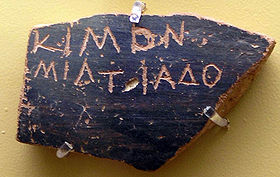 The Greek language is the official language of the Hellenic Republic and has a total of 15 million speakers worldwide; it is an Indo-European
language. It is particularly remarkable in the depth of its continuity, beginning with the pre-historic Mycenaean Greek and the Linear B
script, and maybe the Linear A
script associated with Minoan civilization
, though Linear A is still undeciphered. Greek language is clearly detected in the Mycenaean language and the Cypriot syllabary
, and eventually the dialects of Ancient Greek
, of which Attic Greek
bears the most resemblance to Modern Greek
. The history of the language spans over 3400 years of written records.
Greek has had enormous impact on other languages both directly on the Romance languages, and indirectly through its influence on the emerging Latin
language during the early days of Rome
. Signs of this influence, and its many developments, can be seen throughout the family of Western European languages.
, a form that has spread across the Greek diaspora and even to the two countries with majority Greek population, Cyprus
and Greece
.
, intended to return the Greek language closer to its ancient form. Its influence, in recent years, evolved toward a more formal role, and it came to be used primarily for official purposes such as diplomacy, politics, and other forms of official documentation. It has nevertheless had significant effects on the Greek language as it is still written and spoken today, and both vocabulary and grammatical and syntactical forms have re-entered Modern Greek
via Katharevousa.
, Cretan Greek, Cypriot Greek
, Pontic Greek, the Griko language
spoken in Southern Italy, and Tsakonian
, still spoken in the modern prefecture of Arcadia
and widely noted as a surviving regional dialect of Doric Greek
.
, beginning in 800 BCE and maintaining its influence through to the beginnings of Byzantine
period, whereafter the influence of Christianity began to spawn a new development of the Greek written word. The many elements of a millennia-old tradition are reflected in Modern Greek literature, including the works of the Nobel laureates Odysseus Elytis and George Seferis.
poems of Homer
and Hesiod
. Early Greek lyric poetry
, as represented by poets such as Sappho
and Pindar
, was responsible for defining the lyric genre
as it is understood today in western literature. Aesop
wrote his Fables in the 6th century BC. These innovations were to have a profound influence not only on Roman poets, most notably Virgil
in his epic poem on the founding of Rome, The Aeneid, but one that flourished throughout Europe.
Classical Greece is also judged the birthplace of theatre
. Aeschylus
introduced the ideas of dialogue
and interacting characters to playwriting and in doing so, he effectively invented "drama": his Oresteia trilogy of plays is judged his crowning achievement. Other refiners of playwriting were Sophocles
and Euripides
. Aristophanes
, a comic playwright, defined and shaped the idea of comedy
as a theatrical form.
 Herodotus
and Thucydides
are often attributed with developing the modern study of history
into a field worthy of philosophical, literary, and scientific pursuit. Polybius
first introduced into study the concept of military history
.
Philosophy
entered literature in the dialogues of Plato
, while his pupil Aristotle
, in his work the Poetics, formulated the first set criteria for literary criticism
. Both these literary figures, in the context of the broader contributions of Greek philosophy in the Classical and Hellenistic eras, were to give rise to idea of Political Science
, the study of political evolution and the critique of governmental systems.
of the period, would lead to the formation of a unique literary form, combining Christian, Greek, Roman and Oriental (such as the Persian Empire) influences. In its turn, this would promote developments such as Cretan poetry, the growth of poetic satire in the Greek East
, and the several pre-eminent historians of the period.
from the 11th century, with texts written in a language that is more familiar to the ears of Greeks
today than is the language of the early Byzantine times.
It is also influenced by the Greek Revolution (1821-1830) and the subsequent independence of Greece and as such, by revolutionary themes. The impact of the Modern Greek Enlightenment is also notable, as well as the influence of the Byzantine Empire's acritic songs
, Byzantine novel
and romance
(Erotokritos
etc).
Moving into the twentieth century, the modern Greek literary tradition spans the work of Constantine P. Cavafy
, considered a key figure of twentieth century poetry, Giorgos Seferis
(whose works and poems aimed to fuse the literature of Ancient and Modern Greece) and Odysseas Elytis
, both of whom won the Nobel Prize for Literature. Nikos Kazantzakis
is also considered a dominant figure, with works such as The Last Temptation of Christ
and The Greek Passion
receiving international recognition.
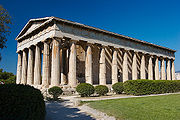 Classical Athens may be suggested to have heralded some of the same religious ideas that would later be promoted by Christianity
, such as Aristotle
's invocation of a perfect God, and Heraclitus
' Logos
. Plato
considered there were rewards for the virtuous in the heavens and punishment for the wicked under the earth; the soul was valued more highly than the material body, and the material world was understood to be imperfect and not fully real (illustrated in Socrates
's allegory of the cave
).
, and much else across the eastern Mediterranean area. Jews
and early Christians alike adopted the name "hades
" when writing about "sheol
" in Greek. Greco-Buddhism
was the cultural syncretism
between Hellenistic culture
and Buddhism
, which developed in the Indo-Greek Kingdom
s. By the advent of Christianity
, the four original patriarchates
beyond Rome used Greek as their church language.
, largely because of the importance of Byzantium in Greek history, as well as its role in the revolution, is a major institution in modern Greece. Its roles in society and larger role in overarching Greek culture are very important; a number of Greeks attend Church at least once a month or more and the Orthodox Easter
holiday holds special significance.
The Church of Greece
also retains limited political influence through the fact the Greek constitution does not have an explicit separation of Church and State; a debate suggested by more conservative elements of the church in the early 2000s about identification cards and whether religious affiliation might be added to them highlights the friction between state and church on some issues; the proposal unsurprisingly was not accepted. A widely publicised set of corruption scandals in 2004 implicating a small group of senior churchmen also increased national debate on introducing a greater transparency to the church-state relationship.
Greek Orthodox Churches dot both the villages and towns of Greece and come in a variety of architectural forms, from older Byzantine churches, to more modern white brick churches, to newer cathedral-like structures with evident Byzantine influence. Greece (as well as Cyprus), also polled as, ostensibly, one of the most religious countries in Europe
, according to Eurostat
; however, while the church has wide respect as a moral and cultural institution, a contrast in religious belief with Protestant northern Europe is more obvious than one with Catholic Mediterranean Europe.
Greece also has a significant minority of Muslims
in Eastern Thrace (numbering around 100-150,000), with their places of worship guaranteed since the 1923 Treaty of Lausanne
. The Greek state has fully approved the construction a main mosque for the more recent Muslim community of Athens
under the freedom of religion
provisions of the Greek constitution.
, Anaximander
and Democritus
were amongst those contributing significantly to the establishment of this tradition. It is also, and perhaps more commonly in the western imagination, identified with the dawn of Western Philosophy
, as well as a mapping out of the Natural Sciences. Greek developments of mathematics continued well up until the decline of the Byzantine Empire
. In the modern era Greeks continue to contribute to the fields of Science
, Mathematics
and Philosophy
.
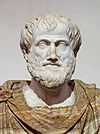 The tradition of philosophy
in Ancient Greece accompanied its literary development. Greek learning had a profound influence on Western
and Middle East
ern civilizations. The works of Socrates
, Plato
, Aristotle
, and other Greek philosophers profoundly influenced Classical thought, the Islamic Golden Age
, and the Renaissance
.
In medicine
, doctors still refer to the Hippocratic oath
, instituted by Hippocrates
, regarded as foremost in laying the foundations of medicine as a science. Galen
built on Hippocrates' theory of the four humours
, and his writings became the foundation of medicine in Europe
and the Middle East
for centuries. The physicians Herophilos
and Paulus Aegineta were pioneers in the study of anatomy
, while Pedanius Dioscorides
wrote an extensive treatise on the practice of pharmacology
.
The period of Classical Greece
(from 800BC until the rise of Macedon
, a Greek state in the north) is that most often associated with Greek advances in science. Thales of Miletus is regarded by many as the father of science
; he was the first of the ancient philosophers to seek to explain the physical world in terms of natural rather than supernatural
causes. Pythagoras
was a mathematician
often described as the "father of numbers"; it is believed that he had the pioneering insight into the numerical ratios that determine the musical scale
, and the Pythagorean theorem
is commonly attributed to him. Diophantus of Alexandria
, in turn, was the "father of algebra
". Many parts of modern geometry
are based on the work of Euclid
, while Eratosthenes
was one of the first scientific geographer
s, calculating the circumference
of the earth
and conceiving the first maps
based on scientific principles.
The Hellenistic period, following Alexander's conquests, continued and built upon this knowledge. Hipparchus
is considered the pre-eminent astronomical observer of the ancient world, and was probably the first to develop an accurate method for the prediction of solar eclipse
, while Aristarchus of Samos
was the first known astronomer
to propose a heliocentric model of the solar system
, though the geocentric model
of Ptolemy
was more commonly accepted until the seventeenth century. Ptolemy also contributed substantially to cartography
and to the science of optics
. For his part Archimedes
was the first to calculate the value of π
and a geometric series, and also the earliest known mathematical physicist
discovering the law of buoyancy
, as well as conceiving the irrigation
device known as Archimedes' screw
.
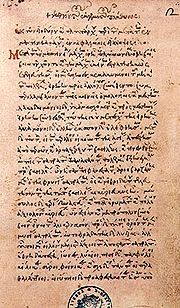 The Byzantine period remained largely a period of preservation in terms of classical Greco-Roman texts; there were, however, significant advances made in the fields of medicine
and historical scholarship
. Theological philosophy
also remained an area of study, and there was, while not matching the achievements of preceding ages, a certain increase in the professionalism of study of these subjects, epitomized by the founding of the University of Constantinople.
Isidore of Miletus and Anthemius of Tralles, the architects of the famous Hagia Sophia
in Constantinople
, also contributed towards mathematical theories concerning architectural form, and the perceived mathematical harmony needed to create a multi-domed structure. These ideas were to prove a heavy influence on the Ottoman architect Mimar Sinan in his creation of the Blue Mosque
, also in Constantinople. Tralles in particular produced several treatises on the Natural Sciences, as well as his other forays into mathematics such as Conic Sections.
The gradual migration of Greeks from Byzantium to the Italian
city states following the decline of the Byzantine Empire, and the texts they brought with them combined with the academic positions they held, was a major factor in lighting the first sparks of the Italian Renaissance
.
, a Greek mathematician and engineer, is responsible for the invention of finite element analysis and the direct stiffness method
, relative to physics. Mathematician Constantin Carathéodory
worked in the fields of real analysis
, the calculus of variations
, and measure theory in the early 20th century. Biologist Fotis Kafatos
pioneers in the field of molecular cloning and genomics. In medicine, Georgios Papanikolaou
contributed heavily to the development of cancer screening with his Pap smear
. The Greek car designer Alec Issigonis
created the iconic Mini
automobile, while the computer scientist Michael Dertouzos was amongst the pioneers of the internet. Nicolas Negroponte chairman of the Massachusetts Institute of Technology
Media Lab is one of the founders of the program One Laptop Per Child, a non-profit organisation aiming to extend Internet
access in developing countries.
.
and therefore associated it with religious ceremony. They believed that the gods offered this gift to select mortals only, who in turn taught dancing to their fellow-men.
Periodic evidence in ancient texts indicates that dance was held in high regard, in particular for its educational qualities. Dance, along with writing, music, and physical exercise, was fundamental to the commenced in a circle and ended with the dancers facing one another. When not dancing in a circle the dancers held their hands high or waved them to left and right. They held cymbals (very like the zilia of today) or a kerchief in their hands, and their movements were emphasized by their long sleeves. As they danced, they sang, either set songs or extemporized ones, sometimes in unison, sometimes in refrain, repeating the verse sung by the lead dancer. The onlookers joined in, clapping the rhythm or singing. Professional singers, often the musicians
themselves, composed lyrics to suit the occasion.
Byzantine instruments included the guitar, single, double or multiple flute, sistrum, timpani (drum), psaltirio, Sirigs, lyre, cymbals, keras and kanonaki.
Popular dances of this period included the Syrtos, Geranos, Mantilia , Saximos, Pyrichios, and Kordakas . Some of these dances have their origins in the ancient period and are still enacted in some form today.
 Greece is one of the few places in Europe where the day-to-day role of folk dance is sustained. Rather than functioning as a museum piece preserved only for performances and special events, it is a vivid expression of everyday life. Occasions for dance are usually weddings, family celebrations, and paneyeria (Patron Saints' name days). Dance has its place in ceremonial customs that are still preserved in Greek villages, such as dancing the bride during a wedding and dancing the trousseau
of the bride during the wedding preparations. The carnival
and Easter offer more opportunities for family gatherings and dancing. Greek taverns
providing live entertainment often include folk dances in their program.
Regional characteristics have developed over the years because of variances in climatic conditions
, land morphology
and people's social lives. In later years, wars, international pacts and consequent movement of populations, and even movements of civil servants around the country, intermingled traditions. People learned new dances, adapted them to their environment, and included them in their feasts. Kalamatianos and Syrtos are considered Pan-Hellenic dances and are danced all over the world in diaspora communities. Others have also crossed boundaries and are known beyond the regions where they originated; these include the Pentozali from Crete
, Hasapiko from Constantinople, Zonaradikos from Thrace
, Pyrehios from Pontos
and Balos from the Aegean islands
.
The avant-garde choreographer, director and dancer Dimitris Papaioannou
was responsible for the critically successful Opening Ceremony
of the 2004 Olympic Games
, with a conception that reflected the classical influences on modern and experimental Greek dance forms.
, and Byzantine liturgical chants and secular music influencing the Renaissance
. Modern Greek music combines these elements, as well as influences from the Middle East
, to carry Greeks' interpretation of a wide range of musical forms.
and other supporting string instruments of the era. Beyond the well-known structural legacies of the Pythagorean scale
, and the related mathematical developments it upheld to define western classical music, relatively little is understood about the precise character of music during this period; we do know, however, that it left, as so often, a strong mark on the culture of Rome
. What has been gleaned about the social role and character of ancient Greek music comes largely from pottery and other forms of Greek art
.
 The Byzantine Music
is also of major significance to the history and development of European music, as liturgical chants
became the foundation and stepping stone for music of the Renaissance (see: Renaissance Music
). It is also certain that Byzantine music included an extensive tradition of instrumental court music and dance; any other picture would be both incongruous with the historically and archaeologically documented opulence of the Eastern Roman Empire. There survive a few but explicit accounts of secular music. A characteristic example is the accounts of pneumatic organs, whose construction was further advanced in the eastern empire prior to their development in the west following the Renaissance.
elements can be heard in the traditional songs, dhimotiká, as well as in the modern blues
y rembétika music. A well-known Greek musical instrument is the bouzouki
. "Bouzouki" is a descriptive Turkish name, but the instrument itself is probably of Greek origin (from the ancient Greek lute known as pandoura, a kind of guitar, clearly visible in ancient statues, especially female figurines of the "Tanagraies" playing cord instruments).
Famous Greek musicians and composers of modern era include the central figure of 20th century European modernism Iannis Xenakis
, a composer, architect and theorist. Maria Callas
, Nikos Skalkottas, Mikis Theodorakis
, Dimitris Mitropoulos
, Manos Hadjidakis
and Vangelis
also lead twentieth-century Greek contributions, alongside Demis Roussos
, Nana Mouskouri
, Yanni
, Georges Moustaki
, Eleni Karaindrou
and others.
The birth of the first School of modern Greek classical music (Heptanesean or Ionian School
, Greek:Επτανησιακή Σχολή) came through the Ionian Islands
(notable composers include Spyridon Samaras
, Nikolaos Mantzaros
and Pavlos Carrer
), while Manolis Kalomiris
is considered the founder of the Greek National School.
is compulsory for all children 6–15 years old; namely, it includes Primary (Dimotiko) and Lower Secondary (Gymnasio) Education. The school life of the students, however, can start from the age of 2.5 years (pre-school education) in institutions (private and public) called "Vrefonipiakoi Paidikoi Stathmi" (creches). In some Vrefonipiakoi Stathmoi there are also Nipiaka Tmimata (nursery classes) which operate along with the Nipiagogeia (kindergartens).
Post-compulsory Secondary Education
, according to the reforms of 1997 and 2006, consists of two main school types: Genika Lykeia (General Upper Secondary Schools) and the Epaggelmatika Lykeia (Vocational Upper Secondary Schools), as well as the Epaggelmatikes Sxoles (Vocational Schools). Musical, Ecclesiastical and Physical Education Gymnasia and Lykeia are also in operation.
Post-compulsory Secondary Education also includes the Vocational Training
Institutes (IEK), which provide formal but unclassified level of education. These Institutes are not classified as an educational level, because they accept both Gymnasio (lower secondary school) and Lykeio (upper secondary school) graduates according to the relevant specializations they provide. Public higher education is divided into Universities and Technological Education Institutes (TEI). Students are admitted to these Institutes according to their performance at national level examinations taking place at the second and third grade of Lykeio. Additionally, students are admitted to the Hellenic Open University upon the completion of the 22 year of age by drawing lots.
Nea Dimokratia (New Democracy
), the Greek conservative right political party, has claimed that it will change the law so that private universities gain recognition. Without official recognition, students who have an EES degree are unable to work in the public sector. PASOK
took some action after EU intervention, namely the creation of a special government agency which certifies the vocational status of certain EES degree holders. However, their academic status still remains a problem. The issue of full recognition is still an issue of debate among Greek politicians.
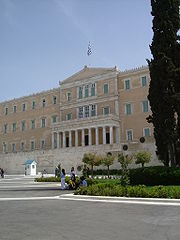 Greece is a Parliament
ary Republic
with a president assuming a more ceremonial role than in some other republics, and the Prime Minister chosen from the leader of the majority party in the parliament. Greece has a codified constitution
and a written Bill of Rights embedded within it. The current Prime Minister is George Papandreou (junior).
The politics of the third Hellenic Republic have been dominated by two main political parties, the self proclaimed socialists of PASOK
and the conservative New Democracy
. Until recently PASOK had dominated the political scene, presiding over favourable growth rates economically but in the eyes of critics failing to deliver where unemployment and structural issues such as market liberalization were concerned.
New Democracy's election to government in 2004 has led to various initiatives to modernize the country, such as the education university scheme above as well as labour market liberalization. Politically there has been massive opposition to some of these moves owing to a large, well organized workers' movement in Greece, which distrusts the right wing administration and neo-liberal ideas. The population in general appears to accept many of the initiatives, reflected in governmental support; on the economic front many are so far warming to the reforms made by the administration, which have been largely rewarded with above average Eurozone growth rates. New Democracy were re-elected in September 2007.
A number of other smaller political parties exist. They include the third largest party (the Communist Party), which still commands large support from many rural working areas as well as some of the immigrant population in Greece, as well as the far-right Popular Orthodox Rally, with the latter, while commanding a mere three and a half per cent of votes, seeking to capitalise on opposition in some quarters regarding Turkey's EU accession and any tension in the Aegean. There is also a relatively small, but well organized anarchist movement, though its status in Greece has been somewhat exaggerated by media overseas.
The political process is energetically and openly participated in by the people of Greece, while public demonstrations are a continual feature of Athenian life; however, there have been criticisms of a governmental failure to sufficiently involve minorities in political debate and hence a sidelining of their opinions. In general, politics is regarded as an acceptable subject to broach on almost every social occasion, and Greeks are often very vocal about their support (or lack of it) for certain policy proposals, or political parties themselves - this is perhaps reflected in what many consider the rather sensationalist media
on both sides of the political spectrum; although this is a feature of most European tabloids.
Mycenaean Greece
Mycenaean Greece was a cultural period of Bronze Age Greece taking its name from the archaeological site of Mycenae in northeastern Argolis, in the Peloponnese of southern Greece. Athens, Pylos, Thebes, and Tiryns are also important Mycenaean sites...
, continuing most notably into Classical Greece
Classical Greece
Classical Greece was a 200 year period in Greek culture lasting from the 5th through 4th centuries BC. This classical period had a powerful influence on the Roman Empire and greatly influenced the foundation of Western civilizations. Much of modern Western politics, artistic thought, such as...
, through the influence of the Roman Empire
Roman Empire
The Roman Empire was the post-Republican period of the ancient Roman civilization, characterised by an autocratic form of government and large territorial holdings in Europe and around the Mediterranean....
and its Greek East
Greek East
"Greek East" and "Latin West" are terms used to distinguish between the two parts of the Greco-Roman world, specifically the eastern regions where Greek was the lingua franca, and the western parts where Latin filled this role...
ern successor the Byzantine Empire
Byzantine Empire
The Byzantine Empire was the Eastern Roman Empire during the periods of Late Antiquity and the Middle Ages, centred on the capital of Constantinople. Known simply as the Roman Empire or Romania to its inhabitants and neighbours, the Empire was the direct continuation of the Ancient Roman State...
. Other cultures and states such as Latin and Frankish states, the Ottoman Empire
Ottoman Empire
The Ottoman EmpireIt was usually referred to as the "Ottoman Empire", the "Turkish Empire", the "Ottoman Caliphate" or more commonly "Turkey" by its contemporaries...
, the Venetian Republic, Genoese Republic, and British Empire
British Empire
The British Empire comprised the dominions, colonies, protectorates, mandates and other territories ruled or administered by the United Kingdom. It originated with the overseas colonies and trading posts established by England in the late 16th and early 17th centuries. At its height, it was the...
have also left their influence on modern Greek culture, but historians credit the Greek War of Independence
Greek War of Independence
The Greek War of Independence, also known as the Greek Revolution was a successful war of independence waged by the Greek revolutionaries between...
with revitalising Greece and giving birth to a single entity of its multi-faceted culture.
Architecture
Ancient Greece
Ancient Greek architecture is best known through its temples and theatres.Byzantine Greece
Byzantine architecture is the architecture of the Byzantine EmpireByzantine Empire
The Byzantine Empire was the Eastern Roman Empire during the periods of Late Antiquity and the Middle Ages, centred on the capital of Constantinople. Known simply as the Roman Empire or Romania to its inhabitants and neighbours, the Empire was the direct continuation of the Ancient Roman State...
. Byzantine architecture emphasized a Greek cross layout, the Byzantine capitol style of column (a mixture of Ionic
Ionic order
The Ionic order forms one of the three orders or organizational systems of classical architecture, the other two canonic orders being the Doric and the Corinthian...
and Corinthian
Corinthian order
The Corinthian order is one of the three principal classical orders of ancient Greek and Roman architecture. The other two are the Doric and Ionic. When classical architecture was revived during the Renaissance, two more orders were added to the canon, the Tuscan order and the Composite order...
capitols) and a central dome
Dome
A dome is a structural element of architecture that resembles the hollow upper half of a sphere. Dome structures made of various materials have a long architectural lineage extending into prehistory....
surrounded by several smaller domes.
Modern Greece
After the independenceGreek War of Independence
The Greek War of Independence, also known as the Greek Revolution was a successful war of independence waged by the Greek revolutionaries between...
of Greece and during the nineteenth century, the Neoclassical architecture
Neoclassical architecture
Neoclassical architecture was an architectural style produced by the neoclassical movement that began in the mid-18th century, manifested both in its details as a reaction against the Rococo style of naturalistic ornament, and in its architectural formulas as an outgrowth of some classicizing...
was heavily used for both public and private building. Regarding the churches, Greece also experienced the Neo-Byzantine revival.
In the twentieth century, Greek architecture followed international architectural trends. Important Greek and international architects designed many buildings of Athens
Athens
Athens , is the capital and largest city of Greece. Athens dominates the Attica region and is one of the world's oldest cities, as its recorded history spans around 3,400 years. Classical Athens was a powerful city-state...
and other Greek cities, such as Dimitris Pikionis
Dimitris Pikionis
Dimitri Pikionis or Demetrios Pikionis was a major Greek architect of the 20th century and had a considerable influence in Contemporary Greek Architecture...
, Stamatios Kleanthis, Anastasios Metaxas
Anastasios Metaxas
Anastasios Metaxas was a Greek architect and shooter.Metaxas is best known for being the architect chosen by George Averoff to restore the Panathinaiko Stadium for the 1896 Summer Olympics in Athens, the birth of the modern Olympic movement, while the design was from Ernst Ziller. He also competed...
, Ernst Ziller
Ernst Ziller
Ernst Moritz Theodor Ziller was a Saxon architect who later became a Greek national, and in the late 19th and early 20th centuries was a major designer of royal and municipal buildings in Athens, Patras and other Greek cities.- Buildings :* Presidential Mansion, Athens* National Theatre of...
, Theophil Freiherr von Hansen
Theophil Freiherr von Hansen
Baron Theophil Edvard von Hansen was a Danish architect who later became an Austrian citizen...
, Patroklos Karantinos
Patroklos Karantinos
Patroklos Karantinos was a notable Greek architect of early modernism in Greece.Karantinos studied architecture in Athens and then went to France, where he studied with Auguste Perret....
, Walter Gropius
Walter Gropius
Walter Adolph Georg Gropius was a German architect and founder of the Bauhaus School who, along with Ludwig Mies van der Rohe and Le Corbusier, is widely regarded as one of the pioneering masters of modern architecture....
, Eero Saarinen
Eero Saarinen
Eero Saarinen was a Finnish American architect and industrial designer of the 20th century famous for varying his style according to the demands of the project: simple, sweeping, arching structural curves or machine-like rationalism.-Biography:Eero Saarinen shared the same birthday as his father,...
and Mario Botta
Mario Botta
Mario Botta is a Swiss architect. He studied at the Liceo Artistico in Milan and the IUAV in Venice. His ideas were influenced by Le Corbusier, Carlo Scarpa, Louis Kahn. He opened his own practice in 1970 in Lugano.-Career:...
. Several new buildings were also constructed by Santiago Calatrava
Santiago Calatrava
Santiago Calatrava Valls is a Spanish architect, sculptor and structural engineer whose principal office is in Zürich, Switzerland. Classed now among the elite designers of the world, he has offices in Zürich, Paris, Valencia, and New York City....
for the 2004 Athens Olympics
2004 Summer Olympics
The 2004 Summer Olympic Games, officially known as the Games of the XXVIII Olympiad, was a premier international multi-sport event held in Athens, Greece from August 13 to August 29, 2004 with the motto Welcome Home. 10,625 athletes competed, some 600 more than expected, accompanied by 5,501 team...
, while Bernard Tschumi
Bernard Tschumi
Bernard Tschumi is an architect, writer, and educator, commonly associated with deconstructivism. Born of French and Swiss parentage, he works and lives in New York and Paris. He studied in Paris and at ETH in Zurich, where he received his degree in architecture in 1969...
designed the New Acropolis Museum
New Acropolis Museum
The Acropolis Museum is an archaeological museum focused on the findings of the archaeological site of the Acropolis of Athens. The museum was built to house every artifact found on the rock and on its feet, from the Greek Bronze Age to Roman and Byzantine Greece...
.
Byzantine Greece
Constantinople
Constantinople was the capital of the Roman, Eastern Roman, Byzantine, Latin, and Ottoman Empires. Throughout most of the Middle Ages, Constantinople was Europe's largest and wealthiest city.-Names:...
in 1453. The most salient feature of this new aesthetic was its “abstract,” or anti-naturalistic character. If classical art was marked by the attempt to create representations that mimicked reality as closely as possible, Byzantine art seems to have abandoned this attempt in favor of a more symbolic approach. The Byzantine painting concentrated mainly on icon
Icon
An icon is a religious work of art, most commonly a painting, from Eastern Christianity and in certain Eastern Catholic churches...
s and hagiographies
Hagiography
Hagiography is the study of saints.From the Greek and , it refers literally to writings on the subject of such holy people, and specifically to the biographies of saints and ecclesiastical leaders. The term hagiology, the study of hagiography, is also current in English, though less common...
.
Modern Greece
Cretan School
The term Cretan School describes an important school of icon painting, also known as Post-Byzantine art, which flourished while Crete was under Venetian rule during the late Middle Ages, reaching its climax after the Fall of Constantinople, becoming the central force in Greek painting during the...
describes an important school of icon painting, also known as Post-Byzantine art, which flourished while Crete
Crete
Crete is the largest and most populous of the Greek islands, the fifth largest island in the Mediterranean Sea, and one of the thirteen administrative regions of Greece. It forms a significant part of the economy and cultural heritage of Greece while retaining its own local cultural traits...
was under Venetian
Republic of Venice
The Republic of Venice or Venetian Republic was a state originating from the city of Venice in Northeastern Italy. It existed for over a millennium, from the late 7th century until 1797. It was formally known as the Most Serene Republic of Venice and is often referred to as La Serenissima, in...
rule during the late Middle Ages
Middle Ages
The Middle Ages is a periodization of European history from the 5th century to the 15th century. The Middle Ages follows the fall of the Western Roman Empire in 476 and precedes the Early Modern Era. It is the middle period of a three-period division of Western history: Classic, Medieval and Modern...
, reaching its climax after the Fall of Constantinople
Fall of Constantinople
The Fall of Constantinople was the capture of the capital of the Byzantine Empire, which occurred after a siege by the Ottoman Empire, under the command of Ottoman Sultan Mehmed II, against the defending army commanded by Byzantine Emperor Constantine XI...
, becoming the central force in Greek painting during the 15th, 16th and 17th centuries. The Cretan artists developed a particular style of painting under the influence of both Eastern and Western artistic traditions and movements. The most famous product of the school, El Greco
El Greco
El Greco was a painter, sculptor and architect of the Spanish Renaissance. "El Greco" was a nickname, a reference to his ethnic Greek origin, and the artist normally signed his paintings with his full birth name in Greek letters, Δομήνικος Θεοτοκόπουλος .El Greco was born on Crete, which was at...
, was the most successful of the many artists who tried to build a career in Western Europe.
The Heptanese School of painting succeeded the Cretan school as the leading school of Greek post-Byzantine painting after Crete fell to the Ottomans
Ottoman Empire
The Ottoman EmpireIt was usually referred to as the "Ottoman Empire", the "Turkish Empire", the "Ottoman Caliphate" or more commonly "Turkey" by its contemporaries...
in 1669. Like the Cretan school it combined Byzantine traditions with an increasing Western European artistic influence, and also saw the first significant depiction of secular subjects. The school was based in the Ionian islands
Ionian Islands
The Ionian Islands are a group of islands in Greece. They are traditionally called the Heptanese, i.e...
, which were not part of Ottoman Greece, from the middle of the 17th century until the middle of the 19th century.
Modern Greek painting, after the independence
Greek War of Independence
The Greek War of Independence, also known as the Greek Revolution was a successful war of independence waged by the Greek revolutionaries between...
and the creation of the modern Greek state, began to be developed around the time of Romanticism
Romanticism
Romanticism was an artistic, literary and intellectual movement that originated in the second half of the 18th century in Europe, and gained strength in reaction to the Industrial Revolution...
and the Greek artists absorbed many elements from their European colleagues, resulting in the culmination of the distinctive style of Greek Romantic art.
Cinema
Cinema first appeared in Greece in 1896 but the first actual cine-theatre was opened in 1907. In 1914 the Asty Films Company was founded and the production of long films begun. Golfo (Γκόλφω), a well known traditional love story, is the first Greek long movie, although there were several minor productions such as newscasts before this. In 1931 Orestis Laskos directed Daphnis and Chloe (Δάφνις και Χλόη), contained the first nude scene in the history of European cinema. In 1944 Katina PaxinouKatina Paxinou
Katina Paxinou was a Greek film and theatre actress.-Early life:Born Aikaterini Konstantopoulou in Piraeus, Greece, she trained as an opera singer, and appeared in the operatic version of Maeterlinck's "Sister Beatrice," with a score by Dimitri Mitropoulos, but changed career and joined the Greek...
was honoured with the Best Supporting Actress
Academy Award for Best Supporting Actress
Performance by an Actress in a Supporting Role is one of the Academy Awards of Merit presented annually by the Academy of Motion Picture Arts and Sciences to recognize an actress who has delivered an outstanding performance while working within the film industry. Since its inception, however, the...
Academy Award
Academy Awards
An Academy Award, also known as an Oscar, is an accolade bestowed by the American Academy of Motion Picture Arts and Sciences to recognize excellence of professionals in the film industry, including directors, actors, and writers...
for For Whom the Bell Tolls
For Whom the Bell Tolls (film)
For Whom the Bell Tolls is a 1943 film in Technicolor based on the novel of the same name by Ernest Hemingway. It stars Gary Cooper, Ingrid Bergman, Akim Tamiroff and Katina Paxinou. This was Ingrid Bergman's first technicolor film. Hemingway handpicked Cooper and Bergman for their roles. The film...
.
The 1950s and early 1960s are considered by many as the Greek Golden age of Cinema. Directors and actors of this era were recognized as important historical figures in Greece and some gained international acclaim: Mihalis Kakogiannis, Alekos Sakellarios
Alekos Sakellarios
Alekos Sakellarios was a Greek writer and a director.He was born in Athens and began to learn journalism and acting at a young age. He wrote his first theatrical play in 1935 called The King of Halva...
, Melina Mercouri
Melina Mercouri
Melina Mercouri , born as Maria Amalia Mercouri was a Greek actress, singer and politician.As an actress she made her film debut in Stella and met international success with her performances in Never on Sunday, Phaedra, Topkapi and Promise at Dawn...
, Nikos Tsiforos
Nikos Tsiforos
Nikos Tsiforos was a Greek screenwriter and film director. He wrote 64 films between 1948 and 1970. He also directed 17 films between 1948 and 1961.-Biography:...
, Iakovos Kambanelis
Iakovos Kambanelis
Iakovos Kambanelis or Kampanellis was a Greek poet, playwright, lyricist, and novelist. Born 2 December 1922 in Hora in the island of Naxos, Kambanelis appears as one of the most prominent Greek artists of the 20th century...
, Katina Paxinou
Katina Paxinou
Katina Paxinou was a Greek film and theatre actress.-Early life:Born Aikaterini Konstantopoulou in Piraeus, Greece, she trained as an opera singer, and appeared in the operatic version of Maeterlinck's "Sister Beatrice," with a score by Dimitri Mitropoulos, but changed career and joined the Greek...
, Nikos Koundouros
Nikos Koundouros
Nikos Koundouros , is a Greek film director, born in Agios Nikolaos, Crete in 1926.He studied painting and sculpture at the Athens School of Fine Arts, and was later exiled because of his political beliefs to the Makronissos island. At the age of 28 he decided to follow a career in cinematography...
, Ellie Lambeti
Ellie Lambeti
Ellie Lambeti was a Greek actress.-Family:Born in 1926 in Greece,her father owned a Greek tavern in the village of Vilia Attikis. She had six siblings. Her maternal grandfather was a Captain Stamatis who fought together with Kolokotronis against the Turks in 1821, when the modern Greek democracy...
, Irene Papas
Irene Papas
Irene Papas is a Greek actress and occasional singer, who has starred in over seventy films in a career spanning more than fifty years.-Life:...
etc. More than sixty films per year were made, with the majority having film noir elements . Notable films were Η κάλπικη λίρα (1955 directed by Giorgos Tzavelas), Πικρό Ψωμί (1951, directed by Grigoris Grigoriou), O Drakos
O Drakos
O Drakos is a Greek black-and-white film directed by Nikos Koundouros. It won the award for best movie 1955-1959 in the first Thessaloniki Film Festival...
(1956 directed by Nikos Koundouros
Nikos Koundouros
Nikos Koundouros , is a Greek film director, born in Agios Nikolaos, Crete in 1926.He studied painting and sculpture at the Athens School of Fine Arts, and was later exiled because of his political beliefs to the Makronissos island. At the age of 28 he decided to follow a career in cinematography...
), Stella (1955 directed by Cacoyannis and written by Kampanellis). Cacoyannis also directed Zorba the Greek with Anthony Quinn which received Best Director, Best Adapted Screenplay and Best Film nominations. Finos Film also contributed to this period with movies such as Λατέρνα, Φτώχεια και Φιλότιμο, Η Θεία από το Σικάγο, Το ξύλο βγήκε από τον Παράδεισο and many more. During the 1970s and 1980s Theo Angelopoulos
Theo Angelopoulos
Theodoros Angelopoulos is a Greek filmmaker, screenwriter and film producer.-Life:Angelopoulos studied law at the National and Kapodistrian University of Athens, but after his military service went to Paris to attend the Sorbonne. He soon dropped out to study film at the IDHEC before returning...
directed a series of notable and appreciated movies. His film Eternity and a Day
Eternity and a Day
Eternity and a Day is a 1998 Greek film starring Bruno Ganz, and directed by Theo Angelopoulos. The film won the Palme d'Or and the Prize of the Ecumenical Jury at the 1998 Cannes Film Festival.-Plot:...
won the Palme d'Or
Palme d'Or
The Palme d'Or is the highest prize awarded at the Cannes Film Festival and is presented to the director of the best feature film of the official competition. It was introduced in 1955 by the organising committee. From 1939 to 1954, the highest prize was the Grand Prix du Festival International du...
and the Prize of the Ecumenical Jury
Prize of the Ecumenical Jury
The Prize of the Ecumenical Jury is an independent film award for feature films at the Cannes Film Festival since 1974. The Ecumenical Jury is one of three juries at the Cannes Film Festival, along with the official jury and the FIPRESCI jury. The award was created by Christian film makers, film...
at the 1998 Cannes Film Festival
1998 Cannes Film Festival
The 51st Cannes Film Festival was held on May 13-24, 1998. The Palme d'Or went to the Greek film Mia aioniotita kai mia mera by Theo Angelopoulos.- Jury :*Martin Scorsese *Alain Corneau *Chiara Mastroianni...
.
There were also internationally renowned filmmakers in the Greek diaspora such as the Greek-American Elia Kazan
Elia Kazan
Elia Kazan was an American director and actor, described by the New York Times as "one of the most honored and influential directors in Broadway and Hollywood history". Born in Istanbul, the capital of the Ottoman Empire, to Greek parents originally from Kayseri in Anatolia, the family emigrated...
.
Language
Indo-European languages
The Indo-European languages are a family of several hundred related languages and dialects, including most major current languages of Europe, the Iranian plateau, and South Asia and also historically predominant in Anatolia...
language. It is particularly remarkable in the depth of its continuity, beginning with the pre-historic Mycenaean Greek and the Linear B
Linear B
Linear B is a syllabic script that was used for writing Mycenaean Greek, an early form of Greek. It pre-dated the Greek alphabet by several centuries and seems to have died out with the fall of Mycenaean civilization...
script, and maybe the Linear A
Linear A
Linear A is one of two scripts used in ancient Crete before Mycenaean Greek Linear B; Cretan hieroglyphs is the second script. In Minoan times, before the Mycenaean Greek dominion, Linear A was the official script for the palaces and religious activities, and hieroglyphs were mainly used on seals....
script associated with Minoan civilization
Minoan civilization
The Minoan civilization was a Bronze Age civilization that arose on the island of Crete and flourished from approximately the 27th century BC to the 15th century BC. It was rediscovered at the beginning of the 20th century through the work of the British archaeologist Arthur Evans...
, though Linear A is still undeciphered. Greek language is clearly detected in the Mycenaean language and the Cypriot syllabary
Cypriot syllabary
The Cypriot syllabary is a syllabic script used in Iron Age Cyprus, from ca. the 11th to the 4th centuries BCE, when it was replaced by the Greek alphabet. A pioneer of that change was king Evagoras of Salamis...
, and eventually the dialects of Ancient Greek
Ancient Greek
Ancient Greek is the stage of the Greek language in the periods spanning the times c. 9th–6th centuries BC, , c. 5th–4th centuries BC , and the c. 3rd century BC – 6th century AD of ancient Greece and the ancient world; being predated in the 2nd millennium BC by Mycenaean Greek...
, of which Attic Greek
Attic Greek
Attic Greek is the prestige dialect of Ancient Greek that was spoken in Attica, which includes Athens. Of the ancient dialects, it is the most similar to later Greek, and is the standard form of the language studied in courses of "Ancient Greek". It is sometimes included in Ionic.- Origin and range...
bears the most resemblance to Modern Greek
Modern Greek
Modern Greek refers to the varieties of the Greek language spoken in the modern era. The beginning of the "modern" period of the language is often symbolically assigned to the fall of the Byzantine Empire in 1453, even though that date marks no clear linguistic boundary and many characteristic...
. The history of the language spans over 3400 years of written records.
Greek has had enormous impact on other languages both directly on the Romance languages, and indirectly through its influence on the emerging Latin
Latin
Latin is an Italic language originally spoken in Latium and Ancient Rome. It, along with most European languages, is a descendant of the ancient Proto-Indo-European language. Although it is considered a dead language, a number of scholars and members of the Christian clergy speak it fluently, and...
language during the early days of Rome
Rome
Rome is the capital of Italy and the country's largest and most populated city and comune, with over 2.7 million residents in . The city is located in the central-western portion of the Italian Peninsula, on the Tiber River within the Lazio region of Italy.Rome's history spans two and a half...
. Signs of this influence, and its many developments, can be seen throughout the family of Western European languages.
Internet and "Greeklish"
More recently, the rise of internet-based communication services as well as cell phones have caused a distinctive form of Greek written partially, and sometimes fully in Latin characters to emerge; this is known as GreeklishGreeklish
Greeklish, a portmanteau of the words Greek and English, also known as Grenglish, Latinoellinika/Λατινοελληνικά or ASCII Greek, is the Greek language written using the Latin alphabet...
, a form that has spread across the Greek diaspora and even to the two countries with majority Greek population, Cyprus
Cyprus
Cyprus , officially the Republic of Cyprus , is a Eurasian island country, member of the European Union, in the Eastern Mediterranean, east of Greece, south of Turkey, west of Syria and north of Egypt. It is the third largest island in the Mediterranean Sea.The earliest known human activity on the...
and Greece
Greece
Greece , officially the Hellenic Republic , and historically Hellas or the Republic of Greece in English, is a country in southeastern Europe....
.
Katharevousa
Katharévousa is a purified form of the Greek Language midway between modern and ancient forms set in train during the early nineteenth century by Greek intellectual and revolutionary leader Adamantios KoraisAdamantios Korais
Adamantios Korais or Coraïs was a humanist scholar credited with laying the foundations of Modern Greek literature and a major figure in the Greek Enlightenment. His activities paved the way for the Greek War of Independence and emergence of a purified form of the Greek language, known as...
, intended to return the Greek language closer to its ancient form. Its influence, in recent years, evolved toward a more formal role, and it came to be used primarily for official purposes such as diplomacy, politics, and other forms of official documentation. It has nevertheless had significant effects on the Greek language as it is still written and spoken today, and both vocabulary and grammatical and syntactical forms have re-entered Modern Greek
Modern Greek
Modern Greek refers to the varieties of the Greek language spoken in the modern era. The beginning of the "modern" period of the language is often symbolically assigned to the fall of the Byzantine Empire in 1453, even though that date marks no clear linguistic boundary and many characteristic...
via Katharevousa.
Dialects
There are a variety of dialects of the Greek language; the most notable include CappadocianCappadocian Greek language
Cappadocian , also known as Cappadocian Greek or Asia Minor Greek, is a mixed language formerly spoken in Cappadocia . In the population exchange between Greece and Turkey in the 1920s, Cappadocian speakers were forced to emigrate to Greece, where they were resettled in various locations,...
, Cretan Greek, Cypriot Greek
Cypriot Greek
The Cypriot dialect of Modern Greek, known as Kypriaka , Cypriot Greek is spoken by 750,000 people in Cyprus and diaspora Greek Cypriots.Cypriot Greek is distinct enough that it can be classified as a distinct dialect of the Standard Greek....
, Pontic Greek, the Griko language
Griko language
Griko, sometimes spelled Grico, is a form of the Greek language which is spoken by the Griko people in southern Italy. The Greeks consider it as a Modern Greek dialect and often call it Katoitaliotika or Grekanika...
spoken in Southern Italy, and Tsakonian
Tsakonian language
Tsakonian, Tsaconian, Tzakonian or Tsakonic is a Hellenic language, spoken in the Tsakonian region of the Peloponnese, Greece....
, still spoken in the modern prefecture of Arcadia
Arcadia
Arcadia is one of the regional units of Greece. It is part of the administrative region of Peloponnese. It is situated in the central and eastern part of the Peloponnese peninsula. It takes its name from the mythological character Arcas. In Greek mythology, it was the home of the god Pan...
and widely noted as a surviving regional dialect of Doric Greek
Doric Greek
Doric or Dorian was a dialect of ancient Greek. Its variants were spoken in the southern and eastern Peloponnese, Crete, Rhodes, some islands in the southern Aegean Sea, some cities on the coasts of Asia Minor, Southern Italy, Sicily, Epirus and Macedon. Together with Northwest Greek, it forms the...
.
Literature
Greece has a remarkably rich and resilient literary tradition, extending over 2800 years and through several eras. The Classical era is that most commonly associated with Greek LiteratureGreek literature
Greek literature refers to writings composed in areas of Greek influence, typically though not necessarily in one of the Greek dialects, throughout the whole period in which the Greek-speaking people have existed.-Ancient Greek literature :...
, beginning in 800 BCE and maintaining its influence through to the beginnings of Byzantine
Byzantine
Byzantine usually refers to the Roman Empire during the Middle Ages.Byzantine may also refer to:* A citizen of the Byzantine Empire, or native Greek during the Middle Ages...
period, whereafter the influence of Christianity began to spawn a new development of the Greek written word. The many elements of a millennia-old tradition are reflected in Modern Greek literature, including the works of the Nobel laureates Odysseus Elytis and George Seferis.
Classical Greece
The first recorded works in the western literary tradition are the epicEpic poetry
An epic is a lengthy narrative poem, ordinarily concerning a serious subject containing details of heroic deeds and events significant to a culture or nation. Oral poetry may qualify as an epic, and Albert Lord and Milman Parry have argued that classical epics were fundamentally an oral poetic form...
poems of Homer
Homer
In the Western classical tradition Homer , is the author of the Iliad and the Odyssey, and is revered as the greatest ancient Greek epic poet. These epics lie at the beginning of the Western canon of literature, and have had an enormous influence on the history of literature.When he lived is...
and Hesiod
Hesiod
Hesiod was a Greek oral poet generally thought by scholars to have been active between 750 and 650 BC, around the same time as Homer. His is the first European poetry in which the poet regards himself as a topic, an individual with a distinctive role to play. Ancient authors credited him and...
. Early Greek lyric poetry
Lyric poetry
Lyric poetry is a genre of poetry that expresses personal and emotional feelings. In the ancient world, lyric poems were those which were sung to the lyre. Lyric poems do not have to rhyme, and today do not need to be set to music or a beat...
, as represented by poets such as Sappho
Sappho
Sappho was an Ancient Greek poet, born on the island of Lesbos. Later Greeks included her in the list of nine lyric poets. Her birth was sometime between 630 and 612 BC, and it is said that she died around 570 BC, but little is known for certain about her life...
and Pindar
Pindar
Pindar , was an Ancient Greek lyric poet. Of the canonical nine lyric poets of ancient Greece, his work is the best preserved. Quintilian described him as "by far the greatest of the nine lyric poets, in virtue of his inspired magnificence, the beauty of his thoughts and figures, the rich...
, was responsible for defining the lyric genre
Genre
Genre , Greek: genos, γένος) is the term for any category of literature or other forms of art or culture, e.g. music, and in general, any type of discourse, whether written or spoken, audial or visual, based on some set of stylistic criteria. Genres are formed by conventions that change over time...
as it is understood today in western literature. Aesop
Aesop
Aesop was a Greek writer credited with a number of popular fables. Older spellings of his name have included Esop and Isope. Although his existence remains uncertain and no writings by him survive, numerous tales credited to him were gathered across the centuries and in many languages in a...
wrote his Fables in the 6th century BC. These innovations were to have a profound influence not only on Roman poets, most notably Virgil
Virgil
Publius Vergilius Maro, usually called Virgil or Vergil in English , was an ancient Roman poet of the Augustan period. He is known for three major works of Latin literature, the Eclogues , the Georgics, and the epic Aeneid...
in his epic poem on the founding of Rome, The Aeneid, but one that flourished throughout Europe.
Classical Greece is also judged the birthplace of theatre
Theatre
Theatre is a collaborative form of fine art that uses live performers to present the experience of a real or imagined event before a live audience in a specific place. The performers may communicate this experience to the audience through combinations of gesture, speech, song, music or dance...
. Aeschylus
Aeschylus
Aeschylus was the first of the three ancient Greek tragedians whose work has survived, the others being Sophocles and Euripides, and is often described as the father of tragedy. His name derives from the Greek word aiskhos , meaning "shame"...
introduced the ideas of dialogue
Dialogue
Dialogue is a literary and theatrical form consisting of a written or spoken conversational exchange between two or more people....
and interacting characters to playwriting and in doing so, he effectively invented "drama": his Oresteia trilogy of plays is judged his crowning achievement. Other refiners of playwriting were Sophocles
Sophocles
Sophocles is one of three ancient Greek tragedians whose plays have survived. His first plays were written later than those of Aeschylus, and earlier than or contemporary with those of Euripides...
and Euripides
Euripides
Euripides was one of the three great tragedians of classical Athens, the other two being Aeschylus and Sophocles. Some ancient scholars attributed ninety-five plays to him but according to the Suda it was ninety-two at most...
. Aristophanes
Aristophanes
Aristophanes , son of Philippus, of the deme Cydathenaus, was a comic playwright of ancient Athens. Eleven of his forty plays survive virtually complete...
, a comic playwright, defined and shaped the idea of comedy
Comedy
Comedy , as a popular meaning, is any humorous discourse or work generally intended to amuse by creating laughter, especially in television, film, and stand-up comedy. This must be carefully distinguished from its academic definition, namely the comic theatre, whose Western origins are found in...
as a theatrical form.
Herodotus
Herodotus was an ancient Greek historian who was born in Halicarnassus, Caria and lived in the 5th century BC . He has been called the "Father of History", and was the first historian known to collect his materials systematically, test their accuracy to a certain extent and arrange them in a...
and Thucydides
Thucydides
Thucydides was a Greek historian and author from Alimos. His History of the Peloponnesian War recounts the 5th century BC war between Sparta and Athens to the year 411 BC...
are often attributed with developing the modern study of history
History
History is the discovery, collection, organization, and presentation of information about past events. History can also mean the period of time after writing was invented. Scholars who write about history are called historians...
into a field worthy of philosophical, literary, and scientific pursuit. Polybius
Polybius
Polybius , Greek ) was a Greek historian of the Hellenistic Period noted for his work, The Histories, which covered the period of 220–146 BC in detail. The work describes in part the rise of the Roman Republic and its gradual domination over Greece...
first introduced into study the concept of military history
Military
A military is an organization authorized by its greater society to use lethal force, usually including use of weapons, in defending its country by combating actual or perceived threats. The military may have additional functions of use to its greater society, such as advancing a political agenda e.g...
.
Philosophy
Philosophy
Philosophy is the study of general and fundamental problems, such as those connected with existence, knowledge, values, reason, mind, and language. Philosophy is distinguished from other ways of addressing such problems by its critical, generally systematic approach and its reliance on rational...
entered literature in the dialogues of Plato
Plato
Plato , was a Classical Greek philosopher, mathematician, student of Socrates, writer of philosophical dialogues, and founder of the Academy in Athens, the first institution of higher learning in the Western world. Along with his mentor, Socrates, and his student, Aristotle, Plato helped to lay the...
, while his pupil Aristotle
Aristotle
Aristotle was a Greek philosopher and polymath, a student of Plato and teacher of Alexander the Great. His writings cover many subjects, including physics, metaphysics, poetry, theater, music, logic, rhetoric, linguistics, politics, government, ethics, biology, and zoology...
, in his work the Poetics, formulated the first set criteria for literary criticism
Literary criticism
Literary criticism is the study, evaluation, and interpretation of literature. Modern literary criticism is often informed by literary theory, which is the philosophical discussion of its methods and goals...
. Both these literary figures, in the context of the broader contributions of Greek philosophy in the Classical and Hellenistic eras, were to give rise to idea of Political Science
Political science
Political Science is a social science discipline concerned with the study of the state, government and politics. Aristotle defined it as the study of the state. It deals extensively with the theory and practice of politics, and the analysis of political systems and political behavior...
, the study of political evolution and the critique of governmental systems.
Byzantine Greece
The growth of Christianity throughout the Greco-Roman world in the 4th, 5th and 6th centuries, together with the Hellenization of the Byzantine EmpireByzantine Empire
The Byzantine Empire was the Eastern Roman Empire during the periods of Late Antiquity and the Middle Ages, centred on the capital of Constantinople. Known simply as the Roman Empire or Romania to its inhabitants and neighbours, the Empire was the direct continuation of the Ancient Roman State...
of the period, would lead to the formation of a unique literary form, combining Christian, Greek, Roman and Oriental (such as the Persian Empire) influences. In its turn, this would promote developments such as Cretan poetry, the growth of poetic satire in the Greek East
Greek East
"Greek East" and "Latin West" are terms used to distinguish between the two parts of the Greco-Roman world, specifically the eastern regions where Greek was the lingua franca, and the western parts where Latin filled this role...
, and the several pre-eminent historians of the period.
Modern Greece
Modern Greek literature refers to literature written in the Greek languageGreek language
Greek is an independent branch of the Indo-European family of languages. Native to the southern Balkans, it has the longest documented history of any Indo-European language, spanning 34 centuries of written records. Its writing system has been the Greek alphabet for the majority of its history;...
from the 11th century, with texts written in a language that is more familiar to the ears of Greeks
Greeks
The Greeks, also known as the Hellenes , are a nation and ethnic group native to Greece, Cyprus and neighboring regions. They also form a significant diaspora, with Greek communities established around the world....
today than is the language of the early Byzantine times.
It is also influenced by the Greek Revolution (1821-1830) and the subsequent independence of Greece and as such, by revolutionary themes. The impact of the Modern Greek Enlightenment is also notable, as well as the influence of the Byzantine Empire's acritic songs
Acritic songs
The Acritic songs are the heroic or epic poetry that emerged in the Byzantine Empire probably in the 9th century. The songs celebrated the exploits of the Akrites, the frontier guards defending the eastern borders of the Byzantine Empire. The historical background was the almost...
, Byzantine novel
Byzantine novel
The Byzantine novel represents a revival of the ancient Greek romance of Roman times. Works in this category were written by Byzantine Greeks of the Eastern Roman Empire during the 12th century.-History:...
and romance
Romance (genre)
As a literary genre of high culture, romance or chivalric romance is a style of heroic prose and verse narrative that was popular in the aristocratic circles of High Medieval and Early Modern Europe. They were fantastic stories about marvel-filled adventures, often of a knight errant portrayed as...
(Erotokritos
Erotokritos
Erotokritos is a romance composed by Vikentios Kornaros in early 17th century Crete. It consists of 10,012 fifteen-syllable rhymed verses....
etc).
Moving into the twentieth century, the modern Greek literary tradition spans the work of Constantine P. Cavafy
Constantine P. Cavafy
Constantine P. Cavafy, also known as Konstantin or Konstantinos Petrou Kavafis, or Kavaphes was a renowned Greek poet who lived in Alexandria and worked as a journalist and civil servant...
, considered a key figure of twentieth century poetry, Giorgos Seferis
Giorgos Seferis
Giorgos or George Seferis was the pen name of Geōrgios Seferiádēs . He was one of the most important Greek poets of the 20th century, and a Nobel laureate...
(whose works and poems aimed to fuse the literature of Ancient and Modern Greece) and Odysseas Elytis
Odysseas Elytis
Odysseas Elytis was regarded as a major exponent of romantic modernism in Greece and the world. In 1979 he was bestowed with the Nobel Prize in Literature.-Biography:...
, both of whom won the Nobel Prize for Literature. Nikos Kazantzakis
Nikos Kazantzakis
Nikos Kazantzakis was a Greek writer and philosopher, celebrated for his novel Zorba the Greek, considered his magnum opus...
is also considered a dominant figure, with works such as The Last Temptation of Christ
The Last Temptation of Christ
The Last Temptation of Christ is a novel written by Nikos Kazantzakis, first published in 1953. It was first published in English in 1960. It follows the life of Jesus Christ from his perspective...
and The Greek Passion
The Greek Passion
The Greek Passion or Christ Recrucified is a 1948 novel by Nikos Kazantzakis.-Plot summary:...
receiving international recognition.
Classical Greece
Christianity
Christianity is a monotheistic religion based on the life and teachings of Jesus as presented in canonical gospels and other New Testament writings...
, such as Aristotle
Aristotle
Aristotle was a Greek philosopher and polymath, a student of Plato and teacher of Alexander the Great. His writings cover many subjects, including physics, metaphysics, poetry, theater, music, logic, rhetoric, linguistics, politics, government, ethics, biology, and zoology...
's invocation of a perfect God, and Heraclitus
Heraclitus
Heraclitus of Ephesus was a pre-Socratic Greek philosopher, a native of the Greek city Ephesus, Ionia, on the coast of Asia Minor. He was of distinguished parentage. Little is known about his early life and education, but he regarded himself as self-taught and a pioneer of wisdom...
' Logos
Logos
' is an important term in philosophy, psychology, rhetoric and religion. Originally a word meaning "a ground", "a plea", "an opinion", "an expectation", "word," "speech," "account," "reason," it became a technical term in philosophy, beginning with Heraclitus ' is an important term in...
. Plato
Plato
Plato , was a Classical Greek philosopher, mathematician, student of Socrates, writer of philosophical dialogues, and founder of the Academy in Athens, the first institution of higher learning in the Western world. Along with his mentor, Socrates, and his student, Aristotle, Plato helped to lay the...
considered there were rewards for the virtuous in the heavens and punishment for the wicked under the earth; the soul was valued more highly than the material body, and the material world was understood to be imperfect and not fully real (illustrated in Socrates
Socrates
Socrates was a classical Greek Athenian philosopher. Credited as one of the founders of Western philosophy, he is an enigmatic figure known chiefly through the accounts of later classical writers, especially the writings of his students Plato and Xenophon, and the plays of his contemporary ...
's allegory of the cave
Allegory of the cave
The Allegory of the Cave—also known as the Analogy of the Cave, Plato's Cave, or the Parable of the Cave—is an allegory used by the Greek philosopher Plato in his work The Republic to illustrate "our nature in its education and want of education"...
).
Hellenistic Greece
Alexander's conquests spread classical concepts about the divine, the afterlifeAfterlife
The afterlife is the belief that a part of, or essence of, or soul of an individual, which carries with it and confers personal identity, survives the death of the body of this world and this lifetime, by natural or supernatural means, in contrast to the belief in eternal...
, and much else across the eastern Mediterranean area. Jews
Jews
The Jews , also known as the Jewish people, are a nation and ethnoreligious group originating in the Israelites or Hebrews of the Ancient Near East. The Jewish ethnicity, nationality, and religion are strongly interrelated, as Judaism is the traditional faith of the Jewish nation...
and early Christians alike adopted the name "hades
Hades
Hades , Hadēs, originally , Haidēs or , Aidēs , meaning "the unseen") was the ancient Greek god of the underworld. The genitive , Haidou, was an elision to denote locality: "[the house/dominion] of Hades". Eventually, the nominative came to designate the abode of the dead.In Greek mythology, Hades...
" when writing about "sheol
Sheol
Sheol |Hebrew]] Šʾôl) is the "grave", "pit", or "abyss" in Hebrew. She'ol is the earliest conception of the afterlife in the Jewish scriptures. It is a place of darkness to which all dead go, regardless of the moral choices made in life, and where they are "removed from the light of God"...
" in Greek. Greco-Buddhism
Greco-Buddhism
Greco-Buddhism, sometimes spelled Graeco-Buddhism, refers to the cultural syncretism between Hellenistic culture and Buddhism, which developed between the 4th century BCE and the 5th century CE in the area covered by the Indian sub-continent, and modern Afghanistan, Pakistan and north-western...
was the cultural syncretism
Syncretism
Syncretism is the combining of different beliefs, often while melding practices of various schools of thought. The term means "combining", but see below for the origin of the word...
between Hellenistic culture
Hellenistic civilization
Hellenistic civilization represents the zenith of Greek influence in the ancient world from 323 BCE to about 146 BCE...
and Buddhism
Buddhism
Buddhism is a religion and philosophy encompassing a variety of traditions, beliefs and practices, largely based on teachings attributed to Siddhartha Gautama, commonly known as the Buddha . The Buddha lived and taught in the northeastern Indian subcontinent some time between the 6th and 4th...
, which developed in the Indo-Greek Kingdom
Indo-Greek Kingdom
The Indo-Greek Kingdom or Graeco-Indian Kingdom covered various parts of the northwest regions of the Indian subcontinent during the last two centuries BC, and was ruled by more than 30 Hellenistic kings, often in conflict with each other...
s. By the advent of Christianity
Christianity
Christianity is a monotheistic religion based on the life and teachings of Jesus as presented in canonical gospels and other New Testament writings...
, the four original patriarchates
Pentarchy
Pentarchy is a term in the history of Christianity for the idea of universal rule over all Christendom by the heads of five major episcopal sees, or patriarchates, of the Roman Empire: Rome, Constantinople, Alexandria, Antioch, and Jerusalem...
beyond Rome used Greek as their church language.
Modern Greece
The Greek Orthodox ChurchGreek Orthodox Church
The Greek Orthodox Church is the body of several churches within the larger communion of Eastern Orthodox Christianity sharing a common cultural tradition whose liturgy is also traditionally conducted in Koine Greek, the original language of the New Testament...
, largely because of the importance of Byzantium in Greek history, as well as its role in the revolution, is a major institution in modern Greece. Its roles in society and larger role in overarching Greek culture are very important; a number of Greeks attend Church at least once a month or more and the Orthodox Easter
Easter
Easter is the central feast in the Christian liturgical year. According to the Canonical gospels, Jesus rose from the dead on the third day after his crucifixion. His resurrection is celebrated on Easter Day or Easter Sunday...
holiday holds special significance.
The Church of Greece
Church of Greece
The Church of Greece , part of the wider Greek Orthodox Church, is one of the autocephalous churches which make up the communion of Orthodox Christianity...
also retains limited political influence through the fact the Greek constitution does not have an explicit separation of Church and State; a debate suggested by more conservative elements of the church in the early 2000s about identification cards and whether religious affiliation might be added to them highlights the friction between state and church on some issues; the proposal unsurprisingly was not accepted. A widely publicised set of corruption scandals in 2004 implicating a small group of senior churchmen also increased national debate on introducing a greater transparency to the church-state relationship.
Greek Orthodox Churches dot both the villages and towns of Greece and come in a variety of architectural forms, from older Byzantine churches, to more modern white brick churches, to newer cathedral-like structures with evident Byzantine influence. Greece (as well as Cyprus), also polled as, ostensibly, one of the most religious countries in Europe
Europe
Europe is, by convention, one of the world's seven continents. Comprising the westernmost peninsula of Eurasia, Europe is generally 'divided' from Asia to its east by the watershed divides of the Ural and Caucasus Mountains, the Ural River, the Caspian and Black Seas, and the waterways connecting...
, according to Eurostat
Eurostat
Eurostat is a Directorate-General of the European Commission located in Luxembourg. Its main responsibilities are to provide the European Union with statistical information at European level and to promote the integration of statistical methods across the Member States of the European Union,...
; however, while the church has wide respect as a moral and cultural institution, a contrast in religious belief with Protestant northern Europe is more obvious than one with Catholic Mediterranean Europe.
Greece also has a significant minority of Muslims
Islam
Islam . The most common are and . : Arabic pronunciation varies regionally. The first vowel ranges from ~~. The second vowel ranges from ~~~...
in Eastern Thrace (numbering around 100-150,000), with their places of worship guaranteed since the 1923 Treaty of Lausanne
Treaty of Lausanne
The Treaty of Lausanne was a peace treaty signed in Lausanne, Switzerland on 24 July 1923, that settled the Anatolian and East Thracian parts of the partitioning of the Ottoman Empire. The treaty of Lausanne was ratified by the Greek government on 11 February 1924, by the Turkish government on 31...
. The Greek state has fully approved the construction a main mosque for the more recent Muslim community of Athens
Athens
Athens , is the capital and largest city of Greece. Athens dominates the Attica region and is one of the world's oldest cities, as its recorded history spans around 3,400 years. Classical Athens was a powerful city-state...
under the freedom of religion
Freedom of religion
Freedom of religion is a principle that supports the freedom of an individual or community, in public or private, to manifest religion or belief in teaching, practice, worship, and observance; the concept is generally recognized also to include the freedom to change religion or not to follow any...
provisions of the Greek constitution.
Philosophy, science and mathematics
The Greek world is widely regarded as having given birth to scientific thought by means of observation, thought, and development of a theory without the intervention of a supernatural force. ThalesThales
Thales of Miletus was a pre-Socratic Greek philosopher from Miletus in Asia Minor, and one of the Seven Sages of Greece. Many, most notably Aristotle, regard him as the first philosopher in the Greek tradition...
, Anaximander
Anaximander
Anaximander was a pre-Socratic Greek philosopher who lived in Miletus, a city of Ionia; Milet in modern Turkey. He belonged to the Milesian school and learned the teachings of his master Thales...
and Democritus
Democritus
Democritus was an Ancient Greek philosopher born in Abdera, Thrace, Greece. He was an influential pre-Socratic philosopher and pupil of Leucippus, who formulated an atomic theory for the cosmos....
were amongst those contributing significantly to the establishment of this tradition. It is also, and perhaps more commonly in the western imagination, identified with the dawn of Western Philosophy
Western philosophy
Western philosophy is the philosophical thought and work of the Western or Occidental world, as distinct from Eastern or Oriental philosophies and the varieties of indigenous philosophies....
, as well as a mapping out of the Natural Sciences. Greek developments of mathematics continued well up until the decline of the Byzantine Empire
Byzantine Empire
The Byzantine Empire was the Eastern Roman Empire during the periods of Late Antiquity and the Middle Ages, centred on the capital of Constantinople. Known simply as the Roman Empire or Romania to its inhabitants and neighbours, the Empire was the direct continuation of the Ancient Roman State...
. In the modern era Greeks continue to contribute to the fields of Science
Science
Science is a systematic enterprise that builds and organizes knowledge in the form of testable explanations and predictions about the universe...
, Mathematics
Mathematics
Mathematics is the study of quantity, space, structure, and change. Mathematicians seek out patterns and formulate new conjectures. Mathematicians resolve the truth or falsity of conjectures by mathematical proofs, which are arguments sufficient to convince other mathematicians of their validity...
and Philosophy
Philosophy
Philosophy is the study of general and fundamental problems, such as those connected with existence, knowledge, values, reason, mind, and language. Philosophy is distinguished from other ways of addressing such problems by its critical, generally systematic approach and its reliance on rational...
.
Classical Greece
Philosophy
Philosophy is the study of general and fundamental problems, such as those connected with existence, knowledge, values, reason, mind, and language. Philosophy is distinguished from other ways of addressing such problems by its critical, generally systematic approach and its reliance on rational...
in Ancient Greece accompanied its literary development. Greek learning had a profound influence on Western
Western culture
Western culture, sometimes equated with Western civilization or European civilization, refers to cultures of European origin and is used very broadly to refer to a heritage of social norms, ethical values, traditional customs, religious beliefs, political systems, and specific artifacts and...
and Middle East
Middle East
The Middle East is a region that encompasses Western Asia and Northern Africa. It is often used as a synonym for Near East, in opposition to Far East...
ern civilizations. The works of Socrates
Socrates
Socrates was a classical Greek Athenian philosopher. Credited as one of the founders of Western philosophy, he is an enigmatic figure known chiefly through the accounts of later classical writers, especially the writings of his students Plato and Xenophon, and the plays of his contemporary ...
, Plato
Plato
Plato , was a Classical Greek philosopher, mathematician, student of Socrates, writer of philosophical dialogues, and founder of the Academy in Athens, the first institution of higher learning in the Western world. Along with his mentor, Socrates, and his student, Aristotle, Plato helped to lay the...
, Aristotle
Aristotle
Aristotle was a Greek philosopher and polymath, a student of Plato and teacher of Alexander the Great. His writings cover many subjects, including physics, metaphysics, poetry, theater, music, logic, rhetoric, linguistics, politics, government, ethics, biology, and zoology...
, and other Greek philosophers profoundly influenced Classical thought, the Islamic Golden Age
Islamic Golden Age
During the Islamic Golden Age philosophers, scientists and engineers of the Islamic world contributed enormously to technology and culture, both by preserving earlier traditions and by adding their own inventions and innovations...
, and the Renaissance
Renaissance
The Renaissance was a cultural movement that spanned roughly the 14th to the 17th century, beginning in Italy in the Late Middle Ages and later spreading to the rest of Europe. The term is also used more loosely to refer to the historical era, but since the changes of the Renaissance were not...
.
In medicine
Medicine
Medicine is the science and art of healing. It encompasses a variety of health care practices evolved to maintain and restore health by the prevention and treatment of illness....
, doctors still refer to the Hippocratic oath
Hippocratic Oath
The Hippocratic Oath is an oath historically taken by physicians and other healthcare professionals swearing to practice medicine ethically. It is widely believed to have been written by Hippocrates, often regarded as the father of western medicine, or by one of his students. The oath is written in...
, instituted by Hippocrates
Hippocrates
Hippocrates of Cos or Hippokrates of Kos was an ancient Greek physician of the Age of Pericles , and is considered one of the most outstanding figures in the history of medicine...
, regarded as foremost in laying the foundations of medicine as a science. Galen
Galen
Aelius Galenus or Claudius Galenus , better known as Galen of Pergamon , was a prominent Roman physician, surgeon and philosopher...
built on Hippocrates' theory of the four humours
Humorism
Humorism, or humoralism, is a now discredited theory of the makeup and workings of the human body, adopted by Greek and Roman physicians and philosophers, positing that an excess or deficiency of any of four distinct bodily fluids in a person directly influences their temperament and health...
, and his writings became the foundation of medicine in Europe
Europe
Europe is, by convention, one of the world's seven continents. Comprising the westernmost peninsula of Eurasia, Europe is generally 'divided' from Asia to its east by the watershed divides of the Ural and Caucasus Mountains, the Ural River, the Caspian and Black Seas, and the waterways connecting...
and the Middle East
Middle East
The Middle East is a region that encompasses Western Asia and Northern Africa. It is often used as a synonym for Near East, in opposition to Far East...
for centuries. The physicians Herophilos
Herophilos
Herophilos , sometimes Latinized Herophilus , was a Greek physician. Born in Chalcedon, he spent the majority of his life in Alexandria. He was the first scientist to systematically perform scientific dissections of human cadavers and is deemed to be the first anatomist. Herophilos recorded his...
and Paulus Aegineta were pioneers in the study of anatomy
Anatomy
Anatomy is a branch of biology and medicine that is the consideration of the structure of living things. It is a general term that includes human anatomy, animal anatomy , and plant anatomy...
, while Pedanius Dioscorides
Pedanius Dioscorides
Pedanius Dioscorides was a Greek physician, pharmacologist and botanist, the author of a 5-volume encyclopedia about herbal medicine and related medicinal substances , that was widely read for more than 1,500 years.-Life:...
wrote an extensive treatise on the practice of pharmacology
Pharmacology
Pharmacology is the branch of medicine and biology concerned with the study of drug action. More specifically, it is the study of the interactions that occur between a living organism and chemicals that affect normal or abnormal biochemical function...
.
The period of Classical Greece
Classical Greece
Classical Greece was a 200 year period in Greek culture lasting from the 5th through 4th centuries BC. This classical period had a powerful influence on the Roman Empire and greatly influenced the foundation of Western civilizations. Much of modern Western politics, artistic thought, such as...
(from 800BC until the rise of Macedon
Macedon
Macedonia or Macedon was an ancient kingdom, centered in the northeastern part of the Greek peninsula, bordered by Epirus to the west, Paeonia to the north, the region of Thrace to the east and Thessaly to the south....
, a Greek state in the north) is that most often associated with Greek advances in science. Thales of Miletus is regarded by many as the father of science
Science
Science is a systematic enterprise that builds and organizes knowledge in the form of testable explanations and predictions about the universe...
; he was the first of the ancient philosophers to seek to explain the physical world in terms of natural rather than supernatural
Supernatural
The supernatural or is that which is not subject to the laws of nature, or more figuratively, that which is said to exist above and beyond nature...
causes. Pythagoras
Pythagoras
Pythagoras of Samos was an Ionian Greek philosopher, mathematician, and founder of the religious movement called Pythagoreanism. Most of the information about Pythagoras was written down centuries after he lived, so very little reliable information is known about him...
was a mathematician
Mathematician
A mathematician is a person whose primary area of study is the field of mathematics. Mathematicians are concerned with quantity, structure, space, and change....
often described as the "father of numbers"; it is believed that he had the pioneering insight into the numerical ratios that determine the musical scale
Musical scale
In music, a scale is a sequence of musical notes in ascending and descending order. Most commonly, especially in the context of the common practice period, the notes of a scale will belong to a single key, thus providing material for or being used to conveniently represent part or all of a musical...
, and the Pythagorean theorem
Pythagorean theorem
In mathematics, the Pythagorean theorem or Pythagoras' theorem is a relation in Euclidean geometry among the three sides of a right triangle...
is commonly attributed to him. Diophantus of Alexandria
Diophantus
Diophantus of Alexandria , sometimes called "the father of algebra", was an Alexandrian Greek mathematician and the author of a series of books called Arithmetica. These texts deal with solving algebraic equations, many of which are now lost...
, in turn, was the "father of algebra
Algebra
Algebra is the branch of mathematics concerning the study of the rules of operations and relations, and the constructions and concepts arising from them, including terms, polynomials, equations and algebraic structures...
". Many parts of modern geometry
Geometry
Geometry arose as the field of knowledge dealing with spatial relationships. Geometry was one of the two fields of pre-modern mathematics, the other being the study of numbers ....
are based on the work of Euclid
Euclid
Euclid , fl. 300 BC, also known as Euclid of Alexandria, was a Greek mathematician, often referred to as the "Father of Geometry". He was active in Alexandria during the reign of Ptolemy I...
, while Eratosthenes
Eratosthenes
Eratosthenes of Cyrene was a Greek mathematician, poet, athlete, geographer, astronomer, and music theorist.He was the first person to use the word "geography" and invented the discipline of geography as we understand it...
was one of the first scientific geographer
Geographer
A geographer is a scholar whose area of study is geography, the study of Earth's natural environment and human society.Although geographers are historically known as people who make maps, map making is actually the field of study of cartography, a subset of geography...
s, calculating the circumference
Circumference
The circumference is the distance around a closed curve. Circumference is a special perimeter.-Circumference of a circle:The circumference of a circle is the length around it....
of the earth
Earth
Earth is the third planet from the Sun, and the densest and fifth-largest of the eight planets in the Solar System. It is also the largest of the Solar System's four terrestrial planets...
and conceiving the first maps
MAPS
Maps is the plural of map, a visual representation of an area.As an acronym, MAPS may refer to:* Mail Abuse Prevention System, an organisation that provides anti-spam support...
based on scientific principles.
The Hellenistic period, following Alexander's conquests, continued and built upon this knowledge. Hipparchus
Hipparchus
Hipparchus, the common Latinization of the Greek Hipparkhos, can mean:* Hipparchus, the ancient Greek astronomer** Hipparchic cycle, an astronomical cycle he created** Hipparchus , a lunar crater named in his honour...
is considered the pre-eminent astronomical observer of the ancient world, and was probably the first to develop an accurate method for the prediction of solar eclipse
Solar eclipse
As seen from the Earth, a solar eclipse occurs when the Moon passes between the Sun and the Earth, and the Moon fully or partially blocks the Sun as viewed from a location on Earth. This can happen only during a new moon, when the Sun and the Moon are in conjunction as seen from Earth. At least...
, while Aristarchus of Samos
Aristarchus of Samos
Aristarchus, or more correctly Aristarchos , was a Greek astronomer and mathematician, born on the island of Samos, in Greece. He presented the first known heliocentric model of the solar system, placing the Sun, not the Earth, at the center of the known universe...
was the first known astronomer
Astronomer
An astronomer is a scientist who studies celestial bodies such as planets, stars and galaxies.Historically, astronomy was more concerned with the classification and description of phenomena in the sky, while astrophysics attempted to explain these phenomena and the differences between them using...
to propose a heliocentric model of the solar system
Solar System
The Solar System consists of the Sun and the astronomical objects gravitationally bound in orbit around it, all of which formed from the collapse of a giant molecular cloud approximately 4.6 billion years ago. The vast majority of the system's mass is in the Sun...
, though the geocentric model
Geocentric model
In astronomy, the geocentric model , is the superseded theory that the Earth is the center of the universe, and that all other objects orbit around it. This geocentric model served as the predominant cosmological system in many ancient civilizations such as ancient Greece...
of Ptolemy
Ptolemy
Claudius Ptolemy , was a Roman citizen of Egypt who wrote in Greek. He was a mathematician, astronomer, geographer, astrologer, and poet of a single epigram in the Greek Anthology. He lived in Egypt under Roman rule, and is believed to have been born in the town of Ptolemais Hermiou in the...
was more commonly accepted until the seventeenth century. Ptolemy also contributed substantially to cartography
Cartography
Cartography is the study and practice of making maps. Combining science, aesthetics, and technique, cartography builds on the premise that reality can be modeled in ways that communicate spatial information effectively.The fundamental problems of traditional cartography are to:*Set the map's...
and to the science of optics
Optics
Optics is the branch of physics which involves the behavior and properties of light, including its interactions with matter and the construction of instruments that use or detect it. Optics usually describes the behavior of visible, ultraviolet, and infrared light...
. For his part Archimedes
Archimedes
Archimedes of Syracuse was a Greek mathematician, physicist, engineer, inventor, and astronomer. Although few details of his life are known, he is regarded as one of the leading scientists in classical antiquity. Among his advances in physics are the foundations of hydrostatics, statics and an...
was the first to calculate the value of π
Pi
' is a mathematical constant that is the ratio of any circle's circumference to its diameter. is approximately equal to 3.14. Many formulae in mathematics, science, and engineering involve , which makes it one of the most important mathematical constants...
and a geometric series, and also the earliest known mathematical physicist
Physicist
A physicist is a scientist who studies or practices physics. Physicists study a wide range of physical phenomena in many branches of physics spanning all length scales: from sub-atomic particles of which all ordinary matter is made to the behavior of the material Universe as a whole...
discovering the law of buoyancy
Buoyancy
In physics, buoyancy is a force exerted by a fluid that opposes an object's weight. In a column of fluid, pressure increases with depth as a result of the weight of the overlying fluid. Thus a column of fluid, or an object submerged in the fluid, experiences greater pressure at the bottom of the...
, as well as conceiving the irrigation
Irrigation
Irrigation may be defined as the science of artificial application of water to the land or soil. It is used to assist in the growing of agricultural crops, maintenance of landscapes, and revegetation of disturbed soils in dry areas and during periods of inadequate rainfall...
device known as Archimedes' screw
Archimedes' screw
The Archimedes' screw, also called the Archimedean screw or screwpump, is a machine historically used for transferring water from a low-lying body of water into irrigation ditches...
.
Byzantine Greece
Byzantine medicine
Byzantine medicine is the medicine practiced in the Byzantine Empire from about 400 AD to 1453 AD. Medicine was one of the sciences in which the Byzantines improved on their Greco-Roman predecessors...
and historical scholarship
History
History is the discovery, collection, organization, and presentation of information about past events. History can also mean the period of time after writing was invented. Scholars who write about history are called historians...
. Theological philosophy
Philosophy
Philosophy is the study of general and fundamental problems, such as those connected with existence, knowledge, values, reason, mind, and language. Philosophy is distinguished from other ways of addressing such problems by its critical, generally systematic approach and its reliance on rational...
also remained an area of study, and there was, while not matching the achievements of preceding ages, a certain increase in the professionalism of study of these subjects, epitomized by the founding of the University of Constantinople.
Isidore of Miletus and Anthemius of Tralles, the architects of the famous Hagia Sophia
Hagia Sophia
Hagia Sophia is a former Orthodox patriarchal basilica, later a mosque, and now a museum in Istanbul, Turkey...
in Constantinople
Constantinople
Constantinople was the capital of the Roman, Eastern Roman, Byzantine, Latin, and Ottoman Empires. Throughout most of the Middle Ages, Constantinople was Europe's largest and wealthiest city.-Names:...
, also contributed towards mathematical theories concerning architectural form, and the perceived mathematical harmony needed to create a multi-domed structure. These ideas were to prove a heavy influence on the Ottoman architect Mimar Sinan in his creation of the Blue Mosque
Sultan Ahmed Mosque
The Sultan Ahmed Mosque is a historical mosque in Istanbul, the largest city in Turkey and the capital of the Ottoman Empire . The mosque is popularly known as the Blue Mosque for the blue tiles adorning the walls of its interior....
, also in Constantinople. Tralles in particular produced several treatises on the Natural Sciences, as well as his other forays into mathematics such as Conic Sections.
The gradual migration of Greeks from Byzantium to the Italian
Italian city-states
The Italian city-states were a political phenomenon of small independent states mostly in the central and northern Italian peninsula between the 10th and 15th centuries....
city states following the decline of the Byzantine Empire, and the texts they brought with them combined with the academic positions they held, was a major factor in lighting the first sparks of the Italian Renaissance
Italian Renaissance
The Italian Renaissance began the opening phase of the Renaissance, a period of great cultural change and achievement in Europe that spanned the period from the end of the 13th century to about 1600, marking the transition between Medieval and Early Modern Europe...
.
Modern Greece
Greeks continue to contribute to science and technology in the modern world. John ArgyrisJohn Argyris
John Hadji Argyris was among the creators of the Finite Element Method and lately Professor at the University of Stuttgart and Director of the Institute for Statics and Dynamics of Aerospace Structures. His uncle, Constantin Carathéodory, was a Greek mathematician of the Modern Era...
, a Greek mathematician and engineer, is responsible for the invention of finite element analysis and the direct stiffness method
Direct stiffness method
As one of the methods of structural analysis, the direct stiffness method , also known as the displacement method or matrix stiffness method, is particularly suited for computer-automated analysis of complex structures including the statically indeterminate type...
, relative to physics. Mathematician Constantin Carathéodory
Constantin Carathéodory
Constantin Carathéodory was a Greek mathematician. He made significant contributions to the theory of functions of a real variable, the calculus of variations, and measure theory...
worked in the fields of real analysis
Real analysis
Real analysis, is a branch of mathematical analysis dealing with the set of real numbers and functions of a real variable. In particular, it deals with the analytic properties of real functions and sequences, including convergence and limits of sequences of real numbers, the calculus of the real...
, the calculus of variations
Calculus of variations
Calculus of variations is a field of mathematics that deals with extremizing functionals, as opposed to ordinary calculus which deals with functions. A functional is usually a mapping from a set of functions to the real numbers. Functionals are often formed as definite integrals involving unknown...
, and measure theory in the early 20th century. Biologist Fotis Kafatos
Fotis Kafatos
Fotis Constantine Kafatos is a Greek molecular entomologist. Between 2005-2010 he was the founding president of the European Research Council and member of its Scientific Council...
pioneers in the field of molecular cloning and genomics. In medicine, Georgios Papanikolaou
Georgios Papanikolaou
Georgios Nicholas Papanikolaou was a Greek pioneer in cytology and early cancer detection, and inventor of the "Pap smear".-Life:...
contributed heavily to the development of cancer screening with his Pap smear
Pap smear
The Papanicolaou test is a screening test used in to detect pre-cancerous and cancerous processes in the endocervical canal of the female reproductive system. Changes can be treated, thus preventing cervical cancer...
. The Greek car designer Alec Issigonis
Alec Issigonis
Sir Alexander Arnold Constantine Issigonis, CBE, FRS was a Greek-British designer of cars, now remembered chiefly for the groundbreaking and influential development of the Mini, launched by the British Motor Corporation in 1959.- Early life:Issigonis was born into the Greek community of Smyrna ...
created the iconic Mini
Mini
The Mini is a small car that was made by the British Motor Corporation and its successors from 1959 until 2000. The original is considered a British icon of the 1960s, and its space-saving front-wheel-drive layout influenced a generation of car-makers...
automobile, while the computer scientist Michael Dertouzos was amongst the pioneers of the internet. Nicolas Negroponte chairman of the Massachusetts Institute of Technology
Massachusetts Institute of Technology
The Massachusetts Institute of Technology is a private research university located in Cambridge, Massachusetts. MIT has five schools and one college, containing a total of 32 academic departments, with a strong emphasis on scientific and technological education and research.Founded in 1861 in...
Media Lab is one of the founders of the program One Laptop Per Child, a non-profit organisation aiming to extend Internet
Internet
The Internet is a global system of interconnected computer networks that use the standard Internet protocol suite to serve billions of users worldwide...
access in developing countries.
Dance
Greece has a continuous history of native dances reaching from antiquity till the modern era. It began in the Mycenean periodMinoan civilization
The Minoan civilization was a Bronze Age civilization that arose on the island of Crete and flourished from approximately the 27th century BC to the 15th century BC. It was rediscovered at the beginning of the 20th century through the work of the British archaeologist Arthur Evans...
.
Classical Greece
Ancient Greeks believed that dancing was invented by the GodsAncient Greek religion
Greek religion encompasses the collection of beliefs and rituals practiced in ancient Greece in the form of both popular public religion and cult practices. These different groups varied enough for it to be possible to speak of Greek religions or "cults" in the plural, though most of them shared...
and therefore associated it with religious ceremony. They believed that the gods offered this gift to select mortals only, who in turn taught dancing to their fellow-men.
Periodic evidence in ancient texts indicates that dance was held in high regard, in particular for its educational qualities. Dance, along with writing, music, and physical exercise, was fundamental to the commenced in a circle and ended with the dancers facing one another. When not dancing in a circle the dancers held their hands high or waved them to left and right. They held cymbals (very like the zilia of today) or a kerchief in their hands, and their movements were emphasized by their long sleeves. As they danced, they sang, either set songs or extemporized ones, sometimes in unison, sometimes in refrain, repeating the verse sung by the lead dancer. The onlookers joined in, clapping the rhythm or singing. Professional singers, often the musicians
Byzantine music
Byzantine music is the music of the Byzantine Empire composed to Greek texts as ceremonial, festival, or church music. Greek and foreign historians agree that the ecclesiastical tones and in general the whole system of Byzantine music is closely related to the ancient Greek system...
themselves, composed lyrics to suit the occasion.
Byzantine instruments included the guitar, single, double or multiple flute, sistrum, timpani (drum), psaltirio, Sirigs, lyre, cymbals, keras and kanonaki.
Popular dances of this period included the Syrtos, Geranos, Mantilia , Saximos, Pyrichios, and Kordakas . Some of these dances have their origins in the ancient period and are still enacted in some form today.
Modern Greece
Trousseau
Trousseau may refer to:*A dowry*The outfit of a bride, including the wedding dress or similar clothing*A name for the Bastardo grape in some regions*A white mutation of the Trousseau grape, known as Trousseau Gris...
of the bride during the wedding preparations. The carnival
Carnival
Carnaval is a festive season which occurs immediately before Lent; the main events are usually during February. Carnaval typically involves a public celebration or parade combining some elements of a circus, mask and public street party...
and Easter offer more opportunities for family gatherings and dancing. Greek taverns
Taverna
Taverna refers to a small restaurant serving Greek cuisine, not to be confused with "tavern". The Greek word is ταβέρνα and is originally derived from the Latin word taberna...
providing live entertainment often include folk dances in their program.
Regional characteristics have developed over the years because of variances in climatic conditions
Climate
Climate encompasses the statistics of temperature, humidity, atmospheric pressure, wind, rainfall, atmospheric particle count and other meteorological elemental measurements in a given region over long periods...
, land morphology
Geography of Greece
Greece is a country located in Southern Europe, on the southern end of the Balkan Peninsula. Greece is surrounded on the north by Bulgaria, the Republic of Macedonia and Albania; to the west by the Ionian Sea; to the south by the Mediterranean Sea and to the east by the Aegean Sea and Turkey...
and people's social lives. In later years, wars, international pacts and consequent movement of populations, and even movements of civil servants around the country, intermingled traditions. People learned new dances, adapted them to their environment, and included them in their feasts. Kalamatianos and Syrtos are considered Pan-Hellenic dances and are danced all over the world in diaspora communities. Others have also crossed boundaries and are known beyond the regions where they originated; these include the Pentozali from Crete
Crete
Crete is the largest and most populous of the Greek islands, the fifth largest island in the Mediterranean Sea, and one of the thirteen administrative regions of Greece. It forms a significant part of the economy and cultural heritage of Greece while retaining its own local cultural traits...
, Hasapiko from Constantinople, Zonaradikos from Thrace
Thrace
Thrace is a historical and geographic area in southeast Europe. As a geographical concept, Thrace designates a region bounded by the Balkan Mountains on the north, Rhodope Mountains and the Aegean Sea on the south, and by the Black Sea and the Sea of Marmara on the east...
, Pyrehios from Pontos
Pontós
Pontós is a municipality in the comarca of Alt Empordà, Girona, Catalonia, Spain....
and Balos from the Aegean islands
Aegean Sea
The Aegean Sea[p] is an elongated embayment of the Mediterranean Sea located between the southern Balkan and Anatolian peninsulas, i.e., between the mainlands of Greece and Turkey. In the north, it is connected to the Marmara Sea and Black Sea by the Dardanelles and Bosporus...
.
The avant-garde choreographer, director and dancer Dimitris Papaioannou
Dimitris Papaioannou
Dimitris Papaioannou is a Greek avant-garde stage director, choreographer and visual artist who drew international media attention and acclaim with his creative direction of the Opening Ceremony of the Athens 2004 Olympic Games...
was responsible for the critically successful Opening Ceremony
Opening ceremony
An opening ceremony is the official opening of a building or event. The opening ceremonies of the Olympic Games and the FIFA World Cup are huge events involving thousands of participants and watched by a massive worldwide audience. On a much smaller scale, some ceremonies mark the opening of a...
of the 2004 Olympic Games
Olympic Games
The Olympic Games is a major international event featuring summer and winter sports, in which thousands of athletes participate in a variety of competitions. The Olympic Games have come to be regarded as the world’s foremost sports competition where more than 200 nations participate...
, with a conception that reflected the classical influences on modern and experimental Greek dance forms.
Music
Greece has a diverse and highly influential musical tradition, with ancient music influencing the Roman EmpireRoman Empire
The Roman Empire was the post-Republican period of the ancient Roman civilization, characterised by an autocratic form of government and large territorial holdings in Europe and around the Mediterranean....
, and Byzantine liturgical chants and secular music influencing the Renaissance
Renaissance
The Renaissance was a cultural movement that spanned roughly the 14th to the 17th century, beginning in Italy in the Late Middle Ages and later spreading to the rest of Europe. The term is also used more loosely to refer to the historical era, but since the changes of the Renaissance were not...
. Modern Greek music combines these elements, as well as influences from the Middle East
Middle East
The Middle East is a region that encompasses Western Asia and Northern Africa. It is often used as a synonym for Near East, in opposition to Far East...
, to carry Greeks' interpretation of a wide range of musical forms.
Classical Greece
The history of music in Greece begins once more, as one might expect, with the music of ancient Greece, largely structured on the LyreLyre
The lyre is a stringed musical instrument known for its use in Greek classical antiquity and later. The word comes from the Greek "λύρα" and the earliest reference to the word is the Mycenaean Greek ru-ra-ta-e, meaning "lyrists", written in Linear B syllabic script...
and other supporting string instruments of the era. Beyond the well-known structural legacies of the Pythagorean scale
Pythagoras
Pythagoras of Samos was an Ionian Greek philosopher, mathematician, and founder of the religious movement called Pythagoreanism. Most of the information about Pythagoras was written down centuries after he lived, so very little reliable information is known about him...
, and the related mathematical developments it upheld to define western classical music, relatively little is understood about the precise character of music during this period; we do know, however, that it left, as so often, a strong mark on the culture of Rome
Rome
Rome is the capital of Italy and the country's largest and most populated city and comune, with over 2.7 million residents in . The city is located in the central-western portion of the Italian Peninsula, on the Tiber River within the Lazio region of Italy.Rome's history spans two and a half...
. What has been gleaned about the social role and character of ancient Greek music comes largely from pottery and other forms of Greek art
Greek art
Greek art began in the Cycladic and Minoan prehistorical civilization, and gave birth to Western classical art in the ancient period...
.
Byzantine Greece
Byzantine music
Byzantine music is the music of the Byzantine Empire composed to Greek texts as ceremonial, festival, or church music. Greek and foreign historians agree that the ecclesiastical tones and in general the whole system of Byzantine music is closely related to the ancient Greek system...
is also of major significance to the history and development of European music, as liturgical chants
Liturgy
Liturgy is either the customary public worship done by a specific religious group, according to its particular traditions or a more precise term that distinguishes between those religious groups who believe their ritual requires the "people" to do the "work" of responding to the priest, and those...
became the foundation and stepping stone for music of the Renaissance (see: Renaissance Music
Renaissance music
Renaissance music is European music written during the Renaissance. Defining the beginning of the musical era is difficult, given that its defining characteristics were adopted only gradually; musicologists have placed its beginnings from as early as 1300 to as late as the 1470s.Literally meaning...
). It is also certain that Byzantine music included an extensive tradition of instrumental court music and dance; any other picture would be both incongruous with the historically and archaeologically documented opulence of the Eastern Roman Empire. There survive a few but explicit accounts of secular music. A characteristic example is the accounts of pneumatic organs, whose construction was further advanced in the eastern empire prior to their development in the west following the Renaissance.
Modern Greece
A range of domestically and internationally known composers and performers across the musical spectrum have found success in modern Greece, while traditional Greek music is noted as a mixture of influences from indigenous culture with those of west and east. A few OttomanOttoman Empire
The Ottoman EmpireIt was usually referred to as the "Ottoman Empire", the "Turkish Empire", the "Ottoman Caliphate" or more commonly "Turkey" by its contemporaries...
elements can be heard in the traditional songs, dhimotiká, as well as in the modern blues
Blues
Blues is the name given to both a musical form and a music genre that originated in African-American communities of primarily the "Deep South" of the United States at the end of the 19th century from spirituals, work songs, field hollers, shouts and chants, and rhymed simple narrative ballads...
y rembétika music. A well-known Greek musical instrument is the bouzouki
Bouzouki
The bouzouki , is a musical instrument with Greek origin in the lute family. A mainstay of modern Greek music, the front of the body is flat and is usually heavily inlaid with mother-of-pearl. The instrument is played with a plectrum and has a sharp metallic sound, reminiscent of a mandolin but...
. "Bouzouki" is a descriptive Turkish name, but the instrument itself is probably of Greek origin (from the ancient Greek lute known as pandoura, a kind of guitar, clearly visible in ancient statues, especially female figurines of the "Tanagraies" playing cord instruments).
Famous Greek musicians and composers of modern era include the central figure of 20th century European modernism Iannis Xenakis
Iannis Xenakis
Iannis Xenakis was a Romanian-born Greek ethnic, naturalized French composer, music theorist, and architect-engineer. He is commonly recognized as one of the most important post-war avant-garde composers...
, a composer, architect and theorist. Maria Callas
Maria Callas
Maria Callas was an American-born Greek soprano and one of the most renowned opera singers of the 20th century. She combined an impressive bel canto technique, a wide-ranging voice and great dramatic gifts...
, Nikos Skalkottas, Mikis Theodorakis
Mikis Theodorakis
Mikis Theodorakis is one of the most renowned Greek songwriters and composers. Internationally, he is probably best known for his songs and for his scores for the films Zorba the Greek , Z , and Serpico .Politically, he identified with the left until the late 1980s; in 1989, he ran as an...
, Dimitris Mitropoulos
Dimitris Mitropoulos
Dimitri Mitropoulos , was a Greek conductor, pianist, and composer. Also known as Dimitris Mitropoulos.-Life and career:Mitropoulos was born in Athens, the son of Yannis and Angeliki Mitropoulos. His father owned a leather goods shop at No. 15, St Marks Street. He was musically precocious,...
, Manos Hadjidakis
Manos Hadjidakis
Manos Hatzidakis was a Greek composer and theorist of the Greek music. He was also one of the main prime movers of the "Éntekhno" song ....
and Vangelis
Vangelis
Evangelos Odysseas Papathanassiou is a Greek composer of electronic, progressive, ambient, jazz, pop rock and orchestral music, under the artist name Vangelis...
also lead twentieth-century Greek contributions, alongside Demis Roussos
Demis Roussos
Artemios Ventouris Roussos is a Greek singer and performer, best known for being the main musical partner of movie soundtrack composer Vangelis and a string of international hit records as a solo performer in the 1960s and 1970s...
, Nana Mouskouri
Nana Mouskouri
Nana Mouskouri , born Ioánna Moúschouri on October 13, 1934, in Chania, Crete, Greece, is a Greek singer who has sold about 300 million records worldwide in a career spanning over five decades, making her one of the best-selling music artists of all time. She was known as Nána to her friends and...
, Yanni
Yanni
Yanni , born Yiannis Hrysomallis is a Greek self-taught pianist, keyboardist, and composer who has spent most of his life in the United States.He earned Grammy nominations for his 1992 album, Dare to Dream, and the 1993 follow-up, In My Time...
, Georges Moustaki
Georges Moustaki
Giuseppe Mustacchi, known as Georges Moustaki , is a French singer and songwriter of Italo-Greek Jewish origin, best known for his poetic rhythm, eloquent simplicity and his hundreds of romantic songs...
, Eleni Karaindrou
Eleni Karaindrou
Eleni Karaindrou is a Greek composer, born in Teichio. She studied piano and theory at the Hellenikon Odion in Athens. She is best known for scoring the films of Theo Angelopoulos...
and others.
The birth of the first School of modern Greek classical music (Heptanesean or Ionian School
Ionian School (music)
The term Ionian School of Music denotes the musical production of a group Heptanesian composers, whose heyday was from the early 19th century till approximately the 1950s...
, Greek:Επτανησιακή Σχολή) came through the Ionian Islands
Ionian Islands
The Ionian Islands are a group of islands in Greece. They are traditionally called the Heptanese, i.e...
(notable composers include Spyridon Samaras
Spyridon Samaras
Spyridon-Filiskos Samaras was a Greek composer particularly admired for his operas who was part of the generation of composers that heralded the works of Giacomo Puccini...
, Nikolaos Mantzaros
Nikolaos Mantzaros
Nikolaos Halikiopoulos Mantzaros was a Greek composer born in Corfu and the major representative of the so called Ionian School of music...
and Pavlos Carrer
Pavlos Carrer
Pavlos Carrer was a Greek composer.Carrer was born in Zakynthos. He studied in Zakynthos and in Corfu. In the early 1850s he moved to Milan, where his first operas and ballets were performed at the stages of the Teatro Carcano and the Teatro alla Canobbiana. In the same city he published some of...
), while Manolis Kalomiris
Manolis Kalomiris
Manolis Kalomiris ), was a Greek classical composer. He was the founder of the Greek National School of Music.-Biography:Born in Smyrna, he attended school in Constantinople and studied piano and composition in Vienna. After working for a few years as a piano teacher in Kharkov he settled in...
is considered the founder of the Greek National School.
Education
Education in GreeceEducation in Greece
The Greek educational system is mainly divided into three levels, namely primary, secondary and tertiary, with an additional post-secondary level providing vocational training. Primary education is divided into kindergarten lasting one or two years, and primary school spanning six years...
is compulsory for all children 6–15 years old; namely, it includes Primary (Dimotiko) and Lower Secondary (Gymnasio) Education. The school life of the students, however, can start from the age of 2.5 years (pre-school education) in institutions (private and public) called "Vrefonipiakoi Paidikoi Stathmi" (creches). In some Vrefonipiakoi Stathmoi there are also Nipiaka Tmimata (nursery classes) which operate along with the Nipiagogeia (kindergartens).
Post-compulsory Secondary Education
Secondary education
Secondary education is the stage of education following primary education. Secondary education includes the final stage of compulsory education and in many countries it is entirely compulsory. The next stage of education is usually college or university...
, according to the reforms of 1997 and 2006, consists of two main school types: Genika Lykeia (General Upper Secondary Schools) and the Epaggelmatika Lykeia (Vocational Upper Secondary Schools), as well as the Epaggelmatikes Sxoles (Vocational Schools). Musical, Ecclesiastical and Physical Education Gymnasia and Lykeia are also in operation.
Post-compulsory Secondary Education also includes the Vocational Training
Vocational education
Vocational education or vocational education and training is an education that prepares trainees for jobs that are based on manual or practical activities, traditionally non-academic, and totally related to a specific trade, occupation, or vocation...
Institutes (IEK), which provide formal but unclassified level of education. These Institutes are not classified as an educational level, because they accept both Gymnasio (lower secondary school) and Lykeio (upper secondary school) graduates according to the relevant specializations they provide. Public higher education is divided into Universities and Technological Education Institutes (TEI). Students are admitted to these Institutes according to their performance at national level examinations taking place at the second and third grade of Lykeio. Additionally, students are admitted to the Hellenic Open University upon the completion of the 22 year of age by drawing lots.
Nea Dimokratia (New Democracy
New Democracy (Greece)
New Democracy is the main centre-right political party and one of the two major parties in Greece. It was founded in 1974 by Konstantinos Karamanlis and formed the first cabinet of the Third Hellenic Republic...
), the Greek conservative right political party, has claimed that it will change the law so that private universities gain recognition. Without official recognition, students who have an EES degree are unable to work in the public sector. PASOK
Panhellenic Socialist Movement
The Panhellenic Socialist Movement , known mostly by its acronym PASOK , is one of the two major political parties in Greece. Founded on 3 September 1974 by Andreas Papandreou, in 1981 PASOK became Greece's first social democratic party to win a majority in parliament.The party is a socialist party...
took some action after EU intervention, namely the creation of a special government agency which certifies the vocational status of certain EES degree holders. However, their academic status still remains a problem. The issue of full recognition is still an issue of debate among Greek politicians.
Politics
Parliament
A parliament is a legislature, especially in those countries whose system of government is based on the Westminster system modeled after that of the United Kingdom. The name is derived from the French , the action of parler : a parlement is a discussion. The term came to mean a meeting at which...
ary Republic
Republic
A republic is a form of government in which the people, or some significant portion of them, have supreme control over the government and where offices of state are elected or chosen by elected people. In modern times, a common simplified definition of a republic is a government where the head of...
with a president assuming a more ceremonial role than in some other republics, and the Prime Minister chosen from the leader of the majority party in the parliament. Greece has a codified constitution
Constitution
A constitution is a set of fundamental principles or established precedents according to which a state or other organization is governed. These rules together make up, i.e. constitute, what the entity is...
and a written Bill of Rights embedded within it. The current Prime Minister is George Papandreou (junior).
The politics of the third Hellenic Republic have been dominated by two main political parties, the self proclaimed socialists of PASOK
Panhellenic Socialist Movement
The Panhellenic Socialist Movement , known mostly by its acronym PASOK , is one of the two major political parties in Greece. Founded on 3 September 1974 by Andreas Papandreou, in 1981 PASOK became Greece's first social democratic party to win a majority in parliament.The party is a socialist party...
and the conservative New Democracy
New Democracy (Greece)
New Democracy is the main centre-right political party and one of the two major parties in Greece. It was founded in 1974 by Konstantinos Karamanlis and formed the first cabinet of the Third Hellenic Republic...
. Until recently PASOK had dominated the political scene, presiding over favourable growth rates economically but in the eyes of critics failing to deliver where unemployment and structural issues such as market liberalization were concerned.
New Democracy's election to government in 2004 has led to various initiatives to modernize the country, such as the education university scheme above as well as labour market liberalization. Politically there has been massive opposition to some of these moves owing to a large, well organized workers' movement in Greece, which distrusts the right wing administration and neo-liberal ideas. The population in general appears to accept many of the initiatives, reflected in governmental support; on the economic front many are so far warming to the reforms made by the administration, which have been largely rewarded with above average Eurozone growth rates. New Democracy were re-elected in September 2007.
A number of other smaller political parties exist. They include the third largest party (the Communist Party), which still commands large support from many rural working areas as well as some of the immigrant population in Greece, as well as the far-right Popular Orthodox Rally, with the latter, while commanding a mere three and a half per cent of votes, seeking to capitalise on opposition in some quarters regarding Turkey's EU accession and any tension in the Aegean. There is also a relatively small, but well organized anarchist movement, though its status in Greece has been somewhat exaggerated by media overseas.
The political process is energetically and openly participated in by the people of Greece, while public demonstrations are a continual feature of Athenian life; however, there have been criticisms of a governmental failure to sufficiently involve minorities in political debate and hence a sidelining of their opinions. In general, politics is regarded as an acceptable subject to broach on almost every social occasion, and Greeks are often very vocal about their support (or lack of it) for certain policy proposals, or political parties themselves - this is perhaps reflected in what many consider the rather sensationalist media
Mass media
Mass media refers collectively to all media technologies which are intended to reach a large audience via mass communication. Broadcast media transmit their information electronically and comprise of television, film and radio, movies, CDs, DVDs and some other gadgets like cameras or video consoles...
on both sides of the political spectrum; although this is a feature of most European tabloids.
See also
- Art in modern GreeceArt in modern GreeceModern Greek art is the term used to describe Greek art during the period between the emergence of the new independent Greek state and the 20th century....
- Greek languageGreek languageGreek is an independent branch of the Indo-European family of languages. Native to the southern Balkans, it has the longest documented history of any Indo-European language, spanning 34 centuries of written records. Its writing system has been the Greek alphabet for the majority of its history;...
- Hellenic Foundation for CultureHellenic Foundation for CultureThe Hellenic Foundation for Culture , founded in 1992, is a cultural and educational organization, based in Greece , which aims to promote Greek language and Greek culture.-Identity:...
- Center for the Greek languageCenter for the Greek languageThe Center for the Greek language is a cultural and educational organization which aims at promoting the Greek language and culture. It is based in Thessaloniki, with also an office in Athens. The Center for the Greek Language acts as a coordinating, advisory and strategic organ of the Greek...
- Cinema of GreeceCinema of GreeceGreece has a long and rich cinematic history. Greek films dominate the domestic market, for example Safe Sex had more box office receipts than Titanic. Characteristics of Greek cinema include a dynamic plot, strong character development and erotic themes...
- Cinema of CyprusCinema of Cyprus-See also:* Cinema of the world* World cinema* Cyprus International Film Festival* Culture of Cyprus* Culture of Greece* Culture of Turkey* List of Greek actors* List of Turkish actors* Film* Cinema of Greece* Cinema of Turkey* List of Cypriot films...
- List of Greek films
- Education in GreeceEducation in GreeceThe Greek educational system is mainly divided into three levels, namely primary, secondary and tertiary, with an additional post-secondary level providing vocational training. Primary education is divided into kindergarten lasting one or two years, and primary school spanning six years...
- List of universities in Greece
- Greek cuisine
- Greek Orthodox ChurchGreek Orthodox ChurchThe Greek Orthodox Church is the body of several churches within the larger communion of Eastern Orthodox Christianity sharing a common cultural tradition whose liturgy is also traditionally conducted in Koine Greek, the original language of the New Testament...
- Holidays in Greece
- Syncretism in Ancient Greece
- PaideiaPaideiaIn ancient Greek, the word n. paedeia or paideia [ to educate + - -IA suffix1] means child-rearing, education. It was a system of instruction in Classical Athens in which students were given a well-rounded cultural education. Subjects included rhetoric, grammar, mathematics, music, philosophy,...
Further reading
- Bruce ThorntonBruce ThorntonBruce S. Thornton is a classicist at California State University, Fresno. He has written for many publications, published several books, and appeared at numerous media venues. He lives in Fresno with his wife and two sons. He is currently a research fellow and W...
, Greek Ways: How the Greeks Created Western Civilization, Encounter Books, 2002 - Simon GoldhillSimon GoldhillSimon Goldhill is a professor of Greek literature and culture at the University of Cambridge and a fellow of King's College, Cambridge. He is also Director of CRASSH, the Centre for Research in the Arts, Social Sciences, and Humanities at the University of Cambridge...
, Who Needs Greek?: Contests in the Cultural History of Hellenism, Cambridge University Press, 2002 - Victor Davis HansonVictor Davis HansonVictor Davis Hanson is an American military historian, columnist, political essayist and former classics professor, notable as a scholar of ancient warfare. He has been a commentator on modern warfare and contemporary politics for National Review and other media outlets...
, John Heath, Who Killed Homer: The Demise of Classical Education and the Recovery of Greek Wisdom, Encounter Books, 2001
External links
- Hellenism Network - Greek Culture
- Sketch of the History of Greek Literature from the Earliest Times to the Reign of Alexander the Great by William Smith
- Anagnosis Books Modern Greek Culture Pages
- The Impact of Greek Culture on Normative Judaism from the Hellenistic Period through the Middle Ages c. 330 BCE- 1250 CE
- The Greek diet and its relationship to health
- Greece a cultural profile