

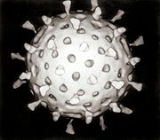
Virus

Encyclopedia
A virus is a small infectious agent
that can replicate only inside the living cells of organisms. Viruses infect all types of organisms, from animal
s and plant
s to bacteria
and archaea
. Since Dmitri Ivanovsky's 1892 article describing a non-bacterial pathogen infecting tobacco plants, and the discovery of the tobacco mosaic virus
by Martinus Beijerinck
in 1898, about 5,000 viruses have been described in detail, although there are millions of different types. Viruses are found in almost every ecosystem
on Earth and are the most abundant type of biological entity. The study of viruses is known as virology
, a sub-speciality of microbiology
.
Virus particles (known as virions) consist of two or three parts: the genetic material made from either DNA
or RNA
, long molecule
s that carry genetic information; a protein
coat that protects these genes; and in some cases an envelope
of lipid
s that surrounds the protein coat when they are outside a cell. The shapes of viruses range from simple helical
and icosahedral
forms to more complex structures. The average virus is about one one-hundredth the size of the average bacterium. Most viruses are too small to be seen directly with a light microscope
.
The origins of viruses in the evolutionary history of life
are unclear: some may have evolved
from plasmid
s – pieces of DNA that can move between cells – while others may have evolved from bacteria. In evolution, viruses are an important means of horizontal gene transfer
, which increases genetic diversity
.
Viruses spread in many ways; viruses in plant
s are often transmitted from plant to plant by insect
s that feed on the sap
of plants, such as aphid
s; viruses in animal
s can be carried by blood-sucking
insects. These disease-bearing organisms are known as vectors. Influenza viruses
are spread by coughing and sneezing. Norovirus and rotavirus
, common causes of viral gastroenteritis
, are transmitted by the faecal-oral route
and are passed from person to person by contact, entering the body in food or water. HIV
is one of several viruses transmitted through sexual contact
and by exposure to infected blood. The range of host cells that a virus can infect is called its "host range". This can be narrow or, as when a virus is capable of infecting many species, broad.
Viral infections in animals provoke an immune response that usually eliminates the infecting virus. Immune responses can also be produced by vaccine
s, which confer an artificially acquired immunity
to the specific viral infection. However, some viruses including those causing AIDS
and viral hepatitis
evade these immune responses and result in chronic infections. Antibiotic
s have no effect on viruses, but several antiviral drug
s have been developed.
virus referring to poison
and other noxious substances, first used in English in 1392. Virulent, from Latin virulentus (poisonous), dates to 1400. A meaning of "agent that causes infectious disease" is first recorded in 1728, before the discovery of viruses by Dmitry Ivanovsky in 1892. The plural is viruses. The adjective viral dates to 1948. The term virion is also used to refer to a single infective viral particle.
 Louis Pasteur
was unable to find a causative agent for rabies
and speculated about a pathogen too small to be detected using a microscope. In 1884, the French microbiologist
Charles Chamberland
invented a filter (known today as the Chamberland filter
or Chamberland-Pasteur filter) with pores smaller than bacteria. Thus, he could pass a solution containing bacteria through the filter and completely remove them from the solution. In 1892, the Russian biologist Dmitry Ivanovsky used this filter to study what is now known as the tobacco mosaic virus
. His experiments showed that crushed leaf extracts from infected tobacco plants remain infectious after filtration. Ivanovsky suggested the infection might be caused by a toxin
produced by bacteria, but did not pursue the idea. At the time it was thought that all infectious agents could be retained by filters and grown on a nutrient medium – this was part of the germ theory of disease. In 1898, the Dutch microbiologist Martinus Beijerinck
repeated the experiments and became convinced that the filtered solution contained a new form of infectious agent. He observed that the agent multiplied only in cells that were dividing, but as his experiments did not show that it was made of particles, he called it a contagium vivum fluidum (soluble living germ) and re-introduced the word virus. Beijerinck maintained that viruses were liquid in nature, a theory later discredited by Wendell Stanley, who proved they were particulate. In the same year Friedrich Loeffler and Frosch passed the first animal virus – agent of foot-and-mouth disease
(aphthovirus
) – through a similar filter.
In the early 20th century, the English bacteriologist Frederick Twort
discovered a group of viruses that infect bacteria, now called bacteriophages (or commonly phages), and the French-Canadian microbiologist Félix d'Herelle
described viruses that, when added to bacteria on agar
, would produce areas of dead bacteria. He accurately diluted a suspension of these viruses and discovered that the highest dilutions (lowest virus concentrations), rather than killing all the bacteria, formed discrete areas of dead organisms. Counting these areas and multiplying by the dilution factor allowed him to calculate the number of viruses in the original suspension. Phages were heralded as a potential treatment for diseases such as typhoid and cholera
, but their promise was forgotten with the development of penicillin
. The study of phages provided insights into the switching on and off of genes, and a useful mechanism for introducing foreign genes into bacteria.
By the end of the 19th century, viruses were defined in terms of their infectivity
, their ability to be filtered, and their requirement for living hosts. Viruses had been grown only in plants and animals. In 1906, Ross Granville Harrison
invented a method for growing tissue
in lymph
, and, in 1913, E. Steinhardt, C. Israeli, and R. A. Lambert used this method to grow vaccinia
virus in fragments of guinea pig corneal tissue. In 1928, H. B. Maitland and M. C. Maitland grew vaccinia virus in suspensions of minced hens' kidneys. Their method was not widely adopted until the 1950s, when poliovirus
was grown on a large scale for vaccine production.
Another breakthrough came in 1931, when the American pathologist Ernest William Goodpasture
grew influenza and several other viruses in fertilized chickens' eggs. In 1949, John F. Enders, Thomas Weller
, and Frederick Robbins grew polio virus in cultured human embryo cells, the first virus to be grown without using solid animal tissue or eggs. This work enabled Jonas Salk
to make an effective polio vaccine
.
The first images of viruses were obtained upon the invention of electron microscopy in 1931 by the German engineers Ernst Ruska
and Max Knoll
. In 1935, American biochemist and virologist Wendell Meredith Stanley
examined the tobacco mosaic virus and found it was mostly made of protein. A short time later, this virus was separated into protein and RNA parts.
The tobacco mosaic virus was the first to be crystal
lised and its structure could therefore be elucidated in detail. The first X-ray diffraction pictures of the crystallised virus were obtained by Bernal and Fankuchen in 1941. On the basis of her pictures, Rosalind Franklin
discovered the full DNA
structure of the virus in 1955. In the same year, Heinz Fraenkel-Conrat and Robley Williams showed that purified tobacco mosaic virus RNA and its coat protein can assemble by themselves to form functional viruses, suggesting that this simple mechanism was probably the means through which viruses were created within their host cells.
The second half of the 20th century was the golden age of virus discovery and most of the 2,000 recognised species of animal, plant, and bacterial viruses were discovered during these years. In 1957, equine arterivirus
and the cause of Bovine virus diarrhea
(a pestivirus
) were discovered. In 1963, the hepatitis B virus was discovered by Baruch Blumberg, and in 1965, Howard Temin described the first retrovirus
. Reverse transcriptase
, the key enzyme that retroviruses use to translate their RNA into DNA, was first described in 1970, independently by Howard Martin Temin
and David Baltimore
. In 1983 Luc Montagnier
's team at the Pasteur Institute
in France
, first isolated the retrovirus now called HIV.
have been used to compare the DNA or RNA of viruses and are a useful means of investigating how they arose. There are three main hypotheses that try to explain the origins of viruses:
Regressive hypothesis : Viruses may have once been small cells that parasitised
larger cells. Over time, genes not required by their parasitism were lost. The bacteria rickettsia
and chlamydia
are living cells that, like viruses, can reproduce only inside host cells. They lend support to this hypothesis, as their dependence on parasitism is likely to have caused the loss of genes that enabled them to survive outside a cell. This is also called the degeneracy hypothesis, or reduction hypothesis.
Cellular origin hypothesis : Some viruses may have evolved from bits of DNA or RNA that "escaped" from the genes of a larger organism. The escaped DNA could have come from plasmid
s (pieces of naked DNA that can move between cells) or transposons (molecules of DNA that replicate and move around to different positions within the genes of the cell). Once called "jumping genes", transposons are examples of mobile genetic elements
and could be the origin of some viruses. They were discovered in maize by Barbara McClintock
in 1950. This is sometimes called the vagrancy hypothesis, or the escape hypothesis.
Coevolution hypothesis : This is also called the virus-first hypothesis and proposes that viruses may have evolved from complex molecules of protein and nucleic acid
at the same time as cells first appeared on earth and would have been dependent on cellular life for billions of years. Viroids are molecules of RNA that are not classified as viruses because they lack a protein coat. However, they have characteristics that are common to several viruses and are often called subviral agents. Viroids are important pathogens of plants. They do not code for proteins but interact with the host cell and use the host machinery for their replication. The hepatitis delta virus of humans has an RNA genome similar to viroids but has a protein coat derived from hepatitis B virus and cannot produce one of its own. It is, therefore, a defective virus and cannot replicate without the help of hepatitis B virus. In similar manner, the virophage 'sputnik' is dependent on mimivirus
, which infects the protozoan Acanthamoeba castellanii. These viruses that are dependent on the presence of other virus species in the host cell are called satellites
and may represent evolutionary intermediates of viroids and viruses.
In the past, there were problems with all of these hypotheses: the regressive hypothesis did not explain why even the smallest of cellular parasites do not resemble viruses in any way. The escape hypothesis did not explain the complex capsids and other structures on virus particles. The virus-first hypothesis contravened the definition of viruses in that they require host cells. Viruses are now recognised as ancient and to have origins that pre-date the divergence of life into the three domains
. This discovery has led modern virologists to reconsider and re-evaluate these three classical hypotheses.
The evidence for an ancestral world of RNA cells and computer analysis of viral and host DNA sequences are giving a better understanding of the evolutionary relationships between different viruses and may help identify the ancestors of modern viruses. To date, such analyses have not proved which of these hypotheses is correct. However, it seems unlikely that all currently known viruses have a common ancestor, and viruses have probably arisen numerous times in the past by one or more mechanisms.
Prions are infectious protein molecules that do not contain DNA or RNA. They cause an infection in sheep called scrapie
and cattle bovine spongiform encephalopathy
("mad cow" disease). In humans they cause kuru
and Creutzfeldt–Jakob disease. They are able to replicate because some proteins can exist in two different shapes and the prion changes the normal shape of a host protein into the prion shape. This starts a chain reaction where each prion protein converts many host proteins into more prions, and these new prions then go on to convert even more protein into prions. Although they are fundamentally different from viruses and viroids, their discovery gives credence to the idea that viruses could have evolved from self-replicating molecules.
, or organic structures that interact with living organisms. They have been described as "organisms at the edge of life", since they resemble organisms in that they possess genes and evolve by natural selection, and reproduce by creating multiple copies of themselves through self-assembly. Although they have genes, they do not have a cellular structure, which is often seen as the basic unit of life. Viruses do not have their own metabolism
, and require a host cell to make new products. They therefore cannot naturally reproduce outside a host cell – although bacterial species such as rickettsia
and chlamydia
are considered living organisms despite the same limitation. Accepted forms of life use cell division
to reproduce, whereas viruses spontaneously assemble within cells. They differ from autonomous growth of crystals
as they inherit genetic mutations while being subject to natural selection. Virus self-assembly within host cells has implications for the study of the origin of life, as it lends further credence to the hypothesis that life could have started as self-assembling organic molecules.
 Viruses display a wide diversity of shapes and sizes, called morphologies
. Generally viruses are much smaller than bacteria. Most viruses that have been studied have a diameter between 20 and 300 nanometres. Some filoviruses have a total length of up to 1400 nm; their diameters are only about 80 nm. Most viruses cannot be seen with a light microscope so scanning and transmission electron microscope
s are used to visualise virions. To increase the contrast between viruses and the background, electron-dense "stains" are used. These are solutions of salts of heavy metals, such as tungsten
, that scatter the electrons from regions covered with the stain. When virions are coated with stain (positive staining), fine detail is obscured. Negative staining overcomes this problem by staining the background only.
A complete virus particle, known as a virion, consists of nucleic acid surrounded by a protective coat of protein called a capsid
. These are formed from identical protein subunits called capsomeres
. Viruses can have a lipid
"envelope" derived from the host cell membrane
. The capsid is made from proteins encoded by the viral genome
and its shape serves as the basis for morphological distinction. Virally coded protein subunits will self-assemble to form a capsid, generally requiring the presence of the virus genome. Complex viruses code for proteins that assist in the construction of their capsid. Proteins associated with nucleic acid are known as nucleoprotein
s, and the association of viral capsid proteins with viral nucleic acid is called a nucleocapsid. The capsid and entire virus structure can be mechanically (physically) probed through atomic force microscopy. In general, there are four main morphological virus types:
Helical: These viruses are composed of a single type of capsomer stacked around a central axis to form a helical structure, which may have a central cavity, or hollow tube. This arrangement results in rod-shaped or filamentous virions: These can be short and highly rigid, or long and very flexible. The genetic material, in general, single-stranded RNA, but ssDNA in some cases, is bound into the protein helix by interactions between the negatively charged nucleic acid and positive charges on the protein. Overall, the length of a helical capsid is related to the length of the nucleic acid contained within it and the diameter is dependent on the size and arrangement of capsomers. The well-studied tobacco mosaic virus is an example of a helical virus.
Icosahedral: Most animal viruses are icosahedral or near-spherical with icosahedral symmetry. A regular icosahedron
is the optimum way of forming a closed shell from identical sub-units. The minimum number of identical capsomers required is twelve, each composed of five identical sub-units. Many viruses, such as rotavirus, have more than twelve capsomers and appear spherical but they retain this symmetry. Capsomers at the apices are surrounded by five other capsomers and are called pentons. Capsomers on the triangular faces are surrounded by six others and are called hexons. Hexons are essentially flat and pentons, which form the 12 vertices, are curved. The same protein may act as the subunit of both the pentamers and hexamers or they may be composed of different proteins.
Prolate: This is an isosahedron elongated along the fivefold axis and is a common arrangement of the heads of bacteriophages. Such a structure is composed of a cylinder with a cap at either end. The cylinder is composed of 10 triangles. The Q number, which can be can be any positive integer, specifies the number of triangles, composed of asymmetric subunits, that make up the 10 triangles of the cylinder. The caps are classified by the T number.
Envelope
: Some species of virus envelop themselves in a modified form of one of the cell membranes, either the outer membrane surrounding an infected host cell or internal membranes such as nuclear membrane or endoplasmic reticulum
, thus gaining an outer lipid bilayer known as a viral envelope. This membrane is studded with proteins coded for by the viral genome and host genome; the lipid membrane itself and any carbohydrates present originate entirely from the host. The influenza virus and HIV use this strategy. Most enveloped viruses are dependent on the envelope for their infectivity.
Complex: These viruses possess a capsid that is neither purely helical nor purely icosahedral, and that may possess extra structures such as protein tails or a complex outer wall. Some bacteriophages, such as Enterobacteria phage T4
, have a complex structure consisting of an icosahedral head bound to a helical tail, which may have a hexagonal base plate with protruding protein tail fibres. This tail structure acts like a molecular syringe, attaching to the bacterial host and then injecting the viral genome into the cell.
The poxviruses are large, complex viruses that have an unusual morphology. The viral genome is associated with proteins within a central disk structure known as a nucleoid. The nucleoid is surrounded by a membrane and two lateral bodies of unknown function. The virus has an outer envelope with a thick layer of protein studded over its surface. The whole virion is slightly pleiomorphic, ranging from ovoid to brick shape. Mimivirus is the largest characterised virus, with a capsid diameter of 400 nm. Protein filaments measuring 100 nm project from the surface. The capsid appears hexagonal under an electron microscope, therefore the capsid is probably icosahedral. In 2011, researchers discovered a larger virus on ocean floor of the coast of Las Cruces
, Chile
. Provisionally named Megavirus chilensis, it can be seen with a basic light microscope.
Some viruses that infect Archaea
have complex structures that are unrelated to any other form of virus, with a wide variety of unusual shapes, ranging from spindle-shaped structures, to viruses that resemble hooked rods, teardrops or even bottles. Other archaeal viruses resemble the tailed bacteriophages, and can have multiple tail structures.
An enormous variety of genomic structures can be seen among viral species; as a group they contain more structural genomic diversity than plants, animals, archaea, or bacteria. There are millions of different types of viruses, although only about 5,000 of them have been described in detail.
A virus has either DNA or RNA genes and is called a DNA virus or a RNA virus respectively. The vast majority of viruses have RNA genomes. Plant viruses tend to have single-stranded RNA genomes and bacteriophages tend to have double-stranded DNA genomes.
Viral genomes are circular, as in the polyomavirus
es, or linear, as in the adenoviruses
. The type of nucleic acid is irrelevant to the shape of the genome. Among RNA viruses and certain DNA viruses, the genome is often divided up into separate parts, in which case it is called segmented. For RNA viruses, each segment often codes for only one protein and they are usually found together in one capsid. However, all segments are not required to be in the same virion for the virus to be infectious, as demonstrated by brome mosaic virus
and several other plant viruses.
A viral genome, irrespective of nucleic acid type, is almost always either single-stranded or double-stranded. Single-stranded genomes consist of an unpaired nucleic acid, analogous to one-half of a ladder split down the middle. Double-stranded genomes consist of two complementary paired nucleic acids, analogous to a ladder. The virus particles of some virus families, such as those belonging to the Hepadnaviridae
, contain a genome that is partially double-stranded and partially single-stranded.
For most viruses with RNA genomes and some with single-stranded DNA genomes, the single strands are said to be either positive-sense (called the plus-strand) or negative-sense (called the minus-strand), depending on whether or not they are complementary to the viral messenger RNA
(mRNA). Positive-sense viral RNA is in the same sense as viral mRNA and thus at least a part of it can be immediately translated
by the host cell. Negative-sense viral RNA is complementary to mRNA and thus must be converted to positive-sense RNA by an RNA-dependent RNA polymerase
before translation. DNA nomenclature for viruses with single-sense genomic ssDNA is similar to RNA nomenclature, in that the coding strand for the viral mRNA is complementary to it (−), and the non-coding strand is a copy of it (+). However, several types of ssDNA and ssRNA viruses have genomes that are ambisense in that transcription can occur off both strands in a double-stranded replicative intermediate. Examples include geminivirus
es, which are ssDNA plant viruses and arenavirus
es, which are ssRNA viruses of animals.
Genome size varies greatly between species. The smallest viral genomes – the ssDNA circoviruses, family Circoviridae
– code for only two proteins and have a genome size of only 2 kilobases; the largest – mimivirus
es – have genome sizes of over 1.2 megabases and code for over one thousand proteins. RNA viruses generally have smaller genome sizes than DNA viruses because of a higher error-rate when replicating, and have a maximum upper size limit. Beyond this limit, errors in the genome when replicating render the virus useless or uncompetitive. To compensate for this, RNA viruses often have segmented genomes – the genome is split into smaller molecules – thus reducing the chance that an error in a single-component genome will incapacitate the entire genome. In contrast, DNA viruses generally have larger genomes because of the high fidelity of their replication enzymes. Single-strand DNA viruses are an exception to this rule, however, as mutation rates for these genomes can approach the extreme of the ssRNA virus case.
 Viruses undergo genetic change by several mechanisms. These include a process called genetic drift
where individual bases in the DNA or RNA mutate to other bases. Most of these point mutations are "silent" – they do not change the protein that the gene encodes – but others can confer evolutionary advantages such as resistance to antiviral drugs. Antigenic shift
occurs when there is a major change in the genome
of the virus. This can be a result of recombination
or reassortment
. When this happens with influenza viruses, pandemics might result. RNA viruses often exist as quasispecies or swarms of viruses of the same species but with slightly different genome nucleoside sequences. Such quasispecies are a prime target for natural selection.
Segmented genomes confer evolutionary advantages; different strains of a virus with a segmented genome can shuffle and combine genes and produce progeny viruses or (offspring) that have unique characteristics. This is called reassortment or viral sex.
Genetic recombination
is the process by which a strand of DNA is broken and then joined to the end of a different DNA molecule. This can occur when viruses infect cells simultaneously and studies of viral evolution have shown that recombination has been rampant in the species studied. Recombination is common to both RNA and DNA viruses.
The life cycle of viruses
differs greatly between species but there are six basic stages in the life cycle of viruses:
The genetic material within virus particles, and the method by which the material is replicated, varies considerably between different types of viruses.
DNA viruses : The genome replication of most DNA viruses takes place in the cell's nucleus
. If the cell has the appropriate receptor on its surface, these viruses enter the cell sometimes by direct fusion with the cell membrane (e.g. herpesviruses) or – more usually – by receptor-mediated endocytosis. Most DNA viruses are entirely dependent on the host cell's DNA and RNA synthesising machinery, and RNA processing machinery; however, viruses with larger genomes may encode much of this machinery themselves. In eukaryotes the viral genome must cross the cell's nuclear membrane to access this machinery, while in bacteria it need only enter the cell.
RNA viruses: Replication usually takes place in the cytoplasm
. RNA viruses can be placed into four different groups depending on their modes of replication. The polarity
(whether or not it can be used directly by ribosomes to make proteins) of single-stranded RNA viruses largely determines the replicative mechanism; the other major criterion is whether the genetic material is single-stranded or double-stranded. All RNA viruses use their own RNA replicase enzymes to create copies of their genomes.
Reverse transcribing viruses: These have ssRNA (Retroviridae, Metaviridae
, Pseudoviridae
) or dsDNA (Caulimoviridae
, and Hepadnaviridae
) in their particles. Reverse transcribing viruses with RNA genomes (retroviruses), use a DNA intermediate to replicate, whereas those with DNA genomes (pararetroviruses) use an RNA intermediate during genome replication. Both types use a reverse transcriptase
, or RNA-dependent DNA polymerase enzyme, to carry out the nucleic acid conversion. Retrovirus
es integrate the DNA produced by reverse transcription into the host genome as a provirus as a part of the replication process; pararetroviruses do not, although integrated genome copies of especially plant pararetroviruses can give rise to infectious virus. They are susceptible to antiviral drug
s that inhibit the reverse transcriptase enzyme, e.g. zidovudine
and lamivudine
. An example of the first type is HIV, which is a retrovirus. Examples of the second type are the Hepadnaviridae
, which includes Hepatitis B virus.
s. Most virus infections eventually result in the death of the host cell. The causes of death include cell lysis, alterations to the cell's surface membrane and apoptosis
. Often cell death is caused by cessation of its normal activities because of suppression by virus-specific proteins, not all of which are components of the virus particle.
Some viruses cause no apparent changes to the infected cell. Cells in which the virus is latent
and inactive show few signs of infection and often function normally. This causes persistent infections and the virus is often dormant for many months or years. This is often the case with herpes viruses
. Some viruses, such as Epstein-Barr virus
, can cause cells to proliferate without causing malignancy, while others, such as papillomavirus
es, are established causes of cancer.
and fungi
. However, different types of viruses can infect only a limited range of hosts and many are species-specific. Some, such as smallpox virus for example, can infect only one species – in this case humans, and are said to have a narrow host range. Other viruses, such as rabies virus, can infect different species of mammals and are said to have a broad range. The viruses that infect plants are harmless to animals, and most viruses that infect other animals are harmless to humans. The host range of some bacteriophages is limited to a single strain
of bacteria and they can be used to trace the source of outbreaks of infections by a method called phage typing
.
were the first to develop a means of virus classification, based on the Linnaean
hierarchical system. This system bases classification on phylum
, class
, order
, family
, genus
, and species
. Viruses were grouped according to their shared properties (not those of their hosts) and the type of nucleic acid forming their genomes. Later the International Committee on Taxonomy of Viruses
was formed. However, viruses are not classified on the basis of phylum or class, as their small genome size and high rate of mutation makes it difficult to determine their ancestry beyond Order. As such, the Baltimore Classification is used to supplement the more traditional hierarchy.
(ICTV) developed the current classification system and wrote guidelines that put a greater weight on certain virus properties to maintain family uniformity. A unified taxonomy (a universal system for classifying viruses) has been established. The 7th lCTV Report formalised for the first time the concept of the virus species as the lowest taxon (group) in a branching hierarchy of viral taxa. However, at present only a small part of the total diversity of viruses has been studied, with analyses of samples from humans finding that about 20% of the virus sequences recovered have not been seen before, and samples from the environment, such as from seawater and ocean sediments, finding that the large majority of sequences are completely novel.
The general taxonomic structure is as follows:
In the current (2010) ICTV taxonomy, six orders have been established, the Caudovirales, Herpesvirales, Mononegavirales, Nidovirales, Picornavirales and Tymovirales. A seventh order Ligamenvirales has also been proposed. The committee does not formally distinguish between subspecies
, strains
, and isolates
. In total there are 6 orders, 87 families, 19 subfamilies, 348 genera, 2,885 species and about 3,000 types yet unclassified.
 The Nobel Prize
-winning biologist David Baltimore
devised the Baltimore classification system. The ICTV classification system is used in conjunction with the Baltimore classification system in modern virus classification.
The Baltimore classification of viruses is based on the mechanism of mRNA production. Viruses must generate mRNAs from their genomes to produce proteins and replicate themselves, but different mechanisms are used to achieve this in each virus family. Viral genomes may be single-stranded (ss) or double-stranded (ds), RNA or DNA, and may or may not use reverse transcriptase
(RT). Additionally, ssRNA viruses may be either sense
(+) or antisense (−). This classification places viruses into seven groups:
As an example of viral classification, the chicken pox virus, varicella zoster (VZV), belongs to the order Herpesvirales, family Herpesviridae
, subfamily Alphaherpesvirinae
, and genus Varicellovirus
. VZV is in Group I of the Baltimore Classification because it is a dsDNA virus that does not use reverse transcriptase.
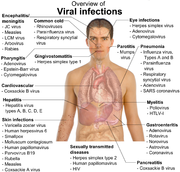 Examples of common human diseases caused by viruses include the common cold
, influenza, chickenpox
and cold sores. Many serious diseases such as ebola
, AIDS
, avian influenza and SARS are caused by viruses. The relative ability of viruses to cause disease is described in terms of virulence
. Other diseases are under investigation as to whether they too have a virus as the causative agent, such as the possible connection between human herpes virus six
(HHV6) and neurological diseases such as multiple sclerosis
and chronic fatigue syndrome
. There is controversy over whether the borna virus, previously thought to cause neurological
diseases in horses, could be responsible for psychiatric
illnesses in humans.
Viruses have different mechanisms by which they produce disease in an organism, which largely depends on the viral species. Mechanisms at the cellular level primarily include cell lysis, the breaking open and subsequent death of the cell. In multicellular organism
s, if enough cells die, the whole organism will start to suffer the effects. Although viruses cause disruption of healthy homeostasis
, resulting in disease, they may exist relatively harmlessly within an organism. An example would include the ability of the herpes simplex virus
, which causes cold sores, to remain in a dormant state within the human body. This is called latency and is a characteristic of the herpes viruses including Epstein-Barr virus, which causes glandular fever, and varicella zoster virus, which causes chickenpox and shingles. Most people have been infected with at least one of these types of herpes virus. However, these latent viruses might sometimes be beneficial, as the presence of the virus can increase immunity against bacterial pathogens, such as Yersinia pestis
.
Some viruses can cause life-long or chronic infections, where the viruses continue to replicate in the body despite the host's defence mechanisms. This is common in hepatitis B virus and hepatitis C virus infections. People chronically infected are known as carriers, as they serve as reservoirs of infectious virus. In populations with a high proportion of carriers, the disease is said to be endemic
.
is the branch of medical science that deals with the transmission and control of virus infections in humans. Transmission of viruses can be vertical, that is from mother to child, or horizontal, which means from person to person. Examples of vertical transmission
include hepatitis B virus and HIV where the baby is born already infected with the virus. Another, more rare, example is the varicella zoster virus, which, although causing relatively mild infections in humans, can be fatal to the foetus and new-born baby.
Horizontal transmission
is the most common mechanism of spread of viruses in populations. Transmission can occur when: body fluids are exchanged during sexual activity, e.g., HIV; blood is exchanged by contaminated transfusion or needle sharing, e.g., hepatitis C; a child is born to an infected mother, e.g., hepatitis B; exchange of saliva by mouth, e.g., Epstein-Barr virus; contaminated food or water is ingested, e.g., norovirus; aerosol
s containing virions are inhaled, e.g., influenza virus; and insect vectors such as mosquitoes penetrate the skin of a host, e.g., dengue.
The rate or speed of transmission of viral infections depends on factors that include population density
, the number of susceptible individuals, (i.e., those not immune), the quality of healthcare and the weather.
Epidemiology is used to break the chain of infection in populations during outbreaks of viral diseases. Control measures are used that are based on knowledge of how the virus is transmitted. It is important to find the source, or sources, of the outbreak and to identify the virus. Once the virus has been identified, the chain of transmission can sometimes be broken by vaccines. When vaccines are not available sanitation and disinfection can be effective. Often infected people are isolated from the rest of the community and those that have been exposed to the virus placed in quarantine
. To control the outbreak of foot and mouth disease in cattle in Britain in 2001, thousands of cattle were slaughtered. Most viral infections of humans and other animals have incubation period
s during which the infection causes no signs or symptoms. Incubation periods for viral diseases range from a few days to weeks but are known for most infections. Somewhat overlapping, but mainly following the incubation period, there is a period of communicability; a time when an infected individual or animal is contagious and can infect another person or animal. This too is known for many viral infections and knowledge the length of both periods is important in the control of outbreaks. When outbreaks cause an unusually high proportion of cases in a population, community or region they are called epidemic
s. If outbreaks spread worldwide they are called pandemic
s.
 Native American
populations were devastated by contagious diseases, in particular, smallpox
, brought to the Americas by European colonists. It is unclear how many Native Americans were killed by foreign diseases after the arrival of Columbus in the Americas, but the numbers have been estimated to be close to 70% of the indigenous population. The damage done by this disease significantly aided European attempts to displace and conquer the native population.
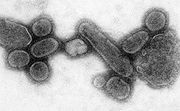
A pandemic
is a worldwide epidemic. The 1918 flu pandemic, commonly referred to as the Spanish flu, was a category 5
influenza pandemic caused by an unusually severe and deadly influenza A virus. The victims were often healthy young adults, in contrast to most influenza outbreaks, which predominantly affect juvenile, elderly, or otherwise-weakened patients.
The Spanish flu pandemic lasted from 1918 to 1919. Older estimates say it killed 40–50 million people, while more recent research suggests that it may have killed as many as 100 million people, or 5% of the world's population in 1918.
Most researchers believe that HIV originated in sub-Saharan Africa
during the 20th century; it is now a pandemic
, with an estimated 38.6 million people now living with the disease worldwide. The Joint United Nations Programme on HIV/AIDS
(UNAIDS) and the World Health Organization
(WHO) estimate that AIDS has killed more than 25 million people since it was first recognised on June 5, 1981, making it one of the most destructive epidemic
s in recorded history. In 2007 there were 2.7 million new HIV infections and 2 million HIV-related deaths.
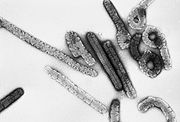 Several highly lethal viral pathogens are members of the Filoviridae
. Filoviruses are filament-like viruses that cause viral hemorrhagic fever
, and include the ebola
and marburg virus
es. The Marburg virus attracted widespread press attention in April 2005 for an outbreak in Angola
. Beginning in October 2004 and continuing into 2005, the outbreak was the world's worst epidemic of any kind of viral hemorrhagic fever.
in humans and other species. Viral cancers occur only in a minority of infected persons (or animals). Cancer viruses come from a range of virus families, including both RNA and DNA viruses, and so there is no single type of "oncovirus
" (an obsolete term originally used for acutely transforming retroviruses). The development of cancer is determined by a variety of factors such as host immunity and mutations in the host. Viruses accepted to cause human cancers include some genotypes of human papillomavirus
, hepatitis B virus
, hepatitis C virus
, Epstein-Barr virus
, Kaposi's sarcoma-associated herpesvirus
and human T-lymphotropic virus
. The most recently discovered human cancer virus is a polyomavirus (Merkel cell polyomavirus
) that causes most cases of a rare form of skin cancer called Merkel cell carcinoma
.
Hepatitis viruses can develop into a chronic viral infection that leads to liver cancer
. Infection by human T-lymphotropic virus can lead to tropical spastic paraparesis
and adult T-cell leukemia
. Human papillomaviruses are an established cause of cancers of cervix
, skin, anus
, and penis
. Within the Herpesviridae
, Kaposi's sarcoma-associated herpesvirus
causes Kaposi's sarcoma
and body cavity lymphoma, and Epstein–Barr virus causes Burkitt's lymphoma
, Hodgkin’s lymphoma, B
lymphoproliferative disorder
, and nasopharyngeal carcinoma
. Merkel cell polyomavirus closely related to SV40
and mouse polyomaviruses that have been used as animal models for cancer viruses for over 50 years.
. This comprises cells and other mechanisms that defend the host from infection in a non-specific manner. This means that the cells of the innate system recognise, and respond to, pathogens in a generic way, but, unlike the adaptive immune system
, it does not confer long-lasting or protective immunity to the host.
RNA interference
is an important innate defence against viruses. Many viruses have a replication strategy that involves double-stranded RNA (dsRNA). When such a virus infects a cell, it releases its RNA molecule or molecules, which immediately bind to a protein complex called dicer
that cuts the RNA into smaller pieces. A biochemical pathway called the RISC complex is activated, which degrades the viral mRNA and the cell survives the infection. Rotaviruses avoid this mechanism by not uncoating fully inside the cell and by releasing newly produced mRNA through pores in the particle's inner capsid. The genomic dsRNA remains protected inside the core of the virion.
When the adaptive immune system
of a vertebrate
encounters a virus, it produces specific antibodies that bind to the virus and render it non-infectious. This is called humoral immunity
. Two types of antibodies are important. The first, called IgM, is highly effective at neutralizing viruses but is produced by the cells of the immune system only for a few weeks. The second, called IgG, is produced indefinitely. The presence of IgM in the blood of the host is used to test for acute infection, whereas IgG indicates an infection sometime in the past. IgG antibody is measured when tests for immunity
are carried out.
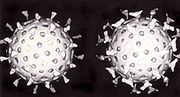 A second defence of vertebrates against viruses is called cell-mediated immunity
and involves immune cells known as T cells. The body's cells constantly display short fragments of their proteins on the cell's surface, and, if a T cell recognises a suspicious viral fragment there, the host cell is destroyed by killer T cells and the virus-specific T-cells proliferate. Cells such as the macrophage
are specialists at this antigen presentation
. The production of interferon
is an important host defence mechanism. This is a hormone produced by the body when viruses are present. Its role in immunity is complex; it eventually stops the viruses from reproducing by killing the infected cell and its close neighbours.
Not all virus infections produce a protective immune response in this way. HIV
evades the immune system by constantly changing the amino acid sequence of the proteins on the surface of the virion. These persistent viruses evade immune control by sequestration, blockade of antigen presentation
, cytokine
resistance, evasion of natural killer cell
activities, escape from apoptosis
, and antigenic shift. Other viruses, called neurotropic virus
es, are disseminated by neural spread where the immune system may be unable to reach them.
s to provide immunity to infection, and antiviral drugs that selectively interfere with viral replication.
is a cheap and effective way of preventing infections by viruses. Vaccines were used to prevent viral infections long before the discovery of the actual viruses. Their use has resulted in a dramatic decline in morbidity (illness) and mortality (death) associated with viral infections such as polio, measles
, mumps
and rubella
. Smallpox infections have been eradicated. Vaccines are available to prevent over thirteen viral infections of humans, and more are used to prevent viral infections of animals. Vaccines can consist of live-attenuated or killed viruses, or viral proteins (antigens). Live vaccines contain weakened forms of the virus, which do not cause the disease but, nonetheless, confer immunity. Such viruses are called attenuated. Live vaccines can be dangerous when given to people with a weak immunity, (who are described as immunocompromised), because in these people, the weakened virus can cause the original disease. Biotechnology and genetic engineering techniques are used to produce subunit vaccines. These vaccines use only the capsid proteins of the virus. Hepatitis B vaccine is an example of this type of vaccine. Subunit vaccines are safe for immunocompromised patients because they cannot cause the disease.
The yellow fever virus vaccine, a live-attenuated strain called 17D, is probably the safest and most effective vaccine ever generated.
, (fake DNA building-blocks), which viruses mistakenly incorporate into their genomes during replication. The life-cycle of the virus is then halted because the newly synthesised DNA is inactive. This is because these analogues lack the hydroxyl groups, which, along with phosphorus
atoms, link together to form the strong "backbone" of the DNA molecule. This is called DNA chain termination
. Examples of nucleoside analogues are aciclovir
for Herpes simplex virus infections and lamivudine
for HIV and Hepatitis B virus infections. Aciclovir
is one of the oldest and most frequently prescribed antiviral drugs.
Other antiviral drugs in use target different stages of the viral life cycle. HIV is dependent on a proteolytic enzyme called the HIV-1 protease
for it to become fully infectious. There is a large class of drugs called protease inhibitors that inactivate this enzyme.
Hepatitis C is caused by an RNA virus. In 80% of people infected, the disease is chronic, and without treatment, they are infected
for the remainder of their lives. However, there is now an effective treatment that uses the nucleoside analogue drug ribavirin
combined with interferon
. The treatment of chronic carriers
of the hepatitis B virus by using a similar strategy using lamivudine has been developed.
, can only replicate within cells that have already been infected by another virus. Viruses are important pathogens of livestock. Diseases such as Foot and Mouth Disease and bluetongue are caused by viruses. Companion animals such as cats, dogs, and horses, if not vaccinated, are susceptible to serious viral infections. Canine parvovirus
is caused by a small DNA virus and infections are often fatal in pups. Like all invertebrates, the honey bee is susceptible to many viral infections. Fortunately, most viruses co-exist harmlessly in their host and cause no signs or symptoms of disease.
 There are many types of plant virus
, but often they cause only a loss of yield
, and it is not economically viable to try to control them. Plant viruses are often spread from plant to plant by organism
s, known as vectors. These are normally insects, but some fungi, nematode worms
, and single-celled organisms
have been shown to be vectors. When control of plant virus infections is considered economical, for perennial fruits, for example, efforts are concentrated on killing the vectors and removing alternate hosts such as weeds. Plant viruses are harmless to humans and other animals because they can reproduce only in living plant cells.
Plants have elaborate and effective defence mechanisms against viruses. One of the most effective is the presence of so-called resistance (R) genes. Each R gene confers resistance to a particular virus by triggering localised areas of cell death around the infected cell, which can often be seen with the unaided eye as large spots. This stops the infection from spreading. RNA interference is also an effective defence in plants. When they are infected, plants often produce natural disinfectants that kill viruses, such as salicylic acid
, nitric oxide
, and reactive oxygen molecules
.
Plant virus particles or virus-like particles (VLPs) have applications in both biotechnology
and nanotechnology
. The capsids of most plant viruses are simple and robust structures and can be produced in large quantities either by the infection of plants or by expression in a variety of heterologous systems. Plant virus particles can be modified genetically and chemically to encapsulate foreign material and can be incorporated into supramolecular structures for use in biotechnology.
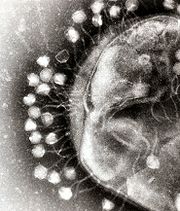 Bacteriophage
s are a common and diverse group of viruses and are the most abundant form of biological entity in aquatic environments – there are up to ten times more of these viruses in the oceans than there are bacteria, reaching levels of 250,000,000 bacteriophages per millilitre of seawater. These viruses infect specific bacteria by binding to surface receptor molecules
and then entering the cell. Within a short amount of time, in some cases just minutes, bacterial polymerase
starts translating viral mRNA into protein. These proteins go on to become either new virions within the cell, helper proteins, which help assembly of new virions, or proteins involved in cell lysis. Viral enzymes aid in the breakdown of the cell membrane, and, in the case of the T4 phage, in just over twenty minutes after injection over three hundred phages could be released.
The major way bacteria defend themselves from bacteriophages is by producing enzymes that destroy foreign DNA. These enzymes, called restriction endonucleases, cut up the viral DNA that bacteriophages inject into bacterial cells. Bacteria also contain a system that uses CRISPR
sequences to retain fragments of the genomes of viruses that the bacteria have come into contact with in the past, which allows them to block the virus's replication through a form of RNA interference
. This genetic system provides bacteria with acquired immunity
to infection.
: these are double-stranded DNA viruses with unusual and sometimes unique shapes. These viruses have been studied in most detail in the thermophilic archaea, particularly the orders Sulfolobales
and Thermoproteales
. Defences against these viruses may involve RNA interference
from repetitive DNA sequences within archaean genomes that are related to the genes of the viruses.
in the marine environment. The organic molecules released from the bacterial cells by the viruses stimulates fresh bacterial and algal growth.
Microorganisms constitute more than 90% of the biomass in the sea. It is estimated that viruses kill approximately 20% of this biomass each day and that there are 15 times as many viruses in the oceans as there are bacteria and archaea
. Viruses are the main agents responsible for the rapid destruction of harmful algal bloom
s, which often kill other marine life.
The number of viruses in the oceans decreases further offshore and deeper into the water, where there are fewer host organisms.
The effects of marine viruses are far-reaching; by increasing the amount of photosynthesis
in the oceans, viruses are indirectly responsible for reducing the amount of carbon dioxide
in the atmosphere by approximately 3 gigatonnes of carbon per year.
Like any organism, marine mammal
s are susceptible to viral infections. In 1988 and 2002, thousands of harbour seals were killed in Europe by phocine distemper virus
. Many other viruses, including caliciviruses, herpesviruses, adenoviruses and parvovirus
es, circulate in marine mammal populations.
and drives evolution. It is thought that viruses played a central role in the early evolution, before the diversification of bacteria, archaea and eukaryotes and at the time of the last universal common ancestor
of life on Earth. Viruses are still one of the largest reservoirs of unexplored genetic diversity
on Earth.
 Viruses are important to the study of molecular
and cellular biology as they provide simple systems that can be used to manipulate and investigate the functions of cells. The study and use of viruses have provided valuable information about aspects of cell biology. For example, viruses have been useful in the study of genetics
and helped our understanding of the basic mechanisms of molecular genetics
, such as DNA replication
, transcription
, RNA processing, translation
, protein
transport, and immunology
.
Geneticists
often use viruses as vectors
to introduce genes into cells that they are studying. This is useful for making the cell produce a foreign substance, or to study the effect of introducing a new gene into the genome. In similar fashion, virotherapy
uses viruses as vectors to treat various diseases, as they can specifically target cells and DNA. It shows promising use in the treatment of cancer and in gene therapy
. Eastern European scientists have used phage therapy
as an alternative to antibiotics for some time, and interest in this approach is increasing, because of the high level of antibiotic resistance
now found in some pathogenic bacteria.
Expression of heterologous protein
s by viruses is the basis of several manufacturing processes that are currently being used for the production of various proteins such as vaccine antigen
s and antibodies. Industrial processes have been recently developed using viral vectors and a number of pharmaceutical proteins are currently in pre-clinical and clinical trials.
Their surface carries specific tools designed to cross the barriers of their host cells. The size and shape of viruses, and the number and nature of the functional groups on their surface, is precisely defined. As such, viruses are commonly used in materials science as scaffolds for covalently linked surface modifications. A particular quality of viruses is that they can be tailored by directed evolution. The powerful techniques developed by life sciences are becoming the basis of engineering approaches towards nanomaterials, opening a wide range of applications far beyond biology and medicine.
Because of their size, shape, and well-defined chemical structures, viruses have been used as templates for organizing materials on the nanoscale. Recent examples include work at the Naval Research Laboratory in Washington, DC, using Cowpea Mosaic Virus (CPMV) particles to amplify signals in DNA microarray
based sensors. In this application, the virus particles separate the fluorescent
dye
s used for signalling to prevent the formation of non-fluorescent dimers that act as quenchers
. Another example is the use of CPMV as a nanoscale breadboard for molecular electronics.
cells are available. Currently, the full-length genome sequences of 2408 different viruses (including smallpox) are publicly available at an online database, maintained by the National Institute of Health.
s in human societies has led to the concern that viruses could be weaponised for biological warfare
. Further concern was raised by the successful recreation of the infamous 1918 influenza virus in a laboratory. The smallpox
virus devastated numerous societies throughout history before its eradication. There are officially only two centers in the world that keep stocks of smallpox virus – the Russian Vector laboratory, and the United States Centers for Disease Control. But fears that it may be used as a weapon are not totally unfounded; the vaccine for smallpox has sometimes severe side-effects – during the last years before the eradication of smallpox disease more people became seriously ill as a result of vaccination than did people from smallpox – and smallpox vaccination is no longer universally practiced. Thus, much of the modern human population has almost no established resistance to smallpox.
Pathogen
A pathogen gignomai "I give birth to") or infectious agent — colloquially, a germ — is a microbe or microorganism such as a virus, bacterium, prion, or fungus that causes disease in its animal or plant host...
that can replicate only inside the living cells of organisms. Viruses infect all types of organisms, from animal
Animal
Animals are a major group of multicellular, eukaryotic organisms of the kingdom Animalia or Metazoa. Their body plan eventually becomes fixed as they develop, although some undergo a process of metamorphosis later on in their life. Most animals are motile, meaning they can move spontaneously and...
s and plant
Plant
Plants are living organisms belonging to the kingdom Plantae. Precise definitions of the kingdom vary, but as the term is used here, plants include familiar organisms such as trees, flowers, herbs, bushes, grasses, vines, ferns, mosses, and green algae. The group is also called green plants or...
s to bacteria
Bacteria
Bacteria are a large domain of prokaryotic microorganisms. Typically a few micrometres in length, bacteria have a wide range of shapes, ranging from spheres to rods and spirals...
and archaea
Archaea
The Archaea are a group of single-celled microorganisms. A single individual or species from this domain is called an archaeon...
. Since Dmitri Ivanovsky's 1892 article describing a non-bacterial pathogen infecting tobacco plants, and the discovery of the tobacco mosaic virus
Tobacco mosaic virus
Tobacco mosaic virus is a positive-sense single stranded RNA virus that infects plants, especially tobacco and other members of the family Solanaceae. The infection causes characteristic patterns on the leaves . TMV was the first virus to be discovered...
by Martinus Beijerinck
Martinus Beijerinck
Martinus Willem Beijerinck was a Dutch microbiologist and botanist. Born in Amsterdam, Beijerinck studied at the Technical School of Delft, where he was awarded the degree of Chemical Engineer in 1872. He obtained his Doctor of Science degree from the University of Leiden in 1877...
in 1898, about 5,000 viruses have been described in detail, although there are millions of different types. Viruses are found in almost every ecosystem
Ecosystem
An ecosystem is a biological environment consisting of all the organisms living in a particular area, as well as all the nonliving , physical components of the environment with which the organisms interact, such as air, soil, water and sunlight....
on Earth and are the most abundant type of biological entity. The study of viruses is known as virology
Virology
Virology is the study of viruses and virus-like agents: their structure, classification and evolution, their ways to infect and exploit cells for virus reproduction, the diseases they cause, the techniques to isolate and culture them, and their use in research and therapy...
, a sub-speciality of microbiology
Microbiology
Microbiology is the study of microorganisms, which are defined as any microscopic organism that comprises either a single cell , cell clusters or no cell at all . This includes eukaryotes, such as fungi and protists, and prokaryotes...
.
Virus particles (known as virions) consist of two or three parts: the genetic material made from either DNA
DNA
Deoxyribonucleic acid is a nucleic acid that contains the genetic instructions used in the development and functioning of all known living organisms . The DNA segments that carry this genetic information are called genes, but other DNA sequences have structural purposes, or are involved in...
or RNA
RNA
Ribonucleic acid , or RNA, is one of the three major macromolecules that are essential for all known forms of life....
, long molecule
Molecule
A molecule is an electrically neutral group of at least two atoms held together by covalent chemical bonds. Molecules are distinguished from ions by their electrical charge...
s that carry genetic information; a protein
Protein
Proteins are biochemical compounds consisting of one or more polypeptides typically folded into a globular or fibrous form, facilitating a biological function. A polypeptide is a single linear polymer chain of amino acids bonded together by peptide bonds between the carboxyl and amino groups of...
coat that protects these genes; and in some cases an envelope
Viral envelope
Many viruses have viral envelopes covering their protein capsids. The envelopes typically are derived from portions of the host cell membranes , but include some viral glycoproteins. Functionally, viral envelopes are used to help viruses enter host cells...
of lipid
Lipid
Lipids constitute a broad group of naturally occurring molecules that include fats, waxes, sterols, fat-soluble vitamins , monoglycerides, diglycerides, triglycerides, phospholipids, and others...
s that surrounds the protein coat when they are outside a cell. The shapes of viruses range from simple helical
Helix
A helix is a type of smooth space curve, i.e. a curve in three-dimensional space. It has the property that the tangent line at any point makes a constant angle with a fixed line called the axis. Examples of helixes are coil springs and the handrails of spiral staircases. A "filled-in" helix – for...
and icosahedral
Icosahedron
In geometry, an icosahedron is a regular polyhedron with 20 identical equilateral triangular faces, 30 edges and 12 vertices. It is one of the five Platonic solids....
forms to more complex structures. The average virus is about one one-hundredth the size of the average bacterium. Most viruses are too small to be seen directly with a light microscope
Optical microscope
The optical microscope, often referred to as the "light microscope", is a type of microscope which uses visible light and a system of lenses to magnify images of small samples. Optical microscopes are the oldest design of microscope and were possibly designed in their present compound form in the...
.
The origins of viruses in the evolutionary history of life
Evolutionary history of life
The evolutionary history of life on Earth traces the processes by which living and fossil organisms have evolved since life on Earth first originated until the present day. Earth formed about 4.5 Ga and life appeared on its surface within one billion years...
are unclear: some may have evolved
Evolution
Evolution is any change across successive generations in the heritable characteristics of biological populations. Evolutionary processes give rise to diversity at every level of biological organisation, including species, individual organisms and molecules such as DNA and proteins.Life on Earth...
from plasmid
Plasmid
In microbiology and genetics, a plasmid is a DNA molecule that is separate from, and can replicate independently of, the chromosomal DNA. They are double-stranded and, in many cases, circular...
s – pieces of DNA that can move between cells – while others may have evolved from bacteria. In evolution, viruses are an important means of horizontal gene transfer
Horizontal gene transfer
Horizontal gene transfer , also lateral gene transfer , is any process in which an organism incorporates genetic material from another organism without being the offspring of that organism...
, which increases genetic diversity
Genetic diversity
Genetic diversity, the level of biodiversity, refers to the total number of genetic characteristics in the genetic makeup of a species. It is distinguished from genetic variability, which describes the tendency of genetic characteristics to vary....
.
Viruses spread in many ways; viruses in plant
Plant
Plants are living organisms belonging to the kingdom Plantae. Precise definitions of the kingdom vary, but as the term is used here, plants include familiar organisms such as trees, flowers, herbs, bushes, grasses, vines, ferns, mosses, and green algae. The group is also called green plants or...
s are often transmitted from plant to plant by insect
Insect
Insects are a class of living creatures within the arthropods that have a chitinous exoskeleton, a three-part body , three pairs of jointed legs, compound eyes, and two antennae...
s that feed on the sap
Sap
Sap may refer to:* Plant sap, the fluid transported in xylem cells or phloem sieve tube elements of a plant* Sap , a village in the Dunajská Streda District of Slovakia...
of plants, such as aphid
Aphid
Aphids, also known as plant lice and in Britain and the Commonwealth as greenflies, blackflies or whiteflies, are small sap sucking insects, and members of the superfamily Aphidoidea. Aphids are among the most destructive insect pests on cultivated plants in temperate regions...
s; viruses in animal
Animal
Animals are a major group of multicellular, eukaryotic organisms of the kingdom Animalia or Metazoa. Their body plan eventually becomes fixed as they develop, although some undergo a process of metamorphosis later on in their life. Most animals are motile, meaning they can move spontaneously and...
s can be carried by blood-sucking
Hematophagy
Hematophagy is the practice of certain animals of feeding on blood...
insects. These disease-bearing organisms are known as vectors. Influenza viruses
Influenza
Influenza, commonly referred to as the flu, is an infectious disease caused by RNA viruses of the family Orthomyxoviridae , that affects birds and mammals...
are spread by coughing and sneezing. Norovirus and rotavirus
Rotavirus
Rotavirus is the most common cause of severe diarrhoea among infants and young children, and is one of several viruses that cause infections often called stomach flu, despite having no relation to influenza. It is a genus of double-stranded RNA virus in the family Reoviridae. By the age of five,...
, common causes of viral gastroenteritis
Gastroenteritis
Gastroenteritis is marked by severe inflammation of the gastrointestinal tract involving both the stomach and small intestine resulting in acute diarrhea and vomiting. It can be transferred by contact with contaminated food and water...
, are transmitted by the faecal-oral route
Fecal-oral route
The fecal-oral route, or alternatively, the oral-fecal route or orofecal route is a route of transmission of diseases, in which they are passed when pathogens in fecal particles from one host are introduced into the oral cavity of another potential host.There are usually intermediate steps,...
and are passed from person to person by contact, entering the body in food or water. HIV
HIV
Human immunodeficiency virus is a lentivirus that causes acquired immunodeficiency syndrome , a condition in humans in which progressive failure of the immune system allows life-threatening opportunistic infections and cancers to thrive...
is one of several viruses transmitted through sexual contact
Sexual intercourse
Sexual intercourse, also known as copulation or coitus, commonly refers to the act in which a male's penis enters a female's vagina for the purposes of sexual pleasure or reproduction. The entities may be of opposite sexes, or they may be hermaphroditic, as is the case with snails...
and by exposure to infected blood. The range of host cells that a virus can infect is called its "host range". This can be narrow or, as when a virus is capable of infecting many species, broad.
Viral infections in animals provoke an immune response that usually eliminates the infecting virus. Immune responses can also be produced by vaccine
Vaccine
A vaccine is a biological preparation that improves immunity to a particular disease. A vaccine typically contains an agent that resembles a disease-causing microorganism, and is often made from weakened or killed forms of the microbe or its toxins...
s, which confer an artificially acquired immunity
Immunity (medical)
Immunity is a biological term that describes a state of having sufficient biological defenses to avoid infection, disease, or other unwanted biological invasion. Immunity involves both specific and non-specific components. The non-specific components act either as barriers or as eliminators of wide...
to the specific viral infection. However, some viruses including those causing AIDS
AIDS
Acquired immune deficiency syndrome or acquired immunodeficiency syndrome is a disease of the human immune system caused by the human immunodeficiency virus...
and viral hepatitis
Viral hepatitis
Viral hepatitis is liver inflammation due to a viral infection. It may present in acute or chronic forms. The most common causes of viral hepatitis are the five unrelated hepatotropic viruses Hepatitis A, Hepatitis B, Hepatitis C, Hepatitis D, and Hepatitis E...
evade these immune responses and result in chronic infections. Antibiotic
Antibiotic
An antibacterial is a compound or substance that kills or slows down the growth of bacteria.The term is often used synonymously with the term antibiotic; today, however, with increased knowledge of the causative agents of various infectious diseases, antibiotic has come to denote a broader range of...
s have no effect on viruses, but several antiviral drug
Antiviral drug
Antiviral drugs are a class of medication used specifically for treating viral infections. Like antibiotics for bacteria, specific antivirals are used for specific viruses...
s have been developed.
Etymology
The word is from the LatinLatin
Latin is an Italic language originally spoken in Latium and Ancient Rome. It, along with most European languages, is a descendant of the ancient Proto-Indo-European language. Although it is considered a dead language, a number of scholars and members of the Christian clergy speak it fluently, and...
virus referring to poison
Poison
In the context of biology, poisons are substances that can cause disturbances to organisms, usually by chemical reaction or other activity on the molecular scale, when a sufficient quantity is absorbed by an organism....
and other noxious substances, first used in English in 1392. Virulent, from Latin virulentus (poisonous), dates to 1400. A meaning of "agent that causes infectious disease" is first recorded in 1728, before the discovery of viruses by Dmitry Ivanovsky in 1892. The plural is viruses. The adjective viral dates to 1948. The term virion is also used to refer to a single infective viral particle.
History
Louis Pasteur
Louis Pasteur was a French chemist and microbiologist born in Dole. He is remembered for his remarkable breakthroughs in the causes and preventions of diseases. His discoveries reduced mortality from puerperal fever, and he created the first vaccine for rabies and anthrax. His experiments...
was unable to find a causative agent for rabies
Rabies
Rabies is a viral disease that causes acute encephalitis in warm-blooded animals. It is zoonotic , most commonly by a bite from an infected animal. For a human, rabies is almost invariably fatal if post-exposure prophylaxis is not administered prior to the onset of severe symptoms...
and speculated about a pathogen too small to be detected using a microscope. In 1884, the French microbiologist
Microbiologist
A microbiologist is a scientist who works in the field of microbiology. Microbiologists study organisms called microbes. Microbes can take the form of bacteria, viruses, fungi, and protists...
Charles Chamberland
Charles Chamberland
Charles Chamberland was a French microbiologist from Chilly-le-Vignoble in the department of Jura who worked with Louis Pasteur....
invented a filter (known today as the Chamberland filter
Chamberland filter
A Chamberland filter, also known as a Pasteur-Chamberland filter, is a porcelain water filter invented by Charles Chamberland in 1884. It is similar to the Berkefeld filter in principle.-Design:...
or Chamberland-Pasteur filter) with pores smaller than bacteria. Thus, he could pass a solution containing bacteria through the filter and completely remove them from the solution. In 1892, the Russian biologist Dmitry Ivanovsky used this filter to study what is now known as the tobacco mosaic virus
Tobacco mosaic virus
Tobacco mosaic virus is a positive-sense single stranded RNA virus that infects plants, especially tobacco and other members of the family Solanaceae. The infection causes characteristic patterns on the leaves . TMV was the first virus to be discovered...
. His experiments showed that crushed leaf extracts from infected tobacco plants remain infectious after filtration. Ivanovsky suggested the infection might be caused by a toxin
Toxin
A toxin is a poisonous substance produced within living cells or organisms; man-made substances created by artificial processes are thus excluded...
produced by bacteria, but did not pursue the idea. At the time it was thought that all infectious agents could be retained by filters and grown on a nutrient medium – this was part of the germ theory of disease. In 1898, the Dutch microbiologist Martinus Beijerinck
Martinus Beijerinck
Martinus Willem Beijerinck was a Dutch microbiologist and botanist. Born in Amsterdam, Beijerinck studied at the Technical School of Delft, where he was awarded the degree of Chemical Engineer in 1872. He obtained his Doctor of Science degree from the University of Leiden in 1877...
repeated the experiments and became convinced that the filtered solution contained a new form of infectious agent. He observed that the agent multiplied only in cells that were dividing, but as his experiments did not show that it was made of particles, he called it a contagium vivum fluidum (soluble living germ) and re-introduced the word virus. Beijerinck maintained that viruses were liquid in nature, a theory later discredited by Wendell Stanley, who proved they were particulate. In the same year Friedrich Loeffler and Frosch passed the first animal virus – agent of foot-and-mouth disease
Foot-and-mouth disease
Foot-and-mouth disease or hoof-and-mouth disease is an infectious and sometimes fatal viral disease that affects cloven-hoofed animals, including domestic and wild bovids...
(aphthovirus
Aphthovirus
Aphthovirus is a viral genus of the family Picornaviridae. Aphthoviruses infect vertebrates, and include the causative agent of foot-and-mouth disease. Foot-and-mouth disease virus is the prototypic member of the genus Aphthovirus...
) – through a similar filter.
In the early 20th century, the English bacteriologist Frederick Twort
Frederick Twort
Frederick William Twort was an English bacteriologist and was the original discoverer in 1915 of bacteriophages . He studied medicine at St Thomas's Hospital, London, was superintendent of the Brown Institute for Animals , and he was also professor of bacteriology at the University of London...
discovered a group of viruses that infect bacteria, now called bacteriophages (or commonly phages), and the French-Canadian microbiologist Félix d'Herelle
Félix d'Herelle
Félix d'Herelle was a French-Canadian microbiologist, the co-discoverer of bacteriophages and experimented with the possibility of phage therapy.-Early years:...
described viruses that, when added to bacteria on agar
Agar
Agar or agar-agar is a gelatinous substance derived from a polysaccharide that accumulates in the cell walls of agarophyte red algae. Throughout history into modern times, agar has been chiefly used as an ingredient in desserts throughout Asia and also as a solid substrate to contain culture medium...
, would produce areas of dead bacteria. He accurately diluted a suspension of these viruses and discovered that the highest dilutions (lowest virus concentrations), rather than killing all the bacteria, formed discrete areas of dead organisms. Counting these areas and multiplying by the dilution factor allowed him to calculate the number of viruses in the original suspension. Phages were heralded as a potential treatment for diseases such as typhoid and cholera
Cholera
Cholera is an infection of the small intestine that is caused by the bacterium Vibrio cholerae. The main symptoms are profuse watery diarrhea and vomiting. Transmission occurs primarily by drinking or eating water or food that has been contaminated by the diarrhea of an infected person or the feces...
, but their promise was forgotten with the development of penicillin
Penicillin
Penicillin is a group of antibiotics derived from Penicillium fungi. They include penicillin G, procaine penicillin, benzathine penicillin, and penicillin V....
. The study of phages provided insights into the switching on and off of genes, and a useful mechanism for introducing foreign genes into bacteria.
By the end of the 19th century, viruses were defined in terms of their infectivity
Infectivity
In epidemiology, infectivity refers to the ability of a pathogen to establish an infection. More specifically, infectivity is a pathogen's capacity for horizontal transmission that is, how frequently it spreads among hosts that are not in a parent-child relationship...
, their ability to be filtered, and their requirement for living hosts. Viruses had been grown only in plants and animals. In 1906, Ross Granville Harrison
Ross Granville Harrison
Ross Granville Harrison was an American biologist and anatomist credited as the first to work successfully with artificial tissue culture....
invented a method for growing tissue
Tissue (biology)
Tissue is a cellular organizational level intermediate between cells and a complete organism. A tissue is an ensemble of cells, not necessarily identical, but from the same origin, that together carry out a specific function. These are called tissues because of their identical functioning...
in lymph
Lymph
Lymph is considered a part of the interstitial fluid, the fluid which lies in the interstices of all body tissues. Interstitial fluid becomes lymph when it enters a lymph capillary...
, and, in 1913, E. Steinhardt, C. Israeli, and R. A. Lambert used this method to grow vaccinia
Vaccinia
Vaccinia virus is a large, complex, enveloped virus belonging to the poxvirus family. It has a linear, double-stranded DNA genome approximately 190 kbp in length, and which encodes for approximately 250 genes. The dimensions of the virion are roughly 360 × 270 × 250 nm, with a mass of...
virus in fragments of guinea pig corneal tissue. In 1928, H. B. Maitland and M. C. Maitland grew vaccinia virus in suspensions of minced hens' kidneys. Their method was not widely adopted until the 1950s, when poliovirus
Poliovirus
Poliovirus, the causative agent of poliomyelitis, is a human enterovirus and member of the family of Picornaviridae.Poliovirus is composed of an RNA genome and a protein capsid. The genome is a single-stranded positive-sense RNA genome that is about 7500 nucleotides long. The viral particle is...
was grown on a large scale for vaccine production.
Another breakthrough came in 1931, when the American pathologist Ernest William Goodpasture
Ernest William Goodpasture
Dr. Ernest William Goodpasture was an American pathologist and physician. Goodpasture advanced the scientific understanding of the pathogenesis of infectious diseases, parasitism, and a variety of rickettsial and viral infections...
grew influenza and several other viruses in fertilized chickens' eggs. In 1949, John F. Enders, Thomas Weller
Thomas Huckle Weller
Thomas Huckle Weller was an American virologist. He, John Franklin Enders and Frederick Chapman Robbins were awarded a Nobel Prize in Physiology or Medicine in 1954 for showing how to cultivate poliomyelitis viruses in a test tube, using tissue from a monkey.Weller was born and grew up in Ann...
, and Frederick Robbins grew polio virus in cultured human embryo cells, the first virus to be grown without using solid animal tissue or eggs. This work enabled Jonas Salk
Jonas Salk
Jonas Edward Salk was an American medical researcher and virologist, best known for his discovery and development of the first safe and effective polio vaccine. He was born in New York City to parents from Ashkenazi Jewish Russian immigrant families...
to make an effective polio vaccine
Polio vaccine
Two polio vaccines are used throughout the world to combat poliomyelitis . The first was developed by Jonas Salk and first tested in 1952. Announced to the world by Salk on April 12, 1955, it consists of an injected dose of inactivated poliovirus. An oral vaccine was developed by Albert Sabin...
.
The first images of viruses were obtained upon the invention of electron microscopy in 1931 by the German engineers Ernst Ruska
Ernst Ruska
Ernst August Friedrich Ruska was a German physicist who won the Nobel Prize in Physics in 1986 for his work in electron optics, including the design of the first electron microscope.Ruska was born in Heidelberg...
and Max Knoll
Max Knoll
Max Knoll was a German electrical engineer.Knoll was born in Wiesbaden and studied in Munich and at the Technical University of Berlin, where he obtained his doctorate in the Institute for High Voltage Technology...
. In 1935, American biochemist and virologist Wendell Meredith Stanley
Wendell Meredith Stanley
Wendell Meredith Stanley was an American biochemist, virologist and Nobel laureate.-Biography:Stanley was born in Ridgeville, Indiana, and earned a BS in Chemistry at Earlham College in Richmond, Indiana. He then studied at the University of Illinois, gaining an MS in science in 1927 followed by...
examined the tobacco mosaic virus and found it was mostly made of protein. A short time later, this virus was separated into protein and RNA parts.
The tobacco mosaic virus was the first to be crystal
Crystal
A crystal or crystalline solid is a solid material whose constituent atoms, molecules, or ions are arranged in an orderly repeating pattern extending in all three spatial dimensions. The scientific study of crystals and crystal formation is known as crystallography...
lised and its structure could therefore be elucidated in detail. The first X-ray diffraction pictures of the crystallised virus were obtained by Bernal and Fankuchen in 1941. On the basis of her pictures, Rosalind Franklin
Rosalind Franklin
Rosalind Elsie Franklin was a British biophysicist and X-ray crystallographer who made critical contributions to the understanding of the fine molecular structures of DNA, RNA, viruses, coal and graphite...
discovered the full DNA
DNA
Deoxyribonucleic acid is a nucleic acid that contains the genetic instructions used in the development and functioning of all known living organisms . The DNA segments that carry this genetic information are called genes, but other DNA sequences have structural purposes, or are involved in...
structure of the virus in 1955. In the same year, Heinz Fraenkel-Conrat and Robley Williams showed that purified tobacco mosaic virus RNA and its coat protein can assemble by themselves to form functional viruses, suggesting that this simple mechanism was probably the means through which viruses were created within their host cells.
The second half of the 20th century was the golden age of virus discovery and most of the 2,000 recognised species of animal, plant, and bacterial viruses were discovered during these years. In 1957, equine arterivirus
Arterivirus
Arterivirus is a genus of virus, with type species equine arteritis virus. In 1996, the family Arteriviridae was included within the order Nidovirales. Arteriviruses are small, enveloped, animal viruses with an icosahedral core containing a positive-sense RNA genome...
and the cause of Bovine virus diarrhea
Bovine virus diarrhea
- Introduction :Bovine virus diarrhea or bovine viral diarrhea is a disease of cattle which reduces productivity and increases death loss. It is caused by a Pestivirus from the family Flaviviridae. Classical swine fever is also caused by a pestivirus...
(a pestivirus
Pestivirus
Pestivirus is a genus of viruses that belong to the family Flaviviridae. Viruses in the genus Pestivirus infect mammals, including members of the family Bovidae and the family Suidae .-Virus Genetics and Structure:Pestivirus viruses have a single strand of...
) were discovered. In 1963, the hepatitis B virus was discovered by Baruch Blumberg, and in 1965, Howard Temin described the first retrovirus
Retrovirus
A retrovirus is an RNA virus that is duplicated in a host cell using the reverse transcriptase enzyme to produce DNA from its RNA genome. The DNA is then incorporated into the host's genome by an integrase enzyme. The virus thereafter replicates as part of the host cell's DNA...
. Reverse transcriptase
Reverse transcriptase
In the fields of molecular biology and biochemistry, a reverse transcriptase, also known as RNA-dependent DNA polymerase, is a DNA polymerase enzyme that transcribes single-stranded RNA into single-stranded DNA. It also helps in the formation of a double helix DNA once the RNA has been reverse...
, the key enzyme that retroviruses use to translate their RNA into DNA, was first described in 1970, independently by Howard Martin Temin
Howard Martin Temin
Howard Martin Temin was a U.S. geneticist. Along with Renato Dulbecco and David Baltimore he discovered reverse transcriptase in the 1970s at the University of Wisconsin–Madison, for which he shared the 1975 Nobel Prize in Physiology or Medicine.-Scientific career:Temin's description of how tumor...
and David Baltimore
David Baltimore
David Baltimore is an American biologist, university administrator, and Nobel laureate in Physiology or Medicine. He served as president of the California Institute of Technology from 1997 to 2006, and is currently the Robert A. Millikan Professor of Biology at Caltech...
. In 1983 Luc Montagnier
Luc Montagnier
Luc Antoine Montagnier is a French virologist and joint recipient with Françoise Barré-Sinoussi and Harald zur Hausen of the 2008 Nobel Prize in Physiology or Medicine, for his discovery of the human immunodeficiency virus...
's team at the Pasteur Institute
Pasteur Institute
The Pasteur Institute is a French non-profit private foundation dedicated to the study of biology, micro-organisms, diseases, and vaccines. It is named after Louis Pasteur, who made some of the greatest breakthroughs in modern medicine at the time, including pasteurization and vaccines for anthrax...
in France
France
The French Republic , The French Republic , The French Republic , (commonly known as France , is a unitary semi-presidential republic in Western Europe with several overseas territories and islands located on other continents and in the Indian, Pacific, and Atlantic oceans. Metropolitan France...
, first isolated the retrovirus now called HIV.
Origins
Viruses are found wherever there is life and have probably existed since living cells first evolved. The origin of viruses is unclear because they do not form fossils, so molecular techniquesMolecular biology
Molecular biology is the branch of biology that deals with the molecular basis of biological activity. This field overlaps with other areas of biology and chemistry, particularly genetics and biochemistry...
have been used to compare the DNA or RNA of viruses and are a useful means of investigating how they arose. There are three main hypotheses that try to explain the origins of viruses:
Regressive hypothesis : Viruses may have once been small cells that parasitised
Parasitism
Parasitism is a type of symbiotic relationship between organisms of different species where one organism, the parasite, benefits at the expense of the other, the host. Traditionally parasite referred to organisms with lifestages that needed more than one host . These are now called macroparasites...
larger cells. Over time, genes not required by their parasitism were lost. The bacteria rickettsia
Rickettsia
Rickettsia is a genus of non-motile, Gram-negative, non-sporeforming, highly pleomorphic bacteria that can present as cocci , rods or thread-like . Being obligate intracellular parasites, the Rickettsia survival depends on entry, growth, and replication within the cytoplasm of eukaryotic host cells...
and chlamydia
Chlamydia (bacterium)
Chlamydia is a genus of bacteria that are obligate intracellular parasites. Chlamydia infections are the most common bacterial sexually transmitted infections in humans and are the leading cause of infectious blindness worldwide....
are living cells that, like viruses, can reproduce only inside host cells. They lend support to this hypothesis, as their dependence on parasitism is likely to have caused the loss of genes that enabled them to survive outside a cell. This is also called the degeneracy hypothesis, or reduction hypothesis.
Cellular origin hypothesis : Some viruses may have evolved from bits of DNA or RNA that "escaped" from the genes of a larger organism. The escaped DNA could have come from plasmid
Plasmid
In microbiology and genetics, a plasmid is a DNA molecule that is separate from, and can replicate independently of, the chromosomal DNA. They are double-stranded and, in many cases, circular...
s (pieces of naked DNA that can move between cells) or transposons (molecules of DNA that replicate and move around to different positions within the genes of the cell). Once called "jumping genes", transposons are examples of mobile genetic elements
Mobile genetic elements
Mobile genetic elements are a type of DNA that can move around within the genome. They include:*Transposons **Retrotransposons**DNA transposons**Insertion sequences*Plasmids...
and could be the origin of some viruses. They were discovered in maize by Barbara McClintock
Barbara McClintock
Barbara McClintock , the 1983 Nobel Laureate in Physiology or Medicine, was an American scientist and one of the world's most distinguished cytogeneticists. McClintock received her PhD in botany from Cornell University in 1927, where she was a leader in the development of maize cytogenetics...
in 1950. This is sometimes called the vagrancy hypothesis, or the escape hypothesis.
Coevolution hypothesis : This is also called the virus-first hypothesis and proposes that viruses may have evolved from complex molecules of protein and nucleic acid
Nucleic acid
Nucleic acids are biological molecules essential for life, and include DNA and RNA . Together with proteins, nucleic acids make up the most important macromolecules; each is found in abundance in all living things, where they function in encoding, transmitting and expressing genetic information...
at the same time as cells first appeared on earth and would have been dependent on cellular life for billions of years. Viroids are molecules of RNA that are not classified as viruses because they lack a protein coat. However, they have characteristics that are common to several viruses and are often called subviral agents. Viroids are important pathogens of plants. They do not code for proteins but interact with the host cell and use the host machinery for their replication. The hepatitis delta virus of humans has an RNA genome similar to viroids but has a protein coat derived from hepatitis B virus and cannot produce one of its own. It is, therefore, a defective virus and cannot replicate without the help of hepatitis B virus. In similar manner, the virophage 'sputnik' is dependent on mimivirus
Mimivirus
Mimivirus is a viral genus containing a single identified species named Acanthamoeba polyphaga mimivirus , or is a group of phylogenetically related large viruses . In colloquial speech, APMV is more commonly referred to as just “mimivirus”...
, which infects the protozoan Acanthamoeba castellanii. These viruses that are dependent on the presence of other virus species in the host cell are called satellites
Satellite (biology)
A satellite is a subviral agent composed of nucleic acid that depends on the co-infection of a host cell with a helper or master virus for its multiplication. When a satellite encodes the coat protein in which its nucleic acid is encapsidated it is referred to as a satellite virus...
and may represent evolutionary intermediates of viroids and viruses.
In the past, there were problems with all of these hypotheses: the regressive hypothesis did not explain why even the smallest of cellular parasites do not resemble viruses in any way. The escape hypothesis did not explain the complex capsids and other structures on virus particles. The virus-first hypothesis contravened the definition of viruses in that they require host cells. Viruses are now recognised as ancient and to have origins that pre-date the divergence of life into the three domains
Three-domain system
The three-domain system is a biological classification introduced by Carl Woese in 1977 that divides cellular life forms into archaea, bacteria, and eukaryote domains. In particular, it emphasizes the separation of prokaryotes into two groups, originally called Eubacteria and Archaebacteria...
. This discovery has led modern virologists to reconsider and re-evaluate these three classical hypotheses.
The evidence for an ancestral world of RNA cells and computer analysis of viral and host DNA sequences are giving a better understanding of the evolutionary relationships between different viruses and may help identify the ancestors of modern viruses. To date, such analyses have not proved which of these hypotheses is correct. However, it seems unlikely that all currently known viruses have a common ancestor, and viruses have probably arisen numerous times in the past by one or more mechanisms.
Prions are infectious protein molecules that do not contain DNA or RNA. They cause an infection in sheep called scrapie
Scrapie
Scrapie is a fatal, degenerative disease that affects the nervous systems of sheep and goats. It is one of several transmissible spongiform encephalopathies , which are related to bovine spongiform encephalopathy and chronic wasting disease of deer. Like other spongiform encephalopathies, scrapie...
and cattle bovine spongiform encephalopathy
Bovine spongiform encephalopathy
Bovine spongiform encephalopathy , commonly known as mad-cow disease, is a fatal neurodegenerative disease in cattle that causes a spongy degeneration in the brain and spinal cord. BSE has a long incubation period, about 30 months to 8 years, usually affecting adult cattle at a peak age onset of...
("mad cow" disease). In humans they cause kuru
Kuru (disease)
Kuru is an incurable degenerative neurological disorder that is a type of transmissible spongiform encephalopathy, caused by a prion found in humans...
and Creutzfeldt–Jakob disease. They are able to replicate because some proteins can exist in two different shapes and the prion changes the normal shape of a host protein into the prion shape. This starts a chain reaction where each prion protein converts many host proteins into more prions, and these new prions then go on to convert even more protein into prions. Although they are fundamentally different from viruses and viroids, their discovery gives credence to the idea that viruses could have evolved from self-replicating molecules.
Life properties
Opinions differ on whether viruses are a form of lifeLife
Life is a characteristic that distinguishes objects that have signaling and self-sustaining processes from those that do not, either because such functions have ceased , or else because they lack such functions and are classified as inanimate...
, or organic structures that interact with living organisms. They have been described as "organisms at the edge of life", since they resemble organisms in that they possess genes and evolve by natural selection, and reproduce by creating multiple copies of themselves through self-assembly. Although they have genes, they do not have a cellular structure, which is often seen as the basic unit of life. Viruses do not have their own metabolism
Metabolism
Metabolism is the set of chemical reactions that happen in the cells of living organisms to sustain life. These processes allow organisms to grow and reproduce, maintain their structures, and respond to their environments. Metabolism is usually divided into two categories...
, and require a host cell to make new products. They therefore cannot naturally reproduce outside a host cell – although bacterial species such as rickettsia
Rickettsia
Rickettsia is a genus of non-motile, Gram-negative, non-sporeforming, highly pleomorphic bacteria that can present as cocci , rods or thread-like . Being obligate intracellular parasites, the Rickettsia survival depends on entry, growth, and replication within the cytoplasm of eukaryotic host cells...
and chlamydia
Chlamydia (bacterium)
Chlamydia is a genus of bacteria that are obligate intracellular parasites. Chlamydia infections are the most common bacterial sexually transmitted infections in humans and are the leading cause of infectious blindness worldwide....
are considered living organisms despite the same limitation. Accepted forms of life use cell division
Cell division
Cell division is the process by which a parent cell divides into two or more daughter cells . Cell division is usually a small segment of a larger cell cycle. This type of cell division in eukaryotes is known as mitosis, and leaves the daughter cell capable of dividing again. The corresponding sort...
to reproduce, whereas viruses spontaneously assemble within cells. They differ from autonomous growth of crystals
Crystallization
Crystallization is the process of formation of solid crystals precipitating from a solution, melt or more rarely deposited directly from a gas. Crystallization is also a chemical solid–liquid separation technique, in which mass transfer of a solute from the liquid solution to a pure solid...
as they inherit genetic mutations while being subject to natural selection. Virus self-assembly within host cells has implications for the study of the origin of life, as it lends further credence to the hypothesis that life could have started as self-assembling organic molecules.
Structure
Morphology (biology)
In biology, morphology is a branch of bioscience dealing with the study of the form and structure of organisms and their specific structural features....
. Generally viruses are much smaller than bacteria. Most viruses that have been studied have a diameter between 20 and 300 nanometres. Some filoviruses have a total length of up to 1400 nm; their diameters are only about 80 nm. Most viruses cannot be seen with a light microscope so scanning and transmission electron microscope
Electron microscope
An electron microscope is a type of microscope that uses a beam of electrons to illuminate the specimen and produce a magnified image. Electron microscopes have a greater resolving power than a light-powered optical microscope, because electrons have wavelengths about 100,000 times shorter than...
s are used to visualise virions. To increase the contrast between viruses and the background, electron-dense "stains" are used. These are solutions of salts of heavy metals, such as tungsten
Tungsten
Tungsten , also known as wolfram , is a chemical element with the chemical symbol W and atomic number 74.A hard, rare metal under standard conditions when uncombined, tungsten is found naturally on Earth only in chemical compounds. It was identified as a new element in 1781, and first isolated as...
, that scatter the electrons from regions covered with the stain. When virions are coated with stain (positive staining), fine detail is obscured. Negative staining overcomes this problem by staining the background only.
A complete virus particle, known as a virion, consists of nucleic acid surrounded by a protective coat of protein called a capsid
Capsid
A capsid is the protein shell of a virus. It consists of several oligomeric structural subunits made of protein called protomers. The observable 3-dimensional morphological subunits, which may or may not correspond to individual proteins, are called capsomeres. The capsid encloses the genetic...
. These are formed from identical protein subunits called capsomeres
Capsomere
The capsomere is a basic subunit of the capsid, an outer covering of protein that protects the genetic material of a virus. Capsomeres self-assemble to form the capsid....
. Viruses can have a lipid
Lipid
Lipids constitute a broad group of naturally occurring molecules that include fats, waxes, sterols, fat-soluble vitamins , monoglycerides, diglycerides, triglycerides, phospholipids, and others...
"envelope" derived from the host cell membrane
Cell membrane
The cell membrane or plasma membrane is a biological membrane that separates the interior of all cells from the outside environment. The cell membrane is selectively permeable to ions and organic molecules and controls the movement of substances in and out of cells. It basically protects the cell...
. The capsid is made from proteins encoded by the viral genome
Genome
In modern molecular biology and genetics, the genome is the entirety of an organism's hereditary information. It is encoded either in DNA or, for many types of virus, in RNA. The genome includes both the genes and the non-coding sequences of the DNA/RNA....
and its shape serves as the basis for morphological distinction. Virally coded protein subunits will self-assemble to form a capsid, generally requiring the presence of the virus genome. Complex viruses code for proteins that assist in the construction of their capsid. Proteins associated with nucleic acid are known as nucleoprotein
Nucleoprotein
A nucleoprotein is any protein that is structurally associated with nucleic acid .Many viruses harness this protein, and they are known for being host-specific...
s, and the association of viral capsid proteins with viral nucleic acid is called a nucleocapsid. The capsid and entire virus structure can be mechanically (physically) probed through atomic force microscopy. In general, there are four main morphological virus types:
Helical: These viruses are composed of a single type of capsomer stacked around a central axis to form a helical structure, which may have a central cavity, or hollow tube. This arrangement results in rod-shaped or filamentous virions: These can be short and highly rigid, or long and very flexible. The genetic material, in general, single-stranded RNA, but ssDNA in some cases, is bound into the protein helix by interactions between the negatively charged nucleic acid and positive charges on the protein. Overall, the length of a helical capsid is related to the length of the nucleic acid contained within it and the diameter is dependent on the size and arrangement of capsomers. The well-studied tobacco mosaic virus is an example of a helical virus.
Icosahedral: Most animal viruses are icosahedral or near-spherical with icosahedral symmetry. A regular icosahedron
Icosahedron
In geometry, an icosahedron is a regular polyhedron with 20 identical equilateral triangular faces, 30 edges and 12 vertices. It is one of the five Platonic solids....
is the optimum way of forming a closed shell from identical sub-units. The minimum number of identical capsomers required is twelve, each composed of five identical sub-units. Many viruses, such as rotavirus, have more than twelve capsomers and appear spherical but they retain this symmetry. Capsomers at the apices are surrounded by five other capsomers and are called pentons. Capsomers on the triangular faces are surrounded by six others and are called hexons. Hexons are essentially flat and pentons, which form the 12 vertices, are curved. The same protein may act as the subunit of both the pentamers and hexamers or they may be composed of different proteins.
- Although the isosahedral structure is extremely common among viruses because of size differences slight variations exist between virions. Given an asymmetric subunit on a triangular face of a regular isosahedron, with three subunits per face 60 such subunits can be placed in an equivalent manner. Most virions, because of their size, have more than 60 subunits. These variations have been classified on the basis of the quasi-equivalence principle proposed by Caspar and Klug.
- An isosahedral structure can be regarded as being constructed from 12 pentamers. The number of pentamers is fixed but the number of hexamers can vary. These shells can be constructed from pentamers and hexamers by minimizing the number T (triangulation number) of nonequivalent locations that subunits occupy, with the T-number adopting the particular integer values 1, 3, 4, 7, 12, 13,...(T = h2 + k2 + hk, with h, k equal to nonnegative integers). These shells always contain 12 pentamers plus 10 (T-1) hexamers. Although this classification can be applied to the majority of known viruses exceptions are known including the retroviruses where point mutations disrupt the symmetry.
Prolate: This is an isosahedron elongated along the fivefold axis and is a common arrangement of the heads of bacteriophages. Such a structure is composed of a cylinder with a cap at either end. The cylinder is composed of 10 triangles. The Q number, which can be can be any positive integer, specifies the number of triangles, composed of asymmetric subunits, that make up the 10 triangles of the cylinder. The caps are classified by the T number.
Envelope
Viral envelope
Many viruses have viral envelopes covering their protein capsids. The envelopes typically are derived from portions of the host cell membranes , but include some viral glycoproteins. Functionally, viral envelopes are used to help viruses enter host cells...
: Some species of virus envelop themselves in a modified form of one of the cell membranes, either the outer membrane surrounding an infected host cell or internal membranes such as nuclear membrane or endoplasmic reticulum
Endoplasmic reticulum
The endoplasmic reticulum is an organelle of cells in eukaryotic organisms that forms an interconnected network of tubules, vesicles, and cisternae...
, thus gaining an outer lipid bilayer known as a viral envelope. This membrane is studded with proteins coded for by the viral genome and host genome; the lipid membrane itself and any carbohydrates present originate entirely from the host. The influenza virus and HIV use this strategy. Most enveloped viruses are dependent on the envelope for their infectivity.
Complex: These viruses possess a capsid that is neither purely helical nor purely icosahedral, and that may possess extra structures such as protein tails or a complex outer wall. Some bacteriophages, such as Enterobacteria phage T4
Enterobacteria phage T4
Enterobacteria phage T4 is a bacteriophage that infects E. coli bacteria. Its DNA is 169–170 kbp long, and is held in an icosahedral head. T4 is a relatively large phage, at approximately 90 nm wide and 200 nm long...
, have a complex structure consisting of an icosahedral head bound to a helical tail, which may have a hexagonal base plate with protruding protein tail fibres. This tail structure acts like a molecular syringe, attaching to the bacterial host and then injecting the viral genome into the cell.
The poxviruses are large, complex viruses that have an unusual morphology. The viral genome is associated with proteins within a central disk structure known as a nucleoid. The nucleoid is surrounded by a membrane and two lateral bodies of unknown function. The virus has an outer envelope with a thick layer of protein studded over its surface. The whole virion is slightly pleiomorphic, ranging from ovoid to brick shape. Mimivirus is the largest characterised virus, with a capsid diameter of 400 nm. Protein filaments measuring 100 nm project from the surface. The capsid appears hexagonal under an electron microscope, therefore the capsid is probably icosahedral. In 2011, researchers discovered a larger virus on ocean floor of the coast of Las Cruces
Las Cruces
Las Cruces could refer to:* Battle of Monte de las Cruces* Las Cruces, California* Las Cruces, Chile* Las Cruces, New Mexico ** The main campus of New Mexico State University...
, Chile
Chile
Chile ,officially the Republic of Chile , is a country in South America occupying a long, narrow coastal strip between the Andes mountains to the east and the Pacific Ocean to the west. It borders Peru to the north, Bolivia to the northeast, Argentina to the east, and the Drake Passage in the far...
. Provisionally named Megavirus chilensis, it can be seen with a basic light microscope.
Some viruses that infect Archaea
Archaea
The Archaea are a group of single-celled microorganisms. A single individual or species from this domain is called an archaeon...
have complex structures that are unrelated to any other form of virus, with a wide variety of unusual shapes, ranging from spindle-shaped structures, to viruses that resemble hooked rods, teardrops or even bottles. Other archaeal viruses resemble the tailed bacteriophages, and can have multiple tail structures.
Genome
| Property | Parameters |
|---|---|
| Nucleic acid |
|
| Shape |
|
| Strandedness |
|
| Sense Sense (molecular biology) In molecular biology and genetics, sense is a concept used to compare the polarity of nucleic acid molecules, such as DNA or RNA, to other nucleic acid molecules... |
|
An enormous variety of genomic structures can be seen among viral species; as a group they contain more structural genomic diversity than plants, animals, archaea, or bacteria. There are millions of different types of viruses, although only about 5,000 of them have been described in detail.
A virus has either DNA or RNA genes and is called a DNA virus or a RNA virus respectively. The vast majority of viruses have RNA genomes. Plant viruses tend to have single-stranded RNA genomes and bacteriophages tend to have double-stranded DNA genomes.
Viral genomes are circular, as in the polyomavirus
Polyomavirus
Polyomavirus is the sole genus of viruses within the family Polyomaviridæ. Murine polyomavirus was the first polyomavirus discovered by Ludwik Gross in 1953. Subsequently, many polyomaviruses have been found to infect birds and mammals...
es, or linear, as in the adenoviruses
Adenoviridae
Adenoviruses are medium-sized , nonenveloped icosahedral viruses composed of a nucleocapsid and a double-stranded linear DNA genome...
. The type of nucleic acid is irrelevant to the shape of the genome. Among RNA viruses and certain DNA viruses, the genome is often divided up into separate parts, in which case it is called segmented. For RNA viruses, each segment often codes for only one protein and they are usually found together in one capsid. However, all segments are not required to be in the same virion for the virus to be infectious, as demonstrated by brome mosaic virus
Brome mosaic virus
Brome mosaic virus is a small , positive-stranded, icosahedral RNA plant virus belonging to the family Bromoviridae of the alphavirus-like superfamily....
and several other plant viruses.
A viral genome, irrespective of nucleic acid type, is almost always either single-stranded or double-stranded. Single-stranded genomes consist of an unpaired nucleic acid, analogous to one-half of a ladder split down the middle. Double-stranded genomes consist of two complementary paired nucleic acids, analogous to a ladder. The virus particles of some virus families, such as those belonging to the Hepadnaviridae
Hepadnaviridae
Hepadnaviruses are a family of viruses which can cause liver infections in humans and animals. There are two recognized genera:*Genus Orthohepadnavirus; type species: Hepatitis B virus...
, contain a genome that is partially double-stranded and partially single-stranded.
For most viruses with RNA genomes and some with single-stranded DNA genomes, the single strands are said to be either positive-sense (called the plus-strand) or negative-sense (called the minus-strand), depending on whether or not they are complementary to the viral messenger RNA
Messenger RNA
Messenger RNA is a molecule of RNA encoding a chemical "blueprint" for a protein product. mRNA is transcribed from a DNA template, and carries coding information to the sites of protein synthesis: the ribosomes. Here, the nucleic acid polymer is translated into a polymer of amino acids: a protein...
(mRNA). Positive-sense viral RNA is in the same sense as viral mRNA and thus at least a part of it can be immediately translated
Translation (genetics)
In molecular biology and genetics, translation is the third stage of protein biosynthesis . In translation, messenger RNA produced by transcription is decoded by the ribosome to produce a specific amino acid chain, or polypeptide, that will later fold into an active protein...
by the host cell. Negative-sense viral RNA is complementary to mRNA and thus must be converted to positive-sense RNA by an RNA-dependent RNA polymerase
RNA-dependent RNA polymerase
RNA-dependent RNA polymerase , , or RNA replicase, is an enzyme that catalyzes the replication of RNA from an RNA template...
before translation. DNA nomenclature for viruses with single-sense genomic ssDNA is similar to RNA nomenclature, in that the coding strand for the viral mRNA is complementary to it (−), and the non-coding strand is a copy of it (+). However, several types of ssDNA and ssRNA viruses have genomes that are ambisense in that transcription can occur off both strands in a double-stranded replicative intermediate. Examples include geminivirus
Geminiviridae
Geminiviruses are plant viruses which have single-stranded circular DNA genomes encoding genes that diverge in both directions from a virion strand origin of replication . According to the Baltimore classification they are considered class II viruses...
es, which are ssDNA plant viruses and arenavirus
Arenavirus
Arenavirus is a genus of virus that infects rodents and occasionally humans. At least eight Arenaviruses are known to cause human disease. The diseases derived from Arenaviruses range in severity. Aseptic meningitis, a severe human disease that causes inflammation covering the brain and spinal...
es, which are ssRNA viruses of animals.
Genome size varies greatly between species. The smallest viral genomes – the ssDNA circoviruses, family Circoviridae
Circoviridae
The Circoviridae are a family of viruses. These are small, relatively poorly-studied viruses, with circular, single-stranded DNA genomes of approximately one to four kilobases-Virology:...
– code for only two proteins and have a genome size of only 2 kilobases; the largest – mimivirus
Mimivirus
Mimivirus is a viral genus containing a single identified species named Acanthamoeba polyphaga mimivirus , or is a group of phylogenetically related large viruses . In colloquial speech, APMV is more commonly referred to as just “mimivirus”...
es – have genome sizes of over 1.2 megabases and code for over one thousand proteins. RNA viruses generally have smaller genome sizes than DNA viruses because of a higher error-rate when replicating, and have a maximum upper size limit. Beyond this limit, errors in the genome when replicating render the virus useless or uncompetitive. To compensate for this, RNA viruses often have segmented genomes – the genome is split into smaller molecules – thus reducing the chance that an error in a single-component genome will incapacitate the entire genome. In contrast, DNA viruses generally have larger genomes because of the high fidelity of their replication enzymes. Single-strand DNA viruses are an exception to this rule, however, as mutation rates for these genomes can approach the extreme of the ssRNA virus case.
Genetic drift
Genetic drift or allelic drift is the change in the frequency of a gene variant in a population due to random sampling.The alleles in the offspring are a sample of those in the parents, and chance has a role in determining whether a given individual survives and reproduces...
where individual bases in the DNA or RNA mutate to other bases. Most of these point mutations are "silent" – they do not change the protein that the gene encodes – but others can confer evolutionary advantages such as resistance to antiviral drugs. Antigenic shift
Antigenic shift
Antigenic shift is the process by which two or more different strains of a virus, or strains of two or more different viruses, combine to form a new subtype having a mixture of the surface antigens of the two or more original strains...
occurs when there is a major change in the genome
Genome
In modern molecular biology and genetics, the genome is the entirety of an organism's hereditary information. It is encoded either in DNA or, for many types of virus, in RNA. The genome includes both the genes and the non-coding sequences of the DNA/RNA....
of the virus. This can be a result of recombination
Genetic recombination
Genetic recombination is a process by which a molecule of nucleic acid is broken and then joined to a different one. Recombination can occur between similar molecules of DNA, as in homologous recombination, or dissimilar molecules, as in non-homologous end joining. Recombination is a common method...
or reassortment
Reassortment
Reassortment is the mixing of the genetic material of a species into new combinations in different individuals. Several different processes contribute to reassortment, including assortment of chromosomes, and chromosomal crossover. It is particularly used when two similar viruses that are infecting...
. When this happens with influenza viruses, pandemics might result. RNA viruses often exist as quasispecies or swarms of viruses of the same species but with slightly different genome nucleoside sequences. Such quasispecies are a prime target for natural selection.
Segmented genomes confer evolutionary advantages; different strains of a virus with a segmented genome can shuffle and combine genes and produce progeny viruses or (offspring) that have unique characteristics. This is called reassortment or viral sex.
Genetic recombination
Genetic recombination
Genetic recombination is a process by which a molecule of nucleic acid is broken and then joined to a different one. Recombination can occur between similar molecules of DNA, as in homologous recombination, or dissimilar molecules, as in non-homologous end joining. Recombination is a common method...
is the process by which a strand of DNA is broken and then joined to the end of a different DNA molecule. This can occur when viruses infect cells simultaneously and studies of viral evolution have shown that recombination has been rampant in the species studied. Recombination is common to both RNA and DNA viruses.
Replication cycle
Viral populations do not grow through cell division, because they are acellular. Instead, they use the machinery and metabolism of a host cell to produce multiple copies of themselves, and they assemble in the cell.The life cycle of viruses
Viral life cycle
Viruses are similar to living organisms, however there are differences. One of the ways a virus can be seen as living is that a virus needs to replicate and create progeny. However, unlike other organisms, a virus cannot survive on its own. It is only active when replicating within a host, using a...
differs greatly between species but there are six basic stages in the life cycle of viruses:
- Attachment is a specific binding between viral capsid proteins and specific receptors on the host cellular surface. This specificity determines the host range of a virus. For example, HIV infects a limited range of human leucocytes. This is because its surface protein, gp120Gp120Envelope glycoprotein GP120 is a glycoprotein exposed on the surface of the HIV envelope. The 120 in its name comes from its molecular weight of 120 kilodaltons...
, specifically interacts with the CD4CD4CD4 is a glycoprotein expressed on the surface of T helper cells, monocytes, macrophages, and dendritic cells. It was discovered in the late 1970s and was originally known as leu-3 and T4 before being named CD4 in 1984...
molecule – a chemokine receptorChemokine receptorChemokine receptors are cytokine receptors found on the surface of certain cells, which interact with a type of cytokine called a chemokine. There have been 19 distinct chemokine receptors described in mammals...
– which is most commonly found on the surface of CD4+ T-Cells. This mechanism has evolved to favour those viruses that infect only cells in which they are capable of replication. Attachment to the receptor can induce the viral envelope protein to undergo changes that results in the fusionLipid bilayer fusionFusion is the process by which two initially distinct lipid bilayers merge their hydrophobic cores, resulting in one interconnected structure. If this fusion proceeds completely through both leaflets of both bilayers, an aqueous bridge is formed and the internal contents of the two structures can mix...
of viral and cellular membranes, or changes of non-enveloped virus surface proteins that allow the virus to enter. - Penetration follows attachment: Virions enter the host cell through receptor-mediated endocytosisEndocytosisEndocytosis is a process by which cells absorb molecules by engulfing them. It is used by all cells of the body because most substances important to them are large polar molecules that cannot pass through the hydrophobic plasma or cell membrane...
or membrane fusionLipid bilayer fusionFusion is the process by which two initially distinct lipid bilayers merge their hydrophobic cores, resulting in one interconnected structure. If this fusion proceeds completely through both leaflets of both bilayers, an aqueous bridge is formed and the internal contents of the two structures can mix...
. This is often called viral entryViral entryViral entry is the earliest stage of infection in the viral life cycle, as the virus comes into contact with the host cell and introduces viral material into the cell. The major steps involved in viral entry are shown below. Despite the variation among viruses, the generalities are quite similar...
. The infection of plant and, it is presumed, fungal cells is different from that of animal cells. Plants have a rigid cell wall made of celluloseCelluloseCellulose is an organic compound with the formula , a polysaccharide consisting of a linear chain of several hundred to over ten thousand β linked D-glucose units....
, and fungi one of chitin, so most viruses can get inside these cells only after trauma to the cell wall. However, nearly all plant viruses (such as tobacco mosaic virus) can also move directly from cell to cell, in the form of single-stranded nucleoprotein complexes, through pores called plasmodesmata. This process requires movement proteins, which are virus-encoded proteins probably originally derived from plant proteins, which interact with the plasmodesmatal transport machinery Bacteria, like plants, have strong cell walls that a virus must breach to infect the cell. However, given that bacterial cell walls are much less thick than plant cell walls due to their much smaller size, some viruses have evolved mechanisms that inject their genome into the bacterial cell across the cell wall, while the viral capsid remains outside. - Uncoating is a process in which the viral capsid is removed: This may be by degradation by viral enzymes or host enzymes or by simple dissociation; the end-result is the releasing of the viral genomic nucleic acid.
- Replication of viruses primarily involves multiplication of the genome. Replication involves synthesis of viral messenger RNA (mRNA) from "early" genes (with exceptions for positive sense RNA viruses), viral protein synthesisProtein biosynthesisProtein biosynthesis is the process in which cells build or manufacture proteins. The term is sometimes used to refer only to protein translation but more often it refers to a multi-step process, beginning with amino acid synthesis and transcription of nuclear DNA into messenger RNA, which is then...
, possible assembly of viral proteins, then viral genome replication mediated by early or regulatory protein expression. This may be followed, for complex viruses with larger genomes, by one or more further rounds of mRNA synthesis: "late" gene expression is, in general, of structural or virion proteins. - Following the structure-mediated self-assembly of the virus particles, some modification of the proteins often occurs. In viruses such as HIV, this modification (sometimes called maturation) occurs after the virus has been released from the host cell.
- Viruses can be released from the host cell by lysisLysisLysis refers to the breaking down of a cell, often by viral, enzymic, or osmotic mechanisms that compromise its integrity. A fluid containing the contents of lysed cells is called a "lysate"....
, a process that kills the cell by bursting its membrane and cell wall if present: This is a feature of many bacterial and some animal viruses. Some viruses undergo a lysogenic cycle where the viral genome is incorporated by genetic recombinationGenetic recombinationGenetic recombination is a process by which a molecule of nucleic acid is broken and then joined to a different one. Recombination can occur between similar molecules of DNA, as in homologous recombination, or dissimilar molecules, as in non-homologous end joining. Recombination is a common method...
into a specific place in the host's chromosome. The viral genome is then known as a "provirusProvirusA provirus is a virus genome that is integrated into the DNA of a host cell.This state can be a stage of virus replication, or a state that persists over longer periods of time as either inactive viral infections or an endogenous retrovirus. In inactive viral infections the virus will not replicate...
" or, in the case of bacteriophages a "prophageProphageA prophage is a phage genome inserted and integrated into the circular bacterial DNA chromosome. A prophage, also known as a temperate phage, is any virus in the lysogenic cycle; it is integrated into the host chromosome or exists as an extrachromosomal plasmid. Technically, a virus may be called...
". Whenever the host divides, the viral genome is also replicated. The viral genome is mostly silent within the host; however, at some point, the provirus or prophage may give rise to active virus, which may lyse the host cells. Enveloped viruses (e.g., HIV) typically are released from the host cell by buddingViral sheddingViral shedding refers to the successful reproduction, expulsion, and host-cell infection caused by virus progeny. Once replication has been completed and the host cell is exhausted of all resources in making viral progeny, the viruses may begin to leave the cell by several methods.The term is used...
. During this process the virus acquires its envelope, which is a modified piece of the host's plasma or other, internal membrane.
The genetic material within virus particles, and the method by which the material is replicated, varies considerably between different types of viruses.
DNA viruses : The genome replication of most DNA viruses takes place in the cell's nucleus
Cell nucleus
In cell biology, the nucleus is a membrane-enclosed organelle found in eukaryotic cells. It contains most of the cell's genetic material, organized as multiple long linear DNA molecules in complex with a large variety of proteins, such as histones, to form chromosomes. The genes within these...
. If the cell has the appropriate receptor on its surface, these viruses enter the cell sometimes by direct fusion with the cell membrane (e.g. herpesviruses) or – more usually – by receptor-mediated endocytosis. Most DNA viruses are entirely dependent on the host cell's DNA and RNA synthesising machinery, and RNA processing machinery; however, viruses with larger genomes may encode much of this machinery themselves. In eukaryotes the viral genome must cross the cell's nuclear membrane to access this machinery, while in bacteria it need only enter the cell.
RNA viruses: Replication usually takes place in the cytoplasm
Cytoplasm
The cytoplasm is a small gel-like substance residing between the cell membrane holding all the cell's internal sub-structures , except for the nucleus. All the contents of the cells of prokaryote organisms are contained within the cytoplasm...
. RNA viruses can be placed into four different groups depending on their modes of replication. The polarity
Sense (molecular biology)
In molecular biology and genetics, sense is a concept used to compare the polarity of nucleic acid molecules, such as DNA or RNA, to other nucleic acid molecules...
(whether or not it can be used directly by ribosomes to make proteins) of single-stranded RNA viruses largely determines the replicative mechanism; the other major criterion is whether the genetic material is single-stranded or double-stranded. All RNA viruses use their own RNA replicase enzymes to create copies of their genomes.
Reverse transcribing viruses: These have ssRNA (Retroviridae, Metaviridae
Metaviridae
Metaviridae are a family of viruses which exist as retrotransposons in a eukaryotic host’s genome. They are very closely related to retroviruses: Metaviridae share many genomic elements with retroviruses, including length, organization, and genes themselves. This includes genes that encode reverse...
, Pseudoviridae
Pseudoviridae
The Pseudoviridae are a family of viruses, including the following genera:*Genus Pseudovirus; type species: Saccharomyces cerevisiae Ty1 virus*Genus Hemivirus; type species: Drosophila melanogaster copia virus...
) or dsDNA (Caulimoviridae
Caulimoviridae
-General overview:The Caulimoviridae are a family of viruses, including the following genera:*Genus Badnavirus; type species: Commelina yellow mottle virus*Genus Caulimovirus; type species: Cauliflower mosaic virus...
, and Hepadnaviridae
Hepadnaviridae
Hepadnaviruses are a family of viruses which can cause liver infections in humans and animals. There are two recognized genera:*Genus Orthohepadnavirus; type species: Hepatitis B virus...
) in their particles. Reverse transcribing viruses with RNA genomes (retroviruses), use a DNA intermediate to replicate, whereas those with DNA genomes (pararetroviruses) use an RNA intermediate during genome replication. Both types use a reverse transcriptase
Reverse transcriptase
In the fields of molecular biology and biochemistry, a reverse transcriptase, also known as RNA-dependent DNA polymerase, is a DNA polymerase enzyme that transcribes single-stranded RNA into single-stranded DNA. It also helps in the formation of a double helix DNA once the RNA has been reverse...
, or RNA-dependent DNA polymerase enzyme, to carry out the nucleic acid conversion. Retrovirus
Retrovirus
A retrovirus is an RNA virus that is duplicated in a host cell using the reverse transcriptase enzyme to produce DNA from its RNA genome. The DNA is then incorporated into the host's genome by an integrase enzyme. The virus thereafter replicates as part of the host cell's DNA...
es integrate the DNA produced by reverse transcription into the host genome as a provirus as a part of the replication process; pararetroviruses do not, although integrated genome copies of especially plant pararetroviruses can give rise to infectious virus. They are susceptible to antiviral drug
Antiviral drug
Antiviral drugs are a class of medication used specifically for treating viral infections. Like antibiotics for bacteria, specific antivirals are used for specific viruses...
s that inhibit the reverse transcriptase enzyme, e.g. zidovudine
Zidovudine
Zidovudine or azidothymidine is a nucleoside analog reverse-transcriptase inhibitor , a type of antiretroviral drug used for the treatment of HIV/AIDS. It is an analog of thymidine....
and lamivudine
Lamivudine
Lamivudine is a potent nucleoside analog reverse transcriptase inhibitor .It is marketed by GlaxoSmithKline with the brand names Zeffix, Heptovir, Epivir, and Epivir-HBV.Lamivudine has been used for treatment of chronic hepatitis B at a lower dose than for treatment of HIV...
. An example of the first type is HIV, which is a retrovirus. Examples of the second type are the Hepadnaviridae
Hepadnaviridae
Hepadnaviruses are a family of viruses which can cause liver infections in humans and animals. There are two recognized genera:*Genus Orthohepadnavirus; type species: Hepatitis B virus...
, which includes Hepatitis B virus.
Effects on the host cell
The range of structural and biochemical effects that viruses have on the host cell is extensive. These are called cytopathic effectCytopathic effect
Cytopathic effect or cytopathogenic effect refers to degenerative changes in cells, especially in tissue culture, and may be associated with the multiplication of certain viruses....
s. Most virus infections eventually result in the death of the host cell. The causes of death include cell lysis, alterations to the cell's surface membrane and apoptosis
Apoptosis
Apoptosis is the process of programmed cell death that may occur in multicellular organisms. Biochemical events lead to characteristic cell changes and death. These changes include blebbing, cell shrinkage, nuclear fragmentation, chromatin condensation, and chromosomal DNA fragmentation...
. Often cell death is caused by cessation of its normal activities because of suppression by virus-specific proteins, not all of which are components of the virus particle.
Some viruses cause no apparent changes to the infected cell. Cells in which the virus is latent
Virus latency
Virus latency is the ability of a pathogenic virus to lie dormant within a cell, denoted as the lysogenic part of the viral life cycle. A latent viral infection is a type of persistent viral infection which is distinguished from a chronic viral infection...
and inactive show few signs of infection and often function normally. This causes persistent infections and the virus is often dormant for many months or years. This is often the case with herpes viruses
Herpes simplex
Herpes simplex is a viral disease caused by both Herpes simplex virus type 1 and type 2 . Infection with the herpes virus is categorized into one of several distinct disorders based on the site of infection. Oral herpes, the visible symptoms of which are colloquially called cold sores or fever...
. Some viruses, such as Epstein-Barr virus
Epstein-Barr virus
The Epstein–Barr virus , also called human herpesvirus 4 , is a virus of the herpes family and is one of the most common viruses in humans. It is best known as the cause of infectious mononucleosis...
, can cause cells to proliferate without causing malignancy, while others, such as papillomavirus
Papillomavirus
Papillomaviridae is an ancient taxonomic family of non-enveloped DNA viruses, collectively known as papillomaviruses. Several hundred species of papillomaviruses, traditionally referred to as "types", have been identified infecting all carefully inspected birds and mammals, but also a small number...
es, are established causes of cancer.
Host range
Viruses are by far the most abundant parasites on earth, and they have been found to infect all types of cellular life including animals, plants, bacteriaBacteriophage
A bacteriophage is any one of a number of viruses that infect bacteria. They do this by injecting genetic material, which they carry enclosed in an outer protein capsid...
and fungi
Mycovirus
Mycoviruses are viruses that infect fungi. They have been identified in all major fungal families. Most identified so far have had double stranded RNA genomes, often with more than one dsRNA present per virus particle, and have been spherical in shape. To be a true mycovirus, they must demonstrate...
. However, different types of viruses can infect only a limited range of hosts and many are species-specific. Some, such as smallpox virus for example, can infect only one species – in this case humans, and are said to have a narrow host range. Other viruses, such as rabies virus, can infect different species of mammals and are said to have a broad range. The viruses that infect plants are harmless to animals, and most viruses that infect other animals are harmless to humans. The host range of some bacteriophages is limited to a single strain
Strain (biology)
In biology, a strain is a low-level taxonomic rank used in three related ways.-Microbiology and virology:A strain is a genetic variant or subtype of a micro-organism . For example, a "flu strain" is a certain biological form of the influenza or "flu" virus...
of bacteria and they can be used to trace the source of outbreaks of infections by a method called phage typing
Phage typing
Phage typing is a method used for detecting single strains of bacteria. It is used to trace the source of outbreaks of infections. The viruses that infect bacteria are called bacteriophages and some of these can only infect a single strain of bacteria...
.
Classification
Classification seeks to describe the diversity of viruses by naming and grouping them on the basis of similarities. In 1962, André Lwoff, Robert Horne, and Paul TournierPaul Tournier
Paul Tournier was a Swiss physician and author who had acquired a worldwide audience for his work in pastoral counseling...
were the first to develop a means of virus classification, based on the Linnaean
Linnaean taxonomy
Linnaean taxonomy can mean either of two related concepts:# the particular form of biological classification set up by Carl Linnaeus, as set forth in his Systema Naturæ and subsequent works...
hierarchical system. This system bases classification on phylum
Phylum
In biology, a phylum The term was coined by Georges Cuvier from Greek φῦλον phylon, "race, stock," related to φυλή phyle, "tribe, clan." is a taxonomic rank below kingdom and above class. "Phylum" is equivalent to the botanical term division....
, class
Class (biology)
In biological classification, class is* a taxonomic rank. Other well-known ranks are life, domain, kingdom, phylum, order, family, genus, and species, with class fitting between phylum and order...
, order
Order (biology)
In scientific classification used in biology, the order is# a taxonomic rank used in the classification of organisms. Other well-known ranks are life, domain, kingdom, phylum, class, family, genus, and species, with order fitting in between class and family...
, family
Family (biology)
In biological classification, family is* a taxonomic rank. Other well-known ranks are life, domain, kingdom, phylum, class, order, genus, and species, with family fitting between order and genus. As for the other well-known ranks, there is the option of an immediately lower rank, indicated by the...
, genus
Genus
In biology, a genus is a low-level taxonomic rank used in the biological classification of living and fossil organisms, which is an example of definition by genus and differentia...
, and species
Species
In biology, a species is one of the basic units of biological classification and a taxonomic rank. A species is often defined as a group of organisms capable of interbreeding and producing fertile offspring. While in many cases this definition is adequate, more precise or differing measures are...
. Viruses were grouped according to their shared properties (not those of their hosts) and the type of nucleic acid forming their genomes. Later the International Committee on Taxonomy of Viruses
International Committee on Taxonomy of Viruses
The International Committee on Taxonomy of Viruses is a committee which authorizes and organizes the taxonomic classification of viruses. They have developed a universal taxonomic scheme for viruses and aim to describe all the viruses of living organisms. Members of the committee are considered to...
was formed. However, viruses are not classified on the basis of phylum or class, as their small genome size and high rate of mutation makes it difficult to determine their ancestry beyond Order. As such, the Baltimore Classification is used to supplement the more traditional hierarchy.
ICTV classification
The International Committee on Taxonomy of VirusesInternational Committee on Taxonomy of Viruses
The International Committee on Taxonomy of Viruses is a committee which authorizes and organizes the taxonomic classification of viruses. They have developed a universal taxonomic scheme for viruses and aim to describe all the viruses of living organisms. Members of the committee are considered to...
(ICTV) developed the current classification system and wrote guidelines that put a greater weight on certain virus properties to maintain family uniformity. A unified taxonomy (a universal system for classifying viruses) has been established. The 7th lCTV Report formalised for the first time the concept of the virus species as the lowest taxon (group) in a branching hierarchy of viral taxa. However, at present only a small part of the total diversity of viruses has been studied, with analyses of samples from humans finding that about 20% of the virus sequences recovered have not been seen before, and samples from the environment, such as from seawater and ocean sediments, finding that the large majority of sequences are completely novel.
The general taxonomic structure is as follows:
- OrderOrder (biology)In scientific classification used in biology, the order is# a taxonomic rank used in the classification of organisms. Other well-known ranks are life, domain, kingdom, phylum, class, family, genus, and species, with order fitting in between class and family...
(-virales)- FamilyFamily (biology)In biological classification, family is* a taxonomic rank. Other well-known ranks are life, domain, kingdom, phylum, class, order, genus, and species, with family fitting between order and genus. As for the other well-known ranks, there is the option of an immediately lower rank, indicated by the...
(-viridae)- Subfamily (-virinae)
- GenusGenusIn biology, a genus is a low-level taxonomic rank used in the biological classification of living and fossil organisms, which is an example of definition by genus and differentia...
(-virus)- SpeciesSpeciesIn biology, a species is one of the basic units of biological classification and a taxonomic rank. A species is often defined as a group of organisms capable of interbreeding and producing fertile offspring. While in many cases this definition is adequate, more precise or differing measures are...
(-virus)
- Species
- Genus
- Subfamily (-virinae)
- Family
In the current (2010) ICTV taxonomy, six orders have been established, the Caudovirales, Herpesvirales, Mononegavirales, Nidovirales, Picornavirales and Tymovirales. A seventh order Ligamenvirales has also been proposed. The committee does not formally distinguish between subspecies
Subspecies
Subspecies in biological classification, is either a taxonomic rank subordinate to species, ora taxonomic unit in that rank . A subspecies cannot be recognized in isolation: a species will either be recognized as having no subspecies at all or two or more, never just one...
, strains
Strain (biology)
In biology, a strain is a low-level taxonomic rank used in three related ways.-Microbiology and virology:A strain is a genetic variant or subtype of a micro-organism . For example, a "flu strain" is a certain biological form of the influenza or "flu" virus...
, and isolates
Primary isolate
Primary isolate is a pure microbial or viral sample that has been obtained from an infected individual, rather than grown in a laboratory. In chemistry and bacteriology, the verb isolate means to obtain a pure chemical, bacteriological or viral sample...
. In total there are 6 orders, 87 families, 19 subfamilies, 348 genera, 2,885 species and about 3,000 types yet unclassified.
Baltimore classification
Nobel Prize
The Nobel Prizes are annual international awards bestowed by Scandinavian committees in recognition of cultural and scientific advances. The will of the Swedish chemist Alfred Nobel, the inventor of dynamite, established the prizes in 1895...
-winning biologist David Baltimore
David Baltimore
David Baltimore is an American biologist, university administrator, and Nobel laureate in Physiology or Medicine. He served as president of the California Institute of Technology from 1997 to 2006, and is currently the Robert A. Millikan Professor of Biology at Caltech...
devised the Baltimore classification system. The ICTV classification system is used in conjunction with the Baltimore classification system in modern virus classification.
The Baltimore classification of viruses is based on the mechanism of mRNA production. Viruses must generate mRNAs from their genomes to produce proteins and replicate themselves, but different mechanisms are used to achieve this in each virus family. Viral genomes may be single-stranded (ss) or double-stranded (ds), RNA or DNA, and may or may not use reverse transcriptase
Reverse transcriptase
In the fields of molecular biology and biochemistry, a reverse transcriptase, also known as RNA-dependent DNA polymerase, is a DNA polymerase enzyme that transcribes single-stranded RNA into single-stranded DNA. It also helps in the formation of a double helix DNA once the RNA has been reverse...
(RT). Additionally, ssRNA viruses may be either sense
Sense (molecular biology)
In molecular biology and genetics, sense is a concept used to compare the polarity of nucleic acid molecules, such as DNA or RNA, to other nucleic acid molecules...
(+) or antisense (−). This classification places viruses into seven groups:
As an example of viral classification, the chicken pox virus, varicella zoster (VZV), belongs to the order Herpesvirales, family Herpesviridae
Herpesviridae
The Herpesviridae are a large family of DNA viruses that cause diseases in animals, including humans. The members of this family are also known as herpesviruses. The family name is derived from the Greek word herpein , referring to the latent, recurring infections typical of this group of viruses...
, subfamily Alphaherpesvirinae
Alphaherpesvirinae
Alphaherpesvirinae is a subfamily of Herpesviridae primarily distinguished by reproducing more quickly than other subfamilies of Herpesviridae. In animal virology the most important herpesviruses belong to the Alphaherpesvirinae...
, and genus Varicellovirus
Varicellovirus
Varicellovirus is a genus of Alphaherpesvirinae.The varicellovirus genus contains several closely related viruses, including Varicella zoster virus , the causative agent of chickenpox in humans, and Pseudorabies virus , the causative agent of Aujeszky's disease.- Morphology :As with other...
. VZV is in Group I of the Baltimore Classification because it is a dsDNA virus that does not use reverse transcriptase.
Role in human disease
Common cold
The common cold is a viral infectious disease of the upper respiratory system, caused primarily by rhinoviruses and coronaviruses. Common symptoms include a cough, sore throat, runny nose, and fever...
, influenza, chickenpox
Chickenpox
Chickenpox or chicken pox is a highly contagious illness caused by primary infection with varicella zoster virus . It usually starts with vesicular skin rash mainly on the body and head rather than at the periphery and becomes itchy, raw pockmarks, which mostly heal without scarring...
and cold sores. Many serious diseases such as ebola
Ebola
Ebola virus disease is the name for the human disease which may be caused by any of the four known ebolaviruses. These four viruses are: Bundibugyo virus , Ebola virus , Sudan virus , and Taï Forest virus...
, AIDS
AIDS
Acquired immune deficiency syndrome or acquired immunodeficiency syndrome is a disease of the human immune system caused by the human immunodeficiency virus...
, avian influenza and SARS are caused by viruses. The relative ability of viruses to cause disease is described in terms of virulence
Virulence
Virulence is by MeSH definition the degree of pathogenicity within a group or species of parasites as indicated by case fatality rates and/or the ability of the organism to invade the tissues of the host. The pathogenicity of an organism - its ability to cause disease - is determined by its...
. Other diseases are under investigation as to whether they too have a virus as the causative agent, such as the possible connection between human herpes virus six
Human Herpesvirus Six
Human herpesvirus 6 is one of the eight known viruses that are members of the human herpesvirus family. The Human herpesvirus 6 is a virus within the Betaherpesvirinae subfamily of the genus, Roseoloviruses. There are seven other types of viruses in this family. HHV-6 has two known variants:...
(HHV6) and neurological diseases such as multiple sclerosis
Multiple sclerosis
Multiple sclerosis is an inflammatory disease in which the fatty myelin sheaths around the axons of the brain and spinal cord are damaged, leading to demyelination and scarring as well as a broad spectrum of signs and symptoms...
and chronic fatigue syndrome
Chronic fatigue syndrome
Chronic fatigue syndrome is the most common name used to designate a significantly debilitating medical disorder or group of disorders generally defined by persistent fatigue accompanied by other specific symptoms for a minimum of six months, not due to ongoing exertion, not substantially...
. There is controversy over whether the borna virus, previously thought to cause neurological
Neurology
Neurology is a medical specialty dealing with disorders of the nervous system. Specifically, it deals with the diagnosis and treatment of all categories of disease involving the central, peripheral, and autonomic nervous systems, including their coverings, blood vessels, and all effector tissue,...
diseases in horses, could be responsible for psychiatric
Psychiatry
Psychiatry is the medical specialty devoted to the study and treatment of mental disorders. These mental disorders include various affective, behavioural, cognitive and perceptual abnormalities...
illnesses in humans.
Viruses have different mechanisms by which they produce disease in an organism, which largely depends on the viral species. Mechanisms at the cellular level primarily include cell lysis, the breaking open and subsequent death of the cell. In multicellular organism
Multicellular organism
Multicellular organisms are organisms that consist of more than one cell, in contrast to single-celled organisms. Most life that can be seen with the the naked eye is multicellular, as are all animals and land plants.-Evolutionary history:Multicellularity has evolved independently dozens of times...
s, if enough cells die, the whole organism will start to suffer the effects. Although viruses cause disruption of healthy homeostasis
Homeostasis
Homeostasis is the property of a system that regulates its internal environment and tends to maintain a stable, constant condition of properties like temperature or pH...
, resulting in disease, they may exist relatively harmlessly within an organism. An example would include the ability of the herpes simplex virus
Herpes simplex virus
Herpes simplex virus 1 and 2 , also known as Human herpes virus 1 and 2 , are two members of the herpes virus family, Herpesviridae, that infect humans. Both HSV-1 and HSV-2 are ubiquitous and contagious...
, which causes cold sores, to remain in a dormant state within the human body. This is called latency and is a characteristic of the herpes viruses including Epstein-Barr virus, which causes glandular fever, and varicella zoster virus, which causes chickenpox and shingles. Most people have been infected with at least one of these types of herpes virus. However, these latent viruses might sometimes be beneficial, as the presence of the virus can increase immunity against bacterial pathogens, such as Yersinia pestis
Yersinia pestis
Yersinia pestis is a Gram-negative rod-shaped bacterium. It is a facultative anaerobe that can infect humans and other animals....
.
Some viruses can cause life-long or chronic infections, where the viruses continue to replicate in the body despite the host's defence mechanisms. This is common in hepatitis B virus and hepatitis C virus infections. People chronically infected are known as carriers, as they serve as reservoirs of infectious virus. In populations with a high proportion of carriers, the disease is said to be endemic
Endemic (epidemiology)
In epidemiology, an infection is said to be endemic in a population when that infection is maintained in the population without the need for external inputs. For example, chickenpox is endemic in the UK, but malaria is not...
.
Epidemiology
Viral epidemiologyEpidemiology
Epidemiology is the study of health-event, health-characteristic, or health-determinant patterns in a population. It is the cornerstone method of public health research, and helps inform policy decisions and evidence-based medicine by identifying risk factors for disease and targets for preventive...
is the branch of medical science that deals with the transmission and control of virus infections in humans. Transmission of viruses can be vertical, that is from mother to child, or horizontal, which means from person to person. Examples of vertical transmission
Vertical transmission
Vertical transmission, also known as mother-to-child transmission, is the transmission of an infection or other disease from mother to child immediately before and after birth during the perinatal period. A pathogen's transmissibility refers to its capacity for vertical transmission...
include hepatitis B virus and HIV where the baby is born already infected with the virus. Another, more rare, example is the varicella zoster virus, which, although causing relatively mild infections in humans, can be fatal to the foetus and new-born baby.
Horizontal transmission
Horizontal transmission
Horizontal transmission is the transmission of a bacterial, fungal, or viral infection between members of the same species that are not in a parent-child relationship....
is the most common mechanism of spread of viruses in populations. Transmission can occur when: body fluids are exchanged during sexual activity, e.g., HIV; blood is exchanged by contaminated transfusion or needle sharing, e.g., hepatitis C; a child is born to an infected mother, e.g., hepatitis B; exchange of saliva by mouth, e.g., Epstein-Barr virus; contaminated food or water is ingested, e.g., norovirus; aerosol
Aerosol
Technically, an aerosol is a suspension of fine solid particles or liquid droplets in a gas. Examples are clouds, and air pollution such as smog and smoke. In general conversation, aerosol usually refers to an aerosol spray can or the output of such a can...
s containing virions are inhaled, e.g., influenza virus; and insect vectors such as mosquitoes penetrate the skin of a host, e.g., dengue.
The rate or speed of transmission of viral infections depends on factors that include population density
Population density
Population density is a measurement of population per unit area or unit volume. It is frequently applied to living organisms, and particularly to humans...
, the number of susceptible individuals, (i.e., those not immune), the quality of healthcare and the weather.
Epidemiology is used to break the chain of infection in populations during outbreaks of viral diseases. Control measures are used that are based on knowledge of how the virus is transmitted. It is important to find the source, or sources, of the outbreak and to identify the virus. Once the virus has been identified, the chain of transmission can sometimes be broken by vaccines. When vaccines are not available sanitation and disinfection can be effective. Often infected people are isolated from the rest of the community and those that have been exposed to the virus placed in quarantine
Quarantine
Quarantine is compulsory isolation, typically to contain the spread of something considered dangerous, often but not always disease. The word comes from the Italian quarantena, meaning forty-day period....
. To control the outbreak of foot and mouth disease in cattle in Britain in 2001, thousands of cattle were slaughtered. Most viral infections of humans and other animals have incubation period
Incubation period
Incubation period is the time elapsed between exposure to a pathogenic organism, a chemical or radiation, and when symptoms and signs are first apparent...
s during which the infection causes no signs or symptoms. Incubation periods for viral diseases range from a few days to weeks but are known for most infections. Somewhat overlapping, but mainly following the incubation period, there is a period of communicability; a time when an infected individual or animal is contagious and can infect another person or animal. This too is known for many viral infections and knowledge the length of both periods is important in the control of outbreaks. When outbreaks cause an unusually high proportion of cases in a population, community or region they are called epidemic
Epidemic
In epidemiology, an epidemic , occurs when new cases of a certain disease, in a given human population, and during a given period, substantially exceed what is expected based on recent experience...
s. If outbreaks spread worldwide they are called pandemic
Pandemic
A pandemic is an epidemic of infectious disease that is spreading through human populations across a large region; for instance multiple continents, or even worldwide. A widespread endemic disease that is stable in terms of how many people are getting sick from it is not a pandemic...
s.
Epidemics and pandemics
Indigenous peoples of the Americas
The indigenous peoples of the Americas are the pre-Columbian inhabitants of North and South America, their descendants and other ethnic groups who are identified with those peoples. Indigenous peoples are known in Canada as Aboriginal peoples, and in the United States as Native Americans...
populations were devastated by contagious diseases, in particular, smallpox
Smallpox
Smallpox was an infectious disease unique to humans, caused by either of two virus variants, Variola major and Variola minor. The disease is also known by the Latin names Variola or Variola vera, which is a derivative of the Latin varius, meaning "spotted", or varus, meaning "pimple"...
, brought to the Americas by European colonists. It is unclear how many Native Americans were killed by foreign diseases after the arrival of Columbus in the Americas, but the numbers have been estimated to be close to 70% of the indigenous population. The damage done by this disease significantly aided European attempts to displace and conquer the native population.
A pandemic
Pandemic
A pandemic is an epidemic of infectious disease that is spreading through human populations across a large region; for instance multiple continents, or even worldwide. A widespread endemic disease that is stable in terms of how many people are getting sick from it is not a pandemic...
is a worldwide epidemic. The 1918 flu pandemic, commonly referred to as the Spanish flu, was a category 5
Pandemic Severity Index
The Pandemic Severity Index is a proposed classification scale for reporting the severity of influenza pandemics in the United States. The PSI was accompanied by a set of guidelines intended to help communicate appropriate actions for communities to follow in potential pandemic situations...
influenza pandemic caused by an unusually severe and deadly influenza A virus. The victims were often healthy young adults, in contrast to most influenza outbreaks, which predominantly affect juvenile, elderly, or otherwise-weakened patients.
The Spanish flu pandemic lasted from 1918 to 1919. Older estimates say it killed 40–50 million people, while more recent research suggests that it may have killed as many as 100 million people, or 5% of the world's population in 1918.
Most researchers believe that HIV originated in sub-Saharan Africa
Sub-Saharan Africa
Sub-Saharan Africa as a geographical term refers to the area of the African continent which lies south of the Sahara. A political definition of Sub-Saharan Africa, instead, covers all African countries which are fully or partially located south of the Sahara...
during the 20th century; it is now a pandemic
Pandemic
A pandemic is an epidemic of infectious disease that is spreading through human populations across a large region; for instance multiple continents, or even worldwide. A widespread endemic disease that is stable in terms of how many people are getting sick from it is not a pandemic...
, with an estimated 38.6 million people now living with the disease worldwide. The Joint United Nations Programme on HIV/AIDS
Joint United Nations Programme on HIV/AIDS
The Joint United Nations Programme on HIV and AIDS, or UNAIDS, is the main advocate for accelerated, comprehensive and coordinated global action on the HIV epidemic....
(UNAIDS) and the World Health Organization
World Health Organization
The World Health Organization is a specialized agency of the United Nations that acts as a coordinating authority on international public health. Established on 7 April 1948, with headquarters in Geneva, Switzerland, the agency inherited the mandate and resources of its predecessor, the Health...
(WHO) estimate that AIDS has killed more than 25 million people since it was first recognised on June 5, 1981, making it one of the most destructive epidemic
Epidemic
In epidemiology, an epidemic , occurs when new cases of a certain disease, in a given human population, and during a given period, substantially exceed what is expected based on recent experience...
s in recorded history. In 2007 there were 2.7 million new HIV infections and 2 million HIV-related deaths.
Filoviridae
The family Filoviridae is the taxonomic home of several related viruses that form filamentous virions. Two members of the family that are commonly known are Ebola virus and Marburg virus. Both viruses, and some of their lesser known relatives, cause severe disease in humans and nonhuman primates in...
. Filoviruses are filament-like viruses that cause viral hemorrhagic fever
Viral hemorrhagic fever
The viral hemorrhagic fevers are a diverse group of animal and human illnesses that are caused by four distinct families of RNA viruses: the families Arenaviridae, Filoviridae, Bunyaviridae, and Flaviviridae. All types of VHF are characterized by fever and bleeding disorders and all can progress...
, and include the ebola
Ebola
Ebola virus disease is the name for the human disease which may be caused by any of the four known ebolaviruses. These four viruses are: Bundibugyo virus , Ebola virus , Sudan virus , and Taï Forest virus...
and marburg virus
Marburg virus
Marburg virus disease is the name for the human disease caused by any of the two marburgviruses Marburg virus and Ravn virus...
es. The Marburg virus attracted widespread press attention in April 2005 for an outbreak in Angola
Angola
Angola, officially the Republic of Angola , is a country in south-central Africa bordered by Namibia on the south, the Democratic Republic of the Congo on the north, and Zambia on the east; its west coast is on the Atlantic Ocean with Luanda as its capital city...
. Beginning in October 2004 and continuing into 2005, the outbreak was the world's worst epidemic of any kind of viral hemorrhagic fever.
Cancer
Viruses are an established cause of cancerCancer
Cancer , known medically as a malignant neoplasm, is a large group of different diseases, all involving unregulated cell growth. In cancer, cells divide and grow uncontrollably, forming malignant tumors, and invade nearby parts of the body. The cancer may also spread to more distant parts of the...
in humans and other species. Viral cancers occur only in a minority of infected persons (or animals). Cancer viruses come from a range of virus families, including both RNA and DNA viruses, and so there is no single type of "oncovirus
Oncovirus
An oncovirus is a virus that can cause cancer. This term originated from studies of acutely-transforming retroviruses in the 1950–60s, often called oncornaviruses to denote their RNA virus origin. It now refers to any virus with a DNA or RNA genome causing cancer and is synonymous with "tumor...
" (an obsolete term originally used for acutely transforming retroviruses). The development of cancer is determined by a variety of factors such as host immunity and mutations in the host. Viruses accepted to cause human cancers include some genotypes of human papillomavirus
Human papillomavirus
Human papillomavirus is a member of the papillomavirus family of viruses that is capable of infecting humans. Like all papillomaviruses, HPVs establish productive infections only in keratinocytes of the skin or mucous membranes...
, hepatitis B virus
Hepatitis B virus
Hepatitis B is an infectious illness caused by hepatitis B virus which infects the liver of hominoidea, including humans, and causes an inflammation called hepatitis. Originally known as "serum hepatitis", the disease has caused epidemics in parts of Asia and Africa, and it is endemic in China...
, hepatitis C virus
Hepatitis C virus
Hepatitis C virus is a small , enveloped, positive-sense single-stranded RNA virus of the family Flaviviridae...
, Epstein-Barr virus
Epstein-Barr virus
The Epstein–Barr virus , also called human herpesvirus 4 , is a virus of the herpes family and is one of the most common viruses in humans. It is best known as the cause of infectious mononucleosis...
, Kaposi's sarcoma-associated herpesvirus
Kaposi's sarcoma-associated herpesvirus
Kaposi's sarcoma-associated herpesvirus is one of seven currently known human cancer viruses, or oncoviruses. It is also the eighth human herpesvirus; its formal name according to the International Committee on Taxonomy of Viruses is HHV-8. Like other herpesviruses, its informal name is used...
and human T-lymphotropic virus
Human T-lymphotropic virus
Human T-cell Lymphotropic Virus Type 1 , also called the Adult T-cell lymphoma virus type 1, a virus that has been seriously implicated in several kinds of diseases including HTLV-I-associated myelopathy, Strongyloides stercoralis hyper-infection, and a virus cancer link for leukemia...
. The most recently discovered human cancer virus is a polyomavirus (Merkel cell polyomavirus
Merkel cell polyomavirus
Merkel cell polyomavirus was first described in January 2008. MCV is one of seven known human tumor viruses. It is suspected to cause the majority of cases of Merkel cell carcinoma, a rare but aggressive form of skin cancer. Approximately 80% of Merkel cell carcinoma tumors have been found to be...
) that causes most cases of a rare form of skin cancer called Merkel cell carcinoma
Merkel cell carcinoma
Merkel cell carcinoma Merkel cell carcinoma Merkel cell carcinoma (also known as a "Cutaneous apudoma," "Primary neuroendocrine carcinoma of the skin," "Primary small cell carcinoma of the skin," and "Trabecular carcinoma of the skin"...
.
Hepatitis viruses can develop into a chronic viral infection that leads to liver cancer
Hepatocellular carcinoma
Hepatocellular carcinoma is the most common type of liver cancer. Most cases of HCC are secondary to either a viral hepatitide infection or cirrhosis .Compared to other cancers, HCC is quite a rare tumor in the United States...
. Infection by human T-lymphotropic virus can lead to tropical spastic paraparesis
Tropical spastic paraparesis
Tropical spastic paraparesis , also known as HTLV-associated myelopathy or chronic progressive myelopathy, is an infection of the spinal cord by Human T-lymphotropic virus resulting in paraparesis, weakness of the legs...
and adult T-cell leukemia
Adult T-cell leukemia
Adult T-cell leukemia/lymphoma is a rare cancer of the immune system's own T-cells.Human T cell leukemia/lymphotropic virus type 1 is believed to be the cause of it, in addition to several other diseases.-Signs and symptoms:...
. Human papillomaviruses are an established cause of cancers of cervix
Cervix
The cervix is the lower, narrow portion of the uterus where it joins with the top end of the vagina. It is cylindrical or conical in shape and protrudes through the upper anterior vaginal wall...
, skin, anus
Anus
The anus is an opening at the opposite end of an animal's digestive tract from the mouth. Its function is to control the expulsion of feces, unwanted semi-solid matter produced during digestion, which, depending on the type of animal, may be one or more of: matter which the animal cannot digest,...
, and penis
Penis
The penis is a biological feature of male animals including both vertebrates and invertebrates...
. Within the Herpesviridae
Herpesviridae
The Herpesviridae are a large family of DNA viruses that cause diseases in animals, including humans. The members of this family are also known as herpesviruses. The family name is derived from the Greek word herpein , referring to the latent, recurring infections typical of this group of viruses...
, Kaposi's sarcoma-associated herpesvirus
Kaposi's sarcoma-associated herpesvirus
Kaposi's sarcoma-associated herpesvirus is one of seven currently known human cancer viruses, or oncoviruses. It is also the eighth human herpesvirus; its formal name according to the International Committee on Taxonomy of Viruses is HHV-8. Like other herpesviruses, its informal name is used...
causes Kaposi's sarcoma
Kaposi's sarcoma
Kaposi's sarcoma is a tumor caused by Human herpesvirus 8 , also known as Kaposi's sarcoma-associated herpesvirus . It was originally described by Moritz Kaposi , a Hungarian dermatologist practicing at the University of Vienna in 1872. It became more widely known as one of the AIDS defining...
and body cavity lymphoma, and Epstein–Barr virus causes Burkitt's lymphoma
Burkitt's lymphoma
Burkitt's lymphoma is a cancer of the lymphatic system...
, Hodgkin’s lymphoma, B
B cell
B cells are lymphocytes that play a large role in the humoral immune response . The principal functions of B cells are to make antibodies against antigens, perform the role of antigen-presenting cells and eventually develop into memory B cells after activation by antigen interaction...
lymphoproliferative disorder
Lymphoproliferative disorders
Lymphoproliferative disorders refer to several conditions in which lymphocytes are produced in excessive quantities. They typically occur in patients who have compromised immune systems...
, and nasopharyngeal carcinoma
Nasopharyngeal carcinoma
Nasopharyngeal carcinoma is the most common cancer originating in the nasopharynx, the uppermost region of the pharynx , behind the nose where the nasal passages and auditory tubes join the remainder of the upper respiratory tract. NPC differs significantly from other cancers of the head and neck...
. Merkel cell polyomavirus closely related to SV40
SV40
SV40 is an abbreviation for Simian vacuolating virus 40 or Simian virus 40, a polyomavirus that is found in both monkeys and humans...
and mouse polyomaviruses that have been used as animal models for cancer viruses for over 50 years.
Host defence mechanisms
The body's first line of defence against viruses is the innate immune systemInnate immune system
The innate immune system, also known as non-specific immune system and secondary line of defence, comprises the cells and mechanisms that defend the host from infection by other organisms in a non-specific manner...
. This comprises cells and other mechanisms that defend the host from infection in a non-specific manner. This means that the cells of the innate system recognise, and respond to, pathogens in a generic way, but, unlike the adaptive immune system
Adaptive immune system
The adaptive immune system is composed of highly specialized, systemic cells and processes that eliminate or prevent pathogenic growth. Thought to have arisen in the first jawed vertebrates, the adaptive or "specific" immune system is activated by the “non-specific” and evolutionarily older innate...
, it does not confer long-lasting or protective immunity to the host.
RNA interference
RNA interference
RNA interference is a process within living cells that moderates the activity of their genes. Historically, it was known by other names, including co-suppression, post transcriptional gene silencing , and quelling. Only after these apparently unrelated processes were fully understood did it become...
is an important innate defence against viruses. Many viruses have a replication strategy that involves double-stranded RNA (dsRNA). When such a virus infects a cell, it releases its RNA molecule or molecules, which immediately bind to a protein complex called dicer
Dicer
Dicer is an endoribonuclease in the RNase III family that cleaves double-stranded RNA and pre-microRNA into short double-stranded RNA fragments called small interfering RNA about 20-25 nucleotides long, usually with a two-base overhang on the 3' end...
that cuts the RNA into smaller pieces. A biochemical pathway called the RISC complex is activated, which degrades the viral mRNA and the cell survives the infection. Rotaviruses avoid this mechanism by not uncoating fully inside the cell and by releasing newly produced mRNA through pores in the particle's inner capsid. The genomic dsRNA remains protected inside the core of the virion.
When the adaptive immune system
Adaptive immune system
The adaptive immune system is composed of highly specialized, systemic cells and processes that eliminate or prevent pathogenic growth. Thought to have arisen in the first jawed vertebrates, the adaptive or "specific" immune system is activated by the “non-specific” and evolutionarily older innate...
of a vertebrate
Vertebrate
Vertebrates are animals that are members of the subphylum Vertebrata . Vertebrates are the largest group of chordates, with currently about 58,000 species described. Vertebrates include the jawless fishes, bony fishes, sharks and rays, amphibians, reptiles, mammals, and birds...
encounters a virus, it produces specific antibodies that bind to the virus and render it non-infectious. This is called humoral immunity
Humoral immunity
The Humoral Immune Response is the aspect of immunity that is mediated by secreted antibodies produced in the cells of the B lymphocyte lineage . B Cells transform into plasma cells which secrete antibodies...
. Two types of antibodies are important. The first, called IgM, is highly effective at neutralizing viruses but is produced by the cells of the immune system only for a few weeks. The second, called IgG, is produced indefinitely. The presence of IgM in the blood of the host is used to test for acute infection, whereas IgG indicates an infection sometime in the past. IgG antibody is measured when tests for immunity
Immunity (medical)
Immunity is a biological term that describes a state of having sufficient biological defenses to avoid infection, disease, or other unwanted biological invasion. Immunity involves both specific and non-specific components. The non-specific components act either as barriers or as eliminators of wide...
are carried out.
Cell-mediated immunity
Cell-mediated immunity is an immune response that does not involve antibodies but rather involves the activation of macrophages, natural killer cells , antigen-specific cytotoxic T-lymphocytes, and the release of various cytokines in response to an antigen...
and involves immune cells known as T cells. The body's cells constantly display short fragments of their proteins on the cell's surface, and, if a T cell recognises a suspicious viral fragment there, the host cell is destroyed by killer T cells and the virus-specific T-cells proliferate. Cells such as the macrophage
Macrophage
Macrophages are cells produced by the differentiation of monocytes in tissues. Human macrophages are about in diameter. Monocytes and macrophages are phagocytes. Macrophages function in both non-specific defense as well as help initiate specific defense mechanisms of vertebrate animals...
are specialists at this antigen presentation
Antigen presentation
Antigen presentation is a process in the body's immune system by which macrophages, dendritic cells and other cell types capture antigens and then enable their recognition by T-cells....
. The production of interferon
Interferon
Interferons are proteins made and released by host cells in response to the presence of pathogens—such as viruses, bacteria, or parasites—or tumor cells. They allow communication between cells to trigger the protective defenses of the immune system that eradicate pathogens or tumors.IFNs belong to...
is an important host defence mechanism. This is a hormone produced by the body when viruses are present. Its role in immunity is complex; it eventually stops the viruses from reproducing by killing the infected cell and its close neighbours.
Not all virus infections produce a protective immune response in this way. HIV
HIV
Human immunodeficiency virus is a lentivirus that causes acquired immunodeficiency syndrome , a condition in humans in which progressive failure of the immune system allows life-threatening opportunistic infections and cancers to thrive...
evades the immune system by constantly changing the amino acid sequence of the proteins on the surface of the virion. These persistent viruses evade immune control by sequestration, blockade of antigen presentation
Antigen presentation
Antigen presentation is a process in the body's immune system by which macrophages, dendritic cells and other cell types capture antigens and then enable their recognition by T-cells....
, cytokine
Cytokine
Cytokines are small cell-signaling protein molecules that are secreted by the glial cells of the nervous system and by numerous cells of the immune system and are a category of signaling molecules used extensively in intercellular communication...
resistance, evasion of natural killer cell
Natural killer cell
Natural killer cells are a type of cytotoxic lymphocyte that constitute a major component of the innate immune system. NK cells play a major role in the rejection of tumors and cells infected by viruses...
activities, escape from apoptosis
Apoptosis
Apoptosis is the process of programmed cell death that may occur in multicellular organisms. Biochemical events lead to characteristic cell changes and death. These changes include blebbing, cell shrinkage, nuclear fragmentation, chromatin condensation, and chromosomal DNA fragmentation...
, and antigenic shift. Other viruses, called neurotropic virus
Neurotropic virus
A neurotropic virus is a virus which is capable of infecting nerve cells, or which does so preferentially. Such viruses thereby largely evade the usual immune response—which acts only within the blood system.- Terminology :...
es, are disseminated by neural spread where the immune system may be unable to reach them.
Prevention and treatment
Because viruses use vital metabolic pathways within host cells to replicate, they are difficult to eliminate without using drugs that cause toxic effects to host cells in general. The most effective medical approaches to viral diseases are vaccinationVaccination
Vaccination is the administration of antigenic material to stimulate the immune system of an individual to develop adaptive immunity to a disease. Vaccines can prevent or ameliorate the effects of infection by many pathogens...
s to provide immunity to infection, and antiviral drugs that selectively interfere with viral replication.
Vaccines
VaccinationVaccination
Vaccination is the administration of antigenic material to stimulate the immune system of an individual to develop adaptive immunity to a disease. Vaccines can prevent or ameliorate the effects of infection by many pathogens...
is a cheap and effective way of preventing infections by viruses. Vaccines were used to prevent viral infections long before the discovery of the actual viruses. Their use has resulted in a dramatic decline in morbidity (illness) and mortality (death) associated with viral infections such as polio, measles
Measles
Measles, also known as rubeola or morbilli, is an infection of the respiratory system caused by a virus, specifically a paramyxovirus of the genus Morbillivirus. Morbilliviruses, like other paramyxoviruses, are enveloped, single-stranded, negative-sense RNA viruses...
, mumps
Mumps
Mumps is a viral disease of the human species, caused by the mumps virus. Before the development of vaccination and the introduction of a vaccine, it was a common childhood disease worldwide...
and rubella
Rubella
Rubella, commonly known as German measles, is a disease caused by the rubella virus. The name "rubella" is derived from the Latin, meaning little red. Rubella is also known as German measles because the disease was first described by German physicians in the mid-eighteenth century. This disease is...
. Smallpox infections have been eradicated. Vaccines are available to prevent over thirteen viral infections of humans, and more are used to prevent viral infections of animals. Vaccines can consist of live-attenuated or killed viruses, or viral proteins (antigens). Live vaccines contain weakened forms of the virus, which do not cause the disease but, nonetheless, confer immunity. Such viruses are called attenuated. Live vaccines can be dangerous when given to people with a weak immunity, (who are described as immunocompromised), because in these people, the weakened virus can cause the original disease. Biotechnology and genetic engineering techniques are used to produce subunit vaccines. These vaccines use only the capsid proteins of the virus. Hepatitis B vaccine is an example of this type of vaccine. Subunit vaccines are safe for immunocompromised patients because they cannot cause the disease.
The yellow fever virus vaccine, a live-attenuated strain called 17D, is probably the safest and most effective vaccine ever generated.
Antiviral drugs
Antiviral drugs are often nucleoside analoguesNucleoside analogues
Nucleoside analogues are a range of antiviral products used to prevent viral replication in infected cells. The most commonly used is Acyclovir, although its inclusion in this category is uncertain, as it contains only a partial nucleoside structure, as the sugar ring is replaced by an open-chain...
, (fake DNA building-blocks), which viruses mistakenly incorporate into their genomes during replication. The life-cycle of the virus is then halted because the newly synthesised DNA is inactive. This is because these analogues lack the hydroxyl groups, which, along with phosphorus
Phosphorus
Phosphorus is the chemical element that has the symbol P and atomic number 15. A multivalent nonmetal of the nitrogen group, phosphorus as a mineral is almost always present in its maximally oxidized state, as inorganic phosphate rocks...
atoms, link together to form the strong "backbone" of the DNA molecule. This is called DNA chain termination
Chain termination
Chain termination is any chemical reaction that ceases the formation of reactive intermediates in a chain propagation step in the course of a polymerization, effectively bringing it to a halt.- Mechanisms of Termination :...
. Examples of nucleoside analogues are aciclovir
Aciclovir
Aciclovir or acyclovir , chemical name acycloguanosine, abbreviated as ACV,is a guanosine analogue antiviral drug, marketed under trade names such as Cyclovir, Herpex, Acivir, Acivirax, Zovirax, and Zovir...
for Herpes simplex virus infections and lamivudine
Lamivudine
Lamivudine is a potent nucleoside analog reverse transcriptase inhibitor .It is marketed by GlaxoSmithKline with the brand names Zeffix, Heptovir, Epivir, and Epivir-HBV.Lamivudine has been used for treatment of chronic hepatitis B at a lower dose than for treatment of HIV...
for HIV and Hepatitis B virus infections. Aciclovir
Aciclovir
Aciclovir or acyclovir , chemical name acycloguanosine, abbreviated as ACV,is a guanosine analogue antiviral drug, marketed under trade names such as Cyclovir, Herpex, Acivir, Acivirax, Zovirax, and Zovir...
is one of the oldest and most frequently prescribed antiviral drugs.
Other antiviral drugs in use target different stages of the viral life cycle. HIV is dependent on a proteolytic enzyme called the HIV-1 protease
HIV-1 protease
HIV-1 protease is a retroviral aspartyl protease that is essential for the life-cycle of HIV, the retrovirus that causes AIDS.HIV PR cleaves newly synthesized polyproteins at the appropriate places to create the mature protein components of an infectious HIV virion...
for it to become fully infectious. There is a large class of drugs called protease inhibitors that inactivate this enzyme.
Hepatitis C is caused by an RNA virus. In 80% of people infected, the disease is chronic, and without treatment, they are infected
Infection
An infection is the colonization of a host organism by parasite species. Infecting parasites seek to use the host's resources to reproduce, often resulting in disease...
for the remainder of their lives. However, there is now an effective treatment that uses the nucleoside analogue drug ribavirin
Ribavirin
Ribavirin is an anti-viral drug indicated for severe RSV infection , hepatitis C infection and other viral infections. Ribavirin is a prodrug, which when metabolised resembles purine RNA nucleotides...
combined with interferon
Interferon
Interferons are proteins made and released by host cells in response to the presence of pathogens—such as viruses, bacteria, or parasites—or tumor cells. They allow communication between cells to trigger the protective defenses of the immune system that eradicate pathogens or tumors.IFNs belong to...
. The treatment of chronic carriers
Asymptomatic carrier
An asymptomatic carrier is a person or other organism that has contracted an infectious disease, but who displays no symptoms. Although unaffected by the disease themselves, carriers can transmit it to others...
of the hepatitis B virus by using a similar strategy using lamivudine has been developed.
Infection in other species
Viruses infect all cellular life and, although viruses occur universally, each cellular species has its own specific range that often infect only that species. Some viruses, called satellitesSatellite (biology)
A satellite is a subviral agent composed of nucleic acid that depends on the co-infection of a host cell with a helper or master virus for its multiplication. When a satellite encodes the coat protein in which its nucleic acid is encapsidated it is referred to as a satellite virus...
, can only replicate within cells that have already been infected by another virus. Viruses are important pathogens of livestock. Diseases such as Foot and Mouth Disease and bluetongue are caused by viruses. Companion animals such as cats, dogs, and horses, if not vaccinated, are susceptible to serious viral infections. Canine parvovirus
Canine parvovirus
Canine parvovirus type 2 is a contagious virus mainly affecting dogs. The disease is highly contagious and is spread from dog to dog by direct or indirect contact with their feces. It can be especially severe in puppies that are not protected by maternal antibodies or vaccination. It has two...
is caused by a small DNA virus and infections are often fatal in pups. Like all invertebrates, the honey bee is susceptible to many viral infections. Fortunately, most viruses co-exist harmlessly in their host and cause no signs or symptoms of disease.
Plants
Plant virus
Plant viruses are viruses that affect plants. Like all other viruses, plant viruses are obligate intracellular parasites that do not have the molecular machinery to replicate without a host. Plant viruses are pathogenic to higher plants...
, but often they cause only a loss of yield
Crop yield
In agriculture, crop yield is not only a measure of the yield of cereal per unit area of land under cultivation, yield is also the seed generation of the plant itself...
, and it is not economically viable to try to control them. Plant viruses are often spread from plant to plant by organism
Organism
In biology, an organism is any contiguous living system . In at least some form, all organisms are capable of response to stimuli, reproduction, growth and development, and maintenance of homoeostasis as a stable whole.An organism may either be unicellular or, as in the case of humans, comprise...
s, known as vectors. These are normally insects, but some fungi, nematode worms
Nematode
The nematodes or roundworms are the most diverse phylum of pseudocoelomates, and one of the most diverse of all animals. Nematode species are very difficult to distinguish; over 28,000 have been described, of which over 16,000 are parasitic. It has been estimated that the total number of nematode...
, and single-celled organisms
Protozoa
Protozoa are a diverse group of single-cells eukaryotic organisms, many of which are motile. Throughout history, protozoa have been defined as single-cell protists with animal-like behavior, e.g., movement...
have been shown to be vectors. When control of plant virus infections is considered economical, for perennial fruits, for example, efforts are concentrated on killing the vectors and removing alternate hosts such as weeds. Plant viruses are harmless to humans and other animals because they can reproduce only in living plant cells.
Plants have elaborate and effective defence mechanisms against viruses. One of the most effective is the presence of so-called resistance (R) genes. Each R gene confers resistance to a particular virus by triggering localised areas of cell death around the infected cell, which can often be seen with the unaided eye as large spots. This stops the infection from spreading. RNA interference is also an effective defence in plants. When they are infected, plants often produce natural disinfectants that kill viruses, such as salicylic acid
Salicylic acid
Salicylic acid is a monohydroxybenzoic acid, a type of phenolic acid and a beta hydroxy acid. This colorless crystalline organic acid is widely used in organic synthesis and functions as a plant hormone. It is derived from the metabolism of salicin...
, nitric oxide
Nitric oxide
Nitric oxide, also known as nitrogen monoxide, is a diatomic molecule with chemical formula NO. It is a free radical and is an important intermediate in the chemical industry...
, and reactive oxygen molecules
Reactive oxygen species
Reactive oxygen species are chemically reactive molecules containing oxygen. Examples include oxygen ions and peroxides. Reactive oxygen species are highly reactive due to the presence of unpaired valence shell electrons....
.
Plant virus particles or virus-like particles (VLPs) have applications in both biotechnology
Biotechnology
Biotechnology is a field of applied biology that involves the use of living organisms and bioprocesses in engineering, technology, medicine and other fields requiring bioproducts. Biotechnology also utilizes these products for manufacturing purpose...
and nanotechnology
Nanotechnology
Nanotechnology is the study of manipulating matter on an atomic and molecular scale. Generally, nanotechnology deals with developing materials, devices, or other structures possessing at least one dimension sized from 1 to 100 nanometres...
. The capsids of most plant viruses are simple and robust structures and can be produced in large quantities either by the infection of plants or by expression in a variety of heterologous systems. Plant virus particles can be modified genetically and chemically to encapsulate foreign material and can be incorporated into supramolecular structures for use in biotechnology.
Bacteria
Bacteriophage
A bacteriophage is any one of a number of viruses that infect bacteria. They do this by injecting genetic material, which they carry enclosed in an outer protein capsid...
s are a common and diverse group of viruses and are the most abundant form of biological entity in aquatic environments – there are up to ten times more of these viruses in the oceans than there are bacteria, reaching levels of 250,000,000 bacteriophages per millilitre of seawater. These viruses infect specific bacteria by binding to surface receptor molecules
Receptor (biochemistry)
In biochemistry, a receptor is a molecule found on the surface of a cell, which receives specific chemical signals from neighbouring cells or the wider environment within an organism...
and then entering the cell. Within a short amount of time, in some cases just minutes, bacterial polymerase
Polymerase
A polymerase is an enzyme whose central function is associated with polymers of nucleic acids such as RNA and DNA.The primary function of a polymerase is the polymerization of new DNA or RNA against an existing DNA or RNA template in the processes of replication and transcription...
starts translating viral mRNA into protein. These proteins go on to become either new virions within the cell, helper proteins, which help assembly of new virions, or proteins involved in cell lysis. Viral enzymes aid in the breakdown of the cell membrane, and, in the case of the T4 phage, in just over twenty minutes after injection over three hundred phages could be released.
The major way bacteria defend themselves from bacteriophages is by producing enzymes that destroy foreign DNA. These enzymes, called restriction endonucleases, cut up the viral DNA that bacteriophages inject into bacterial cells. Bacteria also contain a system that uses CRISPR
CRISPR
CRISPRs are loci containing multiple short direct repeats that are found in the genomes of approximately 40% of bacteria and 90% of archaea. CRISPR functions as a prokaryotic immune system, in that it confers resistance to exogenous genetic elements such as plasmids and phages...
sequences to retain fragments of the genomes of viruses that the bacteria have come into contact with in the past, which allows them to block the virus's replication through a form of RNA interference
RNA interference
RNA interference is a process within living cells that moderates the activity of their genes. Historically, it was known by other names, including co-suppression, post transcriptional gene silencing , and quelling. Only after these apparently unrelated processes were fully understood did it become...
. This genetic system provides bacteria with acquired immunity
Immunity (medical)
Immunity is a biological term that describes a state of having sufficient biological defenses to avoid infection, disease, or other unwanted biological invasion. Immunity involves both specific and non-specific components. The non-specific components act either as barriers or as eliminators of wide...
to infection.
Archaea
Some viruses replicate within archaeaArchaea
The Archaea are a group of single-celled microorganisms. A single individual or species from this domain is called an archaeon...
: these are double-stranded DNA viruses with unusual and sometimes unique shapes. These viruses have been studied in most detail in the thermophilic archaea, particularly the orders Sulfolobales
Sulfolobales
In taxonomy, the Sulfolobales are an order of the Thermoprotei.- External links :...
and Thermoproteales
Thermoproteales
In taxonomy, the Thermoproteales are an order of the Thermoprotei.-External links:...
. Defences against these viruses may involve RNA interference
RNA interference
RNA interference is a process within living cells that moderates the activity of their genes. Historically, it was known by other names, including co-suppression, post transcriptional gene silencing , and quelling. Only after these apparently unrelated processes were fully understood did it become...
from repetitive DNA sequences within archaean genomes that are related to the genes of the viruses.
Role in aquatic ecosystems
Viruses are the most abundant biological entity in aquatic environments: a teaspoon of seawater contains about one million of them. They are essential to the regulation of saltwater and freshwater ecosystems. Most of these viruses are bacteriophages, which are harmless to plants and animals. They infect and destroy the bacteria in aquatic microbial communities, comprising the most important mechanism of recycling carbonCarbon cycle
The carbon cycle is the biogeochemical cycle by which carbon is exchanged among the biosphere, pedosphere, geosphere, hydrosphere, and atmosphere of the Earth...
in the marine environment. The organic molecules released from the bacterial cells by the viruses stimulates fresh bacterial and algal growth.
Microorganisms constitute more than 90% of the biomass in the sea. It is estimated that viruses kill approximately 20% of this biomass each day and that there are 15 times as many viruses in the oceans as there are bacteria and archaea
Archaea
The Archaea are a group of single-celled microorganisms. A single individual or species from this domain is called an archaeon...
. Viruses are the main agents responsible for the rapid destruction of harmful algal bloom
Algal bloom
An algal bloom is a rapid increase or accumulation in the population of algae in an aquatic system. Algal blooms may occur in freshwater as well as marine environments. Typically, only one or a small number of phytoplankton species are involved, and some blooms may be recognized by discoloration...
s, which often kill other marine life.
The number of viruses in the oceans decreases further offshore and deeper into the water, where there are fewer host organisms.
The effects of marine viruses are far-reaching; by increasing the amount of photosynthesis
Photosynthesis
Photosynthesis is a chemical process that converts carbon dioxide into organic compounds, especially sugars, using the energy from sunlight. Photosynthesis occurs in plants, algae, and many species of bacteria, but not in archaea. Photosynthetic organisms are called photoautotrophs, since they can...
in the oceans, viruses are indirectly responsible for reducing the amount of carbon dioxide
Carbon dioxide
Carbon dioxide is a naturally occurring chemical compound composed of two oxygen atoms covalently bonded to a single carbon atom...
in the atmosphere by approximately 3 gigatonnes of carbon per year.
Like any organism, marine mammal
Marine mammal
Marine mammals, which include seals, whales, dolphins, and walruses, form a diverse group of 128 species that rely on the ocean for their existence. They do not represent a distinct biological grouping, but rather are unified by their reliance on the marine environment for feeding. The level of...
s are susceptible to viral infections. In 1988 and 2002, thousands of harbour seals were killed in Europe by phocine distemper virus
Phocine distemper virus
Phocine distemper virus is a paramyxovirus of the genus morbillivirus that is pathogenic for pinniped species, particularly seals. Clinical signs include laboured breathing, fever and nervous symptoms....
. Many other viruses, including caliciviruses, herpesviruses, adenoviruses and parvovirus
Parvovirus
Parvovirus, often truncated to "parvo", is both the common name in English casually applied to all the viruses in the Parvoviridae taxonomic family, and also the taxonomic name of the Parvovirus genus within the Parvoviridae family...
es, circulate in marine mammal populations.
Role in evolution
Viruses are an important natural means of transferring genes between different species, which increases genetic diversityGenetic diversity
Genetic diversity, the level of biodiversity, refers to the total number of genetic characteristics in the genetic makeup of a species. It is distinguished from genetic variability, which describes the tendency of genetic characteristics to vary....
and drives evolution. It is thought that viruses played a central role in the early evolution, before the diversification of bacteria, archaea and eukaryotes and at the time of the last universal common ancestor
Last universal ancestor
The last universal ancestor , also called the last universal common ancestor , or the cenancestor, is the most recent organism from which all organisms now living on Earth descend. Thus it is the most recent common ancestor of all current life on Earth...
of life on Earth. Viruses are still one of the largest reservoirs of unexplored genetic diversity
Genetic diversity
Genetic diversity, the level of biodiversity, refers to the total number of genetic characteristics in the genetic makeup of a species. It is distinguished from genetic variability, which describes the tendency of genetic characteristics to vary....
on Earth.
Life sciences and medicine
Molecular biology
Molecular biology is the branch of biology that deals with the molecular basis of biological activity. This field overlaps with other areas of biology and chemistry, particularly genetics and biochemistry...
and cellular biology as they provide simple systems that can be used to manipulate and investigate the functions of cells. The study and use of viruses have provided valuable information about aspects of cell biology. For example, viruses have been useful in the study of genetics
Genetics
Genetics , a discipline of biology, is the science of genes, heredity, and variation in living organisms....
and helped our understanding of the basic mechanisms of molecular genetics
Molecular genetics
Molecular genetics is the field of biology and genetics that studies the structure and function of genes at a molecular level. The field studies how the genes are transferred from generation to generation. Molecular genetics employs the methods of genetics and molecular biology...
, such as DNA replication
DNA replication
DNA replication is a biological process that occurs in all living organisms and copies their DNA; it is the basis for biological inheritance. The process starts with one double-stranded DNA molecule and produces two identical copies of the molecule...
, transcription
Transcription (genetics)
Transcription is the process of creating a complementary RNA copy of a sequence of DNA. Both RNA and DNA are nucleic acids, which use base pairs of nucleotides as a complementary language that can be converted back and forth from DNA to RNA by the action of the correct enzymes...
, RNA processing, translation
Translation (genetics)
In molecular biology and genetics, translation is the third stage of protein biosynthesis . In translation, messenger RNA produced by transcription is decoded by the ribosome to produce a specific amino acid chain, or polypeptide, that will later fold into an active protein...
, protein
Protein
Proteins are biochemical compounds consisting of one or more polypeptides typically folded into a globular or fibrous form, facilitating a biological function. A polypeptide is a single linear polymer chain of amino acids bonded together by peptide bonds between the carboxyl and amino groups of...
transport, and immunology
Immunology
Immunology is a broad branch of biomedical science that covers the study of all aspects of the immune system in all organisms. It deals with the physiological functioning of the immune system in states of both health and diseases; malfunctions of the immune system in immunological disorders ; the...
.
Geneticists
Genetics
Genetics , a discipline of biology, is the science of genes, heredity, and variation in living organisms....
often use viruses as vectors
Vector (molecular biology)
In molecular biology, a vector is a DNA molecule used as a vehicle to transfer foreign genetic material into another cell. The four major types of vectors are plasmids, viruses, cosmids, and artificial chromosomes...
to introduce genes into cells that they are studying. This is useful for making the cell produce a foreign substance, or to study the effect of introducing a new gene into the genome. In similar fashion, virotherapy
Virotherapy
Virotherapy is a treatment using biotechnology to convert viruses into cancer-fighting agents by reprogramming viruses to attack cancerous cells, while healthy cells remained relatively undamaged...
uses viruses as vectors to treat various diseases, as they can specifically target cells and DNA. It shows promising use in the treatment of cancer and in gene therapy
Gene therapy
Gene therapy is the insertion, alteration, or removal of genes within an individual's cells and biological tissues to treat disease. It is a technique for correcting defective genes that are responsible for disease development...
. Eastern European scientists have used phage therapy
Phage therapy
Phage therapy is the therapeutic use of bacteriophages to treat pathogenic bacterial infections. Although extensively used and developed mainly in former Soviet Union countries circa 1920, this method of therapy is still being tested for treatment of a variety of bacterial and poly-microbial...
as an alternative to antibiotics for some time, and interest in this approach is increasing, because of the high level of antibiotic resistance
Antibiotic resistance
Antibiotic resistance is a type of drug resistance where a microorganism is able to survive exposure to an antibiotic. While a spontaneous or induced genetic mutation in bacteria may confer resistance to antimicrobial drugs, genes that confer resistance can be transferred between bacteria in a...
now found in some pathogenic bacteria.
Expression of heterologous protein
Protein
Proteins are biochemical compounds consisting of one or more polypeptides typically folded into a globular or fibrous form, facilitating a biological function. A polypeptide is a single linear polymer chain of amino acids bonded together by peptide bonds between the carboxyl and amino groups of...
s by viruses is the basis of several manufacturing processes that are currently being used for the production of various proteins such as vaccine antigen
Antigen
An antigen is a foreign molecule that, when introduced into the body, triggers the production of an antibody by the immune system. The immune system will then kill or neutralize the antigen that is recognized as a foreign and potentially harmful invader. These invaders can be molecules such as...
s and antibodies. Industrial processes have been recently developed using viral vectors and a number of pharmaceutical proteins are currently in pre-clinical and clinical trials.
Materials science and nanotechnology
Current trends in nanotechnology promise to make much more versatile use of viruses. From the viewpoint of a materials scientist, viruses can be regarded as organic nanoparticles.Their surface carries specific tools designed to cross the barriers of their host cells. The size and shape of viruses, and the number and nature of the functional groups on their surface, is precisely defined. As such, viruses are commonly used in materials science as scaffolds for covalently linked surface modifications. A particular quality of viruses is that they can be tailored by directed evolution. The powerful techniques developed by life sciences are becoming the basis of engineering approaches towards nanomaterials, opening a wide range of applications far beyond biology and medicine.
Because of their size, shape, and well-defined chemical structures, viruses have been used as templates for organizing materials on the nanoscale. Recent examples include work at the Naval Research Laboratory in Washington, DC, using Cowpea Mosaic Virus (CPMV) particles to amplify signals in DNA microarray
DNA microarray
A DNA microarray is a collection of microscopic DNA spots attached to a solid surface. Scientists use DNA microarrays to measure the expression levels of large numbers of genes simultaneously or to genotype multiple regions of a genome...
based sensors. In this application, the virus particles separate the fluorescent
Fluorescence
Fluorescence is the emission of light by a substance that has absorbed light or other electromagnetic radiation of a different wavelength. It is a form of luminescence. In most cases, emitted light has a longer wavelength, and therefore lower energy, than the absorbed radiation...
dye
Dye
A dye is a colored substance that has an affinity to the substrate to which it is being applied. The dye is generally applied in an aqueous solution, and requires a mordant to improve the fastness of the dye on the fiber....
s used for signalling to prevent the formation of non-fluorescent dimers that act as quenchers
Quenching (fluorescence)
Quenching refers to any process which decreases the fluorescence intensity of a given substance. A variety of processes can result in quenching, such as excited state reactions, energy transfer, complex-formation and collisional quenching. As a consequence, quenching is often heavily dependent on...
. Another example is the use of CPMV as a nanoscale breadboard for molecular electronics.
Synthetic viruses
Many viruses can be synthesized de novo (“from scratch”) and the first synthetic virus was created in 2002. Although somewhat of a misconception, it is not the actual virus that is synthesized, but rather its DNA genome (in case of a DNA virus), or a cDNA copy of its genome (in case of RNA viruses). For many virus families the naked synthetic DNA or RNA (once enzymatically converted back from the synthetic cDNA) is infectious when introduced into a cell. That is, they contain all the necessary information to produce new viruses. This technology is now being used to investigate novel vaccine strategies. The ability to synthesize viruses has far-reaching consequences, since viruses can no longer be regarded as extinct, as long as the information of their genome sequence is known and permissivePermissive
When a cell or host is defined as permissive in virology, it refers to the fact that the virus is able to circumvent host defenses and is able to replicate. Usually this occurs when the virus has modulated one or several of the host cellular intrinsic defenses, and the host immune system...
cells are available. Currently, the full-length genome sequences of 2408 different viruses (including smallpox) are publicly available at an online database, maintained by the National Institute of Health.
Weapons
The ability of viruses to cause devastating epidemicEpidemic
In epidemiology, an epidemic , occurs when new cases of a certain disease, in a given human population, and during a given period, substantially exceed what is expected based on recent experience...
s in human societies has led to the concern that viruses could be weaponised for biological warfare
Biological warfare
Biological warfare is the use of biological toxins or infectious agents such as bacteria, viruses, and fungi with intent to kill or incapacitate humans, animals or plants as an act of war...
. Further concern was raised by the successful recreation of the infamous 1918 influenza virus in a laboratory. The smallpox
Smallpox
Smallpox was an infectious disease unique to humans, caused by either of two virus variants, Variola major and Variola minor. The disease is also known by the Latin names Variola or Variola vera, which is a derivative of the Latin varius, meaning "spotted", or varus, meaning "pimple"...
virus devastated numerous societies throughout history before its eradication. There are officially only two centers in the world that keep stocks of smallpox virus – the Russian Vector laboratory, and the United States Centers for Disease Control. But fears that it may be used as a weapon are not totally unfounded; the vaccine for smallpox has sometimes severe side-effects – during the last years before the eradication of smallpox disease more people became seriously ill as a result of vaccination than did people from smallpox – and smallpox vaccination is no longer universally practiced. Thus, much of the modern human population has almost no established resistance to smallpox.
External links
- ViralZone A Swiss Institute of Bioinformatics resource for all viral families, providing general molecular and epidemiological information
- David Baltimore online Seminar: "Introduction to Viruses and HIV"
- Ari Helenius online seminar: "Virus entry"
- "A Gazillion Tiny Avatars", article on viruses by Olivia JudsonOlivia JudsonDoctor Olivia P. Judson is an evolutionary biologist and science writer.- Career :Judson, who is the daughter of science historian Horace Freeland Judson,was a pupil of W.D. Hamilton....
, NY Times, Dec 15, 2009 - Khan Academy, video lecture
- Viruses – an Open Access journal