
All Topics  
Barbara McClintock


   Email Print
   Bookmark   Link


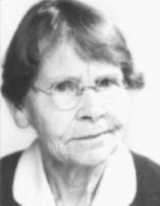
Barbara McClintock


Barbara McClintock (June 16 1902 – September 2 1992), the 1983 Nobel Laureate in Physiology or Medicine
Nobel Prize in Physiology or Medicine

The Nobel Prize in Physiology or Medicine is awarded once a year by the Swedish Karolinska Institutet. It is one of the five Nobel Prizes established by the will of Alfred Nobel in 1895, awarded for outstanding contributions in Nobel Prize in Physics, Nobel Prize in Chemistry, Nobel Prize in Literature, Nobel Peace Prize, and Physiology or Medic...
, was an American scientist and one of the world's most distinguished cytogeneticists
Cytogenetics

Cytogenetics is a branch of genetics that is concerned with the study of the structure and function of the cell, especially the chromosomes. It includes routine analysis of G banding chromosomes, other cytogenetic banding techniques, as well as molecular cytogenetics such as fluorescent in situ hybridization and comparative genomic hybridiz...
. McClintock received her PhD
Doctor of Philosophy

Doctor of Philosophy, abbreviated Ph.D. or PhD for the Latin , meaning "teacher of philosophy", is an postgraduate academic degree awarded by University....
 in botany
Botany

Botany, plant science, phytology, or plant biology is a branch of biology and is the Scientific method of plant life and development....
 from Cornell University
Cornell University

Cornell University located in Ithaca, New York, USA, is a private university with four Statutory college. Its two medical campuses are in New York City and Education City, Qatar....
 in 1927, where she was a leader in the development of maize
Maize

Maize , known as corn in some countries, is a cereal domesticated in Mesoamerica and subsequently spread throughout the American continents....
 cytogenetics. The field remained the focus of her research for the rest of her career. From the late 1920s
1920s

The 1920s is sometimes referred to as the "Jazz Age" or the "Roaring Twenties", when speaking about the United States and Canada. In Europe the decade is sometimes referred to as the "Golden Twenties"....
, McClintock studied chromosome
Chromosome

A chromosome is an organized structure of DNA and protein that is found in Cell . A chromosome is a single piece of DNA that contains many genes, regulatory sequence and other genetic sequence....
s and how they change during reproduction in maize.


Discussion
Ask a question about 'Barbara McClintock'
Start a new discussion about 'Barbara McClintock'
Answer questions from other users
Full Discussion Forum


Encyclopedia


Barbara McClintock (June 16 1902 – September 2 1992), the 1983 Nobel Laureate in Physiology or Medicine
Nobel Prize in Physiology or Medicine

The Nobel Prize in Physiology or Medicine is awarded once a year by the Swedish Karolinska Institutet. It is one of the five Nobel Prizes established by the will of Alfred Nobel in 1895, awarded for outstanding contributions in Nobel Prize in Physics, Nobel Prize in Chemistry, Nobel Prize in Literature, Nobel Peace Prize, and Physiology or Medic...
, was an American scientist and one of the world's most distinguished cytogeneticists
Cytogenetics

Cytogenetics is a branch of genetics that is concerned with the study of the structure and function of the cell, especially the chromosomes. It includes routine analysis of G banding chromosomes, other cytogenetic banding techniques, as well as molecular cytogenetics such as fluorescent in situ hybridization and comparative genomic hybridiz...
. McClintock received her PhD
Doctor of Philosophy

Doctor of Philosophy, abbreviated Ph.D. or PhD for the Latin , meaning "teacher of philosophy", is an postgraduate academic degree awarded by University....
 in botany
Botany

Botany, plant science, phytology, or plant biology is a branch of biology and is the Scientific method of plant life and development....
 from Cornell University
Cornell University

Cornell University located in Ithaca, New York, USA, is a private university with four Statutory college. Its two medical campuses are in New York City and Education City, Qatar....
 in 1927, where she was a leader in the development of maize
Maize

Maize , known as corn in some countries, is a cereal domesticated in Mesoamerica and subsequently spread throughout the American continents....
 cytogenetics. The field remained the focus of her research for the rest of her career. From the late 1920s
1920s

The 1920s is sometimes referred to as the "Jazz Age" or the "Roaring Twenties", when speaking about the United States and Canada. In Europe the decade is sometimes referred to as the "Golden Twenties"....
, McClintock studied chromosome
Chromosome

A chromosome is an organized structure of DNA and protein that is found in Cell . A chromosome is a single piece of DNA that contains many genes, regulatory sequence and other genetic sequence....
s and how they change during reproduction in maize. Her work was groundbreaking: she developed the technique for visualizing maize chromosomes and used microscopic analysis to demonstrate many fundamental genetic ideas, including genetic recombination
Genetic recombination

Genetic recombination is the process by which a strand of genetic material is broken and then joined to a different DNA molecule. In eukaryotes recombination commonly occurs during meiosis as chromosomal crossover between paired chromosomes....
 by crossing-over
Chromosomal crossover

Chromosomal crossover is the process by which two chromosomes pair up and exchange sections of their DNA. This often occurs during prophase 1 of meiosis in a process called synapsis....
 during meiosis
Meiosis

In biology or life science, meiosis is a process of reductional division in which the number of chromosomes per cell is halved. In animals, meiosis always results in the formation of gametes, while in other organisms it can give rise to spores....
—a mechanism by which chromosomes exchange information. She produced the first genetic map
Genetic linkage

Genetic linkage occurs when particular genetic Locus or alleles for genes are inherited jointly. Genetic loci on the same chromosome are physically connected and tend to stay together during meiosis, and are thus genetically linked....
 for maize, linking regions of the chromosome with physical traits, and demonstrated the role of the telomere
Telomere

A telomere is a region of repetitive DNA at the end of chromosomes, which protects the end of the chromosome from destruction. Its name is derived from the Greek nouns telos "end" and mer?s "part"....
 and centromere
Centromere

A centromere is a region of DNA typically found near the middle of a chromosome where two sister chromatids come in contact. It is involved in cell division as the point of mitotic spindle....
, regions of the chromosome that are important in the conservation of genetic information. She was recognized amongst the best in the field, awarded prestigious fellowships, and elected a member of the National Academy of Sciences
United States National Academy of Sciences

The National Academy of Sciences is a corporation in the United States whose members serve pro bono as "advisers to the nation on science, engineering, and medicine."...
 in 1944.

During the 1940s
1940s

The 1940s decade, known as the forties, ran from 1940 to 1949....
 and 1950s
1950s

The 1950s decade was the years of 1950 to 1959 inclusive. The Fifties in the developed western world are generally considered social conservative and highly Consumerism in nature....
, McClintock discovered transposition
Transposon

Transposons are sequences of DNA that can move around to different positions within the genome of a single cell , a process called transposition....
 and used it to show how gene
Gene

A gene is the basic unit of heredity in a living organism. All living things depend on genes. Genes hold the information to build and maintain their cell and pass genetic trait to offspring....
s are responsible for turning physical characteristics on or off. She developed theories to explain the repression or expression of genetic information from one generation of maize plants to the next. Encountering skepticism of her research and its implications, she stopped publishing her data in 1953. Later, she made an extensive study of the cytogenetics and ethnobotany
Ethnobotany

Ethnobotany is the Scientific method of the relationships that exist between person and plants.Ethnobotanists aim to reliably document, describe and explain complex relationships between cultures and plants: focusing, primarily, on how plants are used, managed and perceived across human societies ...
 of maize race
RACE (biology)

RACE, or Rapid Amplification of cDNA Ends, is a technique used in molecular biology to obtain the full length sequence of an RNA transcript found within a cell....
s from South America. McClintock's research became well understood in the 1960s and 1970s, as researchers demonstrated the mechanisms of genetic change and genetic regulation
Regulation of gene expression

Gene modulation redirects here. For information on therapeutic regulation of gene expression, see therapeutic gene modulation.Regulation of gene expression includes the processes that cell s and viruses use to turn the information on genes into gene products....
 that she had demonstrated in her maize research in the 1940s and 1950s. Awards and recognition for her contributions to the field followed, including the Nobel Prize for Physiology or Medicine, awarded to her in 1983 for the discovery of genetic transposition
Transposon

Transposons are sequences of DNA that can move around to different positions within the genome of a single cell , a process called transposition....
; she is the only woman to receive an unshared Nobel Prize in that category.

Early life

Barbara McClintock was born in Hartford, Connecticut
Hartford, Connecticut

Hartford is the Capital of the Connecticut. It is located in Hartford County, Connecticut on the Connecticut River, north of the center of the state, south of Springfield, Massachusetts....
, the third of four children of physician Thomas Henry McClintock and Sara Handy McClintock. She was independent from a very young age, a trait McClintock described as her "capacity to be alone". From about the age of three until the time she started school, McClintock lived with an aunt and uncle in Massachusetts in order to reduce the financial burden on her parents while her father established his medical practice. The McClintocks moved to semi-rural Brooklyn, New York in 1908. She was described as a solitary and independent child, and a tomboy. She was close to her father, but had a difficult relationship with her mother.

McClintock completed her secondary education at Erasmus Hall High School
Erasmus Hall High School

File:Erasmus Hall HS long jeh.JPGErasmus Hall Campus High School is a four-year public high school in the New York City borough of Brooklyn, operated as part of the New York City Department of Education....
 in Brooklyn. She discovered science at high school, and wanted to attend Cornell University
Cornell University

Cornell University located in Ithaca, New York, USA, is a private university with four Statutory college. Its two medical campuses are in New York City and Education City, Qatar....
 to continue her studies. Her mother resisted the idea of higher education for her daughters, believing it would make them unmarriageable. The family also had financial problems. Barbara was almost prevented from starting college, but her father intervened, and she entered Cornell in 1919.

Education and research at Cornell

McClintock began her studies at Cornell's College of Agriculture in 1919. She studied botany
Botany

Botany, plant science, phytology, or plant biology is a branch of biology and is the Scientific method of plant life and development....
, receiving a BSc
Bachelor of Science

A Bachelor of Science is an bachelor's degree academic degree awarded for completed courses that generally last three to five years ....
 in 1923. Her interest in genetics had been sparked when she took her first course in that field in 1921. The course was based on a similar one offered at Harvard University, and was taught by C. B. Hutchison, a plant breeder and geneticist. Hutchinson was impressed by McClintock's interest, and telephoned to invite her to participate in the graduate genetics course at Cornell in 1922. McClintock pointed to Hutchinson's invitation as the reason she continued in genetics: "Obviously, this telephone call cast the die for my future. I remained with genetics thereafter." Although it has been reported that women could not major in genetics at Cornell, and therefore her MA and PhD— earned in 1925 and 1927, respectively—were officially awarded in botany, recent research has revealed that women did earn graduate degrees in Cornell's Plant Breeding Department during the time that McClintock was a student at Cornell.

During her graduate studies and postgraduate appointment as a botany instructor, McClintock was instrumental in assembling a group that studied the new field of cytogenetics
Cytogenetics

Cytogenetics is a branch of genetics that is concerned with the study of the structure and function of the cell, especially the chromosomes. It includes routine analysis of G banding chromosomes, other cytogenetic banding techniques, as well as molecular cytogenetics such as fluorescent in situ hybridization and comparative genomic hybridiz...
 in maize
Maize

Maize , known as corn in some countries, is a cereal domesticated in Mesoamerica and subsequently spread throughout the American continents....
. This group brought together plant breeders and cytologists, and included, Charles R. Burnham, Marcus Rhoades, George Beadle (who became a Nobel laureate in 1958 for showing that genes control metabolism), and Harriet Creighton. Rollins Adams Emerson, head of the Plant Breeding Department, supported these efforts, although he was not a cytologist himself. McClintock's cytogenetic research focused on developing ways to visualize and characterize maize chromosomes. This particular part of her work influenced a generation of students, as it was included in most textbooks. She also developed a technique using carmine
Carmine

Carmine , also called Crimson Lake, Cochineal, Natural Red 4, C.I. 75470, or E120, is a pigment of a bright red color obtained from the carminic acid produced by some scale insects, such as the cochineal and the Polish cochineal, and is used as a general term for a particularly deep carmine ....
 staining to visualize maize chromosomes, and showed for the first time the morphology of the 10 maize chromosomes. By studying the morphology of the chromosomes, McClintock was able to link
Genetic linkage

Genetic linkage occurs when particular genetic Locus or alleles for genes are inherited jointly. Genetic loci on the same chromosome are physically connected and tend to stay together during meiosis, and are thus genetically linked....
, to a specific chromosome, groups of traits that were inherited together. Marcus Rhoades noted that McClintock's 1929 Genetics
Genetics (journal)

Genetics , is a monthly scientific journal publishing investigations bearing on heredity, genetics, biochemistry and molecular biology. Genetics is published by the Genetics Society of America....
 paper on the characterization of triploid
Polyploidy

Polyploidy occurs in biological cell and organisms when there are more than two Homologous Chromosomes sets of chromosomes.Polyploidy is a state different from most organisms which are normally diploid meaning they have only two sets of chromosomes - one set inherited from each parent; polyploidy may occur due to abnormal cell division....
 maize chromosomes triggered scientific interest in maize cytogenetics, and attributed to his female colleague 10 of the 17 significant advances in the field that were made by Cornell scientists between 1929 and 1935.

In 1930, McClintock was the first person to describe the cross-shaped interaction of homologous chromosomes during meiosis. During 1931, McClintock and a graduate student, Harriet Creighton
Harriet Creighton

Harriet Baldwin Creighton was an United States botanist, geneticist and educator.Born in Delevan, Illinois, Creighton graduated from Wellesley College in 1929, and went on to complete her Ph.D....
, proved the link between chromosomal crossover
Chromosomal crossover

Chromosomal crossover is the process by which two chromosomes pair up and exchange sections of their DNA. This often occurs during prophase 1 of meiosis in a process called synapsis....
 during meiosis
Meiosis

In biology or life science, meiosis is a process of reductional division in which the number of chromosomes per cell is halved. In animals, meiosis always results in the formation of gametes, while in other organisms it can give rise to spores....
 and the recombination of genetic traits. They observed how the recombination of chromosomes and the resulting phenotype formed the inheritance of a new trait. Until this point, it had only been hypothesized that genetic recombination
Genetic recombination

Genetic recombination is the process by which a strand of genetic material is broken and then joined to a different DNA molecule. In eukaryotes recombination commonly occurs during meiosis as chromosomal crossover between paired chromosomes....
 could occur during meiosis, although it had been shown genetically. McClintock published the first genetic map for maize in 1931, showing the order of three genes on maize chromosome 9. This information provided necessary data for the crossing over study she published with Creighton. In 1938, she produced a cytogenetic analysis of the centromere
Centromere

A centromere is a region of DNA typically found near the middle of a chromosome where two sister chromatids come in contact. It is involved in cell division as the point of mitotic spindle....
, describing the organization and function of the centromere.

McClintock's breakthrough publications, and support from her colleagues, led to her being awarded several postdoctoral fellowships from the National Research Council
United States National Research Council

The National Research Council of the United States is the working arm of the United States National Academy of Sciences and the United States National Academy of Engineering, carrying out most of the studies done in their names....
. This funding allowed her to continue to study genetics at Cornell, the University of Missouri
University of Missouri

The University of Missouri System is a state university system providing centralized administration for four universities, a health care system, an extension program, five research and technology parks, and a publishing press....
, and the California Institute of Technology
California Institute of Technology

The California Institute of Technology is a private university research university located in Pasadena, California, United States. Caltech maintains a strong emphasis on the natural sciences and engineering....
, where she worked with E. G. Anderson. During the summers of 1931 and 1932, she worked with at Missouri with geneticist Lewis Stadler
Lewis Stadler

Lewis John Stadler was an United States geneticist. His research focused on the mutagenic effects of different forms of radiation on economically important plants like maize and barley....
, who introduced her to the use of X-ray
X-ray

X-radiation is a form of electromagnetic radiation. X-rays have a wavelength in the range of 10 to 0.01 nanometers, corresponding to frequency in the range 30 Hertz to 30 Hertz and energies in the range 120 Electron volt to 120 keV....
s as a mutagen
Mutagen

In biology, a mutagen is a physical or chemical agent that changes the genetic information of an organism and thus increases the frequency of mutations above the natural background level....
. (Exposure to X-rays can increase the rate of mutation above the natural background level, making it a powerful research tool for genetics.) Through her work with X-ray-mutagenized maize, she identified ring chromosome
Ring chromosome

A ring chromosome is a chromosome whose arms have fused together to form a ring. A ring chromosome is denoted by the symbol r. Ring chromosomes may form in cells following genetic damage by mutagens like radiation, they may also arise spontaneously during development....
s, which form when the ends of a single chromosome fuse together after radiation damage. From this evidence, McClintock hypothesized that there must be a structure on the chromosome tip that would normally ensure stability. She showed that the loss of ring-chromosomes at meiosis caused variegation
Variegation

Variegation is the appearance of differently coloured zones in the leaf, and sometimes the Plant stem, of plants. This may be due to a number of causes....
 in maize foliage in generations subsequent to irradiation resulting from chromosomal deletion. During this period, she demonstrated the presence of what she called the nucleolar organizers on a region on maize chromosome 6, which is required for the assembly of the nucleolus
Nucleolus

The nucleolus is a non-membrane bound structure found within the cell nucleus in which messenger RNA is Transcription , and is composed of protein and nucleic acids....
 during DNA replication.

McClintock received a fellowship from the Guggenheim Foundation
Guggenheim Foundation

Guggenheim Foundation can refer to:*The Solomon R. Guggenheim Foundation funds the Guggenheim Museums.*The John Simon Guggenheim Memorial Foundation awards grants to scientists, scholars and artists....
 that made possible six months of training in Germany during 1933 and 1934. She had planned to work with Curt Stern
Curt Stern

Curt Stern was a Germany-United States geneticist. He made several important genetic discoveries, demonstrating chromosomal crossover in Drosophila weeks after Barbara McClintock and Harriet Creighton had done so [with maize] in 1931....
, who had demonstrated crossing-over in Drosophila
Drosophila

Drosophila is a genus of small fly, belonging to the family Drosophilidae, whose members are often called "fruit flies" or more appropriately pomace flies, vinegar flies, or wine flies, a reference to the characteristic of many species to linger around overripe or rotting fruit....
 just weeks after McClintock and Creighton had done so; however, in the meantime, Stern emigrated to the United States. Instead, she worked in Germany with geneticist Richard B. Goldschmidt. She left Germany early, amid mounting political tension in Europe, and returned to Cornell, remaining there until 1936, when she accepted an Assistant Professorship offered to her by Lewis Stadler in the Department of Botany at the University of Missouri–Columbia.

University of Missouri

During her time at Missouri, McClintock expanded her research on the effect of X-rays on maize cytogenetics. McClintock observed the breakage and fusion of chromosomes in irradiated maize cells. She was also able to show that, in some plants, spontaneous chromosome breakage occurred in the cells of the endosperm. Over the course of mitosis
Mitosis

Mitosis is the process in which a eukaryotic cell separates the chromosomes in its cell nucleus, into two identical sets in two daughter nuclei....
, she observed that the ends of broken chromatids were rejoined after the chromosome replication
DNA replication

DNA replication, the basis for heredity, is a fundamental process occurring in all living organisms to copy their DNA. This process is "semiconservative replication" in that each strand of the original double-stranded DNA molecule serves as template for the reproduction of the complementary strand....
. In the anaphase
Anaphase

Anaphase, is from the ancient Greek ??? and f?s?? , is the stage of mitosis when chromosomes separate in a eukaryote cell . Each chromatid moves to opposite poles of the cell, the opposite ends of the mitotic spindle, near the microtubule organizing centers....
 of mitosis, the broken chromosomes formed a chromatid bridge, which was broken when the chromatids moved towards the cell poles. The broken ends were rejoined in the interphase
Interphase

Interphase is the phase of the cell cycle in which the cell spends the majority of its time and performs the majority of its purposes including preparation for cell division....
 of the next mitosis, and the cycle was repeated, causing massive mutation, which she could detect as variegation in the endosperm. This cycle of breakage, fusion, and bridge, also described as the breakage–rejoining–bridge cycle, was a key cytogenetic discovery for several reasons. First it showed that the rejoining of chromosomes was not a random event, and secondly it demonstrated a source of large-scale mutation. For this reason, it remains an area of interest in cancer
Cancer

Cancer is a class of diseases in which a group of cell display uncontrolled growth , invasion , and sometimes metastasis . These three malignant properties of cancers differentiate them from benign tumors, which are self-limited, do not invade or metastasize....
 research today.

Although her research was progressing at Missouri, McClintock was not satisfied with her position at the University. She recalled being excluded from faculty meetings, and was not made aware of positions available at other institutions. In 1940 she wrote to Charles Burnham, "I have decided that I must look for another job. As far as I can make out, there is nothing more for me here. I am an assistant professor at $3,000 and I feel sure that that is the limit for me." Initially, McClintock's position had been especially created for her by Stadler and may have depended on his presence. McClintock believed she would not gain tenure
Tenure

Tenure commonly refers to life tenure in a job and specifically to a senior academic's contractual right not to have their position terminated without just cause....
 at Missouri, although according to some accounts she knew she would be offered a promotion by Missouri in the spring of 1942. Recent evidence reveals that McClintock more likely decided to leave Missouri because she had lost trust in her employer and in the University administration. In early 1941 she was invited by the Director of the Department of Genetics at Cold Spring Harbor to spend her summer there. She took a leave of absence from Missouri in hopes of finding a position elsewhere. She also accepted a visiting Professorship at Columbia University
Columbia University

Columbia University in the City of New York , is a private university in the United States and a member of the Ivy League. Columbia's main campus lies in the Morningside Heights, Manhattan neighborhood in the borough of Manhattan, in New York City....
, where her former Cornell colleague Marcus Rhoades was a professor. He offered to share his research field at Cold Spring Harbor on Long Island. In December 1941 she was offered a research position by Milislav Demerec
Milislav Demerec

Milislav Demerec was a Croats-United States geneticist, and the director of the Cold Spring Harbor Laboratory from 1941 to 1960, recruiting Barbara McClintock and Alfred Hershey....
, the newly appointed acting director, and she joined the staff of the Carnegie Institution of Washington's Department of Genetics Cold Spring Harbor Laboratory
Cold Spring Harbor Laboratory

The Cold Spring Harbor Laboratory is a private, non-profit institution with research programs focusing on cancer, neurobiology, plant genetics, genomics and bioinformatics....
.

Cold Spring Harbor

After her year-long temporary appointment, McClintock accepted a full-time research position at Cold Spring Harbor Laboratory. Here, she was highly productive and continued her work with the breakage-fusion-bridge cycle, using it to substitute for X-rays as a tool for mapping new genes. In 1944, in recognition of her prominence in the field of genetics during this period, McClintock was elected to the National Academy of Sciences
United States National Academy of Sciences

The National Academy of Sciences is a corporation in the United States whose members serve pro bono as "advisers to the nation on science, engineering, and medicine."...
—only the third woman to be so elected. In 1945, she became the first woman president of the Genetics Society of America
Genetics Society of America

The Genetics Society of America is a non-exclusive association of genetics researchers and educators, and the publisher of the peer-reviewed journal Genetics ....
. In 1944 she undertook a cytogenetic analysis of Neurospora crassa
Neurospora crassa

Neurospora crassa is a type of red bread mold of the phylum Ascomycota. The genus name, meaning "nerve spore" refers to the characteristic striations on the spores....
 at the suggestion of George Beadle, who had used the fungus to demonstrate the one gene–one enzyme relationship. He invited her to Stanford
Stanford University

Leland Stanford Junior University, commonly referred to as Stanford University or Stanford, is a private university research university located in Stanford, California, California, United States....
 to undertake the study. She successfully described the number of chromosomes, or karyotype
Karyotype

A karyotype is the characteristic chromosome complement of a eukaryote species. The preparation and study of karyotypes is part of cytogenetics....
, of N. crassa and described the entire life cycle of the species. N. crassa has since become a model species
Model organism

A model organism is a species that is extensively studied to understand particular biology phenomena, with the expectation that discoveries made in the organism model will provide insight into the workings of other organisms....
 for classical genetic analysis.

Discovery of controlling elements

Corn Mosaic
In the summer of 1944 at Cold Spring Harbor Laboratory, McClintock began systematic studies on the mechanisms of the mosaic
Mosaic (genetics)

In genetic medicine, a mosaic or mosaicism denotes the presence of two populations of cell with different genotypes in one individual, who has developed from a single fertilized egg....
 color patterns of maize seed and the unstable inheritance of this mosaicism. She identified two new dominant
Dominance relationship

In genetics, dominance describes the effects of the different versions of a particular gene on the phenotype of an organism. Many animals and plants have diploid in their genome, one inherited from each parent....
 and interacting genetic loci that she named Dissociator (Ds) and Activator (Ac). She found that the Dissociator did not just dissociate or cause the chromosome to break, it also had a variety of effects on neighboring genes when the Activator was also present. In early 1948, she made the surprising discovery that both Dissociator and Activator could transpose, or change position, on the chromosome.

She observed the effects of the transposition of Ac and Ds by the changing patterns of coloration in maize kernels over generations of controlled crosses, and described the relationship between the two loci
Locus (genetics)

In the fields of genetics and evolutionary computation, a locus is a fixed position on a chromosome such as the position of a genetic marker that may be occupied by one or more genes....
 through intricate microscopic analysis. She concluded that Ac controls the transposition of the Ds from chromosome 9, and that the movement of Ds is accompanied by the breakage of the chromosome. When Ds moves, the aleurone
Aleurone

Aleurone is a protein found in protein granules of maturing seeds and tubers. The term is also used for the outermost cell layer of the seed coat, the aleurone layer....
-color gene is released from the suppressing effect of the Ds and transformed into the active form, which initiates the pigment synthesis in cells. The transposition of Ds in different cells is random, it may move in some but not others, which causes color mosaicism. The size of the colored spot on the seed is determined by stage of the seed development during dissociation. McClintock also found that the transposition of Ds and the is determined by the number of Ac copies in the cell.

Between 1948 and 1950, she developed a theory by which these mobile elements regulated the genes by inhibiting or modulating their action. She referred to Dissociator and Activator as "controlling units"—later, as "controlling elements"—to distinguish them from genes. She hypothesized that gene regulation could explain how complex multicellular organisms made of cells with identical genome
Genome

In classical genetics, the genome of a diploid organism including eukarya refers to a full set of chromosomes or genes in a gamete; thereby, a regular somatic cell contains two full sets of genomes....
s have cells of different function. McClintock's discovery challenged the concept of the genome as a static set of instructions passed between generations. In 1950, she reported her work on Ac/Ds and her ideas about gene regulation in a paper entitled "The origin and behavior of mutable loci in maize" published in the journal Proceedings of the National Academy of Sciences
Proceedings of the National Academy of Sciences

The Proceedings of the National Academy of Sciences of the United States of America, usually referred to as PNAS, is the official journal of the United States National Academy of Sciences....
. In summer 1951, when she reported on her work on gene mutability in maize at the annual symposium at Cold Spring Harbor Laboratory, the paper she presented was called "Chromosome organization and genic expression".

Her work on controlling elements and gene regulation was conceptually difficult and was not immediately understood or accepted by her contemporaries; she described the reception of her research as "puzzlement, even hostility". Nevertheless, McClintock continued to develop her ideas on controlling elements. She published a paper in Genetics
Genetics (journal)

Genetics , is a monthly scientific journal publishing investigations bearing on heredity, genetics, biochemistry and molecular biology. Genetics is published by the Genetics Society of America....
 in 1953 where she presented all her statistical data, and undertook lecture tours to universities throughout the 1950s to speak about her work. She continued to investigate the problem and identified a new element that she called Suppressor-mutator (Spm), which, although similar to Ac/Ds, displays more complex behavior. Based on the reactions of other scientists to her work, McClintock felt she risked alienating the scientific mainstream, and from 1953 stopped publishing accounts of her research on controlling elements.

The origins of maize

Corn and Microscope
In 1957, McClintock received funding from the National Science Foundation
National Science Foundation

The National Science Foundation is a United States government agency that supports fundamental research and education in all the non-medical fields of science and engineering....
, and the Rockefeller Foundation
Rockefeller Foundation

The Rockefeller Foundation is a prominent philanthropic organization and private foundation based at 420 Fifth Avenue, New York City. The preeminent institution established by the six-generation Rockefeller family, it was founded by John D....
 sponsored her to start research on maize in South America
South America

South America is the southern continent of the Americas, situated entirely in the Western Hemisphere and mostly in the Southern Hemisphere, with a relatively small portion in the Northern Hemisphere....
, an area that is rich in varieties of this species. She was interested in studying the evolution
Evolution

In biology, evolution is change in the heritability trait of a population of organisms from one generation to the next. These changes are caused by a combination of three main processes: variation, reproduction, and selection....
 of maize, and being in South America would allow her to work on a larger scale. McClintock explored the chromosomal, morphological, and evolutionary characteristics of various races
RACE (biology)

RACE, or Rapid Amplification of cDNA Ends, is a technique used in molecular biology to obtain the full length sequence of an RNA transcript found within a cell....
 of maize. From 1962, she supervised four scientists working on South American maize at the North Carolina State University in Raleigh. Two of these Rockefeller fellows, Almiro Blumenschein and T. Angel Kato, continued their research on South American races of maize well into the 1970s. In 1981, Blumenschein, Kato, and McClintock published Chromosome constitution of races of maize, which is considered a landmark study of maize that has contributed significantly to the fields of evolutionary botany, ethnobotany
Ethnobotany

Ethnobotany is the Scientific method of the relationships that exist between person and plants.Ethnobotanists aim to reliably document, describe and explain complex relationships between cultures and plants: focusing, primarily, on how plants are used, managed and perceived across human societies ...
, and paleobotany
Paleobotany

Paleobotany, also spelled as palaeobotany , is the branch of paleontology or paleobiology dealing with the recovery and identification of plant remains from geology contexts, and their use for the biological reconstruction of paleogeographys, and the evolution of both the Evolutionary history of plants kingdom and Evolution of life in...
.

Rediscovery of McClintock's controlling elements

McClintock officially retired from her position at the Carnegie Institution in 1967, and was made a Distinguished Service Member of the Carnegie Institution of Washington. This honor allowed her to continue working with graduate students and colleagues in the Cold Spring Harbor Laboratory as scientist emerita. In reference to her decision 20 years earlier no longer to publish detailed accounts of her work on controlling elements, she wrote in 1973:
Over the years I have found that it is difficult if not impossible to bring to consciousness of another person the nature of his tacit assumptions when, by some special experiences, I have been made aware of them. This became painfully evident to me in my attempts during the 1950s to convince geneticists that the action of genes had to be and was controlled. It is now equally painful to recognize the fixity of assumptions that many persons hold on the nature of controlling elements in maize and the manners of their operation. One must await the right time for conceptual change.


The importance of McClintock's contributions only came to light in the 1960s, when the work of French geneticists Francois Jacob
François Jacob

Fran?ois Jacob is a France biologist who, together with Jacques Monod, originated the idea that control of enzyme levels in all cell s occurs through feedback on Transcription ....
 and Jacques Monod
Jacques Monod

See also Jacques-Louis Monod, French-born composer and cousin of Jacques Monod.Jacques Lucien Monod was a French biology who was awarded a Nobel Prize in Physiology or Medicine in 1965....
 described the genetic regulation of the lac operon
Lac operon

The lac operon is an operon required for the transport and metabolism of lactose in Escherichia coli and some other enteric bacteria. It consists of three adjacent structural genes, a promoter, a terminator , and an operator ....
, a concept she had demonstrated with Ac/Ds in 1951. Following Jacob and Monod's 1961 Journal of Molecular Biology paper "Genetic regulatory mechanisms in the synthesis of proteins", McClintock wrote an article for American Naturalist
American Naturalist

The American Naturalist is a monthly scientific journal, founded in 1867 and associated with the American Society of Naturalists. It is published by the University of Chicago Journals....
 comparing the lac operon and her work on controlling elements in maize. McClintock's contribution to biology is still not widely acknowledged as amounting to the discovery of genetic regulation.

McClintock was widely credited for discovering transposition following the discovery of the process in bacteria and yeast in the late 1960s and early 1970s. During this period, molecular biology had developed significant new technology, and scientists were able to show the molecular basis for transposition. In the 1970s, Ac and Ds were cloned
Cloning

Cloning in biology is the process of producing populations of genetically-identical individuals that occurs in nature when organisms such as bacteria, insects or plants reproduce Asexual Reproduction....
 by other scientists and were shown to be Class II transposons
Transposon

Transposons are sequences of DNA that can move around to different positions within the genome of a single cell , a process called transposition....
. Ac is a complete transposon that can produce a functional transposase
Transposase

Transposase is an enzyme that binds to the ends of a transposon and catalyzes the movement of the transposon to another part of the genome by a cut and paste mechanism or a replicative transposition mechanism....
, which is required for the element to move within the genome. Ds has a mutation in its transposase gene, which means that it cannot move without another source of transposase. Thus, as McClintock observed, Ds cannot move in the absence of Ac. Spm has also been characterized as a transposon. Subsequent research has shown that transposons typically do not move unless the cell is placed under stress, such as by irradiation or the breakage, fusion, and bridge cycle, and thus their activation during stress can serve as a source of genetic variation for evolution. McClintock understood the role of transposons in evolution and genome change well before other researchers grasped the concept. Nowadays, Ac/Ds is used as a tool in plant biology to generate mutant plants used for the characterization of gene function.

Honors and recognition

McClintock was awarded the National Medal of Science
National Medal of Science

The National Medal of Science is an honor bestowed by the President of the United States to individuals in science and engineering who have made important contributions to the advancement of knowledge in the fields of behavioral science and social sciences, biology, chemistry, engineering, mathematics and physics....
 by Richard Nixon
Richard Nixon

Richard Milhous Nixon was the List of Presidents of the United States President of the United States and the only president to resign the office....
 in 1971. Cold Spring Harbor named a building in her honor in 1973. In 1981 she became the first recipient of the MacArthur Foundation Grant
MacArthur Foundation

The John D. and Catherine T. MacArthur Foundation is a major private grant -making private foundation based in Chicago that has awarded more than US$4 billion since its inception in 1978....
, and was awarded the Albert Lasker Award for Basic Medical Research
Albert Lasker Award for Basic Medical Research

The Albert Lasker Award for Basic Medical Research is one of the Lasker Award awarded by the Lasker Foundation for the understanding, diagnosis, prevention, treatment, and cure of disease....
, the Wolf Prize in Medicine
Wolf Prize in Medicine

The Wolf Prize in Medicine is awarded once a year by the Wolf Foundation. It is one of the six Wolf Prizes established by the Foundation and awarded since 1978; the others are in Wolf Prize in Agriculture, Wolf Prize in Chemistry, Wolf Prize in Mathematics, Wolf Prize in Physics and Wolf Prize in Arts....
 and the Thomas Hunt Morgan Medal
Thomas Hunt Morgan Medal

The Thomas Hunt Morgan Medal is a medal awarded for lifetime contributions to the field of genetics. The medal is awarded by the Genetics Society of America....
 by the Genetics Society of America. In 1982 she was awarded the Louisa Gross Horwitz Prize
Louisa Gross Horwitz Prize

Louisa Gross Horwitz Prize for Biology or Biochemistry is an annual prize awarded by Columbia University to a researcher or group of researchers that have made an outstanding contribution in basic research in the fields of biology or biochemistry....
 from Columbia University
Columbia University

Columbia University in the City of New York , is a private university in the United States and a member of the Ivy League. Columbia's main campus lies in the Morningside Heights, Manhattan neighborhood in the borough of Manhattan, in New York City....
 for her research in the "evolution of genetic information and the control of its expression." Most notably, she received the Nobel Prize for Physiology or Medicine in 1983, credited by the Nobel Foundation
Nobel Foundation

The Nobel Foundation is a private institution founded on 29 June 1900 to manage the finances and administration of the Nobel Prizes. The Foundation is based on the last will of Alfred Nobel, the inventor of dynamite....
 for discovering "mobile genetic elements", over thirty years after she initially described the phenomenon of controlling elements.

She was awarded 14 Honorary Doctor of Science degrees and an Honorary Doctor of Humane Letters. In 1986 she was inducted into the National Women's Hall of Fame
National Women's Hall of Fame

The National Women's Hall of Fame was created in 1969 by a group of people in Seneca Falls , New York, New York, the location of the 1848 Women's Rights Convention....
. During her final years, McClintock led a more public life, especially after Evelyn Fox Keller's
Evelyn Fox Keller

Evelyn Fox Keller is an United States physicist, author, and feminism and is currently a Professor of History and Philosophy of Science at the Massachusetts Institute of Technology....
 1983 book A feeling for the organism brought McClintock's story to the public. She remained a regular presence in the Cold Spring Harbor community, and gave talks on mobile genetic elements and the history of genetics research for the benefit of junior scientists. An anthology of her 43 publications The discovery and characterization of transposable elements: the collected papers of Barbara McClintock was published in 1987. McClintock died in Huntington, New York
Huntington, New York

The Town of Huntington is a Political subdivisions of New York State located on the North Shore of Long Island, in northwestern Suffolk County, New York, New York....
, on September 2, 1992 at the age of 90; she never married or had children.

Legacy

Since her death, McClintock has been the subject of the biographical work by science historian Nathaniel C. Comfort
Nathaniel C. Comfort

Nathaniel C. Comfort is an United States historian specialising in the history of biology. He is currently an Associate Professor in the Institute of the History of Medicine at Johns Hopkins University, and he previously was employed in the history department at The George Washington University....
, in The tangled field : Barbara McClintock's search for the patterns of genetic control. Comfort's biography contests some claims about McClintock, described as the "McClintock Myth", which he claims was perpetuated by the earlier biography by Keller. Keller's thesis was that McClintock was long ignored because she was a woman working in the sciences, whereas Comfort asserts that McClintock was well regarded by her professional peers, even in the early years of her career. Although Comfort argues that McClintock was not a victim of gender discrimination, she has been widely written about in the context of women's studies, and most recent biographical works on women in science feature accounts of her experience. She is held up as a role model for girls in such works of children's literature as Edith Hope Fine's Barbara McClintock, Nobel Prize geneticist, Deborah Heiligman's Barbara McClintock: alone in her field and Mary Kittredge's Barbara McClintock. A recent biography for young adults by Naomi Pasachoff, Barbara McClintock, Genius of Genetics, provides a new perspective, based on the current literature.

On May 4, 2005 the United States Postal Service
United States Postal Service

The United States Postal Service is an Independent agencies of the United States government responsible for providing postal service in the United States....
 issued the "American Scientists" commemorative postage stamp
Postage stamp

A postage stamp is adhesive paper evidence of a fee paid for Mail services. Usually a small rectangle attached to an envelope, the stamp signifies the person sending it has fully or partly paid for delivery....
 series, a set of four 37-cent self-adhesive stamps in several configurations. The scientists depicted were Barbara McClintock, John von Neumann
John von Neumann

John von Neumann was a Hungarian American mathematician who made major contributions to a vast range of fields, including set theory, functional analysis, quantum mechanics, ergodic theory, continuous geometry, economics and game theory, computer science, numerical analysis, hydrodynamics , and statistics, as well as many other mathematical...
, Josiah Willard Gibbs
Josiah Willard Gibbs

Josiah Willard Gibbs was an American theoretical physicist, chemist, and mathematician. One of the greatest American scientists of all time, he devised much of the theoretical foundation for chemical thermodynamics as well as physical chemistry....
, and Richard Feynman
Richard Feynman

Richard Phillips Feynman was an United States physicist known for the path integral formulation of quantum mechanics, the theory of quantum electrodynamics and the physics of the superfluidity of supercooled liquid helium, as well as work in particle physics ....
. McClintock was also featured in a 1989 four-stamp issue from Sweden
Sweden

Sweden , officially the Kingdom of Sweden , is a Nordic countries on the Scandinavian Peninsula in Northern Europe. Sweden has land borders with Norway to the west and Finland to the northeast, and it is connected to Denmark by the ?resund Bridge in the south....
 which illustrated the work of eight Nobel Prize-winning geneticists. A small building at Cornell University and a laboratory building at Cold Spring Habor Laboratory bear her name to this day.

Key publications

  • McClintock, Barbara (1929) "A cytological and genetical study of triploid maize". Genetics 14:180–222
  • Creighton, Harriet B., and McClintock, Barbara (1931) "A Correlation of Cytological and Genetical Crossing-Over in Zea Mays". Proceedings of the National Academy of Sciences 17:492–497
  • McClintock, Barbara (1931) "The order of the genes C, Sh, and Wx in Zea Mays with reference to a cytologically known point in the chromosome". Proceedings of the National Academy of Sciences 17:485–91
  • McClintock, Barbara (1941) "The stability of broken ends of chromosomes in Zea Mays". Genetics 26:234–82
  • McClintock, Barbara (1945) "Neurospora: preliminary observations of the chromosomes of Neurospora crassa". American Journal of Botany. 32:671–78
  • McClintock, Barbara (1950) "The origin and behavior of mutable loci in maize". Proceedings of the National Academy of Sciences. 36:344–55
  • McClintock, Barbara (1953) "Induction of instability at selected loci in maize". Genetics 38:579–99
  • McClintock, Barbara (1961) "Some parallels between gene control systems in maize and in bacteria". American Naturalist 95:265–77
  • McClintock, Barbara., Kato, T. A. & Blumenschein, A. (1981) Chromosome constitution of races of maize. Its significance in the interpretation of relationships between races and varieties in the Americas.. Colegio de Postgraduados, Chapingo, Mexico


Footnotes


Further reading


Archives and research collections

  • at the National Library of Medicine.
  • at the American Philosophical Society
    American Philosophical Society

    The American Philosophical Society is a discussion group founded in 1743 by Benjamin Franklin as an offshoot of his earlier club, the Junto....


External links

  • , from the Office of Scientific and Technical Information
    Office of Scientific and Technical Information

    The Office of Scientific and Technical Information is a component of the Office of Science within the U.S. Department of Energy ....
    , United States Department of Energy
    United States Department of Energy

    The United States Department of Energy is a United States Cabinet-level department of the United States government of the United States responsible for Energy policy of the United States and nuclear safety....
  • , comprehensive article on the use of Ac/Ds and other transposons for plant mutagenesis