

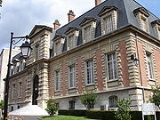
Pasteur Institute

Encyclopedia
The Pasteur Institute is a French
non-profit private foundation dedicated to the study of biology
, micro-organisms, disease
s, and vaccine
s. It is named after Louis Pasteur
, who made some of the greatest breakthroughs in modern medicine
at the time, including pasteurization
and vaccines for anthrax
bacillus and rabies
virus. The institute was founded on June 4, 1887, and inaugurated on November 14, 1888.
For over a century, the Institut Pasteur has been at the forefront of the battle against infectious disease
. This worldwide biomedical research organization based in Paris
was the first to isolate HIV
, the virus that causes AIDS
, in 1983. Over the years, it has been responsible for breakthrough discoveries that have enabled medical science to control such virulent diseases as diphtheria
, tetanus
, tuberculosis
, poliomyelitis
, influenza
, yellow fever
, and plague. Since 1908, eight Pasteur Institute scientists have been awarded the Nobel Prize
for medicine and physiology
, and the 2008 Nobel Prize in Physiology or Medicine was shared with two Pasteur scientists.
, the French scientist whose early experiments with fermentation
led to pioneering research in bacteriology
. A giant in science
, Pasteur discovered the principle of sterilization
which came to be known as "pasteurization
." His discoveries led to the universal practice of surgical antisepsis. He also developed techniques of vaccination to control bacterial infection, as well as a successful vaccine to treat rabies
.
Louis Pasteur was committed both to basic research and its practical applications. As soon as his institute was created, Pasteur brought together scientists with various specialties. The first five departments were directed by two normaliens (graduates of the Ecole Normale Supérieure
): Emile Duclaux
(general microbiology
research) and Charles Chamberland
(microbe research applied to hygiene
), as well as a biologist
, Ilya Ilyich Mechnikov
(morphological microbe research) and two physician
s, Jacques-Joseph Grancher
(rabies
) and Emile Roux (technical microbe research). One year after the inauguration of the Institut Pasteur, Roux set up the first course of microbiology ever taught in the world, then entitled Cours de Microbie Technique (Course of microbe research techniques).
Pasteur's successors have sustained this tradition, and it is reflected in the Institut Pasteur's unique history of accomplishment:
The biggest mistake by the Institute was ignoring a dissertation by Ernest Duchesne
on the use of Penicillium glaucum
to cure infections in 1897. The early exploitation of his discovery might have saved millions of lives, especially in World War I
.
A new age of preventive medicine
in France was made possible by such developments from the Pasteur Institute as vaccines for tuberculosis
, diphtheria
, tetanus
, yellow fever
, poliomyelitis
, and hepatitis B. The discovery and use of sulfonamides in treating infections was another breakthrough. Some researchers won fame by discovering antitoxin
s and Daniel Bovet
received the 1957 Nobel Prize for his discoveries on synthetic anti-histamines and curarizing
compounds.
Since World War II
, Pasteur researchers have sharply focused on molecular biology
. Their achievements were recognized in 1965, when the Nobel Prize was shared by François Jacob
, Jacques Monod
and André Lwoff for their work on the regulation of virus
es. In 1985, the first human vaccine obtained by genetic engineering from animal cells, the vaccine against hepatitis B, was developed by Pierre Tiollais and collaborators.
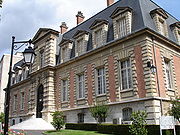
and Émile Roux is more than functional, it is also so overcrowded that it becomes necessary to build a structure that Pasteur has been calling with the name “Institute Pasteur” long before it was even built. Since Pasteur can’t, for health reasons, do it himself, he delegates the task of projecting and creating the new building, situated on rue Dutot, to two of his most trusted colleagues, Grancher and Emile Duclaux
.
From the beginning the Institute experiences some economical difficulties that it is able to overcome thanks to the help of the government, some foreign rulers and Madame Boucicaut but this aid won’t in any way restrain its independence, therefore respecting Pasteur’s most important prerogative. The million francs left unused won’t be sufficient to provide for the Institute’s needs for long, but the prestigiousness and the social benefits it will bring to France justify and motivate the subsidy it will receive; also the money brought in from selling the vaccines in France and in the rest of the world will help in supporting it. In 1888 this foundation, which has obtained the full approval from the government, begins to function and from the beginning it is involved in the development and changes that France undergoes during the last decades of the XIX century.
The statutes drawn by Pasteur and later approved by Duclaux and Grancher define, besides its absolute freedom and independence, the Institutes internal repartition: a rabies division controlled by Grancher, an anthrax one in Chamberland
’s hands, who will also supervise the department of microbiology while Emile Roux will deal with microbial methods applied to medicine.
It is important to underline that war brings to the light germs that during times of peace are concealed deep within the soil or secret zones of putrefaction and therefore it reveals the true nature and amplitude of some types of pathologies that would otherwise remain unknown. That's how Weinberg
, Metchnikoff’s scholar, discloses the complex etiology of the gas gangrene and creates a vaccine for each one of the anaerobes associated to it.
The first world war causes the involvement of science in the warfare business: a movement of active participation rises between the researchers who feel the need to help France win the war and find support to their actions in patriotic argumentations. This is why Gabriel Bertrand
, with Roux’s authorization, crafts a grenade based on chloropicrin and Fourneau
discovers the chemical reaction that leads to the formation of methylarsine's chloride whose effects are even worse of the ones of other venomous gases used during the war.
In 1938 the Institute, despite its relative poverty, builds and edifice that hosts a biochemical division and another one dedicated to cellular pathology, whose direction is entrusted to the hands of Boivin
(who will discover the endotoxines -more appropriately called glucid- lipo- polipeptidic toxines- that are contained in the germ’s body and are freed after its death) and during the same period Andre Lwoff assumes the direction of a new microbial physiology branch built on rue Dutot.
The general mobilitation determined by France’s war declaration against Germany , in September of 1939, empties the Istitute, also significantly reducing its activities, of the members in the age or condition appropriate for being recruited in the army but the almost total absence of battles during the first months of the conflict keeps the sanitary situation on the front in the norm. The Germans never tried to gather information on the Institute’s research: their confidence in Germany’s advantage in this field decreased their curiosity and their only interest was in the serums and vaccines that it could provide to their troops or the European auxiliaries they recluted. This – in the lack of a better term- freedom allowes the Institute to become, during the two years after the occupation, the greatest pharmacy for the Resistance thanks to the initiative of Vallery-Radot, Pasteur’s nephew.
The Germans become suspicious of the Institute’s staff only after the outbreak of a typhoid epidemic in a division of the Wehrmacht
that was stationed in the parisian region before being sent to the Russian front. The cause of the epidemy will be exposed later by some French men: a member of the Institute had stolen a culture of the germ responsible for the disease and, with the collaboration of an accomplice situated near the German troops, infected a large quantity of butter with it. The fact that, after the Germans sold some of the butter to the enemy, the epidemy spread to the civil population is proof that the illness’s breakout was not caused by the local waters. Afterwards the German authorities ordered that the Institute’s stoves containing microbial cultures could be opened only by authorized members of the personnel; a similar security problem also induces them to demand complete lists of the staff’s names and functions: the reason behind some absences is well known to the German’s who sent two very valuable biologists, Doctor Wolmann and his wife, as well as other three lab assistants to a concentration camp.
The Institute won’t constitute a location for entrenchment even after the burst of the battles for Paris’s liberation because its inviolability and sacredness as well as the fear that involving it in any type of conflict might “free the ghosts of long defeated diseases”.
When in 1968, after disappearing for a long period, rabies comes back to France, the Institute, who owes its original celebrity to this disease’s vaccine, is replaced by other pharmaceutical industries in the production of the vaccines; yet, despite the deficiencies in the production’s organization, its members are able to produce, in 1968, over 400000 doses of vaccine against the Hong Kong influenza.
In 1971 Jacques Monod
announces a new era of modernization and development: this new awakening is symbolized by the construction of a new factory where all the production’s departments are going to be reunited. Its construction will cost forty five millions and the Government, positively impressed by the Institute’s will to change, will grant it a sum of twenty million francs to bridge the deficit, followed by the people’s initiative to also accept a role in the division of the financial responsibilities .
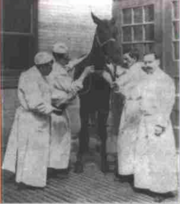 Not long after the Institute’s inauguration, Roux, now less occupied in the fight against rabies, resumes in a new lab and with the help of a new addition, Yersin, his experiments on diphtheria.
This disease used to kill every year thousands of children: commonly called “croup” because it creates fake membranes in the small patient’s throat, therefore killing him by suffocation, deserves to be called “Horrible monster, sparrow hawk of the shadows” by Victor Hugo
in his “Art of being a grandfather”. The painter Albert Gustaf Aristides Edelfelt has drawn a famous painting portraying Pasteur in his laboratory while he is trying to cure this illness that was handled at the times through procedures that were just as cruel as the illness itself.
Roux and Yersin grow the bacillus that causes it and study, thanks to various experiments they do on rabbits, its pathogenic power and symptoms, like the paralysis of the respiratory muscles. It is this last consequence of the diphtheria that provides the two researchers with a valuable clue of the nature of the disease since it is caused by an intoxication due to a toxin introduced into the organism by the bacillus, that while secreting this particular venom is able to multiply itself: they are therefore inclined to think that the bacillus owes its virulence to the toxin. After filtrating the microbial culture of the Corynebacterium diphtheriae
and injecting it into the lab animals, they are able to observe all the typical signs of the sickness. Roux and Yersin establish that they are dealing with a new type of bacillus, not only able to proliferate and abundantly reproduce itself, but also capable of spreading at the same time a powerful venom and they deduce that it can play the role of antigen, that is if they can overcome the delicate moment of its injection, made especially dangerous by the toxin.
Some German researchers have also discovered the diphtheria toxin and are trying to immunize some guinea pigs through the use of a vaccine: one of them, Von Behring, Robert Koch
's student states that he was able to weaken small doses of the toxin. Nonetheless Roux is not convinced by this result since no one knows the collateral effects of the procedure and prefers to use serotherapy since more than one lab research- like the one accomplished by Charles Richet- demonstrated that the serum of an animal vaccinated against the disease includes the antibodies needed to defeat it. The antidiphtheria serum which is able to agglutinate the bacteria and neutralize the toxin is supplied by a horse inoculated with the viral germs and it is separated from the blood drawn from the horses’ jugular vein.
Like it happened for his teacher with the antirabies vaccine, Roux will need to test the effectiveness of the product he elaborated and endure all the stress and ethical dilemmas that the first use of such a risky but also groundbreaking procedure implies. To test the serum two groups of children are chosen from two different hospitals: in the first one, which receives the serum, 338 out of 449 children survive, in the latter one, treated with the custom therapies, only 204 out of 520 do. Once the results are made public by “Figaro`” newspaper a subscription is opened to raise the money needed to provide the Institute the amount of horses necessary to produce enough serum to satisfy the national demand.
After Duclaux’s death, Roux takes his place as head of the Institute and the last research he carries out is the one on syphilis, a dangerous disease because of its immediate effects and the hereditary ripercussions that result from it. Despite Fournier
’s considerable work Van Swieten’s liquid mercury is still the only known cure, although its results are doubtful and uncertain. The search for a stronger remedy against this disease is made more difficult because most animals are immune to it: it is thus not possible to experiment possible cures and study their likely side effects. The sexually transmittable Treponema pallidum
( the syphlis germ), detected by two german biologists, Schaudinne and Hoffmann, affects only the human race – where it resides in sperm, ulceration and cancers that it is able to cause- and, as it will be later discovered, some anthropoid apes, especially chimpanzees. Both Roux and Metchnikoff, consequently to the discovery that this type of ape can be contaminated with the illness, contributed with their research in creating a vaccine ( while Bordet and Wasserman elaborate a solution that is able to expose the germ’s presence in human blood): even though it is not yet a completely reliable solution it represents a noteworthy evolution compared to the previous medicines used against syphilis.
The phagocytosis theory is based on the notion that phagocytes are cells that have the power to englobe foreign bodies- and above all bacteria- introduced inside an organism. German biologists opposed to his doctrine the humoral theory: they claimed to have found in Roux's serum some substances able to reveal the presence of microbes and to ensure their destruction if properly stimulated. The German scientist Eduard Buchner
referred to this substances as “alexine” and two other biologists, Von Behring and Kitasato, demonstrated their lytic power towards bacteria. In 1894 one of these scientist published the result of an experiment that appeared to completely refute Metchnikoff’s ideas: using the cholera vibrio, discovered ten years before by Robert Koch, as an antigen, Richard F. J. Pfeiffer introduced it in the abdomen of a guinea pig already vaccinated against this disease and was able to observe the destruction of the vibrio in the local blood plasma, without the participation of the phagocytes. Not even this study is able to shake Metchnikoff’s belief and faith in his theory and his ideas, as well as Pfeiffer’s and Buchner’s will all contribute to the elaboration of the current theory of the immune system.
However it is Paul-Louis Simond
the first to understand and describe the etiology of the plague and its modality of contamination: he observes all over the bodies of the people affected by it small flea bites, which he also found on the bodies of the dead rats that were always linked to the plague and then deduced that the fleas, which carried the bacteria, were its true cause and that they transmitted the illness by jumping from the dead rat's body to the human one and biting it.
The Institute’s newspaper was filled at the time with articles regarding tubercolosis, some of which written by Albert Calmette, who extended his research to a socio- professional category which was extremely affected by it, that is the miners in whom this disease is often anticipated or accompanied by silicosis
and anchylostomiasis ( caused by a small intestinal worm that creates a state of anemia propitious to tubercolosis). After finding a better solution to anchylostomiasis, he focused on creating a vaccine using the bacillus responsible for bovine tubercolosis, very similar to the human one as it causes almost the same symptoms. Having observed that most actinomycetales
are saprophytes, that is able to survive outside of living organisms, with the help of a veterinary, Camille Guerin
, he attempted to create a special nutritious environment for the bacillus that, in time, altered its features by eliminating the virulence and leaving only the antigenic power. Both of the scientist knew that this arduous task would require a lot of effort and time because it was necessary to act on a large number of generations to change the genetic foundation of a species, nevertheless the velocity of the bacteria’s reproduction allowed, since it was constantly monitored, to interfere with an important phase of its evolution.
The environment deemed appropriate for the denaturation of the Mycobacterium bovis
was a compost of potatoes cooked in the bile of an ox treated with glycerine and Calmette reinseminated it every three weeks for thirteen years, while checking for an enfeeblement of the pathogenic power of the bacillus. Having finally lost completely its virulence, the bovine tubercolosis germ grown with their method was the principal prophylactic weapon against human tubercolosis and it helped to reduce considerably the frequency of this disease.
While experimenting on chimpanzees in Kindia
, on whom he was able to test exhaustively his vaccine, Calmette also discovered that it can notably weaken some leprosy- its bacillus presents some similarities with Koch’s one- manifestations .
also created the first over seas branch of the Institute where he produced an amount of smallpox and rabies vaccines sufficient to satisfy the needs of the population and started a study on venomous snakes, particularly cobras. During these studies Calmette discovered that the power of the venom as well as the tetanus’ one could be annihilated by the use of alkaline hypochlorites and was able therefore to create a serum, effective if injected right after the cobra’s bite. Back in France, he acquired enough snakes to continue his work and create serum for the local population.
while in Tunisi studied how epidemic typhus- known for the red spots it left on sick people that disappeared before they’re death- was transmitted. He noted that now matter how many sick people were hospitalized with typhus, the disease would not to be trasmitted to people who had other disease. The brilliant intuition that enabled him to guess how the contamination happened occurred to him while he was visiting the hospital: to get in he had to climb over the cadaver of a native located not far from where the in-patients left all their clothes and this is how he suddenly understood that the vector of the disease are louse.
Nevertheless it wasn’t him who discovered the bacterium responsible for the disease but other three scientists, Ricketts
, Wilder
and Prowazeki who called it Rickettsia prowazekii
.
, direct it towards the chanels and to filter it in order to make it usable, a measure that in those times inevitably led to a sudden and alarming growth of the typhoid cases in Paris
.
The cause of the disease, a bacillus that was discovered almost twenty years before by the German bacteriologist Karl Joseph Eberth
and that looks like a bodyless spider, is constantly present in this river and not even pouring extensive quantities of ozone and of lime permanganate into its water is enough to exterminate the bacteria.
The difficulty in creating a vaccine is caused by the nature of the germ’s toxine: while the diphtheria bacillus secretes its toxine, the typhoid one contains inside its body the toxin which is therefore an endotoxine that is able to preserve its pathogenic power even after the death of the bacillus.
The doctor André Chantemesse
, who works in the Institute, unlike most of his colleagues is positive that “the XX century will see the disappearance of the typhoid fever like the XIX century has the smallpoxes’ one”.
After working in the rabies division of Rue Vaquelin and studying the microbe that causes dysentery, he seeks the collaboration of a younger bacteriologist, Fernald Widal: together they are able to immunize some guinea pigs by inoculating them with Eberth bacilluses previously killed by the heat, hence questioning the basis of the conventional vaccination method, builded on the notion that only weakened -but not dead- bacteria can be used to immunize.
After an extensive experimentation they develop a thorough process of immunization: three or four injections of germs treated at a temperature of 55 Celsius degrees can prevent and – if not done to late- effectively fight the fever. The bacillus doesn’t survive the heat, but the toxin it contains, adequately weakened, maintains its antigenic power and induces the production of antibodies.
, ideal for quarantines. The construction of the Hospital was enabled by the gift of a rich benefactor, Madame Leabudy, while the money offered by another rich woman, the baroness Hirsch, was used to build a vast pavilion that accommodated the department of chemical biology of the Institute.
and was finalized in resolving a controversy aroused between Pasteur and Berthelot
after the publication of Claude Bernard
’s posthumous essay regarding the nature of the agents implicated in some transformations that happen inside the plants like fermentation. While Pasteur believed that the only substance implied in the process of fermentation was yeast, Bernard- and Berthelot in his own way- believed that some other soluble ferment was involved: a German chemist will demonstrate the existence of this “ferment”, a intracellular diastase and will call “zymase” what we know now as enzymes. Duclaux’s study on the metabolism of nutrients will not have immediate practical applications but will reveal how extensive is the field of enzymes and open new roads that will lead biology to extend the knowledge on life’s mechanisms on a molecular level.
(Pasteur museum http://www.pasteur.fr/english.html) is located in the South wing of the first building occupied by the Pasteur Institute, which was inaugurated on November 14, 1888. Established in 1936, this museum houses the memory of Louis Pasteur's life and work in the vast apartment where he lived during the last seven years of his life, from 1888 to 1895. This museum also includes the collection of scientific objects illustrating the scientist's work, as well as the Byzantine funeral chapel where Pasteur is buried.
s; it houses 100 research units and close to 2,700 people, including 500 permanent scientist
s and another 600 scientists visiting from 70 countries annually. The Institut Pasteur is also a global network of 24 foreign institutes devoted to medical problems in developing countries; a graduate study center and an epidemiological screening unit.
The international network is present in the following cities and countries:
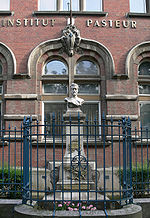
Cell Biology and Infection,
Developmental Biology,
Genomes and Genetics,
Immunology,
Infection and Epidemiology,
Microbiology,
Neuroscience,
Parasitology and Mycology,
Structural Biology and Chemistry,
Virology
There are also non-research departments devoted to records and archives maintenance, maintenance of historical micro-organism cultures, publications and the library.
In addition to the isolation of HIV-1 and HIV-2, in the recent past researchers at the Pasteur Institute have developed a test for the early detection of colon cancer, produced a genetically engineered
vaccine against hepatitis B and a rapid diagnostic test for the detection of the Helicobacter pylori
bacterium which is implicated in the formation of stomach ulcers. Other research in progress includes the study of cancer
and specifically the investigation of the role of oncogene
s, the identification of tumor marker
s for diagnostic tests and the development of new treatments. One area of particular interest is the study of human papilloma viruses (HPV) and their role in cervical cancer
s. Researchers are currently focusing on the development of various vaccines against many diseases including AIDS, malaria
, dengue fever
and the Shigella
bacterium.
Currently, an extensive line of research aims at determining the complete genome
sequences of several organisms of medical importance, in the hope of finding new therapeutic approaches. The Institute has contributed to genome-sequencing projects of the common yeast
(Saccharomyces cerevisiae
, an organism which was so important for Louis Pasteur's history), completed in 1996, Bacillus subtilis
completed in 1997, Mycobacterium tuberculosis
completed in 1998.
(WHO) of the United Nations
. Pasteur scientists also help to monitor epidemics and control outbreaks of infectious diseases throughout the world. These activities have created a close collaboration between the Institute and the U.S. Centers for Disease Control and Prevention
(CDC).
By drawing financial support from many different sources, the Institute protects its autonomy and guarantees the independence of its scientists. The Institute's funding includes French government subsidies, consulting fees, licensing royalties, contract revenue and private contributions.
France
The French Republic , The French Republic , The French Republic , (commonly known as France , is a unitary semi-presidential republic in Western Europe with several overseas territories and islands located on other continents and in the Indian, Pacific, and Atlantic oceans. Metropolitan France...
non-profit private foundation dedicated to the study of biology
Biology
Biology is a natural science concerned with the study of life and living organisms, including their structure, function, growth, origin, evolution, distribution, and taxonomy. Biology is a vast subject containing many subdivisions, topics, and disciplines...
, micro-organisms, disease
Disease
A disease is an abnormal condition affecting the body of an organism. It is often construed to be a medical condition associated with specific symptoms and signs. It may be caused by external factors, such as infectious disease, or it may be caused by internal dysfunctions, such as autoimmune...
s, and vaccine
Vaccine
A vaccine is a biological preparation that improves immunity to a particular disease. A vaccine typically contains an agent that resembles a disease-causing microorganism, and is often made from weakened or killed forms of the microbe or its toxins...
s. It is named after Louis Pasteur
Louis Pasteur
Louis Pasteur was a French chemist and microbiologist born in Dole. He is remembered for his remarkable breakthroughs in the causes and preventions of diseases. His discoveries reduced mortality from puerperal fever, and he created the first vaccine for rabies and anthrax. His experiments...
, who made some of the greatest breakthroughs in modern medicine
Medicine
Medicine is the science and art of healing. It encompasses a variety of health care practices evolved to maintain and restore health by the prevention and treatment of illness....
at the time, including pasteurization
Pasteurization
Pasteurization is a process of heating a food, usually liquid, to a specific temperature for a definite length of time, and then cooling it immediately. This process slows microbial growth in food...
and vaccines for anthrax
Anthrax
Anthrax is an acute disease caused by the bacterium Bacillus anthracis. Most forms of the disease are lethal, and it affects both humans and other animals...
bacillus and rabies
Rabies
Rabies is a viral disease that causes acute encephalitis in warm-blooded animals. It is zoonotic , most commonly by a bite from an infected animal. For a human, rabies is almost invariably fatal if post-exposure prophylaxis is not administered prior to the onset of severe symptoms...
virus. The institute was founded on June 4, 1887, and inaugurated on November 14, 1888.
For over a century, the Institut Pasteur has been at the forefront of the battle against infectious disease
Infectious disease
Infectious diseases, also known as communicable diseases, contagious diseases or transmissible diseases comprise clinically evident illness resulting from the infection, presence and growth of pathogenic biological agents in an individual host organism...
. This worldwide biomedical research organization based in Paris
Paris
Paris is the capital and largest city in France, situated on the river Seine, in northern France, at the heart of the Île-de-France region...
was the first to isolate HIV
HIV
Human immunodeficiency virus is a lentivirus that causes acquired immunodeficiency syndrome , a condition in humans in which progressive failure of the immune system allows life-threatening opportunistic infections and cancers to thrive...
, the virus that causes AIDS
AIDS
Acquired immune deficiency syndrome or acquired immunodeficiency syndrome is a disease of the human immune system caused by the human immunodeficiency virus...
, in 1983. Over the years, it has been responsible for breakthrough discoveries that have enabled medical science to control such virulent diseases as diphtheria
Diphtheria
Diphtheria is an upper respiratory tract illness caused by Corynebacterium diphtheriae, a facultative anaerobic, Gram-positive bacterium. It is characterized by sore throat, low fever, and an adherent membrane on the tonsils, pharynx, and/or nasal cavity...
, tetanus
Tetanus
Tetanus is a medical condition characterized by a prolonged contraction of skeletal muscle fibers. The primary symptoms are caused by tetanospasmin, a neurotoxin produced by the Gram-positive, rod-shaped, obligate anaerobic bacterium Clostridium tetani...
, tuberculosis
Tuberculosis
Tuberculosis, MTB, or TB is a common, and in many cases lethal, infectious disease caused by various strains of mycobacteria, usually Mycobacterium tuberculosis. Tuberculosis usually attacks the lungs but can also affect other parts of the body...
, poliomyelitis
Poliomyelitis
Poliomyelitis, often called polio or infantile paralysis, is an acute viral infectious disease spread from person to person, primarily via the fecal-oral route...
, influenza
Influenza
Influenza, commonly referred to as the flu, is an infectious disease caused by RNA viruses of the family Orthomyxoviridae , that affects birds and mammals...
, yellow fever
Yellow fever
Yellow fever is an acute viral hemorrhagic disease. The virus is a 40 to 50 nm enveloped RNA virus with positive sense of the Flaviviridae family....
, and plague. Since 1908, eight Pasteur Institute scientists have been awarded the Nobel Prize
Nobel Prize
The Nobel Prizes are annual international awards bestowed by Scandinavian committees in recognition of cultural and scientific advances. The will of the Swedish chemist Alfred Nobel, the inventor of dynamite, established the prizes in 1895...
for medicine and physiology
Physiology
Physiology is the science of the function of living systems. This includes how organisms, organ systems, organs, cells, and bio-molecules carry out the chemical or physical functions that exist in a living system. The highest honor awarded in physiology is the Nobel Prize in Physiology or...
, and the 2008 Nobel Prize in Physiology or Medicine was shared with two Pasteur scientists.
History
The Institut Pasteur was founded in 1887 by Louis PasteurLouis Pasteur
Louis Pasteur was a French chemist and microbiologist born in Dole. He is remembered for his remarkable breakthroughs in the causes and preventions of diseases. His discoveries reduced mortality from puerperal fever, and he created the first vaccine for rabies and anthrax. His experiments...
, the French scientist whose early experiments with fermentation
Fermentation (biochemistry)
Fermentation is the process of extracting energy from the oxidation of organic compounds, such as carbohydrates, using an endogenous electron acceptor, which is usually an organic compound. In contrast, respiration is where electrons are donated to an exogenous electron acceptor, such as oxygen,...
led to pioneering research in bacteriology
Bacteriology
Bacteriology is the study of bacteria. This subdivision of microbiology involves the identification, classification, and characterization of bacterial species...
. A giant in science
Science
Science is a systematic enterprise that builds and organizes knowledge in the form of testable explanations and predictions about the universe...
, Pasteur discovered the principle of sterilization
Sterilization (microbiology)
Sterilization is a term referring to any process that eliminates or kills all forms of microbial life, including transmissible agents present on a surface, contained in a fluid, in medication, or in a compound such as biological culture media...
which came to be known as "pasteurization
Pasteurization
Pasteurization is a process of heating a food, usually liquid, to a specific temperature for a definite length of time, and then cooling it immediately. This process slows microbial growth in food...
." His discoveries led to the universal practice of surgical antisepsis. He also developed techniques of vaccination to control bacterial infection, as well as a successful vaccine to treat rabies
Rabies
Rabies is a viral disease that causes acute encephalitis in warm-blooded animals. It is zoonotic , most commonly by a bite from an infected animal. For a human, rabies is almost invariably fatal if post-exposure prophylaxis is not administered prior to the onset of severe symptoms...
.
Louis Pasteur was committed both to basic research and its practical applications. As soon as his institute was created, Pasteur brought together scientists with various specialties. The first five departments were directed by two normaliens (graduates of the Ecole Normale Supérieure
École Normale Supérieure
The École normale supérieure is one of the most prestigious French grandes écoles...
): Emile Duclaux
Émile Duclaux
Émile Duclaux was a French microbiologist and chemist who was born in Aurillac, Cantal.He studied at the College of Aurillac, the Lycée Saint-Louis in Paris and at École Normale Supérieure. In 1862 he was an assistant in the laboratory of Louis Pasteur...
(general microbiology
Microbiology
Microbiology is the study of microorganisms, which are defined as any microscopic organism that comprises either a single cell , cell clusters or no cell at all . This includes eukaryotes, such as fungi and protists, and prokaryotes...
research) and Charles Chamberland
Charles Chamberland
Charles Chamberland was a French microbiologist from Chilly-le-Vignoble in the department of Jura who worked with Louis Pasteur....
(microbe research applied to hygiene
Hygiene
Hygiene refers to the set of practices perceived by a community to be associated with the preservation of health and healthy living. While in modern medical sciences there is a set of standards of hygiene recommended for different situations, what is considered hygienic or not can vary between...
), as well as a biologist
Biologist
A biologist is a scientist devoted to and producing results in biology through the study of life. Typically biologists study organisms and their relationship to their environment. Biologists involved in basic research attempt to discover underlying mechanisms that govern how organisms work...
, Ilya Ilyich Mechnikov
Ilya Ilyich Mechnikov
Ilya Ilyich Mechnikov was a Russian biologist, zoologist and protozoologist, best remembered for his pioneering research into the immune system. Mechnikov received the Nobel Prize in Medicine in 1908, shared with Paul Ehrlich, for his work on phagocytosis...
(morphological microbe research) and two physician
Physician
A physician is a health care provider who practices the profession of medicine, which is concerned with promoting, maintaining or restoring human health through the study, diagnosis, and treatment of disease, injury and other physical and mental impairments...
s, Jacques-Joseph Grancher
Jacques-Joseph Grancher
Jacques-Joseph Grancher was a French pediatrician who was born in Felletin. In 1865 he earned his medical degree, and afterwards was director of a pathological anatomy laboratory in Clamart . From 1885 until his death in 1907 he was director of Hôpital des Enfants Malades in Paris...
(rabies
Rabies
Rabies is a viral disease that causes acute encephalitis in warm-blooded animals. It is zoonotic , most commonly by a bite from an infected animal. For a human, rabies is almost invariably fatal if post-exposure prophylaxis is not administered prior to the onset of severe symptoms...
) and Emile Roux (technical microbe research). One year after the inauguration of the Institut Pasteur, Roux set up the first course of microbiology ever taught in the world, then entitled Cours de Microbie Technique (Course of microbe research techniques).
Pasteur's successors have sustained this tradition, and it is reflected in the Institut Pasteur's unique history of accomplishment:
- Emile Roux and Alexandre YersinAlexandre YersinAlexandre Emile Jean Yersin was a Swiss and French physician and bacteriologist. He is remembered as the co-discoverer of the bacillus responsible for the bubonic plague or pest, which was later re-named in his honour .Yersin was born in 1863 in Aubonne, Canton of Vaud, Switzerland, to a family...
discovered the mechanism of action of Corynebacterium diphtheriaeCorynebacterium diphtheriaeCorynebacterium diphtheriae is a pathogenic bacterium that causes diphtheria. It is also known as the Klebs-Löffler bacillus, because it was discovered in 1884 by German bacteriologists Edwin Klebs and Friedrich Löffler .-Classification:Four subspecies are recognized: C. diphtheriae mitis, C....
and how to treat diphtheria with antitoxinAntitoxinAn antitoxin is an antibody with the ability to neutralize a specific toxin. Antitoxins are produced by certain animals, plants, and bacteria. Although they are most effective in neutralizing toxins, they can kill bacteria and other microorganisms. Antitoxins are made within organisms, but can be...
s; - Alexandre YersinAlexandre YersinAlexandre Emile Jean Yersin was a Swiss and French physician and bacteriologist. He is remembered as the co-discoverer of the bacillus responsible for the bubonic plague or pest, which was later re-named in his honour .Yersin was born in 1863 in Aubonne, Canton of Vaud, Switzerland, to a family...
discovered in 1894 the pathogen of bubonic plagueBubonic plaguePlague is a deadly infectious disease that is caused by the enterobacteria Yersinia pestis, named after the French-Swiss bacteriologist Alexandre Yersin. Primarily carried by rodents and spread to humans via fleas, the disease is notorious throughout history, due to the unrivaled scale of death...
, Yersinia pestisYersinia pestisYersinia pestis is a Gram-negative rod-shaped bacterium. It is a facultative anaerobe that can infect humans and other animals....
; - Paul-Louis SimondPaul-Louis SimondPaul-Louis Simond was a French physician and biologist who was born in Beaufort-sur-Gervanne, on July 30, 1858. His major contribution to science was his demonstration that the intermediates in the transmission of bubonic plague from rats to humans are the fleas Xenopsylla cheopis that dwell on...
discovered in 1898 the role of the fleaFleaFlea is the common name for insects of the order Siphonaptera which are wingless insects with mouthparts adapted for piercing skin and sucking blood...
in the transmission of plague; - Albert CalmetteAlbert CalmetteLéon Charles Albert Calmette ForMemRS was a French physician, bacteriologist and immunologist, and an important officer of the Pasteur Institute. He discovered the Bacillus Calmette-Guérin, an attenuated form of Mycobacterium used in the BCG vaccine against tuberculosis...
and Camille GuérinCamille GuérinJean-Marie Camille Guérin was a French veterinarian, bacteriologist and immunologist who, together with Albert Calmette, developed the Bacillus Calmette-Guérin , a vaccine for immunization against tuberculosis....
discovered how to culture the tuberculosisTuberculosisTuberculosis, MTB, or TB is a common, and in many cases lethal, infectious disease caused by various strains of mycobacteria, usually Mycobacterium tuberculosis. Tuberculosis usually attacks the lungs but can also affect other parts of the body...
bacillus, Mycobacterium tuberculosisMycobacterium tuberculosisMycobacterium tuberculosis is a pathogenic bacterial species in the genus Mycobacterium and the causative agent of most cases of tuberculosis . First discovered in 1882 by Robert Koch, M...
(so called BCG or Bacillus Calmette-GuérinBacillus Calmette-GuérinBacillus Calmette-Guérin is a vaccine against tuberculosis that is prepared from a strain of the attenuated live bovine tuberculosis bacillus, Mycobacterium bovis, that has lost its virulence in humans by being specially subcultured in an artificial medium for 13 years, and also prepared from...
) at Institut Pasteur de LilleInstitut Pasteur de LilleThe Institut Pasteur de Lille is a research centre, membre of the Pasteur Institute network.It includes 14 research units, 1150 employees including 626 researchers located in Lille . 300 employees located outside the Pasteur site come in addition...
and developed in 1921 the first effective antituberculosis vaccine; - Alphonse Laveran got the 1907 Nobel Prize for his research on the role of protozoans as disease agents (notably, his discovery of the malariaMalariaMalaria is a mosquito-borne infectious disease of humans and other animals caused by eukaryotic protists of the genus Plasmodium. The disease results from the multiplication of Plasmodium parasites within red blood cells, causing symptoms that typically include fever and headache, in severe cases...
hematozoon) - Ilya Ilyich MechnikovIlya Ilyich MechnikovIlya Ilyich Mechnikov was a Russian biologist, zoologist and protozoologist, best remembered for his pioneering research into the immune system. Mechnikov received the Nobel Prize in Medicine in 1908, shared with Paul Ehrlich, for his work on phagocytosis...
received the Nobel Prize in 1908 for contributions to scientific understanding of the immune systemImmune systemAn immune system is a system of biological structures and processes within an organism that protects against disease by identifying and killing pathogens and tumor cells. It detects a wide variety of agents, from viruses to parasitic worms, and needs to distinguish them from the organism's own... - Constantin LevaditiConstantin LevaditiConstantin Levaditi was a Romanian physician and microbiologist, a major figure in virology and immunology .-Biography:...
and Karl LandsteinerKarl LandsteinerKarl Landsteiner , was an Austrian-born American biologist and physician of Jewish origin. He is noted for having first distinguished the main blood groups in 1900, having developed the modern system of classification of blood groups from his identification of the presence of agglutinins in the...
demonstrated in 1910 that poliomyelitisPoliomyelitisPoliomyelitis, often called polio or infantile paralysis, is an acute viral infectious disease spread from person to person, primarily via the fecal-oral route...
is due to a filterable virus; - Félix d'HerelleFélix d'HerelleFélix d'Herelle was a French-Canadian microbiologist, the co-discoverer of bacteriophages and experimented with the possibility of phage therapy.-Early years:...
discovered in 1917 the bacteriophageBacteriophageA bacteriophage is any one of a number of viruses that infect bacteria. They do this by injecting genetic material, which they carry enclosed in an outer protein capsid...
, a virus that spread only inside bacteria; - Jules BordetJules BordetJules Jean Baptiste Vincent Bordet was a Belgian immunologist and microbiologist. The bacterial genus Bordetella is named after him.-Biography:Bordet was born at Soignies, Belgium...
received the Nobel prize in 1919 for his discoveries on immunityImmunity (medical)Immunity is a biological term that describes a state of having sufficient biological defenses to avoid infection, disease, or other unwanted biological invasion. Immunity involves both specific and non-specific components. The non-specific components act either as barriers or as eliminators of wide...
, especially the implication of antibodies and the mechanisms of action of the complement; - Charles NicolleCharles NicolleCharles Jules Henry Nicolle was a French bacteriologist who received the Nobel Prize in Medicine for his identification of lice as the transmitter of epidemic typhus.- Biography :...
received the Nobel prize in 1928 for unraveling the mystery of how typhusTyphusEpidemic typhus is a form of typhus so named because the disease often causes epidemics following wars and natural disasters...
is transmitted, especially the role of the louseLouseLice is the common name for over 3,000 species of wingless insects of the order Phthiraptera; three of which are classified as human disease agents...
; - Jean LaigretJean LaigretJean Laigret was a French biologist who was born in Blois.For much of his career he was associated with the Pasteur Institute in Brazzaville , Saigon , Dakar , Bamako and Tunis ,...
developed in 1932 the first vaccine for yellow feverYellow feverYellow fever is an acute viral hemorrhagic disease. The virus is a 40 to 50 nm enveloped RNA virus with positive sense of the Flaviviridae family....
; - André Lwoff established in 1951 the existence of provirusProvirusA provirus is a virus genome that is integrated into the DNA of a host cell.This state can be a stage of virus replication, or a state that persists over longer periods of time as either inactive viral infections or an endogenous retrovirus. In inactive viral infections the virus will not replicate...
es - Pierre Lépine developed in 1954 one of the first antipolio vaccines
- Jean-Pierre ChangeuxJean-Pierre ChangeuxJean-Pierre Changeux is a French neuroscientist known for his research in several fields of biology, from the structure and function of proteins , to the early development of the nervous system up to cognitive functions...
isolated in 1970 the first receptor to a neurotransmitterNeurotransmitterNeurotransmitters are endogenous chemicals that transmit signals from a neuron to a target cell across a synapse. Neurotransmitters are packaged into synaptic vesicles clustered beneath the membrane on the presynaptic side of a synapse, and are released into the synaptic cleft, where they bind to...
, the acetylcholineAcetylcholineThe chemical compound acetylcholine is a neurotransmitter in both the peripheral nervous system and central nervous system in many organisms including humans...
receptor. - Luc MontagnierLuc MontagnierLuc Antoine Montagnier is a French virologist and joint recipient with Françoise Barré-Sinoussi and Harald zur Hausen of the 2008 Nobel Prize in Physiology or Medicine, for his discovery of the human immunodeficiency virus...
, Françoise Barré-SinoussiFrançoise Barré-SinoussiFrançoise Barré-Sinoussi is a French virologist and director of the Unité de Régulation des Infections Rétrovirales at the Institut Pasteur in Paris, France. Born in Paris, France, Barré-Sinoussi performed some of the fundamental work in the identification of the human immunodeficiency virus as...
and colleagues discovered the two HIV viruses that cause AIDSAIDSAcquired immune deficiency syndrome or acquired immunodeficiency syndrome is a disease of the human immune system caused by the human immunodeficiency virus...
, in 1983 and 1985, was honored by the 2008 Nobel Prize in Physiology or Medicine
The biggest mistake by the Institute was ignoring a dissertation by Ernest Duchesne
Ernest Duchesne
Ernest Duchesne was a French physician who noted that certain moulds kill bacteria. He made this discovery 32 years before Alexander Fleming discovered the antibiotic properties of penicillin, a substance derived from those moulds, but his research went unnoticed.-Life and work:Duchesne...
on the use of Penicillium glaucum
Penicillium glaucum
Penicillium glaucum is a mold which is used in the making of some types of blue cheese, including Bleu de Gex, Rochebaron and some varieties of Bleu d'Auvergne and Gorgonzola...
to cure infections in 1897. The early exploitation of his discovery might have saved millions of lives, especially in World War I
World War I
World War I , which was predominantly called the World War or the Great War from its occurrence until 1939, and the First World War or World War I thereafter, was a major war centred in Europe that began on 28 July 1914 and lasted until 11 November 1918...
.
A new age of preventive medicine
Preventive medicine
Preventive medicine or preventive care refers to measures taken to prevent diseases, rather than curing them or treating their symptoms...
in France was made possible by such developments from the Pasteur Institute as vaccines for tuberculosis
Tuberculosis
Tuberculosis, MTB, or TB is a common, and in many cases lethal, infectious disease caused by various strains of mycobacteria, usually Mycobacterium tuberculosis. Tuberculosis usually attacks the lungs but can also affect other parts of the body...
, diphtheria
Diphtheria
Diphtheria is an upper respiratory tract illness caused by Corynebacterium diphtheriae, a facultative anaerobic, Gram-positive bacterium. It is characterized by sore throat, low fever, and an adherent membrane on the tonsils, pharynx, and/or nasal cavity...
, tetanus
Tetanus
Tetanus is a medical condition characterized by a prolonged contraction of skeletal muscle fibers. The primary symptoms are caused by tetanospasmin, a neurotoxin produced by the Gram-positive, rod-shaped, obligate anaerobic bacterium Clostridium tetani...
, yellow fever
Yellow fever
Yellow fever is an acute viral hemorrhagic disease. The virus is a 40 to 50 nm enveloped RNA virus with positive sense of the Flaviviridae family....
, poliomyelitis
Poliomyelitis
Poliomyelitis, often called polio or infantile paralysis, is an acute viral infectious disease spread from person to person, primarily via the fecal-oral route...
, and hepatitis B. The discovery and use of sulfonamides in treating infections was another breakthrough. Some researchers won fame by discovering antitoxin
Antitoxin
An antitoxin is an antibody with the ability to neutralize a specific toxin. Antitoxins are produced by certain animals, plants, and bacteria. Although they are most effective in neutralizing toxins, they can kill bacteria and other microorganisms. Antitoxins are made within organisms, but can be...
s and Daniel Bovet
Daniel Bovet
Daniel Bovet was a Swiss-born Italian pharmacologist who won the 1957 Nobel Prize in Physiology or Medicine for his discovery of drugs that block the actions of specific neurotransmitters. He is best known for his discovery in 1937 of antihistamines, which block the neurotransmitter histamine and...
received the 1957 Nobel Prize for his discoveries on synthetic anti-histamines and curarizing
Curare
Curare is a common name for various arrow poisons originating from South America. The three main types of curare are:* tubocurare...
compounds.
Since World War II
World War II
World War II, or the Second World War , was a global conflict lasting from 1939 to 1945, involving most of the world's nations—including all of the great powers—eventually forming two opposing military alliances: the Allies and the Axis...
, Pasteur researchers have sharply focused on molecular biology
Molecular biology
Molecular biology is the branch of biology that deals with the molecular basis of biological activity. This field overlaps with other areas of biology and chemistry, particularly genetics and biochemistry...
. Their achievements were recognized in 1965, when the Nobel Prize was shared by François Jacob
François Jacob
François Jacob is a French biologist who, together with Jacques Monod, originated the idea that control of enzyme levels in all cells occurs through feedback on transcription. He shared the 1965 Nobel Prize in Medicine with Jacques Monod and André Lwoff.-Childhood and education:François Jacob is...
, Jacques Monod
Jacques Monod
Jacques Lucien Monod was a French biologist who was awarded a Nobel Prize in Physiology or Medicine in 1965, sharing it with François Jacob and Andre Lwoff "for their discoveries concerning genetic control of enzyme and virus synthesis"...
and André Lwoff for their work on the regulation of virus
Virus
A virus is a small infectious agent that can replicate only inside the living cells of organisms. Viruses infect all types of organisms, from animals and plants to bacteria and archaea...
es. In 1985, the first human vaccine obtained by genetic engineering from animal cells, the vaccine against hepatitis B, was developed by Pierre Tiollais and collaborators.
The Institute's opening
Although the center against rabies, directed by Jacques-Joseph GrancherJacques-Joseph Grancher
Jacques-Joseph Grancher was a French pediatrician who was born in Felletin. In 1865 he earned his medical degree, and afterwards was director of a pathological anatomy laboratory in Clamart . From 1885 until his death in 1907 he was director of Hôpital des Enfants Malades in Paris...
and Émile Roux is more than functional, it is also so overcrowded that it becomes necessary to build a structure that Pasteur has been calling with the name “Institute Pasteur” long before it was even built. Since Pasteur can’t, for health reasons, do it himself, he delegates the task of projecting and creating the new building, situated on rue Dutot, to two of his most trusted colleagues, Grancher and Emile Duclaux
Émile Duclaux
Émile Duclaux was a French microbiologist and chemist who was born in Aurillac, Cantal.He studied at the College of Aurillac, the Lycée Saint-Louis in Paris and at École Normale Supérieure. In 1862 he was an assistant in the laboratory of Louis Pasteur...
.
From the beginning the Institute experiences some economical difficulties that it is able to overcome thanks to the help of the government, some foreign rulers and Madame Boucicaut but this aid won’t in any way restrain its independence, therefore respecting Pasteur’s most important prerogative. The million francs left unused won’t be sufficient to provide for the Institute’s needs for long, but the prestigiousness and the social benefits it will bring to France justify and motivate the subsidy it will receive; also the money brought in from selling the vaccines in France and in the rest of the world will help in supporting it. In 1888 this foundation, which has obtained the full approval from the government, begins to function and from the beginning it is involved in the development and changes that France undergoes during the last decades of the XIX century.
The statutes drawn by Pasteur and later approved by Duclaux and Grancher define, besides its absolute freedom and independence, the Institutes internal repartition: a rabies division controlled by Grancher, an anthrax one in Chamberland
Charles Chamberland
Charles Chamberland was a French microbiologist from Chilly-le-Vignoble in the department of Jura who worked with Louis Pasteur....
’s hands, who will also supervise the department of microbiology while Emile Roux will deal with microbial methods applied to medicine.
The Institute during World War I and World War II
During the first World War the Institute is not only involved in the prevention of sanitary risks but also has to deal with the demands of the moment. The most urgent matter is to vaccinate the troops against the thyphoid fever, easily contracted by the soldiers who often have no choice but to drink from small streams or puddles of water from the last rain. After a month from the beginning of the war the Institute is able to provide 670000 doses of the needed vaccine and continues to produce it throughout the conflict.It is important to underline that war brings to the light germs that during times of peace are concealed deep within the soil or secret zones of putrefaction and therefore it reveals the true nature and amplitude of some types of pathologies that would otherwise remain unknown. That's how Weinberg
Weinberg
Weinberg may refer to:* Weinberg an der Raab in Styria* Weinberg Center for the Arts- Other Results :* Weinberg angle* Weinberg's Law of Twins* Hardy-Weinberg principle* Weinberg College of Arts and Sciences- See also :...
, Metchnikoff’s scholar, discloses the complex etiology of the gas gangrene and creates a vaccine for each one of the anaerobes associated to it.
The first world war causes the involvement of science in the warfare business: a movement of active participation rises between the researchers who feel the need to help France win the war and find support to their actions in patriotic argumentations. This is why Gabriel Bertrand
Gabriel Bertrand
Gabriel Bertrand was a French biochemist and bacteriologist.Bertrand introduced into biochemistry both the term “oxidase” and the concept of trace elements....
, with Roux’s authorization, crafts a grenade based on chloropicrin and Fourneau
Ernest Fourneau
Ernest Fourneau was a French medicinal chemist, who played a major role in the discovery of synthetic local anesthetics, as well as in the synthesis of suramin...
discovers the chemical reaction that leads to the formation of methylarsine's chloride whose effects are even worse of the ones of other venomous gases used during the war.
In 1938 the Institute, despite its relative poverty, builds and edifice that hosts a biochemical division and another one dedicated to cellular pathology, whose direction is entrusted to the hands of Boivin
Boivin
Boivin is a surname given as a nickname for a wine drinker, combining boi . The name may also refer to:* Arthur Boivin , politician in Manitoba, Canada...
(who will discover the endotoxines -more appropriately called glucid- lipo- polipeptidic toxines- that are contained in the germ’s body and are freed after its death) and during the same period Andre Lwoff assumes the direction of a new microbial physiology branch built on rue Dutot.
The general mobilitation determined by France’s war declaration against Germany , in September of 1939, empties the Istitute, also significantly reducing its activities, of the members in the age or condition appropriate for being recruited in the army but the almost total absence of battles during the first months of the conflict keeps the sanitary situation on the front in the norm. The Germans never tried to gather information on the Institute’s research: their confidence in Germany’s advantage in this field decreased their curiosity and their only interest was in the serums and vaccines that it could provide to their troops or the European auxiliaries they recluted. This – in the lack of a better term- freedom allowes the Institute to become, during the two years after the occupation, the greatest pharmacy for the Resistance thanks to the initiative of Vallery-Radot, Pasteur’s nephew.
The Germans become suspicious of the Institute’s staff only after the outbreak of a typhoid epidemic in a division of the Wehrmacht
Wehrmacht
The Wehrmacht – from , to defend and , the might/power) were the unified armed forces of Nazi Germany from 1935 to 1945. It consisted of the Heer , the Kriegsmarine and the Luftwaffe .-Origin and use of the term:...
that was stationed in the parisian region before being sent to the Russian front. The cause of the epidemy will be exposed later by some French men: a member of the Institute had stolen a culture of the germ responsible for the disease and, with the collaboration of an accomplice situated near the German troops, infected a large quantity of butter with it. The fact that, after the Germans sold some of the butter to the enemy, the epidemy spread to the civil population is proof that the illness’s breakout was not caused by the local waters. Afterwards the German authorities ordered that the Institute’s stoves containing microbial cultures could be opened only by authorized members of the personnel; a similar security problem also induces them to demand complete lists of the staff’s names and functions: the reason behind some absences is well known to the German’s who sent two very valuable biologists, Doctor Wolmann and his wife, as well as other three lab assistants to a concentration camp.
The Institute won’t constitute a location for entrenchment even after the burst of the battles for Paris’s liberation because its inviolability and sacredness as well as the fear that involving it in any type of conflict might “free the ghosts of long defeated diseases”.
The Institute's economical difficulties during the Seventies
At the end of 1973 the Institute’s economic status is so worrisome that its troubles arouse the public’s interest: no one can believe that an institution which has to provide vaccines and serums for more that fifty million people can be undergoing such big economic problems, an institution that furthermore is believed to be under the government protection –like the Bank of France- and therefore shielded from bankruptcy. The causes of the decadence that is bringing the Institute to ruins are multiple, but most of them can be identified with its commercial and industrial activities and its management. Both the research and production branch have to endure the recoil caused by financial issues: the research doesn’t receive enough funds and the production, which keeps losing market ground to the new private labs, is immobilized by the antiquated mechanical supplies.When in 1968, after disappearing for a long period, rabies comes back to France, the Institute, who owes its original celebrity to this disease’s vaccine, is replaced by other pharmaceutical industries in the production of the vaccines; yet, despite the deficiencies in the production’s organization, its members are able to produce, in 1968, over 400000 doses of vaccine against the Hong Kong influenza.
In 1971 Jacques Monod
Jacques Monod
Jacques Lucien Monod was a French biologist who was awarded a Nobel Prize in Physiology or Medicine in 1965, sharing it with François Jacob and Andre Lwoff "for their discoveries concerning genetic control of enzyme and virus synthesis"...
announces a new era of modernization and development: this new awakening is symbolized by the construction of a new factory where all the production’s departments are going to be reunited. Its construction will cost forty five millions and the Government, positively impressed by the Institute’s will to change, will grant it a sum of twenty million francs to bridge the deficit, followed by the people’s initiative to also accept a role in the division of the financial responsibilities .
Roux's cure against diphtheria and studies on syphilis
This disease used to kill every year thousands of children: commonly called “croup” because it creates fake membranes in the small patient’s throat, therefore killing him by suffocation, deserves to be called “Horrible monster, sparrow hawk of the shadows” by Victor Hugo
Victor Hugo
Victor-Marie Hugo was a Frenchpoet, playwright, novelist, essayist, visual artist, statesman, human rights activist and exponent of the Romantic movement in France....
in his “Art of being a grandfather”. The painter Albert Gustaf Aristides Edelfelt has drawn a famous painting portraying Pasteur in his laboratory while he is trying to cure this illness that was handled at the times through procedures that were just as cruel as the illness itself.
Roux and Yersin grow the bacillus that causes it and study, thanks to various experiments they do on rabbits, its pathogenic power and symptoms, like the paralysis of the respiratory muscles. It is this last consequence of the diphtheria that provides the two researchers with a valuable clue of the nature of the disease since it is caused by an intoxication due to a toxin introduced into the organism by the bacillus, that while secreting this particular venom is able to multiply itself: they are therefore inclined to think that the bacillus owes its virulence to the toxin. After filtrating the microbial culture of the Corynebacterium diphtheriae
Corynebacterium diphtheriae
Corynebacterium diphtheriae is a pathogenic bacterium that causes diphtheria. It is also known as the Klebs-Löffler bacillus, because it was discovered in 1884 by German bacteriologists Edwin Klebs and Friedrich Löffler .-Classification:Four subspecies are recognized: C. diphtheriae mitis, C....
and injecting it into the lab animals, they are able to observe all the typical signs of the sickness. Roux and Yersin establish that they are dealing with a new type of bacillus, not only able to proliferate and abundantly reproduce itself, but also capable of spreading at the same time a powerful venom and they deduce that it can play the role of antigen, that is if they can overcome the delicate moment of its injection, made especially dangerous by the toxin.
Some German researchers have also discovered the diphtheria toxin and are trying to immunize some guinea pigs through the use of a vaccine: one of them, Von Behring, Robert Koch
Robert Koch
Heinrich Hermann Robert Koch was a German physician. He became famous for isolating Bacillus anthracis , the Tuberculosis bacillus and the Vibrio cholerae and for his development of Koch's postulates....
's student states that he was able to weaken small doses of the toxin. Nonetheless Roux is not convinced by this result since no one knows the collateral effects of the procedure and prefers to use serotherapy since more than one lab research- like the one accomplished by Charles Richet- demonstrated that the serum of an animal vaccinated against the disease includes the antibodies needed to defeat it. The antidiphtheria serum which is able to agglutinate the bacteria and neutralize the toxin is supplied by a horse inoculated with the viral germs and it is separated from the blood drawn from the horses’ jugular vein.
Like it happened for his teacher with the antirabies vaccine, Roux will need to test the effectiveness of the product he elaborated and endure all the stress and ethical dilemmas that the first use of such a risky but also groundbreaking procedure implies. To test the serum two groups of children are chosen from two different hospitals: in the first one, which receives the serum, 338 out of 449 children survive, in the latter one, treated with the custom therapies, only 204 out of 520 do. Once the results are made public by “Figaro`” newspaper a subscription is opened to raise the money needed to provide the Institute the amount of horses necessary to produce enough serum to satisfy the national demand.
After Duclaux’s death, Roux takes his place as head of the Institute and the last research he carries out is the one on syphilis, a dangerous disease because of its immediate effects and the hereditary ripercussions that result from it. Despite Fournier
Fournier
* Fournier RF-4 is a motor glider* Museo Fournier de Naipes is a playing card museumFournier is a surname:*Alain Fournier, computer graphics researcher*Alain-Fournier, French writer*Alphonse Fournier , Canadian politician...
’s considerable work Van Swieten’s liquid mercury is still the only known cure, although its results are doubtful and uncertain. The search for a stronger remedy against this disease is made more difficult because most animals are immune to it: it is thus not possible to experiment possible cures and study their likely side effects. The sexually transmittable Treponema pallidum
Treponema pallidum
Treponema pallidum is a species of spirochaete bacterium with subspecies that cause treponemal diseases such as syphilis, bejel, pinta and yaws. The treponemes have a cytoplasmic and outer membrane...
( the syphlis germ), detected by two german biologists, Schaudinne and Hoffmann, affects only the human race – where it resides in sperm, ulceration and cancers that it is able to cause- and, as it will be later discovered, some anthropoid apes, especially chimpanzees. Both Roux and Metchnikoff, consequently to the discovery that this type of ape can be contaminated with the illness, contributed with their research in creating a vaccine ( while Bordet and Wasserman elaborate a solution that is able to expose the germ’s presence in human blood): even though it is not yet a completely reliable solution it represents a noteworthy evolution compared to the previous medicines used against syphilis.
Metchnikoff’s phagocytosis theory
Ilya Ilyich Mechnikov already enounced the “principle of immunization” during this voluntary exile in Italy where he went to undertake some studies, the results of which he had promptly communicated to Pasteur.The phagocytosis theory is based on the notion that phagocytes are cells that have the power to englobe foreign bodies- and above all bacteria- introduced inside an organism. German biologists opposed to his doctrine the humoral theory: they claimed to have found in Roux's serum some substances able to reveal the presence of microbes and to ensure their destruction if properly stimulated. The German scientist Eduard Buchner
Eduard Buchner
Eduard Buchner was a German chemist and zymologist, awarded with the 1907 Nobel Prize in Chemistry thanks to his work on fermentation.-Early years:...
referred to this substances as “alexine” and two other biologists, Von Behring and Kitasato, demonstrated their lytic power towards bacteria. In 1894 one of these scientist published the result of an experiment that appeared to completely refute Metchnikoff’s ideas: using the cholera vibrio, discovered ten years before by Robert Koch, as an antigen, Richard F. J. Pfeiffer introduced it in the abdomen of a guinea pig already vaccinated against this disease and was able to observe the destruction of the vibrio in the local blood plasma, without the participation of the phagocytes. Not even this study is able to shake Metchnikoff’s belief and faith in his theory and his ideas, as well as Pfeiffer’s and Buchner’s will all contribute to the elaboration of the current theory of the immune system.
Yersin's studies on the plague
Yersin, after his research with Roux, leaves abruptly the Institute for personal reasons, without losing Pasteur’s benevolence, who never doubts that the young man is destined to great things in the scientific area and will contribute in spreading the pastorian spirit around the world. The news of a violent plague outburst in Yunman enables Yersin to truly show and reach his potential as he is called, as Pasteur’s scholar, to conduct a microbiological research of the disease. The plague he has to deal with is the “bubonic plague” which is recognizable most of the time through the abscesses, “buboes”, it provokes in its victims. Yersin looks for the germ responsible for the infection specifically in this plague-spots, tumors caused by the inflammation of the lymphatic glands which become black because of the necrosis of the tissue. After many microscopic exams he is able to state that in most of the cases the bubonic plague bacterium is located in these buboes; but in the meanwhile the Japanese scientist Kitasato also declares that he has isolated the bacterium, even though the description he provides is dissimilar to the one given by Yersin. Therefore, although at first named “Kitasato-Yersin bacillus” by the scientific community, the microbe will later assume only the latter’s name because the one identified by Kitasato, a type of streptococcus, cannot be found in the lymphatic glands.However it is Paul-Louis Simond
Paul-Louis Simond
Paul-Louis Simond was a French physician and biologist who was born in Beaufort-sur-Gervanne, on July 30, 1858. His major contribution to science was his demonstration that the intermediates in the transmission of bubonic plague from rats to humans are the fleas Xenopsylla cheopis that dwell on...
the first to understand and describe the etiology of the plague and its modality of contamination: he observes all over the bodies of the people affected by it small flea bites, which he also found on the bodies of the dead rats that were always linked to the plague and then deduced that the fleas, which carried the bacteria, were its true cause and that they transmitted the illness by jumping from the dead rat's body to the human one and biting it.
Calmette's and Guerin's antituberculosis vaccine
In the beginning of the twentieth century the improvement of the general life conditions and the development of a more extensive conception of hygiene determines in France a slight regression in consumption cases: nonetheless the Institute’s labs, like many other ones, keeps trying to find among Koch’s bacillus many singularities the one that will allow them to find an antidote to its terrible consequences. Right after he had discovered the bacillus, Koch had tried in vain to create a vaccine against it, however the injection of the filtrate he had prepared, later called old tubercolin had the effect of revealing who was phthisic from who wasn’t by causing in the latter-and not in the former-fever and light trembing.The Institute’s newspaper was filled at the time with articles regarding tubercolosis, some of which written by Albert Calmette, who extended his research to a socio- professional category which was extremely affected by it, that is the miners in whom this disease is often anticipated or accompanied by silicosis
Silicosis
Silicosis, also known as Potter's rot, is a form of occupational lung disease caused by inhalation of crystalline silica dust, and is marked by inflammation and scarring in forms of nodular lesions in the upper lobes of the lungs...
and anchylostomiasis ( caused by a small intestinal worm that creates a state of anemia propitious to tubercolosis). After finding a better solution to anchylostomiasis, he focused on creating a vaccine using the bacillus responsible for bovine tubercolosis, very similar to the human one as it causes almost the same symptoms. Having observed that most actinomycetales
Actinomycetales
Actinomycetales is an order of Actinobacteria. They are very diverse and contain a variety of subdivisions as well as yet unclassified isolates. This is mainly because some genera are very difficult to classify because of a highly niche-dependent phenotype...
are saprophytes, that is able to survive outside of living organisms, with the help of a veterinary, Camille Guerin
Camille Guérin
Jean-Marie Camille Guérin was a French veterinarian, bacteriologist and immunologist who, together with Albert Calmette, developed the Bacillus Calmette-Guérin , a vaccine for immunization against tuberculosis....
, he attempted to create a special nutritious environment for the bacillus that, in time, altered its features by eliminating the virulence and leaving only the antigenic power. Both of the scientist knew that this arduous task would require a lot of effort and time because it was necessary to act on a large number of generations to change the genetic foundation of a species, nevertheless the velocity of the bacteria’s reproduction allowed, since it was constantly monitored, to interfere with an important phase of its evolution.
The environment deemed appropriate for the denaturation of the Mycobacterium bovis
Mycobacterium bovis
Mycobacterium bovis is a slow-growing , aerobic bacterium and the causative agent of tuberculosis in cattle...
was a compost of potatoes cooked in the bile of an ox treated with glycerine and Calmette reinseminated it every three weeks for thirteen years, while checking for an enfeeblement of the pathogenic power of the bacillus. Having finally lost completely its virulence, the bovine tubercolosis germ grown with their method was the principal prophylactic weapon against human tubercolosis and it helped to reduce considerably the frequency of this disease.
While experimenting on chimpanzees in Kindia
Kindia
Kindia is the third largest city in Guinea, lying about 85 miles north east of the nation's capital Conakry.Population 181,126 . - Overview :...
, on whom he was able to test exhaustively his vaccine, Calmette also discovered that it can notably weaken some leprosy- its bacillus presents some similarities with Koch’s one- manifestations .
Calmette's work in Saigon
In Saigon Albert CalmetteAlbert Calmette
Léon Charles Albert Calmette ForMemRS was a French physician, bacteriologist and immunologist, and an important officer of the Pasteur Institute. He discovered the Bacillus Calmette-Guérin, an attenuated form of Mycobacterium used in the BCG vaccine against tuberculosis...
also created the first over seas branch of the Institute where he produced an amount of smallpox and rabies vaccines sufficient to satisfy the needs of the population and started a study on venomous snakes, particularly cobras. During these studies Calmette discovered that the power of the venom as well as the tetanus’ one could be annihilated by the use of alkaline hypochlorites and was able therefore to create a serum, effective if injected right after the cobra’s bite. Back in France, he acquired enough snakes to continue his work and create serum for the local population.
Nicolle's work on epidemic typhus
The scientist and writer Charles NicolleCharles Nicolle
Charles Jules Henry Nicolle was a French bacteriologist who received the Nobel Prize in Medicine for his identification of lice as the transmitter of epidemic typhus.- Biography :...
while in Tunisi studied how epidemic typhus- known for the red spots it left on sick people that disappeared before they’re death- was transmitted. He noted that now matter how many sick people were hospitalized with typhus, the disease would not to be trasmitted to people who had other disease. The brilliant intuition that enabled him to guess how the contamination happened occurred to him while he was visiting the hospital: to get in he had to climb over the cadaver of a native located not far from where the in-patients left all their clothes and this is how he suddenly understood that the vector of the disease are louse.
Nevertheless it wasn’t him who discovered the bacterium responsible for the disease but other three scientists, Ricketts
Ricketts
-Place names:In the United States:*Ricketts, Iowa*Ricketts Glen State Park in Pennsylvania-People:*Anthony Ricketts , former professional squash player*Arthur Ricketts, , English cricketer...
, Wilder
Wilder
-People:*Abel Carter Wilder , American businessman and politician*Alan Wilder , British electronic musician*Alec Wilder , composer and songwriter*Billy Wilder , Austrian-born American film director*Burt Green Wilder...
and Prowazeki who called it Rickettsia prowazekii
Rickettsia prowazekii
Rickettsia prowazekii is a species of gram negative, Alpha Proteobacteria, obligate intracellular parasitic, aerobic bacteria that is the etiologic agent of epidemic typhus, transmitted in the feces of lice. In North America, the main reservoir for R. prowazekii is the flying squirrel. R...
.
Chantemesse's typhoid vaccine
During the summer of 1900, the extremely hot weather and scarsity of the hydric supply in Paris, usually insured by the Ourcq chanel and by the "aqueduc de la Dhuis" force the authorities to pump water from the SeineSeine
The Seine is a -long river and an important commercial waterway within the Paris Basin in the north of France. It rises at Saint-Seine near Dijon in northeastern France in the Langres plateau, flowing through Paris and into the English Channel at Le Havre . It is navigable by ocean-going vessels...
, direct it towards the chanels and to filter it in order to make it usable, a measure that in those times inevitably led to a sudden and alarming growth of the typhoid cases in Paris
Paris
Paris is the capital and largest city in France, situated on the river Seine, in northern France, at the heart of the Île-de-France region...
.
The cause of the disease, a bacillus that was discovered almost twenty years before by the German bacteriologist Karl Joseph Eberth
Karl Joseph Eberth
Karl Joseph Eberth was a German pathologist and bacteriologist who was a native of Würzburg.In 1859 he earned his doctorate at the University of Würzburg, and became an assistant to anatomist Albert von Kölliker...
and that looks like a bodyless spider, is constantly present in this river and not even pouring extensive quantities of ozone and of lime permanganate into its water is enough to exterminate the bacteria.
The difficulty in creating a vaccine is caused by the nature of the germ’s toxine: while the diphtheria bacillus secretes its toxine, the typhoid one contains inside its body the toxin which is therefore an endotoxine that is able to preserve its pathogenic power even after the death of the bacillus.
The doctor André Chantemesse
André Chantemesse
André Chantemesse was a French bacteriologist born in Le Puy-en-Velay, Haute-Loire.From 1880 to 1885 he served as interne des hôpitaux in Paris, earning his doctorate in 1884 with a dissertation on adult tuberculous meningitis titled Étude sur la méningite tuberculeuse de l'adulte : les formes...
, who works in the Institute, unlike most of his colleagues is positive that “the XX century will see the disappearance of the typhoid fever like the XIX century has the smallpoxes’ one”.
After working in the rabies division of Rue Vaquelin and studying the microbe that causes dysentery, he seeks the collaboration of a younger bacteriologist, Fernald Widal: together they are able to immunize some guinea pigs by inoculating them with Eberth bacilluses previously killed by the heat, hence questioning the basis of the conventional vaccination method, builded on the notion that only weakened -but not dead- bacteria can be used to immunize.
After an extensive experimentation they develop a thorough process of immunization: three or four injections of germs treated at a temperature of 55 Celsius degrees can prevent and – if not done to late- effectively fight the fever. The bacillus doesn’t survive the heat, but the toxin it contains, adequately weakened, maintains its antigenic power and induces the production of antibodies.
The Hospital Pasteur
The Hospital Pasteur is built during the first year of the twentieth century in front of the Institute and is employed for a long time by the members as a field for clinical observation and experimentations of therapeutical processes elaborated by themselves. Since in the beginning it was provided with only 120 beds, every patient was so well isolated in his private room that each one could be almost considered a small pest housePest house
In the past, a pest house or pesthouse was a hospital or hostel used for persons afflicted with communicable diseases such as tuberculosis, cholera, or smallpox...
, ideal for quarantines. The construction of the Hospital was enabled by the gift of a rich benefactor, Madame Leabudy, while the money offered by another rich woman, the baroness Hirsch, was used to build a vast pavilion that accommodated the department of chemical biology of the Institute.
Duclaux work in the chemical biology department
The work done in the new pavilion by Duclaux clarified how the human body accomplished some of its vital functions and brought to light the role of a diastaseDiastase
A diastase is any one of a group of enzymes which catalyses the breakdown of starch into maltose. Alpha amylase degrades starch to a mixture of the disaccharide maltose, the trisaccharide maltotriose, which contains three α -linked glucose residues, and oligosaccharides known as dextrins that...
and was finalized in resolving a controversy aroused between Pasteur and Berthelot
Berthelot
Berthelot is a surname, and may refer to:*Amable Berthelot, Québécois lawyer*André Berthelot, a secretary-general of La Grande Encyclopédie*Chantal Berthelot, a member of the French National Assembly...
after the publication of Claude Bernard
Claude Bernard
Claude Bernard was a French physiologist. He was the first to define the term milieu intérieur . Historian of science I. Bernard Cohen of Harvard University called Bernard "one of the greatest of all men of science"...
’s posthumous essay regarding the nature of the agents implicated in some transformations that happen inside the plants like fermentation. While Pasteur believed that the only substance implied in the process of fermentation was yeast, Bernard- and Berthelot in his own way- believed that some other soluble ferment was involved: a German chemist will demonstrate the existence of this “ferment”, a intracellular diastase and will call “zymase” what we know now as enzymes. Duclaux’s study on the metabolism of nutrients will not have immediate practical applications but will reveal how extensive is the field of enzymes and open new roads that will lead biology to extend the knowledge on life’s mechanisms on a molecular level.
Pasteur's Museum and Tomb
The Musée PasteurMusée Pasteur
The Musée Pasteur is a museum dedicated to scientist Louis Pasteur. It is located within the Institut Pasteur at 25 Rue du Docteur Roux, Paris, France, in the XVe arrondissement, and open daily in the warmer months; an admission fee is charged....
(Pasteur museum http://www.pasteur.fr/english.html) is located in the South wing of the first building occupied by the Pasteur Institute, which was inaugurated on November 14, 1888. Established in 1936, this museum houses the memory of Louis Pasteur's life and work in the vast apartment where he lived during the last seven years of his life, from 1888 to 1895. This museum also includes the collection of scientific objects illustrating the scientist's work, as well as the Byzantine funeral chapel where Pasteur is buried.
Institut Pasteur today
Today, the Institut Pasteur is one of the world's leading research centerResearch center
A research center is a facility or building dedicated to research, commonly with the focus on a specific area. There are over 14,000 research centers in the United States...
s; it houses 100 research units and close to 2,700 people, including 500 permanent scientist
Scientist
A scientist in a broad sense is one engaging in a systematic activity to acquire knowledge. In a more restricted sense, a scientist is an individual who uses the scientific method. The person may be an expert in one or more areas of science. This article focuses on the more restricted use of the word...
s and another 600 scientists visiting from 70 countries annually. The Institut Pasteur is also a global network of 24 foreign institutes devoted to medical problems in developing countries; a graduate study center and an epidemiological screening unit.
The international network is present in the following cities and countries:
- AlgiersAlgiers' is the capital and largest city of Algeria. According to the 1998 census, the population of the city proper was 1,519,570 and that of the urban agglomeration was 2,135,630. In 2009, the population was about 3,500,000...
, AlgeriaAlgeriaAlgeria , officially the People's Democratic Republic of Algeria , also formally referred to as the Democratic and Popular Republic of Algeria, is a country in the Maghreb region of Northwest Africa with Algiers as its capital.In terms of land area, it is the largest country in Africa and the Arab... - BanguiBangui-Law and government:Bangui is an autonomous commune of the Central African Republic. With an area of 67 km², it is by far the smallest high-level administrative division of the CAR in area but the highest in population...
, Central African RepublicCentral African RepublicThe Central African Republic , is a landlocked country in Central Africa. It borders Chad in the north, Sudan in the north east, South Sudan in the east, the Democratic Republic of the Congo and the Republic of the Congo in the south, and Cameroon in the west. The CAR covers a land area of about ,... - BrusselsBrusselsBrussels , officially the Brussels Region or Brussels-Capital Region , is the capital of Belgium and the de facto capital of the European Union...
, BelgiumBelgiumBelgium , officially the Kingdom of Belgium, is a federal state in Western Europe. It is a founding member of the European Union and hosts the EU's headquarters, and those of several other major international organisations such as NATO.Belgium is also a member of, or affiliated to, many... - São PauloSão PauloSão Paulo is the largest city in Brazil, the largest city in the southern hemisphere and South America, and the world's seventh largest city by population. The metropolis is anchor to the São Paulo metropolitan area, ranked as the second-most populous metropolitan area in the Americas and among...
, BrazilBrazilBrazil , officially the Federative Republic of Brazil , is the largest country in South America. It is the world's fifth largest country, both by geographical area and by population with over 192 million people... - Phnom PenhPhnom PenhPhnom Penh is the capital and largest city of Cambodia. Located on the banks of the Mekong River, Phnom Penh has been the national capital since the French colonized Cambodia, and has grown to become the nation's center of economic and industrial activities, as well as the center of security,...
, CambodiaCambodiaCambodia , officially known as the Kingdom of Cambodia, is a country located in the southern portion of the Indochina Peninsula in Southeast Asia... - DakarDakarDakar is the capital city and largest city of Senegal. It is located on the Cap-Vert Peninsula on the Atlantic coast and is the westernmost city on the African mainland...
, SenegalSenegalSenegal , officially the Republic of Senegal , is a country in western Africa. It owes its name to the Sénégal River that borders it to the east and north...
- LilleInstitut Pasteur de LilleThe Institut Pasteur de Lille is a research centre, membre of the Pasteur Institute network.It includes 14 research units, 1150 employees including 626 researchers located in Lille . 300 employees located outside the Pasteur site come in addition...
, FranceFranceThe French Republic , The French Republic , The French Republic , (commonly known as France , is a unitary semi-presidential republic in Western Europe with several overseas territories and islands located on other continents and in the Indian, Pacific, and Atlantic oceans. Metropolitan France... - Pointe-à-PitrePointe-à-PitrePointe-à-Pitre is the largest city of Guadeloupe, an overseas région and département of France located in the Lesser Antilles, of which it is a sous-préfecture, being the seat of the Arrondissement of Pointe-à-Pitre....
, GuadeloupeGuadeloupeGuadeloupe is an archipelago located in the Leeward Islands, in the Lesser Antilles, with a land area of 1,628 square kilometres and a population of 400,000. It is the first overseas region of France, consisting of a single overseas department. As with the other overseas departments, Guadeloupe... - CayenneCayenneCayenne is the capital of French Guiana, an overseas region and department of France located in South America. The city stands on a former island at the mouth of the Cayenne River on the Atlantic coast. The city's motto is "Ferit Aurum Industria" which means "Work brings wealth"...
, French Guyana - Ho Chi Minh CityHo Chi Minh CityHo Chi Minh City , formerly named Saigon is the largest city in Vietnam...
, Nha TrangNha TrangNha Trang is a coastal city and capital of Khanh Hoa province, on the South Central Coast of Vietnam. It is bounded on the North by Ninh Hoà district, on the East by the South China Sea, on the South by Cam Ranh town and on the West by Diên Khánh district...
and HanoiHanoiHanoi , is the capital of Vietnam and the country's second largest city. Its population in 2009 was estimated at 2.6 million for urban districts, 6.5 million for the metropolitan jurisdiction. From 1010 until 1802, it was the most important political centre of Vietnam...
, VietnamVietnamVietnam – sometimes spelled Viet Nam , officially the Socialist Republic of Vietnam – is the easternmost country on the Indochina Peninsula in Southeast Asia. It is bordered by China to the north, Laos to the northwest, Cambodia to the southwest, and the South China Sea –... - TehranTehranTehran , sometimes spelled Teheran, is the capital of Iran and Tehran Province. With an estimated population of 8,429,807; it is also Iran's largest urban area and city, one of the largest cities in Western Asia, and is the world's 19th largest city.In the 20th century, Tehran was subject to...
, IranIranIran , officially the Islamic Republic of Iran , is a country in Southern and Western Asia. The name "Iran" has been in use natively since the Sassanian era and came into use internationally in 1935, before which the country was known to the Western world as Persia...
: (Pasteur Institute of Iran) - AbidjanAbidjanAbidjan is the economic and former official capital of Côte d'Ivoire, while the current capital is Yamoussoukro. it was the largest city in the nation and the third-largest French-speaking city in the world, after Paris, and Kinshasa but before Montreal...
, Côte d'IvoireCôte d'IvoireThe Republic of Côte d'Ivoire or Ivory Coast is a country in West Africa. It has an area of , and borders the countries Liberia, Guinea, Mali, Burkina Faso and Ghana; its southern boundary is along the Gulf of Guinea. The country's population was 15,366,672 in 1998 and was estimated to be... - Tananarive, MadagascarMadagascarThe Republic of Madagascar is an island country located in the Indian Ocean off the southeastern coast of Africa...
- CasablancaCasablancaCasablanca is a city in western Morocco, located on the Atlantic Ocean. It is the capital of the Grand Casablanca region.Casablanca is Morocco's largest city as well as its chief port. It is also the biggest city in the Maghreb. The 2004 census recorded a population of 2,949,805 in the prefecture...
, MoroccoMoroccoMorocco , officially the Kingdom of Morocco , is a country located in North Africa. It has a population of more than 32 million and an area of 710,850 km², and also primarily administers the disputed region of the Western Sahara... - NouméaNouméaNouméa is the capital city of the French territory of New Caledonia. It is situated on a peninsula in the south of New Caledonia's main island, Grande Terre, and is home to the majority of the island's European, Polynesian , Indonesian, and Vietnamese populations, as well as many Melanesians,...
, New CaledoniaNew CaledoniaNew Caledonia is a special collectivity of France located in the southwest Pacific Ocean, east of Australia and about from Metropolitan France. The archipelago, part of the Melanesia subregion, includes the main island of Grande Terre, the Loyalty Islands, the Belep archipelago, the Isle of... - St Petersburg, RussiaRussiaRussia or , officially known as both Russia and the Russian Federation , is a country in northern Eurasia. It is a federal semi-presidential republic, comprising 83 federal subjects...
- TunisTunisTunis is the capital of both the Tunisian Republic and the Tunis Governorate. It is Tunisia's largest city, with a population of 728,453 as of 2004; the greater metropolitan area holds some 2,412,500 inhabitants....
, TunisiaTunisiaTunisia , officially the Tunisian RepublicThe long name of Tunisia in other languages used in the country is: , is the northernmost country in Africa. It is a Maghreb country and is bordered by Algeria to the west, Libya to the southeast, and the Mediterranean Sea to the north and east. Its area... - AthensAthensAthens , is the capital and largest city of Greece. Athens dominates the Attica region and is one of the world's oldest cities, as its recorded history spans around 3,400 years. Classical Athens was a powerful city-state...
, GreeceGreeceGreece , officially the Hellenic Republic , and historically Hellas or the Republic of Greece in English, is a country in southeastern Europe.... - MontevideoMontevideoMontevideo is the largest city, the capital, and the chief port of Uruguay. The settlement was established in 1726 by Bruno Mauricio de Zabala, as a strategic move amidst a Spanish-Portuguese dispute over the platine region, and as a counter to the Portuguese colony at Colonia del Sacramento...
, UruguayUruguayUruguay ,officially the Oriental Republic of Uruguay,sometimes the Eastern Republic of Uruguay; ) is a country in the southeastern part of South America. It is home to some 3.5 million people, of whom 1.8 million live in the capital Montevideo and its metropolitan area... - BucharestBucharestBucharest is the capital municipality, cultural, industrial, and financial centre of Romania. It is the largest city in Romania, located in the southeast of the country, at , and lies on the banks of the Dâmbovița River....
, RomaniaRomaniaRomania is a country located at the crossroads of Central and Southeastern Europe, on the Lower Danube, within and outside the Carpathian arch, bordering on the Black Sea... - NiameyNiamey-Population:While Niamey's population has grown steadily since independence, the droughts of the early 1970s and 1980s, along with the economic crisis of the early 1980s, have propelled an exodus of rural inhabitants to Niger's largest city...
, NigerNigerNiger , officially named the Republic of Niger, is a landlocked country in Western Africa, named after the Niger River. It borders Nigeria and Benin to the south, Burkina Faso and Mali to the west, Algeria and Libya to the north and Chad to the east... - YaoundéYaoundé-Transportation:Yaoundé Nsimalen International Airport is a major civilian hub, while nearby Yaoundé Airport is used by the military. Railway lines run west to the port city of Douala and north to N'Gaoundéré. Many bus companies operate from the city; particularly in the Nsam and Mvan neighborhoods...
, CameroonCameroonCameroon, officially the Republic of Cameroon , is a country in west Central Africa. It is bordered by Nigeria to the west; Chad to the northeast; the Central African Republic to the east; and Equatorial Guinea, Gabon, and the Republic of the Congo to the south. Cameroon's coastline lies on the... - SeoulSeoulSeoul , officially the Seoul Special City, is the capital and largest metropolis of South Korea. A megacity with a population of over 10 million, it is the largest city proper in the OECD developed world...
, South KoreaSouth KoreaThe Republic of Korea , , is a sovereign state in East Asia, located on the southern portion of the Korean Peninsula. It is neighbored by the People's Republic of China to the west, Japan to the east, North Korea to the north, and the East China Sea and Republic of China to the south... - IPS ShanghaiShanghaiShanghai is the largest city by population in China and the largest city proper in the world. It is one of the four province-level municipalities in the People's Republic of China, with a total population of over 23 million as of 2010...
, ChinaChinaChinese civilization may refer to:* China for more general discussion of the country.* Chinese culture* Greater China, the transnational community of ethnic Chinese.* History of China* Sinosphere, the area historically affected by Chinese culture... - Pasteur Foundation New YorkNew YorkNew York is a state in the Northeastern region of the United States. It is the nation's third most populous state. New York is bordered by New Jersey and Pennsylvania to the south, and by Connecticut, Massachusetts and Vermont to the east...
, USA - Canadian Pasteur Foundation, MontrealMontrealMontreal is a city in Canada. It is the largest city in the province of Quebec, the second-largest city in Canada and the seventh largest in North America...
, CanadaCanadaCanada is a North American country consisting of ten provinces and three territories. Located in the northern part of the continent, it extends from the Atlantic Ocean in the east to the Pacific Ocean in the west, and northward into the Arctic Ocean... - Hong Kong University - Pasteur Research Centre Hong KongHong KongHong Kong is one of two Special Administrative Regions of the People's Republic of China , the other being Macau. A city-state situated on China's south coast and enclosed by the Pearl River Delta and South China Sea, it is renowned for its expansive skyline and deep natural harbour...
, ChinaChinaChinese civilization may refer to:* China for more general discussion of the country.* Chinese culture* Greater China, the transnational community of ethnic Chinese.* History of China* Sinosphere, the area historically affected by Chinese culture... - Pasteur Institute of IndiaPasteur Institute of IndiaPasteur Institute of India, Coonoor is an Autonomous Body under the control of the Ministry of Health and Family Welfare, Government of India, New Delhi. The Institute produces Antirabies Vaccine and the DTP group of vaccines. The Institute is in the final stages of production of a new cell...
, CoonoorCoonoorCoonoor is a town and a municipality in the Nilgiris district in the state of Tamil Nadu, India. It is known for its production of Nilgiri tea....
, IndiaIndiaIndia , officially the Republic of India , is a country in South Asia. It is the seventh-largest country by geographical area, the second-most populous country with over 1.2 billion people, and the most populous democracy in the world...
http://mohfw.nic.in/kk/95/ib/95ib0l01.htm
Research Centers
The Institut Pasteur web site currently shows 10 major research departments in 2008. These are:Cell Biology and Infection,
Developmental Biology,
Genomes and Genetics,
Immunology,
Infection and Epidemiology,
Microbiology,
Neuroscience,
Parasitology and Mycology,
Structural Biology and Chemistry,
Virology
There are also non-research departments devoted to records and archives maintenance, maintenance of historical micro-organism cultures, publications and the library.
In addition to the isolation of HIV-1 and HIV-2, in the recent past researchers at the Pasteur Institute have developed a test for the early detection of colon cancer, produced a genetically engineered
Genetic engineering
Genetic engineering, also called genetic modification, is the direct human manipulation of an organism's genome using modern DNA technology. It involves the introduction of foreign DNA or synthetic genes into the organism of interest...
vaccine against hepatitis B and a rapid diagnostic test for the detection of the Helicobacter pylori
Helicobacter pylori
Helicobacter pylori , previously named Campylobacter pyloridis, is a Gram-negative, microaerophilic bacterium found in the stomach. It was identified in 1982 by Barry Marshall and Robin Warren, who found that it was present in patients with chronic gastritis and gastric ulcers, conditions that were...
bacterium which is implicated in the formation of stomach ulcers. Other research in progress includes the study of cancer
Cancer
Cancer , known medically as a malignant neoplasm, is a large group of different diseases, all involving unregulated cell growth. In cancer, cells divide and grow uncontrollably, forming malignant tumors, and invade nearby parts of the body. The cancer may also spread to more distant parts of the...
and specifically the investigation of the role of oncogene
Oncogene
An oncogene is a gene that has the potential to cause cancer. In tumor cells, they are often mutated or expressed at high levels.An oncogene is a gene found in the chromosomes of tumor cells whose activation is associated with the initial and continuing conversion of normal cells into cancer...
s, the identification of tumor marker
Tumor marker
A tumor marker is a substance found in the blood, urine, or body tissues that can be elevated in cancer, among other tissue types. There are many different tumor markers, each indicative of a particular disease process, and they are used in oncology to help detect the presence of cancer...
s for diagnostic tests and the development of new treatments. One area of particular interest is the study of human papilloma viruses (HPV) and their role in cervical cancer
Cervical cancer
Cervical cancer is malignant neoplasm of the cervix uteri or cervical area. One of the most common symptoms is abnormal vaginal bleeding, but in some cases there may be no obvious symptoms until the cancer is in its advanced stages...
s. Researchers are currently focusing on the development of various vaccines against many diseases including AIDS, malaria
Malaria
Malaria is a mosquito-borne infectious disease of humans and other animals caused by eukaryotic protists of the genus Plasmodium. The disease results from the multiplication of Plasmodium parasites within red blood cells, causing symptoms that typically include fever and headache, in severe cases...
, dengue fever
Dengue fever
Dengue fever , also known as breakbone fever, is an infectious tropical disease caused by the dengue virus. Symptoms include fever, headache, muscle and joint pains, and a characteristic skin rash that is similar to measles...
and the Shigella
Shigella
Shigella is a genus of Gram-negative, nonspore forming, non-motile, rod-shaped bacteria closely related to Escherichia coli and Salmonella. The causative agent of human shigellosis, Shigella causes disease in primates, but not in other mammals. It is only naturally found in humans and apes. During...
bacterium.
Currently, an extensive line of research aims at determining the complete genome
Genome
In modern molecular biology and genetics, the genome is the entirety of an organism's hereditary information. It is encoded either in DNA or, for many types of virus, in RNA. The genome includes both the genes and the non-coding sequences of the DNA/RNA....
sequences of several organisms of medical importance, in the hope of finding new therapeutic approaches. The Institute has contributed to genome-sequencing projects of the common yeast
Yeast
Yeasts are eukaryotic micro-organisms classified in the kingdom Fungi, with 1,500 species currently described estimated to be only 1% of all fungal species. Most reproduce asexually by mitosis, and many do so by an asymmetric division process called budding...
(Saccharomyces cerevisiae
Saccharomyces cerevisiae
Saccharomyces cerevisiae is a species of yeast. It is perhaps the most useful yeast, having been instrumental to baking and brewing since ancient times. It is believed that it was originally isolated from the skin of grapes...
, an organism which was so important for Louis Pasteur's history), completed in 1996, Bacillus subtilis
Bacillus subtilis
Bacillus subtilis, known also as the hay bacillus or grass bacillus, is a Gram-positive, catalase-positive bacterium commonly found in soil. A member of the genus Bacillus, B. subtilis is rod-shaped, and has the ability to form a tough, protective endospore, allowing the organism to tolerate...
completed in 1997, Mycobacterium tuberculosis
Mycobacterium tuberculosis
Mycobacterium tuberculosis is a pathogenic bacterial species in the genus Mycobacterium and the causative agent of most cases of tuberculosis . First discovered in 1882 by Robert Koch, M...
completed in 1998.
Teaching Center
Since its founding, the Institute Pasteur has brought together scientists from many different disciplines for postgraduate study. Today, approximately 300 graduate students and 500 postdoctoral trainees from close to 40 different countries participate in postgraduate study programs at the Institute. They include pharmacists and veterinarians, as well as doctors, chemists and other scientists.Epidemiological Reference Center
Strains of bacteria and viruses from many different countries are sent to the Institute's reference center for identification. In addition to maintaining this vital epidemiological resource, the Institute serves as advisor to the French government and the World Health OrganizationWorld Health Organization
The World Health Organization is a specialized agency of the United Nations that acts as a coordinating authority on international public health. Established on 7 April 1948, with headquarters in Geneva, Switzerland, the agency inherited the mandate and resources of its predecessor, the Health...
(WHO) of the United Nations
United Nations
The United Nations is an international organization whose stated aims are facilitating cooperation in international law, international security, economic development, social progress, human rights, and achievement of world peace...
. Pasteur scientists also help to monitor epidemics and control outbreaks of infectious diseases throughout the world. These activities have created a close collaboration between the Institute and the U.S. Centers for Disease Control and Prevention
Centers for Disease Control and Prevention
The Centers for Disease Control and Prevention are a United States federal agency under the Department of Health and Human Services headquartered in Druid Hills, unincorporated DeKalb County, Georgia, in Greater Atlanta...
(CDC).
Vaccines and Diagnostic Products
Production and marketing of diagnostic tests developed in the Institute laboratories are the responsibility of Sanofi Diagnostics Pasteur, a subsidiary of the French pharmaceutical firm Sanofi, while production and marketing of vaccines are the responsibility of Pasteur Mérieux, Sérums et Vaccins.Structure and Support
As a private, non-profit organization, the Institut Pasteur is governed by an independent Board of Directors, currently chaired by François Ailleret. The Director General of the Pasteur Institute is Alice Dautry.By drawing financial support from many different sources, the Institute protects its autonomy and guarantees the independence of its scientists. The Institute's funding includes French government subsidies, consulting fees, licensing royalties, contract revenue and private contributions.
External links
- Pasteur Institute official site
- Monod, J.: The Pasteur Institute. The Nobel Foundation.
- 1890-07-05: M. PASTEUR IN HIS CABINET AT THE PASTEUR INSTITUTE PARIS.