
All Topics  
Polio vaccine

 
Polio Vaccine

   Email Print
   Bookmark   Link


Polio vaccine


Two polio vaccine
Vaccine

A vaccine is a biological preparation that establishes or improves immunity to a particular disease.Vaccines can be prophylaxis , or Medication ....
s
are used throughout the world to combat poliomyelitis
Poliomyelitis

Poliomyelitis, often called polio or infantile paralysis, is an acute virus infectious disease spread from person to person, primarily via the fecal-oral route....
 (or polio). The first was developed by Jonas Salk
Jonas Salk

Jonas Salk was an American medical researcher and virologist, best known for his discovery and development of the first safe and effective polio vaccine....
 and first tested in 1952. Announced to the world by Salk on April 12, 1955, it consists of an injected dose of inactivated (dead) poliovirus
Poliovirus

Poliovirus, the causative agent of poliomyelitis, is a human enterovirus and member of the family of Picornaviridae. Poliovirus is composed of a RNA genome and a protein capsid....
. The oral vaccine developed by Albert Sabin
Albert Sabin

Albert Bruce Sabin was an United States medical researcher best-known for having developed an oral polio vaccine....
 using attenuated
Attenuated virus

Attenuation in virology is reducing the virulence of a virus, whilst keeping it viable , for the purpose of creating a vaccine. It is the counterpart of the vaccines produced by 'killing' the virus ...
 poliovirus that he had received from Hilary Koprowski
Hilary Koprowski

Hilary Koprowski is a Poland virologist and immunologist, and inventor of the world's first effective live polio vaccine....
. Human trials
Clinical trial

In health care, clinical trials are conducted to allow safety and efficacy data to be collected for new drugs or devices. These trials can only take place once satisfactory information has been gathered on the quality of the product and its non-clinical safety, and Institutional review board approval is granted in the country where the trial...
 of Sabin's vaccine began in 1957 and it was licensed in 1962. Because there is no long term carrier
Asymptomatic carrier

An asymptomatic carrier is a person or other organism that has contracted an infectious disease, but who displays no symptoms. Although unaffected by the disease themselves, carriers can transmit it to others....
 state for poliovirus in immunocompetent individuals, polioviruses have no non-primate reservoir in nature, and survival of the virus in the environment for an extended period of time appears to be remote.


Discussion
Ask a question about 'Polio vaccine'
Start a new discussion about 'Polio vaccine'
Answer questions from other users
Full Discussion Forum


Encyclopedia


Two polio vaccine
Vaccine

A vaccine is a biological preparation that establishes or improves immunity to a particular disease.Vaccines can be prophylaxis , or Medication ....
s
are used throughout the world to combat poliomyelitis
Poliomyelitis

Poliomyelitis, often called polio or infantile paralysis, is an acute virus infectious disease spread from person to person, primarily via the fecal-oral route....
 (or polio). The first was developed by Jonas Salk
Jonas Salk

Jonas Salk was an American medical researcher and virologist, best known for his discovery and development of the first safe and effective polio vaccine....
 and first tested in 1952. Announced to the world by Salk on April 12, 1955, it consists of an injected dose of inactivated (dead) poliovirus
Poliovirus

Poliovirus, the causative agent of poliomyelitis, is a human enterovirus and member of the family of Picornaviridae. Poliovirus is composed of a RNA genome and a protein capsid....
. The oral vaccine developed by Albert Sabin
Albert Sabin

Albert Bruce Sabin was an United States medical researcher best-known for having developed an oral polio vaccine....
 using attenuated
Attenuated virus

Attenuation in virology is reducing the virulence of a virus, whilst keeping it viable , for the purpose of creating a vaccine. It is the counterpart of the vaccines produced by 'killing' the virus ...
 poliovirus that he had received from Hilary Koprowski
Hilary Koprowski

Hilary Koprowski is a Poland virologist and immunologist, and inventor of the world's first effective live polio vaccine....
. Human trials
Clinical trial

In health care, clinical trials are conducted to allow safety and efficacy data to be collected for new drugs or devices. These trials can only take place once satisfactory information has been gathered on the quality of the product and its non-clinical safety, and Institutional review board approval is granted in the country where the trial...
 of Sabin's vaccine began in 1957 and it was licensed in 1962. Because there is no long term carrier
Asymptomatic carrier

An asymptomatic carrier is a person or other organism that has contracted an infectious disease, but who displays no symptoms. Although unaffected by the disease themselves, carriers can transmit it to others....
 state for poliovirus in immunocompetent individuals, polioviruses have no non-primate reservoir in nature, and survival of the virus in the environment for an extended period of time appears to be remote. Therefore, interruption of person-to person transmission of the virus by vaccination is the critical step in global polio eradication. The two vaccines have eradicated polio
Poliomyelitis eradication

The global eradication of poliomyelitis is a public health effort to eliminate all cases of poliomyelitis infection. The global effort, begun in 1988 and led by the World Health Organization, UNICEF and The Rotary Foundation, has reduced the number of annual diagnosed cases from the hundreds of thousands to around a thousand....
 from most countries in the world and reduced the worldwide incidence from an estimated 350,000 cases in 1988 to just over 1300 cases in 2007.

Development


In the generic sense, vaccination works by priming the immune system
Immune system

An immune system is a collection of biological processes within an organism that protects against disease by identifying and killing pathogens and tumour cells....
 with an 'immunogen'. Stimulating immune response, via use of an infectious agent, is known as immunization
Immunization

Immunization, or immunisation, is the process by which an individual's immune system becomes fortified against an agent .When an immune system is exposed to molecules that are foreign to the body , it will orchestrate an immune response, but it can also develop the ability to quickly respond to a subsequent encounter ....
. The development of immunity to polio efficiently blocks person-to-person transmission of wild poliovirus, thereby protecting both individual vaccine recipients and the wider community
Herd immunity

Herd immunity describes a type of immunity that occurs when the vaccination of a portion of the population provides protection to unprotected individuals....
.

In 1936, Maurice Brodie, a research assistant at New York University
New York University

New York University is a private university, nonsectarian, research university in New York City. NYU's main campus is situated in the Greenwich Village section of Manhattan....
, attempted to produce a formaldehyde
Formaldehyde

Formaldehyde is a chemical compound with the chemical formula H2CO. It is the simplest aldehyde. Formaldehyde exists in several forms aside from H2CO: the cyclic trimer trioxane and the polymer Polyoxymethylene....
-killed polio vaccine from ground-up monkey spinal cord
Spinal cord

The spinal cord is a long, thin, tubular bundle of neuron and glia that extends from the brain. The brain and spinal cord together make up the central nervous system....
s. His initial attempts were hampered by the difficulty of obtaining enough virus. Brodie first tested the vaccine on himself and several of his assistants. He then gave the vaccine to three thousand children, many of whom developed allergic reactions, but none developed immunity to polio. Philadelphia pathologist John Kollmer also claimed to have developed a vaccine that same year, but it too produced no immunity and was blamed for causing a number of cases, some of them fatal.

A breakthrough came in 1948 when a research group headed by John Enders at the Children's Hospital Boston
Children's Hospital Boston

Children's Hospital Boston is a children's hospital located in the Longwood Medical and Academic Area of Boston, Massachusetts.Located at 300 Longwood Avenue, Children's is adjacent both to its teaching affiliate, Harvard Medical School, and to Dana-Farber Cancer Institute....
 successfully cultivated the poliovirus
Poliovirus

Poliovirus, the causative agent of poliomyelitis, is a human enterovirus and member of the family of Picornaviridae. Poliovirus is composed of a RNA genome and a protein capsid....
 in human tissue in the laboratory. This development greatly facilitated vaccine research and ultimately allowed for the development of vaccines against polio. Enders and his colleagues, Thomas H. Weller and Frederick C. Robbins, were recognized in 1954 for their labors with a Nobel Prize in Physiology or Medicine
Nobel Prize in Physiology or Medicine

The Nobel Prize in Physiology or Medicine is awarded once a year by the Swedish Karolinska Institutet. It is one of the five Nobel Prizes established by the will of Alfred Nobel in 1895, awarded for outstanding contributions in Nobel Prize in Physics, Nobel Prize in Chemistry, Nobel Prize in Literature, Nobel Peace Prize, and Physiology or Medic...
. Other important advances that led to the development of polio vaccines were: the identification of three poliovirus serotype
Serotype

For the term's use in bacteriology, see serovar.Transplants between genetically non-identical humans induce the creation of antibodies in the recipient....
s (Poliovirus type 1 — PV1, or Mahoney; PV2, Lansing; and PV3, Leon); the finding that prior to paralysis, the virus must be present in the blood; and the demonstration that administration of antibodies in the form of gamma-globulin protects against paralytic polio.

In 1952 and 1953, the U.S. experienced an outbreak of 58,000 and 35,000 polio cases, respectively, up from a typical number of some 20,000 a year. Amid this U.S. polio epidemic, millions of dollars were invested in finding and marketing a polio vaccine by commercial interests, including Lederle Laboratories in New York under the direction of H. R. Cox
H. R. Cox

Herald Reah Cox , was an United States bacteriologist. Born in Terre Haute, Indiana, he graduated from Indiana State Normal School, now Indiana State University, in 1928 before obtaining his doctorate from the Bloomberg School of Public Health....
. Also working at Lederle was Polish-born virologist and immunologist Hilary Koprowski
Hilary Koprowski

Hilary Koprowski is a Poland virologist and immunologist, and inventor of the world's first effective live polio vaccine....
, who claims to have created the first successful polio vaccine, in 1950. His vaccine, however, a live attenuated virus taken orally, was still in the research stage and would not be ready for use until five years after Jonas Salk's polio vaccine (a dead injectable vaccine) had reached the market.

The development of two polio vaccines led to the first modern mass inoculation
Inoculation

Inoculation is the placement of something to where it will grow or reproduce, and is most commonly used in respect of the introduction of a serum, vaccine, or antigenic substance into the body of a human or animal, especially to produce or boost immunity to a specific disease; but also can be used to refer to the communication of a disease to...
s. The last cases of paralytic poliomyelitis caused by endemic transmission of wild virus in the United States occurred in 1979, with an outbreak among the Amish
Amish

The various Amish or Amish Mennonite church fellowships are Christian religious denominations, and form a very traditional subgrouping of Mennonite churches....
 in several Midwest states. A global effort to eradicate polio, led by the World Health Organization
World Health Organization

The World Health Organization is a specialized agency of the United Nations that acts as a coordinating authority on international public health....
, UNICEF, and The Rotary Foundation
The Rotary Foundation

The Rotary Foundation is a not-for-profit corporation that supports the efforts of Rotary International to achieve world understanding and peace through international humanitarian, educational, and cultural exchange programs....
, began in 1988 and has relied largely on the oral polio vaccine developed by Albert Sabin
Albert Sabin

Albert Bruce Sabin was an United States medical researcher best-known for having developed an oral polio vaccine....
. The disease was entirely eradicated in the Americas by 1994. Polio was officially eradicated in 36 Western Pacific countries, including China and Australia in 2000. Europe
Europe

Europe is, conventionally, one of the world's seven continents. Comprising the westernmost peninsula of Eurasia, Europe is generally divided from Asia to its east by the water divide of the Ural Mountains, the Ural , the Caspian Sea, and by the Caucasus Mountains to the southeast....
 was declared polio-free in 2002. As of 2008, polio remains endemic
Endemic (epidemiology)

In epidemiology, an infection is said to be endemic in a population when that infection is maintained in the population without the need for external inputs....
 in only four countries: Nigeria
Nigeria

Nigeria, officially the Federal Republic of Nigeria, is a federation constitutional republic comprising States of Nigeria and one Federal Capital Territory, Nigeria....
, India
India

India, officially the Republic of India , is a country in South Asia. It is the List of countries and outlying territories by total area country by geographical area, the List of countries by population country, and the most populous liberal democracy in the world....
, Pakistan
Pakistan

Pakistan , officially the Islamic Republic of Pakistan, is a country located in South Asia and borders Central Asia and the Middle East. It has a 1,046 kilometre coastline along the Arabian Sea and Gulf of Oman in the south, and is bordered by Afghanistan and Iran in the west, India in the east and People's Republic of China in th...
, and Afghanistan
Afghanistan

Afghanistan , officially the Islamic republic of Afghanistan, is a landlocked country that is located approximately in the center of Asia....
. Although poliovirus transmission has been interrupted in the much of the world, transmission of wild poliovirus does continue and creates an ongoing risk for the importation of wild poliovirus into previously polio-free regions. If importations of poliovirus occurs, outbreaks of poliomyelitis may develop, especially in areas with low vaccination coverage and poor sanitation. As a result, high levels of vaccination coverage must be maintained.

Inactivated vaccine


The first effective polio vaccine was developed in 1952 by Jonas Salk
Jonas Salk

Jonas Salk was an American medical researcher and virologist, best known for his discovery and development of the first safe and effective polio vaccine....
 at the University of Pittsburgh
University of Pittsburgh

The University of Pittsburgh, commonly referred to as Pitt, is a Commonwealth System of Higher Education research university located in Pittsburgh, Pennsylvania, Pennsylvania, United States....
. The Salk vaccine, or inactivated poliovirus vaccine (IPV), is based on three wild, virulent reference strains, Mahoney (type 1 poliovirus), MEF-1 (type 2 poliovirus), and Saukett (type 3 poliovirus), grown in a type of monkey kidney
Kidney

The kidneys are Organ that have numerous biological roles. Their primary role is to maintain the homeostasis balance of bodily fluids by filtering and secreting Metabolomics#Metabolitess and minerals from the blood and excreting them, along with water , as urine....
 tissue culture (Vero cell line), which are then inactivated with formalin. The injected Salk vaccine confers IgG-mediated immunity in the bloodstream, which prevents polio infection from progressing to viremia
Viremia

Viremia is a medical condition where viruses enter the bloodstream and hence have access to the rest of the body. It is similar to bacteremia, a condition where bacteria enter the bloodstream....
 and protects the motor neurons, thus eliminating the risk of bulbar polio and post-polio syndrome
Post-polio syndrome

Post-polio syndrome is a condition that affects approximately 25?50% of people who have previously contracted poliomyelitis?a virus infection of the nervous system?after recovery from the initial paralysis attack....
.

boy is injected with inactivated poliovirus vaccine (Mogadishu
Mogadishu

Mogadishu [] is the largest city in Somalia and the nation's Capital .Located in the coastal Benadir region on the Indian Ocean, the city has served as an important regional port for centuries....
, 1993)]]

In 1954, the vaccine was tested at Arsenal Elementary School and the Watson Home for Children in Pittsburgh, Pennsylvania
Pittsburgh, Pennsylvania

Pittsburgh is the second largest city in the U.S. state of Pennsylvania with a population of 312,819. The population of the seven-county metropolitan area is 2,462,571....
. Salk's vaccine was then used in a test called the Francis Field Trial, led by Thomas Francis; the largest medical experiment in history. The test began with some 4,000 children at Franklin Sherman Elementary School in McLean, Virginia
McLean, Virginia

McLean is a census-designated place in Fairfax County, Virginia in Northern Virginia Virginia. The community had a total population of 38,929 as of the United States 2000 census....
, and would eventually involve 1.8 million children, in 44 states from Maine
Maine

The State of Maine is a U.S. state in the New England region of the northeastern United States of America, bordering the Atlantic Ocean to the southeast, New Hampshire to the southwest, the Canadian provinces of Quebec to the northwest and New Brunswick to the northeast....
 to California
California

California is a U.S. state on the West Coast of the United States of the United States, along the Pacific Ocean. It is bordered by Oregon to the north, Nevada to the east, Arizona to the southeast, and to the south the Mexico state of Baja California....
. By the conclusion of the study, roughly 440,000 received one or more injections of the vaccine, about 210,000 children received a placebo
Placebo

The placebo effect is a phenomenon in medicine where the results of a medical treatment are affected by their symbolism, and not just their medical value....
, consisting of harmless culture media, and 1.2 million children received no vaccination and served as a control group, who would then be observed to see if any contracted polio. The results of the field trial were announced April 12, 1955 (the tenth anniversary of the death of Franklin D. Roosevelt
Franklin D. Roosevelt

Franklin Delano Roosevelt , often referred to by his initials FDR, was the List of Presidents of the United States President of the United States....
; see Franklin D. Roosevelt's paralytic illness
Franklin D. Roosevelt's paralytic illness

Franklin D. Roosevelt's paralysis has become a major part of his image, even though during his life it was kept from public view. Dr. Robert W. Lovett, a professor at Harvard Medical School and Chief Surgeon at Children's Hospital and the New England Home for Crippled Children, diagnosed Roosevelt's paralysis as paralytic polio based on exten...
). The Salk vaccine had been 60 - 70% effective against PV1 (poliovirus type 1), over 90% effective against PV2 and PV3, and 94% effective against the development of bulbar polio. Soon after Salk's vaccine was licensed in 1955 children's vaccination campaigns were launched. In the U.S, following a mass immunization campaign promoted by the March of Dimes, the annual number of polio cases fell to 5,600 by 1957. By 1961 only 161 cases were recorded in the United States.

An enhanced-potency
Potency

Potency may refer to:*Virility*Potency , a measure of the activity of a drug in a biological system*In biology, Stem cell#Potency definitions is a measure of the differentiation potential of stem cells...
 IPV was licensed in the United States in November 1987, and is currently the vaccine of choice in the United States. The first dose of polio vaccine is given shortly after birth, usually between 1-2 months of age, a second dose is given at 4 months of age. The timing of the third dose depends on the vaccine formulation but should be given between 6–18 months of age. A booster vaccination is given at 4 to 6 years of age, for a total of four doses at or before school entry. In some countries, a fifth vaccination is given during adolescence
Adolescence

Adolescence is a transitional stage of physical and mental Human development that occurs between childhood and adulthood. This transition involves biological , social, and psychological changes, though the biological or physiological ones are the easiest to measure objectively....
. Routine vaccination of adults (18 years of age and older) in developed countries is neither necessary nor recommended because most adults are already immune and have a very small risk of exposure to wild poliovirus in their home countries.

In 2002 a pentavalent (5-component) combination vaccine (called Pediarix) containing IPV was approved for use in the United States. The vaccine also contains combined diphtheria
Diphtheria

Diphtheria is an upper Respiration tract illness characterized by sore throat, low fever, and an adherent membrane on the tonsils, pharynx, and/or nasal cavity....
, tetanus
Tetanus

Tetanus, also called lockjaw, is a medical condition characterized by a prolonged contraction of skeletal muscle fibers. The primary symptoms are caused by tetanospasmin, a neurotoxin produced by the Gram-positive, Anaerobic organism Clostridium tetani....
, and acellular pertussis
Pertussis

Pertussis, also known as the whooping cough, is a highly contagious disease caused by the bacterium Bordetella pertussis; it derived its name from the"whooping" sound made from the exhalation of air during a cough.; a similar, milder disease is caused by Bordetella parapertussis....
 vaccines (DTaP) and a pediatric dose of hepatitis B vaccine. In the UK, IPV is combined with tetanus, diphtheria, pertussis and Haemophilus influenzae
Haemophilus influenzae

Haemophilus influenzae, formerly called Pfeiffer's bacillus or Bacillus influenzae, is a non-motile Gram-negative coccobacillus first described in 1892 by Richard Friedrich Johannes Pfeiffer during an influenza pandemic....
 type b vaccines. When the current formulation of IPV is used, 90% or more of individuals develop protective antibody to all three serotype
Serotype

For the term's use in bacteriology, see serovar.Transplants between genetically non-identical humans induce the creation of antibodies in the recipient....
s of poliovirus after two doses of inactivated polio vaccine (IPV), and at least 99% are immune to poliovirus following three doses. The duration of immunity induced by IPV is not known with certainty, although a complete series is thought to provide protection for many years.

Oral vaccine


Oral polio vaccine (OPV) is a live-attenuated vaccine, produced by the passage of the virus through non-human cells at a sub-physiological temperature, which produces spontaneous mutations in the viral genome. Oral polio vaccines were developed by several groups, one of which was led by Albert Sabin
Albert Sabin

Albert Bruce Sabin was an United States medical researcher best-known for having developed an oral polio vaccine....
. Other groups, led by Hilary Koprowski
Hilary Koprowski

Hilary Koprowski is a Poland virologist and immunologist, and inventor of the world's first effective live polio vaccine....
 and H.R. Cox, developed their own attenuated vaccine strains. In 1958, the National Institutes of Health
National Institutes of Health

The National Institutes of Health is an agency of the United States Department of Health and Human Services and is the primary agency of the United States government responsible for biomedical and health-related research....
 created a special committee on live polio vaccines. The various vaccines were carefully evaluated for their ability to induce immunity to polio, while retaining a low incidence of neuropathogenicity in monkeys. Based on these results, the Sabin strains were chosen for worldwide distribution.

There are 57 nucleotide
Nucleotide

Nucleotides are molecules that comprise the structural units of RNA and DNA. Additionally, nucleotides play central roles in metabolism. In that capacity, they serve as sources of chemical energy , participate in cell signaling , and are incorporated into important cofactors of enzymatic reactions ....
 substitutions which distinguish the attenuated Sabin 1 strain from its virulent parent (the Mahoney serotype), two nucleotide substitutions attenuate the Sabin 2 strain, and 10 substitutions are involved in attenuating the Sabin 3 strain. The primary attenuating factor common to all three Sabin vaccines is a mutation located in the virus's internal ribosome entry site (or IRES) which alters stem-loop
Stem-loop

Stem-loop intramolecular base pairing is a pattern that can occur in single-stranded DNA or, more commonly, in RNA. The structure is also known as a hairpin or hairpin loop. It occurs when two regions of the same molecule, usually palindrome in nucleotide sequence, base-pair to form a double helix that ends in an unpaired loop....
 structures, and reduces the ability of poliovirus to translate its RNA template within the host cell. The attenuated poliovirus in the Sabin vaccine replicates very efficiently in the gut, the primary site of infection and replication, but is unable to replicate efficiently within nervous system
Nervous system

The nervous system is a Neural network of specialized cells that communicate information about an animal's surroundings and itself. It processes this information and causes reactions in other parts of the body....
 tissue. OPV also proved to be superior in administration, eliminating the need for sterile syringes and making the vaccine more suitable for mass vaccination campaigns. OPV also provided longer lasting immunity
Immunity (medical)

Immunity is a medical term that describes a state of having sufficient biological defenses to avoid infection, disease, or other unwanted biological invasion....
 than the Salk vaccine.

In 1961, type 1 and 2 monovalent
Monovalent

Monovalent may refer to:*In chemistry, Valence is a measure of the number of chemical bonds formed by the atoms of a given element. Monovalent is a synonym of univalent....
 oral poliovirus vaccine (MOPV) was licensed, and in 1962, type 3 MOPV was licensed. In 1963, trivalent OPV was licensed, and became the vaccine of choice in the United States and most other countries of the world, largely replacing the inactivated polio vaccine. A second wave of mass immunizations led to a further dramatic decline in the number of polio cases. Between 1962 and 1965 about 100 million Americans (roughly 56% of the then population) received the Sabin vaccine. The result was a substantial reduction in the number of poliomyelitis cases, even from the much reduced levels following the introduction of the Salk vaccine.

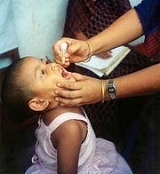
OPV is usually provided in vials containing 10-20 doses of vaccine. A single dose of oral polio vaccine (usually two drops) contains 1,000,000 infectious units of Sabin 1 (effective against PV1), 100,000 infectious units of the Sabin 2 strain, and 600,000 infectious units of Sabin 3. The vaccine contains small traces of antibiotics— neomycin
Neomycin

Neomycin is an aminoglycoside antibiotic that is found in many topical medications such as creams, ointments and eyedrops....
 and streptomycin
Streptomycin

Streptomycin is an antibiotic drug, the first of a class of drugs called aminoglycosides to be discovered, and was the first antibiotic remedy for tuberculosis....
—but does not contain preservative
Preservative

A preservative is a natural or synthetic chemical compound that is added to products such as foods, pharmaceuticals, paints, biological samples, wood, etc....
s. One dose of OPV produces immunity to all three poliovirus serotypes in approximately 50% of recipients. Three doses of live-attenuated OPV produce protective antibody to all three poliovirus types in more than 95% of recipients. OPV produces excellent immunity in the intestine
Intestine

In anatomy, the intestine is the segment of the Gastrointestinal tract extending from the stomach to the anus and, in humans and other mammals, consists of two segments, the small intestine and the large intestine....
, the primary site of wild poliovirus entry, which helps prevent infection with wild virus in areas where the virus is endemic
Endemic (epidemiology)

In epidemiology, an infection is said to be endemic in a population when that infection is maintained in the population without the need for external inputs....
. The live virus used in the vaccine is shed in the stool and can be spread to others within a community, resulting in protection against poliomyelitis even in individuals who have not been directly vaccinated. IPV produces less gastrointestinal immunity than does OPV, so persons who receive IPV are more easily infected with wild poliovirus. In regions without wild poliovirus, inactivated polio vaccine is the vaccine of choice. In regions with higher incidence of polio, and thus a different relative risk between efficacy and reversion of the vaccine to a virulent form, live vaccine is still used. The live virus also has stringent requirements for transport and storage, which are a problem in some hot or remote areas. As with other live-virus vaccines, immunity initiated by OPV is probably lifelong.

Iatrogenic (vaccine-induced) polio


A major concern about the oral polio vaccine (OPV) is its known ability to revert to a form that can achieve neurological infection and cause paralysis. Clinical disease, including paralysis, caused by vaccine-derived poliovirus (VDPV) is indistinguishable from that caused by wild polioviruses. This is believed to be a rare event, but outbreaks of vaccine-associated paralytic poliomyelitis (VAPP) have been reported, and tend to occur in areas of low coverage by OPV, presumably because the OPV is itself protective against the related outbreak strain.

]]

As the incidence of wild polio diminishes, nations transition from use of the oral vaccine back to the injected vaccine because the direct risk of iatrogenic polio (VAPP) due to OPV outweighs the indirect benefit of immunization via subclinical transmission of OPV. When IPV is used, reversion is not possible but there remains a small risk of clinical infection upon exposure to reverted OPV or wild polio virus. Following the widespread use of polio vaccines in the mid-1950s, the incidence of poliomyelitis declined rapidly in many industrialized countries. The use of OPV was discontinued in the United States in 2000 and in 2004 in the UK, but it continues to be used around the globe.

The rate of vaccine-associated paralytic poliomyelitis (VAPP) varies by region but is generally about 1 case per 750,000 vaccine recipients. VAPP is more likely to occur in adults than in children. In immunodeficient children, the risk of VAPP is almost 7,000 times higher, particularly for persons with B-lymphocyte disorders (e.g., agammaglobulinemia and hypogammaglobulinemia
Hypogammaglobulinemia

Hypogammaglobulinemia is a type of immune disorder characterized by a reduction in all types of gamma globulins.It is distinguished from dysgammaglobulinemia, which is a reduction in some types of gamma globulins, but not others....
), which reduce the synthesis of protective antibodies. The World Health Organization
World Health Organization

The World Health Organization is a specialized agency of the United Nations that acts as a coordinating authority on international public health....
 considers the benefits of vaccination to far outweigh the risk of vaccine derived polio. Outbreaks of vaccine derived polio have been stopped by multiple rounds of high-quality vaccination, in order to immunize the entire population.

Outbreaks of VAPP occurred independently in Belarus
Belarus

Belarus is a landlocked country in Eastern Europe, bordered by Russia to the north and east, Ukraine to the south, Poland to the west, and Lithuania and Latvia to the north....
 (1965–66), Egypt
Egypt

Egypt is a country mainly in North Africa, with the Sinai Peninsula forming a land bridge in Western Asia. Covering an area of about , Egypt borders the Mediterranean Sea to the north, the Gaza Strip and Israel to the northeast, the Red Sea to the east, Sudan to the south and Libya to the west....
 (1983–1993), Hispaniola
Hispaniola

Hispaniola is the second-largest and most populous island of the Antilles, lying between the islands of Cuba to the west, and Puerto Rico to the east....
 (2000–2001), Philippines
Philippines

The Philippines, officially known as the Republic of the Philippines, is a country in Southeast Asia with Manila as its capital city. It comprises 7,107 islands in the western Pacific Ocean....
 (2001), Madagascar
Madagascar

Madagascar, or Republic of Madagascar , is an island nation in the Indian Ocean off the southeastern coast of Africa. The main island, also called Madagascar, is the List of islands by area, and is home to 5% of the world's plant and animal species, of which more than 80% are Endemism to Madagascar....
 (2001–2002), and in Haiti
Haiti

Haiti , officially the Republic of Haiti , is a Haitian Creole language- and French language-speaking Caribbean country. Along with the Dominican Republic, it occupies the island of Hispaniola, in the Greater Antilles archipelago....
 (2002), where political strife and poverty have interfered with vaccination efforts. In 2006 an outbreak of vaccine-derived poliovirus occurred in China
China

China is a Culture of China, an ancient civilization, and, depending on perspective, a national or multinational entity extending over a large area in East Asia....
. Cases have been reported from Cambodia
Cambodia

The Kingdom of Cambodia is a country in South East Asia with a population of over 13 million people. The kingdom's capital and largest city is Phnom Penh....
 (2005-2006), Myanmar
Myanmar

Burma, officially the Union of Myanmar, is the largest country by geographical area in mainland Southeast Asia, or Indochina. The country is bordered by the People's Republic of China on the northeast, Laos on the east, Thailand on the southeast, Bangladesh on the west, India on the northwest, and the Bay of Bengal to the southwest with...
 (2006-2007), Iran (1995, 2005-2007), Syria, Kuwait and Egypt, while in northern Nigeria, 69 cases were reported in 2007.

Contamination concerns


In 1960, it was determined that the rhesus monkey kidney cells used to prepare the poliovirus vaccines were infected with the SV40
SV40

SV40 is an abbreviation for Simian vacuolating virus 40 or Simian virus 40, a polyomavirus that is found in both monkeys and humans....
 virus (Simian Virus-40). SV40, also discovered in 1960, is a naturally occurring virus
Virus

A virus is a Optical microscope#Limitations of light microscopes infectious agent that is unable to grow or reproduce outside a host cell . Viruses infect all cellular life....
 that infects monkeys. In 1961, SV40 was found to cause tumors in rodent
Rodent

Rodentia is an Order of mammals also known as rodents, characterised by two continuously growing Incisors#The_Rodent_incisor in the upper and lower jaws which must be kept short by gnawing....
s. More recently, the virus was found in certain forms of cancer
Cancer

Cancer is a class of diseases in which a group of cell display uncontrolled growth , invasion , and sometimes metastasis . These three malignant properties of cancers differentiate them from benign tumors, which are self-limited, do not invade or metastasize....
 in humans, for instance brain
Brain tumor

A brain tumor is an abnormal growth of cells within the brain or inside the skull, which can be cancerous or non-cancerous .It is defined as any cranium tumor created by abnormal and uncontrolled Mitosis, normally either in the brain itself , in the cranial nerves , in the brain envelopes , skull, pituitary and pineal gland, or spread from...
 and bone tumor
Bone tumor

Bone tumor is an inexact term, which can be used for both benign and malignant abnormal growths found in bone, but is most commonly used for primary tumors of bone, such as osteosarcoma ....
s, mesothelioma
Mesothelioma

Mesothelioma is a form of cancer that is almost always caused by previous exposure to asbestos. In this disease, malignant Cell develop in the mesothelium, a protective lining that covers most of the body's internal organs....
s, and some types of non-Hodgkin's lymphoma. However, it has not been determined that SV40 causes these cancers.

SV40 was found to be present in stocks of the injected form of the polio vaccine (IPV) in use between 1955 to 1963. It is not found in the OPV form. Over 98 million Americans received one or more doses of polio vaccine between 1955 to 1963 when a proportion of vaccine was contaminated with SV40; it has been estimated that 10 - 30 million Americans may have received a dose of vaccine contaminated with SV40. Later analysis suggested that vaccines produced by the former Soviet bloc countries until 1980, and used in the USSR, China
China

China is a Culture of China, an ancient civilization, and, depending on perspective, a national or multinational entity extending over a large area in East Asia....
, Japan
Japan

Japan is an island country in East Asia. Located in the Pacific Ocean, it lies to the east of the Sea of Japan, People's Republic of China, North Korea, South Korea and Russia, stretching from the Sea of Okhotsk in the north to the East China Sea and Taiwan in the south....
, and several Africa
Africa

Africa is the world's second-largest and second most-populous continent, after Asia. At about 30.2 million km? including adjacent islands, it covers 6% of the Earth's total surface area and 20.4% of the total land area....
n countries, may have been contaminated; meaning hundreds of millions more may have been exposed to SV40.

In 1998, the National Cancer Institute
National Cancer Institute

The National Cancer Institute is part of the United States Federal government's National Institutes of Health. The NCI is a federally funded research and development center, one of eight agencies that compose the United States Public Health Service in the United States Department of Health and Human Services....
 undertook a large study, using cancer case information from the Institutes SEER database. The published findings from the study revealed that there was no increased incidence of cancer in persons who may have received vaccine containing SV40. Another large study in Sweden examined cancer rates of 700,000 individuals who had received potentially contaminated polio vaccine as late as 1957; the study again revealed no increased cancer incidence between persons who received polio vaccines containing SV40 and those who did not. The question of whether SV40 causes cancer in humans remains controversial however, and the development of improved assays for detection of SV40 in human tissues will be needed to resolve the controversy.

During the race to develop an oral polio vaccine several large scale human trials were undertaken. By 1958, the National Institutes of Health had determined that OPV produced using the Sabin strains were the safest./ Between 1957 and 1960, however, Hilary Koprowski continued to administer his vaccine around the world. In Africa, the vaccines were administered to roughly one million people in the Belgian territories, now the Democratic Republic of the Congo
Democratic Republic of the Congo

The Democratic Republic of the Congo , is a country in central Africa with a small length of Atlantic coastline. It is the third largest list of African countries in order of geographical area....
, Rwanda
Rwanda

The Republic of Rwanda is a small landlocked country in the Great Lakes region of east-central Africa, bordered by Uganda, Burundi, the Democratic Republic of the Congo and Tanzania....
 and Burundi
Burundi

Burundi , officially the Republic of Burundi, is a small country in the Great Lakes region of Eastern Africa bordered by Rwanda to the north, Tanzania to the south and east, and the Democratic Republic of the Congo to the west....
. The results of these human trials have been controversial, and accusations in the 1990s
OPV AIDS hypothesis

The oral polio vaccine AIDS hypothesis argues that the AIDS pandemic originated from live polio vaccines prepared in chimpanzee tissue cultures and then administered to up to one million Africans between 1957 and 1960 in experimental mass vaccination campaigns....
 arose that the vaccine had created the conditions necessary for transmission of SIV
SIV

SIV may refer to:...
 from chimpanzee
Chimpanzee

Chimpanzee, sometimes colloquially known as a chimp, is the common name for the two Extant taxon species of ape in the genus Pan where the Congo River forms the boundary between the native habitat of the two species:...
s to humans, causing HIV/AIDS. These hypotheses have, however, been refuted
Hilary Koprowski

Hilary Koprowski is a Poland virologist and immunologist, and inventor of the world's first effective live polio vaccine....
. By 2004, cases of poliomyelitis in Africa had been reduced to just a small number in isolated regions of in the western portion of the continent, with sporadic cases elsewhere. However, recent opposition to vaccination campaigns has evolved, often relating to fears that the vaccine might induce sterility
Sterility

The term 'sterility' has several meanings:* The quality or state of being unable to reproduce; of being Infertility. The term may be used of higher animals....
. The disease has since resurged in Nigeria
Nigeria

Nigeria, officially the Federal Republic of Nigeria, is a federation constitutional republic comprising States of Nigeria and one Federal Capital Territory, Nigeria....
 and in several other African nations, which epidemiologists cite is due to refusals by certain local populations to allow their children to receive the polio vaccine.

External links

  • - 'Vaccines for Development', Center for Global Development
    Center for Global Development

    The Center for Global Development is a not-for-profit think tank based in Washington, D.C. that focuses on international development. It was founded in November 2001 by Edward W....
  • - 'People and Discoveries: Salk Produces Polio Vaccine 1952', PBS
  • , Dwight D. Eisenhower Presidential Library