

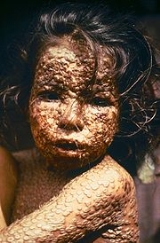
Smallpox

Encyclopedia
Smallpox was an infectious disease
unique to humans, caused by either of two virus variants, Variola major and Variola minor. The disease is also known by the Latin
names Variola or Variola vera, which is a derivative of the Latin varius, meaning "spotted", or varus, meaning "pimple". The term "smallpox" was first used in Europe in the 15th century to distinguish variola from the "great pox" (syphilis
).
Smallpox localizes in small blood vessel
s of the skin and in the mouth and throat. In the skin, this results in a characteristic maculopapular rash, and later, raised fluid-filled blister
s. V. major produces a more serious disease and has an overall mortality rate
of 30–35%. V. minor causes a milder form of disease (also known as alastrim
, cottonpox, milkpox, whitepox, and Cuban itch) which kills about 1% of its victims. Long-term complications of V. major infection include characteristic scars, commonly on the face, which occur in 65–85% of survivors. Blindness
resulting from corneal ulcer
ation and scarring, and limb deformities due to arthritis and osteomyelitis
are less common complications, seen in about 2–5% of cases.
Smallpox is believed to have emerged in human populations about 10,000 BC. The earliest physical evidence of smallpox is probably the pustular rash on the mummified body of Pharaoh Ramses V of Egypt. The disease killed an estimated 400,000 Europeans per year during the closing years of the 18th century (including five reigning monarch
s), and was responsible for a third of all blindness. Of all those infected, 20–60%—and over 80% of infected children—died from the disease. Smallpox was responsible for an estimated 300–500 million deaths during the 20th century. As recently as 1967, the World Health Organization
(WHO) estimated that 15 million people contracted the disease and that two million died in that year.
After vaccination
campaigns throughout the 19th and 20th centuries, the WHO certified the eradication of smallpox in 1979. Smallpox is one of the two infectious disease
s to have been eradicated, the other being rinderpest
, which was declared eradicated in 2011.
is a less common presentation, and a much less severe disease, with historical death rates of 1% or less. Subclinical (asymptomatic
) infections with variola virus have been noted, but are not common. In addition, a form called variola sine eruptione (smallpox without rash) is seen generally in vaccinated persons. This form is marked by a fever that occurs after the usual incubation period and can be confirmed only by antibody studies or, rarely, by virus isolation.
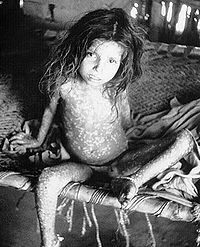 The incubation period
between contraction and the first obvious symptoms of the disease is around 12 days. Once inhaled, variola major virus invades the oropharyngeal (mouth and throat) or the respiratory mucosa, migrates to regional lymph nodes, and begins to multiply. In the initial growth phase the virus seems to move from cell to cell, but around the 12th day, lysis
of many infected cells occurs and the virus is found in the blood
stream in large numbers (this is called viremia
), and a second wave of multiplication occurs in the spleen, bone marrow
, and lymph nodes. The initial or prodromal symptoms are similar to other viral diseases such as influenza
and the common cold
: fever
of at least 38.5 °C (101 °F), muscle pain
, malaise, headache and prostration
. As the digestive tract
is commonly involved, nausea and vomiting and backache often occur. The prodrome, or preeruptive stage, usually lasts 2–4 days. By days 12–15 the first visible lesions—small reddish spots called enanthem
—appear on mucous membranes of the mouth, tongue, palate
, and throat, and temperature falls to near normal. These lesions rapidly enlarge and rupture, releasing large amounts of virus into the saliva
.
Smallpox virus preferentially attacks skin cells, causing the characteristic pimples (called macules) associated with the disease. A rash develops on the skin 24 to 48 hours after lesions on the mucous membranes appear. Typically the macules first appear on the forehead, then rapidly spread to the whole face, proximal portions of extremities, the trunk, and lastly to distal portions of extremities. The process takes no more than 24 to 36 hours, after which no new lesions appear. At this point variola major infection can take several very different courses, resulting in four types of smallpox disease based on the Rao classification: ordinary, modified, malignant (or flat), and hemorrhagic. Historically, smallpox has an overall fatality rate of about 30%; however, the malignant and hemorrhagic forms are usually fatal.
s. By the third or fourth day the papules fill with an opalescent fluid to become vesicles. This fluid becomes opaque
and turbid within 24–48 hours, giving them the appearance of pustules; however, the so-called pustules are filled with tissue debris, not pus.
By the sixth or seventh day, all the skin lesions have become pustules. Between 7 and 10 days the pustules mature and reach their maximum size. The pustules are sharply raised, typically round, tense, and firm to the touch. The pustules are deeply embedded in the dermis, giving them the feel of a small bead in the skin. Fluid slowly leaks from the pustules, and by the end of the second week the pustules deflate, and start to dry up, forming crusts (or scabs). By day 16–20 scabs have formed over all the lesions, which have started to flake off, leaving depigmented
scars.
Ordinary smallpox generally produces a discrete rash, in which the pustules stand out on the skin separately. The distribution of the rash is densest on the face; denser on the extremities than on the trunk; and on the extremities, denser on the distal parts than on the proximal. The palms of the hands and soles of the feet are involved in the majority of cases. Sometimes, the blisters merge together into sheets, forming a confluent rash, which begin to detach the outer layers of skin from the underlying flesh. Patients with confluent smallpox often remain ill even after scabs have formed over all the lesions. In one case series, the case-fatality rate in confluent smallpox was 62%.

.
. The rash on the tongue and palate is extensive. Skin lesions mature slowly and by the seventh or eighth day they are flat and appear to be buried in the skin. Unlike ordinary-type smallpox, the vesicles contain little fluid, are soft and velvety to the touch, and may contain hemorrhages. Malignant smallpox is nearly always fatal.
.
In the early, or fulminating form, hemorrhaging appears on the second or third day as sub-conjunctival bleeding turns the whites of the eyes deep red. Hemorrhagic smallpox also produces a dusky erythema
, petechiae, and hemorrhages in the spleen, kidney, serosa, muscle, and, rarely, the epicardium
, liver
, testes, ovaries and bladder
. Death often occurs suddenly between the fifth and seventh days of illness, when only a few insignificant skin lesions are present. A later form of the disease occurs in patients who survive for 8–10 days. The hemorrhages appear in the early eruptive period, and the rash is flat and does not progress beyond the vesicular stage. Patients in the early stage of disease show a decrease in coagulation factors (e.g. platelet
s, prothrombin, and globulin
) and an increase in circulating antithrombin
. Patients in the late stage have significant thrombocytopenia
; however, deficiency of coagulation factors is less severe. Some in the late stage also show increased antithrombin. This form of smallpox occurs in anywhere from 3 to 25% of fatal cases depending on the virulence of the smallpox strain. Hemorrhagic smallpox is usually fatal.
, the family Poxviridae
and subfamily chordopoxvirinae. Variola is a large brick-shaped virus measuring approximately 302 to 350 nanometers by 244 to 270 nm, with a single linear double stranded DNA genome
186 kilobase pairs (kbp) in size and containing a hairpin loop at each end. The two classic varieties of smallpox are variola major and variola minor.
Four orthopoxviruses cause infection in humans: variola, vaccinia
, cowpox
, and monkeypox
. Variola virus infects only humans in nature, although primates and other animals have been infected in a laboratory setting. Vaccinia, cowpox, and monkeypox viruses can infect both humans and other animals in nature.
The lifecycle of poxviruses is complicated by having multiple infectious forms, with differing mechanisms of cell entry. Poxviruses are unique among DNA viruses in that they replicate in the cytoplasm
of the cell rather than in the nucleus
. In order to replicate, poxviruses produce a variety of specialized proteins not produced by other DNA viruses, the most important of which is a viral-associated DNA-dependent RNA polymerase.
Both enveloped
and unenveloped virions are infectious. The viral envelope is made of modified Golgi
membranes containing viral-specific polypeptides, including hemagglutinin
. Infection with either variola major or variola minor confers immunity against the other.
variola virus, usually droplets expressed from the oral, nasal, or pharyngeal
mucosa of an infected person. It is transmitted from one person to another primarily through prolonged face-to-face contact with an infected person, usually within a distance of 6 feet (1.8 m), but can also be spread through direct contact with infected bodily fluid
s or contaminated objects (fomite
s) such as bedding or clothing. Rarely, smallpox has been spread by virus carried in the air in enclosed settings such as buildings, buses, and trains. The virus can cross the placenta
, but the incidence of congenital smallpox is relatively low.
Smallpox is not notably infectious in the prodromal
period and viral shedding is usually delayed until the appearance of the rash, which is often accompanied by lesion
s in the mouth and pharynx. The virus can be transmitted throughout the course of the illness, but is most frequent during the first week of the rash, when most of the skin lesions are intact. Infectivity wanes in 7 to 10 days when scabs form over the lesions, but the infected person is contagious until the last smallpox scab falls off.
Smallpox is highly contagious, but generally spreads more slowly and less widely than some other viral diseases, perhaps because transmission requires close contact and occurs after the onset of the rash. The overall rate of infection is also affected by the short duration of the infectious stage. In temperate
areas, the number of smallpox infections were highest during the winter and spring. In tropical areas, seasonal variation was less evident and the disease was present throughout the year. Age distribution of smallpox infections depends on acquired immunity. Vaccination
immunity
declines over time and is probably lost in all but the most recently vaccinated populations. Smallpox is not known to be transmitted by insects or animals and there is no asymptomatic carrier
state.
Microscopically
, poxviruses produce characteristic cytoplasmic inclusions, the most important of which are known as Guarnieri bodies
, and are the sites of viral replication
. Guarnieri bodies are readily identified in skin biopsies stained with hematoxylin and eosin, and appear as pink blobs. They are found in virtually all poxvirus infections but the absence of Guarnieri bodies cannot be used to rule out smallpox. The diagnosis of an orthopoxvirus infection can also be made rapidly by electron microscopic examination of pustular fluid or scabs. However, all orthopoxviruses exhibit identical brick-shaped virions by electron microscopy.
Definitive laboratory identification of variola virus involves growing the virus on chorioallantoic membrane
(part of a chicken embryo
) and examining the resulting pock lesions under defined temperature conditions. Strains may be characterized by polymerase chain reaction
(PCR) and restriction fragment length polymorphism
(RFLP) analysis. Serologic tests and enzyme linked immunosorbent assays (ELISA), which measure variola virus-specific immunoglobulin and antigen have also been developed to assist in the diagnosis of infection.
Chickenpox
was commonly confused with smallpox in the immediate post-eradication era. Chickenpox and smallpox can be distinguished by several methods. Unlike smallpox, chickenpox does not usually affect the palms and soles. Additionally, chickenpox pustules are of varying size due to variations in the timing of pustule eruption: smallpox pustules are all very nearly the same size since the viral effect progresses more uniformly. A variety of laboratory methods are available for detecting chickenpox in evaluation of suspected smallpox cases.
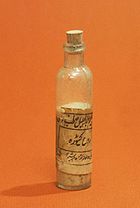 The earliest procedure used to prevent smallpox was inoculation
(also known as variolation). Inoculation was possibly practiced in India as early as 1000 BC, and involved either nasal insufflation of powdered smallpox scabs, or scratching material from a smallpox lesion into the skin. However, the idea that inoculation originated in India has been challenged as few of the ancient Sanskrit
medical texts described the process of inoculation. Accounts of inoculation against smallpox in China can be found as early as the late 10th century, and the procedure was widely practiced by the 16th century, during the Ming Dynasty
. If successful, inoculation produced lasting immunity
to smallpox. However, because the person was infected with variola virus, a severe infection could result, and the person could transmit smallpox to others. Variolation had a 0.5–2% mortality rate, considerably less than the 20–30% mortality rate of the disease itself.
Lady Mary Wortley Montagu
observed smallpox inoculation during her stay in the Ottoman Empire
, writing detailed accounts of the practice in her letters, and enthusiastically promoted the procedure in England upon her return in 1718. In 1721, Cotton Mather and colleagues provoked controversy in Boston by inoculating hundreds. In 1796, Edward Jenner
, a doctor in Berkeley, Gloucestershire
, rural England, discovered that immunity to smallpox could be produced by inoculating a person with material from a cowpox
lesion. Cowpox is a poxvirus in the same family as variola. Jenner called the material used for inoculation vaccine
, from the root word
vacca, which is Latin
for cow. The procedure was much safer than variolation, and did not involve a risk of smallpox transmission. Vaccination to prevent smallpox was soon practiced all over the world. During the 19th century, the cowpox virus used for smallpox vaccination was replaced by vaccinia virus. Vaccinia is in the same family as cowpox and variola but is genetic
ally distinct from both. The origin of vaccinia virus and how it came to be in the vaccine are not known.
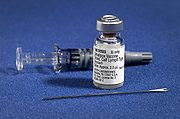 The current formulation of smallpox vaccine is a live virus preparation of infectious vaccinia virus. The vaccine is given using a bifurcated (two-pronged) needle that is dipped into the vaccine solution. The needle is used to prick the skin (usually the upper arm) a number of times in a few seconds. If successful, a red and itchy bump develops at the vaccine site in three or four days. In the first week, the bump becomes a large blister (called a “Jennerian vesicle”) which fills with pus, and begins to drain. During the second week, the blister begins to dry up and a scab forms. The scab falls off in the third week, leaving a small scar.
The antibodies induced by vaccinia vaccine are cross-protective for other orthopoxviruses, such as monkeypox, cowpox, and variola (smallpox) viruses. Neutralizing antibodies are detectable 10 days after first-time vaccination, and seven days after revaccination. Historically, the vaccine has been effective in preventing smallpox infection in 95% of those vaccinated. Smallpox vaccination provides a high level of immunity for three to five years and decreasing immunity thereafter. If a person is vaccinated again later, immunity lasts even longer. Studies of smallpox cases in Europe in the 1950s and 1960s demonstrated that the fatality rate among persons vaccinated less than 10 years before exposure was 1.3%; it was 7% among those vaccinated 11 to 20 years prior, and 11% among those vaccinated 20 or more years prior to infection. By contrast, 52% of unvaccinated persons died.
There are side effects and risks associated with the smallpox vaccine. In the past, about 1 out of 1,000 people vaccinated for the first time experienced serious, but non-life-threatening, reactions including toxic or allergic reaction at the site of the vaccination (erythema multiforme
), spread of the vaccinia virus to other parts of the body, and to other individuals. Potentially life-threatening reactions occurred in 14 to 500 people out of every 1 million people vaccinated for the first time. Based on past experience, it is estimated that 1 or 2 people in 1 million (0.000198%) who receive the vaccine may die as a result, most often the result of postvaccinial encephalitis
or severe necrosis
in the area of vaccination (called progressive vaccinia).
Given these risks, as smallpox became effectively eradicated and the number of naturally occurring cases fell below the number of vaccine-induced illnesses and deaths, routine childhood vaccination was discontinued in the United States in 1972, and was abandoned in most European countries in the early 1970s. Routine vaccination of health care workers was discontinued in the U.S. in 1976, and among military recruits in 1990 (although military personnel deploying to the Middle East and Korea still receive the vaccination.) By 1986, routine vaccination had ceased in all countries. It is now primarily recommended for laboratory workers at risk for occupational exposure.
. People with semi-confluent and confluent types of smallpox may have therapeutic issues similar to patients with extensive skin burn
s.
No drug is currently approved for the treatment of smallpox. However, antiviral
treatments have improved since the last large smallpox epidemics, and studies suggest that the antiviral drug cidofovir
might be useful as a therapeutic agent. The drug must be administered intravenously, however, and may cause serious kidney toxicity.
In fatal cases of ordinary smallpox, death usually occurs between the tenth and sixteenth days of the illness. The cause of death from smallpox is not clear, but the infection is now known to involve multiple organs. Circulating immune complex
es, overwhelming viremia
, or an uncontrolled immune response may be contributing factors. In early hemorrhagic smallpox, death occurs suddenly about six days after the fever develops. Cause of death in hemorrhagic cases involved heart failure, sometimes accompanied by pulmonary edema
. In late hemorrhagic cases, high and sustained viremia, severe platelet
loss and poor immune response were often cited as causes of death. In flat smallpox modes of death are similar to those in burns, with loss of fluid, protein and electrolyte
s beyond the capacity of the body to replace or acquire, and fulminating sepsis
.
and range from simple bronchitis
to fatal pneumonia
. Respiratory
complications tend to develop on about the eighth day of the illness and can be either viral or bacterial in origin. Secondary bacteria
l infection of the skin is a relatively uncommon complication of smallpox. When this occurs, the fever usually remains elevated.
Other complications include encephalitis
(1 in 500 patients), which is more common in adults and may cause temporary disability; permanent pitted scars, most notably on the face; and complications involving the eyes (2% of all cases). Pustules can form on the eyelid, conjunctiva
, and cornea
, leading to complications such as conjunctivitis
, keratitis
, corneal ulcer
, iritis
, iridocyclitis
, and optic atrophy
. Blindness
results in approximately 35% to 40% of eyes affected with keratitis and corneal ulcer. Hemorrhagic smallpox can cause subconjunctival and retina
l hemorrhages. In 2% to 5% of young children with smallpox, virions reach the joints and bone, causing osteomyelitis
variolosa. Lesions are symmetrical, most common in the elbows, tibia
, and fibula, and characteristically cause separation of an epiphysis
and marked periosteal
reactions. Swollen joints limit movement, and arthritis
may lead to limb deformities, ankylosis
, malformed bones, flail joints, and stubby fingers.
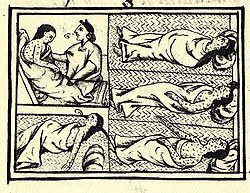 Smallpox probably diverged from an ancestral African rodent-borne variola-like virus between 16,000 and 68,000 years ago. The more severe form (variola major) is thought to have originated in Asia between 400 and 1600 years ago. Alastrim minor, a second form found in West Africa
and the Americas, is thought to have evolved between 1,400 and 6,300 years ago. This clade
gave rise to two subclades that diverged at least 800 years ago.
mummy
of Ramses V who died over 3000 years ago (1145 BCE). Historical records from Asia describe evidence of smallpox-like disease in medical writings from ancient India (as early as 1500 BCE) and China (1122 BCE). It has been speculated that Egyptian traders brought smallpox to India during the 1st millennium BC, where it remained as an endemic human disease for at least 2000 years. Smallpox was probably introduced in China during the 1st century AD from the southwest, and in the 6th century was carried from China to Japan. In Japan, the epidemic of 735–737 is believed to have killed up to one-third of the population. At least seven religious deities have been specifically dedicated to smallpox, such as the god Sopona
in the Yoruba religion. In India, the Hindu goddess of smallpox, Sitala Mata
, was worshiped in temples throughout the country.
The arrival of smallpox in Europe and south-western Asia is less clear. Smallpox is not described in either the Old
or New Testament
s of the Bible, or in literature of the Greeks and Romans. Scholars agree it is very unlikely such a serious disease as variola major would have escaped a description by Hippocrates
if it existed in the Mediterranean region. While the Antonine Plague
that swept through the Roman Empire
in 165–180 AD may have been caused by smallpox, other historians speculate that Arab
armies first carried smallpox out of Africa to Southwestern Europe during the 7th and 8th centuries AD. In the 9th century the Persian physician
, Rhazes, provided one of the most definitive observations of smallpox and was the first to differentiate smallpox from measles
and chickenpox
in his Kitab fi al-jadari wa-al-hasbah (The Book of Smallpox and Measles). During the Middle Ages
, smallpox made periodic incursions into Europe but did not become established there until the population increased and population movement became more active during the time of the Crusades
. By the 16th century smallpox was well established over most of Europe. With its introduction in populated areas in India, China and Europe, smallpox affected mainly children, with periodic epidemics that killed up to 30% of those infected. The appearance of smallpox in Europe is of particular importance, as successive waves of European exploration and colonization served to spread the disease to other parts of the world. By the 16th century it had become an important cause of morbidity and mortality in the known world.
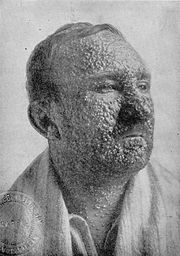 There are no credible descriptions of smallpox-like disease in the Americas
before the westward exploration by Europeans in the 15th century AD. In 1507 smallpox was introduced into the Caribbean island of Hispaniola
and to the mainland in 1520, when Spanish settlers from Hispaniola arriving in Mexico brought smallpox with them. Smallpox devastated the native Amerindian population and was an important factor in the conquest of the Aztec
s and the Incas by the Spaniards. Settlement of the east coast of North America in 1633 in Plymouth, Massachusetts was also accompanied by devastating outbreaks of smallpox among Native American populations, and subsequently among the native-born colonists. Some estimates indicate case fatality rates of 80–90% in Native American populations during smallpox epidemics. Smallpox was introduced into Australia
in 1789 and again in 1829. Although the disease was never endemic on the continent, it was the principal cause of death in Aboriginal
populations between 1780 and 1870.
By the mid-18th century smallpox was a major endemic disease
everywhere in the world except in Australia and in several small islands. In Europe smallpox was a leading cause of death in the 18th century, killing an estimated 400,000 Europeans each year. Through the century smallpox resulted in the deaths of perhaps 10% of all the infants of Sweden
every year, and the death rate of infants in Russia
may have been even higher. The widespread use of variolation in a few countries, notably Great Britain, its North American colonies, and China, somewhat reduced the impact of smallpox among the wealthy classes during the latter part of the 18th century, but a real reduction in its incidence did not occur until vaccination became a common practice toward the end of the 19th century. Improved vaccines and the practice of re-vaccination led to a substantial reduction in cases in Europe and North America, but smallpox remained almost unchecked everywhere else in the world. In the United States and South Africa a much milder form of smallpox, variola minor, was recognized just before the close of the 19th century. By the mid-20th century variola minor occurred along with variola major, in varying proportions, in many parts of Africa. Patients with variola minor experience only a mild systemic illness, are often ambulant
throughout the course of the disease, and are therefore able to more easily spread disease. Infection with v. minor induces immunity against the more deadly variola major form. Thus as v. minor spread all over the USA, into Canada, the South American countries and Great Britain it became the dominant form of smallpox, further reducing mortality rates.
 Since Jenner demonstrated the effectiveness of cowpox to protect humans from smallpox in 1796, various attempts were made to eliminate smallpox on a regional scale. As early as 1803, the Spanish Crown organized a mission (the Balmis expedition
) to transport the vaccine to the Spanish colonies
in the Americas and the Philippines, and establish mass vaccination programs there. The US Congress passed the Vaccine Act of 1813
to ensure that safe smallpox vaccine would be available to the American public. By about 1817, a very solid state vaccination program existed in the Dutch East Indies
. In British India a program was launched to propagate smallpox vaccination, through Indian vaccinators, under the supervision of European officials. Nevertheless, British vaccination efforts in India, and in Burma in particular, were hampered by stubborn indigenous preference for inoculation and distrust of vaccination, despite tough legislation, improvements in the local efficacy of the vaccine and vaccine preservative, and education efforts. By 1832, the federal government of the United States established a smallpox vaccination program for Native Americans. In 1842, the United Kingdom banned inoculation, later progressing to mandatory vaccination
. The British government introduced compulsory smallpox vaccination by an Act of Parliament in 1853. In the United States, from 1843 to 1855 first Massachusetts, and then other states required smallpox vaccination. Although some disliked these measures, coordinated efforts against smallpox went on, and the disease continued to diminish in the wealthy countries. By 1897, smallpox had largely been eliminated from the United States. In Northern Europe a number of countries had eliminated smallpox by 1900, and by 1914, the incidence in most industrialized countries had decreased to comparatively low levels. Vaccination continued in industrialized countries, until the mid to late 1970s as protection against reintroduction. Australia and New Zealand are two notable exceptions; neither experienced endemic smallpox and never vaccinated widely, relying instead on protection by distance and strict quarantines.
The first hemisphere
-wide effort to eradicate smallpox was made in 1950 by the Pan American Health Organization
. The campaign was successful in eliminating smallpox from all American countries except Argentina, Brazil, Colombia, and Ecuador. In 1958 Professor Viktor Zhdanov
, Deputy Minister of Health for the USSR
, called on the World Health Assembly
to undertake a global initiative to eradicate
smallpox. The proposal (Resolution WHA11.54) was accepted in 1959. At this point, 2 million people were dying from smallpox every year. Overall, however, the progress towards eradication was disappointing, especially in Africa and in the Indian subcontinent
. In 1966 an international team, the Smallpox Eradication Unit, was formed under the leadership of an American, Donald Henderson
. In 1967, the World Health Organization intensified the global smallpox eradication by contributing $2.4 million annually to the effort, and adopted the new disease surveillance method promoted by Czech epidemiologist Karel Raška
.
In the early 1950s an estimated 50 million cases of smallpox occurred in the world each year. To eradicate smallpox, each outbreak had to be stopped from spreading, by isolation of cases and vaccination of everyone who lived close by. This process is known as "ring vaccination". The key to this strategy was monitoring of cases in a community (known as surveillance) and containment. The initial problem the WHO team faced was inadequate reporting of smallpox cases, as many cases did not come to the attention of the authorities. The fact that humans are the only reservoir for smallpox infection, and that carriers
did not exist, played a significant role in the eradication of smallpox. The WHO established a network of consultants who assisted countries in setting up surveillance and containment activities. Early on donations of vaccine were provided primarily by the Soviet Union and the United States, but by 1973, more than 80% of all vaccine was produced in developing countries.
The last major European outbreak of smallpox was in 1972 in Yugoslavia
, after a pilgrim from Kosovo
returned from the Middle East, where he had contracted the virus. The epidemic infected 175 people, causing 35 deaths. Authorities declared martial law
, enforced quarantine, and undertook widespread re-vaccination of the population, enlisting the help of the WHO. In two months, the outbreak was over. Prior to this, there had been a smallpox outbreak in May–July 1963 in Stockholm
, Sweden, brought from the Far East
by a Swedish sailor; this had been dealt with by quarantine measures and vaccination of the local population.
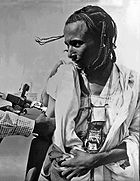
By the end of 1975, smallpox persisted only in the Horn of Africa
. Conditions were very difficult in Ethiopia and Somalia, where there were few roads. Civil war, famine, and refugees made the task even more difficult. An intensive surveillance and containment and vaccination program was undertaken in these countries in early and mid-1977, under the direction of Australian microbiologist Frank Fenner
. As the campaign neared its goal, Fenner and his team played an important role in verifying eradication. The last naturally occurring case of indigenous smallpox (Variola minor) was diagnosed in Ali Maow Maalin
, a hospital cook in Merca, Somalia
, on 26 October 1977. The last naturally occurring case of the more deadly Variola major had been detected in October 1975 in a two-year-old Bangladesh
i girl, Rahima Banu
.
The global eradication of smallpox was certified, based on intense verification activities in countries, by a commission of eminent scientists on 9 December 1979 and subsequently endorsed by the World Health Assembly on 8 May 1980. The first two sentences of the resolution read:
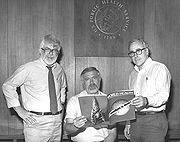 The last cases of smallpox in the world occurred in an outbreak of two cases (one of which was fatal) in Birmingham
, UK
in 1978. A medical photographer, Janet Parker
, contracted the disease at the University of Birmingham Medical School
and died on September 11, 1978, after which the scientist responsible for smallpox research at the university, Professor Henry Bedson, committed suicide
. In light of this accident, all known stocks of smallpox were destroyed or transferred to one of two WHO reference laboratories which had BSL-4 facilities; the Centers for Disease Control and Prevention
(CDC) in the United States and the State Research Center of Virology and Biotechnology VECTOR in Koltsovo
, Russia.
In 1986, the World Health Organization
first recommended destruction of the virus, and later set the date of destruction to be 30 December 1993. This was postponed to 30 June 1999. Due to resistance from the US and Russia, in 2002 the World Health Assembly agreed to permit the temporary retention of the virus stocks for specific research purposes. Destroying existing stocks would reduce the risk involved with ongoing smallpox research; the stocks are not needed to respond to a smallpox outbreak. Some scientists have argued that the stocks may be useful in developing new vaccines, antiviral drugs, and diagnostic tests, however, a 2010 review by a team of public health experts appointed by the World Health Organization
concluded that no essential public health purpose is served by the US and Russia continuing to retain virus stocks. The latter view is frequently supported in the scientific community, particularly among veterans of the WHO Smallpox Eradication Program.
In March 2004 smallpox scabs
were found tucked inside an envelope in a book on Civil War
medicine in Santa Fe, New Mexico
. The envelope was labeled as containing scabs from a vaccination and gave scientists at the Centers for Disease Control and Prevention
an opportunity to study the history of smallpox vaccination in the US.
agent at the Siege of Fort Pitt during the French and Indian Wars
(1754–63) against France and its Native American
allies. Although it is not clear whether the actual use of smallpox had official sanction, on June 24, 1763, William Trent, a local trader, wrote, "Out of our regard for them [sc. representatives of the besieging Delawares], we gave them two Blankets and an Handkerchief out of the Small Pox Hospital. I hope it will have the desired effect." Historians do not agree on whether this effort to broadcast the disease was successful. It has also been alleged that smallpox was used as a weapon during the American Revolutionary War
(1775–83).
During World War II
, scientists from the United Kingdom, United States and Japan were involved in research into producing a biological weapon from smallpox. Plans of large scale production were never carried through as they considered that the weapon would not be very effective due to the wide-scale availability of a vaccine
.
In 1947 the Soviet Union
established a smallpox weapons factory in the city of Zagorsk, 75 km to the northeast of Moscow. An outbreak of weaponized smallpox possibly occurred during testing at the factory in the 1970s. General Prof. Peter Burgasov, former Chief Sanitary Physician of the Soviet Army
and a senior researcher within the Soviet program of biological weapons
, described the incident:
Others contend that the first patient may have contracted the disease while visiting Uyaly or Komsomolsk
, two cities where the boat docked.
Responding to international pressures, in 1991 the Soviet government allowed a joint US-British inspection team to tour four of its main weapons facilities at Biopreparat
. The inspectors were met with evasion and denials from the Soviet scientists, and were eventually ordered out of the facility. In 1992 Soviet defector Ken Alibek
alleged that the Soviet bioweapons program at Zagorsk had produced a large stockpile—as much as twenty tons—of weaponized smallpox (possibly engineered to resist vaccines, Alibek further alleged), along with refrigerated warhead
s to deliver it. Alibek's stories about the former Soviet program's smallpox activities have never been independently verified.
In 1997, the Russian government announced that all of its remaining smallpox samples would be moved to the Vector Institute in Koltsovo
. With the breakup of the Soviet Union and unemployment of many of the weapons program's scientists, US government officials have expressed concern that smallpox and the expertise to weaponize it may have become available to other governments or terrorist groups who might wish to use virus as means of biological warfare. Specific allegations made against Iraq in this respect, however, proved to be false.
Concern has been expressed by some that artificial gene synthesis could be used recreate the virus from existing digital genomes, for use in biological warfare. Insertion of the synthesized smallpox DNA into existing related pox viruses could theoretically be used to recreate the virus. The first step to mitigating this risk, it has been suggested, should be to destroy the remaining virus stocks so as to enable unequivocal criminalization of any possession of the virus.
, Ramses V of Egypt
, the Kangxi Emperor
(survived), Shunzhi Emperor
and Tongzhi Emperor
(refer to the official history) of China, Date Masamune
of Japan (who lost an eye to the disease). Cuitláhuac
, the 10th tlatoani
(ruler) of the Aztec
city of Tenochtitlan, died of smallpox in 1520, shortly after its introduction to the Americas
, and the Incan emperor Huayna Capac
died of it in 1527. More recent public figures include Guru Har Krishan
, 8th Guru of the Sikhs, in 1664, Peter II of Russia
in 1730 (died),George Washington
(survived), king Louis XV in 1774 (died) and Maximilian III Joseph, Elector of Bavaria in 1777.
Prominent families throughout the world often had several people infected by and/or perish from the disease. For example, several relatives of Henry VIII
survived the disease but were scarred by it. These include his sister Margaret, Queen of Scotland
, his fourth wife, Anne of Cleves
, and his two daughters: Mary I of England
in 1527 and Elizabeth I of England
in 1562 (as an adult she would often try to disguise the pockmarks with heavy makeup). His great-niece, Mary, Queen of Scots, contracted the disease as a child but had no visible scarring.
In Europe, deaths from smallpox often changed dynastic succession. The only surviving son of Henry VIII
, Edward VI
, died from complications shortly after apparently recovering from the disease, thereby rendering his sire's infamous efforts to provide England with a male heir moot. (His immediate successors were all females.) Louis XV of France
succeeded his great-grandfather Louis XIV through a series of deaths of smallpox or measles among those earlier in the succession line. He himself died of the disease in 1774. William III
lost his mother to the disease when he was only ten years old in 1660, and named his uncle Charles
as legal guardian: her death from smallpox would indirectly spark a chain of events that would eventually lead to the permanent ousting of the Stuart line from the British throne. William III's wife, Mary II of England
, died from smallpox as well.
In China, the Qing Dynasty
had extensive protocols to protect Manchu
s from the Peking's endemic smallpox. Most notably, the Kangxi Emperor
was promoted to the throne because he had survived the disease, ahead of older brothers who had not yet had it.
U.S. Presidents George Washington
, Andrew Jackson
, and Abraham Lincoln
all contracted and recovered from the disease. Washington became infected with smallpox on a visit to Barbados in 1751. Jackson developed the illness after being taken prisoner by the British during the American Revolution, and though he recovered, his brother Robert did not. Lincoln contracted the disease during his Presidency, possibly from his son Tad, and was quarantined shortly after giving the Gettysburg address in 1863.
Famous theologian Jonathan Edwards died of smallpox in 1758 following an inoculation.
U.S.S.R. leader Joseph Stalin
fell ill with smallpox at the age of seven. His face was badly scarred by the disease. He later had photographs retouched to make his pockmarks less apparent.
Hungarian poet Ferenc Kölcsey
, who wrote the Hungarian national anthem, lost his right eye to smallpox.
Infectious disease
Infectious diseases, also known as communicable diseases, contagious diseases or transmissible diseases comprise clinically evident illness resulting from the infection, presence and growth of pathogenic biological agents in an individual host organism...
unique to humans, caused by either of two virus variants, Variola major and Variola minor. The disease is also known by the Latin
Latin
Latin is an Italic language originally spoken in Latium and Ancient Rome. It, along with most European languages, is a descendant of the ancient Proto-Indo-European language. Although it is considered a dead language, a number of scholars and members of the Christian clergy speak it fluently, and...
names Variola or Variola vera, which is a derivative of the Latin varius, meaning "spotted", or varus, meaning "pimple". The term "smallpox" was first used in Europe in the 15th century to distinguish variola from the "great pox" (syphilis
Syphilis
Syphilis is a sexually transmitted infection caused by the spirochete bacterium Treponema pallidum subspecies pallidum. The primary route of transmission is through sexual contact; however, it may also be transmitted from mother to fetus during pregnancy or at birth, resulting in congenital syphilis...
).
Smallpox localizes in small blood vessel
Blood vessel
The blood vessels are the part of the circulatory system that transports blood throughout the body. There are three major types of blood vessels: the arteries, which carry the blood away from the heart; the capillaries, which enable the actual exchange of water and chemicals between the blood and...
s of the skin and in the mouth and throat. In the skin, this results in a characteristic maculopapular rash, and later, raised fluid-filled blister
Blister
A blister is a small pocket of fluid within the upper layers of the skin, typically caused by forceful rubbing , burning, freezing, chemical exposure or infection. Most blisters are filled with a clear fluid called serum or plasma...
s. V. major produces a more serious disease and has an overall mortality rate
Mortality rate
Mortality rate is a measure of the number of deaths in a population, scaled to the size of that population, per unit time...
of 30–35%. V. minor causes a milder form of disease (also known as alastrim
Alastrim
Alastrim, also known as variola minor, is the milder strain of the variola virus that causes smallpox.Variola minor is of the genus orthopoxvirus, which are DNA viruses that replicate in the cytoplasm of the affected cell, rather than in its nucleus...
, cottonpox, milkpox, whitepox, and Cuban itch) which kills about 1% of its victims. Long-term complications of V. major infection include characteristic scars, commonly on the face, which occur in 65–85% of survivors. Blindness
Blindness
Blindness is the condition of lacking visual perception due to physiological or neurological factors.Various scales have been developed to describe the extent of vision loss and define blindness...
resulting from corneal ulcer
Corneal ulcer
A corneal ulcer, or ulcerative keratitis, is an inflammatory condition of the cornea involving loss of its outer layer. It is very common in dogs and is sometimes seen in cats...
ation and scarring, and limb deformities due to arthritis and osteomyelitis
Osteomyelitis
Osteomyelitis simply means an infection of the bone or bone marrow...
are less common complications, seen in about 2–5% of cases.
Smallpox is believed to have emerged in human populations about 10,000 BC. The earliest physical evidence of smallpox is probably the pustular rash on the mummified body of Pharaoh Ramses V of Egypt. The disease killed an estimated 400,000 Europeans per year during the closing years of the 18th century (including five reigning monarch
Monarch
A monarch is the person who heads a monarchy. This is a form of government in which a state or polity is ruled or controlled by an individual who typically inherits the throne by birth and occasionally rules for life or until abdication...
s), and was responsible for a third of all blindness. Of all those infected, 20–60%—and over 80% of infected children—died from the disease. Smallpox was responsible for an estimated 300–500 million deaths during the 20th century. As recently as 1967, the World Health Organization
World Health Organization
The World Health Organization is a specialized agency of the United Nations that acts as a coordinating authority on international public health. Established on 7 April 1948, with headquarters in Geneva, Switzerland, the agency inherited the mandate and resources of its predecessor, the Health...
(WHO) estimated that 15 million people contracted the disease and that two million died in that year.
After vaccination
Vaccination
Vaccination is the administration of antigenic material to stimulate the immune system of an individual to develop adaptive immunity to a disease. Vaccines can prevent or ameliorate the effects of infection by many pathogens...
campaigns throughout the 19th and 20th centuries, the WHO certified the eradication of smallpox in 1979. Smallpox is one of the two infectious disease
Infectious disease
Infectious diseases, also known as communicable diseases, contagious diseases or transmissible diseases comprise clinically evident illness resulting from the infection, presence and growth of pathogenic biological agents in an individual host organism...
s to have been eradicated, the other being rinderpest
Rinderpest
Rinderpest was an infectious viral disease of cattle, domestic buffalo, and some other species of even-toed ungulates, including buffaloes, large antelopes and deer, giraffes, wildebeests and warthogs. After a global eradication campaign, the last confirmed case of rinderpest was diagnosed in 2001...
, which was declared eradicated in 2011.
Classification
There are two clinical forms of smallpox. Variola major is the severe and most common form, with a more extensive rash and higher fever. Variola minorAlastrim
Alastrim, also known as variola minor, is the milder strain of the variola virus that causes smallpox.Variola minor is of the genus orthopoxvirus, which are DNA viruses that replicate in the cytoplasm of the affected cell, rather than in its nucleus...
is a less common presentation, and a much less severe disease, with historical death rates of 1% or less. Subclinical (asymptomatic
Asymptomatic
In medicine, a disease is considered asymptomatic if a patient is a carrier for a disease or infection but experiences no symptoms. A condition might be asymptomatic if it fails to show the noticeable symptoms with which it is usually associated. Asymptomatic infections are also called subclinical...
) infections with variola virus have been noted, but are not common. In addition, a form called variola sine eruptione (smallpox without rash) is seen generally in vaccinated persons. This form is marked by a fever that occurs after the usual incubation period and can be confirmed only by antibody studies or, rarely, by virus isolation.
Signs and symptoms
Incubation period
Incubation period is the time elapsed between exposure to a pathogenic organism, a chemical or radiation, and when symptoms and signs are first apparent...
between contraction and the first obvious symptoms of the disease is around 12 days. Once inhaled, variola major virus invades the oropharyngeal (mouth and throat) or the respiratory mucosa, migrates to regional lymph nodes, and begins to multiply. In the initial growth phase the virus seems to move from cell to cell, but around the 12th day, lysis
Lysis
Lysis refers to the breaking down of a cell, often by viral, enzymic, or osmotic mechanisms that compromise its integrity. A fluid containing the contents of lysed cells is called a "lysate"....
of many infected cells occurs and the virus is found in the blood
Blood
Blood is a specialized bodily fluid in animals that delivers necessary substances such as nutrients and oxygen to the cells and transports metabolic waste products away from those same cells....
stream in large numbers (this is called viremia
Viremia
Viremia is a medical condition where viruses enter the bloodstream and hence have access to the rest of the body. It is similar to bacteremia, a condition where bacteria enter the bloodstream.- Primary versus Secondary :...
), and a second wave of multiplication occurs in the spleen, bone marrow
Bone marrow
Bone marrow is the flexible tissue found in the interior of bones. In humans, bone marrow in large bones produces new blood cells. On average, bone marrow constitutes 4% of the total body mass of humans; in adults weighing 65 kg , bone marrow accounts for approximately 2.6 kg...
, and lymph nodes. The initial or prodromal symptoms are similar to other viral diseases such as influenza
Influenza
Influenza, commonly referred to as the flu, is an infectious disease caused by RNA viruses of the family Orthomyxoviridae , that affects birds and mammals...
and the common cold
Common cold
The common cold is a viral infectious disease of the upper respiratory system, caused primarily by rhinoviruses and coronaviruses. Common symptoms include a cough, sore throat, runny nose, and fever...
: fever
Fever
Fever is a common medical sign characterized by an elevation of temperature above the normal range of due to an increase in the body temperature regulatory set-point. This increase in set-point triggers increased muscle tone and shivering.As a person's temperature increases, there is, in...
of at least 38.5 °C (101 °F), muscle pain
Myalgia
Myalgia means "muscle pain" and is a symptom of many diseases and disorders. The most common causes are the overuse or over-stretching of a muscle or group of muscles. Myalgia without a traumatic history is often due to viral infections...
, malaise, headache and prostration
Prostration
Prostration is the placement of the body in a reverentially or submissively prone position. Major world religions employ prostration either as a means of embodying reverence for a noble person, persons or doctrine, or as an act of submissiveness to a supreme being or beings...
. As the digestive tract
Gastrointestinal tract
The human gastrointestinal tract refers to the stomach and intestine, and sometimes to all the structures from the mouth to the anus. ....
is commonly involved, nausea and vomiting and backache often occur. The prodrome, or preeruptive stage, usually lasts 2–4 days. By days 12–15 the first visible lesions—small reddish spots called enanthem
Enanthem
Mucous membrane Rash arising from another focus of infection.Enanthem or enanthema are medical terms for a rash on the mucous membranes. These are characteristic of patients with smallpox, measles, and chicken pox....
—appear on mucous membranes of the mouth, tongue, palate
Palate
The palate is the roof of the mouth in humans and other mammals. It separates the oral cavity from the nasal cavity. A similar structure is found in crocodilians, but, in most other tetrapods, the oral and nasal cavities are not truly separate. The palate is divided into two parts, the anterior...
, and throat, and temperature falls to near normal. These lesions rapidly enlarge and rupture, releasing large amounts of virus into the saliva
Saliva
Saliva , referred to in various contexts as spit, spittle, drivel, drool, or slobber, is the watery substance produced in the mouths of humans and most other animals. Saliva is a component of oral fluid. In mammals, saliva is produced in and secreted from the three pairs of major salivary glands,...
.
Smallpox virus preferentially attacks skin cells, causing the characteristic pimples (called macules) associated with the disease. A rash develops on the skin 24 to 48 hours after lesions on the mucous membranes appear. Typically the macules first appear on the forehead, then rapidly spread to the whole face, proximal portions of extremities, the trunk, and lastly to distal portions of extremities. The process takes no more than 24 to 36 hours, after which no new lesions appear. At this point variola major infection can take several very different courses, resulting in four types of smallpox disease based on the Rao classification: ordinary, modified, malignant (or flat), and hemorrhagic. Historically, smallpox has an overall fatality rate of about 30%; however, the malignant and hemorrhagic forms are usually fatal.
Ordinary
Ninety percent or more of smallpox cases among unvaccinated persons are of the ordinary type. In this form of the disease, by the second day of the rash, the macules become raised papulePapule
A papule is a circumscribed, solid elevation of skin with no visible fluid, varying in size from a pinhead to 1 cm.With regard to the quote "...varying in size from a pinhead to 1cm," depending on which text is referenced, some authors state the cutoff between a papule and a plaque as 0.5cm,...
s. By the third or fourth day the papules fill with an opalescent fluid to become vesicles. This fluid becomes opaque
Opacity (optics)
Opacity is the measure of impenetrability to electromagnetic or other kinds of radiation, especially visible light. In radiative transfer, it describes the absorption and scattering of radiation in a medium, such as a plasma, dielectric, shielding material, glass, etc...
and turbid within 24–48 hours, giving them the appearance of pustules; however, the so-called pustules are filled with tissue debris, not pus.
By the sixth or seventh day, all the skin lesions have become pustules. Between 7 and 10 days the pustules mature and reach their maximum size. The pustules are sharply raised, typically round, tense, and firm to the touch. The pustules are deeply embedded in the dermis, giving them the feel of a small bead in the skin. Fluid slowly leaks from the pustules, and by the end of the second week the pustules deflate, and start to dry up, forming crusts (or scabs). By day 16–20 scabs have formed over all the lesions, which have started to flake off, leaving depigmented
Depigmentation
Depigmentation is the lightening of the skin, or loss of pigment. Depigmentation of the skin can be caused by a number of local and systemic conditions. The pigment loss can be partial or complete...
scars.
Ordinary smallpox generally produces a discrete rash, in which the pustules stand out on the skin separately. The distribution of the rash is densest on the face; denser on the extremities than on the trunk; and on the extremities, denser on the distal parts than on the proximal. The palms of the hands and soles of the feet are involved in the majority of cases. Sometimes, the blisters merge together into sheets, forming a confluent rash, which begin to detach the outer layers of skin from the underlying flesh. Patients with confluent smallpox often remain ill even after scabs have formed over all the lesions. In one case series, the case-fatality rate in confluent smallpox was 62%.
Modified
Referring to the character of the eruption and the rapidity of its development, modified smallpox occurs mostly in previously vaccinated people. In this form the prodromal illness still occurs but may be less severe than in the ordinary type. There is usually no fever during evolution of the rash. The skin lesions tend to be fewer and evolve more quickly, are more superficial, and may not show the uniform characteristic of more typical smallpox. Modified smallpox is rarely, if ever, fatal. This form of variola major is more easily confused with chickenpoxChickenpox
Chickenpox or chicken pox is a highly contagious illness caused by primary infection with varicella zoster virus . It usually starts with vesicular skin rash mainly on the body and head rather than at the periphery and becomes itchy, raw pockmarks, which mostly heal without scarring...
.
Malignant
In malignant-type smallpox (also called flat smallpox) the lesions remain almost flush with the skin at the time when raised vesicles form in the ordinary type. It is unknown why some people develop this type. Historically, it accounted for 5%–10% of cases, and the majority (72%) were children. Malignant smallpox is accompanied by a severe prodromal phase that lasts 3–4 days, prolonged high fever, and severe symptoms of toxemiaToxemia
Toxemia may refer to:* A generic term for the presence of toxins in the blood, see Bacteremia* An outdated medical term for Pre-eclampsia...
. The rash on the tongue and palate is extensive. Skin lesions mature slowly and by the seventh or eighth day they are flat and appear to be buried in the skin. Unlike ordinary-type smallpox, the vesicles contain little fluid, are soft and velvety to the touch, and may contain hemorrhages. Malignant smallpox is nearly always fatal.
Hemorrhagic
Hemorrhagic smallpox is a severe form that is accompanied by extensive bleeding into the skin, mucous membranes, and gastrointestinal tract. This form develops in approximately 2% of infections and occurred mostly in adults. In hemorrhagic smallpox the skin does not blister, but remains smooth. Instead, bleeding occurs under the skin, making it look charred and black, hence this form of the disease is also known as black poxBlack Pox
Black pox is a symptom of smallpox that is caused by bleeding under the skin which makes the skin look charred or black. It was more common in teenagers. This symptom usually indicates that a patient with smallpox is going to die....
.
In the early, or fulminating form, hemorrhaging appears on the second or third day as sub-conjunctival bleeding turns the whites of the eyes deep red. Hemorrhagic smallpox also produces a dusky erythema
Erythema
Erythema is redness of the skin, caused by hyperemia of the capillaries in the lower layers of the skin. It occurs with any skin injury, infection, or inflammation...
, petechiae, and hemorrhages in the spleen, kidney, serosa, muscle, and, rarely, the epicardium
Epicardium
Epicardium describes the outer layer of heart tissue . When considered as a part of the pericardium, it is the inner layer, or visceral pericardium, continuous with the serous layer....
, liver
Liver
The liver is a vital organ present in vertebrates and some other animals. It has a wide range of functions, including detoxification, protein synthesis, and production of biochemicals necessary for digestion...
, testes, ovaries and bladder
Bladder
Bladder usually refers to an anatomical hollow organBladder may also refer to:-Biology:* Urinary bladder in humans** Urinary bladder ** Bladder control; see Urinary incontinence** Artificial urinary bladder, in humans...
. Death often occurs suddenly between the fifth and seventh days of illness, when only a few insignificant skin lesions are present. A later form of the disease occurs in patients who survive for 8–10 days. The hemorrhages appear in the early eruptive period, and the rash is flat and does not progress beyond the vesicular stage. Patients in the early stage of disease show a decrease in coagulation factors (e.g. platelet
Platelet
Platelets, or thrombocytes , are small,irregularly shaped clear cell fragments , 2–3 µm in diameter, which are derived from fragmentation of precursor megakaryocytes. The average lifespan of a platelet is normally just 5 to 9 days...
s, prothrombin, and globulin
Globulin
Globulin is one of the three types of serum proteins, the others being albumin and fibrinogen. Some globulins are produced in the liver, while others are made by the immune system. The term globulin encompasses a heterogeneous group of proteins with typical high molecular weight, and both...
) and an increase in circulating antithrombin
Antithrombin
Antithrombin is a small protein molecule that inactivates several enzymes of the coagulation system. Antithrombin is a glycoprotein produced by the liver and consists of 432 amino acids. It contains three disulfide bonds and a total of four possible glycosylation sites...
. Patients in the late stage have significant thrombocytopenia
Thrombocytopenia
Thrombocytopenia is a relative decrease of platelets in blood.A normal human platelet count ranges from 150,000 to 450,000 platelets per microliter of blood. These limits are determined by the 2.5th lower and upper percentile, so values outside this range do not necessarily indicate disease...
; however, deficiency of coagulation factors is less severe. Some in the late stage also show increased antithrombin. This form of smallpox occurs in anywhere from 3 to 25% of fatal cases depending on the virulence of the smallpox strain. Hemorrhagic smallpox is usually fatal.
Cause
Smallpox is caused by infection with variola virus, which belongs to the genus OrthopoxvirusOrthopoxvirus
Orthopoxvirus is a genus of poxviruses that includes many species isolated from mammals, such as Camelpox virus, Cowpox virus, Ectromelia virus, Monkeypox virus, and Volepox virus, which causes mousepox. The most famous member of the genus is Variola virus, which causes smallpox...
, the family Poxviridae
Poxviridae
Poxviruses are viruses that can, as a family, infect both vertebrate and invertebrate animals.Four genera of poxviruses may infect humans: orthopox, parapox, yatapox, molluscipox....
and subfamily chordopoxvirinae. Variola is a large brick-shaped virus measuring approximately 302 to 350 nanometers by 244 to 270 nm, with a single linear double stranded DNA genome
Genome
In modern molecular biology and genetics, the genome is the entirety of an organism's hereditary information. It is encoded either in DNA or, for many types of virus, in RNA. The genome includes both the genes and the non-coding sequences of the DNA/RNA....
186 kilobase pairs (kbp) in size and containing a hairpin loop at each end. The two classic varieties of smallpox are variola major and variola minor.
Four orthopoxviruses cause infection in humans: variola, vaccinia
Vaccinia
Vaccinia virus is a large, complex, enveloped virus belonging to the poxvirus family. It has a linear, double-stranded DNA genome approximately 190 kbp in length, and which encodes for approximately 250 genes. The dimensions of the virion are roughly 360 × 270 × 250 nm, with a mass of...
, cowpox
Cowpox
Cowpox is a skin disease caused by a virus known as the Cowpox virus. The pox is related to the vaccinia virus and got its name from the distribution of the disease when dairymaids touched the udders of infected cows. The ailment manifests itself in the form of red blisters and is transmitted by...
, and monkeypox
Monkeypox
Monkeypox also known as cockpox is an exotic infectious disease caused by the monkeypox virus. The disease was first identified in laboratory monkeys, hence its name, but in its natural state it seems to infect rodents more often than primates...
. Variola virus infects only humans in nature, although primates and other animals have been infected in a laboratory setting. Vaccinia, cowpox, and monkeypox viruses can infect both humans and other animals in nature.
The lifecycle of poxviruses is complicated by having multiple infectious forms, with differing mechanisms of cell entry. Poxviruses are unique among DNA viruses in that they replicate in the cytoplasm
Cytoplasm
The cytoplasm is a small gel-like substance residing between the cell membrane holding all the cell's internal sub-structures , except for the nucleus. All the contents of the cells of prokaryote organisms are contained within the cytoplasm...
of the cell rather than in the nucleus
Cell nucleus
In cell biology, the nucleus is a membrane-enclosed organelle found in eukaryotic cells. It contains most of the cell's genetic material, organized as multiple long linear DNA molecules in complex with a large variety of proteins, such as histones, to form chromosomes. The genes within these...
. In order to replicate, poxviruses produce a variety of specialized proteins not produced by other DNA viruses, the most important of which is a viral-associated DNA-dependent RNA polymerase.
Both enveloped
Viral envelope
Many viruses have viral envelopes covering their protein capsids. The envelopes typically are derived from portions of the host cell membranes , but include some viral glycoproteins. Functionally, viral envelopes are used to help viruses enter host cells...
and unenveloped virions are infectious. The viral envelope is made of modified Golgi
Golgi
Golgi may refer to:*Camillo Golgi , Italian physician and scientist after which the following terms are named:**Golgi apparatus , an organelle in the eukaryotic cell...
membranes containing viral-specific polypeptides, including hemagglutinin
Hemagglutinin
Influenza hemagglutinin or haemagglutinin is a type of hemagglutinin found on the surface of the influenza viruses. It is an antigenic glycoprotein. It is responsible for binding the virus to the cell that is being infected...
. Infection with either variola major or variola minor confers immunity against the other.
Transmission
Transmission occurs through inhalation of airborneAirborne disease
Airborne diseases refers to any diseases which are caused by pathogenic microbial agents and transmitted through the air. These viruses and bacteria can be aerosolized through coughing, sneezing, laughing or through close personal contact...
variola virus, usually droplets expressed from the oral, nasal, or pharyngeal
Pharynx
The human pharynx is the part of the throat situated immediately posterior to the mouth and nasal cavity, and anterior to the esophagus and larynx. The human pharynx is conventionally divided into three sections: the nasopharynx , the oropharynx , and the laryngopharynx...
mucosa of an infected person. It is transmitted from one person to another primarily through prolonged face-to-face contact with an infected person, usually within a distance of 6 feet (1.8 m), but can also be spread through direct contact with infected bodily fluid
Bodily fluid
Body fluid or bodily fluids are liquids originating from inside the bodies of living people. They include fluids that are excreted or secreted from the body as well as body water that normally is not.Body fluids include:-Body fluids and health:...
s or contaminated objects (fomite
Fomite
A fomite is any inanimate object or substance capable of carrying infectious organisms and hence transferring them from one individual to another. A fomite can be anything...
s) such as bedding or clothing. Rarely, smallpox has been spread by virus carried in the air in enclosed settings such as buildings, buses, and trains. The virus can cross the placenta
Placenta
The placenta is an organ that connects the developing fetus to the uterine wall to allow nutrient uptake, waste elimination, and gas exchange via the mother's blood supply. "True" placentas are a defining characteristic of eutherian or "placental" mammals, but are also found in some snakes and...
, but the incidence of congenital smallpox is relatively low.
Smallpox is not notably infectious in the prodromal
Prodrome
In medicine, a prodrome is an early symptom that might indicate the start of a disease before specific symptoms occur. It is derived from the Greek word prodromos or precursor...
period and viral shedding is usually delayed until the appearance of the rash, which is often accompanied by lesion
Lesion
A lesion is any abnormality in the tissue of an organism , usually caused by disease or trauma. Lesion is derived from the Latin word laesio which means injury.- Types :...
s in the mouth and pharynx. The virus can be transmitted throughout the course of the illness, but is most frequent during the first week of the rash, when most of the skin lesions are intact. Infectivity wanes in 7 to 10 days when scabs form over the lesions, but the infected person is contagious until the last smallpox scab falls off.
Smallpox is highly contagious, but generally spreads more slowly and less widely than some other viral diseases, perhaps because transmission requires close contact and occurs after the onset of the rash. The overall rate of infection is also affected by the short duration of the infectious stage. In temperate
Temperate
In geography, temperate or tepid latitudes of the globe lie between the tropics and the polar circles. The changes in these regions between summer and winter are generally relatively moderate, rather than extreme hot or cold...
areas, the number of smallpox infections were highest during the winter and spring. In tropical areas, seasonal variation was less evident and the disease was present throughout the year. Age distribution of smallpox infections depends on acquired immunity. Vaccination
Vaccination
Vaccination is the administration of antigenic material to stimulate the immune system of an individual to develop adaptive immunity to a disease. Vaccines can prevent or ameliorate the effects of infection by many pathogens...
immunity
Immunity (medical)
Immunity is a biological term that describes a state of having sufficient biological defenses to avoid infection, disease, or other unwanted biological invasion. Immunity involves both specific and non-specific components. The non-specific components act either as barriers or as eliminators of wide...
declines over time and is probably lost in all but the most recently vaccinated populations. Smallpox is not known to be transmitted by insects or animals and there is no asymptomatic carrier
Asymptomatic carrier
An asymptomatic carrier is a person or other organism that has contracted an infectious disease, but who displays no symptoms. Although unaffected by the disease themselves, carriers can transmit it to others...
state.
Diagnosis
The clinical definition of smallpox is an illness with acute onset of fever greater than 101°F (38.3°C) followed by a rash characterized by firm, deep seated vesicles or pustules in the same stage of development without other apparent cause. If a clinical case is observed, smallpox is confirmed using laboratory tests.Microscopically
Microscope
A microscope is an instrument used to see objects that are too small for the naked eye. The science of investigating small objects using such an instrument is called microscopy...
, poxviruses produce characteristic cytoplasmic inclusions, the most important of which are known as Guarnieri bodies
Guarnieri bodies
B-type inclusions, formerly also called Guarnieri bodies are cellular features found upon microscopic inspection of epithelial cells of individuals suspected of having poxvirus . In cells stained with eosin, they appear as pink blobs in the cytoplasm of affected epithelial cells...
, and are the sites of viral replication
Viral replication
Viral replication is the term used by virologists to describe the formation of biological viruses during the infection process in the target host cells. Viruses must first get into the cell before viral replication can occur. From the perspective of the virus, the purpose of viral replication is...
. Guarnieri bodies are readily identified in skin biopsies stained with hematoxylin and eosin, and appear as pink blobs. They are found in virtually all poxvirus infections but the absence of Guarnieri bodies cannot be used to rule out smallpox. The diagnosis of an orthopoxvirus infection can also be made rapidly by electron microscopic examination of pustular fluid or scabs. However, all orthopoxviruses exhibit identical brick-shaped virions by electron microscopy.
Definitive laboratory identification of variola virus involves growing the virus on chorioallantoic membrane
Chorioallantoic membrane
The chorioallantoic membrane — also called the chorioallantois or abbreviated to CAM — is a vascular membrane found in eggs of some amniotes, such as birds and reptiles. It is formed by the fusion of the mesodermal layers of two developmental structures: the allantois and the chorion...
(part of a chicken embryo
Embryo
An embryo is a multicellular diploid eukaryote in its earliest stage of development, from the time of first cell division until birth, hatching, or germination...
) and examining the resulting pock lesions under defined temperature conditions. Strains may be characterized by polymerase chain reaction
Polymerase chain reaction
The polymerase chain reaction is a scientific technique in molecular biology to amplify a single or a few copies of a piece of DNA across several orders of magnitude, generating thousands to millions of copies of a particular DNA sequence....
(PCR) and restriction fragment length polymorphism
Restriction fragment length polymorphism
In molecular biology, restriction fragment length polymorphism, or RFLP , is a technique that exploits variations in homologous DNA sequences. It refers to a difference between samples of homologous DNA molecules that come from differing locations of restriction enzyme sites, and to a related...
(RFLP) analysis. Serologic tests and enzyme linked immunosorbent assays (ELISA), which measure variola virus-specific immunoglobulin and antigen have also been developed to assist in the diagnosis of infection.
Chickenpox
Chickenpox
Chickenpox or chicken pox is a highly contagious illness caused by primary infection with varicella zoster virus . It usually starts with vesicular skin rash mainly on the body and head rather than at the periphery and becomes itchy, raw pockmarks, which mostly heal without scarring...
was commonly confused with smallpox in the immediate post-eradication era. Chickenpox and smallpox can be distinguished by several methods. Unlike smallpox, chickenpox does not usually affect the palms and soles. Additionally, chickenpox pustules are of varying size due to variations in the timing of pustule eruption: smallpox pustules are all very nearly the same size since the viral effect progresses more uniformly. A variety of laboratory methods are available for detecting chickenpox in evaluation of suspected smallpox cases.
Prevention
Inoculation
Inoculation is the placement of something that will grow or reproduce, and is most commonly used in respect of the introduction of a serum, vaccine, or antigenic substance into the body of a human or animal, especially to produce or boost immunity to a specific disease...
(also known as variolation). Inoculation was possibly practiced in India as early as 1000 BC, and involved either nasal insufflation of powdered smallpox scabs, or scratching material from a smallpox lesion into the skin. However, the idea that inoculation originated in India has been challenged as few of the ancient Sanskrit
Sanskrit
Sanskrit , is a historical Indo-Aryan language and the primary liturgical language of Hinduism, Jainism and Buddhism.Buddhism: besides Pali, see Buddhist Hybrid Sanskrit Today, it is listed as one of the 22 scheduled languages of India and is an official language of the state of Uttarakhand...
medical texts described the process of inoculation. Accounts of inoculation against smallpox in China can be found as early as the late 10th century, and the procedure was widely practiced by the 16th century, during the Ming Dynasty
Ming Dynasty
The Ming Dynasty, also Empire of the Great Ming, was the ruling dynasty of China from 1368 to 1644, following the collapse of the Mongol-led Yuan Dynasty. The Ming, "one of the greatest eras of orderly government and social stability in human history", was the last dynasty in China ruled by ethnic...
. If successful, inoculation produced lasting immunity
Immunity (medical)
Immunity is a biological term that describes a state of having sufficient biological defenses to avoid infection, disease, or other unwanted biological invasion. Immunity involves both specific and non-specific components. The non-specific components act either as barriers or as eliminators of wide...
to smallpox. However, because the person was infected with variola virus, a severe infection could result, and the person could transmit smallpox to others. Variolation had a 0.5–2% mortality rate, considerably less than the 20–30% mortality rate of the disease itself.
Lady Mary Wortley Montagu
Lady Mary Wortley Montagu
The Lady Mary Wortley Montagu was an English aristocrat and writer. Montagu is today chiefly remembered for her letters, particularly her letters from Turkey, as wife to the British ambassador, which have been described by Billie Melman as “the very first example of a secular work by a woman about...
observed smallpox inoculation during her stay in the Ottoman Empire
Ottoman Empire
The Ottoman EmpireIt was usually referred to as the "Ottoman Empire", the "Turkish Empire", the "Ottoman Caliphate" or more commonly "Turkey" by its contemporaries...
, writing detailed accounts of the practice in her letters, and enthusiastically promoted the procedure in England upon her return in 1718. In 1721, Cotton Mather and colleagues provoked controversy in Boston by inoculating hundreds. In 1796, Edward Jenner
Edward Jenner
Edward Anthony Jenner was an English scientist who studied his natural surroundings in Berkeley, Gloucestershire...
, a doctor in Berkeley, Gloucestershire
Berkeley, Gloucestershire
Berkeley is a town and civil parish in Gloucestershire, England. It lies in the Vale of Berkeley between the east bank of the River Severn and the M5 motorway within the Stroud administrative district. The town is noted for Berkeley Castle where the imprisoned Edward II was murdered.- Geography...
, rural England, discovered that immunity to smallpox could be produced by inoculating a person with material from a cowpox
Cowpox
Cowpox is a skin disease caused by a virus known as the Cowpox virus. The pox is related to the vaccinia virus and got its name from the distribution of the disease when dairymaids touched the udders of infected cows. The ailment manifests itself in the form of red blisters and is transmitted by...
lesion. Cowpox is a poxvirus in the same family as variola. Jenner called the material used for inoculation vaccine
Vaccine
A vaccine is a biological preparation that improves immunity to a particular disease. A vaccine typically contains an agent that resembles a disease-causing microorganism, and is often made from weakened or killed forms of the microbe or its toxins...
, from the root word
Root (linguistics)
The root word is the primary lexical unit of a word, and of a word family , which carries the most significant aspects of semantic content and cannot be reduced into smaller constituents....
vacca, which is Latin
Latin
Latin is an Italic language originally spoken in Latium and Ancient Rome. It, along with most European languages, is a descendant of the ancient Proto-Indo-European language. Although it is considered a dead language, a number of scholars and members of the Christian clergy speak it fluently, and...
for cow. The procedure was much safer than variolation, and did not involve a risk of smallpox transmission. Vaccination to prevent smallpox was soon practiced all over the world. During the 19th century, the cowpox virus used for smallpox vaccination was replaced by vaccinia virus. Vaccinia is in the same family as cowpox and variola but is genetic
Genetics
Genetics , a discipline of biology, is the science of genes, heredity, and variation in living organisms....
ally distinct from both. The origin of vaccinia virus and how it came to be in the vaccine are not known.
The antibodies induced by vaccinia vaccine are cross-protective for other orthopoxviruses, such as monkeypox, cowpox, and variola (smallpox) viruses. Neutralizing antibodies are detectable 10 days after first-time vaccination, and seven days after revaccination. Historically, the vaccine has been effective in preventing smallpox infection in 95% of those vaccinated. Smallpox vaccination provides a high level of immunity for three to five years and decreasing immunity thereafter. If a person is vaccinated again later, immunity lasts even longer. Studies of smallpox cases in Europe in the 1950s and 1960s demonstrated that the fatality rate among persons vaccinated less than 10 years before exposure was 1.3%; it was 7% among those vaccinated 11 to 20 years prior, and 11% among those vaccinated 20 or more years prior to infection. By contrast, 52% of unvaccinated persons died.
There are side effects and risks associated with the smallpox vaccine. In the past, about 1 out of 1,000 people vaccinated for the first time experienced serious, but non-life-threatening, reactions including toxic or allergic reaction at the site of the vaccination (erythema multiforme
Erythema multiforme
Erythema multiforme is a skin condition of unknown cause, possibly mediated by deposition of immune complex in the superficial microvasculature of the skin and oral mucous membrane that usually follows an infection or drug exposure...
), spread of the vaccinia virus to other parts of the body, and to other individuals. Potentially life-threatening reactions occurred in 14 to 500 people out of every 1 million people vaccinated for the first time. Based on past experience, it is estimated that 1 or 2 people in 1 million (0.000198%) who receive the vaccine may die as a result, most often the result of postvaccinial encephalitis
Encephalitis
Encephalitis is an acute inflammation of the brain. Encephalitis with meningitis is known as meningoencephalitis. Symptoms include headache, fever, confusion, drowsiness, and fatigue...
or severe necrosis
Necrosis
Necrosis is the premature death of cells in living tissue. Necrosis is caused by factors external to the cell or tissue, such as infection, toxins, or trauma. This is in contrast to apoptosis, which is a naturally occurring cause of cellular death...
in the area of vaccination (called progressive vaccinia).
Given these risks, as smallpox became effectively eradicated and the number of naturally occurring cases fell below the number of vaccine-induced illnesses and deaths, routine childhood vaccination was discontinued in the United States in 1972, and was abandoned in most European countries in the early 1970s. Routine vaccination of health care workers was discontinued in the U.S. in 1976, and among military recruits in 1990 (although military personnel deploying to the Middle East and Korea still receive the vaccination.) By 1986, routine vaccination had ceased in all countries. It is now primarily recommended for laboratory workers at risk for occupational exposure.
Treatment
Smallpox vaccination within three days of exposure will prevent or significantly lessen the severity of smallpox symptoms in the vast majority of people. Vaccination four to seven days after exposure can offer some protection from disease or may modify the severity of disease. Other than vaccination, treatment of smallpox is primarily supportive, such as wound care and infection control, fluid therapy, and possible ventilator assistance. Flat and hemorrhagic types of smallpox are treated with the same therapies used to treat shock, such as fluid resuscitationFluid replacement
Fluid replacement or fluid resuscitation is the medical practice of replenishing bodily fluid lost through sweating, bleeding, fluid shifts or other pathologic processes. Fluids can be replaced via oral administration , intravenous administration, rectally, or hypodermoclysis, the direct injection...
. People with semi-confluent and confluent types of smallpox may have therapeutic issues similar to patients with extensive skin burn
Burn
A burn is an injury to flesh caused by heat, electricity, chemicals, light, radiation, or friction.Burn may also refer to:*Combustion*Burn , type of watercourses so named in Scotland and north-eastern England...
s.
No drug is currently approved for the treatment of smallpox. However, antiviral
Antiviral drug
Antiviral drugs are a class of medication used specifically for treating viral infections. Like antibiotics for bacteria, specific antivirals are used for specific viruses...
treatments have improved since the last large smallpox epidemics, and studies suggest that the antiviral drug cidofovir
Cidofovir
Cidofovir is an injectable antiviral medication for the treatment of cytomegalovirus retinitis in patients with AIDS. It suppresses CMV replication by selective inhibition of viral DNA polymerase and therefore prevention of viral replication and transcription...
might be useful as a therapeutic agent. The drug must be administered intravenously, however, and may cause serious kidney toxicity.
Prognosis
The overall case-fatality rate for ordinary-type smallpox is about 30%, but varies by pock distribution: ordinary type-confluent is fatal about 50–75% of the time, ordinary-type semi-confluent about 25–50% of the time, in cases where the rash is discrete the case-fatality rate is less than 10%. The overall fatality rate for children younger than 1 year of age is 40%–50%. Hemorrhagic and flat types have the highest fatality rates. The fatality rate for flat-type is 90% or greater and nearly 100% is observed in cases of hemorrhagic smallpox. The case-fatality rate for variola minor is 1% or less. There is no evidence of chronic or recurrent infection with variola virus.In fatal cases of ordinary smallpox, death usually occurs between the tenth and sixteenth days of the illness. The cause of death from smallpox is not clear, but the infection is now known to involve multiple organs. Circulating immune complex
Immune complex
An immune complex is formed from the integral binding of an antibody to a soluble antigen. The bound antigen acting as a specific epitope, bound to an antibody is referred to as a singular immune complex....
es, overwhelming viremia
Viremia
Viremia is a medical condition where viruses enter the bloodstream and hence have access to the rest of the body. It is similar to bacteremia, a condition where bacteria enter the bloodstream.- Primary versus Secondary :...
, or an uncontrolled immune response may be contributing factors. In early hemorrhagic smallpox, death occurs suddenly about six days after the fever develops. Cause of death in hemorrhagic cases involved heart failure, sometimes accompanied by pulmonary edema
Pulmonary edema
Pulmonary edema , or oedema , is fluid accumulation in the air spaces and parenchyma of the lungs. It leads to impaired gas exchange and may cause respiratory failure...
. In late hemorrhagic cases, high and sustained viremia, severe platelet
Platelet
Platelets, or thrombocytes , are small,irregularly shaped clear cell fragments , 2–3 µm in diameter, which are derived from fragmentation of precursor megakaryocytes. The average lifespan of a platelet is normally just 5 to 9 days...
loss and poor immune response were often cited as causes of death. In flat smallpox modes of death are similar to those in burns, with loss of fluid, protein and electrolyte
Electrolyte
In chemistry, an electrolyte is any substance containing free ions that make the substance electrically conductive. The most typical electrolyte is an ionic solution, but molten electrolytes and solid electrolytes are also possible....
s beyond the capacity of the body to replace or acquire, and fulminating sepsis
Sepsis
Sepsis is a potentially deadly medical condition that is characterized by a whole-body inflammatory state and the presence of a known or suspected infection. The body may develop this inflammatory response by the immune system to microbes in the blood, urine, lungs, skin, or other tissues...
.
Complications
Complications of smallpox arise most commonly in the respiratory systemRespiratory system
The respiratory system is the anatomical system of an organism that introduces respiratory gases to the interior and performs gas exchange. In humans and other mammals, the anatomical features of the respiratory system include airways, lungs, and the respiratory muscles...
and range from simple bronchitis
Bronchitis
Acute bronchitis is an inflammation of the large bronchi in the lungs that is usually caused by viruses or bacteria and may last several days or weeks. Characteristic symptoms include cough, sputum production, and shortness of breath and wheezing related to the obstruction of the inflamed airways...
to fatal pneumonia
Pneumonia
Pneumonia is an inflammatory condition of the lung—especially affecting the microscopic air sacs —associated with fever, chest symptoms, and a lack of air space on a chest X-ray. Pneumonia is typically caused by an infection but there are a number of other causes...
. Respiratory
complications tend to develop on about the eighth day of the illness and can be either viral or bacterial in origin. Secondary bacteria
Bacteria
Bacteria are a large domain of prokaryotic microorganisms. Typically a few micrometres in length, bacteria have a wide range of shapes, ranging from spheres to rods and spirals...
l infection of the skin is a relatively uncommon complication of smallpox. When this occurs, the fever usually remains elevated.
Other complications include encephalitis
Encephalitis
Encephalitis is an acute inflammation of the brain. Encephalitis with meningitis is known as meningoencephalitis. Symptoms include headache, fever, confusion, drowsiness, and fatigue...
(1 in 500 patients), which is more common in adults and may cause temporary disability; permanent pitted scars, most notably on the face; and complications involving the eyes (2% of all cases). Pustules can form on the eyelid, conjunctiva
Conjunctiva
The conjunctiva covers the sclera and lines the inside of the eyelids. It is composed of rare stratified columnar epithelium.-Function:...
, and cornea
Cornea
The cornea is the transparent front part of the eye that covers the iris, pupil, and anterior chamber. Together with the lens, the cornea refracts light, with the cornea accounting for approximately two-thirds of the eye's total optical power. In humans, the refractive power of the cornea is...
, leading to complications such as conjunctivitis
Conjunctivitis
Conjunctivitis refers to inflammation of the conjunctiva...
, keratitis
Keratitis
Keratitis is a condition in which the eye's cornea, the front part of the eye, becomes inflamed. The condition is often marked by moderate to intense pain and usually involves impaired eyesight.-Types:...
, corneal ulcer
Corneal ulcer
A corneal ulcer, or ulcerative keratitis, is an inflammatory condition of the cornea involving loss of its outer layer. It is very common in dogs and is sometimes seen in cats...
, iritis
Iritis
Iritis is a form of anterior uveitis and refers to the inflammation of the iris of the eye.-Types:There are two main types of iritis: acute and chronic. They differ in numerous ways....
, iridocyclitis
Iridocyclitis
Iridocyclitis, a type of anterior uveitis, is a condition in which the uvea of the eye is inflamed.Iridocyclitis isInflammation of the iris and the ciliary body.- Symptoms :Symptoms include:* Photophobia* Redness* Watering of the eyes* Lacrimation...
, and optic atrophy
Atrophy
Atrophy is the partial or complete wasting away of a part of the body. Causes of atrophy include mutations , poor nourishment, poor circulation, loss of hormonal support, loss of nerve supply to the target organ, disuse or lack of exercise or disease intrinsic to the tissue itself...
. Blindness
Blindness
Blindness is the condition of lacking visual perception due to physiological or neurological factors.Various scales have been developed to describe the extent of vision loss and define blindness...
results in approximately 35% to 40% of eyes affected with keratitis and corneal ulcer. Hemorrhagic smallpox can cause subconjunctival and retina
Retina
The vertebrate retina is a light-sensitive tissue lining the inner surface of the eye. The optics of the eye create an image of the visual world on the retina, which serves much the same function as the film in a camera. Light striking the retina initiates a cascade of chemical and electrical...
l hemorrhages. In 2% to 5% of young children with smallpox, virions reach the joints and bone, causing osteomyelitis
Osteomyelitis
Osteomyelitis simply means an infection of the bone or bone marrow...
variolosa. Lesions are symmetrical, most common in the elbows, tibia
Tibia
The tibia , shinbone, or shankbone is the larger and stronger of the two bones in the leg below the knee in vertebrates , and connects the knee with the ankle bones....
, and fibula, and characteristically cause separation of an epiphysis
Epiphysis
The epiphysis is the rounded end of a long bone, at its joint with adjacent bone. Between the epiphysis and diaphysis lies the metaphysis, including the epiphyseal plate...
and marked periosteal
Periosteum
Periosteum is a membrane that lines the outer surface of all bones, except at the joints of long bones. Endosteum lines the inner surface of all bones....
reactions. Swollen joints limit movement, and arthritis
Arthritis
Arthritis is a form of joint disorder that involves inflammation of one or more joints....
may lead to limb deformities, ankylosis
Ankylosis
Ankylosis or anchylosis is a stiffness of a joint due to abnormal adhesion and rigidity of the bones of the joint, which may be the result of injury or disease. The rigidity may be complete or partial and may be due to inflammation of the tendinous or muscular structures outside the joint or of...
, malformed bones, flail joints, and stubby fingers.
Viral evolution
West Africa
West Africa or Western Africa is the westernmost region of the African continent. Geopolitically, the UN definition of Western Africa includes the following 16 countries and an area of approximately 5 million square km:-Flags of West Africa:...
and the Americas, is thought to have evolved between 1,400 and 6,300 years ago. This clade
Clade
A clade is a group consisting of a species and all its descendants. In the terms of biological systematics, a clade is a single "branch" on the "tree of life". The idea that such a "natural group" of organisms should be grouped together and given a taxonomic name is central to biological...
gave rise to two subclades that diverged at least 800 years ago.
Human history
The earliest credible clinical evidence of smallpox is found in the EgyptianAncient Egypt
Ancient Egypt was an ancient civilization of Northeastern Africa, concentrated along the lower reaches of the Nile River in what is now the modern country of Egypt. Egyptian civilization coalesced around 3150 BC with the political unification of Upper and Lower Egypt under the first pharaoh...
mummy
Mummy
A mummy is a body, human or animal, whose skin and organs have been preserved by either intentional or incidental exposure to chemicals, extreme coldness , very low humidity, or lack of air when bodies are submerged in bogs, so that the recovered body will not decay further if kept in cool and dry...
of Ramses V who died over 3000 years ago (1145 BCE). Historical records from Asia describe evidence of smallpox-like disease in medical writings from ancient India (as early as 1500 BCE) and China (1122 BCE). It has been speculated that Egyptian traders brought smallpox to India during the 1st millennium BC, where it remained as an endemic human disease for at least 2000 years. Smallpox was probably introduced in China during the 1st century AD from the southwest, and in the 6th century was carried from China to Japan. In Japan, the epidemic of 735–737 is believed to have killed up to one-third of the population. At least seven religious deities have been specifically dedicated to smallpox, such as the god Sopona
Sopona
Sopona is the god of smallpox in the Yoruba religion.The Yoruba people of Nigeria believed that smallpox was a disease foisted upon humans due to Shapona’s “divine displeasure”, and formal worship of the God of Smallpox was highly controlled by specific priests in charge of shrines to the God...
in the Yoruba religion. In India, the Hindu goddess of smallpox, Sitala Mata
Shitala Devi
Shitala , also called Sitala , is a Hindu goddess widely worshipped in North India, West Bengal, Nepal, Bangladesh and Pakistan as the pox-goddess. Shitala Devi literally means the cold Goddess.-Name and variants:...
, was worshiped in temples throughout the country.
The arrival of smallpox in Europe and south-western Asia is less clear. Smallpox is not described in either the Old
Old Testament
The Old Testament, of which Christians hold different views, is a Christian term for the religious writings of ancient Israel held sacred and inspired by Christians which overlaps with the 24-book canon of the Masoretic Text of Judaism...
or New Testament
New Testament
The New Testament is the second major division of the Christian biblical canon, the first such division being the much longer Old Testament....
s of the Bible, or in literature of the Greeks and Romans. Scholars agree it is very unlikely such a serious disease as variola major would have escaped a description by Hippocrates
Hippocrates
Hippocrates of Cos or Hippokrates of Kos was an ancient Greek physician of the Age of Pericles , and is considered one of the most outstanding figures in the history of medicine...
if it existed in the Mediterranean region. While the Antonine Plague
Antonine Plague
The Antonine Plague, AD 165–180, also known as the Plague of Galen, who described it, was an ancient pandemic, either of smallpox or measles, brought back to the Roman Empire by troops returning from campaigns in the Near East...
that swept through the Roman Empire
Roman Empire
The Roman Empire was the post-Republican period of the ancient Roman civilization, characterised by an autocratic form of government and large territorial holdings in Europe and around the Mediterranean....
in 165–180 AD may have been caused by smallpox, other historians speculate that Arab
Arab
Arab people, also known as Arabs , are a panethnicity primarily living in the Arab world, which is located in Western Asia and North Africa. They are identified as such on one or more of genealogical, linguistic, or cultural grounds, with tribal affiliations, and intra-tribal relationships playing...
armies first carried smallpox out of Africa to Southwestern Europe during the 7th and 8th centuries AD. In the 9th century the Persian physician
Islamic medicine
In the history of medicine, Islamic medicine, Arabic medicine or Arabian medicine refers to medicine developed in the Islamic Golden Age, and written in Arabic, the lingua franca of Islamic civilization....
, Rhazes, provided one of the most definitive observations of smallpox and was the first to differentiate smallpox from measles
Measles
Measles, also known as rubeola or morbilli, is an infection of the respiratory system caused by a virus, specifically a paramyxovirus of the genus Morbillivirus. Morbilliviruses, like other paramyxoviruses, are enveloped, single-stranded, negative-sense RNA viruses...
and chickenpox
Chickenpox
Chickenpox or chicken pox is a highly contagious illness caused by primary infection with varicella zoster virus . It usually starts with vesicular skin rash mainly on the body and head rather than at the periphery and becomes itchy, raw pockmarks, which mostly heal without scarring...
in his Kitab fi al-jadari wa-al-hasbah (The Book of Smallpox and Measles). During the Middle Ages
Middle Ages
The Middle Ages is a periodization of European history from the 5th century to the 15th century. The Middle Ages follows the fall of the Western Roman Empire in 476 and precedes the Early Modern Era. It is the middle period of a three-period division of Western history: Classic, Medieval and Modern...
, smallpox made periodic incursions into Europe but did not become established there until the population increased and population movement became more active during the time of the Crusades
Crusades
The Crusades were a series of religious wars, blessed by the Pope and the Catholic Church with the main goal of restoring Christian access to the holy places in and near Jerusalem...
. By the 16th century smallpox was well established over most of Europe. With its introduction in populated areas in India, China and Europe, smallpox affected mainly children, with periodic epidemics that killed up to 30% of those infected. The appearance of smallpox in Europe is of particular importance, as successive waves of European exploration and colonization served to spread the disease to other parts of the world. By the 16th century it had become an important cause of morbidity and mortality in the known world.
Americas
The Americas, or America , are lands in the Western hemisphere, also known as the New World. In English, the plural form the Americas is often used to refer to the landmasses of North America and South America with their associated islands and regions, while the singular form America is primarily...
before the westward exploration by Europeans in the 15th century AD. In 1507 smallpox was introduced into the Caribbean island of Hispaniola
Hispaniola
Hispaniola is a major island in the Caribbean, containing the two sovereign states of the Dominican Republic and Haiti. The island is located between the islands of Cuba to the west and Puerto Rico to the east, within the hurricane belt...
and to the mainland in 1520, when Spanish settlers from Hispaniola arriving in Mexico brought smallpox with them. Smallpox devastated the native Amerindian population and was an important factor in the conquest of the Aztec
Aztec
The Aztec people were certain ethnic groups of central Mexico, particularly those groups who spoke the Nahuatl language and who dominated large parts of Mesoamerica in the 14th, 15th and 16th centuries, a period referred to as the late post-classic period in Mesoamerican chronology.Aztec is the...
s and the Incas by the Spaniards. Settlement of the east coast of North America in 1633 in Plymouth, Massachusetts was also accompanied by devastating outbreaks of smallpox among Native American populations, and subsequently among the native-born colonists. Some estimates indicate case fatality rates of 80–90% in Native American populations during smallpox epidemics. Smallpox was introduced into Australia
Australia
Australia , officially the Commonwealth of Australia, is a country in the Southern Hemisphere comprising the mainland of the Australian continent, the island of Tasmania, and numerous smaller islands in the Indian and Pacific Oceans. It is the world's sixth-largest country by total area...
in 1789 and again in 1829. Although the disease was never endemic on the continent, it was the principal cause of death in Aboriginal
Indigenous Australians
Indigenous Australians are the original inhabitants of the Australian continent and nearby islands. The Aboriginal Indigenous Australians migrated from the Indian continent around 75,000 to 100,000 years ago....
populations between 1780 and 1870.
By the mid-18th century smallpox was a major endemic disease
Endemic (epidemiology)
In epidemiology, an infection is said to be endemic in a population when that infection is maintained in the population without the need for external inputs. For example, chickenpox is endemic in the UK, but malaria is not...
everywhere in the world except in Australia and in several small islands. In Europe smallpox was a leading cause of death in the 18th century, killing an estimated 400,000 Europeans each year. Through the century smallpox resulted in the deaths of perhaps 10% of all the infants of Sweden
Sweden
Sweden , officially the Kingdom of Sweden , is a Nordic country on the Scandinavian Peninsula in Northern Europe. Sweden borders with Norway and Finland and is connected to Denmark by a bridge-tunnel across the Öresund....
every year, and the death rate of infants in Russia
Russia
Russia or , officially known as both Russia and the Russian Federation , is a country in northern Eurasia. It is a federal semi-presidential republic, comprising 83 federal subjects...
may have been even higher. The widespread use of variolation in a few countries, notably Great Britain, its North American colonies, and China, somewhat reduced the impact of smallpox among the wealthy classes during the latter part of the 18th century, but a real reduction in its incidence did not occur until vaccination became a common practice toward the end of the 19th century. Improved vaccines and the practice of re-vaccination led to a substantial reduction in cases in Europe and North America, but smallpox remained almost unchecked everywhere else in the world. In the United States and South Africa a much milder form of smallpox, variola minor, was recognized just before the close of the 19th century. By the mid-20th century variola minor occurred along with variola major, in varying proportions, in many parts of Africa. Patients with variola minor experience only a mild systemic illness, are often ambulant
WALK
WALK may refer to:*WALK , a radio station licensed to East Patchogue, New York, United States*WALK-FM, a radio station licensed to Patchogue, New York, United States...
throughout the course of the disease, and are therefore able to more easily spread disease. Infection with v. minor induces immunity against the more deadly variola major form. Thus as v. minor spread all over the USA, into Canada, the South American countries and Great Britain it became the dominant form of smallpox, further reducing mortality rates.
Eradication
Balmis Expedition
The Balmis Expedition was a three year mission to the Americas led by Dr Francisco Javier de Balmis with the aim of giving thousands the smallpox vaccine. He set off from La Coruña on 30 November 1803...
) to transport the vaccine to the Spanish colonies
Spanish Empire
The Spanish Empire comprised territories and colonies administered directly by Spain in Europe, in America, Africa, Asia and Oceania. It originated during the Age of Exploration and was therefore one of the first global empires. At the time of Habsburgs, Spain reached the peak of its world power....
in the Americas and the Philippines, and establish mass vaccination programs there. The US Congress passed the Vaccine Act of 1813
Vaccine Act of 1813
The Vaccine Act of 1813 was an Act of the Twelfth Congress of the United States to encourage vaccination against smallpox. It was passed 27-Feb-1813 and repealed 4-May-1822. The Act was the first federal law concerning consumer protection and pharmaceuticals.Dr...
to ensure that safe smallpox vaccine would be available to the American public. By about 1817, a very solid state vaccination program existed in the Dutch East Indies
Dutch East Indies
The Dutch East Indies was a Dutch colony that became modern Indonesia following World War II. It was formed from the nationalised colonies of the Dutch East India Company, which came under the administration of the Netherlands government in 1800....
. In British India a program was launched to propagate smallpox vaccination, through Indian vaccinators, under the supervision of European officials. Nevertheless, British vaccination efforts in India, and in Burma in particular, were hampered by stubborn indigenous preference for inoculation and distrust of vaccination, despite tough legislation, improvements in the local efficacy of the vaccine and vaccine preservative, and education efforts. By 1832, the federal government of the United States established a smallpox vaccination program for Native Americans. In 1842, the United Kingdom banned inoculation, later progressing to mandatory vaccination
Vaccination Act
The UK Vaccination Acts of 1840, 1853 and 1898 reflect the continuing argument over vaccination policy in the United Kingdom. Similar legislation was passed in the USA and other countries....
. The British government introduced compulsory smallpox vaccination by an Act of Parliament in 1853. In the United States, from 1843 to 1855 first Massachusetts, and then other states required smallpox vaccination. Although some disliked these measures, coordinated efforts against smallpox went on, and the disease continued to diminish in the wealthy countries. By 1897, smallpox had largely been eliminated from the United States. In Northern Europe a number of countries had eliminated smallpox by 1900, and by 1914, the incidence in most industrialized countries had decreased to comparatively low levels. Vaccination continued in industrialized countries, until the mid to late 1970s as protection against reintroduction. Australia and New Zealand are two notable exceptions; neither experienced endemic smallpox and never vaccinated widely, relying instead on protection by distance and strict quarantines.
The first hemisphere
Western Hemisphere
The Western Hemisphere or western hemisphere is mainly used as a geographical term for the half of the Earth that lies west of the Prime Meridian and east of the Antimeridian , the other half being called the Eastern Hemisphere.In this sense, the western hemisphere consists of the western portions...
-wide effort to eradicate smallpox was made in 1950 by the Pan American Health Organization
Pan American Health Organization
The Pan American Health Organization is an international public health agency with over 100 years of experience working to improve health and living standards of the people of the Americas...
. The campaign was successful in eliminating smallpox from all American countries except Argentina, Brazil, Colombia, and Ecuador. In 1958 Professor Viktor Zhdanov
Viktor Zhdanov
Viktor Mikhailovich Zhdanov was a Russian virologist. He was instrumental in the effort to eradicate smallpox globally.Zhdanov was born in the Ukrainian village of Shtepino...
, Deputy Minister of Health for the USSR
Soviet Union
The Soviet Union , officially the Union of Soviet Socialist Republics , was a constitutionally socialist state that existed in Eurasia between 1922 and 1991....
, called on the World Health Assembly
World Health Assembly
The World Health Assembly is the forum through which the World Health Organization is governed by its 194 member states. It is the world's highest health policy setting body and is composed of health ministers from member states....
to undertake a global initiative to eradicate
Eradication of infectious diseases
Eradication is the reduction of an infectious disease's prevalence in the global host population to zero. It is sometimes confused with elimination, which describes either the reduction of an infectious disease's prevalence in a regional population to zero, or the reduction of the global prevalence...
smallpox. The proposal (Resolution WHA11.54) was accepted in 1959. At this point, 2 million people were dying from smallpox every year. Overall, however, the progress towards eradication was disappointing, especially in Africa and in the Indian subcontinent
Indian subcontinent
The Indian subcontinent, also Indian Subcontinent, Indo-Pak Subcontinent or South Asian Subcontinent is a region of the Asian continent on the Indian tectonic plate from the Hindu Kush or Hindu Koh, Himalayas and including the Kuen Lun and Karakoram ranges, forming a land mass which extends...
. In 1966 an international team, the Smallpox Eradication Unit, was formed under the leadership of an American, Donald Henderson
Donald Henderson
Donald Ainslie Henderson, known as D.A. Henderson, is an American physician and epidemiologist, who headed the international effort during the 1960s to eradicate smallpox. , he is a Distinguished Scholar at the University of Pittsburgh Medical Center's Center for Biosecurity and a professor of...
. In 1967, the World Health Organization intensified the global smallpox eradication by contributing $2.4 million annually to the effort, and adopted the new disease surveillance method promoted by Czech epidemiologist Karel Raška
Karel Raška
Karel Raška was a Czech physician and epidemiologist, who headed the successful international effort during the 1960s to eradicate smallpox.He was a Director of the WHO Division of Communicable Disease Control since 1963. His new concept of eliminating the disease was adopted by the WHO in 1967...
.
In the early 1950s an estimated 50 million cases of smallpox occurred in the world each year. To eradicate smallpox, each outbreak had to be stopped from spreading, by isolation of cases and vaccination of everyone who lived close by. This process is known as "ring vaccination". The key to this strategy was monitoring of cases in a community (known as surveillance) and containment. The initial problem the WHO team faced was inadequate reporting of smallpox cases, as many cases did not come to the attention of the authorities. The fact that humans are the only reservoir for smallpox infection, and that carriers
Asymptomatic carrier
An asymptomatic carrier is a person or other organism that has contracted an infectious disease, but who displays no symptoms. Although unaffected by the disease themselves, carriers can transmit it to others...
did not exist, played a significant role in the eradication of smallpox. The WHO established a network of consultants who assisted countries in setting up surveillance and containment activities. Early on donations of vaccine were provided primarily by the Soviet Union and the United States, but by 1973, more than 80% of all vaccine was produced in developing countries.
The last major European outbreak of smallpox was in 1972 in Yugoslavia
1972 outbreak of smallpox in Yugoslavia
The 1972 outbreak of smallpox in Yugoslavia was the last major outbreak of smallpox in Europe. It was centred in Kosovo and Belgrade, Serbia . A Muslim pilgrim had contracted the smallpox virus in the Middle East. Upon returning to his home in Kosovo, he started the epidemic in which 175 people...
, after a pilgrim from Kosovo
Kosovo
Kosovo is a region in southeastern Europe. Part of the Ottoman Empire for more than five centuries, later the Autonomous Province of Kosovo and Metohija within Serbia...
returned from the Middle East, where he had contracted the virus. The epidemic infected 175 people, causing 35 deaths. Authorities declared martial law
Martial law
Martial law is the imposition of military rule by military authorities over designated regions on an emergency basis— only temporary—when the civilian government or civilian authorities fail to function effectively , when there are extensive riots and protests, or when the disobedience of the law...
, enforced quarantine, and undertook widespread re-vaccination of the population, enlisting the help of the WHO. In two months, the outbreak was over. Prior to this, there had been a smallpox outbreak in May–July 1963 in Stockholm
Stockholm
Stockholm is the capital and the largest city of Sweden and constitutes the most populated urban area in Scandinavia. Stockholm is the most populous city in Sweden, with a population of 851,155 in the municipality , 1.37 million in the urban area , and around 2.1 million in the metropolitan area...
, Sweden, brought from the Far East
Far East
The Far East is an English term mostly describing East Asia and Southeast Asia, with South Asia sometimes also included for economic and cultural reasons.The term came into use in European geopolitical discourse in the 19th century,...
by a Swedish sailor; this had been dealt with by quarantine measures and vaccination of the local population.
By the end of 1975, smallpox persisted only in the Horn of Africa
Horn of Africa
The Horn of Africa is a peninsula in East Africa that juts hundreds of kilometers into the Arabian Sea and lies along the southern side of the Gulf of Aden. It is the easternmost projection of the African continent...
. Conditions were very difficult in Ethiopia and Somalia, where there were few roads. Civil war, famine, and refugees made the task even more difficult. An intensive surveillance and containment and vaccination program was undertaken in these countries in early and mid-1977, under the direction of Australian microbiologist Frank Fenner
Frank Fenner
Frank John Fenner, AC, CMG, MBE, FRS, FAA was an Australian scientist with a distinguished career in the field of virology...
. As the campaign neared its goal, Fenner and his team played an important role in verifying eradication. The last naturally occurring case of indigenous smallpox (Variola minor) was diagnosed in Ali Maow Maalin
Ali Maow Maalin
Ali Maow Maalin is the last person on earth known to be infected with naturally occurring Variola minor smallpox. At age 23, Maalin was a cook at the hospital in the town of Merca, Somalia, as well as an occasional vaccinator for a World Health Organization smallpox eradication team...
, a hospital cook in Merca, Somalia
Somalia
Somalia , officially the Somali Republic and formerly known as the Somali Democratic Republic under Socialist rule, is a country located in the Horn of Africa. Since the outbreak of the Somali Civil War in 1991 there has been no central government control over most of the country's territory...
, on 26 October 1977. The last naturally occurring case of the more deadly Variola major had been detected in October 1975 in a two-year-old Bangladesh
Bangladesh
Bangladesh , officially the People's Republic of Bangladesh is a sovereign state located in South Asia. It is bordered by India on all sides except for a small border with Burma to the far southeast and by the Bay of Bengal to the south...
i girl, Rahima Banu
Rahima Banu
Rahima Banu Begum is the last known person to have been infected with naturally occurring Variola major smallpox. The case occurred on 16 October 1975, when the two-year old Banu was living in the village of Kuralia on Bhola Island in the Bangladesh district of Barisal. Her case was reported...
.
The global eradication of smallpox was certified, based on intense verification activities in countries, by a commission of eminent scientists on 9 December 1979 and subsequently endorsed by the World Health Assembly on 8 May 1980. The first two sentences of the resolution read:
Post-eradication
Birmingham
Birmingham is a city and metropolitan borough in the West Midlands of England. It is the most populous British city outside the capital London, with a population of 1,036,900 , and lies at the heart of the West Midlands conurbation, the second most populous urban area in the United Kingdom with a...
, UK
United Kingdom
The United Kingdom of Great Britain and Northern IrelandIn the United Kingdom and Dependencies, other languages have been officially recognised as legitimate autochthonous languages under the European Charter for Regional or Minority Languages...
in 1978. A medical photographer, Janet Parker
Janet Parker
Janet Parker was the last known person to die from smallpox. She was a medical photographer and worked in the Anatomy Department of the University of Birmingham Medical School. Parker died after being accidentally exposed to a strain of smallpox virus that was grown in a research laboratory, on...
, contracted the disease at the University of Birmingham Medical School
University of Birmingham Medical School
The University of Birmingham Medical School is one of Britain's largest and oldest medical schools with over 400 Medics graduating each year. It is based at the University of Birmingham in Edgbaston, Birmingham, England...
and died on September 11, 1978, after which the scientist responsible for smallpox research at the university, Professor Henry Bedson, committed suicide
Suicide
Suicide is the act of intentionally causing one's own death. Suicide is often committed out of despair or attributed to some underlying mental disorder, such as depression, bipolar disorder, schizophrenia, alcoholism, or drug abuse...
. In light of this accident, all known stocks of smallpox were destroyed or transferred to one of two WHO reference laboratories which had BSL-4 facilities; the Centers for Disease Control and Prevention
Centers for Disease Control and Prevention
The Centers for Disease Control and Prevention are a United States federal agency under the Department of Health and Human Services headquartered in Druid Hills, unincorporated DeKalb County, Georgia, in Greater Atlanta...
(CDC) in the United States and the State Research Center of Virology and Biotechnology VECTOR in Koltsovo
Koltsovo, Novosibirsk Oblast
Koltsovo is an urban locality in Novosibirsky District of Novosibirsk Oblast, Russia, located from Novosibirsk. Population: Municipally, Koltsovo is incorporated as Koltsovo Urban Okrug...
, Russia.
In 1986, the World Health Organization
World Health Organization
The World Health Organization is a specialized agency of the United Nations that acts as a coordinating authority on international public health. Established on 7 April 1948, with headquarters in Geneva, Switzerland, the agency inherited the mandate and resources of its predecessor, the Health...
first recommended destruction of the virus, and later set the date of destruction to be 30 December 1993. This was postponed to 30 June 1999. Due to resistance from the US and Russia, in 2002 the World Health Assembly agreed to permit the temporary retention of the virus stocks for specific research purposes. Destroying existing stocks would reduce the risk involved with ongoing smallpox research; the stocks are not needed to respond to a smallpox outbreak. Some scientists have argued that the stocks may be useful in developing new vaccines, antiviral drugs, and diagnostic tests, however, a 2010 review by a team of public health experts appointed by the World Health Organization
World Health Organization
The World Health Organization is a specialized agency of the United Nations that acts as a coordinating authority on international public health. Established on 7 April 1948, with headquarters in Geneva, Switzerland, the agency inherited the mandate and resources of its predecessor, the Health...
concluded that no essential public health purpose is served by the US and Russia continuing to retain virus stocks. The latter view is frequently supported in the scientific community, particularly among veterans of the WHO Smallpox Eradication Program.
In March 2004 smallpox scabs
Coagulation
Coagulation is a complex process by which blood forms clots. It is an important part of hemostasis, the cessation of blood loss from a damaged vessel, wherein a damaged blood vessel wall is covered by a platelet and fibrin-containing clot to stop bleeding and begin repair of the damaged vessel...
were found tucked inside an envelope in a book on Civil War
American Civil War
The American Civil War was a civil war fought in the United States of America. In response to the election of Abraham Lincoln as President of the United States, 11 southern slave states declared their secession from the United States and formed the Confederate States of America ; the other 25...
medicine in Santa Fe, New Mexico
Santa Fe, New Mexico
Santa Fe is the capital of the U.S. state of New Mexico. It is the fourth-largest city in the state and is the seat of . Santa Fe had a population of 67,947 in the 2010 census...
. The envelope was labeled as containing scabs from a vaccination and gave scientists at the Centers for Disease Control and Prevention
Centers for Disease Control and Prevention
The Centers for Disease Control and Prevention are a United States federal agency under the Department of Health and Human Services headquartered in Druid Hills, unincorporated DeKalb County, Georgia, in Greater Atlanta...
an opportunity to study the history of smallpox vaccination in the US.
Biological warfare
The British at least considered using smallpox as a biological warfareBiological warfare
Biological warfare is the use of biological toxins or infectious agents such as bacteria, viruses, and fungi with intent to kill or incapacitate humans, animals or plants as an act of war...
agent at the Siege of Fort Pitt during the French and Indian Wars
French and Indian Wars
The French and Indian Wars is a name used in the United States for a series of conflicts lasting 74 years in North America that represented colonial events related to the European dynastic wars...
(1754–63) against France and its Native American
Indigenous peoples of the Americas
The indigenous peoples of the Americas are the pre-Columbian inhabitants of North and South America, their descendants and other ethnic groups who are identified with those peoples. Indigenous peoples are known in Canada as Aboriginal peoples, and in the United States as Native Americans...
allies. Although it is not clear whether the actual use of smallpox had official sanction, on June 24, 1763, William Trent, a local trader, wrote, "Out of our regard for them [sc. representatives of the besieging Delawares], we gave them two Blankets and an Handkerchief out of the Small Pox Hospital. I hope it will have the desired effect." Historians do not agree on whether this effort to broadcast the disease was successful. It has also been alleged that smallpox was used as a weapon during the American Revolutionary War
American Revolutionary War
The American Revolutionary War , the American War of Independence, or simply the Revolutionary War, began as a war between the Kingdom of Great Britain and thirteen British colonies in North America, and ended in a global war between several European great powers.The war was the result of the...
(1775–83).
During World War II
World War II
World War II, or the Second World War , was a global conflict lasting from 1939 to 1945, involving most of the world's nations—including all of the great powers—eventually forming two opposing military alliances: the Allies and the Axis...
, scientists from the United Kingdom, United States and Japan were involved in research into producing a biological weapon from smallpox. Plans of large scale production were never carried through as they considered that the weapon would not be very effective due to the wide-scale availability of a vaccine
Vaccine
A vaccine is a biological preparation that improves immunity to a particular disease. A vaccine typically contains an agent that resembles a disease-causing microorganism, and is often made from weakened or killed forms of the microbe or its toxins...
.
In 1947 the Soviet Union
Soviet Union
The Soviet Union , officially the Union of Soviet Socialist Republics , was a constitutionally socialist state that existed in Eurasia between 1922 and 1991....
established a smallpox weapons factory in the city of Zagorsk, 75 km to the northeast of Moscow. An outbreak of weaponized smallpox possibly occurred during testing at the factory in the 1970s. General Prof. Peter Burgasov, former Chief Sanitary Physician of the Soviet Army
Soviet Army
The Soviet Army is the name given to the main part of the Armed Forces of the Soviet Union between 1946 and 1992. Previously, it had been known as the Red Army. Informally, Армия referred to all the MOD armed forces, except, in some cases, the Soviet Navy.This article covers the Soviet Ground...
and a senior researcher within the Soviet program of biological weapons
Soviet program of biological weapons
The Soviet Union began a biological weapons program in the 1920s despite the fact that the USSR was a signatory to the 1925 Geneva Convention, which banned both chemical and biological weapons...
, described the incident:
- “On Vozrozhdeniya Island in the Aral SeaAral SeaThe Aral Sea was a lake that lay between Kazakhstan in the north and Karakalpakstan, an autonomous region of Uzbekistan, in the south...
, the strongest recipes of smallpox were tested. Suddenly I was informed that there were mysterious cases of mortalities in Aralsk. A research ship of the Aral fleet came to within 15 km of the island (it was forbidden to come any closer than 40 km). The lab technician of this ship took samples of plankton twice a day from the top deck. The smallpox formulation—400 gr. of which was exploded on the island—”got her” and she became infected. After returning home to Aralsk, she infected several people including children. All of them died. I suspected the reason for this and called the Chief of General Staff of Ministry of Defense and requested to forbid the stop of the Alma-Ata—Moscow train in Aralsk. As a result, the epidemic around the country was prevented. I called AndropovYuri AndropovYuri Vladimirovich Andropov was a Soviet politician and the General Secretary of the Communist Party of the Soviet Union from 12 November 1982 until his death fifteen months later.-Early life:...
, who at that time was Chief of KGB, and informed him of the exclusive recipe of smallpox obtained on Vozrazhdenie Island.”
Others contend that the first patient may have contracted the disease while visiting Uyaly or Komsomolsk
Komsomolsk
Komsomolsk may refer to:Places*Komsomolsk-on-Amur, a city in Khabarovsk Krai, Russia*Komsomolsk, Russia, name of several inhabited localities in Russia*Komsomolsk, Ukraine, a city in Poltava Oblast, UkraineOther...
, two cities where the boat docked.
Responding to international pressures, in 1991 the Soviet government allowed a joint US-British inspection team to tour four of its main weapons facilities at Biopreparat
Biopreparat
Biopreparat was the Soviet Union's major biological warfare agency from the 1970s on. It was a vast network of secret laboratories, each focused on a different deadly agent...
. The inspectors were met with evasion and denials from the Soviet scientists, and were eventually ordered out of the facility. In 1992 Soviet defector Ken Alibek
Ken Alibek
Colonel Kanatzhan Alibekov — known as Dr. Kenneth Alibek since 1992 — is a former Soviet physician, scientist and biological warfare expert of Kazakh descent. He is a military physician, has PhD in microbiology and ScD in biotechnology...
alleged that the Soviet bioweapons program at Zagorsk had produced a large stockpile—as much as twenty tons—of weaponized smallpox (possibly engineered to resist vaccines, Alibek further alleged), along with refrigerated warhead
Warhead
The term warhead refers to the explosive material and detonator that is delivered by a missile, rocket, or torpedo.- Etymology :During the early development of naval torpedoes, they could be equipped with an inert payload that was intended for use during training, test firing and exercises. This...
s to deliver it. Alibek's stories about the former Soviet program's smallpox activities have never been independently verified.
In 1997, the Russian government announced that all of its remaining smallpox samples would be moved to the Vector Institute in Koltsovo
Koltsovo
Koltsovo may refer to:*Koltsovo, Novosibirsk Oblast, an urban-type settlement in Novosibirsk Oblast, Russia*Koltsovo, Yekaterinburg, a former urban-type settlement in Sverdlovsk Oblast, Russia; now a part of the city of Yekaterinburg...
. With the breakup of the Soviet Union and unemployment of many of the weapons program's scientists, US government officials have expressed concern that smallpox and the expertise to weaponize it may have become available to other governments or terrorist groups who might wish to use virus as means of biological warfare. Specific allegations made against Iraq in this respect, however, proved to be false.
Concern has been expressed by some that artificial gene synthesis could be used recreate the virus from existing digital genomes, for use in biological warfare. Insertion of the synthesized smallpox DNA into existing related pox viruses could theoretically be used to recreate the virus. The first step to mitigating this risk, it has been suggested, should be to destroy the remaining virus stocks so as to enable unequivocal criminalization of any possession of the virus.
Notable cases
Famous historical figures who contracted smallpox include Lakota Chief Sitting BullSitting Bull
Sitting Bull Sitting Bull Sitting Bull (Lakota: Tȟatȟáŋka Íyotake (in Standard Lakota Orthography), also nicknamed Slon-he or "Slow"; (c. 1831 – December 15, 1890) was a Hunkpapa Lakota Sioux holy man who led his people as a tribal chief during years of resistance to United States government policies...
, Ramses V of Egypt
Egypt
Egypt , officially the Arab Republic of Egypt, Arabic: , is a country mainly in North Africa, with the Sinai Peninsula forming a land bridge in Southwest Asia. Egypt is thus a transcontinental country, and a major power in Africa, the Mediterranean Basin, the Middle East and the Muslim world...
, the Kangxi Emperor
Kangxi Emperor
The Kangxi Emperor ; Manchu: elhe taifin hūwangdi ; Mongolian: Энх-Амгалан хаан, 4 May 1654 –20 December 1722) was the fourth emperor of the Qing Dynasty, the first to be born on Chinese soil south of the Pass and the second Qing emperor to rule over China proper, from 1661 to 1722.Kangxi's...
(survived), Shunzhi Emperor
Shunzhi Emperor
The Shunzhi Emperor was the third emperor of the Manchu-led Qing dynasty, and the first Qing emperor to rule over China, which he did from 1644 to 1661. "Shunzhi" was the name of his reign period...
and Tongzhi Emperor
Tongzhi Emperor
The Tongzhi Emperor , born Aisin-Gioro Dzai Šun, was the tenth emperor of the Manchu-led Qing Dynasty, and the eighth Qing emperor to rule over China, from 1861 to 1875. His reign, which effectively lasted through his adolescence, was largely overshadowed by the rule of his mother, the Empress...
(refer to the official history) of China, Date Masamune
Date Masamune
was a regional strongman of Japan's Azuchi-Momoyama period through early Edo period. Heir to a long line of powerful daimyo in the Tōhoku region, he went on to found the modern-day city of Sendai...
of Japan (who lost an eye to the disease). Cuitláhuac
Cuitláhuac
Cuitláhuac or Cuitláhuac was the 10th tlatoani of the Aztec city of Tenochtitlan for 80 days during the year Two Flint ....
, the 10th tlatoani
Tlatoani
Tlatoani is the Nahuatl term for the ruler of an altepetl, a pre-Hispanic state. The word literally means "speaker", but may be translated into English as "king". A is a female ruler, or queen regnant....
(ruler) of the Aztec
Aztec
The Aztec people were certain ethnic groups of central Mexico, particularly those groups who spoke the Nahuatl language and who dominated large parts of Mesoamerica in the 14th, 15th and 16th centuries, a period referred to as the late post-classic period in Mesoamerican chronology.Aztec is the...
city of Tenochtitlan, died of smallpox in 1520, shortly after its introduction to the Americas
Americas
The Americas, or America , are lands in the Western hemisphere, also known as the New World. In English, the plural form the Americas is often used to refer to the landmasses of North America and South America with their associated islands and regions, while the singular form America is primarily...
, and the Incan emperor Huayna Capac
Huayna Capac
Huayna Capac was the eleventh Sapa Inca of the Inca Empire and sixth of the Hanan dynasty. He was the successor to Tupac Inca Yupanqui.-Name:In Quechua, his name is spelled Wayna Qhapaq, and in Southern Quechua, it is Vaina Ghapakh...
died of it in 1527. More recent public figures include Guru Har Krishan
Guru Har Krishan
Guru Har Krishan was the eighth of the Eleven Gurus of Sikhism. He became Guru on 7 October 1661, succeeding his father, Guru Har Rai...
, 8th Guru of the Sikhs, in 1664, Peter II of Russia
Peter II of Russia
Pyotr II Alekseyevich was Emperor of Russia from 1727 until his death. He was the only son of Tsarevich Alexei Petrovich, son of Peter I of Russia by his first wife Eudoxia Lopukhina, and Princess Charlotte, daughter of Duke Louis Rudolph of Brunswick-Lüneburg and sister-in-law of Charles VI,...
in 1730 (died),George Washington
George Washington
George Washington was the dominant military and political leader of the new United States of America from 1775 to 1799. He led the American victory over Great Britain in the American Revolutionary War as commander-in-chief of the Continental Army from 1775 to 1783, and presided over the writing of...
(survived), king Louis XV in 1774 (died) and Maximilian III Joseph, Elector of Bavaria in 1777.
Prominent families throughout the world often had several people infected by and/or perish from the disease. For example, several relatives of Henry VIII
Henry VIII of England
Henry VIII was King of England from 21 April 1509 until his death. He was Lord, and later King, of Ireland, as well as continuing the nominal claim by the English monarchs to the Kingdom of France...
survived the disease but were scarred by it. These include his sister Margaret, Queen of Scotland
Margaret Tudor
Margaret Tudor was the elder of the two surviving daughters of Henry VII of England and Elizabeth of York, and the elder sister of Henry VIII. In 1503, she married James IV, King of Scots. James died in 1513, and their son became King James V. She married secondly Archibald Douglas, 6th Earl of...
, his fourth wife, Anne of Cleves
Anne of Cleves
Anne of Cleves was a German noblewoman and the fourth wife of Henry VIII of England and as such she was Queen of England from 6 January 1540 to 9 July 1540. The marriage was never consummated, and she was not crowned queen consort...
, and his two daughters: Mary I of England
Mary I of England
Mary I was queen regnant of England and Ireland from July 1553 until her death.She was the only surviving child born of the ill-fated marriage of Henry VIII and his first wife Catherine of Aragon. Her younger half-brother, Edward VI, succeeded Henry in 1547...
in 1527 and Elizabeth I of England
Elizabeth I of England
Elizabeth I was queen regnant of England and Ireland from 17 November 1558 until her death. Sometimes called The Virgin Queen, Gloriana, or Good Queen Bess, Elizabeth was the fifth and last monarch of the Tudor dynasty...
in 1562 (as an adult she would often try to disguise the pockmarks with heavy makeup). His great-niece, Mary, Queen of Scots, contracted the disease as a child but had no visible scarring.
In Europe, deaths from smallpox often changed dynastic succession. The only surviving son of Henry VIII
Henry VIII of England
Henry VIII was King of England from 21 April 1509 until his death. He was Lord, and later King, of Ireland, as well as continuing the nominal claim by the English monarchs to the Kingdom of France...
, Edward VI
Edward VI of England
Edward VI was the King of England and Ireland from 28 January 1547 until his death. He was crowned on 20 February at the age of nine. The son of Henry VIII and Jane Seymour, Edward was the third monarch of the Tudor dynasty and England's first monarch who was raised as a Protestant...
, died from complications shortly after apparently recovering from the disease, thereby rendering his sire's infamous efforts to provide England with a male heir moot. (His immediate successors were all females.) Louis XV of France
Louis XV of France
Louis XV was a Bourbon monarch who ruled as King of France and of Navarre from 1 September 1715 until his death. He succeeded his great-grandfather at the age of five, his first cousin Philippe II, Duke of Orléans, served as Regent of the kingdom until Louis's majority in 1723...
succeeded his great-grandfather Louis XIV through a series of deaths of smallpox or measles among those earlier in the succession line. He himself died of the disease in 1774. William III
William III of England
William III & II was a sovereign Prince of Orange of the House of Orange-Nassau by birth. From 1672 he governed as Stadtholder William III of Orange over Holland, Zeeland, Utrecht, Guelders, and Overijssel of the Dutch Republic. From 1689 he reigned as William III over England and Ireland...
lost his mother to the disease when he was only ten years old in 1660, and named his uncle Charles
Charles II of England
Charles II was monarch of the three kingdoms of England, Scotland, and Ireland.Charles II's father, King Charles I, was executed at Whitehall on 30 January 1649, at the climax of the English Civil War...
as legal guardian: her death from smallpox would indirectly spark a chain of events that would eventually lead to the permanent ousting of the Stuart line from the British throne. William III's wife, Mary II of England
Mary II of England
Mary II was joint Sovereign of England, Scotland, and Ireland with her husband and first cousin, William III and II, from 1689 until her death. William and Mary, both Protestants, became king and queen regnant, respectively, following the Glorious Revolution, which resulted in the deposition of...
, died from smallpox as well.
In China, the Qing Dynasty
Qing Dynasty
The Qing Dynasty was the last dynasty of China, ruling from 1644 to 1912 with a brief, abortive restoration in 1917. It was preceded by the Ming Dynasty and followed by the Republic of China....
had extensive protocols to protect Manchu
Manchu
The Manchu people or Man are an ethnic minority of China who originated in Manchuria . During their rise in the 17th century, with the help of the Ming dynasty rebels , they came to power in China and founded the Qing Dynasty, which ruled China until the Xinhai Revolution of 1911, which...
s from the Peking's endemic smallpox. Most notably, the Kangxi Emperor
Kangxi Emperor
The Kangxi Emperor ; Manchu: elhe taifin hūwangdi ; Mongolian: Энх-Амгалан хаан, 4 May 1654 –20 December 1722) was the fourth emperor of the Qing Dynasty, the first to be born on Chinese soil south of the Pass and the second Qing emperor to rule over China proper, from 1661 to 1722.Kangxi's...
was promoted to the throne because he had survived the disease, ahead of older brothers who had not yet had it.
U.S. Presidents George Washington
George Washington
George Washington was the dominant military and political leader of the new United States of America from 1775 to 1799. He led the American victory over Great Britain in the American Revolutionary War as commander-in-chief of the Continental Army from 1775 to 1783, and presided over the writing of...
, Andrew Jackson
Andrew Jackson
Andrew Jackson was the seventh President of the United States . Based in frontier Tennessee, Jackson was a politician and army general who defeated the Creek Indians at the Battle of Horseshoe Bend , and the British at the Battle of New Orleans...
, and Abraham Lincoln
Abraham Lincoln
Abraham Lincoln was the 16th President of the United States, serving from March 1861 until his assassination in April 1865. He successfully led his country through a great constitutional, military and moral crisis – the American Civil War – preserving the Union, while ending slavery, and...
all contracted and recovered from the disease. Washington became infected with smallpox on a visit to Barbados in 1751. Jackson developed the illness after being taken prisoner by the British during the American Revolution, and though he recovered, his brother Robert did not. Lincoln contracted the disease during his Presidency, possibly from his son Tad, and was quarantined shortly after giving the Gettysburg address in 1863.
Famous theologian Jonathan Edwards died of smallpox in 1758 following an inoculation.
U.S.S.R. leader Joseph Stalin
Joseph Stalin
Joseph Vissarionovich Stalin was the Premier of the Soviet Union from 6 May 1941 to 5 March 1953. He was among the Bolshevik revolutionaries who brought about the October Revolution and had held the position of first General Secretary of the Communist Party of the Soviet Union's Central Committee...
fell ill with smallpox at the age of seven. His face was badly scarred by the disease. He later had photographs retouched to make his pockmarks less apparent.
Hungarian poet Ferenc Kölcsey
Ferenc Kölcsey
Ferenc Kölcsey was a Hungarian poet, literary critic, orator, and politician, noted for his support of the liberal current inside the Habsburg Empire. He wrote the national anthem of Hungary in 1823....
, who wrote the Hungarian national anthem, lost his right eye to smallpox.
See also
- 1837-38 smallpox epidemic1837-38 smallpox epidemicThe smallpox epidemic that ravaged the people of the Great Plains in 1837 and 1838 was believed to have begun in spring of 1837 when a deckhand became ill aboard an American Fur Company steamboat, the S.S. St. Peter. The steamboat traveling up the Missouri River to Fort Union from St. Louis, docked...
(in the US) - Biological warfareBiological warfareBiological warfare is the use of biological toxins or infectious agents such as bacteria, viruses, and fungi with intent to kill or incapacitate humans, animals or plants as an act of war...
- CCR5-Δ32
- Columbian ExchangeColumbian ExchangeThe Columbian Exchange was a dramatically widespread exchange of animals, plants, culture, human populations , communicable disease, and ideas between the Eastern and Western hemispheres . It was one of the most significant events concerning ecology, agriculture, and culture in all of human history...
- Herd immunityHerd immunityHerd immunity describes a form of immunity that occurs when the vaccination of a significant portion of a population provides a measure of protection for individuals who have not developed immunity...
- List of cutaneous conditions
- List of epidemics
- Mathematical modelling in epidemiology#Mathematics of mass vaccination
- PandemicPandemicA pandemic is an epidemic of infectious disease that is spreading through human populations across a large region; for instance multiple continents, or even worldwide. A widespread endemic disease that is stable in terms of how many people are getting sick from it is not a pandemic...
- Population history of indigenous peoples of the Americas
- Smallpox 2002 film
- What the Ancients Did for UsWhat the Ancients Did for UsWhat the Ancients Did for Us is a 2005 BBC documentary series presented by Adam Hart-Davis that examines the impact of ancient civilizations on modern society.-Production:...
- A BBCBBCThe British Broadcasting Corporation is a British public service broadcaster. Its headquarters is at Broadcasting House in the City of Westminster, London. It is the largest broadcaster in the world, with about 23,000 staff...
documentary highlighting ancient inoculation procedures in India.
Further reading
(Excerpt available at http://cryptome.info/0001/smallpox-wmd.htm)- Lord Wharncliffe and W. Moy Thomas, editors. The Letters and Works of Lady Mary Wortley Montagu, vol. 1, London: Henry G. Bohn, 1861.
External links
- Smallpox Biosafety: A Website About Destruction of Smallpox Virus Stocks
- Detailed CIDRAP Smallpox overview
- Agent Fact Sheet: Smallpox, Center for Biosecurity
- Photographs of eye damage due to smallpox
- Smallpox Images and Diagnosis Synopsis
- Variola Virus Genomes database search results from the Poxvirus Bioinformatics Resource Center
- Virus Pathogen Database and Analysis Resource (ViPR): Poxviridae