


Musical theatre

Encyclopedia
Theatre
Theatre is a collaborative form of fine art that uses live performers to present the experience of a real or imagined event before a live audience in a specific place. The performers may communicate this experience to the audience through combinations of gesture, speech, song, music or dance...
combining songs, spoken dialogue
Dialogue
Dialogue is a literary and theatrical form consisting of a written or spoken conversational exchange between two or more people....
, acting, and dance. The emotional content of the piece – humor, pathos
Pathos
Pathos represents an appeal to the audience's emotions. Pathos is a communication technique used most often in rhetoric , and in literature, film and other narrative art....
, love, anger – as well as the story itself, is communicated through the words, music, movement and technical aspects of the entertainment as an integrated whole. Although musical theatre overlaps with other theatrical forms such as opera
Opera
Opera is an art form in which singers and musicians perform a dramatic work combining text and musical score, usually in a theatrical setting. Opera incorporates many of the elements of spoken theatre, such as acting, scenery, and costumes and sometimes includes dance...
, it may be distinguished by the equal importance given to the music as compared with the dialogue, movement and other elements of the works. Since the early 20th century, musical theatre stage works have generally been called, simply, "musicals".
Musicals are performed all around the world. They may be presented in large venues, such as big budget West End
West End theatre
West End theatre is a popular term for mainstream professional theatre staged in the large theatres of London's 'Theatreland', the West End. Along with New York's Broadway theatre, West End theatre is usually considered to represent the highest level of commercial theatre in the English speaking...
and Broadway theatre
Broadway theatre
Broadway theatre, commonly called simply Broadway, refers to theatrical performances presented in one of the 40 professional theatres with 500 or more seats located in the Theatre District centered along Broadway, and in Lincoln Center, in Manhattan in New York City...
productions in London
London
London is the capital city of :England and the :United Kingdom, the largest metropolitan area in the United Kingdom, and the largest urban zone in the European Union by most measures. Located on the River Thames, London has been a major settlement for two millennia, its history going back to its...
and New York City
New York City
New York is the most populous city in the United States and the center of the New York Metropolitan Area, one of the most populous metropolitan areas in the world. New York exerts a significant impact upon global commerce, finance, media, art, fashion, research, technology, education, and...
, or in smaller fringe theatre
Fringe theatre
Fringe theatre is theatre that is not of the mainstream. The term comes from the Edinburgh Festival Fringe, which name comes from Robert Kemp, who described the unofficial companies performing at the same time as the second Edinburgh International Festival as a ‘fringe’, writing: ‘Round the fringe...
, Off-Broadway
Off-Broadway
Off-Broadway theater is a term for a professional venue in New York City with a seating capacity between 100 and 499, and for a specific production of a play, musical or revue that appears in such a venue, and which adheres to related trade union and other contracts...
or regional theatre productions, on tour, or by amateur groups
Amateur theatre
Amateur theatre is theatre performed by amateur actors. These actors are not typically members of Actors' Equity groups or Actors' Unions as these organizations exist to protect the professional industry and therefore discourage their members from appearing with companies which are not a signatory...
in schools, theatres and other performance spaces. In addition to Britain and North America, there are vibrant musical theatre scenes in many countries in Europe, Latin America, Australasia and Asia.
Although music has been a part of dramatic presentations since ancient times, modern musical theatre emerged during the 19th century, culminating with the works of Gilbert and Sullivan
Gilbert and Sullivan
Gilbert and Sullivan refers to the Victorian-era theatrical partnership of the librettist W. S. Gilbert and the composer Arthur Sullivan . The two men collaborated on fourteen comic operas between 1871 and 1896, of which H.M.S...
in Britain and those of Harrigan and Hart in America, followed by the numerous Edwardian musical comedies and the works of American creators like George M. Cohan
George M. Cohan
George Michael Cohan , known professionally as George M. Cohan, was a major American entertainer, playwright, composer, lyricist, actor, singer, dancer, and producer....
. Early in the 20th century, the Princess Theatre
Princess Theatre
The Princess Theatre was a joint venture between the Shubert Brothers , producer Ray Comstock, theatrical agent Elisabeth Marbury and actor-director Holbrook Blinn...
musicals and other smart shows like Of Thee I Sing
Of Thee I Sing
Of Thee I Sing is a musical with a score by George Gershwin, lyrics by Ira Gershwin and a book by George S. Kaufman and Morrie Ryskind. The musical lampoons American politics; the story concerns John P. Wintergreen, who runs for President of the United States on the "love" platform...
were artistic steps forward beyond revue
Revue
A revue is a type of multi-act popular theatrical entertainment that combines music, dance and sketches. The revue has its roots in 19th century American popular entertainment and melodrama but grew into a substantial cultural presence of its own during its golden years from 1916 to 1932...
s and other frothy entertainments and led to such groundbreaking works as Show Boat
Show Boat
Show Boat is a musical in two acts with music by Jerome Kern and book and lyrics by Oscar Hammerstein II. It was originally produced in New York in 1927 and in London in 1928, and was based on the 1926 novel of the same name by Edna Ferber. The plot chronicles the lives of those living and working...
and Oklahoma!
Oklahoma!
Oklahoma! is the first musical written by composer Richard Rodgers and librettist Oscar Hammerstein II. The musical is based on Lynn Riggs' 1931 play, Green Grow the Lilacs. Set in Oklahoma Territory outside the town of Claremore in 1906, it tells the story of cowboy Curly McLain and his romance...
. Some of the most famous and iconic musicals through the decades that followed include
West Side Story, The Fantasticks
The Fantasticks
The Fantasticks is a 1960 musical with music by Harvey Schmidt and lyrics by Tom Jones. It was produced by Lore Noto. It tells an allegorical story, loosely based on the play "The Romancers" by Edmond Rostand, concerning two neighboring fathers who trick their children, Luisa and Matt, into...
, Hair
Hair (musical)
Hair: The American Tribal Love-Rock Musical is a rock musical with a book and lyrics by James Rado and Gerome Ragni and music by Galt MacDermot. A product of the hippie counter-culture and sexual revolution of the 1960s, several of its songs became anthems of the anti-Vietnam War peace movement...
, A Chorus Line
A Chorus Line
A Chorus Line is a 1975 musical about Broadway dancers auditioning for spots on a chorus line. The book was authored by James Kirkwood, Jr. and Nicholas Dante, lyrics were written by Edward Kleban, and music was composed by Marvin Hamlisch....
, Les Misérables
Les Misérables (musical)
Les Misérables , colloquially known as Les Mis or Les Miz , is a musical by Claude-Michel Schönberg, based on the novel of the same name by Victor Hugo....
, The Phantom of the Opera
The Phantom of the Opera (1986 musical)
The Phantom of the Opera is a musical by Andrew Lloyd Webber, based on the French novel Le Fantôme de l'Opéra by Gaston Leroux.The music was composed by Lloyd Webber, and most lyrics were written by Charles Hart, with additional lyrics by Richard Stilgoe. Alan Jay Lerner was an early collaborator,...
, Rent
Rent (musical)
Rent is a rock musical with music and lyrics by Jonathan Larson based on Giacomo Puccini's opera La bohème...
, The Producers
The Producers (musical)
The Producers is a musical adapted by Mel Brooks and Thomas Meehan from Brooks' 1968 film of the same name, with lyrics written by Brooks and music composed by Brooks and arranged by Glen Kelly and Doug Besterman. As in the film, the story concerns two theatrical producers who scheme to get rich...
and Wicked
Wicked (musical)
Wicked is a musical with music and lyrics by Stephen Schwartz and a book by Winnie Holzman. It is based on the Gregory Maguire novel Wicked: The Life and Times of the Wicked Witch of the West , a parallel novel of the 1939 film The Wizard of Oz and L. Frank Baum's classic story The Wonderful Wizard...
.
Book musicals
Since the 20th century, "book musical" has been defined as a musical play where the songs and dances are fully integrated into a well-made story, with serious dramatic goals, that is able to evoke genuine emotions other than laughter. The three main components of a book musical are the music, the lyrics and the book. The book of a musical refers to the story, character development, and dramatic structure, including the spoken dialogue. Book can also refer to the dialogue and lyrics together, which are sometimes referred to as the librettoLibretto
A libretto is the text used in an extended musical work such as an opera, operetta, masque, oratorio, cantata, or musical. The term "libretto" is also sometimes used to refer to the text of major liturgical works, such as mass, requiem, and sacred cantata, or even the story line of a...
(Italian
Italian language
Italian is a Romance language spoken mainly in Europe: Italy, Switzerland, San Marino, Vatican City, by minorities in Malta, Monaco, Croatia, Slovenia, France, Libya, Eritrea, and Somalia, and by immigrant communities in the Americas and Australia...
for “little book”). The music and lyrics together form the score of the musical. The interpretation of the musical by the creative team of each production heavily influences the way in which the musical is presented. That team includes a director, a musical director, usually a choreographer and sometimes an orchestrator. A musical's production is also creatively characterized by technical aspects, such as set design, costumes, stage properties (props)
Theatrical property
A theatrical property, commonly referred to as a prop, is an object used on stage by actors to further the plot or story line of a theatrical production. Smaller props are referred to as "hand props". Larger props may also be set decoration, such as a chair or table. The difference between a set...
, lighting
Stage lighting
Modern stage lighting is a flexible tool in the production of theatre, dance, opera and other performance arts. Several different types of stage lighting instruments are used in the pursuit of the various principles or goals of lighting. Stage lighting has grown considerably in recent years...
and sound, which generally change from the original production to succeeding productions. Some famous production elements, however, may be retained from the original production; for example, Bob Fosse
Bob Fosse
Robert Louis “Bob” Fosse was an American actor, dancer, musical theater choreographer, director, screenwriter, film editor and film director. He won an unprecedented eight Tony Awards for choreography, as well as one for direction...
's choreography in Chicago
Chicago (musical)
Chicago is a musical set in Prohibition-era Chicago. The music is by John Kander with lyrics by Fred Ebb and a book by Ebb and Bob Fosse. The story is a satire on corruption in the administration of criminal justice and the concept of the "celebrity criminal"...
.
There is no fixed length for a musical. It can range from a short one-act entertainment to several acts and several hours in length (or even a multi-evening presentation); however, most musicals range from one and a half hours to three hours. Musicals are usually presented in two acts, with one short intermission
Intermission
An intermission or interval is a recess between parts of a performance or production, such as for a theatrical play, opera, concert, or film screening....
. The first act is frequently longer than the second act. It generally introduces nearly all of the characters and most of the music, and often ends with the introduction of a dramatic conflict or plot complication. The second act may introduce a few new songs but usually contains reprises of important musical themes and resolves the conflict or complication. A book musical is usually built around four to six main theme tunes that are reprised later in the show, although it sometimes consists of a series of songs not directly musically related. Spoken dialogue is generally interspersed between musical numbers, although "sung dialogue" or recitative
Recitative
Recitative , also known by its Italian name "recitativo" , is a style of delivery in which a singer is allowed to adopt the rhythms of ordinary speech...
may be used, especially in so-called "sung-through
Sung-through
Sung-through refers to a musical or opera with no spoken dialogue, except perhaps for some occasional lines included in some part of a song, but never as stand-alone dialogue...
" musicals such as Jesus Christ Superstar
Jesus Christ Superstar
Jesus Christ Superstar is a rock opera by Andrew Lloyd Webber, with lyrics by Tim Rice. The musical started off as a rock opera concept recording before its first staging on Broadway in 1971...
, Les Misérables
Les Misérables (musical)
Les Misérables , colloquially known as Les Mis or Les Miz , is a musical by Claude-Michel Schönberg, based on the novel of the same name by Victor Hugo....
, and Evita. Several shorter musicals on Broadway and in the West End have been presented in one act in recent decades.
Ben Brantley
Benjamin D. "Ben" Brantley is an American journalist and the chief theater critic of The New York Times.-Life and career:...
described the ideal of song in theatre in reviewing the 2008 revival of Gypsy, "There is no separation at all between song and character, which is what happens in those uncommon moments when musicals reach upward to achieve their ideal reasons to be." Typically, many fewer words are sung in a five-minute song than are spoken in a five-minute block of dialogue. Therefore there is less time to develop drama in a musical than in a straight play of equivalent length, since a musical usually devotes more time to music than to dialogue. Within the compressed nature of the musical, the writers must develop the characters and the plot.
The material in a musical may be original, or it may be adapted from novels (Wicked
Wicked (musical)
Wicked is a musical with music and lyrics by Stephen Schwartz and a book by Winnie Holzman. It is based on the Gregory Maguire novel Wicked: The Life and Times of the Wicked Witch of the West , a parallel novel of the 1939 film The Wizard of Oz and L. Frank Baum's classic story The Wonderful Wizard...
and Man of La Mancha
Man of La Mancha
Man of La Mancha is a musical with a book by Dale Wasserman, lyrics by Joe Darion and music by Mitch Leigh. It is adapted from Wasserman's non-musical 1959 teleplay I, Don Quixote, which was in turn inspired by Miguel de Cervantes's seventeenth century masterpiece Don Quixote...
), plays (Hello, Dolly!
Hello, Dolly! (musical)
Hello, Dolly! is a musical with lyrics and music by Jerry Herman and a book by Michael Stewart, based on Thornton Wilder's 1938 farce The Merchant of Yonkers, which Wilder revised and retitled The Matchmaker in 1955....
), classic legends (Camelot
Camelot (musical)
Camelot is a musical by Alan Jay Lerner and Frederick Loewe . It is based on the King Arthur legend as adapted from the T. H. White tetralogy novel The Once and Future King....
), historical events (Evita) or films (The Producers and Hairspray
Hairspray (musical)
Hairspray is a musical with music by Marc Shaiman, lyrics by Scott Wittman and Shaiman and a book by Mark O'Donnell and Thomas Meehan, based on the 1988 John Waters film Hairspray. The songs include 1960s-style dance music and "downtown" rhythm and blues...
). On the other hand, many successful musical theatre works have been adapted for musical film
Musical film
The musical film is a film genre in which songs sung by the characters are interwoven into the narrative, sometimes accompanied by dancing. The songs usually advance the plot or develop the film's characters, though in some cases they serve merely as breaks in the storyline, often as elaborate...
s, such as The Sound of Music
The Sound of Music (film)
Rodgers and Hammerstein's The Sound of Music is a 1965 American musical film directed by Robert Wise and starring Julie Andrews and Christopher Plummer. The film is based on the Broadway musical The Sound of Music, with songs written by Richard Rodgers and Oscar Hammerstein II, and with the musical...
, West Side Story
West Side Story (film)
West Side Story is a 1961 musical film directed by Robert Wise and Jerome Robbins. The film is an adaptation of the 1957 Broadway musical of the same name, which in turn was adapted from William Shakespeare's play Romeo and Juliet. It stars Natalie Wood, Richard Beymer, Russ Tamblyn, Rita Moreno,...
, My Fair Lady
My Fair Lady (film)
My Fair Lady is a 1964 musical film adaptation of the Lerner and Loewe stage musical, of the same name, based on the 1938 film adaptation of the original stage play Pygmalion by George Bernard Shaw. The ballroom scene and the ending were taken from the previous film adaptation , rather than from...
, and Chicago
Chicago (2002 film)
Chicago is a 2002 musical film adapted from the satirical stage musical of the same name, exploring the themes of celebrity, scandal, and corruption in Jazz-age Chicago....
.
Distinctions and overlap with opera; other forms
Musical theatre is closely related to another theatrical performance art, opera. These forms are usually distinguished by weighing a number of factors. Musicals generally have a greater focus on spoken dialogue (though some musicals are entirely accompanied and sung through; and on the other hand, some operas, such as Die Zauberflöte, and most operettaOperetta
Operetta is a genre of light opera, light in terms both of music and subject matter. It is also closely related, in English-language works, to forms of musical theatre.-Origins:...
s, have some unaccompanied dialogue); on dancing (particularly by the principal performers as well as the chorus); on the use of various genres of popular music
Popular music
Popular music belongs to any of a number of musical genres "having wide appeal" and is typically distributed to large audiences through the music industry. It stands in contrast to both art music and traditional music, which are typically disseminated academically or orally to smaller, local...
(or at least popular singing styles); and on the avoidance of certain operatic conventions. In particular, a musical is almost always performed in the language of its audience. Musicals produced in London or New York, for instance, are invariably sung in English, even if they were originally written in another language (Les Misérables, originally written in French, is a good example). While an opera singer is primarily a singer and only secondarily an actor (and rarely needs to dance), a musical theatre performer is often an actor first and then a singer and dancer. Someone who is equally accomplished at all three is referred to as a "triple threat
Triple Threat
The Triple Threat was a professional wrestling heel stable that existed in Extreme Championship Wrestling from 1995 to 1998. It was Shane Douglas's answer to Ric Flair's Four Horsemen...
". Composers of music for musicals often consider the vocal demands of roles with musical theatre performers in mind. Today, theatres staging musicals generally use amplification
Amplifier
Generally, an amplifier or simply amp, is a device for increasing the power of a signal.In popular use, the term usually describes an electronic amplifier, in which the input "signal" is usually a voltage or a current. In audio applications, amplifiers drive the loudspeakers used in PA systems to...
of the actors' singing voices in a way that would generally be disapproved of in an operatic context.
Some works (e.g. by George Gershwin
George Gershwin
George Gershwin was an American composer and pianist. Gershwin's compositions spanned both popular and classical genres, and his most popular melodies are widely known...
, Leonard Bernstein
Leonard Bernstein
Leonard Bernstein August 25, 1918 – October 14, 1990) was an American conductor, composer, author, music lecturer and pianist. He was among the first conductors born and educated in the United States of America to receive worldwide acclaim...
and Stephen Sondheim
Stephen Sondheim
Stephen Joshua Sondheim is an American composer and lyricist for stage and film. He is the winner of an Academy Award, multiple Tony Awards including the Special Tony Award for Lifetime Achievement in the Theatre, multiple Grammy Awards, a Pulitzer Prize and the Laurence Olivier Award...
) have received both "musical theatre" and "operatic" productions. Similarly, some older operettas or light operas (such as The Pirates of Penzance
The Pirates of Penzance
The Pirates of Penzance; or, The Slave of Duty is a comic opera in two acts, with music by Arthur Sullivan and libretto by W. S. Gilbert. The opera's official premiere was at the Fifth Avenue Theatre in New York City on 31 December 1879, where the show was well received by both audiences...
by Gilbert and Sullivan
Gilbert and Sullivan
Gilbert and Sullivan refers to the Victorian-era theatrical partnership of the librettist W. S. Gilbert and the composer Arthur Sullivan . The two men collaborated on fourteen comic operas between 1871 and 1896, of which H.M.S...
) have had modern productions or adaptations that treat them as musicals. For some works, production styles are almost as important as the work's musical or dramatic content in defining into which art form the piece falls. Sondheim said: "I really think that when something plays Broadway it's a musical, and when it plays in an opera house it's opera. That's it. It's the terrain, the countryside, the expectations of the audience that make it one thing or another." This article primarily concerns musical theatre works that are "non-operatic", but overlap remains between lighter operatic forms and the more musically complex or ambitious musicals. In practice, it is often difficult to distinguish among the various kinds of musical theatre, including "musical play", "musical comedy", "operetta" and "light opera".
India produces numerous musical films, referred to as "Bollywood
Bollywood
Bollywood is the informal term popularly used for the Hindi-language film industry based in Mumbai , Maharashtra, India. The term is often incorrectly used to refer to the whole of Indian cinema; it is only a part of the total Indian film industry, which includes other production centers producing...
" musicals, and in Japan
Japan
Japan is an island nation in East Asia. Located in the Pacific Ocean, it lies to the east of the Sea of Japan, China, North Korea, South Korea and Russia, stretching from the Sea of Okhotsk in the north to the East China Sea and Taiwan in the south...
a series of musicals based on popular Anime
Anime
is the Japanese abbreviated pronunciation of "animation". The definition sometimes changes depending on the context. In English-speaking countries, the term most commonly refers to Japanese animated cartoons....
and Manga
Manga
Manga is the Japanese word for "comics" and consists of comics and print cartoons . In the West, the term "manga" has been appropriated to refer specifically to comics created in Japan, or by Japanese authors, in the Japanese language and conforming to the style developed in Japan in the late 19th...
comics has developed. Other current musical forms include the revue
Revue
A revue is a type of multi-act popular theatrical entertainment that combines music, dance and sketches. The revue has its roots in 19th century American popular entertainment and melodrama but grew into a substantial cultural presence of its own during its golden years from 1916 to 1932...
. Another recent genre of musicals, called "jukebox musical
Jukebox musical
A jukebox musical is a stage or film musical that uses previously released popular songs as its musical score. Usually the songs have in common a connection with a particular popular musician or group — either because they were written by, or for, the artists in question, or were at least...
s" (for instance, Mamma Mia!
Mamma Mia!
Mamma Mia! is a stage musical written by British playwright Catherine Johnson, based on the songs of ABBA, composed by Benny Andersson and Björn Ulvaeus, former members of the band. Although the title of the musical is taken from the group's 1975 chart-topper "Mamma Mia", the plot is fictional, not...
), weaves songs written by (or introduced by) a popular artist, group or genre into a story, sometimes based on the life or career of the person/group in question. Shorter "junior" versions of many musicals are available for schools and youth groups, and very short works created or adapted for performance by children are sometimes called minimusical
Minimusical
Minimusical refers to works of musical theatre, where elements of a musical, especially songs and dialogue, are incorporated into a short work for performance. Minimusicals are generally designed to be performed by children or teens in a classroom, camp or concert setting...
s.
Antiquity to Middle Ages
Musical theatre in Europe dates back to the theatre of the ancient GreeksTheatre of Ancient Greece
The theatre of Ancient Greece, or ancient Greek drama, is a theatrical culture that flourished in ancient Greece between c. 550 and c. 220 BC. The city-state of Athens, which became a significant cultural, political and military power during this period, was its centre, where it was...
, who included music and dance in their stage comedies and tragedies in the 5th century BCE. The dramatists Aeschylus
Aeschylus
Aeschylus was the first of the three ancient Greek tragedians whose work has survived, the others being Sophocles and Euripides, and is often described as the father of tragedy. His name derives from the Greek word aiskhos , meaning "shame"...
and Sophocles
Sophocles
Sophocles is one of three ancient Greek tragedians whose plays have survived. His first plays were written later than those of Aeschylus, and earlier than or contemporary with those of Euripides...
composed their own music to accompany their plays and choreographed
Choreography
Choreography is the art of designing sequences of movements in which motion, form, or both are specified. Choreography may also refer to the design itself, which is sometimes expressed by means of dance notation. The word choreography literally means "dance-writing" from the Greek words "χορεία" ...
the dances of the chorus
Greek chorus
A Greek chorus is a homogenous, non-individualised group of performers in the plays of classical Greece, who comment with a collective voice on the dramatic action....
. The 3rd-century BCE Roman comedies
Theatre of ancient Rome
The theatre of ancient Rome was a thriving and diverse art form, ranging from festival performances of street theatre, nude dancing, and acrobatics, to the staging of Plautus's broadly appealing situation comedies, to the high-style, verbally elaborate tragedies of Seneca...
of Plautus
Plautus
Titus Maccius Plautus , commonly known as "Plautus", was a Roman playwright of the Old Latin period. His comedies are the earliest surviving intact works in Latin literature. He wrote Palliata comoedia, the genre devised by the innovator of Latin literature, Livius Andronicus...
included song and dance routines performed with orchestrations. The Romans introduced technical innovations. For example, to make the dance steps more audible in large open air theatres, Roman actors attached metal chips called "sabilla" to their stage footwear – the first tap shoes. By the Middle Ages
Middle Ages
The Middle Ages is a periodization of European history from the 5th century to the 15th century. The Middle Ages follows the fall of the Western Roman Empire in 476 and precedes the Early Modern Era. It is the middle period of a three-period division of Western history: Classic, Medieval and Modern...
, theatre in Europe consisted mostly of travelling minstrels and small performing troupes of performers singing and offering slapstick comedy. In the 12th and 13th centuries, religious dramas, such as The Play of Herod and The Play of Daniel taught the liturgy, set to church chants. Later "Mystery play
Mystery play
Mystery plays and miracle plays are among the earliest formally developed plays in medieval Europe. Medieval mystery plays focused on the representation of Bible stories in churches as tableaux with accompanying antiphonal song...
s" were created that told a biblical story in a sequence of entertaining parts. Several pageant wagon
Pageant wagon
A pageant wagon is a movable stage or cart used to accommodate the mystery and miracle play cycles of the 10th through the 16th Century. These religious plays were developed from biblical texts and they reached the height of their popularity in the 15th century before being rendered obsolete by the...
s (stages on wheels) would move about the city, and a group of actors would tell their part of the story. Once finished, the group would move on with their wagon, and the next group would arrive to tell its part of the story. These plays developed into an autonomous form of musical theatre, with poetic forms sometimes alternating with the prose dialogues and liturgical chants. The poetry was provided with modified or completely new melodies.
Musical theatre in India
Classical Indian musical theatre
Classical Indian musical theatre is a sacred art of the Hindu temple culture. It is performed in different styles.-Overview:Classical Indian musical theatre theory can be traced back to the Natya Shastra of Bharata Muni...
also began in antiquity, with highly stylized ancient Sanskrit drama
Sanskrit drama
The earliest-surviving fragments of Sanskrit drama date from the 1st century CE. The Mahābhāṣya by Patañjali contains the earliest reference to what may have been the seeds of Sanskrit drama. This treatise on grammar from 140 BCE provides a feasible date for the beginnings of theatre in India.Its...
focused on spectacle, where the dramatic experience was created by combining Classical Indian music, Classical Indian dance
Classical Indian dance
Indian classical dance is a relatively new umbrella term for various codified art forms rooted in Natya, the sacred Hindu musical theatre styles, whose theory can be traced back to the Natya Shastra of Bharata Muni .- Definitions :...
and mime. Natya Shastra
Natya Shastra
The Natya Shastra is an ancient Indian treatise on the performing arts, encompassing theatre, dance and music. It was written during the period between 200 BC and 200 AD in classical India and is traditionally attributed to the Sage Bharata.The Natya Shastra is incredibly wide in its scope...
was a form of Sanskrit dance-drama. As Sanskrit theatre declined, around the 10th century, Indian folk theatre became popular. The theatre of the Parsi people "blended realism
Realism (arts)
Realism in the visual arts and literature refers to the general attempt to depict subjects "in accordance with secular, empirical rules", as they are considered to exist in third person objective reality, without embellishment or interpretation...
and fantasy
Fantasy
Fantasy is a genre of fiction that commonly uses magic and other supernatural phenomena as a primary element of plot, theme, or setting. Many works within the genre take place in imaginary worlds where magic is common...
, music and dance, narrative and spectacle, earthy dialogue and ingenuity of stage presentation, integrating them into a dramatic discourse of melodrama
Melodrama
The term melodrama refers to a dramatic work that exaggerates plot and characters in order to appeal to the emotions. It may also refer to the genre which includes such works, or to language, behavior, or events which resemble them...
." These theatrical forms have had an influence on modern Indian cinema
Cinema of India
The cinema of India consists of films produced across India, which includes the cinematic culture of Andhra Pradesh, Assam, Gujarat, Haryana, Jammu and Kashmir, Karnataka, Kerala, Maharashtra, Orissa, Punjab, Tamil Nadu, and West Bengal. Indian films came to be followed throughout South Asia and...
, including the Bollywood
Bollywood
Bollywood is the informal term popularly used for the Hindi-language film industry based in Mumbai , Maharashtra, India. The term is often incorrectly used to refer to the whole of Indian cinema; it is only a part of the total Indian film industry, which includes other production centers producing...
films.
Renaissance to the 1700s
The European RenaissanceRenaissance
The Renaissance was a cultural movement that spanned roughly the 14th to the 17th century, beginning in Italy in the Late Middle Ages and later spreading to the rest of Europe. The term is also used more loosely to refer to the historical era, but since the changes of the Renaissance were not...
saw older forms evolve into commedia dell'arte
Commedia dell'arte
Commedia dell'arte is a form of theatre characterized by masked "types" which began in Italy in the 16th century, and was responsible for the advent of the actress and improvised performances based on sketches or scenarios. The closest translation of the name is "comedy of craft"; it is shortened...
, an Italian tradition where raucous clowns improvised their way through familiar stories, and from there, opera buffa
Opera buffa
Opera buffa is a genre of opera. It was first used as an informal description of Italian comic operas variously classified by their authors as ‘commedia in musica’, ‘commedia per musica’, ‘dramma bernesco’, ‘dramma comico’, ‘divertimento giocoso' etc...
.
Intermezzo
In music, an intermezzo , in the most general sense, is a composition which fits between other musical or dramatic entities, such as acts of a play or movements of a larger musical work...
, with music, jokes and dancing, or were followed by an afterpiece
Afterpiece
An afterpiece is a short, usually humorous one-act playlet or musical work following the main attraction, the full-length play, and concluding the theatrical evening. This short comedy, farce, opera or pantomime was a popular theatrical form in the 18th and 19th centuries...
known as a jigg, often consisting of scandalous or libellous dialogue set to popular tunes (anticipating the Ballad Opera
Ballad opera
The term ballad opera is used to refer to a genre of English stage entertainment originating in the 18th century and continuing to develop in the following century and later. There are many types of ballad opera...
). Court masques developed during the Tudor period. Masques were elaborate performances involving music, dancing, singing and acting, often with expensive costumes and a complex stage design, sometimes by a renowned architect such as Inigo Jones
Inigo Jones
Inigo Jones is the first significant British architect of the modern period, and the first to bring Italianate Renaissance architecture to England...
, presented a deferential allegory flattering to a noble or royal patron. Ben Jonson
Ben Jonson
Benjamin Jonson was an English Renaissance dramatist, poet and actor. A contemporary of William Shakespeare, he is best known for his satirical plays, particularly Volpone, The Alchemist, and Bartholomew Fair, which are considered his best, and his lyric poems...
wrote many masques, often collaborating with Jones. Shakespeare included masque-like sections in many of his plays.
The musical sections of masques developed into sung plays that are recognizable as English operas, the first usually being thought of as William Davenant
William Davenant
Sir William Davenant , also spelled D'Avenant, was an English poet and playwright. Along with Thomas Killigrew, Davenant was one of the rare figures in English Renaissance theatre whose career spanned both the Caroline and Restoration eras and who was active both before and after the English Civil...
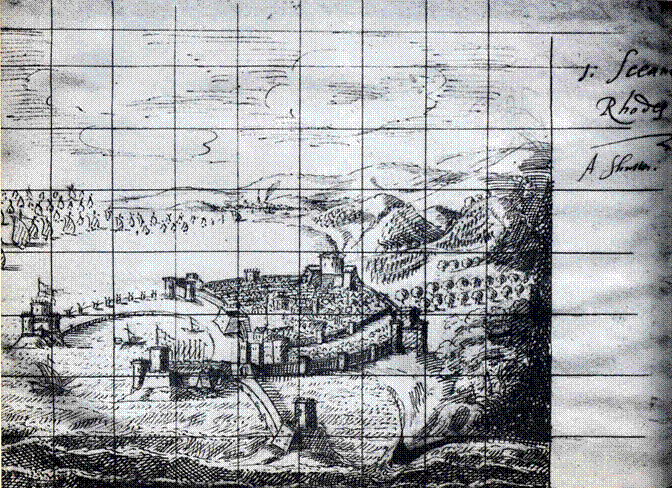
's The Siege of Rhodes
The Siege of Rhodes
The Siege of Rhodes is an opera written to a text by the impresario William Davenant. The score is by five composers, the vocal music by Henry Lawes, Matthew Locke, and Captain Henry Cooke, and instrumental music by Charles Coleman and George Hudson...
(1656), originally given in a private performance. In France, meanwhile, Molière
Molière
Jean-Baptiste Poquelin, known by his stage name Molière, was a French playwright and actor who is considered to be one of the greatest masters of comedy in Western literature...
turned several of his farcical comedies into musical entertainments with songs (music provided by Jean Baptiste Lully) and dance in the late 17th century. His Psyche
Psyché (play)
Psyché is a Tragédie et ballet of 1671, composed by Molière and versified in collaboration with Pierre Corneille and Philippe Quinault with musical intermèdes by Jean-Baptiste Lully.-History:...
was the model for an English opera by Thomas Shadwell
Thomas Shadwell
Thomas Shadwell was an English poet and playwright who was appointed poet laureate in 1689.-Life:Shadwell was born at Stanton Hall, Norfolk, and educated at Bury St Edmunds School, and at Gonville and Caius College, Cambridge, which he entered in 1656. He left the university without a degree, and...
, The Miser produced in 1672. Davenant produced The Tempest
The Tempest (Dryden)
The Tempest, or The Enchanted Island is a comedy adapted by John Dryden and William D'Avenant from Shakespeare's comedy The Tempest. The musical setting, previously attributed to Henry Purcell, and probably for the London revival of 1712, was very probably by John Weldon.The Dryden/Davenant...
in 1667, which was the first Shakespeare plot set to music, and which was then adapted by Shadwell into an opera in 1674 (composed by Matthew Locke
Matthew Locke (composer)
Matthew Locke was an English Baroque composer and music theorist.-Biography:As a boy, Locke was trained in the choir of Exeter Cathedral, under Edward Gibbons, the brother of Orlando Gibbons...
and others). About 1683, John Blow
John Blow
John Blow was an English Baroque composer and organist, appointed to Westminster Abbey in 1669. His pupils included William Croft, Jeremiah Clarke and Henry Purcell. In 1685 he was named a private musician to James II. His only stage composition, Venus and Adonis John Blow (baptised 23 February...
composed Venus and Adonis
Venus and Adonis (opera)
Venus and Adonis is an opera in three acts and a prologue by the English Baroque composer John Blow, composed in about 1683. It was written for the court of King Charles II at either London or Windsor. It is considered by some to be either a semi-opera or a masque, but The New Grove names it as the...
, often considered the first true English-language opera. Blow was followed by Henry Purcell
Henry Purcell
Henry Purcell – 21 November 1695), was an English organist and Baroque composer of secular and sacred music. Although Purcell incorporated Italian and French stylistic elements into his compositions, his legacy was a uniquely English form of Baroque music...
and a brief period of English opera. After the death of Charles II
Charles II of England
Charles II was monarch of the three kingdoms of England, Scotland, and Ireland.Charles II's father, King Charles I, was executed at Whitehall on 30 January 1649, at the climax of the English Civil War...
in 1685, English opera began to fall out of fashion.
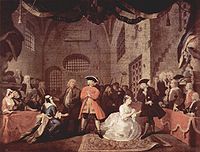
John Gay
John Gay was an English poet and dramatist and member of the Scriblerus Club. He is best remembered for The Beggar's Opera , set to music by Johann Christoph Pepusch...
's The Beggar's Opera
The Beggar's Opera
The Beggar's Opera is a ballad opera in three acts written in 1728 by John Gay with music arranged by Johann Christoph Pepusch. It is one of the watershed plays in Augustan drama and is the only example of the once thriving genre of satirical ballad opera to remain popular today...
(1728), that included lyrics written to the tunes of popular songs of the day (often spoofing opera), and comic opera
Comic opera
Comic opera denotes a sung dramatic work of a light or comic nature, usually with a happy ending.Forms of comic opera first developed in late 17th-century Italy. By the 1730s, a new operatic genre, opera buffa, emerged as an alternative to opera seria...
s, with original scores and mostly romantic plot lines, like Michael Balfe's The Bohemian Girl
The Bohemian Girl
The Bohemian Girl is an opera composed by Michael William Balfe with a libretto by Alfred Bunn. The plot is loosely based on a Cervantes tale, La Gitanilla.The opera was first produced in London at the Drury Lane Theatre on November 27, 1843...
(1845). Meanwhile, on the continent, Singspiel
Singspiel
A Singspiel is a form of German-language music drama, now regarded as a genre of opera...
, Comédie en vaudeville
Comédie en vaudeville
The Comédie en vaudeville was a theatrical entertainment which began in Paris towards the end of the 17th century, in which comedy was enlivened though lyrics using the melody of popular vaudeville songs.-Evolution:...
, Opéra comique
Opéra comique
Opéra comique is a genre of French opera that contains spoken dialogue and arias. It emerged out of the popular opéra comiques en vaudevilles of the Fair Theatres of St Germain and St Laurent , which combined existing popular tunes with spoken sections...
and other forms of light musical entertainment were emerging. Other musical theatre forms developed by the 19th century, such as music hall
Music hall
Music Hall is a type of British theatrical entertainment which was popular between 1850 and 1960. The term can refer to:# A particular form of variety entertainment involving a mixture of popular song, comedy and speciality acts...
, melodrama
Melodrama
The term melodrama refers to a dramatic work that exaggerates plot and characters in order to appeal to the emotions. It may also refer to the genre which includes such works, or to language, behavior, or events which resemble them...
, burlesque and vaudeville
Vaudeville
Vaudeville was a theatrical genre of variety entertainment in the United States and Canada from the early 1880s until the early 1930s. Each performance was made up of a series of separate, unrelated acts grouped together on a common bill...
. Melodramas and burlettas, in particular, were popularized partly because most London theatres were licensed only as music halls and not allowed to present plays without music. In any event, what a piece was called did not necessarily define what it was. The Broadway extravaganza
Extravaganza
An extravaganza is a literary or musical work characterized by freedom of style and structure and usually containing elements of burlesque, pantomime, music hall and parody. It sometimes also has elements of cabaret, circus, revue, variety, vaudeville and mime...
The Magic Deer (1852) advertised itself as "A Serio Comico Tragico Operatical Historical Extravaganzical Burletical Tale of Enchantment."
The first recorded long running play of any kind was The Beggar's Opera, which ran for 62 successive performances in 1728. It would take almost a century before the first play broke 100 performances, with Tom and Jerry, based on the book Life in London (1821), and the record soon reached 150 in the late 1820s. Colonial America did not have a significant theatre presence until 1752, when London entrepreneur William Hallam sent a company of twelve actors to the colonies with his brother Lewis
Lewis Hallam
Lewis Hallam was an English-born actor and theatre director in the colonial United States.-Career:He arrived in North America in 1752 with his theatrical company, which first performed in Williamsburg, Virginia. In 1752, Hallam built the first theater in New York City, New York, on Nassau Street...
as their manager. They established a theatre in Williamsburg, Virginia
Williamsburg, Virginia
Williamsburg is an independent city located on the Virginia Peninsula in the Hampton Roads metropolitan area of Virginia, USA. As of the 2010 Census, the city had an estimated population of 14,068. It is bordered by James City County and York County, and is an independent city...
and opened with The Merchant of Venice
The Merchant of Venice
The Merchant of Venice is a tragic comedy by William Shakespeare, believed to have been written between 1596 and 1598. Though classified as a comedy in the First Folio and sharing certain aspects with Shakespeare's other romantic comedies, the play is perhaps most remembered for its dramatic...
and The Anatomist. The company moved to New York in the summer of 1753, performing ballad-operas such as The Beggar’s Opera and ballad-farces like Damon and Phillida. By the 1840s, P.T. Barnum was operating an entertainment complex in lower Manhattan. Theatre in New York moved from downtown gradually to midtown from around 1850, seeking less expensive real estate prices, and did not arrive in the Times Square area until the 1920s and 1930s. Broadway's first "long-run" musical was a 50 performance hit called The Elves in 1857. New York runs continued to lag far behind those in London, but Laura Keene's "musical burletta" Seven Sisters (1860) shattered previous New York records with a run of 253 performances.
1850s to 1880s
Around 1850, the French composer HervéHervé (composer)
Hervé , real name Louis Auguste Florimond Ronger, was a French singer, composer, librettist, conductor and scene painter, whom Ernest Newman, following Reynaldo Hahn, credited with inventing the genre of operetta in Paris.-Life:Hervé was born in Houdain near Arras...
was experimenting with a form of comic musical theatre that came to be called opérette. The best known composers of operetta
Operetta
Operetta is a genre of light opera, light in terms both of music and subject matter. It is also closely related, in English-language works, to forms of musical theatre.-Origins:...
were Jacques Offenbach
Jacques Offenbach
Jacques Offenbach was a Prussian-born French composer, cellist and impresario. He is remembered for his nearly 100 operettas of the 1850s–1870s and his uncompleted opera The Tales of Hoffmann. He was a powerful influence on later composers of the operetta genre, particularly Johann Strauss, Jr....
from the 1850s to the 1870s and Johann Strauss II
Johann Strauss II
Johann Strauss II , also known as Johann Baptist Strauss or Johann Strauss, Jr., the Younger, or the Son , was an Austrian composer of light music, particularly dance music and operettas. He composed over 500 waltzes, polkas, quadrilles, and other types of dance music, as well as several operettas...
in the 1870s and 1880s. Offenbach's fertile melodies, combined with his librettists' witty satire, formed a model for the musical theatre that followed. In 1957, Mark Lubbock traced the development of musical theatre from Offenbach to Gilbert and Sullivan
Gilbert and Sullivan
Gilbert and Sullivan refers to the Victorian-era theatrical partnership of the librettist W. S. Gilbert and the composer Arthur Sullivan . The two men collaborated on fourteen comic operas between 1871 and 1896, of which H.M.S...
and eventually to Irving Berlin
Irving Berlin
Irving Berlin was an American composer and lyricist of Jewish heritage, widely considered one of the greatest songwriters in American history.His first hit song, "Alexander's Ragtime Band", became world famous...
and Rodgers and Hammerstein
Rodgers and Hammerstein
Richard Rodgers and Oscar Hammerstein II were a well-known American songwriting duo, usually referred to as Rodgers and Hammerstein. They created a string of popular Broadway musicals in the 1940s and 1950s during what is considered the golden age of the medium...
, writing: "Offenbach is undoubtedly the most significant figure in the history of the 'musical'. In the mid-19th century in England, musical theatre consisted of mostly of music hall
Music hall
Music Hall is a type of British theatrical entertainment which was popular between 1850 and 1960. The term can refer to:# A particular form of variety entertainment involving a mixture of popular song, comedy and speciality acts...
, adaptations of the French operettas (played in bad, risqué translations) and musical burlesques (the culmination of which were seen at the Gaiety Theatre
Gaiety Theatre, London
The Gaiety Theatre, London was a West End theatre in London, located on Aldwych at the eastern end of the Strand. The theatre was established as the Strand Musick Hall , in 1864 on the former site of the Lyceum Theatre. It was rebuilt several times, but closed from the beginning of World War II...
beginning in 1868). In reaction to these, a few family-friendly entertainments were created, such as the German Reed Entertainments.
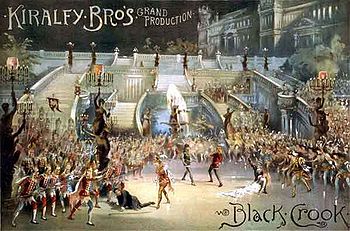
The Black Crook
The Black Crook is considered to be the first piece of musical theatre that conforms to the modern notion of a "book musical". The book is by Charles M. Barras , an American playwright...
, which premiered in New York on September 12, 1866. The production was a staggering five-and-a-half hours long, but despite its length, it ran for a record-breaking 474 performances. The same year, The Black Domino/Between You, Me and the Post was the first show to call itself a "musical comedy." Comedians Edward Harrigan
Edward Harrigan
Edward Harrigan was an American actor, playwright, theatre manager, and composer. Harrigan and Tony Hart formed the first famous collaboration in American musical theatre.-Life and career:...
and Tony Hart produced and starred in musicals on Broadway between 1878 (The Mulligan Guard Picnic) and 1885, with book and lyrics by Harrigan and music by his father-in-law David Braham. These musical comedies featured characters and situations taken from the everyday life of New York's lower classes and represented a significant step from burletta
Burletta
A burletta , also sometimes burla or burlettina, is a musical term generally denoting a brief comic Italian opera...
, minstrel shows, music hall
Music hall
Music Hall is a type of British theatrical entertainment which was popular between 1850 and 1960. The term can refer to:# A particular form of variety entertainment involving a mixture of popular song, comedy and speciality acts...
and burlesque, towards a more legitimate
Legitimate theater
The term "legitimate theater" dates back to the Licensing Act of 1737, which restricted "serious" theatre performances to the two patent theatres licensed to perform "spoken drama" after the English Restoration in 1662...
theatrical form. They starred high quality singers (Lillian Russell
Lillian Russell
Lillian Russell was an American actress and singer. She became one of the most famous actresses and singers of the late 19th century and early 20th century, known for her beauty and style, as well as for her voice and stage presence.Russell was born in Iowa but raised in Chicago...
, Vivienne Segal
Vivienne Segal
Vivienne Sonia Segal was an American actress and singer.Segal was born in Philadelphia, Pennsylvania. She is best remembered for creating the role of Vera Simpson in Richard Rodgers and Lorenz Hart's Pal Joey and introduced the song "Bewitched, Bothered and Bewildered"...
, and Fay Templeton
Fay Templeton
Fay Templeton was an American stage actress.Her parents were actors/vaudevillians and she followed in their footsteps, making her Broadway debut in 1900. She continued to appear there until 1934...
) instead of the ladies of questionable repute who had starred in earlier musical forms.
The length of runs in the theatre changed rapidly around the same time that the modern musical emerged. As transportation improved, poverty in London and New York diminished, and street lighting made for safer travel at night, the number of potential patrons for the growing number of theatres increased enormously. Plays could run longer and still draw in the audiences, leading to better profits and improved production values. The first play to achieve 500 consecutive performances was the London (non-musical) comedy Our Boys
Our Boys
Our Boys is a comedy in three acts written by Henry James Byron, first performed in London on 16 January 1875 at the Vaudeville Theatre. Until it was surpassed by the run of Charley's Aunt in the 1890s, it was the world's longest-running play, up to that time, with 1,362 performances until April...
, opening in 1875, which set an astonishing new record of 1,362 performances. This run was not equaled on the musical stage until World War I
World War I
World War I , which was predominantly called the World War or the Great War from its occurrence until 1939, and the First World War or World War I thereafter, was a major war centred in Europe that began on 28 July 1914 and lasted until 11 November 1918...
, but musical theatre soon broke the 500 performance mark in London, most notably by the series of more than a dozen long-running Gilbert and Sullivan
Gilbert and Sullivan
Gilbert and Sullivan refers to the Victorian-era theatrical partnership of the librettist W. S. Gilbert and the composer Arthur Sullivan . The two men collaborated on fourteen comic operas between 1871 and 1896, of which H.M.S...
family-friendly comic opera
Comic opera
Comic opera denotes a sung dramatic work of a light or comic nature, usually with a happy ending.Forms of comic opera first developed in late 17th-century Italy. By the 1730s, a new operatic genre, opera buffa, emerged as an alternative to opera seria...
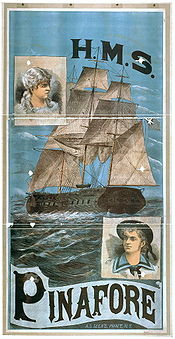
hits, including H.M.S. Pinafore
H.M.S. Pinafore
H.M.S. Pinafore; or, The Lass That Loved a Sailor is a comic opera in two acts, with music by Arthur Sullivan and a libretto by W. S. Gilbert. It opened at the Opera Comique in London, England, on 25 May 1878 and ran for 571 performances, which was the second-longest run of any musical...
in 1878 and The Mikado
The Mikado
The Mikado; or, The Town of Titipu is a comic opera in two acts, with music by Arthur Sullivan and libretto by W. S. Gilbert, their ninth of fourteen operatic collaborations...
in 1885. These were sensations on both sides of the Atlantic and, along with the other changes in the theatre, raised the standard for what was considered a successful run. Only a few 19th century musical pieces exceeded the run of the Mikado: The Chimes of Normandy (Les Cloches de Corneville) ran for 705 performances in 1878 in London, and Alfred Cellier
Alfred Cellier
Alfred Cellier was an English composer, orchestrator and conductor.In addition to conducting and music directing the original productions of several of the most famous Gilbert and Sullivan works and writing the overtures to some of them, Cellier conducted at many theatres in London, New York and...
and B. C. Stephenson
B. C. Stephenson
Benjamin Charles Stephenson or B. C. Stephenson was an English dramatist, lyricist and librettist. After beginning a career in the civil service, he started to write for the theatre, using the pen name "Bolton Rowe". He was author or co-author of several long-running shows of the Victorian theatre...
's 1886 hit, Dorothy
Dorothy (opera)
Dorothy is a comic opera in three acts with music by Alfred Cellier and a libretto by B. C. Stephenson. The story involves a rake who falls in love with his disguised fiancée.It was first produced at the Gaiety Theatre in London on in 1886...
(a show midway between comic opera and musical comedy) set a new record with 931 performances.
Gilbert and Sullivan's influence on later musical theatre was profound, creating examples of how to "integrate" musicals so that the lyrics and dialogue were designed to advance a coherent story. Their works were admired by and copied by early authors and composers of musicals such as Ivan Caryll
Ivan Caryll
Félix Marie Henri Tilkin , better known by his pen name Ivan Caryll, was a Belgian composer of operettas and Edwardian musical comedies in the English language...
, Lionel Monckton
Lionel Monckton
Lionel John Alexander Monckton was an English writer and composer of musical theatre. He was Britain's most popular musical theatre composer of the early years of the 20th century.-Early life:...
, P. G. Wodehouse
P. G. Wodehouse
Sir Pelham Grenville Wodehouse, KBE was an English humorist, whose body of work includes novels, short stories, plays, poems, song lyrics, and numerous pieces of journalism. He enjoyed enormous popular success during a career that lasted more than seventy years and his many writings continue to be...
, and Victor Herbert
Victor Herbert
Victor August Herbert was an Irish-born, German-raised American composer, cellist and conductor. Although Herbert enjoyed important careers as a cello soloist and conductor, he is best known for composing many successful operettas that premiered on Broadway from the 1890s to World War I...
, and later Jerome Kern
Jerome Kern
Jerome David Kern was an American composer of musical theatre and popular music. One of the most important American theatre composers of the early 20th century, he wrote more than 700 songs, used in over 100 stage works, including such classics as "Ol' Man River", "Can't Help Lovin' Dat Man", "A...
, Ira Gershwin
Ira Gershwin
Ira Gershwin was an American lyricist who collaborated with his younger brother, composer George Gershwin, to create some of the most memorable songs of the 20th century....
, Yip Harburg
Yip Harburg
Edgar Yipsel Harburg , known as E.Y. Harburg or Yip Harburg, was an American popular song lyricist who worked with many well-known composers...
, Irving Berlin
Irving Berlin
Irving Berlin was an American composer and lyricist of Jewish heritage, widely considered one of the greatest songwriters in American history.His first hit song, "Alexander's Ragtime Band", became world famous...
, Ivor Novello
Ivor Novello
David Ivor Davies , better known as Ivor Novello, was a Welsh composer, singer and actor who became one of the most popular British entertainers of the first half of the 20th century. Born into a musical family, his first successes were as a songwriter...
, Oscar Hammerstein II
Oscar Hammerstein II
Oscar Greeley Clendenning Hammerstein II was an American librettist, theatrical producer, and theatre director of musicals for almost forty years. Hammerstein won eight Tony Awards and was twice awarded an Academy Award for "Best Original Song". Many of his songs are standard repertoire for...
and Andrew Lloyd Webber
Andrew Lloyd Webber
Andrew Lloyd Webber, Baron Lloyd-Webber is an English composer of musical theatre.Lloyd Webber has achieved great popular success in musical theatre. Several of his musicals have run for more than a decade both in the West End and on Broadway. He has composed 13 musicals, a song cycle, a set of...
. Other British composers of the 1870s and 1880s included Edward Solomon
Edward Solomon
Edward Solomon was a prolific English composer, as well as a conductor, orchestrator and pianist. Though he died before his fortieth birthday, he wrote dozens of works produced for the stage, including several for the D'Oyly Carte Opera Company, such as The Nautch Girl, among others.-Early...
and F. Osmond Carr. The most popular British shows, beginning with the Savoy operas, also enjoyed profitable New York productions and tours of Britain, America, Europe, Australasia and South Africa. These shows were fare for "respectable" audiences, a marked contrast from the risqué burlesques, melodramas, minstrel shows, bawdy music hall shows and French operettas that dominated the stage prior to Gilbert and Sullivan and drew a sometimes seedy crowd looking for less wholesome entertainment.
1890s to the new century
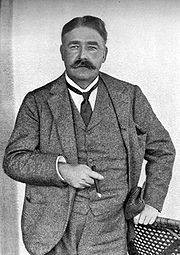
Charles Hale Hoyt
Charles Hale Hoyt was an American dramatist.-Biography:Hoyt was born in Concord, New Hampshire. He had a difficult childhood, as his mother died when he was nine years old. He graduated at the Boston Latin School and, after being engaged in the cattle business in Colorado for a time, took up...
's A Trip to Chinatown
A Trip to Chinatown
A Trip to Chinatown is a musical comedy in three acts by Charles H. Hoyt with music by Percy Gaunt and lyrics by Hoyt, that became a silent film featuring Anna May Wong half a century later. In addition to the Gaunt and Hoyt score, many songs were interpolated into the score at one time or another...
(1891) was Broadway's long-run champion (until Irene
Irene (musical)
Irene is a musical with a book by James Montgomery, lyrics by Joseph McCarthy, and music by Harry Tierney.Based on Montgomery's play Irene O'Dare, it is set in New York City's Upper West Side and focuses on immigrant shop assistant Irene O'Dare, who is introduced to Long Island's high society when...
in 1919), running for 657 performances. Gilbert and Sullivan's comic operas were both pirated and imitated in New York by productions such as Reginald de Koven
Reginald de Koven
Henry Louis Reginald De Koven was an American music critic and prolific composer, particularly of comic operas.-Biography:...
's Robin Hood
Robin Hood (comic opera)
Robin Hood is a comic opera by Reginald De Koven , Harry B. Smith and Clement Scott . The story is based on the Robin Hood legend, during the reign of King Richard I . The opera was composed in Chicago, Illinois during the winter of 1888-1889.Robin Hood was first performed at the Chicago Opera...
(1891) and John Philip Sousa
John Philip Sousa
John Philip Sousa was an American composer and conductor of the late Romantic era, known particularly for American military and patriotic marches. Because of his mastery of march composition, he is known as "The March King" or the "American March King" due to his British counterpart Kenneth J....
's El Capitan
El Capitan
El Capitan is a vertical rock formation in Yosemite National Park, located on the north side of Yosemite Valley, near its western end. The granite monolith extends about from base to summit along its tallest face, and is one of the world's favorite challenges for rock climbers.The formation was...
(1896). A Trip to Coontown (1898) was the first musical comedy entirely produced and performed by African American
African American
African Americans are citizens or residents of the United States who have at least partial ancestry from any of the native populations of Sub-Saharan Africa and are the direct descendants of enslaved Africans within the boundaries of the present United States...
s in a Broadway theatre (largely inspired by the routines of the minstrel show
Minstrel show
The minstrel show, or minstrelsy, was an American entertainment consisting of comic skits, variety acts, dancing, and music, performed by white people in blackface or, especially after the Civil War, black people in blackface....
s), followed by the ragtime
Ragtime
Ragtime is an original musical genre which enjoyed its peak popularity between 1897 and 1918. Its main characteristic trait is its syncopated, or "ragged," rhythm. It began as dance music in the red-light districts of American cities such as St. Louis and New Orleans years before being published...
-tinged Clorindy, or the Origin of the Cakewalk (1898), and the highly successful In Dahomey (1902). Hundreds of musical comedies were staged on Broadway in the 1890s and early 20th century composed of songs written in New York's Tin Pan Alley
Tin Pan Alley
Tin Pan Alley is the name given to the collection of New York City music publishers and songwriters who dominated the popular music of the United States in the late 19th century and early 20th century...
by composers such as Gus Edwards
Gus Edwards (songwriter)
Gus Edwards was an American songwriter and vaudevillian. He also organised his own theatre companies and was a music publisher.-Early life:...
, John Walter Bratton
John Walter Bratton
John Walter Bratton was an American Tin Pan Alley composer and theatrical producer who became popular during the era known as the Gay Nineties-Early life:...
and George M. Cohan
George M. Cohan
George Michael Cohan , known professionally as George M. Cohan, was a major American entertainer, playwright, composer, lyricist, actor, singer, dancer, and producer....
(Little Johnny Jones
Little Johnny Jones
For the blues pianist, see Little Johnny Jones Little Johnny Jones is a musical by George M. Cohan. The show introduced Cohan's tunes "Give My Regards to Broadway" and "The Yankee Doodle Boy." The "Yankee Doodle" character was inspired by real-life Hall of Fame jockey Tod Sloan.-Background:The...
(1904)). Still, New York runs continued to be relatively short, with a few exceptions, compared with London runs, until the 1920s. Tours, however, were often extensive, beginning with the original Broadway cast.
Meanwhile, musicals had spread to the London stage by the Gay Nineties
Gay Nineties
Gay Nineties is an American nostalgic term that refers to the decade of the 1890s. It is known in the UK as the Naughty Nineties, and refers there to the decade of supposedly decadent art by Aubrey Beardsley, the witty plays and trial of Oscar Wilde, society scandals and the beginning of the...
. George Edwardes
George Edwardes
George Joseph Edwardes was an English theatre manager of Irish ancestry who brought a new era in musical theatre to the British stage and beyond....
had left the management of Richard D'Oyly Carte
Richard D'Oyly Carte
Richard D'Oyly Carte was an English talent agent, theatrical impresario, composer and hotelier during the latter half of the Victorian era...
's Savoy Theatre
Savoy Theatre
The Savoy Theatre is a West End theatre located in the Strand in the City of Westminster, London, England. The theatre opened on 10 October 1881 and was built by Richard D'Oyly Carte on the site of the old Savoy Palace as a showcase for the popular series of comic operas of Gilbert and Sullivan,...
. He took over the Gaiety Theatre
Gaiety Theatre, London
The Gaiety Theatre, London was a West End theatre in London, located on Aldwych at the eastern end of the Strand. The theatre was established as the Strand Musick Hall , in 1864 on the former site of the Lyceum Theatre. It was rebuilt several times, but closed from the beginning of World War II...
and, at first, he improved the quality of the old burlesques. He perceived that audiences wanted a new alternative to the Savoy
Savoy opera
The Savoy Operas denote a style of comic opera that developed in Victorian England in the late 19th century, with W. S. Gilbert and Arthur Sullivan as the original and most successful practitioners. The name is derived from the Savoy Theatre, which impresario Richard D'Oyly Carte built to house...
-style comic operas and their intellectual, political, absurdist satire. He experimented with a modern-dress, family-friendly musical theatre style, with breezy, popular songs, snappy, romantic banter, and stylish spectacle at the Gaiety, Daly's Theatre
Daly's Theatre
Daly's Theatre was a theatre in the City of Westminster. It was located at 2 Cranbourn Street, just off Leicester Square. It opened on 27 June 1893, and was demolished in 1937.-Early years:...
and other venues. These drew on the traditions of comic opera and also used elements of burlesque and of the Harrigan and Hart pieces. He replaced the bawdy women of burlesque with his "respectable" corps of dancing, singing Gaiety Girls
Gaiety Girls
Gaiety Girls were the chorus girls in Edwardian musical comedies, beginning in the 1890s at the Gaiety Theatre, London, in the shows produced by George Edwardes. The popularity of this genre of musical theatre depended, in part, on the beautiful dancing corps of "Gaiety Girls" appearing onstage in...
to complete the musical and visual fun. The success of the first of these, In Town
In Town (musical)
In Town is a musical comedy written by Adrian Ross and James T. Tanner, with music by F. Osmond Carr and lyrics by Ross. It was produced by George Edwardes at the Prince of Wales Theatre, opening on 15 October 1892, and transferred to the Gaiety Theatre on 26 December 1892, running for a...
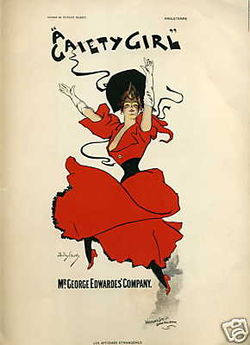
in 1892 and A Gaiety Girl
A Gaiety Girl
A Gaiety Girl is an English musical comedy in two acts by a team of musical comedy neophytes: Owen Hall , Harry Greenbank and Sidney Jones . It opened at Prince of Wales Theatre in London, produced by George Edwardes, on 14 October 1893 and ran for 413 performances. The show starred C...
in 1893, confirmed Edwardes on the path he was taking. These "musical comedies", as he called them, revolutionized the London stage and set the tone for the next three decades.
The Shop Girl
The Shop Girl was a musical comedy in two acts written by H. J. W. Dam, with Lyrics by Dam and Adrian Ross and music by Ivan Caryll, and additional numbers by Lionel Monckton and Ross. It was first produced by George Edwardes at the Gaiety Theatre in London, opening on 24 November 1894...
(1894) and A Runaway Girl
A Runaway Girl
A Runaway Girl is a musical comedy in two acts written in 1898 by Seymour Hicks and Harry Nicholls. The composer was Ivan Caryll, with additional music by Lionel Monckton and lyrics by Aubrey Hopwood and Harry Greenbank...
(1898), with music by Ivan Caryll
Ivan Caryll
Félix Marie Henri Tilkin , better known by his pen name Ivan Caryll, was a Belgian composer of operettas and Edwardian musical comedies in the English language...
and Lionel Monckton
Lionel Monckton
Lionel John Alexander Monckton was an English writer and composer of musical theatre. He was Britain's most popular musical theatre composer of the early years of the 20th century.-Early life:...
. These shows were immediately widely copied at other London theatres (and soon in America), and the Edwardian musical comedy
Edwardian Musical Comedy
Edwardian musical comedies were British musical theatre shows from the period between the early 1890s, when the Gilbert and Sullivan operas' dominance had ended, until the rise of the American musicals by Jerome Kern, Rodgers and Hart, George Gershwin and Cole Porter following World War I.Between...
swept away the earlier musical forms of comic opera and operetta. At Daly's Theatre
Daly's Theatre
Daly's Theatre was a theatre in the City of Westminster. It was located at 2 Cranbourn Street, just off Leicester Square. It opened on 27 June 1893, and was demolished in 1937.-Early years:...
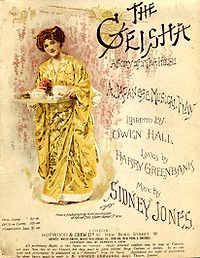
, Edwardes presented slightly more complex comedy hits. The Geisha
The Geisha
The Geisha, a story of a tea house is an Edwardian Musical Comedy in two acts. The score was composed by Sidney Jones to a libretto by Owen Hall, with lyrics by Harry Greenbank. Additional songs were written by Lionel Monckton and James Philip....
(1896) by Sidney Jones
Sidney Jones
James Sidney Jones , usually credited as Sidney Jones, was an English conductor and composer, most famous for producing the musical scores for a series of musical comedy hits in the late Victorian and Edwardian periods....
with lyrics by Harry Greenbank
Harry Greenbank
Harry Greenbank was an English author and dramatist best known for contributing lyrics to the successful series musicals produced at Daly's Theatre by George Edwardes in the 1890s.-Life and career:...
and Adrian Ross
Adrian Ross
For the NFL player see Adrian Ross Arthur Reed Ropes , better known under the pseudonym Adrian Ross, was a prolific writer of lyrics, contributing songs to more than sixty British musical comedies in the late 19th and early 20th centuries...
and then Jones' San Toy
San Toy
San Toy, or The Emperor's Own is a "Chinese" musical comedy in two acts, first performed at Daly's Theatre, London, on 21 October 1899, and ran for 768 performances...
(1899) each ran for more than two years and also found great international success, for example in Australian productions by J. C. Williamson
J. C. Williamson
James Cassius Williamson was an American actor and later Australia's foremost theatrical manager, founding J. C. Williamson Ltd....
.
The British musical comedy Florodora
Florodora
Florodora is an Edwardian musical comedy and became one of the first successful Broadway musicals of the 20th century. The book was written by Jimmy Davis under the pseudonym Owen Hall, the music was by Leslie Stuart with additional songs by Paul Rubens, and the lyrics were by Edward Boyd-Jones...
(1899) by Leslie Stuart
Leslie Stuart
Leslie Stuart was an English composer of early musical theatre, best known for the hit show Florodora and many popular songs. Stuart began writing songs in the late 1870s, including songs for blackface performers, such as "Lily of Laguna"; songs for musical theatre; and ballads such as "Soldiers...
and Paul Rubens
Paul Rubens (composer)
Paul Alfred Rubens was an English songwriter and librettist who wrote some of the most popular Edwardian musical comedies of the early twentieth century. He contributed to the success of dozens of musicals....
made a splash on both sides of the Atlantic, as did A Chinese Honeymoon
A Chinese Honeymoon
A Chinese Honeymoon is a musical comedy in two acts by George Dance, with music by Howard Talbot and additional music by Ivan Caryll and others, and additional lyrics by Harry Greenbank and others...
(1901), by British lyricist George Dance
George Dance (dramatist)
George Dance was an English lyricist and librettist in the 1890s and an important theatrical manager at the beginning of the 20th century....
and American-born composer Howard Talbot
Howard Talbot
Richard Lansdale Munkittrick, better known as Howard Talbot , was an American-born, English-raised conductor and composer of Irish descent...
, which ran for a record setting 1,074 performances in London and 376 in New York. The story concerns couples who honeymoon in China and inadvertently break the kissing laws (shades of The Mikado
The Mikado
The Mikado; or, The Town of Titipu is a comic opera in two acts, with music by Arthur Sullivan and libretto by W. S. Gilbert, their ninth of fourteen operatic collaborations...
). The Belle of New York
The Belle of New York (theatre)
The Belle of New York is a musical comedy in two acts, with book and lyrics by Hugh Morton and music by Gustave Kerker, about a Salvation Army girl who reforms a spendthrift, makes a great sacrifice and finds true love....
(1898) ran for 697 performances in London after a brief New York run, becoming the first American musical to run for over a year in London. After the turn of the 20th century, Seymour Hicks
Seymour Hicks
Sir Arthur Seymour Hicks , better known as Seymour Hicks, was a British actor, music hall performer, playwright, screenwriter, theatre manager and producer. He married the actress Ellaline Terriss in 1893...
(who joined forces with American producer Charles Frohman
Charles Frohman
Charles Frohman was an American theatrical producer. Frohman was producing plays by 1889 and acquired his first Broadway theatre by 1892. He discovered and promoted many stars of the American theatre....
) wrote popular shows with composer Charles Taylor
Charles H. Taylor (lyricist)
Charles Henry Taylor was a British lyricist, best known for his lyrics for early 20th century West End musical comedies and a comic opera, Tom Jones.-Life and career:...
and others, and Edwardes and Ross continued to churn out hits like The Toreador
The Toreador
The Toreador is an Edwardian musical comedy in two acts by James T. Tanner and Harry Nicholls, with lyrics by Adrian Ross and Percy Greenbank and music by Ivan Caryll and Lionel Monckton. It opened at the Gaiety Theatre in London, managed by George Edwardes, on 17 June 1901 and ran for an...
(1901), A Country Girl
A Country Girl
A Country Girl, or, Town and Country is a musical play in two acts by James T. Tanner, with lyrics by Adrian Ross, additional lyrics by Percy Greenbank, music by Lionel Monckton and additional songs by Paul Rubens....
(1902), The Orchid
The Orchid
The Orchid is a musical play in two acts by James T. Tanner, with lyrics by Adrian Ross and Percy Greenbank and music by Ivan Caryll and Lionel Monckton and additional numbers by Paul Rubens. It opened at Gaiety Theatre in London on 26 October 1903 and ran for 559 performances. It starred Gertie...
(1903), The Girls of Gottenberg
The Girls of Gottenberg
The Girls of Gottenberg is a musical play in two acts by George Grossmith, Jr. and L. E. Berman, with lyrics by Adrian Ross and Basil Hood, and music by Ivan Caryll and Lionel Monckton. P. G...
(1907) and Our Miss Gibbs
Our Miss Gibbs
Our Miss Gibbs is an Edwardian musical comedy in two acts by 'Cryptos' and James T. Tanner, with lyrics by Adrian Ross and Percy Greenbank, music by Ivan Caryll and Lionel Monckton. Produced by George Edwardes, it opened at the Gaiety Theatre in London on 23 January 1909 and ran for an extremely...
(1909). Other Edwardian musical comedy hits included The Arcadians (1909) and The Quaker Girl
The Quaker Girl
The Quaker Girl is a Edwardian musical comedy in three acts with a book by James T. Tanner, lyrics by Adrian Ross and Percy Greenbank, and music by Lionel Monckton. In its story, The Quaker Girl contrasts dour Quaker morality with Parisienne high fashion. The protagonist, Prudence, is thrown out...
(1910).
Operetta and World War I
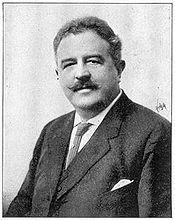
The Merry Widow
The Merry Widow is an operetta by the Austro–Hungarian composer Franz Lehár. The librettists, Viktor Léon and Leo Stein, based the story – concerning a rich widow, and her countrymen's attempt to keep her money in the principality by finding her the right husband – on an 1861 comedy play,...
, and operettas and musicals became direct competitors for a time. In the early years of the 20th century, English-language adaptations of 19th century continental operettas, as well as operettas by a new generation of European composers, such as Franz Lehár
Franz Lehár
Franz Lehár was an Austrian-Hungarian composer. He is mainly known for his operettas of which the most successful and best known is The Merry Widow .-Biography:...
and Oscar Straus
Oscar Straus (composer)
Oscar Nathan Straus was a Viennese composer of operettas and film scores and songs. He also wrote about 500 cabaret songs, chamber music, and orchestral and choral works...
, among others, spread throughout the English-speaking world. In America, Victor Herbert
Victor Herbert
Victor August Herbert was an Irish-born, German-raised American composer, cellist and conductor. Although Herbert enjoyed important careers as a cello soloist and conductor, he is best known for composing many successful operettas that premiered on Broadway from the 1890s to World War I...
produced a string of famous operettas (The Fortune Teller
The Fortune Teller (operetta)
The Fortune Teller is an operetta in three acts written by Victor Herbert, with a libretto by Harry B. Smith. After a brief tryout in Toronto, it premiered on Broadway on September 26, 1898 at Wallack's Theatre and ran for 40 performances...
(1898), Babes in Toyland
Babes in Toyland (operetta)
Babes in Toyland is an operetta composed by Victor Herbert with a libretto by Glen MacDonough , which wove together various characters from Mother Goose nursery rhymes into a Christmas-themed musical extravaganza. The creators wanted to cash in on the extraordinary success of The Wizard of Oz,...
(1903), Mlle. Modiste
Mlle. Modiste
Mlle. Modiste is an operetta in two acts written by Victor Herbert, libretto by Henry Blossom. It concerns hat shop girl Fifi, who longs to be an opera singer, but who is such a good hat seller that her employer, Mme. Cecil discourages her in her ambitions and exploits her commercial talents...
(1905), The Red Mill
The Red Mill
The Red Mill is an operetta written by Victor Herbert, with a libretto by Henry Blossom. It premiered on Broadway on September 24, 1906 at the Knickerbocker Theatre and ran for 274 performances, starring comedians Fred Stone and David Montgomery. It was revived on October 16, 1945, opening at the...
(1906) and Naughty Marietta
Naughty Marietta (operetta)
Naughty Marietta is an operetta in two acts, with libretto by Rida Johnson Young and music by Victor Herbert. Set in New Orleans in 1780, it tells how Captain Richard Warrington is commissioned to unmask and capture a notorious French pirate calling himself "Bras Priqué" – and how he is helped and...
(1910)), often with librettist Harry B. Smith
Harry B. Smith
Harry Bache Smith was a writer, lyricist and composer. The most prolific of all American stage writers, he is said to have written over 300 librettos and more than 6000 lyrics. Some of his best-known works were librettos for the composer Victor Herbert...
, as well as some intimate musical plays with modern settings.
Among other British and American composers and librettists of the 1910s, the team of P. G. Wodehouse
P. G. Wodehouse
Sir Pelham Grenville Wodehouse, KBE was an English humorist, whose body of work includes novels, short stories, plays, poems, song lyrics, and numerous pieces of journalism. He enjoyed enormous popular success during a career that lasted more than seventy years and his many writings continue to be...
, Guy Bolton
Guy Bolton
Guy Reginald Bolton was a British-American playwright and writer of musical comedies. Born in England and educated in France and the U.S., he trained as an architect but turned to writing. Bolton preferred working in collaboration with others, principally the English writers P. G...
and Jerome Kern
Jerome Kern
Jerome David Kern was an American composer of musical theatre and popular music. One of the most important American theatre composers of the early 20th century, he wrote more than 700 songs, used in over 100 stage works, including such classics as "Ol' Man River", "Can't Help Lovin' Dat Man", "A...
stood out. Following in the footsteps of Gilbert and Sullivan
Gilbert and Sullivan
Gilbert and Sullivan refers to the Victorian-era theatrical partnership of the librettist W. S. Gilbert and the composer Arthur Sullivan . The two men collaborated on fourteen comic operas between 1871 and 1896, of which H.M.S...
, their "Princess Theatre
Princess Theatre
The Princess Theatre was a joint venture between the Shubert Brothers , producer Ray Comstock, theatrical agent Elisabeth Marbury and actor-director Holbrook Blinn...
shows" paved the way for Kern's later work by showing that a musical could combine light, popular entertainment with continuity between its story and songs:
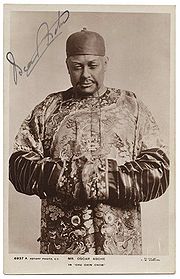
World War I
World War I , which was predominantly called the World War or the Great War from its occurrence until 1939, and the First World War or World War I thereafter, was a major war centred in Europe that began on 28 July 1914 and lasted until 11 November 1918...
, and they flocked to the theatre. Harry Tierney
Harry Tierney
Harry Austin Tierney was a successful American composer of musical theatre, best known for long-running hits such as Irene , Broadway's longest-running show of the era , Kid Boots and Rio Rita , one of the first musicals to be turned into a talking picture .Born...
and Joseph McCarthy
Joseph McCarthy (lyricist)
Joseph McCarthy was an American lyricist whose most famous songs include You Made Me Love You, and I'm Always Chasing Rainbows, based upon the haunting melody from the middle section of Chopin's "Fantasie Impromptu".McCarthy, who was born in Somerville, Massachusetts, was a frequent collaborator...
's 1919 hit musical Irene
Irene (musical)
Irene is a musical with a book by James Montgomery, lyrics by Joseph McCarthy, and music by Harry Tierney.Based on Montgomery's play Irene O'Dare, it is set in New York City's Upper West Side and focuses on immigrant shop assistant Irene O'Dare, who is introduced to Long Island's high society when...
ran for 670 performances – a Broadway record that held until 1938's Hellzapoppin. The British public supported far longer runs like that of Maid of the Mountains (1,352 performances) and especially Chu Chin Chow
Chu Chin Chow
Chu Chin Chow is a musical comedy written, produced and directed by Oscar Asche, with music by Frederic Norton, based on the story of Ali Baba and the 40 Thieves...
. Its run of 2,238 performances was more than twice as many as any previous musical, setting a record that stood for nearly forty years until Salad Days. Revue
Revue
A revue is a type of multi-act popular theatrical entertainment that combines music, dance and sketches. The revue has its roots in 19th century American popular entertainment and melodrama but grew into a substantial cultural presence of its own during its golden years from 1916 to 1932...
s like The Bing Boys Are Here
The Bing Boys Are Here
The Bing Boys Are Here, styled "A Picture of London Life, in a Prologue and Six Panels," is the first of a series of revues which played at the Alhambra Theatre, London during the last two years of World War I. The series included The Bing Boys on Broadway and The Bing Boys are There. The music...
in Britain, and the reviews of Florenz Ziegfeld
Florenz Ziegfeld
Florenz Ziegfeld, Jr. , , was an American Broadway impresario, notable for his series of theatrical revues, the Ziegfeld Follies , inspired by the Folies Bergère of Paris. He also produced the musical Show Boat...
and his imitators in America, were also extraordinarily popular. A new generation of composers of operettas emerged in the 1920s, such as Rudolf Friml
Rudolf Friml
Rudolf Friml was a composer of operettas, musicals, songs and piano pieces, as well as a pianist. After musical training and a brief performing career in his native Prague, Friml moved to the United States, where he became a composer...
and Sigmund Romberg
Sigmund Romberg
Sigmund Romberg was a Hungarian-born American composer, best known for his operettas.-Biography:Romberg was born as Siegmund Rosenberg to a Jewish family in Gross-Kanizsa during the Austro-Hungarian kaiserlich und königlich monarchy period...
.
The primacy of British musical theatre from the 19th century through 1920 was gradually replaced by American innovation in the 20th century. Edwardes' competitor and counterpart in the U.S. was Charles Frohman
Charles Frohman
Charles Frohman was an American theatrical producer. Frohman was producing plays by 1889 and acquired his first Broadway theatre by 1892. He discovered and promoted many stars of the American theatre....
and his Theatrical Syndicate
Theatrical Syndicate
-Beginnings:One day, early in the year 1896, six men gathered for lunch at the Holland House in New York City. These men were Charles Frohman, Al Hayman, A.L. Erlanger, Marc Klaw, Samuel F. Nirdlinger, and Frederick Zimmerman...
. George M. Cohan
George M. Cohan
George Michael Cohan , known professionally as George M. Cohan, was a major American entertainer, playwright, composer, lyricist, actor, singer, dancer, and producer....
's and Herbert's musical entertainments after the turn of the century gave way to the Princess Theatre shows and a profusion of other musicals as Kern and other Tin Pan Alley
Tin Pan Alley
Tin Pan Alley is the name given to the collection of New York City music publishers and songwriters who dominated the popular music of the United States in the late 19th century and early 20th century...
composers began to bring new musical styles such as ragtime
Ragtime
Ragtime is an original musical genre which enjoyed its peak popularity between 1897 and 1918. Its main characteristic trait is its syncopated, or "ragged," rhythm. It began as dance music in the red-light districts of American cities such as St. Louis and New Orleans years before being published...
and jazz
Jazz
Jazz is a musical style that originated at the beginning of the 20th century in African American communities in the Southern United States. It was born out of a mix of African and European music traditions. From its early development until the present, jazz has incorporated music from 19th and 20th...
to the theatres. Ziegfeld's popular revues spawned imitators. The Shubert Brothers took control of the Broadway theatres after the war as new writers like the Gershwin brothers (George
George Gershwin
George Gershwin was an American composer and pianist. Gershwin's compositions spanned both popular and classical genres, and his most popular melodies are widely known...
and Ira
Ira Gershwin
Ira Gershwin was an American lyricist who collaborated with his younger brother, composer George Gershwin, to create some of the most memorable songs of the 20th century....
), Irving Berlin
Irving Berlin
Irving Berlin was an American composer and lyricist of Jewish heritage, widely considered one of the greatest songwriters in American history.His first hit song, "Alexander's Ragtime Band", became world famous...
and Rodgers and Hart
Rodgers and Hart
Rodgers and Hart were an American songwriting partnership of composer Richard Rodgers and the lyricist Lorenz Hart...
began to produce shows. Musical theatre writer Andrew Lamb
Andrew Lamb (writer)
Andrew Martin Lamb is an English writer, musicologist and broadcaster, known for his expertise in light music and musical theatre.-Biography:Lamb was born in Oldham, Lancashire, England, on 23 September 1942, the son of Harry Lamb, a schoolmaster, and his wife Winifred, née Emmott...
notes, "The triumph of American works over European in the first decades of the twentieth century came about against a changing social background. The operatic and theatrical styles of nineteenth-century social structures were replaced by a musical style more aptly suited to twentieth-century society and its vernacular idiom. It was from America that the more direct style emerged, and in America that it was able to flourish in a developing society less hidebound by nineteenth-century tradition."
The Roaring Twenties and the Great Depression
The motion picture mounted a challenge to the stage. At first, films were silent and presented only a limited challenge to theatre. But by the end of the 1920s, films like The Jazz SingerThe Jazz Singer (1927 film)
The Jazz Singer is a 1927 American musical film. The first feature-length motion picture with synchronized dialogue sequences, its release heralded the commercial ascendance of the "talkies" and the decline of the silent film era. Produced by Warner Bros. with its Vitaphone sound-on-disc system,...
could be presented with synchronized sound, and critics wondered if the cinema would replace live theatre altogether. The musicals of the Roaring Twenties
Roaring Twenties
The Roaring Twenties is a phrase used to describe the 1920s, principally in North America, but also in London, Berlin and Paris for a period of sustained economic prosperity. The phrase was meant to emphasize the period's social, artistic, and cultural dynamism...
, borrowing from vaudeville
Vaudeville
Vaudeville was a theatrical genre of variety entertainment in the United States and Canada from the early 1880s until the early 1930s. Each performance was made up of a series of separate, unrelated acts grouped together on a common bill...
, music hall
Music hall
Music Hall is a type of British theatrical entertainment which was popular between 1850 and 1960. The term can refer to:# A particular form of variety entertainment involving a mixture of popular song, comedy and speciality acts...
and other light entertainments, tended to ignore plot in favor of emphasizing star actors and actresses, big dance routines, and popular songs. Throughout the first half of the 20th century, popular music was dominated by theatre writers. Many shows were revues with little plot. For instance, Florenz Ziegfeld
Florenz Ziegfeld
Florenz Ziegfeld, Jr. , , was an American Broadway impresario, notable for his series of theatrical revues, the Ziegfeld Follies , inspired by the Folies Bergère of Paris. He also produced the musical Show Boat...
produced annual spectacular song-and-dance revues on Broadway featuring extravagant sets and elaborate costumes, but there was little to tie the various numbers together. In London, the Aldwych Farces were similarly successful, and stars such as Ivor Novello
Ivor Novello
David Ivor Davies , better known as Ivor Novello, was a Welsh composer, singer and actor who became one of the most popular British entertainers of the first half of the 20th century. Born into a musical family, his first successes were as a songwriter...
were popular. These spectacles also raised production values, and mounting a musical generally became more expensive.
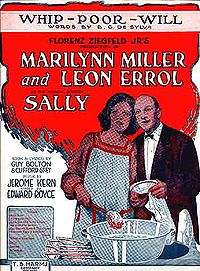
Sally (musical)
Sally is a musical comedy with music by Jerome Kern, lyrics by Clifford Grey and book by Guy Bolton , with additional lyrics by Buddy De Sylva, Anne Caldwell and P. G. Wodehouse. It was originally produced by Florenz Ziegfeld, opening on December 21, 1920 at the New Amsterdam Theatre on Broadway...
; Lady Be Good
Lady Be Good (musical)
Lady, Be Good is a musical written by Guy Bolton and Fred Thompson with music by George and lyrics by Ira Gershwin. It was first presented on Broadway in 1924; the West End production followed in 1926...
; Sunny
Sunny (musical)
Sunny is a musical with music by Jerome Kern and a libretto by Oscar Hammerstein II and Otto Harbach. The plot involves Sunny, the star of a circus act, who falls for a rich playboy, but comes in conflict with his snooty family...
; No, No, Nanette
No, No, Nanette
No, No, Nanette is a musical comedy with lyrics by Irving Caesar and Otto Harbach, music by Vincent Youmans, and a book by Otto Harbach and Frank Mandel, based on Mandel's 1919 Broadway play My Lady Friends...
; Oh, Kay!
Oh, Kay!
Oh, Kay! is a musical with music by George Gershwin, lyrics by Ira Gershwin, and a book by Guy Bolton and P. G. Wodehouse. It is based on the play La Presidente by Maurice Hanniquin and Pierre Veber. The plot revolves around the adventures of the Duke of Durham and his sister, Lady Kay, English...
; and Funny Face
Funny Face (musical)
Funny Face is a 1927 musical composed by George Gershwin, with lyrics by Ira Gershwin, and book by Fred Thompson and Paul Gerard Smith.Originally called Smarty, it starred Fred Astaire and his sister Adele Astaire. It opened in Philadelphia to poor reviews, and amidst major re-writes,...
. While the books of these shows may have been forgettable, they produced dozens of enduring popular songs ("standards
Traditional pop music
Traditional pop or classic pop or standards music denotes, in general, Western popular music that either wholly predates the advent of rock and roll in the mid-1950s, or to any popular music which exists concurrently to rock and roll but originated in a time before the appearance of rock and roll,...
") by, most notably, Jerome Kern, the Gershwin brothers, Cole Porter
Cole Porter
Cole Albert Porter was an American composer and songwriter. Born to a wealthy family in Indiana, he defied the wishes of his domineering grandfather and took up music as a profession. Classically trained, he was drawn towards musical theatre...
, Vincent Youmans
Vincent Youmans
Vincent Youmans was an American popular composer and Broadway producer.- Life :Vincent Millie Youmans was born in New York City on September 27, 1898 and grew-up on Central Park West on the site where the Mayflower Hotel once stood. His father, a prosperous hat manufacturer, moved the family to...
, and Richard Rodgers
Richard Rodgers
Richard Charles Rodgers was an American composer of music for more than 900 songs and for 43 Broadway musicals. He also composed music for films and television. He is best known for his songwriting partnerships with the lyricists Lorenz Hart and Oscar Hammerstein II...
and Lorenz Hart
Lorenz Hart
Lorenz "Larry" Milton Hart was the lyricist half of the famed Broadway songwriting team Rodgers and Hart...
, among others, and featured stars such as Marilyn Miller
Marilyn Miller
Marilyn Miller was one of the most popular Broadway musical stars of the 1920s and early 1930s. She was an accomplished tap dancer, singer and actress, but it was the combination of these talents that endeared her to audiences. On stage she usually played rags-to-riches Cinderella characters who...
and Fred Astaire
Fred Astaire
Fred Astaire was an American film and Broadway stage dancer, choreographer, singer and actor. His stage and subsequent film career spanned a total of 76 years, during which he made 31 musical films. He was named the fifth Greatest Male Star of All Time by the American Film Institute...
. These musicals and standards became popular on both sides of the Atlantic ocean. Meanwhile, operettas (after being nearly absent from the English-speaking stage since World War I) from continental European composers as well as by Noël Coward
Noël Coward
Sir Noël Peirce Coward was an English playwright, composer, director, actor and singer, known for his wit, flamboyance, and what Time magazine called "a sense of personal style, a combination of cheek and chic, pose and poise".Born in Teddington, a suburb of London, Coward attended a dance academy...
in London and Sigmund Romberg
Sigmund Romberg
Sigmund Romberg was a Hungarian-born American composer, best known for his operettas.-Biography:Romberg was born as Siegmund Rosenberg to a Jewish family in Gross-Kanizsa during the Austro-Hungarian kaiserlich und königlich monarchy period...
and Rudolf Friml
Rudolf Friml
Rudolf Friml was a composer of operettas, musicals, songs and piano pieces, as well as a pianist. After musical training and a brief performing career in his native Prague, Friml moved to the United States, where he became a composer...
in America, regained some of their lost popularity. Neither network radio nor cinema, now with sound, killed live theatre, although it did end the popularity of live Vaudeville
Vaudeville
Vaudeville was a theatrical genre of variety entertainment in the United States and Canada from the early 1880s until the early 1930s. Each performance was made up of a series of separate, unrelated acts grouped together on a common bill...
shows.
Progressing far beyond the comparatively frivolous musicals and sentimental operettas of the decade, Show Boat
Show Boat
Show Boat is a musical in two acts with music by Jerome Kern and book and lyrics by Oscar Hammerstein II. It was originally produced in New York in 1927 and in London in 1928, and was based on the 1926 novel of the same name by Edna Ferber. The plot chronicles the lives of those living and working...
, which premiered on December 27, 1927 at the Ziegfeld Theatre
Ziegfeld Theatre
The Ziegfeld Theatre was a Broadway theater located at the intersection of Sixth Avenue and 54th Street in Manhattan, New York City. It was built in 1927 and, despite public protests, was razed in 1966....
in New York, represented an even more complete integration of book and score than the Princess Theatre musicals, with dramatic themes, as told through the music, dialogue, setting and movement, woven together even more seamlessly. This was accomplished by combining the lyricism of Kern with the skillful craft of Oscar Hammerstein II
Oscar Hammerstein II
Oscar Greeley Clendenning Hammerstein II was an American librettist, theatrical producer, and theatre director of musicals for almost forty years. Hammerstein won eight Tony Awards and was twice awarded an Academy Award for "Best Original Song". Many of his songs are standard repertoire for...
, who adapted Edna Ferber
Edna Ferber
Edna Ferber was an American novelist, short story writer and playwright. Her novels were especially popular and included the Pulitzer Prize-winning So Big , Show Boat , and Giant .-Early years:Ferber was born August 15, 1885, in Kalamazoo, Michigan,...
's novel. One historian wrote, "Here we come to a completely new genre – the musical play as distinguished from musical comedy. Now ... the play was the thing, and everything else was subservient to that play. Now ... came complete integration of song, humor and production numbers into a single and inextricable artistic entity." However, Bordman argues, "Show Boat is certainly an operetta with its many arioso
Arioso
In classical music, arioso is a style of solo opera singing between recitative and aria. Literally, arioso means airy. The term arose in the 16th century along with the aforementioned styles and monody. It is commonly confused with recitativo accompagnato....
passages, its musical depth and seriousness, and its romantic story set, in typical operetta fashion, in the long ago and far away." Nevertheless, as the Great Depression
Great Depression
The Great Depression was a severe worldwide economic depression in the decade preceding World War II. The timing of the Great Depression varied across nations, but in most countries it started in about 1929 and lasted until the late 1930s or early 1940s...
set in during the post-Broadway national tour of Show Boat, the public turned back to light, brassy, escapist entertainment, and no follow-up was produced so seriously treating serious social themes until Oklahoma!
Oklahoma!
Oklahoma! is the first musical written by composer Richard Rodgers and librettist Oscar Hammerstein II. The musical is based on Lynn Riggs' 1931 play, Green Grow the Lilacs. Set in Oklahoma Territory outside the town of Claremore in 1906, it tells the story of cowboy Curly McLain and his romance...
in 1943.
1930s
Musical film
The musical film is a film genre in which songs sung by the characters are interwoven into the narrative, sometimes accompanied by dancing. The songs usually advance the plot or develop the film's characters, though in some cases they serve merely as breaks in the storyline, often as elaborate...
s effectively killed off vaudeville
Vaudeville
Vaudeville was a theatrical genre of variety entertainment in the United States and Canada from the early 1880s until the early 1930s. Each performance was made up of a series of separate, unrelated acts grouped together on a common bill...
by the early 1930s. Historian John Kenrick
John Kenrick (theatre writer)
John Kenrick is an American author, teacher and theatre and film historian. Kenrick is an adjunct teacher of musical theatre history at New York University, Brind School – University of the Arts and The New School, and lectures frequently on the subject elsewhere...
commented: "Top vaudeville stars filmed their acts for one-time pay-offs, inadvertently helping to speed the death of vaudeville. After all, when 'small time' theatres could offer 'big time' performers on screen at a nickel a seat, who could ask audiences to pay higher amounts for less impressive live talent?" Only a few stage shows exceeded a run on Broadway or in London of 500 performances during the decade. Still, for those who could afford it, this was an exciting time in the development of musical theatre. Encouraged by the success of Show Boat, creative teams began following the "format" of that popular hit, integrating song and dance with smart books. Of Thee I Sing
Of Thee I Sing
Of Thee I Sing is a musical with a score by George Gershwin, lyrics by Ira Gershwin and a book by George S. Kaufman and Morrie Ryskind. The musical lampoons American politics; the story concerns John P. Wintergreen, who runs for President of the United States on the "love" platform...
(1931), a political satire with music by George Gershwin and lyrics by Ira Gershwin
Ira Gershwin
Ira Gershwin was an American lyricist who collaborated with his younger brother, composer George Gershwin, to create some of the most memorable songs of the 20th century....
and Morrie Ryskind
Morrie Ryskind
Morrie Ryskind was an American dramatist, lyricist and writer of theatrical productions and motion pictures, who became a conservative political activist later in life.-Biography:...
, was the first musical to be awarded the Pulitzer Prize
Pulitzer Prize
The Pulitzer Prize is a U.S. award for achievements in newspaper and online journalism, literature and musical composition. It was established by American publisher Joseph Pulitzer and is administered by Columbia University in New York City...
. The Band Wagon
The Band Wagon
The Band Wagon is a 1953 musical comedy film that many critics rank, along with Singin' in the Rain, as the finest of the MGM musicals, although it was only a modest box-office success. It tells the story of an aging musical star who hopes a Broadway play will restart his career...
(1931), starred dancing partners Fred Astaire and his sister Adele
Adele Astaire
Lady Charles Cavendish , better known as Adele Astaire, was an American dancer and entertainer. She was Fred Astaire's elder sister. Her birthdate was often given as 1897 or 1898, but the 1900 U.S...
. Porter's Anything Goes
Anything Goes
Anything Goes is a musical with music and lyrics by Cole Porter. The original book was a collaborative effort by Guy Bolton and P.G. Wodehouse, heavily revised by the team of Howard Lindsay and Russel Crouse. The story concerns madcap antics aboard an ocean liner bound from New York to London...
(1934) confirmed Ethel Merman
Ethel Merman
Ethel Merman was an American actress and singer. Known primarily for her powerful voice and roles in musical theatre, she has been called "the undisputed First Lady of the musical comedy stage." Among the many standards introduced by Merman in Broadway musicals are "I Got Rhythm", "Everything's...
's position as the First Lady of musical theatre – a title she maintained for many years. As Thousands Cheer
As Thousands Cheer
As Thousands Cheer is a revue with a book by Moss Hart and music and lyrics by Irving Berlin, first performed in 1933. The revue contained satirical sketches and witty or poignant musical numbers, several of which became standards, including "Heat Wave", "Easter Parade" and "Harlem on my Mind." ...
(1933) was an Irving Berlin
Irving Berlin
Irving Berlin was an American composer and lyricist of Jewish heritage, widely considered one of the greatest songwriters in American history.His first hit song, "Alexander's Ragtime Band", became world famous...
and Moss Hart
Moss Hart
Moss Hart was an American playwright and theatre director, best known for his interpretations of musical theater on Broadway.-Early years:...
success that marked Marilyn Miller
Marilyn Miller
Marilyn Miller was one of the most popular Broadway musical stars of the 1920s and early 1930s. She was an accomplished tap dancer, singer and actress, but it was the combination of these talents that endeared her to audiences. On stage she usually played rags-to-riches Cinderella characters who...
's last show and the first Broadway show to star an African-American, Ethel Waters
Ethel Waters
Ethel Waters was an American blues, jazz and gospel vocalist and actress. She frequently performed jazz, big band, and pop music, on the Broadway stage and in concerts, although she began her career in the 1920s singing blues.Her best-known recordings includes, "Dinah", "Birmingham Bertha",...
.
Gershwin's Porgy and Bess
Porgy and Bess
Porgy and Bess is an opera, first performed in 1935, with music by George Gershwin, libretto by DuBose Heyward, and lyrics by Ira Gershwin and DuBose Heyward. It was based on DuBose Heyward's novel Porgy and subsequent play of the same title, which he co-wrote with his wife Dorothy Heyward...
(1935) was a step closer to opera
Opera
Opera is an art form in which singers and musicians perform a dramatic work combining text and musical score, usually in a theatrical setting. Opera incorporates many of the elements of spoken theatre, such as acting, scenery, and costumes and sometimes includes dance...
than Show Boat and the other musicals of the era, and in some respects it foreshadowed such "operatic" musicals as West Side Story and Sweeney Todd
Sweeney Todd (musical)
Sweeney Todd, the Demon Barber of Fleet Street is a 1979 musical thriller with music and lyrics by Stephen Sondheim and libretto by Hugh Wheeler. The musical is based on the 1973 play Sweeney Todd, the Demon Barber of Fleet Street by Christopher Bond....
. The Cradle Will Rock
The Cradle Will Rock
The Cradle Will Rock is a 1937 musical by Marc Blitzstein. Originally a part of the Federal Theatre Project, it was directed by Orson Welles, and produced by John Houseman. The show was recorded and released on seven 78-rpm discs in 1938, making it the first cast album recording.The musical is a...
(1937), with a book and score by Marc Blitzstein
Marc Blitzstein
Marcus Samuel Blitzstein, better known as Marc Blitzstein , was an American composer. He won national attention in 1937 when his pro-union musical The Cradle Will Rock, directed by Orson Welles, was shut down by the Works Progress Administration...
and directed by Orson Welles
Orson Welles
George Orson Welles , best known as Orson Welles, was an American film director, actor, theatre director, screenwriter, and producer, who worked extensively in film, theatre, television and radio...
, was a highly political piece that, despite the controversy surrounding it, managed to run for 108 performances. Kurt Weill
Kurt Weill
Kurt Julian Weill was a German-Jewish composer, active from the 1920s, and in his later years in the United States. He was a leading composer for the stage who was best known for his fruitful collaborations with Bertolt Brecht...
's Knickerbocker Holiday
Knickerbocker Holiday
Knickerbocker Holiday is a musical written by Kurt Weill and Maxwell Anderson ; it was directed by Joshua Logan. Among the songs introduced was the "September Song", now considered a pop standard.- History :...
brought to the musical stage New York City's early history, using as its source writings by Washington Irving
Washington Irving
Washington Irving was an American author, essayist, biographer and historian of the early 19th century. He was best known for his short stories "The Legend of Sleepy Hollow" and "Rip Van Winkle", both of which appear in his book The Sketch Book of Geoffrey Crayon, Gent. His historical works...
, while good-naturedly satirizing the good intentions of President Franklin D. Roosevelt
Franklin D. Roosevelt
Franklin Delano Roosevelt , also known by his initials, FDR, was the 32nd President of the United States and a central figure in world events during the mid-20th century, leading the United States during a time of worldwide economic crisis and world war...
.
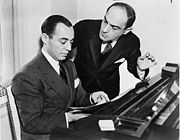
The Dancing Years
The Dancing Years is a musical with book and music by Ivor Novello and lyrics by Christopher Hassall. The piece is one of Novello's most popular musicals...
. Similarly, Rodgers & Hart returned from Hollywood to churn out a series of lighthearted Broadway hits, including On Your Toes
On Your Toes
On Your Toes is a musical with a book by Richard Rodgers, George Abbott, and Lorenz Hart, music by Rodgers, and lyrics by Hart. It was adapted into a film in 1939....
(1936, with Ray Bolger
Ray Bolger
Raymond Wallace "Ray" Bolger was an American entertainer of stage and screen, best known for his portrayal of the Scarecrow and Kansas farmworker Hank in The Wizard of Oz.-Early life:...
, the first Broadway musical to make dramatic use of classical dance), Babes In Arms
Babes in Arms
Babes in Arms is a 1937 musical with music by Richard Rodgers, lyrics by Lorenz Hart and book by Rodgers and Hart. It concerns a teen-age boy who puts on a show with his friends to avoid being sent to a work farm.- Production history:...
(1937), I'd Rather Be Right
I'd Rather Be Right
I'd Rather Be Right is a musical with a book by Moss Hart and George S. Kaufman, lyrics by Lorenz Hart, and music by Richard Rodgers. The story is a Depression-era political satire set in New York City, about Washington politics and political figures, such as President Franklin Roosevelt...
, a political satire with George M. Cohan
George M. Cohan
George Michael Cohan , known professionally as George M. Cohan, was a major American entertainer, playwright, composer, lyricist, actor, singer, dancer, and producer....
as President Franklin D. Roosevelt
Franklin D. Roosevelt
Franklin Delano Roosevelt , also known by his initials, FDR, was the 32nd President of the United States and a central figure in world events during the mid-20th century, leading the United States during a time of worldwide economic crisis and world war...
, and The Boys From Syracuse
The Boys from Syracuse
The Boys from Syracuse is a musical with music by Richard Rodgers and lyrics by Lorenz Hart, based on William Shakespeare's play, The Comedy of Errors, as adapted by librettist George Abbott. The score includes swing and other contemporary rhythms of the 1930s. The show was the first musical...
(1938), and Cole Porter
Cole Porter
Cole Albert Porter was an American composer and songwriter. Born to a wealthy family in Indiana, he defied the wishes of his domineering grandfather and took up music as a profession. Classically trained, he was drawn towards musical theatre...
wrote a similar string of hits, including Anything Goes
Anything Goes
Anything Goes is a musical with music and lyrics by Cole Porter. The original book was a collaborative effort by Guy Bolton and P.G. Wodehouse, heavily revised by the team of Howard Lindsay and Russel Crouse. The story concerns madcap antics aboard an ocean liner bound from New York to London...
(1934) and DuBarry Was a Lady
DuBarry Was a Lady
DuBarry Was a Lady is a Broadway musical, with music and lyrics by Cole Porter, and the book by Herbert Fields and B.G. DeSylva. The musical starred Bert Lahr, Ethel Merman and Betty Grable, and the song "Friendship" was one of the highlights...
(1939). He later would go on to write scores for such classics as Can-Can
Can-Can (musical)
Can-Can is a musical with music and lyrics by Cole Porter, and a book by Abe Burrows. The story concerns the showgirls of the Montmartre dance halls during the 1890s....
(1953) and Silk Stockings
Silk Stockings
Silk Stockings is a musical with a book by George S. Kaufman, Leueen MacGrath, and Abe Burrows and music and lyrics by Cole Porter.Hildegarde Knef gives a vivid backstage account of the casting, rehearsals, tryouts and Broadway opening of "Silk Stockings" in her autobiography "The Gift Horse:...
(1955). But the longest-running piece of musical theatre of the 1930s was Hellzapoppin (1938), a revue with audience participation, which played for 1,404 performances, setting a new Broadway record that was finally beaten by Oklahoma!
Despite the economic woes and the competition from film, the musical survived. In fact, the move towards political satire in Of Thee I Sing, I'd Rather Be Right and Knickerbocker Holiday, together with the musical sophistication of the Gershwin, Kern, Rodgers and Weill musicals and the fast-paced staging and naturalistic dialogue style created by director George Abbott
George Abbott
George Francis Abbott was an American theater producer and director, playwright, screenwriter, and film director and producer whose career spanned more than nine decades.-Early years:...
showed that musical theatre was finally evolving beyond the gags and showgirls musicals of the Gay Nineties and Roaring Twenties and the sentimental romance of operetta.
The Golden Age (1940s to 1960s)
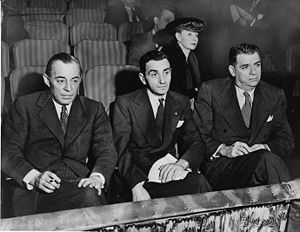
1940s
The 1940s would begin with more hits from Porter, Irving BerlinIrving Berlin
Irving Berlin was an American composer and lyricist of Jewish heritage, widely considered one of the greatest songwriters in American history.His first hit song, "Alexander's Ragtime Band", became world famous...
, Rodgers and Hart, Weill and Gershwin, some with runs over 500 performances as the economy rebounded, but artistic change was in the air.
Rodgers and Hammerstein
Rodgers and Hammerstein
Richard Rodgers and Oscar Hammerstein II were a well-known American songwriting duo, usually referred to as Rodgers and Hammerstein. They created a string of popular Broadway musicals in the 1940s and 1950s during what is considered the golden age of the medium...
's Oklahoma!
Oklahoma!
Oklahoma! is the first musical written by composer Richard Rodgers and librettist Oscar Hammerstein II. The musical is based on Lynn Riggs' 1931 play, Green Grow the Lilacs. Set in Oklahoma Territory outside the town of Claremore in 1906, it tells the story of cowboy Curly McLain and his romance...
completed the revolution begun by Show Boat
Show Boat
Show Boat is a musical in two acts with music by Jerome Kern and book and lyrics by Oscar Hammerstein II. It was originally produced in New York in 1927 and in London in 1928, and was based on the 1926 novel of the same name by Edna Ferber. The plot chronicles the lives of those living and working...
, by tightly integrating all the aspects of musical theatre, with a cohesive plot, songs that furthered the action of the story, and featured dream ballets and other dances that advanced the plot and developed the characters, rather than using dance as an excuse to parade scantily clad women across the stage. Rodgers and Hammerstein hired ballet choreographer Agnes de Mille
Agnes de Mille
Agnes George de Mille was an American dancer and choreographer.-Early years:Agnes de Mille was born in New York City into a well-connected family of theater professionals. Her father William C. deMille and her uncle Cecil B. DeMille were both Hollywood directors...
, who used everyday motions to help the characters express their ideas. It defied musical conventions by raising its first act curtain not on a bevy of chorus girls, but rather on a woman churning butter, with an off-stage voice singing the opening lines of Oh, What a Beautiful Mornin' unaccompanied. It drew rave reviews, set off a box-office frenzy and received a Pulitzer Prize
Pulitzer Prize
The Pulitzer Prize is a U.S. award for achievements in newspaper and online journalism, literature and musical composition. It was established by American publisher Joseph Pulitzer and is administered by Columbia University in New York City...
. Brooks Atkinson
Brooks Atkinson
Justin Brooks Atkinson was an American theatre critic. He worked for The New York Times from 1925 to 1960...
wrote in The New York Times
The New York Times
The New York Times is an American daily newspaper founded and continuously published in New York City since 1851. The New York Times has won 106 Pulitzer Prizes, the most of any news organization...
that the show's opening number changed the history of musical theater: “After a verse like that, sung to a buoyant melody, the banalities of the old musical stage became intolerable." It was the first "blockbuster" Broadway show, running a total of 2,212 performances, and was made into a hit film. It remains one of the most frequently produced of the team's projects. William A. Everett and Paul R. Laird wrote that this was a "show, that, like Show Boat, became a milestone, so that later historians writing about important moments in twentieth-century theatre would begin to identify eras according to their relationship to Oklahoma!"
"After Oklahoma!, Rodgers and Hammerstein were the most important contributors to the musical-play form... The examples they set in creating vital plays, often rich with social thought, provided the necessary encouragement for other gifted writers to create musical plays of their own". The two collaborators created an extraordinary collection of some of musical theatre's best loved and most enduring classics, including Carousel
Carousel (musical)
Carousel is the second stage musical by the team of Richard Rodgers and Oscar Hammerstein II . The work premiered in 1945 and was adapted from Ferenc Molnár's 1909 play Liliom, transplanting its Budapest setting to the Maine coastline...
(1945), South Pacific
South Pacific (musical)
South Pacific is a musical with music by Richard Rodgers, lyrics by Oscar Hammerstein II and book by Hammerstein and Joshua Logan. The story draws from James A. Michener's Pulitzer Prize-winning 1947 book Tales of the South Pacific, weaving together characters and elements from several of its...
(1949), The King and I
The King and I
The King and I is a stage musical, the fifth by the team of Richard Rodgers and Oscar Hammerstein II. The work is based on the 1944 novel Anna and the King of Siam by Margaret Landon and derives from the memoirs of Anna Leonowens, who became governess to the children of King Mongkut of Siam in...
(1951), and The Sound of Music
The Sound of Music
The Sound of Music is a musical by Richard Rodgers, lyrics by Oscar Hammerstein II and a book by Howard Lindsay and Russel Crouse. It is based on the memoir of Maria von Trapp, The Story of the Trapp Family Singers...
(1959). Some of these musicals treat more serious subject matter than most earlier shows: the villain in Oklahoma! is a suspected murderer and psychopath with a fondness for lewd post cards; Carousel deals with spousal abuse, thievery, suicide and the afterlife; South Pacific explores miscegenation even more thoroughly than Show Boat; and the hero of The King and I dies onstage.
The show's creativity stimulated Rodgers and Hammerstein's contemporaries and ushered in the "Golden Age" of American musical theatre. Americana was displayed on Broadway during the "Golden Age", as the wartime cycle of shows began to arrive. An example of this is On the Town (1944), written by Betty Comden
Betty Comden
Betty Comden was one-half of the musical-comedy duo Comden and Green, who provided lyrics, libretti, and screenplays to some of the most beloved and successful Hollywood musicals and Broadway shows of the mid-20th century...
and Adolph Green
Adolph Green
Adolph Green was an American lyricist and playwright who, with long-time collaborator Betty Comden, penned the screenplays and songs for some of the most beloved movie musicals, particularly as part of Arthur Freed's production unit at MGM, during the genre's heyday...
, composed by Leonard Bernstein
Leonard Bernstein
Leonard Bernstein August 25, 1918 – October 14, 1990) was an American conductor, composer, author, music lecturer and pianist. He was among the first conductors born and educated in the United States of America to receive worldwide acclaim...
and choreographed by Jerome Robbins
Jerome Robbins
Jerome Robbins was an American theater producer, director, and choreographer known primarily for Broadway Theater and Ballet/Dance, but who also occasionally directed films and directed/produced for television. His work has included everything from classical ballet to contemporary musical theater...
. The musical is set during wartime, where a group of three sailors are on a 24 hour shore leave in New York. During their day, they each meet a wonderful woman. The women in this show have a specific power to them, as if saying, "Come here! I need a man!" The show also gives the impression of a country with an uncertain future, as the sailors also have with their women before leaving.
Oklahoma! inspired others to continue the trend. Irving Berlin
Irving Berlin
Irving Berlin was an American composer and lyricist of Jewish heritage, widely considered one of the greatest songwriters in American history.His first hit song, "Alexander's Ragtime Band", became world famous...
used sharpshooter Annie Oakley
Annie Oakley
Annie Oakley , born Phoebe Ann Mosey, was an American sharpshooter and exhibition shooter. Oakley's amazing talent and timely rise to fame led to a starring role in Buffalo Bill's Wild West show, which propelled her to become the first American female superstar.Oakley's most famous trick is perhaps...
's career as a basis for his Annie Get Your Gun
Annie Get Your Gun (musical)
Annie Get Your Gun is a musical with lyrics and music written by Irving Berlin and a book by Herbert Fields and his sister Dorothy Fields. The story is a fictionalized version of the life of Annie Oakley , who was a sharpshooter from Ohio, and her husband, Frank Butler.The 1946 Broadway production...
(1946, 1,147 performances); Burton Lane
Burton Lane
Burton Lane was an American composer and lyricist. His most popular and successful work is the musical Finian's Rainbow, "the score for which Lane will always be most remembered."-Biography:...
, E. Y. Harburg, and Fred Saidy
Fred Saidy
Fred Saidy was an American playwright and screenwriter.Born in Los Angeles, California, Saidy began his writing career in 1943 with the screenplay for the Red Skelton comedy I Dood It. The following year, he scripted both the Lucille Ball-Dick Powell feature film Meet the People and the book for...
combined political satire with Irish whimsy for their fantasy Finian's Rainbow
Finian's Rainbow
Finian's Rainbow is a musical with a book by E.Y. Harburg and Fred Saidy, lyrics by Harburg, and music by Burton Lane. The 1947 Broadway production ran for 725 performances. Several revivals and a 1968 film version followed. A Broadway revival ran from October 8, 2009 until January 17, 2010...
(1947, 725 performances); and Cole Porter found inspiration in William Shakespeare
William Shakespeare
William Shakespeare was an English poet and playwright, widely regarded as the greatest writer in the English language and the world's pre-eminent dramatist. He is often called England's national poet and the "Bard of Avon"...
's Taming of the Shrew for Kiss Me, Kate
Kiss Me, Kate
Kiss Me, Kate is a musical with music and lyrics by Cole Porter. It is structured as a play within a play, where the interior play is a musical version of William Shakespeare's The Taming of the Shrew. The original production starred Alfred Drake, Patricia Morison, Lisa Kirk and Harold Lang.Kiss...
(1948, 1,077 performances). The American musicals overwhelmed the old-fashioned British Coward/Novello-style shows, one of the last big successes of which was Novello's Perchance to Dream
Perchance to Dream (musical)
Perchance to Dream is a musical romance with book, lyrics and music by Ivor Novello. It was the only musical for which Novello wrote lyrics. The title is a quotation from William Shakespeare's play Hamlet...
(1945, 1,021 performances).
1950s
Damon RunyonDamon Runyon
Alfred Damon Runyon was an American newspaperman and writer.He was best known for his short stories celebrating the world of Broadway in New York City that grew out of the Prohibition era. To New Yorkers of his generation, a "Damon Runyon character" evoked a distinctive social type from the...
's eclectic characters were at the core of Frank Loesser
Frank Loesser
Frank Henry Loesser was an American songwriter who wrote the lyrics and scores to the Broadway hits Guys and Dolls and How To Succeed In Business Without Really Trying, among others. He won separate Tony Awards for the music and lyrics in both shows, as well as sharing the Pulitzer Prize for...
's and Abe Burrows
Abe Burrows
Abe Burrows was a Tony and Pulitzer-winning American humorist, author, and director for radio and the stage.-Early years:...
' Guys and Dolls, (1950, 1,200 performances); and the Gold Rush
California Gold Rush
The California Gold Rush began on January 24, 1848, when gold was found by James W. Marshall at Sutter's Mill in Coloma, California. The first to hear confirmed information of the gold rush were the people in Oregon, the Sandwich Islands , and Latin America, who were the first to start flocking to...
was the setting for Alan Jay Lerner
Alan Jay Lerner
Alan Jay Lerner was an American lyricist and librettist. In collaboration with Frederick Loewe, he created some of the world's most popular and enduring works of musical theatre for both the stage and on film...
and Frederick Loewe's Paint Your Wagon (1951). The relatively brief seven-month run of that show didn't discourage Lerner and Loewe
Lerner and Loewe
Lerner and Loewe are the duo of lyricist and librettist Alan Jay Lerner and composer Frederick Loewe, known primarily for the music and lyrics of some of Broadway's most successful musical shows, including My Fair Lady, Camelot, and Brigadoon....
from collaborating again, this time on My Fair Lady
My Fair Lady
My Fair Lady is a musical based upon George Bernard Shaw's Pygmalion and with book and lyrics by Alan Jay Lerner and music by Frederick Loewe...
(1956), an adaptation of George Bernard Shaw
George Bernard Shaw
George Bernard Shaw was an Irish playwright and a co-founder of the London School of Economics. Although his first profitable writing was music and literary criticism, in which capacity he wrote many highly articulate pieces of journalism, his main talent was for drama, and he wrote more than 60...
's Pygmalion
Pygmalion (play)
Pygmalion: A Romance in Five Acts is a play by Irish playwright George Bernard Shaw. Professor of phonetics Henry Higgins makes a bet that he can train a bedraggled Cockney flower girl, Eliza Doolittle, to pass for a duchess at an ambassador's garden party by teaching her to assume a veneer of...
starring Rex Harrison
Rex Harrison
Sir Reginald Carey “Rex” Harrison was an English actor of stage and screen. Harrison won an Academy Award and two Tony Awards.-Youth and stage career:...
and Julie Andrews
Julie Andrews
Dame Julia Elizabeth Andrews, DBE is an English film and stage actress, singer, and author. She is the recipient of Golden Globe, Emmy, Grammy, BAFTA, People's Choice Award, Theatre World Award, Screen Actors Guild and Academy Award honors...
, which at 2,717 performances held the long-run record for many years. Popular Hollywood movies were made of all of these musicals. The Boy Friend
The Boy Friend
The Boy Friend is a musical by Sandy Wilson. The musical's original 1954 London production ran for 2,078 performances, making it briefly the third-longest running musical in West End or Broadway history until it was surpassed by Salad Days...
(1954) ran for 2,078 performances in London, briefly becoming the third longest-running musical in West End or Broadway history (after Chu Chin Chow and Oklahoma!), until it was demoted by Salad Days. It marked Julie Andrews
Julie Andrews
Dame Julia Elizabeth Andrews, DBE is an English film and stage actress, singer, and author. She is the recipient of Golden Globe, Emmy, Grammy, BAFTA, People's Choice Award, Theatre World Award, Screen Actors Guild and Academy Award honors...
' American debut.
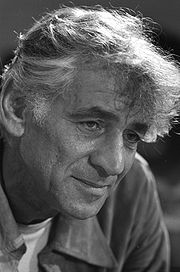
The Threepenny Opera
The Threepenny Opera is a musical by German dramatist Bertolt Brecht and composer Kurt Weill, in collaboration with translator Elisabeth Hauptmann and set designer Caspar Neher. It was adapted from an 18th-century English ballad opera, John Gay's The Beggar's Opera, and offers a Marxist critique...
, which ran for 2,707 performances, becoming the longest-running off-Broadway musical until The Fantasticks
The Fantasticks
The Fantasticks is a 1960 musical with music by Harvey Schmidt and lyrics by Tom Jones. It was produced by Lore Noto. It tells an allegorical story, loosely based on the play "The Romancers" by Edmond Rostand, concerning two neighboring fathers who trick their children, Luisa and Matt, into...
. The production also broke ground by showing that musicals could be profitable off-Broadway in a small-scale, small orchestra format. This was confirmed in 1959 when a revival of Jerome Kern
Jerome Kern
Jerome David Kern was an American composer of musical theatre and popular music. One of the most important American theatre composers of the early 20th century, he wrote more than 700 songs, used in over 100 stage works, including such classics as "Ol' Man River", "Can't Help Lovin' Dat Man", "A...
and P. G. Wodehouse
P. G. Wodehouse
Sir Pelham Grenville Wodehouse, KBE was an English humorist, whose body of work includes novels, short stories, plays, poems, song lyrics, and numerous pieces of journalism. He enjoyed enormous popular success during a career that lasted more than seventy years and his many writings continue to be...
's Leave It to Jane
Leave It to Jane
Leave It to Jane is a musical in two acts, with music by Jerome Kern and book and lyrics by Guy Bolton and P. G. Wodehouse, based on the 1904 play College Widow, by George Ade. The story concerns the football rivalry between Atwater College and Bingham College, and satirizes college life in a...
ran for more than two years. The 1959–1960 Off-Broadway
Off-Broadway
Off-Broadway theater is a term for a professional venue in New York City with a seating capacity between 100 and 499, and for a specific production of a play, musical or revue that appears in such a venue, and which adheres to related trade union and other contracts...
season included a dozen musicals and revues including Little Mary Sunshine
Little Mary Sunshine
Little Mary Sunshine is a musical that parodies old-fashioned operettas and musicals. The book, music, and lyrics are by Rick Besoyan. The musical should not be confused with the 1916 silent film of the same name ....
, The Fantasticks and Ernest in Love
Ernest in Love
Ernest in Love is a musical with a book and lyrics by Anne Croswell and music by Lee Pockriss. It is based on The Importance of Being Earnest, Oscar Wilde's classic comedy of manners.-Background:...
, a musical adaptation of Oscar Wilde
Oscar Wilde
Oscar Fingal O'Flahertie Wills Wilde was an Irish writer and poet. After writing in different forms throughout the 1880s, he became one of London's most popular playwrights in the early 1890s...
's 1895 hit The Importance of Being Earnest
The Importance of Being Earnest
The Importance of Being Earnest, A Trivial Comedy for Serious People is a play by Oscar Wilde. First performed on 14 February 1895 at St. James's Theatre in London, it is a farcical comedy in which the protagonists maintain fictitious personae in order to escape burdensome social obligations...
.
As in Oklahoma!, dance was an integral part of West Side Story (1957), which transported Romeo and Juliet to modern day New York City and converted the feuding Montague and Capulet families into opposing ethnic gangs, the Jets and the Sharks. The book was adapted by Arthur Laurents
Arthur Laurents
Arthur Laurents was an American playwright, stage director and screenwriter.After writing scripts for radio shows after college and then training films for the U.S...
, with music by Leonard Bernstein
Leonard Bernstein
Leonard Bernstein August 25, 1918 – October 14, 1990) was an American conductor, composer, author, music lecturer and pianist. He was among the first conductors born and educated in the United States of America to receive worldwide acclaim...
and lyrics by newcomer Stephen Sondheim
Stephen Sondheim
Stephen Joshua Sondheim is an American composer and lyricist for stage and film. He is the winner of an Academy Award, multiple Tony Awards including the Special Tony Award for Lifetime Achievement in the Theatre, multiple Grammy Awards, a Pulitzer Prize and the Laurence Olivier Award...
. It was embraced by the critics but failed to be a popular choice for the "blue-haired matinee ladies," who preferred the small town River City, Iowa of Meredith Willson
Meredith Willson
Robert Meredith Willson was an American composer, songwriter, conductor and playwright, best known for writing the book, music and lyrics for the hit Broadway musical The Music Man...
's The Music Man
The Music Man
The Music Man is a musical with book, music, and lyrics by Meredith Willson, based on a story by Willson and Franklin Lacey. The plot concerns con man Harold Hill, who poses as a boys' band organizer and leader and sells band instruments and uniforms to naive townsfolk before skipping town with...
to the alleys of Manhattan
Manhattan
Manhattan is the oldest and the most densely populated of the five boroughs of New York City. Located primarily on the island of Manhattan at the mouth of the Hudson River, the boundaries of the borough are identical to those of New York County, an original county of the state of New York...
's Upper West Side. Apparently Tony Award
Tony Award
The Antoinette Perry Award for Excellence in Theatre, more commonly known as a Tony Award, recognizes achievement in live Broadway theatre. The awards are presented by the American Theatre Wing and The Broadway League at an annual ceremony in New York City. The awards are given for Broadway...
voters were of a similar mind, since they favored the former over the latter. West Side Story had a respectable run of 732 performances (1,040 in the West End), while The Music Man ran nearly twice as long, with 1,375 performances. However, the film of West Side Story was extremely successful.
Laurents and Sondheim teamed up again for Gypsy
Gypsy: A Musical Fable
Gypsy is a musical with music by Jule Styne, lyrics by Stephen Sondheim, and a book by Arthur Laurents. Gypsy is loosely based on the 1957 memoirs of Gypsy Rose Lee, the famous striptease artist, and focuses on her mother, Rose, whose name has become synonymous with "the ultimate show business...
(1959, 702 performances), with Jule Styne
Jule Styne
Jule Styne was a British-born American songwriter especially famous for a series of Broadway musicals, which included several very well known and frequently revived shows.-Early life:...
providing the music for a backstage story about the most driven stage mother of all-time, stripper Gypsy Rose Lee
Gypsy Rose Lee
Gypsy Rose Lee was an American burlesque entertainer famous for her striptease act. She was also an actress, author, and playwright whose 1957 memoir was made into the stage musical and film Gypsy.-Early life:...
's mother Rose. The original production ran for 702 performances, and was given four subsequent revivals, with Angela Lansbury
Angela Lansbury
Angela Brigid Lansbury CBE is an English actress and singer in theatre, television and motion pictures, whose career has spanned eight decades and earned her more performance Tony Awards than any other individual , with five wins...
, Tyne Daly
Tyne Daly
Tyne Daly is an American stage and screen actress, widely known for her work as Detective Mary Beth Lacey in the television series Cagney & Lacey and as Maxine Gray in the television series Judging Amy. She is also known for her role as Alice Henderson in television series Christy...
, Bernadette Peters
Bernadette Peters
Bernadette Peters is an American actress, singer and children's book author from Ozone Park, Queens, New York. Over the course of a career that has spanned five decades, she has starred in musical theatre, films and television, as well as performing in solo concerts and recordings...
and Patti LuPone
Patti LuPone
Patti Ann LuPone is an American singer and actress, known for her Tony Award-winning performances as Eva Perón in the 1979 stage musical Evita and as Madame Rose in the 2008 Broadway revival of Gypsy, and for her Olivier Award-winning performance as Fantine in the original London cast of Les...
later tackling the role made famous by Ethel Merman.
The formula for the Golden Age musicals reflected four myths of the "American dream":
- Romance: stability and worth derives from a love relationship sanctioned and restricted by Protestant ideals of marriage;
- Hometown: a married couple should make a moral home with children away from the city in a suburb or small town.
- Woman as Homemaker:
- Pioneer:
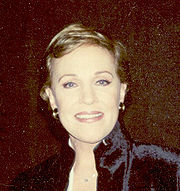
Industrial musical
An industrial musical is a musical performed internally for the employees or shareholders of a business, to create a feeling of being part of a team, to entertain, and/or to educate and motivate the management and salespeople to improve sales and profit...
, private shows which were only seen by their employees or customers. The 1950s ended with Rodgers and Hammerstein
Rodgers and Hammerstein
Richard Rodgers and Oscar Hammerstein II were a well-known American songwriting duo, usually referred to as Rodgers and Hammerstein. They created a string of popular Broadway musicals in the 1940s and 1950s during what is considered the golden age of the medium...
's last hit, The Sound of Music, which also became another hit for Mary Martin. It ran for 1,443 performances and shared the Tony Award for Best Musical. Together with its extremely successful 1965 film version
The Sound of Music (film)
Rodgers and Hammerstein's The Sound of Music is a 1965 American musical film directed by Robert Wise and starring Julie Andrews and Christopher Plummer. The film is based on the Broadway musical The Sound of Music, with songs written by Richard Rodgers and Oscar Hammerstein II, and with the musical...
, it has become one of the most popular musicals in history.
1960s
In 1960, The FantasticksThe Fantasticks
The Fantasticks is a 1960 musical with music by Harvey Schmidt and lyrics by Tom Jones. It was produced by Lore Noto. It tells an allegorical story, loosely based on the play "The Romancers" by Edmond Rostand, concerning two neighboring fathers who trick their children, Luisa and Matt, into...
was first produced off-Broadway. This intimate allegorical show would quietly run for over 40 years at the Sullivan Street Theatre in Greenwich Village
Greenwich Village
Greenwich Village, , , , .in New York often simply called "the Village", is a largely residential neighborhood on the west side of Lower Manhattan in New York City. A large majority of the district is home to upper middle class families...
, becoming by far the longest-running musical in history. Its authors produced other innovative works in the 1960s, such as Celebration
Celebration (musical)
Celebration is a musical with a book and lyrics by Tom Jones and music by Harvey Schmidt.A musical fable set on New Year's Eve, it focuses on four characters: Orphan, an idealistic and cheerfully optimistic young man, in possession of the stained-glass eye of God, who reminds Edgar Allen Rich, a...
and I Do! I Do!
I Do! I Do!
I Do! I Do! is a musical with a book and lyrics by Tom Jones and music by Harvey Schmidt which is based on the Jan de Hartog play The Fourposter. The two-character story spans fifty years, from 1895 to 1945, as it focuses on the ups and downs experienced by Agnes and Michael Snow throughout their...
, the first two-character Broadway musical. The 1960s would see a number of blockbusters, like Fiddler on the Roof
Fiddler on the Roof
Fiddler on the Roof is a musical with music by Jerry Bock, lyrics by Sheldon Harnick, and book by Joseph Stein, set in Tsarist Russia in 1905. It is based on Tevye and his Daughters by Sholem Aleichem...
(1964; 3,242 performances), Hello, Dolly!
Hello, Dolly! (musical)
Hello, Dolly! is a musical with lyrics and music by Jerry Herman and a book by Michael Stewart, based on Thornton Wilder's 1938 farce The Merchant of Yonkers, which Wilder revised and retitled The Matchmaker in 1955....
(1964; 2,844 performances), Funny Girl (1964; 1,348 performances), and Man of La Mancha
Man of La Mancha
Man of La Mancha is a musical with a book by Dale Wasserman, lyrics by Joe Darion and music by Mitch Leigh. It is adapted from Wasserman's non-musical 1959 teleplay I, Don Quixote, which was in turn inspired by Miguel de Cervantes's seventeenth century masterpiece Don Quixote...
(1965; 2,328 performances), and some more risqué pieces like Cabaret
Cabaret (musical)
Cabaret is a musical based on a book written by Christopher Isherwood, music by John Kander and lyrics by Fred Ebb. The 1966 Broadway production became a hit and spawned a 1972 film as well as numerous subsequent productions....
, before ending with the emergence of the rock musical
Rock musical
A rock musical is a musical theatre work with rock music. The genre of rock musical may overlap somewhat with album musicals, concept albums and song cycles, as they sometimes tell a story through the rock music, and some album musicals and concept albums become rock musicals...
. Two men had considerable impact on musical theatre history beginning in this decade: Stephen Sondheim
Stephen Sondheim
Stephen Joshua Sondheim is an American composer and lyricist for stage and film. He is the winner of an Academy Award, multiple Tony Awards including the Special Tony Award for Lifetime Achievement in the Theatre, multiple Grammy Awards, a Pulitzer Prize and the Laurence Olivier Award...
and Jerry Herman
Jerry Herman
Jerry Herman is an American composer and lyricist, known for his work in Broadway musical theater. He composed the scores for the hit Broadway musicals Hello, Dolly!, Mame, and La Cage aux Folles. He has been nominated for the Tony Award five times, and won twice, for Hello, Dolly! and La Cage...
.
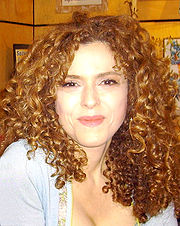
A Funny Thing Happened on the Way to the Forum
A Funny Thing Happened on the Way to the Forum is a musical with music and lyrics by Stephen Sondheim and book by Burt Shevelove and Larry Gelbart....
(1962, 964 performances), with a book based on the works of Plautus
Plautus
Titus Maccius Plautus , commonly known as "Plautus", was a Roman playwright of the Old Latin period. His comedies are the earliest surviving intact works in Latin literature. He wrote Palliata comoedia, the genre devised by the innovator of Latin literature, Livius Andronicus...
by Burt Shevelove
Burt Shevelove
Burt Shevelove was an American musical theater playwright, lyricist, librettist, and director. Born in Newark, New Jersey, he graduated from Brown University and Yale . At Brown in 1935, he acted in the first ever Brownbrokers musical titled Something Bruin...
and Larry Gelbart
Larry Gelbart
Larry Simon Gelbart was an American television writer, playwright, screenwriter and author.-Early life:...
, and starring Zero Mostel
Zero Mostel
Samuel Joel “Zero” Mostel was an American actor of stage and screen, best known for his portrayal of comic characters such as Tevye on stage in Fiddler on the Roof, Pseudolus on stage and on screen in A Funny Thing Happened on the Way to the Forum, and Max Bialystock in the original film version...
. Sondheim moved the musical beyond its concentration on the romantic plots typical of earlier eras; his work tended to be darker, exploring the grittier sides of life both present and past. Other early Sondheim works include Anyone Can Whistle
Anyone Can Whistle
Anyone Can Whistle is a musical with a book by Arthur Laurents and music and lyrics by Stephen Sondheim. The story concerns a corrupt mayoress, an idealistic nurse, a man who may be a doctor, and various officials, patients and townspeople, all fighting to save a bankrupt town...
(1964, which ran only nine performances, despite having stars Lee Remick
Lee Remick
Lee Ann Remick was an American film and television actress. Among her best-known films are Anatomy of a Murder , Days of Wine and Roses , and The Omen .-Early life:...
and Angela Lansbury
Angela Lansbury
Angela Brigid Lansbury CBE is an English actress and singer in theatre, television and motion pictures, whose career has spanned eight decades and earned her more performance Tony Awards than any other individual , with five wins...
), Company
Company (musical)
Company is a musical with a book by George Furth and music and lyrics by Stephen Sondheim. The original production was nominated for a record-setting fourteen Tony Awards and won six....
(1970), Follies
Follies
Follies is a musical with music and lyrics by Stephen Sondheim and a book by James Goldman. The story concerns a reunion in a crumbling Broadway theatre, scheduled for demolition, of the past performers of the "Weismann's Follies," a musical revue , that played in that theatre between the World Wars...
(1971), and A Little Night Music
A Little Night Music
A Little Night Music is a musical with music and lyrics by Stephen Sondheim and book by Hugh Wheeler. Inspired by the Ingmar Bergman film Smiles of a Summer Night, it involves the romantic lives of several couples. Its title is a literal English translation of the German name for Mozart's Serenade...
(1973). Later, Sondheim found inspiration in unlikely sources—the opening of Japan
Japan
Japan is an island nation in East Asia. Located in the Pacific Ocean, it lies to the east of the Sea of Japan, China, North Korea, South Korea and Russia, stretching from the Sea of Okhotsk in the north to the East China Sea and Taiwan in the south...
to Western trade for Pacific Overtures
Pacific Overtures
Pacific Overtures is a musical with music and lyrics by Stephen Sondheim, a libretto by John Weidman, and additional material by Hugh Wheeler. The musical is set in 1853 Japan and follows the difficult Westernization of Japan, through the lives of two friends caught in the change...
(1976), a legendary murderous barber seeking revenge in the Industrial Age
Industrial Revolution
The Industrial Revolution was a period from the 18th to the 19th century where major changes in agriculture, manufacturing, mining, transportation, and technology had a profound effect on the social, economic and cultural conditions of the times...
of London for Sweeney Todd
Sweeney Todd (musical)
Sweeney Todd, the Demon Barber of Fleet Street is a 1979 musical thriller with music and lyrics by Stephen Sondheim and libretto by Hugh Wheeler. The musical is based on the 1973 play Sweeney Todd, the Demon Barber of Fleet Street by Christopher Bond....
(1979), the paintings of Georges Seurat for Sunday in the Park with George
Sunday in the Park with George
Sunday in the Park with George is a 1984 musical with music and lyrics by Stephen Sondheim and book by James Lapine. The musical was inspired by the painting "A Sunday Afternoon on the Island of La Grande Jatte" by Georges Seurat...
(1984), fairy tales for Into the Woods
Into the Woods
Into the Woods is a musical with music and lyrics by Stephen Sondheim and book by James Lapine. It debuted in San Diego at the Old Globe Theatre in 1986, and premiered on Broadway in 1987. Bernadette Peters' performance as the Witch and Joanna Gleason's portrayal of the Baker's Wife brought acclaim...
(1987), and a collection of presidential
President of the United States
The President of the United States of America is the head of state and head of government of the United States. The president leads the executive branch of the federal government and is the commander-in-chief of the United States Armed Forces....
assassins in Assassins
Assassins (musical)
Assassins is a musical with music and lyrics by Stephen Sondheim and book by John Weidman, based on an idea by Charles Gilbert, Jr. It uses the premise of a murderous carnival game to produce a revue-style portrayal of men and women who attempted to assassinate Presidents of the United States...
(1990).
While some critics have argued that some of Sondheim’s musicals lack commercial appeal, others have praised their lyrical sophistication and musical complexity, as well as the interplay of lyrics and music in his shows. Some of Sondheim's notable innovations include a show presented in reverse (Merrily We Roll Along
Merrily We Roll Along (musical)
Merrily We Roll Along is a musical with a book by George Furth and lyrics and music by Stephen Sondheim. It is based on the 1934 play of the same name by George S. Kaufman and Moss Hart....
) and the above-mentioned Anyone Can Whistle, in which the first act ends with the cast informing the audience that they are mad.
Jerry Herman played a significant role in American musical theatre, beginning with his first Broadway production, Milk and Honey
Milk and Honey (musical)
Milk and Honey is a musical with a book by Don Appell and music and lyrics by Jerry Herman. The story centers on a busload of lonely American widows hoping to catch husbands while touring Israel and is set against the background of the country's fight for recognition as an independent nation...
(1961, 563 performances), about the founding of the state of Israel
Israel
The State of Israel is a parliamentary republic located in the Middle East, along the eastern shore of the Mediterranean Sea...
, and continuing with the smash hits Hello, Dolly!
Hello, Dolly! (musical)
Hello, Dolly! is a musical with lyrics and music by Jerry Herman and a book by Michael Stewart, based on Thornton Wilder's 1938 farce The Merchant of Yonkers, which Wilder revised and retitled The Matchmaker in 1955....
(1964, 2,844 performances), Mame (1966, 1,508 performances), and La Cage aux Folles (1983, 1,761 performances). Even his less successful shows like Dear World
Dear World
Dear World is a Broadway musical with a book by Jerome Lawrence and Robert E. Lee and music and lyrics by Jerry Herman. With its opening, Herman became the only composer-lyricist in history to have three productions running simultaneously on Broadway...
(1969) and Mack & Mabel
Mack & Mabel
Mack & Mabel is a musical with a book by Michael Stewart and music and lyrics by Jerry Herman. The plot involves the tumultuous romantic relationship between Hollywood director Mack Sennett and Mabel Normand , who became one of his biggest stars...
(1974) have had memorable scores (Mack & Mabel was later reworked into a London hit). Writing both words and music, many of Herman's show tunes have become popular standards, including "Hello, Dolly!
Hello, Dolly! (song)
"Hello, Dolly!" is the title song of the popular 1964 musical of the same name. Louis Armstrong's version was inducted in the Grammy Hall of Fame in 2001....
", "We Need a Little Christmas", "I Am What I Am", "Mame", "The Best of Times", "Before the Parade Passes By", "Put On Your Sunday Clothes", "It Only Takes a Moment", "Bosom Buddies", and "I Won't Send Roses", recorded by such artists as Louis Armstrong
Louis Armstrong
Louis Armstrong , nicknamed Satchmo or Pops, was an American jazz trumpeter and singer from New Orleans, Louisiana....
, Eydie Gorme
Eydie Gormé
Eydie Gormé is an American singer, specializing, with her husband, Steve Lawrence, in traditional pop music, in the form of ballads and breezy swing. She has earned numerous awards, including the Grammy and the Emmy...
, Barbra Streisand
Barbra Streisand
Barbra Joan Streisand is an American singer, actress, film producer and director. She has won two Academy Awards, eight Grammy Awards, four Emmy Awards, a Special Tony Award, an American Film Institute award, a Peabody Award, and is one of the few entertainers who have won an Oscar, Emmy, Grammy,...
, Petula Clark
Petula Clark
Petula Clark, CBE is an English singer, actress, and composer whose career has spanned seven decades.Clark's professional career began as an entertainer on BBC Radio during World War II...
and Bernadette Peters. Herman's songbook has been the subject of two popular musical revues, Jerry's Girls
Jerry's Girls
Jerry's Girls is a musical revue based on the songs of composer/lyricist Jerry Herman.-Production history:Created by Herman and Larry Alford in 1981, the show originated as a modest presentation at Onstage, a nightclub located in the theatre district in midtown-Manhattan . Writing in The New York...
(Broadway, 1985), and Showtune (off-Broadway, 2003).
The musical started to diverge from the relatively narrow confines of the 1950s. Rock music
Rock music
Rock music is a genre of popular music that developed during and after the 1960s, particularly in the United Kingdom and the United States. It has its roots in 1940s and 1950s rock and roll, itself heavily influenced by rhythm and blues and country music...
would be used in several Broadway musicals, beginning with Hair
Hair (musical)
Hair: The American Tribal Love-Rock Musical is a rock musical with a book and lyrics by James Rado and Gerome Ragni and music by Galt MacDermot. A product of the hippie counter-culture and sexual revolution of the 1960s, several of its songs became anthems of the anti-Vietnam War peace movement...
, which featured not only rock music but also nudity and controversial opinions about the Vietnam War
Vietnam War
The Vietnam War was a Cold War-era military conflict that occurred in Vietnam, Laos, and Cambodia from 1 November 1955 to the fall of Saigon on 30 April 1975. This war followed the First Indochina War and was fought between North Vietnam, supported by its communist allies, and the government of...
, race relations and other social issues.
Social themes
After Show Boat and Porgy and BessPorgy and Bess
Porgy and Bess is an opera, first performed in 1935, with music by George Gershwin, libretto by DuBose Heyward, and lyrics by Ira Gershwin and DuBose Heyward. It was based on DuBose Heyward's novel Porgy and subsequent play of the same title, which he co-wrote with his wife Dorothy Heyward...
, and as the struggle in America and elsewhere for minorities' civil rights
Civil rights
Civil and political rights are a class of rights that protect individuals' freedom from unwarranted infringement by governments and private organizations, and ensure one's ability to participate in the civil and political life of the state without discrimination or repression.Civil rights include...
progressed, Hammerstein, Harold Arlen
Harold Arlen
Harold Arlen was an American composer of popular music, having written over 500 songs, a number of which have become known the world over. In addition to composing the songs for The Wizard of Oz, including the classic 1938 song, "Over the Rainbow,” Arlen is a highly regarded contributor to the...
, Yip Harburg
Yip Harburg
Edgar Yipsel Harburg , known as E.Y. Harburg or Yip Harburg, was an American popular song lyricist who worked with many well-known composers...
and others were emboldened to write more musicals and operas which aimed to normalize societal toleration of minorities and urged racial harmony. Early Golden Age works that focused on racial tolerance included Finian's Rainbow
Finian's Rainbow
Finian's Rainbow is a musical with a book by E.Y. Harburg and Fred Saidy, lyrics by Harburg, and music by Burton Lane. The 1947 Broadway production ran for 725 performances. Several revivals and a 1968 film version followed. A Broadway revival ran from October 8, 2009 until January 17, 2010...
, South Pacific
South Pacific (musical)
South Pacific is a musical with music by Richard Rodgers, lyrics by Oscar Hammerstein II and book by Hammerstein and Joshua Logan. The story draws from James A. Michener's Pulitzer Prize-winning 1947 book Tales of the South Pacific, weaving together characters and elements from several of its...
, and The King and I
The King and I
The King and I is a stage musical, the fifth by the team of Richard Rodgers and Oscar Hammerstein II. The work is based on the 1944 novel Anna and the King of Siam by Margaret Landon and derives from the memoirs of Anna Leonowens, who became governess to the children of King Mongkut of Siam in...
. Towards the end of the Golden Age, several shows tackled Jewish subjects and issues, such as Fiddler on the Roof
Fiddler on the Roof
Fiddler on the Roof is a musical with music by Jerry Bock, lyrics by Sheldon Harnick, and book by Joseph Stein, set in Tsarist Russia in 1905. It is based on Tevye and his Daughters by Sholem Aleichem...
, Milk and Honey
Milk and Honey (musical)
Milk and Honey is a musical with a book by Don Appell and music and lyrics by Jerry Herman. The story centers on a busload of lonely American widows hoping to catch husbands while touring Israel and is set against the background of the country's fight for recognition as an independent nation...
, Blitz!
Blitz!
Blitz! is a musical by Lionel Bart. The play, described by Steven Suskin as "massive", was set in the East End of London during the Blitz...
and later Rags
Rags (musical)
Rags is a musical with a book by Joseph Stein, lyrics by Stephen Schwartz, and music by Charles Strouse.-Production history:The Broadway production opened on August 21, 1986 at the Mark Hellinger Theatre with little advance sale and to mostly indifferent reviews, and it closed after only four...
. The original concept that became West Side Story was set in the Lower East Side
Lower East Side
The Lower East Side, LES, is a neighborhood in the southeastern part of the New York City borough of Manhattan. It is roughly bounded by Allen Street, East Houston Street, Essex Street, Canal Street, Eldridge Street, East Broadway, and Grand Street....
during Easter-Passover celebrations; the rival gangs were to be Jewish and Italian Catholic. The creative team later decided that the Polish (white) vs. Puerto Rican
Puerto Rican people
A Puerto Rican is a person who was born in Puerto Rico.Puerto Ricans born and raised in the continental United States are also sometimes referred to as Puerto Ricans, although they were not born in Puerto Rico...
conflict was fresher.
Tolerance as an important theme in musicals has continued in recent decades. The final expression of West Side Story left a message of racial tolerance. By the end of the 1960s, musicals became racially integrated, with black and white cast members even covering each others' roles, as they did in Hair. Homosexuality has been explored in musicals, beginning with Hair, and even more overtly in La Cage aux Folles and Falsettos
Falsettos
Falsettos is a musical with a book by James Lapine and William Finn and music and lyrics by Finn, comprising March of the Falsettos and Falsettoland, the last two in a trio of one-act off-Broadway plays focusing on Marvin, his ex-wife Trina, his psychiatrist Mendel, his son Jason, and his gay...
. The 1998 musical Parade
Parade (musical)
Parade is a musical with a book by Alfred Uhry and music and lyrics by Jason Robert Brown. The musical was first produced on Broadway at the Vivian Beaumont Theater on December 17, 1998. The production was directed by Harold Prince and closed 28 February 1999 after only 39 previews and 84 regular...
is a sensitive exploration of both anti-Semitism
Anti-Semitism
Antisemitism is suspicion of, hatred toward, or discrimination against Jews for reasons connected to their Jewish heritage. According to a 2005 U.S...
and historical American racism
Racism
Racism is the belief that inherent different traits in human racial groups justify discrimination. In the modern English language, the term "racism" is used predominantly as a pejorative epithet. It is applied especially to the practice or advocacy of racial discrimination of a pernicious nature...
.
1970s
After the success of Hair, rock musicalRock musical
A rock musical is a musical theatre work with rock music. The genre of rock musical may overlap somewhat with album musicals, concept albums and song cycles, as they sometimes tell a story through the rock music, and some album musicals and concept albums become rock musicals...
s flourished in the 1970s, with Jesus Christ Superstar
Jesus Christ Superstar
Jesus Christ Superstar is a rock opera by Andrew Lloyd Webber, with lyrics by Tim Rice. The musical started off as a rock opera concept recording before its first staging on Broadway in 1971...
, Godspell
Godspell
Godspell is a musical by Stephen Schwartz and John-Michael Tebelak. It opened off Broadway on May 17, 1971, and has played in various touring companies and revivals many times since, including a 2011 revival now playing on Broadway...
, The Rocky Horror Show
The Rocky Horror Show
The Rocky Horror Show is a long-running British horror comedy stage musical, which opened in London on 19 June 1973. It was written by Richard O'Brien, produced and directed by Jim Sharman. It came eighth in a BBC Radio 2 listener poll of the "Nation's Number One Essential Musicals"...
and Two Gentlemen of Verona
Two Gentlemen of Verona (musical)
Two Gentlemen of Verona is a rock musical, with a book by John Guare and Mel Shapiro, lyrics by Guare and music by Galt MacDermot, based on the Shakespeare comedy of the same name....
. Some of these rock musicals began with "concept album
Concept album
In music, a concept album is an album that is "unified by a theme, which can be instrumental, compositional, narrative, or lyrical." Commonly, concept albums tend to incorporate preconceived musical or lyrical ideas rather than being improvised or composed in the studio, with all songs contributing...
s" and then moved to film or stage, such as Tommy
Tommy (rock opera)
Tommy is the fourth album by English rock band The Who, released by Track Records and Polydor Records in the United Kingdom and Decca Records/MCA in the United States. A double album telling a loose story about a "deaf, dumb and blind boy" who becomes the leader of a messianic movement, Tommy was...
. Others had no dialogue or were otherwise reminiscent of opera, with dramatic, emotional themes; these sometimes started as concept albums and were referred to as rock opera
Rock opera
A rock opera is a work of rock music that presents a storyline told over multiple parts, songs or sections in the manner of opera. A rock opera differs from a conventional rock album, which usually includes songs that are not unified by a common theme or narrative. More recent developments include...
s. The musical also went in other directions. Shows like Raisin
Raisin (musical)
Raisin is a musical theatre adaptation of the Lorraine Hansberry play A Raisin in the Sun, with songs by Judd Woldin and Robert Brittan, and a book by Robert Nemiroff and Charlotte Zaltzberg....
, Dreamgirls, Purlie
Purlie
Purlie is a musical with a book by Ossie Davis, Philip Rose, and Peter Udell, lyrics by Udell, and music by Gary Geld. It is based on Davis' 1961 play Purlie Victorious, which was later made into the 1963 film Gone Are the Days! and which included all of the original Broadway cast, including Ruby...
, and The Wiz
The Wiz
The Wiz: The Super Soul Musical "Wonderful Wizard of Oz" is a musical with music and lyrics by Charlie Smalls and book by William F. Brown. It is a retelling of L. Frank Baum's The Wonderful Wizard of Oz in the context of African American culture. It opened on October 21, 1974 at the Morris A...
brought a significant African-American influence to Broadway. More varied musical genres and styles were incorporated into musicals both on and especially off-Broadway.
1975 brought one of the great contemporary musicals to the stage, called "tremendous" by the New York Times reviewer, Clive Barnes
Clive Barnes
Clive Alexander Barnes, CBE was a British-born American writer and critic. From 1965 to 1977 he was the dance and theater critic for the New York Times, the most powerful position he had held, since its theater critics' reviews historically have had great influence on the success or failure of...
. A Chorus Line
A Chorus Line
A Chorus Line is a 1975 musical about Broadway dancers auditioning for spots on a chorus line. The book was authored by James Kirkwood, Jr. and Nicholas Dante, lyrics were written by Edward Kleban, and music was composed by Marvin Hamlisch....
emerged from recorded group therapy-style sessions Michael Bennett
Michael Bennett
Michael Bennett was an American musical theater director, writer, choreographer, and dancer. He won seven Tony Awards for his choreography and direction of Broadway shows and was nominated for an additional eleven....
conducted with Gypsies — those who sing and dance in support of the leading players —from the Broadway community. From hundreds of hours of tapes, James Kirkwood, Jr.
James Kirkwood, Jr.
James Kirkwood, Jr. was an American playwright, author and actor. In 1976 he received the Tony Award, the Drama Desk Award for Outstanding Book of a Musical, and the Pulitzer Prize for Drama for the Broadway hit A Chorus Line.-Biography:Kirkwood was born in Los Angeles, California. His father...
and Nick Dante fashioned a book about an audition for a musical, incorporating into it many of the real-life stories of those who had sat in on the sessions — and some of whom eventually played variations of themselves or each other in the show. With music by Marvin Hamlisch
Marvin Hamlisch
Marvin Frederick Hamlisch is an American composer. He is one of only thirteen people to have been awarded Emmys, Grammys, Oscars, and a Tony . He is also one of only two people to EGOT and also win a Pulitzer Prize...
and lyrics by Edward Kleban
Edward Kleban
Edward “Ed” Kleban was an American musical theatre composer and lyricist.Kleban was born in the Bronx, New York in 1939 and graduated from New York's High School of Music & Art and Columbia University, where he attended with future playwright Terrance McNally. Kleban is best known as lyricist of...
, A Chorus Line first opened at Joseph Papp
Joseph Papp
Joseph Papp was an American theatrical producer and director. Papp established The Public Theater in what had been the Astor Library Building in downtown New York . "The Public," as it is known, has many small theatres within it...
's Public Theater
Public Theater
The Public Theater is a New York City arts organization founded as The Shakespeare Workshop in 1954 by Joseph Papp, with the intention of showcasing the works of up-and-coming playwrights and performers. It is headquartered at 425 Lafayette Street in the former Astor Library in the East Village...
in lower Manhattan
Manhattan
Manhattan is the oldest and the most densely populated of the five boroughs of New York City. Located primarily on the island of Manhattan at the mouth of the Hudson River, the boundaries of the borough are identical to those of New York County, an original county of the state of New York...
. Advance word-of-mouth— that something extraordinary was about to explode — boosted box office sales, and after critics ran out of superlatives to describe what they witnessed on opening night, what initially had been planned as a limited engagement eventually moved to the Shubert Theatre
Shubert Theatre (Broadway)
The Shubert Theatre is a Broadway theatre located at 225 West 44th Street in midtown-Manhattan, New York, United States.Designed by architect Henry Beaumont Herts, it was named after Sam S. Shubert, the second oldest of the three brothers of the theatrical producing family...
on Broadway for a run of 6,137 performances, becoming the longest-running production in Broadway history up to that time. The show swept the Tony Awards and won the Pulitzer Prize
Pulitzer Prize
The Pulitzer Prize is a U.S. award for achievements in newspaper and online journalism, literature and musical composition. It was established by American publisher Joseph Pulitzer and is administered by Columbia University in New York City...
, and its hit song, What I Did for Love, became an instant standard.
Broadway audiences welcomed musicals that varied from the usual style and substance. John Kander
John Kander
John Harold Kander is the American composer of a number of musicals as part of the songwriting team of Kander and Ebb.-Life and career:Kander was born in Kansas City, Missouri, the son of Bernice and Harold S. Kander...
and Fred Ebb
Fred Ebb
Fred Ebb was an American musical theatre lyricist who had many successful collaborations with composer John Kander. The Kander and Ebb team frequently wrote for such performers as Liza Minnelli and Chita Rivera....
explored the rise of Nazism
Nazism
Nazism, the common short form name of National Socialism was the ideology and practice of the Nazi Party and of Nazi Germany...
in Germany
Germany
Germany , officially the Federal Republic of Germany , is a federal parliamentary republic in Europe. The country consists of 16 states while the capital and largest city is Berlin. Germany covers an area of 357,021 km2 and has a largely temperate seasonal climate...
in Cabaret
Cabaret (musical)
Cabaret is a musical based on a book written by Christopher Isherwood, music by John Kander and lyrics by Fred Ebb. The 1966 Broadway production became a hit and spawned a 1972 film as well as numerous subsequent productions....
and Prohibition
Prohibition
Prohibition of alcohol, often referred to simply as prohibition, is the practice of prohibiting the manufacture, transportation, import, export, sale, and consumption of alcohol and alcoholic beverages. The term can also apply to the periods in the histories of the countries during which the...
-era Chicago
Chicago (musical)
Chicago is a musical set in Prohibition-era Chicago. The music is by John Kander with lyrics by Fred Ebb and a book by Ebb and Bob Fosse. The story is a satire on corruption in the administration of criminal justice and the concept of the "celebrity criminal"...
, which relied on old vaudeville
Vaudeville
Vaudeville was a theatrical genre of variety entertainment in the United States and Canada from the early 1880s until the early 1930s. Each performance was made up of a series of separate, unrelated acts grouped together on a common bill...
techniques to tell its tale of murder and the media. Pippin
Pippin (musical)
Pippin is a musical with music and lyrics by Stephen Schwartz and a book by Roger O. Hirson. Bob Fosse, who directed the original Broadway production, also contributed to the libretto...
, by Stephen Schwartz
Stephen Schwartz (composer)
Stephen Lawrence Schwartz is an American musical theatre lyricist and composer. In a career spanning over four decades, Schwartz has written such hit musicals as Godspell , Pippin and Wicked...
, was set in the days of Charlemagne
Charlemagne
Charlemagne was King of the Franks from 768 and Emperor of the Romans from 800 to his death in 814. He expanded the Frankish kingdom into an empire that incorporated much of Western and Central Europe. During his reign, he conquered Italy and was crowned by Pope Leo III on 25 December 800...
. Federico Fellini
Federico Fellini
Federico Fellini, Cavaliere di Gran Croce OMRI , was an Italian film director and scriptwriter. Known for a distinct style that blends fantasy and baroque images, he is considered one of the most influential and widely revered filmmakers of the 20th century...
's autobiographical film 8½
8½
8½ is a 1963 Italian fantasy film directed by Federico Fellini. Co-scripted by Fellini, Tullio Pinelli, Ennio Flaiano, and Brunello Rondi, it stars Marcello Mastroianni as Guido Anselmi, a famous Italian film director...
became Maury Yeston
Maury Yeston
Maury Yeston is an American composer, lyricist, educator and musicologist.He is known for writing the music and lyrics to Broadway musicals, including Nine in 1982, and Titanic in 1997, both of which won Tony Awards for best musical and best score. He also won a Drama Desk Award for Nine...
's Nine
Nine (musical)
Nine is a musical with a book by Arthur Kopit, music and lyrics by Maury Yeston. The story is based on Federico Fellini's semi-autobiographical film 8½...
. At the end of the decade, Evita gave a more serious political biography than audiences were used to at musicals, and Sweeney Todd
Sweeney Todd (musical)
Sweeney Todd, the Demon Barber of Fleet Street is a 1979 musical thriller with music and lyrics by Stephen Sondheim and libretto by Hugh Wheeler. The musical is based on the 1973 play Sweeney Todd, the Demon Barber of Fleet Street by Christopher Bond....
was the precursor to the darker, big budget musicals of the 1980s like Les Misérables
Les Misérables (musical)
Les Misérables , colloquially known as Les Mis or Les Miz , is a musical by Claude-Michel Schönberg, based on the novel of the same name by Victor Hugo....
, Miss Saigon
Miss Saigon
Miss Saigon is a musical by Claude-Michel Schönberg and Alain Boublil, with lyrics by Boublil and Richard Maltby, Jr.. It is based on Giacomo Puccini's opera Madame Butterfly, and similarly tells the tragic tale of a doomed romance involving an Asian woman abandoned by her American lover...
, and The Phantom of the Opera
The Phantom of the Opera (1986 musical)
The Phantom of the Opera is a musical by Andrew Lloyd Webber, based on the French novel Le Fantôme de l'Opéra by Gaston Leroux.The music was composed by Lloyd Webber, and most lyrics were written by Charles Hart, with additional lyrics by Richard Stilgoe. Alan Jay Lerner was an early collaborator,...
, that depended on dramatic stories, sweeping scores and spectacular effects. But during this same period, old-fashioned values were still embraced in such hits as Annie
Annie (musical)
Annie is a Broadway musical based upon the popular Harold Gray comic strip Little Orphan Annie, with music by Charles Strouse, lyrics by Martin Charnin, and the book by Thomas Meehan. The original Broadway production opened in 1977 and ran for nearly six years with a blonde Annie as the poster...
, 42nd Street
42nd Street (musical)
42nd Street is a musical with a book by Michael Stewart and Mark Bramble, lyrics by Al Dubin, and music by Harry Warren. The 1980 Broadway production, directed by an ailing Gower Champion and orchestrated by Philip J. Lang, won the Tony Award for Best Musical and became a long-running hit...
, My One and Only
My One and Only
My One and Only is a musical with a book by Peter Stone and Timothy S. Mayer and music and lyrics by George and Ira Gershwin.Written to incorporate classic Gershwin tunes from Funny Face and other popular shows into one evening of entertainment, the plot, set in 1927 America, revolves around Capt...
, and popular revivals of No, No, Nanette and Irene
Irene (musical)
Irene is a musical with a book by James Montgomery, lyrics by Joseph McCarthy, and music by Harry Tierney.Based on Montgomery's play Irene O'Dare, it is set in New York City's Upper West Side and focuses on immigrant shop assistant Irene O'Dare, who is introduced to Long Island's high society when...
.
1980s and 1990s
The 1980s and 1990s saw the influence of European "mega-musicals" or "pop operas," which typically featured a pop-influenced score and had large casts and sets and were identified as much by their notable effects—a falling chandelierChandelier
A chandelier is a branched decorative ceiling-mounted light fixture with two or more arms bearing lights. Chandeliers are often ornate, containing dozens of lamps and complex arrays of glass or crystal prisms to illuminate a room with refracted light...
(in Phantom), a helicopter landing on stage (in Miss Saigon
Miss Saigon
Miss Saigon is a musical by Claude-Michel Schönberg and Alain Boublil, with lyrics by Boublil and Richard Maltby, Jr.. It is based on Giacomo Puccini's opera Madame Butterfly, and similarly tells the tragic tale of a doomed romance involving an Asian woman abandoned by her American lover...
)—as they were by anything else in the production. Many were based on novels or other works of literature. The most important writers of mega-musicals include the French team of Claude-Michel Schönberg
Claude-Michel Schönberg
Claude-Michel Schönberg is a French record producer, actor, singer, songwriter, and musical theatre composer, best known for his collaborations with the lyricist Alain Boublil.These include the musicals:...
and Alain Boublil
Alain Boublil
Alain Boublil is a musical theatre lyricist and librettist, best known for his collaborations with the composer Claude-Michel Schönberg for musicals on Broadway and London's West End...
, responsible for Les Misérables, which became the longest-running international musical hit in history. The team, in collaboration with Richard Maltby, Jr.
Richard Maltby, Jr.
Richard Eldridge Maltby, Jr. is an American theatre director and producer, lyricist, and screenwriter. He is also well known as a constructor of cryptic crossword puzzles. He has done this for Harper's Magazine, sometimes in collaboration with E. R...
, continued to produce hits, including Miss Saigon (inspired by the Puccini opera Madame Butterfly).
Andrew Lloyd Webber
Andrew Lloyd Webber, Baron Lloyd-Webber is an English composer of musical theatre.Lloyd Webber has achieved great popular success in musical theatre. Several of his musicals have run for more than a decade both in the West End and on Broadway. He has composed 13 musicals, a song cycle, a set of...
, saw similar mega-success with Evita, based on the life of Argentina
Argentina
Argentina , officially the Argentine Republic , is the second largest country in South America by land area, after Brazil. It is constituted as a federation of 23 provinces and an autonomous city, Buenos Aires...
's Eva Perón
Eva Perón
María Eva Duarte de Perón was the second wife of President Juan Perón and served as the First Lady of Argentina from 1946 until her death in 1952. She is often referred to as simply Eva Perón, or by the affectionate Spanish language diminutive Evita.She was born in the village of Los Toldos in...
, and Cats
Cats (musical)
Cats is a musical composed by Andrew Lloyd Webber, based on Old Possum's Book of Practical Cats by T. S. Eliot...
, derived from the poems of T. S. Eliot
T. S. Eliot
Thomas Stearns "T. S." Eliot OM was a playwright, literary critic, and arguably the most important English-language poet of the 20th century. Although he was born an American he moved to the United Kingdom in 1914 and was naturalised as a British subject in 1927 at age 39.The poem that made his...
, both of which musicals originally starred Elaine Paige
Elaine Paige
Elaine Paige OBE is an English singer and actress best known for her work in musical theatre. Raised in Barnet, North London, Paige attended the Aida Foster stage school, making her first professional appearance on stage in 1964, at the age of 16...
. Other Lloyd Webber musical successes include Starlight Express
Starlight Express
Starlight Express is a rock musical by Andrew Lloyd Webber , Richard Stilgoe and Arlene Phillips , with later revisions by Don Black and David Yazbek . The story follows a child's dream in which his toy train set comes to life; famously the actors perform wearing roller skates...
, performed on roller skates; The Phantom of the Opera, derived from the Gaston Leroux
Gaston Leroux
Gaston Louis Alfred Leroux was a French journalist and author of detective fiction.In the English-speaking world, he is best known for writing the novel The Phantom of the Opera , which has been made into several film and stage productions of the same name, notably the 1925 film starring Lon...
novel, "Le Fantôme de l'Opéra"; and Sunset Boulevard
Sunset Boulevard (musical)
Sunset Boulevard is a musical with book and lyrics by Don Black and Christopher Hampton and music by Andrew Lloyd Webber. Based on the 1950 film of the same title, the plot revolves around Norma Desmond, a faded star of the silent screen era, living in the past in her decaying mansion on the...
(from the classic film of the same name). Several of these works ran (or are still running) for decades in both New York and London. The 1990s also saw the influence of large corporations on the production of musicals. The most important has been The Walt Disney Company
The Walt Disney Company
The Walt Disney Company is the largest media conglomerate in the world in terms of revenue. Founded on October 16, 1923, by Walt and Roy Disney as the Disney Brothers Cartoon Studio, Walt Disney Productions established itself as a leader in the American animation industry before diversifying into...
, which began adapting some of its animated movie musicals for the stage, such as Beauty and the Beast
Beauty and the Beast (musical)
Beauty and the Beast is a musical with music by Alan Menken, lyrics by Howard Ashman and Tim Rice and a book by Linda Woolverton, based on the 1991 Disney film of the same name. Seven new songs were written for the stage musical...
and The Lion King
The Lion King (musical)
The Lion King is a musical based on the 1994 Disney animated film of the same name with music by Elton John and lyrics by Tim Rice along with the musical score created by Hans Zimmer with choral arrangements by Lebo M. Directed by Julie Taymor, the musical features actors in animal costumes as well...
. Disney also created original stage productions like Aida
Aida
Aida sometimes spelled Aïda, is an opera in four acts by Giuseppe Verdi to an Italian libretto by Antonio Ghislanzoni, based on a scenario written by French Egyptologist Auguste Mariette...
, with music by Elton John
Elton John
Sir Elton Hercules John, CBE, Hon DMus is an English rock singer-songwriter, composer, pianist and occasional actor...
.
With the growing scale (and cost) of musicals, style was sometimes emphasized in favor of substance during the last two decades of the 20th century. At the same time, however, many writers broke from this pattern and began to create smaller scale, but critically acclaimed and financially successful musicals, such as Falsettoland
Falsettoland
Falsettoland is a musical with a book by James Lapine and music and lyrics by William Finn.Following In Trousers and March of the Falsettos, it is the third in a trio of one-act musicals centering on Marvin, his wife Trina, his psychiatrist Mendel, his son Jason, and his gay lover Whizzer Brown...
, Passion
Passion (musical)
Passion is a musical adapted from Ettore Scola's film Passione d'Amore . The book is by James Lapine, with music and lyrics by Stephen Sondheim. Central subjects include obsession, beauty, power, manipulation, passion, illness, and love...
, Little Shop of Horrors
Little Shop of Horrors (musical)
Little Shop of Horrors is a rock musical, by composer Alan Menken and writer Howard Ashman, about a hapless florist shop worker who raises a plant that feeds on human blood. The musical is based on the low-budget 1960 black comedy film The Little Shop of Horrors, directed by Roger Corman...
, Bat Boy: The Musical
Bat Boy: The Musical
Bat Boy: The Musical is a musical with a book by Keythe Farley and Brian Flemming and music and lyrics by Laurence O'Keefe, based on a June 23, 1992 Weekly World News story about a half-boy, half-bat, dubbed "Bat Boy", found living in a cave....
, and Blood Brothers. The topics vary widely, and the music ranges from rock to pop, but they often are produced off-Broadway (or for smaller London theatres) and feature smaller casts and generally less expensive productions. Some of these have been noted as imaginative and innovative.
The cost of tickets to Broadway and West End musicals was escalating beyond the budget of many theatregoers, and the trend was for these musicals to be viewed by a smaller and smaller audience. Jonathan Larson
Jonathan Larson
Jonathan Larson was an American composer and playwright noted for the serious social issues of multiculturalism, addiction, and homophobia explored in his work. Typical examples of his use of these themes are found in his works, Rent and tick, tick... BOOM!...
's musical Rent (based on the opera La Bohème
La bohème
La bohème is an opera in four acts,Puccini called the divisions quadro, a tableau or "image", rather than atto . by Giacomo Puccini to an Italian libretto by Luigi Illica and Giuseppe Giacosa, based on Scènes de la vie de bohème by Henri Murger...
) was marketed to increase the popularity of musicals among a younger audience. It featured a young cast, and the score is heavily rock-influenced. The musical became a hit. Its young fans, many of them students, calling themselves RENTheads, lined up at the Nederlander Theatre
Nederlander Theatre
David T. Nederlander Theatre is a 1,232-seat Broadway theatre located at 208 West 41st Street, in New York City . One of the Nederlander Organization's nine Broadway theatres, the legacy of the theatre began with David Tobias Nederlander, for whom the theatre is named.Built by Walter C...
hours early in hopes of winning the lottery for $20 front row tickets, and some have seen the show more than 50 times. Other writers who have attempted to bring a taste of modern rock music to the stage include Jason Robert Brown
Jason Robert Brown
Jason Robert Brown is an American musical theater composer, lyricist, and playwright. Brown's music sensibility fuses pop-rock stylings with theatrical lyrics...
. Also, a majority of shows on Broadway have now followed Rents lead by offering heavily discounted day-of-performance or standing-room tickets, although often the discounts are offered only to students.
2000s
TrendsIn the new century, familiarity has been embraced by producers and investors anxious to guarantee that they recoup their considerable investments, if not show a healthy profit. Some took (usually modest-budget) chances on the new and unusual, such as Urinetown
Urinetown
Urinetown: The Musical is a satirical comedy musical, with music by Mark Hollmann, lyrics by Hollmann and Greg Kotis, and book by Kotis. It satirizes the legal system, capitalism, social irresponsibility, populism, bureaucracy, corporate mismanagement, and municipal politics...
(2001), Avenue Q
Avenue Q
Avenue Q is a musical in two acts, conceived by Robert Lopez and Jeff Marx, who wrote the music and lyrics. The book was written by Jeff Whitty and the show was directed by Jason Moore and produced by Kevin McCollum, Robyn Goodman, and Jeffrey Seller...
(2003), Caroline or Change (2004), The 25th Annual Putnam County Spelling Bee
The 25th Annual Putnam County Spelling Bee
The 25th Annual Putnam County Spelling Bee is a one act musical comedy conceived by Rebecca Feldman with music and lyrics by William Finn, a book by Rachel Sheinkin and additional material by Jay Reiss. The show centers on a fictional spelling bee set in a geographically ambiguous Putnam Valley...
(2005), Spring Awakening
Spring Awakening
Spring Awakening is a rock musical adaptation of the controversial 1892 German play of the same title by Frank Wedekind. It features music by Duncan Sheik and a book and lyrics by Steven Sater. Set in late-19th century Germany, it concerns teenagers who are discovering the inner and outer tumult of...
(2006), In the Heights (2007) and Next to Normal (2009). But most took a safe route with revivals of familiar fare, such as Fiddler on the Roof
Fiddler on the Roof
Fiddler on the Roof is a musical with music by Jerry Bock, lyrics by Sheldon Harnick, and book by Joseph Stein, set in Tsarist Russia in 1905. It is based on Tevye and his Daughters by Sholem Aleichem...
, A Chorus Line
A Chorus Line
A Chorus Line is a 1975 musical about Broadway dancers auditioning for spots on a chorus line. The book was authored by James Kirkwood, Jr. and Nicholas Dante, lyrics were written by Edward Kleban, and music was composed by Marvin Hamlisch....
, South Pacific
South Pacific (musical)
South Pacific is a musical with music by Richard Rodgers, lyrics by Oscar Hammerstein II and book by Hammerstein and Joshua Logan. The story draws from James A. Michener's Pulitzer Prize-winning 1947 book Tales of the South Pacific, weaving together characters and elements from several of its...
, Gypsy, Hair, West Side Story and Grease
Grease (musical)
Grease is a 1971 musical by Jim Jacobs and Warren Casey. The musical is named for the 1950s United States working-class youth subculture known as the greasers. The musical, set in 1959 at fictional Rydell High School , follows ten working-class teenagers as they navigate the complexities of love,...
, or with other proven material, such as films (The Producers
The Producers (musical)
The Producers is a musical adapted by Mel Brooks and Thomas Meehan from Brooks' 1968 film of the same name, with lyrics written by Brooks and music composed by Brooks and arranged by Glen Kelly and Doug Besterman. As in the film, the story concerns two theatrical producers who scheme to get rich...
, Spamalot
Spamalot
Monty Python's Spamalot is a musical comedy "lovingly ripped off from" the 1975 film Monty Python and the Holy Grail. Like the film, it is a highly irreverent parody of the Arthurian Legend, but it differs from the film in many ways, especially in its parodies of Broadway theatre...
, Hairspray
Hairspray (musical)
Hairspray is a musical with music by Marc Shaiman, lyrics by Scott Wittman and Shaiman and a book by Mark O'Donnell and Thomas Meehan, based on the 1988 John Waters film Hairspray. The songs include 1960s-style dance music and "downtown" rhythm and blues...
, The Color Purple
The Color Purple (musical)
The Color Purple is a Broadway musical based upon the novel The Color Purple by Alice Walker. It features music and lyrics written by Brenda Russell, Allee Willis and Stephen Bray, with a book by Marsha Norman. It ran on Broadway in 2005 and has been touring throughout the US...
, Xanadu
Xanadu (musical)
Xanadu is a musical comedy with a book by Douglas Carter Beane, music and lyrics by Jeff Lynne and John Farrar, based on the 1980 cult classic film of the same name which was, in turn, inspired by the 1947 Rita Hayworth film Down to Earth. The title is a reference to the poem, Kubla Khan, or A...
, Billy Elliot
Billy Elliot the Musical
Billy Elliot the Musical is a musical based on the 2000 film Billy Elliot. The music is by Sir Elton John, and book and lyrics are by Lee Hall, who wrote the film's screenplay. The plot revolves around motherless Billy, who trades boxing gloves for ballet shoes...
and Shrek
Shrek (musical)
Shrek the Musical is a musical with music by Jeanine Tesori and book and lyrics by David Lindsay-Abaire. It is based on the 2001 DreamWorks film Shrek and William Steig's 1990 book Shrek!. After a tryout in Seattle, the original Broadway production opened in December 2008, and closed after a run of...
) or well-known literature (The Scarlet Pimpernel
The Scarlet Pimpernel
The Scarlet Pimpernel is a play and adventure novel by Baroness Emmuska Orczy, set during the Reign of Terror following the start of the French Revolution. The story is a precursor to the "disguised superhero" tales such as Zorro and Batman....
and Wicked
Wicked (musical)
Wicked is a musical with music and lyrics by Stephen Schwartz and a book by Winnie Holzman. It is based on the Gregory Maguire novel Wicked: The Life and Times of the Wicked Witch of the West , a parallel novel of the 1939 film The Wizard of Oz and L. Frank Baum's classic story The Wonderful Wizard...
) hoping that the shows would have a built-in audience as a result. The reuse of film plots, especially those from Disney (such as Mary Poppins
Mary Poppins (musical)
Mary Poppins is a Walt Disney Theatrical musical based on the similarly titled series of children's books by P. L. Travers and the Disney 1964 film. The West End production opened in December 2004 and received two Olivier Awards, one for Best Actress in a Musical and the other for Best Theatre...
and The Little Mermaid
The Little Mermaid (musical)
The Little Mermaid is a stage musical produced by Disney Theatrical, based on the animated 1989 Disney film of the same name and the classic story of The Little Mermaid by Hans Christian Andersen...
), has been considered by some critics to be a redefinition of Broadway and West End musicals as, rather than a creative outlet, a tourist attraction.
It is less likely today that a sole producer, such as David Merrick
David Merrick
David Merrick was a prolific Tony Award-winning American theatrical producer.-Life and career:Born David Lee Margulois to Jewish parents in St. Louis, Missouri, Merrick graduated from Washington University, then studied law at the Jesuit-run Saint Louis University School of Law...
or Cameron Mackintosh
Cameron Mackintosh
Sir Cameron Anthony Mackintosh is a British theatrical producer notable for his association with many commercially successful musicals. At the height of his success in 1990, he was described as being "the most successful, influential and powerful theatrical producer in the world" by the New York...
, backs a production. Corporate sponsors dominate Broadway, and often alliances are formed to stage musicals which require an investment of $10 million or more. In 2002, the credits for Thoroughly Modern Millie
Thoroughly Modern Millie
Thoroughly Modern Millie is a 1967 American musical film directed by George Roy Hill and starring Julie Andrews. The screenplay by Richard Morris focuses on a naive young woman who finds herself in the midst of a series of madcap adventures when she sets her sights on marrying her wealthy boss.The...
listed ten producers, and among those names were entities composed of several individuals. Typically, off-Broadway and regional theatres tend to produce smaller and therefore less expensive musicals, and development of new musicals has increasingly taken place outside of New York and London or in smaller venues. For example, Spring Awakening and Grey Gardens
Grey Gardens (musical)
Grey Gardens is an American musical with book by Doug Wright, music by Scott Frankel, and lyrics by Michael Korie, based on the 1975 documentary of the same title about the lives of Edith Ewing Bouvier Beale and her daughter Edith Bouvier Beale by Albert and David Maysles. The Beales were...
were developed off-Broadway before being launched on Broadway.
Several musicals returned to the spectacle format that was successful in the 1980s in such shows as Phantom of the Opera and Starlight Express
Starlight Express
Starlight Express is a rock musical by Andrew Lloyd Webber , Richard Stilgoe and Arlene Phillips , with later revisions by Don Black and David Yazbek . The story follows a child's dream in which his toy train set comes to life; famously the actors perform wearing roller skates...
, recalling extravaganza
Extravaganza
An extravaganza is a literary or musical work characterized by freedom of style and structure and usually containing elements of burlesque, pantomime, music hall and parody. It sometimes also has elements of cabaret, circus, revue, variety, vaudeville and mime...
s that have been presented at times, throughout theatre history, since the ancient Romans staged mock sea battles. Examples are seen in the musical adaptations of Gone With the Wind
Gone With The Wind (musical)
Gone with the Wind is a musical based on the Margaret Mitchell's novel of the same name and its 1939 film adaptation, with music and lyrics by Margaret Martin, and a book by Martin, adapted by Sir Trevor Nunn....
(2008) and The Lord of the Rings (2007), the latter of which was billed as the biggest stage production in musical theatre history. The expensive productions lost money. Conversely, The Drowsy Chaperone
The Drowsy Chaperone
The Drowsy Chaperone is a musical with book by Bob Martin and Don McKellar and music and lyrics by Lisa Lambert and Greg Morrison. It debuted in 1998 at The Rivoli in Toronto and opened on Broadway on 1 May 2006. The show won the Tony Award for Best Book and Best Score. It started as a spoof of old...
, The 25th Annual Putnam County Spelling Bee, Xanadu
Xanadu (musical)
Xanadu is a musical comedy with a book by Douglas Carter Beane, music and lyrics by Jeff Lynne and John Farrar, based on the 1980 cult classic film of the same name which was, in turn, inspired by the 1947 Rita Hayworth film Down to Earth. The title is a reference to the poem, Kubla Khan, or A...
and others are part of a Broadway trend to present musicals uninterrupted by an intermission, with short running time of less than two hours. The latter two, together with works like Avenue Q
Avenue Q
Avenue Q is a musical in two acts, conceived by Robert Lopez and Jeff Marx, who wrote the music and lyrics. The book was written by Jeff Whitty and the show was directed by Jason Moore and produced by Kevin McCollum, Robyn Goodman, and Jeffrey Seller...
, also represent a trend towards presenting smaller-scale, smaller-cast musicals that are able to show a good profit in a smaller house.
Jukebox musicals
Another trend has been to create a minimal plot to fit a collection of songs that have already been hits. Following the earlier success of Buddy - The Buddy Holly Story
Buddy - The Buddy Holly Story
Buddy – The Buddy Holly Story is a jukebox musical in two acts with a book written by Alan Janes, and music and lyrics by a variety of songwriters. Based on the life and career of early rock and roller Buddy Holly, the musical hews closer to Holly's actual life story than the 1978 film version...
, these have included Movin' Out
Movin' Out (musical)
Movin' Out is a jukebox musical featuring the songs of Billy Joel.Conceived by Twyla Tharp, the musical tells the story of a generation of American youth growing up on Long Island during the 1960s and their experiences with the Vietnam War...
(2002, based on the tunes of Billy Joel
Billy Joel
William Martin "Billy" Joel is an American musician and pianist, singer-songwriter, and classical composer. Since releasing his first hit song, "Piano Man", in 1973, Joel has become the sixth best-selling recording artist and the third best-selling solo artist in the United States, according to...
), Jersey Boys
Jersey Boys
Jersey Boys is a jukebox musical with music by Bob Gaudio, lyrics by Bob Crewe and book by Marshall Brickman and Rick Elice. It is a documentary-style musical, based on one of the most successful 1960s rock 'n roll groups, the Four Seasons...
(2006, The Four Seasons
The Four Seasons (group)
The Four Seasons are an American rock and pop band who became internationally successful in the mid-1960s. The Vocal Group Hall of Fame has stated that the group was the most popular rock band before The Beatles...
), Rock of Ages
Rock of Ages (musical)
Rock of Ages is a rock/jukebox musical, with a book by Chris D'Arienzo, built around classic rock hits from the 1980s, especially from the famous glam metal bands of the decade. The musical features songs from Styx, Journey, Bon Jovi, Pat Benatar, Twisted Sister, Steve Perry, Poison and Asia, among...
(2009, featuring classic rock of the 1980s) and many others. This style is often referred to as the "jukebox musical
Jukebox musical
A jukebox musical is a stage or film musical that uses previously released popular songs as its musical score. Usually the songs have in common a connection with a particular popular musician or group — either because they were written by, or for, the artists in question, or were at least...
". Similar but more plot-driven musicals have been built around the canon of a particular pop group including Mamma Mia!
Mamma Mia!
Mamma Mia! is a stage musical written by British playwright Catherine Johnson, based on the songs of ABBA, composed by Benny Andersson and Björn Ulvaeus, former members of the band. Although the title of the musical is taken from the group's 1975 chart-topper "Mamma Mia", the plot is fictional, not...
(1999, based on the songs of ABBA
ABBA
ABBA was a Swedish pop group formed in Stockholm in 1970 which consisted of Anni-Frid Lyngstad, Björn Ulvaeus, Benny Andersson and Agnetha Fältskog...
), Our House
Our House (musical)
Our House is a musical with music and lyrics from Madness and the book by Tim Firth. The show featured songs from the ska/pop band Madness, and was named after one of their popular hit singles, "Our House"...
(2002, based on the songs of Madness
Madness (band)
In 1979, the band recorded the Lee Thompson composition "The Prince". The song, like the band's name, paid homage to their idol, Prince Buster. The song was released through 2 Tone Records, the label of The Specials founder Jerry Dammers. The song was a surprise hit, peaking in the UK music charts...
), and We Will Rock You
We Will Rock You (musical)
We Will Rock You is a jukebox musical, based on the songs of Queen and named after their hit single of the same name. The musical was written by British comedian and author Ben Elton in collaboration with Queen members Brian May and Roger Taylor...
(2002, based on the songs of Queen
Queen (band)
Queen are a British rock band formed in London in 1971, originally consisting of Freddie Mercury , Brian May , John Deacon , and Roger Taylor...
).
Film and TV musicals
After the 1996 film of Evita
Evita (film)
Evita is the 1996 film adaptation of Tim Rice and Andrew Lloyd Webber's musical of the same name based on the life of Eva Perón. It was directed by Alan Parker and written by Parker and Oliver Stone. It starred Madonna, Antonio Banderas, and Jonathan Pryce...
, the first successful live-action movie musical in nearly two decades, Baz Luhrmann
Baz Luhrmann
Mark Anthony "Baz" Luhrmann is an Australian film director, screenwriter, and producer best known for The Red Curtain Trilogy, which includes his films Strictly Ballroom, William Shakespeare's Romeo + Juliet and Moulin Rouge!...
continued the revival of the movie musical with Moulin Rouge!
Moulin Rouge!
Moulin Rouge! is a 2001 romantic jukebox musical film directed, produced, and co-written by Baz Luhrmann. Following the Red Curtain Cinema principles, the film is based on the Orphean myth, La Traviata, and La Bohème...
(2001). This was followed by a series of film musicals, including Chicago
Chicago (2002 film)
Chicago is a 2002 musical film adapted from the satirical stage musical of the same name, exploring the themes of celebrity, scandal, and corruption in Jazz-age Chicago....
in 2002; Phantom of the Opera
The Phantom of the Opera (2004 film)
The Phantom of the Opera is a 2004 film adaptation of Andrew Lloyd Webber's 1986 musical of the same name, which in turn was based on the French novel Le Fantôme de l'Opéra by Gaston Leroux....
in 2004; Dreamgirls
Dreamgirls (film)
Dreamgirls is a 2006 musical drama film, directed by Bill Condon and jointly produced and released by DreamWorks and Paramount Pictures. The film debuted in three special road show engagements beginning December 15, 2006 before its nationwide release on December 25, 2006...
in 2006; Hairspray
Hairspray (2007 film)
Hairspray is a 2007 musical film produced by Kolaja Productions and distributed by New Line Cinema. It was released in the United States, Canada, and the United Kingdom on July 20, 2007. The film is an adaptation of the 2002 Broadway musical of the same name, which in turn was based on John...
, Across the Universe
Across the Universe (film)
Across the Universe is a musical romantic drama film directed by Julie Taymor, produced by Revolution Studios, and distributed by Columbia Pictures. The film's plot is centered around songs by The Beatles. It was released in the United States on October 12, 2007. The script is based on an original...
, Enchanted and Sweeney Todd all in 2007; Mamma Mia!
Mamma Mia! (film)
Mamma Mia! is a 2008 musical/romantic comedy film adapted from the 1999 West End/2001 Broadway musical of the same name, based on the songs of successful pop group ABBA, with additional music composed by ABBA member Benny Andersson...
in 2008; and Nine
Nine (film)
Nine is a 2009 musical-romantic film directed and produced by Rob Marshall. The screenplay, written by Michael Tolkin and Anthony Minghella, is based on Arthur Kopit's book for the 1982 musical of the same name, which was itself suggested by Federico Fellini's semi-autobiographical film 8½...
in 2009. Dr. Seuss
Dr. Seuss
Theodor Seuss Geisel was an American writer, poet, and cartoonist most widely known for his children's books written under the pen names Dr. Seuss, Theo LeSieg and, in one case, Rosetta Stone....
's How the Grinch Stole Christmas!
How the Grinch Stole Christmas! (film)
How the Grinch Stole Christmas, also known as Dr. Seuss' How the Grinch Stole Christmas , is a 2000 comedy film from Universal Pictures and Imagine Entertainment, based on the 1966 TV special which itself is based on 1957 book of the same name by Dr. Seuss...
(2000) and The Cat in the Hat
The Cat in the Hat (film)
The Cat in the Hat is a 2003 American slapstick comedy film loosely based on the 1957 book of the same name by Dr. Seuss. It was produced by Brian Grazer and directed by Bo Welch, and stars Mike Myers in the title role of the Cat in the Hat, and Dakota Fanning as Sally...
(2003), turned children's books into live-action movie musicals. After the immense success of Disney and other houses with animated film musicals beginning with The Little Mermaid
The Little Mermaid (1989 film)
The Little Mermaid is a 1989 American animated film produced by Walt Disney Feature Animation and based on the Hans Christian Andersen fairy tale of the same name. Distributed by Walt Disney Pictures, the film was originally released to theaters on November 14, 1989 and is the twenty-eighth film in...
in 1989 and running throughout the 1990s (including some more adult-themed films, like South Park: Bigger, Longer & Uncut
South Park: Bigger, Longer & Uncut
South Park: Bigger, Longer & Uncut is a 1999 animated musical comedy film based on the animated television series South Park, created by Matt Stone and Trey Parker. The film was directed by Parker, who also stars along with the rest of the regular voice cast from the series, including Stone, Mary...
(1999)), fewer animated movie musicals were released in the first decade of the 21st century. In Asia, India continues to produce numerous "Bollywood" film musicals, and Japan produces "Anime" and "Manga" film musicals.
Made for TV musical movies were popular in the 1990s, such as Gypsy
Gypsy (1993 film)
Gypsy is a 1993 musical television film directed by Emile Ardolino. The teleplay by Arthur Laurents is an adaptation of his book of the 1959 stage musical Gypsy: A Musical Fable, which was based on Gypsy: A Memoir by Gypsy Rose Lee....
(1993), Cinderella
Cinderella (1997 film)
Cinderella is a 1997 American musical telefilm produced by Walt Disney Television. The film stars Brandy, Whitney Houston, Paolo Montalban, Bernadette Peters, Whoopi Goldberg, Victor Garber and Jason Alexander. It is a re-make of the Rodgers & Hammerstein's Cinderella television movie musical, and...
(1997) and Annie
Annie (1999 film)
Annie is a 1999 American made-for-television musical-comedy film from The Wonderful World of Disney, based on the 1977 stage musical Annie and its 1982 film adaptation, which themselves were based on the 1924 Little Orphan Annie comic strip by Harold Gray.The film stars Kathy Bates, Victor Garber,...
(1999). Several made for TV musicals in the first decade of the 21st century were adaptations of the stage version, such as South Pacific
South Pacific (2001 film)
Rodgers & Hammerstein's South Pacific is a made-for-television movie, directed by Richard Pearce in 2001. This ABC production starred Glenn Close, Harry Connick, Jr. and Rade Šerbedžija...
(2001), The Music Man (2003) and Once Upon A Mattress
Once Upon a Mattress
Once Upon a Mattress is a musical comedy with music by Mary Rodgers, lyrics by Marshall Barer and book by Jay Thompson, Dean Fuller, and Marshall Barer. It opened off-Broadway in May 1959, and then moved to Broadway...
(2005), and a televised version of the stage musical Legally Blonde
Legally Blonde (musical)
Legally Blonde is a musical with music and lyrics by Laurence O'Keefe and Nell Benjamin and book by Heather Hach. The story is based on the novel Legally Blonde by Amanda Brown and the 2001 film of the same name. It tells the story of Elle Woods, a sorority girl who enrolls at Harvard Law School to...
in 2007. Additionally, several musicals were filmed on stage and broadcast on Public Television, for example Contact
Contact (musical)
Contact: The Musical is a musical "dance play" that was developed by Susan Stroman and John Weidman, with its "book" by Weidman and both choreography and direction by Stroman. It ran both off-Broadway and on Broadway in 1999 - 2000. It consists of three separate one-act dance...
in 2002 and Kiss Me, Kate
Kiss Me, Kate
Kiss Me, Kate is a musical with music and lyrics by Cole Porter. It is structured as a play within a play, where the interior play is a musical version of William Shakespeare's The Taming of the Shrew. The original production starred Alfred Drake, Patricia Morison, Lisa Kirk and Harold Lang.Kiss...
and Oklahoma! in 2003. The made-for-TV musical High School Musical
High School Musical
High School Musical is a 2006 American television film, first in the High School Musical film franchise. Upon its release on January 20, 2006, it became the most successful film that Disney Channel Original Movie ever produced, with a television sequel High School Musical 2 released in 2007 and...
, and its several sequels, enjoyed particular success and were adapted for stage musicals and other media.
Some television shows have set episodes as a musical. Examples include episodes of Ally McBeal
Ally McBeal
Ally McBeal is an American legal comedy-drama series which aired on the Fox network from 1997 to 2002. The series was created by David E. Kelley, who also served as the executive producer, along with Bill D'Elia...
, Xena
Xena
Xena is a fictional character from Robert Tapert's Xena: Warrior Princess franchise. She first appeared in the 1995–1999 television series Hercules: The Legendary Journeys, before going on to appear in Xena: Warrior Princess TV show and subsequent comic book of the same name...
, the Buffy the Vampire Slayer episode Once More, with Feeling
Once More, with Feeling (Buffy episode)
"Once More, with Feeling" is the seventh episode of the sixth season of the fantasy television show Buffy the Vampire Slayer and the only one in the series performed as a musical...
, That's So Raven
That's So Raven
That's So Raven is an American cable television teen sitcom/fantasy series. The show premiered on the Disney Channel on January 17, 2003, and ended on November 10, 2007. The show spawned Disney Channel's first spin-off series: Cory in the House...
, Daria
Daria
Daria is an American animated television series produced by Paramount Television, and created by Glenn Eichler and Susie Lewis Lynn for MTV. The series focuses on Daria Morgendorffer, a smart, acerbic, and somewhat misanthropic teenage girl who observes the world around her...
, Oz
Oz (TV series)
Oz is an American television drama series created by Tom Fontana, who also wrote or co-wrote all of the series' 56 episodes . It was the first one-hour dramatic television series to be produced by premium cable network HBO. Oz premiered on July 12, 1997 and ran for six seasons...
, Scrubs
Scrubs (TV series)
Scrubs is an American medical comedy-drama television series created in 2001 by Bill Lawrence and produced by ABC Studios. The show follows the lives of several employees of the fictional Sacred Heart, a teaching hospital. It features fast-paced screenplay, slapstick, and surreal vignettes...
(one episode was written by the creators of Avenue Q), Batman: The Brave and the Bold
Batman: The Brave and the Bold
Batman: The Brave and the Bold is an American animated television series based in part on the DC Comics series The Brave and the Bold which features two or more super heroes coming together to solve a crime or foil a super villain...
, episode
"Mayhem of the Music Meister", and the 100th episode of That '70s Show
That '70s Show
That '70s Show is an American television period sitcom that centers on the lives of a group of teenage friends living in the fictional suburban town of Point Place, Wisconsin, from May 17, 1976, to December 31, 1979...
, called That '70s Musical. Others have included scenes where characters suddenly begin singing and dancing in a musical-theatre style during an episode, such as in several episodes of The Simpsons
The Simpsons
The Simpsons is an American animated sitcom created by Matt Groening for the Fox Broadcasting Company. The series is a satirical parody of a middle class American lifestyle epitomized by its family of the same name, which consists of Homer, Marge, Bart, Lisa and Maggie...
, 30 Rock
30 Rock
30 Rock is an American television comedy series created by Tina Fey that airs on NBC. The series is loosely based on Fey's experiences as head writer for Saturday Night Live...
, Hannah Montana
Hannah Montana
Hannah Montana is an American television series, which debuted on March 24, 2006 on the Disney Channel. The series focuses on a girl who lives a double life as an average teenage school girl named Miley Stewart by day and a famous pop singer named Hannah Montana by night, concealing her real...
, South Park
South Park
South Park is an American animated television series created by Trey Parker and Matt Stone for the Comedy Central television network. Intended for mature audiences, the show has become famous for its crude language, surreal, satirical, and dark humor that lampoons a wide range of topics...
and Family Guy
Family Guy
Family Guy is an American animated television series created by Seth MacFarlane for the Fox Broadcasting Company. The series centers on the Griffins, a dysfunctional family consisting of parents Peter and Lois; their children Meg, Chris, and Stewie; and their anthropomorphic pet dog Brian...
. The television series Cop Rock
Cop Rock
Cop Rock is an American musical police drama series that aired on ABC in 1990. The show, a police drama presented as a musical, was co-created by Steven Bochco, who also served as executive producer...
extensively used the musical format, as do the series Flight of the Conchords
Flight of the Conchords (TV series)
Flight of the Conchords is an American television comedy series that debuted on HBO on June 17, 2007. The show follows the adventures of Flight of the Conchords, a two-man band from New Zealand, as its members seek fame and success in New York City. The show stars the real-life duo, Jemaine Clement...
and Glee
Glee (TV series)
Glee is an American musical comedy-drama television series that airs on Fox in the United States, and on GlobalTV in Canada. It focuses on the high school glee club New Directions competing on the show choir competition circuit, while its members deal with relationships, sexuality and social issues...
.
There have also been musicals made for the internet, including Dr. Horrible's Sing-Along Blog
Dr. Horrible's Sing-Along Blog
Dr. Horrible's Sing-Along Blog is a 2008 musical tragicomedy miniseries in three acts, produced exclusively for Internet distribution. Filmed and set in Los Angeles, the show tells the story of Dr...
, about a low-rent super-villain played by Neil Patrick Harris
Neil Patrick Harris
Neil Patrick Harris is an American actor, singer, director, and magician.Prominent roles of his career include the title role in Doogie Howser, M.D., Colonel Carl Jenkins in Starship Troopers, the womanizing Barney Stinson in How I Met Your Mother, a fictionalized version of himself in the Harold...
. It was written during the WGA writer's strike
2007–2008 Writers Guild of America strike
The 2007–2008 Writers Guild of America strike, more commonly referred to as simply the Writers' Strike, was a strike by the Writers Guild of America, East and the Writers Guild of America, West ....
. Several reality TV shows have been used to help market musical revivals by holding a competition to cast leads. Examples of these are How Do You Solve a Problem Like Maria?
How Do You Solve a Problem Like Maria?
How Do You Solve a Problem Like Maria? was a British television talent series, that was broadcast on Saturday evenings on BBC One between 29 July and 16 September 2006. It documented the search for a new, undiscovered musical theatre performer to play the role of Maria von Trapp in the 2006 Andrew...
, Grease: You're the One that I Want!, Any Dream Will Do
Any Dream Will Do (TV series)
Any Dream Will Do, often known as 'Joseph', was a 2007 talent show-themed television series produced by the BBC in the United Kingdom. It searched for a new, unknown lead to play Joseph in a West End revival of the Andrew Lloyd Webber musical Joseph and the Amazing Technicolor Dreamcoat.The show...
and Legally Blonde - The Musical: The Search for Elle Woods
Legally Blonde - The Musical: The Search for Elle Woods
Legally Blonde — The Musical: The Search for Elle Woods is an MTV program created in order to cast an actress to replace Laura Bell Bundy in the role of Elle Woods in the Broadway production of Legally Blonde – The Musical...
.
International musicals
The U.S. and Britain were the most active sources of book musicals from the 19th century through much of the 20th century (although Europe produced various forms of popular light opera and operetta, for example Spanish ZarzuelaZarzuela
Zarzuela is a Spanish lyric-dramatic genre that alternates between spoken and sung scenes, the latter incorporating operatic and popular song, as well as dance...
, during that period and even earlier). However, the light musical stage in other countries has become more active in recent decades.
Musicals from other English-speaking countries (notably Australia and Canada) often do well locally, and occasionally even reach Broadway or the West End (e.g., The Boy from Oz
The Boy from Oz
The Boy from Oz is a jukebox musical based on the life of singer/songwriter Peter Allen and featuring songs written by him. The book is by Nick Enright. The production had its world premiere, directed by Gale Edwards, at Her Majesty's Theatre, Sydney, Australia, on 5 March 1998 and toured Brisbane,...
and The Drowsy Chaperone
The Drowsy Chaperone
The Drowsy Chaperone is a musical with book by Bob Martin and Don McKellar and music and lyrics by Lisa Lambert and Greg Morrison. It debuted in 1998 at The Rivoli in Toronto and opened on Broadway on 1 May 2006. The show won the Tony Award for Best Book and Best Score. It started as a spoof of old...
). South Africa
South Africa
The Republic of South Africa is a country in southern Africa. Located at the southern tip of Africa, it is divided into nine provinces, with of coastline on the Atlantic and Indian oceans...
has an active musical theatre scene, with revues like African Footprint and Umoja and book musicals, such as Kat and the Kings
Kat and the Kings
Kat and the Kings is a musical with a book and lyrics by David Kramer and music by Taliep Petersen.Set in late-1950s South Africa, it focuses on teenager Kat Diamond, who believes he's the best singer and dancer in District Six, a multi-racial slum in Cape Town...
and Sarafina! touring internationally. Locally, musicals like Vere, Love and Green Onions, Over the Rainbow: the all-new all-gay... extravaganza and Bangbroek Mountain and In Briefs – a queer little Musical have been produced successfully.
Successful musicals from continental Europe include shows from (among other countries) Germany (Elixier
Elixier
Elixier is a German musical that premiered in 1997 in Leipzig, Germany under the direction of Horst Königstein. The music was written by Tobias Künzel and Wolfgang Lenk , with lyrics by Kati Naumann.-Plot:...
and Ludwig II
Ludwig II (musical)
Ludwig II: Longing for Paradise is a German musical with music by Franz Hummel and lyrics by Stephan Barbarino.*Premiere: Friday, April 7, 2000.-External links:***...
), Austria (Tanz der Vampire, Elisabeth
Elisabeth (musical)
Elisabeth is a Viennese, German-language musical commissioned by the Vereinigte Bühnen Wien , with book/lyrics by Michael Kunze and music by Sylvester Levay. It portrays the life and death of the Empress consort of Austria, Elisabeth of Bavaria, wife of Emperor Franz Joseph I...
, Mozart!
Mozart!
Mozart! is an Austrian musical, originally written in German. The original book and lyrics were written by Michael Kunze and the music and arrangements were composed by Sylvester Levay. The show is a new imagining of the struggles of the famous composer....
and Rebecca
Rebecca (musical)
Rebecca is a German-language musical based on the novel of the same name by Daphne du Maurier. It was written by Michael Kunze and Sylvester Levay , the authors of the musicals Elisabeth, Mozart! and Marie Antoinette. The plot, which adheres closely to the original novel, revolves around Maxim...
), Czech Republic (Angelika
Angelique (series)
Angelique is series of 13 French historical adventure books by the novelist duo Anne and Serge Golon. The first 10 books have been adapted into English while numbers 11-13 have not...
), France (Notre Dame de Paris
Notre Dame de Paris (musical)
Notre-Dame de Paris is a sung-through French-Canadian musical which debuted on 16 September 1998 in Paris. It is based upon the novel Notre-Dame de Paris by the French novelist Victor Hugo...
, Les Misérables, Angélique, Marquise des Anges
Angelique (series)
Angelique is series of 13 French historical adventure books by the novelist duo Anne and Serge Golon. The first 10 books have been adapted into English while numbers 11-13 have not...
and Romeo & Juliette) and Spain (Hoy No Me Puedo Levantar
Hoy No Me Puedo Levantar
Hoy no me puedo levantar is a Spanish musical, with music and lyrics by Nacho Cano, former member of the band Mecano. Based on 32 of the band's greatest hits and named after their first single, the musical centers on a pair of impoverished musicians trying to be part of La Movida Madrileña, after...
).
Japan has recently seen the growth of an indigenous form of musical theatre, both animated and live action, mostly based on Anime
Anime
is the Japanese abbreviated pronunciation of "animation". The definition sometimes changes depending on the context. In English-speaking countries, the term most commonly refers to Japanese animated cartoons....
and Manga
Manga
Manga is the Japanese word for "comics" and consists of comics and print cartoons . In the West, the term "manga" has been appropriated to refer specifically to comics created in Japan, or by Japanese authors, in the Japanese language and conforming to the style developed in Japan in the late 19th...
, such as Kiki's Delivery Service
Kiki's Delivery Service
is a 1989 Japanese animated fantasy film produced, written, and directed by Hayao Miyazaki. It was the fourth theatrically released Studio Ghibli film.The film won the Animage Anime Grand Prix prize in 1989...
and Tenimyu
Tenimyu
The Prince of Tennis Musical , also known as "TeniPuri Musical," "Tenimyu," or "GekiPuri" , is a series of live action stage musicals directed by Yukio Ueshima based on manga series The Prince of Tennis created by Takeshi Konomi and serialized by Shueisha in Weekly Shonen Jump.The first musical...
. The popular Sailor Moon
Sailor Moon
Sailor Moon, known as , is a media franchise created by manga artist Naoko Takeuchi. Fred Patten credits Takeuchi with popularizing the concept of a team of magical girls, and Paul Gravett credits the series with "revitalizing" the magical-girl genre itself...
metaseries has had twenty-nine Sailor Moon musicals
Sailor Moon musicals
The , commonly referred to as , are a series of live theatre productions based on Naoko Takeuchi's metaseries Sailor Moon. The series consists of 29 musicals which have had more than 800 performances since the show opened in Summer 1993...
, spanning thirteen years. Beginning in 1914, a series of popular revue
Revue
A revue is a type of multi-act popular theatrical entertainment that combines music, dance and sketches. The revue has its roots in 19th century American popular entertainment and melodrama but grew into a substantial cultural presence of its own during its golden years from 1916 to 1932...
s have been performed by the all-female Takarazuka Revue
Takarazuka Revue
The Takarazuka Revue is a Japanese all-female musical theater troupe based in Takarazuka, Hyōgo Prefecture, Japan. Women play all roles in lavish, Broadway-style productions of Western-style musicals, and sometimes stories adapted from shōjo manga and Japanese folktales. The troupe takes its name...
, which currently fields five performing troupes. Elsewhere in Asia, the Indian Bollywood
Bollywood
Bollywood is the informal term popularly used for the Hindi-language film industry based in Mumbai , Maharashtra, India. The term is often incorrectly used to refer to the whole of Indian cinema; it is only a part of the total Indian film industry, which includes other production centers producing...
musical, mostly in the form of motion pictures, is tremendously successful. Hong Kong
Hong Kong
Hong Kong is one of two Special Administrative Regions of the People's Republic of China , the other being Macau. A city-state situated on China's south coast and enclosed by the Pearl River Delta and South China Sea, it is renowned for its expansive skyline and deep natural harbour...
's first modern musical, produced in both Mandarin
Standard Mandarin
Standard Chinese or Modern Standard Chinese, also known as Mandarin or Putonghua, is the official language of the People's Republic of China and Republic of China , and is one of the four official languages of Singapore....
and Cantonese
Standard Cantonese
Cantonese, or Standard Cantonese, is a language that originated in the vicinity of Canton in southern China, and is often regarded as the prestige dialect of Yue Chinese....
, is Snow.Wolf.Lake
Snow.Wolf.Lake
Snow.Wolf.Lake is Hong Kong's first modern musical. Jacky Cheung, a cantopop artist, was the artistic director of the show. He also played the leading character of the musical. The show time of the whole musical lasts for about three hours. Snow. Wolf.Lake has two different versions; one in...
.
Other countries with an especially active musicals scene include the Netherlands
Netherlands
The Netherlands is a constituent country of the Kingdom of the Netherlands, located mainly in North-West Europe and with several islands in the Caribbean. Mainland Netherlands borders the North Sea to the north and west, Belgium to the south, and Germany to the east, and shares maritime borders...
, Italy, Sweden, Mexico, Brazil, Argentina, Russia, Turkey and China.
Relevance
The Broadway LeagueThe Broadway League
The Broadway League, formerly the League of American Theatres and Producers and League of New York Theatres and Producers, is the national trade association for the Broadway theatre industry...
announced that in the 2007–08 season, 12.27 million tickets were purchased for Broadway shows for a gross sale amount of almost a billion dollars. The League further reported that during the 2006–07 season, approximately 65% of Broadway tickets were purchased by tourists, and that foreign tourists were 16% of attendees. (These figures do not include off-Broadway and smaller venues.) The Society of London Theatre reported that 2007 set a record for attendance in London. Total attendees in the major commercial and grant-aided theatres in Central London were 13.6 million, and total ticket revenues were £469.7 million. Also the international musicals scene has been particularly active in recent years. However, as Stephen Sondheim has noted:
The success of original material like Urinetown, Avenue Q, Spelling Bee and In the Heights, as well as creative re-imaginings of film properties, including Thoroughly Modern Millie, Hairspray, Billy Elliot
Billy Elliot
Billy Elliot is a 2000 British drama film written by Lee Hall and directed by Stephen Daldry. Set in the fictional town of "Everington" in the real County Durham, UK, it stars Jamie Bell as 11-year-old Billy, an aspiring dancer, Gary Lewis as his coal miner father, Jamie Draven as Billy's older...
and The Color Purple, and plays-turned-musicals, such as Spring Awakening
Spring Awakening
Spring Awakening is a rock musical adaptation of the controversial 1892 German play of the same title by Frank Wedekind. It features music by Duncan Sheik and a book and lyrics by Steven Sater. Set in late-19th century Germany, it concerns teenagers who are discovering the inner and outer tumult of...
, prompts theatre historian John Kenrick to write: "Is the Musical dead? ...Absolutely not! Changing? Always! The musical has been changing ever since Offenbach
Jacques Offenbach
Jacques Offenbach was a Prussian-born French composer, cellist and impresario. He is remembered for his nearly 100 operettas of the 1850s–1870s and his uncompleted opera The Tales of Hoffmann. He was a powerful influence on later composers of the operetta genre, particularly Johann Strauss, Jr....
did his first rewrite in the 1850s. And change is the clearest sign that the musical is still a living, growing genre. Will we ever return to the so-called 'golden age,' with musicals at the center of popular culture? Probably not. Public taste has undergone fundamental changes, and the commercial arts can only flow where the paying public allows."
See also
Related forms- Cast recordingCast recordingA cast recording is a recording of a musical that is intended to document the songs as they were performed in the show and experienced by the audience. An original cast recording, as the name implies, features the voices of the show's original cast...
- Chinese OperaChinese operaChinese opera is a popular form of drama and musical theatre in China with roots going back as far as the third century CE...
- Classical Indian danceClassical Indian danceIndian classical dance is a relatively new umbrella term for various codified art forms rooted in Natya, the sacred Hindu musical theatre styles, whose theory can be traced back to the Natya Shastra of Bharata Muni .- Definitions :...
- Show tunes
- Industrial musicalIndustrial musicalAn industrial musical is a musical performed internally for the employees or shareholders of a business, to create a feeling of being part of a team, to entertain, and/or to educate and motivate the management and salespeople to improve sales and profit...
- YakshaganaYakshaganaYakshagana is a musical theater popular in the coastal and Malenadu regions of Karnataka, India. Yakshagana is the recent scholastic name for what are known as kēḷike, āṭa, bayalāṭa, bayalāṭa, daśāvatāra . It is believed to have evolved from pre-classical music and theatre during Bhakti movement...
(Indian art form)
General
- TheatreTheatreTheatre is a collaborative form of fine art that uses live performers to present the experience of a real or imagined event before a live audience in a specific place. The performers may communicate this experience to the audience through combinations of gesture, speech, song, music or dance...
- List of musicals
- List of musicals by composer
- List of the longest-running Broadway shows
- Long-running musical theatre productions
- List of Tony Award and Olivier Award winning musicals
- AFI's Greatest Movie Musicals
Further reading
- Bauch, Marc. The American Musical. Marburg, Germany: Tectum Verlag, 2003. ISBN 3-8288-8458-X
- Bauch, Marc. Themes and Topics of the American Musical after World War II. Marburg, Germany: Tectum Verlag, 2001. ISBN 3-8288-1141-8
- Ganzl, Kurt. The Encyclopedia of Musical Theatre (3 Volumes). New York: Schirmer Books, 2001.
- Stempel, Larry. Showtime: A History of the Broadway Musical Theater (W.W. Norton, 2010) 826 pages; comprehensive history since the mid-19th century.
- Traubner, Richard. Operetta: A Theatrical History. Garden City, NY: Doubleday & Company, 1983
External links
- Internet Broadway Database – Cast and production lists, song lists and award lists
- Guidetomusicaltheatre.com – synopses, cast lists, song lists, etc.
- Musicals at the Yahoo! DirectoryYahoo! DirectoryThe Yahoo! Directory is a web directory that rivals the Open Directory Project in size. The directory was Yahoo!'s first offering. When Yahoo! changed to crawler-based listings for its main results in October 2002, the human-edited directory's significance dropped, but it was still being updated in...
- Castalbumdb – Musical Cast Album Database
- Early musical theatre site with links to midi files and other information
- Playbill.com
- Aussietheatre.com Australia's leading musical theatre website
- "TIME Magazine" collection of Broadway's evolution