


Cinema of India

Encyclopedia
The cinema of India consists of films produced across India
, which includes the cinematic culture of Andhra Pradesh
, Assam
, Gujarat, Haryana
, Jammu and Kashmir
, Karnataka
, Kerala
, Maharashtra
, Orissa
, Punjab
, Tamil Nadu
, and West Bengal
. Indian films came to be followed throughout South Asia
and the Middle East
. The cinema as a medium gained popularity in the country as many as 1,000 films in various languages of India
were produced annually. Expatriates in countries such as the United Kingdom
and the United States continue to give rise to international audiences for Indian films of various languages.
In the 20th century, Indian cinema, along with the Hollywood
and Chinese film industries
, became a global enterprise. At the end of 2010 it was reported that in terms of annual film output, India ranks first, followed by Hollywood
and China. Enhanced technology paved the way for upgrading from established cinematic norms of delivering product, altering the manner in which content reached the target audience, as per regional tastes. Indian cinema found markets in over 90 countries where films from India are screened.
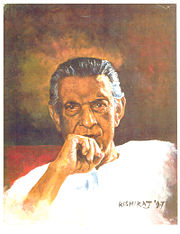
The country also participated in international film festivals, especially Satyajit Ray
, Mrinal Sen
, Ritwik Ghatak, Girish Kasaravalli
, Shyam Benegal
, Adoor Gopalakrishnan
, G. Aravindan
and Mani Ratnam
. Indian filmmakers such as Shekhar Kapur
, Karan Johar
, Mira Nair
, Deepa Mehta
, Nagesh Kukunoor
found success overseas. The Indian government extended film delegations to foreign countries such as the United States of America and Japan while the country's Film Producers Guild sent similar missions through Europe. Sivaji Ganesan
, and S. V. Ranga Rao
won their respective first international award for Best Actor held at Afro-Asian Film Festival in Cairo and Indonesian Film Festival in Jakarta for the films Veerapandiya Kattabomman
and Narthanasala in 1959 and 1963.
India is the world's largest producer of films. In 2009, India produced a total of 2961 films on celluloid, that include a staggering figure of 1288 feature films. The provision of 100% foreign direct investment has made the Indian film market attractive for foreign enterprises such as 20th Century Fox
, Sony Pictures, Walt Disney Pictures
and Warner Bros. Indian enterprises such as Zee, UTV
, Suresh Productions
, Adlabs and Sun Network's Sun Pictures
also participated in producing and distributing films. Tax incentives to multiplexes have aided the multiplex boom in India. By 2003 as many as 30 film production companies had been listed in the National Stock Exchange of India
, making the commercial presence of the medium felt.
The Indian diaspora
consists of millions of Indians overseas for which films are made available both through mediums such as DVDs and by screening of films in their country of residence wherever commercially feasible. These earnings, accounting for some 12% of the revenue generated by a mainstream film, contribute substantially to the overall revenue of Indian cinema, the net worth of which was found to be 1.3 billion in 2000. Music in Indian cinema is another substantial revenue generator, with the music rights alone accounting for 4–5% of the net revenues generated by a film in India.
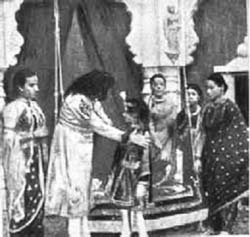
 Following the screening of the Lumière
moving pictures in London (1895) cinema became a sensation across Europe and by July 1896 the Lumière films had been in show in Bombay (now Mumbai
). The first short films in India were directed by Hiralal Sen
, starting with The Flower of Persia (1898). The first full-length motion picture in India was produced by Dadasaheb Phalke
,Dadasaheb is the pionier of Indian film industry a scholar on India's languages and culture, who brought together elements from Sanskrit
epics to produce his Raja Harishchandra
(1913), a silent film in Marathi
. The female roles in the film were played by male actors. The first Indian chain of cinema theaters was owned by the Calcutta entrepreneur Jamshedji Framji Madan
, who oversaw production of 10 films annually and distributed them throughout the Indian subcontinent
.
Raghupathi Venkaiah Naidu was an Indian artist
and a pioneer in the production of silent Indian movies and talkies. Starting from 1909, he was involved in many aspects of Indian cinema's history, like travelling to different regions in Asia, to promote film work. He was the first to build and own cinema hall's in Madras.
The Raghupathi Venkaiah Naidu Award is an annual award incorporated into Nandi Awards
to recognize people for their contributions to the Telugu film industry.
During the early twentieth century cinema as a medium gained popularity across India's population and its many economic sections. Tickets were made affordable to the common man at a low price and for the financially capable additional comforts meant additional admission ticket price. Audiences thronged to cinema halls as this affordable medium of entertainment was available for as low as an anna (4 paisa) in Bombay. The content of Indian commercial cinema was increasingly tailored to appeal to these masses. Young Indian producers began to incorporate elements of India's social life and culture into cinema. Others brought with them ideas from across the world. This was also the time when global audiences and markets became aware of India's film industry.
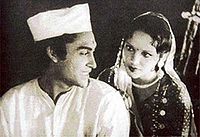
Ardeshir Irani
released Alam Ara
which was the first Indian talking film, on 14 March 1931. H.M. Reddy, produced and directed Bhakta Prahlada
(Telugu), released on Sept 15, 1931 and Kalidas (Tamil) released on Oct 31, 1931. Kalidas was produced by Ardeshir Irani and directed by H.M. Reddy. These two films are south India's first talkie films to have a theatrical release. Following the inception of 'talkies' in India some film stars were highly sought after and earned comfortable incomes through acting. As sound technology advanced the 1930s saw the rise of music in Indian cinema with musicals such as Indra Sabha and Devi Devyani marking the beginning of song-and-dance in India's films. Studios emerged across major cities such as Chennai
, Kolkata, and Mumbai as film making became an established craft by 1935, exemplified by the success of Devdas
, which had managed to enthrall audiences nationwide. Bombay Talkies
came up in 1934 and Prabhat Studios
in Pune
had begun production of films meant for the Marathi language
audience. Filmmaker R. S. D. Choudhury produced Wrath (1930), banned by the British Raj
in India as it depicted actors as Indian leaders, an expression censored during the days of the Indian independence movement
.
The Indian Masala film
—a slang used for commercial films with song, dance, romance etc.—came up following the second world war. South Indian cinema gained prominence throughout India with the release of S.S. Vasan's Chandralekha
. During the 1940s cinema in South India
accounted for nearly half of India's cinema halls and cinema came to be viewed as an instrument of cultural revival. The partition of India
following its independence divided the nation's assets and a number of studios went to the newly formed Pakistan
. The strife of partition would become an enduring subject for film making during the decades that followed.
After Indian independence the cinema of India was inquired by the S.K. Patil Commission. S.K. Patil, head of the commission, viewed cinema in India as a 'combination of art, industry, and showmanship' while noting its commercial value. Patil further recommended setting up of a Film Finance Corporation under the Ministry of Finance
. This advice was later taken up in 1960 and the institution came into being to provide financial support to talented filmmakers throughout India. The Indian government had established a Films Division by 1949 which eventually became one of the largest documentary film producers in the world with an annual production of over 200 short documentaries, each released in 18 languages with 9000 prints for permanent film theaters across the country.
The Indian People's Theatre Association
(IPTA), an art movement with a communist inclination, began to take shape through the 1940s and the 1950s. A number of realistic IPTA plays, such as Bijon Bhattacharya
's Nabanna
in 1944 (based on the tragedy of the Bengal famine of 1943
), prepared the ground for the solidification of realism in Indian cinema, exemplified by Khwaja Ahmad Abbas
's Dharti Ke Lal
(Children of the Earth) in 1946. The IPTA movement continued to emphasize on reality and went on to produce Mother India
and Pyaasa
, among India's most recognizable cinematic productions.
, the period from the late 1940s to the 1960s are regarded by film historians as the 'Golden Age' of Indian cinema. Some of the most critically acclaimed Indian films of all time were produced during this period. In commercial Hindi cinema
, examples of films at the time include the Guru Dutt
films Pyaasa
(1957) and Kaagaz Ke Phool
(1959) and the Raj Kapoor
films Awaara
(1951) and Shree 420 (1955). These films expressed social themes mainly dealing with working-class urban life in India; Awaara presented the city as both a nightmare and a dream, while Pyaasa critiqued the unreality of city life. Some epic film
s were also produced at the time, including Mehboob Khan's Mother India
(1957), which was nominated for the Academy Award for Best Foreign Language Film
, and K. Asif
's Mughal-e-Azam
(1960). V. Shantaram
's Do Aankhen Barah Haath
(1957) is believed to have inspired the Hollywood
film The Dirty Dozen
(1967). Madhumati
(1958), directed by Bimal Roy
and written by Ritwik Ghatak, popularized the theme of reincarnation
in Western popular culture
. Other mainstream Hindi filmmakers at the time included Kamal Amrohi
and Vijay Bhatt
.
While, commercial cinema was thriving, the same age saw the emergence of a new Parallel Cinema
movement, mainly led by Bengali cinema
. Early examples of films in this movement include Chetan Anand
's Neecha Nagar
(1946), Ritwik Ghatak's Nagarik
(1952), and Bimal Roy's Two Acres of Land (1953), laying the foundations for Indian neorealism
and the "Indian New Wave". Pather Panchali (1955), the first part of The Apu Trilogy (1955–1959) by Satyajit Ray, marked his entry in Indian cinema. The Apu Trilogy won major prizes at all the major international film festivals and led to the 'Parallel Cinema' movement being firmly established in Indian cinema. Its influence on world cinema
can also be felt in the "youthful coming-of-age
dramas
that have flooded art houses since the mid-fifties" which "owe a tremendous debt to the Apu trilogy". Satyajit Ray and Ritwik Ghatak went on to direct many more critically acclaimed 'art film
s', and they were followed by other acclaimed Indian independent filmmakers such as Mrinal Sen
, Adoor Gopalakrishnan
, Mani Kaul
and Buddhadeb Dasgupta
. During the 1960s, Indira Gandhi
's intervention during her reign as the Information and Broadcasting Minister of India further led to production of off-beat cinematic expression being supported by the official Film Finance Corporation.
The cinematographer Subrata Mitra
, who made his debut with Satyajit Ray's The Apu Trilogy, also had an important influence on cinematography
across the world. One of his most important techniques was bounce lighting, to recreate the effect of daylight on sets. He pioneered the technique while filming Aparajito
(1956), the second part of The Apu Trilogy. Some of the experimental techniques which Satyajit Ray pioneered include photo-negative
flashbacks
and X-ray
digression
s while filming Pratidwandi
(1972). Ray's 1967 script for a film to be called The Alien
, which was eventually cancelled, is also widely believed to have been the inspiration for Steven Spielberg
's E.T.
(1982).
Ever since Chetan Anand's social realist
film Neecha Nagar
won the Grand Prize
at the first Cannes Film Festival
, Indian films were frequently in competition for the Palme d'Or
at the Cannes Film Festival
for nearly every year in the 1950s and early 1960s, with a number of them winning major prizes at the festival. Satyajit Ray also won the Golden Lion
at the Venice Film Festival
for Aparajito (1956), the second part of The Apu Trilogy, and the Golden Bear
and two Silver Bears for Best Director
at the Berlin International Film Festival
. Ray's contemporaries, Ritwik Ghatak and Guru Dutt, were overlooked in their own lifetimes but had belatedly generated international recognition much later in the 1980s and 1990s. Ray is regarded as one of the greatest auteurs
of 20th century cinema
, with Dutt and Ghatak. In 1992, the Sight & Sound
Critics' Poll ranked Ray at #7 in its list of "Top 10 Directors" of all time, while Dutt was ranked #73 in the 2002 Sight & Sound greatest directors poll.
A number of Indian films from different regions, from this era are often included among the greatest films of all time in various critics' and directors' polls. At this juncture, Telugu cinema and Tamil cinema experienced their respective golden age and during this time the production of Indian Folklore
, fantasy
and Mythological films like Mayabazar
grew up. A number of Satyajit Ray films appeared in the Sight & Sound Critics' Poll, including The Apu Trilogy (ranked #4 in 1992 if votes are combined), The Music Room
(ranked #27 in 1992), Charulata
(ranked #41 in 1992) and Days and Nights in the Forest
(ranked #81 in 1982). The 2002 Sight & Sound critics' and directors' poll also included the Guru Dutt films Pyaasa and Kaagaz Ke Phool (both tied at #160), the Ritwik Ghatak films Meghe Dhaka Tara
(ranked #231) and Komal Gandhar (ranked #346), and Raj Kapoor's Awaara, Vijay Bhatt
's Baiju Bawra, Mehboob Khan's Mother India and K. Asif's Mughal-e-Azam all tied at #346. In 1998, the critics' poll conducted by the Asian film
magazine Cinemaya
included The Apu Trilogy (ranked #1 if votes are combined), Ray's Charulata and The Music Room (both tied at #11), and Ghatak's Subarnarekha
(also tied at #11). In 1999, The Village Voice
top 250 "Best Film of the Century" critics' poll also included The Apu Trilogy (ranked #5 if votes are combined). In 2005, The Apu Trilogy and Pyaasa were also featured in Time magazine's "All-TIME" 100 best movies list.
continued to produce realistic Parallel Cinema throughout the 1970s, alongside Satyajit Ray, Ritwik Ghatak, Mrinal Sen, Buddhadeb Dasgupta
and Gautam Ghose
in Bengali cinema; Adoor Gopalakrishnan
, Shaji N. Karun
, John Abraham and G. Aravindan
in Malayalam cinema; Nirad Mohapatra
in Oriya cinema; and Mani Kaul
, Kumar Shahani
, Ketan Mehta
, Govind Nihalani
and Vijaya Mehta
in Hindi cinema. However, the 'art film' bent of the Film Finance Corporation came under criticism during a Committee on Public Undertakings investigation in 1976, which accused the body of not doing enough to encourage commercial cinema. The 1970s did, nevertheless, see the rise of commercial cinema in form of enduring films such as Sholay
(1975), which solidified Amitabh Bachchan
's position as a lead actor. The devotional classic Jai Santoshi Ma was also released in 1975. Another important film from 1975 was Deewar, directed by Yash Chopra
and written by Salim-Javed
. A crime film
pitting "a policeman against his brother, a gang leader based on real-life smuggler Haji Mastan
", portrayed by Amitabh Bachchan, it was described as being “absolutely key to Indian cinema” by Danny Boyle
.
Long after the Golden Age of Indian cinema, South India's Malayalam cinema of Kerala regarded as one of the best indian film genres experienced its own 'Golden Age' in the 1980s and early 1990s. Some of the most acclaimed Indian filmmakers at the time were from the Malayalam industry, including Adoor Gopalakrishnan
, G. Aravindan, T. V. Chandran
and Shaji N. Karun
. Adoor Gopalakrishnan, who is often considered to be Satyajit Ray's spiritual heir, directed some of his most acclaimed films during this period, including Elippathayam
(1981) which won the Sutherland Trophy
at the London Film Festival
, as well as Mathilukal
(1989) which won major prizes at the Venice Film Festival
. Shaji N. Karun's debut film Piravi
(1989) won the Camera d'Or
at the 1989 Cannes Film Festival
, while his second film Swaham
(1994) was in competition for the Palme d'Or
at the 1994 Cannes Film Festival
. Commercial Malayalam cinema also began gaining popularity with the action film
s of Jayan
, a popular stunt actor
whose success was short-lived when he died while filming a dangerous stunt
, followed by Mohanlal
, whose film Yodha
was acclaimed for its action sequences and technical aspects.
Commercial Hindi cinema further grew throughout the 1980s and the 1990s with the release of films such as Ek Duuje Ke Liye
(1981) Mr India
(1987), Qayamat Se Qayamat Tak
(1988), Tezaab
(1988), Chandni
(1989), Maine Pyar Kiya
(1989), Baazigar
(1993), Darr
(1993), Dilwale Dulhaniya Le Jayenge (1995) and Kuch Kuch Hota Hai
(1998), many of which starred Shahrukh Khan
, Aamir Khan
and Salman Khan
.
The 1990s also saw a surge in the national popularity of Tamil cinema
as films directed by Mani Ratnam
captured India's imagination. Such films included Roja
(1992) and Bombay
(1995). Ratnam's earlier film Nayagan
(1987), starring Kamal Haasan
, was included in Time magazine's "All-TIME" 100 best movies, alongside four earlier Indian films: Satyajit Ray's The Apu Trilogy (1955–1959) and Guru Dutt
's Pyaasa
(1957). Another Tamil director S. Shankar
, also made waves through his film Kadhalan
, and later in the 2000s with Sivaji and Enthiran (Robot).
Tabarana Kathe
, a Kannada film, was screened at various film festivals including Tashkent, Nantes, Tokyo, and the Film Festival of Russia.
In the late 1990s, 'Parallel Cinema' began experiencing a resurgence in Hindi cinema, largely due to the critical and commercial success of Satya
(1998), a low-budget film based on the Mumbai underworld
, directed by Ram Gopal Varma
and written by Anurag Kashyap
. The film's success led to the emergence of a distinct genre known as Mumbai noir, urban films reflecting social problems in the city of Mumbai
. Later films belonging to the Mumbai noir genre include Madhur Bhandarkar
's Chandni Bar
(2001) and Traffic Signal
(2007), Ram Gopal Varma
's Company
(2002) and its prequel D
(2005), Anurag Kashyap's Black Friday (2004), Irfan Kamal's Thanks Maa (2009), and Deva Katta
's Prasthanam
(2010). Other art film directors active today include Mrinal Sen, Mir Shaani, Buddhadeb Dasgupta, Gautam Ghose, Sandip Ray
, Aparna Sen
and Rituparno Ghosh
in Bengali cinema; Adoor Gopalakrishnan, Shaji N. Karun,Santosh Sivan and T. V. Chandran in Malayalam cinema; Nirad Mohapatra in Oriya cinema; Mani Kaul, Kumar Shahani, Ketan Mehta, Govind Nihalani
, Shyam Benegal, Mira Nair
, Nagesh Kukunoor
, Sudhir Mishra
and Nandita Das
in Hindi cinema; Mani Ratnam in Tamil cinema;and Deepa Mehta
, Anant Balani
, Homi Adajania
, Vijay Singh and Sooni Taraporevala
in Indian English
cinema.
, specifically the Empire of Japan
, which had managed to infiltrate into India. One such story was Burma Rani, which depicted civilian resistance offered to Japanese occupation by the British and Indians present in Myanmar. Pre-independence businessmen such as J. F. Madan and Abdulally Esoofally traded in global cinema.
Indian cinema's early contacts with other regions became visible with its films making early inroads into the Soviet Union
, Middle East, Southeast Asia, and China. Mainstream Hindi film stars like Raj Kapoor
gained international fame across Asia and Eastern Europe. Indian films also appeared in international fora and film festivals. This allowed 'Parallel' Bengali filmmakers such as Satyajit Ray to achieve worldwide fame, with his films gaining success among European, American
and Asian audiences. Ray's work subsequently had a worldwide impact, with filmmakers such as Martin Scorsese
, James Ivory
, Abbas Kiarostami
, Elia Kazan
, François Truffaut
, Steven Spielberg
, Carlos Saura
, Jean-Luc Godard
, Isao Takahata
, Gregory Nava
, Ira Sachs
and Wes Anderson
being influenced by his cinematic style, and many others such as Akira Kurosawa
praising his work. The "youthful coming-of-age dramas that have flooded art houses since the mid-fifties owe a tremendous debt to the Apu trilogy". Subrata Mitra
's cinematographic technique of bounce lighting also originates from The Apu Trilogy. Ray's film Kanchenjungha
(1962) also introduced a narrative structure that resembles later hyperlink cinema
. Since the 1980s, some previously overlooked Indian filmmakers such as Ritwik Ghatak and Guru Dutt
have posthumously gained international acclaim.
Many Asian and 'South Asian' countries increasingly came to find Indian cinema as more suited to their sensibilities than Western cinema. Jigna Desai holds that by the 21st century Indian cinema had managed to become 'deterritorialized', spreading over to the many parts of the world where Indian diaspora
was present in significant numbers, and becoming an alternative to other international cinema.
Indian cinema has more recently begun influencing Western musical films, and played a particularly instrumental role in the revival of the genre in the Western world
. Baz Luhrmann
stated that his successful musical film Moulin Rouge!
(2001) was directly inspired by Bollywood musicals. The critical and financial success of Moulin Rouge! renewed interest in the then-moribund Western musical genre, subsequently fueling a renaissance of the genre. Danny Boyle
's Oscar-winning film Slumdog Millionaire
(2008) was also directly inspired by Indian films, and is considered to be a "homage to Hindi commercial cinema". Other Indian filmmakers are also making attempts at reaching a more global audience, with upcoming films by directors such as Vidhu Vinod Chopra
, Jahnu Barua
, Sudhir Mishra
and Pan Nalin
.
Indian Cinema was also recognized at the American Academy Awards
. Three Indian films, Mother India
(1957), Salaam Bombay!
(1988), and Lagaan
(2001), were nominated for the Academy Award for Best Foreign Language Film
. Indian winners of the Academy Awards include Bhanu Athaiya
(costume designer), Satyajit Ray
(filmmaker), A. R. Rahman
(music composer), Resul Pookutty
(sound editor) and Gulzar (lyricist).
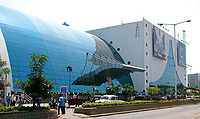
 There have generally been six major influences that have shaped the conventions of Indian popular cinema. The first was the ancient Indian epics
of Mahabharata
and Ramayana
which have exerted a profound influence on the thought and imagination of Indian popular cinema, particularly in its narratives. Examples of this influence include the techniques of a side story
, back-story
and story within a story
. Indian popular films often have plots which branch off into sub-plots; such narrative dispersals can clearly be seen in the 1993 films Khalnayak
and Gardish
.
The second influence was the impact of ancient Sanskrit drama
, with its highly stylized nature and emphasis on spectacle, where music, dance
and gesture combined "to create a vibrant artistic unit with dance and mime being central to the dramatic experience." Sanskrit dramas were known as natya
, derived from the root word nrit (dance), characterizing them as spectacular dance-dramas which has continued in Indian cinema. The Rasa method of performance, dating back to ancient Sanskrit drama, is one of the fundamental features that differentiate Indian cinema from that of the Western world. In the Rasa method, empathetic
"emotions are conveyed by the performer and thus felt by the audience," in contrast to the Western Stanislavski method where the actor must become "a living, breathing embodiment of a character" rather than "simply conveying emotion." The rasa method of performance is clearly apparent in the performances of popular Hindi film actors like Amitabh Bachchan
and Shahrukh Khan
, nationally acclaimed Hindi films like Rang De Basanti
(2006), and internationally acclaimed Bengali films directed by Satyajit Ray.
The third influence was the traditional folk theatre of India, which became popular from around the 10th century with the decline of Sanskrit theatre. These regional traditions include the Yatra
of Bengal
, the Ramlila
of Uttar Pradesh
, and the Terukkuttu
of Tamil Nadu
. The fourth influence was Parsi theatre, which "blended realism
and fantasy
, music and dance, narrative and spectacle, earthy dialogue and ingenuity of stage presentation, integrating them into a dramatic discourse of melodrama
. The Parsi plays contained crude humour, melodious songs and music, sensationalism and dazzling stagecraft." All of these influences are clearly evident in the masala
film genre that was popularized by Manmohan Desai
's films in the 1970s and early 1980s, particularly in Coolie
(1983), and to an extent in more recent critically acclaimed films such as Rang De Basanti.
The fifth influence was Hollywood, where musicals were popular from the 1920s to the 1950s, though Indian filmmakers departed from their Hollywood counterparts in several ways. "For example, the Hollywood musicals had as their plot the world of entertainment itself. Indian filmmakers, while enhancing the elements of fantasy so pervasive in Indian popular films, used song and music as a natural mode of articulation in a given situation in their films. There is a strong Indian tradition of narrating mythology, history, fairy stories and so on through song and dance." In addition, "whereas Hollywood filmmakers strove to conceal the constructed nature of their work so that the realistic narrative was wholly dominant, Indian filmmakers made no attempt to conceal the fact that what was shown on the screen was a creation, an illusion, a fiction.
However, they demonstrated how this creation intersected with people's day to day lives in complex and interesting ways." The final influence was Western musical television, particularly MTV, which has had an increasing influence since the 1990s, as can be seen in the pace, camera angles, dance sequences and music of recent Indian films. An early example of this approach was in Mani Ratnam's Bombay
(1995).
Like mainstream Indian popular cinema, Indian Parallel Cinema was also influenced also by a combination of Indian theatre (particularly Sanskrit drama) and Indian literature
(particularly Bengali literature
), but differs when it comes to foreign influences, where it is more influenced by European cinema (particularly Italian neorealism
and French poetic realism
) rather than Hollywood. Satyajit Ray cited Italian filmmaker Vittorio De Sica
's Bicycle Thieves
(1948) and French filmmaker Jean Renoir
's The River
(1951), which he assisted, as influences on his debut film Pather Panchali (1955). Besides the influence of European cinema and Bengali literature, Ray is also indebted to the Indian theatrical tradition, particularly the Rasa method of classical Sanskrit drama. The complicated doctrine of Rasa "centers predominantly on feeling experienced not only by the characters but also conveyed in a certain artistic way to the spectator. The duality of this kind of a rasa imbrication" shows in The Apu Trilogy. Bimal Roy's Two Acres of Land (1953) was also influenced by De Sica's Bicycle Thieves and in turn paved the way for the Indian New Wave, which began around the same time as the French New Wave
and the Japanese New Wave.
film industry traces its origins works s of revolutionary visionary Rupkonwar Jyotiprasad Agarwala, who was also a distinguished poet, playwright, composer and freedom fighter. He was instrumental in the production of the first Assamese film Joymati
in 1935, under the banner of Critrakala Movietone. Due to the lack of trained technicians, Jyotiprasad, while making his maiden film, had to shoulder the added responsibilities as the script writer, producer, director, choreographer, editor, set and costume designer, lyricist and music director. The film, completed with a budget of 60,000 rupees was released on 10 March 1935. The picture failed miserably. Like so many early Indian films, the negatives and complete prints of Joymati are missing. Some effort has been made privately by Altaf Mazid to restore and subtitle whatever is left of the prints.[3] Despite the significant financial loss from Joymati, the second picture Indramalati was filmed between 1937 and 1938 finally released in 1939.
Although the beginning of the 21st century has seen Bollywood
-style Assamese movies hitting the screen, the industry has not been able to compete in the market, significantly overshadowed by the larger industries such as Bollywood.
Assamese cinema has never really managed to make the breakthrough on the national scene despite its film industry making a mark in the National Awards over the years
 The Bengali language
cinematic tradition of Tollygunge
located in West Bengal
has had reputable filmmakers such as Satyajit Ray, Ritwik Ghatak and Mrinal Sen among its most acclaimed. Recent Bengali films that have captured national attention include Rituparno Ghosh
's Choker Bali
, starring Aishwarya Rai
. Bengali filmmaking also includes Bangla science fiction
films and films that focus on social issues. In 1993, the Bengali industry's net output was 57 films.
The history of cinema in Bengal
dates back to the 1890s, when the first "bioscopes
" were shown in theatres in Kolkata
. Within a decade, the first seeds of the industry was sown by Hiralal Sen
, considered a stalwart of Victorian era
cinema when he set up the Royal Bioscope Company
, producing scenes from the stage productions of a number of popular shows at the Star Theatre, Calcutta
, Minerva Theatre
, Classic Theatre. Following a long gap after Sen's works, Dhirendra Nath Ganguly
(Known as D.G) established Indo British Film Co
, the first Bengali owned production company, in 1918. However, the first Bengali Feature film, Billwamangal
, was produced in 1919, under the banner of Madan Theatre
. Bilat Ferat was the IBFC's first production in 1921. The Madan Theatre
s production of Jamai Shashthi
was the first Bengali talkie.
In 1932, the name "Tollywood
" was coined for the Bengali film industry due to Tollygunge rhyming with "Hollywood" and because it was the center of the Indian film industry at the time. It later inspired the name "Bollywood", as Mumbai (then called Bombay) later overtook Tollygunge as the center of the Indian film industry, and many other Hollywood-inspired names
. The 'Parallel Cinema' movement began in the Bengali film industry in the 1950s. A long history has been traversed since then, with stalwarts such as Satyajit Ray, Mrinal Sen
, Ritwik Ghatak and others having earned international acclaim and securing their place in the history of film
.
films predominantly cater to people who live in the regions of western Bihar
and eastern Uttar Pradesh
. These films also have a large audience in the cities of Delhi
and Mumbai due to migration to these metros from the Bhojpuri speaking region. Besides India, there is a large market for these films in other bhojpuri speaking countries of the West Indies, Oceania, and South America. Bhojpuri language film's history begins in 1962 with the well-received film Ganga Maiyya Tohe Piyari Chadhaibo
("Mother Ganges, I will offer you a yellow sari"), which was directed by Kundan Kumar. Throughout the following decades, films were produced only in fits and starts. Films such as Bidesiya
("Foreigner," 1963, directed by S. N. Tripathi) and Ganga ("Ganges," 1965, directed by Kundan Kumar) were profitable and popular, but in general Bhojpuri films were not commonly produced in the 1960s and 1970s.
The industry experienced a revival in 2001 with the super hit Saiyyan Hamar ("My Sweetheart," directed by Mohan Prasad), which shot the hero of that film, Ravi Kissan, to superstardom. This success was quickly followed by several other remarkably successful films, including Panditji Batai Na Biyah Kab Hoi ("Priest, tell me when I will marry," 2005, directed by Mohan Prasad) and Sasura Bada Paisa Wala ("My father-in-law, the rich guy," 2005). In a measure of the Bhojpuri film industry's rise, both of these did much better business in the states of Uttar Pradesh and Bihar than mainstream Bollywood hits at the time, and both films, made on extremely tight budgets, earned back more than ten times their production costs. Although a smaller industry compared to other Indian film industries, the extremely rapid success of their films has led to dramatic increases in Bhojpuri cinema's visibility, and the industry now supports an awards show and a trade magazine, Bhojpuri City.
, Bindu
, Asha Parekh
, Kiran Kumar, Arvind Trivedi
, Aruna Irani
, Mallika Sarabhai
, and Asrani
.
The scripts and stories dealt in the Gujarati films are intrinsically humane. They include relationship- and family-oriented subjects with human aspirations and deal with Indian family culture. Thus, there can be no turning away from the essential humanity of these Gujarati cinema. The first Gujarati movie, Narasinh Mehta, was released in the year 1932 and was directed by Nanubhai Vakil. The film starred Mohanlala, Marutirao, Master Manhar, and Miss Mehtab. It was of the `Saint film` genre and was based on the life of the saint Narasinh Mehta who observed a creed that was followed centuries later by Mahatma Gandhi. The film was matchless as it avoided any depiction of miracles. In 1935, another social movie, Ghar Jamai was released, directed by Homi Master. The film starred Heera, Jamna, Baby Nurjehan, Amoo, Alimiya, Jamshedji, and Gulam Rasool. The film featured a `resident son-in-law` (ghar jamai) and his escapades as well as his problematic attitude toward the freedom of women. It was a comedy-oriented movie that was a major success in the industry.
Gujarati films thus proceeded with several other important social, political as well as religious issues. The years 1948, 1950, 1968, 1971 moved in a wide variety of dimensions. The Gujarati movies such as Kariyavar, directed by Chaturbhuj Doshi, Vadilona Vank directed by Ramchandra Thakur, Gadano Bel directed by Ratibhai Punatar and Leeludi Dharti directed by Vallabh Choksi brought immense success to the industry. The problems of modernisation are the underlying concern of several films. The movies like Gadano Bel had strong realism and reformism.
Gujarati films such as Leeludi Dharti reflect the rural world with its fertility rituals. In 1975 Tanariri, directed by Chandrakant Sangani presents highlights the little-known side of Akbar who is usually presented as a consistently benign ruler. The first cinemascope film of Gujarati cinema was Sonbaini Chundadi, directed by Girish Manukant released in 1976. Besides these, Bhavni Bhavai released in 1980 was directed by Ketan Mehta. It boasted superlative performances, fine camerawork and won two awards: National Award for Best Feature Film on National Integration and an award at the Nantes Three Continents Festival
in France. In 1992, Hun Hunshi Hunshilal, directed by Sanjiv Shah was sought to be post-modern.
Gujarati films were further enriched by the brilliant performances of the film personalities. Anupama, Upendra Trivedi, Arvind Trivedi, Naresh Kanodia (Gujarati superstar), Sneh Lata (great Gujarati actress), Ramesh Mehta and Veljibhai Gajjar, Dilip Patel, Ranjitraj, Sohil Virani, Narayan Rajgor, Premshankar Bhatt, Jay Patel, Ashvin Patel, Girija Mitra, Anjana, Manmohan Desai, Sanjay Gadhvi, Kalyanji Anandji, Deepika Chikhalia, Bindu Desai, Renuka Sahane and Priti Parekh are celebrities who have contributed a lot to the Gujarati film industry.
(1936) and Sujata (1959). International visibility came to the industry with Raj Kapoor
's Awara
. Hindi cinema grew during the 1990s with the release of as many as 215 films. With Dilwale Dulhania Le Jayenge
, Hindi cinema registered its commercial presence in the Western world
.
In 1995 the Indian economy began showing sustainable annual growth, and Hindi cinema, as a commercial enterprise, grew at a growth rate of 15% annually. The salary of lead stars increased greatly. Many actors signed contracts for simultaneous work in 3–4 films. Institutions such as the Industrial Development Bank of India also came forward to finance Hindi films. A number of magazines such as Filmfare
, Stardust
, Cineblitz
, etc., became popular.
 Kannada film industry (ಕನ್ನಡ ಚಿತ್ರೋಧ್ಯಮ), also referred as Sandalwood, is based in Bangalore
and caters mostly to the state of Karnataka
. Rajkumar
was eminent in Kannada film industry. In his career, he performed versatile characters and sung hundreds of songs for film and albums. Other notable Kannada and Tulu actors include Vishnuvardhan, Ambarish, Ravichandran
, Girish Karnad
, Prakash Raj
, Shankar Nag
, Upendra
, Darshan, Shivaraj Kumar, Puneet Rajkumar
, Kalpana, Bharathi, Jayanthi
, Pandari Bai, Tara
, Umashri
and Ramya
.
Film directors from the Kannada film industry like Girish Kasaravalli
have garnered national recognition. Other noted directors include Puttanna Kanagal
, G. V. Iyer
, Girish Karnad
, T. S. Nagabharana
, Yograj Bhat
, Soori
. G.K. Venkatesh, Vijaya Bhaskar
, Rajan-Nagendra
, Hamsalekha
, Gurukiran
and V. Harikrishna
are other noted music directors.
Kannada cinema, along with Bengali and Malayalam films, contributed simultaneously to the age of Indian parallel cinema
. Some of the influential kannada films in this genre are Samskara
(based on a novel by U. R. Ananthamurthy
), Chomana Dudi
by B. V. Karanth
, Tabarana Kathe
, Vamshavruksha, Kadu Kudure, Hamsageethe
, Bhootayyana Maga Ayyu
, Accident
, Maanasa Sarovara
, Ghatashraddha
, Tabarana Kathe
, Mane
, Kraurya
, Thaayi Saheba
, Dweepa
.
Other commercially successful films include Aapthamitra, Yajamaana, Om
, A
, Super (all directed by Upendra
), Mungaru Male
(directed by Yograj Bhat), Jogi (by Prem
), Nenapirali (by Ratnaja), Duniya
and Jackie (both directed by Soori).
. It is one of the smallest film industries in India
with just 4 films produced in 2009. Konkani language
is spoken mainly in the states of Goa
, Maharashtra
and Karnataka
and to a smaller extent in Kerala
. The first full length Konkani film was Mogacho Anvddo
, released on April 24, 1950, and was produced and directed by Jerry Braganza, a native of Mapusa
, under the banner of Etica Pictures. Hence, 24 April is celebrated as Konkani Film Day.
 The Malayalam film industry, based in the southern state of Kerala
, is known for films that bridge the gap between parallel cinema
and mainstream cinema by portraying thought-provoking social issues. Filmmakers include Adoor Gopalakrishnan
, Shaji N. Karun
, G. Aravindan
, K. G. George
, Padmarajan
, Sathyan Anthikad, T. V. Chandran
and Bharathan
.
Vigathakumaran
, a silent movie
released in 1928 produced and directed by J. C. Daniel
, marked the beginning of Malayalam cinema. Balan
, released in 1938, was the first Malayalam "talkie". Malayalam films were mainly produced by Tamil
producers till 1947, when the first major film studio, Udaya Studio, was established in Kerala. In 1954, the film Neelakkuyil captured national interest by winning the President's silver medal. Scripted by the well-known Malayalam novelist, Uroob
, and directed by P. Bhaskaran
and Ramu Kariat
, it is often considered as the first authentic Malayali film. Newspaper Boy
, made by a group of students in 1955, was the first neo-realistic film
in India. Chemmeen
(1965), directed by Ramu Kariat and based on a story by Thakazhi Sivasankara Pillai
, went on to become immensely popular, and became the first South Indian film to win the National Film Award for Best Film
. This early period of Malayalam cinema was dominated by actors Prem Nazir
, Sathyan
, Madhu
, Sheela
, Sharada
and Jayabharathi
. Prem Nazir is regarded as one of the most successful film actors in India. He holds four major acting records; including for playing the lead role in over 700 films and for acting opposite eighty heroines.
The 1970s saw the emergence of New Wave Cinema. Swayamvaram
(1972), the directorial debut of Adoor Gopalakrishnan
pioneered the new wave cinema movement in Kerala. Other movies of the period include Nirmalyam by M. T. Vasudevan Nair
(1973), Uttarayanam
by G. Aravindan (1974), Swapnadanam
(1976) by K. G. George (1976), Cheriyachante Kroorakrithyangal
(1979) and Amma Ariyan
(1986) by John Abraham etc. In the late 1970s, commercial cinema began gaining popularity due to the action film
s of Jayan
, a stunt actor
who became one of the first commercial stars of Malayalam cinema. Known for performing stunts
, his success was short-lived, ending with his untimely death while performing a dangerous helicopter stunt
in Kolilakkam
(1980).
The period from late 1980s to early 1990s is popularly regarded as the 'Golden Age of Malayalam Cinema' with the emergence of actors such as Mohanlal
, Mammootty
, and filmmakers such as I.V. Sasi, Bharathan
, Padmarajan
, K. G. George
, Sathyan Anthikad, Priyadarshan
, A. K. Lohithadas, Siddique-Lal
and Sreenivasan. This period of popular cinema is characterized by the adaptation of everyday life themes and exploration of social and individual relationships. These movies interlaced themes of individual struggle with creative humour as in Nadodikkattu
(1988). Piravi
(1989) by Shaji N. Karun
was the first Malayalam film to win the Caméra d'Or
-Mention at the Cannes Film Festival
. This period also marked the beginning of movies rich in well-crafted humour like Ramji Rao Speaking
(1989). It was in Malayalam that the first 3D movie in India, My Dear Kuttichathan
, was made by Navodaya Appachan, a notable film producer of Kerala. Guru
, directed by Rajiv Anchal
, is the first Malayalam movie submitted by India in contest for the Academy Award for Best Foreign Language Film
followed by first-time filmmaker Salim Ahamed's family drama film Adaminte Makan Abu
(2011).
Among all the playback singers in India, Malayalam singers K. J. Yesudas
and K. S. Chithra
hold the highest record for winning the National Award for best singers in the male and female category respectively. While Yesudas has won 7 awards so far, Chithra has won 6 awards till date.
During late 1990s and 2000s, Malayalam cinema witnessed a shift towards formulaic movies and slapstick comedies. The Malayalam film industry in recent times has also been affected by the rise of satellite television and widespread film piracy
.
, who brought the revolution of moving images to India with his first indigenously made silent film Raja Harishchandra
in 1913, which is considered by IFFI and NIFD part of Marathi cinema as it was made by a Marathi crew.
The first Marathi talkie film, Ayodhyecha Raja[1] (produced by Prabhat Films) was released in 1932, just one year after "Alam Ara" the first Hindi talkie film. Marathi cinema has grown in recent years, with two of its films, namely "Shwaas
" (2004) and "Harishchandrachi Factory
" (2009), being sent as India's official entries for the Oscars. Today the industry is based in Mumbai, Maharashtra, but it sprouted and grew first from Kolhapur and then Pune
.
and Cuttack
based Oriya language
film industry. Sometimes called Ollywood a portmanteau of the words Oriya and Hollywood, although the origins of the name are disputed.
The first Oriya talkie Sita Bibaha was made by Mohan Sunder Deb Goswami in 1936. Prashanta Nanda started the revolution in the Oriya film industry by not only securing a huge audience but also bringing in a newness in the his presentation. His movies heralded in the golden era of the Oriya commercial industry by bringing in freshness to Oriya movies.
Then the 1st color film was made by Nagen Ray and photographed by a Pune Film Institute trained cinematographer Mr. Surendra Sahu titled " Gapa Hele Be Sata"- meaning although its a story, its true.
But the golden phase of Oriya Cinema was 1984 when two Oriya films 'Maya Miriga' and 'Dhare Alua' was showcased in 'Indian
Panorama' and Nirad Mohapatra's 'Maya Miriga' was invited for the 'Critics Week' in Cannes. The film received 'Best Third
World Film'award at Mannheim Film Festival, Jury Award at Hawaii and was shown at London Film Festival.
film industry, known as Tamil cinema
, is one of the three largest film industries in India. It is India's second-largest film industry in terms of revenue, production and worldwide distribution including worldwide box office,. It is based in the Kodambakkam district of Chennai
, Tamil Nadu
. Tamil films are distributed to various parts of Asia
, Southern Africa
, Northern America
, Europe
and Oceania
. The industry has inspired Tamil filmmaking in Sri Lanka
, Malaysia, Singapore
and Canada
. Tamil cinema and Dravidian politics
have heavily influenced each other.
With Chennai serving as a secondary hub for filmmaking for other industries and the establishment of the Madras Film Institute
, Tamil cinema established itself as an influential and leading industry in South Indian cinema and further attained international exposure with the works of various filmmakers. In 1985, the Tamil film industry made its peak, with a net output was 236 films. Tamil films stand next to Hindi films in terms of the number of films submitted by India in contest for the Academy Award for Best Foreign Language Film
.
Rajinikanth, a film star in India with large following, receives an average salary of per film, which makes him the second highest paid actor in Asia after Jackie Chan
and also has nearly 65,000 fan clubs worldwide. Kamal Haasan
, one of the versatile actors in India known for being awarded the most number of Southern Filmfare Awards
and the only actor with the most number of National Film Awards (three for Best Actor
, one for Best Child Artist
and one for Best Film
). Music directors from Tamil Nadu, such as Ilaiyaraaja
and two-time Academy Award
-winner A. R. Rahman
made a foray into other regional industries and have a reputation and following, while also being predominantly active in Tamil cinema. Film directors who have made significant contributions to the industry include A. Bhimsingh
, A. P. Nagarajan
, A. C. Tirulokchandar
, C. V. Sridhar
, K. Balachander
, S. P. Muthuraman, P. Bharathiraja, Balu Mahendra
, J. Mahendran
, K. Bhagyaraj, Manivannan
, Mani Ratnam
, R. Sundarrajan
, K. S. Ravikumar
, R. Parthiban, S. Shankar
and Vikraman
. Of late, films directed by Bala
, Ameer Sultan
and Vasanthabalan
have participated in many film festivals across the globe, winning international acclaim.
Some female Bollywood actress have their origin from Tamil, even though some of them not had their initial debut in Tamil cinema. It includes Vyjayanthimala
, Waheeda Rehman
, Hema Malini
, Rekha Ganesan, Sridevi, Meenakshi Sheshadri, and Vidya Balan
.
film industry of Andhra Pradesh
is one of the three largest film industries in India. As of 2010, it is India's third largest film industry in terms of films produced yearly. The state of Andhra Pradesh has the highest number of cinema halls in India. In 2006, the Telugu film industry produced the largest number of films in India, with about 245 films produced that year. The largest film production facility in the world, Ramoji Film City
, is in Hyderabad, the capital city of Andhra Pradesh.
B. N. Reddy, H. M. Reddy
, K. V. Reddy
, L. V. Prasad
, D. V. S. Raju
, Yaragudipati Varada Rao
, Edida Nageshwara Rao
, P. S. Ramakrishna Rao
(Bharani Pictures
), C. Pullaiah
, P. Pullaiah
, B. Vittalacharya
, Adurthi Subba Rao
, V. Madhusudan Rao, Kamalakara Kameshwara Rao
, K. Viswanath, Bapu
, Jandhyala
, Singeetam Srinivasa Rao, Dasari Narayana Rao
, K. Raghavendra Rao
, Ramoji Rao
, Pasupuleti Krishna Vamsi, S. V. Krishna Reddy
, Puri Jagannadh
, K. Vijaya Bhaskar
, Ramgopal Varma, SS Rajamouli, Sekhar Kammula
, Mohan Krishna Indraganti
, Nagesh Kukunoor
and Trivikram Srinivas
are filmmakers who have made important contributions to cinema.
Bhakta Prahlada
, Mayabazar
, Narthanasala, Patala Bhairavi
, Lava Kusha
, Missamma
, Bhookailas
, Tenali Ramakrishna
, Gulebakavali Katha
, Daana Veera Soora Karna
, Muthyala Muggu
, Sankarabharanam
, Ananda Bhairavi, Swathi Muthyam
, Mayuri
, Swarnakamalam
, Meghasandesam
, Sapthapadhi, Rudraveena, Alluri Seetharama Raju
, Sagara Sangamam, Shiva, Kshana Kshanam
, Annamayya,
Pokiri, Magadheera
etc. are some of the films from the Telugu industry which have received national recognition.
Actors like NTR
, ANR
, S. V. Ranga Rao
, Kanta Rao
, Kongara Jaggayya
, Kaikala Satyanarayana
, Krishna
, Chiranjeevi
, Sobhan Babu
, Krishnam Raju
, Murali Mohan
, Bhanumati, Sharada
, Savitri, Jamuna, Anjali Devi
, Krishna Kumari
, Sowcar Janaki
, Roja Ramani
, Suryakantham
, Vanisri
, Lakshmi
, Manjula Vijayakumar
, Mohan Babu
, Kota Srinivasa Rao
, Akkineni Nagarjuna
, Nandamuri Balakrishna, Daggubati Venkatesh
, Sidharth, Pawan Kalyan
, Mahesh Babu
, Vijayashanti
, Gouthami Tadimalla
, Bhanupriya
, Jaya Prada
and Jayasudha
have made important contributions to Telugu cinema.
Bomireddi Narasimha Reddy
, Paidi Jairaj
, L. V. Prasad
, B. Nagi Reddy
, Akkineni Nageswara Rao
, and D. Ramanaidu
have won Dadasaheb Phalke Award
from this industry.
n films, in which there is a mix of various genres in one film. For example, a film can portray action
, comedy
, drama
, romance
and melodrama
all together. Many of these films also tend to be musicals, including songs filmed in picturesque locations, which is now very common in Bollywood films. Plots for such movies may seem illogical and improbable to unfamiliar viewers. The genre is named after the masala
, a term used to describe a mixture of spice
s in Indian cuisine
.
or the Indian New Wave, is a specific movement in Indian cinema, known for its serious content of realism and naturalism, with a keen eye on the social-political climate of the times. This movement is distinct from mainstream Bollywood cinema and began around the same time as the French New Wave
and Japanese New Wave. The movement was initially led by Bengali cinema (which has produced internationally acclaimed filmmakers such as Satyajit Ray, Mrinal Sen, Ritwik Ghatak, and others) and then gained prominence in the other film industries of India. Some of the films in this movement have garnered commercial success, successfully stradling art and commercial cinema. An early example of this was Bimal Roy's Two Acres of Land (1953), which was both a commercial success and a critical success, winning the International Prize at the 1954 Cannes Film Festival
. The film's success paved the way for the Indian New Wave.
The neo-realist
filmmakers were the Bengali filmmaker Satyajit Ray, closely followed by
Ritwik Ghatak, Mrinal Sen, Shyam Benegal
, Adoor Gopalakrishnan
, K. Viswanath and Girish Kasaravalli. Ray's films include The Apu Trilogy, consisting of Pather Panchali (1955), Aparajito (1956) and The World of Apu (1959). The three films won major prizes at the Cannes
, Berlin
and Venice Film Festival
s, and are frequently listed among the greatest films of all time.
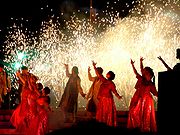 Music in Indian cinema is a substantial revenue generator, with the music rights alone accounting for 4–5% of the net revenues generated by a film in India. The major film music companies of India are Saregama, Sony Music etc. Commercially, film music accounts for 48% India's net music sales. A typical Indian film may have around 5-6 choreographed songs spread throughout the film's length.
The demands of a multicultural, increasingly globalized Indian audience often led to a mixing of various local and international musical traditions. Local dance and music nevertheless remain a time tested and recurring theme in India and have made their way outside of India's borders with its diaspora. Playback singers such as Lata Mangeshkar
drew large crowds with national and international film music stage shows. The end of the 19th century and the beginning of the 21st saw extensive interaction between artists from India and the western world. Artists from Indian diaspora blended the traditions of their heritage to those of their country to give rise to popular contemporary music.
Below are the major non-governmental awards.
India
India , officially the Republic of India , is a country in South Asia. It is the seventh-largest country by geographical area, the second-most populous country with over 1.2 billion people, and the most populous democracy in the world...
, which includes the cinematic culture of Andhra Pradesh
Andhra Pradesh
Andhra Pradesh , is one of the 28 states of India, situated on the southeastern coast of India. It is India's fourth largest state by area and fifth largest by population. Its capital and largest city by population is Hyderabad.The total GDP of Andhra Pradesh is $100 billion and is ranked third...
, Assam
Assam
Assam , also, rarely, Assam Valley and formerly the Assam Province , is a northeastern state of India and is one of the most culturally and geographically distinct regions of the country...
, Gujarat, Haryana
Haryana
Haryana is a state in India. Historically, it has been a part of the Kuru region in North India. The name Haryana is found mentioned in the 12th century AD by the apabhramsha writer Vibudh Shridhar . It is bordered by Punjab and Himachal Pradesh to the north, and by Rajasthan to the west and south...
, Jammu and Kashmir
Jammu and Kashmir
Jammu and Kashmir is the northernmost state of India. It is situated mostly in the Himalayan mountains. Jammu and Kashmir shares a border with the states of Himachal Pradesh and Punjab to the south and internationally with the People's Republic of China to the north and east and the...
, Karnataka
Karnataka
Karnataka , the land of the Kannadigas, is a state in South West India. It was created on 1 November 1956, with the passing of the States Reorganisation Act and this day is annually celebrated as Karnataka Rajyotsava...
, Kerala
Kerala
or Keralam is an Indian state located on the Malabar coast of south-west India. It was created on 1 November 1956 by the States Reorganisation Act by combining various Malayalam speaking regions....
, Maharashtra
Maharashtra
Maharashtra is a state located in India. It is the second most populous after Uttar Pradesh and third largest state by area in India...
, Orissa
Orissa
Orissa , officially Odisha since Nov 2011, is a state of India, located on the east coast of India, by the Bay of Bengal. It is the modern name of the ancient nation of Kalinga, which was invaded by the Maurya Emperor Ashoka in 261 BC. The modern state of Orissa was established on 1 April...
, Punjab
Punjab (India)
Punjab ) is a state in the northwest of the Republic of India, forming part of the larger Punjab region. The state is bordered by the Indian states of Himachal Pradesh to the east, Haryana to the south and southeast and Rajasthan to the southwest as well as the Pakistani province of Punjab to the...
, Tamil Nadu
Tamil Nadu
Tamil Nadu is one of the 28 states of India. Its capital and largest city is Chennai. Tamil Nadu lies in the southernmost part of the Indian Peninsula and is bordered by the union territory of Pondicherry, and the states of Kerala, Karnataka, and Andhra Pradesh...
, and West Bengal
West Bengal
West Bengal is a state in the eastern region of India and is the nation's fourth-most populous. It is also the seventh-most populous sub-national entity in the world, with over 91 million inhabitants. A major agricultural producer, West Bengal is the sixth-largest contributor to India's GDP...
. Indian films came to be followed throughout South Asia
South Asia
South Asia, also known as Southern Asia, is the southern region of the Asian continent, which comprises the sub-Himalayan countries and, for some authorities , also includes the adjoining countries to the west and the east...
and the Middle East
Middle East
The Middle East is a region that encompasses Western Asia and Northern Africa. It is often used as a synonym for Near East, in opposition to Far East...
. The cinema as a medium gained popularity in the country as many as 1,000 films in various languages of India
Languages of India
The languages of India belong to several language families, the major ones being the Indo-European languages—Indo-Aryan and the Dravidian languages...
were produced annually. Expatriates in countries such as the United Kingdom
United Kingdom
The United Kingdom of Great Britain and Northern IrelandIn the United Kingdom and Dependencies, other languages have been officially recognised as legitimate autochthonous languages under the European Charter for Regional or Minority Languages...
and the United States continue to give rise to international audiences for Indian films of various languages.
In the 20th century, Indian cinema, along with the Hollywood
Cinema of the United States
The cinema of the United States, also known as Hollywood, has had a profound effect on cinema across the world since the early 20th century. Its history is sometimes separated into four main periods: the silent film era, classical Hollywood cinema, New Hollywood, and the contemporary period...
and Chinese film industries
Cinema of China
The Chinese-language cinema has three distinct historical threads: Cinema of Hong Kong, Cinema of China, and Cinema of Taiwan. Since 1949 the cinema of mainland China has operated under restrictions imposed by the Communist Party of China's State Administration of Radio, Film, and Television and...
, became a global enterprise. At the end of 2010 it was reported that in terms of annual film output, India ranks first, followed by Hollywood
Cinema of the United States
The cinema of the United States, also known as Hollywood, has had a profound effect on cinema across the world since the early 20th century. Its history is sometimes separated into four main periods: the silent film era, classical Hollywood cinema, New Hollywood, and the contemporary period...
and China. Enhanced technology paved the way for upgrading from established cinematic norms of delivering product, altering the manner in which content reached the target audience, as per regional tastes. Indian cinema found markets in over 90 countries where films from India are screened.
The country also participated in international film festivals, especially Satyajit Ray
Satyajit Ray
Satyajit Ray was an Indian Bengali filmmaker. He is regarded as one of the greatest auteurs of 20th century cinema. Ray was born in the city of Kolkata into a Bengali family prominent in the world of arts and literature...
, Mrinal Sen
Mrinal Sen
Mrinal Sen is a Bengali Indian filmmaker. He was born on 14 May 1923, in the town of Faridpur, now in Bangladesh in a Hindu family. After finishing his high school there, he left home to come to Calcutta as a student and studied physics at the well-known Scottish Church College and at the...
, Ritwik Ghatak, Girish Kasaravalli
Girish Kasaravalli
Girish Kasaravalli is a noted film director, and one of the pioneers of the Parallel Cinema in Kannada cinema, who has won the National Film Award for Best Film four times, Ghatashraddha , Tabarana Kathe , Thaayi Saheba and Dweepa...
, Shyam Benegal
Shyam Benegal
Shyam Benegal is a prolific Indian director and screenwriter. With his first four feature films Ankur , Nishant Manthan and Bhumika he created a new genre, which has now come to be called the "middle cinema" in India although he himself has expressed dislike in the term preferring his work to...
, Adoor Gopalakrishnan
Adoor Gopalakrishnan
Moutatthu "Adoor" Gopalakrishnan Unnithan is an Indian film director, script writer, and producer. Adoor Gopalakrishnan had a major role in revolutionizing Malayalam cinema and is regarded as one of the greatest filmmakers of India.. Adoor's first film Swayamvaram pioneered the new wave cinema...
, G. Aravindan
G. Aravindan
Govindan Aravindan who was popularly known as G. Aravindan was a national award winning film director, screenwriter, musician and cartoonist from Kerala, India. He was known for his unorthodox way of film-making; he changed his cinematic forms consistently and experimented in story telling without...
and Mani Ratnam
Mani Ratnam
Mani Ratnam is an Indian filmmaker, screenwriter and producer. He made his directorial debut with the Kannada film Pallavi Anu Pallavi starring Anil Kapoor in 1983...
. Indian filmmakers such as Shekhar Kapur
Shekhar Kapur
Shekhar Kapur is an Indian film director and producer. A critically acclaimed director, he rose to popularity with the movie Bandit Queen...
, Karan Johar
Karan Johar
Karan Johar is an Indian film director, producer, screenwriter and Television host. He is the son of Hiroo Johar and Yash Johar. He is one of the most successful filmmakers in Bollywood. He is most known for directing and producing some of Bollywood's highest grossing films in India and the...
, Mira Nair
Mira Nair
Mira Nair is an Indian film director and producer based in New York. Her production company is Mirabai Films.She was educated at Delhi University and Harvard University. Her debut feature film, Salaam Bombay! , won the Golden Camera award at the Cannes Film Festival and also earned the nomination...
, Deepa Mehta
Deepa Mehta
Deepa Mehta, LLD is a Genie Award-winning Indian-born Canadian film director and screenwriter, most known for her Elements Trilogy, Fire , Earth , and Water , among which Earth was submitted by Indian government for Academy Award for Best Foreign Language Film...
, Nagesh Kukunoor
Nagesh Kukunoor
Nagesh Kukunoor is an Indian filmmaker and screenwriter. He is known for movies such as Hyderabad Blues , Rockford , 3 Deewarein and Iqbal .-Early life:...
found success overseas. The Indian government extended film delegations to foreign countries such as the United States of America and Japan while the country's Film Producers Guild sent similar missions through Europe. Sivaji Ganesan
Sivaji Ganesan
Viluppuram Chinnaiahpillai Ganesan Manrayar , commonly known by his stage name Sivaji Ganesan , was an Indian stage and film actor active during the latter half of the 20th century. He is one of the most respected film actors in India. He is well known for his versatility and acting skills with...
, and S. V. Ranga Rao
S. V. Ranga Rao
Samarla Venkata Ranga Rao Popularly Known as S.V.R. was an Indian Theater actor, Tollywood actor, director and producer...
won their respective first international award for Best Actor held at Afro-Asian Film Festival in Cairo and Indonesian Film Festival in Jakarta for the films Veerapandiya Kattabomman
Veerapandiya Kattabomman (film)
Veerapandiya Kattabomman is a 1959 Tamil feature film written by Sakthi T. K. Krishnasamy and directed by B. R. Panthulu. The cast includes Sivaji Ganesan, Gemini Ganesan, Padmini, S. Varalakshmi, and V. K. Ramaswamy....
and Narthanasala in 1959 and 1963.
India is the world's largest producer of films. In 2009, India produced a total of 2961 films on celluloid, that include a staggering figure of 1288 feature films. The provision of 100% foreign direct investment has made the Indian film market attractive for foreign enterprises such as 20th Century Fox
20th Century Fox
Twentieth Century Fox Film Corporation — also known as 20th Century Fox, or simply 20th or Fox — is one of the six major American film studios...
, Sony Pictures, Walt Disney Pictures
Walt Disney Pictures
Walt Disney Pictures is an American film studio owned by The Walt Disney Company. Walt Disney Pictures and Television, a subsidiary of the Walt Disney Studios and the main production company for live-action feature films within the Walt Disney Motion Pictures Group, based at the Walt Disney...
and Warner Bros. Indian enterprises such as Zee, UTV
UTV Software Communications
UTV Software Communications Ltd., also known as United Television or UTV, is an Indian media and entertainment company owned by The Walt Disney Company India Pvt. Ltd., a subsidiary of The Walt Disney Company.-History:...
, Suresh Productions
Suresh Productions
Suresh Productions is a film production company founded by Dr. D. Ramanaidu. The production house of the company is Ramanaidu Studios which is located at Hyderabad, Andhra Pradesh, India. Suresh Productions, is one of India’s largest film production companies with over 50 years of contribution to...
, Adlabs and Sun Network's Sun Pictures
Sun Pictures
Sun Pictures is a film distribution and production studio unit of Chennai, based Sun Network owned by Kalanidhi Maran. Founded in 2008, it started distributing low-budget Tamil-language films, Kadhalil Vizhunthen being the first, and holds the credit of producing India's costliest film Enthiran...
also participated in producing and distributing films. Tax incentives to multiplexes have aided the multiplex boom in India. By 2003 as many as 30 film production companies had been listed in the National Stock Exchange of India
National Stock Exchange of India
The National Stock Exchange is a stock exchange located at Mumbai, Maharashtra, India. It is the 9th largest stock exchange in the world by market capitalization and largest in India by daily turnover and number of trades, for both equities and derivative trading. NSE has a market capitalization...
, making the commercial presence of the medium felt.
The Indian diaspora
Non-resident Indian and Person of Indian Origin
A Non-Resident Indian is an Indian citizen who has migrated to another country, a person of Indian origin who is born outside India, or a person of Indian origin who resides permanently outside India. Other terms with the same meaning are overseas Indian and expatriate Indian...
consists of millions of Indians overseas for which films are made available both through mediums such as DVDs and by screening of films in their country of residence wherever commercially feasible. These earnings, accounting for some 12% of the revenue generated by a mainstream film, contribute substantially to the overall revenue of Indian cinema, the net worth of which was found to be 1.3 billion in 2000. Music in Indian cinema is another substantial revenue generator, with the music rights alone accounting for 4–5% of the net revenues generated by a film in India.
History
Auguste and Louis Lumière
The Lumière brothers, Auguste Marie Louis Nicolas and Louis Jean , were among the earliest filmmakers in history...
moving pictures in London (1895) cinema became a sensation across Europe and by July 1896 the Lumière films had been in show in Bombay (now Mumbai
Mumbai
Mumbai , formerly known as Bombay in English, is the capital of the Indian state of Maharashtra. It is the most populous city in India, and the fourth most populous city in the world, with a total metropolitan area population of approximately 20.5 million...
). The first short films in India were directed by Hiralal Sen
Hiralal Sen
Hiralal Sen was an Indian photographer generally considered one of India's first filmmakers. He is also credited with creating India's first advertising films and quite possibly India's first political film...
, starting with The Flower of Persia (1898). The first full-length motion picture in India was produced by Dadasaheb Phalke
Dadasaheb Phalke
Dhundiraj Govind Phalke, popularly known as Dadasaheb Phalke was an Indian producer-director-screenwriter, known as the father of Indian cinema...
,Dadasaheb is the pionier of Indian film industry a scholar on India's languages and culture, who brought together elements from Sanskrit
Sanskrit
Sanskrit , is a historical Indo-Aryan language and the primary liturgical language of Hinduism, Jainism and Buddhism.Buddhism: besides Pali, see Buddhist Hybrid Sanskrit Today, it is listed as one of the 22 scheduled languages of India and is an official language of the state of Uttarakhand...
epics to produce his Raja Harishchandra
Raja Harishchandra
Raja Harishchandra , is a 1913 silent Indian film directed and produced by Dadasaheb Phalke, and is the first full-length Indian feature film...
(1913), a silent film in Marathi
Marathi language
Marathi is an Indo-Aryan language spoken by the Marathi people of western and central India. It is the official language of the state of Maharashtra. There are over 68 million fluent speakers worldwide. Marathi has the fourth largest number of native speakers in India and is the fifteenth most...
. The female roles in the film were played by male actors. The first Indian chain of cinema theaters was owned by the Calcutta entrepreneur Jamshedji Framji Madan
Jamshedji Framji Madan
Jamshedji Framji Madan , born in a Parsi family in Bombay, was one of the pioneers of the Indian film industry.-Early life:Madan's father suffered a huge monetary loss when Bombay Reclamation Bank, which was responsible for reclaiming land between the seven islands of Bombay, failed. JF Madan had...
, who oversaw production of 10 films annually and distributed them throughout the Indian subcontinent
Indian subcontinent
The Indian subcontinent, also Indian Subcontinent, Indo-Pak Subcontinent or South Asian Subcontinent is a region of the Asian continent on the Indian tectonic plate from the Hindu Kush or Hindu Koh, Himalayas and including the Kuen Lun and Karakoram ranges, forming a land mass which extends...
.
Raghupathi Venkaiah Naidu was an Indian artist
Artist
An artist is a person engaged in one or more of any of a broad spectrum of activities related to creating art, practicing the arts and/or demonstrating an art. The common usage in both everyday speech and academic discourse is a practitioner in the visual arts only...
and a pioneer in the production of silent Indian movies and talkies. Starting from 1909, he was involved in many aspects of Indian cinema's history, like travelling to different regions in Asia, to promote film work. He was the first to build and own cinema hall's in Madras.
The Raghupathi Venkaiah Naidu Award is an annual award incorporated into Nandi Awards
Nandi Awards
The Nandi Awards is the most Prominent award ceremony for Telugu films, Telugu Theater & Television, presented annually in Andhra Pradesh, India. "Nandi" means "bull", the awards being named after the big granite bull at Lepakshi — a cultural and historical symbol of Andhra Pradesh.Nandi...
to recognize people for their contributions to the Telugu film industry.
During the early twentieth century cinema as a medium gained popularity across India's population and its many economic sections. Tickets were made affordable to the common man at a low price and for the financially capable additional comforts meant additional admission ticket price. Audiences thronged to cinema halls as this affordable medium of entertainment was available for as low as an anna (4 paisa) in Bombay. The content of Indian commercial cinema was increasingly tailored to appeal to these masses. Young Indian producers began to incorporate elements of India's social life and culture into cinema. Others brought with them ideas from across the world. This was also the time when global audiences and markets became aware of India's film industry.
Ardeshir Irani
Ardeshir Irani
Khan Bahadur Ardeshir Irani ; popularly known as Ardeshir Irani, was a writer, director, producer, actor, film distributor, film showman and cinematographer in the silent and sound eras of early Indian cinema. He was renowned for making films in Hindi, Telugu, English, German, Indonesian, Persian,...
released Alam Ara
Alam Ara
Alam Ara is a 1931 film directed by Ardeshir Irani. It was the first Indian sound film.Irani recognized the importance that sound would have on the cinema, and raced to complete Alam Ara before several contemporary sound films. Alam Ara debuted at the Majestic Cinema in Mumbai on March 14, 1931...
which was the first Indian talking film, on 14 March 1931. H.M. Reddy, produced and directed Bhakta Prahlada
Bhakta Prahlada (1931 film)
Bhakta Prahlada is the first Telugu talkie film made in 1931 by H. M. Reddy, a pioneer of the Indian film industry. It is a movie about a devotee Prahlada in Hindu mythology.-History:...
(Telugu), released on Sept 15, 1931 and Kalidas (Tamil) released on Oct 31, 1931. Kalidas was produced by Ardeshir Irani and directed by H.M. Reddy. These two films are south India's first talkie films to have a theatrical release. Following the inception of 'talkies' in India some film stars were highly sought after and earned comfortable incomes through acting. As sound technology advanced the 1930s saw the rise of music in Indian cinema with musicals such as Indra Sabha and Devi Devyani marking the beginning of song-and-dance in India's films. Studios emerged across major cities such as Chennai
Chennai
Chennai , formerly known as Madras or Madarasapatinam , is the capital city of the Indian state of Tamil Nadu, located on the Coromandel Coast off the Bay of Bengal. Chennai is the fourth most populous metropolitan area and the sixth most populous city in India...
, Kolkata, and Mumbai as film making became an established craft by 1935, exemplified by the success of Devdas
Devdas (1935 film)
Devdas is a 1935 Bengali film based on the Sharat Chandra Chattopadhyay novella, Devdas. It stars P.C. Barua as Devdas and Jamuna Barua as Parvati and Chandrabati Devi as Chandramuki.Sharat Chandra Chatterjee's classic novel Devadas is about two lovers - Debdas and Parbati - who can never unite...
, which had managed to enthrall audiences nationwide. Bombay Talkies
Bombay Talkies
The Bombay Talkies Limited was a movie studio produced 102 movies, founded in 1934 in Malad, Bombay , India, by Himanshu Rai, Rajnarayan Dube and Devika Rani along with businessmen like F. E...
came up in 1934 and Prabhat Studios
Prabhat Film Company
Prabhat Film Company popularly known as Prabhat Films was an Indian film production company and film studios, formed in Kolhapur, Maharashtra, India in 1929, towards the end of silent films' era, by the noted film director V. Shantaram, along with V.G. Damle, K.R. Dhaiber, S. Fatelal and S.B...
in Pune
Pune
Pune , is the eighth largest metropolis in India, the second largest in the state of Maharashtra after Mumbai, and the largest city in the Western Ghats. Once the centre of power of the Maratha Empire, it is situated 560 metres above sea level on the Deccan plateau at the confluence of the Mula ...
had begun production of films meant for the Marathi language
Marathi language
Marathi is an Indo-Aryan language spoken by the Marathi people of western and central India. It is the official language of the state of Maharashtra. There are over 68 million fluent speakers worldwide. Marathi has the fourth largest number of native speakers in India and is the fifteenth most...
audience. Filmmaker R. S. D. Choudhury produced Wrath (1930), banned by the British Raj
British Raj
British Raj was the British rule in the Indian subcontinent between 1858 and 1947; The term can also refer to the period of dominion...
in India as it depicted actors as Indian leaders, an expression censored during the days of the Indian independence movement
Indian independence movement
The term Indian independence movement encompasses a wide area of political organisations, philosophies, and movements which had the common aim of ending first British East India Company rule, and then British imperial authority, in parts of South Asia...
.
The Indian Masala film
Masala (film genre)
Masala is a term given to films of Indian cinema that mix various genres in one film. Typically these films freely mix action, comedy, romance, and drama or melodrama. These films tend to be musicals that include songs filmed in picturesque locations...
—a slang used for commercial films with song, dance, romance etc.—came up following the second world war. South Indian cinema gained prominence throughout India with the release of S.S. Vasan's Chandralekha
Chandralekha (1948 film)
Chandralekha is a 1948 Tamil epic film directed and produced by S. S. Vasan. It features an ensemble cast consisting of M.K.Radha, Ranjan, T. R. Rajakumari, N. S. Krishnan and T. A. Madhuram...
. During the 1940s cinema in South India
South India
South India is the area encompassing India's states of Andhra Pradesh, Karnataka, Kerala and Tamil Nadu as well as the union territories of Lakshadweep and Pondicherry, occupying 19.31% of India's area...
accounted for nearly half of India's cinema halls and cinema came to be viewed as an instrument of cultural revival. The partition of India
Partition of India
The Partition of India was the partition of British India on the basis of religious demographics that led to the creation of the sovereign states of the Dominion of Pakistan and the Union of India on 14 and 15...
following its independence divided the nation's assets and a number of studios went to the newly formed Pakistan
Pakistan
Pakistan , officially the Islamic Republic of Pakistan is a sovereign state in South Asia. It has a coastline along the Arabian Sea and the Gulf of Oman in the south and is bordered by Afghanistan and Iran in the west, India in the east and China in the far northeast. In the north, Tajikistan...
. The strife of partition would become an enduring subject for film making during the decades that followed.
After Indian independence the cinema of India was inquired by the S.K. Patil Commission. S.K. Patil, head of the commission, viewed cinema in India as a 'combination of art, industry, and showmanship' while noting its commercial value. Patil further recommended setting up of a Film Finance Corporation under the Ministry of Finance
Ministry of Finance (India)
The Ministry of Finance is an important ministry within the Government of India. It concerns itself with taxation, financial legislation, financial institutions, capital markets, center and state finances, and the Union Budget....
. This advice was later taken up in 1960 and the institution came into being to provide financial support to talented filmmakers throughout India. The Indian government had established a Films Division by 1949 which eventually became one of the largest documentary film producers in the world with an annual production of over 200 short documentaries, each released in 18 languages with 9000 prints for permanent film theaters across the country.
The Indian People's Theatre Association
Indian People's Theatre Association
Indian People’s Theatre Association was an association of leftist theatre-artists and others mostly based in Kolkata, West Bengal, Mumbai and Assam, India. Its goal was to bring cultural awakening among the people of India. It was the cultural wing of the Communist Party of India...
(IPTA), an art movement with a communist inclination, began to take shape through the 1940s and the 1950s. A number of realistic IPTA plays, such as Bijon Bhattacharya
Bijon Bhattacharya
Bijon Bhattacharya was a prominent Indian theatre and film personality from Bengal.Bijon was born in 1917 at Faridpur in a Hindu Brahmin family, and was early a witness to the destitution and penury of the peasantry of that land...
's Nabanna
Nabanna
Nabanna is a Bengali harvest celebration usually celebrated with food and dance and music. It's a festival of food; many local preparations of Bengali cuisine like pithe are cooked and offered.-Celebration:...
in 1944 (based on the tragedy of the Bengal famine of 1943
Bengal famine of 1943
The Bengal famine of 1943 struck the Bengal. Province of pre-partition India. Estimates are that between 1.5 and 4 million people died of starvation, malnutrition and disease, out of Bengal’s 60.3 million population, half of them dying from disease after food became available in December 1943 As...
), prepared the ground for the solidification of realism in Indian cinema, exemplified by Khwaja Ahmad Abbas
Khwaja Ahmad Abbas
Khwaja Ahmad Abbas , popularly known as K. A. Abbas, was an Indian film director, novelist, screenwriter, and a journalist in the Urdu, Hindi and English languages...
's Dharti Ke Lal
Dharti Ke Lal
Dharti Ke Lal is a 1946 Hindi film and the first directorial venture of the noted film director Khwaja Ahmad Abbas...
(Children of the Earth) in 1946. The IPTA movement continued to emphasize on reality and went on to produce Mother India
Mother India
Mother India is a 1957 Hindi film epic, written and directed by Mehboob Khan and starring Nargis, Sunil Dutt, Rajendra Kumar and Raaj Kumar. The film, a melodrama, is a remake of Mehboob Khan's earlier film, Aurat...
and Pyaasa
Pyaasa
Pyaasa is a 1957 Indian film produced and directed by Guru Dutt. The film tells the story of struggling poet, Vijay , trying to make his works known in post-independence India...
, among India's most recognizable cinematic productions.
Golden Age of Indian cinema
Following India's independenceIndian independence movement
The term Indian independence movement encompasses a wide area of political organisations, philosophies, and movements which had the common aim of ending first British East India Company rule, and then British imperial authority, in parts of South Asia...
, the period from the late 1940s to the 1960s are regarded by film historians as the 'Golden Age' of Indian cinema. Some of the most critically acclaimed Indian films of all time were produced during this period. In commercial Hindi cinema
Bollywood
Bollywood is the informal term popularly used for the Hindi-language film industry based in Mumbai , Maharashtra, India. The term is often incorrectly used to refer to the whole of Indian cinema; it is only a part of the total Indian film industry, which includes other production centers producing...
, examples of films at the time include the Guru Dutt
Guru Dutt
Vasanth Kumar Shivashankar Padukone , popularly known as Guru Dutt, was an Indian film director, producer and actor. He is often credited with ushering in the golden era of Hindi cinema...
films Pyaasa
Pyaasa
Pyaasa is a 1957 Indian film produced and directed by Guru Dutt. The film tells the story of struggling poet, Vijay , trying to make his works known in post-independence India...
(1957) and Kaagaz Ke Phool
Kaagaz Ke Phool
Kaagaz Ke Phool, , is a 1959 Hindi film produced and directed by Guru Dutt, who also played the lead role in the film .The film was a box office disaster of its time but was later resurrected as a world cinema cult classic in the 1980s. The film's music was composed by S. D...
(1959) and the Raj Kapoor
Raj Kapoor
Known as Ranbir Raj Kapoor Rāj Kapūr, 14 December 1924 – 2 June 1988), also known as The Show-Man, was an Indian film actor, producer and director of Hindi cinema. He was the winner of nine Filmfare Awards, while his films Awaara and Boot Polish were nominated for the Palme d'Or at the...
films Awaara
Awaara
Awaara is a 1951 Hindi film directed and produced by Raj Kapoor who also plays the leading role. His real-life father Prithviraj Kapoor stars as his on-screen father Judge Raghunath. Kapoor's youngest real-life brother Shashi Kapoor plays the younger version of his character...
(1951) and Shree 420 (1955). These films expressed social themes mainly dealing with working-class urban life in India; Awaara presented the city as both a nightmare and a dream, while Pyaasa critiqued the unreality of city life. Some epic film
Epic film
An epic is a genre of film that emphasizes human drama on a grand scale. Epics are more ambitious in scope than other film genres, and their ambitious nature helps to differentiate them from similar genres such as the period piece or adventure film...
s were also produced at the time, including Mehboob Khan's Mother India
Mother India
Mother India is a 1957 Hindi film epic, written and directed by Mehboob Khan and starring Nargis, Sunil Dutt, Rajendra Kumar and Raaj Kumar. The film, a melodrama, is a remake of Mehboob Khan's earlier film, Aurat...
(1957), which was nominated for the Academy Award for Best Foreign Language Film
Academy Award for Best Foreign Language Film
The Academy Award for Best Foreign Language Film is one of the Academy Awards of Merit, popularly known as the Oscars, handed out annually by the U.S.-based Academy of Motion Picture Arts and Sciences...
, and K. Asif
K. Asif
K. Asif was a film director, film producer and screenwriter who was famous for his work for the Hindi epic motion picture, Mughal-e-Azam .-Early life:...
's Mughal-e-Azam
Mughal-e-Azam
Mughal-E-Azam is a 1960 Indian historical epic film produced under the banner of Sterling Investment Corporation Pvt Ltd, and directed by K. Asif. With its unmatched production, K. Asif's magnum opus took nine years and $3 million to complete this movie. This was when a typical Bollywood film...
(1960). V. Shantaram
V. Shantaram
V. Shantaram is a renowned Indian filmmaker, film producer and actor. He is most known for his films like Dr...
's Do Aankhen Barah Haath
Do Aankhen Barah Haath
Do Aankhen Barah Haath is a 1957 Hindi film directed by the Indian film director V. Shantaram, who also starred in the film. It is considered one of the classics of Hindi cinema and is based on morals of Gandhian philosophy. It won a Silver Bear at the 8th Berlin International Film Festival and it...
(1957) is believed to have inspired the Hollywood
Cinema of the United States
The cinema of the United States, also known as Hollywood, has had a profound effect on cinema across the world since the early 20th century. Its history is sometimes separated into four main periods: the silent film era, classical Hollywood cinema, New Hollywood, and the contemporary period...
film The Dirty Dozen
The Dirty Dozen
The Dirty Dozen is a 1967 film directed by Robert Aldrich and released by MGM. It was filmed in England and features an ensemble cast, including Lee Marvin, Ernest Borgnine, Charles Bronson, Jim Brown, John Cassavetes, Telly Savalas, and Robert Webber. The film is based on E. M...
(1967). Madhumati
Madhumati
Madhumati is a 1958 Hindi film produced and directed by Bimal Roy, and written by Ritwik Ghatak and Rajinder Singh Bedi. The music was composed by Salil Choudhury with the lyrics by Shailendra. The film stars Dilip Kumar, Vyjayantimala, Pran, and Johnny Walker. It was one of the earliest films to...
(1958), directed by Bimal Roy
Bimal Roy
Bimal Roy was one of the most acclaimed Indian film directors of all time. He is particularly noted for his realistic and socialistic films like Do Bigha Zamin, Parineeta, Biraj Bahu, Madhumati, Sujata, and Bandini, making him an important director of Hindi cinema...
and written by Ritwik Ghatak, popularized the theme of reincarnation
Reincarnation
Reincarnation best describes the concept where the soul or spirit, after the death of the body, is believed to return to live in a new human body, or, in some traditions, either as a human being, animal or plant...
in Western popular culture
Reincarnation in popular western culture
Reincarnation seems to have captured the imagination of many and the idea receives regular mentions in feature films, popular books, and popular music. Transmigration, although not directly referred to as such, has been used frequently to the point of cliché in the sense of people "switching...
. Other mainstream Hindi filmmakers at the time included Kamal Amrohi
Kamal Amrohi
Syed Amir Haider Kamal Naqvi popularly known as Kamal Amrohi or Amrohvi in Urdu was an Indian film director, screenwriter, and dialogue writer. He was a Shi'a Muslim and an Urdu and Hindi poet. He is most known for his Hindi films such as Mahal , Pakeezah and Razia Sultan...
and Vijay Bhatt
Vijay Bhatt
Vijay Bhatt was a noted producer-director-screenwriter of Hindi cinema, who made such films as Ram Rajya , Baiju Bawra , Goonj Uthi Shehnai and Himalaya Ki God Mein .He founded Prakash Pictures, a film production company and Prakash Studios in Andheri East, Mumbai, which...
.
While, commercial cinema was thriving, the same age saw the emergence of a new Parallel Cinema
Parallel Cinema
The Indian New Wave, commonly known in India as Art Cinema or Parallel Cinema as an alternative to the mainstream commercial cinema, is a specific movement in Indian cinema, known for its serious content, realism and naturalism, with a keen eye on the sociopolitical climate of the times...
movement, mainly led by Bengali cinema
Bengali cinema
Bengali cinema refers to the Bengali language filmmaking industries in the Bengal region of South Asia. There are two major film-making hubs in the region: one in Kolkata, West Bengal, India and the other in Dhaka, Bangladesh .The history of cinema in Bengal dates back to the 1890s, when the first...
. Early examples of films in this movement include Chetan Anand
Chetan Anand (producer & director)
Chetan Anand was an acclaimed Hindi film producer, screenwriter and director from India, whose debut film, Neecha Nagar, bagged the Palme d'Or award, at the Cannes Film Festival in 1946....
's Neecha Nagar
Neecha Nagar
Neecha Nagar is a 1946 Hindi film directed by Chetan Anand. Written by Khwaja Ahmad Abbas, this film was a pioneering effort in social realism in Indian cinema, and paved the way for many such 'Parallel Cinema' films by other directors and many of them written by Khwaja Ahmad Abbas...
(1946), Ritwik Ghatak's Nagarik
Nagarik
Nagarik ,also spelled as Nagorik, The Citizen in English, was the first feature-length film directed by Indian director Ritwik Ghatak. Completed in 1952, it preceded Satyajit Ray's Pather Panchali as perhaps, the first example of an art film in Bengali cinema, but is deprived of that honor, since...
(1952), and Bimal Roy's Two Acres of Land (1953), laying the foundations for Indian neorealism
Neorealism (art)
In art, neorealism was established by the ex-Camden Town Group painters Charles Ginner and Harold Gilman at the beginning of World War I. They set out to explore the spirit of their age through the shapes and colours of daily life...
and the "Indian New Wave". Pather Panchali (1955), the first part of The Apu Trilogy (1955–1959) by Satyajit Ray, marked his entry in Indian cinema. The Apu Trilogy won major prizes at all the major international film festivals and led to the 'Parallel Cinema' movement being firmly established in Indian cinema. Its influence on world cinema
World cinema
World cinema is a term used primarily in English language speaking countries to refer to the films and film industries of non-English speaking countries. It is therefore often used interchangeably with the term foreign film...
can also be felt in the "youthful coming-of-age
Coming of age
Coming of age is a young person's transition from childhood to adulthood. The age at which this transition takes place varies in society, as does the nature of the transition. It can be a simple legal convention or can be part of a ritual, as practiced by many societies...
dramas
Drama film
A drama film is a film genre that depends mostly on in-depth development of realistic characters dealing with emotional themes. Dramatic themes such as alcoholism, drug addiction, infidelity, moral dilemmas, racial prejudice, religious intolerance, poverty, class divisions, violence against women...
that have flooded art houses since the mid-fifties" which "owe a tremendous debt to the Apu trilogy". Satyajit Ray and Ritwik Ghatak went on to direct many more critically acclaimed 'art film
Art film
An art film is the result of filmmaking which is typically a serious, independent film aimed at a niche market rather than a mass market audience...
s', and they were followed by other acclaimed Indian independent filmmakers such as Mrinal Sen
Mrinal Sen
Mrinal Sen is a Bengali Indian filmmaker. He was born on 14 May 1923, in the town of Faridpur, now in Bangladesh in a Hindu family. After finishing his high school there, he left home to come to Calcutta as a student and studied physics at the well-known Scottish Church College and at the...
, Adoor Gopalakrishnan
Adoor Gopalakrishnan
Moutatthu "Adoor" Gopalakrishnan Unnithan is an Indian film director, script writer, and producer. Adoor Gopalakrishnan had a major role in revolutionizing Malayalam cinema and is regarded as one of the greatest filmmakers of India.. Adoor's first film Swayamvaram pioneered the new wave cinema...
, Mani Kaul
Mani Kaul
Mani Kaul was an Indian film director of Hindi films. He graduated from the Film and Television Institute of India where he was a student of Ritwik Ghatak and later became a teacher. Started his career with Uski Roti , which won him the Filmfare Critics Award for Best Movie, he went on to win...
and Buddhadeb Dasgupta
Buddhadeb Dasgupta
Buddhadeb Dasgupta is a poet and prominent contemporary Indian filmmaker, most known for films like Bagh Bahadur, Tahader Katha, Charachar and Uttara...
. During the 1960s, Indira Gandhi
Indira Gandhi
Indira Priyadarshini Gandhara was an Indian politician who served as the third Prime Minister of India for three consecutive terms and a fourth term . She was assassinated by Sikh extremists...
's intervention during her reign as the Information and Broadcasting Minister of India further led to production of off-beat cinematic expression being supported by the official Film Finance Corporation.
The cinematographer Subrata Mitra
Subrata Mitra
Subrata Mitra was an Indian cinematographer. Acclaimed for his work in The Apu Trilogy , Mitra is often considered one of the greatest of Indian cinematographers....
, who made his debut with Satyajit Ray's The Apu Trilogy, also had an important influence on cinematography
Cinematography
Cinematography is the making of lighting and camera choices when recording photographic images for cinema. It is closely related to the art of still photography...
across the world. One of his most important techniques was bounce lighting, to recreate the effect of daylight on sets. He pioneered the technique while filming Aparajito
Aparajito
Aparajito is a 1956 Bengali film directed by Satyajit Ray, and is the second part of The Apu Trilogy. It is adapted from the last one-fifth of Bibhutibhushan Bannerjee's novel Pather Panchali and the first one-third of its sequel Aparajito. It focuses on the life of Apu from childhood to college...
(1956), the second part of The Apu Trilogy. Some of the experimental techniques which Satyajit Ray pioneered include photo-negative
Negative (photography)
In photography, a negative may refer to three different things, although they are all related.-A negative:Film for 35 mm cameras comes in long narrow strips of chemical-coated plastic or cellulose acetate. As each image is captured by the camera onto the film strip, the film strip advances so that...
flashbacks
Flashback (narrative)
Flashback is an interjected scene that takes the narrative back in time from the current point the story has reached. Flashbacks are often used to recount events that happened before the story’s primary sequence of events or to fill in crucial backstory...
and X-ray
X-ray
X-radiation is a form of electromagnetic radiation. X-rays have a wavelength in the range of 0.01 to 10 nanometers, corresponding to frequencies in the range 30 petahertz to 30 exahertz and energies in the range 120 eV to 120 keV. They are shorter in wavelength than UV rays and longer than gamma...
digression
Digression
Digression is a section of a composition or speech that is an intentional change of subject. In Classical rhetoric since Corax of Syracuse, especially in Institutio Oratoria of Quintilian, the digression was a regular part of any oration or composition...
s while filming Pratidwandi
Pratidwandi
Pratidwandi or Pratidandi is a 1971 Indian Bengali film directed by Satyajit Ray based on the novel by Sunil Gangopadhyay. It is the first part of the Calcutta trilogy...
(1972). Ray's 1967 script for a film to be called The Alien
The Alien
The Alien was an Indian-American science fiction film under production in the late 1960s which was eventually cancelled. It was being directed by the celebrated Indian director Satyajit Ray and co-produced by Hollywood studio Columbia Pictures. The script was written by Ray in 1967, loosely based...
, which was eventually cancelled, is also widely believed to have been the inspiration for Steven Spielberg
Steven Spielberg
Steven Allan Spielberg KBE is an American film director, screenwriter, producer, video game designer, and studio entrepreneur. In a career of more than four decades, Spielberg's films have covered many themes and genres. Spielberg's early science-fiction and adventure films were seen as an...
's E.T.
E.T. the Extra-Terrestrial
E.T. the Extra-Terrestrial is a 1982 American science fiction film co-produced and directed by Steven Spielberg, written by Melissa Mathison and starring Henry Thomas, Dee Wallace, Robert MacNaughton, Drew Barrymore, and Peter Coyote...
(1982).
Ever since Chetan Anand's social realist
Social realism
Social Realism, also known as Socio-Realism, is an artistic movement, expressed in the visual and other realist arts, which depicts social and racial injustice, economic hardship, through unvarnished pictures of life's struggles; often depicting working class activities as heroic...
film Neecha Nagar
Neecha Nagar
Neecha Nagar is a 1946 Hindi film directed by Chetan Anand. Written by Khwaja Ahmad Abbas, this film was a pioneering effort in social realism in Indian cinema, and paved the way for many such 'Parallel Cinema' films by other directors and many of them written by Khwaja Ahmad Abbas...
won the Grand Prize
Palme d'Or
The Palme d'Or is the highest prize awarded at the Cannes Film Festival and is presented to the director of the best feature film of the official competition. It was introduced in 1955 by the organising committee. From 1939 to 1954, the highest prize was the Grand Prix du Festival International du...
at the first Cannes Film Festival
1946 Cannes Film Festival
The 1st Cannes Film Festival was held from September 20 to October 5, 1946.- Jury :*Georges Huisman *Iris Barry *Beaulieu *Antonin Brousil *J.H.J...
, Indian films were frequently in competition for the Palme d'Or
Palme d'Or
The Palme d'Or is the highest prize awarded at the Cannes Film Festival and is presented to the director of the best feature film of the official competition. It was introduced in 1955 by the organising committee. From 1939 to 1954, the highest prize was the Grand Prix du Festival International du...
at the Cannes Film Festival
Cannes Film Festival
The Cannes International Film Festival , is an annual film festival held in Cannes, France, which previews new films of all genres including documentaries from around the world. Founded in 1946, it is among the world's most prestigious and publicized film festivals...
for nearly every year in the 1950s and early 1960s, with a number of them winning major prizes at the festival. Satyajit Ray also won the Golden Lion
Golden Lion
Il Leone d’Oro is the highest prize given to a film at the Venice Film Festival. The prize was introduced in 1949 by the organizing committee and is now regarded as one of the film industry's most distinguished prizes...
at the Venice Film Festival
Venice Film Festival
The Venice International Film Festival is the oldest international film festival in the world. Founded by Count Giuseppe Volpi in 1932 as the "Esposizione Internazionale d'Arte Cinematografica", the festival has since taken place every year in late August or early September on the island of the...
for Aparajito (1956), the second part of The Apu Trilogy, and the Golden Bear
Golden Bear
According to legend, the Golden Bear was a large golden Ursus arctos. Members of the Ursus arctos species can reach masses of . The Grizzly Bear and the Kodiak Bear are North American subspecies of the Brown Bear....
and two Silver Bears for Best Director
Silver Bear for Best Director
The Silver Bear for Best Director is the Berlin International Film Festival's award for best achievement in direction.-Awards:-Repeated winners:*Mario Monicelli *Satyajit Ray *Carlos Saura -External links:*...
at the Berlin International Film Festival
Berlin International Film Festival
The Berlin International Film Festival , also called the Berlinale, is one of the world's leading film festivals and most reputable media events. It is held in Berlin, Germany. Founded in West Berlin in 1951, the festival has been celebrated annually in February since 1978...
. Ray's contemporaries, Ritwik Ghatak and Guru Dutt, were overlooked in their own lifetimes but had belatedly generated international recognition much later in the 1980s and 1990s. Ray is regarded as one of the greatest auteurs
Auteur theory
In film criticism, auteur theory holds that a director's film reflects the director's personal creative vision, as if they were the primary "auteur"...
of 20th century cinema
History of film
The history of film is the historical development of the medium known variously as cinema, motion pictures, film, or the movies.The history of film spans over 100 years, from the latter part of the 19th century to the present day...
, with Dutt and Ghatak. In 1992, the Sight & Sound
Sight & Sound
Sight & Sound is a British monthly film magazine published by the British Film Institute .Sight & Sound was first published in 1932 and in 1934 management of the magazine was handed to the nascent BFI, which still publishes the magazine today...
Critics' Poll ranked Ray at #7 in its list of "Top 10 Directors" of all time, while Dutt was ranked #73 in the 2002 Sight & Sound greatest directors poll.
A number of Indian films from different regions, from this era are often included among the greatest films of all time in various critics' and directors' polls. At this juncture, Telugu cinema and Tamil cinema experienced their respective golden age and during this time the production of Indian Folklore
Folklore
Folklore consists of legends, music, oral history, proverbs, jokes, popular beliefs, fairy tales and customs that are the traditions of a culture, subculture, or group. It is also the set of practices through which those expressive genres are shared. The study of folklore is sometimes called...
, fantasy
Fantasy
Fantasy is a genre of fiction that commonly uses magic and other supernatural phenomena as a primary element of plot, theme, or setting. Many works within the genre take place in imaginary worlds where magic is common...
and Mythological films like Mayabazar
Mayabazar
Mayabazar is a folklore Telugu Cinema first released in Andhra Pradesh, India on 27 March 1957, produced by B.Nagi Reddy and Alur Chakrapani. It was also dubbed in Tamil , and the Telugu version was later dubbed in Kannada. The story, dialogues, and song lyrics were written by Pingali Nagendra...
grew up. A number of Satyajit Ray films appeared in the Sight & Sound Critics' Poll, including The Apu Trilogy (ranked #4 in 1992 if votes are combined), The Music Room
Jalsaghar
Jalsaghar is the fourth feature film directed by Satyajit Ray. Jalsaghar is a narration of the end days of a Zamindar in Bengal. The landlord, Roy , is a just but other-worldly man who loves to spend time listening to music and putting up spectacles rather than managing his fields ravaged by...
(ranked #27 in 1992), Charulata
Charulata
Charulata is a 1964 film by Bengali director Satyajit Ray, based upon the novella Nastanirh by Rabindranath Tagore...
(ranked #41 in 1992) and Days and Nights in the Forest
Aranyer Din Ratri
Aranyer Din Ratri , is an Indian Bengali film released in 1970 and directed by Satyajit Ray. It is based upon the Bengali novel of the same name by Sunil Gangopadhyay. It was one of the earliest films to employ the literary technique of the carnivalesque...
(ranked #81 in 1982). The 2002 Sight & Sound critics' and directors' poll also included the Guru Dutt films Pyaasa and Kaagaz Ke Phool (both tied at #160), the Ritwik Ghatak films Meghe Dhaka Tara
Meghe Dhaka Tara
Meghe Dhaka Tara is a 1960 film by written and director Ritwik Ghatak, based on a novel Shaktipada Rajguru. It stars Supriya Choudhury, Anil Chatterjee, Gita Dey, Bijan Bhattacharya, Niranjan Roy, and Gyanesh Mukherjee...
(ranked #231) and Komal Gandhar (ranked #346), and Raj Kapoor's Awaara, Vijay Bhatt
Vijay Bhatt
Vijay Bhatt was a noted producer-director-screenwriter of Hindi cinema, who made such films as Ram Rajya , Baiju Bawra , Goonj Uthi Shehnai and Himalaya Ki God Mein .He founded Prakash Pictures, a film production company and Prakash Studios in Andheri East, Mumbai, which...
's Baiju Bawra, Mehboob Khan's Mother India and K. Asif's Mughal-e-Azam all tied at #346. In 1998, the critics' poll conducted by the Asian film
Asian cinema
Asian cinema refers to the film industries and films produced in the continent of Asia, and is also sometimes known as Eastern cinema. More commonly however, it is used to refer to the cinema of Eastern, Southeastern and Southern Asia. West Asian cinema is sometimes classified as part of Middle...
magazine Cinemaya
Cinemaya
Cinemaya is an influential film magazine established in 1988 devoted exclusively to coverage of Asian film. It is published in New Delhi, India and distributed internationally. The present editor-in-chief of Cinemaya is Aruna Vasudev, noted film journalist...
included The Apu Trilogy (ranked #1 if votes are combined), Ray's Charulata and The Music Room (both tied at #11), and Ghatak's Subarnarekha
Subarnarekha (film)
Subarnarekha is an Indian Bengali film directed by Ritwik Ghatak. It was produced in 1962 but was not released until 1965. It was part of the trilogy, Meghe Dhaka Tara , Komal Gandhar , and Subarnarekha , all dealing with the aftermath of the Partition of India in 1947 and the refugees coping with...
(also tied at #11). In 1999, The Village Voice
The Village Voice
The Village Voice is a free weekly newspaper and news and features website in New York City that features investigative articles, analysis of current affairs and culture, arts and music coverage, and events listings for New York City...
top 250 "Best Film of the Century" critics' poll also included The Apu Trilogy (ranked #5 if votes are combined). In 2005, The Apu Trilogy and Pyaasa were also featured in Time magazine's "All-TIME" 100 best movies list.
Modern Indian cinema
Some filmmakers such as Shyam BenegalShyam Benegal
Shyam Benegal is a prolific Indian director and screenwriter. With his first four feature films Ankur , Nishant Manthan and Bhumika he created a new genre, which has now come to be called the "middle cinema" in India although he himself has expressed dislike in the term preferring his work to...
continued to produce realistic Parallel Cinema throughout the 1970s, alongside Satyajit Ray, Ritwik Ghatak, Mrinal Sen, Buddhadeb Dasgupta
Buddhadeb Dasgupta
Buddhadeb Dasgupta is a poet and prominent contemporary Indian filmmaker, most known for films like Bagh Bahadur, Tahader Katha, Charachar and Uttara...
and Gautam Ghose
Gautam Ghose
Goutam Ghose is one of the most acclaimed film directors of modern India. Born in Calcutta. Graduated from Calcutta University....
in Bengali cinema; Adoor Gopalakrishnan
Adoor Gopalakrishnan
Moutatthu "Adoor" Gopalakrishnan Unnithan is an Indian film director, script writer, and producer. Adoor Gopalakrishnan had a major role in revolutionizing Malayalam cinema and is regarded as one of the greatest filmmakers of India.. Adoor's first film Swayamvaram pioneered the new wave cinema...
, Shaji N. Karun
Shaji N. Karun
Shaji Neelakantan Karun is a National Award-winning Indian film director and cinematographer. His debut film Piravi won the Caméra d'Or - Mention d'honneur at the 1989 Cannes Film Festival...
, John Abraham and G. Aravindan
G. Aravindan
Govindan Aravindan who was popularly known as G. Aravindan was a national award winning film director, screenwriter, musician and cartoonist from Kerala, India. He was known for his unorthodox way of film-making; he changed his cinematic forms consistently and experimented in story telling without...
in Malayalam cinema; Nirad Mohapatra
Nirad N. Mohapatra
Nirad N. Mohapatra is an Indian film director.Nirad N Mohapatra was born in Orissa, an Eastern state of India. He was the eldest of 7 siblings. His father was a freedom fighter , journalist and later entered politics in independent India. His mother was a teacher in school...
in Oriya cinema; and Mani Kaul
Mani Kaul
Mani Kaul was an Indian film director of Hindi films. He graduated from the Film and Television Institute of India where he was a student of Ritwik Ghatak and later became a teacher. Started his career with Uski Roti , which won him the Filmfare Critics Award for Best Movie, he went on to win...
, Kumar Shahani
Kumar Shahani
Kumar Shahani is a noted Indian Film director, born in Larkana, Sindh , on 7 December 1940. After the Partition of India his family shifted to the city of Bombay...
, Ketan Mehta
Ketan Mehta
Ketan Mehta is an Indian film director, who has also directed documentaries and television serials.-Early life and education:Born in Navsari in Gujarat, Ketan Mehta did his schooling from Sardar Patel Vidyalaya, Delhi and later graduated in film direction from Film and Television Institute of...
, Govind Nihalani
Govind Nihalani
Govind Nihalani is an Indian director, cinematographer, and also a screenwriter and film producer. He has been directing Hindi films since the late seventies, and worked in the television medium.- Biography :...
and Vijaya Mehta
Vijaya Mehta
Vijaya Mehta is an Indian Theatre and film director and also an actor in many films from the Parallel Cinema. She is most known for her acclaimed role in film Party and for her directorial ventures, Rao Saheb and Pestonjee ....
in Hindi cinema. However, the 'art film' bent of the Film Finance Corporation came under criticism during a Committee on Public Undertakings investigation in 1976, which accused the body of not doing enough to encourage commercial cinema. The 1970s did, nevertheless, see the rise of commercial cinema in form of enduring films such as Sholay
Sholay
Sholay is a 1975 Indian action-adventure film produced by G.P. Sippy and directed by his son Ramesh Sippy. It is considered among the greatest films in the history of Indian cinema. Released on 15 August 1975, it stars Dharmendra, Amitabh Bachchan, Hema Malini, Sanjeev Kumar, Jaya Bhaduri and...
(1975), which solidified Amitabh Bachchan
Amitabh Bachchan
Amitabh Bachchan is an Indian film actor. He first gained popularity in the early 1970s as the "angry young man" of Hindi cinema, and has since appeared in over 180 Indian films in a career spanning more than four decades...
's position as a lead actor. The devotional classic Jai Santoshi Ma was also released in 1975. Another important film from 1975 was Deewar, directed by Yash Chopra
Yash Chopra
Yash Raj Chopra is an Indian filmmaker, film director, screenwriter, and a highly successful Bollywood producer. Waqt, Deewar, Kabhi Kabhie, Silsila, Lamhe, Chandni, Darr, Dil To Pagal Hai, and Veer-Zaara are some of his highly popular movies...
and written by Salim-Javed
Salim-Javed
Salim-Javed were a scriptwriter duo who wrote a number of commercially and critically successful Hindi films in the 1970s and early 1980s. The duo, composed of Salim Khan and Javed Akhtar, made the writer's role popular with their names appearing in the posters of the films, and in some films they...
. A crime film
Crime film
Crime films are films which focus on the lives of criminals. The stylistic approach to a crime film varies from realistic portrayals of real-life criminal figures, to the far-fetched evil doings of imaginary arch-villains. Criminal acts are almost always glorified in these movies.- Plays and films...
pitting "a policeman against his brother, a gang leader based on real-life smuggler Haji Mastan
Haji Mastan
Haji Mastan Mirza, popularly known as Haji Mastan or Bawa, was a Bombay gangster and smuggler in the 1960s and 1970s. Mastan became the first celebrity gangster of the city, expanding his clout in the film industry. As Mastan's influence in Bollywood grew, he began to produce films...
", portrayed by Amitabh Bachchan, it was described as being “absolutely key to Indian cinema” by Danny Boyle
Danny Boyle
Daniel "Danny" Boyle is an English filmmaker and producer. He is best known for his work on films such as Slumdog Millionaire, 127 Hours, 28 Days Later, Sunshine and Trainspotting. For Slumdog Millionaire, Boyle won numerous awards in 2008, including the Academy Award for Best Director...
.
Long after the Golden Age of Indian cinema, South India's Malayalam cinema of Kerala regarded as one of the best indian film genres experienced its own 'Golden Age' in the 1980s and early 1990s. Some of the most acclaimed Indian filmmakers at the time were from the Malayalam industry, including Adoor Gopalakrishnan
Adoor Gopalakrishnan
Moutatthu "Adoor" Gopalakrishnan Unnithan is an Indian film director, script writer, and producer. Adoor Gopalakrishnan had a major role in revolutionizing Malayalam cinema and is regarded as one of the greatest filmmakers of India.. Adoor's first film Swayamvaram pioneered the new wave cinema...
, G. Aravindan, T. V. Chandran
T. V. Chandran
T. V. Chandran is an Indian filmmaker, script writer, and actor. He is most known for his art-house films which have references to history and undertones of politics and feminism...
and Shaji N. Karun
Shaji N. Karun
Shaji Neelakantan Karun is a National Award-winning Indian film director and cinematographer. His debut film Piravi won the Caméra d'Or - Mention d'honneur at the 1989 Cannes Film Festival...
. Adoor Gopalakrishnan, who is often considered to be Satyajit Ray's spiritual heir, directed some of his most acclaimed films during this period, including Elippathayam
Elippathayam
Elippathayam is an Malayalam Film written and directed by Adoor Gopalakrishnan. It is critically considered by many to be one of the most outstanding piece in Adoor Gopalakrishnan's filmography....
(1981) which won the Sutherland Trophy
Sutherland Trophy
Created in 1958, the Sutherland Trophy was awarded annually by the British Film Institute to "the maker of the most original and imaginative [first or second feature] film introduced at the National Film Theatre during the year"...
at the London Film Festival
London Film Festival
The BFI London Film Festival is the UK's largest public film event, screening more than 300 features, documentaries and shorts from almost 50 countries. The festival, , currently in its 54th year, is run every year in the second half of October under the umbrella of the British Film Institute...
, as well as Mathilukal
Mathilukal
This article has details about the novel as well as its film adaptation.Mathilukal is a Malayalam novel written by Vaikom Muhammad Basheer in 1965. It is one of the most cherished and well-known love stories in Malayalam. Its hero, Basheer himself, and heroine, Narayani, never meet, yet they love...
(1989) which won major prizes at the Venice Film Festival
Venice Film Festival
The Venice International Film Festival is the oldest international film festival in the world. Founded by Count Giuseppe Volpi in 1932 as the "Esposizione Internazionale d'Arte Cinematografica", the festival has since taken place every year in late August or early September on the island of the...
. Shaji N. Karun's debut film Piravi
Piravi
Piravi is a 1988 Malayalam feature film directed by Shaji N. Karun. It stars Premji, Archana and Lakshmi Krishnamurthy. The film's music is composed by G. Aravindan. Piravi met with widespread critical acclaim upon release...
(1989) won the Camera d'Or
Caméra d'Or
The Caméra d'Or is an award of the Cannes Film Festival for the best first feature film presented in one of the Cannes' selections ....
at the 1989 Cannes Film Festival
1989 Cannes Film Festival
- Jury :*Wim Wenders *Christine Gouze-Renal*Claude Beylie*Georges Delerue*Hector Babenco*Krzysztof Kieślowski*Peter Handke*Renée Blanchar*Sally Field*Silvio Clementelli-Feature film competition:* Chimère by Claire Devers...
, while his second film Swaham
Swaham
Swaham is an award-winning feature film directed by Shaji N. Karun. The film is in Malayalam. It stars Aswani, Venumani Vishnu and Mullenezhi. The film's music is composed by Isaac Thomas Kottukapally and K. Raghavan. Swaham met with widespread critical acclaim upon release...
(1994) was in competition for the Palme d'Or
Palme d'Or
The Palme d'Or is the highest prize awarded at the Cannes Film Festival and is presented to the director of the best feature film of the official competition. It was introduced in 1955 by the organising committee. From 1939 to 1954, the highest prize was the Grand Prix du Festival International du...
at the 1994 Cannes Film Festival
1994 Cannes Film Festival
The 1994 Cannes Film Festival started on 12 May and ran until 23 May. The Palme d'Or went to the American film Pulp Fiction directed by Quentin Tarantino.-Official Selection:*Clint Eastwood *Catherine Deneuve...
. Commercial Malayalam cinema also began gaining popularity with the action film
Action film
Action film is a film genre where one or more heroes is thrust into a series of challenges that require physical feats, extended fights and frenetic chases...
s of Jayan
Jayan
Krishnan Nair , better known by his stage name Jayan , was an Indian film actor, former sailor, stunt performer and 1970s style icon. He worked in Malayalam cinema, a sector of the Indian movie industry...
, a popular stunt actor
Stunt actor
A Stunt actor or Stunt actress is a person who both plays an essential acting role and actively perform his or her own physical demanding stunts without a stunt double for scenes in a film or television, commonly in the action genre...
whose success was short-lived when he died while filming a dangerous stunt
Stunt
A stunt is an unusual and difficult physical feat, or any act requiring a special skill, performed for artistic purposes in TV, theatre, or cinema...
, followed by Mohanlal
Mohanlal
Mohanlal Vishwanathan Nair , known mononymously as Mohanlal , is a National Award-winning Indian actor, producer, singer and writer who is well known for his versatile and natural acting in Indian cinema & hence widely known as the Universal Star...
, whose film Yodha
Yodha
Yodha is a 1992 Malayalam film scripted by Sasidharan Arattuvazhi and directed by Sangeeth Sivan. The film stars Mohanlal who plays the protagonist, who is told he is the saviour destined to rescue the Rimpoche of a Nepalese Buddhist monastery from practitioners of black magic...
was acclaimed for its action sequences and technical aspects.
Commercial Hindi cinema further grew throughout the 1980s and the 1990s with the release of films such as Ek Duuje Ke Liye
Ek Duuje Ke Liye
Ek Duuje Ke Liye is a 1981 Hindi movie directed by K. Balachander, starring Kamal Haasan and Rati Agnihotri. It was a remake of the director's own Telugu movie Maro Charithra. The film was labeled a "blockbuster" at the box office in 1981, earning a total of in receipts....
(1981) Mr India
Mr India
Mr. India is a 1987 Hindi science fiction superhero film directed by Shekhar Kapur. It stars Anil Kapoor in the title role, Sridevi as his romantic interest and Amrish Puri in one of his best-known roles as the villain Mogambo....
(1987), Qayamat Se Qayamat Tak
Qayamat Se Qayamat Tak
Qayamat Se Qayamat Tak or QSQT is a 1988 Indian Bollywood film written by Nasir Hussain and directed by his son Mansoor Khan. The film starred Hussain's nephew, Aamir Khan, along with Juhi Chawla in their first major roles. Upon release, the film became a box office hit and shot its leading stars...
(1988), Tezaab
Tezaab
Tezaab , released on 11 November 1988, is an Indian Hindi movie. This was the movie that gave actress Madhuri Dixit her first big break and reaffirmed Anil Kapoor's status, after a successful Mr India .The film was directed by N. Chandra. The music is by Laxmikant-Pyarelal...
(1988), Chandni
Chandni
Chandni is a Hindi film released in 1989. The film stars Sridevi, Rishi Kapoor and Vinod Khanna, and was directed by Yash Chopra....
(1989), Maine Pyar Kiya
Maine Pyar Kiya
Maine Pyar Kiya , English: I Fell in Love) is an Indian Bollywood film directed by Sooraj R. Barjatya, starring Salman Khan and Bhagyashree...
(1989), Baazigar
Baazigar
Baazigar is a 1993 Indian Hindi film directed by Abbas-Mustan. Inspired by the novel A Kiss Before Dying, it is a contemporary thriller about a young man who stops at nothing to get what he wants. The film shocked its Indian audience with an unexpected violation of the standard Bollywood formula,...
(1993), Darr
Darr
Darr: A Violent Love Story is a 1993 Bollywood psychological thriller film directed by Yash Chopra. It is the story of an obsessed lover and the lengths he goes to get his girl who is already happily married to Sunil Malhotra . It is the second film in which Shahrukh Khan played the role of a...
(1993), Dilwale Dulhaniya Le Jayenge (1995) and Kuch Kuch Hota Hai
Kuch Kuch Hota Hai
Kuch Kuch Hota Hai is a Hindi romantic comedy film, released in India and the United Kingdom on 16 October 1998. The film was written and directed by the debuting Karan Johar and stars the popular on-screen pair of Shahrukh Khan and Kajol in their fourth movie together...
(1998), many of which starred Shahrukh Khan
Shahrukh Khan
Shahrukh Khan , often credited as Shah Rukh Khan, is an Indian film actor, as well as a film producer and television host. Often referred to as "the King of Bollywood", Khan has acted in over 70 Hindi films....
, Aamir Khan
Aamir Khan
Aamir Hussain Khan is an Indian film actor, director and producer who has established himself as one of the leading actors of Hindi cinema....
and Salman Khan
Salman Khan
Salman Khan is an Indian film actor. He has starred in more than 80 Hindi films.Khan, who made his acting debut with a minor role in the drama Biwi Ho To Aisi with Rekha in a lead role, had his first commercial success with the blockbuster Maine Pyar Kiya , for which he won a Filmfare Award for...
.
The 1990s also saw a surge in the national popularity of Tamil cinema
Tamil cinema
Tamil cinema is the film industry based in Chennai, Tamil Nadu, India, dedicated to the production of films in the Tamil language. It is based in Chennai's Kodambakkam district, where several South Indian film production companies are headquartered...
as films directed by Mani Ratnam
Mani Ratnam
Mani Ratnam is an Indian filmmaker, screenwriter and producer. He made his directorial debut with the Kannada film Pallavi Anu Pallavi starring Anil Kapoor in 1983...
captured India's imagination. Such films included Roja
Roja
Roja is a 1992 Tamil political drama, romance film directed by Mani Ratnam. The film was subsequently dubbed in Hindi, Marathi, Malayalam and Telugu....
(1992) and Bombay
Bombay (film)
Bombay is a critically acclaimed and national award-winning 1995 Tamil film directed by Mani Ratnam, starring Arvind Swamy and Manisha Koirala, with music composed by A. R. Rahman...
(1995). Ratnam's earlier film Nayagan
Nayagan
Nayagan is a Indian film, written, directed, and co-produced by Mani Ratnam which released on 21 October 1987 coinciding with Diwali. Upon release, the film got rave reviews across India. Kamal Hassan's performance as Velu Naiker earned him a National Film Award for Best Actor. The film also...
(1987), starring Kamal Haasan
Kamal Haasan
Kamal Haasan is an Indian film actor, screenwriter and director, considered to be one of the leading method actors of Indian cinema. He is widely acclaimed as an actor and is well known for his versatility in acting...
, was included in Time magazine's "All-TIME" 100 best movies, alongside four earlier Indian films: Satyajit Ray's The Apu Trilogy (1955–1959) and Guru Dutt
Guru Dutt
Vasanth Kumar Shivashankar Padukone , popularly known as Guru Dutt, was an Indian film director, producer and actor. He is often credited with ushering in the golden era of Hindi cinema...
's Pyaasa
Pyaasa
Pyaasa is a 1957 Indian film produced and directed by Guru Dutt. The film tells the story of struggling poet, Vijay , trying to make his works known in post-independence India...
(1957). Another Tamil director S. Shankar
S. Shankar
Shankar is an Indian film director and producer who predominantly works in Tamil cinema. He made his directional debut in Gentleman for which he was awarded the Filmfare Best Director Award...
, also made waves through his film Kadhalan
Kadhalan
Kadhalan is a Tamil film released in 1994, written and directed by S. Shankar. The film's score and soundtrack were composed by A. R. Rahman. The film stars Prabhu Deva and Nagma in the lead roles. Actor Vikram has dubbed his voice for Prabhu Deva...
, and later in the 2000s with Sivaji and Enthiran (Robot).
Tabarana Kathe
Tabarana Kathe
Tabarana Kathe is a Kannada language film released in 1987 directed by Girish Kasaravalli. It was based on a short story of the same name by Poornachandra Tejaswi.-Plot summary:...
, a Kannada film, was screened at various film festivals including Tashkent, Nantes, Tokyo, and the Film Festival of Russia.
In the late 1990s, 'Parallel Cinema' began experiencing a resurgence in Hindi cinema, largely due to the critical and commercial success of Satya
Satya (film)
Satya is a 1998 Hindi crime film directed by Ram Gopal Varma with a screenplay by Anurag Kashyap and Saurabh Shukla. It stars J. D. Chakravarthy, Manoj Bajpai, Urmila Matondkar and Shefali Shah...
(1998), a low-budget film based on the Mumbai underworld
Indian mafia
The term Indian mafia refers to certain criminal organizations found in some of India's major cities. The "Indian Mafia" also refer to powerful families that have criminal aspects to it.- Mumbai underworld :...
, directed by Ram Gopal Varma
Ram Gopal Varma
Ram Gopal Varma is an Indian film director, screenwriter and producer...
and written by Anurag Kashyap
Anurag Kashyap (director)
Anurag Singh Kashyap is an Indian film director and screenwriter. As a director, he is known for Black Friday , a controversial and award-winning Hindi film about the 1993 Bombay bombings, followed by No Smoking , Dev D and Gulaal...
. The film's success led to the emergence of a distinct genre known as Mumbai noir, urban films reflecting social problems in the city of Mumbai
Mumbai
Mumbai , formerly known as Bombay in English, is the capital of the Indian state of Maharashtra. It is the most populous city in India, and the fourth most populous city in the world, with a total metropolitan area population of approximately 20.5 million...
. Later films belonging to the Mumbai noir genre include Madhur Bhandarkar
Madhur Bhandarkar
Madhur Bhandarkar is a National Award-winning Indian film director, script writer, and producer. He is best known for his films such as Chandni Bar , Page 3 , Traffic Signal , and Fashion...
's Chandni Bar
Chandni Bar
Chandni Bar is a 2001 Hindi film directed by Madhur Bhandarkar. It depicts the gritty life of the Mumbai underworld, including prostitution, dance bars and gun crime. The film stars Tabu and Atul Kulkarni in lead roles. It also stars Ananya Khare, Rajpal Yadav, Minakshi Sahani and Vishal Thakkar...
(2001) and Traffic Signal
Traffic Signal (film)
Traffic Signal is a Bollywood film directed by Madhur Bhandarkar, starring Kunal Khemu, Neetu Chandra, Ranvir Shorey and Konkona Sen Sharma in the lead. Produced by Baldev and Kavita Pushkarna, and written by Sachin Yardi, the film released on February 2, 2007...
(2007), Ram Gopal Varma
Ram Gopal Varma
Ram Gopal Varma is an Indian film director, screenwriter and producer...
's Company
Company (film)
Company is a 2002 Indian film directed by Ram Gopal Varma and written by Jaideep Sahni, starring Ajay Devgan, Mohanlal, Manisha Koirala, Vivek Oberoi,and Antara Mali. It is a fictional exposé of the Mumbai underworld, loosely based on the Indian mafia organization D-Company, known to be run by...
(2002) and its prequel D
D (film)
D is an Indian crime drama and thriller film, directed by Vishram Sawant, written by Manish Gupta, and produced by Ram Gopal Varma and Ronnie Screwvala. It was released in India on June 3, 2005....
(2005), Anurag Kashyap's Black Friday (2004), Irfan Kamal's Thanks Maa (2009), and Deva Katta
Deva Katta
Deva Katta is an Indian-born American-citizen and a filmmaker in Tollywood. He won Filmfare Best Film Critics Choice Award for his recent classic film Prasthanam-Career:...
's Prasthanam
Prasthanam
-Reception:Though the movie did not make major show at boxoffice on its release due to poor promotions and competition from the other hit movies such as simha and darling, it recovered money for the producer as the remake rights itself were sold for about 70 lakhs in five languages...
(2010). Other art film directors active today include Mrinal Sen, Mir Shaani, Buddhadeb Dasgupta, Gautam Ghose, Sandip Ray
Sandip Ray
Sandip Ray is a film director living in the city of Kolkata, West Bengal, India. He is the only son of the noted Bengali director Satyajit Ray, and Bijoya Ray.-Career:...
, Aparna Sen
Aparna Sen
Aparna Sen is a critically acclaimed Bengali Indian filmmaker, script writer, and actress. She is the winner of three National Film Awards and eight international film festival awards.-Biography:...
and Rituparno Ghosh
Rituparno Ghosh
Rituparno Ghosh is a Bengali film director. He has won 8 National Film Awards in India and several awards at international film festivals abroad.- Early life and background :...
in Bengali cinema; Adoor Gopalakrishnan, Shaji N. Karun,Santosh Sivan and T. V. Chandran in Malayalam cinema; Nirad Mohapatra in Oriya cinema; Mani Kaul, Kumar Shahani, Ketan Mehta, Govind Nihalani
Govind Nihalani
Govind Nihalani is an Indian director, cinematographer, and also a screenwriter and film producer. He has been directing Hindi films since the late seventies, and worked in the television medium.- Biography :...
, Shyam Benegal, Mira Nair
Mira Nair
Mira Nair is an Indian film director and producer based in New York. Her production company is Mirabai Films.She was educated at Delhi University and Harvard University. Her debut feature film, Salaam Bombay! , won the Golden Camera award at the Cannes Film Festival and also earned the nomination...
, Nagesh Kukunoor
Nagesh Kukunoor
Nagesh Kukunoor is an Indian filmmaker and screenwriter. He is known for movies such as Hyderabad Blues , Rockford , 3 Deewarein and Iqbal .-Early life:...
, Sudhir Mishra
Sudhir Mishra
Sudhir Mishra is an Indian film director and screenwriter most renowned for directing critically acclaimed films like Hazaaron Khwaishein Aisi, Dharavi and Chameli.-Early life and education:...
and Nandita Das
Nandita Das
Nandita Das is an award-winning Indian film actress and director. As an actress, she is known for her performances in Fire , Earth , Bawandar , Kannathil Muthamittal and Aamaar Bhuvan . As a director, she is known for her directorial debut Firaaq , which has won a number of national and...
in Hindi cinema; Mani Ratnam in Tamil cinema;and Deepa Mehta
Deepa Mehta
Deepa Mehta, LLD is a Genie Award-winning Indian-born Canadian film director and screenwriter, most known for her Elements Trilogy, Fire , Earth , and Water , among which Earth was submitted by Indian government for Academy Award for Best Foreign Language Film...
, Anant Balani
Anant Balani
Anant Balani was a Bollywood film director and screenwriter.He directed films such as Patthar Ke Phool in 1991 which starred Salman Khan. He also wrote the script for Insaaf: The Justice , released in 2004....
, Homi Adajania
Homi Adajania
Homi Adajania is an Indian film director. His directorial debut Being Cyrus was an off-beat English-Language psychological drama film. Touted as one of the brilliant emerging directors coming from India, Homi Adajania was also the co-author of Being Cyrus, which was his debut as a director. He has...
, Vijay Singh and Sooni Taraporevala
Sooni Taraporevala
Sooni Taraporevala is an internationally acclaimed screenwriter and photographer, currently based in India. She is best known as the screenwriter of Mississippi Masala, The Namesake and Oscar-nominated Salaam Bombay , all directed by Mira Nair.She directed her first feature film, based on a...
in Indian English
Indian English
Indian English is an umbrella term used to describe dialects of the English language spoken primarily in the Republic of India.As a result of British colonial rule until Indian independence in 1947 English is an official language of India and is widely used in both spoken and literary contexts...
cinema.
Global discourse
Indians during the colonial rule bought film equipment from Europe. The British funded wartime propaganda films during the second world war, some of which showed the Indian army pitted against the axis powersAxis Powers
The Axis powers , also known as the Axis alliance, Axis nations, Axis countries, or just the Axis, was an alignment of great powers during the mid-20th century that fought World War II against the Allies. It began in 1936 with treaties of friendship between Germany and Italy and between Germany and...
, specifically the Empire of Japan
Empire of Japan
The Empire of Japan is the name of the state of Japan that existed from the Meiji Restoration on 3 January 1868 to the enactment of the post-World War II Constitution of...
, which had managed to infiltrate into India. One such story was Burma Rani, which depicted civilian resistance offered to Japanese occupation by the British and Indians present in Myanmar. Pre-independence businessmen such as J. F. Madan and Abdulally Esoofally traded in global cinema.
Indian cinema's early contacts with other regions became visible with its films making early inroads into the Soviet Union
Soviet Union
The Soviet Union , officially the Union of Soviet Socialist Republics , was a constitutionally socialist state that existed in Eurasia between 1922 and 1991....
, Middle East, Southeast Asia, and China. Mainstream Hindi film stars like Raj Kapoor
Raj Kapoor
Known as Ranbir Raj Kapoor Rāj Kapūr, 14 December 1924 – 2 June 1988), also known as The Show-Man, was an Indian film actor, producer and director of Hindi cinema. He was the winner of nine Filmfare Awards, while his films Awaara and Boot Polish were nominated for the Palme d'Or at the...
gained international fame across Asia and Eastern Europe. Indian films also appeared in international fora and film festivals. This allowed 'Parallel' Bengali filmmakers such as Satyajit Ray to achieve worldwide fame, with his films gaining success among European, American
Americas
The Americas, or America , are lands in the Western hemisphere, also known as the New World. In English, the plural form the Americas is often used to refer to the landmasses of North America and South America with their associated islands and regions, while the singular form America is primarily...
and Asian audiences. Ray's work subsequently had a worldwide impact, with filmmakers such as Martin Scorsese
Martin Scorsese
Martin Charles Scorsese is an American film director, screenwriter, producer, actor, and film historian. In 1990 he founded The Film Foundation, a nonprofit organization dedicated to film preservation, and in 2007 he founded the World Cinema Foundation...
, James Ivory
James Ivory (director)
James Francis Ivory is an American film director, best known for the results of his long collaboration with Merchant Ivory Productions, which included both Indian-born film producer Ismail Merchant, and screenwriter Ruth Prawer Jhabvala...
, Abbas Kiarostami
Abbas Kiarostami
Abbas Kiarostami is an internationally acclaimed Iranian film director, screenwriter, photographer and film producer. An active filmmaker since 1970, Kiarostami has been involved in over forty films, including shorts and documentaries...
, Elia Kazan
Elia Kazan
Elia Kazan was an American director and actor, described by the New York Times as "one of the most honored and influential directors in Broadway and Hollywood history". Born in Istanbul, the capital of the Ottoman Empire, to Greek parents originally from Kayseri in Anatolia, the family emigrated...
, François Truffaut
François Truffaut
François Roland Truffaut was an influential film critic and filmmaker and one of the founders of the French New Wave. In a film career lasting over a quarter of a century, he remains an icon of the French film industry. He was also a screenwriter, producer, and actor working on over twenty-five...
, Steven Spielberg
Steven Spielberg
Steven Allan Spielberg KBE is an American film director, screenwriter, producer, video game designer, and studio entrepreneur. In a career of more than four decades, Spielberg's films have covered many themes and genres. Spielberg's early science-fiction and adventure films were seen as an...
, Carlos Saura
Carlos Saura
Carlos Saura Atarés is a Spanish film director and photographer.-Early life:Born into a family of artists , he developed his artistic sense in childhood as a photography enthusiast.He obtained his directing diploma in Madrid in 1957 at the Institute of Cinema Research and Studies...
, Jean-Luc Godard
Jean-Luc Godard
Jean-Luc Godard is a French-Swiss film director, screenwriter and film critic. He is often identified with the 1960s French film movement, French Nouvelle Vague, or "New Wave"....
, Isao Takahata
Isao Takahata
is a Japanese anime filmmaker that have earned critical international acclaim for his work as a director. Takahata is co-founder of Studio Ghibli with long-time collaborative partner Hayao Miyazaki. He has directed films such as the war-themed Grave of the Fireflies, the romantic-drama Only...
, Gregory Nava
Gregory Nava
Gregory Nava is a film director, producer and screenplay writer, of Mexican and Basque heritage.-Education:...
, Ira Sachs
Ira Sachs
Ira Sachs is an American filmmaker. His first film was the acclaimed short Lady .He directed Sundance Film Festival selection The Delta and directed Sundance Film Festival Grand Prize winning Forty Shades of Blue...
and Wes Anderson
Wes Anderson
Wesley Wales Anderson is an American film director, screenwriter, actor, and producer of features, short films and commercials....
being influenced by his cinematic style, and many others such as Akira Kurosawa
Akira Kurosawa
was a Japanese film director, producer, screenwriter and editor. Regarded as one of the most important and influential filmmakers in the history of cinema, Kurosawa directed 30 filmsIn 1946, Kurosawa co-directed, with Hideo Sekigawa and Kajiro Yamamoto, the feature Those Who Make Tomorrow ;...
praising his work. The "youthful coming-of-age dramas that have flooded art houses since the mid-fifties owe a tremendous debt to the Apu trilogy". Subrata Mitra
Subrata Mitra
Subrata Mitra was an Indian cinematographer. Acclaimed for his work in The Apu Trilogy , Mitra is often considered one of the greatest of Indian cinematographers....
's cinematographic technique of bounce lighting also originates from The Apu Trilogy. Ray's film Kanchenjungha
Kanchenjungha
Kanchenjungha is a 1962 Bengali film by Bengali film director Satyajit Ray. It was Ray's first original screenplay and his first colour film....
(1962) also introduced a narrative structure that resembles later hyperlink cinema
Hyperlink cinema
Hyperlink cinema is a term coined by author Alissa Quart, who used the term in her review of the film Happy Endings for the film journal Film Comment in 2005. Film critic Roger Ebert popularized the term when reviewing the film Syriana in 2005...
. Since the 1980s, some previously overlooked Indian filmmakers such as Ritwik Ghatak and Guru Dutt
Guru Dutt
Vasanth Kumar Shivashankar Padukone , popularly known as Guru Dutt, was an Indian film director, producer and actor. He is often credited with ushering in the golden era of Hindi cinema...
have posthumously gained international acclaim.
Many Asian and 'South Asian' countries increasingly came to find Indian cinema as more suited to their sensibilities than Western cinema. Jigna Desai holds that by the 21st century Indian cinema had managed to become 'deterritorialized', spreading over to the many parts of the world where Indian diaspora
Non-resident Indian and Person of Indian Origin
A Non-Resident Indian is an Indian citizen who has migrated to another country, a person of Indian origin who is born outside India, or a person of Indian origin who resides permanently outside India. Other terms with the same meaning are overseas Indian and expatriate Indian...
was present in significant numbers, and becoming an alternative to other international cinema.
Indian cinema has more recently begun influencing Western musical films, and played a particularly instrumental role in the revival of the genre in the Western world
Western world
The Western world, also known as the West and the Occident , is a term referring to the countries of Western Europe , the countries of the Americas, as well all countries of Northern and Central Europe, Australia and New Zealand...
. Baz Luhrmann
Baz Luhrmann
Mark Anthony "Baz" Luhrmann is an Australian film director, screenwriter, and producer best known for The Red Curtain Trilogy, which includes his films Strictly Ballroom, William Shakespeare's Romeo + Juliet and Moulin Rouge!...
stated that his successful musical film Moulin Rouge!
Moulin Rouge!
Moulin Rouge! is a 2001 romantic jukebox musical film directed, produced, and co-written by Baz Luhrmann. Following the Red Curtain Cinema principles, the film is based on the Orphean myth, La Traviata, and La Bohème...
(2001) was directly inspired by Bollywood musicals. The critical and financial success of Moulin Rouge! renewed interest in the then-moribund Western musical genre, subsequently fueling a renaissance of the genre. Danny Boyle
Danny Boyle
Daniel "Danny" Boyle is an English filmmaker and producer. He is best known for his work on films such as Slumdog Millionaire, 127 Hours, 28 Days Later, Sunshine and Trainspotting. For Slumdog Millionaire, Boyle won numerous awards in 2008, including the Academy Award for Best Director...
's Oscar-winning film Slumdog Millionaire
Slumdog Millionaire
Slumdog Millionaire is a 2008 British epic romantic drama adventure film directed by Danny Boyle, written by Simon Beaufoy, and co-directed in India by Loveleen Tandan. It is an adaptation of the novel Q & A by Indian author and diplomat Vikas Swarup...
(2008) was also directly inspired by Indian films, and is considered to be a "homage to Hindi commercial cinema". Other Indian filmmakers are also making attempts at reaching a more global audience, with upcoming films by directors such as Vidhu Vinod Chopra
Vidhu Vinod Chopra
Vidhu Vinod Chopra is an Indian director and producer. Chopra is the head of his own company, Vinod Chopra Productions, and is particularly known for producing the Munna Bhai films and 3 Idiots.-Early life:Born in a Punjabi family of Kashmir,...
, Jahnu Barua
Jahnu Barua
Jahnu Barua is a multiple national and international award-winning Indian film director from Assam. He has directed a number of Assamese and Hindi films, and along with Bhabendra Nath Saikia was one of the pioneers of Assamese Art cinema...
, Sudhir Mishra
Sudhir Mishra
Sudhir Mishra is an Indian film director and screenwriter most renowned for directing critically acclaimed films like Hazaaron Khwaishein Aisi, Dharavi and Chameli.-Early life and education:...
and Pan Nalin
Pan Nalin
Pan Nalin is an Indian film director, screenwriter and documentary maker. Nalin is best known for directing award-winning films like Samsara, Valley of Flowers, and Ayurveda: Art of Being. His debut film, Samsara went on to win awards like "Grand Jury Prize - Special Mention" at AFI Fest and "Most...
.
Indian Cinema was also recognized at the American Academy Awards
Academy Awards
An Academy Award, also known as an Oscar, is an accolade bestowed by the American Academy of Motion Picture Arts and Sciences to recognize excellence of professionals in the film industry, including directors, actors, and writers...
. Three Indian films, Mother India
Mother India
Mother India is a 1957 Hindi film epic, written and directed by Mehboob Khan and starring Nargis, Sunil Dutt, Rajendra Kumar and Raaj Kumar. The film, a melodrama, is a remake of Mehboob Khan's earlier film, Aurat...
(1957), Salaam Bombay!
Salaam Bombay!
Salaam Bombay! is a 1988 Hindi film directed by Mira Nair, and screenwritten by her longtime creative collaborator, Sooni Taraporevala. The film chronicles the day-to-day life of children living on the streets of Bombay...
(1988), and Lagaan
Lagaan
Lagaan is a 2001 Bollywood sports film written and directed by Ashutosh Gowariker. Aamir Khan, who was also the producer for the film, stars with Gracy Singh in the lead roles; British actors Rachel Shelley and Paul Blackthorne play the supporting roles...
(2001), were nominated for the Academy Award for Best Foreign Language Film
Academy Award for Best Foreign Language Film
The Academy Award for Best Foreign Language Film is one of the Academy Awards of Merit, popularly known as the Oscars, handed out annually by the U.S.-based Academy of Motion Picture Arts and Sciences...
. Indian winners of the Academy Awards include Bhanu Athaiya
Bhanu Athaiya
Bhanu Athaiya née Rajopadhye is Indian cinema's most well-regarded costume designer, having worked in over 100 films, since 1950s, with noted filmmakers like Guru Dutt, Yash Chopra, Raj Kapoor, Ashutosh Gowariker, and international directors like Conrad Rooks and Richard Attenborough.She made her...
(costume designer), Satyajit Ray
Satyajit Ray
Satyajit Ray was an Indian Bengali filmmaker. He is regarded as one of the greatest auteurs of 20th century cinema. Ray was born in the city of Kolkata into a Bengali family prominent in the world of arts and literature...
(filmmaker), A. R. Rahman
A. R. Rahman
Allah Rakha Rahman is an Indian composer, singer-songwriter, record producer, musician, and philanthropist. Described as the world's most prominent and prolific film composer by Time, his works are notable for integrating eastern classical music with electronic music sounds, world music genres and...
(music composer), Resul Pookutty
Resul Pookutty
Resul Pookutty is an Indian film sound designer, sound editor and mixer. He, along with Richard Pryke and Ian Tapp won the Academy Award for Best Sound Mixing for the film Slumdog Millionaire...
(sound editor) and Gulzar (lyricist).
Influences
Indian epic poetry
Indian epic poetry is the epic poetry written in the Indian subcontinent, traditionally called Kavya . The Ramayana and Mahabharata, originally composed in Sanskrit and translated thereafter into many other Indian languages, are some of the oldest surviving epic poems on earth and form part of...
of Mahabharata
Mahabharata
The Mahabharata is one of the two major Sanskrit epics of ancient India and Nepal, the other being the Ramayana. The epic is part of itihasa....
and Ramayana
Ramayana
The Ramayana is an ancient Sanskrit epic. It is ascribed to the Hindu sage Valmiki and forms an important part of the Hindu canon , considered to be itihāsa. The Ramayana is one of the two great epics of India and Nepal, the other being the Mahabharata...
which have exerted a profound influence on the thought and imagination of Indian popular cinema, particularly in its narratives. Examples of this influence include the techniques of a side story
Side story
A side story is a story that occurs alongside established stories set within a fictional universe. As opposed to a prequel, sequel, or interquel, a side story takes place within the same time frame as an existing work....
, back-story
Back-story
A back-story, background story, or backstory is the literary device of a narrative chronologically earlier than, and related to, a narrative of primary interest. Generally, it is the history of characters or other elements that underlie the situation existing at the main narrative's start...
and story within a story
Story within a story
A story within a story, also rendered story-within-a-story, is a literary device in which one narrative is presented during the action of another narrative. Mise en abyme is the French term for a similar literary device...
. Indian popular films often have plots which branch off into sub-plots; such narrative dispersals can clearly be seen in the 1993 films Khalnayak
Khalnayak
Khal Nayak is a 1993 Hindi film produced, written and directed by Subhash Ghai. The story centres around the escape and attempted capture of a terrorist criminal, Ballu, by Inspector Ram and his girlfriend Ganga. Box office India declared the film a "super hit" at the box office...
and Gardish
Gardish
Gardish is a 1993 Hindi film directed by Priyadarshan which included an all-star cast such as Jackie Shroff and Dimple Kapadia. Jackie Shroff was nominated for Best Actor Filmfare awards, and Dimpla Kapadia for the Best supporting Actress award....
.
The second influence was the impact of ancient Sanskrit drama
Sanskrit drama
The earliest-surviving fragments of Sanskrit drama date from the 1st century CE. The Mahābhāṣya by Patañjali contains the earliest reference to what may have been the seeds of Sanskrit drama. This treatise on grammar from 140 BCE provides a feasible date for the beginnings of theatre in India.Its...
, with its highly stylized nature and emphasis on spectacle, where music, dance
Classical Indian dance
Indian classical dance is a relatively new umbrella term for various codified art forms rooted in Natya, the sacred Hindu musical theatre styles, whose theory can be traced back to the Natya Shastra of Bharata Muni .- Definitions :...
and gesture combined "to create a vibrant artistic unit with dance and mime being central to the dramatic experience." Sanskrit dramas were known as natya
Natya Shastra
The Natya Shastra is an ancient Indian treatise on the performing arts, encompassing theatre, dance and music. It was written during the period between 200 BC and 200 AD in classical India and is traditionally attributed to the Sage Bharata.The Natya Shastra is incredibly wide in its scope...
, derived from the root word nrit (dance), characterizing them as spectacular dance-dramas which has continued in Indian cinema. The Rasa method of performance, dating back to ancient Sanskrit drama, is one of the fundamental features that differentiate Indian cinema from that of the Western world. In the Rasa method, empathetic
Empathy
Empathy is the capacity to recognize and, to some extent, share feelings that are being experienced by another sapient or semi-sapient being. Someone may need to have a certain amount of empathy before they are able to feel compassion. The English word was coined in 1909 by E.B...
"emotions are conveyed by the performer and thus felt by the audience," in contrast to the Western Stanislavski method where the actor must become "a living, breathing embodiment of a character" rather than "simply conveying emotion." The rasa method of performance is clearly apparent in the performances of popular Hindi film actors like Amitabh Bachchan
Amitabh Bachchan
Amitabh Bachchan is an Indian film actor. He first gained popularity in the early 1970s as the "angry young man" of Hindi cinema, and has since appeared in over 180 Indian films in a career spanning more than four decades...
and Shahrukh Khan
Shahrukh Khan
Shahrukh Khan , often credited as Shah Rukh Khan, is an Indian film actor, as well as a film producer and television host. Often referred to as "the King of Bollywood", Khan has acted in over 70 Hindi films....
, nationally acclaimed Hindi films like Rang De Basanti
Rang De Basanti
Rang De Basanti is a 2006 Indian drama film written and directed by Rakeysh Omprakash Mehra. It features an ensemble cast comprising Aamir Khan, Soha Ali Khan, Madhavan, Kunal Kapoor, Siddharth Narayan, Sharman Joshi, Atul Kulkarni and British actress Alice Patten in the lead roles...
(2006), and internationally acclaimed Bengali films directed by Satyajit Ray.
The third influence was the traditional folk theatre of India, which became popular from around the 10th century with the decline of Sanskrit theatre. These regional traditions include the Yatra
Yatra
' , in Hinduism and other Indian religions, generally means pilgrimage to holy places such as confluences of sacred rivers, places associated with Hindu epics such as the Mahabharata and Ramayana, and other sacred pilgrimage sites. Tīrtha-yātrā refers to a pilgrimage to a holy site, and is...
of Bengal
Bengal
Bengal is a historical and geographical region in the northeast region of the Indian Subcontinent at the apex of the Bay of Bengal. Today, it is mainly divided between the sovereign land of People's Republic of Bangladesh and the Indian state of West Bengal, although some regions of the previous...
, the Ramlila
Ramlila
Ramlila is a dramatic folk re-enactment of the life of Lord Ram, ending up in ten day battle between Lord Ram and Ravan, as described in the Hindu religious epic, the Ramayana...
of Uttar Pradesh
Uttar Pradesh
Uttar Pradesh abbreviation U.P. , is a state located in the northern part of India. With a population of over 200 million people, it is India's most populous state, as well as the world's most populous sub-national entity...
, and the Terukkuttu
Terukkuttu
Terukkuttu or Kattaikkuttu is a Tamil street theatre form practised in Tamil Nadu state of India and Tamil-speaking regions of Sri Lanka. Terukuttu is a form of entertainment, a ritual, and a medium of social instruction. The terukkuttu plays various themes...
of Tamil Nadu
Tamil Nadu
Tamil Nadu is one of the 28 states of India. Its capital and largest city is Chennai. Tamil Nadu lies in the southernmost part of the Indian Peninsula and is bordered by the union territory of Pondicherry, and the states of Kerala, Karnataka, and Andhra Pradesh...
. The fourth influence was Parsi theatre, which "blended realism
Realism (arts)
Realism in the visual arts and literature refers to the general attempt to depict subjects "in accordance with secular, empirical rules", as they are considered to exist in third person objective reality, without embellishment or interpretation...
and fantasy
Fantasy
Fantasy is a genre of fiction that commonly uses magic and other supernatural phenomena as a primary element of plot, theme, or setting. Many works within the genre take place in imaginary worlds where magic is common...
, music and dance, narrative and spectacle, earthy dialogue and ingenuity of stage presentation, integrating them into a dramatic discourse of melodrama
Melodrama
The term melodrama refers to a dramatic work that exaggerates plot and characters in order to appeal to the emotions. It may also refer to the genre which includes such works, or to language, behavior, or events which resemble them...
. The Parsi plays contained crude humour, melodious songs and music, sensationalism and dazzling stagecraft." All of these influences are clearly evident in the masala
Masala (film genre)
Masala is a term given to films of Indian cinema that mix various genres in one film. Typically these films freely mix action, comedy, romance, and drama or melodrama. These films tend to be musicals that include songs filmed in picturesque locations...
film genre that was popularized by Manmohan Desai
Manmohan Desai
Manmohan Desai was a producer and director of Indian movies.- Background :His father, Kikubhai Desai, was an Indian film producer and owner of Paramount Studios from 1931 to 1941. His productions, mainly stunt films, included Circus Queen, Golden Gang, and Sheikh Challi...
's films in the 1970s and early 1980s, particularly in Coolie
Coolie (1983 film)
Coolie is a 1983 Indian Bollywood film directed by Manmohan Desai. The film starsAmitabh Bachchan, Rishi Kapoor, Rati Agnihotri, Kader Khan, Suresh Oberoi and Puneet Issar...
(1983), and to an extent in more recent critically acclaimed films such as Rang De Basanti.
The fifth influence was Hollywood, where musicals were popular from the 1920s to the 1950s, though Indian filmmakers departed from their Hollywood counterparts in several ways. "For example, the Hollywood musicals had as their plot the world of entertainment itself. Indian filmmakers, while enhancing the elements of fantasy so pervasive in Indian popular films, used song and music as a natural mode of articulation in a given situation in their films. There is a strong Indian tradition of narrating mythology, history, fairy stories and so on through song and dance." In addition, "whereas Hollywood filmmakers strove to conceal the constructed nature of their work so that the realistic narrative was wholly dominant, Indian filmmakers made no attempt to conceal the fact that what was shown on the screen was a creation, an illusion, a fiction.
However, they demonstrated how this creation intersected with people's day to day lives in complex and interesting ways." The final influence was Western musical television, particularly MTV, which has had an increasing influence since the 1990s, as can be seen in the pace, camera angles, dance sequences and music of recent Indian films. An early example of this approach was in Mani Ratnam's Bombay
Bombay (film)
Bombay is a critically acclaimed and national award-winning 1995 Tamil film directed by Mani Ratnam, starring Arvind Swamy and Manisha Koirala, with music composed by A. R. Rahman...
(1995).
Like mainstream Indian popular cinema, Indian Parallel Cinema was also influenced also by a combination of Indian theatre (particularly Sanskrit drama) and Indian literature
Indian literature
Indian literature refers to the literature produced on the Indian subcontinent until 1947 and in the Republic of India thereafter. The Republic of India has 22 officially recognized languages....
(particularly Bengali literature
Bengali literature
Bengali literature is literary works written in Bengali language particularly from Bangladesh and the Indian provinces of West Bengal and Tripura. The history of Bengali literature traces back hundreds of years while it is impossible to separate the literary trends of the two Bengals during the...
), but differs when it comes to foreign influences, where it is more influenced by European cinema (particularly Italian neorealism
Italian neorealism
Italian neorealism is a style of film characterized by stories set amongst the poor and working class, filmed on location, frequently using nonprofessional actors...
and French poetic realism
Poetic realism
Poetic realism was a film movement in France of the 1930s and through the war years. More a tendency than a movement, Poetic Realism is not strongly unified like Soviet Montage or French Impressionism. Its leading filmmakers were Jean Renoir, Pierre Chenal, Jean Vigo, Julien Duvivier, and Marcel...
) rather than Hollywood. Satyajit Ray cited Italian filmmaker Vittorio De Sica
Vittorio de Sica
Vittorio De Sica was an Italian director and actor, a leading figure in the neorealist movement....
's Bicycle Thieves
Bicycle Thieves
Bicycle Thieves , also known as The Bicycle Thief, is a 1948 Italian neorealist film directed by Vittorio De Sica. It tells the story of a poor man searching the streets of Rome for his stolen bicycle, which he needs to be able to work. The film is based on the novel of the same name by Luigi...
(1948) and French filmmaker Jean Renoir
Jean Renoir
Jean Renoir was a French film director, screenwriter, actor, producer and author. As a film director and actor, he made more than forty films from the silent era to the end of the 1960s...
's The River
The River (1951 film)
The River is a 1951 film directed by Jean Renoir. It was filmed in India and was seminal to the launching of the careers of Satyajit Ray , who assisted on the film, and Subrata Mitra, Ray's cinematographer whom he met during the filming of The River.A fairly faithful dramatization of an earlier...
(1951), which he assisted, as influences on his debut film Pather Panchali (1955). Besides the influence of European cinema and Bengali literature, Ray is also indebted to the Indian theatrical tradition, particularly the Rasa method of classical Sanskrit drama. The complicated doctrine of Rasa "centers predominantly on feeling experienced not only by the characters but also conveyed in a certain artistic way to the spectator. The duality of this kind of a rasa imbrication" shows in The Apu Trilogy. Bimal Roy's Two Acres of Land (1953) was also influenced by De Sica's Bicycle Thieves and in turn paved the way for the Indian New Wave, which began around the same time as the French New Wave
French New Wave
The New Wave was a blanket term coined by critics for a group of French filmmakers of the late 1950s and 1960s, influenced by Italian Neorealism and classical Hollywood cinema. Although never a formally organized movement, the New Wave filmmakers were linked by their self-conscious rejection of...
and the Japanese New Wave.
Regional industries
| Position | Language | No. of films |
|---|---|---|
| 1 | Hindi Hindi Standard Hindi, or more precisely Modern Standard Hindi, also known as Manak Hindi , High Hindi, Nagari Hindi, and Literary Hindi, is a standardized and sanskritized register of the Hindustani language derived from the Khariboli dialect of Delhi... |
215 |
| 2 | Tamil Tamil language Tamil is a Dravidian language spoken predominantly by Tamil people of the Indian subcontinent. It has official status in the Indian state of Tamil Nadu and in the Indian union territory of Pondicherry. Tamil is also an official language of Sri Lanka and Singapore... |
202 |
| 3 | Telugu Telugu language Telugu is a Central Dravidian language primarily spoken in the state of Andhra Pradesh, India, where it is an official language. It is also spoken in the neighbouring states of Chattisgarh, Karnataka, Maharashtra, Orissa and Tamil Nadu... |
181 |
| 4 | Kannada | 177 |
| 5 | Marathi Marathi language Marathi is an Indo-Aryan language spoken by the Marathi people of western and central India. It is the official language of the state of Maharashtra. There are over 68 million fluent speakers worldwide. Marathi has the fourth largest number of native speakers in India and is the fifteenth most... |
99 |
| 6 | Malayalam | 94 |
| 7 | Bengali Bengali language Bengali or Bangla is an eastern Indo-Aryan language. It is native to the region of eastern South Asia known as Bengal, which comprises present day Bangladesh, the Indian state of West Bengal, and parts of the Indian states of Tripura and Assam. It is written with the Bengali script... |
84 |
| 8 | Bhojpuri | 64 |
| 9 | Gujarati Gujarati language Gujarati is an Indo-Aryan language, and part of the greater Indo-European language family. It is derived from a language called Old Gujarati which is the ancestor language of the modern Gujarati and Rajasthani languages... |
62 |
| 10 | Oriya Oriya language Oriya , officially Odia from November, 2011, is an Indian language, belonging to the Indo-Aryan branch of the Indo-European language family. It is mainly spoken in the Indian states of Orissa and West Bengal... |
17 |
| 11 | Punjabi Punjabi language Punjabi is an Indo-Aryan language spoken by inhabitants of the historical Punjab region . For Sikhs, the Punjabi language stands as the official language in which all ceremonies take place. In Pakistan, Punjabi is the most widely spoken language... |
15 |
| 12 | English Indian English Indian English is an umbrella term used to describe dialects of the English language spoken primarily in the Republic of India.As a result of British colonial rule until Indian independence in 1947 English is an official language of India and is widely used in both spoken and literary contexts... |
9 |
| 13 | Assamese Assamese language Assamese is the easternmost Indo-Aryan language. It is used mainly in the state of Assam in North-East India. It is also the official language of Assam. It is also spoken in parts of Arunachal Pradesh and other northeast Indian states. Nagamese, an Assamese-based Creole language is widely used in... |
5 |
| 13 | Rajasthani Rajasthani language Rajasthani Rajasthani Rajasthani (Devanagari: , Perso-Arabic: is a language of the Indo-Aryan languages family. It is spoken by 50 million people in Rajasthan and other states of India and in some areas of Pakistan. The number of speakers may be up to 80 million worldwide... |
5 |
| 15 | Konkani Konkani language KonkaniKonkani is a name given to a group of several cognate dialects spoken along the narrow strip of land called Konkan, on the west coast of India. This is, however, somewhat an over-generalisation. Geographically, Konkan is defined roughly as the area between the river Damanganga to the north... |
4 |
| 16 | Santali Santali language Santhali is a language in the Santhali subfamily of Austro-Asiatic, related to Ho and Mundari. It is spoken by about six million people in India, Bangladesh, Nepal, and Bhutan . Most of its speakers live in India, in the states of Jharkhand, Assam, Bihar, Orissa, Tripura, and West Bengal. It has... |
2 |
| 17 | Haryanvi | 1 |
| 17 | Kodava | 1 |
| 17 | Maithili Maithili language Maithili language is spoken in the eastern region of India and South-eastern region of Nepal. The native speakers of Maithili reside in Bihar, Jharkhand,parts of West Bengal and South-east Nepal... |
1 |
| 17 | Nagpuri | 1 |
| 17 | Nepali Nepali language Nepali or Nepalese is a language in the Indo-Aryan branch of the Indo-European language family.It is the official language and de facto lingua franca of Nepal and is also spoken in Bhutan, parts of India and parts of Myanmar... |
1 |
| 17 | Rajbanshi Rajbanshi language Rangpuri is a Indic language spoken by ten million Rajbongshi people in Bangladesh, and five million in India, where they are known as Rajbanshi. Many are bilingual in either Bengali or Assamese. There is a strong language movement in West Bengal.-Names:... |
1 |
| 17 | Sambalpuri Sambalpuri language Sambalpuri or Kosli is an Indo-Aryan language. It is mainly spoken in Western Orissa and north central part of Orissa. It was considered to be a dialect of Oriya language, but owing to its distinct grammar, pronunciations and vocabulary, it has achieved the status of a distinct language... |
1 |
| 17 | Mishing Mishing language Mishing is a Tibetan–Burman language spoken by the Mishing people. There are over 500,000 speakers of the language. It is also known as Plains Miri or Takam.... |
1 |
| Total | 1288 |
Assamese cinema
The Assamese languageAssamese language
Assamese is the easternmost Indo-Aryan language. It is used mainly in the state of Assam in North-East India. It is also the official language of Assam. It is also spoken in parts of Arunachal Pradesh and other northeast Indian states. Nagamese, an Assamese-based Creole language is widely used in...
film industry traces its origins works s of revolutionary visionary Rupkonwar Jyotiprasad Agarwala, who was also a distinguished poet, playwright, composer and freedom fighter. He was instrumental in the production of the first Assamese film Joymati
Joymati
Joymati , released on 10th March, 1935, was the first ever Assamese film. Based on Lakshminath Bezbaruah's play on the 17th century story of Sati Joymati, the film was produced and directed by the noted Assam poet Jyotiprasad Agarwala, and starred Aideu Handique and acclaimed stage actor and...
in 1935, under the banner of Critrakala Movietone. Due to the lack of trained technicians, Jyotiprasad, while making his maiden film, had to shoulder the added responsibilities as the script writer, producer, director, choreographer, editor, set and costume designer, lyricist and music director. The film, completed with a budget of 60,000 rupees was released on 10 March 1935. The picture failed miserably. Like so many early Indian films, the negatives and complete prints of Joymati are missing. Some effort has been made privately by Altaf Mazid to restore and subtitle whatever is left of the prints.[3] Despite the significant financial loss from Joymati, the second picture Indramalati was filmed between 1937 and 1938 finally released in 1939.
Although the beginning of the 21st century has seen Bollywood
Bollywood
Bollywood is the informal term popularly used for the Hindi-language film industry based in Mumbai , Maharashtra, India. The term is often incorrectly used to refer to the whole of Indian cinema; it is only a part of the total Indian film industry, which includes other production centers producing...
-style Assamese movies hitting the screen, the industry has not been able to compete in the market, significantly overshadowed by the larger industries such as Bollywood.
Assamese cinema has never really managed to make the breakthrough on the national scene despite its film industry making a mark in the National Awards over the years
Bengali cinema
Bengali language
Bengali or Bangla is an eastern Indo-Aryan language. It is native to the region of eastern South Asia known as Bengal, which comprises present day Bangladesh, the Indian state of West Bengal, and parts of the Indian states of Tripura and Assam. It is written with the Bengali script...
cinematic tradition of Tollygunge
Tollygunge
Tollygunge is a locality of South Kolkata. It is flanked by the Eastern Railway south suburban line to the north, Lake Gardens and Golf Green in the east, the Pashchim & Purba Putiaries in the south, and Behala in the west.-History:...
located in West Bengal
West Bengal
West Bengal is a state in the eastern region of India and is the nation's fourth-most populous. It is also the seventh-most populous sub-national entity in the world, with over 91 million inhabitants. A major agricultural producer, West Bengal is the sixth-largest contributor to India's GDP...
has had reputable filmmakers such as Satyajit Ray, Ritwik Ghatak and Mrinal Sen among its most acclaimed. Recent Bengali films that have captured national attention include Rituparno Ghosh
Rituparno Ghosh
Rituparno Ghosh is a Bengali film director. He has won 8 National Film Awards in India and several awards at international film festivals abroad.- Early life and background :...
's Choker Bali
Chokher Bali (film)
Chokher Bali is a Bengali film based on the novel Chokher Bali by Rabindranath Tagore. It was directed by Rituparno Ghosh in 2003 and stars Prasenjit as Mahendra, Aishwarya Rai as Binodini and Raima Sen as Ashalata. Ashalata and Binodini refer to each other as Chokher Bali...
, starring Aishwarya Rai
Aishwarya Rai
Aishwarya Rai Bachchan is an Indian film actress. She worked as a model before starting her acting career, and ultimately won the Miss World pageant in 1994...
. Bengali filmmaking also includes Bangla science fiction
Bangla Science Fiction
Bengali science fiction is a rich part of Bengali literature. Although it is not as established as other genres in the Bengali language, it is gaining popularity among Bengali readers, especially in Bangladesh.-Earliest writers:...
films and films that focus on social issues. In 1993, the Bengali industry's net output was 57 films.
The history of cinema in Bengal
Bengal
Bengal is a historical and geographical region in the northeast region of the Indian Subcontinent at the apex of the Bay of Bengal. Today, it is mainly divided between the sovereign land of People's Republic of Bangladesh and the Indian state of West Bengal, although some regions of the previous...
dates back to the 1890s, when the first "bioscopes
Bioscope show
A Bioscope show was a fairground attraction consisting of a travelling cinema. The heyday of the Bioscope was from the late 1890s until World War I....
" were shown in theatres in Kolkata
Kolkata
Kolkata , formerly known as Calcutta, is the capital of the Indian state of West Bengal. Located on the east bank of the Hooghly River, it was the commercial capital of East India...
. Within a decade, the first seeds of the industry was sown by Hiralal Sen
Hiralal Sen
Hiralal Sen was an Indian photographer generally considered one of India's first filmmakers. He is also credited with creating India's first advertising films and quite possibly India's first political film...
, considered a stalwart of Victorian era
Victorian era
The Victorian era of British history was the period of Queen Victoria's reign from 20 June 1837 until her death on 22 January 1901. It was a long period of peace, prosperity, refined sensibilities and national self-confidence...
cinema when he set up the Royal Bioscope Company
Royal Bioscope Company
The Royal Bioscope Company was the first film production company in Bengal, and possibly the first in India, set up in 1898 by Hiralal Sen, along with Matilal Sen, Deboki Lal Sen, and Bholanath Gupta. The initial productions used an Urban Bioscope bought from Warwick Trading Company in London...
, producing scenes from the stage productions of a number of popular shows at the Star Theatre, Calcutta
Star Theatre, Calcutta
The Star Theatre is a theatre in Kolkata, built in 1883. Initially situated in Beadon Street, the theatre later moved to Cornwallis Street - now called Bidhan Sarani. The Star, along with the Minerva Theatre, was one of the first institutions of commercial Bengali theatre...
, Minerva Theatre
Minerva Theatre, Kolkata
The Minerva Theatre is a theatre in Calcutta, built in 1893. It was erected at the site on Beadon Street where the Great National Theatre stood before. The maiden play held on this stage was 'Macbeth'. It was initially owned by Nagendra Bhusan Mukhopaddhaya. In course of time, it witnessed several...
, Classic Theatre. Following a long gap after Sen's works, Dhirendra Nath Ganguly
Dhirendra Nath Ganguly
Dhirendra Nath Ganguly , better known as Dhiren Ganguly or D.G , was a Dadasaheb Phalke Award winning and Padma Bhushan recipient film enterpreneur/actor/director of Bengali Cinema. He had set up a number of film production companies: Indo British Film company, British Dominion Films, Lotus Film...
(Known as D.G) established Indo British Film Co
Indo British Film Co
The Indo British Film Co was a film production company set up by Dhirendra Nath Ganguly in 1918. It was the first Bengalee owned production company in India. The first production by the company was Bilat Ferat in 1921, directed by N.C. Lahiri.-External links:...
, the first Bengali owned production company, in 1918. However, the first Bengali Feature film, Billwamangal
Billwamangal
Billwamangal is a 1919 Bengali black-and-white silent film by Rustomji Dhotiwala. It is credited as the first Bengali feature film and was released on November 1, 1919 at Comwallis Theatre in Calcutta....
, was produced in 1919, under the banner of Madan Theatre
Madan Theatre
Madan Theatre Company, also known as Madan Theatres Limited or in short, Madan Theatres was a film production company founded by Jamshedji Framji Madan, one of the pioneers of Indian Cinema....
. Bilat Ferat was the IBFC's first production in 1921. The Madan Theatre
Madan Theatre
Madan Theatre Company, also known as Madan Theatres Limited or in short, Madan Theatres was a film production company founded by Jamshedji Framji Madan, one of the pioneers of Indian Cinema....
s production of Jamai Shashthi
Jamai Shashthi
Jamai Shashthi is a 1931 Bengali film directed by Amar Choudhury, produced by Madan Theatre Limited. It is a milestone of Bengali cinema as it was the first Bengali talkie. It was released in the same year as Alam Ara, first Indian talkie. Released on 11 April 1931 at Crown Cinema Hall in Calcutta....
was the first Bengali talkie.
In 1932, the name "Tollywood
Cinema of West Bengal
The cinema of West Bengal refers to the Tollygunge-based Bengali film industry in Kolkata, West Bengal, India. The origins of the nickname Tollywood, a portmanteau of the words Tollygunge and Hollywood, dates back to 1932...
" was coined for the Bengali film industry due to Tollygunge rhyming with "Hollywood" and because it was the center of the Indian film industry at the time. It later inspired the name "Bollywood", as Mumbai (then called Bombay) later overtook Tollygunge as the center of the Indian film industry, and many other Hollywood-inspired names
Hollywood-inspired names
Hollywood is such an iconic name that various other locations associated with the film industry are nicknamed with Hollywood-inspired names. Most starting with the first letter of the location and ending in the letters "-ollywood" or "-wood".-South Asia:...
. The 'Parallel Cinema' movement began in the Bengali film industry in the 1950s. A long history has been traversed since then, with stalwarts such as Satyajit Ray, Mrinal Sen
Mrinal Sen
Mrinal Sen is a Bengali Indian filmmaker. He was born on 14 May 1923, in the town of Faridpur, now in Bangladesh in a Hindu family. After finishing his high school there, he left home to come to Calcutta as a student and studied physics at the well-known Scottish Church College and at the...
, Ritwik Ghatak and others having earned international acclaim and securing their place in the history of film
History of film
The history of film is the historical development of the medium known variously as cinema, motion pictures, film, or the movies.The history of film spans over 100 years, from the latter part of the 19th century to the present day...
.
Bhojpuri cinema
Bhojpuri languageBhojpuri language
Bhojpuri is a language spoken in parts of north-central and eastern India. It is spoken in the western part of state of Bihar, the northwestern part of Jharkhand, and the Purvanchal region of Uttar Pradesh , as well as adjoining parts of the Nepal Terai. Bhojpuri is also spoken in Guyana,...
films predominantly cater to people who live in the regions of western Bihar
Bihar
Bihar is a state in eastern India. It is the 12th largest state in terms of geographical size at and 3rd largest by population. Almost 58% of Biharis are below the age of 25, which is the highest proportion in India....
and eastern Uttar Pradesh
Uttar Pradesh
Uttar Pradesh abbreviation U.P. , is a state located in the northern part of India. With a population of over 200 million people, it is India's most populous state, as well as the world's most populous sub-national entity...
. These films also have a large audience in the cities of Delhi
Delhi
Delhi , officially National Capital Territory of Delhi , is the largest metropolis by area and the second-largest by population in India, next to Mumbai. It is the eighth largest metropolis in the world by population with 16,753,265 inhabitants in the Territory at the 2011 Census...
and Mumbai due to migration to these metros from the Bhojpuri speaking region. Besides India, there is a large market for these films in other bhojpuri speaking countries of the West Indies, Oceania, and South America. Bhojpuri language film's history begins in 1962 with the well-received film Ganga Maiyya Tohe Piyari Chadhaibo
Ganga Maiyya Tohe Piyari Chadhaibo
Ganga Maiyya Tohe Piyari Chadhaibo is Bhojpuri film released in 1962 directed by Kundan Kumar was the first-ever Bhojpuri film. It had music by Chitragupta and songs sung by Lata Mangeshkar and Mohammad Rafi.-Development:...
("Mother Ganges, I will offer you a yellow sari"), which was directed by Kundan Kumar. Throughout the following decades, films were produced only in fits and starts. Films such as Bidesiya
Bidesiya
Bidesiya is Bhojpuri film released in 1963 directed by S.N. Tripathi produced by Bachubhai Shah.- Cast :* Kumari Naaz..as.. Parvati* Sujit Kumar..as.. Bidesi Thakur* Jeevan..as.. Chhote Thakur* Sheelkumar* Padma Khanna..as.. Chhoti Malkin...
("Foreigner," 1963, directed by S. N. Tripathi) and Ganga ("Ganges," 1965, directed by Kundan Kumar) were profitable and popular, but in general Bhojpuri films were not commonly produced in the 1960s and 1970s.
The industry experienced a revival in 2001 with the super hit Saiyyan Hamar ("My Sweetheart," directed by Mohan Prasad), which shot the hero of that film, Ravi Kissan, to superstardom. This success was quickly followed by several other remarkably successful films, including Panditji Batai Na Biyah Kab Hoi ("Priest, tell me when I will marry," 2005, directed by Mohan Prasad) and Sasura Bada Paisa Wala ("My father-in-law, the rich guy," 2005). In a measure of the Bhojpuri film industry's rise, both of these did much better business in the states of Uttar Pradesh and Bihar than mainstream Bollywood hits at the time, and both films, made on extremely tight budgets, earned back more than ten times their production costs. Although a smaller industry compared to other Indian film industries, the extremely rapid success of their films has led to dramatic increases in Bhojpuri cinema's visibility, and the industry now supports an awards show and a trade magazine, Bhojpuri City.
Gujarati cinema
The film industry of Gujarat started its journey in 1932. Since then Gujarati films immensely contributed to Indian cinema. Gujarati cinema has gained popularity among the regional film industry in India. Gujarati cinema is always based on scripts from mythology to history and social to political. Since its origin Gujarati cinema has experimented with stories and issues from the Indian society. Furthermore, Gujarat has immense contribution to Bollywood as several Gujarati actors have brought glamour to the Indian film industry. Gujarati film industry has included the work of actors including Sanjeev Kumar, Rajendra KumarRajendra Kumar
Rajendra Kumar was one of the most successful Indian Bollywood actors in the 1960s and 1970s. He also produced several films in the 1980s starring his son Kumar Gaurav....
, Bindu
Bindu (actress)
Bindu is an actress in Indian cinema who was most popular, receiving several award nominations, in the 1970s. She has acted in over 160 movies in a career that spanned four decades.-Early life:...
, Asha Parekh
Asha Parekh
Asha Parekh is a Bollywood actress, director, and producer. She was one of the top stars in Hindi films from 1959 to 1973.-Early life:...
, Kiran Kumar, Arvind Trivedi
Arvind Trivedi
Arvind Trivedi is an Indian actor. He, alongside his brother Upendra Trivedi, has been prolific in Gujarati cinema. He is also famous for portraying Ravan in Ramanand Sagar's television series Ramayan...
, Aruna Irani
Aruna Irani
Aruna Irani is an Indian actress. An accomplished actress and dancer of her time, Aruna Irani has acted in about 300 movies, with many memorable acting performances to her credit...
, Mallika Sarabhai
Mallika Sarabhai
Mallika Sarabhai is an activist and Indian Classical Dancer from Ahmedabad, Gujarat, India. Daughter of Classical Dancer Mrinalini Sarabhai and renowned Space Scientist Vikram Sarabhai, Mallika is an accomplished Kuchipudi and Bharatanatyam dancer.-Early life:Mallika Sarabhai was born in...
, and Asrani
Asrani
Govardhan Asrani , popularly known simply as Asrani, is an actor in Indian films whose Bollywood career has spanned over 35 years. His wife Manju Bansal is an actress.-Early life:...
.
The scripts and stories dealt in the Gujarati films are intrinsically humane. They include relationship- and family-oriented subjects with human aspirations and deal with Indian family culture. Thus, there can be no turning away from the essential humanity of these Gujarati cinema. The first Gujarati movie, Narasinh Mehta, was released in the year 1932 and was directed by Nanubhai Vakil. The film starred Mohanlala, Marutirao, Master Manhar, and Miss Mehtab. It was of the `Saint film` genre and was based on the life of the saint Narasinh Mehta who observed a creed that was followed centuries later by Mahatma Gandhi. The film was matchless as it avoided any depiction of miracles. In 1935, another social movie, Ghar Jamai was released, directed by Homi Master. The film starred Heera, Jamna, Baby Nurjehan, Amoo, Alimiya, Jamshedji, and Gulam Rasool. The film featured a `resident son-in-law` (ghar jamai) and his escapades as well as his problematic attitude toward the freedom of women. It was a comedy-oriented movie that was a major success in the industry.
Gujarati films thus proceeded with several other important social, political as well as religious issues. The years 1948, 1950, 1968, 1971 moved in a wide variety of dimensions. The Gujarati movies such as Kariyavar, directed by Chaturbhuj Doshi, Vadilona Vank directed by Ramchandra Thakur, Gadano Bel directed by Ratibhai Punatar and Leeludi Dharti directed by Vallabh Choksi brought immense success to the industry. The problems of modernisation are the underlying concern of several films. The movies like Gadano Bel had strong realism and reformism.
Gujarati films such as Leeludi Dharti reflect the rural world with its fertility rituals. In 1975 Tanariri, directed by Chandrakant Sangani presents highlights the little-known side of Akbar who is usually presented as a consistently benign ruler. The first cinemascope film of Gujarati cinema was Sonbaini Chundadi, directed by Girish Manukant released in 1976. Besides these, Bhavni Bhavai released in 1980 was directed by Ketan Mehta. It boasted superlative performances, fine camerawork and won two awards: National Award for Best Feature Film on National Integration and an award at the Nantes Three Continents Festival
Three Continents Festival
The Festival of the Three Continents is an annual film festival held since 1979 in Nantes, France, and is devoted to the cinemas of Asia, and Africa and Latin America. It was founded by Philippe and Alain Jalladeau. The top award in the festival's competition is the balloon shaped Golden...
in France. In 1992, Hun Hunshi Hunshilal, directed by Sanjiv Shah was sought to be post-modern.
Gujarati films were further enriched by the brilliant performances of the film personalities. Anupama, Upendra Trivedi, Arvind Trivedi, Naresh Kanodia (Gujarati superstar), Sneh Lata (great Gujarati actress), Ramesh Mehta and Veljibhai Gajjar, Dilip Patel, Ranjitraj, Sohil Virani, Narayan Rajgor, Premshankar Bhatt, Jay Patel, Ashvin Patel, Girija Mitra, Anjana, Manmohan Desai, Sanjay Gadhvi, Kalyanji Anandji, Deepika Chikhalia, Bindu Desai, Renuka Sahane and Priti Parekh are celebrities who have contributed a lot to the Gujarati film industry.
Hindi cinema
The Hindi language film industry of Mumbai—also known as Bollywood—is the largest and most popular branch of Indian cinema. Hindi cinema initially explored issues of caste and culture in films such as Achhut KanyaAchhut Kanya
Achhoot Kanya is a 1936 Hindi film. Among the early super-hits in the Bombay film industry, the film deals with the social position of Dalit girls and is considered a reformist period-piece.The film was one of several successful Bombay Talkies collaborations between Franz Osten, Niranjan Pal,...
(1936) and Sujata (1959). International visibility came to the industry with Raj Kapoor
Raj Kapoor
Known as Ranbir Raj Kapoor Rāj Kapūr, 14 December 1924 – 2 June 1988), also known as The Show-Man, was an Indian film actor, producer and director of Hindi cinema. He was the winner of nine Filmfare Awards, while his films Awaara and Boot Polish were nominated for the Palme d'Or at the...
's Awara
Awaara
Awaara is a 1951 Hindi film directed and produced by Raj Kapoor who also plays the leading role. His real-life father Prithviraj Kapoor stars as his on-screen father Judge Raghunath. Kapoor's youngest real-life brother Shashi Kapoor plays the younger version of his character...
. Hindi cinema grew during the 1990s with the release of as many as 215 films. With Dilwale Dulhania Le Jayenge
Dilwale Dulhania Le Jayenge
Dilwale Dulhania Le Jayenge , also known as DDLJ, is a Hindi language film released on 20 October 1995. A romantic comedy, the film marked the directorial debut of Aditya Chopra, and stars Shahrukh Khan and Kajol...
, Hindi cinema registered its commercial presence in the Western world
Western world
The Western world, also known as the West and the Occident , is a term referring to the countries of Western Europe , the countries of the Americas, as well all countries of Northern and Central Europe, Australia and New Zealand...
.
In 1995 the Indian economy began showing sustainable annual growth, and Hindi cinema, as a commercial enterprise, grew at a growth rate of 15% annually. The salary of lead stars increased greatly. Many actors signed contracts for simultaneous work in 3–4 films. Institutions such as the Industrial Development Bank of India also came forward to finance Hindi films. A number of magazines such as Filmfare
Filmfare
Filmfare is an English-language tabloid-sized magazine about Indian cinema. Published by The Times Group, India's largest media services conglomerate, in Mumbai , it highlights the doings of the Bollywood film scene...
, Stardust
Stardust (magazine)
Stardust is an Indian monthly Bollywood news and gossip magazine published in English and Hindi. It also sponsors the Stardust Awards.-History:...
, Cineblitz
Cineblitz
Cine Blitz is a Hindi film and gossip magazine published every fortnight in India. It is based in Mumbai.Cine Blitz belongs to the VJM Media Group, promoted by Dr. Vijay Mallya. It was originally started by Rifa Publications, headed by Russy Karanjia and publishers of the popular political weekly...
, etc., became popular.
Kannada cinema
Bangalore
Bengaluru , formerly called Bengaluru is the capital of the Indian state of Karnataka. Bangalore is nicknamed the Garden City and was once called a pensioner's paradise. Located on the Deccan Plateau in the south-eastern part of Karnataka, Bangalore is India's third most populous city and...
and caters mostly to the state of Karnataka
Karnataka
Karnataka , the land of the Kannadigas, is a state in South West India. It was created on 1 November 1956, with the passing of the States Reorganisation Act and this day is annually celebrated as Karnataka Rajyotsava...
. Rajkumar
Rajkumar
Rajkumar , born as Singanalluru Puttaswamayya Muthuraju was a popular actor and singer in the Kannada film industry...
was eminent in Kannada film industry. In his career, he performed versatile characters and sung hundreds of songs for film and albums. Other notable Kannada and Tulu actors include Vishnuvardhan, Ambarish, Ravichandran
V. Ravichandran
V. Ravichandran is an actor, director, producer, music director, Editor and lyricist in the Kannada film industry. He is the son of film producer N. Veeraswamy. As producer, Ravichandran continues to run his father's production house, Sri Eswari Productions...
, Girish Karnad
Girish Karnad
Girish Raghunath Karnad is a contemporary writer, playwright, screenwriter, actor and movie director in Kannada language...
, Prakash Raj
Prakash Raj
Prakash Raj , better known by his stage name Prakash Raj, is a National Award winning actor, director and producer who has worked in Kannada, Tamil, Telugu, Hindi and Malayalam films. Though he was born in a Tulu family he achieved fame through Kannada, Tamil and Telugu films. He got introduced to...
, Shankar Nag
Shankar Nag
Shankar Nagarkatte , 9 November 1954 - 30 September 1990) popularly known as Shankar Nag was a popular actor and director of Kannada cinema. He also directed and acted in the teleserial, Malgudi days, based on celebrated novelist R.K.Narayan's short stories. Besides these, he was actively involved...
, Upendra
Upendra
Upendra is a cine actor, director, script writer and singer. Born in a middle class family at Koteshwara near Kundapura, he belongs to Kannada speaking Kota Brahmin community. Upendra started his career off with famous director Kashinath as a writer and an assistant director...
, Darshan, Shivaraj Kumar, Puneet Rajkumar
Puneet Rajkumar
Puneeth Rajkumar is an Indian film actor who acts in Kannada films and the youngest son of Kannada superstar Dr Rajkumar and the younger brother of leading KFI star Shivaraj Kumar. As a child artist, he appeared in 12 films...
, Kalpana, Bharathi, Jayanthi
Jayanthi (actress)
Jayanthi is an Indian actress. She has appeared in over 500 films, including films in the Kannada, Telugu, Tamil, Malayalam, Hindi and Marathi languages. In Kannada movies, she was honored with the title Abhinaya Sharade....
, Pandari Bai, Tara
Tara (Kannada actress)
Tara is a Kannada film actress. She won the Best Actress award in the 2005 National Film Awards for her role in the film Hasina , which also received the Best Film on Family Welfare award...
, Umashri
Umashri
Umashree born on is an Indian theatre and film actress of Kannada film industry also well-known politician. She was a Member of the Legislative Council in Karnataka. She has done so many varied roles as a character artiste with equal finesse and aplomb. However she is most famous for her...
and Ramya
Ramya
Divya Spandana , known by her stage name Ramya , is an Indian film actress, who predominantly acts in Kannada films and also appears in Tamil and Telugu films....
.
Film directors from the Kannada film industry like Girish Kasaravalli
Girish Kasaravalli
Girish Kasaravalli is a noted film director, and one of the pioneers of the Parallel Cinema in Kannada cinema, who has won the National Film Award for Best Film four times, Ghatashraddha , Tabarana Kathe , Thaayi Saheba and Dweepa...
have garnered national recognition. Other noted directors include Puttanna Kanagal
Puttanna Kanagal
Puttanna Kanagal was one of the most prominent Kannada film directors of the 1960s and the 70s. Although the majority of his films were on offbeat or taboo subjects, he endeared himself to both the critics and ordinary film goers alike. He also directed a handful Malayalam, Tamil, Telugu and...
, G. V. Iyer
G. V. Iyer
Ganapathi Venkatrama Iyer was a well known Indian film director and actor. He was nicknamed "Kannada Bheeshma", and was the only person who made movies in Sanskrit. His films were well-known for their spiritual themes. He was born in 1917 in Nanjanagud in Mysore district of Karnataka state in...
, Girish Karnad
Girish Karnad
Girish Raghunath Karnad is a contemporary writer, playwright, screenwriter, actor and movie director in Kannada language...
, T. S. Nagabharana
T. S. Nagabharana
T. S. Nagabharana is an Indian filmmaker in the Kannada film industry. He has been the recipient of international, national, state and other awards for 20 of his 30 Kannada movies in the last 26 years. He holds a degree in in Science and Law...
, Yograj Bhat
Yograj Bhat
Yograj Bhat is a prominent Kannada film director, producer, screenwriter and a lyricist. He is most predominantly known for the 2006 film Mungaru Male, which he co-wrote with Preetam Gubbi. He was also the director of the film and was one of the lyricists in the film...
, Soori
Duniya Soori
Suri , also known as Duniya Soori or Soori, is a movie director from India. He became known as Duniya Soori in the wake of the success of his debut movie Duniya, for which he won the 2006–2007 Karnataka State Film Awards in the Best Screenplay category. Soori came to fame after the Duniya...
. G.K. Venkatesh, Vijaya Bhaskar
Vijaya Bhaskar
Vijaya Bhaskar was a Kannada Music director. He was known for his songs composed in association with Puttanna Kanagal.-Career:...
, Rajan-Nagendra
Rajan-Nagendra
Rajan and Nagendra were musicians who were prominent composer of film music in Kannada cinema during the 1960s, 1970s and 1980s.Rajan was born in Shivarampet of Mysore in a middle-class family...
, Hamsalekha
Hamsalekha
Hamsalekha is a music director and lyricist in the Kannada film industry. He also writes screenplays and dialogues for movies. He has composed music for over 300 feature films and has written lyrics for 300-odd feature films. He has also composed for Tamil and Telugu films...
, Gurukiran
Gurukiran
Gurukiran or Gurukiran Shetty is a noted music director of the Kannada film industry in India. He started his career as a music director of the Kannada movie "A", directed and acted by Upendra. His music for the movie Upendra further consolidated his position in Kannada movie industry. He is a...
and V. Harikrishna
V. Harikrishna
Hari Krishna is a music director and singer in the Kannada film industry and has won 3 consecutive Filmfare Award for Best Music for Gaalipata in 2008, Raaj The Showman in 2009 and Jackie in 2010.-Career:...
are other noted music directors.
Kannada cinema, along with Bengali and Malayalam films, contributed simultaneously to the age of Indian parallel cinema
Parallel Cinema
The Indian New Wave, commonly known in India as Art Cinema or Parallel Cinema as an alternative to the mainstream commercial cinema, is a specific movement in Indian cinema, known for its serious content, realism and naturalism, with a keen eye on the sociopolitical climate of the times...
. Some of the influential kannada films in this genre are Samskara
Samskara (film)
Samskara is a 1970 film in the Kannada language which is based on a novel of the same name, written by the renowned writer and Jnanpith award winner, U. R. Ananthamurthy. The film is said to have been a path-breaking venture and is supposed to have pioneered the parallel cinema movement in Kannada...
(based on a novel by U. R. Ananthamurthy
U. R. Ananthamurthy
Udupi Rajagopalacharya Ananthamurthy is a contemporary writer and critic in the Kannada language and is considered as one of the pioneers of the Navya movement. He is well known among Indian authors. He is the sixth person among eight recipients of the Jnanpith Award for the Kannada language, the...
), Chomana Dudi
Chomana Dudi
Chomana Dudi is a feature film in the Kannada language. It is based on a novel of the same name, written by Shivaram Karanth. The film was released in the year 1975 and won the Swarna Kamal, India's National Award for the best film.-Plot:...
by B. V. Karanth
B. V. Karanth
Babukodi Venkataramana Karanth was a renowned film and theatre personality from India...
, Tabarana Kathe
Tabarana Kathe
Tabarana Kathe is a Kannada language film released in 1987 directed by Girish Kasaravalli. It was based on a short story of the same name by Poornachandra Tejaswi.-Plot summary:...
, Vamshavruksha, Kadu Kudure, Hamsageethe
Hamsageethe
Hamsageethe is a feature film in the Kannada language. It was directed by G. V. Iyer and released in the year 1975. M. Balamuralikrishna received India's National Award for Best Male Playback singer for this film.Hamsa Geethe,the novel by Ta Ra Su was made into Hindi Film, Basant Bahar as early...
, Bhootayyana Maga Ayyu
Bhootayyana Maga Ayyu
Bhootayyana Maga Ayyu is a 1974 Kannada film, which is deemed to be a landmark in Kannada cinema. The movie gave a boost to the staggering career of Vishnuvardhan, who went on to become one of the most popular actors in the Kannada...
, Accident
Accident (1985 film)
Accident is a 1985 Kannada movie directed by Shankar Nag, starring his elder brother Anant Nag, wife Arundhati Nag, Ramesh Bhat, T. S. Nagabharana.-Plot:...
, Maanasa Sarovara
Maanasa Sarovara
Manasa Sarovara is a 1982 Kannada movie directed by Puttanna Kanagal starring Srinath, Padmavasanthi and Ramakrishna.- Plot :A middle aged psychiatrist finds a young insane woman wandering aimlessly along the streets. He takes her to his abode for treatment. Slowly the woman recovers from her...
, Ghatashraddha
Ghatashraddha
Ghatashraddha is 1977 Kannada language film directed by Girish Kasaravalli. The film is based on a novella by eminent Kannada writer U R Ananthamurthy....
, Tabarana Kathe
Tabarana Kathe
Tabarana Kathe is a Kannada language film released in 1987 directed by Girish Kasaravalli. It was based on a short story of the same name by Poornachandra Tejaswi.-Plot summary:...
, Mane
Mane
- Biology :* mane of a horse, the line of hair along the spine of the neck* mane of a lion, found around the male mammal's neck- Places :* Mane Department, a department in the Sanmatenga Province of Burkina Faso* French communes:...
, Kraurya
Kraurya
Kraurya is a 1996 Kannada language film by Girish Kasaravalli.-Kraurya aka The tale of a story teller:Language : KannadaStory : T.N.Seetharam Director : Girish Kasaravalli Music : L. Vaidyanathan -Plot summary:...
, Thaayi Saheba
Thaayi Saheba
Thaayi Saheba is a Kannada language film released in 1997 directed by Girish Kasaravalli.-Plot summary:The film is based on the story of a brahmin family during the pre independence and post independence periods of India. The protagonist Narmada Thayi is the second wife of Appa Sahib, a freedom...
, Dweepa
Dweepa
-Plot:Based on the novel with the same title by Norbert D'Souza, Dweepa deals with the raging issue of building dams and the displacement of natives. Located in the backwaters of a dam, Sita Parvata is an island slowly submerging due to the rains. The government succeeds in evacuating the inmates...
.
Other commercially successful films include Aapthamitra, Yajamaana, Om
Om (Kannada film)
Om is an Indian Kannada film directed by Upendra , starring Shivarajkumar , and notable for its exposure of Bangalore's criminal underworld. The film was a commercial and critical success and aided the careers of the actors Prema and Shivarajkumar...
, A
A (Kannada film)
A is a 1998 blockbuster Kannada movie written and directed by Real Star Upendra. It starred Upendra and Chandni as the lead couple. The film was a love story told in an extremely different way...
, Super (all directed by Upendra
Upendra
Upendra is a cine actor, director, script writer and singer. Born in a middle class family at Koteshwara near Kundapura, he belongs to Kannada speaking Kota Brahmin community. Upendra started his career off with famous director Kashinath as a writer and an assistant director...
), Mungaru Male
Mungaru Male
Mungaru Male is a 2006 Kannada language movie directed by Yograj Bhat and produced by E Krishnappa. The film stars Ganesh, Pooja Gandhi, and Anant Nag in lead roles...
(directed by Yograj Bhat), Jogi (by Prem
Prem (Kiran)
Prem is one of the star directors in Kannada film industry. He is basicaly from Mandya. His name was Kiran, before entering the film industry.He had directed 5 films to date.*Kariya *Excuse Me...
), Nenapirali (by Ratnaja), Duniya
Duniya
-Awards:*2006-2007: Karnataka State Film Awards**Best Actor: Vijay**Best Screenplay: Soori**Best Supporting Actor: Rangayana Raghu**Best Female Playback Singer: M. D. Pallavi Arun-External links:* * * IndiaGlitz, 23 July 2007.*...
and Jackie (both directed by Soori).
Konkani cinema
Konkani language films are mainly produced in GoaGoa
Goa , a former Portuguese colony, is India's smallest state by area and the fourth smallest by population. Located in South West India in the region known as the Konkan, it is bounded by the state of Maharashtra to the north, and by Karnataka to the east and south, while the Arabian Sea forms its...
. It is one of the smallest film industries in India
India
India , officially the Republic of India , is a country in South Asia. It is the seventh-largest country by geographical area, the second-most populous country with over 1.2 billion people, and the most populous democracy in the world...
with just 4 films produced in 2009. Konkani language
Konkani language
KonkaniKonkani is a name given to a group of several cognate dialects spoken along the narrow strip of land called Konkan, on the west coast of India. This is, however, somewhat an over-generalisation. Geographically, Konkan is defined roughly as the area between the river Damanganga to the north...
is spoken mainly in the states of Goa
Goa
Goa , a former Portuguese colony, is India's smallest state by area and the fourth smallest by population. Located in South West India in the region known as the Konkan, it is bounded by the state of Maharashtra to the north, and by Karnataka to the east and south, while the Arabian Sea forms its...
, Maharashtra
Maharashtra
Maharashtra is a state located in India. It is the second most populous after Uttar Pradesh and third largest state by area in India...
and Karnataka
Karnataka
Karnataka , the land of the Kannadigas, is a state in South West India. It was created on 1 November 1956, with the passing of the States Reorganisation Act and this day is annually celebrated as Karnataka Rajyotsava...
and to a smaller extent in Kerala
Kerala
or Keralam is an Indian state located on the Malabar coast of south-west India. It was created on 1 November 1956 by the States Reorganisation Act by combining various Malayalam speaking regions....
. The first full length Konkani film was Mogacho Anvddo
Mogacho Anvddo
Mogacho Anvddo was the first Konkani film. It was produced and directed by Al Jerry Braganza , a native of Mapusa, under the banner ETICA pictures ). It was released on 24 April 1950...
, released on April 24, 1950, and was produced and directed by Jerry Braganza, a native of Mapusa
Mapusa
Mapusa also spelt at Mapuca, Mhapsa or Mapsa is a town in North Goa, India. It is situated 13 km north of the capital Panaji. The town is the headquarters of Bardez Taluka. It is located on the main highway NH-17, linking Mumbai to Trivandrum...
, under the banner of Etica Pictures. Hence, 24 April is celebrated as Konkani Film Day.
Malayalam cinema
Kerala
or Keralam is an Indian state located on the Malabar coast of south-west India. It was created on 1 November 1956 by the States Reorganisation Act by combining various Malayalam speaking regions....
, is known for films that bridge the gap between parallel cinema
Parallel Cinema
The Indian New Wave, commonly known in India as Art Cinema or Parallel Cinema as an alternative to the mainstream commercial cinema, is a specific movement in Indian cinema, known for its serious content, realism and naturalism, with a keen eye on the sociopolitical climate of the times...
and mainstream cinema by portraying thought-provoking social issues. Filmmakers include Adoor Gopalakrishnan
Adoor Gopalakrishnan
Moutatthu "Adoor" Gopalakrishnan Unnithan is an Indian film director, script writer, and producer. Adoor Gopalakrishnan had a major role in revolutionizing Malayalam cinema and is regarded as one of the greatest filmmakers of India.. Adoor's first film Swayamvaram pioneered the new wave cinema...
, Shaji N. Karun
Shaji N. Karun
Shaji Neelakantan Karun is a National Award-winning Indian film director and cinematographer. His debut film Piravi won the Caméra d'Or - Mention d'honneur at the 1989 Cannes Film Festival...
, G. Aravindan
G. Aravindan
Govindan Aravindan who was popularly known as G. Aravindan was a national award winning film director, screenwriter, musician and cartoonist from Kerala, India. He was known for his unorthodox way of film-making; he changed his cinematic forms consistently and experimented in story telling without...
, K. G. George
K. G. George
Kulakkatil Geevarghese George is an Indian film director who work in Malayalam film. George is one of the most celebrated filmmakers of Kerala who modernized the Malayalam cinema in the seventies. He is the founder-chairman of MACTA, and continues to be an executive member...
, Padmarajan
Padmarajan
P. Padmarajan was an Indian author, screenwriter, and film director who contributed in Malayalam language. Padmarajan was the founder of a new school of film making in Malayalam, along with Bharathan, in the 1980s, which created films that were widely received while also being critically acclaimed...
, Sathyan Anthikad, T. V. Chandran
T. V. Chandran
T. V. Chandran is an Indian filmmaker, script writer, and actor. He is most known for his art-house films which have references to history and undertones of politics and feminism...
and Bharathan
Bharathan
Bharathan was an Indian film director, artist, lyricist, music director, sculptor, poster designer, editor and art director. Bharathan is noted for being the founder of a new school of film making in Malayalam cinema, along with Padmarajan, in the 1980s, which created films that were widely...
.
Vigathakumaran
Vigathakumaran
Vigathakumaran is a 1928 Indian silent film written, directed and produced by J. C. Daniel, who also played the hero in the film. It is the first Malayalam feature film.-Plot:...
, a silent movie
Silent Movie
Silent Movie is a 1976 satirical comedy film co-written, directed by, and starring Mel Brooks, and released by 20th Century Fox on June 17, 1976...
released in 1928 produced and directed by J. C. Daniel
J. C. Daniel
J. C. Daniel was the first film-maker from Kerala, India. He produced, directed, wrote, photographed, edited and acted in the first film made in Kerala, named Vigathakumaran meaning the Lost Child. He also established the first film studio in Kerala, named The Travancore National Pictures. It was...
, marked the beginning of Malayalam cinema. Balan
Balan (film)
Balan is a 1938 Malayalam film directed by S. Nottani. It was the first talkie in Malayalam. Based on the short story Vidhiyum Mrs. Nayarum by A. Sundaram, its screenplay and dialogues are written by Muthukulam Raghavan Pillai. The film is a melodrama and was the first movie in this genre in...
, released in 1938, was the first Malayalam "talkie". Malayalam films were mainly produced by Tamil
Tamil people
Tamil people , also called Tamils or Tamilians, are an ethnic group native to Tamil Nadu, India and the north-eastern region of Sri Lanka. Historic and post 15th century emigrant communities are also found across the world, notably Malaysia, Singapore, Mauritius, South Africa, Australia, Canada,...
producers till 1947, when the first major film studio, Udaya Studio, was established in Kerala. In 1954, the film Neelakkuyil captured national interest by winning the President's silver medal. Scripted by the well-known Malayalam novelist, Uroob
Uroob
Uroob was a famous Malayalam writer from Kerala state, South India. He along with writers like Basheer, Thakazhi, Kesavadev, and Pottekkatt formed the progressive writers in Malayalam during the twentieth century. Uroob is a recipient of Kendra Sahithya Academy Award for his novel Sundarikalum...
, and directed by P. Bhaskaran
P. Bhaskaran
Pulloottupadathu Bhaskara Menon , better known as P. Bhaskaran, was a famous Malayalam poet and lyricist of Malayalam film songs. He penned more than 3000 songs for about 250 films. He also directed 44 Malayalam feature films and 3 documentaries, produced 6 feature films and acted in several movies...
and Ramu Kariat
Ramu Kariat
Ramu Kariat was a Malayali Indian film director for almost three decades from the 1950s to the 1970s. He directed many acclaimed films in Malayalam...
, it is often considered as the first authentic Malayali film. Newspaper Boy
Newspaper Boy (film)
Newspaper Boy is a 1955 Malayalam film written and directed by P. Ramdas. It was the first neo-realistic film in India. It stars Neyyattinkara Komalam, Adoor Pankajam, Omana Madhavan, P. Gangadharan, S. Parameswaran, P. Ramdas, N. Subramanian, Master Mani and Master Venkiteswaran...
, made by a group of students in 1955, was the first neo-realistic film
Neorealism (art)
In art, neorealism was established by the ex-Camden Town Group painters Charles Ginner and Harold Gilman at the beginning of World War I. They set out to explore the spirit of their age through the shapes and colours of daily life...
in India. Chemmeen
Chemmeen
Chemmeen is a 1965 Malayalam romantic drama film based on the highly acclaimed novel of the same name by Thakazhi Sivasankara Pillai and directed by Ramu Kariat from a screenplay by S. L...
(1965), directed by Ramu Kariat and based on a story by Thakazhi Sivasankara Pillai
Thakazhi Sivasankara Pillai
Thakazhi Sivasankara Pillai was a novelist and short story writer of Malayalam language, spoken in Kerala state, South India. He is popularly known as Thakazhi, after his place of birth. He focused on the oppressed classes as the subject of his works, which are known for their attention to...
, went on to become immensely popular, and became the first South Indian film to win the National Film Award for Best Film
National Film Award for Best Film
The National Award for Best Feature film is one of the National Film Awards presented annually by the Directorate of Film Festivals, India, and was constituted in the year 1954. This is one of the Golden Lotus Awards given among National Film Awards...
. This early period of Malayalam cinema was dominated by actors Prem Nazir
Prem Nazir
Abdul Khader , better known by his stage name Prem Nazir , was an Indian film actor. He is considered one of the all time super stars in Malayalam cinema...
, Sathyan
Sathyaneshan Nadar
Manuel Sathyaneshan Nadar commonly known by his stage name Sathyan, was an Indian film actor known for his work in Malayalam cinema. He has won the Kerala State Film Award twice and is renowned for his acting skills...
, Madhu
Madhu (actor)
Madhavan Nair , commonly known by his stage name Madhu is an actor in Malayalam cinema. He was a prominent lead actor during the 60s and 70s. He has also directed and produced films, and at one time he owned Uma film studio.-Early life:...
, Sheela
Sheela
Sheela ), is a Malayalam film actress from India. She, along with Prem Nazir, holds the world record for acting in the largest number of films together as heroine and hero. In 2005 she won the National Film Award for Best Supporting Actress for her role in the Malayalam film Akale. She has also...
, Sharada
Sharada (actress)
Sharada is a three time national award winning South Indian actress and Indian Parliament member. She originally hails from Andhra Pradesh. She has achieved success through Malayalam movies. Initially she did many supporting roles in Telugu films and later on moved to Malayalam film industry and...
and Jayabharathi
Jayabharathi
Jayabharathi is a popular Malayalam film actress who started her career in late 1960s. She is a two-time winner of the Kerala State Film Award for best actress....
. Prem Nazir is regarded as one of the most successful film actors in India. He holds four major acting records; including for playing the lead role in over 700 films and for acting opposite eighty heroines.
The 1970s saw the emergence of New Wave Cinema. Swayamvaram
Swayamvaram
Swayamvaram is a 1972 Malayalam feature film co-written and directed by Adoor Gopalakrishnan starring Madhu and Sharada in the lead roles. Notable smaller roles are filled by Thikkurisi Sukumaran Nair, Adoor Bhavani, Bharath Gopi, and K. P. A. C. Lalitha. The film was produced by the Chitralekha...
(1972), the directorial debut of Adoor Gopalakrishnan
Adoor Gopalakrishnan
Moutatthu "Adoor" Gopalakrishnan Unnithan is an Indian film director, script writer, and producer. Adoor Gopalakrishnan had a major role in revolutionizing Malayalam cinema and is regarded as one of the greatest filmmakers of India.. Adoor's first film Swayamvaram pioneered the new wave cinema...
pioneered the new wave cinema movement in Kerala. Other movies of the period include Nirmalyam by M. T. Vasudevan Nair
M. T. Vasudevan Nair
Madathil Thekkepaattu Vasudevan Nair , popularly known as MT, is an Indian author, screenplay writer and film director. He was born in Kudallur, a small village in the present day Palakkad District, which was under the Malabar District in the Madras Presidency of the British Raj...
(1973), Uttarayanam
Uttarayanam
Uttarayanam is a 1974 Malayalam film directed by G. Aravindan and written by Thikkodiyan. Aravindan, who is considered the doyen of Malayalam parallel cinema, debuted with this film...
by G. Aravindan (1974), Swapnadanam
Swapnadanam
Swapnadanam is a 1976 black-and-white Malayalam-language film that marks the directorial debut of K. G. George. A marital psychodrama, it rejected all the usual song-dance numbers of popular cinema, yet succeeded in reaching the common mass. The film was a commercial success while maintaining its...
(1976) by K. G. George (1976), Cheriyachante Kroorakrithyangal
Cheriyachante Kroorakrithyangal
Cheriyachante Kroorakrithyangal is a 1979 Malayalam language film directed by avant-garde filmmaker John Abraham.-Plot:...
(1979) and Amma Ariyan
Amma Ariyan
Amma Ariyan is a 1986 Malayalam film directed by avant-garde filmmaker John Abraham....
(1986) by John Abraham etc. In the late 1970s, commercial cinema began gaining popularity due to the action film
Action film
Action film is a film genre where one or more heroes is thrust into a series of challenges that require physical feats, extended fights and frenetic chases...
s of Jayan
Jayan
Krishnan Nair , better known by his stage name Jayan , was an Indian film actor, former sailor, stunt performer and 1970s style icon. He worked in Malayalam cinema, a sector of the Indian movie industry...
, a stunt actor
Stunt actor
A Stunt actor or Stunt actress is a person who both plays an essential acting role and actively perform his or her own physical demanding stunts without a stunt double for scenes in a film or television, commonly in the action genre...
who became one of the first commercial stars of Malayalam cinema. Known for performing stunts
Stunt performer
A stuntman, or daredevil is someone who performs dangerous stunts, often as a career.These stunts are sometimes rigged so that they look dangerous while still having safety mechanisms, but often they are as dangerous as they appear to be...
, his success was short-lived, ending with his untimely death while performing a dangerous helicopter stunt
Stunt
A stunt is an unusual and difficult physical feat, or any act requiring a special skill, performed for artistic purposes in TV, theatre, or cinema...
in Kolilakkam
Kolilakkam
Kolilakkam is a 1981 Malayalam film directed by Vijayanandh, and starring Jayan.This was Jayan's last film before his death. His death happened during the shooting of this movie in which he was supposed to board a moving helicopter from a bike. The helicopter carrying him hit the ground while he...
(1980).
The period from late 1980s to early 1990s is popularly regarded as the 'Golden Age of Malayalam Cinema' with the emergence of actors such as Mohanlal
Mohanlal
Mohanlal Vishwanathan Nair , known mononymously as Mohanlal , is a National Award-winning Indian actor, producer, singer and writer who is well known for his versatile and natural acting in Indian cinema & hence widely known as the Universal Star...
, Mammootty
Mammootty
Mammootty is an Indian film actor and producer who works mainly in Malayalam cinema. He has also acted in a few Tamil, Hindi, Telugu, and Kannada films. During a career spanning more than three decades, he has acted in more than 360 films, and is only next to Prem Nazir in the number of lead roles...
, and filmmakers such as I.V. Sasi, Bharathan
Bharathan
Bharathan was an Indian film director, artist, lyricist, music director, sculptor, poster designer, editor and art director. Bharathan is noted for being the founder of a new school of film making in Malayalam cinema, along with Padmarajan, in the 1980s, which created films that were widely...
, Padmarajan
Padmarajan
P. Padmarajan was an Indian author, screenwriter, and film director who contributed in Malayalam language. Padmarajan was the founder of a new school of film making in Malayalam, along with Bharathan, in the 1980s, which created films that were widely received while also being critically acclaimed...
, K. G. George
K. G. George
Kulakkatil Geevarghese George is an Indian film director who work in Malayalam film. George is one of the most celebrated filmmakers of Kerala who modernized the Malayalam cinema in the seventies. He is the founder-chairman of MACTA, and continues to be an executive member...
, Sathyan Anthikad, Priyadarshan
Priyadarshan
Priyadarshan is an Indian film director, producer, and screenwriter. In a career spanning over two decades, Priyadarshan has directed over 80 films in several Indian languages including Malayalam, Hindi, Tamil, and Telugu...
, A. K. Lohithadas, Siddique-Lal
Siddique-Lal
Siddique-Lal were a screenwriter and director duo, consisting of Siddique and Lal. They were active together in Malayalam cinema during 1989 - 1995...
and Sreenivasan. This period of popular cinema is characterized by the adaptation of everyday life themes and exploration of social and individual relationships. These movies interlaced themes of individual struggle with creative humour as in Nadodikkattu
Nadodikkattu
Nadodikattu is a 1987 Malayalam comedy film directed by Sathyan Anthikkad and written by Sreenivasan. The story revolves around two impecunious young Malayali men, Ramdas aka Dasan and Vijayan who not being able to find any job in Kerala, plan to go to Dubai to make their fortunes, but get...
(1988). Piravi
Piravi
Piravi is a 1988 Malayalam feature film directed by Shaji N. Karun. It stars Premji, Archana and Lakshmi Krishnamurthy. The film's music is composed by G. Aravindan. Piravi met with widespread critical acclaim upon release...
(1989) by Shaji N. Karun
Shaji N. Karun
Shaji Neelakantan Karun is a National Award-winning Indian film director and cinematographer. His debut film Piravi won the Caméra d'Or - Mention d'honneur at the 1989 Cannes Film Festival...
was the first Malayalam film to win the Caméra d'Or
Caméra d'Or
The Caméra d'Or is an award of the Cannes Film Festival for the best first feature film presented in one of the Cannes' selections ....
-Mention at the Cannes Film Festival
Cannes Film Festival
The Cannes International Film Festival , is an annual film festival held in Cannes, France, which previews new films of all genres including documentaries from around the world. Founded in 1946, it is among the world's most prestigious and publicized film festivals...
. This period also marked the beginning of movies rich in well-crafted humour like Ramji Rao Speaking
Ramji Rao Speaking
Ramji Rav Speaking is a 1989 Indian Malayalam comedy film written and directed by the Siddique-Lal duo. It stars Saikumar, Mukesh, Innocent and Rekha in the lead roles. The film deals with social factors affecting Kerala such as poverty and unemployment during the 1980s.Fazil remade this film in...
(1989). It was in Malayalam that the first 3D movie in India, My Dear Kuttichathan
My Dear Kuttichathan
My Dear Kuttichathan is a 3D Malayalam film and the first 3-D film made in India. The movie was produced by Maliampurackal Appachan of Navodaya studio in Kerala....
, was made by Navodaya Appachan, a notable film producer of Kerala. Guru
Guru (1997 film)
Guru is a Malayalam-language film directed by Rajiv Anchal. Mohanlal played the lead role in the film. Nedumudi Venu, Srinivasan, Suresh Gopi, Sithara, Kaveri and Sreelakshmi star in supporting roles....
, directed by Rajiv Anchal
Rajiv Anchal
Rajiv Anchal is a screenwriter and film director from Kerala. He has directed eight feature films. Of late, he has based his movies in the United States. He is the life member of International Film And Television Club of Asian Academy Of Film & Television...
, is the first Malayalam movie submitted by India in contest for the Academy Award for Best Foreign Language Film
Academy Award for Best Foreign Language Film
The Academy Award for Best Foreign Language Film is one of the Academy Awards of Merit, popularly known as the Oscars, handed out annually by the U.S.-based Academy of Motion Picture Arts and Sciences...
followed by first-time filmmaker Salim Ahamed's family drama film Adaminte Makan Abu
Adaminte Makan Abu
Adaminte Makan Abu is a 2011 Indian drama film written, directed and co-produced by Salim Ahamed in his debut film. It stars Salim Kumar and Zarina Wahab in the lead roles along with Mukesh, Nedumudi Venu, Kalabhavan Mani, and Suraj Venjarammoodu in other supporting roles. The cinematography was...
(2011).
Among all the playback singers in India, Malayalam singers K. J. Yesudas
K. J. Yesudas
Kattassery Joseph Yesudas is an Indian classical musician and playback singer.Yesudas sings Indian classical, devotional, and popular music. He has recorded more than 50,000 songs in many languages including Malayalam, Tamil, Hindi, Kannada, Telugu, Bengali, Gujarati, Oriya, Marathi, Punjabi,...
and K. S. Chithra
K. S. Chithra
K. S. Chithra often credited as Chithra , is an Indian playback singer who has made her mark in the Indian music playback industry. Popularly known as Chinna Kuyil of South India, she has lent her voice to Malayalam, Tamil, Telugu, Kannada, Oriya, Hindi, Assamese, Bengali, Badaga and Punjabi films...
hold the highest record for winning the National Award for best singers in the male and female category respectively. While Yesudas has won 7 awards so far, Chithra has won 6 awards till date.
During late 1990s and 2000s, Malayalam cinema witnessed a shift towards formulaic movies and slapstick comedies. The Malayalam film industry in recent times has also been affected by the rise of satellite television and widespread film piracy
Piracy
Piracy is an act of robbery or criminal violence at sea. The term can include acts committed on land, in the air, or in other major bodies of water or on a shore. It does not normally include crimes committed against persons traveling on the same vessel as the perpetrator...
.
Marathi cinema
Marathi cinema (मराठी चित्रपट) refers to films produced in the Marathi language in the state of Maharashtra, India. Marathi Cinema is one of the oldest industry in Indian Cinema. In fact the pioneer of cinema in Union of India was Dadasaheb PhalkeDadasaheb Phalke
Dhundiraj Govind Phalke, popularly known as Dadasaheb Phalke was an Indian producer-director-screenwriter, known as the father of Indian cinema...
, who brought the revolution of moving images to India with his first indigenously made silent film Raja Harishchandra
Raja Harishchandra
Raja Harishchandra , is a 1913 silent Indian film directed and produced by Dadasaheb Phalke, and is the first full-length Indian feature film...
in 1913, which is considered by IFFI and NIFD part of Marathi cinema as it was made by a Marathi crew.
The first Marathi talkie film, Ayodhyecha Raja[1] (produced by Prabhat Films) was released in 1932, just one year after "Alam Ara" the first Hindi talkie film. Marathi cinema has grown in recent years, with two of its films, namely "Shwaas
Shwaas
Shwaas is a Marathi film, released in 2004. The film was India's official entry to the 2004 Oscars and was ranked 6th in the Academy Award for Best Foreign Language Film category. Its storyline is based on real-life incident in Pune...
" (2004) and "Harishchandrachi Factory
Harishchandrachi Factory
Harishchandrachi Factory is a 2009 Marathi film, directed by Paresh Mokashi, depicting the struggle of Dadasaheb Phalke in making Raja Harishchandra in 1913: India's first feature film, the birth of Indian cinema.Harishchandrachi Factory is the directorial debut of Paresh Mokashi who won the Best...
" (2009), being sent as India's official entries for the Oscars. Today the industry is based in Mumbai, Maharashtra, but it sprouted and grew first from Kolhapur and then Pune
Pune
Pune , is the eighth largest metropolis in India, the second largest in the state of Maharashtra after Mumbai, and the largest city in the Western Ghats. Once the centre of power of the Maratha Empire, it is situated 560 metres above sea level on the Deccan plateau at the confluence of the Mula ...
.
Oriya cinema
The Oriya Film Industry refers to the BhubaneswarBhubaneswar
Bhubaneswar is the capital of the Indian state of Orissa, officially Odisha. The city has a long history of over 2000 years starting with Chedi dynasty who had Sisupalgarh near present-day Bhubaneswar as their capital...
and Cuttack
Cuttack
Cuttack is the former capital of the state of Orissa, India. It is the headquarters of Cuttack district and is located about 20 km to the north east of Bhubaneswar, the capital of Orissa. The name of the city is an anglicised form of Kataka that literally means The Fort, a reference to the...
based Oriya language
Oriya language
Oriya , officially Odia from November, 2011, is an Indian language, belonging to the Indo-Aryan branch of the Indo-European language family. It is mainly spoken in the Indian states of Orissa and West Bengal...
film industry. Sometimes called Ollywood a portmanteau of the words Oriya and Hollywood, although the origins of the name are disputed.
The first Oriya talkie Sita Bibaha was made by Mohan Sunder Deb Goswami in 1936. Prashanta Nanda started the revolution in the Oriya film industry by not only securing a huge audience but also bringing in a newness in the his presentation. His movies heralded in the golden era of the Oriya commercial industry by bringing in freshness to Oriya movies.
Then the 1st color film was made by Nagen Ray and photographed by a Pune Film Institute trained cinematographer Mr. Surendra Sahu titled " Gapa Hele Be Sata"- meaning although its a story, its true.
But the golden phase of Oriya Cinema was 1984 when two Oriya films 'Maya Miriga' and 'Dhare Alua' was showcased in 'Indian
Panorama' and Nirad Mohapatra's 'Maya Miriga' was invited for the 'Critics Week' in Cannes. The film received 'Best Third
World Film'award at Mannheim Film Festival, Jury Award at Hawaii and was shown at London Film Festival.
Punjabi cinema
K.D. Mehra made the first Punjabi film Sheila (also known as Pind di Kudi). Baby Noor Jehan was introduced as an actress and singer in this film. Sheila was made in Calcutta and released in Lahore, the capital of Punjab; it ran very successfully and was a hit across the province. Due to the success of this first film many more producers started making Punjabi films. As of 2009, Punjabi cinema has produced between 900 and 1,000 movies. The average number of releases per year in the 1970s was nine; in the 1980s, eight; and in the 1990s, six. In 1995, the number of films released was 11; it plummeted to seven in 1996 and touched a low of five in 1997. Since 2000s the Punjabi cinema has seen a revival with more releases every year featuring bigger budgets, home grown stars as well as Bollywood actors of Punjabi descent taking part. The cinema saw its first production of a 3D feature film in 2011 titled Pehchaan 3DTamil cinema
The Tamil languageTamil language
Tamil is a Dravidian language spoken predominantly by Tamil people of the Indian subcontinent. It has official status in the Indian state of Tamil Nadu and in the Indian union territory of Pondicherry. Tamil is also an official language of Sri Lanka and Singapore...
film industry, known as Tamil cinema
Tamil cinema
Tamil cinema is the film industry based in Chennai, Tamil Nadu, India, dedicated to the production of films in the Tamil language. It is based in Chennai's Kodambakkam district, where several South Indian film production companies are headquartered...
, is one of the three largest film industries in India. It is India's second-largest film industry in terms of revenue, production and worldwide distribution including worldwide box office,. It is based in the Kodambakkam district of Chennai
Chennai
Chennai , formerly known as Madras or Madarasapatinam , is the capital city of the Indian state of Tamil Nadu, located on the Coromandel Coast off the Bay of Bengal. Chennai is the fourth most populous metropolitan area and the sixth most populous city in India...
, Tamil Nadu
Tamil Nadu
Tamil Nadu is one of the 28 states of India. Its capital and largest city is Chennai. Tamil Nadu lies in the southernmost part of the Indian Peninsula and is bordered by the union territory of Pondicherry, and the states of Kerala, Karnataka, and Andhra Pradesh...
. Tamil films are distributed to various parts of Asia
Asia
Asia is the world's largest and most populous continent, located primarily in the eastern and northern hemispheres. It covers 8.7% of the Earth's total surface area and with approximately 3.879 billion people, it hosts 60% of the world's current human population...
, Southern Africa
Southern Africa
Southern Africa is the southernmost region of the African continent, variably defined by geography or geopolitics. Within the region are numerous territories, including the Republic of South Africa ; nowadays, the simpler term South Africa is generally reserved for the country in English.-UN...
, Northern America
Northern America
Northern America is the northernmost region of the Americas, and is part of the North American continent. It lies directly north of the region of Middle America; the land border between the two regions coincides with the border between the United States and Mexico...
, Europe
Europe
Europe is, by convention, one of the world's seven continents. Comprising the westernmost peninsula of Eurasia, Europe is generally 'divided' from Asia to its east by the watershed divides of the Ural and Caucasus Mountains, the Ural River, the Caspian and Black Seas, and the waterways connecting...
and Oceania
Oceania
Oceania is a region centered on the islands of the tropical Pacific Ocean. Conceptions of what constitutes Oceania range from the coral atolls and volcanic islands of the South Pacific to the entire insular region between Asia and the Americas, including Australasia and the Malay Archipelago...
. The industry has inspired Tamil filmmaking in Sri Lanka
Sri Lanka
Sri Lanka, officially the Democratic Socialist Republic of Sri Lanka is a country off the southern coast of the Indian subcontinent. Known until 1972 as Ceylon , Sri Lanka is an island surrounded by the Indian Ocean, the Gulf of Mannar and the Palk Strait, and lies in the vicinity of India and the...
, Malaysia, Singapore
Singapore
Singapore , officially the Republic of Singapore, is a Southeast Asian city-state off the southern tip of the Malay Peninsula, north of the equator. An island country made up of 63 islands, it is separated from Malaysia by the Straits of Johor to its north and from Indonesia's Riau Islands by the...
and Canada
Canada
Canada is a North American country consisting of ten provinces and three territories. Located in the northern part of the continent, it extends from the Atlantic Ocean in the east to the Pacific Ocean in the west, and northward into the Arctic Ocean...
. Tamil cinema and Dravidian politics
Tamil cinema and Dravidian politics
Tamil cinema has played a vital role in Dravidian politics in the South Indian state of Tamil Nadu. Films have been influential in Indian politics since the days of the British Raj, when movies were used for anti-British propaganda. Nevertheless, the leaders of the Indian National Congress viewed...
have heavily influenced each other.
With Chennai serving as a secondary hub for filmmaking for other industries and the establishment of the Madras Film Institute
Madras Film Institute
The Film & Television Institute of Tamil Nadu is an advanced Technical Institute, which is imparting education on film techniques and aesthetics. The main objective is to impart training in various techniques of Film and Television Production and allied subjects. The Film and Television Institute...
, Tamil cinema established itself as an influential and leading industry in South Indian cinema and further attained international exposure with the works of various filmmakers. In 1985, the Tamil film industry made its peak, with a net output was 236 films. Tamil films stand next to Hindi films in terms of the number of films submitted by India in contest for the Academy Award for Best Foreign Language Film
Academy Award for Best Foreign Language Film
The Academy Award for Best Foreign Language Film is one of the Academy Awards of Merit, popularly known as the Oscars, handed out annually by the U.S.-based Academy of Motion Picture Arts and Sciences...
.
Rajinikanth, a film star in India with large following, receives an average salary of per film, which makes him the second highest paid actor in Asia after Jackie Chan
Jackie Chan
Jackie Chan, SBS, MBE is a Hong Kong actor, action choreographer, comedian, director, producer, martial artist, screenwriter, entrepreneur, singer and stunt performer. In his movies, he is known for his acrobatic fighting style, comic timing, use of improvised weapons, and innovative stunts...
and also has nearly 65,000 fan clubs worldwide. Kamal Haasan
Kamal Haasan
Kamal Haasan is an Indian film actor, screenwriter and director, considered to be one of the leading method actors of Indian cinema. He is widely acclaimed as an actor and is well known for his versatility in acting...
, one of the versatile actors in India known for being awarded the most number of Southern Filmfare Awards
Filmfare Awards South
Filmfare Awards South is the South Indian segment of the annual Filmfare Awards, presented by The Times Group to honour both artistic and technical excellence of professionals in the South Indian film industry. The awards are separately given for Kannada, Tamil, Telugu and Malayalam films...
and the only actor with the most number of National Film Awards (three for Best Actor
National Film Award for Best Actor
The National Film Award for Best Actor is an honor presented annually at the National Film Awards of India to an actor who has delivered the best performance in a leading role within the Indian film industry.-Background:The Directorate of Film Festivals makes awards annually in several categories...
, one for Best Child Artist
National Film Award for Best Child Artist
The National Film Award for Best Child Artist winners:-References:*...
and one for Best Film
National Film Award for Best Feature Film in Tamil
The following lists the National Film Award for Best Feature Film in Tamil. The year in the header refers to the date when the film was censored and submitted for the awards, without of regard of when the award was presented. Apart from the Silver Lotus Award "Certificate of Merit" was also given...
). Music directors from Tamil Nadu, such as Ilaiyaraaja
Ilaiyaraaja
Ilaiyaraaja is an Indian film composer, singer, and lyricist mainly in the Tamil film Industry. He is regarded as one of the finest music composers in India. Ilaiyaraaja is also an instrumentalist, conductor, and a songwriter...
and two-time Academy Award
Academy Awards
An Academy Award, also known as an Oscar, is an accolade bestowed by the American Academy of Motion Picture Arts and Sciences to recognize excellence of professionals in the film industry, including directors, actors, and writers...
-winner A. R. Rahman
A. R. Rahman
Allah Rakha Rahman is an Indian composer, singer-songwriter, record producer, musician, and philanthropist. Described as the world's most prominent and prolific film composer by Time, his works are notable for integrating eastern classical music with electronic music sounds, world music genres and...
made a foray into other regional industries and have a reputation and following, while also being predominantly active in Tamil cinema. Film directors who have made significant contributions to the industry include A. Bhimsingh
A. Bhimsingh
A. Bhimsingh or Bhim Singh was a film maker, producer, editor and writer . He was born on October 15, 1924. His film career started as an assistant editor with the film making duo Krishnan-Panju, in the late 1940s. His directorial debut was with Ammaiyappan , he directed several movies thereafter....
, A. P. Nagarajan
A. P. Nagarajan
Akkamappettai Paramasivan Nagarajan is a veteran Tamil film director, who set a trend in film making in Tamil cinema in 1960s.-Career Life:...
, A. C. Tirulokchandar
A. C. Tirulokchandar
A. C. Tirulokachandar ) is a Tamil film director in Tamil cinema in 1960s. He has also directed few films in Hindi. His 1969 Tamil film Deiva Magan was the first South Indian film to be submitted by India in contest for the Academy Award for Best Foreign Language Film- Partial filmography :*...
, C. V. Sridhar
C. V. Sridhar
C Sridhar was a South Indian screenwriter and film director. Sridhar hailed from Chitthamur, a village near Madurantakam, Tamil Nadu. He studied at St. Joseph's Higher Secondary School , where he began writing and staging plays while he was in Grade 7. He entered films as a dialogue writer when...
, K. Balachander
K. Balachander
K. Balachander is an Indian film director, screenwriter and producer. Balachander is known for his distinct film-making style. His films analyse unusual or complicated interpersonal relationships and social themes. He has directed nearly 80 films and has worked in 100 films either as director or...
, S. P. Muthuraman, P. Bharathiraja, Balu Mahendra
Balu Mahendra
Balanathan "Balu" Mahendran is an Indian filmmaker, screenwriter, and cinematographer widely regarded as part of the first in a wave of directors and screenwriters from the Chennai film industry who revitalised Tamil cinema...
, J. Mahendran
J. Mahendran
J. Mahendran is a film director in Tamil film industry, who is best known for his true narration of screenplay and making.Mahendran made an immediate impact with his first film Mullum Malarum . His next film Udhiri Pookal was based on a short story written by Pudumaipithan and firmly established...
, K. Bhagyaraj, Manivannan
Manivannan
Manivannan is a popular Tamil actor and director. With over 400 films to his name, Manivannan is one of the most experienced actors in the field. He normally plays the role of a dad or a senior comedian.- Background :...
, Mani Ratnam
Mani Ratnam
Mani Ratnam is an Indian filmmaker, screenwriter and producer. He made his directorial debut with the Kannada film Pallavi Anu Pallavi starring Anil Kapoor in 1983...
, R. Sundarrajan
R. Sundarrajan
R. Sundarrajan is an Indian director, actor and writer for Tamil language films. He was born in Coimbatore.Director=* Kaalamellam Kaathiruppen* Seethanam* Thirumathi Pazhanisaamy* Saamy Potta Mudichu* Oyilaattam* Thaalaattu Paadaavaa* Engitte Modhathe...
, K. S. Ravikumar
K. S. Ravikumar
K. S. Ravikumar is an Indian film director and actor, primarily working in Tamil cinema. He has directed numerous films ranging from comedy and drama to action thrillers. His film Dasavathaaram went on to gross $16 million worldwide in the first four weeks and eventually became one of the...
, R. Parthiban, S. Shankar
S. Shankar
Shankar is an Indian film director and producer who predominantly works in Tamil cinema. He made his directional debut in Gentleman for which he was awarded the Filmfare Best Director Award...
and Vikraman
Vikraman
Vikraman is a reputed Tamil filmmaker. He is also one of the most successful Tamil directors.-Early career:Vikraman made his debut with the movie Pudhu Vasantham, a story of four unemployed friends who are musical experts. This movie released in 1989 was successful. Its hero Murali went on to...
. Of late, films directed by Bala
Bala (director)
Bala is an Indian film director, screenwriter, and producer, working in Tamil cinema. Bala is frequently credited with having "revolutionized Tamil cinema", through his realistic, dark and disturbing films that have garnered high critical acclaim...
, Ameer Sultan
Ameer Sultan
Ameer Sultan ; born 5 December 1966) is an Indian film director, producer and actor, working in the Tamil film industry. He has directed three films and has gained notable critical praise for two of them, the mystery thriller Raam and the drama Paruthiveeran...
and Vasanthabalan
Vasanthabalan
-Career:The director began his career with Album, which failed at the box-office. His second film, produced by the prestigious S Pictures company, Veyil became a blockbuster and was shown as the Indian representative at Cannes in 2007...
have participated in many film festivals across the globe, winning international acclaim.
Some female Bollywood actress have their origin from Tamil, even though some of them not had their initial debut in Tamil cinema. It includes Vyjayanthimala
Vyjayanthimala
Vyjayanthimala Bali is an Indian film actress, Bharathanatyam dancer, carnatic singer, dance choreographer, golfer and a Parliamentarian....
, Waheeda Rehman
Waheeda Rehman
Waheeda Rehman , is an Indian film actress who appears in Bollywood movies and is known for many successful and critically acclaimed movies from 1950's, 60's and early 70's most notably C.I.D. and Guru Dutt classics such as Pyaasa , 12 O'Clock , Kaagaz Ke Phool , Sahib Bibi Aur Ghulam...
, Hema Malini
Hema Malini
Hema Malini is an Indian actress, director and producer, as well as a Bharatanatyam dancer-choreographer. Making her acting debut in Sapno Ka Saudagar , she went on to appear in numerous Bollywood films, most notably those with actor and future-husband Dharmendra. She was initially promoted as...
, Rekha Ganesan, Sridevi, Meenakshi Sheshadri, and Vidya Balan
Vidya Balan
Vidya Balan is an Indian actress, who appears in Hindi films. After graduating with a degree in sociology, she started her career starring in music videos, television shows and commercials, before appearing in feature films....
.
Telugu cinema
The Telugu languageTelugu language
Telugu is a Central Dravidian language primarily spoken in the state of Andhra Pradesh, India, where it is an official language. It is also spoken in the neighbouring states of Chattisgarh, Karnataka, Maharashtra, Orissa and Tamil Nadu...
film industry of Andhra Pradesh
Andhra Pradesh
Andhra Pradesh , is one of the 28 states of India, situated on the southeastern coast of India. It is India's fourth largest state by area and fifth largest by population. Its capital and largest city by population is Hyderabad.The total GDP of Andhra Pradesh is $100 billion and is ranked third...
is one of the three largest film industries in India. As of 2010, it is India's third largest film industry in terms of films produced yearly. The state of Andhra Pradesh has the highest number of cinema halls in India. In 2006, the Telugu film industry produced the largest number of films in India, with about 245 films produced that year. The largest film production facility in the world, Ramoji Film City
Ramoji Film City
Ramoji Film City is one of the world’s largest integrated film studio complexes at over of land, situated in India near Hayathnagar and Peddamberpet on Hyderabad. It is also a popular tourism and recreation centre, containing both natural and artificial attractions including an amusement park...
, is in Hyderabad, the capital city of Andhra Pradesh.
B. N. Reddy, H. M. Reddy
H. M. Reddy
H. M. Reddy produced the first south talkie movie, Bhakta Prahlada. His full name was Hanumappa Muniappa Reddy and he was also referred as HM Reddy. Before making his own productions, he worked as assistant to Ardeshir Irani, creator of the first Indian talkie Alam Ara...
, K. V. Reddy
Kadri Venkata Reddy
Kadiri Venkata Reddy or K. V. Reddy B.Sc. was a Director, Writer, Producer and Production Manager of Telugu films in Andhra Pradesh, India.-Brief life sketch:...
, L. V. Prasad
L. V. Prasad
Akkineni Lakshmi Vara Prasada Rao , more popularly known as L. V. Prasad was an Indian film producer and actor. He was a recipient of the prestigious Dadasaheb Phalke Award for lifetime contribution to cinema from the Government of India for the year 1982...
, D. V. S. Raju
D. V. S. Raju
Datla Venkata Suryanarayana Raju , better known as D. V. S. Raju was an Indian film producer from Telugu Cinema....
, Yaragudipati Varada Rao
Yaragudipati Varada Rao
Yaragudipati Varada Rao, also known as Y.V.Rao, was a South Indian actor and film director who directed a number of hits in Kannada, Telugu and Tamil during the 1930s and 1940s...
, Edida Nageshwara Rao
Edida Nageshwara Rao
Edida Nageswara Rao is an Indian film producer in Telugu Cinema. He owns the 30 yr old film production house Poornodaya Movie Creations in Tollywood.-Career:...
, P. S. Ramakrishna Rao
P. S. Ramakrishna Rao
P. S. Ramakrishna Rao is a veteran Telugu film director and producer. He married Banumathi, a multi-talented film artist from South India, on 7 September 1945.-Filmography:...
(Bharani Pictures
Bharani Pictures
Bharani Pictures is a film production company in Chennai, India. It was established by P. S. Ramakrishna Rao and Bhanumathi Ramakrishna in 1947. They later established Bharani Studios in 1950. It is named after their son Bharani. Dr. Bharani Kumar, who presently taking care of the studios and...
), C. Pullaiah
C. Pullaiah
Chittajallu Pullaiah popularly known as C. Pullaiah is an eminent Telugu film director. He is one among those film personalities associated with the Telugu movie right from its silent movie days. His son C. S...
, P. Pullaiah
P. Pullaiah
P. Pullaiah or P. Pullayya B.A. is a Telugu film director and producer. He was recipient of Raghupathi Venkaiah Award for his contributions to Telugu cinema. He married veteran actress P. Santha Kumari in 1937...
, B. Vittalacharya
B. Vittalacharya
B.Vittalacharya or B.Vittala Acharya was a popular director and producer of Telugu and Kannada movies.-Biography:...
, Adurthi Subba Rao
Adurthi Subba Rao
Adurthi Subba Rao is a prominent old-time director of Telugu & Hindi Films. He also produced few films.-Early life:...
, V. Madhusudan Rao, Kamalakara Kameshwara Rao
Kamalakara Kameshwara Rao
K. Kameshwara Rao or Kamalakara Kameshwara Rao BA is famous Indian film director popularly known as Pouraanika Chitra Brahma. He has directed about 50 films in Telugu and Tamil languages, majority of them are Mythological in nature. The most renowned among them is Nartanasala.-Life Sketch:He was...
, K. Viswanath, Bapu
Bapu (artist)
Bapu is an Indian film director, known for his works in Telugu cinema.He is a music artist, painter, cartoonist, and designer...
, Jandhyala
Jandhyala
Jandhyala Veera Venkata Durga Siva Subramanya Sastry was an Indian film Screenwriter, Director and Actor from Telugu Cinema. He is revered as a Comic genius and has directed several successful comedy movies in Telugu...
, Singeetam Srinivasa Rao, Dasari Narayana Rao
Dasari Narayana Rao
Dr. Dasari Narayana Rao B.A. is a politician, film director, and film producer. Narayana Rao directed about 150 films, produced 53 films and worked in more than 250 films as a dialogue writer and as a lyricist.Beside graduating with a BA degree, he used to take part in scores of drama competitions...
, K. Raghavendra Rao
K. Raghavendra Rao
Kovelamudi Raghavendra Rao shortly K. Raghavendra is a renowned director. He is one of the most commercially successful directors of Telugu cinema, and many believe that his contribution has been instrumental to the success of Telugu cinema. As of 2006, Raghavendra Rao has directed 103 films...
, Ramoji Rao
Ramoji Rao
Cherukuri Ramoji Rao, better known as Ramoji Rao , is an Indian businessman and media entrepreneur. He is head of the Ramoji Group which owns, among other things, the world's largest film production facility, Ramoji Film City....
, Pasupuleti Krishna Vamsi, S. V. Krishna Reddy
S. V. Krishna Reddy
S.V. Krishna Reddy is an Indian film director. He has been a successful and an influential director since a decade. His contribution to the Telugu Film Industry is a landmark; to his credits he adds 38 films till date which were not only hits at box office, but also his name was carved in the...
, Puri Jagannadh
Puri Jagannadh
Puri Jagannath , born 28 September 1966, is a prominent Tollywood film director and producer. He is also a two-time Nandi Award recipient.- Director :- Writer :* Bumper Offer - story, dialogues...
, K. Vijaya Bhaskar
K. Vijaya Bhaskar
K. Vijaya Bhaskar is a film director in the Telugu film industry, Most of the films he directed were blockbusters.- Filmography as Director :* Prema Kavali * Bhale Dongalu * Classmates * Jai Chiranjeeva...
, Ramgopal Varma, SS Rajamouli, Sekhar Kammula
Sekhar Kammula
Sekhar Kammula is an award-winning Indian Film director, writer and producer from Telugu cinema.-Early life:Sekhar was schooled at St. Patrick's High School, Secunderabad. He completed his intermediate studies from St...
, Mohan Krishna Indraganti
Mohan Krishna Indraganti
Mohana Krishna Indraganti is an award-winning Telugu film director from India. His first directorial venture Grahanam in 2005 fetched him 11 awards with the prominent ones being the National Film Award, Nandi Award and Gollapudi Srinivas Memorial Award....
, Nagesh Kukunoor
Nagesh Kukunoor
Nagesh Kukunoor is an Indian filmmaker and screenwriter. He is known for movies such as Hyderabad Blues , Rockford , 3 Deewarein and Iqbal .-Early life:...
and Trivikram Srinivas
Trivikram Srinivas
Trivikram Srinivas Sarma is a dialogue writer turned screenwriter and film director in Telugu Cinema.-Background:...
are filmmakers who have made important contributions to cinema.
Bhakta Prahlada
Bhakta Prahlada
Bhakta Prahlada means "devotee Prahlada", a devotional character in Hindu mythology. It may refer to:-Films:* Bhakta Prahlada - first Telugu talkie movie made in 1931 under the krishna movies banner by H. M...
, Mayabazar
Mayabazar
Mayabazar is a folklore Telugu Cinema first released in Andhra Pradesh, India on 27 March 1957, produced by B.Nagi Reddy and Alur Chakrapani. It was also dubbed in Tamil , and the Telugu version was later dubbed in Kannada. The story, dialogues, and song lyrics were written by Pingali Nagendra...
, Narthanasala, Patala Bhairavi
Patala Bhairavi
Patala Bhairavi was a Telugu fantasy film produced by Vijaya Pictures in 1951. It is directed by Kadri Venkata Reddy and Kamalakara Kameshwara Rao, who also gave the screen adaptation. Pingali Nagendra Rao wrote dialogue and song lyrics...
, Lava Kusha
Lava Kusha
Lava Kusha is a classical Telugu cinema directed by C. S. Rao and Chittajallu Pullayya and the story of the movie is written by Samudrala Raghavacharya. It is produced by A Shankara Reddy under Lalitha Siva Jyoti Pictures. The movie was released on 29 March 1963 and instantly became one of the...
, Missamma
Missamma
*Aduvari matalaku ardhale verule - A. M. Rajah*Baalanura Madana - P. Susheela*Brindavanamadi andaridi Govindudandari vade - A. M. Rajah*Dharmam Cheyyi Babu - Relangi*Ee NavaNavabhuyudaya*Kaavaalante Isthaale - A. M. Rajah...
, Bhookailas
Bhookailas (1958 film)
Bhookailas is a mythological Telugu film directed by K. Shankar and written by Samudrala Raghavacharya. It is an AVM Productions. The story is based on the Sthala Purana of Gokarna Kshetram in Karnataka.-Plot:...
, Tenali Ramakrishna
Tenali Ramakrishna (1956 film)
Tenali Ramakrishna is based on the story of Tenali Ramakrishna, court-poet of Sri Krishna Deva Raya.-Plot:The Deccan Sultans of Berar, Ahmednagar, Bidar, Bijapur and Golconda who the splinters from the erstwhile Bahmani Sultnate now unite with the common purpose to defeat of Krishnadeva Raya and...
, Gulebakavali Katha
Gulebakavali Katha
For information on the nocturnal flower Gul-e-Bakavali, refer Epiphyllum oxypetalum.Gulebakavali Katha is a 1962 Telugu fantasy film directed by Kamalakara Kameswara Rao and produced by N. T. Rama Rao...
, Daana Veera Soora Karna
Daana Veera Soora Karna
Daana Veera Soora Karna is a 1977 Telugu Hindu movie produced and directed by N. T. Rama Rao. He played three pivotal roles Karna, Duryodhana, and Krishna. One of his sons, Balakrishna played a short role of Abhimanyu, son of Arjuna, who in the later years became one of the popular movie actors...
, Muthyala Muggu
Muthyala Muggu
Muthyala Muggu is a 1975 film adaption of Uttara Ramayana from the writer-director duo of Ramana and Bapu. The film stars Sreedhar, Sangeetha, Rao Gopal Rao, Mukkamala, Allu Ramalingaiah and Nutan Prasad. The movie introduced Sangeetha and Rao to the Telugu screen...
, Sankarabharanam
Sankarabharanam
Sankarabharanam is a 1979 Telugu film, directed by Dr. K. Vishwanath and produced by Poornodaya Movie Creations. Its music composed by KV Mahadevan was well received and led to the revival of Indian classical music in South India. The film deals with two main issues - decline in popularity of...
, Ananda Bhairavi, Swathi Muthyam
Swathi Muthyam
Swathi Muthyam is a Telugu film directed by K. Viswanath,dubbed and released in tamil as Sippikul Muthu. starring Tamil actor Kamal Haasan and Raadhika. The movie won accolades at the International Asian Film Festival in both "Best Film" and "Best Actor" categories...
, Mayuri
Mayuri (film)
Mayuri is a 1984 Telugu film produced by Ramoji Rao, and directed by Singeetam Srinivasa Rao. It was dubbed into Malayalam as Mayoori and remade as Naache Mayuri in 1986 in Hindi. The movie starred Sudha Chandran, Subhakar, P. L. Narayana, Nirmalamma, Y. Vijaya, Potti Prasad, K. K. Sharma, S. R....
, Swarnakamalam
Swarnakamalam
Swarna Kamalam or Swarnakamalam is a 1988 critically acclaimed Telugu film written and directed by K. Viswanath. It stars Venkatesh and Bhanupriya in the lead roles. The original soundtrack of the film was composed by Ilayaraja...
, Meghasandesam
Meghasandesam
Meghasandesam is an Indian Telugu-language movie directed by Dasari Narayana Rao....
, Sapthapadhi, Rudraveena, Alluri Seetharama Raju
Alluri Seetharama Raju (1974 film)
Alluri Seetharama Raju is a super hit, historical Telugu cinema based on the life of Indian freedom fighter Alluri Sitaramaraju and produced by Padmalaya Studios. It is the 100th film of Ghattamaneni Krishna. The film is directed by V. Ramachandra Rao and written by Maharadhi Tripuraneni...
, Sagara Sangamam, Shiva, Kshana Kshanam
Kshana Kshanam
Kshana Kshanam is a 1991 telugu Road movie, directed by Ram Gopal Varma. The film fared well at the box office. The film was an aesthetic basis for other Indian Road movies after 1991...
, Annamayya,
Pokiri, Magadheera
Magadheera
Magadheera is a 2009 Telugu film. The film is a historical drama love tale, directed by S. S. Rajamouli and produced by Allu Aravind. The film stars Ram Charan Tej and Kajal Aggarwal in the lead roles, while actors Sri Hari Raghumundri and Dev Gill play other prominent roles. The film features an...
etc. are some of the films from the Telugu industry which have received national recognition.
Actors like NTR
N. T. Rama Rao
Nandamuri Taraka Rama Rao , also known as NTR and fondly referred to as Anna Garu, was an Indian film actor, director, producer, and a politician...
, ANR
Akkineni Nageswara Rao
Akkineni Nageswara Rao , also known as ANR, is a Telugu cinema actor from Gudivada, Andhra Pradesh. Nageswara Rao has worked in several genres of films in his 70-year acting career, including mythological, social, and drama films...
, S. V. Ranga Rao
S. V. Ranga Rao
Samarla Venkata Ranga Rao Popularly Known as S.V.R. was an Indian Theater actor, Tollywood actor, director and producer...
, Kanta Rao
Kanta Rao
Tadepalli Lakshmi Kanta Rao, better known as Kanta Rao , was an Indian film actor and film producer from Andhra Pradesh, India. He acted in more than 400 Telugu mythological, social and folklore movies. He also acted in a few Hindi, Kannada and Tamil movies. He produced about five films under the...
, Kongara Jaggayya
Kongara Jaggayya
Kongara Jaggayya was an Indian Film Actor from Telugu cinema & Theater . He was popularly known as "Kanchu Kantam" Jaggayya Kongara Jaggayya (31 December 1928 – 5 August 2004; also transliterated as Jaggaiah) was an Indian Film Actor from Telugu cinema & Theater . He was popularly known...
, Kaikala Satyanarayana
Kaikala Satyanarayana
Kaikala Satyanarayana , a versatile Telugu cine actor, was born on 25 July 1935 to Kaikala Laxmi Narayana couple at Kautaram village in Krishna district. Having completed his primary and intermediate education in Gudivada and Vijayawada, Satyanarayana graduated from Gudivada College...
, Krishna
Krishna (actor)
Warning: It is not an impartial presentation and it seems to be written by an Aficionado without any citations. Superfluous and presumptious.Ghattamaneni Siva Rama Krishna , commonly referred to as Krishna, is a Telugu film actor...
, Chiranjeevi
Chiranjeevi
Chiranjeevi is a Telugu film actor and a politician. He has appeared primarily in Telugu Cinema along with a few Tamil, Kannada and Hindi films. He made his acting debut in Punadhirallu . However, Pranam Khareedu released at the box office earlier...
, Sobhan Babu
Sobhan Babu
Sobhan Babu was an Indian film actor in Telugu cinema. Born as Uppu Sobhana Chalapathi Rao to a middle-class family, Sobhan went on to become a romantic icon and was one of the top Tollywood heroes for two decades...
, Krishnam Raju
Krishnam Raju
Uppalapati Venkata Krishnam Raju is a former popular Telugu film actor. He was popularly known as 'Rebel Star' for his rebellious acting style...
, Murali Mohan
Murali Mohan
Murali Mohan Maganti is an Indian film actor, producer and a businessman from Telugu cinema. He has also been active in politics for the Telugu Desam Party of Andhra Pradesh, in India.-Early life:...
, Bhanumati, Sharada
Sharada (actress)
Sharada is a three time national award winning South Indian actress and Indian Parliament member. She originally hails from Andhra Pradesh. She has achieved success through Malayalam movies. Initially she did many supporting roles in Telugu films and later on moved to Malayalam film industry and...
, Savitri, Jamuna, Anjali Devi
Anjali Devi
Anjali Devi is a veteran Telugu actress and producer. She is well known for her mythological role as Sita in Lava Kusha and roles in movies like Suvarna Sundari and Anarkali.- Biography :...
, Krishna Kumari
Krishna Kumari
Rajmata Krishna Kumari was the last reigning Maharani of Marwar-Jodhpur , a state of Rathores. After the death of her husband Maharaja Hanuwant Singh, she was Regent for son, Maharaja Gaj Singh II....
, Sowcar Janaki
Sowcar Janaki
Sankaramanchi Janaki , popularly known as Shaukar Janaki , is a south-Indian actress who has acted in over 385 Tamil, Telugu, Kannada, Hindi and Malayalam films. She also performed on stage in over 300 shows, and performed for TANA all over the United States in 2 Telugu plays created by actor...
, Roja Ramani
Roja Ramani
Roja Ramani is a South Indian movie actress who predominantly worked in Telugu cinema. She was a child star in her debut movie Bhakta Prahlada , and was popular during the 1970s and early 1980s. She has acted in Telugu, Tamil, Kannada, and Malayalam movies...
, Suryakantham
Suryakantham
Suryakantham Ponnada was an Indian actress in Tollywood.-Early life:Suryakantham was born in Kakinada of East Godavari district in Andhra Pradesh to a telugu Niyogi family. She was the 14th child to her parents, while ten children had died. She learnt dance and singing at a tender age of six...
, Vanisri
Vanisri
Vanisri or Ratna Kumari , also known as Vanisree or Vanishree, is a popular Telugu actress in the mid 1960s to the late 1970s. Her portfolio also includes Kannada and Tamil films.-Early life:...
, Lakshmi
Lakshmi (actress)
Lakshmi Narayan is an Indian National Film Award winning actress who predominantly works in Tamil cinema. Lakshmi has acted in more than 300 films in all south Indian languages apart from few in Bollywood. She has won a Filmfare Best Actress Award and eight Filmfare Awards South.-Early...
, Manjula Vijayakumar
Manjula Vijayakumar
Manjula Vijayakumar is a South Indian actress. She has acted in more than 100 films in South Indian languages like Tamil, Telugu and Kannada. She and actor Vijayakumar married shortly after they fell in love on the sets of Unnidam Mayanguhiren...
, Mohan Babu
Mohan babu
Mohan Babu is an actor & producer in Telugu Cinema. He is a former Member of Parliament - Rajya Sabha and Educationist from Andhra Pradesh...
, Kota Srinivasa Rao
Kota Srinivasa Rao
Kota Srinivasa Rao is a versatile Indian film actor in Telugu Cinema. He is known for his negative roles, character roles and comedy timing. He also served as an MLA from Vijayawada East assembly constituency in Andhra Pradesh, India from 1999-2004.He was a theater artist with Rangasthalam for...
, Akkineni Nagarjuna
Akkineni Nagarjuna
Akkineni Nagarjuna is an Indian film actor in Tollywood and Bollywood. He is a producer and one of the lead actors in Telugu cinema.- Early life :...
, Nandamuri Balakrishna, Daggubati Venkatesh
Daggubati Venkatesh
Venkatesh Daggubati is an Indian film actor who stars in Tollywood films. He is the son of veteran Tollywood film producer, former MP, Dr. D. Ramanaidu. He is often credited as Victory Venkatesh in films and is one of the lead actors in Telugu Cinema. He has won seven Nandi Awards and four...
, Sidharth, Pawan Kalyan
Pawan Kalyan
Pawan Kalyan ; is an Indian film Actor, Director, Screenwriter and Action choreographer in Telugu cinema...
, Mahesh Babu
Mahesh Babu
Mahesh Babu born Mahesh Babu Ghattamaneni on 9 August 1975 is an Indian film actor from Telugu Cinema. Born to Legendary Telugu actor Superstar Krishna, Mahesh Babu faced the camera at the age of four as a child artist in the movie Needa...
, Vijayashanti
Vijayashanti
Vijayashanti is an Indian film actress and a politician from Andhra Pradesh. She has acted in over 185 movies in seven languages including Telugu, Tamil, Malayalam, Kannada and Hindi. She was born in Anaparti, India on 24 June 1966. She is credited as "The Lady Superstar" of South Indian cinema...
, Gouthami Tadimalla
Gouthami Tadimalla
Gouthami is an Indian actress. She has acted in Telugu, Tamil, Malayalam, Hindi and Kannada films.-Film career:...
, Bhanupriya
Bhanupriya
Bhanu Priya is an Indian actress. She was a former leading actress of the Telugu, Tamil, Kannada and Malayalam film industries from 1980 to 1993...
, Jaya Prada
Jaya Prada
Jaya Prada is an Indian film actress and politician. She has starred in hundreds of Telugu, Hindi, Tamil, Kannada, Malayalam, Bengali and Marathi films.-Early life:...
and Jayasudha
Jayasudha
Jayasudha is an Indian film actress-turned-MLA for the Congress in Secunderabad. She was a famous South Indian actress from the 1970s and 1980s, with most of her films being Telugu films. She has also worked in Tamil, Kannada, Malayalam, and three Hindi films....
have made important contributions to Telugu cinema.
Bomireddi Narasimha Reddy
Bomireddi Narasimha Reddy
Bommireddy Narasimha Reddy was an Indian film director and an early figure in the Telugu cinema industry, also known as Tollywood. He was eldest of the three brothers; others are B. Nagi Reddy and B.N. Konda Reddy. He was popularly known as B. N. Reddy...
, Paidi Jairaj
Paidi Jairaj
Paidi Jairaj, Jayraj or Jai Raj was a renowned film actor, director and producer. He was recipient of Dadasaheb Phalke Award for lifetime achievement in 1980.-Brief lifesketch:...
, L. V. Prasad
L. V. Prasad
Akkineni Lakshmi Vara Prasada Rao , more popularly known as L. V. Prasad was an Indian film producer and actor. He was a recipient of the prestigious Dadasaheb Phalke Award for lifetime contribution to cinema from the Government of India for the year 1982...
, B. Nagi Reddy
B. Nagi Reddy
Bommireddy Nagi Reddy was a Telugu movie producer from Pottipadu Village in the Kadapa District of Andhra Pradesh. He set up Vijaya Vauhini Studios in Chennai, which was then Asia's biggest film studio. As his elder brother had the same initials and was known as B. N. Reddy, Nagi Reddy was...
, Akkineni Nageswara Rao
Akkineni Nageswara Rao
Akkineni Nageswara Rao , also known as ANR, is a Telugu cinema actor from Gudivada, Andhra Pradesh. Nageswara Rao has worked in several genres of films in his 70-year acting career, including mythological, social, and drama films...
, and D. Ramanaidu
D. Ramanaidu
Daggubati Ramanaidu is an Indian movie producer. In 2010, He was conferred with the Dadasaheb Phalke Award, India's highest award in cinema by the Government of India for lifetime contribution to Indian cinema. The Guinness Book of Records lists him as the most prolific producer with 130 films...
have won Dadasaheb Phalke Award
Dadasaheb Phalke Award
The Dadasaheb Phalke Award is India's highest award in cinema given annually by the Government of India for lifetime contribution to Indian cinema. It was instituted in 1969, the birth centenary year of Dadasaheb Phalke, considered as the father of Indian cinema.The award for a particular year is...
from this industry.
Masala films
Masala is a style of Indian cinema, especially in Bollywood and South IndiaSouth India
South India is the area encompassing India's states of Andhra Pradesh, Karnataka, Kerala and Tamil Nadu as well as the union territories of Lakshadweep and Pondicherry, occupying 19.31% of India's area...
n films, in which there is a mix of various genres in one film. For example, a film can portray action
Action film
Action film is a film genre where one or more heroes is thrust into a series of challenges that require physical feats, extended fights and frenetic chases...
, comedy
Comedy film
Comedy film is a genre of film in which the main emphasis is on humour. They are designed to elicit laughter from the audience. Comedies are mostly light-hearted dramas and are made to amuse and entertain the audiences...
, drama
Drama film
A drama film is a film genre that depends mostly on in-depth development of realistic characters dealing with emotional themes. Dramatic themes such as alcoholism, drug addiction, infidelity, moral dilemmas, racial prejudice, religious intolerance, poverty, class divisions, violence against women...
, romance
Romance film
Romance films are love stories that focus on passion, emotion, and the affectionate involvement of the main characters and the journey that their love takes through courtship or marriage. Romance films make the love story or the search for love the main plot focus...
and melodrama
Melodrama
The term melodrama refers to a dramatic work that exaggerates plot and characters in order to appeal to the emotions. It may also refer to the genre which includes such works, or to language, behavior, or events which resemble them...
all together. Many of these films also tend to be musicals, including songs filmed in picturesque locations, which is now very common in Bollywood films. Plots for such movies may seem illogical and improbable to unfamiliar viewers. The genre is named after the masala
Masala
Masala or massala is a term used in South Asian cuisines to mostly describe a mixture of spices. A masala can either be a combination of dried spices, or a paste made from a mixture of spices and other ingredients—often garlic, ginger, onions and chilli paste...
, a term used to describe a mixture of spice
Spice
A spice is a dried seed, fruit, root, bark, or vegetative substance used in nutritionally insignificant quantities as a food additive for flavor, color, or as a preservative that kills harmful bacteria or prevents their growth. It may be used to flavour a dish or to hide other flavours...
s in Indian cuisine
Indian cuisine
Indian cuisine consists of thousands of regional cuisines which date back thousands of years. The dishes of India are characterised by the extensive use of various Indian spices, herbs, vegetables and fruit. Indian cuisine is also known for the widespread practice of vegetarianism in Indian society...
.
Parallel cinema
Parallel Cinema, also known as Art CinemaArt film
An art film is the result of filmmaking which is typically a serious, independent film aimed at a niche market rather than a mass market audience...
or the Indian New Wave, is a specific movement in Indian cinema, known for its serious content of realism and naturalism, with a keen eye on the social-political climate of the times. This movement is distinct from mainstream Bollywood cinema and began around the same time as the French New Wave
French New Wave
The New Wave was a blanket term coined by critics for a group of French filmmakers of the late 1950s and 1960s, influenced by Italian Neorealism and classical Hollywood cinema. Although never a formally organized movement, the New Wave filmmakers were linked by their self-conscious rejection of...
and Japanese New Wave. The movement was initially led by Bengali cinema (which has produced internationally acclaimed filmmakers such as Satyajit Ray, Mrinal Sen, Ritwik Ghatak, and others) and then gained prominence in the other film industries of India. Some of the films in this movement have garnered commercial success, successfully stradling art and commercial cinema. An early example of this was Bimal Roy's Two Acres of Land (1953), which was both a commercial success and a critical success, winning the International Prize at the 1954 Cannes Film Festival
1954 Cannes Film Festival
-Jury:*Jean Cocteau *Jean Aurenche *André Bazin *Luis Buñuel*Henri Calef *Guy Desson *Philippe Erlanger *Michel Fourre-Cormeray *Jacques-Pierre Frogerais...
. The film's success paved the way for the Indian New Wave.
The neo-realist
Neorealism (art)
In art, neorealism was established by the ex-Camden Town Group painters Charles Ginner and Harold Gilman at the beginning of World War I. They set out to explore the spirit of their age through the shapes and colours of daily life...
filmmakers were the Bengali filmmaker Satyajit Ray, closely followed by
Ritwik Ghatak, Mrinal Sen, Shyam Benegal
Shyam Benegal
Shyam Benegal is a prolific Indian director and screenwriter. With his first four feature films Ankur , Nishant Manthan and Bhumika he created a new genre, which has now come to be called the "middle cinema" in India although he himself has expressed dislike in the term preferring his work to...
, Adoor Gopalakrishnan
Adoor Gopalakrishnan
Moutatthu "Adoor" Gopalakrishnan Unnithan is an Indian film director, script writer, and producer. Adoor Gopalakrishnan had a major role in revolutionizing Malayalam cinema and is regarded as one of the greatest filmmakers of India.. Adoor's first film Swayamvaram pioneered the new wave cinema...
, K. Viswanath and Girish Kasaravalli. Ray's films include The Apu Trilogy, consisting of Pather Panchali (1955), Aparajito (1956) and The World of Apu (1959). The three films won major prizes at the Cannes
Cannes Film Festival
The Cannes International Film Festival , is an annual film festival held in Cannes, France, which previews new films of all genres including documentaries from around the world. Founded in 1946, it is among the world's most prestigious and publicized film festivals...
, Berlin
Berlin International Film Festival
The Berlin International Film Festival , also called the Berlinale, is one of the world's leading film festivals and most reputable media events. It is held in Berlin, Germany. Founded in West Berlin in 1951, the festival has been celebrated annually in February since 1978...
and Venice Film Festival
Venice Film Festival
The Venice International Film Festival is the oldest international film festival in the world. Founded by Count Giuseppe Volpi in 1932 as the "Esposizione Internazionale d'Arte Cinematografica", the festival has since taken place every year in late August or early September on the island of the...
s, and are frequently listed among the greatest films of all time.
Film music
The demands of a multicultural, increasingly globalized Indian audience often led to a mixing of various local and international musical traditions. Local dance and music nevertheless remain a time tested and recurring theme in India and have made their way outside of India's borders with its diaspora. Playback singers such as Lata Mangeshkar
Lata Mangeshkar
Lata Mangeshkar is a singer from India. She is one of the best-known and most respected playback singers in India. Mangeshkar's career started in 1942 and has spanned over six and a half decades. She has recorded songs for over a thousand Hindi films and has sung songs in over thirty-six regional...
drew large crowds with national and international film music stage shows. The end of the 19th century and the beginning of the 21st saw extensive interaction between artists from India and the western world. Artists from Indian diaspora blended the traditions of their heritage to those of their country to give rise to popular contemporary music.
Awards
This section lists the most important film awards given for Indian cinema by national and state authorities.| Award | Year of Inception | Awarded by |
|---|---|---|
| National Film Awards National Film Awards The National Film Awards is the most prominent film award ceremony in India. Established in 1954, it is administered, along with the International Film Festival of India and the Indian Panorama, by the Indian government's Directorate of Film Festivals since 1973.Every year, a national panel... |
1954 | Directorate of Film Festivals Directorate of Film Festivals The Directorate of Film Festivals in India is an organization that initiates and presents the most prestigious film ceremonies in India. These are the International Film Festival of India, the National Film Awards and the Indian Panorama... , Government of India Government of India The Government of India, officially known as the Union Government, and also known as the Central Government, was established by the Constitution of India, and is the governing authority of the union of 28 states and seven union territories, collectively called the Republic of India... |
| Tamil Nadu State Film Awards Tamil Nadu State Film Awards Tamil Nadu State Film Awards are the most notable film awards given for Tamil films in India. They are given annually to honour the best talents and provide encouragement and incentive to the South Indian film industry by the Government of Tamil Nadu. The awards are decided by a committee headed by... |
1967 | Government of Tamil Nadu Government of Tamil Nadu The Government of Tamil Nadu, headquartered at Chennai is the governing authority for the Indian State of Tamil Nadu. It is seated at the Fort St. George... |
| Bengal Film Journalists' Association Awards Bengal Film Journalists' Association Awards The Bengal Film Journalists' Association is the oldest Association of Film critics in India, founded in 1937, by the inspiration and determination of the handful of pioneers amongst the then thin section of scribes that were drawn to film journalism with a lofty mission to serve the developing... |
1937 | Government of West Bengal Government of West Bengal The Government of West Bengal also known as the State Government of West Bengal, or locally as State Government, is the supreme governing authority of the Indian state of West Bengal and its 19 districts... |
| Nandi Award | 1964 | Government of Andhra Pradesh Government of Andhra Pradesh Government of Andhra Pradesh is the government for the state of Andhra Pradesh in South India.It is an elected government with 294 MLAs elected to the legislative assembly for a 5 year term.-Executive:... |
| Maharashtra State Film Awards Maharashtra State Film Awards Maharashtra State Film Awards, one of prestigious awards of Marathi cinema, are awarded by the Government of Maharashtra to Marathi language Films and Artistes. It was first awarded in 1963. Here is the list of awards given each year.-Awards list:... |
1963 | Government of Maharashtra Government of Maharashtra Government of Maharashtra is the government for the state of Maharashtra in Western India.It is an elected government with 288 MLAs elected to the legislative assembly for a 5 year term.-Ministers:... |
| Karnataka State Film Awards Karnataka State Film Awards Karnataka State Film Awards are the most notable and prestigious film awards given for Kannada film industry in Karnataka, India. These are considered the highest awards for Kannada language films... |
Government of Karnataka Government of Karnataka The Government of Karnataka is a democratically elected body with the Governor as the constitutional head. The Governor who is appointed for a period of five years appoints the Chief Minister and his council of ministers... |
|
| Kerala State Film Awards | 1969 | Government of Kerala Government of Kerala The Government of Kerala is a democratically elected body that governs the State of Kerala, India for a period of 5 years. The state government is headed by the Governor of Kerala as the nominal head of state, with a democratically elected Chief Minister as real head of the executive. The state... |
Below are the major non-governmental awards.
| Award | Year of Inception | Awarded by |
|---|---|---|
| Filmfare Awards Filmfare Awards The Filmfare Awards are presented annually by The Times Group to honour both artistic and technical excellence of professionals in the Hindi language film industry of India. The Filmfare ceremony is one of the oldest and most prominent film events given for Hindi films in India. The awards were... Filmfare Awards South Filmfare Awards South Filmfare Awards South is the South Indian segment of the annual Filmfare Awards, presented by The Times Group to honour both artistic and technical excellence of professionals in the South Indian film industry. The awards are separately given for Kannada, Tamil, Telugu and Malayalam films... |
1954 | Bennett, Coleman and Co. Ltd. |
| IIFA Awards International Indian Film Academy Awards The International Indian Film Academy Awards, also known as the IIFA Awards are presented annually by the International Indian Film Academy to honour both artistic and technical excellence of professionals in Bollywood, the Hindi language film industry. Instituted in 2000, the ceremony is held in... |
2000 | Wizcraft International Entertainment Pvt Ltd |
| Star Screen Awards Star Screen Awards The Star Screen Awards is an annual awards ceremony in India honoring professional excellence in film. The nomination and award selection is done by a panel of distinguished professional from the industry itself.- History :... |
1994 | Screen Weekly |
Film Institutes in India
Several institutes, both government run and private, provide formal education in various aspects of filmmaking. Some of them include- Film and Television Institute of IndiaFilm and Television Institute of IndiaFilm and Television Institute of India , is an autonomous Institute under the Ministry of Information and Broadcasting, Govt. of India. It is fully aided by Central Government of India. It is situated in the premises of the erstwhile Prabhat Film Company in Pune, India...
, PunePunePune , is the eighth largest metropolis in India, the second largest in the state of Maharashtra after Mumbai, and the largest city in the Western Ghats. Once the centre of power of the Maratha Empire, it is situated 560 metres above sea level on the Deccan plateau at the confluence of the Mula ... - Satyajit Ray Film and Television InstituteSatyajit Ray Film and Television InstituteSatyajit Ray Film and Television Institute is a film institute in Kolkata, West Bengal, India.The institute was established in 1995, and registered as a Society on 18.8.95 under the West Bengal Societies Registration Act, 1961 and is an autonomous society funded by Ministry of Information and...
, KolkataKolkataKolkata , formerly known as Calcutta, is the capital of the Indian state of West Bengal. Located on the east bank of the Hooghly River, it was the commercial capital of East India... - Madras Film InstituteMadras Film InstituteThe Film & Television Institute of Tamil Nadu is an advanced Technical Institute, which is imparting education on film techniques and aesthetics. The main objective is to impart training in various techniques of Film and Television Production and allied subjects. The Film and Television Institute...
, ChennaiChennaiChennai , formerly known as Madras or Madarasapatinam , is the capital city of the Indian state of Tamil Nadu, located on the Coromandel Coast off the Bay of Bengal. Chennai is the fourth most populous metropolitan area and the sixth most populous city in India... - Whistling Woods International
- Asian Academy of Film & TelevisionAsian Academy of Film & TelevisionThe Asian Academy of Film & Television is a film school located in India's Noida Film City in India's Capital region, NCR. It is affiliated with the International Film & Television Research Center and the Marwah Films & Video Studios....
- KIIT School of Film and Media Sciences, BhubaneswarBhubaneswarBhubaneswar is the capital of the Indian state of Orissa, officially Odisha. The city has a long history of over 2000 years starting with Chedi dynasty who had Sisupalgarh near present-day Bhubaneswar as their capital...
- City Pulse Institute of Film & Television, Gandhinagar, Gujarat
Further reading
- Cinema India: The Visual Culture of Hindi Film (2002), Rachel Dwyer and Divia Patel, Rutgers University Press, ISBN 978-0-8135-3175-5