
All Topics  
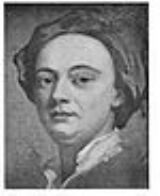
John Gay

 
John Gay

   Email Print
   Bookmark   Link


John Gay


John Gay (30 June,1685 - 4 December,1732) was an English
English people

The English are a nation and ethnic group native to England who speak English language in England. The English identity as a people is of early medieval origin, when they were known in Old English as the Anglecynn....
 poet
Poet

A poet is a person who writes poetry....
 and dramatist. He is best remembered for The Beggar's Opera
The Beggar's Opera

The Beggar's Opera is a ballad opera in three acts written in 1728 by John Gay. It is one of the watershed plays in Augustan drama and is the only example of the once thriving genre of satirical ballad opera to remain popular today....
 (1728), set to music by Johann Christoph Pepusch
Johann Christoph Pepusch

Johann Christoph Pepusch was a German-born composer who spent most of his working life in England.At age 14, he was appointed to the Prussia....
. The characters, including Captain Macheath and Polly Peachum, became household names.

Biography
Gay was born in Barnstaple
Barnstaple

Barnstaple is a town in the in the Districts of England of North Devon in the county of Devon in the South West England. It lies west southwest of Bristol, north of of Plymouth and northwest of the county town of Exeter....
, England
England

native_name =|conventional_long_name = England|common_name = England|image_flag = Flag of England.svg|image_coat = England COA.svg|symbol_type = Royal Coat of Arms...
 and was educated at the town's grammar school
Grammar school

A grammar school is one of several different types of school in the history of education in the United Kingdom and other English-speaking countries....
 and secondly at Blundell's School
Blundell's School

Blundell's School is a public school located in Tiverton, Devon in the county of Devon, England. It was founded by the will of Peter Blundell in 1604, one of the richest men in England at the time, and relocated to its present location on the outskirts of town in 1882....
.


Discussion
Ask a question about 'John Gay'
Start a new discussion about 'John Gay'
Answer questions from other users
Full Discussion Forum


Quotations


And when a lady's in the case,You know all other things give place.

Fable L, The Hare and many Friends

Fill it up. I take as large draughts of liquor as I did of love. I hate a flincher in either.

Mrs. Trapes, Act III, sc. vi

From wine what sudden friendship springs!

Fables, Pt. II, The Squire and His Cur (1738)

How happy could I be with either,Were t'other dear charmer away!

Macheath, Act II, sc. xiii, air 35

I hate the man who builds his nameOn ruins of another's fame.

Fable XLV, The Poet and the Rose

I must have women—there is nothing unbends the mind like them.

Macheath, Act II, sc. iii


Encyclopedia


John Gay   Project Gutenberg Etext 13790
John Gay (30 June,1685 - 4 December,1732) was an English
English people

The English are a nation and ethnic group native to England who speak English language in England. The English identity as a people is of early medieval origin, when they were known in Old English as the Anglecynn....
 poet
Poet

A poet is a person who writes poetry....
 and dramatist. He is best remembered for The Beggar's Opera
The Beggar's Opera

The Beggar's Opera is a ballad opera in three acts written in 1728 by John Gay. It is one of the watershed plays in Augustan drama and is the only example of the once thriving genre of satirical ballad opera to remain popular today....
 (1728), set to music by Johann Christoph Pepusch
Johann Christoph Pepusch

Johann Christoph Pepusch was a German-born composer who spent most of his working life in England.At age 14, he was appointed to the Prussia....
. The characters, including Captain Macheath and Polly Peachum, became household names.

Biography


Gay was born in Barnstaple
Barnstaple

Barnstaple is a town in the in the Districts of England of North Devon in the county of Devon in the South West England. It lies west southwest of Bristol, north of of Plymouth and northwest of the county town of Exeter....
, England
England

native_name =|conventional_long_name = England|common_name = England|image_flag = Flag of England.svg|image_coat = England COA.svg|symbol_type = Royal Coat of Arms...
 and was educated at the town's grammar school
Grammar school

A grammar school is one of several different types of school in the history of education in the United Kingdom and other English-speaking countries....
 and secondly at Blundell's School
Blundell's School

Blundell's School is a public school located in Tiverton, Devon in the county of Devon, England. It was founded by the will of Peter Blundell in 1604, one of the richest men in England at the time, and relocated to its present location on the outskirts of town in 1882....
. On leaving school he was apprenticed to a silk mercer in London
London

London is the capital of both England and the United Kingdom, and the most populous municipality in the European Union. An important settlement for two millennia, History of London goes back to its founding by the Roman Empire....
, but being weary, according to Samuel Johnson
Samuel Johnson

Samuel Johnson was an English author. Beginning as a Grub Street journalist, he made lasting contributions to English literature as a poet, essayist, moralist, novelist, literary critic, biographer, editor and lexicographer....
, "of either the restraint or the servility of his occupation", he soon returned to Barnstaple, where he spent some time with his uncle, the Rev. John Hanmer, the Nonconformist
Nonconformism

Nonconformism is the refusal to conform to common standards, conventions, rules, customs, traditions, norms, or laws. In specific usage Nonconformism , however, refers to the Protestant Christians of England and Wales who refused to "conform", or follow the governance and usages of the Church of England....
 minister of the town. He then returned to London.

The dedication of his Rural Sports (1713) to Alexander Pope
Alexander Pope

Alexander Pope is generally regarded as the greatest England poet of the eighteenth century, best known for his satirical verse and for his translation of Homer....
 was the beginning of a lasting friendship. In 1714, Gay wrote The Shepherd's Week, a series of six pastoral
Pastoral

Pastoral, as an adjective, refers to the lifestyle of shepherds and pastoralists, moving livestock around larger areas of land according to seasons and availability of water and food....
s drawn from English rustic life. Pope had urged him to undertake this task in order to ridicule the Arcadian
Arcadia (utopia)

Arcadia refers to a Utopian vision of pastoralism and harmony with nature. The term is derived from the Arcadia which dates to classical antiquity; the province's mountainous topography and sparse population of pastoralists later caused the word Arcadia to develop into a poetic byword for an idyllic vision of unspoiled wilderness....
 pastorals of Ambrose Philips
Ambrose Philips

Ambrose Philips, , was an England poet.He was born in Shropshire of a Leicestershire family. He was educated at Shrewsbury School and St John's College, Cambridge, of which he became a fellow in 1699....
, who had been praised by The Guardian
The Guardian (1713)

The Guardian was a short-lived newspaper published in London from 12 March to 1 October 1713. It was founded by Richard Steele and featured contributions from Joseph Addison, Thomas Tickell and Ambrose Philips....
, to the neglect of Pope's claims as the first pastoral writer of the age and the true English Theocritus
Theocritus

Theocritus , the creator of ancient Greek bucolic poetry, flourished in the 3rd century BC....
. Gay's pastorals completely achieved this goal, but his ludicrous pictures of the English country lads and their loves were found to be entertaining on their own account.

Gay had just been appointed secretary to the British ambassador to the court of Hanover
Hanover

Hanover or Hannover#Definitions , on the river Leine, is the capital city of the Federal states of Germany of Lower Saxony , Germany and was once by personal union the family seat of the House of Hanover, in their dignities as the dukes of Brunswick-L?neburg ....
 through the influence of Jonathan Swift
Jonathan Swift

Jonathan Swift was an Anglo-Irish satire, essayist, political pamphleteer , poet and cleric who became Dean of St. Patrick's Cathedral, Dublin, Dublin....
 when the death of Queen Anne three months later put an end to all his hopes of official employment.

In 1715, probably with some help from Pope, he produced What d'ye call it?, a dramatic skit
Skit

Skit may refer to:*Sketch comedy*Hip hop skit*Puppet skitSee also *Skete...
 on contemporary tragedy
Tragedy

Tragedy is a form of The arts based on human suffering that offers its audience pleasure. While most cultures have developed forms that provoke this paradoxical response, tragedy refers to a specific Poetic tradition of drama that has played a unique and important role historically in the self-definition of Western culture....
, with special reference to Thomas Otway
Thomas Otway

Thomas Otway was an England dramatist of the English Restoration period.He was born at Trotton, near Midhurst, the parish of which his father, Humphrey Otway, was at that time curate....
's Venice Preserved. It left the public so ignorant of its real meaning that Lewis Theobald and Benjamin Griffin published a Complete Key to what d'ye call it to explain it. In 1716 appeared his Trivia, or the Art of Walking the Streets of London, a poem in three books, for which he acknowledged having received several hints from Swift. It contains graphic and humorous descriptions of the London of that period. In January 1717 he produced the comedy, Three Hours after Marriage, which was grossly indecent without being amusing, and was a complete failure. He had assistance from Pope and John Arbuthnot
John Arbuthnot

John Arbuthnot, often known simply as Dr. Arbuthnot, , was a physician, satire and polymath in London. He is best remembered for his contributions to mathematics, his membership in the Scriblerus Club , and for inventing the figure of John Bull....
, but they allowed it to be assumed that Gay was the sole author.

Gay had numerous patrons, and in 1720 he published Poems on Several Occasions by subscription, taking in £1000 or more. In that year James Craggs, the secretary of state, presented him with some South Sea stock. Gay, disregarding the advice of Pope and others of his friends, invested all his money in South Sea stock, and, holding on to the end of the South Sea Bubble, he lost everything. The shock is said to have made him dangerously ill. His friends did not fail him at this juncture. He had patrons in William Pulteney
William Pulteney, 1st Earl of Bath

William Pulteney, 1st Earl of Bath, Privy Council of Great Britain was an English politician, created the first Earl of Bath in 1742 by King George II of Great Britain; he is sometimes stated to have been Prime Minister, for the shortest term ever , though most modern sources reckon that he cannot be considered to have held the office....
, afterwards Earl of Bath, in the third Earl of Burlington, who constantly entertained him at Chiswick or at Burlington House, and in the third Duke of Queensberry. He was a frequent visitor with Pope, and received unvarying kindness from William Congreve and Arbuthnot. In 1727 he wrote for Prince William, afterwards Duke of Cumberland, his famous Fifty-one Fables in Verse, for which he naturally hoped to gain some preferment, although he has much to say in them of the servility of courtiers and the vanity of court honours. He was offered the situation of gentleman-usher to the Princess Louisa, who was still a child. He refused this offer, which all his friends seem to have regarded, for no very obvious reason, as an indignity. He had never rendered any special services to the court.

He certainly did nothing to conciliate the favour of the government by his next production, The Beggar's Opera
The Beggar's Opera

The Beggar's Opera is a ballad opera in three acts written in 1728 by John Gay. It is one of the watershed plays in Augustan drama and is the only example of the once thriving genre of satirical ballad opera to remain popular today....
, a lyrical drama produced on the January 29, 1728 by John Rich
John Rich (producer)

John Rich was an important director and theatre manager in 18th century London. He opened the New Theatre at Lincoln's Inn Fields and then the Theatre Royal, Covent Garden and began putting on ever more lavish productions....
, in which Sir Robert Walpole
Robert Walpole

Robert Walpole, 1st Earl of Orford, Order of the Garter, Order of the Bath, Privy Council of Great Britain , known before 1742 as Sir Robert Walpole, was a Kingdom of Great Britain statesman who is generally regarded as having been the first Prime Minister of the United Kingdom....
 was caricatured. This famous piece, which was said to have made "Rich gay and Gay rich", was an innovation in many respects. The satire of the play has a double allegory. The characters of Peachum and Macheath represent the famous highwayman and gangster Jonathan Wild
Jonathan Wild

Jonathan Wild was perhaps the most famous crime of London — and possibly Great Britain — during the 18th century, both because of his own actions and the uses novelists, playwrights, and political satire made of them....
 and the cockney housebreaker Jack Sheppard
Jack Sheppard

Jack Sheppard was a notorious English Robbery, Burglary and Theft of early 18th-century London. Born into a poor family, he was apprenticed as a carpenter but took to theft and burglary in 1723, with little more than a year of his training to complete....
. At the same time, Jonathan Wild was understood to represent Robert Walpole, whose government had been tolerant of Wild's thievery and the South Sea directors' escape from punishment. Under cover of the thieves and highwaymen who figured in it was disguised a satire
Satire

Satire is often strictly defined as a literary genre; although, in practice, it is also found in the graphic arts and performing arts. In satire, human or individual vices, follies, abuses, or shortcomings are held up to censure by means of ridicule, derision, burlesque, irony, or other methods, ideally with the intent to bring about improv...
 on society, for Gay made it plain that in describing the moral code of his characters he had in mind the corruptions of the governing class. Part of the success of the Beggar's Opera may have been due to the acting of Lavinia Fenton
Lavinia Fenton

Lavinia Paulet, Duchess of Bolton , known by her stagename as Lavinia Fenton, was an England actress.She was probably the daughter of a naval lieutenant named Beswick, but she bore the name of her mother's husband....
, afterwards Duchess of Bolton, in the part of Polly Peachum. The play ran for sixty-two nights. Swift is said to have suggested the subject, and Pope and Arbuthnot were constantly consulted while the work was in progress, but Gay must be regarded as the sole author. After seeing an early version of the work, Swift was optimistic of its commercial prospects but famously warned Gay to be cautious with his earnings: "I beg you will be thrifty and learn to value a shilling."

He wrote a sequel, Polly, relating the adventures of Polly Peachum in the West Indies; its production was forbidden by the Lord Chamberlain
Lord Chamberlain

The Lord Chamberlain or Lord Chamberlain of the Household is one of the chief officers of the Royal Household in the United Kingdom, and is to be distinguished from the Lord Great Chamberlain, one of the Great Officer of State....
, no doubt through the influence of Walpole. This act of "oppression" caused no loss to Gay. It proved an excellent advertisement for Polly, which was published by subscription in 1729, and brought its author several thousand pounds. The Duchess of Queensberry was dismissed from court for enlisting subscribers in the palace. The Duke of Queensberry
Duke of Queensberry

The title Duke of Queensberry was created in the Peerage of Scotland in 1684 along with the subsidiary title Marquess of Dumfriesshire for the William Douglas, 1st Duke of Queensberry....
 gave Gay a home, and the duchess continued her affectionate patronage until Gay's death, which took place on December 4, 1732. He was buried in Westminster Abbey
Westminster Abbey

The Collegiate Church of St Peter at Westminster, which is almost always referred to popularly and informally as Westminster Abbey, is a large, mainly Gothic architecture Church , in Westminster, London, just to the west of the Palace of Westminster....
. The epitaph on his tomb is by Pope, and is followed by Gay's own mocking couplet:

Life is a jest, and all things show it,
I thought so once, and now I know it.


Partial list of works

  • The Present State of Wit - 1711
  • The Rural Sports - 1713
  • The Shepherd's Week - 1714
  • The What D'ye Call It - 1715
  • Trivia, or The Art of Walking the Streets of London - 1716
  • Acis and Galatea
    Acis and Galatea

    Acis and Galatea is a musical work by George Frideric Handel with an English text by John Gay. The work has been variously described as a serenata, a masque, a pastoral or pastoral opera, a "little opera" , an entertainment and even an oratorio....
     - 1718
  • Poems on Several Occasions - 1720
  • Fifty-one Fables in Verse - 1727
  • The Beggar's Opera
    The Beggar's Opera

    The Beggar's Opera is a ballad opera in three acts written in 1728 by John Gay. It is one of the watershed plays in Augustan drama and is the only example of the once thriving genre of satirical ballad opera to remain popular today....
     - 1728
  • Polly - 1729
  • Achilles - 1733
  • The Distress'd Wife - 1734
  • Fables - 1738
  • Wine


External links

  • Life, extensive collection of works, study resources