
| |
( Anime is traditionally hand drawn, but computer assisted techniques have become quite common in recent years. It is used in television series, films, video, video games, and internet-based releases, and represents all genres of fiction. History
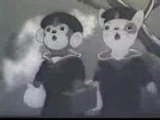
The history of anime begins at the start of the 20th century, when Japanese filmmakers experimented with the animation techniques that were being explored in France, Germany, the United States, and Russia. The oldest known anime in existence was screened in 1917; it was a two minute clip of a samurai trying to test a new sword on his target, only to suffer defeat.
By the 1930s, animation became an alternative format of storytelling compared to the underdeveloped live-action industry in Japan.

Discussion
Ask a question about 'Anime'
Start a new discussion about 'Anime'
Answer questions from other users
|
Quotations
Anime is like an infinite grave nobody dies,but they always come back.
Give me anime, or give me death!
If you don't like anime, you must be in it.
Fine Neko Chamillionaira
Life is too short for bad anime.
THEM Anime Review
Anime is a key for life.
Life. Death. Anime in between.

Encyclopedia
( Anime is traditionally hand drawn, but computer assisted techniques have become quite common in recent years. It is used in television series, films, video, video games, and internet-based releases, and represents all genres of fiction.
History
The history of anime begins at the start of the 20th century, when Japanese filmmakers experimented with the animation techniques that were being explored in France, Germany, the United States, and Russia. The oldest known anime in existence was screened in 1917; it was a two minute clip of a samurai trying to test a new sword on his target, only to suffer defeat.
By the 1930s, animation became an alternative format of storytelling compared to the underdeveloped live-action industry in Japan. Unlike America, the live-action industry in Japan remained a small market and suffered from budgeting, location, and casting restrictions. The lack of Western-looking actors, for example, made it next to impossible to shoot films set in Europe, America, or fantasy worlds that do not naturally involve Japan. Animation allowed artists to create any characters and settings.
The success of Disney's 1937 feature film Snow White and the Seven Dwarfs influenced Japanese animators. Osamu Tezuka adapted and simplified many Disney animation techniques to reduce the costs and number of frames in the production. This was intended to be a temporary measure to allow him to produce material on a tight schedule with an inexperienced animation staff.
During the 1970s, there was a surge of growth in the popularity of manga—which were often later animated—especially those of Osamu Tezuka, who has been called a "legend" and the "god of manga". His work and that of other pioneers in the field, inspired characteristics and genres that are fundamental elements of anime today. The giant robot genre (known as "Mecha" outside Japan), for instance, took shape under Tezuka, developed into the Super Robot genre under Go Nagai and others, and was revolutionized at the end of the decade by Yoshiyuki Tomino who developed the Real Robot genre. Robot anime like the Gundam and Macross series became instant classics in the 1980s, and the robot genre of anime is still one of the most common in Japan and worldwide today. In the 1980s, anime became more accepted in the mainstream in Japan (although less than manga), and experienced a boom in production. Following a few successful adaptations of anime in overseas markets in the 1980s, anime gained increased acceptance in those markets in the 1990s and even more in the 2000s.
Terminology In Japanese, the English term animation is written in katakana as ??????? (animeshon, ). The shortened term, anime (???), emerged in the 1970s. Both the original and abbreviated forms are valid and interchangeable in Japanese, but the shorter form is more commonly used.
The pronunciation of anime in Japanese, , differs significantly from the Standard English which have different vowels and stress. (In Japanese each mora carries equal stress.) As with a few other Japanese words such as saké, Pokémon, and Kobo Abé, anime is sometimes spelled animé in English (as in French), with an acute accent over the final e, to cue the reader that the letter is pronounced, not silent as would be expected in English. However, this accent does not appear in any commonly used system of romanized Japanese and is not in frequent enough use to be recognised by the Oxford English Dictionary.
Word usage In Japan, the term does not specify an animation's nation of origin or style; instead, it is used as a blanket term to refer to all forms of animation from around the world. In English, dictionary sources define anime as "a Japanese style of motion-picture animation" or "a style of animation developed in Japan". Non-Japanese works that borrow stylization from anime is commonly referred to as "anime-influenced animation" but it is not unusual for a viewer who does not know the country of origin of such material to refer to it as simply "anime". Some works are co-productions with non-Japanese companies, such as the Cartoon Network and Production I.G series IGPX or Oban Star-Racers, which may or may not be considered anime by different viewers.
In English, anime can be used as a common noun ("Do you watch anime?") or as a suppletive adjective ("The anime is different from the movie Guyver"). It may also be used as a mass noun, as in "How much anime have you collected?" and therefore is not pluralized as animes.
Synonyms Anime is occasionally referred to as Japanimation, but this term has fallen into disuse. Japanimation saw the most usage during the 1970s and 1980s, but was supplanted by anime in the mid-1990s as the material became more widely known in English-speaking countries. In general, the term now only appears in nostalgic contexts. Although the term was coined outside Japan to refer to animation imported from Japan, it is now used primarily in Japan, to refer to domestic animation; since anime does not identify the country of origin in Japanese usage, Japanimation is used to distinguish Japanese work from that of the rest of the world.
In Japan, manga can additionally refer to both animation and comics (although the use of manga to refer to animation is mostly restricted to non-fans). Among English speakers, manga usually has the stricter meaning of "Japanese comics". An alternate explanation is that it is due to the prominence of Manga Entertainment, a distributor of anime to the US and UK markets. Because Manga Entertainment originated in the UK the use of the term is common outside of Japan. The term "animanga" has been used to collectively refer to anime and manga, though it is also a term used to describe comics produced from animation cels.
Visual characteristics
Anime is commonly referred as an art form. As a visual medium, it naturally places a large emphasis towards visual styles. The styles can vary from artist to artist or by studio to studio. Some titles make extensive use of common stylization: FLCL, for example, is known for its wild, exaggerated stylization. In contrast, titles such as Only Yesterday or Jin-Roh take much more realistic approaches, featuring few stylistic exaggerations.
While different titles and different artists have their own artistic styles, many stylistic elements have become so common such that they are described as being definitive of anime in general. However, this does not mean that all modern anime share one strict, common art style. Many anime have a very different art style from what would commonly be called "anime style", yet fans still use the word "anime" to refer to these titles. Generally, the most common form of anime drawings are "exaggerated physical features such as large eyes, big hair and elongated limbs... and dramatically shaped speech bubbles, speed lines and onomatopoeic, exclamatory typography."
The influences of Japanese calligraphy and Japanese painting also characterize linear qualities of the anime style. The round Ink brush traditionally used for writing Kanji and for painting produces a stroke of widely varying thickness.
Anime also tends to borrow many elements from manga including text in the background, and borrowing panel layouts from the manga as well. For example, an opening may employ manga panels to tell the story, or to dramatize a point for humorous effect. This is best demonstrated in the anime Kare Kano.
Character design Body proportions emulated in anime come from proportions of the human body. The height of the head is considered as the base unit of proportion. Head heights can vary as long as the remainder of the body remains proportional. Most anime characters are about seven to eight heads tall, and extreme heights are set around nine heads tall.
Variations to proportion can be modded. Super deformed characters feature a non-proportionally small body compared to the head. Sometimes specific body parts, like legs, are shortened or elongated for added emphasis. Mostly super deformed characters are two to four heads tall. Some anime works like Crayon Shin-chan completely disregard these proportions. It is enough such that it resembles a Western cartoon. For exaggeration, certain body features are increased in proportion.
A common approach is the large eyes style drawn on many anime and manga characters. Osamu Tezuka was inspired by the exaggerated features of American cartoon characters such as Betty Boop, Mickey Mouse, and Disney's Bambi. Tezuka found that large eyes style allowed his characters to show emotions distinctly. When Tezuka began drawing Ribbon no Kishi, the first manga specifically targeted at young girls, Tezuka further exaggerated the size of the characters' eyes. Indeed, through Ribbon no Kishi, Tezuka set a stylistic template that later shojo artists tended to follow.
Coloring is added to give eyes, particularly the cornea, and some depth. The depth is accomplished by applying variable color shading. Generally, a mixture of a light shade, the tone color, and a dark shade is used. Cultural anthropologist Matt Thorn argues that Japanese animators and audiences do not perceive such stylized eyes as inherently more or less foreign.
However, not all anime have large eyes. For example Hayao Miyazaki is known for not having large eyes and having realistic hair colors on his characters. In addition many other productions also have been known to use smaller eyes. This design tends to have more resemblance to traditional Japanese art. Some characters have even smaller eyes, where simple black dots are used.
A wide variety of facial expressions are used by characters to denote moods and thoughts. Anime uses a different set of facial expressions in comparison to western animation.
Other stylistic elements are common as well; often in comedic anime, characters that are shocked or surprised will perform a "face fault", in which they display an extremely exaggerated expression. Angry characters may exhibit a "vein" or "stressmark" effect, where lines representing bulging veins will appear on their forehead. Angry women will sometimes summon a mallet from nowhere and strike someone with it, leading to the concept of Hammerspace and cartoon physics. Male characters will develop a bloody nose around their female love interests (typically to indicate arousal, based on an old wives' tale). Embarrassed characters either produce a massive sweat-drop (which has become one of the most widely recognized stereotype motifs of anime) or produce a visibly red blush beneath the eyes, especially as a manifestation of repressed romantic feelings. While common, the use of face faults is optional. Some anime, usually with political plots and other more serious subject matters, have abandoned the use of face faults such as Gundam Wing and Teknoman.
Animation technique Like all animation, the production processes of storyboarding, voice acting, character design, cel production and so on still apply. With improvements in computer technology, computer animation increased the efficiency of the whole production process.
Anime is often considered a form of limited animation. That means that stylistically, even in bigger productions the conventions of limited animation are used to fool the eye into thinking there is more movement than there is. Many of the techniques used a comprised with cost-cutting measures while working under a set budget.
Anime scenes place emphasis on achieving three-dimensional views. Backgrounds depict the scenes' atmosphere. For example, anime often puts emphasis on changing seasons, as can be seen in numerous anime, such as Tenchi Muyo. Sometimes actual settings have been duplicated into an anime. The backgrounds for the Melancholy of Haruhi Suzumiya are based on various locations within the suburb of Nishinomiya, Hyogo, Japan.
Camera angles, camera movement, and lighting play an important role in scenes. Directors often have the discretion of determining viewing angles for scenes, particularly regarding backgrounds. In addition, camera angles show perspective. Directors can also choose camera effects within cinematography, such as panning, zooming, facial closeup, and panoramic.
The large majority of anime is traditional animation, which better allows for the division of labour, pose to pose approach and checking of drawings before they are shot favoured by the industry. Other mediums are mostly limited to independently-made short films, examples of which are the silhouette and other cutout animation of Noburo Ofuji, the stop motion puppet animation of Tadahito Mochinaga, Kihachiro Kawamoto and Tomoyasu Murata and the computer animation of Satoshi Tomioka (most famously Usavich).
Genres
Anime has many genres typically found in any mass media form. Such genres include action, adventure, children's stories, comedy, drama, erotica (more specifically ecchi or hentai), medieval fantasy, occult/horror, romance, science fiction and magical girl. Most anime includes content from several different genres, as well as a variety of thematic elements. Thus, some series may be categorized under multiple genres. For example, Neon Genesis Evangelion might be considered to fall into the genres of post-apocalyptic, science fiction, mecha, and drama.
The following is a list of the major genres and designations that are specific to anime and manga.
Demographic Demographic describes the intended target audience.
Thematic - Bishojo is Japanese for "beautiful girl", and a blanket term that features pretty girl characters. Sometimes conflated with Moč. Examples: Magic Knight Rayearth or .
- Bishonen is Japanese for "beautiful boy", and a blanket term that can be used to describe any anime that features "pretty" and elegant boys and men. Examples: Fushigi Yugi or The Wallflower.
- Sentai is literally a "fighting team" in Japanese. It refers to any show that involves a superhero team. Examples: Cyborg 009 or Voltron.
- Robot/Mecha features real robots or super robots. Examples: Mobile Suit Gundam or Mazinger Z respectively.
- Post-Apocalyptic simply deals with a post-apocalyptic world. Examples: Fist of the North Star or Nausicaä of the Valley of the Wind.
- Maho shojo is a subgenre of shojo known for "Magical Girl" stories. These stories involves teenage or pre-teen girls who receive magical accessories that allows them to to transform into magical warriors. Most magical girl anime involves a girl reciting a phrase before undergoing an intricate transformation sequence which shows the girl being magically dressed or an magical artifact forming it's shape into the girl's hand. These sequences are collectively known in anime as henshin. Examples: Sailor Moon or Cardcaptor Sakura.
- Maho shonen is a male equivalent of Maho Shojo. Examples: D.N.Angel or Fullmetal Alchemist
- Moé features characters with perky, cute, weak, or naďve behaviors. In some way, they are not overly independent. Examples: A Little Snow Fairy Sugar.
- Expertise specializes with a specific topic in depth. Topics range from sports, the arts, and cooking. Examples: Eyeshield 21 with football, or Yakitate!! Japan with bread-making.
- Lolicon ("Lolita Complex") is the sexualization of under-aged female characters, the name coming from the titular character of Vladimir Nabokov's Lolita. Example: Kodomo no Jikan
- Shotacon ("Shotaro Complex") is the sexualization of under-aged male characters, the name coming from the lead child actor from Tetsujin-nijuhachi-go. Example: Papa to Kiss in the Dark
- Harem is a genre which focuses on a male character surrounded by the romance of multiple female characters. Typically, the male cohabits with at least one female. It is usually marketed as a Shonen or Seinen. Examples: Ranma ˝ or Love Hina.
- Reverse Harem reverses the gender balance in harem, where a female character is romantically involved with many male characters. It is more often than not a Shojo or Josei Anime. Examples: Ouran High School Host Club or Fruits Basket.
- Magical girlfriend is more accurately termed Exotic Girlfriend. This genre focuses on the romantic relationship (and cohabitation) between a man and at least one woman of extraordinary origins such as alien (Tenchi Muyo!, Urusei Yatsura), supernatural (Oh My Goddess!), or technological (Chobits). Often considered a subgenre of Harem.
- Ecchi is Japanese for "indecent sexuality", derived from the Japanese pronunciation of the letter "H", (the origin of the term is not well known, even in Japan. See main article for more information.) Sexual humor and fan service are prevalent. Examples: Oruchuban Ebichu or He Is My Master.
- Hentai is Japanese for "abnormal" or "perverted". This term is synonymous to pornography or erotica, as hentai content specifically consists of such. Examples: La Blue Girl or Bible Black.
- Shojo-ai or Yuri is Japanese for "girl-love". These focus on love and romance between female characters. It is often being replaced by the term "Girls Love" (GL). Yuri is like Shojo-ai, but sometimes involves older characters or explicit sexual activity. Examples: Revolutionary Girl Utena or Kannazuki no Miko.
- Shonen-ai is Japanese for 'boy-love'. These focus on love and romance between male characters. The term "Shonen-ai" is being phased out in Japan due to its other meaning of pederasty, and is being replaced by the term "Boys Love" (BL). Examples: Loveless or Gravitation
- Yaoi is like "Shonen-ai" but often involving older characters and explicit sexual activity. Examples: Sensitive Pornograph or Until the Full Moon
Influence on Western culture Anime has become commercially profitable in western countries as early commercially successful western adaptations of anime, such as Astro Boy, have revealed. The phenomenal success of Nintendo's multi-billion dollar Pokémon franchise was helped greatly by the spin-off anime series that, first broadcast in the late 1990s, is still running worldwide to this day. In doing so, anime has made significant impacts upon Western culture. Since the 19th century, many Westerners have expressed a particular interest towards Japan. Anime dramatically exposed more Westerners to the culture of Japan. Aside from anime, other facets of Japanese culture increased in popularity. Worldwide, the number of people studying Japanese increased. In 1984, the Japanese Language Profiency test was devised to meet increasing demand. Anime-influenced animation refers to non-Japanese works of animation that emulate the visual style of anime. Most of these works are created by studios in the United States, Europe, and non-Japanese Asia; and they generally incorporate stylizations, methods, and gags described in anime physics, as in the case of . Often, production crews either are fans of anime or are required to view anime. Some creators cite anime as a source of inspiration with their own series. Furthermore, a French production team for Oban Star-Racers moved to Tokyo to collaborate with a Japanese production team from Hal Film Maker. Critics and the general anime fanbase do not consider them as anime.
Some American animated television series have singled out anime styling with satirical intent, for example South Park (with "Chinpokomon" and "Good Times With Weapons"). South Park has a notable drawing style, which was itself parodied in "Brittle Bullet", the fifth episode of the anime FLCL, released several months after "Chinpokomon" aired. This intent on satirizing anime is the springboard for the basic premise of Kappa Mikey, a Nicktoons Network original cartoon. Even cliches normally found in anime are parodied in Perfect Hair Forever. Also, in the episode "The Son Also Draws" of Family Guy parodies anime with an appearance by Speed Racer and his trainer. The two speak in poorly-dubbed English, with every phrase punctuated by a "Ha-HA!". Anime conventions began to appear in the early 1990s, during the Anime boom, starting with Anime Expo, Animethon, Otakon, and JACON. Currently anime conventions are held annually in various cities across the Americas, Asia, and Europe. Many attendees participate in cosplay, where they dress up as anime characters. Also, guests from Japan ranging from artists, directors, and music groups are invited. In addition to anime conventions, anime clubs have become prevalent in colleges, high schools, and community centers as a was to publicly exhibit anime as well as broadening Japanese cultural understanding.
See also
Other
External links
|