
All Topics  
George Gershwin

 
George Gershwin

   Email Print
   Bookmark   Link


George Gershwin


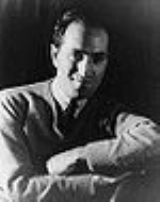
George Gershwin (September 26, 1898 – July 11, 1937) was an American composer
Composer

A composer is a person who creates music, usually in the medium of musical notation, for interpretation and performance. The level of distinction between composers and other musicians varies, which affects issues such as copyright and the deference given to individual interpretations of a particular piece of music....
 and pianist
Pianist

A pianist is a musician who plays the piano. A professional pianist can perform solo pieces, play with an musical ensemble or orchestra, or accompany one or more singers, solo instrumentalists, or other performers....
. He wrote most of his vocal and theatrical works in collaboration with his elder brother, lyricist
Lyricist

A lyricist is a writer who specializes in song lyrics, usually paid for by a band to write a custom song. A singer who writes the lyrics to songs is a singer-lyricist....
 Ira Gershwin
Ira Gershwin

Ira Gershwin was an American lyricist who collaborated with his younger brother, composer George Gershwin, to create some of the most memorable songs of the 20th century....
. George Gershwin composed songs for both Broadway
Broadway theatre

Broadway theatre, commonly called simply Broadway, refers to theatrical performances presented in one of the 39 large professional theaters with 500 seats or more located in the Theatre District, New York in Manhattan, New York City....
 and the classical concert hall. He also wrote popular songs
Popular music

Popular music is music that is accessible to the mainstream and disseminated by one or more of the mass media. It belongs to any of a number of musical genres, and stands in contrast to classical music, which historically was the music of the elite and upper strata of society, and traditional music which was disseminated orally....
 with success.

Many of his compositions have been used in numerous films and on television, and many became jazz
Jazz

Jazz is a primarily American musical art form which originated at the beginning of the 20th century in African American communities in the Southern United States from a confluence of African and European music traditions....
 standards recorded in numerous variations.


Discussion
Ask a question about 'George Gershwin'
Start a new discussion about 'George Gershwin'
Answer questions from other users
Full Discussion Forum


Recent Posts


Encyclopedia


George Gershwin (September 26, 1898 – July 11, 1937) was an American composer
Composer

A composer is a person who creates music, usually in the medium of musical notation, for interpretation and performance. The level of distinction between composers and other musicians varies, which affects issues such as copyright and the deference given to individual interpretations of a particular piece of music....
 and pianist
Pianist

A pianist is a musician who plays the piano. A professional pianist can perform solo pieces, play with an musical ensemble or orchestra, or accompany one or more singers, solo instrumentalists, or other performers....
. He wrote most of his vocal and theatrical works in collaboration with his elder brother, lyricist
Lyricist

A lyricist is a writer who specializes in song lyrics, usually paid for by a band to write a custom song. A singer who writes the lyrics to songs is a singer-lyricist....
 Ira Gershwin
Ira Gershwin

Ira Gershwin was an American lyricist who collaborated with his younger brother, composer George Gershwin, to create some of the most memorable songs of the 20th century....
. George Gershwin composed songs for both Broadway
Broadway theatre

Broadway theatre, commonly called simply Broadway, refers to theatrical performances presented in one of the 39 large professional theaters with 500 seats or more located in the Theatre District, New York in Manhattan, New York City....
 and the classical concert hall. He also wrote popular songs
Popular music

Popular music is music that is accessible to the mainstream and disseminated by one or more of the mass media. It belongs to any of a number of musical genres, and stands in contrast to classical music, which historically was the music of the elite and upper strata of society, and traditional music which was disseminated orally....
 with success.

Many of his compositions have been used in numerous films and on television, and many became jazz
Jazz

Jazz is a primarily American musical art form which originated at the beginning of the 20th century in African American communities in the Southern United States from a confluence of African and European music traditions....
 standards recorded in numerous variations. The jazz singer Ella Fitzgerald
Ella Fitzgerald

Ella Jane Fitzgerald , also known as "Jazz royalty" and the "First Lady of Song", is considered one of the most influential jazz vocalists of the 20th century....
 recorded many of the Gershwins' songs on her 1959 Gershwin Songbook
Ella Fitzgerald Sings the George and Ira Gershwin Songbook

Ella Fitzgerald Sings the George and Ira Gershwin Songbook is a 1959 album by the American jazz singer Ella Fitzgerald, recorded with the Nelson Riddle Orchestra, marking the first time that Ella and Riddle had worked together....
 (arranged by Nelson Riddle
Nelson Riddle

Nelson Smock Riddle, Jr. was a well-known United States bandleader, arrangement and Orchestration whose career spanned from the late 1940s, struggled with the advent of rock n roll, and saw a career revival in the early 1980s....
). Countless singers and musicians have recorded Gershwin songs, including Fred Astaire
Fred Astaire

Fred Astaire was an United States Academy Award-winning film and Broadway theatre dance, choreographer, singer and actor. His stage and subsequent film career spanned a total of seventy-six years, during which he made thirty-one musical films....
, Louis Armstrong
Louis Armstrong

Louis Daniel Armstrong , nicknamed Satchmo or Pops, was an American jazz trumpeter and singer.Coming to prominence in the 1920s as an innovative cornet and trumpet player, Armstrong was a foundational influence on jazz, shifting the music's focus from collective improvisation to solo performers....
, Al Jolson
Al Jolson

Al Jolson , born in Lithuania, Russian Empire, was a highly acclaimed American singer, comedian, and actor, and, according to PBS, the "first openly Jewish man to become an entertainment star in America." His career lasted from 1911 until his death in 1950, during which time he was commonly dubbed "the world's greatest entertainer.? Numerous...
, Bobby Darin
Bobby Darin

Bobby Darin was one of the most popular American big band performers and rock and roll teen idols of the late 1950s and early 1960s.Darin performed widely in a range of music genres, including pop, jazz, folk and country....
, Art Tatum
Art Tatum

Arthur Tatum Jr. was an American jazz pianist and virtuoso.With an exuberant style that combined dazzling technique and sophisticated use of harmony, Art Tatum is widely acknowledged as one of the greatest jazz pianists of all time....
, Bing Crosby
Bing Crosby

Harry Lillis "Bing" Crosby was an United States popular singer and actor whose career lasted from 1926 until his death.One of the first multimedia stars, from 1934 to 1954 Bing Crosby held a nearly unrivaled command of record sales, radio ratings and motion picture grosses....
, Janis Joplin
Janis Joplin

Janis Lyn Joplin was an United States singer, songwriter, and music arranger, from Port Arthur, Texas. She rose to prominence in the late 1960s as the lead singer of Big Brother and the Holding Company, and later as a solo artist....
, John Coltrane
John Coltrane

John William Coltrane was an United States jazz saxophonist and composer.Starting in bebop and hard bop, Coltrane later pioneered free jazz. He influenced generations of other musicians, and remains one of the most significant tenor saxophonists in jazz history....
, Frank Sinatra
Frank Sinatra

Francis Albert "Frank" Sinatra was an United States singer and actor.Beginning his musical career in the swing era with Harry James and Tommy Dorsey, Sinatra became a solo artist with great success in the early to mid-1940s, being the idol of the "bobby soxers"....
, Billie Holiday
Billie Holiday

Billie Holiday was an American jazz singer and songwriter.Nicknamed Lady Day by her loyal friend and musical partner Lester Young, Holiday was a seminal influence on jazz and pop singing....
, Sam Cooke
Sam Cooke

Samuel Cook, better known as Sam Cooke, was an United States gospel music, R&B, soul music, and popular music singer, songwriter, and entrepreneur....
, Diana Ross
Diana Ross

Diane Ernestine "Diana" Ross is a recording artist, actress, and entertainer. During the 1960s, she helped shape the Motown Sound as lead singer of The Supremes before leaving for a solo career in the beginning of 1970....
, Miles Davis
Miles Davis

Miles Dewey Davis III was an United States jazz trumpeter, bandleader, and composer.Widely considered one of the most influential musicians of the 20th century, Davis was at the forefront of almost every major development in jazz from World War II to the 1990s: he played on various early bebop records and recorded one of the first cool jaz...
, Herbie Hancock
Herbie Hancock

Herbert Jeffrey "Herbie" Hancock is a jazz pianist and composer. He embraces elements of rock and roll and soul music while adopting freer stylistic elements from jazz....
, Hiromi Uehara, Madonna
Madonna (entertainer)

Madonna is an American recording artist, actress and entrepreneur. Born in Bay City, Michigan and raised in Rochester Hills, Michigan, Madonna moved to New York City in 1977, for a career in modern dance....
, Judy Garland
Judy Garland

Judy Garland was an American actress and alto singer. Through a career that spanned 45 of her 47 years, Garland attained international stardom as an actress in musical and dramatic roles, as a recording artist and on the concert stage....
, Julie Andrews
Julie Andrews

Dame Julie Elizabeth Andrews, Order of the British Empire is an award-winning English actress, singer, author and Cultural icon. She is the recipient of Golden Globe, Emmy, Grammy, BAFTA, People's Choice Award, Theatre World Award, Screen Actors Guild and Academy Awards honours....
, Barbra Streisand
Barbra Streisand

Barbra Streisand is an United states singer and film and theatre actress. She has also achieved note as a composer, political activist, film producer and film director....
, Marni Nixon
Marni Nixon

Marni Nixon is an American soprano whose renown for dubbing the singing voices of featured actresses in well known movie musicals earned her the sobriquet "The Ghostess with the Mostess", and also "The Voice of Hollywood"....
, Natalie Cole
Natalie Cole

Natalie Maria Cole is an influential United States singer-songwriter and performer who has won ten Grammy Awards. She achieved success in her early career as an R&B star, but smoothly changed her repertoire toward a more jazz orientated musical style in the early 1990s....
, Patti Austin
Patti Austin

Patti Austin, born August 10 1950, in Harlem, New York, to Edna and Gordon Austin, is a Grammy award-winning R&B and jazz music singer....
, Nina Simone
Nina Simone

Eunice Kathleen Waymon, better known by her stage name Nina Simone , was a Grammy Award-nominated American singer, songwriter, pianist, arranger and civil rights activist....
, Maureen McGovern
Maureen McGovern

Maureen Therese McGovern is an United States singer and Broadway theatre actor, widely known for her premier rendition of the 1973 hit, "The Morning After"....
, John Fahey
John Fahey (musician)

John Fahey was an United States fingerstyle guitarist and composer who pioneered the steel-string acoustic guitar as a solo instrument. His style has been greatly influential and has been described as American Primitivism, a term borrowed from painting and referring mainly to the self-taught nature of his art....
, The Residents
The Residents

The Residents are an United States avant-garde music and visual arts group who have created over sixty albums, created numerous musical short films, designed three CD-ROM projects and ten DVDs, and undertaken seven major world tours....
, Kate Bush
Kate Bush

Kate Bush is an England singer-songwriter, musician and record producer. Her eclectic musical style and Idiosyncrasy lyrics have made her one of England's most successful solo female performers of the past 30 years having sold over 20,000,000 records worldwide....
, Sublime
Sublime (band)

Sublime is an American ska-punk band that originated in Long Beach, California. Founded in 1988, Sublime consisted of Bradley Nowell , Bud Gaugh and Eric Wilson ....
, and Sting.

Biography


Early life

Gershwin was named Jacob Gershovitz at birth in Brooklyn on September 26, 1898. His parents were Russian Jew
Jew

A Jew is a member of the Jewish people, an ethnoreligious group that traces its ancestry to the Israelites or Hebrews of the Ancient Near East....
s: his father, Morris (Moishe) Gershowitz, changed his family name to 'Gershvin' sometime after immigrating to the United States from St. Petersburg, Russia in the early 1890s. Gershwin's mother Rosa Bruskin had already immigrated from Russia. She met Gershowitz in New York and they married on July 21, 1895. (George changed the spelling of the family name to 'Gershwin' after he became a professional musician; other members of his family followed suit.)

George Gershwin was the second of four children. He first displayed interest in music at the age of ten, when he was intrigued by what he heard at his friend Maxie Rosenzweig's violin recital. The sound and the way his friend played captured him. His parents had bought a piano for lessons for his older brother Ira
Ira Gershwin

Ira Gershwin was an American lyricist who collaborated with his younger brother, composer George Gershwin, to create some of the most memorable songs of the 20th century....
, but to his parents' surprise and Ira's relief, it was George who played it. Although his younger sister Frances Gershwin
Frances Gershwin

Frances "Frankie" Gershwin , was the younger sister of George Gershwin, Ira Gershwin and Arthur Gershwin. She was the first of the Gershwin family to perform as a child, and she brought home a good sum of money for the time....
 was the first in the family to make money from her musical talents, she married young and devoted herself to being a mother and housewife. She gave up her performing career, but settled into painting for another creative outlet— painting was also a hobby of George Gershwin.

Gershwin tried various piano teachers for two years, and then was introduced to Charles Hambitzer by Jack Miller, the pianist in the Beethoven Symphony Orchestra. Until Hambitzer's death in 1918, he acted as Gershwin's mentor. Hambitzer taught Gershwin conventional piano technique, introduced him to music of the European classical tradition, and encouraged him to attend orchestral concerts. (At home following such concerts, young Gershwin would attempt to reproduce at the piano the music which he had heard.) Gershwin later studied with classical composer Rubin Goldmark
Rubin Goldmark

Rubin Goldmark was an United States composer, pianist, and educator. He studied composition with Robert Fuchs at the University of Music and Performing Arts, Vienna, and later with Anton?n Dvor?k at the National Conservatory of Music of America in New York....
 and avant-garde composer-theorist Henry Cowell
Henry Cowell

Henry Cowell was an United States composer, music theory, pianist, teacher, publisher, and impresario. His contribution to the world of music was summed up by Virgil Thomson, writing in the early 1950s:...
.

Tin Pan Alley

At the age of fifteen, George quit school and found his first job as a performer as a "song plugger" for Jerome H. Remick and Company, a publishing firm on New York City's Tin Pan Alley
Tin Pan Alley

Tin Pan Alley is the name given to the collection of New York City-centered History of music publishings and songwriters who dominated the American popular music of the United States in the late 19th century and early 20th century....
, where he earned $15 a week. His first published song was "When You Want 'Em You Can't Get 'Em, When You've Got 'Em, You Don't Want 'Em." It was published in 1916 when Gershwin was only 17 years old and earned him a sum total of $5, although he was promised much more.

His 1917 novelty rag
Ragtime

Ragtime is an originally American musical genre which enjoyed its peak popularity between 1897 and 1918. Ragtime was the first truly American musical genre, predating jazz....
 "Rialto Ripples" was a commercial success, and in 1919 he scored his first big national hit with his song "Swanee
Swanee (song)

"Swanee" is an Music of the United States popular song written in 1919 in music by George Gershwin, with lyrics by Irving Caesar. It is most often associated with singer Al Jolson....
." In 1916, Gershwin started working for Aeolian Company and Standard Music Rolls in New York, recording and arranging. He produced dozens, if not hundreds, of rolls under his own and assumed names. (Pseudonyms attributed to Gershwin include Fred Murtha and Bert Wynn.) He also recorded rolls of his own compositions for the Duo-Art and Welte-Mignon
Welte-Mignon

M. Welte & Sons, Freiburg and New York was a manufacturer of orchestrions, Organ s and reproducing pianos.From 1832 until 1932, the firm produced mechanical musical Instruments of the highest quality....
 reproducing pianos. As well as recording piano rolls, Gershwin made a brief foray into vaudeville
Vaudeville

Vaudeville was a genre of a variety show prevalent on the theatre in the United States and Canada from the early 1880s until the early 1930s. It developed from many sources, including the concert saloon, minstrel show, freak shows, dime museums, and literary burlesque....
, accompanying both Nora Bayes
Nora Bayes

Nora Bayes was a popular United States entertainer of the early 20th century.Born Leonora Goldberg to a Jewish family in Joliet, Illinois, Bayes was performing professionally in vaudeville in Chicago by age 18....
 and Louise Dresser
Louise Dresser

Louise Dresser was an United States actor....
 on the piano.

In 1924, George and Ira collaborated on a musical comedy Lady Be Good
Lady Be Good (musical)

Lady, Be Good is the title of a Broadway theatre musical play that was written by Guy Bolton, Fred Thompson , featured music by George Gershwin and Ira Gershwin....
, which included such future standards as "Fascinating Rhythm
Fascinating Rhythm

"Fascinating Rhythm" is a popular music song written by George Gershwin in 1924 in music with lyrics by Ira Gershwin.It was first introduced by Cliff Edwards, Fred Astaire and Adele Astaire in the Broadway theater musical play Lady Be Good . The Astaires also recorded the song on April 19, 1926 in music in London with George Gershwin on...
" and "Lady Be Good".

This was followed by Oh, Kay!
Oh, Kay!

Oh, Kay! is a musical theatre with music by George Gershwin, lyrics by Ira Gershwin, and a book by Guy Bolton and P. G. Wodehouse. It is based on the play La Presidente by Maurice Hanniquin and Pierre Veber....
 (1926), Funny Face
Funny Face (musical)

Funny Face is a 1927 musical theater composed by George Gershwin, with lyrics by Ira Gershwin, and book by Fred Thompson and Paul Gerard Smith....
 (1927), Strike up the Band (1927 and 1930), Show Girl
Show Girl

Show Girl is a musical theatre with a book by William Anthony McGuire, lyrics by Ira Gershwin and Gus Kahn, and music by George Gershwin. Its heroine, aspiring Broadway theatre showgirl Dixie Dugan , was a character created by J....
 (1929), Girl Crazy
Girl Crazy

Girl Crazy is a musical theatre with music by George Gershwin, lyrics by Ira Gershwin and book by Guy Bolton and Jack McGowan. It is remembered as the show that made stars of both Ginger Rogers and Ethel Merman ....
 (1930), which introduced the standard "I Got Rhythm
I Got Rhythm

"I Got Rhythm" is a song composed by George Gershwin with lyrics by Ira Gershwin, published in 1930, which became a widely-known jazz standard. Its chord progression, known as the "Rhythm changes", is the foundation for many other popular jazz tunes such as Charlie Parker's and Dizzy Gillespie's Bebop standard "Anthropology "....
"; and Of Thee I Sing
Of Thee I Sing

Of Thee I Sing is a musical theater with a score by George Gershwin and Ira Gershwin and a book by George S. Kaufman and Morrie Ryskind. The musical lampoons American politics; the story concerns John P....
 (1931), the first musical comedy to win a Pulitzer Prize
Pulitzer Prize

The Pulitzer Prize is an United States award regarded as the highest national honor in newspaper journalism, literary achievements and musical composition....
.

Classical music, opera, and European influences

In 1924, Gershwin composed his first major classical work, Rhapsody in Blue
Rhapsody in Blue

Rhapsody in Blue is a musical composition by George Gershwin for solo piano and jazz band written in 1924, which combines elements of European classical music with jazz-influenced effects....
 for orchestra and piano. It was orchestrated by Ferde Grofé
Ferde Grofé

Ferde Grof? was an United States pianist, arrangement and composer....
 and premiered by Paul Whiteman
Paul Whiteman

Paul Whiteman was an United States orchestral leader. He was born in Denver, Colorado. After a start as a classical violinist and viola, Whiteman then led a jazz-influenced dance band, which became locally popular in San Francisco, California in 1918....
's concert band in New York. It proved to be his most popular work.

Gershwin stayed in Paris
Paris

Paris is the Capital of France and the country's largest city. It is situated on the river Seine, in northern France, at the heart of the ?le-de-France Regions of France ....
 for a short period, where he applied to study composition with Nadia Boulanger
Nadia Boulanger

Nadia Boulanger was an influential French composer, conducting, and music professor. An outstanding music educator at the highest level, she taught many of the most important composers and conductors of the 20th century....
. Boulanger, along with several other prospective tutors such as Maurice Ravel
Maurice Ravel

Joseph-Maurice Ravel was a French composer and pianist of Impressionist music known especially for the subtlety, richness, and poignancy of his melodies, orchestral and instrumental Texture and effects....
, rejected him, however, afraid that rigorous classical study would ruin his jazz
Jazz

Jazz is a primarily American musical art form which originated at the beginning of the 20th century in African American communities in the Southern United States from a confluence of African and European music traditions....
-influenced style. While there, Gershwin wrote An American in Paris
An American in Paris

An American in Paris is a European-influenced classical music composition by American composer George Gershwin, composed in 1928. Inspired by time Gershwin had spent in Paris, it is in the form of an extended tone poem evoking the sights and energy of the France capital in the 1920s....
. This work received mixed reviews upon its first performance at Carnegie Hall
Carnegie Hall

Carnegie Hall is a concert venue in Midtown Manhattan in New York City located at 881 Seventh Avenue , occupying the east stretch of Seventh Avenue between West 56th Street and West 57th Street , two blocks south of Central Park....
 on December 13, 1928, but it quickly became part of the standard repertoire in Europe and the United States. Growing tired of the Parisian musical scene, Gershwin returned to the United States.

His most ambitious composition was Porgy and Bess
Porgy and Bess

Porgy and Bess is an opera, first performed in 1935, with music by George Gershwin, libretto by DuBose Heyward, and lyrics by Ira Gershwin and DuBose Heyward....
 (1935). Gershwin called it a "folk opera," the piece premiered in a Broadway theater. It is now widely regarded as the most important American opera of the twentieth century. Based on the novel Porgy
Porgy

Porgy is a novel written by DuBose Heyward in 1925, as well as a play Dorothy Heyward helped him to write which debuted in 1927.Even before the play had been fully written, Heyward was in discussions with George Gershwin for an operatic version of his novel, which debuted in 1935 as Porgy and Bess ....
 by DuBose Heyward
DuBose Heyward

DuBose Heyward was an United States author best known for his 1924 novel Porgy. With his wife Dorothy Heyward, whom he met at the MacDowell Colony in 1922, he was co-author of the non-musical play adapted from the novel....
, the action takes place in a black neighborhood in Charleston, South Carolina
Charleston, South Carolina

Charleston is a city in Charleston County, South Carolina in the U.S. state of South Carolina. It is the largest city and county seat of Charleston County....
. With the exception of several minor speaking roles, all of the characters are black. The music combines elements of popular music of the day, which was strongly influenced by black music, with techniques found in opera, such as recitative and leitmotif
Leitmotif

A leitmotif is a recurring musical Theme , associated with a particular person, place, or idea. The word has also been used by extension to mean any sort of recurring theme, whether in music, literature, or the life of a fictional character or a real person....
s
. It also includes a fugue and "advanced" techniques such as polytonality and a tone row. For the performances, Gershwin collaborated with Eva Jessye
Eva Jessye

Eva Jessye . She was the first black woman to receive international distinction as a professional choral conductor. She is notable as a female choral conductor during the Harlem Renaissance whose professional influence extended for decades through her teaching and performance....
, whom he picked as the musical director. One of the outstanding musical alumnae of Western University
Western University

Western University is a private university located in Baku, Azerbaijan. Founded in 1991 by Husein Baghirov, it has six schools, 25 majors, 180 faculty and approximately 1000 students....
 in Kansas
Kansas

The State of Kansas is a Midwestern U.S. state in the Central United States of the United States of America, an area often referred to as the United States "Heartland"....
, she had created her own choir in New York and performed widely with them.

Hollywood and early death

Early in 1937, Gershwin began to complain of blinding headaches and a recurring impression that he was smelling burned rubber. Doctors discovered he had developed a type of cystic malignant
Malignant

Malignant is a medical term used to describe a severe and progressively worsening disease. The term is most familiar as a description of cancer....
 brain tumor
Brain tumor

A brain tumor is an abnormal growth of cells within the brain or inside the skull, which can be cancerous or non-cancerous .It is defined as any cranium tumor created by abnormal and uncontrolled Mitosis, normally either in the brain itself , in the cranial nerves , in the brain envelopes , skull, pituitary and pineal gland, or spread from...
 known as glioblastoma multiforme
Glioblastoma multiforme

Glioblastoma multiforme is the most common and most aggressive type of primary brain tumor in humans, accounting for 52% of all primary brain tumor cases and 20% of all intracranial tumors....
. Although some tried to trace his disease to a blow on the head from a golf-ball, the cause of this type of cancer is still unknown. This type of cancer occurs most often in males, accounts for 52% of all brain cancers, and is always fatal. Scientists have recently discovered viral connections to this type of tumor.

In January 1937, Gershwin performed in a special concert of his music with the San Francisco Symphony Orchestra
San Francisco Symphony

The San Francisco Symphony is a leading orchestra based in San Francisco, California. The current music director is Michael Tilson Thomas, who has held the position since September 1995....
 under the direction of French maestro Pierre Monteux
Pierre Monteux

Pierre Monteux was an orchestra conducting. Born in Paris, France, rue de la Grange Bateli?re. Monteux later became an American citizen....
. It was in Hollywood
Hollywood, Los Angeles, California

Hollywood is a district in Los Angeles, California, situated west-northwest of Downtown Los Angeles. Due to its fame and cultural identity as the historical center of movie studios and movie stars, the word "Hollywood" is often used as a metonym of cinema of the United States....
, while working on the score of The Goldwyn Follies
The Goldwyn Follies

The Goldwyn Follies is a 1938 in film movie, written by Ben Hecht, Sam Perrin and Arthur Phillips, with music by George Gershwin, Vernon Duke, and Ray Golden, and lyrics by Ira Gershwin....
, that he collapsed. He died on July 11, 1937 at the age of 38 at Cedars of Lebanon Hospital following surgery for the tumor. A memorial concert was held at the Hollywood Bowl on September 8, 1937 at which Otto Klemperer
Otto Klemperer

Otto Klemperer was a German-born Conducting and composer. He is widely regarded as one of the greatest conductors of the 20th century....
 conducted his own orchestration of the second of Gershwin's Three Piano Preludes.

Gershwin received his sole Oscar nomination for the Academy Award for Best Original Song at the 1937 Oscars, for "They Can't Take That Away from Me
They Can't Take That Away from Me

"They Can't Take That Away From Me" is a 1937 song written by George Gershwin and Ira Gershwin and introduced by Fred Astaire in the 1937 film Shall We Dance ....
" written with his brother Ira for the 1937 film Shall We Dance
Shall We Dance (film)

Shall We Dance is the seventh of the ten Fred Astaire-Ginger Rogers musical comedy films. The idea for this film originated in the studio's desire to exploit the successful formula created by Richard Rodgers and Lorenz Hart with their 1936 Broadway theatre hit On Your Toes, which featured an United States dancer getting involved with...
. The nomination was posthumous
List of posthumous Academy Award winners and nominees

This is a list of posthumous Academy Award winners and nominees. The Academy of Motion Picture Arts and Sciences annually presents Academy Awards in both competitive and honorary categories....
; Gershwin died two months after the film's release.

Gershwin had a 10-year affair with composer Kay Swift
Kay Swift

Kay Swift was an United States composer of popular and classical music, the first woman to score a complete musical theater. Written in 1930, Fine and Dandy includes some of her best known songs; Fine and Dandy has become a jazz standard....
 and frequently consulted her about his music. Oh, Kay was named for her. After Gershwin died, Swift arranged some of his music, transcribed some of his recordings, and collaborated with his brother Ira on several projects. Gershwin also had an affair with actress Paulette Goddard
Paulette Goddard

Paulette Goddard was an American film and theatre actress. A former child Model and in several Broadway theatre productions as Ziegfeld Follies, she was a major star of the Paramount Studio in the 1940s....
.
Gershwin Best 800
Gershwin died intestate
Intestacy

Intestacy is the condition of the estate of a person who dies owning property greater than the sum of his or her enforceable debts and funeral expenses without having made a valid will or other binding declaration; alternatively where such a will or declaration has been made, but only applies to part of the estate , the remaining estate fo...
. All his property passed to his mother. He is buried in the Westchester Hills Cemetery
Westchester Hills Cemetery

The Westchester Hills Cemetery, approximately 20 miles north of New York City, was established at 400 Saw Mill River Road in Hastings-on-Hudson, New York, Westchester County, New York....
 in Hastings-on-Hudson
Hastings-on-Hudson, New York

Hastings-on-Hudson is a Political subdivisions of New York State#Village in Westchester County, New York, United States. As a village, it is located in the southwest part of the Political subdivisions of New York State#Town of Greenburgh, New York....
, New York. The Gershwin estate continues to collect significant royalties from licensing the copyright
Copyright

Copyright is a form of intellectual property which gives the creator of an original work exclusive rights for a certain time period in relation to that work, including its publication, distribution and adaptation; after which time the work is said to enter the public domain....
s on Gershwin's work. The estate supported the Sonny Bono Copyright Term Extension Act
Copyright Term Extension Act

The Copyright Term Extension Act of 1998 extended United States copyright law terms in the United States by 20 years. Since the Copyright Act of 1976, copyright would last for the life of the author plus 50 years, or 75 years for a work of corporate authorship....
 because its 1923 cutoff date was shortly before Gershwin had begun to create his most popular works. The copyrights on those works expired at the end of 2007 in the European Union
European Union

The European Union is an economic and political union of 27 European Union member state, located primarily in Europe. It was established by the Treaty of Maastricht on 1 November 1993 upon the foundations of the pre-existing European Economic Community....
. They will expire between 2019 and 2027 in the United States.

According to Fred Astaire
Fred Astaire

Fred Astaire was an United States Academy Award-winning film and Broadway theatre dance, choreographer, singer and actor. His stage and subsequent film career spanned a total of seventy-six years, during which he made thirty-one musical films....
's letters to Adele Astaire
Adele Astaire

Lady Charles Cavendish , better known as Adele Astaire, was an United States dancer and entertainer. She was Fred Astaire elder sister. Her birthdate was often given as 1897 or 1898, but the 1900 U.S....
, Gershwin whispered Astaire's name before passing away.

In 2005, The Guardian
The Guardian

Sorry, no overview for this topic
 determined using "estimates of earnings accrued in a composer's lifetime" that George Gershwin was the richest composer of all time.

Legacy and honors

  • George Gershwin was inducted into the Long Island Music Hall of Fame
    Long Island Music Hall of Fame

    The Long Island Music Hall of Fame is an organization located in Lake Grove, New York. It was incorporated in July 2005 under the New York State Board of Regents as a non profit organization and holds a provisional charter to operate as a museum in the state of New York....
     in 2006.
  • The George Gershwin Theatre
    George Gershwin Theatre

    The George Gershwin Theatre is a legitimate Broadway theatre theatre located at 222 West 51st Street in midtown-Manhattan in the Paramount Plaza building....
     on Broadway is named after him.


Musical style and influence

Gershwin was influenced by French composers of the early twentieth century. In turn Maurice Ravel
Maurice Ravel

Joseph-Maurice Ravel was a French composer and pianist of Impressionist music known especially for the subtlety, richness, and poignancy of his melodies, orchestral and instrumental Texture and effects....
 was impressed with Gershwin's abilities, commenting, "Personally I find jazz most interesting: the rhythms, the way the melodies are handled, the melodies themselves. I have heard of George Gershwin's works and I find them intriguing." The orchestration
Orchestration

Orchestration is the study or practice of writing music for an orchestra or of adapting for orchestra music composed for another medium. It only gradually over the course of music history came to be regarded as a compositional art in itself....
s in Gershwin's symphonic works often seem similar to those of Ravel; likewise, Ravel's two piano concertos evince an influence of Gershwin.

Gershwin asked to study with Ravel. When Ravel heard how much Gershwin earned, Ravel replied "How about you give me some lessons?" (some versions of this story feature Igor Stravinsky
Igor Stravinsky

Igor Fyodorovich Stravinsky was a Russian-born composer, considered by many to be the most influential composer of 20th century music. He was a quintessentially Cosmopolitanism Russian who was named by Time as one of the 100 most influential people of the century....
 rather than Ravel as the composer; however Stravinsky confirmed that he originally heard the story from Ravel).

Gershwin's own Concerto in F
Concerto in F (Gershwin)

Concerto in F is a composition by George Gershwin for piano concerto which is closer in form to a traditional concerto than the earlier jazz-influenced Rhapsody in Blue....
 was criticized for being related to the work of Claude Debussy
Claude Debussy

Achille-Claude Debussy was a French composer. Along with Maurice Ravel, he is considered one of the most prominent figures working within the field of Impressionist music, though he himself intensely disliked the term when applied to his compositions....
, more so than to the expected jazz style. The comparison did not deter Gershwin from continuing to explore French styles. The title of An American in Paris
An American in Paris

An American in Paris is a European-influenced classical music composition by American composer George Gershwin, composed in 1928. Inspired by time Gershwin had spent in Paris, it is in the form of an extended tone poem evoking the sights and energy of the France capital in the 1920s....
 reflects the very journey that he had consciously taken as a composer: "The opening part will be developed in typical French style, in the manner of Debussy and Les Six
Les Six

Les Six is a name, inspired by The Five, given in 1923 by critic Henri Collet in an article titled ?Les cinq Russes, les six Fran?ais et M. Satie? to a group of six composers working in Montparnasse whose music is often seen as a reaction against Richard Wagner and Impressionist Music....
, though the tunes are original."

Aside from the French influence, Gershwin was intrigued by the works of Alban Berg
Alban Berg

Alban Maria Johannes Berg was an Austrian composer. He was a member of the Second Viennese School with Arnold Schoenberg and Anton Webern, and produced compositions that combined Gustav Mahler Romantic music with a personal adaptation of Schoenberg's twelve-tone technique....
, Dmitri Shostakovich
Dmitri Shostakovich

Dmitri Dmitriyevich Shostakovich was a List of Russian composers of the Soviet Union period.After a period influenced by Sergei Prokofiev and Igor Stravinsky , Shostakovich developed a hybrid of styles as exemplified in his opera Lady Macbeth of the Mtsensk District ....
, Igor Stravinsky
Igor Stravinsky

Igor Fyodorovich Stravinsky was a Russian-born composer, considered by many to be the most influential composer of 20th century music. He was a quintessentially Cosmopolitanism Russian who was named by Time as one of the 100 most influential people of the century....
, Darius Milhaud
Darius Milhaud

Darius Milhaud was a French composer and teacher. He was a member of Les Six - also known as the Groupe des Six - and one of the most prolific composers of the 20th century....
, and Arnold Schoenberg
Arnold Schoenberg

Arnold Schoenberg was an Austrian and later American composer, associated with the expressionist movement in German poetry and art, and leader of the Second Viennese School....
. He also asked Schoenberg for composition lessons. Schoenberg refused, saying "I would only make you a bad Schoenberg, and you're such a good Gershwin already." (This quote is similar to one credited to Maurice Ravel
Maurice Ravel

Joseph-Maurice Ravel was a French composer and pianist of Impressionist music known especially for the subtlety, richness, and poignancy of his melodies, orchestral and instrumental Texture and effects....
 during Gershwin's 1928 visit to France — "Why be a second-rate Ravel, when you are a first-rate Gershwin?")

Russian Joseph Schillinger
Joseph Schillinger

Joseph Schillinger was a composer, music theorist, and composition teacher. He was born in Kharkiv, Ukraine . He graduated from the Classical College in 1914 and the St....
's influence as Gershwin's teacher of composition (1932-1936) was substantial in providing him with a method to composition. There has been some disagreement about the nature of Schillinger's influence on Gershwin. After the posthumous success of Porgy and Bess
Porgy and Bess

Porgy and Bess is an opera, first performed in 1935, with music by George Gershwin, libretto by DuBose Heyward, and lyrics by Ira Gershwin and DuBose Heyward....
, Schillinger claimed he had a large and direct influence in overseeing the creation of the opera; Ira completely denied that his brother had any such assistance for this work. A third account of Gershwin's musical relationship with his teacher was written by Gershwin's close friend Vernon Duke
Vernon Duke

Vernon Duke was a Russian-United States composer/songwriter, who also wrote under his original name Vladimir Dukelsky. He is best known for "Taking a Chance on Love" with lyrics by Ted Fetter and John La Touche, "I Can't Get Started" with lyrics by Ira Gershwin, "April in Paris" with lyrics by Yip Harburg , and "What Is There To Say" f...
, also a Schillinger student, in an article for the Musical Quarterly in 1947.

What set Gershwin apart was his ability to manipulate forms of music into his own unique voice. He took the jazz he discovered on Tin Pan Alley
Tin Pan Alley

Tin Pan Alley is the name given to the collection of New York City-centered History of music publishings and songwriters who dominated the American popular music of the United States in the late 19th century and early 20th century....
 into the mainstream by splicing its rhythms and tonality with that of the popular songs of his era.

In 2007, the Library of Congress
Library of Congress

The Library of Congress is the de facto national library of the United States and the research arm of the United States Congress. Located in three buildings in Washington, D.C., it is the largest library in the world by shelf space and holds the largest number of books....
 named their Prize for Popular Song after George and Ira Gershwin. Recognizing the profound and positive effect of popular music on culture, the prize is given annually to a composer or performer whose lifetime contributions exemplify the standard of excellence associated with the Gershwins. On March 1, 2007, the first Gershwin Prize was awarded to Paul Simon
Paul Simon

Paul Frederic Simon is an United States singer-songwriter and musician, perhaps best known for his partnership with Art Garfunkel in the duo Simon & Garfunkel....
.

Recordings

Early in his career Gershwin made dozens of player piano
Player piano

The player piano is a self-playing piano, containing a pneumatic mechanism that plays on the piano action pre-programmed music via perforated piano rolls....
 piano roll recordings, which were a main source of income for him. Many are of popular music of the period and others are of his own works. Once his musical theatre-writing career took precedence, his regular roll-recording sessions dwindled. He did record additional rolls throughout the 1920s, including a complete version of his Rhapsody in Blue.

Compared to the piano rolls, there are few accessible audio recordings of Gershwin's playing. His first recording was his own Swanee with the Fred Van Eps Trio in 1919. The recorded balance highlights the banjo playing of Van Eps, and the piano is overshadowed. The recording took place before Swanee became famous as an Al Jolson specialty in early 1920.

Gershwin did record an abridged version of Rhapsody in Blue
Rhapsody in Blue

Rhapsody in Blue is a musical composition by George Gershwin for solo piano and jazz band written in 1924, which combines elements of European classical music with jazz-influenced effects....
 with Paul Whiteman
Paul Whiteman

Paul Whiteman was an United States orchestral leader. He was born in Denver, Colorado. After a start as a classical violinist and viola, Whiteman then led a jazz-influenced dance band, which became locally popular in San Francisco, California in 1918....
 and his orchestra for the Victor Talking Machine Company
Victor Talking Machine Company

The Victor Talking Machine Company was an United States corporation, the leading American producer of phonographs and gramophone record and one of the leading phonograph companies in the world at the time....
 in 1924, soon after the world premiere. Gershwin and the same orchestra made an electrical recording of the abridged version for Victor in 1927. However, a dispute in the studio over interpretation angered Paul Whiteman and he left. The conductor's baton was taken over by Victor's staff conductor Nathaniel Shilkret
Nathaniel Shilkret

File:NShilkretSeatedPortrait.jpgNathaniel Shilkret was born in New York City, to an Austrian immigrant family. He was an USA composer, conductor, clarinetist, pianist, business executive , and music director ....
.

Gershwin made a number of solo piano recordings of tunes from his musicals, some including the vocals of Fred and Adele Astaire, as well as his Three Preludes
Three Preludes

Three Preludes are short piano pieces by George Gershwin and were first performed by the composer at the Roosevelt Hotel in New York in 1926. Each prelude is a well known example of early 20th century American classical music, as influenced by Jazz....
 for piano. In 1929, Gershwin "supervised" the world premiere recording of An American in Paris with Nathaniel Shilkret and the Victor Symphony Orchestra. Gershwin's role in the recording was rather limited, particularly because Shilkret was conducting and had his own ideas about the music. When it was realized no one had been hired to play the brief celeste
Celesta

The celesta or celeste is a struck idiophone operated by a keyboard instrument. Its appearance is similar to that of an upright piano or of a large wooden music box ....
 solo, Gershwin was asked if he could and would play the instrument, and he agreed. Gershwin can be heard, rather briefly, on the recording during the slow section.

Gershwin appeared on several radio programs, including Rudy Vallee
Rudy Vallée

Rudy Vall?e was an United Statesn singer, actor, bandleader, and entertainer. Born Hubert Prior Vall?e in Island Pond, Vermont, Vermont, the son of Charles Alphonse and Catherine Lynch Vall?e....
's, and played some of his compositions. This included the third movement of the Concerto in F with Vallee conducting the studio orchestra. Some of these performances were preserved on transcription discs
Transcription discs

Transcription discs are recordings of live performances generally referring to radio broadcast transcriptions on 10, 12 and 16 inch discs made before the advent of audiotape....
 and have been released on LP and CD.

In 1934, in an effort to earn money to finance his planned folk opera, Gershwin hosted his own radio program titled "Music by Gershwin". He presented his own work as well as the work of other composers. Recordings from this and other radio broadcasts include his Variations on I Got Rhythm, portions of the Concerto in F, and numerous songs from his musical comedies. He also recorded a run-through of his Second Rhapsody, conducting the orchestra and playing the piano solos. Gershwin recorded excerpts from Porgy and Bess with members of the original cast, conducting the orchestra from the keyboard; he even announced the selections and the names of the performers. In 1935 RCA Victor asked him to supervise recordings of highlights from Porgy and Bess; these were his last recordings.

A 74-second film clip of Gershwin playing I've Got Rhythm has survived, possibly taken from an early 1930s newsreel. There are also silent home movies of Gershwin, some of them shot on Kodachrome
Kodachrome

Kodachrome is the trademarked name of a brand of reversal film manufactured by Eastman Kodak. Since its introduction in 1935 it has been produced in various photography and movie formats, 8 mm film, 16mm film and 35mm film, and was for many years used for professional color photography, especially for images intended for publication in pri...
 color film stock, which have been featured in tributes to the composer.

In 1965, Movietone Records
Movietone Records

Movietone Records was a budget subsidiary of 20th Century Fox's record division, which issued 29 albums starting in 1965 and ending in 1967. Most or all of these were reissues of albums that had appeared earlier on the 20th Century Fox label....
 released an album MTM 1009 featuring Gershwin's piano rolls of the titled George Gerswhin plays RHAPSODY IN BLUE and his other favorite compositions. The flip side of the LP featured 9 other recordings.

In 1975, Columbia Records
Columbia Records

Columbia Records is an American record label founded in 1888.Columbia is the oldest surviving brand name in pre-recorded sound, being the first record company to produce pre-recorded records as opposed to blank cylinders....
 released an album featuring Gershwin's piano rolls of the Rhapsody In Blue, accompanied by the Columbia Jazz Band playing the original jazz-band accompaniment, conducted by Michael Tilson Thomas
Michael Tilson Thomas

Michael Tilson Thomas , is an United States conducting, piano and composer. He is currently music director of the San Francisco Symphony....
. The flip side of the Columbia Masterworks release features Tilson Thomas leading the New York Philharmonic
New York Philharmonic

The New York Philharmonic is the oldest active symphony orchestra in the United States, organized during 1842. Based in New York City, the Philharmonic performs most of its concerts at Avery Fisher Hall....
 in An American In Paris.

In 1993, a selection of piano rolls originally produced by Gershwin for the Standard Music Roll Company were issued by Nonesuch Records
Nonesuch Records

Nonesuch Records is an United States record label, owned by Warner Music Group and distributed by Warner Bros. Records....
 through the efforts of Artis Woodhouse. It is entitled Gershwin Plays Gershwin: The Piano Rolls.

Compositions

Orchestral
  • Rhapsody in Blue
    Rhapsody in Blue

    Rhapsody in Blue is a musical composition by George Gershwin for solo piano and jazz band written in 1924, which combines elements of European classical music with jazz-influenced effects....
     (for piano and orchestra, 1924)
  • Piano Concerto in F
    Concerto in F (Gershwin)

    Concerto in F is a composition by George Gershwin for piano concerto which is closer in form to a traditional concerto than the earlier jazz-influenced Rhapsody in Blue....
     (1925)
  • An American in Paris
    An American in Paris

    An American in Paris is a European-influenced classical music composition by American composer George Gershwin, composed in 1928. Inspired by time Gershwin had spent in Paris, it is in the form of an extended tone poem evoking the sights and energy of the France capital in the 1920s....
     (for orchestra, 1928)
  • Second Rhapsody
    Second Rhapsody

    Second Rhapsody is a concert piece for orchestra with piano by American composer George Gershwin in 1931. Although having a similar title, Second Rhapsody has never matched the popularity of the composer's earlier Rhapsody in Blue....
    , originally titled Rhapsody in Rivets (for piano and orchestra, 1931)
  • Cuban Overture
    Cuban Overture

    Cuban Overture is a symphonic overture for orchestra composed by American composer George Gershwin. Originally entitled Cuban Rumba, it was a result of a two-week holiday which Gershwin took in Havana, Cuba in February 1932....
     (1932), originally entitled Rumba
  • Variations on "I Got Rhythm" (for piano and orchestra) (1934)
  • Catfish Row
    Catfish Row

    "Catfish Row", originally entitled "A Suite from Porgy and Bess", is an orchestral work by George Gershwin based upon music from his opera Porgy and Bess....
     (1936) a suite based on music from Porgy and Bess
Solo Piano
  • Preludes For Piano
    Three Preludes

    Three Preludes are short piano pieces by George Gershwin and were first performed by the composer at the Roosevelt Hotel in New York in 1926. Each prelude is a well known example of early 20th century American classical music, as influenced by Jazz....
     (1926)
  • George Gershwin's Songbook (1932) (piano arrangements of eighteen songs)
London Musicals
  • Primrose
    Primrose (musical)

    Primrose is a musical theatre in three acts with a book by Guy Bolton and George Grossmith Jr., lyrics by Desmond Carter and Ira Gershwin, and music by George Gershwin....
     (1924)
Broadway Musicals
  • George White's Scandals
    George White's Scandals

    George White's Scandals were a long-running string of Broadway theatre revues produced by George White that ran from 1919-1939, modelled after the Ziegfeld Follies....
     (1920-1924) (featuring, at one point, the 1922 one-act opera Blue Monday
    Blue Monday (opera)

    Blue Monday was the original name of a one-act "jazz opera" by George Gershwin, renamed 135th Street during a later production. The English language libretto was written by Buddy de Sylva....
    )
  • Lady, Be Good (1924)
  • Tip-Toes
    Tip-Toes

    Tip-Toes is a musical theatre with a book by Guy Bolton and Fred Thompson, lyrics by Ira Gershwin, and music by George Gershwin. It centers on a vaudeville act known as the Three Kayes - comprised of Al, Uncle Hen, and Tip-Toes - who try to pass themselves off as aristocracy in the upper class community of Palm Beach, Florida....
     (1925)
  • Song of the Flame (1925)
  • Tell Me More! (1925)
  • Oh, Kay!
    Oh, Kay!

    Oh, Kay! is a musical theatre with music by George Gershwin, lyrics by Ira Gershwin, and a book by Guy Bolton and P. G. Wodehouse. It is based on the play La Presidente by Maurice Hanniquin and Pierre Veber....
     (1926)
  • Strike up the Band (1927)
  • Funny Face
    Funny Face (musical)

    Funny Face is a 1927 musical theater composed by George Gershwin, with lyrics by Ira Gershwin, and book by Fred Thompson and Paul Gerard Smith....
     (1927)
  • Rosalie
    Rosalie

    Rosalie is an United States musical theatre play first produced in 1928. It was later adapted as a musical film by MGM in 1937.The story tells of a princess from a faraway land who comes to United States and falls in love with a United States Military Academy military cadet....
     (1928)
  • Show Girl
    Show Girl

    Show Girl is a musical theatre with a book by William Anthony McGuire, lyrics by Ira Gershwin and Gus Kahn, and music by George Gershwin. Its heroine, aspiring Broadway theatre showgirl Dixie Dugan , was a character created by J....
     (1929)
  • Girl Crazy
    Girl Crazy

    Girl Crazy is a musical theatre with music by George Gershwin, lyrics by Ira Gershwin and book by Guy Bolton and Jack McGowan. It is remembered as the show that made stars of both Ginger Rogers and Ethel Merman ....
      (1930)
  • Of Thee I Sing
    Of Thee I Sing

    Of Thee I Sing is a musical theater with a score by George Gershwin and Ira Gershwin and a book by George S. Kaufman and Morrie Ryskind. The musical lampoons American politics; the story concerns John P....
     (1931)
  • Pardon My English
    Pardon My English

    Pardon My English is a musical theatre with a book by Herbert Fields and Morrie Ryskind, lyrics by Ira Gershwin, and music by George Gershwin....
     (1933)
  • Let 'Em Eat Cake
    Let 'Em Eat Cake

    Let 'Em Eat Cake is a Broadway theatre musical that opened October 21, 1933 at the Imperial Theatre, New York, USA and ran for 89 performances. It had music by George Gershwin, lyrics by Ira Gershwin, and book by George S....
    (1933)
  • My One and Only
    My One and Only

    My One and Only is a musical theatre with a book by Peter Stone and Timothy S. Mayer and music and lyrics by George Gershwin and Ira Gershwin....
     (1983) (an original 1983 musical using previously written Gershwin songs)
  • Crazy for You
    Crazy for You

    Crazy for You is a musical theater with a book by Ken Ludwig, lyrics by Ira Gershwin, and music by George Gershwin. Billed as ?The New Gershwin Musical Comedy?, it is largely based on the songwriting team?s 1930 production, Girl Crazy, but interpolates songs from several other productions as well....
     (1992), a revised version of Girl Crazy
    Girl Crazy

    Girl Crazy is a musical theatre with music by George Gershwin, lyrics by Ira Gershwin and book by Guy Bolton and Jack McGowan. It is remembered as the show that made stars of both Ginger Rogers and Ethel Merman ....
    , written and compiled without the participation of either George or Ira Gershwin.
Opera
  • Porgy and Bess
    Porgy and Bess

    Porgy and Bess is an opera, first performed in 1935, with music by George Gershwin, libretto by DuBose Heyward, and lyrics by Ira Gershwin and DuBose Heyward....
     (1935; this was, however, first presented on Broadway, rather than in an opera house)
Films for which Gershwin wrote original scores
  • Delicious
    Delicious (1931 film)

    Delicious is a Gershwin Musical film romantic comedy film starring Janet Gaynor and Charles Farrell, directed by David Butler , and featuring music by George Gershwin and Ira Gershwin, including the introduction of "New York Rhapsody" in an imaginative and elaborate set piece....
     (1931) (portions of the Second Rhapsody were used in this film)
  • Shall We Dance
    Shall We Dance (film)

    Shall We Dance is the seventh of the ten Fred Astaire-Ginger Rogers musical comedy films. The idea for this film originated in the studio's desire to exploit the successful formula created by Richard Rodgers and Lorenz Hart with their 1936 Broadway theatre hit On Your Toes, which featured an United States dancer getting involved with...
     (1937) (original orchestral score by Gershwin, no recordings available in modern stereo, some sections have never been recorded)
  • A Damsel in Distress
    A Damsel in Distress (film)

    A Damsel in Distress is a 1937 in film English-themed Hollywood musical film comedy film starring Fred Astaire, Joan Fontaine, George Burns, and Gracie Allen....
     (1937)
  • The Goldwyn Follies
    The Goldwyn Follies

    The Goldwyn Follies is a 1938 in film movie, written by Ben Hecht, Sam Perrin and Arthur Phillips, with music by George Gershwin, Vernon Duke, and Ray Golden, and lyrics by Ira Gershwin....
     (1938) (posthumously released)
  • The Shocking Miss Pilgrim (1947) (uses songs previously unpublished)


Notable Songs

  • But Not For Me
    But Not for Me (song)

    "But Not for Me" is a popular music song, composed by George Gershwin, with lyrics by Ira Gershwin.It was written for their musical theater Girl Crazy and introduced in the original production by Ginger Rogers....
  • Embraceable You
    Embraceable You

    "Embraceable You" is a popular music song, with music by George Gershwin and lyrics by Ira Gershwin. The song was originally written in 1928 in music for an unpublished operetta named East is West. It was eventually published in 1930 in music and included in the Broadway theater musical play Girl Crazy. where it was performed by Ginge...
  • I've Got a Crush on You
    I've Got a Crush on You

    "I've Got a Crush on You" is a song composed by George Gershwin, with lyrics by Ira Gershwin.It is unique among Gershwin compositions in that it was used for two different Broadway productions, Treasure Girl , and Strike Up the Band ....
  • 'S Wonderful
    'S Wonderful

    "'S Wonderful" is a popular music song composed by George Gershwin, with lyrics written by Ira Gershwin. It was introduced in the Broadway musical Funny Face by Adele Astaire and Allen Kearns....
  • Our Love Is Here to Stay
    Our Love Is Here to Stay

    "Our Love Is Here to Stay" is a popular music song and a jazz standard. The music was written by George Gershwin, the lyrics by Ira Gershwin, for the movie The Goldwyn Follies which was released shortly after George Gershwin's death....
  • Swanee
    Swanee (song)

    "Swanee" is an Music of the United States popular song written in 1919 in music by George Gershwin, with lyrics by Irving Caesar. It is most often associated with singer Al Jolson....


Further reading

  • Alpert, Hollis. The Life and Times of Porgy and Bess: The Story of an American Classic (1991). Nick Hern Books. ISBN 101854590545
  • Feinstein, Michael. Nice Work If You Can Get It: My Life in Rhythm and Rhyme (1995), Hyperion Books. ISBN-100786882204
  • Jablonski, Edward. Gershwin Remembered (2003). Amadeus Press. ISBN-100931340438
  • Peyser, Joan. The Memory of All That: The Life of George Gershwin (1993). Hal Leonard. ISBN 101423410254
  • Rosenberg, Deena Ruth. Fascinating Rhythm: The Collaboration of George and Ira Gershwin (1991). University of Michigan Press ISBN 100472084690
  • Sheed, Wilfred. The House That George Built: With a Little Help from Irving, Cole, and a Crew of About Fifty (2007). Random House. ISBN 100812970187
  • Suriano, Gregory R. (Editor). Gershwin in His Time: A Biographical Scrapbook, 1919-1937 (1998). Diane Pub Co. ISBN 10075675660X
  • Wyatt, Robert and John Andrew Johnson (Editors). The George Gershwin Reader (2004). Oxford University Press. ISBN 0195130197


External links

  • Gershwin Anecdotes (with sources noted)
  • at the Internet Broadway Database
    Internet Broadway Database

    The Internet Broadway Database is an online database of Broadway theatre productions and their personnel. It is operated by the Research Department of The Broadway League, a trade association for the North American commercial theatre community....
  • George Gershwin Bio at
  • at the Harry Ransom Center at the University of Texas at Austin
    University of Texas at Austin

    The University of Texas at Austin is a public university research university located in Austin, Texas, Texas, United States, and is the flagship#University campuses institution of University of Texas System....
  • George Gershwin WWI draft card at