
Encyclopedia
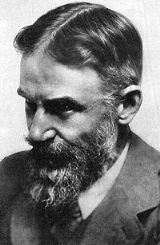
Bernard Shaw was an Anglo-Irish playwright and winner of the
Nobel Prize in Literature in 1925 and an Academy Award for Writing Adapted Screenplay in 1938 for
Pygmalion. After those of
William Shakespeare, Shaw's plays are among the most widely produced in English language theatre.
Early career
His career started with frustration and near poverty. Neither music criticism nor a telephone company job lasted very long, and only two of the five novels Shaw wrote between 1879 and 1883 found publishers:
Cashel Byron’s Profession , a novel about prizefighting as an occupation that anticipates the theme of prostitution as an antisocial profession in the play
Mrs. Warren’s Profession , and
An Unsocial Socialist . By the mid-1880s Shaw discovered the writings of
Karl Marx and turned to socialist polemics and critical journalism. He also became a firm believer in
vegetarianism, a spellbinding orator, and tentatively, a playwright. He was the force behind the newly founded Fabian Society, a middle-class socialist group that aimed at the transformation of English government and society. Through the Fabian Society’s founders, Sidney and Beatrice Webb, Shaw met the Irish heiress Charlotte Payne-Townshend, whom he married in 1898.
Shaw’s early journalism ranged from book reviews and art criticism to brilliant music columns from 1888 to 1890 under the signature “Corno di Bassetto” , later under his own initials. Shifting to the
Saturday Review as drama critic, a post he held from 1895 to 1898, Shaw became the champion of the Norwegian dramatist Henrik Ibsen, about whom he had already written his influential
The Quintessence of Ibsenism .
Playwriting
Shaw was a novelist, critic, pamphleteer, essayist, inveterate letter writer, politician and public speaker, but he is by far best known today as a playwright. He did not finish his first play, however, until he was in his mid-30s.
Born at 33 Synge Street in
Dublin, Ireland to rather poor
Church of Ireland parents, Shaw was educated at
Wesley College, Dublin and moved to
London during the 1870s to embark on his literary career. He wrote five novels, none of which was published, before finding his first success in the late 1880s as a music critic on the
Star newspaper, under the pseudonym "
Corno di Bassetto". From 1895 to 1898, Shaw was the drama critic on
Frank Harris's
Saturday Review.
During this time, Shaw became a
socialist and joined the Fabian Society. He was heavily involved in politics and even held office as a borough councillor in the St. Pancras district of London from 1897 to 1903. While Shaw's political beliefs inform his plays, they generally don't overwhelm them.
Shaw started working on his first play,
Widower's Houses, in 1885, in collaboration with critic William Archer. Archer, who came up with the structure, felt Shaw was no playwright , and the project was abandoned. Years later, Shaw gave it another shot and, in 1892, completed his first play—alone.
Widower's Houses debuted at London's Royalty Theatre on December 9, 1892. Shaw would later call it one of his worst works, but he had found his medium. He would go on to write over 50 plays, most of them full-length.
Many of his earliest pieces had to wait years to receive major productions in London, but they are still being performed today. Among them are
Mrs. Warren's Profession ,
Arms and the Man ,
Candida and
You Never Can Tell .
His first financial success as a playwright came from
Richard Mansfield's American production of
The Devil's Disciple . Shaw, in fact, would often see his plays succeed in America before they did in London. In 1898, soon after becoming self-sufficient from his theatre earnings, he married Irish heiress Charlotte Payne-Townshend.
The ideas in his earliest theatrical work were unconventional, and his wit unmatched by contemporaries , but his plays were still designed for the theatre of his time. Once he became more experienced, and more popular, his plays tended to be less compact and talkier, though no less successful. These works from what might be called the beginning of his "middle" period include
Caesar and Cleopatra ,
Man and Superman ,
Major Barbara and
The Doctor's Dilemma .
From 1904 to 1907, several of his plays had their London premieres in notable productions at the Court Theatre, managed by Harley Granville-Barker and J.E. Vedrenne.
His first original play performed at the Court,
John Bull's Other Island , though not one of his more popular plays today, made his reputation in London when, during a command perfomance for
King Edward VII, the King laughed so hard he broke his chair.
By the 1910s, Shaw was a well-established playwright. New works such as
Fanny's First Play and
Pygmalion —on which
My Fair Lady was based—had long runs in front of large London audiences.
Many feel Shaw's outlook was changed by World War I, a war he—quite unpopularly—opposed. His first full-length piece presented after the War, written mostly during it, was
Heartbreak House . This seemed to be a new Shaw; the wit was still there, but the action and theme were darker, almost despairing at times.
In 1921, Shaw completed
Back to Methuselah his "Metabiological Pentateuch." The massive, five-play work starts in the Garden of Eden and ends thousands of years in the future. Shaw claimed it was a masterpiece, but many critics did not share that opinion.
His next original play, however, is generally conceded to be one of his best,
Saint Joan . Shaw had long thought of writing about
Joan of Arc, and her recent canonization spurred him on. It was an international success, and is believed to have led to his
Nobel Prize in Literature.
He continued writing plays for the rest of his life, but very few of them are as notable—or as often revived—as his earlier work.
The Apple Cart was probably his most popular work of this era. Later full-length plays like
Too True to Be Good ,
On the Rocks ,
The Millionairess , and
Geneva have been seen as marking a decline. His last significant play,
In Good King Charles Golden Days has, according to St. John Ervine, passages that are equal to Shaw's major works. His last full-length work was
Buoyant Billions , written when he was in his nineties.
Many of Shaw's published plays come with lengthy prefaces. These tend to be essays more about Shaw's opinions on the issues dealt with in the plays than about the plays themselves. Some prefaces are much longer than the actual play. For example, the
Penguin Books edition of his one-act
The Shewing-up Of Blanco Posnet has a 67-page preface for the 29-page piece.
One of the world's most notable theatrical voices was silenced when Shaw died in 1950 at the age of 94 due to a fall from a ladder.
After his death
By the time of his death, Shaw was not only a household name in Britain, but a world figure. His
ironic wit endowed the language with the adjective "Shavian" to refer to such clever observations as "England and
America are two countries divided by a common language."
From 1906 until his death, Shaw lived at Shaw's Corner in the small village of
Ayot St Lawrence,
Hertfordshire. The house is now a
National Trust property, open to the public.
Concerned about the inconsistency of English spelling, he willed a portion of his wealth to fund the creation of a new phonemic alphabet for the
English language. On his death bed, he did not have much money to leave, so no effort was made to start such a project. However, his estate began to earn significant royalties from the rights to
Pygmalion when
My Fair Lady, a
musical adapted from the play by his comrade film producer
Gabriel Pascal, became a hit. It then became clear that the will was so badly worded that the relatives had grounds to challenge it, and in the end an out-of-court settlement granted only a small portion of the money to promoting a new alphabet. This became known as the
Shavian alphabet. The
National Gallery of Ireland, RADA and the
British Museum all received substantial bequests.
The Shaw Theatre, Euston Road, London was opened in 1971 and named in his honour.
The Shaw Festival, an annual theater festival in Niagara-on-the-Lake, Ontario, began as an eight week run of
Don Juan in Hell and
Candida in 1962 and has grown into an annual festival with over 800 performances a year, dedicated to producing the works of Shaw and his contemporaries.
Friends and correspondents
Shaw, in his lifetime, maintained correspondence with hundreds of personages, many notable and many not. His letters to and from
Mrs. Patrick Campbell were adapted for the stage by Jerome Kilty as
Dear Liar: A Comedy of Letters; as was his correspondence with the poet
Lord Alfred 'Bosie' Douglas , into the drama
Bernard and Bosie: A Most Unlikely Friendship by
Anthony Wynn. His letters to the prominent actress,
Ellen Terry, the boxer
Gene Tunney, and
H.G. Wells have also been published.
Shaw campaigned against the executions of the rebel leaders of the
Easter Rising, and he became a personal friend of the
Cork-born
IRA leader Michael Collins, whom he invited to his home for dinner while Collins was negotiating the
Anglo-Irish Treaty with
Lloyd-George in London. After Collins's assassination in 1922, Shaw sent a personal message of condolence to one of Collins's sisters.
Shaw had a long time friendship with
G. K. Chesterton, the Catholic-convert British writer, and there are many humorous stories about their complicated relationship.
Another great friend was the composer
Edward Elgar.
Shaw's correspondence with the motion picture producer
Gabriel Pascal, who was the first to successfully bring Shaw's plays to the screen and who later adapted Pygmalion into "
My Fair Lady," is published in a book titled
Bernard Shaw and Gabriel Pascal .
A stage play based on a book by Hugh Whitemore,
The Best of Friends, provides a window on the friendships of Dame Laurentia McLachlan, OSB with Sir Sydney Cockerell and Shaw through adaptations from their letters and writings.
Socialism and political beliefs
Shaw had a vision :
- “I, as a Socialist, have had to preach, as much as anyone, the enormous power of the environment. We can change it; we must change it; there is absolutely no other sense in life than the task of changing it. What is the use of writing plays, what is the use of writing anything, if there is not a will which finally moulds chaos itself into a race of gods.”
Shaw held that each class worked towards its own ends, and that those from the upper echelons had won the struggle; for him, the working class had failed in promoting their interests effectively, making Shaw highly critical of the democratic system of his day. The writing of Shaw, such as his plays
Major Barbara and
Pygmalion, has a background theme of class struggle.
Shaw's second career — after the theatre — was in support of
socialism. In 1882
Henry George’s lecture on land nationalization gave depth and direction to Shaw’s political ideology. Shortly thereafter he applied to join the Social Democratic Federation. Its leader H. M. Hyndman introduced him to the works of
Karl Marx. Instead, in May of 1884 he joined the newly-formed Fabian Society. He played a pivotal role with the Fabian Society and wrote a number of their pamphlets. He argued that property was theft and for an equitable distribution of land and capital. He was involved with the formation of the Labour Party. For a clear statement of his position read
The Intelligent Woman’s Guide to Socialism, Capitalism, Sovietism, and Fascism.
Having visited the
USSR in 1930s and met
Stalin, Shaw became an ardent supporter of
stalinist USSR. He declared all the stories of a
famine were slander. Having been asked why he didn't want to stay permanently in the Soviet 'earthly paradise', Shaw ironically marked that England was a 'hell' but of course he was a small devil himself.
Vegetarianism
Bernard Shaw was a noted vegetarian. The following was taken from the archives of The Vegetarian Society UK:
- The Summer of 1946 seems to have been a season of anniversaries and memorials. The Vegetarian Society itself was looking forward to its 100th anniversary and giving its members advance warnings of celebratory plans.
- But the big story of the July issue of The Vegetarian Messenger was the tribute to George Bernard Shaw, celebrating his 90th birthday on the 26th of that month. He had, at that time, been a vegetarian for 66 years and was commended as one of the great thinkers and dramatists of his era. "No writer since Shakespearean times has produced such a wealth of dramatic literature, so superb in expression, so deep in thought and with such dramatic possibilities as Shaw." The writer was a staunch vegetarian, anti-vivisectionist and opponent of cruel sports.
Sesquicentennial anniversary of birth
A programme of readings, guided tours and performances took place at 33 Synge Street, Dublin, the place of Shaw's birth, between 22 July and 29 July to celebrate the 150th anniversary of his birth which was on 26 July 2006. The
National Gallery of Ireland, which regards Shaw as a generous benefactor, will have a series of celebratory festivities for the remainder of 2006. Several conferences are to be held across the globe and there will be theatre readings of all 52 Shaw plays.
Quotes
On Personal Responsibility
On India
On Ideas
Trivia
- Shaw was a motorcyclist, and gave T. E. Lawrence a Brough Superior.
- Upon visiting America, Shaw called New York Giants baseball manager John McGraw the "one true American".
- Shaw is the only person ever to have won both a Nobel Prize and an Academy Award.
- On his headstone, it reads, "I knew if I stayed around long enough, something like this would happen."
Works
Drama
- Plays Unpleasant :
- Widowers' Houses
- The Philanderer
- Mrs Warren's Profession
- Plays Pleasant :
- Arms and the Man
- Candida
- The Man of Destiny
- You Never Can Tell
- Three Plays for Puritans :
- The Devil's Disciple
- Caesar and Cleopatra
- Captain Brassbound's Conversion
- The Admirable Bashville
- Man and Superman
- John Bull's Other Island
- How He Lied to Her Husband
- Major Barbara
- The Doctor's Dilemma
- Getting Married
- The Glimpse of Reality
- Misalliance
- Dark Lady of the Sonnets
- Fanny's First Play
- Androcles and the Lion
- Pygmalion
- Heartbreak House
- Back to Methuselah :
- In the Beginning
- The Gospel of the Brothers Barnabas
- The Thing Happens
- Tragedy of an Elderly Gentleman
- As Far as Thought Can Reach
- Saint Joan
- The Apple Cart
- Too True To Be Good
- On the Rocks
- The Six of Calais
- The Simpleton of the Unexpected Isles
- The Millionairess
- Geneva
- In Good King Charles' Golden Days
- Buoyant Billions
- Shakes versus Shav
Novels
- Immaturity
- The Irrational Knot
- Love Among the Artists
- Cashel Byron's Profession is George Bernard Shaw's [i] fourth novel. ...
- An Unsocial Socialist
Essays
- Commonsense about the War
- The Intelligent Woman's Guide to Socialism and Capitalism
- The Black Girl in Search of God
- Everybody's Political What's What? 1944 Constable
Music criticism
Debate
- Shaw V. Chesterton, a debate between George Bernard Shaw and G.K. Chesterton 2000 Third Way Publications Ltd. ISBN 0-9535077-7-7
References and footnotes
See also
External links
- in the University of Guelph Library, Archival and Special Collections, holds more than 3,000 items related to his writings and career*
-
-