
All Topics  
Vaudeville

 
Vaudeville

   Email Print
   Bookmark   Link


Vaudeville


Vaudeville was a genre
Genre

A genre is a loose set of criteria for a category of composition; the term is often used to categorize literature and speech, but is also used for any other Art#Art forms or utterance....
 of a variety entertainment
Variety show

A variety show or variety entertainment is an entertainment made up of a variety of acts, especially musical performances and comedy skits, and normally introduced by a Master of Ceremonies or Presenter....
 prevalent on the stage
Theatre

Theatre is the branch of the performing arts defined by Bernard Beckerman as what "occurs when one or more actor, isolated in time and/or Theater , present themselves to Audience." By this broad definition, theatre has existed since the dawn of man, as a result of human tendency for story telling....
 in the United States
United States

The United States of America is a Federal government constitutional republic comprising U.S. state and a federal district. The country is situated mostly in central North America, where its Contiguous United States and Washington, D.C., the Capital districts and territories, lie between the Pacific Ocean and Atlantic Oceans, Borders of the U...
 and Canada
Canada

Canada is a country occupying most of northern North America, extending from the Atlantic Ocean in the east to the Pacific Ocean in the west and northward into the Arctic Ocean....
 from the early 1880s until the early 1930s. It developed from many sources, including the concert saloon
Concert saloon

The concert saloon was an American copy of the English music hall, and the forerunner of the vaudeville theater. As in the music hall, alcohol was served....
, minstrelsy
Minstrel show

The minstrel show, or minstrelsy, was an United States entertainment consisting of comic skits, variety show acts, dance, and music, performed by white people in blackface or, especially after the American Civil War, blacks in blackface....
, freak show
Freak show

A freak show is an exhibition of rarities, "freaks of nature" ? such as unusually tall or short humans, and people with intersexuality ? and performances that are expected to be shocking to the viewers....
s, dime museum
Dime museum

Dime Museums were institutions that were briefly popular at the end of the 19th century in the United States. Designed as centers for entertainment and moral education for the working class , the museums were distinctly different from upper-middle class' cultural events ....
s, and literary burlesque
Burlesque

Burlesque is a humorous theatrical entertainment involving parody and sometimes grotesque exaggeration. Prior to Burlesque becoming associated with striptease, it was a form of Parody music in which an opera or piece of classical theatre is adapted in a broad, often risqu? style very different from that for which it was originally known....
. Vaudeville became one of the most popular types of entertainment in North America
North America

North America is the northern continent of the Americas, situated in the Earth's northern hemisphere and almost totally in the western hemisphere....
, defining an entertainment era. Each evening's bill of performance was made up of a series of separate, unrelated acts. Types of acts included (among others) musician
Musician

A musician is a person who plays or writes music. Musicians can be classified by their roles in creating or performing music:* An instrumentalist plays a musical instrument....
s (both classical and popular), dancers, comedian
Comedian

A comedian or comic is a person who seeks to entertain members of an audience, primarily by making them laughter. This might be through jokes or amusing situations, or acting a fool, as in slapstick, or employing prop comedy....
s, trained animals
Animal training

Animal training refers to teaching animals specific responses to specific conditionings or stimulus . Training may be for the purpose of companionship, detection, protection, entertainment or all of the above....
, magicians, female and male impersonators, acrobats, one-act plays or scenes from plays, athletes, lecturing celebrities, minstrels, and short movies
Film

Film encompasses individual motion pictures, the field of film as an art form, and the film industry. Films are produced by recording images from the world with cameras, or by creating images using animation techniques or special effects....
.

origin of the term
Terminology

Terminology is the study of terms and their use. Terms are words and compound words that are used in specific contexts. Not to be confused with "terms" in colloquial usages, the shortened form of technical terms which are defined within a Academic discipline or speciality field....
 is obscure, but is often explained as being derived from the expression voix de ville, or "voice of the city." Another plausible etymology
Etymology

Etymology is the study of the roots and history of words; and how their form and meaning have changed over time.In languages with a long detailed history, etymology makes use of philology, the study of how words change from culture to culture over time....
 finds origins in the French
French language

French is a Romance language spoken around the world by around 80 million people as first language, by 190 million as second language, and by about another 200 million people as an acquired tongue, with significant speakers in 54 countries....
 Vau de Vire
Vire River

The Vire is a river in Normandy in France whose 128 km course crosses the d?partements of France of Calvados and Manche, flowing through the towns of Vire, Saint-L? and Isigny-sur-Mer, finally flowing out into the English Channel....
, a valley in Normandy
Normandy

Normandy is a geographical region corresponding to the former Duchy of Normandy. It is situated along the coast of France south of the English Channel between Brittany and Picardy and comprises territory in northern France and the Channel Islands....
 noted for its style of satirical songs with topical themes.


Discussion
Ask a question about 'Vaudeville'
Start a new discussion about 'Vaudeville'
Answer questions from other users
Full Discussion Forum


Recent Posts


Encyclopedia


Vaudeville was a genre
Genre

A genre is a loose set of criteria for a category of composition; the term is often used to categorize literature and speech, but is also used for any other Art#Art forms or utterance....
 of a variety entertainment
Variety show

A variety show or variety entertainment is an entertainment made up of a variety of acts, especially musical performances and comedy skits, and normally introduced by a Master of Ceremonies or Presenter....
 prevalent on the stage
Theatre

Theatre is the branch of the performing arts defined by Bernard Beckerman as what "occurs when one or more actor, isolated in time and/or Theater , present themselves to Audience." By this broad definition, theatre has existed since the dawn of man, as a result of human tendency for story telling....
 in the United States
United States

The United States of America is a Federal government constitutional republic comprising U.S. state and a federal district. The country is situated mostly in central North America, where its Contiguous United States and Washington, D.C., the Capital districts and territories, lie between the Pacific Ocean and Atlantic Oceans, Borders of the U...
 and Canada
Canada

Canada is a country occupying most of northern North America, extending from the Atlantic Ocean in the east to the Pacific Ocean in the west and northward into the Arctic Ocean....
 from the early 1880s until the early 1930s. It developed from many sources, including the concert saloon
Concert saloon

The concert saloon was an American copy of the English music hall, and the forerunner of the vaudeville theater. As in the music hall, alcohol was served....
, minstrelsy
Minstrel show

The minstrel show, or minstrelsy, was an United States entertainment consisting of comic skits, variety show acts, dance, and music, performed by white people in blackface or, especially after the American Civil War, blacks in blackface....
, freak show
Freak show

A freak show is an exhibition of rarities, "freaks of nature" ? such as unusually tall or short humans, and people with intersexuality ? and performances that are expected to be shocking to the viewers....
s, dime museum
Dime museum

Dime Museums were institutions that were briefly popular at the end of the 19th century in the United States. Designed as centers for entertainment and moral education for the working class , the museums were distinctly different from upper-middle class' cultural events ....
s, and literary burlesque
Burlesque

Burlesque is a humorous theatrical entertainment involving parody and sometimes grotesque exaggeration. Prior to Burlesque becoming associated with striptease, it was a form of Parody music in which an opera or piece of classical theatre is adapted in a broad, often risqu? style very different from that for which it was originally known....
. Vaudeville became one of the most popular types of entertainment in North America
North America

North America is the northern continent of the Americas, situated in the Earth's northern hemisphere and almost totally in the western hemisphere....
, defining an entertainment era. Each evening's bill of performance was made up of a series of separate, unrelated acts. Types of acts included (among others) musician
Musician

A musician is a person who plays or writes music. Musicians can be classified by their roles in creating or performing music:* An instrumentalist plays a musical instrument....
s (both classical and popular), dancers, comedian
Comedian

A comedian or comic is a person who seeks to entertain members of an audience, primarily by making them laughter. This might be through jokes or amusing situations, or acting a fool, as in slapstick, or employing prop comedy....
s, trained animals
Animal training

Animal training refers to teaching animals specific responses to specific conditionings or stimulus . Training may be for the purpose of companionship, detection, protection, entertainment or all of the above....
, magicians, female and male impersonators, acrobats, one-act plays or scenes from plays, athletes, lecturing celebrities, minstrels, and short movies
Film

Film encompasses individual motion pictures, the field of film as an art form, and the film industry. Films are produced by recording images from the world with cameras, or by creating images using animation techniques or special effects....
.

Etymology

The origin of the term
Terminology

Terminology is the study of terms and their use. Terms are words and compound words that are used in specific contexts. Not to be confused with "terms" in colloquial usages, the shortened form of technical terms which are defined within a Academic discipline or speciality field....
 is obscure, but is often explained as being derived from the expression voix de ville, or "voice of the city." Another plausible etymology
Etymology

Etymology is the study of the roots and history of words; and how their form and meaning have changed over time.In languages with a long detailed history, etymology makes use of philology, the study of how words change from culture to culture over time....
 finds origins in the French
French language

French is a Romance language spoken around the world by around 80 million people as first language, by 190 million as second language, and by about another 200 million people as an acquired tongue, with significant speakers in 54 countries....
 Vau de Vire
Vire River

The Vire is a river in Normandy in France whose 128 km course crosses the d?partements of France of Calvados and Manche, flowing through the towns of Vire, Saint-L? and Isigny-sur-Mer, finally flowing out into the English Channel....
, a valley in Normandy
Normandy

Normandy is a geographical region corresponding to the former Duchy of Normandy. It is situated along the coast of France south of the English Channel between Brittany and Picardy and comprises territory in northern France and the Channel Islands....
 noted for its style of satirical songs with topical themes. Problematically, the term vaudeville itself, referring specifically to North American variety entertainment, came into common usage after 1871 with the formation of Sargent's Great Vaudeville Company of Louisville, Kentucky, and had little, if anything, to do with the "vaudeville" of the French theatre. Variety showman M.B. Leavitt claimed the word originated from the French vaux de ville ("worth of the city, or worthy of the city's patronage"), but in all likelihood, as Albert McLean suggests, the name was merely selected "for its vagueness, its faint, but harmless exoticism, and perhaps its connotation of gentility." Leavitt's and Sargent's shows differed little from the coarser material presented in earlier itinerant entertainments, although their use of the term to provide a veneer of respectability points to an early effort to cater variety amusements to the growing middle class. Though vaudeville had been used in the United States as early as the 1830s, most variety theatres adopted the term in the late 1880s and early 1890s for two reasons. First, seeking middle class patrons, they wished to distance themselves from the earlier rowdy, working-class variety halls. Second, the French or pseudo-French term lent an air of sophistication, and perhaps made the institution seem more consistent with the Progressive Era
Progressive Era

The Progressive Era in the United States was a period of reform which lasted from the 1890s to the 1920's.Responding to the changes brought about by industrialization,...
's interests in education and self-betterment. Some, however, preferred the earlier term variety to what manager Tony Pastor
Tony Pastor

Antonio Pastor was an American impresario, variety performer and theatre owner who became one of the founding forces behind United States vaudeville in the mid-to-late nineteenth century....
 called its "sissy and Frenchified" successor. Thus, vaudeville was marketed as variety well into the twentieth century.

Beginnings

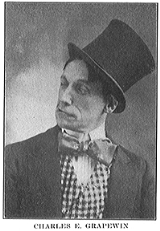
Character Comedian Charles E
A descendant of variety, (c. 1860s-1881), vaudeville distinguished itself from the earlier form with its mixed-gender audience, usually alcohol-free halls, and often slavish devotion to inculcating favor among members of the middle class. The form gradually evolved from the concert saloon and variety hall into its mature form throughout the 1870s and 1880s. This more genteel form was known as "Polite Vaudeville."

In the years before the Civil war, entertainment existed on a different scale. Certainly, variety theatre existed before 1860. Europeans enjoyed variety performances years before anyone even had conceived of the United States. On American soil, as early as the first decades of the nineteenth century, theatregoers could enjoy a performance consisting of Shakespeare plays, acrobatics, singing, dancing, and comedy. As the years progressed, people seeking diversified amusement found an increasing number of ways to be entertained. A handful of circuses regularly toured the country; dime museums appealed to the curious; amusement parks, riverboats, and town halls often featured "cleaner" presentations of variety entertainment; and saloons, music halls, and burlesque houses catered to those with a taste for the risqué. In the 1840s, minstrel shows, another type of variety performance, and "the first emanation of a pervasive and purely American mass culture," grew to enormous popularity and formed what Nick Tosches called "the heart of nineteenth-century show business." Medicine shows traveled the countryside offering programs of comedy, music, jugglers and other novelties along with displays of tonics, salves, and miracle elixirs, while "Wild West" shows provided romantic vistas of the disappearing frontier, complete with trick riding, music, and drama. Vaudeville incorporated these various itinerant amusements into a stable, institutionalized form centered in America's growing urban hubs.

In the early 1880s, impresario
Impresario

Impresario, from the Italian language impresa, an enterprise or undertaking,   Origin: mid 18th century, from Italian impresa, ?undertaking.? New Oxford American Dictionary.   Impresa: enterprise; deed; company....
 Tony Pastor, a circus ringmaster turned theatre manager, capitalized on middle class
Middle class

Middle class is the group of people in contemporary society who are between the working class and nobility. This socioeconomic class includes professionals, highly skilled workers, and lower and middle management....
 sensibilities and spending power when he began to feature "polite" variety programs in several of his New York City
New York City

The City of New York is the List of United States cities by population in the United States, while the New York metropolitan area ranks among the List of urban areas by population....
 theatres. The usual date given for the "birth" of vaudeville is 24 October 1881, when Pastor famously staged the first bill of self-proclaimed "clean" vaudeville in New York City. Hoping to draw a potential audience from female and family-based shopping traffic uptown
Upper Manhattan

Upper Manhattan denotes the more northerly region of the New York City Borough of Manhattan. Its southern boundary may be defined anywhere between 59th Street and 155th Street ....
, Pastor barred the sale of liquor in his theatres, eliminated bawdy material from his shows, and offered gifts of coal and hams to attendees. Pastor's experiment proved successful, and other managers soon followed suit.

Popularity

The manager's comments, sent back to the circuit's central office weekly, follow each act's description. The bill illustrates the typical pattern of opening the show with a "dumb" act to allow patrons to find their seats, placing strong acts in second and penultimate positions, and leaving the weakest act for the end, to clear the house.
  • 1) Burt Jordan and Rosa Crouch. "Sensational, grotesque and 'buck' dancers. A good act...."
  • 2) The White Tscherkess Trio. "A man and two women who do a singing turn of the operatic order. They carry special scenery which is very artistic and their costumes are original and neat. Their voices are good and blend exceedingly well. The act goes big with the audience."
  • 3) Sarah Midgely and Gertie Carlisle. "Presenting the sketch 'After School.' ... they are a 'knockout.'"
  • 4) Theodor F. Smith and Jenny St. George-Fuller. "Refined instrumentalists.
  • 5) Milly Capell. "European equestrienne. This is her second week. On account of the very pretty picture that she makes she goes as strong as she did last week."
  • 6) R. J. Jose. "Tenor singer. The very best of them all."
  • 7) The Nelson Family of Acrobats. "This act is composed of three men, two young women, three boys and two small girls. The greatest acrobatic act extant."
  • 8) James Thornton. "Monologist and vocalist. He goes like a cyclone. It is a case of continuous laughter from his entrance to his exit."
  • 9) Burk and Andrus and Their Trained Mule. "This act, if it can be so classed, was closed after the evening performance."
B.F. Keith took the next step, starting in Boston, where he built an empire
Empire

Empire derives from the Latin word imperium, denoting ?military command? in Roman. Politically, an empire is a geographically extensive group of states and peoples united and ruled either by a monarch or an oligarchy....
 of theatres
Theater (structure)

A theater or theatre is a structure where theatrical works or Play are performed or other performances such as musical concerts may be given....
 and brought vaudeville to the United States and Canada. Later, E.F. Albee, adoptive grandfather of the Pulitzer Prize
Pulitzer Prize

The Pulitzer Prize is an United States award regarded as the highest national honor in newspaper journalism, literary achievements and musical composition....
-winning playwright Edward Albee
Edward Albee

Edward Franklin Albee III is an American playwright best known for works, Who's Afraid of Virginia Woolf?, The Zoo Story, The Sandbox and The American Dream ....
, managed the chain to its greatest success. Circuits such as those managed by Keith-Albee provided vaudeville's greatest economic innovation and the principal source of its industrial strength, enabling a chain of allied vaudeville houses that remedied the chaos of the single-theatre booking system by contracting acts for regional and national tours that could grow from a few weeks to two years.

Albee also gave national prominence to vaudeville's trumpeting of "polite" entertainment, a commitment to entertainment equally inoffensive to men, women, and children. Acts that violated this ethos (e.g., those that used words such as "hell") were admonished and threatened with expulsion from the week's remaining performances, or were canceled altogether. In spite of such threats, performers routinely flouted this censorship, often to the delight of the very audience members whose sensibilities were supposedly endangered.

Gmarx3
By the late 1890s, vaudeville had large circuits, houses (small and large) in almost every sizable location, standardized booking, broad pools of skilled acts, and a loyal national following. At its height, vaudeville played across multiple strata of economic class and auditorium size. The three most common levels were the “small time” (lower-paying contracts for more frequent performances in rougher, often converted theatres), the “medium time” (moderate wages for two performances each day in purpose-built theatres) and the “big time” (possible remuneration of several thousand dollars per week in large, urban theatres largely patronized by the middle and upper-middle classes). As performers rose in renown and established regional and national followings, they worked their way into the less arduous working conditions and better pay of the big time. The capitol of the big time was New York City's Palace Theatre
Palace Theatre, New York

The Palace Theatre is a legitimate Broadway theatre theater located at 1564 Broadway in midtown-Manhattan....
 (or just “The Palace” in the slang of vaudevillians), built by Martin Beck
Martin Beck

Martin Beck is a fictional Swedish police detective who is the main character in a series of ten novels by Sj?wall and Wahl??, collectively titled The Story of a Crime....
 in 1913 and operated by Keith. Featuring a bill stocked with inventive novelty acts, national celebrities, and acknowledged masters of vaudeville performance (such as comedian and trick roper Will Rogers), the Palace provided what many vaudevillians considered the apotheoses of already remarkable careers.

While the neighborhood character of vaudeville attendance had always promoted a tendency to tailor fare to specific audiences, mature vaudeville grew to feature houses and circuits specifically aimed at certain demographic groups. African American
African American

African Americans or Black Americans are citizens or residents of the United States who have origins in any of the Black people populations of Africa....
 patrons, often segregated into the rear of the second gallery in white-oriented theatres, had their own smaller circuits, as did speakers of Italian
Italian language

Italian is a Romance languages spoken by about 63 million people as a first language, primarily in Italy. In Switzerland, Italian is one of four Linguistic geography of Switzerlands....
 and Yiddish
Yiddish language

Yiddish is a non-territorial High German languages of Jewish origin, spoken throughout the world. Unlike other such languages, Yiddish is written with the Hebrew alphabet as opposed to a Latin alphabet....
. (For a brief discussion of Black vaudeville, see Theater Owners Booking Association.) White-oriented regional circuits, such as New England's "Peanut Circuit," also provided essential training grounds for new artists while allowing established acts to experiment with and polish new material. At its height, vaudeville was rivaled only by churches and public schools among the nation's premiere public gathering places.

Decline

The shift of New York City's Palace Theatre, vaudeville's epicenter, to an exclusively cinema presentation on 16 November 1932 is often considered to have been the death knell of vaudeville. Yet, like the attempts to tie its birth to Pastor's first clean bill, no single event may be accurately considered as anything more than reflective of its gradual withering. There was no abrupt end to vaudeville, though the form was clearly staggering by the late 1920s.

The continued growth of the lower-priced cinema in the early 1910s dealt the heaviest blow to vaudeville, just as the advent of free broadcast television
Television

Television is a widely used telecommunication mass-media for transmitting and receiving moving , either monochrome or color, usually accompanied by sound....
 was later to diminish the cultural and economic strength of the cinema. Cinema was first regularly commercially presented in the United States in vaudeville halls; the first public showing of movies projected on a screen took place at Koster and Bial's Music Hall
Koster and Bial's Music Hall

Koster and Bial's Music Hall was an important vaudeville theatre in New York, famous in cinema history as the site of the first public exhibition of the Vitascope on April 23, 1896....
 in 1896. Lured by greater salaries and less arduous working conditions, many early film
Film

Film encompasses individual motion pictures, the field of film as an art form, and the film industry. Films are produced by recording images from the world with cameras, or by creating images using animation techniques or special effects....
 and old time radio performers, such as W. C. Fields
W. C. Fields

W. C. Fields was an United States comedian, actor and juggler. Fields created one of the great American comic personas of the first half of the 20th century: a misanthrope and hard-drinking egotist who remained a sympathetic character despite his snarling contempt for dogs, children, and women....
, Buster Keaton
Buster Keaton

Joseph Frank "Buster" Keaton was an Academy Award-winning United States comic actor and filmmaker. Best known for his silent films, his trademark was physical comedy with a stoicism, deadpan expression on his face, earning him the nickname "The Great Stone Face" ....
, the Marx Brothers
Marx Brothers

The Marx Brothers were a popular team of sibling comedians who appeared in vaudeville, stage plays, film, and television....
, Edgar Bergen
Edgar Bergen

Edgar John Bergen was an Academy Award-winning United States actor and radio performer, best known as a ventriloquism....
, and Jack Benny
Jack Benny

Jack Benny was an American comedian, vaudeville, and actor for radio programming, television, and film.Widely recognized as one of the leading American entertainers of the 20th century, Benny was known for his comic timing and his ability to get laughs with either a pregnant pause or a single expression, such as his signature exasperated "...
, used the prominence they first gained in live variety performance to vault into new media. (In so doing, such performers often exhausted in a few moments of screen time the novelty of an act that might have kept them on tour for several years.) Other vaudevillians who entered in vaudeville's decline, including The Three Stooges
Three Stooges

The Three Stooges was an American vaudeville and comedy act of the early to mid?20th century best known for their numerous short subject films....
, Abbott and Costello
Abbott and Costello

Bud Abbott and Lou Costello performed together as Abbott and Costello, an United States double act whose work in radio, film and television made them the most popular comedy team during the 1940s....
, Kate Smith
Kate Smith

Kathryn Elizabeth "Kate" Smith was an American singer, best known for her rendition of Irving Berlin's "God Bless America". Smith had a radio, television and recording career spanning five decades, reaching its most-remembered zenith in the 1940s....
, Bob Hope
Bob Hope

Bob Hope, Order of the British Empire, Order of St. Gregory the Great , was an British-born American comedian and actor who appeared in vaudeville, on Broadway theatre, and in radio, television and movies....
, Judy Garland
Judy Garland

Judy Garland was an American actress and alto singer. Through a career that spanned 45 of her 47 years, Garland attained international stardom as an actress in musical and dramatic roles, as a recording artist and on the concert stage....
, and Rose Marie
Rose Marie

Rose Marie is an American actress who also had a successful singing career as Baby Rose Marie.A veteran of vaudeville, Rose Marie's career includes film, theater and television....
, used vaudeville only as a launching pad for later careers, leaving live performance before they had ever risen to the meteoric height of national celebrity that had formerly sustained vaudeville's publicity-driven star culture.

By the late 1920s, almost no vaudeville bill failed to include a healthy selection of cinema. Earlier in the century, many vaudevillians, cognizant of the threat represented by cinema, held out hope that the silent nature of the "flickering shadow sweethearts" would preclude their usurpation of the paramount place in the public's affection. With the introduction of talking pictures in 1926, however, the burgeoning film studios removed what had remained, for many, the chief point in favor of live theatrical performance: spoken dialogue.

Theatre owners discovered that rental costs of films--when held against the price of performers, newly unionized stagehands, booking fees, lighting, orchestra, etc.--vastly increased their profits. Performers tried hanging on for a time in combination shows (often referred to as "vaudefilm") in which, in an inverse of earlier vaudeville, live performances accompanied a cinema-centric performance.

Inevitably, managers further trimmed costs by eliminating more of these comparatively costly live performances. Vaudeville also suffered in the rise of broadcast radio following the greater availability of inexpensive receiver sets later in the decade. Even the hardiest within the vaudeville industry realized the form was in decline; the perceptive understood the condition to be terminal.

The 1930s, with standardized film distribution and talking pictures, only confirmed the end of vaudeville. By 1930, the vast majority of formerly live theatres had been wired for sound, and none of the major studios were producing silent pictures. For a time, the most luxurious theatres continued to offer live entertainment, but the majority of theatres were forced by the Great Depression
Great Depression

File:International depression.pngThe Great Depression was a worldwide economic Recession starting in most places in 1929 and ending at different times in the 1930s or early 1940s for different countries....
 to economize.

Some in the industry blamed cinema's drain of talent from the vaudeville circuits for the medium's demise. Others argued that vaudeville had allowed its performances to become too familiar to its famously loyal, now seemingly fickle audiences.

Though talk of its resurrection was heard throughout the 1930s and after, the demise of the supporting apparatus of the circuits and the inescapably higher cost of live performance made any large scale renewal of vaudeville unrealistic.

Architecture

The most striking examples of Gilded Age
Gilded Age

The Gilded Age was a time period when some activity or skill was at its peak. The wealth polarization derived primarily from industrial and population expansion.The businessmen of the Second Industrial Revolution created industrial towns and cities in the Northeastern United States with new factories, and contributed to the creation of an ethnica...
 theatre architecture invariably rose from the largess of big time vaudeville magnates. Though classic vaudeville reached a zenith of capitalization and sophistication in urban areas dominated by national chains and commodious theatres, small-time vaudeville included countless more intimate and locally-controlled houses. Small-time houses were often converted saloons, rough-hewn theatres or multi-purpose halls, together catering to a wide range of clientèle, though many small towns had purpose-built theatres.

Post-Vaudeville

Some of the most prominent vaudevillians continued the migration to cinema, though others found that the gifts that had so delighted live audiences did not translate well into different media. Some performers whose eclectic styles did not conform well to the greater intimacy of the screen, like Bert Lahr
Bert Lahr

Bert Lahr was a American of German-Jewish heritage Tony Award-winning comic actor and vaudeville comedian....
, fashioned careers out of combining live performance, radio and film roles. Many others later appeared in the Catskill
Catskill Mountains

The Catskill Mountains , a natural area in New York northwest of New York City and southwest of Albany, New York, are a mature dissected plateau, an uplifted region that was subsequently eroded into sharp relief....
 resorts that constituted the "Borscht Belt
Borscht Belt

Borscht Belt is a colloquial term for the mostly defunct summer resorts of the Catskill Mountains in Sullivan County, New York and Ulster County, New York Counties in upstate New York that were a popular vacation spot for New York City Jews through the 1960s....
". And many simply retired from performance and entered the workaday world of the middle class, the group that vaudeville, more than anything else, had helped to articulate and entertain.

Yet vaudeville, both in its methods and ruling aesthetic, did not simply perish but rather rebounded throughout the succeeding media of film, radio and television. The screwball comedies
Screwball comedy film

The screwball comedy is a subgenre of the Comedy film film genre. It has proven to be one of the most popular and enduring film genres. It first gained prominence in 1934 with It Happened One Night, and, although many film scholars would agree that its classic period ended sometime in the early 1940s, elements of the genre have persisted...
 of the 1930s, those reflections of the brief moment of cinematic equipoise between dialogue and physicality, reflect the more madcap comedic elements of some vaudeville acts (e.g., The Three Keatons). In form, the television variety show
Variety show

A variety show or variety entertainment is an entertainment made up of a variety of acts, especially musical performances and comedy skits, and normally introduced by a Master of Ceremonies or Presenter....
 owed much to vaudeville, riding the multi-act format to success in shows such as "Your Show of Shows
Your Show of Shows

Your Show of Shows was a live 90-minute sketch comedy television series appearing weekly in the United States on NBC, from February 25, 1950 until June 5, 1954, featuring Sid Caesar and Imogene Coca....
" with Sid Caesar
Sid Caesar

Isaac Sidney "Sid" Caesar is an Emmy Award-winning United States comic actor and writer known as the leading man on the 1950s television series Your Show of Shows and Caesar's Hour, and to younger generations as Coach Calhoun in Grease and Grease 2....
 and, of course, The Ed Sullivan Show
The Ed Sullivan Show

The Ed Sullivan Show is an United States television program variety show that ran from June 20, 1948 to June 6, 1971, and was hosted by entertainment columnist Ed Sullivan....
. Even today, performers such as Bill Irwin
Bill Irwin

William Mills "Bill" Irwin is an American actor and clown noted for his contribution to the renaissance of American circus during the 1970s. He is known for his vaudeville-style stage acts, but has made a number of appearances on film and television and won a Tony Award for a dramatic role on Broadway....
, a MacArthur Fellow and Tony Award
Tony Award

The Antoinette Perry Awards for Excellence in Theatre, more commonly known as the Tony Awards, recognize achievement in live United States theatre and are presented by the American Theatre Wing and The Broadway League at an annual ceremony in New York City....
-winning actor, are frequently lauded as "New Vaudevillians."

References to vaudeville and the use of its distinctive argot continue throughout Western popular culture. Terms such as "a flop" (an act that does badly), for example, have entered into accepted usage in the American idiom. Many of the most common performance techniques and "gags" of vaudeville entertainers are still seen on television
Television

Television is a widely used telecommunication mass-media for transmitting and receiving moving , either monochrome or color, usually accompanied by sound....
 and on film. Vaudeville, like its dime museum and variety theatre forebears, also continued and solidified a strong American absorption with foreign entertainers.

See also

  • Blackface
    Blackface

    'Blackface', in the narrow sense is a style of theatre makeup that originated in the United States, used to take on the appearance of certain archetypes of Racism in the United States, especially those of the "happy-go-lucky List of ethnic slurs#D on the plantation#Slavery, para-slavery and plantations" or the "dandy List of ethnic slur...
  • Borscht Belt
    Borscht Belt

    Borscht Belt is a colloquial term for the mostly defunct summer resorts of the Catskill Mountains in Sullivan County, New York and Ulster County, New York Counties in upstate New York that were a popular vacation spot for New York City Jews through the 1960s....
  • Burlesque
    Burlesque

    Burlesque is a humorous theatrical entertainment involving parody and sometimes grotesque exaggeration. Prior to Burlesque becoming associated with striptease, it was a form of Parody music in which an opera or piece of classical theatre is adapted in a broad, often risqu? style very different from that for which it was originally known....
  • Cabaret
    Cabaret

    Cabaret is a form of entertainment featuring comedy, song, dance, and theatre, distinguished mainly by the performance venue — a restaurant or nightclub with a stage for performances and the audience sitting at tables watching the performance being introduced by a master of ceremonies, or MC....
  • Chautauqua
    Chautauqua

    Chautauqua is an adult education movement in the United States, highly popular in the late 19th and early 20th centuries. Chautauqua assemblies expanded and spread throughout rural America until the mid-1920s....
  • Concert saloon
    Concert saloon

    The concert saloon was an American copy of the English music hall, and the forerunner of the vaudeville theater. As in the music hall, alcohol was served....
  • Music hall
    Music hall

    Music hall is a form of British theatrical entertainment which was popular between 1850 and 1960. The term can refer to# A particular form of variety show entertainment involving a mixture of popular song, comedy and #Speciality Acts....
  • Nightclub
    Nightclub

    A nightclub is a Alcoholic beverage, Dance and entertainment Music venue which does its primary business after dark. People who frequent nightclubs are known as clubbers....
  • Revue
    Revue

    A revue is a type of multi-act popular theatre entertainment that combines music, dance and sketch comedy. The revue has its roots in nineteenth-century American popular entertainment and melodrama, but grew into a substantial cultural presence of its own during its golden years from ca....
  • Tab show
    Tab show

    A tab show was a short or 'tabloid' version of various popular Musical theatre performed in the United States in the early 20th century....
  • Tom Shows
    Tom Shows

    Tom Shows were stage play and Musical theatres based on the 1852 novel Uncle Tom's Cabin by Harriet Beecher Stowe. The novel depicts the harsh reality of slavery while also showing that Christianity love and faith can overcome even something as evil as enslavement of fellow human beings....
  • Concert Party (entertainment)
    Concert Party (entertainment)

    A Concert Party is the collective name for a group of travelling entertainers in Great Britain, usually in music hall.Immensely popular before the Second World War, concert parties were also formed by several countries armed forces during the war itself....
  • The Quiddlers
    Quiddlers

    The Quiddlers are a vaudeville-styled pantomime group formed in Southeastern Michigan. They are known to audiences worldwide as "The International Ambassadors of Physical Comedy."...
     - Comedic Pantomime
  • Michel Lauzière
    Michel Lauzière

    Michel Lauzi?re is a Canada comedian known for his bizarre visual standup acts. He began performing in 1989. Since then he has performed his one man show to an estimated 1 billion viewers on five continents....
     - Visual Comedy and Music
  • Rudy Coby
    Rudy Coby

    Rudy Coby, also known as "Labman", is an United States comedic Magic . He is a member of the Magic Castle in Los Angeles. Coby appeared in several small theatrical live shows, and on broadcast television....
     - Magician
  • Mr. Methane
    Mr. Methane

    Paul Oldfield, born in Macclesfield, Cheshire, North West England, is better known by his stage name Mr. Methane. He is a United Kingdom professional farter or "professional farter" who started performing in 1991; he briefly retired in 2006 but re-started in mid-2007; he claims to be the only performing professional flatulist in the w...
     - Professional Flatulist
  • Esther's Follies
    Esther's Follies

    Esther's Follies is a modern day vaudeville theatre located on 6th Street in downtown Austin, Texas. The group is named after actress Esther Williams....
     - Austin Texas vaudeville theatre


External links