

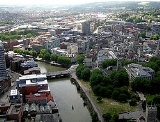
Bristol

Encyclopedia
Bristol is a city
, unitary authority area and ceremonial county
in South West England
, with an estimated population of 433,100 for the unitary authority in 2009, and a surrounding Larger Urban Zone (LUZ) with an estimated 1,070,000 residents in 2007. It is England's sixth and the United Kingdom's eighth most populous city, one of the group of English Core Cities
and the most populous city in South West England.
Bristol received a Royal Charter
in 1155 and was granted County status in 1373. From the 13th century, for half a millennium, it ranked amongst the top three English cities after London, alongside York
and Norwich
, on the basis of tax receipts, until the rapid rise of Liverpool
, Birmingham and Manchester
during the Industrial Revolution
in the latter part of the 18th century. It borders the counties of Somerset
and Gloucestershire
, and is also located near the historic cities of Bath to the south east and Gloucester
to the north. The city is built around the River Avon
, and it also has a short coastline on the Severn Estuary
, which flows into the Bristol Channel
.
Bristol is the largest centre of culture, employment and education in the region. Its prosperity has been linked with the sea since its earliest days. The commercial Port of Bristol
was originally in the city centre before being moved to the Severn Estuary at Avonmouth
; Royal Portbury Dock
is on the western edge of the city boundary. In more recent years the economy has depended on the creative media, electronics and aerospace
industries, and the city centre docks have been regenerated as a centre of heritage and culture. There are 34 other populated places on Earth named Bristol, most in the United States, but also in Peru
, Canada, Jamaica
, Barbados, and Costa Rica
, all presumably commemorating the original.
People from Bristol are termed Bristolians
finds believed to be 60,000 years old, discovered at Shirehampton
and St Annes
, provide "evidence of human activity" in the Bristol area from the Palaeolithic era. Iron Age
hill fort
s near the city are at Leigh Woods
and Clifton Down
on the side of the Avon Gorge
, and on Kingsweston Hill
, near Henbury
.
During the Roman era
there was a settlement, Abona,
at what is now Sea Mills
, connected to Bath by a Roman road
, and another at the present-day Inns Court. There were also isolated Roman villa
s and small Roman forts and settlements throughout the area.
The town of Brycgstow (Old English
, "the place at the bridge") appears to have been founded in c.1000 and by c.1020 was an important enough trading centre to possess its own mint, producing silver pennies bearing the town's name. By 1067 the town was clearly a well fortified burh that proved capable of resisting an invasion force sent from Ireland by Harold's sons. Under Norman
rule the town acquired one of the strongest castles
in southern England.
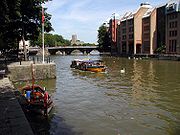 The area around the original junction of the River Frome
with the River Avon
, adjacent to the original Bristol Bridge
and just outside the town walls, was where the port began to develop in the 11th century. By the 12th century Bristol was an important port, handling much of England's trade with Ireland. In 1247 a new stone bridge was built, which was replaced by the current Bristol Bridge in the 1760s, and the town was extended to incorporate neighbouring suburbs, becoming in 1373 a county
in its own right. During this period Bristol also became a centre of shipbuilding and manufacturing. By the 14th century Bristol was one of England's three largest medieval towns after London, along with York
and Norwich
, and it has been suggested that between a third and half of the population were lost during the Black Death
of 1348–49. The plague resulted in a prolonged pause in the growth of Bristol's population, with numbers remaining at 10,000–12,000 through most of the 15th and 16th centuries.
In the 15th century, Bristol was certainly the second most important port in the country, trading to Ireland, Iceland, and Gascony. Bristol was the starting point for many important voyages, including that led by Robert Sturmy
(1457/8) to try and break the Italian monopoly over trade to the Eastern Mediterranean. Having been rebuffed in the east, Bristol merchants turned west, being involved in expeditions into the Atlantic, in search of the Isle of Hy-Brazil, by at least 1480. These Atlantic voyages were to culminate in John Cabot
's 1497 voyage of exploration to North America and the subsequent expeditions undertaken by Bristol merchants to the new world up to 1508. These include one led by William Weston
of Bristol in 1499, which was the first English-led expedition to North America. In the sixteenth century, however, Bristol merchants concentrated on developing their trade to Spain and its American colonies. This included the smuggling
of 'prohibited' wares, such as foodstuffs and iron ordnance, to Iberia, even during the Anglo-Spanish war
of 1585–1604.
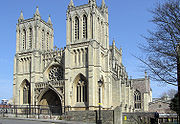 The Diocese of Bristol
was founded in 1542,
with the former Abbey
of St. Augustine
, founded by Robert Fitzharding
in 1140, becoming Bristol Cathedral
. Traditionally this is equivalent to the town being granted city status
. During the 1640s English Civil War
the city was occupied by Royalist
military, and they built the Royal Fort
on the site of a earlier Parliamentarian
stronghold.
Renewed growth came with the 17th century rise of England's American colonies and the rapid 18th century expansion of England's part in the Atlantic trade
in Africans taken for slavery
in the Americas. Bristol, along with Liverpool
, became a centre for the Triangular trade
. In the first stage of this trade manufactured goods were taken to West Africa and exchanged for Africans who were then, in the second stage or middle passage, transported across the Atlantic in brutal conditions. The third leg of the triangle brought plantation goods such as sugar, tobacco, rum, rice and cotton and also a small number of slaves who were sold to the aristocracy as house servants, some eventually buying their freedom. During the height of the slave trade
, from 1700 to 1807, more than 2,000 slaving ships were fitted out at Bristol, carrying a (conservatively) estimated half a million people from Africa to the Americas and slavery.
The Seven Stars
public house
,
where abolitionist
Thomas Clarkson
collected information on the slave trade, still exists.
 Fishermen from Bristol had fished the Grand Banks
of Newfoundland since the 15th century and began settling Newfoundland permanently in larger numbers in the 17th century establishing colonies at Bristol's Hope
and Cuper's Cove
. Bristol's strong nautical ties meant that maritime safety was an important issue in the city. During the 19th century Samuel Plimsoll
, "the sailor's friend", campaigned to make the seas safer; he was shocked by the overloaded cargoes, and successfully fought for a compulsory load line
on ships.
Competition from Liverpool
from c. 1760, the disruption of maritime commerce caused by wars with France (1793) and the abolition of the slave trade (1807) contributed to the city's failure to keep pace with the newer manufacturing centres of the North of England and the West Midlands
. The passage up the heavily tidal Avon Gorge
, which had made the port highly secure during the Middle Ages
, had become a liability which the construction of a new "Floating Harbour" (designed by William Jessop) in 1804–9 failed to overcome, as the great cost of the scheme led to excessive harbour dues. Nevertheless, Bristol's population (66,000 in 1801) quintupled during the 19th century, supported by new industries and growing commerce.
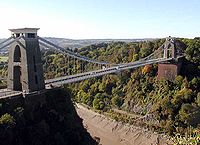
It was particularly associated with the noted Victorian engineer, Isambard Kingdom Brunel
, who designed the Great Western Railway
between Bristol and London Paddington, two pioneering Bristol-built ocean going steamships, the SS Great Britain
and SS Great Western
, and the Clifton Suspension Bridge
. John Wesley
founded the very first Methodist Chapel, called the New Room
, in Bristol in 1739. Riots
occurred in 1793 and 1831, the first beginning as a protest at renewal of an act levying tolls on Bristol Bridge, and the latter after the rejection of the second Reform Bill
.
 Bristol's city centre suffered severe damage from Luftwaffe
bombing during the Bristol Blitz
of World War II. The original central shopping area, near the bridge and castle, is now a park containing two bombed out churches and some fragments of the castle. A third bombed church nearby, St Nicholas
, has been restored and has been made into a museum which houses a triptych
by William Hogarth
, painted for the high altar of St Mary Redcliffe
in 1756. The museum also contains statues moved from Arno's Court Triumphal Arch
, of King Edward I
and King Edward III taken from Lawfords' Gate of the city walls when they were demolished around 1760, and 13th century figures from Bristol's Newgate representing Robert, the builder of Bristol Castle
, and Geoffrey de Montbray, Bishop of Coutances
, builder of the fortified walls of the city.
By 1901, some 330,000 people were living in Bristol and the city would grow steadily as the 20th century progressed. The city's docklands were enhanced in the early 1900s with the opening of Royal Edward Dock. Another new dock – Royal Portbury Dock – was opened in the 1970s.
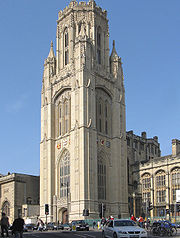
Its education system received a major boost in 1909 with the formation of the University of Bristol
, though it really took off in 1925 when its main building was opened. A polytechnic was opened in 1969 to give the city a second higher education institute, which would become the University of the West of England
in 1992.
With the advent of air travel, aircraft manufacturers set up base at new factories in the city during the first half of the 20th century.
Bristol suffered badly from Luftwaffe
air raids in World War II
, claiming some 1,300 lives of people living and working in the city, with nearly 100,000 buildings being damaged, at least 3,000 of them beyond repair.
The rebuilding of Bristol city centre
was characterised by large, cheap 1960s tower block
s, brutalist architecture
and expansion of roads. Since the 1980s another trend has emerged with the closure of some main roads, the restoration of the Georgian period Queen Square
and Portland Square
, the regeneration of the Broadmead shopping area, and the demolition of one of the city centre's tallest post-war blocks.
Bristol's road infrastructure was altered dramatically in the 1960s and 1970s with the development of the M4
and M5 motorway
s, which meet at an interchange just north of the city and give the city direct motorway links with London (M4 eastbound), Cardiff
(M4 westbound across the Estuary
of the River Severn
), Exeter
(M5 southbound) and Birmingham
(M5 northbound).
The removal of the docks to Avonmouth Docks
and Royal Portbury Dock
, 7 miles (11.3 km) downstream from the city centre during the 20th century has also allowed redevelopment of the old central dock area (the "Floating Harbour") in recent decades, although at one time the continued existence of the docks was in jeopardy as it was viewed as a derelict industrial site rather than an asset. However the holding, in 1996, of the first International Festival of the Sea
in and around the docks, affirmed the dockside area in its new leisure role as a key feature of the city.
On the sporting scene, Bristol
Rugby union
club has frequently competed at the highest level in the sport since its formation in 1888. Its home is the Memorial Ground, which it has shared with Bristol Rovers Football Club
since 1996. Although the rugby club was landlord when the football club arrived at the stadium as tenants, a decline in the rugby club's fortunes shortly afterwards led to the football club becoming landlord and the rugby club becoming the stadium's tenants. Bristol Rovers had spent the previous 10 years playing their home games outside the city following the closure of their Eastville
stadium in 1986, before returning to the city to play at the Memorial Ground.
However, Bristol Rovers have generally been overshadowed by their local rivals Bristol City
in terms of footballing success. Unlike Rovers, City have enjoyed top flight football. Their first spell in the Football League First Division
began in 1906, and they ended their first season among the elite in fine form by finishing second and only narrowly missing out on league title glory. Two years later, they were on the losing side in the final
of the FA Cup
, and were relegated back to the Football League Second Division
a year later. It would be another 65 years before First Division status was regained, in 1976. This time they spent four years among the elite before being relegated in 1980 – the first of a then unique third successive relegations which led to them slipping into the Fourth Division
in 1982. Although promotion was secured in 1984, City enjoyed their third spell in the league's third tier until 2007 when they were promoted to the second tier, narrowly missing out on top flight promotion in their first season (Playoff final defeat against Hull City) English football
. Since 1900 their home games have been played at Ashton Gate
, though in recent years a number of schemes have been mooted to relocate the club to a new, larger stadium.
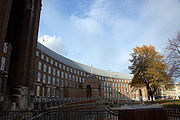
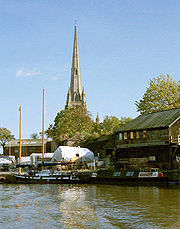
Bristol City Council consists of 70 councillors representing 35 wards. They are elected in thirds with two councillors per ward, each serving a four-year term. Wards never have both councillors up for election at the same time, so effectively two-thirds of the wards are up each election.
The Council has long been dominated by the Labour Party
, but recently the Liberal Democrats
have grown strong in the city and as the largest party took minority control of the Council at the 2005 election. In 2007, Labour and the Conservatives joined forces to vote down the Liberal Democrat administration, and as a result, Labour ruled the council under a minority administration, with Helen Holland as the council leader.
In February 2009, the Labour group resigned, and the Liberal Democrats took office with their own minority administration. At the council elections
on 4 June 2009 the Liberal Democrats gained four seats and, for the first time, overall control of the City Council. The Lord Mayor is Councillor Geoffrey Gollop.
Bristol constituencies in the House of Commons
cross the borders with neighbouring authorities, and the city is divided into Bristol West, East
, South and North-west and Kingswood
. Northavon also covers some of the suburbs, but none of the administrative county. In the recent 2010 General Election in May, the boundaries were changed to coincide with the county boundary. Kingswood no longer covers any of the county, and a new Filton and Bradley Stoke constituency includes the suburbs in South Gloucestershire. There are two Labour Members of Parliament (MPs), one Liberal Democrat and three Conservatives.
Bristol has a tradition of local political activism, and has been home to many important political figures. Edmund Burke
, MP for the Bristol constituency
for six years from 1774, famously insisted that he was a Member of Parliament first, rather than a representative of his constituents' interests. The women's rights campaigner Emmeline Pethick-Lawrence
(1867–1954) was born in Bristol. Tony Benn
, a veteran left-wing politician, was MP for Bristol South East
from 1950 until 1983. In 1963, there was a boycott of the city's buses
after the Bristol Omnibus Company
refused to employ black drivers and conductors. The boycott is known to have influenced the creation of the UK's Race Relations Act
in 1965.
The city was the scene of the first of the 1980s riots. In St. Paul's, a number of largely Afro-Caribbean people rose up against racism, police harassment and mounting dissatisfaction with their social and economic circumstances before similar disturbances followed across the UK. Local support of fair trade
issues was recognised in 2005 when Bristol was granted Fairtrade City status.
Bristol is unusual in having been a city with county status since medieval times. The county was expanded to include suburbs such as Clifton
in 1835, and it was named a county borough
in 1889, when the term was first introduced. However, on 1 April 1974, it became a local government district of the short-lived county of Avon
. On 1 April 1996, it regained its independence and county status, when the county of Avon was abolished and Bristol became a Unitary Authority
.
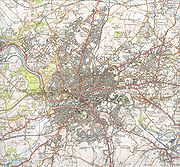
 There are a number of different ways in which Bristol's boundaries are defined, depending on whether the boundaries attempt to define the city, the built-up area, or the wider "Greater Bristol
". The narrowest definition of the city is the city council boundary, which takes in a large section of the Severn Estuary
west as far as, but not including, the islands of Steep Holm
and Flat Holm
. A slightly less narrow definition is used by the Office for National Statistics
(ONS); this includes built-up areas which adjoin Bristol but are not within the city council boundary, such as Whitchurch
village, Filton
, Patchway
, Bradley Stoke
, and excludes non-built-up areas within the city council boundary. The ONS has also defined an area called the "Bristol Urban Area," which includes Kingswood
, Mangotsfield
, Stoke Gifford
, Winterbourne
, Frampton Cotterell
, Almondsbury
and Easton-in-Gordano. The term "Greater Bristol", used for example by the Government Office of the South West, usually refers to the area occupied by the city and parts of the three neighbouring local authorities (Bath and North East Somerset
, North Somerset
and South Gloucestershire
), an area sometimes also known as the "former Avon
area" or the "West of England
".
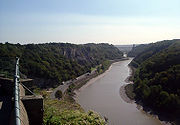
area, which runs from the Mendip Hills
to the south and the Cotswolds
to the north east.
The rivers Avon
and Frome
cut through this limestone to the underlying clays, creating Bristol's characteristic hilly landscape. The Avon flows from Bath in the east, through flood plains and areas which were marshy before the growth of the city. To the west the Avon has cut through the limestone to form the Avon Gorge
, partly aided by glacial meltwater after the last ice age
. The gorge helped to protect Bristol Harbour, and has been quarried for stone to build the city. The land surrounding the gorge has been protected from development, as The Downs
and Leigh Woods
. The gorge and estuary
of the Avon form the county's boundary with North Somerset
, and the river flows into the Severn Estuary
at Avonmouth
. There is another gorge in the city, in the Blaise Castle
estate to the north.
It is also amongst the sunniest, with 1,541–1,885 hours sunshine per year.
The city is partially sheltered by the Mendip Hills
, but exposed to the Severn Estuary
and Bristol Channel
. Rainfall increases toward's the south of the area, with annual totals north of the Avon River in the 600-900 mm (35 in) range, up to the 900-1200 mm (47 in) range South of it. Rain falls all year round, but autumn and winter are the wettest seasons.
The Atlantic strongly influences Bristol's weather, maintaining average temperatures above freezing throughout the year, although cold spells in winter often bring frosts. Snow can fall at any time from mid-November through to mid-April, but it is a rare occurrence. Summers are drier and quite warm with variable amounts of sunshine, rain and cloud. Spring is unsettled and changeable, and has brought spells of winter snow as well as summer sunshine.
The nearest weather station's to Bristol for which long term climate data are Long Ashton (about 5 miles South West of the city centre) and Bristol Weather Station (Within the city centre). However, data collection at these locations ceased in 2002 and 2001 respectively, and Filton Airfield is now the closest Weather Station. The temperature range at Long Ashton for the period 1959-2002 has spanned from 33.5 °C (92.3 °F) during July 1976, down to -14.4 C in January 1982.
Monthly Temperature extremes at Filton (since 2002) exceeding those recorded at Long Ashton include 25.7 °C (78.3 °F) during April 2003, 34.5 °C (94.1 °F) during July 2006 and 26.8 °C (80.2 °F) in October 2011. The lowest temperature to be recorded in recent years at Filton was -10.1 C during December 2010.
As can be seen from the chart's below, like many large cities, Bristol experiences an urban heat island effect, with night time averages at Bristol Weather Centre, in the city centre generally being just under 2 centigrade milder than Long Ashton, just outside the urban area.
's Sustainable Cities
Index 2008. Notable local initiatives include Sustrans
, who have created the National Cycle Network
, founded as Cyclebag in 1977, and Resourcesaver established in 1988 as a non-profit business by Avon Friends of the Earth.
estimated the Bristol unitary authority's population at 416,900, making it the 47th-largest ceremonial county in England.
Using Census 2001
data the ONS estimated the population of the city to be 441,556,
and that of the contiguous urban area to be 551,066. and more recent 2006 ONS estimates put the urban area population at 587,400. This makes the city England's sixth most populous city, and ninth most populous urban area.
At 3599 PD/sqkm it has the seventh-highest population density of any English district.
According to 2009 estimates, 86.5% of the population were described as White, 5.2% as Asian or Asian British, 3.4% as Black or Black British, 2.4% as Mixed Race, 1.5% as Chinese and 1.1% Other. National averages for England were 87.5%, 6.0%, 2.9%, 1.9%, 0.8% and 0.8% for the same groups.
.
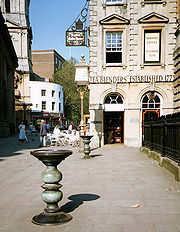 As a major seaport, Bristol has a long history of trading commodities, originally wool cloth exports and imports of fish, wine, grain and dairy produce, later tobacco, tropical fruits and plantation goods; major imports now are motor vehicles, grain, timber, fresh produce and petroleum products. Deals were originally struck on a personal basis in the former trading area around The Exchange
in Corn Street, and in particular, over bronze trading tables, known as "The Nails". This is often given as the origin of the expression "cash on the nail", meaning immediate payment, however it is likely that the expression was in use before the nails were erected.
As well as Bristol's nautical connections, the city's economy is reliant on the aerospace
industry, defence, the media, information technology and financial services sectors, and tourism. The former Ministry of Defence
(MoD)'s Procurement Executive, later the Defence Procurement Agency
, and now Defence Equipment & Support
, moved to a purpose-built headquarters at Abbey Wood, Filton in 1995. The site employs some 7,000 to 8,000 staff and is responsible for procuring and supporting much of the MoD's defence equipment.
In 2004 Bristol's GDP was £9.439 billion, and the combined GDP of Gloucestershire, Wiltshire and North Somerset was £44.098 billion. The GDP per head was £23,962 (US$47,738, €35,124) making the city more affluent than the UK as a whole, at 40% above the national average. This makes it the third-highest per-capita GDP of any English city, after London and Nottingham
, and the fifth highest GDP per capita of any city in the United Kingdom, behind London, Edinburgh
, Glasgow, Belfast
and Nottingham. In March 2007, Bristol's unemployment rate was 4.8%, compared with 4.0% for the south west and 5.5% for England.
Although Bristol's economy is no longer reliant upon the Port of Bristol
, which was relocated gradually to the mouth of the Avon to new docks at Avonmouth (1870s) and Royal Portbury Dock (1977) as the size of shipping increased, the city is the largest importer of cars to the UK. Since the port was leased in 1991, £330 million has been invested and the annual tonnage throughput has increased from 3.9 million long tons (4 million tonnes) to 11.8 million long tons (12 million tonnes). The tobacco trade and cigarette manufacturing have now ceased, but imports of wines and spirits by Averys continue.
The financial services sector employs 59,000 in the city, and the high-tech sector is important, with 50 micro-electronics and silicon design companies, which employ around 5,000 people, including the Hewlett-Packard
national research laboratories, which opened in 1983.
Bristol is the UK's seventh most popular destination for foreign tourists, and the city receives nine million visitors each year.
In the 20th century, Bristol's manufacturing activities expanded to include aircraft production at Filton
, by the Bristol Aeroplane Company
, and aero-engine manufacture by Bristol Aero Engines (later Rolls-Royce
) at Patchway
. The aeroplane company became famous for the World War I Bristol Fighter
, and Second World War Blenheim
and Beaufighter aircraft. In the 1950s it became one of the country's major manufacturers of civil aircraft, with the Bristol Freighter
and Britannia
and the huge Brabazon
airliner. The Bristol Aeroplane Company
diversified into car manufacturing in the 1940s, producing hand-built luxury cars at their factory in Filton
, under the name Bristol Cars
, which became independent from the Bristol Aeroplane Company in 1960. The city also gave its name to the Bristol make of buses, manufactured in the city from 1908 to 1983, first by the local bus operating company, Bristol Tramways
, and from 1955 by Bristol Commercial Vehicles
.
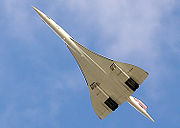 In the 1960s Filton played a key role in the Anglo-French Concorde
supersonic airliner project. The Bristol Aeroplane Company became part of the British partner, the British Aircraft Corporation
(BAC). Concorde components were manufactured in British and French factories and shipped to the two final assembly plants, in Toulouse
and Filton. The French manufactured the centre fuselage and centre wing and the British the nose, rear fuselage, fin and wingtips, while the Olympus 593
engine's manufacture was split between Rolls-Royce
(Filton) and SNECMA
(Paris). The British Concorde prototype made its maiden flight from Filton to RAF Fairford
on 9 April 1969, five weeks after the French test flight.
In 2003 British Airways
and Air France
decided to cease flying the aircraft and to retire them to locations (mostly museums) around the world. On 26 November 2003 Concorde 216 made the final Concorde flight, returning to Filton airfield to be kept there permanently as the centrepiece of a projected air museum. This museum will include the existing Bristol Aero Collection, which includes a Bristol Britannia
aircraft.
The aerospace industry remains a major segment of the local economy.
The major aerospace companies in Bristol now are BAE Systems
, (formed by merger between Marconi Electronic Systems
and BAe
; the latter being formed by a merger of BAC, Hawker Siddeley and Scottish Aviation), Airbus
and Rolls-Royce are all based at Filton, and aerospace engineering is a prominent research area at the nearby University of the West of England
. Another important aviation
company in the city is Cameron Balloons
, who manufacture hot air balloon
. Each August the city is host to the Bristol International Balloon Fiesta
, one of Europe's largest hot air balloon events.
A new £500 million shopping centre called Cabot Circus
opened in 2008 amidst claims from developers and politicians that Bristol would become one of England's top ten retail destinations. Bristol was selected as one of the world's top ten cities for 2009 by international travel publishers Dorling Kindersley
in their Eyewitness
series of guides for young adults.
In 2011 it was announced that the Temple Quarter near Bristol Temple Meads railway station
will become an enterprise zone.
.jpg)
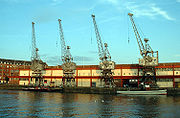
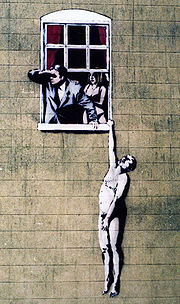 The city is famous for its music and film industries, and was a finalist for the 2008 European Capital of Culture
, but the title was awarded to Liverpool.
The city's principal theatre company, the Bristol Old Vic
, was founded in 1946 as an offshoot of the Old Vic
company in London. Its premises on King Street
consist of the 1766 Theatre Royal (607 seats), a modern studio theatre called the New Vic (150 seats), and foyer and bar areas in the adjacent Coopers' Hall (built 1743). The Theatre Royal is a grade I listed building and is the oldest continuously operating theatre in England. The Bristol Old Vic Theatre School
, which had originated in King Street is now a separate company. The Bristol Hippodrome
is a larger theatre (1,951 seats) which hosts national touring productions. Other theatres include the Tobacco Factory
(250 seats), QEH
(220 seats), the Redgrave Theatre (at Clifton College
) (320 seats) and the Alma Tavern (50 seats). Bristol's theatre scene includes a large variety of producing theatre companies, apart from the Bristol Old Vic company, including Show of Strength Theatre Company
, Shakespeare at the Tobacco Factory and Travelling Light Theatre Company. Theatre Bristol is a partnership between Bristol City Council, Arts Council England
and local theatre practitioners which aims to develop the theatre industry in Bristol.
There are also a number of organisations within the city which act to support theatre makers, for example Equity, the actors union, has a General Branch based in the city, and Residence which provides office, social and rehearsal space for several Bristol-based theatre and performance companies.
Since the late 1970s, the city has been home to bands combining punk, funk, dub
and political consciousness
, amongst the most notable have been Glaxo Babies
, The Pop Group
and trip hop
or "Bristol Sound" artists such as Tricky
, Portishead and Massive Attack
; the list of bands from Bristol is extensive. It is also a stronghold of drum & bass with notable artists such as the Mercury Prize
winning Roni Size
/Reprazent
as well as the pioneering DJ Krust and More Rockers. This music is part of the wider Bristol urban culture scene which received international media attention in the 1990s.
Bristol has many live music venues, the largest of which is the 2,000-seat Colston Hall
, named after Edward Colston
. Others include the Bristol Academy, Fiddlers, Victoria Rooms, Trinity Centre, St George's Bristol
and a range of public houses from the jazz-orientated The Old Duke
to rock at the Fleece and Firkin and indie bands at the Louisiana. In 2010, PRS for Music announced that Bristol is the most musical city in the UK, based on the number of its members born in Bristol in relation to the size of its population.
The Bristol City Museum and Art Gallery
houses a collection of natural history
, archaeology
, local glassware, Chinese ceramics and art. The Bristol Industrial Museum, featuring preserved dock machinery, closed in October 2006 for rebuilding and plans to reopen in 2011 as the Museum of Bristol. The City Museum also runs three preserved historic houses: the Tudor Red Lodge
, the Georgian House
, and Blaise Castle
House. The Watershed Media Centre
and Arnolfini gallery
, both in disused dockside warehouses, exhibit contemporary art, photography and cinema, while the city's oldest gallery is at the Royal West of England Academy
in Clifton.
Stop frame animation films and commercials produced by Aardman Animations
and television series focusing on the natural world have also brought fame and artistic credit to the city. The city is home to the regional headquarters
of BBC West
, and the BBC Natural History Unit
. Locations in and around Bristol have often featured in the BBC's natural history programmes, including the children's television programme Animal Magic, filmed at Bristol Zoo
.
In literature, Bristol is noted as the birth place of the 18th-century poet Thomas Chatterton
, and also Robert Southey
, who was born in Wine Street, Bristol in 1774. Southey and his friend Samuel Taylor Coleridge
married the Bristol Fricker sisters;
and William Wordsworth
spent time in the city,
where Joseph Cottle
first published Lyrical Ballads
in 1798.
The 18th- and 19th-century portrait painter Sir Thomas Lawrence
and 19th-century architect Francis Greenway
, designer of many of Sydney's first buildings, came from the city, and more recently the graffiti
artist Banksy
, many of whose works can be seen in the city. Some famous comedians are locals, including Justin Lee Collins
, Lee Evans
, Russell Howard
, and writer/comedian Stephen Merchant
.
University of Bristol
graduates include magician and psychological illusionist Derren Brown
; the satirist Chris Morris
; Simon Pegg
and Nick Frost
of Spaced
, Shaun of the Dead
and Hot Fuzz
; and Matt Lucas
and David Walliams
of Little Britain
fame. Hollywood actor Cary Grant
was born in the city; Patrick Stewart
, Jane Lapotaire
, Pete Postlethwaite
, Jeremy Irons
, Greta Scacchi
, Miranda Richardson
, Helen Baxendale
, Daniel Day-Lewis
and Gene Wilder
are amongst the many actors who learnt their craft at the Bristol Old Vic Theatre School,
opened by Laurence Olivier
in 1946. The comedian John Cleese
was a pupil at Clifton College
. Hugo Weaving
studied at Queen Elizabeth's Hospital
School and David Prowse
(Darth Vader
, Star Wars
) attended Bristol Grammar School
.
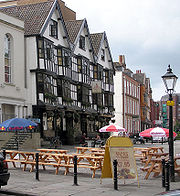 Bristol has 51 Grade I listed buildings
, 500 Grade II* and over 3,800 Grade II
buildings, in a wide variety of architectural
styles, ranging from the medieval
to the 21st century. In the mid-19th century, Bristol Byzantine
, an architectural style unique to the city, was developed, of which several examples have survived. Buildings from most of the architectural periods
of the United Kingdom can be seen throughout the city. Surviving elements of the fortified city and castle date back to the medieval era, also some churches dating from the 12th century onwards.
Outside the historical city centre there are several large Tudor
mansions built for wealthy merchants. Almshouse
s and public houses of the same period still exist, intermingled with modern development. Several Georgian-era
squares were laid out for the enjoyment of the middle class as prosperity increased in the 18th century.
During World War II, the city centre
suffered from extensive bombing during the Bristol Blitz
. The central shopping area around Wine Street and Castle Street
was particularly badly hit, and architectural treasures such as the Dutch House
and St Peter's Hospital
were lost. Nonetheless in 1961 Betjeman
still considered Bristol to be 'the most beautiful, interesting and distinguished city in England'.
The redevelopment of shopping centres, office buildings, and the harbourside continues apace.
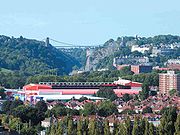 The city has two Football League
clubs: Bristol City
and Bristol Rovers
, as well as a number of non-league clubs. Bristol City was formed in 1897, became runners-up in Division One in 1907, and losing FA Cup finalists in 1909. They returned to the top flight in 1976, but in 1980 started a descent to Division Four. They were promoted to the second tier of English football in 2007. The team lost in the play-off final of the Championship to Hull City
(2007/2008 season). City announced plans for a new 30,000 all-seater stadium to replace their home, Ashton Gate. Bristol Rovers
is the oldest professional football team in Bristol, formed in 1883. During their history, Rovers have been champions of the (old) division Three (1952/53, 1989/90), Watney Cup
Winners (1972, 2006/07), and runners-up in the Johnstone's Paint Trophy
. The Club have planning permission to re-develop the Memorial Stadium
into an 18,500 all-seat Stadium, but has yet to start due to financial difficulties.
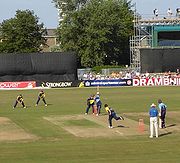 The city is also home to Bristol Rugby
rugby union club, a first-class
cricket
side, Gloucestershire C.C.C. and a Rugby League Conference
side, the Bristol Sonics
. The city also stages an annual half marathon
, and in 2001 played host to the World Half Marathon Championships
. There are several athletics clubs in Bristol, including Bristol and West AC, Bitton Road Runners and Westbury Harriers. Speedway racing was staged, with breaks, at the Knowle Stadium from 1928 to 1960, when it was closed and the site redeveloped. The sport briefly returned to the city in the 1970s when the Bulldogs raced at Eastville Stadium
. In 2009, senior ice hockey
returned to the city for the first time in 17 years with the newly formed Bristol Pitbulls
playing out of Bristol Ice Rink.
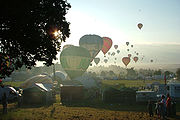
The Bristol International Balloon Fiesta
, a major event for hot-air ballooning
in the UK, is held each summer in the grounds of Ashton Court
, to the west of the city. The fiesta draws substantial crowds even for the early morning lift beginning at about 6.30 am. Events and a fairground entertain visitors during the day. A second mass ascent is made in the early evening, again taking advantage of lower wind speeds. Until 2007 Ashton Court also played host to the Ashton Court festival
each summer, an outdoor music festival known as the Bristol Community Festival.
Mountain biking in Bristol, the main area is around the Ashton Court estate with the Timberland trails being the main route. There are also routes across the road in the Plantation and 50 acre wood and Leigh Woods.
 Bristol has two daily newspapers, the Western Daily Press
and the Bristol Evening Post
; a weekly free newspaper, the Bristol Observer
; and a Bristol edition of the free Metro
newspaper, all owned by the Daily Mail and General Trust
. The local weekly listings magazine, Venue
, covers the city's music, theatre and arts scenes and is owned by Northcliffe Media
, a subsidiary of the Daily Mail and General Trust. Bristol Media
is the city's support network for the creative and media industries with over 1600 members. The city has several local radio stations, including BBC Radio Bristol
, Heart Bristol (previously known as GWR FM), Classic Gold 1260
, Kiss 101
, Star 107.2, BCfm
(a community radio station launched March 2007), Ujima 98 FM, 106 Jack FM (Bristol)
,
as well as two student radio stations, The Hub and BURST
and Radio Salaam Shalom
an online radio station from the Jewish and Muslim communities of the city. Bristol also boasts television productions such as The West Country Tonight
for ITV West (formerly HTV West) and ITV Westcountry, Points West for BBC West
, hospital drama Casualty
(due to move to Cardiff
in 2011) and Endemol productions such as Deal Or No Deal
. Bristol has been used as a location for the Channel 4 comedy drama Teachers
, BBC drama Mistresses
, E4 teen drama Skins
and BBC3 comedy-drama series Being Human
.
, in which the r in words like car is pronounced. The unusual feature of this dialect, unique to Bristol, is the Bristol L (or terminal L), in which an L sound is appended to words that end in an 'a' or 'o'. Thus "area" becomes "areal", etc. The "-ol" ending of the city's name is a significant example of the occurrence of the so-called "Bristol L". Bristolians using the dialect, tend to pronounce "a" and "o" at the end of a word almost as "aw". To the stranger's ear this pronunciation sounds as if there is an "L" after the vowel. For example the statement "Africa is a malaria area", spoken with a Bristolian accent will sound like "Africal is a malarial areal".
A similar form of this pronunciation quirk has been in existence for centuries, even as far back as the Norman Conquest in 1066 and the Domesday Book, compiled by the Norman-French. In those days before the printing press, the city's name – "Bruggestowe" at the time – was rarely written. Consequently the Domesday Book information gatherers had to rely on oral answers to their questions and the city name was recorded as being "Bristolle".
Further Bristolian linguistic features are the addition of an additional "to" in questions relating to direction or orientation (a feature also common to the coastal towns of South Wales
), or using "to" instead of "at"; and using male pronouns "he", "him" instead of "it". For example, "Where's that?" would be phrased as "Where's he to?", a structure exported to Newfoundland English
.
.jpg) Stanley Ellis, a dialect researcher, found that many of the dialect words in the Filton area were linked to work in the aerospace industry. He described this as "a cranky, crazy, crab-apple tree of language and with the sharpest, juiciest flavour that I've heard for a long time".
Stanley Ellis, a dialect researcher, found that many of the dialect words in the Filton area were linked to work in the aerospace industry. He described this as "a cranky, crazy, crab-apple tree of language and with the sharpest, juiciest flavour that I've heard for a long time".
, 60% of Bristol's population reported themselves as being Christian, and 25% stated they were not religious; the national UK averages are 72% and 15% respectively. Islam accounts for 2% of the population (3% nationally), with no other religion above one percent, although 9% did not respond to the question.
The city has many Christian churches
, the most notable being the Anglican
Bristol Cathedral
and St. Mary Redcliffe and the Roman Catholic Clifton Cathedral
. Nonconformist chapels
include Buckingham Baptist Chapel
and John Wesley
's New Room in Broadmead. St James's Presbyterian Church of England church (at 51.4587°N 2.5920°W) was just south of the current coach station. The church was bombed
on 24 November 1940 never to be used as a church again. The tower
remains but the nave
has been converted to offices.
In Bristol, other religions are served by four mosques, several Buddhist meditation centres, a Hindu temple
, Progressive and Orthodox synagogues, and four Sikh temples
.
.jpg)
Bristol is home to two major institutions of higher education: the University of Bristol
, a "redbrick
" chartered in 1909, and the University of the West of England
, formerly Bristol Polytechnic, which gained university status in 1992. The city also has two dedicated further education
institutions, City of Bristol College
and Filton College
, and three theological
colleges, Trinity College
, Wesley College
and Bristol Baptist College. The city has 129 infant, junior and primary schools,
17 secondary schools,
and three city learning centres. It has the country's second highest concentration of independent school
places, after an exclusive corner of north London. The independent schools in the city include Colston's School, Clifton College
, Clifton High School
, Badminton School
, Bristol Cathedral School
, Bristol Grammar School
, Redland High School, Queen Elizabeth's Hospital
(the only all-boys school) and Red Maids' School
, which claims to be the oldest girls' school in England, having been founded in 1634 by John Whitson.
 In 2005, the then Chancellor of the Exchequer
recognised Bristol's ties to science and technology by naming it one of six "science cities", and promising funding for further development of science in the city,
with a £300 million science park planned at Emerson's Green.
As well as research at the two universities, Bristol Royal Infirmary
, and Southmead Hospital
, science education is important in the city, with At-Bristol
, Bristol Zoo
, Bristol Festival of Nature
and the Create Centre being prominent local institutions involved in science communication. The city has a history of scientific luminaries, including the 19th-century chemist Sir Humphry Davy
, who worked in Hotwells
. Bishopston
gave the world Nobel Prize
winning physicist Paul Dirac
for crucial contributions to quantum mechanics
in 1933. Cecil Frank Powell
was Melvill Wills Professor of Physics at Bristol University when he was awarded the Nobel prize for a photographic method of studying nuclear processes and associated discoveries in 1950. The city was birth place of Colin Pillinger
, planetary scientist behind the Beagle 2
Mars-lander project, and is home to the psychologist Richard Gregory
.
Initiatives such as the Flying Start Challenge
help encourage secondary school pupils around the Bristol area to take an interest in Science and Engineering. Links with major aerospace companies promote technical disciplines and advance students' understanding of practical design.
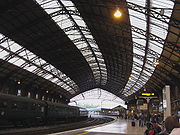
is near the centre and sees mainly First Great Western
services including regular high speed trains to London Paddington as well as other local and regional services and CrossCountry
trains. Bristol Parkway
is located to the north of the city and is mainly served by high speed First Great Western
services between Cardiff and London, and CrossCountry services to Birmingham
and the North East
. There is also a limited service to London Waterloo from Bristol Temple Meads, operated by South West Trains
. There are also scheduled coach links to most major UK cities.
 The city is connected by road on an east–west axis from London to West Wales
by the M4 motorway
, and on a north–southwest axis from Birmingham
to Exeter
by the M5 motorway
. Also within the county is the M49 motorway
, a short cut between the M5 in the south and M4 Severn Crossing
in the west. The M32 motorway
is a spur from the M4 to the city centre.
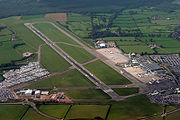
The city is served by Bristol Airport
(BRS), at Lulsgate
, which has seen substantial investments in its runway, terminal and other facilities since 2001.
 Public transport in the city consists largely of its bus network
, provided mostly by First Group, formerly the Bristol Omnibus Company
– other services are provided by Abus,
Buglers,
Ulink (Operated by Wessex Connect for the 2 Universities),
and Wessex Connect.
Buses in the city have been widely criticised for being unreliable and expensive, and in 2005 First was fined for delays and safety violations.
Private car usage in Bristol is high, and the city suffers from congestion, which costs an estimated £350 million per year.
Bristol is motorcycle friendly; the city allows motorcycles to use most of the city's bus lanes, as well as providing secure free parking.
Since 2000 the city council has included a light rail
system in its Local Transport Plan
, but has so far been unwilling to fund the project. The city was offered European Union funding for the system, but the Department for Transport
did not provide the required additional funding.
As well as support for public transport, there are several road building schemes supported by the local council, including re-routing and improving the South Bristol Ring Road
.
There are also three park and ride
sites serving the city, supported by the local council.
The central part of the city has water-based transport, operated by the Bristol Ferry Boat
, Bristol Packet and Number Seven Boat Trips providing leisure and commuter services on the harbour.
Bristol's principal surviving suburban railway is the Severn Beach Line
to Avonmouth and Severn Beach
. The Portishead Railway
was closed to passengers under the Beeching Axe
, but was relaid for freight only in 2000–2002 as far as the Royal Portbury Dock
with a Strategic Rail Authority
rail-freight grant. Plans to relay a further three miles (5 km) of track to Portishead
, a largely dormitory town with only one connecting road, have been discussed but there is insufficient funding to rebuild stations. Rail services in Bristol suffer from overcrowding and there is a proposal to increase rail capacity under the Greater Bristol Metro scheme
.
Bristol was named "England's first 'cycling city in 2008, and is home to the sustainable transport charity Sustrans
. It has a number of urban cycle routes, as well as links to National Cycle Network
routes to Bath and London, to Gloucester and Wales, and to the south-western peninsula of England. Cycling has grown rapidly in the city, with a 21% increase in journeys between 2001 and 2005.
 Bristol was among the first cities to adopt the idea of town twinning. In 1947 it was twinned with Bordeaux
and then with Hannover,
the first post-war twinning of British and German cities. Twinnings with Porto
, Portugal (1984), Tbilisi
, Georgia (1988), Puerto Morazan
, Nicaragua (1989), Beira
, Mozambique (1990) and Guangzhou
, China (2001), have followed.
City status in the United Kingdom
City status in the United Kingdom is granted by the British monarch to a select group of communities. The holding of city status gives a settlement no special rights other than that of calling itself a "city". Nonetheless, this appellation carries its own prestige and, consequently, competitions...
, unitary authority area and ceremonial county
Ceremonial counties of England
The ceremonial counties are areas of England to which are appointed a Lord Lieutenant, and are defined by the government as counties and areas for the purposes of the Lieutenancies Act 1997 with reference to the metropolitan and non-metropolitan counties of England and Lieutenancies Act 1997...
in South West England
South West England
South West England is one of the regions of England defined by the Government of the United Kingdom for statistical and other purposes. It is the largest such region in area, covering and comprising Bristol, Gloucestershire, Somerset, Dorset, Wiltshire, Devon, Cornwall and the Isles of Scilly. ...
, with an estimated population of 433,100 for the unitary authority in 2009, and a surrounding Larger Urban Zone (LUZ) with an estimated 1,070,000 residents in 2007. It is England's sixth and the United Kingdom's eighth most populous city, one of the group of English Core Cities
English Core Cities Group
The Core Cities Group is a coalition of some of England's major regional cities:*Birmingham - West Midlands*Bristol - South West England*Leeds - Yorkshire and the Humber*Liverpool - North West England*Manchester - North West England...
and the most populous city in South West England.
Bristol received a Royal Charter
Royal Charter
A royal charter is a formal document issued by a monarch as letters patent, granting a right or power to an individual or a body corporate. They were, and are still, used to establish significant organizations such as cities or universities. Charters should be distinguished from warrants and...
in 1155 and was granted County status in 1373. From the 13th century, for half a millennium, it ranked amongst the top three English cities after London, alongside York
York
York is a walled city, situated at the confluence of the Rivers Ouse and Foss in North Yorkshire, England. The city has a rich heritage and has provided the backdrop to major political events throughout much of its two millennia of existence...
and Norwich
Norwich
Norwich is a city in England. It is the regional administrative centre and county town of Norfolk. During the 11th century, Norwich was the largest city in England after London, and one of the most important places in the kingdom...
, on the basis of tax receipts, until the rapid rise of Liverpool
Liverpool
Liverpool is a city and metropolitan borough of Merseyside, England, along the eastern side of the Mersey Estuary. It was founded as a borough in 1207 and was granted city status in 1880...
, Birmingham and Manchester
Manchester
Manchester is a city and metropolitan borough in Greater Manchester, England. According to the Office for National Statistics, the 2010 mid-year population estimate for Manchester was 498,800. Manchester lies within one of the UK's largest metropolitan areas, the metropolitan county of Greater...
during the Industrial Revolution
Industrial Revolution
The Industrial Revolution was a period from the 18th to the 19th century where major changes in agriculture, manufacturing, mining, transportation, and technology had a profound effect on the social, economic and cultural conditions of the times...
in the latter part of the 18th century. It borders the counties of Somerset
Somerset
The ceremonial and non-metropolitan county of Somerset in South West England borders Bristol and Gloucestershire to the north, Wiltshire to the east, Dorset to the south-east, and Devon to the south-west. It is partly bounded to the north and west by the Bristol Channel and the estuary of the...
and Gloucestershire
Gloucestershire
Gloucestershire is a county in South West England. The county comprises part of the Cotswold Hills, part of the flat fertile valley of the River Severn, and the entire Forest of Dean....
, and is also located near the historic cities of Bath to the south east and Gloucester
Gloucester
Gloucester is a city, district and county town of Gloucestershire in the South West region of England. Gloucester lies close to the Welsh border, and on the River Severn, approximately north-east of Bristol, and south-southwest of Birmingham....
to the north. The city is built around the River Avon
River Avon, Bristol
The River Avon is an English river in the south west of the country. To distinguish it from a number of other River Avons in Britain, this river is often also known as the Lower Avon or Bristol Avon...
, and it also has a short coastline on the Severn Estuary
Severn Estuary
The Severn Estuary is the estuary of the River Severn, the longest river in Great Britain. Its high tidal range means it has been at the centre of discussions in the UK regarding renewable energy.-Geography:...
, which flows into the Bristol Channel
Bristol Channel
The Bristol Channel is a major inlet in the island of Great Britain, separating South Wales from Devon and Somerset in South West England. It extends from the lower estuary of the River Severn to the North Atlantic Ocean...
.
Bristol is the largest centre of culture, employment and education in the region. Its prosperity has been linked with the sea since its earliest days. The commercial Port of Bristol
Port of Bristol
The Port of Bristol comprises the commercial, and former commercial, docks situated in and near the city of Bristol in England. The Port of Bristol Authority was the commercial title of the Bristol City, Avonmouth, Portishead and Royal Portbury Docks when they were operated by Bristol City Council,...
was originally in the city centre before being moved to the Severn Estuary at Avonmouth
Avonmouth
Avonmouth is a port and suburb of Bristol, England, located on the Severn Estuary, at the mouth of the River Avon.The council ward of Avonmouth also includes Shirehampton and the western end of Lawrence Weston.- Geography :...
; Royal Portbury Dock
Royal Portbury Dock
The Royal Portbury Dock is part of the Port of Bristol, in England. It is situated near the village of Portbury on the southern side of the mouth of the Avon, where the river joins the Severn estuary — the Avonmouth Docks are on the opposite side of the Avon, within Avonmouth...
is on the western edge of the city boundary. In more recent years the economy has depended on the creative media, electronics and aerospace
Aerospace
Aerospace comprises the atmosphere of Earth and surrounding space. Typically the term is used to refer to the industry that researches, designs, manufactures, operates, and maintains vehicles moving through air and space...
industries, and the city centre docks have been regenerated as a centre of heritage and culture. There are 34 other populated places on Earth named Bristol, most in the United States, but also in Peru
Peru
Peru , officially the Republic of Peru , is a country in western South America. It is bordered on the north by Ecuador and Colombia, on the east by Brazil, on the southeast by Bolivia, on the south by Chile, and on the west by the Pacific Ocean....
, Canada, Jamaica
Jamaica
Jamaica is an island nation of the Greater Antilles, in length, up to in width and 10,990 square kilometres in area. It is situated in the Caribbean Sea, about south of Cuba, and west of Hispaniola, the island harbouring the nation-states Haiti and the Dominican Republic...
, Barbados, and Costa Rica
Costa Rica
Costa Rica , officially the Republic of Costa Rica is a multilingual, multiethnic and multicultural country in Central America, bordered by Nicaragua to the north, Panama to the southeast, the Pacific Ocean to the west and the Caribbean Sea to the east....
, all presumably commemorating the original.
People from Bristol are termed Bristolians
History
ArchaeologicalArchaeology
Archaeology, or archeology , is the study of human society, primarily through the recovery and analysis of the material culture and environmental data that they have left behind, which includes artifacts, architecture, biofacts and cultural landscapes...
finds believed to be 60,000 years old, discovered at Shirehampton
Shirehampton
Shirehampton, near Avonmouth, at the north-western edge of the city of Bristol, England, is a district of Bristol which originated as a separate village. It retains something of its village feel, having a short identifiable High Street with the parish church situated among shops, and is still...
and St Annes
Brislington West
Brislington West is a council ward of the city of Bristol, England. It covers the western part of Brislington, Arnos Vale, Kensington Park and St Annes.-Brislington:...
, provide "evidence of human activity" in the Bristol area from the Palaeolithic era. Iron Age
Iron Age
The Iron Age is the archaeological period generally occurring after the Bronze Age, marked by the prevalent use of iron. The early period of the age is characterized by the widespread use of iron or steel. The adoption of such material coincided with other changes in society, including differing...
hill fort
Hill fort
A hill fort is a type of earthworks used as a fortified refuge or defended settlement, located to exploit a rise in elevation for defensive advantage. They are typically European and of the Bronze and Iron Ages. Some were used in the post-Roman period...
s near the city are at Leigh Woods
Leigh Woods
Leigh Woods is a 2 square kilometre area of woodland on the south-west side of the Avon Gorge, opposite the English city of Bristol and north of the Ashton Court estate. It has been designated as a National Nature Reserve. Small mountain biking circuits are present in the woods and the area is a...
and Clifton Down
Clifton Down
Clifton Down is an area of public open space in Bristol, England, north of the village of Clifton. With its neighbour Durdham Down to the northeast, it constitutes the large area known as The Downs, much used for leisure including walking and team sports...
on the side of the Avon Gorge
Avon Gorge
The Avon Gorge is a 1.5-mile long gorge on the River Avon in Bristol, England. The gorge runs south to north through a limestone ridge west of Bristol city centre, and about 3 miles from the mouth of the river at Avonmouth. The gorge forms the boundary between the unitary authorities of...
, and on Kingsweston Hill
Kingsweston Hill
Kingsweston Hill is the site of an Iron Age hill fort near Henbury, Bristol, England.It is a Scheduled Ancient Monument.It is near Kings Weston House and also the site of a tower for television broadcasting....
, near Henbury
Henbury
Henbury is a suburb of Bristol, England, approximately 5 mi northwest of the city centre. It was formerly a village in Gloucestershire and is now bordered by Westbury-on-Trym to the south; Brentry to the east and the Blaise Castle estate Blaise Hamlet and Lawrence Weston to the west...
.
During the Roman era
Roman Britain
Roman Britain was the part of the island of Great Britain controlled by the Roman Empire from AD 43 until ca. AD 410.The Romans referred to the imperial province as Britannia, which eventually comprised all of the island of Great Britain south of the fluid frontier with Caledonia...
there was a settlement, Abona,
at what is now Sea Mills
Sea Mills, Bristol
Sea Mills is a suburb of the English port city of Bristol. It is situated some 3.5 miles north-west of the city centre, towards the seaward end of the Avon Gorge. Nearby suburbs are Shirehampton, Sneyd Park, Combe Dingle and Stoke Bishop...
, connected to Bath by a Roman road
Roman road
The Roman roads were a vital part of the development of the Roman state, from about 500 BC through the expansion during the Roman Republic and the Roman Empire. Roman roads enabled the Romans to move armies and trade goods and to communicate. The Roman road system spanned more than 400,000 km...
, and another at the present-day Inns Court. There were also isolated Roman villa
Roman villa
A Roman villa is a villa that was built or lived in during the Roman republic and the Roman Empire. A villa was originally a Roman country house built for the upper class...
s and small Roman forts and settlements throughout the area.
The town of Brycgstow (Old English
Old English language
Old English or Anglo-Saxon is an early form of the English language that was spoken and written by the Anglo-Saxons and their descendants in parts of what are now England and southeastern Scotland between at least the mid-5th century and the mid-12th century...
, "the place at the bridge") appears to have been founded in c.1000 and by c.1020 was an important enough trading centre to possess its own mint, producing silver pennies bearing the town's name. By 1067 the town was clearly a well fortified burh that proved capable of resisting an invasion force sent from Ireland by Harold's sons. Under Norman
Normans
The Normans were the people who gave their name to Normandy, a region in northern France. They were descended from Norse Viking conquerors of the territory and the native population of Frankish and Gallo-Roman stock...
rule the town acquired one of the strongest castles
Bristol Castle
Bristol Castle was a Norman castle built for the defence of Bristol. Remains can be seen today in Castle Park near the Broadmead Shopping Centre, including the sally port.-History:...
in southern England.
River Frome, Bristol
The River Frome is a river, approximately long, which rises in Dodington Park, South Gloucestershire, and flows in a south westerly direction through Bristol, joining the former course of the river Avon in Bristol's Floating Harbour. The mean flow at Frenchay is The name Frome is shared with...
with the River Avon
River Avon, Bristol
The River Avon is an English river in the south west of the country. To distinguish it from a number of other River Avons in Britain, this river is often also known as the Lower Avon or Bristol Avon...
, adjacent to the original Bristol Bridge
Bristol Bridge
Bristol Bridge is an old bridge over the floating harbour in Bristol, England, the original course of the River Avon.-History:Bristol's name is derived from the Saxon 'Brigstowe' or 'place of the bridge', but it is unclear when the first bridge over the Avon was built. The Avon has the 2nd highest...
and just outside the town walls, was where the port began to develop in the 11th century. By the 12th century Bristol was an important port, handling much of England's trade with Ireland. In 1247 a new stone bridge was built, which was replaced by the current Bristol Bridge in the 1760s, and the town was extended to incorporate neighbouring suburbs, becoming in 1373 a county
County corporate
A county corporate or corporate county was a type of subnational division used for local government in England, Ireland and Wales.Counties corporate were created during the Middle Ages, and were effectively small self-governing counties...
in its own right. During this period Bristol also became a centre of shipbuilding and manufacturing. By the 14th century Bristol was one of England's three largest medieval towns after London, along with York
York
York is a walled city, situated at the confluence of the Rivers Ouse and Foss in North Yorkshire, England. The city has a rich heritage and has provided the backdrop to major political events throughout much of its two millennia of existence...
and Norwich
Norwich
Norwich is a city in England. It is the regional administrative centre and county town of Norfolk. During the 11th century, Norwich was the largest city in England after London, and one of the most important places in the kingdom...
, and it has been suggested that between a third and half of the population were lost during the Black Death
Black Death
The Black Death was one of the most devastating pandemics in human history, peaking in Europe between 1348 and 1350. Of several competing theories, the dominant explanation for the Black Death is the plague theory, which attributes the outbreak to the bacterium Yersinia pestis. Thought to have...
of 1348–49. The plague resulted in a prolonged pause in the growth of Bristol's population, with numbers remaining at 10,000–12,000 through most of the 15th and 16th centuries.
In the 15th century, Bristol was certainly the second most important port in the country, trading to Ireland, Iceland, and Gascony. Bristol was the starting point for many important voyages, including that led by Robert Sturmy
Robert Sturmy
Robert Sturmy was a 15th century Bristol merchant who led a commercial expedition from that port in 1457–58 to break the Italian monopoly on trade to the Eastern Mediterranean. If he had been successful, it would have allowed England to gain direct access to both the Oriental spices that entered...
(1457/8) to try and break the Italian monopoly over trade to the Eastern Mediterranean. Having been rebuffed in the east, Bristol merchants turned west, being involved in expeditions into the Atlantic, in search of the Isle of Hy-Brazil, by at least 1480. These Atlantic voyages were to culminate in John Cabot
John Cabot
John Cabot was an Italian navigator and explorer whose 1497 discovery of parts of North America is commonly held to have been the first European encounter with the continent of North America since the Norse Vikings in the eleventh century...
's 1497 voyage of exploration to North America and the subsequent expeditions undertaken by Bristol merchants to the new world up to 1508. These include one led by William Weston
William Weston (explorer)
William Weston was a 15th-century English merchant from Bristol. Since 2010, he is believed to have been the first Englishman to lead an expedition to North America. Weston was married to Agnes Foster, daughter of prominent merchant John Foster, known in Bristol as the founder of Foster's Almshouses...
of Bristol in 1499, which was the first English-led expedition to North America. In the sixteenth century, however, Bristol merchants concentrated on developing their trade to Spain and its American colonies. This included the smuggling
Smuggling
Smuggling is the clandestine transportation of goods or persons, such as out of a building, into a prison, or across an international border, in violation of applicable laws or other regulations.There are various motivations to smuggle...
of 'prohibited' wares, such as foodstuffs and iron ordnance, to Iberia, even during the Anglo-Spanish war
Anglo-Spanish War (1585)
The Anglo–Spanish War was an intermittent conflict between the kingdoms of Spain and England that was never formally declared. The war was punctuated by widely separated battles, and began with England's military expedition in 1585 to the Netherlands under the command of the Earl of Leicester in...
of 1585–1604.
Diocese of Bristol
The Diocese of Bristol is a Church of England diocese in the Province of Canterbury, England. It is based in the city of Bristol and covers South Gloucestershire and parts of north Wiltshire to Swindon...
was founded in 1542,
with the former Abbey
Abbey
An abbey is a Catholic monastery or convent, under the authority of an Abbot or an Abbess, who serves as the spiritual father or mother of the community.The term can also refer to an establishment which has long ceased to function as an abbey,...
of St. Augustine
Augustine of Canterbury
Augustine of Canterbury was a Benedictine monk who became the first Archbishop of Canterbury in the year 597...
, founded by Robert Fitzharding
Robert Fitzharding
Robert Fitzharding was an Englishman from Bristol who rose to the feudal barony of Berkeley and founded the family which still holds Berkeley Castle in Gloucestershire, the castle whose construction he started...
in 1140, becoming Bristol Cathedral
Bristol Cathedral
The Cathedral Church of the Holy and Undivided Trinity is the Church of England cathedral in the city of Bristol, England, and is commonly known as Bristol Cathedral...
. Traditionally this is equivalent to the town being granted city status
City status in the United Kingdom
City status in the United Kingdom is granted by the British monarch to a select group of communities. The holding of city status gives a settlement no special rights other than that of calling itself a "city". Nonetheless, this appellation carries its own prestige and, consequently, competitions...
. During the 1640s English Civil War
English Civil War
The English Civil War was a series of armed conflicts and political machinations between Parliamentarians and Royalists...
the city was occupied by Royalist
Cavalier
Cavalier was the name used by Parliamentarians for a Royalist supporter of King Charles I and son Charles II during the English Civil War, the Interregnum, and the Restoration...
military, and they built the Royal Fort
Royal Fort
The Royal Fort House is a historic house in Tyndalls Park, Bristol. The building currently houses the University of Bristol's Institute for Advanced Studies.-History:...
on the site of a earlier Parliamentarian
Roundhead
"Roundhead" was the nickname given to the supporters of the Parliament during the English Civil War. Also known as Parliamentarians, they fought against King Charles I and his supporters, the Cavaliers , who claimed absolute power and the divine right of kings...
stronghold.
Renewed growth came with the 17th century rise of England's American colonies and the rapid 18th century expansion of England's part in the Atlantic trade
Atlantic slave trade
The Atlantic slave trade, also known as the trans-atlantic slave trade, refers to the trade in slaves that took place across the Atlantic ocean from the sixteenth through to the nineteenth centuries...
in Africans taken for slavery
Slavery
Slavery is a system under which people are treated as property to be bought and sold, and are forced to work. Slaves can be held against their will from the time of their capture, purchase or birth, and deprived of the right to leave, to refuse to work, or to demand compensation...
in the Americas. Bristol, along with Liverpool
Liverpool
Liverpool is a city and metropolitan borough of Merseyside, England, along the eastern side of the Mersey Estuary. It was founded as a borough in 1207 and was granted city status in 1880...
, became a centre for the Triangular trade
Triangular trade
Triangular trade, or triangle trade, is a historical term indicating among three ports or regions. Triangular trade usually evolves when a region has export commodities that are not required in the region from which its major imports come...
. In the first stage of this trade manufactured goods were taken to West Africa and exchanged for Africans who were then, in the second stage or middle passage, transported across the Atlantic in brutal conditions. The third leg of the triangle brought plantation goods such as sugar, tobacco, rum, rice and cotton and also a small number of slaves who were sold to the aristocracy as house servants, some eventually buying their freedom. During the height of the slave trade
Bristol slave trade
Bristol is a city in the South West of England. It is located on the River Avon which flows into the Severn Estuary. Because of Bristol’s position on the River Avon, it has been an important location for marine trade for centuries...
, from 1700 to 1807, more than 2,000 slaving ships were fitted out at Bristol, carrying a (conservatively) estimated half a million people from Africa to the Americas and slavery.
The Seven Stars
Seven Stars Public House, Bristol
The Seven Stars Public House is an historic public house situated on Thomas Lane, Bristol, England.One of the earliest references to the pub is in the Bristol Record Office...
public house
Public house
A public house, informally known as a pub, is a drinking establishment fundamental to the culture of Britain, Ireland, Australia and New Zealand. There are approximately 53,500 public houses in the United Kingdom. This number has been declining every year, so that nearly half of the smaller...
,
where abolitionist
Abolitionism
Abolitionism is a movement to end slavery.In western Europe and the Americas abolitionism was a movement to end the slave trade and set slaves free. At the behest of Dominican priest Bartolomé de las Casas who was shocked at the treatment of natives in the New World, Spain enacted the first...
Thomas Clarkson
Thomas Clarkson
Thomas Clarkson , was an English abolitionist, and a leading campaigner against the slave trade in the British Empire. He helped found The Society for Effecting the Abolition of the Slave Trade and helped achieve passage of the Slave Trade Act of 1807, which ended British trade in slaves...
collected information on the slave trade, still exists.
Grand Banks
The Grand Banks of Newfoundland are a group of underwater plateaus southeast of Newfoundland on the North American continental shelf. These areas are relatively shallow, ranging from in depth. The cold Labrador Current mixes with the warm waters of the Gulf Stream here.The mixing of these waters...
of Newfoundland since the 15th century and began settling Newfoundland permanently in larger numbers in the 17th century establishing colonies at Bristol's Hope
Bristol's Hope, Newfoundland and Labrador
Bristol's Hope is the modern name of a community in the province of Newfoundland and Labrador, Canada. It is located on Conception Bay between Carbonear and Harbour Grace....
and Cuper's Cove
Cuper's Cove, Newfoundland and Labrador
Cuper's Cove, on the southwest shore of Conception Bay on Newfoundland's Avalon Peninsula was an early English settlement in the New World, and the second one after the Jamestown Settlement to endure for longer than a year...
. Bristol's strong nautical ties meant that maritime safety was an important issue in the city. During the 19th century Samuel Plimsoll
Samuel Plimsoll
Samuel Plimsoll was a British politician and social reformer, now best remembered for having devised the Plimsoll line .-Early life:Plimsoll was born in Bristol and soon moved to Whiteley Wood...
, "the sailor's friend", campaigned to make the seas safer; he was shocked by the overloaded cargoes, and successfully fought for a compulsory load line
Waterline
The term "waterline" generally refers to the line where the hull of a ship meets the water surface. It is also the name of a special marking, also known as the national Load Line or Plimsoll Line, to be positioned amidships, that indicates the draft of the ship and the legal limit to which a ship...
on ships.
Competition from Liverpool
Liverpool
Liverpool is a city and metropolitan borough of Merseyside, England, along the eastern side of the Mersey Estuary. It was founded as a borough in 1207 and was granted city status in 1880...
from c. 1760, the disruption of maritime commerce caused by wars with France (1793) and the abolition of the slave trade (1807) contributed to the city's failure to keep pace with the newer manufacturing centres of the North of England and the West Midlands
West Midlands (region)
The West Midlands is an official region of England, covering the western half of the area traditionally known as the Midlands. It contains the second most populous British city, Birmingham, and the larger West Midlands conurbation, which includes the city of Wolverhampton and large towns of Dudley,...
. The passage up the heavily tidal Avon Gorge
Avon Gorge
The Avon Gorge is a 1.5-mile long gorge on the River Avon in Bristol, England. The gorge runs south to north through a limestone ridge west of Bristol city centre, and about 3 miles from the mouth of the river at Avonmouth. The gorge forms the boundary between the unitary authorities of...
, which had made the port highly secure during the Middle Ages
Middle Ages
The Middle Ages is a periodization of European history from the 5th century to the 15th century. The Middle Ages follows the fall of the Western Roman Empire in 476 and precedes the Early Modern Era. It is the middle period of a three-period division of Western history: Classic, Medieval and Modern...
, had become a liability which the construction of a new "Floating Harbour" (designed by William Jessop) in 1804–9 failed to overcome, as the great cost of the scheme led to excessive harbour dues. Nevertheless, Bristol's population (66,000 in 1801) quintupled during the 19th century, supported by new industries and growing commerce.
It was particularly associated with the noted Victorian engineer, Isambard Kingdom Brunel
Isambard Kingdom Brunel
Isambard Kingdom Brunel, FRS , was a British civil engineer who built bridges and dockyards including the construction of the first major British railway, the Great Western Railway; a series of steamships, including the first propeller-driven transatlantic steamship; and numerous important bridges...
, who designed the Great Western Railway
Great Western Railway
The Great Western Railway was a British railway company that linked London with the south-west and west of England and most of Wales. It was founded in 1833, received its enabling Act of Parliament in 1835 and ran its first trains in 1838...
between Bristol and London Paddington, two pioneering Bristol-built ocean going steamships, the SS Great Britain
SS Great Britain
SS Great Britain was an advanced passenger steamship designed by Isambard Kingdom Brunel for the Great Western Steamship Company's transatlantic service between Bristol and New York. While other ships had previously been built of iron or equipped with a screw propeller, Great Britain was the first...
and SS Great Western
SS Great Western
SS Great Western of 1838, was an oak-hulled paddle-wheel steamship; the first purpose-built for crossing the Atlantic and the initial unit of the Great Western Steamship Company. Designed by Isambard Kingdom Brunel, Great Western proved satisfactory in service and was the model for all successful...
, and the Clifton Suspension Bridge
Clifton Suspension Bridge
Brunel died in 1859, without seeing the completion of the bridge. Brunel's colleagues in the Institution of Civil Engineers felt that completion of the Bridge would be a fitting memorial, and started to raise new funds...
. John Wesley
John Wesley
John Wesley was a Church of England cleric and Christian theologian. Wesley is largely credited, along with his brother Charles Wesley, as founding the Methodist movement which began when he took to open-air preaching in a similar manner to George Whitefield...
founded the very first Methodist Chapel, called the New Room
New Room, Bristol
The New Room is a historic building in Broadmead, Bristol, England.It was built in 1739 by John Wesley and is the oldest Methodist chapel in the world. Above the chapel are the rooms in which Wesley and other preachers stayed. The chapel includes a double decker pulpit, which was common at the...
, in Bristol in 1739. Riots
Bristol Riots
The Bristol riots refer to a number of significant riots in the city of Bristol in England.- Bristol Bridge riot, 1793 :The Bristol Bridge Riot of 30 September 1793 began as a protest at renewal of an act levying of tolls on Bristol Bridge, which included the proposal to demolish several houses...
occurred in 1793 and 1831, the first beginning as a protest at renewal of an act levying tolls on Bristol Bridge, and the latter after the rejection of the second Reform Bill
Reform Act 1832
The Representation of the People Act 1832 was an Act of Parliament that introduced wide-ranging changes to the electoral system of England and Wales...
.
Luftwaffe
Luftwaffe is a generic German term for an air force. It is also the official name for two of the four historic German air forces, the Wehrmacht air arm founded in 1935 and disbanded in 1946; and the current Bundeswehr air arm founded in 1956....
bombing during the Bristol Blitz
Bristol Blitz
Bristol was the fifth most heavily bombed British city of World War II. The presence of Bristol Harbour and the Bristol Aeroplane Company made it a target for bombing by the Nazi German Luftwaffe who were able to trace a course up the River Avon from Avonmouth using reflected moonlight on the...
of World War II. The original central shopping area, near the bridge and castle, is now a park containing two bombed out churches and some fragments of the castle. A third bombed church nearby, St Nicholas
St Nicholas, Bristol
St Nicholas is a church in St Nicholas Street, Bristol, England.The first church was founded before 1154, with a chancel extending over the south gate of the city. The gate and old church were demolished to make way for the rebuilding of Bristol Bridge and the church was rebuilt in 1762-9 by James...
, has been restored and has been made into a museum which houses a triptych
Triptych
A triptych , from tri-= "three" + ptysso= "to fold") is a work of art which is divided into three sections, or three carved panels which are hinged together and can be folded shut or displayed open. It is therefore a type of polyptych, the term for all multi-panel works...
by William Hogarth
William Hogarth
William Hogarth was an English painter, printmaker, pictorial satirist, social critic and editorial cartoonist who has been credited with pioneering western sequential art. His work ranged from realistic portraiture to comic strip-like series of pictures called "modern moral subjects"...
, painted for the high altar of St Mary Redcliffe
St Mary Redcliffe
St. Mary Redcliffe is an Anglican parish church located in the Redcliffe district of the English port city of Bristol, close to the city centre. Constructed from the 12th to the 15th centuries, the church is a Grade 1 listed building, St...
in 1756. The museum also contains statues moved from Arno's Court Triumphal Arch
Arno's Court Triumphal Arch
Arno's Court Triumphal Arch is in Junction Rd, Brislington, Bristol, England.- Construction :The arch was built around 1760 by James Bridges, for William Reeve, a prominent local Quaker and business man. It is built from Bath stone, of classical proportions but with Gothic and Moorish detail...
, of King Edward I
Edward I of England
Edward I , also known as Edward Longshanks and the Hammer of the Scots, was King of England from 1272 to 1307. The first son of Henry III, Edward was involved early in the political intrigues of his father's reign, which included an outright rebellion by the English barons...
and King Edward III taken from Lawfords' Gate of the city walls when they were demolished around 1760, and 13th century figures from Bristol's Newgate representing Robert, the builder of Bristol Castle
Bristol Castle
Bristol Castle was a Norman castle built for the defence of Bristol. Remains can be seen today in Castle Park near the Broadmead Shopping Centre, including the sally port.-History:...
, and Geoffrey de Montbray, Bishop of Coutances
Geoffrey de Montbray
Geoffrey de Montbray , bishop of Coutances , a right-hand man of William the Conqueror, was a type of the great feudal prelate, warrior and administrator at need....
, builder of the fortified walls of the city.
By 1901, some 330,000 people were living in Bristol and the city would grow steadily as the 20th century progressed. The city's docklands were enhanced in the early 1900s with the opening of Royal Edward Dock. Another new dock – Royal Portbury Dock – was opened in the 1970s.
Its education system received a major boost in 1909 with the formation of the University of Bristol
University of Bristol
The University of Bristol is a public research university located in Bristol, United Kingdom. One of the so-called "red brick" universities, it received its Royal Charter in 1909, although its predecessor institution, University College, Bristol, had been in existence since 1876.The University is...
, though it really took off in 1925 when its main building was opened. A polytechnic was opened in 1969 to give the city a second higher education institute, which would become the University of the West of England
University of the West of England
The University of the West of England is a university based in the English city of Bristol. Its main campus is at Frenchay, about five miles north of the city centre...
in 1992.
With the advent of air travel, aircraft manufacturers set up base at new factories in the city during the first half of the 20th century.
Bristol suffered badly from Luftwaffe
Luftwaffe
Luftwaffe is a generic German term for an air force. It is also the official name for two of the four historic German air forces, the Wehrmacht air arm founded in 1935 and disbanded in 1946; and the current Bundeswehr air arm founded in 1956....
air raids in World War II
World War II
World War II, or the Second World War , was a global conflict lasting from 1939 to 1945, involving most of the world's nations—including all of the great powers—eventually forming two opposing military alliances: the Allies and the Axis...
, claiming some 1,300 lives of people living and working in the city, with nearly 100,000 buildings being damaged, at least 3,000 of them beyond repair.
The rebuilding of Bristol city centre
Bristol city centre
Bristol city centre is the commercial, cultural and business centre of Bristol, England. It is the area south of the central ring road and north of the Floating Harbour, bounded north by St Pauls and Easton, east by Temple Meads and Redcliffe, and west by Clifton and Canon's Marsh...
was characterised by large, cheap 1960s tower block
Tower block
A tower block, high-rise, apartment tower, office tower, apartment block, or block of flats, is a tall building or structure used as a residential and/or office building...
s, brutalist architecture
Brutalist architecture
Brutalist architecture is a style of architecture which flourished from the 1950s to the mid 1970s, spawned from the modernist architectural movement.-The term "brutalism":...
and expansion of roads. Since the 1980s another trend has emerged with the closure of some main roads, the restoration of the Georgian period Queen Square
Queen Square, Bristol
Queen Square is a garden square in the centre of Bristol, England. It was originally a fashionable residential address, but now most of the buildings are in office use....
and Portland Square
Portland Square, Bristol
Portland Square is in the St Pauls area of Bristol.It was laid out in the early 18th century as one of Bristol's first suburbs. Built upon a flat area of ground its central focus of St. Pauls Church...
, the regeneration of the Broadmead shopping area, and the demolition of one of the city centre's tallest post-war blocks.
Bristol's road infrastructure was altered dramatically in the 1960s and 1970s with the development of the M4
M4 motorway
The M4 motorway links London with South Wales. It is part of the unsigned European route E30. Other major places directly accessible from M4 junctions are Reading, Swindon, Bristol, Newport, Cardiff and Swansea...
and M5 motorway
M5 motorway
The M5 is a motorway in England. It runs from a junction with the M6 at West Bromwich near Birmingham to Exeter in Devon. Heading south-west, the M5 runs east of West Bromwich and west of Birmingham through Sandwell Valley...
s, which meet at an interchange just north of the city and give the city direct motorway links with London (M4 eastbound), Cardiff
Cardiff
Cardiff is the capital, largest city and most populous county of Wales and the 10th largest city in the United Kingdom. The city is Wales' chief commercial centre, the base for most national cultural and sporting institutions, the Welsh national media, and the seat of the National Assembly for...
(M4 westbound across the Estuary
Severn Estuary
The Severn Estuary is the estuary of the River Severn, the longest river in Great Britain. Its high tidal range means it has been at the centre of discussions in the UK regarding renewable energy.-Geography:...
of the River Severn
River Severn
The River Severn is the longest river in Great Britain, at about , but the second longest on the British Isles, behind the River Shannon. It rises at an altitude of on Plynlimon, Ceredigion near Llanidloes, Powys, in the Cambrian Mountains of mid Wales...
), Exeter
Exeter
Exeter is a historic city in Devon, England. It lies within the ceremonial county of Devon, of which it is the county town as well as the home of Devon County Council. Currently the administrative area has the status of a non-metropolitan district, and is therefore under the administration of the...
(M5 southbound) and Birmingham
Birmingham
Birmingham is a city and metropolitan borough in the West Midlands of England. It is the most populous British city outside the capital London, with a population of 1,036,900 , and lies at the heart of the West Midlands conurbation, the second most populous urban area in the United Kingdom with a...
(M5 northbound).
The removal of the docks to Avonmouth Docks
Avonmouth Docks
The Avonmouth Docks are part of the Port of Bristol, in England. They are situated on the northern side of the mouth of the River Avon, opposite the Royal Portbury Dock on the southern side, where the river joins the Severn estuary, within Avonmouth....
and Royal Portbury Dock
Royal Portbury Dock
The Royal Portbury Dock is part of the Port of Bristol, in England. It is situated near the village of Portbury on the southern side of the mouth of the Avon, where the river joins the Severn estuary — the Avonmouth Docks are on the opposite side of the Avon, within Avonmouth...
, 7 miles (11.3 km) downstream from the city centre during the 20th century has also allowed redevelopment of the old central dock area (the "Floating Harbour") in recent decades, although at one time the continued existence of the docks was in jeopardy as it was viewed as a derelict industrial site rather than an asset. However the holding, in 1996, of the first International Festival of the Sea
International Festival of the Sea, 1996
The International Festival of the Sea, 1996 was a maritime festival, held in and around the Floating Harbour in the English port city of Bristol. Held in 1996, it was the first of a series of International Festivals of the Sea that have since been held in various United Kingdom ports.The key theme...
in and around the docks, affirmed the dockside area in its new leisure role as a key feature of the city.
On the sporting scene, Bristol
Bristol Rugby
Bristol Rugby is a rugby union club based in Bristol, England. The club currently plays in the RFU Championship and competes in the British and Irish Cup. They rely in large part on the many junior rugby clubs in the region, particularly those from 'the Combination'...
Rugby union
Rugby union
Rugby union, often simply referred to as rugby, is a full contact team sport which originated in England in the early 19th century. One of the two codes of rugby football, it is based on running with the ball in hand...
club has frequently competed at the highest level in the sport since its formation in 1888. Its home is the Memorial Ground, which it has shared with Bristol Rovers Football Club
Bristol Rovers F.C.
Bristol Rovers Football Club is an English professional football club, based in Bristol, that competes in Football League Two. The team plays its home matches at the Memorial Stadium, in the Horfield area of the city....
since 1996. Although the rugby club was landlord when the football club arrived at the stadium as tenants, a decline in the rugby club's fortunes shortly afterwards led to the football club becoming landlord and the rugby club becoming the stadium's tenants. Bristol Rovers had spent the previous 10 years playing their home games outside the city following the closure of their Eastville
Eastville, Bristol
Eastville is the name of both a council ward in the city of Bristol in the United Kingdom and a suburb of the city that lies within that ward. The Eastville ward covers the areas of Eastville, Crofts End , Stapleton and part of Fishponds...
stadium in 1986, before returning to the city to play at the Memorial Ground.
However, Bristol Rovers have generally been overshadowed by their local rivals Bristol City
Bristol City F.C.
Bristol City Football Club is one of two football league clubs in Bristol, England . They play at Ashton Gate, located in the south-west of the City...
in terms of footballing success. Unlike Rovers, City have enjoyed top flight football. Their first spell in the Football League First Division
Football League First Division
The First Division was a division of The Football League between 1888 and 2004 and the highest division in English football until the creation of the Premier League in 1992. The secondary tier in English football has since become known as the Championship....
began in 1906, and they ended their first season among the elite in fine form by finishing second and only narrowly missing out on league title glory. Two years later, they were on the losing side in the final
1909 FA Cup Final
The 1909 FA Cup Final was the final match of the 1908–09 FA Cup, the 38th season of England's premier club football cup competition. The match was played on 24 April 1909 at Crystal Palace, and was contested by Manchester United and Bristol City, both of the First Division. Manchester United won by...
of the FA Cup
FA Cup
The Football Association Challenge Cup, commonly known as the FA Cup, is a knockout cup competition in English football and is the oldest association football competition in the world. The "FA Cup" is run by and named after The Football Association and usually refers to the English men's...
, and were relegated back to the Football League Second Division
Football League Second Division
From 1892 until 1992, the Football League Second Division was the second highest division overall in English football.This ended with the creation of the FA Premier League, prior to the start of the 1992–93 season, which caused an administrative split between The Football League and the teams...
a year later. It would be another 65 years before First Division status was regained, in 1976. This time they spent four years among the elite before being relegated in 1980 – the first of a then unique third successive relegations which led to them slipping into the Fourth Division
Football League Fourth Division
The Fourth Division of The Football League was the fourth-highest division in the English football league system from the 1958–59 season until the creation of the Premier League prior to the 1992–93 season...
in 1982. Although promotion was secured in 1984, City enjoyed their third spell in the league's third tier until 2007 when they were promoted to the second tier, narrowly missing out on top flight promotion in their first season (Playoff final defeat against Hull City) English football
Football in England
Association football is a national sport in England, where the first modern set of rules for the code were established in 1863, which were a major influence on the development of the modern Laws of the Game...
. Since 1900 their home games have been played at Ashton Gate
Ashton Gate
Ashton Gate Stadium is a stadium in Ashton Gate, Bristol, England, and is the home of Bristol City F.C. Located in the south-west of the city, just south of the River Avon, it has an all-seated capacity of 21,497, with an effective capacity for football matches of around 19,500, with an average...
, though in recent years a number of schemes have been mooted to relocate the club to a new, larger stadium.
Government
Bristol City Council consists of 70 councillors representing 35 wards. They are elected in thirds with two councillors per ward, each serving a four-year term. Wards never have both councillors up for election at the same time, so effectively two-thirds of the wards are up each election.
The Council has long been dominated by the Labour Party
Labour Party (UK)
The Labour Party is a centre-left democratic socialist party in the United Kingdom. It surpassed the Liberal Party in general elections during the early 1920s, forming minority governments under Ramsay MacDonald in 1924 and 1929-1931. The party was in a wartime coalition from 1940 to 1945, after...
, but recently the Liberal Democrats
Liberal Democrats
The Liberal Democrats are a social liberal political party in the United Kingdom which supports constitutional and electoral reform, progressive taxation, wealth taxation, human rights laws, cultural liberalism, banking reform and civil liberties .The party was formed in 1988 by a merger of the...
have grown strong in the city and as the largest party took minority control of the Council at the 2005 election. In 2007, Labour and the Conservatives joined forces to vote down the Liberal Democrat administration, and as a result, Labour ruled the council under a minority administration, with Helen Holland as the council leader.
In February 2009, the Labour group resigned, and the Liberal Democrats took office with their own minority administration. At the council elections
Bristol Council election, 2009
The 2009 Bristol City Council elections were held on Thursday 4 June 2009, for 23 seats, that being one third of the total number of councillors...
on 4 June 2009 the Liberal Democrats gained four seats and, for the first time, overall control of the City Council. The Lord Mayor is Councillor Geoffrey Gollop.
Bristol constituencies in the House of Commons
British House of Commons
The House of Commons is the lower house of the Parliament of the United Kingdom, which also comprises the Sovereign and the House of Lords . Both Commons and Lords meet in the Palace of Westminster. The Commons is a democratically elected body, consisting of 650 members , who are known as Members...
cross the borders with neighbouring authorities, and the city is divided into Bristol West, East
Bristol East (UK Parliament constituency)
Bristol East is a borough constituency represented in the House of Commons of the Parliament of the United Kingdom. It elects one Member of Parliament by the first past the post system of election.-Boundaries:...
, South and North-west and Kingswood
Kingswood (UK Parliament constituency)
Kingswood is a borough constituency represented in the House of Commons of the Parliament of the United Kingdom. It elects one Member of Parliament by the first past the post system of election...
. Northavon also covers some of the suburbs, but none of the administrative county. In the recent 2010 General Election in May, the boundaries were changed to coincide with the county boundary. Kingswood no longer covers any of the county, and a new Filton and Bradley Stoke constituency includes the suburbs in South Gloucestershire. There are two Labour Members of Parliament (MPs), one Liberal Democrat and three Conservatives.
Bristol has a tradition of local political activism, and has been home to many important political figures. Edmund Burke
Edmund Burke
Edmund Burke PC was an Irish statesman, author, orator, political theorist and philosopher who, after moving to England, served for many years in the House of Commons of Great Britain as a member of the Whig party....
, MP for the Bristol constituency
Bristol (UK Parliament constituency)
Bristol was a two member constituency, used to elect members to the House of Commons in the Parliaments of England , Great Britain and the United Kingdom . The constituency existed until Bristol was divided into single member constituencies in 1885.-Boundaries:The historic port city of Bristol, is...
for six years from 1774, famously insisted that he was a Member of Parliament first, rather than a representative of his constituents' interests. The women's rights campaigner Emmeline Pethick-Lawrence
Emmeline Pethick-Lawrence
Emmeline Pethick-Lawrence, Baroness Pethick-Lawrence was a Britishwomen's rights activist.Her father was a businessman...
(1867–1954) was born in Bristol. Tony Benn
Tony Benn
Anthony Neil Wedgwood "Tony" Benn, PC is a British Labour Party politician and a former MP and Cabinet Minister.His successful campaign to renounce his hereditary peerage was instrumental in the creation of the Peerage Act 1963...
, a veteran left-wing politician, was MP for Bristol South East
Bristol South East (UK Parliament constituency)
Bristol South East was a borough constituency in the city of Bristol. It returned one Member of Parliament to the House of Commons of the Parliament of the United Kingdom by the first past the post system of election....
from 1950 until 1983. In 1963, there was a boycott of the city's buses
Bristol Bus Boycott, 1963
The Bristol Bus Boycott of 1963 arose from the refusal of the Bristol Omnibus Company to employ Black or Asian bus crews in Bristol, England. In common with other British cities there was widespread discrimination in housing and employment at that time against "coloureds." Led by youth worker...
after the Bristol Omnibus Company
Bristol Omnibus Company
The Bristol Omnibus Company is the former name of the dominant bus operator in Bristol, one of the oldest bus companies in the United Kingdom. The company once ran buses over a wide area of Gloucestershire, Somerset, Wiltshire and neighbouring counties. The name was in operational use until 1985...
refused to employ black drivers and conductors. The boycott is known to have influenced the creation of the UK's Race Relations Act
Race Relations Act 1965
The Race Relations Act 1965 was the first legislation in the United Kingdom to address racial discrimination.The Act outlawed discrimination on the "grounds of colour, race, or ethnic or national origins" in public places....
in 1965.
The city was the scene of the first of the 1980s riots. In St. Paul's, a number of largely Afro-Caribbean people rose up against racism, police harassment and mounting dissatisfaction with their social and economic circumstances before similar disturbances followed across the UK. Local support of fair trade
Fair trade
Fair trade is an organized social movement and market-based approach that aims to help producers in developing countries make better trading conditions and promote sustainability. The movement advocates the payment of a higher price to producers as well as higher social and environmental standards...
issues was recognised in 2005 when Bristol was granted Fairtrade City status.
Bristol is unusual in having been a city with county status since medieval times. The county was expanded to include suburbs such as Clifton
Clifton, Bristol
Clifton is a suburb of the City of Bristol in England, and the name of both one of the city's thirty-five council wards. The Clifton ward also includes the areas of Cliftonwood and Hotwells...
in 1835, and it was named a county borough
County borough
County borough is a term introduced in 1889 in the United Kingdom of Great Britain and Ireland , to refer to a borough or a city independent of county council control. They were abolished by the Local Government Act 1972 in England and Wales, but continue in use for lieutenancy and shrievalty in...
in 1889, when the term was first introduced. However, on 1 April 1974, it became a local government district of the short-lived county of Avon
Avon (county)
Avon was, from 1974 to 1996, a non-metropolitan and ceremonial county in the west of England.The county was named after the River Avon, which runs through the area. It was formed from parts of the historic counties of Gloucestershire and Somerset, together with the City of Bristol...
. On 1 April 1996, it regained its independence and county status, when the county of Avon was abolished and Bristol became a Unitary Authority
Unitary authority
A unitary authority is a type of local authority that has a single tier and is responsible for all local government functions within its area or performs additional functions which elsewhere in the relevant country are usually performed by national government or a higher level of sub-national...
.
Boundaries
Greater Bristol
Greater Bristol is a term used for the conurbation which contains and surrounds the city of Bristol in the South West of England. There is no official "Greater Bristol" authority, but the term is sometimes used by local, regional and national authorities, and others as a synonym for either the...
". The narrowest definition of the city is the city council boundary, which takes in a large section of the Severn Estuary
Severn Estuary
The Severn Estuary is the estuary of the River Severn, the longest river in Great Britain. Its high tidal range means it has been at the centre of discussions in the UK regarding renewable energy.-Geography:...
west as far as, but not including, the islands of Steep Holm
Steep Holm
Steep Holm is an English island lying in the Bristol Channel. The island covers at high tide, expanding to at mean low water. At its highest point it is above mean sea level. It lies within the historic boundaries of Somerset and administratively, it forms part of North Somerset...
and Flat Holm
Flat Holm
Flat Holm is a limestone island lying in the Bristol Channel approximately from Lavernock Point in the Vale of Glamorgan, but in the City and County of Cardiff. It includes the most southerly point of Wales....
. A slightly less narrow definition is used by the Office for National Statistics
Office for National Statistics
The Office for National Statistics is the executive office of the UK Statistics Authority, a non-ministerial department which reports directly to the Parliament of the United Kingdom.- Overview :...
(ONS); this includes built-up areas which adjoin Bristol but are not within the city council boundary, such as Whitchurch
Whitchurch, Bristol
Whitchurch is a village in north Somerset, England and an adjoining suburb of south eastern Bristol, bounded by Hartcliffe to the west and Hengrove and Knowle to the north. The suburb was initially developed during the 1930s....
village, Filton
Filton
Filton is a town in South Gloucestershire, England, situated on the northern outskirts of the city of Bristol, about from the city centre. Filton lies in Bristol postcode areas BS7 and BS34. The town centres upon Filton Church, which dates back to the 12th century and is a grade II listed building...
, Patchway
Patchway
Patchway is a town in South Gloucestershire, England, situated northwest of central Bristol. The town is a housing overflow for Bristol being contiguous to Bristol's urban area, and is often regarded as a large outer suburb. Nearby are the other Bristol satellite towns of Filton and Bradley Stoke....
, Bradley Stoke
Bradley Stoke
Bradley Stoke is a dormitory town/suburb in South Gloucestershire, England, situated on the north side of the city of Bristol. Named after the local Bradley Brook and Stoke Brook streams, the town was planned in the 1970s and building began in 1987...
, and excludes non-built-up areas within the city council boundary. The ONS has also defined an area called the "Bristol Urban Area," which includes Kingswood
Kingswood, South Gloucestershire
Kingswood is an urban area in South Gloucestershire, England, bordering the City of Bristol to the west. It is located on both sides of the A420 road, which connects Bristol and Chippenham and which forms the high street through the principal retail zone...
, Mangotsfield
Mangotsfield
Mangotsfield is a village in South Gloucestershire, England, situated north of the Bristol suburb of Kingswood, bounded to the north by the M4 motorway and to the east by the Emersons Green housing estate....
, Stoke Gifford
Stoke Gifford
Stoke Gifford is a large dormitory village, and parish in South Gloucestershire, England, in the northern suburbs of Bristol. It has around 11,000 residents as of the 2001 Census. It is home to Bristol Parkway station, on the London-South Wales railway line, and the Bristol offices of Friends Life...
, Winterbourne
Winterbourne, Gloucestershire
Winterbourne is a large village in South Gloucestershire, England. It had a population of 8,623 in the 2001 census. It sits as the centre of the Civil Parish of Winterbourne which encompasses the neighbouring communities of Winterbourne Down, Hambrook and Frenchay...
, Frampton Cotterell
Frampton Cotterell
Frampton Cotterell is a village and parish, in South Gloucestershire, south west England on the River Frome. The village is continuous with Winterbourne to the south-west and Coalpit Heath to the east. The parish borders Iron Acton to the north and Westerleigh to the south-east, the large town of...
, Almondsbury
Almondsbury
Almondsbury is a large village near junction 16 of the M5 motorway, in South Gloucestershire, England.-Description:The village is split by a steep hill, part of the escarpment overlooking the Severn floodplain. At the bottom of the hill is Lower Almondsbury where a pub and hotel, The Bowl Inn, is...
and Easton-in-Gordano. The term "Greater Bristol", used for example by the Government Office of the South West, usually refers to the area occupied by the city and parts of the three neighbouring local authorities (Bath and North East Somerset
Bath and North East Somerset
Bath and North East Somerset is a unitary authority that was created on 1 April 1996 following the abolition of the County of Avon. It is part of the Ceremonial county of Somerset...
, North Somerset
North Somerset
North Somerset is a unitary authority in England. Its area covers part of the ceremonial county of Somerset but it is administered independently of the non-metropolitan county. Its administrative headquarters is in the town hall in Weston-super-Mare....
and South Gloucestershire
South Gloucestershire
South Gloucestershire is a unitary district in the ceremonial county of Gloucestershire, in South West England.-History:The district was created in 1996, when the county of Avon was abolished, by the merger of former area of the districts of Kingswood and Northavon...
), an area sometimes also known as the "former Avon
Avon (county)
Avon was, from 1974 to 1996, a non-metropolitan and ceremonial county in the west of England.The county was named after the River Avon, which runs through the area. It was formed from parts of the historic counties of Gloucestershire and Somerset, together with the City of Bristol...
area" or the "West of England
West of England
The West of England is a loose and locationally unspecific term sometimes given to the area surrounding the city and county of Bristol, England, and also sometimes applied more widely and in other parts of South West England.-Use in the Bristol area:...
".
Physical geography
Bristol is in a limestoneLimestone
Limestone is a sedimentary rock composed largely of the minerals calcite and aragonite, which are different crystal forms of calcium carbonate . Many limestones are composed from skeletal fragments of marine organisms such as coral or foraminifera....
area, which runs from the Mendip Hills
Mendip Hills
The Mendip Hills is a range of limestone hills to the south of Bristol and Bath in Somerset, England. Running east to west between Weston-super-Mare and Frome, the hills overlook the Somerset Levels to the south and the Avon Valley to the north...
to the south and the Cotswolds
Cotswolds
The Cotswolds are a range of hills in west-central England, sometimes called the Heart of England, an area across and long. The area has been designated as the Cotswold Area of Outstanding Natural Beauty...
to the north east.
The rivers Avon
River Avon, Bristol
The River Avon is an English river in the south west of the country. To distinguish it from a number of other River Avons in Britain, this river is often also known as the Lower Avon or Bristol Avon...
and Frome
River Frome, Bristol
The River Frome is a river, approximately long, which rises in Dodington Park, South Gloucestershire, and flows in a south westerly direction through Bristol, joining the former course of the river Avon in Bristol's Floating Harbour. The mean flow at Frenchay is The name Frome is shared with...
cut through this limestone to the underlying clays, creating Bristol's characteristic hilly landscape. The Avon flows from Bath in the east, through flood plains and areas which were marshy before the growth of the city. To the west the Avon has cut through the limestone to form the Avon Gorge
Avon Gorge
The Avon Gorge is a 1.5-mile long gorge on the River Avon in Bristol, England. The gorge runs south to north through a limestone ridge west of Bristol city centre, and about 3 miles from the mouth of the river at Avonmouth. The gorge forms the boundary between the unitary authorities of...
, partly aided by glacial meltwater after the last ice age
Ice age
An ice age or, more precisely, glacial age, is a generic geological period of long-term reduction in the temperature of the Earth's surface and atmosphere, resulting in the presence or expansion of continental ice sheets, polar ice sheets and alpine glaciers...
. The gorge helped to protect Bristol Harbour, and has been quarried for stone to build the city. The land surrounding the gorge has been protected from development, as The Downs
The Downs (Bristol)
The Downs are an area of public open limestone downland in Bristol, England. They consist of Durdham Down to the northeast, and the generally more picturesque and visited Clifton Down to the southwest.- Durdham Down:...
and Leigh Woods
Leigh Woods
Leigh Woods is a 2 square kilometre area of woodland on the south-west side of the Avon Gorge, opposite the English city of Bristol and north of the Ashton Court estate. It has been designated as a National Nature Reserve. Small mountain biking circuits are present in the woods and the area is a...
. The gorge and estuary
Estuary
An estuary is a partly enclosed coastal body of water with one or more rivers or streams flowing into it, and with a free connection to the open sea....
of the Avon form the county's boundary with North Somerset
North Somerset
North Somerset is a unitary authority in England. Its area covers part of the ceremonial county of Somerset but it is administered independently of the non-metropolitan county. Its administrative headquarters is in the town hall in Weston-super-Mare....
, and the river flows into the Severn Estuary
Severn Estuary
The Severn Estuary is the estuary of the River Severn, the longest river in Great Britain. Its high tidal range means it has been at the centre of discussions in the UK regarding renewable energy.-Geography:...
at Avonmouth
Avonmouth
Avonmouth is a port and suburb of Bristol, England, located on the Severn Estuary, at the mouth of the River Avon.The council ward of Avonmouth also includes Shirehampton and the western end of Lawrence Weston.- Geography :...
. There is another gorge in the city, in the Blaise Castle
Blaise Castle
Blaise Castle is an 18th century mansion house and estate near Henbury in Bristol , England. Blaise Castle was immortalised by being described as "the finest place in England" in Jane Austen's novel Northanger Abbey....
estate to the north.
Climate
Situated in the south of the country, Bristol is one of the warmest cities in the UK, with a mean annual temperature of 10.2–12 °C (50–54 °F).It is also amongst the sunniest, with 1,541–1,885 hours sunshine per year.
The city is partially sheltered by the Mendip Hills
Mendip Hills
The Mendip Hills is a range of limestone hills to the south of Bristol and Bath in Somerset, England. Running east to west between Weston-super-Mare and Frome, the hills overlook the Somerset Levels to the south and the Avon Valley to the north...
, but exposed to the Severn Estuary
Severn Estuary
The Severn Estuary is the estuary of the River Severn, the longest river in Great Britain. Its high tidal range means it has been at the centre of discussions in the UK regarding renewable energy.-Geography:...
and Bristol Channel
Bristol Channel
The Bristol Channel is a major inlet in the island of Great Britain, separating South Wales from Devon and Somerset in South West England. It extends from the lower estuary of the River Severn to the North Atlantic Ocean...
. Rainfall increases toward's the south of the area, with annual totals north of the Avon River in the 600-900 mm (35 in) range, up to the 900-1200 mm (47 in) range South of it. Rain falls all year round, but autumn and winter are the wettest seasons.
The Atlantic strongly influences Bristol's weather, maintaining average temperatures above freezing throughout the year, although cold spells in winter often bring frosts. Snow can fall at any time from mid-November through to mid-April, but it is a rare occurrence. Summers are drier and quite warm with variable amounts of sunshine, rain and cloud. Spring is unsettled and changeable, and has brought spells of winter snow as well as summer sunshine.
The nearest weather station's to Bristol for which long term climate data are Long Ashton (about 5 miles South West of the city centre) and Bristol Weather Station (Within the city centre). However, data collection at these locations ceased in 2002 and 2001 respectively, and Filton Airfield is now the closest Weather Station. The temperature range at Long Ashton for the period 1959-2002 has spanned from 33.5 °C (92.3 °F) during July 1976, down to -14.4 C in January 1982.
Monthly Temperature extremes at Filton (since 2002) exceeding those recorded at Long Ashton include 25.7 °C (78.3 °F) during April 2003, 34.5 °C (94.1 °F) during July 2006 and 26.8 °C (80.2 °F) in October 2011. The lowest temperature to be recorded in recent years at Filton was -10.1 C during December 2010.
As can be seen from the chart's below, like many large cities, Bristol experiences an urban heat island effect, with night time averages at Bristol Weather Centre, in the city centre generally being just under 2 centigrade milder than Long Ashton, just outside the urban area.
Energy
Based on its environmental performance, quality of life, future-proofing and how well it is addressing climate change, recycling and biodiversity, Bristol was ranked as the UK's most sustainable city, topping environmental charity Forum for the FutureForum for the Future
Forum for the Future is a British non-profit organisation with a mission to promote sustainable development. Its vision is of "businesses and communities thriving in a future that’s environmentally sustainable and socially just". It runs partnerships with more than 90 organisations across business...
's Sustainable Cities
Sustainable city
A sustainable city, or eco-city is a city designed with consideration of environmental impact, inhabited by people dedicated to minimization of required inputs of energy, water and food, and waste output of heat, air pollution - CO2, methane, and water pollution...
Index 2008. Notable local initiatives include Sustrans
Sustrans
Sustrans is a British charity to promote sustainable transport. The charity is currently working on a number of practical projects to encourage people to walk, cycle and use public transport, to give people the choice of "travelling in ways that benefit their health and the environment"...
, who have created the National Cycle Network
National Cycle Network
The National Cycle Network is a network of cycle routes in the United Kingdom.The National Cycle Network was created by the charity Sustrans , and aided by a £42.5 million National Lottery grant. In 2005 it was used for over 230 million trips.Many routes hope to minimise contact with motor...
, founded as Cyclebag in 1977, and Resourcesaver established in 1988 as a non-profit business by Avon Friends of the Earth.
Demographics
In 2008 the Office for National StatisticsOffice for National Statistics
The Office for National Statistics is the executive office of the UK Statistics Authority, a non-ministerial department which reports directly to the Parliament of the United Kingdom.- Overview :...
estimated the Bristol unitary authority's population at 416,900, making it the 47th-largest ceremonial county in England.
Using Census 2001
United Kingdom Census 2001
A nationwide census, known as Census 2001, was conducted in the United Kingdom on Sunday, 29 April 2001. This was the 20th UK Census and recorded a resident population of 58,789,194....
data the ONS estimated the population of the city to be 441,556,
and that of the contiguous urban area to be 551,066. and more recent 2006 ONS estimates put the urban area population at 587,400. This makes the city England's sixth most populous city, and ninth most populous urban area.
At 3599 PD/sqkm it has the seventh-highest population density of any English district.
According to 2009 estimates, 86.5% of the population were described as White, 5.2% as Asian or Asian British, 3.4% as Black or Black British, 2.4% as Mixed Race, 1.5% as Chinese and 1.1% Other. National averages for England were 87.5%, 6.0%, 2.9%, 1.9%, 0.8% and 0.8% for the same groups.
Historical population records
Note: Only includes figures for Bristol Unitary Authority i.e. excludes areas that are part of the Bristol urban area (2006 estimated population 587,400) but are located in South Gloucestershire, BANES or North Somerset which border Bristol UA such as Kingswood, Mangotsfield, Filton, Warmley etc. The figures for 2008, 2009 & 2010 are an estimate from the Office for National StatisticsOffice for National Statistics
The Office for National Statistics is the executive office of the UK Statistics Authority, a non-ministerial department which reports directly to the Parliament of the United Kingdom.- Overview :...
.
| Year | 1377 | 1607 | 1700 | 1801 | 1811 | 1821 | 1831 | 1841 | 1851 | |
| Total population | 9,518 | 10,549 | 20,000 | 68,944 | 83,922 | 99,151 | 120,789 | 144,803 | 159,945 | |
| Year | 1861 | 1871 | 1881 | 1891 | 1901 | 1911 | 1921 | 1931 | 1941 | |
| Total population | 194,229 | 228,513 | 262,797 | 297,525 | 323,698 | 352,178 | 367,831 | 384,204 | 402,839 | |
| Year | 1951 | 1961 | 1971 | 1981 | 1991 | 2001 | 2008 | 2009 | 2010 | |
| Total population | 422,399 | 425,214 | 428,089 | 384,883 | 396,559 | 380,615 | 426,100 | 433,100 | 441,300 | |
Economy and industry
The Exchange, Bristol
The Exchange is a Grade I listed building built in 1741–43 by John Wood the Elder, on Corn Street, near the junction with Broad Street in Bristol, England...
in Corn Street, and in particular, over bronze trading tables, known as "The Nails". This is often given as the origin of the expression "cash on the nail", meaning immediate payment, however it is likely that the expression was in use before the nails were erected.
As well as Bristol's nautical connections, the city's economy is reliant on the aerospace
Aerospace
Aerospace comprises the atmosphere of Earth and surrounding space. Typically the term is used to refer to the industry that researches, designs, manufactures, operates, and maintains vehicles moving through air and space...
industry, defence, the media, information technology and financial services sectors, and tourism. The former Ministry of Defence
Ministry of Defence (United Kingdom)
The Ministry of Defence is the United Kingdom government department responsible for implementation of government defence policy and is the headquarters of the British Armed Forces....
(MoD)'s Procurement Executive, later the Defence Procurement Agency
Defence Procurement Agency
The Defence Procurement Agency , was an Executive Agency of the United Kingdom Ministry of Defence responsible for the acquisition of materiel, equipment and services, for the British armed forces....
, and now Defence Equipment & Support
Defence Equipment & Support
Defence Equipment and Support is the name of the merged procurement and support organisation within the UK Ministry of Defence. It came into being on 2 April 2007, bringing together the MoD's Defence Procurement Agency and the Defence Logistics Organisation under the leadership of General Sir...
, moved to a purpose-built headquarters at Abbey Wood, Filton in 1995. The site employs some 7,000 to 8,000 staff and is responsible for procuring and supporting much of the MoD's defence equipment.
In 2004 Bristol's GDP was £9.439 billion, and the combined GDP of Gloucestershire, Wiltshire and North Somerset was £44.098 billion. The GDP per head was £23,962 (US$47,738, €35,124) making the city more affluent than the UK as a whole, at 40% above the national average. This makes it the third-highest per-capita GDP of any English city, after London and Nottingham
Nottingham
Nottingham is a city and unitary authority in the East Midlands of England. It is located in the ceremonial county of Nottinghamshire and represents one of eight members of the English Core Cities Group...
, and the fifth highest GDP per capita of any city in the United Kingdom, behind London, Edinburgh
Edinburgh
Edinburgh is the capital city of Scotland, the second largest city in Scotland, and the eighth most populous in the United Kingdom. The City of Edinburgh Council governs one of Scotland's 32 local government council areas. The council area includes urban Edinburgh and a rural area...
, Glasgow, Belfast
Belfast
Belfast is the capital of and largest city in Northern Ireland. By population, it is the 14th biggest city in the United Kingdom and second biggest on the island of Ireland . It is the seat of the devolved government and legislative Northern Ireland Assembly...
and Nottingham. In March 2007, Bristol's unemployment rate was 4.8%, compared with 4.0% for the south west and 5.5% for England.
Although Bristol's economy is no longer reliant upon the Port of Bristol
Port of Bristol
The Port of Bristol comprises the commercial, and former commercial, docks situated in and near the city of Bristol in England. The Port of Bristol Authority was the commercial title of the Bristol City, Avonmouth, Portishead and Royal Portbury Docks when they were operated by Bristol City Council,...
, which was relocated gradually to the mouth of the Avon to new docks at Avonmouth (1870s) and Royal Portbury Dock (1977) as the size of shipping increased, the city is the largest importer of cars to the UK. Since the port was leased in 1991, £330 million has been invested and the annual tonnage throughput has increased from 3.9 million long tons (4 million tonnes) to 11.8 million long tons (12 million tonnes). The tobacco trade and cigarette manufacturing have now ceased, but imports of wines and spirits by Averys continue.
The financial services sector employs 59,000 in the city, and the high-tech sector is important, with 50 micro-electronics and silicon design companies, which employ around 5,000 people, including the Hewlett-Packard
Hewlett-Packard
Hewlett-Packard Company or HP is an American multinational information technology corporation headquartered in Palo Alto, California, USA that provides products, technologies, softwares, solutions and services to consumers, small- and medium-sized businesses and large enterprises, including...
national research laboratories, which opened in 1983.
Bristol is the UK's seventh most popular destination for foreign tourists, and the city receives nine million visitors each year.
In the 20th century, Bristol's manufacturing activities expanded to include aircraft production at Filton
Filton
Filton is a town in South Gloucestershire, England, situated on the northern outskirts of the city of Bristol, about from the city centre. Filton lies in Bristol postcode areas BS7 and BS34. The town centres upon Filton Church, which dates back to the 12th century and is a grade II listed building...
, by the Bristol Aeroplane Company
Bristol Aeroplane Company
The Bristol Aeroplane Company, originally the British and Colonial Aeroplane Company, was both one of the first and one of the most important British aviation companies, designing and manufacturing both airframes and aero engines...
, and aero-engine manufacture by Bristol Aero Engines (later Rolls-Royce
Rolls-Royce plc
Rolls-Royce Group plc is a global power systems company headquartered in the City of Westminster, London, United Kingdom. It is the world’s second-largest maker of aircraft engines , and also has major businesses in the marine propulsion and energy sectors. Through its defence-related activities...
) at Patchway
Patchway
Patchway is a town in South Gloucestershire, England, situated northwest of central Bristol. The town is a housing overflow for Bristol being contiguous to Bristol's urban area, and is often regarded as a large outer suburb. Nearby are the other Bristol satellite towns of Filton and Bradley Stoke....
. The aeroplane company became famous for the World War I Bristol Fighter
Bristol F.2 Fighter
The Bristol F.2 Fighter was a British two-seat biplane fighter and reconnaissance aircraft of the First World War flown by the Royal Flying Corps. It is often simply called the Bristol Fighter or popularly the "Brisfit" or "Biff". Despite being a two-seater, the F.2B proved to be an agile aircraft...
, and Second World War Blenheim
Bristol Blenheim
The Bristol Blenheim was a British light bomber aircraft designed and built by the Bristol Aeroplane Company that was used extensively in the early days of the Second World War. It was adapted as an interim long-range and night fighter, pending the availability of the Beaufighter...
and Beaufighter aircraft. In the 1950s it became one of the country's major manufacturers of civil aircraft, with the Bristol Freighter
Bristol Freighter
The Bristol Type 170 Freighter was a British twin-engine aircraft designed and built by the Bristol Aeroplane Company as both a freighter and airliner, although its best known use is as an air ferry to carry cars and their passengers over relatively short distances.-Design and development:The...
and Britannia
Bristol Britannia
The Bristol Type 175 Britannia was a British medium-to-long-range airliner built by the Bristol Aeroplane Company in 1952 to fly across the British Empire...
and the huge Brabazon
Bristol Brabazon
The Bristol Type 167 Brabazon was a large propeller-driven airliner, designed by the Bristol Aeroplane Company to fly transatlantic routes from the United Kingdom to the United States. The prototype was delivered in 1949, only to prove a commercial failure when airlines felt the airliner was too...
airliner. The Bristol Aeroplane Company
Bristol Aeroplane Company
The Bristol Aeroplane Company, originally the British and Colonial Aeroplane Company, was both one of the first and one of the most important British aviation companies, designing and manufacturing both airframes and aero engines...
diversified into car manufacturing in the 1940s, producing hand-built luxury cars at their factory in Filton
Filton
Filton is a town in South Gloucestershire, England, situated on the northern outskirts of the city of Bristol, about from the city centre. Filton lies in Bristol postcode areas BS7 and BS34. The town centres upon Filton Church, which dates back to the 12th century and is a grade II listed building...
, under the name Bristol Cars
Bristol Cars
Bristol Cars is a manufacturer of hand-built luxury cars headquartered in Patchway, near Bristol, United Kingdom. Bristol have always been a low-volume manufacturer; the most recent published official production figures were for 1982, which stated that 104 cars were produced in that year...
, which became independent from the Bristol Aeroplane Company in 1960. The city also gave its name to the Bristol make of buses, manufactured in the city from 1908 to 1983, first by the local bus operating company, Bristol Tramways
Bristol Omnibus Company
The Bristol Omnibus Company is the former name of the dominant bus operator in Bristol, one of the oldest bus companies in the United Kingdom. The company once ran buses over a wide area of Gloucestershire, Somerset, Wiltshire and neighbouring counties. The name was in operational use until 1985...
, and from 1955 by Bristol Commercial Vehicles
Bristol Commercial Vehicles
Bristol Commercial Vehicles was a vehicle manufacturer of in Bristol, England. Most production was of buses but trucks and railbus chassis were also built....
.
Concorde
Aérospatiale-BAC Concorde was a turbojet-powered supersonic passenger airliner, a supersonic transport . It was a product of an Anglo-French government treaty, combining the manufacturing efforts of Aérospatiale and the British Aircraft Corporation...
supersonic airliner project. The Bristol Aeroplane Company became part of the British partner, the British Aircraft Corporation
British Aircraft Corporation
The British Aircraft Corporation was a British aircraft manufacturer formed from the government-pressured merger of English Electric Aviation Ltd., Vickers-Armstrongs , the Bristol Aeroplane Company and Hunting Aircraft in 1960. Bristol, English Electric and Vickers became "parents" of BAC with...
(BAC). Concorde components were manufactured in British and French factories and shipped to the two final assembly plants, in Toulouse
Toulouse
Toulouse is a city in the Haute-Garonne department in southwestern FranceIt lies on the banks of the River Garonne, 590 km away from Paris and half-way between the Atlantic Ocean and the Mediterranean Sea...
and Filton. The French manufactured the centre fuselage and centre wing and the British the nose, rear fuselage, fin and wingtips, while the Olympus 593
Rolls-Royce Olympus
The Rolls-Royce Olympus was one of the world's first two-spool axial-flow turbojet aircraft engines, originally developed and produced by Bristol Aero Engines. First running in 1950, its initial use was as the powerplant of the Avro Vulcan V Bomber...
engine's manufacture was split between Rolls-Royce
Rolls-Royce plc
Rolls-Royce Group plc is a global power systems company headquartered in the City of Westminster, London, United Kingdom. It is the world’s second-largest maker of aircraft engines , and also has major businesses in the marine propulsion and energy sectors. Through its defence-related activities...
(Filton) and SNECMA
Snecma
Snecma is a major French manufacturer of engines for commercial and military aircraft, and for space vehicles. The name is an acronym for Société Nationale d'Étude et de Construction de Moteurs d'Aviation .In 2005, the Snecma group, which included Snecma ,...
(Paris). The British Concorde prototype made its maiden flight from Filton to RAF Fairford
RAF Fairford
RAF Fairford is a Royal Air Force station in Gloucestershire, England. It is a standby airfield, not in everyday use. Its most prominent use in recent years has been as an airfield for United States Air Force B-52s during the 2003 Iraq War, Operation Allied Force in 1999, and the first Gulf War in...
on 9 April 1969, five weeks after the French test flight.
In 2003 British Airways
British Airways
British Airways is the flag carrier airline of the United Kingdom, based in Waterside, near its main hub at London Heathrow Airport. British Airways is the largest airline in the UK based on fleet size, international flights and international destinations...
and Air France
Air France
Air France , stylised as AIRFRANCE, is the French flag carrier headquartered in Tremblay-en-France, , and is one of the world's largest airlines. It is a subsidiary of the Air France-KLM Group and a founding member of the SkyTeam global airline alliance...
decided to cease flying the aircraft and to retire them to locations (mostly museums) around the world. On 26 November 2003 Concorde 216 made the final Concorde flight, returning to Filton airfield to be kept there permanently as the centrepiece of a projected air museum. This museum will include the existing Bristol Aero Collection, which includes a Bristol Britannia
Bristol Britannia
The Bristol Type 175 Britannia was a British medium-to-long-range airliner built by the Bristol Aeroplane Company in 1952 to fly across the British Empire...
aircraft.
The aerospace industry remains a major segment of the local economy.
The major aerospace companies in Bristol now are BAE Systems
BAE Systems
BAE Systems plc is a British multinational defence, security and aerospace company headquartered in London, United Kingdom, that has global interests, particularly in North America through its subsidiary BAE Systems Inc. BAE is among the world's largest military contractors; in 2009 it was the...
, (formed by merger between Marconi Electronic Systems
Marconi Electronic Systems
Marconi Electronic Systems , or GEC-Marconi as it was until 1998, was the defence arm of The General Electric Company . It was demerged from GEC and acquired by British Aerospace on November 30, 1999 to form BAE Systems...
and BAe
British Aerospace
British Aerospace plc was a UK aircraft, munitions and defence-systems manufacturer. Its head office was in the Warwick House in the Farnborough Aerospace Centre in Farnborough, Hampshire...
; the latter being formed by a merger of BAC, Hawker Siddeley and Scottish Aviation), Airbus
Airbus
Airbus SAS is an aircraft manufacturing subsidiary of EADS, a European aerospace company. Based in Blagnac, France, surburb of Toulouse, and with significant activity across Europe, the company produces around half of the world's jet airliners....
and Rolls-Royce are all based at Filton, and aerospace engineering is a prominent research area at the nearby University of the West of England
University of the West of England
The University of the West of England is a university based in the English city of Bristol. Its main campus is at Frenchay, about five miles north of the city centre...
. Another important aviation
Aviation
Aviation is the design, development, production, operation, and use of aircraft, especially heavier-than-air aircraft. Aviation is derived from avis, the Latin word for bird.-History:...
company in the city is Cameron Balloons
Cameron Balloons
Cameron Balloons is a company established in 1971 in Bristol, England by Don Cameron to manufacture hot air balloons. Cameron had previously, with others, constructed ten hot air balloons under the name Omega. Production was in the basement of his house, moving in 1972 to an old church in the city...
, who manufacture hot air balloon
Hot air balloon
The hot air balloon is the oldest successful human-carrying flight technology. It is in a class of aircraft known as balloon aircraft. On November 21, 1783, in Paris, France, the first untethered manned flight was made by Jean-François Pilâtre de Rozier and François Laurent d'Arlandes in a hot air...
. Each August the city is host to the Bristol International Balloon Fiesta
Bristol International Balloon Fiesta
The Bristol International Balloon Fiesta is held annually during August in Bristol, England. Teams from the UK and other parts of the world bring their hot air balloons to the site and participate in mass ascents where as many as 100 balloons may launch at a time.The event was first held in 1979...
, one of Europe's largest hot air balloon events.
A new £500 million shopping centre called Cabot Circus
Cabot Circus
Cabot Circus is a shopping centre in Bristol, England. It is adjacent to Broadmead, a shopping district in Bristol city centre. The Cabot Circus development area contains shops, offices, a cinema, hotel and 250 apartments. It covers a total of floor space, of which is retail outlets and leisure...
opened in 2008 amidst claims from developers and politicians that Bristol would become one of England's top ten retail destinations. Bristol was selected as one of the world's top ten cities for 2009 by international travel publishers Dorling Kindersley
Dorling Kindersley
Dorling Kindersley is an international publishing company specializing in illustrated reference books for adults and children in 51 languages. It is currently part of the Penguin Group....
in their Eyewitness
Eyewitness Books
Eyewitness Books is a series of nonfiction books intended for young adults. They were first published in England by Dorling Kindersley in 1988. The series now has over one-hundred titles on a variety of subjects, such as dinosaurs, Ancient Egypt, flags, chemistry, music, the solar system, film,...
series of guides for young adults.
In 2011 it was announced that the Temple Quarter near Bristol Temple Meads railway station
Bristol Temple Meads railway station
Bristol Temple Meads railway station is the oldest and largest railway station in Bristol, England. It is an important transport hub for public transport in Bristol, with bus services to various parts of the city and surrounding districts, and a ferry service to the city centre in addition to the...
will become an enterprise zone.
Arts
European Capital of Culture
The European Capital of Culture is a city designated by theEuropean Union for a period of one calendar year during which it organises a series of cultural events with a strong European dimension....
, but the title was awarded to Liverpool.
The city's principal theatre company, the Bristol Old Vic
Bristol Old Vic
The Bristol Old Vic is a theatre company based at the Theatre Royal, King Street, in Bristol, England. The theatre complex includes the 1766 Theatre Royal, which claims to be the oldest continually-operating theatre in England, along with a 1970s studio theatre , offices and backstage facilities...
, was founded in 1946 as an offshoot of the Old Vic
Old Vic
The Old Vic is a theatre located just south-east of Waterloo Station in London on the corner of The Cut and Waterloo Road. Established in 1818 as the Royal Coburg Theatre, it was taken over by Emma Cons in 1880 when it was known formally as the Royal Victoria Hall. In 1898, a niece of Cons, Lilian...
company in London. Its premises on King Street
King Street, Bristol
King Street is a 17th century street in the historic city centre of Bristol, England.The street lies just south of the old town wall and was laid out in 1650 in order to develop the Town Marsh, the area then lying between the south or Marsh Wall and the Avon...
consist of the 1766 Theatre Royal (607 seats), a modern studio theatre called the New Vic (150 seats), and foyer and bar areas in the adjacent Coopers' Hall (built 1743). The Theatre Royal is a grade I listed building and is the oldest continuously operating theatre in England. The Bristol Old Vic Theatre School
Bristol Old Vic Theatre School
The Bristol Old Vic Theatre School, opened by Laurence Olivier in 1946, is an affiliate of the Conservatoire for Dance and Drama, an organisation securing the highest standards of training in the performing arts, and is an associate school of the Faculty of Creative Arts of the University of the...
, which had originated in King Street is now a separate company. The Bristol Hippodrome
Bristol Hippodrome
The Bristol Hippodrome is a theatre in the centre of Bristol, England with seating on three levels giving a capacity of 1,951. It frequently features West End theatre shows when they tour the UK as well regular visits by Welsh National Opera, and an annual pantomime.- History :The theatre was...
is a larger theatre (1,951 seats) which hosts national touring productions. Other theatres include the Tobacco Factory
Tobacco Factory
The Tobacco Factory is the last remaining part of the old Wills Tobacco site on Raleigh Road, Southville, Bristol. It was saved from demolition by the architect George Ferguson and through his vision has become a model of urban regeneration...
(250 seats), QEH
Queen Elizabeth's Hospital
Queen Elizabeth's Hospital is an independent school for boys in Clifton, Bristol, England founded in 1586. Stephen Holliday has served as Headmaster since 2000, having succeeded Dr Richard Gliddon...
(220 seats), the Redgrave Theatre (at Clifton College
Clifton College
Clifton College is a co-educational independent school in Clifton, Bristol, England, founded in 1862. In its early years it was notable for emphasising science in the curriculum, and for being less concerned with social elitism, e.g. by admitting day-boys on equal terms and providing a dedicated...
) (320 seats) and the Alma Tavern (50 seats). Bristol's theatre scene includes a large variety of producing theatre companies, apart from the Bristol Old Vic company, including Show of Strength Theatre Company
Show of Strength Theatre Company
Sheila Hannon and Nick Thomas co-founded the company in Bristol in 1986, and it began as a two-handed company performing in small touring venues. In 1989 the company moved into an upstairs reception room above the Hen and Chicken pub in Bedminster. In the succeeding years they produced five...
, Shakespeare at the Tobacco Factory and Travelling Light Theatre Company. Theatre Bristol is a partnership between Bristol City Council, Arts Council England
Arts Council England
Arts Council England was formed in 1994 when the Arts Council of Great Britain was divided into three separate bodies for England, Scotland and Wales. It is a non-departmental public body of the Department of Culture, Media and Sport...
and local theatre practitioners which aims to develop the theatre industry in Bristol.
There are also a number of organisations within the city which act to support theatre makers, for example Equity, the actors union, has a General Branch based in the city, and Residence which provides office, social and rehearsal space for several Bristol-based theatre and performance companies.
Since the late 1970s, the city has been home to bands combining punk, funk, dub
Dub music
Dub is a genre of music which grew out of reggae music in the 1960s, and is commonly considered a subgenre, though it has developed to extend beyond the scope of reggae...
and political consciousness
Political consciousness
Following the work of Georg Wilhelm Friedrich Hegel, Karl Marx outlined the workings of a political consciousness.-The politics of consciousness:...
, amongst the most notable have been Glaxo Babies
Glaxo Babies
Glaxo Babies were a Bristol-based UK post-punk group, formed in late 1977. There were three distinct phases in the bands life and after initially breaking up in 1980, they reformed in 1985, only to finally break-up again in 1990.-First phase:...
, The Pop Group
The Pop Group
The Pop Group are a British post-punk band from Bristol, England, formed in 1978, whose dissonant sound spanned punk, free jazz, funk and dub reggae. Their lyrics were often political in nature...
and trip hop
Trip hop
Trip hop is a music genre consisting of downtempo electronic music which originated in the early 1990s in England, especially Bristol. Deriving from "post"-acid house, the term was first used by the British music media and press as a way to describe the more experimental variant of breakbeat which...
or "Bristol Sound" artists such as Tricky
Tricky
Tricky is an English musician and actor. As a producer and a musician, he is noted for a dark, rich and layered sound and a whispering sprechgesang lyrical style. Culturally, Tricky encourages an intertwining of societies, particularly in his musical fusion of rock and hip hop, high art and pop...
, Portishead and Massive Attack
Massive Attack
Massive Attack are an English DJ and trip hop duo from Bristol, England consisting of Robert "3D" Del Naja and Grant "Daddy G" Marshall. Working with co-producers, as well as various session musicians and guest vocalists, they make records and tour live. The duo are considered to be of the trip...
; the list of bands from Bristol is extensive. It is also a stronghold of drum & bass with notable artists such as the Mercury Prize
Mercury Prize
The Mercury Prize, formerly called the Mercury Music Prize and currently known as the Barclaycard Mercury Prize for sponsorship reasons, is an annual music prize awarded for the best album from the United Kingdom and Ireland. It was established by the British Phonographic Industry and British...
winning Roni Size
Roni Size
Roni Size is a British record producer and DJ, who came to prominence in 1997 as the founder and leader of Reprazent, a drum and bass collective...
/Reprazent
Reprazent
Reprazent is a British drum and bass act formed by Roni Size. Their debut album New Forms won the Mercury Music Prize in 1997. Their follow-up album In The Mode featured artists including Rahzel, Zack de la Rocha of Rage Against the Machine and Method Man.Roni Size resurrected Reprazent in 2008...
as well as the pioneering DJ Krust and More Rockers. This music is part of the wider Bristol urban culture scene which received international media attention in the 1990s.
Bristol has many live music venues, the largest of which is the 2,000-seat Colston Hall
Colston Hall
The Colston Hall is a concert hall and grade II listed building situated on Colston Street, Bristol, England. A popular venue catering for a variety of different entertainers, it seats approximately 2,075 and provides licensed bars, a café and restaurant....
, named after Edward Colston
Edward Colston
Edward Colston was a Bristol-born English merchant and Member of Parliament. Much of his wealth, although used often for philanthropic purposes, was acquired through the trade and exploitation of slaves...
. Others include the Bristol Academy, Fiddlers, Victoria Rooms, Trinity Centre, St George's Bristol
St George's Church, Brandon Hill
St George's is a church in the Clifton area of Bristol, England.It was built between 1821 and 1823 by Sir Robert Smirke in a Greek Revival style...
and a range of public houses from the jazz-orientated The Old Duke
The Old Duke
The Old Duke is a jazz and blues venue and pub situated on King Street, Bristol, England. Live music is played every night of the week, admission is free and it hosts an annual Jazz Festival...
to rock at the Fleece and Firkin and indie bands at the Louisiana. In 2010, PRS for Music announced that Bristol is the most musical city in the UK, based on the number of its members born in Bristol in relation to the size of its population.
The Bristol City Museum and Art Gallery
Bristol City Museum and Art Gallery
The Bristol City Museum and Art Gallery is a large museum and art gallery in Bristol, England. It is run by the city council with no entrance fee. It holds designated museum status, granted by the national government to protect outstanding museums...
houses a collection of natural history
Natural history
Natural history is the scientific research of plants or animals, leaning more towards observational rather than experimental methods of study, and encompasses more research published in magazines than in academic journals. Grouped among the natural sciences, natural history is the systematic study...
, archaeology
Archaeology
Archaeology, or archeology , is the study of human society, primarily through the recovery and analysis of the material culture and environmental data that they have left behind, which includes artifacts, architecture, biofacts and cultural landscapes...
, local glassware, Chinese ceramics and art. The Bristol Industrial Museum, featuring preserved dock machinery, closed in October 2006 for rebuilding and plans to reopen in 2011 as the Museum of Bristol. The City Museum also runs three preserved historic houses: the Tudor Red Lodge
Red Lodge Museum, Bristol
The Red Lodge Museum is an historic building in Bristol, England.It is open to the public is a branch of Bristol City Museum and Art Gallery.- History :...
, the Georgian House
Georgian House, Bristol
The Georgian House is a historic building at 7 Great George Street, Bristol, England. It is open to the public and has been a branch of Bristol City Museum and Art Gallery since it was presented to the city as a museum in 1937.- History :...
, and Blaise Castle
Blaise Castle
Blaise Castle is an 18th century mansion house and estate near Henbury in Bristol , England. Blaise Castle was immortalised by being described as "the finest place in England" in Jane Austen's novel Northanger Abbey....
House. The Watershed Media Centre
Watershed Media Centre
Watershed opened in June 1982 as the United Kingdom's first dedicated media centre. Based in former warehouses on the harbourside at Bristol, it hosts three cinemas, a café/bar, events/conferencing spaces, and office spaces for administrative and creative staff. It occupies the former V and W sheds...
and Arnolfini gallery
Arnolfini
The Arnolfini is an arts centre and gallery in Bristol, England. It has a programme of contemporary art exhibitions, live art, music and dance events, poetry and book readings, talks, lectures and cinema. There is also a specialist art bookshop and a café bar. Educational activities are undertaken...
, both in disused dockside warehouses, exhibit contemporary art, photography and cinema, while the city's oldest gallery is at the Royal West of England Academy
Royal West of England Academy
The Royal West of England Academy is an art gallery where Queens Road meets Whiteladies Road, in Bristol, England.- History :The Academy was the first art gallery in Bristol. Its foundation was financed by a bequest of £2000 in the will of Ellen Sharples in 1849, and a group of artists in...
in Clifton.
Stop frame animation films and commercials produced by Aardman Animations
Aardman Animations
Aardman Animations, Ltd., also known as Aardman Studios, or simply as Aardman, is a British animation studio based in Bristol, United Kingdom. The studio is known for films made using stop-motion clay animation techniques, particularly those featuring Plasticine characters Wallace and Gromit...
and television series focusing on the natural world have also brought fame and artistic credit to the city. The city is home to the regional headquarters
Broadcasting House, Bristol
The BBC campus, Broadcasting House Bristol, is located on Whiteladies Road, Clifton, Bristol at . The first building to be occupied was 21/23 Whiteladies Road, which was built in 1852 and is a Grade II listed building, with four Radio Studios. It was formally opened by the Lord Mayor of Bristol on...
of BBC West
BBC West
BBC West is the BBC English Region serving Bristol, Bath and North East Somerset, North Somerset, South Gloucestershire, Somerset, Gloucestershire and Wiltshire.-Television:...
, and the BBC Natural History Unit
BBC Natural History Unit
The BBC Natural History Unit is a department of the BBC dedicated to making television and radio programmes with a natural history or wildlife theme, especially nature documentaries...
. Locations in and around Bristol have often featured in the BBC's natural history programmes, including the children's television programme Animal Magic, filmed at Bristol Zoo
Bristol Zoo
Bristol Zoo is a zoo in the city of Bristol in South West England. The zoo's stated mission is "Bristol Zoo Gardens maintains and defends biodiversity through breeding endangered species, conserving threatened species and habitats and promoting a wider understanding of the natural...
.
In literature, Bristol is noted as the birth place of the 18th-century poet Thomas Chatterton
Thomas Chatterton
Thomas Chatterton was an English poet and forger of pseudo-medieval poetry. He died of arsenic poisoning, either from a suicide attempt or self-medication for a venereal disease.-Childhood:...
, and also Robert Southey
Robert Southey
Robert Southey was an English poet of the Romantic school, one of the so-called "Lake Poets", and Poet Laureate for 30 years from 1813 to his death in 1843...
, who was born in Wine Street, Bristol in 1774. Southey and his friend Samuel Taylor Coleridge
Samuel Taylor Coleridge
Samuel Taylor Coleridge was an English poet, Romantic, literary critic and philosopher who, with his friend William Wordsworth, was a founder of the Romantic Movement in England and a member of the Lake Poets. He is probably best known for his poems The Rime of the Ancient Mariner and Kubla...
married the Bristol Fricker sisters;
and William Wordsworth
William Wordsworth
William Wordsworth was a major English Romantic poet who, with Samuel Taylor Coleridge, helped to launch the Romantic Age in English literature with the 1798 joint publication Lyrical Ballads....
spent time in the city,
where Joseph Cottle
Joseph Cottle
Joseph Cottle was a publisher and author.Cottle started business in Bristol. He published the works of Samuel Taylor Coleridge and Robert Southey on generous terms...
first published Lyrical Ballads
Lyrical Ballads
Lyrical Ballads, with a Few Other Poems is a collection of poems by William Wordsworth and Samuel Taylor Coleridge, first published in 1798 and generally considered to have marked the beginning of the English Romantic movement in literature...
in 1798.
The 18th- and 19th-century portrait painter Sir Thomas Lawrence
Thomas Lawrence (painter)
Sir Thomas Lawrence RA FRS was a leading English portrait painter and president of the Royal Academy.Lawrence was a child prodigy. He was born in Bristol and began drawing in Devizes, where his father was an innkeeper. At the age of ten, having moved to Bath, he was supporting his family with his...
and 19th-century architect Francis Greenway
Francis Greenway
-References:* *...
, designer of many of Sydney's first buildings, came from the city, and more recently the graffiti
Graffiti
Graffiti is the name for images or lettering scratched, scrawled, painted or marked in any manner on property....
artist Banksy
Banksy
Banksy is a pseudonymous England-based graffiti artist, political activist, film director, and painter.His satirical street art and subversive epigrams combine irreverent dark humour with graffiti done in a distinctive stencilling technique...
, many of whose works can be seen in the city. Some famous comedians are locals, including Justin Lee Collins
Justin Lee Collins
Justin Lee Collins, commonly known as JLC, is an award-winning English comedian and television presenter.A Bristolian, he's well known for his strong West Country accent, shaggy appearance and colourful shirts....
, Lee Evans
Lee Evans (comedian)
Lee Evans is an English comedian, writer, actor and musician.-Personal life:Lee Evans was born in Avonmouth, Bristol, England to an Irish mother and a Welsh father, Dave Evans, a nightclub performer. He left Bristol at the age of 13 and then went to The Billericay School in Billericay, Essex...
, Russell Howard
Russell Howard
Russell Joseph Howard is an English comedian best known for his TV show Russell Howard's Good News and his appearances on the topical panel TV show Mock The Week...
, and writer/comedian Stephen Merchant
Stephen Merchant
Stephen James Merchant is an English writer, director, radio presenter, comedian, and actor. He is best known for his collaborations with Ricky Gervais, as the co-writer and co-director of the popular British sitcom The Office, as the co-writer, co-director and a co-star of Extras, and as the...
.
University of Bristol
University of Bristol
The University of Bristol is a public research university located in Bristol, United Kingdom. One of the so-called "red brick" universities, it received its Royal Charter in 1909, although its predecessor institution, University College, Bristol, had been in existence since 1876.The University is...
graduates include magician and psychological illusionist Derren Brown
Derren Brown
Derren Victor Brown is a British illusionist, mentalist, painter, writer and sceptic. He is known for his appearances in television specials, stage productions and British television series such as Trick of the Mind and Trick or Treat...
; the satirist Chris Morris
Chris Morris (satirist)
Christopher Morris is an English satirist, writer, director and actor. A former radio DJ, he is best known for anchoring the spoof news and current affairs television programmes The Day Today and Brass Eye, as well as his frequent engagement with controversial subject matter.In 2010 Morris...
; Simon Pegg
Simon Pegg
Simon Pegg is an English actor, comedian, writer, film producer, and director. He is best known for having co-written and stared in various Edgar Wright features, mainly Shaun of the Dead, Hot Fuzz, and the comedy series Spaced.He also portrayed Montgomery "Scotty" Scott in the 2009 Star Trek film...
and Nick Frost
Nick Frost
Nicholas John "Nick" Frost is an English actor, comedian and screenwriter. He is best known for his work with Edgar Wright and Simon Pegg in the role of Mike Watt in the television comedy Spaced, as well as the film characters Ed in Shaun of the Dead, PC/Sgt...
of Spaced
Spaced
Spaced is a British television sitcom written by and starring Simon Pegg and Jessica Stevenson, and directed by Edgar Wright. It is noted for its rapid-fire editing, frequent pop culture references and jokes, eclectic music, and occasional displays of surrealism and non-sequitur humour...
, Shaun of the Dead
Shaun of the Dead
Shaun of the Dead is a 2004 British zombie comedy directed by Edgar Wright, starring Simon Pegg and Nick Frost, and written by Pegg and Wright. Pegg plays Shaun, a man attempting to get some kind of focus in his life as he deals with his girlfriend, his mother and stepfather...
and Hot Fuzz
Hot Fuzz
Hot Fuzz is a 2007 British action dark comedy film written by Simon Pegg and Edgar Wright, and starring Pegg and Nick Frost. The three had previously worked together on the 2004 film Shaun of the Dead as well as the television series Spaced...
; and Matt Lucas
Matt Lucas
Matthew Richard "Matt" Lucas is an English comedian, screenwriter and actor best known for his acclaimed work with David Walliams in the television show Little Britain; as well as for his portrayals of the scorekeeping baby George Dawes in the comedy panel game Shooting Stars, Tweedledee and...
and David Walliams
David Walliams
David Edward Walliams is an English comedian, writer and actor, known for his partnership with Matt Lucas on the TV sketch show Little Britain and its predecessor Rock Profile...
of Little Britain
Little Britain
Little Britain is a British character-based comedy sketch show which was first broadcast on BBC radio and then turned into a television show. It was written by comic duo David Walliams and Matt Lucas...
fame. Hollywood actor Cary Grant
Cary Grant
Archibald Alexander Leach , better known by his stage name Cary Grant, was an English actor who later took U.S. citizenship...
was born in the city; Patrick Stewart
Patrick Stewart
Sir Patrick Hewes Stewart, OBE is an English film, television and stage actor, who has had a distinguished career in theatre and television for around half a century...
, Jane Lapotaire
Jane Lapotaire
Jane Lapotaire is a British actress.She studied at the Bristol Old Vic Theatre School in the 1960s. Her role in the title role of Marie Curie first brought her to wide attention...
, Pete Postlethwaite
Pete Postlethwaite
Peter William "Pete" Postlethwaite, OBE, was an English stage, film and television actor.After minor television appearances including in The Professionals, Postlethwaite's first success came with the film Distant Voices, Still Lives in 1988. He played a mysterious lawyer, Mr...
, Jeremy Irons
Jeremy Irons
Jeremy John Irons is an English actor. After receiving classical training at the Bristol Old Vic Theatre School, Irons began his acting career on stage in 1969, and has since appeared in many London theatre productions including The Winter's Tale, Macbeth, Much Ado About Nothing, The Taming of the...
, Greta Scacchi
Greta Scacchi
Greta Scacchi is an Italian-Australian actor.-Early life:Scacchi was born Greta Gracco in Milan, Italy, on 18 February 1960, the daughter of Luca Scacchi Gracco, an Italian art dealer and painter, and Pamela Carsaniga, an English dancer and antiques dealer...
, Miranda Richardson
Miranda Richardson
Miranda Jane Richardson is an English stage, film and television actor. She has been nominated for two Academy Awards, and has won two Golden Globes and a BAFTA during her career....
, Helen Baxendale
Helen Baxendale
Helen Victoria Baxendale is an English actress of stage and television, possibly best-known for her roles in Cold Feet, Friends and Cardiac Arrest.-Early life:...
, Daniel Day-Lewis
Daniel Day-Lewis
Daniel Michael Blake Day-Lewis is an English actor with both British and Irish citizenship. His portrayals of Christy Brown in My Left Foot and Daniel Plainview in There Will Be Blood won Academy and BAFTA Awards for Best Actor, and Screen Actors Guild as well as Golden Globe Awards for the latter...
and Gene Wilder
Gene Wilder
Gene Wilder is an American stage and screen actor, director, screenwriter, and author.Wilder began his career on stage, making his screen debut in the film Bonnie and Clyde in 1967. His first major role was as Leopold Bloom in the 1968 film The Producers...
are amongst the many actors who learnt their craft at the Bristol Old Vic Theatre School,
opened by Laurence Olivier
Laurence Olivier
Laurence Kerr Olivier, Baron Olivier, OM was an English actor, director, and producer. He was one of the most famous and revered actors of the 20th century. He married three times, to fellow actors Jill Esmond, Vivien Leigh, and Joan Plowright...
in 1946. The comedian John Cleese
John Cleese
John Marwood Cleese is an English actor, comedian, writer, and film producer. He achieved success at the Edinburgh Festival Fringe and as a scriptwriter and performer on The Frost Report...
was a pupil at Clifton College
Clifton College
Clifton College is a co-educational independent school in Clifton, Bristol, England, founded in 1862. In its early years it was notable for emphasising science in the curriculum, and for being less concerned with social elitism, e.g. by admitting day-boys on equal terms and providing a dedicated...
. Hugo Weaving
Hugo Weaving
Hugo Wallace Weaving is a Nigerian born, English-Australian film actor and voice artist. He is best known for his roles as Agent Smith in the Matrix trilogy, Elrond in the Lord of the Rings trilogy, "V" in V for Vendetta, and performances in numerous Australian character dramas.-Early...
studied at Queen Elizabeth's Hospital
Queen Elizabeth's Hospital
Queen Elizabeth's Hospital is an independent school for boys in Clifton, Bristol, England founded in 1586. Stephen Holliday has served as Headmaster since 2000, having succeeded Dr Richard Gliddon...
School and David Prowse
David Prowse
David Prowse, MBE is an English former bodybuilder, weightlifter and actor, most widely known for playing the role of Darth Vader in physical form. In Britain, he is also remembered as having played the Green Cross Code man...
(Darth Vader
Darth Vader
Darth Vader is a central character in the Star Wars saga, appearing as one of the main antagonists in the original trilogy and as the main protagonist in the prequel trilogy....
, Star Wars
Star Wars
Star Wars is an American epic space opera film series created by George Lucas. The first film in the series was originally released on May 25, 1977, under the title Star Wars, by 20th Century Fox, and became a worldwide pop culture phenomenon, followed by two sequels, released at three-year...
) attended Bristol Grammar School
Bristol Grammar School
Bristol Grammar School is a co-educational independent school in Clifton, Bristol, England. The school was founded in 1532 by two brothers, Robert and Nicholas Thorne....
.
Architecture
Grade I listed buildings in Bristol
There are 100 Grade I listed buildings in Bristol, England according to Bristol City Council. The register includes many structures which for convenience are grouped together in the list below....
, 500 Grade II* and over 3,800 Grade II
Grade II listed buildings in Bristol
There are a large number of Grade II listed buildings in Bristol, UK.In England and Wales the authority for listing is granted by the Planning Act 1990 and is presently administered by English Heritage, an agency of the Department for Culture, Media & SportIn the United Kingdom the term listed...
buildings, in a wide variety of architectural
Architecture
Architecture is both the process and product of planning, designing and construction. Architectural works, in the material form of buildings, are often perceived as cultural and political symbols and as works of art...
styles, ranging from the medieval
Medieval architecture
Medieval architecture is a term used to represent various forms of architecture common in Medieval Europe.-Characteristics:-Religious architecture:...
to the 21st century. In the mid-19th century, Bristol Byzantine
Bristol Byzantine
Bristol Byzantine is a variety of Byzantine Revival architecture that was popular in the city of Bristol from about 1850 to 1880.Many buildings in the style have been destroyed or demolished, but notable surviving examples include the Colston Hall, the Granary on Welsh Back, the Carriage Works, in...
, an architectural style unique to the city, was developed, of which several examples have survived. Buildings from most of the architectural periods
History of architecture
The history of architecture traces the changes in architecture through various traditions, regions, overarching stylistic trends, and dates.-Neolithic architecture:Neolithic architecture is the architecture of the Neolithic period...
of the United Kingdom can be seen throughout the city. Surviving elements of the fortified city and castle date back to the medieval era, also some churches dating from the 12th century onwards.
Outside the historical city centre there are several large Tudor
Tudor period
The Tudor period usually refers to the period between 1485 and 1603, specifically in relation to the history of England. This coincides with the rule of the Tudor dynasty in England whose first monarch was Henry VII...
mansions built for wealthy merchants. Almshouse
Almshouse
Almshouses are charitable housing provided to enable people to live in a particular community...
s and public houses of the same period still exist, intermingled with modern development. Several Georgian-era
Georgian architecture
Georgian architecture is the name given in most English-speaking countries to the set of architectural styles current between 1720 and 1840. It is eponymous for the first four British monarchs of the House of Hanover—George I of Great Britain, George II of Great Britain, George III of the United...
squares were laid out for the enjoyment of the middle class as prosperity increased in the 18th century.
During World War II, the city centre
Bristol city centre
Bristol city centre is the commercial, cultural and business centre of Bristol, England. It is the area south of the central ring road and north of the Floating Harbour, bounded north by St Pauls and Easton, east by Temple Meads and Redcliffe, and west by Clifton and Canon's Marsh...
suffered from extensive bombing during the Bristol Blitz
Bristol Blitz
Bristol was the fifth most heavily bombed British city of World War II. The presence of Bristol Harbour and the Bristol Aeroplane Company made it a target for bombing by the Nazi German Luftwaffe who were able to trace a course up the River Avon from Avonmouth using reflected moonlight on the...
. The central shopping area around Wine Street and Castle Street
Castle Park, Bristol
Castle Park is a public open space in Bristol, England, managed by Bristol City Council. It is bounded by the Floating Harbour and Castle Street to the south, Lower Castle Street to the east, and Broad Weir, Newgate and Wine Street to the north...
was particularly badly hit, and architectural treasures such as the Dutch House
The Dutch House, Bristol
The Dutch House was a large timber-framed building situated at Nos 1 and 2, High St Bristol, England. It was a well-known local landmark until its destruction in 1940.-History:...
and St Peter's Hospital
St Peter's Hospital, Bristol
St Peter's Hospital, Bristol could be found to the rear of St Peter's church until it was destroyed in the Bristol Blitz in 1940. A house had stood on that site since approximately 1400 and the hospital was a timbered, gabled mansion. In 1607 the building was bought by a rich merchant named Robert...
were lost. Nonetheless in 1961 Betjeman
John Betjeman
Sir John Betjeman, CBE was an English poet, writer and broadcaster who described himself in Who's Who as a "poet and hack".He was a founding member of the Victorian Society and a passionate defender of Victorian architecture...
still considered Bristol to be 'the most beautiful, interesting and distinguished city in England'.
The redevelopment of shopping centres, office buildings, and the harbourside continues apace.
Sport and leisure
The Football League
The Football League, also known as the npower Football League for sponsorship reasons, is a league competition featuring professional association football clubs from England and Wales. Founded in 1888, it is the oldest such competition in world football...
clubs: Bristol City
Bristol City F.C.
Bristol City Football Club is one of two football league clubs in Bristol, England . They play at Ashton Gate, located in the south-west of the City...
and Bristol Rovers
Bristol Rovers F.C.
Bristol Rovers Football Club is an English professional football club, based in Bristol, that competes in Football League Two. The team plays its home matches at the Memorial Stadium, in the Horfield area of the city....
, as well as a number of non-league clubs. Bristol City was formed in 1897, became runners-up in Division One in 1907, and losing FA Cup finalists in 1909. They returned to the top flight in 1976, but in 1980 started a descent to Division Four. They were promoted to the second tier of English football in 2007. The team lost in the play-off final of the Championship to Hull City
Hull City A.F.C.
Hull City Association Football Club is an English association football club based in Kingston upon Hull, East Riding of Yorkshire, founded in 1904. The club participates in the Football League Championship, the second tier of English football...
(2007/2008 season). City announced plans for a new 30,000 all-seater stadium to replace their home, Ashton Gate. Bristol Rovers
Bristol Rovers F.C.
Bristol Rovers Football Club is an English professional football club, based in Bristol, that competes in Football League Two. The team plays its home matches at the Memorial Stadium, in the Horfield area of the city....
is the oldest professional football team in Bristol, formed in 1883. During their history, Rovers have been champions of the (old) division Three (1952/53, 1989/90), Watney Cup
Watney Cup
The Watney Mann Invitation Cup was a short-lived English football tournament held in the early 1970s....
Winners (1972, 2006/07), and runners-up in the Johnstone's Paint Trophy
Football League Trophy
The Football League Trophy, currently known as the Johnstone's Paint Trophy for sponsorship reasons, is an annual English association football knock-out competition open to the 48 clubs in Football League One and Football League Two, the bottom two divisions in the four fully professional top...
. The Club have planning permission to re-develop the Memorial Stadium
Memorial Stadium (Bristol)
The Memorial Stadium, also commonly known by its previous name of The Memorial Ground, is a sports ground in Bristol, England, dedicated to the memory of the rugby union players of the city killed during World War I...
into an 18,500 all-seat Stadium, but has yet to start due to financial difficulties.
Bristol Rugby
Bristol Rugby is a rugby union club based in Bristol, England. The club currently plays in the RFU Championship and competes in the British and Irish Cup. They rely in large part on the many junior rugby clubs in the region, particularly those from 'the Combination'...
rugby union club, a first-class
First-class cricket
First-class cricket is a class of cricket that consists of matches of three or more days' scheduled duration, that are between two sides of eleven players and are officially adjudged first-class by virtue of the standard of the competing teams...
cricket
Cricket
Cricket is a bat-and-ball game played between two teams of 11 players on an oval-shaped field, at the centre of which is a rectangular 22-yard long pitch. One team bats, trying to score as many runs as possible while the other team bowls and fields, trying to dismiss the batsmen and thus limit the...
side, Gloucestershire C.C.C. and a Rugby League Conference
Rugby League Conference
The Rugby League Conference , was a series of regionally based divisions of amateur rugby league teams spread throughout England, Scotland and Wales.The RLC was founded as the 10-team Southern Conference League in 1997, with teams from the southern midlands and the...
side, the Bristol Sonics
Bristol Sonics
Bristol Sonics are a rugby league club based in Bristol in the South West of England.The Sonics play in the Midlands Premier division of the Rugby League Conference. Bristol Sonics A play in the RLC West of England.- 2002-2004: Early Days :...
. The city also stages an annual half marathon
Bristol Half Marathon
The Bristol Half Marathon is an annual road running event held on the streets of Bristol, UK. The route is at sea level and winds through the city centre, along the Avon Gorge and under the Clifton Suspension Bridge...
, and in 2001 played host to the World Half Marathon Championships
2001 IAAF World Half Marathon Championships
The 10th IAAF World Half Marathon Championships was held on October 7, 2001 in the city of Bristol, UK, and was run simultaneously with that year's Bristol Half Marathon. A total of 200 athletes, 125 men and 75 women, from 52 countries took part.-Individual:...
. There are several athletics clubs in Bristol, including Bristol and West AC, Bitton Road Runners and Westbury Harriers. Speedway racing was staged, with breaks, at the Knowle Stadium from 1928 to 1960, when it was closed and the site redeveloped. The sport briefly returned to the city in the 1970s when the Bulldogs raced at Eastville Stadium
Eastville Stadium
Eastville Stadium, also known as Bristol Stadium and Bristol Stadium – Eastville, was a stadium in Eastville, a northern suburb of the English city of Bristol....
. In 2009, senior ice hockey
Ice hockey
Ice hockey, often referred to as hockey, is a team sport played on ice, in which skaters use wooden or composite sticks to shoot a hard rubber puck into their opponent's net. The game is played between two teams of six players each. Five members of each team skate up and down the ice trying to take...
returned to the city for the first time in 17 years with the newly formed Bristol Pitbulls
Bristol Pitbulls
The Bristol Pitbulls are a professional ice hockey team based in Bristol, England, playing in the English National Ice Hockey League, division 1. They were division 2 league champions in 2009/10 season.-History:...
playing out of Bristol Ice Rink.
The Bristol International Balloon Fiesta
Bristol International Balloon Fiesta
The Bristol International Balloon Fiesta is held annually during August in Bristol, England. Teams from the UK and other parts of the world bring their hot air balloons to the site and participate in mass ascents where as many as 100 balloons may launch at a time.The event was first held in 1979...
, a major event for hot-air ballooning
Hot air balloon
The hot air balloon is the oldest successful human-carrying flight technology. It is in a class of aircraft known as balloon aircraft. On November 21, 1783, in Paris, France, the first untethered manned flight was made by Jean-François Pilâtre de Rozier and François Laurent d'Arlandes in a hot air...
in the UK, is held each summer in the grounds of Ashton Court
Ashton Court
Ashton Court is a mansion house and estate to the west of Bristol in England. Although the estate lies mainly in North Somerset, it is owned by the City of Bristol. The estate has been a venue for a variety of leisure activities, including the now-defunct Ashton Court festival, Bristol...
, to the west of the city. The fiesta draws substantial crowds even for the early morning lift beginning at about 6.30 am. Events and a fairground entertain visitors during the day. A second mass ascent is made in the early evening, again taking advantage of lower wind speeds. Until 2007 Ashton Court also played host to the Ashton Court festival
Ashton Court Festival
The Ashton Court Festival was an outdoor music festival held annually in mid-July on the grounds of Ashton Court, just outside Bristol, England. The festival was a weekend event which featured a variety of local bands and national headliners...
each summer, an outdoor music festival known as the Bristol Community Festival.
Mountain biking in Bristol, the main area is around the Ashton Court estate with the Timberland trails being the main route. There are also routes across the road in the Plantation and 50 acre wood and Leigh Woods.
Media
Western Daily Press
The Western Daily Press is a regional newspaper covering parts of South West England , mainly Gloucestershire, Wiltshire and Somerset as well as the metropolitan areas of Bath and North East Somerset and the Bristol area. It is published Monday to Saturday in Bristol, UK...
and the Bristol Evening Post
Bristol Evening Post
The Bristol Evening Post is a newspaper covering news in the city of Bristol, including stories from the whole of Greater Bristol, Northern Somerset and South Gloucestershire....
; a weekly free newspaper, the Bristol Observer
Bristol Observer
The Bristol Observer started out as a Kingswood and Keynsham Observer, a weekly paper, but at this time it was a paid for publication. In 1981 it became the Bristol Observer Series and was distributed free....
; and a Bristol edition of the free Metro
Metro (Associated Metro Limited)
Metro is a free daily newspaper in the United Kingdom published by Associated Newspapers Ltd . It is available from Monday to Friday each week on many public transport services across the United Kingdom.-History:The paper was launched in London in 1999, and can now be found in 14 UK urban centres...
newspaper, all owned by the Daily Mail and General Trust
Daily Mail and General Trust
Daily Mail and General Trust plc is a British media conglomerate, one of the largest in Europe. In the UK, it has interests in national and regional newspapers, television and radio. The company has extensive activities based outside the UK, through Northcliffe Media, DMG Radio Australia, DMG World...
. The local weekly listings magazine, Venue
Venue (magazine)
Venue is the what's on magazine for the Bristol and Bath areas of the UK.It was founded in 1982 by journalists who had been working for another Bristol magazine, Out West, which had been consciously modelled on London's Time Out magazine....
, covers the city's music, theatre and arts scenes and is owned by Northcliffe Media
Northcliffe Media
Northcliffe Media Ltd. is a large regional newspaper publisher in the UK and Central and Eastern Europe, owned by the Daily Mail and General Trust. The company's name was changed to Northcliffe Media from Northcliffe Newspaper Group in 2007.It operates from over 30 publishing centres, and also...
, a subsidiary of the Daily Mail and General Trust. Bristol Media
Bristol Media
Bristol Media is a support network for the creative and media industries in Bristol. It has over 1700 hundred members across the Animation, TV, Film, Digital, Design, Marketing, Publishing, PR and Music sectors making it one of the biggest creative communities in the UK.It is a community interest...
is the city's support network for the creative and media industries with over 1600 members. The city has several local radio stations, including BBC Radio Bristol
BBC Radio Bristol
BBC Radio Bristol is the BBC Local Radio service for the English city of Bristol and the surrounding former Avon area. Launched in September 1970, it broadcasts from Broadcasting House in Bristol on FM frequencies 94.9 MHz , 104.6 MHz , 103.6 MHz , on AM 1548 kHz and on DAB.The...
, Heart Bristol (previously known as GWR FM), Classic Gold 1260
Brunel Classic Gold
Gold is a regional AM station in the west of England.The station carries the Gold programming, except for a local 4-hour afternoon programme from 12pm to 4pm, which is different in the stations two sub-regions.-Programmes:* Breakfast...
, Kiss 101
Kiss 101
Kiss 101 was a radio station in Bristol broadcasting out to South Wales and South West England playing Hip Hop, dance music and R&B. It now forms part of a national Kiss station, which also includes Kiss 105-108 and Kiss 100 and is owned by Bauer Radio.-History:The station originally started...
, Star 107.2, BCfm
BCFM
BCFM or Bristol Community FM is a community radio station broadcasting to the City of Bristol in the United Kingdom on 93.2 FM. BCfm started broadcasting on 26 March 2007...
(a community radio station launched March 2007), Ujima 98 FM, 106 Jack FM (Bristol)
106 Jack FM (Bristol)
106 Jack FM is an English language adult hits format radio station that broadcasts on 106.5MHz FM in Bristol, United Kingdom and is owned by Celador Radio.-History:...
,
as well as two student radio stations, The Hub and BURST
Burst Radio
Bristol University Radio Station is the radio station run by students of the University of Bristol, England. Its studios are located within the University of Bristol Union building, and it broadcasts online. The station was initially known as BURST FM, but this name has now been dropped as the...
and Radio Salaam Shalom
Radio Salaam Shalom
Radio Salaam Shalom was a Bristol-based online radio station staffed by a volunteer team mainly from the Jewish and Muslim communities of the city. It launched on 1 February 2007....
an online radio station from the Jewish and Muslim communities of the city. Bristol also boasts television productions such as The West Country Tonight
The West Country Tonight
The West Country Tonight is a regional television news and current affairs programme, also including local sports news and local features of interest, produced by ITV West & Westcountry at its studios in Bristol...
for ITV West (formerly HTV West) and ITV Westcountry, Points West for BBC West
BBC West
BBC West is the BBC English Region serving Bristol, Bath and North East Somerset, North Somerset, South Gloucestershire, Somerset, Gloucestershire and Wiltshire.-Television:...
, hospital drama Casualty
Casualty (TV series)
Casualty, stylised as Casual+y, is a British weekly television show broadcast on BBC One, and the longest-running emergency medical drama television series in the world. Created by Jeremy Brock and Paul Unwin, it was first broadcast on 6 September 1986, and transmitted in the UK on BBC One. The...
(due to move to Cardiff
Cardiff
Cardiff is the capital, largest city and most populous county of Wales and the 10th largest city in the United Kingdom. The city is Wales' chief commercial centre, the base for most national cultural and sporting institutions, the Welsh national media, and the seat of the National Assembly for...
in 2011) and Endemol productions such as Deal Or No Deal
Deal or No Deal
Deal or No Deal is the name of several closely related television game shows, the first of which was the Dutch Miljoenenjacht produced by Dutch producer Endemol. It is played with up to 26 cases with certain sums of money...
. Bristol has been used as a location for the Channel 4 comedy drama Teachers
Teachers (UK TV series)
Teachers is a British television sitcom, originally shown on Channel 4. The series follows a group of secondary school teachers in their daily lives....
, BBC drama Mistresses
Mistresses (TV series)
Mistresses is a British serial drama television programme that follows the lives of four female friends and their involvement in an array of illicit and complex relationships...
, E4 teen drama Skins
Skins (TV series)
Skins is a BAFTA award-winning British teen drama that follows a group of teenagers in Bristol, South West England, through the two years of college. The controversial plot line explores issues such as dysfunctional families, mental illness , adolescent sexuality, substance abuse and death...
and BBC3 comedy-drama series Being Human
Being Human (TV series)
Being Human is a British supernatural drama television series. It was created and written by Toby Whithouse and is currently broadcast on BBC Three. The show blends elements of flatshare comedy and horror drama...
.
Dialect
A dialect of English is spoken by some Bristol inhabitants, known colloquially as Bristolian, "Bristolese" or even more colloquially as "Bristle" or "Brizzle". Bristol natives speak with a rhotic accentRhotic and non-rhotic accents
English pronunciation can be divided into two main accent groups: a rhotic speaker pronounces a rhotic consonant in words like hard; a non-rhotic speaker does not...
, in which the r in words like car is pronounced. The unusual feature of this dialect, unique to Bristol, is the Bristol L (or terminal L), in which an L sound is appended to words that end in an 'a' or 'o'. Thus "area" becomes "areal", etc. The "-ol" ending of the city's name is a significant example of the occurrence of the so-called "Bristol L". Bristolians using the dialect, tend to pronounce "a" and "o" at the end of a word almost as "aw". To the stranger's ear this pronunciation sounds as if there is an "L" after the vowel. For example the statement "Africa is a malaria area", spoken with a Bristolian accent will sound like "Africal is a malarial areal".
A similar form of this pronunciation quirk has been in existence for centuries, even as far back as the Norman Conquest in 1066 and the Domesday Book, compiled by the Norman-French. In those days before the printing press, the city's name – "Bruggestowe" at the time – was rarely written. Consequently the Domesday Book information gatherers had to rely on oral answers to their questions and the city name was recorded as being "Bristolle".
Further Bristolian linguistic features are the addition of an additional "to" in questions relating to direction or orientation (a feature also common to the coastal towns of South Wales
South Wales
South Wales is an area of Wales bordered by England and the Bristol Channel to the east and south, and Mid Wales and West Wales to the north and west. The most densely populated region in the south-west of the United Kingdom, it is home to around 2.1 million people and includes the capital city of...
), or using "to" instead of "at"; and using male pronouns "he", "him" instead of "it". For example, "Where's that?" would be phrased as "Where's he to?", a structure exported to Newfoundland English
Newfoundland English
Newfoundland English is a name for several accents and dialects thereof the English found in the province of Newfoundland and Labrador. Most of these differ substantially from the English commonly spoken elsewhere in Canada...
.
Religion
In the United Kingdom Census 2001United Kingdom Census 2001
A nationwide census, known as Census 2001, was conducted in the United Kingdom on Sunday, 29 April 2001. This was the 20th UK Census and recorded a resident population of 58,789,194....
, 60% of Bristol's population reported themselves as being Christian, and 25% stated they were not religious; the national UK averages are 72% and 15% respectively. Islam accounts for 2% of the population (3% nationally), with no other religion above one percent, although 9% did not respond to the question.
The city has many Christian churches
Churches in Bristol
The English city of Bristol has a number of churches.The churches listed are Anglican except when otherwise noted.- External links :*...
, the most notable being the Anglican
Anglicanism
Anglicanism is a tradition within Christianity comprising churches with historical connections to the Church of England or similar beliefs, worship and church structures. The word Anglican originates in ecclesia anglicana, a medieval Latin phrase dating to at least 1246 that means the English...
Bristol Cathedral
Bristol Cathedral
The Cathedral Church of the Holy and Undivided Trinity is the Church of England cathedral in the city of Bristol, England, and is commonly known as Bristol Cathedral...
and St. Mary Redcliffe and the Roman Catholic Clifton Cathedral
Clifton Cathedral
The Cathedral Church of SS. Peter and Paul is the Roman Catholic cathedral in the English city of Bristol. Located in the Clifton area of the city, it is the seat of the Diocese of Clifton and is known as Clifton Cathedral....
. Nonconformist chapels
Nonconformism
Nonconformity is the refusal to "conform" to, or follow, the governance and usages of the Church of England by the Protestant Christians of England and Wales.- Origins and use:...
include Buckingham Baptist Chapel
Buckingham Baptist Chapel
Buckingham Baptist Chapel is a Baptist church in Clifton, Bristol, England. It was built in 1842 to the designs of Richard Shackleton Pope, and is an example of Gothic Revival architecture, being particularly noteworthy in that it is one of the earliest Baptist chapels built in this style...
and John Wesley
John Wesley
John Wesley was a Church of England cleric and Christian theologian. Wesley is largely credited, along with his brother Charles Wesley, as founding the Methodist movement which began when he took to open-air preaching in a similar manner to George Whitefield...
's New Room in Broadmead. St James's Presbyterian Church of England church (at 51.4587°N 2.5920°W) was just south of the current coach station. The church was bombed
The Blitz
The Blitz was the sustained strategic bombing of Britain by Nazi Germany between 7 September 1940 and 10 May 1941, during the Second World War. The city of London was bombed by the Luftwaffe for 76 consecutive nights and many towns and cities across the country followed...
on 24 November 1940 never to be used as a church again. The tower
Bell tower
A bell tower is a tower which contains one or more bells, or which is designed to hold bells, even if it has none. In the European tradition, such a tower most commonly serves as part of a church and contains church bells. When attached to a city hall or other civic building, especially in...
remains but the nave
Nave
In Romanesque and Gothic Christian abbey, cathedral basilica and church architecture, the nave is the central approach to the high altar, the main body of the church. "Nave" was probably suggested by the keel shape of its vaulting...
has been converted to offices.
In Bristol, other religions are served by four mosques, several Buddhist meditation centres, a Hindu temple
Hindu temple
A Mandir, Devalayam, Devasthanam, or a Hindu temple is a place of worship for followers of Hinduism...
, Progressive and Orthodox synagogues, and four Sikh temples
Gurdwara
A Gurdwara , meaning the Gateway to the Guru, is the place of worship for Sikhs, the followers of Sikhism. A Gurdwara can be identified from a distance by tall flagpoles bearing the Nishan Sahib ....
.
Education, science and technology
Bristol is home to two major institutions of higher education: the University of Bristol
University of Bristol
The University of Bristol is a public research university located in Bristol, United Kingdom. One of the so-called "red brick" universities, it received its Royal Charter in 1909, although its predecessor institution, University College, Bristol, had been in existence since 1876.The University is...
, a "redbrick
Red Brick universities
Red brick university is an informal term used to refer to six particular universities founded in the major industrial cities of England. Five of the six red brick institutions gained university status before World War I and were initially established as civic science and/or engineering colleges...
" chartered in 1909, and the University of the West of England
University of the West of England
The University of the West of England is a university based in the English city of Bristol. Its main campus is at Frenchay, about five miles north of the city centre...
, formerly Bristol Polytechnic, which gained university status in 1992. The city also has two dedicated further education
Further education
Further education is a term mainly used in connection with education in the United Kingdom and Ireland. It is post-compulsory education , that is distinct from the education offered in universities...
institutions, City of Bristol College
City of Bristol College
City of Bristol College is one of the largest further education colleges in the UK. Based in Bristol, the College continues to gain national recognition for its work with adults, young people and employers.- Awards :* LSIS Beacon status...
and Filton College
Filton College
Filton College is a further education college in Filton, Bristol, England.The main site lies on the A38 just south of Filton Aerodrome. A second major campus, dedicated to performing arts, fine art and sport, and known as WISE , opened in 2005 adjacent to Filton High School, near Bristol Parkway...
, and three theological
Theology
Theology is the systematic and rational study of religion and its influences and of the nature of religious truths, or the learned profession acquired by completing specialized training in religious studies, usually at a university or school of divinity or seminary.-Definition:Augustine of Hippo...
colleges, Trinity College
Trinity College, Bristol
Trinity College Bristol is a Christian college affiliated to the Church of England, though students come from different denominations. It is located in Stoke Bishop in Bristol, England, next to the University of Bristol's residential halls...
, Wesley College
Wesley College, Bristol
Wesley College, Bristol is a theological college in Bristol, England...
and Bristol Baptist College. The city has 129 infant, junior and primary schools,
17 secondary schools,
and three city learning centres. It has the country's second highest concentration of independent school
Independent school (UK)
An independent school is a school that is not financed through the taxation system by local or national government and is instead funded by private sources, predominantly in the form of tuition charges, gifts and long-term charitable endowments, and so is not subject to the conditions imposed by...
places, after an exclusive corner of north London. The independent schools in the city include Colston's School, Clifton College
Clifton College
Clifton College is a co-educational independent school in Clifton, Bristol, England, founded in 1862. In its early years it was notable for emphasising science in the curriculum, and for being less concerned with social elitism, e.g. by admitting day-boys on equal terms and providing a dedicated...
, Clifton High School
Clifton High School (Bristol)
Clifton High School is an independent school in Clifton, Bristol, England, founded as Clifton High School for Girls in 1877 by visionaries including John Percival, the first Headmaster of Clifton College...
, Badminton School
Badminton School
Miriam Badock established a school for girls in 1858 at Badminton House in Clifton. By 1898 it had become known as Miss Bartlett's School for Young Ladies....
, Bristol Cathedral School
Bristol Cathedral School
Bristol Cathedral Choir School , until 2008 known as Bristol Cathedral School, is a non-selective musical Academy in Bristol, England. It is situated next to Bristol Cathedral, in the centre of the city. The choristers at Bristol Cathedral are educated at the school, which has a strong musical...
, Bristol Grammar School
Bristol Grammar School
Bristol Grammar School is a co-educational independent school in Clifton, Bristol, England. The school was founded in 1532 by two brothers, Robert and Nicholas Thorne....
, Redland High School, Queen Elizabeth's Hospital
Queen Elizabeth's Hospital
Queen Elizabeth's Hospital is an independent school for boys in Clifton, Bristol, England founded in 1586. Stephen Holliday has served as Headmaster since 2000, having succeeded Dr Richard Gliddon...
(the only all-boys school) and Red Maids' School
Red Maids' School
The Red Maids' School is an independent school for girls in Westbury-on-Trym, Bristol. The school is a member of the Girls' Schools Association and a MyDaughter school.-History:...
, which claims to be the oldest girls' school in England, having been founded in 1634 by John Whitson.
Chancellor of the Exchequer
The Chancellor of the Exchequer is the title held by the British Cabinet minister who is responsible for all economic and financial matters. Often simply called the Chancellor, the office-holder controls HM Treasury and plays a role akin to the posts of Minister of Finance or Secretary of the...
recognised Bristol's ties to science and technology by naming it one of six "science cities", and promising funding for further development of science in the city,
with a £300 million science park planned at Emerson's Green.
As well as research at the two universities, Bristol Royal Infirmary
Bristol Royal Infirmary
The Bristol Royal Infirmary, also known as the BRI, is a large teaching hospital situated in the centre of Bristol, England. It has links with the medical faculty of the nearby University of Bristol, and the Faculty of Health and Social Care at the University of the West of England, also in...
, and Southmead Hospital
Southmead Hospital
Southmead Hospital is a large hospital, situated in the northern suburbs of Bristol, England, part of the North Bristol NHS Trust.The hospital opened in 1902 as a 64 bed workhouse for poor sick people. By 1911 there were 520 beds....
, science education is important in the city, with At-Bristol
At-Bristol
At-Bristol is a public science and technology "exploration" and education centre and charity in Bristol, England.As a visitor attraction, At-Bristol has hundreds of hands-on exhibits, and a Planetarium with seasonal shows for the over fives, and a 'Little Stars' show for children aged five and under...
, Bristol Zoo
Bristol Zoo
Bristol Zoo is a zoo in the city of Bristol in South West England. The zoo's stated mission is "Bristol Zoo Gardens maintains and defends biodiversity through breeding endangered species, conserving threatened species and habitats and promoting a wider understanding of the natural...
, Bristol Festival of Nature
Bristol Festival of Nature
The Bristol Festival of Nature is a 2 day long free event held in June in Bristol, England, United Kingdom, featuring hundreds of events, including lectures, tours and film screenings on subjects of science, natural history and the environment....
and the Create Centre being prominent local institutions involved in science communication. The city has a history of scientific luminaries, including the 19th-century chemist Sir Humphry Davy
Humphry Davy
Sir Humphry Davy, 1st Baronet FRS MRIA was a British chemist and inventor. He is probably best remembered today for his discoveries of several alkali and alkaline earth metals, as well as contributions to the discoveries of the elemental nature of chlorine and iodine...
, who worked in Hotwells
Hotwells
Hotwells is a district of the English port city of Bristol. It is located to the south of and below the high ground of Clifton, and directly to the north of the Floating Harbour. The southern entrance to the Avon Gorge, which connects those docks to the sea, lies at the western end of Hotwells. The...
. Bishopston
Bishopston, Bristol
Bishopston the name of both a council ward of the city of Bristol, England, and a suburb of the city that falls within that ward. Bishopston is situated around the Gloucester Road , the main northern arterial road in the city. The ward includes St Bonaventures and Ashley Down parishes, as well as...
gave the world Nobel Prize
Nobel Prize
The Nobel Prizes are annual international awards bestowed by Scandinavian committees in recognition of cultural and scientific advances. The will of the Swedish chemist Alfred Nobel, the inventor of dynamite, established the prizes in 1895...
winning physicist Paul Dirac
Paul Dirac
Paul Adrien Maurice Dirac, OM, FRS was an English theoretical physicist who made fundamental contributions to the early development of both quantum mechanics and quantum electrodynamics...
for crucial contributions to quantum mechanics
Quantum mechanics
Quantum mechanics, also known as quantum physics or quantum theory, is a branch of physics providing a mathematical description of much of the dual particle-like and wave-like behavior and interactions of energy and matter. It departs from classical mechanics primarily at the atomic and subatomic...
in 1933. Cecil Frank Powell
Cecil Frank Powell
Cecil Frank Powell, FRS was a British physicist, and Nobel Prize in Physics laureate for his development of the photographic method of studying nuclear processes and for the resulting discovery of the pion , a heavy subatomic particle.Powell was born in Tonbridge, Kent, England, the son of a local...
was Melvill Wills Professor of Physics at Bristol University when he was awarded the Nobel prize for a photographic method of studying nuclear processes and associated discoveries in 1950. The city was birth place of Colin Pillinger
Colin Pillinger
Colin Trevor Pillinger, CBE, is a planetary scientist at the Open University in the UK. He was the principal investigator for the British Beagle 2 Mars lander project, and has done much work studying a group of Martian meteorites.In May 2005 Pillinger was diagnosed with multiple sclerosis.-Early...
, planetary scientist behind the Beagle 2
Beagle 2
Beagle 2 was an unsuccessful British landing spacecraft that formed part of the European Space Agency's 2003 Mars Express mission. All contact with it was lost upon its separation from the Mars Express six days before its scheduled entry into the atmosphere...
Mars-lander project, and is home to the psychologist Richard Gregory
Richard Gregory
Richard Langton Gregory, CBE, MA, D.Sc., FRSE, FRS was a British psychologist and Emeritus Professor of Neuropsychology at the University of Bristol.-Life and career:...
.
Initiatives such as the Flying Start Challenge
Flying Start Challenge
The Flying Start Challenge is a contest run by Aerospace businesses and organisations in the South West of England for local secondary schools to help develop science and engineering skills whilst highlighting the opportunities available in a career in engineering....
help encourage secondary school pupils around the Bristol area to take an interest in Science and Engineering. Links with major aerospace companies promote technical disciplines and advance students' understanding of practical design.
Transport
Bristol has two principal railway stations. Bristol Temple MeadsBristol Temple Meads railway station
Bristol Temple Meads railway station is the oldest and largest railway station in Bristol, England. It is an important transport hub for public transport in Bristol, with bus services to various parts of the city and surrounding districts, and a ferry service to the city centre in addition to the...
is near the centre and sees mainly First Great Western
First Great Western
First Great Western is the operating name of First Greater Western Ltd, a British train operating company owned by FirstGroup that serves Greater London, the South East, South West and West Midlands regions of England, and South Wales....
services including regular high speed trains to London Paddington as well as other local and regional services and CrossCountry
CrossCountry
CrossCountry is the brand name of XC Trains Ltd., a British train operating company owned by Arriva...
trains. Bristol Parkway
Bristol Parkway railway station
Bristol Parkway railway station is situated in Stoke Gifford in the northern suburbs of Bristol, England. It is part of the British railway system owned by Network Rail, and is managed by First Great Western....
is located to the north of the city and is mainly served by high speed First Great Western
First Great Western
First Great Western is the operating name of First Greater Western Ltd, a British train operating company owned by FirstGroup that serves Greater London, the South East, South West and West Midlands regions of England, and South Wales....
services between Cardiff and London, and CrossCountry services to Birmingham
Birmingham
Birmingham is a city and metropolitan borough in the West Midlands of England. It is the most populous British city outside the capital London, with a population of 1,036,900 , and lies at the heart of the West Midlands conurbation, the second most populous urban area in the United Kingdom with a...
and the North East
North East England
North East England is one of the nine official regions of England. It covers Northumberland, County Durham, Tyne and Wear, and Teesside . The only cities in the region are Durham, Newcastle upon Tyne and Sunderland...
. There is also a limited service to London Waterloo from Bristol Temple Meads, operated by South West Trains
South West Trains
South West Trains is a British train operating company providing, under franchise, passenger rail services, mostly out of Waterloo station, to the southwest of London in the suburbs and in the counties of Surrey, Hampshire, Dorset, Devon, Somerset, Berkshire, and Wiltshire and on the Isle of Wight...
. There are also scheduled coach links to most major UK cities.
West Wales
West Wales is the western area of Wales.Some definitions of West Wales include only Pembrokeshire, Ceredigion and Carmarthenshire, an area which historically comprised the Welsh principality of Deheubarth., an area called "South West Wales" in the Nomenclature of Territorial Units for Statistics....
by the M4 motorway
M4 motorway
The M4 motorway links London with South Wales. It is part of the unsigned European route E30. Other major places directly accessible from M4 junctions are Reading, Swindon, Bristol, Newport, Cardiff and Swansea...
, and on a north–southwest axis from Birmingham
Birmingham
Birmingham is a city and metropolitan borough in the West Midlands of England. It is the most populous British city outside the capital London, with a population of 1,036,900 , and lies at the heart of the West Midlands conurbation, the second most populous urban area in the United Kingdom with a...
to Exeter
Exeter
Exeter is a historic city in Devon, England. It lies within the ceremonial county of Devon, of which it is the county town as well as the home of Devon County Council. Currently the administrative area has the status of a non-metropolitan district, and is therefore under the administration of the...
by the M5 motorway
M5 motorway
The M5 is a motorway in England. It runs from a junction with the M6 at West Bromwich near Birmingham to Exeter in Devon. Heading south-west, the M5 runs east of West Bromwich and west of Birmingham through Sandwell Valley...
. Also within the county is the M49 motorway
M49 motorway
The M49 motorway is a 5 mile motorway west of Bristol, England, that forms a shortcut between the M5 motorway and the Second Severn Bridge on the M4 motorway. It was constructed in 1996, at the same time as the bridge and is unique as it is only accessible from other motorways...
, a short cut between the M5 in the south and M4 Severn Crossing
Second Severn Crossing
The Second Severn Crossing is a bridge which carries the M4 motorway over the River Severn between England and Wales, inaugurated on 5 June 1996 by HRH The Prince of Wales to augment the traffic capacity of the original Severn Bridge built in 1966...
in the west. The M32 motorway
M32 motorway
The M32 is a motorway in South Gloucestershire and Bristol, England. It provides a link from Bristol city centre to the M4 and is part of the Bristol Parkway. At about , it is one of Britain's shortest motorways...
is a spur from the M4 to the city centre.
The city is served by Bristol Airport
Bristol Airport
Bristol Airport may refer to:* Bristol Airport, serving Bristol, England, United Kingdom ** Bristol Airport , a docu-soap based on events at Bristol Airport...
(BRS), at Lulsgate
Lulsgate Plateau
Lulsgate Plateau is the name given to the Carboniferous limestone hills which form a northern outlier of the Mendip Hills, southwest of Bristol, England, approximately above sea level, which has been occupied since prehistoric times....
, which has seen substantial investments in its runway, terminal and other facilities since 2001.
Buses in Bristol
Buses in Bristol are the main form of public transport in Bristol, England. Most bus services are operated by First Bristol within the city, and First Somerset & Avon from the city to surrounding areas. Wessex Connect has a growing number of mainly council supported services...
, provided mostly by First Group, formerly the Bristol Omnibus Company
Bristol Omnibus Company
The Bristol Omnibus Company is the former name of the dominant bus operator in Bristol, one of the oldest bus companies in the United Kingdom. The company once ran buses over a wide area of Gloucestershire, Somerset, Wiltshire and neighbouring counties. The name was in operational use until 1985...
– other services are provided by Abus,
Buglers,
Ulink (Operated by Wessex Connect for the 2 Universities),
and Wessex Connect.
Buses in the city have been widely criticised for being unreliable and expensive, and in 2005 First was fined for delays and safety violations.
Private car usage in Bristol is high, and the city suffers from congestion, which costs an estimated £350 million per year.
Bristol is motorcycle friendly; the city allows motorcycles to use most of the city's bus lanes, as well as providing secure free parking.
Since 2000 the city council has included a light rail
Light rail
Light rail or light rail transit is a form of urban rail public transportation that generally has a lower capacity and lower speed than heavy rail and metro systems, but higher capacity and higher speed than traditional street-running tram systems...
system in its Local Transport Plan
Local Transport Plan
Local transport plans, divided into full local transport plans and local implementation plans for transport are an important part of transport planning in England...
, but has so far been unwilling to fund the project. The city was offered European Union funding for the system, but the Department for Transport
Department for Transport
In the United Kingdom, the Department for Transport is the government department responsible for the English transport network and a limited number of transport matters in Scotland, Wales and Northern Ireland which are not devolved...
did not provide the required additional funding.
As well as support for public transport, there are several road building schemes supported by the local council, including re-routing and improving the South Bristol Ring Road
A4174 road
The A4174 is a major road in England which runs around the northern and eastern edge of Bristol, mainly in South Gloucestershire, and through the southern suburbs of Bristol...
.
There are also three park and ride
Park and ride
Park and ride facilities are car parks with connections to public transport that allow commuters and other people wishing to travel into city centres to leave their vehicles and transfer to a bus, rail system , or carpool for the rest of their trip...
sites serving the city, supported by the local council.
The central part of the city has water-based transport, operated by the Bristol Ferry Boat
Bristol Ferry Boat
The Bristol Ferry Boat Company operates water bus services on Bristol Harbour in the centre of the English city of Bristol.Services are operated for the leisure market to and from both the city centre and Bristol Temple Meads railway station, and serve 15 landing stages throughout the length of the...
, Bristol Packet and Number Seven Boat Trips providing leisure and commuter services on the harbour.
Bristol's principal surviving suburban railway is the Severn Beach Line
Severn Beach Line
The Severn Beach Line is a local railway in Bristol, UK. It runs from Narroways Hill Junction to Severn Beach, and is the successor to the Bristol Port Railway and Pier, which ran from a Bristol terminus in the Avon Gorge to a station and pier on the Severn Estuary.Passenger trains run from Bristol...
to Avonmouth and Severn Beach
Severn Beach
Severn Beach is a village on the mouth of the river Severn in South Gloucestershire, England. A riverside footpath, which is part of the Severn Way, leads beneath the Second Severn Crossing bridge...
. The Portishead Railway
Portishead Railway
The Portishead Railway was a branch line railway running from Portishead in Somerset to the Great Western Main Line in Bristol, England. It was constructed in the 1860s by the Bristol & Portishead Pier and Railway, which was incorporated to build a pier and a broad gauge link to the Bristol and...
was closed to passengers under the Beeching Axe
Beeching Axe
The Beeching Axe or the Beeching Cuts are informal names for the British Government's attempt in the 1960s to reduce the cost of running British Railways, the nationalised railway system in the United Kingdom. The name is that of the main author of The Reshaping of British Railways, Dr Richard...
, but was relaid for freight only in 2000–2002 as far as the Royal Portbury Dock
Royal Portbury Dock
The Royal Portbury Dock is part of the Port of Bristol, in England. It is situated near the village of Portbury on the southern side of the mouth of the Avon, where the river joins the Severn estuary — the Avonmouth Docks are on the opposite side of the Avon, within Avonmouth...
with a Strategic Rail Authority
Strategic Rail Authority
In existence from 2001 to 2006, the Strategic Rail Authority was a non-departmental public body in the United Kingdom set up under the Transport Act 2000 to provide strategic direction for the railway industry....
rail-freight grant. Plans to relay a further three miles (5 km) of track to Portishead
Portishead, Somerset
Portishead is a coastal town on the Severn Estuary within the unitary authority of North Somerset, which falls within the ceremonial county of Somerset England. It has a population of 22,000, an increase of over 3,000 since the 2001 census, with a growth rate of 40 per cent, considerably in excess...
, a largely dormitory town with only one connecting road, have been discussed but there is insufficient funding to rebuild stations. Rail services in Bristol suffer from overcrowding and there is a proposal to increase rail capacity under the Greater Bristol Metro scheme
Greater Bristol Metro scheme
The Greater Bristol Metro scheme is a proposal to improve the rail services in Bristol, England, and the surrounding region first proposed at First Great Western's Stakeholder Event in March 2008. The aim of the project is to develop half hourly services through central Bristol which will also...
.
Bristol was named "England's first 'cycling city in 2008, and is home to the sustainable transport charity Sustrans
Sustrans
Sustrans is a British charity to promote sustainable transport. The charity is currently working on a number of practical projects to encourage people to walk, cycle and use public transport, to give people the choice of "travelling in ways that benefit their health and the environment"...
. It has a number of urban cycle routes, as well as links to National Cycle Network
National Cycle Network
The National Cycle Network is a network of cycle routes in the United Kingdom.The National Cycle Network was created by the charity Sustrans , and aided by a £42.5 million National Lottery grant. In 2005 it was used for over 230 million trips.Many routes hope to minimise contact with motor...
routes to Bath and London, to Gloucester and Wales, and to the south-western peninsula of England. Cycling has grown rapidly in the city, with a 21% increase in journeys between 2001 and 2005.
Twin cities
Bordeaux
Bordeaux is a port city on the Garonne River in the Gironde department in southwestern France.The Bordeaux-Arcachon-Libourne metropolitan area, has a population of 1,010,000 and constitutes the sixth-largest urban area in France. It is the capital of the Aquitaine region, as well as the prefecture...
and then with Hannover,
the first post-war twinning of British and German cities. Twinnings with Porto
Porto
Porto , also known as Oporto in English, is the second largest city in Portugal and one of the major urban areas in the Iberian Peninsula. Its administrative limits include a population of 237,559 inhabitants distributed within 15 civil parishes...
, Portugal (1984), Tbilisi
Tbilisi
Tbilisi is the capital and the largest city of Georgia, lying on the banks of the Mt'k'vari River. The name is derived from an early Georgian form T'pilisi and it was officially known as Tiflis until 1936...
, Georgia (1988), Puerto Morazan
Puerto Morazán
Puerto Morazán is a municipality in the Chinandega department of Nicaragua.Puerto Morazan is twinned with Bristol, UK-References:Notes...
, Nicaragua (1989), Beira
Beira, Mozambique
Beira is the second largest city in Mozambique. It lies in the central region of the country in Sofala Province, where the Pungue River meets the Indian Ocean. Beira had a population of 412,588 in 1997, which grew to an estimated 546,000 in 2006...
, Mozambique (1990) and Guangzhou
Guangzhou
Guangzhou , known historically as Canton or Kwangchow, is the capital and largest city of the Guangdong province in the People's Republic of China. Located in southern China on the Pearl River, about north-northwest of Hong Kong, Guangzhou is a key national transportation hub and trading port...
, China (2001), have followed.
See also
- Outline of EnglandOutline of EnglandEngland is a country that is part of the United Kingdom. Its 51,092,000 inhabitants account for more than 83% of the total UK population, while its mainland territory occupies most of the southern two-thirds of the island of Great Britain. England is bordered by Scotland to the north, Wales to the...
- Bristol Reservoirs
- Buildings and architecture of Bristol
- Hotel BristolHotel BristolThere are more than 200 hotels around the world called Bristol. Italy has the most, with more than 50, France has around 30. They range from the grand European hotels, such as Hôtel Le Bristol Paris and the Bristol in Vienna to budget hotels, such as the SRO Bristol in San Francisco...
, explaining why so many hotels worldwide carry the name. - List of people from Bristol
- List of places in Bristol
- Maltese crossLychnis chalcedonicaLychnis chalcedonica Lychnis chalcedonica Lychnis chalcedonica (Burning Love, Dusky Salmon, Flower of Bristol, Jerusalem Cross, Maltese Cross, Nonesuch; syn...
(unofficial county flower) - Parks of BristolParks of BristolThe English city of Bristol has a number of parks and public open spaces.-Large parks:Bristol City Council own or manage four major parks: The Downs, Blaise Castle, Ashton Court and Stoke Park....
- W.D. & H.O. WillsW.D. & H.O. WillsW.D. & H.O. Wills was a British tobacco importer and cigarette manufacturer formed in Bristol, England. It was one of the founding companies of Imperial Tobacco.-History:...
External links
- Bristol City Council
- Visit Bristol, official tourism website