

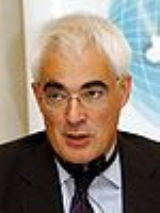
Chancellor of the Exchequer

Encyclopedia
The Chancellor of the Exchequer is the title held by the British Cabinet
minister
who is responsible for all economic and financial
matters. Often simply called the Chancellor, the office-holder controls HM Treasury
and plays a role akin to the posts of Minister of Finance or Secretary of the Treasury in other nations. The position is considered one of the four Great Offices of State
and in recent times has come to be the most powerful office in British politics after the Prime Minister
. It is the only office of the four Great Offices not to have been occupied by a woman.
The Chancellor of the Exchequer
is now always Second Lord of the Treasury
as one of the Lords Commissioners
for executing the office of Lord High Treasurer
. In the 18th and early 19th centuries it was common for the Prime Minister to also serve as Chancellor of the Exchequer if he sat in the Commons; the last Chancellor who was simultaneously Prime Minister & Chancellor of the Exchequer was Stanley Baldwin
in 1923. Formerly, in cases when the Chancellorship was vacant, the Lord Chief Justice of the King's Bench would act as Chancellor pro tempore. The last Lord Chief Justice to serve in this way was Lord Denman
in 1834.
The Chancellor is the third-oldest major state office in English
and British
history, one which originally carried responsibility for the Exchequer
, the medieval English institution for the collection of royal revenues, The Exchequer
dates from the time of Henry I
. The Chancellor controlled monetary policy
as well as fiscal policy
until 1997, when the Bank of England
was granted independent control of its interest rates. The Chancellor also has oversight of public spending across Government departments.
The office should not be confused with those of the Lord Chancellor
or the Chancellor of the Duchy of Lancaster
, both Cabinet posts, the Chancellor of the High Court
, a senior judge, or the Lord Chief Baron of the Exchequer
, a defunct judicial office.
The current Chancellor of the Exchequer is George Osborne
.
, described the office in the following terms in the House of Commons, on 11 April 1870: "The Chancellor of the Exchequer is a man whose duties make him more or less of a taxing machine. He is entrusted with a certain amount of misery which it is his duty to distribute as fairly as he can."
, who became Chancellor when Labour came into Government in 1997, had a large personal power base in the party. Perhaps as a result, Tony Blair
chose to keep him in his job throughout his ten years as Prime Minister; making Brown an unusually dominant figure and the longest serving Chancellor since the Reform Act of 1832. This situation has strengthened a pre-existing trend towards the Chancellorship moving into a clear second among government offices, elevated above its traditional peers, the Foreign Secretaryship and Home Secretary
ship.
One part of the Chancellor's key roles involves the framing of the annual Budget
, which is summarised in a speech to the House of Commons
. Traditionally the budget speech was delivered on Budget Day, a Tuesday (although not always) in March, as Britain's tax year follows the Julian Calendar
. From 1993, the Budget was preceded by an annual 'Autumn Statement', now called the Pre-Budget Report
, which forecasts government spending in the next year and usually takes place in November or December. This preview of the next year's Budget is also referred to as the "mini-Budget". The 1997, 2001, 2002, 2003, 2006, 2007 and 2008 Budgets were all delivered on a Wednesday.
is responsible for setting interest rates, the Chancellor also plays an important part in the monetary policy structure. He sets the inflation target which the Bank must set interest rates to meet. Under the Bank of England Act 1998 the Chancellor has the power of appointment of four out of nine members of the Bank's Monetary Policy Committee
- the so-called 'external' members. He also has a high level of influence over the appointment of the Bank's Governor and Deputy Governors, and has the right of consultation over the appointment of the two remaining MPC members from within the Bank. The Act also provides that the Government has the power to give instructions to the Bank on interest rates for a limited period in extreme circumstances. This power has never been used.
the Chancellor is supported by a political team of four junior ministers and by permanent civil servants. The most important junior minister is the Chief Secretary to the Treasury
, a member of the Cabinet, to whom the negotiations with other government departments on the details of government spending are delegated, followed by the Paymaster General, the Financial Secretary to the Treasury
and the Economic Secretary to the Treasury
. Two other officials are given the title of a Secretary to the Treasury
, although neither is a government minister in the Treasury: the Parliamentary Secretary to the Treasury
is the Government Chief Whip
in the House of Commons
; the Permanent Secretary to the Treasury is not a minister but the senior civil servant in the Treasury.
The holder of the office of Chancellor is ex-officio Second Lord of the Treasury
. As Second Lord, his official residence is Number 11 Downing Street
in London, next door to the residence of the First Lord of the Treasury
(a post usually, though not always, held by the Prime Minister), who resides in 10 Downing Street
. While in the past both houses were private residences, today they serve as interlinked offices, with the occupant living in a small apartment made from attic rooms previously resided in by servants.
The Chancellor is obliged to be a member of the Privy Council
, and thus is styled
the Right Honourable (Rt. Hon.). Because the House of Lords
is excluded from Finance bills, the office is effectively limited to members of the House of Commons.
and Gordon Brown
respectively, swapped apartments, as the Chancellor's apartment in No. 11 was bigger and thus better suited to the needs of Blair (who had children) than Brown who was at that stage unmarried. So although No. 11 was still officially Brown's residence, he actually resided in the apartment in the attic of No. 10, and Blair — although officially residing in No. 10 — actually lived in the attic apartment of No. 11.
who ultimately decides who may use it. Gordon Brown
, on becoming Chancellor in 1997, refused to use it and the house, which is set in 215 acres (87 ha) of parkland, was allocated to Deputy Prime Minister
John Prescott
. It reverted to the Chancellor in 2007, then Alistair Darling
.
. The Chancellor's red briefcase is identical to the briefcases used by all other government ministers (known as ministerial boxes or "red boxes
") to transport their official papers but is better known because the Chancellor traditionally displays the briefcase, containing the Budget speech, to the press in the morning before delivering the speech.
The original Budget briefcase was first used by William Ewart Gladstone
in 1860 and continued in use until 1965 when James Callaghan
was the first Chancellor to break with tradition when he used a newer box. Prior to Gladstone, a generic red briefcase
of varying design and specification was used. The practice is said to have begun in the late 16th century, when Queen Elizabeth I's representative Francis Throckmorton
presented the Spanish Ambassador, Bernardino de Mendoza
, with a specially constructed red briefcase filled with black puddings.
In July 1997, Gordon Brown became the second Chancellor to use a new box for the Budget. Made by industrial trainees at Babcock Rosyth Defence Ltd ship and submarine dockyard in Fife, the new box is made of yellow pine, with a brass handle and lock, covered in scarlet leather and embossed with the Royal initials and crest and the Chancellor's title. In his first Budget
, in March 2008, Alistair Darling reverted to using the original budget briefcase and his successor, George Osborne, continued this tradition for his first budget, before announcing that it would be retired due to its fragile condition. The key to the original budget box has been lost.
Previous Chancellors have opted for whisky (Kenneth Clarke
), gin and tonic (Geoffrey Howe
), brandy and water (Benjamin Disraeli), spritzer (Nigel Lawson
) and sherry and beaten egg (William Gladstone).
The most recent former Chancellor, Alistair Darling
, has, like his predecessor Gordon Brown
, opted for water.

and Ireland
had been united by the Act of Union 1800
(39 & 40 Geo. III c. 67), the Exchequers of the two Kingdoms were not consolidated until 1817 under 56 Geo. III c. 98. For the holders of the Irish office before this date, see Irish Chancellor of the Exchequer
.
Cabinet of the United Kingdom
The Cabinet of the United Kingdom is the collective decision-making body of Her Majesty's Government in the United Kingdom, composed of the Prime Minister and some 22 Cabinet Ministers, the most senior of the government ministers....
minister
Minister (government)
A minister is a politician who holds significant public office in a national or regional government. Senior ministers are members of the cabinet....
who is responsible for all economic and financial
FINANCIAL
FINANCIAL is the weekly English-language newspaper with offices in Tbilisi, Georgia and Kiev, Ukraine. Published by Intelligence Group LLC, FINANCIAL is focused on opinion leaders and top business decision-makers; It's about world’s largest companies, investing, careers, and small business. It is...
matters. Often simply called the Chancellor, the office-holder controls HM Treasury
HM Treasury
HM Treasury, in full Her Majesty's Treasury, informally The Treasury, is the United Kingdom government department responsible for developing and executing the British government's public finance policy and economic policy...
and plays a role akin to the posts of Minister of Finance or Secretary of the Treasury in other nations. The position is considered one of the four Great Offices of State
Great Offices of State
The Great Offices of State in the United Kingdom are the four most senior and prestigious posts in the British parliamentary system of government. They are the Prime Minister, the Chancellor of the Exchequer, the Foreign Secretary and the Home Secretary. Since 11 May 2010 these posts have been...
and in recent times has come to be the most powerful office in British politics after the Prime Minister
Prime Minister of the United Kingdom
The Prime Minister of the United Kingdom of Great Britain and Northern Ireland is the Head of Her Majesty's Government in the United Kingdom. The Prime Minister and Cabinet are collectively accountable for their policies and actions to the Sovereign, to Parliament, to their political party and...
. It is the only office of the four Great Offices not to have been occupied by a woman.
The Chancellor of the Exchequer
Exchequer
The Exchequer is a government department of the United Kingdom responsible for the management and collection of taxation and other government revenues. The historical Exchequer developed judicial roles...
is now always Second Lord of the Treasury
Second Lord of the Treasury
The Second Lord of the Treasury is a member of the commission exercising the ancient office of Lord High Treasurer in the United Kingdom. Since 1827, the Chancellor of the Exchequer has always simultaneously held the office of Second Lord of the Treasury when he has not also been the Prime Minister...
as one of the Lords Commissioners
Lords Commissioners
The Lords Commissioners are Privy Counsellors appointed by the Monarch of the United Kingdom to exercise, on his or her behalf, certain functions relating to Parliament which would otherwise require the monarch's attendance at the Palace of Westminster...
for executing the office of Lord High Treasurer
Lord High Treasurer
The post of Lord High Treasurer or Lord Treasurer was an English government position and has been a British government position since the Act of Union of 1707. A holder of the post would be the third highest ranked Great Officer of State, below the Lord High Chancellor and above the Lord President...
. In the 18th and early 19th centuries it was common for the Prime Minister to also serve as Chancellor of the Exchequer if he sat in the Commons; the last Chancellor who was simultaneously Prime Minister & Chancellor of the Exchequer was Stanley Baldwin
Stanley Baldwin
Stanley Baldwin, 1st Earl Baldwin of Bewdley, KG, PC was a British Conservative politician, who dominated the government in his country between the two world wars...
in 1923. Formerly, in cases when the Chancellorship was vacant, the Lord Chief Justice of the King's Bench would act as Chancellor pro tempore. The last Lord Chief Justice to serve in this way was Lord Denman
Thomas Denman, 1st Baron Denman
Thomas Denman, 1st Baron Denman PC KC was a British lawyer, judge and politician. He served as Lord Chief Justice between 1832 and 1850.-Background and education:Denman was born in London, the son of Dr Thomas Denman...
in 1834.
The Chancellor is the third-oldest major state office in English
History of England
The history of England concerns the study of the human past in one of Europe's oldest and most influential national territories. What is now England, a country within the United Kingdom, was inhabited by Neanderthals 230,000 years ago. Continuous human habitation dates to around 12,000 years ago,...
and British
History of the United Kingdom
The history of the United Kingdom as a unified sovereign state began with the political union of the kingdoms of England, which included Wales, and Scotland on 1 May 1707 in accordance with the Treaty of Union, as ratified by the Acts of Union 1707...
history, one which originally carried responsibility for the Exchequer
Exchequer
The Exchequer is a government department of the United Kingdom responsible for the management and collection of taxation and other government revenues. The historical Exchequer developed judicial roles...
, the medieval English institution for the collection of royal revenues, The Exchequer
Exchequer
The Exchequer is a government department of the United Kingdom responsible for the management and collection of taxation and other government revenues. The historical Exchequer developed judicial roles...
dates from the time of Henry I
Henry I of England
Henry I was the fourth son of William I of England. He succeeded his elder brother William II as King of England in 1100 and defeated his eldest brother, Robert Curthose, to become Duke of Normandy in 1106...
. The Chancellor controlled monetary policy
Monetary policy
Monetary policy is the process by which the monetary authority of a country controls the supply of money, often targeting a rate of interest for the purpose of promoting economic growth and stability. The official goals usually include relatively stable prices and low unemployment...
as well as fiscal policy
Fiscal policy
In economics and political science, fiscal policy is the use of government expenditure and revenue collection to influence the economy....
until 1997, when the Bank of England
Bank of England
The Bank of England is the central bank of the United Kingdom and the model on which most modern central banks have been based. Established in 1694, it is the second oldest central bank in the world...
was granted independent control of its interest rates. The Chancellor also has oversight of public spending across Government departments.
The office should not be confused with those of the Lord Chancellor
Lord Chancellor
The Lord High Chancellor of Great Britain, or Lord Chancellor, is a senior and important functionary in the government of the United Kingdom. He is the second highest ranking of the Great Officers of State, ranking only after the Lord High Steward. The Lord Chancellor is appointed by the Sovereign...
or the Chancellor of the Duchy of Lancaster
Chancellor of the Duchy of Lancaster
The Chancellor of the Duchy of Lancaster is, in modern times, a ministerial office in the government of the United Kingdom that includes as part of its duties, the administration of the estates and rents of the Duchy of Lancaster...
, both Cabinet posts, the Chancellor of the High Court
Chancellor of the High Court
The Chancellor of the High Court is the head of the Chancery Division of the High Court of Justice of England and Wales. Before October 2005, when certain provisions of the Constitutional Reform Act 2005 took effect, the office was known as the Vice-Chancellor...
, a senior judge, or the Lord Chief Baron of the Exchequer
Lord Chief Baron of the Exchequer
The Chief Baron of the Exchequer was the first "baron" of the English Exchequer of pleas. "In the absence of both the Treasurer of the Exchequer or First Lord of the Treasury, and the Chancellor of the Exchequer, it was he who presided in the equity court and answered the bar i.e...
, a defunct judicial office.
The current Chancellor of the Exchequer is George Osborne
George Osborne
George Gideon Oliver Osborne, MP is a British Conservative politician. He is the Chancellor of the Exchequer of the United Kingdom, a role to which he was appointed in May 2010, and has been the Member of Parliament for Tatton since 2001.Osborne is part of the old Anglo-Irish aristocracy, known in...
.
Roles and responsibilities
A previous Chancellor, Robert LoweRobert Lowe, 1st Viscount Sherbrooke
Robert Lowe, 1st Viscount Sherbrooke PC , British and Australian statesman, was a pivotal but often forgotten figure who shaped British politics in the latter half of the 19th century. He held office under William Ewart Gladstone as Chancellor of the Exchequer between 1868 and 1873 and as Home...
, described the office in the following terms in the House of Commons, on 11 April 1870: "The Chancellor of the Exchequer is a man whose duties make him more or less of a taxing machine. He is entrusted with a certain amount of misery which it is his duty to distribute as fairly as he can."
Fiscal policy
The Chancellor has considerable control over other departments as it is the Treasury which sets departmental expenditure limits. The amount of power this gives to an individual Chancellor depends on his personal forcefulness, his status with his party and his relationship with the Prime Minister. Gordon BrownGordon Brown
James Gordon Brown is a British Labour Party politician who was the Prime Minister of the United Kingdom and Leader of the Labour Party from 2007 until 2010. He previously served as Chancellor of the Exchequer in the Labour Government from 1997 to 2007...
, who became Chancellor when Labour came into Government in 1997, had a large personal power base in the party. Perhaps as a result, Tony Blair
Tony Blair
Anthony Charles Lynton Blair is a former British Labour Party politician who served as the Prime Minister of the United Kingdom from 2 May 1997 to 27 June 2007. He was the Member of Parliament for Sedgefield from 1983 to 2007 and Leader of the Labour Party from 1994 to 2007...
chose to keep him in his job throughout his ten years as Prime Minister; making Brown an unusually dominant figure and the longest serving Chancellor since the Reform Act of 1832. This situation has strengthened a pre-existing trend towards the Chancellorship moving into a clear second among government offices, elevated above its traditional peers, the Foreign Secretaryship and Home Secretary
Home Secretary
The Secretary of State for the Home Department, commonly known as the Home Secretary, is the minister in charge of the Home Office of the United Kingdom, and one of the country's four Great Offices of State...
ship.
One part of the Chancellor's key roles involves the framing of the annual Budget
Government budget
A government budget is a legal document that is often passed by the legislature, and approved by the chief executive-or president. For example, only certain types of revenue may be imposed and collected...
, which is summarised in a speech to the House of Commons
British House of Commons
The House of Commons is the lower house of the Parliament of the United Kingdom, which also comprises the Sovereign and the House of Lords . Both Commons and Lords meet in the Palace of Westminster. The Commons is a democratically elected body, consisting of 650 members , who are known as Members...
. Traditionally the budget speech was delivered on Budget Day, a Tuesday (although not always) in March, as Britain's tax year follows the Julian Calendar
Julian calendar
The Julian calendar began in 45 BC as a reform of the Roman calendar by Julius Caesar. It was chosen after consultation with the astronomer Sosigenes of Alexandria and was probably designed to approximate the tropical year .The Julian calendar has a regular year of 365 days divided into 12 months...
. From 1993, the Budget was preceded by an annual 'Autumn Statement', now called the Pre-Budget Report
Pre-Budget Report
In the United Kingdom, the Autumn Statement, at times the Summer Statement and the Pre-Budget Report , is one of the two statements HM Treasury makes each year to Parliament upon publication of economic forecasts, the other being the annual Budget...
, which forecasts government spending in the next year and usually takes place in November or December. This preview of the next year's Budget is also referred to as the "mini-Budget". The 1997, 2001, 2002, 2003, 2006, 2007 and 2008 Budgets were all delivered on a Wednesday.
Monetary policy
Although the Bank of EnglandBank of England
The Bank of England is the central bank of the United Kingdom and the model on which most modern central banks have been based. Established in 1694, it is the second oldest central bank in the world...
is responsible for setting interest rates, the Chancellor also plays an important part in the monetary policy structure. He sets the inflation target which the Bank must set interest rates to meet. Under the Bank of England Act 1998 the Chancellor has the power of appointment of four out of nine members of the Bank's Monetary Policy Committee
Monetary Policy Committee
The Monetary Policy Committee is a committee of the Bank of England, which meets for two and a half days every month to decide the official interest rate in the United Kingdom . It is also responsible for directing other aspects of the government's monetary policy framework, such as quantitative...
- the so-called 'external' members. He also has a high level of influence over the appointment of the Bank's Governor and Deputy Governors, and has the right of consultation over the appointment of the two remaining MPC members from within the Bank. The Act also provides that the Government has the power to give instructions to the Bank on interest rates for a limited period in extreme circumstances. This power has never been used.
Ministerial arrangements
At HM TreasuryHM Treasury
HM Treasury, in full Her Majesty's Treasury, informally The Treasury, is the United Kingdom government department responsible for developing and executing the British government's public finance policy and economic policy...
the Chancellor is supported by a political team of four junior ministers and by permanent civil servants. The most important junior minister is the Chief Secretary to the Treasury
Chief Secretary to the Treasury
The Chief Secretary to the Treasury is the third most senior ministerial position in HM Treasury, after the Prime Minister and the Chancellor of the Exchequer . In recent years, the office holder has usually been given a junior position in the British Cabinet...
, a member of the Cabinet, to whom the negotiations with other government departments on the details of government spending are delegated, followed by the Paymaster General, the Financial Secretary to the Treasury
Financial Secretary to the Treasury
Financial Secretary to the Treasury is a junior Ministerial post in the British Treasury. It is the 4th most significant Ministerial role within the Treasury after the Chancellor of the Exchequer, the Chief Secretary to the Treasury, and the Paymaster General...
and the Economic Secretary to the Treasury
Economic Secretary to the Treasury
The Economic Secretary to the Treasury is the fifth most senior ministerial post in the UK Treasury, after the Chancellor of the Exchequer, the Chief Secretary to the Treasury, the Paymaster-General and the Financial Secretary...
. Two other officials are given the title of a Secretary to the Treasury
Secretary to the Treasury
In the United Kingdom, there are several Secretaries to the Treasury, who are junior Treasury ministers nominally acting as secretaries to HM Treasury. The origins of the office are unclear, although it probably originated during Lord Burghley's tenure as Lord Treasurer in the 16th century. The...
, although neither is a government minister in the Treasury: the Parliamentary Secretary to the Treasury
Parliamentary Secretary to the Treasury
The Parliamentary Secretary to the Treasury is a junior ministerial position in the British Government. The holder is usually the Government Chief Whip in the House of Commons. However, the office is no longer attached to the Treasury...
is the Government Chief Whip
Chief Whip
The Chief Whip is a political office in some legislatures assigned to an elected member whose task is to administer the whipping system that ensures that members of the party attend and vote as the party leadership desires.-The Whips Office:...
in the House of Commons
British House of Commons
The House of Commons is the lower house of the Parliament of the United Kingdom, which also comprises the Sovereign and the House of Lords . Both Commons and Lords meet in the Palace of Westminster. The Commons is a democratically elected body, consisting of 650 members , who are known as Members...
; the Permanent Secretary to the Treasury is not a minister but the senior civil servant in the Treasury.
The holder of the office of Chancellor is ex-officio Second Lord of the Treasury
Lord High Treasurer
The post of Lord High Treasurer or Lord Treasurer was an English government position and has been a British government position since the Act of Union of 1707. A holder of the post would be the third highest ranked Great Officer of State, below the Lord High Chancellor and above the Lord President...
. As Second Lord, his official residence is Number 11 Downing Street
11 Downing Street
11 Downing Street , is the official residence of the Second Lord of the Treasury in Britain, who in modern times has always been the Chancellor of the Exchequer...
in London, next door to the residence of the First Lord of the Treasury
First Lord of the Treasury
The First Lord of the Treasury is the head of the commission exercising the ancient office of Lord High Treasurer in the United Kingdom, and is now always also the Prime Minister...
(a post usually, though not always, held by the Prime Minister), who resides in 10 Downing Street
10 Downing Street
10 Downing Street, colloquially known in the United Kingdom as "Number 10", is the headquarters of Her Majesty's Government and the official residence and office of the First Lord of the Treasury, who is now always the Prime Minister....
. While in the past both houses were private residences, today they serve as interlinked offices, with the occupant living in a small apartment made from attic rooms previously resided in by servants.
The Chancellor is obliged to be a member of the Privy Council
Privy Council of the United Kingdom
Her Majesty's Most Honourable Privy Council, usually known simply as the Privy Council, is a formal body of advisers to the Sovereign in the United Kingdom...
, and thus is styled
Style (manner of address)
A style of office, or honorific, is a legal, official, or recognized title. A style, by tradition or law, precedes a reference to a person who holds a post or political office, and is sometimes used to refer to the office itself. An honorific can also be awarded to an individual in a personal...
the Right Honourable (Rt. Hon.). Because the House of Lords
House of Lords
The House of Lords is the upper house of the Parliament of the United Kingdom. Like the House of Commons, it meets in the Palace of Westminster....
is excluded from Finance bills, the office is effectively limited to members of the House of Commons.
Official residence
The Chancellor's official residence is No. 11 Downing Street. In 1997, the then First and Second Lords, Tony BlairTony Blair
Anthony Charles Lynton Blair is a former British Labour Party politician who served as the Prime Minister of the United Kingdom from 2 May 1997 to 27 June 2007. He was the Member of Parliament for Sedgefield from 1983 to 2007 and Leader of the Labour Party from 1994 to 2007...
and Gordon Brown
Gordon Brown
James Gordon Brown is a British Labour Party politician who was the Prime Minister of the United Kingdom and Leader of the Labour Party from 2007 until 2010. He previously served as Chancellor of the Exchequer in the Labour Government from 1997 to 2007...
respectively, swapped apartments, as the Chancellor's apartment in No. 11 was bigger and thus better suited to the needs of Blair (who had children) than Brown who was at that stage unmarried. So although No. 11 was still officially Brown's residence, he actually resided in the apartment in the attic of No. 10, and Blair — although officially residing in No. 10 — actually lived in the attic apartment of No. 11.
Dorneywood
Dorneywood is the summer residence that is traditionally made available to the Chancellor, though it is the Prime MinisterPrime Minister of the United Kingdom
The Prime Minister of the United Kingdom of Great Britain and Northern Ireland is the Head of Her Majesty's Government in the United Kingdom. The Prime Minister and Cabinet are collectively accountable for their policies and actions to the Sovereign, to Parliament, to their political party and...
who ultimately decides who may use it. Gordon Brown
Gordon Brown
James Gordon Brown is a British Labour Party politician who was the Prime Minister of the United Kingdom and Leader of the Labour Party from 2007 until 2010. He previously served as Chancellor of the Exchequer in the Labour Government from 1997 to 2007...
, on becoming Chancellor in 1997, refused to use it and the house, which is set in 215 acres (87 ha) of parkland, was allocated to Deputy Prime Minister
Deputy Prime Minister of the United Kingdom
The Deputy Prime Minister of the United Kingdom of Great Britain and Northern Ireland is a senior member of the Cabinet of the United Kingdom. The office of the Deputy Prime Minister is not a permanent position, existing only at the discretion of the Prime Minister, who may appoint to other offices...
John Prescott
John Prescott
John Leslie Prescott, Baron Prescott is a British politician who was Deputy Prime Minister of the United Kingdom from 1997 to 2007. Born in Prestatyn, Wales, he represented Hull East as the Labour Member of Parliament from 1970 to 2010...
. It reverted to the Chancellor in 2007, then Alistair Darling
Alistair Darling
Alistair Maclean Darling is a Scottish Labour Party politician who has been a Member of Parliament since 1987, currently for Edinburgh South West. He served as the Chancellor of the Exchequer from 2007 to 2010...
.
Budget box
The Chancellor traditionally carries his Budget speech to the House of Commons in a particular red briefcaseBriefcase
A briefcase is a narrow box-shaped bag or case used mainly for carrying papers and other documents and equipped with a handle. Lawyers commonly use briefcases to carry briefs to present to a court, hence the name...
. The Chancellor's red briefcase is identical to the briefcases used by all other government ministers (known as ministerial boxes or "red boxes
Red box (government)
The term "Red box" informally refers to a ministerial box used by ministers in the British government to carry their documents. Similar in appearance to a briefcase, they are primarily used to hold and transport official departmental papers from place to place.-Ministerial box:The design of...
") to transport their official papers but is better known because the Chancellor traditionally displays the briefcase, containing the Budget speech, to the press in the morning before delivering the speech.
The original Budget briefcase was first used by William Ewart Gladstone
William Ewart Gladstone
William Ewart Gladstone FRS FSS was a British Liberal statesman. In a career lasting over sixty years, he served as Prime Minister four separate times , more than any other person. Gladstone was also Britain's oldest Prime Minister, 84 years old when he resigned for the last time...
in 1860 and continued in use until 1965 when James Callaghan
James Callaghan
Leonard James Callaghan, Baron Callaghan of Cardiff, KG, PC , was a British Labour politician, who was Prime Minister of the United Kingdom from 1976 to 1979 and Leader of the Labour Party from 1976 to 1980...
was the first Chancellor to break with tradition when he used a newer box. Prior to Gladstone, a generic red briefcase
Briefcase
A briefcase is a narrow box-shaped bag or case used mainly for carrying papers and other documents and equipped with a handle. Lawyers commonly use briefcases to carry briefs to present to a court, hence the name...
of varying design and specification was used. The practice is said to have begun in the late 16th century, when Queen Elizabeth I's representative Francis Throckmorton
Francis Throckmorton
Sir Francis Throckmorton was a conspirator against Queen Elizabeth I of England.He was the son of Sir John Throckmorton and a nephew of Sir Nicholas Throckmorton, one of Elizabeth's diplomats. Sir John had held the post of Chief Justice of Chester but was removed in 1579, a year before his death...
presented the Spanish Ambassador, Bernardino de Mendoza
Bernardino de Mendoza
Bernardino de Mendoza was a Spanish military commander, a diplomat and a writer on military history and politics.- Life and works :Bernardino de Mendoza was born in Guadalajara, Spain around 1540...
, with a specially constructed red briefcase filled with black puddings.
In July 1997, Gordon Brown became the second Chancellor to use a new box for the Budget. Made by industrial trainees at Babcock Rosyth Defence Ltd ship and submarine dockyard in Fife, the new box is made of yellow pine, with a brass handle and lock, covered in scarlet leather and embossed with the Royal initials and crest and the Chancellor's title. In his first Budget
2007 United Kingdom Budget
The 2007 United Kingdom Budget, officially known as Budget 2007: Building Britain's long-term future: Prosperity and fairness for families, was formally delivered by Gordon Brown in the House of Commons on 21 March 2007...
, in March 2008, Alistair Darling reverted to using the original budget briefcase and his successor, George Osborne, continued this tradition for his first budget, before announcing that it would be retired due to its fragile condition. The key to the original budget box has been lost.
Budget tipple
By tradition, the Chancellor has been allowed to drink whatever he or she wishes whilst making the annual Budget Speech to parliament. This includes alcohol, which is otherwise banned under parliamentary rules.Previous Chancellors have opted for whisky (Kenneth Clarke
Kenneth Clarke
Kenneth Harry "Ken" Clarke, QC, MP is a British Conservative politician, currently Member of Parliament for Rushcliffe, Lord Chancellor and Secretary of State for Justice. He was first elected to Parliament in 1970; and appointed a minister in Edward Heath's government, in 1972, and is one of...
), gin and tonic (Geoffrey Howe
Geoffrey Howe
Richard Edward Geoffrey Howe, Baron Howe of Aberavon, CH, QC, PC is a former British Conservative politician. He was Margaret Thatcher's longest-serving Cabinet minister, successively holding the posts of Chancellor of the Exchequer, Foreign Secretary, and finally Leader of the House of Commons...
), brandy and water (Benjamin Disraeli), spritzer (Nigel Lawson
Nigel Lawson
Nigel Lawson, Baron Lawson of Blaby, PC , is a British Conservative politician and journalist. He was a Member of Parliament representing the constituency of Blaby from 1974–92, and served as the Chancellor of the Exchequer in the government of Margaret Thatcher from June 1983 to October 1989...
) and sherry and beaten egg (William Gladstone).
The most recent former Chancellor, Alistair Darling
Alistair Darling
Alistair Maclean Darling is a Scottish Labour Party politician who has been a Member of Parliament since 1987, currently for Edinburgh South West. He served as the Chancellor of the Exchequer from 2007 to 2010...
, has, like his predecessor Gordon Brown
Gordon Brown
James Gordon Brown is a British Labour Party politician who was the Prime Minister of the United Kingdom and Leader of the Labour Party from 2007 until 2010. He previously served as Chancellor of the Exchequer in the Labour Government from 1997 to 2007...
, opted for water.
Chancellors of the Exchequer of England, 1316-c. 1558
| Name | Portrait | Took office | Left office |
|---|---|---|---|
| Hervey de Stanton Hervey de Stanton Hervey de Stanton was an English judge and Chancellor of the Exchequer.-Origins and early career:... |
1316 | 1327 | |
| William Catesby William Catesby William Catesby, esq. was one of Richard III of England's principal councillors. He also served as Chancellor of the Exchequer and Speaker of the House of Commons during Richard's reign.... |
1483 | ||
| John Bourchier, 2nd Baron Berners John Bourchier, 2nd Baron Berners John Bourchier, 2nd Baron Berners was a statesman and translator, born at Sherfield, Hertfordshire, England, to Sir Humphrey Bourchier and Elizabeth Tilney, and educated at Oxford University. He held various Offices of State, including that of Chancellor of the Exchequer to King Henry VIII, and... |
|||
| Thomas Cromwell, 1st Earl of Essex Thomas Cromwell, 1st Earl of Essex Thomas Cromwell, 1st Earl of Essex, , was an English statesman who served as chief minister of King Henry VIII of England from 1532 to 1540.... |
01.jpg) |
1533 | 1540 |
Chancellors of the Exchequer of England, c. 1558-1708
| Name | Portrait | Took office | Left office |
|---|---|---|---|
| Sir John Baker John Baker (English statesman) Sir John Baker was an English politician, and served as a Chancellor of the Exchequer, having previously been Speaker of the House of Commons of England.-Early life:... |
 |
c. 1558 | c. 1559 |
| Sir Richard Sackville Richard Sackville (escheator) Sir Richard Sackville of Ashburnham and Buckhurst in Sussex and Westenhanger in Kent; was an English administrator and Member of Parliament.-Career:... |
 |
c. 1559 | 1566 |
| Sir Walter Mildmay Walter Mildmay Sir Walter Mildmay was an English statesman who served as Chancellor of the Exchequer of England under Queen Elizabeth I, and was founder of Emmanuel College, Cambridge.-Early life:... |
 |
1566 | 1589 |
| Sir John Fortescue John Fortescue of Salden Sir John Fortescue of Salden was the seventh Chancellor of the Exchequer of England, serving from 1589 until 1603.... |
|
1589 | 1603 |
| The Earl of Dunbar George Home, 1st Earl of Dunbar George Home, 1st Earl of Dunbar, KG, PC was, in the last decade of his life, the most prominent and most influential Scotsman in England. His work lay in the King's Household and in the control of the State Affairs of Scotland and he was the King's chief Scottish advisor... |
|
1603 | 1606 |
| Sir Julius Caesar Julius Caesar (judge) Sir Julius Caesar was an English judge and politician. He was born near Tottenham in Middlesex. His father was Giulio Cesare Adelmare, an Italian physician to Queen Mary and Queen Elizabeth, descended by the female line from the dukes of Cesarini.Caesar was educated at Magdalen College, Oxford,... |
 |
1606 | 1614 |
| Sir Fulke Greville Fulke Greville, 1st Baron Brooke Fulke Greville, 1st Baron Brooke, de jure 13th Baron Latimer and 5th Baron Willoughby de Broke , known before 1621 as Sir Fulke Greville, was an Elizabethan poet, dramatist, and statesman.... |
 |
1614 | 1621 |
| Sir Richard Weston Richard Weston, 1st Earl of Portland Richard Weston, 1st Earl of Portland, KG , was Chancellor of the Exchequer and later Lord Treasurer of England under James I and Charles I, being one of the most influential figures in the early years of Charles I's Personal Rule and the architect of many of the policies that enabled him to rule... |
 |
1621 | 1628 |
| The Lord Barrett of Newburgh Edward Barrett, 1st Lord Barrett of Newburgh Edward Barrett, 1st Lord Barrett of Newburgh, PC was an English politician.Barrett was the son of Charles Barrett of Belhouse, Essex and his wife Christian Mildmay . He matriculated at Queen's College, Oxford on 17 March 1597 and entered Lincoln's Inn in 1600... |
|
1628 | 1629 |
| Francis Cottington, Lord Cottington from 1631 | 1629 | 1642 | |
| Sir John Colepeper John Colepeper, 1st Baron Colepeper John Colepeper of Bedgebery, 1st Baron Culpeper of Thoresway was an English politician.-Life:He was the only son of Thomas Culpeper of Wigsell and Anne Slaney , daughter of Sir Stephan Slaney, Lord Mayor of London... MP |
 |
2 January 1642 | 22 February 1643 |
| Sir Edward Hyde Edward Hyde, 1st Earl of Clarendon Edward Hyde, 1st Earl of Clarendon was an English historian and statesman, and grandfather of two English monarchs, Mary II and Queen Anne.-Early life:... |
 |
February 1643 | 1646 |
| The Lord Ashley | 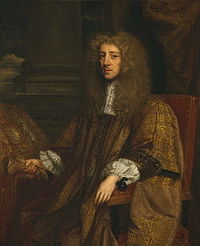 |
13 May 1661 | 22 November 1672 |
| Sir John Duncombe John Duncombe Sir John Duncombe was an English politician.John Duncombe was the son of William Duncombe. He was educated at Eton College and St John's College, Cambridge. He was knighted in 1646. Duncombe was Member of Parliament for Bury St Edmunds from 1660 to 1678, and Chancellor of the Exchequer from 22... MP |
|
22 November 1672 | 2 May 1676 |
| Sir John Ernle John Ernle The Right Honourable Sir John Ernle was an English Member of Parliament, sitting first in the Cavalier Parliament of 1660-1679 and becoming one of the longest-serving Chancellors of the Exchequer of England, a position he held from 2 May 1676 to 9 April 1689.-Antecedents:Ernle was descended from... MP |
|
2 May 1676 | 9 April 1689 |
| The Lord Delamere Henry Booth, 1st Earl of Warrington Henry Booth, 1st Earl of Warrington was a Member of Parliament, Privy Councillor, Protestant protagonist in the Revolution of 1688, Mayor of Chester and author.-Life:... |
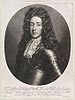 |
9 April 1689 | 18 March 1690 |
| Richard Hampden Richard Hampden Richard Hampden was an English Whig politician and son of John Hampden. He was sworn a Privy Counsellor in 1689 and was Chancellor of the Exchequer from 18 March 1690 until 10 May 1694.... MP |
|
18 March 1690 | 10 May 1694 |
| Charles Montagu Charles Montagu, 1st Earl of Halifax Charles Montagu, 1st Earl of Halifax, KG, PC, FRS was an English poet and statesman.-Early life:Charles Montagu was born in Horton, Northamptonshire, the son of George Montagu, fifth son of 1st Earl of Manchester... MP |
 |
10 May 1694 | 2 June 1699 |
| John Smith John Smith (Chancellor of the Exchequer) John Smith was an English politician, twice serving as Chancellor of the Exchequer.Smith's father was also called John Smith and he had a sister called Anne, who became Lady Dashwood. He was educated St John's College, Oxford, was at the Middle Temple and was first elected a Member of Parliament... MP |
 |
2 June 1699 | 27 March 1701 |
| Henry Boyle Henry Boyle, 1st Baron Carleton Henry Boyle, 1st Baron Carleton, PC , was an Anglo-Irish politician of the early eighteenth century.-Biography:... MP |
 |
27 March 1701 | 22 April 1708 |
Chancellors of the Exchequer of Great Britain, 1708-1817
| Name | Portrait | Took office | Left office | Political party | Prime Minister | |
|---|---|---|---|---|---|---|
| Sir John Smith John Smith (Chancellor of the Exchequer) John Smith was an English politician, twice serving as Chancellor of the Exchequer.Smith's father was also called John Smith and he had a sister called Anne, who became Lady Dashwood. He was educated St John's College, Oxford, was at the Middle Temple and was first elected a Member of Parliament... |
|
22 April 1708 | 11 August 1710 | Whig | ||
| Robert Harley | 11 August 1710 | 4 June 1711 | Tory | |||
| Robert Benson Robert Benson, 1st Baron Bingley Robert Benson, 1st Baron Bingley, PC was an English politician of the 18th century.-Life:Robert Benson was born in Wakefield. He went to school in London before studying at Christ's College, Cambridge... |
4 June 1711 | 21 August 1713 | Tory | |||
| Sir William Wyndham, Bt Sir William Wyndham, 3rd Baronet Sir William Wyndham, 3rd Baronet , English politician, was the only son of Sir Edward Wyndham, Bart., a grandson of Sir William Wyndham and a great-great-grandson of Sir John Wyndham of Orchard Wyndham, Somerset, who was created a baronet in 1661.Educated at Eton and at Christ Church, Oxford, he... |
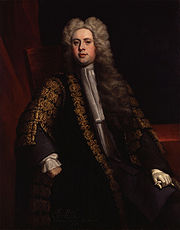 |
21 August 1713 | 13 October 1714 | Tory | ||
| Sir Richard Onslow, Bt Richard Onslow, 1st Baron Onslow Richard Onslow, 1st Baron Onslow PC was a British Whig Member of Parliament, known as Sir Richard Onslow, 2nd Baronet from 1688 until 1716. He served as the Speaker of the House of Commons from 1708 until 1710 and as Chancellor of the Exchequer from 1714 until 1715... |
 |
13 October 1714 | 12 October 1715 | Whig | ||
| Robert Walpole Robert Walpole Robert Walpole, 1st Earl of Orford, KG, KB, PC , known before 1742 as Sir Robert Walpole, was a British statesman who is generally regarded as having been the first Prime Minister of Great Britain.... |
12 October 1715 | 15 April 1717 | Whig | |||
| The Viscount Stanhope James Stanhope, 1st Earl Stanhope James Stanhope, 1st Earl Stanhope PC was a British statesman and soldier who effectively served as Chief Minister between 1717 and 1721. He is probably best remembered for his service during War of the Spanish Succession... |
 |
15 April 1717 | 20 March 1718 | Whig | ||
| John Aislabie John Aislabie John Aislabie or Aslabie was a British politician, notable for his involvement in the South Sea Bubble and for creating the water garden at Studley Royal.-Background and education:... |
20 March 1718 | 23 January 1721 | Whig | |||
| Sir John Pratt John Pratt (judge) Sir John Pratt was an English judge and politician.Pratt was Lord Chief Justice of England from May 15, 1718 until March 2, 1725. He was appointed as an interim Chancellor of the Exchequer on February 2, 1721, until April 3, 1721.... (interim - Lord Chief Justice of the King's Bench) |
2 February 1721 | 3 April 1721 | Whig | |||
| Sir Robert Walpole Robert Walpole Robert Walpole, 1st Earl of Orford, KG, KB, PC , known before 1742 as Sir Robert Walpole, was a British statesman who is generally regarded as having been the first Prime Minister of Great Britain.... |
3 April 1721 | 12 February 1742 | Whig | Sir Robert Walpole | ||
| Samuel Sandys Samuel Sandys, 1st Baron Sandys Samuel Sandys, 1st Baron Sandys, PC was a British politician in the 18th century. He held numerous posts within the government of the United Kingdom, namely Chancellor of the Exchequer, Leader of the House of Commons, Cofferer of the Household and First Lord of Trade... |
 |
12 February 1742 | 12 December 1743 | Whig | The Earl of Wilmington Spencer Compton, 1st Earl of Wilmington Spencer Compton, 1st Earl of Wilmington KG, KB, PC was a British Whig statesman who served continuously in government from 1715 until his death. He served as the nominal head of government from 1742 until his death in 1743, but was merely a figurehead for the true leader of the government, Lord... |
|
| Henry Pelham Henry Pelham Henry Pelham was a British Whig statesman, who served as Prime Minister of Great Britain from 27 August 1743 until his death in 1754... |
12 December 1743 | 8 March 1754 | Whig | Henry Pelham | ||
| Sir William Lee (interim - Lord Chief Justice of the King's Bench) |
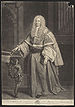 |
8 March 1754 | 6 April 1754 | Whig | The Duke of Newcastle Thomas Pelham-Holles, 1st Duke of Newcastle-upon-Tyne Thomas Pelham-Holles, 1st Duke of Newcastle-upon-Tyne and 1st Duke of Newcastle-under-Lyne, KG, PC was a British Whig statesman, whose official life extended throughout the Whig supremacy of the 18th century. He is commonly known as the Duke of Newcastle.A protégé of Sir Robert Walpole, he served... |
|
| Henry Bilson Legge Henry Bilson Legge Henry Bilson-Legge PC was an English statesman. He notably served three times as Chancellor of the Exchequer in the 1750s and 1760s.-Background and education:... |
 |
6 April 1754 | 25 November 1755 | Whig | ||
| Sir George Lyttelton, Bt George Lyttelton, 1st Baron Lyttelton George Lyttelton, 1st Baron Lyttelton PC , known as Sir George Lyttelton, Bt between 1751 and 1756, was a British politician and statesman and a patron of the arts.-Background and education:... |
25 November 1755 | 16 November 1756 | Whig | |||
| Henry Bilson Legge Henry Bilson Legge Henry Bilson-Legge PC was an English statesman. He notably served three times as Chancellor of the Exchequer in the 1750s and 1760s.-Background and education:... |
|
16 November 1756 | 13 April 1757 | Whig | The Duke of Devonshire William Cavendish, 4th Duke of Devonshire William Cavendish, 4th Duke of Devonshire, KG, PC , styled Lord Cavendish before 1729 and Marquess of Hartington between 1729 and 1755, was a British Whig statesman who was briefly nominal Prime Minister of Great Britain... |
|
| The Lord Mansfield William Murray, 1st Earl of Mansfield William Murray, 1st Earl of Mansfield, SL, PC was a British barrister, politician and judge noted for his reform of English law. Born to Scottish nobility, he was educated in Perth, Scotland before moving to London at the age of 13 to take up a place at Westminster School... (interim - Lord Chief Justice of the King's Bench) |
 |
13 April 1757 | 2 July 1757 | Whig | The Duke of Newcastle Thomas Pelham-Holles, 1st Duke of Newcastle-upon-Tyne Thomas Pelham-Holles, 1st Duke of Newcastle-upon-Tyne and 1st Duke of Newcastle-under-Lyne, KG, PC was a British Whig statesman, whose official life extended throughout the Whig supremacy of the 18th century. He is commonly known as the Duke of Newcastle.A protégé of Sir Robert Walpole, he served... |
|
| Henry Bilson Legge Henry Bilson Legge Henry Bilson-Legge PC was an English statesman. He notably served three times as Chancellor of the Exchequer in the 1750s and 1760s.-Background and education:... |
|
2 July 1757 | 19 March 1761 | Whig | ||
| The Viscount Barrington William Barrington, 2nd Viscount Barrington William Wildman Shute Barrington, 2nd Viscount Barrington PC was a British politician best known for his two periods as Secretary at War during Britain's involvement in the Seven Years War and American War of Independence.... (Held an Irish Peerage and sat in the House of Commons of Great Britain) |
 |
19 March 1761 | 29 May 1762 | Whig | ||
| Sir Francis Dashwood, Bt Francis Dashwood, 15th Baron le Despencer Francis Dashwood, 15th Baron le Despencer was an English rake and politician, Chancellor of the Exchequer and founder of the Hellfire Club.-Early life:... |
 |
29 May 1762 | 16 April 1763 | Tory | The Earl of Bute John Stuart, 3rd Earl of Bute John Stuart, 3rd Earl of Bute KG, PC , styled Lord Mount Stuart before 1723, was a Scottish nobleman who served as Prime Minister of Great Britain under George III, and was arguably the last important favourite in British politics... |
|
| George Grenville George Grenville George Grenville was a British Whig statesman who rose to the position of Prime Minister of Great Britain. Grenville was born into an influential political family and first entered Parliament in 1741 as an MP for Buckingham... |
16 April 1763 | 16 July 1765 | Whig | George Grenville | ||
| William Dowdeswell | |
16 July 1765 | 2 August 1766 | Whig | The Marquess of Rockingham Charles Watson-Wentworth, 2nd Marquess of Rockingham Charles Watson-Wentworth, 2nd Marquess of Rockingham, KG, PC , styled The Hon. Charles Watson-Wentworth before 1733, Viscount Higham between 1733 and 1746, Earl of Malton between 1746 and 1750 and The Earl Malton in 1750, was a British Whig statesman, most notable for his two terms as Prime... |
|
| Charles Townshend Charles Townshend Charles Townshend was a British politician. He was born at his family's seat of Raynham Hall in Norfolk, England, the second son of Charles Townshend, 3rd Viscount Townshend, and Audrey , daughter and heiress of Edward Harrison of Ball's Park, near Hertford, a lady who rivalled her son in... |
 |
2 August 1766 | 4 September 1767 (died) | Whig | The Earl of Chatham William Pitt, 1st Earl of Chatham William Pitt, 1st Earl of Chatham PC was a British Whig statesman who led Britain during the Seven Years' War... |
|
| Lord North Frederick North, Lord North Frederick North, 2nd Earl of Guilford, KG, PC , more often known by his courtesy title, Lord North, which he used from 1752 until 1790, was Prime Minister of Great Britain from 1770 to 1782. He led Great Britain through most of the American War of Independence... (Held a courtesy title and sat in the Commons) |
 |
11 September 1767 | 27 March 1782 | Tory | The Duke of Grafton Augustus FitzRoy, 3rd Duke of Grafton Augustus Henry FitzRoy, 3rd Duke of Grafton, KG, PC , styled Earl of Euston between 1747 and 1757, was a British Whig statesman of the Georgian era... |
|
| Lord North | ||||||
| Lord John Cavendish Lord John Cavendish Lord John Cavendish PC was a British politician.-Background:Cavendish was the youngest son of William Cavendish, 3rd Duke of Devonshire, and his wife Catherine, daughter of John Hoskins. Prime Minister William Cavendish, 4th Duke of Devonshire, Lord George Cavendish and Field Marshal Lord... |
27 March 1782 | 10 July 1782 | Whig | The Marquess of Rockingham Charles Watson-Wentworth, 2nd Marquess of Rockingham Charles Watson-Wentworth, 2nd Marquess of Rockingham, KG, PC , styled The Hon. Charles Watson-Wentworth before 1733, Viscount Higham between 1733 and 1746, Earl of Malton between 1746 and 1750 and The Earl Malton in 1750, was a British Whig statesman, most notable for his two terms as Prime... |
||
| William Pitt the Younger William Pitt the Younger William Pitt the Younger was a British politician of the late 18th and early 19th centuries. He became the youngest Prime Minister in 1783 at the age of 24 . He left office in 1801, but was Prime Minister again from 1804 until his death in 1806... |
10 July 1782 | 31 March 1783 | Whig | The Earl of Shelburne William Petty, 2nd Earl of Shelburne William Petty-FitzMaurice, 1st Marquess of Lansdowne, KG, PC , known as The Earl of Shelburne between 1761 and 1784, by which title he is generally known to history, was an Irish-born British Whig statesman who was the first Home Secretary in 1782 and then Prime Minister 1782–1783 during the final... |
||
| Lord John Cavendish Lord John Cavendish Lord John Cavendish PC was a British politician.-Background:Cavendish was the youngest son of William Cavendish, 3rd Duke of Devonshire, and his wife Catherine, daughter of John Hoskins. Prime Minister William Cavendish, 4th Duke of Devonshire, Lord George Cavendish and Field Marshal Lord... |
2 April 1783 | 19 December 1783 | Whig (Fox-North Coalition Fox-North Coalition The Fox-North Coalition was a government in Great Britain that held office during 1783. As the name suggests, the ministry was a coalition of the groups supporting Charles James Fox and Lord North... ) |
The Duke of Portland William Cavendish-Bentinck, 3rd Duke of Portland William Henry Cavendish-Bentinck, 3rd Duke of Portland, KG, PC was a British Whig and Tory statesman, Chancellor of the University of Oxford and Prime Minister. He was known before 1762 by the courtesy title Marquess of Titchfield. He held a title of every degree of British nobility—Duke,... |
||
| William Pitt the Younger William Pitt the Younger William Pitt the Younger was a British politician of the late 18th and early 19th centuries. He became the youngest Prime Minister in 1783 at the age of 24 . He left office in 1801, but was Prime Minister again from 1804 until his death in 1806... |
19 December 1783 | 14 March 1801 | Tory | William Pitt the Younger | ||
| Henry Addington Henry Addington, 1st Viscount Sidmouth Henry Addington, 1st Viscount Sidmouth, PC was a British statesman, and Prime Minister of the United Kingdom from 1801 to 1804.... |
14 March 1801 | 10 May 1804 | Tory | Henry Addington | ||
| William Pitt the Younger William Pitt the Younger William Pitt the Younger was a British politician of the late 18th and early 19th centuries. He became the youngest Prime Minister in 1783 at the age of 24 . He left office in 1801, but was Prime Minister again from 1804 until his death in 1806... |
10 May 1804 | 23 January 1806 (died) | Tory | William Pitt the Younger | ||
| Lord Henry Petty Henry Petty-FitzMaurice, 3rd Marquess of Lansdowne Henry Petty-Fitzmaurice, 3rd Marquess of Lansdowne KG, PC, FRS , known as Lord Henry Petty from 1784 to 1809 and then as The Earl of Kerry to 1818, was a British statesman... |
 |
5 February 1806 | 26 March 1807 | Whig British Whig Party The Whigs were a party in the Parliament of England, Parliament of Great Britain, and Parliament of the United Kingdom, who contested power with the rival Tories from the 1680s to the 1850s. The Whigs' origin lay in constitutional monarchism and opposition to absolute rule... (Ministry of All the Talents Ministry of All the Talents The Ministry of All the Talents was a national unity government formed by William Wyndham Grenville, 1st Baron Grenville on his appointment as Prime Minister of the United Kingdom on 11 February 1806 after the death of William Pitt the Younger... ) |
Lord Grenville | |
| Spencer Perceval Spencer Perceval Spencer Perceval, KC was a British statesman and First Lord of the Treasury, making him de facto Prime Minister. He is the only British Prime Minister to have been assassinated... |
 |
26 March 1807 | 12 May 1812 (died) | Tory | The Duke of Portland William Cavendish-Bentinck, 3rd Duke of Portland William Henry Cavendish-Bentinck, 3rd Duke of Portland, KG, PC was a British Whig and Tory statesman, Chancellor of the University of Oxford and Prime Minister. He was known before 1762 by the courtesy title Marquess of Titchfield. He held a title of every degree of British nobility—Duke,... |
|
| Spencer Perceval | ||||||
| Nicholas Vansittart Nicholas Vansittart, 1st Baron Bexley Nicholas Vansittart, 1st Baron Bexley PC, FRS, FSA was an English politician, and one of the longest-serving Chancellors of the Exchequer in British history.-Background and education:... |
 |
12 May 1812 | 12 July 1817 | Tory | Lord Liverpool Robert Jenkinson, 2nd Earl of Liverpool Robert Banks Jenkinson, 2nd Earl of Liverpool KG PC was a British politician and the longest-serving Prime Minister of the United Kingdom since the Union with Ireland in 1801. He was 42 years old when he became premier in 1812 which made him younger than all of his successors to date... |
|
Chancellors of the Exchequer of the United Kingdom, 1817-1902
Although the Kingdoms of Great BritainKingdom of Great Britain
The former Kingdom of Great Britain, sometimes described as the 'United Kingdom of Great Britain', That the Two Kingdoms of Scotland and England, shall upon the 1st May next ensuing the date hereof, and forever after, be United into One Kingdom by the Name of GREAT BRITAIN. was a sovereign...
and Ireland
Kingdom of Ireland
The Kingdom of Ireland refers to the country of Ireland in the period between the proclamation of Henry VIII as King of Ireland by the Crown of Ireland Act 1542 and the Act of Union in 1800. It replaced the Lordship of Ireland, which had been created in 1171...
had been united by the Act of Union 1800
Act of Union 1800
The Acts of Union 1800 describe two complementary Acts, namely:* the Union with Ireland Act 1800 , an Act of the Parliament of Great Britain, and...
(39 & 40 Geo. III c. 67), the Exchequers of the two Kingdoms were not consolidated until 1817 under 56 Geo. III c. 98. For the holders of the Irish office before this date, see Irish Chancellor of the Exchequer
Irish Chancellor of the Exchequer
The Chancellor of the Exchequer of Ireland was a member of the government of the Lord Lieutenant of Ireland under the Kingdom of Ireland. He headed the Exchequer of Ireland and sat as an MP in the Irish House of Commons....
.
| Name | Portrait | Took office | Left office | Political party | Prime Minister | |
|---|---|---|---|---|---|---|
| Nicholas Vansittart Nicholas Vansittart, 1st Baron Bexley Nicholas Vansittart, 1st Baron Bexley PC, FRS, FSA was an English politician, and one of the longest-serving Chancellors of the Exchequer in British history.-Background and education:... |
|
12 July 1817 | 31 January 1823 | Tory | Lord Liverpool Robert Jenkinson, 2nd Earl of Liverpool Robert Banks Jenkinson, 2nd Earl of Liverpool KG PC was a British politician and the longest-serving Prime Minister of the United Kingdom since the Union with Ireland in 1801. He was 42 years old when he became premier in 1812 which made him younger than all of his successors to date... |
|
| F. J. Robinson | 31 January 1823 | 20 April 1827 | Tory | |||
| George Canning George Canning George Canning PC, FRS was a British statesman and politician who served as Foreign Secretary and briefly Prime Minister.-Early life: 1770–1793:... |
 |
20 April 1827 | 8 August 1827 (died) | Tory | George Canning | |
| The Lord Tenterden Charles Abbott, 1st Baron Tenterden Charles Abbott, 1st Baron Tenterden PC SL , was a British barrister and judge who served as Lord Chief Justice of the King's Bench between 1818 and 1832. Born in obscure circumstances to a barber and his wife in Canterbury, Abbott was educated initially at a dame school before moving to The King's... (interim - Lord Chief Justice of the King's Bench) |
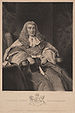 |
8 August 1827 | 3 September 1827 | Tory | The Viscount Goderich | |
| John Charles Herries John Charles Herries John Charles Herries PC , known as J. C. Herries, was a British politician and financier and a frequent member of Tory and Conservative cabinets in the early to mid 19th century.-Background and education:... |
3 September 1827 | 26 January 1828 | Tory | |||
| Henry Goulburn Henry Goulburn Henry Goulburn PC FRS was an English Conservative statesman and a member of the Peelite faction after 1846.-Background and education:... |
26 January 1828 | 22 November 1830 | Tory | The Duke of Wellington Arthur Wellesley, 1st Duke of Wellington Field Marshal Arthur Wellesley, 1st Duke of Wellington, KG, GCB, GCH, PC, FRS , was an Irish-born British soldier and statesman, and one of the leading military and political figures of the 19th century... |
||
| Viscount Althorp John Spencer, 3rd Earl Spencer John Charles Spencer, 3rd Earl Spencer PC, FRS , styled Viscount Althorp from 1783 to 1834, was a British statesman... |
 |
22 November 1830 | 14 November 1834 | Whig | The Earl Grey Charles Grey, 2nd Earl Grey Charles Grey, 2nd Earl Grey, KG, PC , known as Viscount Howick between 1806 and 1807, was Prime Minister of the United Kingdom of Great Britain and Ireland from 22 November 1830 to 16 July 1834. A member of the Whig Party, he backed significant reform of the British government and was among the... |
|
| The Viscount Melbourne William Lamb, 2nd Viscount Melbourne William Lamb, 2nd Viscount Melbourne, PC, FRS was a British Whig statesman who served as Home Secretary and Prime Minister . He is best known for his intense and successful mentoring of Queen Victoria, at ages 18-21, in the ways of politics... |
||||||
| The Lord Denman Thomas Denman, 1st Baron Denman Thomas Denman, 1st Baron Denman PC KC was a British lawyer, judge and politician. He served as Lord Chief Justice between 1832 and 1850.-Background and education:Denman was born in London, the son of Dr Thomas Denman... (interim - Lord Chief Justice of the King's Bench) |
 |
14 November 1834 | 15 December 1834 | Whig (Conservative Provisional Government Conservative Provisional Government 1834 King William IV had dismissed the Whig government of Lord Melbourne on 14 November 1834 and asked Sir Robert Peel to form a government. Peel was in Italy at the time, so the Duke of Wellington formed a caretaker government which lasted until Peel was able to form his government on 10... ) |
The Duke of Wellington Arthur Wellesley, 1st Duke of Wellington Field Marshal Arthur Wellesley, 1st Duke of Wellington, KG, GCB, GCH, PC, FRS , was an Irish-born British soldier and statesman, and one of the leading military and political figures of the 19th century... |
|
| Sir Robert Peel, Bt Robert Peel Sir Robert Peel, 2nd Baronet was a British Conservative statesman who served as Prime Minister of the United Kingdom from 10 December 1834 to 8 April 1835, and again from 30 August 1841 to 29 June 1846... |
 |
15 December 1834 | 8 April 1835 | Conservative Conservative Party (UK) The Conservative Party, formally the Conservative and Unionist Party, is a centre-right political party in the United Kingdom that adheres to the philosophies of conservatism and British unionism. It is the largest political party in the UK, and is currently the largest single party in the House... |
Sir Robert Peel, Bt | |
| Thomas Spring Rice Thomas Spring Rice, 1st Baron Monteagle of Brandon Thomas Spring Rice, 1st Baron Monteagle of Brandon, PC, FRS was a British Whig politician, who served as Chancellor of the Exchequer from 1835 to 1839.-Background:... |
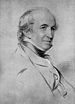 |
18 April 1835 | 26 August 1839 | Whig | The Viscount Melbourne William Lamb, 2nd Viscount Melbourne William Lamb, 2nd Viscount Melbourne, PC, FRS was a British Whig statesman who served as Home Secretary and Prime Minister . He is best known for his intense and successful mentoring of Queen Victoria, at ages 18-21, in the ways of politics... |
|
| Francis Baring Francis Baring, 1st Baron Northbrook Francis Thornhill Baring, 1st Baron Northbrook PC , known as Sir Francis Baring, Bt, from 1848 to 1866, was a British Whig politician who served in the governments of Lord Melbourne and Lord John Russell.... |
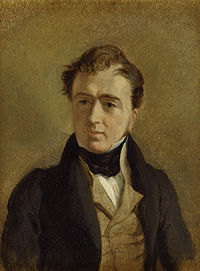 |
26 August 1839 | 30 August 1841 | Whig | ||
| Henry Goulburn Henry Goulburn Henry Goulburn PC FRS was an English Conservative statesman and a member of the Peelite faction after 1846.-Background and education:... |
3 September 1841 | 27 June 1846 | Conservative | Sir Robert Peel, Bt Robert Peel Sir Robert Peel, 2nd Baronet was a British Conservative statesman who served as Prime Minister of the United Kingdom from 10 December 1834 to 8 April 1835, and again from 30 August 1841 to 29 June 1846... |
||
| Sir Charles Wood, Bt Charles Wood, 1st Viscount Halifax Charles Wood, 1st Viscount Halifax GCB PC , known as Sir Charles Wood, 3rd Bt between 1846 and 1866, was a British Whig politician and Member of Parliament. He served as Chancellor of the Exchequer from 1846 to 1852.... |
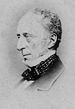 |
6 July 1846 | 21 February 1852 | Whig | Lord John Russell John Russell, 1st Earl Russell John Russell, 1st Earl Russell, KG, GCMG, PC , known as Lord John Russell before 1861, was an English Whig and Liberal politician who served twice as Prime Minister of the United Kingdom in the mid-19th century.... |
|
| Benjamin Disraeli | 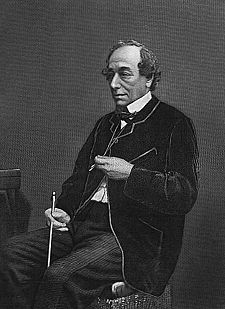 |
27 February 1852 | 17 December 1852 | Conservative | The Earl of Derby Edward Smith-Stanley, 14th Earl of Derby Edward George Geoffrey Smith-Stanley, 14th Earl of Derby, KG, PC was an English statesman, three times Prime Minister of the United Kingdom, and to date the longest serving leader of the Conservative Party. He was known before 1834 as Edward Stanley, and from 1834 to 1851 as Lord Stanley... |
|
| William Ewart Gladstone William Ewart Gladstone William Ewart Gladstone FRS FSS was a British Liberal statesman. In a career lasting over sixty years, he served as Prime Minister four separate times , more than any other person. Gladstone was also Britain's oldest Prime Minister, 84 years old when he resigned for the last time... |
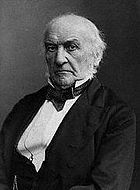 |
28 December 1852 | 28 February 1855 | Peelite Peelite The Peelites were a breakaway faction of the British Conservative Party, and existed from 1846 to 1859. They were called "Peelites" because they were initially led by Sir Robert Peel, who was the British Prime Minister and Conservative Party leader in 1846.... (Coalition) |
The Earl of Aberdeen George Hamilton-Gordon, 4th Earl of Aberdeen George Hamilton-Gordon, 4th Earl of Aberdeen KG, KT, FRS, PC , styled Lord Haddo from 1791 to 1801, was a Scottish politician, successively a Tory, Conservative and Peelite, who served as Prime Minister of the United Kingdom from 1852 until 1855.-Early life:Born in Edinburgh on 28 January 1784, he... |
|
| Sir George Cornewall Lewis, Bt | 28 February 1855 | 21 February 1858 | Whig | The Viscount Palmerston | ||
| Benjamin Disraeli | |
26 February 1858 | 11 June 1859 | Conservative | The Earl of Derby Edward Smith-Stanley, 14th Earl of Derby Edward George Geoffrey Smith-Stanley, 14th Earl of Derby, KG, PC was an English statesman, three times Prime Minister of the United Kingdom, and to date the longest serving leader of the Conservative Party. He was known before 1834 as Edward Stanley, and from 1834 to 1851 as Lord Stanley... |
|
| William Ewart Gladstone William Ewart Gladstone William Ewart Gladstone FRS FSS was a British Liberal statesman. In a career lasting over sixty years, he served as Prime Minister four separate times , more than any other person. Gladstone was also Britain's oldest Prime Minister, 84 years old when he resigned for the last time... |
|
18 June 1859 | 26 June 1866 | Liberal Liberal Party (UK) The Liberal Party was one of the two major political parties of the United Kingdom during the 19th and early 20th centuries. It was a third party of negligible importance throughout the latter half of the 20th Century, before merging with the Social Democratic Party in 1988 to form the present day... |
The Viscount Palmerston | |
| The Earl Russell John Russell, 1st Earl Russell John Russell, 1st Earl Russell, KG, GCMG, PC , known as Lord John Russell before 1861, was an English Whig and Liberal politician who served twice as Prime Minister of the United Kingdom in the mid-19th century.... |
||||||
| Benjamin Disraeli | |
6 July 1866 | 29 February 1868 | Conservative | The Earl of Derby Edward Smith-Stanley, 14th Earl of Derby Edward George Geoffrey Smith-Stanley, 14th Earl of Derby, KG, PC was an English statesman, three times Prime Minister of the United Kingdom, and to date the longest serving leader of the Conservative Party. He was known before 1834 as Edward Stanley, and from 1834 to 1851 as Lord Stanley... |
|
| George Ward Hunt George Ward Hunt George Ward Hunt was a British Conservative Party politician and statesman, Chancellor of the Exchequer and First Lord of the Admiralty in 1st and 2nd ministries of Benjamin Disraeli.-Background:... |
 |
29 February 1868 | 1 December 1868 | Conservative | Benjamin Disraeli | |
| Robert Lowe Robert Lowe, 1st Viscount Sherbrooke Robert Lowe, 1st Viscount Sherbrooke PC , British and Australian statesman, was a pivotal but often forgotten figure who shaped British politics in the latter half of the 19th century. He held office under William Ewart Gladstone as Chancellor of the Exchequer between 1868 and 1873 and as Home... |
9 December 1868 | 11 August 1873 | Liberal | William Ewart Gladstone | ||
| William Ewart Gladstone William Ewart Gladstone William Ewart Gladstone FRS FSS was a British Liberal statesman. In a career lasting over sixty years, he served as Prime Minister four separate times , more than any other person. Gladstone was also Britain's oldest Prime Minister, 84 years old when he resigned for the last time... |
|
11 August 1873 | 17 February 1874 | Liberal | ||
| Sir Stafford Northcote, Bt Stafford Northcote, 1st Earl of Iddesleigh Stafford Henry Northcote, 1st Earl of Iddesleigh GCB, PC , known as Sir Stafford Northcote, Bt, from 1851 to 1885, was a British Conservative politician... |
21 February 1874 | 21 April 1880 | Conservative | Benjamin Disraeli | ||
| William Ewart Gladstone William Ewart Gladstone William Ewart Gladstone FRS FSS was a British Liberal statesman. In a career lasting over sixty years, he served as Prime Minister four separate times , more than any other person. Gladstone was also Britain's oldest Prime Minister, 84 years old when he resigned for the last time... |
|
28 April 1880 | 16 December 1882 | Liberal | William Ewart Gladstone | |
| Hugh Childers Hugh Childers Hugh Culling Eardley Childers was a British and Australian Liberal statesman of the nineteenth century. He is perhaps best known for his reform efforts at the Admiralty and the War Office... |
16 December 1882 | 9 June 1885 | Liberal | |||
| Sir Michael Hicks Beach, Bt | 24 June 1885 | 28 January 1886 | Conservative | The Marquess of Salisbury Robert Gascoyne-Cecil, 3rd Marquess of Salisbury Robert Arthur Talbot Gascoyne-Cecil, 3rd Marquess of Salisbury, KG, GCVO, PC , styled Lord Robert Cecil before 1865 and Viscount Cranborne from June 1865 until April 1868, was a British Conservative statesman and thrice Prime Minister, serving for a total of over 13 years... |
||
| Sir William Vernon Harcourt William Vernon Harcourt (politician) Sir William George Granville Venables Vernon Harcourt was a British lawyer, journalist and Liberal statesman. He served as Member of Parliament for various constituencies and held the offices of Home Secretary and Chancellor of the Exchequer under William Ewart Gladstone before becoming Leader of... |
 |
6 February 1886 | 20 July 1886 | Liberal | William Ewart Gladstone William Ewart Gladstone William Ewart Gladstone FRS FSS was a British Liberal statesman. In a career lasting over sixty years, he served as Prime Minister four separate times , more than any other person. Gladstone was also Britain's oldest Prime Minister, 84 years old when he resigned for the last time... |
|
| Lord Randolph Churchill Lord Randolph Churchill Lord Randolph Henry Spencer-Churchill MP was a British statesman. He was the third son of the 7th Duke of Marlborough and his wife Lady Frances Anne Emily Vane , daughter of the 3rd Marquess of Londonderry... |
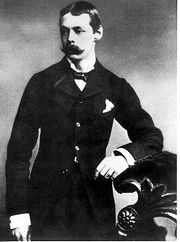 |
3 August 1886 | 22 December 1886 | Conservative | The Marquess of Salisbury Robert Gascoyne-Cecil, 3rd Marquess of Salisbury Robert Arthur Talbot Gascoyne-Cecil, 3rd Marquess of Salisbury, KG, GCVO, PC , styled Lord Robert Cecil before 1865 and Viscount Cranborne from June 1865 until April 1868, was a British Conservative statesman and thrice Prime Minister, serving for a total of over 13 years... |
|
| George Goschen | 14 January 1887 | 11 August 1892 | Liberal Unionist Liberal Unionist Party The Liberal Unionist Party was a British political party that was formed in 1886 by a faction that broke away from the Liberal Party. Led by Lord Hartington and Joseph Chamberlain, the party formed a political alliance with the Conservative Party in opposition to Irish Home Rule... |
|||
| Sir William Vernon Harcourt William Vernon Harcourt (politician) Sir William George Granville Venables Vernon Harcourt was a British lawyer, journalist and Liberal statesman. He served as Member of Parliament for various constituencies and held the offices of Home Secretary and Chancellor of the Exchequer under William Ewart Gladstone before becoming Leader of... |
|
18 August 1892 | 21 June 1895 | Liberal | William Ewart Gladstone William Ewart Gladstone William Ewart Gladstone FRS FSS was a British Liberal statesman. In a career lasting over sixty years, he served as Prime Minister four separate times , more than any other person. Gladstone was also Britain's oldest Prime Minister, 84 years old when he resigned for the last time... |
|
| The Earl of Rosebery Archibald Primrose, 5th Earl of Rosebery Archibald Philip Primrose, 5th Earl of Rosebery, KG, PC was a British Liberal statesman and Prime Minister. Between the death of his father, in 1851, and the death of his grandfather, the 4th Earl, in 1868, he was known by the courtesy title of Lord Dalmeny.Rosebery was a Liberal Imperialist who... |
||||||
| Sir Michael Hicks Beach, Bt | 29 June 1895 | 11 August 1902 | Conservative | The Marquess of Salisbury Robert Gascoyne-Cecil, 3rd Marquess of Salisbury Robert Arthur Talbot Gascoyne-Cecil, 3rd Marquess of Salisbury, KG, GCVO, PC , styled Lord Robert Cecil before 1865 and Viscount Cranborne from June 1865 until April 1868, was a British Conservative statesman and thrice Prime Minister, serving for a total of over 13 years... |
||
Chancellors of the Exchequer of the United Kingdom, 1902 to date
| Name | Portrait | Took office | Left office | Political party | Prime Minister | |
|---|---|---|---|---|---|---|
| Charles Ritchie | 11 August 1902 | 9 October 1903 | Conservative Conservative Party (UK) The Conservative Party, formally the Conservative and Unionist Party, is a centre-right political party in the United Kingdom that adheres to the philosophies of conservatism and British unionism. It is the largest political party in the UK, and is currently the largest single party in the House... |
Arthur Balfour Arthur Balfour Arthur James Balfour, 1st Earl of Balfour, KG, OM, PC, DL was a British Conservative politician and statesman... |
||
| Austen Chamberlain Austen Chamberlain Sir Joseph Austen Chamberlain, KG was a British statesman, recipient of the Nobel Peace Prize and half-brother of Neville Chamberlain.- Early life and career :... |
9 October 1903 | 4 December 1905 | Liberal Unionist Liberal Unionist Party The Liberal Unionist Party was a British political party that was formed in 1886 by a faction that broke away from the Liberal Party. Led by Lord Hartington and Joseph Chamberlain, the party formed a political alliance with the Conservative Party in opposition to Irish Home Rule... |
|||
| H. H. Asquith H. H. Asquith Herbert Henry Asquith, 1st Earl of Oxford and Asquith, KG, PC, KC served as the Liberal Prime Minister of the United Kingdom from 1908 to 1916... |
 |
10 December 1905 | 12 April 1908 | Liberal Liberal Party (UK) The Liberal Party was one of the two major political parties of the United Kingdom during the 19th and early 20th centuries. It was a third party of negligible importance throughout the latter half of the 20th Century, before merging with the Social Democratic Party in 1988 to form the present day... |
Henry Campbell-Bannerman Henry Campbell-Bannerman Sir Henry Campbell-Bannerman GCB was a British Liberal Party politician who served as Prime Minister of the United Kingdom from 1905 to 1908 and Leader of the Liberal Party from 1899 to 1908. He also served as Secretary of State for War twice, in the Cabinets of Gladstone and Rosebery... |
|
| David Lloyd George David Lloyd George David Lloyd George, 1st Earl Lloyd-George of Dwyfor OM, PC was a British Liberal politician and statesman... |
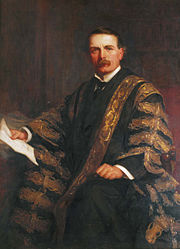 |
12 April 1908 | 25 May 1915 | Liberal | H. H. Asquith H. H. Asquith Herbert Henry Asquith, 1st Earl of Oxford and Asquith, KG, PC, KC served as the Liberal Prime Minister of the United Kingdom from 1908 to 1916... |
|
| Reginald McKenna Reginald McKenna Reginald McKenna was a British banker and Liberal politician. He notably served as Home Secretary and Chancellor of the Exchequer during the premiership of H. H. Asquith.-Background and education:... |
25 May 1915 | 10 December 1916 | Liberal (Coalition Coalition government 1915–1916 Asquith's British coalition government of 1915-1916 was formed in the aftermath of the Gallipoli disaster, by bringing in the Conservatives to shore up the government. The Conservatives were not terribly pleased with the offices they received in this new government and Tory leader Andrew Bonar Law... ) |
|||
| Andrew Bonar Law |  |
10 December 1916 | 10 January 1919 | Conservative Conservative Party (UK) The Conservative Party, formally the Conservative and Unionist Party, is a centre-right political party in the United Kingdom that adheres to the philosophies of conservatism and British unionism. It is the largest political party in the UK, and is currently the largest single party in the House... (Coalition) |
David Lloyd George David Lloyd George David Lloyd George, 1st Earl Lloyd-George of Dwyfor OM, PC was a British Liberal politician and statesman... |
|
| Austen Chamberlain Austen Chamberlain Sir Joseph Austen Chamberlain, KG was a British statesman, recipient of the Nobel Peace Prize and half-brother of Neville Chamberlain.- Early life and career :... |
10 January 1919 | 1 April 1921 | ||||
| Sir Robert Horne Robert Horne, 1st Viscount Horne of Slamannan Robert Stevenson Horne, 1st Viscount Horne of Slamannan GBE, PC, KC was a Scottish businessman, advocate and Unionist politician. He served under David Lloyd George as Minister of Labour between 1919 and 1920, as President of the Board of Trade between 1920 and 1921 and as Chancellor of the... |
1 April 1921 | 19 October 1922 | ||||
| Stanley Baldwin Stanley Baldwin Stanley Baldwin, 1st Earl Baldwin of Bewdley, KG, PC was a British Conservative politician, who dominated the government in his country between the two world wars... |
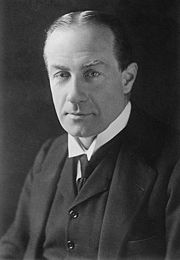 |
27 October 1922 | 27 August 1923 | Conservative Conservative Party (UK) The Conservative Party, formally the Conservative and Unionist Party, is a centre-right political party in the United Kingdom that adheres to the philosophies of conservatism and British unionism. It is the largest political party in the UK, and is currently the largest single party in the House... |
Andrew Bonar Law | |
| Stanley Baldwin | ||||||
| Neville Chamberlain Neville Chamberlain Arthur Neville Chamberlain FRS was a British Conservative politician who served as Prime Minister of the United Kingdom from May 1937 to May 1940. Chamberlain is best known for his appeasement foreign policy, and in particular for his signing of the Munich Agreement in 1938, conceding the... |
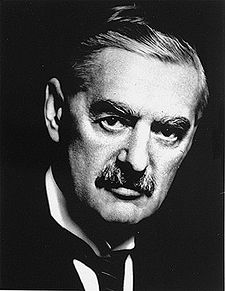 |
27 August 1923 | 22 January 1924 | Conservative | ||
| Philip Snowden Philip Snowden, 1st Viscount Snowden Philip Snowden, 1st Viscount Snowden PC was a British politician and the first Labour Chancellor of the Exchequer, a position he held in 1924 and again between 1929 and 1931.-Early life: 1864–1906:... |
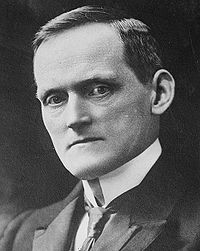 |
22 January 1924 | 3 November 1924 | Labour Labour Party (UK) The Labour Party is a centre-left democratic socialist party in the United Kingdom. It surpassed the Liberal Party in general elections during the early 1920s, forming minority governments under Ramsay MacDonald in 1924 and 1929-1931. The party was in a wartime coalition from 1940 to 1945, after... |
Ramsay MacDonald Ramsay MacDonald James Ramsay MacDonald, PC, FRS was a British politician who was the first ever Labour Prime Minister, leading a minority government for two terms.... |
|
| Winston Churchill Winston Churchill Sir Winston Leonard Spencer-Churchill, was a predominantly Conservative British politician and statesman known for his leadership of the United Kingdom during the Second World War. He is widely regarded as one of the greatest wartime leaders of the century and served as Prime Minister twice... |
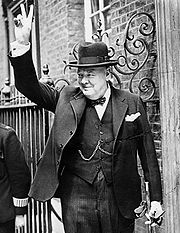 |
6 November 1924 | 4 June 1929 | Conservative Conservative Party (UK) The Conservative Party, formally the Conservative and Unionist Party, is a centre-right political party in the United Kingdom that adheres to the philosophies of conservatism and British unionism. It is the largest political party in the UK, and is currently the largest single party in the House... |
Stanley Baldwin Stanley Baldwin Stanley Baldwin, 1st Earl Baldwin of Bewdley, KG, PC was a British Conservative politician, who dominated the government in his country between the two world wars... |
|
| Philip Snowden Philip Snowden, 1st Viscount Snowden Philip Snowden, 1st Viscount Snowden PC was a British politician and the first Labour Chancellor of the Exchequer, a position he held in 1924 and again between 1929 and 1931.-Early life: 1864–1906:... |
|
7 June 1929 | 24 August 1931 | Labour Labour Party (UK) The Labour Party is a centre-left democratic socialist party in the United Kingdom. It surpassed the Liberal Party in general elections during the early 1920s, forming minority governments under Ramsay MacDonald in 1924 and 1929-1931. The party was in a wartime coalition from 1940 to 1945, after... |
Ramsay MacDonald Ramsay MacDonald James Ramsay MacDonald, PC, FRS was a British politician who was the first ever Labour Prime Minister, leading a minority government for two terms.... |
|
| 24 August 1931 | 5 November 1931 | National Labour (National Government) |
||||
| Neville Chamberlain Neville Chamberlain Arthur Neville Chamberlain FRS was a British Conservative politician who served as Prime Minister of the United Kingdom from May 1937 to May 1940. Chamberlain is best known for his appeasement foreign policy, and in particular for his signing of the Munich Agreement in 1938, conceding the... |
|
5 November 1931 | 28 May 1937 | Conservative Conservative Party (UK) The Conservative Party, formally the Conservative and Unionist Party, is a centre-right political party in the United Kingdom that adheres to the philosophies of conservatism and British unionism. It is the largest political party in the UK, and is currently the largest single party in the House... (National Government) |
||
| Stanley Baldwin Stanley Baldwin Stanley Baldwin, 1st Earl Baldwin of Bewdley, KG, PC was a British Conservative politician, who dominated the government in his country between the two world wars... |
||||||
| Sir John Simon John Simon, 1st Viscount Simon John Allsebrook Simon, 1st Viscount Simon GCSI GCVO OBE PC was a British politician who held senior Cabinet posts from the beginning of the First World War to the end of the Second. He is one of only three people to have served as Home Secretary, Foreign Secretary and Chancellor of the Exchequer,... |
28 May 1937 | 12 May 1940 | Liberal National National Liberal Party (UK, 1931) The National Liberal Party, known until 1948 as the Liberal National Party, was a liberal political party in the United Kingdom from 1931 to 1968... (National Government; War Government) |
Neville Chamberlain Neville Chamberlain Arthur Neville Chamberlain FRS was a British Conservative politician who served as Prime Minister of the United Kingdom from May 1937 to May 1940. Chamberlain is best known for his appeasement foreign policy, and in particular for his signing of the Munich Agreement in 1938, conceding the... |
||
| Sir Kingsley Wood Kingsley Wood Sir Howard Kingsley Wood was an English Conservative politician. The son of a Wesleyan Methodist minister, he qualified as a solicitor, and successfully specialised in industrial insurance... |
12 May 1940 | 21 September 1943 (died) | Conservative Conservative Party (UK) The Conservative Party, formally the Conservative and Unionist Party, is a centre-right political party in the United Kingdom that adheres to the philosophies of conservatism and British unionism. It is the largest political party in the UK, and is currently the largest single party in the House... (Coalition) |
Winston Churchill Winston Churchill Sir Winston Leonard Spencer-Churchill, was a predominantly Conservative British politician and statesman known for his leadership of the United Kingdom during the Second World War. He is widely regarded as one of the greatest wartime leaders of the century and served as Prime Minister twice... |
||
| Sir John Anderson John Anderson, 1st Viscount Waverley John Anderson, 1st Viscount Waverley, GCB, OM, GCSI, GCIE, PC, PC was a British civil servant then politician who served as a minister under Neville Chamberlain and Winston Churchill as Home Secretary, Lord President of the Council and Chancellor of the Exchequer... |
24 September 1943 | 26 July 1945 | National Independent (Coalition) |
|||
| Hugh Dalton Hugh Dalton Edward Hugh John Neale Dalton, Baron Dalton PC was a British Labour Party politician who served as Chancellor of the Exchequer from 1945 to 1947, when he was implicated in a political scandal involving budget leaks.... |
 |
27 July 1945 | 13 November 1947 | Labour Labour Party (UK) The Labour Party is a centre-left democratic socialist party in the United Kingdom. It surpassed the Liberal Party in general elections during the early 1920s, forming minority governments under Ramsay MacDonald in 1924 and 1929-1931. The party was in a wartime coalition from 1940 to 1945, after... |
Clement Attlee Clement Attlee Clement Richard Attlee, 1st Earl Attlee, KG, OM, CH, PC, FRS was a British Labour politician who served as the Prime Minister of the United Kingdom from 1945 to 1951, and as the Leader of the Labour Party from 1935 to 1955... |
|
| Sir Stafford Cripps Stafford Cripps Sir Richard Stafford Cripps was a British Labour politician of the first half of the 20th century. During World War II he served in a number of positions in the wartime coalition, including Ambassador to the Soviet Union and Minister of Aircraft Production... |
 |
13 November 1947 | 19 October 1950 | Labour | ||
| Hugh Gaitskell Hugh Gaitskell Hugh Todd Naylor Gaitskell CBE was a British Labour politician, who held Cabinet office in Clement Attlee's governments, and was the Leader of the Labour Party and Leader of the Opposition from 1955, until his death in 1963.-Early life:He was born in Kensington, London, the third and youngest... |
19 October 1950 | 26 October 1951 | Labour | |||
| R. A. Butler Rab Butler Richard Austen Butler, Baron Butler of Saffron Walden, KG CH DL PC , who invariably signed his name R. A. Butler and was familiarly known as Rab, was a British Conservative politician... |
26 October 1951 | 20 December 1955 | Conservative Conservative Party (UK) The Conservative Party, formally the Conservative and Unionist Party, is a centre-right political party in the United Kingdom that adheres to the philosophies of conservatism and British unionism. It is the largest political party in the UK, and is currently the largest single party in the House... |
Sir Winston Churchill Winston Churchill Sir Winston Leonard Spencer-Churchill, was a predominantly Conservative British politician and statesman known for his leadership of the United Kingdom during the Second World War. He is widely regarded as one of the greatest wartime leaders of the century and served as Prime Minister twice... |
||
| Harold Macmillan Harold Macmillan Maurice Harold Macmillan, 1st Earl of Stockton, OM, PC was Conservative Prime Minister of the United Kingdom from 10 January 1957 to 18 October 1963.... |
 |
20 December 1955 | 13 January 1957 | Conservative | Sir Anthony Eden Anthony Eden Robert Anthony Eden, 1st Earl of Avon, KG, MC, PC was a British Conservative politician, who was Prime Minister from 1955 to 1957... |
|
| Peter Thorneycroft | 13 January 1957 | 6 January 1958 | Conservative | Harold Macmillan Harold Macmillan Maurice Harold Macmillan, 1st Earl of Stockton, OM, PC was Conservative Prime Minister of the United Kingdom from 10 January 1957 to 18 October 1963.... |
||
| Derick Heathcoat-Amory Derick Heathcoat-Amory, 1st Viscount Amory Derick Heathcoat-Amory, 1st Viscount Amory was a British Conservative politician. He served as Chancellor of the Exchequer from 1958 to 1960 and as Chancellor of the University of Exeter from 1972 to 1981.-Background and education:... |
6 January 1958 | 27 July 1960 | Conservative | |||
| Selwyn Lloyd Selwyn Lloyd John Selwyn Brooke Lloyd, Baron Selwyn-Lloyd CH PC CBE TD , known for most of his career as Selwyn Lloyd, was a British Conservative Party politician who served as Foreign Secretary from 1955 to 1960, then as Chancellor of the Exchequer until 1962... |
27 July 1960 | 13 July 1962 Night of the Long Knives (1962) The epithet Night of the Long Knives is given to July 13, 1962, when the British Prime Minister Harold Macmillan sacked the following members of his Cabinet:*Lord Kilmuir — Lord Chancellor*Selwyn Lloyd — Chancellor of the Exchequer... |
Conservative | |||
| Reginald Maudling Reginald Maudling Reginald Maudling was a British politician who held several Cabinet posts, including Chancellor of the Exchequer. He had been spoken of as a prospective Conservative leader since 1955, and was twice seriously considered for the post; he was Edward Heath's chief rival in 1965... |
|
13 July 1962 Night of the Long Knives (1962) The epithet Night of the Long Knives is given to July 13, 1962, when the British Prime Minister Harold Macmillan sacked the following members of his Cabinet:*Lord Kilmuir — Lord Chancellor*Selwyn Lloyd — Chancellor of the Exchequer... |
16 October 1964 | Conservative | ||
| Sir Alec Douglas-Home Alec Douglas-Home Alexander Frederick Douglas-Home, Baron Home of the Hirsel, KT, PC , known as The Earl of Home from 1951 to 1963 and as Sir Alec Douglas-Home from 1963 to 1974, was a British Conservative politician who served as Prime Minister of the United Kingdom from October 1963 to October 1964.He is the last... |
||||||
| James Callaghan James Callaghan Leonard James Callaghan, Baron Callaghan of Cardiff, KG, PC , was a British Labour politician, who was Prime Minister of the United Kingdom from 1976 to 1979 and Leader of the Labour Party from 1976 to 1980... |
 |
16 October 1964 | 30 November 1967 | Labour Labour Party (UK) The Labour Party is a centre-left democratic socialist party in the United Kingdom. It surpassed the Liberal Party in general elections during the early 1920s, forming minority governments under Ramsay MacDonald in 1924 and 1929-1931. The party was in a wartime coalition from 1940 to 1945, after... |
Harold Wilson Harold Wilson James Harold Wilson, Baron Wilson of Rievaulx, KG, OBE, FRS, FSS, PC was a British Labour Member of Parliament, Leader of the Labour Party. He was twice Prime Minister of the United Kingdom during the 1960s and 1970s, winning four general elections, including a minority government after the... |
|
| Roy Jenkins Roy Jenkins Roy Harris Jenkins, Baron Jenkins of Hillhead OM, PC was a British politician.The son of a Welsh coal miner who later became a union official and Labour MP, Roy Jenkins served with distinction in World War II. Elected to Parliament as a Labour member in 1948, he served in several major posts in... |
30 November 1967 | 19 June 1970 | Labour | |||
| Iain Macleod Iain Macleod Iain Norman Macleod was a British Conservative Party politician and government minister.-Early life:... |
|
20 June 1970 | 20 July 1970 (died) | Conservative Conservative Party (UK) The Conservative Party, formally the Conservative and Unionist Party, is a centre-right political party in the United Kingdom that adheres to the philosophies of conservatism and British unionism. It is the largest political party in the UK, and is currently the largest single party in the House... |
Edward Heath Edward Heath Sir Edward Richard George "Ted" Heath, KG, MBE, PC was a British Conservative politician who served as Prime Minister of the United Kingdom and as Leader of the Conservative Party .... |
|
| Anthony Barber Anthony Barber, Baron Barber Anthony Perrinott Lysberg Barber, Baron Barber, PC, DL was a British Conservative politician who served as a member of both the House of Commons and the House of Lords.... |
|
25 July 1970 | 28 February 1974 | Conservative | ||
| Denis Healey Denis Healey Denis Winston Healey, Baron Healey CH, MBE, PC is a British Labour politician, who served as Secretary of State for Defence from 1964 to 1970 and Chancellor of the Exchequer from 1974 to 1979.-Early life:... |
1 March 1974 | 4 May 1979 | Labour Labour Party (UK) The Labour Party is a centre-left democratic socialist party in the United Kingdom. It surpassed the Liberal Party in general elections during the early 1920s, forming minority governments under Ramsay MacDonald in 1924 and 1929-1931. The party was in a wartime coalition from 1940 to 1945, after... |
Harold Wilson Harold Wilson James Harold Wilson, Baron Wilson of Rievaulx, KG, OBE, FRS, FSS, PC was a British Labour Member of Parliament, Leader of the Labour Party. He was twice Prime Minister of the United Kingdom during the 1960s and 1970s, winning four general elections, including a minority government after the... |
||
| James Callaghan James Callaghan Leonard James Callaghan, Baron Callaghan of Cardiff, KG, PC , was a British Labour politician, who was Prime Minister of the United Kingdom from 1976 to 1979 and Leader of the Labour Party from 1976 to 1980... |
||||||
| Sir Geoffrey Howe Geoffrey Howe Richard Edward Geoffrey Howe, Baron Howe of Aberavon, CH, QC, PC is a former British Conservative politician. He was Margaret Thatcher's longest-serving Cabinet minister, successively holding the posts of Chancellor of the Exchequer, Foreign Secretary, and finally Leader of the House of Commons... |
4 May 1979 | 11 June 1983 | Conservative Conservative Party (UK) The Conservative Party, formally the Conservative and Unionist Party, is a centre-right political party in the United Kingdom that adheres to the philosophies of conservatism and British unionism. It is the largest political party in the UK, and is currently the largest single party in the House... |
Margaret Thatcher Margaret Thatcher Margaret Hilda Thatcher, Baroness Thatcher, was Prime Minister of the United Kingdom from 1979 to 1990... |
||
| Nigel Lawson Nigel Lawson Nigel Lawson, Baron Lawson of Blaby, PC , is a British Conservative politician and journalist. He was a Member of Parliament representing the constituency of Blaby from 1974–92, and served as the Chancellor of the Exchequer in the government of Margaret Thatcher from June 1983 to October 1989... |
11 June 1983 | 26 October 1989 | Conservative | |||
| John Major John Major Sir John Major, is a British Conservative politician, who served as Prime Minister of the United Kingdom and Leader of the Conservative Party from 1990–1997... |
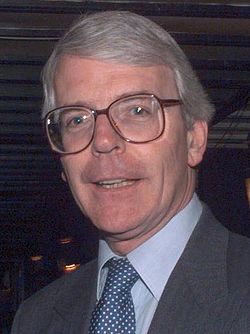 |
26 October 1989 | 28 November 1990 | Conservative | ||
| Norman Lamont | |
28 November 1990 | 27 May 1993 | Conservative | John Major John Major Sir John Major, is a British Conservative politician, who served as Prime Minister of the United Kingdom and Leader of the Conservative Party from 1990–1997... |
|
| Kenneth Clarke Kenneth Clarke Kenneth Harry "Ken" Clarke, QC, MP is a British Conservative politician, currently Member of Parliament for Rushcliffe, Lord Chancellor and Secretary of State for Justice. He was first elected to Parliament in 1970; and appointed a minister in Edward Heath's government, in 1972, and is one of... |
 |
27 May 1993 | 2 May 1997 | Conservative | ||
| Gordon Brown Gordon Brown James Gordon Brown is a British Labour Party politician who was the Prime Minister of the United Kingdom and Leader of the Labour Party from 2007 until 2010. He previously served as Chancellor of the Exchequer in the Labour Government from 1997 to 2007... |
2 May 1997 | 27 June 2007 | Labour Labour Party (UK) The Labour Party is a centre-left democratic socialist party in the United Kingdom. It surpassed the Liberal Party in general elections during the early 1920s, forming minority governments under Ramsay MacDonald in 1924 and 1929-1931. The party was in a wartime coalition from 1940 to 1945, after... |
Tony Blair Tony Blair Anthony Charles Lynton Blair is a former British Labour Party politician who served as the Prime Minister of the United Kingdom from 2 May 1997 to 27 June 2007. He was the Member of Parliament for Sedgefield from 1983 to 2007 and Leader of the Labour Party from 1994 to 2007... |
||
| Alistair Darling Alistair Darling Alistair Maclean Darling is a Scottish Labour Party politician who has been a Member of Parliament since 1987, currently for Edinburgh South West. He served as the Chancellor of the Exchequer from 2007 to 2010... |
 |
28 June 2007 | 11 May 2010 | Labour | Gordon Brown Gordon Brown James Gordon Brown is a British Labour Party politician who was the Prime Minister of the United Kingdom and Leader of the Labour Party from 2007 until 2010. He previously served as Chancellor of the Exchequer in the Labour Government from 1997 to 2007... |
|
| George Osborne George Osborne George Gideon Oliver Osborne, MP is a British Conservative politician. He is the Chancellor of the Exchequer of the United Kingdom, a role to which he was appointed in May 2010, and has been the Member of Parliament for Tatton since 2001.Osborne is part of the old Anglo-Irish aristocracy, known in... |
 |
11 May 2010 | incumbent | Conservative (Coalition Cameron Ministry David Cameron is Prime Minister of the United Kingdom, after being invited by Queen Elizabeth II to form a new government after the resignation as Prime Minister of Gordon Brown on 11 May 2010. Leading a coalition government formed by the Conservative Party and the Liberal Democrats, the coalition... ) |
David Cameron David Cameron David William Donald Cameron is the current Prime Minister of the United Kingdom, First Lord of the Treasury, Minister for the Civil Service and Leader of the Conservative Party. Cameron represents Witney as its Member of Parliament .... |
|