


Reform Act 1832

Encyclopedia
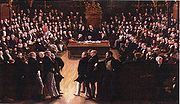
Act of Parliament
An Act of Parliament is a statute enacted as primary legislation by a national or sub-national parliament. In the Republic of Ireland the term Act of the Oireachtas is used, and in the United States the term Act of Congress is used.In Commonwealth countries, the term is used both in a narrow...
(2 & 3 Will. IV)
that introduced wide-ranging changes to the electoral system of England
England
England is a country that is part of the United Kingdom. It shares land borders with Scotland to the north and Wales to the west; the Irish Sea is to the north west, the Celtic Sea to the south west, with the North Sea to the east and the English Channel to the south separating it from continental...
and Wales
Wales
Wales is a country that is part of the United Kingdom and the island of Great Britain, bordered by England to its east and the Atlantic Ocean and Irish Sea to its west. It has a population of three million, and a total area of 20,779 km²...
. According to its preamble, the act was designed to "take effectual Measures for correcting divers Abuses that have long prevailed in the Choice of Members to serve in the Commons House of Parliament
British House of Commons
The House of Commons is the lower house of the Parliament of the United Kingdom, which also comprises the Sovereign and the House of Lords . Both Commons and Lords meet in the Palace of Westminster. The Commons is a democratically elected body, consisting of 650 members , who are known as Members...
."
Calls for reform had been mooted long before 1832, but perennially without success. The Act which finally succeeded was proposed by the Whigs
British Whig Party
The Whigs were a party in the Parliament of England, Parliament of Great Britain, and Parliament of the United Kingdom, who contested power with the rival Tories from the 1680s to the 1850s. The Whigs' origin lay in constitutional monarchism and opposition to absolute rule...
led by the Prime Minister
Prime Minister of the United Kingdom
The Prime Minister of the United Kingdom of Great Britain and Northern Ireland is the Head of Her Majesty's Government in the United Kingdom. The Prime Minister and Cabinet are collectively accountable for their policies and actions to the Sovereign, to Parliament, to their political party and...
Lord Grey
Charles Grey, 2nd Earl Grey
Charles Grey, 2nd Earl Grey, KG, PC , known as Viscount Howick between 1806 and 1807, was Prime Minister of the United Kingdom of Great Britain and Ireland from 22 November 1830 to 16 July 1834. A member of the Whig Party, he backed significant reform of the British government and was among the...
. It met with significant opposition from the Pittite factions in Parliament that had governed the country for so long (opposition was especially pronounced in the House of Lords
House of Lords
The House of Lords is the upper house of the Parliament of the United Kingdom. Like the House of Commons, it meets in the Palace of Westminster....
). Nevertheless, as a result of public pressure, the bill was eventually passed. The Act granted seats in the House of Commons to large cities that had sprung up during the Industrial Revolution
Industrial Revolution
The Industrial Revolution was a period from the 18th to the 19th century where major changes in agriculture, manufacturing, mining, transportation, and technology had a profound effect on the social, economic and cultural conditions of the times...
, and took away seats from the "rotten borough
Rotten borough
A "rotten", "decayed" or pocket borough was a parliamentary borough or constituency in the United Kingdom that had a very small electorate and could be used by a patron to gain undue and unrepresentative influence within Parliament....
s"—those with very small populations. The Act also increased the number of individuals entitled to vote
Suffrage
Suffrage, political franchise, or simply the franchise, distinct from mere voting rights, is the civil right to vote gained through the democratic process...
, increasing the size of the electorate from about 400,000 to 650,000, and allowing a total of one out of six adult males to vote, in a population of some 14 million.
The full title is An Act to amend the representation of the people in England and Wales. Its formal short title and citation is the Representation of the People Act 1832 (2 & 3 Wm. IV, c. 45). The Act only applied in England and Wales; separate reform bills were passed in the same year for Scotland
Scottish Reform Act 1832
The Scottish Reform Act 1832 was an Act of Parliament that introduced wide-ranging changes to the election laws of Scotland. The act was passed at approximately the same time as the Reform Act 1832, which applied to England and Wales. The chief architects of the act were Francis Jeffrey and Henry...
and Ireland
Irish Reform Act 1832
The Irish Reform Act 1832 was an Act of Parliament that introduced wide-ranging changes to the election laws of Ireland. The act was passed at approximately the same time as the Reform Act 1832, which applied to England and Wales...
. Other reform measures were passed later during the 19th century; as a result, the Reform Act 1832 is sometimes called the First, or Great Reform Act.
Composition

Act of Union 1800
The Acts of Union 1800 describe two complementary Acts, namely:* the Union with Ireland Act 1800 , an Act of the Parliament of Great Britain, and...
, sometimes referred to as the Act of Union 1801, the unreformed House of Commons was composed of 658 members, of whom 513 represented England and Wales. There were two types of constituencies: counties and boroughs. County members were supposed to represent landholders, while borough members were supposed to represent the mercantile and trading interests of the kingdom. Counties were historical national subdivisions established between the 8th and 16th centuries. They were not merely parliamentary constituencies; many components of the government (including court
Court
A court is a form of tribunal, often a governmental institution, with the authority to adjudicate legal disputes between parties and carry out the administration of justice in civil, criminal, and administrative matters in accordance with the rule of law...
s and the militia
Militia
The term militia is commonly used today to refer to a military force composed of ordinary citizens to provide defense, emergency law enforcement, or paramilitary service, in times of emergency without being paid a regular salary or committed to a fixed term of service. It is a polyseme with...
) were organized along county lines. The members of Parliament chosen by the counties were known as Knights of the Shire
Knights of the Shire
From the creation of the Parliament of England in mediaeval times until 1826 each county of England and Wales sent two Knights of the Shire as members of Parliament to represent the interests of the county, when the number of knights from Yorkshire was increased to four...
. In Wales each county elected one member of Parliament whilst in England each county elected two members until 1826 when Yorkshire's representation was increased to four following the disenfranchisement of the Cornish borough of Grampound
Grampound (UK Parliament constituency)
Grampound in Cornwall, was a borough constituency of the House of Commons of the Parliament of England, then of the Parliament of Great Britain from 1707 to 1800 and of the Parliament of the United Kingdom from 1801 to 1821. It was represented by two Members of Parliament.-History:Grampound's...
.
Parliamentary boroughs in England ranged in size from small hamlets to large cities. Their disproportionality was due largely to the haphazard manner in which they were chosen. The earliest boroughs were chosen in the Middle Ages by county sheriffs at a time when even a village might be deemed a borough. Many of these early boroughs, if their representation continued (which was not always the case), failed to thrive whilst more substantial settlements, such as Winchelsea
Winchelsea (UK Parliament constituency)
Winchelsea was a parliamentary constituency in Sussex, which elected two Members of Parliament to the House of Commons from 1366 until 1832, when it was abolished by the Great Reform Act.-Boundaries:...
and Dunwich
Dunwich (UK Parliament constituency)
Dunwich was a parliamentary borough in Suffolk, one of the most notorious of all the rotten boroughs. It elected two Members of Parliament to the House of Commons from 1298 until 1832, when the constituency was abolished by the Great Reform Act....
, went into decline. In later centuries the reigning monarch decided which settlements to enfranchise. The monarchs seem mostly to have done so capriciously, however, often with little regard to the merits of the place they enfranchised. Of the 70 English boroughs that the Tudor monarchs enfranchised, 31 were later disenfranchised. Finally the parliamentarians of the 17th century compounded the illogicality of the system by re-enfranchising fifteen boroughs whose representation had been lapsed for centuries, seven of which were later disenfranchised by the Reform Act. After Newark
Newark (UK Parliament constituency)
Newark is a county constituency represented in the House of Commons of the Parliament of the United Kingdom. Since 1885, it has elected one Member of Parliament by the first past the post system of election....
was enfranchised in 1661 no further boroughs were enfranchised, and the illogicality of the system was all but set in stone until the Reform Act. The greater proportion of boroughs in England elected two members of Parliament; five boroughs however elected only one member, and the City of London
City of London
The City of London is a small area within Greater London, England. It is the historic core of London around which the modern conurbation grew and has held city status since time immemorial. The City’s boundaries have remained almost unchanged since the Middle Ages, and it is now only a tiny part of...
and the joint borough of Weymouth and Melcombe Regis
Weymouth and Melcombe Regis (UK Parliament constituency)
Weymouth and Melcombe Regis was a parliamentary borough in Dorset represented in the English House of Commons, later in that of Great Britain, and finally in the Parliament of the United Kingdom. It was formed by an Act of Parliament of 1570 which amalgamated the existing boroughs of Weymouth and...
each elected four members. The Welsh boroughs each returned a single member.
The franchise
Statutes passed in 1430 and 1432, during the reign of Henry VIHenry VI of England
Henry VI was King of England from 1422 to 1461 and again from 1470 to 1471, and disputed King of France from 1422 to 1453. Until 1437, his realm was governed by regents. Contemporaneous accounts described him as peaceful and pious, not suited for the violent dynastic civil wars, known as the Wars...
, standardised property qualifications for county voters. Under these acts, all (male) owners of freehold property
Fee simple
In English law, a fee simple is an estate in land, a form of freehold ownership. It is the most common way that real estate is owned in common law countries, and is ordinarily the most complete ownership interest that can be had in real property short of allodial title, which is often reserved...
or land worth at least forty shillings in a particular county were entitled to vote in that county. This requirement, known as the forty shilling freehold
Forty Shilling Freeholders
Forty shilling freeholders were a group of landowners who had the Parliamentary franchise to vote in county constituencies in various parts of the British Isles. In England it was the only such qualification from 1430 until 1832...
, was never adjusted for inflation
Inflation
In economics, inflation is a rise in the general level of prices of goods and services in an economy over a period of time.When the general price level rises, each unit of currency buys fewer goods and services. Consequently, inflation also reflects an erosion in the purchasing power of money – a...
; thus, the amount of land that it was necessary for one to own in order to vote was gradually diminished over time. Nevertheless, the vast majority of individuals were unable to vote; the size of the English county electorate in 1831 has been estimated at only 200,000. Furthermore, the sizes of the individual county constituencies varied significantly. The smallest counties, Rutland
Rutland
Rutland is a landlocked county in central England, bounded on the west and north by Leicestershire, northeast by Lincolnshire and southeast by Peterborough and Northamptonshire....
and Anglesey
Anglesey
Anglesey , also known by its Welsh name Ynys Môn , is an island and, as Isle of Anglesey, a county off the north west coast of Wales...
, had fewer than a thousand voters each, while the largest county, Yorkshire
Yorkshire
Yorkshire is a historic county of northern England and the largest in the United Kingdom. Because of its great size in comparison to other English counties, functions have been increasingly undertaken over time by its subdivisions, which have also been subject to periodic reform...
, had more than twenty thousand. Those who owned property in multiple constituencies could vote multiple times
Plural voting
Plural voting is the practice whereby one person might be able to vote multiple times in an election. It is not to be confused with a plurality voting system which does not necessarily involve plural voting...
; there was normally no requirement for an individual to actually inhabit a constituency in order to vote there.
In boroughs the franchise was far more varied. There were broadly six types of parliamentary boroughs as defined by their franchise:
- boroughs in which freemen were electors;
- boroughs in which the franchise was restricted to those paying scot and lotScot and lotScot and lot is a phrase common in the records of English medieval boroughs, applied to householders who were assessed for a tax paid to the borough for local or national purposes.They were usually members of a merchant guild.Before the Reform Act 1832, those who paid scot and bore...
, a form of municipal taxation; - boroughs in which only the ownership of a burgageBurgageBurgage is a medieval land term used in England and Scotland, well established by the 13th century. A burgage was a town rental property , owned by a king or lord. The property usually, and distinctly, consisted of a house on a long and narrow plot of land, with the narrow end facing the street...
property qualified a person to vote; - boroughs in which only members of the corporation were electors (such boroughs were perhaps in every case "pocket boroughs," because council members were usually "in the pocket" of a wealthy patron);
- boroughs in which male householders were electors (these were usually known as "potwalloperPotwalloperA potwalloper is an archaic term referring to a borough constituency returning members to the House of Commons of England before 1707, the House of Commons of Great Britain and the Irish House of Commons before 1801, and the House of Commons of the United Kingdom until 1832, when the Reform Act...
boroughs," as the usual definition of a householder was a person able to boil a pot on their own hearth); - boroughs in which freeholders of land had the right to vote.
Some boroughs had a combination of these varying types of franchise and all usually had special rules and exceptions , so many boroughs had a form of franchise that was unique to themselves.
The largest borough, Westminster
Westminster (UK Parliament constituency)
Westminster was a parliamentary constituency in the Parliament of England to 1707, the Parliament of Great Britain 1707-1800 and the Parliament of the United Kingdom from 1801. It returned two members to 1885 and one thereafter....
, had approximately 12,000 voters, while the smallest, usually known as "rotten boroughs" had, in most cases, fewer than a hundred each. The most famous rotten borough was Old Sarum
Old Sarum (UK Parliament constituency)
Old Sarum was the most infamous of the so-called 'rotten boroughs', a parliamentary constituency of the United Kingdom of Great Britain and Ireland which was effectively controlled by a single person, until it was abolished under the Reform Act 1832. The constituency was the site of what had been...
, which had 13 burgage plots that could be used to "manufacture" electors if necessary—usually around half a dozen was thought sufficient. Other examples include Dunwich
Dunwich (UK Parliament constituency)
Dunwich was a parliamentary borough in Suffolk, one of the most notorious of all the rotten boroughs. It elected two Members of Parliament to the House of Commons from 1298 until 1832, when the constituency was abolished by the Great Reform Act....
(32 voters), Camelford
Camelford (UK Parliament constituency)
Camelford was a rotten borough in Cornwall which returned two Members of Parliament to the House of Commons in the English and later British Parliament from 1552 to 1832, when it was abolished by the Great Reform Act.-History:...
(25), and Gatton
Gatton (UK Parliament constituency)
Gatton was a parliamentary borough in Surrey, one of the most notorious of all the rotten boroughs. It elected two Members of Parliament to the House of Commons from 1450 until 1832, when the constituency was abolished by the Great Reform Act...
(seven).
Women's suffrage
The claim for the women's vote appears to have been first made by Jeremy BenthamJeremy Bentham
Jeremy Bentham was an English jurist, philosopher, and legal and social reformer. He became a leading theorist in Anglo-American philosophy of law, and a political radical whose ideas influenced the development of welfarism...
in 1817 when he published his Plan of Parliamentary Reform in the form of a Catechism and was taken up by William Thompson
William Thompson (philosopher)
William Thompson was an Irish political and philosophical writer and social reformer, developing from utilitarianism into an early critic of capitalist exploitation whose ideas influenced the Cooperative, Trade Union and Chartist movements as well as Karl Marx...
in 1825, when he published, with Anna Wheeler, An Appeal of One Half the Human Race, Women, Against the Pretensions of the Other Half, Men, to Retain Them in Political, and Thence in Civil and Domestic Slavery: In Reply to Mr. Mill's Celebrated Article on Government. In the "celebrated article on Government", James Mill
James Mill
James Mill was a Scottish historian, economist, political theorist, and philosopher. He was a founder of classical economics, together with David Ricardo, and the father of influential philosopher of classical liberalism, John Stuart Mill.-Life:Mill was born at Northwater Bridge, in the parish of...
had stated:
The passing of the Act seven years later enfranchising "male persons" was, however, a more significant event; it has been argued that it was the inclusion of the word "male", thus providing the first statutory bar to women voting, which provided a focus of attack and a source of resentment from which, in time, the women's suffrage movement grew.
Corruption
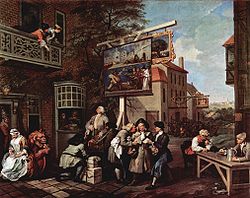
Charles Howard, 11th Duke of Norfolk
Charles Howard, 11th Duke of Norfolk , styled Earl of Surrey from 1777 to 1786, was a British peer, the son of Charles Howard, 10th Duke of Norfolk and Catherine Brockholes....
possessed eleven, while the Earl of Lonsdale
James Lowther, 1st Earl of Lonsdale
Sir James Lowther, 1st Earl of Lonsdale was the son of Robert Lowther and Catherine Pennington.He married Mary Crichton-Stuart, daughter of John Stuart, 3rd Earl of Bute and Mary Wortley-Montagu, 1st Baroness Mount Stuart on 7 September 1761.On 9 June 1792 he fought a duel with a Captain Cuthbert...
owned nine. Writing in 1821, Sydney Smith
Sydney Smith
Sydney Smith was an English writer and Anglican cleric. -Life:Born in Woodford, Essex, England, Smith was the son of merchant Robert Smith and Maria Olier , who suffered from epilepsy...
proclaimed that "The country belongs to the Duke of Rutland, Lord Lonsdale, the Duke of Newcastle, and about twenty other holders of boroughs. They are our masters!" Dr T.H.B. Oldfield claimed in his Representative History of Great Britain and Ireland that, out of the 514 members representing England and Wales, about 370 were selected by nearly 180 patrons. A member who represented a pocket borough was expected to vote as his patron ordered, lest he lose his seat at the next election.
Voters in some constituencies were independent enough to resist domination by powerful landlords. However, they were, in many cases, still open to corruption. Electors were bribed individually in some boroughs, and collectively in others. In 1771, for example, it was revealed that eighty-one voters in New Shoreham
New Shoreham (UK Parliament constituency)
New Shoreham, sometimes simply called Shoreham, was a parliamentary borough centred on the town of Shoreham-by-Sea in what is now West Sussex...
(who constituted a majority of the electorate) formed a corrupt organization that called itself the "Christian Club," and regularly sold the borough to the highest bidder. Especially notorious for their corruption were the "nabobs," or individuals who had amassed fortunes in the British colonies in Asia and the West Indies. The nabobs, in some cases, even managed to wrest control of boroughs from the nobility and the gentry. Lord Chatham
William Pitt, 1st Earl of Chatham
William Pitt, 1st Earl of Chatham PC was a British Whig statesman who led Britain during the Seven Years' War...
, Prime Minister of Great Britain during the 1760s, once commented that "the importers of foreign gold have forced their way into Parliament, by such a torrent of corruption as no private hereditary fortune could resist."
Early attempts at reform
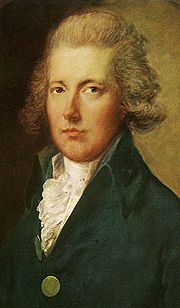
English Civil War
The English Civil War was a series of armed conflicts and political machinations between Parliamentarians and Royalists...
that pitted King Charles I
Charles I of England
Charles I was King of England, King of Scotland, and King of Ireland from 27 March 1625 until his execution in 1649. Charles engaged in a struggle for power with the Parliament of England, attempting to obtain royal revenue whilst Parliament sought to curb his Royal prerogative which Charles...
and the Royalists
Cavalier
Cavalier was the name used by Parliamentarians for a Royalist supporter of King Charles I and son Charles II during the English Civil War, the Interregnum, and the Restoration...
against the Parliamentarians
Roundhead
"Roundhead" was the nickname given to the supporters of the Parliament during the English Civil War. Also known as Parliamentarians, they fought against King Charles I and his supporters, the Cavaliers , who claimed absolute power and the divine right of kings...
. In 1647, different factions of the victorious parliamentary army held a series of discussions, the Putney Debates
Putney Debates
The Putney Debates were a series of discussions between members of the New Model Army – a number of the participants being Levellers – concerning the makeup of a new constitution for England....
, on reforming the structure of English government. The most radical elements proposed universal manhood suffrage and the reorganization of parliamentary constituencies. Their leader Thomas Rainsborough
Thomas Rainsborough
Thomas Rainsborough , or Rainborough or Raineborough or Rainborowe or Rainbow or Rainborow, was a prominent figure in the English Civil War, and was the leading spokesman of the Levellers in the Putney Debates.-Life:He was the son of William Rainsborough, a captain and Vice-Admiral in the Royal...
declared, "I think it's clear, that every man that is to live under a government ought first by his own consent to put himself under that government." More conservative members disagreed, arguing instead that only individuals who owned land in the country should be allowed to vote. For example, Henry Ireton
Henry Ireton
Henry Ireton was an English general in the Parliamentary army during the English Civil War. He was the son-in-law of Oliver Cromwell.-Early life:...
stated, "no man hath a right to an interest or share in the disposing of the affairs of the kingdom ... that hath not a permanent fixed interest in this kingdom." The views of the conservative "Grandees" eventually won out. Oliver Cromwell
Oliver Cromwell
Oliver Cromwell was an English military and political leader who overthrew the English monarchy and temporarily turned England into a republican Commonwealth, and served as Lord Protector of England, Scotland, and Ireland....
, who became the leader of England after the abolition of the monarchy in 1649, refused to adopt universal suffrage; individuals were required to own property (real or personal) worth at least £200 in order to vote. He did nonetheless agree to some electoral reform; he disfranchised several small boroughs, granted representation to large towns such as Manchester
Manchester
Manchester is a city and metropolitan borough in Greater Manchester, England. According to the Office for National Statistics, the 2010 mid-year population estimate for Manchester was 498,800. Manchester lies within one of the UK's largest metropolitan areas, the metropolitan county of Greater...
and Leeds
Leeds
Leeds is a city and metropolitan borough in West Yorkshire, England. In 2001 Leeds' main urban subdivision had a population of 443,247, while the entire city has a population of 798,800 , making it the 30th-most populous city in the European Union.Leeds is the cultural, financial and commercial...
, and increased the number of members elected by populous counties. These reforms were all reversed, however, after Cromwell's death and the last parliament to be elected in the Commonwealth period in 1659 reverted to the electoral system as it had existed under Charles I.
Following Restoration of the monarchy in 1660 the issue of parliamentary reform lay dormant until it was revived in the 1760s by the Whig Prime Minister William Pitt, 1st Earl of Chatham
William Pitt, 1st Earl of Chatham
William Pitt, 1st Earl of Chatham PC was a British Whig statesman who led Britain during the Seven Years' War...
("Pitt the Elder"), who called borough representation "the rotten part of our Constitution
Constitution of the United Kingdom
The constitution of the United Kingdom is the set of laws and principles under which the United Kingdom is governed.Unlike many other nations, the UK has no single core constitutional document. In this sense, it is said not to have a written constitution but an uncodified one...
" (hence the term "rotten borough"). Nevertheless, he did not advocate an immediate disfranchisement of rotten boroughs. He instead proposed that a third member be added to each county, to countervail the borough influence. The Whigs failed to unite behind the expansion of county representation; some objected to the idea because they felt that it would give too much power to the aristocracy and gentry in rural areas. Ultimately, despite Chatham's exertions, Parliament took no action on his proposals. The cause of parliamentary reform was next taken up by Lord Chatham's son, William Pitt the Younger
William Pitt the Younger
William Pitt the Younger was a British politician of the late 18th and early 19th centuries. He became the youngest Prime Minister in 1783 at the age of 24 . He left office in 1801, but was Prime Minister again from 1804 until his death in 1806...
(variously described as a Tory and as an "independent Whig"). Like his father, he shrank from proposing the wholesale abolition of the rotten boroughs, advocating instead an increase in county representation. The House of Commons rejected Pitt's resolution by over 140 votes, despite receiving petitions for reform bearing over twenty thousand signatures. In 1783, Pitt became Prime Minister but was still unable to achieve reform. King George III
George III of the United Kingdom
George III was King of Great Britain and King of Ireland from 25 October 1760 until the union of these two countries on 1 January 1801, after which he was King of the United Kingdom of Great Britain and Ireland until his death...
was averse to the idea, as were many members of Pitt's own cabinet. In 1786, the Prime Minister proposed a reform bill, but the House of Commons rejected it on a 174-248 vote. Pitt did not raise the issue again for the remainder of his term.
Aftermath of the French Revolution
Support for parliamentary reform plummeted after the launch of the French RevolutionFrench Revolution
The French Revolution , sometimes distinguished as the 'Great French Revolution' , was a period of radical social and political upheaval in France and Europe. The absolute monarchy that had ruled France for centuries collapsed in three years...
in 1789. Reacting to the excesses of the revolution, English politicians became steadfastly opposed to any major political change. Despite this reaction, several groups that agitated for reform were established. A group of Whigs led by James Maitland, 8th Earl of Lauderdale
James Maitland, 8th Earl of Lauderdale
James Maitland, 8th Earl of Lauderdale KT PC was Keeper of the Great Seal of Scotland, and a representative peer for Scotland in the House of Lords.-Early years:...
and Charles Grey
Charles Grey, 2nd Earl Grey
Charles Grey, 2nd Earl Grey, KG, PC , known as Viscount Howick between 1806 and 1807, was Prime Minister of the United Kingdom of Great Britain and Ireland from 22 November 1830 to 16 July 1834. A member of the Whig Party, he backed significant reform of the British government and was among the...
founded an organization to advocate for parliamentary reform in 1792. This group, known as the Society of the Friends of the People
Friends of the People Society
The Society of the Friends of the People was formed in Great Britain by Whigs at the end of the 18th century as part of a movement seeking radical political reform that would widen electoral enfranchisement at a time when only a wealthy minority had the vote...
, included twenty-eight members of Parliament. In 1793, Grey presented to the House of Commons a petition from the Friends of the People, outlining abuses of the system and demanding change. He did not propose any specific scheme of reform, but merely a motion that the House inquire into possible improvements. Parliament's reaction to the French Revolution was so negative, that even this request for an inquiry was rejected by a margin of almost 200 votes. Grey made a second attempt to raise the subject in 1797, but the House again rebuffed him by a majority of more than 150.
Other notable pro-reform organizations included the Hampden Clubs (named after John Hampden
John Hampden
John Hampden was an English politician, the eldest son of William Hampden, of Hampden House, Great Hampden in Buckinghamshire, John Hampden (ca. 15951643) was an English politician, the eldest son of William Hampden, of Hampden House, Great Hampden in Buckinghamshire, John Hampden (ca. 15951643)...
, an English politician who opposed the Crown during the English Civil War) and the London Corresponding Society
London Corresponding Society
London Corresponding Society was a moderate-radical body concentrating on reform of the Parliament of Great Britain, founded on 25 January 1792. The creators of the group were John Frost , an attorney, and Thomas Hardy, a shoemaker and metropolitan Radical...
(which consisted of workers and artisans). But the "radical" reforms supported by these organizations (for example, universal suffrage) found even less support in Parliament. For example, when Sir Francis Burdett
Sir Francis Burdett, 5th Baronet
Sir Francis Burdett, 5th Baronet was an English reformist politician, the son of Francis Burdett and his wife Eleanor, daughter of William Jones of Ramsbury manor, Wiltshire, and grandson of Sir Robert Burdett, Bart...
, chairman of the London Hampden Club, proposed a resolution in favour of universal suffrage, equally sized electoral districts, and voting by secret ballot to the House of Commons, his motion found only one other supporter (Lord Cochrane
Thomas Cochrane, 10th Earl of Dundonald
Admiral Thomas Cochrane, 10th Earl of Dundonald, 1st Marquess of Maranhão, GCB, ODM , styled Lord Cochrane between 1778 and 1831, was a senior British naval flag officer and radical politician....
) in the entire House.
Despite such setbacks, popular pressure for reform remained strong. In 1819, a large group of individuals held a pro-reform political rally in Birmingham. Although the city was not formally entitled to any seats in the Commons, those gathered decided to elect Sir Charles Wolseley as Birmingham's "legislatorial representative." Following their example, reformers in Manchester decided to hold a similar meeting to elect a "legislatorial attorney." A large number of individuals (between twenty thousand and sixty thousand, according to different estimates) attended the event, many of them bearing signs such as "Equal Representation or Death." The protesters were ordered to disband; when they failed to do so, armed members of the Manchester Yeomenry suppressed the meeting by force. Eleven people were killed, and several hundred injured, the event later to become known as the Peterloo Massacre
Peterloo Massacre
The Peterloo Massacre occurred at St Peter's Field, Manchester, England, on 16 August 1819, when cavalry charged into a crowd of 60,000–80,000 that had gathered to demand the reform of parliamentary representation....
. In response, the government passed the Six Acts
Six Acts
In the United Kingdom, following the Peterloo Massacre of August 16, 1819, the British government acted to prevent any future disturbances by the introduction of new legislation, the so-called Six Acts which labelled any meeting for radical reform as "an overt act of treasonable conspiracy"...
, measures that were designed to quell further political agitation. In particular, the Seditious Meetings Act
Seditious Meetings Act 1817
The Seditious Meetings Act 1817 was an Act of the Parliament of the United Kingdom of Great Britain and Ireland which made it illegal to hold a meeting of more than 50 people....
prohibited groups of more than 50 people from assembling to discuss any political subject without prior permission from the sheriff or magistrate.
Reform during the 1820s
Since the House of Commons regularly rejected direct challenges to the system of representation by large majorities, supporters of reform had to content themselves with more modest measures. The Whig Lord John RussellJohn Russell, 1st Earl Russell
John Russell, 1st Earl Russell, KG, GCMG, PC , known as Lord John Russell before 1861, was an English Whig and Liberal politician who served twice as Prime Minister of the United Kingdom in the mid-19th century....
brought forward one such measure in 1820, proposing the disfranchisement of the notoriously corrupt borough of Grampound
Grampound (UK Parliament constituency)
Grampound in Cornwall, was a borough constituency of the House of Commons of the Parliament of England, then of the Parliament of Great Britain from 1707 to 1800 and of the Parliament of the United Kingdom from 1801 to 1821. It was represented by two Members of Parliament.-History:Grampound's...
in Cornwall
Cornwall
Cornwall is a unitary authority and ceremonial county of England, within the United Kingdom. It is bordered to the north and west by the Celtic Sea, to the south by the English Channel, and to the east by the county of Devon, over the River Tamar. Cornwall has a population of , and covers an area of...
. He suggested that the borough's two seats be transferred to the city of Leeds. Tories in the House of Lords agreed to the disfranchisement of the borough, but refused to accept the precedent of directly transferring its seats to an industrial city. Instead, they modified the proposal so that two further seats were given to Yorkshire
Yorkshire
Yorkshire is a historic county of northern England and the largest in the United Kingdom. Because of its great size in comparison to other English counties, functions have been increasingly undertaken over time by its subdivisions, which have also been subject to periodic reform...
, the county in which Leeds is situated. In this form, the bill passed both houses and became law. In 1828, Lord John Russell suggested that Parliament repeat the idea by abolishing the corrupt boroughs of Penryn
Penryn, Cornwall
Penryn is a civil parish and town in Cornwall, England, United Kingdom. It is situated on the Penryn River about one mile northwest of Falmouth...
and East Retford
Retford
Retford is a market town in Nottinghamshire in the East Midlands of England, located 31 miles from the city of Nottingham, and 23 miles west of Lincoln, in the district of Bassetlaw. The town is situated in a valley with the River Idle and the Chesterfield Canal running through the centre of the...
, and by transferring their seats to Manchester and Birmingham. This time, however, the House of Lords rejected his proposals. In 1830, Russell proposed another, similar scheme: the enfranchisement of Leeds, Manchester, and Birmingham, and the disfranchisement of the next three boroughs found guilty of corruption; again, the proposal was rejected.
Support for reform came from an unexpected source—a faction of the Tory Party—in 1829. The Tory government under Arthur Wellesley, 1st Duke of Wellington
Arthur Wellesley, 1st Duke of Wellington
Field Marshal Arthur Wellesley, 1st Duke of Wellington, KG, GCB, GCH, PC, FRS , was an Irish-born British soldier and statesman, and one of the leading military and political figures of the 19th century...
, responding to the danger of civil strife in largely Roman Catholic Ireland, drew up the Catholic Relief Act 1829
Catholic Relief Act 1829
The Roman Catholic Relief Act 1829 was passed by the Parliament of the United Kingdom on 24 March 1829, and received Royal Assent on 13 April. It was the culmination of the process of Catholic Emancipation throughout the nation...
. This legislation repealed various laws that imposed political disabilities on Roman Catholics, in particular laws that prevented them from becoming members of Parliament. In response, disenchanted Tories who perceived a danger to the established religion came to favour parliamentary reform, in particular the enfranchisement of Manchester, Leeds, and other heavily Noncomformist cities in northern England.
First Reform Bill
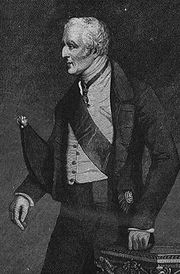
George IV of the United Kingdom
George IV was the King of the United Kingdom of Great Britain and Ireland and also of Hanover from the death of his father, George III, on 29 January 1820 until his own death ten years later...
on 26 June 1830 caused Parliament to be dissolved, and a general election
United Kingdom general election, 1830
The 1830 United Kingdom general election, was triggered by the death of King George IV and produced the first parliament of the reign of his successor, William IV. Fought in the aftermath of the Swing Riots, it saw electoral reform become a major election issue...
held. Electoral reform, which had been frequently discussed during the preceding parliamentary session, became a major campaign issue. Across the country, several pro-reform "political unions" were formed, made up of both middle and working class individuals. The most influential of these associations was the Birmingham Political Union
Birmingham Political Union
The Birmingham Political Union was a political organisation in Great Britain during the early nineteenth century. Founded by Thomas Attwood, its original purpose was to campaign in favour of extending and redistributing suffrage rights to the working class of the kind set out in the Reform Bill of...
, led by Thomas Attwood
Thomas Attwood
Thomas Attwood was a British economist, the leading figure of the underconsumptionist Birmingham School of economists, and, as the founder of the Birmingham Political Union, a leading figure in the public campaign for the Great Reform Act of 1832.He was born in Halesowen, and attended Halesowen...
. These groups confined themselves to lawful, non-violent means of supporting reform, such as petitioning and public oratory, and achieved a great level of public support.
Nonetheless, the Tories won a majority in the election. But the party was divided, and support for the Prime Minister (Arthur Wellesley, 1st Duke of Wellington
Arthur Wellesley, 1st Duke of Wellington
Field Marshal Arthur Wellesley, 1st Duke of Wellington, KG, GCB, GCH, PC, FRS , was an Irish-born British soldier and statesman, and one of the leading military and political figures of the 19th century...
) was weak. When the Opposition raised the issue of reform during one of the first debates of the year, the Duke made a controversial statement defending the merits of the existing system of government, recorded in the formal "third-party" language of the time:
The Prime Minister's absolutist views proved extremely unpopular, even within his own party. Less than two weeks after Wellington made the above remarks, he was forced to resign following an adverse vote in the House of Commons on a confidence motion
Motion of no confidence
A motion of no confidence is a parliamentary motion whose passing would demonstrate to the head of state that the elected parliament no longer has confidence in the appointed government.-Overview:Typically, when a parliament passes a vote of no...
. Sydney Smith wrote, "Never was any administration so completely and so suddenly destroyed; and, I believe, entirely by the Duke's declaration, made, I suspect, in perfect ignorance of the state of public feeling and opinion." Wellington was replaced by the Whig reformer Charles Grey
Charles Grey, 2nd Earl Grey
Charles Grey, 2nd Earl Grey, KG, PC , known as Viscount Howick between 1806 and 1807, was Prime Minister of the United Kingdom of Great Britain and Ireland from 22 November 1830 to 16 July 1834. A member of the Whig Party, he backed significant reform of the British government and was among the...
, who had by this time succeeded to the title of Earl Grey.
Lord Grey's first announcement as Prime Minister was a pledge to carry out parliamentary reform. On 1 March 1831, Lord John Russell brought forward the Reform Bill in the House of Commons on the government's behalf. The bill disfranchised sixty of the smallest boroughs, and reduced the representation of forty-seven others. Some of the seats were completely abolished, while others were redistributed to the London suburbs, to large cities, to the counties, and to Scotland and Ireland. Furthermore, the bill standardized and expanded the borough franchise, increasing the size of the electorate (according to one estimate) by half a million voters.
On 22 March, the vote on the second reading
Reading (legislature)
A reading of a bill is a debate on the bill held before the general body of a legislature, as opposed to before a committee or other group. In the Westminster system, there are usually several readings of a bill among the stages it passes through before becoming law as an Act of Parliament...
attracted 608 members (including the non-voting Speaker), more than any previous division. (The previous record was 530 members.) Despite such a large attendance, the second reading was approved by only one vote. But further progress for the Reform Bill proved difficult. During the committee stage, Isaac Gascoyne
Isaac Gascoyne
Isaac Gascoyne was a British Army officer and Tory politician. He was the son of Bamber Gascoyne and Mary Green and was educated at Felsted School....
proposed a motion objecting to the provisions of the bill that reduced the total number of seats in the House of Commons. The motion was carried, contrary to the government's wishes, by nine votes. Thereafter, the ministry lost a vote on a procedural motion by twenty-two votes. As these divisions indicated that Parliament was in fact averse to the Reform Bill, the ministry decided to request a dissolution and to take their appeal to the people.
Second Reform Bill
The political and popular pressure for reform had grown so great that pro-reform Whigs won an overwhelming House of Commons majority in the general elections of 1831United Kingdom general election, 1831
The 1831 general election in the United Kingdom saw a landslide win by supporters of electoral reform, which was the major election issue. As a result it was the last unreformed election, as the Parliament which resulted ensured the passage of the Reform Act 1832. Polling was held from 28 April to...
. The Whig party won almost all constituencies with genuine electorates, leaving the Tories with little more than the rotten boroughs. The Reform Bill was again brought before the House of Commons, which agreed to the second reading by a large majority in July. During the committee stage, opponents of the bill slowed its progress through tedious discussions of its details, but it was finally passed in September, by a margin of more than a hundred votes.
The bill was then sent up to the House of Lords, a majority of whose members were known to be hostile to it. Due to the decisive verdict of the electorate in favour of the Whigs at the previous election, some speculated that opponents of reform would abstain from voting, instead of openly defying the public will. Indeed, when the House voted on the second reading of the bill after a memorable series of debates, a large number of Tory peers refrained from voting. However, the Lords Spiritual
Lords Spiritual
The Lords Spiritual of the United Kingdom, also called Spiritual Peers, are the 26 bishops of the established Church of England who serve in the House of Lords along with the Lords Temporal. The Church of Scotland, which is Presbyterian, is not represented by spiritual peers...
mustered in unusually large numbers; of the twenty-two that were present, twenty-one voted against the bill. Consequently, the bill failed by a margin of forty-one votes.
Once the Lords rejected the Reform Bill, public violence ensued. That very evening, riots broke out in Derby
Derby
Derby , is a city and unitary authority in the East Midlands region of England. It lies upon the banks of the River Derwent and is located in the south of the ceremonial county of Derbyshire. In the 2001 census, the population of the city was 233,700, whilst that of the Derby Urban Area was 229,407...
, where the mob attacked the city jail and set several prisoners free. At Nottingham
Nottingham
Nottingham is a city and unitary authority in the East Midlands of England. It is located in the ceremonial county of Nottinghamshire and represents one of eight members of the English Core Cities Group...
, rioters set fire to Nottingham Castle
Nottingham Castle
Nottingham Castle is a castle in Nottingham, England. It is located in a commanding position on a natural promontory known as "'Castle Rock'", with cliffs high to the south and west. In the Middle Ages it was a major royal fortress and occasional royal residence...
(the home of the Duke of Newcastle) and attacked Wollaton Hall
Wollaton Hall
Wollaton Hall is a country house standing on a small but prominent hill in Wollaton, Nottingham, England. Wollaton Park is the area of parkland that the stately house stands in. The house itself is a natural history museum, with other museums in the out-buildings...
(the estate of Lord Middleton). The most significant disturbances occurred at Bristol
Bristol
Bristol is a city, unitary authority area and ceremonial county in South West England, with an estimated population of 433,100 for the unitary authority in 2009, and a surrounding Larger Urban Zone with an estimated 1,070,000 residents in 2007...
, where rioters took control for three days. The mob broke into prisons and destroyed several buildings, including the palace of the Bishop of Bristol
Bishop of Bristol
The Bishop of Bristol heads the Church of England Diocese of Bristol in the Province of Canterbury, in England.The present diocese covers parts of the counties of Somerset and Gloucestershire together with a small area of Wiltshire...
, the mansion of the Lord Mayor of Bristol, and several private homes. Other places that saw violence included Dorset
Dorset
Dorset , is a county in South West England on the English Channel coast. The county town is Dorchester which is situated in the south. The Hampshire towns of Bournemouth and Christchurch joined the county with the reorganisation of local government in 1974...
, Leicestershire
Leicestershire
Leicestershire is a landlocked county in the English Midlands. It takes its name from the heavily populated City of Leicester, traditionally its administrative centre, although the City of Leicester unitary authority is today administered separately from the rest of Leicestershire...
, and Somerset
Somerset
The ceremonial and non-metropolitan county of Somerset in South West England borders Bristol and Gloucestershire to the north, Wiltshire to the east, Dorset to the south-east, and Devon to the south-west. It is partly bounded to the north and west by the Bristol Channel and the estuary of the...
.
In the meantime, the political unions, which had hitherto been separate groups united only by a common goal, decided to band together to form the National Political Union. Perceiving this group as a threat, the government issued a proclamation pursuant to the Corresponding Societies Act 1799 declaring such an association "unconstitutional and illegal," and commanding all loyal subjects to refrain joining it. The leaders of the National Political Union ignored the proclamation, but the leaders of the influential Birmingham branch decided to co-operate with government wishes by discouraging activities on a national level.
Third Reform Bill
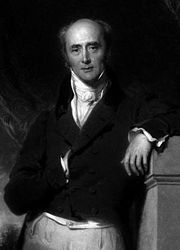
Realising that another rejection would be politically unfeasible, opponents of reform decided to use amendments to change the bill's essential character. Their reliance on this tactic became obvious during the committee stage, when they voted to delay consideration of the clauses of the bill that disfranchised the rotten boroughs. The ministers believed that they were left with only one alternative: to create a large number of new peerages, thereby swamping the House of Lords with pro-reform members. But the prerogative of creating peerages belonged to the King, William IV
William IV of the United Kingdom
William IV was King of the United Kingdom of Great Britain and Ireland and of Hanover from 26 June 1830 until his death...
, who recoiled from taking so harsh a step. When the King rejected the unanimous advice of the cabinet, Lord Grey resigned, and the Crown called upon the Duke of Wellington to form a new government.
The ensuing period, known as the "Days of May
Days of May
The Days of May was a period of social unrest and political tension in the United Kingdom that took place in May 1832, following the wrecking by Tories in the House of Lords of the Third Reform Bill, which aimed to extend parliamentary representation to the middle class and to the newly...
", created so great a level of political agitation that some feared revolution. Several protesters encouraged a refusal to pay taxes and a run on the banks
Bank run
A bank run occurs when a large number of bank customers withdraw their deposits because they believe the bank is, or might become, insolvent...
. They encouraged people to "Stop the Duke, go for gold", i.e. take money out of the banks, and £1½ million in gold was withdrawn from the Bank of England. The National Political Union and other organizations sent petitions to the House of Commons demanding that they withhold supply
Loss of Supply
Loss of supply occurs where a government in a parliamentary democracy using the Westminster System or a system derived from it is denied a supply of treasury or exchequer funds, by whichever house or houses of parliament or head of state is constitutionally entitled to grant and deny supply. A...
(cut off funding to the government) until the House of Lords acquiesced. Some demonstrations called for the abolition of the nobility, and even of the monarchy. In these circumstances, the Duke of Wellington had great difficulty in finding support for his premiership, despite promises of moderate reform. He was unable to form a government, leaving King William IV with no choice but to recall Lord Grey to office. At length, the King consented to swamp the House of Lords with Whigs. However, without the knowledge of his ministers, he circulated a letter among the Tory peers, encouraging them to desist from further opposition, and warning them of the consequences of failing to do so. Threatened with such a fate, opposition peers ultimately relented. By abstaining from further votes, they allowed the legislation to pass the House of Commons, and prevented the Crown and cabinet from resorting to the creation of new peers. The bill finally received the Royal Assent
Royal Assent
The granting of royal assent refers to the method by which any constitutional monarch formally approves and promulgates an act of his or her nation's parliament, thus making it a law...
on 7 June 1832, thereby becoming law.
Provisions
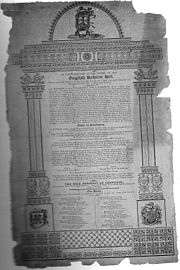
Higham Ferrers
Higham Ferrers is a market town in the Nene Valley in East Northamptonshire, England, close to the Cambridgeshire and Bedfordshire borders. It forms a single urban area with Rushden to the south and has an estimated population of 6,086...
, had only a single representative). In their place the Act created 135 new seats for England and Wales. Twenty-six English counties were divided into two divisions with each division being represented by two members. Eight English counties and three Welsh counties each received an additional representative and Yorkshire, which was represented by four MPs before the Act was given an extra two MPs (so that each of its three ridings was represented by two MPs). Twenty-two large towns were given the privilege of electing two representatives, and another twenty-one towns (two being in Wales) were given the privilege of electing a single representative. Thus the Act's enfranchising clauses created 65 new county seats and 65 new borough seats in England and Wales with the total number of members representing England falling by seventeen and the number representing Wales rising by four. The boundaries of the new divisions and parliamentary boroughs were defined in a separate Act, the Parliamentary Boundaries Act 1832
Parliamentary Boundaries Act 1832
The Parliamentary Boundaries Act 1832 was an Act of the Parliament of the United Kingdom which defined the parliamentary divisions in England and Wales required by the Reform Act 1832....
.
The Act also extended the franchise. In county constituencies in addition to forty-shilling freeholders, franchise rights were extended to owners of land in copyhold
Copyhold
At its origin in medieval England, copyhold tenure was tenure of land according to the custom of the manor, the "title deeds" being a copy of the record of the manorial court....
worth £10 (£7,948.71 in 2007) and holders of long-term leases (more than sixty years) on land worth £10 and holders of medium-term leases (between twenty and sixty years) on land worth £50 and to tenants-at-will
Leasehold estate
A leasehold estate is an ownership of a temporary right to land or property in which a lessee or a tenant holds rights of real property by some form of title from a lessor or landlord....
paying an annual rent of £50. In borough constituencies all male householders living in properties worth at least ten pounds a year were given the right to vote - a measure which introduced to all boroughs a standardized form of franchise for the first time. Existing borough electors retained a lifetime right to vote, however they qualified, provided they were resident in the boroughs in which they were electors. In those boroughs which had freemen electors voting rights were to be enjoyed by future freemen as well provided their freeman-ship was acquired through birth or apprenticeship and they too were resident.
The Act also introduced a system of voter registration
Voter registration
Voter registration is the requirement in some democracies for citizens and residents to check in with some central registry specifically for the purpose of being allowed to vote in elections. An effort to get people to register is known as a voter registration drive.-Centralized/compulsory vs...
, to be administered by the overseers of the poor
Overseer of the Poor
An Overseer of the Poor was an official who administered poor relief such as money, food, and clothing in England and various other countries which derived their law from England.-England:...
in every parish and township. It instituted a system of special courts to review disputes relating to voter qualifications. It also authorized the use of multiple polling places within the same constituency, and limited the duration of polling to two days. (Formerly, polls could remain open for up to forty days.)
The Reform Act did not affect constituencies in Scotland or Ireland. However, reforms in those parts of the United Kingdom were carried out by the Scottish Reform Act
Scottish Reform Act 1832
The Scottish Reform Act 1832 was an Act of Parliament that introduced wide-ranging changes to the election laws of Scotland. The act was passed at approximately the same time as the Reform Act 1832, which applied to England and Wales. The chief architects of the act were Francis Jeffrey and Henry...
and the Irish Reform Act
Irish Reform Act 1832
The Irish Reform Act 1832 was an Act of Parliament that introduced wide-ranging changes to the election laws of Ireland. The act was passed at approximately the same time as the Reform Act 1832, which applied to England and Wales...
. Scotland received eight additional seats, and Ireland received five thus keeping the number of seats in the House of Commons the same number as it was before the Act. While no constituencies were disfranchised in either of these countries, voter qualifications were standardised and the size of the electorate was expanded in both.
Effects
The British political landscape was modernized and ignited by the passage of the 1832 Reform Act. Local Conservative Associations began to educate local citizens about the political platform of the party and advocated participation in the annual voter registration mandated by the 1832 Reform Act. Press coverage of national politics in the local press was also accompanied by in depth reports of the political and social events of provincial Conservative societies in the national press. Grassroots Conservatives therefore saw themselves as part of a national political movement during the 1830s.The scale of the unreformed electorate is difficult to accurately estimate. Voter registration was lacking, and many boroughs were rarely contested in elections. It is estimated that before the passage of the 1832 Reform Act, only 400,000 were entitled to vote in 1831, and that after passage, 650,000 Englishmen were enfranchised. Therefore the Reform Act enlarged the electorate by more than 60%. The vast majority of the population remained voteless which included the whole of the female population. Indeed, by the wording of the Act specifying that only "male persons" were to enjoy the franchise rights that it introduced, the Act thereby introduced the first statutory bar to women voting.
Most of the pocket boroughs abolished by the Reform Act belonged to the Tory Party. These losses were somewhat offset by extending the right to vote to tenants-at-will paying an annual rent of £50. This clause, proposed by the Tory Marquess of Chandos
Richard Temple-Nugent-Brydges-Chandos-Grenville, 2nd Duke of Buckingham and Chandos
Richard Plantagenet Temple-Nugent-Brydges-Chandos-Grenville, 2nd Duke of Buckingham and Chandos KG, GCH, PC, FSA , styled Earl Temple between 1813 and 1822 and Marquess of Chandos between 1822 and 1839, was a British Tory politician...
, was adopted in the House of Commons despite opposition from the Government. The tenants-at-will enfranchised by the Chandos clause typically voted in accordance with the wishes of their landlords, who in turn normally supported the Tory party. This concession, together with the Whig Party's internal divisions and the difficulties faced by the nation's economy, allowed the Tories under Sir Robert Peel
Robert Peel
Sir Robert Peel, 2nd Baronet was a British Conservative statesman who served as Prime Minister of the United Kingdom from 10 December 1834 to 8 April 1835, and again from 30 August 1841 to 29 June 1846...
to make gains in the elections of 1835
United Kingdom general election, 1835
The 1835 United Kingdom general election was called when Parliament was dissolved on 29 December 1834. Polling took place between 6 January and 6 February 1835, and the results saw Robert Peel's Conservatives make large gains from their low of the 1832 election, but the Whigs maintained a large...
and 1837
United Kingdom general election, 1837
The 1837 United Kingdom general election saw Robert Peel's Conservatives close further on the position of the Whigs, who won their fourth election of the decade....
, and to retake the House of Commons in 1841
United Kingdom general election, 1841
-Seats summary:-Whig MPs who lost their seats:*Viscount Morpeth - Chief Secretary for Ireland*Sir George Strickland, Bt*Sir Henry Barron, 1st Baronet-References:*F. W. S. Craig, British Electoral Facts: 1832-1987...
.
Limitations
The Reform Act also did very little to appease the working class because the voter had to have property worth £10. This split the alliance between the working class and the middle class as it appeased the middle class, because it could afford the required property, while most of the working class could not. This lack of representation for the working class led to the Chartist MovementChartism
Chartism was a movement for political and social reform in the United Kingdom during the mid-19th century, between 1838 and 1859. It takes its name from the People's Charter of 1838. Chartism was possibly the first mass working class labour movement in the world...
that sprang from the reform act.
Although it did disenfranchise several rotten borough
Rotten borough
A "rotten", "decayed" or pocket borough was a parliamentary borough or constituency in the United Kingdom that had a very small electorate and could be used by a patron to gain undue and unrepresentative influence within Parliament....
s, the Reform Act did not address some other anomalies in the electoral system. A few small boroughs, such as Totnes
Totnes
Totnes is a market town and civil parish at the head of the estuary of the River Dart in Devon, England within the South Devon Area of Outstanding Natural Beauty...
in Devon
Devon
Devon is a large county in southwestern England. The county is sometimes referred to as Devonshire, although the term is rarely used inside the county itself as the county has never been officially "shired", it often indicates a traditional or historical context.The county shares borders with...
and Midhurst in Sussex, were spared. And though pocket boroughs were largely swept away, bribery of the voters remained a problem. As Sir Thomas Erskine May observed, "it was too soon evident, that as more votes had been created, more votes were to be sold."
The Reform Act undoubtedly strengthened the House of Commons by reducing the number of nomination boroughs controlled by peers, but the Lords nonetheless remained powerful. Some aristocrats complained that, in the future, the government could compel them to pass a bill, simply by threatening to swamp the upper House by creating new peerages. The Duke of Wellington lamented: "If such projects can be carried into execution by a minister of the Crown with impunity, there is no doubt that the constitution of this House, and of this country, is at an end. [...] [T]here is absolutely an end put to the power and objects of deliberation in this House, and an end to all just and proper means of decision." But the subsequent history of Parliament indicates that the influence of the Lords was largely undiminished. They compelled the Commons to accept significant amendments to the Municipal Reform Bill
Municipal Corporations Act 1835
The Municipal Corporations Act 1835 – sometimes known as the Municipal Reform Act, was an Act of the Parliament of the United Kingdom that reformed local government in the incorporated boroughs of England and Wales...
in 1835, forced compromises on Jewish emancipation
Emancipation of the Jews in England
The Emancipation of the Jews in England was the culmination of efforts in the 19th century over several hundred years to loosen the legal restrictions set in place on England's Jewish population...
, and resisted several other bills despite public opinion to the contrary.
Further reform
During the ensuing years, Parliament adopted several minor electoral reforms. Acts of Parliament passed in 1835 and 1836 increased the number of polling places in each constituency, and reduced polling to a single day. Parliament also passed several laws aimed at combatting corruption, including the Corrupt Practices Act 1854, but these measures proved largely ineffectual. Neither party strove for any major reforms; leading statesmen from both the Whig and the Tory parties regarded the Reform Act as a final settlement.There was considerable public agitation for further expansion of the electorate. In particular, the Chartist movement
Chartism
Chartism was a movement for political and social reform in the United Kingdom during the mid-19th century, between 1838 and 1859. It takes its name from the People's Charter of 1838. Chartism was possibly the first mass working class labour movement in the world...
, which demanded universal suffrage
Universal suffrage
Universal suffrage consists of the extension of the right to vote to adult citizens as a whole, though it may also mean extending said right to minors and non-citizens...
for men, equally sized electoral districts, and voting by secret ballot
Secret ballot
The secret ballot is a voting method in which a voter's choices in an election or a referendum are anonymous. The key aim is to ensure the voter records a sincere choice by forestalling attempts to influence the voter by intimidation or bribery. The system is one means of achieving the goal of...
, gained widespread following. But the Tories were united against further reform, and the Liberal Party (successor to the Whigs) did not seek a general revision of the electoral system until 1852. The 1850s saw Lord John Russell introduce a number of reform bills to correct the defects that the first act had left unaddressed. However, no proposal was successful until 1867, when Parliament adopted the Second Reform Act
Reform Act 1867
The Representation of the People Act 1867, 30 & 31 Vict. c. 102 was a piece of British legislation that enfranchised the urban male working class in England and Wales....
.
Assessment
Several historians credit the Reform Act 1832 with launching the rise of modern democracy in Britain. G. M. TrevelyanG. M. Trevelyan
George Macaulay Trevelyan, OM, CBE, FRS, FBA , was a British historian. Trevelyan was the third son of Sir George Otto Trevelyan, 2nd Baronet, and great-nephew of Thomas Babington Macaulay, whose staunch liberal Whig principles he espoused in accessible works of literate narrative avoiding a...
hails 1832 as the watershed moment at which "'the sovereignty of the people' had been established in fact, if not in law." Sir Erskine May
Erskine May, 1st Baron Farnborough
Sir Erskine May, 1st Baron Farnborough, KCB, PC, DCL was a British constitutional theorist. This derived from his career at the House of Commons.-Biography:...
notes that "[the] reformed Parliament was, unquestionably, more liberal and progressive in its policy than the Parliaments of old; more vigorous and active; more susceptible to the influence of public opinion; and more secure in the confidence of the people," but admitted that "grave defects still remained to be considered." Other historians have taken a far less laudatory view, arguing that genuine democracy began to arise only with the Second Reform Act
Reform Act 1867
The Representation of the People Act 1867, 30 & 31 Vict. c. 102 was a piece of British legislation that enfranchised the urban male working class in England and Wales....
in 1867, or perhaps even later. Norman Gash
Norman Gash
Norman Gash CBE was a British historian, notable for a two volume biography of British Prime Minister Sir Sir Robert Peel....
states that "it would be wrong to assume that the political scene in the succeeding generation differed essentially from that of the preceding one." E. A. Smith
E. A. Smith (historian)
Ernest Anthony Smith was an English historian, specialising in late-eighteenth and early-nineteenth century British political history.-Works:...
proposes, in a similar vein, that "when the dust had settled, the political landscape looked much as it had done before.
Historians have long pointed out that in 1829-31, it was the Ultra-Tories
Ultra-Tories
The Ultra-Tories were an Anglican faction of British and Irish politics that appeared in the 1820s in opposition to Catholic emancipation. They were later called the "extreme right wing" of British and Irish politics. They broke away from the governing party in 1829 after the passing of the...
or "Country Party" which pressed most strongly for Reform, regarding it as a means of weakening Wellington's ministry, which had disappointed them by granting Catholic emancipation and by its economic policies.
Evans (1996) has emphasized that the Reform Act "opened a door on a new political world." Although Grey's intentions were conservative, and his success gave the aristocracy an additional half-century control of Parliament, the 1832 Act nevertheless did open constitutional questions for further development. Evans argues it was the 1832 Act, not the later reforms of 1867, 1884, or 1918, that were decisive in bringing representative democracy to Britain. Evans concludes the Reform Act marked the true beginning of the development of a recognizably modern political system.
See also
- ChartismChartismChartism was a movement for political and social reform in the United Kingdom during the mid-19th century, between 1838 and 1859. It takes its name from the People's Charter of 1838. Chartism was possibly the first mass working class labour movement in the world...
- Secret ballotSecret ballotThe secret ballot is a voting method in which a voter's choices in an election or a referendum are anonymous. The key aim is to ensure the voter records a sincere choice by forestalling attempts to influence the voter by intimidation or bribery. The system is one means of achieving the goal of...
- Official names of United Kingdom Parliamentary constituenciesOfficial names of United Kingdom Parliamentary ConstituenciesThe official names of United Kingdom Parliamentary constituencies are those given in the legal instrument creating the constituency or re-defining it at a re-distribution of seats.The purpose of this article is to set out official names, taken from official sources wherever possible, to provide a...
- Jacksonian DemocracyJacksonian democracyJacksonian democracy is the political movement toward greater democracy for the common man typified by American politician Andrew Jackson and his supporters. Jackson's policies followed the era of Jeffersonian democracy which dominated the previous political era. The Democratic-Republican Party of...
- List of constituencies enfranchised and disfranchised by the Reform Act 1832
- Universal suffrageUniversal suffrageUniversal suffrage consists of the extension of the right to vote to adult citizens as a whole, though it may also mean extending said right to minors and non-citizens...
Further reading
- Brock, Michael. (1973). The Great Reform Act. London: Hutchinson Press.
- Butler, J. R. M. (1914). The Passing of the Great Reform Bill. London: Longmans, Green, and Co.
- Cannon, John. (1973). Parliamentary Reform 1640-1832. New York: Cambridge University Press.
- Christie, Ian R. (1962). Wilkes, Wyvill and Reform: The Parliamentary Reform Movement in British Politics, 1760-1785. New York: St. Martin's Press.
- Evans, Eric J. (1983). The Great Reform Act of 1832. London: Methuen and Co.
- Foot, Paul (2005). The Vote: How It Was Won and How It Was Undermined. London: Viking.
- Mandler, Peter. (1990). Aristocratic Government in the Age of Reform: Whigs and Liberals, 1830-1852. Oxford: Clarendon Press.
- Newbould, Ian. (1990). Whiggery and Reform, 1830-1841: The Politics of Government. London: Macmillan.
- O'Gorman, Frank. (1989). Voters, Patrons, and Parties: The Unreformed Electoral System of Hanoverian England, 1734-1832. Oxford: Clarendon Press.
- Phillips, John A. (1982). Electoral Behaviour in Unreformed England: Plumpers, Splitters, and Straights. Princeton: Princeton University PressPrinceton University Press-Further reading:* "". Artforum International, 2005.-External links:* * * * *...
. - Trevelyan, G. M. (1920). Lord Grey of the Reform Bill: Being the Life of Charles, Second Earl Grey. London: Longmans, Green, and Co.
- Veitch, George Stead. (1913). The Genesis of Parliamentary Reform. London: Constable and Co.
- Warham, Dror. (1995). Imagining the Middle Class: The Political Representation of Class in Britain, c. 1780-1840. Cambridge: Cambridge University PressCambridge University PressCambridge University Press is the publishing business of the University of Cambridge. Granted letters patent by Henry VIII in 1534, it is the world's oldest publishing house, and the second largest university press in the world...
. - White, R. J. (1957). From Waterloo to Peterloo. London: Heinemann and Co.
- Wicks, Elizabeth (2006). The Evolution of a Constitution: Eight Key Moments in British Constitutional History. Oxford: Hart Pub., pp. 65–82.
- Woodward, Sir E. Llewellyn. (1962). The Age of Reform, 1815-1870. Oxford: Clarendon Press.
External links
- Full original text of the Act as passed:
- Bloy, Marjie. The Reform Act Crisis.
- Spartacus. 1832 Reform Act.
- The National Archives. "The Struggle for Democracy."
- BBC Radio 4, In Our Time, The Great Reform Act