

Alchemy

Encyclopedia
Alchemy is an influential philosophical tradition whose early practitioners’ claims to profound powers were known from antiquity. The defining objectives of alchemy are varied; these include the creation of the fabled philosopher's stone
possessing powers including the capability of turning base metal
s into the noble metal
s gold
or silver
- as well as an elixir of life
conferring youth and immortality. In general alchemists believe in a natural and symbolic unity of humanity with the cosmos. Lately western alchemy has become recognized as the proto-typical protoscience
presaging the seminal western science
s such as chemistry
and medicine
. Alchemists nurtured a framework of theory, terminology, experimental process and basic lab techniques still recognizable today. But alchemy differs from modern science
in the inclusion of Hermetic
principles and practices related to mythology
, religion
, and spirituality
.
or silver
, and the creation of a "panacea
," a remedy that supposedly would cure all diseases and prolong life indefinitely; and the discovery of a universal solvent
.
Modern discussions of alchemy are generally split into an examination of its exoteric
practical applications, and its esoteric aspects. The former is pursued by historians of the physical sciences who have examined the subject in terms of proto-chemistry, medicine, and charlatanism. The latter is of interest to the historians of esotericism, psychologists, spiritual and new age communities, and hermetic philosophers. The subject has also made an ongoing impact on literature and the arts. Despite the modern split, numerous sources stress an integration of esoteric and exoteric approaches to alchemy. Holmyard, when writing on exoteric aspects, states that they can not be properly appreciated if the esoteric is not always kept in mind. The prototype for this model can be found in Bolos of Mendes' second century BCE work, Physika kai Mystika (On Physical and Mystical Matters). Marie-Louise von Franz
tells us the double approach of Western alchemy was set from the start, when Greek philosophy was mixed with Egyptian and Mesopotamian technology. The technological, operative approach, which she calls extraverted, and the mystic, contemplative, psychological one, which she calls introverted are not mutually exclusive, but complementary instead, as meditation requires practice in the real world, and conversely.
are both credited as being the fathers of chemistry. Paracelsian iatrochemistry
emphasized the medicinal application of alchemy (continued in plant alchemy, or spagyric
). Studies of alchemy also influenced Isaac Newton's
theory of gravity. Academic historical research supports that the alchemists were searching for a material substance using physical methods.
It is a popular belief that Alchemists made contributions to the "chemical" industries of the day—ore testing and refining, metalworking, production of gunpowder, ink, dyes, paints, cosmetics, leather tanning
, ceramics, glass manufacture, preparation of extracts, liquors, and so on (it seems that the preparation of aqua vitae
, the "water of life", was a fairly popular "experiment" among European alchemists). Alchemists contributed distillation
to Western Europe. The attempts of alchemists to arrange information on substances, so as to clarify and anticipate the products of their chemical reactions, resulted in early conceptions of chemical elements and the first rudimentary periodic table
s. They learned how to extract metals from ores, and how to compose many types of inorganic acids and bases.
During the 17th century, practical alchemy started to evolve into modern chemistry, as it was renamed by Robert Boyle
, the "father of modern chemistry". In his book, The Skeptical Chymist, Boyle attacked Paracelsus
and the natural philosophy
of Aristotle
, which was taught at universities. However, Boyle's biographers, in their emphasis that he laid the foundations of modern chemistry, neglect how steadily he clung to the Scholastic sciences
and to Alchemy, in theory, practice and doctrine. The decline of alchemy continued in the 18th century with the birth of modern chemistry, which provided a more precise and reliable framework within a new view of the universe based on rational materialism
.
practitioners, the heart of alchemy is spiritual. Transmutation of lead into gold is presented as an analogy for personal transmutation, purification, and perfection. This approach is often termed 'spiritual', 'esoteric', or 'internal' alchemy.
Early alchemists, such as Zosimos of Panopolis
(c. 300 A.D.), highlight the spiritual nature of the alchemical quest, symbolic of a religious regeneration of the human soul. This approach continued in the Middle Ages, as metaphysical aspects, substances, physical states, and material processes were used as metaphors for spiritual entities, spiritual states, and, ultimately, transformation. In this sense, the literal meanings of 'Alchemical Formulas' were a blind, hiding their true spiritual philosophy
. Practitioners and patrons such as Melchior Cibinensis
and Pope Innocent VIII
existed within the ranks of the church, while Martin Luther
applauded alchemy for its consistency with Christian teachings. Both the transmutation of common metals into gold and the universal panacea symbolized evolution from an imperfect, diseased, corruptible, and ephemeral state towards a perfect, healthy, incorruptible, and everlasting state; and the philosopher's stone then represented a mystic key that would make this evolution possible. Applied to the alchemist himself, the twin goal symbolized his evolution from ignorance to enlightenment, and the stone represented a hidden spiritual truth or power that would lead to that goal. In texts that are written according to this view, the cryptic alchemical symbol
s, diagrams, and textual imagery of late alchemical works typically contain multiple layers of meanings, allegories, and references to other equally cryptic works; and must be laboriously decoded to discover their true meaning.
In his 1766 Alchemical Catechism, Théodore Henri de Tschudi denotes that the usage of the metals was a symbol:
During the renaissance, alchemy broke into more distinct schools placing spiritual alchemists in high contrast with those working with literal metals and chemicals. While most spiritual alchemists also incorporate elements of exotericism, examples of a purely spiritual alchemy can be traced back as far as the sixteenth century, when Jacob Boehme used alchemical terminology in strictly mystical writings. Another example can be found in the work of Heinrich Khunrath
(1560–1605) who viewed the process of transmutation as occurring within the alchemist's soul.
The recent work of Principe and Newman, seeks to reject the 'spiritual interpretation' of alchemy, stating it arose as a product of the Victorian occult revival. There is evidence to support that some classical alchemical sources were adulterated during this time to give greater weight to the spiritual aspects of alchemy. Despite this, other scholars such as Calian and Tilton reject this view as entirely historically inaccurate, drawing examples of historical spiritual alchemy from Boehme, Isaac Newton, and Michael Maier
.
alquimie, which is from the Medieval Latin
alchimia, and which is in turn from the Arabic al-kimia (الكيمياء). This term itself is derived from the Ancient Greek
chemeia (χημεία) or chemia (χημία) with the addition of the Arabic definite article
al-
(الـ). The ancient Greek word may have been derived from a version of the Egyptian
name for Egypt, which was itself based on the Ancient Egyptian word kēme (hieroglyphic Khmi, black earth, as opposed to desert sand). The word could also have originally derived from chumeia (χυμεία) meaning "mixture" and referring to pharmaceutical chemistry. With the later rise of alchemy in Alexandria, the word may have derived from Χημία, and thus became spelled as χημεία, and the original meaning forgotten. The etymology is still open, and recent research indicates that the Egyptian derivation may be valid.
 Alchemy covers several philosophical traditions spanning some four millennia and three continents. These traditions' general penchant for cryptic and symbolic language makes it hard to trace their mutual influences and "genetic" relationships. One can distinguish at least three major strands, which appear to be largely independent, at least in their earlier stages: Chinese alchemy
, centered in China
and its zone of cultural influence; Indian alchemy
, centered around the Indian subcontinent
; and Western alchemy, which occurred around the Mediterranean
and whose center has shifted over the millennia from Greco-Roman Egypt, to the Islamic world
, and finally medieval Europe
. Chinese alchemy was closely connected to Taoism
and Indian alchemy with the Dharmic faiths, whereas Western alchemy developed its own philosophical system that was largely independent of, but influenced by, various Western religion
s. It is still an open question whether these three strands share a common origin, or to what extent they influenced each other.
city of Alexandria
was a center of Greek alchemical knowledge, and retained its preeminence through most of the Greek and Roman periods. Here, elements of technology, religion, mythology, and Greek
philosophy, each with their own much longer histories, combined to form the earliest known records of alchemy in the West. Zosimos of Panopolis
wrote the oldest known books on alchemy while Mary the Jewess
is credited as being the first non-fictitious Western alchemist. They wrote in Greek and lived in Egypt under Roman rule.
Mythology – It is claimed by Zosimos of Panopolis that alchemy dated back to pharaonic Egypt where it was the domain of the priestly class; there is little or no evidence for such a claim though.Alchemical writers used Classical figures from Greek, Roman, and Egyptian mythology to illuminate their works and allegorize alchemical transmutation. These included the pantheon of gods related to the Classical planets, Isis
, Osiris
, Jason
, and many others.
The central figure in the mythology of alchemy is Hermes Trismegistus
(or Thrice-Great Hermes). His name is derived from the god
Thoth
and his Greek counterpart Hermes
. Hermes and his caduceus
or serpent-staff, were among alchemy's principal symbols. According to Clement of Alexandria
, he wrote what were called the "forty-two books of Hermes", covering all fields of knowledge. The Hermetica
of Thrice-Great Hermes is generally understood to form the basis for Western alchemical philosophy and practice, called the hermetic philosophy
by its early practitioners. These writings were collected in the first centuries of the common era.
Technology – The dawn of Western alchemy is sometimes associated with that of metallurgy
, extending back to 3500 BCE. Many writings were lost when the emperor
Diocletian
ordered the burning of alchemical books after suppressing a revolt in Alexandria (292 CE). Few original Egyptian documents on alchemy have survived, most notable among them the Stockholm papyrus and the Leyden papyrus X
. Dating from 300 to 500 CE, they contained recipes for dyeing and making artificial gemstones, cleaning and fabricating pearls, and the manufacture of imitation gold and silver. These writings lack the mystical, philosophical elements of alchemy, but do contain the works of Bolus of Mendes
(or Pseudo-Democritus) which aligned these recipes with theoretical knowledge of astrology and the Classical elements. Between the time of Bolus and Zosimos, the change took place that transformed this metallurgy into a Hermetic art.
Philosophy – Alexandria acted as a melting pot for philosophies of Pythagoreanism
, Platonism
, Stoicism
and Gnosticism
which formed the origin of alchemy’s character. An important example of alchemy’s roots in Greek philosophy, originated by Empedocles
and developed by Aristotle, was that all things in the universe were formed from only four elements: earth
, air
, water
, and fire
. According to Aristotle, each element had a sphere to which it belonged and to which it would return if left undisturbed. The four elements of the Greek were mostly qualitative aspects of matter, not quantitative, as our modern elements are. "...True alchemy never regarded earth, air, water, and fire as corporeal or chemical substances in the present-day sense of the word. The four elements are simply the primary, and most general, qualities by means of which the amorphous and purely quantitative substance of all bodies first reveals itself in differentiated form." Later alchemists extensively developed the mystical aspects of this concept.
Alchemy coexisted alongside emerging Christianity. Lactantius
believed Hermes Trismegistus had prophesied its birth. Augustine
(354–430 CE) later affirmed this, but also condemned Trismegistus for idolatry. Examples of Pagan, Christian, and Jewish alchemists can be found during this period.
Most of the Greco-Roman alchemists preceding Zosimos are known only by pseudonyms, such as Moses, Isis, Cleopatra, Democritus, and Ostanes. Others authors such as Komarios, and Chymes, we only know through fragments of text. After 400 CE, Greek alchemical writers occupied themselves solely in commenting on the works of these predecessors. By the middle of the seventh century alchemy was almost an entirely mystical discipline. It was at that time that Khalid Ibn Yazid sparked its migration from Alexandria to the Islamic world, facilitating the translation and preservation of Greek alchemical texts in the 8th and 9th centuries.
 After the fall of the Roman Empire, the focus of alchemical development moved to the Islamic World. Much more is known about Islam
ic alchemy because it was better documented: indeed, most of the earlier writings that have come down through the years were preserved as Arabic translations. The word alchemy itself was derived from the Arabic word الكيمياء al-kimia. The Islamic world was a melting pot for alchemy. Plato
nic and Aristotelian
thought, which had already been somewhat appropriated into hermetical science, continued to be assimilated during the late 7th and early 8th centuries.
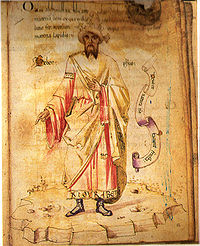
In the late 8th century, Jabir ibn Hayyan
(known as "Geber" in Europe) introduced a new approach to alchemy, based on scientific method
ology and controlled experiment
ation in the laboratory
, in contrast to the ancient Greek and Egyptian alchemists whose works were often allegorical and unintelligible, with very little concern for laboratory work. Jabir is thus "considered by many to be the father of chemistry
", albeit others reserve that title for Robert Boyle
or Antoine Lavoisier
. The historian of science, Paul Kraus, wrote:
Jabir himself clearly recognized and proclaimed the importance of experimentation as follows:
Early Islamic chemists such as Jabir Ibn Hayyan
(جابر بن حيان in Arabic, Geberus in Latin; usually rendered in English as Geber), Al-Kindi
(Alkindus) and Muhammad ibn Zakarīya Rāzi (Rasis or Rhazes in Latin) contributed a number of key chemical discoveries, such as the muriatic (hydrochloric acid
), sulfuric
and nitric acid
s, and more. The discovery that aqua regia
, a mixture of nitric and hydrochloric acids, could dissolve the noblest metal, gold, was to fuel the imagination of alchemists for the next millennium.
Islamic philosophers also made great contributions to alchemical hermeticism. The most influential author in this regard was arguably Jabir. Jabir's ultimate goal was Takwin
, the artificial creation of life in the alchemical laboratory, up to and including human life. He analyzed each Aristotelian element in terms of four basic qualities of hotness, coldness, dryness, and moistness. According to Jabir, in each metal two of these qualities were interior and two were exterior. For example, lead was externally cold and dry, while gold was hot and moist. Thus, Jabir theorized, by rearranging the qualities of one metal, a different metal would result. By this reasoning, the search for the philosopher's stone
was introduced to Western alchemy. Jabir developed an elaborate numerology
whereby the root letters of a substance's name in Arabic, when treated with various transformations, held correspondences to the element's physical properties.
The elemental system used in medieval alchemy also originated with Jabir. His original system consisted of seven elements, which included the five classical element
s (aether
, air
, earth
, fire
and water
), in addition to two chemical element
s representing the metal
s: sulphur
, ‘the stone which burns’, which characterized the principle of combustibility, and mercury
, which contained the idealized principle of metallic properties. Shortly thereafter, this evolved into eight elements, with the Arabic concept of the three metallic principles: sulphur giving flammability or combustion, mercury giving volatility and stability, and salt giving solidity. The atomic theory
of corpuscularianism
, where all physical bodies possess an inner and outer layer of minute particles or corpuscles, also has its origins in the work of Jabir.
During the 9th to 14th centuries, alchemical theories faced criticism from a variety of practical Muslim chemists, including Ja'far al-Sadiq
, Alkindus
, Abū al-Rayhān al-Bīrūnī, Avicenna
and Ibn Khaldun
. In particular, they wrote refutations against the idea of the transmutation of metals
.
 The introduction of alchemy to Latin Europe occurred on February 11th, 1144, with the completion of Robert of Chester’s
translation of the Arabic Book of the Composition of Alchemy. Although European craftsmen and technicians preexisted, Robert notes in his preface that alchemy was unknown in Latin Europe at the time of his writing. The translation of Arabic texts concerning numerous disciplines including alchemy flourished in twelfth century Toledo, Spain
, through contributors like Gerard of Cremona
and Adelard of Bath
. Translations of the time included the Turba Philosophorum
, and the works of Avicenna and al-Razi
. These brought with them many new words to the European vocabulary for which there was no previous Latin equivalent. Alcohol, carboy, elixir, and athanor are examples.
Meanwhile, theologian contemporaries of the translators made strides towards the reconciliation of faith and experimental rationalism, thereby priming Europe for the influx of alchemical thought. Saint Anselm
(1033–1109) put forth the opinion that faith and rationalism were compatible and encouraged rationalism in a Christian context. Peter Abelard
followed Anselm's work, laying the foundation for acceptance of Aristotelian thought before the first works of Aristotle reached the West. Later, Robert Grosseteste
(1170–1253) took Abelard's methods of analysis and added the use of observations, experimentation, and conclusions in making scientific evaluations. Grosseteste also did much work to bridge Platonic and Aristotelian thinking.
Through much of the twelfth and thirteenth centuries, alchemical knowledge in Europe remained centered around translations, and new Latin contributions were not made. The efforts of the translators were succeeded by that of the encyclopaedists. Albertus Magnus
and Roger Bacon
are the most notable of these. Their works explained and summarized the newly imported alchemical knowledge in Aristotelian terms. There is little to suggest that Albertus Magnus (1193–1280), a Dominican
, was himself an alchemist. In his authentic works such as the Book of Minerals, he observed and commented on the operations and theories of alchemical authorities like Hermes and Democritus, and unnamed alchemists of his time. Albertus critically compared these to the writings of Aristotle and Avicenna, where they concerned the transmutation of metals. From the time shortly after his death through to the fifteenth century, twenty-eight or more alchemical tracts were misattributed to him, a common practice giving rise to his reputation as an accomplished alchemist. Likewise, alchemical texts have been attributed to Albert’s student Thomas Aquinas
(1225–1274).
Roger Bacon (1214–1294) was an Oxford Franciscan
who studied a wide variety of topics including optics
, languages
and medicine. After studying the Pseudo-Aristotelian
Secretum Secretorum
around 1247, he dramatically shifted his studies towards a vision of a universal science which included alchemy and astrology. Bacon maintained that Albertus Magnus’ ignorance of the fundamentals of alchemy prevented a complete picture of wisdom. While alchemy was not more important to him than any of the other sciences, and he did not produce symbolic allegorical works, Bacon's contributions advanced alchemy’s connections to soteriology
and Christian theology. Bacon’s writings demonstrated an integration of morality, salvation, alchemy, and the prolongation of life. His correspondence with Pope Clement IV
highlighted this integration, calling attention to the importance of alchemy to the papacy. Like the Greeks before him, Bacon acknowledged the division of alchemy into the practical and theoretical. He notes that the theoretical lied outside the scope of Aristotle, the natural philosophers, and all Latin writers of his time. The practical however, confirmed the theoretical through experiment, and Bacon advocated its uses in natural science and medicine.
Soon after Bacon, the influential work of Pseudo-Geber
(sometimes identified as Paul of Taranto
) appeared. His Summa Perfectionis remained a staple summary of alchemical practice and theory through the medieval and renaissance periods. It was notable for its inclusion of practical chemical operations alongside sulphur-mercury theory, and the unusual clarity with which they were described. By the end of the 13th century, alchemy had developed into a fairly structured system of belief. Adepts believed in the macrocosm-microcosm theories of Hermes, that is to say, they believed that processes that affect minerals and other substances could have an effect on the human body (for example, if one could learn the secret of purifying gold, one could use the technique to purify the human soul
). They believed in the four elements and the four qualities as described above, and they had a strong tradition of cloaking their written ideas in a labyrinth of coded jargon
set with traps to mislead the uninitiated. Finally, the alchemists practiced their art: they actively experimented with chemicals and made observation
s and theories
about how the universe operated. Their entire philosophy revolved around their belief that man's soul was divided within himself after the fall of Adam. By purifying the two parts of man's soul, man could be reunited with God.
In the 14th century, alchemy became more accessible to Europeans outside the confines of Latin speaking churchmen and scholars. Alchemical discourse shifted from scholarly philosophical debate to an exposed social commentary on the alchemists themselves. Dante
, Piers the Ploughman, and Chaucer all painted unflattering pictures of alchemists as thieves and liars. Pope John XXII
’s 1317 edict, Spondent quas non exhibent forbade the false promises of transmutation made by pseudo-alchemists. In 1403, Henry IV of England banned the practice of multiplying metals. These critiques and regulations centered more around pseudo-alchemical charlatanism than the actual study of alchemy, which continued with an increasingly Christian tone. The 14th century saw the Christian imagery of death and resurrection employed in the alchemical texts of Petrus Bonus
, John of Rupescissa and in works written in the name of Raymond Lull and Arnold of Villanova.
Nicolas Flamel lived from 1330 to 1417 and would serve as the archetype
for the next phase of alchemy. He was not a religious scholar as were many of his predecessors, and his entire interest in the subject revolved around the pursuit of the philosopher's stone
. His work spends a great deal of time describing the processes and reactions, but never actually gives the formula for carrying out the transmutations. Most of his work was aimed at gathering alchemical knowledge that had existed before him, especially as regarded the philosopher's stone. Though the historical Flamel existed, the writings and legends assigned to him only appeared in 1612. Current scholarship suggests that they are fiction - another example of the tradition of pseudepigraphy
and allegory in alchemical writing.
Through the late Middle Ages
(1300–1500) alchemists were much like Flamel: they concentrated on looking for the philosophers' stone. Bernard Trevisan
and George Ripley
made similar contributions in the 14th and 15th centuries . Their cryptic allusions and symbol
ism led to wide variations in interpretation of the art.
. The era also saw a flourishing of con artists who would use chemical tricks and sleight of hand to "demonstrate" the transmutation of common metals into gold, or claim to possess secret knowledge that—with a "small" initial investment—would surely lead to that goal.
However, it is important to emphasize that the terms "chemia" and "alchemia" were used as synonyms in the Renaissance, and the differences between alchemy, chemistry and small-scale assaying and metallurgy were not as neat as in the present day. There were important overlaps between practitioners, and trying to classify them into wizards (alchemists), scientists (chemists) and craftsmen (metallurgists) is anachronistic.
One of these men who emerged at the beginning of the 16th century was the German Heinrich Cornelius Agrippa
(1486–1535). This alchemist believed himself to be a wizard capable of summoning spirits. His influence was negligible, but like Flamel, he produced writings which were referred to by alchemists of later years. Again like Flamel, he did much to change alchemy from a mystical philosophy to an occult
ist magic. He did keep alive the philosophies of the earlier alchemists, including experimental science, numerology, etc., but he added magic theory, which reinforced the idea of alchemy as an occultist belief. In spite of all this, Agrippa still considered himself a Christian, though his views often came into conflict with the church.
The most important name in this period is Philippus Aureolus Paracelsus
, (Theophrastus Bombastus von Hohenheim, 1493–1541) who cast alchemy into a new form, rejecting some of the occultism that had accumulated over the years and promoting the use of observations and experiments to learn about the human body. He rejected Gnostic traditions, but kept much of the Hermetical, neo-Platonic
, and Pythagorean philosophies; however, Hermetical science had so much Aristotelian theory that his rejection of Gnosticism was practically meaningless. In particular, Paracelsus rejected the magic theories of Agrippa and Flamel.
Paracelsus pioneered the use of chemicals and minerals in medicine, and wrote "Many have said of Alchemy, that it is for the making of gold and silver. For me such is not the aim, but to consider only what virtue and power may lie in medicines." His hermetical views were that sickness and health in the body relied on the harmony of man the microcosm and Nature the macrocosm. He took an approach different from those before him, using this analogy not in the manner of soul-purification but in the manner that humans must have certain balances of minerals in their bodies, and that certain illnesses of the body had chemical remedies that could cure them. While his attempts of treating diseases with such remedies as Mercury might seem ill-advised from a modern point of view, his basic idea of chemically produced medicines has stood time surprisingly well. Alchemy became known as the spagyric art after Greek words meaning to separate and to join together the word probably being coined by Paracelsus. Compare this with one of the dictum
s of Alchemy in Latin: Solve et Coagula — Separate, and Join Together (or "dissolve and coagulate").
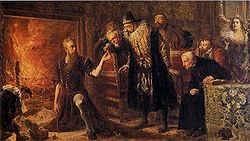 At the beginning of the 16th century, King James IV of Scotland
kept an alchemist, John Damian
, and a furnace of the quintessence in Stirling Castle
. In England
, the topic of alchemy in that time frame is often associated with Doctor John Dee
(13 July 1527 – December, 1608), better known for his role as astrologer
, cryptographer, and general "scientific consultant" to Queen Elizabeth I
. Dee was considered an authority on the works of Roger Bacon
, and was interested enough in alchemy to write a book on that subject (Monas Hieroglyphica, 1564) influenced by the Kabbalah
. Dee's associate Edward Kelley
— who claimed to converse with angel
s through a crystal ball and to own a powder that would turn mercury
into gold
— may have been the source of the popular image of the alchemist-charlatan.
Rudolf II, Holy Roman Emperor
, in the late 16th century, sponsored various alchemists in their work at his court in Prague, one of which was a particular alchemist named Edward Kelley
. Kelley had been a protegee of John Dee in England.
Another lesser known alchemist was Michael Sendivogius (Michał Sędziwój, 1566–1636), a Polish
alchemist, philosopher, medical doctor and pioneer of chemistry. According to some accounts, he distilled oxygen
in a lab sometime around 1600, 170 years before Scheele and Priestley
, by warming nitre (saltpetre
). He thought of the gas given off as "the elixir of life". Shortly after discovering this method, it is believed that Sendivogious taught his technique to Cornelius Drebbel
. In 1621, Drebbel practically applied this in a submarine.
Tycho Brahe
(1546–1601), better known for his astronomical and astrological investigations, was also an alchemist. He had a laboratory built for that purpose at his Uraniborg
observatory/research institute.
Up to the 17th century, alchemy was practiced by scientists, such as Isaac Newton
– who devoted considerably more of his writing to the study of alchemy (see Isaac Newton's occult studies
) than he did to either optics or physics. Other alchemists of the Western world
who were eminent in their other studies include Roger Bacon
, and Tycho Brahe
.
Robert Boyle
(1627–1691), better known for his studies of gases (cf. Boyle's law
) pioneered the scientific method in chemical investigations. He assumed nothing in his experiments and compiled every piece of relevant data; in a typical experiment, Boyle would note the place in which the experiment was carried out, the wind characteristics, the position of the Sun and Moon, and the barometer reading, all just in case they proved to be relevant. This approach eventually led to the founding of modern chemistry in the 18th and 19th centuries, based on revolutionary discoveries of Lavoisier
and John Dalton
— which finally provided a logical, quantitative and reliable framework for understanding matter transmutations, and revealed the futility of longstanding alchemical goals such as the philosopher's stone.
Meanwhile, Paracelsian alchemy led to the development of modern medicine. Experimentalists gradually uncovered the workings of the human body, such as blood circulation (Harvey
, 1616), and eventually traced many diseases to infections with germs (Koch
and Pasteur
, 19th century) or lack of natural nutrients and vitamin
s (Lind, Eijkman
, Funk, et al.). Supported by parallel developments in organic chemistry, the new science easily displaced alchemy from its medical roles, interpretive and prescriptive, while deflating its hopes of miraculous elixirs and exposing the ineffectiveness or even toxicity of its remedies.
During the seventeenth century, a short-lived "supernatural" interpretation of alchemy become popular, including support by fellows of the Royal Society
: Robert Boyle
and Elias Ashmole
. Proponents of the supernatural interpretation of alchemy believed that the philosopher's stone
might be used to summon and communicate with angels.
In the 17th century, practical alchemy started to evolve into modern chemistry, as it was renamed by Robert Boyle
, the "father of modern chemistry". In his book, The Skeptical Chymist, Boyle attacked Paracelsus
and the venerable natural philosophy
of Aristotle
, which was taught at universities. However, Boyle's biographers, in their emphasis that he laid the foundations of modern chemistry, neglect how steadily he clung to the Scholastic sciences
and to Alchemy, in theory, practice and doctrine. The decline of alchemy continued in the 18th century with the birth of modern chemistry, which provided a more precise and reliable framework within a new view of the universe based on rational materialism
.
The words "alchemy" and "chemistry" were used interchangeably during most of the seventeenth century; only during the eighteenth century was a distinction drawn rigidly between the two. In the eighteen century, "alchemy" was considered to be restricted to the realm of "gold making", leading to the popular belief that most, if not all, alchemists were charlatans, and the tradition itself nothing more than a fraud. The obscure and secretive writings of the alchemists was used as a case by those who wished to forward a fraudulent and non-scientific opinion of alchemy. In order to protect the developing science of modern chemistry from the negative censure of which alchemy was being subjected, academic writers during the scientific Enlightenment attempted, for the sake of survival, to separate and divorce the "new" chemistry from the "old" practices of alchemy. This move was mostly successful, and the consequences of this continued into the nineteenth and twentieth centuries, and even to the present day.
During the occult revival of the early nineteenth century, alchemy received new attention as an occult science. The esoteric or occultist school, which arose during the nineteenth century, held (and continues to hold) the view that the substances and operations mentioned in alchemical literature are to be interpreted in a spiritual sense, and it downplays the role of the alchemy as a practical tradition or protoscience. This interpretation further forwarded the view that alchemy is an art primarily concerned with spiritual enlightenment or illumination, as opposed to the physical manipulation of apparatus and chemicals, and claims that the obscure language of the alchemical texts were an allegorical guise for spiritual, moral or mystical processes. In the first half of the 19th century, one established chemist, Baron Carl Reichenbach
, worked on concepts similar to the old alchemy, such as the Odic force
, but his research did not enter the mainstream of scientific discussion.
In the nineteenth century revival of alchemy, the two most seminal figures were Mary Anne Atwood, and Ethan Allen Hitchcock
who independently published similar works regarding spiritual alchemy. Both forwarded a completely esoteric view of alchemy, as Atwood claimed: "No modern art or chemistry, notwithstanding all its surreptitious claims, has any thing in common with Alchemy." Atwood's work influenced subsequent authors of the occult revival including Eliphas Levi
, Arthur Edward Waite
, and Rudolf Steiner
. Hitchcock, in his Remarks Upon Alchymists (1855) attempted to make a case for his spiritual interpretation with his claim that the alchemists wrote about a spiritual discipline under a materialistic guise in order to avoid accusations of blasphemy from the church and state.
Thus, as science steadily continued to uncover and rationalize the clockwork of the universe, founded on its own materialistic metaphysics
, alchemy was left deprived of its chemical and medical connections — but still incurably burdened by them. Reduced to an arcane philosophical system, poorly connected to the material world, it suffered the common fate of other esoteric disciplines such as astrology
and Kabbalah
: excluded from university
curricula, shunned by its former patrons, ostracized by scientists, and commonly viewed as the epitome of charlatan
ism and superstition
. These developments could be interpreted as part of a broader reaction in European intellectualism against the Romantic
movement of the preceding centuries.
Significant progress in alchemy was made in ancient India
. Will Durant
wrote in Our Oriental Heritage:
An 11th century Persian chemist
and physician named Abū Rayhān Bīrūnī reported that they "have a science similar to alchemy which is quite peculiar to them, which in Sanskrit
is called Rasayāna
and in Persian Rasavātam. It means the art of obtaining/manipulating Rasa - nectar, mercury, juice. This art was restricted to certain operations, metals, drugs, compounds, and medicines, many of which have mercury as their core element. Its principles restored the health of those who were ill beyond hope and gave back youth to fading old age." One thing is sure though, Indian alchemy like every other Indian science is focused on finding Moksha
: perfection, immortality, liberation. As such it focuses its efforts on transmutation of the human body: from mortal to immortal. Many are the traditional stories of alchemists still alive since time immemorial due to the effects of their experiments.
The texts of Ayurvedic Medicine and Science have aspects similar to alchemy: concepts of cures for all known diseases, and treatments that focus on anointing the body with oils.
Since alchemy eventually became engrained in the vast field of Indian erudition, influences from other metaphysical and philosophical doctrines such as Samkhya
, Yoga
, Vaisheshika
and Ayurveda
were inevitable. Nonetheless, most of the Rasayāna
texts track their origins back to Kaula
tantric schools associated to the teachings of the personality of Matsyendranath
.
The Rasayāna
was understood by very few people at the time. Two famous examples were Nagarjunacharya
and Nityanadhiya. Nagarjunacharya was a Buddhist monk who, in ancient times, ran the great university of Nagarjuna Sagar. His famous book, Rasaratanakaram, is a famous example of early Indian medicine. In traditional Indian medicinal terminology "rasa" translates as "mercury" and Nagarjunacharya was said to have developed a method to convert the mercury into gold. Much of his original writings are lost to us, but his teachings still have strong influence on traditional Indian medicine (Ayurveda) to this day.
 Whereas Western alchemy eventually centered on the transmutation of base metals into noble ones, Chinese
alchemy had a more obvious connection to medicine. The philosopher's stone
of European alchemists can be compared to the Grand Elixir of Immortality
sought by Chinese alchemists. However, in the hermetic view, these two goals were not unconnected, and the philosopher's stone was often equated with the universal panacea; therefore, the two traditions may have had more in common than initially appears.
Black powder may have been an important invention of Chinese alchemists. Described in 9th century texts and used in fireworks
in China
by the 10th century, it was used in cannon
s by 1290. From China
, the use of gunpowder
spread to Japan
, the Mongols, the Arab world, and Europe. Gunpowder was used by the Mongols against the Hungarians in 1241, and in Europe by the 14th century.
Chinese alchemy was closely connected to Taoist forms of traditional Chinese medicine
, such as Acupuncture
and Moxibustion
, and to martial arts
such as Tai Chi Chuan and Kung Fu (although some Tai Chi schools believe that their art derives from the philosophical or hygienic branches of Taoism, not Alchemical). In fact, in the early Song Dynasty
, followers of this Taoist idea (chiefly the elite and upper class) would ingest mercuric sulfide
, which, though tolerable in low levels, led many to suicide. Thinking that this consequential death would lead to freedom and access to the Taoist heavens, the ensuing deaths encouraged people to eschew this method of alchemy in favor of external sources (the aforementioned Tai Chi Chuan, mastering of the Qi
, etc.).
and philosophy
, the sociology and psychology of the intellectual communities, kabbalism
, spiritualism
, Rosicrucianism, and other mystic movements. Institutions involved in this research include The Chymistry of Isaac Newton project at Indiana University, the University of Exeter
Centre for the Study of Esotericism (EXESESO), the European Society for the Study of Western Esotericism
(ESSWE), and the University of Amsterdam's Sub-department for the History of Hermetic Philosophy and Related Currents. A large collection of books on alchemy is kept in the Bibliotheca Philosophica Hermetica
in Amsterdam.
Esoteric interpretations of alchemy remains strong to this day, and continue to influence both the public and academic perceptions of the history of alchemy. Today, numerous esoteric alchemical groups continue to perpetuate modern interpretations of alchemy, sometimes merging in concepts from New Age
or radical environmentalism movements. Rosencrutzians and freemasons have a continued interest in alchemy and its symbolism.
the samskaras
are claimed to transform heavy metals
and toxic herbs in a way that removes their toxicity. These processes are actively used to the present day.
Twentieth century spagyrists Albert Richard Riedel
and Jean Dubuis merged Paracelsian alchemy with occultism, teaching laboratory pharmaceutical methods. The schools they founded, Les Philosophes de la Nature and The Paracelsus Research Society, popularized modern spagyrics including the manufacture of herbal tinctures and products. The courses, books, organizations, and conferences generated by their students continue to influence popular applications of alchemy as a new age medicinal practice.
used artificial disintegration
to convert nitrogen
into oxygen
. From then on, this sort of scientific transmutation is routinely performed in many nuclear physics
-related laboratories and facilities, like particle accelerator
s, nuclear power stations and nuclear weapon
s as a by-product of fission
and other physical processes.
The synthesis of noble metal
s enjoyed brief popularity in the 20th century when physicists were able to convert platinum atoms into gold atoms via a nuclear reaction
. However, the new gold atoms, being unstable isotope
s, lasted for under five seconds before they broke apart. More recently, reports of table-top element transmutation—by means of electrolysis
or sonic cavitation—were the pivot of the cold fusion
controversy of 1989. None of those claims have yet been reliably duplicated.
Synthesis of noble metals requires either a nuclear reactor
or a particle accelerator
. Particle accelerators use huge amounts of energy
, while nuclear reactors produce energy, so only methods utilizing a nuclear reactor are of economic interest.
such as Carl Jung
who reexamined alchemical symbolism and theory and presented the inner meaning of alchemical work as a spiritual
path. Jung was deeply interested in the occult since his youth, participating in seances, which he used as the basis for his doctoral dissertation "On the Psychology and Pathology of So-Called Occult Phenomena." In 1913, Jung had already adopted a "spiritualist and redemptive interpretation of alchemy", likely reflecting his interest in the occult literature of the nineteenth century. Jung began writing his views on alchemy from the 1920s and continued until the end of his life. His interpretation of Chinese alchemical texts
in terms of his analytical psychology
also served the function of comparing Eastern and Western alchemical imagery and core concepts and hence its possible inner sources (archetypes
).
Jung saw alchemy as a Western proto-psychology dedicated to the achievement of individuation
. In his interpretation, alchemy was the vessel by which Gnosticism
survived its various purges into the Renaissance
, a concept also followed by others such as Stephan A. Hoeller
. In this sense, Jung viewed alchemy as comparable to a Yoga
of the East, and more adequate to the Western mind than Eastern religions and philosophies. The practice of Alchemy seemed to change the mind and spirit of the Alchemist. Conversely, spontaneous changes on the mind of Western people undergoing any important stage in individuation
seems to produce, on occasion, imagery known to Alchemy and relevant to the person's situation. Jung did not completely reject the material experiments of the alchemists, but he massively downplayed it, writing that the transmutation was performed in the mind of the alchemist. He claimed the material substances and procedures were only a projection of the alchemists' internal state, while the real substance to be transformed was the mind itself.
Marie-Louise von Franz
, a disciple of Jung, continued Jung's studies on alchemy and its psychological meaning. Jung's work exercised a great influence on the mainstream perception of alchemy, his approach becoming a stock element in many popular texts on the subject to this day. Modern scholars are sometimes critical of the Jungian approach to alchemy as overly reflective of nineteenth century occultism.
Philosopher's stone
The philosopher's stone is a legendary alchemical substance said to be capable of turning base metals into gold or silver. It was also sometimes believed to be an elixir of life, useful for rejuvenation and possibly for achieving immortality. For many centuries, it was the most sought-after goal...
possessing powers including the capability of turning base metal
Base metal
In chemistry, the term base metal is used informally to refer to a metal that oxidizes or corrodes relatively easily, and reacts variably with diluted hydrochloric acid to form hydrogen. Examples include iron, nickel, lead and zinc...
s into the noble metal
Noble metal
Noble metals are metals that are resistant to corrosion and oxidation in moist air, unlike most base metals. They tend to be precious, often due to their rarity in the Earth's crust...
s gold
Gold
Gold is a chemical element with the symbol Au and an atomic number of 79. Gold is a dense, soft, shiny, malleable and ductile metal. Pure gold has a bright yellow color and luster traditionally considered attractive, which it maintains without oxidizing in air or water. Chemically, gold is a...
or silver
Silver
Silver is a metallic chemical element with the chemical symbol Ag and atomic number 47. A soft, white, lustrous transition metal, it has the highest electrical conductivity of any element and the highest thermal conductivity of any metal...
- as well as an elixir of life
Elixir of life
The elixir of life, also known as the elixir of immortality and sometimes equated with the philosopher's stone, is a legendary potion, or drink, that grants the drinker eternal life and or eternal youth. Many practitioners of alchemy pursued it. The elixir of life was also said to be able to create...
conferring youth and immortality. In general alchemists believe in a natural and symbolic unity of humanity with the cosmos. Lately western alchemy has become recognized as the proto-typical protoscience
Protoscience
In the philosophy of science, a protoscience is an area of scientific endeavor that is in the process of becoming established. Protoscience is distinguished from pseudoscience by its standard practices of good science, such as a willingness to be disproven by new evidence, or to be replaced by a...
presaging the seminal western science
Science
Science is a systematic enterprise that builds and organizes knowledge in the form of testable explanations and predictions about the universe...
s such as chemistry
Chemistry
Chemistry is the science of matter, especially its chemical reactions, but also its composition, structure and properties. Chemistry is concerned with atoms and their interactions with other atoms, and particularly with the properties of chemical bonds....
and medicine
Medicine
Medicine is the science and art of healing. It encompasses a variety of health care practices evolved to maintain and restore health by the prevention and treatment of illness....
. Alchemists nurtured a framework of theory, terminology, experimental process and basic lab techniques still recognizable today. But alchemy differs from modern science
Science
Science is a systematic enterprise that builds and organizes knowledge in the form of testable explanations and predictions about the universe...
in the inclusion of Hermetic
Hermeticism
Hermeticism or the Western Hermetic Tradition is a set of philosophical and religious beliefs based primarily upon the pseudepigraphical writings attributed to Hermes Trismegistus...
principles and practices related to mythology
Mythology
The term mythology can refer either to the study of myths, or to a body or collection of myths. As examples, comparative mythology is the study of connections between myths from different cultures, whereas Greek mythology is the body of myths from ancient Greece...
, religion
Religion
Religion is a collection of cultural systems, belief systems, and worldviews that establishes symbols that relate humanity to spirituality and, sometimes, to moral values. Many religions have narratives, symbols, traditions and sacred histories that are intended to give meaning to life or to...
, and spirituality
Spirituality
Spirituality can refer to an ultimate or an alleged immaterial reality; an inner path enabling a person to discover the essence of his/her being; or the “deepest values and meanings by which people live.” Spiritual practices, including meditation, prayer and contemplation, are intended to develop...
.
Overview
The best known goals of the alchemists were the transmutation of common metals into goldGold
Gold is a chemical element with the symbol Au and an atomic number of 79. Gold is a dense, soft, shiny, malleable and ductile metal. Pure gold has a bright yellow color and luster traditionally considered attractive, which it maintains without oxidizing in air or water. Chemically, gold is a...
or silver
Silver
Silver is a metallic chemical element with the chemical symbol Ag and atomic number 47. A soft, white, lustrous transition metal, it has the highest electrical conductivity of any element and the highest thermal conductivity of any metal...
, and the creation of a "panacea
Panacea (medicine)
The panacea , named after the Greek goddess of healing, Panacea, also known as panchrest, was supposed to be a remedy that would cure all diseases and prolong life indefinitely...
," a remedy that supposedly would cure all diseases and prolong life indefinitely; and the discovery of a universal solvent
Alkahest
Alkahest is a hypothetical universal solvent, having the power to dissolve every other substance, including gold. It was much sought after by alchemists for what they thought would be its invaluable medicinal qualities. The name is believed to have been invented by Paracelsus from Switzerland,...
.
Modern discussions of alchemy are generally split into an examination of its exoteric
Exoteric
Exoteric refers to knowledge that is outside of and independent from anyone's experience and can be ascertained by anyone. Compare Common sense. It is distinguished from internal esoteric knowledge. Exoteric relates to "external reality" as opposed to one's own thoughts or feelings. It is knowledge...
practical applications, and its esoteric aspects. The former is pursued by historians of the physical sciences who have examined the subject in terms of proto-chemistry, medicine, and charlatanism. The latter is of interest to the historians of esotericism, psychologists, spiritual and new age communities, and hermetic philosophers. The subject has also made an ongoing impact on literature and the arts. Despite the modern split, numerous sources stress an integration of esoteric and exoteric approaches to alchemy. Holmyard, when writing on exoteric aspects, states that they can not be properly appreciated if the esoteric is not always kept in mind. The prototype for this model can be found in Bolos of Mendes' second century BCE work, Physika kai Mystika (On Physical and Mystical Matters). Marie-Louise von Franz
Marie-Louise von Franz
Marie-Louise von Franz was a Swiss Jungian psychologist and scholar.-Early life and education:Von Franz was born in Munich, Germany, the daughter of an Austrian baron. In Switzerland, she was known by a pet form of her Christian name, Marlus.-Career:Von Franz worked with Carl Jung, whom she met in...
tells us the double approach of Western alchemy was set from the start, when Greek philosophy was mixed with Egyptian and Mesopotamian technology. The technological, operative approach, which she calls extraverted, and the mystic, contemplative, psychological one, which she calls introverted are not mutually exclusive, but complementary instead, as meditation requires practice in the real world, and conversely.
Relation to the science of chemistry
Practical applications of alchemy produced a wide range of contributions to medicine and the physical sciences. Alchemists Jābir ibn Hayyān and Robert BoyleRobert Boyle
Robert Boyle FRS was a 17th century natural philosopher, chemist, physicist, and inventor, also noted for his writings in theology. He has been variously described as English, Irish, or Anglo-Irish, his father having come to Ireland from England during the time of the English plantations of...
are both credited as being the fathers of chemistry. Paracelsian iatrochemistry
Iatrochemistry
Iatrochemistry is a branch of both chemistry and medicine. Having its roots in alchemy, iatrochemistry seeks to provide chemical solutions to diseases and medical ailments....
emphasized the medicinal application of alchemy (continued in plant alchemy, or spagyric
Spagyric
Spagyric is a name given to the production of herbal medicines using alchemical procedures. These procedures involve fermentation, distillation and the extraction of mineral components from the ash of the plant...
). Studies of alchemy also influenced Isaac Newton's
Isaac Newton
Sir Isaac Newton PRS was an English physicist, mathematician, astronomer, natural philosopher, alchemist, and theologian, who has been "considered by many to be the greatest and most influential scientist who ever lived."...
theory of gravity. Academic historical research supports that the alchemists were searching for a material substance using physical methods.
It is a popular belief that Alchemists made contributions to the "chemical" industries of the day—ore testing and refining, metalworking, production of gunpowder, ink, dyes, paints, cosmetics, leather tanning
Tanning
Tanning is the making of leather from the skins of animals which does not easily decompose. Traditionally, tanning used tannin, an acidic chemical compound from which the tanning process draws its name . Coloring may occur during tanning...
, ceramics, glass manufacture, preparation of extracts, liquors, and so on (it seems that the preparation of aqua vitae
Aqua vitae
Aqua vitae, or aqua vita, is an archaic name for a concentrated aqueous solution of ethanol. The term was in wide use during the Middle Ages, although its origin is undoubtedly much earlier having been used by Saint Patrick and his fellow monks to refer to both the alcohol and the waters of baptism...
, the "water of life", was a fairly popular "experiment" among European alchemists). Alchemists contributed distillation
Distillation
Distillation is a method of separating mixtures based on differences in volatilities of components in a boiling liquid mixture. Distillation is a unit operation, or a physical separation process, and not a chemical reaction....
to Western Europe. The attempts of alchemists to arrange information on substances, so as to clarify and anticipate the products of their chemical reactions, resulted in early conceptions of chemical elements and the first rudimentary periodic table
Periodic table
The periodic table of the chemical elements is a tabular display of the 118 known chemical elements organized by selected properties of their atomic structures. Elements are presented by increasing atomic number, the number of protons in an atom's atomic nucleus...
s. They learned how to extract metals from ores, and how to compose many types of inorganic acids and bases.
During the 17th century, practical alchemy started to evolve into modern chemistry, as it was renamed by Robert Boyle
Robert Boyle
Robert Boyle FRS was a 17th century natural philosopher, chemist, physicist, and inventor, also noted for his writings in theology. He has been variously described as English, Irish, or Anglo-Irish, his father having come to Ireland from England during the time of the English plantations of...
, the "father of modern chemistry". In his book, The Skeptical Chymist, Boyle attacked Paracelsus
Paracelsus
Paracelsus was a German-Swiss Renaissance physician, botanist, alchemist, astrologer, and general occultist....
and the natural philosophy
Natural philosophy
Natural philosophy or the philosophy of nature , is a term applied to the study of nature and the physical universe that was dominant before the development of modern science...
of Aristotle
Aristotle
Aristotle was a Greek philosopher and polymath, a student of Plato and teacher of Alexander the Great. His writings cover many subjects, including physics, metaphysics, poetry, theater, music, logic, rhetoric, linguistics, politics, government, ethics, biology, and zoology...
, which was taught at universities. However, Boyle's biographers, in their emphasis that he laid the foundations of modern chemistry, neglect how steadily he clung to the Scholastic sciences
Scholasticism
Scholasticism is a method of critical thought which dominated teaching by the academics of medieval universities in Europe from about 1100–1500, and a program of employing that method in articulating and defending orthodoxy in an increasingly pluralistic context...
and to Alchemy, in theory, practice and doctrine. The decline of alchemy continued in the 18th century with the birth of modern chemistry, which provided a more precise and reliable framework within a new view of the universe based on rational materialism
Materialism
In philosophy, the theory of materialism holds that the only thing that exists is matter; that all things are composed of material and all phenomena are the result of material interactions. In other words, matter is the only substance...
.
Relation to Hermeticism
In the eyes of a variety of esoteric and HermeticHermeticism
Hermeticism or the Western Hermetic Tradition is a set of philosophical and religious beliefs based primarily upon the pseudepigraphical writings attributed to Hermes Trismegistus...
practitioners, the heart of alchemy is spiritual. Transmutation of lead into gold is presented as an analogy for personal transmutation, purification, and perfection. This approach is often termed 'spiritual', 'esoteric', or 'internal' alchemy.
Early alchemists, such as Zosimos of Panopolis
Zosimos of Panopolis
Zosimos of Panopolis was an Egyptian or Greek alchemist and Gnostic mystic from the end of the 3rd and beginning of the 4th century AD. He was born in Panopolis, present day Akhmim in the south of Egypt, ca. 300. He wrote the oldest known books on alchemy, of which quotations in the Greek language...
(c. 300 A.D.), highlight the spiritual nature of the alchemical quest, symbolic of a religious regeneration of the human soul. This approach continued in the Middle Ages, as metaphysical aspects, substances, physical states, and material processes were used as metaphors for spiritual entities, spiritual states, and, ultimately, transformation. In this sense, the literal meanings of 'Alchemical Formulas' were a blind, hiding their true spiritual philosophy
Spiritual philosophy
Spiritual philosophy is a generic term for any philosophy or teaching that pertains to spirituality and spiritual realities. It may incorporate religious or esoteric themes, especially those from Theosophy or Neo-Theosophy, New Age thought, mysticism, and Eastern philosophy...
. Practitioners and patrons such as Melchior Cibinensis
Melchior Cibinensis
Melchior Cibinensis was a Hungarian alchemical writer active in the first part of the 16th century. He is known for the Processus sub forma missae, an alchemical mass, now dated to around 1525; it was published in the Theatrum Chemicum of 1602, and formed part of a celebrated later collection...
and Pope Innocent VIII
Pope Innocent VIII
Pope Innocent VIII , born Giovanni Battista Cybo , was Pope from 1484 until his death.-Early years:Giovanni Battista Cybo was born at Genoa of Greek extraction...
existed within the ranks of the church, while Martin Luther
Martin Luther
Martin Luther was a German priest, professor of theology and iconic figure of the Protestant Reformation. He strongly disputed the claim that freedom from God's punishment for sin could be purchased with money. He confronted indulgence salesman Johann Tetzel with his Ninety-Five Theses in 1517...
applauded alchemy for its consistency with Christian teachings. Both the transmutation of common metals into gold and the universal panacea symbolized evolution from an imperfect, diseased, corruptible, and ephemeral state towards a perfect, healthy, incorruptible, and everlasting state; and the philosopher's stone then represented a mystic key that would make this evolution possible. Applied to the alchemist himself, the twin goal symbolized his evolution from ignorance to enlightenment, and the stone represented a hidden spiritual truth or power that would lead to that goal. In texts that are written according to this view, the cryptic alchemical symbol
Alchemical symbol
Alchemical symbols, originally devised as part of alchemy, were used to denote some elements and some compounds until the 18th century. Note that while notation like this was mostly standardized, style and symbol varied between alchemists, so this page lists the most common.-Three primes:According...
s, diagrams, and textual imagery of late alchemical works typically contain multiple layers of meanings, allegories, and references to other equally cryptic works; and must be laboriously decoded to discover their true meaning.
In his 1766 Alchemical Catechism, Théodore Henri de Tschudi denotes that the usage of the metals was a symbol:
During the renaissance, alchemy broke into more distinct schools placing spiritual alchemists in high contrast with those working with literal metals and chemicals. While most spiritual alchemists also incorporate elements of exotericism, examples of a purely spiritual alchemy can be traced back as far as the sixteenth century, when Jacob Boehme used alchemical terminology in strictly mystical writings. Another example can be found in the work of Heinrich Khunrath
Heinrich Khunrath
Heinrich Khunrath , or Dr. Henricus Khunrath as he was also called, was a physician, hermetic philosopher, and alchemist...
(1560–1605) who viewed the process of transmutation as occurring within the alchemist's soul.
The recent work of Principe and Newman, seeks to reject the 'spiritual interpretation' of alchemy, stating it arose as a product of the Victorian occult revival. There is evidence to support that some classical alchemical sources were adulterated during this time to give greater weight to the spiritual aspects of alchemy. Despite this, other scholars such as Calian and Tilton reject this view as entirely historically inaccurate, drawing examples of historical spiritual alchemy from Boehme, Isaac Newton, and Michael Maier
Michael Maier
Michael Maier was a German physician and counsellor to Rudolf II Habsburg, a learned alchemist, epigramist and amateur composer.- Biography :...
.
Etymology
The word alchemy derives from the Old FrenchOld French
Old French was the Romance dialect continuum spoken in territories that span roughly the northern half of modern France and parts of modern Belgium and Switzerland from the 9th century to the 14th century...
alquimie, which is from the Medieval Latin
Medieval Latin
Medieval Latin was the form of Latin used in the Middle Ages, primarily as a medium of scholarly exchange and as the liturgical language of the medieval Roman Catholic Church, but also as a language of science, literature, law, and administration. Despite the clerical origin of many of its authors,...
alchimia, and which is in turn from the Arabic al-kimia (الكيمياء). This term itself is derived from the Ancient Greek
Ancient Greek
Ancient Greek is the stage of the Greek language in the periods spanning the times c. 9th–6th centuries BC, , c. 5th–4th centuries BC , and the c. 3rd century BC – 6th century AD of ancient Greece and the ancient world; being predated in the 2nd millennium BC by Mycenaean Greek...
chemeia (χημεία) or chemia (χημία) with the addition of the Arabic definite article
Definite Article
Definite Article is the title of British comedian Eddie Izzard's 1996 performance released on VHS. It was recorded on different nights at the Shaftesbury Theatre...
al-
Al-
is the definite article in the Arabic language; a particle whose function is to render the noun on which it is prefixed definite. For example, the word kitāb 'book' can be made definite by prefixing it with al-, resulting in al-kitāb 'the book'...
(الـ). The ancient Greek word may have been derived from a version of the Egyptian
Egyptian language
Egyptian is the oldest known indigenous language of Egypt and a branch of the Afroasiatic language family. Written records of the Egyptian language have been dated from about 3400 BC, making it one of the oldest recorded languages known. Egyptian was spoken until the late 17th century AD in the...
name for Egypt, which was itself based on the Ancient Egyptian word kēme (hieroglyphic Khmi, black earth, as opposed to desert sand). The word could also have originally derived from chumeia (χυμεία) meaning "mixture" and referring to pharmaceutical chemistry. With the later rise of alchemy in Alexandria, the word may have derived from Χημία, and thus became spelled as χημεία, and the original meaning forgotten. The etymology is still open, and recent research indicates that the Egyptian derivation may be valid.
History
Chinese alchemy
Chinese alchemy, a part of the larger tradition of Taoism, centers on the tradition of body-spirit cultivation that developed through the Chinese understandings of medicine and the body. These Chinese traditions were developed into a system of energy practices...
, centered in China
China
Chinese civilization may refer to:* China for more general discussion of the country.* Chinese culture* Greater China, the transnational community of ethnic Chinese.* History of China* Sinosphere, the area historically affected by Chinese culture...
and its zone of cultural influence; Indian alchemy
Rasayana
Rasayan, a Sanskrit word , is used to describe chemistry and alchemy, and chemistry is generally called Rasayan Shastra in Sanskrit, Nepali, Marathi, Hindi, Kannada and several other languages.Ancient rasayan texts center around the use of prepared forms of mercury or cinnabar , as do...
, centered around the Indian subcontinent
Indian subcontinent
The Indian subcontinent, also Indian Subcontinent, Indo-Pak Subcontinent or South Asian Subcontinent is a region of the Asian continent on the Indian tectonic plate from the Hindu Kush or Hindu Koh, Himalayas and including the Kuen Lun and Karakoram ranges, forming a land mass which extends...
; and Western alchemy, which occurred around the Mediterranean
Mediterranean Basin
In biogeography, the Mediterranean Basin refers to the lands around the Mediterranean Sea that have a Mediterranean climate, with mild, rainy winters and hot, dry summers, which supports characteristic Mediterranean forests, woodlands, and scrub vegetation...
and whose center has shifted over the millennia from Greco-Roman Egypt, to the Islamic world
Muslim world
The term Muslim world has several meanings. In a religious sense, it refers to those who adhere to the teachings of Islam, referred to as Muslims. In a cultural sense, it refers to Islamic civilization, inclusive of non-Muslims living in that civilization...
, and finally medieval Europe
Middle Ages
The Middle Ages is a periodization of European history from the 5th century to the 15th century. The Middle Ages follows the fall of the Western Roman Empire in 476 and precedes the Early Modern Era. It is the middle period of a three-period division of Western history: Classic, Medieval and Modern...
. Chinese alchemy was closely connected to Taoism
Taoism
Taoism refers to a philosophical or religious tradition in which the basic concept is to establish harmony with the Tao , which is the mechanism of everything that exists...
and Indian alchemy with the Dharmic faiths, whereas Western alchemy developed its own philosophical system that was largely independent of, but influenced by, various Western religion
Western religion
The term Western religion refers to religions that originated within Western culture, and are thus which historically, culturally, and theologically distinct from the Eastern religions...
s. It is still an open question whether these three strands share a common origin, or to what extent they influenced each other.
Alchemy in Greco-Roman Egypt
The origin of Western alchemy may generally be traced to Hellenistic Egypt. The HellenisticHellenistic civilization
Hellenistic civilization represents the zenith of Greek influence in the ancient world from 323 BCE to about 146 BCE...
city of Alexandria
Alexandria
Alexandria is the second-largest city of Egypt, with a population of 4.1 million, extending about along the coast of the Mediterranean Sea in the north central part of the country; it is also the largest city lying directly on the Mediterranean coast. It is Egypt's largest seaport, serving...
was a center of Greek alchemical knowledge, and retained its preeminence through most of the Greek and Roman periods. Here, elements of technology, religion, mythology, and Greek
Greeks
The Greeks, also known as the Hellenes , are a nation and ethnic group native to Greece, Cyprus and neighboring regions. They also form a significant diaspora, with Greek communities established around the world....
philosophy, each with their own much longer histories, combined to form the earliest known records of alchemy in the West. Zosimos of Panopolis
Zosimos of Panopolis
Zosimos of Panopolis was an Egyptian or Greek alchemist and Gnostic mystic from the end of the 3rd and beginning of the 4th century AD. He was born in Panopolis, present day Akhmim in the south of Egypt, ca. 300. He wrote the oldest known books on alchemy, of which quotations in the Greek language...
wrote the oldest known books on alchemy while Mary the Jewess
Mary the Jewess
Maria the Jewess is estimated to have lived anywhere between the first and third centuries AD...
is credited as being the first non-fictitious Western alchemist. They wrote in Greek and lived in Egypt under Roman rule.
Mythology – It is claimed by Zosimos of Panopolis that alchemy dated back to pharaonic Egypt where it was the domain of the priestly class; there is little or no evidence for such a claim though.Alchemical writers used Classical figures from Greek, Roman, and Egyptian mythology to illuminate their works and allegorize alchemical transmutation. These included the pantheon of gods related to the Classical planets, Isis
Isis
Isis or in original more likely Aset is a goddess in Ancient Egyptian religious beliefs, whose worship spread throughout the Greco-Roman world. She was worshipped as the ideal mother and wife as well as the matron of nature and magic...
, Osiris
Osiris
Osiris is an Egyptian god, usually identified as the god of the afterlife, the underworld and the dead. He is classically depicted as a green-skinned man with a pharaoh's beard, partially mummy-wrapped at the legs, wearing a distinctive crown with two large ostrich feathers at either side, and...
, Jason
Jason
Jason was a late ancient Greek mythological hero from the late 10th Century BC, famous as the leader of the Argonauts and their quest for the Golden Fleece. He was the son of Aeson, the rightful king of Iolcus...
, and many others.
The central figure in the mythology of alchemy is Hermes Trismegistus
Hermes Trismegistus
Hermes Trismegistus is the eponymous author of the Hermetic Corpus, a sacred text belonging to the genre of divine revelation.-Origin and identity:...
(or Thrice-Great Hermes). His name is derived from the god
Deity
A deity is a recognized preternatural or supernatural immortal being, who may be thought of as holy, divine, or sacred, held in high regard, and respected by believers....
Thoth
Thoth
Thoth was considered one of the more important deities of the Egyptian pantheon. In art, he was often depicted as a man with the head of an ibis or a baboon, animals sacred to him. His feminine counterpart was Seshat...
and his Greek counterpart Hermes
Hermes
Hermes is the great messenger of the gods in Greek mythology and a guide to the Underworld. Hermes was born on Mount Kyllini in Arcadia. An Olympian god, he is also the patron of boundaries and of the travelers who cross them, of shepherds and cowherds, of the cunning of thieves, of orators and...
. Hermes and his caduceus
Caduceus
The caduceus is the staff carried by Hermes in Greek mythology. The same staff was also borne by heralds in general, for example by Iris, the messenger of Hera. It is a short staff entwined by two serpents, sometimes surmounted by wings...
or serpent-staff, were among alchemy's principal symbols. According to Clement of Alexandria
Clement of Alexandria
Titus Flavius Clemens , known as Clement of Alexandria , was a Christian theologian and the head of the noted Catechetical School of Alexandria. Clement is best remembered as the teacher of Origen...
, he wrote what were called the "forty-two books of Hermes", covering all fields of knowledge. The Hermetica
Hermetica
The Hermetica are Greek wisdom texts from the 2nd and 3rd centuries CE, mostly presented as dialogues in which a teacher, generally identified with Hermes Trismegistus or "thrice-greatest Hermes", enlightens a disciple...
of Thrice-Great Hermes is generally understood to form the basis for Western alchemical philosophy and practice, called the hermetic philosophy
Hermeticism
Hermeticism or the Western Hermetic Tradition is a set of philosophical and religious beliefs based primarily upon the pseudepigraphical writings attributed to Hermes Trismegistus...
by its early practitioners. These writings were collected in the first centuries of the common era.
Technology – The dawn of Western alchemy is sometimes associated with that of metallurgy
Metallurgy
Metallurgy is a domain of materials science that studies the physical and chemical behavior of metallic elements, their intermetallic compounds, and their mixtures, which are called alloys. It is also the technology of metals: the way in which science is applied to their practical use...
, extending back to 3500 BCE. Many writings were lost when the emperor
Roman Emperor
The Roman emperor was the ruler of the Roman State during the imperial period . The Romans had no single term for the office although at any given time, a given title was associated with the emperor...
Diocletian
Diocletian
Diocletian |latinized]] upon his accession to Diocletian . c. 22 December 244 – 3 December 311), was a Roman Emperor from 284 to 305....
ordered the burning of alchemical books after suppressing a revolt in Alexandria (292 CE). Few original Egyptian documents on alchemy have survived, most notable among them the Stockholm papyrus and the Leyden papyrus X
Leyden papyrus X
The Leyden papyrus X is a papyrus codex written in Greek at about the end of the 3rd century A.D. or perhaps around 250 A.D. and buried with its owner, and today preserved at Leiden in the Netherlands. It contains alchemical texts, mostly concerned with making dyes and alloys which can be made to...
. Dating from 300 to 500 CE, they contained recipes for dyeing and making artificial gemstones, cleaning and fabricating pearls, and the manufacture of imitation gold and silver. These writings lack the mystical, philosophical elements of alchemy, but do contain the works of Bolus of Mendes
Bolus of Mendes
Bolus of Mendes was an ancient Greek philosopher and writer of medical works. The Suda, and Eudocia after him, mention a Pythagorean philosopher of Mendes in Egypt, who wrote on marvels, potent remedies, and astronomical phenomena...
(or Pseudo-Democritus) which aligned these recipes with theoretical knowledge of astrology and the Classical elements. Between the time of Bolus and Zosimos, the change took place that transformed this metallurgy into a Hermetic art.
Philosophy – Alexandria acted as a melting pot for philosophies of Pythagoreanism
Pythagoreanism
Pythagoreanism was the system of esoteric and metaphysical beliefs held by Pythagoras and his followers, the Pythagoreans, who were considerably influenced by mathematics. Pythagoreanism originated in the 5th century BCE and greatly influenced Platonism...
, Platonism
Platonism
Platonism is the philosophy of Plato or the name of other philosophical systems considered closely derived from it. In a narrower sense the term might indicate the doctrine of Platonic realism...
, Stoicism
Stoicism
Stoicism is a school of Hellenistic philosophy founded in Athens by Zeno of Citium in the early . The Stoics taught that destructive emotions resulted from errors in judgment, and that a sage, or person of "moral and intellectual perfection," would not suffer such emotions.Stoics were concerned...
and Gnosticism
Gnosticism
Gnosticism is a scholarly term for a set of religious beliefs and spiritual practices common to early Christianity, Hellenistic Judaism, Greco-Roman mystery religions, Zoroastrianism , and Neoplatonism.A common characteristic of some of these groups was the teaching that the realisation of Gnosis...
which formed the origin of alchemy’s character. An important example of alchemy’s roots in Greek philosophy, originated by Empedocles
Empedocles
Empedocles was a Greek pre-Socratic philosopher and a citizen of Agrigentum, a Greek city in Sicily. Empedocles' philosophy is best known for being the originator of the cosmogenic theory of the four Classical elements...
and developed by Aristotle, was that all things in the universe were formed from only four elements: earth
Earth (classical element)
Earth, home and origin of humanity, has often been worshipped in its own right with its own unique spiritual tradition.-European tradition:Earth is one of the four classical elements in ancient Greek philosophy and science. It was commonly associated with qualities of heaviness, matter and the...
, air
Air (classical element)
Air is often seen as a universal power or pure substance. Its supposed fundamental importance to life can be seen in words such as aspire, inspire, perspire and spirit, all derived from the Latin spirare.-Greek and Roman tradition:...
, water
Water (classical element)
Water is one of the elements in ancient Greek philosophy, in the Asian Indian system Panchamahabhuta, and in the Chinese cosmological and physiological system Wu Xing...
, and fire
Fire (classical element)
Fire has been an important part of all cultures and religions from pre-history to modern day and was vital to the development of civilization. It has been regarded in many different contexts throughout history, but especially as a metaphysical constant of the world.-Greek and Roman tradition:Fire...
. According to Aristotle, each element had a sphere to which it belonged and to which it would return if left undisturbed. The four elements of the Greek were mostly qualitative aspects of matter, not quantitative, as our modern elements are. "...True alchemy never regarded earth, air, water, and fire as corporeal or chemical substances in the present-day sense of the word. The four elements are simply the primary, and most general, qualities by means of which the amorphous and purely quantitative substance of all bodies first reveals itself in differentiated form." Later alchemists extensively developed the mystical aspects of this concept.
Alchemy coexisted alongside emerging Christianity. Lactantius
Lactantius
Lucius Caecilius Firmianus Lactantius was an early Christian author who became an advisor to the first Christian Roman emperor, Constantine I, guiding his religious policy as it developed, and tutor to his son.-Biography:...
believed Hermes Trismegistus had prophesied its birth. Augustine
Augustine of Hippo
Augustine of Hippo , also known as Augustine, St. Augustine, St. Austin, St. Augoustinos, Blessed Augustine, or St. Augustine the Blessed, was Bishop of Hippo Regius . He was a Latin-speaking philosopher and theologian who lived in the Roman Africa Province...
(354–430 CE) later affirmed this, but also condemned Trismegistus for idolatry. Examples of Pagan, Christian, and Jewish alchemists can be found during this period.
Most of the Greco-Roman alchemists preceding Zosimos are known only by pseudonyms, such as Moses, Isis, Cleopatra, Democritus, and Ostanes. Others authors such as Komarios, and Chymes, we only know through fragments of text. After 400 CE, Greek alchemical writers occupied themselves solely in commenting on the works of these predecessors. By the middle of the seventh century alchemy was almost an entirely mystical discipline. It was at that time that Khalid Ibn Yazid sparked its migration from Alexandria to the Islamic world, facilitating the translation and preservation of Greek alchemical texts in the 8th and 9th centuries.
Alchemy in the Islamic world
Islam
Islam . The most common are and . : Arabic pronunciation varies regionally. The first vowel ranges from ~~. The second vowel ranges from ~~~...
ic alchemy because it was better documented: indeed, most of the earlier writings that have come down through the years were preserved as Arabic translations. The word alchemy itself was derived from the Arabic word الكيمياء al-kimia. The Islamic world was a melting pot for alchemy. Plato
Plato
Plato , was a Classical Greek philosopher, mathematician, student of Socrates, writer of philosophical dialogues, and founder of the Academy in Athens, the first institution of higher learning in the Western world. Along with his mentor, Socrates, and his student, Aristotle, Plato helped to lay the...
nic and Aristotelian
Aristotle
Aristotle was a Greek philosopher and polymath, a student of Plato and teacher of Alexander the Great. His writings cover many subjects, including physics, metaphysics, poetry, theater, music, logic, rhetoric, linguistics, politics, government, ethics, biology, and zoology...
thought, which had already been somewhat appropriated into hermetical science, continued to be assimilated during the late 7th and early 8th centuries.
In the late 8th century, Jabir ibn Hayyan
Geber
Abu Musa Jābir ibn Hayyān, often known simply as Geber, was a prominent polymath: a chemist and alchemist, astronomer and astrologer, engineer, geologist, philosopher, physicist, and pharmacist and physician. Born and educated in Tus, he later traveled to Kufa...
(known as "Geber" in Europe) introduced a new approach to alchemy, based on scientific method
Scientific method
Scientific method refers to a body of techniques for investigating phenomena, acquiring new knowledge, or correcting and integrating previous knowledge. To be termed scientific, a method of inquiry must be based on gathering empirical and measurable evidence subject to specific principles of...
ology and controlled experiment
Experiment
An experiment is a methodical procedure carried out with the goal of verifying, falsifying, or establishing the validity of a hypothesis. Experiments vary greatly in their goal and scale, but always rely on repeatable procedure and logical analysis of the results...
ation in the laboratory
Laboratory
A laboratory is a facility that provides controlled conditions in which scientific research, experiments, and measurement may be performed. The title of laboratory is also used for certain other facilities where the processes or equipment used are similar to those in scientific laboratories...
, in contrast to the ancient Greek and Egyptian alchemists whose works were often allegorical and unintelligible, with very little concern for laboratory work. Jabir is thus "considered by many to be the father of chemistry
Chemistry
Chemistry is the science of matter, especially its chemical reactions, but also its composition, structure and properties. Chemistry is concerned with atoms and their interactions with other atoms, and particularly with the properties of chemical bonds....
", albeit others reserve that title for Robert Boyle
Robert Boyle
Robert Boyle FRS was a 17th century natural philosopher, chemist, physicist, and inventor, also noted for his writings in theology. He has been variously described as English, Irish, or Anglo-Irish, his father having come to Ireland from England during the time of the English plantations of...
or Antoine Lavoisier
Antoine Lavoisier
Antoine-Laurent de Lavoisier , the "father of modern chemistry", was a French nobleman prominent in the histories of chemistry and biology...
. The historian of science, Paul Kraus, wrote:
Jabir himself clearly recognized and proclaimed the importance of experimentation as follows:
Early Islamic chemists such as Jabir Ibn Hayyan
Geber
Abu Musa Jābir ibn Hayyān, often known simply as Geber, was a prominent polymath: a chemist and alchemist, astronomer and astrologer, engineer, geologist, philosopher, physicist, and pharmacist and physician. Born and educated in Tus, he later traveled to Kufa...
(جابر بن حيان in Arabic, Geberus in Latin; usually rendered in English as Geber), Al-Kindi
Al-Kindi
' , known as "the Philosopher of the Arabs", was a Muslim Arab philosopher, mathematician, physician, and musician. Al-Kindi was the first of the Muslim peripatetic philosophers, and is unanimously hailed as the "father of Islamic or Arabic philosophy" for his synthesis, adaptation and promotion...
(Alkindus) and Muhammad ibn Zakarīya Rāzi (Rasis or Rhazes in Latin) contributed a number of key chemical discoveries, such as the muriatic (hydrochloric acid
Hydrochloric acid
Hydrochloric acid is a solution of hydrogen chloride in water, that is a highly corrosive, strong mineral acid with many industrial uses. It is found naturally in gastric acid....
), sulfuric
Sulfuric acid
Sulfuric acid is a strong mineral acid with the molecular formula . Its historical name is oil of vitriol. Pure sulfuric acid is a highly corrosive, colorless, viscous liquid. The salts of sulfuric acid are called sulfates...
and nitric acid
Nitric acid
Nitric acid , also known as aqua fortis and spirit of nitre, is a highly corrosive and toxic strong acid.Colorless when pure, older samples tend to acquire a yellow cast due to the accumulation of oxides of nitrogen. If the solution contains more than 86% nitric acid, it is referred to as fuming...
s, and more. The discovery that aqua regia
Aqua regia
Aqua regia or aqua regis is a highly corrosive mixture of acids, fuming yellow or red solution, also called nitro-hydrochloric acid. The mixture is formed by freshly mixing concentrated nitric acid and hydrochloric acid, usually in a volume ratio of 1:3, respectively...
, a mixture of nitric and hydrochloric acids, could dissolve the noblest metal, gold, was to fuel the imagination of alchemists for the next millennium.
Islamic philosophers also made great contributions to alchemical hermeticism. The most influential author in this regard was arguably Jabir. Jabir's ultimate goal was Takwin
Takwin
Takwin was a goal of certain Ismaili Muslim alchemists, notably Jabir ibn Hayyan. In the alchemical context, takwin refers to the creation of synthetic life in the laboratory, up to and including human life...
, the artificial creation of life in the alchemical laboratory, up to and including human life. He analyzed each Aristotelian element in terms of four basic qualities of hotness, coldness, dryness, and moistness. According to Jabir, in each metal two of these qualities were interior and two were exterior. For example, lead was externally cold and dry, while gold was hot and moist. Thus, Jabir theorized, by rearranging the qualities of one metal, a different metal would result. By this reasoning, the search for the philosopher's stone
Philosopher's stone
The philosopher's stone is a legendary alchemical substance said to be capable of turning base metals into gold or silver. It was also sometimes believed to be an elixir of life, useful for rejuvenation and possibly for achieving immortality. For many centuries, it was the most sought-after goal...
was introduced to Western alchemy. Jabir developed an elaborate numerology
Numerology
Numerology is any study of the purported mystical relationship between a count or measurement and life. It has many systems and traditions and beliefs...
whereby the root letters of a substance's name in Arabic, when treated with various transformations, held correspondences to the element's physical properties.
The elemental system used in medieval alchemy also originated with Jabir. His original system consisted of seven elements, which included the five classical element
Classical element
Many philosophies and worldviews have a set of classical elements believed to reflect the simplest essential parts and principles of which anything consists or upon which the constitution and fundamental powers of anything are based. Most frequently, classical elements refer to ancient beliefs...
s (aether
Aether (classical element)
According to ancient and medieval science aether , also spelled æther or ether, is the material that fills the region of the universe above the terrestrial sphere.-Mythological origins:...
, air
Air (classical element)
Air is often seen as a universal power or pure substance. Its supposed fundamental importance to life can be seen in words such as aspire, inspire, perspire and spirit, all derived from the Latin spirare.-Greek and Roman tradition:...
, earth
Earth (classical element)
Earth, home and origin of humanity, has often been worshipped in its own right with its own unique spiritual tradition.-European tradition:Earth is one of the four classical elements in ancient Greek philosophy and science. It was commonly associated with qualities of heaviness, matter and the...
, fire
Fire (classical element)
Fire has been an important part of all cultures and religions from pre-history to modern day and was vital to the development of civilization. It has been regarded in many different contexts throughout history, but especially as a metaphysical constant of the world.-Greek and Roman tradition:Fire...
and water
Water (classical element)
Water is one of the elements in ancient Greek philosophy, in the Asian Indian system Panchamahabhuta, and in the Chinese cosmological and physiological system Wu Xing...
), in addition to two chemical element
Chemical element
A chemical element is a pure chemical substance consisting of one type of atom distinguished by its atomic number, which is the number of protons in its nucleus. Familiar examples of elements include carbon, oxygen, aluminum, iron, copper, gold, mercury, and lead.As of November 2011, 118 elements...
s representing the metal
Metal
A metal , is an element, compound, or alloy that is a good conductor of both electricity and heat. Metals are usually malleable and shiny, that is they reflect most of incident light...
s: sulphur
Sulfur
Sulfur or sulphur is the chemical element with atomic number 16. In the periodic table it is represented by the symbol S. It is an abundant, multivalent non-metal. Under normal conditions, sulfur atoms form cyclic octatomic molecules with chemical formula S8. Elemental sulfur is a bright yellow...
, ‘the stone which burns’, which characterized the principle of combustibility, and mercury
Mercury (element)
Mercury is a chemical element with the symbol Hg and atomic number 80. It is also known as quicksilver or hydrargyrum...
, which contained the idealized principle of metallic properties. Shortly thereafter, this evolved into eight elements, with the Arabic concept of the three metallic principles: sulphur giving flammability or combustion, mercury giving volatility and stability, and salt giving solidity. The atomic theory
Atomic theory
In chemistry and physics, atomic theory is a theory of the nature of matter, which states that matter is composed of discrete units called atoms, as opposed to the obsolete notion that matter could be divided into any arbitrarily small quantity...
of corpuscularianism
Corpuscularianism
Corpuscularianism is a physical theory that supposed all matter to be composed of minute particles, which became important in the Seventeenth century. Among the leading corpuscularians were Rene Descartes, Robert Boyle, and John Locke....
, where all physical bodies possess an inner and outer layer of minute particles or corpuscles, also has its origins in the work of Jabir.
During the 9th to 14th centuries, alchemical theories faced criticism from a variety of practical Muslim chemists, including Ja'far al-Sadiq
Ja'far al-Sadiq
Jaʿfar ibn Muhammad al-Sādiq was a descendant of Muhammad and a prominent Muslim jurist. He is revered as an Imam by the adherents of Shi'a Islam and as a renowned Islamic scholar and personality by Sunni Muslims. The Shi'a Muslims consider him to be the sixth Imam or leader and spiritual...
, Alkindus
Al-Kindi
' , known as "the Philosopher of the Arabs", was a Muslim Arab philosopher, mathematician, physician, and musician. Al-Kindi was the first of the Muslim peripatetic philosophers, and is unanimously hailed as the "father of Islamic or Arabic philosophy" for his synthesis, adaptation and promotion...
, Abū al-Rayhān al-Bīrūnī, Avicenna
Avicenna
Abū ʿAlī al-Ḥusayn ibn ʿAbd Allāh ibn Sīnā , commonly known as Ibn Sīnā or by his Latinized name Avicenna, was a Persian polymath, who wrote almost 450 treatises on a wide range of subjects, of which around 240 have survived...
and Ibn Khaldun
Ibn Khaldun
Ibn Khaldūn or Ibn Khaldoun was an Arab Tunisian historiographer and historian who is often viewed as one of the forerunners of modern historiography, sociology and economics...
. In particular, they wrote refutations against the idea of the transmutation of metals
Philosopher's stone
The philosopher's stone is a legendary alchemical substance said to be capable of turning base metals into gold or silver. It was also sometimes believed to be an elixir of life, useful for rejuvenation and possibly for achieving immortality. For many centuries, it was the most sought-after goal...
.
Alchemy in Medieval Europe
Robert of Chester
Robert of Chester was an English arabist of the 12th century. He translated several historically important books from Arabic to Latin, by authors such as Abu Musa Jabir Ibn Hayyan and Al-Khwarizmi including:...
translation of the Arabic Book of the Composition of Alchemy. Although European craftsmen and technicians preexisted, Robert notes in his preface that alchemy was unknown in Latin Europe at the time of his writing. The translation of Arabic texts concerning numerous disciplines including alchemy flourished in twelfth century Toledo, Spain
Toledo, Spain
Toledo's Alcázar became renowned in the 19th and 20th centuries as a military academy. At the outbreak of the Spanish Civil War in 1936 its garrison was famously besieged by Republican forces.-Economy:...
, through contributors like Gerard of Cremona
Gerard of Cremona
Gerard of Cremona was an Italian translator of Arabic scientific works found in the abandoned Arab libraries of Toledo, Spain....
and Adelard of Bath
Adelard of Bath
Adelard of Bath was a 12th century English scholar. He is known both for his original works and for translating many important Greek and Arabic scientific works of astrology, astronomy, philosophy and mathematics into Latin from Arabic versions, which were then introduced to Western Europe...
. Translations of the time included the Turba Philosophorum
Turba Philosophorum
The Turba Philosophorum, also known as Assembly of the Philosophers, is one of the oldest European alchemy texts, translated from the Arabic, like the Picatrix...
, and the works of Avicenna and al-Razi
Al-Razi
Muhammad ibn Zakariyā Rāzī , known as Rhazes or Rasis after medieval Latinists, was a Persian polymath,a prominent figure in Islamic Golden Age, physician, alchemist and chemist, philosopher, and scholar....
. These brought with them many new words to the European vocabulary for which there was no previous Latin equivalent. Alcohol, carboy, elixir, and athanor are examples.
Meanwhile, theologian contemporaries of the translators made strides towards the reconciliation of faith and experimental rationalism, thereby priming Europe for the influx of alchemical thought. Saint Anselm
Anselm of Canterbury
Anselm of Canterbury , also called of Aosta for his birthplace, and of Bec for his home monastery, was a Benedictine monk, a philosopher, and a prelate of the church who held the office of Archbishop of Canterbury from 1093 to 1109...
(1033–1109) put forth the opinion that faith and rationalism were compatible and encouraged rationalism in a Christian context. Peter Abelard
Peter Abelard
Peter Abelard was a medieval French scholastic philosopher, theologian and preeminent logician. The story of his affair with and love for Héloïse has become legendary...
followed Anselm's work, laying the foundation for acceptance of Aristotelian thought before the first works of Aristotle reached the West. Later, Robert Grosseteste
Robert Grosseteste
Robert Grosseteste or Grossetete was an English statesman, scholastic philosopher, theologian and Bishop of Lincoln. He was born of humble parents at Stradbroke in Suffolk. A.C...
(1170–1253) took Abelard's methods of analysis and added the use of observations, experimentation, and conclusions in making scientific evaluations. Grosseteste also did much work to bridge Platonic and Aristotelian thinking.
Through much of the twelfth and thirteenth centuries, alchemical knowledge in Europe remained centered around translations, and new Latin contributions were not made. The efforts of the translators were succeeded by that of the encyclopaedists. Albertus Magnus
Albertus Magnus
Albertus Magnus, O.P. , also known as Albert the Great and Albert of Cologne, is a Catholic saint. He was a German Dominican friar and a bishop, who achieved fame for his comprehensive knowledge of and advocacy for the peaceful coexistence of science and religion. Those such as James A. Weisheipl...
and Roger Bacon
Roger Bacon
Roger Bacon, O.F.M. , also known as Doctor Mirabilis , was an English philosopher and Franciscan friar who placed considerable emphasis on the study of nature through empirical methods...
are the most notable of these. Their works explained and summarized the newly imported alchemical knowledge in Aristotelian terms. There is little to suggest that Albertus Magnus (1193–1280), a Dominican
Dominican Order
The Order of Preachers , after the 15th century more commonly known as the Dominican Order or Dominicans, is a Catholic religious order founded by Saint Dominic and approved by Pope Honorius III on 22 December 1216 in France...
, was himself an alchemist. In his authentic works such as the Book of Minerals, he observed and commented on the operations and theories of alchemical authorities like Hermes and Democritus, and unnamed alchemists of his time. Albertus critically compared these to the writings of Aristotle and Avicenna, where they concerned the transmutation of metals. From the time shortly after his death through to the fifteenth century, twenty-eight or more alchemical tracts were misattributed to him, a common practice giving rise to his reputation as an accomplished alchemist. Likewise, alchemical texts have been attributed to Albert’s student Thomas Aquinas
Thomas Aquinas
Thomas Aquinas, O.P. , also Thomas of Aquin or Aquino, was an Italian Dominican priest of the Catholic Church, and an immensely influential philosopher and theologian in the tradition of scholasticism, known as Doctor Angelicus, Doctor Communis, or Doctor Universalis...
(1225–1274).
Roger Bacon (1214–1294) was an Oxford Franciscan
Franciscan
Most Franciscans are members of Roman Catholic religious orders founded by Saint Francis of Assisi. Besides Roman Catholic communities, there are also Old Catholic, Anglican, Lutheran, ecumenical and Non-denominational Franciscan communities....
who studied a wide variety of topics including optics
Optics
Optics is the branch of physics which involves the behavior and properties of light, including its interactions with matter and the construction of instruments that use or detect it. Optics usually describes the behavior of visible, ultraviolet, and infrared light...
, languages
Linguistics
Linguistics is the scientific study of human language. Linguistics can be broadly broken into three categories or subfields of study: language form, language meaning, and language in context....
and medicine. After studying the Pseudo-Aristotelian
Pseudo-Aristotle
Pseudo-Aristotle is a general cognomen for authors of philosophical or medical treatises who attributed their work to the Greek philosopher Aristotle, or whose work was later attributed to him by others....
Secretum Secretorum
Secretum Secretorum
Secretum secretorum is a medieval treatise also known as Secret of Secrets, or The Book of the Secret of Secrets, or in Arabic Kitab sirr al-asrar, or the Book of the science of government: on the good ordering of statecraft...
around 1247, he dramatically shifted his studies towards a vision of a universal science which included alchemy and astrology. Bacon maintained that Albertus Magnus’ ignorance of the fundamentals of alchemy prevented a complete picture of wisdom. While alchemy was not more important to him than any of the other sciences, and he did not produce symbolic allegorical works, Bacon's contributions advanced alchemy’s connections to soteriology
Soteriology
The branch of Christian theology that deals with salvation and redemption is called Soteriology. It is derived from the Greek sōtērion + English -logy....
and Christian theology. Bacon’s writings demonstrated an integration of morality, salvation, alchemy, and the prolongation of life. His correspondence with Pope Clement IV
Pope Clement IV
Pope Clement IV , born Gui Faucoi called in later life le Gros , was elected Pope February 5, 1265, in a conclave held at Perugia that took four months, while cardinals argued over whether to call in Charles of Anjou, the youngest brother of Louis IX of France...
highlighted this integration, calling attention to the importance of alchemy to the papacy. Like the Greeks before him, Bacon acknowledged the division of alchemy into the practical and theoretical. He notes that the theoretical lied outside the scope of Aristotle, the natural philosophers, and all Latin writers of his time. The practical however, confirmed the theoretical through experiment, and Bacon advocated its uses in natural science and medicine.
Soon after Bacon, the influential work of Pseudo-Geber
Pseudo-Geber
Pseudo-Geber is the name assigned by modern scholars to an anonymous European alchemist born in the 13th century, sometimes identified with Paul of Taranto, who wrote books on alchemy and metallurgy, in Latin, under the pen name of "Geber". "Geber" is the shortened and Latinised form of the name...
(sometimes identified as Paul of Taranto
Paul of Taranto
Paul of Taranto was a 13th century Franciscan alchemist and author from southern Italy. Perhaps the most recognized of his works is his Theorica et practica, which defends alchemical principles by describing the theoretical and practical reasoning behind it...
) appeared. His Summa Perfectionis remained a staple summary of alchemical practice and theory through the medieval and renaissance periods. It was notable for its inclusion of practical chemical operations alongside sulphur-mercury theory, and the unusual clarity with which they were described. By the end of the 13th century, alchemy had developed into a fairly structured system of belief. Adepts believed in the macrocosm-microcosm theories of Hermes, that is to say, they believed that processes that affect minerals and other substances could have an effect on the human body (for example, if one could learn the secret of purifying gold, one could use the technique to purify the human soul
Soul
A soul in certain spiritual, philosophical, and psychological traditions is the incorporeal essence of a person or living thing or object. Many philosophical and spiritual systems teach that humans have souls, and others teach that all living things and even inanimate objects have souls. The...
). They believed in the four elements and the four qualities as described above, and they had a strong tradition of cloaking their written ideas in a labyrinth of coded jargon
Jargon
Jargon is terminology which is especially defined in relationship to a specific activity, profession, group, or event. The philosophe Condillac observed in 1782 that "Every science requires a special language because every science has its own ideas." As a rationalist member of the Enlightenment he...
set with traps to mislead the uninitiated. Finally, the alchemists practiced their art: they actively experimented with chemicals and made observation
Observation
Observation is either an activity of a living being, such as a human, consisting of receiving knowledge of the outside world through the senses, or the recording of data using scientific instruments. The term may also refer to any data collected during this activity...
s and theories
Theory
The English word theory was derived from a technical term in Ancient Greek philosophy. The word theoria, , meant "a looking at, viewing, beholding", and referring to contemplation or speculation, as opposed to action...
about how the universe operated. Their entire philosophy revolved around their belief that man's soul was divided within himself after the fall of Adam. By purifying the two parts of man's soul, man could be reunited with God.
In the 14th century, alchemy became more accessible to Europeans outside the confines of Latin speaking churchmen and scholars. Alchemical discourse shifted from scholarly philosophical debate to an exposed social commentary on the alchemists themselves. Dante
DANTE
Delivery of Advanced Network Technology to Europe is a not-for-profit organisation that plans, builds and operates the international networks that interconnect the various national research and education networks in Europe and surrounding regions...
, Piers the Ploughman, and Chaucer all painted unflattering pictures of alchemists as thieves and liars. Pope John XXII
Pope John XXII
Pope John XXII , born Jacques Duèze , was pope from 1316 to 1334. He was the second Pope of the Avignon Papacy , elected by a conclave in Lyon assembled by Philip V of France...
’s 1317 edict, Spondent quas non exhibent forbade the false promises of transmutation made by pseudo-alchemists. In 1403, Henry IV of England banned the practice of multiplying metals. These critiques and regulations centered more around pseudo-alchemical charlatanism than the actual study of alchemy, which continued with an increasingly Christian tone. The 14th century saw the Christian imagery of death and resurrection employed in the alchemical texts of Petrus Bonus
Petrus Bonus
Petrus Bonus Lombardus was a supposed fourteenth century physician at Ferrara, and writer on alchemy. He is best known for the attribution to him of Margarita preciosa novella, from around 1330, an influential alchemical text. His supposed Introductio In Divinam Chemicae Artem was much later...
, John of Rupescissa and in works written in the name of Raymond Lull and Arnold of Villanova.
Nicolas Flamel lived from 1330 to 1417 and would serve as the archetype
Archetype
An archetype is a universally understood symbol or term or pattern of behavior, a prototype upon which others are copied, patterned, or emulated...
for the next phase of alchemy. He was not a religious scholar as were many of his predecessors, and his entire interest in the subject revolved around the pursuit of the philosopher's stone
Philosopher's stone
The philosopher's stone is a legendary alchemical substance said to be capable of turning base metals into gold or silver. It was also sometimes believed to be an elixir of life, useful for rejuvenation and possibly for achieving immortality. For many centuries, it was the most sought-after goal...
. His work spends a great deal of time describing the processes and reactions, but never actually gives the formula for carrying out the transmutations. Most of his work was aimed at gathering alchemical knowledge that had existed before him, especially as regarded the philosopher's stone. Though the historical Flamel existed, the writings and legends assigned to him only appeared in 1612. Current scholarship suggests that they are fiction - another example of the tradition of pseudepigraphy
Pseudepigraphy
Pseudepigrapha are falsely attributed works, texts whose claimed authorship is unfounded; a work, simply, "whose real author attributed it to a figure of the past." The word "pseudepigrapha" is the plural of "pseudepigraphon" ; the Anglicized forms...
and allegory in alchemical writing.
Through the late Middle Ages
Late Middle Ages
The Late Middle Ages was the period of European history generally comprising the 14th to the 16th century . The Late Middle Ages followed the High Middle Ages and preceded the onset of the early modern era ....
(1300–1500) alchemists were much like Flamel: they concentrated on looking for the philosophers' stone. Bernard Trevisan
Bernard Trevisan
Bernard Trevisan refers to one or more Italian alchemists. These are often confused, or more accurately the name may refer to a shadowy figure or figures.-Biography:...
and George Ripley
George Ripley (alchemist)
Sir George Ripley was a famous English author and alchemist.Ripley studied for twenty years in Italy where he became a great favourite of Pope Innocent VIII...
made similar contributions in the 14th and 15th centuries . Their cryptic allusions and symbol
Symbol
A symbol is something which represents an idea, a physical entity or a process but is distinct from it. The purpose of a symbol is to communicate meaning. For example, a red octagon may be a symbol for "STOP". On a map, a picture of a tent might represent a campsite. Numerals are symbols for...
ism led to wide variations in interpretation of the art.
Alchemy in the Renaissance and modern age
European alchemy continued in this way through the dawning of the RenaissanceRenaissance
The Renaissance was a cultural movement that spanned roughly the 14th to the 17th century, beginning in Italy in the Late Middle Ages and later spreading to the rest of Europe. The term is also used more loosely to refer to the historical era, but since the changes of the Renaissance were not...
. The era also saw a flourishing of con artists who would use chemical tricks and sleight of hand to "demonstrate" the transmutation of common metals into gold, or claim to possess secret knowledge that—with a "small" initial investment—would surely lead to that goal.
However, it is important to emphasize that the terms "chemia" and "alchemia" were used as synonyms in the Renaissance, and the differences between alchemy, chemistry and small-scale assaying and metallurgy were not as neat as in the present day. There were important overlaps between practitioners, and trying to classify them into wizards (alchemists), scientists (chemists) and craftsmen (metallurgists) is anachronistic.
One of these men who emerged at the beginning of the 16th century was the German Heinrich Cornelius Agrippa
Heinrich Cornelius Agrippa
Heinrich Cornelius Agrippa von Nettesheim was a German magician, occult writer, theologian, astrologer, and alchemist.-Life:Agrippa was born in Cologne in 1486...
(1486–1535). This alchemist believed himself to be a wizard capable of summoning spirits. His influence was negligible, but like Flamel, he produced writings which were referred to by alchemists of later years. Again like Flamel, he did much to change alchemy from a mystical philosophy to an occult
Occult
The word occult comes from the Latin word occultus , referring to "knowledge of the hidden". In the medical sense it is used to refer to a structure or process that is hidden, e.g...
ist magic. He did keep alive the philosophies of the earlier alchemists, including experimental science, numerology, etc., but he added magic theory, which reinforced the idea of alchemy as an occultist belief. In spite of all this, Agrippa still considered himself a Christian, though his views often came into conflict with the church.
The most important name in this period is Philippus Aureolus Paracelsus
Paracelsus
Paracelsus was a German-Swiss Renaissance physician, botanist, alchemist, astrologer, and general occultist....
, (Theophrastus Bombastus von Hohenheim, 1493–1541) who cast alchemy into a new form, rejecting some of the occultism that had accumulated over the years and promoting the use of observations and experiments to learn about the human body. He rejected Gnostic traditions, but kept much of the Hermetical, neo-Platonic
Neoplatonism
Neoplatonism , is the modern term for a school of religious and mystical philosophy that took shape in the 3rd century AD, based on the teachings of Plato and earlier Platonists, with its earliest contributor believed to be Plotinus, and his teacher Ammonius Saccas...
, and Pythagorean philosophies; however, Hermetical science had so much Aristotelian theory that his rejection of Gnosticism was practically meaningless. In particular, Paracelsus rejected the magic theories of Agrippa and Flamel.
Paracelsus pioneered the use of chemicals and minerals in medicine, and wrote "Many have said of Alchemy, that it is for the making of gold and silver. For me such is not the aim, but to consider only what virtue and power may lie in medicines." His hermetical views were that sickness and health in the body relied on the harmony of man the microcosm and Nature the macrocosm. He took an approach different from those before him, using this analogy not in the manner of soul-purification but in the manner that humans must have certain balances of minerals in their bodies, and that certain illnesses of the body had chemical remedies that could cure them. While his attempts of treating diseases with such remedies as Mercury might seem ill-advised from a modern point of view, his basic idea of chemically produced medicines has stood time surprisingly well. Alchemy became known as the spagyric art after Greek words meaning to separate and to join together the word probably being coined by Paracelsus. Compare this with one of the dictum
Dictum
In United States legal terminology, a dictum is a statement of opinion or belief considered authoritative though not binding, because of the authority of the person making it....
s of Alchemy in Latin: Solve et Coagula — Separate, and Join Together (or "dissolve and coagulate").
James IV of Scotland
James IV was King of Scots from 11 June 1488 to his death. He is generally regarded as the most successful of the Stewart monarchs of Scotland, but his reign ended with the disastrous defeat at the Battle of Flodden Field, where he became the last monarch from not only Scotland, but also from all...
kept an alchemist, John Damian
John Damian
John Damian was an Italian clergyman at the court of James IV of Scotland. His attempts at medicine, alchemy, flying, and his advancement by the King encouraged a satirical attack by the poet William Dunbar....
, and a furnace of the quintessence in Stirling Castle
Stirling Castle
Stirling Castle, located in Stirling, is one of the largest and most important castles, both historically and architecturally, in Scotland. The castle sits atop Castle Hill, an intrusive crag, which forms part of the Stirling Sill geological formation. It is surrounded on three sides by steep...
. In England
England
England is a country that is part of the United Kingdom. It shares land borders with Scotland to the north and Wales to the west; the Irish Sea is to the north west, the Celtic Sea to the south west, with the North Sea to the east and the English Channel to the south separating it from continental...
, the topic of alchemy in that time frame is often associated with Doctor John Dee
John Dee
John Dee was a Welsh mathematician, astronomer, astrologer, occultist, navigator, imperialist, and consultant to Queen Elizabeth I.John Dee may also refer to:* John Dee , Basketball coach...
(13 July 1527 – December, 1608), better known for his role as astrologer
Astrologer
An astrologer practices one or more forms of astrology. Typically an astrologer draws a horoscope for the time of an event, such as a person's birth, and interprets celestial points and their placements at the time of the event to better understand someone, determine the auspiciousness of an...
, cryptographer, and general "scientific consultant" to Queen Elizabeth I
Elizabeth I of England
Elizabeth I was queen regnant of England and Ireland from 17 November 1558 until her death. Sometimes called The Virgin Queen, Gloriana, or Good Queen Bess, Elizabeth was the fifth and last monarch of the Tudor dynasty...
. Dee was considered an authority on the works of Roger Bacon
Roger Bacon
Roger Bacon, O.F.M. , also known as Doctor Mirabilis , was an English philosopher and Franciscan friar who placed considerable emphasis on the study of nature through empirical methods...
, and was interested enough in alchemy to write a book on that subject (Monas Hieroglyphica, 1564) influenced by the Kabbalah
Kabbalah
Kabbalah/Kabala is a discipline and school of thought concerned with the esoteric aspect of Rabbinic Judaism. It was systematized in 11th-13th century Hachmei Provence and Spain, and again after the Expulsion from Spain, in 16th century Ottoman Palestine...
. Dee's associate Edward Kelley
Edward Kelley
Sir Edward Kelley or Kelly, also known as Edward Talbot was an ambiguous figure in English Renaissance occultism and self-declared spirit medium who worked with John Dee in his magical investigations...
— who claimed to converse with angel
Angel
Angels are mythical beings often depicted as messengers of God in the Hebrew and Christian Bibles along with the Quran. The English word angel is derived from the Greek ἄγγελος, a translation of in the Hebrew Bible ; a similar term, ملائكة , is used in the Qur'an...
s through a crystal ball and to own a powder that would turn mercury
Mercury (element)
Mercury is a chemical element with the symbol Hg and atomic number 80. It is also known as quicksilver or hydrargyrum...
into gold
Gold
Gold is a chemical element with the symbol Au and an atomic number of 79. Gold is a dense, soft, shiny, malleable and ductile metal. Pure gold has a bright yellow color and luster traditionally considered attractive, which it maintains without oxidizing in air or water. Chemically, gold is a...
— may have been the source of the popular image of the alchemist-charlatan.
Rudolf II, Holy Roman Emperor
Rudolf II, Holy Roman Emperor
Rudolf II was Holy Roman Emperor , King of Hungary and Croatia , King of Bohemia and Archduke of Austria...
, in the late 16th century, sponsored various alchemists in their work at his court in Prague, one of which was a particular alchemist named Edward Kelley
Edward Kelley
Sir Edward Kelley or Kelly, also known as Edward Talbot was an ambiguous figure in English Renaissance occultism and self-declared spirit medium who worked with John Dee in his magical investigations...
. Kelley had been a protegee of John Dee in England.
Another lesser known alchemist was Michael Sendivogius (Michał Sędziwój, 1566–1636), a Polish
Poland
Poland , officially the Republic of Poland , is a country in Central Europe bordered by Germany to the west; the Czech Republic and Slovakia to the south; Ukraine, Belarus and Lithuania to the east; and the Baltic Sea and Kaliningrad Oblast, a Russian exclave, to the north...
alchemist, philosopher, medical doctor and pioneer of chemistry. According to some accounts, he distilled oxygen
Oxygen
Oxygen is the element with atomic number 8 and represented by the symbol O. Its name derives from the Greek roots ὀξύς and -γενής , because at the time of naming, it was mistakenly thought that all acids required oxygen in their composition...
in a lab sometime around 1600, 170 years before Scheele and Priestley
Joseph Priestley
Joseph Priestley, FRS was an 18th-century English theologian, Dissenting clergyman, natural philosopher, chemist, educator, and political theorist who published over 150 works...
, by warming nitre (saltpetre
Potassium nitrate
Potassium nitrate is a chemical compound with the formula KNO3. It is an ionic salt of potassium ions K+ and nitrate ions NO3−.It occurs as a mineral niter and is a natural solid source of nitrogen. Its common names include saltpetre , from medieval Latin sal petræ: "stone salt" or possibly "Salt...
). He thought of the gas given off as "the elixir of life". Shortly after discovering this method, it is believed that Sendivogious taught his technique to Cornelius Drebbel
Cornelius Drebbel
Cornelis Jacobszoon Drebbel was the Dutch builder of the first navigable submarine in 1620. Drebbel was an innovator who contributed to the development of measurement and control systems, optics and chemistry....
. In 1621, Drebbel practically applied this in a submarine.
Tycho Brahe
Tycho Brahe
Tycho Brahe , born Tyge Ottesen Brahe, was a Danish nobleman known for his accurate and comprehensive astronomical and planetary observations...
(1546–1601), better known for his astronomical and astrological investigations, was also an alchemist. He had a laboratory built for that purpose at his Uraniborg
Uraniborg
Uranienborg was a Danish astronomical observatory operated by Tycho Brahe; built circa 1576-1580 on Hven, an island in the Øresund between Zealand and Scania, which at that time was part of Denmark. The observatory was shortly after its construction expanded with an underground facility,...
observatory/research institute.
Up to the 17th century, alchemy was practiced by scientists, such as Isaac Newton
Isaac Newton
Sir Isaac Newton PRS was an English physicist, mathematician, astronomer, natural philosopher, alchemist, and theologian, who has been "considered by many to be the greatest and most influential scientist who ever lived."...
– who devoted considerably more of his writing to the study of alchemy (see Isaac Newton's occult studies
Isaac Newton's occult studies
Sir Isaac Newton , the noted English scientist and mathematician, wrote many works that would now be classified as occult studies.These occult works explored chronology, alchemy, and Biblical interpretation ....
) than he did to either optics or physics. Other alchemists of the Western world
Western world
The Western world, also known as the West and the Occident , is a term referring to the countries of Western Europe , the countries of the Americas, as well all countries of Northern and Central Europe, Australia and New Zealand...
who were eminent in their other studies include Roger Bacon
Roger Bacon
Roger Bacon, O.F.M. , also known as Doctor Mirabilis , was an English philosopher and Franciscan friar who placed considerable emphasis on the study of nature through empirical methods...
, and Tycho Brahe
Tycho Brahe
Tycho Brahe , born Tyge Ottesen Brahe, was a Danish nobleman known for his accurate and comprehensive astronomical and planetary observations...
.
The decline of Western alchemy
The demise of Western alchemy was brought about by the rise of modern science with its emphasis on rigorous quantitative experimentation and its disdain for "ancient wisdom". Although the seeds of these events were planted as early as the 17th century, alchemy still flourished for some two hundred years, and in fact may have reached its apogee in the 18th century. As late as 1781 James Price claimed to have produced a powder that could transmute mercury into silver or gold.Robert Boyle
Robert Boyle
Robert Boyle FRS was a 17th century natural philosopher, chemist, physicist, and inventor, also noted for his writings in theology. He has been variously described as English, Irish, or Anglo-Irish, his father having come to Ireland from England during the time of the English plantations of...
(1627–1691), better known for his studies of gases (cf. Boyle's law
Boyle's law
Boyle's law is one of many gas laws and a special case of the ideal gas law. Boyle's law describes the inversely proportional relationship between the absolute pressure and volume of a gas, if the temperature is kept constant within a closed system...
) pioneered the scientific method in chemical investigations. He assumed nothing in his experiments and compiled every piece of relevant data; in a typical experiment, Boyle would note the place in which the experiment was carried out, the wind characteristics, the position of the Sun and Moon, and the barometer reading, all just in case they proved to be relevant. This approach eventually led to the founding of modern chemistry in the 18th and 19th centuries, based on revolutionary discoveries of Lavoisier
Antoine Lavoisier
Antoine-Laurent de Lavoisier , the "father of modern chemistry", was a French nobleman prominent in the histories of chemistry and biology...
and John Dalton
John Dalton
John Dalton FRS was an English chemist, meteorologist and physicist. He is best known for his pioneering work in the development of modern atomic theory, and his research into colour blindness .-Early life:John Dalton was born into a Quaker family at Eaglesfield, near Cockermouth, Cumberland,...
— which finally provided a logical, quantitative and reliable framework for understanding matter transmutations, and revealed the futility of longstanding alchemical goals such as the philosopher's stone.
Meanwhile, Paracelsian alchemy led to the development of modern medicine. Experimentalists gradually uncovered the workings of the human body, such as blood circulation (Harvey
William Harvey
William Harvey was an English physician who was the first person to describe completely and in detail the systemic circulation and properties of blood being pumped to the body by the heart...
, 1616), and eventually traced many diseases to infections with germs (Koch
Robert Koch
Heinrich Hermann Robert Koch was a German physician. He became famous for isolating Bacillus anthracis , the Tuberculosis bacillus and the Vibrio cholerae and for his development of Koch's postulates....
and Pasteur
Louis Pasteur
Louis Pasteur was a French chemist and microbiologist born in Dole. He is remembered for his remarkable breakthroughs in the causes and preventions of diseases. His discoveries reduced mortality from puerperal fever, and he created the first vaccine for rabies and anthrax. His experiments...
, 19th century) or lack of natural nutrients and vitamin
Vitamin
A vitamin is an organic compound required as a nutrient in tiny amounts by an organism. In other words, an organic chemical compound is called a vitamin when it cannot be synthesized in sufficient quantities by an organism, and must be obtained from the diet. Thus, the term is conditional both on...
s (Lind, Eijkman
Christiaan Eijkman
Christiaan Eijkman was a Dutch physician and professor of physiology whose demonstration that beriberi is caused by poor diet led to the discovery of vitamins...
, Funk, et al.). Supported by parallel developments in organic chemistry, the new science easily displaced alchemy from its medical roles, interpretive and prescriptive, while deflating its hopes of miraculous elixirs and exposing the ineffectiveness or even toxicity of its remedies.
During the seventeenth century, a short-lived "supernatural" interpretation of alchemy become popular, including support by fellows of the Royal Society
Royal Society
The Royal Society of London for Improving Natural Knowledge, known simply as the Royal Society, is a learned society for science, and is possibly the oldest such society in existence. Founded in November 1660, it was granted a Royal Charter by King Charles II as the "Royal Society of London"...
: Robert Boyle
Robert Boyle
Robert Boyle FRS was a 17th century natural philosopher, chemist, physicist, and inventor, also noted for his writings in theology. He has been variously described as English, Irish, or Anglo-Irish, his father having come to Ireland from England during the time of the English plantations of...
and Elias Ashmole
Elias Ashmole
Elias Ashmole was a celebrated English antiquary, politician, officer of arms, astrologer and student of alchemy. Ashmole supported the royalist side during the English Civil War, and at the restoration of Charles II he was rewarded with several lucrative offices.Ashmole was an antiquary with a...
. Proponents of the supernatural interpretation of alchemy believed that the philosopher's stone
Philosopher's stone
The philosopher's stone is a legendary alchemical substance said to be capable of turning base metals into gold or silver. It was also sometimes believed to be an elixir of life, useful for rejuvenation and possibly for achieving immortality. For many centuries, it was the most sought-after goal...
might be used to summon and communicate with angels.
In the 17th century, practical alchemy started to evolve into modern chemistry, as it was renamed by Robert Boyle
Robert Boyle
Robert Boyle FRS was a 17th century natural philosopher, chemist, physicist, and inventor, also noted for his writings in theology. He has been variously described as English, Irish, or Anglo-Irish, his father having come to Ireland from England during the time of the English plantations of...
, the "father of modern chemistry". In his book, The Skeptical Chymist, Boyle attacked Paracelsus
Paracelsus
Paracelsus was a German-Swiss Renaissance physician, botanist, alchemist, astrologer, and general occultist....
and the venerable natural philosophy
Natural philosophy
Natural philosophy or the philosophy of nature , is a term applied to the study of nature and the physical universe that was dominant before the development of modern science...
of Aristotle
Aristotle
Aristotle was a Greek philosopher and polymath, a student of Plato and teacher of Alexander the Great. His writings cover many subjects, including physics, metaphysics, poetry, theater, music, logic, rhetoric, linguistics, politics, government, ethics, biology, and zoology...
, which was taught at universities. However, Boyle's biographers, in their emphasis that he laid the foundations of modern chemistry, neglect how steadily he clung to the Scholastic sciences
Scholasticism
Scholasticism is a method of critical thought which dominated teaching by the academics of medieval universities in Europe from about 1100–1500, and a program of employing that method in articulating and defending orthodoxy in an increasingly pluralistic context...
and to Alchemy, in theory, practice and doctrine. The decline of alchemy continued in the 18th century with the birth of modern chemistry, which provided a more precise and reliable framework within a new view of the universe based on rational materialism
Materialism
In philosophy, the theory of materialism holds that the only thing that exists is matter; that all things are composed of material and all phenomena are the result of material interactions. In other words, matter is the only substance...
.
The words "alchemy" and "chemistry" were used interchangeably during most of the seventeenth century; only during the eighteenth century was a distinction drawn rigidly between the two. In the eighteen century, "alchemy" was considered to be restricted to the realm of "gold making", leading to the popular belief that most, if not all, alchemists were charlatans, and the tradition itself nothing more than a fraud. The obscure and secretive writings of the alchemists was used as a case by those who wished to forward a fraudulent and non-scientific opinion of alchemy. In order to protect the developing science of modern chemistry from the negative censure of which alchemy was being subjected, academic writers during the scientific Enlightenment attempted, for the sake of survival, to separate and divorce the "new" chemistry from the "old" practices of alchemy. This move was mostly successful, and the consequences of this continued into the nineteenth and twentieth centuries, and even to the present day.
During the occult revival of the early nineteenth century, alchemy received new attention as an occult science. The esoteric or occultist school, which arose during the nineteenth century, held (and continues to hold) the view that the substances and operations mentioned in alchemical literature are to be interpreted in a spiritual sense, and it downplays the role of the alchemy as a practical tradition or protoscience. This interpretation further forwarded the view that alchemy is an art primarily concerned with spiritual enlightenment or illumination, as opposed to the physical manipulation of apparatus and chemicals, and claims that the obscure language of the alchemical texts were an allegorical guise for spiritual, moral or mystical processes. In the first half of the 19th century, one established chemist, Baron Carl Reichenbach
Carl Reichenbach
Baron Dr. Carl Ludwig von Reichenbach was a notable chemist, geologist, metallurgist, naturalist, industrialist and philosopher, and a member of the prestigious Prussian Academy of Sciences...
, worked on concepts similar to the old alchemy, such as the Odic force
Odic force
The Odic force is the name given in the mid-19th century to a hypothetical vital energy or life force by Baron Carl von Reichenbach...
, but his research did not enter the mainstream of scientific discussion.
In the nineteenth century revival of alchemy, the two most seminal figures were Mary Anne Atwood, and Ethan Allen Hitchcock
Ethan A. Hitchcock (general)
Ethan Allen Hitchcock was a career United States Army officer and author who had War Department assignments in Washington, D.C., during the American Civil War, in which he served as a major general.-Early life:...
who independently published similar works regarding spiritual alchemy. Both forwarded a completely esoteric view of alchemy, as Atwood claimed: "No modern art or chemistry, notwithstanding all its surreptitious claims, has any thing in common with Alchemy." Atwood's work influenced subsequent authors of the occult revival including Eliphas Levi
Eliphas Levi
Eliphas Lévi, born Alphonse Louis Constant , was a French occult author and purported magician."Eliphas Lévi," the name under which he published his books, was his attempt to translate or transliterate his given names "Alphonse Louis" into Hebrew although he was not Jewish.His second wife was...
, Arthur Edward Waite
Arthur Edward Waite
Arthur Edward Waite was a scholarly mystic who wrote extensively on occult and esoteric matters, and was the co-creator of the Rider-Waite Tarot deck. As his biographer, R.A...
, and Rudolf Steiner
Rudolf Steiner
Rudolf Joseph Lorenz Steiner was an Austrian philosopher, social reformer, architect, and esotericist. He gained initial recognition as a literary critic and cultural philosopher...
. Hitchcock, in his Remarks Upon Alchymists (1855) attempted to make a case for his spiritual interpretation with his claim that the alchemists wrote about a spiritual discipline under a materialistic guise in order to avoid accusations of blasphemy from the church and state.
Thus, as science steadily continued to uncover and rationalize the clockwork of the universe, founded on its own materialistic metaphysics
Metaphysics
Metaphysics is a branch of philosophy concerned with explaining the fundamental nature of being and the world, although the term is not easily defined. Traditionally, metaphysics attempts to answer two basic questions in the broadest possible terms:...
, alchemy was left deprived of its chemical and medical connections — but still incurably burdened by them. Reduced to an arcane philosophical system, poorly connected to the material world, it suffered the common fate of other esoteric disciplines such as astrology
Astrology
Astrology consists of a number of belief systems which hold that there is a relationship between astronomical phenomena and events in the human world...
and Kabbalah
Kabbalah
Kabbalah/Kabala is a discipline and school of thought concerned with the esoteric aspect of Rabbinic Judaism. It was systematized in 11th-13th century Hachmei Provence and Spain, and again after the Expulsion from Spain, in 16th century Ottoman Palestine...
: excluded from university
University
A university is an institution of higher education and research, which grants academic degrees in a variety of subjects. A university is an organisation that provides both undergraduate education and postgraduate education...
curricula, shunned by its former patrons, ostracized by scientists, and commonly viewed as the epitome of charlatan
Charlatan
A charlatan is a person practicing quackery or some similar confidence trick in order to obtain money, fame or other advantages via some form of pretense or deception....
ism and superstition
Superstition
Superstition is a belief in supernatural causality: that one event leads to the cause of another without any process in the physical world linking the two events....
. These developments could be interpreted as part of a broader reaction in European intellectualism against the Romantic
Romanticism
Romanticism was an artistic, literary and intellectual movement that originated in the second half of the 18th century in Europe, and gained strength in reaction to the Industrial Revolution...
movement of the preceding centuries.
Indian alchemy
According to Multhauf & Gilbert (2008):The oldest Indian writings, the VedasVedasThe Vedas are a large body of texts originating in ancient India. Composed in Vedic Sanskrit, the texts constitute the oldest layer of Sanskrit literature and the oldest scriptures of Hinduism....
(HinduHinduHindu refers to an identity associated with the philosophical, religious and cultural systems that are indigenous to the Indian subcontinent. As used in the Constitution of India, the word "Hindu" is also attributed to all persons professing any Indian religion...
sacred scriptures), contain the same hints of alchemy that are found in evidence from ancient ChinaChinaChinese civilization may refer to:* China for more general discussion of the country.* Chinese culture* Greater China, the transnational community of ethnic Chinese.* History of China* Sinosphere, the area historically affected by Chinese culture...
, namely vague references to a connection between gold and long life. MercuryMercury (element)Mercury is a chemical element with the symbol Hg and atomic number 80. It is also known as quicksilver or hydrargyrum...
, which was so vital to alchemy everywhere, is first mentioned in the 4th- to 3rd-century-BC Artha-śāstraArthashastraThe Arthashastra is an ancient Indian treatise on statecraft, economic policy and military strategy which identifies its author by the names Kautilya and , who are traditionally identified with The Arthashastra (IAST: Arthaśāstra) is an ancient Indian treatise on statecraft, economic policy and...
, about the same time it is encountered in China and in the West. Evidence of the idea of transmuting base metals to gold appears in 2nd- to 5th-century-AD BuddhistBuddhismBuddhism is a religion and philosophy encompassing a variety of traditions, beliefs and practices, largely based on teachings attributed to Siddhartha Gautama, commonly known as the Buddha . The Buddha lived and taught in the northeastern Indian subcontinent some time between the 6th and 4th...
texts, about the same time as in the West. Since Alexander the Great had invaded Ancient India in 325 BC, leaving a Greek state (GandhāraGandharaGandhāra , is the name of an ancient kingdom , located in northern Pakistan and eastern Afghanistan. Gandhara was located mainly in the vale of Peshawar, the Potohar plateau and on the Kabul River...
) that long endured, the possibility exists that the Indians acquired the idea from the Greeks, but it could have been the other way around.
Significant progress in alchemy was made in ancient India
History of India
The history of India begins with evidence of human activity of Homo sapiens as long as 75,000 years ago, or with earlier hominids including Homo erectus from about 500,000 years ago. The Indus Valley Civilization, which spread and flourished in the northwestern part of the Indian subcontinent from...
. Will Durant
Will Durant
William James Durant was a prolific American writer, historian, and philosopher. He is best known for The Story of Civilization, 11 volumes written in collaboration with his wife Ariel Durant and published between 1935 and 1975...
wrote in Our Oriental Heritage:
An 11th century Persian chemist
Alchemy and chemistry in medieval Islam
Alchemy and chemistry in Islam refers to the study of both traditional alchemy and early practical chemistry by scholars in the medieval Islamic world. The word alchemy was derived from the Arabic word كيمياء or kīmīāʾ...
and physician named Abū Rayhān Bīrūnī reported that they "have a science similar to alchemy which is quite peculiar to them, which in Sanskrit
Sanskrit
Sanskrit , is a historical Indo-Aryan language and the primary liturgical language of Hinduism, Jainism and Buddhism.Buddhism: besides Pali, see Buddhist Hybrid Sanskrit Today, it is listed as one of the 22 scheduled languages of India and is an official language of the state of Uttarakhand...
is called Rasayāna
Rasayana
Rasayan, a Sanskrit word , is used to describe chemistry and alchemy, and chemistry is generally called Rasayan Shastra in Sanskrit, Nepali, Marathi, Hindi, Kannada and several other languages.Ancient rasayan texts center around the use of prepared forms of mercury or cinnabar , as do...
and in Persian Rasavātam. It means the art of obtaining/manipulating Rasa - nectar, mercury, juice. This art was restricted to certain operations, metals, drugs, compounds, and medicines, many of which have mercury as their core element. Its principles restored the health of those who were ill beyond hope and gave back youth to fading old age." One thing is sure though, Indian alchemy like every other Indian science is focused on finding Moksha
Moksha
Within Indian religions, moksha or mukti , literally "release" , is the liberation from samsara and the concomitant suffering involved in being subject to the cycle of repeated death and reincarnation or rebirth.-Origins:It is highly probable that the concept of moksha was first developed in...
: perfection, immortality, liberation. As such it focuses its efforts on transmutation of the human body: from mortal to immortal. Many are the traditional stories of alchemists still alive since time immemorial due to the effects of their experiments.
The texts of Ayurvedic Medicine and Science have aspects similar to alchemy: concepts of cures for all known diseases, and treatments that focus on anointing the body with oils.
Since alchemy eventually became engrained in the vast field of Indian erudition, influences from other metaphysical and philosophical doctrines such as Samkhya
Samkhya
Samkhya, also Sankhya, Sāṃkhya, or Sāṅkhya is one of the six schools of Hindu philosophy and classical Indian philosophy. Sage Kapila is traditionally considered as the founder of the Samkhya school, although no historical verification is possible...
, Yoga
Yoga
Yoga is a physical, mental, and spiritual discipline, originating in ancient India. The goal of yoga, or of the person practicing yoga, is the attainment of a state of perfect spiritual insight and tranquility while meditating on Supersoul...
, Vaisheshika
Vaisheshika
Vaisheshika or ' is one of the six Hindu schools of philosophy of India. Historically, it has been closely associated with the Hindu school of logic, Nyaya....
and Ayurveda
Ayurveda
Ayurveda or ayurvedic medicine is a system of traditional medicine native to India and a form of alternative medicine. In Sanskrit, words , meaning "longevity", and , meaning "knowledge" or "science". The earliest literature on Indian medical practice appeared during the Vedic period in India,...
were inevitable. Nonetheless, most of the Rasayāna
Rasayana
Rasayan, a Sanskrit word , is used to describe chemistry and alchemy, and chemistry is generally called Rasayan Shastra in Sanskrit, Nepali, Marathi, Hindi, Kannada and several other languages.Ancient rasayan texts center around the use of prepared forms of mercury or cinnabar , as do...
texts track their origins back to Kaula
Kaula
Kaula Island, also called Kaula Rock, is a small, crescent-shaped offshore islet in the Hawaiian Islands.-Geography:It is located west-southwest of Kawaihoa Point on Niihau, and about west of Honolulu. The island is actually the very top of a volcanic tuff cone that rests on top of a larger,...
tantric schools associated to the teachings of the personality of Matsyendranath
Matsyendranath
Matsyendranatha or Machindranath was one of the eighty-four Mahasiddhas. He was the guru of Gorakshanath, with whom he founded the school of Hatha yoga. He is considered as the author of the Kaulajñānanirṇaya , one of the earliest texts on Hatha Yoga in Sanskrit...
.
The Rasayāna
Rasayana
Rasayan, a Sanskrit word , is used to describe chemistry and alchemy, and chemistry is generally called Rasayan Shastra in Sanskrit, Nepali, Marathi, Hindi, Kannada and several other languages.Ancient rasayan texts center around the use of prepared forms of mercury or cinnabar , as do...
was understood by very few people at the time. Two famous examples were Nagarjunacharya
Nagarjuna (metallurgist)
Nagarjuna was an Indian metallurgist and alchemist, born at Fort Daihak near Somnath in Gujarat in 931. He wrote the treatise Rasaratnakara that deals with preparations of rasa compounds. It gives a survey of the status of metallurgy and alchemy in the land...
and Nityanadhiya. Nagarjunacharya was a Buddhist monk who, in ancient times, ran the great university of Nagarjuna Sagar. His famous book, Rasaratanakaram, is a famous example of early Indian medicine. In traditional Indian medicinal terminology "rasa" translates as "mercury" and Nagarjunacharya was said to have developed a method to convert the mercury into gold. Much of his original writings are lost to us, but his teachings still have strong influence on traditional Indian medicine (Ayurveda) to this day.
Chinese alchemy
China
Chinese civilization may refer to:* China for more general discussion of the country.* Chinese culture* Greater China, the transnational community of ethnic Chinese.* History of China* Sinosphere, the area historically affected by Chinese culture...
alchemy had a more obvious connection to medicine. The philosopher's stone
Philosopher's stone
The philosopher's stone is a legendary alchemical substance said to be capable of turning base metals into gold or silver. It was also sometimes believed to be an elixir of life, useful for rejuvenation and possibly for achieving immortality. For many centuries, it was the most sought-after goal...
of European alchemists can be compared to the Grand Elixir of Immortality
Elixir of life
The elixir of life, also known as the elixir of immortality and sometimes equated with the philosopher's stone, is a legendary potion, or drink, that grants the drinker eternal life and or eternal youth. Many practitioners of alchemy pursued it. The elixir of life was also said to be able to create...
sought by Chinese alchemists. However, in the hermetic view, these two goals were not unconnected, and the philosopher's stone was often equated with the universal panacea; therefore, the two traditions may have had more in common than initially appears.
Black powder may have been an important invention of Chinese alchemists. Described in 9th century texts and used in fireworks
Fireworks
Fireworks are a class of explosive pyrotechnic devices used for aesthetic and entertainment purposes. The most common use of a firework is as part of a fireworks display. A fireworks event is a display of the effects produced by firework devices...
in China
China
Chinese civilization may refer to:* China for more general discussion of the country.* Chinese culture* Greater China, the transnational community of ethnic Chinese.* History of China* Sinosphere, the area historically affected by Chinese culture...
by the 10th century, it was used in cannon
Cannon
A cannon is any piece of artillery that uses gunpowder or other usually explosive-based propellents to launch a projectile. Cannon vary in caliber, range, mobility, rate of fire, angle of fire, and firepower; different forms of cannon combine and balance these attributes in varying degrees,...
s by 1290. From China
China
Chinese civilization may refer to:* China for more general discussion of the country.* Chinese culture* Greater China, the transnational community of ethnic Chinese.* History of China* Sinosphere, the area historically affected by Chinese culture...
, the use of gunpowder
Gunpowder
Gunpowder, also known since in the late 19th century as black powder, was the first chemical explosive and the only one known until the mid 1800s. It is a mixture of sulfur, charcoal, and potassium nitrate - with the sulfur and charcoal acting as fuels, while the saltpeter works as an oxidizer...
spread to Japan
Japan
Japan is an island nation in East Asia. Located in the Pacific Ocean, it lies to the east of the Sea of Japan, China, North Korea, South Korea and Russia, stretching from the Sea of Okhotsk in the north to the East China Sea and Taiwan in the south...
, the Mongols, the Arab world, and Europe. Gunpowder was used by the Mongols against the Hungarians in 1241, and in Europe by the 14th century.
Chinese alchemy was closely connected to Taoist forms of traditional Chinese medicine
Traditional Chinese medicine
Traditional Chinese Medicine refers to a broad range of medicine practices sharing common theoretical concepts which have been developed in China and are based on a tradition of more than 2,000 years, including various forms of herbal medicine, acupuncture, massage , exercise , and dietary therapy...
, such as Acupuncture
Acupuncture
Acupuncture is a type of alternative medicine that treats patients by insertion and manipulation of solid, generally thin needles in the body....
and Moxibustion
Moxibustion
Moxibustion is a traditional Chinese medicine therapy using moxa, or mugwort herb. It plays an important role in the traditional medical systems of China, Japan, Korea, Vietnam, Tibet, and Mongolia. Suppliers usually age the mugwort and grind it up to a fluff; practitioners burn the fluff or...
, and to martial arts
Martial arts
Martial arts are extensive systems of codified practices and traditions of combat, practiced for a variety of reasons, including self-defense, competition, physical health and fitness, as well as mental and spiritual development....
such as Tai Chi Chuan and Kung Fu (although some Tai Chi schools believe that their art derives from the philosophical or hygienic branches of Taoism, not Alchemical). In fact, in the early Song Dynasty
Song Dynasty
The Song Dynasty was a ruling dynasty in China between 960 and 1279; it succeeded the Five Dynasties and Ten Kingdoms Period, and was followed by the Yuan Dynasty. It was the first government in world history to issue banknotes or paper money, and the first Chinese government to establish a...
, followers of this Taoist idea (chiefly the elite and upper class) would ingest mercuric sulfide
Cinnabar
Cinnabar or cinnabarite , is the common ore of mercury.-Word origin:The name comes from κινναβαρι , a Greek word most likely applied by Theophrastus to several distinct substances...
, which, though tolerable in low levels, led many to suicide. Thinking that this consequential death would lead to freedom and access to the Taoist heavens, the ensuing deaths encouraged people to eschew this method of alchemy in favor of external sources (the aforementioned Tai Chi Chuan, mastering of the Qi
Qi
In traditional Chinese culture, qì is an active principle forming part of any living thing. Qi is frequently translated as life energy, lifeforce, or energy flow. Qi is the central underlying principle in traditional Chinese medicine and martial arts...
, etc.).
Alchemy as a subject of historical research
The history of alchemy has become a significant and recognized subject of academic study. As the language of the alchemists is analyzed, historians are becoming more aware of the intellectual connections between that discipline and other facets of Western cultural history, such as the evolution of scienceScience
Science is a systematic enterprise that builds and organizes knowledge in the form of testable explanations and predictions about the universe...
and philosophy
Philosophy
Philosophy is the study of general and fundamental problems, such as those connected with existence, knowledge, values, reason, mind, and language. Philosophy is distinguished from other ways of addressing such problems by its critical, generally systematic approach and its reliance on rational...
, the sociology and psychology of the intellectual communities, kabbalism
Kabbala
Kabbala may refer to:*Kabbalah, is a religious philosophical system claiming an insight into divine nature*Sefer ha-Qabbalah by Abraham ibn Daud*Kabbala Denudata , a book from Christian Knorr von Rosenroth, a Christian Hebraist...
, spiritualism
Spiritualism
Spiritualism is a belief system or religion, postulating the belief that spirits of the dead residing in the spirit world have both the ability and the inclination to communicate with the living...
, Rosicrucianism, and other mystic movements. Institutions involved in this research include The Chymistry of Isaac Newton project at Indiana University, the University of Exeter
University of Exeter
The University of Exeter is a public university in South West England. It belongs to the 1994 Group, an association of 19 of the United Kingdom's smaller research-intensive universities....
Centre for the Study of Esotericism (EXESESO), the European Society for the Study of Western Esotericism
European Society for the Study of Western Esotericism
The European Society for the Study of Western Esotericism is Europe's only scholarly society for the study of Western esotericism. Founded in 2005, the society promotes academic study of the various manifestations of Western esotericism from late antiquity to the present, and works to secure the...
(ESSWE), and the University of Amsterdam's Sub-department for the History of Hermetic Philosophy and Related Currents. A large collection of books on alchemy is kept in the Bibliotheca Philosophica Hermetica
Bibliotheca Philosophica Hermetica
The Bibliotheca Philosophica Hermetica or J. R. Ritman Library is a private Dutch library founded by Joost Ritman. The Bibliotheca Philosophica Hermetica brings together manuscripts and printed works in the field of Hermeticism, more specifically the 'Christian-Hermetic' tradition...
in Amsterdam.
Modern alchemy
Due to the complexity and obscurity of alchemical literature, and the eighteenth century disappearance of remaining alchemical practitioners into the area of chemistry; the general understanding of alchemy in the general public, modern practitioners, and also many historians of science, have been strongly influenced by several distinct and radically different interpretations. Hundreds of books including adulterated translations of classical alchemical literature were published throughout the early nineteenth century. Many of these continue to be reprinted today by esoteric book publishing houses, along with modern books on spiritual alchemy and poor translations of older alchemical texts. These are then used as sources by modern authors to support spiritual interpretations. Over half of the books on alchemy published since 1970 support spiritual interpretations, mostly using previously adulterated documents to support their conclusions. Many of these books continue to be taken seriously, even appearing in university bookshelves.Esoteric interpretations of alchemy remains strong to this day, and continue to influence both the public and academic perceptions of the history of alchemy. Today, numerous esoteric alchemical groups continue to perpetuate modern interpretations of alchemy, sometimes merging in concepts from New Age
New Age
The New Age movement is a Western spiritual movement that developed in the second half of the 20th century. Its central precepts have been described as "drawing on both Eastern and Western spiritual and metaphysical traditions and then infusing them with influences from self-help and motivational...
or radical environmentalism movements. Rosencrutzians and freemasons have a continued interest in alchemy and its symbolism.
Alchemy in traditional medicine
Traditional medicine sometimes involves the transmutation of natural substances, using pharmacological or a combination of pharmacological and spiritual techniques. In AyurvedaAyurveda
Ayurveda or ayurvedic medicine is a system of traditional medicine native to India and a form of alternative medicine. In Sanskrit, words , meaning "longevity", and , meaning "knowledge" or "science". The earliest literature on Indian medical practice appeared during the Vedic period in India,...
the samskaras
Samskara (Ayurvedic)
A samskara is a process in ayurvedic medicine claimed to detoxify heavy metals and toxic herbs.In ayurveda, toxic ingredients, which sometimes include heavy metals such as mercury, are claimed to be purified using a process of prayer and pharmacy...
are claimed to transform heavy metals
Heavy metals
A heavy metal is a member of a loosely-defined subset of elements that exhibit metallic properties. It mainly includes the transition metals, some metalloids, lanthanides, and actinides. Many different definitions have been proposed—some based on density, some on atomic number or atomic weight,...
and toxic herbs in a way that removes their toxicity. These processes are actively used to the present day.
Twentieth century spagyrists Albert Richard Riedel
Frater Albertus
Frater Albertus Spagyricus ; founder of the Paracelsus Research Society in Salt Lake City, which later evolved into the Paracelsus College. Based on the Paracelsian concept of three essentials, Body, Soul and Spirit, Frater Albertus developed a system of teaching alchemical concepts using the...
and Jean Dubuis merged Paracelsian alchemy with occultism, teaching laboratory pharmaceutical methods. The schools they founded, Les Philosophes de la Nature and The Paracelsus Research Society, popularized modern spagyrics including the manufacture of herbal tinctures and products. The courses, books, organizations, and conferences generated by their students continue to influence popular applications of alchemy as a new age medicinal practice.
Nuclear transmutation
In 1919, Ernest RutherfordErnest Rutherford
Ernest Rutherford, 1st Baron Rutherford of Nelson OM, FRS was a New Zealand-born British chemist and physicist who became known as the father of nuclear physics...
used artificial disintegration
Artificial disintegration
Artificial disintegration is the term coined by Ernest Rutherford for the process by which an atomic nucleus is broken down by bombarding it with high speed alpha particles, either from a particle accelerator, or a naturally decaying radioactive substance such as radium, as Rutherford originally...
to convert nitrogen
Nitrogen
Nitrogen is a chemical element that has the symbol N, atomic number of 7 and atomic mass 14.00674 u. Elemental nitrogen is a colorless, odorless, tasteless, and mostly inert diatomic gas at standard conditions, constituting 78.08% by volume of Earth's atmosphere...
into oxygen
Oxygen
Oxygen is the element with atomic number 8 and represented by the symbol O. Its name derives from the Greek roots ὀξύς and -γενής , because at the time of naming, it was mistakenly thought that all acids required oxygen in their composition...
. From then on, this sort of scientific transmutation is routinely performed in many nuclear physics
Nuclear physics
Nuclear physics is the field of physics that studies the building blocks and interactions of atomic nuclei. The most commonly known applications of nuclear physics are nuclear power generation and nuclear weapons technology, but the research has provided application in many fields, including those...
-related laboratories and facilities, like particle accelerator
Particle accelerator
A particle accelerator is a device that uses electromagnetic fields to propel charged particles to high speeds and to contain them in well-defined beams. An ordinary CRT television set is a simple form of accelerator. There are two basic types: electrostatic and oscillating field accelerators.In...
s, nuclear power stations and nuclear weapon
Nuclear weapon
A nuclear weapon is an explosive device that derives its destructive force from nuclear reactions, either fission or a combination of fission and fusion. Both reactions release vast quantities of energy from relatively small amounts of matter. The first fission bomb test released the same amount...
s as a by-product of fission
Nuclear fission
In nuclear physics and nuclear chemistry, nuclear fission is a nuclear reaction in which the nucleus of an atom splits into smaller parts , often producing free neutrons and photons , and releasing a tremendous amount of energy...
and other physical processes.
The synthesis of noble metal
Noble metal
Noble metals are metals that are resistant to corrosion and oxidation in moist air, unlike most base metals. They tend to be precious, often due to their rarity in the Earth's crust...
s enjoyed brief popularity in the 20th century when physicists were able to convert platinum atoms into gold atoms via a nuclear reaction
Nuclear reaction
In nuclear physics and nuclear chemistry, a nuclear reaction is semantically considered to be the process in which two nuclei, or else a nucleus of an atom and a subatomic particle from outside the atom, collide to produce products different from the initial particles...
. However, the new gold atoms, being unstable isotope
Isotope
Isotopes are variants of atoms of a particular chemical element, which have differing numbers of neutrons. Atoms of a particular element by definition must contain the same number of protons but may have a distinct number of neutrons which differs from atom to atom, without changing the designation...
s, lasted for under five seconds before they broke apart. More recently, reports of table-top element transmutation—by means of electrolysis
Electrolysis
In chemistry and manufacturing, electrolysis is a method of using a direct electric current to drive an otherwise non-spontaneous chemical reaction...
or sonic cavitation—were the pivot of the cold fusion
Cold fusion
Cold fusion, also called low-energy nuclear reaction , refers to the hypothesis that nuclear fusion might explain the results of a group of experiments conducted at ordinary temperatures . Both the experimental results and the hypothesis are disputed...
controversy of 1989. None of those claims have yet been reliably duplicated.
Synthesis of noble metals requires either a nuclear reactor
Nuclear reactor
A nuclear reactor is a device to initiate and control a sustained nuclear chain reaction. Most commonly they are used for generating electricity and for the propulsion of ships. Usually heat from nuclear fission is passed to a working fluid , which runs through turbines that power either ship's...
or a particle accelerator
Particle accelerator
A particle accelerator is a device that uses electromagnetic fields to propel charged particles to high speeds and to contain them in well-defined beams. An ordinary CRT television set is a simple form of accelerator. There are two basic types: electrostatic and oscillating field accelerators.In...
. Particle accelerators use huge amounts of energy
Energy
In physics, energy is an indirectly observed quantity. It is often understood as the ability a physical system has to do work on other physical systems...
, while nuclear reactors produce energy, so only methods utilizing a nuclear reactor are of economic interest.
Psychology
Alchemical symbolism has been used by psychologistsPsychology
Psychology is the study of the mind and behavior. Its immediate goal is to understand individuals and groups by both establishing general principles and researching specific cases. For many, the ultimate goal of psychology is to benefit society...
such as Carl Jung
Carl Jung
Carl Gustav Jung was a Swiss psychiatrist and the founder of Analytical Psychology. Jung is considered the first modern psychiatrist to view the human psyche as "by nature religious" and make it the focus of exploration. Jung is one of the best known researchers in the field of dream analysis and...
who reexamined alchemical symbolism and theory and presented the inner meaning of alchemical work as a spiritual
Spirituality
Spirituality can refer to an ultimate or an alleged immaterial reality; an inner path enabling a person to discover the essence of his/her being; or the “deepest values and meanings by which people live.” Spiritual practices, including meditation, prayer and contemplation, are intended to develop...
path. Jung was deeply interested in the occult since his youth, participating in seances, which he used as the basis for his doctoral dissertation "On the Psychology and Pathology of So-Called Occult Phenomena." In 1913, Jung had already adopted a "spiritualist and redemptive interpretation of alchemy", likely reflecting his interest in the occult literature of the nineteenth century. Jung began writing his views on alchemy from the 1920s and continued until the end of his life. His interpretation of Chinese alchemical texts
Chinese alchemy
Chinese alchemy, a part of the larger tradition of Taoism, centers on the tradition of body-spirit cultivation that developed through the Chinese understandings of medicine and the body. These Chinese traditions were developed into a system of energy practices...
in terms of his analytical psychology
Analytical psychology
Analytical psychology is the school of psychology originating from the ideas of Swiss psychiatrist Carl Jung. His theoretical orientation has been advanced by his students and other thinkers who followed in his tradition. Though they share similarities, analytical psychology is distinct from...
also served the function of comparing Eastern and Western alchemical imagery and core concepts and hence its possible inner sources (archetypes
Jungian archetypes
Carl Jung created the archetypes which “are ancient or archaic images that derive from the collective unconscious” Also known as innate universal psychic dispositions that form the substrate from which the basic symbols or representations of unconscious experience emerge...
).
Jung saw alchemy as a Western proto-psychology dedicated to the achievement of individuation
Individuation
Individuation is a concept which appears in numerous fields and may be encountered in work by Arthur Schopenhauer, Carl Jung, Gilbert Simondon, Bernard Stiegler, Gilles Deleuze, Henri Bergson, David Bohm, and Manuel De Landa...
. In his interpretation, alchemy was the vessel by which Gnosticism
Gnosticism
Gnosticism is a scholarly term for a set of religious beliefs and spiritual practices common to early Christianity, Hellenistic Judaism, Greco-Roman mystery religions, Zoroastrianism , and Neoplatonism.A common characteristic of some of these groups was the teaching that the realisation of Gnosis...
survived its various purges into the Renaissance
Renaissance
The Renaissance was a cultural movement that spanned roughly the 14th to the 17th century, beginning in Italy in the Late Middle Ages and later spreading to the rest of Europe. The term is also used more loosely to refer to the historical era, but since the changes of the Renaissance were not...
, a concept also followed by others such as Stephan A. Hoeller
Stephan A. Hoeller
Stephan A. Hoeller, is a writer, scholar and religious leader. Born in Budapest, Hungary he received a Ph.D. in philosophy with a minor in the philosophy of religion from the University of Innsbruck in Austria.-Career:...
. In this sense, Jung viewed alchemy as comparable to a Yoga
Yoga
Yoga is a physical, mental, and spiritual discipline, originating in ancient India. The goal of yoga, or of the person practicing yoga, is the attainment of a state of perfect spiritual insight and tranquility while meditating on Supersoul...
of the East, and more adequate to the Western mind than Eastern religions and philosophies. The practice of Alchemy seemed to change the mind and spirit of the Alchemist. Conversely, spontaneous changes on the mind of Western people undergoing any important stage in individuation
Individuation
Individuation is a concept which appears in numerous fields and may be encountered in work by Arthur Schopenhauer, Carl Jung, Gilbert Simondon, Bernard Stiegler, Gilles Deleuze, Henri Bergson, David Bohm, and Manuel De Landa...
seems to produce, on occasion, imagery known to Alchemy and relevant to the person's situation. Jung did not completely reject the material experiments of the alchemists, but he massively downplayed it, writing that the transmutation was performed in the mind of the alchemist. He claimed the material substances and procedures were only a projection of the alchemists' internal state, while the real substance to be transformed was the mind itself.
Marie-Louise von Franz
Marie-Louise von Franz
Marie-Louise von Franz was a Swiss Jungian psychologist and scholar.-Early life and education:Von Franz was born in Munich, Germany, the daughter of an Austrian baron. In Switzerland, she was known by a pet form of her Christian name, Marlus.-Career:Von Franz worked with Carl Jung, whom she met in...
, a disciple of Jung, continued Jung's studies on alchemy and its psychological meaning. Jung's work exercised a great influence on the mainstream perception of alchemy, his approach becoming a stock element in many popular texts on the subject to this day. Modern scholars are sometimes critical of the Jungian approach to alchemy as overly reflective of nineteenth century occultism.
Magnum opus
The Great Work of Alchemy is often described as a series of four stages represented by colors.- nigredoNigredoNigredo, or blackness, in alchemy means putrefaction or decomposition. The alchemists believed that as a first step in the pathway to the philosopher's stone all alchemical ingredients had to be cleansed and cooked extensively to a uniform black matter....
, a blackening or melanosis - albedoAlbedo (alchemy)In alchemy, albedo is one of the four major stages of the magnum opus; along with nigredo, citrinitas and rubedo. It is a Latinicized term meaning "whiteness" and follows the nigredo stage...
, a whitening or leucosis - citrinitasCitrinitasCitrinitas, sometimes referred to as xanthosis, is a term given by 15th- and 16th-century alchemists to "yellowness." It was one of the four major stages of the alchemical magnum opus, and literally referred to "transmutation of silver into gold" or "yellowing of the lunar consciousness." In...
, a yellowing or xanthosis - rubedoRubedoRubedo is a Latin word meaning "redness" that was adopted by alchemists to define the fourth and final major stage in the Magnum Opus. Both gold, and the philosopher's stone were associated with the color red, as rubedo signalled alchemical success, and the end of the great work. Rubedo can be...
, a reddening, purpling, or iosis
See also
External links
- Etymology of "alchemy"
- Hidden Symbolism of Alchemy and the Occult Arts Full-length book by Herbert Silberer
- Alchemy images
- Dictionary of the History of Ideas: Alchemy
- Antiquity, Vol. 77 (2003) "A 16th century lab in a 21st century lab". - Origins of modern chemistry in alchemy
- The Story of Alchemy and the Beginnings of Chemistry, Muir, M. M. Pattison (1913)
- "Transforming the Alchemists", New York Times, August 1, 2006. Recent historical scholarship on alchemy.
- Electronic library with hundreds of alchemical books (15th- and 20th century) and 160 original manuscripts.
- SHAC: Society for the History of Alchemy and Chemistry
- Book of Secrets: Alchemy and the European Imagination, 1500-2000 A digital exhibition from the Beinecke Rare Book and Manuscript Library at Yale University