

Hermeticism

Encyclopedia
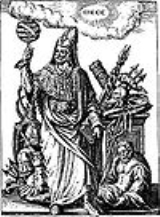
Hermeticism or the Western Hermetic Tradition is a set of philosophical
and religious
beliefs based primarily upon the pseudepigraphical writings attributed to Hermes Trismegistus
. These beliefs have heavily influenced the Western Esoteric Tradition and were considered to be of great importance during the Renaissance
and Reformation
.
. It is attested in English since the 17th century as the adjective Hermetic (as in "Hermetic writers" e.g. Franz Bardon
). The synonymous Hermetical also occurs in the 17th century. Sir Thomas Browne
in his Religio Medici
of 1643 wrote, "Now besides these particular and divided Spirits there may be (for ought I know) a universal and common Spirit to the whole world. It was the opinion of Plato , and is yet of the Hermeticall Philosophers." (R.M. Part 1:32)
The term Hermetic is from the Greek word Herm, which refers to a pillar or post used in pre-classical Greece "of square shape, surmounted by a head with a beard. The square, limbless "Hermes" was a step in advance of the unwrought stone." The origin of the word Hermes relates to a stone pillar used to communicate with the deities and the use of names beginning with Herm in Greece dates from at least 600 BCE. The God Hermes is a generic term used by the pre-classical Greeks for any deity, and was only later associated with the God of Knowledge in Athens in the 2nd Century CE. The word Hermetic was used by Dr. Everard, 1650 in the English translation of The Pimander of Hermes. Mary Anne Atwood mentioned the use of the word Hermetic by Dufresnoy in 1386.

In Late Antiquity
, Hermetism emerged in parallel with Gnosticism
, Neoplatonism
and early Christianity
, "characterized by a resistance to the dominance of either pure rationality or doctrinal faith".
The books now known as the Corpus Hermeticum were part of a renaissance of syncretistic
and intellectualized pagan thought that took place around the 2nd century. Other examples of this cultural movement would include Neoplatonist philosophy
, the Chaldaean Oracles, late Orphic
and Pythagorean
literature, as well as much of Gnosticism
.
The extant Greek texts dwell upon the oneness and goodness of God, urge purification of the soul, and defend pagan religious practices, such as the veneration of images
. Many lost Greek texts, and many of the surviving vulgate books, contained discussions of alchemy
clothed in philosophical metaphor. And one text, the Asclepius, lost in Greek but partially preserved in Latin, contained a bloody prophecy of the end of Roman rule in Egypt and the resurgence of pagan Egyptian power.
The predominant literary form is the dialogue: Hermes Trismegistus
instructs a perplexed disciple on some point of hidden wisdom.
. In fact Leonardo da Pistoia (monk) was the pseudonym of Leonardo Alberti de Candia, a noble of the Alberti (family)
of the counts of Prato
in Pistoia. He was one of the many agents sent out by Florence's ruler, Cosimo de'Medici, to scour European monasteries for lost ancient writings.
Leonardo, searched for the ancient Hermetic manuscripts throughout the regions surrounding Constantinople
, Pera
and Galata
, a part of the dogal republic that had been granted by the Byzantine Empire
to Genoa
in 1273. He conducted his investigations under the protection of the Byzantine podestà during the period of the joint Byzantine and Italian podestà, prior to the capture of Constantinople in 1453 by Ottoman
Turks.
In 1614 Isaac Casaubon
, a Swiss
philologist
, analyzed the Hermetic texts for linguistic style. He concluded that the Hermetic writings attributed to Trismegistus were not the work of an ancient Egyptian priest, but in fact dated to around the second and third centuries of the Common Era
. Walter Scott places their date shortly after 200 CE , while Sir W. Flinders Petrie places them between 200 and 500 B.C. Plutarch's mention of Hermes Trismegistus dates back to the first century CE, and Tertullian
, Iamblichus, and Porphyry
are all familiar with Hermetic writings.
In 1945, Hermetic writings were among those found near Nag Hammadi
, in the form of one of the conversations between Hermes and Asclepius
from the Corpus Hermeticum, and a text about the Hermetic mystery schools, On the Ogdoad and Ennead, written in the Coptic language
, the last form in which the Egyptian language was written.
There are three major works which are widely known texts for Hermetic beliefs:
There are additional works that, while not as historically significant as the three mentioned above, have an important place in neo-Hermeticism and its study.
, Augustine, Giordano Bruno
, Marsilio Ficino
, Campanella
and Giovanni Pico della Mirandola
considered Hermes Trismegistus to be a wise pagan prophet who foresaw the coming of Christianity. They believed in a prisca theologia
, the doctrine that a single, true, theology exists, which threads through all religions, and which was given by god to man in antiquity. In order to demonstrate the verity of the 'prisca theologia' Christians appropriated the Hermetic teachings for their own purposes. By this account Hermes Trismegistus was either, according to the fathers of the Christian church, a contemporary of Moses or the third in a line of men named Hermes i.e. Enoch, Noah and the Egyptian priest king who is known to us as Hermes Trismegistus or thrice great on account of being the greatest priest, philosopher and king.
This last account of how Hermes Trismegistus received the name "Trismegistus," meaning "Thrice Great," is derived from statements both in the The Emerald Tablet of Hermes Trismegistus
, that he knows the three parts of the wisdom of the whole universe. The three parts of the wisdom are alchemy
, astrology
, and theurgy
. The pymander, from where Marsilio Ficino formed his opinion, states that "they called him Trismegistus because he was the greatest philosopher and the greatest priest and the greatest king".
Another explanation, in the Suda (10th century), is that "He was called Trismegistus on account of his praise of the trinity, saying there is one divine nature in the trinity".
—The Operation of the Sun
: is not simply the changing of physical lead
into physical gold
. It is an investigation into the spiritual constitution, or life of matter and material existence through an application of the mysteries of birth, death and resurrection. The various stages of chemical distillation
and fermentation
, among them, are aspects of these mysteries, that, when applied quicken Nature's processes in order to bring a natural body to perfection. This perfection is the accomplishment of the Magnum opus
(Latin for Great Work).
Astrology
—The Operation of the Moon
: Hermes claims that Zoroaster
discovered this part of the wisdom of the whole universe, astrology, and taught it to man. In Hermetic thought, it is likely that the movements of the planets have meaning beyond the laws of physics and actually hold metaphorical value as symbols in the mind of The All
, or God. Astrology has influences upon the Earth, but does not dictate our actions, and wisdom is gained when we know what these influences are and how to deal with them.
Theurgy
—The Operation of the Star
s: There are two different types of magic, according to Giovanni Pico della Mirandola
's Apology, completely opposite of each other. The first is γοητεια, Goëtia
, black magic reliant upon an alliance with evil spirits (i.e. demons). The second is Theurgy, divine magic reliant upon an alliance with divine spirits (i.e. angels, archangels, gods).
Theurgy translates to "The Science or art of Divine Works" and is the practical aspect of the Hermetic art of alchemy. Furthermore, alchemy is seen as the "key" to theurgy, the ultimate goal of which is to become united with higher counterparts, leading to the attainment of Divine Consciousness.
is the central focus of Hermeticism and therefore it is difficult to assign it a position among the traditional Theistic religions, or along the monotheistic and polytheistic spectrum.
Hermeticism transcends both Monotheism
and Polytheism
as well as Deism
and Pantheism
within its belief system, which teaches that there is a transcendent
God
, The All
, or The One
, of which we, and the entire universe
, participate. Also it subscribes to the notion that other beings such as gods and angel
s, and elemental
s exist in the Universe
.
, water
, air
, and fire
are used often in alchemy, and are alluded to several times in the Corpus Hermeticum.
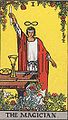 These words circulate throughout occult and magical circles, and they come from Hermetic texts. The concept was first laid out in The Emerald Tablet
of Hermes Trismegistus, in the words "That which is Below corresponds to that which is Above, and that which is Above, corresponds to that which is Below, to accomplish the miracles of the One Thing".
In accordance with the various levels of reality: physical, emotional, and mental, this relates that what happens on any level happens on every other. This is however more often used in the sense of the microcosm and the macrocosm. The microcosm is oneself, and the macrocosm is the universe. The macrocosm is as the microcosm, and vice versa; within each lies the other, and through understanding one (usually the microcosm) you can understand the other.
s. God brings good, while the demons bring evil. Among those things brought by demons are:
This provides a clearcut view that Hermeticism does indeed include a sense of morality. However, the word good is used very strictly, to be restricted to use to the Supreme Good, God. It is only God (in the sense of the Supreme Good, not The All) who is completely free of evil. Men are exempt from having the chance of being good, for they have a body, consumed by their physical nature, ignorant of the Supreme Good.
Among those things which are considered extremely sinful, is the focus on the material life, said to be the only thing that offends God:
It is troublesome to oneself to have no "children". This is a symbolic description, not to mean physical, biological children, but rather creations. Immediately before this claim, it is explained that God is "the Father" because it has authored all things, it creates. Whether father or mother, one must create, do something positive in their life, as the Supreme Good is a "generative power". The curse for not having "children" is to be imprisoned to a body, neither male (active) nor female (thoughtful), leaving that person with a type of sterility, that of being unable to accomplish anything.
to Hermes Trismegistus
after a meditation. It begins as God, by an act of will, creates the primary matter that is to constitute the cosmos. From primary matter God separates the elements: Fire, Air, Water and Earth. Then God ordered the elements into the seven heavens (often seen as the spheres of Mercury
, Venus
, Mars
, Jupiter
, Saturn
, the Sun
and the Moon
) to travel in circles and govern destiny.
The Word then leaps forth from the materializing elements, which made them unintelligent. Nous then made the governors spin, and from their matter sprang forth creatures without speech. Earth then was separated from Water and the animals (other than Man) were brought forth from the Earth.
The God then created Man, androgynous, in his own image and handed over his creation. Man carefully observed the creation of his brother, the lesser Nous, and received his and his Father's authority over it all. Man then rose up above the spheres' paths to better view the creation, and then showed the form of the ALL to Nature. Nature fell in love with it, and Man, seeing a similar form in his own reflection in the water fell in love with Nature and wished to dwell in it. Immediately Man became one with Nature and became a slave to its limitations such as gender
and sleep. Man thus became speechless (having lost the Word) and became double, being mortal in body but immortal in spirit
, having authority of all but subject to destiny
.
and Christian mysticism
, brought Hermeticism into a context more easily understood by Europeans in the Renaissance.
A few primarily Hermetic occult orders were founded in the late Middle Ages and early Renaissance. Hermetic magic underwent a nineteenth century revival in Western Europe, where it was practiced by people and within groups such as the Hermetic Order of the Golden Dawn
, Aurum Solis, Ragon, Kenneth M. Mackenzie, Eliphas Lévi
, Frederick Hockley, William Butler Yeats
, and Arthur Machen
. Many Hermetic, or Hermetically influenced, groups exist today, most of which are derived from the Golden Dawn, Rosicrucianism or Freemasonry.
movement dating back to the 15th century. It consists of a secretive inner body, and a more public outer body under the direction of the inner body.
This movement is symbolized by the rose (the soul) and the cross (the body of 4 elements). In other words, the human soul crucified on the cross of the material plane.
The Rosicrucian Order consists of a graded system (similar to The Order of Freemasons
) in which members move up in rank and gain access to more knowledge. There is no fee for advancement. Once a member is deemed able to understand the knowledge, they move on to the next grade.
There are three steps to their spiritual path: philosophy
, qabbalah
, and divine magic. In turn, there are three goals of the order: 1) the abolition of monarchy
and the institution of rule by a philosophical elect, 2) reformation of science, philosophy, and ethics, and 3) discovery of the Panacea
.
The sources dating the existence of the Rosicrucians to the 17th century are three German pamphlets: the Fama
, the Confessio Fraternitatis
, and Chymical Wedding of Christian Rosenkreutz
.
Some scholars believe these to be hoaxes, and that antedating Rosicrucian organizations are the first appearance of any real Rosicrucian fraternity.
, the Hermetic Order of the Golden Dawn was open to both sexes, and treated both as equal. The order was a specifically Hermetic society, teaching the arts of alchemy, qabbalah, and the magic of Hermes along with the principles of occult science. Israel Regardie
claims that there are many orders, who know what they do of magic from what has been leaked out of the Golden Dawn, by what he deems "renegade members."
The order maintained the tightest of secrecy by severe penalties for loose lips. Overall, the general public was left oblivious to the actions and even existence of the Golden Dawn, making the policies a success. This secrecy was broken first by Aleister Crowley
, in 1905, and later by Israel Regardie himself in 1940, giving a detailed account of the order's teachings to the general public.
, especially Martinism
.
Hermeticists (category)
Philosophy
Philosophy is the study of general and fundamental problems, such as those connected with existence, knowledge, values, reason, mind, and language. Philosophy is distinguished from other ways of addressing such problems by its critical, generally systematic approach and its reliance on rational...
and religious
Religion
Religion is a collection of cultural systems, belief systems, and worldviews that establishes symbols that relate humanity to spirituality and, sometimes, to moral values. Many religions have narratives, symbols, traditions and sacred histories that are intended to give meaning to life or to...
beliefs based primarily upon the pseudepigraphical writings attributed to Hermes Trismegistus
Hermes Trismegistus
Hermes Trismegistus is the eponymous author of the Hermetic Corpus, a sacred text belonging to the genre of divine revelation.-Origin and identity:...
. These beliefs have heavily influenced the Western Esoteric Tradition and were considered to be of great importance during the Renaissance
Renaissance
The Renaissance was a cultural movement that spanned roughly the 14th to the 17th century, beginning in Italy in the Late Middle Ages and later spreading to the rest of Europe. The term is also used more loosely to refer to the historical era, but since the changes of the Renaissance were not...
and Reformation
Reformation
- Movements :* Protestant Reformation, an attempt by Martin Luther to reform the Roman Catholic Church that resulted in a schism, and grew into a wider movement...
.
Terminology
The term Hermetic is from medieval Latin hermeticus, which in turn is derived from the name of the Greek god HermesHermes
Hermes is the great messenger of the gods in Greek mythology and a guide to the Underworld. Hermes was born on Mount Kyllini in Arcadia. An Olympian god, he is also the patron of boundaries and of the travelers who cross them, of shepherds and cowherds, of the cunning of thieves, of orators and...
. It is attested in English since the 17th century as the adjective Hermetic (as in "Hermetic writers" e.g. Franz Bardon
Franz Bardon
Franz Bardon , born in Opava, Austrian Silesia, was both a stage magician and student and teacher of Hermetics. He was a member of the Czech hermetic society Universalia. During World War II Bardon was at one point held in a concentration camp for refusing to participate in Nazi Mysticism. Bardon...
). The synonymous Hermetical also occurs in the 17th century. Sir Thomas Browne
Thomas Browne
Sir Thomas Browne was an English author of varied works which reveal his wide learning in diverse fields including medicine, religion, science and the esoteric....
in his Religio Medici
Religio Medici
Religio Medici is a book by Sir Thomas Browne, which sets out his spiritual testament as well as being an early psychological self-portrait. In its day, the book was a European best-seller and brought its author fame and respect throughout the continent...
of 1643 wrote, "Now besides these particular and divided Spirits there may be (for ought I know) a universal and common Spirit to the whole world. It was the opinion of Plato , and is yet of the Hermeticall Philosophers." (R.M. Part 1:32)
The term Hermetic is from the Greek word Herm, which refers to a pillar or post used in pre-classical Greece "of square shape, surmounted by a head with a beard. The square, limbless "Hermes" was a step in advance of the unwrought stone." The origin of the word Hermes relates to a stone pillar used to communicate with the deities and the use of names beginning with Herm in Greece dates from at least 600 BCE. The God Hermes is a generic term used by the pre-classical Greeks for any deity, and was only later associated with the God of Knowledge in Athens in the 2nd Century CE. The word Hermetic was used by Dr. Everard, 1650 in the English translation of The Pimander of Hermes. Mary Anne Atwood mentioned the use of the word Hermetic by Dufresnoy in 1386.
Late Antiquity
In Late Antiquity
Late Antiquity
Late Antiquity is a periodization used by historians to describe the time of transition from Classical Antiquity to the Middle Ages, in both mainland Europe and the Mediterranean world. Precise boundaries for the period are a matter of debate, but noted historian of the period Peter Brown proposed...
, Hermetism emerged in parallel with Gnosticism
Gnosticism
Gnosticism is a scholarly term for a set of religious beliefs and spiritual practices common to early Christianity, Hellenistic Judaism, Greco-Roman mystery religions, Zoroastrianism , and Neoplatonism.A common characteristic of some of these groups was the teaching that the realisation of Gnosis...
, Neoplatonism
Neoplatonism
Neoplatonism , is the modern term for a school of religious and mystical philosophy that took shape in the 3rd century AD, based on the teachings of Plato and earlier Platonists, with its earliest contributor believed to be Plotinus, and his teacher Ammonius Saccas...
and early Christianity
Early Christianity
Early Christianity is generally considered as Christianity before 325. The New Testament's Book of Acts and Epistle to the Galatians records that the first Christian community was centered in Jerusalem and its leaders included James, Peter and John....
, "characterized by a resistance to the dominance of either pure rationality or doctrinal faith".
The books now known as the Corpus Hermeticum were part of a renaissance of syncretistic
Syncretism
Syncretism is the combining of different beliefs, often while melding practices of various schools of thought. The term means "combining", but see below for the origin of the word...
and intellectualized pagan thought that took place around the 2nd century. Other examples of this cultural movement would include Neoplatonist philosophy
Neoplatonism
Neoplatonism , is the modern term for a school of religious and mystical philosophy that took shape in the 3rd century AD, based on the teachings of Plato and earlier Platonists, with its earliest contributor believed to be Plotinus, and his teacher Ammonius Saccas...
, the Chaldaean Oracles, late Orphic
Orpheus
Orpheus was a legendary musician, poet, and prophet in ancient Greek religion and myth. The major stories about him are centered on his ability to charm all living things and even stones with his music; his attempt to retrieve his wife from the underworld; and his death at the hands of those who...
and Pythagorean
Pythagoreanism
Pythagoreanism was the system of esoteric and metaphysical beliefs held by Pythagoras and his followers, the Pythagoreans, who were considerably influenced by mathematics. Pythagoreanism originated in the 5th century BCE and greatly influenced Platonism...
literature, as well as much of Gnosticism
Gnosticism
Gnosticism is a scholarly term for a set of religious beliefs and spiritual practices common to early Christianity, Hellenistic Judaism, Greco-Roman mystery religions, Zoroastrianism , and Neoplatonism.A common characteristic of some of these groups was the teaching that the realisation of Gnosis...
.
The extant Greek texts dwell upon the oneness and goodness of God, urge purification of the soul, and defend pagan religious practices, such as the veneration of images
Idolatry
Idolatry is a pejorative term for the worship of an idol, a physical object such as a cult image, as a god, or practices believed to verge on worship, such as giving undue honour and regard to created forms other than God. In all the Abrahamic religions idolatry is strongly forbidden, although...
. Many lost Greek texts, and many of the surviving vulgate books, contained discussions of alchemy
Alchemy
Alchemy is an influential philosophical tradition whose early practitioners’ claims to profound powers were known from antiquity. The defining objectives of alchemy are varied; these include the creation of the fabled philosopher's stone possessing powers including the capability of turning base...
clothed in philosophical metaphor. And one text, the Asclepius, lost in Greek but partially preserved in Latin, contained a bloody prophecy of the end of Roman rule in Egypt and the resurgence of pagan Egyptian power.
The predominant literary form is the dialogue: Hermes Trismegistus
Hermes Trismegistus
Hermes Trismegistus is the eponymous author of the Hermetic Corpus, a sacred text belonging to the genre of divine revelation.-Origin and identity:...
instructs a perplexed disciple on some point of hidden wisdom.
Renaissance
After some centuries out of favor, Hermeticism was reintroduced to the West in 1460, when the monk Leonardo da Pistoia brought the Corpus Hermeticum to PistoiaPistoia
Pistoia is a city and comune in the Tuscany region of Italy, the capital of a province of the same name, located about 30 km west and north of Florence and is crossed by the Ombrone Pistoiese, a tributary of the River Arno.-History:...
. In fact Leonardo da Pistoia (monk) was the pseudonym of Leonardo Alberti de Candia, a noble of the Alberti (family)
Alberti (family)
The Alberti family was a major political family in Florence.-History:The Alberti originated from the castle of Catenaia in Valdarno Casentinese, whence the presence of two chains in their coat of arms...
of the counts of Prato
Prato
Prato is a city and comune in Tuscany, Italy, the capital of the Province of Prato. The city is situated at the foot of Monte Retaia , the last peak in the Calvana chain. The lowest altitude in the comune is 32 m, near the Cascine di Tavola, and the highest is the peak of Monte Cantagrillo...
in Pistoia. He was one of the many agents sent out by Florence's ruler, Cosimo de'Medici, to scour European monasteries for lost ancient writings.
Leonardo, searched for the ancient Hermetic manuscripts throughout the regions surrounding Constantinople
Constantinople
Constantinople was the capital of the Roman, Eastern Roman, Byzantine, Latin, and Ottoman Empires. Throughout most of the Middle Ages, Constantinople was Europe's largest and wealthiest city.-Names:...
, Pera
Beyoglu
Beyoğlu is a district located on the European side of İstanbul, Turkey, separated from the old city by the Golden Horn...
and Galata
Galata
Galata or Galatae is a neighbourhood in the Beyoğlu district on the European side of Istanbul, the largest city of Turkey. Galata is located at the northern shore of the Golden Horn, the inlet which separates it from the historic peninsula of old Constantinople. The Golden Horn is crossed by...
, a part of the dogal republic that had been granted by the Byzantine Empire
Byzantine Empire
The Byzantine Empire was the Eastern Roman Empire during the periods of Late Antiquity and the Middle Ages, centred on the capital of Constantinople. Known simply as the Roman Empire or Romania to its inhabitants and neighbours, the Empire was the direct continuation of the Ancient Roman State...
to Genoa
Genoa
Genoa |Ligurian]] Zena ; Latin and, archaically, English Genua) is a city and an important seaport in northern Italy, the capital of the Province of Genoa and of the region of Liguria....
in 1273. He conducted his investigations under the protection of the Byzantine podestà during the period of the joint Byzantine and Italian podestà, prior to the capture of Constantinople in 1453 by Ottoman
Ottoman Empire
The Ottoman EmpireIt was usually referred to as the "Ottoman Empire", the "Turkish Empire", the "Ottoman Caliphate" or more commonly "Turkey" by its contemporaries...
Turks.
In 1614 Isaac Casaubon
Isaac Casaubon
Isaac Casaubon was a classical scholar and philologist, first in France and then later in England, regarded by many of his time as the most learned in Europe.-Early life:...
, a Swiss
Switzerland
Switzerland name of one of the Swiss cantons. ; ; ; or ), in its full name the Swiss Confederation , is a federal republic consisting of 26 cantons, with Bern as the seat of the federal authorities. The country is situated in Western Europe,Or Central Europe depending on the definition....
philologist
Philology
Philology is the study of language in written historical sources; it is a combination of literary studies, history and linguistics.Classical philology is the philology of Greek and Classical Latin...
, analyzed the Hermetic texts for linguistic style. He concluded that the Hermetic writings attributed to Trismegistus were not the work of an ancient Egyptian priest, but in fact dated to around the second and third centuries of the Common Era
Common Era
Common Era ,abbreviated as CE, is an alternative designation for the calendar era originally introduced by Dionysius Exiguus in the 6th century, traditionally identified with Anno Domini .Dates before the year 1 CE are indicated by the usage of BCE, short for Before the Common Era Common Era...
. Walter Scott places their date shortly after 200 CE , while Sir W. Flinders Petrie places them between 200 and 500 B.C. Plutarch's mention of Hermes Trismegistus dates back to the first century CE, and Tertullian
Tertullian
Quintus Septimius Florens Tertullianus, anglicised as Tertullian , was a prolific early Christian author from Carthage in the Roman province of Africa. He is the first Christian author to produce an extensive corpus of Latin Christian literature. He also was a notable early Christian apologist and...
, Iamblichus, and Porphyry
Porphyry (philosopher)
Porphyry of Tyre , Porphyrios, AD 234–c. 305) was a Neoplatonic philosopher who was born in Tyre. He edited and published the Enneads, the only collection of the work of his teacher Plotinus. He also wrote many works himself on a wide variety of topics...
are all familiar with Hermetic writings.
In 1945, Hermetic writings were among those found near Nag Hammadi
Nag Hammâdi
Nag Hammadi , is a city in Upper Egypt. Nag Hammadi was known as Chenoboskion in classical antiquity, meaning "geese grazing grounds". It is located on the west bank of the Nile in the Qena Governorate, about 80 kilometres north-west of Luxor....
, in the form of one of the conversations between Hermes and Asclepius
Asclepius
Asclepius is the God of Medicine and Healing in ancient Greek religion. Asclepius represents the healing aspect of the medical arts; his daughters are Hygieia , Iaso , Aceso , Aglæa/Ægle , and Panacea...
from the Corpus Hermeticum, and a text about the Hermetic mystery schools, On the Ogdoad and Ennead, written in the Coptic language
Coptic language
Coptic or Coptic Egyptian is the current stage of the Egyptian language, a northern Afro-Asiatic language spoken in Egypt until at least the 17th century. Egyptian began to be written using the Greek alphabet in the 1st century...
, the last form in which the Egyptian language was written.
Hermeticism as a religion
Tobias Churton, scholar of obscure religious movements, states that "the Hermetic tradition was both moderate and flexible, offering a tolerant philosophical religion, a religion of the (omnipresent) mind, a purified perception of God, the cosmos, and the self, and much positive encouragement for the spiritual seeker, all of which the student could take anywhere". In fact, Lutheran Bishop James Heiser recently evaluated the writings of Marsilio Ficino and Giovanni Pico della Mirandola as an attempted "Hermetic Reformation."Religious and philosophical texts
Though many more have been falsely attributed to the work of Hermes Trismegistus, Hermeticists commonly accept there to have been forty-two books to his credit. However, most of these books are reported to have been destroyed when the Great Library of Alexandria was razed.There are three major works which are widely known texts for Hermetic beliefs:
- The Corpus Hermeticum is the body of work most widely known and is the aforementioned Greek texts. These seventeen books are set up as dialogues between Hermes and a series of others. The first book involves a discussion between PoimandresPoemandresPoimandres is a chapter in the Corpus Hermeticum. Originally written in Greek, the title was formerly understood to mean "Man-Shepherd" from the words ποιμήν and ἀνήρ, but recent studies on its etymology have shown that it is actually derived from the Egyptian phrase Peime-nte-rê meaning...
(also known as Nous and God) and Hermes, supposedly resulting from a meditative state, and is the first time that Hermes is in contact with God. Poimandres teaches the secrets of the Universe to Hermes, and later books are generally of Hermes teaching others such as AsclepiusAsclepiusAsclepius is the God of Medicine and Healing in ancient Greek religion. Asclepius represents the healing aspect of the medical arts; his daughters are Hygieia , Iaso , Aceso , Aglæa/Ægle , and Panacea...
and his son Tat.
- The Emerald Tablet of Hermes TrismegistusEmerald TabletThe Emerald Tablet, also known as Smaragdine Table, Tabula Smaragdina, or The Secret of Hermes, is a text purporting to reveal the secret of the primordial substance and its transmutations...
is a short work which coins the well known term in occultOccultThe word occult comes from the Latin word occultus , referring to "knowledge of the hidden". In the medical sense it is used to refer to a structure or process that is hidden, e.g...
circles "As above, so below." The actual text of that maximMaxim (philosophy)A maxim is a ground rule or subjective principle of action; in that sense, a maxim is a thought that can motivate individuals.- Deontological ethics :...
, as translated by Dennis W. Hauck is "That which is Below corresponds to that which is Above, and that which is Above corresponds to that which is Below, to accomplish the miracle of the One Thing". The tablet also refers to the three parts of the wisdom of the whole universe. Hermes claims his knowledge of these three parts is why he received the name Trismegistus (thrice-great, or Ao-Ao-Ao meaning "greatest"). As the story is told, this tablet was found by Alexander the Great at HebronHebronHebron , is located in the southern West Bank, south of Jerusalem. Nestled in the Judean Mountains, it lies 930 meters above sea level. It is the largest city in the West Bank and home to around 165,000 Palestinians, and over 500 Jewish settlers concentrated in and around the old quarter...
supposedly in the tomb of Hermes.
- The Perfect Sermon, also known as The Asclepius, The Perfect Discourse, or The Perfect Teaching was written in the second or third century and is a Hermetic work similar to The Corpus Hermeticum but outside the seventeen books it normally comprises.
There are additional works that, while not as historically significant as the three mentioned above, have an important place in neo-Hermeticism and its study.
- The Kybalion: Hermetic PhilosophyKybalionThe Kybalion: Hermetic Philosophy is a 1908 book claiming to be the essence of the teachings of Hermes Trismegistus, published anonymously by a group or person under the pseudonym of "the Three Initiates".- General description :...
is a book published in 1912 CE anonymously by three people calling themselves the "Three Initiates." Many of the Hermetic principles are explained in the book.
- A Suggestive Inquiry into Hermetic Philosophy and Alchemy written by Mary Anne Atwood, and originally published anonymously in 1850. This book was withdrawn from circulation by the author but was later reprinted after her death by her longtime friend Isabelle de Steiger. Isabelle de Steiger was a member of the Golden Dawn, and this book was used as the basis for the study of Hermeticism by the Golden Dawn, which resulted in several published works by members of the Golden Dawn.
- Arthur Edward WaiteArthur Edward WaiteArthur Edward Waite was a scholarly mystic who wrote extensively on occult and esoteric matters, and was the co-creator of the Rider-Waite Tarot deck. As his biographer, R.A...
, member and later head of the Golden Dawn, wrote the Hermetic Museum and later the Hermetic Museum Restored and Enlarged and did the editing for Hermetic and Alchemical Writings of Paracelsus that was published as a two-volume set. Arthur Edward Waite considered himself an Hermeticist and was instrumental in adding the word "Hermetic" to the official title of the Golden Dawn.
- W. Wynn Westcott, a founding member of the Golden Dawn, edited a series of books on Hermeticism called the "Collectanea Hermetica," published by the Theosophical Publishing Society.
- Franz BardonFranz BardonFranz Bardon , born in Opava, Austrian Silesia, was both a stage magician and student and teacher of Hermetics. He was a member of the Czech hermetic society Universalia. During World War II Bardon was at one point held in a concentration camp for refusing to participate in Nazi Mysticism. Bardon...
, Initiation Into HermeticsInitiation into hermeticsInitiation into Hermetics is the title of the English translation of Franz Bardon's first of three volumes concerning self-realization in line with the Hermetic tradition.-Publication:...
is the title of the English translation of Franz Bardon's first of three volumes concerning self-realization in line with the Hermetic tradition.
The "Prisca Theologia"
Many Christian writers, including LactantiusLactantius
Lucius Caecilius Firmianus Lactantius was an early Christian author who became an advisor to the first Christian Roman emperor, Constantine I, guiding his religious policy as it developed, and tutor to his son.-Biography:...
, Augustine, Giordano Bruno
Giordano Bruno
Giordano Bruno , born Filippo Bruno, was an Italian Dominican friar, philosopher, mathematician and astronomer. His cosmological theories went beyond the Copernican model in proposing that the Sun was essentially a star, and moreover, that the universe contained an infinite number of inhabited...
, Marsilio Ficino
Marsilio Ficino
Marsilio Ficino was one of the most influential humanist philosophers of the early Italian Renaissance, an astrologer, a reviver of Neoplatonism who was in touch with every major academic thinker and writer of his day, and the first translator of Plato's complete extant works into Latin...
, Campanella
Tommaso Campanella
Tommaso Campanella OP , baptized Giovanni Domenico Campanella, was an Italian philosopher, theologian, astrologer, and poet.-Biography:...
and Giovanni Pico della Mirandola
Giovanni Pico della Mirandola
Count Giovanni Pico della Mirandola was an Italian Renaissance philosopher. He is famed for the events of 1486, when at the age of 23, he proposed to defend 900 theses on religion, philosophy, natural philosophy and magic against all comers, for which he wrote the famous Oration on the Dignity of...
considered Hermes Trismegistus to be a wise pagan prophet who foresaw the coming of Christianity. They believed in a prisca theologia
Prisca theologia
Prisca theologia is the doctrine within the field of comparative religious studies that asserts that a single, true, theology exists, which threads through all religions, and which was given by god to man in antiquity...
, the doctrine that a single, true, theology exists, which threads through all religions, and which was given by god to man in antiquity. In order to demonstrate the verity of the 'prisca theologia' Christians appropriated the Hermetic teachings for their own purposes. By this account Hermes Trismegistus was either, according to the fathers of the Christian church, a contemporary of Moses or the third in a line of men named Hermes i.e. Enoch, Noah and the Egyptian priest king who is known to us as Hermes Trismegistus or thrice great on account of being the greatest priest, philosopher and king.
This last account of how Hermes Trismegistus received the name "Trismegistus," meaning "Thrice Great," is derived from statements both in the The Emerald Tablet of Hermes Trismegistus
Emerald Tablet
The Emerald Tablet, also known as Smaragdine Table, Tabula Smaragdina, or The Secret of Hermes, is a text purporting to reveal the secret of the primordial substance and its transmutations...
, that he knows the three parts of the wisdom of the whole universe. The three parts of the wisdom are alchemy
Alchemy
Alchemy is an influential philosophical tradition whose early practitioners’ claims to profound powers were known from antiquity. The defining objectives of alchemy are varied; these include the creation of the fabled philosopher's stone possessing powers including the capability of turning base...
, astrology
Astrology
Astrology consists of a number of belief systems which hold that there is a relationship between astronomical phenomena and events in the human world...
, and theurgy
Theurgy
Theurgy describes the practice of rituals, sometimes seen as magical in nature, performed with the intention of invoking the action or evoking the presence of one or more gods, especially with the goal of uniting with the divine, achieving henosis, and perfecting oneself.- Definitions :*Proclus...
. The pymander, from where Marsilio Ficino formed his opinion, states that "they called him Trismegistus because he was the greatest philosopher and the greatest priest and the greatest king".
Another explanation, in the Suda (10th century), is that "He was called Trismegistus on account of his praise of the trinity, saying there is one divine nature in the trinity".
The three parts of the wisdom of the whole universe
AlchemyAlchemy
Alchemy is an influential philosophical tradition whose early practitioners’ claims to profound powers were known from antiquity. The defining objectives of alchemy are varied; these include the creation of the fabled philosopher's stone possessing powers including the capability of turning base...
—The Operation of the Sun
Sun
The Sun is the star at the center of the Solar System. It is almost perfectly spherical and consists of hot plasma interwoven with magnetic fields...
: is not simply the changing of physical lead
Lead
Lead is a main-group element in the carbon group with the symbol Pb and atomic number 82. Lead is a soft, malleable poor metal. It is also counted as one of the heavy metals. Metallic lead has a bluish-white color after being freshly cut, but it soon tarnishes to a dull grayish color when exposed...
into physical gold
Gold
Gold is a chemical element with the symbol Au and an atomic number of 79. Gold is a dense, soft, shiny, malleable and ductile metal. Pure gold has a bright yellow color and luster traditionally considered attractive, which it maintains without oxidizing in air or water. Chemically, gold is a...
. It is an investigation into the spiritual constitution, or life of matter and material existence through an application of the mysteries of birth, death and resurrection. The various stages of chemical distillation
Distillation
Distillation is a method of separating mixtures based on differences in volatilities of components in a boiling liquid mixture. Distillation is a unit operation, or a physical separation process, and not a chemical reaction....
and fermentation
Fermentation (food)
Fermentation in food processing typically is the conversion of carbohydrates to alcohols and carbon dioxide or organic acids using yeasts, bacteria, or a combination thereof, under anaerobic conditions. Fermentation in simple terms is the chemical conversion of sugars into ethanol...
, among them, are aspects of these mysteries, that, when applied quicken Nature's processes in order to bring a natural body to perfection. This perfection is the accomplishment of the Magnum opus
Magnum opus (alchemy)
The Great Work is an alchemical term for the process of creating the philosopher's stone. It has been used to describe personal and spiritual transmutation in the Hermetic tradition, attached to laboratory processes and chemical color changes, used as a model for the individuation process, and as...
(Latin for Great Work).
Astrology
Astrology
Astrology consists of a number of belief systems which hold that there is a relationship between astronomical phenomena and events in the human world...
—The Operation of the Moon
Moon
The Moon is Earth's only known natural satellite,There are a number of near-Earth asteroids including 3753 Cruithne that are co-orbital with Earth: their orbits bring them close to Earth for periods of time but then alter in the long term . These are quasi-satellites and not true moons. For more...
: Hermes claims that Zoroaster
Zoroaster
Zoroaster , also known as Zarathustra , was a prophet and the founder of Zoroastrianism who was either born in North Western or Eastern Iran. He is credited with the authorship of the Yasna Haptanghaiti as well as the Gathas, hymns which are at the liturgical core of Zoroastrianism...
discovered this part of the wisdom of the whole universe, astrology, and taught it to man. In Hermetic thought, it is likely that the movements of the planets have meaning beyond the laws of physics and actually hold metaphorical value as symbols in the mind of The All
The All
The All is the Hermetic or panentheistic view of God, which is that everything that is, or at least that can be experienced, collectively makes up The All...
, or God. Astrology has influences upon the Earth, but does not dictate our actions, and wisdom is gained when we know what these influences are and how to deal with them.
Theurgy
Theurgy
Theurgy describes the practice of rituals, sometimes seen as magical in nature, performed with the intention of invoking the action or evoking the presence of one or more gods, especially with the goal of uniting with the divine, achieving henosis, and perfecting oneself.- Definitions :*Proclus...
—The Operation of the Star
Star
A star is a massive, luminous sphere of plasma held together by gravity. At the end of its lifetime, a star can also contain a proportion of degenerate matter. The nearest star to Earth is the Sun, which is the source of most of the energy on Earth...
s: There are two different types of magic, according to Giovanni Pico della Mirandola
Giovanni Pico della Mirandola
Count Giovanni Pico della Mirandola was an Italian Renaissance philosopher. He is famed for the events of 1486, when at the age of 23, he proposed to defend 900 theses on religion, philosophy, natural philosophy and magic against all comers, for which he wrote the famous Oration on the Dignity of...
's Apology, completely opposite of each other. The first is γοητεια, Goëtia
Goetia
refers to a practice which includes the invocation of angels or the evocation of demons, and usage of the term in English largely derives from the 17th century grimoire The Lesser Key of Solomon, which features an Ars Goetia as its first section...
, black magic reliant upon an alliance with evil spirits (i.e. demons). The second is Theurgy, divine magic reliant upon an alliance with divine spirits (i.e. angels, archangels, gods).
Theurgy translates to "The Science or art of Divine Works" and is the practical aspect of the Hermetic art of alchemy. Furthermore, alchemy is seen as the "key" to theurgy, the ultimate goal of which is to become united with higher counterparts, leading to the attainment of Divine Consciousness.
Hermetic beliefs
As stated above In Hermetic religion the supreme Deity, or Principle, is referred to variously as 'God', 'The All', or 'The One'. The absoluteAbsolute (philosophy)
The Absolute is the concept of an unconditional reality which transcends limited, conditional, everyday existence. It is sometimes used as an alternate term for "God" or "the Divine", especially, but by no means exclusively, by those who feel that the term "God" lends itself too easily to...
is the central focus of Hermeticism and therefore it is difficult to assign it a position among the traditional Theistic religions, or along the monotheistic and polytheistic spectrum.
Hermeticism transcends both Monotheism
Monotheism
Monotheism is the belief in the existence of one and only one god. Monotheism is characteristic of the Baha'i Faith, Christianity, Druzism, Hinduism, Islam, Judaism, Samaritanism, Sikhism and Zoroastrianism.While they profess the existence of only one deity, monotheistic religions may still...
and Polytheism
Polytheism
Polytheism is the belief of multiple deities also usually assembled into a pantheon of gods and goddesses, along with their own mythologies and rituals....
as well as Deism
Deism
Deism in religious philosophy is the belief that reason and observation of the natural world, without the need for organized religion, can determine that the universe is the product of an all-powerful creator. According to deists, the creator does not intervene in human affairs or suspend the...
and Pantheism
Pantheism
Pantheism is the view that the Universe and God are identical. Pantheists thus do not believe in a personal, anthropomorphic or creator god. The word derives from the Greek meaning "all" and the Greek meaning "God". As such, Pantheism denotes the idea that "God" is best seen as a process of...
within its belief system, which teaches that there is a transcendent
Transcendence (religion)
In religion transcendence refers to the aspect of God's nature which is wholly independent of the physical universe. This is contrasted with immanence where God is fully present in the physical world and thus accessible to creatures in various ways...
God
God
God is the English name given to a singular being in theistic and deistic religions who is either the sole deity in monotheism, or a single deity in polytheism....
, The All
The All
The All is the Hermetic or panentheistic view of God, which is that everything that is, or at least that can be experienced, collectively makes up The All...
, or The One
The One
-Philosophy:The concept of "Τὸ Ἕν" in Hellenistic philosophy:*God*the Monad *the Absolute *The Good*The All*See also Henosis -Books, magazines and comics:...
, of which we, and the entire universe
Universe
The Universe is commonly defined as the totality of everything that exists, including all matter and energy, the planets, stars, galaxies, and the contents of intergalactic space. Definitions and usage vary and similar terms include the cosmos, the world and nature...
, participate. Also it subscribes to the notion that other beings such as gods and angel
Angel
Angels are mythical beings often depicted as messengers of God in the Hebrew and Christian Bibles along with the Quran. The English word angel is derived from the Greek ἄγγελος, a translation of in the Hebrew Bible ; a similar term, ملائكة , is used in the Qur'an...
s, and elemental
Elemental
An elemental is a mythological being first appearing in the alchemical works of Paracelsus in the 16th century. Traditionally, there are four types:*gnomes, earth elementals*undines , water elementals*sylphs, air elementals...
s exist in the Universe
Universe
The Universe is commonly defined as the totality of everything that exists, including all matter and energy, the planets, stars, galaxies, and the contents of intergalactic space. Definitions and usage vary and similar terms include the cosmos, the world and nature...
.
Classical elements
The four classical elements of earthEarth (classical element)
Earth, home and origin of humanity, has often been worshipped in its own right with its own unique spiritual tradition.-European tradition:Earth is one of the four classical elements in ancient Greek philosophy and science. It was commonly associated with qualities of heaviness, matter and the...
, water
Water (classical element)
Water is one of the elements in ancient Greek philosophy, in the Asian Indian system Panchamahabhuta, and in the Chinese cosmological and physiological system Wu Xing...
, air
Air (classical element)
Air is often seen as a universal power or pure substance. Its supposed fundamental importance to life can be seen in words such as aspire, inspire, perspire and spirit, all derived from the Latin spirare.-Greek and Roman tradition:...
, and fire
Fire (classical element)
Fire has been an important part of all cultures and religions from pre-history to modern day and was vital to the development of civilization. It has been regarded in many different contexts throughout history, but especially as a metaphysical constant of the world.-Greek and Roman tradition:Fire...
are used often in alchemy, and are alluded to several times in the Corpus Hermeticum.
As above, so below
Emerald Tablet
The Emerald Tablet, also known as Smaragdine Table, Tabula Smaragdina, or The Secret of Hermes, is a text purporting to reveal the secret of the primordial substance and its transmutations...
of Hermes Trismegistus, in the words "That which is Below corresponds to that which is Above, and that which is Above, corresponds to that which is Below, to accomplish the miracles of the One Thing".
In accordance with the various levels of reality: physical, emotional, and mental, this relates that what happens on any level happens on every other. This is however more often used in the sense of the microcosm and the macrocosm. The microcosm is oneself, and the macrocosm is the universe. The macrocosm is as the microcosm, and vice versa; within each lies the other, and through understanding one (usually the microcosm) you can understand the other.
Posthumous fate
There are mentions in Hermeticism about "metempsychosis" or the multiple occurrences of a being through the manifestation, before he gets liberated from any condition. As Hermes states:Morality, good, and evil
Hermes explains in Book 9 of the Corpus Hermeticum that Nous brings forth both good and evil, depending on if he receives input from God or from the demonDemon
call - 1347 531 7769 for more infoIn Ancient Near Eastern religions as well as in the Abrahamic traditions, including ancient and medieval Christian demonology, a demon is considered an "unclean spirit" which may cause demonic possession, to be addressed with an act of exorcism...
s. God brings good, while the demons bring evil. Among those things brought by demons are:
This provides a clearcut view that Hermeticism does indeed include a sense of morality. However, the word good is used very strictly, to be restricted to use to the Supreme Good, God. It is only God (in the sense of the Supreme Good, not The All) who is completely free of evil. Men are exempt from having the chance of being good, for they have a body, consumed by their physical nature, ignorant of the Supreme Good.
Among those things which are considered extremely sinful, is the focus on the material life, said to be the only thing that offends God:
It is troublesome to oneself to have no "children". This is a symbolic description, not to mean physical, biological children, but rather creations. Immediately before this claim, it is explained that God is "the Father" because it has authored all things, it creates. Whether father or mother, one must create, do something positive in their life, as the Supreme Good is a "generative power". The curse for not having "children" is to be imprisoned to a body, neither male (active) nor female (thoughtful), leaving that person with a type of sterility, that of being unable to accomplish anything.
Cosmogony
The tale is given in the first book of the Corpus Hermeticum by GodGod
God is the English name given to a singular being in theistic and deistic religions who is either the sole deity in monotheism, or a single deity in polytheism....
to Hermes Trismegistus
Hermes Trismegistus
Hermes Trismegistus is the eponymous author of the Hermetic Corpus, a sacred text belonging to the genre of divine revelation.-Origin and identity:...
after a meditation. It begins as God, by an act of will, creates the primary matter that is to constitute the cosmos. From primary matter God separates the elements: Fire, Air, Water and Earth. Then God ordered the elements into the seven heavens (often seen as the spheres of Mercury
Mercury (planet)
Mercury is the innermost and smallest planet in the Solar System, orbiting the Sun once every 87.969 Earth days. The orbit of Mercury has the highest eccentricity of all the Solar System planets, and it has the smallest axial tilt. It completes three rotations about its axis for every two orbits...
, Venus
Venus
Venus is the second planet from the Sun, orbiting it every 224.7 Earth days. The planet is named after Venus, the Roman goddess of love and beauty. After the Moon, it is the brightest natural object in the night sky, reaching an apparent magnitude of −4.6, bright enough to cast shadows...
, Mars
Mars
Mars is the fourth planet from the Sun in the Solar System. The planet is named after the Roman god of war, Mars. It is often described as the "Red Planet", as the iron oxide prevalent on its surface gives it a reddish appearance...
, Jupiter
Jupiter
Jupiter is the fifth planet from the Sun and the largest planet within the Solar System. It is a gas giant with mass one-thousandth that of the Sun but is two and a half times the mass of all the other planets in our Solar System combined. Jupiter is classified as a gas giant along with Saturn,...
, Saturn
Saturn
Saturn is the sixth planet from the Sun and the second largest planet in the Solar System, after Jupiter. Saturn is named after the Roman god Saturn, equated to the Greek Cronus , the Babylonian Ninurta and the Hindu Shani. Saturn's astronomical symbol represents the Roman god's sickle.Saturn,...
, the Sun
Sun
The Sun is the star at the center of the Solar System. It is almost perfectly spherical and consists of hot plasma interwoven with magnetic fields...
and the Moon
Moon
The Moon is Earth's only known natural satellite,There are a number of near-Earth asteroids including 3753 Cruithne that are co-orbital with Earth: their orbits bring them close to Earth for periods of time but then alter in the long term . These are quasi-satellites and not true moons. For more...
) to travel in circles and govern destiny.
The Word then leaps forth from the materializing elements, which made them unintelligent. Nous then made the governors spin, and from their matter sprang forth creatures without speech. Earth then was separated from Water and the animals (other than Man) were brought forth from the Earth.
The God then created Man, androgynous, in his own image and handed over his creation. Man carefully observed the creation of his brother, the lesser Nous, and received his and his Father's authority over it all. Man then rose up above the spheres' paths to better view the creation, and then showed the form of the ALL to Nature. Nature fell in love with it, and Man, seeing a similar form in his own reflection in the water fell in love with Nature and wished to dwell in it. Immediately Man became one with Nature and became a slave to its limitations such as gender
Gender
Gender is a range of characteristics used to distinguish between males and females, particularly in the cases of men and women and the masculine and feminine attributes assigned to them. Depending on the context, the discriminating characteristics vary from sex to social role to gender identity...
and sleep. Man thus became speechless (having lost the Word) and became double, being mortal in body but immortal in spirit
Spirit
The English word spirit has many differing meanings and connotations, most of them relating to a non-corporeal substance contrasted with the material body.The spirit of a living thing usually refers to or explains its consciousness.The notions of a person's "spirit" and "soul" often also overlap,...
, having authority of all but subject to destiny
Destiny
Destiny or fate refers to a predetermined course of events. It may be conceived as a predetermined future, whether in general or of an individual...
.
Hermetic brotherhoods
Once Hermeticism was no longer endorsed by the Christian Church it was driven underground and a number of Hermetic societies were formed. The Western esoteric tradition is now heavily steeped in Hermeticism. The work of such writers as Pico Della Mirandola, who attempted to reconcile Jewish KabbalahKabbalah
Kabbalah/Kabala is a discipline and school of thought concerned with the esoteric aspect of Rabbinic Judaism. It was systematized in 11th-13th century Hachmei Provence and Spain, and again after the Expulsion from Spain, in 16th century Ottoman Palestine...
and Christian mysticism
Christian mysticism
Christian mysticism refers to the development of mystical practices and theory within Christianity. It has often been connected to mystical theology, especially in the Catholic and Eastern Orthodox traditions...
, brought Hermeticism into a context more easily understood by Europeans in the Renaissance.
A few primarily Hermetic occult orders were founded in the late Middle Ages and early Renaissance. Hermetic magic underwent a nineteenth century revival in Western Europe, where it was practiced by people and within groups such as the Hermetic Order of the Golden Dawn
Hermetic Order of the Golden Dawn
The Hermetic Order of the Golden Dawn was a magical order active in Great Britain during the late 19th and early 20th centuries, which practiced theurgy and spiritual development...
, Aurum Solis, Ragon, Kenneth M. Mackenzie, Eliphas Lévi
Eliphas Levi
Eliphas Lévi, born Alphonse Louis Constant , was a French occult author and purported magician."Eliphas Lévi," the name under which he published his books, was his attempt to translate or transliterate his given names "Alphonse Louis" into Hebrew although he was not Jewish.His second wife was...
, Frederick Hockley, William Butler Yeats
William Butler Yeats
William Butler Yeats was an Irish poet and playwright, and one of the foremost figures of 20th century literature. A pillar of both the Irish and British literary establishments, in his later years he served as an Irish Senator for two terms...
, and Arthur Machen
Arthur Machen
Arthur Machen was a Welsh author and mystic of the 1890s and early 20th century. He is best known for his influential supernatural, fantasy, and horror fiction. His novella The Great God Pan has garnered a reputation as a classic of horror...
. Many Hermetic, or Hermetically influenced, groups exist today, most of which are derived from the Golden Dawn, Rosicrucianism or Freemasonry.
Rosicrucianism
Rosicrucianism is a Hermetic/ChristianChristianity
Christianity is a monotheistic religion based on the life and teachings of Jesus as presented in canonical gospels and other New Testament writings...
movement dating back to the 15th century. It consists of a secretive inner body, and a more public outer body under the direction of the inner body.
This movement is symbolized by the rose (the soul) and the cross (the body of 4 elements). In other words, the human soul crucified on the cross of the material plane.
The Rosicrucian Order consists of a graded system (similar to The Order of Freemasons
Freemasonry
Freemasonry is a fraternal organisation that arose from obscure origins in the late 16th to early 17th century. Freemasonry now exists in various forms all over the world, with a membership estimated at around six million, including approximately 150,000 under the jurisdictions of the Grand Lodge...
) in which members move up in rank and gain access to more knowledge. There is no fee for advancement. Once a member is deemed able to understand the knowledge, they move on to the next grade.
There are three steps to their spiritual path: philosophy
Philosophy
Philosophy is the study of general and fundamental problems, such as those connected with existence, knowledge, values, reason, mind, and language. Philosophy is distinguished from other ways of addressing such problems by its critical, generally systematic approach and its reliance on rational...
, qabbalah
Kabbalah
Kabbalah/Kabala is a discipline and school of thought concerned with the esoteric aspect of Rabbinic Judaism. It was systematized in 11th-13th century Hachmei Provence and Spain, and again after the Expulsion from Spain, in 16th century Ottoman Palestine...
, and divine magic. In turn, there are three goals of the order: 1) the abolition of monarchy
Monarchy
A monarchy is a form of government in which the office of head of state is usually held until death or abdication and is often hereditary and includes a royal house. In some cases, the monarch is elected...
and the institution of rule by a philosophical elect, 2) reformation of science, philosophy, and ethics, and 3) discovery of the Panacea
Panacea
In Greek mythology, Panacea was a goddess of healing. She was the daughter of Asclepius and Epione. Panacea and her five sisters each performed a facet of Apollo's art: Panacea was the goddess of cures, Iaso was the goddess of recuperation, Hygieia was the goddess of disease prevention, Aceso was...
.
The sources dating the existence of the Rosicrucians to the 17th century are three German pamphlets: the Fama
Fama Fraternitatis
The Fama Fraternitatis Rosae Crucis , or simply the Fama Fraternitatis, is an anonymous Rosicrucian manifesto published in 1614 in Kassel . It was translated into English in 1652 by Thomas Vaughan and published as an appendix of the 77th...
, the Confessio Fraternitatis
Confessio Fraternitatis
The Confessio Fraternitatis , or simply The Confessio, printed in Kassel in 1615, is the second anonymous manifestos, of a trio of Rosicrucian pamphlets, declaring the existence of a secret brotherhood of alchemists and sages who were interpreted, by the society of those times, to be preparing to...
, and Chymical Wedding of Christian Rosenkreutz
Chymical Wedding of Christian Rosenkreutz
The Chymical Wedding of Christian Rosenkreutz was edited in 1616 in Strasbourg , and its anonymous authorship is attributed to Johann Valentin Andreae...
.
Some scholars believe these to be hoaxes, and that antedating Rosicrucian organizations are the first appearance of any real Rosicrucian fraternity.
Hermetic Order of the Golden Dawn
Unlike the Societas Rosicruciana in AngliaSocietas Rosicruciana in Anglia
Societas Rosicruciana in Anglia is a Masonic esoteric Christian order formed by Robert Wentworth Little in 1865, although some sources acknowledge the date to be 1866-67. Members are confirmed from the ranks of subscribing Master Masons of a Grand Lodge in amity with United Grand Lodge of...
, the Hermetic Order of the Golden Dawn was open to both sexes, and treated both as equal. The order was a specifically Hermetic society, teaching the arts of alchemy, qabbalah, and the magic of Hermes along with the principles of occult science. Israel Regardie
Israel Regardie
Israel Regardie, born Francis Israel Regudy was an occultist and writer, author of books on the Hermetic Order of the Golden Dawn.-Early life:...
claims that there are many orders, who know what they do of magic from what has been leaked out of the Golden Dawn, by what he deems "renegade members."
The order maintained the tightest of secrecy by severe penalties for loose lips. Overall, the general public was left oblivious to the actions and even existence of the Golden Dawn, making the policies a success. This secrecy was broken first by Aleister Crowley
Aleister Crowley
Aleister Crowley , born Edward Alexander Crowley, and also known as both Frater Perdurabo and The Great Beast, was an influential English occultist, astrologer, mystic and ceremonial magician, responsible for founding the religious philosophy of Thelema. He was also successful in various other...
, in 1905, and later by Israel Regardie himself in 1940, giving a detailed account of the order's teachings to the general public.
Esoteric Christianity
Hermetism and Hermeticism remains influential in Esoteric ChristianityEsoteric Christianity
Esoteric Christianity is a term which refers to an ensemble of spiritual currents which regard Christianity as a mystery religion, and profess the existence and possession of certain esoteric doctrines or practices, hidden from the public but accessible only to a narrow circle of "enlightened",...
, especially Martinism
Martinism
Martinism is a form of mystical and esoteric Christianity concerned with the fall of the first man, his state of material privation from his divine source, and the process of his return, called 'Reintegration' or illumination....
.
See also
- Bibliotheca Philosophica HermeticaBibliotheca Philosophica HermeticaThe Bibliotheca Philosophica Hermetica or J. R. Ritman Library is a private Dutch library founded by Joost Ritman. The Bibliotheca Philosophica Hermetica brings together manuscripts and printed works in the field of Hermeticism, more specifically the 'Christian-Hermetic' tradition...
- Hellenistic magic
Hermeticists (category)
- Recapitulation theoryRecapitulation theoryThe theory of recapitulation, also called the biogenetic law or embryological parallelism—and often expressed as "ontogeny recapitulates phylogeny"—is a disproven hypothesis that in developing from embryo to adult, animals go through stages resembling or representing successive stages...
- Renaissance magicRenaissance magicRenaissance humanism saw a resurgence in hermeticism and Neo-Platonic varieties of ceremonial magic.The Renaissance and the Industrial Revolution, on the other hand, saw the rise of scientism, in such forms as the substitution of chemistry for alchemy, the dethronement of the Ptolemaic theory of...
- Sex magicSex magicSex magic is a term for various types of sexual activity used in magical, ritualistic or otherwise religious and spiritual pursuits. One practice of sex magic is using the energy of sexual arousal or orgasm with visualization of a desired result...
- ThelemaThelemaThelema is a religious philosophy that was established, defined and developed by the early 20th century British writer and ceremonial magician, Aleister Crowley. He believed himself to be the prophet of a new age, the Æon of Horus, based upon a religious experience that he had in Egypt in 1904...
- Thelemic mysticismThelemic mysticismWithin the modern system of Thelema, developed by occultist Aleister Crowley in the first half of the 20th century, Thelemic mysticism is a complex mystical path designed to do two interrelated things: to learn one's unique True Will and to achieve union with the All...
- Western esotericism
External links
- http://www.levity.com/alchemy/corpherm.htmlOnline Version of the Corpus Hermeticum, version translated by John EverardJohn Everard (preacher)John Everard was an English preacher and author. He was also a Familist, hermetic thinker, Neoplatonist, and alchemist. He is known for his translations of mystical and hermetic literature.-Life:...
in 1650 CECommon EraCommon Era ,abbreviated as CE, is an alternative designation for the calendar era originally introduced by Dionysius Exiguus in the 6th century, traditionally identified with Anno Domini .Dates before the year 1 CE are indicated by the usage of BCE, short for Before the Common Era Common Era...
from Latin version] - Online Version of The Virgin of the World of Hermes Trismegistus, version translated by Anna Kingsford and Edward Maitland in 1885 A.D.
- Online version of The Kybalion (1912)
- The Kybalion Resource Page
- An introduction to Hermeticism by Paul Newall (2004)
- Hermetics Resource Site—Many Hermetics texts
- The Hermetic Library—A collection of texts and sites relating to Hermeticism
- TransAlchemy-Modern scientific and singularitarianSingularitarianismSingularitarianism is a technocentric ideology and social movement defined by the belief that a technological singularity—the creation of a superintelligence—will likely happen in the medium future, and that deliberate action ought to be taken to ensure that the Singularity benefits...
Hermetic research