


Royal Society

Encyclopedia
The Royal Society of London for Improving Natural Knowledge, known simply as the Royal Society, is a learned society
for science, and is possibly the oldest such society in existence. Founded in November 1660, it was granted a Royal Charter
by King Charles II
as the "Royal Society of London". The Society was initially an extension of the "Invisible College
", with the founders intending it to be a place of research and discussion. The Society today acts as a scientific advisor to the British government, receiving a parliamentary grant-in-aid
. The Society acts as the UK's Academy of Sciences
, and funds research fellowships and scientific start-up companies.
The Society is governed by its Council, which is chaired by the Society's President, according to a set of Statutes and Standing Orders. The members of Council and the President are elected from and by its Fellows, the basic members of the Society, who are themselves elected by existing Fellows. There are currently 1,314 Fellows, allowed to use the postnominal title FRS (Fellow of the Royal Society), with 44 new Fellows appointed each year. There are also Royal Fellows, Honorary Fellows and Foreign Fellows, the last of which are allowed to use their postnominal title ForMemRS (Foreign Member of the Royal Society). The current Royal Society President is Sir Paul Nurse
, who took up the position on 30 November 2010.
Since 1967, the Society has been based at 6–9 Carlton House Terrace
, a Grade I listed building in central London
.
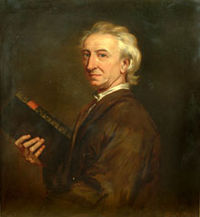 The Royal Society started as a group of approximately 12 scientists, known as the Invisible College
, which met at a variety of locations, including the houses of their members and Gresham College
. Members at particular times were John Wilkins
, Jonathan Goddard
, Robert Hooke
, Christopher Wren
, William Petty
, and Robert Boyle
. The group discussed the "new science
", as promoted by Francis Bacon
in his New Atlantis
, from approximately 1645 onwards. It initially had no rules or methods, and the primary goals were to organise and view experiments and communicate their discoveries to each other. The group varied over time, eventually splitting into two distinct factions in 1638 due to travel distances; the London Society and the Oxford Society. The Oxford Society was more active because many members of the College lived there, and was established as The Philosophical Society of Oxford, run under a set of rules still retained by the Bodleian Library
.
The London group continued to meet at Gresham College, primarily after lectures hosted by Christopher Wren. The membership expanded at this time, growing to include Lord Brouncker
and Timothy Clarke. It was forced to disband in 1658 during the English Protectorate following soldiers invading their rooms; after the English Restoration
, they returned to meeting at Gresham College. It is widely held that these groups were the inspiration for the foundation of the Royal Society.
An alternate view of the founding, held at the time, was that it was due to the influence of French scientists and the Montmor Academy in 1657, reports of which were sent back to England by English scientists attending. This view was held by Jean-Baptiste du Hamel
, Giovanni Domenico Cassini
, Bernard le Bovier de Fontenelle
and Melchisédech Thévenot
at the time, and has some grounding in that Henry Oldenburg
, the Society's first Secretary, had attended the Montmor Academy meeting. Robert Hooke, however, disputed this, writing that:
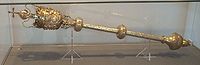 On 28 November 1660, a group of scientists from and influenced by the Invisible College met at Gresham College and announced the formation of a "College for the Promoting of Physico-Mathematical Experimental Learning", which would meet weekly to discuss science and run experiments. At the second meeting, Sir Robert Moray
announced that the King
approved of the gatherings, and a Royal Charter
was signed on 15 July 1662 which created the "Royal Society of London", with Lord Brouncker
serving as the first President. A second Royal Charter was signed on 23 April 1663, with the King noted as the Founder and with the name of "the Royal Society of London for the Improvement of Natural Knowledge"; Robert Hooke was appointed as Curator of Experiments in November. This initial royal favour has continued, and since then every monarch has been the patron of the Society.
The Society's early meetings consisted almost entirely of experiments, demonstrated first by Hooke and then by Denis Papin
, who was appointed in 1684. The Society also published an English translation of Essays of Natural Experiments Made in the Accademia del Cimento, under the Protection of the Most Serene Prince Leopold of Tuscany in 1884, an Italian book documenting experiments at the Accademia del Cimento
. The early experiments varied in their subject area, and were both important in some cases and trivial in others. Although meeting at Gresham College, the Society temporarily relocated to Arundel House
in 1666 after the Great Fire of London
, which did not harm Gresham but did lead to its appropriation by the Lord Mayor. The Society returned to Gresham in 1673.
There had been an attempt in 1667 to establish a permanent "College" for the society. Michael Hunter argues that this was influenced by "Solomon's House" in Bacon's New Atlantis, and to a lesser extent by J.V. Andreae
's Christianopolis, dedicated research institutes, rather than the colleges at Oxford
and Cambridge
, since the founders only intended for the Society to act as a location for research and discussion. The first proposal was given by John Evelyn to Robert Boyle in a letter dated 3 September 1659; he suggested a far grander scheme, with apartments for members and a central research institute. Similar schemes were expounded by Bengt Skytte and later Abraham Cowley
, who wrote in his Proposition for the Advancement of Experimental Philosophy in 1661 of a "'Philosophical College", with houses, a library and a chapel. The Society's ideas contained none of this complexity, and only included residences for a handful of staff, but Hunter maintains that they probably drew inspiration from Cowley and Sktyye's ideas. Henry Oldenburg and Thomas Sprat
put forward ideas in 1667, and Oldenburg's co-Secretary John Wilkins
moved in a Council meeting on 30 September 1667 to appoint a Committee "for raising contributions among the members of the society, in order to build a college". These plans were progressing by November 1667, but never reached fruition due to the lack of contributions from members and the "unrealised – perhaps unrealistic -" aspirations of the Society.
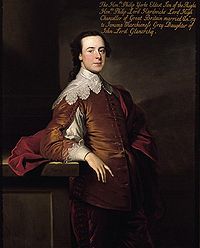 During the 18th century, the gusto that had characterised the early years of the Society faded; with a small number of scientific "greats" compared to other periods, little of note was done. In the second half, it became customary for Her Majesty's Government to refer highly important scientific questions to the Council of the Society for advice, something that, despite the non-partisan nature of the Society, spilled into politics in 1777 over lightning conductors. The pointed lightning conductor had been invented by Benjamin Franklin
in 1749, while Benjamin Wilson
invented blunted ones. During the argument that occurred when deciding which to use, opponents of Franklin's invention accused supporters of being American allies rather than being British, and the debate eventually led to the resignation of the Society's President, Sir John Pringle
. During the same time period, it became customary to appoint society Fellows to serve on government committees where science was concerned, something that still continues.
The 18th century did, however, feature remedies to many of the Society's early problems. The number of Fellows had increased from 110 to approximately 300 by 1739, the reputation of the Society had increased under the Presidency of Sir Isaac Newton
from 1703 until his death in 1727, and editions of the Philosophical Transactions of the Royal Society
were appearing regularly. During his time as President, Newton arguably abused his authority; in a dispute between himself and Gottfried Leibniz
over the invention of Infinitesimal calculus
, he used his position to appoint an "impartial" committee to decide it, eventually publishing a report written by himself in the committee's name. In 1705, the Society was informed that it could no longer rent Gresham College, and began a search for new premises. After unsuccessfully applying to Queen Anne
for new premises, and asking the trustees of Cotton House if they could meet there, the Council bought two houses in Crane Court, Fleet Street
, on 26 October 1710. This included offices, accommodation and a Collection of Curiosities. Although the overall Fellowship contained few noted scientists, most of the Council were highly regarded, and included at various times John Hadley
, William Jones and Hans Sloane
. Because of the laxness of Fellows in paying their subscriptions, the Society ran into financial difficulty during this time; by 1740, the Society had a deficit of £240. This continued into 1741, at which point the Treasurer began dealing harshly with Fellows who had not paid. The business of the Society at this time continued to include the demonstration of experiments and the reading of formal and important scientific papers, along with the demonstration of new scientific devices and queries about scientific matters from both Britain and Europe.
Some modern research has asserted that the claims of the Society's degradation during the 18th century are false. Richard Sorrenson writes that "far from having 'fared ingloriously,' the Society experienced a period of significant productivity and growth throughout the eighteenth century", pointing out that many of the sources critical accounts are based on are in fact written by those with an agenda. While Charles Babbage
wrote that the practice of pure mathematics in Britain was weak, laying the blame at the doorstep of the Society, the practice of mixed mathematics was strong, and although there were not many eminent members of the Society, some did contribute vast amounts – James Bradley
, for example, established the nutation of the Earth's axis
with 20 years of detailed, meticulous astronomy.
Politically within the Society, the mid-18th century featured a "Whig supremacy", as the so-called "Hardwicke Circle" of Whig-leaning scientists held the Society's main Offices. Named after Lord Hardwicke
, the groups members included Daniel Wray
and Thomas Birch
, and was most prominent in the 1750s and 60s. The Circle had Birch elected Secretary, and, following the resignation of Martin Folkes
, the Circle helped oversee a smooth transition to the Presidency of Earl Macclesfield
, who Hardwicke helped elect. Under Macclesfield, the Circle reached its "zenith", with members such as Lord Willoughby and Birch serving as Vice-President and Secretary, respectively. The Circle also influenced goings-on in other learned societies, such as the Society of Antiquaries of London
. After Macclesfield's retirement, the Circle had Lord Morton
elected in 1764, and Sir John Pringle
elected in 1772. By this point, the previous Whig "majority" had been reduced to a "faction", with Birch and Willoughby no longer involved, and the Circle declined in the same time frame as the political party did in British politics under George III
, falling apart in the 1780s.
In 1780, the Society moved again, this time to Somerset House
. The property was offered to the Society by Her Majesty's Government, and as soon as Sir Joseph Banks
became President in November 1778, he began planning the move. Somerset House, while larger than Crane Court, was not satisfying to the Fellows; the room to store the library was too small, the accommodation was insufficient, and there was not enough room to store the museum at all. As a result, the museum was handed to the British Museum
in 1781, and the library was extended to two rooms, one of which was used for Council meetings.
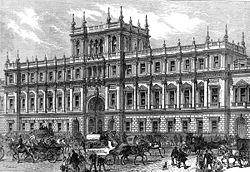 The early 19th century has been seen as a time of decline for the society; of 662 fellows in 1830, only 104 had contributed to the Philosophical Transactions
. The same year, Charles Babbage
published Reflections on the Decline of Science in England, and on Some of Its Causes, which was deeply critical of the Society. The scientific Fellows of the Society were spurred into action by this, and eventually James South
established a Charters Committee "with a view to obtaining a supplementary Charter from the Crown", aimed primarily at looking at ways to restrict membership. The Committee recommended that the election of Fellows take place on one day every year, that the Fellows be selected on consideration of their scientific achievements and that the number of fellows elected a year be limited to 15. This limit was increased to 17 in 1930 and 20 in 1937; it is currently 44. This had a number of effects on the Society: first, the Society's membership became almost entirely scientific, with few political Fellows or patrons. Second, the number of Fellows was significantly reduced—between 1700 and 1850, the number of Fellows rose from approximately 100 to approximately 750. From then until 1941, the total number of Fellows was always between 400 and 500.Henderson (1941) p.31
The period did lead to some reform of internal Society statutes, such as in 1823 and 1831. The most important change there was the requirement that the Treasurer publish an annual report, along with a copy of the total income and expenditure of the Society. These were to be sent to Fellows at least 14 days before the general meeting, with the intent being to ensure the election of competent Officers by making it readily apparent what existing Officers were doing. This was accompanied by a full list of Fellows standing for Council positions, where previously the names had only been announced a couple of days before. As with the other reforms, this helped ensure that Fellows had a chance to vet and properly consider candidates. The Society's financial troubles were finally resolved in 1850, when a government grant-in-aid
of £1,000 a year was accepted. This was increased to £4,000 in 1876, with the Society officially acting merely as the trustee for these funds, doling them out to individual scientists.
By 1852, the congestion at Somerset House
had increased thanks to the growing number of Fellows. Therefore, the Library Committee asked the Council to petition Her Majesty's Government to find new facilities, with the advice being to bring all the scientific societies, such as the Linnean
and Geological
societies, under one roof. In August 1866, the government announced their intention to refurbish Burlington House
and move the Royal Academy
and other societies there. The Academy moved in 1867, while other societies joined when their facilities were built. The Royal Society moved there in 1873, taking up residence in the East Wing. The top floor was used as accommodation for the Assistant Secretary, while the library was scattered over every room and the old caretaker's apartment was converted into offices. One flaw was that there was not enough space for the office staff, which was then approximately eighty. When, for example, the Society organised the British contribution to the International Geophysical Year
in 1954, additional facilities had to be found for the staff outside Burlington House.
On 22 March 1945, the first female Fellows were elected to the Royal Society. This followed a statutory amendment in 1944 that read "Nothing herein contained shall render women ineligible as candidates", and was contained in Chapter 1 of Statute 1. Because of the difficulty of coordinating all the Fellows during the Second World War, a ballot on making the change was conducted via the post, with 336 Fellows supporting the change and 37 opposing. Following approval by the Council, Marjory Stephenson
and Kathleen Lonsdale
were elected as Fellows.
, interested in the early structure of the Society, had sketched out at least six possible designs, but in August 1662 Charles II
told the Society that it was allowed to use the arms of England as part of its coat, and the Society "now resolv'd that the armes of the Society should be, a field Argent, with a canton of the armes of England; the supporters two talbots Argent; Crest, an eagle Or holding a shield with the like armes of England, viz. 3 lions. The words Nullius in verba". This was approved by Charles, who asked Garter King of Arms to create a diploma for it, and when the second Charter was signed on 22 April 1663 the arms were granted to the President, Council and Fellows of the Society, along with their successors.
The helmet of the arms was not specified in the Charter, but the engraver sketched out a peer's helmet on the final design, which is used. This is contrary to the heraldic rules, as a society or corporation normally has an esquire's helmet; it is thought that either the engraver was ignorant of this rule, which was not strictly adhered to until around 1615, or that he used the peer's helmet as a compliment to Viscount Brouncker
, a peer and the President of the Royal Society
.
, is Latin
for "Take nobody's word for it". It was adopted to signify the Fellows' determination to establish facts via experiments and comes from Horace
's Epistles, where he compares himself to a gladiator who, having retired, is free from control.
all come with prize money intended to finance research, and it provides subsidised communications and media skills courses for research scientists. In 2008, the Society opened the Royal Society Enterprise Fund, intended to invest in new scientific companies and be self-sustaining, funded (after an initial set of donations on the 350th anniversary of the Society) by the returns from its investments.
Through its Science Policy Centre, the Society acts as an advisor to the European Commission
and the United Nations
on matters of science. It publishes several reports a year, and serves as the Academy of Sciences
of the United Kingdom
. Since the middle of the 18th century, government problems involving science were irregularly referred to the Society, and by 1800 it was done regularly. The Society now formally acts as Her Majesty Government's chief scientific advisor, and is the United Kingdom's Academy of Sciences
.
Philosophical Transactions is the oldest and longest-running scientific journal in the English-speaking world, having first been published in March 1665 by the first Secretary of the Society Henry Oldenburg
. It now publishes themed issues on specific topics and is currently divided into two parts; A, which deals with mathematics and the physical sciences, and B, which deals with the biological sciences. Proceedings of the Royal Society consists of freely submitted research articles and is similarly divided into two parts. Biology Letters publishes short research articles and opinion pieces on all areas of biology and was launched in 2005. Interface publishes cross-disciplinary research at the boundary between the physical and life sciences, while Notes and Records is the Society's journal on the history of science. Biographical Memoirs
is published annually and contains extended obituaries of deceased Fellows.
Open Biology is a peer-reviewed
open access journal
published by the Royal Society covering biology
at the molecular
and cellular level
and was launched in October 2011. It accepts papers in the fields of cell biology, developmental and structural biology, molecular biology, biochemistry, neuroscience, immunology, microbiology, and genetics. The editor-in-chief is David Glover
of the University of Cambridge
.
The Society also elects Royal Fellows, Honorary Fellows, and Foreign Members. Royal Fellows are those members of the Monarchy of the United Kingdom
, who are recommended by the Society's Council and elected via postal vote. There are currently five Royal Fellows: The Duke of Edinburgh
, The Prince of Wales
, The Duke of Kent
, the Princess Royal
, and The Duke of Cambridge. Honorary Fellows are people who are ineligible to be elected Fellows, but nevertheless have "rendered signal service to the cause of science, or whose election would significantly benefit the Society by their great experience in other walks of life". Six Honorary Fellows have been elected to date, including Baroness O'Neill of Bengarve. Foreign Members are scientists from non-Commonwealth nations "who are eminent for their scientific discoveries and attainments". Eight are elected each year by the Society, and also hold their membership for life. Foreign Members are permitted to use the postnomial ForMemRS (Foreign Member of the Royal Society) title, and currently number 137.
The appointment of Fellows was first authorised in the second Charter, issued on 22 April 1663, which allowed the President and Council, in the two-months following the signing, to appoint as Fellows any individuals they see fit. This saw the appointment of 94 Fellows on 20 May and 4 on 22 June; these 98 are known as the "Original Fellows". After the expiration of this two-month period, any appointments were to be made by the President, Council and existing Fellows. Many early Fellows were not scientists or particularly eminent intellectuals; it was clear that the early Society could not rely on financial assistance from the King, and scientifically trained Fellows were few and far between. It was therefore necessary to secure the favour of wealthy or important individuals for the Society's survival. While the entrance fee of £4 and the subscription rate of one shilling
a week should have produced £600 a year for the Society, many Fellows paid neither regularly nor on time. Two-thirds of the Fellows in 1663 were non-scientists; this rose to 71.6% in 1800 before dropping to 47.4% in 1860 as the financial security of the Society became more certain. In May 1846, a Committee recommended limiting the annual intake of members to 15 and insisting on scientific eminence; this was implemented, with the result being that the Society now consists exclusively of scientific Fellows.
. Historically, the duties of the President have been both formal and social. The Cruelty to Animals Act 1876
left the President as one of the only individuals capable of certifying that a particular experiment on an animal was justified, and in addition he acted as the government's chief (albeit informal) advisor on scientific matters. At the same time, the President was tasked with entertaining distinguished foreign guests and scientists.
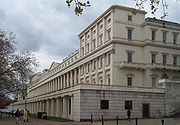 The premises at 6–9 Carlton House Terrace
is a Grade I listed building and the current headquarters of the Royal Society, which had moved there from Burlington House
in 1967. The ground floor and basement are used for ceremonies, social and publicity events, the first floor hosts facilities for Fellows and Officers of the Society, and the second and third floors are divided between offices and accommodation for the President, Executive Secretary and Fellows. The first Carlton House was named after Baron Carleton
, and was sold to Lord Chesterfield
in 1732, who held it on trust
for Frederick, Prince of Wales
. Frederick held his court there until his death in 1751, after which it was occupied by his widow until her death in 1772. In 1783, the then-Prince of Wales George
bought the house, instructing his architect Henry Holland
to completely remodel it. When George became King, he authorised the demolition of Carlton House, with the request that the replacement be a residential area. John Nash
eventually completed a design that saw Carlton House turned into two blocks of houses, with a space in between them. The building is still owned by the Crown Estates and leased by the Society; it underwent a major renovation from 2001 to 2004 at the cost of £9.8 million, and was re-opened by the Prince of Wales
on 7 July 2004.
Carlton House Terrace underwent a series of renovations between 1999 and November 2003 to improve and standardise the property. New waiting, exhibition and reception rooms were created in the house at No.7, using the Magna Boschi marble found in No.8, and greenish grey Statuario Venato marble was used in other areas to standardise the design. An effort was also made to make the layout of the buildings easier, consolidating all the offices on one floor, Fellows' Rooms on another and all the accommodation on a third.
, a Grade I listed building located near Milton Keynes
, was bought by the Royal Society for £6.5 million, funded in part by Fred Kavli
. The Royal Society spent several million on renovations adapting it to become the "Kavli Royal Society International Centre", a venue for science seminars and conferences and appointed Sir Peter Knight FRS
as its Principal. The Centre held its first scientific meeting on 1 June 2010 and was formally opened on 21 June 2010.
, created in 1701 at the request of the widow of William Croone
, one of the founding members of the Royal Society. The Croonian Lecture is still awarded on an annual basis, and is considered the most important Royal Society prize for the biological sciences. Although the Croonian Lecture was created in 1701 it was first awarded in 1738, seven years after the Copley Medal
which is the oldest Royal Society medal still in use and is awarded for "outstanding achievements in research in any branch of science".
Learned society
A learned society is an organization that exists to promote an academic discipline/profession, as well a group of disciplines. Membership may be open to all, may require possession of some qualification, or may be an honor conferred by election, as is the case with the oldest learned societies,...
for science, and is possibly the oldest such society in existence. Founded in November 1660, it was granted a Royal Charter
Royal Charter
A royal charter is a formal document issued by a monarch as letters patent, granting a right or power to an individual or a body corporate. They were, and are still, used to establish significant organizations such as cities or universities. Charters should be distinguished from warrants and...
by King Charles II
Charles II of England
Charles II was monarch of the three kingdoms of England, Scotland, and Ireland.Charles II's father, King Charles I, was executed at Whitehall on 30 January 1649, at the climax of the English Civil War...
as the "Royal Society of London". The Society was initially an extension of the "Invisible College
Invisible College
The Invisible College has been described as a precursor group to the Royal Society of London, consisting of a number of natural philosophers around Robert Boyle...
", with the founders intending it to be a place of research and discussion. The Society today acts as a scientific advisor to the British government, receiving a parliamentary grant-in-aid
Grant-in-aid
A grant-in-aid is money coming from central government for a specific project. This kind of funding is usually used when the government and parliament have decided that the recipient should be publicly funded but operate with reasonable independence from the state.In the United Kingdom, most bodies...
. The Society acts as the UK's Academy of Sciences
Academy of Sciences
An Academy of Sciences is a national academy or another learned society dedicated to sciences.In non-English speaking countries, the range of academic fields of the members of a national Academy of Science often includes fields which would not normally be classed as "science" in English...
, and funds research fellowships and scientific start-up companies.
The Society is governed by its Council, which is chaired by the Society's President, according to a set of Statutes and Standing Orders. The members of Council and the President are elected from and by its Fellows, the basic members of the Society, who are themselves elected by existing Fellows. There are currently 1,314 Fellows, allowed to use the postnominal title FRS (Fellow of the Royal Society), with 44 new Fellows appointed each year. There are also Royal Fellows, Honorary Fellows and Foreign Fellows, the last of which are allowed to use their postnominal title ForMemRS (Foreign Member of the Royal Society). The current Royal Society President is Sir Paul Nurse
Paul Nurse
Sir Paul Maxime Nurse, PRS is a British geneticist and cell biologist. He was awarded the 2001 Nobel Prize in Physiology or Medicine with Leland H. Hartwell and R...
, who took up the position on 30 November 2010.
Since 1967, the Society has been based at 6–9 Carlton House Terrace
Carlton House Terrace
Carlton House Terrace refers to a street in the St. James's district of the City of Westminster in London, England, and in particular to two terraces of white stucco-faced houses on the south side of the street overlooking St. James's Park. These terraces were built in 1827–32 to overall designs by...
, a Grade I listed building in central London
Central London
Central London is the innermost part of London, England. There is no official or commonly accepted definition of its area, but its characteristics are understood to include a high density built environment, high land values, an elevated daytime population and a concentration of regionally,...
.
Founding and early years
Invisible College
The Invisible College has been described as a precursor group to the Royal Society of London, consisting of a number of natural philosophers around Robert Boyle...
, which met at a variety of locations, including the houses of their members and Gresham College
Gresham College
Gresham College is an institution of higher learning located at Barnard's Inn Hall off Holborn in central London, England. It was founded in 1597 under the will of Sir Thomas Gresham and today it hosts over 140 free public lectures every year within the City of London.-History:Sir Thomas Gresham,...
. Members at particular times were John Wilkins
John Wilkins
John Wilkins FRS was an English clergyman, natural philosopher and author, as well as a founder of the Invisible College and one of the founders of the Royal Society, and Bishop of Chester from 1668 until his death....
, Jonathan Goddard
Jonathan Goddard
Jonathan Goddard was an English physician, known both as army surgeon to the forces of Oliver Cromwell, and as an active member of the Royal Society.-Life:...
, Robert Hooke
Robert Hooke
Robert Hooke FRS was an English natural philosopher, architect and polymath.His adult life comprised three distinct periods: as a scientific inquirer lacking money; achieving great wealth and standing through his reputation for hard work and scrupulous honesty following the great fire of 1666, but...
, Christopher Wren
Christopher Wren
Sir Christopher Wren FRS is one of the most highly acclaimed English architects in history.He used to be accorded responsibility for rebuilding 51 churches in the City of London after the Great Fire in 1666, including his masterpiece, St. Paul's Cathedral, on Ludgate Hill, completed in 1710...
, William Petty
William Petty
Sir William Petty FRS was an English economist, scientist and philosopher. He first became prominent serving Oliver Cromwell and Commonwealth in Ireland. He developed efficient methods to survey the land that was to be confiscated and given to Cromwell's soldiers...
, and Robert Boyle
Robert Boyle
Robert Boyle FRS was a 17th century natural philosopher, chemist, physicist, and inventor, also noted for his writings in theology. He has been variously described as English, Irish, or Anglo-Irish, his father having come to Ireland from England during the time of the English plantations of...
. The group discussed the "new science
Scientific method
Scientific method refers to a body of techniques for investigating phenomena, acquiring new knowledge, or correcting and integrating previous knowledge. To be termed scientific, a method of inquiry must be based on gathering empirical and measurable evidence subject to specific principles of...
", as promoted by Francis Bacon
Francis Bacon
Francis Bacon, 1st Viscount St Albans, KC was an English philosopher, statesman, scientist, lawyer, jurist, author and pioneer of the scientific method. He served both as Attorney General and Lord Chancellor of England...
in his New Atlantis
New Atlantis
New Atlantis and similar can mean:*New Atlantis, a novel by Sir Francis Bacon*The New Atlantis, founded in 2003, a journal about the social and political dimensions of science and technology...
, from approximately 1645 onwards. It initially had no rules or methods, and the primary goals were to organise and view experiments and communicate their discoveries to each other. The group varied over time, eventually splitting into two distinct factions in 1638 due to travel distances; the London Society and the Oxford Society. The Oxford Society was more active because many members of the College lived there, and was established as The Philosophical Society of Oxford, run under a set of rules still retained by the Bodleian Library
Bodleian Library
The Bodleian Library , the main research library of the University of Oxford, is one of the oldest libraries in Europe, and in Britain is second in size only to the British Library...
.
The London group continued to meet at Gresham College, primarily after lectures hosted by Christopher Wren. The membership expanded at this time, growing to include Lord Brouncker
William Brouncker, 2nd Viscount Brouncker
William Brouncker, 2nd Viscount Brouncker, PRS was an English mathematician.Brouncker obtained a DM at the University of Oxford in 1647. He was one of the founders and the first President of the Royal Society. In 1662, he became Chancellor to Queen Catherine, then chief of the Saint Catherine's...
and Timothy Clarke. It was forced to disband in 1658 during the English Protectorate following soldiers invading their rooms; after the English Restoration
English Restoration
The Restoration of the English monarchy began in 1660 when the English, Scottish and Irish monarchies were all restored under Charles II after the Interregnum that followed the Wars of the Three Kingdoms...
, they returned to meeting at Gresham College. It is widely held that these groups were the inspiration for the foundation of the Royal Society.
An alternate view of the founding, held at the time, was that it was due to the influence of French scientists and the Montmor Academy in 1657, reports of which were sent back to England by English scientists attending. This view was held by Jean-Baptiste du Hamel
Jean-Baptiste du Hamel
Jean-Baptiste Du Hamel, Duhamel or du Hamel was a notable French cleric and natural philosopher of the late seventeenth century, and the first secretary of the Academie Royale des Sciences...
, Giovanni Domenico Cassini
Giovanni Domenico Cassini
This article is about the Italian-born astronomer. For his French-born great-grandson, see Jean-Dominique Cassini.Giovanni Domenico Cassini was an Italian/French mathematician, astronomer, engineer, and astrologer...
, Bernard le Bovier de Fontenelle
Bernard le Bovier de Fontenelle
Bernard Le Bovier de Fontenelle , also called Bernard Le Bouyer de Fontenelle, was a French author.Fontenelle was born in Rouen, France and died in Paris just one month before his 100th birthday. His mother was the sister of great French dramatists Pierre and Thomas Corneille...
and Melchisédech Thévenot
Melchisédech Thévenot
Melchisédech Thévenot was a French author, scientist, traveler, cartographer, orientalist, inventor, and diplomat...
at the time, and has some grounding in that Henry Oldenburg
Henry Oldenburg
Henry Oldenburg was a German theologian known as a diplomat and a natural philosopher. He was one of the foremost intelligencers of Europe of the seventeenth century, with a network of correspondents to rival those of Fabri de Peiresc, Marin Mersenne and Ismaël Boulliau...
, the Society's first Secretary, had attended the Montmor Academy meeting. Robert Hooke, however, disputed this, writing that:
[Cassini] makes, then, Mr Oldenburg to have been the instrument, who inspired the English with a desire to imitate the French, in having Philosophical Clubs, or Meetings; and that this was the occasion of founding the Royal Society, and making the French the first. I will not say, that Mr Oldenburg did rather inspire the French to follow the English, or, at least, did help them, and hinder us. But 'tis well known who were the principal men that began and promoted that design, both in this city and in Oxford; and that a long while before Mr Oldenburg came into England. And not only these Philosophic Meetings were before Mr Oldenburg came from Paris; but the Society itself was begun before he came hither; and those who then knew Mr Oldenburg, understood well enough how little he himself knew of philosophic matter.
Robert Moray
Sir Robert Moray was a Scottish soldier, statesman, diplomat, judge, spy, freemason and natural philosopher. He was well known to Charles I and Charles II, and the French cardinals Richelieu and Mazarin...
announced that the King
Charles II of England
Charles II was monarch of the three kingdoms of England, Scotland, and Ireland.Charles II's father, King Charles I, was executed at Whitehall on 30 January 1649, at the climax of the English Civil War...
approved of the gatherings, and a Royal Charter
Royal Charter
A royal charter is a formal document issued by a monarch as letters patent, granting a right or power to an individual or a body corporate. They were, and are still, used to establish significant organizations such as cities or universities. Charters should be distinguished from warrants and...
was signed on 15 July 1662 which created the "Royal Society of London", with Lord Brouncker
William Brouncker, 2nd Viscount Brouncker
William Brouncker, 2nd Viscount Brouncker, PRS was an English mathematician.Brouncker obtained a DM at the University of Oxford in 1647. He was one of the founders and the first President of the Royal Society. In 1662, he became Chancellor to Queen Catherine, then chief of the Saint Catherine's...
serving as the first President. A second Royal Charter was signed on 23 April 1663, with the King noted as the Founder and with the name of "the Royal Society of London for the Improvement of Natural Knowledge"; Robert Hooke was appointed as Curator of Experiments in November. This initial royal favour has continued, and since then every monarch has been the patron of the Society.
The Society's early meetings consisted almost entirely of experiments, demonstrated first by Hooke and then by Denis Papin
Denis Papin
Denis Papin was a French physicist, mathematician and inventor, best known for his pioneering invention of the steam digester, the forerunner of the steam engine and of the pressure cooker.-Life in France:...
, who was appointed in 1684. The Society also published an English translation of Essays of Natural Experiments Made in the Accademia del Cimento, under the Protection of the Most Serene Prince Leopold of Tuscany in 1884, an Italian book documenting experiments at the Accademia del Cimento
Accademia del Cimento
The Accademia del Cimento , an early scientific society, was founded in Florence 1657 by students of Galileo, Giovanni Alfonso Borelli and Vincenzo Viviani. The foundation of Academy was funded by Prince Leopoldo and Grand Duke Ferdinando II de' Medici...
. The early experiments varied in their subject area, and were both important in some cases and trivial in others. Although meeting at Gresham College, the Society temporarily relocated to Arundel House
Arundel House
Arundel House was a town-house or palace located between the Strand and the Thames, near St Clement Danes.It was originally the town house of the Bishops of Bath and Wells, during the Middle Ages. In 1539 it was given to William Fitzwilliam, Earl of Southampton...
in 1666 after the Great Fire of London
Great Fire of London
The Great Fire of London was a major conflagration that swept through the central parts of the English city of London, from Sunday, 2 September to Wednesday, 5 September 1666. The fire gutted the medieval City of London inside the old Roman City Wall...
, which did not harm Gresham but did lead to its appropriation by the Lord Mayor. The Society returned to Gresham in 1673.
There had been an attempt in 1667 to establish a permanent "College" for the society. Michael Hunter argues that this was influenced by "Solomon's House" in Bacon's New Atlantis, and to a lesser extent by J.V. Andreae
Johannes Valentinus Andreae
Johannes Valentinus Andreae , a.k.a. Johannes Valentinus Andreä or Johann Valentin Andreae, was a German theologian, who claimed to be the author of the Chymische Hochzeit Christiani Rosencreutz anno 1459 one of the three founding works of...
's Christianopolis, dedicated research institutes, rather than the colleges at Oxford
University of Oxford
The University of Oxford is a university located in Oxford, United Kingdom. It is the second-oldest surviving university in the world and the oldest in the English-speaking world. Although its exact date of foundation is unclear, there is evidence of teaching as far back as 1096...
and Cambridge
University of Cambridge
The University of Cambridge is a public research university located in Cambridge, United Kingdom. It is the second-oldest university in both the United Kingdom and the English-speaking world , and the seventh-oldest globally...
, since the founders only intended for the Society to act as a location for research and discussion. The first proposal was given by John Evelyn to Robert Boyle in a letter dated 3 September 1659; he suggested a far grander scheme, with apartments for members and a central research institute. Similar schemes were expounded by Bengt Skytte and later Abraham Cowley
Abraham Cowley
Abraham Cowley was an English poet born in the City of London late in 1618. He was one of the leading English poets of the 17th century, with 14 printings of his Works published between 1668 and 1721.-Early life and career:...
, who wrote in his Proposition for the Advancement of Experimental Philosophy in 1661 of a "'Philosophical College", with houses, a library and a chapel. The Society's ideas contained none of this complexity, and only included residences for a handful of staff, but Hunter maintains that they probably drew inspiration from Cowley and Sktyye's ideas. Henry Oldenburg and Thomas Sprat
Thomas Sprat
Thomas Sprat , English divine, was born at Beaminster, Dorset, and educated at Wadham College, Oxford, where he held a fellowship from 1657 to 1670.Having taken orders he became a prebendary of Lincoln Cathedral in 1660...
put forward ideas in 1667, and Oldenburg's co-Secretary John Wilkins
John Wilkins
John Wilkins FRS was an English clergyman, natural philosopher and author, as well as a founder of the Invisible College and one of the founders of the Royal Society, and Bishop of Chester from 1668 until his death....
moved in a Council meeting on 30 September 1667 to appoint a Committee "for raising contributions among the members of the society, in order to build a college". These plans were progressing by November 1667, but never reached fruition due to the lack of contributions from members and the "unrealised – perhaps unrealistic -" aspirations of the Society.
18th century
Benjamin Franklin
Dr. Benjamin Franklin was one of the Founding Fathers of the United States. A noted polymath, Franklin was a leading author, printer, political theorist, politician, postmaster, scientist, musician, inventor, satirist, civic activist, statesman, and diplomat...
in 1749, while Benjamin Wilson
Benjamin Wilson (painter)
Benjamin Wilson was an English painter, printmaker and scientist .He was the 14th child of Major Wilson, a wealthy York clothier whose house was decorated by the French history painter, Jacques Parmentier...
invented blunted ones. During the argument that occurred when deciding which to use, opponents of Franklin's invention accused supporters of being American allies rather than being British, and the debate eventually led to the resignation of the Society's President, Sir John Pringle
John Pringle
Sir John Pringle, 1st Baronet, FRS was a Scottish physician who has been called the "father of military medicine" ....
. During the same time period, it became customary to appoint society Fellows to serve on government committees where science was concerned, something that still continues.
The 18th century did, however, feature remedies to many of the Society's early problems. The number of Fellows had increased from 110 to approximately 300 by 1739, the reputation of the Society had increased under the Presidency of Sir Isaac Newton
Isaac Newton
Sir Isaac Newton PRS was an English physicist, mathematician, astronomer, natural philosopher, alchemist, and theologian, who has been "considered by many to be the greatest and most influential scientist who ever lived."...
from 1703 until his death in 1727, and editions of the Philosophical Transactions of the Royal Society
Philosophical Transactions of the Royal Society
The Philosophical Transactions of the Royal Society is a scientific journal published by the Royal Society of London. It was established in 1665, making it the first journal in the world exclusively devoted to science, and it has remained in continuous publication ever since, making it the world's...
were appearing regularly. During his time as President, Newton arguably abused his authority; in a dispute between himself and Gottfried Leibniz
Gottfried Leibniz
Gottfried Wilhelm Leibniz was a German philosopher and mathematician. He wrote in different languages, primarily in Latin , French and German ....
over the invention of Infinitesimal calculus
Infinitesimal calculus
Infinitesimal calculus is the part of mathematics concerned with finding slope of curves, areas under curves, minima and maxima, and other geometric and analytic problems. It was independently developed by Gottfried Leibniz and Isaac Newton starting in the 1660s...
, he used his position to appoint an "impartial" committee to decide it, eventually publishing a report written by himself in the committee's name. In 1705, the Society was informed that it could no longer rent Gresham College, and began a search for new premises. After unsuccessfully applying to Queen Anne
Anne of Great Britain
Anne ascended the thrones of England, Scotland and Ireland on 8 March 1702. On 1 May 1707, under the Act of Union, two of her realms, England and Scotland, were united as a single sovereign state, the Kingdom of Great Britain.Anne's Catholic father, James II and VII, was deposed during the...
for new premises, and asking the trustees of Cotton House if they could meet there, the Council bought two houses in Crane Court, Fleet Street
Fleet Street
Fleet Street is a street in central London, United Kingdom, named after the River Fleet, a stream that now flows underground. It was the home of the British press until the 1980s...
, on 26 October 1710. This included offices, accommodation and a Collection of Curiosities. Although the overall Fellowship contained few noted scientists, most of the Council were highly regarded, and included at various times John Hadley
John Hadley
John Hadley was an English mathematician, inventor of the octant, a precursor to the sextant, around 1730.He was born in Bloomsbury, London, to Katherine FitzJames and George Hadley....
, William Jones and Hans Sloane
Hans Sloane
Sir Hans Sloane, 1st Baronet, PRS was an Ulster-Scot physician and collector, notable for bequeathing his collection to the British nation which became the foundation of the British Museum...
. Because of the laxness of Fellows in paying their subscriptions, the Society ran into financial difficulty during this time; by 1740, the Society had a deficit of £240. This continued into 1741, at which point the Treasurer began dealing harshly with Fellows who had not paid. The business of the Society at this time continued to include the demonstration of experiments and the reading of formal and important scientific papers, along with the demonstration of new scientific devices and queries about scientific matters from both Britain and Europe.
Some modern research has asserted that the claims of the Society's degradation during the 18th century are false. Richard Sorrenson writes that "far from having 'fared ingloriously,' the Society experienced a period of significant productivity and growth throughout the eighteenth century", pointing out that many of the sources critical accounts are based on are in fact written by those with an agenda. While Charles Babbage
Charles Babbage
Charles Babbage, FRS was an English mathematician, philosopher, inventor and mechanical engineer who originated the concept of a programmable computer...
wrote that the practice of pure mathematics in Britain was weak, laying the blame at the doorstep of the Society, the practice of mixed mathematics was strong, and although there were not many eminent members of the Society, some did contribute vast amounts – James Bradley
James Bradley
James Bradley FRS was an English astronomer and served as Astronomer Royal from 1742, succeeding Edmund Halley. He is best known for two fundamental discoveries in astronomy, the aberration of light , and the nutation of the Earth's axis...
, for example, established the nutation of the Earth's axis
Nutation
Nutation is a rocking, swaying, or nodding motion in the axis of rotation of a largely axially symmetric object, such as a gyroscope, planet, or bullet in flight, or as an intended behavior of a mechanism...
with 20 years of detailed, meticulous astronomy.
Politically within the Society, the mid-18th century featured a "Whig supremacy", as the so-called "Hardwicke Circle" of Whig-leaning scientists held the Society's main Offices. Named after Lord Hardwicke
Philip Yorke, 2nd Earl of Hardwicke
Philip Yorke, 2nd Earl of Hardwicke FRS , and eldest son of the 1st earl, was educated at Corpus Christi College, Cambridge.In 1741 he became a fellow of the Royal Society...
, the groups members included Daniel Wray
Daniel Wray
-Life:Born on 28 November 1701 in the parish of St. Botolph, Aldersgate, he was the youngest child of Sir Daniel Wray , a London citizen and soap-boiler residing in Little Britain, by his second wife. His father was knighted on 24 March 1708, while high sheriff of Essex, where he possessed an...
and Thomas Birch
Thomas Birch
Thomas Birch was an English historian.-Life:He was the son of Joseph Birch, a coffee-mill maker, and was born at Clerkenwell....
, and was most prominent in the 1750s and 60s. The Circle had Birch elected Secretary, and, following the resignation of Martin Folkes
Martin Folkes
Martin Folkes FRS , English antiquary, was born in London.He was educated at Saumur University and Clare College, Cambridge, where he so distinguished himself in mathematics that when only twenty-three years of age he was chosen a fellow of the Royal Society...
, the Circle helped oversee a smooth transition to the Presidency of Earl Macclesfield
George Parker, 2nd Earl of Macclesfield
George Parker, 2nd Earl of Macclesfield, FRS was an English peer and astronomer.Styled Viscount Parker from 1721 to 1732, he was Member of Parliament for Wallingford from 1722 to 1727, but his interests were not in politics...
, who Hardwicke helped elect. Under Macclesfield, the Circle reached its "zenith", with members such as Lord Willoughby and Birch serving as Vice-President and Secretary, respectively. The Circle also influenced goings-on in other learned societies, such as the Society of Antiquaries of London
Society of Antiquaries of London
The Society of Antiquaries of London is a learned society "charged by its Royal Charter of 1751 with 'the encouragement, advancement and furtherance of the study and knowledge of the antiquities and history of this and other countries'." It is based at Burlington House, Piccadilly, London , and is...
. After Macclesfield's retirement, the Circle had Lord Morton
James Douglas, 14th Earl of Morton
James Douglas, 14th Earl of Morton KT FRS was a Scottish astronomer and representative peer who was President of the Philosophical Society of Edinburgh from its foundation in 1737 until his death...
elected in 1764, and Sir John Pringle
John Pringle
Sir John Pringle, 1st Baronet, FRS was a Scottish physician who has been called the "father of military medicine" ....
elected in 1772. By this point, the previous Whig "majority" had been reduced to a "faction", with Birch and Willoughby no longer involved, and the Circle declined in the same time frame as the political party did in British politics under George III
George III of the United Kingdom
George III was King of Great Britain and King of Ireland from 25 October 1760 until the union of these two countries on 1 January 1801, after which he was King of the United Kingdom of Great Britain and Ireland until his death...
, falling apart in the 1780s.
In 1780, the Society moved again, this time to Somerset House
Somerset House
Somerset House is a large building situated on the south side of the Strand in central London, England, overlooking the River Thames, just east of Waterloo Bridge. The central block of the Neoclassical building, the outstanding project of the architect Sir William Chambers, dates from 1776–96. It...
. The property was offered to the Society by Her Majesty's Government, and as soon as Sir Joseph Banks
Joseph Banks
Sir Joseph Banks, 1st Baronet, GCB, PRS was an English naturalist, botanist and patron of the natural sciences. He took part in Captain James Cook's first great voyage . Banks is credited with the introduction to the Western world of eucalyptus, acacia, mimosa and the genus named after him,...
became President in November 1778, he began planning the move. Somerset House, while larger than Crane Court, was not satisfying to the Fellows; the room to store the library was too small, the accommodation was insufficient, and there was not enough room to store the museum at all. As a result, the museum was handed to the British Museum
British Museum
The British Museum is a museum of human history and culture in London. Its collections, which number more than seven million objects, are amongst the largest and most comprehensive in the world and originate from all continents, illustrating and documenting the story of human culture from its...
in 1781, and the library was extended to two rooms, one of which was used for Council meetings.
19th century to the present
Philosophical Transactions of the Royal Society
The Philosophical Transactions of the Royal Society is a scientific journal published by the Royal Society of London. It was established in 1665, making it the first journal in the world exclusively devoted to science, and it has remained in continuous publication ever since, making it the world's...
. The same year, Charles Babbage
Charles Babbage
Charles Babbage, FRS was an English mathematician, philosopher, inventor and mechanical engineer who originated the concept of a programmable computer...
published Reflections on the Decline of Science in England, and on Some of Its Causes, which was deeply critical of the Society. The scientific Fellows of the Society were spurred into action by this, and eventually James South
James South
Sir James South was a British astronomer.He helped found the Astronomical Society of London, and it was under his name as president of the society from 1831 to 1832 that a petition was successfully submitted to obtain a royal charter in 1831, whereupon it became the Royal Astronomical...
established a Charters Committee "with a view to obtaining a supplementary Charter from the Crown", aimed primarily at looking at ways to restrict membership. The Committee recommended that the election of Fellows take place on one day every year, that the Fellows be selected on consideration of their scientific achievements and that the number of fellows elected a year be limited to 15. This limit was increased to 17 in 1930 and 20 in 1937; it is currently 44. This had a number of effects on the Society: first, the Society's membership became almost entirely scientific, with few political Fellows or patrons. Second, the number of Fellows was significantly reduced—between 1700 and 1850, the number of Fellows rose from approximately 100 to approximately 750. From then until 1941, the total number of Fellows was always between 400 and 500.Henderson (1941) p.31
The period did lead to some reform of internal Society statutes, such as in 1823 and 1831. The most important change there was the requirement that the Treasurer publish an annual report, along with a copy of the total income and expenditure of the Society. These were to be sent to Fellows at least 14 days before the general meeting, with the intent being to ensure the election of competent Officers by making it readily apparent what existing Officers were doing. This was accompanied by a full list of Fellows standing for Council positions, where previously the names had only been announced a couple of days before. As with the other reforms, this helped ensure that Fellows had a chance to vet and properly consider candidates. The Society's financial troubles were finally resolved in 1850, when a government grant-in-aid
Grant-in-aid
A grant-in-aid is money coming from central government for a specific project. This kind of funding is usually used when the government and parliament have decided that the recipient should be publicly funded but operate with reasonable independence from the state.In the United Kingdom, most bodies...
of £1,000 a year was accepted. This was increased to £4,000 in 1876, with the Society officially acting merely as the trustee for these funds, doling them out to individual scientists.
By 1852, the congestion at Somerset House
Somerset House
Somerset House is a large building situated on the south side of the Strand in central London, England, overlooking the River Thames, just east of Waterloo Bridge. The central block of the Neoclassical building, the outstanding project of the architect Sir William Chambers, dates from 1776–96. It...
had increased thanks to the growing number of Fellows. Therefore, the Library Committee asked the Council to petition Her Majesty's Government to find new facilities, with the advice being to bring all the scientific societies, such as the Linnean
Linnean Society of London
The Linnean Society of London is the world's premier society for the study and dissemination of taxonomy and natural history. It publishes a zoological journal, as well as botanical and biological journals...
and Geological
Geological Society of London
The Geological Society of London is a learned society based in the United Kingdom with the aim of "investigating the mineral structure of the Earth"...
societies, under one roof. In August 1866, the government announced their intention to refurbish Burlington House
Burlington House
Burlington House is a building on Piccadilly in London. It was originally a private Palladian mansion, and was expanded in the mid 19th century after being purchased by the British government...
and move the Royal Academy
Royal Academy
The Royal Academy of Arts is an art institution based in Burlington House on Piccadilly, London. The Royal Academy of Arts has a unique position in being an independent, privately funded institution led by eminent artists and architects whose purpose is to promote the creation, enjoyment and...
and other societies there. The Academy moved in 1867, while other societies joined when their facilities were built. The Royal Society moved there in 1873, taking up residence in the East Wing. The top floor was used as accommodation for the Assistant Secretary, while the library was scattered over every room and the old caretaker's apartment was converted into offices. One flaw was that there was not enough space for the office staff, which was then approximately eighty. When, for example, the Society organised the British contribution to the International Geophysical Year
International Geophysical Year
The International Geophysical Year was an international scientific project that lasted from July 1, 1957, to December 31, 1958. It marked the end of a long period during the Cold War when scientific interchange between East and West was seriously interrupted...
in 1954, additional facilities had to be found for the staff outside Burlington House.
On 22 March 1945, the first female Fellows were elected to the Royal Society. This followed a statutory amendment in 1944 that read "Nothing herein contained shall render women ineligible as candidates", and was contained in Chapter 1 of Statute 1. Because of the difficulty of coordinating all the Fellows during the Second World War, a ballot on making the change was conducted via the post, with 336 Fellows supporting the change and 37 opposing. Following approval by the Council, Marjory Stephenson
Marjory Stephenson
Marjory Stephenson, MBE, FRS was a British biochemist. She was one of the first two women elected a Fellow of the Royal Society in 1945....
and Kathleen Lonsdale
Kathleen Lonsdale
Dame Kathleen Lonsdale, DBE FRS was a crystallographer, who established the structure of benzene by X-ray diffraction methods in 1929, and hexachlorobenzene by Fourier spectral methods in 1931...
were elected as Fellows.
Coat of arms
The Coat of Arms of the Royal Society, is "in a dexter corner of a shield argent our three Lions of England, and for crest a helm adorned with a crown studded with florets, surmounted by an eagle of proper colour holding in one foot a shield charged with our lions: supporters two white hounds gorged with crowns", with the motto of "nullius in verba". John EvelynJohn Evelyn
John Evelyn was an English writer, gardener and diarist.Evelyn's diaries or Memoirs are largely contemporaneous with those of the other noted diarist of the time, Samuel Pepys, and cast considerable light on the art, culture and politics of the time John Evelyn (31 October 1620 – 27 February...
, interested in the early structure of the Society, had sketched out at least six possible designs, but in August 1662 Charles II
Charles II of England
Charles II was monarch of the three kingdoms of England, Scotland, and Ireland.Charles II's father, King Charles I, was executed at Whitehall on 30 January 1649, at the climax of the English Civil War...
told the Society that it was allowed to use the arms of England as part of its coat, and the Society "now resolv'd that the armes of the Society should be, a field Argent, with a canton of the armes of England; the supporters two talbots Argent; Crest, an eagle Or holding a shield with the like armes of England, viz. 3 lions. The words Nullius in verba". This was approved by Charles, who asked Garter King of Arms to create a diploma for it, and when the second Charter was signed on 22 April 1663 the arms were granted to the President, Council and Fellows of the Society, along with their successors.
The helmet of the arms was not specified in the Charter, but the engraver sketched out a peer's helmet on the final design, which is used. This is contrary to the heraldic rules, as a society or corporation normally has an esquire's helmet; it is thought that either the engraver was ignorant of this rule, which was not strictly adhered to until around 1615, or that he used the peer's helmet as a compliment to Viscount Brouncker
William Brouncker, 2nd Viscount Brouncker
William Brouncker, 2nd Viscount Brouncker, PRS was an English mathematician.Brouncker obtained a DM at the University of Oxford in 1647. He was one of the founders and the first President of the Royal Society. In 1662, he became Chancellor to Queen Catherine, then chief of the Saint Catherine's...
, a peer and the President of the Royal Society
President of the Royal Society
The president of the Royal Society is the elected director of the Royal Society of London. After informal meetings at Gresham College, the Royal Society was founded officially on 15 July 1662 for the encouragement of ‘philosophical studies’, by a royal charter which nominated William Brouncker as...
.
Motto
The Society's motto, Nullius in verbaNullius in verba
Nullius in verba is the motto of the Royal Society, that signifies the founders' determination to establish facts via experiments and profess objective science ignoring the influence of politics or religion...
, is Latin
Latin
Latin is an Italic language originally spoken in Latium and Ancient Rome. It, along with most European languages, is a descendant of the ancient Proto-Indo-European language. Although it is considered a dead language, a number of scholars and members of the Christian clergy speak it fluently, and...
for "Take nobody's word for it". It was adopted to signify the Fellows' determination to establish facts via experiments and comes from Horace
Horace
Quintus Horatius Flaccus , known in the English-speaking world as Horace, was the leading Roman lyric poet during the time of Augustus.-Life:...
's Epistles, where he compares himself to a gladiator who, having retired, is free from control.
Functions and activities
The Society has a variety of functions and activities. It supports modern science; it finances approximately 700 research fellowships for both early and late career scientists, along with innovation, mobility and research capacity grants. Its Awards, prize lectures and medalsAwards, lectures and medals of the Royal Society
The Royal Society presents numerous awards, lectures and medals to recognise scientific achievement. The oldest is the Croonian Lecture, created in 1701 at the request of the widow of William Croone, one of the founding members of the Royal Society. The Croonian Lecture is still awarded on an...
all come with prize money intended to finance research, and it provides subsidised communications and media skills courses for research scientists. In 2008, the Society opened the Royal Society Enterprise Fund, intended to invest in new scientific companies and be self-sustaining, funded (after an initial set of donations on the 350th anniversary of the Society) by the returns from its investments.
Through its Science Policy Centre, the Society acts as an advisor to the European Commission
European Commission
The European Commission is the executive body of the European Union. The body is responsible for proposing legislation, implementing decisions, upholding the Union's treaties and the general day-to-day running of the Union....
and the United Nations
United Nations
The United Nations is an international organization whose stated aims are facilitating cooperation in international law, international security, economic development, social progress, human rights, and achievement of world peace...
on matters of science. It publishes several reports a year, and serves as the Academy of Sciences
Academy of Sciences
An Academy of Sciences is a national academy or another learned society dedicated to sciences.In non-English speaking countries, the range of academic fields of the members of a national Academy of Science often includes fields which would not normally be classed as "science" in English...
of the United Kingdom
United Kingdom
The United Kingdom of Great Britain and Northern IrelandIn the United Kingdom and Dependencies, other languages have been officially recognised as legitimate autochthonous languages under the European Charter for Regional or Minority Languages...
. Since the middle of the 18th century, government problems involving science were irregularly referred to the Society, and by 1800 it was done regularly. The Society now formally acts as Her Majesty Government's chief scientific advisor, and is the United Kingdom's Academy of Sciences
Academy of Sciences
An Academy of Sciences is a national academy or another learned society dedicated to sciences.In non-English speaking countries, the range of academic fields of the members of a national Academy of Science often includes fields which would not normally be classed as "science" in English...
.
Publishing
Through Royal Society Publishing, the Society publishes the following journals:- Philosophical Transactions of the Royal SocietyPhilosophical Transactions of the Royal SocietyThe Philosophical Transactions of the Royal Society is a scientific journal published by the Royal Society of London. It was established in 1665, making it the first journal in the world exclusively devoted to science, and it has remained in continuous publication ever since, making it the world's...
A - Philosophical Transactions of the Royal SocietyPhilosophical Transactions of the Royal SocietyThe Philosophical Transactions of the Royal Society is a scientific journal published by the Royal Society of London. It was established in 1665, making it the first journal in the world exclusively devoted to science, and it has remained in continuous publication ever since, making it the world's...
B - Proceedings of the Royal SocietyProceedings of the Royal SocietyProceedings of the Royal Society is the parent title of two scientific journals published by the Royal Society, whereas its initial journal, Philosophical Transactions, is now devoted to special thematic issues...
A - Proceedings of the Royal SocietyProceedings of the Royal SocietyProceedings of the Royal Society is the parent title of two scientific journals published by the Royal Society, whereas its initial journal, Philosophical Transactions, is now devoted to special thematic issues...
B - Biology LettersBiology LettersBiology Letters is a peer-reviewed scientific journal. It was split off as a separate journal from the Philosophical Transactions of the Royal Society B: Biological Sciences in 2005 after having been published as a supplement. Originally it was published quarterly, but from 2007 it has been...
- Open BiologyOpen BiologyOpen Biology is a peer-reviewed open access journal that will be published by the Royal Society covering biology at the molecular and cellular level. It publishes original research in cell biology, developmental and structural biology, molecular biology, biochemistry, neuroscience, immunology,...
- Journal of the Royal Society InterfaceJournal of the Royal Society InterfaceThe Journal of the Royal Society Interface is an international scientific journal publishing reviews, research articles, and short reports from the interface between the physical sciences, including mathematics, and the life sciences...
- Notes and Records of the Royal SocietyNotes and Records of the Royal SocietyNotes and Records of the Royal Society is an international journal which publishes original research in the history of science, technology and medicine up to and including the 21st century...
- Biographical Memoirs of Fellows of the Royal SocietyBiographical Memoirs of Fellows of the Royal SocietyThe Biographical Memoirs of Fellows of the Royal Society is an academic journal published annually by the Royal Society. It publishes obituaries of Fellows of the Royal Society...
Philosophical Transactions is the oldest and longest-running scientific journal in the English-speaking world, having first been published in March 1665 by the first Secretary of the Society Henry Oldenburg
Henry Oldenburg
Henry Oldenburg was a German theologian known as a diplomat and a natural philosopher. He was one of the foremost intelligencers of Europe of the seventeenth century, with a network of correspondents to rival those of Fabri de Peiresc, Marin Mersenne and Ismaël Boulliau...
. It now publishes themed issues on specific topics and is currently divided into two parts; A, which deals with mathematics and the physical sciences, and B, which deals with the biological sciences. Proceedings of the Royal Society consists of freely submitted research articles and is similarly divided into two parts. Biology Letters publishes short research articles and opinion pieces on all areas of biology and was launched in 2005. Interface publishes cross-disciplinary research at the boundary between the physical and life sciences, while Notes and Records is the Society's journal on the history of science. Biographical Memoirs
Biographical Memoirs of Fellows of the Royal Society
The Biographical Memoirs of Fellows of the Royal Society is an academic journal published annually by the Royal Society. It publishes obituaries of Fellows of the Royal Society...
is published annually and contains extended obituaries of deceased Fellows.
Open Biology is a peer-reviewed
Peer review
Peer review is a process of self-regulation by a profession or a process of evaluation involving qualified individuals within the relevant field. Peer review methods are employed to maintain standards, improve performance and provide credibility...
open access journal
Open access journal
Open access journals are scholarly journals that are available online to the reader "without financial, legal, or technical barriers other than those inseparable from gaining access to the internet itself." Some are subsidized, and some require payment on behalf of the author.Subsidized journals...
published by the Royal Society covering biology
Biology
Biology is a natural science concerned with the study of life and living organisms, including their structure, function, growth, origin, evolution, distribution, and taxonomy. Biology is a vast subject containing many subdivisions, topics, and disciplines...
at the molecular
Molecular biology
Molecular biology is the branch of biology that deals with the molecular basis of biological activity. This field overlaps with other areas of biology and chemistry, particularly genetics and biochemistry...
and cellular level
Cell biology
Cell biology is a scientific discipline that studies cells – their physiological properties, their structure, the organelles they contain, interactions with their environment, their life cycle, division and death. This is done both on a microscopic and molecular level...
and was launched in October 2011. It accepts papers in the fields of cell biology, developmental and structural biology, molecular biology, biochemistry, neuroscience, immunology, microbiology, and genetics. The editor-in-chief is David Glover
David Glover
David Moore Glover FRS FRSE is a British geneticist, current Balfour Professor of Genetics at Cambridge University and a Fellow of Fitzwilliam College, Cambridge.- References :...
of the University of Cambridge
University of Cambridge
The University of Cambridge is a public research university located in Cambridge, United Kingdom. It is the second-oldest university in both the United Kingdom and the English-speaking world , and the seventh-oldest globally...
.
Structure and governance
The Society is governed by its Council, which is chaired by the Society's President, according to a set of Statutes and Standing Orders. The members of Council, the President and the other Officers are elected from and by its Fellowship.Fellows
The Society's core members are the Fellows: scientists and engineers from the United Kingdom and the Commonwealth selected based on having made "a substantial contribution to the improvement of natural knowledge, including mathematics, engineering science and medical science". Fellows are elected for life, and gain the right to use the postnomial Fellow of the Royal Society (FRS) title. The rights and responsibilities of Fellows also include a duty to financially contribute to the Society, the right to stand for Council posts, and the right to elect new Fellows. Forty-four Fellows are elected each year, and there are currently 1,314 in total. Election to the Fellowship is decided by ten Sectional Committees (each covering a subject area or set of subjects areas) which consist of existing Fellows.The Society also elects Royal Fellows, Honorary Fellows, and Foreign Members. Royal Fellows are those members of the Monarchy of the United Kingdom
Monarchy of the United Kingdom
The monarchy of the United Kingdom is the constitutional monarchy of the United Kingdom and its overseas territories. The present monarch, Queen Elizabeth II, has reigned since 6 February 1952. She and her immediate family undertake various official, ceremonial and representational duties...
, who are recommended by the Society's Council and elected via postal vote. There are currently five Royal Fellows: The Duke of Edinburgh
Prince Philip, Duke of Edinburgh
Prince Philip, Duke of Edinburgh is the husband of Elizabeth II. He is the United Kingdom's longest-serving consort and the oldest serving spouse of a reigning British monarch....
, The Prince of Wales
Charles, Prince of Wales
Prince Charles, Prince of Wales is the heir apparent and eldest son of Queen Elizabeth II and Prince Philip, Duke of Edinburgh. Since 1958 his major title has been His Royal Highness The Prince of Wales. In Scotland he is additionally known as The Duke of Rothesay...
, The Duke of Kent
Prince Edward, Duke of Kent
The Duke of Kent graduated from the Royal Military Academy Sandhurst on 29 July 1955 as a Second Lieutenant in the Royal Scots Greys, the beginning of a military career that would last over 20 years. He was promoted to captain on 29 July 1961. The Duke of Kent saw service in Hong Kong from 1962–63...
, the Princess Royal
Anne, Princess Royal
Princess Anne, Princess Royal , is the only daughter of Elizabeth II and Prince Philip, Duke of Edinburgh...
, and The Duke of Cambridge. Honorary Fellows are people who are ineligible to be elected Fellows, but nevertheless have "rendered signal service to the cause of science, or whose election would significantly benefit the Society by their great experience in other walks of life". Six Honorary Fellows have been elected to date, including Baroness O'Neill of Bengarve. Foreign Members are scientists from non-Commonwealth nations "who are eminent for their scientific discoveries and attainments". Eight are elected each year by the Society, and also hold their membership for life. Foreign Members are permitted to use the postnomial ForMemRS (Foreign Member of the Royal Society) title, and currently number 137.
The appointment of Fellows was first authorised in the second Charter, issued on 22 April 1663, which allowed the President and Council, in the two-months following the signing, to appoint as Fellows any individuals they see fit. This saw the appointment of 94 Fellows on 20 May and 4 on 22 June; these 98 are known as the "Original Fellows". After the expiration of this two-month period, any appointments were to be made by the President, Council and existing Fellows. Many early Fellows were not scientists or particularly eminent intellectuals; it was clear that the early Society could not rely on financial assistance from the King, and scientifically trained Fellows were few and far between. It was therefore necessary to secure the favour of wealthy or important individuals for the Society's survival. While the entrance fee of £4 and the subscription rate of one shilling
Shilling
The shilling is a unit of currency used in some current and former British Commonwealth countries. The word shilling comes from scilling, an accounting term that dates back to Anglo-Saxon times where it was deemed to be the value of a cow in Kent or a sheep elsewhere. The word is thought to derive...
a week should have produced £600 a year for the Society, many Fellows paid neither regularly nor on time. Two-thirds of the Fellows in 1663 were non-scientists; this rose to 71.6% in 1800 before dropping to 47.4% in 1860 as the financial security of the Society became more certain. In May 1846, a Committee recommended limiting the annual intake of members to 15 and insisting on scientific eminence; this was implemented, with the result being that the Society now consists exclusively of scientific Fellows.
Council
The Council is a body of 21 Fellows, including the Officers (the President, the Treasurer, two Secretaries – one from the physical sciences, one from life sciences – and the Foreign Secretary), one Fellow to represent each Sectional Committee and seven other Fellows. The Council is tasked with directing the Society's overall policy, managing all business related to the Society, amending, making or repealing the Society's Standing Orders and acting as trustees for the Society's possessions and estates. Members are elected annually via a postal ballot, and current Standing Orders mean that at least ten seats must change hands each year. The Council may establish (and is assisted by) a variety of Committees, which can include not only Fellows but also outside scientists. Under the Charter, the President, 2 Secretaries and the Treasurer are collectively the Officers of the Society. The current officers are:- President: Sir Paul NursePaul NurseSir Paul Maxime Nurse, PRS is a British geneticist and cell biologist. He was awarded the 2001 Nobel Prize in Physiology or Medicine with Leland H. Hartwell and R...
- Treasurer and Vice-President: Sir Peter WilliamsPeter Williams (physicist)Sir Peter Michael Williams, CBE, FREng, FRS is a British physicist.Williams completed his first degree and PhD at the University of Cambridge, and began an academic career at Selwyn College. He then moved to industry and worked first at VG Instruments and later Oxford Instruments...
- Biological Secretary: Dame Jean ThomasJean Thomas (academic)Dame Jean Olwen Thomas, DBE, FMedSci, FLSW, FRS is Master of St Catharine's College, Cambridge.She was born in Treboeth, Swansea to John Robert and Lorna Thomas, attended Llwyn-y-Bryn High School for Girls and then studied chemistry at the University of Wales, gaining a first class B.Sc in 1964...
- Physical Secretary: Professor John PethicaJohn PethicaJohn Pethica FRS is Science Foundation Ireland professor of material science at Trinity College, Dublin, and a visiting professor at Oxford University. In 2001, Pethica was one of the first ten people awarded an S.F.I. principal investigator award...
- Foreign Secretary and Vice-Secretary: Lorna CasseltonLorna CasseltonProfessor Lorna Ann Casselton FRS is Emeritus Professor of Fungal Genetics in the Department of Plant Science at the University of Oxford, and is known for her genetic and molecular analysis of the mushroom Coprinus cinereus.The daughter of William Charles Henry Smith and Cecile Smith , she...
President
The President of the Royal Society is head of both the Society and the Council. The details for the Presidency were set out in the second Charter, and initially had no limit on how long a President could serve for; under current Society statute, he can not serve for more than 5 years. The current President is Paul NursePaul Nurse
Sir Paul Maxime Nurse, PRS is a British geneticist and cell biologist. He was awarded the 2001 Nobel Prize in Physiology or Medicine with Leland H. Hartwell and R...
. Historically, the duties of the President have been both formal and social. The Cruelty to Animals Act 1876
Cruelty to Animals Act 1876
The Cruelty to Animals Act 1876 was an Act passed by the Parliament of the United Kingdom which set limits on the practice of, and instituted a licensing system for animal experimentation, amending the Cruelty to Animals Act 1849...
left the President as one of the only individuals capable of certifying that a particular experiment on an animal was justified, and in addition he acted as the government's chief (albeit informal) advisor on scientific matters. At the same time, the President was tasked with entertaining distinguished foreign guests and scientists.
Permanent staff
The Society is assisted by a number of full-time, paid staff. The original Charter provided for "two or more Operators of Experiments, and two or more clerks"; as the number of books in the Society's collection grew, it also became necessary to employ a curator. The staff grew as the financial position of the Society improved, mainly consisting of outsiders, along with a small number of scientists who were required to resign their Fellowship on employment. The current senior members of staff are:- Executive Director: Dr Julie MaxtonJulie Maxton-Biography:Born in Scotland, she studied at University College London, Canterbury University, and the University of Auckland. At Auckland her career was both academic and administrative, with periods as the Dean of Graduate Studies and as an Acting Deputy Vice-Chancellor. Most recently, she was...
- Director of Fellowship and Scientific Affairs: Dr Peter Cotgreave
- Director of the Science Policy Centre: Dr James Wilsdon
- Director of History of Science and Corporate Affairs: Dr Peter Collins
- Director of Finance : Richard Barker
- Director of Development: Alison Pemberton
- Director of Public Engagement: Aosaf Afzal
- Commercial Director: Dr Stuart Taylor
Carlton House Terrace
Carlton House Terrace
Carlton House Terrace refers to a street in the St. James's district of the City of Westminster in London, England, and in particular to two terraces of white stucco-faced houses on the south side of the street overlooking St. James's Park. These terraces were built in 1827–32 to overall designs by...
is a Grade I listed building and the current headquarters of the Royal Society, which had moved there from Burlington House
Burlington House
Burlington House is a building on Piccadilly in London. It was originally a private Palladian mansion, and was expanded in the mid 19th century after being purchased by the British government...
in 1967. The ground floor and basement are used for ceremonies, social and publicity events, the first floor hosts facilities for Fellows and Officers of the Society, and the second and third floors are divided between offices and accommodation for the President, Executive Secretary and Fellows. The first Carlton House was named after Baron Carleton
Henry Boyle, 1st Baron Carleton
Henry Boyle, 1st Baron Carleton, PC , was an Anglo-Irish politician of the early eighteenth century.-Biography:...
, and was sold to Lord Chesterfield
Philip Stanhope, 4th Earl of Chesterfield
Philip Dormer Stanhope, 4th Earl of Chesterfield PC KG was a British statesman and man of letters.A Whig, Lord Stanhope, as he was known until his father's death in 1726, was born in London. After being educated at Trinity Hall, Cambridge, he went on the Grand Tour of the continent...
in 1732, who held it on trust
English trusts law
English trusts law is the original and foundational law of trusts in the world, and a unique contribution of English law to the legal system. Trusts are part of the law of property, and arise where one person gives assets English trusts law is the original and foundational law of trusts in the...
for Frederick, Prince of Wales
Frederick, Prince of Wales
Frederick, Prince of Wales was a member of the House of Hanover and therefore of the Hanoverian and later British Royal Family, the eldest son of George II and father of George III, as well as the great-grandfather of Queen Victoria...
. Frederick held his court there until his death in 1751, after which it was occupied by his widow until her death in 1772. In 1783, the then-Prince of Wales George
George IV of the United Kingdom
George IV was the King of the United Kingdom of Great Britain and Ireland and also of Hanover from the death of his father, George III, on 29 January 1820 until his own death ten years later...
bought the house, instructing his architect Henry Holland
Henry Holland (architect)
Henry Holland was an architect to the English nobility. Born in Fulham, London, his father also Henry ran a building firm and he built several of Capability Brown's buildings, although Henry would have learnt a lot from his father about the practicalities of construction it was under Brown that he...
to completely remodel it. When George became King, he authorised the demolition of Carlton House, with the request that the replacement be a residential area. John Nash
John Nash (architect)
John Nash was a British architect responsible for much of the layout of Regency London.-Biography:Born in Lambeth, London, the son of a Welsh millwright, Nash trained with the architect Sir Robert Taylor. He established his own practice in 1777, but his career was initially unsuccessful and...
eventually completed a design that saw Carlton House turned into two blocks of houses, with a space in between them. The building is still owned by the Crown Estates and leased by the Society; it underwent a major renovation from 2001 to 2004 at the cost of £9.8 million, and was re-opened by the Prince of Wales
Charles, Prince of Wales
Prince Charles, Prince of Wales is the heir apparent and eldest son of Queen Elizabeth II and Prince Philip, Duke of Edinburgh. Since 1958 his major title has been His Royal Highness The Prince of Wales. In Scotland he is additionally known as The Duke of Rothesay...
on 7 July 2004.
Carlton House Terrace underwent a series of renovations between 1999 and November 2003 to improve and standardise the property. New waiting, exhibition and reception rooms were created in the house at No.7, using the Magna Boschi marble found in No.8, and greenish grey Statuario Venato marble was used in other areas to standardise the design. An effort was also made to make the layout of the buildings easier, consolidating all the offices on one floor, Fellows' Rooms on another and all the accommodation on a third.
Kavli Royal Society International Centre
In 2009 Chicheley HallChicheley Hall
Chicheley Hall, in Chicheley, Buckinghamshire, was built in the first quarter of the 18th century in the Baroque style. It is one of the finest country houses in Buckinghamshire, described by Marcus Binney in The Times as "one of the dozen finest and loveliest English country houses that will...
, a Grade I listed building located near Milton Keynes
Milton Keynes
Milton Keynes , sometimes abbreviated MK, is a large town in Buckinghamshire, in the south east of England, about north-west of London. It is the administrative centre of the Borough of Milton Keynes...
, was bought by the Royal Society for £6.5 million, funded in part by Fred Kavli
Fred Kavli
Fred Kavli is a Norwegian and naturalized American physicist, business leader, inventor, and philanthropist. He was born in the village of Eresfjord, Nesset municipality in Møre og Romsdal county, Norway. Today Kavli lives in the city of Santa Barbara, California. He established The Kavli...
. The Royal Society spent several million on renovations adapting it to become the "Kavli Royal Society International Centre", a venue for science seminars and conferences and appointed Sir Peter Knight FRS
Peter Knight (scientist)
Sir Peter Knight, FRS is a British physicist, Professor of Quantum Optics and Senior Research Investigator Imperial College London, and Principal of the Kavli Royal Society International Centre. He was knighted in the Queen's Birthday Honours List of 2005. He was president of the Optical Society of...
as its Principal. The Centre held its first scientific meeting on 1 June 2010 and was formally opened on 21 June 2010.
Honours
The Royal Society presents numerous awards, lectures and medals to recognise scientific achievement. The oldest is the Croonian LectureCroonian Lecture
The Croonian Lectures are prestigious lectureships given at the invitation of the Royal Society and the Royal College of Physicians.Among the papers of William Croone at his death in 1684, was a plan to endow one lectureship at both the Royal Society and the Royal College of Physicians...
, created in 1701 at the request of the widow of William Croone
William Croone
William Croone was an English physician and one of the original Fellows of the Royal Society.-Life:He was born in London on 15 September 1633, and admitted to Merchant Taylors' School on 11 December 1642. He was admitted on 13 May 1647 a pensioner of Emmanuel College, Cambridge, graduating B.A. in...
, one of the founding members of the Royal Society. The Croonian Lecture is still awarded on an annual basis, and is considered the most important Royal Society prize for the biological sciences. Although the Croonian Lecture was created in 1701 it was first awarded in 1738, seven years after the Copley Medal
Copley Medal
The Copley Medal is an award given by the Royal Society of London for "outstanding achievements in research in any branch of science, and alternates between the physical sciences and the biological sciences"...
which is the oldest Royal Society medal still in use and is awarded for "outstanding achievements in research in any branch of science".
See also
- Academy of Medical SciencesAcademy of Medical SciencesThe Academy of Medical Sciences is the United Kingdom's national academy of medical sciences. It was established in 1998 on the recommendation of a group that was chaired by Michael Atiyah. Its president is John Irving Bell....
- British AcademyBritish AcademyThe British Academy is the United Kingdom's national body for the humanities and the social sciences. Its purpose is to inspire, recognise and support excellence in the humanities and social sciences, throughout the UK and internationally, and to champion their role and value.It receives an annual...
- British Association for the Advancement of ScienceBritish Association for the Advancement of Scienceframe|right|"The BA" logoThe British Association for the Advancement of Science or the British Science Association, formerly known as the BA, is a learned society with the object of promoting science, directing general attention to scientific matters, and facilitating interaction between...
- Fellows of the Royal Society
- History of scienceHistory of scienceThe history of science is the study of the historical development of human understandings of the natural world and the domains of the social sciences....
- LaputaLaputaLaputa is a fictional place from the book Gulliver's Travels by Jonathan Swift.Laputa is a fictional flying island or rock, about 4.5 miles in diameter, with an adamantine base, which its inhabitants can maneuver in any direction using magnetic levitation...
, a fictional island full of absurd inventions put by Jonathan SwiftJonathan SwiftJonathan Swift was an Irish satirist, essayist, political pamphleteer , poet and cleric who became Dean of St...
in Gulliver's TravelsGulliver's TravelsTravels into Several Remote Nations of the World, in Four Parts. By Lemuel Gulliver, First a Surgeon, and then a Captain of Several Ships, better known simply as Gulliver's Travels , is a novel by Anglo-Irish writer and clergyman Jonathan Swift that is both a satire on human nature and a parody of...
to mock the Royal Society. - Learned societies
- List of British professional bodies
- List of Fellows of the Royal Society
- List of Presidents of the Royal Society
- List of Royal Societies
- Royal InstitutionRoyal InstitutionThe Royal Institution of Great Britain is an organization devoted to scientific education and research, based in London.-Overview:...
- Royal Society of ArtsRoyal Society of ArtsThe Royal Society for the encouragement of Arts, Manufacturers and Commerce is a British multi-disciplinary institution, based in London. The name Royal Society of Arts is frequently used for brevity...
- Society IslandsSociety IslandsThe Society Islands are a group of islands in the South Pacific Ocean. They are politically part of French Polynesia. The archipelago is generally believed to have been named by Captain James Cook in honor of the Royal Society, the sponsor of the first British scientific survey of the islands;...
- The Baroque CycleThe Baroque CycleThe Baroque Cycle is a series of novels by American writer Neal Stephenson. It was published in three volumes containing 8 books in 2003 and 2004. The story follows the adventures of a sizeable cast of characters living amidst some of the central events of the late 17th and early 18th centuries in...
, a series of historical novels by Neal StephensonNeal StephensonNeal Town Stephenson is an American writer known for his works of speculative fiction.Difficult to categorize, his novels have been variously referred to as science fiction, historical fiction, cyberpunk, and postcyberpunk...
, in which many of the founders of the Royal Society appear. - The Royal Society RangeRoyal Society RangeThe Royal Society Range is a majestic mountain range in Victoria Land, Antarctica. With its summit at , the massive Mount Lister forms the highest point in this range. Mount Lister is located along the western shore of McMurdo Sound between the Koettlitz, Skelton and Ferrar glaciers...
, a mountain range in Antarctica named after the Society