

Islamic economics in the world

Encyclopedia
Islamic economics in practice, or economic
policies supported by self-identified Islam
ic groups, has varied throughout its long history. Traditional Islamic concepts having to do with economics included
These concepts, like others in Islamic law
and jurisprudence
, came from the "prescriptions, anecdotes, examples, and words of the Prophet, all gathered together and systematized by commentators according to an inductive, casuistic method." Sometimes other sources such as al-urf, (the custom), al-aql (reason
) or al-ijma
(consensus of the jurists
) were employed. In addition, Islamic law has developed areas of law that correspond to secular laws of contracts and torts.
(charity) and discouraging riba
(usury
/interest
) on loans. Bonner maintains the prophet also helped poor traders by allowing only tents, not permanent buildings in the market of Medina, and not charging fees and rents there.
in commerce
was stressed in Islamic sociology. The development of Islamic banks and Islamic economics
was a side effect of this sociology
: usury
was rather severely restrained, no interest rate
was allowed, and investors were not permitted to escape the consequences of any failed venture—all financing was equity financing (Musharaka). In not letting borrowers bear all the risk/cost of a failure, an extreme disparity of outcomes between "partners" is thus avoided. Ultimately this serves a social harmony purpose. Muslims also could not and cannot (in shariah) finance any dealings in forbidden goods or activities, such as wine
, pork
, gambling
, etc. Thus ethical investing is the only acceptable investing, and moral purchasing is encouraged.
, an early informal value transfer system
, has its origins in classical Islamic law
, and is mentioned in texts of Islamic jurisprudence
as early as the 8th century. Hawala itself later influenced the development of the agency
in common law
and in civil laws
such as the aval
in French law
and the avallo in Italian law. The words aval and avallo were themselves derived from Hawala. The transfer of debt
, which was "not permissible under Roman law
but became widely practiced in medieval Europe, especially in commercial transactions", was due to the large extent of the "trade conducted by the Italian cities with the Muslim world
in the Middle Ages." The agency was also "an institution
unknown to Roman law" as no "individual could conclude a binding contract on behalf of another as his agent." In Roman law, the "contractor himself was considered the party to the contract and it took a second contract between the person who acted on behalf of a principal and the latter in order to transfer the rights and the obligations deriving from the contract to him." On the other hand, Islamic law and the later common law "had no difficulty in accepting agency as one of its institutions in the field of contracts and of obligations in general."
in Islamic law
, which developed in the medieval Islamic world
from the 7th to 9th centuries, bears a notable resemblance to the English trust law
. Every waqf was required to have a waqif (founder), mutawillis (trustee), qadi
(judge) and beneficiaries. Under both a waqf and a trust, "property is reserved, and its usufruct
appropriated, for the benefit of specific individuals, or for a general charitable
purpose; the corpus becomes inalienable; estates
for life in favor of successive beneficiaries can be created" and "without regard to the law of inheritance
or the rights of the heirs; and continuity is secured by the successive appointment of trustees or mutawillis."
The only significant distinction between the Islamic waqf and English trust was "the express or implied reversion of the waqf to charitable purposes when its specific object has ceased to exist", though this difference only applied to the waqf ahli (Islamic family trust) rather than the waqf khairi (devoted to a charitable purpose from its inception). Another difference was the English vesting of "legal estate" over the trust property in the trustee, though the "trustee was still bound to administer that property for the benefit of the beneficiaries." In this sense, the "role of the English trustee therefore does not differ significantly from that of the mutawalli."
The trust law developed in England at the time of the Crusades
, during the 12th and 13th centuries, was introduced by Crusaders who may have been influenced by the waqf institutions they came across in the Middle East.
After the Islamic waqf law and madrassah foundations were firmly established by the 10th century, the number of Bimaristan
hospitals multiplied throughout throughout Islamic lands. In the 11th century, every Islamic city had at least several hospitals. The waqf trust institutions funded the hospitals for various expenses, including the wage
s of doctors, ophthalmologists
, surgeons, chemist
s, pharmacist
s, domestic
s and all other staff, the purchase of foods and drugs; hospital equipment such as beds, mattresses, bowls and perfumes; and repairs to buildings. The waqf trusts also funded medical schools, and their revenues covered various expenses such as their maintenance and the payment of teachers and students.
, guilds were formed though officially unrecognized by the medieval Islamic city. However, trades were recognized and supervised by officials of the city. Each trade developed its own identity, whose members would attend the same mosque, and serve together in the militia.
Technology and industry in Islamic civilization were highly developed. Distillation
techniques supported a flourishing perfume industry, while chemical ceramic glaze
s were developed to compete with ceramics imported from China.
The systems of contract
relied upon by merchants was very effective. Merchants would buy and sell on commission
, with money loan
ed to them by wealthy investors, or a joint investment of several merchants, who were often Muslim, Christian and Jewish. Recently, a collection of documents was found in an Egypt
ian synagogue
shedding a very detailed and human light on the life of medieval Middle Eastern merchants. Business partnership
s would be made for many commercial ventures
, and bonds of kinship
enabled trade network
s to form over huge distances. During the ninth century banks enabled the drawing of a check in by a bank in Baghdad
that could be cashed in Morocco
.
The concepts of welfare and pension
were introduced in early Islamic law
as forms of Zakat
(charity), one of the Five Pillars of Islam
, since the time of the Abbasid
caliph
Al-Mansur
in the 8th century. The taxes (including Zakat and Jizya
) collected in the treasury
of an Islamic government
was used to provide income for the needy, including the poor, elderly, orphans, widows, and the disabled. According to the Islamic jurist Al-Ghazali
(Algazel, 1058–1111), the government was also expected to store up food supplies in every region in case a disaster or famine occurs. The Caliphate
was thus one of the earliest welfare state
s, particularly the Abbasid Caliphate.
, covering significant areas of Asia and Africa and much of Europe, with their trade networks extending from the Atlantic Ocean and Mediterranean in the west to the Indian Ocean
and South China Sea
in the east. This helped establish the Islamic Empire (including the Rashidun
, Umayyad
, Abbasid and Fatimid
Caliphates) as the world's leading extensive economic power in the 7th-13th centuries.
Arabic silver dirham
coins were being circulated throughout the Afro-Eurasia
n landmass, as far as sub-Saharan Africa
in the south and northern Europe
in the north, often in exchange for goods and slaves. In England, for example, the Anglo-Saxon
king Offa of Mercia
(r. 757-796) had coins minted with the Shahadah in Arabic. These factors helped establish the Islamic Empire as the world's leading extensive economic power throughout the 7th–13th centuries.
, the distribution of the labour force, and numerous other aspects of life in the Islamic world were affected.
The economic system in place in Muslim areas during this time incorporated reformed land ownership rules and labourers' rights, combining the recognition of private ownership and the rewarding of cultivators with a harvest share commensurate with their efforts also improved agricultural practices. The cities of the Near East, North Africa and Moorish Spain were supported by highly structured agricultural systems which required significant labor inputs. Such regional systems were often significantly more productive than the agricultural practices in most of Europe at the time which relied heavily on grazing animals and systems of fallowing.
The demographics
of medieval Islamic society varied in some significant aspects from other agricultural societies, including a decline in birth rate
s as well as a change in life expectancy
. Other traditional agrarian societies are estimated to have had an average life expectancy of 20 to 25 years, while ancient Rome
and medieval Europe
are estimated at 20 to 30 years. Conrad I. Lawrence estimates the average lifespan in the early Islamic Caliphate to be above 35 years for the general population, and several studies on the lifespans of Islamic scholars
concluded that members of this occupational group enjoyed a life expectancy between 69 and 75 years, though this longevity was not representative of the general population.
The early Islamic Empire also had the highest literacy rates among pre-modern societies, alongside the city of classical Athens
in the 4th century BC, and later, China
after the introduction of printing from the 10th century. One factor for the relatively high literacy rates in the early Islamic Empire was its parent-driven educational marketplace, as the state did not systematically subsidize educational services until the introduction of state funding under Nizam al-Mulk
in the 11th century. Another factor was the diffusion of paper
from China, which led to an efflorescence of books and written culture in Islamic society, thus papermaking
technology transformed Islamic society (and later, the rest of Afro-Eurasia
) from an oral to scribal
culture, comparable to the later shifts from scribal to typographic
culture, and from typographic culture to the Internet
. Other factors include the widespread use of paper books in Islamic society (more so than any other previously existing society), the study and memorization of the Qur'an
, flourishing commercial activity, and the emergence of the Maktab
and Madrasah
educational institutions.
(mufawada) such as limited partnership
s (mudaraba), and early forms of capital
(al-mal), capital accumulation
(nama al-mal), cheque
s, promissory note
s, trusts (see Waqf
), transactional accounts, loan
ing, ledger
s and assignments
. Organization
al enterprise
s independent from the state
also existed in the medieval Islamic world, while the agency
institution was also introduced. Many of these early concepts were adopted and further advanced in medieval Europe from the 13th century onwards.
A market economy
was established in the Islamic world on the basis of an economic system resembling merchant capitalism
. Capital formation
was promoted by labour in medieval Islamic society, and financial capital
was developed by a considerable number of owners of monetary funds and precious metal
s. Riba
(usury
) was prohibited by the Qur'an
, but this did not hamper the development of capital in any way. The capitalists (sahib al-mal) were at the height of their power between the 9th–12th centuries, but their influence declined after the arrival of the ikta (landowners) and after production
was monopolized by the state, both of which hampered the development of industrial capitalism in the Islamic world. Some state enterprises still had a capitalist mode of production
, such as pearl diving in Iraq
and the textile industry
in Egypt
.
During the 11th–13th centuries, the "Karimis", an early enterprise and business group
controlled by entrepreneur
s, came to dominate much of the Islamic world's economy. The group was controlled by about fifty Muslim merchant
s labelled as "Karimis" who were of Yemen
i, Egypt
ian and sometimes Indian
origins. Each Karimi merchant had considerable wealth, ranging from at least 100,000 dinar
s to as much as 10 million dinars. The group had considerable influence in most important eastern markets and sometimes in politics through its financing activities and through a variety of customers, including Emir
s, Sultan
s, Vizier
s, foreign merchants, and common consumers. The Karimis dominated many of the trade routes across the Mediterranean, Red Sea
, and Indian Ocean
, and as far as Francia in the north, China in the east, and sub-Saharan Africa
in the south, where they obtained gold from gold mines. Practices employed by the Karimis included the use of agents
, the financing of projects as a method of acquiring capital, and a banking institution for loans and deposits.
s also believe that there exist a number of parallels between Islamic economics and communism
, including the Islamic ideas of zakat
and riba
. Others see Islamic economics as neither completely capitalistic nor completely socialistic
, but rather a balance between the two, emphasizing both "individual economic freedom and the need to serve the common good."
Abū Dharr al-Ghifārī
, a Companion
of Prophet Muḥammad, is credited by many as the founder of Islamic socialism
. He protested against the accumulation of wealth by the ruling class during ‘Uthmān's caliphate and urged the equitable redistribution of wealth.
The concepts of welfare and pension
were introduced in early Islamic law
as forms of Zakat
(charity), one of the Five Pillars of Islam
, during the time of the Rashidun
caliph Umar
in the 7th century. This practiced continued well into the era of the Abbasid Caliphate, as seen under Al-Ma'mun
's rule in the 8th century, for example. The tax
es (including Zakat and Jizya
) collected in the treasury
of an Islamic government
were used to provide income
for the needy
, including the poor
, elderly
, orphan
s, widows, and the disabled
. According to the Islamic jurist Al-Ghazali
(Algazel, 1058–1111), the government was also expected to stockpile food supplies in every region in case a disaster
or famine
occurred. The Caliphate
is thus considered the world's first major welfare state
.
, early industrial uses of tide mill
s, wind power
,and fossil fuel
s such as petroleum
. A variety of industrial mills were used in the Islamic world, including fulling mills, gristmills, hullers, sawmills, shipmills, stamp mills, steel mills, sugar mills, tide mills, and windmills. By the 11th century, every province throughout the Islamic world had these industrial mills in operation, from al-Andalus and North Africa to the Middle East and Central Asia. Muslim engineers also employed water turbine
s, and gears in mills and water-raising machines, and pioneered the use of dams as a source of water power, used to provide additional power to watermills and water-raising machines. Such advances made it possible for many industrial tasks that were previously driven by manual labour
in ancient times to be mechanized
and driven by machinery instead in the medieval Islamic world. The transfer of these technologies to medieval Europe later laid the foundations for the Industrial Revolution
in 18th century Europe.
Many industries were generated due to the Muslim Agricultural Revolution, including astronomical instruments, ceramic
s, chemicals
, distillation
technologies, clocks, glass, mechanical hydropowered and wind powered machinery, mat
ting, mosaic
s, pulp and paper
, perfumery, petroleum, pharmaceuticals
, rope-making, shipping, shipbuilding, silk, sugar, textiles, weapons, and the mining of minerals such as sulfur, ammonia, lead and iron]. The first large factory complexes (tiraz) were built for many of these industries. Knowledge of these industries were later transmitted to medieval Europe, especially during the Latin translations of the 12th century, as well as before and after. The agricultural and handicraft
industries also experienced high levels of growth during this period.
In Islamic governments such as the Fatimid Caliphate, the tax collection, rather than being wasted on temples or courts, was invested industrial development, such as the Fatimid government's investment in the textile industry. In addition to government-owned tiraz textile factories, there were also privately owned enterprises run largely by landlords who collected taxes and invested them in the textile industry.
in the Caliphate
were employed from diverse ethnic and religious backgrounds, while both men and women were involved in diverse occupations and economic activities. Women were employed in a wide range of commercial activities and diverse occupations in the primary sector (as farmer
s for example), secondary sector (as construction worker
s, dye
rs, spinners
, etc.) and tertiary sector (as investor
s, doctors
, nurses, president
s of guild
s, broker
s, peddler
s, lenders, scholars, etc.). Muslim women also held a monopoly
over certain branches of the textile industry
, the largest and most specialized and market-oriented industry at the time, in occupations such as spinning
, dyeing
, and embroidery
. In comparison, female
property rights and wage labour
were relatively uncommon in Europe until the Industrial Revolution
in the 18th and 19th centuries.
The division of labour
was diverse and had been evolving over the centuries. During the 8th–11th centuries, there were on average 63 unique occupations in the primary sector of economic activity (extract
ive), 697 unique occupations in the secondary sector (manufacturing
), and 736 unique occupations in the tertiary sector (service). By the 12th century, the number of unique occupations in the primary sector and secondary sector decreased to 35 and 679 respectively, while the number of unique occupations in the tertiary sector increased to 1,175. These changes in the division of labour reflect the increased mechanization
and use of machine
ry to replace manual labour
and the increased standard of living
and quality of life
of most citizens in the Caliphate.
An economic transition occurred during this period, due to the diversity of the service sector being far greater than any other previous or contemporary society, and the high degree of economic integration
between the labour force and the economy
. Islamic society also experienced a change in attitude towards manual labour
. In previous civilizations such as ancient Greece
and in contemporary civilizations such as early medieval Europe, intellectuals saw manual labour in a negative light and looked down on them with contempt. This resulted in technological stagnation as they did not see the need for machine
ry to replace manual labour. In the Islamic world, however, manual labour was seen in a far more positive light, as intellectuals such as the Brethren of Purity
likened them to a participant in the act of creation, while Ibn Khaldun
alluded to the benefits of manual labour to the progress of society.
By the early 10th century, the idea of the academic degree
was introduced and being granted at Maktab
schools, Madrasah
colleges and Bimaristan
hospitals. In the medical field in particular, the Ijazah
certificate was granted to those qualified to be practicing physicians, in order to differentiate them from unqualified quacks
.
during this period, due to numerous scientific advances in fields such as agriculture, hygiene
, sanitation
, astronomy
, medicine
and engineering. This also resulted in a rising middle class
population.
As urbanization increased, Muslim cities' growth was largely unregulated, resulting in narrow winding city streets and neighborhoods separated by different ethnic backgrounds and religious affiliations. Suburbs lay just outside the walled city, from wealthy residential communities, to working class semi-slums. City garbage dumps were located far from the city, as were clearly defined cemeteries which were often homes for criminals. A place of prayer was found near one of the main gates, for religious festivals and public executions. Similarly, Military Training grounds were found near a main gate.
While varying in appearance due to climate and prior local traditions, Islamic cities were almost always dominated by a merchant middle class. Some peoples' loyalty towards their neighborhood was very strong, reflecting ethnicity and religion, while a sense of citizenship was at times uncommon (but not in every case). The extended family provided the foundation for social programs, business deals, and negotiations with authorities. Part of this economic and social unit were often the tenants of a wealthy landlord.
State power normally focused on Dar al Imara, the governor's office in the citadel
. These fortresses towered high above the city built on thousands of years of human settlement. The primary function of the city governor was to provide for defence and to maintain legal order. This system would be responsible for a mixture of autocracy and autonomy within the city. Each neighborhood, and many of the large tenement blocks, elected a representative to deal with urban authorities. These neighborhoods were also expected to organize their young men into a militia providing for protection of their own neighborhoods, and as aid to the professional armies defending the city as a whole.
The head of the family was given the position of authority in his household, although a qadi
, or judge was able to negotiate and resolve differences in issues of disagreements within families and between them. The two senior representatives of municipal authority were the qadi and the muhtasib
, who held the responsibilities of many issues, including quality of water, maintenance of city streets, containing outbreaks of disease, supervising the markets, and a prompt burial of the dead.
Another aspect of Islamic urban life was waqf
, a religious charity directly dealing with the qadi and religious leaders. Through donations, the waqf owned many of the public baths and factories, using the revenue to fund education, and to provide irrigation for orchards outside the city. Following expansion, this system was introduced into Eastern Europe by Ottoman Turks.
While religious foundations of all faiths were tax exempt in the Muslim world, civilians paid their taxes to the urban authorities, soldiers to the superior officer, and landowners to the state treasury. Taxes were also levied on an unmarried man until he was wed. Instead of zakat
, the mandatory charity required of Muslims, non-Muslims were required to pay the jizya
, a discriminatory religious tax, imposed on Christians and Jews. During the Muslim Conquests of the 7th and 8th centuries conquered populations were given the three choices of either converting to Islam, paying the jizya, or dying by the sword.
Animals brought to the city for slaughter were restricted to areas outside the city, as were any other industries seen as unclean. The more valuable a good was, the closer its market was to the center of town. Because of this, booksellers and goldsmiths clustered around the main mosque at the heart of the city.
By the 10th century, the library of Cairo had more than 100,000 books, while the library of Tripoli
is said to have had as many as three million books. The number of important and original Arabic works on science that have survived is much larger than the combined total of Greek and Latin works on science.
analyses on the Qur'an
(such as opposition to riba
, meaning usury
or interest
), and from sunnah
, the sayings and doings of Muhammad
.
(1058–1111) classified economics as one of the sciences connected with religion, along with metaphysics, ethics, and psychology. Authors have noted, however, that this connection has not caused early Muslim economic thought to remain static. Persian philosopher Nasir al-Din al-Tusi
(1201–1274) presents an early definition of economics (what he calls hekmat-e-madani, the science of city life) in discourse three of his Ethics:
Many scholars trace the history of economic thought through the Muslim world, which was in a Golden Age
from the 8th to 13th century and whose philosophy
continued the work of the Greek
and Hellenistic
thinkers and came to influence Aquinas when Europe "rediscovered" Greek philosophy through Arabic translation. A common theme among these scholars was the praise of economic activity and even self-interested accumulation of wealth.
Persian philosopher Ibn Miskawayh
(b. 1030) notes:
This view is in conflict with an idea Joseph Schumpeter
called the great gap. The great gap thesis comes out of Schumpeter's 1954 History of Economic Analysis which discusses a break in economic thought during the five hundred year period between the decline of the Greco-Roman civilizations and the work of Thomas Aquinas (1225–1274). However in 1964, Joseph Spengler's "Economic Thought of Islam: Ibn Khaldun" appeared in the journal Comparative Studies in Society and History and took a large step in bringing early Muslim scholars to the attention of the contemporary West.
The influence of earlier Greek
and Hellenistic thought
on the Muslim world began largely with Abbasid
caliph
al-Ma'mun
, who sponsored the translation of Greek
texts into Arabic
in the 9th century by Syria
n Christian
s in Baghdad
. But already by that time numerous Muslim scholars had written on economic issues, and early Muslim leaders had shown sophisticated attempts to enforce fiscal and monetary financing, use deficit financing, use taxes to encourage production, the use of credit instruments for banking, including rudimentary savings and checking accounts, and contract law.
Among the earliest Muslim economic thinkers was Abu Yusuf
(731-798), a student of the founder of the Hanafi Sunni School of Islamic thought, Abu Hanifah. Abu Yusuf was chief jurist for Abbasid Caliph Harun al-Rashid
, for whom he wrote the Book of Taxation (Kitab al-Kharaj). This book outlined Abu Yusuf's ideas on taxation, public finance, and agricultural production. He discussed proportional tax on produce instead of fixed taxes on property as being superior as an incentive to bring more land into cultivation. He also advocated forgiving tax policies which favor the producer and a centralized tax administration to reduce corruption. Abu Yusuf favored the use of tax revenues for socioeconomic infrastructure, and included discussion of various types of taxes, including sales tax, death taxes, and import tariffs.
Early discussion of the benefits of division of labor are included in the writings of Qabus
, al-Ghazali
, al-Farabi
(873–950), Ibn Sina
(Avicenna) (980–1037), Ibn Miskawayh
, Nasir al-Din al-Tusi
(1201–74), Ibn Khaldun
(1332–1406), and Asaad Davani (b. 1444). Among them, the discussions included division of labor within households, societies, factories, and among nations. Farabi notes that each society lacks at least some necessary resources, and thus an optimal society can only be achieved where domestic, regional, and international trade occur, and that such trade can be beneficial to all parties involved. Ghazali was also noted for his subtle understanding of monetary theory and formulation of another version of Gresham's Law
.
The power of supply and demand
was understood to some extent by various early Muslim scholars as well. Ibn Taymiyyah illustrates:
Ibn Taymiyyah also elaborated a circumstantial analysis of the market mechanism, with a theoretical insight unusual in his time. His discourses on the welfare advantages and disadvantages of market regulation and deregulation, have an almost contemporary ring to them.
Ghazali suggests an early version of price inelasticity of demand
for certain goods, and he and Ibn Miskawayh discuss equilibrium prices
. Other important Muslim scholars who wrote about economics include al-Mawardi
(1075–1158), Ibn Taimiyah (1263–1328), and al-Maqrizi
.
(usury
) among classical jurists
of Islamic law
and economics during the Islamic Golden Age
was that it is only riba and therefore unlawful to apply interest
to money exnatura sua—exclusively gold
and silver
currencies
—but that it is not riba and is therefore acceptable to apply interest to fiat money—currencies made up of other material
s such as paper
or base metal
s—to an extent.
The definition of riba in classical Islamic jurisprudence
was "surplus value
without counterpart." When "currencies of base metal were first introduced in the Islamic world, no jurist ever thought that paying a debt in a higher number of units of this fiat money was riba" as they were concerned with the real value of money rather than the numerical value
. For example, it was acceptable for a loan of 1000 gold dinar
s to be paid back as 1050 dinars of total equal mass. The rationale behind riba according to classical Islamic jurists was "to ensure equivalency in real value" and that the "numerical value was immaterial
." Thus an interest rate that did not exceed the rate of inflation
was not riba according to classical Islamic jurists.
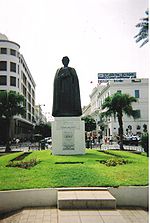
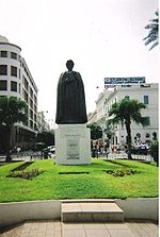
Perhaps the best known Islamic scholar who wrote about economics was Ibn Khaldun of Tunisia
(1332–1406), who is considered a forerunner of modern economics. Ibn Khaldun wrote on economic and political theory in the introduction, or Muqaddimah
(Prolegomena), of his History of the World (Kitab al-Ibar). In the book, he discussed what he called asabiyya (social cohesion), which he sourced as the cause of some civilizations becoming great and others not. Ibn Khaldun felt that many social forces are cyclic, although there can be sudden sharp turns that break the pattern. His idea about the benefits of the division of labor also relate to asabiyya, the greater the social cohesion, the more complex the successful division may be, the greater the economic growth. He noted that growth and development positively stimulates both supply and demand, and that the forces of supply and demand are what determines the prices of goods. He also noted macroeconomic forces of population growth, human capital
development, and technological developments effects on development. In fact, Ibn Khaldun thought that population growth was directly a function of wealth.
Although he understood that money served as a standard of value, a medium of exchange, and a preserver of value, he did not realize that the value of gold and silver changed based on the forces of supply and demand. He also introduced the concept known as the Khaldun-Laffer Curve (the relationship between tax rates and tax revenue increases as tax rates increase for a while, but then the increases in tax rates begin to cause a decrease in tax revenues as the taxes impose too great a cost to producers in the economy).
Ibn Khaldun used a dialectic
approach to describe the sociological implications of tax
choices, which is now of course part of economics
:
This analysis anticipates the modern economic concept known as the Laffer Curve
.
Ibn Khaldun also introduced the labor theory of value
. He described labor as the source of value, necessary for all earnings and capital accumulation, obvious in the case of craft. He argued that even if earning "results from something other than a craft, the value of the resulting profit and acquired (capital) must (also) include the value of the labor by which it was obtained. Without labor, it would not have been acquired."
His theory of asabiyyah has often been compared to modern Keynesian economics
, with Ibn Khaldun's theory clearly containing the concept of the multiplier. A crucial difference, however, is that whereas for John Maynard Keynes
it is the middle class
's greater propensity to save that is to blame for economic depression
, for Ibn Khaldun it is the governmental propensity to save at times when investment
opportunities do not take up the slack which leads to aggregate demand
.
Another modern economic theory anticipated by Ibn Khaldun is supply-side economics
. He "argued that high tax
es were often a factor in causing empires to collapse, with the result that lower revenue was collected from high rates." He wrote:
In the 1960s and 70s Shia Islamic thinkers worked to develop a unique Islamic economic philosophy with "its own answers to contemporary economic problems." Several works were particularly influential,
Al-Sadr in particular has been described as having "almost single-handedly developed the notion of Islamic economics"
In their writings Sadr and the other Shia authors "sought to depict Islam as a religion committed to social justice, the equitable distribution of wealth, and the cause of the deprived classes", with doctrines "acceptable to Islamic jurists", while refuting existing non-Islamic theories of capitalism
and Marxism
. This version of Islamic economics, which influenced the Iranian Revolution
, called for public ownership of land and of large "industrial enterprises", while private economic activity continued "within reasonable limits." These ideas helped shape the large public sector and public subsidy policies of the Iranian Islamic revolution
.
In the 1980s and 1990s, as the Iranian revolution failed to reach the per capita income level achieved by the regime it overthrew, and Communist states and socialist parties in the non-Muslim world turned away from socialism
, Muslim interest shifted away from government ownership and regulation. In Iran, it is reported that "eqtesad-e Eslami (meaning both Islamic economics and economy) ... once a revolutionary shibboleth, is indubitably absent in all official documents and the media. It disapperared from Iranian political discourse about 15 years ago [1990]."
But in other parts of the Muslim world the term lived on, shifting form to the less ambitious goal of interest-free banking. Some Muslim bankers and religious leaders suggested ways to integrate Islamic law on usage of money with modern concepts of ethical investing. In banking this was done through the use of sales transactions (focusing on the fixed rate return modes) to achieve similar results to interest. This has been criticised by some western writers as a means of covering conventional banking with an Islamic facade.
" in the sense of a systematic study of production, distribution, and consumption of goods and services.
were heavily statist with a very large public sector, and official rhetoric celebrating revolution and the rights of the dispossessed, although this tendency has faded over time. In Sudan
, the policies of the National Islamic Front
party dominated regime in the 1990s have been the reverse, employing economic liberalism
and accepting "market forces in the formulation of state policies." In Algeria
, Jordan
, Egypt
, and Pakistan
, Islamist parties have supported populist
policies, showing a "marked reluctance to adopt austerity policies and decreased subsidies."
In recent years, Turkey had a rapidly growing economy
and became a developed country
according to the CIA. Indonesia
, Saudi Arabia
and Turkey are members of the G-20 major economies
.
In 2008, at least $500 billion in assets around the world were managed in accordance with Sharia
, or Islamic law, and the sector was growing at more than 10% per year. Islamic finance seeks to promote social justice by banning exploitative practices. In reality, this boils down to a set of prohibitions—on paying interest, on gambling with derivatives and options, and on investing in firms that make pornography or pork.
Another form of modern finance that originated from the Muslim world is microcredit
and microfinance
. It began in the 1970s in Bangladesh
with Grameen Bank
, founded by Muhammad Yunus
, recipient of the 2006 Nobel Peace Prize
.
) and action "whether moderate or radical" is the question of agrarian reform
. Opposition to agrarian reform even played a role in Islamist uprisings (Iran 1963, Afghanistan, 1978). At least one observer (Olivier Roy) believes this is primarily because it would "imply a reexamination of the concept of ownership", and in particular "throw into question the Waqf
, endowments whose revenue ensures the functioning of religious institutions." In the Islamic Republic of Iran
, for example, waqf holdings are very large (in Khorasan Province, "50% of the cultivated lands belong to the religious foundation Astan-i Quds, which oversees" the Imam Reza shrine
in Mashhad
). Thus questioning waqf property would mean questioning "the foundation of the financial autonomy of the mullahs and mosques", particularly among Shia Muslims.
Banks
Economics
Economics is the social science that analyzes the production, distribution, and consumption of goods and services. The term economics comes from the Ancient Greek from + , hence "rules of the house"...
policies supported by self-identified Islam
Islam
Islam . The most common are and . : Arabic pronunciation varies regionally. The first vowel ranges from ~~. The second vowel ranges from ~~~...
ic groups, has varied throughout its long history. Traditional Islamic concepts having to do with economics included
- zakatZakatZakāt , one of the Five Pillars of Islam, is the giving of a fixed portion of one's wealth to charity, generally to the poor and needy.-History:Zakat, a practice initiated by Muhammed himself, has played an important role throughout Islamic history...
- the "taxing of certain goods, such as harvest, with an eye to allocating these taxes to expenditures that are also explicitly defined, such as aid to the needy." - Gharar - "the interdiction of chance ... that is, of the presence of any element of uncertainty, in a contract (which excludes not only insurance but also the lending of money without participation in the risks)"
These concepts, like others in Islamic law
Sharia
Sharia law, is the moral code and religious law of Islam. Sharia is derived from two primary sources of Islamic law: the precepts set forth in the Quran, and the example set by the Islamic prophet Muhammad in the Sunnah. Fiqh jurisprudence interprets and extends the application of sharia to...
and jurisprudence
Fiqh
Fiqh is Islamic jurisprudence. Fiqh is an expansion of the code of conduct expounded in the Quran, often supplemented by tradition and implemented by the rulings and interpretations of Islamic jurists....
, came from the "prescriptions, anecdotes, examples, and words of the Prophet, all gathered together and systematized by commentators according to an inductive, casuistic method." Sometimes other sources such as al-urf, (the custom), al-aql (reason
Reason
Reason is a term that refers to the capacity human beings have to make sense of things, to establish and verify facts, and to change or justify practices, institutions, and beliefs. It is closely associated with such characteristically human activities as philosophy, science, language, ...
) or al-ijma
Ijma
Ijmāʿ is an Arabic term referring to the consensus of the Muslim community. Various schools of thought within Islamic jurisprudence may define this consensus as that of the first generation of Muslims only; the consensus of the first three generations of Muslims; the consensus of the jurists...
(consensus of the jurists
Ulema
Ulama , also spelt ulema, refers to the educated class of Muslim legal scholars engaged in the several fields of Islamic studies. They are best known as the arbiters of shari‘a law...
) were employed. In addition, Islamic law has developed areas of law that correspond to secular laws of contracts and torts.
Early reforms under Islam
Some argue early Islamic theory and practice formed a "coherent" economic system with "a blueprint for a new order in society, in which all participants would be treated more fairly". Michael Bonner, for example, has written that an "economy of poverty" prevailed in Islam until the 13th and 14th centuries. Under this system God's guidance made sure the flow of money and goods was "purified" by being channeled from those who had much of it to those who had little by encouraging zakatZakat
Zakāt , one of the Five Pillars of Islam, is the giving of a fixed portion of one's wealth to charity, generally to the poor and needy.-History:Zakat, a practice initiated by Muhammed himself, has played an important role throughout Islamic history...
(charity) and discouraging riba
Riba
Riba means one of the senses of "usury" . Riba is forbidden in Islamic economic jurisprudence fiqh and considered as a major sin...
(usury
Usury
Usury Originally, when the charging of interest was still banned by Christian churches, usury simply meant the charging of interest at any rate . In countries where the charging of interest became acceptable, the term came to be used for interest above the rate allowed by law...
/interest
Interest
Interest is a fee paid by a borrower of assets to the owner as a form of compensation for the use of the assets. It is most commonly the price paid for the use of borrowed money, or money earned by deposited funds....
) on loans. Bonner maintains the prophet also helped poor traders by allowing only tents, not permanent buildings in the market of Medina, and not charging fees and rents there.
Social responsibility in commerce
Social responsibilitySocial responsibility
Social responsibility is an ethical ideology or theory that an entity, be it an organization or individual, has an obligation to act to benefit society at large. Social responsibility is a duty every individual or organization has to perform so as to maintain a balance between the economy and the...
in commerce
Commerce
While business refers to the value-creating activities of an organization for profit, commerce means the whole system of an economy that constitutes an environment for business. The system includes legal, economic, political, social, cultural, and technological systems that are in operation in any...
was stressed in Islamic sociology. The development of Islamic banks and Islamic economics
Islamic economics
Islamic economics refers to the body of Islamic studies literature that "identifies and promotes an economic order that conforms to Islamic scripture and traditions," and in the economic world an interest-free Islamic banking system, grounded in Sharia's condemnation of interest...
was a side effect of this sociology
Sociology
Sociology is the study of society. It is a social science—a term with which it is sometimes synonymous—which uses various methods of empirical investigation and critical analysis to develop a body of knowledge about human social activity...
: usury
Usury
Usury Originally, when the charging of interest was still banned by Christian churches, usury simply meant the charging of interest at any rate . In countries where the charging of interest became acceptable, the term came to be used for interest above the rate allowed by law...
was rather severely restrained, no interest rate
Interest rate
An interest rate is the rate at which interest is paid by a borrower for the use of money that they borrow from a lender. For example, a small company borrows capital from a bank to buy new assets for their business, and in return the lender receives interest at a predetermined interest rate for...
was allowed, and investors were not permitted to escape the consequences of any failed venture—all financing was equity financing (Musharaka). In not letting borrowers bear all the risk/cost of a failure, an extreme disparity of outcomes between "partners" is thus avoided. Ultimately this serves a social harmony purpose. Muslims also could not and cannot (in shariah) finance any dealings in forbidden goods or activities, such as wine
Wine
Wine is an alcoholic beverage, made of fermented fruit juice, usually from grapes. The natural chemical balance of grapes lets them ferment without the addition of sugars, acids, enzymes, or other nutrients. Grape wine is produced by fermenting crushed grapes using various types of yeast. Yeast...
, pork
Pork
Pork is the culinary name for meat from the domestic pig , which is eaten in many countries. It is one of the most commonly consumed meats worldwide, with evidence of pig husbandry dating back to 5000 BC....
, gambling
Gambling
Gambling is the wagering of money or something of material value on an event with an uncertain outcome with the primary intent of winning additional money and/or material goods...
, etc. Thus ethical investing is the only acceptable investing, and moral purchasing is encouraged.
Hawala agency
The HawalaHawala
Hawala is an informal value transfer system based on the performance and honor of a huge network of money brokers, which are primarily located in the Middle East, North Africa, the Horn of Africa, and South Asia...
, an early informal value transfer system
Informal value transfer system
An informal value transfer system refers to any system, mechanism, or network of people that receives money for the purpose of making the funds or an equivalent value payable to a third party in another geographic location, whether or not in the same form...
, has its origins in classical Islamic law
Sharia
Sharia law, is the moral code and religious law of Islam. Sharia is derived from two primary sources of Islamic law: the precepts set forth in the Quran, and the example set by the Islamic prophet Muhammad in the Sunnah. Fiqh jurisprudence interprets and extends the application of sharia to...
, and is mentioned in texts of Islamic jurisprudence
Fiqh
Fiqh is Islamic jurisprudence. Fiqh is an expansion of the code of conduct expounded in the Quran, often supplemented by tradition and implemented by the rulings and interpretations of Islamic jurists....
as early as the 8th century. Hawala itself later influenced the development of the agency
Agency (law)
The law of agency is an area of commercial law dealing with a contractual or quasi-contractual, or non-contractual set of relationships when a person, called the agent, is authorized to act on behalf of another to create a legal relationship with a third party...
in common law
Common law
Common law is law developed by judges through decisions of courts and similar tribunals rather than through legislative statutes or executive branch action...
and in civil laws
Civil law (legal system)
Civil law is a legal system inspired by Roman law and whose primary feature is that laws are codified into collections, as compared to common law systems that gives great precedential weight to common law on the principle that it is unfair to treat similar facts differently on different...
such as the aval
Aval
Aval , in Spain, is a joint commitment to payment of an obligation in favor of the creditor or beneficiary. It is granted by a third party, in case the principal debtor does not fulfil the obligation of payment of a credit title....
in French law
Law of France
In academic terms, French law can be divided into two main categories: private or judicial law and public law .Judicial law includes, in particular:*civil law ; and*criminal law ....
and the avallo in Italian law. The words aval and avallo were themselves derived from Hawala. The transfer of debt
Debt
A debt is an obligation owed by one party to a second party, the creditor; usually this refers to assets granted by the creditor to the debtor, but the term can also be used metaphorically to cover moral obligations and other interactions not based on economic value.A debt is created when a...
, which was "not permissible under Roman law
Roman law
Roman law is the legal system of ancient Rome, and the legal developments which occurred before the 7th century AD — when the Roman–Byzantine state adopted Greek as the language of government. The development of Roman law comprises more than a thousand years of jurisprudence — from the Twelve...
but became widely practiced in medieval Europe, especially in commercial transactions", was due to the large extent of the "trade conducted by the Italian cities with the Muslim world
Muslim world
The term Muslim world has several meanings. In a religious sense, it refers to those who adhere to the teachings of Islam, referred to as Muslims. In a cultural sense, it refers to Islamic civilization, inclusive of non-Muslims living in that civilization...
in the Middle Ages." The agency was also "an institution
Institution
An institution is any structure or mechanism of social order and cooperation governing the behavior of a set of individuals within a given human community...
unknown to Roman law" as no "individual could conclude a binding contract on behalf of another as his agent." In Roman law, the "contractor himself was considered the party to the contract and it took a second contract between the person who acted on behalf of a principal and the latter in order to transfer the rights and the obligations deriving from the contract to him." On the other hand, Islamic law and the later common law "had no difficulty in accepting agency as one of its institutions in the field of contracts and of obligations in general."
Waqf trust
The waqfWaqf
A waqf also spelled wakf formally known as wakf-alal-aulad is an inalienable religious endowment in Islamic law, typically denoting a building or plot of land for Muslim religious or charitable purposes. The donated assets are held by a charitable trust...
in Islamic law
Sharia
Sharia law, is the moral code and religious law of Islam. Sharia is derived from two primary sources of Islamic law: the precepts set forth in the Quran, and the example set by the Islamic prophet Muhammad in the Sunnah. Fiqh jurisprudence interprets and extends the application of sharia to...
, which developed in the medieval Islamic world
Islamic Golden Age
During the Islamic Golden Age philosophers, scientists and engineers of the Islamic world contributed enormously to technology and culture, both by preserving earlier traditions and by adding their own inventions and innovations...
from the 7th to 9th centuries, bears a notable resemblance to the English trust law
Trust law
In common law legal systems, a trust is a relationship whereby property is held by one party for the benefit of another...
. Every waqf was required to have a waqif (founder), mutawillis (trustee), qadi
Qadi
Qadi is a judge ruling in accordance with Islamic religious law appointed by the ruler of a Muslim country. Because Islam makes no distinction between religious and secular domains, qadis traditionally have jurisdiction over all legal matters involving Muslims...
(judge) and beneficiaries. Under both a waqf and a trust, "property is reserved, and its usufruct
Usufruct
Usufruct is the legal right to use and derive profit or benefit from property that either belongs to another person or which is under common ownership, as long as the property is not damaged or destroyed...
appropriated, for the benefit of specific individuals, or for a general charitable
Charitable organization
A charitable organization is a type of non-profit organization . It differs from other types of NPOs in that it centers on philanthropic goals A charitable organization is a type of non-profit organization (NPO). It differs from other types of NPOs in that it centers on philanthropic goals A...
purpose; the corpus becomes inalienable; estates
Estate (law)
An estate is the net worth of a person at any point in time. It is the sum of a person's assets - legal rights, interests and entitlements to property of any kind - less all liabilities at that time. The issue is of special legal significance on a question of bankruptcy and death of the person...
for life in favor of successive beneficiaries can be created" and "without regard to the law of inheritance
Inheritance
Inheritance is the practice of passing on property, titles, debts, rights and obligations upon the death of an individual. It has long played an important role in human societies...
or the rights of the heirs; and continuity is secured by the successive appointment of trustees or mutawillis."
The only significant distinction between the Islamic waqf and English trust was "the express or implied reversion of the waqf to charitable purposes when its specific object has ceased to exist", though this difference only applied to the waqf ahli (Islamic family trust) rather than the waqf khairi (devoted to a charitable purpose from its inception). Another difference was the English vesting of "legal estate" over the trust property in the trustee, though the "trustee was still bound to administer that property for the benefit of the beneficiaries." In this sense, the "role of the English trustee therefore does not differ significantly from that of the mutawalli."
The trust law developed in England at the time of the Crusades
Crusades
The Crusades were a series of religious wars, blessed by the Pope and the Catholic Church with the main goal of restoring Christian access to the holy places in and near Jerusalem...
, during the 12th and 13th centuries, was introduced by Crusaders who may have been influenced by the waqf institutions they came across in the Middle East.
After the Islamic waqf law and madrassah foundations were firmly established by the 10th century, the number of Bimaristan
Bimaristan
Bimaristan is a Persian word meaning hospital, with Bimar- from Middle Persian of vīmār or vemār, meaning "sick" plus -stan as location and place suffix...
hospitals multiplied throughout throughout Islamic lands. In the 11th century, every Islamic city had at least several hospitals. The waqf trust institutions funded the hospitals for various expenses, including the wage
Wage
A wage is a compensation, usually financial, received by workers in exchange for their labor.Compensation in terms of wages is given to workers and compensation in terms of salary is given to employees...
s of doctors, ophthalmologists
Ophthalmology in medieval Islam
Ophthalmology was one of the foremost branches in medieval Islamic medicine. The oculist or kahhal , a somewhat despised professional in Galen’s time, was an honored member of the medical profession by the Abbasid period, occupying a unique place in royal households...
, surgeons, chemist
Chemist
A chemist is a scientist trained in the study of chemistry. Chemists study the composition of matter and its properties such as density and acidity. Chemists carefully describe the properties they study in terms of quantities, with detail on the level of molecules and their component atoms...
s, pharmacist
Pharmacist
Pharmacists are allied health professionals who practice in pharmacy, the field of health sciences focusing on safe and effective medication use...
s, domestic
Domestic worker
A domestic worker is a man, woman or child who works within the employer's household. Domestic workers perform a variety of household services for an individual or a family, from providing care for children and elderly dependents to cleaning and household maintenance, known as housekeeping...
s and all other staff, the purchase of foods and drugs; hospital equipment such as beds, mattresses, bowls and perfumes; and repairs to buildings. The waqf trusts also funded medical schools, and their revenues covered various expenses such as their maintenance and the payment of teachers and students.
Classical Muslim commerce
During the Islamic Golden AgeIslamic Golden Age
During the Islamic Golden Age philosophers, scientists and engineers of the Islamic world contributed enormously to technology and culture, both by preserving earlier traditions and by adding their own inventions and innovations...
, guilds were formed though officially unrecognized by the medieval Islamic city. However, trades were recognized and supervised by officials of the city. Each trade developed its own identity, whose members would attend the same mosque, and serve together in the militia.
Technology and industry in Islamic civilization were highly developed. Distillation
Distillation
Distillation is a method of separating mixtures based on differences in volatilities of components in a boiling liquid mixture. Distillation is a unit operation, or a physical separation process, and not a chemical reaction....
techniques supported a flourishing perfume industry, while chemical ceramic glaze
Ceramic glaze
Glaze is a layer or coating of a vitreous substance which has been fired to fuse to a ceramic object to color, decorate, strengthen or waterproof it.-Use:...
s were developed to compete with ceramics imported from China.
The systems of contract
Contract
A contract is an agreement entered into by two parties or more with the intention of creating a legal obligation, which may have elements in writing. Contracts can be made orally. The remedy for breach of contract can be "damages" or compensation of money. In equity, the remedy can be specific...
relied upon by merchants was very effective. Merchants would buy and sell on commission
Commission (remuneration)
The payment of commission as remuneration for services rendered or products sold is a common way to reward sales people. Payments often will be calculated on the basis of a percentage of the goods sold...
, with money loan
Loan
A loan is a type of debt. Like all debt instruments, a loan entails the redistribution of financial assets over time, between the lender and the borrower....
ed to them by wealthy investors, or a joint investment of several merchants, who were often Muslim, Christian and Jewish. Recently, a collection of documents was found in an Egypt
Egypt
Egypt , officially the Arab Republic of Egypt, Arabic: , is a country mainly in North Africa, with the Sinai Peninsula forming a land bridge in Southwest Asia. Egypt is thus a transcontinental country, and a major power in Africa, the Mediterranean Basin, the Middle East and the Muslim world...
ian synagogue
Synagogue
A synagogue is a Jewish house of prayer. This use of the Greek term synagogue originates in the Septuagint where it sometimes translates the Hebrew word for assembly, kahal...
shedding a very detailed and human light on the life of medieval Middle Eastern merchants. Business partnership
Partnership
A partnership is an arrangement where parties agree to cooperate to advance their mutual interests.Since humans are social beings, partnerships between individuals, businesses, interest-based organizations, schools, governments, and varied combinations thereof, have always been and remain commonplace...
s would be made for many commercial ventures
Joint venture
A joint venture is a business agreement in which parties agree to develop, for a finite time, a new entity and new assets by contributing equity. They exercise control over the enterprise and consequently share revenues, expenses and assets...
, and bonds of kinship
Kinship
Kinship is a relationship between any entities that share a genealogical origin, through either biological, cultural, or historical descent. And descent groups, lineages, etc. are treated in their own subsections....
enabled trade network
Social network
A social network is a social structure made up of individuals called "nodes", which are tied by one or more specific types of interdependency, such as friendship, kinship, common interest, financial exchange, dislike, sexual relationships, or relationships of beliefs, knowledge or prestige.Social...
s to form over huge distances. During the ninth century banks enabled the drawing of a check in by a bank in Baghdad
Baghdad
Baghdad is the capital of Iraq, as well as the coterminous Baghdad Governorate. The population of Baghdad in 2011 is approximately 7,216,040...
that could be cashed in Morocco
Morocco
Morocco , officially the Kingdom of Morocco , is a country located in North Africa. It has a population of more than 32 million and an area of 710,850 km², and also primarily administers the disputed region of the Western Sahara...
.
The concepts of welfare and pension
Pension
In general, a pension is an arrangement to provide people with an income when they are no longer earning a regular income from employment. Pensions should not be confused with severance pay; the former is paid in regular installments, while the latter is paid in one lump sum.The terms retirement...
were introduced in early Islamic law
Sharia
Sharia law, is the moral code and religious law of Islam. Sharia is derived from two primary sources of Islamic law: the precepts set forth in the Quran, and the example set by the Islamic prophet Muhammad in the Sunnah. Fiqh jurisprudence interprets and extends the application of sharia to...
as forms of Zakat
Zakat
Zakāt , one of the Five Pillars of Islam, is the giving of a fixed portion of one's wealth to charity, generally to the poor and needy.-History:Zakat, a practice initiated by Muhammed himself, has played an important role throughout Islamic history...
(charity), one of the Five Pillars of Islam
Five Pillars of Islam
The Pillars of Islam are basic concepts and duties for accepting the religion for the Muslims.The Shi'i and Sunni both agree on the essential details for the performance of these acts, but the Shi'a do not refer to them by the same name .-Pillars of Shia:According to Shia Islam, the...
, since the time of the Abbasid
Abbasid
The Abbasid Caliphate or, more simply, the Abbasids , was the third of the Islamic caliphates. It was ruled by the Abbasid dynasty of caliphs, who built their capital in Baghdad after overthrowing the Umayyad caliphate from all but the al-Andalus region....
caliph
Caliph
The Caliph is the head of state in a Caliphate, and the title for the ruler of the Islamic Ummah, an Islamic community ruled by the Shari'ah. It is a transcribed version of the Arabic word which means "successor" or "representative"...
Al-Mansur
Al-Mansur
Al-Mansur, Almanzor or Abu Ja'far Abdallah ibn Muhammad al-Mansur was the second Abbasid Caliph from 136 AH to 158 AH .-Biography:...
in the 8th century. The taxes (including Zakat and Jizya
Jizya
Under Islamic law, jizya or jizyah is a per capita tax levied on a section of an Islamic state's non-Muslim citizens, who meet certain criteria...
) collected in the treasury
Treasury
A treasury is either*A government department related to finance and taxation.*A place where currency or precious items is/are kept....
of an Islamic government
Government
Government refers to the legislators, administrators, and arbitrators in the administrative bureaucracy who control a state at a given time, and to the system of government by which they are organized...
was used to provide income for the needy, including the poor, elderly, orphans, widows, and the disabled. According to the Islamic jurist Al-Ghazali
Al-Ghazali
Abu Hāmed Mohammad ibn Mohammad al-Ghazzālī , known as Algazel to the western medieval world, born and died in Tus, in the Khorasan province of Persia was a Persian Muslim theologian, jurist, philosopher, and mystic....
(Algazel, 1058–1111), the government was also expected to store up food supplies in every region in case a disaster or famine occurs. The Caliphate
Caliphate
The term caliphate, "dominion of a caliph " , refers to the first system of government established in Islam and represented the political unity of the Muslim Ummah...
was thus one of the earliest welfare state
Welfare state
A welfare state is a "concept of government in which the state plays a key role in the protection and promotion of the economic and social well-being of its citizens. It is based on the principles of equality of opportunity, equitable distribution of wealth, and public responsibility for those...
s, particularly the Abbasid Caliphate.
Age of discovery
During the Islamic Golden Age, isolated regions began integrating into a geographically far-reaching trade network. Muslim Traders and explorers travelled over most of the Old WorldOld World
The Old World consists of those parts of the world known to classical antiquity and the European Middle Ages. It is used in the context of, and contrast with, the "New World" ....
, covering significant areas of Asia and Africa and much of Europe, with their trade networks extending from the Atlantic Ocean and Mediterranean in the west to the Indian Ocean
Indian Ocean
The Indian Ocean is the third largest of the world's oceanic divisions, covering approximately 20% of the water on the Earth's surface. It is bounded on the north by the Indian Subcontinent and Arabian Peninsula ; on the west by eastern Africa; on the east by Indochina, the Sunda Islands, and...
and South China Sea
South China Sea
The South China Sea is a marginal sea that is part of the Pacific Ocean, encompassing an area from the Singapore and Malacca Straits to the Strait of Taiwan of around...
in the east. This helped establish the Islamic Empire (including the Rashidun
Rashidun Empire
The Rashidun Caliphate , comprising the first four caliphs in Islam's history, was founded after Muhammad's death in 632, Year 10 A.H.. At its height, the Caliphate extended from the Arabian Peninsula, to the Levant, Caucasus and North Africa in the west, to the Iranian highlands and Central Asia...
, Umayyad
Umayyad
The Umayyad Caliphate was the second of the four major Arab caliphates established after the death of Muhammad. It was ruled by the Umayyad dynasty, whose name derives from Umayya ibn Abd Shams, the great-grandfather of the first Umayyad caliph. Although the Umayyad family originally came from the...
, Abbasid and Fatimid
Fatimid
The Fatimid Islamic Caliphate or al-Fāṭimiyyūn was a Berber Shia Muslim caliphate first centered in Tunisia and later in Egypt that ruled over varying areas of the Maghreb, Sudan, Sicily, the Levant, and Hijaz from 5 January 909 to 1171.The caliphate was ruled by the Fatimids, who established the...
Caliphates) as the world's leading extensive economic power in the 7th-13th centuries.
Arabic silver dirham
Dirham
Dirham or dirhem is a unit of currency in several Arab or Berber nations, and formerly the related unit of mass in the Ottoman Empire and Persian states...
coins were being circulated throughout the Afro-Eurasia
Afro-Eurasia
Afro-Eurasia or less commonly Afrasia or Eurafrasia is the term used to describe the largest landmass on earth. It may be defined as a supercontinent, consisting of Africa and Eurasia...
n landmass, as far as sub-Saharan Africa
Sub-Saharan Africa
Sub-Saharan Africa as a geographical term refers to the area of the African continent which lies south of the Sahara. A political definition of Sub-Saharan Africa, instead, covers all African countries which are fully or partially located south of the Sahara...
in the south and northern Europe
Northern Europe
Northern Europe is the northern part or region of Europe. Northern Europe typically refers to the seven countries in the northern part of the European subcontinent which includes Denmark, Estonia, Latvia, Lithuania, Norway, Finland and Sweden...
in the north, often in exchange for goods and slaves. In England, for example, the Anglo-Saxon
Anglo-Saxons
Anglo-Saxon is a term used by historians to designate the Germanic tribes who invaded and settled the south and east of Great Britain beginning in the early 5th century AD, and the period from their creation of the English nation to the Norman conquest. The Anglo-Saxon Era denotes the period of...
king Offa of Mercia
Offa of Mercia
Offa was the King of Mercia from 757 until his death in July 796. The son of Thingfrith and a descendant of Eowa, Offa came to the throne after a period of civil war following the assassination of Æthelbald after defeating the other claimant Beornred. In the early years of Offa's reign it is likely...
(r. 757-796) had coins minted with the Shahadah in Arabic. These factors helped establish the Islamic Empire as the world's leading extensive economic power throughout the 7th–13th centuries.
Agricultural Revolution
During the Arab Agricultural Revolution, a fundamental transformation in agricultural practice tied in with significant economic change. This transformation involved diffusion of many crops and plants along Muslim trade routes, the spread of more advanced farming techniques, and an agricultural-economic system which promoted increased yields and efficiency. In addition to significant changes in economy, population distribution, vegetation cover, agricultural production, population levels, urban growthUrbanization
Urbanization, urbanisation or urban drift is the physical growth of urban areas as a result of global change. The United Nations projected that half of the world's population would live in urban areas at the end of 2008....
, the distribution of the labour force, and numerous other aspects of life in the Islamic world were affected.
The economic system in place in Muslim areas during this time incorporated reformed land ownership rules and labourers' rights, combining the recognition of private ownership and the rewarding of cultivators with a harvest share commensurate with their efforts also improved agricultural practices. The cities of the Near East, North Africa and Moorish Spain were supported by highly structured agricultural systems which required significant labor inputs. Such regional systems were often significantly more productive than the agricultural practices in most of Europe at the time which relied heavily on grazing animals and systems of fallowing.
The demographics
Demographics
Demographics are the most recent statistical characteristics of a population. These types of data are used widely in sociology , public policy, and marketing. Commonly examined demographics include gender, race, age, disabilities, mobility, home ownership, employment status, and even location...
of medieval Islamic society varied in some significant aspects from other agricultural societies, including a decline in birth rate
Birth rate
Crude birth rate is the nativity or childbirths per 1,000 people per year . Another word used interchangeably with "birth rate" is "natality". When the crude birth rate is subtracted from the crude death rate, it reveals the rate of natural increase...
s as well as a change in life expectancy
Life expectancy
Life expectancy is the expected number of years of life remaining at a given age. It is denoted by ex, which means the average number of subsequent years of life for someone now aged x, according to a particular mortality experience...
. Other traditional agrarian societies are estimated to have had an average life expectancy of 20 to 25 years, while ancient Rome
Roman Empire
The Roman Empire was the post-Republican period of the ancient Roman civilization, characterised by an autocratic form of government and large territorial holdings in Europe and around the Mediterranean....
and medieval Europe
Middle Ages
The Middle Ages is a periodization of European history from the 5th century to the 15th century. The Middle Ages follows the fall of the Western Roman Empire in 476 and precedes the Early Modern Era. It is the middle period of a three-period division of Western history: Classic, Medieval and Modern...
are estimated at 20 to 30 years. Conrad I. Lawrence estimates the average lifespan in the early Islamic Caliphate to be above 35 years for the general population, and several studies on the lifespans of Islamic scholars
Ulema
Ulama , also spelt ulema, refers to the educated class of Muslim legal scholars engaged in the several fields of Islamic studies. They are best known as the arbiters of shari‘a law...
concluded that members of this occupational group enjoyed a life expectancy between 69 and 75 years, though this longevity was not representative of the general population.
The early Islamic Empire also had the highest literacy rates among pre-modern societies, alongside the city of classical Athens
Classical Athens
The city of Athens during the classical period of Ancient Greece was a notable polis of Attica, Greece, leading the Delian League in the Peloponnesian War against Sparta and the Peloponnesian League. Athenian democracy was established in 508 BC under Cleisthenes following the tyranny of Hippias...
in the 4th century BC, and later, China
China
Chinese civilization may refer to:* China for more general discussion of the country.* Chinese culture* Greater China, the transnational community of ethnic Chinese.* History of China* Sinosphere, the area historically affected by Chinese culture...
after the introduction of printing from the 10th century. One factor for the relatively high literacy rates in the early Islamic Empire was its parent-driven educational marketplace, as the state did not systematically subsidize educational services until the introduction of state funding under Nizam al-Mulk
Nizam al-Mulk
Abu Ali al-Hasan al-Tusi Nizam al-Mulk, better known as Khwaja Nizam al-Mulk Tusi ; born in 1018 – 14 October 1092) was a Persian scholar and vizier of the Seljuq Empire...
in the 11th century. Another factor was the diffusion of paper
Paper
Paper is a thin material mainly used for writing upon, printing upon, drawing or for packaging. It is produced by pressing together moist fibers, typically cellulose pulp derived from wood, rags or grasses, and drying them into flexible sheets....
from China, which led to an efflorescence of books and written culture in Islamic society, thus papermaking
Papermaking
Papermaking is the process of making paper, a substance which is used universally today for writing and packaging.In papermaking a dilute suspension of fibres in water is drained through a screen, so that a mat of randomly interwoven fibres is laid down. Water is removed from this mat of fibres by...
technology transformed Islamic society (and later, the rest of Afro-Eurasia
Afro-Eurasia
Afro-Eurasia or less commonly Afrasia or Eurafrasia is the term used to describe the largest landmass on earth. It may be defined as a supercontinent, consisting of Africa and Eurasia...
) from an oral to scribal
Scribe
A scribe is a person who writes books or documents by hand as a profession and helps the city keep track of its records. The profession, previously found in all literate cultures in some form, lost most of its importance and status with the advent of printing...
culture, comparable to the later shifts from scribal to typographic
Typography
Typography is the art and technique of arranging type in order to make language visible. The arrangement of type involves the selection of typefaces, point size, line length, leading , adjusting the spaces between groups of letters and adjusting the space between pairs of letters...
culture, and from typographic culture to the Internet
Internet
The Internet is a global system of interconnected computer networks that use the standard Internet protocol suite to serve billions of users worldwide...
. Other factors include the widespread use of paper books in Islamic society (more so than any other previously existing society), the study and memorization of the Qur'an
Qur'an
The Quran , also transliterated Qur'an, Koran, Alcoran, Qur’ān, Coran, Kuran, and al-Qur’ān, is the central religious text of Islam, which Muslims consider the verbatim word of God . It is regarded widely as the finest piece of literature in the Arabic language...
, flourishing commercial activity, and the emergence of the Maktab
Maktab
Maktab , also called kuttab , is an Arabic word meaning elementary schools...
and Madrasah
Madrasah
Madrasah is the Arabic word for any type of educational institution, whether secular or religious...
educational institutions.
Islamic capitalism
A number of concepts and techniques were applied in early Islamic commerce, including bills of exchange, forms of partnershipPartnership
A partnership is an arrangement where parties agree to cooperate to advance their mutual interests.Since humans are social beings, partnerships between individuals, businesses, interest-based organizations, schools, governments, and varied combinations thereof, have always been and remain commonplace...
(mufawada) such as limited partnership
Limited partnership
A limited partnership is a form of partnership similar to a general partnership, except that in addition to one or more general partners , there are one or more limited partners . It is a partnership in which only one partner is required to be a general partner.The GPs are, in all major respects,...
s (mudaraba), and early forms of capital
Capital (economics)
In economics, capital, capital goods, or real capital refers to already-produced durable goods used in production of goods or services. The capital goods are not significantly consumed, though they may depreciate in the production process...
(al-mal), capital accumulation
Capital accumulation
The accumulation of capital refers to the gathering or amassing of objects of value; the increase in wealth through concentration; or the creation of wealth. Capital is money or a financial asset invested for the purpose of making more money...
(nama al-mal), cheque
Cheque
A cheque is a document/instrument See the negotiable cow—itself a fictional story—for discussions of cheques written on unusual surfaces. that orders a payment of money from a bank account...
s, promissory note
Promissory note
A promissory note is a negotiable instrument, wherein one party makes an unconditional promise in writing to pay a determinate sum of money to the other , either at a fixed or determinable future time or on demand of the payee, under specific terms.Referred to as a note payable in accounting, or...
s, trusts (see Waqf
Waqf
A waqf also spelled wakf formally known as wakf-alal-aulad is an inalienable religious endowment in Islamic law, typically denoting a building or plot of land for Muslim religious or charitable purposes. The donated assets are held by a charitable trust...
), transactional accounts, loan
Loan
A loan is a type of debt. Like all debt instruments, a loan entails the redistribution of financial assets over time, between the lender and the borrower....
ing, ledger
Ledger
A ledger is the principal book or computer file for recording and totaling monetary transactions by account, with debits and credits in separate columns and a beginning balance and ending balance for each account. The ledger is a permanent summary of all amounts entered in supporting journals which...
s and assignments
Assignment (law)
An assignment is a term used with similar meanings in the law of contracts and in the law of real estate. In both instances, it encompasses the transfer of rights held by one party—the assignor—to another party—the assignee...
. Organization
Organization
An organization is a social group which distributes tasks for a collective goal. The word itself is derived from the Greek word organon, itself derived from the better-known word ergon - as we know `organ` - and it means a compartment for a particular job.There are a variety of legal types of...
al enterprise
Enterprise
Enterprise may refer to:-Economics and business:* A business* A company* Entrepreneurship, the practice of starting new organizations, particularly new businesses* Enterprise Architecture...
s independent from the state
State (polity)
A state is an organized political community, living under a government. States may be sovereign and may enjoy a monopoly on the legal initiation of force and are not dependent on, or subject to any other power or state. Many states are federated states which participate in a federal union...
also existed in the medieval Islamic world, while the agency
Agency (law)
The law of agency is an area of commercial law dealing with a contractual or quasi-contractual, or non-contractual set of relationships when a person, called the agent, is authorized to act on behalf of another to create a legal relationship with a third party...
institution was also introduced. Many of these early concepts were adopted and further advanced in medieval Europe from the 13th century onwards.
A market economy
Market economy
A market economy is an economy in which the prices of goods and services are determined in a free price system. This is often contrasted with a state-directed or planned economy. Market economies can range from hypothetically pure laissez-faire variants to an assortment of real-world mixed...
was established in the Islamic world on the basis of an economic system resembling merchant capitalism
Merchant capitalism
Merchant capitalism is a term used by economic historians to refer to the earliest phase in the development of capitalism as an economic and social system. Early forms of merchant capitalism were developed in the medieval Islamic world from the 9th century, and in medieval Europe from the 12th...
. Capital formation
Capital formation
Capital formation is a concept used in macroeconomics, national accounts and financial economics. Occasionally it is also used in corporate accounts. It can be defined in three ways:...
was promoted by labour in medieval Islamic society, and financial capital
Financial capital
Financial capital can refer to money used by entrepreneurs and businesses to buy what they need to make their products or provide their services or to that sector of the economy based on its operation, i.e. retail, corporate, investment banking, etc....
was developed by a considerable number of owners of monetary funds and precious metal
Precious metal
A precious metal is a rare, naturally occurring metallic chemical element of high economic value.Chemically, the precious metals are less reactive than most elements, have high lustre, are softer or more ductile, and have higher melting points than other metals...
s. Riba
Riba
Riba means one of the senses of "usury" . Riba is forbidden in Islamic economic jurisprudence fiqh and considered as a major sin...
(usury
Usury
Usury Originally, when the charging of interest was still banned by Christian churches, usury simply meant the charging of interest at any rate . In countries where the charging of interest became acceptable, the term came to be used for interest above the rate allowed by law...
) was prohibited by the Qur'an
Qur'an
The Quran , also transliterated Qur'an, Koran, Alcoran, Qur’ān, Coran, Kuran, and al-Qur’ān, is the central religious text of Islam, which Muslims consider the verbatim word of God . It is regarded widely as the finest piece of literature in the Arabic language...
, but this did not hamper the development of capital in any way. The capitalists (sahib al-mal) were at the height of their power between the 9th–12th centuries, but their influence declined after the arrival of the ikta (landowners) and after production
Production, costs, and pricing
The following outline is provided as an overview of and topical guide to industrial organization:Industrial organization – describes the behavior of firms in the marketplace with regard to production, pricing, employment and other decisions...
was monopolized by the state, both of which hampered the development of industrial capitalism in the Islamic world. Some state enterprises still had a capitalist mode of production
Capitalist mode of production
In Marx's critique of political economy, the capitalist mode of production is the production system of capitalist societies, which began in Europe in the 16th century, grew rapidly in Western Europe from the end of the 18th century, and later extended to most of the world...
, such as pearl diving in Iraq
Iraq
Iraq ; officially the Republic of Iraq is a country in Western Asia spanning most of the northwestern end of the Zagros mountain range, the eastern part of the Syrian Desert and the northern part of the Arabian Desert....
and the textile industry
Textile industry
The textile industry is primarily concerned with the production of yarn, and cloth and the subsequent design or manufacture of clothing and their distribution. The raw material may be natural, or synthetic using products of the chemical industry....
in Egypt
Egypt
Egypt , officially the Arab Republic of Egypt, Arabic: , is a country mainly in North Africa, with the Sinai Peninsula forming a land bridge in Southwest Asia. Egypt is thus a transcontinental country, and a major power in Africa, the Mediterranean Basin, the Middle East and the Muslim world...
.
During the 11th–13th centuries, the "Karimis", an early enterprise and business group
Business group
A corporate group is a collection of parent and subsidiary corporations that function as a single economic entity through a common source of control. The concept of a group is frequently used in tax law, accounting and company law to attribute the rights and duties of one member of the group to...
controlled by entrepreneur
Entrepreneur
An entrepreneur is an owner or manager of a business enterprise who makes money through risk and initiative.The term was originally a loanword from French and was first defined by the Irish-French economist Richard Cantillon. Entrepreneur in English is a term applied to a person who is willing to...
s, came to dominate much of the Islamic world's economy. The group was controlled by about fifty Muslim merchant
Merchant
A merchant is a businessperson who trades in commodities that were produced by others, in order to earn a profit.Merchants can be one of two types:# A wholesale merchant operates in the chain between producer and retail merchant...
s labelled as "Karimis" who were of Yemen
Yemen
The Republic of Yemen , commonly known as Yemen , is a country located in the Middle East, occupying the southwestern to southern end of the Arabian Peninsula. It is bordered by Saudi Arabia to the north, the Red Sea to the west, and Oman to the east....
i, Egypt
Egypt
Egypt , officially the Arab Republic of Egypt, Arabic: , is a country mainly in North Africa, with the Sinai Peninsula forming a land bridge in Southwest Asia. Egypt is thus a transcontinental country, and a major power in Africa, the Mediterranean Basin, the Middle East and the Muslim world...
ian and sometimes Indian
Indian subcontinent
The Indian subcontinent, also Indian Subcontinent, Indo-Pak Subcontinent or South Asian Subcontinent is a region of the Asian continent on the Indian tectonic plate from the Hindu Kush or Hindu Koh, Himalayas and including the Kuen Lun and Karakoram ranges, forming a land mass which extends...
origins. Each Karimi merchant had considerable wealth, ranging from at least 100,000 dinar
Dinar
The dinar is the official currency of several countries.The history of the dinar dates to the gold dinar, an early Islamic coin corresponding to the Byzantine denarius auri...
s to as much as 10 million dinars. The group had considerable influence in most important eastern markets and sometimes in politics through its financing activities and through a variety of customers, including Emir
Emir
Emir , meaning "commander", "general", or "prince"; also transliterated as Amir, Aamir or Ameer) is a title of high office, used throughout the Muslim world...
s, Sultan
Sultan
Sultan is a title with several historical meanings. Originally, it was an Arabic language abstract noun meaning "strength", "authority", "rulership", and "dictatorship", derived from the masdar سلطة , meaning "authority" or "power". Later, it came to be used as the title of certain rulers who...
s, Vizier
Vizier
A vizier or in Arabic script ; ; sometimes spelled vazir, vizir, vasir, wazir, vesir, or vezir) is a high-ranking political advisor or minister in a Muslim government....
s, foreign merchants, and common consumers. The Karimis dominated many of the trade routes across the Mediterranean, Red Sea
Red Sea
The Red Sea is a seawater inlet of the Indian Ocean, lying between Africa and Asia. The connection to the ocean is in the south through the Bab el Mandeb strait and the Gulf of Aden. In the north, there is the Sinai Peninsula, the Gulf of Aqaba, and the Gulf of Suez...
, and Indian Ocean
Indian Ocean
The Indian Ocean is the third largest of the world's oceanic divisions, covering approximately 20% of the water on the Earth's surface. It is bounded on the north by the Indian Subcontinent and Arabian Peninsula ; on the west by eastern Africa; on the east by Indochina, the Sunda Islands, and...
, and as far as Francia in the north, China in the east, and sub-Saharan Africa
Sub-Saharan Africa
Sub-Saharan Africa as a geographical term refers to the area of the African continent which lies south of the Sahara. A political definition of Sub-Saharan Africa, instead, covers all African countries which are fully or partially located south of the Sahara...
in the south, where they obtained gold from gold mines. Practices employed by the Karimis included the use of agents
Agent (economics)
In economics, an agent is an actor and decision maker in a model. Typically, every agent makes decisions by solving a well or ill defined optimization/choice problem. The term agent can also be seen as equivalent to player in game theory....
, the financing of projects as a method of acquiring capital, and a banking institution for loans and deposits.
Islamic socialism
Though medieval Islamic economics appears to have somewhat resembled a form of capitalism, some arguing that it laid the foundations for the development of modern capitalism, some OrientalistOriental studies
Oriental studies is the academic field of study that embraces Near Eastern and Far Eastern societies and cultures, languages, peoples, history and archaeology; in recent years the subject has often been turned into the newer terms of Asian studies and Middle Eastern studies...
s also believe that there exist a number of parallels between Islamic economics and communism
Communism
Communism is a social, political and economic ideology that aims at the establishment of a classless, moneyless, revolutionary and stateless socialist society structured upon common ownership of the means of production...
, including the Islamic ideas of zakat
Zakat
Zakāt , one of the Five Pillars of Islam, is the giving of a fixed portion of one's wealth to charity, generally to the poor and needy.-History:Zakat, a practice initiated by Muhammed himself, has played an important role throughout Islamic history...
and riba
Riba
Riba means one of the senses of "usury" . Riba is forbidden in Islamic economic jurisprudence fiqh and considered as a major sin...
. Others see Islamic economics as neither completely capitalistic nor completely socialistic
Socialism
Socialism is an economic system characterized by social ownership of the means of production and cooperative management of the economy; or a political philosophy advocating such a system. "Social ownership" may refer to any one of, or a combination of, the following: cooperative enterprises,...
, but rather a balance between the two, emphasizing both "individual economic freedom and the need to serve the common good."
Abū Dharr al-Ghifārī
Abu Dharr al-Ghifari
Jundub ibn Junādah ibn Sakan , better known as Abū Dharr al-Ghifārī was an early convert to Islam. When he converted, Muhammad gave him a new name, Abdullah. He belonged to the Banu Ghifar, the Ghifar tribe. No date of birth is known...
, a Companion
Sahaba
In Islam, the ' were the companions, disciples, scribes and family of the Islamic prophet...
of Prophet Muḥammad, is credited by many as the founder of Islamic socialism
Socialism
Socialism is an economic system characterized by social ownership of the means of production and cooperative management of the economy; or a political philosophy advocating such a system. "Social ownership" may refer to any one of, or a combination of, the following: cooperative enterprises,...
. He protested against the accumulation of wealth by the ruling class during ‘Uthmān's caliphate and urged the equitable redistribution of wealth.
The concepts of welfare and pension
Pension
In general, a pension is an arrangement to provide people with an income when they are no longer earning a regular income from employment. Pensions should not be confused with severance pay; the former is paid in regular installments, while the latter is paid in one lump sum.The terms retirement...
were introduced in early Islamic law
Sharia
Sharia law, is the moral code and religious law of Islam. Sharia is derived from two primary sources of Islamic law: the precepts set forth in the Quran, and the example set by the Islamic prophet Muhammad in the Sunnah. Fiqh jurisprudence interprets and extends the application of sharia to...
as forms of Zakat
Zakat
Zakāt , one of the Five Pillars of Islam, is the giving of a fixed portion of one's wealth to charity, generally to the poor and needy.-History:Zakat, a practice initiated by Muhammed himself, has played an important role throughout Islamic history...
(charity), one of the Five Pillars of Islam
Five Pillars of Islam
The Pillars of Islam are basic concepts and duties for accepting the religion for the Muslims.The Shi'i and Sunni both agree on the essential details for the performance of these acts, but the Shi'a do not refer to them by the same name .-Pillars of Shia:According to Shia Islam, the...
, during the time of the Rashidun
Rashidun
The Rightly Guided Caliphs or The Righteous Caliphs is a term used in Sunni Islam to refer to the first four Caliphs who established the Rashidun Caliphate. The concept of "Rightly Guided Caliphs" originated with the Abbasid Dynasty...
caliph Umar
Umar
`Umar ibn al-Khattāb c. 2 November , was a leading companion and adviser to the Islamic prophet Muhammad who later became the second Muslim Caliph after Muhammad's death....
in the 7th century. This practiced continued well into the era of the Abbasid Caliphate, as seen under Al-Ma'mun
Al-Ma'mun
Abū Jaʿfar Abdullāh al-Māʾmūn ibn Harūn was an Abbasid caliph who reigned from 813 until his death in 833...
's rule in the 8th century, for example. The tax
Tax
To tax is to impose a financial charge or other levy upon a taxpayer by a state or the functional equivalent of a state such that failure to pay is punishable by law. Taxes are also imposed by many subnational entities...
es (including Zakat and Jizya
Jizya
Under Islamic law, jizya or jizyah is a per capita tax levied on a section of an Islamic state's non-Muslim citizens, who meet certain criteria...
) collected in the treasury
Treasury
A treasury is either*A government department related to finance and taxation.*A place where currency or precious items is/are kept....
of an Islamic government
Government
Government refers to the legislators, administrators, and arbitrators in the administrative bureaucracy who control a state at a given time, and to the system of government by which they are organized...
were used to provide income
Income
Income is the consumption and savings opportunity gained by an entity within a specified time frame, which is generally expressed in monetary terms. However, for households and individuals, "income is the sum of all the wages, salaries, profits, interests payments, rents and other forms of earnings...
for the needy
Needy
Needy may refer to:* Poverty* Codependent, a tendency to behave in overly passive or excessively caretaking ways that negatively impact one's relationships and quality of life...
, including the poor
Poverty
Poverty is the lack of a certain amount of material possessions or money. Absolute poverty or destitution is inability to afford basic human needs, which commonly includes clean and fresh water, nutrition, health care, education, clothing and shelter. About 1.7 billion people are estimated to live...
, elderly
Old age
Old age consists of ages nearing or surpassing the average life span of human beings, and thus the end of the human life cycle...
, orphan
Orphan
An orphan is a child permanently bereaved of or abandoned by his or her parents. In common usage, only a child who has lost both parents is called an orphan...
s, widows, and the disabled
Disability
A disability may be physical, cognitive, mental, sensory, emotional, developmental or some combination of these.Many people would rather be referred to as a person with a disability instead of handicapped...
. According to the Islamic jurist Al-Ghazali
Al-Ghazali
Abu Hāmed Mohammad ibn Mohammad al-Ghazzālī , known as Algazel to the western medieval world, born and died in Tus, in the Khorasan province of Persia was a Persian Muslim theologian, jurist, philosopher, and mystic....
(Algazel, 1058–1111), the government was also expected to stockpile food supplies in every region in case a disaster
Disaster
A disaster is a natural or man-made hazard that has come to fruition, resulting in an event of substantial extent causing significant physical damage or destruction, loss of life, or drastic change to the environment...
or famine
Famine
A famine is a widespread scarcity of food, caused by several factors including crop failure, overpopulation, or government policies. This phenomenon is usually accompanied or followed by regional malnutrition, starvation, epidemic, and increased mortality. Every continent in the world has...
occurred. The Caliphate
Caliphate
The term caliphate, "dominion of a caliph " , refers to the first system of government established in Islam and represented the political unity of the Muslim Ummah...
is thus considered the world's first major welfare state
Welfare state
A welfare state is a "concept of government in which the state plays a key role in the protection and promotion of the economic and social well-being of its citizens. It is based on the principles of equality of opportunity, equitable distribution of wealth, and public responsibility for those...
.
Industrial development
Muslim engineers in the Islamic world were responsible for numerous innovative industrial uses of hydropowerHydropower
Hydropower, hydraulic power, hydrokinetic power or water power is power that is derived from the force or energy of falling water, which may be harnessed for useful purposes. Since ancient times, hydropower has been used for irrigation and the operation of various mechanical devices, such as...
, early industrial uses of tide mill
Tide mill
A tide mill is a water mill driven by tidal rise and fall. A dam with a sluice is created across a suitable tidal inlet, or a section of river estuary is made into a reservoir. As the tide comes in, it enters the mill pond through a one way gate, and this gate closes automatically when the tide...
s, wind power
Wind power
Wind power is the conversion of wind energy into a useful form of energy, such as using wind turbines to make electricity, windmills for mechanical power, windpumps for water pumping or drainage, or sails to propel ships....
,and fossil fuel
Fossil fuel
Fossil fuels are fuels formed by natural processes such as anaerobic decomposition of buried dead organisms. The age of the organisms and their resulting fossil fuels is typically millions of years, and sometimes exceeds 650 million years...
s such as petroleum
Petroleum
Petroleum or crude oil is a naturally occurring, flammable liquid consisting of a complex mixture of hydrocarbons of various molecular weights and other liquid organic compounds, that are found in geologic formations beneath the Earth's surface. Petroleum is recovered mostly through oil drilling...
. A variety of industrial mills were used in the Islamic world, including fulling mills, gristmills, hullers, sawmills, shipmills, stamp mills, steel mills, sugar mills, tide mills, and windmills. By the 11th century, every province throughout the Islamic world had these industrial mills in operation, from al-Andalus and North Africa to the Middle East and Central Asia. Muslim engineers also employed water turbine
Water turbine
A water turbine is a rotary engine that takes energy from moving water.Water turbines were developed in the 19th century and were widely used for industrial power prior to electrical grids. Now they are mostly used for electric power generation. They harness a clean and renewable energy...
s, and gears in mills and water-raising machines, and pioneered the use of dams as a source of water power, used to provide additional power to watermills and water-raising machines. Such advances made it possible for many industrial tasks that were previously driven by manual labour
Manual labour
Manual labour , manual or manual work is physical work done by people, most especially in contrast to that done by machines, and also to that done by working animals...
in ancient times to be mechanized
Mechanization
Mechanization or mechanisation is providing human operators with machinery that assists them with the muscular requirements of work or displaces muscular work. In some fields, mechanization includes the use of hand tools...
and driven by machinery instead in the medieval Islamic world. The transfer of these technologies to medieval Europe later laid the foundations for the Industrial Revolution
Industrial Revolution
The Industrial Revolution was a period from the 18th to the 19th century where major changes in agriculture, manufacturing, mining, transportation, and technology had a profound effect on the social, economic and cultural conditions of the times...
in 18th century Europe.
Many industries were generated due to the Muslim Agricultural Revolution, including astronomical instruments, ceramic
Ceramic
A ceramic is an inorganic, nonmetallic solid prepared by the action of heat and subsequent cooling. Ceramic materials may have a crystalline or partly crystalline structure, or may be amorphous...
s, chemicals
Chemical industry
The chemical industry comprises the companies that produce industrial chemicals. Central to the modern world economy, it converts raw materials into more than 70,000 different products.-Products:...
, distillation
Distillation
Distillation is a method of separating mixtures based on differences in volatilities of components in a boiling liquid mixture. Distillation is a unit operation, or a physical separation process, and not a chemical reaction....
technologies, clocks, glass, mechanical hydropowered and wind powered machinery, mat
Mat
A mat is a generic term for a piece of fabric or flat material, generally placed on a floor or other flat surface, and serving a range of purposes including:* providing a regular or flat surface, such as a mousepad....
ting, mosaic
Mosaic
Mosaic is the art of creating images with an assemblage of small pieces of colored glass, stone, or other materials. It may be a technique of decorative art, an aspect of interior decoration, or of cultural and spiritual significance as in a cathedral...
s, pulp and paper
Pulp and paper industry
The global pulp and paper industry is dominated by North American , northern European and East Asian countries...
, perfumery, petroleum, pharmaceuticals
Pharmaceutical company
The pharmaceutical industry develops, produces, and markets drugs licensed for use as medications. Pharmaceutical companies are allowed to deal in generic and/or brand medications and medical devices...
, rope-making, shipping, shipbuilding, silk, sugar, textiles, weapons, and the mining of minerals such as sulfur, ammonia, lead and iron]. The first large factory complexes (tiraz) were built for many of these industries. Knowledge of these industries were later transmitted to medieval Europe, especially during the Latin translations of the 12th century, as well as before and after. The agricultural and handicraft
Handicraft
Handicraft, more precisely expressed as artisanic handicraft, sometimes also called artisanry, is a type of work where useful and decorative devices are made completely by hand or by using only simple tools. It is a traditional main sector of craft. Usually the term is applied to traditional means...
industries also experienced high levels of growth during this period.
In Islamic governments such as the Fatimid Caliphate, the tax collection, rather than being wasted on temples or courts, was invested industrial development, such as the Fatimid government's investment in the textile industry. In addition to government-owned tiraz textile factories, there were also privately owned enterprises run largely by landlords who collected taxes and invested them in the textile industry.
Labour force
The labor forceLabor force
In economics, a labor force or labour force is a region's combined civilian workforce, including both the employed and unemployed.Normally, the labor force of a country consists of everyone of working age In economics, a labor force or labour force is a region's combined civilian workforce,...
in the Caliphate
Caliphate
The term caliphate, "dominion of a caliph " , refers to the first system of government established in Islam and represented the political unity of the Muslim Ummah...
were employed from diverse ethnic and religious backgrounds, while both men and women were involved in diverse occupations and economic activities. Women were employed in a wide range of commercial activities and diverse occupations in the primary sector (as farmer
Farmer
A farmer is a person engaged in agriculture, who raises living organisms for food or raw materials, generally including livestock husbandry and growing crops, such as produce and grain...
s for example), secondary sector (as construction worker
Construction worker
A construction worker or builder is a professional, tradesman, or labourer who directly participates in the physical construction of infrastructure.-Construction trades:...
s, dye
Dye
A dye is a colored substance that has an affinity to the substrate to which it is being applied. The dye is generally applied in an aqueous solution, and requires a mordant to improve the fastness of the dye on the fiber....
rs, spinners
Spinning (textiles)
Spinning is a major industry. It is part of the textile manufacturing process where three types of fibre are converted into yarn, then fabric, then textiles. The textiles are then fabricated into clothes or other artifacts. There are three industrial processes available to spin yarn, and a...
, etc.) and tertiary sector (as investor
Investor
An investor is a party that makes an investment into one or more categories of assets --- equity, debt securities, real estate, currency, commodity, derivatives such as put and call options, etc...
s, doctors
Physician
A physician is a health care provider who practices the profession of medicine, which is concerned with promoting, maintaining or restoring human health through the study, diagnosis, and treatment of disease, injury and other physical and mental impairments...
, nurses, president
President
A president is a leader of an organization, company, trade union, university, or country.Etymologically, a president is one who presides, who sits in leadership...
s of guild
Guild
A guild is an association of craftsmen in a particular trade. The earliest types of guild were formed as confraternities of workers. They were organized in a manner something between a trade union, a cartel, and a secret society...
s, broker
Broker
A broker is a party that arranges transactions between a buyer and a seller, and gets a commission when the deal is executed. A broker who also acts as a seller or as a buyer becomes a principal party to the deal...
s, peddler
Peddler
A peddler, in British English pedlar, also known as a canvasser, cheapjack, monger, or solicitor , is a travelling vendor of goods. In England, the term was mostly used for travellers hawking goods in the countryside to small towns and villages; they might also be called tinkers or gypsies...
s, lenders, scholars, etc.). Muslim women also held a monopoly
Monopoly
A monopoly exists when a specific person or enterprise is the only supplier of a particular commodity...
over certain branches of the textile industry
Textile industry
The textile industry is primarily concerned with the production of yarn, and cloth and the subsequent design or manufacture of clothing and their distribution. The raw material may be natural, or synthetic using products of the chemical industry....
, the largest and most specialized and market-oriented industry at the time, in occupations such as spinning
Spinning (textiles)
Spinning is a major industry. It is part of the textile manufacturing process where three types of fibre are converted into yarn, then fabric, then textiles. The textiles are then fabricated into clothes or other artifacts. There are three industrial processes available to spin yarn, and a...
, dyeing
Dyeing
Dyeing is the process of adding color to textile products like fibers, yarns, and fabrics. Dyeing is normally done in a special solution containing dyes and particular chemical material. After dyeing, dye molecules have uncut Chemical bond with fiber molecules. The temperature and time controlling...
, and embroidery
Embroidery
Embroidery is the art or handicraft of decorating fabric or other materials with needle and thread or yarn. Embroidery may also incorporate other materials such as metal strips, pearls, beads, quills, and sequins....
. In comparison, female
Women's rights
Women's rights are entitlements and freedoms claimed for women and girls of all ages in many societies.In some places these rights are institutionalized or supported by law, local custom, and behaviour, whereas in others they may be ignored or suppressed...
property rights and wage labour
Wage labour
Wage labour is the socioeconomic relationship between a worker and an employer, where the worker sells their labour under a formal or informal employment contract. These transactions usually occur in a labour market where wages are market determined...
were relatively uncommon in Europe until the Industrial Revolution
Industrial Revolution
The Industrial Revolution was a period from the 18th to the 19th century where major changes in agriculture, manufacturing, mining, transportation, and technology had a profound effect on the social, economic and cultural conditions of the times...
in the 18th and 19th centuries.
The division of labour
Division of labour
Division of labour is the specialisation of cooperative labour in specific, circumscribed tasks and likeroles. Historically an increasingly complex division of labour is closely associated with the growth of total output and trade, the rise of capitalism, and of the complexity of industrialisation...
was diverse and had been evolving over the centuries. During the 8th–11th centuries, there were on average 63 unique occupations in the primary sector of economic activity (extract
Extract
An extract is a substance made by extracting a part of a raw material, often by using a solvent such as ethanol or water. Extracts may be sold as tinctures or in powder form....
ive), 697 unique occupations in the secondary sector (manufacturing
Manufacturing
Manufacturing is the use of machines, tools and labor to produce goods for use or sale. The term may refer to a range of human activity, from handicraft to high tech, but is most commonly applied to industrial production, in which raw materials are transformed into finished goods on a large scale...
), and 736 unique occupations in the tertiary sector (service). By the 12th century, the number of unique occupations in the primary sector and secondary sector decreased to 35 and 679 respectively, while the number of unique occupations in the tertiary sector increased to 1,175. These changes in the division of labour reflect the increased mechanization
Mechanization
Mechanization or mechanisation is providing human operators with machinery that assists them with the muscular requirements of work or displaces muscular work. In some fields, mechanization includes the use of hand tools...
and use of machine
Machine
A machine manages power to accomplish a task, examples include, a mechanical system, a computing system, an electronic system, and a molecular machine. In common usage, the meaning is that of a device having parts that perform or assist in performing any type of work...
ry to replace manual labour
Manual labour
Manual labour , manual or manual work is physical work done by people, most especially in contrast to that done by machines, and also to that done by working animals...
and the increased standard of living
Standard of living
Standard of living is generally measured by standards such as real income per person and poverty rate. Other measures such as access and quality of health care, income growth inequality and educational standards are also used. Examples are access to certain goods , or measures of health such as...
and quality of life
Quality of life
The term quality of life is used to evaluate the general well-being of individuals and societies. The term is used in a wide range of contexts, including the fields of international development, healthcare, and politics. Quality of life should not be confused with the concept of standard of...
of most citizens in the Caliphate.
An economic transition occurred during this period, due to the diversity of the service sector being far greater than any other previous or contemporary society, and the high degree of economic integration
Economic integration
Economic integration refers to trade unification between different states by the partial or full abolishing of customs tariffs on trade taking place within the borders of each state...
between the labour force and the economy
Economy
An economy consists of the economic system of a country or other area; the labor, capital and land resources; and the manufacturing, trade, distribution, and consumption of goods and services of that area...
. Islamic society also experienced a change in attitude towards manual labour
Manual labour
Manual labour , manual or manual work is physical work done by people, most especially in contrast to that done by machines, and also to that done by working animals...
. In previous civilizations such as ancient Greece
Ancient Greece
Ancient Greece is a civilization belonging to a period of Greek history that lasted from the Archaic period of the 8th to 6th centuries BC to the end of antiquity. Immediately following this period was the beginning of the Early Middle Ages and the Byzantine era. Included in Ancient Greece is the...
and in contemporary civilizations such as early medieval Europe, intellectuals saw manual labour in a negative light and looked down on them with contempt. This resulted in technological stagnation as they did not see the need for machine
Machine
A machine manages power to accomplish a task, examples include, a mechanical system, a computing system, an electronic system, and a molecular machine. In common usage, the meaning is that of a device having parts that perform or assist in performing any type of work...
ry to replace manual labour. In the Islamic world, however, manual labour was seen in a far more positive light, as intellectuals such as the Brethren of Purity
Brethren of Purity
The Brethren of Purity were a secret society of Muslim philosophers in Basra, Iraq, in the 10th century CE....
likened them to a participant in the act of creation, while Ibn Khaldun
Ibn Khaldun
Ibn Khaldūn or Ibn Khaldoun was an Arab Tunisian historiographer and historian who is often viewed as one of the forerunners of modern historiography, sociology and economics...
alluded to the benefits of manual labour to the progress of society.
By the early 10th century, the idea of the academic degree
Academic degree
An academic degree is a position and title within a college or university that is usually awarded in recognition of the recipient having either satisfactorily completed a prescribed course of study or having conducted a scholarly endeavour deemed worthy of his or her admission to the degree...
was introduced and being granted at Maktab
Maktab
Maktab , also called kuttab , is an Arabic word meaning elementary schools...
schools, Madrasah
Madrasah
Madrasah is the Arabic word for any type of educational institution, whether secular or religious...
colleges and Bimaristan
Bimaristan
Bimaristan is a Persian word meaning hospital, with Bimar- from Middle Persian of vīmār or vemār, meaning "sick" plus -stan as location and place suffix...
hospitals. In the medical field in particular, the Ijazah
Ijazah
An ijazah is a certificate used primarily by Sunni Muslims to indicate that one has been authorized by a higher authority to transmit a certain subject or text of Islamic knowledge...
certificate was granted to those qualified to be practicing physicians, in order to differentiate them from unqualified quacks
Quackery
Quackery is a derogatory term used to describe the promotion of unproven or fraudulent medical practices. Random House Dictionary describes a "quack" as a "fraudulent or ignorant pretender to medical skill" or "a person who pretends, professionally or publicly, to have skill, knowledge, or...
.
Urbanization
There was a significant increase in urbanizationUrbanization
Urbanization, urbanisation or urban drift is the physical growth of urban areas as a result of global change. The United Nations projected that half of the world's population would live in urban areas at the end of 2008....
during this period, due to numerous scientific advances in fields such as agriculture, hygiene
Hygiene
Hygiene refers to the set of practices perceived by a community to be associated with the preservation of health and healthy living. While in modern medical sciences there is a set of standards of hygiene recommended for different situations, what is considered hygienic or not can vary between...
, sanitation
Sanitation
Sanitation is the hygienic means of promoting health through prevention of human contact with the hazards of wastes. Hazards can be either physical, microbiological, biological or chemical agents of disease. Wastes that can cause health problems are human and animal feces, solid wastes, domestic...
, astronomy
Islamic astronomy
Islamic astronomy or Arabic astronomy comprises the astronomical developments made in the Islamic world, particularly during the Islamic Golden Age , and mostly written in the Arabic language. These developments mostly took place in the Middle East, Central Asia, Al-Andalus, and North Africa, and...
, medicine
Islamic medicine
In the history of medicine, Islamic medicine, Arabic medicine or Arabian medicine refers to medicine developed in the Islamic Golden Age, and written in Arabic, the lingua franca of Islamic civilization....
and engineering. This also resulted in a rising middle class
Middle class
The middle class is any class of people in the middle of a societal hierarchy. In Weberian socio-economic terms, the middle class is the broad group of people in contemporary society who fall socio-economically between the working class and upper class....
population.
As urbanization increased, Muslim cities' growth was largely unregulated, resulting in narrow winding city streets and neighborhoods separated by different ethnic backgrounds and religious affiliations. Suburbs lay just outside the walled city, from wealthy residential communities, to working class semi-slums. City garbage dumps were located far from the city, as were clearly defined cemeteries which were often homes for criminals. A place of prayer was found near one of the main gates, for religious festivals and public executions. Similarly, Military Training grounds were found near a main gate.
While varying in appearance due to climate and prior local traditions, Islamic cities were almost always dominated by a merchant middle class. Some peoples' loyalty towards their neighborhood was very strong, reflecting ethnicity and religion, while a sense of citizenship was at times uncommon (but not in every case). The extended family provided the foundation for social programs, business deals, and negotiations with authorities. Part of this economic and social unit were often the tenants of a wealthy landlord.
State power normally focused on Dar al Imara, the governor's office in the citadel
Citadel
A citadel is a fortress for protecting a town, sometimes incorporating a castle. The term derives from the same Latin root as the word "city", civis, meaning citizen....
. These fortresses towered high above the city built on thousands of years of human settlement. The primary function of the city governor was to provide for defence and to maintain legal order. This system would be responsible for a mixture of autocracy and autonomy within the city. Each neighborhood, and many of the large tenement blocks, elected a representative to deal with urban authorities. These neighborhoods were also expected to organize their young men into a militia providing for protection of their own neighborhoods, and as aid to the professional armies defending the city as a whole.
The head of the family was given the position of authority in his household, although a qadi
Qadi
Qadi is a judge ruling in accordance with Islamic religious law appointed by the ruler of a Muslim country. Because Islam makes no distinction between religious and secular domains, qadis traditionally have jurisdiction over all legal matters involving Muslims...
, or judge was able to negotiate and resolve differences in issues of disagreements within families and between them. The two senior representatives of municipal authority were the qadi and the muhtasib
Muhtasib
A ' was a supervisor of bazaars and trade in the mediæval Islamic countries. His duty was to ensure that public business was conducted in accordance with the law of sharia....
, who held the responsibilities of many issues, including quality of water, maintenance of city streets, containing outbreaks of disease, supervising the markets, and a prompt burial of the dead.
Another aspect of Islamic urban life was waqf
Waqf
A waqf also spelled wakf formally known as wakf-alal-aulad is an inalienable religious endowment in Islamic law, typically denoting a building or plot of land for Muslim religious or charitable purposes. The donated assets are held by a charitable trust...
, a religious charity directly dealing with the qadi and religious leaders. Through donations, the waqf owned many of the public baths and factories, using the revenue to fund education, and to provide irrigation for orchards outside the city. Following expansion, this system was introduced into Eastern Europe by Ottoman Turks.
While religious foundations of all faiths were tax exempt in the Muslim world, civilians paid their taxes to the urban authorities, soldiers to the superior officer, and landowners to the state treasury. Taxes were also levied on an unmarried man until he was wed. Instead of zakat
Zakat
Zakāt , one of the Five Pillars of Islam, is the giving of a fixed portion of one's wealth to charity, generally to the poor and needy.-History:Zakat, a practice initiated by Muhammed himself, has played an important role throughout Islamic history...
, the mandatory charity required of Muslims, non-Muslims were required to pay the jizya
Jizya
Under Islamic law, jizya or jizyah is a per capita tax levied on a section of an Islamic state's non-Muslim citizens, who meet certain criteria...
, a discriminatory religious tax, imposed on Christians and Jews. During the Muslim Conquests of the 7th and 8th centuries conquered populations were given the three choices of either converting to Islam, paying the jizya, or dying by the sword.
Animals brought to the city for slaughter were restricted to areas outside the city, as were any other industries seen as unclean. The more valuable a good was, the closer its market was to the center of town. Because of this, booksellers and goldsmiths clustered around the main mosque at the heart of the city.
By the 10th century, the library of Cairo had more than 100,000 books, while the library of Tripoli
Tripoli, Lebanon
Tripoli is the largest city in northern Lebanon and the second-largest city in Lebanon. Situated 85 km north of the capital Beirut, Tripoli is the capital of the North Governorate and the Tripoli District. Geographically located on the east of the Mediterranean, the city's history dates back...
is said to have had as many as three million books. The number of important and original Arabic works on science that have survived is much larger than the combined total of Greek and Latin works on science.
Classical Islamic economic thought
To some degree, the early Muslims based their economicEconomics
Economics is the social science that analyzes the production, distribution, and consumption of goods and services. The term economics comes from the Ancient Greek from + , hence "rules of the house"...
analyses on the Qur'an
Qur'an
The Quran , also transliterated Qur'an, Koran, Alcoran, Qur’ān, Coran, Kuran, and al-Qur’ān, is the central religious text of Islam, which Muslims consider the verbatim word of God . It is regarded widely as the finest piece of literature in the Arabic language...
(such as opposition to riba
Riba
Riba means one of the senses of "usury" . Riba is forbidden in Islamic economic jurisprudence fiqh and considered as a major sin...
, meaning usury
Usury
Usury Originally, when the charging of interest was still banned by Christian churches, usury simply meant the charging of interest at any rate . In countries where the charging of interest became acceptable, the term came to be used for interest above the rate allowed by law...
or interest
Interest
Interest is a fee paid by a borrower of assets to the owner as a form of compensation for the use of the assets. It is most commonly the price paid for the use of borrowed money, or money earned by deposited funds....
), and from sunnah
Sunnah
The word literally means a clear, well trodden, busy and plain surfaced road. In the discussion of the sources of religion, Sunnah denotes the practice of Prophet Muhammad that he taught and practically instituted as a teacher of the sharī‘ah and the best exemplar...
, the sayings and doings of Muhammad
Muhammad
Muhammad |ligature]] at U+FDF4 ;Arabic pronunciation varies regionally; the first vowel ranges from ~~; the second and the last vowel: ~~~. There are dialects which have no stress. In Egypt, it is pronounced not in religious contexts...
.
Early Islamic economic thinkers
Al-GhazaliAl-Ghazali
Abu Hāmed Mohammad ibn Mohammad al-Ghazzālī , known as Algazel to the western medieval world, born and died in Tus, in the Khorasan province of Persia was a Persian Muslim theologian, jurist, philosopher, and mystic....
(1058–1111) classified economics as one of the sciences connected with religion, along with metaphysics, ethics, and psychology. Authors have noted, however, that this connection has not caused early Muslim economic thought to remain static. Persian philosopher Nasir al-Din al-Tusi
Nasir al-Din al-Tusi
Khawaja Muḥammad ibn Muḥammad ibn Ḥasan Ṭūsī , better known as Naṣīr al-Dīn al-Ṭūsī , was a Persian polymath and prolific writer: an astronomer, biologist, chemist, mathematician, philosopher, physician, physicist, scientist, theologian and Marja Taqleed...
(1201–1274) presents an early definition of economics (what he calls hekmat-e-madani, the science of city life) in discourse three of his Ethics:
Many scholars trace the history of economic thought through the Muslim world, which was in a Golden Age
Islamic Golden Age
During the Islamic Golden Age philosophers, scientists and engineers of the Islamic world contributed enormously to technology and culture, both by preserving earlier traditions and by adding their own inventions and innovations...
from the 8th to 13th century and whose philosophy
Early Islamic philosophy
Early Islamic philosophy or classical Islamic philosophy is a period of intense philosophical development beginning in the 2nd century AH of the Islamic calendar and lasting until the 6th century AH...
continued the work of the Greek
Ancient Greece
Ancient Greece is a civilization belonging to a period of Greek history that lasted from the Archaic period of the 8th to 6th centuries BC to the end of antiquity. Immediately following this period was the beginning of the Early Middle Ages and the Byzantine era. Included in Ancient Greece is the...
and Hellenistic
Hellenistic civilization
Hellenistic civilization represents the zenith of Greek influence in the ancient world from 323 BCE to about 146 BCE...
thinkers and came to influence Aquinas when Europe "rediscovered" Greek philosophy through Arabic translation. A common theme among these scholars was the praise of economic activity and even self-interested accumulation of wealth.
Persian philosopher Ibn Miskawayh
Ibn Miskawayh
Abu 'Ali Ahmad ibn Muhammad ibn Ya'qub Ibn Miskawayh, also known as Ibn Miskawayh or Ebn Meskavayh was a Persian chancery official of the Buwayhid era, and philosopher and historian from Rey, Iran...
(b. 1030) notes:
This view is in conflict with an idea Joseph Schumpeter
Joseph Schumpeter
Joseph Alois Schumpeter was an Austrian-Hungarian-American economist and political scientist. He popularized the term "creative destruction" in economics.-Life:...
called the great gap. The great gap thesis comes out of Schumpeter's 1954 History of Economic Analysis which discusses a break in economic thought during the five hundred year period between the decline of the Greco-Roman civilizations and the work of Thomas Aquinas (1225–1274). However in 1964, Joseph Spengler's "Economic Thought of Islam: Ibn Khaldun" appeared in the journal Comparative Studies in Society and History and took a large step in bringing early Muslim scholars to the attention of the contemporary West.
The influence of earlier Greek
Greek philosophy
Ancient Greek philosophy arose in the 6th century BCE and continued through the Hellenistic period, at which point Ancient Greece was incorporated in the Roman Empire...
and Hellenistic thought
Hellenistic philosophy
Hellenistic philosophy is the period of Western philosophy that was developed in the Hellenistic civilization following Aristotle and ending with the beginning of Neoplatonism.-Pythagoreanism:...
on the Muslim world began largely with Abbasid
Abbasid
The Abbasid Caliphate or, more simply, the Abbasids , was the third of the Islamic caliphates. It was ruled by the Abbasid dynasty of caliphs, who built their capital in Baghdad after overthrowing the Umayyad caliphate from all but the al-Andalus region....
caliph
Caliph
The Caliph is the head of state in a Caliphate, and the title for the ruler of the Islamic Ummah, an Islamic community ruled by the Shari'ah. It is a transcribed version of the Arabic word which means "successor" or "representative"...
al-Ma'mun
Al-Ma'mun
Abū Jaʿfar Abdullāh al-Māʾmūn ibn Harūn was an Abbasid caliph who reigned from 813 until his death in 833...
, who sponsored the translation of Greek
Greek language
Greek is an independent branch of the Indo-European family of languages. Native to the southern Balkans, it has the longest documented history of any Indo-European language, spanning 34 centuries of written records. Its writing system has been the Greek alphabet for the majority of its history;...
texts into Arabic
Arabic language
Arabic is a name applied to the descendants of the Classical Arabic language of the 6th century AD, used most prominently in the Quran, the Islamic Holy Book...
in the 9th century by Syria
Syria
Syria , officially the Syrian Arab Republic , is a country in Western Asia, bordering Lebanon and the Mediterranean Sea to the West, Turkey to the north, Iraq to the east, Jordan to the south, and Israel to the southwest....
n Christian
Christian
A Christian is a person who adheres to Christianity, an Abrahamic, monotheistic religion based on the life and teachings of Jesus of Nazareth as recorded in the Canonical gospels and the letters of the New Testament...
s in Baghdad
Baghdad
Baghdad is the capital of Iraq, as well as the coterminous Baghdad Governorate. The population of Baghdad in 2011 is approximately 7,216,040...
. But already by that time numerous Muslim scholars had written on economic issues, and early Muslim leaders had shown sophisticated attempts to enforce fiscal and monetary financing, use deficit financing, use taxes to encourage production, the use of credit instruments for banking, including rudimentary savings and checking accounts, and contract law.
Among the earliest Muslim economic thinkers was Abu Yusuf
Abu Yusuf
Yaqub ibn Ibrahim al-Ansari, better known as Abu Yusuf was a student of legist Abu Hanifah who helped spread the influence of the Hanafi school of Islamic law through his writings and the government positions he held.-Biography:...
(731-798), a student of the founder of the Hanafi Sunni School of Islamic thought, Abu Hanifah. Abu Yusuf was chief jurist for Abbasid Caliph Harun al-Rashid
Harun al-Rashid
Hārūn al-Rashīd was the fifth Arab Abbasid Caliph in Iraq. He was born in Rey, Iran, close to modern Tehran. His birth date remains a point of discussion, though, as various sources give the dates from 763 to 766)....
, for whom he wrote the Book of Taxation (Kitab al-Kharaj). This book outlined Abu Yusuf's ideas on taxation, public finance, and agricultural production. He discussed proportional tax on produce instead of fixed taxes on property as being superior as an incentive to bring more land into cultivation. He also advocated forgiving tax policies which favor the producer and a centralized tax administration to reduce corruption. Abu Yusuf favored the use of tax revenues for socioeconomic infrastructure, and included discussion of various types of taxes, including sales tax, death taxes, and import tariffs.
Early discussion of the benefits of division of labor are included in the writings of Qabus
Shams al-Mo'ali Abol-hasan Ghaboos ibn Wushmgir
Qabus ibn Wushmagir Qabus ibn Wushmagir Qabus ibn Wushmagir (full name and honorific abol-ḥasan qābūs ben wušmagīr ibn ziyar šams al-maʿālī, ; (r. 977–981; 997–1012, d. 1012) was the Ziyarid ruler of Gurgan and Tabaristan in medieval Iran...
, al-Ghazali
Al-Ghazali
Abu Hāmed Mohammad ibn Mohammad al-Ghazzālī , known as Algazel to the western medieval world, born and died in Tus, in the Khorasan province of Persia was a Persian Muslim theologian, jurist, philosopher, and mystic....
, al-Farabi
Al-Farabi
' known in the West as Alpharabius , was a scientist and philosopher of the Islamic world...
(873–950), Ibn Sina
Avicenna
Abū ʿAlī al-Ḥusayn ibn ʿAbd Allāh ibn Sīnā , commonly known as Ibn Sīnā or by his Latinized name Avicenna, was a Persian polymath, who wrote almost 450 treatises on a wide range of subjects, of which around 240 have survived...
(Avicenna) (980–1037), Ibn Miskawayh
Ibn Miskawayh
Abu 'Ali Ahmad ibn Muhammad ibn Ya'qub Ibn Miskawayh, also known as Ibn Miskawayh or Ebn Meskavayh was a Persian chancery official of the Buwayhid era, and philosopher and historian from Rey, Iran...
, Nasir al-Din al-Tusi
Nasir al-Din al-Tusi
Khawaja Muḥammad ibn Muḥammad ibn Ḥasan Ṭūsī , better known as Naṣīr al-Dīn al-Ṭūsī , was a Persian polymath and prolific writer: an astronomer, biologist, chemist, mathematician, philosopher, physician, physicist, scientist, theologian and Marja Taqleed...
(1201–74), Ibn Khaldun
Ibn Khaldun
Ibn Khaldūn or Ibn Khaldoun was an Arab Tunisian historiographer and historian who is often viewed as one of the forerunners of modern historiography, sociology and economics...
(1332–1406), and Asaad Davani (b. 1444). Among them, the discussions included division of labor within households, societies, factories, and among nations. Farabi notes that each society lacks at least some necessary resources, and thus an optimal society can only be achieved where domestic, regional, and international trade occur, and that such trade can be beneficial to all parties involved. Ghazali was also noted for his subtle understanding of monetary theory and formulation of another version of Gresham's Law
Gresham's Law
Gresham's law is an economic principle that states: "When a government compulsorily overvalues one type of money and undervalues another, the undervalued money will leave the country or disappear from circulation into hoards, while the overvalued money will flood into circulation." It is commonly...
.
The power of supply and demand
Supply and demand
Supply and demand is an economic model of price determination in a market. It concludes that in a competitive market, the unit price for a particular good will vary until it settles at a point where the quantity demanded by consumers will equal the quantity supplied by producers , resulting in an...
was understood to some extent by various early Muslim scholars as well. Ibn Taymiyyah illustrates:
Ibn Taymiyyah also elaborated a circumstantial analysis of the market mechanism, with a theoretical insight unusual in his time. His discourses on the welfare advantages and disadvantages of market regulation and deregulation, have an almost contemporary ring to them.
Ghazali suggests an early version of price inelasticity of demand
Price elasticity of demand
Price elasticity of demand is a measure used in economics to show the responsiveness, or elasticity, of the quantity demanded of a good or service to a change in its price. More precisely, it gives the percentage change in quantity demanded in response to a one percent change in price...
for certain goods, and he and Ibn Miskawayh discuss equilibrium prices
Economic equilibrium
In economics, economic equilibrium is a state of the world where economic forces are balanced and in the absence of external influences the values of economic variables will not change. It is the point at which quantity demanded and quantity supplied are equal...
. Other important Muslim scholars who wrote about economics include al-Mawardi
Al-Mawardi
Abu al-Hasan Ali Ibn Muhammad Ibn Habib al-Mawardi , known in Latin as Alboacen , was an Arab Muslim jurist of the Shafi'i school most remembered for his works on religion, government, the caliphate, and public and constitutional law during a time of political turmoil...
(1075–1158), Ibn Taimiyah (1263–1328), and al-Maqrizi
Al-Maqrizi
Taqi al-Din Ahmad ibn 'Ali ibn 'Abd al-Qadir ibn Muhammad al-Maqrizi ; Arabic: , was an Egyptian historian more commonly known as al-Maqrizi or Makrizi...
.
Riba
The common view of ribaRiba
Riba means one of the senses of "usury" . Riba is forbidden in Islamic economic jurisprudence fiqh and considered as a major sin...
(usury
Usury
Usury Originally, when the charging of interest was still banned by Christian churches, usury simply meant the charging of interest at any rate . In countries where the charging of interest became acceptable, the term came to be used for interest above the rate allowed by law...
) among classical jurists
Ulema
Ulama , also spelt ulema, refers to the educated class of Muslim legal scholars engaged in the several fields of Islamic studies. They are best known as the arbiters of shari‘a law...
of Islamic law
Sharia
Sharia law, is the moral code and religious law of Islam. Sharia is derived from two primary sources of Islamic law: the precepts set forth in the Quran, and the example set by the Islamic prophet Muhammad in the Sunnah. Fiqh jurisprudence interprets and extends the application of sharia to...
and economics during the Islamic Golden Age
Islamic Golden Age
During the Islamic Golden Age philosophers, scientists and engineers of the Islamic world contributed enormously to technology and culture, both by preserving earlier traditions and by adding their own inventions and innovations...
was that it is only riba and therefore unlawful to apply interest
Interest
Interest is a fee paid by a borrower of assets to the owner as a form of compensation for the use of the assets. It is most commonly the price paid for the use of borrowed money, or money earned by deposited funds....
to money exnatura sua—exclusively gold
Gold
Gold is a chemical element with the symbol Au and an atomic number of 79. Gold is a dense, soft, shiny, malleable and ductile metal. Pure gold has a bright yellow color and luster traditionally considered attractive, which it maintains without oxidizing in air or water. Chemically, gold is a...
and silver
Silver
Silver is a metallic chemical element with the chemical symbol Ag and atomic number 47. A soft, white, lustrous transition metal, it has the highest electrical conductivity of any element and the highest thermal conductivity of any metal...
currencies
Currency
In economics, currency refers to a generally accepted medium of exchange. These are usually the coins and banknotes of a particular government, which comprise the physical aspects of a nation's money supply...
—but that it is not riba and is therefore acceptable to apply interest to fiat money—currencies made up of other material
Material
Material is anything made of matter, constituted of one or more substances. Wood, cement, hydrogen, air and water are all examples of materials. Sometimes the term "material" is used more narrowly to refer to substances or components with certain physical properties that are used as inputs to...
s such as paper
Paper
Paper is a thin material mainly used for writing upon, printing upon, drawing or for packaging. It is produced by pressing together moist fibers, typically cellulose pulp derived from wood, rags or grasses, and drying them into flexible sheets....
or base metal
Base metal
In chemistry, the term base metal is used informally to refer to a metal that oxidizes or corrodes relatively easily, and reacts variably with diluted hydrochloric acid to form hydrogen. Examples include iron, nickel, lead and zinc...
s—to an extent.
The definition of riba in classical Islamic jurisprudence
Fiqh
Fiqh is Islamic jurisprudence. Fiqh is an expansion of the code of conduct expounded in the Quran, often supplemented by tradition and implemented by the rulings and interpretations of Islamic jurists....
was "surplus value
Surplus value
Surplus value is a concept used famously by Karl Marx in his critique of political economy. Although Marx did not himself invent the term, he developed the concept...
without counterpart." When "currencies of base metal were first introduced in the Islamic world, no jurist ever thought that paying a debt in a higher number of units of this fiat money was riba" as they were concerned with the real value of money rather than the numerical value
Value (economics)
An economic value is the worth of a good or service as determined by the market.The economic value of a good or service has puzzled economists since the beginning of the discipline. First, economists tried to estimate the value of a good to an individual alone, and extend that definition to goods...
. For example, it was acceptable for a loan of 1000 gold dinar
Dinar
The dinar is the official currency of several countries.The history of the dinar dates to the gold dinar, an early Islamic coin corresponding to the Byzantine denarius auri...
s to be paid back as 1050 dinars of total equal mass. The rationale behind riba according to classical Islamic jurists was "to ensure equivalency in real value" and that the "numerical value was immaterial
Immaterial
Immaterial may refer to* The opposite of matter, material, materialism, or materialistic* Incorporeality* Immaterialism, or subjective idealism* Immaterial , a 2002 short story collection by Robert Hood...
." Thus an interest rate that did not exceed the rate of inflation
Inflation
In economics, inflation is a rise in the general level of prices of goods and services in an economy over a period of time.When the general price level rises, each unit of currency buys fewer goods and services. Consequently, inflation also reflects an erosion in the purchasing power of money – a...
was not riba according to classical Islamic jurists.
Ibn Khaldun
| When civilization [population] increases, the available labor again increases. In turn, luxury again increases in correspondence with the increasing profit, and the customs and needs of luxury increase. Crafts are created to obtain luxury products. The value realized from them increases, and, as a result, profits are again multiplied in the town. Production there is thriving even more than before. And so it goes with the second and third increase. All the additional labor serves luxury and wealth, in contrast to the original labor that served the necessity of life. |
| Ibn Khaldun on economic growth Economic growth In economics, economic growth is defined as the increasing capacity of the economy to satisfy the wants of goods and services of the members of society. Economic growth is enabled by increases in productivity, which lowers the inputs for a given amount of output. Lowered costs increase demand... |
Perhaps the best known Islamic scholar who wrote about economics was Ibn Khaldun of Tunisia
Tunisia
Tunisia , officially the Tunisian RepublicThe long name of Tunisia in other languages used in the country is: , is the northernmost country in Africa. It is a Maghreb country and is bordered by Algeria to the west, Libya to the southeast, and the Mediterranean Sea to the north and east. Its area...
(1332–1406), who is considered a forerunner of modern economics. Ibn Khaldun wrote on economic and political theory in the introduction, or Muqaddimah
Muqaddimah
The Muqaddimah , also known as the Muqaddimah of Ibn Khaldun or the Prolegomena , is a book written by the Maghrebian Muslim historian Ibn Khaldun in 1377 which records an early view of universal history...
(Prolegomena), of his History of the World (Kitab al-Ibar). In the book, he discussed what he called asabiyya (social cohesion), which he sourced as the cause of some civilizations becoming great and others not. Ibn Khaldun felt that many social forces are cyclic, although there can be sudden sharp turns that break the pattern. His idea about the benefits of the division of labor also relate to asabiyya, the greater the social cohesion, the more complex the successful division may be, the greater the economic growth. He noted that growth and development positively stimulates both supply and demand, and that the forces of supply and demand are what determines the prices of goods. He also noted macroeconomic forces of population growth, human capital
Human capital
Human capitalis the stock of competencies, knowledge and personality attributes embodied in the ability to perform labor so as to produce economic value. It is the attributes gained by a worker through education and experience...
development, and technological developments effects on development. In fact, Ibn Khaldun thought that population growth was directly a function of wealth.
Although he understood that money served as a standard of value, a medium of exchange, and a preserver of value, he did not realize that the value of gold and silver changed based on the forces of supply and demand. He also introduced the concept known as the Khaldun-Laffer Curve (the relationship between tax rates and tax revenue increases as tax rates increase for a while, but then the increases in tax rates begin to cause a decrease in tax revenues as the taxes impose too great a cost to producers in the economy).
Ibn Khaldun used a dialectic
Dialectic
Dialectic is a method of argument for resolving disagreement that has been central to Indic and European philosophy since antiquity. The word dialectic originated in Ancient Greece, and was made popular by Plato in the Socratic dialogues...
approach to describe the sociological implications of tax
Tax
To tax is to impose a financial charge or other levy upon a taxpayer by a state or the functional equivalent of a state such that failure to pay is punishable by law. Taxes are also imposed by many subnational entities...
choices, which is now of course part of economics
Economics
Economics is the social science that analyzes the production, distribution, and consumption of goods and services. The term economics comes from the Ancient Greek from + , hence "rules of the house"...
:
This analysis anticipates the modern economic concept known as the Laffer Curve
Laffer curve
In economics, the Laffer curve is a theoretical representation of the relationship between government revenue raised by taxation and all possible rates of taxation. It is used to illustrate the concept of taxable income elasticity . The curve is constructed by thought experiment...
.
Ibn Khaldun also introduced the labor theory of value
Labor theory of value
The labor theories of value are heterodox economic theories of value which argue that the value of a commodity is related to the labor needed to produce or obtain that commodity. The concept is most often associated with Marxian economics...
. He described labor as the source of value, necessary for all earnings and capital accumulation, obvious in the case of craft. He argued that even if earning "results from something other than a craft, the value of the resulting profit and acquired (capital) must (also) include the value of the labor by which it was obtained. Without labor, it would not have been acquired."
His theory of asabiyyah has often been compared to modern Keynesian economics
Keynesian economics
Keynesian economics is a school of macroeconomic thought based on the ideas of 20th-century English economist John Maynard Keynes.Keynesian economics argues that private sector decisions sometimes lead to inefficient macroeconomic outcomes and, therefore, advocates active policy responses by the...
, with Ibn Khaldun's theory clearly containing the concept of the multiplier. A crucial difference, however, is that whereas for John Maynard Keynes
John Maynard Keynes
John Maynard Keynes, Baron Keynes of Tilton, CB FBA , was a British economist whose ideas have profoundly affected the theory and practice of modern macroeconomics, as well as the economic policies of governments...
it is the middle class
Middle class
The middle class is any class of people in the middle of a societal hierarchy. In Weberian socio-economic terms, the middle class is the broad group of people in contemporary society who fall socio-economically between the working class and upper class....
's greater propensity to save that is to blame for economic depression
Depression (economics)
In economics, a depression is a sustained, long-term downturn in economic activity in one or more economies. It is a more severe downturn than a recession, which is seen by some economists as part of the modern business cycle....
, for Ibn Khaldun it is the governmental propensity to save at times when investment
Investment
Investment has different meanings in finance and economics. Finance investment is putting money into something with the expectation of gain, that upon thorough analysis, has a high degree of security for the principal amount, as well as security of return, within an expected period of time...
opportunities do not take up the slack which leads to aggregate demand
Aggregate demand
In macroeconomics, aggregate demand is the total demand for final goods and services in the economy at a given time and price level. It is the amount of goods and services in the economy that will be purchased at all possible price levels. This is the demand for the gross domestic product of a...
.
Another modern economic theory anticipated by Ibn Khaldun is supply-side economics
Supply-side economics
Supply-side economics is a school of macroeconomic thought that argues that economic growth can be most effectively created by lowering barriers for people to produce goods and services, such as lowering income tax and capital gains tax rates, and by allowing greater flexibility by reducing...
. He "argued that high tax
Tax
To tax is to impose a financial charge or other levy upon a taxpayer by a state or the functional equivalent of a state such that failure to pay is punishable by law. Taxes are also imposed by many subnational entities...
es were often a factor in causing empires to collapse, with the result that lower revenue was collected from high rates." He wrote:
Post-colonial era
During the modern post-colonial era, as Western ideas, including Western economics, began to influence the Muslim world, some Muslim writers sought to produce an Islamic discipline of economics. Because Islam is "not merely a spiritual formula but a complete system of life in all its walks", it logically followed that Islam also had its own economic system unique from and superior to non-Islamic systems. To date, however, there have been no agreement as to the methodological definition and scope of Islamic Economics.In the 1960s and 70s Shia Islamic thinkers worked to develop a unique Islamic economic philosophy with "its own answers to contemporary economic problems." Several works were particularly influential,
- Eslam va Malekiyyat (Islam and Property) by Mahmud Taleqani (1951),
- IqtisadunaIqtisadunaIqtisaduna is a major work on Islamic economics by prominent Shia cleric Muhammad Baqir al-Sadr. Written between 1960 and 1961, it is al-Sadr's main work on economics, and still forms much of the basis for modern Islamic banking....
(Our Economics) by Mohammad Baqir al-Sadr (1961) and - Eqtesad-e Towhidi (The Economics of Divine Harmony) by Abolhassan BanisadrAbolhassan BanisadrAbulhassan Banisadr is an Iranian politician, economist and human rights activist who served as the first President of Iran from 4 February 1980 after the 1979 Iranian Revolution and the abolition of the monarchy until his impeachment on 21 June 1981 by the Parliament of Iran...
(1978) - Some Interpretations of Property Rights, Capital and Labor from Islamic Perspective by Habibullah Peyman (1979).
Al-Sadr in particular has been described as having "almost single-handedly developed the notion of Islamic economics"
In their writings Sadr and the other Shia authors "sought to depict Islam as a religion committed to social justice, the equitable distribution of wealth, and the cause of the deprived classes", with doctrines "acceptable to Islamic jurists", while refuting existing non-Islamic theories of capitalism
Capitalism
Capitalism is an economic system that became dominant in the Western world following the demise of feudalism. There is no consensus on the precise definition nor on how the term should be used as a historical category...
and Marxism
Marxism
Marxism is an economic and sociopolitical worldview and method of socioeconomic inquiry that centers upon a materialist interpretation of history, a dialectical view of social change, and an analysis and critique of the development of capitalism. Marxism was pioneered in the early to mid 19th...
. This version of Islamic economics, which influenced the Iranian Revolution
Iranian Revolution
The Iranian Revolution refers to events involving the overthrow of Iran's monarchy under Shah Mohammad Reza Pahlavi and its replacement with an Islamic republic under Ayatollah Ruhollah Khomeini, the leader of the...
, called for public ownership of land and of large "industrial enterprises", while private economic activity continued "within reasonable limits." These ideas helped shape the large public sector and public subsidy policies of the Iranian Islamic revolution
Iranian Revolution
The Iranian Revolution refers to events involving the overthrow of Iran's monarchy under Shah Mohammad Reza Pahlavi and its replacement with an Islamic republic under Ayatollah Ruhollah Khomeini, the leader of the...
.
In the 1980s and 1990s, as the Iranian revolution failed to reach the per capita income level achieved by the regime it overthrew, and Communist states and socialist parties in the non-Muslim world turned away from socialism
Socialism
Socialism is an economic system characterized by social ownership of the means of production and cooperative management of the economy; or a political philosophy advocating such a system. "Social ownership" may refer to any one of, or a combination of, the following: cooperative enterprises,...
, Muslim interest shifted away from government ownership and regulation. In Iran, it is reported that "eqtesad-e Eslami (meaning both Islamic economics and economy) ... once a revolutionary shibboleth, is indubitably absent in all official documents and the media. It disapperared from Iranian political discourse about 15 years ago [1990]."
But in other parts of the Muslim world the term lived on, shifting form to the less ambitious goal of interest-free banking. Some Muslim bankers and religious leaders suggested ways to integrate Islamic law on usage of money with modern concepts of ethical investing. In banking this was done through the use of sales transactions (focusing on the fixed rate return modes) to achieve similar results to interest. This has been criticised by some western writers as a means of covering conventional banking with an Islamic facade.
Traditional approach
While most Muslims believe Islamic law is perfect by virtue of its being revealed by God, Islamic law on economic issues was/is not "economicsEconomics
Economics is the social science that analyzes the production, distribution, and consumption of goods and services. The term economics comes from the Ancient Greek from + , hence "rules of the house"...
" in the sense of a systematic study of production, distribution, and consumption of goods and services.
Contemporary economics
In modern times, economic policies of the 1979 Islamic Revolution in predominately Shia IranIran
Iran , officially the Islamic Republic of Iran , is a country in Southern and Western Asia. The name "Iran" has been in use natively since the Sassanian era and came into use internationally in 1935, before which the country was known to the Western world as Persia...
were heavily statist with a very large public sector, and official rhetoric celebrating revolution and the rights of the dispossessed, although this tendency has faded over time. In Sudan
Sudan
Sudan , officially the Republic of the Sudan , is a country in North Africa, sometimes considered part of the Middle East politically. It is bordered by Egypt to the north, the Red Sea to the northeast, Eritrea and Ethiopia to the east, South Sudan to the south, the Central African Republic to the...
, the policies of the National Islamic Front
National Islamic Front
The National Islamic Front is the Islamist political organization founded and led by Dr. Hassan al-Turabi that has influenced the Sudanese government since 1979, and dominated it since 1989...
party dominated regime in the 1990s have been the reverse, employing economic liberalism
Economic liberalism
Economic liberalism is the ideological belief in giving all people economic freedom, and as such granting people with more basis to control their own lives and make their own mistakes. It is an economic philosophy that supports and promotes individual liberty and choice in economic matters and...
and accepting "market forces in the formulation of state policies." In Algeria
Algeria
Algeria , officially the People's Democratic Republic of Algeria , also formally referred to as the Democratic and Popular Republic of Algeria, is a country in the Maghreb region of Northwest Africa with Algiers as its capital.In terms of land area, it is the largest country in Africa and the Arab...
, Jordan
Jordan
Jordan , officially the Hashemite Kingdom of Jordan , Al-Mamlaka al-Urduniyya al-Hashemiyya) is a kingdom on the East Bank of the River Jordan. The country borders Saudi Arabia to the east and south-east, Iraq to the north-east, Syria to the north and the West Bank and Israel to the west, sharing...
, Egypt
Egypt
Egypt , officially the Arab Republic of Egypt, Arabic: , is a country mainly in North Africa, with the Sinai Peninsula forming a land bridge in Southwest Asia. Egypt is thus a transcontinental country, and a major power in Africa, the Mediterranean Basin, the Middle East and the Muslim world...
, and Pakistan
Pakistan
Pakistan , officially the Islamic Republic of Pakistan is a sovereign state in South Asia. It has a coastline along the Arabian Sea and the Gulf of Oman in the south and is bordered by Afghanistan and Iran in the west, India in the east and China in the far northeast. In the north, Tajikistan...
, Islamist parties have supported populist
Populism
Populism can be defined as an ideology, political philosophy, or type of discourse. Generally, a common theme compares "the people" against "the elite", and urges social and political system changes. It can also be defined as a rhetorical style employed by members of various political or social...
policies, showing a "marked reluctance to adopt austerity policies and decreased subsidies."
In recent years, Turkey had a rapidly growing economy
Economy of Turkey
The economy of Turkey is defined as an emerging market economy by the IMF and is largely developed, making Turkey one of the world's newly industrialized countries. The country is among the world's leading producers of agricultural products; textiles; motor vehicles, ships and other transportation...
and became a developed country
CIA developed country list
In an appendix to the CIA's World Factbook, there is an entry identifying developed countries .The CIA notes that the Developed Countries formThe CIA argues that this list...
according to the CIA. Indonesia
Indonesia
Indonesia , officially the Republic of Indonesia , is a country in Southeast Asia and Oceania. Indonesia is an archipelago comprising approximately 13,000 islands. It has 33 provinces with over 238 million people, and is the world's fourth most populous country. Indonesia is a republic, with an...
, Saudi Arabia
Saudi Arabia
The Kingdom of Saudi Arabia , commonly known in British English as Saudi Arabia and in Arabic as as-Sa‘ūdiyyah , is the largest state in Western Asia by land area, constituting the bulk of the Arabian Peninsula, and the second-largest in the Arab World...
and Turkey are members of the G-20 major economies
G-20 major economies
The Group of Twenty Finance Ministers and Central Bank Governors is a group of finance ministers and central bank governors from 20 major economies: 19 countries plus the European Union, which is represented by the President of the European Council and by the European Central Bank...
.
In 2008, at least $500 billion in assets around the world were managed in accordance with Sharia
Sharia
Sharia law, is the moral code and religious law of Islam. Sharia is derived from two primary sources of Islamic law: the precepts set forth in the Quran, and the example set by the Islamic prophet Muhammad in the Sunnah. Fiqh jurisprudence interprets and extends the application of sharia to...
, or Islamic law, and the sector was growing at more than 10% per year. Islamic finance seeks to promote social justice by banning exploitative practices. In reality, this boils down to a set of prohibitions—on paying interest, on gambling with derivatives and options, and on investing in firms that make pornography or pork.
Another form of modern finance that originated from the Muslim world is microcredit
Microcredit
Microcredit is the extension of very small loans to those in poverty designed to spur entrepreneurship. These individuals lack collateral, steady employment and a verifiable credit history and therefore cannot meet even the most minimal qualifications to gain access to traditional credit...
and microfinance
Microfinance
Microfinance is the provision of financial services to low-income clients or solidarity lending groups including consumers and the self-employed, who traditionally lack access to banking and related services....
. It began in the 1970s in Bangladesh
Bangladesh
Bangladesh , officially the People's Republic of Bangladesh is a sovereign state located in South Asia. It is bordered by India on all sides except for a small border with Burma to the far southeast and by the Bay of Bengal to the south...
with Grameen Bank
Grameen Bank
The Grameen Bank is a microfinance organization and community development bank started in Bangladesh that makes small loans to the impoverished without requiring collateral...
, founded by Muhammad Yunus
Muhammad Yunus
Muhammad Yunus is a Bangladeshi economist and founder of the Grameen Bank, an institution that provides microcredit to help its clients establish creditworthiness and financial self-sufficiency. In 2006 Yunus and Grameen received the Nobel Peace Prize...
, recipient of the 2006 Nobel Peace Prize
Nobel Peace Prize
The Nobel Peace Prize is one of the five Nobel Prizes bequeathed by the Swedish industrialist and inventor Alfred Nobel.-Background:According to Nobel's will, the Peace Prize shall be awarded to the person who...
.
Land reform
One issue "generally absent" from contemporary Islamist economic thought (with the exception of Sayyid QutbSayyid Qutb
Sayyid Qutb was an Egyptian author, educator, Islamist theorist, poet, and the leading member of the Egyptian Muslim Brotherhood in the 1950s and '60s....
) and action "whether moderate or radical" is the question of agrarian reform
Agrarian reform
Agrarian reform can refer either, narrowly, to government-initiated or government-backed redistribution of agricultural land or, broadly, to an overall redirection of the agrarian system of the country, which often includes land reform measures. Agrarian reform can include credit measures,...
. Opposition to agrarian reform even played a role in Islamist uprisings (Iran 1963, Afghanistan, 1978). At least one observer (Olivier Roy) believes this is primarily because it would "imply a reexamination of the concept of ownership", and in particular "throw into question the Waqf
Waqf
A waqf also spelled wakf formally known as wakf-alal-aulad is an inalienable religious endowment in Islamic law, typically denoting a building or plot of land for Muslim religious or charitable purposes. The donated assets are held by a charitable trust...
, endowments whose revenue ensures the functioning of religious institutions." In the Islamic Republic of Iran
Iran
Iran , officially the Islamic Republic of Iran , is a country in Southern and Western Asia. The name "Iran" has been in use natively since the Sassanian era and came into use internationally in 1935, before which the country was known to the Western world as Persia...
, for example, waqf holdings are very large (in Khorasan Province, "50% of the cultivated lands belong to the religious foundation Astan-i Quds, which oversees" the Imam Reza shrine
Imam Reza shrine
Imām Reza shrine in Mashhad, Iran is a complex which contains the mausoleum of Imam Reza, the eighth Imām of Twelver Shi'ites. It is the largest mosque in the world by dimension and the second largest in capacity...
in Mashhad
Mashhad
Mashhad , is the second largest city in Iran and one of the holiest cities in the Shia Muslim world. It is also the only major Iranian city with an Arabic name. It is located east of Tehran, at the center of the Razavi Khorasan Province close to the borders of Afghanistan and Turkmenistan. Its...
). Thus questioning waqf property would mean questioning "the foundation of the financial autonomy of the mullahs and mosques", particularly among Shia Muslims.
See also
- Dow Jones Islamic FundDow Jones Islamic FundThe Dow Jones Islamic Fund invests in Shariah compliant companies, in response to the needs of Muslim investors, who not only want to have a financially rewarding investment, but a Shariah compatible one as well...
- Dow Jones Islamic IndexDow Jones Islamic IndexThe Dow Jones Islamic Market Index , launched in 1999 in Bahrain, was the first index created for investors seeking investments in compliance with Muslim Sharia law.The DJIM has an independent Shari’ah Supervisory Board...
Banks
- Islamic Development BankIslamic Development BankThe Islamic Development Bank is a multilateral development financing institution located in Jeddah, Saudi Arabia. It was founded by the first conference of Finance Ministers of the Organisation of the Islamic Conference , convened 23 Dhu'l Qa'dah 1393 AH.The bank officially began its activities on...
- Jordan Islamic Bank (JIB) established in 1978
- Bank Islam MalaysiaBank Islam MalaysiaThe Bank Islam Malaysia started operations as Malaysia's first Islamic bank on July 1, 1983. BIMB was established primarily to assist the financial needs of the country's Muslims and to further extend its services to the whole population at large.BIMB was set up with an initial authorized capital...
- Bank Muamalat MalaysiaBank Muamalat MalaysiaBank Muamalat Malaysia Berhad started its operations on October 1, 1999 with a combined assets and liabilities brought over from the Islamic banking windows of the then Bank Bumiputra Malaysia Berhad, Bank of Commerce Berhad and BBMB Kewangan....
- Dubai Islamic BankDubai Islamic BankThe Dubai Islamic Bank is an Islamic bank in Dubai, established in 1975.-Financial Information:Dubai Islamic Bank , established in 1975, is the first Islamic bank to have incorporated the principles of Islam in all its practices and is the largest Islamic bank in the UAE. DIB is a public joint...
- Islamic Bank of BritainIslamic Bank of BritainThe Islamic Bank of Britain plc is a commercial bank in the United Kingdom, established in August 2004 to offer Sharia compliant financial service products to British Muslims. The bank has seven branches in London, Birmingham, Manchester and Leicester...
- Meezan Bank Limited
Further reading
- Waleed Addas (2008). Methodology of Economics: Secular versus Islamic
- Islam and socio-economic justice Islamic Economics