


Nobel Peace Prize

Encyclopedia
The Nobel Peace Prize is one of the five Nobel Prize
s bequeathed by the Swedish industrialist and inventor Alfred Nobel
.
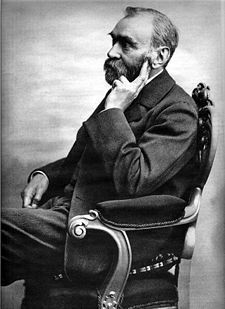 According to Nobel's will, the Peace Prize shall be awarded to the person who
Alfred Nobel's will further specified that the prize be awarded by a committee of five people chosen by the Norwegian Parliament.
Nobel died in 1896 and he did not leave an explanation for choosing peace
as a prize category. As he was a trained chemical engineer, the categories for chemistry
and physics
were obvious choices. The reasoning behind the peace prize is less clear. According to the Norwegian Nobel Committee, his friendship with Bertha von Suttner
, a peace activist and later winner of the prize, profoundly influenced his decision to include peace as a category. Some Nobel scholars suggest it was Nobel's way to compensate for developing destructive forces. His inventions included dynamite
and ballistite
, both of which were used violently during his lifetime. Ballistite was used in war and the Irish Republican Brotherhood
, an Irish nationalist organization, carried out dynamite attacks in the 1880s. Nobel was also instrumental in turning Bofors
from an iron and steel company to an armaments company.
It is unclear why Nobel wished the Peace Prize to be administered in Norway, which was ruled
in union with Sweden
at the time of Nobel's death. The Norwegian Nobel Committee speculates that Nobel may have considered Norway better suited to awarding the prize, as it did not have the same militaristic traditions as Sweden. It also notes that at the end of the nineteenth century, the Norwegian parliament had become closely involved in the Inter-Parliamentary Union's efforts to resolve conflicts through mediation and arbitration.
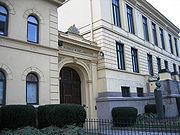 The Norwegian Parliament appoints the Norwegian Nobel Committee
, which selects the Nobel Peace Prize laureate.
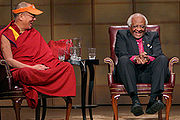 Nominations must usually be submitted to the Committee by the beginning of February in the award year. Nominations by committee members can be submitted up to the date of the first Committee meeting after this deadline.
In 2009, a record 205 nominations were received, but the record was broken again in 2010 with 237 nominations; in 2011, the record was broken once again with 241 nominations. The statutes of the Nobel Foundation do not allow information about nominations, considerations or investigations relating to awarding the prize to be made public for at least 50 years after a prize has been awarded. Over time many individuals have become known as "Nobel Peace Prize Nominees", but this designation has no official standing. Nominations from 1901 to 1956, however, have been released in a database.
presents the Nobel Peace Prize in the presence of the King of Norway on 10 December each year (the anniversary of Nobel's death). The Peace Prize is the only Nobel Prize not presented in Stockholm
. The Nobel laureate receives a diploma, a medal and a document confirming the prize amount. As of 2009, the prize was worth 10 million SEK
(about US$1.4 million). Since 1989, the Nobel Peace Prize Ceremony is held at the Oslo City Hall
.
From 1947 to 1989, the Nobel Peace Prize ceremony was held in the University of Oslo
atrium, a few hundred metres from the Oslo City Hall. Between 1905 and 1946, the ceremony took place at the Norwegian Nobel Institute
. From 1901 to 1904, the ceremony took place in the Storting (Parliament).
often two or three decades after the awarded achievement, the Peace Prize has been awarded for more recent or immediate achievements, or with the intention of encouraging future achievements. Some commentators have suggested that to award a peace prize on the basis of unquantifiable contemporary opinion is unjust or possibly erroneous, especially as many of the judges cannot themselves be said to be impartial observers.
In 2011 a feature story
in the Norwegian newspaper Aftenposten
contended that major criticisms of the award were that "Nobel Committee
ought to recruit members with [more of a] professional and international background... that can do just as good a job as retired MP
s of Norway"; that "there is too little openness about the criteria that the committee uses when they choose a recipient of the prize"; and that "the adherence to Nobel's will should be more strict".
According to the Norwegian historian Øivind Stenersen, Norway has been able to use the prize as an instrument for nation building and furthering Norway's foreign policy and economic interests.
, prompted two dissenting Committee members to resign.
The awards given to Yitzhak Rabin
, Shimon Peres
and Yasser Arafat
, Lê Ðức Thọ, Henry Kissinger
, Rigoberta Menchú
, Jimmy Carter
, Al Gore
, and Barack Obama
have all been the subject of controversy and criticism.
, Václav Havel
, Ken Saro-Wiwa
, Sari Nusseibeh
and Corazon Aquino
as people who "never won the prize, but should have". Other notable omissions that have drawn criticism include
Pope John Paul II and
Dorothy Day
. It was widely reported that Irena Sendler
had been nominated for the 2007 prize, which was jointly won by the Intergovernmental Panel on Climate Change
and Al Gore
.
The omission of Mohandas Gandhi has been particularly widely discussed, including in public statements by various members of the Nobel Committee. The Committee has confirmed that Gandhi was nominated in 1937, 1938, 1939, 1947 and, finally, a few days before his death in January 1948. The omission has been publicly regretted by later members of the Nobel Committee. Geir Lundestad, Secretary of Norwegian Nobel Committee in 2006 said, "The greatest omission in our 106 year history is undoubtedly that Mahatma Gandhi never received the Nobel Peace prize. Gandhi could do without the Nobel Peace prize, whether Nobel committee can do without Gandhi is the question". In 1948, following Gandhi's death, the Nobel Committee declined to award a prize on the ground that "there was no suitable living candidate" that year. Later, when the Dalai Lama was awarded the Peace Prize in 1989, the chairman of the committee said that this was "in part a tribute to the memory of Mahatma Gandhi".
Nobel Prize
The Nobel Prizes are annual international awards bestowed by Scandinavian committees in recognition of cultural and scientific advances. The will of the Swedish chemist Alfred Nobel, the inventor of dynamite, established the prizes in 1895...
s bequeathed by the Swedish industrialist and inventor Alfred Nobel
Alfred Nobel
Alfred Bernhard Nobel was a Swedish chemist, engineer, innovator, and armaments manufacturer. He is the inventor of dynamite. Nobel also owned Bofors, which he had redirected from its previous role as primarily an iron and steel producer to a major manufacturer of cannon and other armaments...
.
Background
Alfred Nobel's will further specified that the prize be awarded by a committee of five people chosen by the Norwegian Parliament.
Nobel died in 1896 and he did not leave an explanation for choosing peace
Peace
Peace is a state of harmony characterized by the lack of violent conflict. Commonly understood as the absence of hostility, peace also suggests the existence of healthy or newly healed interpersonal or international relationships, prosperity in matters of social or economic welfare, the...
as a prize category. As he was a trained chemical engineer, the categories for chemistry
Chemistry
Chemistry is the science of matter, especially its chemical reactions, but also its composition, structure and properties. Chemistry is concerned with atoms and their interactions with other atoms, and particularly with the properties of chemical bonds....
and physics
Physics
Physics is a natural science that involves the study of matter and its motion through spacetime, along with related concepts such as energy and force. More broadly, it is the general analysis of nature, conducted in order to understand how the universe behaves.Physics is one of the oldest academic...
were obvious choices. The reasoning behind the peace prize is less clear. According to the Norwegian Nobel Committee, his friendship with Bertha von Suttner
Bertha von Suttner
Bertha Felicitas Sophie Freifrau von Suttner was an Austrian novelist, radical pacifist, and the first woman to be a Nobel Peace Prize laureate.-Biography:Suttner was born in Prague, Bohemia, the daughter of an impoverished Austrian Field Marshal,...
, a peace activist and later winner of the prize, profoundly influenced his decision to include peace as a category. Some Nobel scholars suggest it was Nobel's way to compensate for developing destructive forces. His inventions included dynamite
Dynamite
Dynamite is an explosive material based on nitroglycerin, initially using diatomaceous earth , or another absorbent substance such as powdered shells, clay, sawdust, or wood pulp. Dynamites using organic materials such as sawdust are less stable and such use has been generally discontinued...
and ballistite
Ballistite
Ballistite is a smokeless propellant made from two high explosives, nitrocellulose and nitroglycerine. It was developed and patented by Alfred Nobel in the late 19th century.-The development of smokeless powders:...
, both of which were used violently during his lifetime. Ballistite was used in war and the Irish Republican Brotherhood
Irish Republican Brotherhood
The Irish Republican Brotherhood was a secret oath-bound fraternal organisation dedicated to the establishment of an "independent democratic republic" in Ireland during the second half of the 19th century and the start of the 20th century...
, an Irish nationalist organization, carried out dynamite attacks in the 1880s. Nobel was also instrumental in turning Bofors
Bofors
The name Bofors has been associated with the iron industry for more than 350 years.Located in Karlskoga, Sweden, the company originates from the hammer mill "Boofors" founded 1646. The modern corporate structure was created in 1873 with the foundation of Aktiebolaget Bofors-Gullspång...
from an iron and steel company to an armaments company.
It is unclear why Nobel wished the Peace Prize to be administered in Norway, which was ruled
Personal union
A personal union is the combination by which two or more different states have the same monarch while their boundaries, their laws and their interests remain distinct. It should not be confused with a federation which is internationally considered a single state...
in union with Sweden
Union between Sweden and Norway
The Union between Sweden and Norway , officially the United Kingdoms of Sweden and Norway, consisted of present-day Sweden and Norway between 1814 and 1905, when they were united under one monarch in a personal union....
at the time of Nobel's death. The Norwegian Nobel Committee speculates that Nobel may have considered Norway better suited to awarding the prize, as it did not have the same militaristic traditions as Sweden. It also notes that at the end of the nineteenth century, the Norwegian parliament had become closely involved in the Inter-Parliamentary Union's efforts to resolve conflicts through mediation and arbitration.
Nomination and selection
Norwegian Nobel Committee
The Norwegian Nobel Committee awards the Nobel Peace Prize each year.Its five members are appointed by the Norwegian Parliament and roughly represent the political makeup of that body.-History:...
, which selects the Nobel Peace Prize laureate.
Nomination
Each year, the Norwegian Nobel Committee specifically invites qualified people to submit nominations for the Nobel Peace Prize. The statutes of the Nobel Foundation specify categories of individuals who are eligible to make nominations for the Nobel Peace Prize. These nominators are;- Members of national assemblies and governments and members of the Inter-Parliamentary Union,
- Members of the Permanent Court of ArbitrationPermanent Court of ArbitrationThe Permanent Court of Arbitration , is an international organization based in The Hague in the Netherlands.-History:The court was established in 1899 as one of the acts of the first Hague Peace Conference, which makes it the oldest institution for international dispute resolution.The creation of...
and the International Court of JusticeInternational Court of JusticeThe International Court of Justice is the primary judicial organ of the United Nations. It is based in the Peace Palace in The Hague, Netherlands...
at the Hague, - Members of Institut de Droit InternationalInstitut de droit internationalThe Institut de droit international is an organization devoted to the study and development of international law, whose membership comprises the world's leading public international lawyers...
, - University professors of historyHistoryHistory is the discovery, collection, organization, and presentation of information about past events. History can also mean the period of time after writing was invented. Scholars who write about history are called historians...
, social sciences, philosophyPhilosophyPhilosophy is the study of general and fundamental problems, such as those connected with existence, knowledge, values, reason, mind, and language. Philosophy is distinguished from other ways of addressing such problems by its critical, generally systematic approach and its reliance on rational...
, lawLawLaw is a system of rules and guidelines which are enforced through social institutions to govern behavior, wherever possible. It shapes politics, economics and society in numerous ways and serves as a social mediator of relations between people. Contract law regulates everything from buying a bus...
and theologyTheologyTheology is the systematic and rational study of religion and its influences and of the nature of religious truths, or the learned profession acquired by completing specialized training in religious studies, usually at a university or school of divinity or seminary.-Definition:Augustine of Hippo...
, university presidents and directors of peace research and international affairs institutes, - Former recipients, including board members of organizations that have previously won the prize,
- Present and past members of the Norwegian Nobel Committee, and
- Former permanent advisers to the Norwegian Nobel InstituteNorwegian Nobel InstituteThe Norwegian Nobel Institute was established in 1904 in Kristiania , Norway.The principal duty of the Nobel Institute is to assist the Norwegian Nobel Committee in the task of selecting the recipient of the Nobel Peace Prize and to organize the annual Nobel event in Oslo.The institute is situated...
.
In 2009, a record 205 nominations were received, but the record was broken again in 2010 with 237 nominations; in 2011, the record was broken once again with 241 nominations. The statutes of the Nobel Foundation do not allow information about nominations, considerations or investigations relating to awarding the prize to be made public for at least 50 years after a prize has been awarded. Over time many individuals have become known as "Nobel Peace Prize Nominees", but this designation has no official standing. Nominations from 1901 to 1956, however, have been released in a database.
Selection
Nominations are considered by the Nobel Committee at a meeting where a short list of candidates for further review is created. This short list is then considered by permanent advisers to the Nobel institute, which consists of the Institute's Director and the Research Director and a small number of Norwegian academics with expertise in subject areas relating to the prize. Advisers usually have some months to complete reports, which are then considered by the Committee to select the laureate. The Committee seeks to achieve a unanimous decision, but this is not always possible. The Nobel Committee typically comes to a conclusion in mid-September, but occasionally the final decision has not been made until the last meeting before the official announcement at the beginning of October.Awarding the prize
The Chairman of the Norwegian Nobel CommitteeNorwegian Nobel Committee
The Norwegian Nobel Committee awards the Nobel Peace Prize each year.Its five members are appointed by the Norwegian Parliament and roughly represent the political makeup of that body.-History:...
presents the Nobel Peace Prize in the presence of the King of Norway on 10 December each year (the anniversary of Nobel's death). The Peace Prize is the only Nobel Prize not presented in Stockholm
Stockholm
Stockholm is the capital and the largest city of Sweden and constitutes the most populated urban area in Scandinavia. Stockholm is the most populous city in Sweden, with a population of 851,155 in the municipality , 1.37 million in the urban area , and around 2.1 million in the metropolitan area...
. The Nobel laureate receives a diploma, a medal and a document confirming the prize amount. As of 2009, the prize was worth 10 million SEK
Swedish krona
The krona has been the currency of Sweden since 1873. Both the ISO code "SEK" and currency sign "kr" are in common use; the former precedes or follows the value, the latter usually follows it, but especially in the past, it sometimes preceded the value...
(about US$1.4 million). Since 1989, the Nobel Peace Prize Ceremony is held at the Oslo City Hall
Oslo City Hall
Oslo City Hall houses the city council, city administration, and art studios and galleries. The construction started in 1931, but was paused by the outbreak of World War II, before the official inauguration in 1950. Its characteristic architecture, artworks and the Nobel Peace Prize ceremony, held...
.
From 1947 to 1989, the Nobel Peace Prize ceremony was held in the University of Oslo
University of Oslo
The University of Oslo , formerly The Royal Frederick University , is the oldest and largest university in Norway, situated in the Norwegian capital of Oslo. The university was founded in 1811 and was modelled after the recently established University of Berlin...
atrium, a few hundred metres from the Oslo City Hall. Between 1905 and 1946, the ceremony took place at the Norwegian Nobel Institute
Norwegian Nobel Institute
The Norwegian Nobel Institute was established in 1904 in Kristiania , Norway.The principal duty of the Nobel Institute is to assist the Norwegian Nobel Committee in the task of selecting the recipient of the Nobel Peace Prize and to organize the annual Nobel event in Oslo.The institute is situated...
. From 1901 to 1904, the ceremony took place in the Storting (Parliament).
Response
Unlike the scientific and literary Nobel Prizes, usually issued in retrospectRetrospective
Retrospective generally means to take a look back at events that already have taken place. For example, the term is used in medicine, describing a look back at a patient's medical history or lifestyle.-Music:...
often two or three decades after the awarded achievement, the Peace Prize has been awarded for more recent or immediate achievements, or with the intention of encouraging future achievements. Some commentators have suggested that to award a peace prize on the basis of unquantifiable contemporary opinion is unjust or possibly erroneous, especially as many of the judges cannot themselves be said to be impartial observers.
In 2011 a feature story
Feature story
- Published Features & news :While the distinction between published features and news is often clear, when approached conceptually there are few hard boundaries between the two. It is quite possible to write a feature in the style of a news story, for instance...
in the Norwegian newspaper Aftenposten
Aftenposten
Aftenposten is Norway's largest newspaper. It retook this position in 2010, taking it from the tabloid Verdens Gang which had been the largest newspaper for several decades. It is based in Oslo. The morning edition, which is distributed across all of Norway, had a circulation of 250,179 in 2007...
contended that major criticisms of the award were that "Nobel Committee
Nobel Committee
A Nobel Committee is the working body responsible for the most of the work involved in selecting Nobel Prize laureates. There are five Nobel Committees, one for each Nobel Prize....
ought to recruit members with [more of a] professional and international background... that can do just as good a job as retired MP
Member of Parliament
A Member of Parliament is a representative of the voters to a :parliament. In many countries with bicameral parliaments, the term applies specifically to members of the lower house, as upper houses often have a different title, such as senate, and thus also have different titles for its members,...
s of Norway"; that "there is too little openness about the criteria that the committee uses when they choose a recipient of the prize"; and that "the adherence to Nobel's will should be more strict".
According to the Norwegian historian Øivind Stenersen, Norway has been able to use the prize as an instrument for nation building and furthering Norway's foreign policy and economic interests.
Criticism of individual conferments
The awards given to Lê Ðức Thọ and Henry KissingerHenry Kissinger
Heinz Alfred "Henry" Kissinger is a German-born American academic, political scientist, diplomat, and businessman. He is a recipient of the Nobel Peace Prize. He served as National Security Advisor and later concurrently as Secretary of State in the administrations of Presidents Richard Nixon and...
, prompted two dissenting Committee members to resign.
The awards given to Yitzhak Rabin
Yitzhak Rabin
' was an Israeli politician, statesman and general. He was the fifth Prime Minister of Israel, serving two terms in office, 1974–77 and 1992 until his assassination in 1995....
, Shimon Peres
Shimon Peres
GCMG is the ninth President of the State of Israel. Peres served twice as the eighth Prime Minister of Israel and once as Interim Prime Minister, and has been a member of 12 cabinets in a political career spanning over 66 years...
and Yasser Arafat
Yasser Arafat
Mohammed Yasser Abdel Rahman Abdel Raouf Arafat al-Qudwa al-Husseini , popularly known as Yasser Arafat or by his kunya Abu Ammar , was a Palestinian leader and a Laureate of the Nobel Prize. He was Chairman of the Palestine Liberation Organization , President of the Palestinian National Authority...
, Lê Ðức Thọ, Henry Kissinger
Henry Kissinger
Heinz Alfred "Henry" Kissinger is a German-born American academic, political scientist, diplomat, and businessman. He is a recipient of the Nobel Peace Prize. He served as National Security Advisor and later concurrently as Secretary of State in the administrations of Presidents Richard Nixon and...
, Rigoberta Menchú
Rigoberta Menchú
Rigoberta Menchú Tum is an indigenous Guatemalan, of the K'iche' ethnic group. Menchú has dedicated her life to publicizing the plight of Guatemala's indigenous peoples during and after the Guatemalan Civil War , and to promoting indigenous rights in the country...
, Jimmy Carter
Jimmy Carter
James Earl "Jimmy" Carter, Jr. is an American politician who served as the 39th President of the United States and was the recipient of the 2002 Nobel Peace Prize, the only U.S. President to have received the Prize after leaving office...
, Al Gore
Al Gore
Albert Arnold "Al" Gore, Jr. served as the 45th Vice President of the United States , under President Bill Clinton. He was the Democratic Party's nominee for President in the 2000 U.S. presidential election....
, and Barack Obama
Barack Obama
Barack Hussein Obama II is the 44th and current President of the United States. He is the first African American to hold the office. Obama previously served as a United States Senator from Illinois, from January 2005 until he resigned following his victory in the 2008 presidential election.Born in...
have all been the subject of controversy and criticism.
Alleged omissions
Foreign Policy magazine has listed Mohandas Gandhi, Eleanor RooseveltEleanor Roosevelt
Anna Eleanor Roosevelt was the First Lady of the United States from 1933 to 1945. She supported the New Deal policies of her husband, distant cousin Franklin Delano Roosevelt, and became an advocate for civil rights. After her husband's death in 1945, Roosevelt continued to be an international...
, Václav Havel
Václav Havel
Václav Havel is a Czech playwright, essayist, poet, dissident and politician. He was the tenth and last President of Czechoslovakia and the first President of the Czech Republic . He has written over twenty plays and numerous non-fiction works, translated internationally...
, Ken Saro-Wiwa
Ken Saro-Wiwa
Kenule "Ken" Beeson Saro Wiwa was a Nigerian author, television producer, environmental activist, and winner of the Right Livelihood Award and the Goldman Environmental Prize...
, Sari Nusseibeh
Sari Nusseibeh
Sari Nusseibeh , and raised in Jerusalem, is a Palestinian professor of philosophy and president of the Al-Quds University in Jerusalem...
and Corazon Aquino
Corazon Aquino
Maria Corazon Sumulong Cojuangco-Aquino was the 11th President of the Philippines and the first woman to hold that office in Philippine history. She is best remembered for leading the 1986 People Power Revolution, which toppled Ferdinand Marcos and restored democracy in the Philippines...
as people who "never won the prize, but should have". Other notable omissions that have drawn criticism include
Pope John Paul II and
Dorothy Day
Dorothy Day
Dorothy Day was an American journalist, social activist and devout Catholic convert; she advocated the Catholic economic theory of Distributism. She was also considered to be an anarchist, and did not hesitate to use the term...
. It was widely reported that Irena Sendler
Irena Sendler
Irena Sendler was a Polish Catholic social worker who served in the Polish Underground and the Żegota resistance organization in German-occupied Warsaw during World War II...
had been nominated for the 2007 prize, which was jointly won by the Intergovernmental Panel on Climate Change
Intergovernmental Panel on Climate Change
The Intergovernmental Panel on Climate Change is a scientific intergovernmental body which provides comprehensive assessments of current scientific, technical and socio-economic information worldwide about the risk of climate change caused by human activity, its potential environmental and...
and Al Gore
Al Gore
Albert Arnold "Al" Gore, Jr. served as the 45th Vice President of the United States , under President Bill Clinton. He was the Democratic Party's nominee for President in the 2000 U.S. presidential election....
.
The omission of Mohandas Gandhi has been particularly widely discussed, including in public statements by various members of the Nobel Committee. The Committee has confirmed that Gandhi was nominated in 1937, 1938, 1939, 1947 and, finally, a few days before his death in January 1948. The omission has been publicly regretted by later members of the Nobel Committee. Geir Lundestad, Secretary of Norwegian Nobel Committee in 2006 said, "The greatest omission in our 106 year history is undoubtedly that Mahatma Gandhi never received the Nobel Peace prize. Gandhi could do without the Nobel Peace prize, whether Nobel committee can do without Gandhi is the question". In 1948, following Gandhi's death, the Nobel Committee declined to award a prize on the ground that "there was no suitable living candidate" that year. Later, when the Dalai Lama was awarded the Peace Prize in 1989, the chairman of the committee said that this was "in part a tribute to the memory of Mahatma Gandhi".
See also
- Nobel FoundationNobel FoundationThe Nobel Foundation is a private institution founded on 29 June 1900 to manage the finances and administration of the Nobel Prizes. The Foundation is based on the last will of Alfred Nobel, the inventor of dynamite....
- Nobel MuseumNobel MuseumThe Nobel Museum is a museum devoted to circulate information on the Nobel Prize, Nobel laureates from 1901 to present, and the life of the founder of the prize, Alfred Nobel...
- Nobel Peace CenterNobel Peace CenterNobel Peace Center is a showcase for the Nobel Peace Prize and the ideals it represents. The Center is also an arena where culture and politics merge to promote involvement, debate and reflection around topics such as war, peace and conflict resolution....
- Nobel Peace Prize ConcertNobel Peace Prize ConcertThe Nobel Peace Prize Concert has been held annually since 1994 on 11 December, one day after the date of Alfred Nobel's death, to honour the Nobel Peace Prize laureate. The award ceremony on 10 December takes place in the Oslo City Hall, while the concert is in the Oslo Spektrum Arena, with the...
External links
- "The Nobel Peace Prize" – Official site of the Nobel FoundationNobel FoundationThe Nobel Foundation is a private institution founded on 29 June 1900 to manage the finances and administration of the Nobel Prizes. The Foundation is based on the last will of Alfred Nobel, the inventor of dynamite....
. - "The Nobel Peace Prize" – Official webpage of the Norwegian Nobel InstituteNorwegian Nobel InstituteThe Norwegian Nobel Institute was established in 1904 in Kristiania , Norway.The principal duty of the Nobel Institute is to assist the Norwegian Nobel Committee in the task of selecting the recipient of the Nobel Peace Prize and to organize the annual Nobel event in Oslo.The institute is situated...
for the Norwegian Nobel CommitteeNorwegian Nobel CommitteeThe Norwegian Nobel Committee awards the Nobel Peace Prize each year.Its five members are appointed by the Norwegian Parliament and roughly represent the political makeup of that body.-History:...
. - "All Nobel Laureates in Peace" – Index webpage on the official site of the Nobel FoundationNobel FoundationThe Nobel Foundation is a private institution founded on 29 June 1900 to manage the finances and administration of the Nobel Prizes. The Foundation is based on the last will of Alfred Nobel, the inventor of dynamite....
. - "The Nobel Prize Award Ceremonies" – Official hyperlinked webpage of the Nobel Foundation.
- "The Nobel Prize Medals and the Medal for the Prize in Economics" – By Birgitta Lemmel; an article on the history of the design of the medals featured on the official site.
- "National Peace Nobel Prize shares 1901-2009 by citizenship (or home of organization) at the time of the award." – From J. SchmidhuberJürgen SchmidhuberJürgen Schmidhuber is a computer scientist and artist known for his work on machine learning, universal Artificial Intelligence , artificial neural networks, digital physics, and low-complexity art. His contributions also include generalizations of Kolmogorov complexity and the Speed Prior...
(2010): Evolution of National Nobel Prize Shares in the 20th Century at arXiv:1009.2634v1 - "The Nomination Database for the Nobel Prize in Peace, 1901-1956" – Database featured on the official site of the Nobel Foundation.
- "What the Nobel Laureates Receive" – Featured link in "The Nobel Prize Award Ceremonies".