


Religious war

Encyclopedia
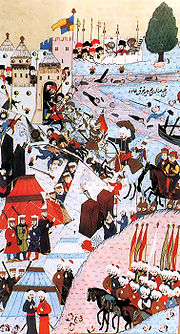
Latin
Latin is an Italic language originally spoken in Latium and Ancient Rome. It, along with most European languages, is a descendant of the ancient Proto-Indo-European language. Although it is considered a dead language, a number of scholars and members of the Christian clergy speak it fluently, and...
: bellum sacrum; is a war
War
War is a state of organized, armed, and often prolonged conflict carried on between states, nations, or other parties typified by extreme aggression, social disruption, and usually high mortality. War should be understood as an actual, intentional and widespread armed conflict between political...
caused by, or justified by, religious differences. It can involve one state with an established religion against another state with a different religion or a different sect within the same religion, or a religiously motivated group attempting to spread its faith by violence, or to suppress another group because of its religious beliefs or practices. The Crusades
Crusades
The Crusades were a series of religious wars, blessed by the Pope and the Catholic Church with the main goal of restoring Christian access to the holy places in and near Jerusalem...
, the French Wars of Religion
French Wars of Religion
The French Wars of Religion is the name given to a period of civil infighting and military operations, primarily fought between French Catholics and Protestants . The conflict involved the factional disputes between the aristocratic houses of France, such as the House of Bourbon and House of Guise...
, the Muslim conquests
Muslim conquests
Muslim conquests also referred to as the Islamic conquests or Arab conquests, began with the Islamic prophet Muhammad. He established a new unified polity in the Arabian Peninsula which under the subsequent Rashidun and Umayyad Caliphates saw a century of rapid expansion of Muslim power.They...
, and the Reconquista
Reconquista
The Reconquista was a period of almost 800 years in the Middle Ages during which several Christian kingdoms succeeded in retaking the Muslim-controlled areas of the Iberian Peninsula broadly known as Al-Andalus...
are frequently cited historical examples.
Criteria for classification
In their Encyclopedia of Wars, authors Charles PhillipsCharles Phillips
Charles E. Phillips is the CEO of Infor, an ERP Software provider located in Alpharetta, GA, and a member of the company's Board of Directors....
and Alan Axelrod
Alan Axelrod
Alan Axelrod is an author of history, business and management. He resides in Atlanta, Georgia.He received his doctorate in English from the University of Iowa, specializing in the literature and culture of colonial America and the early republic...
attempt a comprehensive listing of wars in history. They document 1763 wars overall, of which 123 (7%) have been classified to involve a religious conflict.
Many wars that are considered religious wars have economic or political ramifications (land acquisition, control of trade routes, dynasty changes, etc.) that could call into question the true reasons behind the conflict. Differences in religion can further inflame a war being fought for other reasons. Historically, places of worship have been destroyed to weaken the morale of the opponent, even when the war itself is not being waged over religious ideals.
Religious designations are sometimes used as shorthand for cultural and historical differences between combatants, giving the often misleading impression that the conflict is primarily about religious differences. For example, there is a common perception of The Troubles
The Troubles
The Troubles was a period of ethno-political conflict in Northern Ireland which spilled over at various times into England, the Republic of Ireland, and mainland Europe. The duration of the Troubles is conventionally dated from the late 1960s and considered by many to have ended with the Belfast...
in Northern Ireland
Northern Ireland
Northern Ireland is one of the four countries of the United Kingdom. Situated in the north-east of the island of Ireland, it shares a border with the Republic of Ireland to the south and west...
as a religious conflict, as one side (Nationalists) was predominantly composed of Catholics and the other (Unionists) of Protestants. However, the more fundamental cause is the attachment of Northern Ireland to either the Republic of Ireland
Republic of Ireland
Ireland , described as the Republic of Ireland , is a sovereign state in Europe occupying approximately five-sixths of the island of the same name. Its capital is Dublin. Ireland, which had a population of 4.58 million in 2011, is a constitutional republic governed as a parliamentary democracy,...
or the United Kingdom
United Kingdom
The United Kingdom of Great Britain and Northern IrelandIn the United Kingdom and Dependencies, other languages have been officially recognised as legitimate autochthonous languages under the European Charter for Regional or Minority Languages...
and while religion played a role as a cultural marker, the conflict was in fact ethnic or nationalistic rather than religious in nature. Since the native Irish were mostly Catholic and the later British-sponsored immigrants were mainly Protestant, the terms become shorthand for the two cultures, but it is inaccurate to describe the conflict as a religious one.
Religion, secularity, and violence
Not all violence is by nature "religious". Secularity, including atheism, and violence are also compatible. Violence committed by secular governments and people have been documented including some instances of violence or persecutions focused on religious believers and those who believe in the supernatural. Both World Wars, many civil wars (American, El Salvador, Russia, Sri Lanka, China etc.), revolutionary wars (American, French, Russian, etc.), and common conflicts such as gang and drug wars or even the War on TerrorismWar on Terrorism
The War on Terror is a term commonly applied to an international military campaign led by the United States and the United Kingdom with the support of other North Atlantic Treaty Organisation as well as non-NATO countries...
, have all been secular.
Jack David Eller, an anthropologist of culture, violence, and religion who himself is an atheist, claims: "As we have insisted previously, religion is not inherently and irredeemably violent; it certainly is not the essence and source of all violence." and "Religion and violence are clearly compatible, but they are not identical. Violence is one phenomenon in human (and natural existence), religion is another, and it is inevitable that the two would become intertwined. Religion is complex and modular, and violence is one of the modules - not universal, but recurring. As a conceptual and behavioral module, violence is by no means exclusive to religion. There are plenty of other groups, institutions, interests, and ideologies to promote violence. Violence is, therefore, neither essential to nor exclusive to religion. Nor is religious violence all alike... And virtually every form of religious violence has its nonreligious corollary."
In terms of religion, ethnicity, wars, and conflicts, Jack David Eller states:
"When a pure or hybrid religious group and/or its interests are threatened, or merely blocked from achieving its interests by another group, conflict and violence may ensue. In such cases, although religion is part of the issue and religious groups form the competitors, or combatants, it would be simplistic or wrong to assume the religion is the "cause" of the trouble or that the parties are "fighting about religion". Religion in the circumstances may be more a marker of the groups than an actual point of contention between them."
William T. Cavanaugh, a theology professor who was written on religion, violence, and politics; has contested and challenged the construct of "religious violence". He argues points such as:
- Religion is not a universal and transhistorical phenomenon. What counts as "religious" or "secular" in any context is a function of configurations of power both in the West and lands colonized by the West. The distinctions of "religious/secular" and "religious/political" are modern Western inventions.
- The invention of the concept of "religious violence" helps the West reinforce superiority of Western social orders to "nonsecular" social orders, namely Muslims at the time of publication.
- The concept of "religious violence" can be and is used to legitimate violence against non-Western "Others".
- Peace depends on a balanced view of violence and recognition that so-called secular ideologies and institutions can be just as as prone to absolutism, divisiveness, and irrationality.
Historians such as Jonathan Kirsch have made links between the European inquisitions, for example, and Stalin's persecutions in the Soviet Union, Nazi Germany, McCarthy blacklists, and other secular events as being the same type of phenomenon as the inquisition
Inquisition
The Inquisition, Inquisitio Haereticae Pravitatis , was the "fight against heretics" by several institutions within the justice-system of the Roman Catholic Church. It started in the 12th century, with the introduction of torture in the persecution of heresy...
s.
Others like, Robert Pape, a political scientist who specializes in suicide terrorism, have made a case for secular motivations and reasons as being foundations of most suicide attacks that are often times labeled as "religious".
List of major religious wars
These figures of one million or more deaths include the deaths of civilians from diseasesInfectious disease
Infectious diseases, also known as communicable diseases, contagious diseases or transmissible diseases comprise clinically evident illness resulting from the infection, presence and growth of pathogenic biological agents in an individual host organism...
, famine
Famine
A famine is a widespread scarcity of food, caused by several factors including crop failure, overpopulation, or government policies. This phenomenon is usually accompanied or followed by regional malnutrition, starvation, epidemic, and increased mortality. Every continent in the world has...
, etc., as well as deaths of soldiers in battle and possible massacres and genocide
Genocide
Genocide is defined as "the deliberate and systematic destruction, in whole or in part, of an ethnic, racial, religious, or national group", though what constitutes enough of a "part" to qualify as genocide has been subject to much debate by legal scholars...
.
| Lowest estimate | Highest estimate | Event | Location | From | | To | Religions involved | Percentage of the world population |
|---|---|---|---|---|---|---|---|
| 3,000,000 | 11,500,000 | Thirty Years' War Thirty Years' War The Thirty Years' War was fought primarily in what is now Germany, and at various points involved most countries in Europe. It was one of the most destructive conflicts in European history.... |
Holy Roman Empire Holy Roman Empire The Holy Roman Empire was a realm that existed from 962 to 1806 in Central Europe.It was ruled by the Holy Roman Emperor. Its character changed during the Middle Ages and the Early Modern period, when the power of the emperor gradually weakened in favour of the princes... |
1618 | 1648 | Protestants and Catholics | 0.5%–2.1% |
| 2,000,000 | 4,000,000 | French Wars of Religion French Wars of Religion The French Wars of Religion is the name given to a period of civil infighting and military operations, primarily fought between French Catholics and Protestants . The conflict involved the factional disputes between the aristocratic houses of France, such as the House of Bourbon and House of Guise... |
France France The French Republic , The French Republic , The French Republic , (commonly known as France , is a unitary semi-presidential republic in Western Europe with several overseas territories and islands located on other continents and in the Indian, Pacific, and Atlantic oceans. Metropolitan France... |
1562 | 1598 | Protestants and Catholics | 0.4%–0.8% |
| 1,000,000 | 2,000,000 | Second Sudanese Civil War Second Sudanese Civil War The Second Sudanese Civil War started in 1983, although it was largely a continuation of the First Sudanese Civil War of 1955 to 1972. Although it originated in southern Sudan, the civil war spread to the Nuba mountains and Blue Nile by the end of the 1980s.... |
Sudan Sudan Sudan , officially the Republic of the Sudan , is a country in North Africa, sometimes considered part of the Middle East politically. It is bordered by Egypt to the north, the Red Sea to the northeast, Eritrea and Ethiopia to the east, South Sudan to the south, the Central African Republic to the... |
1983 | 2005 | Islam Islam Islam . The most common are and . : Arabic pronunciation varies regionally. The first vowel ranges from ~~. The second vowel ranges from ~~~... and Christian Christian A Christian is a person who adheres to Christianity, an Abrahamic, monotheistic religion based on the life and teachings of Jesus of Nazareth as recorded in the Canonical gospels and the letters of the New Testament... |
0.02% |
| 1,000,000 | 3,000,000 | Crusades Crusades The Crusades were a series of religious wars, blessed by the Pope and the Catholic Church with the main goal of restoring Christian access to the holy places in and near Jerusalem... |
Holy Land Holy Land The Holy Land is a term which in Judaism refers to the Kingdom of Israel as defined in the Tanakh. For Jews, the Land's identifiction of being Holy is defined in Judaism by its differentiation from other lands by virtue of the practice of Judaism often possible only in the Land of Israel... , Europe |
1095 | 1291 | Islam Islam Islam . The most common are and . : Arabic pronunciation varies regionally. The first vowel ranges from ~~. The second vowel ranges from ~~~... and Christian Christian A Christian is a person who adheres to Christianity, an Abrahamic, monotheistic religion based on the life and teachings of Jesus of Nazareth as recorded in the Canonical gospels and the letters of the New Testament... |
0.3%–2.3% |
| Lebanese Civil War Lebanese Civil War The Lebanese Civil War was a multifaceted civil war in Lebanon. The war lasted from 1975 to 1990 and resulted in an estimated 150,000 to 230,000 civilian fatalities. Another one million people were wounded, and today approximately 350,000 people remain displaced. There was also a mass exodus of... |
Lebanon Lebanon Lebanon , officially the Republic of LebanonRepublic of Lebanon is the most common term used by Lebanese government agencies. The term Lebanese Republic, a literal translation of the official Arabic and French names that is not used in today's world. Arabic is the most common language spoken among... |
1975 | 1990 | Sunni,Shiite and Christian Christian A Christian is a person who adheres to Christianity, an Abrahamic, monotheistic religion based on the life and teachings of Jesus of Nazareth as recorded in the Canonical gospels and the letters of the New Testament... |
|||
Christianity
Those who fought in the name of God were recognized as the Milites Christi, warriors or knights of Christ.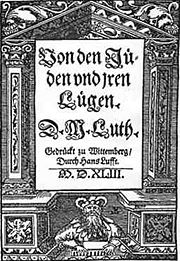
Crusades
The Crusades were a series of religious wars, blessed by the Pope and the Catholic Church with the main goal of restoring Christian access to the holy places in and near Jerusalem...
were a series of military campaigns that took place during the 11th through 13th centuries in response to the Muslim Conquests
Muslim conquests
Muslim conquests also referred to as the Islamic conquests or Arab conquests, began with the Islamic prophet Muhammad. He established a new unified polity in the Arabian Peninsula which under the subsequent Rashidun and Umayyad Caliphates saw a century of rapid expansion of Muslim power.They...
. Originally, the goal was to recapture Jerusalem and the Holy Land
Holy Land
The Holy Land is a term which in Judaism refers to the Kingdom of Israel as defined in the Tanakh. For Jews, the Land's identifiction of being Holy is defined in Judaism by its differentiation from other lands by virtue of the practice of Judaism often possible only in the Land of Israel...
from the Muslims
Islam
Islam . The most common are and . : Arabic pronunciation varies regionally. The first vowel ranges from ~~. The second vowel ranges from ~~~...
, and support the besieged Christian Byzantine Empire
Byzantine Empire
The Byzantine Empire was the Eastern Roman Empire during the periods of Late Antiquity and the Middle Ages, centred on the capital of Constantinople. Known simply as the Roman Empire or Romania to its inhabitants and neighbours, the Empire was the direct continuation of the Ancient Roman State...
against the Muslim
Muslim
A Muslim, also spelled Moslem, is an adherent of Islam, a monotheistic, Abrahamic religion based on the Quran, which Muslims consider the verbatim word of God as revealed to prophet Muhammad. "Muslim" is the Arabic term for "submitter" .Muslims believe that God is one and incomparable...
Seljuq
Seljuq dynasty
The Seljuq ; were a Turco-Persian Sunni Muslim dynasty that ruled parts of Central Asia and the Middle East from the 11th to 14th centuries...
expansion into Asia Minor and Europe proper. Later, Crusades were launched against other targets, either for religious reasons, such as the Albigensian Crusade
Albigensian Crusade
The Albigensian Crusade or Cathar Crusade was a 20-year military campaign initiated by the Catholic Church to eliminate Catharism in Languedoc...
, the Northern Crusades
Northern Crusades
The Northern Crusades or Baltic Crusades were crusades undertaken by the Christian kings of Denmark and Sweden, the German Livonian and Teutonic military orders, and their allies against the pagan peoples of Northern Europe around the southern and eastern shores of the Baltic Sea...
, or because of political conflict, such as the Aragonese Crusade
Aragonese Crusade
The Aragonese Crusade or Crusade of Aragon, a part of the larger War of the Sicilian Vespers, was declared by Pope Martin IV against the King of Aragon, Peter III the Great, in 1284 and 1285...
. In 1095, at the Council of Clermont
Council of Clermont
The Council of Clermont was a mixed synod of ecclesiastics and laymen of the Catholic Church, which was held from November 18 to November 28, 1095 at Clermont, France...
, Pope Urban II
Pope Urban II
Pope Urban II , born Otho de Lagery , was Pope from 12 March 1088 until his death on July 29 1099...
raised the level of war from bellum iustum ("just war"), to bellum sacrum ("holy war"). In 16th Century France there was a succession of wars between Roman Catholics and Protestants (Hugenots primarily), known as the French Wars of Religion
French Wars of Religion
The French Wars of Religion is the name given to a period of civil infighting and military operations, primarily fought between French Catholics and Protestants . The conflict involved the factional disputes between the aristocratic houses of France, such as the House of Bourbon and House of Guise...
. In the first half of the 17th century, the German
Germany
Germany , officially the Federal Republic of Germany , is a federal parliamentary republic in Europe. The country consists of 16 states while the capital and largest city is Berlin. Germany covers an area of 357,021 km2 and has a largely temperate seasonal climate...
states, Scandinavia (Sweden
Sweden
Sweden , officially the Kingdom of Sweden , is a Nordic country on the Scandinavian Peninsula in Northern Europe. Sweden borders with Norway and Finland and is connected to Denmark by a bridge-tunnel across the Öresund....
, primarily) and Poland
Poland
Poland , officially the Republic of Poland , is a country in Central Europe bordered by Germany to the west; the Czech Republic and Slovakia to the south; Ukraine, Belarus and Lithuania to the east; and the Baltic Sea and Kaliningrad Oblast, a Russian exclave, to the north...
were beset by religious warfare in the Thirty Years War. Roman Catholicism and Protestantism
Protestantism
Protestantism is one of the three major groupings within Christianity. It is a movement that began in Germany in the early 16th century as a reaction against medieval Roman Catholic doctrines and practices, especially in regards to salvation, justification, and ecclesiology.The doctrines of the...
figured in the opposing sides of this conflict, though Catholic France
France
The French Republic , The French Republic , The French Republic , (commonly known as France , is a unitary semi-presidential republic in Western Europe with several overseas territories and islands located on other continents and in the Indian, Pacific, and Atlantic oceans. Metropolitan France...
did take the side of the Protestants but purely for political reasons.
In the Middle Ages
Middle Ages
The Middle Ages is a periodization of European history from the 5th century to the 15th century. The Middle Ages follows the fall of the Western Roman Empire in 476 and precedes the Early Modern Era. It is the middle period of a three-period division of Western history: Classic, Medieval and Modern...
, religion played a major role in driving antisemitism. Though not part of Roman Catholic dogma
Dogma
Dogma is the established belief or doctrine held by a religion, or a particular group or organization. It is authoritative and not to be disputed, doubted, or diverged from, by the practitioners or believers...
, many Christians, including members of the clergy
Clergy
Clergy is the generic term used to describe the formal religious leadership within a given religion. A clergyman, churchman or cleric is a member of the clergy, especially one who is a priest, preacher, pastor, or other religious professional....
, have held the Jewish people collectively responsible for killing Jesus. According to this interpretation, both the Jews present at Jesus’ death and the Jewish people collectively and for all time, have committed the sin of deicide
Deicide
Deicide is the killing of a god. The term deicide was coined in the 17th century from medieval Latin *deicidium, from de-us "god" and -cidium "cutting, killing")...
, or God-killing. For 1900 years of Christian-Jewish history, the charge of deicide ( Which was originally attributed by Melito of Sardis
Melito of Sardis
Melito of Sardis was the bishop of Sardis near Smyrna in western Anatolia, and a great authority in Early Christianity: Jerome, speaking of the Old Testament canon established by Melito, quotes Tertullian to the effect that he was esteemed a prophet by many of the faithful...
) has led to hatred, violence against and murder of Jews in Europe and America."This accusation was repudiated in 1964, when the Catholic Church under Pope Paul VI
Pope Paul VI
Paul VI , born Giovanni Battista Enrico Antonio Maria Montini , reigned as Pope of the Catholic Church from 21 June 1963 until his death on 6 August 1978. Succeeding Pope John XXIII, who had convened the Second Vatican Council, he decided to continue it...
issued the document Nostra Aetate
Nostra Aetate
Nostra Aetate is the Declaration on the Relation of the Church with Non-Christian Religions of the Second Vatican Council. Passed by a vote of 2,221 to 88 of the assembled bishops, this declaration was promulgated on October 28, 1965, by Pope Paul VI.The first draft, entitled "Decretum de...
as a part of Vatican II.
Martin Luther
Martin Luther
Martin Luther was a German priest, professor of theology and iconic figure of the Protestant Reformation. He strongly disputed the claim that freedom from God's punishment for sin could be purchased with money. He confronted indulgence salesman Johann Tetzel with his Ninety-Five Theses in 1517...
, an Augustinian monk
Monasticism
Monasticism is a religious way of life characterized by the practice of renouncing worldly pursuits to fully devote one's self to spiritual work...
and an ecclesiastical reformer whose teachings inspired the Reformation
Protestant Reformation
The Protestant Reformation was a 16th-century split within Western Christianity initiated by Martin Luther, John Calvin and other early Protestants. The efforts of the self-described "reformers", who objected to the doctrines, rituals and ecclesiastical structure of the Roman Catholic Church, led...
, wrote antagonistically about Jews in his book On the Jews and their Lies, which describes the Jews in extremely harsh terms, excoriates them, and provides detailed recommendations for a pogrom
Pogrom
A pogrom is a form of violent riot, a mob attack directed against a minority group, and characterized by killings and destruction of their homes and properties, businesses, and religious centres...
against them and their permanent oppression and/or expulsion.
The Battle of Las Navas de Tolosa
Battle of Las Navas de Tolosa
The Battle of Las Navas de Tolosa, known in Arab history as the Battle of Al-Uqab , took place on 16 July 1212 and was an important turning point in the Reconquista and in the medieval history of Spain...
, known in Arab history as the Battle of Al-Uqab (معركة العقاب), took place on 16 July 1212 and was an important turning point in the Reconquista
Reconquista
The Reconquista was a period of almost 800 years in the Middle Ages during which several Christian kingdoms succeeded in retaking the Muslim-controlled areas of the Iberian Peninsula broadly known as Al-Andalus...
and in the medieval history of Spain
Spain in the Middle Ages
After the disorders of the passage of the Vandals and Alans down the Mediterranean coast of Hispania from 408, the history of Medieval Spain begins with the Iberian kingdom of the Arianist Visigoths , who were converted to Catholicism with their king Reccared in 587...
. The forces of King Alfonso VIII of Castile
Alfonso VIII of Castile
Alfonso VIII , called the Noble or el de las Navas, was the King of Castile from 1158 to his death and King of Toledo. He is most remembered for his part in the Reconquista and the downfall of the Almohad Caliphate...
were joined by the armies of his Christian
Christian
A Christian is a person who adheres to Christianity, an Abrahamic, monotheistic religion based on the life and teachings of Jesus of Nazareth as recorded in the Canonical gospels and the letters of the New Testament...
rivals, Sancho VII of Navarre
Sancho VII of Navarre
Sancho VII Sánchez , called the Strong or the Prudent, was the King of Navarre from 1194 to his death...
, Pedro II of Aragon and Afonso II of Portugal
Afonso II of Portugal
Afonso II , or Affonso , Alfonso or Alphonso or Alphonsus , nicknamed "the Fat" , third king of Portugal, was born in Coimbra on 23 April 1185 and died on 25 March 1223 in the same city. He was the second but eldest surviving son of Sancho I of Portugal by his wife, Dulce, Infanta of Aragon...
in battle against the Berber
Berber people
Berbers are the indigenous peoples of North Africa west of the Nile Valley. They are continuously distributed from the Atlantic to the Siwa oasis, in Egypt, and from the Mediterranean to the Niger River. Historically they spoke the Berber language or varieties of it, which together form a branch...
Muslim
Muslim
A Muslim, also spelled Moslem, is an adherent of Islam, a monotheistic, Abrahamic religion based on the Quran, which Muslims consider the verbatim word of God as revealed to prophet Muhammad. "Muslim" is the Arabic term for "submitter" .Muslims believe that God is one and incomparable...
Almohad
Almohad
The Almohad Dynasty , was a Moroccan Berber-Muslim dynasty founded in the 12th century that established a Berber state in Tinmel in the Atlas Mountains in roughly 1120.The movement was started by Ibn Tumart in the Masmuda tribe, followed by Abd al-Mu'min al-Gumi between 1130 and his...
rulers of the southern half of the Iberian Peninsula
Iberian Peninsula
The Iberian Peninsula , sometimes called Iberia, is located in the extreme southwest of Europe and includes the modern-day sovereign states of Spain, Portugal and Andorra, as well as the British Overseas Territory of Gibraltar...
.
Islam
JihadJihad
Jihad , an Islamic term, is a religious duty of Muslims. In Arabic, the word jihād translates as a noun meaning "struggle". Jihad appears 41 times in the Quran and frequently in the idiomatic expression "striving in the way of God ". A person engaged in jihad is called a mujahid; the plural is...
means "to strive or struggle" in the way of God, Jihad is sometimes understood as Holy War
Holy war
Holy war may refer to:* A religious war led with an exceptionally high grade of religious feeling* The Crusades, 11th, 12th, and 13th-century religiously sanctioned military campaigns waged by much of Christian Europe against the Muslim Middle East....
, and jihads have been called to convert other non-Muslim states to Islam
Islam
Islam . The most common are and . : Arabic pronunciation varies regionally. The first vowel ranges from ~~. The second vowel ranges from ~~~...
or as defense. The first forms of military Jihad occurred after the migration (hijra
Hijra (Islam)
The Hijra is the migration or journey of the Islamic prophet Muhammad and his followers from Mecca to Medina in 622 CE. Alternate spellings of this Arabic word are Hijrah, Hijrat or Hegira, the latter following the spelling rules of Latin.- Hijra of Muhammad :In September 622, warned of a plot to...
) of Muhammad and his small group of followers to Medina
Medina
Medina , or ; also transliterated as Madinah, or madinat al-nabi "the city of the prophet") is a city in the Hejaz region of western Saudi Arabia, and serves as the capital of the Al Madinah Province. It is the second holiest city in Islam, and the burial place of the Islamic Prophet Muhammad, and...
from Mecca
Mecca
Mecca is a city in the Hijaz and the capital of Makkah province in Saudi Arabia. The city is located inland from Jeddah in a narrow valley at a height of above sea level...
and the conversion of several inhabitants of the city to Islam. The first revelation concerning the struggle against the Meccans was surah 22, verses 39-40:
This happened many times throughout history, beginning with Muhammad
Muhammad
Muhammad |ligature]] at U+FDF4 ;Arabic pronunciation varies regionally; the first vowel ranges from ~~; the second and the last vowel: ~~~. There are dialects which have no stress. In Egypt, it is pronounced not in religious contexts...
's battles against the polytheist Arabs including the Battle of Badr
Battle of Badr
The Battle of Badr , fought Saturday, March 13, 624 AD in the Hejaz region of western Arabia , was a key battle in the early days of Islam and a turning point in Muhammad's struggle with his opponents among the Quraish in Mecca...
(624), and battles in Uhud (625), Khandaq (627), Mecca
Mecca
Mecca is a city in the Hijaz and the capital of Makkah province in Saudi Arabia. The city is located inland from Jeddah in a narrow valley at a height of above sea level...
(630) and Hunayn
Battle of Hunayn
The Battle of Hunain was fought between Muhammad and his followers against the Bedouin tribe of Hawazin and its subsection the Thaqif in 630 in a valley on one of the roads leading from Mecca to al-Ta'if. The battle ended in a decisive victory for the Muslims, who captured enormous spoils...
(630).
The medieval Iberian Peninsula was the scene of almost constant warfare between Muslims and Christians. Periodic raiding expeditions were sent from Al-Andalus
Al-Andalus
Al-Andalus was the Arabic name given to a nation and territorial region also commonly referred to as Moorish Iberia. The name describes parts of the Iberian Peninsula and Septimania governed by Muslims , at various times in the period between 711 and 1492, although the territorial boundaries...
to ravage the Christian Iberian kingdoms, bringing back treasure and slaves. In raid against Lisbon
Lisbon
Lisbon is the capital city and largest city of Portugal with a population of 545,245 within its administrative limits on a land area of . The urban area of Lisbon extends beyond the administrative city limits with a population of 3 million on an area of , making it the 9th most populous urban...
, in 1189, for example, the Almohad
Almohad
The Almohad Dynasty , was a Moroccan Berber-Muslim dynasty founded in the 12th century that established a Berber state in Tinmel in the Atlas Mountains in roughly 1120.The movement was started by Ibn Tumart in the Masmuda tribe, followed by Abd al-Mu'min al-Gumi between 1130 and his...
caliph Yaqub al-Mansur took 3,000 female and child captives, while his governor of Córdoba
Córdoba, Spain
-History:The first trace of human presence in the area are remains of a Neanderthal Man, dating to c. 32,000 BC. In the 8th century BC, during the ancient Tartessos period, a pre-urban settlement existed. The population gradually learned copper and silver metallurgy...
, in a subsequent attack upon Silves in 1191, took 3,000 Christian slaves.
The Almohad Dynasty conquered all Northern Africa as far as Libya
Libya
Libya is an African country in the Maghreb region of North Africa bordered by the Mediterranean Sea to the north, Egypt to the east, Sudan to the southeast, Chad and Niger to the south, and Algeria and Tunisia to the west....
, together with Al-Andalus
Al-Andalus
Al-Andalus was the Arabic name given to a nation and territorial region also commonly referred to as Moorish Iberia. The name describes parts of the Iberian Peninsula and Septimania governed by Muslims , at various times in the period between 711 and 1492, although the territorial boundaries...
(Moorish
Moors
The description Moors has referred to several historic and modern populations of the Maghreb region who are predominately of Berber and Arab descent. They came to conquer and rule the Iberian Peninsula for nearly 800 years. At that time they were Muslim, although earlier the people had followed...
Iberian Peninsula). The Almohads, who declared an everlasting Jihad against the Christians, and they treated the dhimmi
Dhimmi
A , is a non-Muslim subject of a state governed in accordance with sharia law. Linguistically, the word means "one whose responsibility has been taken". This has to be understood in the context of the definition of state in Islam...
s harshly. Faced with the choice of either death or conversion, many Jews and Christians emigrated. Some, such as the family of Maimonides
Maimonides
Moses ben-Maimon, called Maimonides and also known as Mūsā ibn Maymūn in Arabic, or Rambam , was a preeminent medieval Jewish philosopher and one of the greatest Torah scholars and physicians of the Middle Ages...
, fled east to more tolerant Muslim lands, while others went northward to settle in the growing Christian kingdoms.
In the late tenth century, a story spread that before Muhammad destroyed the idols at the Kaaba
Kaaba
The Kaaba is a cuboid-shaped building in Mecca, Saudi Arabia, and is the most sacred site in Islam. The Qur'an states that the Kaaba was constructed by Abraham, or Ibraheem, in Arabic, and his son Ishmael, or Ismaeel, as said in Arabic, after he had settled in Arabia. The building has a mosque...
, that of Manāt
Manat
Manat may refer to* Azerbaijani manat, unit of currency in Azerbaijan* Turkmenistani manat, unit of currency in Turkmenistan* The designation of the Soviet ruble in both Azerbaijani and Turkmen* Manāt, the goddess of fate and destiny in pre-Islamic Arabia...
was secretly sent to a Hindu temple in India; and the place was renamed as So-Manāt or Somnath. Acting on this, the Shiva
Shiva
Shiva is a major Hindu deity, and is the destroyer god or transformer among the Trimurti, the Hindu Trinity of the primary aspects of the divine. God Shiva is a yogi who has notice of everything that happens in the world and is the main aspect of life. Yet one with great power lives a life of a...
idol at the Somnath temple
Somnath
The Somnath Temple located in the Prabhas Kshetra near Veraval in Saurashtra, on the western coast of Gujarat, India, is one of the twelve Jyotirlinga shrines of the God Shiva. Somnath means "The Protector of Moon God". The Somnath Temple is known as "the Shrine Eternal", having been destroyed...
was destroyed in a raid by Mahmud Ghazni in CE 1024; which is considered the first act of Jihad in India. In 1527, Babur
Babur
Babur was a Muslim conqueror from Central Asia who, following a series of setbacks, finally succeeded in laying the basis for the Mughal dynasty of South Asia. He was a direct descendant of Timur through his father, and a descendant also of Genghis Khan through his mother...
ordered a Jihad against Rajput
Rajput
A Rajput is a member of one of the patrilineal clans of western, central, northern India and in some parts of Pakistan. Rajputs are descendants of one of the major ruling warrior classes in the Indian subcontinent, particularly North India...
s at the battle of Khanwa
Battle of Khanwa
The Battle of Khanwa, was fought near the village of Khanwa, about 60 km west of Agra on March 17, 1527. The second major battle fought in modern day India, by the first Mughal Emperor Babur after the Battle of Panipat . As the Mughal Empire expanded it faced new opponents especially in the...
. Publicly addressing his men, he declared the forthcoming battle a Jihad. His soldiers were facing a non-Muslim army for the first time ever. This, he said, was their chance to become either a Ghazi (soldier of Islam) or a Shaheed (Martyr of Islam). The Mughal
Mughal Empire
The Mughal Empire , or Mogul Empire in traditional English usage, was an imperial power from the Indian Subcontinent. The Mughal emperors were descendants of the Timurids...
emperor Aurangzeb
Aurangzeb
Abul Muzaffar Muhy-ud-Din Muhammad Aurangzeb Alamgir , more commonly known as Aurangzeb or by his chosen imperial title Alamgir , was the sixth Mughal Emperor of India, whose reign lasted from 1658 until his death in 1707.Badshah Aurangzeb, having ruled most of the Indian subcontinent for nearly...
waged a Jihad against those identified as heterodox within India's Islamic community, such as Shi'a Muslims.
Upon succeeding his father to rule the Ottoman Empire
Ottoman Empire
The Ottoman EmpireIt was usually referred to as the "Ottoman Empire", the "Turkish Empire", the "Ottoman Caliphate" or more commonly "Turkey" by its contemporaries...
, Suleiman the Magnificent
Suleiman the Magnificent
Suleiman I was the tenth and longest-reigning Sultan of the Ottoman Empire, from 1520 to his death in 1566. He is known in the West as Suleiman the Magnificent and in the East, as "The Lawgiver" , for his complete reconstruction of the Ottoman legal system...
began a series of military conquests in Europe
Ottoman wars in Europe
The wars of the Ottoman Empire in Europe are also sometimes referred to as the Ottoman Wars or as Turkish Wars, particularly in older, European texts.- Rise :...
. On August 29, 1526, he defeated Louis II of Hungary (1516–26) at the battle of Mohács
Battle of Mohács
The Battle of Mohács was fought on August 29, 1526 near Mohács, Hungary. In the battle, forces of the Kingdom of Hungary led by King Louis II of Hungary and Bohemia were defeated by forces of the Ottoman Empire led by Sultan Suleiman the Magnificent....
. In its wake, Hungarian resistance collapsed and the Ottoman Empire
Ottoman Empire
The Ottoman EmpireIt was usually referred to as the "Ottoman Empire", the "Turkish Empire", the "Ottoman Caliphate" or more commonly "Turkey" by its contemporaries...
became the preeminent power in Central and Eastern Europe. In July 1683 Sultan Mehmet IV proclaimed a Jihad and the Turkish grand vizier, Kara Mustafa Pasha, laid siege to Vienna
Battle of Vienna
The Battle of Vienna took place on 11 and 12 September 1683 after Vienna had been besieged by the Ottoman Empire for two months...
with an army of 138,000 men.
On November 14, 1914, in Constantinople
Constantinople
Constantinople was the capital of the Roman, Eastern Roman, Byzantine, Latin, and Ottoman Empires. Throughout most of the Middle Ages, Constantinople was Europe's largest and wealthiest city.-Names:...
, capital of the Ottoman Empire, the religious leader Sheikh-ul-Islam declares Jihad on behalf of the Ottoman government, urging Muslims all over the world—including in the Allied
Allies of World War I
The Entente Powers were the countries at war with the Central Powers during World War I. The members of the Triple Entente were the United Kingdom, France, and the Russian Empire; Italy entered the war on their side in 1915...
countries—to take up arms against Britain, Russia
Russian Empire
The Russian Empire was a state that existed from 1721 until the Russian Revolution of 1917. It was the successor to the Tsardom of Russia and the predecessor of the Soviet Union...
, France
French Third Republic
The French Third Republic was the republican government of France from 1870, when the Second French Empire collapsed due to the French defeat in the Franco-Prussian War, to 1940, when France was overrun by Nazi Germany during World War II, resulting in the German and Italian occupations of France...
, Serbia
Kingdom of Serbia
The Kingdom of Serbia was created when Prince Milan Obrenović, ruler of the Principality of Serbia, was crowned King in 1882. The Principality of Serbia was ruled by the Karađorđevic dynasty from 1817 onwards . The Principality, suzerain to the Porte, had expelled all Ottoman troops by 1867, de...
and Montenegro
Kingdom of Montenegro
The Kingdom of Montenegro was a monarchy in southeastern Europe during the tumultuous years on the Balkan Peninsula leading up to and during World War I. Legally it was a constitutional monarchy, but absolutist in practice...
in World War I. On the other hand, Sheikh
Sheikh
Not to be confused with sikhSheikh — also spelled Sheik or Shaikh, or transliterated as Shaykh — is an honorific in the Arabic language that literally means "elder" and carries the meaning "leader and/or governor"...
Hussein ibn Ali, the Emir
Emir
Emir , meaning "commander", "general", or "prince"; also transliterated as Amir, Aamir or Ameer) is a title of high office, used throughout the Muslim world...
of Mecca
Mecca
Mecca is a city in the Hijaz and the capital of Makkah province in Saudi Arabia. The city is located inland from Jeddah in a narrow valley at a height of above sea level...
, refused to accommodate Ottoman requests that he endorse this jihad, a requirement that was necessary were a jihad to become popular, on the grounds that "the Holy War was doctrinally incompatible with an aggressive war, and absurd with a Christian ally: Germany"
Judaism
In the Jewish religion, the expression Milkhemet Mitzvah (Hebrew: מלחמת מצווה, "commandmentMitzvah
The primary meaning of the Hebrew word refers to precepts and commandments as commanded by God...
war
War
War is a state of organized, armed, and often prolonged conflict carried on between states, nations, or other parties typified by extreme aggression, social disruption, and usually high mortality. War should be understood as an actual, intentional and widespread armed conflict between political...
") refers to a war that is both obligatory for all Jews (men and women) and limited to territory within the borders of the land of Israel. The geographical limits of Israel and conflicts with surrounding nations are detailed in the Tanakh
Tanakh
The Tanakh is a name used in Judaism for the canon of the Hebrew Bible. The Tanakh is also known as the Masoretic Text or the Miqra. The name is an acronym formed from the initial Hebrew letters of the Masoretic Text's three traditional subdivisions: The Torah , Nevi'im and Ketuvim —hence...
, the Hebrew Bible
Hebrew Bible
The Hebrew Bible is a term used by biblical scholars outside of Judaism to refer to the Tanakh , a canonical collection of Jewish texts, and the common textual antecedent of the several canonical editions of the Christian Old Testament...
, especially in Numbers 34:1-15 and Ezekiel 47:13-20.
Between 1931 and 1948 the Irgun
Irgun
The Irgun , or Irgun Zevai Leumi to give it its full title , was a Zionist paramilitary group that operated in Mandate Palestine between 1931 and 1948. It was an offshoot of the earlier and larger Jewish paramilitary organization haHaganah...
was a Zionist group that operated in Mandate Palestine
Palestine (mandate)
The British Mandate for Palestine, also known as the Palestine Mandate, The British Mandate of Palestine and the Mandate for Palestine, was a legal commission for the administration of Palestine, the draft of which was formally confirmed by the Council of the League of Nations on 24 July 1922 and...
. It was an offshoot of the earlier and larger Jewish paramilitary
Paramilitary
A paramilitary is a force whose function and organization are similar to those of a professional military, but which is not considered part of a state's formal armed forces....
organization haHaganah. The Irgun policy was based on what was then called Revisionist Zionism
Revisionist Zionism
Revisionist Zionism is a nationalist faction within the Zionist movement. It is the founding ideology of the non-religious right in Israel, and was the chief ideological competitor to the dominant socialist Labor Zionism...
founded by . According to Howard Sachar
Howard Sachar
Howard Morley Sachar is an American historian. He is Professor Emeritus of History and International Affairs at George Washington University in Washington, D.C. and the author of 16 books, as well as numerous articles in scholarly journals, on the subjects of Middle Eastern and Modern European...
, "The policy of the new organization was based squarely on Jabotinsky's teachings: every Jew had the right to enter Palestine; only active retaliation would deter the Arabs; only Jewish armed force would ensure the Jewish state". Two of the operations for which the Irgun is best known are the bombing of the King David Hotel
King David Hotel bombing
The King David Hotel bombing was an attack carried out by themilitant right-wing Zionist underground organization Irgun on the King David Hotel in Jerusalem on 22 July 1946...
in Jerusalem on 22 July 1946 and the Deir Yassin massacre
Deir Yassin massacre
The Deir Yassin massacre took place on April 9, 1948, when around 120 fighters from the Irgun Zevai Leumi and Lohamei Herut Israel Zionist paramilitary groups attacked Deir Yassin near Jerusalem, a Palestinian-Arab village of roughly 600 people...
, carried out together with Lehi
Lehi (group)
Lehi , commonly referred to in English as the Stern Group or Stern Gang, was a militant Zionist group founded by Avraham Stern in the British Mandate of Palestine...
on 9 April 1948.
Palestine and Israel
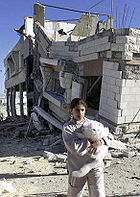
Israeli–Palestinian conflict
The Israeli–Palestinian conflict is the ongoing conflict between Israelis and Palestinians. The conflict is wide-ranging, and the term is also used in reference to the earlier phases of the same conflict, between Jewish and Zionist yishuv and the Arab population living in Palestine under Ottoman or...
can be viewed also as an ethnic conflict. Because being Jewish can be both religious as well as ethnic the conflict has both religious and ethnic overtones. In 1948, the UN granted partition to the newly created state of Israel, since the the region has been plagued with conflict
Timeline of the Israeli–Palestinian conflict
This is an incomplete timeline of notable events in the Israeli-Palestinian conflict.- Palestinian Arab Nationalism and Zionism :The end of the 19th century and the beginning of the 20th century are marked by the birth of two major nationalist movements among the Jews and among the Arabs, both...
. The 1948 Palestinian exodus also known as the Nakba , occurred when approximately 711,000 to 725,000
Estimates of the Palestinian Refugee flight of 1948
This article lists the various interim and final United Nations estimates for the number of Palestinian people who fled or were expelled from the area that became part of the State of Israel after the 1948 Arab-Israeli war...
Palestinian Arabs
Palestinian people
The Palestinian people, also referred to as Palestinians or Palestinian Arabs , are an Arabic-speaking people with origins in Palestine. Despite various wars and exoduses, roughly one third of the world's Palestinian population continues to reside in the area encompassing the West Bank, the Gaza...
left, fled or were expelled from their homes
Causes of the 1948 Palestinian exodus
The causes and explanations of the exodus of Palestinian Arabs that arose during the 1947-1948 Civil War in Mandatory Palestine and the 1948 Arab-Israeli War are a matter of great controversy between historians and journalists, and of the Arab-Israeli conflict....
, during the 1948 Arab-Israeli War
1948 Arab-Israeli War
The 1948 Arab–Israeli War, known to Israelis as the War of Independence or War of Liberation The war commenced after the termination of the British Mandate for Palestine and the creation of an independent Israel at midnight on 14 May 1948 when, following a period of civil war, Arab armies invaded...
and the Civil War
1947–1948 Civil War in Mandatory Palestine
The 1947–1948 Civil War in Mandatory Palestine lasted from 30 November 1947, the date of the United Nations vote in favour of the termination of the British Mandate for Palestine and the UN Partition Plan, to the termination of the British Mandate itself on 14 May 1948.This period constitutes the...
that preceded it. The exact number of refugees is a matter of dispute, though the number of Palestine refugees registered with UNRWA is more than 4.3 million.. The causes remain the subject of fundamental disagreement between Arabs and Israelis. Jews makes a religious and historical claim to the land, and Palestinians make a historic claims to the land. Genetics shows a historical connection between Palestinian-Arabs and Middle Eastern Jews
Mizrahi Jews
Mizrahi Jews or Mizrahiyim, , also referred to as Adot HaMizrach are Jews descended from the Jewish communities of the Middle East, North Africa and the Caucasus...
.Genetic analysis
Genetic genealogy
Genetic genealogy is the application of genetics to traditional genealogy. Genetic genealogy involves the use of genealogical DNA testing to determine the level of genetic relationship between individuals.-History:...
and historical accounts also suggest the Muslims
Islam
Islam . The most common are and . : Arabic pronunciation varies regionally. The first vowel ranges from ~~. The second vowel ranges from ~~~...
of Palestine are largely descendents of Christians and Jews
Jews
The Jews , also known as the Jewish people, are a nation and ethnoreligious group originating in the Israelites or Hebrews of the Ancient Near East. The Jewish ethnicity, nationality, and religion are strongly interrelated, as Judaism is the traditional faith of the Jewish nation...
of the southern Levant, and descendents of a core population that lived there in prehistoric times.
Pakistan and India
Dhaka
Dhaka is the capital of Bangladesh and the principal city of Dhaka Division. Dhaka is a megacity and one of the major cities of South Asia. Located on the banks of the Buriganga River, Dhaka, along with its metropolitan area, had a population of over 15 million in 2010, making it the largest city...
in 1906 by Muslims who were suspicious of the Hindu-majority Indian National Congress
Indian National Congress
The Indian National Congress is one of the two major political parties in India, the other being the Bharatiya Janata Party. It is the largest and one of the oldest democratic political parties in the world. The party's modern liberal platform is largely considered center-left in the Indian...
. They complained that Muslim members did not have the same rights as Hindu members. A number of different scenarios were proposed at various times. Among the first to make the demand for a separate state was the writer/philosopher Allama Iqbal, who, in his presidential address to the 1930 convention of the Muslim League said that a separate nation for Muslims was essential in an otherwise Hindu
Hindu
Hindu refers to an identity associated with the philosophical, religious and cultural systems that are indigenous to the Indian subcontinent. As used in the Constitution of India, the word "Hindu" is also attributed to all persons professing any Indian religion...
-dominated subcontinent.
After the dissolution of the British Raj
British Raj
British Raj was the British rule in the Indian subcontinent between 1858 and 1947; The term can also refer to the period of dominion...
in 1947, two new sovereign nations were formed—the Union of India and the Dominion of Pakistan
Dominion of Pakistan
The Dominion of Pakistan was an independent federal Commonwealth realm in South Asia that was established in 1947 on the partition of British India into two sovereign dominions . The Dominion of Pakistan, which included modern-day Pakistan and Bangladesh, was intended to be a homeland for the...
. The subsequent partition of the former British India
Partition of India
The Partition of India was the partition of British India on the basis of religious demographics that led to the creation of the sovereign states of the Dominion of Pakistan and the Union of India on 14 and 15...
displaced up to 12.5 million people, with estimates of loss of life varying from several hundred thousand to a million. India
India
India , officially the Republic of India , is a country in South Asia. It is the seventh-largest country by geographical area, the second-most populous country with over 1.2 billion people, and the most populous democracy in the world...
emerged as a secular nation with a Hindu majority
Hinduism in India
Hinduism is a religious tradition of India, with 80.5% of the population identifying themselves as Hindus. The vast majority of Hindus in India belong to Vaishnavite and Shaivite denominations.The Vedic culture originated in India between 2000 and 1500 BC...
population and a large Muslim minority
Islam in India
Islam is the second-most practiced religion in the Republic of India after Hinduism, with more than 13.4% of the country's population ....
while Pakistan
Pakistan
Pakistan , officially the Islamic Republic of Pakistan is a sovereign state in South Asia. It has a coastline along the Arabian Sea and the Gulf of Oman in the south and is bordered by Afghanistan and Iran in the west, India in the east and China in the far northeast. In the north, Tajikistan...
was established as an Islamic republic
Islamic republic
Islamic republic is the name given to several states in the Muslim world including the Islamic Republics of Pakistan, Iran, Afghanistan, and Mauritania. Pakistan adopted the title under the constitution of 1956. Mauritania adopted it on 28 November 1958. Iran adopted it after the 1979 Iranian...
with an overwhelming Muslim majority
Islam in Pakistan
Islam is the official religion of the Islamic Republic of Pakistan, which has a population of about 174,578,558. The overwhelming majority of the Pakistani people are Muslims while the remaining 3-5% are Christian, Hindu, and others. Pakistan has the second largest Muslim population in the world...
population.
Sikh pogroms
The 1984 anti-Sikh riots1984 anti-Sikh riots
The 1984 Anti-Sikh pogroms / riots or the 1984 Sikh Massacre was a sikh genocide there was four days of violence in northern India, particularly Delhi, during which armed mobs killed Sikhs, looted and set fire to Sikh homes, businesses and schools, and attacked gurdwaras, in response to the...
were four days of violence in northern India, particularly Delhi
Delhi
Delhi , officially National Capital Territory of Delhi , is the largest metropolis by area and the second-largest by population in India, next to Mumbai. It is the eighth largest metropolis in the world by population with 16,753,265 inhabitants in the Territory at the 2011 Census...
, during which armed mobs killed Sikhs, looted and set fire to Sikh homes, businesses and schools, and attacked gurdwara
Gurdwara
A Gurdwara , meaning the Gateway to the Guru, is the place of worship for Sikhs, the followers of Sikhism. A Gurdwara can be identified from a distance by tall flagpoles bearing the Nishan Sahib ....
s, in response to the assassination of then Prime Minister, Indira Gandhi by her Sikh bodyguards.
In the 1970s, during the Indian Emergency, thousands of Sikhs campaigning for autonomous government were imprisoned. The sporadic violence continued as a result of an armed Sikh separatist
Punjab insurgency
The insurgency in the Indian state of Punjab originated in the late 1970s. The roots of the insurgency were very complex.-Punjabi Suba Movement:In the 1950s and 1960s, linguistic issues in India caused civil disorder when the central government declared Hindi as the national language of India...
group which was designated as a terrorist entity by the government of India. In June 1984, during Operation Blue Star
Operation Blue Star
Operation Blue Star ) 3– 6 June 1984 was an Indian military operation, ordered by Indira Gandhi, then Prime Minister of India, to remove Sikh separatists from the Golden Temple in Amritsar...
, Indira Gandhi
Indira Gandhi
Indira Priyadarshini Gandhara was an Indian politician who served as the third Prime Minister of India for three consecutive terms and a fourth term . She was assassinated by Sikh extremists...
ordered the Indian Army
Indian Army
The Indian Army is the land based branch and the largest component of the Indian Armed Forces. With about 1,100,000 soldiers in active service and about 1,150,000 reserve troops, the Indian Army is the world's largest standing volunteer army...
to secure the Golden Temple and eliminate any insurgents, as it had been occupied by Sikh Separatists who were stockpiling weapons. Later operations
Operation Woodrose
Operation Woodrose was a military operation carried out by the Indian government in the months after Operation Blue Star to "prevent the outbreak of widespread public protest" in the state of Punjab. The government arrested all prominent members of the largest Sikh political party, the Akali Dal,...
by Indian paramilitary forces were initiated to clear the separatists from the countryside of Punjab. Even today many Sikhs perceived the actions as an assault on their religion and rights, while the issue is contentious with abusive crimes commited by both sides.
Ethiopia - Somalia
The Ethiopian–Adal War was a military conflict between the Ethiopian EmpireEthiopian Empire
The Ethiopian Empire also known as Abyssinia, covered a geographical area that the present-day northern half of Ethiopia and Eritrea covers, and included in its peripheries Zeila, Djibouti, Yemen and Western Saudi Arabia...
and the Adal Sultanate
Adal Sultanate
The Adal Sultanate or the Kingdom of Adal was a medieval multi-ethnic Muslim state located in the Horn of Africa.-Overview:...
from 1529 until 1559. The Imam
Imam
An imam is an Islamic leadership position, often the worship leader of a mosque and the Muslim community. Similar to spiritual leaders, the imam is the one who leads Islamic worship services. More often, the community turns to the mosque imam if they have a religious question...
Ahmad ibn Ibrihim al-Ghazi
Ahmad ibn Ibrihim al-Ghazi
Ahmad ibn Ibrahim al-Ghazi "the Conqueror" was an Imam and General of Adal who invaded Ethiopia and defeated several Ethiopian emperors, wreaking much damage on that kingdom...
(nicknamed Gurey in Somali
Somali language
The Somali language is a member of the East Cushitic branch of the Afro-Asiatic language family. Its nearest relatives are Afar and Oromo. Somali is the best documented of the Cushitic languages, with academic studies beginning before 1900....
and Gragn in Amharic
Amharic language
Amharic is a Semitic language spoken in Ethiopia. It is the second most-spoken Semitic language in the world, after Arabic, and the official working language of the Federal Democratic Republic of Ethiopia. Thus, it has official status and is used nationwide. Amharic is also the official or working...
(ግራኝ Graññ), both meaning "the left-handed") came close to extinguishing the ancient realm of Ethiopia, and converting all of its subjects to Islam
Islam
Islam . The most common are and . : Arabic pronunciation varies regionally. The first vowel ranges from ~~. The second vowel ranges from ~~~...
; the intervention of the European Cristóvão da Gama
Cristovão da Gama
Cristóvão da Gama was a Portuguese soldier, who led a Portuguese army of 400 musketeers on a crusade in Ethiopia and Somalia against the far larger Somali Muslim army of Imam Ahmad ibn Ibrihim al-Ghazi aided by the Ottoman Empire...
, son of the famous navigator Vasco da Gama
Vasco da Gama
Vasco da Gama, 1st Count of Vidigueira was a Portuguese explorer, one of the most successful in the Age of Discovery and the commander of the first ships to sail directly from Europe to India...
, helped to prevent this outcome. However, both polities exhausted their resources and manpower in this conflict, allowing the northward migration of the Oromo
Oromo people
The Oromo are an ethnic group found in Ethiopia, northern Kenya, .and parts of Somalia. With 30 million members, they constitute the single largest ethnic group in Ethiopia and approximately 34.49% of the population according to the 2007 census...
into their present homelands to the north and west of Addis Ababa
Addis Ababa
Addis Ababa is the capital city of Ethiopia...
. Many historians trace the origins of hostility between Somalia
Somalia
Somalia , officially the Somali Republic and formerly known as the Somali Democratic Republic under Socialist rule, is a country located in the Horn of Africa. Since the outbreak of the Somali Civil War in 1991 there has been no central government control over most of the country's territory...
and Ethiopia to this war. Some historians also argue that this conflict proved, through their use on both sides, the value of firearms such as the matchlock
Matchlock
The matchlock was the first mechanism, or "lock" invented to facilitate the firing of a hand-held firearm. This design removed the need to lower by hand a lit match into the weapon's flash pan and made it possible to have both hands free to keep a firm grip on the weapon at the moment of firing,...
musket
Musket
A musket is a muzzle-loaded, smooth bore long gun, fired from the shoulder. Muskets were designed for use by infantry. A soldier armed with a musket had the designation musketman or musketeer....
, cannons, and the arquebus
Arquebus
The arquebus , or "hook tube", is an early muzzle-loaded firearm used in the 15th to 17th centuries. The word was originally modeled on the German hakenbüchse; this produced haquebute...
over traditional weapons.
Nigerian conflict
Inter-ethnic conflict in Nigeria has generally had a religious element. Riots against Igbo in 1953 and in the 1960s in the north were said to be fired by religious conflict. The riots against Igbo in the north in 1966 were said to have been inspired by radio reports of mistreatment of Muslims in the south. A military coup d'etat led by lower and middle-ranking officers, some of them Igbo, overthrew the NPC-NCNC dominated government. Prime Minister Balewa along with other northern and western government officials were assassinated during the coup. The coup was considered an Igbo plot to overthrow the northern dominated government. A counter-coup was launched by mostly northern troops. Between June and July there was a mass exodus of Ibo from the north and west. Over 1.3 million Ibo fled the neighboring regions in order to escape persecution as anti-Ibo riots increased. The aftermath of the anti-Ibo riots led many to believe that security could only be gained from separation from the North.In the 1980s, serious outbreaks between Christians and Muslims occurred in Kafanchan
Kafanchan
Kafanchan is a town in southern Kaduna State in north-central Nigeria. It is the location of a junction station of the Nigerian Railway Corporation,and it sits on the line connecting Port Harcourt, Enugu, Kafanchan, Kuru, Bauchi, and finally Maiduguri....
in southern Kaduna State
Kaduna State
-History:The state is the successor to the old Northern Region of Nigeria, which had its capital at Kaduna. In 1967 this was split up into six states, one of which was the North-Central State, whose name was changed to Kaduna State in 1976. This was further divided in 1987, losing the area now part...
in a border area between the two religions.
The 2010 Jos riots
2010 Jos riots
The 2010 Jos riots were clashes between Muslim and Christian ethnic groups in central Nigeria near the city of Jos. The area has been plagued by violence for the past twenty years motivated by multiple factors. The clashes have been characterized as "religious violence" by many news sources,...
saw clashes between Muslim herders against Christian farmers near the volatile city of Jos
Jos
Jos is a city in the Middle Belt of Nigeria.The city has a population of about 1.5 million residents. Popularly called "J-town" or "Jesus Our Saviour" by the residents, it is the administrative capital of Plateau State....
, resulting in hundreds of casualties. Officials estimated that 500 people were massacred in night-time raids by rampaging Muslim gangs.
Buddhist Uprising
During the rule of the Catholic Ngo Dinh DiemNgo Dinh Diem
Ngô Đình Diệm was the first president of South Vietnam . In the wake of the French withdrawal from Indochina as a result of the 1954 Geneva Accords, Diệm led the effort to create the Republic of Vietnam. Accruing considerable U.S. support due to his staunch anti-Communism, he achieved victory in a...
, the discrimination against the majority Buddhist population generated the growth of Buddhist institutions as they sought to participate in national politics and gain better treatment. The Buddhist Uprising
Buddhist Uprising
The Buddhist Uprising of 1966 was a period of civil and military unrest in South Vietnam, largely focused in the I Corps area in the north of the country in central Vietnam...
of 1966 was a period of civil and military unrest in South Vietnam
South Vietnam
South Vietnam was a state which governed southern Vietnam until 1975. It received international recognition in 1950 as the "State of Vietnam" and later as the "Republic of Vietnam" . Its capital was Saigon...
, largely focused in the I Corps
I Corps (South Vietnam)
The I Corps Tactical Zone was a corps of the Army of the Republic of Vietnam , the army of the nation state of South Vietnam that existed from 1955 to 1975. It was one of four corps which the ARVN oversaw. This was the northernmost region of South Vietnam, bordering North Vietnam...
area in the north of the country in central Vietnam.
In a country where the Buddhist majority was estimated to be between 70 and 90 percent, Diem ruled with a strong religious bias. As a member of the Catholic Vietnamese
Roman Catholicism in Vietnam
The Roman Catholic Church in Vietnam is part of the worldwide Catholic Church, under the spiritual leadership of the Pope and curia in Rome. Vietnam has the fifth largest Catholic population in Asia, after the Philippines, India, China and Indonesia....
minority, he pursued pro-Catholic policies that antagonized many Buddhists.
Chinese conflict
The Dungan revolt (1862–1877) and Panthay Rebellion (1856–1873) by the HuiHui
-China:* Hui people, a Chinese ethnic group* Huizhou Chinese, a subdivision of spoken Chinese* Hui , a Chinese term referring to a secret brotherhood* Hui County, Gansu, China...
were also set off by racial antagonism and class warfare, rather than the mistaken assumption that it was all due to Islam that the rebellions broke out. During the Dungan revolt fighting broke out between Uyghurs and Hui.
In 1936, after Sheng Shicai expelled 20,000 Kazakhs from Xinjiang to Qinghai
Kazakh exodus from Xinjiang
The Kazakh exodus from Xinjiang occurred in waves during the 1950s and 1960s after the Communist victory in China.In 1936, after Sheng Shicai expelled 20,000 Kazakhs from Xinjiang to Qinghai, Chinese Muslims led by General Ma Bufang massacred their fellow muslim Kazakhs, until there were 135 of...
, the Hui led by General Ma Bufang
Ma Bufang
Ma Bufang was a prominent Muslim Ma clique warlord in China during the Republic of China era, ruling the northwestern province of Qinghai. His rank was Lieutenant-general...
massacred their fellow Muslims, the Kazakh
Kazakh
Kazakh may refer to:*Kazakhstan*Kazakhs, an ethnic group*Kazakh language*Kazakh cuisine*Qazakh Rayon, Azerbaijan*Qazax, Azerbaijan*Kazakh Uyezd, administrative district of Elisabethpol Governorate during Russian rule in Azerbaijan...
s, until there were 135 of them left.
Tensions with Uyghurs and Hui arose because Qing and Republican Chinese authorities used Hui troops and officials to dominate the Uyghurs and crush Uyghur revolts. Xinjiang's Hui population increased by over 520 percent between 1940 and 1982, an average annual growth of 4.4 percent, while the Uyghur population only grew at 1.7 percent. This dramatic increase in Hui population led inevitably to significant tensions between the Hui and Uyghur Muslim populations. Some old Uyghurs in Kashgar
Kashgar
Kashgar or Kashi is an oasis city with approximately 350,000 residents in the western part of the Xinjiang Uyghur Autonomous Region of the People's Republic of China. Kashgar is the administrative centre of Kashgar Prefecture which has an area of 162,000 km² and a population of approximately...
remember that the Hui army at the Battle of Kashgar (1934)
Battle of Kashgar (1934)
The Battle of Kashgar was a military confrontation that took place in 1934 during the Xinjiang Wars. Turkic Muslim Uighur and Kirghiz fighters under Emir Abdullah Bughra and the other Turkic separatists began four separate attacks over a six-day period on Hui and Han Chinese soldiers led by General...
massacred 2,000 to 8,000 Uyghurs, which causes tension as more Hui moved into Kashgar from other parts of China. Some Hui criticize Uyghur separatism, and generally do not want to get involved in conflict in other countries over Islam for fear of being perceived as radical. Hui and Uyghur separate from each other, praying and attending different mosques.
Lebanese Civil War
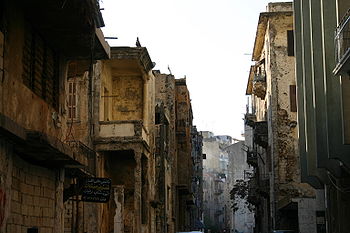
Palestinian refugee
Palestinian refugees or Palestine refugees are the people and their descendants, predominantly Palestinian Arabic-speakers, who fled or were expelled from their homes during and after the 1948 Palestine War, within that part of the British Mandate of Palestine, that after that war became the...
population, with the arrival of the PLO guerrilla forces did spark an arms race
Arms race
The term arms race, in its original usage, describes a competition between two or more parties for the best armed forces. Each party competes to produce larger numbers of weapons, greater armies, or superior military technology in a technological escalation...
amongst the different Lebanese
Lebanese
Lebanese may refer to:* A member of the Lebanese people . For more information, see Demographics of Lebanon and Culture of Lebanon. For specific persons, see List of Lebanese people....
political factions. However the conflict played out along three religious lines, Sunni Muslim, Christian Arab and Shiite Muslim.
It has been argued that the antecedents of the war can be traced back to the conflicts and political compromises reached after the end of Lebanon's administration by the Ottoman Empire
Ottoman Empire
The Ottoman EmpireIt was usually referred to as the "Ottoman Empire", the "Turkish Empire", the "Ottoman Caliphate" or more commonly "Turkey" by its contemporaries...
. The Cold War
Cold War
The Cold War was the continuing state from roughly 1946 to 1991 of political conflict, military tension, proxy wars, and economic competition between the Communist World—primarily the Soviet Union and its satellite states and allies—and the powers of the Western world, primarily the United States...
had a powerful disintegrative effect on Lebanon, which was closely linked to the polarization
Polarization (politics)
In politics, polarization is the process by which the public opinion divides and goes to the extremes. It can also refer to when the extreme factions of a political party gain dominance in a party. In either case moderate voices often lose power and influence as a consequence.-Definitions of...
that preceded the 1958 political crisis. During the 1948 Arab-Israeli War
1948 Arab-Israeli War
The 1948 Arab–Israeli War, known to Israelis as the War of Independence or War of Liberation The war commenced after the termination of the British Mandate for Palestine and the creation of an independent Israel at midnight on 14 May 1948 when, following a period of civil war, Arab armies invaded...
an exodus of Palestinian refugees who fled the fighting or were expelled from their homes
1948 Palestinian exodus
The 1948 Palestinian exodus , also known as the Nakba , occurred when approximately 711,000 to 725,000 Palestinian Arabs left, fled or were expelled from their homes, during the 1948 Arab-Israeli War and the Civil War that preceded it. The exact number of refugees is a matter of dispute...
, arrived in Lebanon. Palestinians came to play a very important role in future Lebanese civil conflicts, whilst the establishment of Israel radically changed the local environment in which Lebanon found itself.
Lebanon was promised independence and on 22 November 1943 it was achieved. French troops, who had invaded Lebanon in 1941 to rid Beirut of the Vichy
Vichy
Vichy is a commune in the department of Allier in Auvergne in central France. It belongs to the historic province of Bourbonnais.It is known as a spa and resort town and was the de facto capital of Vichy France during the World War II Nazi German occupation from 1940 to 1944.The town's inhabitants...
forces, left the country in 1946. The Christians assumed power over the country and economy. A confessional parliament was created, where Muslims and Christians were given quotas of seats in parliament. As well, the President was to be a Christian, the Prime Minister a Sunni Muslim and the Speaker of Parliament a Shia Muslim.
In March 1991, parliament passed an amnesty law
Amnesty law
An amnesty law is any law that retroactively exempts a select group of people, usually military leaders and government leaders, from criminal liability for crimes committed.Most allegations involve human rights abuses and crimes against humanity.-History:...
that pardoned all political crimes prior to its enactment. The amnesty was not extended to crimes perpetrated against foreign diplomats or certain crimes referred by the cabinet to the Higher Judicial Council. In May 1991, the militias (with the important exception of Hezbollah) were dissolved, and the Lebanese Armed Forces began to slowly rebuild themselves as Lebanon's only major non-sectarian institution.
Some violence still occurred. In late December 1991 a car bomb (estimated to carry 220 pounds of TNT) exploded in the Muslim neighborhood of Basta
Basta
Basta is a village on the island of Yell in the Shetland Isles, Scotland. It is on the shores of Basta Voe....
. At least thirty people were killed, and 120 wounded, including former Prime Minister Shafik Wazzan
Shafik Wazzan
Shafik Dib al-Wazzan was the Prime Minister of Lebanon from 1980 until 1984. In December 1991, Wazzan was wounded when a car bomb exploded in the Beirut neighborhood of Basta as he was passing through in an armored car....
, who was riding in a bulletproof car.
Further reading
- The Myth of Religious Violence: Secular Ideology and the Roots of Modern Conflict, W. Cavanaugh, Oxford University Press, 2009. ISBN 978-0195385045