


Kingdom of Serbia

Encyclopedia
The Kingdom of Serbia was created when Prince Milan Obrenović
, ruler of the Principality of Serbia, was crowned King
in 1882. The Principality of Serbia was ruled by the Karađorđevic dynasty from 1817 onwards (at times replaced by the Obrenović dynasty). The Principality, suzerain to the Porte, had expelled all Ottoman
troops by 1867, de facto securing its independence. The Congress of Berlin
in 1878 recognized the formal independence of the Principality of Serbia.
In 1918, Serbia joined the with the State of Slovenes, Croats and Serbs
to form the Kingdom of Serbs, Croats and Slovenes (later known as Yugoslavia) under the rule of the Karađorđević dynasty.
that came into existence as a result of the Serbian revolution
which lasted between 1804 and 1817. Despite serious and extremely brutal oppression and revenge by the Ottoman
authorities, the revolutionary leaders, first Karađorđe and then Miloš Obrenović, succeeded in their goal to liberate Serbia after centuries of Turkish rule.
At first, the principality included only the territory of the former Pashaluk of Belgrade, but in 1831–1833 it expanded to the east, south, and west. In 1867 the Ottoman army
was expelled from the Principality, securing its de facto independence. Serbia was further expanded to the south-east in 1878, when it won full international recognition at the Treaty of Berlin. The Principality would last until 1882 when it was raised to the level of the Kingdom of Serbia.
was a war between Serbia
and Bulgaria
that erupted on 14 November 1885 and lasted until 28 November the same year. The war ended in defeat for Serbia as it had failed outright to capture the Slivnitsa
region which it had set out to achieve: the Bulgarians successfully repelled the Serbs after the decisive victory at the Battle of Slivnitsa
and advanced into Serbian territory taking Pirot
and clearing the way to Niš
. When Austria-Hungary
then declared that it would join the war on the side of Serbia, Bulgaria withdrew from Serbia leaving the Serbo-Bulgarian frontier precisely as it had been prior to the war. Final peace was signed on 19 February 1886 in Bucharest
. As a result of the war, European powers acknowledged the act of Unification of Bulgaria which happened on 6 September 1885.
of 1908–1909 (also referred to as the Annexation crisis) erupted into public view when on October 5, 1908, Bulgaria
declared its independence and on October 6, 1908, Austria-Hungary
announced the annexation
of Bosnia and Herzegovina
, which was populated mainly by south Slavic nations (Serbs, Croats and Muslim Slavs). Russia
, the Ottoman Empire
, Britain, Italy, Serbia
, Montenegro
, Germany and France took an interest in these events. In April 1909, the Treaty of Berlin was amended to accept the new status quo bringing the crisis to an end. The crisis permanently damaged relations between Austria-Hungary on the one hand and Russia and Serbia on the other. The annexation and reactions to the annexation were contributing causes of World War I.
, gained significant territorial areas of the Central Balkans and almost doubled its territory. During the Balkan Wars
of 1912, most of Kosovo
was taken from the Ottoman Empire
by Serbia while the region of Metohija (known as the Dukagjini Valley to ethnic-Albanians) was taken by Montenegro. Populations of ethnic Serbs and Albanians tended to shift following territorial conquests. As a result of the multi-ethnic composition of Kosovo, the new administrations provoked a mixed response from the local population. Whilst Albanians did not welcome Serbian rule, the non-Albanian population (laregly Serb but other Slavic nations too) considered this a liberation.
After the First Balkan War
of 1912, Kosovo was internationally recognised as a part of Serbia and northern Metohija as a part of Montenegro at the Treaty of London
in May 1913. In 1918, Serbia became a part of the newly formed Kingdom of Serbs, Croats and Slovenes
, later named Yugoslavia
.
Disagreements regarding the territory of Macedonia
among the members of the Balkan League
led the Second Balkan War
. Here, Serbia and Greece fought against Bulgaria in 1913. Finalisations concerning which country took which parts were ratified at the Treay of Bucharest the same year. Serbia came to control the land which became known as Vardar Macedonia, and today stands independent as the Republic of Macedonia
.
 The assassination of Archduke Franz Ferdinand of Austria
on 28 June 1914 in Sarajevo
(then part of the Austria-Hungary
) brought the tensions between Austria-Hungary
and Serbia
to a head. Behind Assassination in Sarajevo was secret radical organization, Black Hand
, from Serbia. The assassins were supported by an "underground railroad" of Serbian civilians and military officers that provided transportation and hid them; and members of the Serbian military that trained them, encouraged them, and provided weapons, maps, and other information. After the assassination, the conspirators were arrested in Bosnia-Herzegovina were tried in Sarajevo
in October 1914.
The political objective of the assassination was to break the Austro-Hungarian south-Slav provinces off from the Austro-Hungarian Empire. Assassination of Archduke Franz Ferdinand triggered a chain of international events that embroiled Russia and the major European powers. War broke out in Europe over the next thirty-seven days.
, German, and Bulgarian
troops.
At the end of the war, Serbia went through radical changes within days. Beginning in late 1918, it absorbed the Kingdom of Montenegro
at the Podgorica Assembly
. It then joined forces with the previously unrecognised State of Serbs, Croats and Slovenes
to form a new Pan-Slavic state, the Kingdom of Serbs, Croats and Slovenes. The new country continued to be ruled by the Serbian monarchy.
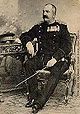 During its existence, the Kingdom was ruled by two dynasties: the House of Obrenović
and the House of Karađorđević. King
Milan Obrenović
ruled from 6 March 1882 to 6 March 1889, when he abdicated
the throne. He was succeeded by his son, Aleksandar Obrenović
, who ruled from 6 March 1889 to 11 June 1903, when he was deposed by a group of officers. The slaughter of the royal couple (the king and Queen Draga
) by the Black Hand
shocked Europe. This opened the way for the descendants of Karađorđe (Karageorge), regarded by Serbs
throughout the Balkans
as the man who threw off the Turkish
yoke, to return to the throne. Petar Karađorđević
was initially reluctant to accept the crown, disgusted as he was by the coup d'état
. However, he finally did accept and was the Kingdom's sovereign from 15 June 1903 to 1 December 1918, the day that the Kingdom of Serbs, Croats and Slovenes
was proclaimed.
, successor to the Kingdom of Serbia, formed a "Small Entente" loose union between Czechoslovakia
, Romania
and Serbia
. The alliance was supported by France and dissolved in 1934 as German influence in Europe was growing.
Milan Obrenovic
Milan Obrenović may refer to:* Milan Obrenović II, Prince of Serbia * Milan Obrenović IV...
, ruler of the Principality of Serbia, was crowned King
King
- Centers of population :* King, Ontario, CanadaIn USA:* King, Indiana* King, North Carolina* King, Lincoln County, Wisconsin* King, Waupaca County, Wisconsin* King County, Washington- Moving-image works :Television:...
in 1882. The Principality of Serbia was ruled by the Karađorđevic dynasty from 1817 onwards (at times replaced by the Obrenović dynasty). The Principality, suzerain to the Porte, had expelled all Ottoman
Ottoman Empire
The Ottoman EmpireIt was usually referred to as the "Ottoman Empire", the "Turkish Empire", the "Ottoman Caliphate" or more commonly "Turkey" by its contemporaries...
troops by 1867, de facto securing its independence. The Congress of Berlin
Treaty of Berlin, 1878
The Treaty of Berlin was the final act of the Congress of Berlin , by which the United Kingdom, Austria-Hungary, France, Germany, Italy, Russia and the Ottoman Empire under Sultan Abdul Hamid II revised the Treaty of San Stefano signed on March 3 of the same year...
in 1878 recognized the formal independence of the Principality of Serbia.
In 1918, Serbia joined the with the State of Slovenes, Croats and Serbs
State of Slovenes, Croats and Serbs
The State of Slovenes, Croats and Serbs was a short-lived state formed from the southernmost parts of the Austro-Hungarian monarchy after its dissolution at the end of the World War I by the resident population of Slovenes, Croats, and Serbs...
to form the Kingdom of Serbs, Croats and Slovenes (later known as Yugoslavia) under the rule of the Karađorđević dynasty.
Principality of Serbia
The Principality of Serbia was a state in the BalkansBalkans
The Balkans is a geopolitical and cultural region of southeastern Europe...
that came into existence as a result of the Serbian revolution
Serbian revolution
Serbian revolution or Revolutionary Serbia refers to the national and social revolution of the Serbian people taking place between 1804 and 1835, during which this territory evolved from an Ottoman province into a constitutional monarchy and a modern nation-state...
which lasted between 1804 and 1817. Despite serious and extremely brutal oppression and revenge by the Ottoman
Ottoman Empire
The Ottoman EmpireIt was usually referred to as the "Ottoman Empire", the "Turkish Empire", the "Ottoman Caliphate" or more commonly "Turkey" by its contemporaries...
authorities, the revolutionary leaders, first Karađorđe and then Miloš Obrenović, succeeded in their goal to liberate Serbia after centuries of Turkish rule.
At first, the principality included only the territory of the former Pashaluk of Belgrade, but in 1831–1833 it expanded to the east, south, and west. In 1867 the Ottoman army
Ottoman Empire
The Ottoman EmpireIt was usually referred to as the "Ottoman Empire", the "Turkish Empire", the "Ottoman Caliphate" or more commonly "Turkey" by its contemporaries...
was expelled from the Principality, securing its de facto independence. Serbia was further expanded to the south-east in 1878, when it won full international recognition at the Treaty of Berlin. The Principality would last until 1882 when it was raised to the level of the Kingdom of Serbia.
Serbo-Bulgarian War
The Serbo-Bulgarian WarSerbo-Bulgarian War
The Serbo-Bulgarian War was a war between Serbia and Bulgaria that erupted on 14 November 1885 and lasted until 28 November the same year. Final peace was signed on 19 February 1886 in Bucharest...
was a war between Serbia
Serbia
Serbia , officially the Republic of Serbia , is a landlocked country located at the crossroads of Central and Southeast Europe, covering the southern part of the Carpathian basin and the central part of the Balkans...
and Bulgaria
Bulgaria
Bulgaria , officially the Republic of Bulgaria , is a parliamentary democracy within a unitary constitutional republic in Southeast Europe. The country borders Romania to the north, Serbia and Macedonia to the west, Greece and Turkey to the south, as well as the Black Sea to the east...
that erupted on 14 November 1885 and lasted until 28 November the same year. The war ended in defeat for Serbia as it had failed outright to capture the Slivnitsa
Slivnitsa
Slivnitsa is a town in western Bulgaria, 22 km away from Sofia, lying on the main road connecting the capital with the Bulgarian-Serbian border...
region which it had set out to achieve: the Bulgarians successfully repelled the Serbs after the decisive victory at the Battle of Slivnitsa
Battle of Slivnitsa
Called by historians the "Battle of the captains vs the generals," referring to the young Bulgarian army, whose highest rank went up to a captain, the Battle of Slivnitsa was a decisive factor in the victory of the Bulgarian army over the Serbians on November 17–19, 1885 in the...
and advanced into Serbian territory taking Pirot
Pirot
Pirot is a town and municipality located in south-eastern Serbia. According to 2011 census, the town has a total population of 38,432, while the population of the municipality is 57,911...
and clearing the way to Niš
Niš
Niš is the largest city of southern Serbia and third-largest city in Serbia . According to the data from 2011, the city of Niš has a population of 177,972 inhabitants, while the city municipality has a population of 257,867. The city covers an area of about 597 km2, including the urban area,...
. When Austria-Hungary
Austria-Hungary
Austria-Hungary , more formally known as the Kingdoms and Lands Represented in the Imperial Council and the Lands of the Holy Hungarian Crown of Saint Stephen, was a constitutional monarchic union between the crowns of the Austrian Empire and the Kingdom of Hungary in...
then declared that it would join the war on the side of Serbia, Bulgaria withdrew from Serbia leaving the Serbo-Bulgarian frontier precisely as it had been prior to the war. Final peace was signed on 19 February 1886 in Bucharest
Bucharest
Bucharest is the capital municipality, cultural, industrial, and financial centre of Romania. It is the largest city in Romania, located in the southeast of the country, at , and lies on the banks of the Dâmbovița River....
. As a result of the war, European powers acknowledged the act of Unification of Bulgaria which happened on 6 September 1885.
Bosnian Crisis
The Bosnian CrisisBosnian crisis
The Bosnian Crisis of 1908–1909, also known as the Annexation crisis, or the First Balkan Crisis, erupted into public view when on 6 October 1908, Austria-Hungary announced the annexation of Bosnia and Herzegovina. Russia, the Ottoman Empire, Britain, Italy, Serbia, Montenegro, Germany and France...
of 1908–1909 (also referred to as the Annexation crisis) erupted into public view when on October 5, 1908, Bulgaria
Bulgaria
Bulgaria , officially the Republic of Bulgaria , is a parliamentary democracy within a unitary constitutional republic in Southeast Europe. The country borders Romania to the north, Serbia and Macedonia to the west, Greece and Turkey to the south, as well as the Black Sea to the east...
declared its independence and on October 6, 1908, Austria-Hungary
Austria-Hungary
Austria-Hungary , more formally known as the Kingdoms and Lands Represented in the Imperial Council and the Lands of the Holy Hungarian Crown of Saint Stephen, was a constitutional monarchic union between the crowns of the Austrian Empire and the Kingdom of Hungary in...
announced the annexation
Annexation
Annexation is the de jure incorporation of some territory into another geo-political entity . Usually, it is implied that the territory and population being annexed is the smaller, more peripheral, and weaker of the two merging entities, barring physical size...
of Bosnia and Herzegovina
Bosnia and Herzegovina
Bosnia and Herzegovina , sometimes called Bosnia-Herzegovina or simply Bosnia, is a country in Southern Europe, on the Balkan Peninsula. Bordered by Croatia to the north, west and south, Serbia to the east, and Montenegro to the southeast, Bosnia and Herzegovina is almost landlocked, except for the...
, which was populated mainly by south Slavic nations (Serbs, Croats and Muslim Slavs). Russia
Russian Empire
The Russian Empire was a state that existed from 1721 until the Russian Revolution of 1917. It was the successor to the Tsardom of Russia and the predecessor of the Soviet Union...
, the Ottoman Empire
Ottoman Empire
The Ottoman EmpireIt was usually referred to as the "Ottoman Empire", the "Turkish Empire", the "Ottoman Caliphate" or more commonly "Turkey" by its contemporaries...
, Britain, Italy, Serbia
Serbia
Serbia , officially the Republic of Serbia , is a landlocked country located at the crossroads of Central and Southeast Europe, covering the southern part of the Carpathian basin and the central part of the Balkans...
, Montenegro
Montenegro
Montenegro Montenegrin: Crna Gora Црна Гора , meaning "Black Mountain") is a country located in Southeastern Europe. It has a coast on the Adriatic Sea to the south-west and is bordered by Croatia to the west, Bosnia and Herzegovina to the northwest, Serbia to the northeast and Albania to the...
, Germany and France took an interest in these events. In April 1909, the Treaty of Berlin was amended to accept the new status quo bringing the crisis to an end. The crisis permanently damaged relations between Austria-Hungary on the one hand and Russia and Serbia on the other. The annexation and reactions to the annexation were contributing causes of World War I.
Balkan Wars and ensuing changes
Serbia, victorious in two Balkan WarsBalkan Wars
The Balkan Wars were two conflicts that took place in the Balkans in south-eastern Europe in 1912 and 1913.By the early 20th century, Montenegro, Bulgaria, Greece and Serbia, the countries of the Balkan League, had achieved their independence from the Ottoman Empire, but large parts of their ethnic...
, gained significant territorial areas of the Central Balkans and almost doubled its territory. During the Balkan Wars
Balkan Wars
The Balkan Wars were two conflicts that took place in the Balkans in south-eastern Europe in 1912 and 1913.By the early 20th century, Montenegro, Bulgaria, Greece and Serbia, the countries of the Balkan League, had achieved their independence from the Ottoman Empire, but large parts of their ethnic...
of 1912, most of Kosovo
Kosovo
Kosovo is a region in southeastern Europe. Part of the Ottoman Empire for more than five centuries, later the Autonomous Province of Kosovo and Metohija within Serbia...
was taken from the Ottoman Empire
Ottoman Empire
The Ottoman EmpireIt was usually referred to as the "Ottoman Empire", the "Turkish Empire", the "Ottoman Caliphate" or more commonly "Turkey" by its contemporaries...
by Serbia while the region of Metohija (known as the Dukagjini Valley to ethnic-Albanians) was taken by Montenegro. Populations of ethnic Serbs and Albanians tended to shift following territorial conquests. As a result of the multi-ethnic composition of Kosovo, the new administrations provoked a mixed response from the local population. Whilst Albanians did not welcome Serbian rule, the non-Albanian population (laregly Serb but other Slavic nations too) considered this a liberation.
After the First Balkan War
First Balkan War
The First Balkan War, which lasted from October 1912 to May 1913, pitted the Balkan League against the Ottoman Empire. The combined armies of the Balkan states overcame the numerically inferior and strategically disadvantaged Ottoman armies and achieved rapid success...
of 1912, Kosovo was internationally recognised as a part of Serbia and northern Metohija as a part of Montenegro at the Treaty of London
Treaty of London, 1913
The Treaty of London was signed on 30 May during the London Conference of 1913. It dealt with the territorial adjustments arising out of the conclusion of the First Balkan War.-History:...
in May 1913. In 1918, Serbia became a part of the newly formed Kingdom of Serbs, Croats and Slovenes
Kingdom of Yugoslavia
The Kingdom of Yugoslavia was a state stretching from the Western Balkans to Central Europe which existed during the often-tumultuous interwar era of 1918–1941...
, later named Yugoslavia
Yugoslavia
Yugoslavia refers to three political entities that existed successively on the western part of the Balkans during most of the 20th century....
.
Disagreements regarding the territory of Macedonia
Macedonia (region)
Macedonia is a geographical and historical region of the Balkan peninsula in southeastern Europe. Its boundaries have changed considerably over time, but nowadays the region is considered to include parts of five Balkan countries: Greece, the Republic of Macedonia, Bulgaria, Albania, Serbia, as...
among the members of the Balkan League
Balkan League
The Balkan League was an alliance formed by a series of bilateral treaties concluded in 1912 between the Balkan states of Bulgaria, Greece, Montenegro and Serbia, and directed against the Ottoman Empire, which at the time still controlled much of the Balkan peninsula...
led the Second Balkan War
Second Balkan War
The Second Balkan War was a conflict which broke out when Bulgaria, dissatisfied with its share of the spoils of the First Balkan War, attacked its former allies, Serbia and Greece, on 29 June 1913. Bulgaria had a prewar agreement about the division of region of Macedonia...
. Here, Serbia and Greece fought against Bulgaria in 1913. Finalisations concerning which country took which parts were ratified at the Treay of Bucharest the same year. Serbia came to control the land which became known as Vardar Macedonia, and today stands independent as the Republic of Macedonia
Republic of Macedonia
Macedonia , officially the Republic of Macedonia , is a country located in the central Balkan peninsula in Southeast Europe. It is one of the successor states of the former Yugoslavia, from which it declared independence in 1991...
.
Assassination in Sarajevo
Archduke Franz Ferdinand of Austria
Franz Ferdinand was an Archduke of Austria-Este, Austro-Hungarian and Royal Prince of Hungary and of Bohemia, and from 1889 until his death, heir presumptive to the Austro-Hungarian throne. His assassination in Sarajevo precipitated Austria-Hungary's declaration of war against Serbia...
on 28 June 1914 in Sarajevo
Sarajevo
Sarajevo |Bosnia]], surrounded by the Dinaric Alps and situated along the Miljacka River in the heart of Southeastern Europe and the Balkans....
(then part of the Austria-Hungary
Austria-Hungary
Austria-Hungary , more formally known as the Kingdoms and Lands Represented in the Imperial Council and the Lands of the Holy Hungarian Crown of Saint Stephen, was a constitutional monarchic union between the crowns of the Austrian Empire and the Kingdom of Hungary in...
) brought the tensions between Austria-Hungary
Austria-Hungary
Austria-Hungary , more formally known as the Kingdoms and Lands Represented in the Imperial Council and the Lands of the Holy Hungarian Crown of Saint Stephen, was a constitutional monarchic union between the crowns of the Austrian Empire and the Kingdom of Hungary in...
and Serbia
Serbia
Serbia , officially the Republic of Serbia , is a landlocked country located at the crossroads of Central and Southeast Europe, covering the southern part of the Carpathian basin and the central part of the Balkans...
to a head. Behind Assassination in Sarajevo was secret radical organization, Black Hand
Black Hand
Unification or Death , unofficially known as the Black Hand , was a secret military society formed by members of the Serbian army in the Kingdom of Serbia, which was founded on September 6, 1901. It was intent on uniting all of the territories containing significant Serb populations annexed by...
, from Serbia. The assassins were supported by an "underground railroad" of Serbian civilians and military officers that provided transportation and hid them; and members of the Serbian military that trained them, encouraged them, and provided weapons, maps, and other information. After the assassination, the conspirators were arrested in Bosnia-Herzegovina were tried in Sarajevo
Sarajevo
Sarajevo |Bosnia]], surrounded by the Dinaric Alps and situated along the Miljacka River in the heart of Southeastern Europe and the Balkans....
in October 1914.
The political objective of the assassination was to break the Austro-Hungarian south-Slav provinces off from the Austro-Hungarian Empire. Assassination of Archduke Franz Ferdinand triggered a chain of international events that embroiled Russia and the major European powers. War broke out in Europe over the next thirty-seven days.
World War I
Serbia won the first Allied victory of World War I in 1914. In 1915 it was occupied by foreign troops due to a combined invasion by Austro-HungarianAustria-Hungary
Austria-Hungary , more formally known as the Kingdoms and Lands Represented in the Imperial Council and the Lands of the Holy Hungarian Crown of Saint Stephen, was a constitutional monarchic union between the crowns of the Austrian Empire and the Kingdom of Hungary in...
, German, and Bulgarian
Kingdom of Bulgaria
The Kingdom of Bulgaria was established as an independent state when the Principality of Bulgaria, an Ottoman vassal, officially proclaimed itself independent on October 5, 1908 . This move also formalised the annexation of the Ottoman province of Eastern Rumelia, which had been under the control...
troops.
At the end of the war, Serbia went through radical changes within days. Beginning in late 1918, it absorbed the Kingdom of Montenegro
Kingdom of Montenegro
The Kingdom of Montenegro was a monarchy in southeastern Europe during the tumultuous years on the Balkan Peninsula leading up to and during World War I. Legally it was a constitutional monarchy, but absolutist in practice...
at the Podgorica Assembly
Podgorica Assembly
The Podgorica Assembly , in full the Great National Assembly of the Serb People in Montenegro , was an assembly held in Podgorica that served as the representative body of the Montenegrin people during the...
. It then joined forces with the previously unrecognised State of Serbs, Croats and Slovenes
State of Serbs, Croats and Slovenes
State of Serbs, Croats and Slovenes may refer to:* State of Slovenes, Croats and Serbs, a short-lived state in 1918* Kingdom of Serbs, Croats and Slovenes, the 1918-1929 name for what was later the Kingdom of Yugoslavia...
to form a new Pan-Slavic state, the Kingdom of Serbs, Croats and Slovenes. The new country continued to be ruled by the Serbian monarchy.
Rulers
House of Obrenovic
The House of Obrenović was a Serbian dynasty that ruled Serbia from 1815 to 1842, and again from 1858 to 1903. They came to power through the leadership of their progenitor Miloš Obrenović in the Second Serbian uprising against the Ottoman Empire, which led to the formation of the Principality of...
and the House of Karađorđević. King
Monarch
A monarch is the person who heads a monarchy. This is a form of government in which a state or polity is ruled or controlled by an individual who typically inherits the throne by birth and occasionally rules for life or until abdication...
Milan Obrenović
Milan Obrenovic IV
Milan Obrenović was a Serbian monarch reigning as Prince Milan IV of Serbia from 1868 to 1882 and King Milan I of Serbia from 1882 to 1889.-Early years:...
ruled from 6 March 1882 to 6 March 1889, when he abdicated
Abdication
Abdication occurs when a monarch, such as a king or emperor, renounces his office.-Terminology:The word abdication comes derives from the Latin abdicatio. meaning to disown or renounce...
the throne. He was succeeded by his son, Aleksandar Obrenović
Aleksandar Obrenovic
Not to be confused with Alexander I of Yugoslavia.Alexander I or Aleksandar Obrenović was king of Serbia from 1889 to 1903 when he and his wife, Queen Draga, were assassinated by a group of Army officers, led by Colonel Dragutin Dimitrijević-Accession:In 1889 Alexander's father, King Milan,...
, who ruled from 6 March 1889 to 11 June 1903, when he was deposed by a group of officers. The slaughter of the royal couple (the king and Queen Draga
Queen Draga
Draga Obrenović , also known as Queen Draga, was the queen and wife of King Aleksandar Obrenović of the Kingdom of Serbia...
) by the Black Hand
Black Hand
Unification or Death , unofficially known as the Black Hand , was a secret military society formed by members of the Serbian army in the Kingdom of Serbia, which was founded on September 6, 1901. It was intent on uniting all of the territories containing significant Serb populations annexed by...
shocked Europe. This opened the way for the descendants of Karađorđe (Karageorge), regarded by Serbs
Serbs
The Serbs are a South Slavic ethnic group of the Balkans and southern Central Europe. Serbs are located mainly in Serbia, Montenegro and Bosnia and Herzegovina, and form a sizable minority in Croatia, the Republic of Macedonia and Slovenia. Likewise, Serbs are an officially recognized minority in...
throughout the Balkans
Balkans
The Balkans is a geopolitical and cultural region of southeastern Europe...
as the man who threw off the Turkish
Ottoman Empire
The Ottoman EmpireIt was usually referred to as the "Ottoman Empire", the "Turkish Empire", the "Ottoman Caliphate" or more commonly "Turkey" by its contemporaries...
yoke, to return to the throne. Petar Karađorđević
Peter I of Yugoslavia
Peter I , was the King of Serbia from 1903 to 1918, and subsequently the ruler of the Kingdom of Serbs, Croats and Slovenes . He was a member of the Royal House of Karađorđević...
was initially reluctant to accept the crown, disgusted as he was by the coup d'état
Coup d'état
A coup d'état state, literally: strike/blow of state)—also known as a coup, putsch, and overthrow—is the sudden, extrajudicial deposition of a government, usually by a small group of the existing state establishment—typically the military—to replace the deposed government with another body; either...
. However, he finally did accept and was the Kingdom's sovereign from 15 June 1903 to 1 December 1918, the day that the Kingdom of Serbs, Croats and Slovenes
Kingdom of Yugoslavia
The Kingdom of Yugoslavia was a state stretching from the Western Balkans to Central Europe which existed during the often-tumultuous interwar era of 1918–1941...
was proclaimed.
International Relations
In a brief period between World War I and World War II the Kingdom of YugoslaviaKingdom of Yugoslavia
The Kingdom of Yugoslavia was a state stretching from the Western Balkans to Central Europe which existed during the often-tumultuous interwar era of 1918–1941...
, successor to the Kingdom of Serbia, formed a "Small Entente" loose union between Czechoslovakia
Czechoslovakia
Czechoslovakia or Czecho-Slovakia was a sovereign state in Central Europe which existed from October 1918, when it declared its independence from the Austro-Hungarian Empire, until 1992...
, Romania
Romania
Romania is a country located at the crossroads of Central and Southeastern Europe, on the Lower Danube, within and outside the Carpathian arch, bordering on the Black Sea...
and Serbia
Serbia
Serbia , officially the Republic of Serbia , is a landlocked country located at the crossroads of Central and Southeast Europe, covering the southern part of the Carpathian basin and the central part of the Balkans...
. The alliance was supported by France and dissolved in 1934 as German influence in Europe was growing.
Cities
The largest cities in the Kingdom of Serbia were (with population figures from c. 1910–1912):- BelgradeBelgradeBelgrade is the capital and largest city of Serbia. It is located at the confluence of the Sava and Danube rivers, where the Pannonian Plain meets the Balkans. According to official results of Census 2011, the city has a population of 1,639,121. It is one of the 15 largest cities in Europe...
- 100,000 - PrizrenPrizrenPrizren is a historical city located in southern Kosovo. It is the administrative center of the eponymous municipality and district.The city has a population of around 131,247 , mostly Albanians...
- 60,000 - BitolaBitolaBitola is a city in the southwestern part of the Republic of Macedonia. The city is an administrative, cultural, industrial, commercial, and educational centre. It is located in the southern part of the Pelagonia valley, surrounded by the Baba and Nidže mountains, 14 km north of the...
- 54,000 - SkopjeSkopjeSkopje is the capital and largest city of the Republic of Macedonia with about a third of the total population. It is the country's political, cultural, economic, and academic centre...
- 50,000 - NišNišNiš is the largest city of southern Serbia and third-largest city in Serbia . According to the data from 2011, the city of Niš has a population of 177,972 inhabitants, while the city municipality has a population of 257,867. The city covers an area of about 597 km2, including the urban area,...
- 25,000 - VelesVelesVeles may refer to:*Veles , Slavic deity*Veles , in the Republic of Macedonia*Veles municipality, in the Republic of Macedonia*Veles, singular of velites, a class of infantry in the early Roman Republic...
- 24,000 - PrištinaPristinaPristina, also spelled Prishtina and Priština is the capital and largest city of Kosovo. It is the administrative centre of the homonymous municipality and district....
- 20,000 - PrilepPrilepPrilep is the fourth largest city in the Republic of Macedonia. It has a population of 66,246 citizens. Prilep is known as "the city under Marko's Towers" because of its proximity to the towers of Prince Marko.-Name:...
- 20,000 - KragujevacKragujevacKragujevac is the fourth largest city in Serbia, the main city of the Šumadija region and the administrative centre of Šumadija District. It is situated on the banks of the Lepenica River...
- 18,500 - OhridOhridOhrid is a city on the eastern shore of Lake Ohrid in the Republic of Macedonia. It has about 42,000 inhabitants, making it the seventh largest city in the country. The city is the seat of Ohrid Municipality. Ohrid is notable for having once had 365 churches, one for each day of the year and has...
- 18,000 - LeskovacLeskovacLeskovac is a city and municipality in southern Serbia. It is the administrative center of the Jablanica District of Serbia...
- 14,300 - TetovoTetovoTetovo is a city in the northwestern part of Macedonia, built on the foothills of Šar Mountain and divided by the Pena River.The city covers an area of at above sea level, with a population of 86,580 citizens in the municipality. Tetovo is home to the State University of Tetovo and South East...
- 14,000 - PožarevacPožarevacPožarevac is a city and municipality in eastern Serbia. It is the administrative center of the Braničevo District of Serbia...
- 13,600 - ŠabacŠabacŠabac is a city and municipality in western Serbia, along the Sava river, in the historic region of Mačva. It is the administrative center of the Mačva District. The city has a population of 52,822 , while population of the municipality is 115,347...
- 12,800 - MitrovicaKosovska MitrovicaKosovska Mitrovica , is a city and municipality in northern Kosovo. It is the administrative centre of the homonymous district....
- 12,000 - VranjeVranjeVranje is a city and municipality located in southern Serbia. In 2011 the city has total population of 82,782, while the urban area has 54,456...
- 10,500 - PirotPirotPirot is a town and municipality located in south-eastern Serbia. According to 2011 census, the town has a total population of 38,432, while the population of the municipality is 57,911...
- 10,000


