
All Topics  
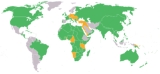
Allies of World War I

 
Allies of World War I

   Email Print
   Bookmark   Link


Allies of World War I


The Entente Powers (from Triple Entente
Triple Entente

File:Map Europe alliances 1914-en.svgThe Triple Entente was the name given to the loose alignment of the British Empire, French Third Republic, and Russian Empire after the signing of the Anglo-Russian Entente in 1907....
) were the countries at war with the Central Powers
Central Powers

The Central Powers was one of the two sides that participated in World War I, the other being the Allies of World War I....
 during World War I
World War I

World War I, or the First World War , was a global military conflict which involved the Great powers, organized into two opposing military alliances: the Allies of World War I and the Central Powers....
. The main allies were the Russian Empire
Russian Empire

File:Russian Emperor Flag.jpgFile:Romanov Flag.svgThe Russian Empire was a state that existed from 1721 until the Russian Revolution of 1917....
, France
French Third Republic

The French Third Republic was the political regime of France between the Second French Empire and the Vichy France. It was a republican parliamentary democracy that was created on 4 September 1870 following the collapse of the Empire of Napoleon III of France in the Franco-Prussian War....
, the British Empire
British Empire

The British Empire comprised the dominions, Crown colony, protectorates, League of Nations mandate, and other Dependent territory ruled or administered by the United Kingdom , that had originated with the overseas colonies and trading posts established by England in the late 16th and early 17th centuries....
, Italy, the Empire of Japan
Empire of Japan

The Empire of Japan was a Japanese political entity that existed during the period from the Meiji Restoration in 1868 until its defeat in World War II in 1945....
, and the United States
United States

The United States of America is a Federal government constitutional republic comprising U.S. state and a federal district. The country is situated mostly in central North America, where its Contiguous United States and Washington, D.C., the Capital districts and territories, lie between the Pacific Ocean and Atlantic Oceans, Borders of the U...
. France
French Third Republic

The French Third Republic was the political regime of France between the Second French Empire and the Vichy France. It was a republican parliamentary democracy that was created on 4 September 1870 following the collapse of the Empire of Napoleon III of France in the Franco-Prussian War....
, Russia
Russian Empire

File:Russian Emperor Flag.jpgFile:Romanov Flag.svgThe Russian Empire was a state that existed from 1721 until the Russian Revolution of 1917....
, and the United Kingdom
United Kingdom of Great Britain and Ireland

The United Kingdom of Great Britain and Ireland was the formal name and the state form of the United Kingdom from 1 January 1801 until 12 April 1927....
 (including its empire), entered World War I
World War I

World War I, or the First World War , was a global military conflict which involved the Great powers, organized into two opposing military alliances: the Allies of World War I and the Central Powers....
 in 1914, as a result of their Triple Entente
Triple Entente

File:Map Europe alliances 1914-en.svgThe Triple Entente was the name given to the loose alignment of the British Empire, French Third Republic, and Russian Empire after the signing of the Anglo-Russian Entente in 1907....
 alliance. Many other countries later joined the Allied side in the war (see below).

The United States declared war on Germany
German Empire

The German Empire is the name commonly used in English to describe Germany from the unification of Germany and proclamation of William I, German Emperor as German Emperor on 18 January 1871, to 1918, when it became Weimar republic after defeat in World War I and the abdication of William II, German Emperor ....
 on the grounds that Germany violated American neutrality by attacking international shipping.


Discussion
Ask a question about 'Allies of World War I'
Start a new discussion about 'Allies of World War I'
Answer questions from other users
Full Discussion Forum


Recent Posts


Encyclopedia


Wwi Re


The Entente Powers (from Triple Entente
Triple Entente

File:Map Europe alliances 1914-en.svgThe Triple Entente was the name given to the loose alignment of the British Empire, French Third Republic, and Russian Empire after the signing of the Anglo-Russian Entente in 1907....
) were the countries at war with the Central Powers
Central Powers

The Central Powers was one of the two sides that participated in World War I, the other being the Allies of World War I....
 during World War I
World War I

World War I, or the First World War , was a global military conflict which involved the Great powers, organized into two opposing military alliances: the Allies of World War I and the Central Powers....
. The main allies were the Russian Empire
Russian Empire

File:Russian Emperor Flag.jpgFile:Romanov Flag.svgThe Russian Empire was a state that existed from 1721 until the Russian Revolution of 1917....
, France
French Third Republic

The French Third Republic was the political regime of France between the Second French Empire and the Vichy France. It was a republican parliamentary democracy that was created on 4 September 1870 following the collapse of the Empire of Napoleon III of France in the Franco-Prussian War....
, the British Empire
British Empire

The British Empire comprised the dominions, Crown colony, protectorates, League of Nations mandate, and other Dependent territory ruled or administered by the United Kingdom , that had originated with the overseas colonies and trading posts established by England in the late 16th and early 17th centuries....
, Italy, the Empire of Japan
Empire of Japan

The Empire of Japan was a Japanese political entity that existed during the period from the Meiji Restoration in 1868 until its defeat in World War II in 1945....
, and the United States
United States

The United States of America is a Federal government constitutional republic comprising U.S. state and a federal district. The country is situated mostly in central North America, where its Contiguous United States and Washington, D.C., the Capital districts and territories, lie between the Pacific Ocean and Atlantic Oceans, Borders of the U...
. France
French Third Republic

The French Third Republic was the political regime of France between the Second French Empire and the Vichy France. It was a republican parliamentary democracy that was created on 4 September 1870 following the collapse of the Empire of Napoleon III of France in the Franco-Prussian War....
, Russia
Russian Empire

File:Russian Emperor Flag.jpgFile:Romanov Flag.svgThe Russian Empire was a state that existed from 1721 until the Russian Revolution of 1917....
, and the United Kingdom
United Kingdom of Great Britain and Ireland

The United Kingdom of Great Britain and Ireland was the formal name and the state form of the United Kingdom from 1 January 1801 until 12 April 1927....
 (including its empire), entered World War I
World War I

World War I, or the First World War , was a global military conflict which involved the Great powers, organized into two opposing military alliances: the Allies of World War I and the Central Powers....
 in 1914, as a result of their Triple Entente
Triple Entente

File:Map Europe alliances 1914-en.svgThe Triple Entente was the name given to the loose alignment of the British Empire, French Third Republic, and Russian Empire after the signing of the Anglo-Russian Entente in 1907....
 alliance. Many other countries later joined the Allied side in the war (see below).

The United States declared war on Germany
German Empire

The German Empire is the name commonly used in English to describe Germany from the unification of Germany and proclamation of William I, German Emperor as German Emperor on 18 January 1871, to 1918, when it became Weimar republic after defeat in World War I and the abdication of William II, German Emperor ....
 on the grounds that Germany violated American neutrality by attacking international shipping. The U.S. entered the war as an "associated power", rather than a formal ally of France and Britain, because it had not declared war on the Ottoman Empire
Ottoman Empire

The Ottoman Empire , also known by its contemporaries as the Turkish Empire or Turkey , was an empire that lasted from 1299?1923. It was Treaty of Lausanne by the Republic of Turkey, which was officially proclaimed on October 29, 1923....
 like those two countries. Although Turkey severed relations with the United States, it did not declare war. The U.S. was not at war with some of the other Central Powers, such as the Kingdom of Bulgaria
Kingdom of Bulgaria

The Kingdom of Bulgaria was established on October 5, 1908 when the Principality of Bulgaria officially Bulgarian Declaration of Independence from the Ottoman Empire and was elevated to the style of kingdom....
. Although the Dominion
Dominion

A dominion, often Dominion, refers to one of a group of autonomy polity that were nominally under United Kingdom sovereignty, constituting the British Empire and Commonwealth of Nations, from the late 19th century....
s and Crown Colonies
Crown colony

A Crown colony was a type of colonial administration of the British Empire.Crown colonies were ruled by a governor appointed by The Crown . Though the term was not used at the time, the first of what would later become known as Crown colonies was the Colony of Virginia in the present-day United States, after the Crown took control from the...
 of the British Empire made significant contributions to the Allied war effort, they did not have independent foreign policies during World War I. Operational control of British Empire forces was in the hands of the five-member British War Cabinet
War Cabinet

A War Cabinet is a committee formed by a government in time of war. It is usually a subset of the full executive cabinet of ministers. It is also quite common for a War Cabinet to have senior military officers and opposition politicians as members....
 (BWC). However, the Dominion governments controlled recruiting, and did remove personnel from front-line duties as they saw fit. From early 1917 the BWC was superseded by the Imperial War Cabinet
Imperial War Cabinet

The Imperial War Cabinet was created by United Kingdom Prime Minister of the United Kingdom David Lloyd George in the spring of 1917 as a means of co-ordinating the British Empire's military policy during the World War I....
, which had Dominion representation. The Australian Corps
Australian Corps

The Australian Corps was a World War I army corps that contained all five Australian infantry division s serving on the Western Front. It was the largest corps fielded by the British Empire army in France....
 and Canadian Corps
Canadian Corps

For other uses of Canadian Corps, see Canadian Corps The Canadian Corps was a World War I corps formed from the Canadian Expeditionary Force in September 1915 after the arrival of the 2nd Canadian Division in France....
  were placed for the first time under the command of Australian and Canadian Lieutenants General
Lieutenant General

Lieutenant General is a military rank used in many countries. The rank traces its origins to the Middle Ages where the title of Lieutenant General was held by the second in command on the battlefield, who was normally subordinate to a Captain General....
 John Monash
John Monash

General Sir John Monash Order of St Michael and St George, Order of the Bath, Volunteer Decoration was an Australian military commander of the World War I....
 and Arthur Currie
Arthur Currie

Sir Arthur William Currie Order of Saint Michael and Saint George, Order of the Bath , was a Canada general during World War I. He had the unique distinction of starting his military career on the very bottom rung as a pre-war militia gunner before rising through the ranks to become the first Canadian commander of the four divisions of the un...
, who reported in turn to British generals.

In April 1918, operational control of all Allied forces on the Western Front
Western Front (World War I)

Following the outbreak of World War I in 1914, the German Empire army opened the Western Front by first invading Luxembourg and Belgium, then gaining military control of important industrial regions in France....
 passed to the new supreme commander, Ferdinand Foch
Ferdinand Foch

Ferdinand Foch . Order of Merit List of honorary British knights was a France soldier, military theorist, and writer credited with possessing "the most original and subtle mind in the French Army" in the early 20th century....
.

Main Allied countries


Kingdom of Belgium
Belgium

* A small German-speaking Community of Belgium exists in eastern Wallonia. Belgium's linguistic diversity and related political and cultural conflicts are reflected in the history of Belgium and a complex Communities and regions of Belgium....
 (including Belgian colonial forces
Belgian colonial empire

The Belgian colonial empire consisted of three colonialism possessed by Belgium between 1901 to 1962. This empire was unlike those of the major European imperial powers since roughly 98% of it was just one colony ? the Belgian Congo ? and that had originated as the private property of the country's king, L?opold II of Belgium, rather than b...
) Kingdom of Montenegro
Kingdom of Montenegro

The Kingdom of Montenegro was a kingdom in southeastern Europe.The capital of the kingdom was Cetinje. The currency of the Kingdom was the Montenegrin perper....
Kingdom of Serbia
Kingdom of Serbia

The Kingdom of Serbia was created when Prince Milan Obrenovic, ruler of the Principality of Serbia, was crowned King in 1882. The Principality of Serbia was ruled by the Karadjordjevic dynasty from 1817 onwards ....
French Third Republic

The French Third Republic was the political regime of France between the Second French Empire and the Vichy France. It was a republican parliamentary democracy that was created on 4 September 1870 following the collapse of the Empire of Napoleon III of France in the Franco-Prussian War....
 (including French colonial forces) (until November 1917) British Empire
British Empire

The British Empire comprised the dominions, Crown colony, protectorates, League of Nations mandate, and other Dependent territory ruled or administered by the United Kingdom , that had originated with the overseas colonies and trading posts established by England in the late 16th and early 17th centuries....
:
  • Australia
    Military history of Australia during World War I

    When World War I broke out in 1914, all of the Commonwealth nations, including Australia, were called to defend Great Britain. Like most of the Commonwealth nations, Australia's sacrifices and contributions to the war would change many facets of Australian history....
  • British crown colonies
    British overseas territories

    The British Overseas Territories are fourteen territories that are under the sovereignty of the United Kingdom, but which do not form part of the United Kingdom itself....
  • British Raj
    British Raj

    British Raj primarily refers to the British rule in the Indian subcontinent between 1858 and 1947; it can also refer to the period of dominion, and even the region under the rule....
  • Canada* New Zealand
    Dominion of New Zealand

    The Dominion of New Zealand is the former name of the Realm of New Zealand.Originally administered from New South Wales, New Zealand became a direct British colony in 1841 and received a large measure of self-government following the New Zealand Constitution Act 1852....
  • South Africa
    Union of South Africa

    The Union of South Africa is the historic predecessor to the present-day state of the Republic of South Africa. It came into being on 31 May 1910, with the previously separate colonies of the Cape Colony, Colony of Natal, Transvaal and the Orange Free State, plus the German South-West Africa colony in 1915, becoming Provinces in the Union of...
  • United Kingdom of Great Britain and Ireland
    United Kingdom of Great Britain and Ireland

    The United Kingdom of Great Britain and Ireland was the formal name and the state form of the United Kingdom from 1 January 1801 until 12 April 1927....
Kingdom of Italy
Kingdom of Italy (1861–1946)

The Kingdom of Italy was a state forged in 1861 by the Italian unification under the influence of the Kingdom of Sardinia; it existed until 1946 when the Italians opted for a republican constitution....
 (April 1915 and after) (including Italian colonial forces
Italian Colonial Empire

The Italian colonial empire was created after the Kingdom of Italy joined other European powers in establishing colonies overseas during the "scramble for Africa"....
) Portuguese Republic
Portugal in the Great War

Despite its old alliance with Britain, Portugal did not form a part of the system of alliances which became enemies in World War I and thus kept its neutrality during the first years of war....
 (March 1916 and after) (including Portuguese colonial forces) Kingdom of Romania
Kingdom of Romania

The Kingdom of Roumania was the old Romanian state based on a form of parliamentary monarchy between March 13, 1881 and December 30, 1947, specified by the First , and respectively, the Second Constitution of Roumania....
 (August 1916-May 1918) Kingdom of Greece
Kingdom of Greece

The Kingdom of Greece was a state established in 1832 in the London Conference of 1832 by the Great Powers . It was internationally recognized in the Treaty of Constantinople , where it also secured full independence from the Ottoman Empire....
 (November 1916 for the Government of National Defence
Movement of National Defence

The Movement of National Defence was a revolution by Venizelism officers in Thessaloniki in 1916 against the royal government in Athens. It led to the establishment of a separate, Venizelism Greek government in the north of the country, which entered the First World War on the side of the Allies of World War I....
; June 1917 for the whole country) United States of America
American Expeditionary Force

The American Expeditionary warfare or AEF was the United States Armed Forces force sent to Europe in World War I.The AEF fought alongside allied forces against German Empire forces....
 (1917 and after)
  • Alaska
    Alaska Territory

    The Alaska Territory was an incorporated territory of the United States from 1912 to 1959. The territory became the state of Alaska....
  • Hawaii
    Territory of Hawaii

    The Territory of Hawaii, abbreviated officially as T.H., was established on July 7, 1898 and dissolved on August 21, 1959 when Hawaii became a state....
  • Philippine Islands
    Philippine Organic Act (1902)

    The Philippine Organic Act, popularly known as the Philippine Bill of 1902, was the first organic law for the Philippine Islands enacted by the United States Congress....
    • Puerto Rico
      Puerto Rico

      Puerto Rico , officially the Commonwealth of Puerto Rico , is a Autonomy Territories of the United States of the United States located in the northeastern Caribbean, east of the Dominican Republic and west of the Virgin Islands....
    • other unincorporated territories
      Incorporated territory

      Territories of the United States are one type of political division of the United States, administered by the U.S. government but not any part of a U.S....


Other states which had military participation:

Albania
Principality of Albania

The Principality of Albania refers to the short-lived monarchy in Albania, headed by William, Prince of Albania and to the state after the First World War, until the abolition of the monarchy in 1925, when Albania was declared a Albanian Republic...
Brazil
History of Brazil (1889-1930)

The period of Brazilian history from 1889 to 1930 is commonly called the Rep?blica Velha . The Rep?blica Velha ended in 1930 with a military coup that installed a dictator....
 (October 1917 and after) Armenia
Democratic Republic of Armenia

The Democratic Republic of Armenia , 1918?1920, was the first modern establishment of an Armenian republic. The collapse of the Imperial Russia with the Russian Revolution of 1917 gave chance to the Armenian Revolutionary Federation to create the new republic which the leadership and the 103 of delegates from former Romanov realm belonged t...
 (May 1918 and after) Czechoslovakia - See Czechoslovak Legions
Czechoslovak Legions

The Czechoslovak Legions were Czechs and Slovaks volunteer armed forces fighting together with the Allies of World War I during World War I....
Finland
Kingdom of Finland (1918)

The Kingdom of Finland was a short-lived attempt following Finland's declaration of independence from Russia to establish Prince Frederick Charles of Hesse-Kassel as the King of Finland....
 (October 1918 and after) Nepal
Nepal

Nepal , officially the Federal Democratic Republic of Nepal, is a landlocked country in South Asia and is the world's youngest republic. It is bordered to the north by the People's Republic of China, and to the south, east, and west by India....
 (soldiers served under the British Indian Army) Kingdom of Siam
History of Thailand (1768-1932)

From 1768 to 1932 the area of modern Thailand was dominated by Siam, an absolute monarchy with capitals briefly at Thonburi and later at Rattanakosin, both in modern-day Bangkok....
San Marino
San Marino

The Most Serene Republic of San Marino is a country in the Apennine Mountains. It is a landlocked country Enclave and exclave, completely surrounded by Italy....
 (June 1915 and after)

States which had declared war (But with no military involvement):

(April 1917 and after) (August 1917 and after) (May 1918 and after) (April 1917 and after) (December 1917 and after) (April 1918 and after) (August 1917 and after) (July 1918 and after) (July 1918 and after) (May 1918 and after) (December 1917 and after) (October 1917 and after) (October 1917 and after)

Leaders

Russia

  • Nicholas II
    Nicholas II of Russia

    Nicholas II was the last Tsar of Russian Empire, Grand Prince of Finland, and claimant to the title of King of Poland. His official title was Nicholas II, Emperor and Autocrat of All the Russias and he is currently regarded as Saint Nicholas the Passion Bearer by the Russian Orthodox Church....
     — Russian Emperor, King of Poland, and Grand Duke of Finland. (Until 15 March 1917)
  • Grand Duke Nicholas Nikolaevich - Commander-in-chief (1 August 1914 – 5 September 1916) and viceroy in the Caucasus
    Caucasus

    The Caucasus or Caucas is a geopolitical region located between Europe, Asia, and the Middle East. It is home to Europe's highest mountain ....
  • Alexander Samsonov
    Alexander Samsonov

    Aleksandr Vassilievich Samsonov served as a Military history of Imperial Russia commander during World War I.Samsonov joined the Russian Army at age 18 and fought in the Russo-Turkish War, 1877-78....
     - Commander of the Russian Second Army for the invasion of East Prussia
    East Prussia

    East Prussia refers to the main part of the Prussia along the southeastern Baltic Sea from the 13th century to 1945. From 1772?1829 and 1878?1945, the Province of East Prussia was a province of the Germany state of Prussia....
     (1 August 1914 – 29 August 1914)
  • Paul von Rennenkampf
    Paul von Rennenkampf

    Paul von Rennenkampf was a Russian general who served in the Imperial Russian Army for over 40 years, including during World War I.Of Baltic German extraction, he joined the Russian Army at 19 and attended the Nikolaevsky Military Academy in Saint Petersburg from 1879 to 1882....
     - Commander of the Russian First Army
    Russian First Army

    The Russian First Army was a World War I Russian field army that fought on the Eastern Front for two years.The First Army, commanded by General Paul Rennenkampf, invaded East Prussia at the outbreak of war in 1914 along with the Russian Second Army commanded by General Alexander Samsonov....
     for the invasion of East Prussia (1 August 1914 - November 1914)
  • Nikolai Ivanov
    Nikolai Ivanov

    Nikolai Judovich Ivanov was a Russian Empire commander and counter-revolutionary....
     - Commander of the Russian army on the Southwestern Front, (1 August 1914 - March 1916) responsible for much of the action in Galicia
    Galicia

    Galicia may refer to:Geographic regions* Galicia , an autonomous community in northwestern Spain** Gallaecia, a province of the Roman Empire...
  • Aleksei Brusilov
    Aleksei Brusilov

    Aleksei Alekseevich Brusilov was a Russian general most noted for the development of new offensive tactics used in the 1916 Brusilov offensive....
     - Commander of the South-West Front, then provisional Commander-in-Chief
    Commander-in-Chief

    A commander-in-chief is the commander of a nation's military forces or significant element of those forces. In the latter case, the force element may be defined as those forces within a particular region or those forces which are associated by function....
     after the Tsar's abdication (February 1917 - August 1917)
  • Lavr Georgievich Kornilov
    Lavr Kornilov

    Lavr Georgiyevich Kornilov was a senior Russian army general during World War I and the ensuing Russian Civil War. He is today best remembered for the Kornilov Affair, an unsuccessful endeavor in August/September 1917 that purported to strengthen Alexander Kerensky's Russian Provisional Government, 1917, but which led to Kerensky eventual...
     - Commander of the South-West Front, then Commander-in-Chief (August 1917)


France

  • Raymond Poincaré
    Raymond Poincaré

    Raymond Poincar? was a France conservatism statesman who served as Prime Minister of France on five separate occasions and as President of France from 1913 to 1920....
     - President of France
  • René Viviani
    René Viviani

    Jean Rapha?l Adrien Ren? Viviani was a France politician of the French Third Republic, who served as Prime Minister of France for the first year of World War I....
     - Prime Minister of France
    Prime Minister of France

    The Prime Minister of France in French Fifth Republic is the functional head of the government and French government ministers of France. The head of state in France is the President of the French Republic....
     (13 June 1914 - 29 October 1915)
  • Aristide Briand
    Aristide Briand

    Aristide Briand was a France statesman who served several terms as Prime Minister of France and won the Nobel Peace Prize....
     - Prime Minister of France (29 October 1915 - 20 March 1917)
  • Alexandre Ribot
    Alexandre Ribot

    Alexandre-F?lix-Joseph Ribot was a France politician, four times List of Prime Ministers of France....
     - Prime Minister of France (20 March 1917 - 12 September 1917)
  • Paul Painlevé
    Paul Painlevé

    Paul Painlev? was a France mathematician and politician. He served twice as Prime Minister of France of the French Third Republic: 12 September – 13 November 1917 and 17 April – 22 November 1925....
     - Prime Minister of France (12 September 1917 - 16 November 1917)
  • Georges Clemenceau
    Georges Clemenceau

    Georges Benjamin Clemenceau was a French statesman, physician, and journalist. He served as the List of Prime Ministers of France from 1906-1909 and 1917-1920....
     - Prime Minister of France (From 16 November 1917)
  • Joseph Joffre
    Joseph Joffre

    Joseph Jacques C?saire Joffre was a France general who was Commander-in-Chief of the French Army between 1914 and 1916 during the First World War....
     - Commander-in-Chief of the French Army
    French Army

    The French Army, officially the Arm?e de Terre , is the Army component of the Military of France and its largest. As of 2007, the army employs 134,000 regular soldiers, 15,500 reservists, and 25,750 civilians....
     (3 August 1914 - 13 December 1916) and Marshal of France
    Marshal of France

    The Marshal of France is a military distinction in contemporary France, not a military rank. It is granted to generals for exceptional achievements....
  • Robert Nivelle
    Robert Nivelle

    Robert Georges Nivelle was a French artillery officer who served in the Boxer Rebellion, and the First World War. He took command of one of the main French armies engaged in the Battle of Verdun, leading it during its successful counter-strokes against the Germans, but was accused of wasting French lives during some of his attacks....
     - Commander-in-Chief of the French Army (13 December 1916 - April 1917)
  • Philippe Pétain
    Philippe Pétain

    Henri Philippe Benoni Omer Joseph P?tain , generally known as Philippe P?tain or Marshal P?tain , was a France general who reached the distinction of Marshal of France, later Head of state of Vichy France , from 1940 to 1944....
     - Commander-in-Chief of the French Army (April 1917 - 26 March 1918) and Marshal of France
  • Ferdinand Foch
    Ferdinand Foch

    Ferdinand Foch . Order of Merit List of honorary British knights was a France soldier, military theorist, and writer credited with possessing "the most original and subtle mind in the French Army" in the early 20th century....
     - Commander-in-Chief of the French Army and Marshal of France, Supreme Allied Commander (26 March 1918 - 11 November 1918)


United Kingdom

  • George V
    George V of the United Kingdom

    George V was the first British monarch belonging to the House of Windsor, which he created from the British branch of the German House of Saxe-Coburg and Gotha....
     - King of the United Kingdom and the other Commonwealth Realm
    Commonwealth Realm

    A Commonwealth realm is any one of 16 Sovereignty states within the Commonwealth of Nations that each have Elizabeth II of the United Kingdom as their monarch....
    s, Emperor of India
    Emperor of India

    Emperor/Empress of India was used as a title by the last Mughal Empire emperor Bahadur Shah II, and revived by the colonial Monarchy of the United Kingdom during the British Raj in India....
  • H. H. Asquith
    H. H. Asquith

    Herbert Henry Asquith, 1st Earl of Oxford and Asquith, Order of the Garter, Privy Council of the United Kingdom, Queen's Counsel served as the Liberal Party Prime Minister of the United Kingdom from 1908 to 1916....
     - Prime Minister of the United Kingdom
    Prime Minister of the United Kingdom

    The Prime Minister of the United Kingdom of Great Britain and Northern Ireland is the political leader of the United Kingdom and the head of government Her Majesty's Government....
     (Until 5 December 1916)
  • D. Lloyd George
    David Lloyd George

    David Lloyd George, 1st Earl Lloyd-George of Dwyfor Order of Merit , Privy Council of the United Kingdom was a United Kingdom statesman and the only Wales Prime Minister of the United Kingdom - he is also the only one to have spoken English language as a second language, Welsh language having been his first....
     - Prime Minister of the United Kingdom (From 7 December 1916)
  • Horatio Herbert Kitchener - Secretary of State for War
    Secretary of State for War

    The position of Secretary of State for War, commonly called War Secretary, was a United Kingdom Cabinet -level position, first applied to Henry Dundas ....
     (5 August 1914 - 5 June 1916)
  • William Robertson
    William Robertson

    Field Marshal Sir William Robert Robertson, 1st Baronet, Order of the Bath, Order of St Michael and St George, Royal Victorian Order, Distinguished Service Order was a British officer who served as Chief of the Imperial General Staff from 1916 to 1918 during the First World War....
     - Chief of the Imperial General Staff
    Chief of the Imperial General Staff

    Chief of the Imperial General Staff was the title of the professional commander of the British Army from 1908 until 1964.From the The Restoration in 1660, the Sovereign was able to wrest considerable control of the armed forces from Parliament with the appointment of a "General in Chief Command" of the Army....
  • John French
    John French, 1st Earl of Ypres

    Field Marshal John Denton Pinkstone French, 1st Earl of Ypres Order of St Patrick, Order of the Bath, Order of Merit, Royal Victorian Order, Order of St Michael and St George, Aide de Camp, Privy Council of the United Kingdom...
     - Commander-in-Chief of the British Expeditionary Force (4 August - 15 December 1915)
  • Douglas Haig
    Douglas Haig, 1st Earl Haig

    Field Marshal Douglas Haig, 1st Earl Haig, Order of the Thistle, Order of the Bath, Order of Merit, Royal Victorian Order, Order of the Indian Empire, Aide de Camp was a United Kingdom soldier and senior commander during World War I....
     - Commander-in-Chief of the British Expeditionary Force (15 December 1915 - 11 November 1918)
  • "Jackie" Fisher
    Jackie Fisher, 1st Baron Fisher

    Admiral of the Fleet John Arbuthnot "Jackie" Fisher, 1st Baron Fisher of Kilverstone, Order of the Bath, Order of Merit, Royal Victorian Order was a British admiral known for his efforts at naval reform....
     - First Sea Lord
    First Sea Lord

    The First Sea Lord is the professional head of the Royal Navy and the whole Naval Service. He also holds the title of Chief of Naval Staff and is known by the abbreviations 1SL/CNS....
     - (1914 - May 1915)
  • Henry Jackson - First Sea Lord - (May 1915 - November 1916)
  • John Jellicoe
    John Jellicoe, 1st Earl Jellicoe

    Admiral of the Fleet John Rushworth Jellicoe, 1st Earl Jellicoe, Order of the Bath, Order of Merit , Royal Victorian Order was a British Royal Navy admiral who commanded the Grand Fleet at the Battle of Jutland....
     - First Sea Lord (November 1916 - December 1917)


Dominion of Australia

  • Billy Hughes
    Billy Hughes

    William Morris 'Billy' Hughes, Companion of Honour, Kings Counsel , Australian politician, was the seventh Prime Minister of Australia, the List of longest-serving members of the Australian House of Representatives, and one of the most colourful figures in Australian political history....
     - Prime Minister of Australia
    Prime Minister of Australia

    The Prime Minister of Australia is the head of government of the Australia, holding office on commission from the Governor-General of Australia....
     (1915 - end of war)
  • John Monash
    John Monash

    General Sir John Monash Order of St Michael and St George, Order of the Bath, Volunteer Decoration was an Australian military commander of the World War I....
     - Commander of the Australian Corps
    Australian Corps

    The Australian Corps was a World War I army corps that contained all five Australian infantry division s serving on the Western Front. It was the largest corps fielded by the British Empire army in France....
     (all five Australian infantry divisions serving on the Western Front) (May 1918 - )


Dominion of Canada

  • Robert Borden
    Robert Borden

    Sir Robert Laird Borden, Queen's Privy Council for Canada, Order of St. Michael and St. George, King's Counsel was a Canadian lawyer and politician....
     - Prime Minister of Canada
    Prime Minister of Canada

    The Prime Minister of Canada is the primary Minister of the Crown, chairman of the Cabinet of Canada, and thus head of government of Canada. The office is not outlined in any of the documents that constitute the written portion of the constitution of Canada; executive authority is formally vested in the Monarchy of Canada and exercised on hi...
     (1914-1918)
Julian Byng
Julian Byng, 1st Viscount Byng of Vimy

Field Marshal Julian Hedworth George Byng, 1st Viscount Byng of Vimy, Order of the Bath, Order of St Michael and St George, Royal Victorian Order was a British Army officer who served with distinction during World War I with the British Expeditionary Force in France, in the Battle of Gallipoli of the Dardanelles campaign, as commander of th...
 (June 1916 - June 1917) Canadian Corps commander
  • Arthur Currie
    Arthur Currie

    Sir Arthur William Currie Order of Saint Michael and Saint George, Order of the Bath , was a Canada general during World War I. He had the unique distinction of starting his military career on the very bottom rung as a pre-war militia gunner before rising through the ranks to become the first Canadian commander of the four divisions of the un...
     - Commander of the unified Canadian Corps
    Canadian Corps

    For other uses of Canadian Corps, see Canadian Corps The Canadian Corps was a World War I corps formed from the Canadian Expeditionary Force in September 1915 after the arrival of the 2nd Canadian Division in France....
     of the Canadian Expeditionary Force
    Canadian Expeditionary Force

    For the organisation that fought in Europe, see Canadian Corps.The Canadian Expeditionary warfare was the designation of the field force created by Canada for service overseas in the First World War....
     (June 1917 - )


Indian Empire

  • John Nixon commander of the British Indian Army (active in the Middle East)


Union of South Africa

  • Louis Botha
    Louis Botha

    Louis Botha was an Afrikaner and first Prime Minister of the Union of South Africa?the forerunner of the modern South African state. He was one of 13 children born to Louis Botha and Salomina Adriana van Rooyen ....
     - Prime Minister of South Africa
  • Jan Smuts
    Jan Smuts

    Field Marshal Jan Christiaan Smuts, Order of Merit, Companion of Honour, Privy Counsellor, Efficiency Decoration, King's Counsel, Royal Society, Order of the Tower and Sword was a prominent South African and British Commonwealth of Nations statesman, military leader and philosopher....
     - Led forces in South-West Africa Campaign
    South-West Africa Campaign

    The South-West Africa Campaign was the conquest and occupation of German South West Africa, now called Namibia, by forces from the Union of South Africa acting on behalf of the British Imperial Government at the start of World War I....
     and East African Campaign
    East African Campaign (World War I)

    The East African Campaign was a series of battles and guerrilla actions which started in German East Africa and ultimately impacted portions of Mozambique, Northern Rhodesia, Kenya, Uganda, and the Belgian Congo....
    , later member of the Imperial War Cabinet
    Imperial War Cabinet

    The Imperial War Cabinet was created by United Kingdom Prime Minister of the United Kingdom David Lloyd George in the spring of 1917 as a means of co-ordinating the British Empire's military policy during the World War I....


Serbia

  • Peter I - King of Serbia
  • Vojvoda Radomir Putnik
    Radomir Putnik

    Radomir Putnik, also known as Vojvoda Putnik, was a Serbian Field Marshal and Chief of staff in the Balkan Wars and the World War I, and took part in all wars that Serbia waged from 1876 to 1917....
     - Chief of General Staff of the Serbian Army
  • Vojvoda Petar Bojovic
    Petar Bojovic

    Petar Bojovic was one of four Serbian vojvodas in Balkan Wars and World War I. He was, by origin Serbs in Montenegro from Vasojevici clan.He fought in Serbian-Ottoman Wars from 1876 to 1878 as a cadet of the Artillery school, as well as in wars that Serbia waged at the beginning of the XX century....
     - Commander of 1st Serbian Army, later Chief of General Staff
  • Vojvoda Stepa Stepanovic
    Stepa Stepanovic

    Stepa Stepanovic was a field marshal of the Serbian Army who distinguished himself in Serbia's wars from 1876 to 1918.Stepa Stepanovic was born in the village of Kumodra? outside of Belgrade on ....
     - Commander of 2nd Serbian Army
  • Vojvoda Živojin Mišic
    Živojin Mišic

    ?ivojin Mi?ic was a Vojvoda and the most successful Serbian commander who participated in all Serbia's wars from 1876 to 1918....
     - Commander of 1st Serbian Army
serdar
Serdar (Ottoman rank)

Serdar was a military rank in the Ottoman Empire, Montenegro and Serbia. It means a head of place/land . Serdars especially served at borders of Ottoman Empire....
 Janko Vukotic
Janko Vukotic

Janko Vukotic, was a Montenegrin General and Vojvoda in the Balkan Wars and World War I....
 - Commander of 1st Serbian Army

Belgium

  • Albert I of Belgium
    Albert I of Belgium

    Albert I was the third King of the Belgians from 1909 until 1934....
     - King of Belgium (23 December 1909 - 17 February 1934)


Czechoslovakia

  • Milan Rastislav Stefanik - Czechoslovak Minister of War


Italy During World War II, Italy switched to the Axis Powers under the the rule of their new dictator.
  • Victor Emmanuel III
    Victor Emmanuel III of Italy

    Victor Emmanuel III was a member of the House of Savoy and King of Italy Kingdom of Italy . In addition, he was the claimed Emperor of Ethiopia Ethiopia and King of Albania Albania ....
     - King of Italy
    King of Italy

    King of Italy is a title adopted by many rulers of the Italian peninsula after the fall of the Roman Empire. Until 1870, however, no ?King of Italy? ruled the whole peninsula, though some pretended to such authority....
  • Luigi Cadorna
    Luigi Cadorna

    Luigi Cadorna was an Italy Field Marshal, most famous for being the Commander-in-Chief of the Italian army during the first part of World War I....
     - Commander-in-Chief of the Italian army
    Italian Army

    The Italian Army is the ground defense force of the Military of Italy. On July 29, 2004 it became a professional all-volunteer force of 112,000 active duty personnel....


  • Armando Diaz
    Armando Diaz

    Armando Diaz, 1st Duke of the Victory was an Italian people general and a Marshal of Italy.Born in Naples, Diaz began his military career as a student at the Military Academy of Turin, where he became an artillery officer ....
     - Chief of General Staff of the Italian army
  • Luigi, Duke of Abruzzi
    Luigi Amedeo, Duke of the Abruzzi

    Prince Luigi Amedeo of Savoy, Duke of the Abruzzi , was an Italian prince, mountaineer and explorer who made the first ascent of Mount Saint Elias in 1897....
     - Commander-in-Chief of the Adriatic Fleet of Italy (1914 - 1917)


Romania

  • Ferdinand I
    Ferdinand I of Romania

    Ferdinand was the King of the Romanians from October 10 1914 until his death....
     - King of Romania
    King of Romania

    King of the Roumanians rather than King of Romania was the official title of the ruler of the Kingdom of Romania from 1881 until 1947 when Romania was proclaimed a republic....
  • Constantin Prezan
    Constantin Prezan

    Constantin Prezan was a Romanians general during World War I.General Prezan commanded the 4th Territorial Army Corps at the beginning of the Romanian Campaign in 1916....
     - Chief of the General Staff of Romania
  • Alexandru Averescu
    Alexandru Averescu

    Alexandru Averescu was a Romanian marshal and Populism politician. A Romanian Armed Forces Commander during World War I, he served as List of Prime Ministers of Romania of three separate cabinets ....
     - Commander of the Romanian 2nd Army, 3rd Army, then Army Group South


United States

  • Woodrow Wilson
    Woodrow Wilson

    Thomas Woodrow Wilson was the List of Presidents of the United States President of the United States. A devout Presbyterianism and leading intellectual of the Progressive Era, he served as President of Princeton University of Princeton University from 1902 to 1910, and then as the Governor of New Jersey from 1911 to 1913....
     - President of the United States
    President of the United States

    The President of the United States is the head of state and head of government of the United States and is the highest political official in the United States by influence and recognition....
    /Commander-In-Chief of the U.S. armed forces


  • Newton D. Baker
    Newton D. Baker

    Newton Diehl Baker, Jr. was an United States politician of the United States Democratic Party . He served as the 37th List of Mayors of Cleveland, Ohio of Cleveland, Ohio from 1912 to 1915 and as United States Secretary of War from 1916 to 1921....
     - U.S. Secretary of War
  • John J. Pershing
    John J. Pershing

    John Joseph "Black Jack" Pershing, Order of the Bath was an officer in the United States Army. He is the only person to be promoted in his own lifetime to the highest rank ever held in the United States Army?General of the Armies....
     - Commander of the American Expeditionary Force
    American Expeditionary Force

    The American Expeditionary warfare or AEF was the United States Armed Forces force sent to Europe in World War I.The AEF fought alongside allied forces against German Empire forces....


Japan Please NOTE:This is NOT an Allied Power!!!
  • Emperor Taisho
    Emperor Taisho

    The was the 123rd Emperor of Japan, according to the traditional order of succession, reigning from July 30, 1912, until his death in 1926.The Emperor?s personal name was ....
     - Emperor of Japan
    Emperor of Japan

    The of Japan is the symbol of the state and of the unity of the Japanese people. He is the head of the Imperial House of Japan. Under Japan's present constitution, the Emperor is the "symbol of the state and the unity of the people," and is a ceremonial figurehead in a constitutional monarchy ....
  • Okuma Shigenobu
    Okuma Shigenobu

    Marquis ; was a Japanese statesman and the 8th and 17th Prime Minister of Japan. One of the most popular statesmen in Japanese history, Okuma was also an early advocate of Western science and culture in Japan, and founder of Waseda University....
     - Prime Minister of Japan
    Prime Minister of Japan

    The is the usual English-language term used for the head of government of Japan, although the literal translation of the Japanese name for the office is Prime Minister of the Cabinet....
     (16 April 1914 - 9 October 1916)
  • Terauchi Masatake
    Terauchi Masatake

    Field Marshal Count , Order of the Bath was Field Marshal in the Imperial Japanese Army and the 18th Prime Minister of Japan from 9 October 1916 to 29 September 1918....
     - Prime Minister of Japan (9 October 1916 - 29 September 1918)


Personnel and casualties of the Allied powers

Worldwari Militarydeaths Ententepowers Piechart
These are estimates of the cumulative number of different personnel in uniform 1914-1918, including army, navy and auxiliary forces. At any one time, the various forces were much smaller. Only a fraction of them were frontline combat troops. The numbers do not reflect the length of time each country was involved, or the number of casualties. (See also: World War I casualties
World War I casualties

The total number of casualties in World War I, both military and civilian, were about 37 million: 16 million deaths and 21 million wounded.The total number of deaths includes 9.7 million military personnel and about 6.8 million civilians....
.)

Allied powers
Allies of World War I

File:Map Europe alliances 1914-en.svgThe Entente Powers were the countries at war with the Central Powers during World War I. The main allies were the Russian Empire, French Third Republic, the British Empire, Kingdom of Italy , the Empire of Japan, and the United States....
Mobilized personnelKilled in actionWounded in actionTotal casualtiesCasualties as % of total mobilized
Australia61,928 152,171214,09952%
Belgium38,172 44,68682,85831%
Canada64,944149,732214,67634%
France1,397,800 4,266,0005,663,80067%
Greece26,00021,00047,00020%
India74,18769,214143,40110%
Italy651,010953,8861,604,89629%
Japan4159071,322<1%
Montenegro3,00010,00013,00026%
New Zealand18,05041,31759,36746%
Newfoundland1,2042,3143,51830%
Portugal7,22213,75120,97321%
Romania250,000120,000370,00049%
Russia1,811,0004,950,000 6,761,00056%
Serbia275,000133,148408,14858%
South Africa9,46312,02921,49216%
United Kingdom885,1381,663,4352,548,57341%
United States116,708205,690322,3987%
Total 42,243,2145,691,24112,809,28018,500,52144%


See also

  • Triple Entente
    Triple Entente

    File:Map Europe alliances 1914-en.svgThe Triple Entente was the name given to the loose alignment of the British Empire, French Third Republic, and Russian Empire after the signing of the Anglo-Russian Entente in 1907....
  • Participants in World War I
    Participants in World War I

    This is a list of countries that participated in World War I, sorted by alphabetical order....
  • Central Powers
    Central Powers

    The Central Powers was one of the two sides that participated in World War I, the other being the Allies of World War I....


Footnotes


Bibliography


See List of World War I books
List of World War I books

List of World War I books is an annotated bibliography using APA style citations of a selection of the most useful books on World War I as selected by the editors....


  • Ellis, John and Mike Cox. The World War I Databook: The Essential Facts and Figures for All the Combatants (2002)
  • Esposito, Vincent J. The West Point Atlas of American Wars: 1900-1918 (1997) despite the title covers entire war;
  • Falls, Cyril. The Great War (1960), general military history
  • Higham, Robin and Dennis E. Showalter, eds. Researching World War I: A Handbook (2003), historiography, stressing military themes
  • Pope, Stephen and Wheal, Elizabeth-Anne, eds. The Macmillan Dictionary of the First World War (1995)
  • Strachan, Hew. The First World War: Volume I: To Arms (2004)
  • Trask, David F. The United States in the Supreme War Council: American War Aims and Inter-Allied Strategy, 1917-1918 (1961)
  • Tucker, Spencer, ed. The Encyclopedia of World War I: A Political, Social, and Military History (5 volumes) (2005), online at eBook.com
  • Tucker, Spencer, ed. European Powers in the First World War: An Encyclopedia (1999)