
All Topics  
Indian National Congress


   Email Print
   Bookmark   Link


Indian National Congress


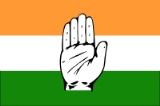
Indian National Congress-I (also known as the Congress Party and abbreviated INC) is a major political party in India
India

India, officially the Republic of India , is a country in South Asia. It is the List of countries and outlying territories by total area country by geographical area, the List of countries by population country, and the most populous liberal democracy in the world....
. Founded in 1885 by Dadabhai Naoroji
Dadabhai Naoroji

Dadabhai Naoroji was a Parsi people intellectual, educator, cotton trader, and an early Indian political leader. His book, Poverty and Un-British Rule in India, brought into the limelight the drain of India's wealth into Britain....
, Dinshaw Wacha
Dinshaw Edulji Wacha

Sir Dinshaw Edulji Wacha was a Parsi people Indian politician from Bombay. He was one of the founders of the Indian National Congress, and its President in 1901....
, Womesh Chandra Bonerjee, Surendranath Banerjee, Monomohun Ghose
Monomohun Ghose

Monomohun Ghose was the first practicing barrister of Indian origin. He is notable for his contributions towards the fields of women?s education, for arousing the patriotic feeling of his countrymen and for being one of the earliest persons in the country in organised national politics....
, Allan Octavian Hume
Allan Octavian Hume

Allan Octavian Hume was an Indian Civil Service in British India and a political reformer. With William Wedderburn, he founded the Indian National Congress, a political party that was later to lead the Indian independence movement....
, and William Wedderburn
William Wedderburn

Sir William Wedderburn, 4th Baronet, Justice of the Peace Deputy Lieutenant was a Scottish civil servant and politician.Born in Edinburgh, the third son of Sir John Wedderburn, 2nd Baronet, he was educated at Loretto School and Edinburgh University....
, the Indian National Congress became the leader of the Indian Independence Movement
Indian independence movement

The term Indian independence movement incorporates various national and regional campaigns, agitations and efforts of both Nonviolent and Revolutionary movement for Indian independence philosophy....
, with over 15 million members and over 70 million participants in its struggle against British rule
British Raj

British Raj primarily refers to the British rule in the Indian subcontinent between 1858 and 1947; it can also refer to the period of dominion, and even the region under the rule....
 in India. After independence in 1947, it became the nation's dominant political party, challenged for leadership only in more recent decades.


Discussion
Ask a question about 'Indian National Congress'
Start a new discussion about 'Indian National Congress'
Answer questions from other users
Full Discussion Forum


Encyclopedia


Indian National Congress-I (also known as the Congress Party and abbreviated INC) is a major political party in India
India

India, officially the Republic of India , is a country in South Asia. It is the List of countries and outlying territories by total area country by geographical area, the List of countries by population country, and the most populous liberal democracy in the world....
. Founded in 1885 by Dadabhai Naoroji
Dadabhai Naoroji

Dadabhai Naoroji was a Parsi people intellectual, educator, cotton trader, and an early Indian political leader. His book, Poverty and Un-British Rule in India, brought into the limelight the drain of India's wealth into Britain....
, Dinshaw Wacha
Dinshaw Edulji Wacha

Sir Dinshaw Edulji Wacha was a Parsi people Indian politician from Bombay. He was one of the founders of the Indian National Congress, and its President in 1901....
, Womesh Chandra Bonerjee, Surendranath Banerjee, Monomohun Ghose
Monomohun Ghose

Monomohun Ghose was the first practicing barrister of Indian origin. He is notable for his contributions towards the fields of women?s education, for arousing the patriotic feeling of his countrymen and for being one of the earliest persons in the country in organised national politics....
, Allan Octavian Hume
Allan Octavian Hume

Allan Octavian Hume was an Indian Civil Service in British India and a political reformer. With William Wedderburn, he founded the Indian National Congress, a political party that was later to lead the Indian independence movement....
, and William Wedderburn
William Wedderburn

Sir William Wedderburn, 4th Baronet, Justice of the Peace Deputy Lieutenant was a Scottish civil servant and politician.Born in Edinburgh, the third son of Sir John Wedderburn, 2nd Baronet, he was educated at Loretto School and Edinburgh University....
, the Indian National Congress became the leader of the Indian Independence Movement
Indian independence movement

The term Indian independence movement incorporates various national and regional campaigns, agitations and efforts of both Nonviolent and Revolutionary movement for Indian independence philosophy....
, with over 15 million members and over 70 million participants in its struggle against British rule
British Raj

British Raj primarily refers to the British rule in the Indian subcontinent between 1858 and 1947; it can also refer to the period of dominion, and even the region under the rule....
 in India. After independence in 1947, it became the nation's dominant political party, challenged for leadership only in more recent decades. In the 14th Lok Sabha
Lok Sabha

The Lok Sabha is the direct election lower house of the Parliament of India. As of 2008 there have been fourteen Lok Sabhas elected by the people of India....
 (2004-2009), 145 members (out of 545), the largest contingent amongst all parties, serve in the house. The party is currently the chief member of the ruling United Progressive Alliance
United Progressive Alliance

United Progressive Alliance is the present Coalition government of Political party heading the government of India. The coalition is led by the Indian National Congress , which is currently the single largest political party in the Lok Sabha ....
 coalition. It is the only party to get more than 10 crore
Crore

A crore is a unit in the Indian numbering system and was formerly a unit in the Persian numbering system, still widely used in Bangladesh, India, Maldives, Nepal, Pakistan, and Sri Lanka, and formerly in Iran....
 votes in the past two general elections (1999, 2004) .

History

The history of the Indian National Congress falls into two distinct eras:
  • The pre-independence era, when the party was at the forefront of the struggle for independence;
  • The post-independence era, when the party has enjoyed a prominent place in Indian politics, ruling the country for 48 of the 60 years since independence in 1947.


In the pre-independence era, the congress was divided in two groups, moderate and activist. The moderates were more educated and wanted to win people's faith to rule over the country and enjoy the power which British was enjoying and eventually they achieved what they were looking for.

The Pre-Independence Era


Founded in 1885 with the objective of obtaining a greater share in government for educated Indians, the Indian National Congress was initially not opposed to British
Great Britain

Great Britain is an island lying to the northwest of Continental Europe. It is the List of islands by area, and the largest in Europe. With a population of 58.9 million people it is List of islands by population....
 rule. The Congress met once a year during December. Indeed, it was a Scotsman
Scotland

conventional_long_name = ScotlandAlba|common_name= Scotland|image_flag = Flag of Scotland.svg|flag_width = 130px...
, Allan Octavian Hume
Allan Octavian Hume

Allan Octavian Hume was an Indian Civil Service in British India and a political reformer. With William Wedderburn, he founded the Indian National Congress, a political party that was later to lead the Indian independence movement....
, who brought about its first meeting in Bombay, with the approval of Lord Dufferin
Frederick Hamilton-Temple-Blackwood, 1st Marquess of Dufferin and Ava

Frederick Temple Hamilton-Temple-Blackwood, 1st Marquess of Dufferin and Ava, Order of St Patrick, Order of the Bath, Order of the Star of India, Order of St Michael and St George, Order of the Indian Empire, Privy Council of the United Kingdom was a United Kingdom public servant and prominent member of Victorian era society....
, the then-Viceroy.

Womesh Chandra Bannerjee was the first President of the INC. The first meeting was scheduled to be held in Pune
Pune

Pune ,Pune is the administrative capital of Pune district and the 7th Metro city of India.Pune is known to have existed as a town since 937 AD....
, but due to a plague
Bubonic plague

Plague is a deadly infectious disease caused by the Enterobacteriaceae Yersinia pestis . Plague is a zoonotic, primarily carried by rodents and spread to humans via fleas....
 outbreak there, the meeting was later shifted to Bombay. The first Session of INC was held from 28-31 December 1885, and was attended by 72 delegates.

A few years down the line, the demands of INC became more radical in the face of constant opposition from the government, and the party became very active in the independence movement
Indian independence movement

The term Indian independence movement incorporates various national and regional campaigns, agitations and efforts of both Nonviolent and Revolutionary movement for Indian independence philosophy....
. By 1907 the party was split into two halves: the Garam Dal of Bal Gangadhar Tilak
Bal Gangadhar Tilak

Bal Gangadhar Tilak –, was an Indian nationalism, social reformer and independence fighter who was the first popular leader of the Indian Independence Movement and is known as "Father of the Indian unrest"....
, or Extremists (literally "hot faction"), and the Naram Dal of Gopal Krishna Gokhale
Gopal Krishna Gokhale

Gopal Krishna Gokhale, Order of the Indian Empire was one of the founding social and political leaders during the Indian Independence Movement against the British Raj....
, or Moderates (literally "soft faction"), distinguished by their attitude towards the British. Under the influence of Bal Gangadhar Tilak, the Congress became the first integrated mass organization in the country, bringing together millions of people against the British. The Indian National Congress was the only political party to provide harmony to all the sects of the Indian society.

In its time as the nation's leader in the freedom struggle, it produced the nation's greatest leaders. Before the Gandhi Era came leaders like Bal Gangadhar Tilak
Bal Gangadhar Tilak

Bal Gangadhar Tilak –, was an Indian nationalism, social reformer and independence fighter who was the first popular leader of the Indian Independence Movement and is known as "Father of the Indian unrest"....
, Bipin Chandra Pal
Bipin Chandra Pal

Bipin Chandra Pal was born on November 7, 1858 was an Indian nationalist. He was among the triumvirate of Lal Bal Pal....
, Lala Lajpat Rai
Lala Lajpat Rai

Lala Lajpat Rai was an Indian author and politician who is chiefly remembered as a leader in the Indian fight for freedom from the British Raj....
, Gopal Krishna Gokhale
Gopal Krishna Gokhale

Gopal Krishna Gokhale, Order of the Indian Empire was one of the founding social and political leaders during the Indian Independence Movement against the British Raj....
, Mohammed Ali Jinnah (later leader of the Muslim League
Muslim League

The Muslim League , founded at Dhaka in 1906, was a political party in British India that developed into the driving force behind the creation of Pakistan as a Islam state on the Indian subcontinent....
 and instrumental in the creation of Pakistan
Pakistan

Pakistan , officially the Islamic Republic of Pakistan, is a country located in South Asia and borders Central Asia and the Middle East. It has a 1,046 kilometre coastline along the Arabian Sea and Gulf of Oman in the south, and is bordered by Afghanistan and Iran in the west, India in the east and People's Republic of China in th...
), all starting with the first legendary icon of Indians: Dadabhai Naoroji
Dadabhai Naoroji

Dadabhai Naoroji was a Parsi people intellectual, educator, cotton trader, and an early Indian political leader. His book, Poverty and Un-British Rule in India, brought into the limelight the drain of India's wealth into Britain....
, the president of the sister Indian National Association
Indian National Association

The Indian National Association was the first avowed nationalist organization founded in British India by Surendra Nath Bannerjea and Anand Mohan Bose in 1876....
 and later the first Indian Member of Parliament
Member of Parliament

A Member of Parliament, or MP, is a representative of the voters to a parliament. In many countries the term applies specifically to members of the lower house, as upper houses often have a unique title, such as senate, and thus also have unique titles for its members, such as senators....
 in the British House of Commons
British House of Commons

The House of Commons is the lower house of the Parliament of the United Kingdom, which also comprises the British monarchy and the House of Lords ....
. The Congress was transformed into a mass movement by Surendranath Banerjea
Surendranath Banerjea

Sir Surendranath Banerjee was one of the earliest India political leaders during the British Raj. He founded the Indian National Association, one of the earliest Indian political organizations, and later became a senior leader of the Indian National Congress....
 and Sir Henry Cotton
Henry John Stedman Cotton

Sir Henry John Stedman Cotton, Order of the Star of India was a Liberal Party Member of Parliament who was MPs elected in the United Kingdom general election, 1906 from Nottingham East in 1906 to the British Parliament....
 during the partition of Bengal in 1905 and the resultant Swadesi Movement. Gandhi came back from South Africa in 1915 and with the help of the pro-British group led by Ghokhale he through an extraordinary coup became the President of The Congress without any election and formed an alliance with the Khilafat Movement. In protest a number of leaders went out of Congress. Khilafat movement ended up in a disaster and The Congress was split. A number of leaders Chittaranjan Das
Chittaranjan Das

Chittaranjan Das was a Bengali lawyer and a major figure in the Indian independence movement.Educated in England, his public career began in 1909 when he successfully defended Aurobindo Ghosh on charges of involvement in the previous year's Alipore bomb case....
, Annie Besant
Annie Besant

Annie Wood Besant was a prominent Theosophy, women's rights activist, writer and orator and supporter of Ireland and Indian self rule....
, Motilal Nehru
Motilal Nehru

Motilal Nehru was an early Indian independence activist and leader of the Indian National Congress. He was the founder patriarch of India's most powerful political family, the Nehru-Gandhi family....
, went out of The Congress to set up the Swaraj Party.

With the rise of Mahatma Gandhi
Mahatma Gandhi

Mohandas Karamchand Gandhi was a major political and spiritual leader of India and the Indian independence movement. He was the pioneer of satyagraha?resistance to tyranny through mass civil disobedience, firmly founded upon ahimsa or total non-violence?which led India to Indian independence movement and inspired movements for civi...
's popularity and his Satyagraha
Satyagraha

Satyagraha is a philosophy and practice of nonviolent resistance developed by Mohandas Karamchand Gandhi . Gandhi deployed satyagraha in campaigns for Indian independence and also during his earlier struggles in South Africa....
 art of revolution came Sardar Vallabhbhai Patel
Sardar Vallabhbhai Patel

Vallabhbhai Patel was a politics of India and social leader of India who played a major role in the country's Indian independence movement and guided its Political integration of India into a united, independent nation....
, Pandit Jawaharlal Nehru (the nation's first Prime Minister), Dr. Rajendra Prasad
Rajendra Prasad

Dr. Rajendra Prasad was the Firsts in India President of India of the Republic of India .He was an Indian independence activists and, as a leader of the Congress Party, played a prominent role in the Indian Independence Movement....
 (the nation's first President), Khan Mohammad Abbas Khan
Khan Mohammad Abbas Khan

Khan Muhammad Abbas Khan is a former member of Indian National Congress, a liberal reformer, Khan Mohammad Abbas Khan belonged to the democratic party, which formed a coalition with congress and served as the interim mister for industries....
, Khan Abdul Ghaffar Khan
Khan Abdul Ghaffar Khan

Khan Abdul Ghaffar Khan was a Pashtun political and spiritual leader known for his nonviolence opposition to British India in India. A lifelong pacifism, a devout Muslim,and a follower of Mahatma Gandhi, he was also known as Badshah Khan , and Sarhaddi Gandhi ....
, Chakravarti Rajgopalachari
C. Rajagopalachari

Chakravarthi Rajagopalachari , affectionately called Rajaji or C.R., was an Indian lawyer, freedom-fighter, politician, writer, statesman and leader of the Indian National Congress who served as the last Governor-General of India....
, Jivatram Kripalani
Jivatram Kripalani

Acharya Jivatram Bhagwandas Kripalani was an Indian politician, noted particularly for holding the presidency of the Indian National Congress during the transfer of power in 1947....
 and Maulana Abul Kalam Azad
Maulana Abul Kalam Azad

Maulana Abul Kalam Muhiyuddin Ahmed was a Muslim scholar and a senior political leader of the Indian independence movement. He was one of the most prominent Muslim leaders to support Hindu-Muslim unity, opposing the partition of India on communal lines....
. With the already existing nationalistic feeling combined with Gandhi's popularity the Congress became a forceful mass organization in the country, bringing together millions of people by specifically working against caste differences, untouchability, poverty, and religious and ethnic boundaries. Although predominantly Hindu, it had members from virtually every religion, ethnic group, economic class and linguistic group. In 1939, Subhas Chandra Bose, the elected president in both 1938 and 1939 was expelled from the Congress for his socialist views and The Congress was reduced to a pro-Business group financed by the business houses of Birla and Bajaj. At the time of the Quit India movement, the Congress was undoubtedly the strongest political and revolutionary organization in India, but the Congress disassociated itself from the Quit India movement within a few days. The Indian National Congress could not claim to be the true representative of the Indian people as other parties were there as well particularly the Hindu Mahasabha, Azad Hind Sarkar, Forward Bloc.

The 1929 Lahore session under the presidency of Jawaharlal Nehru
Jawaharlal Nehru

Jawaharlal Nehru The son of the wealthy Indian barrister and politician Motilal Nehru, Nehru became a leader of the left-wing of the Indian National Congress at a remarkably young age....
 holds special significance as in this session "Poorna Swaraj" (complete independence) was declared as the goal of INC. The 26th January 1930 was declared as "Poorna Swaraj Diwas," Independence Day although the British remained in India a number of years longer. It was to commemorate this date particularly that The Indian Constitution was formally adopted on 26 January 1950 (even though it was passed on 26 November 1949).However in 1929 Srinivas Iyenger was expelled from the Congress for demanding full independence, not just home rule
Home rule

Home rule refers to a demand that constituent parts of a state be given greater self-governance within the greater administrative purview of the central government....
 as demanded by Gandhi.

After the First World War
World War I

World War I, or the First World War , was a global military conflict which involved the Great powers, organized into two opposing military alliances: the Allies of World War I and the Central Powers....
 the party became associated with Mahatma Gandhi
Mahatma Gandhi

Mohandas Karamchand Gandhi was a major political and spiritual leader of India and the Indian independence movement. He was the pioneer of satyagraha?resistance to tyranny through mass civil disobedience, firmly founded upon ahimsa or total non-violence?which led India to Indian independence movement and inspired movements for civi...
, who remained its unofficial, spiritual leader and mass icon even as younger men and women became party president. The party was in many ways an umbrella organization, sheltering within itself radical socialists, traditionalists and even Hindu and Muslim conservatives, but all the socialists (including the Congress Socialist Party, Krishak Praja Party, Swarajya Party members) were expelled along with Subhas Chandra Bose in 1939 by Gandhi.

During the INA trials
INA trials

The INA trials or the Red Fort Trials refer to the courts martial of a number of officers of the Indian National Army between November 1945 and May 1946 variously for treason, torture, murder and abetment to murder....
 of 1946, the Congress helped to form the INA Defence Committee
INA Defence Committee

The INA Defence Committee, later the INA Defence and Relief Committee, was a committee established by the Indian National Congress in 1945 to Defense those officers of the Indian National Army who were to be charged during the INA trials....
, which forcefully defended the case of the soldiers of the Azad Hind government. The committee declared the formation of the Congress' defence team for the INA and included famous lawyers of the time, including Bhulabhai Desai
Bhulabhai Desai

Bhulabhai Desai was an :Category:Indian activists and acclaimed lawyer. He is well-remembered for his defense of the three Indian National Army soldiers accused of treason during World War II, and for attempting to negotiate a secret power-sharing agreement with Liaquat Ali Khan of the Muslim League....
, Asaf Ali
Asaf Ali

Asaf Ali was an Freedom fighters of India and noted Indian lawyer. He was the first ambassador from India to the Foreign relations of the United States....
, and Jawaharlal Nehru
Jawaharlal Nehru

Jawaharlal Nehru The son of the wealthy Indian barrister and politician Motilal Nehru, Nehru became a leader of the left-wing of the Indian National Congress at a remarkably young age....
.

Members of the Congress initially supported the sailors who led the Royal Indian Navy Mutiny. However they withdrew support at the critical juncture, when the mutiny failed.

The Post-Independence Era

The party remained in power for thirty continuous years between independence in 1947 and its first taste of electoral defeat (at the national level) in 1977.

Jawaharlal Nehru

Mahatma Gandhi and Sardar Patel are said to have held the view that the INC was formed only for achieving independence and should have been disbanded in 1947. However, at the time of independence, the INC (led by Jawaharlal Nehru
Jawaharlal Nehru

Jawaharlal Nehru The son of the wealthy Indian barrister and politician Motilal Nehru, Nehru became a leader of the left-wing of the Indian National Congress at a remarkably young age....
) was a major political organization in the country, and was established as the major political party. The Congress thus, considering the perceived need for a stable leadership and guiding vision after the terrible chaos and confusion following the Partition of India
Partition of India

File:Brit IndianEmpireReligions3.jpgThe Partition of India was the Partition of British India that led to the creation, on August 14, 1947 and August 15, 1947, respectively, of the Sovereignty states of the Dominion of Pakistan and the Union of India ....
 and Independence, was re-established as an electoral party in independent India. Across several general elections, the party ruled uninterrupted until 1977, and has remained a major political force.

After the murder of Gandhi in 1948, and the death of Sardar Patel in 1950, Jawaharlal Nehru
Jawaharlal Nehru

Jawaharlal Nehru The son of the wealthy Indian barrister and politician Motilal Nehru, Nehru became a leader of the left-wing of the Indian National Congress at a remarkably young age....
 was the sole remaining iconic national leader, and soon the situation became so that Nehru was key to the political potency and future of the Congress. Nehru embraced secularism, socialist economic policies and a non-aligned foreign policy, which became the hallmark of the modern Congress Party. Nehru's policies challenged the landed class, the business class and improved the position of religious minorities and lower caste Hindus. A generation of freedom fighting leaders were soon replaced by a generation of people who had grown up in the shadow of Nehru. Nehru led the Congress Party to consecutively majorities in the elections of 1952, 1957 and 1962.

After Nehru's death in 1964, the party's future first came into question. No leader was competitive enough to touch Nehru's iconic status, so the second-stage leadership mustered around the compromise candidate, the gentle, soft-spoken and Nehruvian Lal Bahadur Shastri
Lal Bahadur Shastri

Lal Bahadur Shastri was the third Prime Minister of India of the India and a significant figure in the Indian independence movement....
. Shastri remained Prime Minister till his own death in 1966, and a broad Congress Party election opted for Indira Gandhi
Indira Gandhi

Indira Priyadarshini Gandhi was the Prime Minister of the Republic of India for three consecutive terms from 1966 to 1977and for a fourth term from 1980 until her Assassination of Indira Gandhi in 1984, a total of fifteen years....
, Nehru's daughter, over the right-wing, conservative Morarji Desai
Morarji Desai

Morarji Ranchhodji Desai was an Indian independence activists and the Prime Minister of India from 1977-79. He was the first Indian Prime Minister who did not belong to the Indian National Congress....
.

Indira Gandhi

Inciyckolkatamural2005
The first serious challenge to Congress hegemony came in 1967 when a united opposition, under the banner of Samyukt Vidhayak Dal, won control over several states in the Hindi belt
Hindi belt

The Hindi Heartland is a common reference to the region in North India India where Hindi languages are spoken natively or as a primary language....
. Indira Gandhi
Indira Gandhi

Indira Priyadarshini Gandhi was the Prime Minister of the Republic of India for three consecutive terms from 1966 to 1977and for a fourth term from 1980 until her Assassination of Indira Gandhi in 1984, a total of fifteen years....
, the daughter of Nehru, and Congress president, was then challenged by the majority of the party leadership. The conflict led to a split, and Indira launched a separate INC. Initially this party was known as Congress (R), but it soon came to be generally known as the New Congress. The official party became known as Indian National Congress (Organisation)
Indian National Congress (Organisation)

The Indian National Congress or Congress was a political party in India formed when Indira Gandhi broke away from the leadership of the Indian National Congress ....
 led by Kamaraj. It was informally called the Old Congress. As Indira Priyadarshini
Indira Gandhi

Indira Priyadarshini Gandhi was the Prime Minister of the Republic of India for three consecutive terms from 1966 to 1977and for a fourth term from 1980 until her Assassination of Indira Gandhi in 1984, a total of fifteen years....
 had control over the state machinery, her faction was recognized as the "real" INC by the Election Commission of India
Election Commission of India

The Election Commission of India is an autonomous, Quasi-judicial body Constitution of India of India. Its mission is to conduct free and fair elections in India....
, although her organization was the break-away group.

The split can in some ways be seen as a left-wing/right-wing division. Indira Gandhi wanted to use a populist agenda in order to mobilise popular support for the party. She raised slogans such as Garibi Hatao (Remove Poverty), and wanted to develop closer ties with the Soviet Union
Soviet Union

The Union of Soviet Socialist Republics was a Constitution of the Soviet Union socialist state that existed in Eurasia from 1922 to 1991.The name is a translation of the , romanization of Russian Soyuz Sovetskikh Sotsialisticheskikh Respublik, abbreviated ????, SSSR....
. The regional party elites, who formed the INC(O), stood for a more conservative agenda, and distrusted Soviet help. INC(O) later merged into the Janata Party
Janata Party

The Janata Party was an Indian political party that contested the Indian Emergency and became the first political party to defeat the Indian National Congress in the 1977 Lok Sabha elections, forming the central government from 1977 to 1980....
.

Gradually, Indira Gandhi grew more and more authoritarian. Following allegations of widespread rigging in the general elections, a court overturned Indira Gandhi's victory in the Parliamentary constituency. Facing growing opposition she proclaimed a state of National Emergency in 1975, curtailed the powers of the courts, and unleashed a police state.

After she lifted the emergency in 1977, more Congress factions were formed, the one remaining loyal to Indira Gandhi being popularly known as Congress(I) with an 'I' for Indira. The Congress (I) was routed in the general elections by the Janata Party
Janata Party

The Janata Party was an Indian political party that contested the Indian Emergency and became the first political party to defeat the Indian National Congress in the 1977 Lok Sabha elections, forming the central government from 1977 to 1980....
, but the coalition government fell apart in two years. The Congress party returned to power in the ensuing 1980 elections. In 1984 Indira Gandhi
Indira Gandhi

Indira Priyadarshini Gandhi was the Prime Minister of the Republic of India for three consecutive terms from 1966 to 1977and for a fourth term from 1980 until her Assassination of Indira Gandhi in 1984, a total of fifteen years....
 was assassinated by two of her Sikh
Sikh

Sikh is the title and name given to an adherent of Sikhism. The term has its origin in the Sanskrit ' "disciple, learner" or ' "instruction"....
 bodyguards, in revenge for Operation Blue Star
Operation Blue Star

Operation Blue Star was an Indian military operation ordered by Indira Gandhi, the then Prime Minister of India, to remove Sikh separatists who were amassing weapons in the Harmandir Sahib in Amritsar....
. In the following days more than six thousand Sikh
Sikh

Sikh is the title and name given to an adherent of Sikhism. The term has its origin in the Sanskrit ' "disciple, learner" or ' "instruction"....
s were killed in the 1984 riots
1984 Anti-Sikh Riots

The 1984 Anti-Sikh massacre was triggered by the assassination of Indira Gandhi on October 31, 1984, by 2 of her Sikh bodyguards.The assasination itself was in retaliation for Operation Bluestar, in which the Indian Army attacked Khalistan hiding in the Harimandir Sahib, the holiest Sikh shrine....
, mainly in Delhi
Delhi

Delhi , sometimes referred to as Dilli , is the List of most populous cities in India metropolis in India and, with over 11 million residents, the List of metropolitan areas by population....
, by activists and leaders of the Congress Party. On the other hand three thousand to eight thousand Hindus were slaughtered in the Punjab from 1984 to 1991 by militants seeking a separate homeland. .

About the riots, the new PM and Indira's son, Rajiv Gandhi
Rajiv Gandhi

Rajiv Gandhi ; 20 August 1944 ? 21 May 1991), the elder son of Indira Gandhi and Feroze Gandhi, was the 9th Prime Minister of India of India from his mother's death on 31 October 1984 until his resignation on 2 December 1989 following a general election defeat....
 remarked, "When a big tree falls, the earth is bound to shake."

The Post-Indira Era

Congress I
After Indira, her son Rajiv Gandhi
Rajiv Gandhi

Rajiv Gandhi ; 20 August 1944 ? 21 May 1991), the elder son of Indira Gandhi and Feroze Gandhi, was the 9th Prime Minister of India of India from his mother's death on 31 October 1984 until his resignation on 2 December 1989 following a general election defeat....
, took over as Congress leader and led the party to victory with a large majority in the 1984 Lok Sabha elections. It governed from 1984-9 and then was defeated in the 1989 general election. Rajiv Gandhi was also assassinated by the LTTE during the course of the election campaign in 1991. Following Rajiv Gandhi's assassination, P.V. Narasimha Rao succeeded him as Congress leader and became prime minister.

The 1990s was a period of prolonged crisis for the Congress. After gradually losing political influence the party asked the Rajiv Gandhi's widow, Sonia
Sonia Gandhi

Sonia Gandhi is the Italian People-born Congress President of the Indian National Congress and the widow of former Prime Minister of India, Rajiv Gandhi....
, to accept the position of Congress President. She refused at the time, and the Congress stuck with Narasimha Rao. Rao dramatically changed the party's traditionally socialist policies and introduced major economic reforms and liberalization, with the help of then Finance minister (and future Prime Minister) Manmohan Singh
Manmohan Singh

Manmohan Singh is the 17th and current Prime Minister of India of the Republic of India. He also serves as the Ministry of Finance , succeeding P....
. Nonetheless, his involvement in the bribery of members of parliament(first found guilty in 2000 and on appeal was cleared of charges in 2002) was a major issue which led to the downfall of the Congress in 1996, and subsequently his fall out with other leaders in his own party and eventual exit from politics[?]. For all its follies, this Congress government was significant because it provided a stable central government that brought the economy back on track.

Former treasurer Sitaram Kesri
Sitaram Kesri

Sitaram Kesri was born at Danapur, Patna in November 1919. He was a member of the Indian National Congress and was the president of congress from 1996 to 1998....
 took over the reins of the party and oversaw the Congress support to the United Front
United front

The united front is a form of struggle that may be pursued by revolutionary socialism. The basic theory of the united front tactic was first developed by the Comintern, an international socialist organisation created by revolutionaries in the wake of the 1917 Bolshevik Revolution....
 governments that ran from 1996 - 1998. During his tenure, several key leaders broke away from the party, and serious infighting broke out among those left. In 1998, Sonia Gandhi finally accepted the post of Congress President
Congress President

The President of the All India Congress Committee, and therefore of the Indian National Congress Party as a whole, is known as the Congress President....
, in a move that may have saved the party from extinction.

After her election as party leader, a section of the party, which objected to the choice, broke away and formed the Nationalist Congress Party
Nationalist Congress Party

The Nationalist Congress Party is an Indian political party based primarily in the state of Maharashtra....
. The use of "Congress (I)" continues to denote the party run by Indira Gandhi's successors. There have been repeated attempts by the Indian nationalist groups (such as the BJP) to discredit Sonia Gandhi's leadership on the basis of her foreign origin - she is Italian-born.

Although the Congress expedited the downfall of the NDA government in 1999 by promising an alternative, Ms. Gandhi's decision was followed by fresh elections and the Congress party's worst-ever tally in the lower house. The party spent the interval period forging alliances and overseeing changes in the state and central organizations to revive the party. It has had many electoral successes which led up to the formation of a Congress-led government in 2004.

Indian Prime Ministers from the Congress Party

  • Jawaharlal Nehru
    Jawaharlal Nehru

    Jawaharlal Nehru The son of the wealthy Indian barrister and politician Motilal Nehru, Nehru became a leader of the left-wing of the Indian National Congress at a remarkably young age....
     (1947 - 1964)
  • Gulzarilal Nanda
    Gulzarilal Nanda

    Gulzarilal Nanda was an Indian politician and an economist with specialization in labor problems. He was the interim Prime Minister of India twice for thirteen days each: the first time after the death of Prime Minister Jawaharlal Nehru in 1964, and the second time after the death of Prime Minister Lal Bahadur Shastri in 1966....
     (May - June 1964, January 1966)
  • Lal Bahadur Shastri
    Lal Bahadur Shastri

    Lal Bahadur Shastri was the third Prime Minister of India of the India and a significant figure in the Indian independence movement....
     (1964 - 1966)
  • Indira Gandhi
    Indira Gandhi

    Indira Priyadarshini Gandhi was the Prime Minister of the Republic of India for three consecutive terms from 1966 to 1977and for a fourth term from 1980 until her Assassination of Indira Gandhi in 1984, a total of fifteen years....
     (1966 - 1977, 1980 - 1984)
  • Rajiv Gandhi
    Rajiv Gandhi

    Rajiv Gandhi ; 20 August 1944 ? 21 May 1991), the elder son of Indira Gandhi and Feroze Gandhi, was the 9th Prime Minister of India of India from his mother's death on 31 October 1984 until his resignation on 2 December 1989 following a general election defeat....
     (1984 - 1989)
  • P.V. Narasimha Rao (1991 - 1996)
  • Manmohan Singh
    Manmohan Singh

    Manmohan Singh is the 17th and current Prime Minister of India of the Republic of India. He also serves as the Ministry of Finance , succeeding P....
     (2004 - present)


Controversies and criticisms

Since the party has dominated the political landscape of India
India

India, officially the Republic of India , is a country in South Asia. It is the List of countries and outlying territories by total area country by geographical area, the List of countries by population country, and the most populous liberal democracy in the world....
 for over a century, there are many charges of corruption and similar charges against it. Some examples are:
  • 1947 - Anti- Maharashtrian Brahmin Riots - After the knowledge that the assassin of Mahatma Gandhi, Nathuram Godse, was a Maharashtrian Brahmin, the so-called non-violent Congress Party went on a rampage , killing hundreds of Maharashtrian Brahmins, burning their houses and putting thousands in jail.
  • 1984 Anti-Sikh massacre - After the assassination of Indira Gandhi by 2 of her Sikh Body Guards following Operation Bluestar, many Congress workers (prominently including Jagdish Tytler
    Jagdish Tytler

    Jagdish Tytler is a controversial Indian politician, several times a Union Minister, he belongs to the ruling Indian National Congress party. He was the Indian Union Minister of State for Overseas Indian Affairs, a position he resigned from after an official commission of inquiry noted the 'balance of probability' indicated he was responsibl...
     and Sajjan Kumar) were accused of inciting and participating in anti-Sikh riots that killed thousands. The Congress apologised many years later for its silence on these events. The apology was considered inadequate by some of those concerned.
  • Volcker report - The Independent Inquiry Committee (IIC) appointed by the United Nations in its final report released on October 27, 2005 confirms that documents state: 'Beneficiary: India: Congress Party' with an entitlement of 4 million barrels of crude' and 'Beneficiary: India: Singh Mr K. Natwar' with an entitlement of 4 million barrels'.
  • The opposition Bharatiya Janata Party
    Bharatiya Janata Party

    The Bharatiya Janata Party , founded in 1980, is a major political party of India. Designed to represent the country's Hinduism and Centre-right in nature, the party advocates Conservatism social policies, self reliance, robust economic growth, foreign policy driven by a nationalist agenda, and strong national defense....
     has repeatedly accused the Congress of showing unnatural favouritism to the Indian Muslim community and the toleration, or even promotion of Islamic and obscurantism. It has been also accused of deliberately fragmenting Hindus while consolidating conservative Muslim votes (by allowing them a separate personal code, etc) Congress policy is also accused of causing fifty years of economic stagnation, following Independence, and of excessive veneration of the Nehru-Gandhi dynasty.
  • In November 2008, senior Congress leader, Margaret Alva
    Margaret Alva

    Margaret Alva is a senior leader of the Indian National Congress and was the General Secretary of the All India Congress Committee.Margaret ALVA was the General Secretary of the Indian National Congress, the oldest political party in India, and a close adviser to the president of the Indian National Congress, Sonia Gandhi....
    , made a charge that congress seats for the elections were up for bidding as opposed to a meritocratic appointment to run. The party responded to the charge by denying such a claim, as well as dropping her as general secretary of the party, the Congress Working Committee and the party's Central Election Committee. She was also stripped of her charge of the congress party in Maharashtra, Punjab, Haryana and Mizoram. Congress spokesperson, Shakeel Ahmad, added that "Congress president Mrs Sonia Gandhi has taken the decision on the report submitted by Mr AK Antony, chairperson of the Disciplinary Action Committee." This followed an outburst by the son of the congress chairperson, Rahul Gandhi, that "Democracy in political parties is non-existent in India. You cannot enter unless you are well connected." In response the recent allegations he said, "I had made some recommendations to include some younger boys. I am not unhappy with the distribution of tickets."


Formation of present Government of India

In the 2004 general elections, the Congress alliance
United Progressive Alliance

United Progressive Alliance is the present Coalition government of Political party heading the government of India. The coalition is led by the Indian National Congress , which is currently the single largest political party in the Lok Sabha ....
 won the largest number of seats and got an assurance of support from the Left Front upsetting the Atal Behari Vajpayee-led National Democratic Alliance
National Democratic Alliance (India)

The National Democratic Alliance is a coalition of political parties in India. It is led by the Bharatiya Janata Party and had 13 constituent parties at the time of its formation in 1998....
, which was variously forecast to win outright victory or at least emerge as the largest alliance. Shortly thereafter, Sonia Gandhi was nominated by the Congress-led United Progressive Alliance
United Progressive Alliance

United Progressive Alliance is the present Coalition government of Political party heading the government of India. The coalition is led by the Indian National Congress , which is currently the single largest political party in the Lok Sabha ....
 to be the next Prime Minister. But in what was described as the dropping of a political bombshell, Sonia Gandhi refused to take the position based on her "inner voice". She backed eminent economist
Economist

An economist is an expert in the social science of economics. The individual may also study, develop, and apply theories and concepts from economics and write about economic policy....
, former Union Finance Minister and senior Congress leader Dr. Manmohan Singh
Manmohan Singh

Manmohan Singh is the 17th and current Prime Minister of India of the Republic of India. He also serves as the Ministry of Finance , succeeding P....
 for the post of Prime Minister, and he was sworn-in as Prime Minister on 22 May 2004.

Internal organization

The organization developed by Mahatma Gandhi's reorganization of the Congress in the years of 1918 to 1920 has largely been retained till today.

In every Indian state and union territory or pradesh, there is a Pradesh Congress Committee
Pradesh Congress Committee

The elected committee that directs the Congress Party in an Indian state is known as a PCC, or Pradesh Congress Committee. It is elected by card-holding members of the Congress, the world's largest political organisation, and in turn elects State Congress Presidents and delegates to the All India Congress Committee....
, which is the provincial unit of the party, responsible for directing political campaigns at local and state levels and assisting the campaigns for Parliamentary constituencies. Each PCC has a Working Committee of 10-15 key members, and the state president is the leader of the state unit. The Congressmen elected as members of the states legislative assemblies form the Congress Legislature Parties in the various state assemblies, and their chairperson is usually the party's nominee for Chief Ministership.

The All India Congress Committee
All India Congress Committee

The All India Congress Committee or AICC is the Presidium or central decision-making assembly of the Indian National Congress Party. It is composed of members elected from Indian States-level Pradesh Congress Committees and can have as many as a thousand members....
 is formed of delegates sent from the PCCs around the country. The delegates elect various Congress committees, including the Congress Working Committee
Congress Working Committee

The executive committee of the Congress Party in India, typically consisting of fifteen members elected from the All India Congress Committee or AICC, is known as the Congress Working Committee or CWC....
, which consists of senior party leaders and office bearers, and takes all important executive and political decisions.

The President of the Indian National Congress
Congress President

The President of the All India Congress Committee, and therefore of the Indian National Congress Party as a whole, is known as the Congress President....
 is in effect the party's national leader, head of the organization, head of the Working Committee and all chief Congress committees, chief spokesman and the Congress choice to become the Prime Minister of India
Prime Minister of India

The Prime Minister of India is the head of government of the India, and head of the Council of Ministers of the Republic of India, appointed by the President of India to assist the latter in the administration of the affairs of the Executive in India....
.

Constitutionally, the president is to be elected by the vote of the PCCs and members of the AICC. However, this procedure has often been by-passed by the Working Committee, choosing to elect its own candidate as an emergency measure.

The Congress Parliamentary Party is the group of elected MPs in the Lok Sabha
Lok Sabha

The Lok Sabha is the direct election lower house of the Parliament of India. As of 2008 there have been fourteen Lok Sabhas elected by the people of India....
 and Rajya Sabha
Rajya Sabha

The Rajya Sabha is the upper house of the Parliament of India. Membership is limited to 250 members, 12 of whom are chosen by the President of India for their expertise in specific fields of art, literature, science, and social services....
.

Congress in various states


Congress is currently in power in seven states (Andhra Pradesh
Andhra Pradesh

Andhra Pradesh , abbreviated A.P.,is a state situated on eastern coast of India. It is India's List of states of India by area and List of states of India by population....
, Arunachal Pradesh
Arunachal Pradesh

'Arunachal Pradesh' is the easternmost States and territories of India of India. Arunachal Pradesh borders with the state of Assam to the south and Nagaland to the southeast....
, Delhi
Delhi

Delhi , sometimes referred to as Dilli , is the List of most populous cities in India metropolis in India and, with over 11 million residents, the List of metropolitan areas by population....
, Rajasthan
Rajasthan

Rajasthan is the largest States and territories of India of the Republic of India in terms of area. It encompasses most of the area of the large, inhospitable Great Indian Desert , which has an edge paralleling the Sutlej-Indus river valley along its border with Pakistan....
, Mizoram
Mizoram

Mizoram is one of the Seven Sister States in North-East India India. It shares land borders with the states of Tripura, Assam, Manipur, Bangladesh and the Chin State state of Burma....
  and Manipur
Manipur

Manipur is a States and territories of India in northeastern India, with the city of Imphal as its capital. Manipur is bounded by the Indian states of Nagaland to the north, Mizoram to the south and Assam to the west; it also borders Myanmar to the east....
) where the party enjoys a majority of its own. In four other states — Assam
Assam

Assam ) is a North-East India state of India with its capital at Dispur, in the outskirts of the city Guwahati. Located south of the eastern Himalayas, Assam comprises the Brahmaputra and the Barak River river valleys and the Karbi Anglong District and the North Cachar Hills with an area of 30,285 square miles ....
, Goa
Goa

Goa is India's smallest states and territories of India in terms of area and the List of states and territories of India by population. Located on the west coast of India in the region known as the Konkan, it is bounded by the state of Maharashtra to the north, and by Karnataka to the east and south, while the Arabian Sea forms its western...
, Maharashtra
Maharashtra

Maharashtra is a States and territories of India located on the western coast of India. Maharashtra is a part of Western India. It is India's List of states of India by area and List of states of India by population....
 and Pondicherry — it has shared the spoils of power with other alliance partners. In the remaining states and union territories, with the exception of Tamil Nadu
Tamil Nadu

Tamil Nadu is one of the 28 States and territories of India of India. Its capital and largest city is Chennai . Tamil Nadu lies in the southern most part of the Indian Peninsula and is bordered by Puducherry , Kerala, Karnataka and Andhra Pradesh....
, various opposition parties or blocks are in power. In Tamil Nadu, the party provides outside support to the ruling DMK
Dravida Munnetra Kazhagam

Dravida Munnetra Kazhagam is a List of recognised political parties in India#State in the state of Tamil Nadu in India. It also has presence in nearby union territory of Puducherry....
.

List of Congress Chief Ministers

Y.S. Rajasekhara Reddy
Y. S. Rajasekhara Reddy

Dr Y.S. Rajasekhara Reddy , also known as YSR, is the present chief Minister of State of Andhra Pradesh, India. He represents the Indian National Congress party....
 - Andhra Pradesh
Andhra Pradesh

Andhra Pradesh , abbreviated A.P.,is a state situated on eastern coast of India. It is India's List of states of India by area and List of states of India by population....
Dorjee Khandu
Dorjee Khandu

Dorjee Khandu at Gyangkhar village, is the current Chief Minister of Arunachal Pradesh. He was sworn on April 9, 2007 as the fifth chief minister of the Indian state, replacing Gegong Apang....
 - Arunachal Pradesh
Arunachal Pradesh

'Arunachal Pradesh' is the easternmost States and territories of India of India. Arunachal Pradesh borders with the state of Assam to the south and Nagaland to the southeast....
Tarun Gogoi - Assam
Assam

Assam ) is a North-East India state of India with its capital at Dispur, in the outskirts of the city Guwahati. Located south of the eastern Himalayas, Assam comprises the Brahmaputra and the Barak River river valleys and the Karbi Anglong District and the North Cachar Hills with an area of 30,285 square miles ....
Sheila Dikshit
Sheila Dikshit

Sheila Dikshit has been the Chief Minister of Delhi since 1998. She is from the Indian National Congress. Dr. Shrimati Sheila Dikshit was sworn-in as the Chief Minister for a second consecutive term of the Government of the state of Delhi on December 15, 2003....
 - Delhi
Delhi

Delhi , sometimes referred to as Dilli , is the List of most populous cities in India metropolis in India and, with over 11 million residents, the List of metropolitan areas by population....
Digambar Kamat
Digambar Kamat

Digambar Kamat is a politician from Goa, and since June 2007 he is the Chief Minister of Goa. Digambar is a long-term senior politician in the state, having headed up several ministries and has performed exceptionally well....
 - Goa
Goa

Goa is India's smallest states and territories of India in terms of area and the List of states and territories of India by population. Located on the west coast of India in the region known as the Konkan, it is bounded by the state of Maharashtra to the north, and by Karnataka to the east and south, while the Arabian Sea forms its western...
Bhupinder Singh Hooda

Bhupinder Singh Hooda is an Indian politician and the current Chief Minister of Haryana. He was born at village Sanghi in a Hooda family gotra Jats in Rohtak district....
 - Haryana
Haryana

Haryana is a States and territories of India in the Punjab region of northern India. It is bordered by Punjab and Himachal Pradesh to the north, and by Rajasthan to the west and south....
Ashok Chavan
Ashok Chavan

Ashok Shankarrao Chavan is the present Chief Minister of Maharashtra, replacing Vilasrao Deshmukh after the latter resigned following the 2008 Mumbai attacks....
 - Maharashtra
Maharashtra

Maharashtra is a States and territories of India located on the western coast of India. Maharashtra is a part of Western India. It is India's List of states of India by area and List of states of India by population....
Okram Ibobi Singh
Okram Ibobi Singh

Okram Ibobi Singh is the Chief Minister of Manipur, India. He has held that position since March 7 2002. He is a member of the Indian National Congress....
 - Manipur
Manipur

Manipur is a States and territories of India in northeastern India, with the city of Imphal as its capital. Manipur is bounded by the Indian states of Nagaland to the north, Mizoram to the south and Assam to the west; it also borders Myanmar to the east....
Pu Lalthanhawla
Pu Lalthanhawla

Lal Thanhawla has been the Chief Minister of Mizoram since December 11, 2008. He successfully contested the 2008 Mizoram Assembly Election in Serchhip and South Tuipui....
 - Mizoram
Mizoram

Mizoram is one of the Seven Sister States in North-East India India. It shares land borders with the states of Tripura, Assam, Manipur, Bangladesh and the Chin State state of Burma....
N. Rangaswamy
N. Rangaswamy

N. Rangaswamy is Indian politician who served as Chief Ministers of India of the States and territories of India of Puducherry from 2001 to 2008....
 - Pondicherry
Ashok Gehlot
Ashok Gehlot

Ashok Gehlot is a leader of Indian National Congress party and the present chief minister of the Indian state of Rajasthan. He earlier also served as chief minister of the state from 1998 to 2003....
 - Rajasthan
Rajasthan

Rajasthan is the largest States and territories of India of the Republic of India in terms of area. It encompasses most of the area of the large, inhospitable Great Indian Desert , which has an edge paralleling the Sutlej-Indus river valley along its border with Pakistan....


List of presidents of the party

Name of President Life Span Year of Presidency Place of Conference
Womesh Chandra Bonnerjee

Womesh Chandra Bonnerjee was the first president of Indian National Congress....
December 29, 1844- 1906 1885 Bombay
Dadabhai Naoroji
Dadabhai Naoroji

Dadabhai Naoroji was a Parsi people intellectual, educator, cotton trader, and an early Indian political leader. His book, Poverty and Un-British Rule in India, brought into the limelight the drain of India's wealth into Britain....
September 4, 1825- 1917 1886 Calcutta
Badruddin Tyabji October 10, 1844- 1906 1887 Madras
George Yule
George Yule

George Yule was a Scotland businessman in India who notably became the fourth President of the Indian National Congress in 1888, the first non-Indian to hold that office....
1829- 1892 1888 Allahabad
Allahabad

Allahabad also known as Prayag is a city in the north Indian States and territories of India of Uttar Pradesh, situated at the confluence of the Ganges and Yamuna rivers....
Sir William Wedderburn
William Wedderburn

Sir William Wedderburn, 4th Baronet, Justice of the Peace Deputy Lieutenant was a Scottish civil servant and politician.Born in Edinburgh, the third son of Sir John Wedderburn, 2nd Baronet, he was educated at Loretto School and Edinburgh University....
1838- 1918 1889 Bombay
Sir Pherozeshah Mehta
Pherozeshah Mehta

Sir Pherozeshah Mehta, Order of the Indian Empire was an Indian political leader, activist, and a leading lawyer, who was knighted by then British Government in India for his service to the law....
August 4, 1845- 1915 1890 Calcutta
P. Anandacharlu August 1843- 1908 1891 Nagpur
Nagpur

Nagpur is the largest city in central India and second capital of the States and territories of India of Maharashtra. It is headquarter of Nagpur district and Nagpur division and is third largest city by population of Maharashtra....
Womesh Chandra Bonnerjee

Womesh Chandra Bonnerjee was the first president of Indian National Congress....
December 29, 1844- 1906 1892 Allahabad
Allahabad

Allahabad also known as Prayag is a city in the north Indian States and territories of India of Uttar Pradesh, situated at the confluence of the Ganges and Yamuna rivers....
Dadabhai Naoroji
Dadabhai Naoroji

Dadabhai Naoroji was a Parsi people intellectual, educator, cotton trader, and an early Indian political leader. His book, Poverty and Un-British Rule in India, brought into the limelight the drain of India's wealth into Britain....
September 4, 1848- 1925 1893 Lahore
Lahore

is the capital of the Pakistani Subdivisions of Pakistan of Punjab and is the List of most populated metropolitan areas in Pakistan city in Pakistan after Karachi....
Alfred Webb
Alfred Webb

Alfred Webb was an Ireland politician and Member of Parliament for the West Waterford constituency who played a role in every major nationalist organization from Butt?s Home Government Association to the United Irish League....
1834- 1908 1894 Madras
Surendranath Banerjea

Sir Surendranath Banerjee was one of the earliest India political leaders during the British Raj. He founded the Indian National Association, one of the earliest Indian political organizations, and later became a senior leader of the Indian National Congress....
November 10, 1848- 1925 1895 Poona
Rahimtulla M. Sayani

Rahimtulla M. Sayani was an Indian politician who served as the President of the Indian National Congress for one term, succeeding Surendranath Banerjea....
April 5, 1847- 1902 1896 Calcutta
Sir C. Sankaran Nair
C. Sankaran Nair

Sir Chettur Sankaran Nair Order of the Star of India was the President of the Indian National Congress in 1897. He was the only Keralite to hold the post....
July 11, 1857- 1934 1897 Amraoti
Ananda Mohan Bose September 23, 1847- 1906 1898 Madras
Romesh Chunder Dutt August 13, 1848- 1909 1899 Lucknow
Lucknow

Lucknow is the capital city of Uttar Pradesh, the most populous States and territories of India of India. It has a population of 4,875,858. Lucknow is also the administrative headquarters of Lucknow District and Lucknow Division....
Sir Narayan Ganesh Chandavarkar December 2, 1855- 1923 1900 Lahore
Lahore

is the capital of the Pakistani Subdivisions of Pakistan of Punjab and is the List of most populated metropolitan areas in Pakistan city in Pakistan after Karachi....
Sir Dinshaw Edulji Wacha
Dinshaw Edulji Wacha

Sir Dinshaw Edulji Wacha was a Parsi people Indian politician from Bombay. He was one of the founders of the Indian National Congress, and its President in 1901....
August 2, 1844- 1936 1901 Calcutta
Surendranath Banerjea

Sir Surendranath Banerjee was one of the earliest India political leaders during the British Raj. He founded the Indian National Association, one of the earliest Indian political organizations, and later became a senior leader of the Indian National Congress....
November 10, 1825- 1917 1902 Ahmedabad
Ahmedabad

Ahmedabad is the largest city in the Indian state of Gujarat and one of the List of most populous metropolitan areas in India in India, with a population of approximately 52 lakhs ....
Lalmohan Ghosh
Lalmohan Ghosh

Lalmohan Ghosh was the sixteenth President of the Indian National Congress.He was born in Krishnagar, West Bengal in 1849. He studied in England and qualified as a Barrister-at-law and joined the Calcutta Bar in 1873....
1848- 1909 1903 Madras
Sir Henry Cotton
Henry John Stedman Cotton

Sir Henry John Stedman Cotton, Order of the Star of India was a Liberal Party Member of Parliament who was MPs elected in the United Kingdom general election, 1906 from Nottingham East in 1906 to the British Parliament....
1845- 1915 1904 Bombay
Gopal Krishna Gokhale

Gopal Krishna Gokhale, Order of the Indian Empire was one of the founding social and political leaders during the Indian Independence Movement against the British Raj....
May 9, 1866- 1915 1905 Benares
Dadabhai Naoroji
Dadabhai Naoroji

Dadabhai Naoroji was a Parsi people intellectual, educator, cotton trader, and an early Indian political leader. His book, Poverty and Un-British Rule in India, brought into the limelight the drain of India's wealth into Britain....
September 4, 1825- 1917 1906 Calcutta
Rashbihari Ghosh
Rashbihari Ghosh

Rashbihari Ghosh was an Indian politician who served as the President of the Indian National Congress for one term , succeeding Dadabhai Naoroji....
December 23, 1845- 1921 1907 Surat
Surat

Surat is a seaport city in the Indian Indian state of Gujarat and administrative headquarters of the Surat District. As of 2007, Surat and its metropolitan area had a population about the same size as Singapore, approximately 4 million....
Rashbihari Ghosh
Rashbihari Ghosh

Rashbihari Ghosh was an Indian politician who served as the President of the Indian National Congress for one term , succeeding Dadabhai Naoroji....
December 23, 1845- 1921 1908 Madras
Pandit Madan Mohan Malaviya December 25, 1861- 1946 1909 Lahore
Lahore

is the capital of the Pakistani Subdivisions of Pakistan of Punjab and is the List of most populated metropolitan areas in Pakistan city in Pakistan after Karachi....
Sir William Wedderburn
William Wedderburn

Sir William Wedderburn, 4th Baronet, Justice of the Peace Deputy Lieutenant was a Scottish civil servant and politician.Born in Edinburgh, the third son of Sir John Wedderburn, 2nd Baronet, he was educated at Loretto School and Edinburgh University....
1838- 1918 1910 Allahabad
Allahabad

Allahabad also known as Prayag is a city in the north Indian States and territories of India of Uttar Pradesh, situated at the confluence of the Ganges and Yamuna rivers....
Pandit Bishan Narayan Dar
Bishan Narayan Dar

Bishan Narayan Dar was an Indian politician who served as the President of the Indian National Congress for one term....
1864- 1916 1911 Calcutta
Rao Bahadur Raghunath Narasinha Mudholkar

Rao Bahadur Raghunath Narasinha Mudholkar was an Indian politician who served as the President of the Indian National Congress for one term, succeeding Bishan Narayan Dar....
1857- 1921 1912 Bankipur
Bankipur (Bihar)

Bankipur is a residential area in Patna in the Indian state of Bihar. It is located on the bank of the river Ganges. The prime attraction is Golghar that was built by Captain John Garstir in 1786....
Nawab Syed Muhammad Bahadur

Nawab Syed Muhammad Bahadur was an Indian politician who served as the President of the Indian National Congress....
?- 1919 1913 Karachi
Karachi

is the largest city, seaport and the International financial centre of Pakistan. It is List of metropolitan areas by population in terms of metropolitan population, and is Pakistan's premier centre of banking, industry, and trade....
Bhupendra Nath Bose
Bhupendra Nath Bose

Bhupendra Nath Bose was an Indian politician and President of the Indian National Congress in 1914.Bose was born in Krishnanagar, Nadia, West Bengal in 1859....
1859- 1924 1914 Madras
Lord Satyendra Prasanna Sinha
Satyendra Prasanno Sinha, 1st Baron Sinha

Satyendra Prasanno Sinha, 1st Baron Sinha Order of the Star of India Privy Council of the United Kingdom King's Counsel was a prominent lawyer and statesman in British India....
March 1863- 1928 1915 Bombay
Ambica Charan Mazumdar

Ambica Charan Mazumdar was an Indian politician who served as the President of the Indian National Congress....
1850- 1922 1916 Lucknow
Lucknow

Lucknow is the capital city of Uttar Pradesh, the most populous States and territories of India of India. It has a population of 4,875,858. Lucknow is also the administrative headquarters of Lucknow District and Lucknow Division....
Annie Besant
Annie Besant

Annie Wood Besant was a prominent Theosophy, women's rights activist, writer and orator and supporter of Ireland and Indian self rule....
October 1, 1847- 1933 1917 Calcutta
Pandit Madan Mohan Malaviya December 25, 1861- 1946 1918 Delhi
Delhi

Delhi , sometimes referred to as Dilli , is the List of most populous cities in India metropolis in India and, with over 11 million residents, the List of metropolitan areas by population....
Syed Hasan Imam
Syed Hasan Imam

Syed Hasan Imam was an Indian politician who served as the President of the Indian National Congress....
August 31, 1871- 1933 1918 Bombay (Special Session)
Pandit Motilal Nehru
Motilal Nehru

Motilal Nehru was an early Indian independence activist and leader of the Indian National Congress. He was the founder patriarch of India's most powerful political family, the Nehru-Gandhi family....
May 6, 1861- February 6, 1931 1919 Amritsar
Amritsar

Amritsar is located in the northwestern part of India and is the administrative headquarters of Amritsar district in the States and territories of India of Punjab, India, India....
Lala Lajpat Rai
Lala Lajpat Rai

Lala Lajpat Rai was an Indian author and politician who is chiefly remembered as a leader in the Indian fight for freedom from the British Raj....
January 28, 1865- November 17, 1928 1920 Calcutta (Special Session)
C. Vijayaraghavachariar

Salem C. Vijayaraghavachariar was an Indian politician who served as the President of the Indian National Congress....
1852- April 19, 1944 1920 Nagpur
Nagpur

Nagpur is the largest city in central India and second capital of the States and territories of India of Maharashtra. It is headquarter of Nagpur district and Nagpur division and is third largest city by population of Maharashtra....
Hakim Ajmal Khan
Hakim Ajmal Khan

Ajmal Khan Hakim Ajmal Khan?s ancestors, a distinguished line of physicians, had come to India during the reign of Babar, the founder of the Mughal Empire in India....
1863- December 29, 1927 1921 Ahmedabad
Ahmedabad

Ahmedabad is the largest city in the Indian state of Gujarat and one of the List of most populous metropolitan areas in India in India, with a population of approximately 52 lakhs ....
Deshbandhu Chittaranjan Das
Chittaranjan Das

Chittaranjan Das was a Bengali lawyer and a major figure in the Indian independence movement.Educated in England, his public career began in 1909 when he successfully defended Aurobindo Ghosh on charges of involvement in the previous year's Alipore bomb case....
November 5, 1870- June 16, 1925 1922 Gaya
Gaya

Gaya may refer to:*Gaya Confederacy, an ancient Korean league of statelets*Gaya District, India*Gaya, India, a city in India*Gaya, Niger, a city in Niger...
Maulana Mohammad Ali

Maulana Mohammad Ali Jouhar , was an India n Muslim journalist and poet, and was among the leading figures of the Khilafat Movement....
December 10, 1878- January 4, 1931 1923 Kakinada
Kakinada

Kakinada is a city and a municipal corporation in East Godavari district in the Indian States and territories of India of Andhra Pradesh. It is also the headquarters of East Godavari district....
Maulana Abul Kalam Azad

Maulana Abul Kalam Muhiyuddin Ahmed was a Muslim scholar and a senior political leader of the Indian independence movement. He was one of the most prominent Muslim leaders to support Hindu-Muslim unity, opposing the partition of India on communal lines....
1888- February 22, 1958 1923 Delhi
Delhi

Delhi , sometimes referred to as Dilli , is the List of most populous cities in India metropolis in India and, with over 11 million residents, the List of metropolitan areas by population....
 (Special Session)
Mahatma Gandhi
Mahatma Gandhi

Mohandas Karamchand Gandhi was a major political and spiritual leader of India and the Indian independence movement. He was the pioneer of satyagraha?resistance to tyranny through mass civil disobedience, firmly founded upon ahimsa or total non-violence?which led India to Indian independence movement and inspired movements for civi...
October 2, 1869- January 30, 1948 1924 Belgaum
Belgaum

Belgaum is a city and a municipal corporation in Belgaum district in the state of Karnataka, India.It is situated nearly 2,500 ft  above sea-level and is the headquarters of Belgaum district, which borders the states of Maharashtra and Goa....
Sarojini Naidu
Sarojini Naidu

Sarojini Naidu or Sarojini Chattopadhyaya , also known by the sobriquet Bharatiya Kokila , was a child prodigy, freedom fighter, and poet....
February 13, 1879- March 2, 1949 1925 Kanpur
Kanpur

Kanpur is the seventh most populous city in India and the most populous within the Indian state of Uttar Pradesh, and in terms of area, Kanpur is the fifth largest city in India .It is also known as the Manchester of Asia....
S. Srinivasa Iyengar September 11, 1874- May 19, 1941 1926 Gauhati
Dr. M A Ansari
Mukhtar Ahmed Ansari

Dr. Mukhtar Ahmed Ansari was an Indian nationalist and political leader, and former president of the Indian National Congress and the Muslim League during the Indian Independence Movement....
December 25, 1880- May 10, 1936 1927 Madras
Pandit Motilal Nehru
Motilal Nehru

Motilal Nehru was an early Indian independence activist and leader of the Indian National Congress. He was the founder patriarch of India's most powerful political family, the Nehru-Gandhi family....
May 6, 1861- February 6, 1931 1928 Calcutta
Pandit Jawaharlal Nehru
Jawaharlal Nehru

Jawaharlal Nehru The son of the wealthy Indian barrister and politician Motilal Nehru, Nehru became a leader of the left-wing of the Indian National Congress at a remarkably young age....
November 14, 1889- May 27, 1964 1929 & 30 Lahore
Lahore

is the capital of the Pakistani Subdivisions of Pakistan of Punjab and is the List of most populated metropolitan areas in Pakistan city in Pakistan after Karachi....
Sardar Vallabhbhai Patel

Vallabhbhai Patel was a politics of India and social leader of India who played a major role in the country's Indian independence movement and guided its Political integration of India into a united, independent nation....
October 31, 1875- December 15, 1950 1931 Karachi
Karachi

is the largest city, seaport and the International financial centre of Pakistan. It is List of metropolitan areas by population in terms of metropolitan population, and is Pakistan's premier centre of banking, industry, and trade....
Pandit Madan Mohan Malaviya December 25, 1861- 1946 1932 Delhi
Delhi

Delhi , sometimes referred to as Dilli , is the List of most populous cities in India metropolis in India and, with over 11 million residents, the List of metropolitan areas by population....
Pandit Madan Mohan Malaviya December 25, 1861- 1946 1933 Calcutta
Nellie Sengupta
Nellie Sengupta

Nellie Sengupta was an Englishwoman who fought for Indian Independence and was elected President of the Indian National Congress...
1886- 1973 1933 Calcutta
Dr. Rajendra Prasad
Rajendra Prasad

Dr. Rajendra Prasad was the Firsts in India President of India of the Republic of India .He was an Indian independence activists and, as a leader of the Congress Party, played a prominent role in the Indian Independence Movement....
December 3, 1884- February 28, 1963 1934 & 35 Bombay
Pandit Jawaharlal Nehru
Jawaharlal Nehru

Jawaharlal Nehru The son of the wealthy Indian barrister and politician Motilal Nehru, Nehru became a leader of the left-wing of the Indian National Congress at a remarkably young age....
November 14, 1889- May 27, 1964 1936 Lucknow
Lucknow

Lucknow is the capital city of Uttar Pradesh, the most populous States and territories of India of India. It has a population of 4,875,858. Lucknow is also the administrative headquarters of Lucknow District and Lucknow Division....
Pandit Jawaharlal Nehru
Jawaharlal Nehru

Jawaharlal Nehru The son of the wealthy Indian barrister and politician Motilal Nehru, Nehru became a leader of the left-wing of the Indian National Congress at a remarkably young age....
November 14, 1889- May 27, 1964 1936& 37 Faizpur
Faizpur

Faizpur is a city and a municipal council in Jalgaon district in the state of Maharashtra, India. Faizpur is also a small village in the Pakistani province of Punjab....
Netaji Subhash Chandra Bose
Subhash Chandra Bose

Subhas Chandra Bose , popularly known as Netaji , was a leader in the Indian independence movement.Bose was elected president of the Indian National Congress for two consecutive terms but resigned from the post following ideological conflicts with Mahatma Gandhi....
January 23, 1897- August 18, 1945? 1938 Haripura
Netaji Subhash Chandra Bose
Subhash Chandra Bose

Subhas Chandra Bose , popularly known as Netaji , was a leader in the Indian independence movement.Bose was elected president of the Indian National Congress for two consecutive terms but resigned from the post following ideological conflicts with Mahatma Gandhi....
January 23, 1897- August 18, 1945? 1939 Tripuri
Tripuri

The Tripuri people are the original inhabitants of the Kingdom of Tripura in North-East India and Bangladesh. The Tripuri people through the Royal family of the Debbarmas ruled the Kingdom of Tripura for more than 2000 years till the kingdom joined the Indian Union in 1949....
Maulana Abul Kalam Azad

Maulana Abul Kalam Muhiyuddin Ahmed was a Muslim scholar and a senior political leader of the Indian independence movement. He was one of the most prominent Muslim leaders to support Hindu-Muslim unity, opposing the partition of India on communal lines....
1888- February 22, 1958 1940-46 Ramgarh
Ramgarh Cantonment

Ramgarh Cantonment is a cantonment town in Ramgarh district earlier a part of Hazaribagh district in the Indian States and territories of India of Jharkhand....
Acharya J.B. Kripalani
Jivatram Kripalani

Acharya Jivatram Bhagwandas Kripalani was an Indian politician, noted particularly for holding the presidency of the Indian National Congress during the transfer of power in 1947....
1888- March 19, 1982 1947 Delhi
Delhi

Delhi , sometimes referred to as Dilli , is the List of most populous cities in India metropolis in India and, with over 11 million residents, the List of metropolitan areas by population....
Dr Pattabhi Sitaraimayya December 24, 1880- December 17, 1959 1948 & 49 Jaipur
Jaipur

Jaipur , also popularly known as the Pink City, is the capital of Rajasthan States and territories of India, India. Historically rendered as Jeypore, Jaipur is the former capital of the princely state of Jaipur State....
Purushottam Das Tandon

Purushottam Das Tandon ?????????? ??? ???? , was a independence fighter from Uttar Pradesh in India, of Khatri descent. He is widely remembered for his efforts in achieving the Official Language of India status for Hindi....
August 1, 1882- July 1, 1961 1950 Nasik
Pandit Jawaharlal Nehru
Jawaharlal Nehru

Jawaharlal Nehru The son of the wealthy Indian barrister and politician Motilal Nehru, Nehru became a leader of the left-wing of the Indian National Congress at a remarkably young age....
November 14, 1889- May 27, 1964 1951 & 52 Delhi
Delhi

Delhi , sometimes referred to as Dilli , is the List of most populous cities in India metropolis in India and, with over 11 million residents, the List of metropolitan areas by population....
Pandit Jawaharlal Nehru
Jawaharlal Nehru

Jawaharlal Nehru The son of the wealthy Indian barrister and politician Motilal Nehru, Nehru became a leader of the left-wing of the Indian National Congress at a remarkably young age....
November 14, 1889- May 27, 1964 1953 Hyderabad
Hyderabad (India)

Hyderabad , , once known as Bhagyanagaram , is the capital city and most populous city of the Indian state of Andhra Pradesh....
Pandit Jawaharlal Nehru
Jawaharlal Nehru

Jawaharlal Nehru The son of the wealthy Indian barrister and politician Motilal Nehru, Nehru became a leader of the left-wing of the Indian National Congress at a remarkably young age....
November 14, 1889- May 27, 1964 1954 Calcutta
U N Dhebar September 21, 1905- 1977 1955 Avadi
Avadi

Avadi is a town and a municipality in Thiruvallur district in the state of Tamil Nadu, India. Avadi is an acronym for "Armoured Vehicles and Ammunition Depot of India"....
U N Dhebar September 21, 1905- 1977 1956 Amritsar
Amritsar

Amritsar is located in the northwestern part of India and is the administrative headquarters of Amritsar district in the States and territories of India of Punjab, India, India....
U N Dhebar September 21, 1905- 1977 1957 Indore
Indore

Indore .The family retained its possessions of royalty, which included having an elephant, Nishan, Danka and Gadi even after the advent of Holkars and also retained the right of performing the first puja of Dushera before the Holkar rulers....
U N Dhebar September 21, 1905- 1977 1958 Gauhati
U N Dhebar September 21, 1905- 1977 1959 Nagpur
Nagpur

Nagpur is the largest city in central India and second capital of the States and territories of India of Maharashtra. It is headquarter of Nagpur district and Nagpur division and is third largest city by population of Maharashtra....
Indira Gandhi
Indira Gandhi

Indira Priyadarshini Gandhi was the Prime Minister of the Republic of India for three consecutive terms from 1966 to 1977and for a fourth term from 1980 until her Assassination of Indira Gandhi in 1984, a total of fifteen years....
November 19, 1917- October 31, 1984 1959 Delhi
Delhi

Delhi , sometimes referred to as Dilli , is the List of most populous cities in India metropolis in India and, with over 11 million residents, the List of metropolitan areas by population....
Neelam Sanjiva Reddy

Neelam Sanjiva Reddy was an India statesman. He was the sixth President of India, serving from 1977 to 1982 and was the only person to be elected President of India unopposed....
May 19, 1913- June 1, 1996 1960 Bangalore
Bangalore

Bangalore , officially Bengaluru , is the capital of the Indian States and territories of India of Karnataka. Located on the Deccan Plateau in the south-eastern part of Karnataka, Bangalore is India's List of most populous cities in India and List of most populous metropolitan areas in India....
Neelam Sanjiva Reddy

Neelam Sanjiva Reddy was an India statesman. He was the sixth President of India, serving from 1977 to 1982 and was the only person to be elected President of India unopposed....
May 19, 1913- June 1, 1996 1961 Bhavnagar
Bhavnagar

Bhavnagar is a city in the Indian state of Gujarat. It was founded in 1723 AD by Bhavsinhji Gohil and was named after its founder and ruler. It was capital of Bhavnagar State which was the first princely state to merge with the democratic Indian Union in 1948....
Neelam Sanjiva Reddy

Neelam Sanjiva Reddy was an India statesman. He was the sixth President of India, serving from 1977 to 1982 and was the only person to be elected President of India unopposed....
May 19, 1913- June 1, 1996 1962 & 63 Patna
Patna

Pa?na is the capital city of the Indian States and territories of India of Bihar, and one of the oldest continuously inhabited places in the world....
K. Kamaraj
K. Kamaraj

Kamaraj Kumarasami, better known as K. Kamaraj was an Indian politician widely known to be the kingmaker in Indian politics, and known for his honesty, integrity and simplicity....
July 15, 1903- October 2, 1975 1964 Bhubaneswar
Bhubaneswar

Bhubaneswar is the capital and largest city of the Indian States and territories of India of Orissa, India.Once the capital of ancient Kalinga , the city has a long history and is today a center for commerce and religious activity....
K. Kamaraj
K. Kamaraj

Kamaraj Kumarasami, better known as K. Kamaraj was an Indian politician widely known to be the kingmaker in Indian politics, and known for his honesty, integrity and simplicity....
July 15, 1903- October 2, 1975 1965 Durgapur
Durgapur

Durgapur is an industrial metropolis in the state of West Bengal, India, located about 160 km from Kolkata. It was a dream child of the great visionary Bidhan Roy, the second chief minister of the state....
K. Kamaraj
K. Kamaraj

Kamaraj Kumarasami, better known as K. Kamaraj was an Indian politician widely known to be the kingmaker in Indian politics, and known for his honesty, integrity and simplicity....
July 15, 1903- October 2, 1975 1966 & 67 Jaipur
Jaipur

Jaipur , also popularly known as the Pink City, is the capital of Rajasthan States and territories of India, India. Historically rendered as Jeypore, Jaipur is the former capital of the princely state of Jaipur State....
S. Nijalingappa
S. Nijalingappa

Siddavanahalli Nijalingappa was a senior Indian National Congress politician and the Chief Minister of Karnataka between 1956 and 1958 and once again between 1962 and 1968....
December 10, 1902- August 9, 2000 1968 Hyderabad
Hyderabad (India)

Hyderabad , , once known as Bhagyanagaram , is the capital city and most populous city of the Indian state of Andhra Pradesh....
S. Nijalingappa
S. Nijalingappa

Siddavanahalli Nijalingappa was a senior Indian National Congress politician and the Chief Minister of Karnataka between 1956 and 1958 and once again between 1962 and 1968....
December 10, 1902- August 9, 2000 1969 Faridabad
Faridabad

Faridabad, is a city and a municipal corporation in Faridabad district in the state of Haryana, India. It is a major industrial city and population centre....
Jagjivan Ram
Jagjivan Ram

Jagjivan Ram , known popularly as Babuji was a Freedom fighters of India and a social reformer hailing from the backward classes of Bihar in India....
April 5, 1908- July 6, 1986 1970 & 71 Bombay
Dr Shankar Dayal Sharma
Shankar Dayal Sharma

Shankar Dayal Sharma was the 9th President of republic of India serving from 1992 to 1997. Prior to his presidency, Dr. Sharma had been the 8th Vice President of India under President Ramaswamy Venkatraman....
August 19, 1918- December 26, 1999 1972- 74 Calcutta
Dev Kant Baruah
Dev Kant Baruah

Dev Kant Baruah was president of Indian National Congress party at the time of Indian Emergency . He was from Assam.He is most remembered for his infamous line 'Indira is India and India is Indira " Most considered it sycophancy ....
February 22, 1914- 1996 1975- 77 Chandigarh
Chandigarh

Chandigarh , also called The Beautiful City, is a city in India that serves as the Capital of two states and territories of India, Punjab, India and Haryana, and is a union territory of India....
Indira Gandhi
Indira Gandhi

Indira Priyadarshini Gandhi was the Prime Minister of the Republic of India for three consecutive terms from 1966 to 1977and for a fourth term from 1980 until her Assassination of Indira Gandhi in 1984, a total of fifteen years....
November 19, 1917- October 31, 1984 1978- 83 Delhi
Delhi

Delhi , sometimes referred to as Dilli , is the List of most populous cities in India metropolis in India and, with over 11 million residents, the List of metropolitan areas by population....
Indira Gandhi
Indira Gandhi

Indira Priyadarshini Gandhi was the Prime Minister of the Republic of India for three consecutive terms from 1966 to 1977and for a fourth term from 1980 until her Assassination of Indira Gandhi in 1984, a total of fifteen years....
November 19, 1917- October 31, 1984 1983 -84 Calcutta
Rajiv Gandhi
Rajiv Gandhi

Rajiv Gandhi ; 20 August 1944 ? 21 May 1991), the elder son of Indira Gandhi and Feroze Gandhi, was the 9th Prime Minister of India of India from his mother's death on 31 October 1984 until his resignation on 2 December 1989 following a general election defeat....
August 20, 1944- May 21, 1991 1985 -91 Bombay
P. V. Narasimha Rao
P. V. Narasimha Rao

Pamulaparthi Venkata Narasimha Rao , who was commonly known as P. V. Narasimha Rao, served as the 12th Prime Minister of India of the India....
June 28, 1921- December 23, 2004 1992 -96 Tirupati
Tirumala - Tirupati

Tirupati , is a pilgrimage city located in the state of Andhra Pradesh in India.Tirupati is located at the foothills of Tirumala. The city owes its existence to the sacred temple situated on the Tirumala Hills....
Sitaram Kesri
Sitaram Kesri

Sitaram Kesri was born at Danapur, Patna in November 1919. He was a member of the Indian National Congress and was the president of congress from 1996 to 1998....
November 1919- October 24, 2000 1997 -98 Kolkata
Kolkata

, Indian renaming controversy , is the Capital of the Indian States and territories of India of West Bengal. It is located in East India on the east bank of the River Hooghly....
Sonia Gandhi
Sonia Gandhi

Sonia Gandhi is the Italian People-born Congress President of the Indian National Congress and the widow of former Prime Minister of India, Rajiv Gandhi....
December 9, 1946- 1998-present(2009) Kolkata
Kolkata

, Indian renaming controversy , is the Capital of the Indian States and territories of India of West Bengal. It is located in East India on the east bank of the River Hooghly....


Congress Party in the states


See also

  • Statewise Election history of Congress Party
    Statewise Election history of Congress Party

    Travancore-Cochin and Kerala...
  • Jinnah's People's Memorial Hall
    Jinnah's People's Memorial Hall

    The Jinnah's People's Memorial Hall, is located inside the compound of the Indian National Congress building near Lamington Road, in Mumbai, India....
  • Nehru-Gandhi Family
    Nehru-Gandhi Family

    The Nehru-Feroz Gandhi family is an Indian political family which has been dominant in the Indian National Congress for most of India's early independent history....
  • List of political parties in India
    List of political parties in India

    India has a multi-party system with a predominance of small regional parties. National parties are those that are recognized in four or more states....
  • Politics of India
    Politics of India

    Politics of India takes place in a framework of a federation parliamentary system multi-party system representative democracy republic modeled after the United Kingdom Westminster system....


Further reading

  • The Indian National Congress: An Historical Sketch, by Frederick Marion De Mello. Published by H. Milford, Oxford university press, 1934.
  • The Indian National Congress, by Hemendra Nath Das Gupta. Published by J. K. Das Gupta, 1946.
  • Indian National Congress: A Descriptive Bibliography of India's Struggle for Freedom, by Jagdish Saran Sharma. Published by S. Chand, 1959.
  • Social Factors in the Birth and Growth of the Indian National Congress Movement, by Ramparkash Dua. Published by S. Chand, 1967.
  • Split in a Predominant Party: The Indian National Congress in 1969, by Mahendra Prasad Singh. Abhinav Publications, 1981. ISBN 8170171407.
  • Concise History of the Indian National Congress, 1885-1947, by B. N. Pande, Nisith Ranjan Ray, Ravinder Kumar, Manmath Nath Das. Published by Vikas Pub. House, 1985. ISBN 0706930207.
  • The Indian National Congress: An Analytical Biography, by Om P. Gautam. Published by B.R. Pub. Corp., 1985.
  • A Century of Indian National Congress, 1885-1985, by Pran Nath Chopra, Ram Gopal, Moti Lal Bhargava. Published by Agam Prakashan, 1986.
  • The Congress Ideology and Programme, 1920-1985, by Pitambar Datt Kaushik . Published by Gitanjali Pub. House, 1986. ISBN 8185060169.
  • Struggling and Ruling: The Indian National Congress, 1885-1985, by Jim Masselos. Published by Sterling Publishers, 1987.
  • The Encyclopaedia of Indian National Congress, by A. Moin Zaidi, Shaheda Gufran Zaidi, Indian Institute of Applied Political Research. Published by S.Chand, 1987.
  • Indian National Congress: A Reconstruction, by Iqbal Singh, Nehru Memorial Museum and Library. Published by Riverdale Company, 1988. ISBN 0913215325.
  • INC, the Glorious Tradition, by A. Moin Zaidi, Indian National Congress. AICC. Published by Indian Institute of Applied Political Research, 1989.
  • Indian National Congress: A Select Bibliography, by Manikrao Hodlya Gavit, Attar Chand. Published by U.D.H. Pub. House, 1989. ISBN 8185044058.
  • The Story of Congress Pilgrimage: 1885-1985, by A. Moin Zaidi, Indian National Congress. Published by Indian Institute of Applied Political Research, 1990. ISBN 8185355460. (7 vols)
  • Indian National Congress in England, by Harish P. Kaushik. Published by Friends Publications, 1991.
  • Women in Indian National Congress, 1921-1931, by Rajan Mahan. Published by Rawat Publications, 1999.
  • History of Indian National Congress, 1885-2002, by Deep Chand Bandhu. Published by Kalpaz Publications, 2003. ISBN 8178350904.


External links