
|
|
|
|
Aurangzeb
|
| |
|
| |
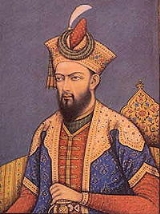
Aurangzeb ( (full title: Al-Sultan al-Azam wal Khaqan al-Mukarram Abul Muzaffar Muhiuddin Muhammad Aurangzeb Bahadur Alamgir I, Padshah Ghazi) (November 4, 1618 March 3, 1707), also known by his chosen Imperial title Alamgir I (Conqueror of the Universe) , was the ruler of the Mughal Empire (what is now India and Pakistan) from 1658 until his death. He was the sixth Mughal ruler. His reign as monarch of the Mughal Empire was marked by wars of expansion in which he conquered several states in southern India.
Aurangzeb ruled India for 48 years, bringing a larger area under Mughal rule than ever before .

Discussion
Ask a question about 'Aurangzeb'
Start a new discussion about 'Aurangzeb'
Answer questions from other users
|
Encyclopedia
Aurangzeb ( (full title: Al-Sultan al-Azam wal Khaqan al-Mukarram Abul Muzaffar Muhiuddin Muhammad Aurangzeb Bahadur Alamgir I, Padshah Ghazi) (November 4, 1618 March 3, 1707), also known by his chosen Imperial title Alamgir I (Conqueror of the Universe) , was the ruler of the Mughal Empire (what is now India and Pakistan) from 1658 until his death. He was the sixth Mughal ruler. His reign as monarch of the Mughal Empire was marked by wars of expansion in which he conquered several states in southern India.
Aurangzeb ruled India for 48 years, bringing a larger area under Mughal rule than ever before . He is generally regarded as the last Great Mughal ruler. Aurangzeb, a devout Muslim, tried to make all his people follow the doctrines of Islam, The Muslim religion. He placed special taxes on Hindus (jizya) and destroyed Hindu temples and images. Aurangzeb also destroyed many works of art because he feared that they might be worshipped as idols. His harsh policies caused many rebellions, which helped weaken the empire. His constant wars left the empire dangerously overextended, isolated from its strong Rajput allies, and with a population that (except for the orthodox Sunni Muslim minority) was resentful, if not outright rebellious, against his reign. His last twenty five years were spent fighting rebellions in the Deccan. After his death, the Mughal Empire shrunk. Aurangzeb's successors, the "Later Mughals", lacked his strong hand and the great fortunes amassed by his predecessors.
Rise to throne
Early life
Aurangzeb was the third son of the fifth emperor Shah Jahan and Mumtaz Mahal(Arjumand Banu Begum). After a rebellion by his father, part of Aurangzeb's childhood was spent as a virtual hostage at his grandfather Jahangir's court.
After Jahangir's death in 1627, Aurangzeb returned to live with his parents. Shah Jahan followed the Mughal practice of assigning authority to his sons, and in 1634 made Aurangzeb Subahdar (governor) of the Deccan. He moved to Kirki, which in time he renamed Aurangabad. In 1637, he married Rabia Durrani. During this period the Deccan was relatively peaceful. In the Mughal court, however, Shah Jahan began to show greater and greater favoritism to his eldest son Dara Shikoh.
In 1644, Aurangzeb's sister Jahanara Begum was accidentally burned in Agra. This event precipitated a family crisis which had political consequences. Aurangzeb suffered his father's displeasure when he returned to Agra three weeks after the event, instead of immediately. Shah Jahan dismissed him as the governor of the Deccan. Aurangzeb later claimed (1654) that he had resigned in protest of his father favoring Dara.
In 1645, he was barred from the court for seven months. But later, Shah Jahan appointed him governor of Gujarat; he performed well and was rewarded. In 1647, Shah Jahan made him governor of Balkh and Badakhshan (in modern Afghanistan and Tajikistan), replacing Aurangzeb's ineffective brother Murad Baksh. These areas at the time were under attack from various forces and Aurangzeb's military skill proved successful.
He was appointed governor of Multan and Sindh, and began a protracted military struggle against the Safavid army in an effort to capture the city of Kandahar. He failed, and fell again into his father's disfavour.
In 1652, Aurangzeb was re-appointed governor of the Deccan. In an effort to extend the empire, Aurangzeb attacked the border kingdoms of Golconda (1657), and Bijapur (1658). Both times, Shah Jahan called off the attacks near the moment of Aurangzeb's triumph. In each case Dara Shikoh interceded and arranged a peaceful end to the attacks.
War of succession Shah Jahan fell ill in 1657, and was widely reported to have died. With this news, the struggle for the succession began. Aurangzeb's eldest brother, Dara Shikoh, was regarded as heir apparent, but the succession proved far from certain. When Shah Jahan's second son Shah Shuja declared himself emperor in Bengal. Imperial armies sent by Dara and Shah Jahan soon restrained this effort, and Shuja retreated.
Soon after, Shuja's youngest brother Murad Baksh, with secret promises of support from Aurangzeb, declared himself emperor in Gujarat. Aurangzeb, ostensibly in support of Murad, marched north from Aurangabad, gathering support from nobles and generals. Following a series of victories, Aurangzeb declared that Dara had illegally usurped the throne. Shah Jahan, determined that Dara would succeed him, handed over control of his empire to Dara. A Rajput lord opposed to Aurangzeb and Murad, Maharaja Jaswant Singh, battled them both at Dharmatpur near Ujjain. Aurangzeb eventually defeated Singh and concentrated his forces on Dara. A series of bloody battles followed, with troops loyal to Aurangzeb battering Dara's armies at . In a few months, Aurangzeb's forces surrounded Agra. Fearing for his life, Dara departed for Delhi, leaving Shah Jahan behind. The old emperor surrendered the Agra Fort to Aurangzeb's nobles, but Aurangzeb refused any meeting with his father, and declared that Dara was no longer a Muslim.
In a sudden reversal, Murad went into exile in Arakan (in present-day Myanmar) where he disappeared, and was presumed to be dead. Murad's former supporters, instead of fighting for Murad, defected to Aurangzeb. Meanwhile, Dara gathered his forces, and moved to the Punjab. The army sent against Shuja was trapped in the east, its generals Jai Singh and Diler Khan, submitted to Aurangzeb, but allowed Dara's son Suleman to escape. Aurangzeb offered Shuja the governorship of Bengal. This move had the effect of isolating Dara and causing more troops to defect to Aurangzeb. Shuja, however, uncertain of Aurangzeb's sincerity, continued to battle his brother, but his forces suffered a series of defeats at Aurangzeb's hands.
With Shuja and Murad disposed off, and with his father Shah Jahan confined in Agra, Aurangzeb pursued Dara, chasing him across the north-western bounds of the empire. After a series of battles, defeats and retreats, Dara was betrayed by one of his generals, who arrested and bound him. In 1659, Aurangzeb arranged his formal coronation in Delhi. He had Dara openly marched in chains back to Delhi; when Dara finally arrived, Aurangzeb had Dara executed. Legends about the cruelty of this execution abound, including stories that Aurangzeb had Dara's severed head sent to the dying Shah Jahan. With his succession secured, Aurangzeb kept Shah Jahan under house arrest at the Agra Fort.
Aurangzeb's reign
Enforcement of Islamic law The Mughals had for the most part been tolerant of non-Muslims, allowing them to practice their customs and religion without too much interference. Aurangzeb abandoned many of the more liberal viewpoints of his predecessors. He espoused a more fundamentalist interpretation of Islam and a behavior based on the Sharia (Islamic law), which he set about codifying through edicts and policies. Aurangzeb took personal interest in the compilation of the Fatawa-e-Alamgiri, a digest of Muslim law, and attempted to create civil law in accordance with its princples.
Mughal court life changed dramatically. Around 1668, Auragnzeb commanded court musicians, dancers and singers to cease performing in his presence. Further, he stopped the production of representational artwork, including the miniature painting that had reached its zenith before his rule . There is however a miniature portrait of the aged Aurangzeb with Qur'an in hand. Soldiers and citizens were given free rein to deface architectural images such as faces — even on the walls of Mughal palaces. Untold thousands of representational images were destroyed in this way. Aurangzeb abandoned the Hindu-inspired practices of former Mughal emperors, especially the practice of Darshan, or public appearances to bestow blessings, which had been commonplace since the time of Akbar, as well as lavish celebrations of the Emperor's birthday..
Most significantly, Aurangzeb initiated laws which interfered with non-Muslim worship. These included the destruction of Hindu temples. Esitmates of the number of temples so destroyed vary wildly, however. Aurangzeb encouraged the conversion of non-Muslims to Islam. In economic and political terms, Aurangzeb's rule significantly favoured Muslims over non-Muslims. In many disputed successions for hereditary local office Aurangzeb chose candidates who had converted to Islam over their rivals. Pargana headmen and quangos or record-keepers were targeted especially for pressure to convert. The message was very clear for all concerned. Shared political community must also be shared religious belief.". Aurangzeb's ultimate aim was conversion of non-Muslims to Islam. Whenever possible the emperor gave out robes of honor, cash gifts, and promotions to converts. It quickly became known that conversion was a sure way to the emperor's favour.
While in general Aurangzeb's policies were structured to encourage peaceful, voluntary conversion, local histories are full of incedniary accounts where the Emperor used or threatened torture or death to force conversion on a popular non-Muslim.
Expansion of the empire From the start of his reign up until his death, Aurangzeb engaged in almost constant warfare. He built up a massive army, and began a program of military expansion along all the boundaries of his empire. Aurangzeb pushed into the north-west — into the Punjab and what is now Afghanistan. He also drove south, conquering Bijapur and Golconda, his old enemies. He attempted to recover those portions of the Deccan territories where the Maratha leader Shivaji was sparking rebellions.
This combination of military expansion and religious intolerance had deeper consequences. Though he succeeded in expanding Mughal control, it was at an enormous cost in lives and treasure. And, as the empire expanded in size, Aurangzeb's chain of command grew weaker. The Sikhs of the Punjab grew both in strength and numbers, and launched rebellions.The Marathas waged a war with Aurangzeb which lasted for 27 years. Even Aurangzeb's own armies grew restive — particularly the fierce Rajputs, who were his main source of strength. Aurangzeb gave a wide berth to the Rajputs, who were mostly Hindu. While they fought for Aurangzeb during his life, on his death they immediately revolted against his successors.
With much of his attention on military matters, Aurangzeb's political power waned, and his provincial governors and generals grew in authority.
Rebellions
Many subjects rebelled against Aurangzeb's policies, among them his own son, Prince Akbar.
- In 1667, the Yusufzai Pashtuns revolted near Peshawar and were crushed.
- In 1669, the Jats around Mathura revolted and led to the formation of Bharatpur state after his death.
- In 1670, Chhatrapati Shivaji had opened the war against the Mughals. He opposed Aurangzeb with full strength and stopped him from entering the Deccan.
- In 1672 in the Leadership of Birbhan a people From Satnami Saints. The Satnami Leadership Rebellion (Some People from Satnami Not All Satnami), a sect concentrated in an area near Delhi, in leadership of Bhirbhan and some Satnami ,Taking over the administration of Narnaul, and defeating Mughal forces in an advance on Delhi.
Soon afterwards the Afridi Pashtuns in the north-west also revolted, and Aurangzeb was forced to lead his army personally to Hasan Abdal to subdue them.
When Maharaja Jaswant Singh of Jodhpur died in 1679, a conflict ensued over who would be the next Raja. Aurangzeb's choice of a nephew of the former Maharaja was not accepted by other members of Jaswant Singh's family and they rebelled, but in vain. Aurangzeb seized control of Jodhpur. He also moved on Udaipur, which was the only other state of Rajputana to support the rebellion. There was never a clear resolution to this conflict, although it is noted that the other Rajputs, including the celebrated Kachhwaha Rajput clan of Raja Jai Singh, the Bhattis, and the Rathores, remained loyal. On the other hand, Aurangzeb's own third son, Prince Akbar, along with a few Muslim Mansabdar supporters, joined the rebels in the hope of dethroning his father and becoming emperor. The rebels were defeated and Akbar fled south to the shelter of the Maratha Chhatrapati Sambhaji, Chhatrapati Shivaji's successor.
The Sikh rebellion Early in Aurangzeb's reign, various insurgent groups of Sikhs engaged Mughal troops in increasingly bloody battles. In 1670, the ninth Sikh Guru, Guru Tegh Bahadur encamped in Delhi, receiving large numbers of followers, and this is said to have attracted the ire of Aurangzeb. In 1675, a group of Kashmiri Brahmins, were being pressured by Muslim authorities to convert to Islam. The Pandits approached Tegh Bahadur with their dilemma. Te Badhur agreed to help the Brahmins. He told them to inform Aurangzeb that the Brahmins would convert only if he himself were converted. Aurangzeb then had Teg Bahadur arrested and brought to Delhi where he was offered the choice of accepting Islam or death; he chose death.His three close aides were also executed. The execution of their guru infuriated the Sikhs. In response, his son and successor, the tenth Guru of Sikhism Guru Gobind Singh further militarized his followers.
Aurangzeb installed his son Bahadur Shah as governor of the northwest territories. The new governor relaxed enforcement of Aurangzeb's edicts, and an uneasy peace ensued. However, Gobind Singh had determined that the Sikhs should actively prepare to defend their territories and faith. In 1699, he established a militant Sikh movement, the Khalsa Panth.
This development alarmed not only the Mughals, but the nearby Rajputs. In a temporary alliance, both groups attacked Gobind Singh and his followers. The united Mughal and Rajput armies laid siege to the fort at Anandpur Sahib. In an attempt to dislodge the Sikhs, Aurangzeb vowed that the Guru and his Sikhs would be allowed to leave Anandpur safely. But when the Sikhs abandoned the fort, the Mughals enagaged them in battle once again, at Chamkaur. Gobind Singh's very small force -- usually described as 40 men -- fended off the larger and better-equipped forces for some time, but eventually most fell. Only Gobind Singh and a few of his aides escaped. Afterwards, Guru Gobind Singh, in response, sent Aurangzeb an eloquent yet defiant letter entitled the Zafarnamah (Letter of Victory), accusing the emperor of treachery and claiming a moral victory. On receipt of this letter, Aurangzeb is said to have invited Guru Gobind Singh to a meeting in Ahmednagar to discuss peace, but Aurangzeb died before Guru Gobind Singh arrived.
The Deccan wars and the Rise of the Marathas In the time of Shah Jahan, the Deccan had been controlled by three Muslim kingdoms: Ahmednagar(Nizamshahi), Bijapur(Adilshahi) and Golconda(Kutubshahi). Following a series of battles, Ahmendnagar was effectively divided, with large portions of the kingdom ceded to the Mughals and the balance to Bijapur. One of Ahmednagar's generals, a Hindu Maratha named Shahaji, joined the Bijapur court. Shahaji sent his wife and young son Shivaji in Pune to look after his Jagir.
In 1657, while Aurangzeb attacked Golconda and Bijapur, Shivaji, using guerrilla tactics, took control of three adilshahi forts formerly controlled by his father. With these victories, Shivaji assumed de facto leadership of many independent Maratha clans. The Marathas harried the flanks of the warring Adilshahi and Mughals, gaining weapons, forts, and territories. Shivaji's small and ill-equipped army survived an all out Adilshahi attack, and Shivaji personally killed the Adilshahi general, Afzal Khan. With this event, the Marathas transformed into a powerful military force, capturing more and more Adilshahi and Mughal territories.
Following his coronation in 1659, Aurangzeb sent his trusted general and maternal uncle Shaista Khan to the Deccan to recover his lost forts. Shaista Khan drove into Maratha territory and took up residence in Pune. In a daring raid, Shivaji attacked the governor's residence in Pune, killed Shaista Khan's son, even hacking off Shaista Khan's thumb as he fled. Once more the Marathas rallied to his leadership, taking back the territory.
Aurangzeb ignored the rise of the Marathas for the next few years. Shivaji continued to capture forts belonging to both Mughals and Bijapur. At last Aurangzeb sent his powerful general Raja Jai Singh of Amber, a Hindu Rajput, to attack the Marathas. Jai Singh's blistering attacks were so successful that he was able to persuade Shivaji to agree to peace by becoming a Mughal vassal.Jai Singh also promised the Maratha hero his safety, placing him under the care of his own son, the future Raja Ram Singh I. However, circumstances at the Mughal court were beyond the control of the Raja, and when Shivaji and his son Sambhaji went to Agra to meet Aurangzeb, they were placed under house arrest, from which they managed to effect a daring escape.
Shivaji returned to the Deccan, successfully drove out the Mughal armies, and was crowned Chhatrapati or Emperor of the Maratha Empire in 1674. While Aurangzeb continued to send troops against him, Shivaji expanded Maratha control throughout the Deccan until his death in 1680. Shivaji was succeeded by his son Sambhaji. Militarily and politically, Mughal efforts to control the Deccan continued to fail. Aurangzeb's son Akbar left the Mughal court and joined with Sambhaji, inspiring some Mughal forces to join the Marathas. Aurangzeb in response moved his court to Aurangabad and took over command of the Deccan campaign. More battles ensued, and Akbar fled to Persia.
In 1689 Aurangzeb captured Sambhaji. When Sambhaji refused to convert to Islam, he was tortured and killed. Lacking a powerful successor, the Maratha Sardars (commanders) fought individual battles against the Mughals, and territory changed hands again and again during years of endless warfare. As there was no central authority among the Marathas, Aurangzeb was forced to contest every inch of territory, at great cost in lives and treasure. Even as Aurangzeb drove west, deep into Maratha territory — notably conquering Satara — the Marathas expanded their attacks further into Mughal lands, including Mughal-held Malwa and Hyderabad. Aurangzeb waged continuous war in the Deccan for more than two decades with no resolution.
The Pashtun rebellion The Pashtun tribesmen of the Empire were considered the bedrock of the Mughal Empire Army. They were crucial defenders of the Empire from the threat of invasion from the North-West as well as the main fighting force against the hindus. The Pashtun revolt in 1672 under the leadership of the warrior poet Khushal Khan Khattak was triggered when soldiers under the orders of the Mughal Governor Amir Khan attempted to molest women of the Safi tribe in modern day Kunar. The Safi tribes attacked the soldiers. This attack provoked a reprisal, which triggered a general revolt of most of the tribes. Attempting to reassert his authority, Amir Khan led a large Mughal Army to the Khyber pass. There the army was surrounded by tribesmen and routed, with only four men, including the Governor, managing to escape.
After that the revolt spread, with the Mughals suffering a near total collapse of their authority along the Pashtun belt. The closure of the important Attock-Kabul trade route along the Grand Trunk road was particularly critical. By 1674, the situation had deteriorated to a point where Aurangzeb himself camped at Attock to personally take charge. Switching to diplomacy and bribery along with force of arms, the Mughals eventually split the rebellion and while they never managed to wield effective authority outside the main trade route, the revolt was partially suppressed. However the long term anarchy on the Empire's North-Western frontier that prevailed as a consequence ensured that the Persian Nadir Shah's forces half a century later faced little resistance on the road to Delhi.
Legacy
Aurangzeb's influence continues through the centuries. He was the first ruler to attempt to impose Sharia law on a non-Muslim country. His critics, decry this as intolerance, while his mostly Muslim supporters applaud him, some calling him a Caliph. He engaged in nearly perpetual war, justifying the ensuing death and destruction on moral and religious grounds. He eventually succeeded in the imposition of Islamic Sharia in his realm, but alienated many constituencies, not only non-Muslims, but also Shi'ite Muslims. This led to increased militancy by the Marathas, the Sikhs, the Pashtuns, and the Rajputs, who along with other territories broke from the empire after his death; it also led to disputes among Indian Muslims.
Unlike his predecessors, Aurangzeb considered the royal treasury as a trust of the citizens of his empire and did not use it for personal expenses or extravagant building projects. He built the Badshahi Masjid mosque (Imperial or Alamgiri Mosque) in Lahore, which was once the largest outside of Mecca. He also added a small marble mosque known as the Moti Masjid (Pearl Mosque) to the Red Fort complex in Delhi. His constant warfare, however, drove his empire to the brink of bankruptcy just as much as the wasteful personal spending and opulence of his predecessors.
Stanley Wolpert writes in his New History of India ISBN 0-19-516677-9 (Oxford, 2003)
He alienated many of his children and wives, driving some into exile and imprisoning others. At the ebb of his life, he expressed his loneliness and perhaps a regret for his militant intolerant rule. His personal piety is undeniable. Unlike the often alcohol- and women-absorbed personal lives of his predecessors, he led an extremely simple and pious life. He followed Muslim precepts with his typical determination, and even memorized the entire Qur'an. He knitted Haj caps and copied out the Qur'an throughout his life and sold these anonymously. He used only the proceeds from these to fund his modest resting place. He died in Ahmednagar on Friday, February 20 1707 at the age of 88, having outlived many of his children. His modest open-air grave in Khuldabad expresses his strict and deep interpretation of Islamic beliefs.
After Aurangzeb's death, his son Bahadur Shah I took the throne. The Mughal Empire, due both to Aurangzeb's over-extension and to Bahadur Shah's weak military and leadership qualities, entered a period of long decline. Immediately after Bahadur Shah occupied the throne, the Maratha Empire — which had been held at bay by Aurangzeb, albeit at a high human and monetary cost — consolidated and launched effective invasions of Mughal territory, seizing power from the weak emperor. Within 100 years of Aurangzeb's death, the Mughal Emperor was to become a puppet of the Maratha Empire and Sikh Empire and then the British East India Company, with little power beyond Delhi and ignored by most Indian princes.
Additional references
- Essays on Islam and Indian History, Richard M. Eaton. Reprint. New Delhi, Oxford University Press, 2002 (ISBN 0-19-566265-2). -- Eaton's essay "Temple Desecration and Indo-Muslim States", which attempts to comprehend Aurangzeb's motivation in destroying temples, has generated much recent debate
- The Peacock Throne, Waldemar Hansen (Holt, Rinehart, Winston, 1972). -- a very British accounting of Aurangzeb's reign, but filled with excellent references and source material
- A Short History of Pakistan, Dr. Ishtiaque Hussain Qureshi, University of Karachi Press.
- Delhi, Khushwant Singh, Penguin USA, Open Market Ed edition, February 5, 2000. (ISBN 0-14-012619-8)
- Mcleod, H. (1989) Who is a Sikh. Oxford. Claredon.
- Mu?ammad Bakhtavar Khan. Mir’at al-‘Alam: History of Emperor Awangzeb Alamgir. Trans. Sajida Alvi. Lahore: Idarah-?i Ta?qiqat-i Pakistan, 1979.
See also
External links
- - BBC
- from MANAS group page, UCLA
-
- - BBC
- Text of John Dryden's drama, based loosely on Aurangzeb and the Mughal court, 1675
-
-
|
| |
|
|